Friday, February 20, 2026
Volume LVII, Issue 20 Est. 1969
Friday, February 20, 2026
Volume LVII, Issue 20 Est. 1969
On Friday, Feb. 12, Jason Nutter, a Case Western Reserve University athletic trainer, was sent home early from the men’s basketball team’s away game after a female CWRU athlete allegedly reported Nutter’s prior conviction to CWRU. This conviction—a 2012 case involving a 17-year-old minor—prompted his immediate dismissal.
In a statement to The Observer, the university said “Case Western Reserve University’s athletics department became aware Feb. 12 of a prior legal issue involving an assistant athletic trainer who was employed by a thirdparty company. There were no reported issues regarding this individual at Case Western Reserve. However, within a few hours of learning this information, the university contacted the external third-party company that employed this individual and required his removal from working with Case Western Reserve University.”
According to court records from the 2016 appeal, Nutter, who was 29 at the time, admitted to engaging in communication and contact with a 17-year-old that included texting, holding hands, kissing and going to movies together. The records also state that investigators found the minor had sent topless photos to Nutter and the two had discussed engaging in sexual activity.
After the investigation concluded, Nutter was sentenced to 60 days in jail, serving 30 of those days. On Nov. 9, 2016, the Ohio Occupational Therapy, Physical Therapy, and Athletic Trainers Board sanctioned him with one year of probation, during which he was prohibited from applying to reinstate his license, and imposed a permanent restriction limiting his practice to treating individuals over the age of 18. This age restriction was lifted in 2022 following Nutter’s successful request for its removal.
In a statement to The Observer, the executive director of the Board, Missy Anthony said “The mission of the Ohio Occupational Therapy, Physical Therapy, and Athletic Trainers Board is to actively promote and protect the health of Ohioans through effective regulation of the professions of occupational therapy, physical therapy, athletic training, orthotics, prosthetics, and pedorthics. The Board accomplishes this in a variety of ways, including taking disciplinary action.”
After two unsuccessful attempts to regain his license, Nutter’s athletic trainer license was ultimately reinstated in 2016. He did not practice as an athletic trainer between 2016 and 2022, and he acknowledged applying for positions during that time but being denied due to his license restrictions. During this period, Nutter worked as a coach and referee, noting that the organizations he joined were aware of his prior conviction. Public records also show that Nutter was prohibited from practicing as an athletic

trainer in Pennsylvania. In 2017, he applied for a Pennsylvania license but was denied, with the decision citing his 2012 court case.
Nutter was hired through Premier Sports Medicine, LLC, a third-party vendor, at the start of the academic year as the athletic department faced a shortage of athletic trainers heading into the Fall 2025 season. He was assigned to work with the women’s and men’s soccer teams, as well as the men’s basketball team. He was also slated to work with the softball team.
One female athlete said she felt uncomfortable after learning about Nutter’s prior conviction and was frustrated that she had not been informed of his background during the fall season.
“When I heard the news, I just thought about how lucky we were, at least from my knowledge, to not have been in any danger or unfortunate situations with him,” she said. “The main word I would say is just scary and disappointing that it kind of flew under the radar here.”
Most colleges and universities require comprehensive background checks for faculty and staff, including athletic trainers. Premier Sports Medicine’s website states that “Every athletic trainer placed by PSM meets or exceeds […] national standards” which their process states explicitly includes a background check, as “criminal background screening [is] completed.”
The Observer reached out to Premier Sports Medicine for comment, but the organization did not respond.
Although Nutter’s conviction occurred in 2012, the nature of the athletic trainer-athlete relationship makes his past especially relevant. Athletic trainers work in close, often one-onone settings with athletes, who rely on them for treatment, rehabilitation and
guidance. That relationship is built on trust, professionalism and a strong duty of care. When that trust is broken in any way, it raises broader concerns about athlete safety and institutional oversight.
In recent years, multiple highprofile cases have underscored how vulnerable that dynamic can be when boundaries are violated. Cases like this have intensified the focus on athlete protection and reinforced the need for transparency and rigorous oversight when hiring individuals in positions of medical authority—considerations that CWRU should consistently prioritize.
“I think there has been a lot on social media and stuff, just talking about athletic trainers, and for it to happen at our own school, even though there’s a lot more knowledge and awareness about this kind of stuff happening, especially to female athletes—it’s disappointing, and I think there needs to be some thorough background checks,” a CWRU female athlete said.
A male CWRU athlete, who requested anonymity and had worked closely with Nutter, said he was stunned to learn of the trainer’s dismissal and the alleged circumstances surrounding it. He expressed concern and frustration that the information had gone unnoticed for the past seven months.
“It was completely unexpected and out of the blue considering he was working with our athletics teams a week ago,” he said. “I also immediately felt for some of my colleagues on our women’s sports teams because I can only imagine how they feel about the situation.”
Like many athletes, he questioned how the information had not surfaced sooner and believes CWRU must take stronger steps to ensure the safety and
protection of its athletes.
“I would hope that the athletic department does its due diligence when making hiring decisions and conducting background checks,” he said. “While I feel this is something that should’ve been discovered and made clear, I hope the athletic department will take steps to ensure that something like this doesn’t happen again. I believe that the athletic department will have to work to build trust amongst some of its student athletes moving forward.”
As of Wednesday, Feb. 18, the university has not issued a public statement, and athletes say they were not formally informed of the decision. Nutter’s online profile was taken down from the athletics website less than 12 hours after his dismissal. Athletes interviewed said they believe the university should issue a formal explanation of what occurred, apologize for the lack of transparency and provide appropriate resources for students moving forward.
“This is information that should be disclosed to student-athletes, especially athletes on our women’s teams who might not be comfortable working with someone who has this in their past,” a CWRU male athlete said. “A situation like this can affect trust across all parties and a student athlete has enough pressure to perform in school and athletics along with outside life factors. They shouldn’t have to worry about the integrity or actions of someone they work with in athletics.”
The Observer also reached out to Nutter for comment, but was unable to receive comment by the publication deadline. The Observer will continue reporting on this story and will provide updates as additional information becomes available.
Olivia Wen Staff Writer
Through an online meeting on Feb. 4, The Washington Post’s executive editor Matt Murray informed the publication’s staff that hundreds of journalists—roughly a third of The Post’s workforce— would be cut from their roles in the newsroom. The decision came as part of an ongoing effort to sustain The Post and cut back on its declining revenue, sparking backlash from reporters across the industry. Just days after this massive layoff, Will Lewis, chief executive officer, stepped down from his position.
These layoffs didn’t come as a surprise, but rather as a culmination of The Post’s ongoing financial issues in subscriptions and sales. This is partly due to its refusal to endorse a candidate during the 2024 election, breaking a tradition of endorsing presidents for over 30 years. Over 200,000 subscriptions were reportedly cancelled in response. In hindsight, this loss hurt its journalists more than billionaire Jeff Bezos, who bought The Post back in 2013.
Over the years, declines in sales have repeatedly led to highly-criticized staff cuts. Most notably, in 2023, The Post offered voluntary buyouts to reduce its newsroom and business operations workforce by 240 people, including marketing and printing teams. In January 2025, it continued laying off workers from the paper’s noneditorial staff. This series of layoffs points to
The Post’s instability in a changing technological landscape.
After the announcement on Feb. 4, the union representing most of the publication’s employees commented on the staff cuts.
“A newsroom cannot be hollowed out without consequences for its credibility, its reach and its future,” the union said. “Continuing to eliminate workers only stands to weaken the newspaper, drive away readers and undercut The Post’s mission: to hold power to account without fear or favor and provide critical information for communities across the region, country and world.”
In a phone call with employees, Murray announced, “Today is about positioning ourselves to become more essential to people’s lives in what is becoming a more crowded and competitive and complicated media landscape.”
He hopes this new cut will allow them to align more closely with news, politics and business, rather than with “less newsworthy” articles. This shift focuses on attracting readers interested in high-impact articles, such as investigative reporting and national politics, and scaling up subscription sales.
However, as a part of this shift, The Post has decided to cut down on sections that many believe are essential to a newspaper. For example, it removed its sports section and scaled back its international news section while The New York Times did the opposite, pulling forward with The Athletic and continuing international coverage.
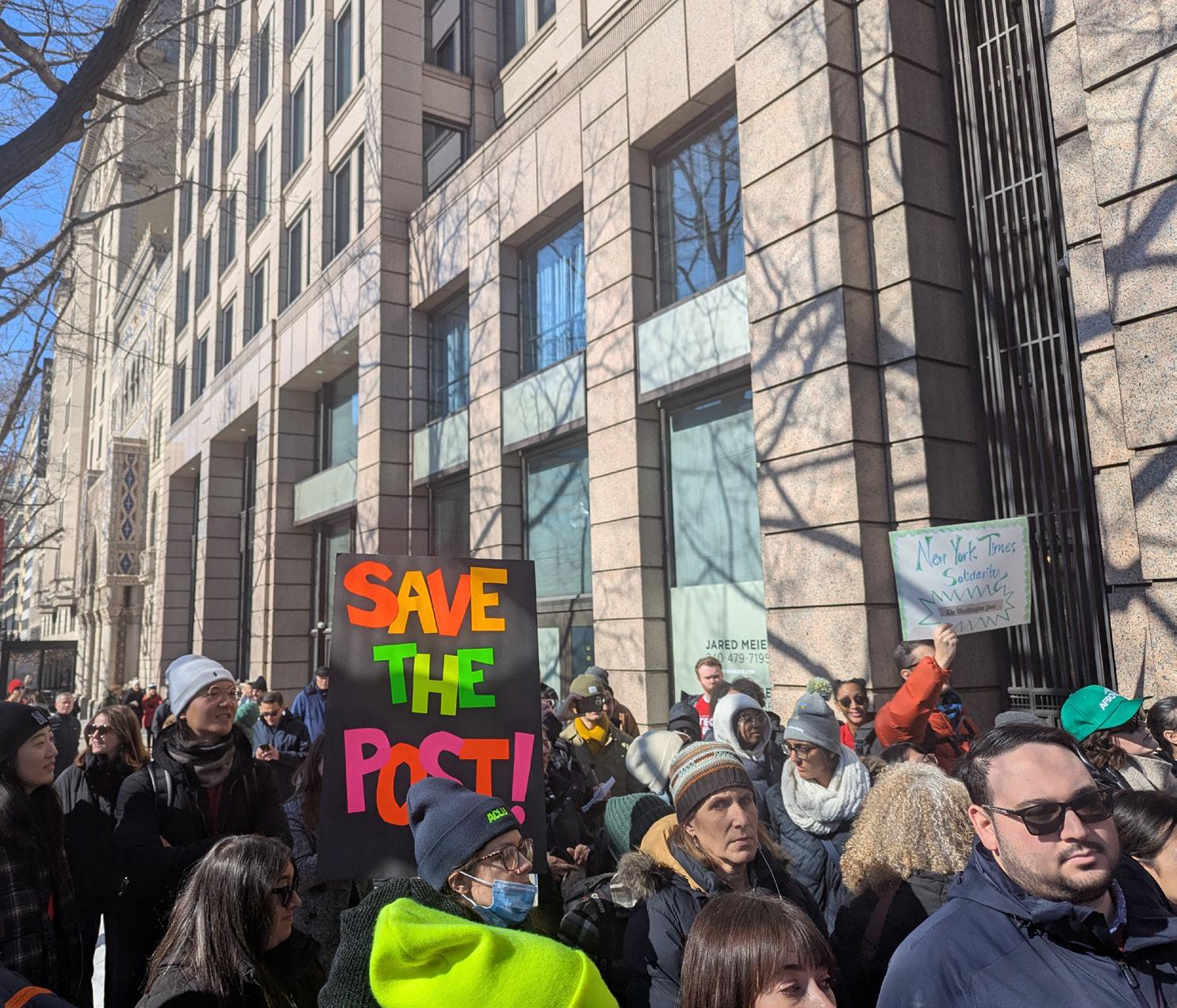
Some journalists, including Ashley Parker, a former journalist for the publication, have criticized the recent cut, claiming that this will only exacerbate the issue.
“The Post has survived for nearly 150 years, evolving from a hometown family newspaper into an indispensable national institution, and a pillar of the democratic system,” Parker wrote in an essay in The Atlantic. “[But if the paper’s
leadership continues down its current path], it may not survive much longer.”
This situation ultimately displays the rapidly-changing news industry and poses questions for the future of journalism at The Washington Post. Will a narrower focus on politics and breaking news attract more readership, or will it continue to bring down interest and threaten its legacy?
Sabrina Feldberg News Editor
In time for the good weather, Euclid Avenue’s dining scene is expanding for Case Western Reserve University and the University Circle community. Osmow’s Sha-
warma has recently set up a storefront, and a new Chick-Fil-A location is expected to follow soon.
Osmow’s Shawarma has expanded to more than 150 locations and is now setting up shop near CWRU at 11415 Euclid Avenue. Canadabased and fast-casual, the restaurant serves Mediterranean dishes
as well as Canadian fusions such as Shawarma Poutine.
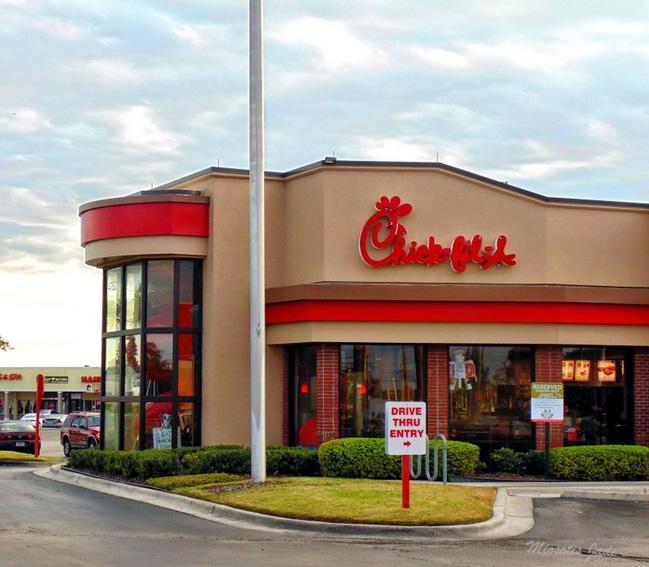
Additionally, as announced in May, Chick-Fil-A will be opening its first storefront in Cleveland. The installment will be taking the place of the former CLE Clothing Co.’s space on 11435 Euclid Avenue. The locally-owned restaurant will be in convenient proximity to CWRU, Cleveland Clinic and University Hospitals.
In a statement after the announcement, Chick-Fil-A said, “We look forward to working through the approval process and are excited by the prospect of joining the Cleveland community and serving neighboring businesses, hospitals and schools.”
Chick-Fil-A also stated that each of its restaurants create around 80 to 120 jobs, potentially providing employment opportunities for CWRU students and other members of the University Circle community.
“I can’t wait for the coming of the new Chick-Fil-A on Euclid,” firstyear student Nathan Chung said. “It has to be my second favorite fast food chain that I have ever had and not only do they have some fire chicken sandwiches, but they also have some really good waffle fries.”
Other students expressed their excitement for the new dining options, especially for Chick-Fil-A’s waffle fries.
“Its cool that it’s going to be there,” second-year student San-
tana Saavedra said, nodding to the waffle fries, macaroni and cheese and Chick-Fil-A sauce, as particular favorites, despite being a vegetarian. “A lot of my friends are excited about it, though I don’t think I’ll be going often.”
Despite the overall excitement, there were mixed feelings about the entrance of Chick-Fil-A due to corporate values displayed by the restaurant’s management.
“I’m not big on Chick-Fil-A due to certain business practices, but I love me some shawarma,” first-year student Sophia Byl said.
Other students shared the same sentiments, specifically regarding workplace harassment of people belonging to the LGTBQ+ community in Chick-Fil-A branches.
“I think there could be something cooler there, other than something related to the franchise,” third-year student Eddie Rodriguez said.
Adding on to the new installments, Trader Joe’s will be arriving in University Heights in the fall of 2026. It will be Northeast Ohio’s fourth branch of the grocery chain, offering its exclusive collection of gourmet, frozen and organic food products for Cleveland-area residents.
As new storefronts fill in along Euclid Avenue and the nearby area, CWRU students, faculty and community members will soon be able to enjoy late-night shawarma, postexam Chick-Fil-A or weekend grocery runs with friends.

Guardians, Cavaliers seek Ohioans’ unclaimed funds for repairs at Progressive Field and Rocket Arena
By Nick Castele
From Signal Cleveland
Statewide quarantine issued in Ohio over spotted lanternfly threat
By Drew Scofield and Nadeen Abusada
From News 5 Cleveland
F.D.A. Reverses Decision and Agrees to Review Moderna’s Flu Vaccine
By Christina Jewett and Rebecca Robbins
From The New York Times
Top New York hospital to end programtransgender for minors
By Rachel Wolf
From Fox News
NIH director Dr. Jay Bhattacharya to take over as acting head of CDC
By Mary Kekatos and Arthur Jones II From ABC News
Administration Targets Noncitizen Voting, Despite Finding It Rare
By Glenn Thrush, Devlin Barrett, Alan Feuer, Zolan Kanno-Youngs and Hamed Aleaziz
From The New York Times
At least 12 Democratic lawmakers plan to boycott Trump’s State of the Union address
By Rebecca Shabad From NBC News
Zuckerberg grilled in landmark social media trial over teen mental health
By Sanya Mansoor From The Guardian From CBS News
‘Difficult’ peace talks spotlight Putin’s chief negotiator and antagonistUkraine
By Yuliya Talmazan From NBC News
Trump’s Board of Peace to meet as Gaza stability plan languishes
By Karen DeYoung
Darcy Chew Executive Editor
On Feb. 3, the United States House of Representatives passed the Consolidated Appropriations Act, 2026, which contains five funding bills for the 2026 fiscal year. Funding recipients included the Department of Defense (DoD), the Health and Human Services (HHS), the Department of Housing and Urban Development, the Department of Transportation and more. The federal funding bill for the Department of Homeland Security, which has become a highly contentious topic due to increased Immigration and Customs Enforcement (ICE) activity, was notably missing from the approved Appropriations Act.
One of the act’s most notable outcomes was Congress rejecting President Donald Trump’s 40% cut to the National Institutes of Health (NIH). Initially released on May 2, 2025, Trump’s Discretionary Budget Request proposed cutting total federal research funding by 20.5%, with a proposed 40.5% cut to the National Institutes of Health (NIH), a 56.9% cut to the National Science Foundation (NSF) and a 24.3% cut to the National Aeronautics and Space Administration (NASA). The $17,965 million decrease was justified according to the Trump administration, which stated that the “NIH has broken the trust of the American people with wasteful spending, misleading information, risky research, and the promotion of dangerous ideologies that undermine public health.”
The presidential administration extended these sentiments to the grant approval process as well.
On Aug. 7, 2025, Trump signed an executive order titled “Improving Oversight of Federal Grantmaking” meant to make sure that “every tax dollar the Government spends should improve American lives or advance American interests.” This executive order required federal agencies to designate political appointees who would oversee the approval or rejection of grants to “ensure that they are consistent with agency priorities and the national interest.”
Additionally, a leaked list of flagged words from NSF circulated among sci-
entific communities last year. Terms such as “diversity,” “marginalize” and “gender” were said to violate the president’s executive order “Ending Radical And Wasteful Government DEI Programs And Preferencing,” allegedly triggering increased review or immediate disqualification of grants.
In 2025, eight Case Western Reserve University NIH grants were terminated, totaling $3,011,219.25 in “unliquidated obligations.” All eight of the grants were terminated under “Departmental Authority” with grants ranging from research on “Long-Term Effects of COVID-19-induced Health Care Delivery Changes on Patient & Workforce Processes & Outcomes in Safety Net Practices Caring for Health Disparity Populations” to “Dual action immunostimulatory nanoparticles for treatment of aggressive cancers” and “Estrogen-mediated immune regulation in human and experimental inflammatory bowel disease.”
These actions by the federal government have changed the research landscape.
The NIH has historically been “the largest federal funder of research at U.S. institutions of higher education.” And at a university where medical research makes up a large portion of its research endeavors and reputation, NIH grant funding plays a significant role at CWRU.
“Case Western Reserve University faculty compete and receive significant research grant funding from federal agencies. Some of the funding supports graduate students who work with our faculty to advance scientific discovery and innovation. Universities in the United States have had a decades-long partnership with the federal government that has secured the nation’s position as an international leader in scientific research and innovation,” the university said in a statement to The Observer.
Beyond the additional review of grants, the presidential administration implemented a new policy where multi-year grants will now be awarded as an upfront payment rather than annually. When the policy was announced, a Science Magazine article predicted a sharp decrease in the number of awards.
That hypothesis was correct. A De-
cember 2025 report from Congress revealed that 5548 fewer grants were awarded in 2025 than the 2020-2024 average of 56392.
According to NIH’s RePORT, as of February 2026, CWRU has been awarded $18,385,205 between 38 research proposal grants (RPGs) for the 2026 Fiscal Year. During the 2025 Fiscal Year, $141,796,566 was awarded across 238 research grants, and $151,461,634 in 2024 across 276.
Post-undergraduate education is also feeling the impact of reduced grant awards. PhD admissions in the past year and a half have been unpredictable for many, with cases of acceptances to institutions being withdrawn due to a lack of funding last year. Some PhD programs are direct admit which means students are admitted into a specific lab where their principal investigator (PI) is responsible for funding a student’s tuition and stipend through their research grants.
Furthermore, a concern in funding post-undergraduate education has arisen following the “Big Beautiful Bill.” Effective July 1, graduate and professional degree loans will have lower caps, with lifetime amounts of $100,000 for graduate degrees and $200,000 for professional degrees. Degrees previously considered professional—such as nursing, social work and education—have also been reclassified as non-professional degrees by the Trump administration, impacting their lending amounts.
Additionally, a list of universities that the Department of Defense was considering revoking tuition assistance for was circulated online. Included among many top private universities—such as Harvard, Yale and Princeton—was CWRU.
“Civilian schools are an important part of the military ecosystem. We are seeking further clarification from the administration,” the university said in a statement to The Observer.
With these changes, questions regarding access to higher education have surfaced. Tuition costs have only increased in the past few years, and these new changes with loans and federal funding have the potential to impact students’ career options. As a student, it is important to be aware of such policies and how they can impact your future career and life.
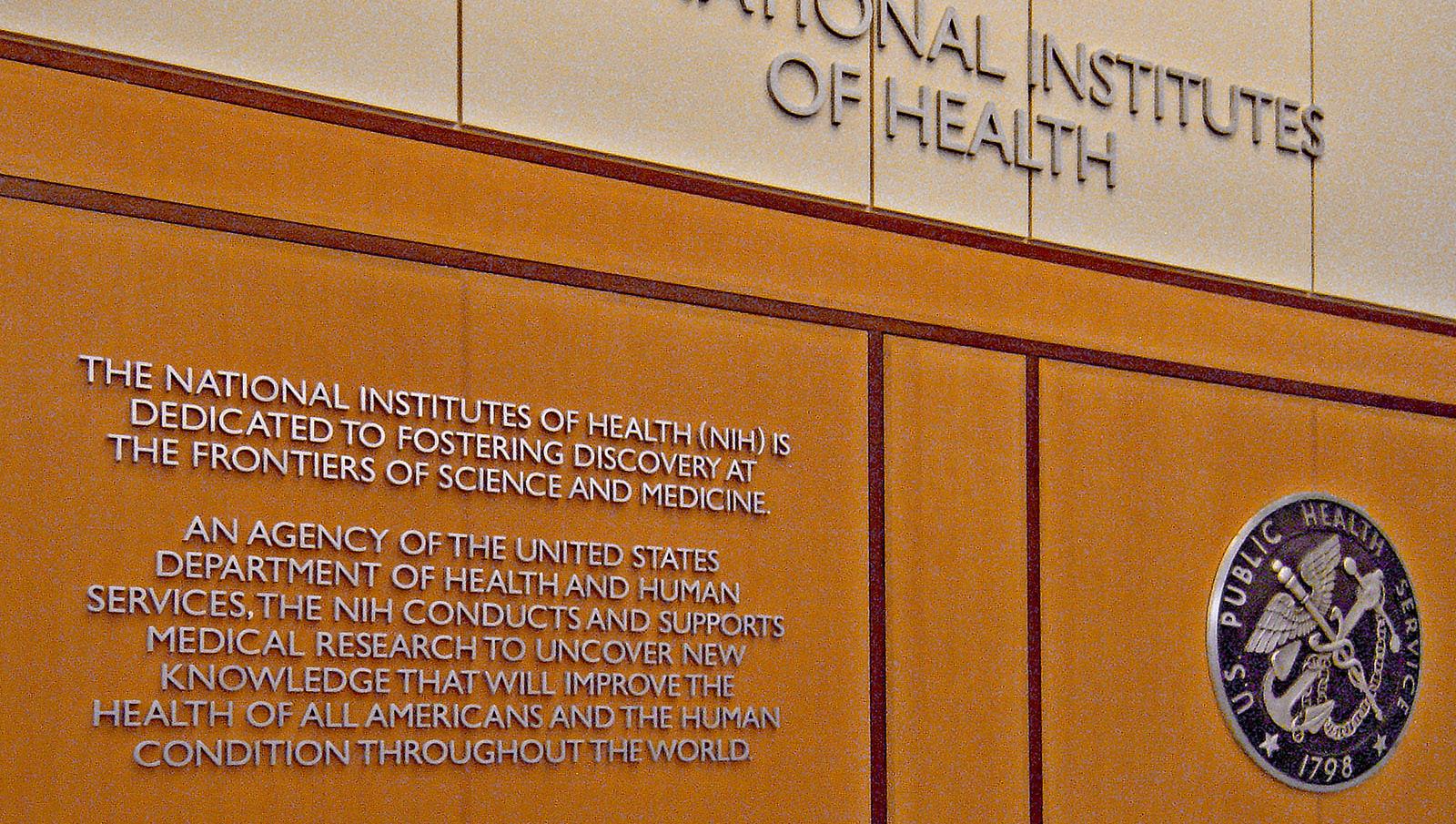
From The Washington Post Concerns about the Trump administration’s proposed 40.5% decrease in NIH funding were alleviated as Congress approved a flat funding approach, taking inflation into consideration. But this did not eliminate concerns entirely. Many prospective graduate students and researchers are still facing rampant budget cuts, affecting scientific progress and job placement. Courtesy of Duane Lempke via
Aditi Darodkar Staff Writer
On Jan. 7, the United States Department of Health and Human Services (HHS) and the U.S Department of Agriculture (USDA) released the 20252030 Dietary Guidelines for Americans. Updated every five years, this document details nutrition policies for food manufacturing, food assistance programs and dietary recommendations.
For decades, Americans have looked up to simple visuals to guide what lands on their dinner plates, from the “Basic Seven” food groups in the 1940s to the renowned 1992 Food Guide Pyramid. It emphasized eating more food from the base of the pyramid and less from the top. The Food Guide Pyramid had several versions and was eventually replaced by MyPlate in 2011.
Now, one of the latest iterations to the guidelines, the inverted food pyramid, has sparked debates.
The inverted food pyramid prominently features a large cut of steak at its base. According to Dr. Hope Barkoukis, the chair of the Department of Nutrition at the Case Western Reserve University School of Medicine, this design choice could be easily misinterpreted by the consumers.
“The message from that image is [that] it’s perfectly fine to eat as much red meat no matter how fatty it is,” Barkoukis said.
you sat down and ate that steak, you would be hard-pressed to stay within that 10% guideline.”
Saturated fats are defined by their chemical structure: their carbon bonds are filled or “saturated” with hydrogen atoms. Most of them contribute to cardiovascular disease. Conversely, unsaturated fats contain carbon chains with double bonds and are not completely filled with hydrogen atoms, making them healthier for our bodies and metabolically helpful.
However, it is not that simple.
“More information has shown us that not all saturated fat is equally bad,” Barkoukis said.
That complexity, she noted, is acknowledged in the written guidelines but not in the inverted food pyramid. By placing the steak at the top, the image risks implying a blanket endorsement of red meat. In doing so, it contradicts both the text and the broader nutrition science consensus.
On the flip side, the peak of the inverted food pyramid shows whole grains, visually suggesting that carbohydrates should be consumed in the smallest amount.
“It looks like [the recommendation is to banish] carbohydrates, and that’s not what they are saying,” Barkoukis said. “In the text, the concept of whole grain [is promoted] because the more intact the grain, the healthier it is. It’s going to have dietary fiber, vitamins and minerals.”
“If you look at a label and you see a whole list of ingredients that you have no clue what they are and it’s more than five ingredients, it’s probably an ultra-processed food,” Barkoukis stated.
Ultra-processed food comprises two-thirds of the caloric intake by children and teens in America, according to Friedman School of Nutrition Science & Policy at Tufts University. Barkoukis believes that the heavy focus on shifting away from ultra-processed food would move the needle towards a healthier lifestyle.
In an event with the National Cattlemen’s Beef Association, HHS Secretary Robert F. Kennedy Jr. stated that the “war on protein is over.” These words also appear on realfood.gov, the official website for 2025-2030 Dietary Guidelines for Americans.
Barkoukis believes this remark applies specifically to animal protein and may reflect a reaction to previous federal guidelines.
“Historically, there’s [been] a very heavy push towards plant protein because it’s so healthy for you,” Barkoukis said. “When you eat a plant protein, the package that it’s with is so healthy. It has dietary fiber. Fiber helps you [have] a healthy gut. It has vitamins, it has minerals [and is very] low in saturated fat.”
That emphasis may have led to the relative exclusion of animal protein in past guidelines.
a wide variety of both animal and plant [protein].”
The new dietary guidelines have increased the protein recommendations from 0.8 grams per kilogram to 1.2-1.6 grams per kilogram, a range still considered within normal limits.
The rationale behind this change took into account that many Americans are on low-calorie diets.
“[The HHS and USDA] review team looked at hundreds of studies that were done, and the data showed that when one would consume animal protein at the amounts they recommended, [the participants] had better success with weight management,” Barkoukis noted. “They lost less body muscle and were able to have better outcomes.”
Barkoukis said that while these findings are supported by nutrition science, most Americans already consume enough protein, and the real concern is ensuring adequate intake among older adults rather than the general population.
However, the larger challenge lies in how the guidelines are presented. While the core written recommendations remain mostly consistent with previous guidelines and are supported by nutrition science, the disconnect between the text and inverted food pyramid is jarring. The result, Barkoukis believes, is confusion among the public.
“When you do nutrition messaging you [have to] keep it simple [and] you















Abhishek Nambiar Copy Editor
As I stepped into Gallery 242B at the Cleveland Museum of Art, the first thing that caught my attention was how compact the paintings were; some were as small as the brochure in my hand. To see them clearly, you have to lean closer to the glass, but once you do, they demand your attention in a way that many larger paintings don’t.
The exhibit in question, “Pahari Paintings: Art and Stories,” is centered around its namesake: a style of painting created between the 1600s and early 1900s in the Himalayan foothills of Northern India. During this time, the Hindu nobility of the Pahari kingdoms commissioned paintings for their collections—a task handed to artists with a family history of creating art throughout the region. By the late 20th century, descendants of the royal families had dispersed the paintings, increasing their popularity and recognition worldwide. This exhibit “celebrates the CMA’s 2018 acquisition and 2026 publication of the Pahari paintings from the renowned Catherine Glynn Benkaim and Ralph Benkaim Collection.”
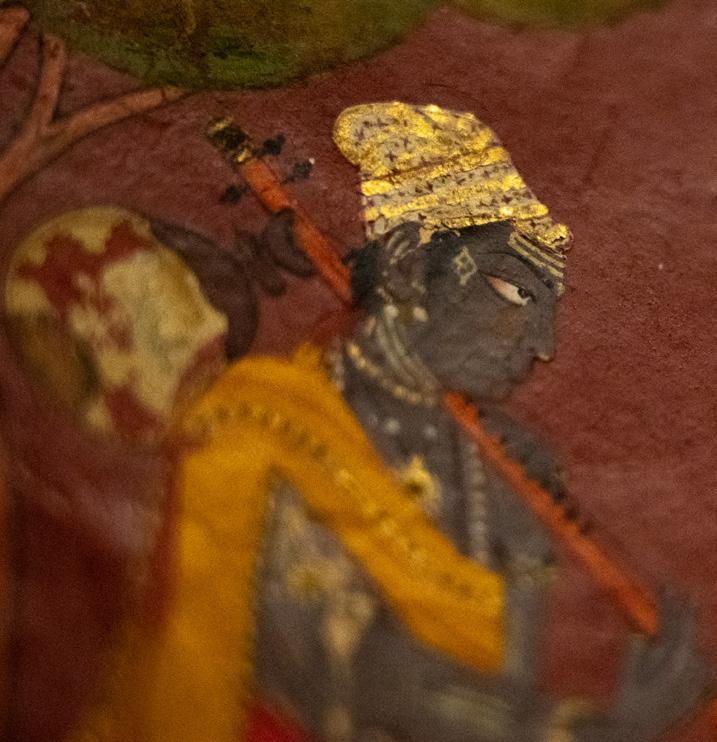
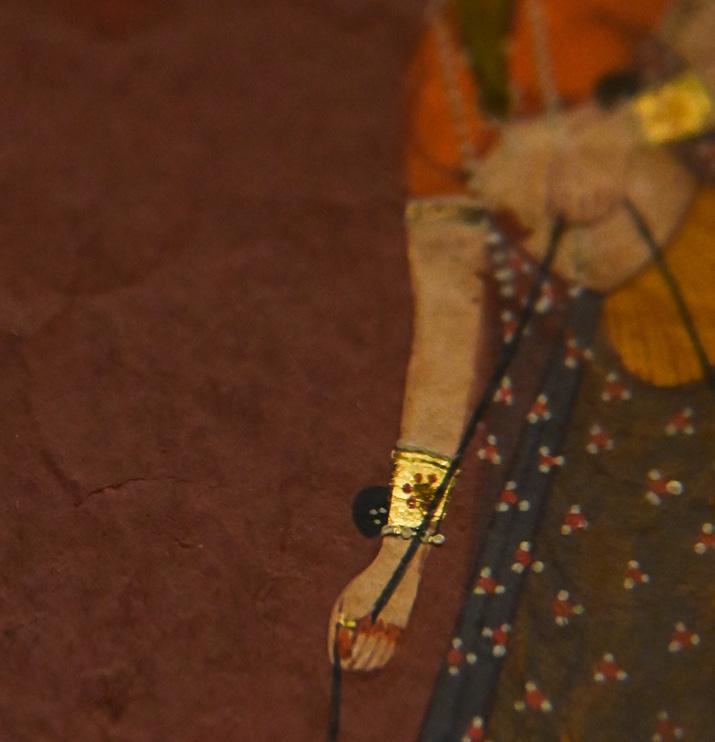
Walking through the exhibit, which includes several paintings and textiles from the Pahari kingdoms, one thing that stood out to me was the level of detail present in the pieces. For as small as they are, they are bursting with intricacies that seem impossible for a human to pull off. There is no shortage of vibrant colors to be seen throughout every one of these paintings.
This vibrancy is something that also catches the attention of Dr. Sonya Rhie Mace, the museum’s curator of Southeast Asian art.
“I think it has to be the colors,” Mace said. “These paintings are made with mineral colors … ground from minerals like malachite, cinnabar [and] lapis lazuli.”
She explained that the artists who made Pahari paintings had access to major trade routes due to their location, allowing pigments to travel from place to place. Families mixed their colors in different ways, creating a wide range of color combinations that look striking to this day.
Mace also reminded me that these works were not made to be seen under
the bright lights of a museum exhibit.
“You have to imagine them being viewed at nighttime, just under lamplight, in the surroundings of a royal court. The gold and silver and tin would glint and shimmer in the lamplight,” Mace said.
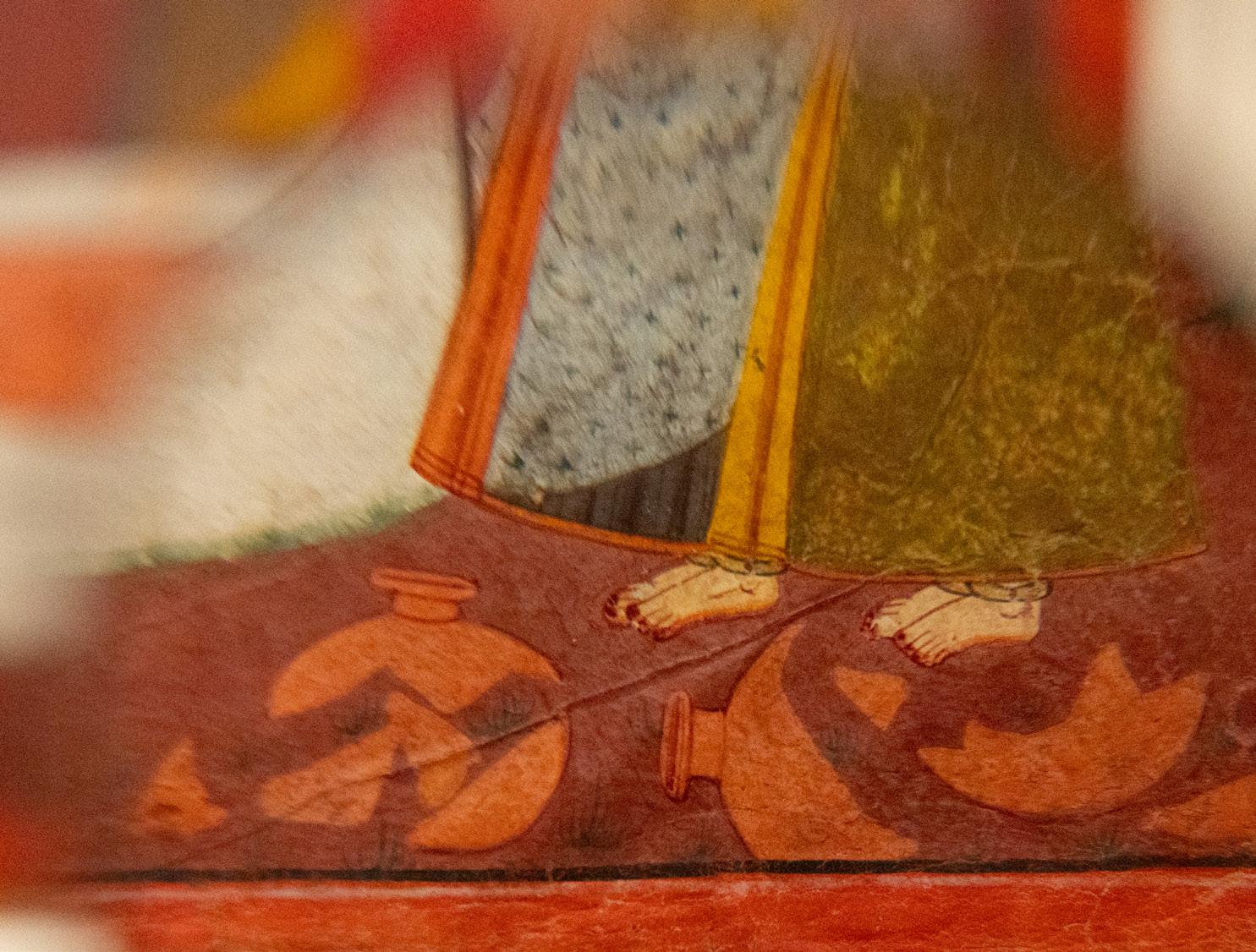
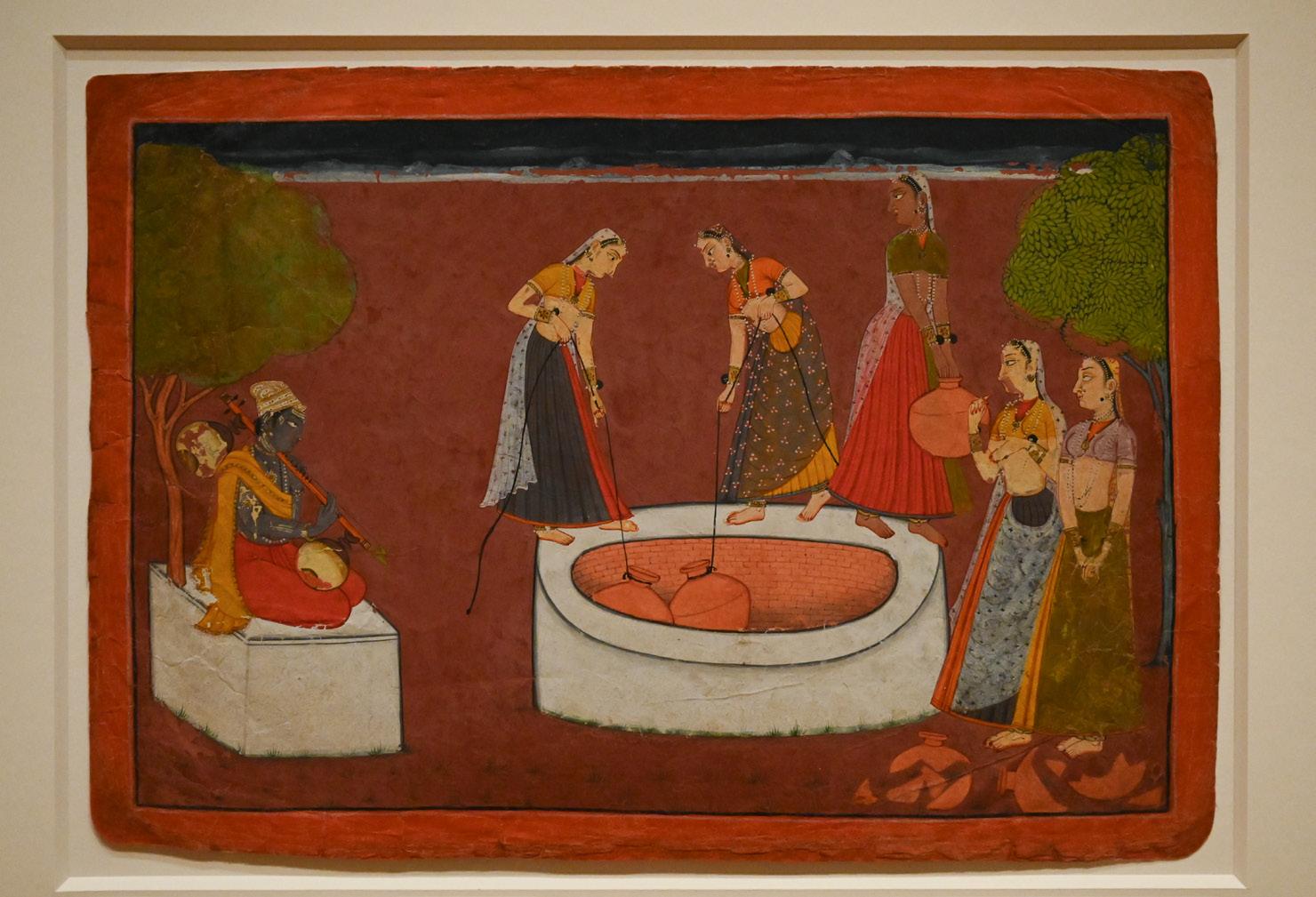
As I moved through the gallery, it became more apparent how central storytelling is to Pahari paintings. Piquing my interest in this regard was the “Madhavanala-Kamakandala” romance. One of the paintings depicting this love story shows a musician named Madhava playing a vina (stringed instrument), leading five women to pause in various moments of reaction—two of them dropping their pots after becoming so entranced by the music. Another painting depicts women in enchanted ecstasy under a tree, their gazes fixed upon Madhava playing his vina as their bodies blissfully lean toward him.
But romance is merely one thread in the gallery’s broader collection of stories. Another painting that drew my attention was “Krishna celebrates Holi.” In contrast to the more subdued intensity of Madhava’s performance, this scene bursts with joyful chaos. Attendants fling bright powders at one another during the festival of Holi, creating an atmosphere that invites you into the scene, making you wish that you could be there amongst the festivalgoers. For how small this painting is, the energy is undeniable; it is not just a depiction of a religious figure, but also an encapsulation of playfulness, celebration and communal joy.
As I was immersed in the delights of these paintings, there was one thing that remained in my mind: Why now? Why did the CMA think that now was the right time to display these paintings? As per Mace, there were several reasons behind this timing. One merely had to do with logistics—the museum’s collections must rotate over time. Another was the publication of a catalog explaining in great detail the history and background of Pahari paintings in the CMA’s collection—a catalog that Dr. Mace noted took several years to write. However, she also pointed to the broader cultural significance of the collection.
“I also think it’s important, in a timely way as well, to draw attention to the culture of this region. It’s a region that stands between Kashmir, Ladakh,
China and Tibet [and] Pakistan, … and so I think it's important to draw attention to the way borders today actually cut across historical and cultural regions,” Mace shared.
For her, the exhibition is not just about displaying beautiful objects but also highlighting a region with a shared artistic heritage that predates modern political boundaries. By presenting these paintings together, the museum is able to restore some of the coherence that has been complicated by history and geography.
Mace oncluded by sharing her ultimate hope for visitors going to the exhibit.
“I hope they will see this distinctive vision that the Pahari artists had towards both portraiture and storytelling, to present the world, to present nature, and in a way that that no one
else has in the rest of the world…it’s these kinds of human emotions that connect us all…and hopefully people who visit feel that connection.”
By the time I left the gallery, that felt very true to me. The exhibit may be a small one, but the paintings are expansive. Centuries after their creation, they still invite viewers like me to lean closer. Not just to see the details, but to also feel the connection. And it’s a connection that can be felt by all who visit the CMA between now and Sept. 13, the last day of the exhibition. The CMA will also be presenting the related exhibit “Epic of the Northwest Himalayas: Pahari Paintings from the ‘Shangri’ Ramayana” beginning April 19, so be sure to come back in the spring to view that one as well. Don’t miss your chance to experience these paintings up close.


Penelope Cloonan Life Editor
It is getting increasingly difficult to claim ownership over media. Either pieces are not released as physical media that you can lord over, or, as is more common, digital media is released and never truly owned by one singular person. There is a weird, no win situation here. Of all bands, Ohio’s own altrock duo Twenty One Pilots is tackling this issue. In 2024, Twenty One Pilots released “Clancy: Digital Remains,” alongside the seventh studio album. It was available to purchase for 24 hours, made only for digital and included live recordings of four “Clancy” singles and a booklet about the making of the album. To this day, anyone who missed the original purchase window is out of luck. “Clancy: Digital Remains” is not available on streaming, but there haven’t been many calls for its release. It is a nice token for true fans and not much else.
In Sept. 2025, Twenty One Pilots reran their experiment in digital exclusivity. They released their eighth studio album, “Breach” on Sept. 12, 2025, along with a deluxe edition “Breach: Digital Remains” on the same day. The deluxe edition was entirely the same, aside from one difference: the inclusion of a new song “Drag Path.” It is a short track about reminiscing about one's past in the face of depression, featuring raw vocals and grand instrumentation. “Drag Path” packs an emotional punch. Fans had one week to purchase the deluxe edition before it was gone forever. This go around, the response to the exclusivity was explosive: “Drag Path” blew up.
These calls for release are not just coming from Twenty One Pi-
lots fans. Since September, it has become a popular TikTok sound. More basic forms of these videos are edits of solemn scenes set to the track. Other TikToks follow the format “A drag path but it’s …” some tragic thing the creator misses dearly, something that haunts them. Even after months of somber yearning, these videos hold strong.
In a way, it was a fitting way to immortalize the song. Sure, there were ways to find the song in full if you tried hard enough, but for the most part, the average person could only catch bits and pieces as the setting dressing to a devastating TikTok. Only the ghost of “Drag Path” could be felt throughout the internet, that was, until Twenty One Pilots announced the release of the song on streaming on Feb. 17.
In a complete turn around from the original intent of the art piece, “Drag Path” is now available on streaming, alongside a new music video. In an effort to honor the people who originally purchased the exclusive track, Twenty One Pilots have said that they changed the production of the song to create a new product. I will admit, I thought this would be a hollow claim, but the duo really did make these changes. The streaming version is shorter, cutting the original outro and the first verse entirely. Instead, the second verse is moved up and a new pre-chorus is inserted. The instrumentation and production have minor tweaks but keep the same emotional feel. Notably, the chorus and bridge, which is what went viral in the first place, is largely unchanged. Overall, the changes are noticeable enough to honor the original purchasers, but fans of the song likely won’t be disappointed. I certainly wasn’t.
The re-release of “Drag Path” is

complicated. Though some online are upset about the changes, or that it was re-released at all, it is important to stay out of the needlesslynegative online discourse. Many, like second year Anusha Manoj, are happy the song is on streaming. “I like that song,” said Manoj, “I’ve been listening to a cover because I couldn’t find it.” Second year Mar-
garet Ozar agrees, saying, “I am excited! I think that it will allow more people to experience the song even though it was fun to have the more exclusive release as well.” In the end, Twenty One Pilots did what they could to satisfy as many people as possible. Now, “Drag Path” can forever be etched into our digital history.

hoped to honor the original spirit of the digital release, ensuring that their fans retained the special, original version of their song while still allowing newcomers to appreciate the latest version. All photos courtesy of Twenty One Pilots
Penelope Cloonan Life Editor
Happy fake spring to all those who celebrate! After a beautiful stint of sunshine and light jackets, I can only assume that, as of print, the weather has taken a turn for the worse once more. But isn’t it so wonderful to reminisce about better days? Or day, Tuesday really. In any case, it is nice to appreciate the little things in life, even if it is just the little time we have left with good weather in Cleveland. Pop in your ear buds, ponder going on a serene walk and maybe choose to stay dry inside to listen to these tracks.
“North” Clairo
Sometimes, I think I miss spring like an old lover. We know that fake spring cannot last and still, we must enjoy it while we can. In “North,” Clairo perfectly captures this dreamy feeling of cherishing a love you know is temporary. It also has that soft feel you’d want from spring. Spring calls, just like a lover, now just isn’t the right place or the right time.

“Gold and Green” Slaughter Beach, Dog
This is another track about appreciating the little things in life. Slaughter Beach, Dog follows a very stream of consciousness format here, describing the world around them with pleasant affection. Even when the weather takes a turn for the worse and it seems like there isn’t much of a future in hoping for better weather, it is good to stop, look around and focus on what can be good. See the richness in nature, the “gold and green.”


“Something, Somehow, Someday” ROLEMODEL
Sticking with that love feel, in my barely-two years here, I think a nice spring and Cleveland are fundamentally at odds, star-crossed lovers even. ROLEMODEL sings about a couple who, despite every difference, would be great together. Where he is reckless and destructive, like Cleveland weather, she is serene and beautiful, like any good spring. If we believe as ROLEMODEL does, then maybe, somehow, someday, we will have a nice spring.
“Fool in the Rain” Led Zeppelin
We really should acknowledge the reality of the situation, even nicer springs have rain. Maybe Ohio just doesn’t deserve a nice spring. We may very well be chasing after a spring that just doesn’t want us, like the lead singer chases after the object of his affections in this song. With the coming weather, we will all be “Fools in the Rain,” but we can at least have fun. Put on your boots, listen to an underrated Led Zeppelin song and beware of puddles!


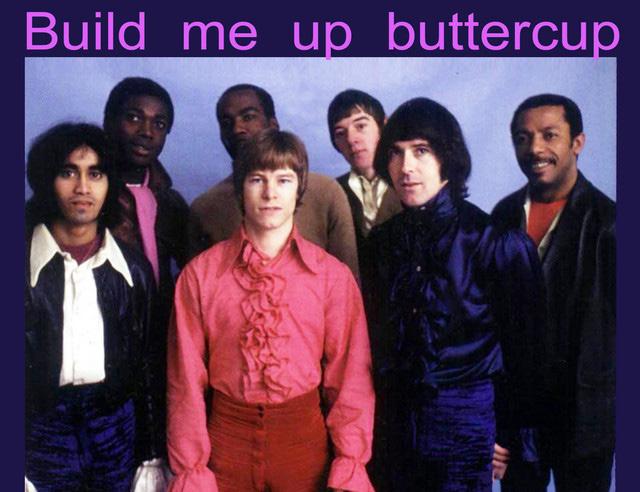
“Build Me Up Buttercup” The Foundations
I’ve heard many jokes about first years being so incredibly gullible for believing fake spring is here to stay. Look, I get it, it's silly, but is it so bad to believe in it? Think back to when you had that hope in your heart and think of how much it hurt to be let down again and again by cold weather and rain. Let The Foundations serenade you with the feeling of being failed by your love for fake spring, constantly.
“Here Comes the Sun” The Beatles
Let’s end the playlist on a positive note and as on-the-nose as possible. Think of last Tuesday's sunshine, feel the warmth. One can only hope that the sun truly is coming back. Even though “it seems like years since it's been here,” it will be worth weathering the storm. Hold on till May, probably!
1 1940s African American all-female swing group "________ of Rhythm"
1 1940s African American all-female swing group "________ of Rhythm"
9 Indian name meaning "incomparable"
9 Indian name meaning "incomparable"
13 Dined and dashed, in other words
13 Dined and dashed, in other words
15 Infamous talk show host Jay
15 Infamous talk show host Jay
16 Wet sticks, for a fire?
16 Wet sticks, for a fire?
18 Lowest denomination of dollar notes
18 Lowest denomination of dollar notes
19 Frequent command to Marvel Comics' green beast
19 Frequent command to Marvel Comics' green beast
20 Sensory appendages on the heads of small scurrying critters
20 Sensory appendages on the heads of small scurrying critters
22 Course taught by an American in Paris, say
23 Broadcast, as a signal
26 Evaluate, as an artifact
22 Course taught by an American in Paris, say 23 Broadcast, as a signal 26 Evaluate, as an artifact
27 Mnemonic taught to belayers
27 Mnemonic taught to belayers
28 Present an idea or hypothesis
28 Present an idea or hypothesis
29 Eponymous Henry of a procedure used to treat choking
29 Eponymous Henry of a procedure used to treat choking
33 Strategies used to boost visibility of websites, abbr.
33 Strategies used to boost visibility of websites, abbr.
34 A member of Art Blakey's bebop collective
34 A member of Art Blakey's bebop collective
37 Lay out in the sun, say
37 Lay out in the sun, say
38 Column of gas, rock, and vapor ejected during a volcanic event
38 Column of gas, rock, and vapor ejected during a volcanic event
39 "I'll tell you when you're _____."
39 "I'll tell you when you're _____."
42 The most common of the saxophone family
42 The most common of the saxophone family
43 "I agree, except for..."
43 "I agree, except for..."
45 Diminutive for a pesky child
45 Diminutive for a pesky child
46 Texting letters
46 Texting letters
49 One who looks forward to looking forward
49 One who looks forward to looking forward
51 Discontinued Apple messaging platform
51 Discontinued Apple messaging platform
53 Furniture wood
53 Furniture wood
54 Defunct covert CIA flight operator with slogan "Anything, Anywhere, Anytime, Professionally."
54 Defunct covert CIA flight operator with slogan "Anything, Anywhere, Anytime, Professionally."
57 Hathaway of "The Princess Diaries"
57 Hathaway of "The Princess Diaries"
58 Parisian's reply to an inquiring waiter, perhaps
58 Parisian's reply to an inquiring waiter, perhaps
59 Rolls out pre-grown grass on a golf course
59 Rolls out pre-grown grass on a golf course
60 Gordon Goodwin led 18-piece swing orchestra, with "The Big"
60 Gordon Goodwin led 18-piece swing orchestra, with "The Big"
1 Saint-Saëns piece, with "macabre"
1 Saint-Saëns piece, with "macabre"
2 The members of the periodic table
2 The members of the periodic table
3 Of, or relating to the kidneys
3 Of, or relating to the kidneys
4 Young girl, in Dublin
4 Young girl, in Dublin
5 Works in the music industry, slangily
5 Works in the music industry, slangily
6 Secret letters?
6 Secret letters?
7 Warning from an angry bear
7 Warning from an angry bear
8 Occupied, as a table
8 Occupied, as a table
9 First baseman Pete of the National League
9 First baseman Pete of the National League
10 State oft used in an ill-advised pickup line 11 More unsettled
10 State oft used in an ill-advised pickup line
11 More unsettled
12 Gets bested by
14 Northeastern China river, tributary of the Sungari
Gets bested by 14 Northeastern China river, tributary of the Sungari
17 Public bus and train grp. of Cleveland, OH
17 Public bus and train grp. of Cleveland, OH
21 What a psychic might have
24 Lesser used name for one's matriarch
21 What a psychic might have 24 Lesser used name for one's matriarch
25 Bora Bora or the Maldives, eg.
25 Bora Bora or the Maldives, eg.
27 Dispensed rectangular candy
Dispensed rectangular candy
Common inverted gymnastic move
29 Common inverted gymnastic move
30 Suffix meaning "somewhat" or "characteristic of"
Suffix meaning "somewhat" or "characteristic of"
Channel known for its yeas and nays
31 Channel known for its yeas and nays
2015 Adelle hit
Mexicen pepper (see 50-down)
Least sensible
32 2015 Adelle hit 34 Mexicen pepper (see 50-down) 35 Least sensible 36 It has altered DNA
It has altered DNA
37 Corolla, Camry, Tacoma
Corolla, Camry, Tacoma
Pittsburghers' preferred pedals?
40 Pittsburghers' preferred pedals?
41 Sugarcane liquor
Sugarcane liquor
Hermana de tu madre
44 Hermana de tu madre
Ailment of the throat
45 Ailment of the throat
Popular dog breed, with Inu
46 Popular dog breed, with Inu
City in Georgia or France
47 City in Georgia or France
Undo 8-down
48 Undo 8-down
[Not my mistake]
50 [Not my mistake]
52 Enclosure for a wee one
Enclosure for a wee one
Protagonist of popular monster capturing kids
55 Protagonist of popular monster capturing kids show 56 17-down, in NYC
17-down, in NYC


Isabel Haytayan Staff Writer
Ever since ChatGPT released the initial version of its model to the public in 2022, the buzz around Artificial Intelligence (AI) hasn’t stopped. With the release of competing models, the spiralling number of uses and the quick integration into people’s daily lives, the technology remains at the center of much debate. Today, three years later, AI still feels largely new. People disagree on its effects, providing different answers to questions, such as how much use is too much and creating widespread confusion.
Part of the problem is that while individuals and firms have made their decisions and taken their stances, the government has largely remained too divided to pass much actionable policy. Like the general public, lawmakers remain divided along party and state lines when it comes to their stance on AI. Believing laws to stifle innovation and hinder the U.S. in its race with China, the current administration’s stance is on the side of antiregulation. However, proponents of a stricter AI policy argue for the protection of the consumer from harm and misinformation, as well as regulations to protect the resources needed to run large models.
So, should the U.S. regulate?
The answer has become a legal battlefield where state governments and the federal executive branch are currently locked in a standoff. In the absence of a unified federal law, some states have decided they cannot afford to wait to pass policy. Recently, California enacted the Transparency in Frontier Artificial Intelligence Act (SB 53), which represents the most signif-
icant state-level intervention to date.
The law targets large developers with hundreds of millions of dollars in revenue, forcing them to report regularly on a defined list of catastrophic risks, risks that could lead to mass casualties or massive amounts of property damage. It imposes heavy fines for violations and creates a legal framework in which developers must disclose their safety protocols and offer protections for whistleblowers who catch something dangerous. By setting such high stakes, California has discarded the standard of voluntary transparency that was the previous protocol and installed a mandatory legal framework.
This state-led movement is not only California’s doing. Colorado and Illinois have also enacted their own mandates, designed to stop algorithmic discrimination in areas like hiring and housing. While these mandates come as a result of a lack of national-level policy, they also create what some have called a “patchwork of regulation” with their efforts to protect their citizens from bias.
For a startup trying to break into the industry, navigating fifty different sets of rules is a daunting task. This is the primary concern cited by federal policymakers, who worry that fragmented rules will cause the U.S. to lose its competitive edge against global rivals like China.
Due to this, the federal government has recently taken an aggressive stance against this state-level expansion. In December, the White House issued an executive order aimed at eliminating state law obstruction of national AI policy. The order frames these state laws as burdensome and even goes as far as to label them ideologically-biased. To force states back
in line, the administration has threatened to withhold federal funding from those that refuse to align with the national preference—a light-touch approach. It even directed the creation of a special task force within the Department of Justice to sue states and overturn their AI safety laws in court.
Meanwhile, proponents of regulation point to the European Union (EU) as the gold standard for how regulation should be handled in the U.S. The EU AI Act uses a risk-based hierarchy that bans certain unacceptable uses of AI—such as forms of behavioral monitoring—while strictly regulating high-risk applications in certain industries like healthcare and law enforcement.
For many American legal experts and firms, the EU rules are seen as a blueprint that the U.S. should mirror to ensure that technology serves human interests rather than the other way around. They argue that without these guardrails, we risk a future where misinformation and algorithmic bias become permanent features of our social fabric.
There is also the matter of infrastructure. While we often think of AI as something living on the web, it requires a massive amount of realworld facilities to function. Large models often require data centers that can consume as much electricity as a small city. This has created a secondary front for regulation.
Even the recent federal push to deregulate AI includes exceptions for state power over data center infrastructure. States argue that they must regulate the physical footprint of AI to protect their energy grids and ensure that this digital revolution does not lead to local environmental crises.
This conflict over AI policy mir-
rors the legal precedent surrounding aviation law. The federal government maintains control over the design of an aircraft engine to ensure uniformity across borders, while states are left to regulate the local environment of the airport itself. We are currently seeing the struggle over who gets to define the engine and who gets to define the environment. This has effectively turned the regulatory debate into a legal civil war between the federal government’s desire for national dominance and the states’ desire for safety.
The debate over whether the U.S. should regulate ultimately comes down to a choice between two types of risk. On one hand, there is the risk of falling behind in a global technological race that will define the next century of economic power. On the other, there is the risk of deploying powerful systems without any public accountability, potentially leading to widespread misinformation or critical safety failures.
A nuanced approach would likely involve a compromise that has yet to be reached. The federal government could establish a national standard for safety that provides the uniformity businesses need to grow, while still allowing states to protect their citizens from specific local harms.
However, as of early 2026, we are still far from that middle ground. Instead, we are entering a period of intense litigation, where the courts, rather than the voters, may decide how AI is governed in this country. Until a comprehensive federal law is passed, the United States will remain caught between a federal government pushing for speed and states pulling for safety, leaving the rest of us to live within the experimental world that is yet to be defined.

Aleksandra Majewski Opinion Editor
The global average screen time is six hours and 38 minutes. For most, that time accounts for half of the waking day. It is arguable though that these statistics can be attributed to time spent working in front of a computer, for academic or for occupational reasons. Even so, that doesn’t seem to account for the time we spend on our phones, which could be in the form of sending a quick text or checking social media. If not in front of our screens, what are we doing instead? In recent times, it seems that doom-scrolling on social media has warped into an acceptable form of entertainment and self-care. At this rate, we are nearly able to consider social media influencing and scrolling as a legitimate hobby. If we succumb to that definition, though, the implications raise concern.
The average screen time for adults increased by more than 60% in 2020, according to a recent report. Since we are increasingly reliant on our devices and online sources, our brain’s neurological pathways are at the risk of negative consequences, such as a raised dopamine baseline that demands higher than average stimulation for satisfaction. 25% of teenagers with at least four hours of screen time suffer from depression or anxiety. This may be ascribed to the unrealistic standards and trends that encroach upon our social norms and expectations. Though this mainly affects females aged 10 to 14 years old, it doesn’t extinguish the reality that, in the stages of our early adulthood, we continue to fall prey to social media’s negative effects and toxic comparison to online personas.
As a highly-driven student population, academic validation is something many of us thrive on. It is easy to find ourselves evaluating our selfworth based on student influencers online, who gain high viewership
based on their stand-out routines, including early morning runs and fitness regimes, efficient study sessions at the library and downtime to wrap up their ultra-busy schedules. This is the general format most student influencers tend to follow, and, in reality, we are only shown the deliberate snapshots of what is likely an inaccurate painting of one’s life. One good day doesn’t determine the trajectory of the following week, month or year. It is important to remind ourselves that we all have good and bad days, but that isn’t accurately represented through an edited 30-second video. Allowing ourselves to give in to the pressures of orchestrating the perfect daily routine can lead to cognitive dissonance and low-self esteem.
With the popularization of artificial intelligence (AI) and chatbots, we have reached new levels of dependency on our devices. Instead of verbally asking questions, those who utilize AI-chatbots like ChatGPT may find themselves typing their questions into the “Ask anything” bar. However, AI dependence threatens cognitive development, especially when students discard their own rationale in favor of a quick, shortcut answer from ChatGPT or other chatbot websites. This can lead to cognitive atrophy most consistent with an aging brain model. Furthermore, social and emotional development is at stake. The unwavering optimism and agreement chatbots are programmed to express can create skewed versions of reality and what a relationship should look like. According to a survey by the Center for Democracy and Technology, 42% of high school students reported that they or someone they know has utilized AI for companionship.
Remember that reading, drawing, baking and running are all hobbies that still exist. Filling our free time with meaningful activities can make the days seem longer and serve as a relaxing digression from the school-

work and studying that we as students are responsible for. Doomscrolling for an hour can feel like 10 minutes, and this repeated ritual often leaves us craving more and more content. Along with the stress from college, that is arguably the last thing we need.
If anything, it seems that we should make an effort to decrease our screen times for the sake of our cognitive abilities and developing future. We are far too capable to fall victim to the ball and chain effect of our phones. Next time you consider reaching for your phone during a free moment, consider the implications of its over-usage.
Established in 1969 by the undergraduate students of Case Western Reserve University
Darcy Chew Executive Editor & Publisher
Hannah Johnson Director of Print
Sabrina Feldberg News Editor
Alyssa Wang News Editor
Penelope Cloonan Life Editor
Aleksandra Majewski Opinion Editor
Ellie Palaian Sports Editor
Michelle Bai Copy Editor
Riya Kulkarni Copy Editor
Kashvi Madhwani Copy Editor
We’ve all been there, trying to study or finish that last assignment when all we want to do is … anything else. Maybe we’re overwhelmed with the work we have to do, or maybe we feel the pressures of perfectionism and don’t want to start. We push ourselves to “lock in,” but call it quits too often, feeling guilty each time we pick up our phones to doomscroll again and again. Doing anything but the work we have piled up always seems to feel better than actually getting things done, but the sinking feeling in our stomach knowing we’ve wasted time is much worse. Can we really consider these pauses to be “breaks” if we feel worse after taking them?
Abhishek Nambiar Copy Editor
Mariana Parilli-Castillo Copy Editor
Lily Zhang Copy Editor
DESIGN
Anjali Bhuthpur Director of Design
Lucas Yang Director of Design
Shareen Chahal Layout Designer
Sahar Kapasi Layout Designer
Reva Kolhe Layout Designer
Kiera Ng Layout Designer
Nithya Pandari Layout Designer
Jana Ashour Graphic Designer
Kristina Guo Graphic Designer
Anna Trusova Graphic Designer
DIGITAL MEDIA
We may trap ourselves in a cycle of counterproductivity and double the time it takes to complete a task. In this “popcorn brain” mindset, we work and get little done, then stop working and think about how we could be working. By the time we resume our work, we feel ashamed, not refreshed, and we stay up late in attempts to catch up.
Auden Koetters Director of Digital Media
Moses Fleischman Web Editor
Ayan Sheikh Video Editor
Matthew Stall Video Editor
Obafami Tidjani Web Editor
Phillip Kornberg Photo Editor
Tyler Sun Photo Editor
Esha Bagora Social Media Editor
A break is not shameful, not when it has the potential to act as a tool that makes productivity much more efficient. We just need to know how to use them.
Benjamin Kang Social Media Editor
Timothy Le Social Media Editor
Rhea Soni Social Media Editor
BUSINESS
Just as an athlete wouldn’t do 150 consecutive bicep curls while strength training at the gym, as students we must take meaningful breaks in reasonable intervals. One popular example of this is the Pomodoro method, where 5 minute breaks follow 25 minutes of work (10 minutes of break to 50 minutes of work is also a popular option). By time-boxing our productivity and knowing we will be rewarded, we remain more focused when we work in the meantime. When we do
Tyler Vu Director of Business Operations
Riya Dixit Ad Manager
Divya Kurma Business Manager
Anya Lin Analytics Manager
Ria Trivedi
Marketing & Distribution Manager
The Observer is the weekly undergraduate student newspaper of Case Western Reserve University. Established in 1969, The Observer reports news affecting students and provides an editorial forum for the university community. Unsigned editorials are typically written by the opinion editor but reflect the majority opinion of the senior editorial staff. Opinion columns are the views of their writers and not necessarily of The Observer staff. For advertising information, contact via e-mail at observer@case.edu.
LETTERS TO THE EDITOR should be e-mailed to observer@case.edu or submitted on our website at observer.case.edu. Letters can be mailed to Thwing Center 11111 Euclid Avenue, Suite 01, Cleveland, Ohio 44106. For policy and guidelines related to the submission of Letters to the Editor, refer to observer.case.edu/submit-a-letter.
The Observer is a proud member of CWRU’s University Media Board. Follow The Observer on Facebook, Twitter, TikTok and Instagram @cwruobserver.

Riya Kulkarni Copy Editor
As midterm season has kicked up over the past few weeks, we enter the grind-set of the spring semester. It’s time for the burning of the midnight oil, so we grab our emotional support stuffed animals, snacks and drinks (caffeine is not advised, but sometimes necessary), and the work never ends. The same thing that makes life interesting— learning cool, new material in our classes—becomes muddled with the expectation of countless hours in front of a computer screen, trying to go over that one last learning objective.
Then, the long-dreaded exam season starts up again, and it’s a fight to be prepared because you can never fully expect what content will actually show up on the test. Once the test is over, maybe you’re relieved or terrified about the Canvas notification that will inevitably appear days later. Life is fine for a day or two, but then it is rinse and repeat.
Staying busy is comforting, but as time goes on, there’s a chance that one may think: “I wish I could get to the part when this stressful
thing is over.”
It’s natural to look forward to the moment when something stressful is out of your life. Stress was a survival instinct, the drive that allowed us to run away from tigers and their intent to hunt us for dinner. Now, these tigers have morphed into exams, our big assignments or simply that one anxiety-inducing email that you know you need to send. It’s natural to feel relief when our tigers flee temporarily. We know they will get replaced with another one, but for a brief moment, it does feel better when we complete something stressful.
The problem arises when we spend too much time looking forward to this moment of relief. The desire to be stress-free becomes a yearning for a singular point of time, to the point that we wish away the time that we spent to get to this happy, relieving moment.
How many times have we looked forward to something in the future with no regard for the present? Counting down the days, looking straight ahead with little attention placed on what is happening in the moment. In the excitement of what is to come, or in the stress of the journey to get there, we forget to enjoy the small moments that ap-
pear during this journey.
Take, for example, that one difficult midterm that seemingly seals your fate in about a week. There is so much that could be missed in that one week of studying in a sleep-deprived haze, punctuated with dread. Maybe your friends want to grab a meal at the closest dining hall, or there’s a club event you would have otherwise gone to. Maybe you choose to do all of these things regardless, but your mind is somewhere else, computing your next plan of attack on the practice problems or how many flashcards you can make before it’s time to sleep.
A week is seven days, which is also 168 hours, 10080 minutes and 604800 seconds. What becomes of the time when we spend it distracted, stressed or waiting for something else? When we think back to this time several months or years in the future, will we remember anything more than the stress, the crash outs and the weariness?
And, if that’s all we remember, did we really use that time well?
Well, yes, we got things done. The work was finished, the test went well and everything was completed to the best of our abilities. But we weren’t really there, were
we? I would argue that by not being present, some of that time did indeed get wasted despite the productivity.
Is it possible to always be present, to forsake productivity for living in the moment? No, of course not. I don’t mean to support procrastination. Living your life cannot be the reason that we fall behind in our classes. But it’s also important not to get too caught up in work, hyper-focused on the next deadline or exam date. If we keep mentally jumping past each thing that makes us stressed, hoping for a moment of relief, we lose all of that time.
Even as our perception of time changes, time will continue to be linear. Every moment is experienced, processed and catalogued, and then we never get that moment back. The best that we have is our memories, so it’s important to have those memories to reminisce on. Memories of life beyond the work, beyond the stress and invisible tigers that will chase us no matter how fast we run. So, why not have a little fun as time goes on? It is possible to stay serious about our goals and also have some fun on the way there.
So, don’t be scared to lure the tiger into a cage for a little while.
Maria Burrus Staff Writer
The normally calm, precise sport of curling has brought controversy to the 2026 Milano-Cortina Winter Olympics. In just the last week, when the tournament began, Canada has been facing cheating accusations, sparking heated arguments and a spotlight on the sport.
The dispute revolves around touching a granite stone. In curling, players have to slide a roughly 40-pound stone across the ice toward a target called the “house,” releasing the stone by its handle before it crosses the “hog line.” Touching any part of the stone after it is released is illegal. But touching the granite body, which has a larger effect on the movement of the stone, is a more serious violation. Since curling results are often decided by inches, any added adjustments can change the outcomes greatly. That’s why, if the stone is touched, officials typically remove it from play.
The controversy arose during a men’s round-robin match between Sweden and Canada. Swedish player Oskar Eriksson accused Canadian Marc Kennedy of illegally touching the stone after releasing it, known as a “double touch.”

the Winter Olympics, controversy arose when Canadian Athletes were accused of touching the granite on the stones Courtesy of
Sweden claimed to have footage showing the contact. However, curling does not use video replay to overturn calls. Canada won the match 8-6, but the cheating accusation left the opposing teams in a heated confrontation between the opposing teams.
Officials monitored following plays but did not find any violations during the match. Following the dispute, Canada received a verbal warning after Kennedy
responded with “f--- off.” Eriksson defended himself saying, “We want a game that is as sportsmanlike, honest and clean as possible.”
When asked about the controversy after, Kennedy commented, “If somebody said to you, ‘Hey, do you double-touch all the time?’ I honestly… couldn’t even tell you if I do or not.”
This was not the end of the accusations against Canada. Similar accusations arose during the
women’s round-robin match between Canada and Switzerland. In that game, officials ruled that a “double touch” had occurred and removed the stone from play, a very rare occurrence at the Olympic level. Canadian player Rachel Homan strongly argued against the call saying, “I don’t understand the call. I’ll never understand it. We’ve never done that.”
The decision had a direct impact on the match given that Switzerland defeated Canada 8-7 in an extra tiebreak period.
These accusations have brought a higher level of scrutiny to the Olympic competition. In a later match, officials ruled that there had been a “double touch” by Great Britain and the stone was removed from play. Many spectators are arguing that these calls have come because of the criticism regarding the treatment of Canada and not as a standard rule enforcement.
Teams, including Switzerland, voiced concerns about Canada’s curling team. World Curling, the international governing body for the sport of curling, responded to the situation but said that match results would not be changed and the lack of video replays would also continue. While no match results have been overturned, the controversy may influence the future of how curling is officiated.
Olivia Wen Staff Writer
American figure skater Ilia Malinin was the favorite to win going into the 2026 Milano-Cortina Winter Games, having been the 2024 and 2025 world champion. He became the top prospect for the gold medal at the Winter Olympics after an impressive performance in the team event, where he helped score 19 points for Team USA. Malinin opened his short program in commanding fashion, positioning himself for a run at the top of the podium. However, a highrisk free skate unraveled when he fell twice, dropping him to an eighthplace finish and ending his individual medal hopes.
The short program took place on Tuesday, Feb. 10, where Malinin de-
livered an impressive performance as he scored 108.16 points to sit in first place. However, just days later on Feb. 13, he struggled in the free skate, placing 15th after earning 156.33 points. Kazakhstan’s Mikhail Shaidorov won the free skate with 198.64 points and ultimately secured the top overall score in the men’s singles competition while Malinin’s combined total left him eighth overall.
The free skate was expected to be Malinin’s moment to showcase his signature quad jumps, but the technical brilliance many anticipated never fully materialized. Gasps filled the air as he popped his quad-axel and completed a single instead. He briefly regained momentum with a quad lutz, but the program continued to unravel. A planned quad loop was reduced to a double, disrupting his technical base value. Later in the skate, Malinin fell twice—first on another quad lutz attempt and then again on a failed Salchow combination—bringing a difficult end to what had been expected to be a gold-medal performance.


The frustration could be felt from beyond the screen as he finished. As Malinin struck his final pose, the cameras zoomed in on his anguished expression and his clear eagerness to step off the ice. The weight of the performance seemed to hit him all at once; after acknowledging the crowd, his composure gave way and he dropped his face into his hands, processing a routine that had slipped far from expectations.
In a post-match interview, Malinin explained that he felt confi-
dent going on to the ice and that the program was going to go well. He believed that a combination of his overconfidence and the “Olympic atmosphere” played a role, leading to his subpar performance. Reflecting on his thoughts when the music ended, Malinin said, “I blew it. That’s honestly the first thing that came to my mind: there’s no way that just happened. I mean, I was preparing the whole season. I felt so confident with my program … and then to just go out and have that happen ... there’s no words, honestly.”
As the self-proclaimed “Quad God,” Malinin received immense backlash for his performance on the ice—a reminder of the pressure that comes with being center stage at the Olympics.
Angelina Minaya Staff Writer
Co-founded by the Women’s National Basketball Association superstars Breanna Stewart and Naphesa Collier, Unrivaled is a 3-on-3 women’s professional basketball league that has seen its popularity grow dramatically since completing its inaugural season last year. What began as a bold experiment to reimagine professional women’s basketball during the WNBA offseason has quickly turned into one of the most successful launches of a women’s sports league in recent memory.
Through strong television ratings, massive social media engagement and increasing financial backing, Unrivaled has proven that there is a substantial and eager audience for innovative women’s basketball when it is given the platform and investment it deserves.
During its first season, Unrivaled delivered viewership numbers that exceeded expectations for a brandnew league. Games aired across TNT, truTV and HBO Max, averaging more than 200,000 viewers per broadcast, with the championship game surpassing 360,000 viewers. According to Warner Bros. Discovery, the league reached nearly 12 million total viewers over the course of its debut season, a figure that placed Unrivaled among the most-watched women’s basketball properties ever carried on TNT’s networks. Media analysts noted that the fast-paced 3-on-3 format, combined with recognizable stars and consistent national broadcasts, helped draw in both traditional basketball fans and casual viewers.
In just its second season, Unrivaled shattered expectations by setting a new all-time attendance record for a professional women’s basketball regularseason game. On Jan. 30, 21,490 fans packed Xfinity Mobile Arena in Philadelphia during the league’s inaugural tour stop in the city. The mark surpassed the previous record of 20,711, set by the WNBA last year, signaling rapid growth and national interest in the upstart league.
Off the court, Unrivaled has built a powerful digital presence. The league generated hundreds of millions of social media impressions across platforms such as TikTok, Instagram, X and YouTube consisting of game highlights and behind the scenes content. The digitalfirst strategy has been especially successful for younger audiences, many of whom discovered the league through viral clips rather than traditional television. Industry observers have pointed out that Unrivaled’s emphasis on player personality and access mirrors trends seen across modern sports me-
a
dia, where authenticity often matters as much as competition itself.
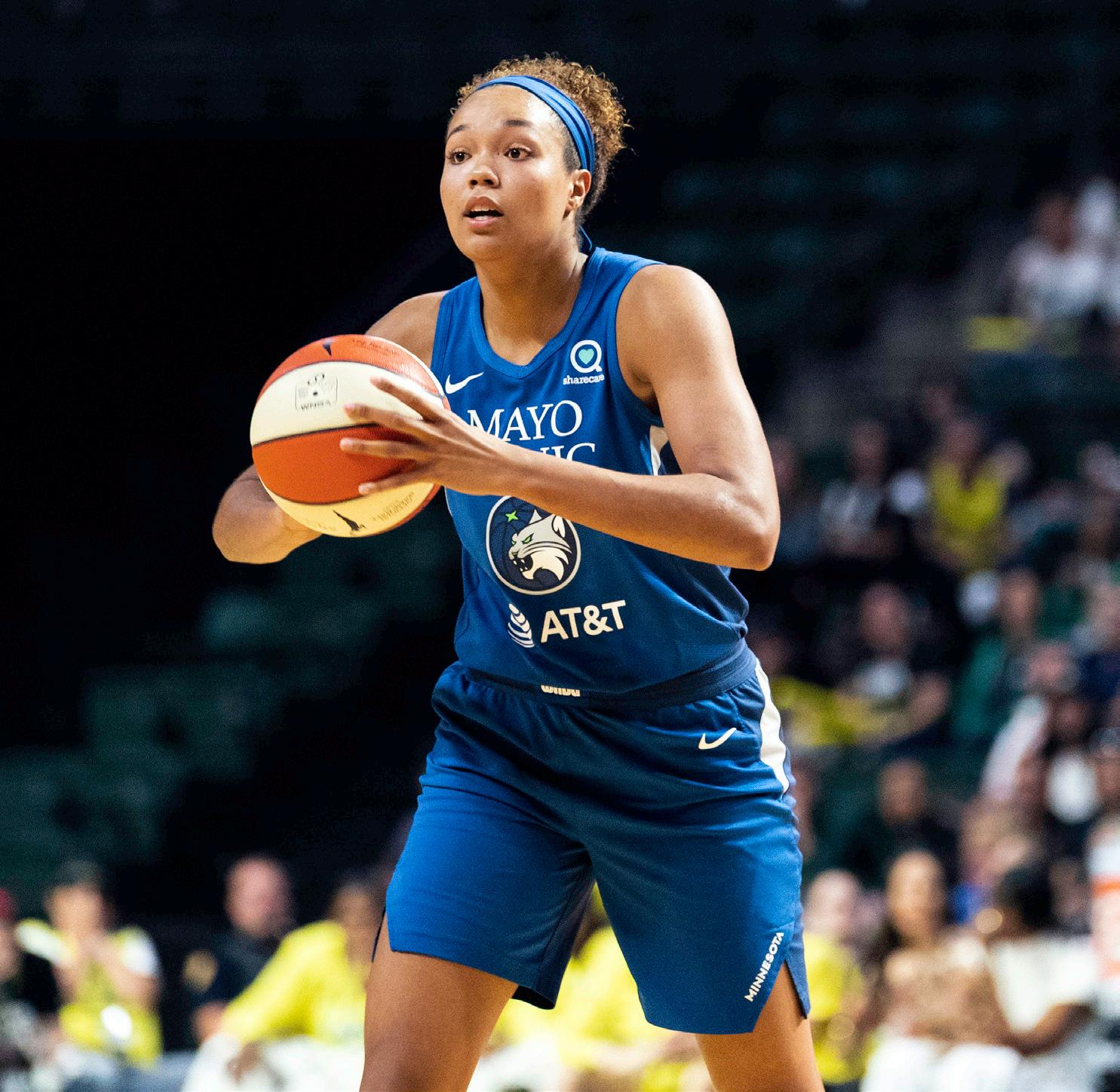
A major factor in the league’s sustained momentum has been the participation of high-profile players, including both established WNBA stars and younger names with massive followings. 2025 NCAA Champion and Dallas Wings star Paige Bueckers’ involvement brought significant attention from college basketball fans and casual viewers alike, as she is widely regarded as one of the most recognizable faces in women’s basketball. 2023 WNBA Rookie of the Year Aliyah Boston’s presence added interior dominance, while Indiana Fever standout Kelsey Mitchell contributed elite scoring ability and veteran experience. Their participation not only elevated the level of play but also reinforced Unrivaled’s credibility as a serious professional league rather than a novelty competition. Media coverage outlets such as Sports Illustrated and Forbes emphasized that having players of this caliber sign on was critical in validating the league’s vision and drawing sustained fan interest.
Many high-profile athletes are drawn to Unrivaled because of the financial incentives it provides. Players in the league earn an average salary of $220,000, and none of the players make less than six figures. By compari-
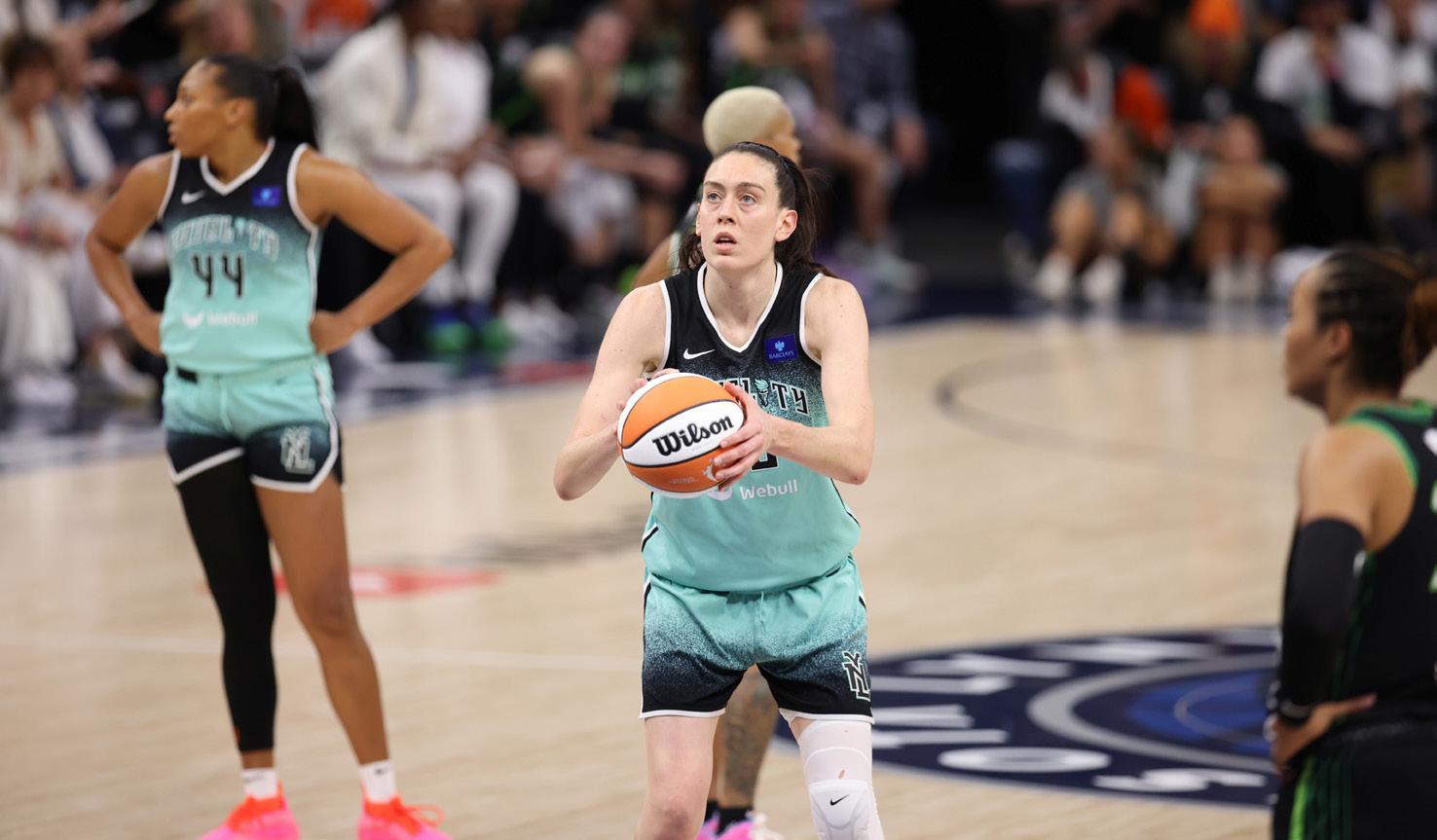
son, the average salary in the WNBA falls below $150,000, with a minimum salary of $66,000. Unrivaled also creates additional earning opportunities during its season, most recently hosting a one-on-one tournament in which the winner received a $200,000 prize.
The league is able to sustain these salaries and events through backing from prominent investors, including Dawn Staley, head women’s basketball coach at the University of South Carolina, Coco Gauff, currently the highestpaid female athlete in the world, Alex Morgan and Stephen Curry, among others.
Financially, Unrivaled has capitalized on its popularity. Following its first season, the league announced a heavily oversubscribed Series B investment round that valued the organization at approximately $340 million. The round included backing from Bessemer Venture Partners, Serena Williams’ Serena Ventures and Warner Bros. Discovery, signaling strong confidence from both sports and business leaders. Sponsorship deals with major brands such as Sephora, Samsung, Ally Financial and Under Armour further strengthened the league’s position, affording Unrivaled commercial partnerships typically reserved for far more established leagues.
The league has also moved quickly to expand. New teams have been announced ahead of the upcoming season, along with an increase in weekly game nights and the introduction of a player development pool designed to grow the talent pipeline. While some analysts have cautioned that rapid expansion can be risky, executives have argued that demand from fans, sponsors and players has justified the accelerated timeline.
As women’s basketball continues to experience a broader surge in popularity, Unrivaled’s success stands out as a case study in what is possible when elite talent, media exposure and investment align. Though challenges remain in sustaining long-term growth, the league’s booming popularity since its first season suggests that Unrivaled is not just a temporary experiment, but a lasting and influential addition to the women’s sports landscape.
CWRU at GVSU Big Meet (2/13)
Men: No team scoring
Women: No team scoring
CWRU at Crimson & Gold Invitational (2/13)
Men: No team scoring
Women: No team scoring
CWRU at Indoor All-Ohio Championships (2/14)
Men: 11th of 16 teams
Women: 2nd of 16 teams
UAA Championship vs UChicago (2/14) L 11-33 at NYU (2/14) L 19-33
at UChicago (2/13) L 74-93 at WashU (2/15) L 80-92
UAA Championships (2/11-14)
Men: 6th of 8 teams
Women: 6th of 8 teams at UChicago (2/13) L 77-84 at WashU (2/15) L 76-81
vs Kalamazoo (2/13) W 7-0 vs Allegheny (2/13) W 7-0 vs Lake Forest (2/14) W 7-0 vs Rochester (2/14) W 7-0
vs Rochester (2/14) W 7-0 vs Denison (2/15) W 5-2
vs Ed Finnigan Invitational 2/20 at Ashland Last Chance Meet 2/21
Wrestling at Regional Futures Invitational Invitational 2/21
Men’s Basketball
vs Emory 2/20
Horsburgh Gymnasium, 5:30pm vs Rochester 2/22
Horsburgh Gymnasium, 2pm
Women’s Basketball
vs Emory 2/20
Horsburgh Gymnasium, 7:30pm vs Rochester 2/22
Horsburgh Gymnasium, noon
vs Spartam Invite 2/20-2/21
Veale Natatorium, 10am/5pm
2026 ITA Division III National
Men’s Team Indoor Championship vs Johns Hopkins 2/20
Groundhog Palooza at Washington & Lee 2/21 vs Swarthmore 2/21
Baseball vs Oswego State 2/20
Nobby’s Ballpark, Double Header 11am/2pm vs Oswego State 2/21
Nobby’s Ballpark, 11am
Abhishek Nambiar Copy Editor
This past weekend saw the Case Western Reserve University wrestling and swim and dive teams compete at their respective UAA championships, putting up a series of strong performances.
Wrestling
Fourth-year Art Martinez led the Spartan wrestling charge at the UAA championship in New York on Sunday night, earning the title of Most Outstanding Wrestler at the competition, as he went 2-0 in his bouts at the meet. Martinez is the eighth Spartan to receive this honor and the first since Isaac Dukes in 2011.
Opening with a 19-2 win by technical foul against the University of Chicago’s Matteo Littman, before defeating New York University’s Jacob Venezia by pin in 1:05, Martinez also received all UAA-honors for the first time in his collegiate career. Likewise, fellow fourth-year Thomas Wagner also received allUAA honors at this meet. Wagner’s path to this honor also involved a pair of wins, first against UChicago’s Dan Gunlogson by sudden-victory and the second against NYU’s Robert Leeds by 3-0.
Overall, CWRU encountered stiff competition at the UAA championship, facing a pair of losses against Chicago (33-11) and NYU (33-19), consequently coming in last place in the tournament. Nonetheless, the team was able to prove their worth through the performances of Martinez and Wagner in addition to other wrestlers; first-year Hunter Keane and second-years Chase Crutchley and Robert Minden all added wins for the Spartan squad during their time in New York.
The wrestling team will be back on the mat on Saturday, Feb. 21 as a contingent of their wrestlers head to Adrian, Michigan for the Regional Futures Invitational hosted by Adrian College. The following Friday (Feb. 27), the NCAA Region V Tournament will commence in University Heights, Ohio.
Swim and dive
The men’s and women’s swimming and diving teams turned in a

series of strong performances over their four days of competition at the UChicago’s Ratner Athletics Center. On the first day of the meet (Wednesday, Feb. 11), the men’s 800-yard freestyle relay team of fourth-years Mason Bencurik and John Drumm, second-year Owen Miao and firstyear Trevor Novak set a new school record of 6:36.58, securing a NCAA B cut time; this puts all four swimmers one step closer to an invitation to the NCAA Championships in March. The women’s team for this event— consisting of fourth-year Claire Kozma, third-years Maggie Rose Rook and Ava Ellis and second-year Anna Brown—also turned in a strong performance, achieving a B cut time of 7:32.87. Kozma also secured a B cut time in the 200-yard freestyle, setting the tone for a strong start to her weekend. Alongside those swims, first-year diver Ryan Wells earned his own B cut qualifying score on the 3-meter dive.
Day two saw the Spartans’s momentum continue as they achieved several more accomplishments in different events. The 200-yard freestyle relay group of Novak, Bencurik and fourth-years William Froass and Ben Borvendeg accomplished a new school record time of 1:22.07 while Drumm notched a B cut time in the 500-yard freestyle.
On the women’s side, Kozma,
first-year Sohalya Rawlins, secondyear Marina Oria and fourth-year Eliza Dixon achieved a third-place finish in their 200-yard freestyle relay race with a time of 1:33.66. The quartet’s performance earned all of them UAA honors—Kozma’s third of her career, Dixon’s second and the first for Rawlins and Oria.
Kozma continued leading the way for the Spartan women on day three of competition as she achieved a fifth-place finish in the 100-yard butterfly, earning another B cut time. Meanwhile, the group of Dixon, Oria, second-year Sayjel Tan and fourth-year Julia Cho worked together towards a fifth-place finish in the 200-yard medley relay to give the Spartans further points on the leaderboard. As for the men’s team, the divers continued to shine as Wells dropped a fourth-place finish and NCAA qualifying score in the one-meter dive while third-year Jack Rudofsky finished seventh in the same event.
On the fourth and final day of the championships, both the men’s and women’s teams turned in a series of strong performances to cap off their time in Chicago. Several school records were set by the men’s team on day four: second-year Edgar Rutkauskas set a record in the 200-yard breaststroke with a time of 2:00.85, beating the previous record of 2:01.30. In the 400-yard freestyle relay, the quartet of Novak, Bencurik, Froass and Drumm achieved a time of 2:59.79 narrowly breaking a record set at last year’s UAA Championships, while Novak would continue his streak with a new 100yard freestyle record of 44.88 seconds. All three records also qualified for B cut times for all involved swimmers. Meanwhile, Kozma continued her strong performance for the women’s team as she achieved a B cut time in the 100-yard freestyle in addition to a fifth-place finish in the 400-yard freestyle relay in tandem with Dixon, Oria and Rawlins. In the end, the men’s and women’s teams both placed sixth out of eight teams at the event. Though this end result may not have been a desired one for the Spartans, the path to it is still lined with numerous accomplishments from swimmers and divers across both teams. The next meet for both teams will be the Spartan Invite on Friday, Feb. 20 and Saturday, Feb. 21 at Veale Natatorium. The meet will offer the Spartans one final chance to record qualifying times for the NCAA Championship.