



Alyssa Wang News Editor
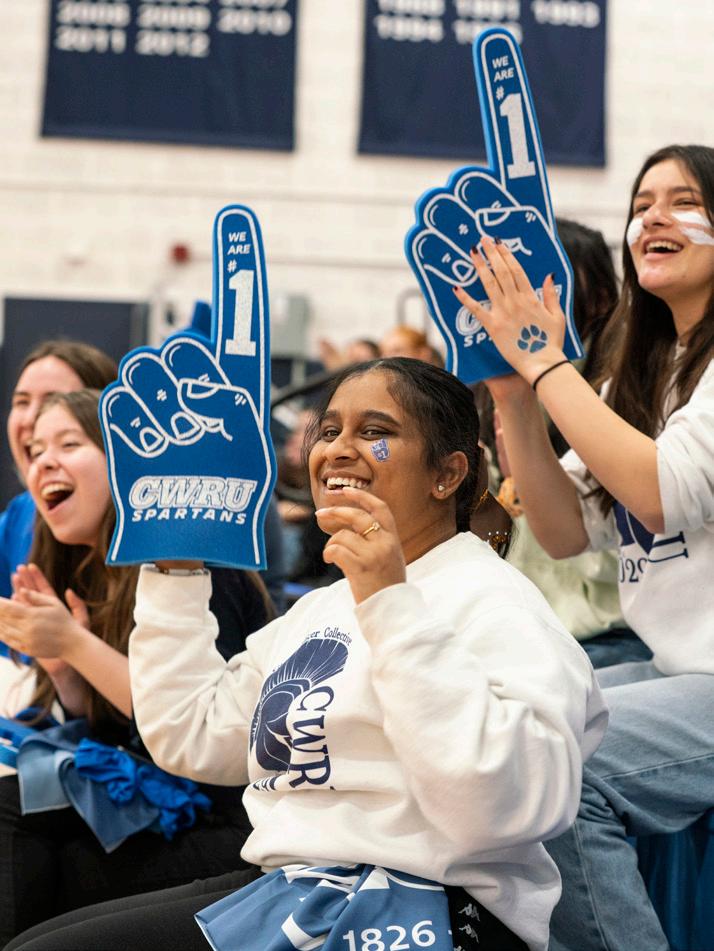
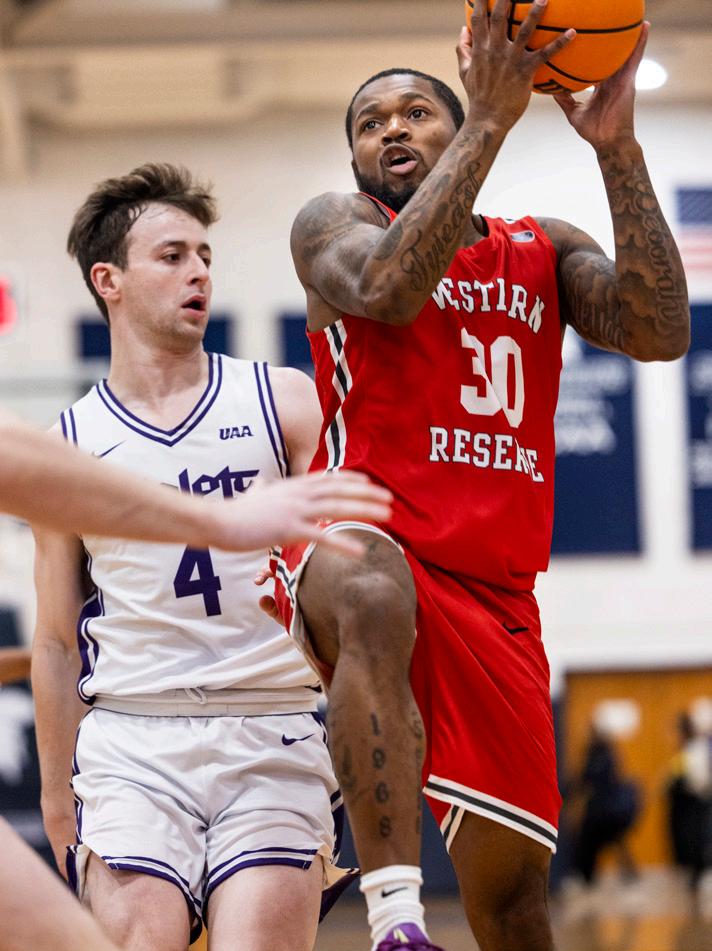
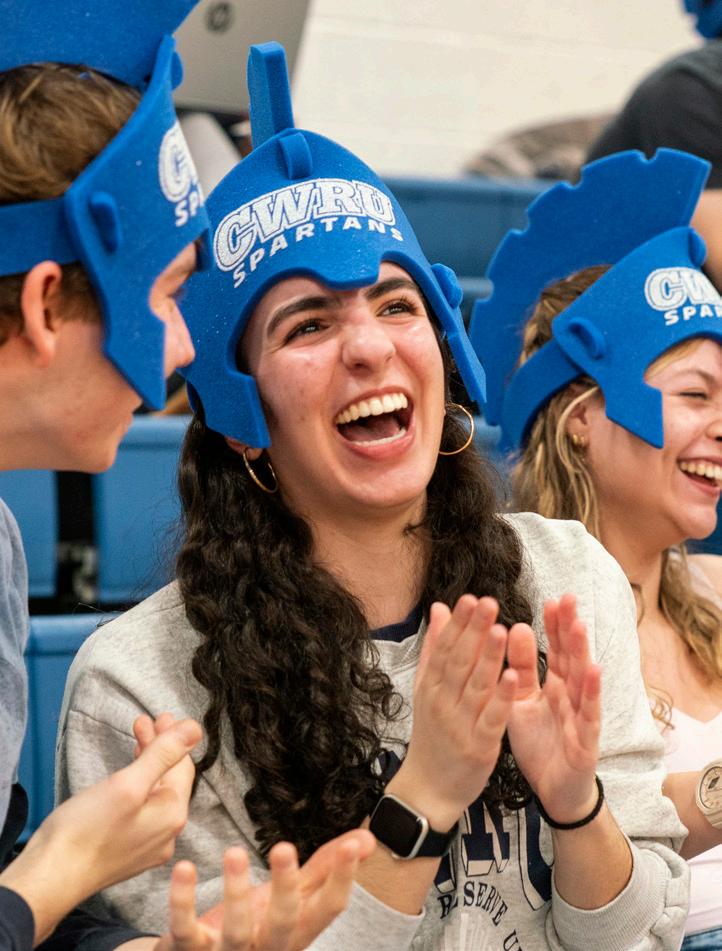
In perfect tandem with Case Western Reserve University’s 200th birthday, the snow relented and the sun welcomed students, faculty and alumni as they gathered to celebrate the milestone.
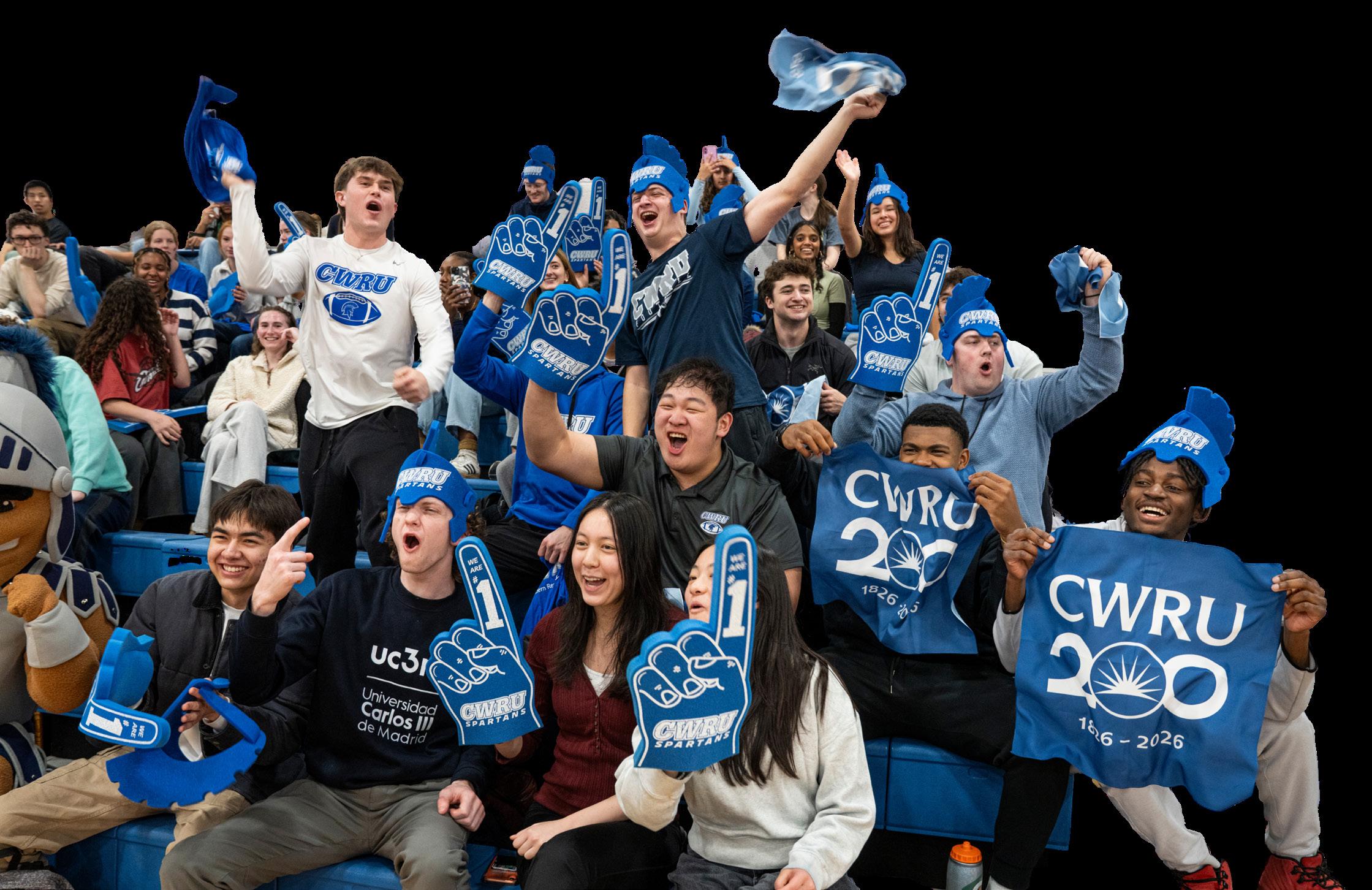
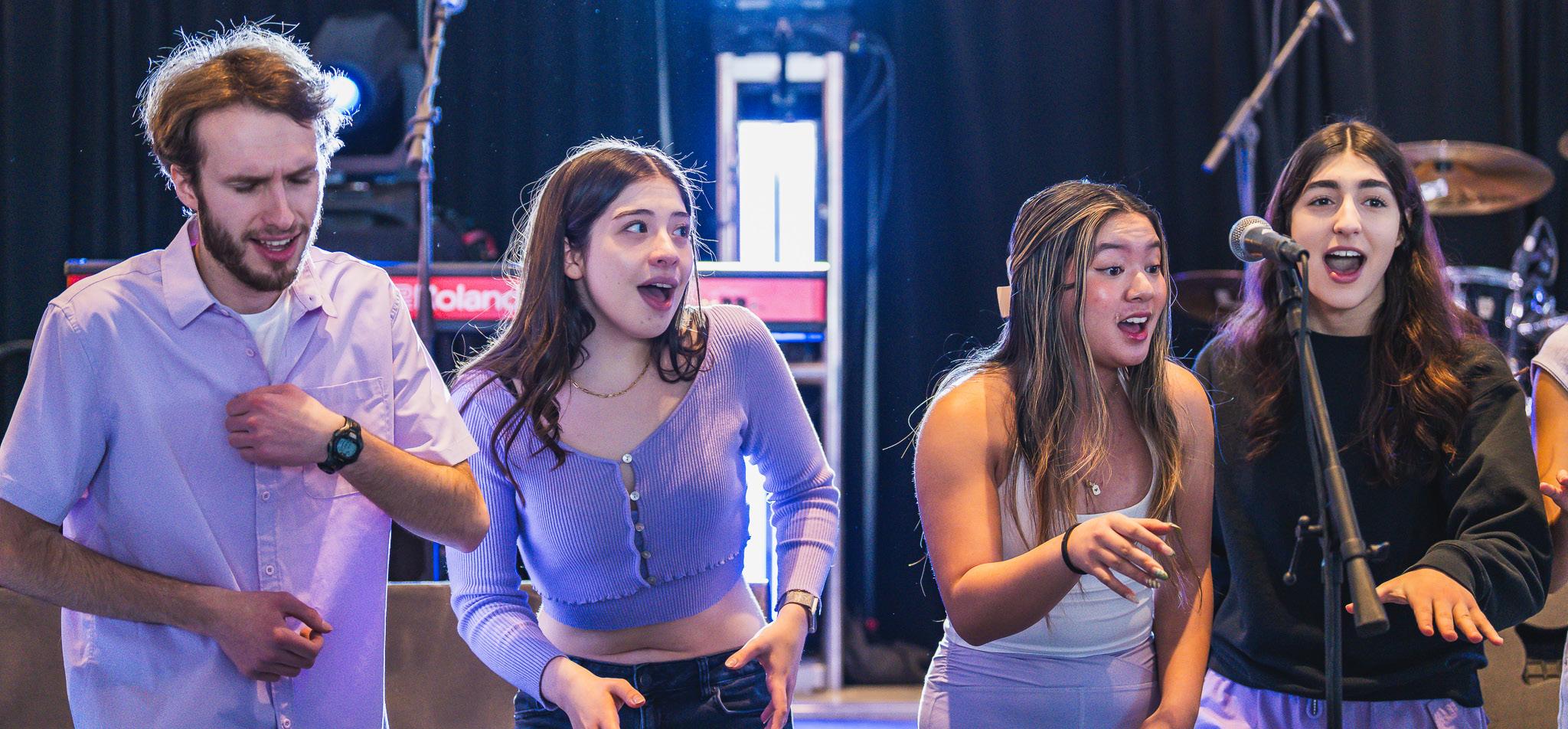
Feb. 7 marked exactly 200 years since the founding of Western Reserve College—one of the two institutions that merged to form what CWRU is today. To commemorate the momentous day, CWRU arranged several festivities including a live performance by Swami 3–a pop-rock band from San Francisco–student group showcases, exhibitions and “past, present and future” activity stations for all to enjoy. The event was organized by the Office of Events and Programs, along with assistance from the University Program Board and the CWRU Alumni Association.
“A successful celebration must engage our University Circle campus community as well as our alumni and friends around the world—we’re all a part of the CWRU story,” President Eric Kaler said. “It was wonderful to see faculty, staff, students and members of the public coming out to celebrate the university during the Bicentennial Birthday Celebration, and to see our students encourage and support their friends who performed throughout the day. Our sense of community is strong, and it shows.”
That same day, CWRU launched its bicentennial website featuring a timeline, photos and stories from the last two centuries to highlight CWRU’s history. The story details the foundation of Western Reserve College in Hudson, the signing of Case
School of Applied Science’s charter in Cleveland and the federation between the two Ohio colleges.
“Our bicentennial gives us the opportunity to reflect on our past in a way that can inform our future,” Kaler said. “I’ve spoken to staff and alumni
who were on campus during our federation in 1967. It’s been interesting to hear how uncertain things were at that time. The intention to move forward together was there, but there was also a lot of trial and error. It gives you an appreciation for the dedication that early leaders had to unifying two institutions and to growing them in a way that served our mission of education and research. Our history serves as an important reminder to keep our mission front and center in all we do.”
Although CWRU’s birthday was on Feb. 7, the university has been hosting festivities since December 2025 and plans to have more until June. On Dec. 11, 2025, the Alumni Association—under the leadership of Gary Broadbent—held their first function in New York City, then met again in India and South Florida on Jan. 10 and Feb. 4, respectively. In March, they will visit Atlanta for one more special reception before concluding bicentennial celebrations with a concert at Severance Music Center in June.
“I’ve recently been traveling around the country and around the world to visit with our alumni for various Bicentennial receptions,” Kaler said. “They have all been well attended and enthusiastically so. I think this speaks to the lasting bonds that our students form with one another and to the university.”
When asked what this milestone means to Kaler, he shared his appreciation for the university community, alumni and friends who make the bicentennial so special and memorable.
“I feel privileged to lead CWRU at a time when we can honor our past, celebrate the innovation and impact of our present and look ahead to our promising future,” Kaler said. “This milestone is an event that connects all of us. For two centuries, Case Western Reserve University has been a force for change for the world. That’s a legacy we can all be proud of.”
Darcy Chew Executive Editor
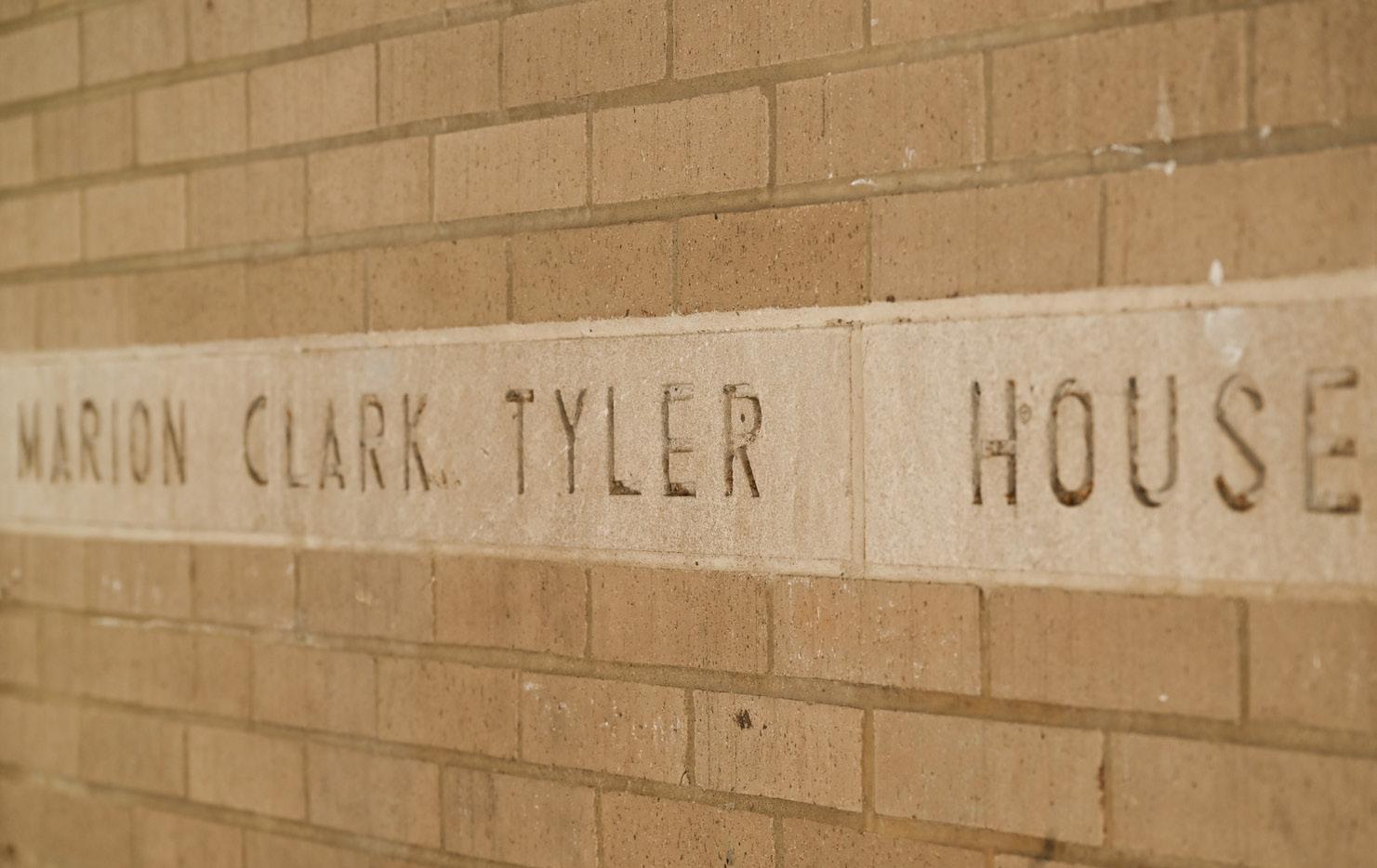
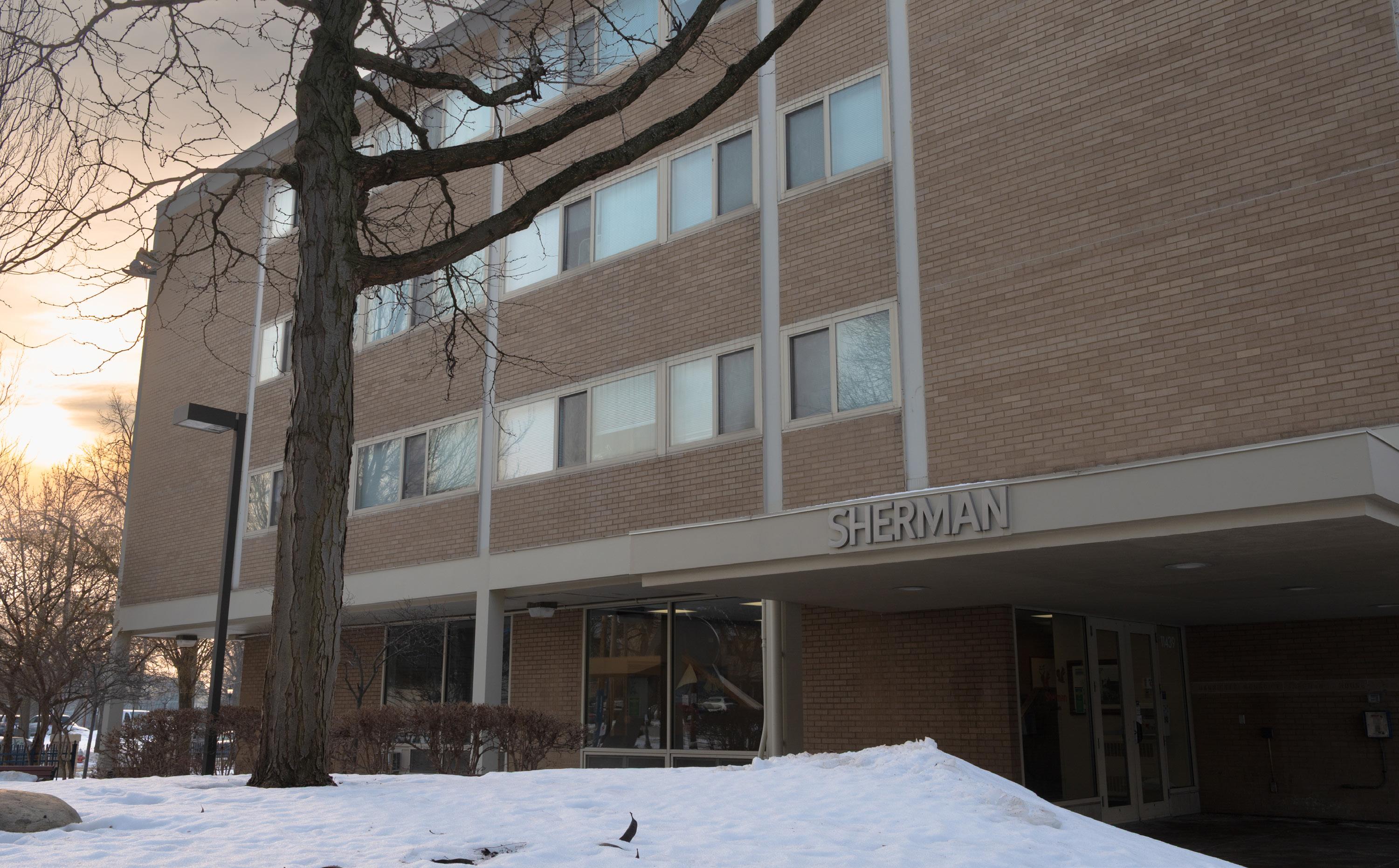
Last week, Case Western Reserve University’s North Residential Village experienced two separate instances of maintenance issues, one in Sherman House and the other in Tyler House.
The first of the two occurred on Saturday, Jan. 31, when the 2nd floor of Sherman House flooded following the failure of a radiator in a student’s room. One student shared a video where water could be seen leaking from the second-floor overhang to the ground outside.
One of the impacted students shared their experience with the leak.
“My initial reaction to the flood was a mix of shock and dread as I panicked to figure out a plan for what to do considering the flood happened the weekend before my midterms began,” they said.
Following the flooding, students
were evacuated from the building as the emergency maintenance team worked to fix the radiator. Impacted students were provided accommodations for relocation at Hazel Apartments.
“The process to get to Hazel took a while, but once we arrived, we figured out our heater wasn’t working, which was a constant issue for the first couple of days. To avoid the cold and have more access to Sherman, I stayed in a friend’s dorm,” the student said.
While those affected found temporary housing, crews worked to address the situation and restore conditions in Sherman for students to move back in. Vern Rogers, executive director of University Housing, noted that the maintenance team was swift in their response.
“Most of the issues were resolved within four to five hours; staff addressed any lingering issues within one to two days,” he said.
Rogers shared that the radiator’s failure was likely caused by the recent temperature drop.
“We don’t know the malfunction’s exact cause, but we expect the extreme cold was a factor,” he said. “Campus Planning and Facilities Management believes an open window in the building allowed the radiator’s water to freeze, which caused the failure.”
To mitigate such events from happening again, university staff recommends students keep their windows closed, particularly with temperatures below freezing.
“Students are asked to keep windows closed during cold weather to prevent this. If a room feels unusually hot or cold, students should submit a work order so the team can respond quickly,” Rogers said.
The impacted student commented on the communication from staff.
“The staff response and updates were honestly a bit minimal, but the RAs put in a lot of work during the whole flooding incident, which I appreciated,” they said. “Unfortunately, we have still had very minimal communication with them, especially with how damaged items are going to be taken care of and how long we were going to stay outside. We were first told one day and then told a week. Besides being told to clear a bit of the floor in our dorms by last Wednesday, we never really got consistent updates with our dorm maintenance.”
Despite concerns about communication, another resident of Sherman House reflected on the situation and stated that they are not concerned about such an incident recurring
“I am not worried about similar situations,” they said. “The resolution to the flooding took a little bit of time,
and I think the residents will be more cautious about leaving their windows open.”
Later that week, a separate nonweather-related maintenance issue arose in Tyler House. On Feb. 5, residents of Tyler House received notice of an oil leak. Impacted areas included the “first floor back hallway, back staircase, and part of the laundry room.”
“After a recent elevator repair in Tyler House, a rubber gasket failed and caused a hydraulic fluid leak. The issue was mechanical and not weatherrelated. Cleanup began the day it was reported,” Rogers said.
A Tyler House resident shared how the leak affected them.
“When I came back from my clinical rotation, I usually do laundry right after, but when I got to Tyler, I found caution tape and maintenance cleaning up the oil spill that covered the common area up to the kitchen,” firstyear Nathan Chung said.
Both Sherman and Tyler House are part of the first-year Mistletoe Residential Community and are slated for renovations this summer. However, the radiators will not be a part of the renovations, which are focused on “modernizing the bathrooms, adding new piping and ventilation and upgrading the common areas.”
“The radiators are original to the buildings and flushed every summer to ensure proper operation,” Rogers said. “Current first-year building renovations do not involve replacing the radiator systems.”
For residents, the week was an unexpected interruption during the start of midterms, but classes and daily routines have since returned to normal as repairs wrapped up across North Residential Village.
Esha Bagora Social Media Editor
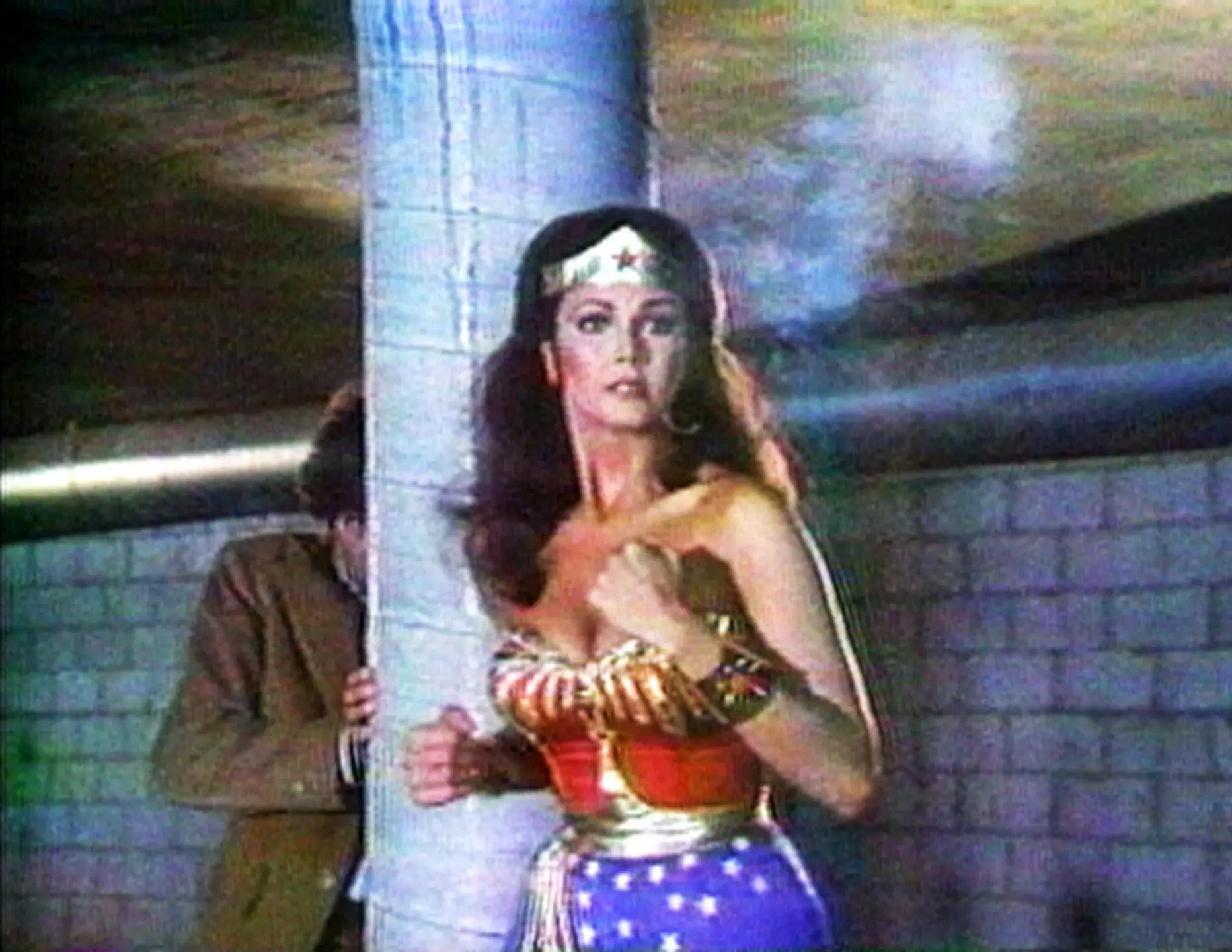
After bouncing around from museum to museum, Dara Birnbaum’s “Technology/Transformation: Wonder Woman” exhibit has finally reached the Cleveland Museum of Art. The six-minute-long video, short but striking, is famous for how it combines pop culture television with gender representation. Created between 1978 and 1979, the short film reworks footage from “Wonder Woman” (1975) into a tightly edited loop that challenges the concepts of power and heroism. Birnbaum focuses on one of the most famous moments of the show: the transformation sequence where Diana Prince spins and transforms into Wonder Woman. In the original TV show, the scene serves as a quick, visual transition to signal the upcoming action and excitement. In Birnbaum's version, the same sequence plays over and over again, turning a normally-overlooked moment into something more unsettling and worth noticing. By isolating the transformation, Birnbaum draws attention to how television creates meaning through editing, sound and repetition. The
spin, flashing lights and signature dramatic pose become more than just entertainment. As the loop continues, the transformation loses its charm and starts to feel mechanical and automatic. Prince’s superhero identity appears less like an expression of personal power and more like a commodity, something that was assembled by the camera.
This piece emerged during a period when artists were increasingly hijacking video to respond to mass media. In the late 1970s, television was a culturally dominant force that changed how audiences understood politics, gender roles and celebrities. Birnbaum was one of these artists who treated television as material that could be edited, rearranged and questioned instead of just a neutral source of images. Television could make a statement. Gender representation is the center of “Technology/Transformation: Wonder Woman.” Wonder Woman was often celebrated as a symbol of female empowerment, yet Birnbaum’s editing complicates that. The transformation emphasizes Wonder Woman’s appearance, novelty and visibility as it changes her from a shy secretary to one of the most powerful and glamorous
beings on the planet. Her perceived power is linked to how she is displayed and how often that display is seen. As I watched the sequence loop, the emphasis on performance became difficult to ignore. Birnbaum’s work doesn’t dismiss Wonder Woman as a powerful (female) superhero, but it makes viewers wonder about the conditions in which her power is presented on TV.
In a museum, the video comes across differently than it would on a regular TV screen. The Cleveland Museum of Art encourages viewers to sit, watch closely and engage with the film with no distractions. The focus is central to Birnbaum’s objective as the gallery asks viewers to slow down and notice details that would otherwise be missed. Sound is a surprising player in shaping the viewing experience. The audio reinforces the intensity of the edited visuals, contributing to a sense of urgency that is borderline overwhelming. The original excitement of seeing and hearing Diana Prince become Wonder Woman fades as you watch it over and over, going from thrilling to insistent to exhausting. This effect mirrors how TV uses sound and rhythm to hold attention beyond just video.
Despite being created over four decades ago, “Technology/Transformation: Wonder Woman” remains relevant as a political thinkpiece in today’s media landscape. While there is much to be said about watching Wonder Woman’s transformation and how it ties into expectations and preconceived ideas about female power, the editing style of the piece alone is noteworthy. Digital platforms rely heavily on repetition, looping videos and recognizable visuals. Gestures, poses and narratives circulate rapidly while often detached from their original contexts. Birnbaum’s work highlights this condition by showing how repetition can drain images of individuality and turn them into standardized signals.
The piece offers both a historical snapshot and a spotlight on the present. It reflects a moment when artists began critically engaging with television as a powerful cultural force while also speaking about the current state of media saturation and image control. Dara Birnbaum’s “Technology/Transformation: Wonder Woman” reminds us that even the most familiar images can be re-examined and how often we see something can be just as important as what we see.
Riya Kulkarni Copy Editor
Let me preface this review by saying that I was very confused by the premise of this book before I began to read it. Never judge a book by its cover, but the corgi that stared back at me as I searched for new books to read invited me in. I was pleasantly surprised. Sara Levine’s latest novel, “The Hitch,” possesses a much deeper meaning behind just the right amount of whimsy.
Levine introduces us to Rose Cutler, a woman who is convinced that she knows how to do everything right, from food to furniture, even raising a child. Rose adores her six-year-old nephew, Nathan, so when her brother Victor and his wife Astrid decide to go on vacation for a week, she convinces them to let Nathan stay with her. After a series of disastrous events, Rose’s Newfoundland attacks and kills a corgi, whose spirit ends up entering Nathan during a walk in the park. Rose initially expects this to be some sort of traumatic response, but several assurances that the dog—Hazel—is very much alive (accompanied by many knock-knock jokes) make her realize that Nathan has indeed become possessed by a corgi. So begins the race to get the corgi out of Nathan before his parents realize what went wrong.
When I say that there is whimsy in this novel, I do mean a healthy dose. We, the readers, are not meant to question how and why Hazel the corgi decides to merge with Nathan; we merely remain amused with every instance he decides to show Hazel’s muzzle. The owner of the maybedead corgi seems checked out and is content to be rid of it, explaining that it was not even her corgi—well, corgi, chihuahua mix—to begin with. Then there is Nathan. It is quite easy to tell that he appropriately sees the world through the eyes of a six-year-old, happy to have a friend to play with and quite content with the situation Rose is panicking to undo.
Then there is Rose herself, with a lifestyle that is intriguing. Being vegan is an important part of her personality,
including her slightly unstable company “Cultured Cow,” which is dedicated to selling artisanal vegan yogurt (there are a few vegan recipes sprinkled throughout the story, all free of “arteryclogging” cream). She is convinced that the sophistication of her choices stretches beyond what can be found on Craigslist, from getting antique toys for Nathan to having a Louis XV sofa. Her insistence on being close to Nathan and being present in his life for more than every Saturday causes conflict with Victor and Astrid, who think she is overstepping and a bad influence on Nathan. Seeing the story through her eyes reveals the internal motivations she struggles to communicate to the rest of the world. There is something almost childish about her view of life, despite the maturity she attempts to portray to the rest of the world. The dialogue, coupled with Rose’s way of explaining what she sees around her, is so subtly amusing that it makes the book such an engaging read.
There’s also the theme of loneliness beyond Rose’s inability to find someone capable of responding to a corgi crisis. Victor and his family are the only familial connection she has left, yet this relationship is so strained. She craves more time with Nathan, yet that time is limited. Her own pursuits, such as Cultured Cow, are failing. Her friends are few, and she struggles to maintain them. Her closest friend, Omar, at times struggles to connect with her, and she is forced to take Nathan’s principal’s advice and write an apology letter.
In fact, it’s these struggles that make this story realistic. They are never thrust in our faces, yet they guide Rose’s actions, causing her to be as unreliable as we see her to be. Despite the story being as hilarious as it is, there is enough sadness to ground the narrative, bringing this whimsical creation back to earth.
I didn’t expect to connect so much with a story such as this, yet it was a welcome surprise. “The Hitch” is a nearly perfect concoction, made up of a realistic filling inside a supernatural coating, a perfect addition to the bookshelf chocolate box!

Despite the silly, corgi-filled premise, Sara Levine's "The Hitch" conveys meaningful themes behind the whimsical events of the story. Courtesy of Grove Atlantic
Mariana Parilli-Castillo Copy Editor
Bad Bunny’s halftime show comes from one of his most politically outspoken albums yet, and that is saying something for an artist who managed to make a very successful single out of Puerto Rico’s power grid cri- sis. “DeBÍ TiRAR MáS FOToS” is, at its core, a plight against erasure, whether that erasure comes from being forced to move from your homeland due to gentrification and resource scarcity or from being forced to adopt a national image and history that better reflects the wishes of your colonizers. Bad Bunny’s Super Bowl show, then, shows the essence of the album’s narrative conclusion: The only way to stop erasure is through love.
Bad Bunny’s introduction to his show, set in sugar cane fields, brings us to one of the greatest aspects of the performance, which is the scenery. The set is multifaceted, composed of multiple sets that reflect
the Puerto Rico Bad Bunny loves so much: hundreds of people dressed as sugar cane stalks and shrubs building a maze, which evokes the colonial imagery of the plantations that were Puerto Rico’s primary economic sector during the Spanish occupation. Familiar Boricua scenes include a piragua cart, a nail salon and a kid sleeping at a party on top of three chairs; an elaborate (and real) wedding, complete with a multi-tiered wedding cake; some rather unstable electric poles; a casita that emulates that of Bad Bunny’s Puerto Rico residency (by being there, you are part of the biggest house party in the world); a colorful barrio block, with a barbershop and a corner store. The pieces of this set were carefully selected to showcase Puerto Rico—both its ugliness and its beauty—and make you love it just as much as Bad Bunny loves it.
The actual performance itself was also endlessly electrifying and dynamic. For most of the show, wherever you looked, there was relentless action. One minute, Bad Bunny is
moving more yards across the field in 13 minutes than the New England Patriots did in the entire game, then you are at his house party, where dozens of skilled dancers and celebrity cameos (Cardi B, Pedro Pascal and Jessica Alba) are celebrating. The tight pacing then reveals a standard Latino living room, frozen after Bad Bunny falls through the ceiling, and the show briefly segues to a medley of popular Puerto Rican reggaeton songs. This is all while Bad Bunny presents some of his most successful songs from both “DeBÍ TiRAR MáS FOToS” and other past albums, with recognizable tracks such as “Titi Me Pregunto,” “Me Porto Bonito” and “Safaera.”
As if the action couldn’t stop there, the focus then shifts to Lady Gaga singing Bruno Mars’s part of “Die With A Smile” while backed by a full salsa band. While she represents decades of tension and collaboration between white American and Latino artists, her presence also probably has to do with the fact that Bad Bunny is a self-proclaimed “Little Monster.” This does not mean that it can-
not not pump up the energy of the audience watching, especially as they start dancing together for “BAILE INoLVIDABLE.” Bad Bunny’s musical victory in the United States is only further established once he moves on to a barrio street block for more partying with the song “NUEVAYoL,” which celebrates the Puerto Rican diaspora in New York City. He takes a shot from Maria Antonia “Toñita” Cay (the leader of one of New York’s last Puerto Rican social clubs), someone whom he explicitly shouted out in the song. Additionally, where he originally sampled Puerto Rican boxer Félix Trinidad saying, “The best in the world! Puerto Rico,” Bad Bunny shows a clip of his Grammy acceptance speech for his historic win as the first Album of the Year fully performed in Spanish, being watched by a young kid. Bad Bunny then proceeds to give the kid his Grammy, and I can’t wait for what comes next.
Continue reading on page 5
But here the show goes on a standstill. I have no problems with Ricky Martin. I know that I should
respect my queer Latino elders as a good queer Latina. I know that no one else shares my opinion. But
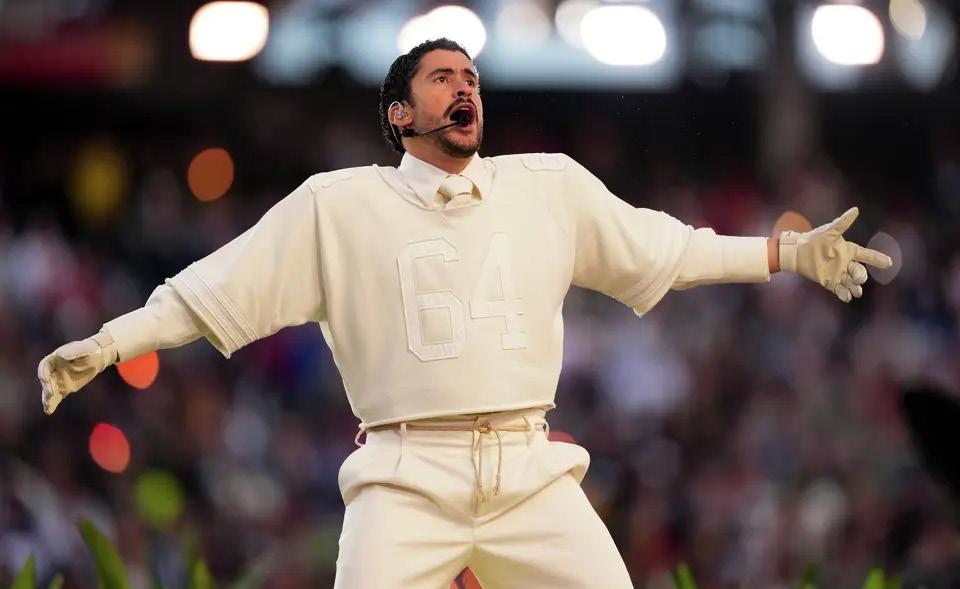
Bad Bunny's halftime show reached beyond a performance, telling a story of love and unity over hate.
Courtesy of Brynn Anderson
Ricky Martin, dressed in a white guayabera and seated in the white plastic chairs under the palm trees that evoke the album cover of “DeBÍ TiRAR MáS FOToS,” completely butchered and oversung one of my favorite songs of the album and the album’s most politically important song, “LO QUE LE PASÓ A HAWAii.” The beautiful and simple melody of the song, which is sung in an almost tired drone by Bad Bunny, is needlessly belted to hell and back with random riffs interjected in the middle in ways that outright downplay the song’s quiet plea not to let the gentrification and population removal that occurred in Hawaii happen to Puerto Rico as well. This, I recognize, is a matter entirely of personal taste, but it killed a lot of the excitement and love I had for the halftime show up until that moment.
The last few songs—those being the aforementioned power grid song,“El Apagón,” the party an-
them "CAFé CON RON" and some brief verses of the album’s titular “DtMF”—were still fantastic, but some of my wide-eyed excitement died off after Ricky Martin’s guest performance. This, however, does not mean that when the flags of all the countries in the Americas started filing in through the sugar cane shrubs and Bad Bunny said “God bless America” before starting to recite all the names of said countries while a giant screen behind him read “the only thing more powerful than hate is love,” I did not get teary-eyed. I sobbed rather loudly, for it is proof that, even while everything seems to be going wrong and the United States seems to be more hateful than ever, there are still things to be proud of, things to love and things to hope for in the future. Bad Bunny hopes that we can all unite through one great party, and I hope that, at least for now, this love can bond all of us who still have hearts.
Penelope Cloonan Life Editor
Abhishek Nambiar
Copy Editor
The Dunkin’ sitcom ad “Good Will Dunkin”: It is a funny concept, hawking a beverage company, with a really overqualified cast (Jennifer Aniston, Matt LeBlanc, Alfonso Ribeiro, Jaleel White and Tom Brady to name a few). The ad is funny, plays into powerful nostalgia and makes you remember to buy Dunkin’. This is what Super Bowl ads used to be; what they should all strive to be.
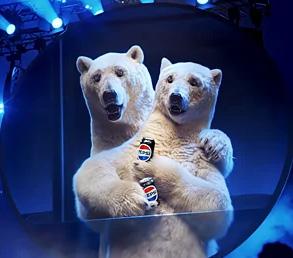
Pepsi’s polar bear ad “The Choice”: In a landscape where Coca Cola can get away with doubling down on AI usage, it is refreshing to see something simple, sweet and mildly provocative from Pepsi. Pepsi can do better and has done better at the Super Bowl, but it was sweet and fit well with their branding, all while egging on their competitor.

Cadillac Formula 1 ad “The Mission Begins”: This ad perfectly carried out its job: publicly revealing the livery that the Cadillac F1 team will be sporting for the 2026 season. It’s a cool livery and the prospect of seeing a fully-fledged American team in F1 again is exciting, but there isn’t much to say beside that.
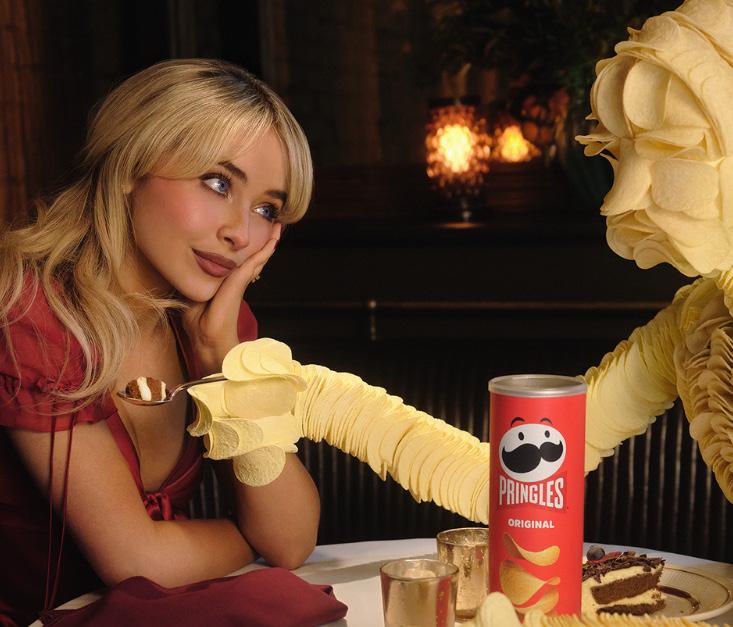
Sabrina Carpenter’s Pringles ad “Pringleleo”: While it certainly fits with Carpenter’s sense of humor—who else would build themselves a Pringle boyfriend?—it works more as an advertisement for her than the chips. The ad leaves an impression, but it doesn’t necessarily make you want to buy Pringles.
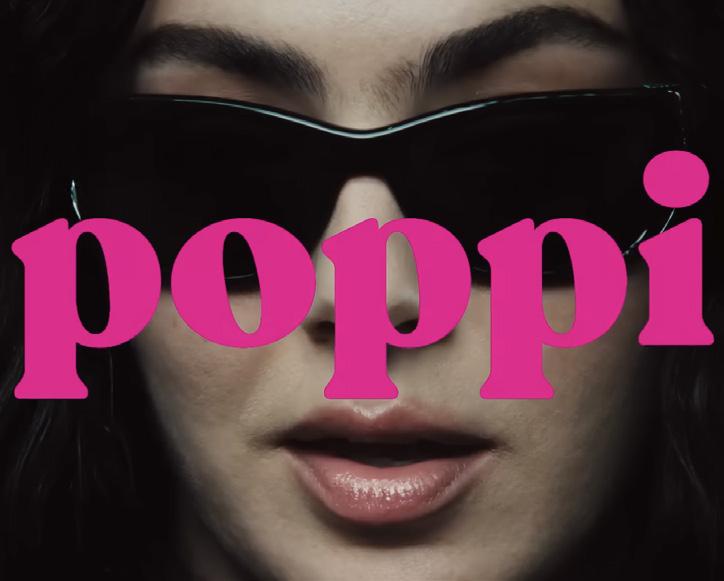
Poppi ad “Vibes”: This ad had the appropriate level of celebrity with Charli xcx and Rachel Sennott, who play wonderfully together, but the ad does not have a lot of substance. This ad also sticks in your head, but not for long. It is momentarily exciting.

Coinbase karaoke ad “Everybody Coinbase”: we were having so much fun and then promptly weren’t. It is never not fun to sing along to the Back Street Boys, but to have it ruined by crypto was terrible. This ad only breeds more hate for cryptocurrency.
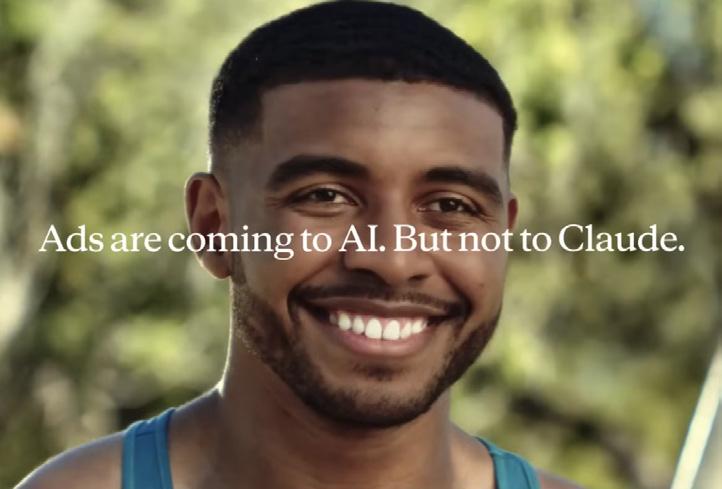
Courtesy of ClaudeAI
Anthropic (Claude) ad “Can I get a six pack quickly?”: This ad took some solid shots at OpenAI’s plans to integrate ads within ChatGPT conversations, so much so that Sam Altman felt compelled to respond. The only problem is, what’s stopping Claude from also inserting ads within the next year or so?
F TIER
Every other ad about AI: Special shout out to the Ring ad “Search Party from Ring | Be A Hero In Your Neighborhood” that promotes using surveillance technology and AI to find your dog. Fears were immediately raised about potential
other uses for AI facial recognition. While they are likely unfounded at this moment, now is not the time to play with AI doom. Especially not when even Vodka ads are AI-generated.

Every ad about weight loss: One of the weight loss ads was based on superficially overcoming wealth disparities, and the other attempted to harness the good name of Kenan Thompson. The only positive of seeing these two ads is knowing that Novo Nordisk (the company behind Wegovy) is suing Hims & Hers over their product. The infighting is great.
Every ad about sports betting: As online sports books get more and more accessible, this addiction only gets worse. Enjoy the game on its own; protect yourselves and your wallets.
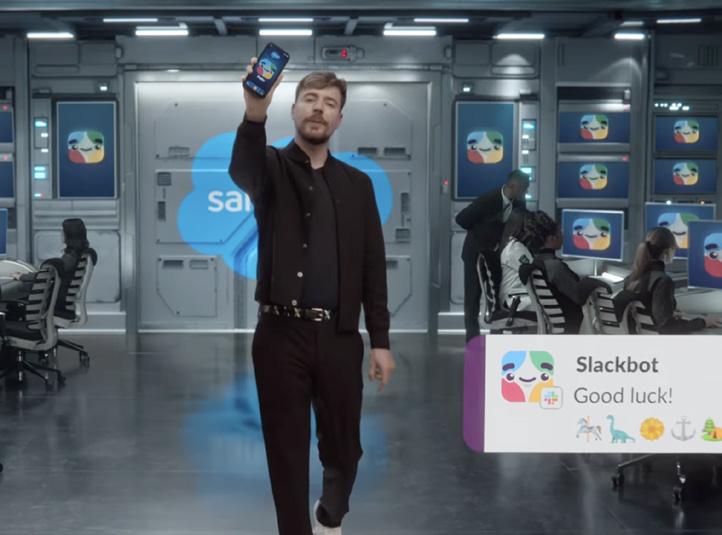
Mr. Beast’s ad for Salesforce “@ MrBeast's Vault”: It made no sense. The concept was over-complicated and Mr. Beast is not enough of a celebrity outside of the internet to sell a product on his own. It was extremely confusing.
Penelope Cloonan Life Editor
After their last major motion picture in 2014 and last television episode in 1981 (2015 if you count the mockumentary), it is time for the “most sensational inspirational celebrational muppetational” show to return. On Feb. 4, ABC and later Disney+ saw the premiere of the first Muppet TV special in over 30 years. With the closing of the last active Muppet project, Muppet*Vision 3D, in mid 2025, this was a big deal for fans. For the first time in my lifetime, the IP that I obsessively watched over DVD was in their element.
In classic nostalgic media fashion, the special opens on a slow reintroduction to the Muppets while a piano cover of “Rainbow Connection” plays. The bittersweet reminder that the Muppets have been gone for years is immediately cut with a snarky comment from Rowlf the Dog to bring the viewers back to that central Muppet comedy. We are thrown right back into it.
Fans of the original series have no fear, “The Muppet Show” (2026) follows a pretty familiar format. We open with Kermit the Frog introducing the show and it goes (mostly) well. Gonzo performs a death-defying stunt that goes wrong and haunts the cast throughout the special, but cru-
Bunsen Honeydew performs ethically questionable experiments on his partner, Beaker, has that classic slapstick comedy. Through it all, Kermit is backstage trying to keep the show together. There was even a brief “Muppet News” segment about Maya Rudolph’s death and rebirth. The special ends with a touching performance of “Don’t Stop Me Now” by Queen, sung by the entire cast. With the exception of a Swedish Chef segment, everything was there. It was an expression of everything the Muppets know how to do well; a love letter to fans that didn’t feel like a goodbye. It felt like a welcome back.
“The Muppet Show” is not without controversy, somehow. The main issue that fan circles, and people who grew up with the show coming out of the woodwork now, is the recasting of Kermit the Frog. Steve Whitmire, the voice of Kermit from the 1990s to 2016, resigned over issues with business conduct. The Frog was recast in 2017 as Matt Vogel, an experienced puppeteer. However, there is something about the voice that is not quite right. When Kermit is screaming or whispering, it is a near perfect match, but Vogel slightly struggles with longer stretches of dialogue. There is a difference in the voice, but it is not so glaring that it makes the special unwatchable. It is worth taking note of and hoping for improvement.
I am not dismissing any complaints
Violence.” It developed into an IP that could be enjoyed by families, but it did not start that way. The Muppets have always had those sly comments. It is the perfect balance of mildly raunchy comedy with mass market appeal you can watch on a Sunday morning.
This particular brand fit perfectly with the special guest of the episode, Sabrina Carpenter. There are two main camps of special guests that will do well on “The Muppet Show”: The guests either need to treat the other muppets as serious actors, like themselves, or embrace the ridiculousness and act as a muppet. Part of the draw of The Muppets is the mystique around them. There is a seriousness underneath the absurdity of felt puppets with silly voices. Carpenter successfully became a Miss Piggy derivative, and it is not subtle. She has a diva-off with Miss Piggy throughout the episode. Her brand of racy, dry comedy is perfect for the more mature side of The Muppets, but her commitment to the bit makes her fit right in with a chicken chorus. It is as if she was made in a lab to be a solid host for “The Muppet Show.”
Every piece of this special felt intentional. As a long-time fan, there were a few subtleties that jumped out. The opening with “Rainbow Connection,” followed by the appearance of Kermit’s nephew, Robin the Frog, was a pull to the heart strings. In the background, muppets with a cult following

chair to the return of the real prodigal son: Rizzo the Rat.
After almost ten years, Rizzo the Rat is back. When Whitmire departed in 2016, Rizzo was also left without a voice. Since he was more of a sidekick than Kermit’s main player, Rizzo was not urgently recast and has not appeared in projects since. Pepé filled his shoes as Gonzo’s sidekick and more mature comedic relief, but it was not the same. Rizzo the Rat is more cynical and plays off the other muppets better. He is such an integral piece of the Muppet cannon that the show really hurt without him. No more! Rizzo the Rat, my favorite muppet, has returned in all his snarky, poor singing glory.
Pulling back my bias and initial excitement at seeing The Muppets return, the special did play it pretty safe. Sabrina Carpenter performed her hit single “Manchild,” accompanied by chickens of course, on a Muppet filled stage. She later does a duet with Kermit, which is ultimately thwarted by Miss Piggy’s ego. The talent exhibition is a normal part of the show, but usually the special guest will have more fun with it and do something weirder. They played the hits, the well known segments, and emphasized the heart of the Muppets, but it left you wanting more. That is likely entirely on purpose. It was a good special, it just could’ve been more. It will be more if Disney chooses to greenlight. In the


Auden Koetters Director of Digital Media
Yeah, I know what you're thinking. You are looking at this Fun section. Then you are looking at the calendar. Next, you look slowly at the title… Back to the calendar. Your mind falls into a comatose state until a few minutes later when it manages to mumble (in a Yogi Bear voice) "Tomorrow Valentine's Day? Valentine's Day, tomorrow? It tomorrow?!?! Here is a list of reasons why I wrote so many Valentine’s Day pieces:
1.This is the humor section. We can blame anything on "for the sake of humor." For example: Many ask why I haven't started my work until 11 a.m. and spent three hours watching unhinged Cardi B complications. I respond, "It's a humor thing, you wouldn't get it." Or they ask, "Why did you try to burn down The Observer office this week? You realize that if you burn it down, we wouldn't have a newspaper, and you wouldn't be able
to write for us, silly." Well, then I just kick them and run.
2. I really felt the vibe of Valentine's Day this year (I don’t want to study for my exam).
3. Note: writing this list has NOTHING to do with the fact I didn't start my work until really late and then realized I had to make three Fun pages, so quickly looked to see what holidays were around this day, and it was Valentine's Day or National Cancer Day… and the editorial board shot down the horoscope idea of "What Cancer Are You," and I thought maybe a list of cancer tips wouldn't go over well either and so I really focused on the whole Valentine's Day thing.

or pretty much anyone ever.
5. Poetry is a useful Valentine's medium for communicating to your loved one what you feel, however it may be difficult to speak after they punched you in the face for trying to recite some lame *ss poetry to them.
6. Fancy jewelry is a great way to a woman's heart, but seeing as how you're really after her pants, you might as well just pony up for a prostitute like all the other lonely guys.
Aphrodite Columnist
I’d also like to provide you, my dear reader, with some key tips to boost your Valentine’s Day experience:
4. Valentine's Day, or the feast of St. Valentine was originally established by early Christians to incorporate a popular, pre-existing pagan holiday into their dogma. This information will in no way be of use to you
7. Valentine's Day is a popular day for marriage proposals. If you are a college student planning to "pop the question," this may be a good time to snap out of it and start appreciating the quality, single poontang around you.
8. Listening to romantic ballads while flipping through old pictures and enjoying a bottle of wine with your significant other is a great way to solidify your relationship. And if you're broken up, it can help solidify your resolve to chase that wine with loads of barbiturates. [Editor's note: Please don't. Not advised.]


Auden Koetters Director of Digital Media
First rule: If your date opens with “Sorry I’m late, Target was crazy,” and hands you a grocery bag containing one rotisserie chicken, protein bars, socks and a candle that smells like Garage, you are already in danger.
This is not romance. This is someone who blacked out in aisle seven.
They explain they “panicked.” You nod. You are already tired.
Your dinner reservation also does not exist. The hostess informs you that you accidentally booked Feb. 14 of next year and delivers this news with the calm of someone who has personally witnessed the collapse of several relationships.
So naturally, you go back to your apartment.
Candles are lit. Music is playing. The CVS balloon is slowly deflating in the corner like it’s losing faith in love.
Your date decides they should “heat up the chicken.”
You do not ask questions. They put the rotisserie chicken directly into a pan. On high. With oil. For reasons unknown.
Five minutes later, your smoke alarm goes off. Your roommate yells from their bedroom. “WHAT ARE YOU COOKING?!”
Your date says, “It’s supposed to be rustic.”
It’s not rustic. It’s on fire. Not meta-
phorically, literally.
Your partner panics and waves the flaming chicken around the kitchen like they’re auditioning for a survival show. You grab a towel. Someone knocks over a chair. Your roommate emerges holding a Brita filter like it’s a weapon.
After the chaos, you return to your room and end up making out again because trauma bonding is powerful.
This is when your bedroom door flies open because your roommate “just needs their charger.”
Everyone freezes. Your roommate makes direct eye contact with you and then backs out of the room. Startled from the encounter, your partner turns to you and says your roommate’s name. Not yours. Your soul exits in your body and begins apartment hunting. This is your cue that it’s time to cut the date short. Here are your approved exit strategies:
Option 1: The Fake Emergency Call
Text your roommate (not the one from earlier): “CALL ME AND YELL!!!!”
Answer dramatically.
“Oh my gosh. What? And it’s totally stuck?” Hang up. Apologize.
Say you have to leave because there is apparently a precarious situation. No one will ever question what is stuck where.
Option 2: The Sudden Premonition
Stand up slowly. Say, “I think I’m getting something from my recently deceased grandmother. Would you mind giving us some space to talk?”
If you’re reading this, there’s a strong chance Valentine’s Day is tomorrow and you’ve just realized you are, in fact, still single.
First of all: Breathe.
Second: Congratulations, you still have time. Not a lot of time, but enough time to send a few texts, put on real pants and see what happens.
Here’s your low-stakes, emotionally responsible guide to securing a Valentine in under 24 hours.
Step 1: Redefine “Valentine”
A valentine doesn’t have to be your soulmate!
Your Valentine can be:
• Someone to grab coffee with
• Someone to share dessert with
• Someone to walk around campus with
• Someone who says yes to being photographed for Instagram Aim for connection, not a proposal.
Step 2: Send the text You know exactly who this is about. Send the message. Keep it simple:
• “Hey, are you doing anything for Valentine’s Day?”

They will likely leave immediately and not call again.
Option 3: The Roommate Extraction
If you live with roommates, simply yell, “WHO ORDERED CILANTRO?”
When everyone comes out, blend into the crowd like a confused gazelle, disappear into your bedroom and lock the door.
Pretend you don’t exist and they’ll leave too.
Option 4: The Honest Approach (High Risk)
Look them dead in the eyes. Say:
“You just called me Amanda, gave me protein bars and almost burned my apartment down with a rotisserie chicken. I think it’s time to leave.”
And then they at least leave with a little dignity! Or at least their shoes. If all else fails, deploy...
The Nuclear Option:
Turn on a true crime documentary. Say nothing. Maintain eye contact. They will leave on their own.
Worst case, your Valentine’s date involves mistaken identities, CVS bears, smoke alarms and becoming a cautionary tale in your roommate group chat. Best case, you escape with a story so outrageous it carries you through every future holiday.
• “Random question: Want to grab coffee or dinner tomorrow?”
• “This is me shooting my shot… free on Feb. 14?” Is it scary? Yes. Will it take approximately 3 seconds? Also yes. Will you feel great afterward? Maybe.
Worst case: They say no.
Best case: You have plans!
Step 3: Be spontaneous! Last-minute invites are Valentine’s Day love language. Group hangs turn into one on one. Coffee turns into a walk. Dinner turns into dessert. Let the night unfold.
Sometimes romance doesn’t arrive with fireworks, it arrives with “Do you want to keep hanging out?” Say yes.
Step 4: Call on your friends
Friends are just unpaid matchmakers.
Tell them you’re single. Let them make introductions. Accept the double date. Your friends know people. You know people. This is basic networking, just make it romantic. This is how miracles happen!
Step 5: Romanticize your own life
If none of this works, congratulations! You’re now your own Valentine.
Buy yourself flowers. Get the fancy chocolate. Watch something cozy. Wear your favorite outfit for no reason. You do not need another person to have a good Feb 14. So take a breath. Send the text. Smile at the cute person. Be bold for 30 seconds. You’ve got 24 hours, and that’s plenty of time to make something sweet happen. Happy Valentine’s Day, and may your flirting be effortless, your plans be cute and your heart be full!
ACROSS
1. You might 1-Down them on a date
4. Toni Morrison’s magnum opus, or a name of endearment
9. Pop
12. Was in debt
14. Reality TV star Leakes
15. Marginalized demographic, in admissions lingo
17. Last month of winter, in brief
19. Just __ __
20. Parts of a cycle, with busts
21. Response to affirmative schoolyard taunt
23. Taylor Swift’s 2009 crossover hit
25. French consent
26. 33-Across cherub, in Rome
27. Hephaestus’ forge
29. Gender-neutral term for long-term relationships
30. Post-soak garb
32. Response to first date red flag
33. 26-Across deity, in Greece
37. Milestone relationship expression, via text
38. Marriage
39. Feast day for the saint of courtly romance
45. Butler’s sentence ender
46. Wonder
47. Aphrodite’s domain
49. Communicate
50. Candied declaration of affection
51. Rules arbiter, in tennis, soccer or basketball
52. “I’m in my villain ___”
54. Destiny
55. Regarding
56. Hungary’s national flower
59. Slight deviation
61. With the appearance of tiny particles of light
63. Candied phrase of flirtation
66. Max on the hotness scale
67. Candied declaration of affection
69. Cleveland’s time zone
70. Volatile data storage type
71. Choice
73. Meticulous
74. Star of “The French Chef”
76. Trepidation
77. “Hold on!”
78. Gym units
80. Corporate top dog
81. Ache for
82. Rihanna’s first No. 1 Billboard Hot 100 single
83. Breakage of divine law
84. Grandmother, in Greek slang
85. Ideal response to popping the question
86. Ride or dies DOWN
1. Something to do with 1-Across, during a romantic stroll
2. Completing multiplayer tasks alone, in video game slang
3. Absolutely, over text
5. Ceased 6. DiCaprio, Da Vinci or Tolstoy 7. “Right away”
Presidential power
Pair
Bicep adornment 11. One might slide into these
Fancy
Runner-up on Rupaul’s Drag Race Season 6
Banger
Bracket advantage
Loon
Aura
Sob
Life stage, for Romeo
Creep, in short
Plugged in
Ascend
Cuddle
Deep want
“__ __ the Housetop,” 1953 Gene Autry hit
Largest artery 41. “Rad!”
Round, boxed chocolates
Consume 44. Seasonal confection often inscribed with 50-Across, 63-Across, 67-Across and 57-Down
47. Something to bite, on yourself or others
48. Wedding attire mogul 50. Skin ointment
53. Request for ravishment
54. Approachable 57. Candied declaration of affection 58. Persons 59. The English in music? 60. DIY meal date 61. Relationship woes 62. Groove
64. Naughty
65. Stereotypical lover’s gift, named for a US President 68. ____-la-la
72. Nightmare phrase at the altar
73. Concern 75. Hawaiian flower garland 77. Path 79. Beneath-mattress irritator




Walk up to a couple and say...
10. “Ohhhhhh. So that’s why you’re not answering.”
9. “Thank you again for the giant bouquet. The card was… bold”
8. (Look at one of them) “I’m still coming over tonight… right?”
7. “Wait… are you telling people now?”
6. “Wow. I always knew you’d end up with someone exactly like you!”
5. “Hey! How are our kids?”
4. “Interesting choice.”
3. “I hired an Etsy witch, but honestly she said this was inevitable.”
2. “So are we pretending I don’t exist or…”
1. Make direct eye contact with one of them and say: “Relax. I already deleted the videos.”
Adam Joseph Staff Writer
Anyone who has entered Fribley Commons is likely familiar with Sarah McCord, more commonly known as Ms. Sarah. She was known for her enthusiastic greetings, small talk while serving food and true kindness to all. This is what makes it so hard to grapple with the fact that on Sunday, Jan. 25, she passed away in her sleep.
“Loving,” “Biggest Supporter,” “Enthusiastic,” “Caring” and “Hilarious” were all words people used to describe Ms. Sarah, yet all of these descriptions just barely touch on who she was.
“Sarah was much more than a Bon Appétit associate here at Fribley. Sarah was genuinely involved in each student’s college experi-
ence. She knew many of our student guests by name. Her loving greeting always brought smiles to our guests and coworkers’ faces,” Jim Boland, Resident District Manager at Bon Appétit, aptly described her impact on the community. Boland also noted her importance in the relaunch of Fribley Commons, as he explained that Ms. Sarah brought “energy, care and pride to the space during a major transition”.
On a personal note, I firsthand saw her care for the community in many ways, but nowhere was it more evident than her habit of nicknaming people. She used “boo” as a term of affection for almost all Case Western Reserve University students. But, as she got to know people more, she would develop a personalized nickname—these nicknames almost always stemmed from a funny story shared between
the student and Ms. Sarah. With a yearly undergraduate population of roughly 6500 people, Ms. Sarah saw many faces throughout her 20+ years at CWRU. The ability to come up with and remember these nicknames was remarkable.
Her habit of nicknaming people was a lot more than what met the eye. It wasn’t just nicknaming for the sake of nicknaming. It was about forming intimate relationships with the people she helped every day. Ms. Sarah and the CWRU student population lived two very different lives, but when we walked through the Home Table line and she called us “boo,” there’s a moment of overlap. She put the effort to care, to love and to provide for us like we were one of her own. “In many ways, Sarah filled a void for those missing families from home by being a truly compassionate daily reminder
that there was someone who cared about them,” says Boland. It would have been so easy for her to be emotionally detached from her job, but that sense of connection brightened all of our days.
The phrase “Won’t you be my neighbor?” has lost some of its weight in modern times, but Ms. Sarah, in one way or another, was our neighbor. She offered the warmth of Fribley hospitality to us on the coldest winter days, always ready to start up a conversation with anyone. Ms. Sarah was a truly genial person who really cared about all of our lives.
As of writing this, there is a station in Fribley where students can write down a message to the family of Ms. Sarah. And, as always, make sure to thank the staff that improve and make our student experience what it is.
Editorial Board
In Springfield, Ohio, officials claim there are 12,000-20,000 Haitian immigrants living in the region, possessing some form of legal status. This influx of population in the Springfield area served as a blessing in disguise, reversing the declining population while also increasing the average annual wage trend. Yet, as per usual, the good news is obscured by the bad. Recently, bomb threats against Springfield institutions and organizations have been at their height. In 2024, President Donald Trump and Vice President JD Vance made baseless claims concerning migrants in Ohio eating pet dogs and cats, which were disproven by Springfield police. Anti-immigration sentiment has increased over the past year, especially in the shadow of the current political climate. The Haitian community in Springfield, however, suffers especially from the negative attention and false allegations it has received from political officials, like Trump and Vance.
U.S. Immigration and Customs Enforcement’s (ICE) Operation Metro Surge, mainly attacking the Minneapolis-Saint Paul region, was created to mass deport undocumented immigrants and now presents a threat to the Springfield area. The Temporary Protected Status (TPS) of Haitian migrants was set to expire on Feb. 3 before Federal Judge Ana Reyes granted a lastminute reprieve, which delayed the termination of the TPS. However, the length of the reprieve is unknown. Recently, the Department of Homeland Security (DHS) promised Ohio Governor Mike DeWine a 24-hour notice before the movement of ICE agent surge troops into the city. While this may offer the Haitian population of Springfield, as well as other undocumented immigrants, the opportunity to flee before the increase in immigration enforcement, not everybody has the luxury or economic means to uproot their lives at such short notice. And it does not solve the root of the problem: that immigrants
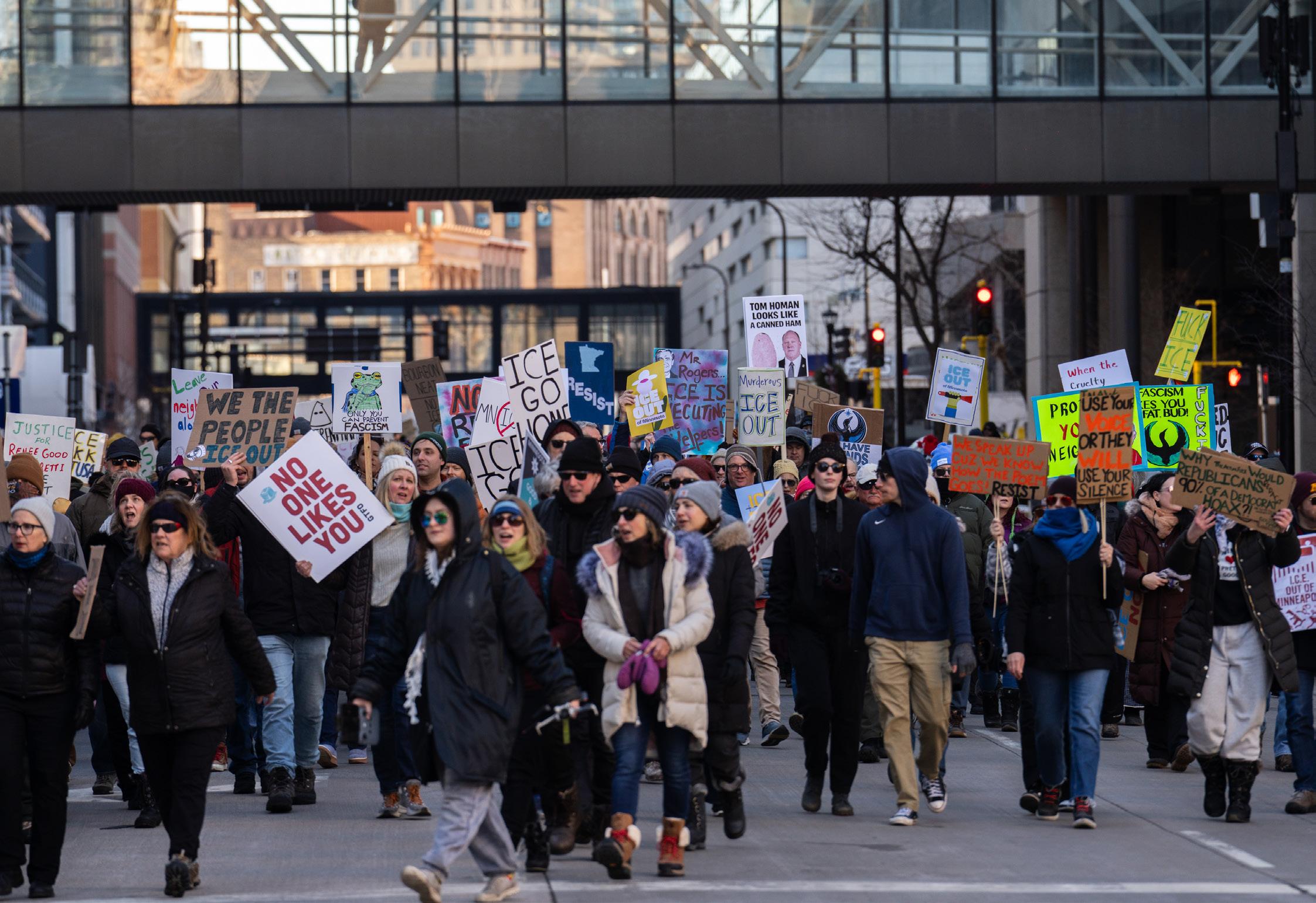
As ICE continues to target immigrants in the United States, it is more important than ever to come together with your community. Courtesy of Chad Davis via Wikimedia Commons
are being unfairly targeted.
ICE was implemented as part of the Homeland Security Act of 2002. In the past, the agency focused on transnational criminal activity, like drug smuggling. With the increase in immigration personnel and funding to the agency in major cities across the U.S., it is clear that the intentions have shifted inward. Now, family, friends and neighbors are being terrorized. Families have been torn apart, and migrants are being held captive in barbaric conditions. ICE seems to have lost its purpose, as it is now directly involved in endangering the lives of U.S. inhabitants, with and without criminal records, with unlawful force.
Even though ICE’s focus used to be on criminal activity of non-U.S. citizens, it seems that basis is no longer a requirement. Immigration
agents shifted their attention to specific people and locations in part of their new strategy. Agents commonly surveil Home Depot stores, street vending areas, mosques and construction sites, amongst other locations that migrants are likely to gather, like ethnic grocery stores or diasporic communities. Over the past year, there has been an influx of racial-profiling allegations against the federal agents. The Noem v. Vasquez Perdomo ruling of 2025 complicated the management of racial-profiling allegations through the Federal Tort Claims Act, though. And in September 2025, the Supreme Court halted a ruling that placed restrictions on the action of agents interrogating people on the basis of racial profiling in Southern California. These judicial rulings all act against the interests of immigrants because,
now, all it takes to be considered a threat to civilians is having an accent or the color of your skin.
As an ethnically diverse academic institution and local community, we must uplift each other in these times of high anxiety and fear. Subscribing to apathy would hurt our community severely. As a population of exceptional students, it is without a doubt that we are a motivated, ambitious bunch. It is true that our academic achievements are important, though adopting an individualistic way of thinking fails to leave room for our peers and community. The inhumanity and injustice experienced daily by migrants seized by ICE should be reason enough to get your nose out of your textbook. This is the reality we live in, and we have to express that. Ignorance will jeopardize our futures.
Bhargavi Vatte Contributing Writer
Let me start by saying that I LOVE my name. I truly cannot imagine a better word to encapsulate my identity than “Bhargavi” (pronounced bar-guh-vee). Despite my appreciation for the beauty of my name, it is a fact that it is rather unconventional in a heavily-Westernized society.
As my teachers would call roll on the first day of school, I would immediately know when it was my turn to say “here” through their hesitant attempts to sound out Bhargavi. I am by no means blaming them, and I appreciate their intention to honor my name. What I have found difficult, though, is not being addressed or referred to in future conversations. Not because teachers did not know who I was, but because they were unable to properly say my name. This pattern repeated itself in my sports teams, research labs and even within friend circles. These group settings are already difficult to assimilate into. For me, they were arguably made more isolating, not because I was inadequate in any measure, but because the label of my identity was “unconventional.” At times, I almost believed that the unconventionality of my name was a weakness—a barrier to future conversation and belonging.
The nature of my situation led me to pursue new conversational approaches and, in a sense, skewed my values. I would ask people for their name again, even if I clearly remembered it, just so they could naturally prompt me for my name. Selfishly, this was all done in the hope that they would not only remember my name, but also use it. Components of daily interaction that a majority of society perceives as standard became anomalies for me. People saying my name right— especially on the first try—made me feel very happy and seen. On the other hand, I had no choice but to

accept the nicknames I was given in some settings because people were afraid, or simply did not want, to say my “difficult” name—a name with the same number of syllables that a majority of Western names have. One of my mentors would only address me by my last name, if he did at all, because he had a hard time pronouncing Bhargavi. Yet, the other first-year intern was given the privilege of being called by his first name, which happened to be a very conventional Western name. Ironically, I never requested my mentor to call me by my name because I thought it would be seen as unprofessional or an excessive request. Thus, I have observed that individuals with hard-to-pronounce names face different social
barriers and constraints.
So, what’s the point? I do not believe that individuals within a Western society will automatically know how to pronounce my name, nor do I expect them to. I would even be happy to repeat my name multiple times. I am simply sharing my perspective and experiences with my “unconventional” name that often go unnoticed.
As students at Case Western Reserve University, we constantly interact with peers from around the world with diverse and beautiful names that represent their cultures and unique identities. I am merely encouraging you to be more mindful in your social interactions with these individuals and to take intentional steps to make them feel
included and seen in your shared community. Whether that entails taking a few extra seconds to properly learn your peer’s name or even frequently saying their name in conversation, these actions can create stronger bonds and allow others to feel more appreciated and valued in group settings.
Additionally, for those with unique names, do not settle for less. Names carry deep meaning and beauty, so advocate for the correct pronunciation of your identity in both casual and professional settings. While it is difficult and something I still struggle with, I believe that together we can redefine the current standard and represent ourselves in an authentic manner, one name at a time.

Jeremy Bendik-Keymer Professor of Philosophy
The things that have left the most lasting pain in my time in academia are the relationships with intimate users who took advantage of goodwill. I’ve known philosophy professors, artists, even a psychotherapist who used others and me to advance their creative or intellectual work and professional standing after periods of intense ingratiation and apparent bonding. What is confusing about this category of folks is that they use on the inside of intensely open, moral or beautiful ideas, discussions, inquiries or pursuits. You are all bound up with the meaning of something that is broadly speaking idealistic, yet underneath it, you are being used. The phenomenology of the experiences involves figuring that out later, and the result is nearly always devastating for a time.
My question is how to move on from the use. Obviously, one should learn from it, know now that people like that are out there hiding in plain sight behind the beautiful things, and defend against their use so as to be prudent going forward. But there is no closure with users in my experience. The healing is hard because the sense of being exploited lingers on the inside of projects that were intensely meaningful to one’s humanistic pursuits. How can healing from the betrayal of a heartfelt, philosophical relation occur without closure?
My answer is weird, and I borrow its reasoning from Jean-Luc Marion’s phenomenology of relating. The answer, I feel, is to “love first.” Marion uses this expression to get out of the impossible situation of misunderstanding love as a reciprocal act that depends on awaiting recognition or giving from another.
His view of love is, of course, de-
batable, although I find that I am repeatedly convinced by it. Love is essentially giving. Insofar as we legitimately expect good treatment or recognition from others in various ways, such as basic respect for our freedom or awareness of our personhood, this is not to love another but to treat them as people. Seeing them as people, however, comes first, and in order to do that, we must resolutely insist on their being apprehended in freedom. To see another as free, in turn, involves letting them make their own decisions. Love is the giving of our unconditional support for that basic appearance of them as who and how they choose to be. Any moral expectation, say, we have of them to reciprocal behavior or recognition of ourselves, or others, depends on their being seen lovingly first, as free. To expect something from someone, then, is not precisely love but something that, when appropriate, depends on love. Legitimate expectation is something depending on the other’s prior freedom from us and for themselves. Morality depends on love, and love is nothing more than the unconditional development in intensity and extent of involvement. Much attachment is not loving, moreover. The way to deal with an intimate user of heartfelt, philosophical relations is to love them. This is to be toward them for their own freedom—to want it for them without condition, to see them accordingly and to keep a space in oneself right where the hurt is: for their freedom. “I hope that so-and-so (the user) becomes free to be.”
The user is neither free nor loving in many of their relations, of course. This is their tragedy, the more so they adorn themselves with lights. They have used others. By loving them, I do not condone their vices but carry a possibility for them that they need, although they are currently disowning it and

existing in want. They need to be free so that they can stop using others. They need to be able to love on their own consistently across their relations. Until this need is filled, they exist as a shadowy person, and all their relations are distorted in turn. It’s sad, no matter how much glory awaits them in the unhealthy world of status.
By loving first, I do not get closure; I get more openness. I let go
of the craving for reconciliation and accountability that is not forthcoming as much as we refuse to engage the world narcissistically. You can’t change people, but you can love them. Maybe someday they will get their act together. I doubt it, given the extensive convolution of their dishonesty and opportunism, but I can still live toward them with a kind of solution at the level of personal freedom.
Established in 1969 by the undergraduate students of Case Western Reserve University
Darcy Chew Executive Editor & Publisher
Hannah Johnson Director of Print
Sabrina Feldberg News Editor
Alyssa Wang News Editor
Penelope Cloonan Life Editor
Aleksandra Majewski Opinion Editor
Ellie Palaian Sports Editor
Michelle Bai Copy Editor
Riya Kulkarni Copy Editor
Siya Motwani Copy Editor
We’ve all been there, trying to study or finish that last assignment when all we want to do is … anything else. Maybe we’re overwhelmed with the work we have to do, or maybe we feel the pressures of perfectionism and don’t want to start. We push ourselves to “lock in,” but call it quits too often, feeling guilty each time we pick up our phones to doomscroll again and again. Doing anything but the work we have piled up always seems to feel better than actually getting things done, but the sinking feeling in our stomach knowing we’ve wasted time is much worse. Can we really consider these pauses to be “breaks” if we feel worse after taking them?
Abhishek Nambiar Copy Editor
Mariana Parilli-Castillo Copy Editor
Lily Zhang Copy Editor
DESIGN
Anjali Bhuthpur Director of Design
Lucas Yang Director of Design
Shareen Chahal Layout Designer
Sahar Kapasi Layout Designer
Reva Kolhe Layout Designer
Elizabeth McHugh Layout Designer
Kiera Ng Layout Designer
Nithya Pandari Layout Designer
Jana Ashour Graphic Designer
Kristina Guo Graphic Designer
Anna Trusova Graphic Designer
We may trap ourselves in a cycle of counterproductivity and double the time it takes to complete a task. In this “popcorn brain” mindset, we work and get little done, then stop working and think about how we could be working. By the time we resume our work, we feel ashamed, not refreshed, and we stay up late in attempts to catch up.
DIGITAL MEDIA
Auden Koetters Director of Digital Media
Moses Fleischman Web Editor
Ayan Sheikh Video Editor
Matthew Stall Video Editor
Obafami Tidjani Web Editor
Phillip Kornberg Photo Editor
Tyler Sun Photo Editor
A break is not shameful, not when it has the potential to act as a tool that makes productivity much more efficient. We just need to know how to use them.
Esha Bagora Social Media Editor
Benjamin Kang Social Media Editor
Timothy Le Social Media Editor
Rhea Soni Social Media Editor
Just as an athlete wouldn’t do 150 consecutive bicep curls while strength training at the gym, as students we must take meaningful breaks in reasonable intervals. One popular example of this is the Pomodoro method, where 5 minute breaks follow 25 minutes of work (10 minutes of break to 50 minutes of work is also a popular option). By time-boxing our productivity and knowing we will be rewarded, we remain more focused when we
BUSINESS
Tyler Vu Director of Business Operations
Riya Dixit Ad Manager
Divya Kurma Business Manager
Anya Lin Analytics Manager
Ria Trivedi Marketing & Distribution Manager
The Observer is the weekly undergraduate student newspaper of Case Western Reserve University. Established in 1969, The Observer reports news affecting students and provides an editorial forum for the university community. Unsigned editorials are typically written by the opinion editor but reflect the majority opinion of the senior editorial staff. Opinion columns are the views of their writers and not necessarily of The Observer staff. For advertising information, contact via e-mail at observer@case.edu. LETTERS TO THE EDITOR should be e-mailed to observer@case.edu or submitted on our website at observer.case.edu. Letters can be mailed to Thwing Center 11111 Euclid Avenue, Suite 01, Cleveland, Ohio 44106. For policy and guidelines related to the submission of Letters to the Editor, refer to observer.case.edu/submit-a-letter.
The Observer is a proud member of CWRU’s University Media Board. Follow The Observer on Facebook, Twitter, TikTok and Instagram @cwruobserver.
Derick Su Contributing Writer
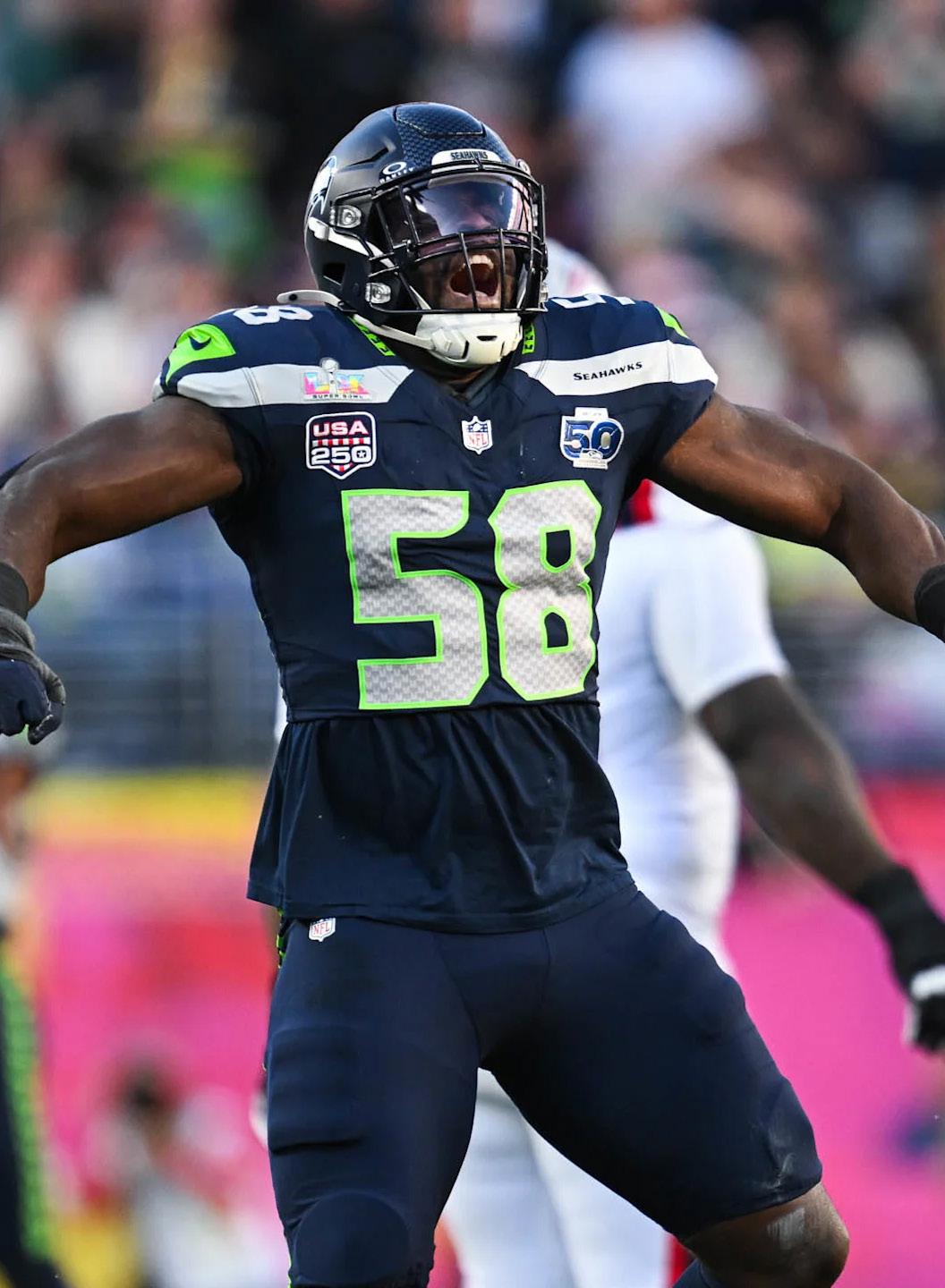
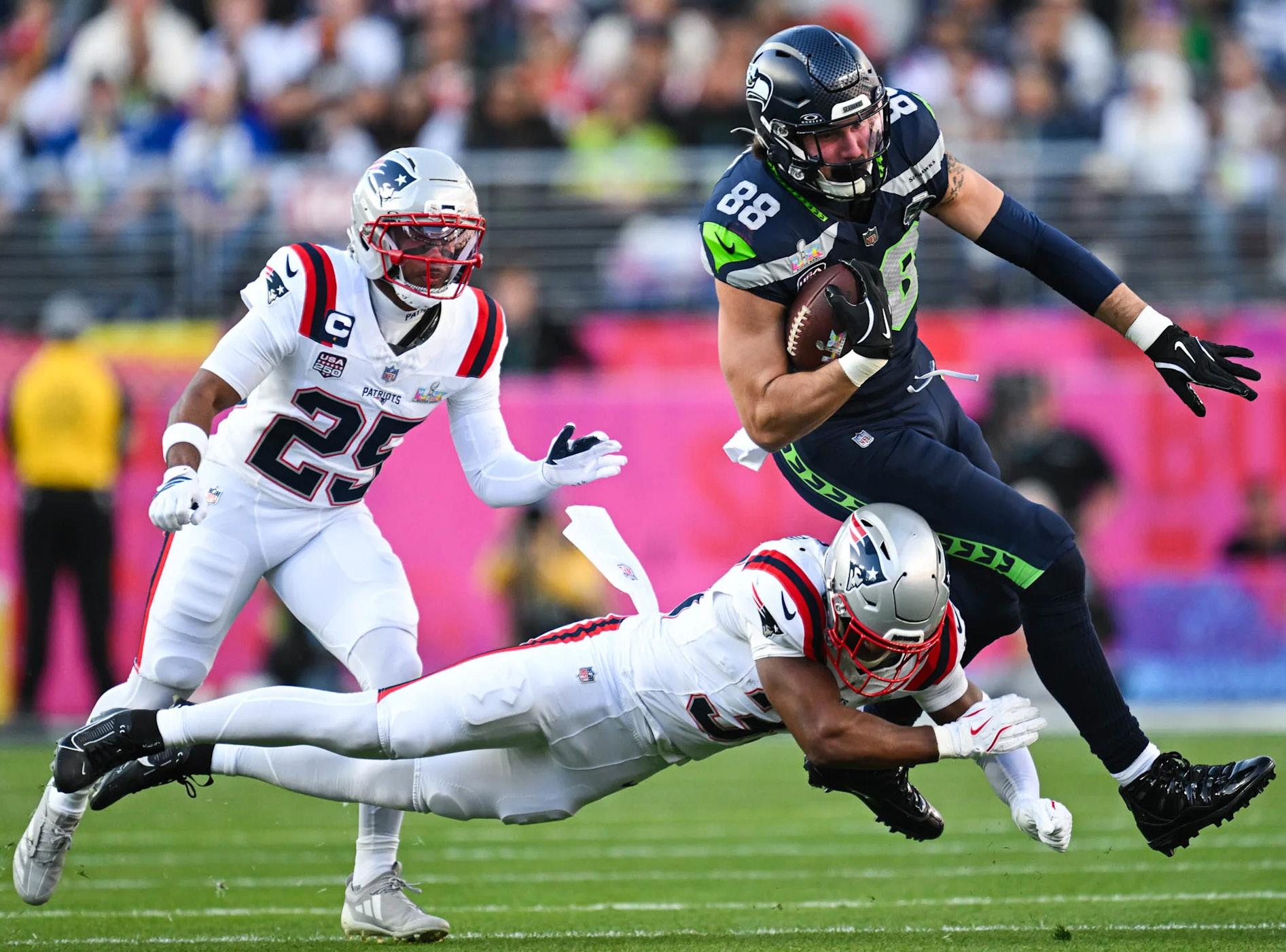
This past Sunday, the National Football League (NFL) concluded its 106th season in existence with the playing of Super Bowl LX between the Seattle Seahawks and the New England Patriots. The Seahawks gave the Patriots little room to breathe on the field, dominating on defense and special teams, leading to a decisive 29-13 win.
The two met for the second time in Super Bowl history, with the first matchup, Super Bowl XLIX in 2015, ending 28-24 on a last-second interception from New England’s Malcolm Butler. This game showcased record breaking moments, a historic halftime show and a result that made it an unforgettable day to be a Seahawks fan.
The Seahawks received the ball to start the game and opened the scoring with a 33-yard field goal from 11-year veteran Jason Myers, the first of a Super Bowl recordsetting five he would make in the game. Neither team was able to find any offensive rhythm for the remainder of the first quarter, as the game quickly turned into a fieldposition battle. Beginning with New England’s first possession, the two teams combined for five consecutive punts. Through those five drives, both sides combined for a total of 53 yards while Seattle drove for 51 yards on their first drive. Fans began to settle in for a defensive standoff as these were two high-powered defenses facing off in the big game.
On their fourth possession of the game, Seattle once again moved the ball but was forced to settle for another field goal from Myers.
From there, the defensive battle continued, with three more punts exchanged between the two teams before Myers added his third field goal 11 seconds before time expired in the first half.
For the highly anticipated halftime show, Bad Bunny came out to deliver a once-in-a-lifetime performance. He performed many hits like “DtMF,” “Tití Me Preguntó” and “MONACO.” His show also featured other artists like Lady Gaga and Ricky Martin.
Coming out of the half, there was a lot of anticipation. What would the Patriots change to get the offense going? Could Drake Maye find a rhythm after having a really quiet half? How much could this Pats defense hold on to keep them in the game? And will this be the first Superbowl without a touchdown being scored?
The answer to these questions? Whatever head coach Mike Vrabel said in the locker room did not work; 23-year old Maye found absolutely no rhythm, and despite their effort, the defense could not stop the Seahawks. New England gained 7 yards and had to start the half with a punt. Myers, once again, kicked a field goal, tying the NFL record for most field goals in a Super Bowl game.
The first record of the game was broken when Maye was sacked, making him the most sacked quarterback in a single postseason run with 21 sacks. The previous record was held by Joe Burrow, who was sacked 19 times in his 2021 postseason campaign. It wasn’t until the fourth quarter that the offenses really started firing on all cylinders.
The Seahawks opened the 4th with quarterback Sam Darnold’s 16yard touchdown pass to AJ Barner
to the corner of the end zone. Myers continued his busy day with yet another kick, making it 19-0 for the Seahawks. Maye responded with
his own touchdown, a 35-yard pass to Mack Hollins over the stout Seahawks defense, who had been almost perfect all day. After a punt from Seattle and an interception from Julian Love thrown by Maye, the Seahawks continued to dominate. Looking to bolster their 19-7 lead, Seattle sent on their most reliable player of the game, Myers, for yet another field goal attempt. This was his record-breaking 5th converted field goal of the night.
With the game already looking out of reach, Maye was picked off by Uchenna Nwosu, who returned it all the way back 45-yards for a pick six. This put the nail in the coffin for New England with a 29-7 lead for Seattle. The Patriots continued to fight, earning a touchdown to cut the Seahawks lead to 16, but it wasn’t enough as Seattle prevailed to become Super Bowl champions.
With the win, Darnold took home his first ring and running back Kenneth Walker III won Super Bowl MVP with 161 total yards from scrimmage. Darnold played a big part, throwing for 202 yards. In the end, Super Bowl LX lived up to its stage. Seattle controlled the game with defense, field position and steady execution. Myers played a central role, turning drives into points and setting a Super Bowl record in the process. New England showed effort late but could not overcome early struggles and costly turnovers. The Seahawks finished the season as champions, closing a long year with a complete team win and a performance that fans in Seattle will remember for years to come.
Derick Su Contributing Writer
On Feb. 6, the National Basketball Association (NBA) Trade Deadline came to a close, and this year delivered surprises, blockbuster moves and endless storylines. Here is a rundown of the trades from least to most shocking.
The biggest rumored name was 13year NBA veteran Giannis Antetokounmpo, though the Milwaukee Bucks ultimately held firm despite reports of internal tension and massive trade offers for the superstar who averages 28/10/5 (points/rebounds/assists).
Washington Wizards’ star Anthony Davis, however, saw his value dip after a hand ligament injury sidelined him until after the All-Star break. Despite strong averages of 20/11/3 and 1.5 blocks in 20 games, concerns over his durability lingered, and only one of these stars ended up staying put.
The least notable move saw Memphis Grizzlies send a 2032 secondround pick and the draft rights of international stand-out Justinian Jessup to Philadelphia for current Sixer Eric Gordon, who was waived two days later. Another small deal sent the South Sudanese-Australian professional Duop Reath and two second-round picks to Atlanta for Czech player Vit Krejčí, whose 42 percent career threepoint shooting should help a Portland team that has struggled from beyond the arc.
The Charlotte Hornets acquired Tyus Jones and two second-round picks from the Dallas Mavericks in exchange for cash considerations. Later, Oklahoma City Thunder sent Ousmane Dieng and a 2029 second-round pick to Charlotte for center Mason Plumlee. The Cleveland Cavaliers also entered the mix in a three-team trade that moved Lonzo Ball’s contract to Utah, sent Jock Landale to Atlanta and included two future second-round selections.
Other minor trades included Boston Celtics sending Josh Minott to Brooklyn for cash considerations and Xavier Tillman Sr. to Charlotte in exchange for a 2030 second-round pick. Golden State Warriors’ Trayce Jackson Da-
vis and Los Angeles Clippers’ veteran Chris Paul are heading to Toronto, while several late-round pick swaps involved Brooklyn, Denver and the Clippers. OKC also added former 76er Jared McCain from Philadelphia for a 2026 first-round pick and three future second-round picks.
The Los Angeles Lakers addressed their shooting woes by trading Gabe Vincent and a 2032 second-round pick to Atlanta for Luke Kennard, who is shooting nearly 50 percent from three. Detroit made a major shooting upgrade as well, acquiring Kevin Huerter from the Chicago Bulls and Dario Šarić from the Denver Nuggets, while sending Jaden Ivey to Chicago in a threeteam deal that also included a 2026 protected first-round pick swap.
Several players changed hands multiple times throughout the deadline. New York first moved Guerschon Yabusele to Chicago for Dalen Terry, then flipped Terry along with two secondround picks to New Orleans for José Alvarado. Dario Šarić was also on the move again, this time in a three-team deal involving Cleveland, Sacramento and Chicago. Ousmane Dieng proved to be the most well-traveled player of the deadline, being traded three times before ultimately landing in Milwaukee as part of a package that included Mike Conley Jr., Coby White and multiple second-round selections.
The blockbuster portion of the deadline began with Atlanta Hawks’ Trae Young being sent to Washington for CJ McCollum and Corey Kispert, signaling a potential reset for the Wizards. Memphis stunned many by trading Jaren Jackson Jr. (JJJ) in a massive deal that brought in five players and three first-round picks, pairing JJJ with Lauri Markkanen in Utah.
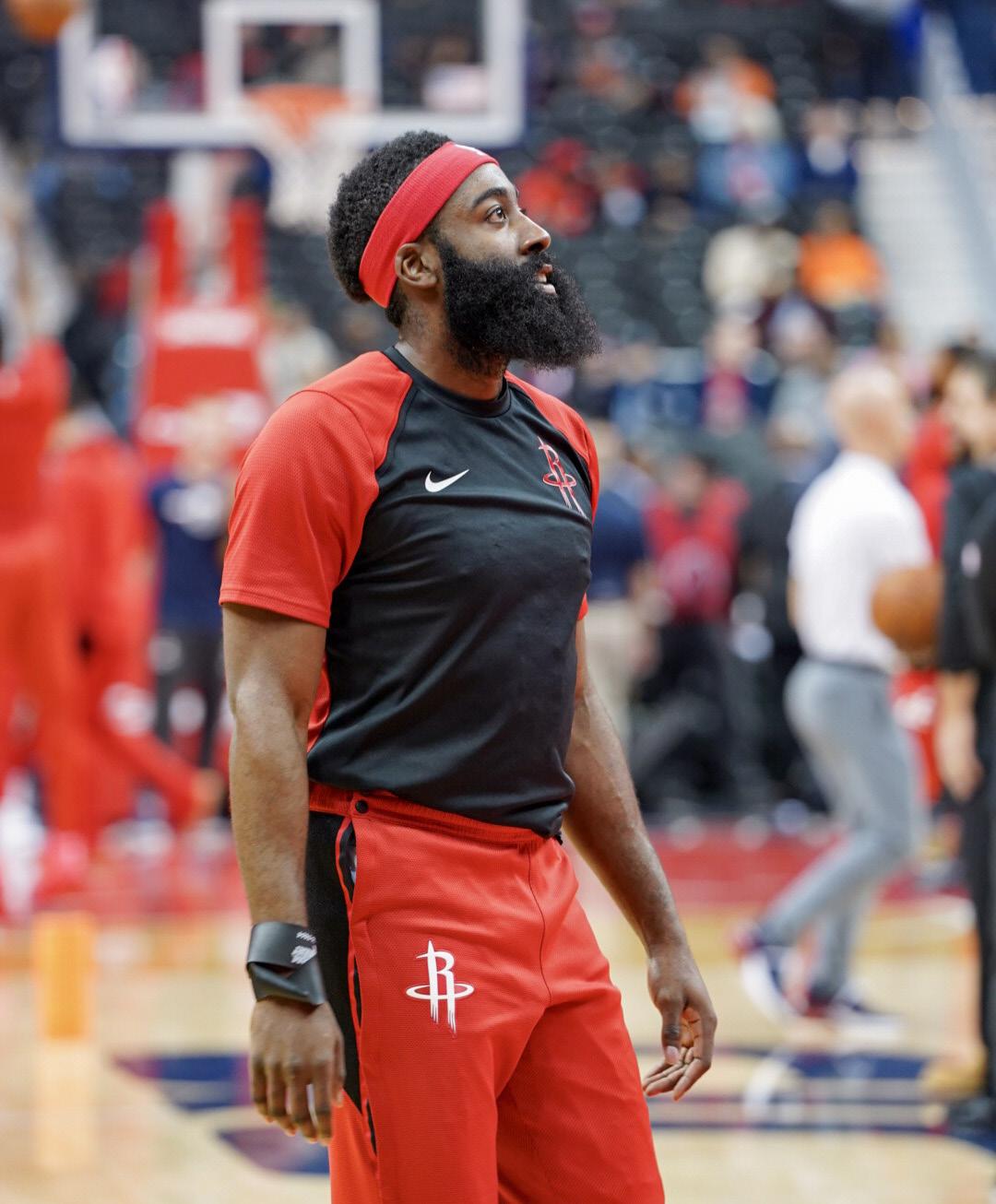
Cleveland went all in, sending Darius Garland and a future second-round pick to the Clippers for James Harden. Chicago also stayed busy, trading Ayo Dosunmu and Julian Phillips for Minnesota Timberwolves’ Rob Dillingham and Leonard Miller, and four secondround picks in 2026, 2027, 2031 and 2032, before flipping Nikola Vučević for Celtic Anfernee Simons and a 2026 second-round pick.
The Clippers made another splash by sending Ivica Zubac and Kobe Brown
contained substantial changes and moves, creating much anticipation for
to Indiana for Bennedict Mathurin, Isaiah Jackson and three picks consisting of a 2026 first round pick, a 2029 first round pick and a 2028 second round pick. The Warriors addressed its need at center by trading Jonathan Kuminga and Buddy Hield to Atlanta for Kristaps Porziņģis.
The biggest trade of the year capped off the deadline, as Dallas sent Davis, Jaden Hardy, D’Angelo Russell and Dante Exum to Washington in a three-team deal. The Mavericks received Khris Middleton from the Wizards, AJ Johnson from the Bucks, Tyus Jones from the Orlando Magic, Marvin
Bagley III from the Memphis Grizzlies and five picks consisting of a 2026 firstround pick, a 2030 first-round pick and three future second-round picks. This year’s trade deadline fundamentally reshaped the league, as contenders went all-in while rebuilding teams loaded up on draft picks and young talent. In total, 28 trades were completed during the deadline window, setting a new NBA record for activity in that span. From quiet role player swaps to franchise-altering blockbusters, these moves will define the playoff race and possibly the NBA’s future for years to come.
Adam Joseph Contributing Writer
Breaking a school record is impressive on its own, but doing it as a
first-year in your very first collegiate competition takes it to another level.
At the Spartan Alumni Holiday Classic on Dec. 6, 2025, the Case Western Reserve University track and field team made a strong state-
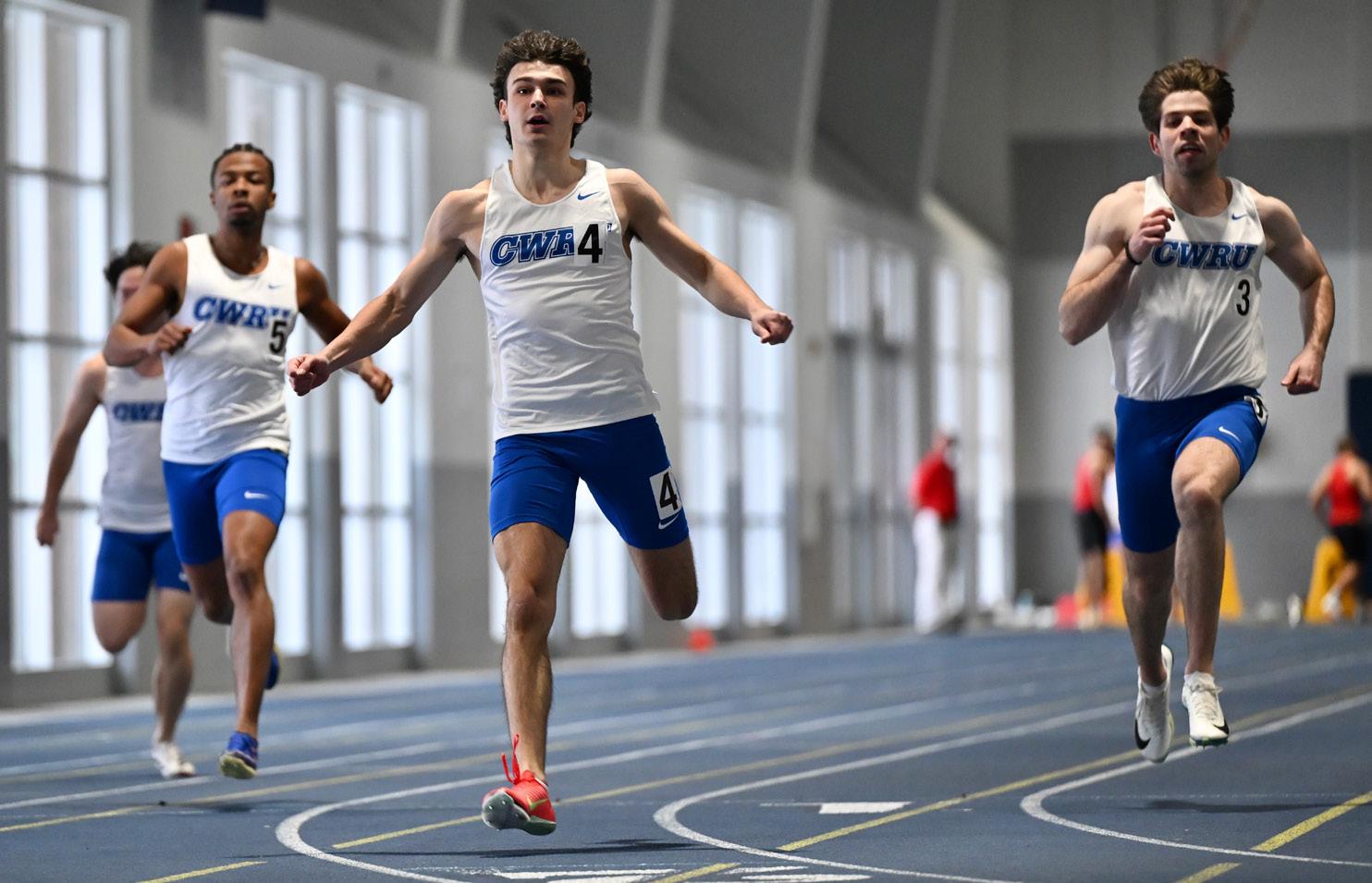
This season, the Spartan track and field teams welcome astounding talent to the track, with two first-year sprinters in particular already making CWRU history. Phillip Kornberg/The Observer
ment to open the 2026 season, led by first-year sprinters Gianna Phipps on the women’s side and Antonio Sidoti for the men. Just four meets into the season, Phipps has already shattered three school records while Sidoti has matched another—making it known that this team is not to be messed with this season.
Sidoti and Phipps are not your normal first-year sprinters. Historically, an athlete’s first year is a lot more focused on surviving rather than thriving. The transition to college, increased workload and tougher competition usually leads to a slump in an athlete’s first season or two, but these two first-years have defied all odds.
“Their exposure to track so far has been limited,” head coach Eric Schmuhl said when asked about the sprinter duo. “Antonio was a baseball player, then found track late. So his ceiling is very high, because he doesn’t know what he doesn’t know yet. Gianna, she knows she is gifted … she’s taking extra repetitions, and she wants to do [extra training] to make sure she’s hammering out the little minute details.”
On Dec. 6, 2025, Sidoti tied the
60-meter record (6.96 seconds). This result currently ranks him 17th out of all first-years in DIII. Despite the success, Sidoti expressed that balancing academics with athletics has been a struggle this year.
“The change to college life in general is very real,” Sidoti said. “Learning how to juggle both a rigorous school’s course load and the athletic side of things definitely takes some time to figure out.”
Sidoti credits the coaching staff for his success, noting that their guidance has helped ease his transition to the collegiate level and keep him focused on what truly matters.
“The amount of knowledge within the coaching staff is fantastic, because I don’t think I’ve ever had a question that has gone unanswered,” Sidoti said. “Not only have my coaches helped me become a better athlete, but they have also helped me become a responsible person by teaching me the importance of listening to my body when I need rest or to push harder in practice.”
Continue reading on page 15
As impressive as Sidoti’s campaign has been so far, Phipps has come out the blocks even hotter. In her collegiate debut, Phipps came 0.07 seconds shy of the school record in the 400-meter dash with a blistering time of 58.88 seconds. Despite the narrow miss, Phipps responded about an hour and a half later, breaking the indoor 200-meter record with a time of 25.88 seconds—a record that has stood since 2005. To end the meet, Phipps competed in the 4x400 meter relay alongside fourth-year Melanie Taylor, and first-years Elizabeth Crossan and Samaria Benochi, breaking the record with a time of 4:02.40.
Phipps continued her record-setting pace on Jan. 17 in the Spartan Icebreaker, breaking the 60-meter record in 7.90 seconds, a record untouched since 2016. Through just three events—the 60m, 200m, and 400m—she has already established herself as one of the nation’s best, ranking in the top 100 nationally in all three.
“I have realized that college is a place where the idea of ‘independence’ really shines, especially in athletics,” Phipps said. “Our success in the program is mostly based on our own initiatives and personal responsibility.”
Despite her accomplished start to
the season, Phipps remains humbled and focused on the remainder of the season.
“Breaking a record actually opens up several questions, and perhaps the question most commonly asked is, ‘Now that I have hit this mark, how can I reflect and improve to perform better?” Phipps said. “Records are a reflection of my achievements and offer great opportunities for reflection.”
A defining trait shared by both Sidoti and Phipps is an overwhelming sense of maturity. In a sport like track and field—where you tend to get back what you put in—both athletes have shown a willingness to put
in the work no matter what it takes, and it’s paying off early.
“It’s a nice surprise,” Schmuhl said. “I knew both of them were coming here, but I didn’t anticipate Antonio being this good this quickly. Both of them have been real pleasant surprises.”
These two sprinters are a sight to see, and are the new generation of CWRU track and field. See them in action at the Spartans’ next home meet, the Ed Finnegan Invitational, on Feb. 20.
Disclaimer: Adam Joseph is a second-year on the men’s track and field team.
Ellie Palaian Sports Editor
The Case Western Reserve University men’s and women’s tennis teams kicked off the 2026 season this past weekend with strong performances across the board. The men opened in dominant fashion, compiling a perfect 4-0 record with victories over Wabash College, Anderson University, Rose-Hulman Institute of Technology and DePauw University. The women also started their campaign on a high note, securing a 5-2 win over Hope College to begin the year 1-0.
“What excited me most is just getting back with the guys and competing together again,” fourth-year men’s player Anmay Devaraj said. “I just love the team aspect. Having your brother’s back on the court, and knowing they’ve got yours too. When it’s tight, you’re not just playing for yourself, you’re playing for the guy next to you, and that’s what makes spring so fun and meaningful.”
The men enter the 2026 campaign riding the momentum of a dominant 29-6 season in 2024-25, which concluded with a runner-up finish to Denison University at the NCAA Division III Tournament. Although this past weekend marked the official start of the spring season, both teams competed in a limited slate of matches during the fall before transitioning into their offseason training.
“We’ve prepared by really leaning into our motto of doing uncomfortable things,” Devaraj said. “A lot of our practices have been built around handling pressure in those tight moments so just been doubling down on those. We talk about treating every practice as a national championship match, bringing that same energy, intensity, and focus everyday, and trusting that the results will take care of itself if we follow that.”
During the fall, the men’s team competed at the ITA Fall Regional Championship, posting a combined 14-6 record in singles and a 6-4 mark in doubles play. They carried that momentum seamlessly into the spring season.
The men’s team boasts a seasoned roster featuring 12 upperclassmen and 18 players who have experienced an NCAA Championship run. With a strong core of veteran leadership complemented by seven talented first-year additions, the Spartans are well-positioned to make another deep run in this year’s NCAA Tournament.
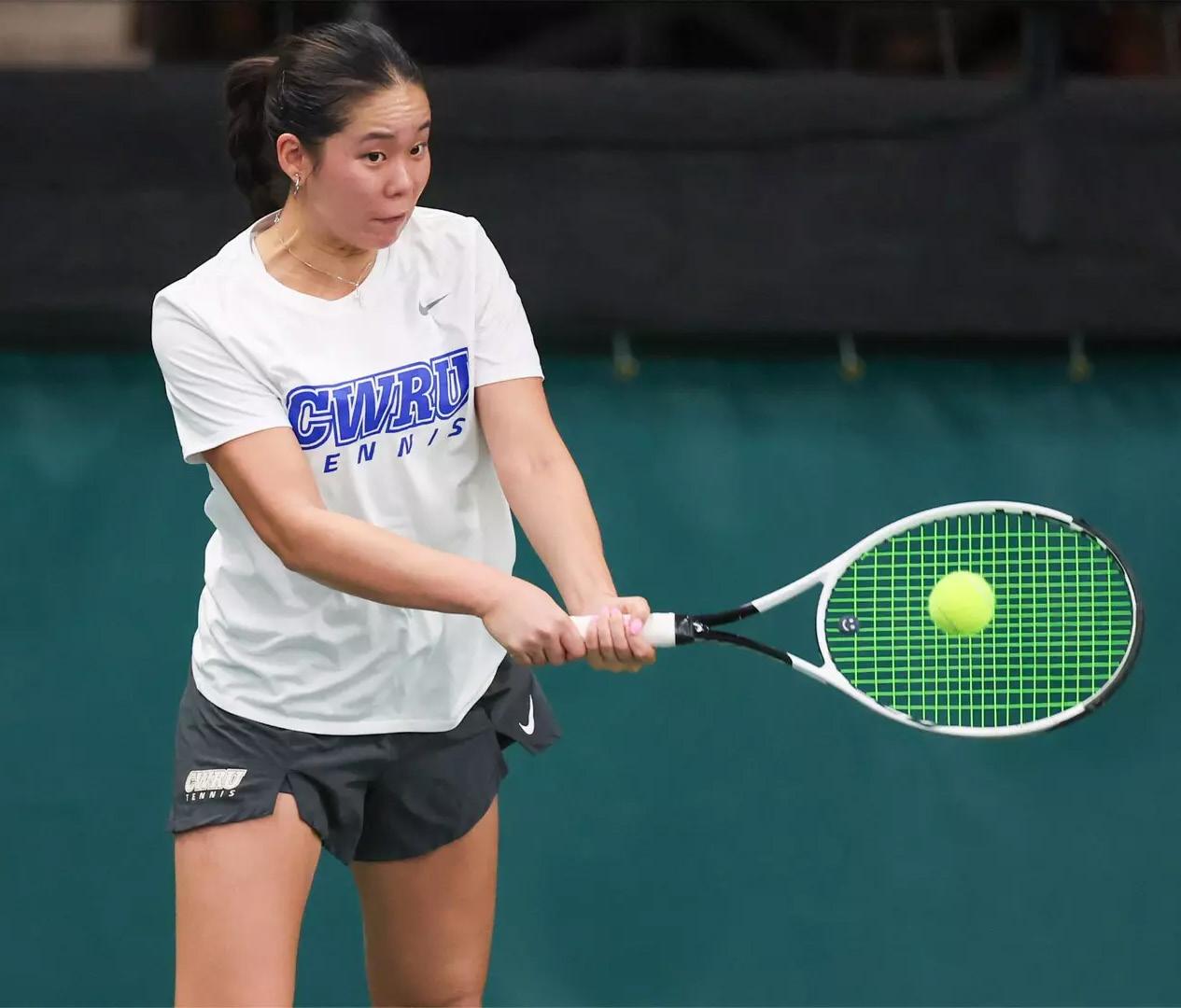
After having a successful run last year, both CWRU men and women’s
their momentum into the first matches of the
“After last year, losing in the national championship match to Denison, it definitely feels like we have something to finish,” Devaraj said. “That loss has definitely stuck with us. So I’d say I’m motivated and locked in. We’ve been there before and won the natty my freshmen year, so we know what it takes.”
Like the men, the women also competed in the ITA Fall Regional Championship from Sept. 19 to 21. They finished with a 14-9 overall record, including an 8-6 mark in singles and a 6-3 record in doubles play. The Spartans now face a challenging road to the NCAA Tournament, with eight matchups scheduled against teams ranked among the top 30 in the nation.
In contrast to the men, the women’s roster is primarily made up of underclassmen, with just two seniors and three juniors listed. Despite their youth, the Spartans feature 10 underclassmen—including seven first-years—who are ready to
season. Courtesy of CWRU Athletics
compete and help propel the team toward a national championship.
The CWRU men’s and women’s tennis teams are among the most successful programs in CWRU Athletics’ history. The men finished as national runners-up in 2021, 2022 and 2025, and made history in 2023 by becoming the first team in CWRU history to capture a national championship. As the men look to build on their historic success, the women are equally determined to carve out their own legacy and etch their names into the CWRU record books.
“I think it’s the mix of hunger and maturity,” Devaraj said. “We’ve had talented teams every year, but this group feels connected and really bought in. We have guys who’ve been deep in the tournaments and understand what it takes, and we also have new guys who bring a ton of energy and raise their level right away.”
Both teams continue their spring
seasons this weekend with a full slate of matches. The women will take on the University of Rochester on Saturday (Feb. 14) before taking on Denison University on Sunday (Feb. 15).
The men will compete in four matches across two days, facing Kalamazoo College and Allegheny College on Friday (Feb. 13), followed by matchups against Lake Forest College and Rochester on Saturday (Feb. 14).
“My expectation is that we stay bought into our culture and keep each other accountable. It’s impossible for everyone to play a perfect match or have a perfect day but just staying relentlessly optimistic will take us really far,” Devaraj said. “Obviously as a team, we’ve set huge expectations and goals for this season, but we also know it’s a long season so it’s about staying consistent, getting better week by week, and being at our best when it matters most.”
Swim and Dive
at Yellow Jacket Diving Invitational
Men: No Team Scoring
Women: No Team Scoring
Wrestling
at 39th Annual John Summa Invitational (2/7) 1st of 13 teams
Men’s Basketball vs NYU (2/6) L 75-89 vs Brandeis (2/8) W 73-67
Women’s Basketball
Track and Field
at Jud Logan Light Giver (2/7)
Men: No Team Scoring
Women: No Team Scoring at Bob Shannon Invitational (2/7)
Men: 1st of 12 teams
Women: 2nd of 12 teams vs NYU (2/6) L 65-73 vs Brandeis (2/8) W 72-69
Men’sTennis at Wabash (2/6) W 7-0 vs Anderson (2/6) W 7-0 vs Rose-Hulman (2/6) W 7-0 at DePauw (2/6) W 7-0
Swim and Dive UAA Championships 2/11-2/14
UAA Championship vs UChicago 2/14 at NYU 2/14
Men’s Basketball
Women’s Basketball at UChicago 2/13 at WashU 2/15
at UChicago 2/13 at WashU 2/15
Track and Field at GVSU Big Meet 2/13 at Crimson & Gold Invitational 2/13 at Indoor All-Ohio Championships 2/14
Men’s Tennis vs Kalamazoo 2/13 vs Allegheny 2/13 vs Lake Forest 2/14 vs Rochester 2/14
Women’s Tennis vs Rochester 2/14 vs Denison 2/15
Angelina Minaya Staff Writer
The Women’s National Basketball Association (WNBA) is in the midst of a historic battle as players push for a compensation structure that reflects the league’s rapid growth and cultural impact.
Over recent seasons, the league has seen historic increases in viewership and attendance, yet many athletes feel their pay lags far behind the value they help create. In the 2024 season alone, total WNBA viewership reached a record 54 million across broadcast platforms and attendance nearly doubled compared to the prior year. This surge in attention has positioned the league as one of the fastest growing professional sports organizations in the nation.
Despite this momentum, the league’s compensation framework remains modest by professional sports standards. As of the 2025 season, the average WNBA base salary was about $102,000, with top salary earners capped roughly at $249,000. Contrastingly, NBA players earn an average salary exceeding $11 million, with minimum salaries surpassing $1 million. Much of this disparity stems from revenue sharing. While NBA players receive approximately 49-51% of basketball-related income, WNBA players currently receive an estimated 9-10% of league revenue, which economists and analysts have described as unusually low, even for a developing league.
The economic gap has become more visible as new stars elevate
the league’s profile. One of the most marketable athletes in women’s sports, Indiana Fever’s Caitlin Clark, helped drive television ratings, ticket demand and national media attention following her arrival to the WNBA. Her impact has underscored the league’s commercial potential, but players argue that the current salary structure prevents them from sharing meaningfully in that growth.
Frustration over these conditions became highly public during the 2025 WNBA All-Star Game, when players wore black warm-up shirts reading “Pay Us What You Owe Us.”
The coordinated action, led by players, including Minnesota Lynx star Napheesa Collier, served as a direct response to ongoing collective bargaining agreement negotiations between the league and the Women’s National Basketball Players Association (WNBPA). The message resonated widely, prompting chants of “Pay them!” from fans and drawing national media attention. Players explained that the slogan was not a demand for charity or NBA-level salaries, but for a revenue-based system that allows compensation to rise alongside league success.
Retired WNBA players have also voiced strong support for the movement. Former players, such as Rebecca Lobo, have acknowledged that today’s athletes are advocating for changes that earlier generations lacked the leverage to demand. Many retirees have emphasized that the league’s current stars are building on decades of groundwork laid by past players who competed for far less pay and visibility. While some former players have advised careful
messaging during negotiations, the prevailing sentiment among retirees is that the current push is both overdue and necessary to ensure the long-term health and legitimacy of women’s professional basketball.
At the same time, there is opposition to major pay increases. Critics argue that the WNBA has not yet achieved consistent profitability and continues to rely on NBA investment. From this perspective, they contend that raising salaries too aggressively could strain teams financially and jeopardize stability. These critics maintain that compensation should grow only after sustained revenue gains are firmly established, framing the issue as one of economic caution rather than gender equity or player worth.
The broader debate reflects a tension between present financial realities and future potential. While the WNBA recently secured a multibillion dollar long-term media rights deal and continues to expand to new cities, many players still supplement their income by competing overseas or participating in leagues such as Unrivaled—the 3v3 league founded by Collier and New York Liberty star Breanna Stewart—during the offseason in hopes of earning additional income.
As negotiations continue, WNBA athletes are advocating for a model that ties their earnings directly to the league’s success to ensure that growth benefits those on the court as much as those in executive offices. The outcome of these negotiations may not only redefine the WNBA’s economic structure, but also set a precedent for pay equity across professional athletics.