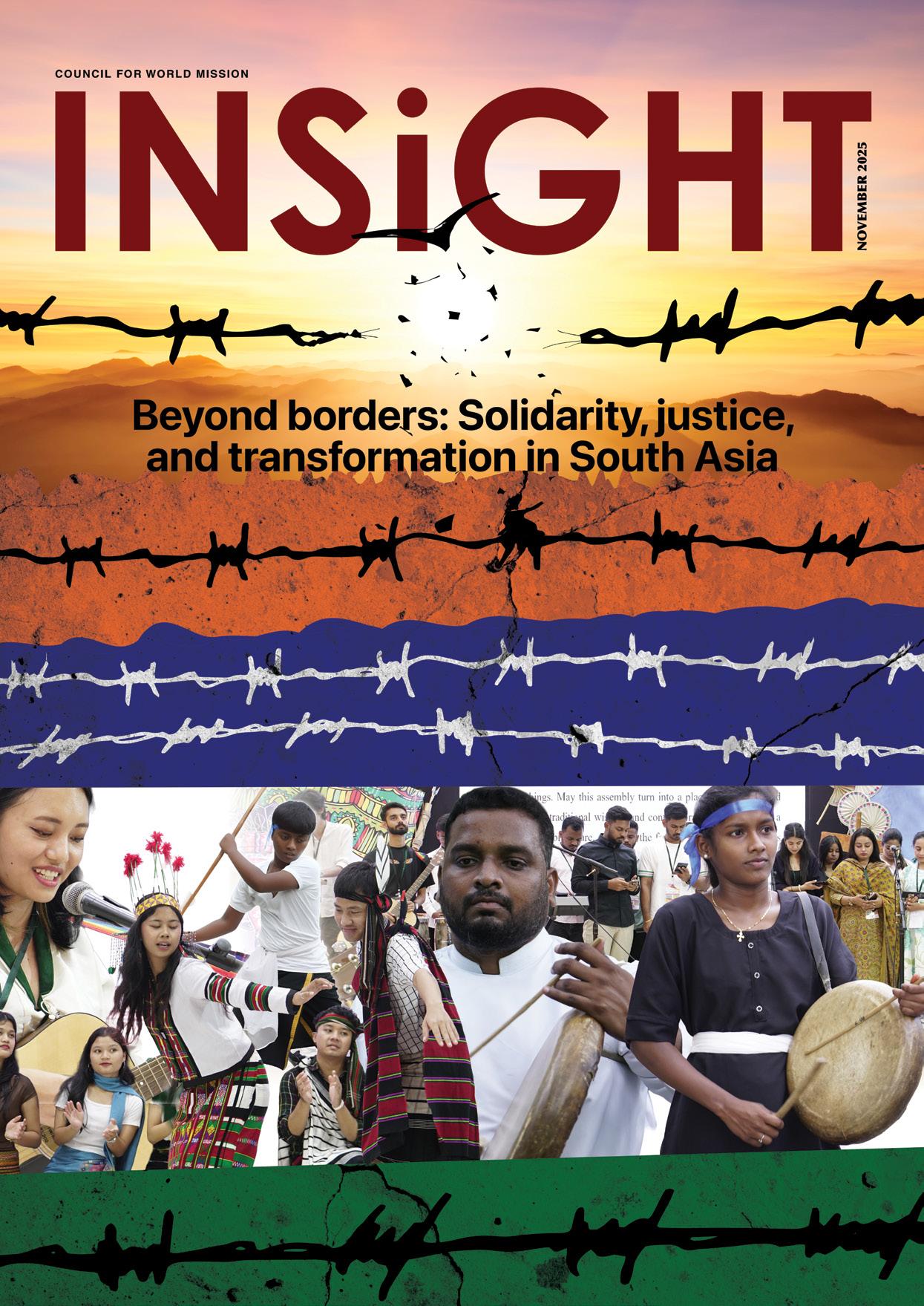
Beyond borders: Solidarity, justice, and transformation in South Asia
The illusion of development: Hindutva, neoliberalism, and the structural marginalisation of India’s poor
Ceasefires and caste lines:
The false promises of peace and equality under Zionism and Hindutva Scriptural reflection: “I never knew you” (Matthew 7:21-23; 25:31-46)
Nepal’s Gen Z revolt and the gospel of liberation: between bullets, borders, and a broken political order
CWM news
27th General Council of the World Communion of Reformed Churches convenes in Chiang Mai
CWM shares deep insights at World Communion of Reformed Churches 27th General Council
WCRC 27th General Council concludes with Communion Message
CWM South Asia Youth Consultation creates Pentecost moment
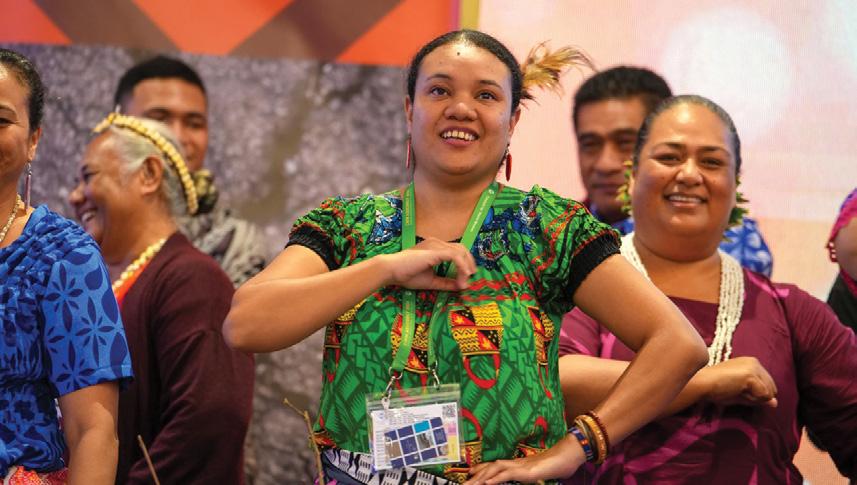
Face to Face Pacific programme declares:
Creation is for flourishing, not exploitation
CWM welcomes Rev. Dr Minwoo Oh as Mission Secretary for Mission Programme and Partnership
CWM young church leaders gather in South Africa to deconstruct racism and reconstruct justice
A call for prayer for Jamaica in the wake of Hurricane Melissa
Face to Face conference in India explores interfaith relations
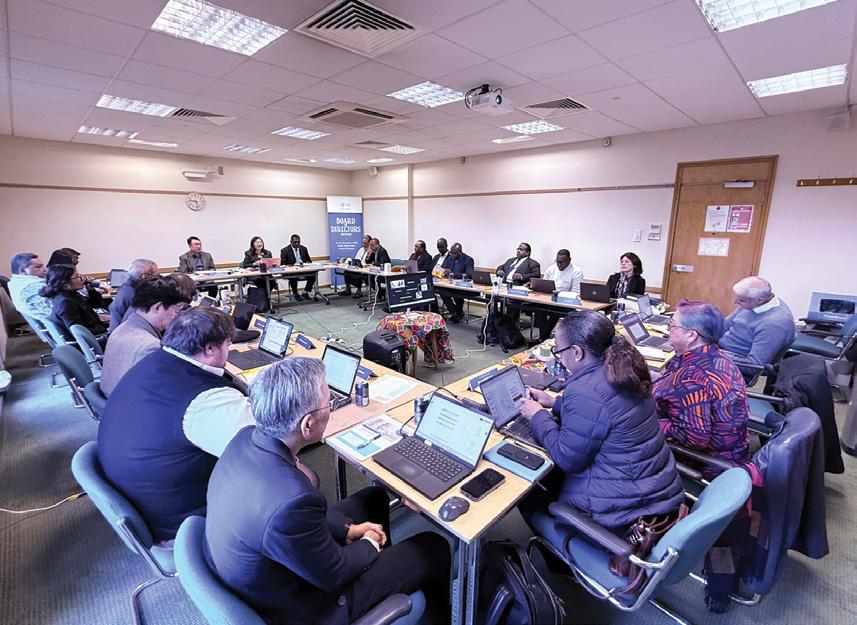
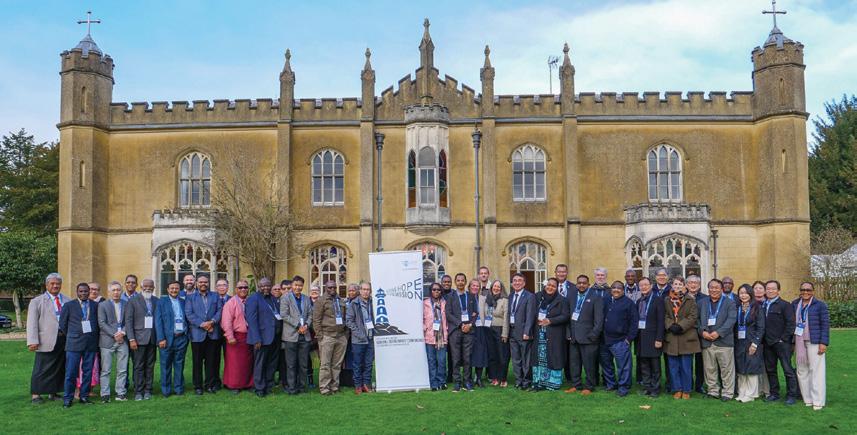
CWM Board reflects on legacy of faith and freedom at Bunyan Meeting Church
CWM Board meets in UK, approves key missional directions
CWM Board approves Jubilee Framework ahead of 50th anniversary
CWM Board approves Mission Support Programme V, ushering in a new era of transforming mission
CWM General Secretaries’ Conference opens under the theme “Embodying Hope, Revisioning Mission”
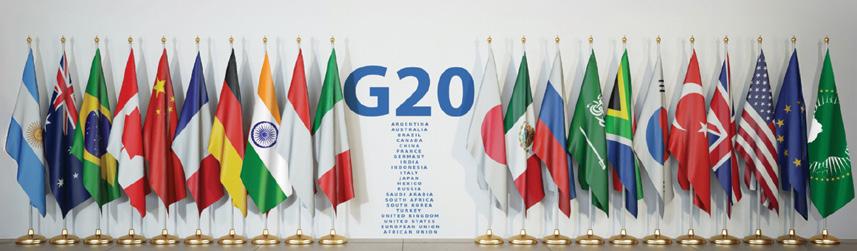
Global Christian organisations urge G20 to reshape financial systems for justice and climate action
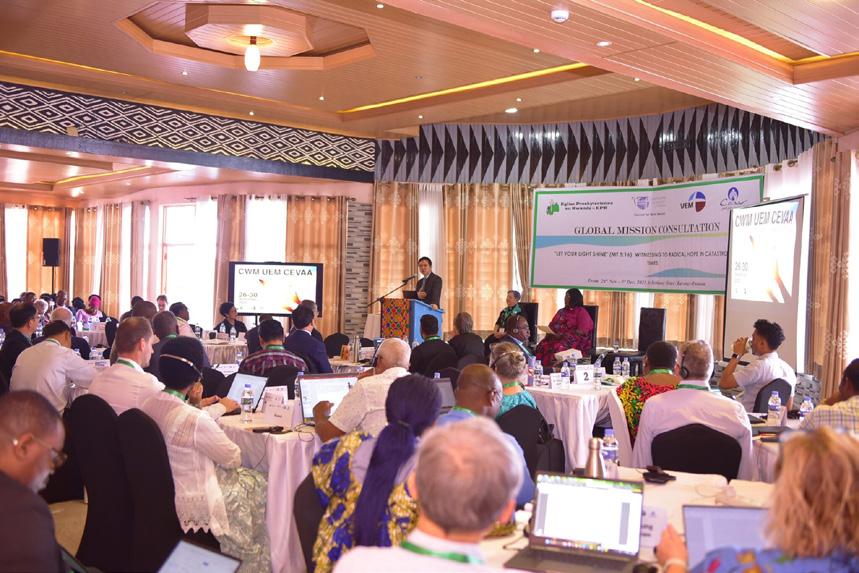
Global Mission Consultation convened in Rwanda to reimagine mission in a catastrophic world
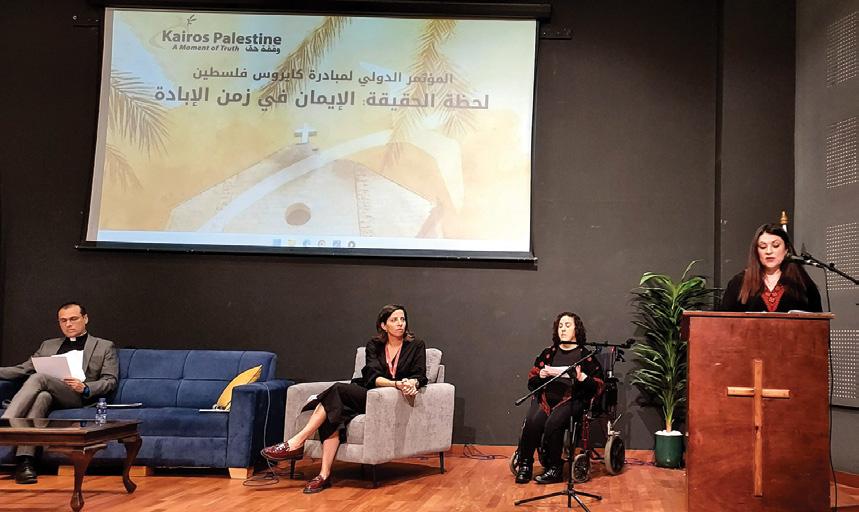
Kairos Palestine marks 16th anniversary with renewed global call: “A Moment of Truth: Faith in a Time of Genocide”
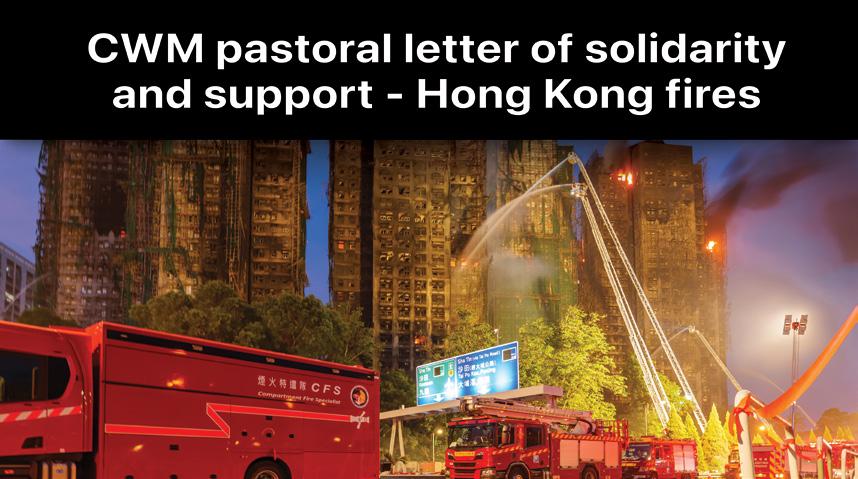
CWM calls global family to prayer after Hong Kong fires
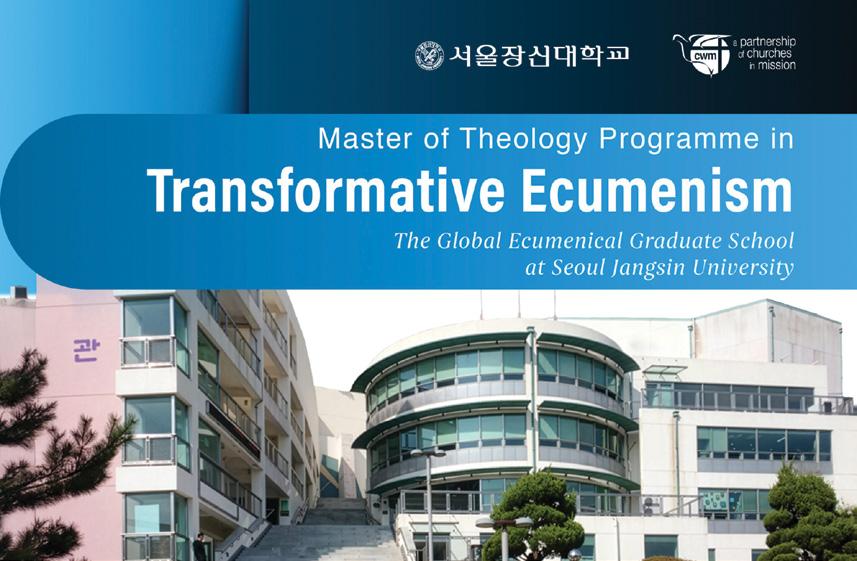
Call for applications: Master of Theology in Transformative Ecumenism
Member church news
All Africa Conference of Churches calls for prayer for Malawi’s general elections
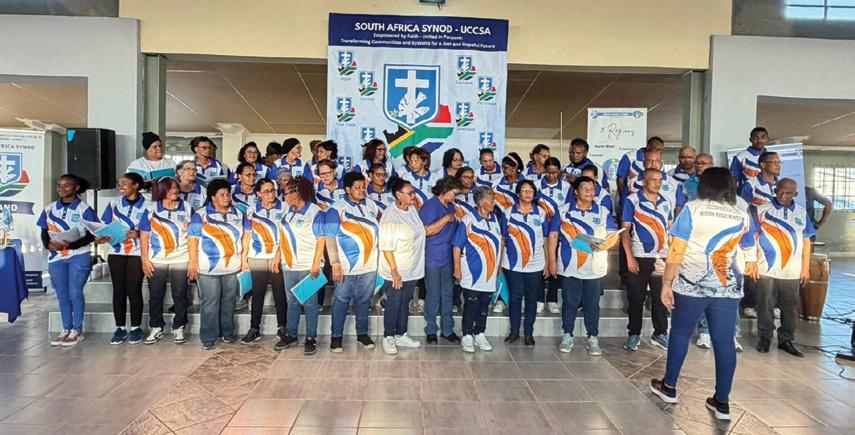
UCCSA marks 58th anniversary:
“Stepping into God’s future with courage”
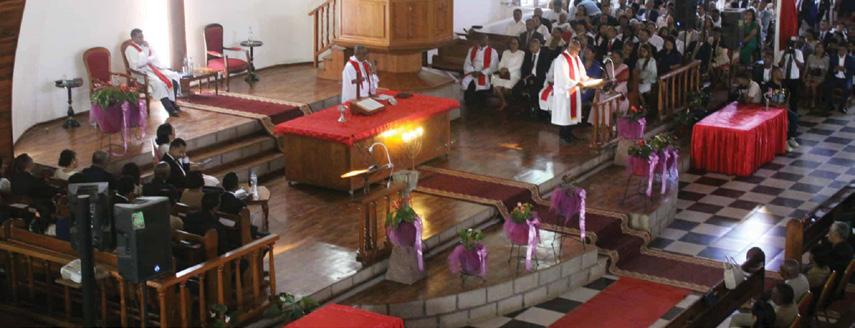
Church of Jesus Christ in Madagascar elects new president, launches quadrennial plan
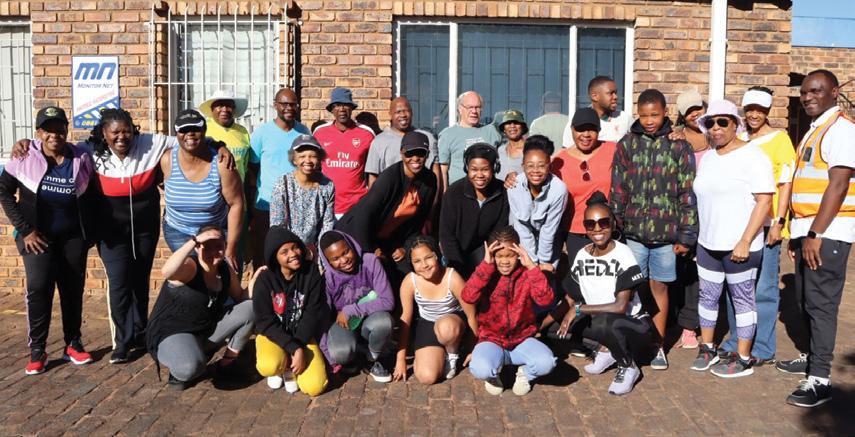
Uniting Presbyterian Church in Southern Africa community wellness day bonds communities
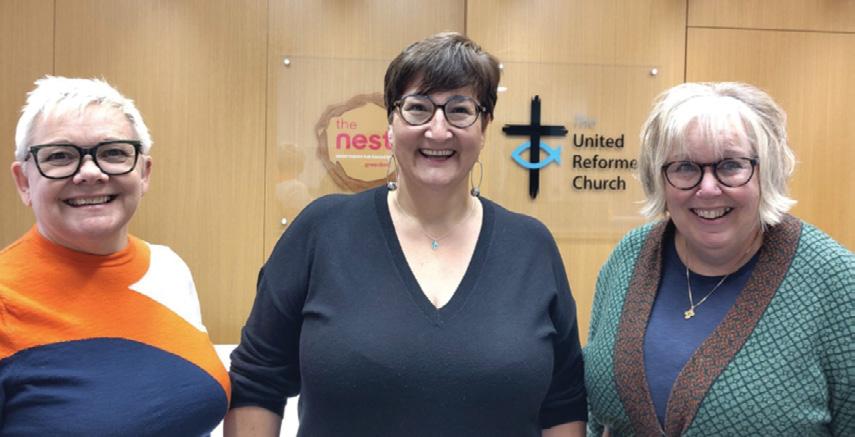
United Reformed Church completes staff restructure
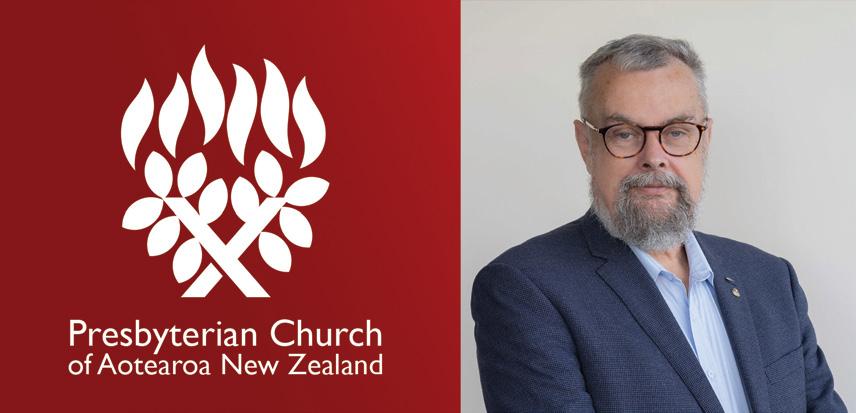
Presbyterian Church of Aotearoa New Zealand
welcomes new moderator
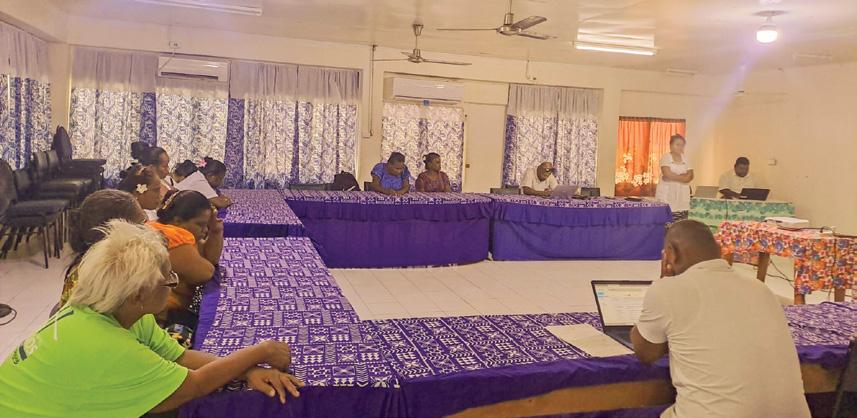
Kiribati Uniting Church holds workshop on uplifting women with disabilities in faith leadership
CONTENT November 2025
Beyond borders: Solidarity, justice, and transformation in South Asia
Beyond borders: Solidarity, justice, and transformation in South Asia
The South Asian region exists on a threshold today. Countries forged by ancient civilizations and spiritual wisdom struggle today with growing disparities, religious nationalism, ecological destruction, and structural violence. On one hand, it celebrates rapid economic growth, technological innovation, and global recognition; on the other, it continues to bleed from the wounds of poverty, religious nationalism, ecological devastation, and the silencing of dissent.
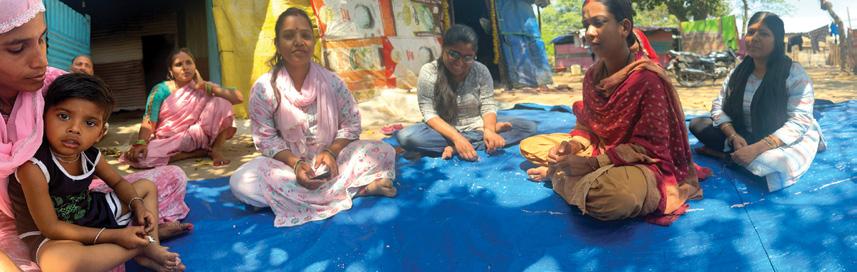
It spans India to Sri Lanka, Pakistan to Bangladesh, Nepal to Myanmar, and much of the archipelago of the Indian Ocean, where the cry for justice reverberates. Majoritarian politics has weaponized religion to legitimate exclusion; democracy has been hollowed out by authoritarian populism; global capitalism has expanded inequality further, reducing workers’ bodies to disposable objects. In the name of development, Indigenous communities are pushed out, women and children carry the weight of gendered violence and trafficking, and minorities — religious, ethnic, and linguistic — live on a daily basis under constant fear and surveillance. The migrant worker, the Dalit woman, the farmer with no land, the refugee – all of them bear witness to systems which violate life’s sanctity.
Yet, within all this hopelessness, South Asia is also full of hope. Across borders, movements of resistance, solidarity, and reparation are rising. Young people are finally taking
back their right to dream. Grassroots organizations are striving for climate justice, gender equality, and peace. Faith communities, too, are reascertaining their prophetic calling — to be located where Christ is, a living witness to the crucified peoples of history. The Gospel’s appeal to love beyond borders speaks to the politics of hate and division. In the era of violence, the Spirit is at work, prompting new visions of justice and vibrant communities.
To be the church in South Asia today is to take sides—with the crucified, not the crucifiers; with the displaced, not the powerful; with the earth, not the exploiters. The prophetic vocation of the church is not to defend its institutional comfort but to incarnate the radical hospitality of Christ who broke bread with outcasts, crossed forbidden boundaries, and proclaimed good news to the poor. The Gospel compels us to move beyond borders—beyond the borders of caste and creed, class and patriarchy, nation and ethnicity—toward a new imagination of community grounded in God’s justice and compassion.
The challenge before the church in South Asia is urgent and radical: to move beyond borders—not only geopolitical, but also those of caste,
class, gender, and religion. Solidarity must become more than sentiment; it must be incarnated in public witness, in accompaniment with the oppressed, and in theological imagination that disrupts empire. The task is to reimagine faith as resistance and theology as liberation, rooted in the lived experiences of suffering and hope in our lands.
This exhortation to transcend borders is no simple analogy. It is an appeal for conversion—to unlearn the hierarchical inherited structures for those who live in our system and dismantle systems which privilege a select few, constructing communities of belonging where everybody can grow their life. It asks for prophetic solidarity: theology emerges among people without being grown up in ivory towers but in the wounds of the people in community. It calls for transformation—not as an isolated fantasy of the future to come but as daily ministry—one that risks, faces challenges, or makes peace with them.
Amid increasing authoritarianism and reduced democratic space, the church has to dare speak truth to power. We must have the courage to hope in despair. We must, in the face of fragmentation, have the courage to sew solidarity. For God’s purpose in South Asia is not a maintenance project but a movement — a movement from fear to faith, from exclusion to embrace, from injustice to Jubilee.
As the Council for World Mission and its partners continue to accompany the peoples of South Asia, Beyond Borders becomes both a call and a confession: that God’s mission cannot be confined by geography or ideology, that justice must flow across boundaries, and that transformation begins when solidarity becomes a way of life.
May this volume rekindle courage among faith communities across South Asia to resist the forces that deny life and to proclaim, even amid the fires of persecution and despair, that another world is not only possible—it is promised and already unfolding wherever faith stands in solidarity with the crucified peoples of our lands.
Dr Sudipta Singh CWM Deputy General Secretary for Programmes
VIEWPOINTS
Beyond borders: Solidarity,
justice,
and
transformation
in South Asia
The illusion of development: Hindutva, neoliberalism, and the structural marginalisation of India’s poor
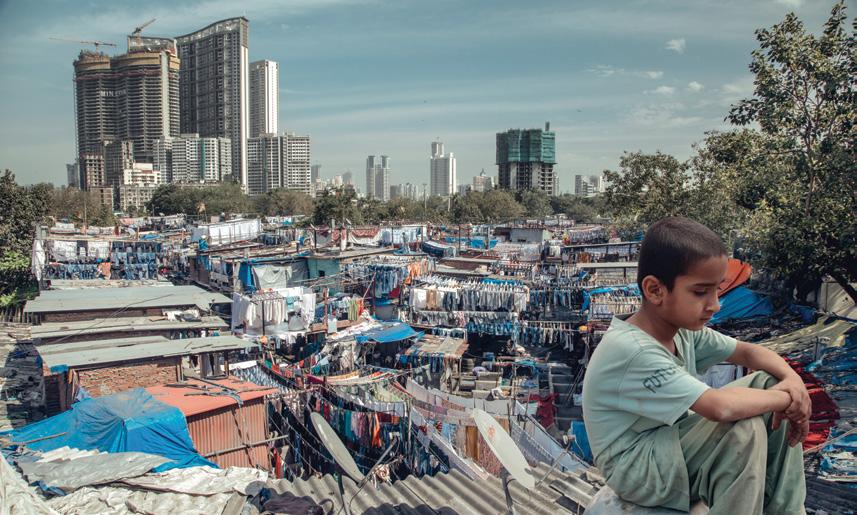
It has become a trend recently in India to celebrate growth and development in terms of GDP and technological innovations. Reality cannot be too far from the optics of development and growth. This triumphalist discourse needs to be challenged as the voices of those at the margins are silenced through displacement, dispossession, and cultural erasure. Economic, social, religious, and cultural marginalisation is the true and sad reality of our country.
Economic exclusion in India, closely linked to social hierarchies of caste and religion, has been intensified by a neoliberal framework. Dalits are still denied skilled jobs, higher education, and access to healthcare despite constitutional protection. Untouchability is practiced subtly and it adds to the poverty of the millions of “untouchables.” The practice and observance of caste has spiritually and economically estranged people in society and in faith communities. The case is not so different for Indian Muslims who are also systematically excluded. The Sachar Committee noted that this discrimination extends to hiring, housing, and political scapegoating. The recent trend of “bulldozer justice,” where the houses of minorities were destroyed, shows the breakdown of due process and
constitutional governance. This shows that marginalized communities are silenced and can be understood as compounded marginalisation where economic exclusion is compounded by religious exclusion. The discourse of development is used to cover up the continued oppression of marginalized communities. Attention is deflected by presenting marketoriented growth as panacea. This kind of rhetoric presents an illusion of inclusivity by systematically excluding and discriminating.
Marginalisation in India is not limited to economic aspects, but has a multi-dimensional character. When articulated from the meta narrative of Hindutva, economic deprivation intersects with social discrimination, political exclusion, and cultural assault. Hindutva operates by promoting the dominant culture that that enforces homogenized Brahmanical Hindu identity signs as the norm. This excludes minorities, Dalits, and Tribals whose religious and cultural practices are outside this perceived identity. Their different traditions, practices, and lifestyles are erased or reinterpreted in a Sanskritised Hindu context, denying them of their agency. This cultural dimension of marginalisation happens when businesses owned by minorities
are boycotted, when minority institutions are blocked by anticonversion legislations, and when sellers from a particular community are kept out of religious spaces. This shows how marginalisation is compounded with the expansion of Hindutva ideology.
In promoting Hindu religious symbols as nationalist markers, it produces hierarchies of belonging by deciding who belongs and who is excluded from this nation. A “Hindu nation” is being created based on preexisting hostilities between Hindus and Muslims in our country, and the need of Hindu nationalism is being propagated. The rift between Hindu and the other religions, especially Islam and Christianity, is widening every day. Hindutva feeds on Hindu victimhood, blowing up stories of historical humiliation to justify current violence. This is giving birth to an idolatrous nationalism where the nation becomes a divine object to which loyalty is owed. This identifies religion with state power, excluding other faiths and traditions. This is a form of theological imperialism that negates other religious authenticity and sanctions their expulsion from the public sphere.
These systemic exclusions are not accidental but structural sin. The structure of the caste system, communalism, exploitative labor, and political disenfranchisement form systemic patterns that continue injustice. This unjust system and systemic oppression call for a praxis-oriented liberation wherein the oppressed are the agents of their own salvation through political and social action.
There is an urgent need for a prophetic response to the rise of weaponized Hindutva and its transformation into a cultural nationalism that requires conformity, not justice. The subsequent oppression is a clear expression of structural sin—dominant structures that go against God’s will for human community. The new manifestation of structural sin is no longer in a conventional form but has transformed itself into a Hindutva ideology that politicizes religious identity to gain power, and at the same time adopts neoliberal economic principles where market forces are privileged above human dignity. The twin expressions of structural sin complement each other in disempowering marginalized groups, building dominant structures that need to be confronted and overcome. If we observe keenly, there is a culture of death prevalent in the Indian context where marginalized communities suffer and profit, and power and cultural hegemony over human life and dignity is valued. In this context, the praxis-oriented prophetic approach becomes important because it is a reflective critique in action for social change that opposes the passivity promoted by conventional religious teachings. The prophetic answer must thus address this two-fold transformation, realizing that modern structural sin works through both economic exploitation and religiocultural manipulation, and so needs a liberation approach that addresses both worlds at the same time.
Faith communities in India are called to a prophetic imagination, to preserve hope and agency in the face of systemic oppression. This imagination will resist dominant discourse that normalizes injustice and promotes alternative visions of social reordering around justice, compassion, and
mutual recognition. The resurrection story can be a transformative agent in radical social re-imagination. It can be a resource to persist and resist the structural sin and the powers that continue it. Resurrection serves both as a resistance and a constructive model that counters hegemonic narratives that normalize violence and oppression. This theological construct provides agency to reimagine a renewed social order that affirms India’s pluralistic character.
Faith communities are called beyond paternalistic charity to authentic accompaniment, in accompanying oppressed communities and learning from their struggles, and aiding their own struggle for liberation instead of leading them. We are called to respect diversity, seek justice, and affirm God’s plan for humanity. This involves the understanding that oppressed communities have wisdom, strength, and agency that external agents need to support and respect instead of supplanting. This vision of resurrection holds that present injustices are not permanent realities. This eschatological hope creates resistance to caste discrimination, religious violence, economic exploitation, and political exclusion. Faith communities can find strength in resurrection, and the power to continue liberation work, knowing that God’s “no” to deathdealing systems warrants their own refusal to settle for oppression.
Rev. Dr Ashish Archer is an Assistant Professor of Mission and Ecumenics at Bishop's College, Kolkata, India.
Ceasefires and caste line:
The false promises of peace, equity, and equality under Zionism and Hindutva
Although a ceasefire has been declared in Gaza, the persistent and enduring impact of Zionist violence continues to inflict incalculable tragedy upon Palestinian communities, leaving behind deep wounds that ceasefire arrangements alone cannot heal. In parallel, India, despite its constitutional commitment to secularism, justice, and equality, remains a society where Dalits endure persistent and extreme forms of discrimination, exposing the limits of legal protections when longstanding structures of caste oppression persist. These two realities underscore a critical truth: formal declarations of peace or social justice do not automatically translate into genuine safety and dignity for the marginalised. The struggles of the marginalised often persist beneath the surface of political resolutions.
Palestinians and Dalits share similar experiences of discrimination, as both groups are systematically denied access to basic rights, dignity, and justice within societies that privilege dominant groups. Their shared suffering illustrates how systems of power construct hierarchies that normalise violence that transcends all spheres of life. There are some commonalities between the Palestinians and Dalits on how they endure discrimination.
Homogeneity and ethnocentrism
The commonalities between Palestinians and Dalits are seen in their experience of the ideologies of Zionism and Hindutva. The experiences of Palestinians and Dalits are located in the ideas of homogeneity and ethnocentrism. While homogeneity refers to people possessing a unified national character,
ethnocentrism refers to the superior status of such people in comparison to others. Therefore, the hegemony of both these ideologies is dependent on the creation of a dualistic worldview where there is a struggle between “good” and “evil.” In Zionism, Jewishness becomes a national identity; Jews construct themselves as good and Palestinians as evil and savage. Their colonisation is seen as a civilizing one. In Hindutva, Hindu becomes a national identity, and religious minorities are constructed as the evil ones. Dalits are relegated to the lowest possible place in the social structure and absorbed into a pan-Hindu identity that makes discrimination possible. The division between “good” and “evil” legitimises and justifies the violence against the “evil one” as God is positioned with those who are categorized as “good.” Therefore, the idea of “good” and “evil” helps Zionism and Hindutva sustain their hegemony by legitimising violence against the constructed evil.
Human dignity and self-determination
The Palestinian and Dalit struggle against Zionism and Hindutva is a struggle for human dignity and self-determination as the dominant in both these ideologies make an instrumentalist and political use of religion to further their dominant agenda. Both these ideologies hold onto the inerrancy of the scriptures on which they build their hegemony. Scriptures become foundational; they should be interpreted literally and not by employing critical hermeneutics.
Consequently, the Bible becomes foundational for imposing Jewish hegemony and Ramayana, Gita, Manusmriti, and Mahabharata become foundational for the realisation of Brahminical hegemony.
Sacralisation of the nation-state
Palestinian and Dalit suffering also intersect each other in how Zionism and Hindutva also intersect each other in making efforts to sacralise the nation-state and give it a divine sanction. Once the divine status is assigned, the state becomes immutable. There are always categories of people and actions that become a threat to the divine nature of the state. Such sacralisation discriminates against Palestinians and Dalits. Therefore, both these ideologies intersect each other in their understanding of the nation and their approach towards scripture.
Carceralopolis (prison-like control)
Both upper castes (Brahmins, Kshatriyas, Vaishyas) and Zionists assert scriptural authority, genetic superiority, and cultural supremacy through the state. In the ethno-national state, the dominant group hegemonises politics and cultural apparatus and controls discursive practices and storytelling through history, narratives, and media. Such a state is a carceralopolis, where the dominant group has carceral control over the existence of the subordinate group, which is invisibilised, spatially stigmatised, and violently exterminated.
Demarcation
Another way in which the experiences of Palestinians and Dalits intersect with each other is through demarcation. Both communities have an assigned specific geographical space where they can live. These very spaces become a major source of discrimination and oppression because confining communities to a particular location makes it easy for the hegemons to monitor and control them. Palestinian localities are demarcated by the construction of the apartheid wall. Their localities face constant surveillance under the guise of security from the Israeli military. Furthermore, security and surveillance are extensively used to justify human rights violations of the Palestinians. Any movement beyond the assigned borders is dealt with violence by the Zionist state. Palestinians are confined to closed spaces; their movement is restricted. Similarly, Dalit localities are also confined to a particular geographical location, whether it is a village or a city. Dalit communities often live in these confined and segregated areas that are underdeveloped. Such demarcations help the dominant to maintain their hegemony and Dalit localities are looked down upon with contempt.
Continued changing of discriminatory strategies
Both Zionism and Hindutva hegemonize and further their oppressive agenda by altering their discriminatory strategies. Zionism has made a transition from the elimination of Palestinians towards managing them. On the other hand, Hindutva’s imperial tendencies of caste discrimination are expounded by the constant changing of its oppressive
strategies and enemies. Hindutva has used caste to successfully change its opponent from Dalits to Muslims. The Sangh has reformed its strategy to recruit Dalits into its fold by initiating philanthropic works and, after gathering their support, it uses Dalits to fulfil the political agenda of the Hindu nation. This produces the hegemony of the dominant. Such hegemony exploits the labour of the dominated to further the domination of the dominant. As a result, Zionism and Hindutva intersect each other in their use of “divide and rule.” Informed by Zionism, Israeli policies and laws continue to widen a divide between Palestinian Christians and Muslims. It has already divided the land of Palestine into different sections and has further administratively divided Palestinian Jews living in Israel and the Jews of Israel. The state of Israel is seen as a Jewish land. All these divisions are enacted so that the hegemony of Zionism and Israeli rule is not challenged.
The Brahminic hegemony of Hindutva uses caste as an imperial and divisive administrative symbol. Interpretation of myths and legends of Dalits to suit Hindutva ideology effectively camouflages the discriminatory attitude inherent in the Brahminical orientation of the Hindu nation. It further alienates Dalits from Muslims and all others who have faced similar levels of discrimination. Thus, caste in Hindutva not only divides potential allies that can collaborate against itself but also manages them to gain political power.
Rev. Dr Samuel Mall is an Assistant Professor in the Department of Theology and Ethics at Bishop's College, Kolkata, India.
Scriptural Reflection: “I
never knew you”
(Matthew 7:21-23; 25:31-46)
On the night of 11 September, after coming home from work, I saw social media flooded with tributes to a man hailed as a Christian martyr. Curious, I looked up his name and learned that he was an American rightwing political activist. What immediately disturbed me was how passionately people mourned for him while all the while remaining silent about the suffering of Dalits, Adivasis, Tribals, Blacks, Palestinians, and others. After wrestling with my thoughts and earnest reflection, I couldn’t escape the echo of Jesus’ words: “I never knew you.” These words became the lens through which I reflected on our times – on the hypocrisy of those who claim faith yet deny justice.
Today, our world is filled with noise – war, genocide, ecological collapse, crimes against humanity, and so on. But amidst the chaos, Scripture still speaks. To hear it, we must read it with open hearts and critical eyes. The Bible has inspired love and liberation, yet it has also been misused to justify slavery, patriarchy, and violence. The same Scripture that sets people free has been weaponised to oppress. In South Asia, the stories of Dalits, Tribals, and Adivasis echo the cries of the oppressed in Jesus’ own time under the Roman Empire. Understanding that world helps us see how the message of Jesus confronted systems of exploitation then, and how it still calls us to act now.
Empire and power in the first century
In the first century, the Roman Empire ruled with the promise of peace and progress, but its peace came through domination. A mere one to two percent of the population controlled half of the wealth. The poor, taxed heavily by both empire and
temple, laboured to survive, while slavery and debt trapped many. Religious leaders collaborated with empire, and Jesus’ message of justice and mercy threatened their authority. His execution was not just a spiritual event; it was political – a punishment for proclaiming a “kin-dom” where the last would be first. Early Christians, declaring “Jesus is Lord” instead of “Caesar is Lord,” defied the empire’s ideology and faced persecution for it.
“I never knew you”
The words “I never knew you” in Matthew 7:23 are deeply unsettling. In the Bible, “to know” means relationship, closeness, and obedience, not just awareness. Jesus’ rebuke is directed at those who claim to act in his name yet live contrary to his message. It exposes the danger of hollow religion.
In our time, this warning rings louder than ever. Across the world, elites –political, corporate, and religious –amass power while preaching virtue. Multinational corporations exploit workers and destroy ecosystems under the guise of “corporate social responsibility.” Governments spend billions on weapons while farmers commit suicide and people starve. Politicians invoke God’s name to win votes and legislate oppression. Religious leaders defend doctrines
but ignore suffering. To them, too, Jesus says, “I never knew you.” His words indict systems that bless greed and call for solidarity with the poor and marginalised.
Across South Asia, we see harsh realities. In Sri Lanka, families struggle with inflation and poverty while elites protect themselves. In Nepal, Dalits face ongoing caste violence despite the Caste Based Discrimination and Untouchability Act. In Bangladesh, women garment workers stitch clothes for the world but remain underpaid and unheard. In Bhutan, rural farmers and yak herders suffer under climate pressure despite the nation’s image of “happiness.” These examples show how wealth and faith can become masks for injustice. In the Gospels, Jesus announced liberation for the poor and saw the humanity of those condemned as sinners. His ministry built a counterculture of compassion against empire. In today’s global “empire” of greed and media control, we are called to follow the same path. The concentration of power –where the world’s top five richest people control the platforms that shape public thought – creates an illusion of freedom while silencing truth.
Christians who cheer for leaders preaching hate have forgotten the Christ who stood with the crucified, not the conqueror. Jesus is not in the palaces of power or the polished sanctuaries of privilege. He is in Gaza, under the rubble with the wounded. He is with the Dalit women and minors who have been raped and murdered; the tribal families displaced from their homes; the Adivasis robbed of their land. He is with the hungry, the imprisoned, and the forgotten. The Bible, rightly read, is the book of the oppressed—not of empires or elites. It calls us to measure truth not by how “biblical” it sounds but by whether it reduces suffering and affirms life.
Confronting and resisting the empire
Naming injustice is the first step toward healing. As Kimberlé Crenshaw reminds us, what we cannot name, we cannot fix. Caste discrimination, gender violence, and tribal displacement must be confronted, not spiritualized away. Jesus was crucified because he threatened systems of power—not because he was merely “a good man.” His resurrection proclaims that love and justice cannot be buried forever. To follow him is to resist empire, to bring good news to the margins, and to live out the “kin-dom” of God, where belonging replaces hierarchy.
Good news for the margins
Ultimately, “I never knew you” is both judgment and invitation—a call away from performative faith toward genuine
discipleship rooted in compassion. It comforts the poor even as it warns the powerful. To be “known” by Jesus is to stand where he stands: among the crucified of history. It is to feed the hungry, clothe the naked, visit the imprisoned, and defend the despised. Anything less is religion without relationship, faith without justice.
May we, as followers of Christ, become people who listen deeply, act courageously, and build communities of love and dignity for all. Let the Holy Spirit guide us – to love, to act, and to hope.
Dr Lalmuanpuii Hmar is an Associate Professor at Bishop’s College, Kolkata, India.
Nepal’s Gen Z revolt and the Gospel of liberation: between bullets, borders, and a broken political order
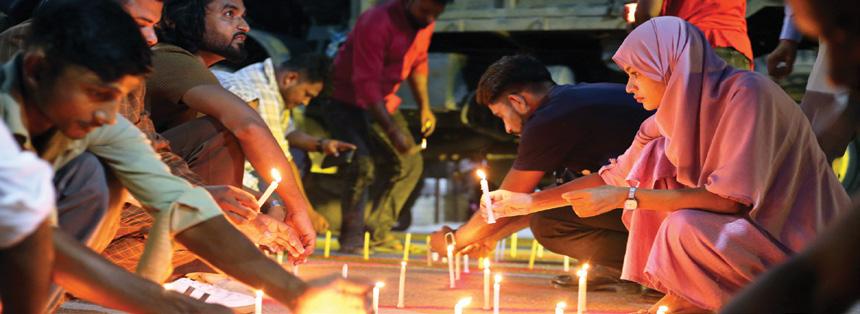
Nepal’s September uprising will be remembered as a defining moment in the Himalayan republic’s fragile democratic journey. What began as protests against a government ban on social media platforms soon spiraled into the storming of parliament, the burning of government offices, and violent repression of youth by security forces. Prime Minister K. P. Sharma Oli resigned under siege, and the Nepali Army intervened to restore order. The events have exposed not only the rot within Nepal’s political system but also the influence of regional and global powers that continue to treat the country as a chessboard for their rivalries.
The question before us, particularly those who write in the tradition of liberation theology, is not merely analytical: it is ethical and prophetic. How do we interpret this violence and resistance through the eyes of faith? How does the gospel speak when the poor and the young are met with tear gas and live rounds?
Youth against repression
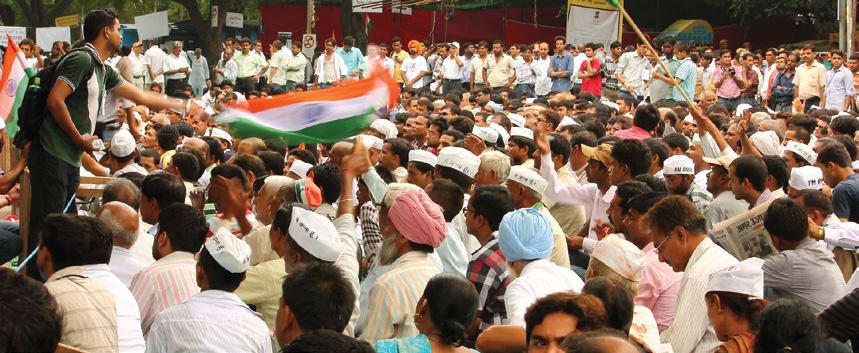
The images from Kathmandu were haunting: thousands of young people—angry, determined, and leaderless—standing their ground as live bullets tore through their ranks. At least 72 protesters were killed, more than 2,000 injured, and many remain missing. Avinash Kumar described this as Nepal’s Gen Z revolt, a generation suffocated by corruption, unemployment, and elite impunity. Bharat Bhushan noted that what unfolded was more than a domestic implosion: it was a collapse shaped by both internal failures and external geopolitical pressures. For young Nepalis, the protests were not only about reclaiming digital freedom but about dignity and the right to a future.
Liberation theology in a Himalayan crucible
Liberation theology has long insisted that faith must be rooted
in the cries of the oppressed. Dr M. M. Thomas spoke of a ‘“theology of responsibility,” where the church participates in nation-building while critiquing structures of domination. Rev. M. J. Joseph likewise urged that theology in South Asia must remain grounded in the struggles of marginalized communities. He spoke of prophetic discipleship: standing against state violence while working toward reconciliation. The Nepali youth, refusing to remain passive, embody this agency. Their revolt is testimony to what Gabriela Dietrich and Bastian Wielenga remind us: that even when chaotic, uprisings are often responses to deeper systemic violence—the violence of exclusion and repression. Bonhoeffer’s call to “costly discipleship” reminds us that neutrality in the face of oppression is complicity.
But liberation theology also demands that struggles be viewed not only as political but also as moral acts. Barth warned against false sovereignties: no state, army, or intelligence apparatus can claim the conscience of the people.
Thomas once insisted that the church must be a “critical ally” to the voiceless, resisting structures of oppression even when (especially when) those structures cloak themselves in sovereignty or law. The Nepal crisis compels us: we cannot remain mute when bullets silence youth.
More recently, liberation theology has been enriched by attention to agency: the oppressed are not passive victims but actors with dignity. The students and youth of Nepal did not wait for permission; they took to the streets, challenged authoritarian control of social media, and reclaimed public space. Their energy echoes
Bonhoeffer’s notion of costly discipleship: to follow Christ is to refuse complicity with idols of power.
But discipleship also calls for critique of insurgency. The violence that broke out — burning buildings, pillaging offices, and worst burning people alive — cannot simply be romanticised. Here the wisdom of Bastian Wielenga and Gabriela Dietrich is relevant: struggles for justice must remain rooted in truth, avoid idolatries of violence, and protect the dignity of all, including opponents. The Church must witness between the extremes of naive pacifism and brutal fanaticism.
Theological traditions must ask: Is resistance always prophetic? Or does it risk mirroring the injustice it opposes? In Nepal, theology must walk the narrow way: to side with the young, but call them to moral rigor; to denounce repression, but promote nonviolence and reconciliation.
The geopolitics of instability
The fall of the Oli government cannot be understood without recognising the roles of India, China, and the United States. For decades, Nepal has been locked between competing powers. India’s Research and Analysis Wing, China’s intelligence arms, and U.S. security interests have all influenced shifts in Kathmandu. Oli’s tilt toward China’s Belt and Road Initiative, his difficult relationship with Delhi, and U.S. attempts to fold Nepal into its Indo-Pacific framework left the government vulnerable. Intelligence agencies and diplomatic maneuvering shaped alignments, leaks, and fractures. Bhushan notes how India, blindsided by Oli’s outreach to Beijing, sought to reassert control. Meanwhile, the U.S. quietly viewed Nepal as a counterbalance to China. Avinash Kumar highlights how resentment grew over Indian overreach, including the controversy over the Agnipath military recruitment scheme. Seen against the backdrop of Israel’s ongoing genocide in Palestine, where Western powers use intelligence and military might to suppress resistance, Nepal’s tragedy fits a global pattern: fragile states destabilized by imperial rivalries, with ordinary people paying the highest price.
The fall of Oli and the moral rupture
The resignation of Oli and the intervention of the army exposed a broken political order. Nepal’s democratic transition, born of the 2006 Jana Andolan, promised inclusivity and secularism. Yet by 2025, youth saw only recycled elites and entrenched corruption. Their anger toppled a government but left a vacuum. If Nepal is to move forward, it requires not only elections but institutional renewal: accountability for killings, civilian oversight of the military, and genuine youth participation. Bonhoeffer reminds us that discipleship is not abstract: it involves costly engagement in real political struggle. Barth’s insight is also urgent: faith bears consequences for the world.
What would a just Nepal look like?
Envisioning the future means imagining both justice and reconciliation. A liberationist lens suggests the following principles:
1. Truth and accountability: independent investigations into state violence, ending impunity.
2. Youth inclusion: creating institutional channels for youth voices in governance.
3. Civilian control: limiting military power and restoring civilian supremacy.
4. Decentralization: empowering local governance and participatory democracy.
5. Prophetic witness: churches resisting co-option by power and standing with the oppressed.
6. Regional solidarity: resisting the zero-sum games of India, China, and the U.S., while affirming Nepal’s sovereignty.
A Himalayan call to conscience
Nepal today stands at a moral crossroads. Its youth have risen in defiance, its rulers have answered with repression, and its neighbors meddle for advantage. The church must not retreat into silence but embrace its prophetic role. M. M. Thomas warned that abandoning justice is to abandon the Gospel itself. In the blood of Nepal’s Gen Z, we hear the echoes of Golgotha: the young crucified by power, yet bearing hope of resurrection in the dream of a just Nepal. Their hope does not lie in foreign patrons or military strongmen but in the possibility of a republic that is just, inclusive, and free. That hope demands our solidarity, our critique, and our witness.
Vijayan M.J. is the General Secretary of Pakistan-India People's Forum for Peace and Democracy and the founder of the South Asian Solidarity Collective.
AT A GLANCE
27th General Council of the World Communion of Reformed Churches convenes in Chiang Mai
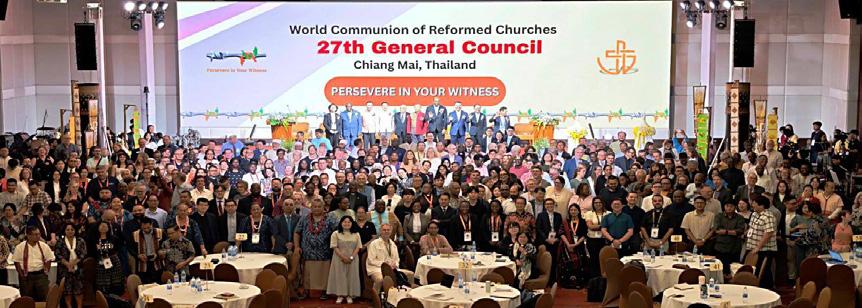
The 27th General Council of the World Communion of Reformed Churches (WCRC) convened in Chiang Mai, Thailand, on 14 October under the theme “Persevere in Your Witness.” The gathering brought together more than 400 participants from around the world.
Held once every seven years, the General Council is the WCRC’s highest decision-making body. This year’s event, hosted for the first time by the Church of Christ in Thailand (CCT), also marks the 150th anniversary of the WCRC. The WCRC traces its roots to the founding of the Alliance of Reformed Churches in 1875, which later merged with Congregational and other Reformed bodies to form the World Alliance of Reformed Churches (WARC) in 1970. WARC then united with the Reformed Ecumenical Council in 2010 to create today’s WCRC.
Today, the WCRC represents more than 100 million Christians from over 230 member churches in 109 countries across the globe.
In his opening address, Rev. Dr Setri Nyomi, WCRC General Secretary, declared, “We work with a cloud of witnesses,” as he invited delegates from each region to stand – symbolising the breadth and diversity of the global Reformed family.
The Council for World Mission (CWM), a close missiological partner of the WCRC, attended the event as a mark of support and solidarity with the WCRC’s ongoing and future mission.
In his address, Rev. Dr Jooseop Keum, CWM General Secretary, reflected on the deep theological and missional ties between the CWM and the WCRC: “We are two communions flowing from the same wellspring… bonded by ecumenical partnership, solidarity, and missional vocation.”
Emphasising that faith and justice are inseparable in the Reformed tradition, Keum added, “Our partnership is not merely organisational; it is a covenantal expression of our shared commitment to God’s mission of justice, peace, and transformation.”
The General Council runs from 14 to 23 October. During the event, participants will engage in worship, Bible study, and discussion groups to wrestle with pressing global issues and discern the WCRC’s direction for the next seven years.
CWM shares deep insights at World Communion of Reformed Churches 27th General Council
During the 27th General Council of the World Communion of Reformed Churches (WCRC), delegates engaged in a series of workshops that invoked conversations on various issues, from reimagining masculinity to missions amid crises. The Council for World Mission (CWM) led several workshops that presented on The Onesimus Project (TOP) and Transformative Ecumenism Movement (TEM) while also contributing to discussions on ecological and economic justice.
A call to reparative reconciliation
In a moving address that provided a backdrop for the creation of TOP, Rev. Dr Roderick Hewitt, chair of the core working group, invoked the dark side of mission history that spawned the painful legacy of slavery, sounding the call to “never forget the rock from which we have been hewn.”
Evolving from CWM’s Legacies of Slavery (LOS) Programme, TOP draws inspiration from the biblical story of Onesimus in the Epistle to Philemon. It seeks to confront and redress the roots of racialised inequalities and injustices within the CWM family of churches and beyond—addressing both historical and modern forms of slavery.
During the workshop, three dedicated TOP funds were highlighted: the Reparatory Justice Fund, the Healing of Memories Fund, and the ModernDay Slavery Fund.
“CWM is prepared to put its money where its mouth is,” Hewitt declared, emphasizing that mission requires “risky engagement with the vulnerable.” He challenged participants, asking, “Are people brave enough to do this work?”
Embracing a journey of transformative change
Running parallel to the TOP workshop was the Transformative Ecumenism Movement (TEM) workshop, jointly facilitated by Dr Deenabandhu Manchala and Rev. Dr Jaeshik Shin. The workshop traced the origins, purpose, and progress of TEM from its inception in 2013 to its global launch in Kenya in 2023. It provided a clearer picture to the WCRC delegates the roles of the movement – calling the church into solidarity with movements from the margins, women, and youth in order to resist the life-denying powers of empire.
“The focus on a people-based, justice-oriented, and changedriven ecumenism evoked great interest among the nearly 110 participants who attended three sessions,” said Manchala. “I was encouraged by the desire to explore possibilities for ecumenical engagement beyond institutional confines. TEM was indeed received as a new pathway for those seeking change in the church and the world.”
Echoing this sentiment, Shin remarked, “The number of participants was more than I expected, with a good mix from both the Global South and North. It has given me a very promising impression!”
“There is no economic injustice that does not spill ecological blood”
“We stand amid the ruins of a system that has mistaken the domination of nature for development, and the destruction of communities for progress,” said Rev. Daimon Mkandawire, CWM Mission Secretary for Ecology and Economy, during the workshop “Campaigning for Justice in the Economy and the Earth.”
The workshop reaffirmed the prophetic insights of the two-decade-old Accra Confession, which recognized the injustices of modern economic systems and their devastating effects on the earth—framing these as matters of faith and discipleship.
Participants engaged in deep reflection, concluding that the ultimate question is not whether the world will survive but whether the church will remain faithful in this kairos moment.
“The question,” Mkandawire mused, “is whether the church will stand where Christ stands—with the crucified earth.”
WCRC 27th General Council concludes with Communion Message
Theological reflections on the mission of the WCRC
During the 27th General Council of the World Communion of Reformed Churches (WCRC), four theologians offered reflections on the theme “Persevere in God’s Mission in Areas of Crisis.”
Rev. Dr Jooseop Keum, general secretary of the Council for World Mission (CWM), spoke on the future vision and mission of the WCRC beyond the 27th General Council.
Describing the current global situation as “catastrophic,” Keum emphasised the need for the WCRC to cultivate and expand a de-colonial theology—one informed by feminist, Indigenous, and post-national perspectives—as a continuation of the resistance expressed in the Accra Confession.
He cautioned that to persevere without witness amounts to “survival without transformation,” representing institutional endurance rather than the embodiment of a transformative mission.
“Our task, therefore, is to persevere in witness—to embody faith as resistance and hope as imagination,” Keum said.
Concluding his address, Keum urged that as the WCRC moves from Chiang Mai into its next chapter, it must not only confess
against the idols of empire but also create life-flourishing communities that live God’s Jubilee here and now. In an age marked by climate collapse and artificial intelligence, he declared, “The most radical confession remains the simplest: God is God, and life belongs to God.”
WCRC elects new leadership
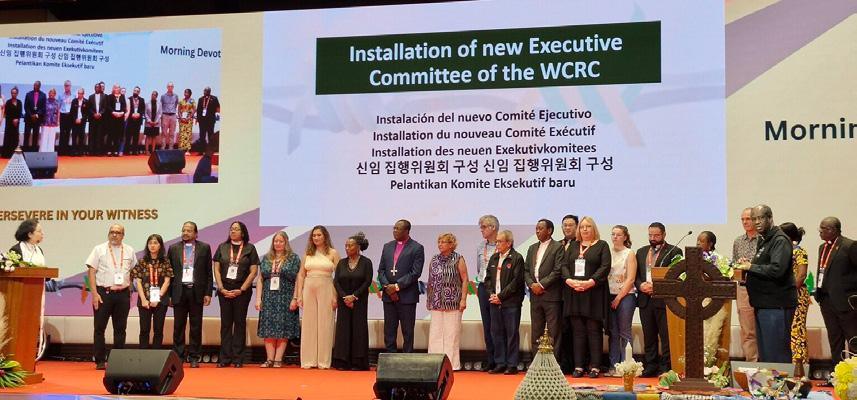
The 27th General Council elected a new president, five vice presidents, and 17 members of the Executive Committee to serve the next sevenyear term.
Rev. Dr Karen Georgia Thompson, general minister and president of the United Church of Christ in the United States, was elected as the WCRC’s next president.
Outgoing president Rev. Najla Kassab—who made history in 2017 as the first female to hold the role— described Thompson’s election as a continuation of the WCRC’s commitment to empowering women in leadership.
The newly elected Executive Committee reflects the Communion’s
diversity, comprising 12 women and ten men, three youth members, nine laypeople, and 13 ordained leaders from across all regions.
Rev. Philip Vinod Peacock, who was unanimously elected in September 2025, will make history as the first WCRC general secretary from Asia when he begins his term on 1 February 2026.
Release of the Communion Message
The General Council also issued a Communion Message, developed alongside reports and caucus statements, which will guide the WCRC’s programmes and relationships with ecumenical partners and governmental bodies in the years ahead.
Addressing current global realities, the message reaffirmed the WCRC’s dedication to supporting people affected by armed conflict and advocating for the rights of Indigenous communities.
It also underscored the Communion’s understanding of Christian mission as both disruptive to the prevailing world order and transformative in the lives of the marginalised, oppressed, and hungry.
“Through our commitment to mission, we live out the call to be disciples of Jesus Christ… the church bringing the good news to the poor,” the statement affirmed.
Reflecting on the gathering, the newly elected WCRC President, Rev. Dr Karen Georgia Thompson, said:
“This week, this has been God’s house for us—a place where we are reminded of God’s love given to us. We ask for your prayers as we commit to lead in the years ahead.”
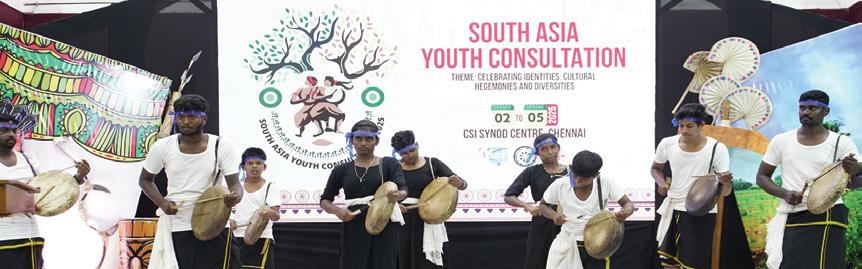
CWM South Asia Youth Consultation creates Pentecost moment
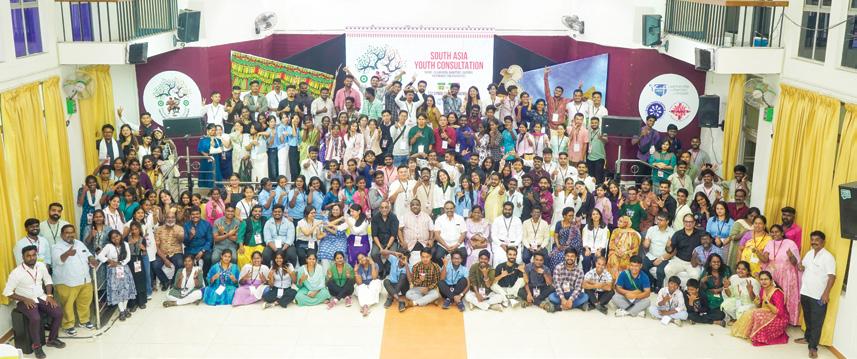
One-hundred-eighty youths representing South Asia’s vibrance and diversity came together at the South Asia Youth Consultation 2025, held at the CSI Synod Centre in Chennai from 2-5 October.
The consultation, organised by the Council for World Mission’s (CWM) Peace and Development team, in collaboration with the India Peace Centre, and hosted by the Church of South India (CSI), brought together young people from India, Bhutan, Nepal, Bangladesh, and Sri Lanka.
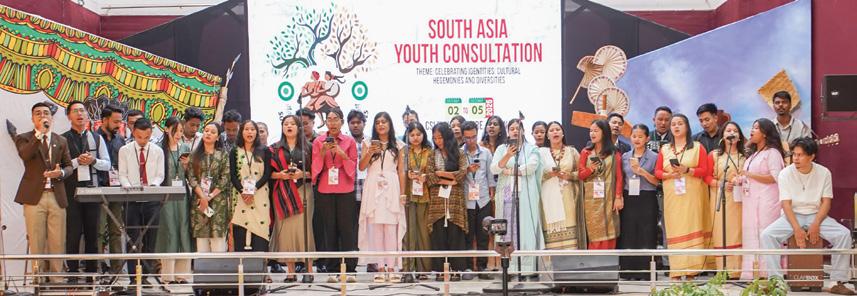
Themed “Celebrating Identities: Cultural Hegemonies and Diversities,” the gathering provided a platform for meaningful exploration, dialogue, and collaboration for participants who hailed from varied faith traditions, Indigenous backgrounds, and marginalised communities, creating a melting pot of perspectives reflecting the diverse realities of South Asia.
In his welcome address, Dr Sudipta Singh, CWM Deputy General Secretary for Programmes, labelled the consultation as more than just workshops and speeches but as a “Pentecost” moment.
“Here, Dalit and Tribal youth from across South Asia gather not in despair but in power… to kindle a movement of fire that no system of oppression can extinguish,” Singh declared.
Throughout the four-day consultation, it was evident that the event represented an ongoing movement that painted a picture of the church’s transformative potential to empower its marginalised youth.
Running parallel to the varied thematic sessions and workshops, creative platforms such as an open mic and cultural night enabled young participants to express their perspectives on resistance and hope through music and performances.
Strategic sessions facilitated the development of action plans for advocacy and collaboration, underscoring the significant role of South Asian youth as active contributors to present change, rather than mere beneficiaries of the future. Their
input, rooted in ancestral knowledge and lived realities, is actively shaping regional discourse on peace and justice.
The event also allowed for ample space to establish networks, sustain commitments, and create shared narratives, ensuring an enduring impact amongst participants.
Towards a more inclusive church
A central pillar of the consultation was a Youth Declaration drafted by South Asian Dalit, Tribal, and Indigenous youth. The statement called for a church that embodies radical justice and inclusion, one that values every person beyond caste, tribe, gender, or wealth, and actively dismantles oppressive systems like caste discrimination, patriarchy, and environmental exploitation.
Penning their collective faiths as an active resistance against dehumanisation, erstwhile grounded in hope, love, and solidarity, the declaration envisions the church as a community of love, a voice of justice, and a space of healing where mental health is addressed without stigma and where marginalised groups share fully in leadership and belonging.
Scan this QR code to read the declaration in full.
Face to Face Pacific programme declares:
Creation is for flourishing, not exploitation
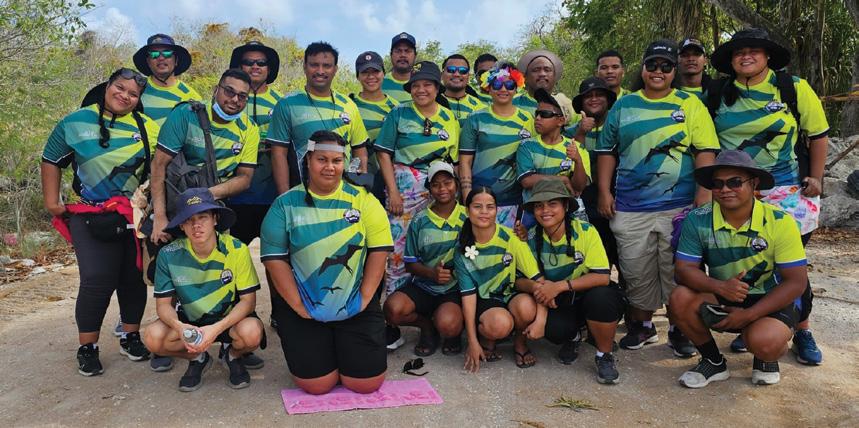
The island country of Nauru hosted 25 participants and ecumenical partners who gathered for the Council of World Mission’s (CWM) Face to Face programme, seeking to tackle the challenges and consequences of land and deepsea mining that have long plagued the region.
As the third-smallest country in the world with a population that is barely 10,000, Nauru is a raised coral island located in the southwestern Pacific that boasts of some of the most scenic landscapes in the region. Yet its untamed beauty is also marred by years of wanton and devastating phosphate mining.
The four-day programme, from 4 to 6 October, brought young faith leaders from various CWM member churches on a spiritual and practical journey in discovering firsthand the horrors wrought upon the Pacific country by entities from extractive industries and to collectively reflect, learn, and act on the adverse impacts on Nauru’s domestic community and by extension, the region’s ecosystems.
Leading the creation and management of the programme was Rev. Daimon Mkandawire, CWM Mission Secretary for Ecology and Economy who distilled the event down to its main point, “The church must not be silent while the depths of creation are sacrificed on the altar of profit. To defend the ocean is to defend life itself!”
Fostering creation care, strengthening ecological advocacy
A key thrust of the programme was the discerning how various faith communities worldwide can respond to the accelerating push for deep-sea mining, which continues to threaten fragile marine ecosystems, cultural heritage, and the “common heritage of humankind.”
Utilising incisive theological reflections, immersion visits to phosphate fields to witness ecological and social scars left by extractive industries, and dialogue with scientists and policymakers, the event connected the biblical vision of creation care recorded in Genesis 1–2 with contemporary global calls for ecological justice and moral governance of the oceans.
The youth participants also joined in the Sunday worship service at Nauru Congregational Church which was themed “The Ocean is God’s Sanctuary, Not Humanity’s Quarry,” signalling their stance in standing in solidarity with the Nauruan population in resisting the continued exploitation and destruction of their land by empire.
“The time spent in Nauru was truly a blessing! We arrived with little to no knowledge about Nauru and the practices of land and deep-sea mining. Now we leave with a piece of their hearts in us [and with] expanded understanding on the issues the island is facing. I leave committed to pray, serve, and speak for environmental justice,” said Lucy Pouhila, a participant from the Congregational Christian Church of Samoa.
The programme closed with the drafting of a statement denouncing the various extractive activities on the island and affirming, among many points, the sanctity of the land and ocean as well as urging a just and transparent governance of natural resources, grounded in community participation and the principles of free, prior, and informed consent.
The document also stands as a firm commitment by the church to act as a prophetic moral voice for ocean justice and the protection of life-flourishing creation.
There was also a collective agreement to press on with the current engagement with Pacific governments and the International Seabed Authority to promote the precautionary principle and uphold the rights of island communities.
A follow up meeting with Pacific church leaders next year is also in the pipeline.
Scan this QR code to read the released statement in full.
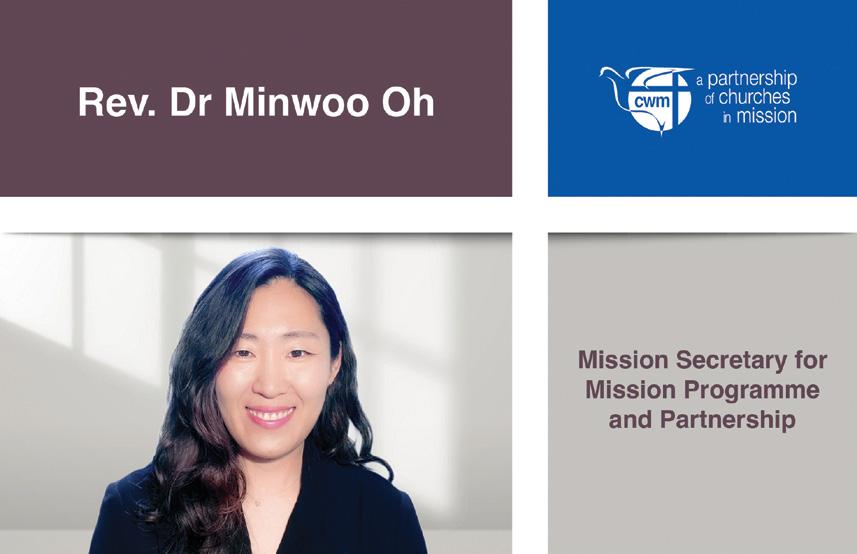
CWM welcomes Rev. Dr Minwoo Oh as Mission Secretary for Mission Programme and Partnership
The Council for World Mission (CWM) is pleased to announce the appointment of Rev. Dr Minwoo Oh as the incoming Mission Secretary for Mission Programme and Partnership, effective 1 January 2026. Oh will succeed the outgoing Rev. Julie Sim and will also oversee the East Asia region as part of her portfolio.
The Mission Programme and Partnership is one of the six primary areas within CWM’s Programmatic Structure. In this role, the Mission Secretary helps shape proposals and strategies to guide member churches in mission and partnership engagement, particularly through flagship programmes such as Partners in Mission (PIM) and the Mission Support Programme (MSP).
An experienced and versatile church minister and leader, Oh has served in both national and international ecumenical contexts, building strong capacity to design and implement programmes that empower churches and communities
to respond faithfully to today’s challenges. She currently contributes to CWM’s The Onesimus Project core group as a representative for ecumenical relations.
Reflecting on her new role, Oh said: “I look forward to strengthening CWM’s Mission Programme and Partnership in the equipping of churches to respond prophetically—resisting militarised powers, amplifying women’s leadership, and promoting life-flourishing alternatives rooted in justice, peace, and solidarity. CWM’s vision of mission as partnership and mutual transformation deeply resonates with me.”
Oh is presently serving with the World Communion of Reformed Churches (WCRC) to promote gender justice.
CWM
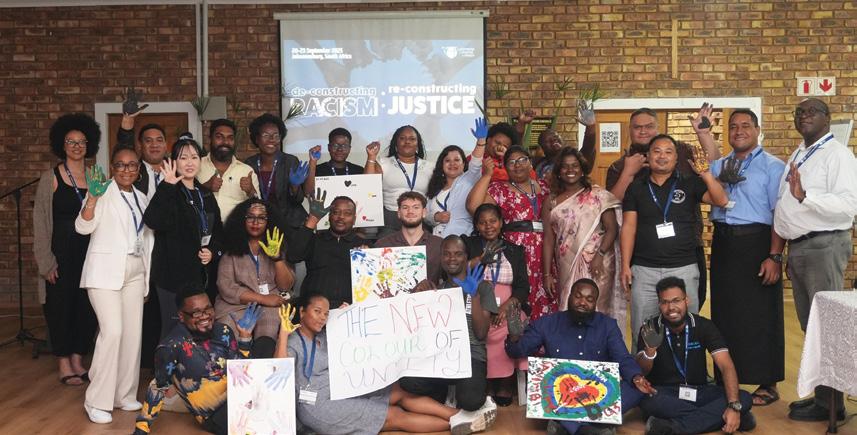
young church leaders gather in South Africa to deconstruct racism and reconstruct justice
The Council for World Mission (CWM) brought together 23 young church leaders from across its global member churches for a transformative four-day programme, “Deconstructing Racism: Reconstructing Justice.” Participants committed themselves to resisting systemic racism and advancing justice through theology, storytelling, and lived praxis.
Held 20–23 September at the eMseni Christian Centre in Gauteng, Johannesburg, the gathering created a sacred space for reflection, dialogue, and action. Through contextual Bible studies, immersive experiences, and prophetic sessions, participants grappled with the realities of racial injustice while envisioning a world rooted in God’s love and justice.
CWM Mission Secretary for Social Justice Janet McConnell described the event as a moment of selah—a biblical pause for deep listening. She highlighted the storytelling sessions as a powerful element of the programme, noting that the narratives shared were not only sacred but also revealed shared struggles and hopes.
Through corporate worship, contextual Bible studies, and mutual storytelling and sharing, over the four days, the youth participants were challenged to confront the realities of racism and envision a more just world while being exposed
to the simple truth that when pulpits and sanctuaries remain silent about racism, they are not just neutral but complicit.
Participants visited the Apartheid Museum and Constitutional Hill where they reached a deeper understanding of South Africa’s racial history and its inspired public acts of racial harmony.
The Ubuntu Circle, led by CWM Mission Secretary for Ecology and Economy Rev. Damon Mkandawire, became a defining moment of the programme.
Participants joined in a powerful moment of spirituality and symbolism, lighting candles around a campfire, sharing stories, writing experiences of racism, then burning them in the fire as an act of release and renewal, embodying the spirit of “Ubuntu” (I am because you are).
Participants pledged to return to their churches and communities as advocates for structural change, embodying anti-racist theology and fostering inclusive justice practices.
A call for prayer for Jamaica in the wake of Hurricane Melissa
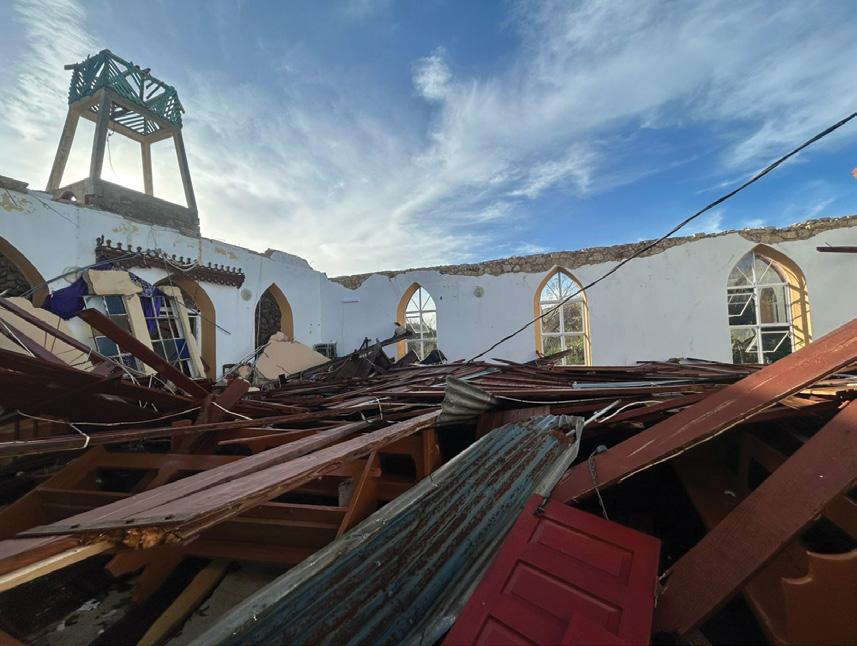
The southwestern coast of Jamaica bore the brunt of Hurricane Melissa’s devastation as the Category 5 storm made landfall on 28 October. With torrential rains and violent, gusty winds, the hurricane pummelled the island nation, resulting in extensive damage to homes, businesses, and livestock. Hospitals, health centres, schools, and roads have also suffered severe destruction, while hundreds of displaced residents are now seeking refuge in emergency shelters.
Describing Hurricane Melissa as “the worst hurricane the island of Jamaica has ever seen,” CWM Mission Secretary for the Caribbean Region, Janet McConnell, said the disaster has severely fractured Jamaica’s economic, health, education, and communication sectors, along with nearly half of its transportation and road infrastructure. She noted that the hardest-hit communities are those in the southwestern parishes, where homes have been unroofed or completely destroyed, leaving many without shelter or security.
According to McConnell, the hurricane has claimed 19 lives, and more than 70% of the island remains without electricity, water, or internet access.
“The restoration and rebuilding will not be easy. It will require a multisectoral approach—a partnership between the public and private sectors, international partners and the Jamaican diaspora, as well as nongovernmental organisations and the church,” said McConnell. “We pray for divine wisdom and inspiration for the leaders of government and the church, and that the spirit of resilience within the faith community and all Jamaicans will remain buoyant as we trust in Jehovah Shammah, the God who is always present.”
McConnell further reflected that while churches struggle to rebuild their sanctuaries and physical spaces,
they also bear the pastoral burden of accompanying grieving communities and a nation in crisis.
“The CWM Caribbean family, along with the entire CWM global community, stands in solidarity with our Jamaican brothers and sisters and pledges full support in the recovery and rebuilding process,” she affirmed.
Meanwhile, the United Church in Jamaica and the Cayman Islands (UCJCI) has reported extensive damage—a fate shared by many other Jamaican denominations.
In a letter to CWM, Rev. Norbert Stephens, general secretary of the UCJCI, detailed that 28 church buildings have sustained serious structural damage, with six completely demolished due to irreparability. Three church-run learning institutions have also suffered major infrastructural damage. Communication and access to isolated congregations have been hampered by debris, flooding, and deadly landslides.
“The current figures of damage and loss may only represent the beginning,” lamented Stephens, who has appealed for continued prayers from the global CWM family of churches.
As part of the ongoing recovery efforts, Stephens noted that UCJCI is conducting damage assessments and providing pastoral care to ensure congregations have safe alternatives for worship and fellowship. The church is also collaborating with the Radio Jamaica Group of Companies to facilitate relief efforts—offering church sites in heavily affected areas as collection and distribution points for humanitarian aid and essential supplies.
“We continue to ground this work in prayer and spiritual encouragement, as our moderator and ministry teams uphold the nation in faith,” wrote Stephens.
CWM calls for prayers and support
CWM General Secretary Rev. Dr Jooseop Keum reaffirmed the organisation’s solidarity with the UCJCI.
“I call upon CWM member churches to join us in prayer for UCJCI, for the people of Jamaica, and for all in the Caribbean affected by Hurricane Melissa,” he said.
CWM is releasing an emergency Solidarity and Action Grant to support UCJCI’s relief efforts. Keum also urges all member churches to stand in solidarity through prayer and financial support for those affected.
Scan this QR code to read CWM's call for prayers.
Face to Face conference in India explores interfaith relations
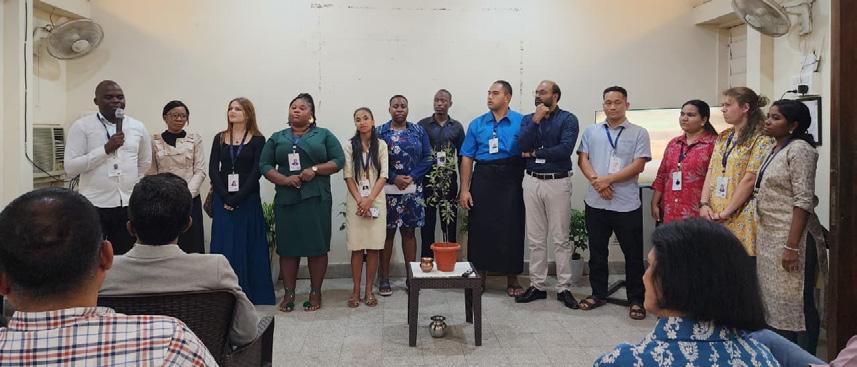
From 2 October to 4 November, 13 participants from India, Malawi, Madagascar, Zambia, United Kingdom, United States, Italy, Zimbabwe, and Guyana met at the India Peace Centre (IPC) in Nagpur for the “Face to Face Interfaith Harmony: Promoting Peaceful Communities” conference, an extensive meeting to strengthen dialogue and mutual understanding, creating a deeper sense of compassion for people of diverse faiths and cultures.
The month-long event, jointly organised by the Council for World Mission (CWM) and IPC, took the participants on a learning journey across Nagpur and New Delhi as they explored interfaith relations while seeking to cultivate a shared responsibility toward peace and coexistence, fostering values and gaining layered experiences that they will adopt and adapt in their local contexts.
The conference took on a specific theme each week to allow for sufficient immersion and a platform for active conversations and profound reflections.
Exploring Ghandi and Ambedkar
The first week of the conference walked the participants through the topics of interfaith dialogue, actions of inclusivity, and environmental consciousness. While reflecting on the teachings of Mahatma Gandhi and Dr B. R. Ambedkar, a former minister of law and justice in India, participants were reminded of the enduring importance of nonviolence and equality. They were also introduced to the concept of harmony
as not just an abstract idea but a lived practice nurtured through dialogue, empathy, and a shared vision.
“Participants [in the first week] developed meaningful cross-cultural friendships and explored both traditional and modern pathways to peace… the spirit of unity, dialogue, and hope cultivated during this opening week will guide further engagement toward building peaceful and inclusive communities,” remarked Angelious Michael, director at the IPC and facilitator of the conference.
Worship that is lived and breathed
Immersion visits to various centres of faith, schools, and community organisations established by various belief groups in the second week exposed the participants to ecumenical traditions, inclusive theology, social justice, and the importance of environmental care.
The conference also showcased lived spirituality that was embodied and practiced through service, compassion, and advocacy, highlighting the connections between faith, justice, and sustainability.
Participants not only engaged in dialogue but also witnessed living
examples of faith in action—from inclusive schools and theological institutions to sacred spaces and community-led sustainability efforts.
The high points of the week included a visit to the polluted Nag River which fostered conversations and reflections on environmental justice and faith-based ecological action while time spent in a session with the National Council of Churches in India also taught the participants on how service to others—especially marginalised communities—is a living form of worship.
Ecological
advocacy and Indigenous rights
The last two weeks of the conference saw participants travelling to New Delhi from Nagpur, a journey that also signalled a topical transition to an engagement with the precepts of peace-building through scriptural, cultural, and ethical lenses.
By immersing themselves in theology, heritage, and cultural diversity inherent in India, participants were given an array of opportunities to explore reinterpretations of faith.
The exercise was also combined with rigourous academic and spiritual dialogue that fostered critical reflections on the moral responsibilities of the various faiths, inclusivity, and justice, culminating in the affirmation that peace is both a spiritual calling and a social commitment.
The core themes of the conference—dialogue, justice, ecology, and compassion—came together in the final week of the programme when participants explored how interfaith understanding can transform conflict into collaboration, and how ecological awareness must be rooted in moral and spiritual renewal.
A visit to the Lotus Temple of the Baha’i faith for an interfaith session brought topics related to domestic violence, tribal rights, and gender equity—challenging the participants to critique present systems of patriarchy and inspiring them to advocate for justice and dignity.
A two-day session with Dr Lalmuanpuii Hmar from Bishop’s College bookended the conference with a sharing of anecdotes and lessons on Indigenous cultures, land rights, and ecological stewardship. Through Hmar’s presentations that lifted the veil on ecological crises, neoliberalism, and theology’s responsibility toward creation, participants ruminated on ancient tribal wisdom that espoused resilience, and explored agroforestry and the value of spiritual harmony with nature.
The conference also saw the performance of a “Commitment Ritual,” when each participant pledged personal action for earth care and justice.
“[The conference] not only left participants inspired by India’s rich tapestry of faith and culture, but also carried forward the message that peace begins with self-awareness, deep listening, and respect for creation,” said Michael, “it also reaffirmed that interfaith harmony is not a single event but an ongoing commitment—to dialogue, justice, and sustainable coexistence.”
CWM Board reflects on legacy of faith and freedom at Bunyan Meeting Church
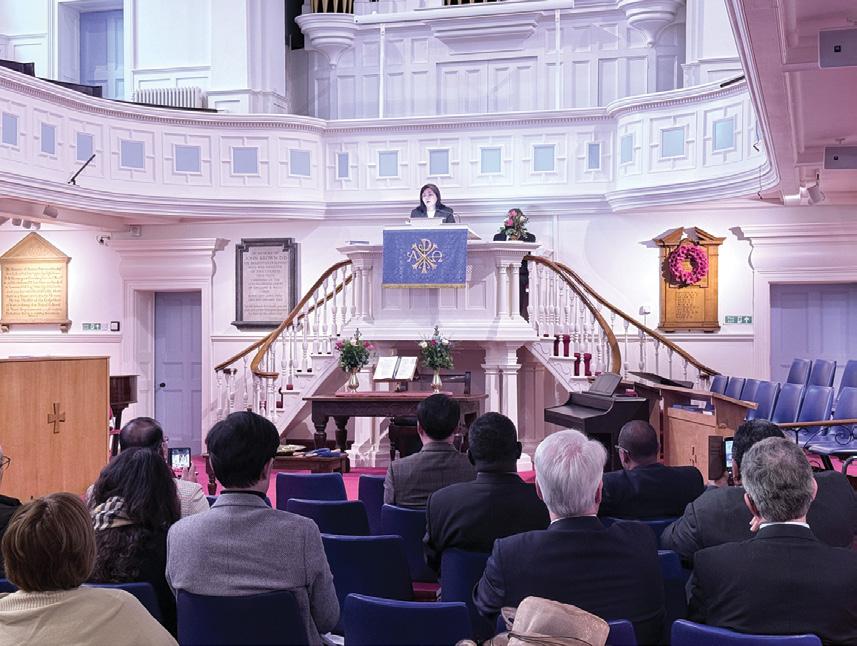
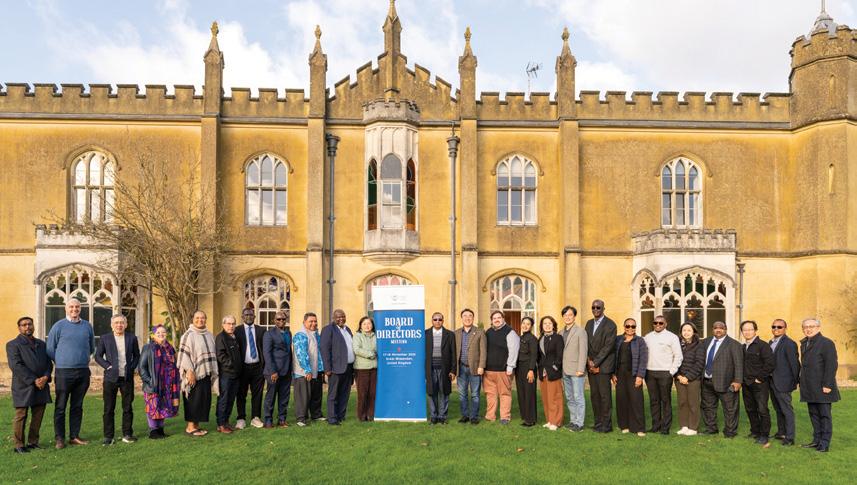
The Council for World Mission (CWM) Board of Directors convened from 16–18 November in the United Kingdom, beginning their meeting with a Sunday worship service at the Bunyan Meeting Church in Bedford, founded in 1650. The church’s deep roots in radical dissent and the pursuit of freedom continue to shape its witness and mission today.
Bunyan Meeting Church stands as a symbol of courage and conviction in the face of oppression. During the 16th and 17th centuries, the Church of England faced strong opposition from Christians seeking more freedom in worship. These nonconformists, including Baptists and Congregationalists, were barred from public life, education, and public office, and many suffered imprisonment or execution for their faith. Among them was John Bunyan, who spent more than 12 years in prison in Bedford for preaching without a state licence.
“Gathering in this historic Bunyan Meeting Church, we are all reminded of the powerful legacy of nonconformist witness and the courageous pursuit of religious freedom,” said CWM Moderator Dr Natalie Lin in her greeting. “That same spirit continues to inspire our shared calling to resist life-denying systems and affirm life-flourishing communities around the world today.”
During the service, CWM General Secretary Rev. Dr Jooseop Keum presented a CWM plaque to Rev. Christopher Damp, minister of Bunyan Meeting Church, in appreciation for the congregation’s warm hospitality.
Remembering the roots of dissent
The church’s story is inseparable from the turbulent religious landscape of 17th-century England. During
Cromwell’s Commonwealth (1649–1660), independent congregations flourished as believers sought a freer, simpler form of worship. Yet this freedom ended with the Restoration of King Charles II, whose Act of Uniformity (1662) reimposed strict conformity to the rites of the Book of Common Prayer.
More than 2,000 clergymen refused to comply, resulting in the Great Ejection of 1662. Bunyan’s refusal to conform led to his imprisonment from 1660 to 1672, and again briefly in 1677, for preaching outside state control.
A pilgrim’s enduring journey
After the service, the Board visited the John Bunyan Museum, located next to Bunyan Meeting Church. Born in 1628 in Elstow, Bunyan joined an independent church that later became Bunyan Meeting Free Church, which continues to worship on the same site today.
While imprisoned, Bunyan began writing The Pilgrim’s Progress (1678), a spiritual allegory that has since sold millions of copies and been translated into around 300 languages. The museum now holds editions in over 170 languages, along with several of Bunyan’s almost 60 published works.
The upcoming Bunyan 400 celebrations in 2028 will mark the 400th anniversary of Bunyan’s birth and the 350th anniversary of The Pilgrim’s Progress (bunyan400.org.uk).
“Why does something that happened 400 years ago matter to us today?” asked Rev. Dr Janet Wootton, chair of the Anniversary Steering Committee. “Because the themes of John Bunyan’s life—freedom of speech, faith under pressure, and the transformative power of education— remain profoundly relevant in our world, where censorship and persecution still silence many voices.”
CWM Board meets in UK, approves key missional directions
The Council for World Mission (CWM) Board of Directors convened from 16–18 November in the United Kingdom, gathering to reflect on the organisation’s ongoing missional journey, receive programme updates, and make key decisions that will shape the next phase of CWM’s global work.
General secretary’s report: three missional priorities
Rev. Dr Jooseop Keum, CWM general secretary, delivered a comprehensive report outlining CWM’s work from July to the present. He highlighted three major developments shaping the organisation’s current direction.
1. Advancing missional praxis through The Onesimus Project
Keum noted that CWM has entered “a new phase of missional praxis” through the continued implementation of The Onesimus Project (TOP). Now in its third year, TOP is deepening engagement with member churches and inspiring transformative approaches to economic and ecological justice.
2. Mission Support Programme V (MSP-V): A new direction in missional accompaniment
CWM has also completed a significant shift in how it accompanies mission within its member churches. Mission Support Programme V (MSP-V): Transforming Mission, now ready for implementation, represents a transition from funding projects to accompanying churches in transformative mission.
MSP-V prioritises leadership from the margins, encourages contextual theological reflection, and supports community-driven initiatives that challenge structural injustices. The general secretary emphasised that this new framework strengthens partnership, reflective learning, accountability, and the belief that communities themselves should lead their own transformation.
3. Preparing for CWM’s Jubilee 2027
Looking ahead, CWM has begun preparations for its Jubilee in 2027, marking 50 years since the formation of CWM in its current decolonial journey. Keum stressed that Jubilee is not solely a milestone celebration but a theological opportunity.
“It is a moment to revisit the radical commitments that shaped CWM—economic justice, decolonial mission, mutuality, and partnership—and to discern how these priorities must guide our next fifty years,” he said.
Key Board decisions
• The Board approved several important matters during the meeting:
• Budget 2026: Approval of the proposed budget for 2026.Solidarity and Action Grant to UCJCI: A grant was approved for The United Church in Jamaica and the Cayman Islands (UCJCI) to support immediate relief efforts, ongoing humanitarian response, and stabilisation of essential ministries affected by the recent hurricane.
• Jubilee 2027 Framework: Approval of the proposed framework for the Jubilee year. Mission Support Programme V (MSP-V): Approval of the MSP-V proposal for implementation.
Farewell to Rev. Julie Sim
The Board also held a heartfelt farewell for Rev. Julie Sim, CWM Mission Secretary for Mission Programme and Partnership, who has served with CWM since 2016 and will conclude her service at the end of 2025.
Reflecting on her journey with CWM, she shared: “My first encounter with CWM was as a volunteer for an event in Malaysia in 1998. They needed someone who could speak English and a driver. Then I became a youth delegate, a woman delegate, and a director. Someday, I received a call to apply as a staff member at CWM. I have served CWM for 10 years. I never planned all this—God led me. I thank God and appreciate your prayers very much, all of you. Thank you.”
The Board offered a sincere vote of thanks, acknowledging her faithful service and significant contributions to CWM’s mission.
Next meeting
The next meeting of the CWM Board of Directors will be held via video conference from 23–24 February 2026.
CWM Board approves Jubilee Framework ahead of 50th anniversary
The Council for World Mission (CWM) Board of Directors has approved the Jubilee Framework for 2027–2028, launching a two-year journey toward the organisation’s 50th anniversary in 2027. The Board convened from 16–18 November in the United Kingdom.
Founded in 1977 and rooted in the 1975 Singapore Consultation’s vision of Sharing in One World Mission, CWM marks five decades of partnership through a Jubilee that invites the whole communion into remembering and renewing commitment to God’s mission of life-flourishing communities.
CWM General Secretary Rev. Dr Jooseop Keum emphasised the Jubilee’s significance, noting that it is “not simply a commemoration of history, but a moment to revisit the radical commitments that shaped CWM — our focus on economic justice, decolonial mission, mutuality, and partnership.” He described the Jubilee as a call to read the past “not as a memory, but as a mandate” for the next 50 years.
A vision of liberation and renewal
Grounded in the biblical imagery of Levitical Jubilee, the Framework envisions a global movement of liberation, justice, and renewal. It affirms Jubilee as “a transformative proclamation of God’s grace that renews creation and restores communities.” Celebrations will take place across national, regional, and global levels, shaped by worship, storytelling, and creative expressions from CWM’s diverse fellowship.
Phase I: Preparation, launch, and local engagement (2027)
From January to June 2027, CWM will produce Bible studies, worship resources, and educational materials to help member churches engage the theological foundations of Jubilee. The official launch will coincide with the Annual Members’ Meeting 2027, which will feature Jubilee Sunday on 18 July, the unveiling of the Jubilee
theme and symbols. Members’ Mission Forums will focus on regional Jubilee dialogues.
A global storytelling project will collect testimonies of liberation, resilience, and transformation. From October to December, local churches will lead Jubilee worship, storytelling, and community-based justice initiatives such as debt cancellation efforts, ecological restoration, reconciliation work, and economic empowerment programmes. A Global Jubilee Youth Gathering will close the year with worship, activism, and visioning the future of mission.
Regional gatherings will discern contextual expressions of Jubilee through Jubilee statements, manifestos, and creative mediums. These outcomes will shape broader mission priorities and flow into community festivals and local celebrations.
Phase III and culmination (April–June 2028)
A Global Mission Consultation will synthesise regional insights and prepare the Global Jubilee Statement — a prophetic statement of faith and mission commitment. The journey culminates at the CWM Assembly 2028 with a celebration of worship, cultural celebrations, and the adoption of the Global Jubilee Declaration.
CWM Board approves Mission Support Programme V, ushering in a new era of transforming mission
The Council for World Mission (CWM) Board of Directors has received and approved the Mission Support Programme V (MSP-V) proposal for 2026–2030, marking a significant step in reimagining the organisation’s approach to global mission. The decision was made during the Board meeting held from 16–18 November in the United Kingdom.
Building on four decades of shared mission experience, MSP-V seeks to renew and reframe God’s mission in partnership with all 36 CWM member churches across six regions. The new five-year cycle will prioritise contextual mission, transformative engagement, and strengthened accountability through a framework designed to support both local innovation and global collaboration.
Framed under the theme Transforming Mission, MSP-V reimagines mission as a collaborative, justice-seeking partnership. Rather than viewing mission as something done to or for marginalised communities, the proposal describes Transforming Mission as a shared journey of accompaniment toward justice, dignity, and flourishing life.
The programme calls churches to become spaces of solidarity, and hope — communities embodying God’s vision of a renewed and lifeflourishing world.
MSP-V aims to cultivate churches that not only address immediate local needs but also challenge structural injustice and foster new expressions of the Gospel’s call to peace, justice, and restoration. Its vision is grounded in the conviction that mission is transformative only when shaped in genuine partnership with those at the margins. Through contextual discernment, theological reflection, capacity-building, and collaborative learning, MSP-V seeks to equip churches of all sizes and resource levels to be a prophetic and transformative presence in their contexts.
Funding under MSP-V is framed not simply as project support but as a means of empowering churches to nurture local leadership, strengthen communities, and pursue sustainable change that reflects God’s vision
of shalom. CWM emphasises that mission resources — financial, human, and spiritual — are entrusted to the church for the flourishing of communities and the transformation of unjust systems.
The MSP-V funding framework is built around a five-category model that considers:
1. Contextual urgency and vulnerability
2. Demographic pressures and opportunity
3. Capacity and resource gaps
4. Cultural and historical context
5. Public witness and systemic engagement
This categorical approach affirms that each member church has unique gifts to offer and distinct needs to address.
“Rooted in CWM’s commitment to accompany members in mission, MSP-V invites every member church to step boldly into the future, embracing God’s call to justice, partnership, and renewed discipleship in a rapidly changing world,” said Rev. Julie Sim, CWM Mission Secretary for Mission Programme and Partnership.
Since 1997, MSP I–IV have supported more than 500 projects across the CWM’s member churches, serving as a catalyst for contextual and transformative mission. MSP-V builds on this legacy, offering a renewed vision for equipping churches to journey together in God’s mission where justice, peace, and flourishing life are made real.
CWM General Secretaries’ Conference opens under the theme “Embodying Hope, Revisioning Mission”
The Council for World Mission (CWM) General Secretaries’ Conference opened on 20 November in the United Kingdom under the theme “Embodying Hope, Revisioning Mission,” gathering general secretaries from 36 member churches to reflect, reconnect, and reimagine the shape of mission in a rapidly changing world.
Held every two years, the conference serves as a space for general secretaries to celebrate shared missional journeys, nurture global networks, and encourage one another through dialogue on opportunities and challenges facing the church today.
Rooted in Jubilee: A call to disruption, restoration, and renewal
In his opening address, Rev. Dr Jooseop Keum, CWM general secretary, emphasised the significance of the meeting. The gathering, he said, is a moment to “collectively reflect and discern the plans and activities to celebrate the Jubilee meaningfully.”
Keum highlighted the biblical grounding of Jubilee, noting, “In Leviticus 25, God commands the people of Israel to practice a rhythm of justice and renewal: the land is to rest; debts are to be cancelled; and slaves are to be set free.”
Keum described Jubilee as “God’s radical disruption of systems that perpetuate inequality,” calling it a divine vision marked by redistribution, restoration, and renewal.
“It insists that the earth belongs to God, not to human empires; that no person is destined to be permanently excluded; that creation itself is to be cherished, not exploited,” he said. The theme “Embodying Hope, Revisioning Mission,” he added, challenges the churches to confront today’s realities with courage and faith, rooting themselves in the promise of Jubilee and imagining new ways of being a church that is “hopefilled, prophetic, and transformative in God’s ongoing mission of life.”
Keynote address: Hope as a communal, courageous resistance
The keynote address was delivered by Rev. Philip Vinod Peacock, recently elected general secretary of the World Communion of Reformed Churches. Speaking on the conference theme, Peacock drew attention to the global crises that define the present era — from ecological collapse to widening inequality and the persistent dominance of empire.
“We stand at a moment when the
world’s wounds are exposed,” he said. “Hope… cannot be the imagination of the dominant or the optimism of the powerful. It is the persistent, communal courage to believe that God’s future pushes into the present.”
“To embody hope,” he continued, “is to stand where Christ stands—among the wounded, the excluded, the resilient. Our mission is to be a living contradiction to empire and a living sign of God’s coming reign.”
Welcoming new member churches
This year’s conference also marked a moment of celebration as CWM welcomed four newly joined member churches and their general secretaries:
• Presbyterian Church of Vanuatu (PCV)
• Cook Islands Christian Church (CICC)
• Presbyterian Church of Mauritius (EPIM)
• Presbyterian Church of Trinidad and Tobago (PCTT)
The gathering shared the stories of these new member churches and held Holy Communion with their general secretaries.
“We give thanks to God for their inclusion in the global CWM family,” Keum said, noting that these churches—each with historic ties to the London Missionary Society—bring “rich traditions, renewed energy, and fresh missional insights that will surely strengthen and inspire our shared witness.”
Looking ahead: Jubilee 2027 and future mission initiatives
Running until 23 November, the conference will engage participants in in-depth discussions on several major initiatives shaping CWM’s future direction, including CWM Jubilee 2027, Mission Support Programme V (MSP-V), and The Onesimus Project (TOP).
Global Christian organisations urge G20 to reshape financial systems for justice and climate action
Six major global Christian organisations representing over 600 million Christians worldwide issued a joint letter on 17 November to G20 leaders to adopt a New International Financial and Economic Architecture (NIFEA) rooted in justice, equity, and ecological responsibility.
The letter, addressed to Matamela Cyril Ramaphosa, president of the Republic of South Africa and chair of the G20, aligns with the 2025 G20 Summit theme — “Solidarity, Equality, Sustainability!” — and urges world leaders to take transformative action in addressing global inequality, debt injustice, and the climate crisis.
In a joint letter, the Council for World Mission, World Council of Churches, World Communion of Reformed Churches, Lutheran World Federation, World Methodist Council, and United Society Partners in the Gospel, jointly affirm that today’s global financial systems are failing the majority of humanity.
“The world today is marked by unprecedented economic, social, and environmental crises,” the letter warns. “Economic inequality has reached levels that threaten social stability. The same forces that keep nations in economic bondage are the architects of climate devastation.”
The letter highlights how developing nations — especially in Africa, Asia, Latin America, Caribbean, and the Pacific — face mounting debt burdens while being hardest hit by climate disasters. “Those who contributed the least to climate change—small island nations, Indigenous communities,
and the rural poor—are compelled to borrow money to recover from hurricanes, floods, and rising seas,” the letter declares. “This is ecological theft. This is climate colonialism.”
The letter concludes with a prayer that G20 deliberations be guided by the spirit of Ubuntu, embodying “Solidarity, Equality, Sustainability.”
“We urge you, the G20 leaders, to make decisions towards justice for the 99% of the world’s population, and not for the benefit of the already super rich.”
Scan this QR code to read the letter to G20.
Global Mission Consultation convened in Rwanda to reimagine mission in a catastrophic world
Eighty mission leaders, theologians, and church representatives from around the world have gathered in Rwanda for the Global Mission Consultation, jointly organised by the Council for World Mission (CWM), the Community of Churches in Mission (Cevaa), and the United Evangelical Mission (UEM). Meeting from 26 November to 1 December 2025 under the theme “Let your light shine” (Matthew 5:16): Witnessing to radical hope in catastrophic times, the consultation provides a space for collective discernment, lament, hope, and imagination in a deeply fractured world.
Confronting catastrophic times
Participants are engaging the convergence of global crises— climate catastrophe, economic inequality, racial injustice, forced migration, settler colonialism, and geopolitical conflict—as realities demanding a reimagined theology and practice of mission. The gathering seeks to redefine mission not as conquest or charity, but as God’s healing movement
toward justice, reconciliation, and new creation.
Creative mission in liminal times
At the inaugural worship, Rev. Dr Hana Kim of Myungsung Presbyterian Church (Korea) delivered a sermon titled “Creative missional thinking in the midst of upheaval times” (Genesis 31:6–13).
Reflecting on the concept of liminality—a threshold or inbetween state—Kim described this as a time ripe with creative potential:
“The story of Israel’s journey through the wilderness—from the Exodus out of Egypt to their entry into Canaan—is, in essence, a story about the threshold,” he said. “However, this threshold period need not be meaningless or frustrating. It can become a blessed time—more creative and more fruitful—when we encounter God in uncertainty.”
Kim likened today’s missionary landscape to this liminal moment,
urging churches to see it as a positive and hopeful transition:
“My earnest hope is that this Global Mission Consultation will become a precious new beginning for the mission of our age—standing at this threshold—to move forward and fulfil the will of God.”
Missional resistance and radical hope
In his keynote address, Rev. Dr Roderick Hewitt, president of the International University of the Caribbean, spoke on “Missional resistance within a global wilderness of uncertainty.”
As CWM approaches its 50th anniversary in 2027, Hewitt urged the organisation to critically review its Partner in Mission (PIM) model in light of global crises.
“The Jubilee celebration should serve as a period of deep reflection,” he said. “The theme of this consultation calls for radical hope in catastrophic times. This implies that the PIM model must be fused with radical hope to counter the forces that deny life. A decolonial rupture is required in the model.”
Faith, hope, and love in a catastrophic world
CWM General Secretary Rev. Dr Jooseop Keum offered a theological reflection titled “Faith, hope and love: discerning Missio Dei in a catastrophic world.” He emphasised that the church’s mission is to resist the “death-dealing forces” of necropolitics and embody transformative hope.
“The world is deeply wounded,” Keum said. “We believe the gospel has the power to transform the world—personality, value, class, system, and society. The gospel of the Kingdom of God challenges the world that nurtures hopelessness.”
Calling for bold theological imagination, Keum described Missio Dei as “a call to rise to life”:
“It is a transformative response to the life-denying forces that pervade our world. Rooted in the mission of God, this vision seeks to dismantle oppressive structures and cultivate lifeaffirming communities.”
He concluded by urging CWM, Cevaa, and UEM to continue empowering communities and confronting systemic injustice through collaborative and prophetic mission.
Charting the future of mission
Over the course of the week, participants explored themes such as Reviving the Witness, Mission from the Margins, Transformative Ecumenism in Mission, and Reimagining the Future of Mission.
Kairos Palestine marks 16th anniversary with renewed global call: “A Moment of Truth: Faith in a Time of Genocide”
Kairos Palestine announced the release of its new document, A Moment of Truth: Faith in a Time of Genocide, during the Kairos Palestine 16th Anniversary International Conference, held from 10–16 November 2025 in Bethlehem. The conference brought together over 300 local Palestinians and international participants from 23 countries for a week of theological reflection, solidarity, and action.
The new document comes at a time of deep crisis for the Palestinian people. It calls upon Christians and churches worldwide to respond faithfully and courageously to what Kairos Palestine describes as “a time of genocide, ethnic cleansing, and forced displacement unfolding before the eyes of the world.”
“This moment demands from us a new stand, one unlike any before it,” the document declares. “It is both a decisive moment and a moment of truth. Today, we renew our stand for truth and our commitment to fundamental religious, theological, and moral principles… offering a faith-inspired vision for the time after genocide.”
A continuation of the Kairos witness
Rooted in the historic 2009 Kairos Palestine document, A Moment of Truth: A word of faith, hope, and love from the heart of Palestine suffering, Kairos Palestine continues to serve as a prophetic voice of Palestinian Christian witness. For 16 years, it has guided theological reflection and inspired faith-based advocacy for justice and peace.
The new text offers a renewed theological and spiritual reading of the current global and Palestinian reality, describing it as a “time of genocide.” It challenges the church to move beyond silence and complicity toward an active commitment to life, justice, and liberation.
A Call for Transformative Ecumenism
During the conference, Dr Deenabandhu Manchala, Council for World Mission (CWM) consultant for Transformative Ecumenism, introduced the concept and scope of the Transformative Ecumenism Movement.
“The new Kairos Palestine Document locates itself in the context of illegal occupation but presents itself as a challenge to Christians, churches, and Christian organisations worldwide,” said Manchala. “It calls us to acknowledge the shameful reality of religious traditions and institutions that have served the forces of death—normalising greed, injustice, and violence. The ongoing genocide stands as a stark example of the church’s abandonment of its moral responsibility to defend and nurture life.”
He further noted that A Moment of Truth: Faith in a Time of Genocide “guides us along a pathway to find alternative expressions of ecumenism that are people-based, justicedriven, and change-seeking — informed by both the sighs of suffering and the signs of hope across worldwide Christianity.”
“Transformative Ecumenism presents itself as one such alternative,” he concluded.
Scan this QR code to read the Kairos Palestine document.
CWM calls global family to prayer after Hong Kong fires
The Council for World Mission (CWM) issued a pastoral letter of solidarity to Hong Kong’s churches following the catastrophic fire at Wang Fuk Court in Tai Po—one of the deadliest residential blazes the city has seen in decades.
CWM issues solidarity letter to HKCCCC
In a letter dated 27 November 2025, CWM General Secretary Rev. Dr Jooseop Keum wrote to Rev. Ray Ka Fai Wong, general secretary of the Hong Kong Council of the Church of Christ in China (HKCCCC), expressing grief, prayers, and an offer of support after the fire that struck the Wang Fuk Court housing complex on 26 November.
CWM said it received the news “with deep sorrow,” mourning those who have died, holding the injured in prayer, and remembering families still waiting anxiously for information about missing loved ones. The letter affirms that the global CWM communion stands with HKCCCC congregations and the wider Hong Kong community, encouraging the church to continue being “a refuge of compassion, hope, and love” in the midst of the crisis.
The letter also commits practical support, noting CWM’s readiness to accompany and assist HKCCCC’s ministry among survivors, displaced residents, and grieving families.
HKCCCC on the ground: shelter and pastoral care
Wong responded with gratitude for CWM’s message, highlighting the immediate impact on the HKCCCC community and the church’s frontline response.
“Thank you so much for your kind words and prayers. This means so much for us,” he wrote. “As the fire broke out just next to our school and church, some of the victims are our teachers and church members and their families.”
He added that HKCCCC has opened its school as a temporary shelter for victims and displaced residents, while pastors are providing ongoing pastoral care to those affected. With many residents still missing, Wong also asked for continued prayer for all involved in the emergency response.
“Many residents of those buildings are still missing. Please pray for the victims, firefighters and medical staff,” he said.
“God is our refuge”: faith response amid tragedy
CWM’s message closes by invoking Psalm 46:1—“God is our refuge and strength, a very present help in trouble”—framing the church’s role as one of presence, accompaniment, and hope. The letter calls for continued prayers for those in critical care, for all still unaccounted for, and for public authorities working to ensure such a tragedy does not recur.
Call for applications: Master of Theology in Transformative Ecumenism
The Global Ecumenical Graduate School (GEGS) at Seoul Jangsin University (SJU), in partnership with the Council for World Mission (CWM), has officially launched a new Master of Theology in Transformative Ecumenism. The programme aims to nurture theologians and leaders equipped to address pressing global challenges through faith, justice, and social transformation.
Developed in response to the growing demand for lifeaffirming theological education in the Global South, the course integrates contextual theology, justice advocacy, and innovative learning approaches.
The three-semester hybrid programme combines in-person learning and fieldwork in Korea with online courses in the student’s home country. Its curriculum covers key areas such as History of the Ecumenical Movement, Ecumenical Mission, Global Christian History, Human Liberation and Christian Education, and Transformative Ecumenism.
Students will also engage in fieldwork on topics such as rural mission, urban industrial mission, interfaith cooperation, and peace and reconciliation.
Eligible applicants must hold a bachelor’s degree (minimum B+ average) and demonstrate English proficiency. Selected candidates will receive joint scholarships from CWM and SJU.
Applications are now open, and all required admission documents must be submitted by 30 January 2026.
For inquiries, please contact Rev. Professor Dr Byung Joon Chung, Dean of the Global Ecumenical Graduate School at SJU (jbjoon@ hanmail.net).
Scan this QR code to download the programme brochure and application form.
AT A GLANCE MEMBER CHURCH NEWS
All Africa Conference of Churches calls for prayer for Malawi’s general elections
With the general elections in Malawi scheduled for 16 September, the All Africa Conference of Churches (AACC) has issued a prayer alert, urging its member churches and partners to seek God’s intervention for a peaceful, fair, and transparent electoral process. The elections will determine the nation’s president and members of the National Parliament.
In his message to the church-at-large, Rev. Dr Fidon Mwombeki, general secretary of AACC, wrote, “We know how elections can be emotive and elusive in our continent, where those who have lost often do not accept losing and winners are not magnanimous and courteous in winning. Such scenarios sometimes lead to disruptions and needless violence causing sociopolitical instability and economic downturn.”
Mwombeki further exhorted partners and churches worldwide to pray in the spirit of James 5:16: “Pray for one another, that you may be healed. The prayer of a righteous person is powerful and effective.”
Scan the QR code for the full version of the prayer alert.
UCCSA marks 58th anniversary: “Stepping into God’s future with courage”
The United Congregational Church of Southern Africa (UCCSA) celebrated its 58th anniversary on 3 October with a series of celebrations and services across its five synods, centred on the theme “Empowered by faith, united in purpose, transforming communities and systems for a just and hopeful future.”
On a day that UCCSA calls Congregational Day, the annual anniversary date commemorates the church’s founding on 3 October 1967, when Southern Africa’s Congregational churches gathered in Durban, South Africa, to form a new, allied witness.
The origins of that, which would birth the UCCSA, had its nascent days centuries earlier with the missionary vision of the London Missionary Society (LMS) – the predecessor body of the Council for World Mission (CWM).
As one of the three mission traditions working in Southern Africa, the LMS, together with the American Board of Commissioners for Foreign Missions (ABM) and the Congregational Union of South Africa (CUSA) created unique strands of faith that each carried a distinct history while still sharing a common spiritual DNA – Congregationalism, a movement rooted in the English Reformation’s Puritan faith
culture and pilgrim traditions that sailed on the Mayflower in 1620.
Today, the UCCSA continues to weave a spiritual tapestry that has helped shape and empower communities living in the synods based in Botswana, Namibia, Mozambique, South Africa, and Zimbabwe.
“As UCCSA writes the vision for the next season, we invite the global church to journey with us in prayer, partnership, and shared mission so that together we may embody a just and hopeful future in Southern Africa and beyond,” said Rev. Wellington Sibanda, the UCCSA Media Liaison Officer, adding that the UCCSA is not just marking 58 years of ministry, but also making concrete moves in boldly stepping into God’s future with courage.
Church of Jesus Christ in Madagascar elects new
president, launches quadrennial plan
The Church of Jesus Christ in Madagascar (FJKM) is embarking on a new four-year journey under the leadership of its newly elected president, Rev. Zaka Andriamampianina.
Andriamampianina, who was elected during the General Synod in August, unveiled a quadrennial plan to turn faith into action during the installation ceremony for the new FJKM leadership on 19 October.
During the installation ceremony, which was attended by the newly elected president for the Reform of the Republic of Madagascar, Andriamampianina also appealed to the government to issue three long-pending authorisations: the licenses to open a TV channel and a hospital, and the marketing approval for FJKM’s bottled water project.
Quadrennial plan to put faith into action
The plan, which will be focussing on concrete actions and community engagement, is set to embody FJKM’s 2025–2029 vision anchored in two key themes: faith foundation and investment. The themes will orbit around the thematic statement of “Ever-generating faith that bears good fruit in abundance.”
In his address that urged all FJKM members to live out a genuine Christian faith and calling on every church, regional synod, branch, school, and association to implement programmes related to the “Faith Foundation,” he reminded the faithful that “if we do not believe in the risen Christ Jesus, then our preaching is in vain, our faith is futile, and we are still in our sins,” citing 1 Corinthians 15:17.
Andriamampianina also highlighted the Apostle Paul’s actions from Acts 18:3 as an example on the theme of investment.
The FJKM president noted how Paul and his companions supported their missionary work by making and selling tents.
“They worked to earn funds, used those funds for their journeys, and returned to work when resources ran out. That is the spirit of productivity we want the church to adopt,” he said.
Andriamampianina also encouraged the various FJKM congregations and institutions to develop sustainable income-generating activities. He also urged FJKM schools to make use of the church’s land by investing in farming and agri-based projects that will “create showcases that generate income and bring beauty to your communities.”
Social action also features prominently in the new plan. Beginning in January 2026, FJKM churches will launch community outreach initiatives to support people in need. “Sharing is what distinguishes the church,” the president said, emphasising that social work is a vital expression of faith.
Recognising the growing importance of technology, Andriamampianina also announced plans to digitalise the church’s administrative systems to improve efficiency and reduce costs.
Looking ahead to the 60th anniversary of FJKM in 2028, Andriamampianina highlighted preparations for a nationwide evangelisation campaign and called on every congregation to take part.
Uniting Presbyterian Church in Southern Africa community wellness day bonds communities
The Saints Presbyterian Church in Lyttelton Centurion, a church of the Uniting Presbyterian Church in Southern Africa (UPCSA), welcomed parishioners and neighbouring residents for its annual Health and Wellness Day on 11 October.
The event, which kicked off with a community fun walk, offered a comprehensive blend of health services, educational workshops, and engaging physical activities, while also successfully combining them with spirit-filled fellowship, and a crucial focus on holistic wellbeing for all ages.
Kicking off the weekend the night before with a special screening of an inspirational movie, the pre-event gathering was designed to inspire the church youths and encourage them towards positive actions and making healthier choices in their lives.
Attendees over the wellness weekend were provided with a wide variety of essential health services of which many were complimentary. Out of the varied stations, the free health screenings staffed by a volunteer nurse from the local hospital, which included blood pressure checks, came to be the most popular.
“The health and wellness journey was inspired with the sudden passing of former UPCSA ministry secretary, Rev. Dr Patricia Baxter, in 2023. As I struggled to come to terms with that loss within the UPCSA, it was impressed upon my heart that I should facilitate more health and wellness campaigns to encourage people in my local community and congregation, Saints in Tshwane Presbytery, to be more proactive in caring for our health. This to me, can be achieved by connecting the body, mind, and soul, hence the theme. I believe that the Spirit congregant can grow even stronger when their bodies and minds are well and healthy,” reflected Elder Gloria Spelman, the organiser of the weekend’s events.
United Reformed Church completes staff restructure
The United Reformed Church (URC) has completed an extensive review of its central staffing structure, aimed at better serving the wider church. The new structure and roles took effect in September.
The revised structure comprises three departments.
First, the Administration and Resources Department, headed by Chief Operating Officer Victoria James, covers the database, website, compliance, people (human resources), and finance functions. It is overseen by the URC’s Resources Committee.
Second, the Ministries Department, which includes safeguarding, is overseen by the Ministries Committee, led by Rev. Nicola Furley-Smith.
Finally, the Faith in Action Department, led by Rev. Jenny Mills, encompasses communications; children, youth, and intergenerational discipleship; evangelism and ecumenism; global and intercultural church; public issues; world justice; and outreach.
The review resulted in a 20% reduction in expenditures, ensuring that the General Assembly’s staffing structure is sustainable and equipped to meet both current and future needs of the church.
Reflecting on the process, James said:
“This has been a hard time for everyone at Church House, but it is essential to live sustainably within the financial resources of the church. We are grateful for the grace, courage, and patience staff have shown throughout this process.”
Presbyterian Church of Aotearoa New Zealand welcomes new moderator
The Presbyterian Church of Aotearoa New Zealand (PCANZ) announced that Rt Rev. Peter Dunn will step in as the new moderator. He will begin his two-year term immediately.
Dunn’s installation will take place at St Paul’s Trinity Pacific Presbyterian Church where the Presbyterian Church’s General Assembly is currently underway.
Born in Dunedin, Dunn studied at the University of Otago and graduated in 1986 with a Bachelor of Arts. From 1987, he studied at the Presbyterian Theological Hall, graduating with a Bachelor of Divinity two years later.
He went on to minister at the Waipu Presbyterian Parish in Northland from 1990, where he served for 22 years. Dunn then served at Windsor Community Church in Invercargill, where he has been since 2012.
“We Believe”
For his term, Dunn has chosen the theme “We Believe” to reflect his personal observations on the journeys that nonbelievers often take before coming into the faith.
“They come from non-Christian backgrounds, with no experience of what it means to belong to a Christian community. We give them space and time to find their sense
of belonging. What they most want is a safe place, so they will watch with suspicion how we, as a Christian community, interact. If they see that we do not live out our faith, it is over between us. People often can come to our church two or three years before they come to faith. Then, we believe together,” Dunn explained.
He also added that one of his main thrusts as moderator will be to create conversations on that which “we believe together as faithful Christians,” which he opined are, “the heart, the soul, the mind, and the integrity of PCANZ.”
Parallel to his current appointment, Dunn also represents the church’s Synod of Otago and Southland on the Southern Presbytery council, and is a co-convenor of the Synod Executive.
He has held previous appointments on the Presbyterian Church’s Council of Assembly; as co-convenor of its Resourcing for Mission Policy Group; as Synod of Otago and Southland moderator; on the leadership of the Northland Uniting District Council— later renamed Churches Together in Northland (CTN); a member of the group that worked to form the Northern Presbytery; and was on the board of Presbyterian Support Northern.
Kiribati Uniting Church holds workshop on uplifting women with disabilities in faith leadership
The Kiribati Uniting Church (KUC), with the United Church of the Solomon Islands (UCSI) and the Methodist Church in Samoa, was selected by the Regional Ecumenical Youth Council (REYC), a wing of the Pacific Conference of Churches (PCC), as a partner in organising workshops that will seek to empower and uplift the status and capabilities of women in the Pacific region.
The workshops were the brainchild of a partnership between the World YWCA – a grassroots-driven, global movement rooted in the leadership of women, young women, and girls – and the PCC.
KUC, through the Center for the Youth Christian for Life (YCL), chose the area of empowering women with disability in leadership as a key focus in a workshop.
The workshop, held 4 November at the YCL Center, invited women with disabilities to share their stories on resilience and grit—stories that showed how, despite physical impairments, they still possessed unique potentials that make them good leaders in their various faith communities.