Ten Mistakes You Could Be Making as a Beginning Guitarist
Getting your first guitar is pretty darn thrilling. As soon as you pick it up and strum that baby, you want to learn all you can notes, chords, scales, bends, slides, all of it, everything! as fast as you can so you can dazzle friends and family with your talent. Who knows. You may even have aspirations of making it onto the world stage with that guitar of yours.
In their zeal to learn to play, however, many beginning guitarists encounter potential stumbling blocks that, if not addressed, can hinder progress or halt it altogether. No matter your skill level, it's important to evaluate your playing style from time to time to make sure you have good practice habits before you get too far ahead of yourself. Bad habits can become ingrained and are sometimes hard to break. Correcting them as soon as they crop up, or better still, avoiding them entirely, is essential if you are to keep on track to becoming the guitarist you've set out to be. Here then are ten common mistakes many beginning guitarists (and some seasoned ones as well) make, and suggestions for how you can overcome them.
Mistake #1 - Neglecting to Tune Your Guitar
Before Every Practice
Many beginners not only don't know how to tune their guitar properly, they don't even notice when their guitar is out of tune! There are a couple reasons why practicing on an out-of-tune guitar hurts your progress. First of all, every time you play something your brain is going to try to remember it and learn to do it again. If you play with a properly tuned guitar, your brain will remember the pitch of the notes and will learn to recognize whenever a note is out of tune, giving you the opportunity to correct it. On the other hand, if you consistently practice on a guitar that is out of tune, your brain will start to think that the sound is right and won't learn to recognize the right pitches.
Secondly, if you habitually practice on an out-oftune guitar, hearing someone who plays in tune will make you wonder why you don't sound as good. Self-doubt may set in and discourage you from practicing. Many players give up the guitar for this reason alone.
Before you play anything on your guitar, make sure the instrument is in tune. You can buy a tuner or use the Guitar Tricks' online tuner, which can be found on the site's toolbar. Check and double check your tuning, and then check it again after you've been playing awhile. And if you don't know how to tune the guitar by ear yet, make it a goal to learn how to do so as soon as possible.
Mistake #2 - Practicing What You Can Already Play
Practicing what you already know how to play is one of the biggest mistakes that beginners can make. If you sit down and only play the stuff you know, you're merely spinning your wheels. The idea here is to forge ahead. It's okay if you want to run through songs that you have down pat as a warm-up, but when you are learning to play the guitar, you need to push yourself to learn to play new things in order to constantly evolve as a player.
If you're still playing "Back in Black" ("Stairway," "Crazy Train," "Wish You Were Here") three months down the road and still calling it practice, then you're not making progress. Play songs that you know a couple times a week to keep them fresh in your memory, but do add more and more tunes to your practice to help keep your motivation up and to avoid stagnation. And while we're on the subject of learning songs, make sure you learn complete songs. You might be surprised to learn how many guitarists can't play a song all the way through, start to finish. Instead, they play bits of songs that trail off after several bars. Or they play the riff of a song or a couple of verses, and then move on to another part of another song. If your repertoire is nothing but a string of teasers, and perhaps unpolished ones at that, what does that say about your ability?
Mistake #3 - Avoiding Barre Chords
first major hurdle you will encounter in advancing your guitar skills. You may've struggled some with a few things in your practice up until then, like learning to use your pinkie and changing chords, but every challenge prior to barre chords was relatively easy to overcome.
Barre chords involve using one finger to hold down multiple strings. If you are a beginner, you might be intimidated by barre chords because they require a lot of strength in your fretting hand. Barre chords are hard to learn to play at first. Because of this, lots of beginners try to avoid playing songs that require them. But you will never learn to play barre chords unless you play barre chords. You must devote a portion of each practice to working on them, and learn songs that have barre chords in them. Barre chords will get easier as your fretting hand gets stronger, and after playing them for a few months, you'll wonder what the big deal was.
Mistake #4 - Consulting Too Many Sources
Many beginners make the mistake of jumping from one YouTube video to the next, reading articles all over the internet and in guitar magazines, switching between various online courses, etc. This is especially true when they get stuck on something and switch learning sources in a bid to keep things easy.
With so many different paths available these days to learn how to play guitar, you run the risk of information overload. Instead of finding the answers you seek, this abundance of information can overwhelm and ultimately paralyze you. In order to get better as a player, you need to stay focused and dedicated. Find a teacher or an online course like this one with a clear, comprehensive lesson plan and stick to it. If things get tough, persevere. Don't always look for an easy out, which will only keep you stuck. Each challenge you overcome will help to make you a better guitarist.
Learning barre chords is the single biggest leap you will make in your playing ability, and the
Mistake #5 - Being Impatient
Once you discover the secret to more effective ways of practicing the guitar, it will get easier to progress more quickly as a musician. Nonetheless, it is equally important to realize that at some point there is no way to speed up the rate of your progress to a level faster than is natural. Like a seed you place in the ground in the hopes of someday seeing it develop into a fruit tree, no matter how much you try to speed up the process, there are some stages of growth that simply cannot be rushed past a certain point.
Sadly, too many guitarists don't realize the true importance of patience in the process of improving their musical skills. As a result, many become frustrated too quickly and start doubting their potential to improve if they fail to see results by some arbitrarily set deadline. When the unrealistic results are not achieved quickly, this leads to a negative mindset that will only discourage you from practicing. Once the practice stops, it's only a matter of time before your guitar ends up in the back of a closet.
To overcome this problem, realize that the journey to becoming a great guitar player is a neverending process, and that you have the span of your lifetime to develop your musical skills. Clear your mind of any self-imposed deadlines and devote your energy to practicing as effectively as you can. This is the only true way of making progress.
Mistake #6 - Paying Too Little Mind to Tempo and Timing
Music is all about rhythm, yet many people can't keep a constant beat going. A sense of rhythm is essential for every musician. Whether you want to play in a band or just accompany yourself while singing, you must be able to stay in time or you will never sound good. Your bandmates will quickly tire of you always losing track of where you are and not being in sync with them, and anybody listening will have a hard time enjoying the music if you cannot keep a steady pace.
Following a beat is a skill that is actually quite easy to learn. The simplest tool to use is a metronome. You can go out and purchase one, or use the Guitar Tricks' online metronome, which can be found on the site's toolbar. Using a metronome regularly when practicing will develop your rhythmic ability until you can count the beat in your head perfectly while playing. Spend some time every time you sit down to practice working on rhythm skills and playing along with a metronome. Playing becomes a whole lot easier when you can follow a beat properly.
Mistake #7 - Trying to Play Too Fast, Too Soon
It may seem strange to list playing too fast as a bad habit, but this is a biggie for many new players. So many beginners pick up the guitar and expect to be able to play like Eddie Van Halen right out of the gate. But speed isn't something you should be aiming for, at least not initially. Speed is actually a byproduct of lots and lots of practice. You need to learn to control your fingers and carry out precise movements that can only be learned at slow speeds. Once your fingers start getting used to the guitar, you'll speed up naturally, without even trying. One of the most important things you need to understand is that playing slowly but correctly is much more important than playing fast but sloppy.
Playing too fast also applies to rushing through lessons without having mastered them. We get so excited at the thought of playing all our favorite songs that we go through all the essential techniques at blinding speed so we can get to the "good stuff." Unfortunately, you can't skip through what you need to know and expect to play what you want to play. When beginners first try to learn chords, they often don't spend the time needed to learn the chord properly before moving on to the next chord. Over time these small mistakes turn into very sloppy playing that will, in the end, only slow you down.
How good a guitarist you become in the future
completely depends on how you practice now. Don't skip what you think is the "boring stuff" so you can get to the "good stuff" because you need the "boring stuff" to be able to play the "good stuff." Take your time when learning a song and don't try to do too much at once. Learn one bar at a time and make sure you perfect it before moving on to the next bar. If you rush through your exercises, or don't play any exercises at all, you won't be able to develop fully as a guitarist. You may not want to learn about scales, chords, or exercises when you're starting out, but ask any accomplished guitarist and they'll tell you just how important these are.
Mistake #8 - Hiding Out with Your Guitar
New guitarists will naturally be shy to play in front of others, but doing so is very important. Not only does it provide a healthy rush of adrenaline, playing in front of other people gives you a short-term goal, opens your eyes to things you need to work on, and will make you feel awesome afterwards.
Of course, you need not play gigs as a beginner or even as an intermediate guitarist. Strangers are not that forgiving. Start out with your family and move on to playing in front of your friends. The applause and compliments you get from a supportive audience, even some constructive criticism offered gently, will help motivate you to practice all the more.
Not only do you want to play for others, but you want to play with them as well. This one is a bit harder to achieve, but playing with others can be one of the most beneficial methods to taking your playing to the next level. Of course, you need to be able to play at a solid intermediate level already, but if you can find another guitarist to play with, or better yet, a whole band, you'll really start advancing.
Mistake #9 - Avoiding Theory
er, a lot of the time all you need is a better grasp of music theory in order to make significant gains in your playing. You can only get so far without at least a rudimentary knowledge of theory. Knowing even a little about chord structures, scales, key centers and tonality and how all of these things relate and function together is a critical aspect of being a complete musician. Theory will help you make sense of what you're playing and give you a broader tonal palette from which to create and play music.
Music theory should never be viewed as a set of rules that must be followed without question. It should instead be considered an in-depth and evolving observation of how music works and the relationships between rhythm, structure, melody, harmony, etc. Music theory should be used as a tool to aid you in your playing, not as a bible to be adhered to. Even an understanding of the simplest music theory can help beginning guitarists grasp the concepts that they are trying to learn more quickly and easily, so don't be too quick to shy away from it.
Mistake #10 - Expecting Miracles
And finally, know that it takes years of practice and dedication to develop into a guitarist on par with some of your heroes. Chances are you were not born a guitar prodigy. Chances are that you will have to work, and work hard, at being a good player. So don't compare yourself to any of the wiz kids out there and become disenchanted when you don't measure up.
Many guitarists eschew music theory because they think theory will kill their creativity when actually the opposite is true. If you are feeling stuck and don't know how to progress as a play-
It's pointless to compare yourself to another player. There will always be someone who has better technique, a deeper understanding of theory, pitch perception, knows more songs or different styles than you. Nobody is master of everything. There is no single "best guitarist in the world." The players that stand out are the ones that transcend genres and create their own style. In addition to technical proficiency and skill, your goal in learning to play guitar should be to develop a musical taste and style that is uniquely
you. When you begin taking lessons, you imagine a pyramid, with years of practicing and paying your dues at the bottom and working your way to master at the top. What you need to do is invert that pyramid. The more you learn about playing the guitar, the more you realize how much more there is to learn and the more capable you are of learning.
Take a minute and analyze your next practice session to consider if any of the mistakes listed here apply to you. Although there are a host of bad habits beginning guitarists need to be on the look out for (correct thumb placement, holding the guitar properly, hiding behind your gear, et al.), these ten will net huge results in your playing should they be habits you successfully correct. If you know what mistakes you are making and what habits you need to break, your practice efforts will become more effective and you will move a lot more quickly towards your goals as a guitarist.
Guitar Tricks Inc.
Image credit: Guitarist little girl. (Dorothy Takacs) - Budapest, Hungary, Author Taak
<
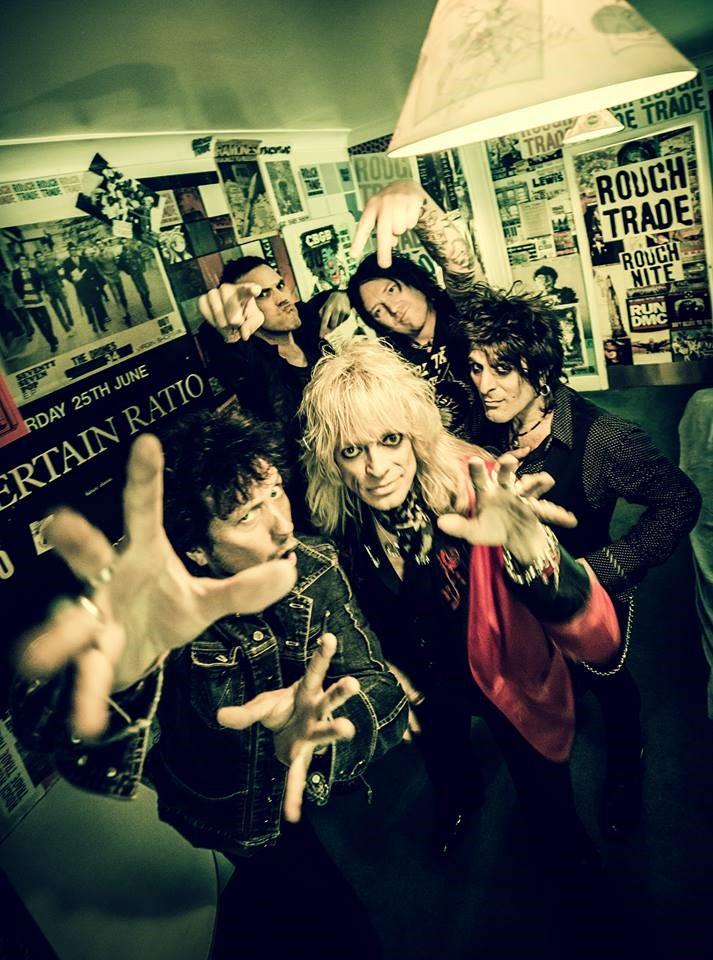
CV> I understand that you are originally from Finland, is that right?
<MICHAEL> Yes I am
<CV> What originally got you into music and at what age? What made you say this is what I want to do?
<MICHAEL> I heard classical music at a very early age because my parents listened to it. I got into Rock music at about 8 when I saw Black Sabbath ”Live In Paris 1970" on TV. Then my father got me and my brothers Led Zeppelin II and Alice Cooper: ”Love It To Death”, Deep Purple:”Fireball” and Creedence Clearwater Revival: ”Pendulum”. Soon I discovered Little Richard And the Rolling Stones, Chuck Berry, Nazareth, Mott The Hoople The Faces, Slade, Marc Bolan, The Sweet, Suzi Quatro, Roxy Music etc. and later on the Blues, Reggae, Funk and so on. A Finnish Rock’n'Roll band band called Hurriganes was a big influence on almost everyone who was my age in Finland. Especially featuring the fantastic guitarist Albert Järvinen (RIP). Also a Finnish artist named Dave Lindholm is one of my faves. A great artist who’s had many different bands & projects over the years since the late 60’s and is still making great music today.
<CV> Who were your favorite bands when you were younger and who are your biggest music influences ?
<MICHAEL> The aforementioned, especially Alice Cooper, Little Richard, Rolling Stones and The Faces. Apart from those, some of my other influences have been The Ramones, Stiv Ba
tors, Johnny Thunders, Ian Hunter, John Fogerty, The Ruts, The Damned, Cheap Trick, The Undisputed Truth, Buddy Holly, early AC/DC (w/Bon Scott on vocals), Gary Holton (Heavy Metal Kids), Alex Harvey, MC 5, Little Steven & The Disciples Of Soul, Tom Petty, Moon Martin, Dave Edmunds, The Sparks, Free, Thin Lizzy, Phil Lynott, ZZ Top, Motörhead, Lemmy, Patti Smith, UK Subs, The Boys, Peter Tosh, Third World, Dennis Brown, Parliament Funkadelic, Little Walter, Sonny Boy Williamson, Willie Dixon, The Temptations (the psychedelic era), The Doors, Jimi Hendrix, Janis Joplin, The Inmates, The Records, X-Ray Specs, Sex Pistols, Leonard Co-
hen, Sam & Dave, The Eagles, Don Henley, Dr. Feelgood, Mink DeVille, Suicide, The Dead Boys, New York Dolls, Jimmy Cliff, early Van Halen (w/David Lee Roth) up until the 1984 album, Rose Tattoo, Aerosmith, Ted Nugent, The Meters, Steve Miller Band, Grandmaster Flash & The Furious Five, Miles Davis, David Bowie, Warren Zevon, Little Feat, Nick Lowe, James Gang, Mountain, Byrds, Bob Marley, Pink Floyd, Police, Iggy Pop, Queen, Geordie (the ”Hope You Like It”- album 1973), Sly & Family Stone, Squeeze, Jeff Beck, Dire Straits, Ron Wood, David Gilmour, Georgia Satellites, Frank Zappa, J. Geils Band, ELO, Tyla Gang, Blondie, Talking Heads, Eddie Cochran…The list goes on… (btw., these were not in any particular order)
<CV> You play quite a few instruments, keyboards, piano, guitar, saxophone, harmonica, harp, and drums. I think that is great that you can do that, how did it come to be that you learned all of those instruments? Did you have professional training or are you self-taught? I have to admit I love the Saxophone and I think it’s great how you bring that into your music!
<MICHAEL> My mother made me take some piano lessons when I was about 5. Then at about 8, after I discovered Rock’n'Roll, I started to take more piano lessons out of my own choice. I’m self-taught on Harmonica, Saxophone, Guitar, bass and drums. However, I took some classical flute lessons for about a year before deciding to take on the sax, which helped a bit with the sax fingering.
<CV> In 1979 s when you formed Hanoi Rocks. How did you come up with the name and anything you would like to share from those days?
<MICHAEL> I was sitting on a bus with Andy McCoy and he suggested ”Chinese Rocks”, but I thought it wasn’t original enough since it was already a song on the Johnny Thunders’ Heartbreakers - album "L.A.M.F.". So then he suggested ”Hanoi Rocks” and that
hit me like the best name for a Rock band ever.
When we started out me, Sami Yaffa & Nasty Suicide lived homeless for about 6 months in the streets of Stockholm. That was an important ”school of life”-experience and really made us very close friends. We still have that bond and the spirit from those days and that’ll never change.
<CV> Now, you did a book with Andy McCoys “ All Those Wasted Years” which was published in 2009 in Finland, telling the story of Hanoi Rocks from the beginning to the end. How was that received?
<MICHAEL> The book was written by a guy named Ari Väntänen, who has also written my autobiography in Finnish. It did very well. In fact that book is soon going to be released in English worldwide by the US company Cleopatra.
<CV> You have a new album “Black Out States” What can you tell us about it?
<MICHAEL> It’s a great compilation of songs as a whole and has a variety of sounds and styles while being consistently Rock’n’Roll. I’m too tired to go on about it, I just recommend it to anyone who likes good, melodic & high energy Rock music with smart lyrics, cliché-free and all. Just do yourself a favor and get it.
<CV> Give us some insight on the song and music writing process; is it a joined effort or does one person do all the writing? The recording process itself, anything you like or dislike?
<MICHAEL> Both. Some songs are written by one person but most of them are joined efforts. Normally we would get into a rehearsal room to start songs from scratch but this time with "Blackout States” we didn’t have that opportunity, so some stuff was done on our own (for example, I wrote ”Good Old Bad Days” by myself, Steve wrote ”Walk Away” etc.). Then we got together to see what we had and worked on it some more. The recording process is always kinda stressful because you’re creating something you’re gonna live with for the rest of your life, but it’s also fun, especially when it’s done.
<CV> What is the motivation behind the songs your write? Do any of them speak to you on a personal level and if so why?
<MICHAEL> Every song I write and sing speaks to me on a personal level. I have to be able to relate to what I’m singing about in order to deliver the vocals with real conviction. I need to have deeper meaning in the lyrics, not just some superficial crap.
<CV> Tell us about the music industry today and where you think "Michael Monroe" fits in? How different is the music industry today from when you first started out?
<MICHAEL> I don’t think I’ve ever really fit in the music business. I seem to have always been in the wrong place at the right time or the right place way ahead of my time. Sumfin’ like that. Music has no business in the music business anymore. In my early days no one cared that much about the records sales or what genre of music they would fit in. Therefore bands and artists had more personality and were more fun back then.
<CV> How different is the music scene overseas than the U.S.?
<MICHAEL> There are good bands in both, if you look for them but overall…I dunno. The biggest thing in the US seems to be Country music and the Hip Hop kind of "disco” stuff. A lot of people in Europe try to copy what’s fashionable in America, especially Hip Hop & Rap which is kinda corny and phony, especially Rap music in Finnish. But in Finland there’s also a lot of strong Rock acts in the scene and always has been. And nowadays many of them are getting themselves a name worldwide too.
<CV> What are your thoughts on the use and necessity of Social Media?
<MICHAEL> It seems to be a necessary evil nowadays. I was fine without it but there’s also good aspects to it. As far as Facebook & twitter etc. goes - Personally I couldn’t care less about when some artist I admire goes shopping, or to a meeting or whatever, what they had for dinner and so on. That may be interesting to people who don’t really have a life. To me it’s mostly annoying, having to reply to e-mails late at night when otherwise I would happily go to bed at a sensible time. I only have a Facebook for my band for professional reasons. Otherwise, I would not do that stuff.
<CV> How do you feel about music download sales, would you prefer a return to CD's and Vinyl?
<MICHAEL> I definitely prefer CD's and Vinyl. I like to see what I’m listening to, what the band or the artist looks like, read the lyrics for the songs, see who wrote what and who plays what etc. I don’t even know how to download songs from the internet.
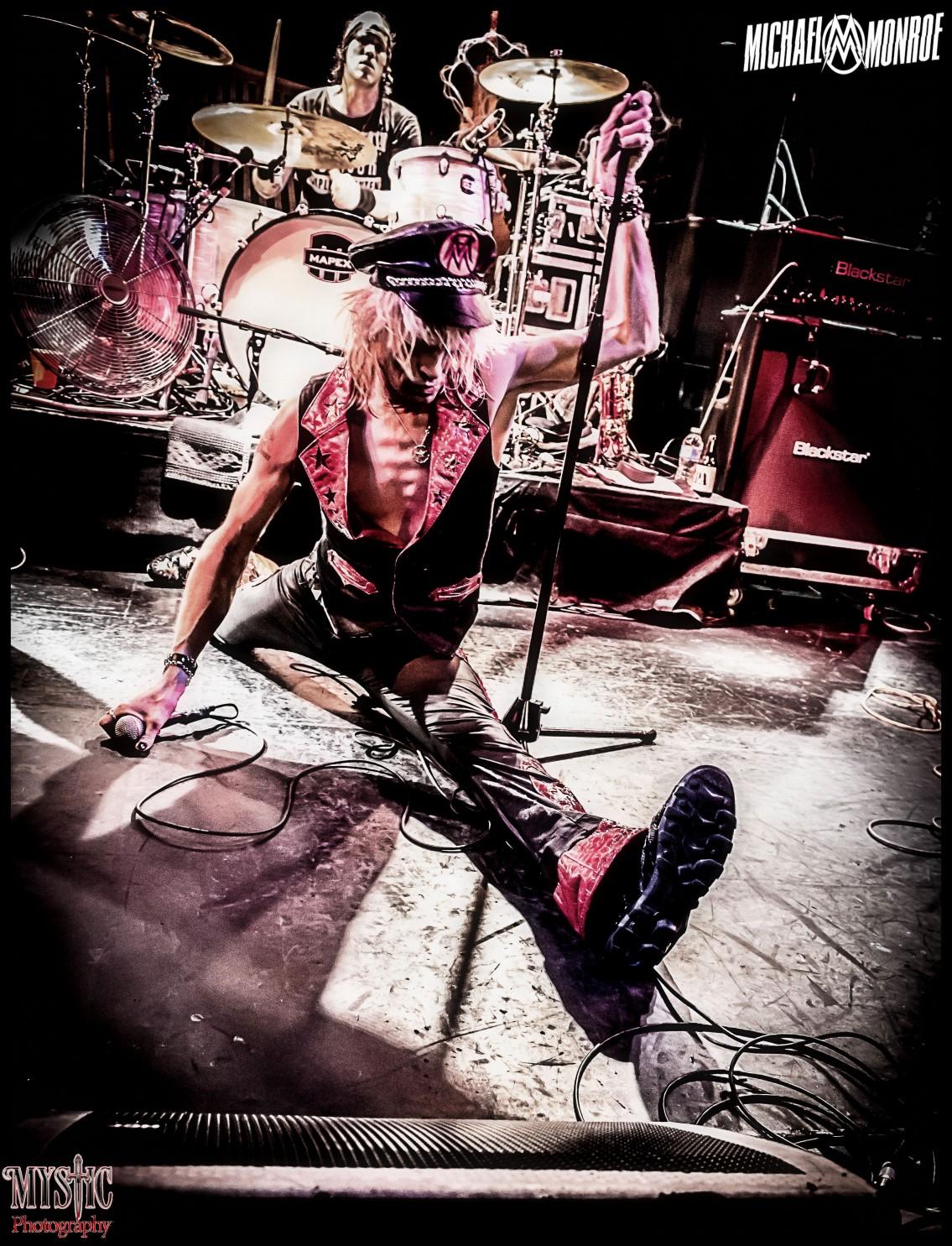
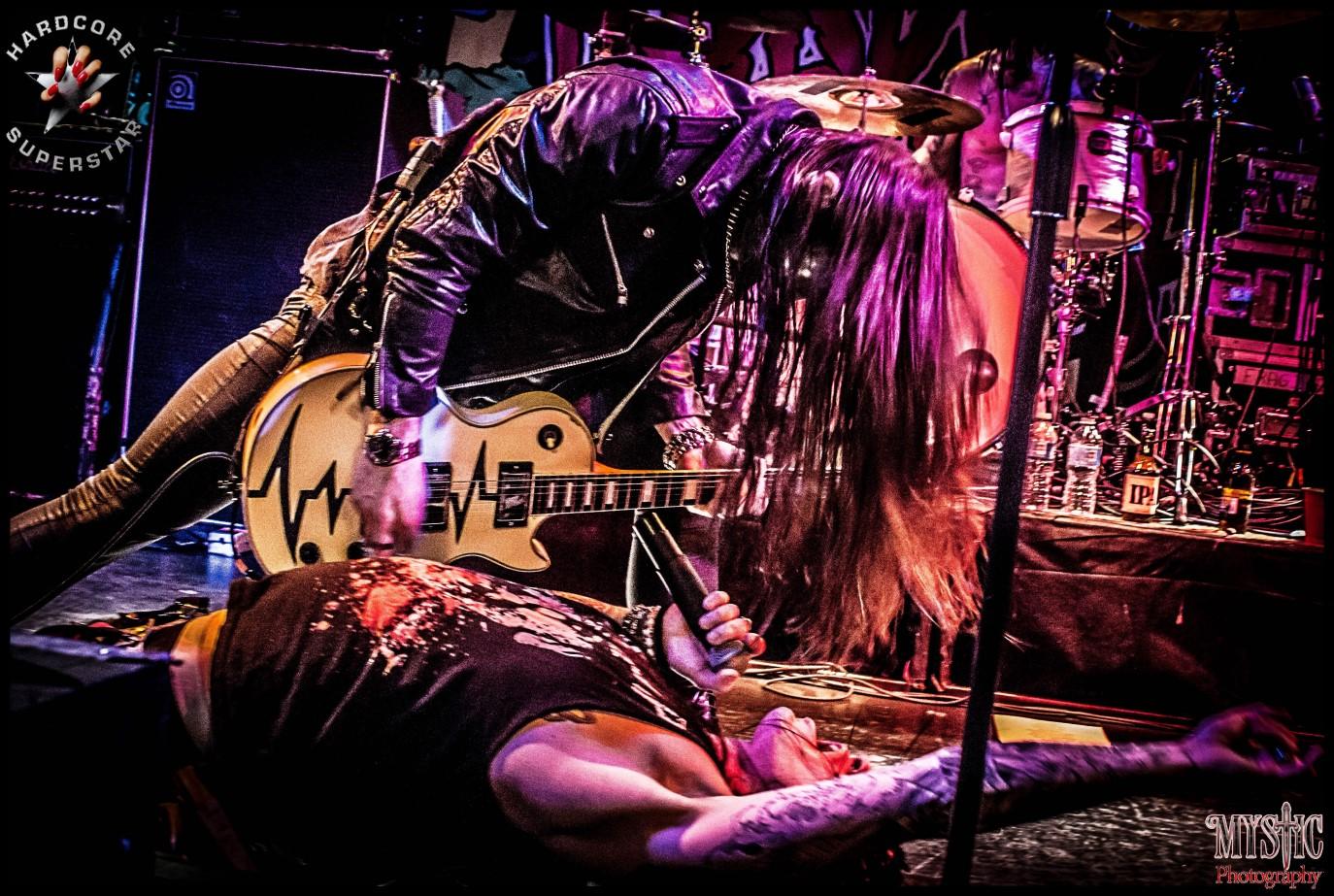
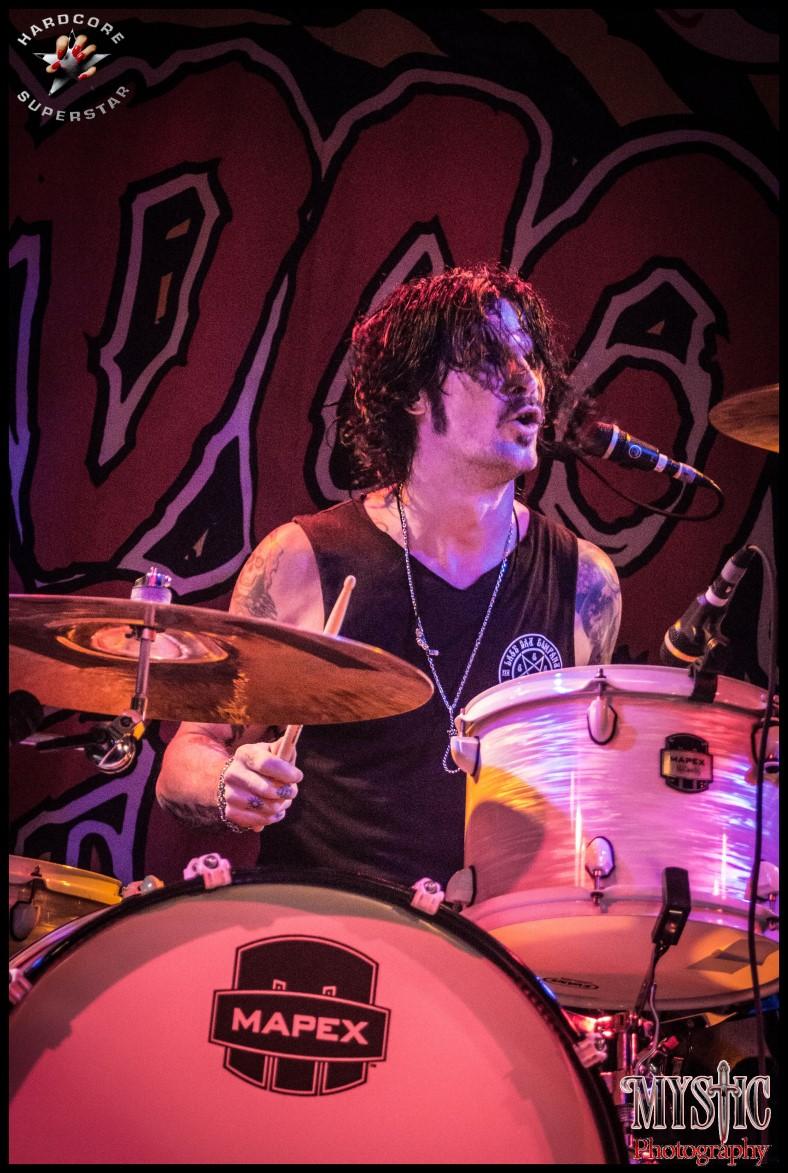
<CV> You started the U.S. tour here in Las Vegas with HardCore Superstar. Tell us how this tour came about. HardCore Superstar is a great band, this line-up is amazing and it went very well! I actually met so many people in the crowd that drove 1200 miles and more to come see your show! I thought that was very cool! Were you excited for this tour?
<MICHAEL> Yeah, it was a good combination. We did 3 weeks with them in Europe last October and it was great so we figured why not continue with the same package in the States. They’re old friends of mine.
<CV> What can fans expect to see at a “Michael Monroe” show?
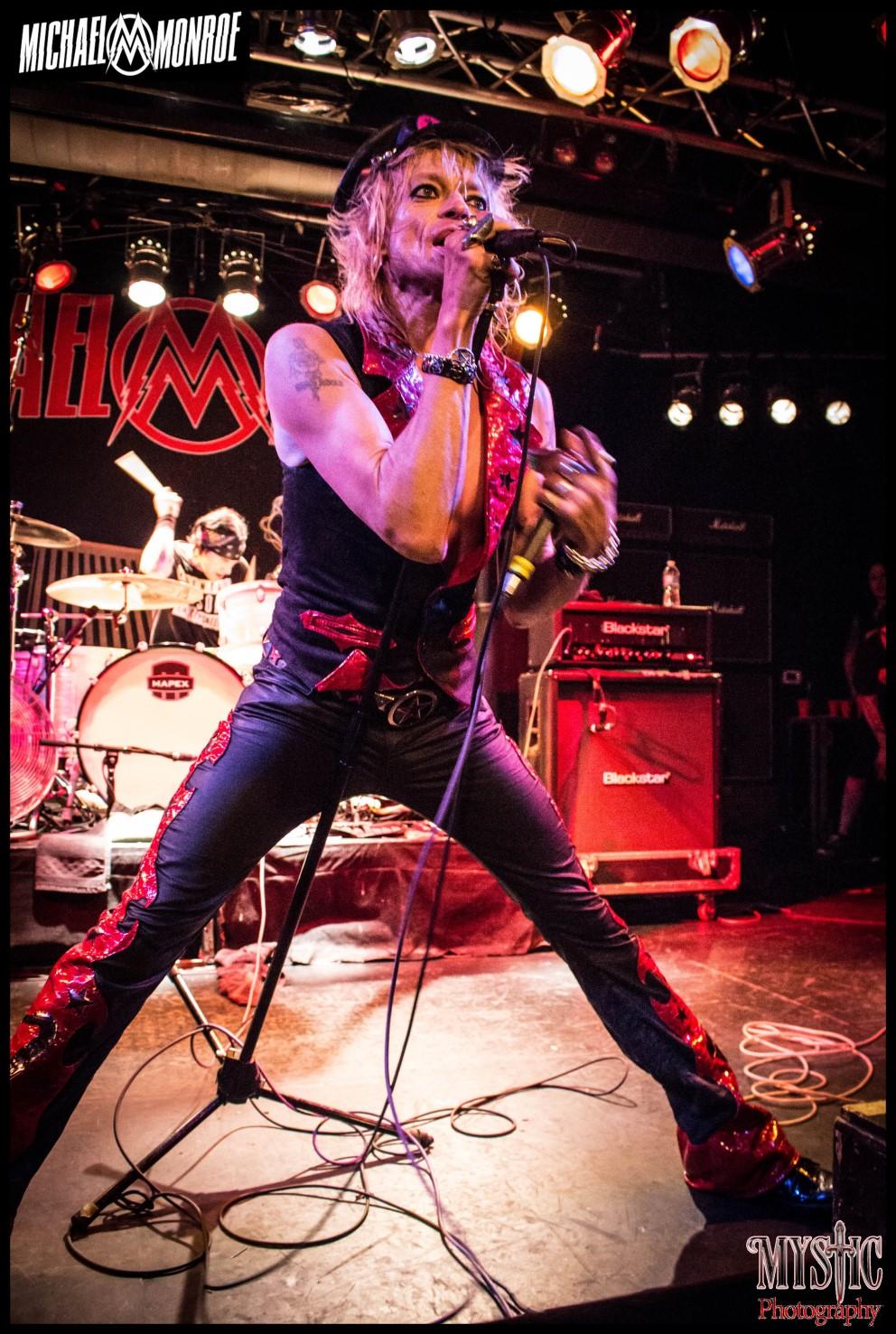
<MICHAEL> A full blast high energy Rock’n’Roll show in yer face. Great, authentic and honest Rock music.
<CV> How does it feel to know you have influenced so many rock'n'roll artists and bands and are considered the founding father of Hollywood's Glam-Rock Scene?
<MICHAEL> It feels flattering to know about the influence on others but it's especially nice when the influence was taken the right way by the bands in question. A lot of them seemed to miss the point and ended up becoming phony parodies of themselves and giving real Rock’n’Rollers a bad name by faking it and looking silly.
<CV> What do you have planned for 2016? Besides this current tour, are there any other tours or projects in the works?
<MICHAEL> Touring with this band. Next to Japan and then summer festivals etc. You can find our touring plans on the Website “www.michaelmonroe.com” in the ”Tour” section
<CV> What would you like to say to your fans and our readers?
<MICHAEL> A huge Thank You for all your support, loyalty and patience, as we are a pretty rare commodity.
Hope to see you down the road soon!
<CV> I would like to say on behalf of all of us at CV WorldWide Magazine, a big thank-you for taking the time to do this interview as we know you are extremely busy! The show in Vegas was phenomenal! We are extremely honored to have this opportunity.
<MICHAEL> Right now my schedule is very hectic! Thank you for your patience, this took way too long, but I guess it's ”better late than never”, eh?
All the very best, Love & Respect,
*Michael Monroe*
Order in the Chaos
“The Funny Thing Is, I Never Used A Thing The
Guy Tracked For
Me!”
Where You Actually Stand In The Picking Order… With The Record Producer.
Before I elaborate on the headline/sub-headline association, let me first give you a pretty good definition of the term “Record Producer,” as used in said sub-headline:
A record producer (or music producer) has a very broad role in overseeing and managing the recording (i.e. "production") of a band or performer's music. A producer has many roles that may include, but are not limited to, gathering ideas for the project, selecting songs and/or session musicians, proposing changes to the song arrangements, coaching the artist and musicians in the studio, controlling the recording sessions, and supervising the entire process through audio mixing (recorded music) and, in some cases, to the audio mastering stage. Producers also often take on a wider entrepreneurial role, with responsibility for the budget, schedules, contracts, and negotiations. (taken from Wikipedia)
Okay, now that we have established what the role of a “Producer” is, we can move on.
I have done quite a bit of recording over the years, on both a personal, low-budget sense as well as bigger budget in a professional studio with other professionals sitting in the seats around me. Between the two, there is not much of a difference if your work ethic is proper, but that is not what this article is about. This is about the POWER that an effective Producer has over you, that you may or may not even be aware of. This article is for those musicians who are in a band as a contributing member, but NOT a “Writer.” Basically, it’s pointed at the guys who just show up for practice, the gigs, and the parties… but do no leg-work, do no promotion on a band level or a personal one, and do
not walk into rehearsal with the new ideas that make the band produce new product on a consistent and forward-moving schedule. If you are the type that does the bare minimum, yet expect all the rewards to equal those of the Writer(s), this article is for you, my friend.
But before I go on, let me interrupt myself again, with this message: There is an extremely large difference in being a writer and a contributor. If I need me to define and outline the differences between the two, this article just may get lost on you. And, for that, I apologize… but I do not have enough space in this article to explain all of the nuances and ins/outs of each. So, let us assume that you already understand the difference between a writer and a collaborator, and you understand that the Producer and the Writer can, and will often be, the same person. Depending on the scenario you are in.
Now, that we have established that, I’d like you to take a moment and imagine yourself as a contributor in a scenario that is headed in to the studio to record.
Wonderful, you’ve made it further than most.
You show up on time, and bring all your gear, and you learned the material as practiced in the rehearsal room ten thousand times, and played on stage a thousand more. But, when you go in and begin to lay down the goods the Producer into the can feed, interrupting you take, and asks you to step in to the control booth for a moment. You get up and go in and notice the three or four other engineers in the room are busying themselves with levels and cables, dusting off mics, adjusting their chair or checking nonexistent messages on their phones (it’s a record-
ing session, after all… their phones SHOULD be turned off)… the Producer says, “Here’s your plane ticket home. Thank you for your time.”
What would you do?
How would you feel?
Would you stop playing?
I bet it would definitely be a long time until you recorded again…
Here’s another scenario.
What if you hop in your car and the song you tracked six weeks ago comes on the radio… but, wait… those aren’t the tracks you laid down… And you are in the freaking BAND! “What the FCK!?!"
Would you quit? Why? Wouldn’t quitting show that you weren’t cut out for this business in the first place? I think it shows that you are not professional enough to place your ego aside enough to recognize your own shortcomings and fix them. Or at least TRY to. And, it shows a person like me that you really have no business at all driving notes into those microphones, because like a LOT of musicians, you have only concentrated on one field of learning… how to play your instrument.
Don’t worry; there is nothing wrong with that. There are hundreds of musicians out there in every genre that never learned more about their trade than how to play, or how to sing. Those who have made it to a respectable career as a professional musician have learned that it is not enough to simply “play” an instrument. They have learned or taught themselves discipline, dynamics, tonal coordination, music theory, timing through consistent practice with a metronome, and they have a good understanding of working
with others in a collaborative environment. This last point, I have personally been challenged on for many years. Not out of my own personal ego, but out of my self-discipline being a little too skewed in the positive direction, while my verbal skills may be too skewed in the other. I recognize that my own strong work ethic and I expect it of those around me, but some folks need to be coddled and hand-held. Those types, I can annoy very quickly, because when it comes to spending someone else’s money… I get VERY serious. And, if I feel the others in the room are not as serious as I about how we spend that other person’s money, or how we approach the final product, as a writer, I take it very personally.
I tend to believe that if you have not taken the time to learn as much about being a collaborative musician as you have learning to be a monster on your instrument, you have only learned a 10th of what it takes to be a real, productive musician. And, that’s entirely on you and nobody else.
Don’t hold it against your songwriter or your producer. Step up and do your job, or go home and stop wasting everyone else’s time. But that’s just my opinion. You can have your own, and that is totally cool.