SPRING 2026
DOGWOOD FESTIVAL
NEW MIDWIFE CLINIC BOOSTS CARE
J. COLE’S FINAL ALBUM
NEW PRO BASKETBALL TEAM’S SEASON OPENER
www.kidsfirstpedsraeford.com

Services We Provide Check Ups, Sick Child Visits & More in Raeford and Fayetteville
• Well Child Visits
• Sick Child Visits
• Vaccine & Immunization Schedule
• 2026-2207 Guide to the Flu
• School, Sports, & Camp Physicals
• Autism Spectrum Disorder
• Vaccines & Immunizations
• ADHD Testing & Treatment
• Asthma Symptoms & Treatment
• Breastfeeding Support
• Urinalysis
• Strep and Mono Screen
• Vision and Hearing Tests
Jose Buenaseda, MD, FAAP
Leamor Buenaseda, MD, FAAP
Sreelekha Sashidhar, MD, FAAP
Christine Arnold, CPNP-PC
Melanie Pitts, DNP, NP-C
Beverly de La Rosa, CPNP-PC
Danielle Trigg, CPNP-PC
Rachelle Olson, FNPC
Ashley Monroe, PA-C
Sarah Lewis, PA-C
Marlena Syvertsen, CPNP-PC
Brooke Phelps, PA-C




Call us to schedule a personal tour of this home which is located at 1910 Thomas Wood Drive, Fayetteville, NC, in the Westhaven Subdivision within the Jack Britt High School district. This fabulous house features 8-foot tall doors, two-story ceilings, a 10-foot kitchen island with quartz countertops, fireplace surround and hearth unlike anything you’ve ever seen before. Call David Evans at (910) 978-8086 to schedule your tour today.


APRIL 2026
Publisher Kyle Villemain
Editor-in-Chief Matt Hennie
Magazine Editor Valeria Cloës
Contributing Editor Katie Kosma
Director of Operation & Sales Talmadge Rogers
Operations
Coordinator Caitlin Malson
Social Media Manager Grace McFadden
Graphic Designer Annette Winter
For
Sales Team Leader
Dawn Denham
Photographers
CG Action Sports Studio
Christina Martin
Mike Pia Media LLC
Rachael Santillan
James Throssel
Cornell Watson
Tony Wooten
Contributing Writers
Jason Canady
Ivy Gray
Dash Lewis
Claire Mullen
Diane Parfitt
Teri Saylor
Tim White
Claudia Zamora
Distribution
Jennifer Baker
Wayne Robinson






The Fayetteville Liberty tipped off its inaugural season at Crown Arena, hoping to capture the attention of local sports fans by making an impact on and off the court.
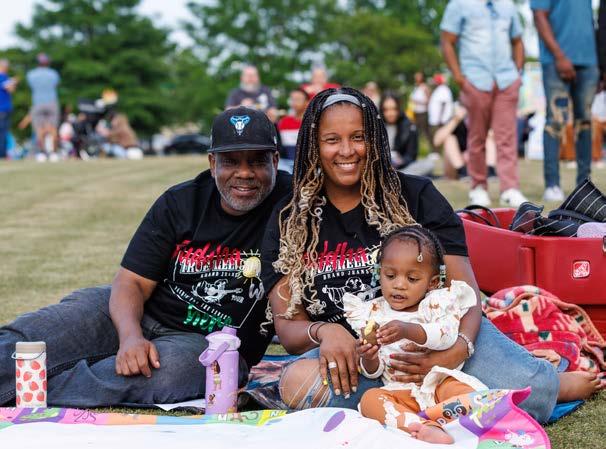
The Fayetteville Dogwood Festival is back in late April with a throwback to the 1990s and early 2000s.
A superstar native son, a homecoming-inspired final album, and how Fayetteville—if only for a weekend— became the center of the hip-hop universe.
Cape Fear Valley Health opened its new OB/GYN & Midwifery Clinic in early 2026 on Walter Reed Road in Fayetteville.



EDITOR ’ S TAKE
BY VALERIA CLOËS
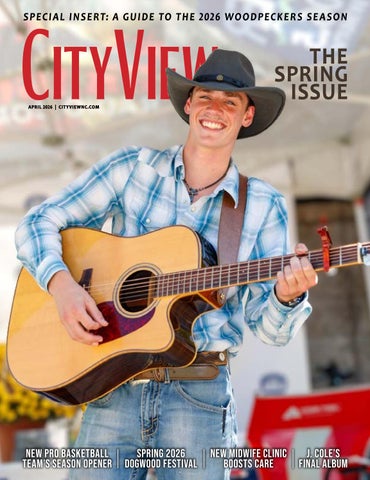
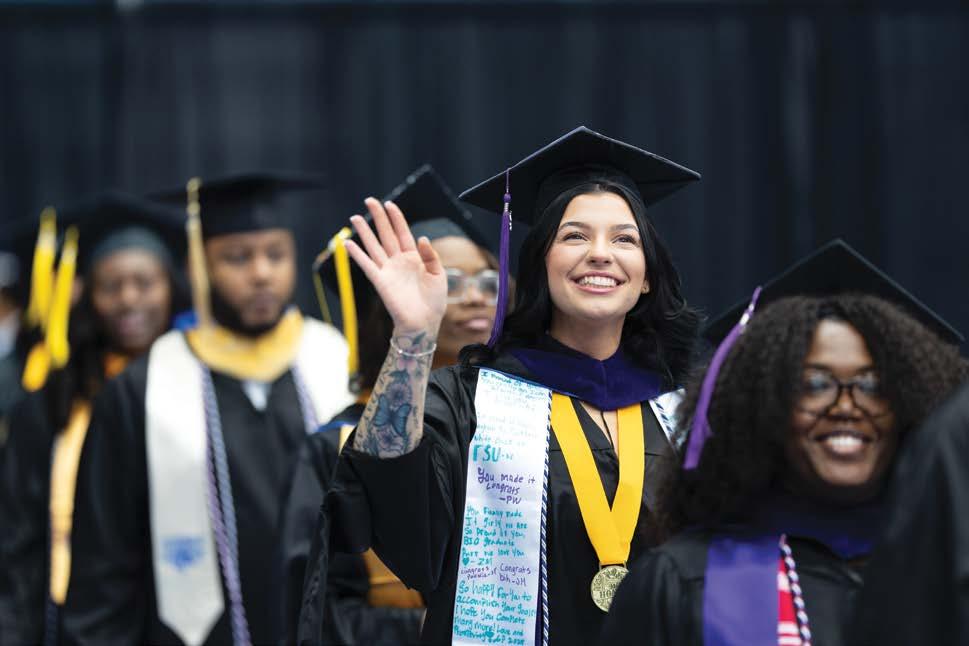
As Fayetteville blossoms with the new season, CityView ’s April magazine highlights the city’s new additions as well as timeless classics that bring our community together.
The county’s newest basketball team, Fayetteville Liberty, started its season last month and won its inaugural game. The team’s victory over the Raleigh Firebirds marked a thrilling start for the organization that has been preparing for its opening game since its founding in December 2024.
The Fayetteville Dogwood Festival is back later this month with its familiar staples and a throwback theme to the 1990s and early 2000s. The 44th iteration of the festival from April 24 to 26 will take over downtown Fayetteville and Festival Park.
Cape Fear Valley Health opened its OB/GYN & Midwifery Clinic on January 12 on Walter Reed Road. In a sponsored feature, hear about the new clinic from one of the clinic’s midwives, a registered nurse at the clinic, and Cape Fear Valley Health’s corporate director of the Women’s and Pediatric Care/Specialty Non-Surgical Program.
J. Cole, the Fayetteville-native rapper, released his latest (and final) album The Fall-Off on February 6. Our partners at The Assembly wrote all about the album, his roots in the
community, and more as the artist looks toward his Crown Coliseum concert stop on September 23.
Our columnists write about what this month’s theme means to them. The first discusses all the opportunities that emerge with the turning season. The next thinks through what using artificial intelligence looks like for her. Our bilingual columnist highlights a local Latina business owner who brings joy and renewal to events through her balloon art and decor. The last recommends six interesting books to read during the spring break.
As always, our To-Do List is jam-packed with fun events to explore as the weather continues to warm up. Plus, this month’s Seen @ the Scene takes a look at the Cumberland County CROP Hunger Walk, which took place on March 22.
Thank you for reading!

For comments, questions, feedback, or to submit story ideas, email vcloes@cityviewnc.com.



BY TIM WHITE
Along the old country road where I live, there was still snow piled in the shady spots. It was February, and without a doubt, still winter.
Except …
Up there on the hill by the red-roofed horse barn, the neighborhood’s earliest redbud was already blossoming. And the next week, the spring peepers were singing away from their puddles and mudholes in the woods. The cardinals were singing their love songs, and the redshouldered hawks were screeching away, hoping to charm their mates.
It comes as a small-but-delightful surprise every year. The calendar says there’s another month of winter ahead, but nature’s flora and fauna are reminding us they know better. Spring is happening, and there’ll be no stopping the procession of rebirth. It’s one of the most reassuring feelings in my world—the time when I’m reminded that the cycle of life will resume, the bleakness will vanish, and new gifts will appear—wildflowers blooming, baby birds learning to fly, fawns taking their gentle, tentative steps into their new world.
This should be my signal to begin the ritual of spring cleaning, but of course (if you know me) it’s not. Rather, it’s time to get out some photo gear, grab a dog or two, and head out to the woods, fields, and rivers nearby. The winter dust, grime, and leaf litter will have to wait.
While I’m out there, awaiting the return of the ospreys to their giant nest of twigs and branches by the lake, and the first bloom of the dogwoods in the still-brown woods, I’ll be thinking about this year’s garden. What will it be, beyond the obligatory tomatoes, cucumbers, lettuce, beans, and jalapenos? Should I give potatoes a try this year? Garlic and onions? Something exotic-looking from the squash family? Oh, the lovely decisions!
And then I wonder this: Can spring give us a civic rebirth, too? Can the fresh, warm breezes bring a new wave of involvement in the life we share with our neighbors? It’s an election year, of course, so voting will be one of our best civic gestures. Working for a good candidate is even better. And maybe run for office, too?
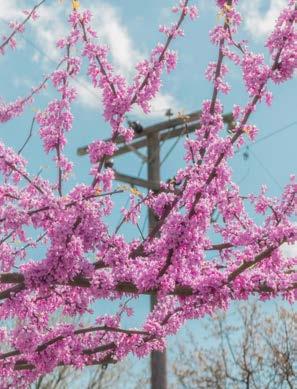
The snow is gone. Daylight is lingering longer. The sun is warming the land. The birds are singing—and we should be too. Spring is here. Enjoy every minute of it.
Well, let’s not get carried away, although a lot of local municipal boards sure could use your help. So could dozens of civic groups and other gatherings around common interests.
There are a host of ways to get involved without standing up as a target for all the souls who disagree with you. One of my favorites is joining a neighborhood cleanup campaign, getting all that litter off the shoulders of our roads. Yes, I do resent all those idiots who have no care or respect for our streetscapes, who carelessly toss their fastfood detritus out their car windows with disdain for their own community. But when the Good Lord created Homo sapiens, he decided to teach us patience and goodwill by giving us a heaping helping of nitwits. That’s one of our burdens in life. We can deal with it, or we can let ourselves
be buried in their trash.
Beyond cleanups, there’s volunteering to help the homeless, teaching adults to read, and mentoring kids who need a good adult role model.
Even more basic, we can decide to simply be a good human being— maybe setting the goal of making one other person smile each day, or saying one positive, complimentary thing to random strangers.
Although I spent almost all of my 50-year journalism career as a writer and editor, it was photography that first lured me into the news business—a phase that lasted barely a year before I was introduced to the joys of a typewriter keyboard. But I’ve always yearned for moments when I could pick up a camera and capture the image of something beautiful. Since I retired, I’ve done that a lot. And one of the most satisfying things I do now is sharing little bits of beauty that I find while I’m out in the woods and fields that surround my home. If one image makes one other person smile, then I’ve had a good day—sometimes, a really good day.
And that’s really enough. I don’t need to be a celebrity or a big-deal leader. I don’t even want that. I just want to smile a lot and give other people a reason to smile too.
Just imagine what life would be like—how pleasant it could be—if every one of us made that our goal each day.
The snow is gone. Daylight is lingering longer. The sun is warming the land. The birds are singing—and we should be too. Spring is here. Enjoy every minute of it.

BY CLAIRE MULLEN
Love it or hate it, we are living in a day in age when artificial intelligence can do an astounding (and rapidly increasing) number of things for us. Whether it’s using OpenAI to develop a wedding toast that rivals Shakespeare, asking Alexa to curate the perfect playlist for a swanky dinner party in a matter of seconds, or turning to ChatGPT for help checking your sixth grader’s math homework (not that I would never need that), these are just a few of the seemingly endless uses of AI assistance in everyday life. And that’s just the tip of the iceberg.
Artificial intelligence is also being used in more complex applications—everything from healthcare diagnostics and cybersecurity threat detection to supply chain optimization, data analytics, precision agriculture, advanced marketing strategies, and even vehicle navigation and object detection. (This last phenomenon I recently experienced on a dinner double-date when our friend summoned his self-driving Tesla to pick us up curbside from the parking lot of a restaurant, which both blew my mind and scared me to death all at once).
In many ways, AI makes life easier. It helps us optimize our time and efficiency, and offers a helping hand when our human capabilities fall short.
For instance, as long as I have an aptly placed speaker, I can ask Alexa to “put trash bags on my shopping list” the very second that I pull the last Hefty trash bag from the box, or even “order my usual conditioner on Amazon” from the shower, as I bang the remnants from the bottom of the bottle.
When my daughter’s math homework exceeds the extent of my math tutoring ability, with a few clicks on the keyboard, I can even ask ChatGPT to explain a prealgebra problem step-by-step in terms an 11-year-old can understand. It can just as easily come up with a simple dinner recipe using the ingredients I have on hand on a day that did not allow time for a grocery store run.
And although yet another advantage of AI is that it eliminates human error in theory, it’s not always perfect. For starters, there’s the virtual voice assistants’ inability to understand a good ol’ southern accent.
After years of frustrating iPhone back-and-forth misunderstandings between Siri and me, it was
enlightening to learn that she was developed in California. And if you ask me, the voice recognition software creators really dropped the ball on “Siri-Lynne,” the Carolinas-specific voice recognizer who knows better than to convert “tell” to “tail,” “well” to “whale,” or “I would have guessed” to “I would have gas” on voiceto-text. Or “Alexa-Jean,” who would never respond to a twangy “add syrup to my grocery list” with a robotic, “OK, Claire. I have added cigarettes to your grocery list.”
And then there’s the problem of needing to be extraspecific with your AI requests, such as which speaker you’d like to connect to play your request of Ricky Martin.
If you’re not careful, Alexa will send the song not to the playroom for your kids’ dance party, but straight to the portable Bluetooth speaker your husband is using on the golf course with his buddies. Apparently, golfers do not appreciate an unexpected blasting of “Livin’ La Vida Loca” from the golf cart in the middle of a game-changing putt.
You also must double-check exactly which group thread you’re voice texting, or else you might end up sending, via Siri, an invitation to your husband’s birthday barbecue meant for a small group of close friends to the parents of your daughter’s entire little league soccer team instead, as a friend of mine recently did.
Another burgeoning use of AI that I’m sure we’ve all seen across our social media feeds is the extreme editing and enhancement of photographs that has replaced oldschool Photoshop and left many folks’ profile pictures looking like Barbie and Ken caricature versions of their real selves.
I had to chuckle at a post I read just the other day that said, “I knew we were cooked when people started accepting compliments on AI photos of themselves.” This is a real phenomenon I’ve personally witnessed.
I’ve seen plenty of friends reply to naive compliments like, “Tell me your secrets! You do not age,” with “Aw, it’s just a good skincare routine” on photos that have been digitally morphed. They’re edited in a way that makes one wonder if they uploaded their photo into ChatGPT with the request, “Make me look just enough like a supermodel that my old high school buddies might actually think it’s still me.”
And that’s all fun and games until you zoom in on the new and improved photo and realize that, while ChatGPT magically erased your fine lines and wrinkles, plumped your lips, and trimmed your waistline, it also inexplicably gave you 12 fingers.
For creatives like me, the idea that an invisible bot could have “written” this column in a matter of seconds is more than a little frightening. While the AI version might have fewer grammatical errors, be a bit more concise, and even still reflect my writing style, it would not be a true and honest reflection of personal insight and feeling.
I hope that the next generation will continue to use their wonderful, creative minds to write stories, songs, and essays. That they’ll invent their own recipes, make unique playlists, and not forget that while sometimes backroads take a little longer than the highway trip Siri will suggest, the scenery is worth the extra 10 minutes. And that they will have the discernment to see the beauty in real human faces over artificially edited digital versions of them.
As for me, I plan to stick to using AI for things like creating grocery lists and finding the best route around standstill traffic. When it comes to my writing, I’ll continue to use the ol’ brain God gave me. I just can’t promise the same for all the math homework. The good bots at ChatGPT can have at those prealgebra equations.


Claire Mullen can be reached at clairejlmullen@gmail.com.

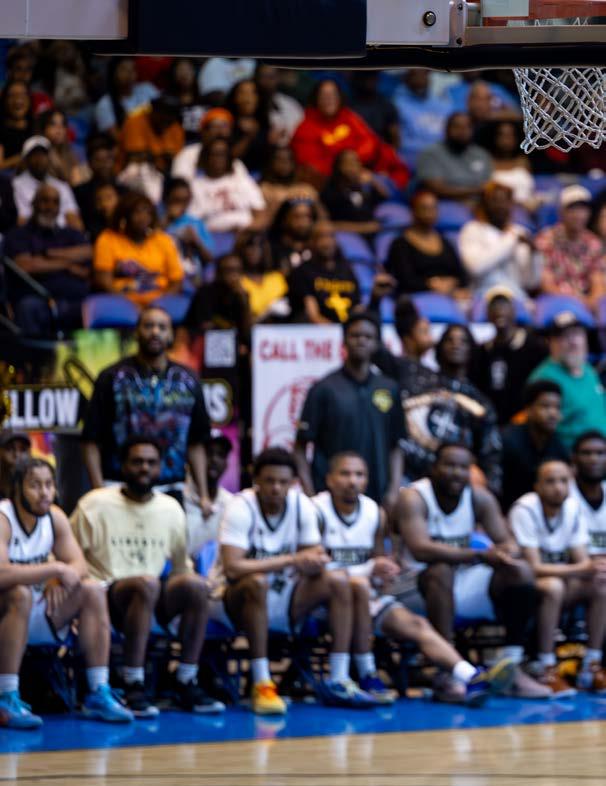
The Fayetteville Liberty tipped off its inaugural season at Crown Arena, hoping to capture the attention of local sports fans by making an impact on and off the court.
BY JASON CANADY

FFayetteville Liberty team owner Robert Edwards Jr. had a bold vision: to bring professional basketball to Fayetteville. And not just another sports franchise, but a team that would make a lasting impact on the community and unite the hometown crowd.
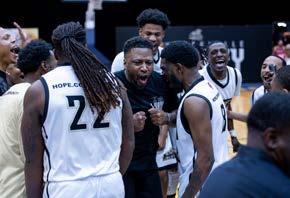
That vision became reality on March 6 when 2,136 enthusiastic fans packed the Crown Arena for the Liberty's inaugural game in The Basketball League (TBL). Edwards’ work to launch the team paid off, and the Liberty claimed a thrilling 93-86 victory over the Raleigh Firebirds, the 2025 South Atlantic Division champions.
The win marked a historic debut for Fayetteville's newest professional basketball team, which currently sits at 2-2 in third place in TBL’s 5-team South Atlantic Division. Edwards—a retired Army veteran with deep ties to the area—founded the team in December 2024.
The Liberty’s inaugural game on March 6 signaled the start of a movement aimed at community engagement and pride. The air was electric and the pride palpable. The music was loud, and the fans were louder.
Fans showed up and showed out, cheering for their new basketball team. Most of the crowd stayed until the end to savor the win with the team. We won—the team won, the city won. It felt historic and it was.
Edwards acknowledged building a fan base and winning over the Fayetteville crowd is no easy task.
”I really believe we put our heart into the city and I believe the city connected with that and gave their heart back,” Edwards said. “And more than a win, more than a packed crowd, I kept hearing, ‘the energy and the atmosphere and the unity is what was felt most.’”
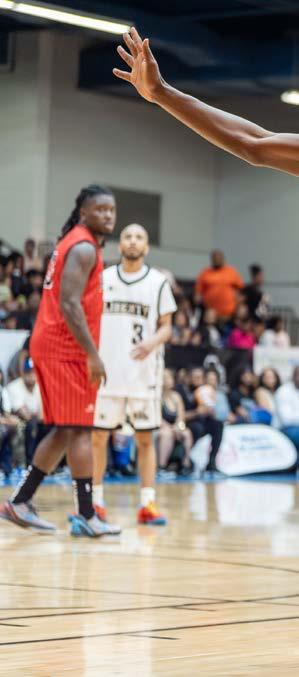
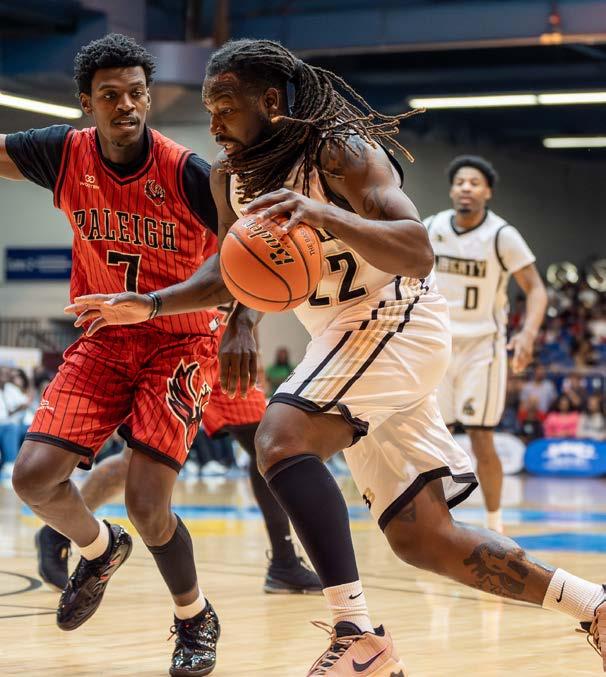
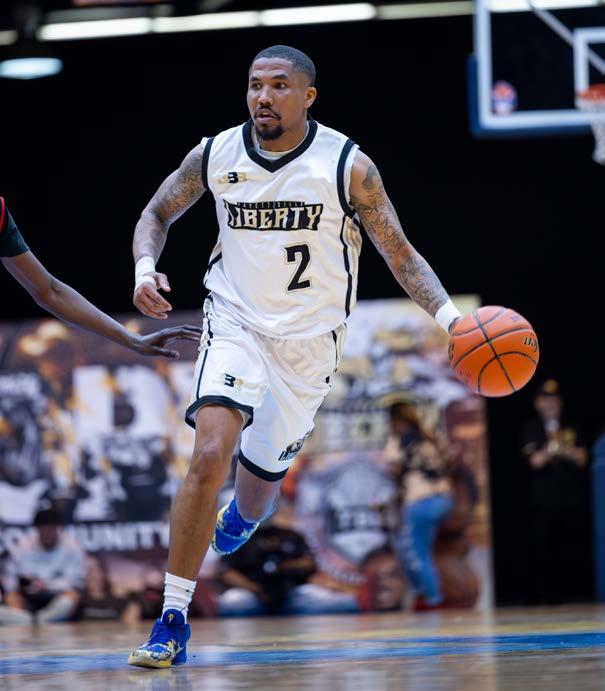
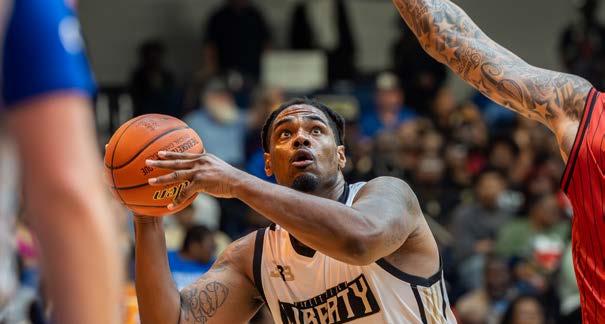
Deandre Mason, a power forward for the Fayetteville Liberty, dribbles during the team’s game against the Raleigh Firebirds on Friday, March 6, 2026, at Crown Arena.
Long before the first game, Edwards and his staff and basketball team were active in the community, making connections through camps and scholarship awards.
The efforts of community partners and collaborators helped the Fayetteville Liberty earn the Greater Fayetteville Chamber's New Business of the Year award during their annual gala on February 26.
“This distinction represents far more than a title—it reflects the collective support, collaboration, and confidence that the Fayetteville business community has extended to us since our arrival,” Edwards said in a team statement about the award.
It’s critical, Edwards told CityView, to build strong relationships with the city and county, as well as foster collaborations in the community.
“The art of doing good business is good relationships,” he said.

Fayetteville Liberty guard Tyreik McCallum rises for a jumper during the March 6 opener, leading all scorers with 22 points while adding seven rebounds and three 3-pointers. Photo by
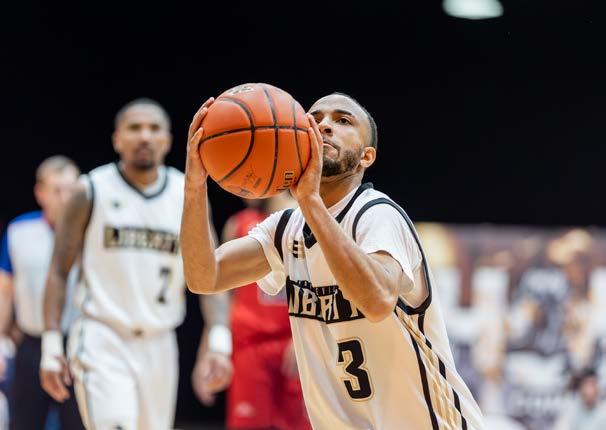
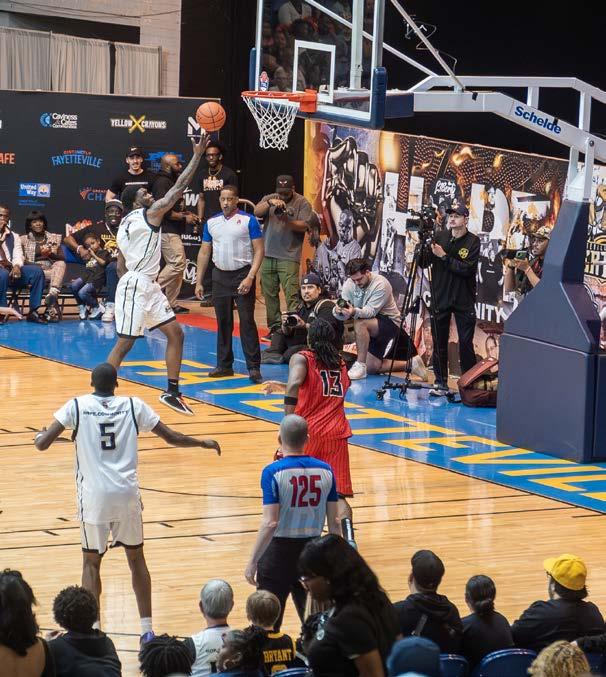
Fayetteville Liberty guard/forward Anthony Dunbar goes up for a layup during the March 6 opener against the Raleigh Firebirds.
The Liberty took the place of the Fayetteville Stingers, which played a single TBL season in 2023. Edwards, the team’s livestream coordinator and director in charge of the big screen at the time, was there for the final game. That work helped feed his dream of owning a basketball team.
The Liberty’s 20-game season runs until May 23.
After the game, several excited first-time attendees and families talked about soaking in the new professional basketball experience at the Crown Arena.
James Galbrth, 27, attended with 11-year-old Titon, who was attending his first basketball game.
“I’ve only seen basketball games on TV,” Titon said. “I think it was pretty good.”
Titon especially loved the popcorn and can't wait to return for another game.
Nick Bereeme, 35, brought his 6-year-old son, Carson, who was grinning ear to ear and was clearly thrilled by the night. Carson enjoyed popcorn, Dippin' Dots ice cream, and soda. Both father and son agreed that they’ll definitely be back for more Liberty games.
These family moments highlight the community impact of the Liberty's debut—a fun, accessible night out that drew fans of all ages. It’s what Edwards envisioned all along.
“We were able to successfully entertain our crowd and come out with a win. I’ve always said, before we entertain, before we compete, our goal is to connect. We connected for a year and a half and put seed in the ground. Now it’s time to compete. We really gave something for our city and county to get behind,” Edwards said. “We’re grateful for that.”
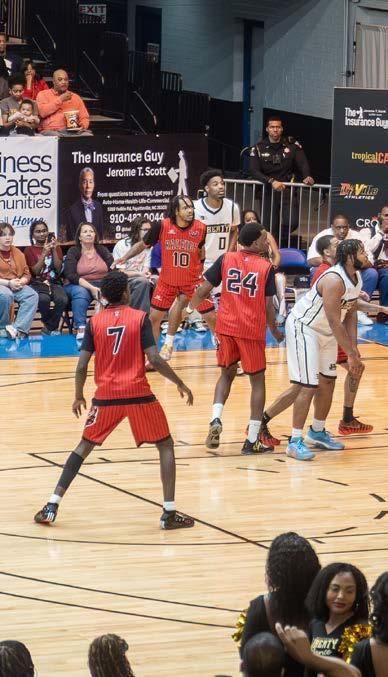
Here’s what you can expect when you go see the Fayetteville Liberty.
The Liberty plays in the 4,500-seat Crown Arena, which is located on U.S. 301 South at Owen Drive and East Mountain Drive. Basketball has breathed new life into the arena. It’s not old, it’s vintage with an “Elvis played here pedigree.” It's the perfect size for the team and the arena’s size puts fans into seats that have an inclusive feel. The space brings professional basketball up close and personal. TBL is a professional minor league below the NBA and its G League.
Parking for the Crown Arena is a snap. It’s abundant, free, and easy to access with several ways to arrive.
The arena has a clear bag policy that dictates bags must be clear plastic, vinyl, or PVC and no larger than 12 x 6 x 12 inches. Other options include a 1-gallon clear plastic freezer bag, or a small clutch no larger than 4.5 x 6.5 inches. Patrons with diaper bags must be accompanied by an infant or toddler.
The vintage concession stand I remember as a child when Conway Twitty played in 1976 is open again for business. There are plenty of options for foodies or families, including hot dogs, cheeseburgers, pulled chicken or pork sliders, buttered popcorn, candy, soda, and beer. There’s a Doritos Walking Taco stand as well as one offering cocktail libations with some of your favorite spirits.
The Liberty offers a modest but nice merch table, which includes shirts, lanyards, posters, and jerseys. The shirts are $35 each or two for $60. A jersey will run you $65. There’s even a professional photo backdrop to get the perfect pic for social media.
Jason Canady is an award-winning writer and poet from Fayetteville. He has covered the Hope Mills municipality for CityView and contributes to CityView Magazine
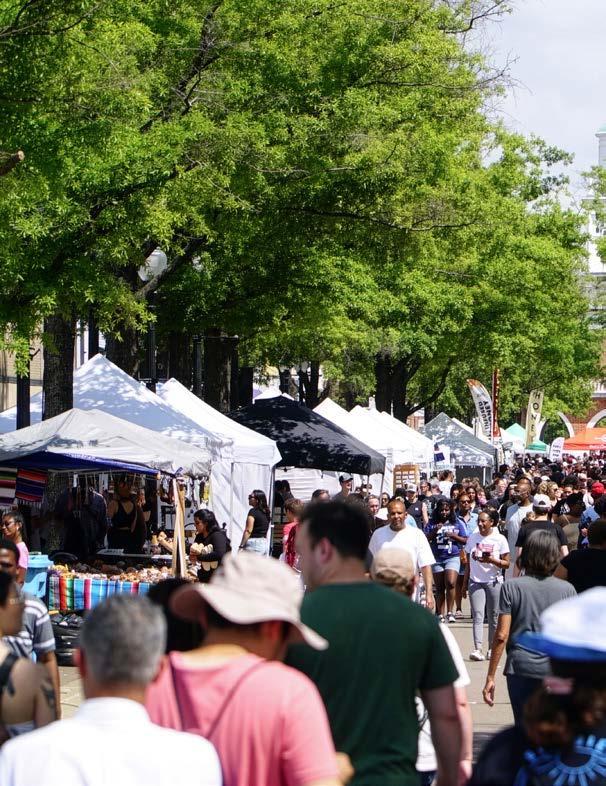
The Fayetteville Dogwood Festival returns in late April with a throwback to the 1990s and early 2000s.
BY IVY GRAY | PHOTOGRAPHY BY JAMES THROSSEL
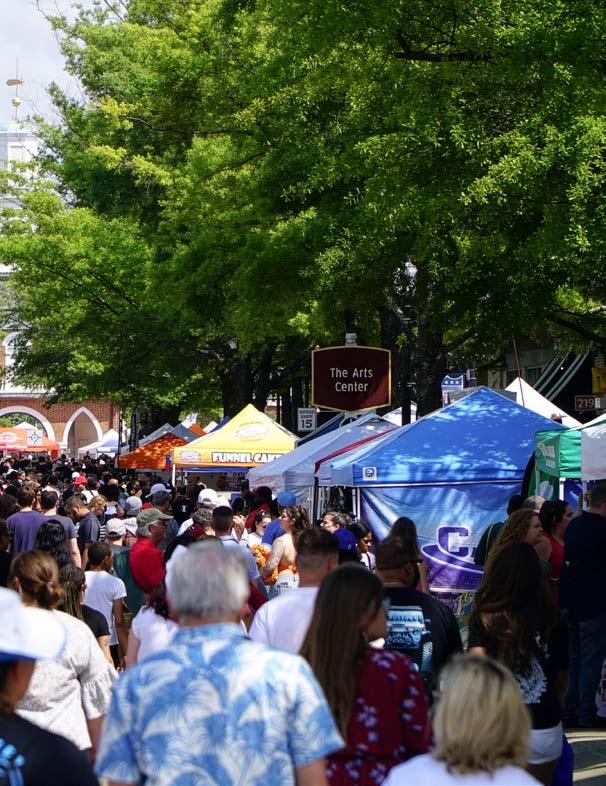
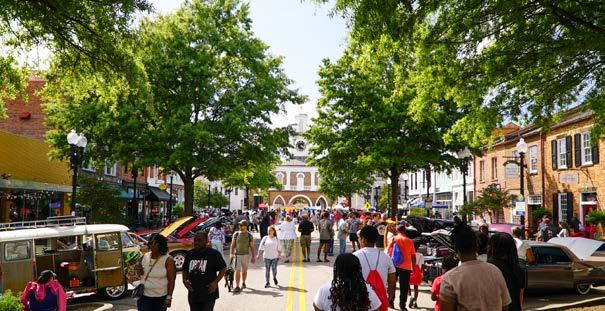
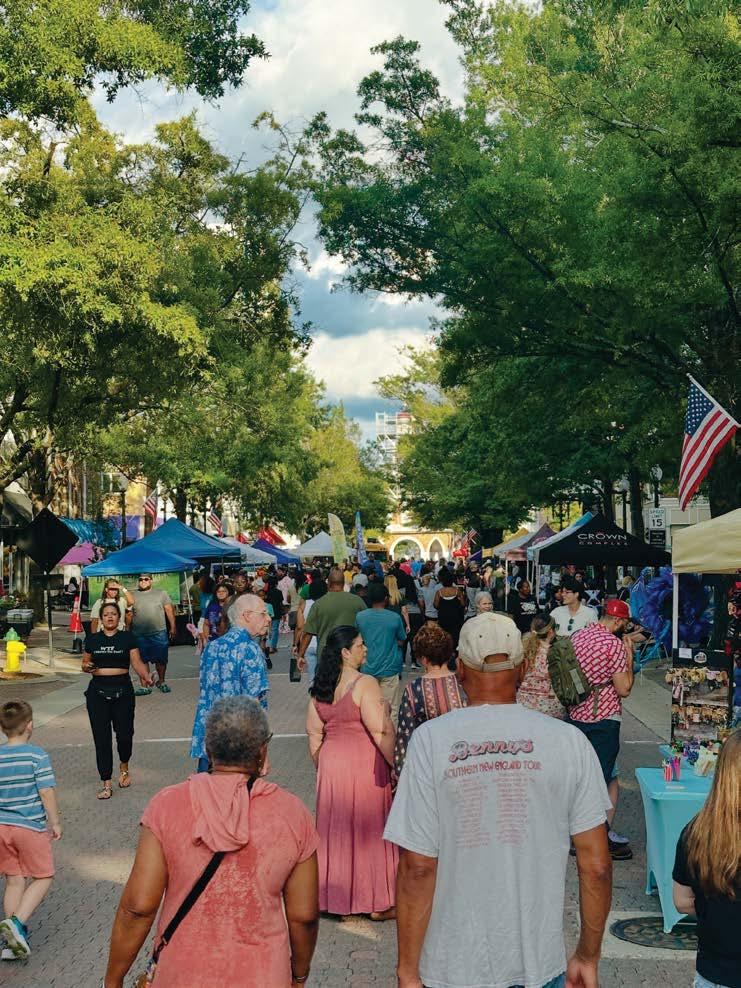
Hay Street filled with festivalgoers and vendor tents for The Fayetteville Dogwood Festival on April 26, 2025.
IIn Fayetteville, as the season transitions from a brisk, cold winter into the inviting warmth of spring, the community comes together to blossom alongside the dogwoods, North Carolina’s official state flower.
And one of the city’s most anticipated celebrations of the year carries its name: The Fayetteville Dogwood Festival.
The festival has been a riveting part of the community since 1982, held in April and October. This year, the committee and staff, led by Executive Director Kaylynn Suarez, have decided to switch things up for the festival’s 44th iteration from April 24 to 26. The theme is a throwback to the 1990s and early 2000s.
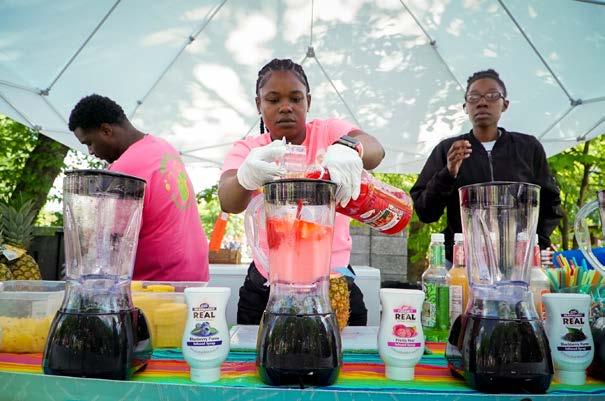
There will be new entertainment and activities, 161 vendors—26 of which are food and drink vendors—and live shows.
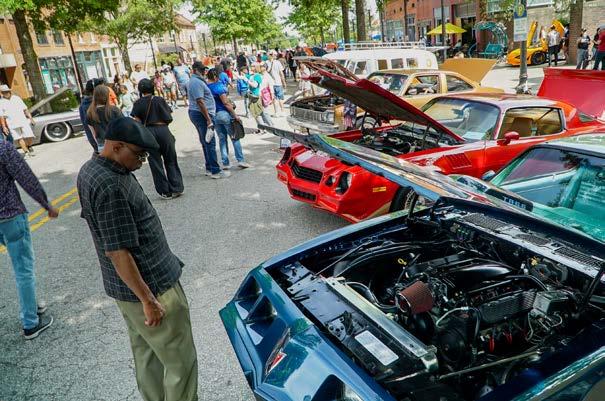
Eventgoers can also expect tweaks to annual staples. Unlike previous years, the carnival and its rides will be held at Festival Park, and the Car, Motorcycle, and Truck Show will take place on Saturday instead of its traditional Sunday time.
The Fayetteville Dogwood Festival has also been
holding events, like a Bridgerton-themed Secret Garden Silent Disco in March, leading up to the main celebration in late April.
An upcoming one is Cork & Fork: A Premier Food & Wine Event, which takes place on Thursday, April 23.
This event is ticketed with food and drinks included and will highlight a new downtown venue: 143 Maxwell, a boutique event space. There will also be a silent auction, with entertainment from 6:30–8:30 p.m.
Funding from Cork & Fork and others like it helps keep the festival free to the public.
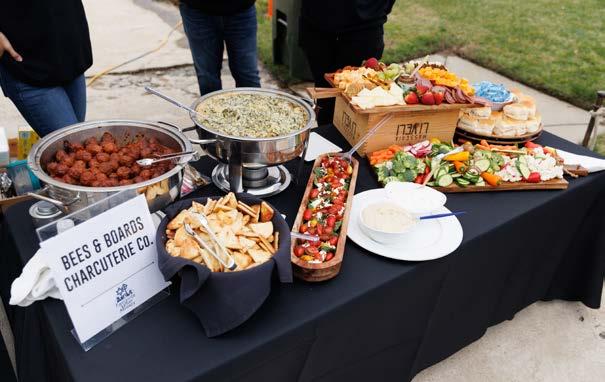
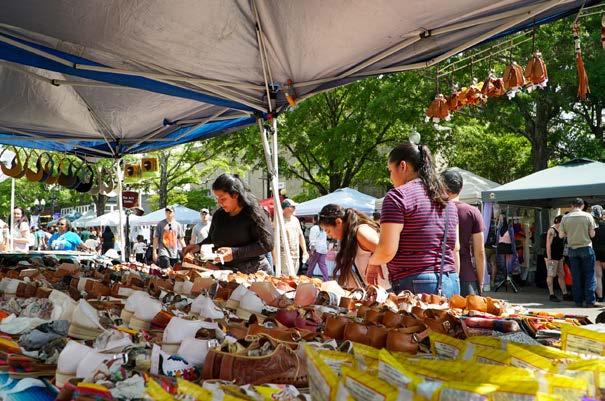
Festivalgoers can enjoy certain activities throughout the three days: a midway, 161 vendors, a Kid Zone, booths and activities by the festival’s sponsors, a blood drive, and a mechanical bull.
The Kid Zone near Festival Park will be filled with kidfriendly activities. Kids can enjoy Skoolie Xpress (a mobile art studio), face painting, arts and crafts, and other handson activities.
The festival will kick off with upbeat live entertainment on the Festival Park stage. The headliners of the night will be the early-2000s hip-hop duo, the Ying Yang Twins. Local talents, Fayetteville’s own DJ Yodo and Trev Truth, will also grace the stage.
This night is designed to be a throwback for adult audiences, but families of all ages are welcome to this free concert.
Park gates open at 4 p.m. with entertainment running from 5–9:30 p.m.
The Car, Motorcycle, and Truck Show will take place from 9 a.m. to 5 p.m. on Saturday.
The Kid Zone will feature special events on Saturday: The Cumberland County Literacy Council, through United Way of Cumberland County, is hosting four storytimes, and Fascinate-U Children’s Museum is putting on a science fair.
Performers Echostone, DJ Problem, and Saved by the 90’s will be on the mainstage at Festival Park from 2–9 p.m on Saturday.
Festivalgoers can experience The Creative Corner, a
poetry and spoken word slam hosted by poet LeJuane “El’Ja” Bowens, on both Saturday and Sunday.
On the last day of the festival, Pure Barre, Dancing Without Sin Fitness, 9Round, and Burn Boot Camp will host free classes.
Park gates open at 11 a.m., and activities will run from noon–9:30 p.m. on Saturday. Park gates will also open at 11 a.m. on Sunday, with activities running from noon–8 p.m.
Attendees can pay to park in downtown parking garages and lots, except the Ray Avenue Lot, during the festival. There is ADA-accessible parking available throughout downtown, including Hay Street Deck’s ground floor and behind City Hall at City Plaza 1 and City Plaza 2 parking lots.
The Fayetteville Dogwood Festival will comply with the City of Fayetteville’s clear bag policy for events in Festival Park with standard security checks.
The Fayetteville Dogwood Festival has been a nonprofit for 44 years, putting on events for the community with the help of volunteers and sponsors.

“This is a labor of love for the community, we are proud of where we live and we want our community to be just as proud as we are,” Suarez said. “Although this is a transient town, there is room for everyone to be a part of the same tapestry.”
The nonprofit organization also recently changed its status from 501(c)(4) to 501(c)(3), which gives the organization the ability to apply for more grants and funding opportunities. Donations to the nonprofit can now be made tax-deductible.
The Fayetteville Dogwood Festival’s mission is to celebrate the arts, support local businesses, and provide accessible opportunities for multicultural expression as well as economic growth.
“We want to remind the community of the times when people from all walks of life and different backgrounds all felt like neighbors,” Suarez said. “We are all still neighbors. Let’s bring back our Fayetteville pride.”
Jackie Tuckey, chairwoman of The Fayetteville Dogwood Festival’s Board of Directors, and Simone Johnson, chief operating officer, along with the many volunteers and sponsors, believe that this festival is a representation of how strong our community is and how well we come together.
“There is something for everyone,” Tuckey said. “This is the echo of the city.”





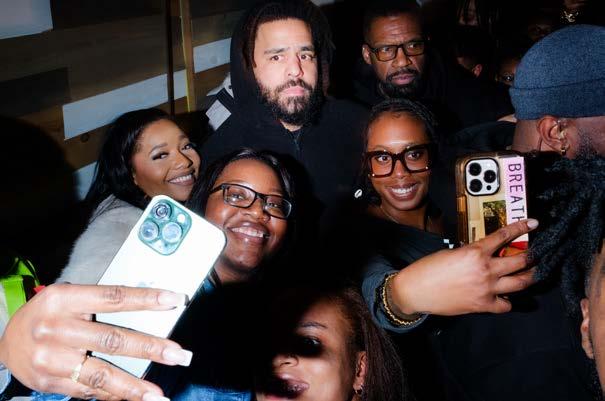
A superstar native son, a homecoming-inspired final album, and how Fayetteville—if only for a weekend—became the center of the hip-hop universe.
BY DASH LEWIS | PHOTOGRAPHY BY CORNELL WATSON FOR THE ASSEMBLY/SUPER EMPTY
This story is published in partnership with The Assembly and Super Empty.
TThe first thing you notice on Forest Hills Drive is the lack of street signs.
Bookended by Mulberry Street to the east and Cain Road to the west, there are only two signs announcing the short, leafy lane northwest of downtown Fayetteville. You’ll find signs for the three cross-street cul-de-sacs that branch off of Forest Hills, but the main stretch is entirely unadorned.
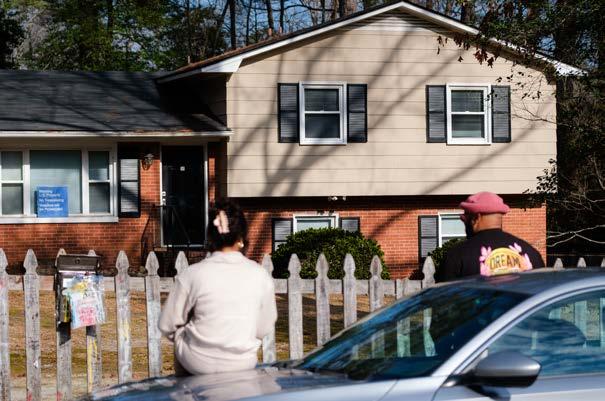
On December 9, 2014, rapper J. Cole released his third album, 2014 Forest Hills Drive, which was named after his childhood home. Since then, fans have absconded with a number of street signs, souvenirs to prove they’d been to the hallowed ground. By May 2018, the city had already replaced 51 of them. Instead of adding new ones, it raised the signs at the north and south ends to 18 feet high. The house at the eponymous address, set back from
the road and boxed in by a shabby picket fence, has the unassuming charm of ’70’s southern suburbia. It’s 1,000 square feet, small but livable, a mix of brick and wood exterior. The asphalt shingle roof seems perpetually covered with pine needles dropped from the massive surrounding trees. It’d be unremarkable if it weren’t essentially a national landmark, and yet the house seems to have its own gravitational pull—an energy that permeates the surrounding air like a fine mist.
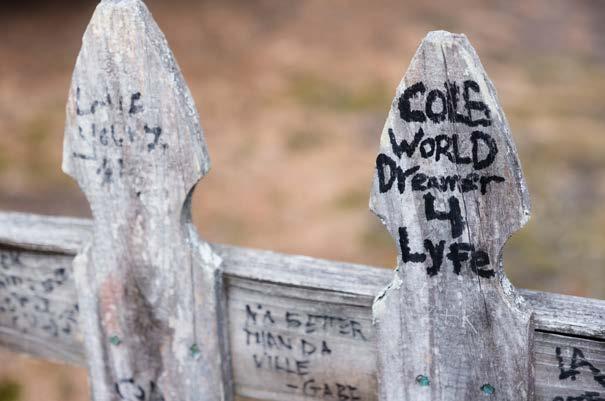
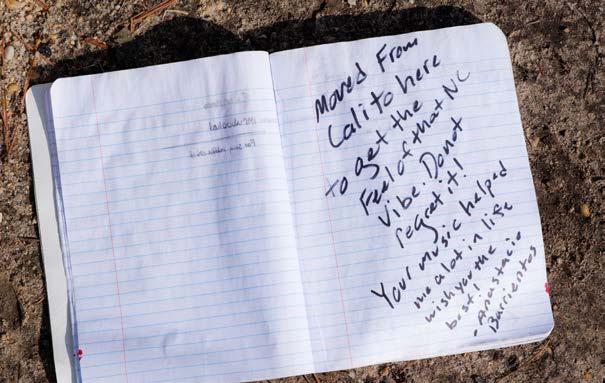
Each fencepost is covered in scribbles, mostly names and initials of loyal listeners documenting their visit. A metal mailbox hangs near the driveway gate, and inside are two weather-beaten composition notebooks, each page filled with messages of praise, admiration, and gratitude for Fayetteville’s begotten son.
When Cole released his seventh—and purportedly final—album, The Fall-Off, on February 6, more visitors trickled in at Forest Hills Drive to pay homage. Kyahna Santos, a 33-year-old Californian who’s lived in North Carolina for more than a decade, drove down from Raleigh, parked along the picket fence, and pressed play on the double album. A diehard Cole fan, she’d promised herself that as soon as she was able, she’d trek to Fayetteville.
“Every time he puts out an album, it’s right when I need it,” she said. “It always motivates me to do better.” Though Santos hoped for a private experience, it soon became clear that many others planned the same pilgrimage. She stayed in front of the house for the album’s hour-and-41minute runtime, keeping it playing as she chatted with her fellow travelers.
One of the first people Santos spoke to that afternoon was Darrell Oxendine, a 39-year-old single father from Lumberton, about 45 minutes south of Fayetteville. He knew he wouldn’t be able to make any of the listening parties around town that night, so he decided to swing by Forest Hills Drive after dropping his kids off at school. He’d stopped at the house briefly in 2024, but felt as though some magnetic force was guiding him there again. To Oxendine, the house is less a tourist destination or a curiosity than a beacon, a symbol of possibility and hope for those who share the 910 area code.
“Your walk of life, your financial situation, your structure at home—none of that matters,” said Oxendine. “It’s attainable.” To him, Cole cuts a figure both modest and mythical, a star the size of the sun still close enough to touch. The writing on the fence, the scribbled missives in the mailbox, the strangers pulling up and greeting each other with, “So, what’s your favorite project?” all confirm to him that Cole has compressed the space between himself and his audience.
That Cole would spend the next several days touring college campuses, selling the new album from the trunk of an old Honda Civic, only made Oxendine’s point more poignant.
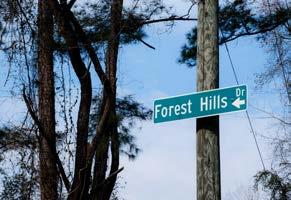
Street signs for Forest Hills, where J. Cole grew up, are placed up high to prevent people from taking them.
On the cover of 2014 Forest Hills Drive, Jermaine Lamarr Cole sits on the roof of the house, eyes locked on some distant point. It reads like a magnate surveying a conquered landscape, ready to expand into new, unknown territory. Cole was already a minor star by this point, a “B-list celebrity,” as he terms himself on “No Role Modelz,” that record’s biggest single and Cole’s moststreamed song to date.
He left Fayetteville for New York City in 2003 on a scholarship to St. John’s University, tackling the dual pursuits of a communications degree and a record deal. His dream was to work with Jay-Z, and he tried everything he could think of to get into the legend’s orbit: MySpace messages, studio internships, hanging out where he recorded, armed with a beat tape demo and a bottle of E&J.
Eventually, Cole connected with Mike Rooney, who became his first manager. Through Rooney’s connections, Cole’s music finally landed in front of Jay, who made him the first signee to Roc Nation in February 2009. His first two albums for the label, 2011’s Cole World: The Sideline Story and 2013’s Born Sinner, were massive successes, going platinum and double platinum, respectively.
But 2014 Forest Hills Drive was a barn burner, a highly personal album with no features that sold six million copies. Tying his breakthrough album so directly to his hometown felt like a victory lap, both a tacit admission that he’d outgrown his modest beginnings and a loving embrace of the city that made him. “ The real is back, the ‘Ville is back,” he exhales on “January 28th,” the song named for his birthday.
Cole began writing raps in his adolescence, inspired by the likes of Nas, Eminem, and Canibus, emcees who combined knotty concepts with knottier rhyme schemes. By 14, he had filled several stacks of notebooks and was eager to step into a world larger than his bedroom. The small but bubbling talent pool in Fayetteville began to catch his ear, as crews like Blaque Watch, Zef Lesson, and Open Eyes started to make noise.
Bomm Sheltuh, the duo of Nervous Reck (born Brion Unger) and Filthe Ritch (born Carlos Brown), had the most exciting buzz. They’d started working together in the late ‘90s, operating out of Nerv’s childhood home in the Old Ponderosa neighborhood he’d converted into a studio. Just after Nerv graduated from high school in 1995, his father was sent to another Air Force Base. Nerv stayed behind, renting the house he dubbed The Sheltuh from his parents. It became a creative nucleus for the greater Fayetteville hip-hop scene.
“Carlos and I were already established at that point, but that just really solidified everything and took it up another level,” Nerv says. They were free to pour themselves wholly into the music, with various rappers and producers from all over the city coming through to work at all hours.
The duo released a well-received album, Food, Clothing & Sheltuh, in 2000, and Cole picked up a copy during a visit to Paradise Records, a now-shuttered shop once located at McPherson Church and Skibo Roads. Nerv and Filthe’s contact information was on the album’s back cover, and Cole began chatting with Nerv on AOL Instant Messenger. For five days in a row, he sent messages, usually something innocuous like, “Hey, man, what’s up?” Nerv, wary of
pop-ups, waved them off, thinking his computer had been infected with a virus.
By the fifth day, Cole seemed to notice that this was getting him nowhere, so he got more specific, and, as Nerv puts it, “informative”: “‘My name is Blaza, I’m a rapper, and I really like y’all.’” Nerv, realizing these messages were real, responded, inviting him to Bomm Sheltuh’s upcoming gig at Duh Skatezone.
One of the major hurdles for artists in a small city like Fayetteville, an issue that continues to some extent, is a lack of infrastructure. Venues that specialize in hip-hop don’t seem to last long enough to become a centralized hub, while other venues shy away completely from booking rap shows. Radio stations are increasingly under corporate umbrellas, adhering to a national playlist that draws on few local acts. In the early 2000s, Duh Skatezone, a skate park and DIY music venue founded by local skater Terry Grimble, was one of the few places in Fayetteville for musicians to gather, build, and perform.
After noticing that he and his friends stayed out of trouble when skating, Grimble started the nonprofit Skaters of Fayetteville at age 18, lobbying the city council to build a youth-accessible park. The group had to come
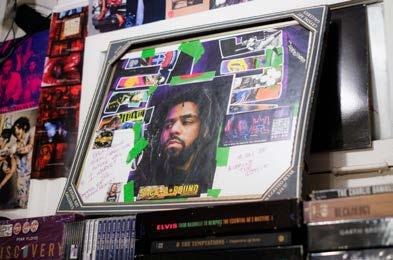

Top: A picture of J. Cole on display inside Back Around Records in downtown Fayetteville.
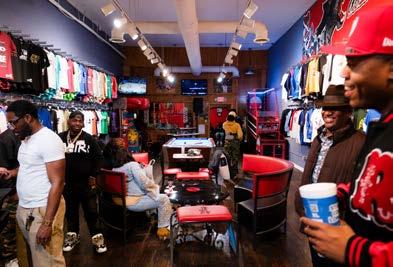
Middle: A listening session for The Fall-Off at a local barbershop.
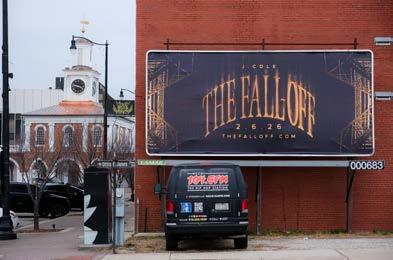
Left: Billboards advertising J. Cole’s latest album, The Fall-Off, could be seen around the city.
Above: Brion “Nervous Reck” Unger, an early mentor of J. Cole, stands for a portrait at the Two-Six Labs.
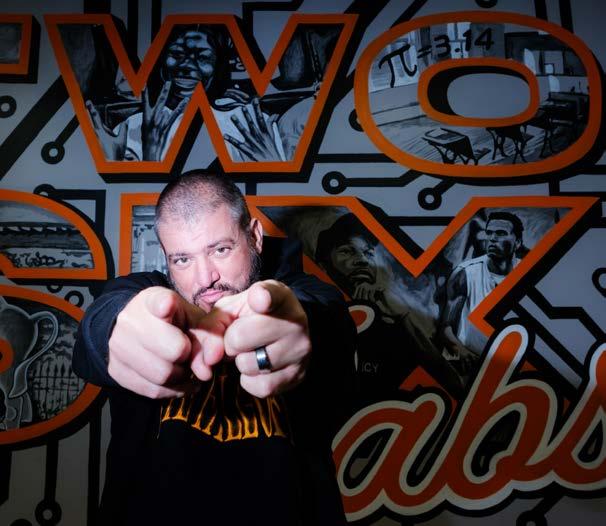
up with half the money, so Grimble and his friends started throwing house shows, charging $5 a pop.
They later moved to a 5,000-square-foot section of a sports complex, but quickly outgrew it. Grimble and the owner of the complex transformed a much bigger space on McPherson Church Road and opened Duh Skatezone in the spring of 1999. “It was sectioned off in a way where the first quarter of it was a small venue. You could put 300 people in there if you really packed them in,” Grimble says. “That’s perfect for local shows, because most of the time we’d only get 120 people, on average.”
On February 25, 2000, Bomm Sheltuh played the first hip-hop show at Duh Skatezone, setting off a run that solidified Fayetteville as a prime southern stop for many major rap tours, hosting acts like Mobb Deep, Lil Jon and
the Eastside Boys, Fat Joe, and State Property (though it shut down barely two years later). That night, Nerv and Filthe invited Cole, then a 14-year-old performing under the name Blaza, on stage to rap a few verses. “I thought, ‘Damn, he’s got a lot of potential,’” Nerv recalled. His instincts proved right, as nine years later, Cole would become one of the biggest rappers in the world.
Nerv, who now lives in Durham, decamped to Raleigh in 2004 to attend music school. He started a screen-printing business with Justus League rapper Sean Boog and his brother, Chris, focusing more on the shop than music, until a 2023 phone call from Cole encouraged him to get back in the game. He started DJing in the Triangle on occasion and founded a label, The Sheltuh. Having kept an eye on talent in the ‘Ville, he recently signed Fayetteville rapper PFG.
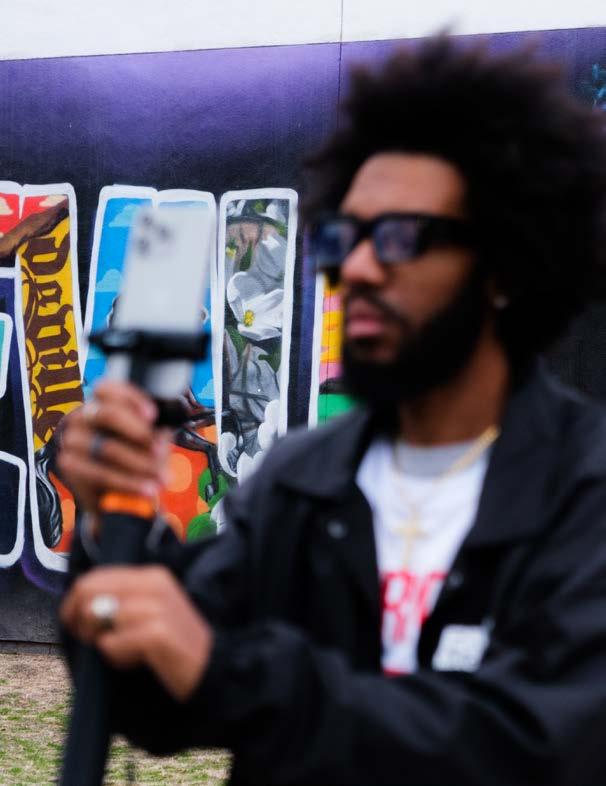
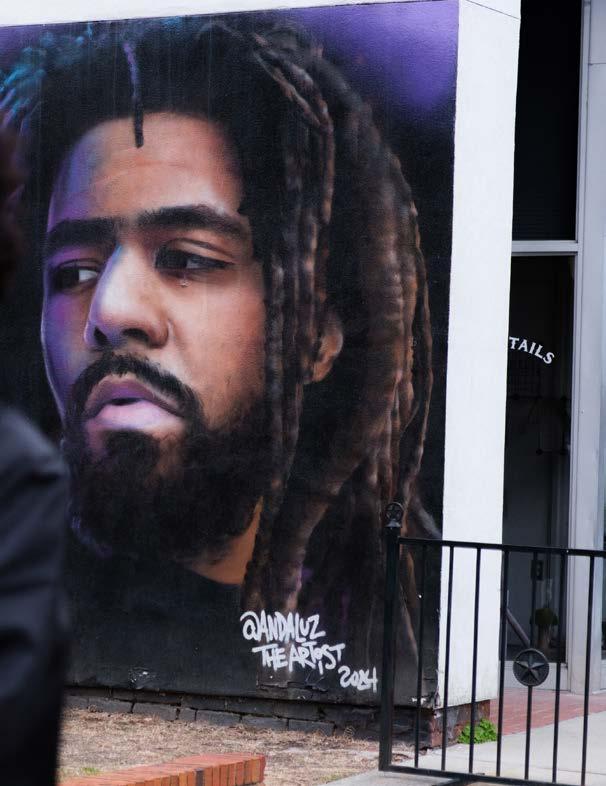
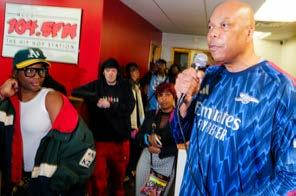

Nerv was back in Fayetteville the week of The Fall-Off ’s release to attend and testify in the trial of Joshua Tashun Joyce, the man who murdered Carlos Brown (Filthe Ritch) in May 2023. Brown had fallen on hard times, his home having been burglarized during a stay in Durham, and he’d been living in his car as a result. He and Joyce knew each other and had been arguing on social media about the terms of a loan Brown had given Joyce. Things spiraled, and Joyce, after threatening to come find Brown, shot and killed him on a friend’s porch. Brown had been planning to move to Durham to restart Bomm Sheltuh with Nerv.
Just before our interview, a jury at the Cumberland County Courthouse delivered a guilty verdict. Jones was sentenced to 20 to 25 years in prison. “It’s poetic justice,” Nerv says, “because it’s on Two Six and Cole’s album just dropped.” A week after Brown was killed, Nerv was on the phone with PFG, laying out his vision for the label. “It’s almost like Filthe’s spirit was there, saying, ‘Here goes the next guy.’” “SAFETY,” the third song on The Fall-Off, specifically mentions Brown’s murder.
After the impressive Skatezone performance, Nerv took Cole under his wing and invited him to the Sheltuh. “At first, he was just a fly on the wall, kind of quiet, trying to soak up everything. Eventually, I started teaching him how to make beats.” He showed a young Cole the ropes of his Ensoniq ASR-10 and Akai MPC2000 samplers. Cole’s mother finally bought him an Ensoniq ASR-X Pro after a year of pestering, deepening his knowledge of beat machines.
He’d continue to write and record with Nerv and Filthe, changing his name from Blaza to Therapist at Filthe’s urging. You can still find the fruits of some of those sessions online, and if you’re lucky enough to possess a copy of Fayettenam Bommuhs, a compilation of Fayetteville rappers, or I’ll Sleep When I’m Dead, Nerv’s first solo record, you have some of the first J. Cole material put to tape.
The photo on the cover of The Fall-Off, a snapshot of Cole’s teenage workstation, is much more humble than that of 2014 Forest Hills Drive. Wedged in between a tall
speaker and a stereo tower sits a tiny, cluttered desk, covered with stacks of CDs and notebooks. Nestled amongst the bric-a-brac is the ASR-X.
Faded and torn, the photo looks like it was rescued from a scrapbook left in some long-forgotten junk drawer. It’s the most intimate image Cole, now 41, has included on a release, signaling the album’s insular, personal feel. Across two discs, each inspired by trips back to Fayetteville at ages 29 and 39, Cole uses his memories of the city to examine his identity and experiences.
Much like the massive Fall-Off billboard campaign peppering the city, Fayetteville is everywhere on the album. “It’s a love letter to the ‘Ville,” says director and filmmaker Mark Mayr, facilitator of the Two-Six Cypher, a celebration of and tribute to the local scene.
“Two Six,” the first song on The Fall-Off, sets the tone: It takes its title from the city’s nickname, itself cribbed from the Cumberland County jail code, which has become a rallying cry. During its hook, Cole shouts “AnnnANT,” the response any local will give after you call out the digits. The video for “Two Six” is shot largely downtown and prominently features the Market House, a site where enslaved people were once sold, which now marks where all points of the city converge.
He paints a detailed map of the ‘Ville, shouting out Bunce Road, The Murk (Murchison Road), and Bragg Boulevard, neighborhoods like Bonnie Doon, Eutaw, and Haymount, and landmarks like Cross Creek Mall and Tera Gardens apartments. He spells the name of the city in the chorus of “and the whole world is the ‘Ville,” cribbing the cadence from the early 2000s group Ground Zero’s song, “Fayetteville.”
Setting The Fall-Off ’s release date for February 6, 2026— 2/6/26—essentially created a new holiday for the city. Cole is its avatar, an inextricable part of its identity. There are at least three murals of the rapper around town, and many businesses, like Gallery 13 on Hay Street and Back Around Records on Market Square, prominently feature art of Cole’s face. Many downtown businesses advertised release day listening parties, the most prominent of which were

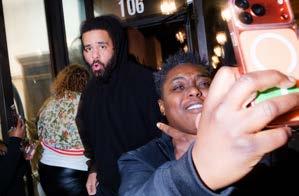
at 104.5 WCCG’s studio headquarters and The Sip Room, a wine bar on one of downtown’s busier corners. All day, The Fall-Off blared at top volume out of car windows and open front doors. People greeted each other in the streets: “Today’s a big day, bro!”
That night, standing outside 104.5’s cramped offices, DJ Ricoveli broke down the impact The Fall-Off had on the city. “Cole brought the community together,” he said, pointing to the crowd inside, his voice swelling with pride. “It ain’t usually like this.” He wasn’t alone; you couldn’t walk a block without hearing someone express something similar.
At the Omni Cinemas 8 theater the night before, Mayr had arranged to premiere the 2026 Two Six Cypher, which Ricoveli hosted and closed out with a fiery verse. He announced the show on Wednesday, and it capped out within three hours. Representatives from all corners of Fayetteville’s creative class— Fayetteville Observer contributor Keem Jones and FayNC Magazine Editor-inChief Zairis TéJion, radio personality DJ Yodo, participants Tony Love and Mac DaBlackSheep, Grimble—were in attendance for a scene that felt as special as it was rare.
Mayr, who recently moved back to Fayetteville after eight years in Los Angeles working in video production, created the first Two Six Cypher in 2015 as a “going away gift to the city” before leaving for California. He’d wanted to do another one for a while, and the idea of putting it out on February 6, 2026, felt like the stars had aligned. “It’s the year of Two Six,” Mayr remembers thinking.
He started planning last fall, gathering a team and gauging interest from rappers and producers, long before he heard Cole was releasing The Fall-Off on 2/6/26. “It was a divine timing, serendipitous thing,” Mayr says, a hint of shock still lingering in his voice. It’s as much a love letter to the city as The Fall-Off, as “Two Six” easter eggs appear everywhere: It was shot entirely at 2-6 Labs, a creative space in the historic Orange Street School, the rappers gathering in front of a massive “Two Six” mural. Six producers provided beats, and two rappers performed on each.
The premiere set the mood for the weekend, and by
Friday evening, the city was crackling. Cole fans gathered at Game Day Kutz & Apparel to shoot pool and blast The Fall-Off at deafening levels. A cypher jumped off outside of Bruce’s Sports Bloc & Lounge. As the night wore on and the parties began to fade, a massive throng of people ran into The Sip Room, frantic and fevered. Cole was in the building.
When word got out, every partygoer downtown descended on the wine bar, jostling to dap him up or take a blurry selfie. Cole didn’t rap along to the music or give a speech; he just stood in the middle of the room, smiling, graciously greeting as many people as he could. “I touched an arm, I’m good,” swooned a starry-eyed woman to her friends as he brushed past.
It took him and his security team almost 20 minutes to get from the front door to the convoy of black sprinter vans parked just across the street, the call-and-response of “ Two Six ” and “AnnnANT! ” trailing behind him. Suddenly, he was gone, his fleet of vehicles cruising north. People stood in disbelief, some assuring their friends they knew he’d show up, others stunned into silence.
It felt like a gift, a fitting cap to the rollout of an album made by one of them, for them, on their day. “He made it cool to say, ‘I’m from the ‘Ville,’” said Jones, camera and press credentials hanging around his neck. “It’s not a lot here, but I’m from here. It’s my city.”
Dash Lewis, born in Wilmington and raised in Durham, is a musician and culture writer now based in Richmond, Virginia. He writes primarily about hip-hop, electronic music, and literature for outlets like Pitchfork, Stereogum, The Guardian, and The Sun Magazine.



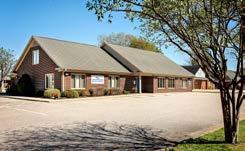
Cape Fear Valley Health opened its new OB/GYN & Midwifery Clinic in early 2026 on Walter Reed Road in Fayetteville.
ABY TERI SAYLOR
As a child growing up in Fayetteville, Kelsey Smith was fascinated with pregnancy and birth.
She remembers watching A Baby Story on TLC and the Discovery Channel—a series that documented the final weeks of pregnancy, the labor and delivery process, and the first few weeks of a new baby’s life.
As Smith got older, she began searching for a way to be a part of that world, but had no interest in becoming a doctor.
“I did some research and learned about nursing midwifery, and that seemed like the perfect path for me,” Smith said.
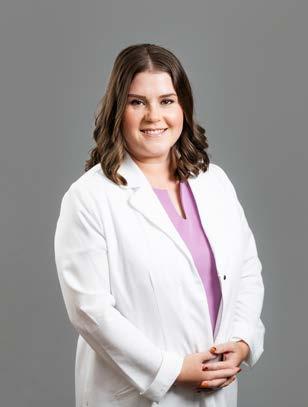
Smith went on to earn a bachelor’s degree in nursing and a master’s degree in midwifery at East Carolina University. Today she is one of eight nurse midwives practicing at Cape Fear Valley Health’s OB/GYN & Midwifery Clinic, which opened January 12 on Walter Reed Road in Fayetteville.
The new clinic marks a significant expansion in women’s health services at Cape Fear Valley Health, responding to the growing interest in personalized maternity care and adding more choices for women.
Midwives are not new at Cape Fear Valley Health. They’ve worked in the hospital’s labor and delivery practice and assisted OB-GYN residents. The new clinic gives them the opportunity to independently provide direct care to low-risk patients during pregnancy, childbirth, and postpartum. They can also perform the full spectrum of gynecological services for women from adolescence through their senior years.
“A lot of patients start with us during their pregnancy, and afterwards we continue to see them for medical care
that may not be pregnancy related,” Smith said. “I even provide menopausal care, including prescribing hormone treatments.”
There are two paths to becoming a practicing midwife, according to the National Midwifery Institute. Direct-entry midwives without a nursing degree can be certified by the American Midwifery Certification Board or the North American Registry of Midwives, but are limited in their scope of service. Nurse midwives like Smith earn a nursing degree, then they add a master’s degree and a certification by the American Midwifery Certification Board to their training and credentials. They are considered advanced practice nurses and have full prescriptive authority in all 50 states.
Holly Douglas, a registered nurse who moved to Fayetteville from Orlando, Florida, in 2018, developed a passion for nursing in underserved communities after working as a travel nurse for nearly a decade. That experience influenced her decision to earn a master’s degree in nursing and nursing midwifery from Frontier Nursing University.
“I saw how some facilities don’t always follow evidencebased practices, and I saw the inequities in care for women of color and how much higher their death rates are in childbirth,” Douglas said.
“I've been a midwife now for about three years here at Cape Fear Valley and I absolutely love what I do.”
Both women are mothers themselves. Douglas has two children, both delivered by midwives. Smith has given birth to four babies and has three living children. One was stillborn. They believe their own experiences help them
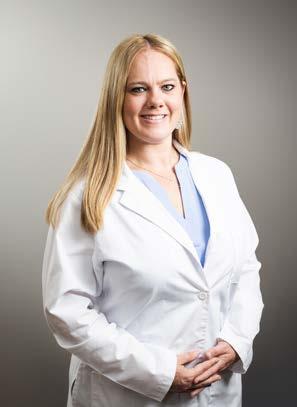
relate to their patients and build trust.
“We understand their concerns and spend a lot of time educating them and giving them ways to cope with being uncomfortable or in pain during their pregnancy, labor, and delivery,” says Douglas.
Willie Washington is Cape Fear Valley Health’s corporate director of the Women's and Pediatric Care/Specialty NonSurgical Program and manages a full spectrum of women’s health practices in Cumberland County and in Bladen, Hoke, and Harnett counties, where Cape Fear Valley Health also provides services. The new midwifery practice is a significant enhancement to the program, Washington said.
“Our new clinic offers longer, more in-depth appointments with midwives who focus on educating and empowering their patients,” he said. “This leads to fostering stronger relationships between our providers and our patients.”
“The clinic includes six exam rooms, an ultrasound room, laboratory services, and a community gathering area to accommodate group appointments and classes.”
These services accept most insurance policies as well as Medicaid.
While the majority of pregnancies can be managed by midwives, women with high-risk conditions, such as certain chronic illnesses or the need for surgical delivery, will need a physician to be involved, but they can still receive midwifery care at the clinic.
“Data has shown that the more intimate care midwives provide helps improve health outcomes for mothers and their babies,” Washington says.
Midwifery practices are rising in demand across the country, according to ECG Management Consultants. The United States has approximately four midwives employed per 1,000 live births, according to the American College of Nurse-Midwives, which estimates that “at least 22,000 midwives are needed in the midwifery workforce to meet the World Health Organization’s minimum goal of at minimum 6 midwives per 1,000 live births.”
Statistics like these are bearing out at Cape Fear Valley Health, where the new midwifery clinic is growing in popularity and is already ahead of patient projections.
“In January, we were open for only half the month, and we had a holiday and two snow days that caused us to alter schedules,” Washington said. “Still, over the course of the 10
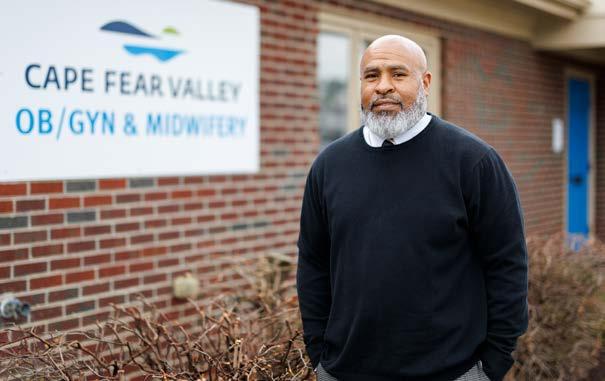
Willie Washington is Cape Fear Valley Health’s corporate director of the Women's and Pediatric Care/Specialty Non-Surgical Program and manages a full spectrum of women’s health practices in Cumberland County and in Bladen, Hoke, and Harnett counties, where Cape Fear Valley Health also provides services. Photo by Tony Wooten
days we were open, we saw more than 100 patients and are still growing.”
Educating people about the role of midwives contributes to its popularity. Some people have preconceived notions that midwifery is an outdated practice or relegated to isolated places without access to hospitals or obstetricians.
Indeed, the practice of midwifery dates back centuries, and according to Britannica, early midwives received training through their own experience, whether giving birth themselves or by attending the births of neighbors or relatives.
Today, modern nurse midwives are highly skilled and professional.
“I think a lot of people are surprised to know the scope of the care we provide,” Smith said. “In addition to our maternity work, we do regular primary care, like Pap smears, STD screening, birth control prescriptions, and other types of services.”
It’s a job both women have grown to love.
Douglas recalls a patient she had seen for prenatal appointments. Even though she didn’t participate in the delivery, she handled the mom’s discharge and met her newborn. It felt like a full-circle moment.
“I was able to participate in that patient’s pregnancy
care, and now she’s scheduled to see me for her postpartum visits,” Douglas says. “That’s what’s rewarding about what I do.”
For Smith, the trust she builds with her patients means everything.
“We treat our patients the way they should be treated and build trusting relationships with them,” Smith said. “They know we have their best interests at heart.”
She draws from her own childbirth experiences and finds fulfillment in both the joys and the sorrows that come with giving birth.
“We help people at their most vulnerable moments, and those can either be the happiest of times, or the worst day of their life, just as I have experienced myself,” she said. “For patients to trust me to be a caregiver for them is my greatest reward.”
Teri Saylor is a freelance writer based in Raleigh.






BY CLAUDIA ZAMORA
Spring does not arrive with noise. It settles in quietly, altering the light, shifting our internal rhythm, reminding us that even after difficult seasons, life finds ways to reorganize itself. In immigrant communities like ours in Fayetteville, that movement is not merely seasonal. It is constant.
Here, renewal is not just a poetic concept. It is a daily practice lived out in small acts of resilience and new beginnings.
You can see it in those starting over in another language, in those rebuilding stability after loss, in those launching small businesses without absolute guarantees but with deep conviction. Each story carries a quiet courage that rarely makes headlines, yet sustains the emotional pulse of the city.
Within that community fabric, there are visible expressions of this renewal. Colors appearing in a simple room. Balloons rising and transforming the atmosphere. Spaces that, for a few hours, fill with meaning.
Through her balloon and event decor business Meraki Creative Agency, Karoll Echeverri Kuri, a veteran and Colombian entrepreneur, has accompanied many of those moments. Her work has been previously recognized in local features highlighting Latino-owned businesses in Fayetteville, reflecting not only her creative talent but also the discipline, resilience, and vision that have shaped her journey.
Like many in our community, her path began with that familiar blend of uncertainty, adaptation, and steady effort that comes with rebuilding life far from one’s country of origin. Yet her story carries a layered strength, of migration and service, of structure and creativity coexisting. Over time, what began as a creative impulse evolved into a business where aesthetics and emotion meet.
Her installations, carefully assembled balloon arches, color palettes that echo the emotion of each event, and details that transform an ordinary space into a stage for celebration, function as small contemporary rituals. It is not simply decoration. It is about marking a before and after.
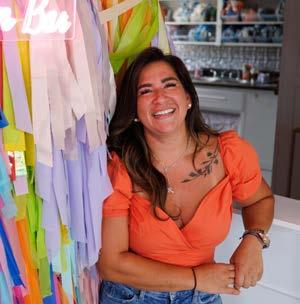
Over the years, Echeverri Kuri discovered that her work was not merely about arranging decorations, but about helping families transform an everyday space into a meaningful moment. Behind each celebration, there are often stories that remain unseen: quiet sacrifices, difficult chapters overcome, or simply the deep desire to pause time and honor life as it is.
And in our community, many times, it represents everything.
A child’s birthday may symbolize stability achieved after years of uncertainty. A baby shower may represent continuity and belonging in a land that is slowly beginning to feel like home. The opening of a small business may embody accumulated sacrifices, long nights of work, and postponed dreams finally finding space to unfold.
Celebration then stops being superficial. It becomes affirmation, a collective gesture that quietly says we are still here, and we are still moving forward.
Perhaps that is why Echeverri Kuri speaks about her work with both enthusiasm and gratitude. For her, every event is also a human story that deserves to be honored.
Integration is not built only in formal spaces or institutional speeches; it is woven patiently in the tables where families share stories, in children’s celebrations where accents and generations blend, in the opening of small businesses that symbolize years of silent sacrifice, and in everyday encounters where someone, without announcing it, affirms through their presence that they belong, that they remain, and that they continue choosing this place as home.
In that context, balloons acquire an unexpected symbolic dimension. They contain air, yes, but also
intention. They rise, occupy space, and fill a room with color that may have once seemed neutral, reminding us that even the lightest things can carry deep meaning.
Spring does not erase what we have lived. It integrates it. It does not deny winter; it transforms it into learning. And in Fayetteville, the Latino community continues to demonstrate that renewal is not an isolated event, but a shared process.
Every gathering, every small business, every simple celebration adds another thread to that invisible fabric that strengthens belonging and wellbeing. Because when we celebrate together, we are not only marking a joyful moment, we are confirming that we have moved through complex stages and still choose to continue building a future.
In times when everything seems to accelerate, pausing to celebrate is not superficial. It is deeply human. It is a way of affirming identity without confrontation, of rebuilding belonging without noise, and of reminding ourselves that hope is not a speech, it is a daily practice.
Every space filled with color, every family gathering, every small achievement honored, contributes to the invisible fabric that sustains our community.
And perhaps that is where our true strength resides: in our constant ability to begin again without losing memory, to accompany one another without conditions, and to keep building the future without sacrificing the soul along the way.

Claudia Zamora is an Argentinian author, mental health and wellness coach, and passionate community advocate. Since 2011, she has made Fayetteville, North Carolina, her home, uplifting the Hispanic community.




BY DIANE PARFITT
Books probably helped many of you survive the winter this year with its short days, long dark nights, frigid temps, and even snow. Now that you have put away the heavy coats, scarves, and gloves, though, be sure to keep up the reading habit even as the warm spring air and sunshine beckon you outside. Reading has been proven to be a good thing for our health and happiness, but there are other reasons why this is a good time of year to keep reading.
A big reason is spring break! Suddenly, the highways are filled with families headed to the North Carolina mountains or beaches for hiking and camping or sunbathing on a beach towel. A good book for pleasure is a must-have on your packing list, and you may need several. For the longer trips, mom or dad can focus on driving safely while everyone else is absorbed in their books. And if you have audiobooks, everyone can be “reading” the same book. Even if you are not taking a vacation, you may have been going full tilt after the holidays, and now it may be time to carve out a day off work, a day to relax and recharge by immersing yourself in a really good book.
Start your spring break by browsing in a local bookstore for the one that speaks to you, whether it is a mystery, a romantic romp, a nonfiction adventure, an exploration of people in crisis, or something historical you’ve always wanted to learn more about. Pick whatever interests you, and you can’t go wrong. Here are a few suggestions.
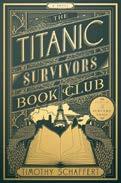
Any book with “Titanic” in the title immediately captures my attention. My interest began after watching the 1958 film A Night to Remember, and it has only grown greater over the years as more information comes out about its tragic maiden voyage. In Schaffert’s book, Yorick is the main character, an apprentice librarian assigned to the Titanic. Alas, he is left at the dock when he quite literally misses the boat. Soon after, he decides to follow his dream and opens a bookstore in Paris. He receives a mysterious letter inviting him to join a secret society of survivors, a support group of sorts whose members are struggling with survivor’s guilt. In the process of reading the selected books and engaging in vigorous, heated discussions, they begin to deal with their anxiety and feelings of guilt.

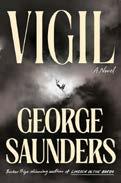
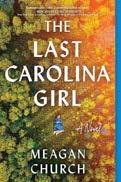
After she dies at age 22, Jill becomes a spirit guide, tasked with ushering humans in their final hours to the afterlife. As a spirit guide, she is able to travel between the living world and the afterlife. One of her dying clients is K. J. Boone, an oil tycoon, who remains unrepentant
and refuses to be consoled. He lived a bold and successful life with his fabulous wealth to show for it. As Jill ushers him into the afterlife, he is confronted with the consequences of corporate greed and environmental damage. Author George Saunders employs satire to explore themes of morality, absolution, and the impact of one’s actions.
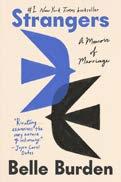
Sometimes the cover of a new book just keeps grabbing your attention even when you know nothing about it. I kept seeing the great cover of this memoir and finally decided to find out more about it. Belle Burden, the author, suddenly finds her 20-year marriage over during the COVID-19 pandemic. Her husband leaves her and their three children behind with no warning. In this true story, she shares her journey from shock and shame to self-discovery, reexamining the past to understand how her seemingly happy marriage could end so suddenly. Through this process, she rediscovers herself, finds her voice, and begins rebuilding her life. Described as a divorce memoir by Amazon Editor Sarah Gelman, I think of it as more of a marriage memoir and, like she says, “a forensic examination of a love and a marriage gone wrong.”
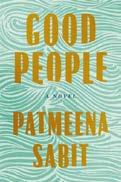
The Sharafs are a rich and prosperous immigrant family. When they first arrive in America from Afghanistan, they have nothing but the clothes they are wearing. With hard work, they move into an affluent neighborhood in Northern Virginia, and their children go to the most exclusive schools. Their oldest daughter, Zorah, is the adored one until she brings shame on her family. Are the Sharafs really the perfect family they seem to be to the outside? Or is it all for show? Told from various perspectives, we get to decide which is the real story.
Annie and Vernice were best friends growing up together in Honeysuckle, Louisiana. Both have had to deal with the loss of their mothers. Vernice was raised by a strong aunt and at 18 left for Spelman College, where she found a community of successful Black women and learned about privilege and ambition. Annie, abandoned by her mother at an early age, was driven by the hope of finding her. Her journey was tough, full of challenges and new experiences, and ultimately led to a fight for her life. Kin explores relationships between women in the American South, offering an emotionally rich and memorable story that explores themes of friendship, sisterhood, race, and the search for family.
In this book set in North Carolina in the mid-1930s, we meet Leah Payne,
who looks back on her life growing up. She begins her story when, at 14, after the death of her widowed father, she enters the foster care system. Initially she is placed with a loving and supportive family. Later, Leah is moved to a home where she faces abuse and is denied access to education, and the foster mother even subjects her to forced sterilization.
Recognizing the injustice, Leah returns to her original foster family, gradually regains her confidence, and takes control of her future.

Diane Parfitt owns City Center Gallery & Books in downtown Fayetteville. She can be reached at citycentergallerybooks@gmail.com.


Here are just some of the things happening in and around Fayetteville this month. Scan the code with your phone for more events, additional information, and to post your event on our website. Events are subject to change. Check before attending.
April 18
John Williams and His Influences
Fayetteville Symphony Orchestra
Huff Concert Hall
Methodist University 5400 Hull Road fayettevillesymphony.org
April 18
Survival Craft:
Building an Outdoor Shelter
April 9
CityView’s 6th Annual Ladies’ Night Out
Presented by Cape Fear Valley Health
The Carolina Barn
7765 McCormick Bridge Road, Spring Lake cityviewnc.com/ladiesnightout
April 10
Opening Reception: Joined by Stitching: A Quilter’s Art Exhibition
The Arts Center
301 Hay St. wearethearts.com
April 10
Space Jam Night
Fayetteville Woodpeckers vs. Charleston Riverdogs
Segra Stadium
460 Hay St. milb.com
April 11
Dog Day in the Garden
Cape Fear Botanical Garden 536 N. Eastern Blvd. capefearbg.org
April 11
Donuts & Dodgeball
DaVille Athletics
1116 Charmain St. eventeny.com
April 11
Spring Open House
Methodist University
5400 Ramsey St. methodist.edu
April 11
Fayetteville Liberty vs. DC Heat
Crown Arena
Crown Complex
1960 Coliseum Drive faylibertync.com
April 16
Fayetteville Liberty vs. Raleigh Firebirds
Crown Arena
Crown Complex
1960 Coliseum Drive faylibertync.com
April 17–19
The All American Tattoo Convention
Crown Expo
Crown Complex 1960 Coliseum Drive crowncomplexnc.com
April 17
Backyard Garden Construction Cape Fear Botanical Garden 536 N. Eastern Blvd. capefearbg.org
April 18
Miss Dogwood Volunteer Pageant Hosted by The Fayetteville
Dogwood Festival 2204 Hull Road eventeny.com
April 18-26
Rick Herrema Foundation’s Ninja Warrior Course
Rick’s Place 5572 Shenandoah Drive rhfnow.org
Cape Fear Botanical Garden
536 N. Eastern Blvd. capefearbg.org
April 19
April’s Garden Party
High Tea Spring Social Anchor Allies 1204 Bragg Blvd. eventbrite.com
April 21
Tail Waggin’ Tuesday
Fayetteville Woodpeckers vs. Myrtle Beach Pelicans
Segra Stadium
460 Hay St. milb.com
April 23
Cork & Fork 2026
143 Maxwell 143 Maxwell St. eventeny.com
April 24–26
44th Annual Fayetteville Dogwood Festival Festival Park & Downtown Fayetteville thedogwoodfestival.com
April 25
Super Science Funfest
Fascinate-U Children’s Museum 116 Green St. fascinate-u.com
April 25
Plant Sale
Cumberland County Extension Master
Gardener Volunteer Association
Crown Arena
Crown Complex
1960 Coliseum Drive cumberland.ces.ncsu.edu
April 25
Fayetteville Tech Comic Con
Horace Sisk Gym 2208 Hull Road facebook.com
April 25
Steve Hofstetter and Friends
Fayetteville’s Premier Comedy Club at Paddy’s Irish Pub 2606 Raeford Road, Suite A eventbrite.com
April 25
Family Night Hike & Campfire
Cape Fear Botanical Garden 536 N. Eastern Blvd. capefearbg.org
April 26
Barbie Game Day
Fayetteville Woodpeckers vs. Myrtle Beach Pelicans Segra Stadium 460 Hay St. milb.com
Advertise your business in our annual guide that locals, newcomers, and visitors alike will pick up and enjoy. Email dawn@theassemblync.com.
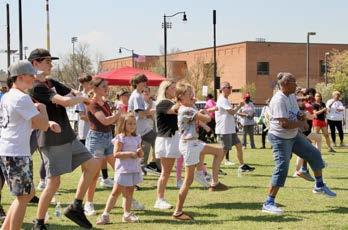
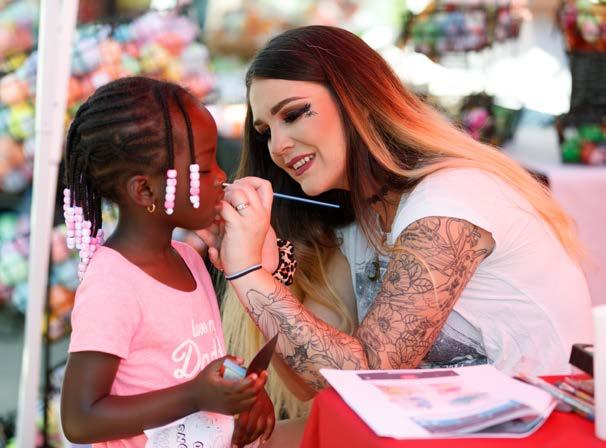
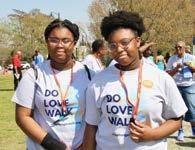
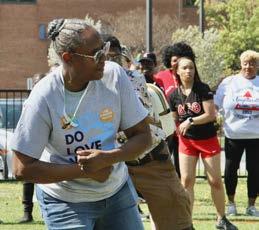
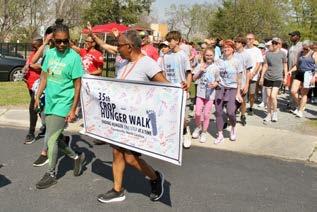
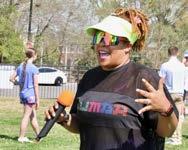
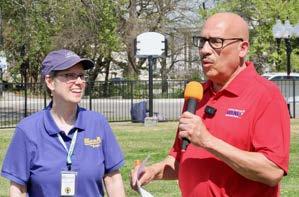
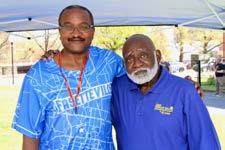
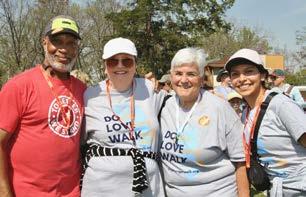
The Cumberland County CROP Hunger Walk was held on Sunday, March 22. More than 150 people gathered in downtown Fayetteville to raise funds to feed the hungry and support efforts to improve food security across the globe.
Photography by Matt Hennie
Want CityView at your event for Seen @ the Scene? Email us at talk@cityviewnc.com.

Please visit our Spring Open House on May 7, 8 and 9 and May 14, 15 and 16 from 12:00 noon until dark.
This home is located at 1910 Thomas Wood Drive, Fayetteville, NC, in the Westhaven Subddivision within the Jack Britt High School district. This fabulous house features 8-foot tall doors, two-story ceilings, a 10-foot kitchen island with quartz countertops, fireplace surround and hearth and many other very special features in this beautiful home.
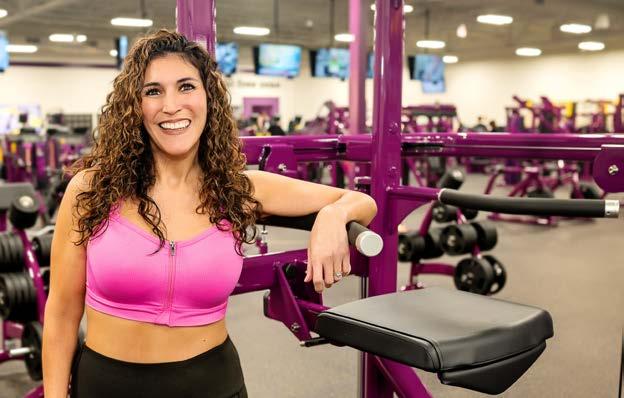
After losing more than 100 pounds in her early 20s, Jessica Hannah was proud of the hard work she put into transforming her health, but she still felt her body didn’t fully reflect her efforts.
Last year, in her 40s, she decided to pursue cosmetic surgery, choosing a tummy tuck and breast lift with augmentation. She met with Leif O. Nordberg, MD, whose reassuring approach and detailed explanations helped confirm she was ready to move forward.
After scheduling her procedure for October to allow plenty of healing time, Hannah said the results quickly made the decision worthwhile. Now, as spring and summer approach, she’s excited to enjoy the beach and pool with renewed confidence.