IN ONE PIECE THE CURVED STAIR: 101
EDWARD PELTON’S IRON ART
A Nashville couple restores a 19th-century Staunton house— and builds a new life inside it








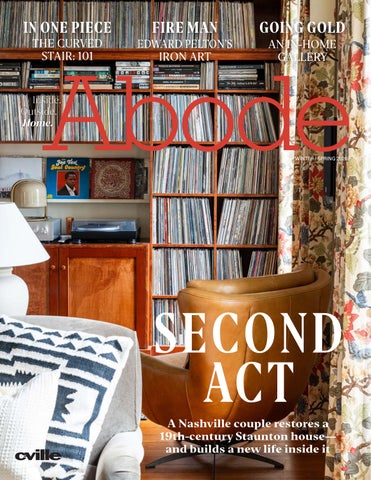
A Nashville couple restores a 19th-century Staunton house— and builds a new life inside it
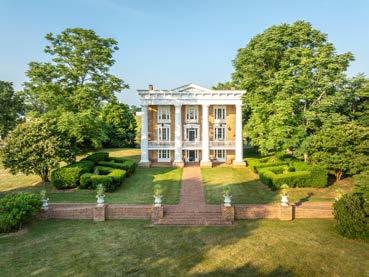
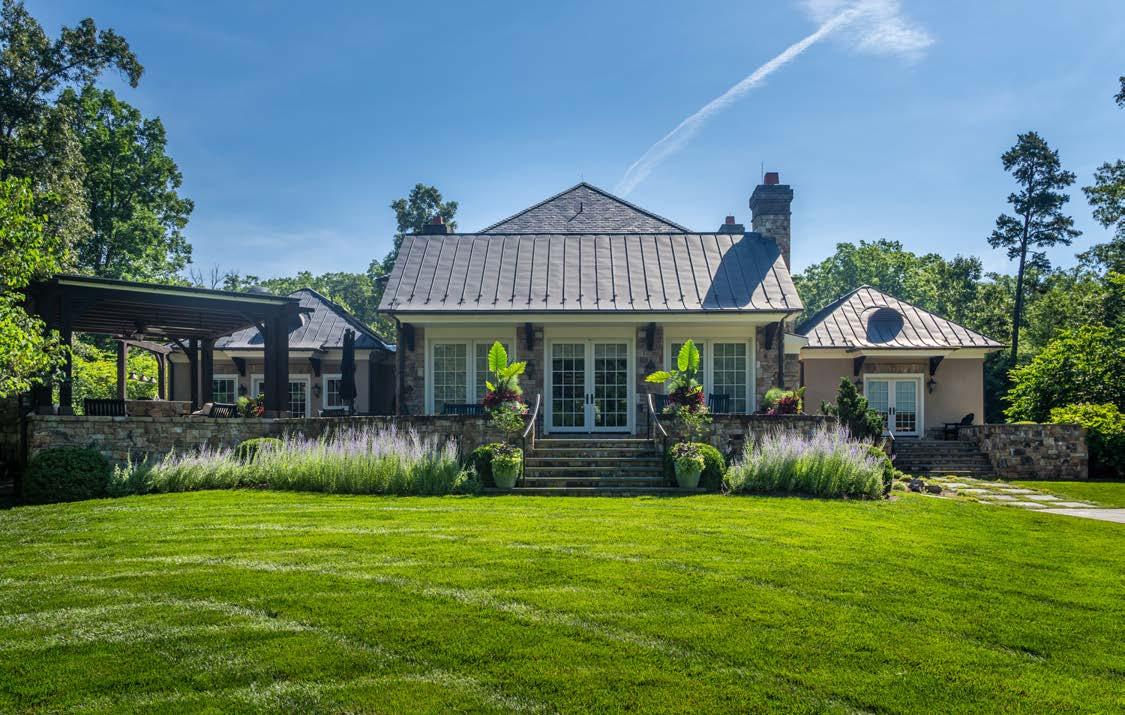
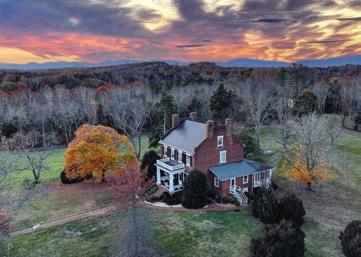
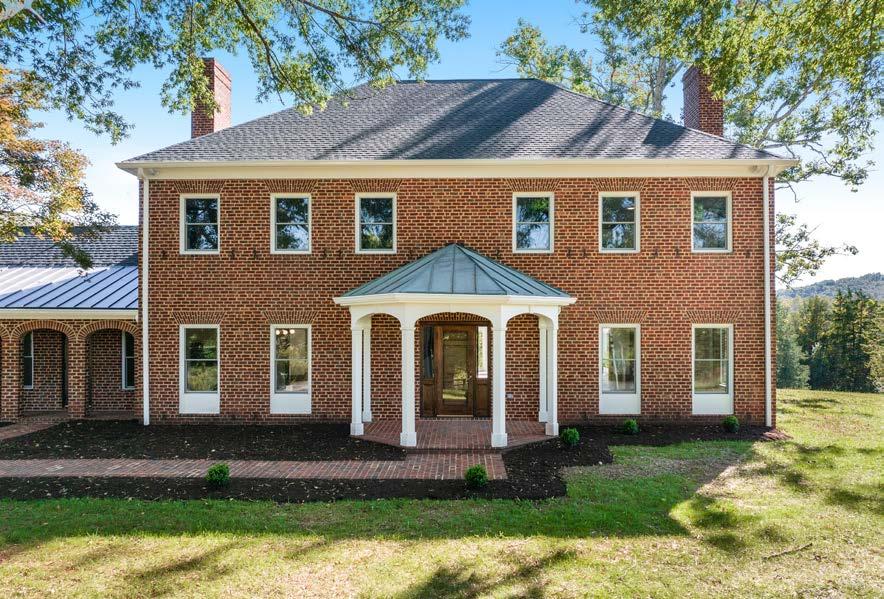
$4,500,000 – Stunning classical revival estate on 31 acres along the Rapidan River. Built in 1854, this meticulously restored home features original details.
Justin Wiley 434.981.5528
Peter Wiley 434.422.2090
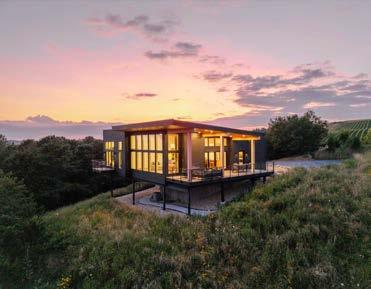
410 Twelve Ridges Way
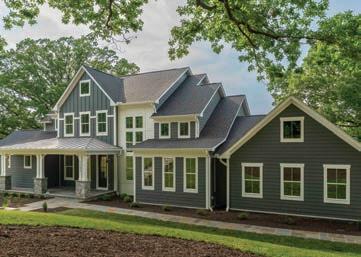
$1,995,000 – Nestled in Virginia’s Blue Ridge Mountains, this 3-bed, 3.5 bath home offers modern elegance with 270-degree views.
Matthias John 434.906.4630
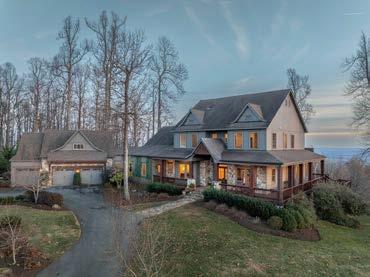
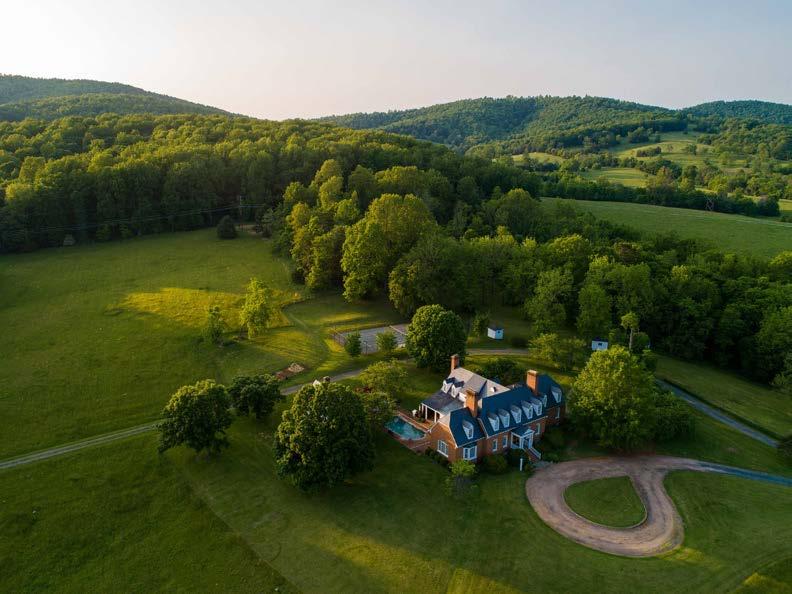
$3,750,000 – 35-acre Keswick estate featuring a 6,200 $2,950,000 – Perched atop the Southwest Mountains, sq-ft colonial, guest cottage, pool, and tennis court.
Prime location just minutes from Keswick Hall.
Peter Wiley 434.422.2090
Justin Wiley 434.981.5528
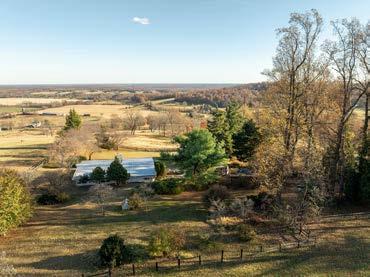
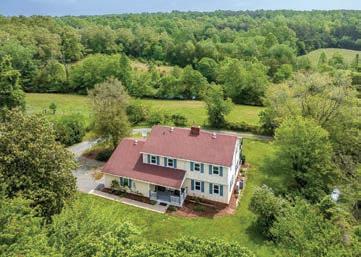
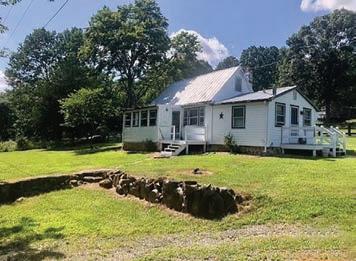
$825,000 – Rare 12-acre Orange County ridge estate. 360° views and renovated mid-century cottage.
Justin Wiley 434.981.5528
this 6-bedroom home offers panoramic views and a Karen Turner-designed kitchen.
Peter Wiley 434.422.2090
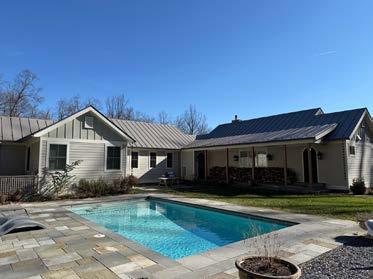
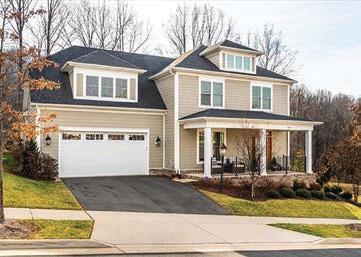
$2,250,000 – Embrace tranquility in this 2022 custom home at Bundoran Farm, offering serene mountain views.
Peter Wiley 434.422.2090




A pandemic move brought Chad Pelton and Christie Bazemore from Nashville to an unlisted 19th-century house in Staunton’s Newtown Historic District. What began as a charming fixer-upper quickly became a deep restoration, led by designer Thea Lane and the building itself. By reinforcing the structure, respecting historic guidelines, and making only thoughtful, minimal changes, the couple transformed the former grocery-store building into a cozy, light-filled home that honors its past while adapting gracefully to modern life.
c-ville.com/category/abode
ABODE, a supplement to C-VILLE Weekly, is distributed in Charlottesville, Albemarle County, and the Shenandoah Valley. No part of this publication may be reproduced without the written permission of the publisher. ABODE Editor Caite Hamilton. Contributor Carol Diggs. Copy Editor Susan Sorensen. Art Director Max March. Graphic Designer Tracy Federico. Director of Sales Bianca J. Johnson. Digital Sales Manager Rob Davis. Real Estate & Classifieds Manager Brian Hrozencik. Account Executives Stephanie Vogtman-Say, Jacob Phillips. Production Coordinator Faith Gibson. Publisher Anna Harrison. Chief Financial Officer Debbie Miller. A/R Specialist Nanci Winter. Circulation Manager Billy Dempsey. ©2026 C-VILLE Weekly





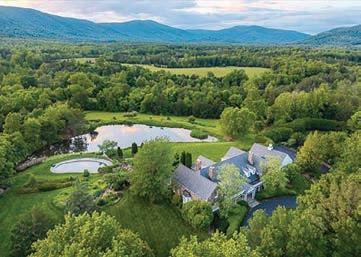
$8,800,000 | MLS 665249 | Crozet Jim & Will Faulconer, 434.981.0076
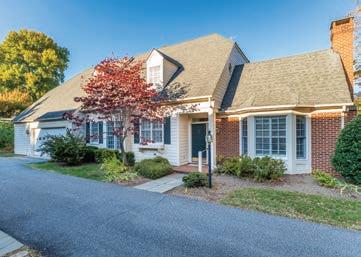
$1,325,000 | Charlottesville Court Nexsen, 646.660.0700
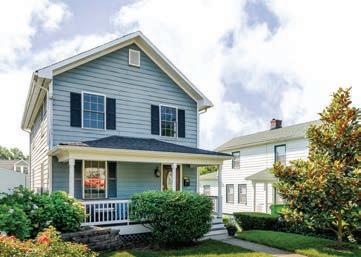
$3,275,000 | MLS 671230 | Charlottesville Charlotte Dammann, 434.981.1250
$1,150,000 | MLS 672625 |




Design in all its many forms
Inspired renovation makes a developer house a custom dwelling By Carol Diggs
“This was our first house, and we were excited to make it feel like home,” says Nicholas Wilson. He and his wife Rose had spent five years working abroad, mostly in the Middle East, then they lived in the San Francisco area for a time. When they moved to Central Virginia with their young son in 2022, they rented a house in Fontana while they considered their next move. Their son went to preschool nearby and they loved the neighborhood, so when a house up the hill with a stunning view came on the market, the Wilsons made their transition to homeowners.
The new-to-them 18-year-old developer house worked well in some ways, but in others it didn’t fit how the Wilsons lived. From their time in California, the couple had learned to love space and light—and having a garden where Rose could grow flowers and vegetables. They usually cook together, and view it as a social part of entertaining friends. The couple saw their house’s traditional four-room first floor layout (formal dining room, front parlor, kitchen/dining area separated from the family room by a waist-high shelving unit) as needing to be re-imagined. And the original owners had done nothing to change or upgrade the house.
The Wilsons found Miftakhova Morrell Architects. Andrew Morrell and Lemara Miftakhova Morrell, like the Wilsons, were a young career couple starting a family. “Having started our careers in San Francisco after graduating from UVA’s masters [in architecture] program in 2018, Lemara and I quickly felt a connection to them,” recalls Andrew. The firm’s website describes its approach as “design intensive with a passion for careful detailing,” which is just what the Wilsons envisioned.
Rose described the environment they were seeking as “clean, quiet, and calming.” In Nicholas’ view, their goal was “to adapt the house to our lifestyle, and [Andrew and Lemara] were really collaborative in that effort.”
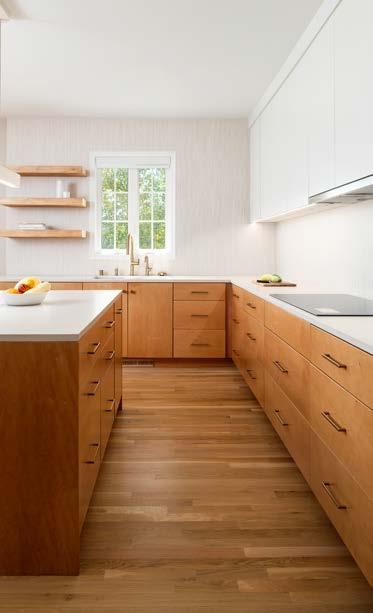
Working with the clients, the Morrells proposed a relatively limited renovation: Make the back half of the first floor into one open, flowing cooking/dining/living space. This decision freed up the formal dining room to slightly enlarge the foyer, provide a small home office for Nicholas, and add space for a scullery/pantry area off the kitchen. Replacing the L-shaped kitchen counter with a free-standing kitchen island and removing the 8-foot-long shelving unit between the kitchen and family room not only enlarged the usable space, but also allowed direct access from the kitchen to the back deck and the garden where Rose sources many of her fresh ingredients.
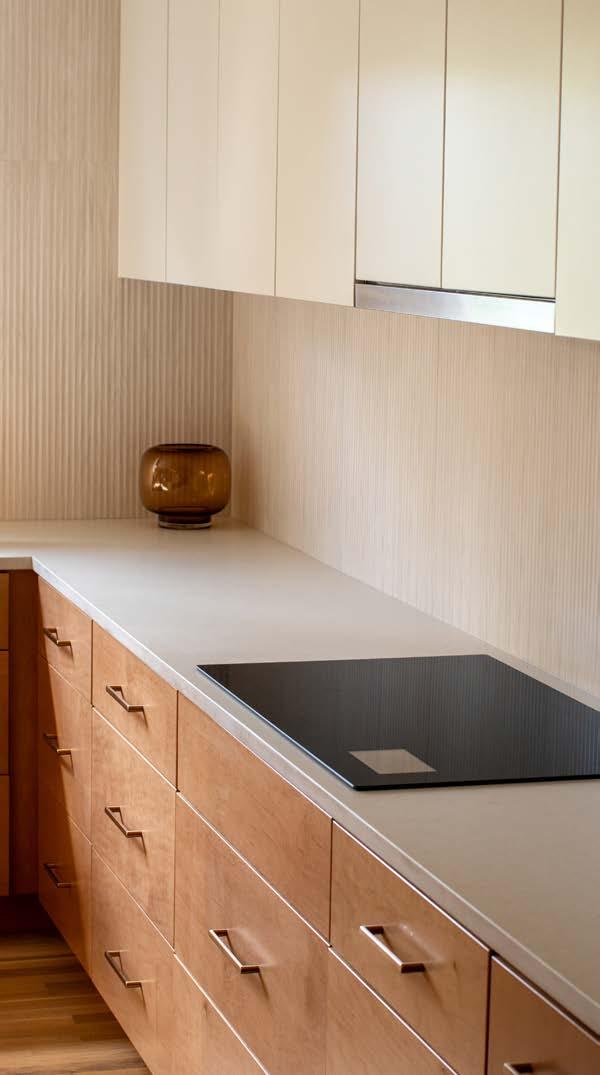
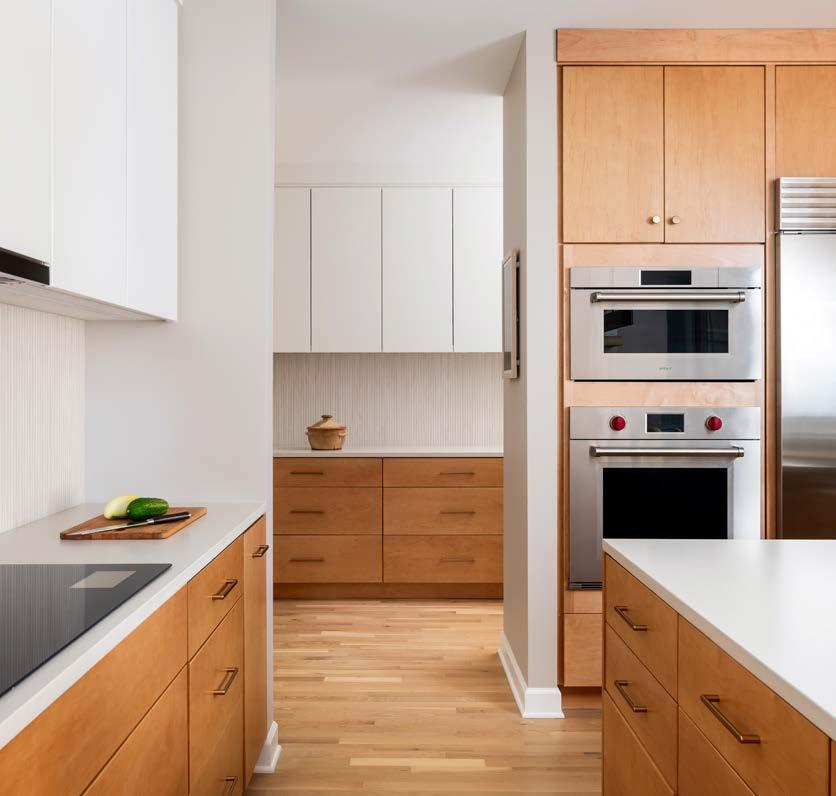
Simplifying the space helped create the open, uncluttered feeling the couple was looking for. To lighten the area, the original dark staining on the red-oak flooring was sanded off in three cycles to bring the wood to a lighter shade. The walls throughout are painted a warm neutral (Sherwin-Williams’ Worldly Grey). The kitchen counters are durable and easy-maintenance Cosentino’s Silestone quartz in Linen Cream, unpolished. “We didn’t want polished surfaces or reflections,” says Rose (the kitchen’s only reflective surfaces are the stainless steel of the two Wolf wall ovens and the Sub-Zero refrigerator).
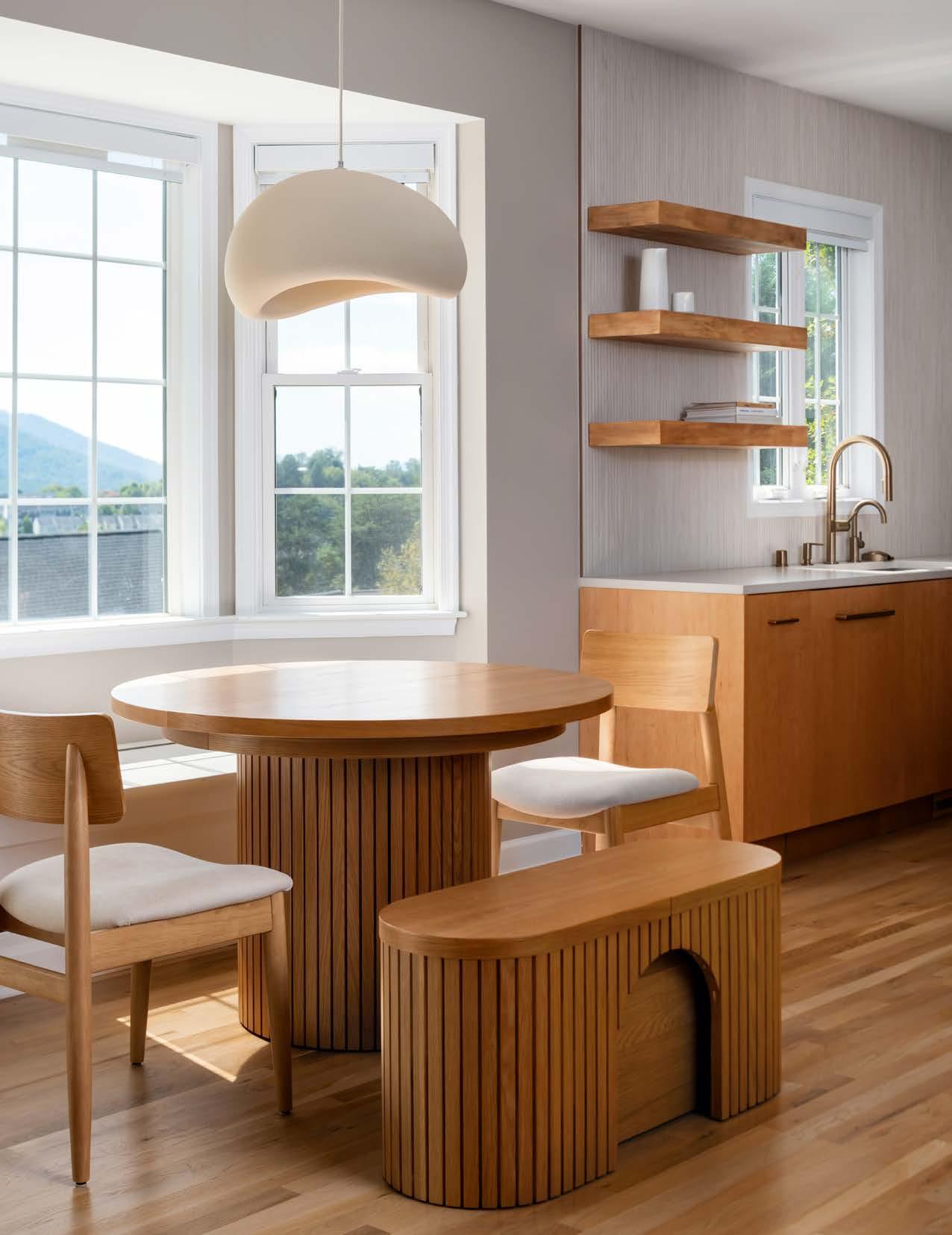
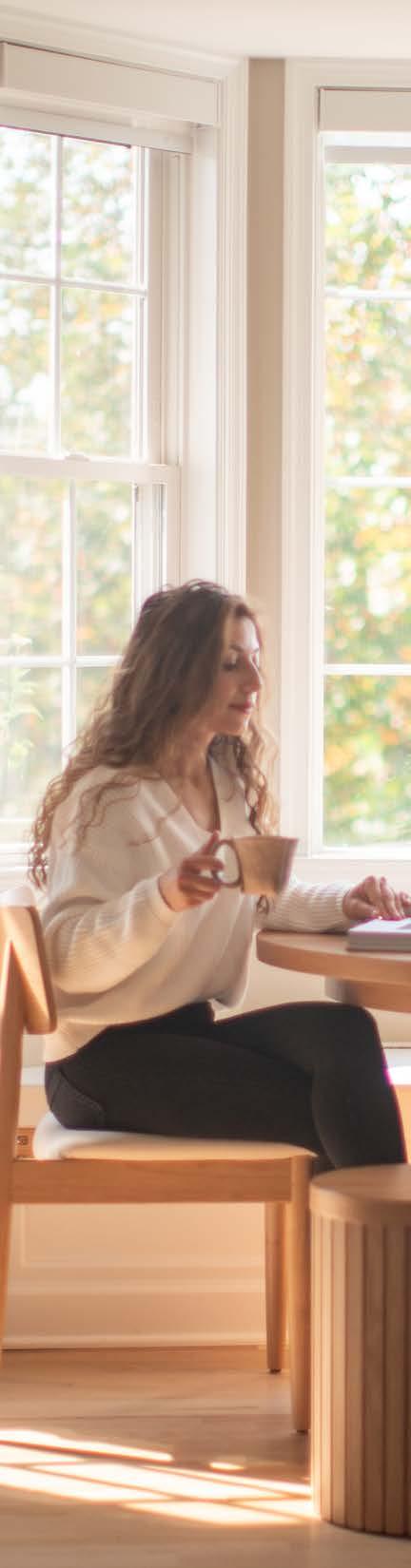
The sense of light and warmth are enhanced by the warm stain (maple wheat) on the maple lower cabinets and the refrigerator/oven wall, and by the upper cabinets in alabaster white. The slightly beige ceramic tiling along the walls and backsplash, with its vertical scalloping and tight seams, provides a subtle texture and creates a sense of continuous surface, enhanced by the under-cabinet lighting and recessed power outlets. And in a master decorator touch, the overisland linear pendant by Delphi reflects the same corrugated pattern, as the eating nook’s Transformer Table dining set (round table, chairs and bench, expandable to seat 10).
All this attention to warm neutral quiet means the kitchen area feels much lighter without the need to replace or enlarge any windows on the exterior wall. This is a hallmark of the Morrells’ approach to the project: using attention to detail to achieve custom quality while respecting budget parameters. The architects investigated a wide range of cabinet suppliers for textures, grains, colors, and installation time; they even tried out samples on site with the Wilsons at different times of day to check on color and compatibility.
“We also designed the kitchen in 3-inch-wide increments, which are standard dimensions for cabinetry, as well as standard heights and depths, to reduce the lead time on cabinet delivery,” Andrew explains. “We ordered cabinetry through Dovetail so we could customize the parts that were critical to the project design.” One example: detailing the upper cabinet doors to be slightly longer, to conceal the lighting and power outlets.
Bouch Contracting
Dovetail Design & Cabinetry (cabinets from David Bradley; wall tile from Sarisand Tile)
Invictus Lighting (controlled through Google Home app)
“Our practice is very focused on construction detailing, and we believe that drawing to a high level of detail directly impacts the outcome of the project,” he says. That approach fits very well with the Wilsons, who are attuned to specifics. Having the wall cabinets set high enough off the counter for the two to work, for example, was important—as was having those cabinets extend to the ceiling (“We keep the things we don’t use as often on the upper shelves,” says Nicholas).
As a result, the kitchen is designed around how the Wilsons work, not the other way around. Lemara notes that the old paradigm was the “kitchen triangle” determining where the sink, stove, and refrigerator should be placed for greatest efficiency. “But the choreography is very different now,” she says, with more couples like the Wilsons who want to cook together and who want cooking to be part of their entertaining.
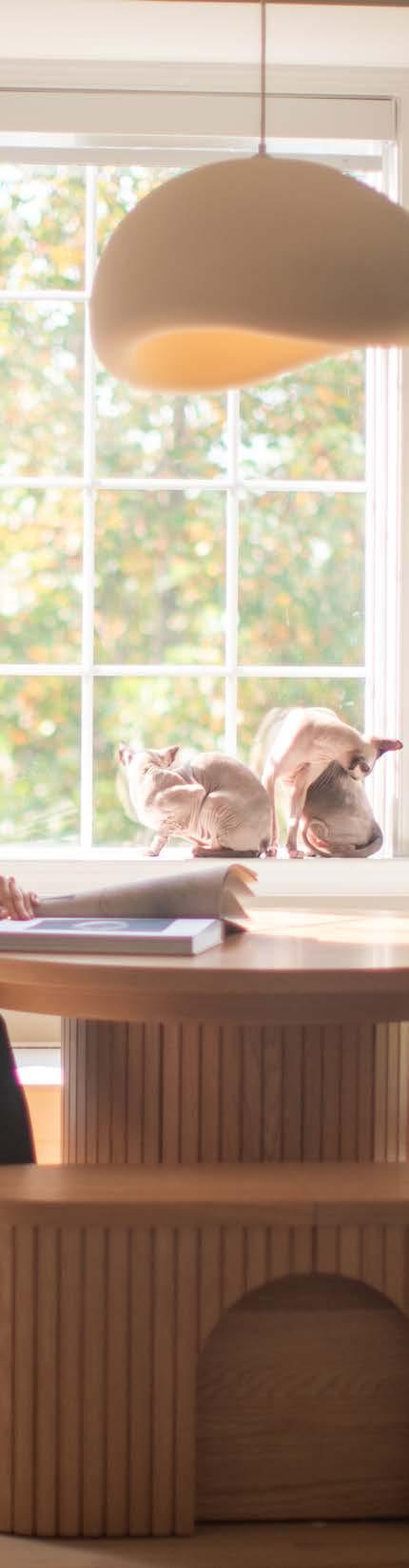
The renovation, which began in late 2024, was finished in October last year. The Wilsons did have to live through its last stages, but the result is just what they asked for: a home that feels it was made for them. Even the family’s two Sphynx cats, Frodo and Sam, basking in front of the updated fireplace, agree.
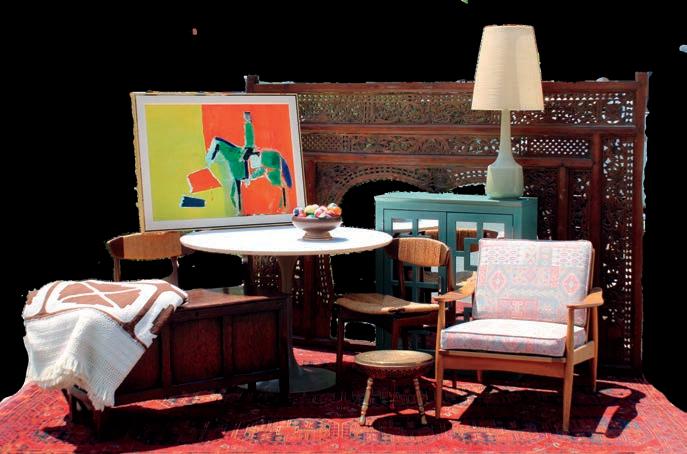




Maybe the tired “new year, new you” adage should apply less to you personally and more to your ... home? Start the year off with a lesson from one of these professionals, and learn everything from seasonal seed-starting to watercolor basics or the best ways to support pollinators.
Plant workshops at We Grow Floral Shop
Saturdays, 2pm Art teacher and We Grow owner Daisa Granger Pascall leads this free monthly plant workshop—instruction on everything from rooting to propagating plants. All materials are provided. Just bring your curiosity! Free, wegrowshopva.com
Beekeeping for Beginners at Siller Pollinator Company
Saturday, March 2, 2-5pm Get a handle on everything you need to start beekeeping in your backyard, courtesy of the experts
at Siller. You’ll learn how to get equipment, how to get bees, and how to find help with training before exploring basics of honey harvesting. $40, sillerpollinatorcompany.com
Summer Veggie & Seed Starting Party at Fifth Season Gardening
Saturday, March 28, 11am-12:30pm Through this hands-on workshop, learn seasonal seed-starting, up-potting, seedling care, and planting schedules for Zones 7 and 8. You’ll leave with a full tray of seasonal seedlings that you’ve planted yourself and can take home to grow. $30, fifthseasongardening.com
The Basics of Watercolor
Saturdays, 1:30-4pm, March 7-April 18
Indulge in a watercolor workshop with artist John Hancock as he guides you to learn basic and intermediate skills from traditional and contemporary watercolor traditions. Demos and feedback throughout the six-week course will ensure students leave with their goals accomplished. $335, johnahancock.com
Garden Basics: Great Flowering Native Plants for Beauty and the Bees
Saturday, April 18, 10am-noon Pollinators— butterflies, bees, birds—are responsible for much of the food we eat, but their populations are declining. In this workshop, learn how to support pollinators and enjoy them year-round by providing food and shelter in a home garden of any size. Free, piedmontmastergardeners.org
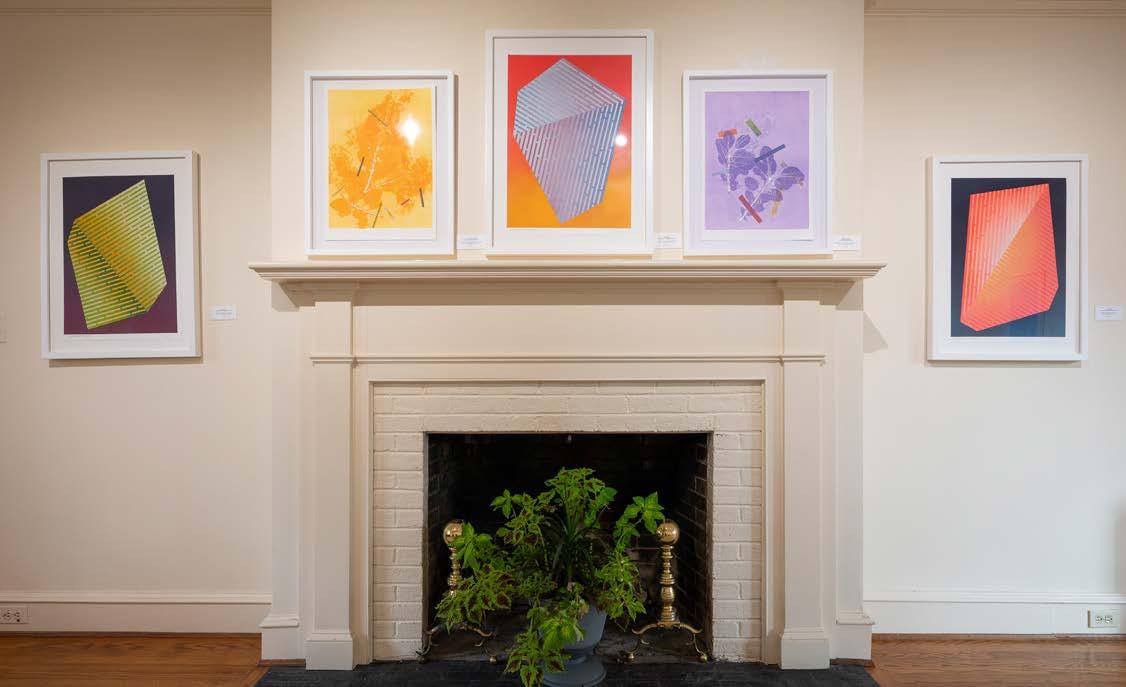
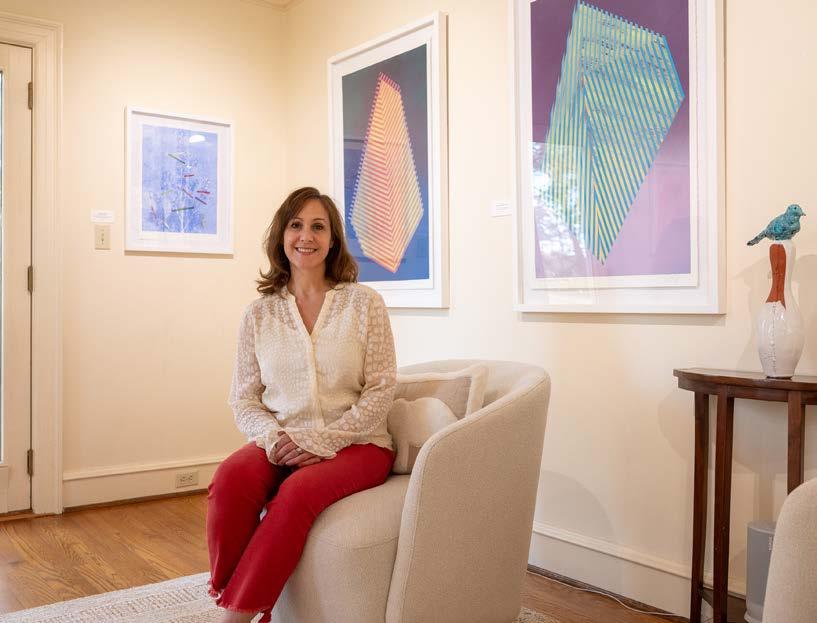
Situated across the street from King Family Vineyards in Crozet, nestled among a stand of trees at the edge of pasturelands, a 1929 farmhouse offers the opportunity to explore exciting visual art within a vibrant and welcoming domestic setting.
Visitors to the non-traditional gallery at Folly Farm won’t find paintings of hunt scenes or hayfields often seen in this type of rural residence. Instead, contemporary works featuring bright, saturated colors in geometric compositions mingle with large-scale mixed media pieces, executed in natural palettes. A dynamic tension emerges between interior decoration and thoughtful cura-
tion where skill in aesthetic pairing shines. The conversations between artworks and architectural elements in and across space draw the eye, creating connections between framed works and door frames, furnishings and fine art. Passing through the home’s front door, visitors are met with warm wooden floors and woven-grass wallpaper. Photographs of Black cowboys and color fields rendered in thousands of shimmering beads adorn the entryway, communicating the tone of the interior in a bold and purposeful manner.
The new art space launched last year as Pennsylvania-based art historian and curator Susanna Gold began splitting her time between the
Philadelphia area and Central Virginia. A native of Richmond, Gold has been tied to Crozet through her in-laws for many years, but recently began establishing connections with artists, collectors, corporate clients, and arts institutions in the region. The gallery emerged as a means to expand her advisory practice in the Charlottesville area, beginning as just a single room on the first floor of her home.
“Building a showroom of sorts allowed me to have a space where I could meet with collectors, understand what their art needs are, and have space to show them lots of different kinds of work within an art environment rather than an office,”
Gold says. “As the art that I wanted to introduce to the Charlottesville area continued to expand beyond the ‘showroom’ space I had carved out, it began to creep into other spaces of the house.”
Artworks quickly came to occupy the majority of the home—living room, dining room, family room, three upstairs guest rooms, hallways, stairwells—and Gold began inviting clients and visitors to freely walk throughout the house to see what might resonate with them. “[It] proved to be a very helpful approach for showing work, since viewers could envision how the art could look in their own spaces,” she says.
Gold, who holds a Ph.D. from the University of Pennsylvania and served on the art history faculty at Temple University’s Tyler School of Art and Architecture for nearly a decade, has produced exhibitions and events in a wide variety of forms. She has curated pop-up exhibitions, temporary storefront spaces, art fair booths, and shows in museums and galleries, including several as the former director of NoBA Artspaces in Bala Cynwyd, Pennsylvania. “The Crozet space is very different because it’s not only permanent, it’s personal,” Gold says. “I love the intimate aspect of the space—it’s very relaxed and comfortable, and not at all intimidating.”
The ability to engage with an evolving and varied body of work outside of a white-cube gallery setting, where the interplay between domestic and artistic aesthetics creates opportunities to experience the artworks within an everyday context, isn’t an everyday occurrence. Yet Gold is adamant that the “private” nature of the site shouldn’t be a deterrent to exploring new artists and artworks. “When visitors enter your home to view art, rather than a storefront space, it is a much more personal experience,” she says. “It fosters conversation and can lead to new relationships—that’s exciting for me.”
To the left of the entryway, the former showroom now serves as a dedicated exhibition space, displaying the work of a featured artist in shows that rotate seasonally. Neutral walls and furniture and fixed lighting allow the artwork to take center stage, forming an insulated presentation within the larger, evolving installation of works throughout the house. “Still,” the inaugural exhibition which opened last June and ran through mid-October, featured sculptures and photographs by Pennsylvania-based artist Paul Cava, including images of highly detailed autumn leaves in minimalist arrangements.
Most of the artwork at the Folly Farm gallery comes from living, practicing artists—many of CONTINUED ON PAGE 17
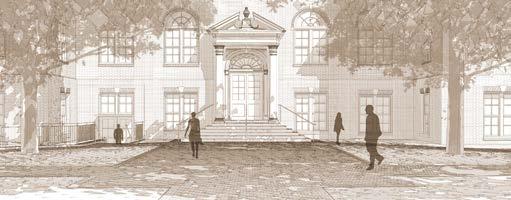
with 7-15+/- years of experience to join our design-focused team at Mitchell/Matthews Architects & Planners.
Refer to www.mitchellmatthews.com/careers for our job description. This is strictly an in-person role.
If interested, send the following application materials to: careers@mitchellmatthews.com with “Staff Architect/Designer Application” in the subject line:
• Cover letter outlining your interest and fit for the role.
• Resume, including references.
• Portfolio or work samples (PDF format, under 10 MB, 2-3 pages).
• Direct applicants only. No inquiries from recruiters or staffing agencies.

CONTINUED FROM PAGE 15
whom Gold has worked with for a number of years. “The work I currently have in the gallery is by artists from all over the country, but I have recently started introducing work by Virginiabased artists,” Gold says. Her first experience showing an artist of the region was an immediate success, with a collector acquiring a largescale painting by Central Virginia-based VM Fisk the same day Gold introduced it in the space. (The author of this article has a personal relationship with Fisk.)
Some works are brought in on consignment, but largely, what is on view comes directly from the artists’ studios. “If artists are already represented by other galleries, or if I get to know an artist’s work through other art advisors, it offers an opportunity for collaboration,” Gold says. “I have really enjoyed getting to know Charlottesville’s other art advisors, advocates, and gallerists— everyone I’ve gotten to know here has been so welcoming and open to new ways to collaborate.”
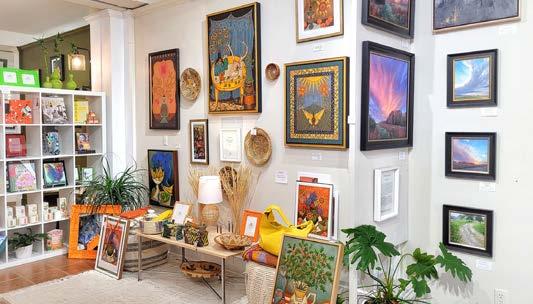
There’s a great deal of diversity within the works on view, and a variety of price points for seasoned and new collectors alike. “Since each collector is different and has their own personal tastes and interests, I work with a wide range of artists to meet the varying needs of each collector rather than represent a small group of artists, as some galleries do,” Gold says. Photography at varying scales, mixed media works, assemblage, prints, and paintings all commingle with sconces, armoires, and house plants where every inch feels considered, but not overwrought or overthought.
To the right of the entryway, a dining room space with floral wallpaper hosts the first piece Gold mounted in the Crozet gallery: a geometric abstraction by Thomas Paul Raggio complemented by its decorative backdrop, as both the canvas and wallpaper traffic in the same palette. Likewise, Gold has strategically installed Keith Breitfeller’s painted abstractions with impasto marks against the wallpaper, connecting artwork and interior design through pattern and a palette of pink and blue hues.
In the adjoining common space, gestural abstractions by Elyce Abrams offer slick, gloss-surfaced energy, across from a series of linear-based works by Jay Walker mounted below another piece by Fisk, whose works on panel straddle the line between painting and sculpture. The hues of these paintings and their sharp edges come into conversation with colorful books that line built-in shelves within a comfortable atmosphere.
The woven-grass wallpaper found in the entryway extends to the landing upstairs, where
Gold has installed works with more subdued natural palettes accented with pops of saturated pinks, reds, blues, and greens. Antonio Puri’s small-scale works in natural inks are perfectly activated by the ecru grass wallpaper, creating a subtle yet elegant conversation between material, art, and architecture situated in their white frames between two white doors.
This consideration of how artworks relate and converse with each other and their setting in and across space is wonderfully apparent in the upstairs bedrooms. In the first of three guest rooms, works by Walker, Claes Gabriel, Joseph McAleer, and Lavett Ballard each feature warm tones with healthy doses of yellow pigment, brightening a space that features light yellow walls and a single bed dressed with a blanket featuring natural patterns in yellow and green. The second bedroom pushes into a cooler blue palette, where paintings by Breitfeller, Kirby Fredendall, and Deirdre Murphy complement a mixed media tryptic by Puri, all set against blue-and-white-striped wallpaper and patterned bedspread in blue and white fabrics. The third bedroom leans into its floral wallpaper with representational prints and paintings that evoke the natural world—including a striking monoprint of a silhouetted Larkspur flower by Murphy and meditative cloud
paintings by Fredendall—as well as abstract compositions on canvas and paper, like McAleer’s energetic canvas reminiscent of dense foliage and Paula Cahill’s gestural gauche paintings that evoke swirling water.
Gold has worked with and against the features of her home when choosing where to hang artwork, teasing out subtle connections between shared aspects of art and decor in some instances while acknowledging more obvious associations in others. She’s achieved a thoughtful balance where the works on view feel naturally situated among the elements of everyday habitation, making it easy to move throughout the quarters and consider how these art objects might live within your own home, or how you might try to borrow from Gold’s expertise to curate your own personal collection.
The venture is a wonderful addition to Central Virginia’s arts scene, strengthening a creative culture in the region that is already robust. “Being a Richmond native, I have seen that city blossom into a thriving arts scene, and that same passion for the arts infuses the Charlottesville area with a strong artist community, and dedicated museum and nonprofit arts patrons,” Gold says. “I am excited to have become a part of such an enthusiastic and supportive community.”
Blacksmithing is an ancient craft, but metalworker Edward Pelton has carved out a modern niche during his three decades in the studio. Pelton Metalworks produces architectural sculpture ranging from the functional to the ornate for contractors and designers, homeowners, and art aficionados.
Pelton, who lives in the Charlottesville-area home where he grew up, recently spoke to Abode about finding his way to the trade for which he was destined.
C-VILLE Abode: You’re in a trade that seems to be dwindling. Is that a concern?
Edward Pelton: I would push back on that and put forward the idea that the rarer something is, the more valuable it becomes. I’ll tell you a story. My oldest daughter went off to school— she’s a business major—and in her first week of school, she told me she read that around 1900, there were 236,000 blacksmiths employed in America. Within about 20 years, that dwindled to about 12,000. But while the Industrial Revolution mechanized what we would traditionally call a blacksmith, people like me, in our own niche way, are flourishing.
How did you learn the trade?
I owe a great debt to people like Nol Putnam, Tom Joyce, and Francis Whitaker—all the guys that came before me. These were mostly back-to-theland guys, hippies, basically. As early as the ’60s and ’70s, these were the guys that made blacksmithing cool. The generation before me, they rediscovered the knowledge required for blacksmithing and rescued it for the next generation.
I assume modern blacksmithing requires a unique skillset compared to the traditional trade.
I think there are some of the same skills, but you definitely have to be a different kind of person than someone who was making commodity products in the early 1900s. There was a time, depending on how far back you want to go, that blacksmiths did everything. I’m focused on a certain high-end architectural market. But I will

also say that industrial smithing and forging are still very much alive. It’s just done with robots. No matter how much we change, the metal has not. It still reacts to heat, cold, tempering, forging. The metallurgical part of it is still very relevant even in the modern age.
What about blacksmithing is appealing to you?
I basically walked into a blacksmith shop in the early ’90s and never left. I fell in love with the ring of the anvil and the smell of the coal right from the get-go. Over 30 years, it’s never occurred to me to leave. This is what I’ve always wanted to do—to be gainfully employed as an architectural blacksmith. This is who I am. I finally found a place for my ADD. I have almost unlimited physical energy, even now. I love moving around and doing things with “my head, my heart, and my hands,” as Nol says.
When you work with clients, do they have a design in mind, or do you get to be creative?
It happens both ways. I often get a drawing from an architect, but I like to say that 85 percent of the design is done on the face of the anvil. We can draw things all day long, but a two-dimensional drawing on paper is not real. I also have private clients who come to me and say, “I want this pedestrian gate and I have a few images that I like—what do you think?” Those are the times when I get to do the bulk of the designing. It’s like the difference between being a singer, a songwriter, and a virtuoso. If someone gives you Beethoven’s 7th, you’re supposed to knock it out. You’re not rewriting it. But I almost always have creative involvement on a practical level. Function always comes first. It can’t just be pretty. If it’s a table, it can’t shimmy. If it’s a railing, it has to take lateral thrust. If it’s a gate, it has to swing.
Do you ever make art pieces and just hold them in inventory?
There have been a few times when I got involved with other artists, carpenters, and creatives. And I’ve definitely made a bunch of one-offs that I put in galleries. I love doing that. And it’s worth
it when someone sees it and decides to buy it. But so many people come to me with ideas—I’ve developed lots of relationships with builders and architects—that it keeps me more than busy.
What’s your favorite thing to make?
The short answer is gates. I have a love/hate relationship with railings. There’s so much engineering and diligence required to get a slopecurve railing to follow a stair. It’s incredibly satisfying when it’s done, but it’s a different mindset. With gates, you have this big, beautiful palette. For some reason, that’s the thing that really resonates with me.
How would you describe your typical client?
I’ve been doing this for 30 years, and so I’ve done work all over the world. But happily—especially when my kids were young—most of my work is local. I live out in the Ivy area, and I used to joke with my guys in the shop that “we could put the railing on the truck, or we could just walk it through the woods.” Some of my clients are almost closer as the crow flies, and I feel really grateful for that.
Do your pieces fit better in traditional homes than they do in modern homes?
I think that’s one of the misconceptions about blacksmithing. Forge work in general can be amazingly sculptural and ornamental, but it can also be contemporary and clean. I have one particular customer that always says to me, “I don’t want any curlycues.”
I read that you made the sculptural railing that’s now outside Boylan Heights. That’s going back to the ’90s. I worked on the restaurant there at the time, and they wanted an exterior piece that acted as a barrier to comply with ABC rules when they had the windows open. That was a really fun piece. I was riffing on contemporary work from Eastern Europe, where they have a very different design sense. I guess I was in my mid-20s at the time; I’m in my mid-50s now. The thing is, I think blacksmithing is actually pretty good for you. When I started, people were like, “hey, it’s not healthy.” And yeah, I’ve spent a lot of time standing in front of a coal fire and been around a lot of metal dust, but the movement and the fact that I stay on my feet has generally been good for me. Plus, I’m engaged in something that, even now, I still love.
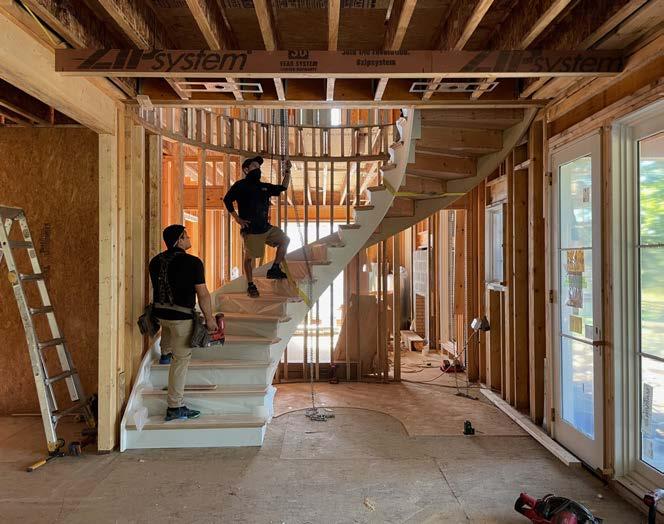
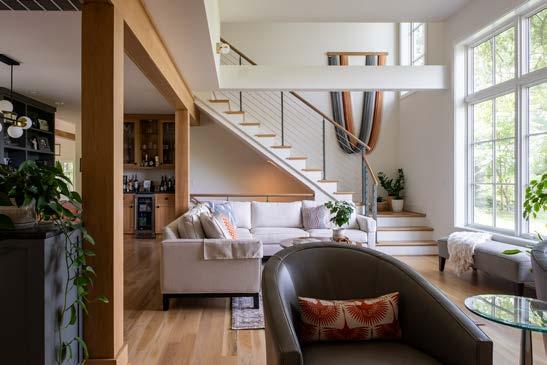
Acurved staircase can feel like architecture in motion—and this one arrived with a bit of drama. Designed by architect John Voight and fabricated by Century Stair Company of Haymarket, Virginia, the stair was produced using computer numerical control technology, which allowed the most complex elements to take shape with remarkable precision. “All of the parts were cut out with a CNC machine [an automated manufacturing tool],” Voight says, noting that while many stair components are flat, the trim and handrail are “complex helical shapes that are a breeze on a CNC machine,” compared with the “tremendous” labor required to craft them by hand.
Still, the real show came on installation day. Despite Voight’s experience with curved stairs, he had never seen one set in place. “I was actually surprised to see it all in one piece,” he recalls, as “about five guys carry it in, hoist it in place, and walk away done in about two hours.”
The speed was the result of careful planning during framing, which ensured a tight fit once the stair arrived on-site. Voight notes a final, practical takeaway from the experience: “One key thing to remember is that these are sizeable pieces to bring into a house, so there needs to be a door large enough to allow it in!”—CH
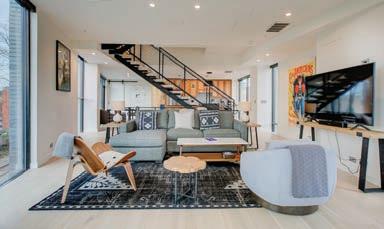
550 Water Street #201
$1,775,000
Located just one block from Charlottesville’s Historic Downtown Mall, The 550 represents the pinnacle of boutique, luxury living. This is the only residence in the building with its own private entrance off Water Street. Striking 3 bedroom, 3 bath home features architect-designed details through out, incl’ stunning custom staircase, expansive windows & an open-concept living space that seamlessly blends style & function. Enjoy both a private covered terrace & an expansive rooftop deck w/ panoramic city & mountain views. Full-floor primary suite offers exceptional privacy & comfort, while 2 add’l bedrms provide flexibility. Add’l highlights incl’ secure garage parking for 2 vehicles & low-maintenance, lock-and-leave living in one of Charlottesville’s most desirable Downtown locations. Lindsay Milby (434) 962-9148. MLS# 670654

2775 PALMER DRIVE • $3,975,000
Sited overlooking Broadmoor Lake & completed in 2024, this custom 4 bedrm residence might be the 1st opportunity to purchase a revered, truly bespoke new home by Uhler Construction. Amazing 1st floor living plan w/ striking finish selections incl’ varied marble & quartz in kitchen & baths, Philip Jeffries wallpaper, wide plank hardwood floors, furniture-grade cabinetry, 130 bottle wine fridge, Lutron lighting, oversized gas fireplace in family rm, built-in gas & charcoal grill by pool. MLS# 672074
BEYER CUSTOM IN ASHCROFT
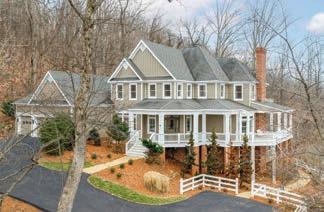
2556 SUMMIT RIDGE TRAIL • $2,395,000
Gracefully set atop Ashcroft Mountain capturing sweeping Blue Ridge views just mins from Downtown. Stately wraparound porch framed by mature landscaping & long-range vistas. Primary level features formal dining, beautifully renovated kitchen w/ adjoining breakfast rm, & living rm wrapped in windows that frame the views. Primary suite w/ fireplace & fully reimagined bath. Upper level offers 3 add’l en-suite bedrms, sitting loft, & access to rooftop terrace. Laura Futty (434) 960-3644. MLS# 672480
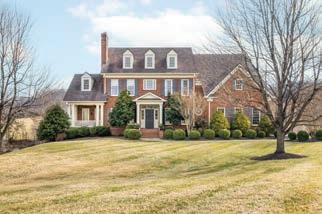
585 RAGGED MOUNTAIN DRIVE • $2,995,000
Located on one of Ragged Mountain’s most desirable parcels, this fully furnished 5 bedrm enjoys stunning, close-in views pastoral & mountain views from most rooms. Recent renovations incl’ amazing kitchen, refinished light oak floors throughout, plus sun drenched living spaces. Parcel overlooks permanently protected horse farm of rolling hills framed by panoramic mountain views. Located 10-12 mins from UVA & 15 mins from Downtown. MLS# 672826
info@loringwoodriff.com
SWEEPING MOUNTAIN VIEWS IN ASHCROFT
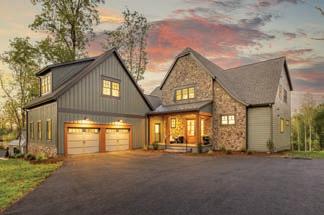
2465 SUMMIT RIDGE TRAIL • $2,775,000
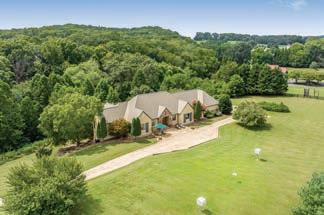
Sweeping Blue Ridge panoramas throughout this artfully designed Ashcroft home. Expansive great rm w/ 10’ ceilings, stone fireplace flanked by custom cabinetry & opens to chef’s kitchen w/ statement island. Main level primary suite w/ spa-like bath. Upper level features 2 spacious en suite beds & loft, plus separate flex suite, w/ private stair access, full bath, & kitchenette. Terrace level w/ custom-tiled fireplace, full bar,
5 BEDROOM IN RAGGED MOUNTAIN 1-LEVEL LIVING IN IDEAL LOCATION
2940 MILTON VILLAGE LANE • $1,950,000
Set on nearly 4 peaceful, gated acres just mins from town & designed for effortless main-level living. Renovated chef’s kitchen opens to light-filled family rm w/ stone fireplace & screened porch & deck access. Main-level primary suite boasts spa-like bath plus 2 add’l bedrms, 2 full baths, & spacious mud/laundry rm complete the main level. Three-car garage. Walk-out lower level incl’ living area & flex space w/ built-ins, private suite w/ full bath, fitness area, & 2nd kitchen area. Jamie Waller (407) 694-8988. MLS# 672545
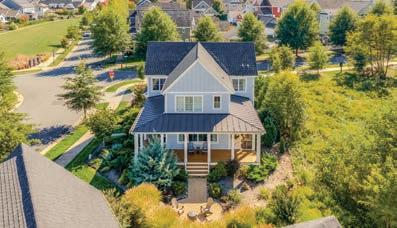
Set in the heart of Old Trail, this custom-built Peak farmhouse captures sweeping mountain views from nearly every room. A deep, covered porch welcomes you home, & the light-filled great room frames the view & opens to a private side porch & rear screened porch overlooking the county park, plus hardscaped stone fire pit sitting area surrounded by lush, low-maintenance landscaping. Expansive kitchen anchors the main level w/ large apothecary-style island, wine fridge, & adj. dining space. Upstairs, a generous loft adds flexible living space alongside 3 bedrooms, 2 full baths & convenient laundry. Thoughtful design, premium finishes, & standout craftsmanship shine throughout this exceptional Peak Builders home. Rebecca White (434) 531-5097. MLS# 672434 (434)977-4005
3535 roWcroSS Street
$899,000
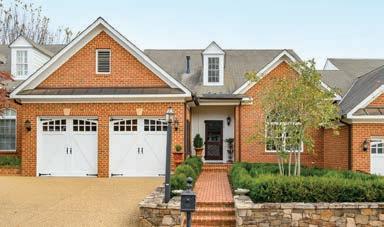
824 colridge drive
$1,850,000
One-level living in the highly soughtafter Kenridge community offers a maintenance-free lifestyle in an ideal location. Elegant open floor plan flooded w/ natural light, featuring soaring ceilings & beautiful cherry inlaid hardwood floors, a slate roof. Expansive gourmet kitchen adjacent to bright sunroom. A deck and brick patio extend just off the sunroom.
table area, bonus room, full bath, & plenty of storage. HOA covers trash, recycling, snow removal, & landscaping. Conveniently located just minutes to town, golf, UVA. Punkie Feil (434) 962-5222 or Elizabeth Feil Matthews (434) 284-2105. MLS# 670750
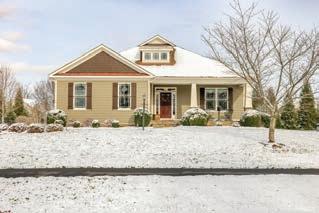
2449 PENDOWER LANE • $1,095,000
Piedmont-built home customized for extra kitchen & living space w/ ideal 1-level living in Glenmore. Featuring a den, dining rm, guest bed, full bath & primary suite on the main level. Primary bedroom features large bathroom w/ tub & frameless shower, connects to closet & laundry rm beyond. Basement retreat featuring wet bar, living space, combo rm, a gym, 2 beds, & full bath. Situated near the walking trails & a short stroll to the club. Jamie Waller (407) 694-8988. MLS# 671786
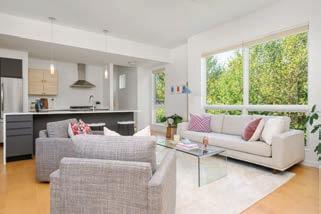
1130 E. HIGH STREET #J • $725,000
Stroll to the Historic Downtown Mall from this beautifully designed Greenbuilt condo completed in 2019. Surrounded by native plants & trees in the landscaped courtyard, the maintenace free condo blends modern living w/ connection to nature. Soaring ceilings & expansive windows fill great room & open kitchen w/ natural light. Private rooftop terrace w/ panoramic views of the city, mountains & gardens. Lindsay Milby (434) 962-9148. MLS# 670001

408 E. MARKET STREET #305 • $519,000
Rare opportunity to own a Downtown condo w/ mountain views from the top floor, both inside & on the spacious terrace. Floor-to-ceiling windows, gas fireplace w/ copper surround, galley kitchen. Terrace can be enclosed to create a year-round sunroom. Primary bedrm offers 2 spacious closets & full bath incl’ dressing area. Custom-designed cherry bookshelves, drawers, & cabinets featured throughout. Punkie Feil (434) 962-5222 or Elizabeth Feil Matthews (434) 284-2105. MLS# 669886
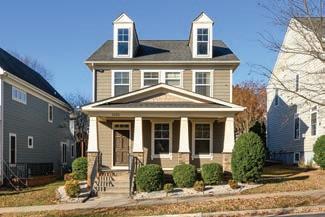
1421 BUTLER STREET • $685,000
Move-in ready & thoughtfully designed, this EarthCraft & PEARL-certified home in the sought-after Belvedere neighborhood is filled w/ natural light & timeless finishes. Expansive screened-in porch opens to private patio. Inside, flexible living spaces connect naturally, accommodating a variety of lifestyles. A carriage house w/ finished apartment above the 2-car garage offers outstanding versatility. Lindsay Milby (434) 962-9148. MLS# 672282
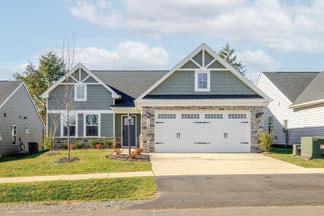
108 WHITE SANDS BOULEVARD • $499,000
Located in Greene County’s newest amenity-rich community perfectly located along Route 29 offering a peaceful setting w/ breathtaking mountain views & maintenance-free lifestyle. This beautifully designed Eden Cay model offers 1-level living w/ open-concept floor plan, 3 bedrms, 2 full baths, & 2-car garage. Spacious owner’s suite plus gourmet kitchen w/ maple cabinetry, granite countertops, large island, & stainless steel appliances. Jamie Waller (407) 694-8988. MLS# 670812
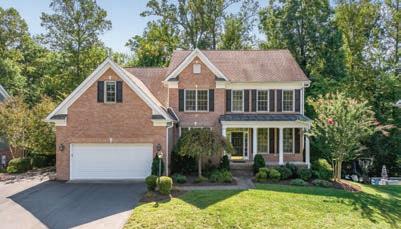
1719 M onet H ill
$949,000
Located in sought-after Montgomery Ridge, this property offers modern open-concept living just minutes to UVA, the airport, Route 29, Downtown, & everyday conveniences. Main level showcases bright, open layout w/ renovated kitchen, spacious living & dining areas, & private office w/ custom built-ins plus flex rm. Upstairs, the expansive primary suite features spa-like updated bath w/ newly tiled shower & massive walk-in closet, plus 3 add’l bedrms, a full bath, & convenient upstairs laundry. Walkout terrace level w/ full-size windows & double doors to the backyard adds even more living space w/ large rec rm, bedrm & full bath, plus generous storage. Set on nearly a half-acre lot w/ park-like stone path to the rear yard w/ level play space in a neighborhood w/ sidewalks throughout. Lisa Lyons (434) 987-1767.
Lawson
Soundscape Architecture, a new book co-authored by former UVA School of Architecture Dean Karen Van Lengen, explores how architecture and art can enhance listening as a social and political act. “When we listen, we begin the first act of engagement and communication with others,” writes Van Lengen. “Listening is also critical when we consider our local natural habitats, and it can remind us, in a particularly visceral way, of the fragility of our lived environments, increasingly stressed by climate change. We ask, therefore, how the act of intentional listening can prompt us to engage more fully in the world and with the people in it; and how architecture and urban design can encourage this type of engagement.”
The book features Van Lengen’s own writing and collaborative work, as well as installations and work by others. Van Lengen recently spoke to us about Soundscape Architecture, co-authored with her partner, Jim Welty, and designed by their daughter, Kiri Van Lengen-Welty.
C-VILLE Abode: In the book, you write about the “songs of architecture.” For those new to your work, how long have soundscapes and the acoustics of place been a focus and how did you center that within your architectural practice?
Karen Van Lengen: I have long been attentive to the sounds that inhabit spaces. They are the sonic architectures that enhance the visible ones. For example, when I think of my childhood home, I remember it not only in images and spaces but also as a sequence of sounds, layered and precise, that are preserved in my memory.
Sound, as a design factor, entered my architectural practice during the Amerika-Gedenkbibliothek International design competition, which I won in 1990. This was an invited competition to create proposals for a 150,000-squarefoot addition to West Berlin’s main public library.
In my first studies of the site, I observed the original library from the cemetery across the street, a pocket of stillness south of the city’s historic southern gate. Guided by that peaceful landscape, in my design I oriented the principal reading room toward the cemetery, assuming silence would follow the view. It was only later, through the acoustician’s analysis, that I learned how the street between the two would act as a conduit for noise. That discovery clarified an essential aspect of architectural analysis; for any site one should consider not only visual attributes such as light, geography, and context, but also clearly understand the sounds that penetrate and activate the site. Sound—elusive, migratory,
and persistent—must be understood as carefully as the visual forms we typically emphasize in the design process.
Reflecting on the activation of public spaces through art and architecture, you write, “Sound has the emotive potential to invite us to feel a place, a memory, or an event in a new way.”
Connecting this with your work in spaces on UVA Grounds, how do you think your sonic inquiries open up

possibilities for renegotiating or reinterpreting local historic spaces?
Our family lived in Pavilion IX on the Lawn for 10 years, and it is the memory of the sounds of the garden gates, their openings and closings, that is most present for Jim and me.
These sounds, simple as they may seem, are imbued with meanings that extend far beyond their literal nature. The gates, in their perpetual rhythm, speak of an openness, a kind of invitation to visit and participate in the Academical Village. Their sounds remind us of the many visitors and participants that energize the heart of this university.
But beyond this, the gate sounds, diverse and unique, form a soundtrack of these spaces where engagement is inevitable. This is an architecture of unintended encounters, of listening—not just to words, but to the very atmosphere of the place. It is as though the buildings themselves conspire in this act of openness, allowing us to hear the presence of others sometimes before we even see them. These sounds do not offer a precise historical narrative; they do not tell us the complex story of the university’s origins in the way an archive might. Instead, they evoke something more subtle— an impulse to learn, to question, to imagine what has been. And in this, there is an inextricable link between the present and the past, a continuous echo of all that came before, whispering through the spaces we now inhabit while allowing us to dream of our futures, separately and together.


The book closes with a selection of digital paintings created from sonic engagements, accompanied by text about this being, “the final chapter of our exploration.” What’s next for you?
Jim and I have been working on this Soundscape Architecture project for many years and plan to continue developing it and expanding to new spaces. Currently, we are making new animations related to Central Park, in New York City. Matt Wyatt, a local musician and composer, worked with us to produce the sonic composition for this part of the project, using a hybrid of my recorded sounds and his musical interventions. This is a new process for us as we explore the soundscape, not only as recorded information but also as a musical interpretation of those recordings.
An historic house renovation becomes a labor of love
By Carol Diggs
pandemic changed directions for so many lives. For Chad Pelton and Christie Bazemore, it sent them to a new town and a new home.
“We were ready for a change after COVID,” Bazemore recalls. “My business lease was coming due, and we’d fallen in love with the Staunton area. Chad’s father lives on a farm nearby, and we’d been coming up often.”
In 2023, the couple, who was living in Nashville, began looking for traditional houses, when their realtor asked if they’d be open to living in town. “This place wasn’t even on the market,” Pelton says. Within weeks they were the new owners of a 19th-century house in Staunton’s Newtown Historic District.
Designer: Thea Lane
Home (Staunton)
General contractor:
WRM Contracting (Waynesboro)
Kitchen cabinets: Modern Boy
Woodshop (Staunton)
Window restoration: Shenandoah
Restorations (Quicksburg)
Structural design: Greenmun Engineering (Staunton)
The 150-year-old building had a varied history, including the community grocery store that operated on the street level for decades. Above it, in what had once been three one-room tenements, there were now two apartments, one of which had been created by enlarging the attic with a roof pop-up in the early 2000s.
Clearly, the building would need structural work—the stairs tilted noticeably, the floors weren’t quite level, and the attic apartment was definitely wonky. Because the couple wasn’t ready to move from Nashville, Pelton recruited local interior designer Thea Lane, whom
he had known growing up in Knoxville, to be their project manager. Lane worked with the pair long-distance until they moved into the house in fall 2024.
As soon as work started, it became clear that “the building needed more than we thought,” says Pelton with some understatement. That included reinforcing the structure, replacing the roof and the HVAC system, and redoing all the windows. Says Bazemore, “We had no idea. We had rose-colored glasses.”
Lane immersed herself in the city’s historic guidelines, which governed what could be done to the building’s exterior. The replaced roof had to be appropriate to the time. The large single-paned sash windows needed to be restored or redone, not upgraded (“you could hear the wind leaking in,” Lane recalls), but fortunately the city’s historic guidelines do allow for storm windows to be added. She recruited and managed all the contractors, which took a while: “A lot of them were scared of the shape the place was in.” All the firms who joined the team, Lane says, brought both attention to craftsmanship and a respect for the old place, and she has submitted the project for an Historic Staunton Foundation Preservation Award.
An ongoing challenge, Lane notes, was that “there’s no right answer” when dealing with an historic property; decisions have to balance structural and systems needs with the building’s character and its surroundings—but “the house told us what was needed.”
Fortunately, the clients’ wish list didn’t call for a lot of changes. They wanted to retain the street-level business space to use or lease; they didn’t want to add much to the living area’s 1,764-square-footage (“I want to be able to clean my house in two hours or less,” says Bazemore); and they loved the house’s charm.
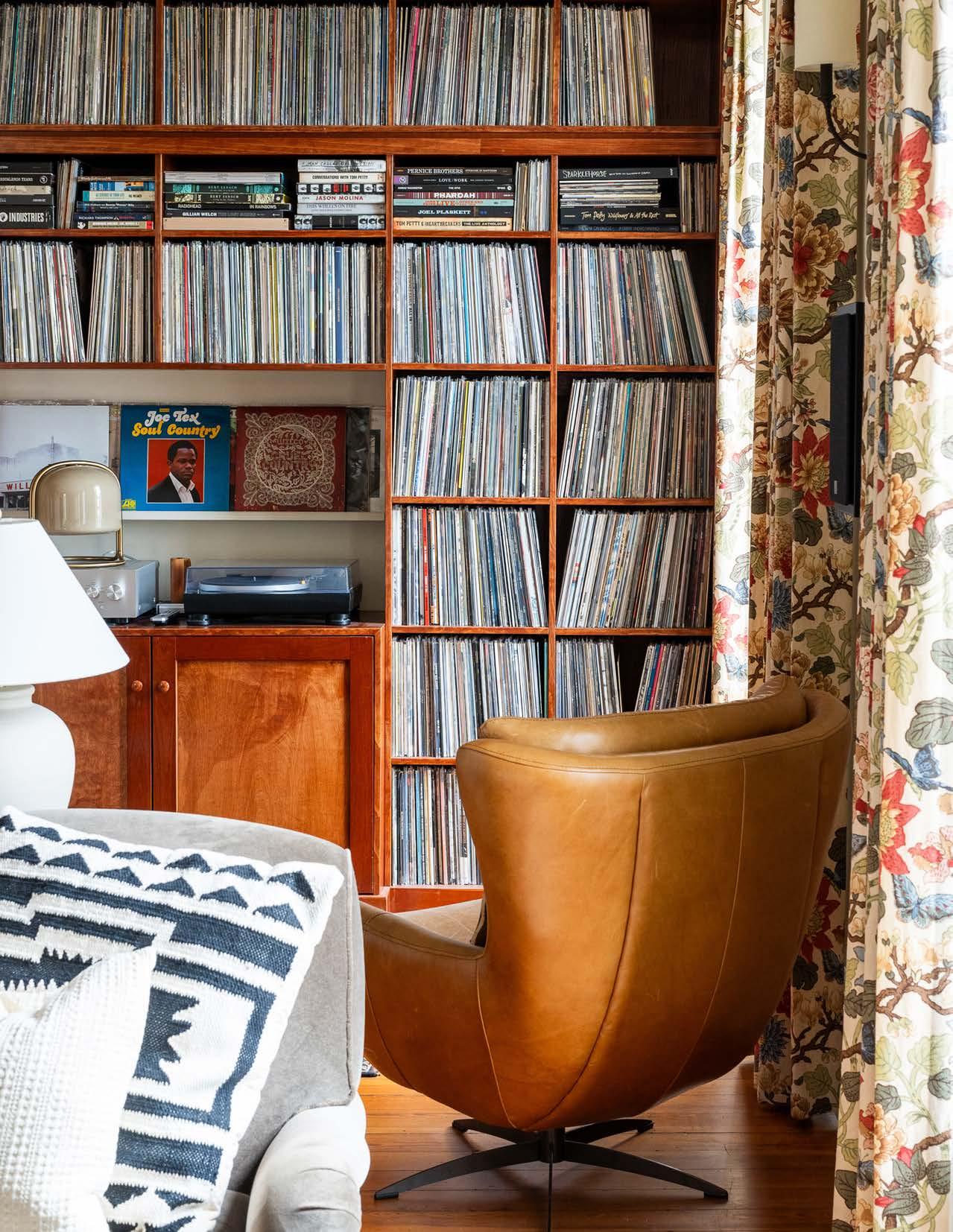
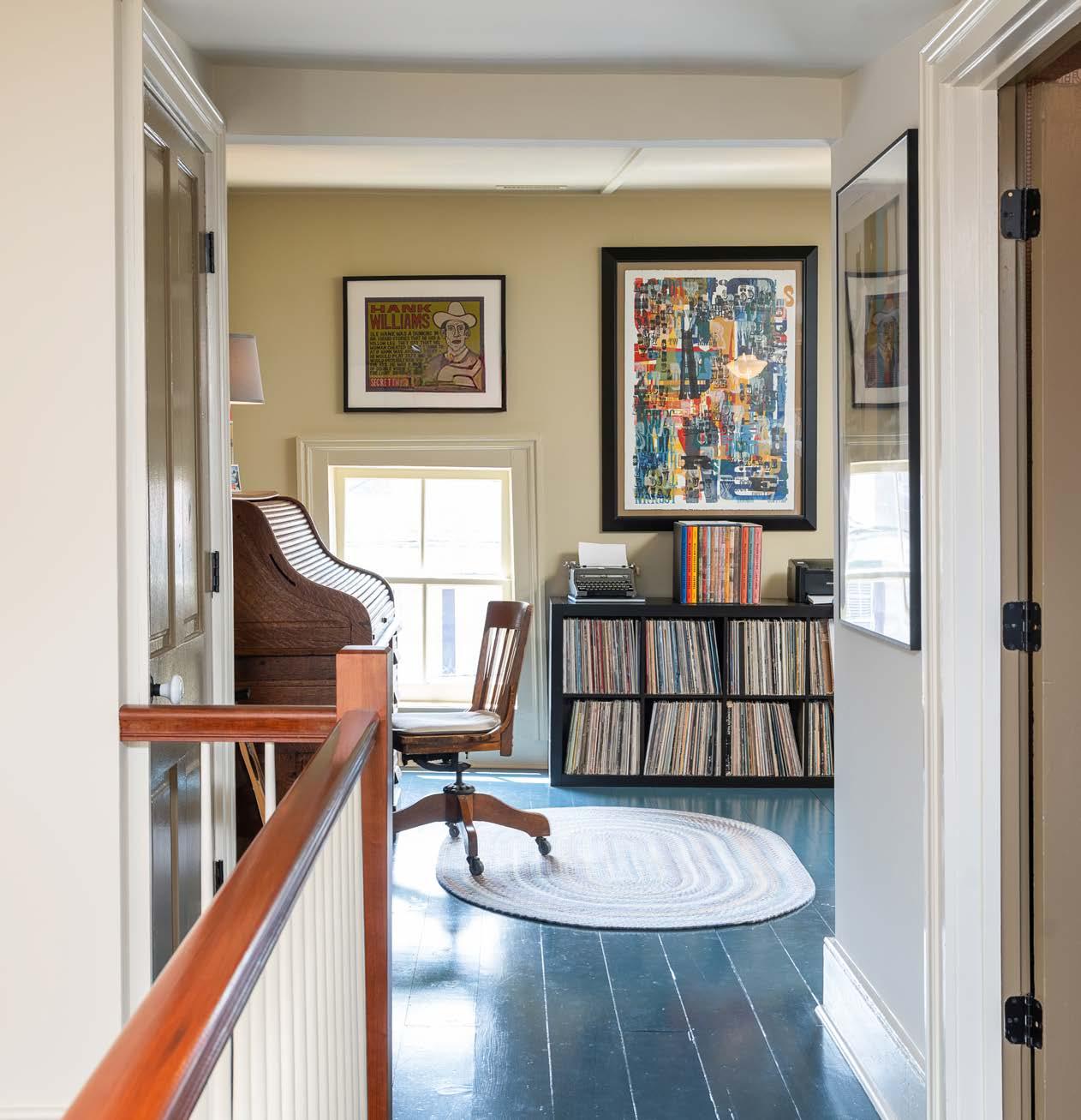
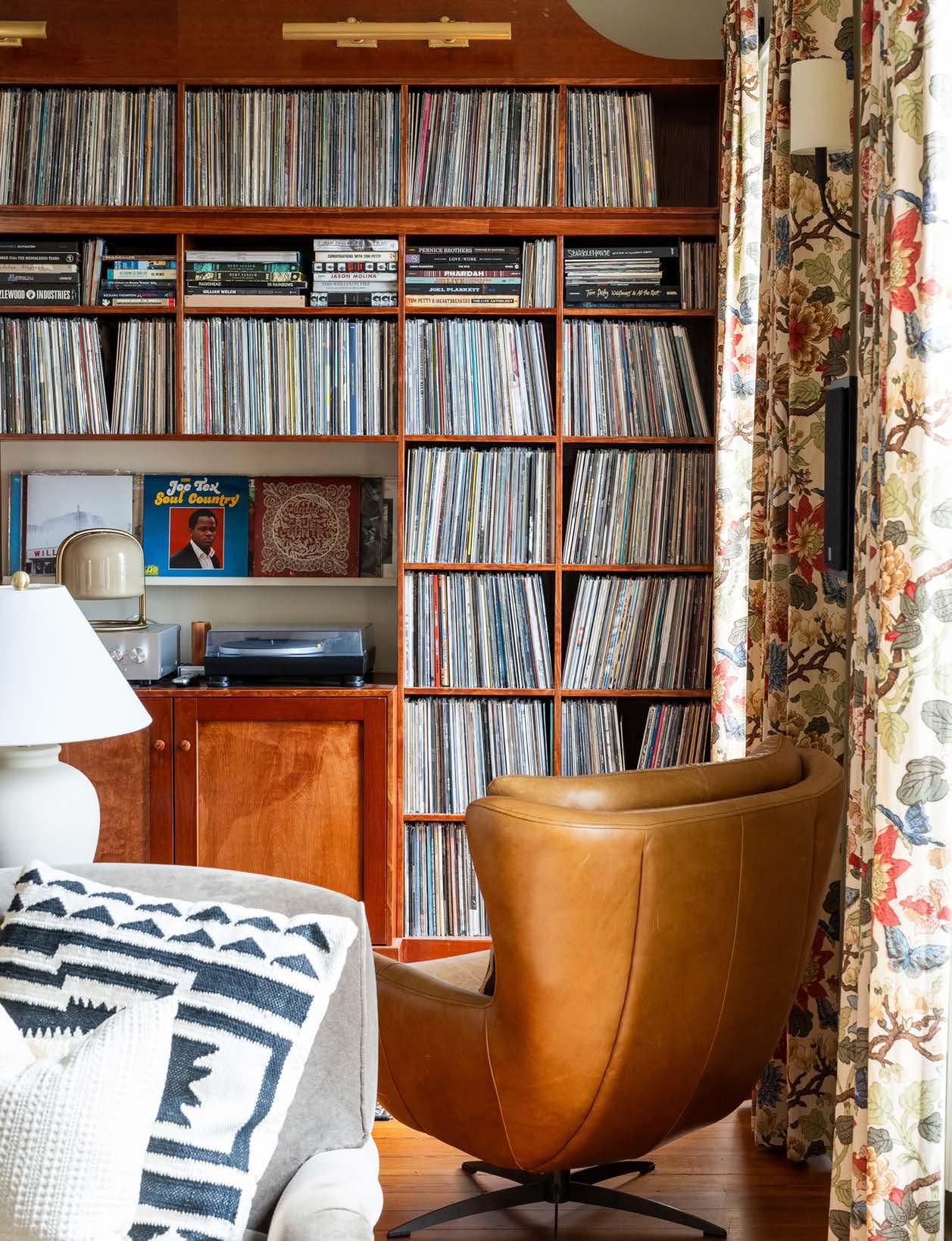
There were some non-negotiables on their list. Pelton has an extensive vinyl record collection, and its storage/display wall required additional structural sup-
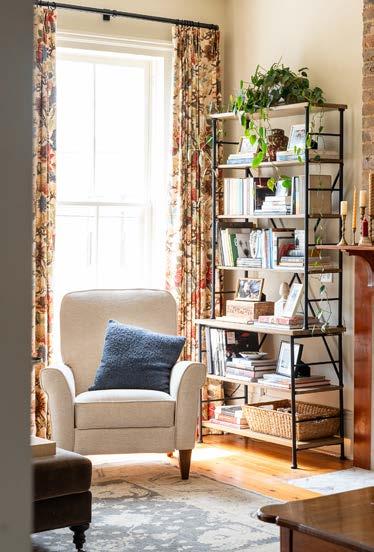
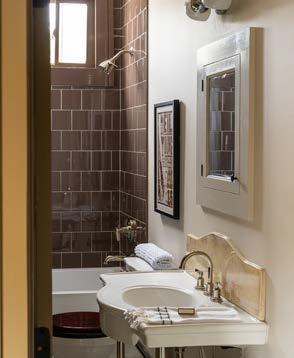
port. The bathrooms had to be upgraded, and the narrow sleeping porch on the back needed to be enlarged to provide some outdoor space (the lot has no yard) and allow for a back entrance.
“The layout of the living space didn’t change dramatically,” notes Lane; the work was mostly taking pieces away to improve the flow and sightlines. In the front is the open living/kitchen space, with large windows facing south and west, and above this space is Pelton’s office/music room and the guest suite. The first floor hallway leads back to the master suite and a secondstory porch lined with windows so it can be opened up in the summer. Below the porch is the back entrance-cum-mudroom; Bazemore says, “I love this space— it’s so useful for storage, which we don’t have much of, and for bringing in packages and groceries” (the front entrance at the street level has no parking, and opens right to the stairs). The rear extension added about 436 square feet.
Lane worked closely with Bazemore on the interiors to create a feeling of light and
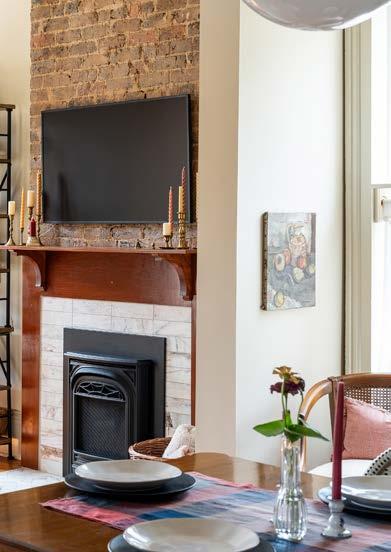
calm that fits the house, and Bazemore echoes Lane’s words: “This house told us what it would be.” The walls are painted a soft white, which bounces the light around and shows off the range of colorful wall decorations, from tiles and plates to modern posters and photographs. A lot of the detailing is wood, which adds warmth and suits the historic character. The existing gas fireplace was upgraded to fit in with the cleaner look.
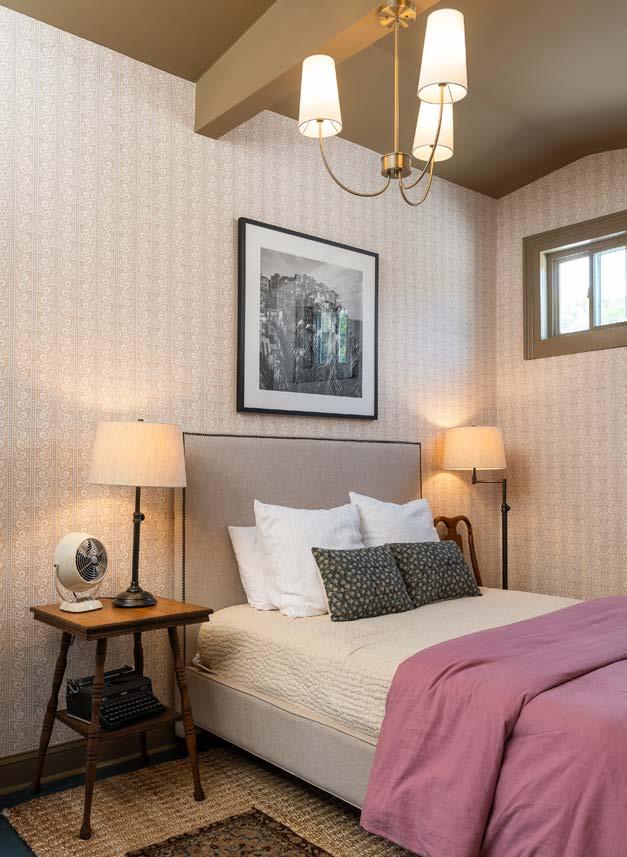
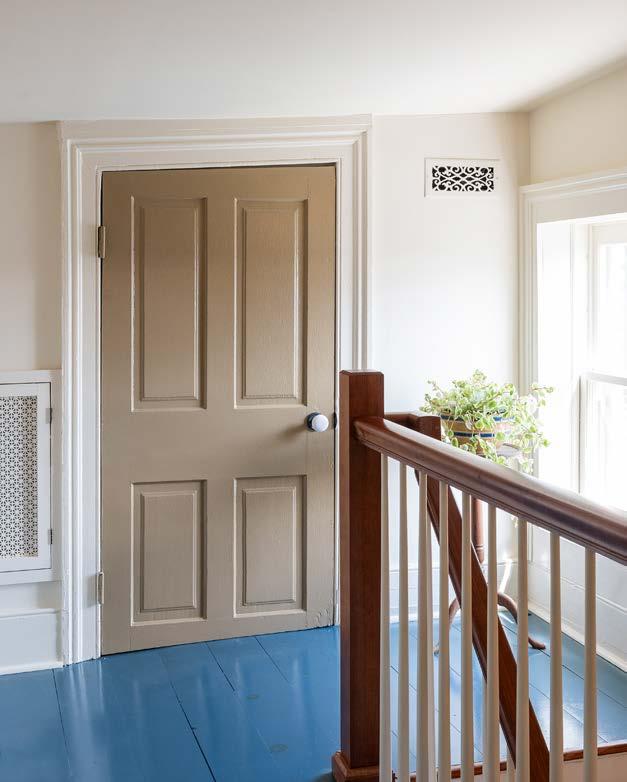
Upstairs, Pelton’s attic music room now has a beadboard ceiling. And since the flooring also had to be replaced, WRM Contracting searched out old, wider floorboards that Bazemore had painted a muted nautical blue. She also wanted a beaded look on the floor, so their carpenter stuck coins in between the boards to make a little gully (“it was unusual, but he got into it,” recalls Lane). Some quirks remain—the door to an attic closet, for example, still looks a little off-kilter, and the attic windows are knee-height.
CONTINUED ON PAGE 29
CONTINUED FROM PAGE 27
The words that keep recurring for the couple are “homey” and “cozy.” Their home in Nashville was a 1950s ranch house, but “our taste is pretty eclectic,” says Bazemore. The only living room furniture they purchased new was the sofa, bought to fit this smaller space. She loves to cruise antique and secondhand stores, and one find was a hutch cabinet, which got repurposed into a wall cupboard and a cabinet in the kitchen. The kitchen’s island was replaced with a less-bulky maple table (“I worried about losing the island’s working space,” she says, “but it only had seating for two—this way we can have guests”). Several pieces—Pelton’s desk and some peg racks with shelves for the walls in the guest suite—came from his father’s farm; others from Bazemore’s exploration of the Staunton area.
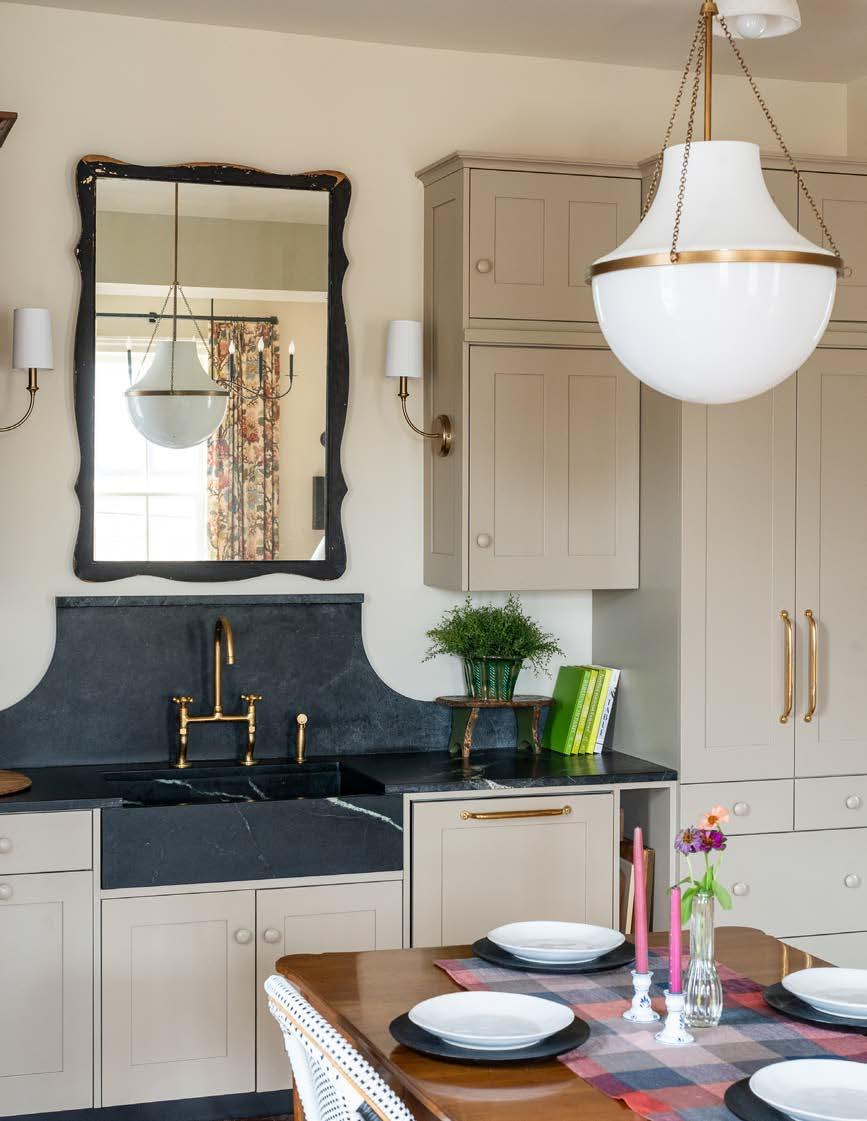
Bazemore’s vision for the kitchen was also a COVID offshoot: She and Pelton had become devoted viewers of deVOL’s “For the Love of Kitchens” show. While the kitchen layout wasn’t changed, its cabinetry was very much deVOL-inspired (the Shaker kitchen cabinets are painted in Benjamin Moore Turret; the sink, countertops, and backsplash are Alberene soapstone), and some of the cabinet hardware was actually ordered from deVOL. Bazemore and Lane worked closely on details. For example, Lane says one of her pet peeves is “sinks without a view,” but hanging a large vintage mirror over the sink (an idea Bazemore got from Pinterest) brings the living space and its view into the kitchen.
“I love interior design,” says Bazemore, whose career has been as a hairstylist, “and doing this, I got to live out my fantasy.” In fact, she plans to use the downstairs business space to open a new venture: a kitchen and pantry retail boutique, stocked with both useful kitchen items and the fruits of her secondhand store forays. She also hopes to offer some limited grocery items, in a nod to the building’s history as a local grocery store.
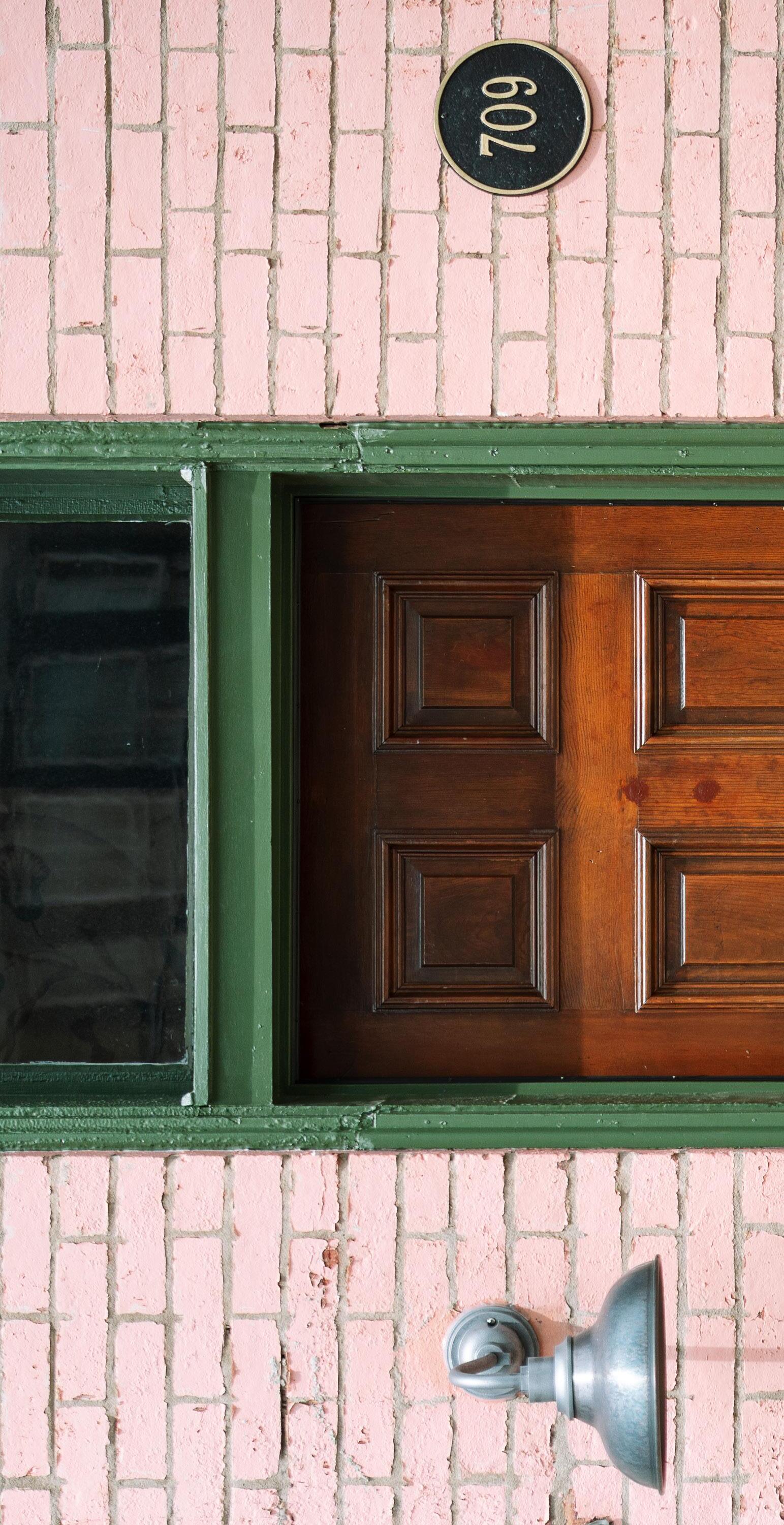
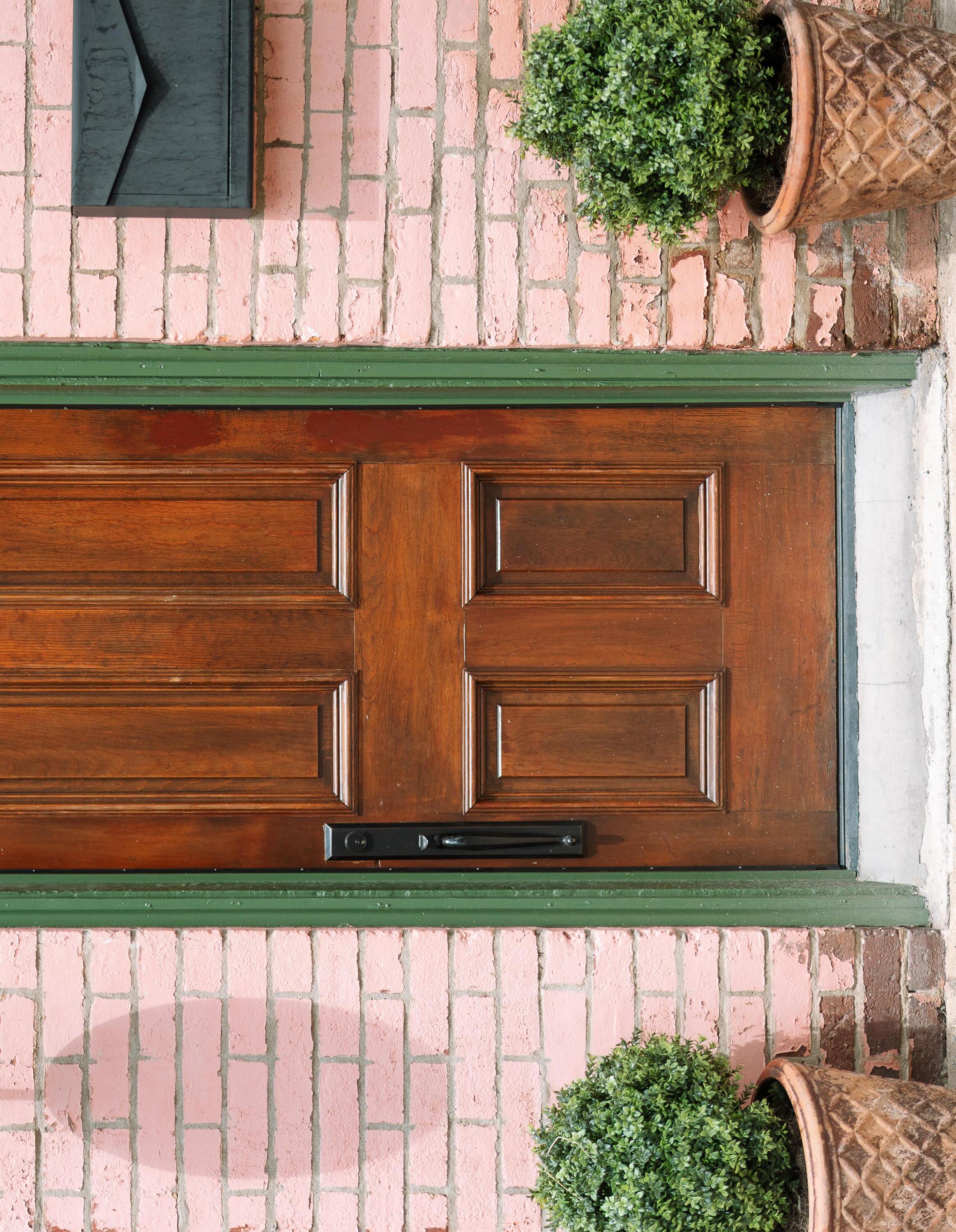
Bazemore has especially enjoyed the reactions of her new Staunton neighbors, who have been coming by to check on the progress of the renovation. “People are so interested—even the children of the former grocery store’s owner came by. It seems everyone knows this place as “the pink house” (the exterior was painted a beige-y pink in the 1980s).” At first Bazemore hated the color—“Miami flamingo,” she called it—but now it’s part of the house’s character. In fact, when her business opens in spring 2026, she plans to call the store Casa Rosa to connect its past to its future.
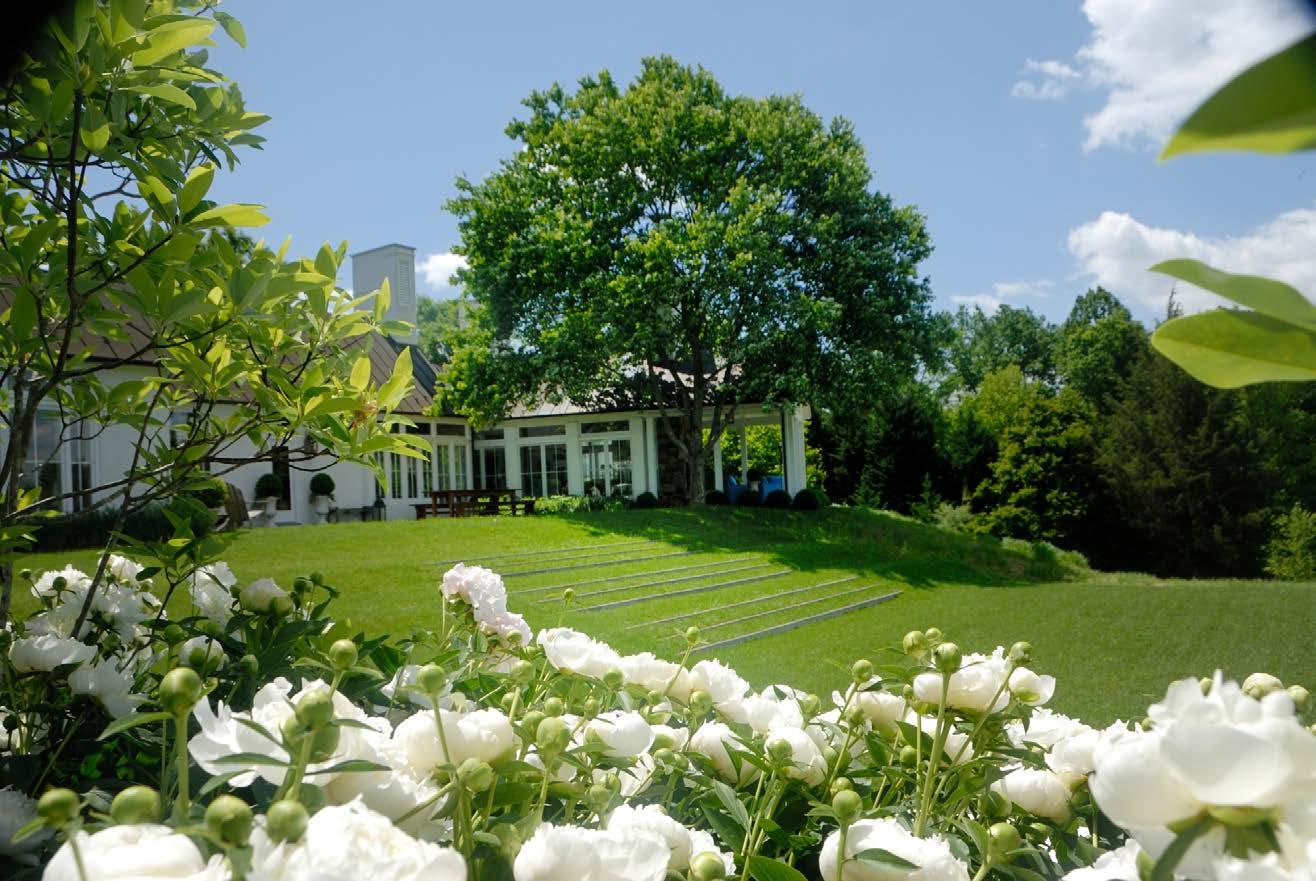
Each year, thousands of garden enthusiasts from all over the country come to Virginia for the annual Historic Garden Week—and for good reason. While every state in the Union enjoys spring in its own fashion, none do it quite like Virginia.
Every April, the Garden Club of Virginia invites visitors to more than 250 of Virginia’s most beautiful gardens and private homes. Historic Garden Week is the oldest and largest statewide event of its kind in the country and gives those who come to the Commonwealth a week-long chance (this year, April 18 to 25) to see unforgettable gardens and stately homes while the peak colors of spring are in full bloom.
Over the last nearly 100 years, the proceeds from Historic Garden Week have gone to restoring or preserving many of Virginia’s most cherished historic landmarks, including Monticello, Montpelier, and the University of Virginia, among others.
On this year’s lineup? Mr. Jefferson’s estate (the ticket includes access to the grounds and gardens), the prairie garden of White Hall’s Deep Rock Farm, and the 3.5-acre Skye Fall, designed by local landscape architect Charles Stick. Visit gcvirginia.org/historic-garden-week for tickets.
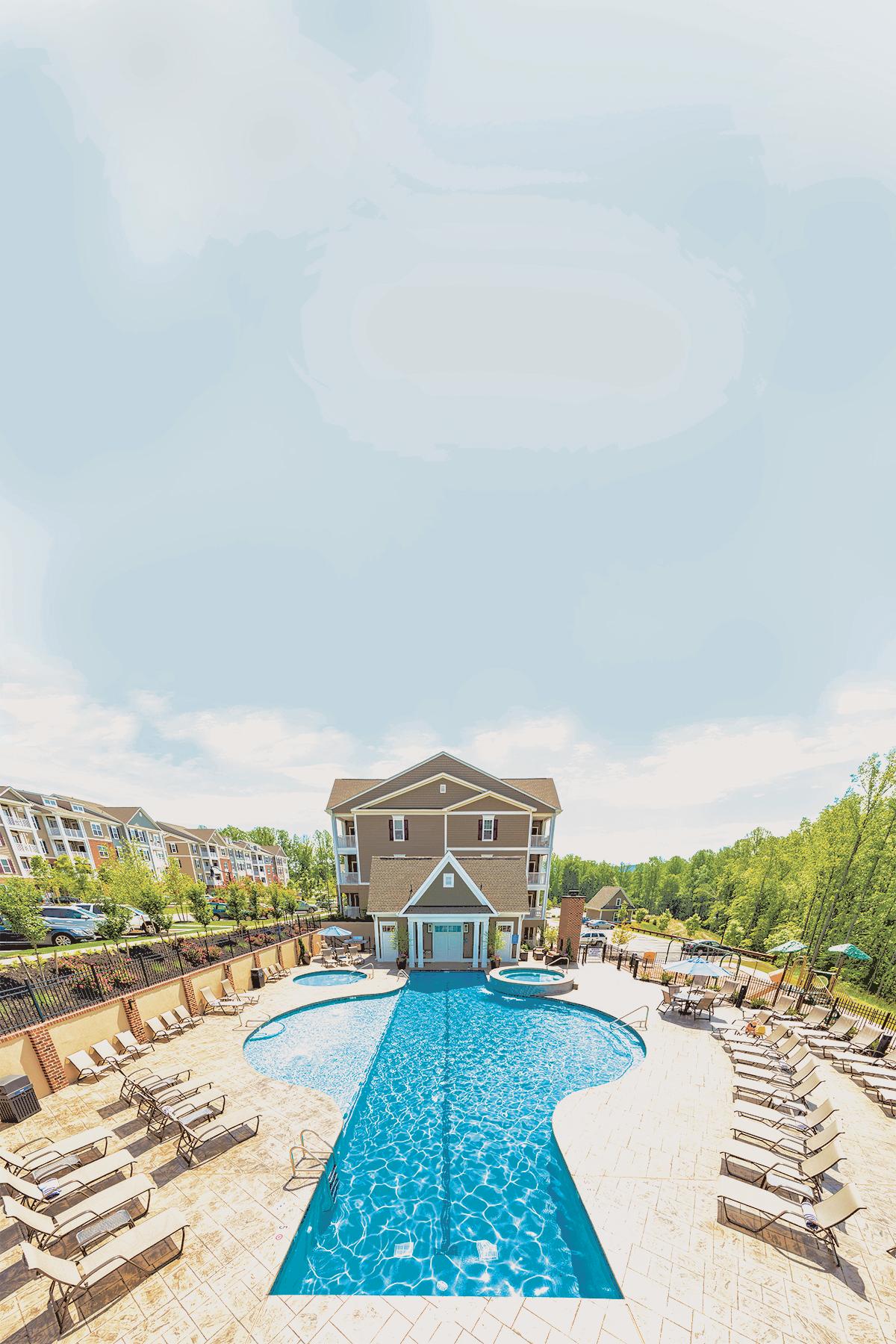
434-296-6200
Nestled in a serene, parklike setting, minutes to UVA, historic downtown, shopping, & dining.



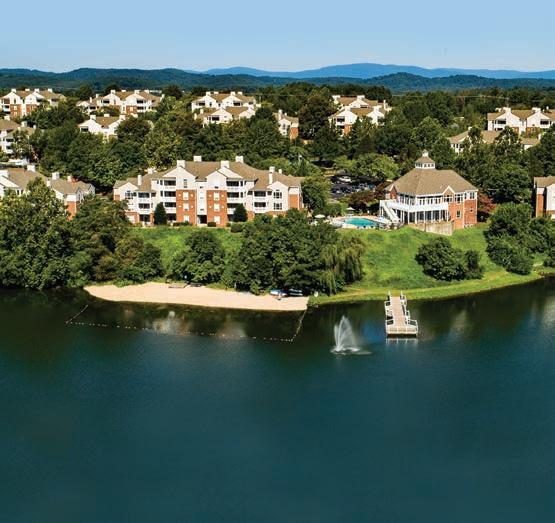
LAKESIDE APARTMENTS liveatlakeside.com
434-984-5253
Overlooking a 12-acre lake with white sand beach, minutes to UVA, downtown, & 5th St. Station.


Breathtaking