Cake: A Delectable Journey through Time
Cakes are baked goods that are typically produced using refined flour, shortening, sugar, eggs, milk, a leavening agent, flavoring, and a variety of other ingredients. Several cake recipes date back hundreds of years, and there are practically thousands of them. Baking a cake is no longer a laborious process.
Tools and techniques for baking have been developed and simplified to the point that even a novice cook can produce professional results. There are five main categories of cake, distinguished by the leavening agent they employ
As soon as they found flour, even the earliest civilizations began baking cakes. In medieval England, cakes were not what we think of today when we hear the word "cake." Unlike breads, which were simply defined as flour-based items, they were also described as sweet.
The terms "bread" and "cake" were often used interchangeably, with "cake" referring to smaller loaves of bread. Simple cakes constructed from crushed grains, moistened, compressed, and likely fried over a hot stone were among the first specimens unearthed by archaeologists amid the remnants of Neolithic communities. Oatcakes are the modern equivalent of this ancient confection, although they are typically considered a biscuit or cookie rather than a cake.
The Greeks gave cakes the name "plakous," which means "flat." Often, nuts and honey would be combined in these sweet treats. A flat, hefty cake known as "satura" was also available.
The Romans adopted the Greek word for cake (placenta) and used it across their empire. The Romans, who used them mostly as sacrifices to their gods, gave them the name "libum." The placenta was more like cheesecake because it was often baked on top of or even inside a pastry crust.
Bread and cake have become synonyms throughout the years. The terms come from the Anglo-Saxon language family, and it's likely that the name "cake" referred to the smaller loaves.
Because they required the best and most expensive ingredients, cakes were reserved for special occasions.
Someone who has more disposable income might eat cake more frequently
By the middle of the 18th century, beaten eggs had replaced yeast as the preferred cake raiser.
As much air as possible was pounded into the mixture before it was put into molds, which may be as complex as a set of interlocking wooden dowels or as simple as a pair of tin hoops placed
on a sheet of parchment paper. These cake rings were the ancestors of the cake pans we use today
Early East Coast Americans baked cakes as a symbol of prosperity, with regional favorites varying across the country
Thanks to the Industrial Revolution, baking ingredients became cheaper and easier for most people to get in the early 19th century This was because mass production and the spread of railways made it possible to make more of them. Baking soda and baking powder, two common modern leavening agents, were developed.
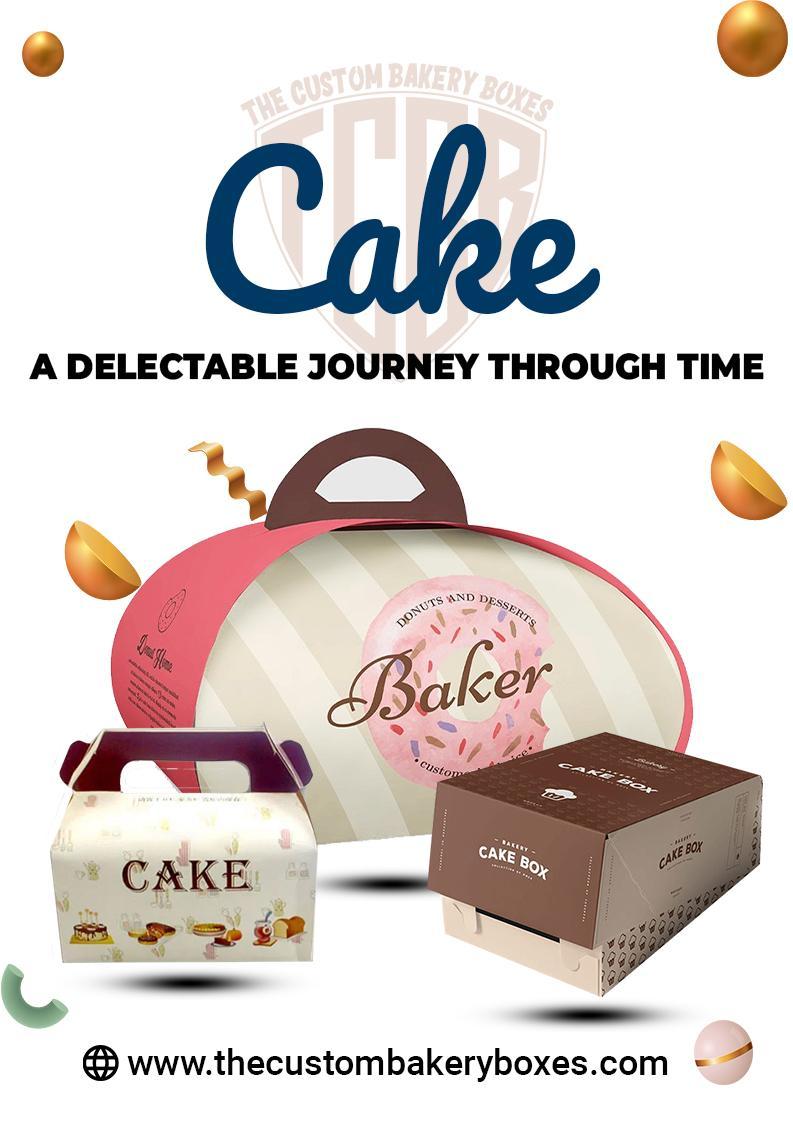
The Custom Bakery Boxes offers bakery packaging supplies as the smartest approach to improve your brand image. We are the best packaging supplier you would want to work with to highlight your bakery items.
Location:
1183 Quarry Lane, Pleasanton, CA 94566, USA
Email:
sales@thecustombakeryboxes.com
Phone:

(888) 283-4218
Website:
https://wwwthecustombakeryboxes com/


Social:
