Scope and Sequence
SKILL FOCUS
Unit Vowels Consonants Letter patterns Morphology and etymology Homophones/ Confusing words Topic words
1 a-e, i-e -ed; irregular verbs and plurals brake/break
WORD LIST
brave, shade, brake, table, awake, aeroplane, while, beside, spite, alive, advise, promise
2 o-e, u-e -ing, -y close, alone, erode, suppose, approve, wardrobe, huge, pure, cube, refuse, accuse, conclude
3 oo, ee, ea, ai, oa to/too/two, rowed/road/rode, great/grate
4 ow, ou, oy ey, ay
shook, blood, choose, soothe, bleed, breath, breathe, threat, explain, throat, poach, cockroach
know, growl, below, allow, touch, grouchy, pounce, mountain, royal, money, trolley, layer
5 words beginning with a-, al-, un-, disacross, always, about, around, almost, already, ahead, asleep, above, another, along, altogether
6 REVISION
7 ch
8 proper nouns, apostrophes of possession
9 -er, -est
compound words with ache school, ache, echo, choir, character, chorus, chameleon, stomach, monarch, anchor, chef, machine
Australian states and territories, and capitals country, state, northern, western, south, capital, territory, Australia, New South Wales, Victoria, Tasmania, Queensland
Aboriginal Australian words Mob, Elder, Auntie, Uncle, deadly, gammon, tucker, humpy, yakka, yidaki, boomerang, marngrook
10 ie, ei peace/piece, cheap/cheep, steel/steal grief, relief, fierce, niece, sieve, thieve, believe, friend, weird, receive, ceiling, foreign
11 un-, mis-, dis-
untidy, unlikely, mischief, misplace, misbehave, mistake, disagree, disgrace, disgusting, dishonest, disobey, discover
13 -ful, -less: changing y to i helpful, awful, harmful, peaceful, colourful, grateful, beautiful, helpless, useless, careless, fearless, lifeless
14 au, aw taut, haul, fault, pause, sauce, sausage, audio, flaw, thaw, drawer, sprawl, awesome
15 medial double consonants gallop, collide, tunnel, channel, tennis, rubbish, common, lesson, borrow, quarrel, affect, effect
16 silent letters: kn, wr le apple, saddle, puddle, riddle, cuddle, bubble, bottle, kettle, little, juggle, giggle, wriggle
17 months of the year January, February, March, April, May, June, July, August, September, October, November, December
18 REVISION
19 igh, eigh, ough, augh irregular past tense verbs
midnight, frighten, neighbour, rough, enough, though, through, thought, caught, taught, daughter, naughty
20 gh, ph tele, phone, photo, auto, graph laugh, toughen, graph, photograph, autograph, elephant, telephone, sphere, trophy, alphabet, phrase, physical
21 words ending in f, ff, fe, ffe
changing f to v; collective nouns
puff, cliff, staff, shelf, wolf, scarf, wharf, thief, knife, handkerchief, yourself, giraffe
22 words ending in o, oe, oo, a irregular plurals confusing words: there/their/they’re hero, piano, zero, radio, toe, canoe, kangaroo, taboo, sofa, drama, idea, era
23
-ness, -ion, -ship, -dom, -hood, -wards
24 REVISION
25 silent letters: kn, wr, t, gn, h, s, b
26 soft and hard c; sce, sci
27 soft and hard g great/grate, grown/groan, guest/guessed
kindness, happiness, revision, television, direction, friendship, kingdom, freedom, forwards, backwards, childhood, neighbourhood
non-English words wrinkle, wrestle, knead, knowledge, gnaw, gnome, hour, honest, island, tongue, doubt, ghost
carpet, cancel, once, lettuce, advice, cucumber, cylinder, because, decide, scent, science, scissors
gather, guest, guide, together, germ, gentle, genius, giant, large, stage, gigantic, gypsy
28 dge edge, hedge, badge, fridge, bridge, judge, nudge, trudge, smudge, dodge, fidget, gadget
29 qu quit/quiet/quite quiet, quite, queue, quarter, squirm, squeal, squawk, equal, request, require, squirrel, mosquito
30 REVISION
31 uni-, bi-, tri-, kilo-, dec-, centi-, milli-
32 ex in-
measurement metre, kilometre, centimetre, millimetre, litre, gram, decade, uniform, bicycle, triangle, dozen, dollar
exit, extra, expert, experience, extreme, example, exact, excuse, excellent, exclaim, excite, exercise
33 ion -ion station, fiction, section, fraction, cushion, fashion, mission, expression, religion, million, champion, information
34 desert/dessert, course/coarse
non-English words igloo, robot, yacht, iceberg, khaki, tsunami, kindergarten, kowtow, pizza, spaghetti, chocolate, restaurant
35 REVISION
Student Book 3
U nits of work
Student Book 3 contains 35 weekly units of work. See the Scope and Sequence chart on page 3 for more information. Each revision unit gives students an opportunity to self-assess.
w ord lists
In Student Book 3, each unit (except Revision) has a list of spelling words. The core words in the lists have been chosen to support the learning focus and strategies being taught in the unit.
Spelling lists enable a spelling element to be focused on, and provide sufficient examples to consolidate the teaching point. Topic words come from other curriculum areas, such as mathematics and social sciences. In addition, homophones and words that are easily confused with each other are explained and practised.
sllU r P
Each word list begins with a reminder for students to SLLURP. SLLURP summarises the strategies that will help spelling move from students’ working memory to their long-term memory. These strategies are provided on page 2, for easy reference.
U nit at a glance
Space to practise list words
List words support the learning of the spelling focus for the unit. Words come from across the curriculum.
Spelling focus highlighted in colour
SLLURP reminds students about strategies they can use to learn the words.
Unit banner features the spelling focus in the context of a fun joke
Sequenced activities – each activity focuses on a specific spelling strategy. Some activities refer to content in other curriculum areas.
Icons identify the main spelling strategy students will use in an activity.
Spelling tips and rules introduced when students need them to complete an activity.
Reflection allows students to assess their progress.
Spelling Rules! Teacher Resource Book 3-6
Full teacher support for Student Book 3 is provided by Spelling Rules! Teacher Resource Book 3–6 . Here you will find valuable background information about spelling development and spelling knowledge, along with practical resources, such as:
T teaching tips for every unit in Student Book 3
T extra word lists
T strategies for teaching spelling
T guidelines for assessment and diagnosis of errors
T activities to support struggling spellers
T worthwhile extension for more able spellers.
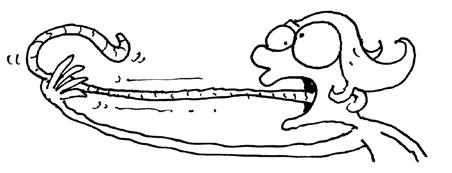
Tapeworms can live inside people. They can be up to 25 metres long – that’s the length of two buses!
Say Listen Look Understand Remember Practise
br a v e
sh a d e
br a k e
t a bl e
aw a k e
aeropl a n e
wh i l e
bes i d e
sp i t e
al i v e
adv i s e
prom i s e
2 3
Find a list word that rhymes. Write another word that follows the a-e or i-e pattern.
gain lied label smile drive quite save stayed
Write the two list words that have the same ending but do not rhyme.
Write an a-e word to match each meaning.
f the front of your head
sh you don’t do this if you want a beard
sn a reptile with no legs
br willing to face danger
Write an i-e word to match each meaning. sl slip downwards pr what something costs m more than one mouse in not outside
4
Colour the correct word.
Boil the eggs in a pan pane of water, then cool them in a tub tube .
Our car care was parked for too long and we got a fin fine .
Tomatoes turn red when they are rip ripe .
5
For most verbs ending in e , you drop the e before adding ed to make the past tense. live lived bake baked
But be careful – some verbs do not follow this rule! make made drive drove wake woke
Complete each sentence by writing the verb in the past tense.
Jane her dog for messing up her homework. blame Mrs Smith us to read for 20 minutes each day. advise
Sanjay on the wet leaves and hurt his foot. slide
Mum a message for Dad. I it down leave write but I think I’ve the piece of paper. lose
Write the plural for each noun.
table goose aeroplane fire crime man
Most nouns ending in e make the plural by adding s but some do not. house houses but mouse mice 6 7
The words break and brake are homophones. Write the correct homophone.
Don’t too quickly or you’ll fall off the bike.
Don’t your stride while you run.
I can do this. I am not sure. I need help.
The funny bone is not actually a bone. It is a nerve behind your elbow.
Say Listen Look Understand Remember Practise
cl o s e
al o n e
er o d e
supp o s e
appr o v e
wardr o b e
h u g e
p u r e
c u b e
ref u s e
acc u s e
concl u d e
Words can rhyme but be spelt differently. Find a list word that rhymes. knows toes load glowed moan blown brood glued stews groove
Use the clues to write o-e and u-e words. The mystery word is a shape.
1. not spoilt or dirty
2. I you!
3. Please the door.
4. a piece of rock
5. all by yourself
6. Have you your work? 7. very large 8. complete 9. an object with six square sides Mystery word:
There are many ways to say big. Arrange these words in alphabetical order. huge large gigantic enormous great Syllables are the beats in a word. Write how many syllables you hear in each shape word.
For words that end in e , drop the e to add ing . love loving use using Drop the e to add y to make the adjective. ice icy 5 6 7 4 3
prism cylinder cube sphere
Add ing.
Write the adjective by adding y . close approve amaze refuse conclude promise not liking work (laze) bright, glowing (shine) having many bones, thin (bone) hard to please (choose)
Each set of words has the same spelling pattern, but one word sounds different. Circle the word with a different sound and then use it in your own sentence. sure pure cure dove love move
I can do this. I am not sure. I need help.
It is easier to float in sea water than in fresh water.
Say Listen Look Understand Remember Practise
sh oo k
bl oo d
ch oo se
s oo the
bl ee d
br ea th
br ea the
thr ea t
expl ai n
thr oa t
p oa ch
cockr oa ch
Rearrange the letters to make a list word. ooksh
2
Add another word to make a compound word.
door tooth moon spoon broom room
3
Write the word in the plural.
breath street tooth year goose cockroach
4
Add the correct suffix to these verbs. Choose from s , ed or ing.
Dad is sweep the leaves from the driveway. The wind blew my hat into the water. Luckily, it float . I hope we see a rainbow when the sun break through the clouds.
After our bushwalk, we feast on hot damper with honey.
Auntie Jean poach an egg for breakfast this morning.
These pairs of words are related: blood–bleed, breath–breathe. Which are nouns and which are verbs?
noun verb
Write one from the pairs: blood–bleed, breath–breathe.
Be careful! If you cut yourself, you will .
I think there is a lot of but Mum says it’s only a tiny cut.
deeply so you won’t feel so out of .
Add e to the noun to make the verb. Circle the parts of the word that change when you say the new word.
breath bath
cloth teeth
Colour the correct homophone.
I need to too two eggs to too two make a cake. Cheng Mai is to too two sick to come to too two the party. May I watch television to too two ?
Foong rowed road rode ten kilometres on his bike.
Please grate great the carrots.
Add a letter to make a new word. Use the clue!
Colour the circle if the vowel sound changes.
heat (grain used to make flour)
beat (wild animal)
read (...! Steady! Go!)
treat (warning meant to frighten) 5 6 7 8 9
I can do this. I am not sure. I need help.
Say Listen Look Understand Remember Practise
kn ow
gr ow l
bel ow
all ow
t ou ch
gr ou chy
p ou nce
m ou ntain
r oy al
mon ey
troll ey
l ay er
3 4 Bamboo can grow up to 91 centimetres in one day. 2 I
Write each verb in the past tense.
verb past tense know blow draw chew allow
Write list words in the correct category.
Fill in the missing letters to name three animals. list word new word clue mountain water spouting money what bees make royal faithful touch where a joey sleeps growl move when hunting d key m k t k adjective both a noun and a verb
Make a new word by changing the first letter in each list word. The clues give the meaning of the new word.
Fill in the missing letters to make rhyming words. Add your own words. ower ower ower
own own own
Proofread this diary entry. There are five words that are incorrect. Circle the mistakes. Then write the correct spelling of the words in the boxes.
Unjumble these letters. The words are all days of the week. Remember to use a capital letter. difray dratyusa saddenwey trayshud manyod yestuda
Which day haven’t you used?
Today Mum and I found a strey dog. The tag on his collar said he was called Honey. I made a poster and stuck it on our fence. I tied a rope to Honey’s collar and we walked around the block. At first he was growchy. Then he tried to run a way. Mum’s phone rang. It was Honey’s owner. When she collected him, she offered me some mony but I refused. We all enjoyd seeing Honey jump up to proudly walk off with his owner. 5 7 6 8
Say each word. Circle one word with a different vowel sound.
south grouch proud found pout mouth
touch ounce blouse
I can do this. I am not sure. I need help.
Say Listen Look Understand Remember Practise
a cross
al ways a bout a round al most al ready a head a sleep a bove a nother a long al together
Write a list word that means the opposite. behind below separately never awake
Colour the circle if the a at the beginning has a short sound. Underline the first syllable. alive after again along almost away across alike always aloud
A prefix is a syllable added at the beginning of a word to change the meaning. un and dis both give the word an opposite meaning. kind unkind approve disapprove
Add un or dis at the beginning to make a word with the opposite meaning. happy safe obey known agree tidy like trust
Write your own words beginning with un or dis.
Arrange these words from least often to most often. sometimes always often never rarely Write list words.
This pen doesn’t work. Can you pass me one?
We started our sport lesson by running the oval.
Hurry up! It’s two o’clock.
My cat can walk the top of the fence.
We rowed the river for a picnic.
Write these sentences, leaving spaces between each word. Donotbeafraid.
Mybrotherisawaysicktoday.
Jackisaloneinthehouse.
Mytwinsistersliketodressalike.
A long path is not the same as along the path . Remember to leave a space between each word in a sentence. 5 6 7 8
Write your own beginning for a fairy tale. Use as many list words as you can.
I can do this. I am not sure. I need help.