
Sadler
Sadler
Rex Sadler
Sandra Sadler
Viv Winter
This edition published in 2021 by
Matilda Education Australia, an imprint of Meanwhile Education Pty Ltd
Level 1/274 Brunswick St Fitzroy, Victoria Australia 3065
T: 1300 277 235
E: customersupport@matildaed.com.au www.matildaeducation.com.au
First edition published in 2016 by Macmillan Science and Education Australia Pty Ltd
Copyright © Rex Sadler, Sandra Sadler and Viv Winter 2016 The moral rights of the author have been asserted.
All rights reserved.
Except under the conditions described in the Copyright Act 1968 of Australia (the Act) and subsequent amendments, no part of this publication may be reproduced, stored in a retrieval system, or transmitted in any form or by any means, electronic, mechanical, photocopying, recording or otherwise, without the prior written permission of the copyright owner.
Educational institutions copying any part of this book for educational purposes under the Act must be covered by a Copyright Agency Limited (CAL) licence for educational institutions and must have given a remuneration notice to CAL.
Licence restrictions must be adhered to. For details of the CAL licence contact:
Copyright Agency Limited, Level 11, 66 Goulburn Street, Sydney, NSW 2000.
Telephone: (02) 9394 7600. Facsimile: (02) 9394 7601.
Email: info@copyright.com.au
Publication data
Authors: Rex Sadler, Sandra Sadler and Viv Winter
Title: Focus on English 9: A Language, Literature and Literacy Course
ISBN: 978 1 4586 5050 4
Publisher: Viv Winter
Project editor: Barbara Delissen
Editor: Ronél Redman
Cover designer: Dim Frangoulis
Text designer: Norma van Rees
Permissions clearance and photo research: Vanessa Roberts
Typeset in Melior Medium 10.75/14 pt by Norma van Rees
Cover image: Shutterstock/Edhar Shvets
Printed in Malaysia by Vivar Printing Pdt Ltd
1 2 3 4 5 6 7 25 24 23 22 21 20
Internet addresses
At the time of printing, the internet addresses appearing in this book were correct. Owing to the dynamic nature of the internet, however, we cannot guarantee that all these addresses will remain correct.
Warning: It is recommended that Aboriginal and Torres Strait Islander peoples exercise caution when viewing this publication as it may contain images of deceased persons.
Focus on English 9 covers essential English skills for students in their third year of secondary school. It is a carefully sequenced program that enables students to develop and reinforce their literature, language and literacy skills.
There are 20 cohesive units, each of which focuses on a specific text type, literary technique, writing skill, genre or theme that is relevant to any Year 9 English program. The featured texts provide a meaningful context for language and literacy learning. For consistency and ease of navigation, each unit is organised into the umbrella strands of Literature, Language and Literacy. Most Literature sections are four pages long. The Language and Literacy sections are divided into one- and two-page segments.
The format of every unit is as follows:
Literature
• Introduction: a brief overview of basic skills, terms or concepts covered in the unit
• Texts: high-interest literary, non-literary and multimodal texts for comprehension and analysis.
Language
• Language and grammar: sequential explanations of rules and conventions, clear examples, and exercises for major parts of speech, phrases, sentences and much more
• English rules: explanations of English usage with clear rules, examples and exercises.
Literacy
• Word skills: a spelling and vocabulary word list, exercises on list words and a word origins task
• Creative writing: imaginative writing tasks that are linked to the ideas and techniques contained in the Literature section.
Our primary goal in writing this book is to develop essential English skills, but we also hope that students will feel motivated to engage with the world of texts and develop confidence in their own ability to make the best possible language choices and become effective communicators.
Rex Sadler, Sandra Sadler and Viv Winter
Australia’s unique landscape has always featured strongly in Australian literature, film and art. The outback, the beaches, the bush and the cities have provided many symbols of our national identity. For example, the beach has come to represent the relaxed Australian culture of ‘summer, surf and sand’, as well as the heroism of lifesavers and the danger of sharks.
This unit looks at three different aspects of ‘our land’:
• an interpretation of the beach in a painting
• observations of a small country town in a verse novel
• a newspaper interview for Australia Day with singer Jessica Mauboy
The painting Australian Beach Pattern by Charles Meere was completed in 1940 and depicts a tableau of popular Australian beach activities. A tableau is an artistic arrangement of motionless figures. This technique gives the impression that the scene is formal and staged rather than natural and relaxed, but it also adds grandeur and makes the characters seem larger than life—even god-like.
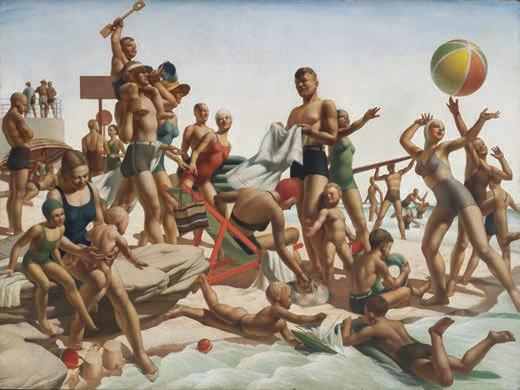
1 Describe the physical features that are shared by all the people on the beach.
2 What is different about the range of people we see on Australian beaches today?
3 Identify all the objects the beachgoers have brought along and list them.
4 What impression of Australia as a nation did the artist create in this painting?
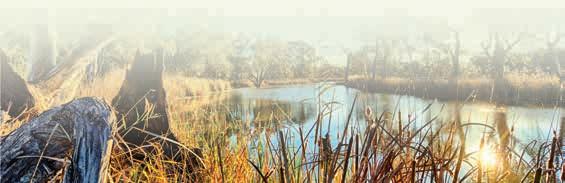
By the River is a verse-novel written by Steven Herrick. It is narrated by Harry, who grew up in a small country town in the 1960s and is recalling his childhood memories. This extract focuses on the significant presence of the big river that runs through the town.
The big river rolls past our town at Hobsons Bend, takes a slow look at the houses on stilts with timber creaking, paint flaking, at the graveyard hushed in the lonely shade, at the fruit bats dropping mango pulp into the undergrowth, at the foundry, and sawmill grinding under a blazing sun, at the pub with welcoming verandahs shaded in wisteria vine, at Durra Creek surrendering to the incessant flow, at Pearce Swamp upstream on the creek among the willows and rivergums,
at the storm clouds rumbling over Rookwood Hill, at the two boys casting a line on the crumbling bank, at the cow fields purple with Paterson’s curse, at the jammed tree-trunks washed down after summer thunder, at the shop with dead flies in the window display, at the mosquito mangroves and the sucking sound of mud crabs, at the children throwing mulberries that stain like lipstick. The big river rolls past our town, takes a slow look, and rolls away.
Steven Herrick



1 The river ‘takes a slow look’ at the houses. Explain why this is an example of personification (that is, giving something human qualities).
2 What sound words are used to describe the timber house stilts and the graveyard?
3 What are the fruit bats doing?
4 Durra Creek is ‘surrendering’ to the river’s incessant (relentless) flow. What does this tell you about the river?
5 What does the river notice about the shop?
6 This verse presents an overall picture of the town by listing the river’s observations of many distinctive details. What overall picture is created of the town?
The following newspaper article is about the meaning of Australia Day to singer and actor Jessica Mauboy, who reflects on her multicultural heritage as well as her feelings about her family, her country and her indigenous community.

JONATHON MORAN AND SAMANTHA LANDY
FOR pop star Jessica Mauboy, Australia Day is all about celebrating her multicultural heritage.
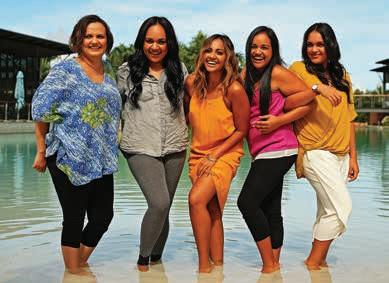
This year Mauboy did just that—the 25-year-old took a break from touring to spend a month in her home town of Darwin with her parents and sisters Sandra, 34, Jenny, 31, Cathy, 28, and Sophia, 22.
Mauboy’s father, Ferdy, is an electrician of Indonesian heritage, while her mum, Therese, is Aboriginal. It is this multicultural mix that Mauboy believes shapes her Aussie identity.




Mauboy will today be on centre stage at Parliament House in Canberra to perform as part of the Australia Celebrates concert.
But off the stage, Mauboy’s family keeps her grounded.
When Mauboy is with her sisters—who all appear in the video clip for her next single, ‘The Day Before I Met You’— she’s not seen as a pop star. They can all hold a tune. She’s just Jess, the family joker.
‘She was a good kid. Annoying but good,’ eldest sister, Sandra, said.
‘Jess will never change. I don’t think she can—not with people like us in her life.’
The next oldest, Jenny, added: ‘Family is what keeps us together, our truthfulness. We
are not fake around each other, we tell it how it is.’
When asked what would happen if she let her celebrity go to her head, Mauboy replied with a laugh: ‘I think I’d get a big floggin’. I think there were times I lost connection with my family ... if I lose connection with being who I am and where I have come from, then who am I?’
It’s Mauboy’s strong connection to her family and community that has made her a role model for many indigenous kids, like it or not.

‘I left school at year 11 and just followed my passion, my dreams, and I’ve had a lot of help along the way and such a beautiful country to back

me up,’ said Mauboy, named the Northern Territory Young Australian of the Year in 2013.
‘It hasn’t been comfortable all the time, that’s the honest truth.
I was never taught to be a role model, I had to learn.’
It’s taken a while for Mauboy to find her voice politically, and it still is not something she does naturally. She doesn’t trumpet her achievements as ambassador for Alice Springs indigenous school Yipirinya.
‘My heart really fell in that place,’ she said.
‘My mission is to motivate younger generations to be able to show them that it’s not always about money, but to be successful can make you a happy person in life.
from Sunday Herald Sun

1 What does Australia Day mean to Jessica Mauboy?
2 What is Jessica’s cultural heritage?
3 What will she be doing on Australia Day?
4 ‘Family is what keeps us together.’ What positive effect do Jessica’s sisters have on her?
5 What has made Jessica a role model for Indigenous kids?
6 How does she explain her success after she left school?
7 What does she hope to achieve as ambassador for the indigenous school Yipirinya?
Acquiring knowledge of the basic structure of language helps us to have a better understanding of what we read and write. The basic parts of a sentence include nouns, verbs, adjectives, pronouns, adverbs, prepositions, conjunctions, clauses and phrases. There are four kinds of nouns: common nouns, proper nouns, collective nouns and abstract nouns.
Common nouns: Common nouns are words that name people, places, animals and things, but not the specific names given to the people, places, animals and things. Common nouns never begin with a capital letter.
friend husband surfer cinema library monkey helicopter magazine
Proper nouns: A proper noun is the specific name given to a particular person, place, animal or thing and always begins with a capital letter.
Beethoven Charlotte October Russia Microsoft Tuesday Mercedes
Collective nouns: A collective noun is used for a collection or a group of similar persons, animals or things.
swarm choir fleet library bunch flock pack
Abstract nouns: Abstract nouns are words that name feelings or qualities. bravery gentleness hatred forgiveness gratitude formality pain
Common, proper, collective and abstract nouns are arranged in columns below. Your task is to insert the appropriate noun in each of the sentences that follow. Sometimes the first letter is given to help you.
queen soldier airport dormitory quay Lincoln Cleopatra Matterhorn Atlantic December galaxy convoy anthology litter gaggle beauty cowardice friendship belief misery
1 Abraham had a b that American slaves should not continue to live in m .
2 was an Egyptian q
3 A is a large room that provides sleeping quarters.
4 Mountaineers have lost their lives trying to climb the
5 In winter, the can be a tempestuous ocean.
6 A of geese and a of pups lived in the barn.
7 In the old Roman calendar, was the tenth month.
8 A of cars arrived at the to meet the state premiers.
9 The s who had been a deserter was accused of c
10 The poems in the a described the b of nature.
Matching common and proper nouns
Match the proper nouns from the list with their corresponding common nouns below. Each common noun requires two proper nouns.
Dracula
Columbus
Ulysses
India
Medusa
Rhine
Juliet
Mazda
London
Everest
Amsterdam
Drake
Hercules
Shakespeare
Spain
Write the
singular or plural noun for each of the following.
Nile
Audi
Andes
Romeo
In a sentence, a verb must agree with its subject.
• When the subject is singular, the verb must also be singular; when the subject is plural, the verb must also be plural.
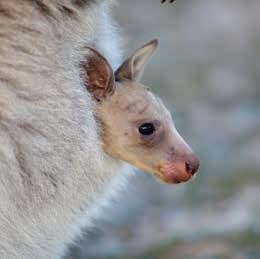
A baby kangaroo is only 1 centimetre long at birth. Baby kangaroos are only 1 centimetre long at birth.
• When the subject consists of two or more nouns joined by and, a plural verb is usually used.
Burke and Wills were the first white settlers to cross Australia from south to north.
Choose the verb from the brackets that agrees with the subject in each sentence below.
1 Box jellyfish even more dangerous than stonefish. (is/are)
2 Gum trees can explode in bushfires because eucalyptus oil highly flammable. (is/are)
3 The platypus and the echidna the only mammals that lay eggs. (is/are)
4 Six out of the ten deadliest snakes in the world in Australia. (live/lives)
5 The world’s first compulsory seatbelt law put into place in Victoria in 1970. (was/were)
6 A male lyrebird been heard to mimic car alarms and camera shutters. (has/have)
7 There been no deaths in Australia from spider bites since 1979. (has/have)
8 The longest stretches of road and railway tracks in the world in Australia’s outback. (occur/occurs)
9 More than two hundred different languages and dialects spoken in Australia. (is/are)
10 In 1893, New Zealand the first country to give women the vote. (was/were)
11 The dingo fence, the longest in the world, 5614 kilometres long. (is/are)
12 More than one million feral camels the outback. (roam/roams)
Our nation
parliament rural welfare government democratic candidate election convict prosperous conservation territory religious senate population discrimination destitute colony cyclone nationality architecture defence patriotic republic referendum representative majority equality irrigation manufacture independence
Completing phrases
Choose an appropriate list word to fill each gap. The first letter is given to help you.
Completing sentences
Choose a list word to complete each sentence.
1 The noun is formed from the verb colonise
2 The opposite of minority is
3 The noun is formed from the verb represent
4 The noun is an anagram of sateen
5 The adjective of democracy is
6 To be means to be extremely poor.
7 The noun is formed from the word national
8 A has an elected head of state rather than a monarch. 9
10 A is a person who applies for a job or is nominated for election.
11 The word means freedom from control or influence of others.
12 The noun has two acceptable plural forms: referendums and referenda
13 A is someone who is serving a jail sentence for a crime.
14 Japan and Korea many of the cars sold in Australia.
15 The noun means the supplying of water to help crops grow.
16 The adjective of religion is
From each of the following words, write the word that describes the person. The first one is done to help you.
1 election elector
2 defence
3 parliament
4 ar chitecture
5 senate
6 colony
7 manufacture
8 conservation
Write the verbs derived from these list words:
1 equality
2 discrimination
3 election
4 irrigation
5 defence 6 nationality
The word ‘patriotic’ is derived from the Latin word patria meaning ‘one’s native land’. Here are more words derived from patria. Use the dictionary at the back of the book to write their meanings.
expatriate:
patriot: r epatriation:
compatriot: unpatriotic:
In By the river, Steven Herrick builds a picture of a small country town by focusing on details. As the river passes through the town, it looks slowly at particular features of the houses, the graveyard, the fruit bats, and so on. By using this technique, Herrick brings the small town to life.

Choose any place that is important to you—one that you are familiar with or that you can remember clearly. Write a 200-word description of the place you have chosen, bringing it to life by focusing on the details. Here are some suggestions to start you thinking.
• A busy city street or your own street
• The top of a mountain
• Your favourite eating place
• A tourist destination
• A dentist’s surgery
• Your backyard or garage
• A shopping centre or market
• A lost dogs’ home
• An old building
• A tiny place no-one else knows about