
Focus on 8
a language , literature and literacy course
Rex Sadler
Sandra Sadler
Viv Winter
Rex Sadler
Sandra Sadler
Viv Winter
Focus on 8
a language, literature and literacy course
This edition published in 2021 by
Matilda Education Australia, an imprint of Meanwhile Education Pty Ltd
Level 1/274 Brunswick St Fitzroy, Victoria Australia 3065
T: 1300 277 235
E: customersupport@matildaed.com.au www.matildaeducation.com.au
First edition published in 2015 by Macmillan Science and Education Australia Pty Ltd
Copyright © Rex Sadler, Sandra Sadler and Viv Winter 2015 The moral rights of the author have been asserted.
All rights reserved.
Except under the conditions described in the Copyright Act 1968 of Australia (the Act) and subsequent amendments, no part of this publication may be reproduced, stored in a retrieval system, or transmitted in any form or by any means, electronic, mechanical, photocopying, recording or otherwise, without the prior written permission of the copyright owner.
Educational institutions copying any part of this book for educational purposes under the Act must be covered by a Copyright Agency Limited (CAL) licence for educational institutions and must have given a remuneration notice to CAL.
Licence restrictions must be adhered to. For details of the CAL licence contact:
Copyright Agency Limited, Level 11, 66 Goulburn Street, Sydney, NSW 2000. Telephone: (02) 9394 7600. Facsimile: (02) 9394 7601. Email: info@copyright.com.au
Publication data
Authors: Rex Sadler, Sandra Sadler and Viv Winter
Title: Focus on English 8: A Language, Literature and Literacy Course
ISBN: 978 1 4586 5049 8
Publisher: Viv Winter
Project editor: Barbara Delissen
Editor: Ronél Redman
Cover designer: Dim Frangoulis
Text designer: Norma van Rees
Permissions clearance and photo research: Vanessa Roberts
Typeset in Melior Medium 10.75/14 pt by Norma van Rees
Cover image: Shutterstock/Edhar Shvets
Printed in Malaysia by Vivar Printing Pdt Ltd
1 2 3 4 5 6 7 25 24 23 22 21 20
Internet addresses
At the time of printing, the internet addresses appearing in this book were correct. Owing to the dynamic nature of the internet, however, we cannot guarantee that all these addresses will remain correct.
Warning: It is recommended that Aboriginal and Torres Strait Islander peoples exercise caution when viewing this publication as it may contain images of deceased persons.
About this book
Focus on English 8 covers essential English skills for students in their second year of secondary school. It is a carefully sequenced program that enables students to develop and reinforce their literature, language and literacy skills.
There are twenty cohesive units, each of which focuses on a specific text type, literary technique, writing skill, genre or theme that is relevant to any Year 8 English program. The featured texts provide a meaningful context for language and literacy learning.
For consistency and ease of navigation, each unit is organised into the umbrella strands of Literature, Language and Literacy. Most Literature sections are four pages long. The Language and Literacy sections are divided into one- and two-page segments.
The format of every unit is as follows:
Literature
• Introduction: a brief overview of basic skills, terms or concepts covered in the unit
• Texts: high-interest literary, non-literary and multimodal texts for comprehension and analysis.
Language
• Language and grammar: sequential explanations of rules and conventions, clear examples, and exercises for major parts of speech, phrases, sentences and much more
• Punctuation: sequential explanations of rules and conventions, clear examples, and exercises to practise correct usage.
Literacy
• Word skills: a spelling and vocabulary word list, exercises on list words and a word origins task
• Creative writing: imaginative writing tasks that are linked to the ideas and techniques contained in the Literature section.
Our primary goal in writing this book is to develop essential English skills, but we also hope that students will feel motivated to engage with the world of texts and develop confidence in their own ability to make the best possible language choices and become effective communicators.
Rex Sadler, Sandra Sadler and Viv Winter
Contexts LITERATURE
Every text is created in a context. The context is the surrounding circumstances and conditions that may have influenced the writer or creator of a text, including their personal experiences, social attitudes, cultural environment and historical events of the time. The texts that follow offer examples of these four contexts.
Personal context
Personal context refers to the background and life experiences of the writer or creator of a text. This includes their personal goals and dreams, things they have seen and done, places they have been, and relationships they have with family members and other people they meet.
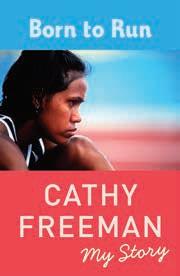
As a young Aboriginal girl growing up in Mackay, Queensland, Cathy Freeman’s dream was to win a gold medal at the Olympics. In this extract, she learns a valuable lesson about how to achieve her goal.
Learning to be a champion
By the time I was twentytwo, I was ranked Number Two in the world in the women’s 400 m Marie-José Perec, the winner of the gold medal at the Barcelona Olympics, was Number One. Three years after Barcelona, Marie-José and I raced against each other at a competition in Monte Carlo. Marie-José hadn’t lost a 400 m race in over five years. Okay, Freeman, I told myself as I walked to the starting blocks, you can do this.
The gun fired and we were off. MarieJosé’s usual style was to run hard from the start and set up such a gap that it was impossible to beat her. This time it was different—I was right next to her, matching her stride for stride. With a
hundred and fifty metres to go, I had a surge of energy. I ran past her and crossed the finish line in first place. I couldn’t believe it!
Marie-José was the world’s best and I had beaten her! Now that I had done it once, I was convinced I could do it again.
The next time we competed against each other was at the 1995 World Championships in Sweden. I went into the race full of confidence. When my coach Fort tried to talk to me about my race plan, I didn’t really listen. What’s the point? I thought. I already know how to beat Marie-José!
As we walked onto the track I spotted a friend in the crowd holding up my Aboriginal flag. Instead of thinking about
the race, I started thinking about how I would feel once I was the world champion. The announcement came to take our positions on the blocks when all of a sudden it hit me: I was just about to run one of the biggest races in my career. I was terrified!
‘On your marks,’ the starter said. This is it, I thought. The starter gun went off, and I bolted.
I was flying around the track. I was going to be the next world champion! As we ran into the last hundred metres, I was dead level with Marie-José. Okay, it’s time to show what you can do. Go girl!
Then with eighty metres left to go, something happened. I was starting to slow down. No, I thought. Please, no!
I had ‘hit the wall’. This is what we call it when athletes run out of energy.
Responding to the text
It feels like you’re running in slow motion. As I ran the last sixty metres, my legs and arms felt like cement. I could only watch as Marie-José moved further and further ahead. Then another two athletes ran past me. I wasn’t even going to get a medal.
I was so angry with myself. I could have won, or at least come second, but I’d stuffed up completely. The race had been a disaster.
As disappointed as I was, I’d just learnt a crucial lesson: in racing, you can’t get ahead of yourself. I’d wanted to win so badly that I’d lost my focus. Instead of concentrating on things I could control, like my breathing and my race plan, I’d only thought about winning. Now I knew that if I wanted to do my best, I had to stay focused.
1 W hat were the three major athletic achievements of Marie-José Perec?
2 How did Cathy feel after she won against Marie-José at Monte Carlo?
3 W hy didn’t Cathy listen to her coach when he tried to talk about her next race plan?
4 W hat effect did seeing her Aboriginal flag have on Cathy?
5 W hat happened when Cathy ‘hit the wall’ near the end of the race?
6 From this experience, what change did Cathy realise she had to make if she wanted to succeed?
Social context
Social context refers to the many social groups that make up our society, such as families, clubs, neighbourhoods, workplaces and various age groups. We all belong to many different groups and share interests, attitudes, beliefs and behaviour within these groups.
from Born to Run: My Story by Cathy Freeman
This light-hearted cartoon by Mark Lynch comments on fashion-conscious teenagers.
Responding to the cartoon
1 W hat is distinctive about the two fish ‘kids’ in the foreground?
2 W hat do the fish hooks represent in the human world of teenage behaviour?
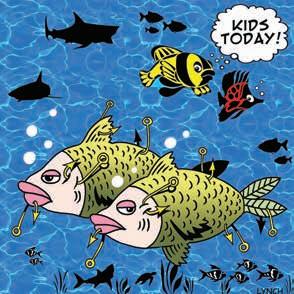
3 ‘Kids today!’ What is the reaction of the adult fish in the background?
4 W hat comment is the cartoonist making about human society?
Cultural context
Cultural context refers to the beliefs and customs shared by a group of people or a nation. It can be identified by such things as food, clothing, music, family values, religion and traditional stories.
Simone Lazaroo’s family migrated to Australia from Singapore in 1965, before the end of the ‘White Australia Policy’ that restricted the entry of non-Europeans. She describes the cultural context of being Asian in Australia at that time.
From Singapore to Australia
Around the time the White Australia Policy was officially abolished by Gough Whitlam in the 1970s, we met newer immigrants with faces a bit like ours, mowing lawns and learning how to barbecue sausages in streets near ours.
‘We come to Australia, we must learn to be Australian,’ I heard a group of recent immigrants from Singapore agree at one of these barbecues.
But they weren’t as adrift from their pasts as we’d been from ours when we’d arrived in Perth in 1965. By the early seventies, Asian grocers and restaurants began appearing in shopping centres. At last! Nasi lemak and salted plums! Ginger tea and kuey teow! Although we were still
sometimes insulted in the streets of our suburb, even spat upon, young Australian men and old ladies stopped my sister and me in the shopping centre and told us that we were beautiful. My schoolteacher, captain of a Western Australian Football league team, declared me prefect with a rosette-shaped badge, and a man in a suit at a bus stop declared mine the face of the future in the same week that our local Chinese restaurant won a Gold Plate Award. At last! Rewarded for being Asian!’
from ‘The Asian disease’ by Simone Lazaroo in Growing up Asian in Australia , edited by Alice Pung
Responding to the text
1 W hat typically Australian activities did new immigrants have to learn to do?
2 How did the recently arrived group from Singapore feel about their place in Australian society?
3 W hy were recent immigrants able to connect more easily with their own culture?
4 W hat examples of prejudice from some Australians are given in the extract?
5 ‘At last! Rewarded for being Asian!’ What positive change took place in Australian attitudes?
Historical context
The historical context of a text is the time and place in which it was created. This poster is an American World War II recruitment poster for women ordnance workers (WOWs) who were employed during the war to produce military weapons, ammunition and combat vehicles. (The word ‘ordnance’ means ‘weaponry and ammunition’.)
Responding to the poster
1 W hat is the purpose of this poster?
2 W ho does the soldier in the background represent?
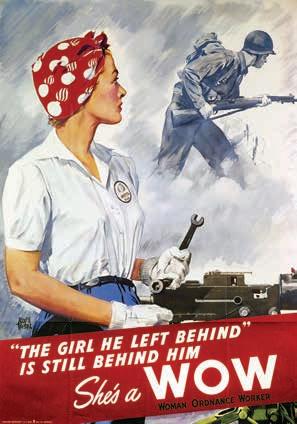
3 W hat emotions does the poster aim to arouse in the audience?
4 ‘“The girl he left behind” is still behind him—She’s a WOW’. What do these words suggest about the role of women during World War II?
LANGUAGE
What are phrases?
A phrase is a group of words that does not have a subject or a finite verb. It is incomplete by itself and needs to be part of a sentence to make sense. A phrase usually does the work of an adjective, an adverb or a noun. Here is a variety of phrases, all of which need to be attached to a sentence to convey meaning. over the mountains watching movies at midday damaged severely with blond hair a k ind, old man reading aloud the girl next door
Distinguishing between phrases and sentences
Indicate whether each group of words is a phrase or a sentence.
1 The phone was ringing
2 Turbulent waves damaged the luxury yacht
3 In a galaxy far, far away
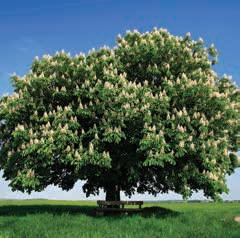
4 Under the spreading chestnut tree
5 Lost in space
6 The valley was a molten sea of fire
7 W hat a beautiful morning!
8 W ho wants to be a millionaire?
9 After the tennis match
Phrases in action
Some phrases add meaning to verbs. They tell time, place or manner. They are called adverbial phrases.
The bear hibernated during the winter. (time)
The car crashed near the bridge. (place)
The teacher spoke with great enthusiasm . (manner)
Some phrases add meaning to nouns. They are called adjectival phrases and are used to describe a noun.
The girl with the pearl earring admired the painting.
The adjectival phrase describes the noun, ‘girl’.
Wagging its tail , the dog showed its happiness.
The adjectival phrase describes the noun, ‘dog’.
The book on the table was valuable.
The adjectival phrase describes the noun, ‘book’.
Identifying adverbial phrases
In each of the following sentences, identify the adverbial phrase. Then identify the verb it is adding meaning to.
1 The politician was protected by a police escort.
Ad verbial phrase: Verb:
2 O ver the horizon, the sun rose.
Ad verbial phrase: Verb:
3 The lifesavers launched the surfboat in extreme haste.
Ad verbial phrase: Verb:
4 The swimmer dived into the ocean.
Ad verbial phrase: Verb:
5 The explorers pitched their tent at nightfall.
Ad verbial phrase: Verb:
6 The travellers were surprised at the beautiful views.
Ad verbial phrase: Verb:
Identifying adjectival phrases
In each sentence, identify the adjectival phrase and the noun it describes.
1 Make sure you catch the bus departing from the station.
Adjectival phrase: Noun:
2 I t is a story about ghosts.
Adjectival phrase: Noun:
3 The comedian, encouraged by the audience, told another joke.
Adjectival phrase: Noun:
4 The house overlooking the lake is dilapidated.
Adjectival phrase: Noun:
5 Environmentalists from overseas addressed the meeting.
Adjectival phrase: Noun:
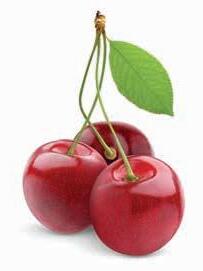
6 The cold cherries in the refrigerator are delicious.
Adjectival phrase: Noun:
Punctuation
Revising punctuation marks
The purpose of punctuation marks is to divide a written text into manageable sections. Punctuation marks indicate where to pause or stop, and also how the text should be read or spoken. Read this overview of the main punctuation marks and test yourself by completing the exercise.
• A capital letter is linked to punctuation because it is used to begin a new sentence. Athletics events are popular.
• A full stop (.) indicates the end of a statement or a mild command. Cathy Freeman was confident that she could win the race. (statement) Go to the starting line now. (command)
• A comma (,) is used within a sentence to indicate a pause or to separate items in a list. While we waited for the race to start, my friend went to buy some food. (pause) He bought hot pies, chips, apples and soft drinks. (list)
• A question mark (?) is used when a direct question is being asked. Did Cathy Freeman win the race?
• An exclamation mark (!) is used for emphasis, especially in speech, to indicate a strong emotion or declaration.
I can’t believe it! (emotion of shock) She won! (declaration)
• An apostrophe (’) shows ownership or indicates that one or more letters have been left out.
The runner’s shoes are new. (ownership) He hasn't returned my call. (the letter ‘o’ is left out of ‘has not’)
Using punctuation marks
Rewrite the following passage about the novel The 13-Storey Treehouse by Andy Griffiths, inserting capital letters and punctuation marks where necessary.
The 13-Storey Treehouse andy and terrys 13-storey treehouse is the most amazing treehouse in the world its got a bowling alley a see-through swimming pool a tank full of man-eating sharks a giant catapult and a secret underground laboratory and thats not all theres a marshmallow machine that follows you around and shoots marshmallows into your mouth whenever youre hungry well what are you waiting for come on up adapted from www.panmacmillan.com.au
LITERACY
Word skills
Confusing pairs
miner story flower mayor stare sore feet profi t minor storey flour mare stair soar feat prophet
peel medal fare main sole pier sight morning peal meddle fair mane soul peer site mourning
Missing words

1 Complete the pairs of sentences by adding list words beginning with m. The first example has been done for you.
a The mayor of the city welcomed the royal visitors.
The farmer’s mare was a superb racehorse.
b In the we will be fl ying overseas. It was a time of for the disaster victims.
c The winner of the race received a . Please do not in our problems.
d The horse had a beautiful
The highway was blocked by a fallen tree.
2 Complete the pairs of sentences by inserting list words beginning with s
a The new kite was able to to a great height.
The athlete had a ankle.
b The survivor climbed onto the raft.
I called for help, but not a came to my assistance.
c She slipped on the broken
The witch gave the dwarf an icy
d They lived in a two- house.
The prisoner told the judge his life
3 Complete the pairs of sentences by inserting list words beginning with f
a The baker wiped from his hands.
The orchid is an amazing
b After the long march, the soldiers had sore
Climbing Mt Everest was a great .
c The plane to England was expensive.
The actor has hair.
4 Complete the pairs of sentences by inserting list words beginning with p
a The company made a record
The words of the were written in the Bible.
b The of the bells announced the start of the ceremony.
The caretaker slipped on a banana .
c The old lady liked to through the curtains.
The in the harbour was swept away in the storm.
Choosing correct words
Choose the correct word from the pair in brackets to complete the passage below.
The school fair
Our school (fare, fair) was held last Saturday (morning, mourning) and was officially opened by the (mayor, mare). It is one of our (main, mane) fundraising events and produced a pleasing (profit, prophet). The parents in charge of the (flour, flower) stall received the principal’s (medal, meddle) for the most attractive presentation. At the end of the day, the (peel, peal) of the town clock indicated that it was time to pack up. We all trudged home with (soar, sore) (feet, feat).
Word origins
The word ‘sole’ comes from the Latin word solus, which means ‘alone’ or ‘one only’. Here are some of the words derived from solus. Use the dictionary at the back of the book to write their meanings.
solitude: desolate: solo: soliloquy: solitary:
Creative writing Writing personally
Reading about other people’s thoughts and experiences in diaries and autobiographies can help us to see the world differently through their eyes. Personal writing might focus on your early memories, experiences in your life, people who have influenced you, places you have been, the culture of the country you were born in, or your achievements. Write a 200-word account of a memory that is important to you. Choose one of the following topics or write about any event that had a lasting impact on you.
• An important member of my family
• A difficult choice
• Friends no more
• First day at high school

• So embarrassing!
• An amazing journey
• My life was changed forever
• A frightening experience