Enhance Data Reliability in Research and Development with Lab Equipment
Calibration Services
In research and development (R&D), precision is more than a goal it’s a requirement. Whether developing new pharmaceuticals, advancing materials science, or conducting environmental analysis, laboratories depend on accurate data to make informed decisions and validate experimental outcomes. Even the most advanced instruments, however, are only as reliable as their calibration. Over time, equipment naturally drifts from its original specifications, leading to subtle measurement errors that can compromise data integrity.
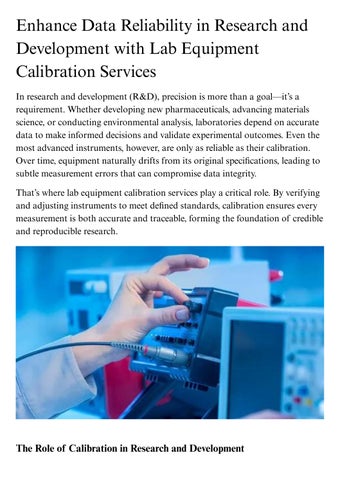
That’s where lab equipment calibration services play a critical role. By verifying and adjusting instruments to meet defined standards, calibration ensures every measurement is both accurate and traceable, forming the foundation of credible and reproducible research.
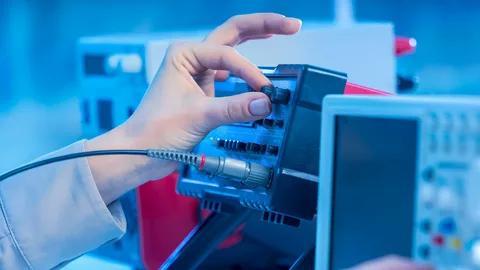
Every R&D facility, regardless of its discipline, relies on measurement. From temperature and pressure readings to analytical balances and spectrophotometers, precision drives scientific validity. Calibration bridges the gap between theoretical expectations and real-world measurement performance.
When a lab instrument is calibrated, its output is compared to a known reference standard one that is traceable to national or international metrology institutes such as NIST (National Institute of Standards and Technology). This process identifies any deviation between the instrument’s readings and the standard’s true value, allowing adjustments to be made where necessary.
In the context of R&D, such calibration provides confidence that the collected data is both accurate and consistent, allowing researchers to detect true experimental differences rather than equipment inconsistencies.
Why Calibration Directly Impacts Data Reliability
Data reliability hinges on repeatability and accuracy. If an instrument’s measurements shift over time without proper calibration, the resulting data may reflect equipment bias rather than experimental outcomes. This can have farreaching consequences, including invalid results, wasted resources, and delays in development cycles.
Key reasons calibration supports data reliability include
1. Elimination of Measurement Drift
All instruments experience drift due to wear, environmental factors, and aging components. Regular calibration identifies and corrects this drift before it affects results.
2. Improved Repeatability and Reproducibility
Calibration ensures instruments produce consistent results over time and across different operators or locations an essential requirement for credible R&D.
3. Traceability and Compliance
Proper calibration establishes traceability to recognized measurement standards. This traceability is fundamental to ISO 9001, ISO/IEC 17025, and Good Laboratory Practice (GLP) compliance.
4. Quality Assurance in Experimental Data
A well-calibrated laboratory reduces measurement uncertainty, allowing researchers to focus on data interpretation rather than questioning instrument accuracy.
The Central Role of Lab Equipment Calibration Services
At the core of every reliable R&D operation lies a robust calibration program. Professional lab equipment calibration services provide the technical expertise and precision tools required to maintain instrument accuracy. These services go beyond simple verification they include detailed measurement analysis, uncertainty evaluation, and documentation that meet regulatory and industry standards.
A comprehensive calibration service typically includes:
Performance Verification: Comparing instrument output to known reference values.
Adjustment and Fine-Tuning: Correcting any deviations identified during testing.
Certification: Providing documentation that records calibration results, traceability, and uncertainty.
Preventive Maintenance: Identifying potential equipment issues before they affect performance.
Through these measures, laboratories gain confidence in their measurement systems and establish the credibility necessary for research findings and regulatory acceptance.
Standards and Regulatory Compliance in R&D Laboratories
Many R&D facilities operate under strict regulatory frameworks. For example, pharmaceutical and biotechnology labs must comply with FDA and GMP (Good Manufacturing Practice) guidelines, while materials testing or environmental labs often follow ISO/IEC 17025 accreditation requirements.
Calibration supports these standards by ensuring measurement traceability and documentation integrity. A calibration certificate, issued by an accredited
service provider, serves as verifiable proof that instruments meet required specifications. This documentation becomes essential during audits, peer reviews, and regulatory inspections.
Moreover, calibration records contribute to long-term data management, helping laboratories track instrument performance trends and make informed decisions about equipment replacement or maintenance.
Consequences of Neglecting Calibration
The absence of a structured calibration program introduces significant risk. Inaccurate data not only undermines research conclusions but also leads to costly setbacks. For instance, a minor measurement deviation in a pharmaceutical laboratory can alter formulation results, causing rework or invalidation of entire studies.
Common issues that arise from neglected calibration include:
Data Variability: Unrecognized drift leading to inconsistent test results.
Non-Compliance: Failure to meet accreditation or regulatory standards. Increased Costs: Repeat experiments, product delays, or wasted resources.
Reputational Damage: Questionable data can diminish confidence in research outcomes.
By contrast, laboratories that implement routine calibration maintain tighter control over data quality, ensuring every experiment stands on a reliable foundation.
Best Practices for Calibration Management in R&D Settings
To optimize calibration effectiveness, R&D facilities should establish structured procedures and integrate them into their quality management systems. Recommended best practices include:
1. Develop a Calibration Schedule
Define calibration intervals based on instrument criticality, frequency of use, and manufacturer recommendations.
2. Use Accredited Calibration Providers
Partner with ISO/IEC 17025-accredited laboratories to ensure
measurement traceability and technical competence.
3. Maintain Comprehensive Documentation
Store calibration certificates, service reports, and performance data for every instrument.
4. Implement Environmental Controls
Maintain consistent temperature and humidity conditions during calibration to prevent measurement bias.
5. Train Personnel
Ensure laboratory staff understand the importance of calibration and can interpret calibration documentation correctly.
6. Monitor Instrument Performance
Track performance trends to identify when recalibration or replacement is necessary.
By following these practices, laboratories can maintain a high level of data reliability throughout the research and development process.
Conclusion
In the competitive and high-stakes environment of research and development, data integrity cannot be compromised. Calibration serves as the foundation of reliable measurement, ensuring that every result, discovery, and innovation is based on accurate and verifiable data.
Through consistent lab equipment calibration services, R&D facilities maintain confidence in their measurement systems, enhance reproducibility, and ensure compliance with international standards. Whether developing new technologies or validating scientific hypotheses, the accuracy of instruments directly determines the credibility of the results they produce.
At Custom Calibration, our commitment to precision and traceability supports laboratories across industries in achieving the highest standards of measurement reliability and data integrity.