IN THIS ISSUE
Celebrate engineering solutions that are the foundation of our built environment.
Get the download on data center design from three overlapping market perspectives.
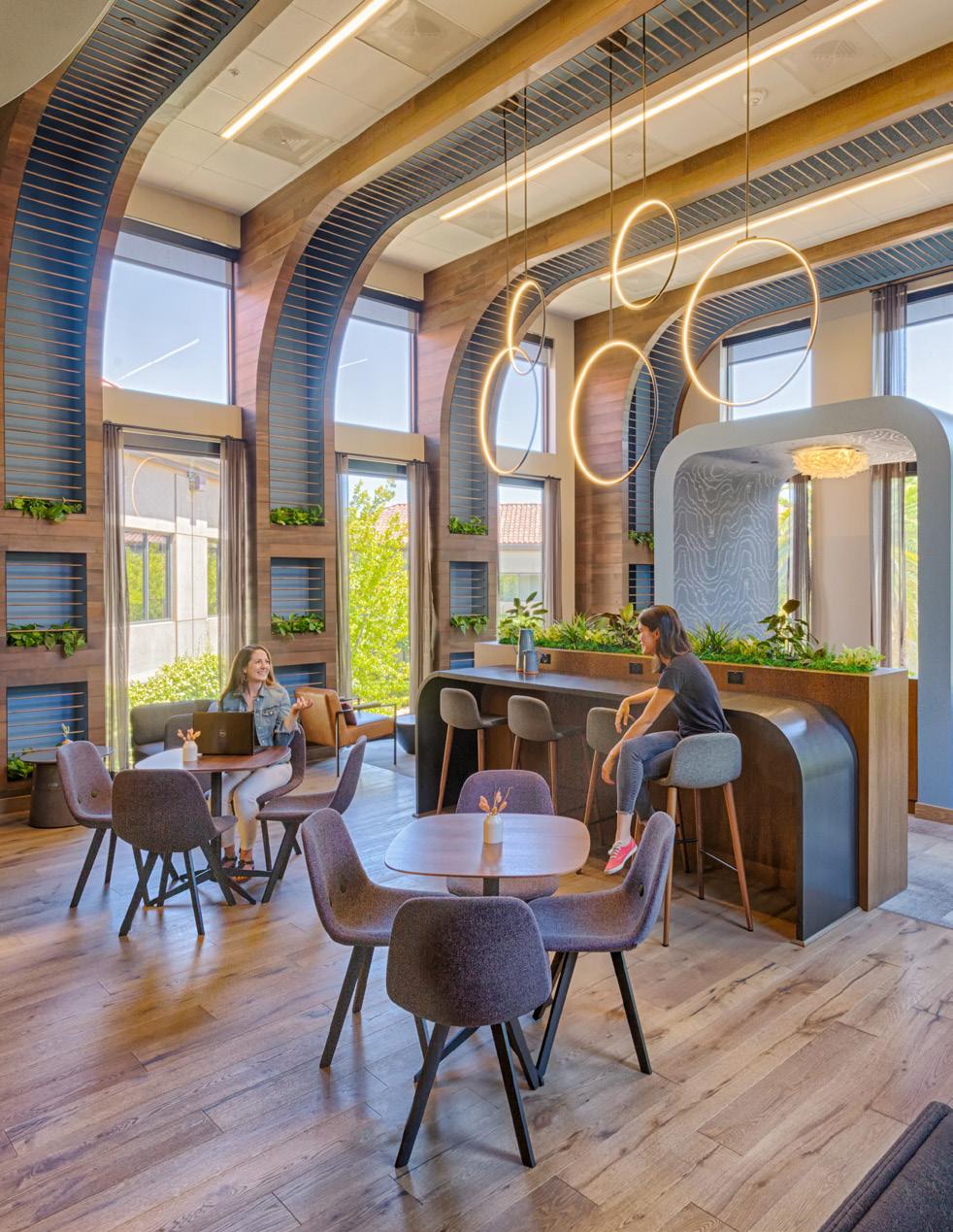
Explore a landscape-inspired workplace that offers respite to data center employees.
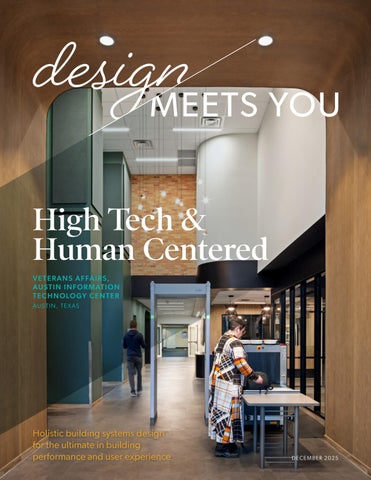
Learn how high tech meets human-centered design at the Veterans Affairs hub in Austin.
Sustainability Director Tim Johnson speaks about the power of performance.
Discover on-site solar solutions that enhance and support learning environments.
Learn how a grocer’s renovation project integrates restaurant and community spaces.
Principal Shannon Christensen speaks to the launch of the Cushing Terrell Foundation.
See how James Beard-award winner Amano turned a former bank building into a dining destination.
Look to the future and get excited about the projects we’ll realize in the years ahead.
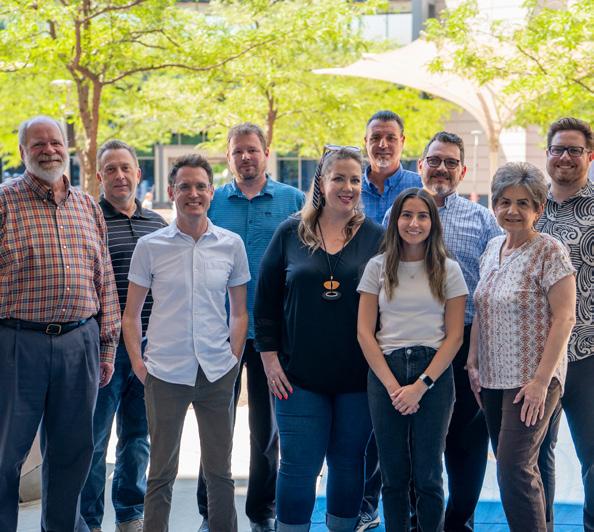
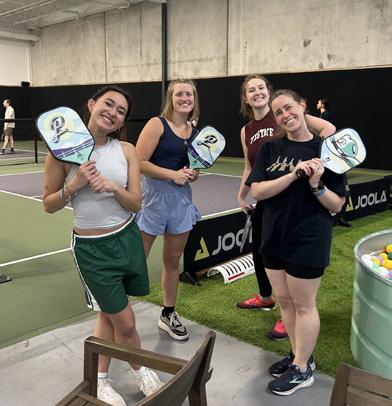
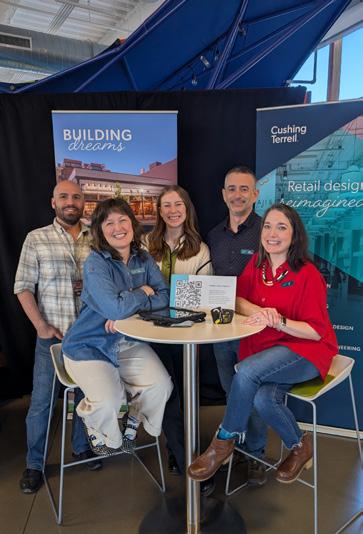
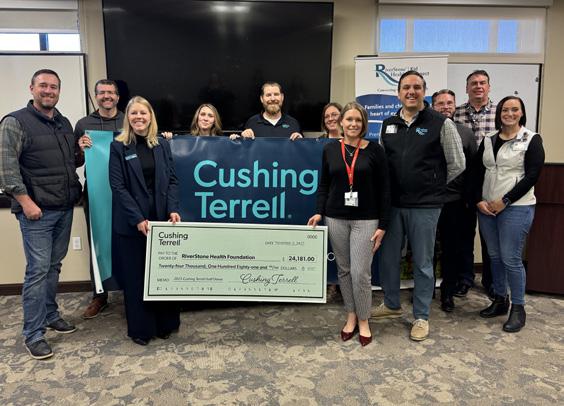
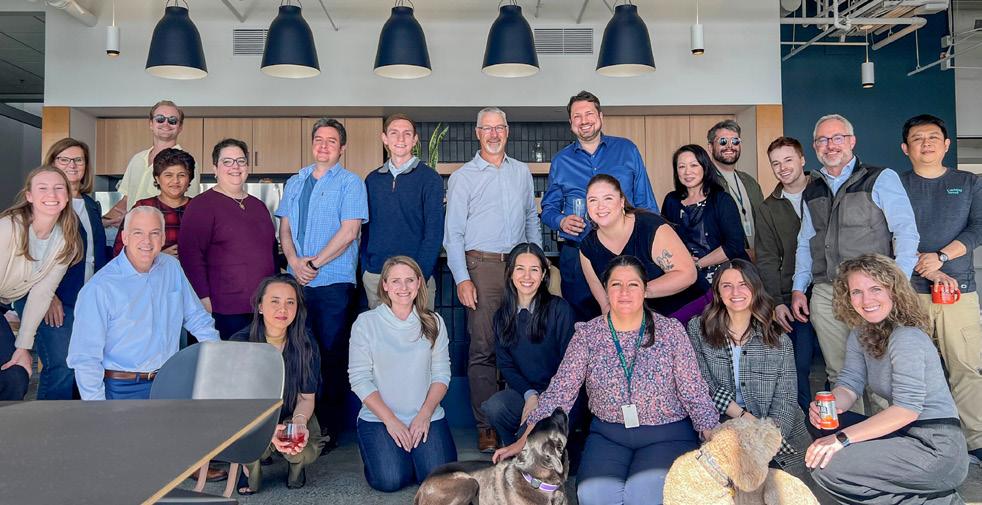
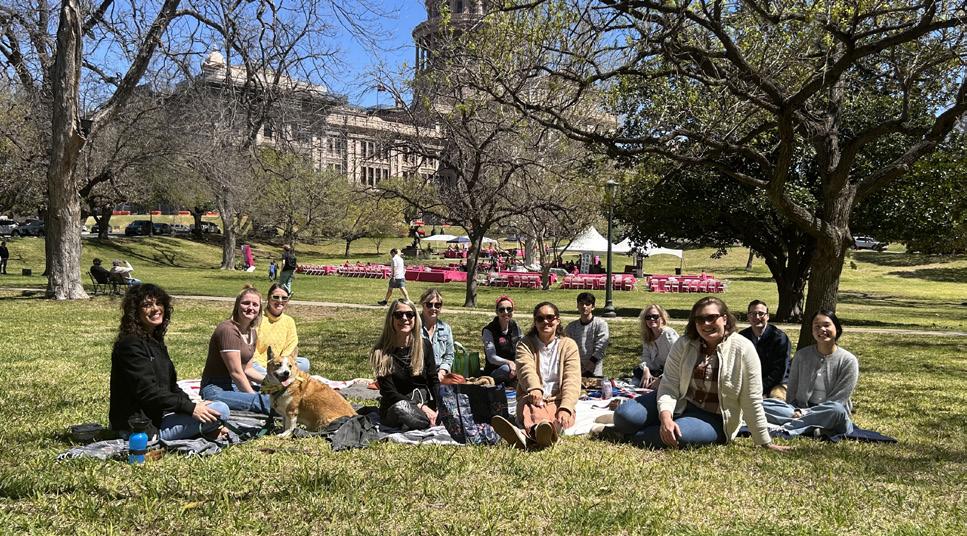
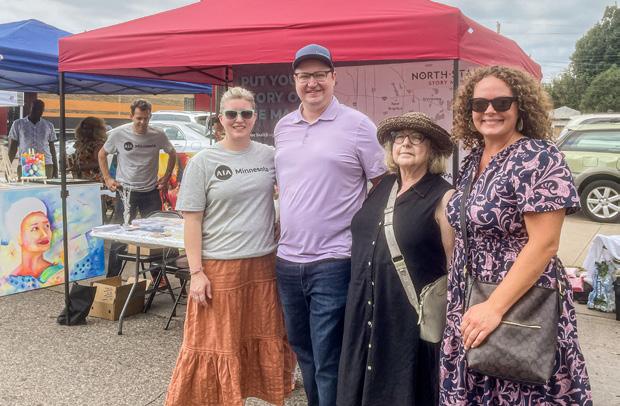
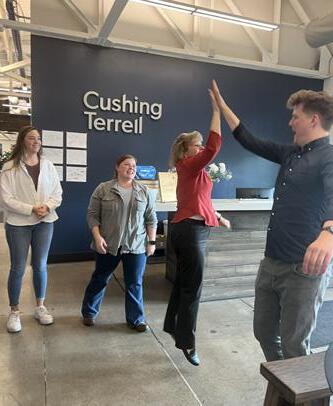
See photos of our team at volunteer activities, industry events, site visits, and more!
Work together. Diversity + collaboration = creative solutions.
LETTER FROM THE CEO
As a multidisciplinary design firm, we know how important each discipline is to our goal of realizing holistic projects that meet the needs of our clients and the end users of the spaces we design. That’s why, in this third issue of Design Meets You, we’re giving a shout out to our team’s engineering expertise.
How a person feels and functions within a building (and its adjacent spaces) is largely influenced by the oftenunseen systems designed by engineers. From heating, cooling, and lighting systems that impact comfort, well-being, and productivity to structural features that enhance accessibility and fire protection systems necessary for life safety, there’s an interwoven tapestry of engineering expertise that comes into play and influences both a building’s performance and the user experience.
At Cushing Terrell, our engineers not only set the standard but also pave the way for innovations and improvements — whether that be developing energy solutions and decarbonization strategies for clients, enabling efficiencies in our own business operations, or having a hand in tackling some of the complicated issues of our time.
Without a doubt, we’re incredibly lucky to have such a talented team working to meld aesthetics, functionality, and performance. Multidisciplinary collaboration is one of our defining characteristics — it helps us see projects from different perspectives and challenges us to continuously improve.

Greg Matthews President and CEO Cushing Terrell

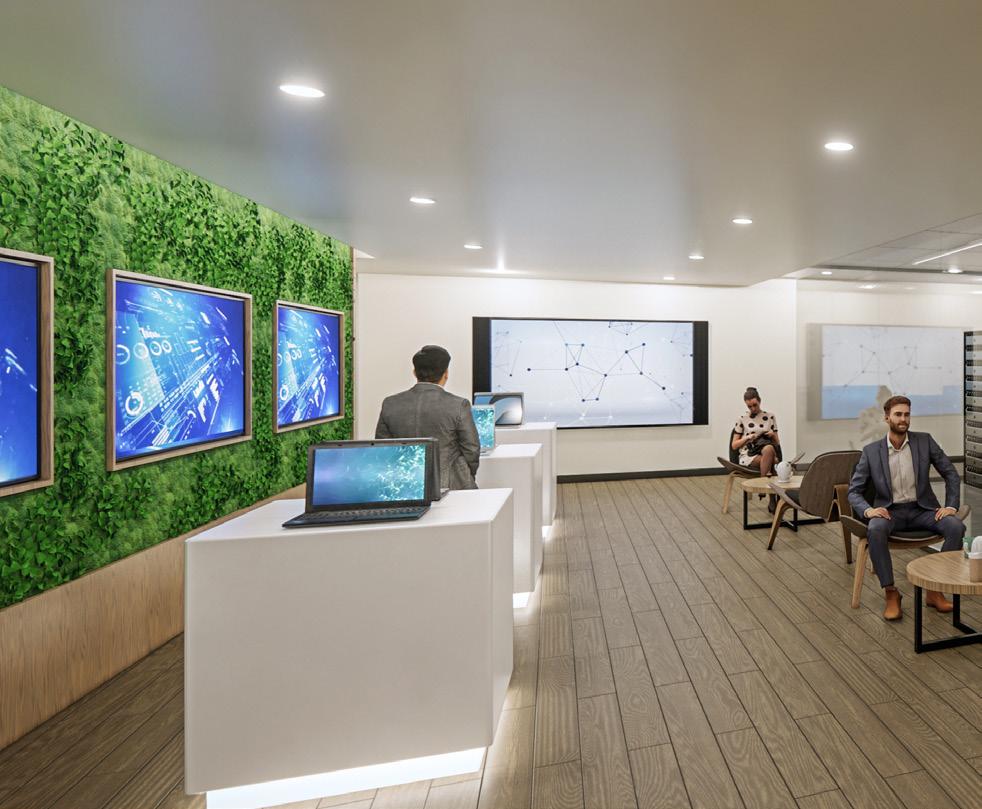
Cross-Market Perspectives on DATA CENTER DESIGN
Design directors for Cushing Terrell’s government, commercial, and infrastructure markets provide a download on data center design — challenges, solutions, and predictions for the future.
The rapid rise of AI has ensured the general populace is familiar with the concept of data centers, but they’re not a new facet of the built environment. Today’s data centers evolved from the mainframes and microprocessors of the 1950s-1980s, which became the “computer rooms” of the 1990s-2000s.
Data centers will continue to evolve as long as people employ vast quantities of data for any number of reasons — research and development; health, safety, and security; and automation and efficiency, to name some of the big ones. In this era driven by AI, data centers that support AI computing will certainly influence the built environment of today and tomorrow.
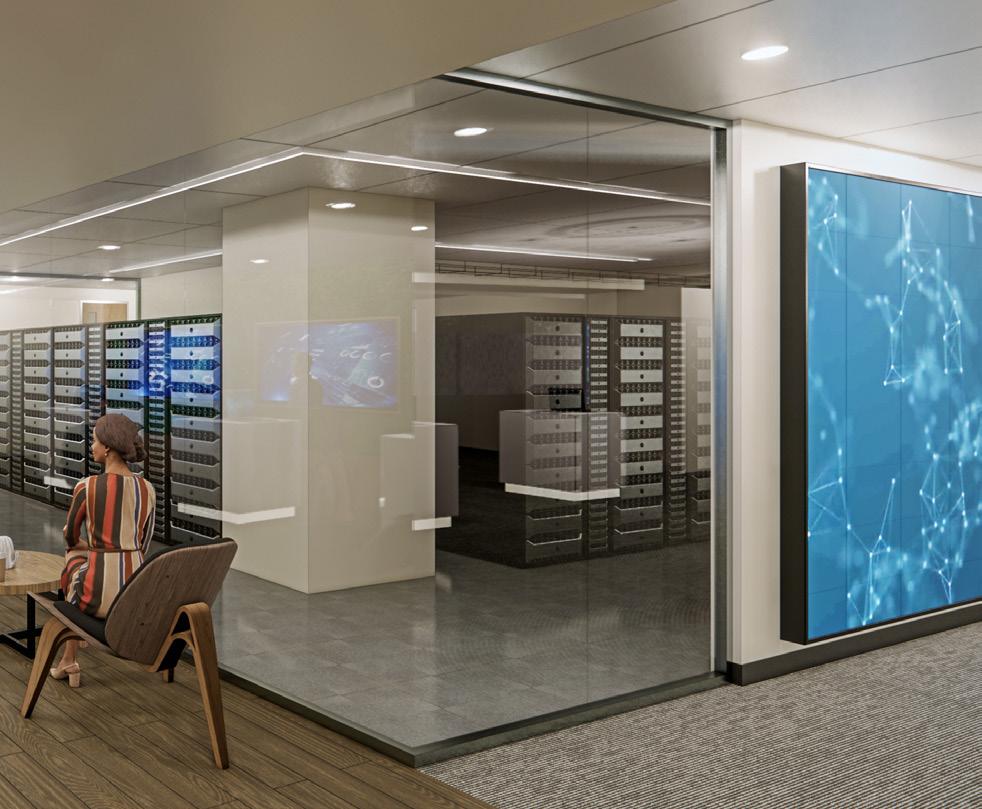
SPEAKING TO THE EXPERTS
Government Design Perspective with Shawn Pelowitz

The first data centers were built in the 1940s-50s by the U.S. military in support of defense and intelligence. So, it makes sense to first introduce Shawn Pelowitz, associate principal, architect, and design director for Cushing Terrell’s government group. With 30 years of experience as an architect for the federal government and now supporting government clients and their projects for Cushing Terrell, Pelowitz brings a “behind the scenes” understanding of the environments needed for government operations.
“The types of data centers we design for government clients are varied but predominantly support U.S. Department of Defense weapons, intelligence, and communications systems,” Pelowitz said. “We also design data and command centers for entities such
as the U.S. General Services Administration, U.S. Department of Agriculture, and U.S. Department of Veterans Affairs.”
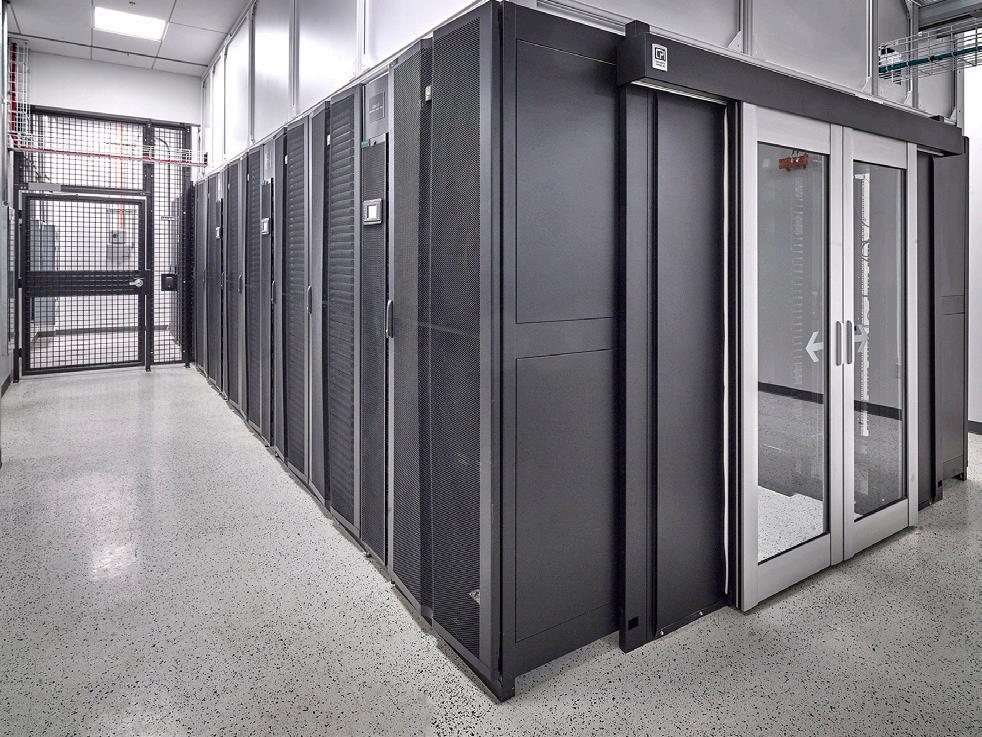
One of the hallmarks of government data center projects is adaptive reuse. “We often utilize existing buildings for government data centers,” Pelowitz said. “I’ve seen everything from the renovation of an old theater to the conversion of an unused aircraft hangar.
The different building types make for an interesting design challenge, but going in, we first assess whether it’s even possible given the security requirements.”
When it comes to renovating/retrofitting existing buildings (or developing new buildings), the design tactics related to security include:
Incorporating sound-absorbing materials, structural soundproofing measures, and sound masking to ensure confidentiality and acoustic privacy.
Incorporating electromagnetic shielding of equipment, rooms, and buildings.
· Ensuring specific distances between equipment and walls and building pipes, as well as spaces between cables carrying classified vs. unclassified information.
· Ensuring ductwork and cabling are exposed and visible to deter tampering.
Designing adaptable systems that can quickly and easily accommodate updated mission profiles.
SPECIALTY DESIGN
“It’s more complex to put a data center into an existing building because often the level of utility services needed isn’t there,” Pelowitz explained. “So, we get creative and develop space-efficient design solutions and determine how to effectively bring in both power and HVAC systems without impacting the usage needs for other spaces in the building.”
Pelowitz said it’s rare to develop an entirely new government data center, but he’s seen an uptick in the construction of modular data centers — self-contained, pre-engineered, and standardized. Everything needed, such as servers, storage, power, and cooling systems, is built within containers and shipped to the desired location. The benefits of these data centers include scalability, portability, and quick deployment.
When asked what he thinks is the most interesting aspect of data center design, Pelowitz said it’s the challenge: “It’s like a big puzzle when you’re dealing with existing buildings and their limitations. We’re
called on to design a solution where we can fit the maximum capacity a client needs for their data center into something with set parameters.”
When he thinks about the future of data centers, Pelowitz said we’ll likely become even more reliant on them to comprehensively understand events unfolding around the world.
Data centers are imperative to the ability to review intelligence and make real-time decisions — the majority of mission-critical communications are digital and handled by data centers.
Shawn Pelowitz Director, Government | Cushing Terrell

Commercial Design Perspective with James Foster
With clients that include Dell, Google, and Amazon, supporting the needs of tech giants has been key to the firm’s work — and an area where the AI boom has been most visible.
James Foster, who’s an associate principal, architect, and one of the leaders of Cushing Terrell’s commercial group, has been working with these types of clients for the past 20 years. Thus, he’s cognizant of the need to support their data processing needs through building and systems design, while also supporting their sustainability and decarbonization goals.
“As data center designers, we have similar thoughts about the environmental impacts as many other people do, including our clients. The concerns are top of mind as we develop these projects in the best possible way,” Foster said.
It’s our goal to make data centers energy efficient and to minimize their carbon footprints, just as we do for all other project types.
James Foster Director, Commercial | Cushing Terrell
Much like Cushing Terrell’s government group, the commercial team often designs data centers as adaptive reuse projects. In urban environments, the team looks to reimagine vacant real estate such as office buildings and retail spaces. Foster explained
that it’s not unusual to convert only part of a building for a small data center, while the rest of the building houses other types of tenants.
When choosing the right building, Foster said, “The first thing we look for is the right structural capacity. Data centers have a heavy physical load, so existing buildings need a strong slab-on-grade design. These are easiest to convert without extra complications.”
Other things they look for when it comes to existing buildings include:
Access to utilities and the ability to increase the service size.
· Exterior land or a large surface parking lot to add a utility yard for an uninterruptible power source, backup power, backup generators, and cooling equipment.
“Most offices have an adequate structural height so that’s usually not a constraint,” Foster added, “but it sometimes can be.”
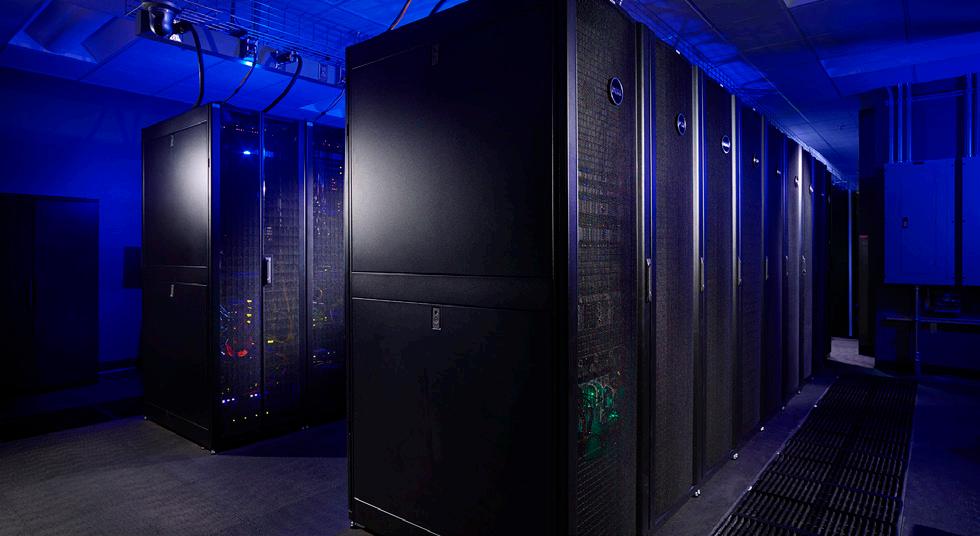
Many of the commercial team’s projects are enterprise data centers — the “computer rooms” of the past, but on a grander scale and in support of high-performance computing. These facilities are on site, customized to meet a client’s specific business needs, and house the company’s IT infrastructure.
Cushing Terrell also has experience designing cloud data centers. In contrast to enterprise data centers, cloud data centers are owned and operated by third-party providers and not on the premises of the businesses they serve. These data centers support “cloud computing” and “virtual desktops” for companies that may not have the IT infrastructure to support their own needs.
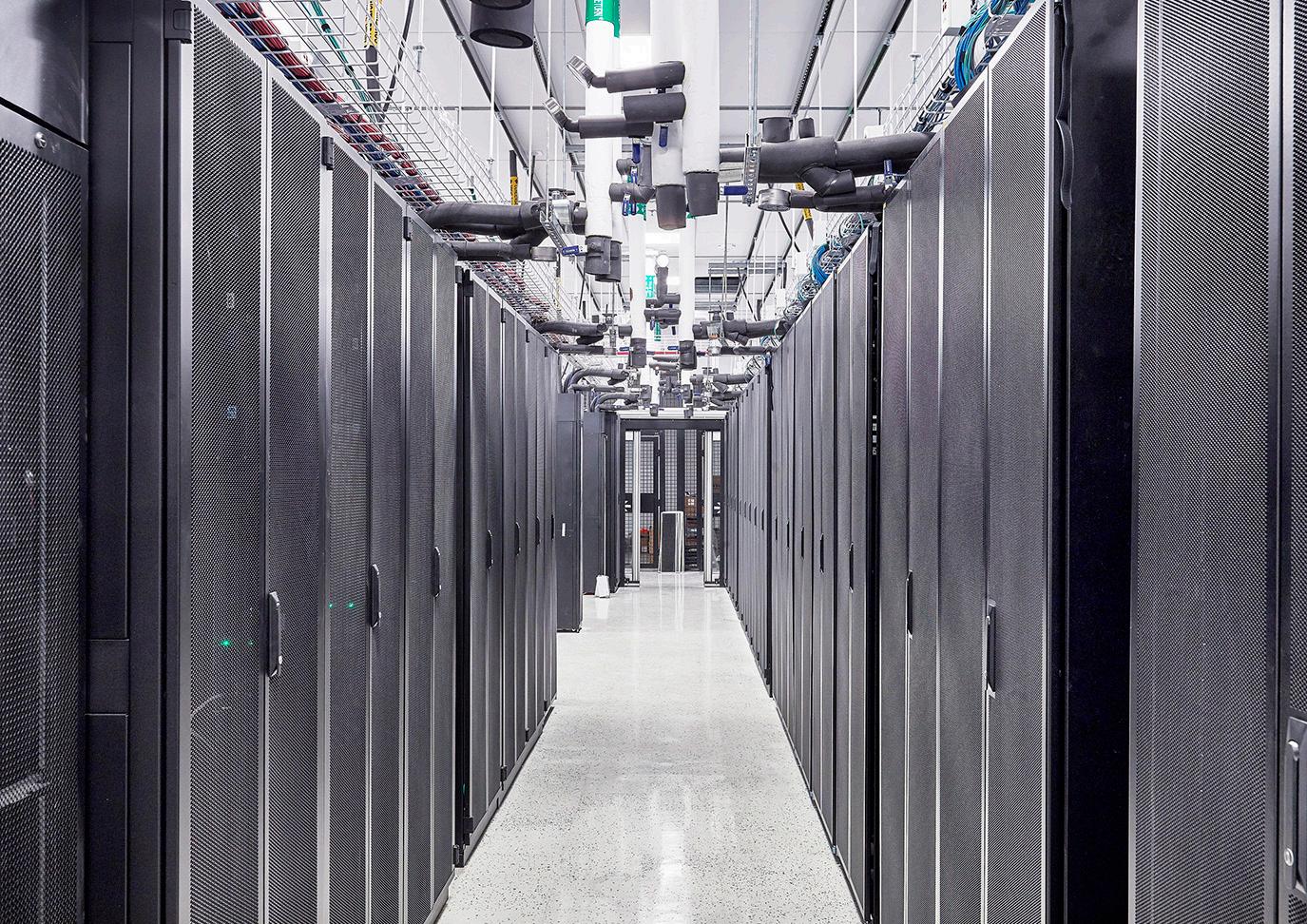
Data centers for high-performance computing necessitate direct-liquid-cooling systems because their power density has increased so much that aircooled data centers are not viable. “Sometimes we also add new substations and a duct bank — a giant underground utility line — to support the power needs of these clients,” Foster added.
He’s also seeing clients get creative with where their power comes from — for example, pairing renewable energy such as solar with data centers. Where the power is not available on the grid, developing an on-site power solution and making that solution renewable can be a win-win for the business and the environment.
With their ability to help realize efficiencies, increase productivity, support research and development, and enhance knowledge sharing, Foster said he believes data centers can have net positive gains when it comes to societal advancement.
Aside from highly impactful things such as medical and technological advances, Foster noted that we continue to see every day inconveniences solved by the information managed by data centers. “If you ever use GPS, Waze, or Google maps when you’re driving, they can tell you if there’s an accident ahead and alert you to take a different route. That has a direct impact on your efficiency and quality of life. You could also make the case for an impact on air quality with fewer cars idling on a highway in bumper-to-bumper traffic.”
Infrastructure Design Perspective with Alan Bronec
Last up in our data center journey is Alan Bronec, a principal, electrical engineer, and design director for Cushing Terrell’s infrastructure group. Alan has more than 30 years of experience designing electrical systems for a wide variety of projects. His experience includes data centers for clients across markets, including cryptocurrency companies, government entities, industrial and manufacturing clients, and technology companies.
Bronec and his team tend to work on the “really big” data centers, those that range up to 200-240 megawatts, and even a one-gigawatt project in the works. Thus, one of the challenges he sees for clients is finding both the land and power necessary for their projects.
“We’ve been doing large crypto data centers for a number of years,” Bronec said, “and that’s given us the knowledge and expertise to do large-scale AI data centers that use an equivalent amount of power. In fact, we’re seeing crypto data centers being converted to AI data centers, primarily because they have similar infrastructure requirements and the power available at those sites.”
A project Bronec has supported is a one-of-a-kind microgrid/modular data center for battery manufacturing and recycling company Redwood Materials and its subsidiary Redwood Energy in Sparks, Nevada. Redwood Energy’s mission is to increase sustainable battery materials production. Through the company’s second-life initiative, they repurpose electric vehicle batteries into an energy storage solution.
The design of the Redwood Energy project includes a sophisticated configuration of solar generation, battery storage, utility power, and backup systems, as well as data center modules. The project is an example of how thoughtful engineering and sustainable design can converge to create high-performance infrastructure with a reduced carbon footprint.
Bronec said another beneficial approach is for data centers to partner with utilities and implement distributed generation. “This is where a company produces electricity at the point of consumption through onsite solar and/or gas-fired turbines,” Bronec explained.
With
these partnerships, a distributed energy source on a data center site could be powered up during a utility’s peak demand time and help take load off the grid.
Alan Bronec Director, Infrastructure | Cushing Terrell
Many data center developers are also looking for sites in northern states due to their cooler climates.
The lower ambient temperature allows heat from the direct-liquid-cooled data equipment to be effectively dissipated using dry coolers and other types of equipment, resulting in significant energy savings.
As it relates to the future of data centers, Bronec said one of the tough things to predict is the power density that will be needed for the continued evolution of AI computing. “We may design around a certain power density in a data center, but three years from now,
SPECIALTY DESIGN
what’s needed could be vastly different,” Bronec explained. “To future proof, the trick will be to make components flexible and scalable.”
Bronec’s other prediction: “I think nuclear power will play a big role in the future. Small, modular reactors coupled with renewables will work well because small reactors can modulate. They can provide the baseload power for the data center and then at the peak of the day when solar is producing power, they can throttle back their output.”
STAYING AT THE FOREFRONT BY ENGAGING MULTIPLE PERSPECTIVES
While we can only do so much to predict the future, we also know what we design today must be forwardthinking and as adaptable as possible. A variety of perspectives, melding innovations and new ideas will always be one of the best ways to develop design solutions that not only make better data centers but better built environments.
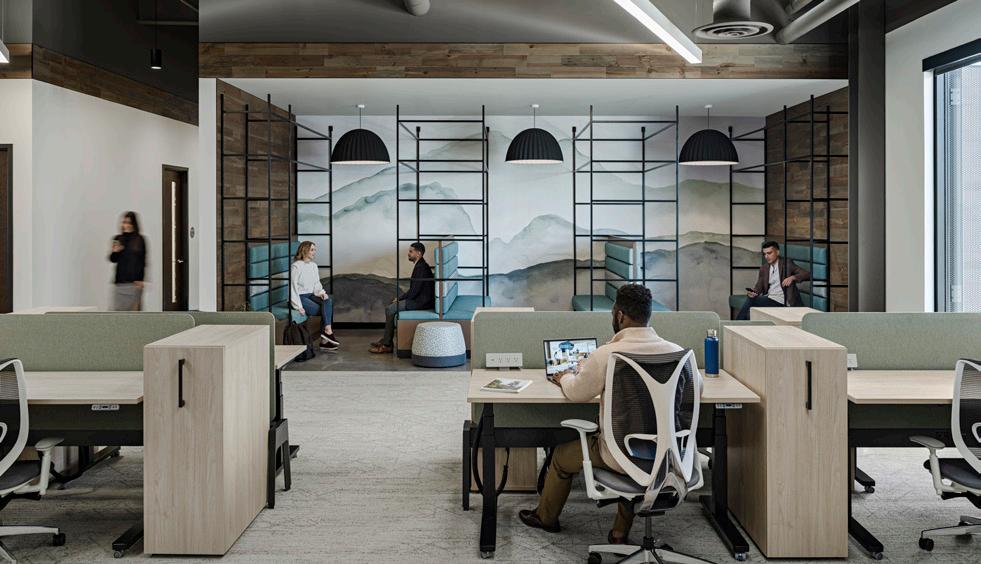
A Nod to Regional Icons — Both Natural and Human-Made
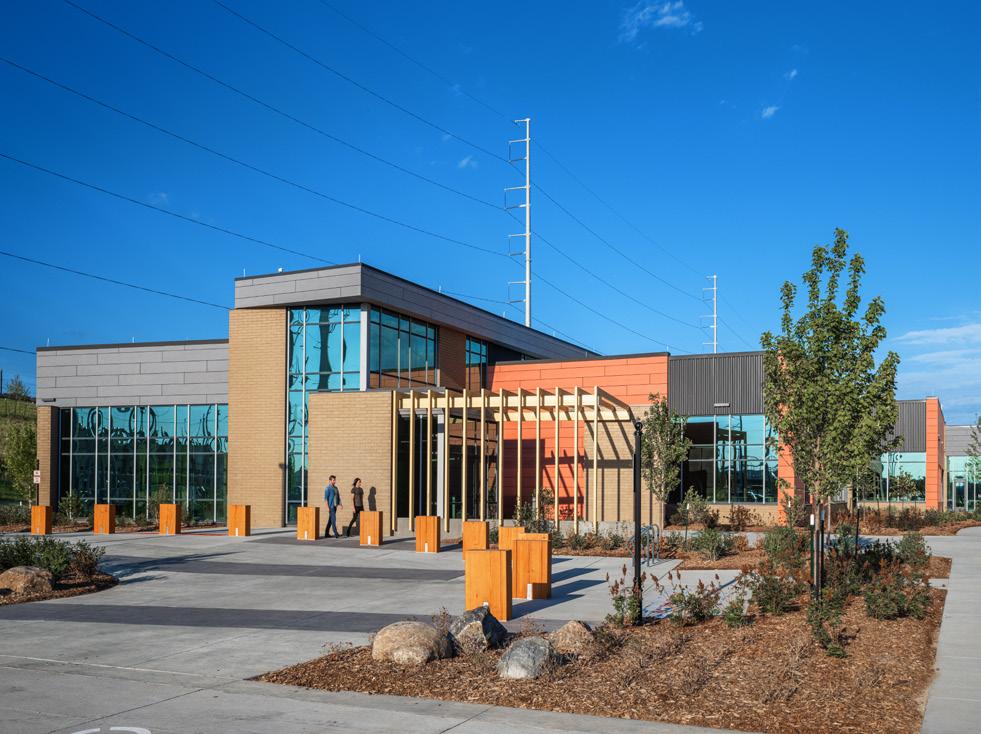
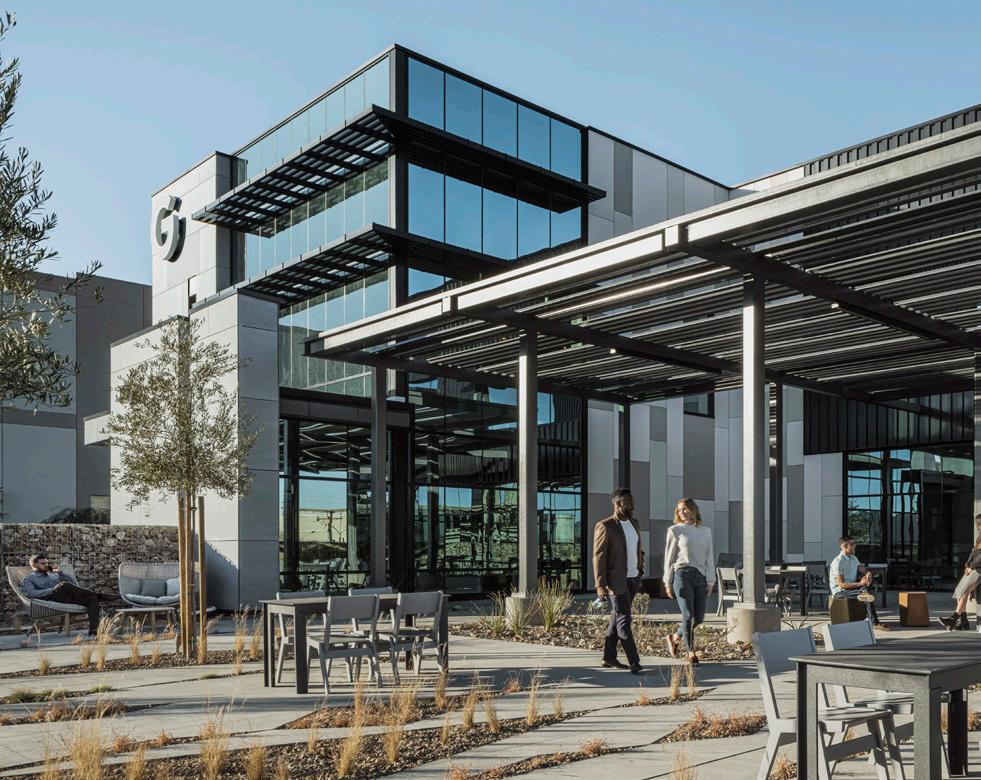
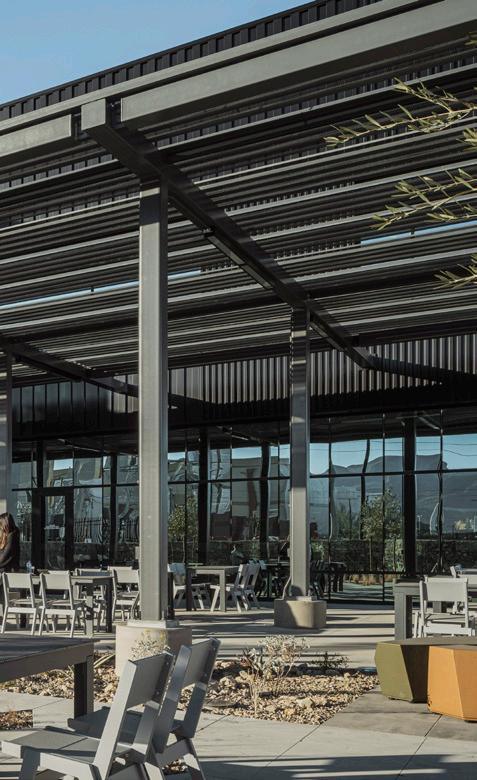
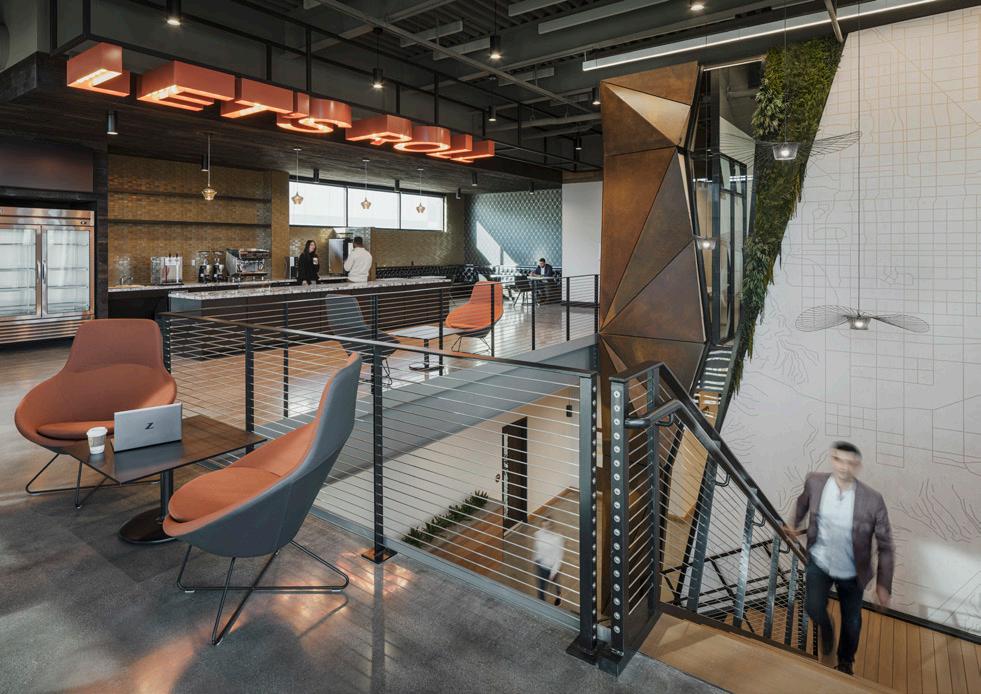
A big priority of the project was to maximize an outdoor courtyard for that critical connection to nature and take full advantage of daylight, no matter the weather or season. To achieve this, the design team leveraged floor-to-ceiling glass walls in the café adjacent to the courtyard and added a robust outdoor canopy to provide shading from the desert sun.
Gabion walls surround the courtyard with a natural and layered enclosure, utilizing an array of local rock varieties. This sloped earth and rock wall also acts as an acoustic barrier, muffling the sound of the data center’s mechanical equipment.
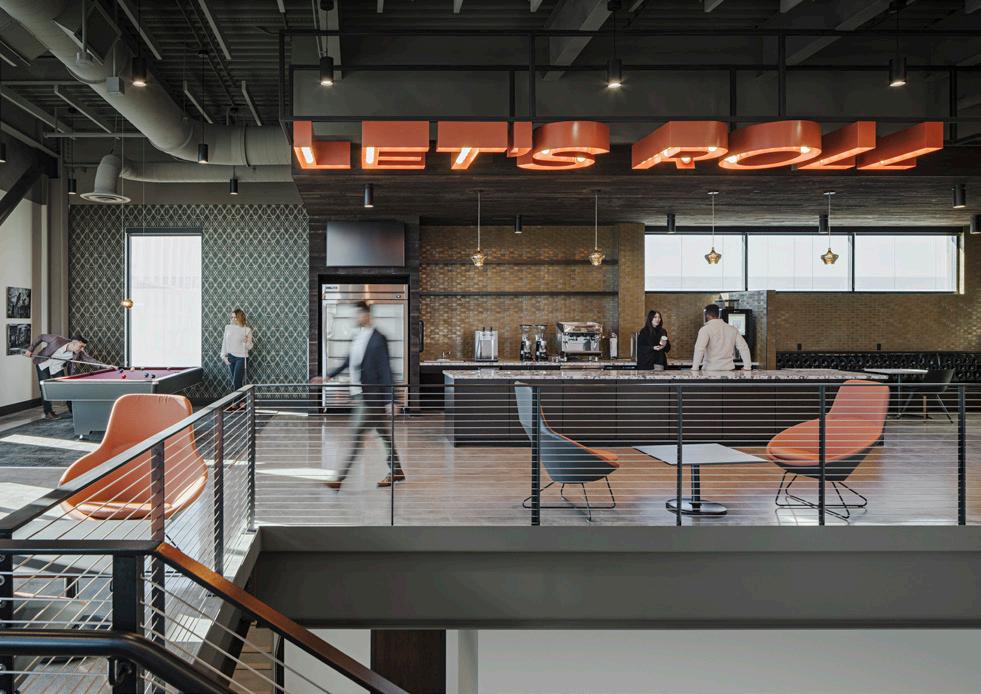
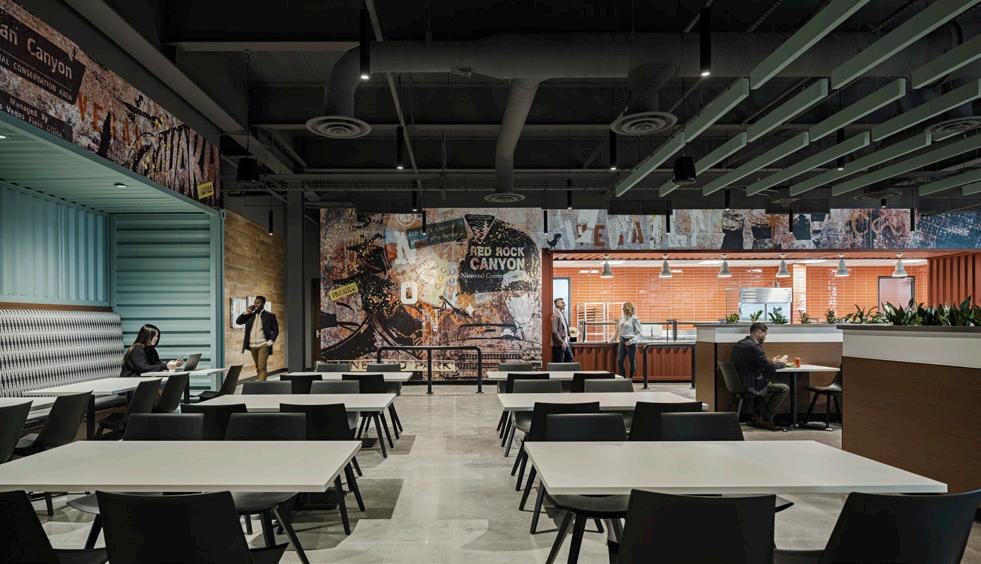
The café space on the main level was another highlight of the project. Through the design, the team paid homage to Nevada’s iconic city, Las Vegas. The “buzziest” spaces in the building, where co-workers come together to eat, play, and be social, received the “Vegas treatment.” The café was inspired specifically by Las Vegas’s Downtown Container Park, a unique place where people gather for shopping, dining, and entertainment.
The overall design aesthetic embodies the hub’s desert setting with colors and textures that reflect
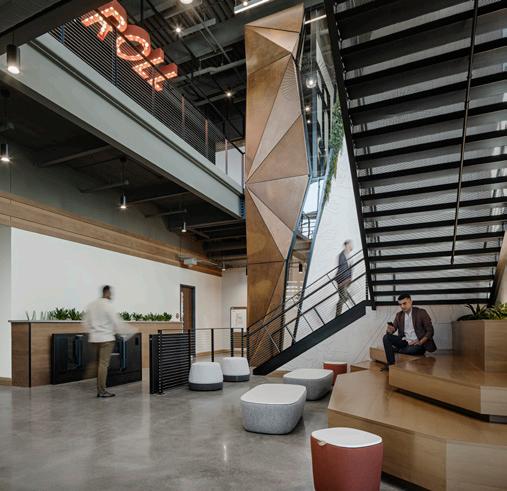
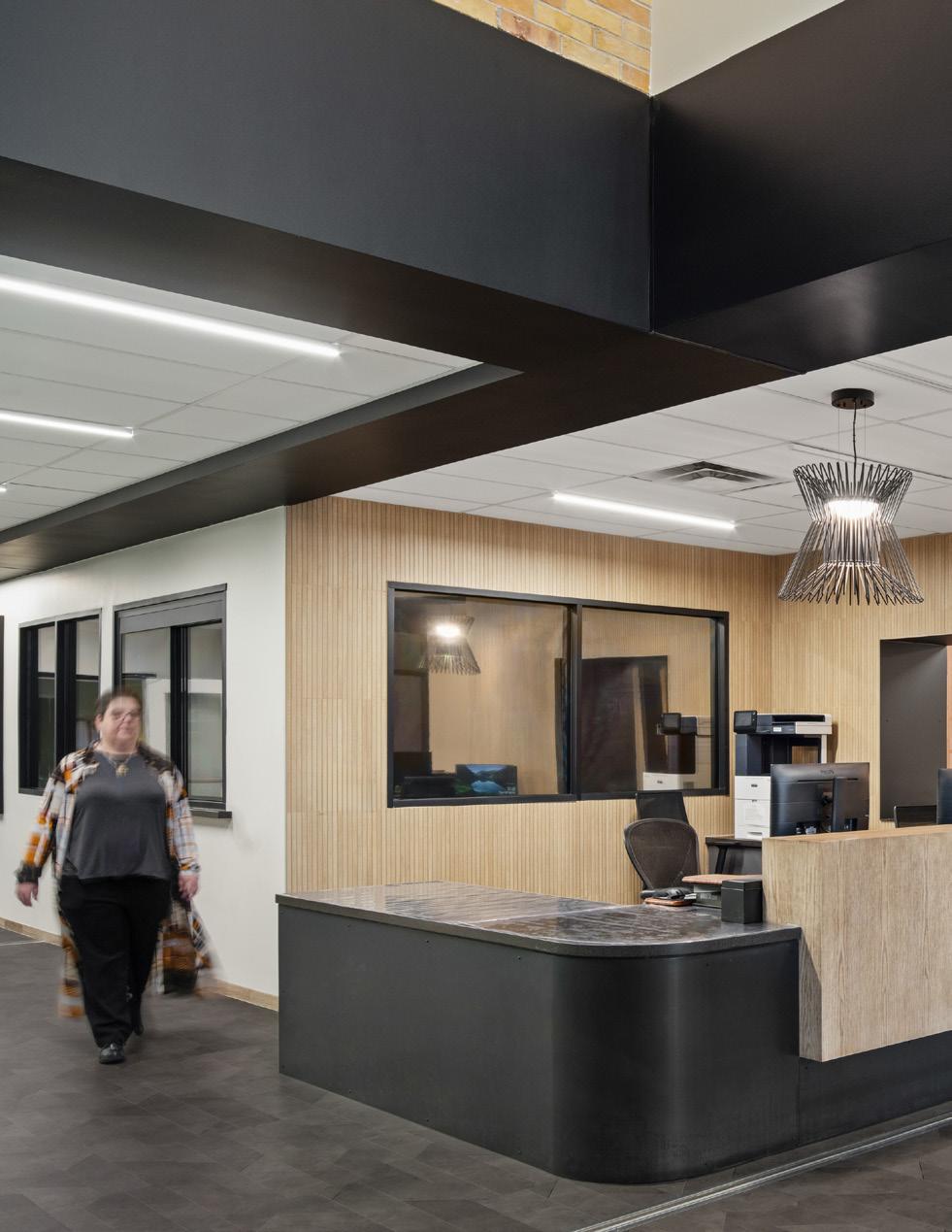
the character and features of the surrounding landscape. The lobby and reception area are imbued with geological forms, including a feature wall that echoes the rock outcroppings and strata found in the region. A two-story map graphic represents the local topography and visually ties together the upper and lower levels of the building.
The Cushing Terrell design team brought on a geology researcher to understand the prominent geological features of the region,
which inspired the environmental graphics and location-based themes such as Sloan Canyon, Red Rock Canyon, Valley of Fire, and Hoover Dam.
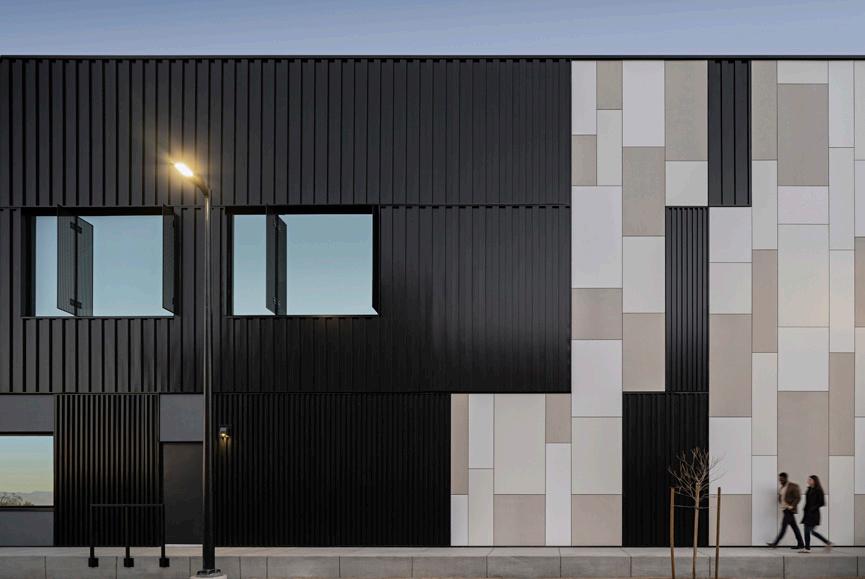
“I felt strongly that the geology of the area would also lead us to the cladding solution for the exterior of the building,” Hallowell said. “Working with our geology researcher, we decided to use gneiss rock layers as our inspiration. These metamorphic rocks are layered, creating a banded appearance with alternating light and dark mineral bands.”
Because the building is in a high seismic category, the design also included necessary structural elements to ensure long-term safety and stability. “We utilized buckling-restrained braced frames (or BRBFs) to provide the lateral resistance and energy dissipation needed,” said Lindsay Watters, the lead structural engineer for the project. “Beyond their structural performance, the BRBFs also became a defining architectural feature — their exposed clean lines contribute to the visual identity of the space while showcasing the beauty of seismic-resilient design.”
BEHIND THE DESIGN
Sustainability and the Employee Experience
The project design adhered to the client’s proprietary sustainability guidelines, which prioritize indoor air quality, healthy materials selection, acoustic comfort, and ample access to views and daylight. One of the major drivers of the project’s energy efficiency and water reduction strategies was the mechanical, electrical, and plumbing design for the project. From the major systems to the end-user equipment, the design prioritized both sustainability and the comfort of the Henderson workforce.
Working with Google is always a highly creative and interactive process.
Bryan Hallowell Design Lead | Cushing Terrell
“As someone who designs with a focus on the user, it’s really rewarding to see their constant attention to ‘upping’ the employee experience,” Hallowell said. “I think that’s their main mode — to fortify connectedness, community, and healthy lifestyles through their workplaces.”
WHERE High Tech MEETS Human-Centered DESIGN
VETERANS AFFAIRS HUB
AUSTIN, TX
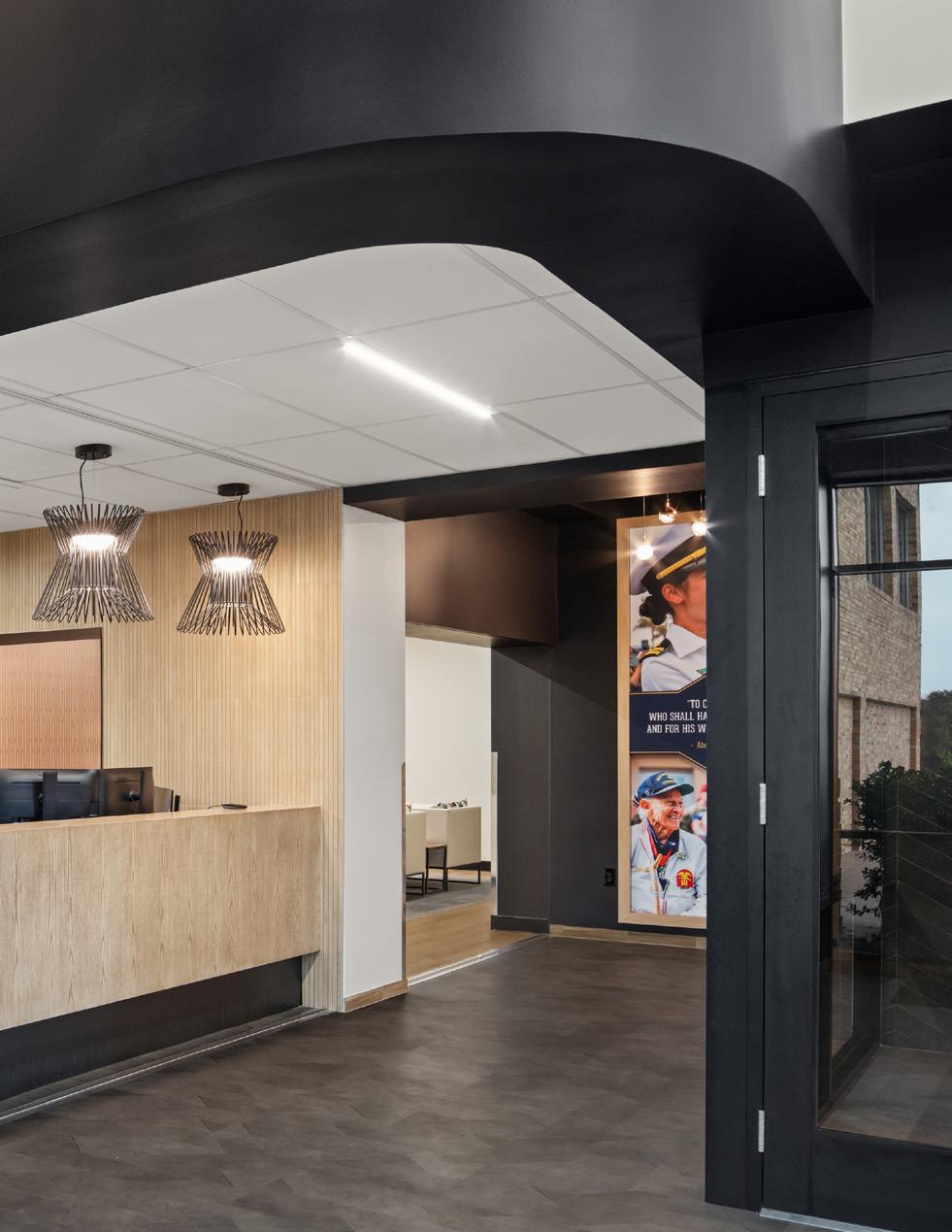
Government facilities are not always known for their aesthetics. The focus tends to be on safety, security, and functionality. But when it came to renovating the Austin Information Technology Center (AITC), a central hub for the U.S. Department of Veterans Affairs (VA), the client and design team envisioned something different — spaces that not only support VA’s tech-centric operations but also support the experience of those who utilize the facility.
The 250,000-square-foot AITC comprises a variety of workspaces for VA staff, a data center, and command and control posts. One of VA’s largest data centers, the facility supports veteran claims and applications, critical missions, and IT applications for VA medical centers across the country. Originally built in 1967, the AITC has been undergoing significant upgrades since 2019 to address VA’s operational needs as it relates to high-performance computing, information technology infrastructure, and staff workspaces.
As part of the overall renovation, Cushing Terrell was tasked with 13 projects that encompass nearly every system and space within the building. The projects included significant engineering work to add electrical connectivity and reliability for 24/7 operations and to modernize outdated mechanical systems.
Additionally, the Cushing Terrell team was responsible for the redesign of offices and workspaces to enhance the user experience. Areas throughout the building
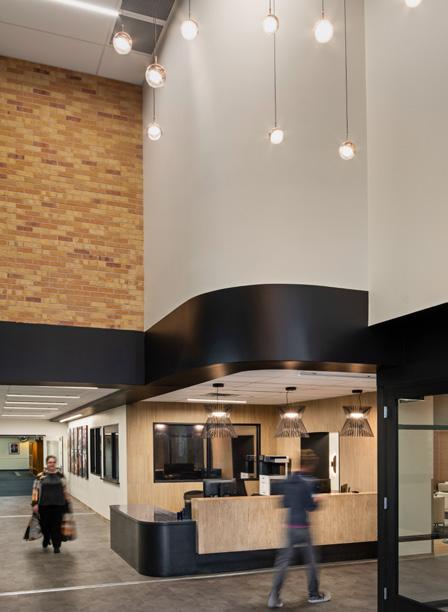
were designed to increase functionality, privacy, ease-of-use, and comfort, while the entry was refreshed, bringing a design-forward, welcoming aesthetic to the building.
Sparking Success for Veterans Affairs — from the Sockets Up
To support veterans across the country as well as around-the-clock data access, Cushing Terrell engineers substantially overhauled the AITC electrical system. The primary purpose of the electrical project was to create redundancy. Because the AITC houses critical data, it needs multiple layers of electrical capability in case of power outages or unforeseen technology issues.
Alan Bronec, principal, electrical engineer, and design director, explained: “The power system was redesigned on a plan that connects to multiple power
sources within Austin, meaning if one substation were to fail for any reason, the power would be pulled from a different source within the city and the data center would continue to operate — this is in addition to a generator and uninterruptable power supply capabilities.”
The Cushing Terrell team conducted a thorough electrical study of the AITC’s program and redesigned part of the power system in accordance with the Uptime Institute standards for a Tier 3 data center. Uptime Institute is the ultimate authority in digital infrastructure performance standards, and a Tier 3 system has redundant electrical and cooling components and multiple independent distribution paths serving the IT equipment. This allows the electrical and cooling equipment to be taken out of service for maintenance without having an impact on critical IT equipment.
The electrical upgrades were significant and will have a direct impact on the ability of VA to ensure continuous operations and meet the needs of veterans. However, we didn’t stop there. The upgrades made throughout the building connect critical teams and systems to generator-backedup systems, so their work is seamless.
Alan Bronec Principal | Electrical Engineer
Terrell
Cushing
Protecting Big Data via Chilled Water Looping
Data is accessed and stored at the AITC on a massive scale. The data center is required to operate on a 24/7 basis while maintaining 99.999% availability for all IT systems. Thus, for a second act of redundancy, our mechanical engineering team designed an expansion of the water-cooled central plant to keep the technology operating at full capacity constantly.
The team designed a chilled water system to provide cooling for the data center that entails everything necessary for proper IT functionality, plus two backup
options. The project also included computer room air handlers that use chilled water to reduce the amount of electrical power needed to operate the data center.
With the AITC’s reliance on a 24/7 water source, Cushing Terrell investigated backup water sources as part of a feasibility study. The study included the potential of adding a water tower, an on-site deepwater well, and a second water connection.
Additionally, the project included modifications to the existing HVAC and fire protection systems, all to ensure a comfortable environment with improved air quality and life-safety infrastructure.
Elevating VA with Style and Functionality
From an interior design perspective, the Cushing Terrell team paid special attention to creating spaces where local, in-office staff and teams from across the country could come together and collaborate.
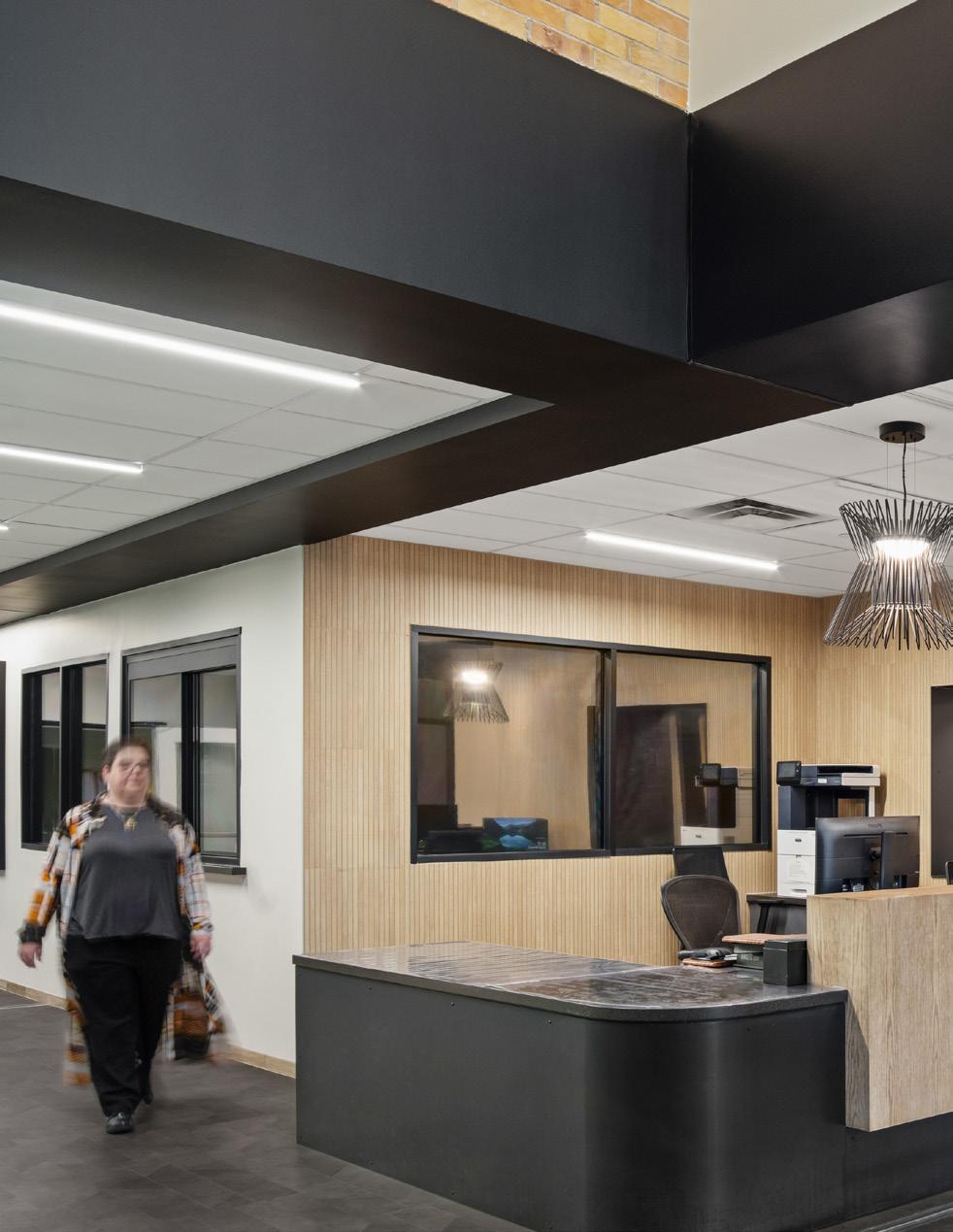
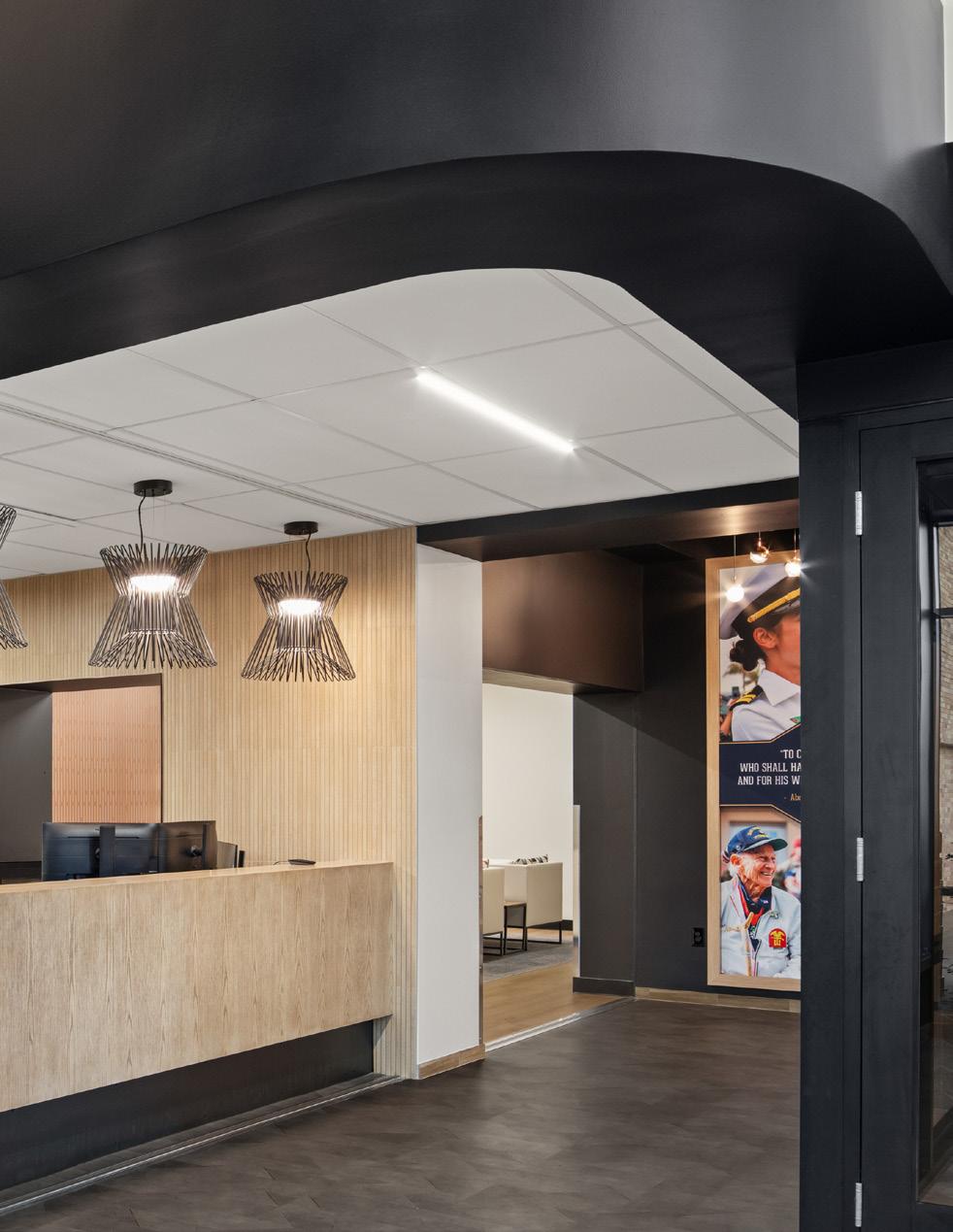
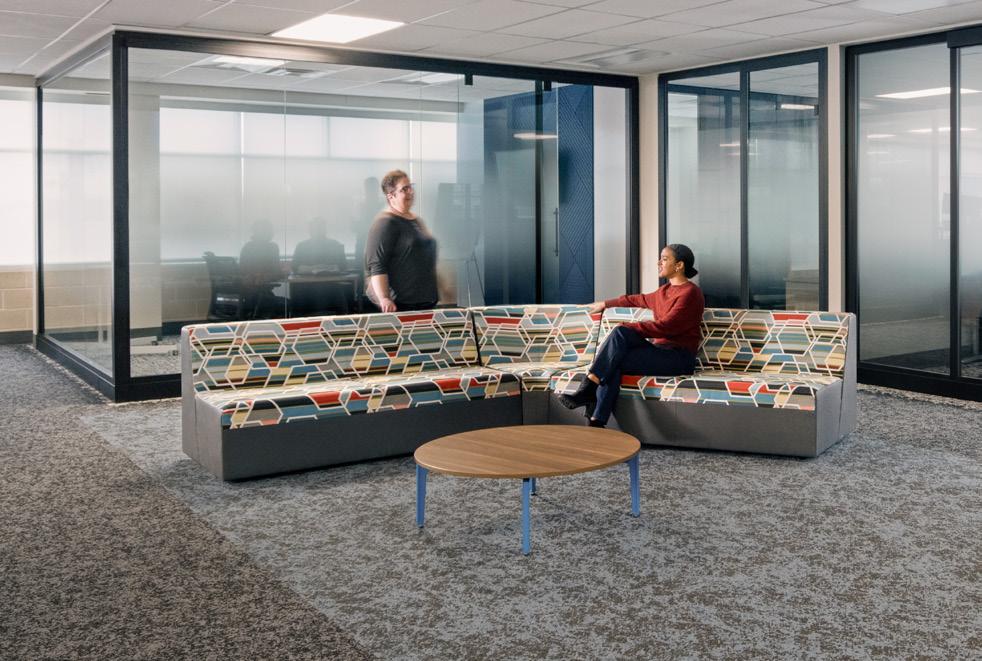
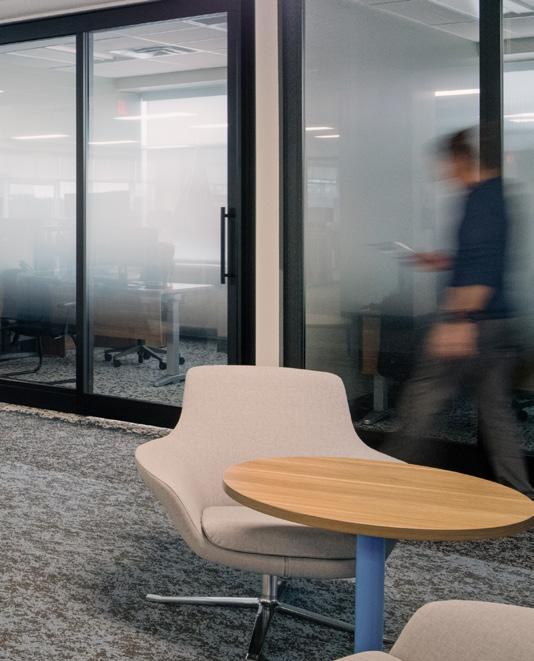
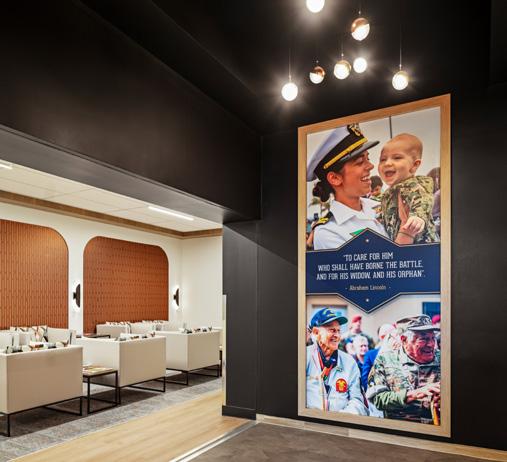
Designers incorporated the vibrant culture of Austin, with colors and textures unique for a federal space. Additionally, they sourced photography representing veterans from all branches of the military for graphics used throughout the building. Glass and metal materials, mixed with the energetic color palette, resulted in a modern, yet warm and welcoming space. The design also took full advantage of large, existing windows to create open, light-filled interior spaces with demountable glass partitions.
The same materiality and aesthetic treatments were applied to the building’s entryway, executive suites, open office spaces, waiting rooms, and shared areas such as cafeterias, breakrooms, and restrooms to offer an inviting experience for VA visitors and staff.
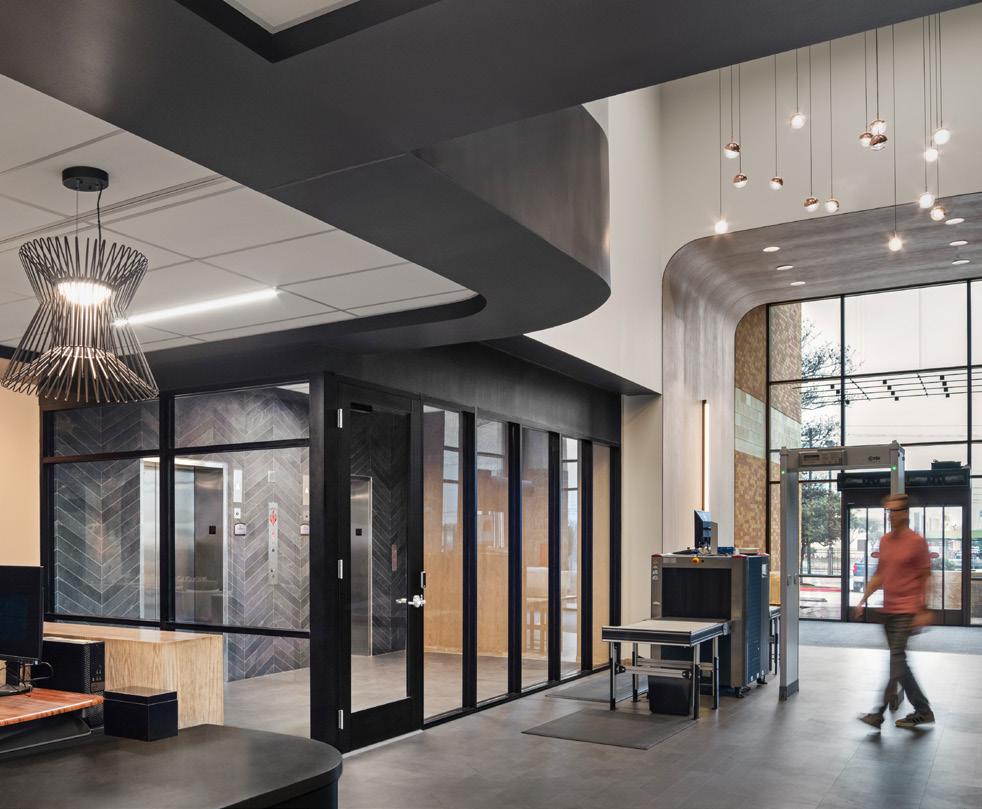
“For the entryway redesign, our goal was to elevate the space,” said Angelica Henderson, the interior
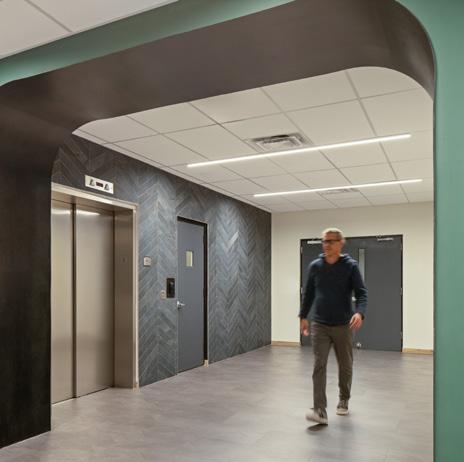
design lead for the project. “We reimagined the existing ceiling above the security checkpoint and entrance to the building to provide a grand two-story archway clad in a wood veneer finish. The design also features hot-rolled-steel archways at three locations in the entry area to designate the major access points to the departments.”
In the office areas, the design team paid special attention to power routing, spatial needs, and work-style flexibility. Through strategic space accommodation, the renovation creates opportunities for community and collaboration, as well as focused work. Movable furniture, implied zones, and sliding doors all contribute to balanced functionality.
“Our approach included a long-term view of how each of the AITC projects would progress and be phased throughout construction, which will continue through 2027,” said Cynthia Brantley, Cushing Terrell project manager. “We worked to understand the VA mission and how that influences every project in the building. This was key to helping both the General Services Administration and VA determine priorities with the funding available.”
Building Performance
Exploring the Options: State-of-the-Art Modeling Tools Achieve Both Efficiency and Comfort
Our goal is to deliver the best buildings possible, both in terms of their performance and people’s experience within them. To achieve this, a key tool we utilize is building performance analysis modeling.
This modeling tool creates virtual buildings we can manipulate to explore a variety of possibilities as we seek the best balance of performance and cost. We iterate through hundreds of options, then work backward from key performance metrics (such as energy use intensity, daylit areas, operating costs, and greenhouse gas emissions) to find the best path forward.
For me, the process resembles the course of a river. Rivers usually start high in the mountains as tiny streams that merge as they descend and grow into larger bodies of water. Our work happens in much the same way: Early on, there are many ideas of what the project could and should be. Using simulation tools, we quickly explore all the streams and determine which are headed in the right direction for the goals of the project.
While a high-performing building is less expensive to operate, consumes less energy, and emits less greenhouse gases, there’s also the user experience to consider. The most efficient building might be a windowless box, but that’s not a great place for people to be. Humans thrive in places with a connection to nature, comfortable temperatures, and balanced levels of noise and light.
Thus, our models have evolved to include important metrics such as floor area with quality views and daylit areas. And we’ll continue to ensure these human-centered metrics are woven into our definition of building performance as we work to realize buildings that use less resources and where people can thrive.
Tim Johnson Director, Sustainability Cushing Terrell

POWERING LEARNING ENVIRONMENTS Through
On-Site
Solar Solutions
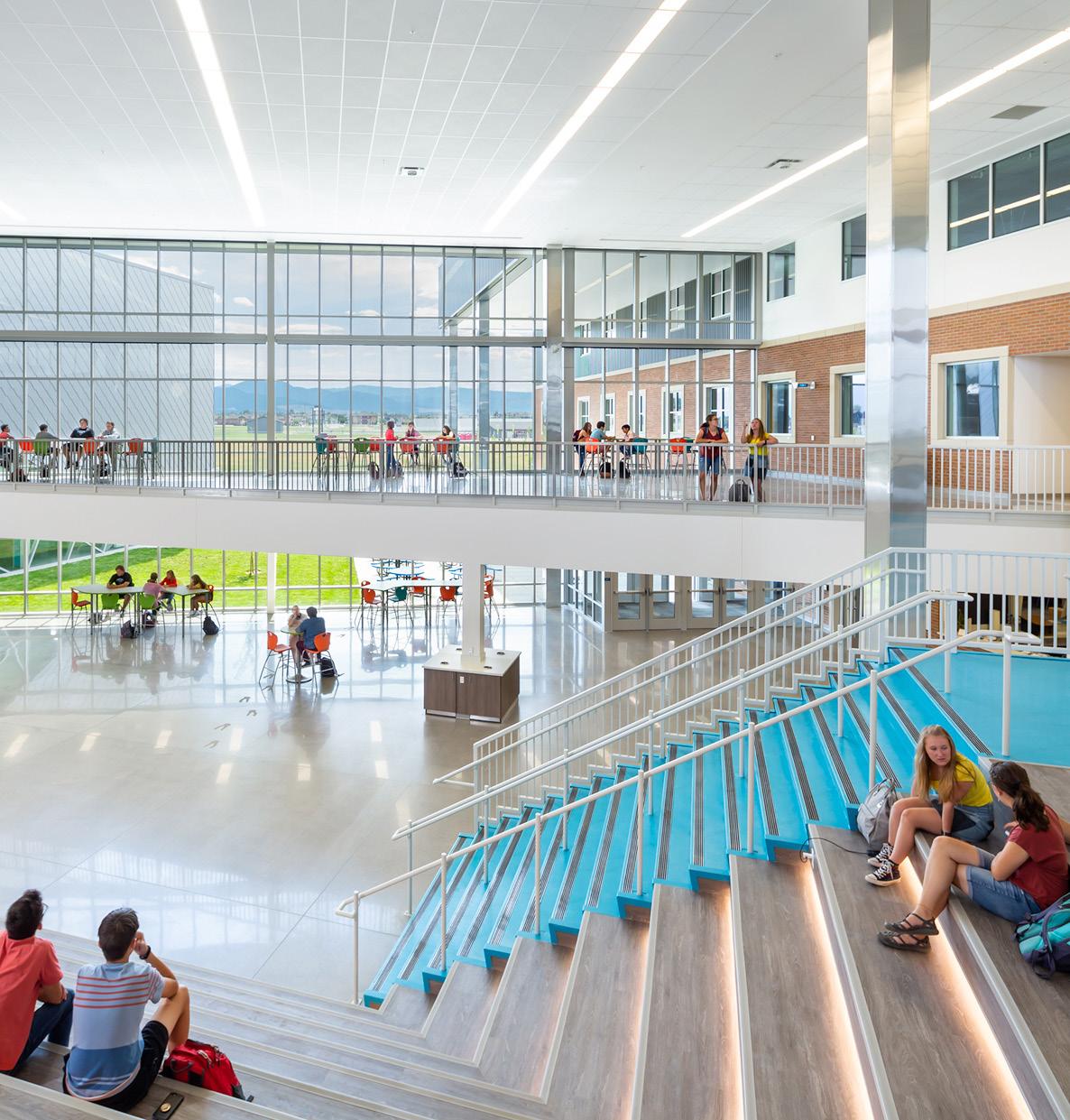
There’s no doubt educational institutions must fully capitalize on what are often tight budgets. Administrators make decisions that balance operational and educational goals so they’re able to support both high-performing buildings and high-quality education. But what if there was a way to simultaneously lower energy costs, enhance education, and be part of a more sustainable built environment?
One of the design solutions Cushing Terrell helps education clients implement is on-site solar to offset energy costs and serve as a learning tool.
Designing for a Bright Future in Higher Education
Montana State University (MSU) has long been a champion of sustainability, understanding the importance of environmental, social, and economic performance. Through MSU’s Office of Sustainability, formed in 2012, the university has led the installation and utilization of alternative energy systems, highly efficient LED lighting, water conservation systems, HVAC enhancements, and more. In water, lighting, and heating and cooling alone, MSU saves about $410,000 per year.
In 2023, MSU earned a prestigious STARS Gold rating from the Association for the Advancement of Sustainability in
Higher Education — an honor that recognizes MSU’s comprehensive achievements.
As a design partner for MSU, Cushing Terrell has supported the university with many of its energyrelated projects over the past decade, including the design of solar panels and systems in buildings and planning for the installation of solar at a future date, making them “solar ready.”
The Cushing Terrell team has worked on an ongoing, campus-wide master plan to increase MSU’s overall energy efficiency via the design, construction, and maintenance of buildings on campus to an exponential degree of sustainability. This effort will aid in the university’s goal of achieving STARS Platinum by 2035 and carbon neutrality by 2040.
For example, solar wall technology utilized for MSU’s Romney Hall improved the building’s energy performance by more than 40%. Designed into a new elevator core clad in dark-colored perforated metal panel, the system captures solar-heated air that is
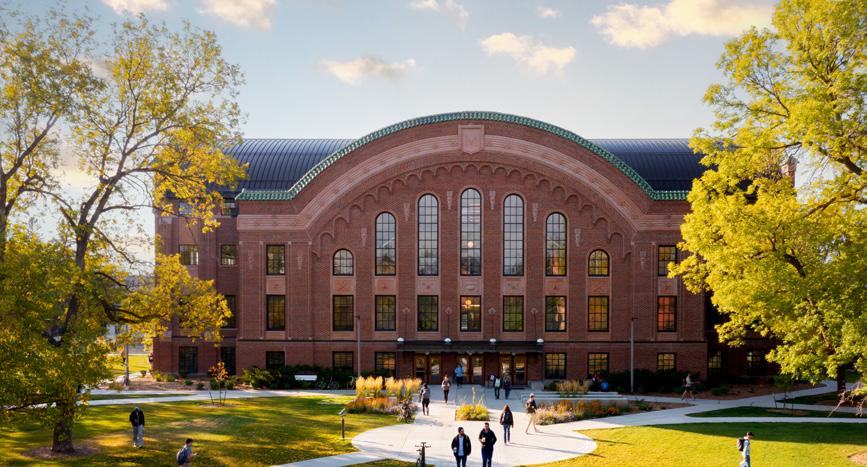
incorporated into the HVAC system and circulated via 40 heat pumps throughout the building. The heat is transferred to and from the campus’ geothermal system, providing most of the heating for the building. The historic renovation of Romney Hall earned LEED Gold and is one of the projects that helped MSU earn its STARS Gold rating.
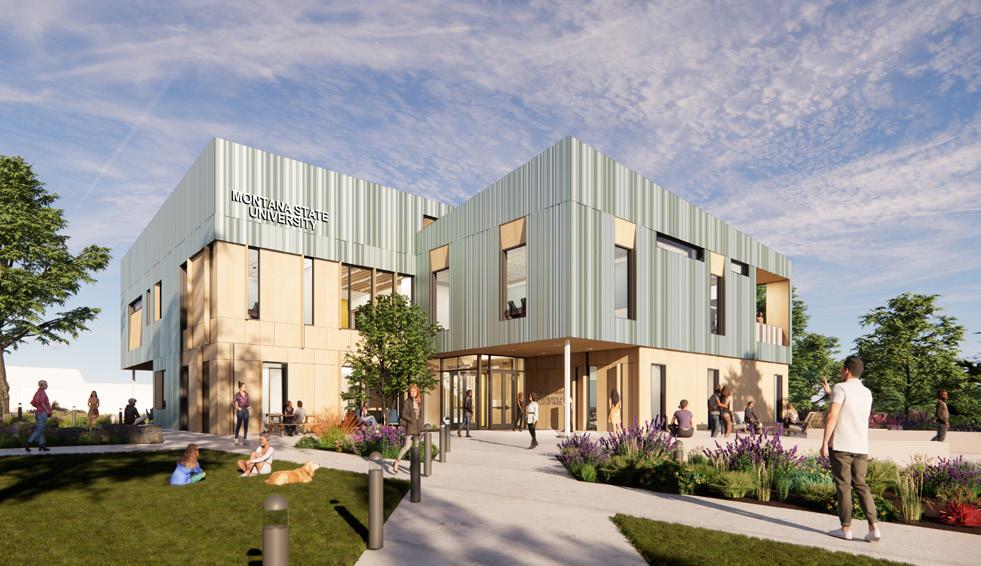
Additionally, Cushing Terrell partnered with CO Architects on five new nursing education facilities for MSU — all designed to be solar ready with the goal of LEED certification. Those buildings are taking shape in communities across Montana with one complete and the rest under construction.
A Spotlight on “Solar Ready” Bozeman and Gallatin High Schools and the Billings School District
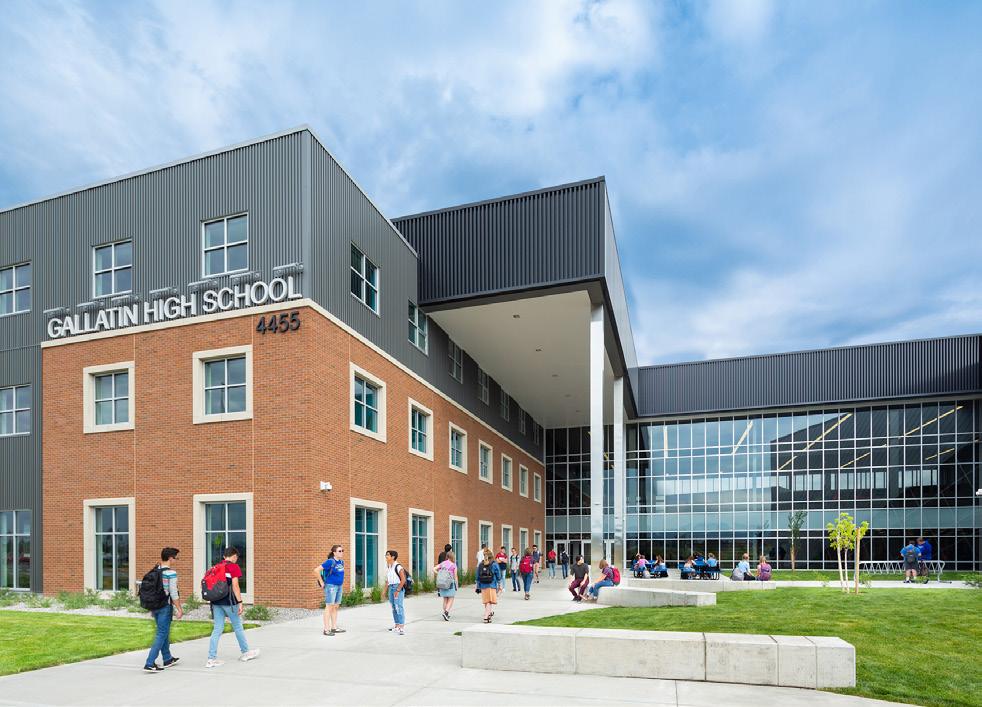
Other examples of schools that have implemented multi-phase solar programs — a good option when you need to meet budgets and align with current funding levels — are Bozeman High School and Gallatin High School in Bozeman, Montana.
When designing the new Gallatin High School and the renovation of Bozeman High School, the Cushing Terrell team ensured the schools would be solar ready, meaning space, structures, and connections all in
place for the future installation of photovoltaic (PV) arrays. Now, three years later, Cushing Terrell is helping the schools realize their solar dreams with the design and layout of these systems.
The 50kW systems are estimated to generate approximately 65,000 kilowatt hours per year, which is equivalent to the average consumption of six, single-
family homes in the United States. The arrays will power shop equipment, lighting, cooling, and other general electrical loads.
Likewise, the Billings School District has followed this model, starting with high schools, then middle schools, and now moving on to elementary schools. Each location and potential future utility has been considered with arrays installed in fields, on rooftops, and in space-efficient areas such as covered parking structures. The Billings School District utilized NorthWestern Energy’s grant program for their projects, and with the grant, the schools should see a payback at around 12–13 years.
Students Learn the Impact of Different Solar Systems
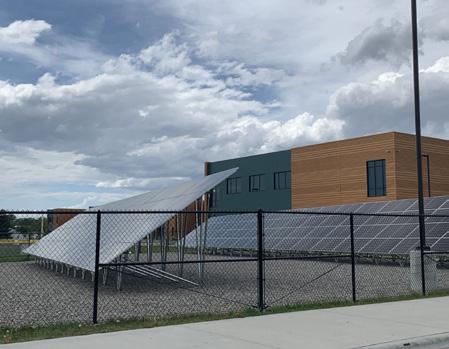
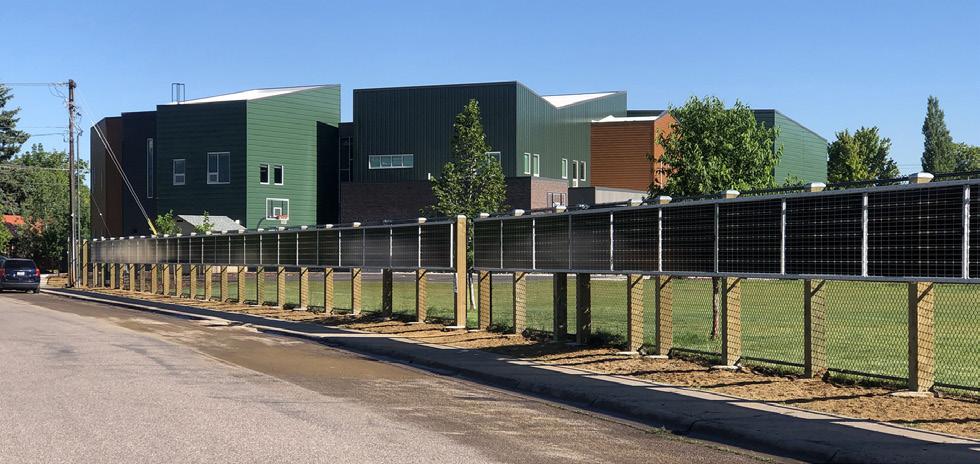
Cushing Terrell provided design services for a variety of arrays for NorthWestern Energy in partnership with Missoula County Public Schools. The goals were to provide an opportunity for students to learn about renewable energy and to give NorthWestern Energy the ability to assess how different system designs can tie into the electric grid. The four PV arrays, one installed at each of the local high schools, feature designs adapted to their surroundings.
At Big Sky High School, the system consists of a PV array that covers a patio area as a source of shading and protection from the elements. This site also has a planned battery energy storage system, which will make it possible to store excess energy generated from the array.
The Hellgate High School approach centered on the
challenge of integrating a solar system into a densely populated urban setting. This array features PV panels installed on an 18-foot-high carport canopy, which kept the array out of the shadow of adjacent buildings.
Sentinel High School’s array supports the study of different orientations and times of day that would create a peak output. The various orientations allow NorthWestern Energy to evaluate the feasibility of offering incentives to customers to place arrays in directions other than the traditional southern orientation. This directional choice helps create more evenly distributed solar energy throughout the day.
And finally, for the array at Willard Alternative High School, the team integrated PV panels vertically into a fence. This design helps increase solar production in high latitude climates that experience large amounts of snowfall and low sun angles during the winter.
A Shining Example of Hands-On Learning for CTE Students
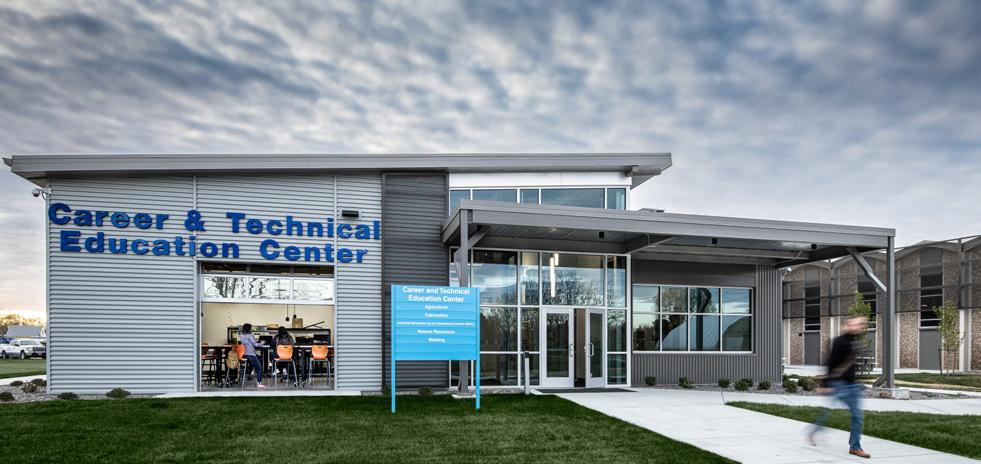
Treasure Valley Community College in Ontario, Oregon, also worked with Cushing Terrell for their Career and Technical Education Center, which is an immersive, hands-on learning environment focused on offering students the skills needed to excel in the region’s high-demand industries such as agriculture, natural resources, automated systems, welding, and fabrication.
Cushing Terrell provided architecture, interior design, electrical, mechanical, and structural engineering services for the renovation and addition, including design of the 28kW PV array that provides the building with renewable energy and serves as a demonstration tool for educators and students.
Highlighting the Importance of Environmental Readiness and Learning
What stands out in these examples is the beneficial partnerships that can develop between systems designers, educational organizations, and local utility companies.
Ultimately, solar energy systems are a smart way to meld real-world engineering solutions, enhance handson learning, and support the use of alternative energy, resulting in multifunctional and resilient spaces that both empower and inspire the next generation.
So much MORE than a Market TOWN &
COUNTRY MARKETS
BEHIND THE DESIGN
A shift in grocery shopper sentiment has people prioritizing meal planning, convenience, and fresh, seasonal offerings. This has prompted grocers to respond with unique features and experiences that give customers even more reasons to make the trip.
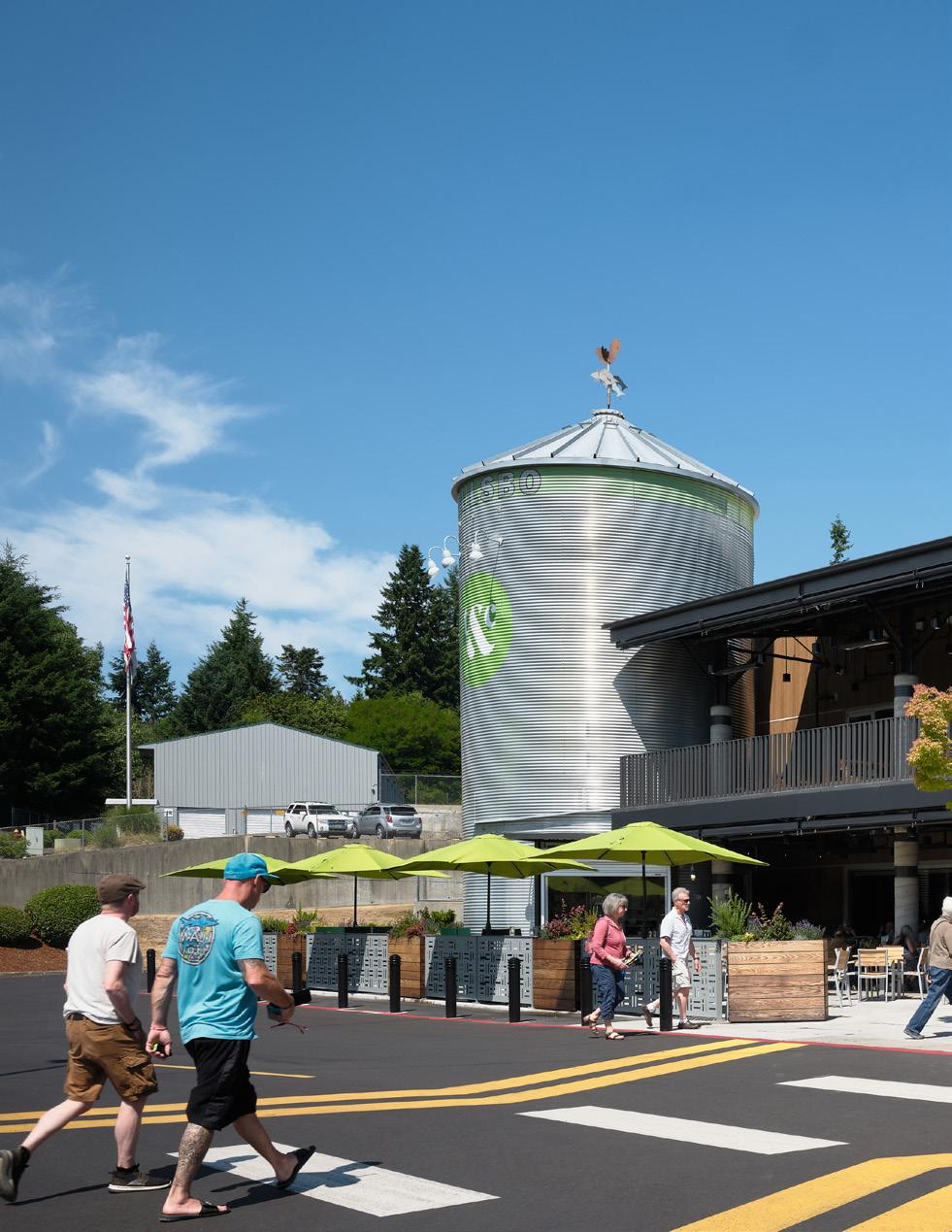
For almost 30 years, Town & Country Markets in Poulsbo — a charming town, 20 miles west of Seattle and across Puget Sound — has been a key part of the community, providing necessities and regional specialties. As the retailer’s management looked ahead, they identified several goals to take them boldly into the future, which included responding to customers’ desire for quick, easy, and healthy meal options in an elevated setting.
For its recent renovation project, Town & Country Markets teamed up with long-time design partner, Cushing Terrell, and began the creative and technical work to fully revitalize the Poulsbo market. The goal was to provide a collection of experiences. This approach was a natural progression for the grocer, which has always positioned itself as a community hub and a source for inspiration.
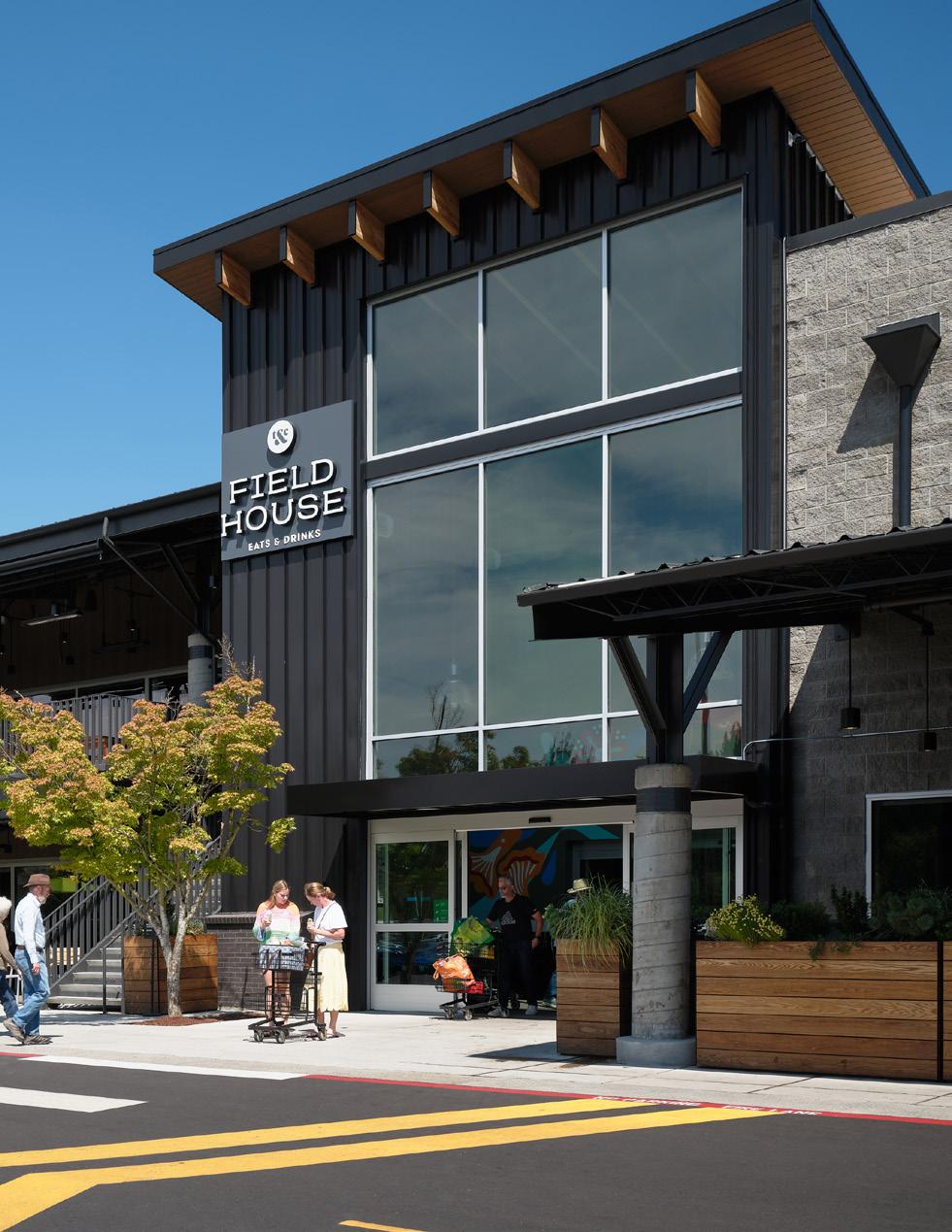
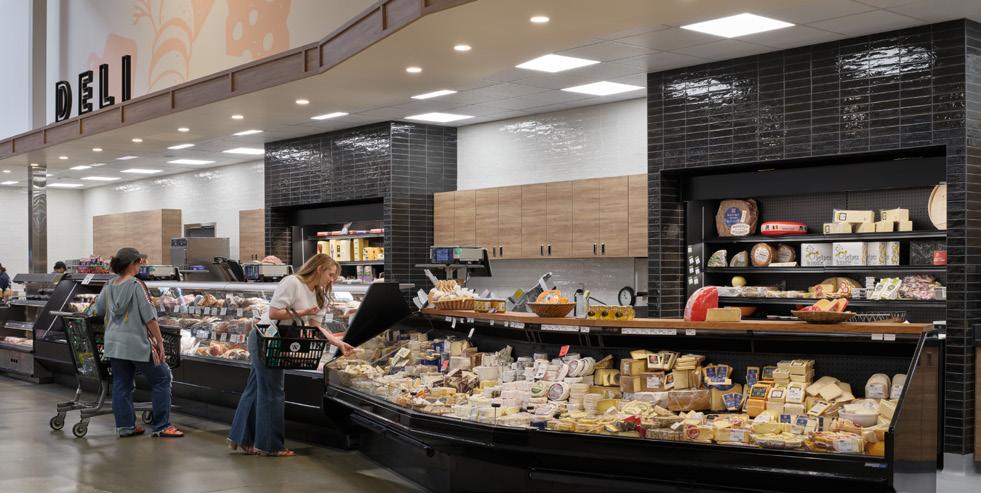
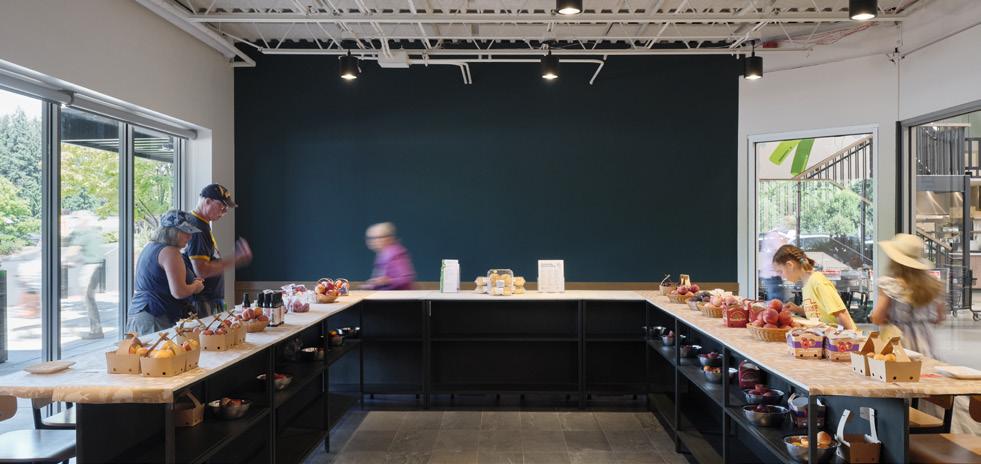
Design updates touched every department: some were enhanced; others were entirely revamped. To broaden the store’s appeal, the design called for new features such as a classroom and community kitchen, a reimagined meal inspiration center, a test kitchen, and an outdoor patio. Additionally, the store’s beauty and houseware sections were elevated with new fixtures and lighting, creating a more inviting and modern retail environment; the deli and cheese areas were reimagined; and all departments received new signage, valances, and refrigerated cases.
The biggest change was incorporating a restaurant within the store, which utilizes regional ingredients from MiddleField Farm on Bainbridge Island, Town & Country Markets’ own organic, regenerative farm established by the grocer’s founders more than 100 years ago.
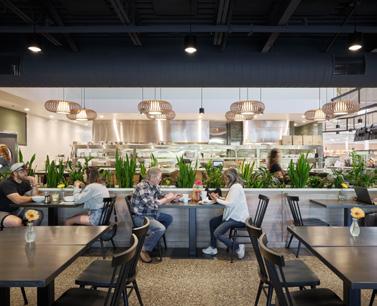
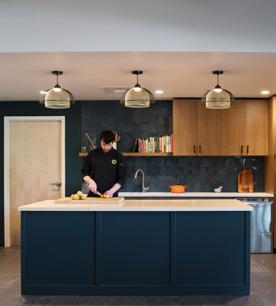
We wanted to enhance the community aspect of the store and create a destination.
Kara Eberle-Lott Principal | Project Lead | Cushing Terrell
“It’s a destination for people all over the region, whether they’re heading to vacation homes on the Peninsula, stocking up on groceries, or coming in for something special. It’s a place where people want to stop and eat or grab a drink with a friend,” said Kara Eberle-Lott, principal-in-charge and project lead.
The renovated store builds on Town & Country Markets’ core offerings by introducing a range of new culinary experiences. True to their vision of nourishing the quality of life, this expansion into dining and community spaces reflects the brand’s continued commitment to serving customers holistically.
Nourishing the Mind and Body
That full arc of nourishment can be felt — literally and figuratively — in the store’s new components. The revised layout added a community kitchen and classroom for learning opportunities and demonstrations, as well as other curated events.
“These spaces allow people to try new foods or a new way of cooking with the freshest ingredients of the season,” Eberle-Lott said. “It represents a new direction for Town & Country Markets, and the response has been overwhelmingly positive.”
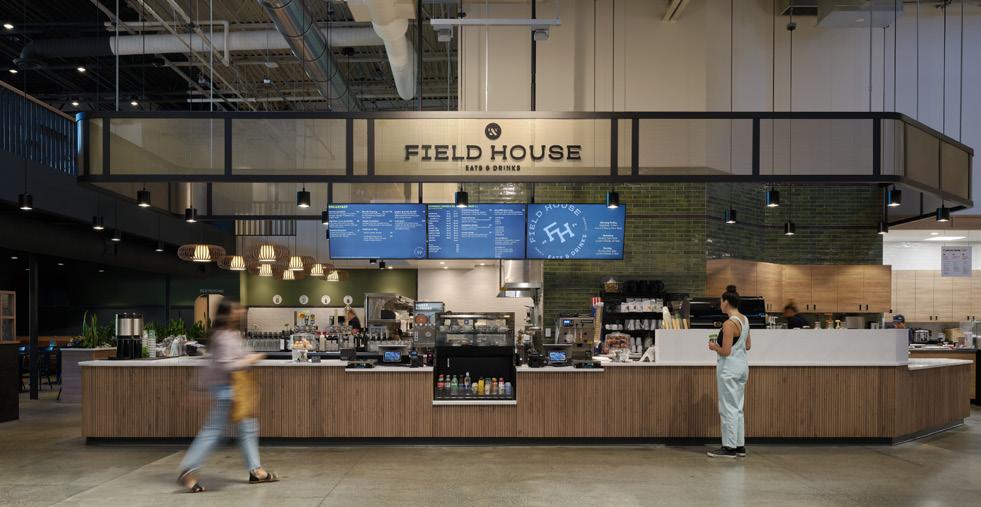
Another phase of the design included a test kitchen as a testament to their philosophy of being responsive to customers’ needs, staying focused on the entire shopping and eating experience, and continually enhancing their offerings. The test kitchen provides a place where Town & Country Markets can innovate with seasonal ingredients and create exciting recipes for their new venture, Field House.
Field House: A Dynamic, Flexible Community Space
A banner component that redefines the grocery store experience is Field House restaurant, embedded inside — yet distinct from — the market, successfully realized in partnership with renowned chef Ethan Stowell.
While Cushing Terrell has supported many projects for Town & Country Markets over the years, this was their first restaurant collaboration. Mallet Design Build joined the team to provide specialized guidance on hospitality-focused elements during the conceptual phase. The process was highly collaborative, with Ethan Stowell and team guiding restaurant flow, equipment selection, and back-of-house operations throughout the project.
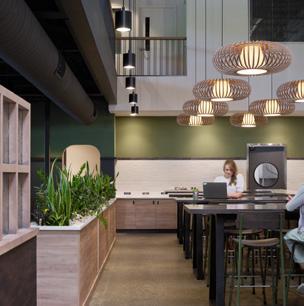
Strategic design elements established clear visual separation between the restaurant and market, including moody paint colors and a focus on hospitality-grade materials and lighting. The team transformed the existing upper-level mezzanine and modest patio into a cohesive indoor-outdoor experience, replacing concrete walls with floorto-ceiling glazing throughout both levels. Where the previous deli and back-of-house kitchen once operated, a highly transparent and vibrant dining space now enriches both the façade and interior with energy and life.
To welcome and guide guests to the mezzanine, an eye-catching mural draws patrons upstairs. The design is both for wayfinding and placemaking,
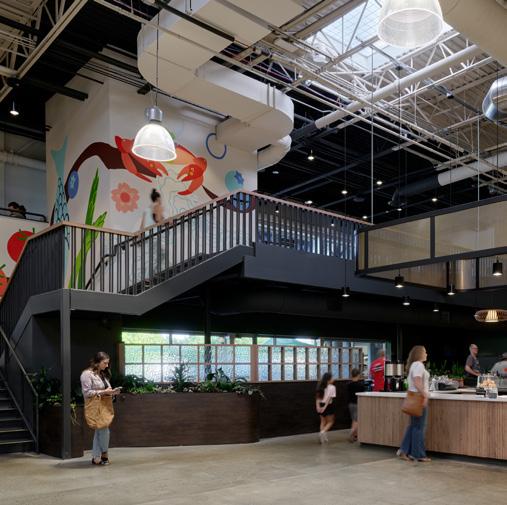
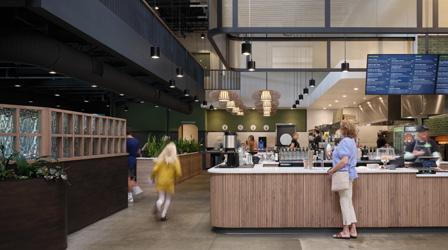
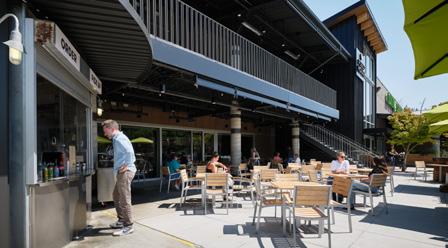
acting as a transition into a cozy dining area. Diners maintain visual connection to the market’s fresh ingredients while enjoying an atmosphere free from the grocery store hustle and bustle.
The new vestibule and thoughtfully designed patio provide outdoor seating options, buffered from parking areas through landscape design and plantings. Warm wood-like siding and a distinctive color palette distinguish the patio space, which has its own unique character.
Field House at Poulsbo is the second Field House for Town & Country Markets, following the successful introduction of the concept at their Mill Creek location. Field House is about more than just food — it’s about creating a dynamic, flexible space that supports community events, casual dining, and a market-to-table experience. This innovative approach encourages customers to linger, interact, and enjoy made-to-order meals in a setting that feels both vibrant and comfortable.
Comprehensive Design and Engineering Services
Cushing Terrell provided a full suite of services for the Poulsbo renovation, including architecture, mechanical engineering, electrical engineering, plumbing design, interior design, structural engineering, surveying, value engineering, landscape design, and energy services. This multidisciplinary approach ensured every aspect of the project — from the technical systems to the customer experience — was thoughtfully considered and expertly executed.
The result is a revitalized Town & Country Markets location that truly casts a wide net. It’s a place where shopping, dining, learning, and community come together under one roof, setting a new standard for what a market can be.

Introducing...

SHARING SUCCESS Building Philanthropy into Our Growth Strategy
At Cushing Terrell, supporting our local communities is core to who we are. Each of our offices has long-held traditions that reflect the culture of the teams in those areas and support a variety of organizations and causes.
As our firm has grown, we’ve made moves to enhance and deepen our commitment to our communities with the goal of having an even greater impact and to “share success,” one of our core values.
In 2022, we established a pro bono design services program. This program helped organize our efforts while providing opportunities to engage with entities outside our firm’s immediate network. Through these projects, we foster connections and professional growth for team members and engage a broad range of talent from across the firm.
Our big news in 2025 was the establishment of the Cushing Terrell Foundation. Through the foundation, we plan to identify strategic partnerships with nonprofits to enable support that goes beyond monetary donations. Our goal is to bring together resources and capitalize on collaboration to increase the power of our philanthropic and charitable-giving efforts in alignment with our mission to “invent a better way of living.”
I’m proud to see the foundation become a reality and grateful for the work put into its establishment by two of our associate principals: Nicole Dovel-Moore and James Foster. I’m equally proud of the enthusiasm shown by our entire team. This foundation will be a strong and enduring legacy that we all can contribute to in a variety of meaningful ways.
Shannon Christensen Architect | Principal Cushing Terrell

Amano MODERN MEXICAN MASTERY
CALDWELL, IDAHO
Restaurante
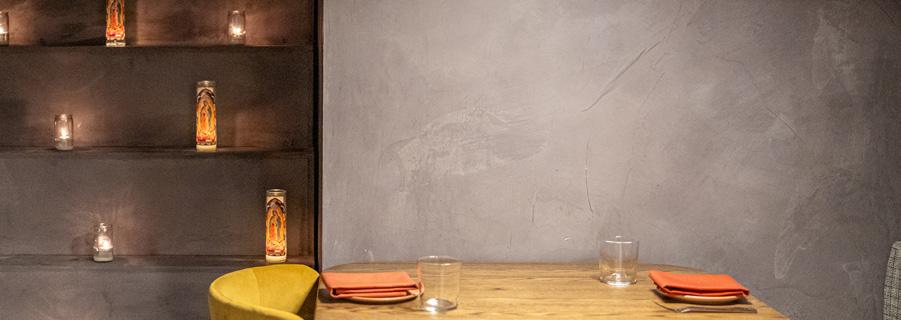
Like the handcrafted Mexican food prepared within, the story of Amano’s new location is one of harmonious input yielding a vibrant, transformative output.
There are many similarities between designing a building and crafting the perfect dish. In fact, almost any platitude will do: Know the rules before you break them. True classics never go out of style. Complexity for complexity’s sake is a recipe for disaster. Creative solutions can enhance every step. And certainly not least: Is there any better feeling than seeing someone enjoy your creation?
Even famed chef Julia Child once said, “The only real stumbling block is fear of failure. In cooking, you’ve got to have a what-the-hell attitude.” She, too, could’ve easily been speaking about design. Such is the no-solution-is-beyond-reach mentality that both designers and chefs must bring to each task.
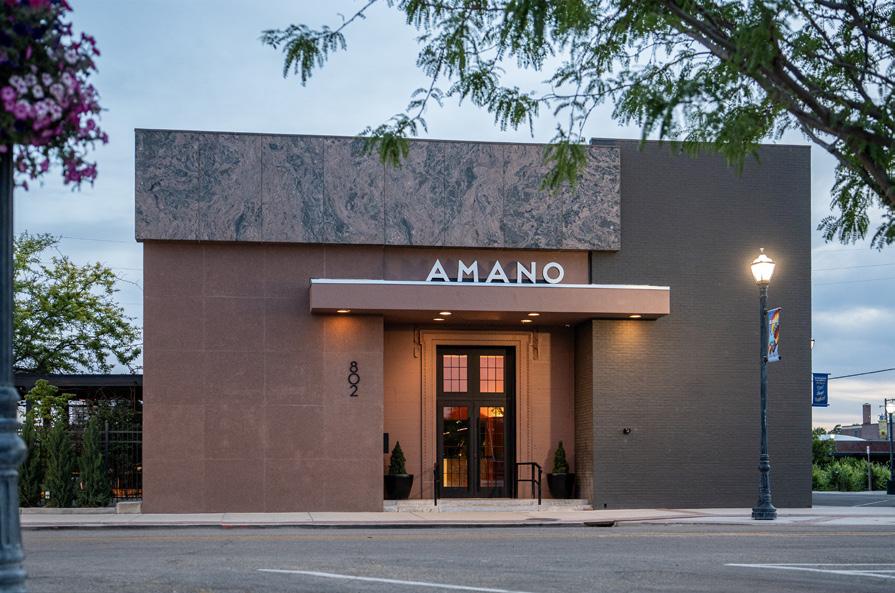
Amano Restaurante (amano means “by hand” in Spanish) — located in the growing, historically agrarian city of Caldwell, 30 miles west of Idaho’s capital of Boise — is no exception.
While searching for a new home for their restaurant, Amano owners Salvador and Becca Alamilla set their sights on an old bank building downtown. They quickly fell in love with the character and bones of the structure.
A less experienced design team or an easily daunted pair of owners might have shied away from the project, knowing the extent of what was needed to repurpose
the building. To name a few of the necessary renovations: a completely new HVAC system, structural roof upgrades to support air conditioning units and ducting that strategically dodge the footthick vault walls, a new inbound power system, new sewer lines, new gas lines, a grease interceptor, and a new fire protection system.
What’s more, the teams unearthed further challenges as the renovations were underway. Even so, they were able to come together, think creatively, and realize something both functional and beautiful. Like every ingredient in a well-plated meal, every design discipline had to work in harmony.

CULTURAL ICON
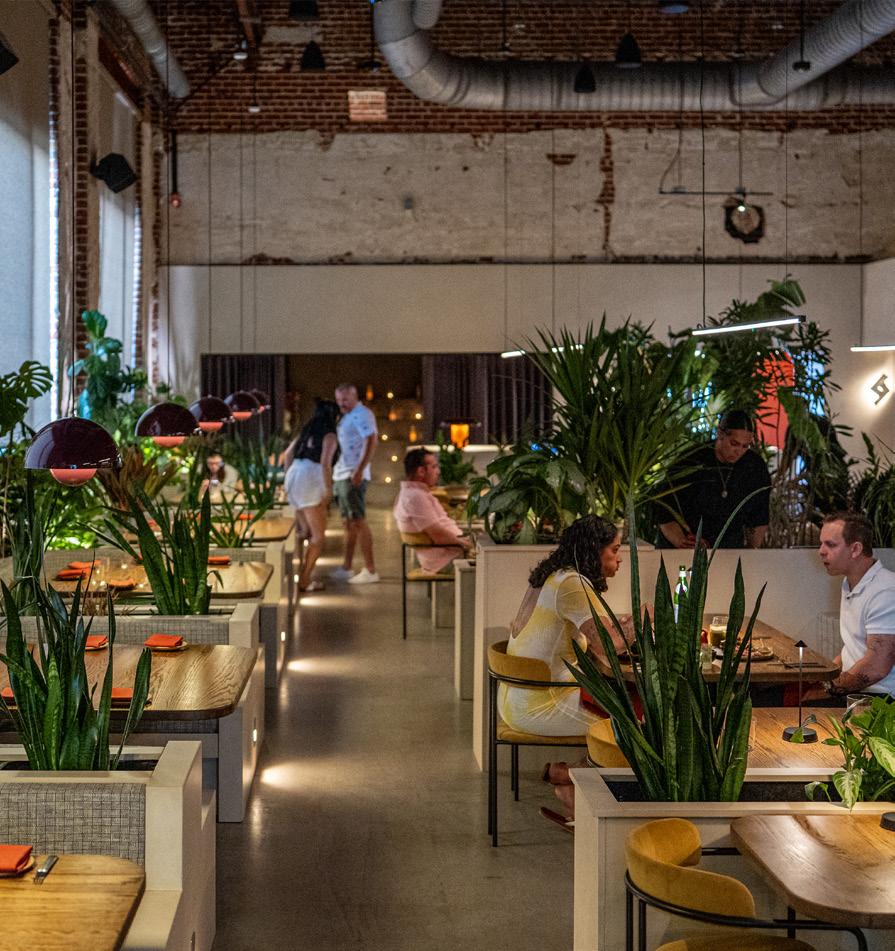
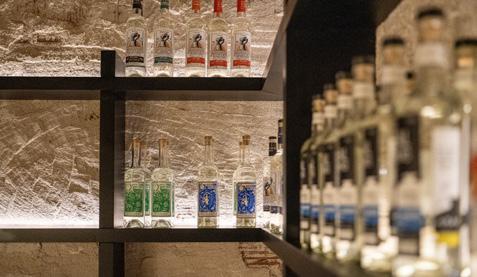
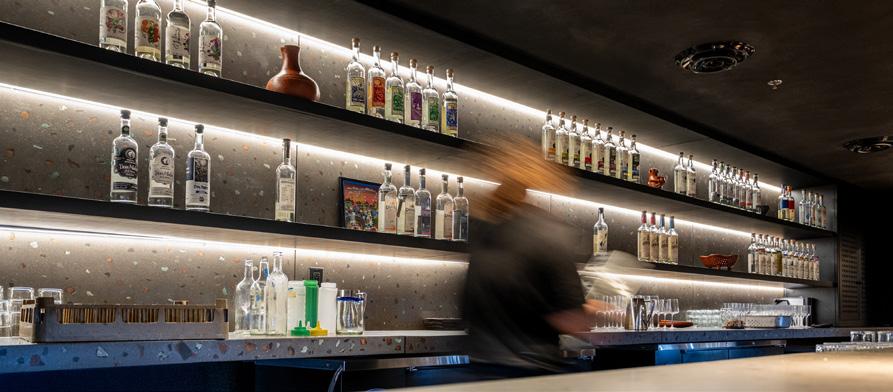
Despite the challenges of an adaptive reuse project, the team delivered seamless architecture and engineering systems, a chic vintage space, and a fully functional and daylit kitchen from which the Amano team can craft their incredible cuisine. Some of the highlights of the space include: an airy, plant-filled dining room with custom lighting (setting the perfect stage for a date, celebration, or family outing), a patio that offers picturesque outdoor options during the warmer months, traditional pits out back where they slow-roast barbacoa, a beautiful bar where patrons sip custom drinks, and a private mezcal tasting room.
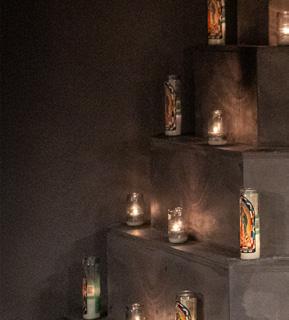
For a more casual option, the Alamillas have planned for a walk-up burrito takeaway window. And opening soon, a signature feature of the entire space will be a “hidden” speakeasy, plucked right out of prohibitionera 1920s.
It’s beautiful here. I love every inch of this space. It’s the perfect backdrop for the kind of food and the type of experience I have long dreamed of providing — and it’s only going to get better.
Salvador Alamilla Amano Chef | Owner

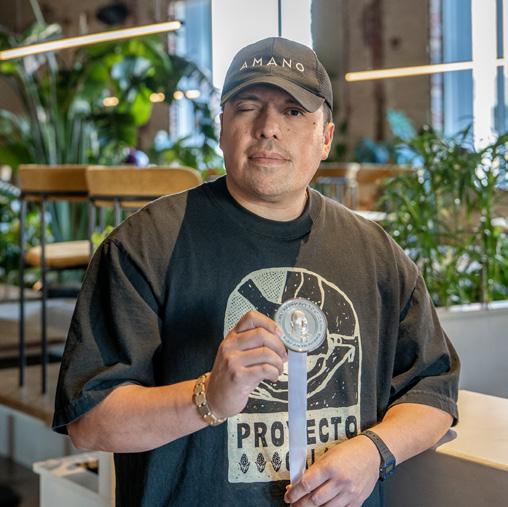
To no one’s surprise, Salvador Alamilla and Amano were honored with the prestigious James Beard award for Best Chef: Mountain Region in June of 2025. Some just desserts for the inspiring and passionate team behind this cultural icon tucked snuggly into the Treasure Valley — a culinary destination not only beloved by locals but also worth going out of your way to discover.
James Beard Award
Best Chef | Mountain Region
June 2025
Looking Forward
ArtSpace Salida | Salida, CO
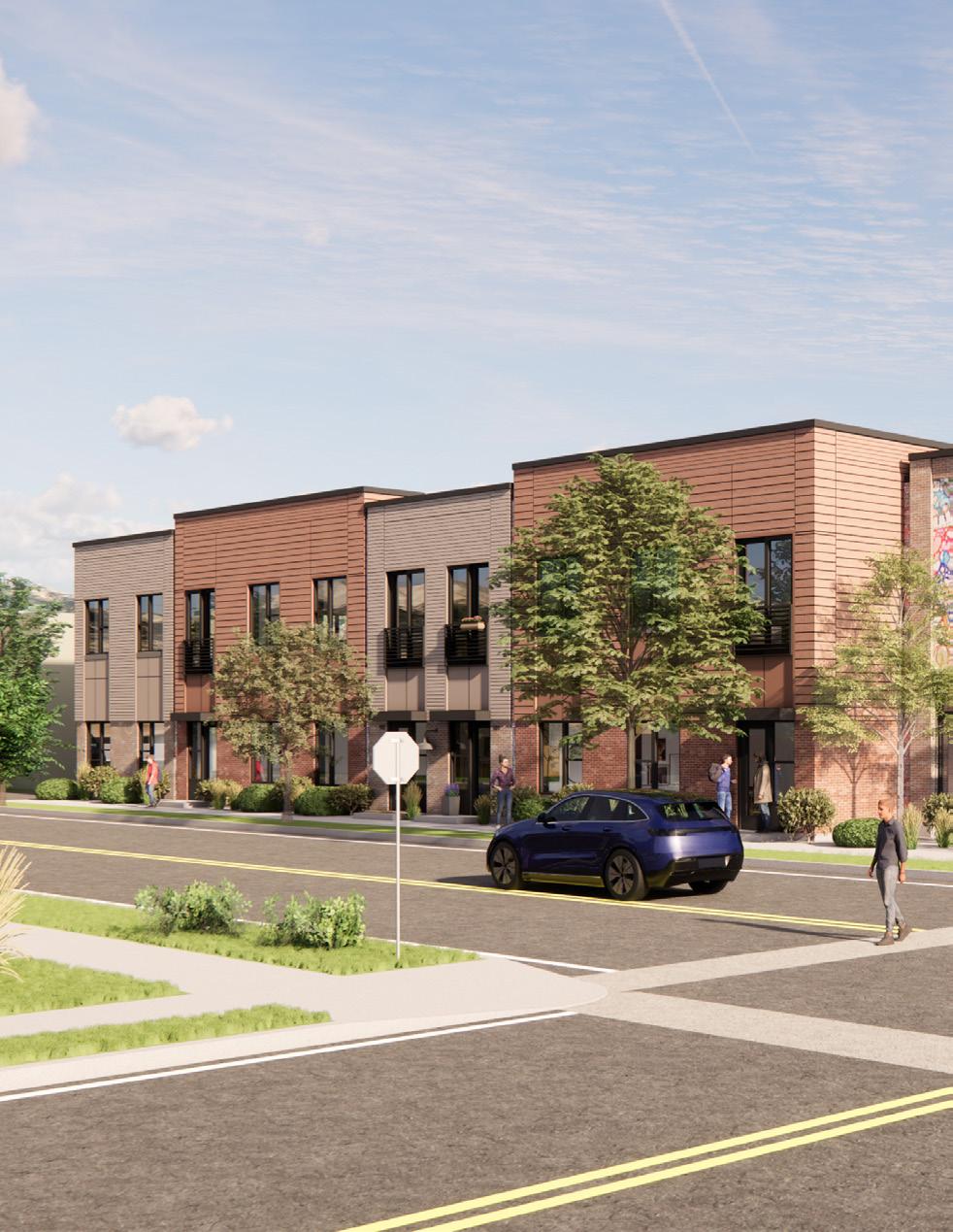
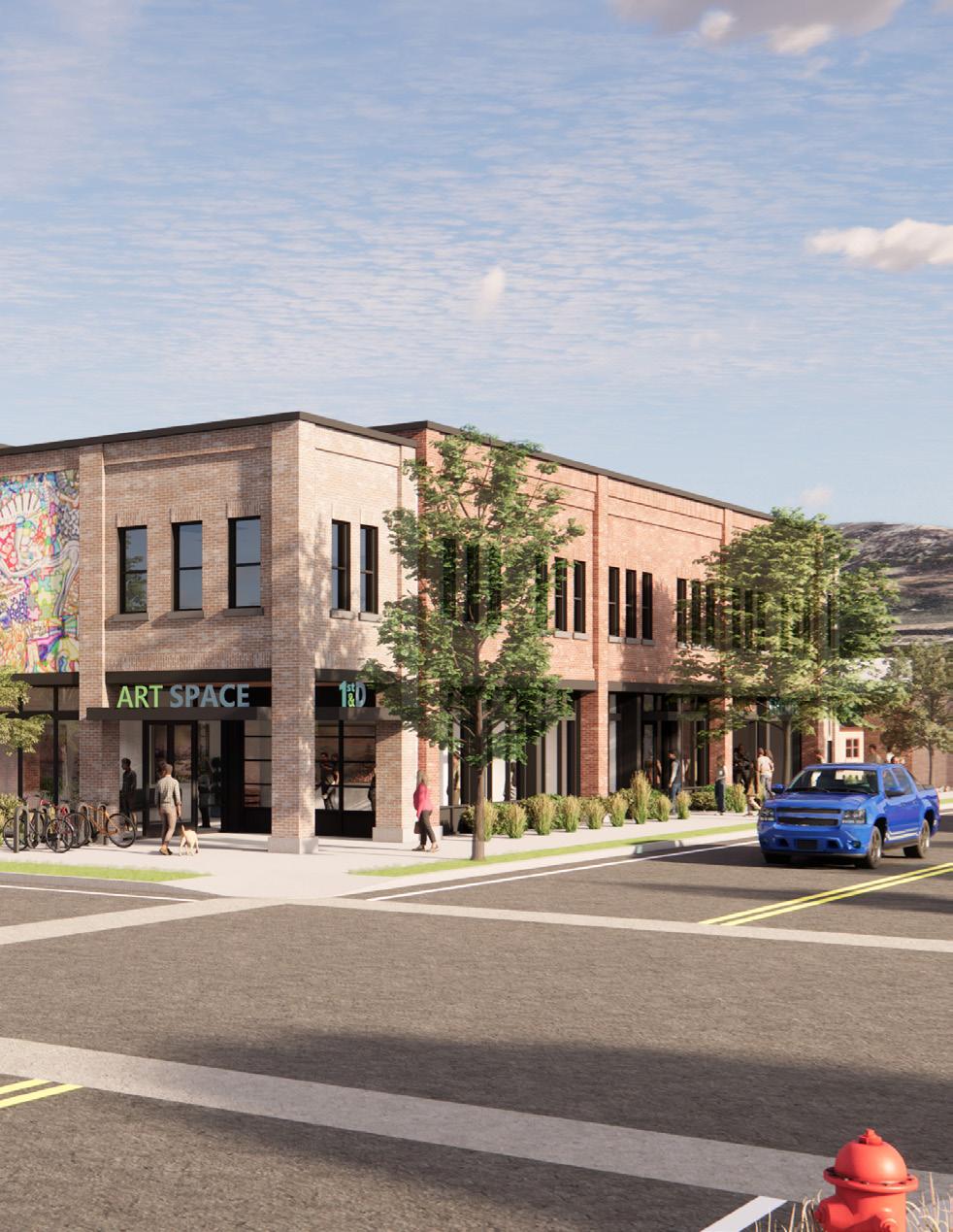
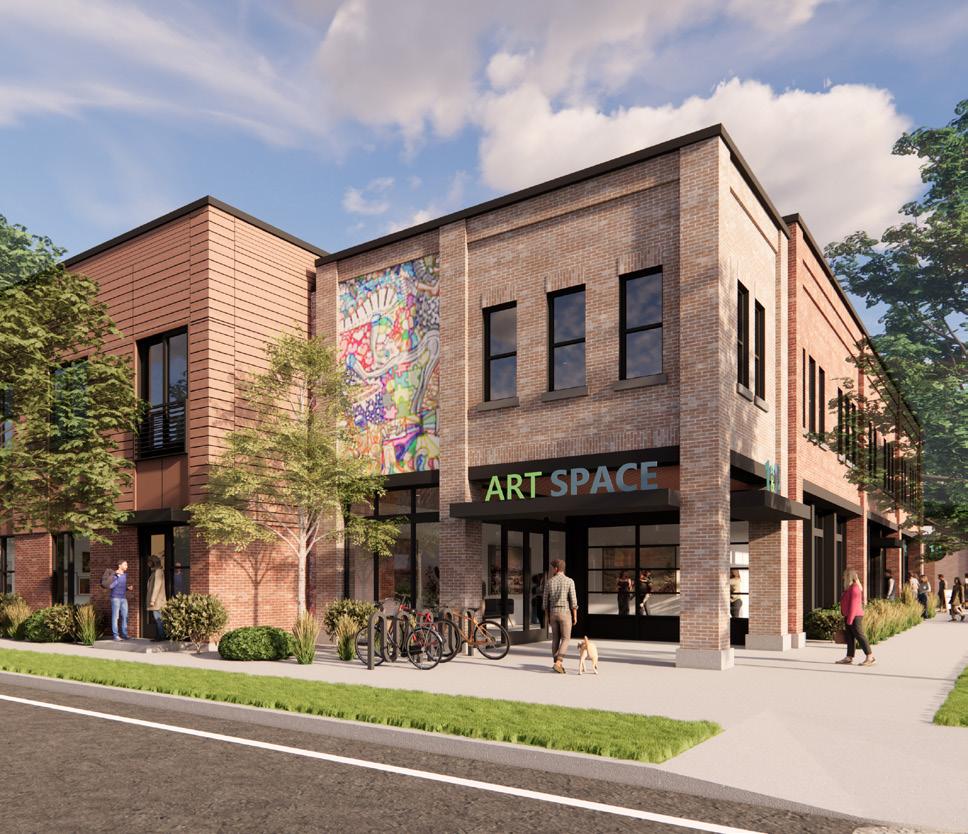
The ArtSpace affordable housing development in Salida, Colorado, melds apartment housing and exhibition and performance space for artists and creatives who live and work in downtown Salida. Construction of this unique, mixed-use project is expected to begin in 2026.
Whitney Pool | Boise, ID
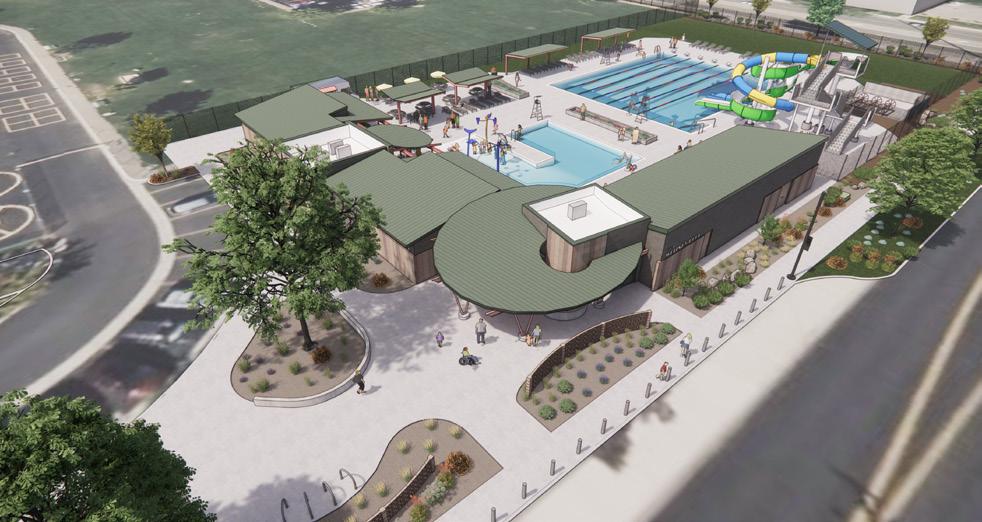
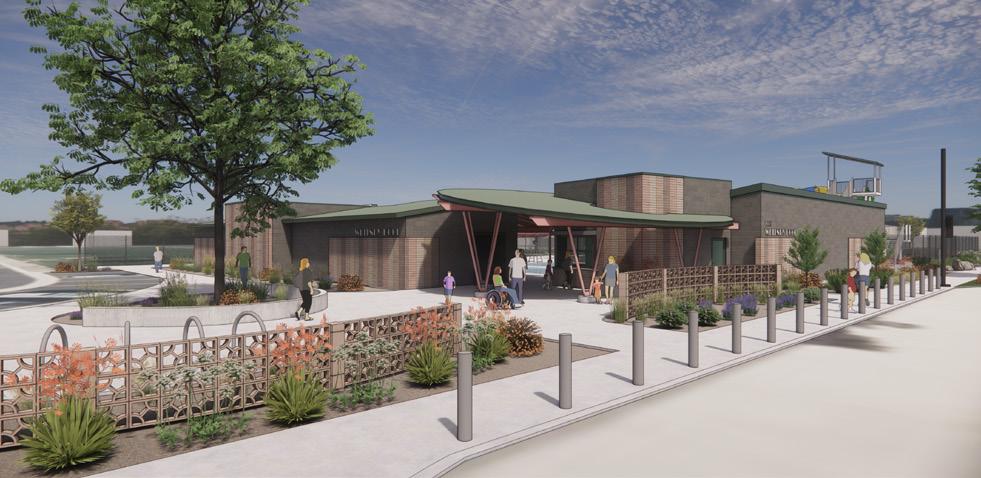
The Whitney Pool will bring an essential community asset back to the Boise Bench neighborhood of Idaho’s capital city. The complex will include two pools, a slide, a large pool deck with shaded seating, locker/shower rooms, restrooms, and even space for a food truck. The complex is planned to open in the summer of 2027.
Benefis Healthy Aging Center | Great Falls, MT
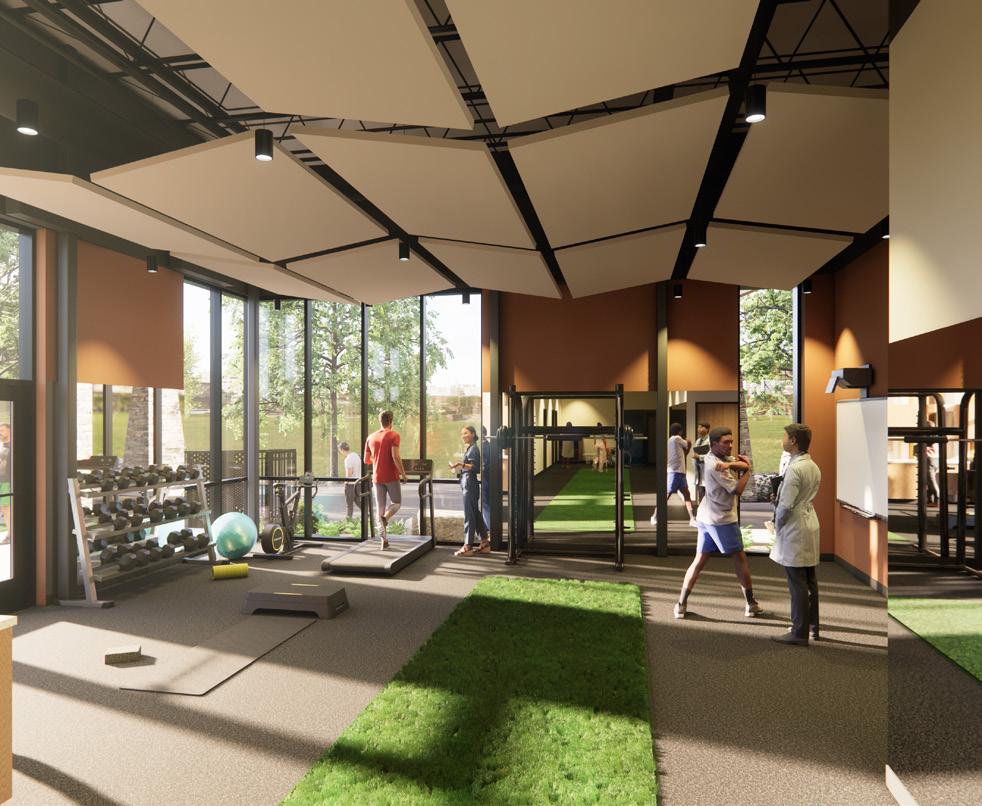
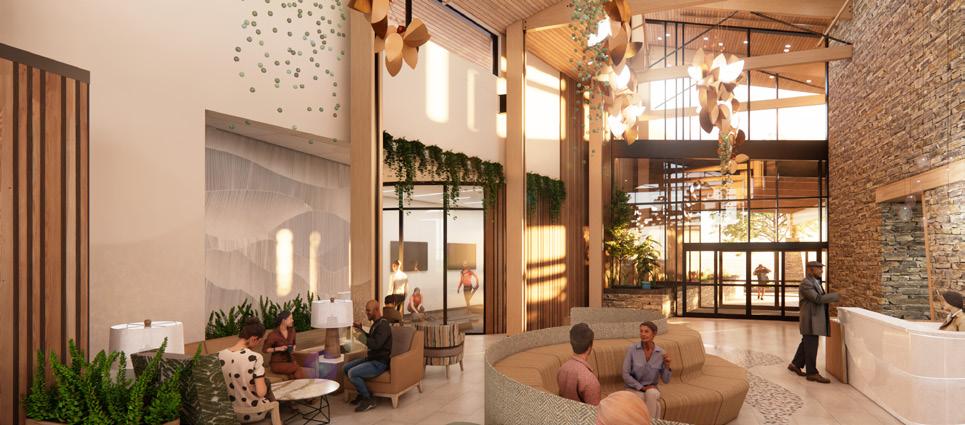
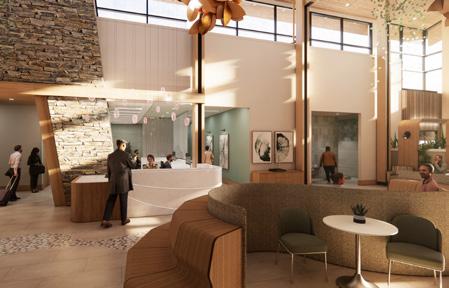
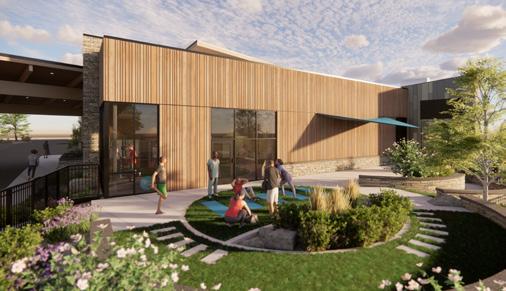
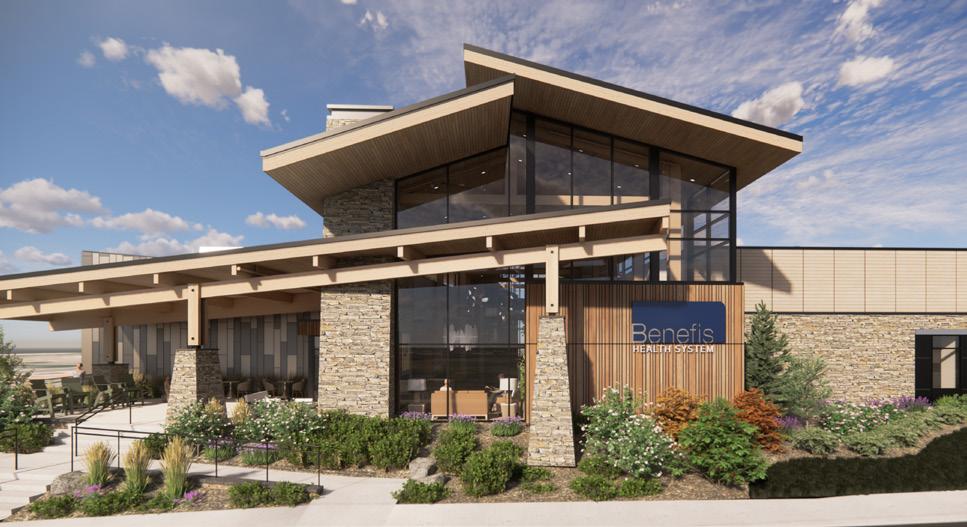
Set to open in the summer of 2026, Benefis Health System’s Goodnow Healthy Aging Center in Great Falls, Montana, will help bridge the care gap for people who want to stay fit, sharp, and active during their senior years. The 15,000-square-foot clinic will bring together geriatric specialists and holistic services focused on nutrition, medication, cognitive health, and mobility.
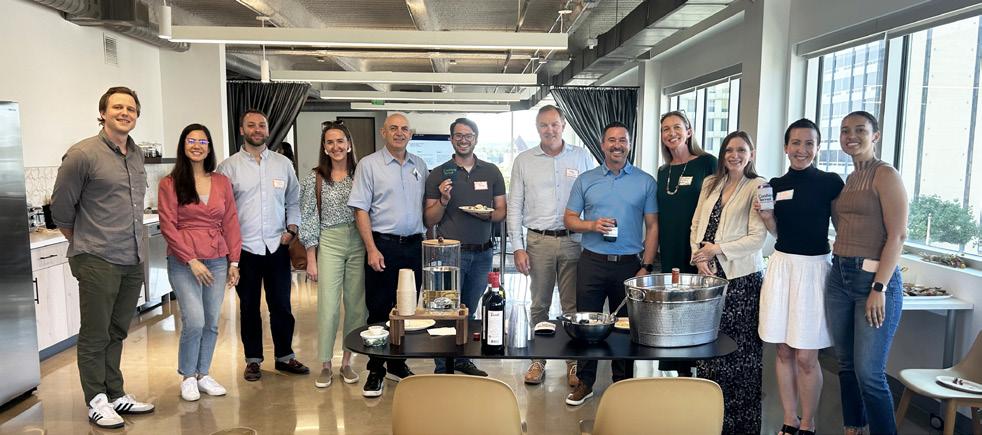
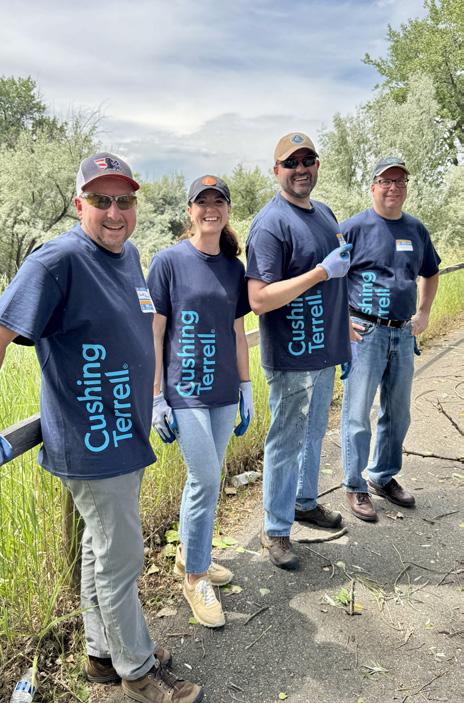
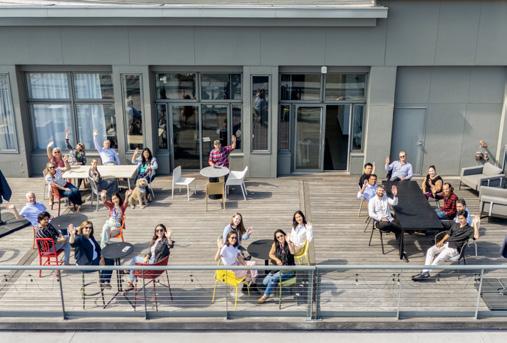
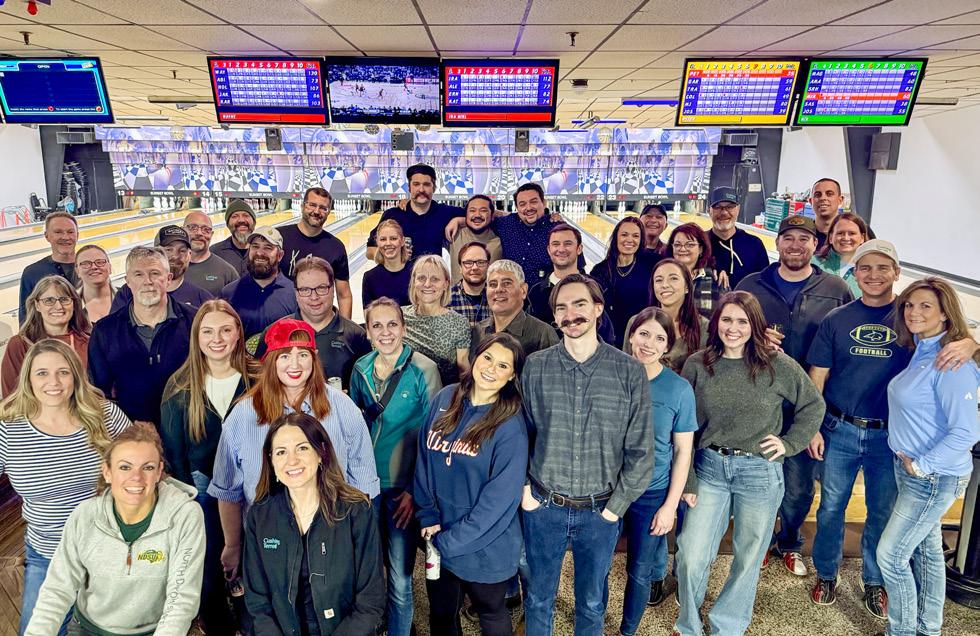
#teamcushingterrell
ENGAGING with our COMMUNITIES

CONTRIBUTORS
Design Meets You | Content and Design
Marni Moore | Andy Meyer | Travis Estvold | Trisha Miller | Rebecca Miraglia | Katie Karaze
Project Teams
DATA CENTER DESIGN
Cushing Terrell
Government Design Director | Shawn Pelowitz
Commercial Design Director | James Foster
Infrastructure Design Director | Alan Bronec
GOOGLE HENDERSON HUB
Cushing Terrell
Project Principal | Jason Butler
Project Manager | Kara Eberle-Lott
Design Lead | Bryan Hallowell
Architectural | Corey Stremcha
Civil | Caleb Minnick
Electrical | Patrick Moranville
Fire Protection | Steve Bingham, Sawyer Arneson-Nelson
Interior Design | Lexy DeAustin
Landscape Architecture | Former Team Members
Mechanical | Allyn Jorgensen, Jerry Pimley
Structural | Lindsay Watters
Project Partners
General Contractor | Fortis Construction
Acoustic Consultant | BAi, LLC
Environmental Graphics | GHD Partners
Kitchen Consultant | E.F. Whitney, Inc.
Photography | Roehner + Ryan
ON THE BOARDS RENDERINGS
Cushing Terrell
ArtSpace Salida | Mykayla Hungerford
Whitney Pool Complex | Bryan Hallowell, Allison Clark
Benefis Healthy Aging Center | Dylan Davies
U.S. DEPARTMENT OF VETERANS AFFAIRS, AUSTIN INFORMATION TECHNOLOGY CENTER
Cushing Terrell
Project Principal | Shawn Pelowitz
Project Manager | Cynthia Brantley
Architectural | Kaitlin McCoy, Brad Paczak, Tim Scolarici
Electrical | Johnathan Drake
Fire Protection | Steve Bingham, Mark Schaff
Graphic Design | Genna Granada
Interior Design | Angelica Henderson, Lexy DeAustin, Madeline Randolfi
Mechanical | Nathan Ratz
Plumbing Design | Ron McLean
Structural | Danielle Johnson-Hazlewood
Project Partners
General Contractor | The Whiting-Turner
Contracting Company
Photography | Tobin Rogers
AMANO RESTAURANTE
Cushing Terrell
Project Principal | Nicole Dovel-Moore
Project Manager | Kelyn Allen
Architectural | Nicole Dovel-Moore, Grace Johnson
Civil | Adam Schlegel
Electrical | Tyler Victorino
Mechanical | Jacob Mortensen
Structural | Lindsay Watters
Project Partners
General Contractor | Kreizenbeck Constructors
Interior Design | KovichCo
Kitchen Design | Curtis Restaurant Equipment
Schematic Design | GTC Design
Photography | Travis Estvold
TOWN & COUNTRY MARKETS POULSBO
Cushing Terrell
Project Principal | Kara Eberle-Lott
Project Manager | Sivani Krishna
Design Lead | Alice Wang
Architectural | Blake Cronin, KuoChao Tseng
BIM/CADD | Brad Fry
Electrical | Patrick Moranville, Khalil Saad
Interior Design | Madeline Randolfi, Jessica Earp
Mechanical | Mike Amestoy, Darren Johnson, Lenin Montenegro
Structural | Dane Jorgensen, Asrade Mengstu
Project Partners
General Contractor | Woodman Construction
Custom Casework | Elite Commercial
Contracting and Silver Star Industries
Restaurant Design Consultant | Ethan Stowell
Preliminary Design Consultant | Mallet Design Build
Photography | Kevin Scott
POWERING LEARNING
ENVIRONMENTS, PV SYSTEM DESIGN
Cushing Terrell
Electrical Engineer | Alan Bronec
Electrical Engineer | Nathan Bronec
Electrical Engineer | Jeff Haidle
Electrical Engineer | Tyler Victorino
Electrical Engineer in Training | Taylor Endicott
Electrical Engineer in Training | Sarah Restad
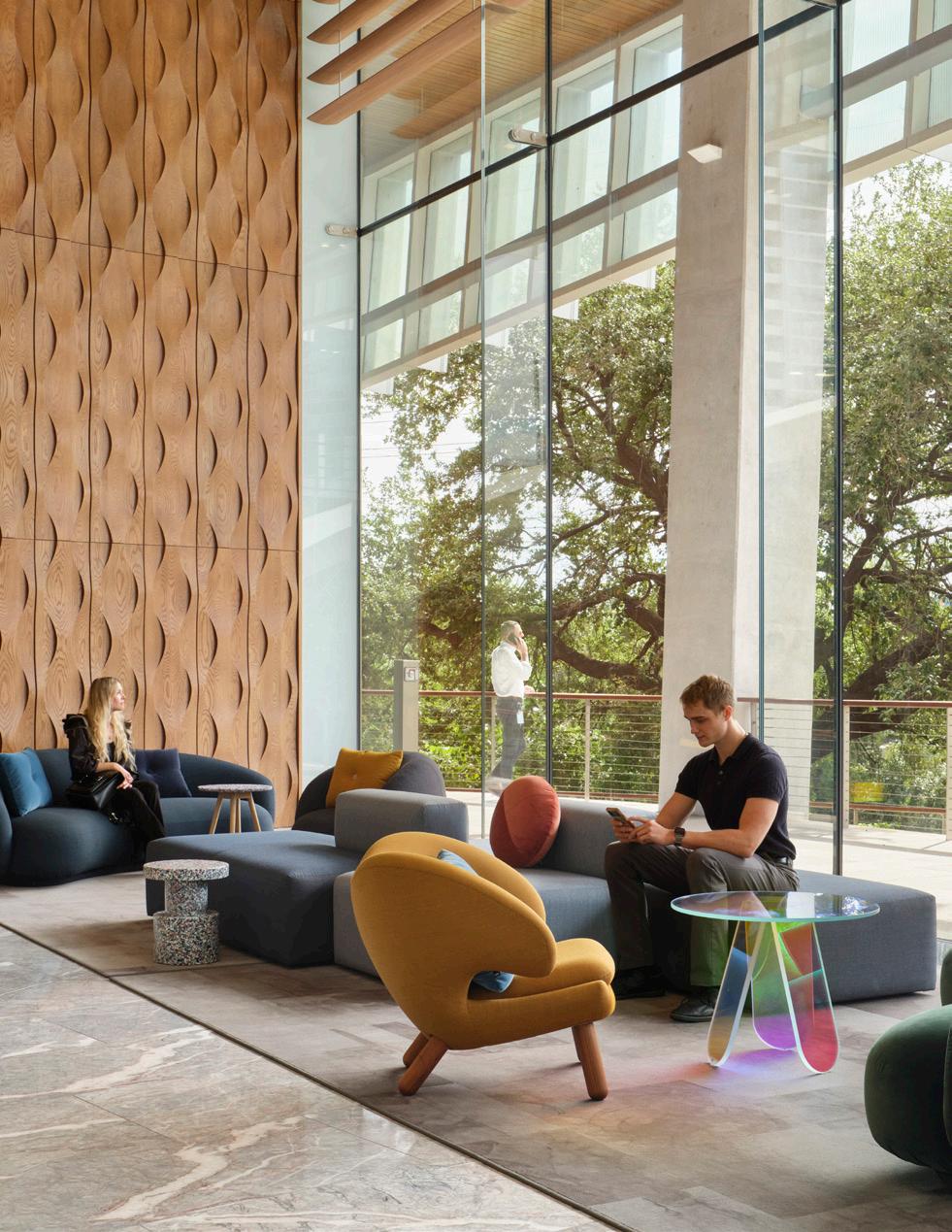
We shape our buildings; thereafter, they shape us.
Winston Churchill
British writer, statesman, and former U.K. Prime Minister