





By Ken Severson editorial@youarecurrent.com
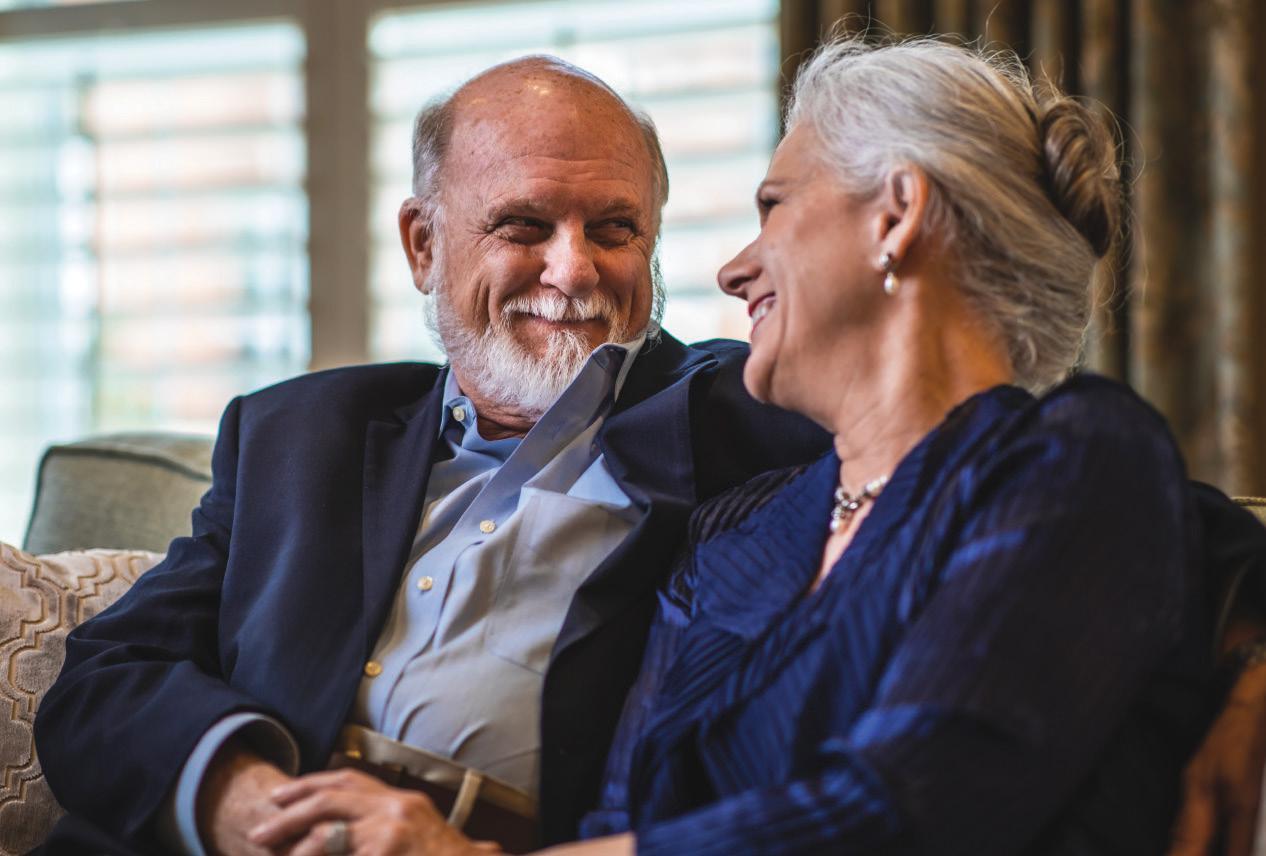
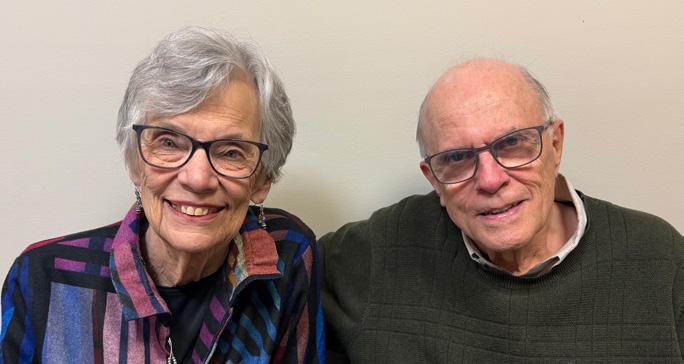
John and Peg Gould enjoy the arts and crafts opportunities at the Sycamore Reserve Senior Living Center in Indianapolis.
Peg is into art and John enjoys crafts. The couple moved to Sycamore Reserve last September.
“I drove by the Sycamore. I checked it out and they sold me instantly,” said John, 89. “We love it here. These are our family here.”
Peg, 83, agreed.
“The staff, residents, everyone is great and so welcoming,” she said. “There’s always some great entertainment going on here, which we like.”
John, an Oregon native, served his country twice in different capacities. He first served in the U.S. Army in 64th Armor Division. At the conclusion of that enlistment, he joined the U.S. Air Force. Following his military service, John had a long career as a painter and dry wall installer. He retired less than a year ago.
Continued on Page 4

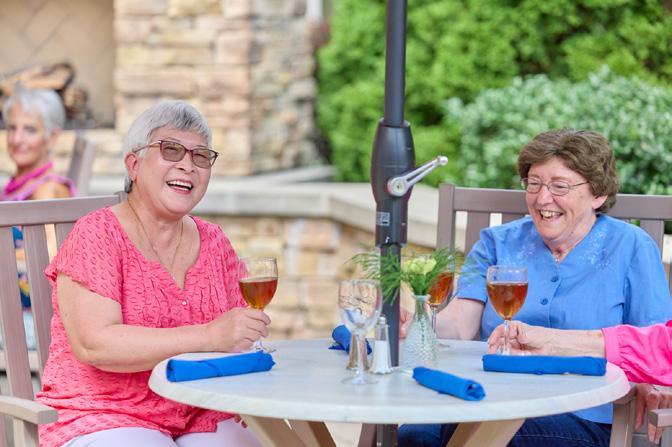

Spiritually connect with us at 4 p.m. daily for Mass in our beautiful chapel. Our community also offers various dining venues, a state-of-the-art aquatic center, and wellness programs for endless opportunities and it’s all just steps from your front door





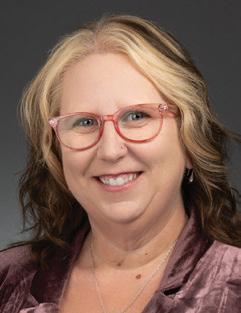

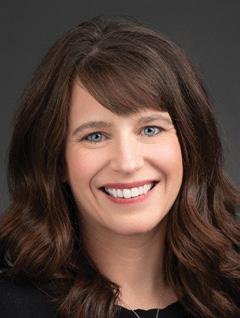

Commentary by Dr. David Sullivan and Dr. Kenneth Stumpf
As winter approaches, it’s essential for individuals 55 and older to pay closer attention to their foot health. Cold weather can exacerbate existing foot conditions and create new challenges. Here’s how you can prioritize your podiatric care this winter season. First and foremost, moisture control is vital. Cold weather often leads to dry skin, which can cause cracks and fissures, especially for seniors whose skin may already be more delicate. To combat this, ensure you keep your feet moisturized. Use a hospital-grade foot cream that is rich and hydrating but remember to apply it carefully to avoid between-toe moisture buildup, which can lead to fungal infections.
Additionally, proper footwear is crucial during winter. Choose shoes that provide ample support and warmth without sacrificing comfort. Look for nonslip soles to prevent falls on icy surfaces and avoid shoes with high heels or inadequate arch support. If you’re struggling to find the right fit, don’t hesitate to seek advice from your podiatrist, who can recommend appropriate options tailored to your needs.
Another concern for seniors during winter is the prevalence of conditions like arthritis and neuropathy, which can be exacerbated by cold weather. It’s essential to engage in gentle foot exercises to improve circulation and flexibility.
“Look for nonslip soles to prevent falls on icy surfaces and avoid shoes with high heels or inadequate arch support.”
Even simple stretching can make a big difference in relieving discomfort. Lastly, regular checkups with a podiatrist cannot be overstated. Seasonal foot assessments can help catch any developing issues early, ensuring you remain active and healthy throughout the winter months. At our podiatry practice, we understand the unique challenges faced by our senior patients. We offer comprehensive foot care tailored specifically for those 55 and older, focusing on maintaining movement and improving quality of life.
Don’t let winter take a toll on your feet. Prioritize your foot health today -your feet will thank you!
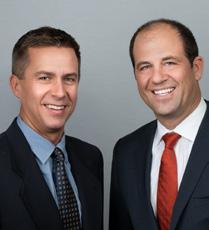
appt@westfieldfoot.com or 317-896-6655.
Commentary by Valerie J. Weesner
As the start of a new year has arrived, many of us feel the familiar pressure to reflect and set goals for the New Year. As a clinician, I’m often asked whether patients “should” be setting New Year’s goals. My answer is … it depends. My initial instinct was to talk about intentions instead of goals. But after sitting with it longer, I realized something important: Before intentions, before goals, we need to talk about values.
Why start with values Instead of goals?
While I specialize in working with individuals with eating disorders and frequently write about Avoidant Restrictive Food Intake Disorder (ARFID) recovery, this reflection is for anyone who finds themselves about to sit down to write out goals for the new year. Before you ask, “What should I change?” or “What should I work on?” I invite you to ask a deeper question, “What is worth the energy in the first place?”
Common New Year’s goals

and the values behind them
You may be familiar with these common goals: Eating healthier, exercising more or improving mental health. Often, they reflect values like health, happiness, productivity or appearance. None of these are “wrong.” But when goals aren’t clearly connected to our core values, they tend to fade quickly. What are values and how do we identify them?
Values are the principles that matter most to us. They guide how we want to live, not just what we want to accomplish. A clinically supported way to
identify values is the Personal Values Card Sort, developed by William R. Miller. This exercise involves sorting value cards by importance to help you identify what truly matters to you.
From values – intentions – goals –action steps
Imagine one of your top values is “family.” You might notice you don’t spend as much quality time together as you’d like, you’re distracted by work when you are together or your physical or emotional health limits how present you can be. The first thing to do is ask yourself, “How do I want to live out my value of “family” this year?” This question naturally leads to intentions, such as being more present during family time, creating space for meaningful connection or having the energy to engage fully. From there, goals begin to make sense, such as exercising regularly to support stamina and energy; eating more meals at home; or intentionally budgeting to afford family experiences. And then come specific action steps, such as moving your body three times per week; setting reminders to plan
family time; or prioritizing health care
Why the approach actually works
When goals are disconnected from values, they often drift away — especially by February. But when goals are rooted in values, hey feel meaningful, they align with who you are and they’re easier to return to after setbacks. Instead of chasing goals that social media tells us we should want, we create goals that support the life we actually want to live. A different way forward this new year I encourage you to pause before writing a list of resolutions. Start with values. Let values guide intentions. Let intentions shape goals. Let goals turn into doable action steps. Values come from our core, and when we think about ways to support those values, we have much more reason and ability to hang on to them and make them happen.





Continued from Page 3
“I figured it was time to stop, so I quit six months ago,” John said. “I had my own business in Hawaii and worked all over there, including Pearl Harbor and I painted high rises in Waikiki.”
John also was a potter and had a home-brew alcohol business.
Peg worked as an artist, painting landscapes, birds and wildlife. She recently suffered a stroke and is taking a break from painting while recovering.
“I did it for pleasure and worked in oil painting, and in fact, that’s how I met John,” Peg said.
Peg was an arts teacher, and she met John when he enrolled in one of her classes.
The couple had a daughter and a son after they got married. John has five sons and a daughter from a previous marriage who live across the U.S.
“We’re looking forward to the rest of our stay at Sycamore,” Peg said. “It’s just a wonderful place to live and have a great time.”
For more, visit sycamorereserve.com.
“We’re looking forward to the rest of our stay at Sycamore. It’s just a wonderful place to live and have a great time.” —


Peg Gould



Commentary by Margaret Gooley Vice President and CERTIFIED FINANCIAL PLANNER® Reify Wealth Advisors
Retirement is often described as a destination, but in reality, it’s a transition—one that blends financial readiness with emotional resilience. It isn’t simply the end of work, but rather it’s the beginning of a new identity, a new rhythm, and a new relationship with money. After decades of working, saving, and building a life around career and family, stepping into this next chapter can feel both exciting and unfamiliar. In our experience as financial planners, preparing for this next phase of life means looking beyond the numbers and understanding the psychological shifts that also come with this major change.
Many retirees begin in a phase referred to as the “honeymoon”. The calendar suddenly opens up, travel plans that had been postponed finally take shape, there’s free time for hobbies and long-delayed projects. This is a wonderful season, but it often comes with higher-than-expected spending. While it’s natural to want to celebrate this newfound freedom, it’s wise to plan ahead so you can enjoy life without stressing about how spending in your early years will impact later years in retirement. Cash flow planning and staying within a safe rate of withdrawal so your portfolio will last your lifetime is essential.
Work also provides more than just a paycheck. In most cases it also offers purpose, routine, connection, and a sense of contribution. When that disappears, many retirees experience a subtle but real sense of identity loss. The shift from being needed every day to having wideopen time can be disorienting. This is where emotional preparation becomes essential. Before retiring, we suggest figuring out how you will spend your days. Consider experimenting with new roles. Volunteer, mentor, take classes, or join community groups. Think of it as building a “portfolio of purpose.” Just as you diversify your investments, you should diversify the sources of meaning in your life. Retirement is not an end to purpose, but an opportunity to redefine it on your own terms.
Even the most detailed retirement plan can be thrown off by unexpected expenses. Healthcare costs rise faster than inflation. Home repairs tend to cluster at the most inconvenient times. Adult children may need financial support. And lifestyle spending, especially travel, dining, and entertainment, often exceeds what people predicted.
The key is flexibility. A good retirement plan isn’t rigid; it adapts. So, revisit your spending annually and adjust as needed to stay on track. Even in retirement, it’s important to have an emergency fund, separate from your investment accounts, which is replenished over time if ever used. Surprises don’t have to be setbacks when you plan ahead. Retirement no longer means leaving your job and sitting in an easy chair. Today’s retirees are redefining what retirement looks like. Many people discover they don’t want to stop working entirely but instead want to work differently. This may mean transitioning into parttime consulting, seasonal jobs, or passiondriven side businesses, which can offer structure, connection, and supplemental income. Others may choose phased retirement, gradually reducing hours over several years. These approaches can ease the emotional transition and reduce pressure on your savings.
At its core, retirement planning isn’t about accumulating the biggest nest egg. It’s about using your resources to live meaningfully. That requires clarity about what matters most to you. Ask yourself questions like:
• What experiences do I want to prioritize?
• How do I want to spend my time, and with whom?
• What legacy do I want to leave, financially or otherwise?
When your money supports your purpose, financial decisions become clearer and more fulfilling. Some can afford more adventure or generosity than they imagined and others find joy in simplifying. There is no “right” way to retire. It’s a unique experience that depends on the individual. Preparing both financially and emotionally ensures that you step into this chapter with confidence, clarity, and excitement for what comes next.

Anyone can dream of retirement. Reify helps make it real.
“Reify” means to make an abstract idea concrete—and that’s exactly what we do at Reify Wealth Advisors. Whether you envision a flexible semi retirement, travel-filled years, or simply the peace of knowing you’re financially prepared, Reify helps turn
that vision into reality with personalized retirement planning tailored to your unique goals and lifestyle.
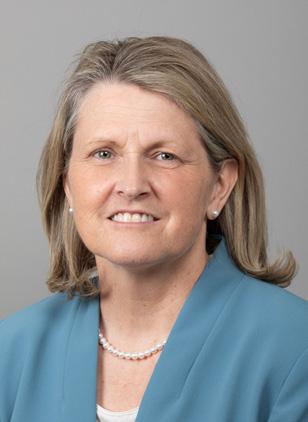
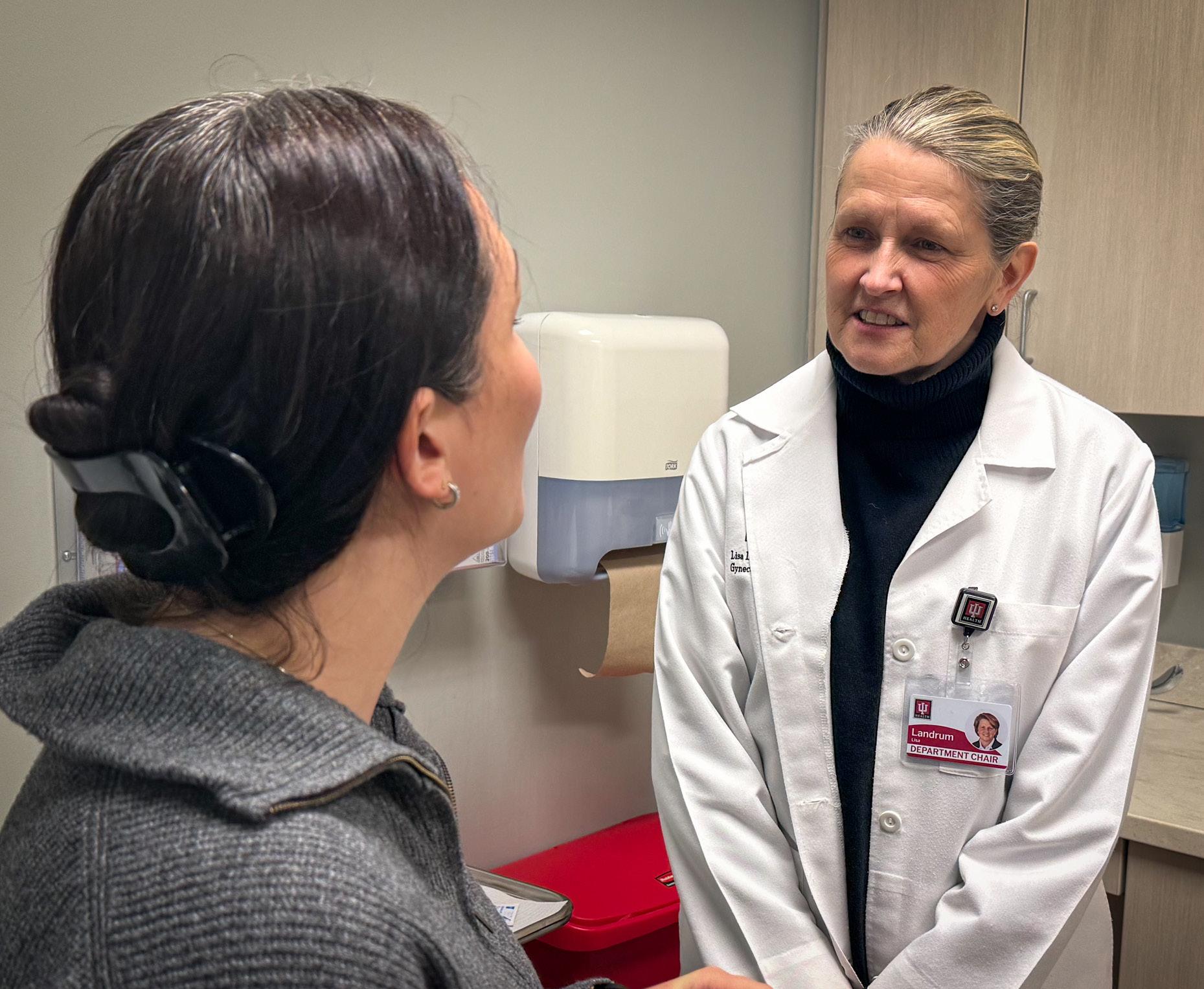
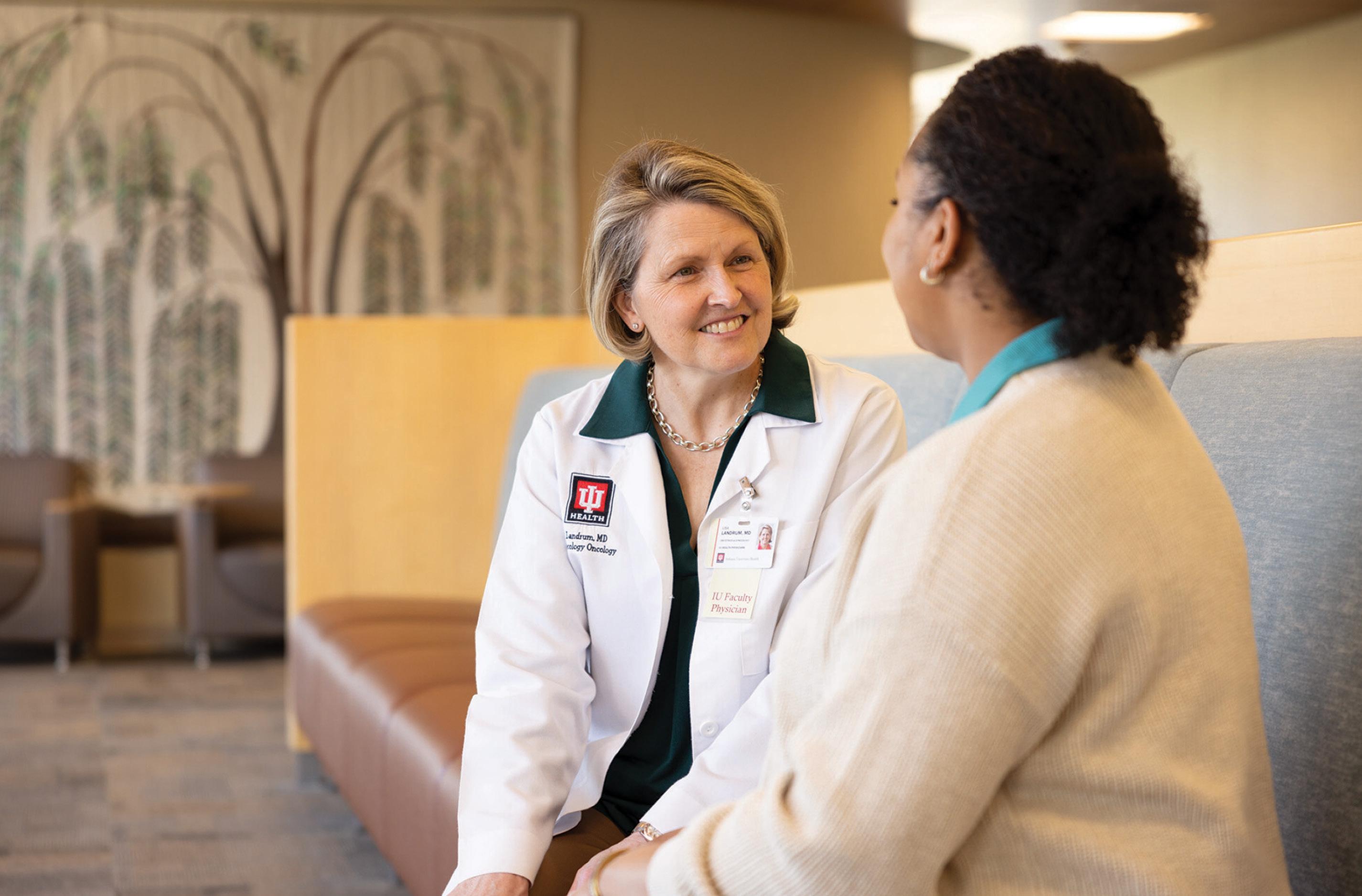
By Dr. Lisa Landrum, gynecologic oncologist at the IU Health Joe & Shelly Schwarz Cancer Center in Carmel
January is Cervical Cancer Awareness
Month, a time to focus on prevention, early detection and treatment of a disease that remains a serious health concern for women. While cervical cancer is largely preventable, it still claims thousands of lives each year. For all women including those aged 55 and older, understanding your risk and staying proactive about screenings is essential.
Cervical cancer is the fourth most common cancer in women worldwide and one of the leading causes of cancer-related deaths. In the United States, about 11,500 women are diagnosed annually, and roughly 4,000 die from the disease. The encouraging news is that most cases can be prevented through vaccination and routine screening. Education and early action are key to reducing these numbers.
The cervix is the lower part of the uterus that connects to the vagina. Cervical cancer usually begins when abnormal cells grow uncontrollably, often triggered by infection with the human papillomavirus (HPV). HPV is a common virus transmitted through sexual contact, and persistent infection with high-risk strains can lead to cancer. While HPV is the primary cause, other factors can increase your risk. Smoking, multiple full-term pregnancies, long-term use of oral contraceptives, early sexual activity or multiple partners, a weakened immune system and certain medications used for miscarriage prevention all play a role. For women over 55, risk does not disappear. In fact, cervical cancer can occur later in life, especially if screenings have been inconsistent.
Routine screening remains critical—even beyond age 55. A Pap test every three years is recommended for women aged 21 to 65, and HPV testing every five years, or a combined Pap/HPV test every five years for those aged 30 to 65. If you are over 65, talk to your healthcare provider. Screening may still be necessary depending on your health history. Early cervical cancer often has no symptoms, which
is why screening is so important. Advanced disease may cause vaginal bleeding after intercourse, between periods or after menopause; watery, bloody discharge with an unpleasant odor; and pelvic pain or pain during intercourse. If you experience any of these symptoms, seek medical attention promptly.
Treatment options have advanced significantly. At IU Health, patients have access to comprehensive care, including surgery to remove cancerous tissue, radiation therapy and brachytherapy, chemotherapy and immunotherapy for certain cases. Treatment plans are personalized, and continuity of care ensures that the same physician often guides you from diagnosis through recovery. This approach provides reassurance and consistency during what can be an overwhelming time.
Prevention remains one of the most powerful tools in the fight against cervical cancer. The HPV
vaccine is highly effective and, while typically recommended for younger individuals, adults up to age 45 may still benefit. In addition to vaccination, lifestyle choices matter. Avoid smoking, practice safe intercourse and maintain regular health checkups. These steps may seem simple, but they can significantly reduce your risk and improve overall health.
Cervical Cancer Awareness Month is more than a calendar event. It’s a reminder to prioritize your well-being. If you haven’t had a Pap or HPV test recently, schedule one. Share this information with friends and family. Early detection saves lives, and prevention starts with awareness. Taking action today can make all the difference tomorrow. For more information or to schedule a screening, visit iuhealth.org/cervical-cancer.





By Mark Ambrogi mark@youarecurrent.com
Gary Nance, an architecture designer, deter mined several years ago that he had gained too much weight.
“I was 280 pounds and had a 54-inch waist,” he said.
Nance, 72, started working out at a gym in Fishers before moving to Carmel 10 years ago.
“After losing weight for a year, there was a gym member that was going to be in a bodybuilding contest, so a bunch of us went to support him,” said Nance, who lost more than 70 pounds.
Shortly thereafter, he was encouraged by fellow gym members to enter a bodybuilding contest the following year.
“I said, ‘You’re out of your mind,’” Nance said. “But they said, ‘No, you’d be perfect.’ I talked to my wife about it and she said, ‘Look what it’s done for you so far, let’s see what happens.’ Little did she know at the time that you start work ing out it becomes addictive because you’re transforming yourself mentally, physically and spiritually.”
Nance entered his first competition a year later, placing fourth. He finished second in competitions each of the next two years. Then, he got first place and an overall achieve ment award.
“By then, I’m hooked and ready for a big show in March 2020 and got slammed with COVID,” he said. “I was one of the first (people) to be on the ventilator in the state. At that time, being on the ventilator was the kiss of death.”
Nance was in a coma for 22 days.
“Had I been what I call myself ‘Heavy Gary,’ I wouldn’t have survived it,” he said. “I was in rehab for months and I was in a wheelchair. Most people would give up, and a year later I was back on stage.”
Continued on Page 11
“Had I been what I call myself ‘Heavy Gary,’ I wouldn’t have survived it. … Most people would give up, and a year later I was back on stage.”
— Gary Nance

Continued from Page 10
Nance got media attention for beating COVID-19 and being able to resume his amateur bodybuilding career.
Nance said he had colon trouble and developed a sharp pain in his abdomen during a show with friends in Las Vegas in 2023.
After an excruciating flight home, he went to St. Vincent Hospital in Carmel to meet his doctor.
“I got there at 9 at night and by midnight, I was in the operating room,” he said. “A clot had lodged around my colon and killed the blood supply to half of my colon. Had I waited until the morning to see my doctor, they said I would not have seen the sun come up.”
With the help of his Agents of Change trainers George and Meredith Cristo, Nance got back in shape and won his division at a bodybuilding competition in Carmel in 2024. Several days later, he won his division at a large show in New Jersey and earned his pro card.
“Once you get your pro card, you start making money,” he said. “It’s not a huge amount but it puts you on an entirely new level.”
Nance competed in his first pro event in Carmel in the summer of 2025 and won his division.
In August, he will compete in Fort Walton, Fla., followed by the International Federation of Bodybuilding Pro Masters World Championship Sept. 6 in Pittsburgh.
Nance said he has been asked why he doesn’t quit.
“That excitement and exuberance has been such a motivating factor for so many people that go to my websites,” he said.
Nance details his bodybuilding story on garynance.com, and his designs are on garynancedesign.com.
Nance said was contacted by CMG Worldwide, a licensing and legacy management company that represents him for speaking engagements and videos. He said there is interest in a Netflix documentary.
“I think that’s the purpose of me surviving these kinds of horrific illnesses and to keep going,” he said of sharing his story of perseverance.
Nance said he has tremendous support from his wife, Nancy, and family.
His daughter, Taylor Nance, a Carmel resident, helps with his design business and works with CMG Worldwide. His son, Nick Nance, and his wife and

Architecture designer Gary Nance said he knew he was going to design houses since he was a little kid.
“I had drawings when I was in third or fourth grade,” he said. “I was always playing with the blocks and knew some kind of design and architecture was in my life.”
Nance, who owns Gary Nance Design in Carmel, worked for a large commercial architecture firm in Chicago for about 12 years.
“I had my heart set to come back to Indianapolis, start our family and start this design architecture business,” he said. “I’ve been lucky. About 35 percent of my business is out of state, and it’s unique projects. I only do unique homes around here. My main thrust is vacation homes.”
Nance has designed several lake homes around Wawasee and Culver and northern Michigan.
“I just finished a big winery in Upstate New York for a client, which was pretty exciting,” he said.
Nance also does some light commercial work. He has been commissioned to design a welcoming sculpture in Elanco headquarters in Indianapolis.
“I did a unique design of a table and family because they go land to table,” he said.
It is time to consider Independent Senior Living. Reserve a new home for you or your parents!
Save on your total cost of living compared to living at home or in a “traditional” apartment. Enjoy the luxury amenities, wonderful neighbors, and security of simplified transparent pricing at Sycamore Reserve
• Private Luxury Apartment
• Restaurant-Style Dining
• Activities & Social Calendar
• 24-Hour On-site Staff
• Housekeeping
• Transportation
• Utilities (Power, Water, Trash)
• Emergency Trip / Fall Pendant
• Heated Saltwater Pool
• Internet (Wi-Fi)
• HD Cable TV
• Theater Room
• Fitness Center
• Dog Park
• And So Much More!
Ask About Our 5-Star Living Experience Family-Owned Independent Senior Living
INDEPENDENT SENIOR LIVING
8275 Craig St, Indianapolis, Indiana 46250 (317) 516-5209 • SycamoreReserve.com




Commentary by Sadiyah Ahmad
The start of a new year often inspires fresh goals and new priorities. It’s also a perfect opportunity to take a thoughtful step toward protecting your family and planning for the future. Estate planning is a meaningful way to honor your wishes, support your loved ones, and build your legacy.
A truly effective estate plan goes beyond paperwork. It’s about securing peace of mind for you and your loved ones. When you clearly state your wishes, you may reduce confusion, stress, or conflict in emotional situations. Whether you are planning for the first time or revisiting plans you already have, the new year is an ideal opportunity to review and refresh your documents to ensure they’re accurately reflecting your wishes.
As 2026 unfolds, consider the following estate planning resolutions:
• Plan for contingencies that may happen during your lifetime. Appoint a trusted financial power of attorney that can manage your financial affairs if needed. Designate a health care proxy who will honor your medical goals of care in situations where you cannot make medical decisions for yourself. Discuss your goals of care with your loved ones so they understand your wishes. Even if it may feel far away, consider what resources and support you may need if you need long-term care.
• Plan for contingencies that may happen posthumously. Review pay on death, transfer on death, and beneficiary designations on the assets you own to ensure they will be distributed according to your wishes. Create or revise a will or trust that is consistent with how you intend to distribute your prop-
“By planning for these situations now, you can move through 2026 with confidence, knowing your legacy and loved ones are protected.” — Sadiyah Ahmad
erty. If you have minor children or are a legal guardian, designate a backup guardian that will support those who rely on you for care. For pet owners, remember to designate someone to either take care of or rehome your pet. By planning for these situations now, you can move through 2026 with confidence, knowing your legacy and loved ones are protected. The team at Dillman & Owen Estate and Elder Law is here to help you plan today to secure a clear path forward for tomorrow.
The information in this article is for general educational purposes only and is not legal advice. Laws and individual circumstances vary. If you need guidance about your specific situation, please contact an experienced Estate Planning attorney, such as the team at Dillman & Owen Estate & Elder Law.

By Mark Ambrogi mark@youarecurrent.com
Ann and Dick Frey devoted their lives to teaching and servicing others.
The Freys, who have lived at The Stratford of Carmel for four years, previously lived in a Carmel apartment for three years. They moved to Carmel because their son, Donald, and his wife, Gina, live in Carmel with their three children. They also have a son, Charles, who lives near Pasadena, Calif.
The couple lived in Brockport, N.Y., for 37 years. Dick, 85, was a professor in the criminal justice department at State University of New York at Brockport for 25 years, retiring in 2005. He taught law and political science courses. Ann, 82, taught at a Catholic school in Rochester N.Y., and Brockport High School. She also was an adjunct professor at SUNY Brockport and retired in 2005.
Dick, who is from Evanston, Ill., earned his undergraduate degree at Cornell University, a law degree from the University of Texas in 1966 and

Jeffery P. Schoonover, MD
Ryan Pilkey, FNP-BC
passed the bar exam in Oregon but never practiced law.
After getting his law degree, he spent three years at officer candidate school in the U.S. Army during the Vietnam War, becoming a lieutenant in an armor division. He didn’t serve in a tank unit but taught basics at Fort Lewis in Washington.

Don’t let winter stop you from thinking about warmer weather. If you are struggling with leg symptoms related to varicose veins and want healthier legs this summer, call our office today to schedule your initial consultation.
“I decided I didn’t want to practice law, I wanted to be a college professor,” he said. “I used the G.I. bill to go to graduate school to get a master’s degree at (the) University of Oregon.”
Continued on Page 14

•
•
•
Katelyn Hooker, FNP-C
Mallory Bragg, FNP-C
Sara Salinas, PT, CLT-LANA
Sara Randolph, DPT, CLT

IN-OFFICE EVALUATION AND TREATMENT FOR:
• Varicose Veins/Chronic Venous Insufficiency
• Spider Veins
• Lymphatic Physical Therapy
www.indyveins.com indyveins


It was there he met Ann, who was going to graduate school to get her master’s in political science and international relations. They married in December 1970 and moved to Sault Ste. Marie, Mich., in 1974 for four years.
“They had me teaching criminal justice classes and I decided that was my focus,” Dick said.
Dick taught in the criminal justice department at Washington State University. Ann spent one semester as a sorority cook, which included housing, but then got a call about being an adjunct professor at Washington State.
“I would cook, I would go teach and then would
come back and cook dinner,” she said.
Ann, who grew up in Everett, Wash., attended Western Washington University. She served two years in the Peace Corps in Tanzania in East Africa before attending Oregon.
“One of the things we started doing at Oregon was working with prisoners,” she said. “I taught a couple classes at Oregon State Penitentiary.”
Dick worked in New Gate, a pre-parole program where inmates were released to a halfway house.
In retirement, Dick pursued programs for prisoners. Rochester (N.Y.) Interfaith Jail Ministry sponsored one of the programs.
“In one of the prisons nearby, we would go in once a week and work with them,” he said. “One of the
programs was a secular program that just tried to deal with the problems they were having that (inmates) might confront when they got out, so I was trying to get them to be more aware of that.”
Ann became involved with a literacy program teaching English to inmates.
At The Stratford, she teaches class once a week helping some of the housekeeping staff learn English.
The Freys were involved in their Episcopal church in Brockport. Since moving to Carmel, they are active members at St. Christopher’s Episcopal Church.
Ann is involved in one of the book clubs at The Stratford. Dick plays in a nine-hole recreational golf league. They play bridge together, but Dick also plays bridge at the Bridge Center in Indianapolis. Continued from Page 13

I’m Kimberly Hughes, a licensed sales agent in Hamilton County, serving central Indiana. When it comes to Medicare, it’s important to consider all of your options. What works well for your neighbor may not be the best fit for you. I know the ins and outs of Medicare, and I’m ready to answer your questions and help you find a plan that fits your needs. Make the most of my knowledge and experience to:
• Take the confusion out of Medicare
• Get help comparing plans
• Receive one-on-one service
• Make enrolling in a plan easier
I look forward to helping you explore your Medicare options so you can enroll in a plan with confidence.
Call today to learn more about Medicare Advantage plans in your area
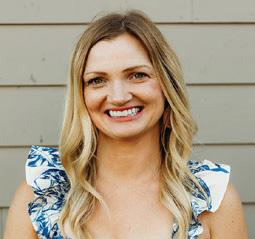
Kimberly Hughes Licensed Sales Agent 3177925227, TTY 711
kim@hugheshealth.care
www.myuhcagent.com/kimberly.hughes
By Mark Ambrogi mark@youarecurrent.com
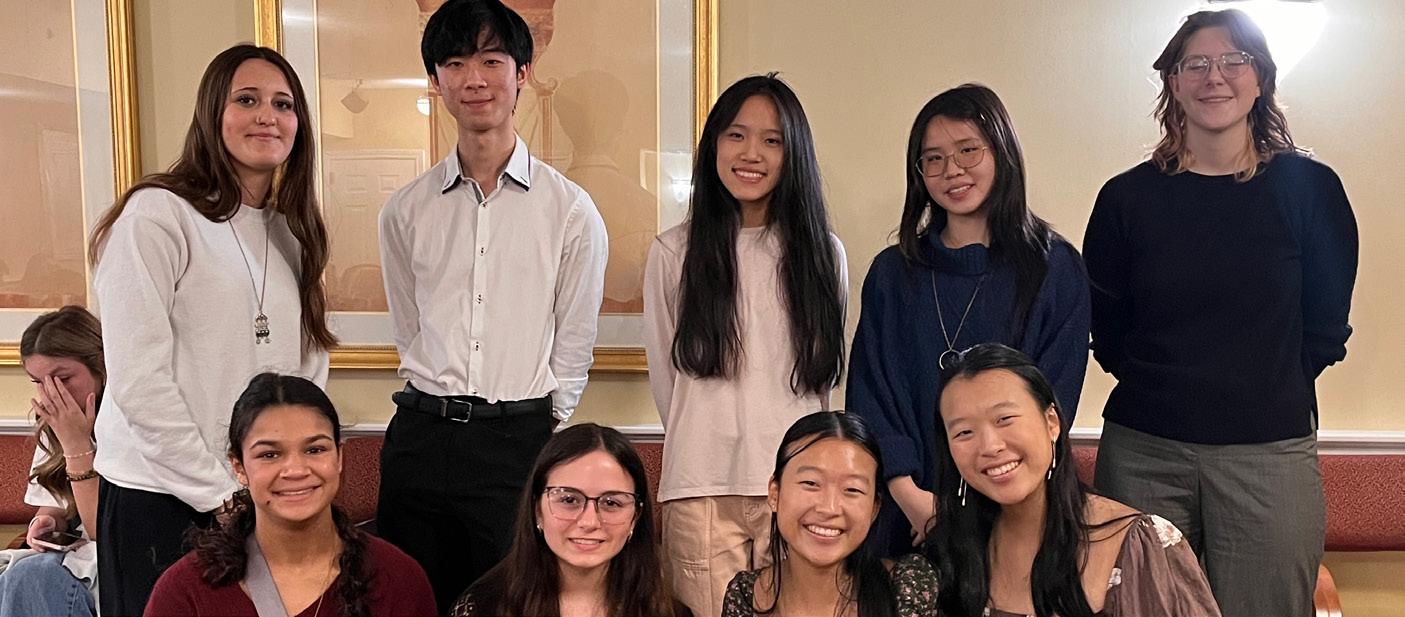
Carmel High School seniors Oliv and Alex Widjaja saw how much joy music gave their grandparents.
“My grandparents live overseas (in Indonesia), and I love playing piano for them over FaceTime,” Alex said. “Oliv and I decided to start Play It Forward so we could share the joy of music with other people in our community. We started the club last summer with only five members and have expanded to over 50 members in just a few months.”
Oliv would play the guitar or piano on those FaceTime calls. She said those moments were when she spent the closest to them.
“Alex and I wanted to bring that same joy to other grandparents,” Oliv said. “Spreading joy through music became our mission, and that’s what inspired us to start Play It Forward.
The twin sisters started Play It Forward in July 2025. It is a club of student musicians who perform for seniors in the community.
“So far, we’ve visited eight different senior homes, most of which have invited us back in the coming months,” Oliv said. “We would love to visit more senior homes, too.”
Oliv said Play It Forward is independent from CHS’s performing arts programs, but some of its members are in the school’s choirs, orchestras and bands.
“Throughout the first semester of this
school year, we’ve recruited 51 members in total,” Oliv said. “We usually have around five to 10 members play at each performance, and members may play more than one song.”
Alex said members play a variety of instruments, including piano, guitar, violin and clarinet.
“Some of our performers sing while playing their instrument, while others just play their instrument by itself,” Alex said.
Oliv said members can collaborate with each other, which has produced some fun instrument combinations.
The Stratford of Carmel is among the senior centers where Play It Forward has performed.
“Play It Forward and similar groups provide a vital intergenerational bridge that enhances the well-being of our senior residents by combating social isolation and fostering a renewed sense of purpose,” The Stratford Social Director Trilce Schneirla said. “Through these intentional and relational connections, residents have the opportunity to share their lifetime of wisdom and stories with a younger generation, while students bring a vibrant, youthful energy that stimulates cognitive engagement and emotional joy. This partnership creates a social web where both generations feel truly known and supported, transforming a simple visit into a meaningful relationship-building experience that enriches the cultural fabric of our community.”
For more on the group, visit @playitforward_chs on Instragram or email playitforwardchs@gmail.com.