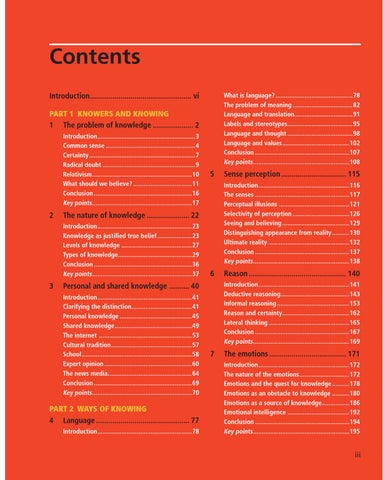
Contents Introduction.................................................. vi
What is language? .............................................78 The problem of meaning ...................................82 Language and translation..................................91 Labels and stereotypes......................................95 Language and thought ......................................98 Language and values .......................................102 Conclusion .......................................................107 Key points ........................................................108
PART 1 KNOWERS AND KNOWING 1 The problem of knowledge .................... 2 Introduction .........................................................3 Common sense ....................................................4 Certainty ..............................................................7 Radical doubt ......................................................9 Relativism ..........................................................10 What should we believe? ..................................11 Conclusion .........................................................16 Key points ..........................................................17
2
6
PART 2 WAYS OF KNOWING 4 Language .............................................. 77 Introduction .......................................................78
Reason ................................................ 140 Introduction .....................................................141 Deductive reasoning........................................143 Informal reasoning ..........................................153 Reason and certainty .......................................162 Lateral thinking ...............................................165 Conclusion .......................................................167 Key points ........................................................169
Personal and shared knowledge .......... 40 Introduction .......................................................41 Clarifying the distinction ...................................41 Personal knowledge ..........................................45 Shared knowledge.............................................49 The internet ......................................................53 Cultural tradition ...............................................57 School ................................................................58 Expert opinion ...................................................60 The news media.................................................64 Conclusion .........................................................69 Key points ..........................................................70
Sense perception ................................ 115 Introduction .....................................................116 The senses .......................................................117 Perceptual illusions .........................................121 Selectivity of perception .................................126 Seeing and believing .......................................129 Distinguishing appearance from reality ..........130 Ultimate reality ...............................................132 Conclusion .......................................................137 Key points ........................................................138
The nature of knowledge ..................... 22 Introduction .......................................................23 Knowledge as justified true belief ....................23 Levels of knowledge .........................................27 Types of knowledge...........................................29 Conclusion .........................................................36 Key points ..........................................................37
3
5
7
The emotions ...................................... 171 Introduction .....................................................172 The nature of the emotions .............................172 Emotions and the quest for knowledge ..........178 Emotions as an obstacle to knowledge ..........180 Emotions as a source of knowledge................186 Emotional intelligence ....................................192 Conclusion .......................................................194 Key points ........................................................195
iii