We are working with Cambridge Assessment International Education towards endorsement of this resource. 1 Key concepts of travel and tourism
ACTIVITY 1.1
1
currency exchange
•
transport e.g. flights need to be booked before travel can take place
•
passports documents need to be up to date
•
visas must be obtained for entry into the country
•
preparing for experiencing a different language and culture.
Day trip
PL E
Project: In small groups, research the rates of tourism in your country and produce a report on what you have found. Tourism statistics are usually published online by the Ministry of Tourism or similar government departments. Other useful sources of information are the UNWTO Tourism Data Dashboard and the World Travel and Tourism Council (WTTC) Economic Impact Reports.
•
Research the rates of domestic, inbound and outbound tourism over the past five to ten years.
What trends do you notice in the data? Have the different types of tourism increased or decreased?
3
Suggest reasons for the trends you have identified.
4
Identify the main source markets for inbound tourism to your country and suggest reasons why.
5
Identify the countries most visited for outbound tourism from your country and suggest reasons why.
6
Considering all the information you have researched, make predictions for future trends in tourism in your country. Provide reasons for your predictions.
Often people do not realise they are a tourist when taking a day trip. It is useful to think back to the explanation of what tourism is. If the person is travelling away from the place where they normally live, work or study, they are a tourist.
M
2
Not all forms of tourism require the tourist to stay overnight in another place. A day trip is a form of tourism where the tourist returns home the same day; they travel for less than 24 hours, therefore there is no overnight stay. There are many reasons why people take day trips. Reasons include pleasure (e.g. travelling to the beach or a city); work (e.g. attending a meeting in another city or country); or visiting friends and relatives.
SA
REFLECTION
What did you learn from this activity about the size and importance of tourism in your country? How do you think you could apply your findings from this activity?
KEY WORD
day trip: when a tourist travels for less than 24 hours
TIP Tourists taking a day trip are sometimes referred to as day trippers or day visitors.
Short break
International tourism
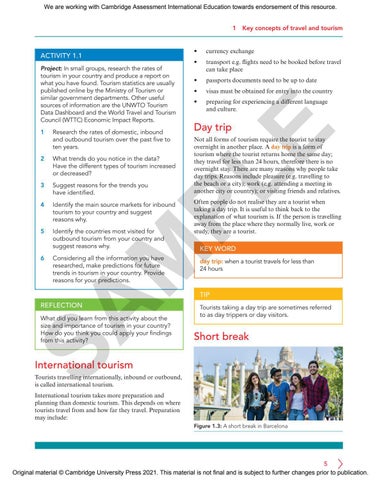
Tourists travelling internationally, inbound or outbound, is called international tourism. International tourism takes more preparation and planning than domestic tourism. This depends on where tourists travel from and how far they travel. Preparation may include: Figure 1.3: A short break in Barcelona
5 Original material © Cambridge University Press 2021. This material is not final and is subject to further changes prior to publication.