Poverty and gender equality
39
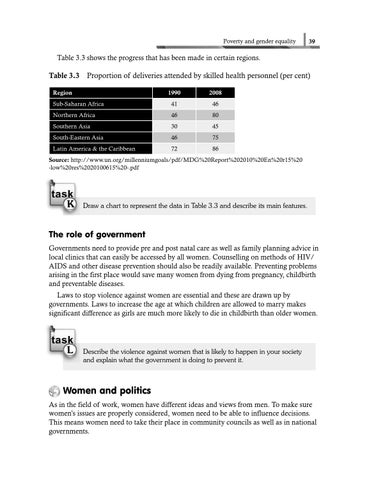
Table 3.3 shows the progress that has been made in certain regions.
Table 3.3 Proportion of deliveries attended by skilled health personnel (per cent) Region
1990
2008
Sub-Saharan Africa
41
46
Northern Africa
46
80
Southern Asia
30
45
South-Eastern Asia
46
75
Latin America & the Caribbean
72
86
Source: http://www.un.org/millenniumgoals/pdf/MDG%20Report%202010%20En%20r15%20 -low%20res%2020100615%20-.pdf
K
Draw a chart to represent the data in Table 3.3 and describe its main features.
The role of government Governments need to provide pre and post natal care as well as family planning advice in local clinics that can easily be accessed by all women. Counselling on methods of HIV/ AIDS and other disease prevention should also be readily available. Preventing problems arising in the first place would save many women from dying from pregnancy, childbirth and preventable diseases. Laws to stop violence against women are essential and these are drawn up by governments. Laws to increase the age at which children are allowed to marry makes significant difference as girls are much more likely to die in childbirth than older women.
L
Describe the violence against women that is likely to happen in your society and explain what the government is doing to prevent it.
Women and politics As in the field of work, women have different ideas and views from men. To make sure women’s issues are properly considered, women need to be able to influence decisions. This means women need to take their place in community councils as well as in national governments.