Learning outcomes By the end of this chapter you should understand: The structure of important chemicals found in organisms, including fats, proteins, carbohydrates and DNA
4.01 Biological molecules Three of the most common organic molecules found in living organisms are: • carbohydrates
The structure of the different chemicals that organisms use in their nutrition How to carry out food tests to detect their presence
Fats TIP
Chapter 4
The chemicals of life
Watch out for questions that refer to oils and remember that oils are fats that are liquid at 20°C.
• fats • proteins.
Carbohydrates Carbohydrates are organic chemicals containing the elements carbon, hydrogen and oxygen only. The ratio of atoms of hydrogen to atoms of oxygen in a carbohydrate molecule is always 2 : 1. (It may help to remember this to know that ‘carbo’ refers to the carbon, ‘hydrate’ refers to water – where the ratio of H to O is also 2:1.) Carbohydrates with large molecules, such as starch, glycogen and cellulose, are insoluble. (Although it is common to refer to a ‘starch solution’, it is really a starch suspension.) They are synthesised in living organisms by linking together molecules of simple sugar (glucose). Large carbohydrate molecules can be broken down into simple sugars. Smaller carbohydrate molecules are soluble and occur as: • ‘complex’ sugars, such as maltose and sucrose (table sugar), all with the formula C12H22O11 or • ‘simple’ sugars, such as glucose or fructose, with the formula C6H12O6.
34
Fats are organic chemical substances that contain the elements carbon, hydrogen and oxygen only. This time, however, the ratio of H to O in the molecule is very much higher than 2:1. They are all insoluble in water and are formed by the joining of a glycerol molecule with fatty acid molecules.
Proteins Proteins contain the elements carbon, hydrogen, oxygen and nitrogen (and often other elements such as sulfur and phosphorus). They are large, usually insoluble, molecules that are built up from simple, soluble units known as amino acids, of which up to 20 are used in the production of protein in living organisms. )(
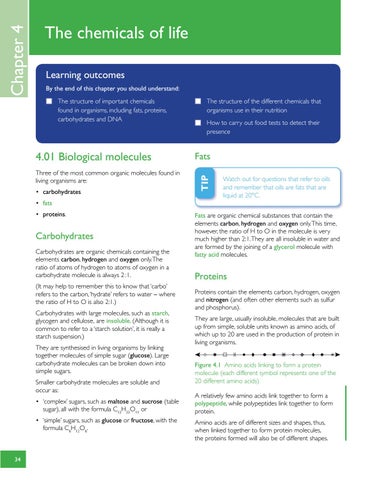
Figure 4.1 Amino acids linking to form a protein molecule (each different symbol represents one of the 20 different amino acids) A relatively few amino acids link together to form a polypeptide, while polypeptides link together to form protein. Amino acids are of different sizes and shapes, thus, when linked together to form protein molecules, the proteins formed will also be of different shapes.