Development of the embryo and foetus
see p. 82
What you need to know •
The difference between an embryo and foetus
•
The structures associated with pregnancy: amniotic fluid, umbilical cord and placenta.
The developing baby is known as an embryo from implantation to around the eighth week of pregnancy; after this point, it is called a foetus.
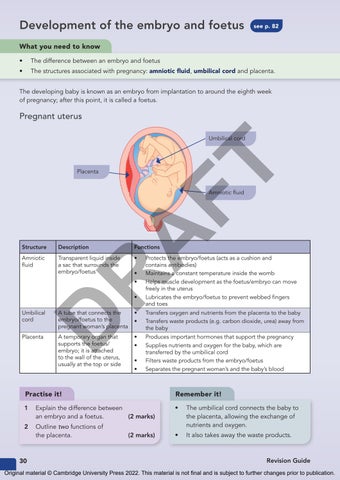
Pregnant uterus
Placenta
FT
Umbilical cord
A
Amniotic fluid
Structure
Description
Functions
Amniotic fluid
Transparent liquid inside a sac that surrounds the embryo/foetus
•
R
• • •
A tube that connects the embryo/foetus to the pregnant woman’s placenta
• •
Transfers oxygen and nutrients from the placenta to the baby Transfers waste products (e.g. carbon dioxide, urea) away from the baby
A temporary organ that supports the foetus/ embryo; it is attached to the wall of the uterus, usually at the top or side
• •
Produces important hormones that support the pregnancy Supplies nutrients and oxygen for the baby, which are transferred by the umbilical cord Filters waste products from the embryo/foetus Separates the pregnant woman’s and the baby’s blood
D
Umbilical cord Placenta
Protects the embryo/foetus (acts as a cushion and contains antibodies) Maintains a constant temperature inside the womb Helps muscle development as the foetus/embryo can move freely in the uterus Lubricates the embryo/foetus to prevent webbed fingers and toes
• •
Practise it!
Remember it!
1
Explain the difference between an embryo and a foetus. (2 marks)
•
2
Outline two functions of the placenta.
The umbilical cord connects the baby to the placenta, allowing the exchange of nutrients and oxygen.
•
It also takes away the waste products.
30
(2 marks)
Revision Guide
Original material © Cambridge University Press 2022. This material is not final and is subject to further changes prior to publication.