SACRED STRENGTH Indigenous
Women Rooted in Mother Earth’s Wisdom
MARCH 2026
VOLUME 50, ISSUE 1
BOARD OF DIRECTORS
PRESIDENT
Kaimana Barcarse (Kanaka Hawai’i)
VICE PRESIDENT
John King
TREASURER
Steven Heim
CLERK
Nicole Friederichs

Page 16
16 We’re Not Feminists. We’re the Law.
Marcus Briggs-Cloud (Maskoke)
Keith Doxtater (Oneida)
Kate R. Finn (Osage)
Laura Graham
Richard A. Grounds (Yuchi/Seminole)
Lyla June Johnston (Diné/Tsétsêhéstâhese)
Stephen Marks
Mrinalini Rai (Rai)
Jannie Staffansson (Saami)
Stella Tamang (Tamang)
FOUNDERS
David & Pia Maybury-Lewis
Cultural Survival Headquarters 2067 Massachusetts Ave. Cambridge, MA 02140 t 617.441.5400 f 617.441.5417
www.cs.org
Cultural Survival Quarterly
Managing Editor: Agnes Portalewska
Contributing Arts Editor: Phoebe Farris (Powhatan-Pamunkey)
Copy Editor: Jenn Goodman
Designer: NonprofitDesign.com
Copyright 2026 by Cultural Survival, Inc.
Cultural Survival Quarterly (ISSN 0740-3291) is published quarterly by Cultural Survival, Inc. at PO Box 381569, Cambridge, MA 02238. Periodical postage paid at Boston, MA 02205 and additional mailing offices. Postmaster: Send address changes to Cultural Survival, PO Box 381569, Cambridge, MA 02238. Printed on recycled paper in the U.S.A. Please note that the views in this magazine are those of the authors and do not necessarily represent the views of Cultural Survival.
Writers’ Guidelines
View writers’ guidelines at our website (www.cs.org) or send a self-addressed, stamped envelope to: Cultural Survival, Writer’s Guidelines, PO Box 381569, Cambridge, MA 02238.
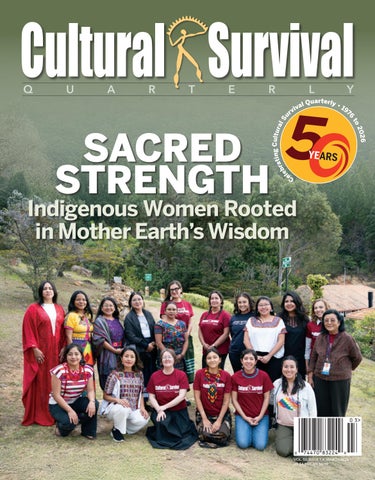
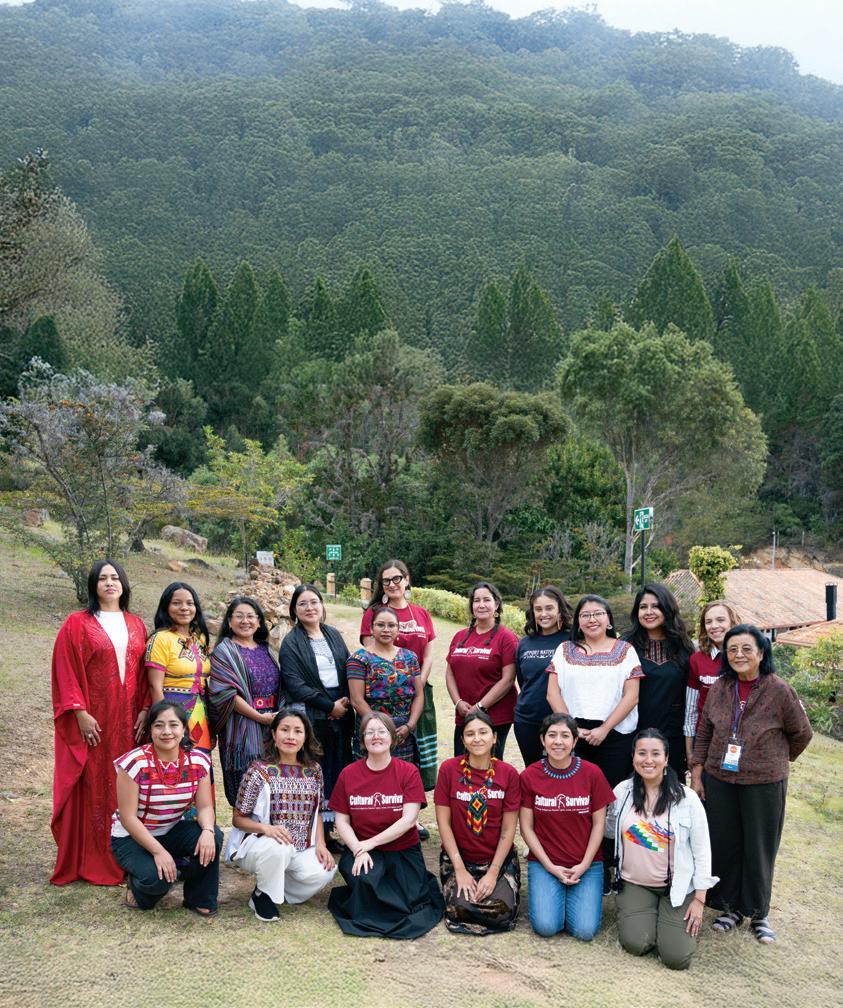
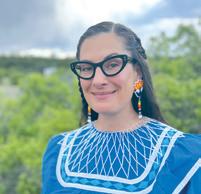
On the cover: Indigenous women from around the globe serve on Cultural Survival's Staff and Board of Directors. Photo by Jamie Malcolm-Brown.

22 25 Years of Weaving Change
Interview with Michelle Schenandoah (Oneida) about uplifting Indigenous women’s voices and sharing Haudenosaunee principles.
18 Imprisoned for Climate Justice and Indigenous Rights Advocacy
Daria Egereva (Selkup) was detained by the Russian government after participating at COP30.
20 Uts Ha-e !kho /gara i #gau#gausen: Hold Onto What You Have and Heal Yourselves
Irene ǁGaroës (Nama)
A celebration of enduring bravery, resilience, and healing of Nama and Damara women in Namibia.
Free Against All Odds: The “Hidden People” of Pakayaku Fight to Keep Extractives Out of Ecuador’s Amazon 8 Climate Change
Unmistakable Message at COP30 in Belém: Indigenous Peoples’ Rights Are Non-Negotiable
10 Rights in Action:
No Consent, No Legitimacy: Exposing the Systemic Non-Compliance with Indigenous Rights


International Indigenous Women’s Forum (FIMI): How FIMI became a global force for Indigenous women’s leadership.
24 Protecting the Seal River
Watershed: An Indigenous-Led Fight for Conservation
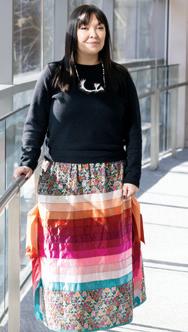
Interview with Stephanie Thorassie (Sayisi Dene) about efforts to establish an Indigenous Protected Area in northern Manitoba, Canada.
26 Never Give Up
Lyla June Johnston (Diné/ Tsétsêhéstâhese)
Interview with Piscataway Elder Gabrielle Tayac on kinship, land, and legacy.
12 Indigenous Arts
To the (Heart) Beat of Her Own Drum: A Conversation with Nuka Alice
14 Women the World Must Hear
Get to Know Our New Director of Advocacy and Communications: Alicia Moncada (Wayúu)
28 Staff Spotlight
Ilenia May Pérez (Guna)
29 Bazaar Artist
Brittney Peauwe Wunnepog Walley (Nipmuc)


Sacred Strength: Indigenous Women
Rooted in Mother Earth’s Wisdom
Halito akana (Hello friends),
Please join us in celebrating a major milestone—with humble origins as a quarterly newsletter in 1976, this issue of the Cultural Survival Quarterly marks 50 years since we began publishing! From the beginning, we have documented urgent problems facing Indigenous Peoples world wide and publicized infringements of individual and collective human rights. While this remains fundamental to our work, so is amplifying the voices, brilliance, and resilience of Indigenous Peoples. At the center of our work are Indigenous women, femmes, and youth. Women are the hearts of our families, backbones of our communities, and bedrock of our movements. Indigenous Peoples honor the sacredness of women who create life, the love of women who nurture our families and traditions, the strength of women who protect and defend our homelands, and the wisdom of women who align our communities with the sacred laws of Mother Earth.
violence, and 40% of sex trafficking victims are American Indian or Alaska Native women. Thankfully, despite this oppression and extreme imbalance, Indigenous women continue to listen to the heartbeat of Mother Earth and are rooted in her wisdom as they lead the change the world needs! In this issue, learn about how women are revitalizing traditions, cultures, and lifeways while nurturing intergenerational knowledge transfer; protecting and defending their territories and homelands despite mounting pressures and ongoing persecution; and supporting each other’s leadership and initiatives. Indigenous women are at the forefront of cultivating balance and sustainable lifeways through rematriation— restoring right relationships with Mother Earth, within our communities, and across genders, while focusing on the well being of the collective and future generations.
CULTURAL SURVIVAL STAFF
Aimee Roberson (Choctaw & Chickasaw), Executive Director
Mark Camp, Deputy Executive Director
Avexnim Cojtí (Maya K’iche’), Director of Programs
Alicia Moncada (Wayúu), Director of Advocacy and Communications
Verónica Aguilar (Mixtec), Program Associate, Keepers of the Earth Fund
Maha Akamine, Keepers of the Earth Fund Program Assistant
Edison Andrango (Kichwa Otavalo), Indigenous Rights Radio Program Assistant
Nadia April (Damara and Nama), Keepers of the Earth Fund Program Coordinator
Diana Ariza Monroy, Community Media Program Assistant
Carmem Cazaubon, Capacity Building Program Assistant
Miguel Cuc Bixcul (Maya Kaqchikel), Accounting Associate
Jess Cherofsky, Advocacy Program Manager
Geovany Cunampio Salazar (Emberá), Panama Advocacy Coordinator
Michelle de León, Grants Coordinator
Roberto De La Cruz Martínez (Binnizá), Information Technology Associate
Danielle DeLuca, Senior Development Manager
Nataly Domicó (Embera Eyabida), Keepers of the Earth Fund Program Assistant
Georges Theodore Dougnon (Dogon), Capacity Building Program Assistant
David Favreau, Logistics and Operations Assistant
Shaldon Ferris (Khoisan), Indigenous Radio Program Coordinator
Sofia Flynn, Accounting & Office Manager
Nati Garcia (Maya Mam), Capacity Building Manager
Cesar Gomez Moscut (Pocomam), Community Media Program Coordinator
Byron Tenesaca Guaman (Kañari Kichwa), Fellowships Coordinator
Alison Guzman, Donor Relations Coordinator
Emma Hahn, Development Associate
Belen Iñiguez, Publications Distribution Assistant
Natalia Jones, Advocacy Coordinator
Traditionally, many Indigenous Peoples were matriarchal and matrilocal with powerful women in important decision-making roles. Disrupted by colonization, our Peoples were pressured to assimilate into lifeways that no longer center women, youth, and our reciprocal relationships and responsibilities to Mother Earth. This destructive trajectory of humanity is fueled by colonialism, extractivism, hyper-individualism, overconsumption, and misogyny and has led to terrible imbalances as the sacredness of Mother Earth and her daughters has been violated and the importance of women’s roles have been denied. We are currently seeing an extreme manifestation of this come to light as a vast sex trafficking network of powerful people around the world is being exposed. We also know that gender-based violence disproportionately affects Indigenous women, femmes, and girls, as seen in the epidemic of Missing and Murdered Indigenous Women and Girls. In the U.S. and Canada, 4 out of 5 Indigenous Women have experienced violence, 56.1% have experienced sexual
For many years, Cultural Survival has prioritized projects that center Indigenous women, femmes, and girls and engage their leadership. We continue to be inspired by those who are leading their communities’ healing and renewing collective responsibilities related to caretaking of Mother Earth. While we focus on supporting them and uplifting their voices and work, we are also working to ensure healthy relations within our organization, including through our Gender Balance Policy. Thank you for joining us on this journey to create a more just and equitable world and to support Indigenous women’s leadership in guiding the way. Help us build this movement, and please give generously at www.cs.org/ donate. We cannot do what we do without friends like you!
Hטchi yakoke li hoke (I thank you all so much),

Aimee Roberson (Choctaw and Chickasaw), Executive Director
P.S. As a CSQ reader, you are among the first to hear that we are launching a new podcast on Earth Day! Stay tuned for “Mother Earth Medicine: Ancestral Intelligence for Healing Our Future.”
Mariana Kiimi (Na Ñuu Sàvi/Mixtec), Advocacy Associate
Dev Kumar Sunuwar (Koĩts-Sunuwar), Community Media Program Coordinator
Rosy Sul González (Kaqchikel), Indigenous Rights Radio Program Manager
Marco Lara, Social and Digital Media Coordinator
Kevin Alexander Larrea, Information Technology Associate
Maya Chipana Lazzaro (Quechua), Bazaar Vendor Coordinator
Jamie Malcolm-Brown, Communications & Information Technology Manager
Candela Macarena Palacios, Executive Assistant
Ñushpi Quilla Mayhuay Alancay (Quechua/Kolla), Advocacy Coordinator
Edson Krenak Naknanuk (Krenak), Lead on Brazil
Diana Pastor (Maya K’iche’), Media Coordinator
Guadalupe Pastrana (Nahua), Indigenous Rights Radio Producer
Camila Paz Romero (Quechua), Keepers of the Earth Fund Program Assistant
Ilenia Perez (Guna), Panama Advocacy Coordinator
Agnes Portalewska, Senior Communications Manager
Tia-Alexi Roberts (Narragansett), Editorial & Communications Assistant
Elvia Rodriguez (Mixtec), Community Media Program Assistant
Mariana Rodriguez Osorio, Executive Assistant
Carlos Sopprani, Human Resources Associate
Thaís Soares Pellosi, Executive Assistant
Abigail Sosa Pimentel, Human Resources Assistant
Adriana Sunun (Maya Kaqchiquel), Community Media Program Coordinator
Candyce Testa (Pequot), Bazaar Events Manager
Miranda Vitello, Development Coordinator
Candy Williams, Human Resources Manager
Pablo Xol (Maya Qʼeqchiʼ), Design and Marketing Coordinator
INTERNS
Kelaia Acevedo, Miranda Gonzalez, Mara Moldavan, Sandra I. Pelaez, Linda Ravolatsara
U.S. | Colorado River
Declared Living Entity
NOVEMBER
The Colorado River Indian Tribes Council in Arizona and California has recognized the Colorado River as a living entity that sustains people, animals, and nature.
Nepal | Lawyers’ Group Wins Human Rights Award
NOVEMBER
The Lawyers’ Association for Human Rights of Nepalese Indigenous Peoples (LAHURNIP) was honored with the 2025 Human Rights and Business Award in Geneva for its services of providing legal aid, strategic litigation, and advocacy to defend Indigenous rights.
International | UN Establishes International Day for Indigenous Women and Girls
NOVEMBER
The UN General Assembly adopted A/RES/80/10, a resolution on the International Day for Indigenous Women and Girls, to be commemorated every September 5.
Canada | Vatican Returns
Indigenous
Artifacts
NOVEMBER
In a significant move toward reconciliation, the Vatican formally returned 62 artifacts connected to Indigenous communities in Canada.
Australia | Victoria Signs
Landmark
First Treaty with Aboriginal Peoples
NOVEMBER
The state of Victoria has formalized Australia’s first-ever treaty into law. Following nearly a decade of negotiations with Indigenous leaders, the accord grants First Nations people greater oversight on decisions affecting their lives, including healthcare, housing, and education.
Sweden | Sámi Community Blocks Per Geijer Project
DECEMBER
The Gabna Sámi community in Sweden
ended its cooperation with the public mining company LKAB, claiming that their land is being exploited without their Free, Prior and Informed Consent. The Per Geijer project threatens reindeer pastures, sacred sites, and Sámi culture.
Kenya
| Ogiek People Awarded $1.3 Million
DECEMBER
The African Court on Human and Peoples’ Rights ordered the government of Kenya to pay roughly $1.3 million USD in compensation to the Ogiek Peoples and to legally recognize and restore their ancestral lands in the Mau Forest.
Taiwan | Pingpu Peoples Officially Recognized
DECEMBER
Taiwan enacted the Pingpu Indigenous People’s Identity Act, granting legal recognition to approximately 980,000 descendants of lowland Tribes. The Siraya, Makatao, and Taivoan are moving from administrative erasure to formal recognition, following a 2022 mandate from the Constitutional Court.
U.S. | Alaska Natives Win Supreme Court Protection for Subsistence Fishing
JANUARY
The Supreme Court again refused to hear the State of Alaska’s challenge in U.S. v. Alaska. This means Alaska Native communities can continue fishing and hunting in traditional ways.
U.S. | Historic First Indigenous State House Representation in Connecticut
JANUARY
Larry Pemberton Jr. (Eastern Pequot) became the first Native American elected to the state’s General Assembly.
U.S. | ICE Detains Native Americans
JANUARY
Jose Ramirez, a descendant of the Red Lake Nation, was detained during ICE raids in Minneapolis, and others were questioned.
U.S. | Three Ogala Lakota Men
Detained
JANUARY
The Oglala Sioux Tribe reported that three Lakota men were held by ICE and the Department of Human Services at Fort Snelling, a place of deep historical pain for the community.
U.S. | Gwich’in File Lawsuit Against Oil Exploitation in
Arctic Wildlife Refuge
JANUARY
The Gwich’in Steering Committee and 12 allied groups reopened legal action against the U.S government to stop oil exploitation in the Arctic National Wildlife Refuge.
U.S. | Native Communities
Disproportionately Affected by Gun Violence
JANUARY
A recent report from the Violence Policy Center, “American Indian/Alaska Native Victims of Lethal Firearm Violence in the United States,” identifies 553 gun deaths among Native American and Alaska Native individuals, including 246 homicides and 260 suicides in 2023.
Australia | Aboriginal Remains Returned
JANUARY
The remains of three Waluwarra ancestors, once traded and stored in institutions in Germany and Australia, have been reunited with their descendants in Sydney and Brisbane, marking a powerful act of reconciliation. More than 1,790 remains have been repatriated.
U.S. | Cherokee Tribe Regains Sacred Mound
JANUARY
After nearly 200 years, the Eastern Band of Cherokee Indians will reclaim full ownership of the Noquisiyi Mound in Franklin, North Carolina, a sacred site built by their ancestors around C.E. 1000. The Franklin Town Council unanimously approved transferring the deed to the Tribe, fulfilling a long-held wish for restoration.
ADVOCACY UPDATES
Latin America: Systemic Violence Against Indigenous Defenders Increasing

FEBRUARY
Latin America accounts for 82% of cases of murder of land defenders. Indigenous defenders face a double threat: defending rights and being Indigenous.
In 2024, 33% of the defenders killed were Indigenous, a disproportionately high figure compared to other groups. Every year, Cultural Survival compiles a list of murdered Indigenous defenders in the name of remembrance and to raise awareness about this systematic persecution. In 2025, at least 46 Indigenous defenders were killed. Each one was a beloved family and community member, and their deaths have caused profound grief.
Venezuela: Indigenous Peoples Face Major Vulnerabilities After U.S. Military Intervention

JANUARY
On January 3, the United States launched a military intervention in Caracas, Venezuela, bombing multiple targets and capturing President Nicolás Maduro and his wife, Cilia Flores. Human rights organizations have characterized this attack, which was carried out without congressional authorization, as a violation of the UN Charter and international law. The United States’s stated intent to control Venezuela’s oil resources and “run the country” raises serious concerns about prioritizing extraction over the rights of a population. Indigenous Peoples face particular vulnerability as the U.S. government has signaled interest in accelerating oil and mineral extraction in territories that overlap with Indigenous traditional territories, including the Orinoco Mining Arc, where communities have been suffering illegal mining, environmental degradation, and violence from armed groups for decades.
Russia: Daria Egereva and Other Indigenous Human Rights Defenders Criminalized

DECEMBER
Daria Egereva (Selkup) was detained in Russia on December 17, 2025, and accused of participating in a terrorist organization after participating in the UN Framework on Climate Change Convention (UNFCCC COP30) in Belém, Brazil, last November. The Selkup Nation is one of the smallest Indigenous Peoples in Russia, with a total population of 3,500. Egereva serves as co-chair of the International Indigenous Peoples Forum on Climate Change. She is a former member of the Facilitation Working Group of the
Cultural Survival’s Advocacy Program launches international campaigns in support of grassroots Indigenous movements as they put pressure on governments and corporations to respect, protect, and fulfill the rights of their communities.
Local Communities and Indigenous Peoples Platform under the UNFCCC, and a long-standing participant in the international Indigenous Peoples movement. The terrorism charge carries a potential prison sentence of 10 to 20 years. Another Indigenous woman activist whose name has not yet been released was simultaneously arrested in connection with the same accusations, and at least 17 other Indigenous individuals across the country were subjected to searches and interrogations. These actions took place over 10 regions, including Moscow, the Altai Republic, Tomsk, Murmansk, Krasnoyarsk, Taimyr, and Kemerovo Oblast.
Brazil: Cultural Survival participates in COP30

NOVEMBER
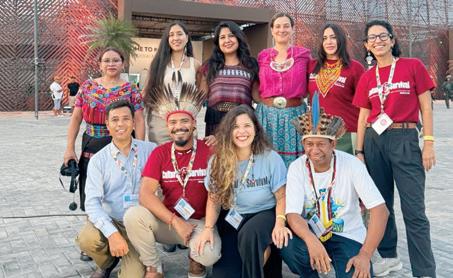
From November 10-21, 2025, a delegation from Cultural Survival attended the UNFCCC COP30 in Belém, Brazil, joining the International Indigenous Peoples’ Forum on Climate Change in their advocacy to demand the inclusion of Indigenous Peoples in the multilateral efforts to tackle climate change. Cultural Survival’s priorities included: direct access to climate finance, the end to false “greenwashing” solutions, territorial protection and demarcation, the end of Sacrifice Zones being stripped by extractive industries in the name of the green economy, a transition to low carbon economies that is just to Indigenous Peoples, the protection of Indigenous environmental defenders, the guarantee to Free, Prior and Informed Consent in all projects that affect them, and the protection of Indigenous Peoples in Voluntary Isolation. Despite not reaching consensus on main topics like the transition away from fossil fuels, Indigenous Peoples achieved their largest participation in history with more than 5,000 delegates in attendance.
Paraguay: Government Approves Anti-NGO Law Hindering Nonprofits, including Indigenous Organizations

NOVEMBER
In October 2025, the government of Paraguay approved the regulations for Law No. 7363/24, better known as the Anti-NGO Law. Civil society organizations have expressed concern about the law, which restricts the right to association and political participation and hinders the legitimate exercise of nonprofit organizations in Paraguay. It also threatens to impose heavy penalties on NGOs that fail to comply, which would jeopardize their ability to defend Indigenous Peoples’ collective and human rights.
FREE AGAINST ALL ODDS
The “Hidden People” of Pakayaku Fight to Keep Extractives Out of Ecuador’s Amazon
Brandi Morin (CREE/IROQUOIS)
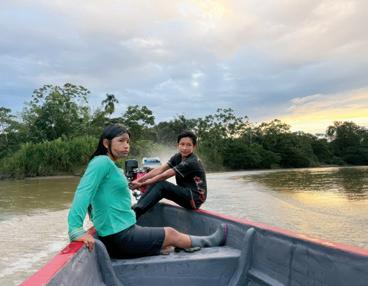
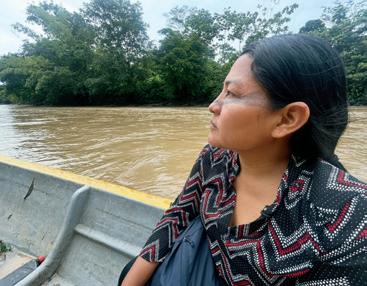
Nestled along the banks of the Bobonaza River in Ecuador’s Pastaza province is the “hidden,” thriving Kichwa community of Pakayaku. Located deep in the Amazon, reaching Pakayaku requires driving two hours from the city of Puyo to the river port, and then embarking on a nearly two-hour boat ride. The community of approximately 3,000 is rich in culture and traditions and fiercely proud of protecting their territories from outside invaders such as extractive industries. Until now, they’ve managed to keep industry out of their territories through their secluded location, patrolling their borders with land guardians and asserting their legally protected rights as an Indigenous Nation. But the security of Pakayaku has recently come into question.
The threats facing Pakayaku extend far beyond their remote borders, reaching into the highest levels of Ecuador’s government. In the capital city of Quito, President Daniel Noboa’s administration has systematically dismantled environmental protections while opening the door to unprecedented extractive activities across Indigenous territories. Last July, Noboa eliminated the Ministry of Environment entirely, folding its responsibilities into the Ministry of Energy and Mines—a move that conservationists warn represents “a direct attack on the rights of nature.”
For Zenaida Yasacama (Kichwa), these attacks on Indigenous sovereignty aren’t abstract policy debates: they’re threats to the place that shaped her. Born and raised in Pakayaku, she grew up drinking from the same rivers that now face contamination, learning Traditional Knowledge from the same Elders who taught her and her
siblings about forest medicines, and absorbing the community values of humility, loyalty, and dignity that guide every major decision. When she left Pakayaku to pursue education and eventually become the first woman ever to serve as Vice President of CONAIE, Ecuador’s national Indigenous confederation, she carried the Kichwa philosophy of resistance with her.
Now, as the Noboa administration systematically dismantles environmental protections, Yasacama has made the profound decision to return home. This government restructuring confirms what she and her people have long suspected: that their territories are being sacrificed for short-term economic gains. As the first woman to hold CONAIE’s vice presidency, Yasacama spent her term watching the Noboa administration systematically erode Indigenous rights while promoting what she calls “shadow extractivism.” “We have always stood firm against extractivist activities in our territory,” Yasacama explains. “But right now we have a big threat from the Noboa government and his cabinet: they want to open a big road for petroleum extraction that will go through Pakayaku territory.”
The road is part of a broader government strategy to open Indigenous lands to resource extraction. Simultaneously, Noboa has reopened Ecuador’s mining concession registry after a seven-year closure, actively courting international investment in what the government calls “high potential” sectors like mining and natural gas. The International Monetary Fund has encouraged this approach, promising financial support only if Ecuador meets criteria for “responsible spending” that prioritizes economic growth over environmental protection. But Yasacama knows the true cost of these policies extends beyond environmental damage. “The government knows perfectly [well] who I am,” she says. “Maybe I will start to
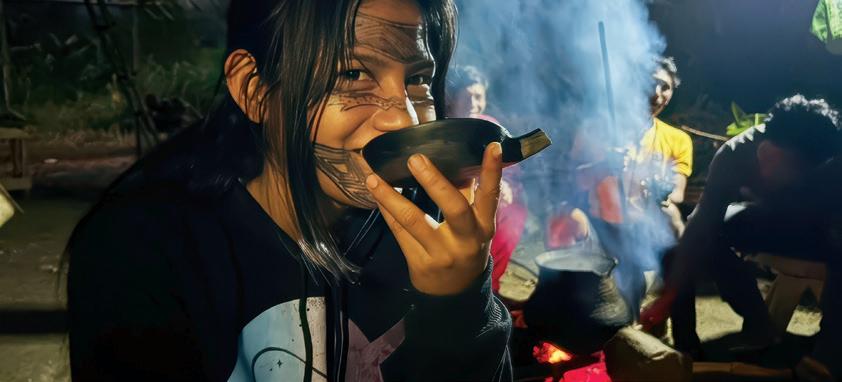
A Pakayaku youth enjoys a cup of guayusa tea during an early morning ceremony.
face political persecution because they know all the work we have been doing.” The risks are concrete: political trials based on fabricated charges, criminalization of leaders who interfere with government projects, and imprisonment of those who resist.
Recent government bills labeled as “economically urgent” have tightened controls on civil society organizations, requiring NGOs and community groups to meet conflict of interest protocols and register in mandatory government databases. Critics argue these laws are designed to persecute human rights and environmental defenders, creating obstacles for groups trying to combat threats to protected areas.
The scale of illegal mining activity in Ecuador has doubled since 2020, with organized crime groups like Los Lobos controlling operations across provinces including Napo, where mining has expanded by 500 hectares in just one year. Despite this crisis, the government’s response has been to facilitate more extraction rather than strengthen protections. In March 2024, Noboa toured Canada specifically to promote mining investments, signing deals with foreign companies while Indigenous communities like Pakayaku face increased pressure.
The timing of Yasacama’s return to Pakayaku is crucial. As the government eliminates environmental oversight and accelerates extractive projects, communities like hers must rely increasingly on their own systems of resistance. Yasacama’s mother was a courageous leader who taught her that determined action matters more than gender. “In my family, there are many women who are leaders in their fields. This has allowed me to improve in my political career and my studies,” she says.
Yasacama brings that experience back to Pakayaku, where the philosophy of invisibility must adapt to new forms of state-sponsored extraction. The road that threatens to cut through their territory represents more than infrastructure—it’s a symbol of the government’s willingness to sacrifice Indigenous sovereignty for resource access. But as Yasacama prepares to rejoin her family and Pakayaku President Angel Santi (Kichwa) in defending their 71,000 hectares of ancestral land, she carries with her
the knowledge that resistance movements can emerge from the most remote corners of the Amazon. “Pakayaku is an Indigenous community that is emerging by its own efforts, without support from any political authority,” Yasacama says. “We want to show ourselves to the world as people who always fight for their rights.”
The Legal Front
From his office in Cuenca, environmental lawyer David Fajardo watches the Noboa administration’s assault on Indigenous rights with a trained eye. He has spent years defending constitutional protections that are now under systematic attack. As a specialist in rights of nature and collective rights working with the Kuska Law Firm, Cabildo por El Agua de Cuenca, and Yasunidos Cuenca, he represents the legal resistance movement that communities like Pakayaku increasingly depend on as government institutions fail them. “Pakayaku is one of the main examples of how to fight extractivism here in Ecuador,” Fajardo says. “At the start of extractivist projects in their territory, they weren’t working with the projects. They had some agreements with oil companies, but then they realized that extractivism in their land would destroy not just their territory and their traditions, but also their spiritual way of life—everything they had reached and how they lived.”
What makes Pakayaku’s resistance so significant is how they were able to succeed. “The government and the oil companies outnumbered them, but they managed to fight against these monstrous enemies and reached agreements aligned with their vision of territory, aligned with their vision of life itself,” Fajardo says. This success story becomes even more crucial in the current legal landscape. “Right now we are facing a very hard situation because the economic interests, like Noboa’s family, are reorganizing around extractivism, especially mining extractivism. They’re trying to reorganize the Ecuadorian state so they can manage all the mining projects here in Ecuador. They don’t care about the people. They don’t care about nature. They only care about the market,” he says.
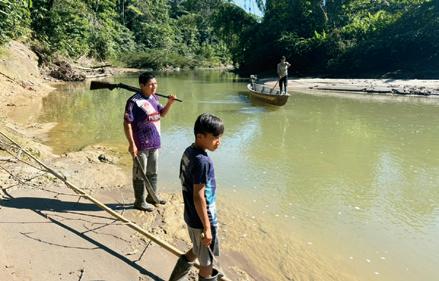
Left: Pakayaku sits along the Bobonaza River in Ecuador, a nearly two-hour boat ride from the nearest port.
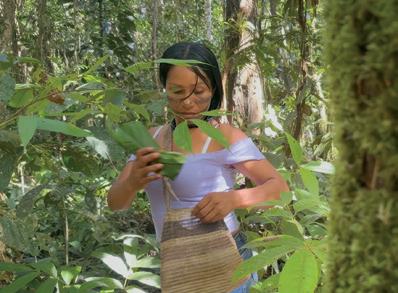
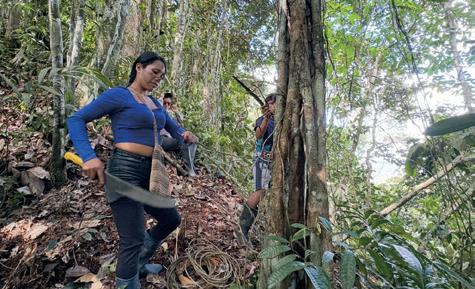
Right: Gracia Malaover, the captain of the female Indigenous guards in Pakayaku, gathers medicine in the jungle.
The systemic nature of this restructuring alarms Fajardo most. “Now the mining companies have all the support from the state, from the police, from the army. They don’t even care about the constitution, about the laws, about human and nature’s rights. If they have to destroy a community or move a community from their own territory, they are going to do this,” he adds.
“All the laws right now are [made] by Daniel Noboa. He controls the electoral council so he can do whatever he wants with elections. He’s trying to control the justice administration. And now he’s trying to control the constitutional court because that’s the last problem he faces to have absolute control of the state,” Fajardo says, explaining that behind this consolidation of power is a clear motive: “He wants to have control of mining in Ecuador because he understands very well that previous presidents were trying to develop oil or mining production, and he wants to control it all for himself and his family. He’s a dictator, really.”
Despite this grim assessment, Fajardo hasn’t lost hope. Indigenous communities and their legal allies have developed sophisticated resistance strategies that go far beyond traditional litigation. “The most important strategy is to fortify the Indigenous organization,” he says. “That means connecting with other organizations, building a network for the defense of territory and collective rights.”
The legal strategy, which Fajardo calls “strategic litigation,” combines constitutional challenges with broader organizing. Communities are also leveraging social media to expose government and military incursions into their territories, creating international solidarity networks that amplify their resistance.
For communities like Pakayaku, this legal framework provides crucial tools for defending their territories even as the government systematically dismantles environmental protections. “Indigenous territories conserve nature more effectively than the government in Ecuadorian territories,” Fajardo says. “That’s a fact you can verify.” This conservation success stems from what Fajardo describes as “a fight between two paradigms—the paradigm of life,
to live with all the beings that exist in that territory, versus the capitalist paradigm, which believes the Earth, the animals, the plants are just objects you can sacrifice.”
As Pakayaku prepares to face new threats from government road projects and extractive concessions, Fajardo’s work in Cuenca represents the broader legal resistance that Indigenous communities increasingly rely on. His recent formal complaint to the Ontario Securities Commission against Dundee Metals—the Canadian company behind the controversial Loma Larga mining project near Cuenca—demonstrates how local resistance movements are taking their fights to international venues. “Not everything is lost,” Fajardo insists. “We continue the fight, and I’m pretty sure that at the end of the day, we are going to win this fight and save our territories for all the people and all the beings that live here right now.”
The Guardians
When threats arise in the territory, whether from illegal miners, unauthorized researchers, or government officials, the Pakayaku land guardians mobilize. Both men and women land defenders are trained to patrol their lands and capture any uninvited guests. Olger Manya (Kitchwa), a 46-year-old warrior and father of 7, is an experienced hunter and land defender. “We have captured people involved in the provincial governance because they have not made good on what they promised to us,” Manya says. “Until they sign agreements, we hold them. Only when they sign do we release them.” This system of enforcement extends to all levels of intrusion, from individual trespassers to government officials who fail to honor their commitments to the community.
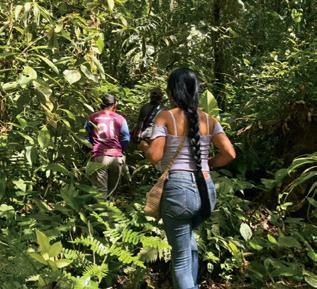
Every three months, these guards organize extensive patrols of their borderlands, spending up to a month in the forest living off the land as their ancestors did. For Manya, this represents a continuation of practices that have sustained his people throughout their history. “In order to live, we hunt and we fish as our parents and grandparents did. I have been doing this all my life,” he says.
Left: Pakayaku youth take a sunset river tour of their territory.
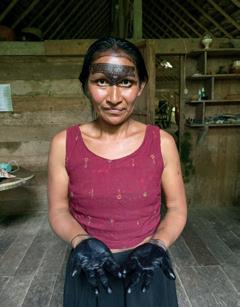
Middle: Alicia Tapuy shows off her hands stained from wintuk ink, which is made from a fruit processed in the Pakayaku jungle.
Right: Pakayaku community members walking in the jungle.
This spiritual dimension of forest life reveals itself most clearly in Pakayaku’s guayusa ceremonies, held in the early morning darkness before sunrise. Community members gather in circles around flickering fires, sharing steaming bowls of the sacred tea brewed from forest plants. In these intimate moments, they share and interpret their dreams from the night before—visions that determine whether the day will bring hunting and fishing or require staying close to home. Good dreams grant permission to venture into the forest, while bad dreams serve as warnings to remain in the safety of the community. The symbolism runs deep: dreaming of a jaguar means the dreamer will soon encounter someone who is upset, angry, and wise— a reminder that even in sleep, the forest speaks to those who know how to listen. This spiritual dimension connects the practical work of territorial defense to deeper cosmological understanding of their relationship with the land.
When asked why he protects Pakayaku with such dedication, the warrior’s answer is simple: “Because I am a son of this land. I was raised here. I was born here. That’s the reason why I will defend this land—I’m defending my land.” The pristine nature of their territory motivates this defense. “Here, as you can see, there’s no contamination. That’s the reason why we preserve it.”
Remaining Hidden, Staying Strong
As our canoe disappears back downstream toward the port that connects Pakayaku to the outside world, the community settles once again into its rhythm of protective invisibility. But after visiting Pakayaku, it’s clear that the sophisticated network of resistance there extends far beyond their remote territory, encompassing legal advocates like Fajardo, international solidarity networks, and strategic alliances with other Indigenous communities facing similar threats.
The philosophy of being “hidden people” that has protected Pakayaku for generations now faces its greatest test. As the Noboa government systematically dismantles environmental protections while accelerating extractive projects across Ecuador, communities like Pakayaku must
balance their traditional invisibility with the need to make their voices heard in national and international forums. Indigenous sovereignty requires both deep rootedness in tradition and strategic adaptation to contemporary threats. Yasacama’s decision to return from national leadership to grassroots organizing reflects this understanding—that the most powerful resistance often begins in the most remote places.
As Ecuador’s government continues its assault on Indigenous rights and environmental protections, the hidden people of Pakayaku offer a different model of survival: one that proves that some things remain beyond the reach of those who would exploit them. Their invisibility is not weakness but strategy, their remoteness not isolation but protection, their resistance not reactive but proactive. In a world where Indigenous territories face unprecedented threats from extractive industries and authoritarian governments, Pakayaku’s story offers both inspiration and instruction. They demonstrate that defending territory requires more than legal documents or government recognition. It demands the kind of deep commitment that emerges only from generations of people who understand that their identity, their culture, and their future are inseparable from the land itself.
The mist that often shrouds Pakayaku territory serves as both literal and metaphorical protection, allowing them to remain hidden from those who would destroy while becoming visible to those who would defend. Their river still runs clean, their forest still stands intact, and their children still learn the names of plants and animals that outsiders have forgotten. In an age of environmental destruction and cultural erasure, this represents more than resistance—it represents hope itself, flowing like the Bobonaza River through territory that remains, against all odds, free.
Brandi Morin (Cree/Iroquois) is an award-winning journalist reporting on human rights issues from an Indigenous perspective. Read this full report at cs.org

Left: Gracia Malaover, the captain of the female Indigenous guards in the Pakayaku jungle.
Right: CONAIE Vice President Zenaida Yasacama of Pakayaku is actively preparing to defend Pakayaku territory from external threats such as extractive industries.
UNMISTAKABLE MESSAGE AT COP30 IN BELÉM
Indigenous Peoples’ Rights Are Non-Negotiable
CS Staff
“The

Belém, Brazil, witnessed a moment that will go down in the history of international climate negotiations. On November 10–21, 2025, while the world gathered to discuss the urgency of bold climate action and global goals at the United Nations Framework Convention on Climate Change 30th Conference of the Parties (UNFCCC COP30), Indigenous Peoples unequivocally demanded recognition of their rights in the final outcome document. According to the Indigenous Peoples’ movement, upwards of 5,000 representatives of Indigenous Peoples participated in COP30—the largest number of Indigenous delegates in the history of climate negotiations—including 360 representatives from Brazil in the official negotiation area, the Blue Zone, and approximately 500 from other Indigenous Peoples’ organizations and Indigenous Peoples from other countries.
Key Decisions for Indigenous Peoples
The main political outcome document of COP30, known as the Global Mutirão: Uniting humanity in a global mobilization against climate change (Decision -/CMA.7), which summarizes the collective commitments made by Parties at COP30, contains an explicit statement in the preamble absent in other conferences: “When taking action to address climate change, respect, promote, and consider their
respective obligations on human rights, the right to a clean, healthy, and sustainable environment, the right to health, the rights of Indigenous Peoples, as well as their land rights and Traditional Knowledge…”
The reflection of Indigenous Peoples’ land rights and Traditional Knowledge in the final document is a significant recognition of their role in combating climate change and of the contribution of their Traditional Knowledge and practices to the management of their lands, territories, and resources. This is reflected in the part of the document that “emphasizes the important role of . . . Indigenous Peoples . . . in supporting Parties and contributing to significant collective progress in achieving the long-term goals of the Paris Agreement, as well as in addressing climate change issues…”
Recognition in the preamble is much weaker than the specific obligations listed below, which are to be fulfilled by the Parties. However, for the first time in the history of COP negotiations, the rights of Indigenous Peoples to their lands have been emphasized and reflected in the final document. When something is mentioned in the preamble of a UNFCCC document, it becomes a guiding principle that runs through all subsequent decisions. It means that every decision on financing, every commitment to a just transition to a “green economy,” every implementation mechanism, should, in theory, be aligned with respect for Indigenous and territorial rights. Therefore, the mention of the rights of Indigenous Peoples in the preamble effectively links them to all other sections and decisions.
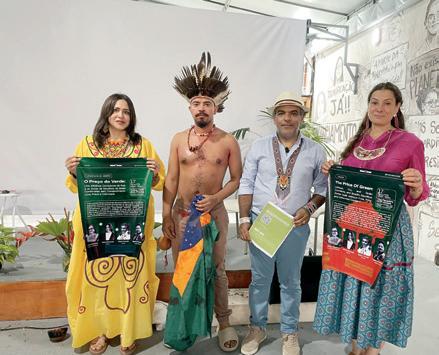
Left: Cultural Survival’s delegation at COP30.
Right: Cultural Survival launched
Price of Green,” a joint report about how Brazil finances mining without Indigenous consent using climate funds.
Read it here:
Inclusion in the “Just Transition” System
A Just Transition is an approach to environmentally and socially just transformation during the process of transitioning to a sustainable economy, as well as an imperative for achieving the greenhouse gas reduction targets set out in the Paris Agreement. The Just Transition Work Programme (JTWP) is a process that helps countries design fair and inclusive climate transitions through examining social, economic, labor, and human-rights dimensions of climate action. At COP30, negotiators continued developing annual outcomes of the program—non-binding political decisions that guide how governments shape national just-transition policies.
It is important that negotiators from Indigenous Peoples, with the support of friendly Parties, were able to achieve positive results, especially inclusion in the text of the JTWP. For the first time in the history of the UNFCCC, the final decision includes references to the rights and guarantees of Indigenous Peoples in Voluntary Isolation and Initial Contact. The wording also enshrines the obligation to respect and promote the collective and individual rights of Indigenous Peoples, the right to self-determination, and the need for Free, Prior and Informed Consent (FPIC) in full accordance with the UN Declaration on the Rights of Indigenous Peoples, as reflected in Para 12 (i): “The importance of the rights of Indigenous Peoples and of obtaining their Free, Prior and Informed Consent in accordance with the United Nations Declaration on the Rights of Indigenous Peoples, and the importance of ensuring that all just transition pathways respect and promote the internationally recognized collective and individual rights of Indigenous Peoples, including the rights to self-determination, and acknowledge the rights and protections for Indigenous Peoples in voluntary isolation and initial contact, in accordance with relevant international human rights instruments and principles.”
Although these decisions are not legally binding, Indigenous Peoples can treat transition-related activities as falling under the JTWP, and therefore use its standards to defend their rights. In practice, this means that Indigenous Peoples can invoke these paragraphs in consultations, impact assessments, court cases, and human-rights complaints to demand respect for self-determination, FPIC, and protection from rights violations during transition-related projects. The COP30 also became one of the most indicative in terms of decisions made on financing issues. Only time and the practice of distributing these funds will show how useful and applicable they will be for Indigenous Peoples.
Launch of a New Major Forestry Fund
The Tropical Forest Forever Fund (TFFF) was launched at COP30 as a blended finance mechanism for countries with tropical forests. It is a global fund designed to encourage forest conservation rather than deforestation. Importantly,
20% of funds are reserved for direct payments to Indigenous Peoples, giving them direct access to funding. This is perceived as a positive development for Indigenous Peoples, as the direct access to funding provides an opportunity to strengthen their forest and nature conservation projects. However, there is also potential for the fund to exacerbate existing injustices, as the direct access mechanism is unclear. Those who actually live in the forest and are its guardians have no guarantee that the money will reach their communities.
Additional concerns include: problem monitoring that does not include Traditional Knowledge and practices of Indigenous Peoples; an unfair and poorly designed penalty system; the practice, or lack thereof, of applying the SPOS principle; and many other issues concerning the future work of this fund. There is a real risk that the TFFF, instead of being an advance for Indigenous Peoples, will become another mechanism that reproduces the systemic injustices that already exist.
COP30 generated an unprecedented set of commitments involving Indigenous Peoples’ rights. The Global Mutirao, the Work Programme on Just Transition, and the financing commitments all represent years of hard work by Indigenous organizations and their allies to ensure that Indigenous voices are heard in spaces such as the COP. The political outcome document of COP30, Global Mutirão, notes the need to urgently address existing constraints, challenges, systemic inequalities, and barriers to accessing climate finance. It also reaffirmed the call to increase climate finance for developing countries from all public and private sources to at least $1.3 trillion USD per year by 2035 (para 47) and to at least triple adaptation financing by 2035, and urges Parties from developed nations to increase their collective provision of climate finance for adaptation to developing country Parties (para 53).
But just as the adoption of the Paris Agreement in 2015 did not end the climate crisis, the adoption of these outcomes at COP30 is only the first step. For Cultural Survival and the broad coalition of Indigenous organizations that participated at COP30, the work has not ended. In fact, it is just beginning. The outcomes of COP30 provide tools, but tools without organized action are meaningless.
What is clear is that 5,000 Indigenous Peoples in Belém sent an unmistakable message: we will no longer be ignored in these negotiations. We will no longer allow decisions affecting our territories to be made without us. And most importantly, our rights, our lands, and our knowledge are not up for negotiation. They are the foundation upon which any real climate action must be built. The governments of the world listened. Now the proof will lie in their actions.
Read about Cultural Survival’s work at COP30 at www.cs.org/cop30.
NO CONSENT, NO LEGITIMACY
Exposing the Systemic Non-Compliance
with Indigenous Rights
❯ Read our report to UN Working Group on Business and Human Rights at www.cs.org/ reports
Ñushpi
Mayhuay (QUECHUA KOLLA, CS STAFF)
In the Jequitinhonha Valley, in the heart of Minas Gerais, Brazil, Indigenous and Quilombola communities have lived in harmony with a unique ecosystem for generations. Today, this territory has found itself at the epicenter of lithium: the mineral that powers the batteries of the electric vehicles that drive the global energy transition. The company exploiting the majority of the lithium in the Valley is celebrated in international markets as a pioneer in the “green” mining industry. It also operates without having obtained the Free, Prior and Informed Consent of the communities whose territory it is exploiting.
Indigenous Peoples have not contributed to the global climate crisis, yet they are disproportionately affected by its consequences. What is happening in community lands and territories, the impacts on the beings who live there, the threats to the survival of cultural identity and the continuity of dialogue among generations–all of this directly affects communities, their cosmovisions and philosophies of life, posing a severe threat to Indigenous Peoples and their rights.
Rights on Paper and Rights in Reality: A Persistent Gap
Across the regions and the latitudes of the world, Indigenous Peoples constantly denounce how States and companies systematically violate their rights in pursuit of a neocolonial extractivist model that proceeds without respecting their self-determination, community governance systems, and territorial stewardship.
The pattern is so egregious that the UN Working Group on Business and Human Rights issued a call for reports on Indigenous Peoples’ right to Free, Prior and Informed Consent, recognizing an ongoing gap between rights on paper and the reality of States’ and companies’ non-compliance.
The testimonies that Cultural Survival gathered and presented to the Working Group tell a story that is repeated time and time again: meetings that are framed as “consultations” but that merely provide information; incomprehensible technical documents provided just days before signatures are demanded; economic pressure exerted on impoverished communities; and the promise that development will bring “benefits.” What is brought, in actuality, is the contamination of rivers, the fragmentation of territories and communities, and the criminalization of the people who defend their rights.
The hydroelectric dam known as Chan-75, built by the company AES Panama and backed by the Panamanian government, is a prime example. The project was installed in the Ngäbe Peoples’ territory without guaranteeing even basic standards of participation, adequate information, or territorial protection. And the testimonies are conclusive. The meetings held by the State were limited to providing information, without opportunity for dialogue or translation into the Ngäbe language, and they provoked community divisions. They focused exclusively on the project’s supposed benefits, omitting critical information about the environmental, sociocultural, and spiritual impacts that dam construction would entail.
In Argentina, public hearings continue to be presented as the appropriate mechanism to guarantee Indigenous
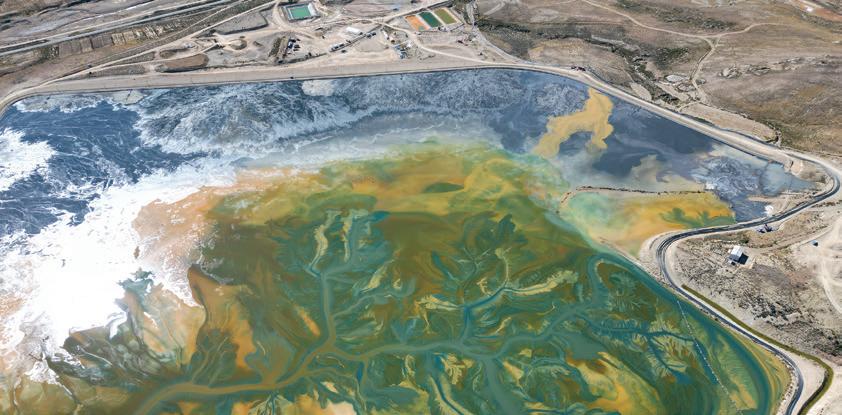
Aerial view of a chemical tailings dam from the Canadian-owned Bolívar Mine in Antequera, Bolivia.
Photo by Julien Defourny.
rights. In reality, however, these hearings are a tool for citizen participation in environmental law and are legally diametrically opposed to Indigenous Peoples’ right to consultation and Free, Prior and Informed Consent. Even worse, the results of these hearings are non-binding and can be dismissed, making them mere administrative formalities.
One factor that exacerbates these cases is territorial insecurity and forced displacement at the hands of extractive projects, the installation of large industries, and the data centers driving the new AI era. In many cases, Indigenous communities do not have clearly demarcated territories recognized by the State. When communities lack legal title, it is easier for the State to ignore their right to Free, Prior and Informed Consent or to fail to recognize them as affected by a given project. This facilitates the falsification of processes to obtain licenses in the hands of companies.
The Many Faces of Rights Violations
In international human rights law, the State is the party responsible for promoting, respecting, and guaranteeing Indigenous Peoples’ rights. However, States are also the parties who regularly violate these rights by distorting, tokenizing, and manipulating and/or evading them. This happens because States either do not adopt the legislation required to protect and guarantee rights, or because those who fail to apply the law are the States themselves.
In the Bolivian Gran Chaco region, the oil frontier is expanding, driven by State and private companies on biological reserve lands protected by law. For years, communities have been organizing in defense of the Aguaragüe National Park, publicly denouncing the fact that this incursion is being perpetrated in violation of constitutional protections of natural areas through the manipulation of the community consultation process and without a true, consensual dialogue with the Indigenous Peoples of the region. Yet, the Bolivian government has allowed oil exploration and exploitation across more than
70% of Aguaragüe National Park’s territory, which is the ancestral territory of the Guaraní Peoples and the communities that live there.
Companies must respect Indigenous Peoples’ rights, and so must States. However, neither States nor companies comply with their responsibilities: States fail to comply with their legal obligation to recognize and apply the right to Free, Prior and Informed Consent; and companies take advantage of States’ non-compliance rather than contributing to finding solutions.
Call to Action
Sustaining an agenda of “green” investment that persecutes, harasses, criminalizes, and threatens the lives of Indigenous defenders of life and territory is not viable. An energy transition cannot be just if it means forcibly displacing communities and families from their territories and rupturing the survival of their cultures, identities, and cosmovisions.
States and companies must commit to respecting and complying with laws and recommendations regarding Indigenous Peoples’ rights. It is imperative that States take responsibility for investigating violations of the right to Free, Prior and Informed Consent, for designing effective complaint mechanisms, and for establishing the legal avenues to enable this. They must make the effort to create systems for monitoring, evaluation, and verification of the implementation of Free, Prior and Informed Consent, in accordance with the highest standards for Indigenous Peoples’ rights.
Without effective territorial protection and demarcation, Indigenous Peoples’ governance and development based on their preferences and with respect for the cultural identities and cosmovision cannot be guaranteed. Development projects at the cost of Indigenous Peoples’ selfdetermination, of the violation of the rights of people, the environment, and all of the beings who dwell there, may not continue to be promoted by companies, nor supported by States.
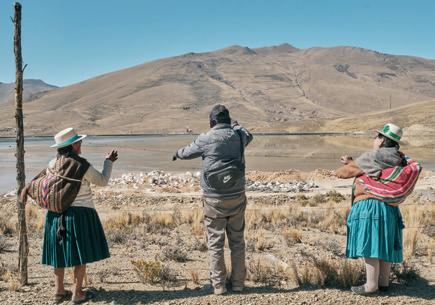
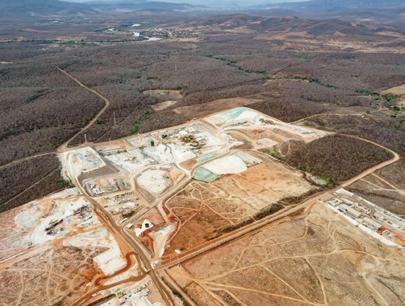
Left: Queyaqueyani community members in Bolivia looking at a barrage of chemicals from the Bolívar Mine. During the dry season, the toxic liquid dries up and turns to dust.
Photo by Julien Defourny.
Right: Sigma Lithium’s mining site in the Jequitinhonha Valley, Brazil.
Photo by Rebeca Binda.
TO THE (HEART) BEAT OF HER OWN DRUM
A Conversation with Nuka Alice
Cristina Verán
Each year, the Arctic city of Nuuk is host to the Suialaa Arts Festival, spotlighting contemporary Indigenous visual art, film, literature, music, and other cultural performance and community conversations from across the circumpolar region. Forefronting this year’s cultural landscape was the once-endangered Inuit cultural practice known as drum dancing, thanks to culture-bearer Nuka Alice (Inuk). For Alice, drum dancing is not just an art; it’s a journey between the physical, mental, and spiritual worlds of Kalaallit Nunaat (Greenland). Cristina Verán spoke with Alice about her trajectory from an early sense of cultural disconnection to becoming a transmitter of this vital expression that has helped her Peoples survive and thrive in an environment that is as perilous and harsh as it is beautiful.
Cristina Verán: What does being a drum dancer mean for you?
Nuka Alice: This term in English doesn’t cover all of what I do, but we use it for someone who uses the qilaat, my drum. I beat this drum to follow my heartbeat, using my voice to create a melody and my body to dance. I have to bring out the emotion of the song to tell its story with a spiritual intention, aiming not only to make music, but to travel between dimensions.
CV: How do you define these dimensions—are they physical? Metaphysical?
NA: As an Inuk, I recognize three elements that together make up the whole person: a physical part, a mental part, and a spiritual part. When I can embody them all at once, that’s when the goosebumps appear. There’s an energy coming out of our bodies beyond the limitations of where our skin ends. We feel it whenever we pass by another— something I’ve noticed whenever I’ve met other Indigenous people. When I perform, I try to beam this energy out to whoever I share my drumming with, surrendering myself to the song.
CV: While traditions of this performance were developed communally, you also write your own songs. How do you reconcile the personal and the collective?
NA: The concept of “owning” a song is not really a part of my culture. I’m just a channel for something that is bigger than us as people. I may have written a particular song, but I understand as an Inuk that it ultimately belongs to what we call Sila—the universal force that connects all living beings of this world with life and energy as part of one consciousness. It’s not so much me, Nuka Alice, performing; rather, it’s me as a channel for Sila.
CV: How does this relate with your ancestors’ understandings?
NA: I follow the same principles when performing my songs as you’ll hear in our older, traditional ones. While sharing the song in a physical setting, where living, physical beings are listening, I believe that the souls of my ancestors are [listening] as well, helping me to bring out the soul in each song.
CV: How does this inter-realm interconnectedness speak to the broader experience and ways of living Inuit Peoples share across Kalaallit Nunaat?
NA: As with many other Indigenous cultures, the individual ego isn’t viewed as something great. Instead, the well
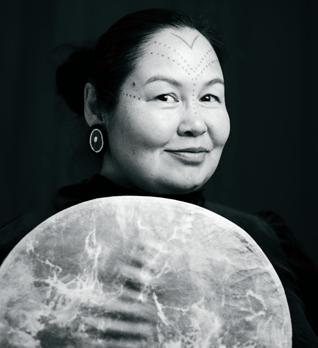
Nuka Alice.
Photo by Angu Motzfeldt.
being of the group is most important. A person cannot survive alone in the harsh environment of the Arctic. You have to be part of a group. I want to always create, through my performances, a space where everyone in the audience can truly feel a sense of belonging.
CV: How was the tradition of drum dancing passed on to you?
NA: I come from the west coast of Greenland, where this almost disappeared with colonization. Unlike my ancestors, I did not directly inherit any of my community’s traditional songs—I had to reclaim them. I had grown up around my mother’s singing choir, so I had an idea of what beautiful music sounded like, but back in the 1980s, as a child, I heard an east Greenland drum song on the radio whose beauty was something different. The singer, Miilikka Kuitse, from a village called Kulusuk, was recorded at a gathering a decade earlier when there was a revitalization movement for Inuit culture. Sometime after, I saw a drum dancer on TV, singing with a choir. Though I could see with my eyes that he was physically there, I could also sense that he was somewhere else, not completely there.
The first time I actually experienced someone performing the music in the same room as me was in 1997 when Katuaq (the Greenlandic culture house in Nuuk) opened, and a group of drum dancers, including Miilikka’s daughter, Nagui (Anna Kuitse), would perform. The singers spoke a different dialect from my own, so I couldn’t fully understand the words. I felt both disconnected and somehow still connected, all at once.
CV: How did the experience of invasion and colonization impact intergenerational knowledge transmission in Greenland?
NA: It starts with Christianity, which arrived here in 1721. The first missionary, Hans Egede—a Lutheran priest from Norway—came here looking for Vikings. When he realized there weren’t any left, he looked to convert the Inuit People. Because our drum dancing contains a spiritual element, they frowned upon it and didn’t see it as compatible with what they wanted to plant here. It took an Indigenous Greenlandic priest to change things. For him, the practice wasn’t inherently threatening to Christianity. He saw the cultural value of drum dancing, and actually encouraged the people there to preserve it.
CV: How did your personal journey of reclamation begin?
NA: Since I didn’t inherit any traditional songs from my own community, I had to learn them elsewhere. My teacher, Paulina Lumholdt, from the west coast of Greenland, met with the Elders, who told her fewer and fewer members of those communities were carrying on the tradition. She could see then how important it was to make sure the songs did not disappear.
In her class, she’d spend so much time telling us about the meaning of the songs and their stories. I was young and very impatient back then, and was like, ‘Come on, let’s just take the drum and do this!’ But she’d tell us, ‘No, not yet. You have to first understand what it means.’ In that way, she also taught me patience.
CV: Did you have any prior experience in music or performance?
NA: I was actually in a rock band and performed music from outside of my own culture. I was still assimilated into a western mindset and value system and had to unlearn many things. Having been part of a contemporary choir, I had a very technical approach to my learning process. But you can’t think of this kind of music in terms of technical perfection—my teacher taught me to go so much deeper than that. A favorite thing I perform now is called an Aqaat, a charm song, which is like a love song but for a child, created for just one person. It’s like an ego booster that will give that person a lot of confidence.
CV: How does your teaching experience compare with your student days?
NA: When I teach my own workshops now, the participants get impatient—just as I used to feel. But I say to them: The Inuit survived for generations in Greenland because through our drum songs, each generation passed its knowledge on to the next. This is knowledge our people had lost, and we are here to regain it together.
Cristina Verán is an international Indigenous Peoplesfocused specialist researcher, educator, advocacy strategist, network weaver, and mediamaker, as well as adjunct faculty at New York University’s Tisch School of the Arts.
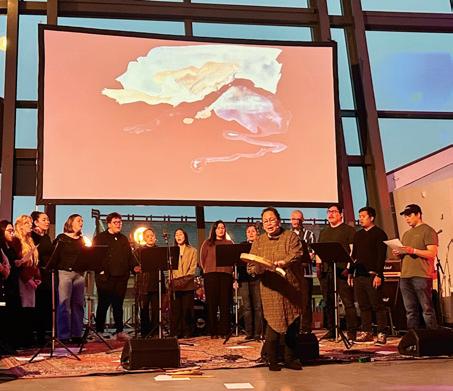
Nuka Alice performs a drum song with Ingiulik, a music project and performance group of which she’s a featured member, at GUX venue in Nuuk, Greenland.
Photo by Cristina Verán.
Get to Know Our New Director of Advocacy and Communications,
ALICIA MONCADA
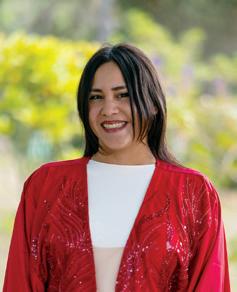
Cultural Survival welcomes Alicia Moncada (Wayúu) as our new Director of Advocacy and Communications. She brings over 13 years of experience in human rights advocacy, research, and communication, with a focus on Indigenous Peoples’ rights, gender justice, and climate justice. Moncada was born in Venezuela, sought refuge in Mexico, and is now based in London, England. Her academic background includes degrees in Law and Women’s Rights, with specialized training in International Human Rights Law and International Humanitarian Law. She has researched human rights violations against Indigenous Peoples in the Amazon Basin, taught as a professor at the Central University of Venezuela, and worked as Research and Media Coordinator at the Foundation for Justice and the Rule of Law, where she focused on migration policies. At Amnesty International, she became the first Climate Justice Researcher and Climate Justice Americas Program Officer, leading the organization’s climate justice strategy for the Americas. Shaldon Ferris (Khoisan), Indigenous Rights Radio Coordinator, spoke with Moncada.
Shaldon Ferris: How did you come to work in the human rights field?
Alicia Moncada: I grew up in the Venezuelan side of the Wayuu territory. I’m incredibly honored to have had the chance to live with my grandparents, my mother, and my family, to learn to speak my native language, Wayuunaiki, and to learn different skills of our culture that have been very useful in my life. In my youth, I did not know what human rights were. Those topics were disconnected from our everyday reality; even though my family is Indigenous, these issues seemed like national politics rather than something fundamental to our lives. As a young woman, my only dream was to become a university professor at the Central University of Venezuela, the country’s most prestigious public university. I was the first in my mother’s family to earn a degree from a university, and in 2009, I joined the Central University of Venezuela Center for Women’s Studies. That was my first real home in understanding human rights, specifically women’s rights. That’s where I began building my professional career in human rights. I became the first Indigenous woman to complete their gender diploma. That space became my intellectual and political home.
Through this activism at the university, I became deeply involved in learning, documenting, and helping to create
awareness about the case of Sabino Romero, an Indigenous Yukpa activist from the Sierra of Perijá who was assassinated in 2013 by state agents. That’s when I truly understood our rights as Indigenous Peoples: the struggle of Sabino opened my eyes to what our rights really meant.
SF: Tell us about your research in the Amazon basin, particularly your specialization in gender and climate justice.
AM: I have spent over 13 years documenting violations against Indigenous Peoples, migrants, and refugees. I started documenting Indigenous Peoples’ rights violations in the Amazon rainforest on the borders with Colombia and Brazil, documenting the impacts of extractivism on Indigenous territories that are being ravaged. I worked alongside Amazonian Indigenous Women’s Organizations and Indigenous organizations that were suffering the impacts of illegal mining in their territories. That was pivotal for me to understand the diversity of violations that Indigenous Peoples face.
I spent a total of seven years working on projects throughout the entire Amazon Basin, excluding Bolivia. I learned a great deal about drafting advocacy reports when I worked at the Venezuelan section of Amnesty International in 2017. That’s when I started working in the NGO sector and began to understand the difference between the reports we created in Indigenous organizations to document rights violations and the documents we produced as academics. After that, I worked for the Foundation for Justice based in Mexico and the Americas Regional Office of Amnesty International. I also conducted the documentation of violations against migrants, Indigenous people, and Amazonian communities in Ecuador, documenting rights related to climate change.
SF: How did your work with Indígena Radio Guarura reinforce your commitment to community communication in challenging civic spaces?
AM: Radio Guarura was a project that we created with Wainjirawa, an Indigenous organization in Venezuela. Most of the members are Wauyúu, but also my dear friend Juan Carlos La Rosa (Caquetí) and Jose Quintero Weir (Añú), who is a very wise Elder, were vital members of this organization. We created that radio program for an alternative
radio station called Humano Derecho Radio. This radio started because of the lack of spaces to share what was going on in Venezuela. Working in a context where the state actively restricts Indigenous voices and human rights defenders’ voices basically told me that communication is resistance. Radio Guarura proved to us that even in the most restrictive spaces, Indigenous people find ways to speak truth to power. My conviction is that strategic communication rooted in community priorities is absolutely non-negotiable for our struggle as Indigenous Peoples and for our rights.
SF: What were some key insights from your research on the impact of migration policies on human rights during your time at the Foundation for Justice and the Rule of Law?
AM: The research that we conducted unveiled how forced migration policies like Quedate en México (Remain in Mexico) criminalized refugees and people seeking asylum, particularly Indigenous and Afrodescendant communities that were escaping from threats to their lives and numerous abuses and violations of human rights in their countries. We are seeing these policies in their extreme in the United States: families separated, Indigenous and Afrodescendent migrants facing violence and exploitation. Cruel racism and xenophobia are embedded in these migration policies, like the ones that are documented in Mexico. I have been documenting this since 2019, and I continue to do so today. These policies in Mexico have been fundamentally driven by whatever the U.S. administration demands at any given moment.
SF: What were the most significant strategies you designed at Amnesty International to amplify Indigenous voices in climate justice?
AM: I worked alongside Indigenous and Amazonian communities in the Ecuadorian Amazon during my time at Amnesty’s America’s Regional Office to document violations of human rights related to gas flaring. That is one of the most pernicious practices of the oil industry. I worked with illustrators to create accessible visual
storytelling. We created a comic, a manga, to raise awareness about the case. We also engaged artists and influencers who are generally committed to environmental justice, particularly in this case, creating outputs in multiple languages. My time at Amnesty was a period of centering Indigenous and youth voices and creativity to develop outputs that resonate globally.
SF: What, or who, inspires you?
AM: The Indigenous communities with whom I have the honor of accompanying demonstrate their resilience, ancestral wisdom, and unwavering commitment to defending their territories in the most hostile environments. They inspire me every single day. I’m also deeply inspired by Indigenous women activists and leaders who’ve paved the way and are creating pathways for others like me to step into these spaces with power and purpose.
SF: How do you envision strengthening Indigenous leadership in decision-making spaces at Cultural Survival?
AM: In this role, I’m committed to creating a space and strategy that positions Indigenous leadership to document threats and amplify voices from movements. My contribution will be to ensure that international advocacy centers on and protects Indigenous Peoples as the experts and decisionmakers in their own struggles and liberation. I am committed to ensuring that our advocacy and communications work is never extractivist. It must be led by, designed by, and benefitting Indigenous communities directly.
In every output, every campaign, I’m committed to maintaining the Cultural Survival essence of co-creating these outputs with the communities, not about them. My added value will be utilizing my resources, knowledge, and strategic platforms directly to elevate Indigenous movements and organizations that Cultural Survival supports, as well as those that can benefit from our support, in fighting back against the narratives proliferating against Indigenous Peoples’ rights, nature, and climate justice, in the world right now. This is how we achieve power, by centering the people facing and suffering the violations.
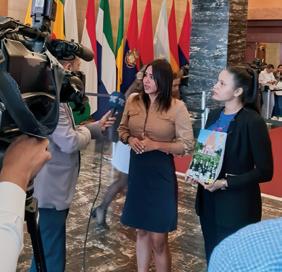
Left: Alicia Moncada at a press conference regarding a report she authored for Amnesty International, which was presented to the National Assembly of Ecuador.
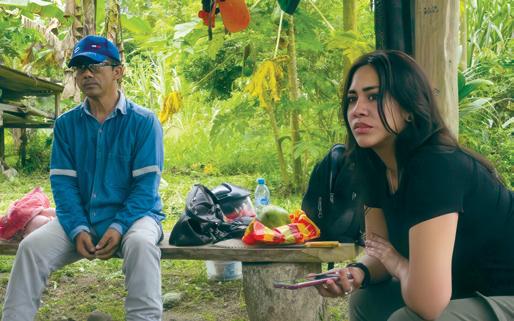
Right: Alicia Moncada interviews a community affected by oil industry operations in the Amazon.
WE’RE NOT FEMINISTS. WE’RE THE LAW.
❯ Learn more about Rematriation and “Rematriated Voices” at rematriation. org.
In 2016, Michelle Schenandoah, a member of the OnΛvyota’:aka (Oneida) Nation Wolf Clan of the Haudenosaunee Confederacy, founded Rematriation, an Indigenous women-led nonprofit based in Syracuse, New York. The organization uplifts Indigenous women’s voices and advances the rematriation movement, through films, podcasts, and fostering community gatherings and applying Indigenous Traditional Knowledge to areas such as environmental stewardship, governance, policy, and justice practices. Through these efforts, Rematriation empowers Indigenous communities and allies to build equitable, sustainable, and culturally grounded solutions by inspiring dialogue to shift narratives. Schenandoah carries her ancestors’ passion to rematriate her Peoples’ lands and share the Haudenosaunees’ global influence on modern democracy and civic rights. Cultural Survival Indigenous Rights Radio Coordinator, spoke with Schenandoah about her work.
Cultural Survival: You’ve mentioned that the essence of being Haudenosaunee is about “striving for peace.” What does that mean in a modern context?
Michelle Schenandoah: Peace was brought to us by a messenger. There was a very dark period in our Peoples’ lives [when] our Nations were at war with each other. During that time, a messenger came to us with this message of peace and living with a good mind, and united our people through this very powerful spiritual message. The simplicity of it can sometimes be overlooked by people unfamiliar with our culture. It’s something that has united six different nations in peace for a thousand years.
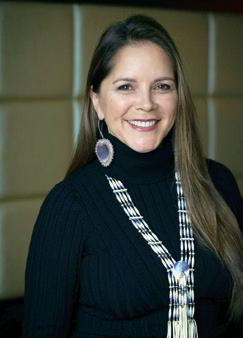
We recognize that we received this message and we are to share these core principles of peace and peacemaking to not only get along as people, but to also consider future generations. Embedded in our way of life is caretaking and looking out for each other and carrying responsibilities that we have to each other as humans, but also to the natural world, from Mother Earth to the water, to the birds, to the wind, and to future generations, that they will have a life as good as we have, if not better.
CS: What does Indigenous feminism look like to you? How does it differ from western understandings of feminism?
MS: As Haudenosaunee people, our cosmology centers around Sky Woman, who was the first being to come here to this Earth. From her life and her story is eventually how humans came to be here on Earth. Our entire worldview is centered around a woman. Our creation story begins with a woman, and women are very central to our understanding of who we are. Women are celebrated as life-givers. We did not come from the rib of a man. We have not had to fight for our status and position within our communities; it’s one that is revered, it’s one that’s elevated and safe. We also have clan mothers who guide the leadership of our Nations. Every mother has a voice and autonomy, and authority. This idea of Indigenous feminism is one that I can’t give definition to because feminism, from my understanding, comes from having to push back against patriarchy. I like to refer back to the words of one of our clan mothers, Mommabear, a Mohawk Bear Clan mother. She was asked this question about feminism, and she says, ‘We’re not
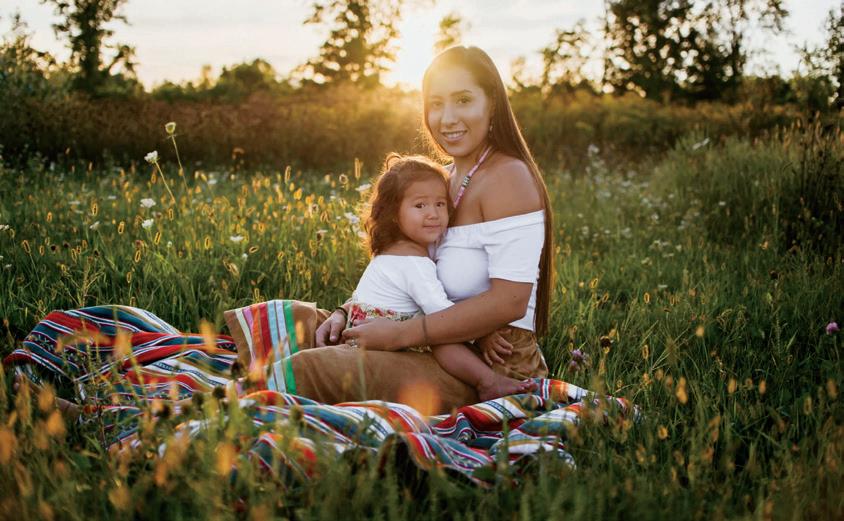
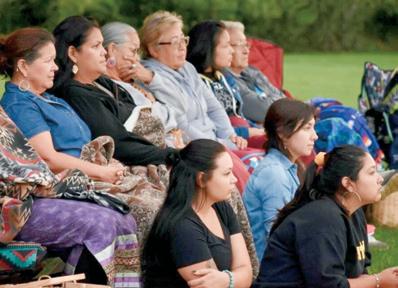
Tsiotenhariio and Iesohtsherine.
Photo by Jessica Sargent (Akwesasne Mohawk).
Inset: Michelle Schenandoah.
Photo by Tahila Moss (Yaqui).
feminists. We’re the law.’ I understand that there are many Indigenous Peoples around the world who speak about Indigenous feminism from their point of view and their perspective. As a Haudenosaunee woman, I’d like to defer to Mommabear’s words.
CS: Tell us about your work at Rematriation. What are you trying to achieve?
MS: I had always dreamed of creating a space much like Cultural Survival, one where Indigenous voice is centered. I also saw one where Indigenous women’s voices are centered. I come from a family where a lot of our women, starting with my great-grandmother and my grandmother, created a family legacy to fight for our land claims. My mother would remind me that ‘we as Haudenosaunee people, we have our laws, and this is what you have to uphold.’ Creation pushed me in the direction of beginning to work with our women at home and among the Haudenosaunee Nations. I started to look at the impacts of trauma that was directly affecting our people, from sexual violence and the impacts of residential schools and of colonization.
I started Rematriation and created a lot of gathering spaces for our women. Now we do a significant amount of work to create space for our Indigenous women to share their knowledge, their voices, their healing. We share that knowledge with our People, and also with the public in ways that are appropriate, about living in balance with the Earth and each other to overcome those harms of colonization and focus on our strengths. To share that love, compassion, forgiveness, and healing with others (settlers) who live here in our homelands so that they can experience those feelings and their relationship with the land that they’re on. We now tell stories through videos and podcasts, and are still creating these gathering spaces, which are really proving to be a space of love and healing. We are the children of Sky Woman today.
CS: Tell us about your latest project, “Rematriated Voices.”
MS: “Rematriated Voices” is a five-part talk show series that can be found on PBS with a podcast companion. It was part of this dream that I had to create a space to bring our Elders, our Traditional Knowledge holders, our leaders,
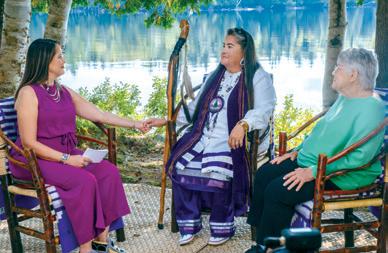
friends, and allies who are doing the work alongside us to be able to come together and to share these aspects of our lives, our governance, the influence that we’ve had.
How different would it be in the United States if people knew that the roots and the origins of their Constitution were Indigenous and that very important aspects were left out deliberately—aspects regarding peace and peace-making, compassion for one another, and forgiveness? It would also be very different to have the women behind those decisions who are thinking about ensuring that all people are fed, ensuring that all people are warm at night and have a place to sleep. Since the beginning of our Confederacy, we have been a people of inclusion, fairness, equity, and honesty. That’s all built into our governance.
All those types of sharing and stories and histories are part of what people can hear in “Rematriated Voices.” There are some really wonderful people like Katsi Cook (Mohawk), who helped to birth Rematriation into the world and brought this terminology from Indigenous midwifery. She’s in an interview with Robin Wall-Kimmerer (Potawatomi). We have two young chiefs from the Haudenosaunee Confederacy and one of our Elder Clan Mothers and a Faith Keeper. We even talk about issues such as the Doctrine of Discovery and how Indigenous women are responding in their work today, and what some of our allies are doing to work alongside us to help to elevate this knowledge into the world to make a difference and perhaps create a paradigm shift towards life.
CS: What is your vision for the future?
MS: The work that I do now is always thinking of the future. We’re in this very critical time as human beings, and we have to shift our values. The work that we do here at Rematriation is to help create that paradigm shift so that we can begin to orient our thinking towards life. [It] is not just for our future generations as Indigenous people, it’s for everyone. It’s my hope that people will see our work and begin to really think about those values that we share. Rematriation, as a definition that we’ve given as Haudenosaunee women, is returning the sacred to the mother, and that’s returning that love that she gives to us back onto her and to all of her children.
Left: Rematriation creates media and organizes in-person gatherings centering Indigenous women's knowledge, experiences, and healing journeys.
Photo by Brenda Mitten (Seneca).
Right: Michelle Schenandoah, left, in conversation with Mohawk Bear Clan mother, Mommabear, and historian Dr. Sally Roesch Wagner, on “Rematriated Voices.”
Photo by Adriano Kalin.
IMPRISONED FOR CLIMATE JUSTICE AND INDIGENOUS RIGHTS ADVOCACY
The Haunting Case of Daria
Egereva
“Daria Egereva is a representative of Indigenous Peoples whose lives are inextricably linked to nature, its conservation, and responsible stewardship for the benefit of future generations. The protection of ancestral territories is a form of peaceful human rights activism aimed at dialogue, mutual understanding, and sustainable development. Daria’s love for her native land and responsibility for its preservation have always been and remain a key priority for her work. We are convinced of her innocence and respectfully call for her immediate release.”
Valentina Sovkina (Saami), UN Permanent Forum on Indigenous Issues Expert Member
CS Staff
In the arena of climate change, Indigenous women are defenders, adaptors, activists, and change makers. Their work carries grave risks of backlash from State and corporate actors, as the world witnessed with the high-profile murder of Berta Cáceres (Lenca) in 2016 in Honduras. At least 146 land and environmental defenders were killed or disappeared around the world in 2024 defending their land, communities, or the environment, according to the latest Global Witness report. Indigenous people were victims of around one-third of lethal attacks, despite making up around 6% of the global population.
Daria Egereva (Selkup), a mother of two sons, a wife, and a citizen of the Russian Federation, has dedicated her life to the causes of climate justice and the rights of Indigenous Peoples. As a respected representative of the Selkup Peoples and co-chair of the International Indigenous Peoples Forum on Climate Change, she is a powerful voice on the international stage, including at the UNFCCC COP30 in Brazil. On December 17, 2025, Egereva was arrested by Russian authorities in Moscow and accused of participating in a terrorist organization.
Born in 1977 in Tomsk, Siberia, Egereva has been deeply engaged in upholding Indigenous Peoples’ rights, with a particular focus on Indigenous languages, cultures, traditional territories, and self-determination. She holds a degree from Tomsk State Pedagogical University, where she qualified as a teacher of German, English, and the Selkup language. During her studies, she became actively involved in Indigenous cultural and rights-based initiatives in Tomsk Oblast, participating in international and interregional Indigenous projects, ethnographic fieldwork in Indigenous communities, and the development of Indigenous cultural institutions. She was a member of the Association of Indigenous Small-Numbered Peoples of the North of Tomsk Oblast and contributed to the establishment of the Ural–Altaic EthnoCultural Center at the university.
Egereva’s work has evolved into full-time engagement in Indigenous rights advocacy at the national and international level. She has completed numerous international professional exchanges aimed at strengthening Indigenous rights advocacy and international cooperation, including internships at the Indigenous Peoples Information Centre in Moscow, a training program organized by the government of Nunavut (Canada), as well as courses and workshops conducted by the UN Development Programme, the Council of Europe, and other international organizations focusing on organizational development, project management, advocacy strategies, and intercultural dialogue. In 1999, she joined the Russian Association of Indigenous Peoples of the North, Siberia, and the Far East (RAIPON), where she coordinated youth-focused programs.
❯ Get involved in the Campaign for Daria’s release: www.daria-egereva.org.
After a temporary pause, Egereva returned to public and human rights work due to increasing State pressure on Indigenous organizations in the Russian Federation. From the early 2010s, RAIPON has experienced growing governmental interference. In 2013, under intense administrative pressure, RAIPON’s leadership was taken over by individuals closely affiliated with State authorities, resulting in a significant curtailment of its independent human rights work and the exclusion of many independent Indigenous leaders and experts. In response, Indigenous leaders and human rights defenders established alternative, independent platforms. One
Daria Egereva. Photo courtesy of daria-egereva.org..
such initiative was the Aborigen Forum, an informal network of Indigenous experts, human rights defenders, and community leaders from across the Russian Federation. The network has served as a key platform for the preparation of alternative reports on the situation of Indigenous Peoples in Russia and for continued engagement with United Nations human rights mechanisms and international environmental and climate processes.
In 2020-22, Egereva coordinated initiatives to strengthen Indigenous women’s participation in public and social life and participated in international dialogues on climate change and sustainable development. She is a member of the Facilitative Working Group of the Local Communities and Indigenous Peoples Platform under the UN Framework Convention on Climate Change. She serves as a regional representative of the Facilitative Working Group for Central and Eastern Europe, the Russian Federation, Central Asia, and the Caucasus, and as co-chair of the International Indigenous Peoples’ Forum on Climate Change. She has coordinated Indigenous Peoples’ participation in the last three UN climate negotiations (COP28, 29, and 30) and has regularly participated in sessions of the UN Permanent Forum on Indigenous Issues and the UN Expert Mechanism on the Rights of Indigenous Peoples.
The Selkups number only about 3,500, a tiny community that, like many other Indigenous Peoples in the Russian Arctic and Siberia, represents one of the country’s most impoverished segments, lacking political influence and effective mechanisms to protect their rights. Yet Egereva and leaders like her stand firm in their mission to peacefully safeguard traditional activities such as hunting and herding, protect their traditional lands and natural resources from large extractive industries, and maintain their language and culture for future generations.
This peaceful advocacy has come at a devastating cost. In December 2025, Egereva was arrested by Russian authorities in Moscow and charged under laws related to terrorism and extremism, offenses that carry sentences of up to 20 years imprisonment. Indigenous Peoples’ organizations and international human rights actors regard her prosecution as politically motivated and as retaliation for her long-standing, peaceful human rights work and Indigenous rights advocacy. Her detention was part of a large-scale, coordinated wave of repressive actions against Indigenous Peoples and human rights defenders across Russia. Another female Indigenous activist was also arrested, and at least 17 others were subjected to searches and interrogations.
The wave of repression affected representatives of many Indigenous Peoples of Russian Siberia and the Arctic, in addition to the Selkups, including the Tubalar, Chulym, Shor, Kumandin, Dolgan, Yukaghir, Evenk, Sami, and Nganasan Peoples. These Peoples often number in the thousands, and sometimes in the hundreds, which is why leaders like Egereva are an integral part of the peaceful
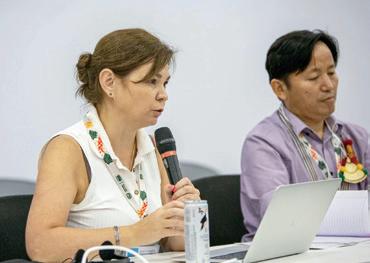
“Across the world, when land is harmed by fossil fuel extraction and climate destruction, Indigenous women are among the first to rise in its defense. The punishment of peaceful women who protect their peoples, lands, and ways of life is unjust and must end. Daria Egereva acted in defense of her people by standing for the land, water, and life that sustain Indigenous communities. In solidarity with Indigenous defenders everywhere, we call for the immediate and unconditional release of Daria Egereva.”
Luda Kinok
(Yupik), an Indigenous activist in exile
work to promote traditional activities, languages, cultures, and the very survival of their Nations.
A key focus of the charges against Egereva was her ties to the Aborigen Forum, a network of human rights defenders that had openly discussed Indigenous issues at UN forums before being declared an extremist organization by Russian authorities. For those who know Egereva and her work, the accusations of terrorism or extremism are unfounded. Her activities, and those of her colleagues, were public, peaceful, and legal, focused on monitoring violations, raising awareness, and cooperating with UN mechanisms like the United Nations Permanent Forum on Indigenous Issues. The repression is widely seen not as a domestic criminal matter, but as direct retaliation for peaceful cooperation with the United Nations.
Egereva’s arrest also highlights the gender dimension, in which Indigenous women, who often serve as the primary guardians of Traditional Knowledge and culture, are suffering disproportionately. Egereva and other women who were arrested or subjected to repression have played leading roles in human rights and environmental work for many years. When the land is threatened, they are often the first to stand up—and the first to be silenced.
In this ongoing campaign of systemic repression, international visibility and sustained attention are critical. For Egereva, the co-chair of an international climate body who is now imprisoned under charges of terrorism, international outcry is not just about justice—it is about improving her safety and defending the fundamental right of all Indigenous Peoples to peacefully protect their communities and the planet.
On February 12, 2026, the Basmanny Court in Moscow decided to keep Egereva in detention until a hearing on March 15, 2026.
Daria Egereva, Co-chair of the International Indigenous Peoples’ Forum on Climate Change speaking at COP30 in Belém, Brazil. Photo courtesy of iisd.org.
Uts Ha-e !kho /gara i #gau#gausen HOLD ONTO WHAT YOU HAVE AND HEAL YOURSELVES
When you ask me about the bravery of the Nama women, I will tell you, it lies in stories untold, in her curves, when she sways, the wind moves with her, so certain in her walk, her bravery can never be missed, just one look at her face, the wrinkles that cover her face with of deep knowledge waving on her her face, her face, that was described by a writer from 1968 as “the nose is broad and barely distinguishable at its base, which appears ugly to us.”
These faces, bodies that have learned suffering in their bones. From holding families together, it is the Nama women who held communities, fed the hungry, and kept all warm in the very house she made with her bare hands, as far as it can be remembered.
The Nama women’s power was undermined and taken away by colonizers who refused to acknowledge their role when they only wanted to make “deals” with men, deals of selling guns for land, deals that resulted in people being enslaved by the master in their own land.
The bravery of a Nama woman can be told from genocide camps when they were forced to clean the skulls of their husbands with blades, scraping off skin and hair, in their hands, the heads of their loved ones.
Because the Germans needed to make experiments to prove a superior race. For years, they cleaned, never resting feet, raising children of the master, never raising their own, so when you ask me about the bravery of Nama women, I say It lies within her bones, so when you think her voice is a bit louder, it comes from deep truth and knowledge, when you think she is bolder, it comes from stories untold. A Nama woman stands, everyone stands, she heals, she carries, she loves, she is loud and rightfully so.
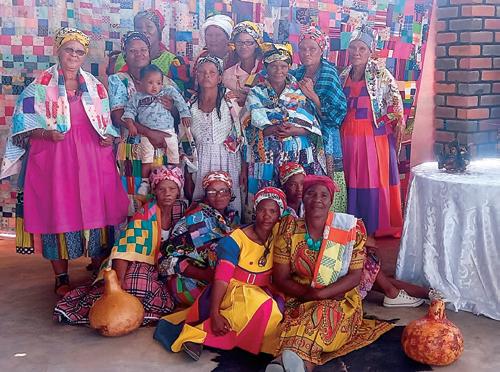
Irene ǁGaroës (NAMA)
In September 2024, my colleagues Kedireng Garises, then Chairperson of University of Namibia’s Action Research Team, and Immogene Classen, Y-Fem’s Community Facilitator for Hardap region, and I went to Gibeon as part of the collaborative partnership between Y-Fem Namibia Trust, which I worked for as Programs Manager at the time, and the Centre for the Study of Violence and Reconciliation, to advance social justice and healing through participatory, feminist, and decolonial research. Y-Fem’s approach centered around systemic and structural gender-based violence of Indigenous women, specifically Damara and Nama, and intergenerational trauma from colonial dominance through state policy. The focus was on Nama women’s voices, highlighting their role in community advocacy, cultural revitalization, preservation, and healing.
The Nama women shared personal stories, offering deep insights into the intergenerational impact of colonial trauma and oppression both by German colonization and the South African apartheid occupation. One of the most powerful themes to emerge was the demand for reparative justice not just to be symbolic or economic, but also to include recognition and preservation of the Nama language, healing cultural practices, and the revitalization of Indigenous knowledge systems lost due to colonization.
As a child, I watched people go to cemeteries not just to mourn, but to visit. They would carry two-liter bottles of water and place them carefully in front of the
Nama and Damara women in Gibeon.
crosses marking graves. No one explained why. It was a practice that seemed sacred and entirely ordinary at once, a custom that eventually disappeared from my current reality, swallowed up by the silence that colonization and modernity bring to Indigenous rituals. Years later, in the heart of this project, that memory returned to me not as nostalgia, but as a call to recover what was almost lost. This project became my doorway into a deeper knowing that rests in nature, in the palms of old women, in the stories that resist erasure.
My journey began with the voices of Damara and Nama women at the initial meeting with Elders, healers, religious leaders, and other women whose knowledge is held in their bones. They welcomed me not only as a participatory feminist researcher, but as their daughter who was eager to learn from them. They offered stories not as distant history, but as living maps. As one of the Elders shared, “We have the knowledge of healing, but it must be held again by our children, or it will go.” We named the project “Uts Ha-e !kho/gara its #gau#gausen: Hold onto what you have and heal yourselves.” And in that naming, something opened. A sacred responsibility formed not just to record knowledge, but to carry it, live it, and let it guide healing.
Naming Power: A Gendered Legacy
Gibeon is a small southern town 338 kilometers from Namibia’s capital city of Windhoek. A welcome sign bearing the image of the Namibian and Nama hero, Captain !Nanseb Hendrik Witbooi, greets all who enter the town. The image of his distinctive hat and determined gaze is etched into every Namibian’s memory, familiar from schoolbooks on the National War of Resistance and now featured on Namibian currency. My interest was in Nama women’s legacy, the memory of the brave women who became leaders.
A story known locally in Gibeon is the story of /Aaoxuris. The story goes, during the time of German colonization, during one of the attacks on Gibeon, the Germans came and put everyone in the genocide camps, setting fire to land, burning cattle, and shooting people, and there was a lot of blood. While this was happening, a woman went into labor and gave birth to a baby girl. This stopped the killing. Born in blood, she was named /Aoxuris, meaning the one who gathered the blood. With the child’s arrival, it was believed that peace had come.
The Nama women, retelling the story as they had heard it from their grandparents, called for a monument to her, a place of remembrance for women, as they, too, lived bravely. Women are caretakers of memory and healing, language, and spirituality. They are also burdened with grief over lost land, lost youth, and being left out of formal narratives of reparations. In both individual interviews and focus groups, I heard repeatedly, “We were rich. We had cattle, land, herbs, dignity. They took everything.” This project revealed how gender intersects deeply with historical dispossession. In the stories of queer participants
in the LGBTQ+ focus group, the marginalization was doubled. Their land was taken, and they still struggle for recognition of their identities. “Our ancestors are buried in this land, too,” one participant said, “but we are rarely called to speak when land is discussed.”
Memory, Wealth, and Loss
I grew up in Stampriet, a small Nama town in the south 150 km from Gibeon, which mirrors it in its structures: the church, the school, the clinic, the boxy houses painted in fading colors. These were houses built by the apartheid government in the 1950s and ‘60s, now falling apart, holding Elders who are often left to carry families, unemployed youth, and grandchildren with mere $1,300 assistance (around $80 USD) from the government. These houses were built to hold nuclear families—a father, a mother, and a child—not keeping in mind the extensiveness of African families. Some homes have been renovated with pension funds or by educated children who returned, but most remain in their original state, decaying with no renovations since Namibia’s independence.
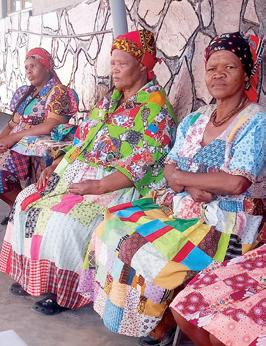
When we spoke about reparations, a deep pain filled the room. The women remembered being rich not in currency, but in cattle, land, and abundance. “We didn’t lack,” one woman said, “until they took the cattle and pushed us into this dust.” They weren’t just speaking of material loss. It was a dispossession of time, space, and dignity. What remains is land that doesn’t bloom easily and memory that aches to be recognized. Patricia, a respected Elder in Gibeon, detailed how her great-grandmother fled with children during the genocide and how her grandfather lost his cattle. But Patricia also represents the continuity of knowledge; she teaches young girls about their bodies, menstruation, and faith. Her loss did not harden her. It deepened her resolve.
Our time in Gibeon and the truths that we witnessed there affirm the profound bravery and enduring resilience of Nama women. Reparative justice must extend beyond economic and symbolic gestures to include the recognition and revitalization of the Nama language, healing practices, and Indigenous knowledge and women’s leadership.
Irene ǁGaroës (Nama) is a feminist leader, activist, and writer. She is Programmes and Innovations Manager at Y-Fem Namibia Trust.
One of the Elders shared, “We have the knowledge of healing, but it must be held again by our children, or it will go.”
25 YEARS WEAVING CHANGE
How FIMI Became a Global Force for Indigenous Women’s Leadership
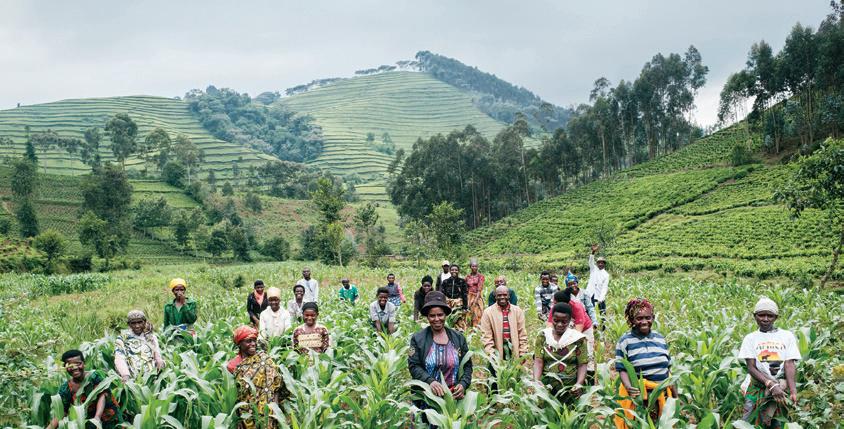
International Indigenous Women’s Forum
In the summer of 1995, as over 100 Indigenous women delegates gathered in Beijing for the Fourth World Conference on Women, a quiet revolution was taking shape. That same year, Indigenous women held continental gatherings, sowing the seeds of a global network. In Quito, Ecuador, they formed the Continental Link of Indigenous Women of the Americas (ECMIA) to unite organizations across the Americas. In Agadir, Morocco, they established the African Indigenous Women’s Organization (AIWO), creating a pan-African voice. These early alliances laid the groundwork for what would soon become the International Indigenous Women’s Forum, better known by its Spanish acronym, FIMI.
By March 2000, momentum from the Beijing conference culminated in the official founding of FIMI during a UN special session. More than 100 Indigenous women leaders from the world’s seven socio-cultural regions came to New York, determined to make their voices heard. Under the organizational leadership of Canada’s Assembly of First Nations and those visionary Indigenous women from around the globe, FIMI was born as a formal global mechanism to coordinate agendas, build capacity, and develop leadership for Indigenous women. FIMI’s founding was intertwined with another historic stride that year: the establishment of the UN Permanent Forum on Indigenous Issues, which created a vital space for Indigenous Peoples in the international system.
Building Leadership and Global Solidarity
FIMI serves as a global platform ensuring that Indigenous women’s perspectives are seriously included in decisionmaking on human rights. Over 25 years, FIMI has launched
key programs to empower Indigenous women at every level. Among them are the creation of the Global Leadership School, the establishment of the first Indigenous Women’s Fund, Ayni, and a research department to gather the necessary evidence for our advocacy work. Alongside capacity and funding, FIMI has pushed relentlessly for policy change in international arenas. Early on, we helped achieve a milestone at the UN Commission on the Status of Women with the adoption of its first-ever resolution focusing on Indigenous women, highlighting issues like poverty and violence and urging action. This breakthrough planted Indigenous women’s priorities firmly on the global gender agenda. FIMI has also been instrumental in bringing Indigenous women’s concerns to human rights bodies such as the Convention on the Elimination of All Forms of Discrimination Against Women (CEDAW), and we have coordinated consultations from Asia to the Americas. Collectively, FIMI’s advocacy has transformed global norms and ensured Indigenous women are no longer sidelined as mere subjects, but recognized as “protagonists of change and subjects of rights” with decision-making power.
2025: Milestones and Action
Last November, history was made at UN Headquarters when the General Assembly voted to officially proclaim September 5 as the International Day of the World’s Indigenous Women and Girls. The date carries deep meaning, as September 5 has long been commemorated by Indigenous communities in the Americas to honor Aymara heroine, Bartolina Sisa. The resolution stresses Indigenous women’s “full, equal and meaningful participation in decision-making,” echoing one of FIMI’s core demands. Henceforth, the 5th of September will be a rallying point
Women in the fields of Rwanda.
Photo by Tracy Keza.
each year to focus world attention on Indigenous women’s empowerment.
Throughout 2025, FIMI advanced the dissemination and implementation of CEDAW General Recommendation 39 (GR39). In close coordination with our regional Indigenous Women’s networks, FIMI led the collective development of the GR39 Five-Year Action Plan, translating the General Recommendation into concrete priorities and advocacy pathways across local, national, regional, and global levels. Amid these policy victories, 2025 was a year of celebration, reflection, and renewed commitments. In June, FIMI organized a Global Indigenous Women’s Gathering in Lima, Peru, bringing together women from dozens of nations to mark our 25th anniversary. For two days, Elders and young leaders shared stories of struggle and triumph, honored pioneers of the movement, and reaffirmed their collective resolve to keep advancing Indigenous women’s rights.
FIMI awarded recognition to our long-time ally, International Funders for Indigenous Peoples, acknowledging how solidarity from philanthropic partners has strengthened Indigenous women’s initiatives over the years.
On the world stage, Indigenous women also stepped up as climate leaders in 2025, with FIMI playing a convening role. During COP30 in Belém, Brazil, FIMI co-hosted the Global Summit of Indigenous Women and Youth, where Indigenous women issued a bold political declaration addressing the climate crisis as “a crisis of rights, justice, and life”. The declaration, collectively crafted by women from the Amazon to the Arctic, demands protection of Indigenous territories and knowledge as essential to any climate solution. It also calls for direct climate financing to Indigenous communities and safeguards for Indigenous environmental defenders who face violence every day in their resistance.
We Are Not a Topic: We Are Rights Holders
Behind FIMI’s milestones are the voices of Indigenous women themselves—voices that for too long were silenced or ignored, but are now resonating in the corridors of power. At the UN Permanent Forum’s 24th session last April, these voices took center stage in a high-level global dialogue on Indigenous women’s rights. Leaders spanning generations, from a young Anishinaabe water protector to seasoned activists and UN officials, echoed a common message: Indigenous women are agents of change, not victims.
Decades of resistance have been paired with articulated proposals that demonstrate Indigenous women’s capacity to lead. As Lucy Mulenkei (Maasai), FIMI co-founder, has emphasized, “Often when they look at us, they think that we have no skills. As Indigenous women, we are pushing forward and must work together,” underscoring both the collective power nurtured by FIMI and Indigenous women’s role as agents of transformative change. Teresa Zapeta
(Maya K’iche’), FIMI’s current Executive Director, put it bluntly during the UN dialogue: “We are not a topic. We are rights holders.”
True inclusion means more than inviting Indigenous women to speak; it requires actively involving them in designing solutions, ensuring direct access to resources, and respecting their knowledge systems. In practice, this means that governments must see Indigenous women as partners in policy-making, not as beneficiaries of aid. It means funding Indigenous women-led initiatives and respecting Indigenous governance, not imposing outside programs. FIMI models this approach, centering authentic partnerships based on mutual recognition instead of top-down assistance.
Crucially, Indigenous women’s leadership doesn’t just benefit Indigenous communities; it offers pathways for transforming broader society. Indigenous women put their bodies and lives on the line in defense forests, water, and land—work that contributes directly to global environmental sustainability and conflict prevention. They serve as culture keepers and educators, passing on languages and values that enrich humanity’s heritage. And in areas wracked by conflict or oppression, Indigenous women often emerge as the peacemakers.
This nexus of women’s empowerment and peace is precisely why FIMI matters: by strengthening Indigenous women’s leadership, we are investing in more peaceful, just societies. It’s fitting that the theme of El Mundo Indígena 2026 centers on peace and security, because Indigenous women’s advocacy is fundamentally about securing a peaceful future for their Peoples. FIMI’s 25-year effort has been to ensure these builders of peace have the tools, networks, and recognition they need to succeed.
A Legacy and a Future Woven Together
As FIMI crosses the 25-year mark, our story is both a celebration of how far Indigenous women have come and a call to action for the journey ahead. We have nurtured a generation of Indigenous women who are leading with confidence not only on “women’s issues,” but on climate change, economic development, and peace-building, proving that their perspectives improve outcomes for all. And we have shown the world that empowering Indigenous women is one of the surest ways to protect human rights and our planet.
While we celebrate our successes, we recognize that the work is unfinished. Inequalities and violence persist, and many hard-won gains remain fragile. FIMI’s journey shows that change is possible when those most affected are in the driver’s seat. From remote forest communities to UN halls in New York, women’s voices—full of wisdom, resilience, and hope—are shaping a more equitable and peaceful world. And FIMI, the forum that has woven these voices together, continues to stand as a beacon of what Indigenous women’s global solidarity can achieve. When Indigenous women lead, all of society stands to benefit.
PROTECTING THE SEAL RIVER WATERSHED
An Indigenous-Led Fight for Conservation
Shaldon Ferris (KHOISAN, CS STAFF)
The Seal River watershed in what is now northern Manitoba, Canada, is 12 million pristine acres of forests, wetlands, lakes, streams, and rivers that support iconic species like polar bears, wolverines, gray wolves, and barren-ground caribou. It is also a critically important breeding and migratory stopover location for millions of birds of hundreds of species. Renowned as one of the world’s last remaining ecologically intact watersheds, it covers 50,000 square kilometers of boreal forest and tundra. Stephanie Thorassie (Sayisi Dene) is the Executive Director of the Seal River Watershed Alliance, an Indigenous nonprofit coalition of four First Nations that has been working to establish an Indigenous Protected and Conserved Area to keep the lands and waters protected as industrial interests creep further northward. Shaldon Ferris (Khoisan), Cultural Survival Indigenous Rights Radio Coordinator, recently spoke with Thorassie.
Shaldon Farris: How did you get into this line of work?
Stephanie Thorassie: My parents, my aunties, my uncles, my grandparents, my great-grandparents, my great-greatgrandparents, my great-great-great-great-grandparents all come from the land. It is a pleasure for me to do the work that they have been doing for millennia, to steward and help to protect the land that we come from. It is a great honor to pass that responsibility onto my children.
I’ve always been an advocate for culture and language. Not long after I had my daughter, I had to get some work to support my daughter. I actually worked at a salon. I learned through this work how to talk to people and how to connect with people. It’s a really big part of my journey and my story because it helps me now in the work that I do. Before I started in this work, I was in a little accident. I broke both my wrists, and I had to change my career. I remember sitting on the couch in two casts with my partner, and I was talking about this job that I wished existed, where I could go back to my community to advocate for the land, culture, and language, to be with my People and still be able to support my daughter, who was in high school at the time. Six months later, I was pulled into an exciting new project as a project assistant. I have been doing this work for almost seven years now, and I’ve worked every job on this project at the Seal River Watershed Alliance.
SF: How has the Seal River shaped your community’s identity?
ST: The Seal River is one of the major river systems that goes through the watershed. It is the traditional territory of my Nation, the Sayisi Dene, neighboring Dene First Nation community Northlands Denesuline, and two other Cree communities, Barren Lands First Nation and O-PiponNa-Piwin Cree Nation. It is an incredible landscape. We have 1.7 billion tons of carbon in the watershed sequestering and turning back into oxygen. It’s like a tiny set of lungs for this planet, the size of Costa Rica. A place without roads,
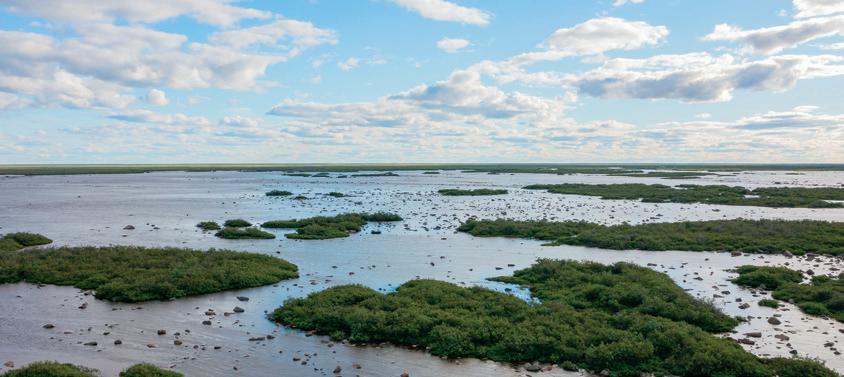
Seal River Watershed.
Photo by Jordan Melograna.
without power lines, without industry or development. And it is our goal to keep it this way, to keep it as nature should be for our Peoples and for humanity.
For us, in our identity, the land is who we are. It’s who we have been. When I’m there, I just feel whole again. Every part of me feels full, and things make sense.
SF: What inspired you to take action to protect the watershed?
ST: It’s about having a voice for the land and having a say in what happens in our backyard. Our Nations, the opinions of our Elders and our community members, our leadership, were never taken into consideration. One year, thousands of caribou came to my community. It was a wonder of nature. People from down south heard about this and came in waves to kill caribou. The caribou are so connected to the Dene Peoples that it was like a part of us was being harmed as well. The late founder [of the Seal River Watershed Alliance], Ernie Buzador, started advocating and talking to people about what to do. In 2016, there were no conservation officers supporting us. We thought, we needed to take this into our own hands to start finding ways to protect the land, the habitat for the caribou, and for all of the animals and birds that use the place. For us, you cannot separate spirit away from the land. Having this understanding has set up the protected space in a different way than other places around the world, and utilizing, honoring, and upholding that First Peoples’ knowledge sets up the workings of this protected space in a real and holistic way. This philosophy carries us into this project, this way of knowing that we are not better than the nature that we come from. We’re here to work with the land and to try to make decisions with the land based on the ebbs and flows, based on the [beings] that live there who have been on these lands for thousands of years.
SF: What is the role of women and youth in this movement?
ST: The women, the girls of my Nation and the project, they’re the eyes and ears on the ground, the boots and the moccasins on the land. They’re the ones helping to organize the community engagement. They’re the ones that partner with outside organizations. The women are stepping up and getting the firearms licenses and all the training that’s needed to help with this two-eye seeing approach of utilizing western science as well as Indigenous science and Indigenous knowledge to do the conservation work, the science work, the environmental work, but also the traditional work. It’s the women who work on the caribou hides to make the leather and the tools. We know that without the women in our societies, we will not be successful.
Secondly, the youth are the driving force behind this work. It is the youth that keep us current and remind us often the things that we need to be doing to be better.
Before, they didn’t have hope for their futures. We started creating ways to employ people and pay them well for being out on the land, to be themselves, to harvest for people, to check nets for ice and fish, and to go out geese hunting, these kinds of things. Young people now are starting to post on social media that they’re going to be a land guardian. They’re the ones that are doing the monitoring work and the patrolling. We are trying to get them as much training as possible.
SF: How do Indigenous Protected and Conserved Areas differ from other protected areas?
ST: We are utilizing the laws and the rules that govern our people on the land to create and declare the area protected under the philosophies, the Creation stories, and the rules that govern our Peoples on the land. Other protected areas [are] done without the inclusion of the local community members or local Indigenous people. There are issues that come with these other protected places because they expect people to stay out of it, not to hunt in it. They don’t utilize the laws of the people who live there. We’re creating a new type of protected area that doesn’t try to separate science from nature, people from the land. We’re utilizing our culture and our language to keep all of this united in the work to ensure that the biodiversity stays intact.
SF: Tell us about the film, “We are Made From the Land: Protecting the Seal River.”
ST: [It] is a documentary that is on YouTube now. It was created because we needed a way to connect the human side of our project to people. We needed people to see themselves in the work we do and not see nature and the environment as separate. We also needed a way to advocate and to help people understand our reasons for doing this work. We have to do everything we can to protect the land.
Watch the documentary here:

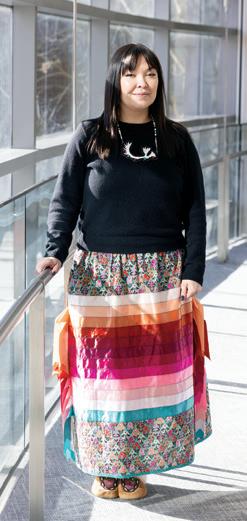
Stephanie Thorassie.
Photo by Laurie Swope.
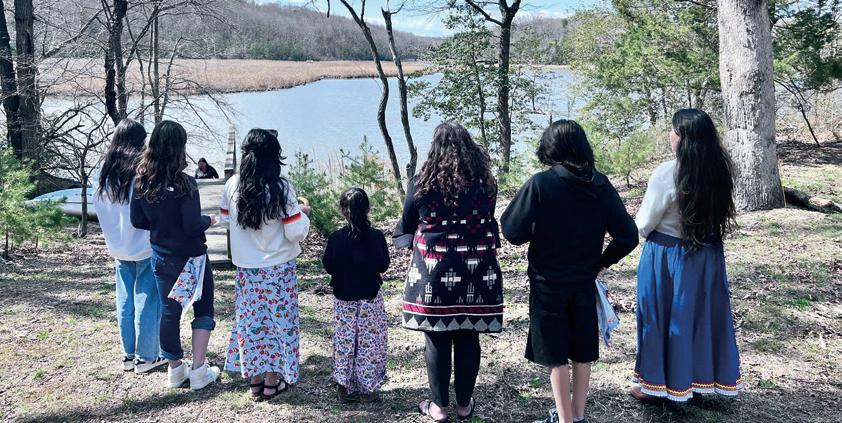
Giving thanks for the skies and Earth opening with the Thunders, women lead girls to honor the waters at Nanjemoy Creek, a Potomac tributary and life source.
NEVER GIVE UP PISCATAWAY ELDER GABRIELLE TAYAC ON KINSHIP, LAND, AND LEGACY
Dr. Lyla June Johnston (Diné/ Tsétsêhéstâhese) is a musician, author, community organizer, and Cultural Survival Board Member. She blends her study of Human Ecology at Stanford, graduate work in Indigenous Pedagogy, and the traditional worldview she grew up with to inform her music, perspectives, and solutions. Her doctoral research focused on how pre-colonial Indigenous Nations shaped large regions of Turtle Island to produce abundant food systems for humans and non-humans. Here she speaks with historian Gabrielle Tayac (Piscataway), Associate Professor at George Mason University, former curator at the National Museum of the American Indian, and Co-founder of Nekamaco (House of the Mother), an Indigenous Elder women-led nonprofit organization.
Lyla June Johnston: Who are the Piscataway people, and where is your traditional homeland?
Gabrielle Tayac: Piscataway means “where the waters blend.” Piscataway refers to two bodies of water, specifically [where] Piscataway Creek flows into the Potomac River, about 15 miles south of contemporary Washington, D.C., where our people had their main town. That town was called Moyaone, on the side of the Potomac River that today is called Maryland. That’s really the center. Often, we have heart centers of spaces in Indigenous worlds and ancestral times that are more important to the people who live there than what becomes of them during and after the colonial invasions.
Piscataway was originally made up of a series of about a dozen Peoples, each with their own town leader that could be a man or a woman. It stretched from the falls above contemporary Washington, D.C., and then flowed all the way
down the Potomac River to the mouth of the Chesapeake Bay, and then between the Potomac River and the Patuxent River, so primarily in what’s called Maryland today, and also some spaces that include Washington, D.C., and the other side of the river, which today we think of as Northern Virginia. It’s where our community still lives to this day. Piscataways are now one consolidated People who are made up of the survivors of that original, larger chiefdom. We’re a Tribe of families and kin and structures that have persisted over the past 400 years together.
LJJ: What makes you the most excited about being a descendant of these Peoples, a descendant of Tskado’i ancestors?
GT: There is an incredible richness in this biosphere in this space. The Chesapeake Bay we’re a part of has probably among the most massive migrations—the bird flyways, the fish, the systems, the life that exists in these spaces, and the feeling of the ground itself having love. For us, for me, it was wanting to understand what happened to us, what we’ve done to even know who we are, and to stay together in some form in a community. There’s a very deep, internal rootedness part to this.
There’s another piece to it that really moves me because of the position of being in a place like Washington, D.C. It means that not only the whole world, but the Native world, in the quest for having a voice, working for rights, sharing, and being, the opportunity to walk alongside so many people who were seeking the grounding for their own People. It was the support and solidarity that also helped us break through a sense of loneliness, because Piscataway people, like many small East Coast communities, had been cut off from the larger Native world for a very long time. There was a profound sense of longing to have that relationship with
other Native people. That, to me, is very stirring: the grounded sensibility of this place. I have a student who’s Eastern Band Cherokee, and she talked about her mountains and said, ‘We’re of this place.’ There’s something very particular about being of a place.
LJJ: I saw your name on a very interesting scientific article, “Millennial Scale Sustainability of the Chesapeake Bay Native American Oyster Fishery” by Dr. Rick Torben, showing how the Piscataway Nation tended and cared for oyster beds without interruption for thousands of years in the Chesapeake Bay. Not only did they care for these oysters, but they actually helped them get healthier over time. If that’s not regenerative agriculture, I don’t know what is. And within less than 300 years, the United States has managed to completely destroy that oyster fishery, [which] is less than 1% of its original size.
GT: When I teach history, I spend the first month with my students looking at ancestral values and traditions and ceremonial teachings of the parts that you can share. The motivations that Native Peoples have and the way they’re making their decisions is coming from a different place. It’s not just economic resources. The spaces are imbued with these sacred qualities at their best. For us here, oysters are just a big part of it that completely changed the ecosystem. The water that I’m looking at right now is very muddy now. It’s more shallow. It was 95% old-growth forest before. It was crystal clear and deep and narrower. I was told that when people would go into the swamp, they could ride a horse across the marsh because it was firm enough. It wasn’t mucky, it wasn’t all that silt.
When I talk about relationality, the underlying part of it is about working within these lands, these beings, this whole interconnected self that we’re a part of. In Chesapeake, Peake means shell. Chesa means great, big. So Chesapeake actually means the Great Shellfish Bay, and it refers mostly to the oysters that are there. We think about the oysters as part of the lungs, almost like the little bronchioles that filter our breathing, because we’re in a tidal space. The Chesapeake Bay is tidal. It comes in and out. Even here on Nanjemoy Creek, it’s tidal. It comes in and out twice a day. It breathes. Those oysters were the mechanism of those lungs, that filter. When we see intense storm surges, it’s because the oysters have been ripped out. The intentional care, when we think about the forests or the waterways, is a very intentional shaping based on our values.
LJJ: What is one of the biggest messages you want to give to the world about your Nation and your Peoples today?
GT: Never give up. When I say never give up, it doesn’t mean to not change strategy or to sometimes realize that your energy needs to get put into something that moves
forward or that you’re stuck in something that is toxic or traumatic. When I think about Piscataway, I think about our relationships. A lot of who we are is the relationships that we’ve had with what we come from. On the Piscataway side of it, we are formed out of the love between Native people who were survivors with indentured white women and enslaved Africans. That’s the reality of who Piscataway people are now.
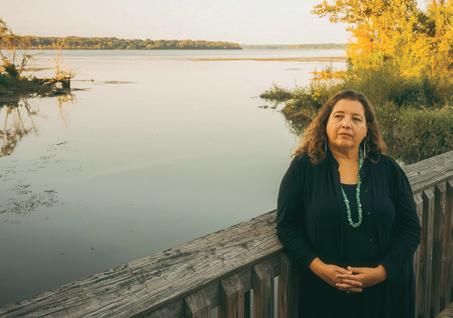
I worked for many years at the National Museum of the American Indian, and doing this history work, I learned that policies were designed to prevent us from having these conversations. We’re not even supposed to exist. We always have this narrative of extinction. Just thinking about all of these incarnations, maybe you’re the only person who’s holding on to that thread. But if you hold on long enough, the chance of someone else, or someone like you in your generation, picking it up and carrying it a little bit more...you never know who’s going to pick it up. Just hold on to it. For Native people, there is that level of responsibility not to give up, but also to imagine what things can be and live in that direction, positively.
LJJ: You put that so beautifully, and other Elders of mine have said that, too. They said, hold on. They said it might not be easy, but hold on. Hold on. Even when it’s easier letting go.
Nanjemoy Creek, a recovering refuge and healing space, home to Piscataway Peoples for millennia.
Right: Traditional tobacco, as a medicine plant, is now grown again after decades of loss. Green tree frogs signal rare ecological balances in rematriated lands.
Top: Gabrielle Tayac on the boardwalk through marshlands leading to the ancestral sacred site, Moyaone, on the Potomac River at Piscataway National Park in Maryland.
Photo by Greg Kahn.
Left:
FIGHTING TO PROTECT THE EARTH
ILENIA MAY PÉREZ (GUNA) PANAMA ADVOCACY PROGRAM COORDINATOR
Childhood Memories and Youth
Above right: Presenting at the Convention on Biological Diversity
SB8J-1 Meeting in Panama.
Below:
Visiting Ngäbe communities affected by the CHAN 75 hydroelectric project, in Bocas del Toro, Panama.
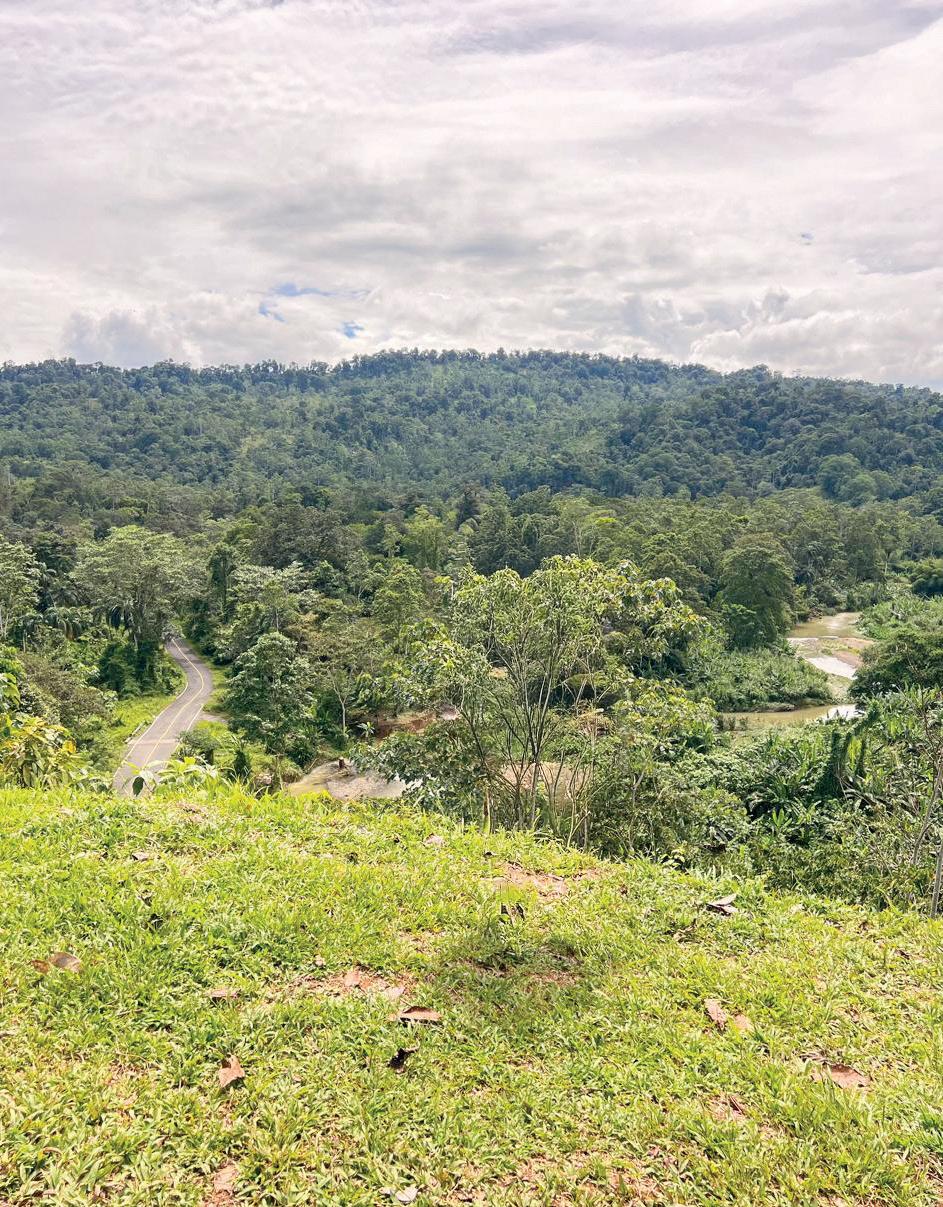
My parents, like many Indigenous parents, migrated to the city seeking better education for their children. Living in a space that wasn’t mine meant facing racism, exclusion, and a constant feeling of not fully belonging. My father’s love for our people and the support of my mother and aunts kept me connected to my roots. There was never a complete break with my Peoples.
About My Community
I belong to the Guna Peoples from northeast Panama, a Peoples with a deep spiritual connection to our territory, made up of islands, mangroves, rivers, and mountains. Our lives revolve around the sea, community, and nature. We are a people of history and resistance. In February, we commemorate the 1925 Guna Revolution, when we defended our identity, culture, and territory against externalized forces.
Fighting for Indigenous Peoples’ Rights

Seeing firsthand the inequalities and needs in our communities motivated me to do this work. I felt reflected in Indigenous Peoples’ issues because I lived those experiences. I also saw how important decisions about our territories and lives are made without consultation. I understood then that it is necessary to participate in processes so our voices are clearly heard and our dignity and identity is seen in spaces where decisions are made.
Connection to Land
As a Guna woman, my connection to the territory is a natural part of who I am. Land is not a resource, but life: Nabguana (Mother Earth) and Muu billi (Grandmother sea). This guides my community work. When I arrive in an Indigenous community, I feel their struggles as my own, born from the same love for the land. Although each person has their own way of living, we share a common root. My work is based on respect, listening, and coherence, walking with humility and recognizing a Peoples’ spirituality, history, and decisions.
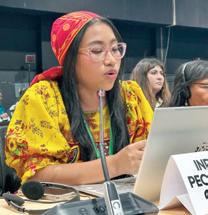
Working on Environmental Issues
I have participated in processes that strengthen community life, territory, and biodiversity, such as the marine coastal project of the Indigenous Women’s Network on Biodiversity, which is based on Indigenous knowledge and the vision of the sea as a source of life. Together with fishermen and communities, we promoted the care of reefs and mangroves, generating positive social and economic impacts like a womenled community restaurant and educational spaces for youth. Our work demonstrates that conservation strengthens identity, autonomy, and the transmission of knowledge across generations.
Ancestral Knowledge and Climate Change
Indigenous Traditional Knowledge, especially that of women, is key to caring for life and facing climate change. It is present in songs, medicines, and daily practices, teaching us to live in balance with Mother Earth. Although much of the planet’s biodiversity is in Indigenous territories, there is still a lack of recognition of the value of the knowledge that protects it. Keeping this knowledge alive and connecting Indigenous Peoples with new tools is essential to respond to climate change, always with respect and recognizing the central role of women in protecting land and life.
Vision for Work at Cultural Survival
I want to strengthen support for Indigenous communities with accessible information on rights, safe spaces for their voices, and trust-based relationships with leadership, women, and youth. I would love to expand my support for Panama and the region and to advocate for international political action to strengthen collective strategies. I prioritize coherence, respect, autonomy, and collective defense of Indigenous rights.
Message for Indigenous Youth and Women
To the new generations of Indigenous Peoples, I say that territory defense begins in what we are: in our knowledge, memories, and communities. Empower yourselves with your ancestral knowledge, listen to the Elders, dialogue with youth, and unite the traditional with current tools. Technology and academia can be allies if they stem from your identity, but don’t forget your origin. To Indigenous women, I want to remind you that your leadership is born from care and connection to life. Above all, don’t walk alone: true resistance is sustained by community and shared hope.
THE LIVING LEGACY OF NIPMUC WEAVING WITH BRITTNEY WALLEY
Tia Alexi Roberts (NARRAGANSETT, CS STAFF)
If I’m sharing a pair of woven earrings, I’m doing that because it’s a piece of our culture as old as time. I want to do something that shows the culture over and over again, even if it’s as simple as a woven keychain,” says Brittney Peauwe Wunnepog Walley (Nipmuc), a Cultural Survival Bazaar artist and artisan who makes woven goods and wearable art. Nipmuc weaving is both an art form and a living record of history. Centered in her Nipmuc culture and the teachings of her father and community, Walley’s work prioritizes education, cultural continuity, and future generations. Her art has been featured in various museums in the Northeast and beyond.
Walley first learned Northeastern Woodland–style weaving from Kerry Helme (Mashpee Wampanoag). “The type of weaving that I do is a soft form of twining, which is different from a lot of the existing woodsplint baskets that people from my Tribe have made in the past,” she explains. “One material central to my older pieces is hemp cord. Now I’m using a lot of cotton cord. I try to be responsible for the Earth and use plant materials as much as possible.”
In addition to weaving, Walley is involved in Indigenous advocacy as the Anti-Mascot Representative for the Chaubunagungamaug and Hassanamisco Nipmuc. She works to support Indigenous studies initiatives and is also a board member of Mass Humanities and a collaborator on Indigenous Peoples Day campaigns. She earned a master’s degree from the University of Massachusetts, Boston, in Critical Ethnic Community Studies, with a concentration in historical archaeology. “I’ve always been drawn to making things right, but I officially began advocating against mascots in 2020. This brought me into groups working on multiple statewide Indigenous-focused bills. It’s about self-representation, about the ability to share your own story and share your own images about what you think best represents you, not something that’s been put on top of you by an outside force,” she says.
Walley practices another form of Indigenous advocacy


by carrying Nipmuc traditions forward through her art. “Keeping on with weaving is so important for our cultural sustainability,” she says. “There’s already been an increase in Nipmuc weavers, and I’ve been able to share my knowledge with them. A few years ago, my chief said that I was the only Nipmuc basket weaver, and that was not a good feeling. I don’t want to be the only one.” To ensure she wouldn’t be the only—or the last—Walley has organized weaving workshops in her community and with intertribal communities. “It’s been a pleasure to teach and to really bring my present into the future that way. Exactly seven generations ago, my fifth or sixth greatgrandmother wove chair parts. I just see myself as a drop in the ocean.”
Beyond the critical work of furthering her People’s cultural traditions, Walley’s weaving is a form of storytelling. “A pattern in a basket can tell a story and depict something that has happened. When I’m in the right position to read the baskets, I can look at them and understand them as if they’re a text. Sometimes it can be very literal, but the act of weaving can also be a touchstone for talking about stories,” she says. “I’m doing my best to represent myself and the culture. . . thinking about how we can take back this power to represent ourselves, speak for ourselves, and share our own stories. As a Native artist, I can connect with other Native Peoples on a much deeper level. I’ve learned that there is an endless amount of talent and creativity.”
Due to the limited outlets that support Native talent and creativity, Walley appreciates the opportunity afforded by the Bazaars: “It’s not just about buying, it’s about caring and talking about it. That word of mouth is so powerful. If you go to something like a Bazaar, you can share that experience. You might meet someone, pick up a business card, make a connection, and experience a beautiful dance that moves you. There’s endless opportunity to make a connection.”

Come to the Cultural Survival Bazaar: July 24–26, Tiverton, RI & August 1-2, Providence, RI. bazaar.cs.org


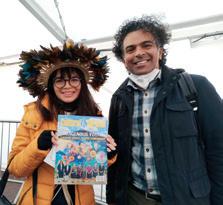
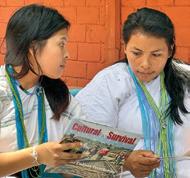
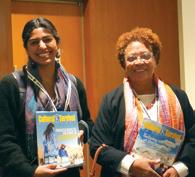
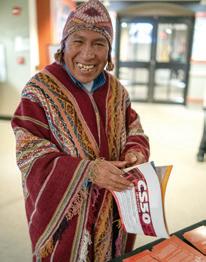
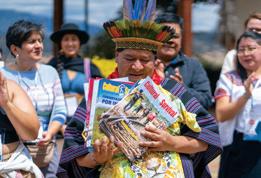
Make an annual donation to Cultural Survival of $25 or more to get the award-winning Cultural Survival Quarterly magazine delivered to your front door 4 times per year! Or share your support for Indigenous rights by giving a gift subscription to a friend or family member. Your support has helped us publish the CSQ for 50 years! Visit: cs.org/subscribe