Dear Friends and Partners,
This fall, we are thrilled to celebrate a special milestone for the RISE Network: ten years of community, connection, and collective purpose.
We launched RISE in 2015 alongside visionary educators who shared our passion for and commitment to reimagining the high school experience. Together, we’ve made incredible progress towards our north star: ensuring all students graduate with a plan and the skills and confidence to achieve college and career success.
From the beginning, we knew that no single solution or approach could solve the complex challenges schools face in supporting young people to graduate on time and ready for whatever comes next. We also believed that educators shouldn’t have to start their improvement journeys from scratch, and they should never have to go it alone.
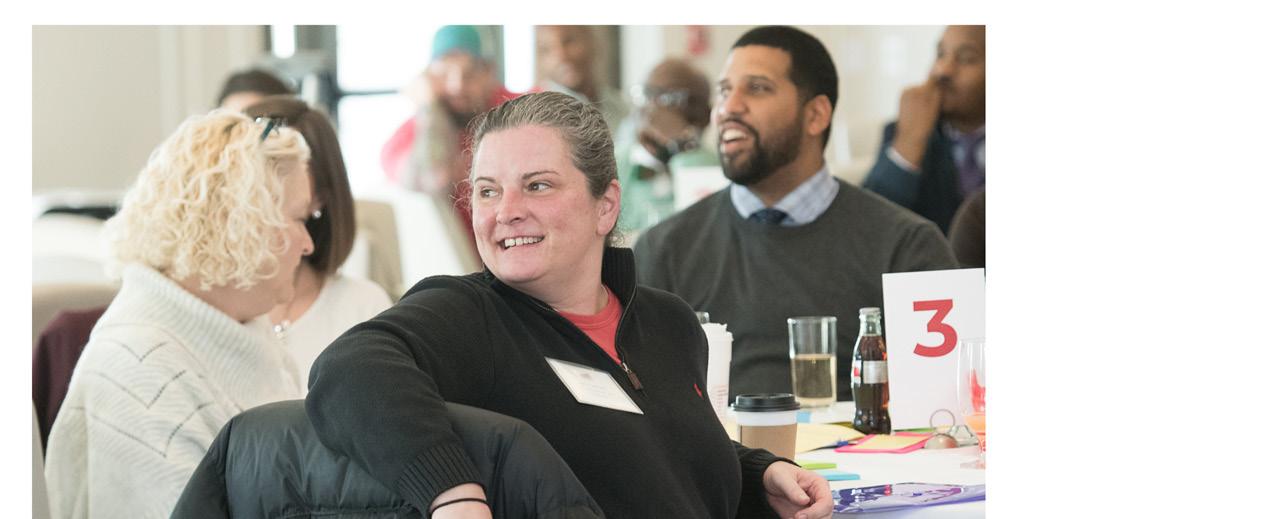
The RISE Network now brings together 600+ teachers, principals, counselors, on-track coaches and mentors, and other school and district leaders to share their experiences and problem-solve. Together, they are using data and ingenuity to design strategies that address the distinct needs of over 40,000 students in 60 schools across six states. We’re proud that additional partners join our improvement community every month, sparking creative and impactful new ways to support students and one another through our growing suite of programming and tailored services.
We asked educators in the RISE Network to join us in looking back on a decade of collaboration, learning, and innovation. Their stories are our stories, and we hope that their reflections reignite for you — as they have for us — the spirit of inquiry and partnership at the center of our work.
We are filled with gratitude for your encouragement and support over the years. We look forward to all that lies ahead as we continue to expand and deepen our support for students and educators across the diverse, vibrant, and growing RISE Network.
In Partnership,


Barbara Dalio Co-Founder and Board Chair

Emily Pallin Co-Founder and Executive Director

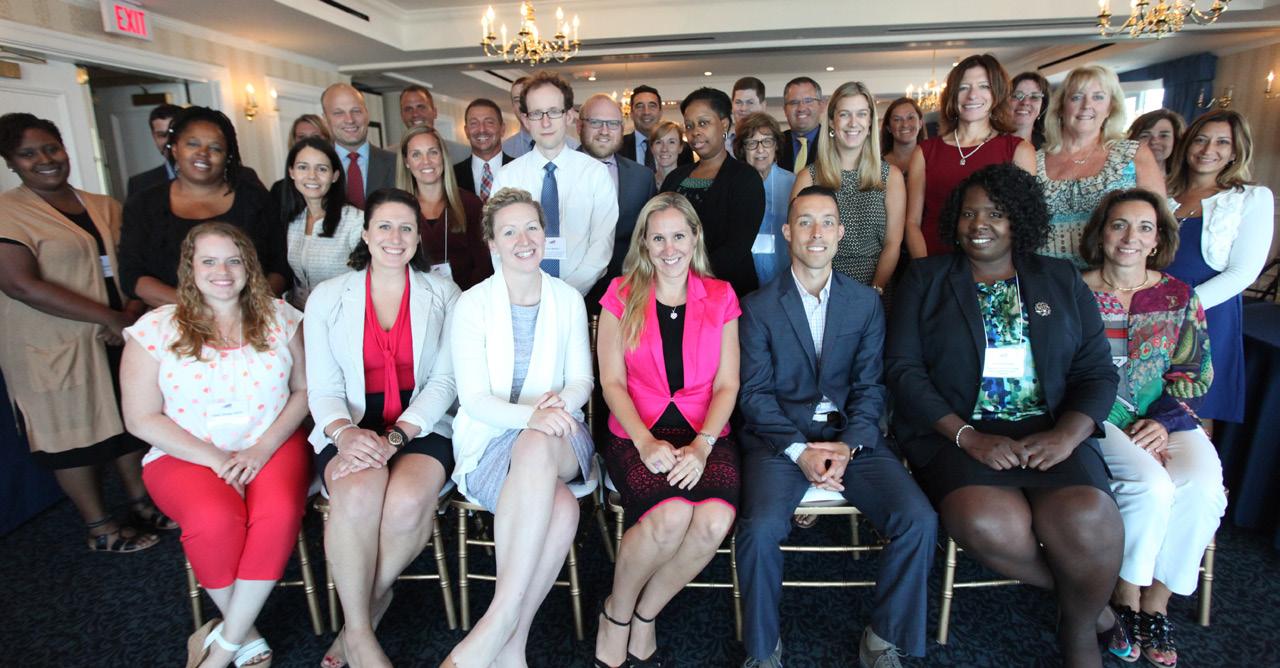
Our journey began 10 years ago when we teamed up with visionary educators from East Hartford, Hartford, Meriden, and New Haven public schools to reimagine the high school experience.
“What’s your big problem? How can we help you solve it?”
Jennifer Straub, principal of Maloney High School in Meriden, vividly recalls contemplating these two questions — posed by RISE Executive Director Emily Pallin — at the first meeting of the RISE Network founding school partners back in 2015.
“We were talking about the issues facing our schools and how we were tackling them,” Straub explains. “We were a thoughtful group, but it was clear that we weren’t addressing the root cause of some of our challenges. In hindsight, some of our ideas were terrible!”
At that time, about one-quarter of ninth graders at Maloney had failed to advance to tenth grade. Other founding partners echoed Straub’s concern about students who were struggling with the transition to high school. Common interventions for ninth graders tended to be reactionary, designed to help kids catch up after they had fallen behind. But RISE’s founding partners wanted to support kids before they got off track. And they wanted to make sure students stayed on track through graduation.
“Emily really pushed us to sharpen our thinking,” reflects Straub. “But it was in this really kind, supportive way that enabled us to be candid and vulnerable about our schools’ gaps and needs. That’s when the real solutions emerged.”
Straub began to envision testing out new strategies — maybe even hiring a couple of staff members focused exclusively on ninth graders’ success.
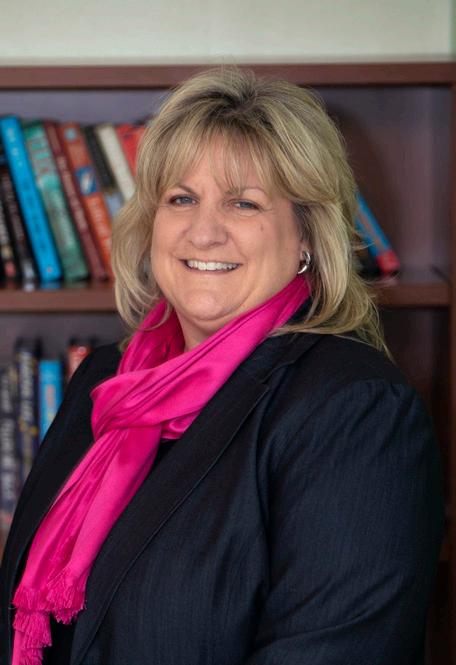
Dr. Zakia Parrish, then principal of Hill Regional Career High School in New Haven, agrees that those intentional, collegial conversations helped leaders to reimagine the possibilities for their schools. Like the other founding partners, Dr. Parrish says that learning and problemsolving alongside her peers was critical to her school’s improvement and her own growth as a leader.
“The opportunity to come together and get creative was invaluable,” Dr. Parrish reflects. “As a school leader, it’s easy to feel siloed in your building.”
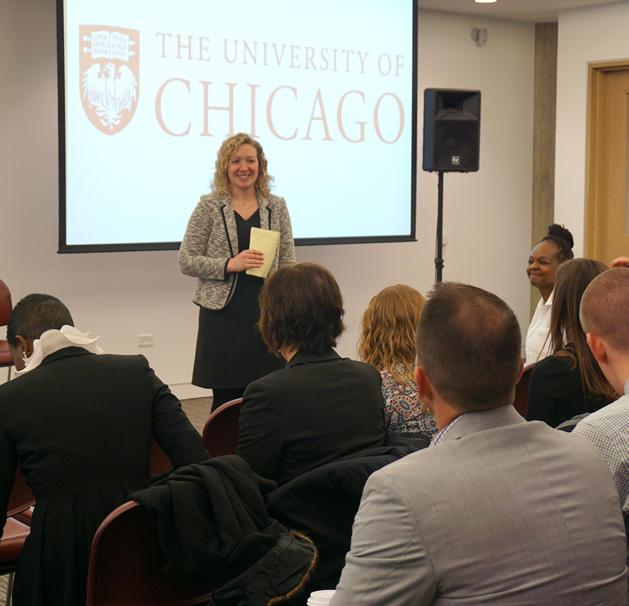
During an early site visit to Chicago, the founding partners got to meet with the researchers at the University of Chicago who were leading a series of vanguard studies on the importance of ninth grade. They cite this experience as an inflection point. The group left feeling energized and, playfully competitive by nature, committed to getting even better results for their students back in Connecticut.
Dr. Parrish further credits the RISE approach — steeped in both the research on what works and the day-to-day realities of leading a classroom, school, and district — with setting the right tone for a productive partnership. The RISE team modeled from day one how she would lead new grade-level improvement teams at her school.
“While the RISE team sat outside of our schools and brought external research to the table, they also deeply respected our contexts and where we were coming from,” Dr. Parrish explains. “They really trusted that we were the experts on our schools and students.”
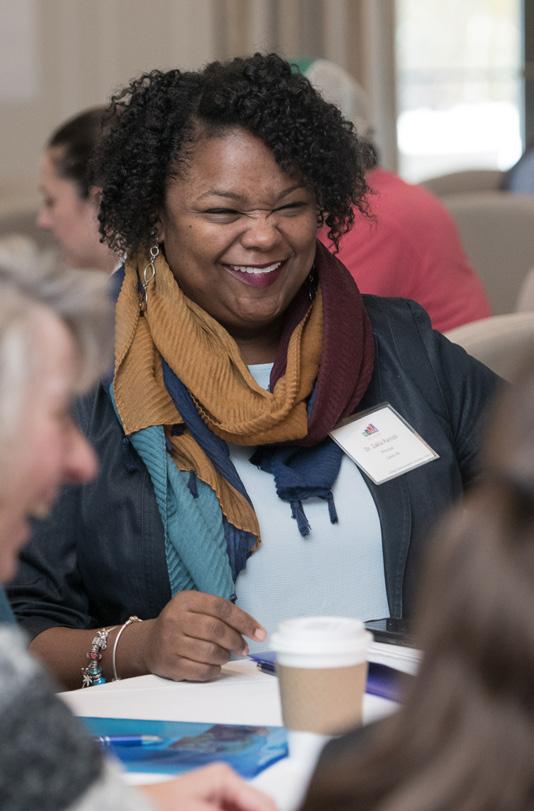
The opportunity to come together and get creative was invaluable. As a school leader, it’s easy to feel siloed in your building
- Dr. Zakiah Parrish
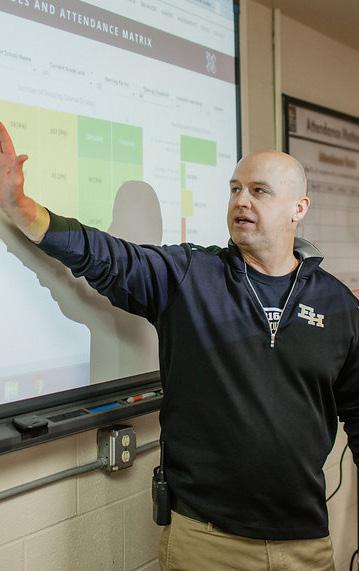
Matt Ryan, principal of East Hartford High School, was not accustomed to that mentality from outside partners and was admittedly a little caught off guard. “I was like, ‘Wait, you’re going to give me a pot of money to test out some new stuff? To maybe fall flat on my face and then get back up and try again?’ No way!”
Like the other founding partners, Ryan was grateful for funding that didn’t come with an overly stringent set of requirements — constraints that too often stifle innovation. Instead, he explains, RISE invited educators to engage in deep inquiry and offered tangible support to help them test new ideas (that were built on evidence) and discover what would work best for their school communities.
Ryan reflects on another aspect of the RISE model that is core to the founding partners’ shared approach to continuous learning and improvement: data. And, more specifically, data as a means to really see and know their students.
“I felt like a broken record back then,” he explains. “It didn’t matter what chart you gave me or what macro trends we could identify. Ultimately, I needed to get down to the list that could tell me which kids needed extra help and what kind of help would make the biggest difference for each one.”
The founding partners point to RISE’s use of data and responsiveness to their feedback as key to the success of the partnership, both initially and over time. They laugh about the pages and pages of data reports they used to print out and analyze in those early days, and marvel at how their use of data has evolved since then. Information that they now have at their fingertips and review regularly — like the Grade 9 On-Track Report — used to be incredibly difficult to access.
It didn’t matter what chart you gave me or what macro trends we could identify. Ultimately, I needed to get down to the list that could tell me which kids needed extra help and what kind of help would make the biggest difference for each one.
- Matt Ryan
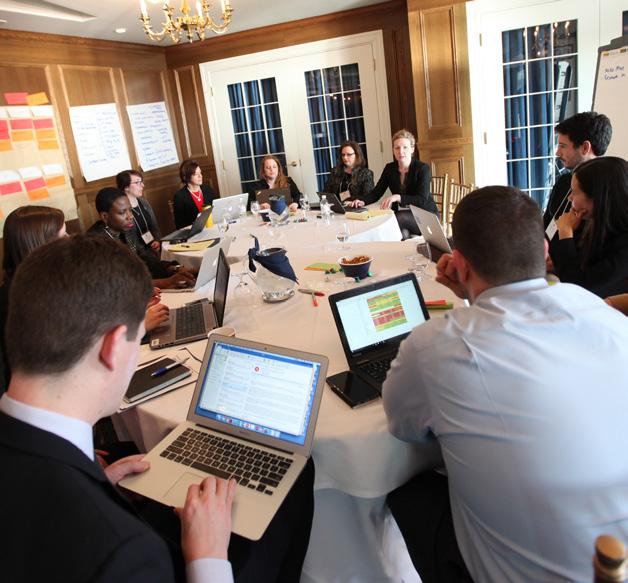
Dr. Leslie Torres-Rodriguez, former superintendent of Hartford Public Schools, explains that every component of the RISE approach — the use of research and data, critical analysis of systemic root causes, careful attention to context, lots of testing and practice and learning, and deep trust between partners — is emblematic of improvement science best practices.
“I now have a partner who speaks my language!” Dr. Torres-Rodriguez recalls thinking when she first got connected to RISE. “I was so grateful to be able to team up with a network of leaders who were as focused as I was on continuous systems improvement.”
For Dr. Torres-Rodriguez, co-creating solutions centered on students’ needs is core to her leadership and a non-negotiable for systemic improvement. RISE’s approach matched her own and “felt like an extension in every way of what we were trying to do in-house with all of our schools,” she explains.
Dr. Torres-Rodriguez also values how RISE seamlessly adapted supports to meet her and her team where they were, helping them build their continuous improvement “muscles” and “keep up their reps” through weekly, monthly, and quarterly routines and protocols. She credits RISE with helping Hartford teachers and leaders design systems that support the never-ending and “unsexy” work of continuous improvement — even making it feel fun.
In reflecting on those early days of the RISE Network, the founding partners recall being asked to consider another question that has stuck with them to this day: “How are you going to know this work and this network have been successful?”
“In ten years, we’ll still be working together,” Ryan wrote in his notes. He imagined that the value RISE brings to schools would lead to sustained funding for the network’s programs, services, and tools. Today, districts, including East Hartford, have begun to allocate dedicated, multi-year funding for the RISE partnership in their annual budget.
For Dr. Torres-Rodriguez and Dr. Parrish, who is now the deputy superintendent of Fairfield Public Schools, the network’s success is evident in how they embedded key components of the RISE model system-wide. Both point to shared language and protocols that showcase how student-centered, data-driven practices now reach all educators and students across their respective districts.
And for Straub, the network’s success today is a point of personal pride that started with a big goal the RISE founding partners set a decade ago.
“From the very beginning, we aimed for all of our ninth graders to be on track,” she explains. “This is my hometown and these are my kids — I couldn’t settle for anything less. Last year, 91 percent of our freshmen matriculated to tenth grade. We’re not at 100 percent yet, but we are doing better than many of the schools that pioneered this work. And with RISE, we’re doing it together.”
I now have a partner who speaks my language! I was so grateful to be able to team up with a network of leaders who were as focused as I was on continuous systems improvement.
- Dr. Leslie Torres-Rodriguez
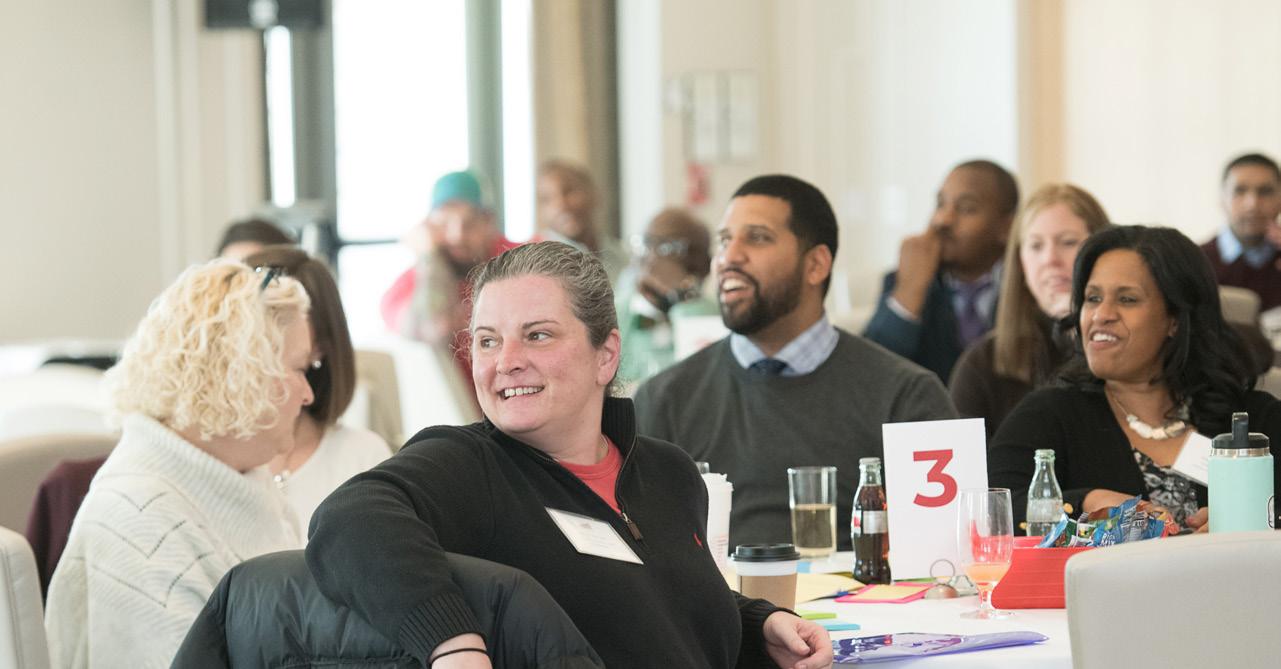
Alongside our partners, we pioneered a new role focused on the ninth-grade transition, an innovation that has significantly improved students’ success during this keystone year.
Earning a high school diploma is a critical milestone that sets young people up for a healthier, more economically secure life. Jamie Meurer’s work as a senior on-track coach (OTC) is all about making sure students at Hartford Public High School graduate ready for what comes next.
Meurer previously worked as a graduation specialist, supporting seniors on their way out of high school. For nearly a decade now, she’s been focused on the other end of the student population, helping ninth graders transition in. She sees her career as supporting two sides of the same coin.
Indeed, research from the University of Chicago has long shown that Grade 9 on-track achievement (i.e., whether a ninth grader earns enough credits to promote to tenth grade) is the best predictor of whether a student will graduate from high school four years later.
Meurer cites this research base — along with the reality that schools too often underinvest in measures designed to foster stronger connections between educators, students, and families — as the impetus for the OTC strategy.
AUTHOR’S NOTE:
“We knew which kids were more likely to have a hard time with the transition into high school,” explains Meurer, who supports a caseload of 60 students identified for targeted support based on their middle school attendance, grades, and behavior. “Our big questions were: Can we catch them early and keep them on track? Can we show an ROI for this preventative approach?”
Ten years later, the answer is unequivocally yes. Whereas at-risk students assigned to an OTC start ninth grade significantly less likely to be on track than their peers, a 2025 evaluation found that by the end of the school year that gap closes completely. Students have better attendance and GPAs, too.

SCAN HERE TO READ THE RISE ON-TRACK COACHING EVALUATION REPORT
We use the term “at risk” because students who are off track in Grade 9 are far less likely to graduate from high school on time. The term is a reflection of students’ experiences and surrounding conditions, and is in no way a commentary on their potential. Student statuses are not fixed and are a direct reflection of the support systems (or lack thereof) that either promote or prevent success.

Working with Jamie really helped me calm down. I remember her handing me a list of all the requirements I needed to meet to pass ninth grade. Seeing it, physically holding it, made a difference. Made it real. It was one page. I knew I could do it.
- Francisco Santos
Meurer emphasizes that building strong relationships with students is critical to delivering these powerful results. As an OTC, Meurer is deeply attuned to how important it is for every young person to have a go-to, caring adult in the school building.
“Some days I’m a cheerleader and other days I’m more like a stern grandma,” Meurer explains. “To be able to show up with the personalized support students need on any given day, I’ve got to have their trust.”
Francisco Santos is a recent graduate who credits Meurer with helping him make it across the finish line. Back in ninth grade, Santos struggled to study and stay on top of class requirements. A self-described “theater kid,” wondering and worrying about whether he was going to be promoted to tenth grade was not the kind of drama he loves. He had severe anxiety about school.
Meurer reflects on how frustrating it can be to watch a student like Santos struggle — “procrastinating and getting in his own way” — but after years on the job, she knows that it’s not helpful to jump in with a lecture or a quick fix. High school is a lot bigger than middle school. The expectations and demands are greater. It can be scary and overwhelming. Kids need someone who believes in them unconditionally and who helps them believe in themselves.
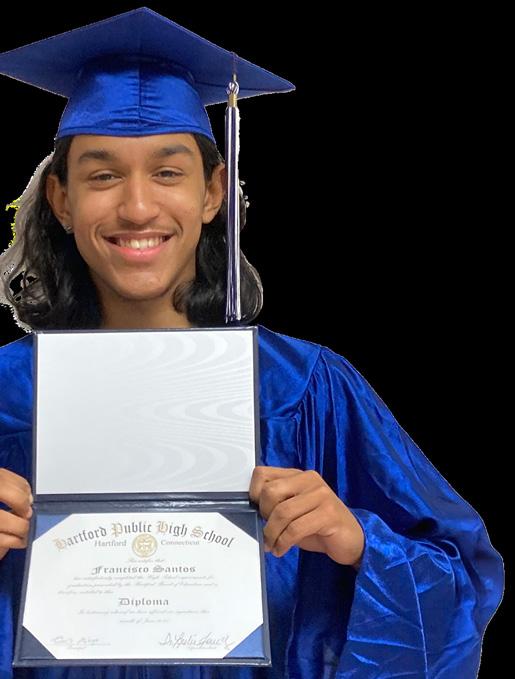
“Working with Jamie really helped me calm down,” Santos reflects. “I remember her handing me a list of all the requirements I needed to meet to pass ninth grade. Seeing it, physically holding it, made a difference. Made it real. It was one page. I knew I could do it.”
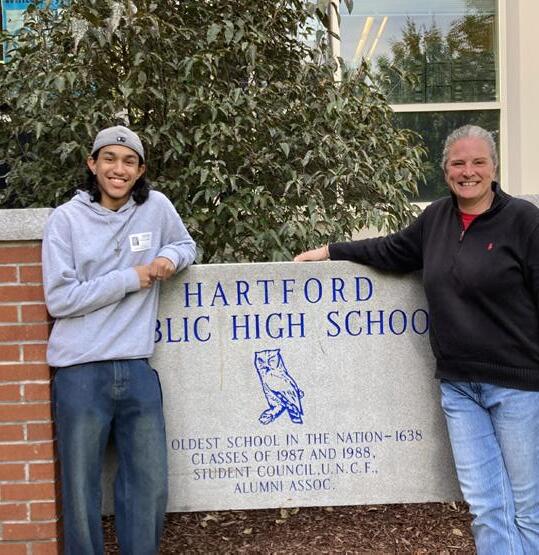
Santos’ progress included lots of fits and starts. He needed a steady source of encouragement and firm, yet gentle accountability on his nonlinear journey. Meurer delivered.
“All that pushing and those constant reminders and checking in showed me that Jamie really cared,” Santos explains. At times she was “totally crazy,” he jokes, and Meurer doesn’t dispute Santos’ assessment: “I’m crazy serious about making sure my kids are on track.”
Meurer is grateful that her role isn’t split with other responsibilities. To be able to have that kind of focus is rare and invaluable. It enables her to dedicate time to monitoring students’ on-track data (alongside ninthgrade teachers), and to helping students set goals for the future, manage their time well, communicate effectively with teachers and peers, and practice keeping their emotions in check when things get tough. Meurer knows these skills and habits will help her kids be successful in ninth grade and beyond.
Santos agrees. Today, he’s putting it all to good use studying business and acting at a local community college. He’s happy, confident, and at ease. While Santos doesn’t know exactly where his postsecondary studies will lead, he’s got a plan and there’s very little drama — outside of the theater, at least.
2017-18
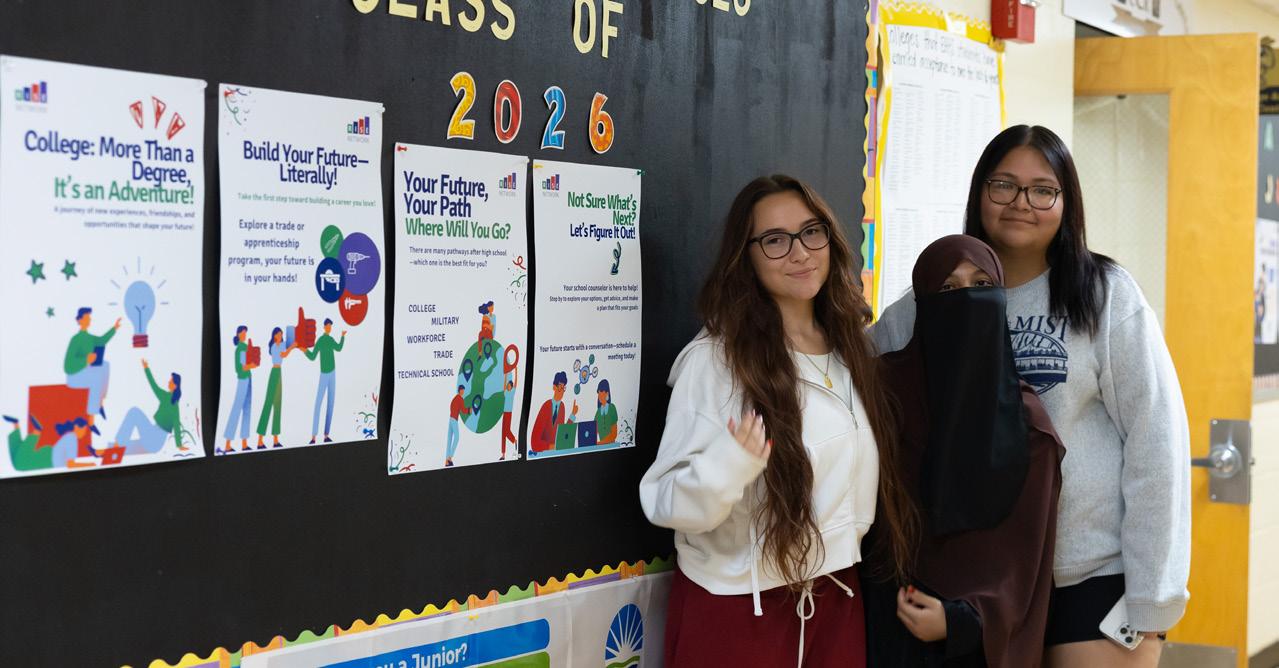
Our partners launched Summer Bridge and Summer Academies, supporting students and families to confidently navigate the Grade 9 and Grade 12 transitions.
When RISE Network school partners launched summer programming inspired by the Grade 9 on-track research, the goal was straightforward: to help students feel confident on the first day of high school.
“Summer Bridge was our way of helping kids build a positive connection with the school community before they officially started,” explains Mary Bieler, an OTC at East Hartford High School who was a ninth-grade English teacher back in 2017.
While the programming was initially heavier on academics — “school light” — over time the focus has shifted to emphasize service learning, leadership development, relationships, and different facets of being a teenager, like self-image, self-advocacy, and stress management.
“We knew that the human aspect needed to be at the forefront,” Bieler says. “Kids have to feel connected. Their anxiety, at least initially, is less about academics and way more about their peers and their teachers and the social parts of high school.”
Maloney High School Assistant Principal James Donewald agrees. Back then, Donewald helped run Summer Bridge as a school counselor. He explains that students’ buy-in for the academic components of summer programming was not nearly as strong as the parts that helped them feel a sense of belonging in their new school community.
“When Summer Bridge students walked into the building on that first day of school, they saw adults they knew and trusted,” Donewald explains. “As an educator, soccer coach, and dad, I know those relationships we build outside of the ‘regular’ school day can be really powerful in the classroom.”
All that said, the foundation for students’ academic success is built into the four-week Summer Bridge model. Staffed by school counselors, OTCs, and ninth-grade teachers, students are introduced to the expectations of high school, like the attendance and technology policies, and start building the intellectual stamina they’ll need to be successful in high school and beyond. While the programming has evolved over time, these core components have remained steady.
And they’ve delivered real results. A recent evaluation of Summer Bridge programming found that participants ended the first quarter of ninth grade with on-track rates 10 percentage points higher than their peers. These positive outcomes were most pronounced for “high-risk” and “vulnerable” students who had struggled in some form during middle school.

Everything we do in the summer programs carries through to our work during the school year. It’s about making sure students reach important milestones, but it’s so much more than that. It’s about knowing our kids and their goals for the future, and setting them up for success.
- Sheena Ojeda
“We learned early on that it was really helpful for students to earn half a credit for completing the program,” Donewald adds. “It created a strong incentive for participation and engagement, especially for our at-risk kids. It also opened up our first conversations with students about credits, graduation requirements, and what it means to be ‘on track.’”
Shortly after launching the Grade 9 summer programs, RISE school partners added Summer Academies for rising seniors. Educators who spearheaded the Grade 12 summer programming describe it as a natural extension of their work with RISE. They had been using data to provide targeted support to students during the transition into high school. Why not be really proactive about the transition out, too?
Sheena Ojeda, school counselor at Platt High School in Meriden for the past 14 years, explains that the school’s Summer Academy — called College Prep Academy — has been pivotal in supporting rising seniors with their postsecondary planning, especially those who are the first in their families to attend college.
During the weeklong program, students and families learn about the college admissions process and get a head start completing applications. Students finish writing a personal essay, prepare their Common App, and request letters of recommendation. Parents get their FSA IDs and review step-by-step how to apply for federal financial aid when the FAFSA opens later in the fall. Whereas the program initially focused on four-year colleges, today schools are exploring how they might be able to support students pursuing two-year programs, as well.
“Students have really benefited from the 1:1 support they get over the summer,” Ojeda explains. “And parents really appreciate knowing that they can get help and answers to all of their questions.”
Like Summer Bridge, Summer Academies alleviate stress for kids and families by demystifying what lies ahead and helping them feel more confident navigating their next steps.
The programs have proven beneficial for educators, too, who value structured opportunities to build rapport with students and engage in conversations about their postsecondary plans, early and often throughout their high school careers.
“Everything we do in the summer programs carries through to our work during the school year,” reflects Ojeda. “It’s about making sure students reach important milestones, but it’s so much more than that. It’s about knowing our kids and their goals for the future, and setting them up for success.”

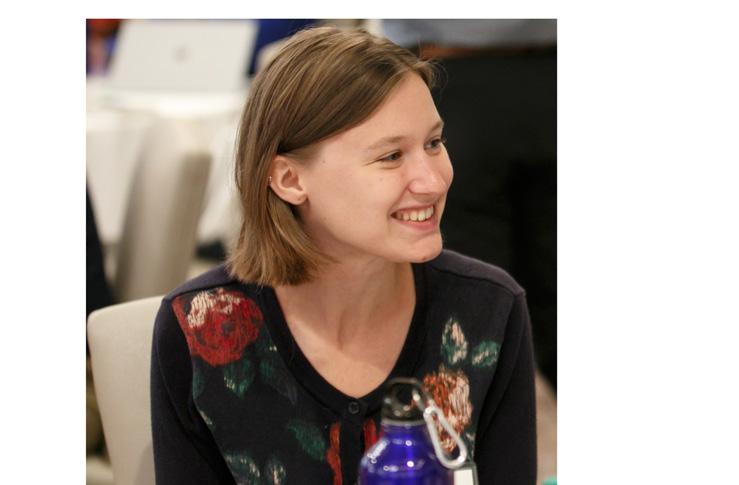
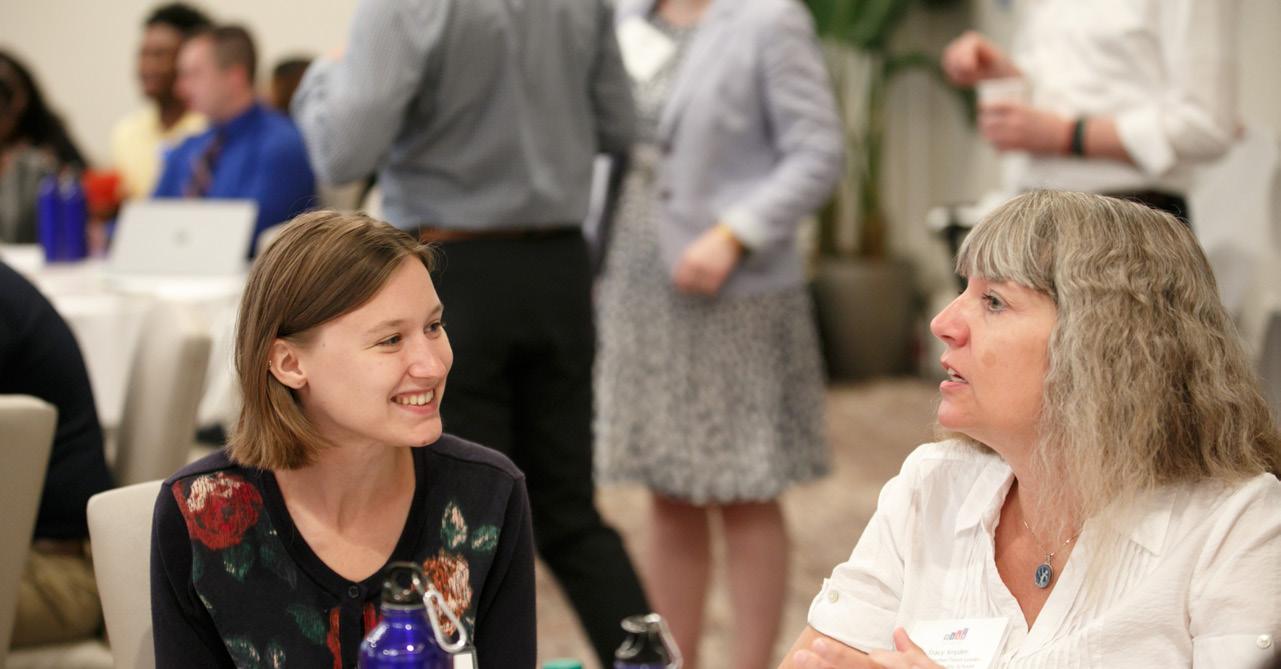
Longtime staff members reflect on how RISE has changed during their tenure.
HOW DID YOUR JOURNEY WITH RISE BEGIN?



Edie Reimink, Manager of Data Engineering, Major Projects:
I started with RISE back in 2018, right out of college. While I had lots of questions about my career trajectory, I was grateful for my education and knew I wanted to give back to educators, to pay it forward. As a RISE data analyst, a big part of my job was making sure teachers, counselors, and principals had access to the information they needed, in the format and on the timeline they needed it, to do life-changing work for their students.
Daemond Benjamin, Network Operations Specialist:
Like Edie, education was transformative for me. College is where I found myself and my purpose (and met my wife!). I came to RISE as an established community advocate, where I met young people struggling to imagine a future for themselves that was different from what they saw in front of them. I wanted to get more involved in our local schools, to combat the school-to-prison pipeline, especially for our Black and brown boys. But I needed a role that enabled me to be really creative and entrepreneurial. The RISE OTC position was the nontraditional opportunity I was looking for.
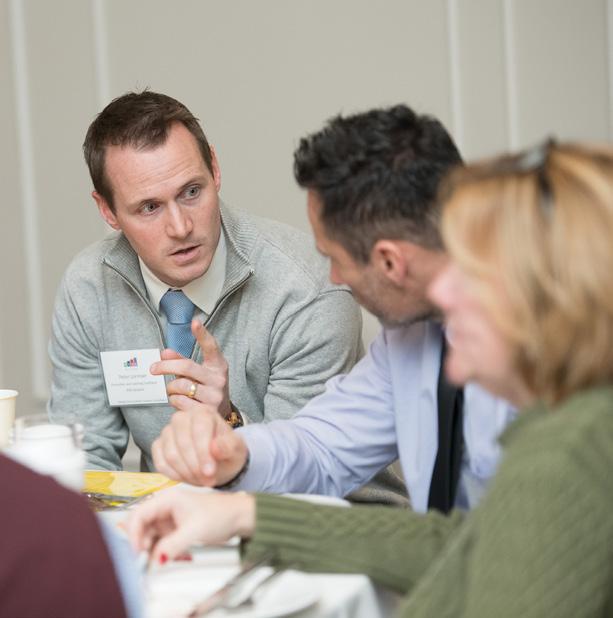
Peter Lorinser, Deputy Director, Engagement, RISE Network:
I came to RISE with a background as a special education teacher, and had most recently worked for a research organization focused on improvement science. In that role, I got my start facilitating professional development for teachers and supporting network innovation. As a RISE learning facilitator, I was able to continue playing around with how we can best connect educators with data and research and one another to improve outcomes for kids. I’m more behind the scenes today, but that inquiry continues to drive my work.
Peter: We were all in deep learning mode back then, testing out new ideas and asking ourselves, “Will this work? Will this stick?” All of that experimentation helped us build our knowledge base. Today, we don’t have all the answers, but we do have a much better sense of what we want to steer educators toward or away from to help them reach their goals. There have been some growing pains, that’s for sure. But that spirit of innovation continues to be at the heart of our work. And we’ve made what we do more effective and sustainable — for us and, most importantly, for our partners.
Edie: Initially, our data strategy was really hands on. I spent a lot of time in schools observing educators using our data tools and hearing what was working and what wasn’t. I would turn around and make manual adjustments. Today, I focus on data projects that are more systemic in nature. The questions we ask ourselves have evolved as we’ve grown. How can we connect data systems so that updates are automated, accessible, and actionable? How do we remain responsive while becoming more sustainable in our approach?
Daemond: Just like a student entering high school, we were figuring out what was most important to us and what we were uniquely good at. Early on, RISE team members would print off huge stacks of student data reports, haul them over to schools, and be heavily involved in ontrack conferences. Over time, RISE invested in coaching educators and building their capacity to lead this work. Today, so much of RISE lives with school teams, and our model is such an important part of school communities.
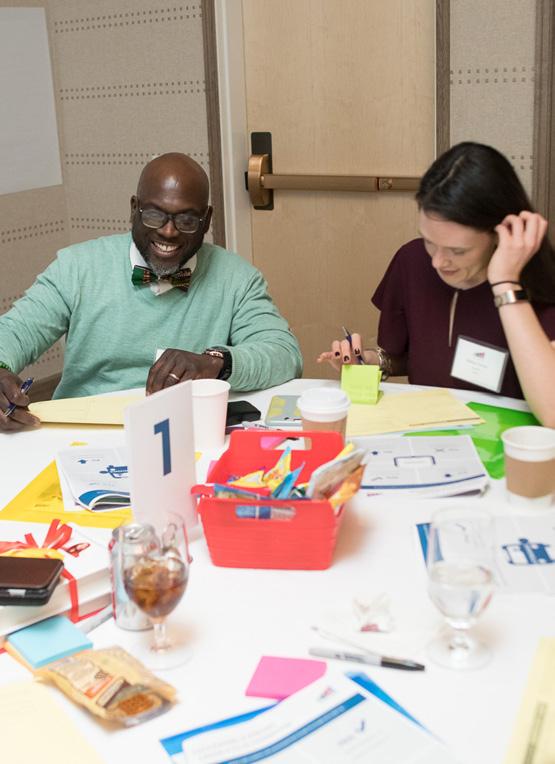
YOU ALL SHARED YOUR “WHY” FOR JOINING RISE. WHAT’S YOUR “WHY” TODAY?
Daemond: Helping students find their best selves. That’s my why, and it always will be.
Edie: The people I work with every day continue to inspire me. The RISE team is never complacent. That commitment to always doing better and figuring it out together — that’s what keeps me going.
Peter: Kids need educators to be in it for the long run. Jobs in education can be lonely. People get burnt out. It’s so powerful and energizing to see what’s possible when teachers and administrators come together in community. RISE’s work is how we sustain our educator workforce.
Daemond: We all have this underlying desire to improve the educational journey — for students, for educators, for our communities. But we’ve all got different backgrounds and motivations. The organization is so good at leveraging folks’ diverse experiences and assets. That’s really the strength of RISE.
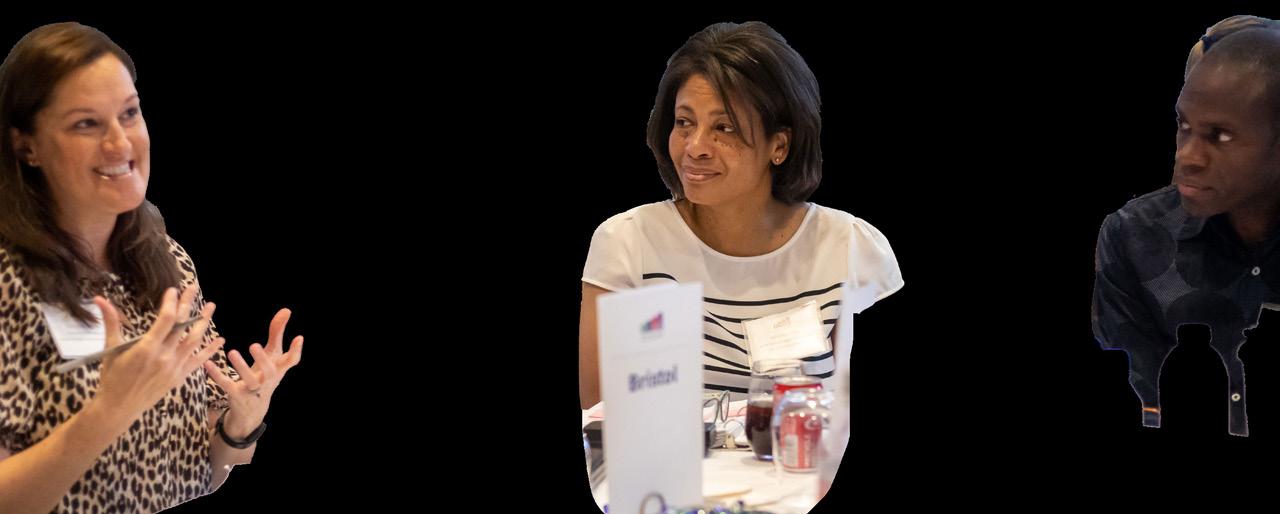
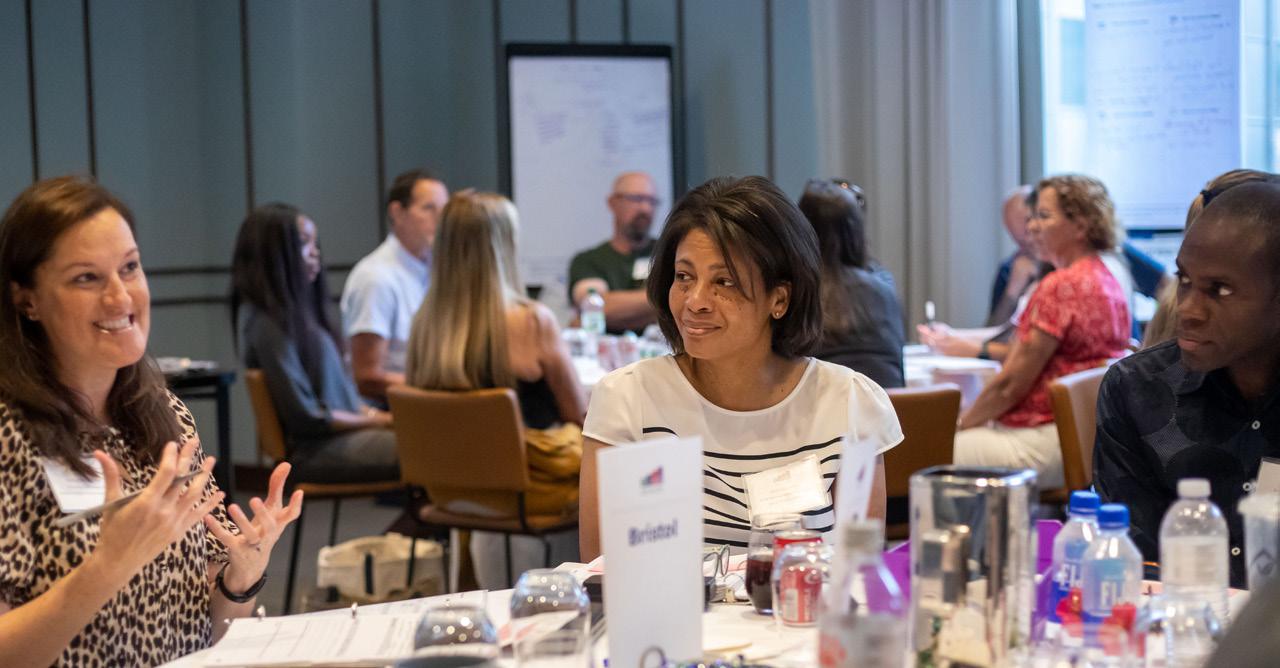
Alongside our staunchest philanthropic partners, we came together in community to co-create bold, sustainable strategies to expand our reach and deepen our impact.
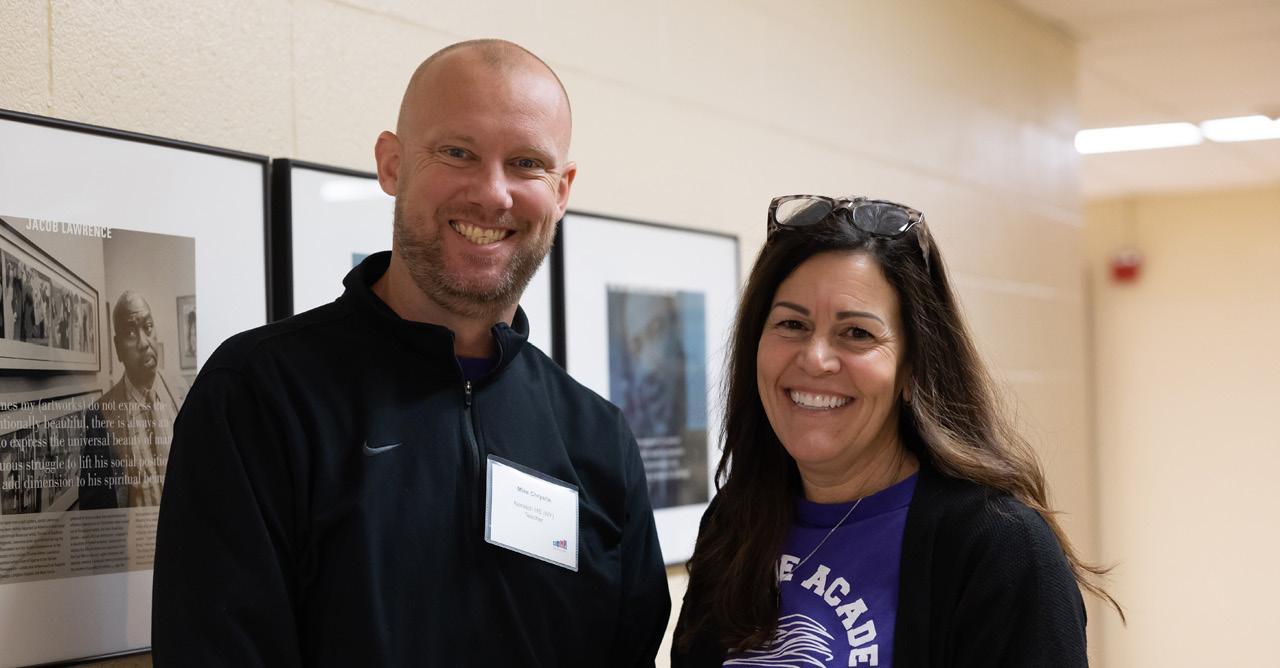
The Funders Collaborative launched in 2019. Through this model, RISE’s philanthropic partners come together twice annually to connect with the RISE team and one another, discuss network strategy, and provide input and feedback on the organization’s next steps. In between these convenings, RISE provides a written progress report, ensuring supporters keep abreast of the latest developments from across the network. Below, members of the Funders Collaborative share insights on their partnership with RISE over the years, along with their hopes for the future.
What

Kate Repen, executive director of the Ritter Family Foundation, says that RISE’s work aligns with the foundation’s commitment to making high-leverage investments along the cradle-to-career continuum. “We really appreciate initiatives that gauge whether children are ‘on track’ to reaching critical milestones,” she explains.
Repen also emphasizes the “care and coordination” at the center of RISE’s approach. That’s needed, she explains, to ensure solutions are driven by community needs, include wraparound support for kids and families, and foster lasting, systemic changes.
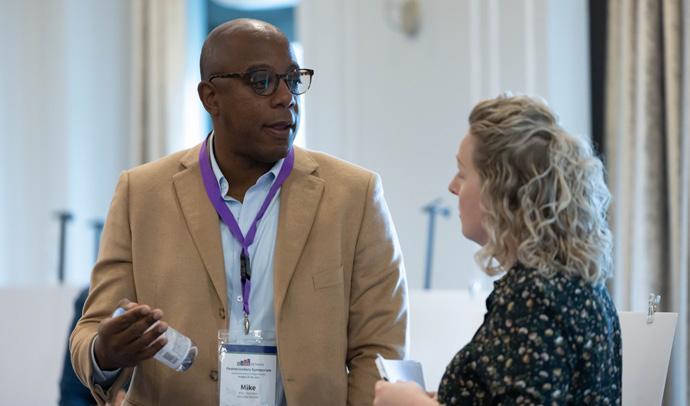
Mike Chambers, executive director of the Per and Astrid Heidenreich Family Foundation, points to RISE’s close partnerships with school and district officials as a key differentiator.
“A lot of youth development organizations are hesitant to tie their success to the success of our school systems,” Chambers reflects. “They try to work outside or alongside, but not inside, the system. But if you really want to help kids, you’ve got to address the issues they face during the school day. You’ve got to work closely with people who spend the most time with them in an academic setting. You’ve got to make inroads with the central office. RISE doesn’t shy away from the hard work. It is their work.”
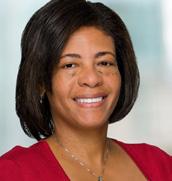
Michelle Feist, senior program officer at the Gates Foundation, echoes these sentiments. She first “met” RISE through the highly competitive Networks for School Improvement Initiative application process back in 2019. She says that the organization quickly became integral to the improvement community of 30+ organizations that Gates supported.
“Our team was really blown away by the relationships RISE had cultivated with school partners and the results they had achieved together in just a few years,” Feist explains. “It became clear to us that RISE’s thoughtful and sophisticated data tools — highly reflective of and responsive to educators’ needs — were a really important part of their success. They became a go-to data partner for many of the nonprofits in our portfolio.”
What makes the Funders Collaborative a unique model for nonprofit-philanthropic partnership?
Repen, Chambers, and Feist all bring a partnership mindset to their work with grantees, but they acknowledge that traditional funder-grantee dynamics can make authentic partnership hard to establish — and even harder to maintain. Their work with RISE is different.
Repen describes it as “a no-brainer” to get involved with the Funders Collaborative. There is much she values about the model, especially the many opportunities to hear directly from RISE staff and educators across the network who are “deep” in the work.
“I have such respect not only for the diligence RISE puts into their work, but also for the great minds involved in the network,” says Repen. “I love meeting different team members and school staff who share their unique, on-theground perspective. I learn so much and it always feels like a genuine two-way conversation.”
Chambers says that kind of access to people who can speak to the day-to-day realities of the work is exactly what most funders want in their relationships with grantees, but rarely find.
“What makes RISE successful with funders is the same thing that makes them successful in classrooms and schools,” adds Chambers. “The level of engagement that happens with RISE is unparalleled. Our conversations are anchored in data, but it’s all in service of understanding the real-life experiences of educators, students, and staff at all levels of the organization.”
Feist agrees. She credits RISE’s transparency and “improvement mentality” with the team’s renown for fostering strong, trusting relationships with school teams, philanthropic partners, and other organizations in the field.
“While the RISE team has had many successes, they are also willing to acknowledge when something didn’t work out as planned,” Feist explains. “That’s the heart of improvement science. We’re gonna do this. We might fail. But we’re gonna learn, and we’re gonna tell people all about our experiences.”
As you look to RISE’s future, what are you most excited about?
Repen, Chambers, and Feist all point to RISE’s growth — made possible by the collective investments of the Funders Collaborative — as something they are both proud of and excited to see more of in the years ahead. In 2020, for example, RISE expanded its Core Network to nine partners, welcoming schools in Manchester, Middletown, Naugatuck, Norwalk, and Stamford. The Funders Collaborative has supported additional programmatic innovations and expansion ever since.
“The RISE team has been so thoughtful about growth,” Repen explains. “They’ve never taken on something they couldn’t confidently see through to the end and do really well.”
Chambers, too, is confident that RISE can continue to scale without sacrificing quality.
“RISE knows which pillars they are best positioned to influence and what resources they need to do exceptionally high-quality work,” he explains. “They don’t get distracted. Their sense of clarity and purpose is powerful.”
For her part, Feist is eager to see what innovations the RISE Network decides to tackle next.
“You can be safe and be incremental, but for transformation you have to take risks,” she explains. “RISE makes it look effortless, but they put a ton of work and thought into making sure whatever they test, they do it really well.”
We supported schools in our larger network and across Connecticut to address urgent challenges and unexpected opportunities that emerged during remote and hybrid schooling, learning enduring lessons along the way.
During the COVID-19 pandemic, educators in the RISE Network instituted both hybrid and fully remote learning options for their students. They leaned on RISE improvement and innovation practices to navigate that complex scenario and keep students on track during the Grade 9 “makeor-break year.”
“Education is built on human relationships,” reflects Dina Longhitano, an English teacher at Middletown High School. “I don’t just teach content. I teach people. These young human beings have full and complete lives outside of the classroom. I need to know them to reach them. It was tremendously difficult to connect behind masks and through screens, but we had to figure it out.”
Kristen Negrón, then a school counselor at Middletown, credits the RISE data tools with helping the Grade 9 team, including Longhitano, understand how students were engaging (or not) with school and to map out their next steps. The RISE dashboards revealed that students who were fully remote struggled the most to get and stay connected.
This matched what was happening at other schools in the RISE Network. The RISE Plugged In reports found that about half of ninth graders in the remote-only set-up were off track at the end of Q1, a significantly higher percentage than those who got some instruction in a physical classroom.
“The data was just the start,” explains Negrón. “It helped us hone in on priority students and ask ourselves, ‘What do we know about this kid and what they’re going through? How can we find out more?’
That’s when we started talking about porch visits.”
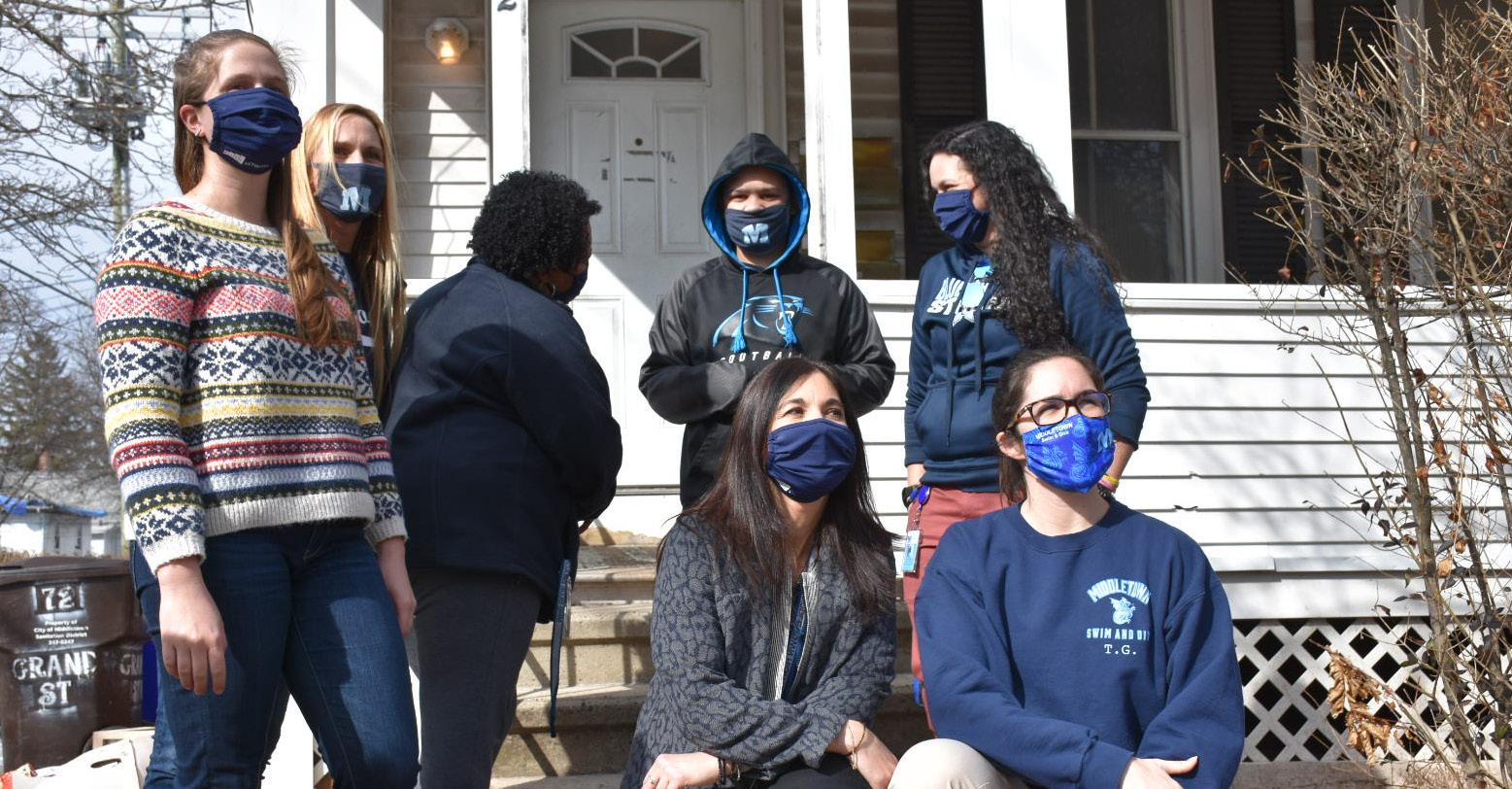
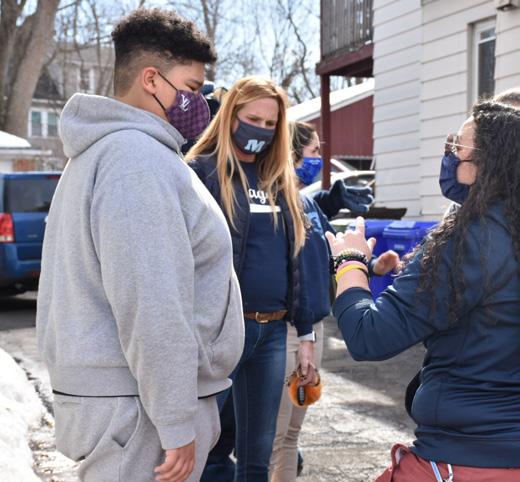
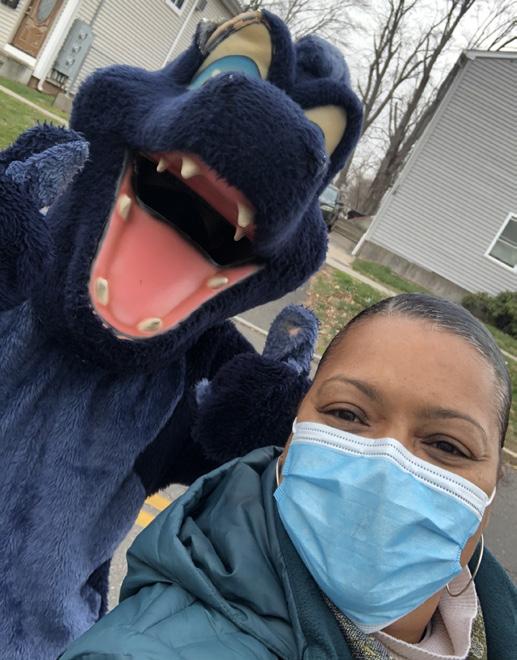
While no one recalls the exact origin — did the RISE team bring this idea to the table, or had it spread across schools via RISE? — both Longhitano and Negrón say connecting with students and families at home was transformational.
During their team meetings, teachers, counselors, and OTCs would identify 3-5 students to visit that week. Through a “miracle of scheduling,” they were able to caravan around town in small groups every Wednesday. Educators brought snacks, headphones, books, fidget toys, and other tchotchkes emblazoned with the school logo. They also came with thumb-drives or printed packets of classwork for kids who didn’t have reliable (or any) internet access. They even coordinated with elementary and middle schools to pick up items for younger siblings, whom some ninth graders were responsible for caring for while their parents were at work.
Négron says that it was “eye-opening” for the team to visit students at home.
I don’t just teach content. I teach people. These young human beings have full and complete lives outside of the classroom. I need to know them to reach them. It was tremendously difficult to connect behind masks and through screens, but we had to figure it out.
- Dina Longhitano
“Seeing first-hand what our students were navigating helped us celebrate every success, no matter how small,” she explains. “We really coalesced as a team around how we wanted to show up for our students. That stayed with us after the pandemic.”
Longhitano agrees that the level of empathy they brought to their work grew exponentially. Sometimes, she says, reading a Shakespeare play just wasn’t the most important thing going on in a kid’s life. They might need another way to showcase their learning. She keeps that in mind today.
While they were committed to flexibly supporting students, both Longhitano and Négron emphasize that they maintained a relentless, if gentle, focus on keeping kids on track. They needed to partner authentically with parents and caregivers to make that happen.
“I’m a mom, too,” Longhitano explains. “And I made sure to tell parents that sometimes my teenagers don’t get their homework done. ‘It doesn’t make us bad parents,’ I would remind them, ‘it makes us, and our kids, human.’ These conversations are so important for families. They know we really, really care about their kids and are in it together.”
Building on that foundation of trust, Longhitano describes their progress with most students as slow and steady.
“A student might not come outside the first time we stopped by,” she explains. “But we’d talk to mom or grandma or an auntie and the kids would connect that voice on the computer to this person standing on their stoop. They might turn their camera on for a minute during our next class to wave hello. And then when we visited again, they’d be ready to chat.”
Although ninth graders faced unique challenges during the pandemic — many of these students were enrolled in a school they had never stepped foot in — the Grade 9 teams had built collaboration structures with robust support from RISE that enabled educators to quickly adapt, regularly course-correct, and keep on top of students and their progress.
But how were the older kids faring?
Deanna Gorss, who has served in the counseling department at Maloney High School for the better part of a decade, says that by the time the pandemic hit, the school had expanded many of the ninth-grade systems to the upper grade levels, too.
“Once we got our Grade 9 on-track work up and running, on cruise control, we shifted gears and kickstarted similar efforts to systematize our support for postsecondary planning,” she explains.
During their biweekly meetings, tenth-, eleventh-, and twelfth-grade teams leveraged RISE data tools and protocols to identify trends, develop interventions for students, and monitor progress. Just as they had in ninth grade, traditional silos across departments began breaking down.
Improvement ideas and innovations also came from across the RISE Network, as educators talked to one another and swapped strategies. Eventually, Gorss says, Maloney and other RISE partner schools had organically built up some solid shared practices around postsecondary access and success.
RISE was “growing up” alongside its school partners and paying attention to these developments, pitching in with financial support and additional capacity where possible and needed. In addition, as the first set of ninth graders RISE had supported made their way toward graduation, key questions emerged: What was RISE doing to support those kids now? What more could we be doing?
While postsecondary success has always been RISE’s “north star,” we officially launched our Postsecondary Success team in 2020, expanding the scope of our school support beyond Grade 9 on-track to Grade 12. While the work has continued to evolve, Gorss says that added RISE support has fostered greater consistency and coherence across students’ high school experience.
“We now have a core set of milestones that reflect and reinforce a schoolwide postsecondary readiness culture,” she explains. “Every student is expected to have a postsecondary plan and every student is supported to make progress toward their goals every single year.”
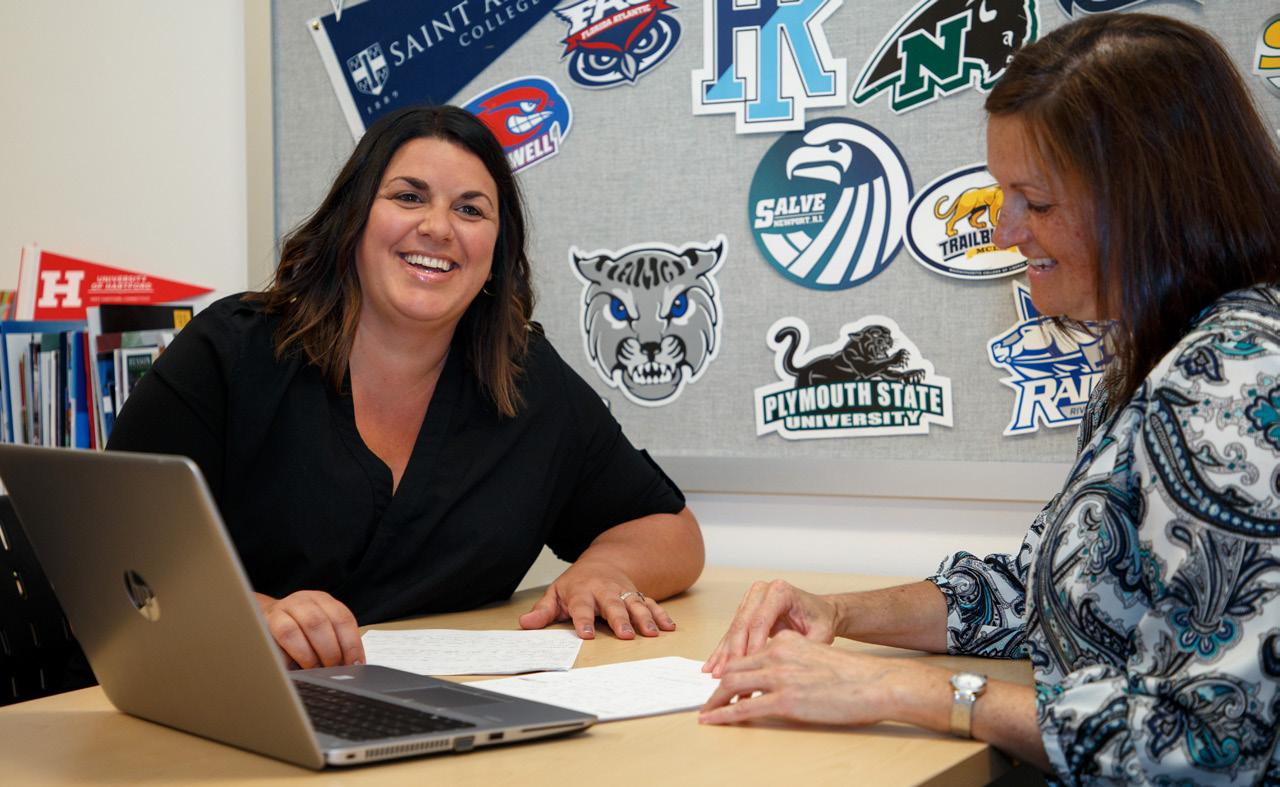
As ninth graders, for example, students are exposed to lessons that help them think about their goals for the future. During sophomore year, students visit college campuses, either in person or virtually, and start to more deeply consider their options. In eleventh grade, schools collect detailed information on students’ postsecondary plans via the RISE Junior Survey. Right away, educators have access to a dashboard with the results, informing programming as well as the personalized milestones educators review with students and families during the Junior Planning Meeting.
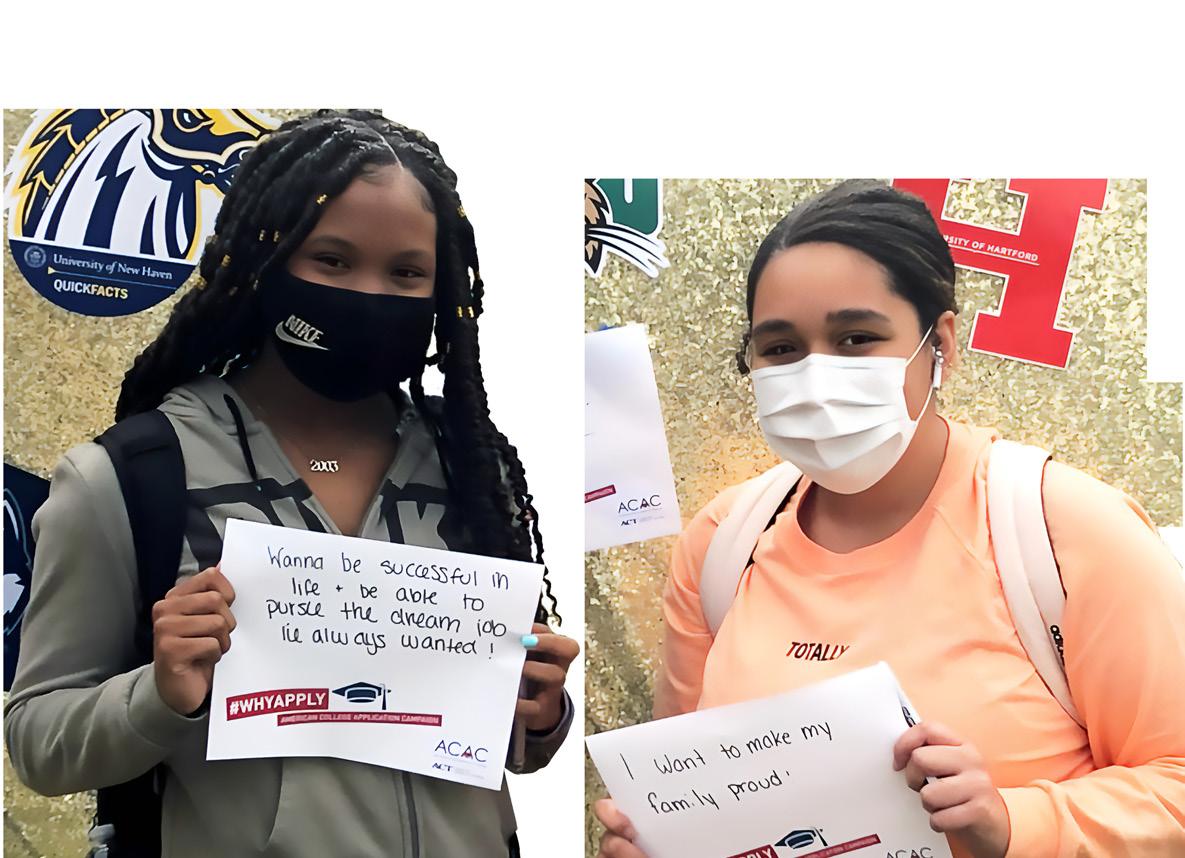
During senior year, the systems get even tighter and more energizing. The fall “Why Apply?” programs encourage seniors to reflect on their personal motivations for pursuing the college and career pathway of their choosing. The winter “I Applied!” celebrations highlight those who’ve taken important steps toward reaching their goals, and keep up the momentum for those who still need to take action. The springtime Senior Signing Day is a culminating ceremony that puts a spotlight on every student’s postsecondary plan, including college, vocational training, military enlistment, and a great first job.
RISE’s support has proven invaluable for students and educators alike.
“At this point, I wouldn’t want to work anywhere that doesn’t partner with RISE,” Gorss reflects. “The improvement team meetings, the
On top of providing expanded postsecondary success support within the network, RISE was tapped that same year to lead a project with statewide impact: the FAFSA Challenge.

In partnership with the Connecticut State Department of Education (CSDE), RISE began supporting the first of five cohorts of school districts working to increase the number of families who complete the FAFSA, unlocking tuition assistance for college and vocational training.
“As it stood, millions of dollars were being left on the table,” explains Sherry McLaughlin, director of postsecondary success at RISE. “Our goal was to change that reality. To get more young people into the postsecondary pathway that will help them reach their goals, affordability is key.”
Participating districts attended monthly sessions led by RISE, where they reviewed data and research and developed action plans specific to their communities. Each FAFSA Challenge district also received a microgrant to put their strategies into action, and RISE provided targeted coaching along the way.
“If this sounds a lot like RISE’s improvement cycle model, that’s because it is!” explains Abby Marcantonio, senior school improvement coach at RISE. “Having our work recognized by the state and getting to support so many more educators, students, and families was really affirming.”
As a result of these efforts, FAFSA Challenge districts posted gains of 18.5 percentage points in FAFSA completion rates during the five-year grant program — increasing from 41.9 percent in 2020 to 60.4 percent in 2025 — a huge success.
In addition, sharing proven practices with so many partners outside of the RISE Core Network bolstered the RISE team’s commitment to expanding our reach and deepening our impact in the years ahead.
We now have a core set of milestones that reflect and reinforce a schoolwide postsecondary readiness culture. Every student is expected to have a postsecondary plan and every student is supported to make progress toward their goals every single year.
- Deanna Gorss
Inspired by our partners’ ingenuity using RISE data tools, we built a user-friendly data platform that supports coherence and nimble day-to-day communication, collaboration, and action.
When RISE first asked school partners about their most pressing problems, data issues quickly emerged as a shared, underlying challenge.
For some educators, it was about visibility. The data they needed was out there, but it was disconnected. They couldn’t see the full picture. For others, data was high-level, lagging, or static. They could see trends, but it wasn’t actionable. As a result, Peter Rinaldi, assistant principal at Westhill High School in Stamford, says conversations about students were “subjective and siloed.”
Educators were hungry for interactive, real-time data that could inform their planning, collaboration, and day-to-day work with kids. RISE stepped in as a sidekick.
“That’s not how most ed tech products are built,” explains Chris Lewine, who leads data strategy and product innovation at RISE. “RISE wasn’t trying to retrofit an existing platform. We designed our initial data tools from scratch right next to teachers, right inside of their classrooms.”
RISE responded to educators’ feedback and kept up with their innovations. There were a lot of prototypes and iterations and redesigns. Over time, RISE translated individual data tools into more comprehensive dashboards, which Rinaldi describes as “revolutionary.”
“All of a sudden we were using the same language to talk about the same set of data aligned to the same goals and milestones for all of our students,” he explains.
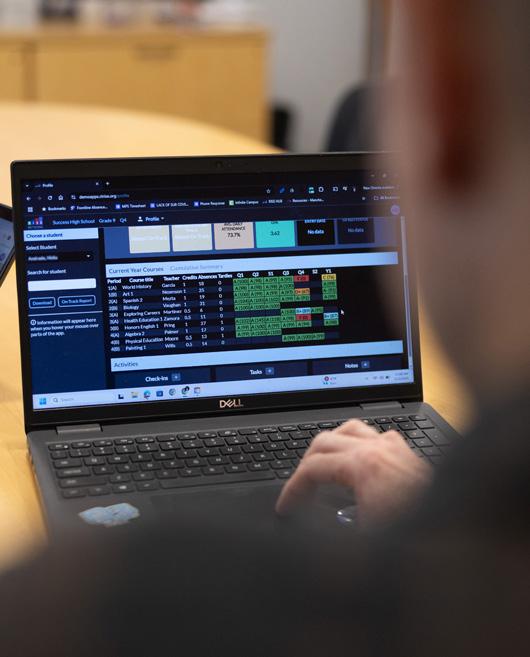
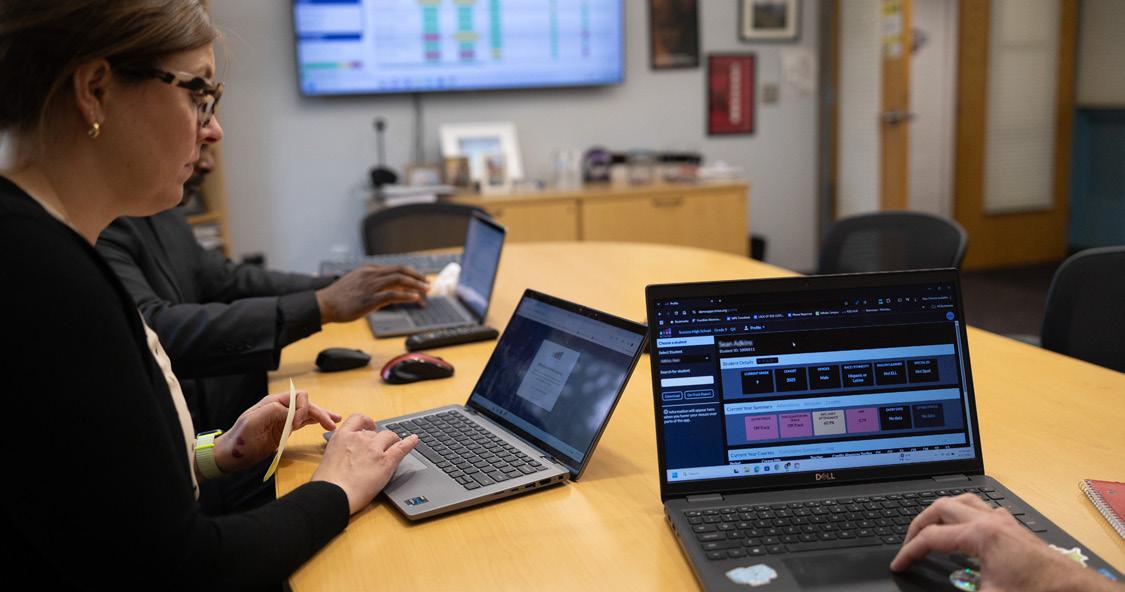
Eventually, though, the data-savvy educators in the RISE Network started to outgrow the dashboards, too. But RISE had maxed out the capabilities of existing tech. Once again, it was time to build “our own thing.”
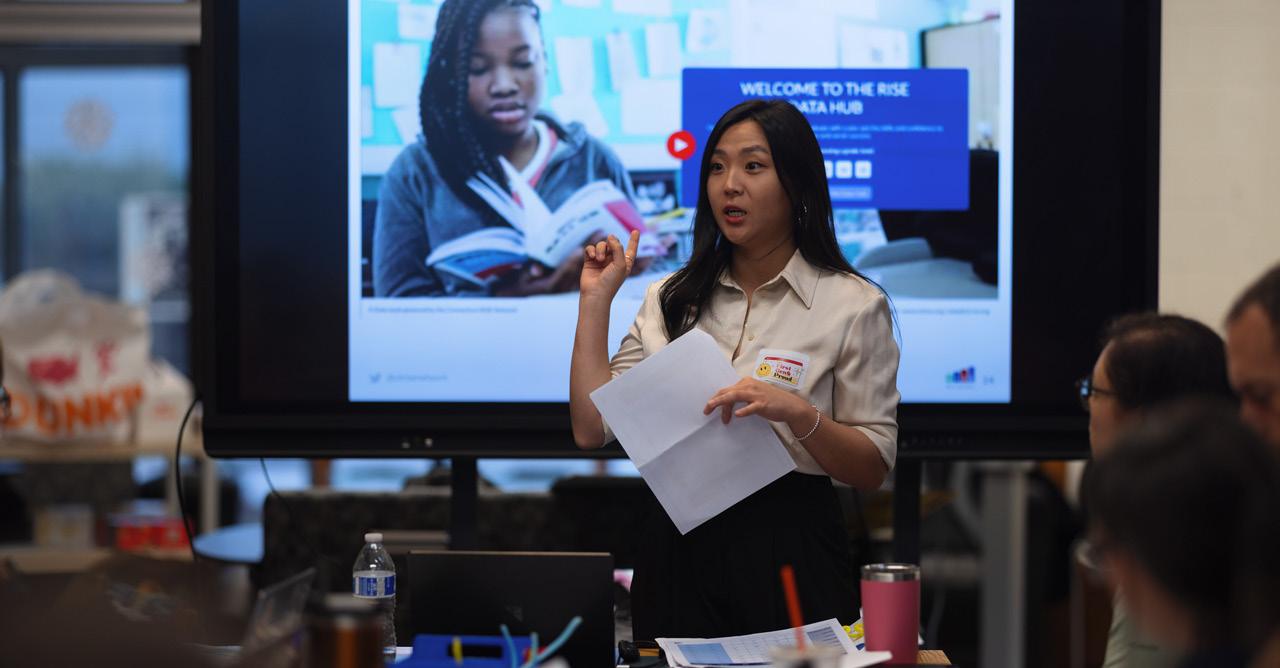
The RISE Data Hub officially rolled out in 2022. School partners were thrilled with the “endless possibilities” it presented and grateful to see their input and ideas so seamlessly integrated.
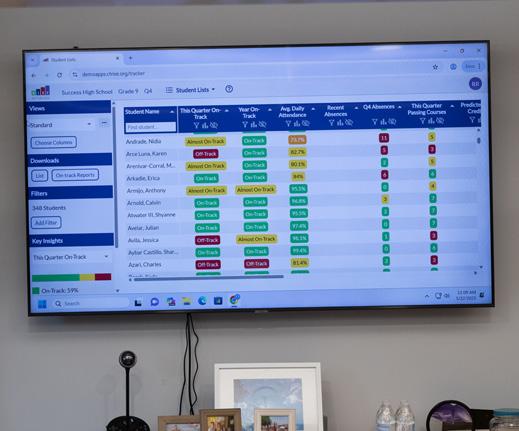
Educators say the Hub’s color-coding supports them to quickly group and prioritize students across on-track and postsecondary readiness indicators. Filters help them “remove the noise.” Critically, it’s all updated daily.
Educators further highlight the strategic data calendar as a key resource that differentiates the Hub from other platforms. At any given point in the year, the calendar offers quick links to the most relevant reports based on an educator’s role — an efficiency that simultaneously serves as a gentle reminder of data to pay attention to.
For example, the Climbers Report alerts educators to students making fast progress, so they can figure out what’s going on and replicate it. The Sliders Report highlights those losing ground, so educators can get ahead of any backsliding before students fall too far behind.
But new tools don’t de facto lead to changes in practice or improvements in student outcomes. Process matters. Every report in the RISE Hub is paired with a student-centered protocol. Educators can use these guides, individually or in their improvement teams, to review the data, make meaning, and take targeted action.
Colin Ng is a teacher and administrative intern at Westhill. His recent conversations with ninth graders who were almost on track (“on the cusp”) highlight the value of those protocols. While two kids had a similar profile in the system — they were both missing assignments — the “why”
turned out to be vastly different. One told Ng he had completed the work, but kept losing the paper copies. “I gave him a folder!” Ng exclaims. “That’s it!” The other shared that she felt uncomfortable raising questions with a teacher with whom she didn’t mesh. “That’s much harder,” Ng says. “We had to spend more time together figuring out her next steps.”
Alexandra Mezzo, a teacher leader at Naugatuck High School, says that the Hub’s data disaggregation capabilities are invaluable. A couple of years ago, the Grade 9 improvement team discovered a concerning trend: students with special needs were really struggling. Mezzo “drilled down” to look at the data with more granularity. Some students had lower attendance rates, so the team sought to understand what was keeping kids away from school. Others were English learners, who needed a completely different set of interventions and supports. The results of this targeted approach were profound. At the end of SY2023-24, just 60 percent of Naugatuck’s 9th-grade students with special needs were on track. By the end of SY2024-25, 87 percent were.
John Harris, principal of Naugatuck, credits Mezzo with using data to “humanize” students — to really understand who they are and what they need to be successful.
Harris adds that the Hub provides one-stop access to the information he needs to communicate effectively with a range of stakeholders, including faculty, staff, and students, but also parents, community members, and the school board. He takes full advantage of the built-in options for customization.
“As RISE’s initial innovation grants have started winding down, we’re really focused on safeguarding that programming,” Harris explains. “The Hub has all of the data I need to show what’s working and to demonstrate the ROI of sustaining critical investments.”
Among those investments? The Data Hub itself.
Our first Symposium enabled us to put a spotlight on our partners’ innovations and to share our continuous improvement model, network insights, and suite of actionable tools with school teams across the country.
Since our inception, RISE has coordinated a network learning community in Connecticut focused on students’ transition to, through, and beyond high school. Several years into our work, organizations like the Carnegie Foundation for the Advancement of Teaching began to recognize the RISE Network as a “proof point” of what is possible for students when educators engage in this type of data-driven, cross-school collaboration.

SCAN HERE TO READ THE CARNEGIE FOUNDATION SPOTLIGHT ON THE RISE NETWORK
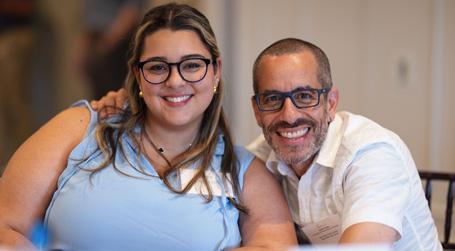
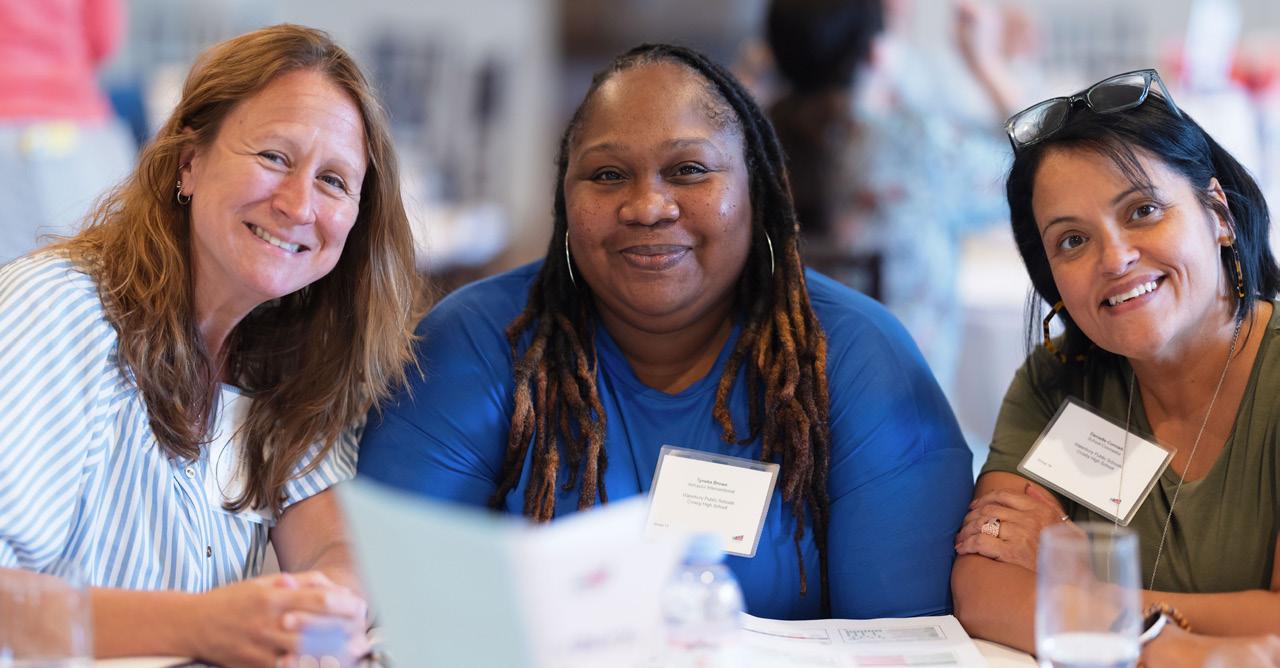
Eager to share our insights more broadly, RISE expanded our network learning model nationwide in July 2022 by hosting the firstever Grade 9 (G9) Symposium. The two-day event brought together 65 educators from 15 school teams across three states to deeply consider the Grade 9 transition.
Participants explored research-backed practices to keep ninth graders on track. They also heard inspiration and advice from RISE educators, like Sharina Jimenez, a senior OTC at Brien McMahon High School in Norwalk, CT.
Jimenez sat on a panel alongside teachers, principals, and district officials who each shared incredible work happening in their communities. Looking back, what stands out the most to Jimenez was the energy in the room and the deep, lively conversations.
“Connecting people is the best part of my job,” Jimenez says. “RISE gatherings are a really powerful way for us to facilitate relationships between educators experiencing similar issues. I want participants to leave with a new tool or a new idea and new contact information.”
In addition to community, the annual Symposium offers a mix of foundational content on the RISE improvement cycle and groundbreaking innovations.
At one G9 Symposium, Jimenez shared a video of a weekly meeting with Brien McMahon’s on-track data team. After showcasing RISE’s core data protocols in action, she facilitated a hands-on, role-playing activity where participants got to practice using the tools with their school teams.
Symposium participants are also prompted to critically analyze their own contexts and generate distinct “change ideas” to bring back to their schools and districts. Jimenez says the message she wants educators to take away is to start, but not stop, with what others have done.
“Try it, tweak it, and let us know how it went!” she instructs. With that mindset, educators can both benefit from and contribute to the network, no matter where they are in their improvement journeys.
Jimenez highlights Roy Roberts as one of the enterprising educators whose innovations she often shares with others to jump-start their ideation. An assistant principal at Manchester High School for a decade, Roberts oversaw the implementation of the school’s foundational Grade 9 on-track systems and regularly initiated creative interventions.
For example, Roberts launched the “Red Hawks SOAR Champion Cup” to ramp up students’ and teachers’ investment in the Grade 9 improvement team data and suite of interconnected improvement strategies.
“We live in a world of data and we were looking at numbers all the time,” Roberts explains. “We had strong systems in place, but I wondered: what would happen if we went over the top and tried to make all those stats really fun?”
Students earned points for attending after-school programming, getting a positive call home, achieving a 90 percent average daily attendance rate, making the Honor Roll, earning Bs or better, and being on track. In other words, every student could contribute and every student could be celebrated. Students and educators on the winning team would go bowling together.
Roberts had no idea if the SOAR Champion Cup would land. But he is an experienced educator who knows when a little razzle-dazzle is in order. He really sold it.
He delivered announcements with WWE music playing in the background. He got teachers gaudy, heavy-weight belts to wear in the hallways. He paraded a big golden trophy around the school. The kids loved it.
The educators did, too. In addition to strengthening their bonds, teachers, counselors, and OTCs got a little competitive themselves about entering their data quickly and remembering to log those interactions with students and families. (“That part was a bonus,” Roberts laughs.)
Both uncommonly humble, Jimenez and Roberts say RISE has helped them to get more comfortable stepping into the limelight to share what’s happening in their schools, and to feel more confident as a leader outside of their buildings.
They are excited that more educators will have opportunities to connect, learn, and grow as leaders and innovators through RISE’s national programming, including the G9 and Postsecondary Symposiums and year-long Focus Networks, in the years ahead.
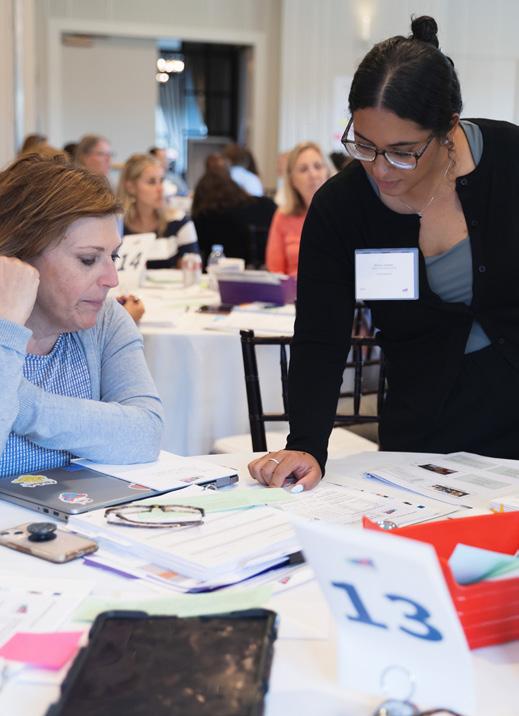
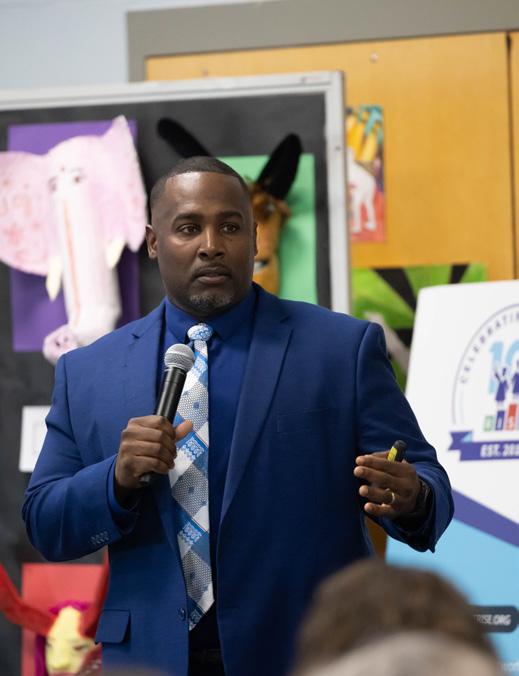
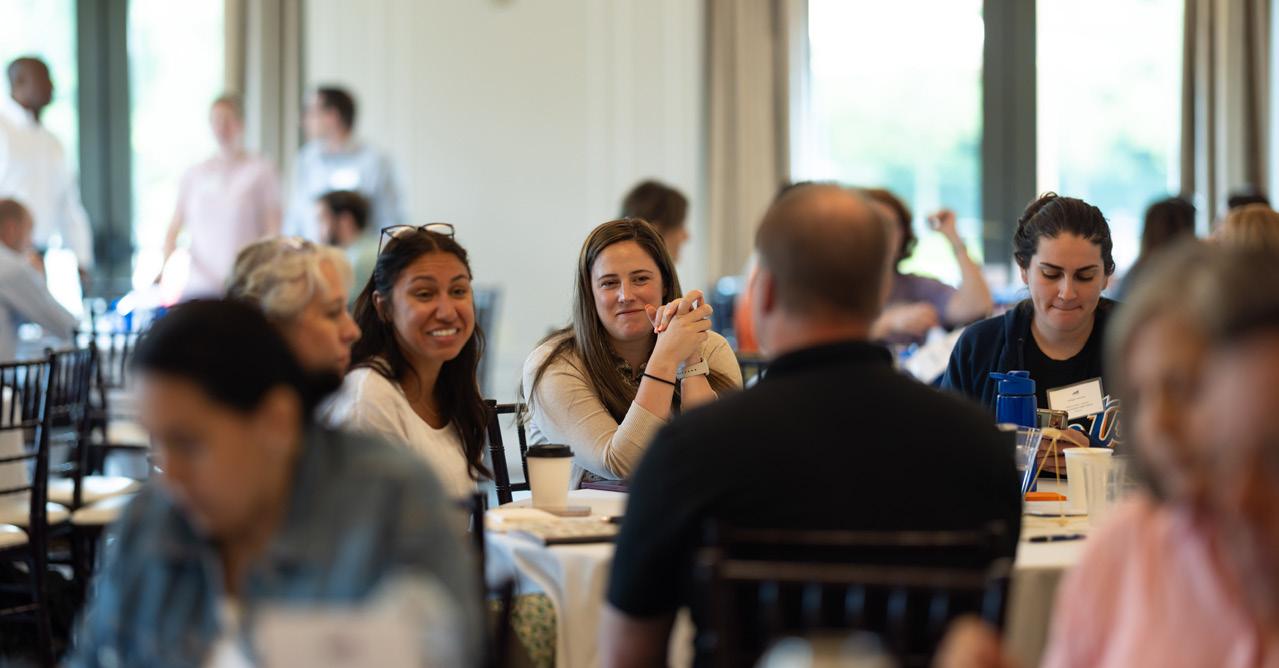
When educators outside of our core network expressed a need for more coherent, actionable data at their fingertips, we were ready to respond.
The launch of the Data Hub presented exciting opportunities for the RISE team to consider how our efforts to build the conditions and capacity for continuous improvement could reach even more educators, students, and school communities.
Karina Genao and Kristopher Davidson, school leaders in Danbury, Connecticut, home to the largest high school in the state, are two such educators. They first met RISE at the G9 Symposium in the summer of 2023. At that time, Davidson oversaw the high school’s ninth-grade academy and Genao, a dean, provided targeted support to a group of at-risk ninth graders. They were immediately hooked on the RISE model, which was aligned well with Danbury’s vision for Grade 9 success.
“Our Exploration Academy had many of the structures needed to support the middle-to high-school transition,” Genao explains. For example, teachers regularly collaborated with one another, meeting in professional learning communities (PLCs) two to three times each week. Supporting nearly one-thousand ninth graders, Danbury’s Grade 9 team was, in fact, eight teams made up of more than 40 educators.
“Even with the foundation we had in place, seeing how RISE was approaching this work really inspired us to think about our own continuous improvement,” Genao adds.
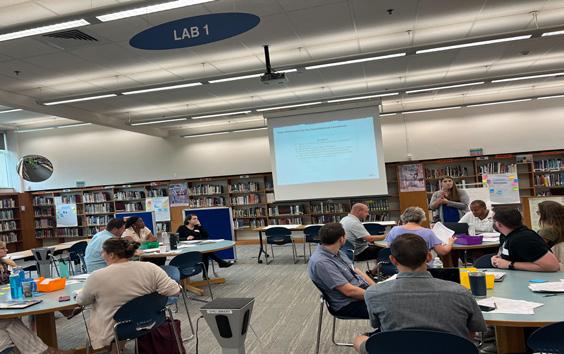
At the time, one-quarter of Danbury’s ninth graders had ended the year off track. The teams didn’t have processes in place to identify students who were falling behind, nor to initiate proactive interventions. When Davidson returned from the Symposium, the first thing he did was create his own ontrack report, inspired by the Data Hub session he and Genao had attended.
“Honestly, I was a little embarrassed,” he says. “Once I had all of the data in front of me, it was so obvious which kids were struggling. It’s deceptively simple, but I knew the on-track framework could help us transform the way we supported our students.”
The RISE protocols were really motivating and validating for our teachers they’re educationally sound and user friendly. More than that, they reflected the types of conversations we really wanted to be having about our students.
- Kristopher Davidson
From then on, Davidson would arrive a few hours early on Monday mornings to download data and create spreadsheets for the Grade 9 teams to review. Like the early RISE partner schools, he experienced the value and challenges of this approach. Actionable information on every kid. Amazingly productive conversations between educators. Lots of manual labor. Prone to inadvertent human error. Good for about a week before he had to turn around and do it all again.
“It was worth it, but it was a real pain!” Davidson explains.
The Danbury team wanted in on the Hub. As it happened, RISE was preparing to welcome schools outside of our Core Network for the very first time.
In SY2023-24, Danbury joined the RISE G9 Focus Network, a year-long community of practice for educators working to improve ninth-grade outcomes. Much to Davidson’s delight (and relief!), they also got set up with the Hub.

Two overarching priorities characterized that first year of Danbury’s RISEsupported improvement journey.
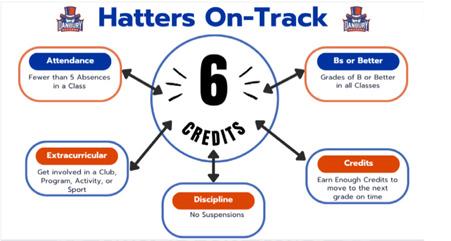
First, educators worked together to codify the school’s Grade 9 on-track definition. RISE led a “mini symposium” for staff to explore priority indicators, including overall credits earned as well as attendance, behavior, grades, and engagement with extracurricular activities. This process created strong buy-in amongst the large staff.
From there, the team created posters of the on-track requirements and hung them everywhere to serve as constant, “annoyingly in your face” reminders for staff, students, and families. Davidson wanted to make sure “on track” became a central part of the Grade 9 culture.
Second, Danbury educators embraced the Data Hub.
“The RISE protocols were really motivating and validating for our teachers,” Davidson explains. “They’re educationally sound and user friendly. More than that, they reflected the types of conversations we really wanted to be having about our students.”
Genao agrees. She says the integrated data tools and protocols set the ninth-grade teams up to “look at students holistically and tighten up our team practices.” She reflects on how data conversations now include less talk about what kids are doing wrong, and much more about the systems they have in place to keep kids from falling through the cracks.
In their second year partnering with RISE, Danbury went “all in” on the academy model, adding seven specialized career academies for Grades 10-12. Davidson became director of the IT and Cyber Security Academy, while Genao stepped into her current role leading the Grade 9 Exploration Academy. Genao deepened the ninth-grade systems improvement work, and Davidson led schoolwide efforts to expand the Hub to the upper grades.
Now in year three, Genao is excited that the school is in a place where they can focus less on building and more on consistency through “practice, practice, practice.” Davidson, for his part, is proud that every teacher in the building can recite their Hub stats.
Further, they are both grateful to be connected to the 26 (and counting!) other high schools using the RISE Data Hub. The network continues to be a source of highly responsive support and encouragement on their improvement journey.
And both Genao and Davidson are thrilled that, moving forward, every Danbury student will be well-supported by the data-infused academy model throughout their high school career. Students will graduate with a diploma, an industry-recognized credential, and a personalized plan for the future, dramatically improving their readiness for the postsecondary pathway of their choosing.
With our new customized engagements, RISE has begun to help district and school partners across the country to develop coherent high school transformation models that address their communities’ most pressing needs.
“When RISE says ‘all kids,’ they really mean all.”
That was Norwich City School District Superintendent Scott Ryan’s takeaway from his first visit to a RISE Core Network school a few years ago. It matched his own values.
Located halfway between Binghamton and Utica in western New York, Norwich is a small, largely rural community whose educational leaders have set big goals for the more than 1,600 students they serve. After learning about the RISE model from school leaders at Platt High School and hearing about the network’s impressive results, Ryan was intrigued — and admittedly a bit skeptical.
“I had to see it with my own eyes,” he says.
What looks and feels different in RISE Network schools? How do colleagues interact with each other, both during team meetings and out in the hallway? What does a student whisper to a struggling peer while working together in class? What kinds of questions do students ask? Is it okay to make mistakes? To take risks? And what do those little moments, the ones you can only capture by being there, reveal about the larger school culture?
The Norwich team took a field trip to Connecticut to observe the RISE model in action. After spending a day at Platt, Ryan was thrilled to have his initial skepticism proved wrong.
“I walked out with a renewed sense of what we could accomplish when we work together as a learning community,” he reflects. Ryan was particularly inspired by a student the team heard from during their visit.
“This young man, a senior, told us about the support he had received beginning in ninth grade,” explains Ryan. “He was confident, independent, in charge of his destiny. And he wasn’t the only one. That agency and self-efficacy is exactly what we wanted for our kids. All of our kids.”
They were hooked.
From there, the Norwich team attended a RISE G9 Symposium to dig into the Grade 9 on-track priority. In addition to deeply exploring the research and learning about innovative strategies, the team participated in an interactive session on the new RISE Data Hub.
“Our mouths were ajar,” explains Jake Roe, principal of Norwich High School. “The Hub could help us take our MTSS [(multi-tiered systems of support)] to the next level. We’d start with Grade 9, but we knew right away we would use it across the entire school.”
Back home, Lorri Race, secondary associate principal, led the team’s efforts to design a ninth-grade academy to operationalize their Grade 9 on-track strategy and aligned systems. Race was eager to do it all and move fast. She also wanted to get each part right. She was grateful to have RISE as a partner to help her figure out the order of operations.
“We started with the basics, establishing our on-track definition and setting goals,” Race explains. “RISE pushed us to get really specific about our measures and tactics, and to lean on one another for support, which set the tone for how we would work together as a team.”
That approach has translated to the students’ experience, too. In a video welcoming future middle schoolers to the 9th Grade Academy, current ninth graders relay with great specificity what their peers can look forward to and what they need to do to be successful during the Grade 9 transition.
One student, Ethan, says there’s more freedom, opportunity, and responsibility in high school — and more fun, too. Another student, Gavin, previews the quarterly on-track celebrations, which of course include cookies, and advises incoming ninth graders on how to stay on track — namely, by being “good with your behavior, attendance, and grades.” Kerragan encourages future ninth graders to be persistent: “Don’t give up on your work, even if you think you’re not going to pass. Just keep trying.” All three students tell their future peers they’ll be wellsupported during high school, emphasizing the mutual respect between teachers and students and the strong sense of community.
By year two, the Norwich team was ready to roll out Grade 9 on-track conferences and new-and-improved schoolwide family communications. They also expanded their use of the Data Hub and RISE data protocols to the upper grade levels, building greater consistency across the high school experience for students, families, and staff alike.
In year three, they took deliberate steps to even more tightly align all of their efforts with New York state high school graduation requirements and the Blueprint for Excellence, Norwich’s strategic plan.
This approach — deep focus and one step at a time, with steady, self-reinforcing improvements that build coherence and gradually snowball — is a hallmark of the RISE improvement cycle. Like other RISE partners, the Norwich team uses the word “organic” to describe how the structured, yet nimble process feels as it unfolds.
“I’ve really grown as a leader through this whole process,” Race adds. “I’m always looking around corners to anticipate the barriers that might get in my team’s way. Their success is my success. It’s our success.”
Ryan and Roe celebrate Race’s leadership and tenacity, which has propelled the team forward through the inevitable challenges that arise on any school improvement journey.
“We’ve had some turnover and that’s hard,” Roe says. “But I’m really proud of the team we have in place today.”
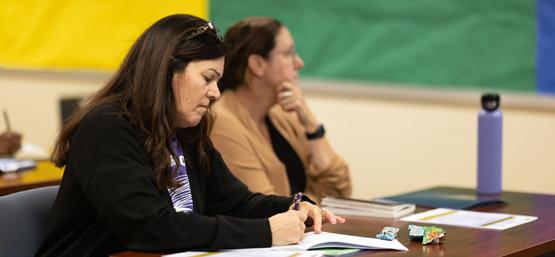
A recent Grade 9 data meeting showcases the strength of Norwich’s bench of classroom and school leaders, who have embraced RISEsupported practices and made them their own.
The team leader, a Grade 9 OTC, kicked off the session with purposeful framing: norms, background on the student who would be the focus of their meeting, and each component of the KidStat protocol. Next, the group — 13 educators in total — dove into a wide range of qualitative and quantitative data on the young man’s strengths, growth areas, and experiences at school. The pace was rapid, but not rushed. Every educator contributed. The team leader recapped precise takeaways from each section of the protocol as the conversation progressed.
The net result was a comprehensive, 360-degree view of the student: his motivations and goals for the future, positive and potentially problematic relationships, outstanding questions to explore, and, in light of all of that information, the interventions most likely to “land” and make a difference. The 15-minute meeting concluded with a list of high-impact, timebound action steps, each volunteered by an educator in the room.
The intense focus, shared accountability, and momentum of that meeting exemplify the Norwich team’s broader efforts, which are yielding results.
Previously, Norwich had 17 students who were off track at the end of ninth grade. After the first year of their partnership with RISE, that number had dropped to one. Last year, it was four. The team is gratified with these improvements even as they remain relentlessly focused on a key priority: all students on track, every year.
The growing RISE Network includes many partners like Norwich, whose engagement has included a range of programming and services addressing Grade 9 on-track achievement, student engagement, on-time high school graduation, and postsecondary access and opportunity. As schools have progressed on their improvement journeys and their needs have evolved, so, too, has RISE’s support. Norwich became one of the first partners to tap into RISE’s Tailored Services in SY2024-25, codesigning a combination of coaching, professional learning, and strategic consultation, all layered atop RISE data products and protocols, unique to their vision and distinct high school transformation model.
Looking ahead, the Norwich team is excited about an upcoming milestone: graduating the first cohort of ninth graders they supported under the RISE model. Ryan thinks back on that first visit to Meriden and how inspired he was by the students he met.
“What will our seniors say about their high school experience?” he wonders. It’s a genuine question, and Ryan beams with pride as he contemplates it.
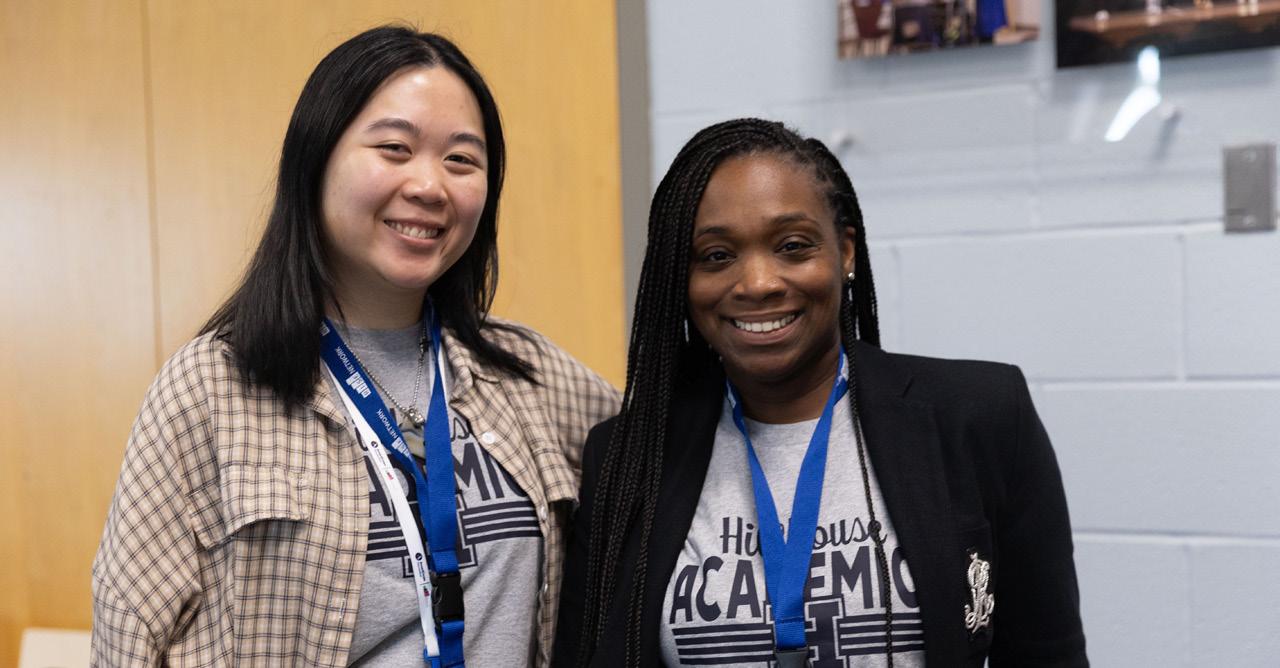
Our team is immensely proud of the RISE Network’s impact to date, and we eagerly anticipate the innovations, ongoing learning, and new discoveries that lie ahead.

“I am so proud of the Schools on the RISE Framework and the aligned coaching we provide to school leaders in our network.
I can’t wait to see what we accomplish, together, during our next decade.”
Nichelle Woodson, Chief of Network Success, RISE Network
“Being able to work with students day in and day out has been one of the most rewarding parts of being an Americorps On-Track Mentor. Supporting kids as they work through challenges to stay on track has truly brought me joy. I look forward to seeing students’ growth in the coming year; they motivate me every day to keep making a difference.”
Angel Paulino, AmeriCorps On-Track Mentor, Bulkeley High School

“Being part of the RISE postsecondary access and success team as it has expanded has been a real joy. I look forward to continuing to learn from and uplift the successes of our school partners in the years ahead.”
Rebecca Kruge, Postsecondary Success Manager, RISE Network

“More partnerships, deeper impact, and greater sustainability as an organization. That’s what I’m looking forward to!”
Linzi Golding, Senior School Improvement Coach, RISE Network

“RISE has turned student success systems into everyday habits. The GRAD Partnership team is thrilled to be joined by the team at RISE; their expertise and in-depth knowledge are adding much to the student success systems movement. We are excited to keep growing our partnership so more and more students feel seen, supported, connected, and steadily on-track to their goals.”
— Dr. Robert Balfanz, Director, Everyone Graduates Center at Johns Hopkins University and Patricia Balana, Managing Director, GRAD Partnership

“More schools are getting to know us through the RISE in Action Virtual Learning Series. I hope these opportunities support our network to grow beyond our region to support educators and students across the country.”
Stephanie Cruz, School Improvement Coach, RISE Network

“RISE data tools have been helping me do my job for many years. From the early days when I was experimenting and tinkering with the dashboards to the more sophisticated analyses I use today, the capabilities just keep getting better. I look forward to seeing the RISE Data Hub continue to evolve.”
Dave Montemurro, Assistant Principal, Francis T. Maloney High School

“I am excited to see where the RISE Learning Briefs go next. I am hopeful that by telling compelling stories about our continuous improvement model, we can help even more folks learn and grow alongside us.”
Melanie Gonzalez, Senior Program Evaluation and Analytics Specialist, RISE Network

“I am eager for us to build more into the RISE Data Hub: more responsive features, more data platform integrations, and more school partners.”
Nantawat Samermit, Data Engineer, RISE Network

“I am excited to continue our partnership with RISE to support the leadership capacity of our On-Track Coordinators as well as their systems to center student voice, belonging, and postsecondary readiness OTCs have really helped to set the conditions for deeper collaboration among teaching teams and more purposeful supports for ninth-grade students. It’s been great to learn alongside a network that uses data to drive school-based practice, and Baltimore City Schools is better for it.”
— Michael Moss, Director of Secondary Success and Innovation, Baltimore City Schools
We share our heartfelt appreciation for RISE’s philanthropic partners, whose generosity and steadfast commitment to our mission make this work possible.
The Andrews Family Foundation
Aaron Baral
Ben Barnes
Michael Chambers
Community Foundation of Middlesex County
Connecticut Sun (non-monetary contribution)
Dalio Education*
ECMC Foundation
Gates Foundation*
Rebecca Good
The Goodnow Fund
Natalie Gordon
Rodgers Harper
Charles Harris
Per & Astrid Heidenreich
Family Foundation
Hodder Family Foundation
Bob Hughes
Liberty Bank Foundation
Lone Pine Foundation
Garrett Moran*
New Canaan Community Foundation
Emily Pallin
Nathan Quesnel
The Ritter Family Foundation*
Serve Connecticut
The Kerry and Jed Stevens
Family Fund
Town Fair Tire Foundation
Travelers Foundation
H.A. Vance Foundation*
Warwick Family Charitable Fund
Timothy and Dianna Wentzell
Anonymous
*Member of RISE’s Funders Collaborative
With immense gratitude, we recognize and celebrate the stewardship and visionary leadership of the RISE Board of Directors.
Ben Barnes
Michael Chambers, Secretary
Barbara Dalio, Chair
Rebecca Good, Ed.D.
Rodgers Harper, Treasurer
Chuck Harris
Bob Hughes
Nathan Quesnel, Ed.D.
Dianna Wentzell, Ed.D.
Jenee Henry Wood
We can do more for young people when we work as a team. Join us as we make a difference for thousands of students. Together, we can and will help all students realize and achieve their full potential.
DONATE to RISE at ctrise.org/donate, helping us increase our impact in support of students, educators, and public high schools in Connecticut and beyond.
EXPLORE our resource portal where you can access actionable ideas and tools for improving student engagement, on-track achievement, and postsecondary outcomes.
CONNECT with us by signing up for our quarterly newsletter at ctrise.org/ email and by following us on LinkedIn (RISE Network) or Facebook (@ctrisenetwork) to stay up to date on our latest news, photos, and videos.