BEAT THE THIEVES
Angle grinder resistant D-locks
OVERNIGHT SUCCESSES
Great places to stay in the UK
BEAT THE THIEVES
Angle grinder resistant D-locks
OVERNIGHT SUCCESSES
Great places to stay in the UK

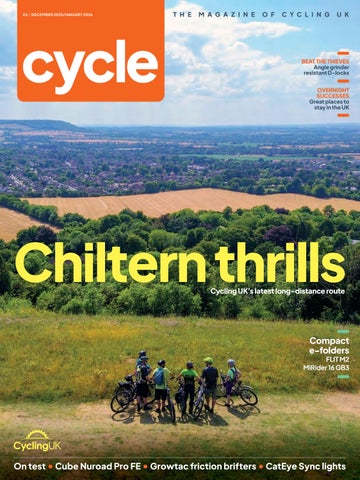
Cycling UK’s latest long-distance route
Compact e-folders
FLIT M2
MiRider 16 GB3


Cycling UK: Parklands, Railton Road, Guildford, GU2 9JX
E: cycling@cyclinguk.org
W: cyclinguk.org
T: 01483 238301
Cycle promotes the work of Cycling UK. Cycle’s circulation is approx. 51,000. Cycling UK is one of the UK’s largest cycling membership organisations, with approx. 70,500 members and affiliates.
Chief Executive: Sarah Mitchell. Cyclists’ Touring Club, a Company Limited by Guarantee, registered in England No 25185, registered as a charity in England and Wales Charity No 1147607 and in Scotland No SC042541.
Registered office: Parklands, Railton Road, Guildford, GU2 9JX.
Cycle magazine:
Editor: Dan Joyce
E: editor@cyclinguk.org
Designer: Christina Richmond
Advertising: Millie Ursell
T: 0203 198 3092
E: millie.ursell@ jamespembrokemedia.co.uk
Publisher: James Houston. Cycle is published six times per year on behalf of Cycling UK by James Pembroke Media:
Ground Floor Riverside North, Walcot Yard, Bath, BA1 5BG T: 01225 337 777
Cycle is copyright Cycling UK, James Pembroke Media, and individual contributors. Reproduction in whole or in part without permission from Cycling UK and James Pembroke Media is forbidden. Views expressed in the magazine are those of the individual contributors and do not necessarily reflect those of the editor or the policies of Cycling UK. Advertising bookings are subject to availability, the terms and conditions of James Pembroke Media, and final approval by Cycling UK.

If this were the December issue only, we might have had some robins and tinsel on the cover. But it’s the December/January issue, so we’re instead looking ahead to a ride you might do next year: Royal Chilterns Way, Cycling UK’s latest long-distance route.
It’s traditional, when Christmas trees have shed their needles and the winter gloom of January starts to seep into your bones, to think wistfully about the holiday (holidays?) you might have when the warmer weather arrives. I’m hoping for a week on Andalusian mountain roads with club mates, then several days (on-brand alert!) bikepacking Traws Eryri later on. How far any of us will need to rein in our 2026 holiday aspirations remains to be seen; this issue will be landing on doormats shortly after the UK Autumn Budget. The good news is that great cycling trips don’t have to break the bank. When you’re cycling abroad, day-today expenses might be limited to lunchtime snacks and espressos, then a glass or two of wine with dinner. In the UK you can trim the fat even further.
04 Freewheeling
Bits and pieces from the bike world
07 Quick releases
Brilliant glow rides; special offer on gift membership; police turn a blind eye to station bike theft; new e-bike assurance scheme; and more
TOUR & EXPLORE
16 Chiltern thrills
44 Shop window
Previews of new products
46 Books
Cycling inspiration when you’re stuck inside
48 Small wonders
Compact electric
folding bikes from FLIT and MiRider
55 Cube Nuroad Pro FE
An all-rounder for gravel, touring and commuting
58 Grinder-resistant D-locks
Riding Cycling UK’s latest long-distance bikepacking route
24 Weekender
The Edinburgh Dawn Patrol: a spin around the Scottish capital
26 Brompton oratory

Printed by: Acorn Web Offset Ltd, Loscoe Close, Normanton Industrial Estate, Normanton, WF6 1TW T: 01924 220633
Back in the February/March issue (cyclinguk.org/touringunder-£100), Rob Ainsley wrote about the week’s cycling holiday he enjoyed on a budget of £100. This issue he’s exploring lowcost, alternative accommodation options for those who don’t fancy bivvying under a hedge – hostels, bunkhouses and more. You could go cheaper still, eliminating the overnight costs by using your own home for a week of day rides that you haven’t done before.
Whatever your plans for 2026, I hope they involve getting away from it all by bike. You deserve it.
DAN JOYCE Editor
Talking up the benefits of a hire-bike Brompton taken on tour
FEATURE
30 Overnight successes
Alternative accommodation options for UK tours
REVIEWS
37 Gear
Components and accessories tested
Six locks designed to thwart tooled-up thieves
OVER
63 Letters
Your feedback on Cycle and cycling
66 Profile
Finding balance again
68 Q&A
Your technical, health and legal questions answered
70 Bike finder
A practical utility bike that will carry a trombone
73 Travellers’ tales
Cycling UK members’ ride reports
Founded in 1878
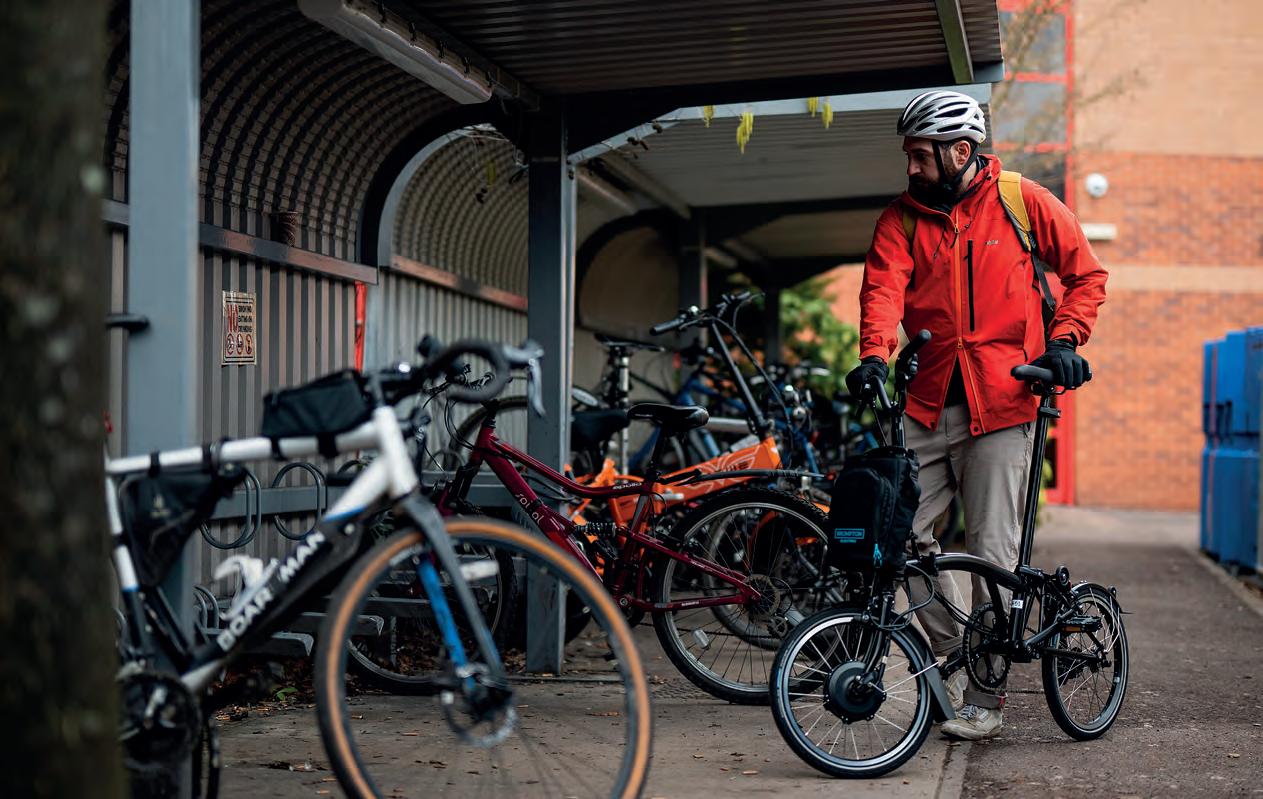
Government right hand, meet government left hand. There’s a tax incentive to buy an e-bike for commuting thanks to the government’s Cycle to Work scheme. But you can’t use it to cycle to many government buildings because you’re not allowed to park electric bikes there!
The problem isn’t exclusive to e-cycling civil servants, writes Duncan Dollimore Cycling UK started to receive the odd email last summer, which became a trickle and then a tide: people contacting us to say that their employer wouldn’t allow them to park or store their e-bike at work. In almost every case, the employer was merely the bearer of bad news; these were essentially insurance-driven decisions.
Most of you will have seen something in the news over the last two years about e-bike fires. I say e-bike fires because that’s how
they’ve often been reported, even though e-bikes purchased from reputable brands and retailers are extremely safe products.
However, there are unsafe batteries, chargers and conversion kits sold online. And there are people using illegal machines that should be described as electric motorbikes or mopeds as they don’t comply with the maximum power and speed limiter rules for e-bikes (250 Watts, with the power assist cutting off at 15.5mph). These do present a fire risk, but the insurance sector has largely heard the headline ‘e-bike fire risk’ message and has increasingly reacted by excluding e-bike storage from buildings insurance policies, essentially forcing the owner of the premises to ban e-bikes from its cycle parking facilities.
To counteract some of the misinformation around e-bike safety issues and promote the safe use of e-bikes,
Cycling UK worked with the Bicycle Association (BA) and the Association of Cycle Traders (ACT) to establish the Electric Bike Alliance and launch the E-Bike Positive campaign. BA is the national trade association for the UK cycle industry, while ACT is one of the UK’s largest cycle trade membership organisations, committed to supporting and strengthening specialist cycle retailers.
Collectively we’ve had some success in shifting the media narrative to focus on the products, market places and practices that create a risk, rather than e-bikes generically, and in highlighting the incredible potential and benefits of e-bikes. Sadly, increasing e-bike use and maximising those benefits will be tough if people can’t park their e-bikes securely at many buildings.
So the question all of us in the Alliance have been considering is how to fix the buildings insurance problem, since insurers aren’t obliged to offer insurance in a free market. One solution is to restrict or more tightly regulate online sales of unsafe products. Unfortunately, as a product safety lawyer explained to me last year, we have product safety laws designed for the pre-internet era. Despite strenuous lobbing by the Alliance, none of us is optimistic that the UK Government will implement measures that will quickly and sufficiently tackle the supply-side problem. An alternative solution might be to address the demand for cheap but unsafe products often used by people in the gig economy – for example, delivering food. Those platforms operate under a model where their riders are classed as independent contractors rather than employees, so the companies escape the responsibilities employers would usually have for those driving or riding in the course of their employment.
A recent All Party Parliamentary report called on the government to reinstate ‘worker status’ for gig economy riders, making the point that these riders were using illegal bikes to make a living in a system like “the sweated labour of England’s 1840s’ industrial revolution”. If the government introduced employment reforms to address some of these issues within the gig economy, the demand for unsafe and illegal products would reduce. We’d probably have fewer e-bike battery fires, and the insurance sector’s concerns would likely diminish. But again, none of us in the Alliance is confident that any of this will happen soon.
Beating the e-bike ban
The solution is therefore an imperfect compromise. Cycling UK will be supporting
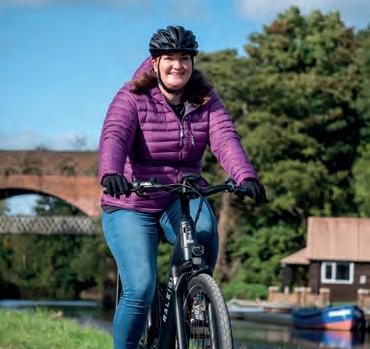
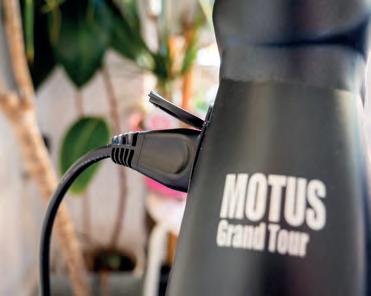


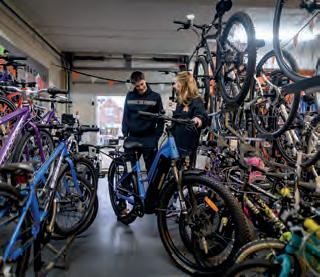
a UK assurance scheme for safe and legal e-bikes, which the BA and ACT are currently developing and hope to launch in 2026. This will direct customers to safe, legal e-bike brands and reputable places to purchase them and have them serviced. The details are still being developed but there will be a clear visual identity for the scheme, backed by a register of assured brands and retailers. The aim is to win backing from the insurance sector and government for this industry-led scheme, giving insurers a workable route to offer buildings insurance without a blanket exclusion of all e-bikes.
Peter Eland, Technical & Policy Director at the Bicycle Association, said: “We’re developing this assurance scheme so that consumers can more easily identify safetytested and fully road-legal e-bikes, and responsible e-bike retailers. It’s a first step to help safeguard the role and potential of e-bikes for transport and leisure – while we continue to press government to urgently address the very real, serious and often tragic issues caused by the supply and use of unsafe and very often non-road-legal ‘e-bike’ products. We very much appreciate Cycling UK’s involvement and support on this complex and difficult issue.”

Historically, Cycling UK has been wary of anything that might sound like regulation of cyclists or bikes, but we’re happy to support this because it’s not regulation of what anyone might buy or ride. The idea is that the assurance scheme will lead to something like an e-bike parking permit, enabling you to store your e-bike at various premises. It’s not a perfect solution to some of the issues we’re having to tackle around e-bikes, but in the absence of prompt government action, it’s needed to reverse what would otherwise become a de facto ban on parking e-bikes at many premises.
The Association of Cycle Traders (ACT), one of the UK’s largest and most established cycle trade bodies, champions specialist retailers through advocacy, training, consumer promotion and business services. Through these retailers, consumers gain access to e-bikes, which provide a vital step toward cleaner, more inclusive transport. With the rise of unsafe products and limited government intervention, coordinated industry action is crucial. The ACT has been a key contributor to E-Bike Positive, is proud of the campaign’s success to date, and looks forward to building on this momentum with the new scheme. cycleassociation.uk
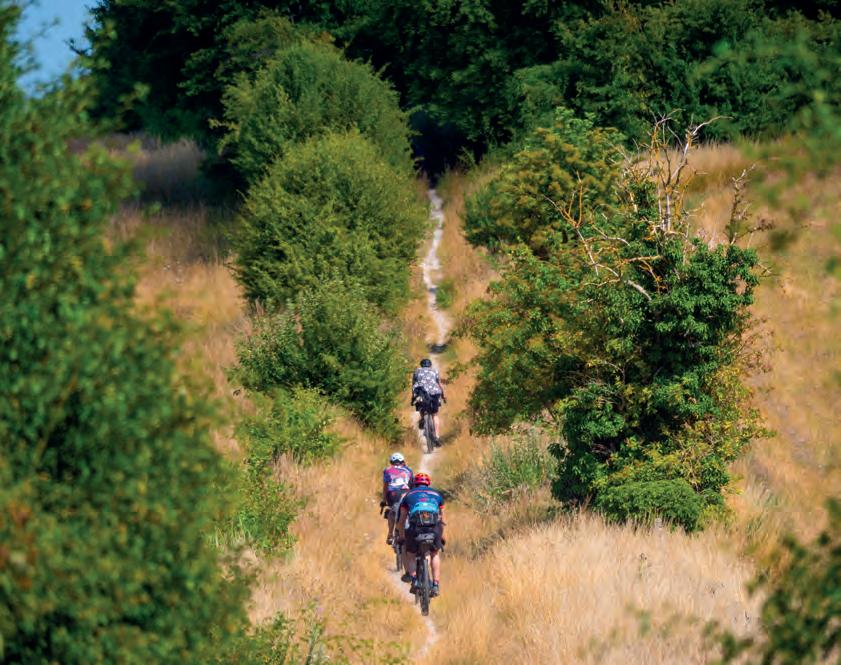
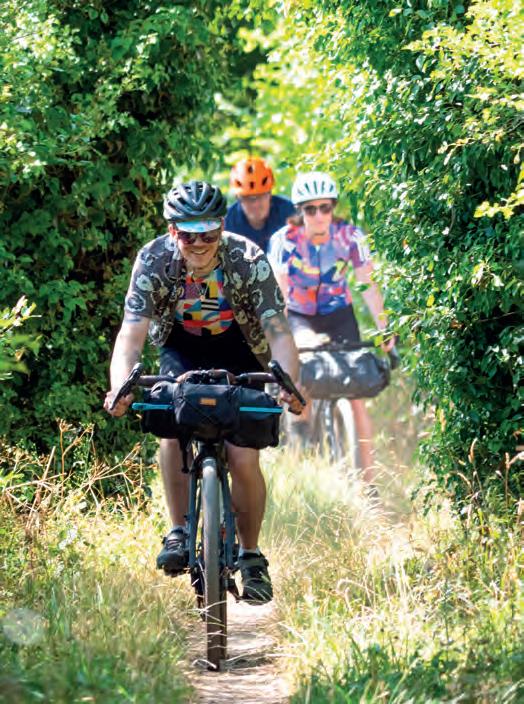
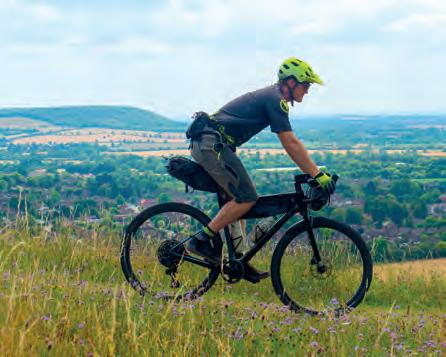
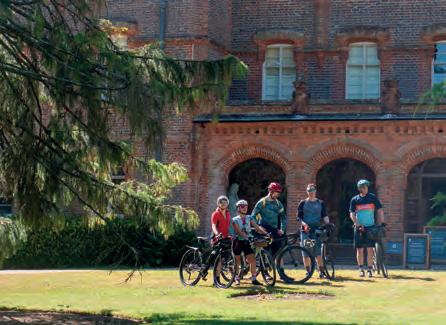
Royal Chilterns Way is Cycling UK’s latest long-distance route. Robyn Furtado followed it through beech woodlands and country estates, and up and down those eponymous hills
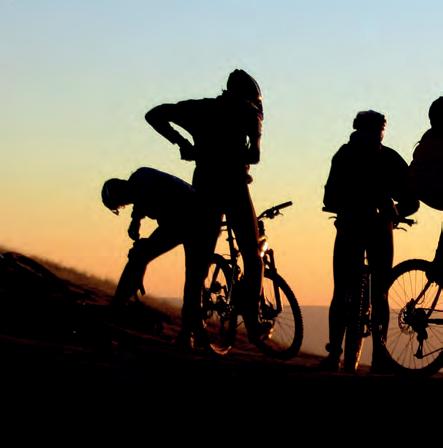
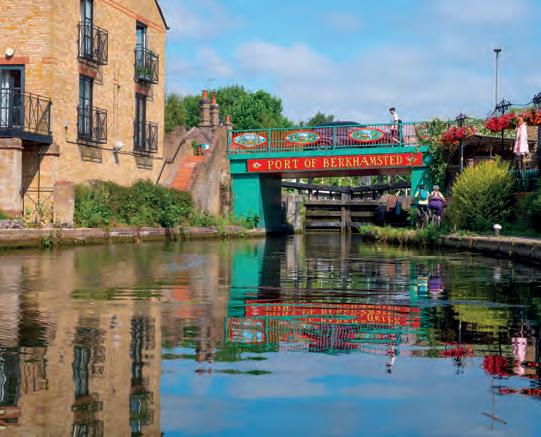
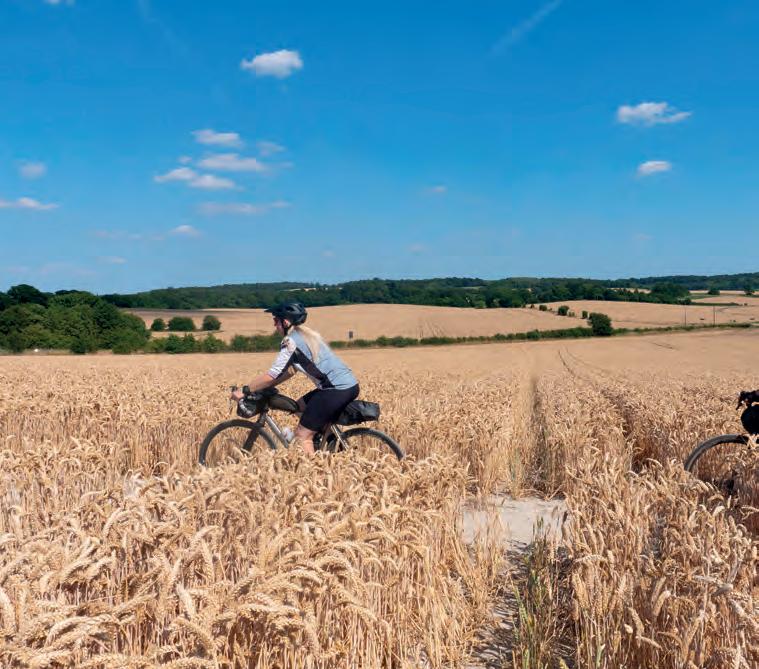
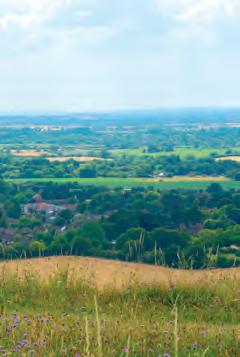



How many times can a group of cyclists stop for coffee on a ride? We were going to find out. On the first day of our trip, sun high in the sky above us, we were already on our fourth.
“I can’t believe we’ve only managed 17 miles,” said Sven. “That can’t be right!”
“We’ve been riding for hours,” Claire added.
Harley, our coffee-finder-in-chief, savoured his flat white and frowned at the Garmin. Somehow we’d spent more time sipping than cycling. We were seriously behind schedule. Perhaps, I thought, this route was going to be more challenging than we had anticipated.
Chalk hills and woodland
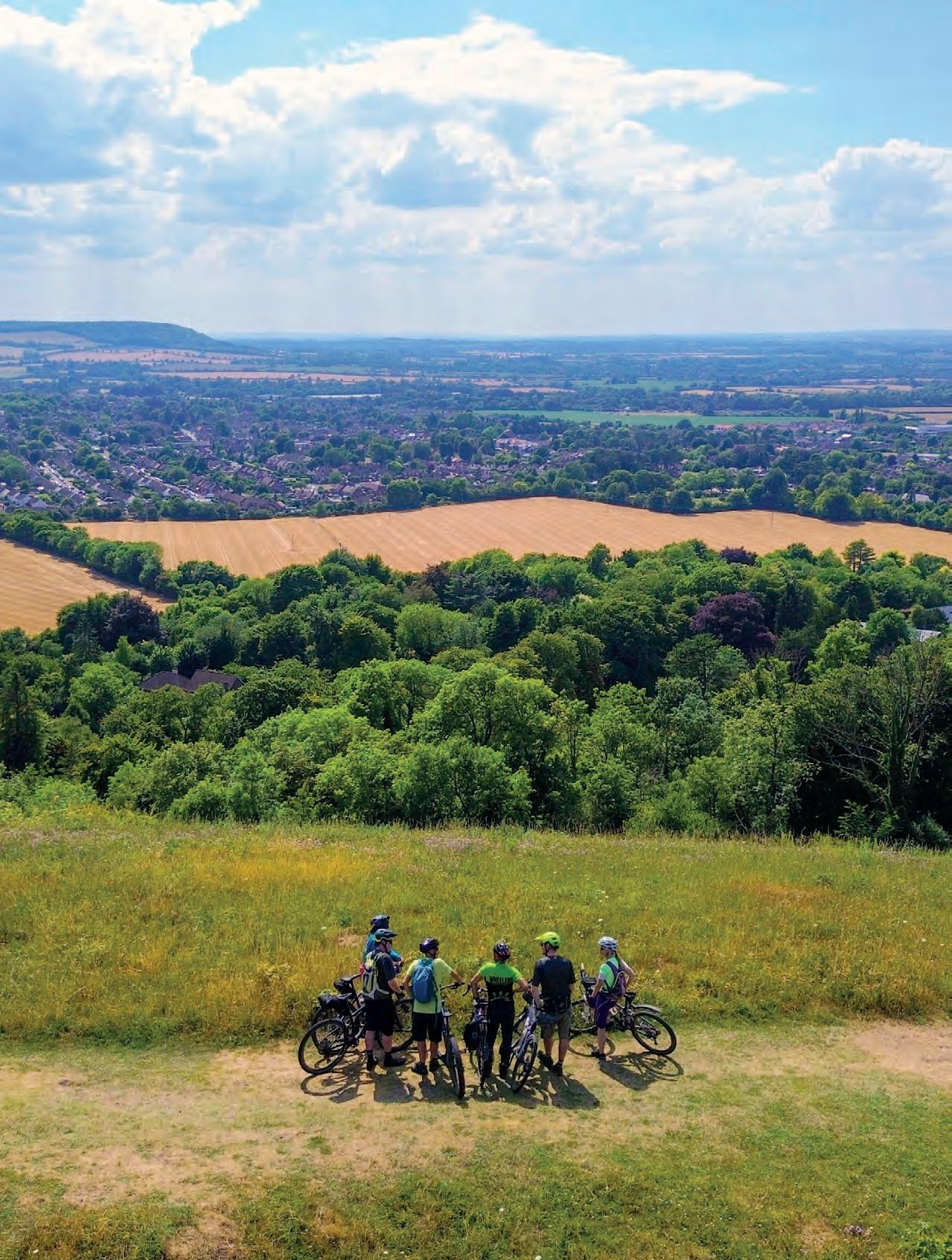
Royal Chilterns Way is the seventh route in Cycling UK’s Adventure Series. It’s around 280 kilometres long, weaving a helix shape around the Chilterns. It starts in Reading, heads north and calls in at a number of towns along the way. Max Darkins, one of the route’s designers, told me that this was deliberate. He wanted the route to have a variety of access points, so riders could break it down easily if they wanted to. After all, not everyone has the time or energy to tackle 280km and 3,500 metres in one go.
The route consists of three loops, with the southernmost – around 70km long – starting and finishing in Reading. The middle section is roughly 100km, and has various access points, including High Wycombe and Princes Risborough. The final, northern loop travels 100km through Wendover, Amersham and Berkhampsted. In total, the route passes 13 train stations and two London Underground stations. It is therefore easy to split up the route
“The route breaks into three loops, with the southernmost starting and finishing in Reading”
and ride it over several weekends, or just do one sample loop. The aim of this, Max said, is to help make the route more accessible to those who are new to off-road riding and multiday adventures.
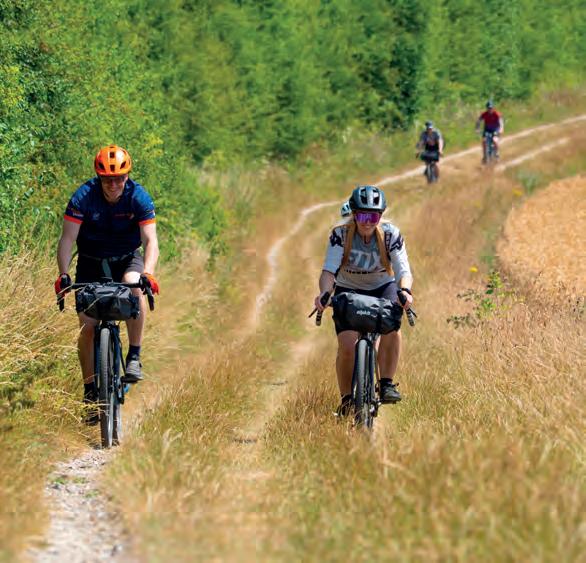
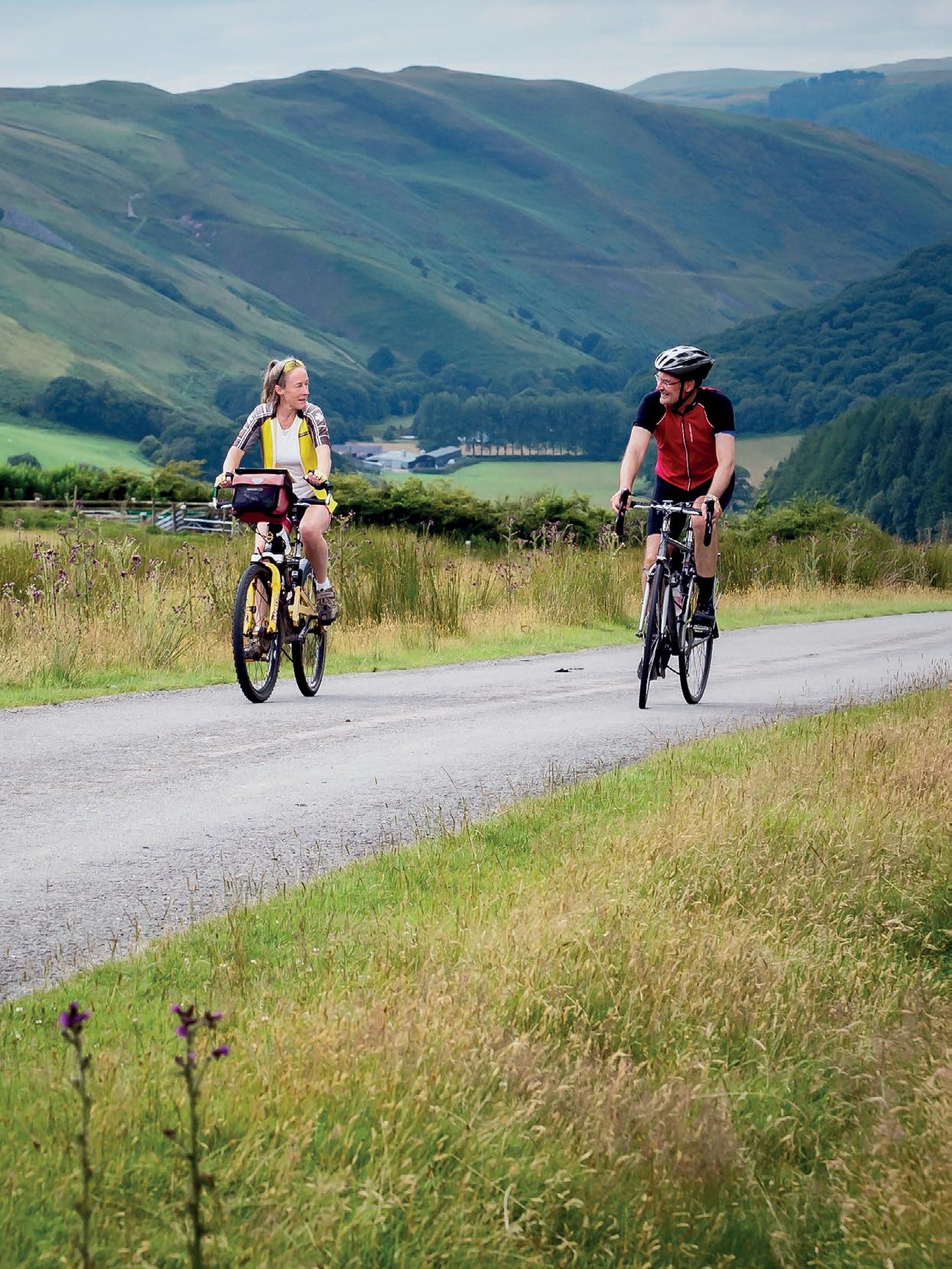
I rode Royal Chilterns Way with a group of six friends over the August bank holiday weekend. It was boiling hot and hadn’t rained for months, so the grasses were bleached yellow and the exhausted trees were already dropping their leaves. These conditions made the trails on the route dry, dusty and fast, although the bumpy bridleways did speak of deep mud in the wetter months.

The dry nature of the trails meant we whipped around the route in three days. We rode a mixture of bikes: hybrids, gravel bikes and hardtail mountain bikes. Gravel bikes are perfect for this route as we encountered nothing hugely technical. However, some of the steeper sections and roots do make it useful to have wider tyres and lower gears, which not all gravel bikes are equipped with.


Can’t find affordable UK accommodation on the usual websites? Camping’s not your only option. Rain dodger Rob Ainsley suggests some alternatives
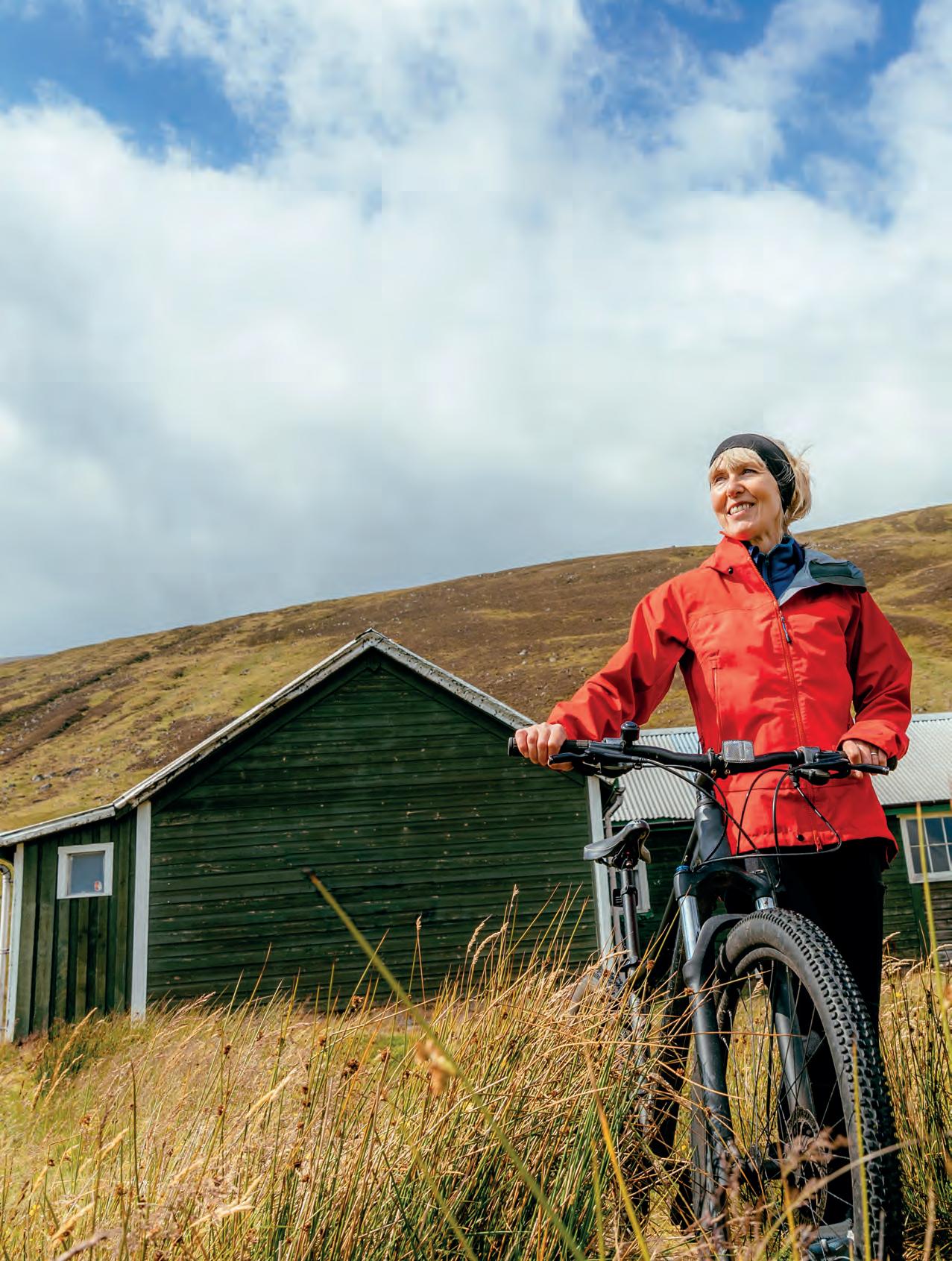
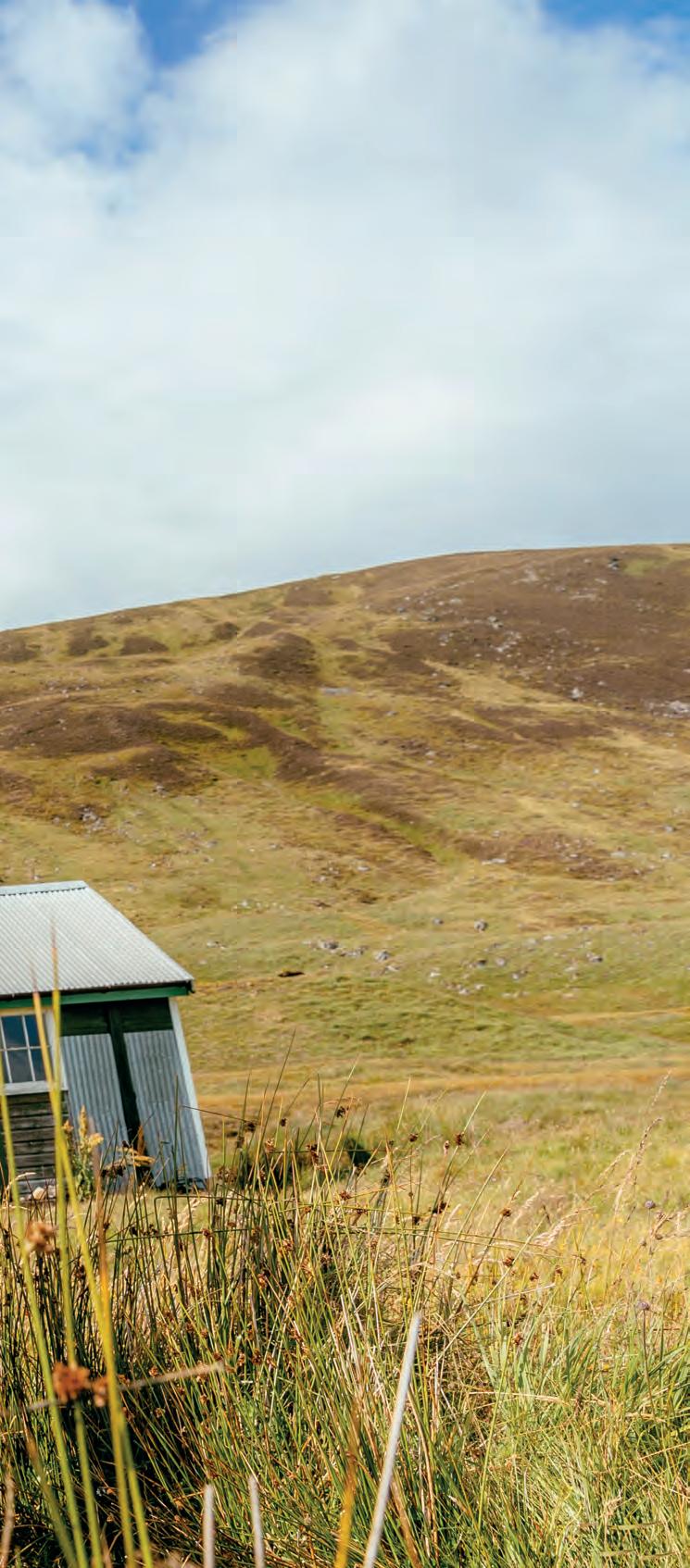
I’ve overnighted in some rum places while touring. Empty ferries, former jails, military barracks, monasteries, tractor sheds, even a rare-breed tropical spider house in the Amazon – although it wasn’t called that. It was called a ‘holiday lodge’. But those were abroad. Britain’s non-mainstream opportunities are more thinly spread. When hiking author Alfred Wainwright visited the Lakes in the 1930s, he simply asked farmers in the pub each evening for a barn to sleep in. Now those barns are upscale holiday lets. And it seems apex-predator websites control the accommodation market. Everything’s on booking.com or Airbnb. Otherwise it’s your tent: 30 quid for a field or else wild camping with the midges. Actually, it’s not quite as bad as that. You can find one-off indoor overnights for your British bike tour beyond the scope of the internet giants. They include historic churches, caving club dorms, homes of fellow cyclists, bothies and more.
The usual suspects
“YHA hostels can still be great choices for cyclists as bases for a cut-price tour”
Tent averse? Staying indoors has a strong appeal when it’s cold or rainy. Most accommodation is indeed on booking.com, from posh hotels down to hostels and huts. Check the websites of the individual establishments to see if the rate is cheaper there, or if there’s a bonus such as free breakfast. Airbnb.com overlaps but does list alternatives. While it’s more boutique guesthouses than spare bedrooms nowadays, you can find the odd bargain. Some hotel chains aren’t on either of those – Premier Inn (premierinn.com) and Travelodge (travelodge.co.uk), for instance. While a room tomorrow in York might be £120, an off-season or Sunday night in Milton Keynes or Bradford a few weeks in advance could be £35. Both chains welcome bikes in rooms (handy for e-bike charging) and offer reliable comfort.
History is bunk
Happy camper? Scotland lets you wild camp. (Some areas, such as Trossachs honeypots, require a day permit: lochlomondtrossachs.org.) Not so in England, where it’s campsites only, often expensive. However, a curated list of bike-friendly campsites for £15 or less is at tinyurl.com/ CycleCampingUK. Other options – free apart from the membership fee – include people’s back gardens in welcometomygarden.org, though there’s only a few dozen in Britain.
Hostel options include, of course, those of the YHA (yha.org.uk) –where they survive. Numbers haven’t decreased that much since the 1970s, when cars and alcohol were banned, you got kicked out during the day and had to do a task before leaving. There were about 180 hostels then and around 150 now. But many are now groups only. Just 93 offer private rooms, and a mere 69 do dorm beds. Many rural ones have shut in favour of gap-year-friendly city hostels. That said, YHA hostels can still be great choices for cyclists as bases for a cut-price tour. They’re less 1930s-boarding-school now, supplying bedding, café bars and restaurants, wi-fi, drying rooms, social spaces, bike sheds, kitchens,
Friction shifting comes to integrated brake/gear levers
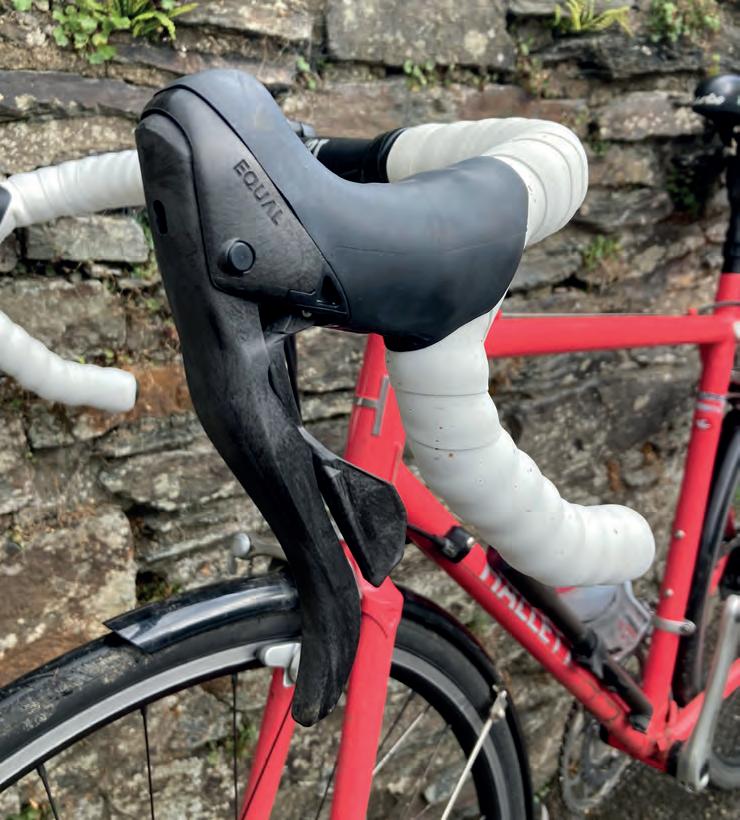
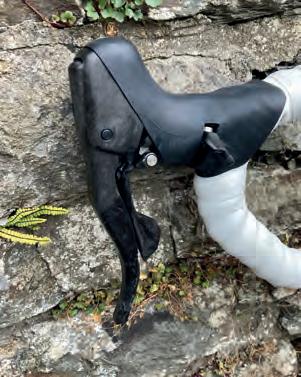
Rumours that friction shifting is enjoying something of a resurgence in popularity are true! For proof, note the arrival of Growtac’s Equal Control Levers, which combine the now industry-standard dual-control lever functionality with good, oldfashioned, friction-secured, nonindexed gear selection.
The idea is genius and its execution near flawless. Depending on your standpoint, it’s either the answer to your prayers or a complete irrelevance. While those cyclists who value the ease of use and reliability of indexed gear selection may scoff,
owners of boxes of incompatible or obsolete-but-sound transmission components will immediately get the point. Which is that any derailleur gear mech can be used with any cassette or multiple freewheel, provided the mech has enough chain wrap and the geometry to ensure it won’t foul a sprocket.
While mechanical (as distinct from electronic) indexed derailleur gear shifting is user friendly and ensures quick, reliable gear selection without much user engagement, it relies on a system of precisely matched parts. Front mechs are
less sensitive but nevertheless work well only when used as part of an integrated system. That’s fine until a component becomes obsolete and a replacement hard to find. Or the user wishes to upgrade a part without having to buy a complete new transmission. Or mix parts from different manufacturers. Or one of any number of scenarios that does not involve a dedicated groupset. Indeed, a whole cycling culture has grown up around the joys of getting non-matching parts to work together in something approaching harmony. Relying on friction to hold the shift lever at any chosen position avoids all this fuss. Simple in operation and requiring little by way of precision parts, it was the operating mode for derailleurs until largely supplanted by indexing in the early 1990s.
‘Retro-friction’ levers, popular shortly before indexing arrived, used a clutch, providing frictionless movement in one direction. Each Equal Control Lever has two of them. In fact, the internals are impressively complex, given the supposed simplicity of regular friction shifting. Executed in carbon-fibrereinforced plastic, the levers are pleasantly ergonomic, with a contemporary shape that feels comfortable in my large hands. A bulge under the lever’s rubber hood houses the cables as they exit, but isn’t obtrusive. The layout follows the
Compact electric folders are the easier-cycling option you can take almost anywhere.
Dan Joyce tests a FLIT M2 and MiRider 16 GB3 on roads, cycle tracks and trains
Small-wheeled electric folders are good for the same kind of journeys as their unassisted counterparts: urban commuting, mixed-mode travel and exploring from a holiday base such as a caravan. They’re heavier but the motor and battery help overcome hills, miles and excuses not to ride.
FLIT and MiRider are two relatively new British brands that design and assemble their bikes here – FLIT in Cambridge, MiRider in Wigan.
Frame, fork & folding: FLIT
The FLIT is built around Bromptonsized 16−inch wheels (ISO 349), using a futuristic-looking, bondedaluminium frame and monoblade fork. The battery is housed in the main tube; you can charge it in situ or remove the seatpost and slide it out.
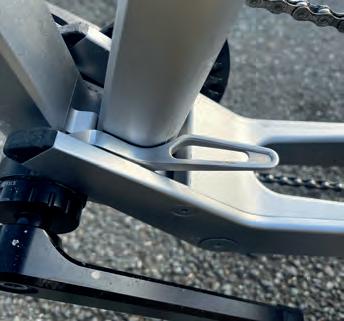
Like the Brompton and Birdy, the FLIT folds into thirds rather than in half. This gives it a longer wheelbase, while minimising its folded dimensions. To fold, you turn the front wheel, release a frame catch with your foot and flip the rear end under. Then you undo the fork hinge and fold the front wheel back on itself, engaging a nodule on the axle with a retainer on the swingarm. Undoing the stem hinge drops the handlebar down between the wheels.
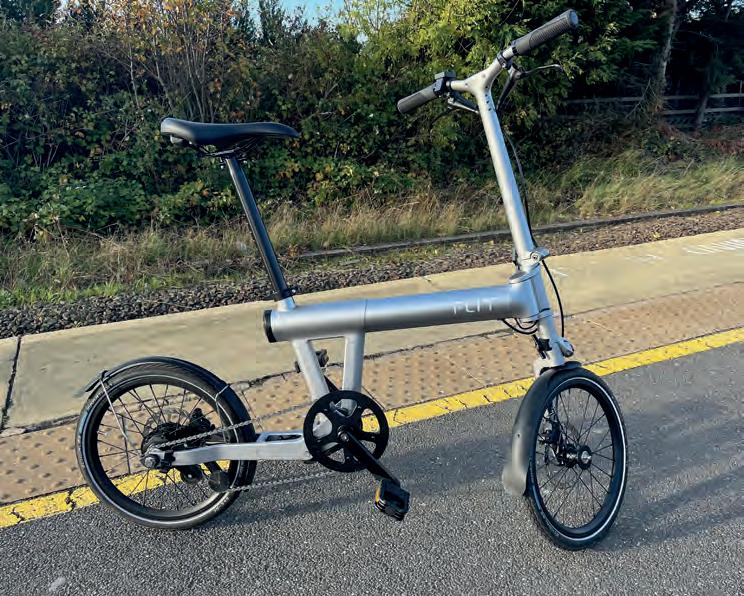
Then you lower the seatpost and fold the pedals.
There’s one more step I skipped. At the start, you retract the rear mudguard, sliding the rear section forward. This enables the folded FLIT to be rolled along on its rear wheel. It works fine – when you remember and don’t fold the bike onto the un-retracted ’guard – but risks dirty fingers. I’d prefer a fixed mudguard and castors, à la Brompton.
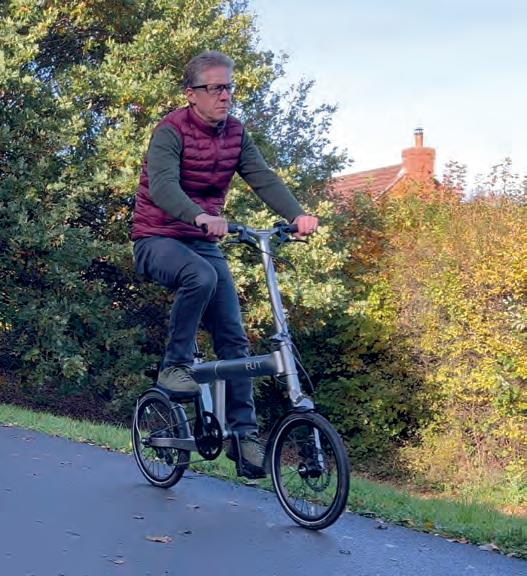
The folded FLIT is compact enough for two or three to sit side by side in a train luggage rack, and light enough (for me) to be carried in one hand. When rolling it, I occasionally found the fork unclipping, even after ensuring it was properly engaged.
There’s a max rider-and-luggage weight of just 100kg for the FLIT.
Frame, fork & folding: MiRider
Like its singlespeed stablemate, the MiRider 16 (£1,595), the GB3 features the smaller, ISO 305 version of 16−inch wheels. It’s a quirky-looking bike with a frameset of die-cast magnesium alloy rather than welded
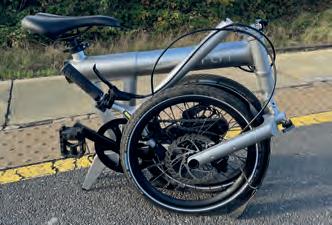
Middle: The folded FLIT is a compact package that’s easy to stash on a train
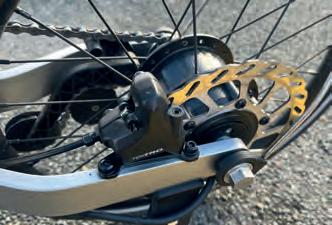
Bottom: A longer wheelbase lets you take advantage of the disc brakes’ power


aluminium. Magnesium is lighter than aluminium – a moot point for a 19kg bike – but corrodes more easily. However, the bike’s protective green paint didn’t scratch during the test. The rider and luggage limit is 120kg.
This rear swingarm has suspension but doesn’t decouple at that point like a Brompton or Birdy as the rear end doesn’t tuck under. The MiRider simply folds in half, with the seatpost lowered and the handlebar dropped down. When the bike is folded, you can unlock the battery from the frame.
It rolls along OK as a folded package. There’s a castor under the bottom bracket and a strong magnet at the dropouts to prevent them flopping apart. Just as well as it’s a pig to carry, being heavier and bulkier than the FLIT. I avoided folding the MiRider until I was on the train, where it took up most of a lower luggage rack.
Price: £2,499.
Left: Dan also rode on bridleways and up some big hills
Below: Step on this and you can flip the rear end underneath

“BOTH BIKES PROVIDE A SIT-UP-ANDBEG RIDING POSITION THAT SUITS UTILITYORIENTATED E-CYCLING”
The MiRider’s suspension is a coilsteel spring with about 40mm of travel. It’s unified rear triangle (URT) design: the bottom bracket is part of the swingarm. This eliminates chain tension issues so is ideal for a belt drive, but means that the saddle-topedals distance is not fixed.
Components
Both bikes have 250W rear hub motors with five levels of assistance,
powered by modestly sized batteries. MiRider’s ownbranded motor has a little more torque – 40Nm versus 35Nm – than the Mivice hub of the FLIT.
However, the FLIT uses torque sensors on both sides of the bottom bracket for power delivery. Assistance thus starts when you press down on a pedal. The MiRider uses ‘torque simulation’ and is fundamentally dependent on cadence sensing. When setting off, the cranks turn almost 180 degrees before any assistance kicks in. Fortunately, it also has a thumboperated throttle by the right-hand grip, which provides instant power to help you get away from a standstill or to temporarily boost the assistance level while pedalling.
The FLIT’s mode-switch button is easy to use without looking, while the MiRider’s display has a USB-A outlet for charging, say, a phone.
The FLIT is a singlespeed with a chain tensioner. Its 66in gear is achieved with a 44−tooth
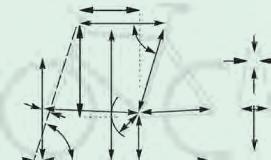
Sizes: One size (to fit riders from 4ft 10in to 6ft).
Folded: 797×600×305mm (claimed); 780×600×310mm (measured).
Weight: 15.5kg as shown.
Frame & fork: Folding, anodised aluminium frame and monoblade fork, with steering limiter and mudguard fittings.
Electric assistance: 250W Mivice rear hub motor with 35Nm torque, 230Wh FLIT battery with LG cells, bottom bracket torque sensor, Mivice handlebar display and mode switch.
Wheels: 35−349 Schwalbe Marathon tyres, 349×17mm rims, 24×1 spokes, 60mm stub-axle front hub, Mivice M070 250W rear hub. Transmission: VP folding pedals, 165mm aluminium chainset with 44t chainring, 73mm Mivice torque-sensor bottom bracket, KMC X8 chain, 11t sprocket. One ratio: 66in.
Braking: Tektro HD-R280 hydro discs, 160mm rotors. Steering & seating: Lock-on grips, integrated aluminium handlebar (490mm) and stem, 1 1/8in threadless headset. Velo Sport saddle, 34.9×530mm seatpost, QR clamp.
Equipment: FLIT mudguards, kickstand and integral lights (90−lumen front).
flit.bike








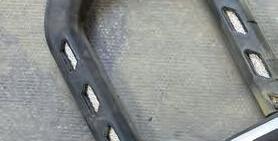
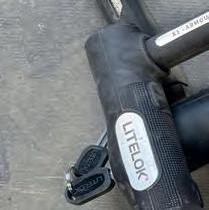

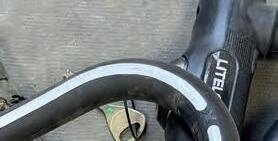
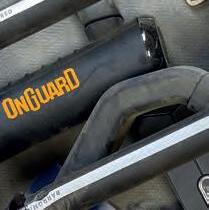


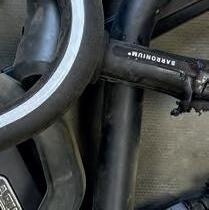
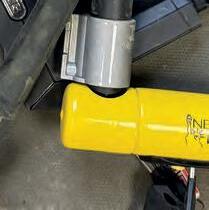
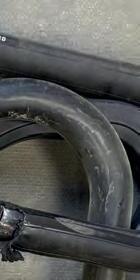


Attacking locks like these is noisy, time-consuming and costly in discs

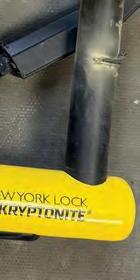

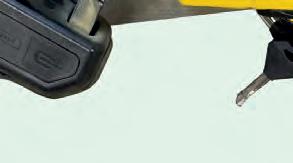


Portable angle grinders will go through most bike locks like butter. But not all. Guy Kesteven tests six designed to thwart tooled-up thieves
One of the biggest issues with using a bike for transport is the risk of having it stolen if you leave it anywhere. The risk of theft has increased in recent years due to the use of cordless angle grinders. These can be hidden under a jacket or in a bag, and they’ll cut through most D-locks, chains or bar locks in a matter of seconds.
Lock manufacturers are fighting back with specifically grinderresistant designs, using a whole new level of material technologies. I took an angle grinder to six of the best options from Abus, Hiplock, Kryptonite, Litelok and OnGuard to see which held out the best. Then I considered their other pros and cons in terms of security and everyday use
to find the best deterrent.
Note that these locks are grinder resistant, not grinder impervious. Any lock will fail, given time and enough cutting discs. I set a time limit of five minutes for attacking each lock.
You’d hope someone might raise the alarm after that or that the thief would give up and choose an easier target. I used as many cutting discs as each five-minute attempt required.
You’ll see that there are two Liteloks in this test. I’d hoped to include a Masterlock but it didn’t arrive in time. I also contacted Squire and Oxford Products for a lock but their new designs won’t be available until spring.
Videos from this test are on my YouTube channel @GuyKesTV



The reason I’ve attempted to break the locks rather than relying on the Sold Secure rating is because even the top ‘Diamond’ standard doesn’t have an anti-angle-grinder specification. However, those ratings are still useful as the gauge for resistance to other forms of attack.


Shackle size
Impregnable security is useless if the lock doesn’t fit around your bike or your normal locking point. That’s why I’ve listed the internal dimensions of each lock, as well as the coating so you can asses how paint-friendly it is.
For those using their locks out and about I’ve included weight and whether you get a carrying bracket included.
Other features
Weatherproofing, warranty terms, number of spare keys provided, replacement services or being able to get matching keys for different locks are all potential ‘yay or nay’ points, so I’ve considered those as well.
“These are grinder resistant, not grinder impervious. Any lock will fail, given time and enough cutting discs”
tales
Where:
South-west England
Who: Tom Daltry
When: July 2025
Where: England
Who: Nadia Kerr
When: August 2025
Share your story
We’d love to hear your Travellers’ tales! Email: editor@ cyclinguk.org
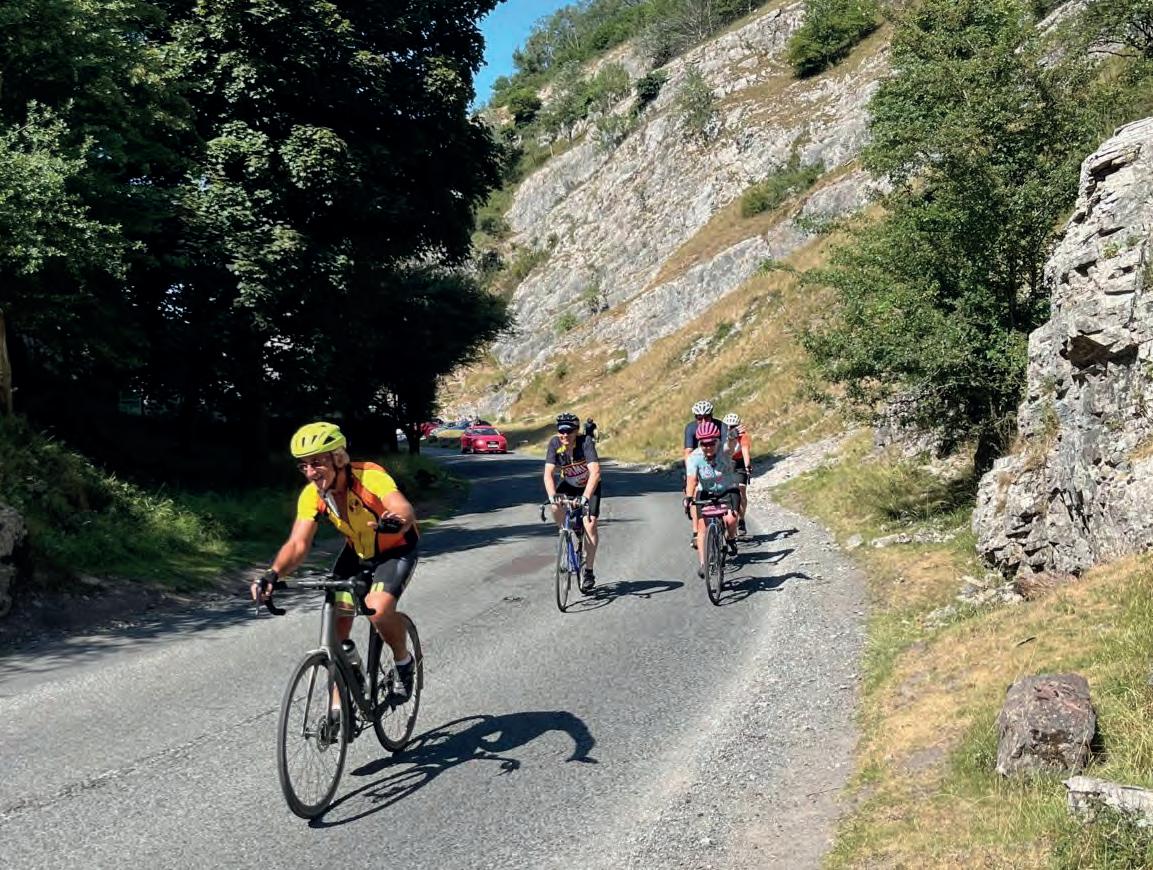
Last summer, Stroud Valleys Cycling Club (a Cycling UK member group) went on a touring and camping weekend in the Mendips. Friday saw us ride from Stroud, east of Bristol, to the campsite.
Our route on the Saturday took in some fantastic scenery. We climbed Cheddar Gorge and were rewarded with views across the Somerset Levels. Then we descended to the beautiful city of Wells. After riding across the Levels, we climbed to near the top of Glastonbury Tor, then down into the town.
There was a final sting in the tail: a long, steady climb back into the hills to our campsite. We had been mentally prepared for the ascent of Cheddar Gorge but not for the final, less spectacular
climb at the end of a long, hot day. And, boy, was it hot! With temperatures well into the 30s all weekend, we had to work hard at keeping hydrated, watching out for signs of heatstroke. Cooling-down ploys included tipping water over our heads and lingering in the haven of air-conditioned shops when buying the next round of cold drinks.
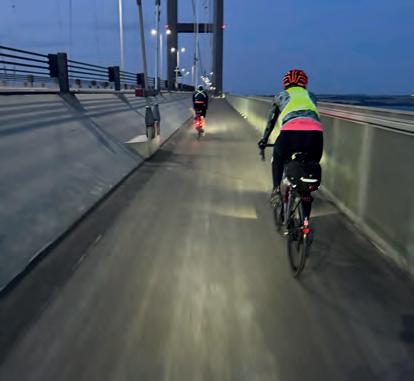
We cycled back to Stroud over the Avonmouth Bridge on the Sunday. Some of our group espoused a purist touring ethos, carrying all their camping gear on their bikes – quite an achievement in the gruelling conditions. Others were only too grateful to use an accompanying campervan for the transport of gear.
As always, a successful trip of this nature owes much to those who do the planning. In this case, ex-military man and club stalwart Paul Rothwell was chief planner. His rigorous preparation included an epic, 120-mile ride some weeks earlier, also in sweltering conditions, to check out routes and camping arrangements. Paul, your distinguished service (tropics) medal is being minted!
What was meant to be a 1,540km London-EdinburghLondon audax cycling adventure with 2,000 riders in 2025 was cut short by Storm Floris. I set off from Writtle at 5am on Sunday 3 August. I had cycled 470km to Richmond, North Yorkshire, by noon on Monday when the event was suspended. By evening, it was cancelled.
Around 1,000 riders groaned in unison. Richmond was the last control before the Pennines. Sending us on would have meant battling stormforce winds at one of the highest points. Safety came first but, after eight months of training, the disappointment was huge.
The cancellation created a major logistical task. Beds, blankets and food were suddenly in the wrong locations. My ride back to Writtle became a very different experience: sociable, relaxed and in near-perfect weather. Riders heading south were in good spirits. No stopwatch, no racing through food stops, just steady miles and conversations.
In the end I had a 940km ride that was far more leisurely than planned. Will I return in 2029? Quite possibly! londonedinburghlondon.com