BEAT THE THIEVES
Angle grinder resistant D-locks
OVERNIGHT SUCCESSES
Great places to stay in the UK
BEAT THE THIEVES
Angle grinder resistant D-locks
OVERNIGHT SUCCESSES
Great places to stay in the UK

Cycling UK’s latest long-distance route
Compact e-folders
FLIT M2
MiRider 16 GB3


Cycling UK: Parklands, Railton Road, Guildford, GU2 9JX
E: cycling@cyclinguk.org
W: cyclinguk.org
T: 01483 238301
Cycle promotes the work of Cycling UK. Cycle’s circulation is approx. 51,000. Cycling UK is one of the UK’s largest cycling membership organisations, with approx. 70,500 members and affiliates.
Chief Executive: Sarah Mitchell. Cyclists’ Touring Club, a Company Limited by Guarantee, registered in England No 25185, registered as a charity in England and Wales Charity No 1147607 and in Scotland No SC042541.
Registered office: Parklands, Railton Road, Guildford, GU2 9JX.
Cycle magazine:
Editor: Dan Joyce
E: editor@cyclinguk.org
Designer: Christina Richmond
Advertising: Millie Ursell
T: 0203 198 3092
E: millie.ursell@ jamespembrokemedia.co.uk
Publisher: James Houston. Cycle is published six times per year on behalf of Cycling UK by James Pembroke Media:
Ground Floor Riverside North, Walcot Yard, Bath, BA1 5BG T: 01225 337 777
Cycle is copyright Cycling UK, James Pembroke Media, and individual contributors. Reproduction in whole or in part without permission from Cycling UK and James Pembroke Media is forbidden. Views expressed in the magazine are those of the individual contributors and do not necessarily reflect those of the editor or the policies of Cycling UK. Advertising bookings are subject to availability, the terms and conditions of James Pembroke Media, and final approval by Cycling UK.

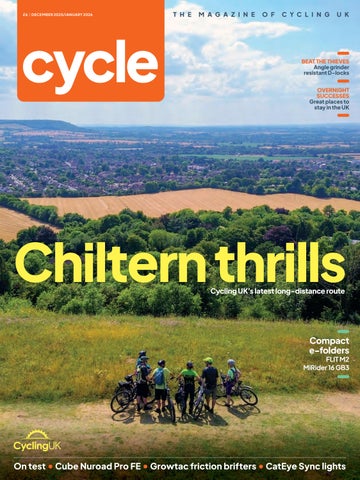
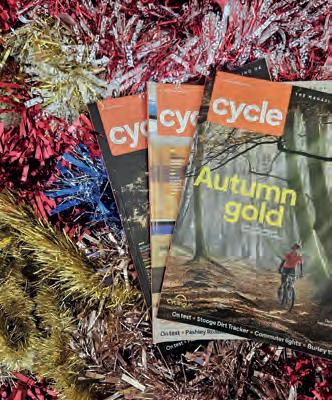
If this were the December issue only, we might have had some robins and tinsel on the cover. But it’s the December/January issue, so we’re instead looking ahead to a ride you might do next year: Royal Chilterns Way, Cycling UK’s latest long-distance route.
It’s traditional, when Christmas trees have shed their needles and the winter gloom of January starts to seep into your bones, to think wistfully about the holiday (holidays?) you might have when the warmer weather arrives. I’m hoping for a week on Andalusian mountain roads with club mates, then several days (on-brand alert!) bikepacking Traws Eryri later on. How far any of us will need to rein in our 2026 holiday aspirations remains to be seen; this issue will be landing on doormats shortly after the UK Autumn Budget. The good news is that great cycling trips don’t have to break the bank. When you’re cycling abroad, day-today expenses might be limited to lunchtime snacks and espressos, then a glass or two of wine with dinner. In the UK you can trim the fat even further.
04 Freewheeling
Bits and pieces from the bike world
07 Quick releases
Brilliant glow rides; special offer on gift membership; police turn a blind eye to station bike theft; new e-bike assurance scheme; and more
TOUR & EXPLORE
16 Chiltern thrills
44 Shop window
Previews of new products
46 Books
Cycling inspiration when you’re stuck inside
48 Small wonders
Compact electric
folding bikes from FLIT and MiRider
55 Cube Nuroad Pro FE
An all-rounder for gravel, touring and commuting
58 Grinder-resistant D-locks
Riding Cycling UK’s latest long-distance bikepacking route
24 Weekender
The Edinburgh Dawn Patrol: a spin around the Scottish capital
26 Brompton oratory
Printed by: Acorn Web Offset Ltd, Loscoe Close, Normanton Industrial Estate, Normanton, WF6 1TW T: 01924 220633
Back in the February/March issue (cyclinguk.org/touringunder-£100), Rob Ainsley wrote about the week’s cycling holiday he enjoyed on a budget of £100. This issue he’s exploring lowcost, alternative accommodation options for those who don’t fancy bivvying under a hedge – hostels, bunkhouses and more. You could go cheaper still, eliminating the overnight costs by using your own home for a week of day rides that you haven’t done before.
Whatever your plans for 2026, I hope they involve getting away from it all by bike. You deserve it.
DAN JOYCE Editor
Talking up the benefits of a hire-bike Brompton taken on tour
FEATURE
30 Overnight successes
Alternative accommodation options for UK tours
REVIEWS
37 Gear
Components and accessories tested
Six locks designed to thwart tooled-up thieves
OVER
63 Letters
Your feedback on Cycle and cycling
66 Profile
Finding balance again
68 Q&A
Your technical, health and legal questions answered
70 Bike finder
A practical utility bike that will carry a trombone
73 Travellers’ tales
Cycling UK members’ ride reports
Founded in 1878





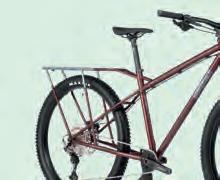

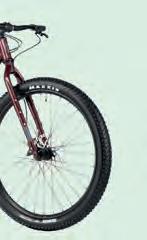
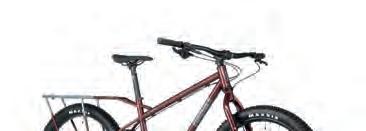

A longtail is a cargo bike with an extended rear end. The chainstays of this ‘midtail’ are 580mm – closer to a Jones Plus LWB (483mm) than a Surly Big Dummy (821mm). As such, Bombtrack’s claim that it’s built for bikepacking as well as heavy hauling seems plausible. It has an integral rear rack, 29×2.6in tyres and frame mounts for everything. It’s 17.1kg and rated to carry 200kg. Bike £2,750, frameset £1,150. bombtrack.com
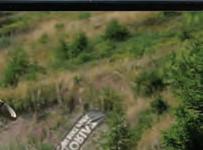
Children having fun on bikes is always cheering. When it’s 8‐year-old Ellis Brewer, it’s jaw dropping. The junior biker was filmed putting his Early Rider Hellion X20 through its paces at Avoriaz Bike Park in France by filmmaker Yannick Boissenot. Early Rider’s Andy Loveland said: “This film isn’t just about showcasing a product, it’s about what’s possible when young riders are given the right tools and the freedom to explore.” The bike is (ahem) £1,699; details at eu.earlyrider.com. Watch the video at: bit.ly/8yearold-hellion-MTB. Find a local group near you and enjoy a ride this weekend: cyclinguk.org/ group-listing

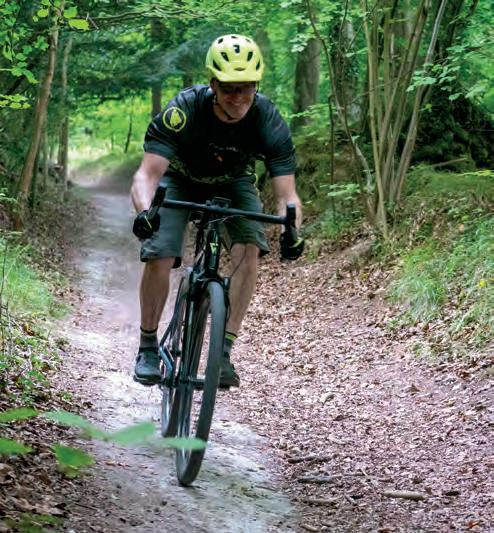
Guidebook writer and Royal Chilterns Way route designer
Why do you cycle? Fitness and fun, but I’m also lucky enough to be able to call it work for much of the time, too. How far do you ride each week? It varies a lot depending on what work I’m doing and the time of the year. It’s nearly always off road, and could be 300 miles a week when checking and signing routes, or in winter as little as 10 miles if I’m just taking my
dog, Rocky, for a blast around the local woods.
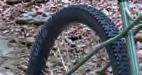
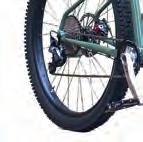
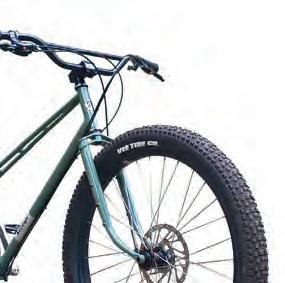
Which of your bikes is your favourite? It depends on where and why I’m riding, but at the moment it’s a Stooge Mk4 (rigid, steel MTB with big tyres –pictured), which makes my local riding in the Chilterns fun. It’s also low maintenance, which is a win in my books.








What do you always take with you when cycling? A GPS or phone so I can explore and record any new, interestinglooking trails. And a hard-boiled egg, with a little sachet of salt, as it’s my favourite trail food. Who mends your punctures? Me. I try to do all my bike maintenance. If you had £100 to spend on


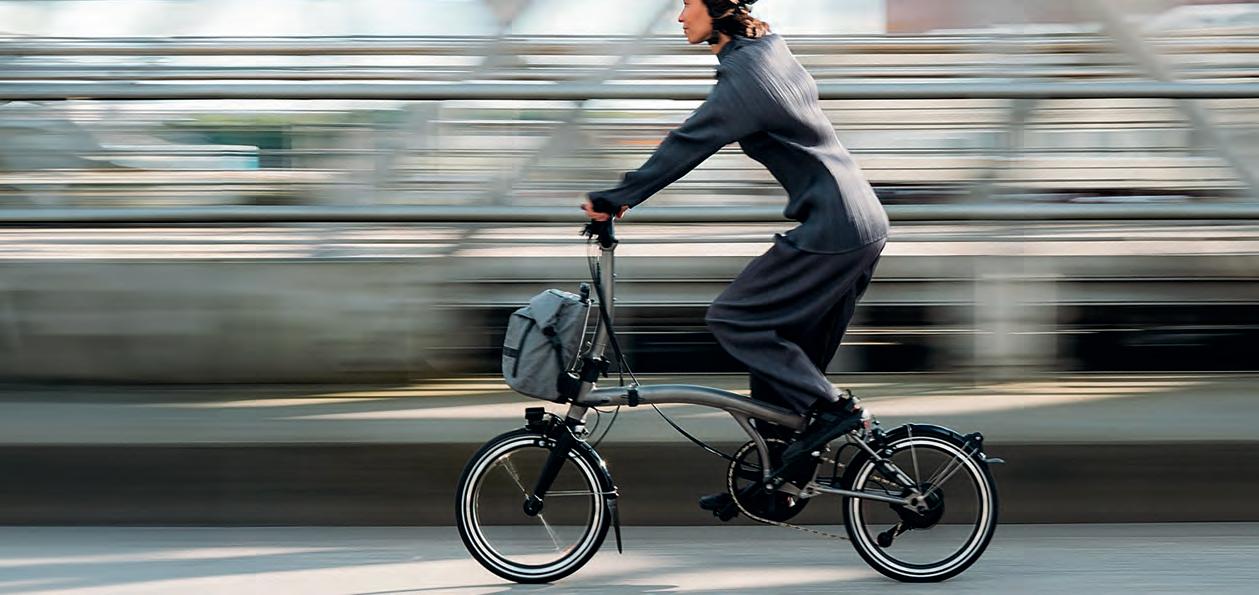
Brompton has launched two electric versions of its titanium T Line folding bike, a singlespeed (£5,799) and a 4−speed model (£5,999). Both feature the 250W e-Motiq rear hub motor that is now being fitted to the company’s cheaper Electric C Line and Electric P Line ranges, instead of the front hub motors they had previously. What you’re principally paying for with the Electric T Lines, aside from the iconic, compact fold, is lightness: weights start at 13.5kg, including the battery. brompton.com








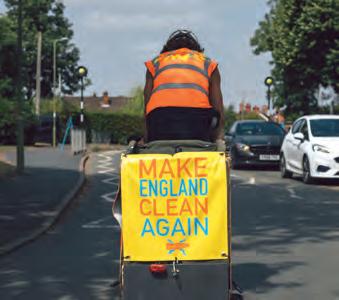
This August Damien Gabet took an unusual bike tour. “It was 1,044−mile litter pick in the shape of a massive Lucozade bottle,” he said. He called it the Lu-Crusade. “According to a study done by Bangor University and Trash Free Trails, the charity I was raising money for, Lucozade bottles are the most commonly found branded item of litter on UK trails. I love a pun.







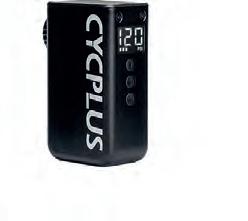
cycling, what would Gadgets. Anything new that comes out for cycling, I love to get and try out. The latest is an electric bike pump. It’s raining: bike, public transport or car? Bike and dress appropriately.
Lycra or normal clothes? Lycra under baggies so I can sit in cafés and pubs without feeling selfconscious.
What’s your favourite cycle journey? The next unknown route when trying to find a fun way to a new destination. What single thing would most improve matters for UK cyclists? People having empathy for other trail (or road) users, be it cyclists, walkers, drivers or horse riders.
“Overall I collected just under 2,500 plastic bottles and cans. I was hoping for 5,000 but I was delayed by 17 punctures. The problem was the tyres on my Temu trailer. I spent a lot of my time in the gutter, figuratively and literally, where there’s broken glass.”
Damien’s Lu-Crusade was inspired by the huge volume of litter he encountered on a coast-to-coast walk last year. “There are so many problems in the world that we’re constantly exposed to and don’t know what to do about,” he said. “The simple act of picking up a piece of litter is actually quite empowering.”
To donate, visit justgiving.com/crowdfunding/lucrusade
Gravel & Adventure Bike Expo
Get 25% off tickets for the Gravel & Adventure Bike Expo, plus the Adventure Travel Show, at the Business Design Centre in London on 10−11 January. Use code CUK25 for your discounted




tickets (normally £11 for adults). Brands exhibiting include Kinesis, Reilly, Surly, Vielo, Old Man Mountain and Schwalbe. There will also be chats with Mark Beaumont, Josh Ibbett and others. graveladventurebikeexpo.co.uk you get?

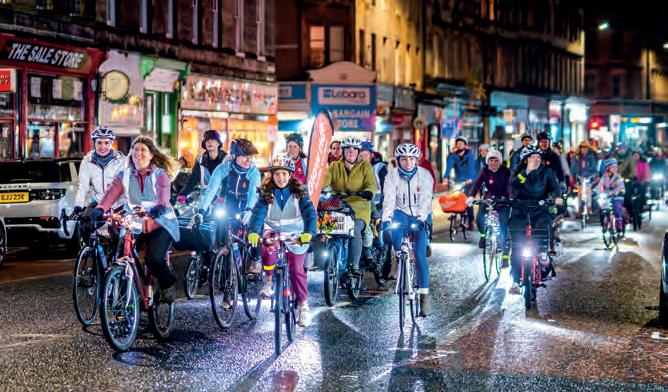
More than 3,000 people took part in 67 mass glow rides across the home nations as part of Cycling UK’s ‘My ride. Our right’ campaign. Thank you to everyone who organised a ride or went along to support one. Together we lit up the night and called for safer streets and better cycling infrastructure, especially for women riding after dark.
Anne-Marie Goldsmith was one of the glow riders in Newbury, despite losing the ability to cycle independently 28 years ago after a stroke caused by a brain injury. “I accepted that I would never ride a bike again,” she said. However, she was convinced by Claire Vincent to join her on the back of a tandem – and she has never looked back. Ms Goldsmith said cycling was “completely liberating”,
“Together we lit up the night and called for safer streets and better cycling infrastructure”
and that by taking part in the event, she was doing her bit to promote cycling for women.
In Stevenage, Jennifer Huygen, a member of the local cycle campaign, said she was so fed up with the lack of lighting that she brought it to a council meeting: “I asked ‘When will you make it safe? Will you install lighting?’ Basically, they questioned whether it was sensible for me as a woman to be there by myself in the dark, and I got really upset by that.”
She started a petition, which soon collected 1,300 signatures. That meant the issue had to be discussed at a council meeting. Jill Borcherds, another member of the local cycle campaign, said: “Why did we need a glow ride in Stevenage? Because even the best cycleway network is only as good as its weakest links.”
Julie Clarke, a spokesperson for InfraSisters, took part in a ride in Edinburgh. “InfraSisters was founded in 2021 to highlight the additional challenges that women cyclists face due to a lack of safe infrastructure, particularly in the evening or night,” she said. “Too many women are faced with the choice between cycling on the road and chancing dangerous drivers or using an isolated cycle path and risking personal safety.”
For more on ‘My ride. Our right’, see: cyclinguk.org/my-ride-our-right
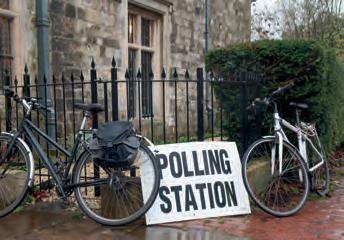
Next year sees elections in Scotland and Wales, as well as local elections in England. Ahead of this, we’re busy writing our own manifestos. These will form the basis of Cycling UK’s lobbying of political parties and candidates, as we press them to commit to supporting the issues that matter to cycling. We are already speaking with party manifesto writers and have had some very positive responses. We will be ramping up this work into the new year, pushing all the main parties to acknowledge the things that they can do to give more people the freedom to choose to cycle for everyday journeys. cyclinguk.org/campaigns
In October, Cycling UK led two local politicians, Freddie van Mierlo MP and Councillor Ben Higgins, on a ride along Royal Chilterns Way route. We showed them how a great route can do more than connect towns; it can drive local economies and a greener future. cyclinguk.org/ pedalling-rcw
Cycling UK was at the Stormont Parliament in Belfast in October to host a transport event titled: ‘Freedom for all: what does real transport choice look like?’. Our keynote speaker, Professor Ian Walker of Swansea University, focused on the concept of motornormativity – the unconscious cultural assumption that driving is the default mode of travel. Professor Walker spoke about the systemic change in laws and policies needed to make active travel the obvious choice for shorter journeys. He also challenged the decisions that reduce friction for drivers at the expense of people walking and cycling. cyclinguk.org/stormont


Cycling UK East Midlands Region annual mince pie run takes place at Belton Village Hall near Loughborough from 10:30am on 21 December. There’s also a tombola in aid of Rainbows Children’s Hospice. cyclinguk.org/mince-pie-run-2025
Staff, funders and project participants gathered in Shawfair in November to celebrate the impact of Cycling UK’s new Connecting Communities project in Midlothian. The project team has been engaging with new residents of this expanding housing development, offering e-bike and cargo-bike loans, helping with route planning and providing cycle confidence sessions. cyclinguk. org/connectingcommunities
Cardiff Cycle City has campaigned to improve cycling conditions in the Welsh capital for more than 10 years. Along with a forward-thinking council and sustained, ring-fenced funding from the Welsh Government, this has seen the creation of quality cycling infrastructure. To raise awareness of Cycleway 1, the most complete part of the planned network, Cardiff Cycle City held a celebration ride in September. It demonstrated that well-built cycle infrastructure gives people real choices about how they travel. cyclinguk.org/cardiff-cycleway
Take on the Brighton Marathon 2026 and run for Cycling UK. Join thousands of runners on Sunday 12 April next year for one of the UK’s most iconic seaside races. General entries are sold out but you can still secure your place with a charity spot for us. The entry fee is £30, with a £250 fundraising target. Every step you take helps make cycling safer and more accessible for everyone. If the Brighton Marathon isn’t for you, we have more running, cycling and other challenges throughout the year. cyclinguk. org/fundraisingchallenges
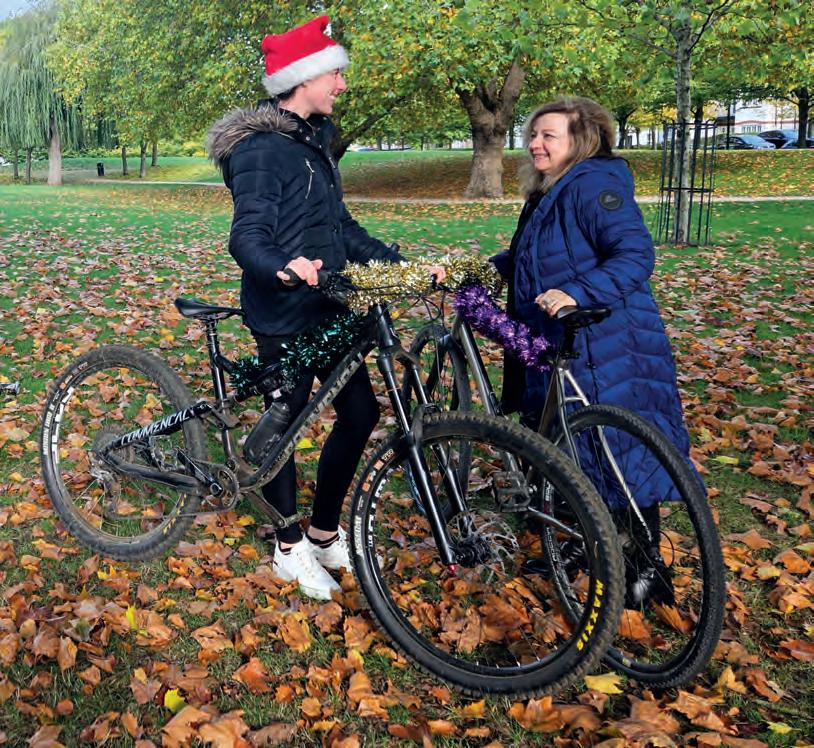
Less wrapping, more riding: give gift membership of Cycling UK this year – and get 25% off. A gift membership isn’t just a card or a box; it’s a full year of cycling support, inspiration and peace of mind. Treat the cyclist in your life to all the benefits you enjoy: £10 million thirdparty liability insurance and exclusive legal advice, Cycle magazine every two months, and exclusive discounts on gear, travel insurance, holidays and more.
Beyond the practical perks, a gift membership also supports Cycling UK’s campaigns for safer streets, better infrastructure and wider cycling access. So your gift benefits the whole cycling community. With new benefits added throughout the year, including recent additions like Evans Cycles and Saddle Skedaddle holidays, your thoughtful gift will be remembered long after the wrapping paper is gone.
With 25% off, individual gift membership is just £41.25 for a full year. That’s only £3.44 a month for a wide range of benefits and a connection to the cycling world. Or get the whole family a gift they’ll love from £66.75 (just £5.57 a month).
Whether they’re a weekend rider, daily commuter or completely new to cycling, this is a gift that keeps on giving. Get Christmas wrapped up early and give them a present they’ll use all year. cyclinguk.org/xmas-gift

Evans Cycles kids’ bikes for less Planning on surprising your little one with a new bike this Christmas? Evans Cycles has plenty of kids’ bikes, from balance bikes for those just finding their feet to 24in-wheel junior bikes for young cyclists needing something bigger. Brands include such wellknown names as Frog, Hoy, Pinnacle and Raleigh Members get 10% off full-priced bikes, as well as accessories. The discount can be claimed online and in store, so you can try before you buy to ensure you get the right cycle for your youngster. cyclinguk. org/evans-10-percent

If you’re looking to update your cycling luggage –whether that’s for 2026’s touring plans or just getting to work in style – Ortlieb has the answer. The company has a huge range of highquality bags for cycling, covering everything from bikepacking to urban commuting. With an emphasis on durability, reliability and waterproofness, Ortlieb’s bags will keep your kit safe and dry for years to come. As a Cycling UK member you can claim a 10% discount on all products purchased via the company’s website. cyclinguk.org/ortlieb
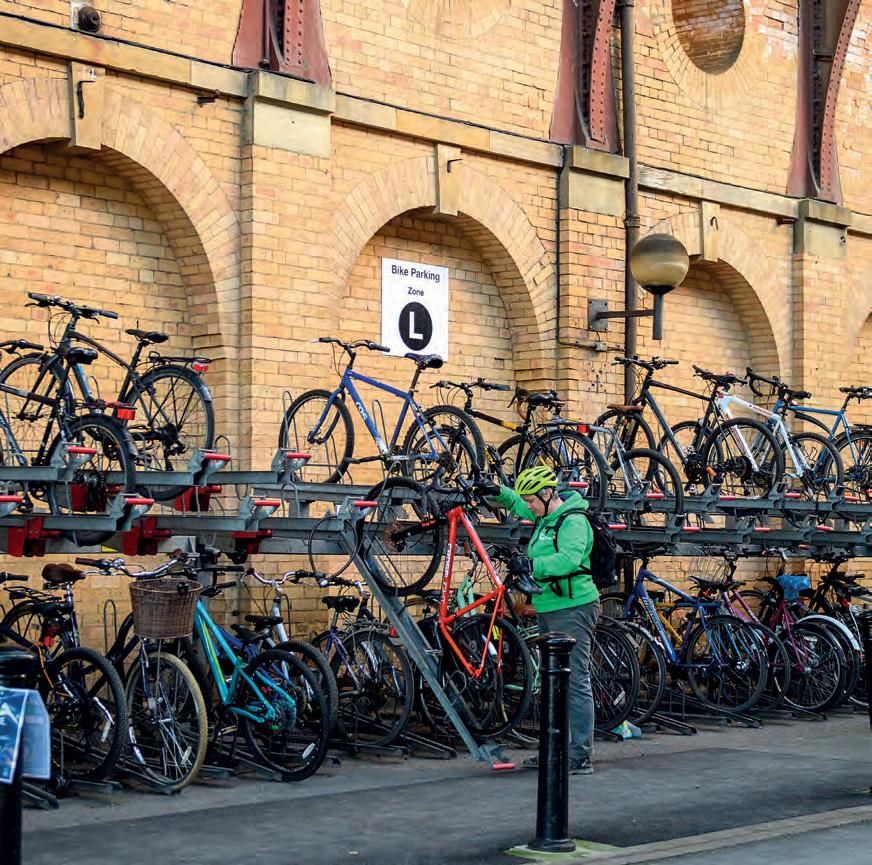
How many times have you parked your bike at a train station and left it for less than two hours? Never? Most people lock up their bike before jumping on a train, returning much later, perhaps after a day at work. So we were amazed when we heard that British Transport Police (BTP) is refusing to investigate cycle theft at stations if the bike is left there for more than two hours.
The rationale for this policy seems to be that, if you lock up your bike at 8.00am but it’s gone when you return 10 hours later, BTP doesn’t have the time to look through hours of CCTV footage to see who stole it and when. Yet they could check the footage to see if the bike was there at noon, and if not then check to see if it was there at 10.00am and repeat the process. Within moments they’d narrow
Insure it from just £3.73/month with Bikmo: cyclinguk. org/bikmo
this to a 10-minute window of footage. When Cycling UK appeared on BBC Breakfast to challenge BTP’s policy, the interviewers were at a loss. Usually they try to put the opposing argument, but they were struggling to work out what that was!
A police force saying they won’t even look at CCTV footage if a bike is stolen is a green light to thieves and will deter people from cycling. Cycling UK has therefore written to BTP requesting a meeting to discuss this policy (see cyclinguk.org/btp-open-letter). Bike theft matters to our members, which is why we spoke out about this and have taken it up with BTP. But challenging decisions like this takes time and funding, so if you’d like us to continue doing this work, please consider donating today at cyclinguk.org/btp-donate
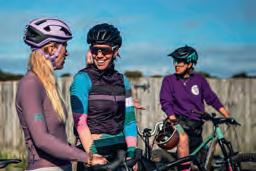
We have just launched this year’s 100 Women in Cycling list. Now in its ninth year, the awards celebrate the exceptional women who are making a difference in the cycling community. The aim is to increase the number of women who cycle and to improve women’s visibility and representation in the world of cycling, whether that’s sport, the cycling industry or cycling in local communities. By highlighting women in cycling, we can reduce the gender gap so that as many women cycle as men. You can find 2025’s full list of deserving winners at cyclinguk. org/100women/2025.
This festive season, take a moment to remember someone special. Let’s commemorate the people who make life brighter – whether they loved cycling, shared adventures along winding lanes, or cheered you on from the sidelines. By making a gift in their memory, you’ll honour someone dear while helping others experience the joy and freedom of cycling. Scan the QR code or visit cyclinguk. org/inmemory

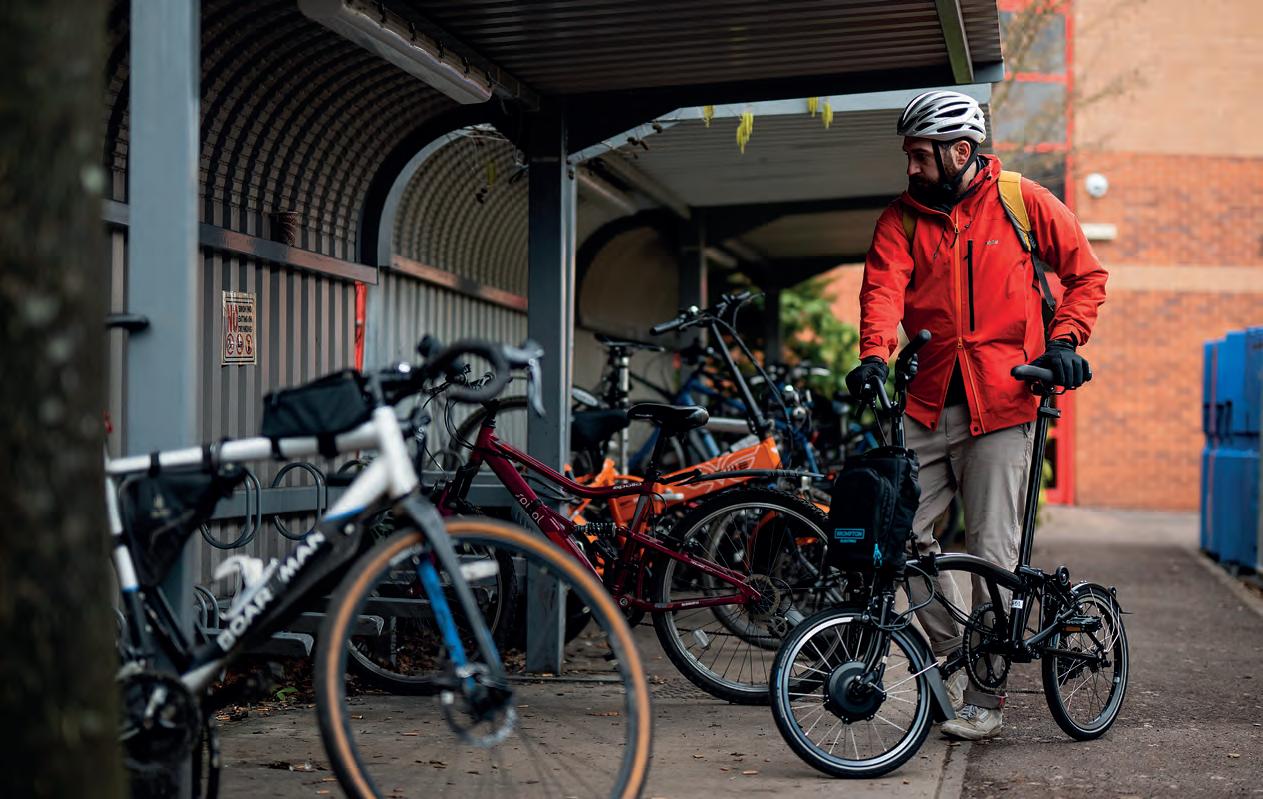
Government right hand, meet government left hand. There’s a tax incentive to buy an e-bike for commuting thanks to the government’s Cycle to Work scheme. But you can’t use it to cycle to many government buildings because you’re not allowed to park electric bikes there!
The problem isn’t exclusive to e-cycling civil servants, writes Duncan Dollimore Cycling UK started to receive the odd email last summer, which became a trickle and then a tide: people contacting us to say that their employer wouldn’t allow them to park or store their e-bike at work. In almost every case, the employer was merely the bearer of bad news; these were essentially insurance-driven decisions.
Most of you will have seen something in the news over the last two years about e-bike fires. I say e-bike fires because that’s how
they’ve often been reported, even though e-bikes purchased from reputable brands and retailers are extremely safe products.
However, there are unsafe batteries, chargers and conversion kits sold online. And there are people using illegal machines that should be described as electric motorbikes or mopeds as they don’t comply with the maximum power and speed limiter rules for e-bikes (250 Watts, with the power assist cutting off at 15.5mph). These do present a fire risk, but the insurance sector has largely heard the headline ‘e-bike fire risk’ message and has increasingly reacted by excluding e-bike storage from buildings insurance policies, essentially forcing the owner of the premises to ban e-bikes from its cycle parking facilities.
To counteract some of the misinformation around e-bike safety issues and promote the safe use of e-bikes,
Cycling UK worked with the Bicycle Association (BA) and the Association of Cycle Traders (ACT) to establish the Electric Bike Alliance and launch the E-Bike Positive campaign. BA is the national trade association for the UK cycle industry, while ACT is one of the UK’s largest cycle trade membership organisations, committed to supporting and strengthening specialist cycle retailers.
Collectively we’ve had some success in shifting the media narrative to focus on the products, market places and practices that create a risk, rather than e-bikes generically, and in highlighting the incredible potential and benefits of e-bikes. Sadly, increasing e-bike use and maximising those benefits will be tough if people can’t park their e-bikes securely at many buildings.
So the question all of us in the Alliance have been considering is how to fix the buildings insurance problem, since insurers aren’t obliged to offer insurance in a free market. One solution is to restrict or more tightly regulate online sales of unsafe products. Unfortunately, as a product safety lawyer explained to me last year, we have product safety laws designed for the pre-internet era. Despite strenuous lobbing by the Alliance, none of us is optimistic that the UK Government will implement measures that will quickly and sufficiently tackle the supply-side problem. An alternative solution might be to address the demand for cheap but unsafe products often used by people in the gig economy – for example, delivering food. Those platforms operate under a model where their riders are classed as independent contractors rather than employees, so the companies escape the responsibilities employers would usually have for those driving or riding in the course of their employment.
A recent All Party Parliamentary report called on the government to reinstate ‘worker status’ for gig economy riders, making the point that these riders were using illegal bikes to make a living in a system like “the sweated labour of England’s 1840s’ industrial revolution”. If the government introduced employment reforms to address some of these issues within the gig economy, the demand for unsafe and illegal products would reduce. We’d probably have fewer e-bike battery fires, and the insurance sector’s concerns would likely diminish. But again, none of us in the Alliance is confident that any of this will happen soon.
Beating the e-bike ban
The solution is therefore an imperfect compromise. Cycling UK will be supporting
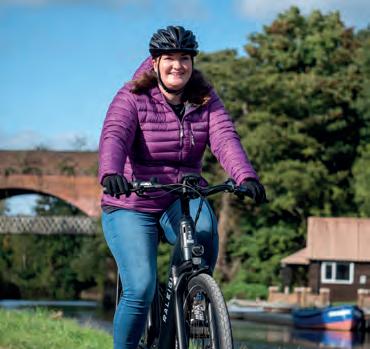
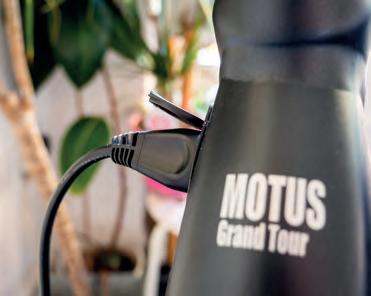


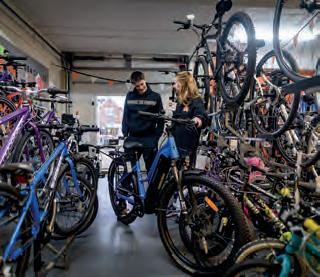
a UK assurance scheme for safe and legal e-bikes, which the BA and ACT are currently developing and hope to launch in 2026. This will direct customers to safe, legal e-bike brands and reputable places to purchase them and have them serviced. The details are still being developed but there will be a clear visual identity for the scheme, backed by a register of assured brands and retailers. The aim is to win backing from the insurance sector and government for this industry-led scheme, giving insurers a workable route to offer buildings insurance without a blanket exclusion of all e-bikes.
Peter Eland, Technical & Policy Director at the Bicycle Association, said: “We’re developing this assurance scheme so that consumers can more easily identify safetytested and fully road-legal e-bikes, and responsible e-bike retailers. It’s a first step to help safeguard the role and potential of e-bikes for transport and leisure – while we continue to press government to urgently address the very real, serious and often tragic issues caused by the supply and use of unsafe and very often non-road-legal ‘e-bike’ products. We very much appreciate Cycling UK’s involvement and support on this complex and difficult issue.”

Historically, Cycling UK has been wary of anything that might sound like regulation of cyclists or bikes, but we’re happy to support this because it’s not regulation of what anyone might buy or ride. The idea is that the assurance scheme will lead to something like an e-bike parking permit, enabling you to store your e-bike at various premises. It’s not a perfect solution to some of the issues we’re having to tackle around e-bikes, but in the absence of prompt government action, it’s needed to reverse what would otherwise become a de facto ban on parking e-bikes at many premises.
The Association of Cycle Traders (ACT), one of the UK’s largest and most established cycle trade bodies, champions specialist retailers through advocacy, training, consumer promotion and business services. Through these retailers, consumers gain access to e-bikes, which provide a vital step toward cleaner, more inclusive transport. With the rise of unsafe products and limited government intervention, coordinated industry action is crucial. The ACT has been a key contributor to E-Bike Positive, is proud of the campaign’s success to date, and looks forward to building on this momentum with the new scheme. cycleassociation.uk
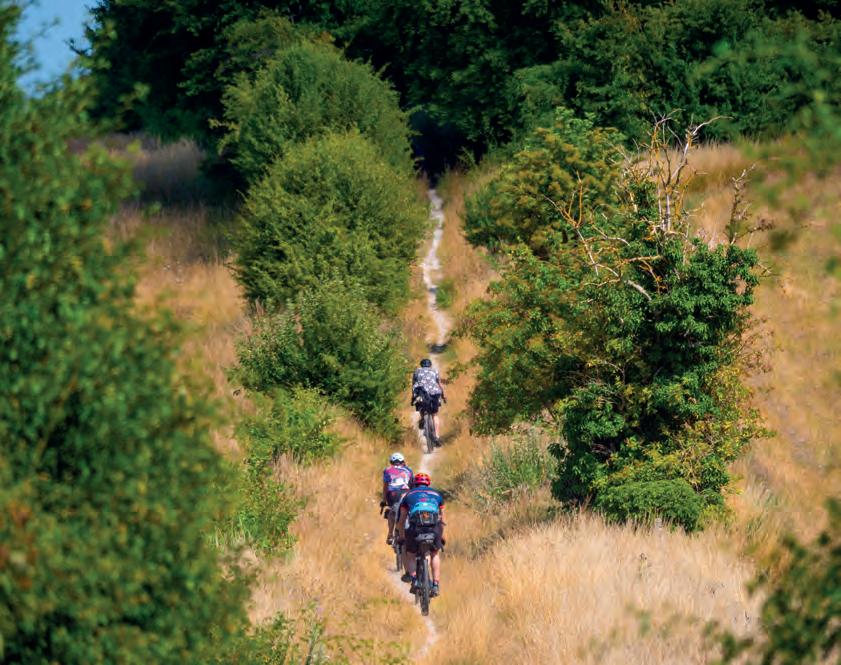
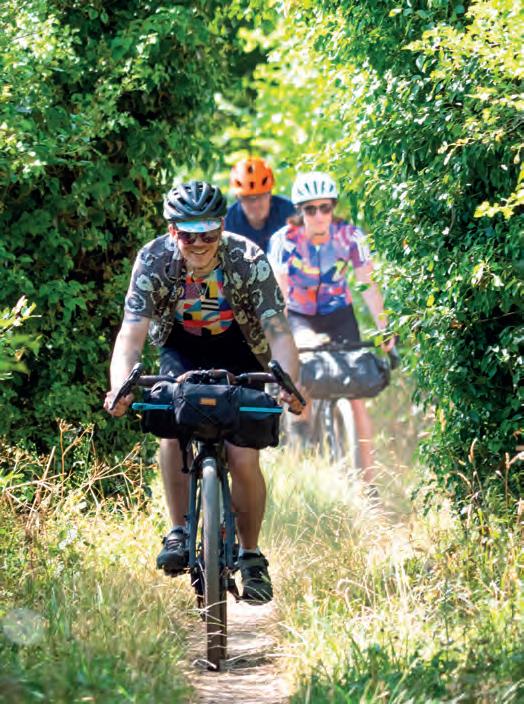
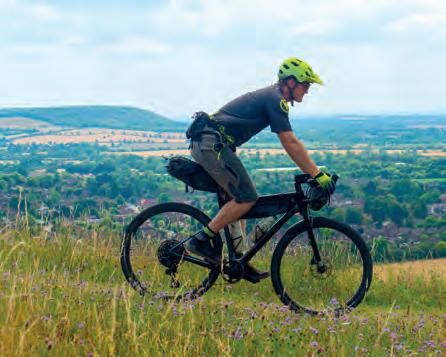
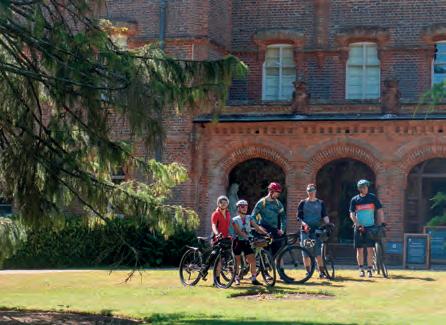
Royal Chilterns Way is Cycling UK’s latest long-distance route. Robyn Furtado followed it through beech woodlands and country estates, and up and down those eponymous hills
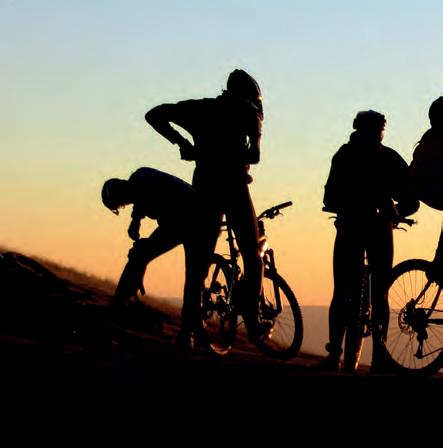
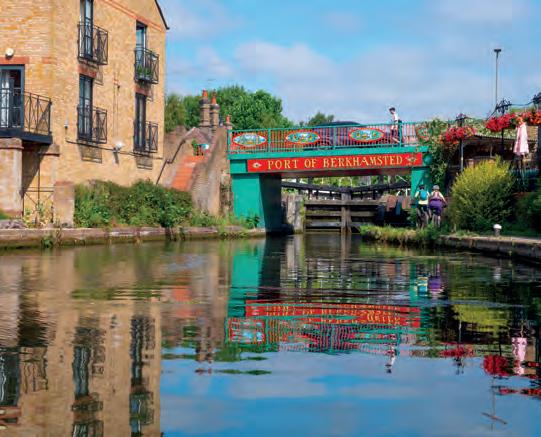
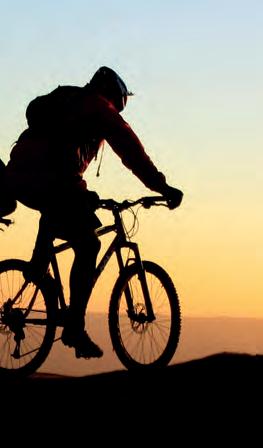
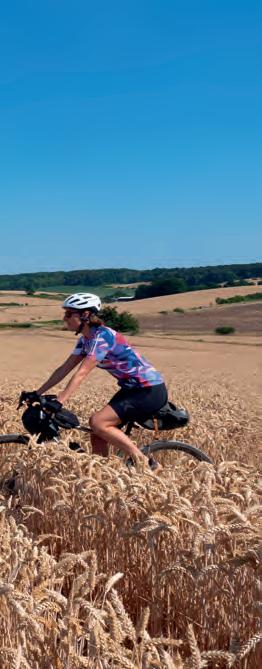
How many times can a group of cyclists stop for coffee on a ride? We were going to find out. On the first day of our trip, sun high in the sky above us, we were already on our fourth.
“I can’t believe we’ve only managed 17 miles,” said Sven. “That can’t be right!”
“We’ve been riding for hours,” Claire added.
Harley, our coffee-finder-in-chief, savoured his flat white and frowned at the Garmin. Somehow we’d spent more time sipping than cycling. We were seriously behind schedule. Perhaps, I thought, this route was going to be more challenging than we had anticipated.
Chalk hills and woodland
Royal Chilterns Way is the seventh route in Cycling UK’s Adventure Series. It’s around 280 kilometres long, weaving a helix shape around the Chilterns. It starts in Reading, heads north and calls in at a number of towns along the way. Max Darkins, one of the route’s designers, told me that this was deliberate. He wanted the route to have a variety of access points, so riders could break it down easily if they wanted to. After all, not everyone has the time or energy to tackle 280km and 3,500 metres in one go.
The route consists of three loops, with the southernmost – around 70km long – starting and finishing in Reading. The middle section is roughly 100km, and has various access points, including High Wycombe and Princes Risborough. The final, northern loop travels 100km through Wendover, Amersham and Berkhampsted. In total, the route passes 13 train stations and two London Underground stations. It is therefore easy to split up the route
“The route breaks into three loops, with the southernmost starting and finishing in Reading”
and ride it over several weekends, or just do one sample loop. The aim of this, Max said, is to help make the route more accessible to those who are new to off-road riding and multiday adventures.
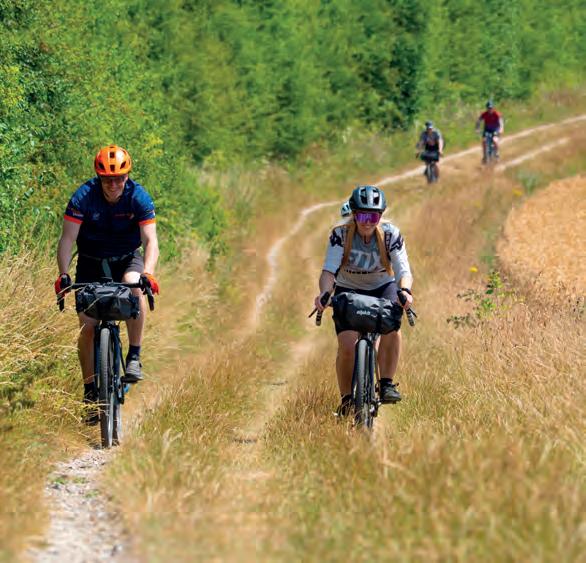
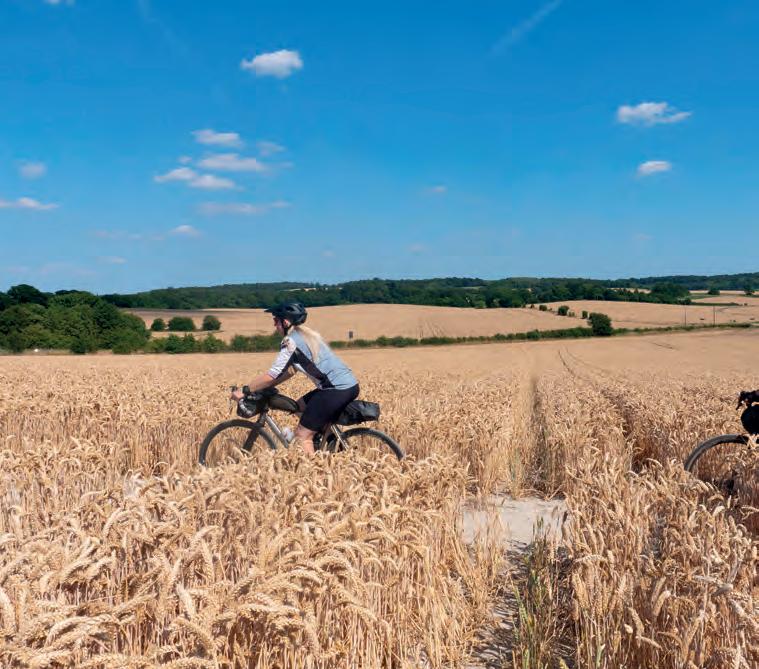
I rode Royal Chilterns Way with a group of six friends over the August bank holiday weekend. It was boiling hot and hadn’t rained for months, so the grasses were bleached yellow and the exhausted trees were already dropping their leaves. These conditions made the trails on the route dry, dusty and fast, although the bumpy bridleways did speak of deep mud in the wetter months.

The dry nature of the trails meant we whipped around the route in three days. We rode a mixture of bikes: hybrids, gravel bikes and hardtail mountain bikes. Gravel bikes are perfect for this route as we encountered nothing hugely technical. However, some of the steeper sections and roots do make it useful to have wider tyres and lower gears, which not all gravel bikes are equipped with.

Cycling UK’s 2026 route fundraising appeal is coming soon
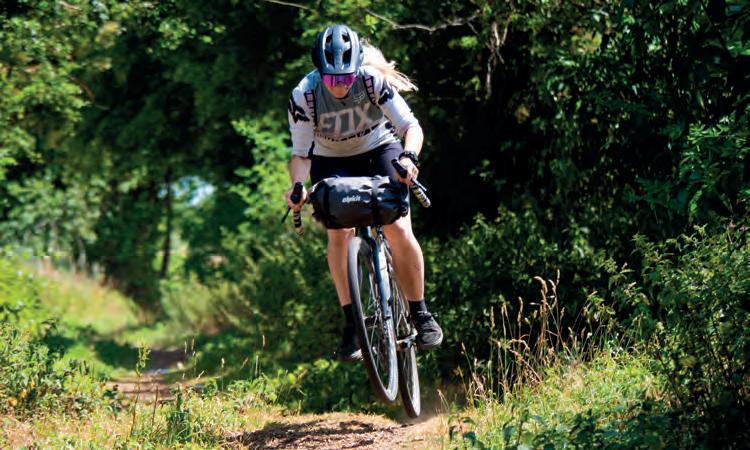
Day one: a slow start in the sun We set off from Reading on the deceptively gentle start to the route, which goes along the Thames towpath. Pretty soon, though, we zipped off up the first of the route’s many hills. Although none of those hills is higher than 250 metres, the accumulation of climbing over each day is more of a challenge than we expected. We ambled up and down pleasant, forested tracks that took us to our first coffee stop in Henley-on-Thames, where a baker’s dozen of eateries selling sourdough bread encouraged us to stop and take in the buntingclad town.
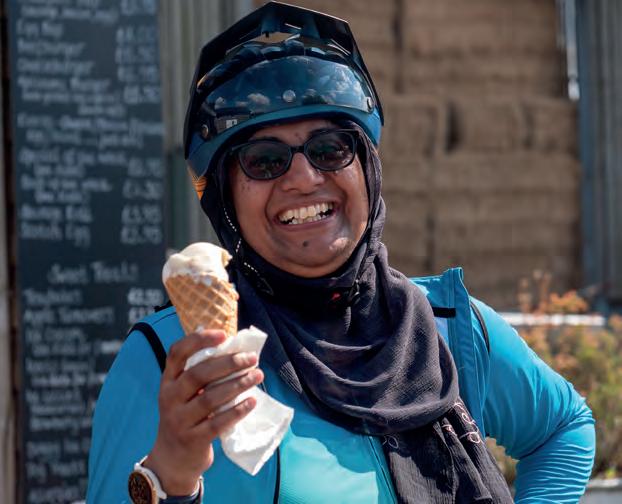
The whole route offers an abundance of opportunities to buy fresh coffee, sandwiches, lunchtime shandies and emergency ice creams. There were, in fact, so many excellent places to stop, we found ourselves pausing every few miles. We joked that this wasn’t quite so much a cycling tour of the Chilterns as an eating tour. Which was why, after a dairy-heavy lunch at The Cheese Shed in Nettlebed, we were shocked to realise we’d only managed 17 miles that morning. We would have to
“The view from the top was worth the slog: a golden patchwork of fields and villages stretching to the horizon”
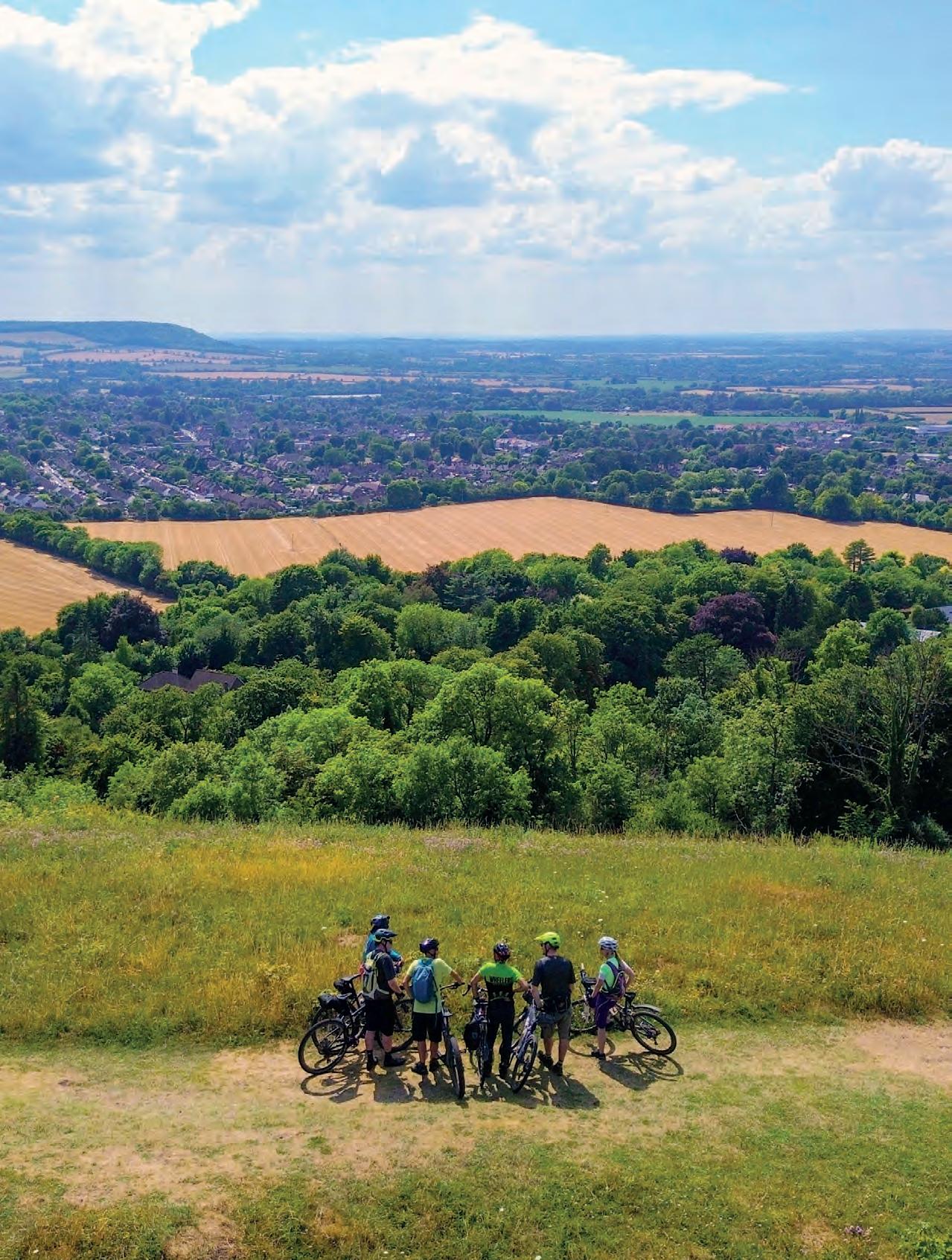
knuckle down and ride hard to reach our destination that evening. Going north, we followed the Icknield Way and the Ridgeway along gentle rises, marvelling at how many beautiful trails there are across the landscape here. I loved this part of the route: the trails were easy to ride, well maintained and quiet, with green views over Oxfordshire. There was then a climb over Stokenchurch Gap, followed by our last of the day: Whiteleaf Hill. It is surprisingly steep. We ended up having to push because it was so rooty. The view from the top was worth the slog: a golden patchwork of fields and villages stretching away to the horizon.
We spent the night in Great Missenden, staying at the beautiful abbey that’s been converted into a hotel. There’s a great pizza restaurant in town, and a Roald Dahl Museum to visit. We opted to watch the sunset in the walled gardens of the abbey, eating our pizzas and massaging sore legs.
Day two: bike repairs and big skies On the second day we suffered a series of mechanicals. We should
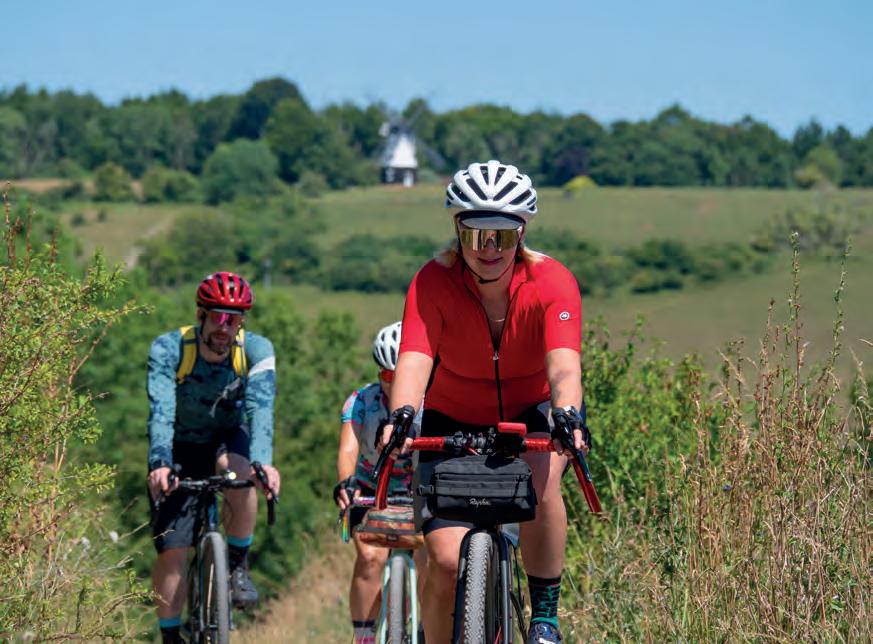
have ridden from Great Missenden up to the northernmost point of the route, then back to Amersham. We ended up shortening the route around Ivinghoe Beacon. Luckily, it’s quite easy to factor in shortcuts on Royal Chilterns Way. The route loops over itself a few times, so you can cut off sections as you need to. There are also lots of stations nearby if you need a rail-assisted solution.
“We passed through lovely villages like Latimer, with gorgeous mediaeval cottages and tiny churches”
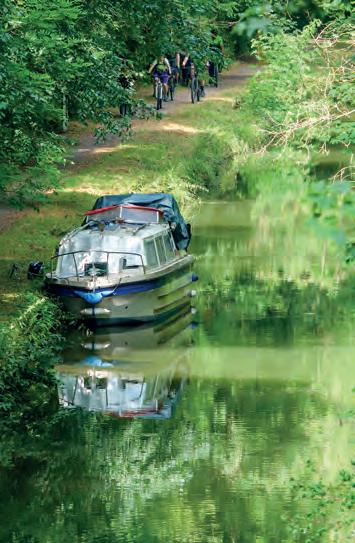
Our first incident occurred only a few miles into the day. Sven’s chain snapped. Luckily, it happened almost next door to OTEC Bikes and the Buckmoorend Farm Shop. The bike shop’s mechanic whipped a new link into the chain in minutes, while the rest of us petted the farm sheep and enjoyed the farm-shop coffee. It’s a great place to stop, with a commanding view of Chequers, the Prime Minister’s country estate. We imagined every helicopter flying overhead had Keir Starmer aboard.
The next mechanical came just a short ride later, on a quiet section of towpath beside the Grand Union Canal. Harry’s aged pannier fell apart at the seams. We spent a lot of time patching it with tape. Behind schedule, I suggested we take what
looked like a shortcut. This turned out to be a bad decision: the shortcut I’d spotted headed deep into spiky thorn trees. Soon we were literally bushwhacking. Half an hour later, we emerged from the brambles, covered in scratches and sporting several punctures. My lesson from this was to stay on the route!
It was 3pm and we’d managed a paltry 20 miles. We had a late lunch at Ivinghoe and decided to shorten the day’s ride. Instead of going all the way to Dunstable Downs, we crossed the Chilterns to Little Gaddesden instead. I’m glad we did or we would have been out riding until dark.
Happy with our detour over Beacon Hill, we were treated to spectacular views as far as the white chalk lion of Whipsnade Zoo. We then re-joined the path in the resplendent Ashridge Estate. The section of bridleway here was fun, fast and dusty. We passed through lovely villages like Latimer, with gorgeous mediaeval cottages and tiny churches. Rolling into Amersham old town as the sun was setting, we were wowed by the ancient high street. We stayed in the 15th-century Kings Arms Hotel,
Distance: Total distance is 280km. I recommend riding it over four days of approximately 70km each.
Route: It starts in Reading and winds a helix shape around the Chilterns, calling in at several towns and cities. Each of its three loops ranges from 70km to around 100km.
Nearest stations: The route officially starts and finishes at Reading Station. But you could start anywhere. There are 13 railway stations close to or on the route.
Accommodation: We stopped at The Kings Arms Hotel in Amersham and at Missenden Abbey.
Bikes & gear: Gravel bikes are perfect for this route. To make the route more comfortable, use tyres wider than 40mm and lower gearing. There are campsites along the way, but enough places to eat that you don’t need cooking equipment. Maps/guides: The guidebook is £19 from the Cycling UK shop: shop.cyclinguk.org. The GPX file can be downloaded from the Royal Chilterns Way web page (below).
I’m glad I had… Variable-light sunglasses, as you spend much of the route switching between shaded woodland and bright, open hills.
Next time I would… Take an extra day. There is loads to see, and with only three days, we often had to ride past interesting-looking places without stopping.
Further info: cyclinguk.org/ royal-chilterns-way


a half-timbered pub, and ate our fill at the Indian restaurant around the corner.
Day three: more ups than downs
The final day highlighted how hilly the route is in places. With constant undulations up and down, it felt like we were riding across rolling waves in the landscape. It was exhausting but satisfying.
“Beneath quiet beech woods, ferns were already turning the burnt orange of autumn”
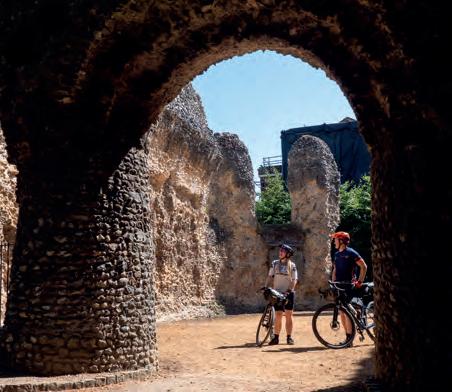
We passed through another National Trust estate, Hughenden Manor, pedalling beneath quiet beech woods, where ferns were already turning the burnt orange of autumn. Royal Chilterns Way takes in a lot of historic buildings and estates, offering beautiful backdrops and interesting places to stop if you have the time.
Spectacular chalk trails took us to Turville, a picturesque 15th-century village where The Vicar of Dibley was filmed. The day was very hot by this time, so we had a breather in the shadow of Turville’s church to cool down. In stifling 30ºC heat, we coasted down and sweated up some serious hills back towards Reading. At last we reached the Thames,
where we finished our ride with a gloriously cooling dip.
Royal Chilterns Way is a gem. I was impressed by how many lovely trails were linked together. Even though we were never far from towns and cities, much of the ride felt rural and remote. Because it incorporates long sections of the Ridgeway and the Chilterns Cycleway, you spend only about a third of the distance on road.
Even though the route feels off the beaten track, it’s been designed to pass by lots of local businesses. You’ll encounter thatched pubs with flower-filled gardens, farm shops full of local produce, cafés and restaurants with good food and proper coffee, and lots of places to stay. A tent and cooking gear are strictly optional. There are plenty of National Trust properties, vineyards and cycle shops along the way, too.
I can see this route becoming a classic, like King Alfred’s Way. It has a little something for everyone. A word of warning, however: you probably won’t have time to stop at every coffee shop along the way!


Royal Chilterns Way is one of the routes in Cycling UK’s Adventure Series, which was launched this August. The others are Marcher Castles Way, Traws Eryri, King Alfred’s Way, West Kernow Way, Cantii Way and Rebellion Way.
All seven are long-distance bikepacking routes that invite people to explore Britain’s stunning countryside and national landscapes. The series promotes domestic adventure tourism and supports local economies. It also offers an affordable and healthy way to explore the countryside, while boosting mental wellbeing.
Each route is free to download from the Cycling UK website as a GPX file, ready to use with a cycle computer or smartphone.
For more information to help plan your trip, get the guidebook: they’re £19 each from shop.cyclinguk.org. The shop also has A3 art prints (£23) for every route, produced in conjunction with Ordnance Survey. So you can display your bikepacking achievements on your wall at home.


For more information about all routes in the Adventure Series, visit cyclinguk.org/ adventure-series your

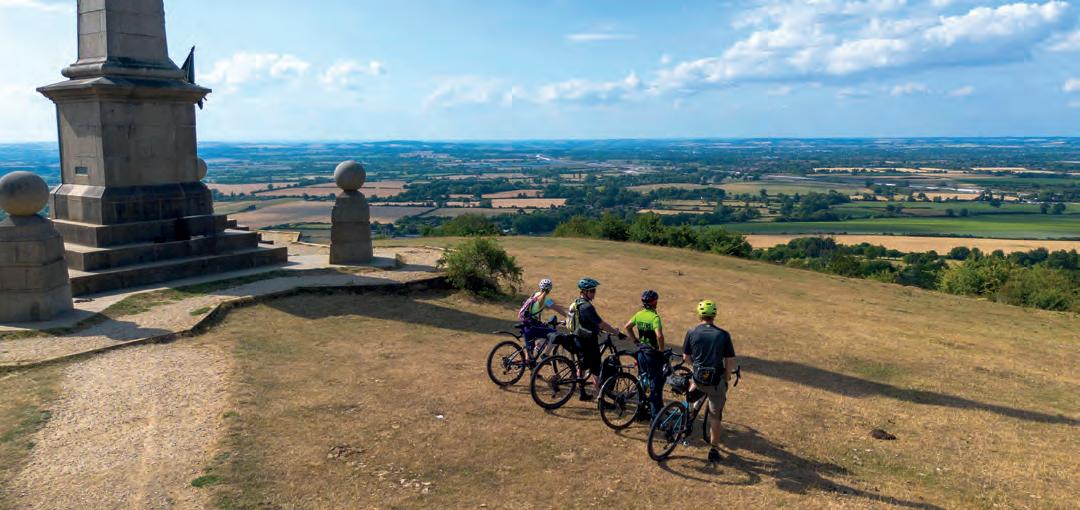
Top: Aylesbury Vale from the Coombe Hill monument, which was built to commemorate casualties from the Boer War
Weekender
The ideal time for spin around the streets and sights of the Scottish capital is when the city is just waking up. Markus Stitz is your guide
Inspired by a social ride of the same name in Oslo, I launched the Edinburgh Dawn Patrol in September 2024. I thought my home city could offer just as much in the way of adventure, beauty and quiet streets as Norway’s capital.
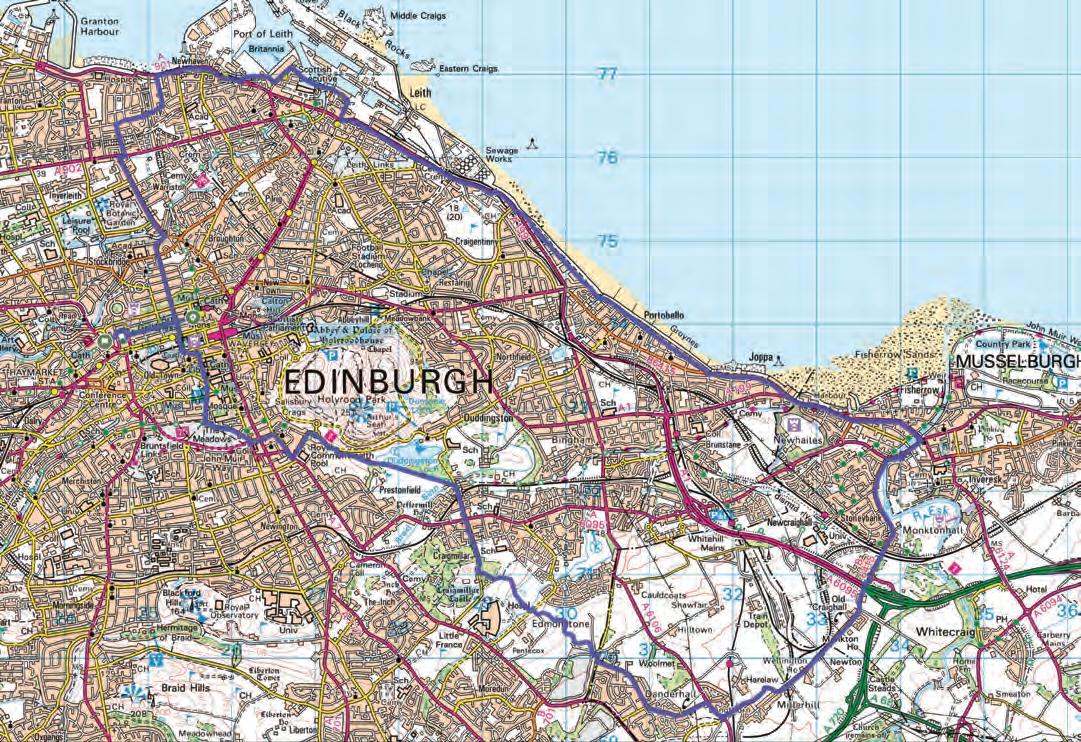
The ride now attracts 20–30 people every Tuesday and Thursday, meeting at St Andrew Square and finishing at Cairngorm Coffee. A consistent 5:40am start, whatever the season, allows riders to fit the 30km-route and coffee stop into their day, while also letting people join mid-route if they wish.
Over its first year, the Dawn Patrol has become more than just a ride. Regular riders come from all walks of life, each bringing their own perspective. So instead of only sharing my highlights, I’ve asked Bob, Ed, Geo, Holly, Rhys, Richard and Zoë to contribute theirs.
For Mark, the longest-standing rider, it’s not just about cycling. The ride reveals Edinburgh waking up: runners, groups exercising in the parks or early swimmers taking a dip in the sea. “I love that there’s another bunch of regulars who have their own wee routine that we pass by, briefly meeting and sharing in our activity. It’s cool when you think about it.”
While you can ride this route at

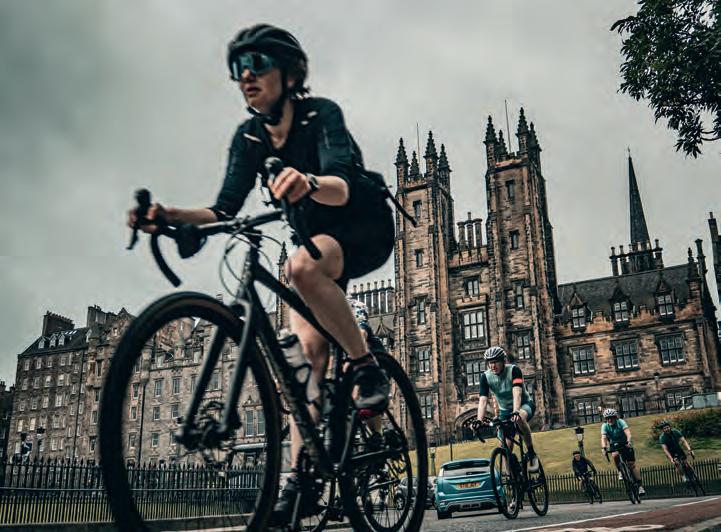
“While you can ride this route at any time, it’s best ridden
early when traffic is low.
It offers a gentle but rewarding tour of the city, combining iconic sights with hidden corners off the tourist trail”
any time, it’s best ridden early when traffic is low. It offers a gentle but rewarding tour of the city, combining iconic sights with hidden corners off the tourist trail. Edinburgh is not flat, however. As Katie puts it: “You’ve got to work for that cinnamon bun.”
As well as the road ride, there’s a gravel alternative. For information about both, visit instagram.com/ edinburghdawnpatrol.


MARKUS STITZ
Bikepacker, route designer and guidebook writer
Route name: Edinburgh Dawn Patrol (road route)
Start/finish: St Andrew Square/ Cairngorm
Coffee Maps: OS Landranger
66 Ride length: 30.9km (19.2 miles)
Climbing:
250m Bike type: Any. There are access barriers on the Portobello Promenade from Seafield Road and Little France Park from The Wisp but they are wide enough for trikes and trailers Ride level: Regular – some features on the route like tramlines and trafficked roads require previous cycling experience
GPX file: cyclinguk.org/ weekender-edinburgh-dawnpatrol
Once the grounds of Starbank House, the park is a charming Victorian walled garden set on a steep slope. It’s one of my favourite green spaces, offering sweeping views across the Firth of Forth and having plenty of quiet corners. The descent beside its walls on Laverockbank Road is a favourite of Ed’s. Try your brakes beforehand!
Royal Yacht Britannia & Fingal
Two ships docked in Leith make for great photo opportunities. The Royal Yacht Britannia served as the floating palace of the British royal family for over 40 years, welcoming dignitaries and world leaders. Nearby, the majestic Fingal, an historic Clyde-built ocean liner, recalls the golden age of transatlantic travel. It’s now a luxury hotel.
For Geo, Portobello Promenade is where “smiles look extra nice in the light of the rising sun”. For Bob, it’s the best place in Edinburgh to watch the sunrise, “unobstructed over the Forth, in all its glory”. With plenty of space to spread out, it’s also perfect for riding together in a group –particularly at this time of day.
For Richard, this is where “bike meets slalom skiing and great views”. Nicknamed the ‘swoopy bit’, the park links The Wisp with Craigmillar Castle and offers a mix of cycle paths, making it the highlight of each ride. Craigmillar Castle itself is a well-preserved mediaeval fortress on the edge of Edinburgh. In the 16th century it was a refuge for Mary, Queen of Scots.
Opened in 1831 to carry coal from Dalkeith to Edinburgh, the Innocent Railway earned its name because its horse-drawn wagons were thought safer than steam engines. For Dawn Patrol riders, the highlight is the infamous ‘lung-buster ramp’ (Ed) or the alternative woodland track. The effort is well worth it, with great views at Edinburgh’s iconic Arthur’s Seat as a reward.
06
The Mount & National Gallery of Scotland
For Zoë and Holly, The Mound, a historic hill connecting Old and New Town, is the final highlight: “All green lights lining up for a quick tramline cross, before a final left onto Hanover Street and on to our coffee mecca.” En route, we pass the National Gallery of Scotland’s neoclassical façade.










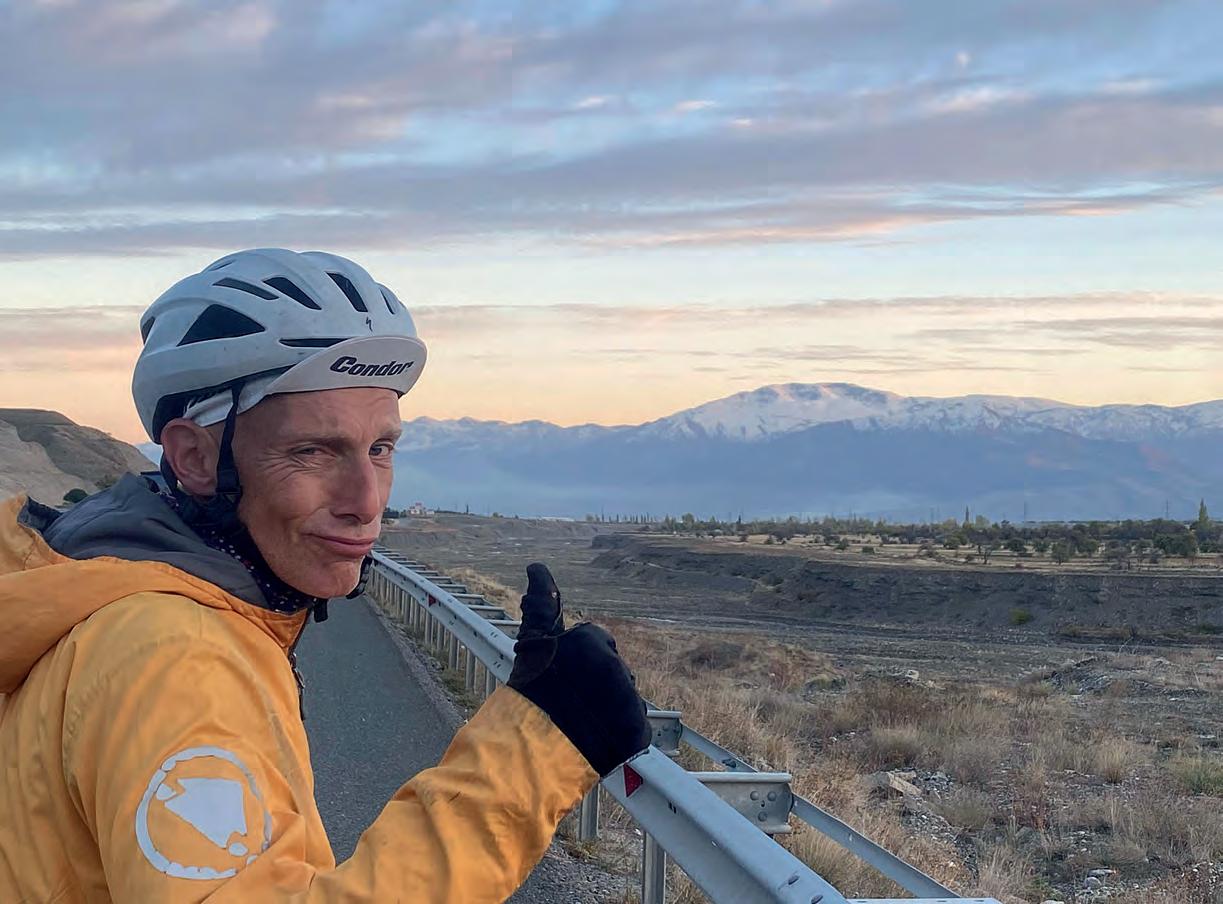




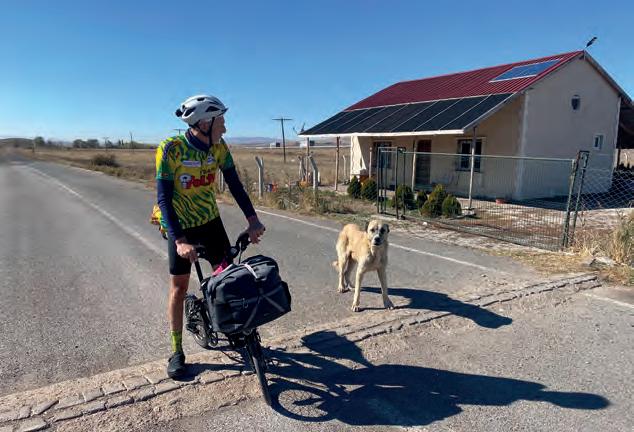
Ride it like you own it,” the strapline for the Brompton subscription service said. So I did: I went bikepacking in Turkey. While dropping like a stone off the peak of a pass higher than the Tourmalet, a ferocious Anatolian Shepherd Dog jumped out of nowhere into the road, snarling and snapping. Should I stop, as those in


Wanting a week away with minimal hassle and expense, Cycling UK member Tony Dabb packed a borrowed folder into two IKEA bags. Here he talks up the bike’s benefits
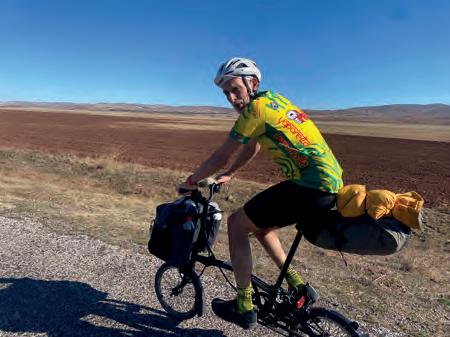
the know say you should? Or try to outrun it? I did what I’d do on my own bike: slight swerve, hammer down. Fido gave up after 20 metres.
If that was the most dramatic of the ups and downs of my week in eastern Turkey with a borrowed Brompton, it wasn’t the only time I was able to sidestep any misgivings I might have had about not bringing a ‘real’ bike.
I was joining my son, Jacob, on part of his year-long cycling tour, which
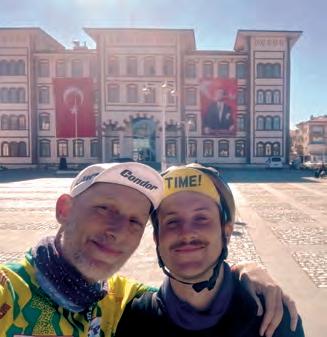
would take him through Europe and Turkey, then on to Vietnam, Laos, Thailand, Malaysia and Singapore. But would a bike that folds up laughably small, and is more commonly seen in commuter-train luggage racks, be up to the job of tagging along with a global bikepacker?
Good things, small packages
My eldest has a very silver-lining disposition, so when he was ‘let go’

from his TV production job he took this as a sign to cut loose and see the world on two wheels. While he set about repurposing my old Genesis Croix de Fer, and assembling in our kitchen a body of kit that even Shackleton would have balked at, I looked on, outwardly admiring but inside green with envy. My huffing and puffing finally solicited an invitation to join him for part of the way.
I intended to ride with Jacob on his first, day-long leg from London to the ferry at Dover, then join him for a week later on. Unable to get my bike on any train going south from Newcastle for his departure, I discovered I could pick up a hired Brompton from a locker at King’s Cross for just £5 for 24 hours. I now regard the Brompton Bike Hire arrangement as my gateway drug. Because I then got one for a whole month and took it to Turkey.
Needing to squeeze the trip into the October half-term (I’m a teacher), I wanted maximum flexibility and easy transfers on planes, trains and buses, without it becoming financially ruinous. Taking a so-called proper bike would turn a week’s budget bikepacking into something costing more than a car-andCampari trip around the Italian lakes. So, no sooner had I opened the box of my subscription Brompton, I was packing it away again into two IKEA Dimpa bags. Then I set off from Newcastle by train to catch my flight from Edinburgh – no bike reservation required. Only a few hours later, to audible gasps from Kayseri Airport security, I was unfolding it and wheeling it straight out of the airport (no taxi or transfer needed). Shortly after, I was catching up with the boy over spicy mercimek soup.
A full-sized adventure
was that I had booked the cheapest possible flight, with no option to change the return departure airport. Not so clever now, eh, cheapskate? Actually it wasn’t a problem. While most buses and some trains won’t take a normal bike, they will take a folded Brompton. When we reached Erzincan, more than 500km away, all I had to do was pick up some cardboard, zip the bike into its bags and stow it away next to the backpacks and suitcases on a bus bound to back where we’d come from. You’d never even know there was a bike in there.
Distance: 632km from Kayseri in central Anatolia to Erzincan in eastern Anatolia.
Route: Leaving Kayseri and travelling north-east, past the blinding-white salt pan of Lake Tuzla, we passed through Şarkişla, Sivas and carried on to Erzincan. Jacob’s final destination in Turkey was Erzurum.
“I wanted maximum flexibility and easy transfers on planes, trains and buses”
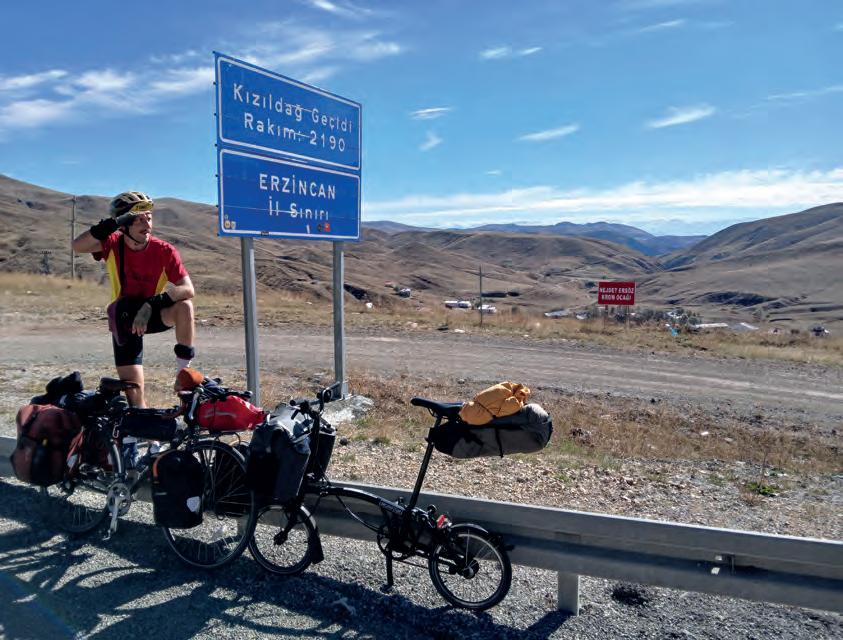
Admittedly, next to the boy’s round-the-world setup, the Brompton looked diminutive. Indeed, a leather-skinned old man at a service station eyed me warily and asked me why I was riding a ‘çocuk bisikleti’, a child’s bike. Yet despite its small wheels, it doesn’t ride like a child’s bike. There was no place my folding friend wouldn’t go, from the comfortably broad shoulders of the D-road dualcarriageways to the snaking, single-lane roads through plains and rolling hillsides, and even, occasionally, the cinder tracks and trails by the shores of lakes and reservoirs.

We rolled out of Kayseri the next day, knowing only that we would head north-east for as far as we could in the time that we had. One unforeseen consequence of my miserliness
Conditions: Late October (in 2024) was ideal. Dry and bright, daytime temperatures were 15−20º. Nights sometimes dropped below zero.
Bike used: Brompton C Line with 6−speed gearing, standard (but robust) Schwalbe Marathon tyres and dynamo lighting.
Navigation: Komoot.
I’m glad I had… A large Brompton Borough bag, which I bought. Unlike the rest of the trip’s expenses, this wasn’t cheap (currently £145). But it easily slotted on and off the front block and carried nearly all I needed for a week’s adventure. It even passed as a cabin bag for the flights.
Next time I would… Take a dog whistle. The ferocious Anatolian farm dogs are said to be mildly confused by one, giving you valuable seconds to make your getaway.
Brompton’s subscription service provides you with an immaculate machine (mine was almost brand new), ready to ride, for only £50 on a pay-monthly basis. If you commit to a year and pay by direct debit, the fee comes down to £35 per month. The bike is delivered in a box. Pop the saddle on, unfold, and you’re ready to go.
If you plan to take one abroad, however, note that the Brompton Hire Agreement (as of December 2024) says: “You must not take or use the bicycle outside the UK without our prior written consent.”
If you don’t need one for a month, Brompton Bike Hire has a network of lockers from Oban to Paris. At these, you can use your phone and the Brompton Bike Hire app to get a bike for £5 per day. I use one now when visiting London instead of taking the Tube. subscription.brompton.com
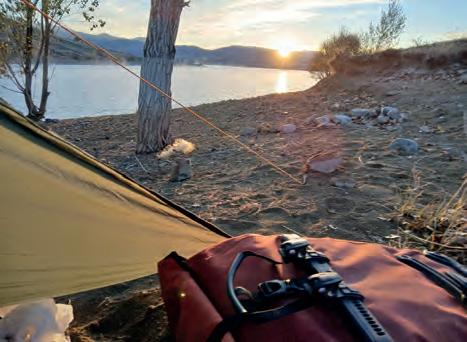
We wound our way along the road less taken (by cyclists, anyway), through Sivas, where the Turkish bath was to die for, and not just because of the pummelling we got from the 18−stone attendant. We wild-camped by the Kizilirmak River, eventually fetching up in the Silk Road city of Erzincan, having plummeted down the mountain roads, gleefully overtaking lorries as we went.
As we reached the far east corner of Turkey, the roads climbed higher, with
white-capped mountain ranges in the distance on either side of us. Yet there was never a time when, as I had feared before going out there, I might slow down the intrepid explorer’s progress. Or worse: have to get off and push.
“When do we get to swap?” said Jacob, as he zigzagged his way to the summit of the Kizildağ Pass (2,190m), where I stood ready to snap the moment for posterity. He was carrying four panniers, it has to be said. And the tent.
The best thing about cycling in this wild part of Turkey is that, while the scenery might remind you of a Western one moment, the Appalachian Trail the next, and then the Mongolian steppe after that, wherever you go the people treat you like a minor celebrity. Unbending their backs from the turnip fields to wave and smile, saluting from their tractor seats, or tooting their horns in appreciation as they overtook with solicitous care, people seemed genuinely pleased to see us.
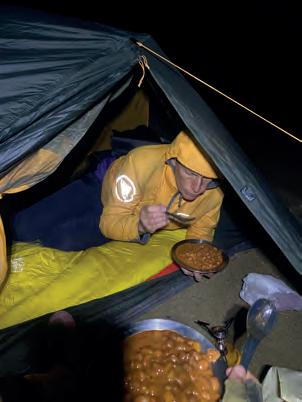
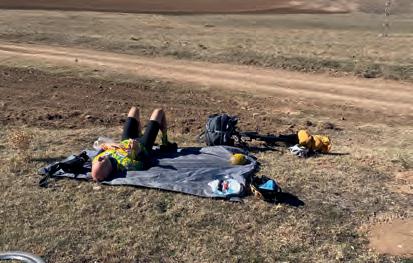


“An old man at a service station eyed me warily and asked me why I was riding a child’s bike”
Here again the Brompton was a conversation starter. First: “Why does it have such small wheels?” Often followed by: “Would you like to drink
some çay (Turkish tea) with me?”
So it went, from the curious pensioners sunning themselves beneath the portrait of Atatürk in the main square of the tiny town of Şakişla, who insisted on paying for our tea, to the family selling honeydew melons and sunflower seeds who stopped us and stuffed a carrier bag of their wares, before sending us on our way with handshakes and smiles.
The borrowed Brompton had given me the very essence of a cheap and cheerful adventure. I was sold.
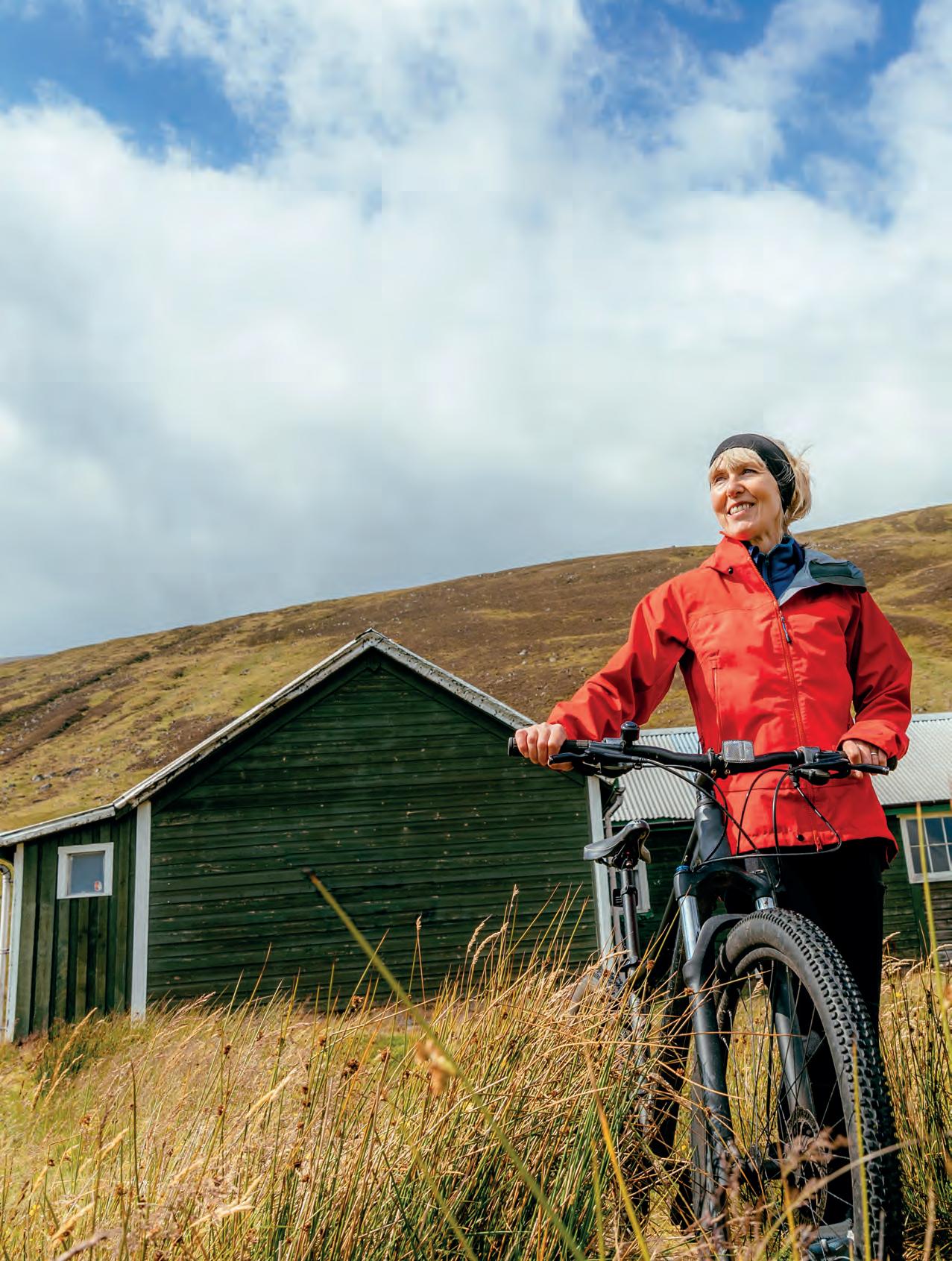


Can’t find affordable UK accommodation on the usual websites? Camping’s not your only option. Rain dodger Rob Ainsley suggests some alternatives
I’ve overnighted in some rum places while touring. Empty ferries, former jails, military barracks, monasteries, tractor sheds, even a rare-breed tropical spider house in the Amazon – although it wasn’t called that. It was called a ‘holiday lodge’. But those were abroad. Britain’s non-mainstream opportunities are more thinly spread. When hiking author Alfred Wainwright visited the Lakes in the 1930s, he simply asked farmers in the pub each evening for a barn to sleep in. Now those barns are upscale holiday lets. And it seems apex-predator websites control the accommodation market. Everything’s on booking.com or Airbnb. Otherwise it’s your tent: 30 quid for a field or else wild camping with the midges. Actually, it’s not quite as bad as that. You can find one-off indoor overnights for your British bike tour beyond the scope of the internet giants. They include historic churches, caving club dorms, homes of fellow cyclists, bothies and more.
The usual suspects
“YHA hostels can still be great choices for cyclists as bases for a cut-price tour”
Tent averse? Staying indoors has a strong appeal when it’s cold or rainy. Most accommodation is indeed on booking.com, from posh hotels down to hostels and huts. Check the websites of the individual establishments to see if the rate is cheaper there, or if there’s a bonus such as free breakfast. Airbnb.com overlaps but does list alternatives. While it’s more boutique guesthouses than spare bedrooms nowadays, you can find the odd bargain. Some hotel chains aren’t on either of those – Premier Inn (premierinn.com) and Travelodge (travelodge.co.uk), for instance. While a room tomorrow in York might be £120, an off-season or Sunday night in Milton Keynes or Bradford a few weeks in advance could be £35. Both chains welcome bikes in rooms (handy for e-bike charging) and offer reliable comfort.
History is bunk
Happy camper? Scotland lets you wild camp. (Some areas, such as Trossachs honeypots, require a day permit: lochlomondtrossachs.org.) Not so in England, where it’s campsites only, often expensive. However, a curated list of bike-friendly campsites for £15 or less is at tinyurl.com/ CycleCampingUK. Other options – free apart from the membership fee – include people’s back gardens in welcometomygarden.org, though there’s only a few dozen in Britain.
Hostel options include, of course, those of the YHA (yha.org.uk) –where they survive. Numbers haven’t decreased that much since the 1970s, when cars and alcohol were banned, you got kicked out during the day and had to do a task before leaving. There were about 180 hostels then and around 150 now. But many are now groups only. Just 93 offer private rooms, and a mere 69 do dorm beds. Many rural ones have shut in favour of gap-year-friendly city hostels. That said, YHA hostels can still be great choices for cyclists as bases for a cut-price tour. They’re less 1930s-boarding-school now, supplying bedding, café bars and restaurants, wi-fi, drying rooms, social spaces, bike sheds, kitchens,
the lot. And there are astonishing offers through the year. I’ve stayed for £10–£15 a night in Whitby on the Yorkshire Coast; at Hartington in the Peak District; and at Hawkshead and Coniston in the Lakes. You don’t need to be a member but see the sidebar, ’Discount stays at YHA’.
Top

Above:

Cycling UK members receive a 50% discount on YHA membership, which entitles you to a 10% discount off accommodation and any pre-booked meals. If there are any under 26−year-olds included in the booking, there’s an additional 5% off. These two reductions stack together, so a 15% discount will be applied to a Cycling UK member booking that includes an under 26−year-old. cyclinguk.org/yha
Like the YHA, independent bunkhouses and hostels have been clobbered by Covid, energy prices, staffing issues and more. Many have disappeared, but some new places are springing up. In the Yorkshire Dales, Reeth’s Black Bull Inn opened a bunkhouse room last August. For landlord Dave it was a good way to utilise a non-ensuitable room which, nevertheless, has commanding views over the village green and surrounding fells. Single travellers are welcome at £30, including breakfast.
Finding such niche places isn’t straightforward. Listings websites are never comprehensive and often out of date. I find it best to Google ‘bunkhouse’ or ‘hostel’ plus place or area name. It’s hit-and-miss, but can yield places otherwise unlisted. You might have to email or phone for availability and prices.
“A recent phenomenon is peerto-peer hospitality, through apps or websites”
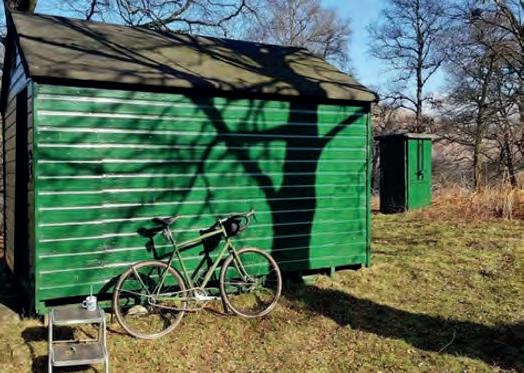
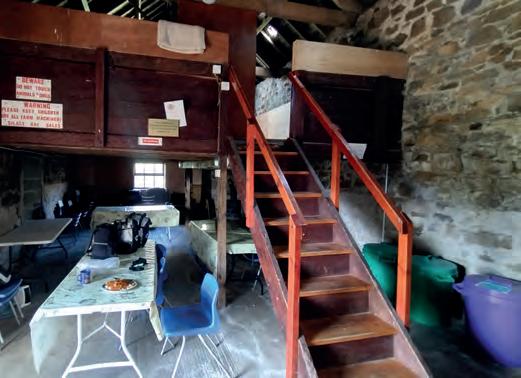
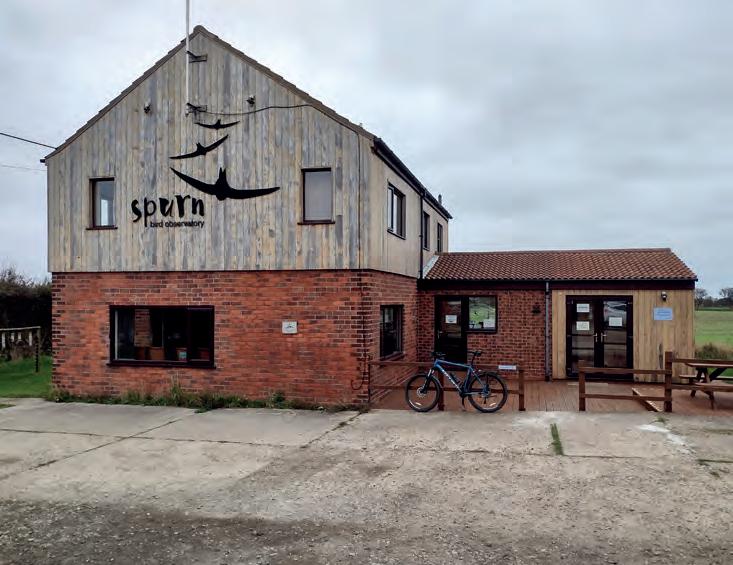
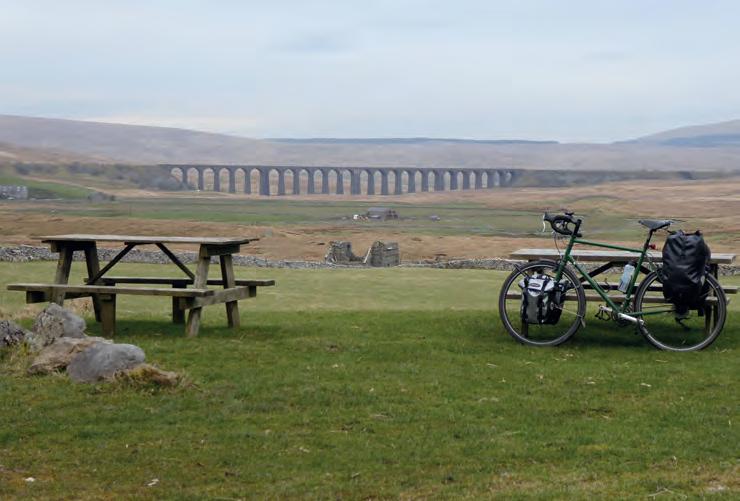
arrive. Nevertheless, I’ve found cracking and agreeably priced rural places by such sleuthing: birdwatching hostels in Rutland Water and on Spurn Head in East Yorkshire (both welcomed non-spotters); a super bunkhouse (Broadrake) by the Ribblehead Viaduct in the Dales; and a very basic but sub-£10 farm shack outside Leek, with sweeping Peak District views and visiting hens... A recent phenomenon is peerto-peer hospitality, through apps or websites. Warmshowers.org ($30 joining fee for new members) is a favourite of many: you stay for free in a fellow cyclist’s house on the understanding you’ll return the favour for someone else later on. Nothing’s guaranteed, however. Of a dozen potential hosts, six might be away touring, five don’t reply to you in time, and the one that does already has a guest. Still, I’ve had many lovely encounters, swapping travellers’ tales over dinner or a glass of wine. It’s usually two way: both guest and host get something positive out of the experience.
Unfortunately, again, many are groups only. And you might need a sleeping bag; check before you
A similar scheme is the Dutch Vrienden op de Fiets (‘Cycling Friends’), though this one charges a flat rate of €25 for B&B. Annual membership is €10 (vriendenopdefiets.nl/en). I’ve had some terrific overnights with
fellow cycle tourers, in everywhere from tiny back bedrooms to grand annexes to houseboats. Most hosts are in the Netherlands but there are a few dozen in Britain, too.
Caveman chic
No joy so far? Keep Googling. Try pub rooms; some aren’t on listings sites. Out of term time, some universities let out student rooms for a night. More rurally, there are caving clubs: many have basic bunkhouses intended for troglodytes but which welcome cycle tourers (for instance, northernpennineclub.org.uk, £10 per night). Naturally, they’ll be in remote, limestone areas. You might just find some one-offs as well: Fife and Kinross CTC has a cyclists’ hut by the side of Loch Earn in Fife (cyclinguk.org/kinrosshut), at just £3 a night. Alternatively, your bike tour might be a good reason to look up an old friend who lives nearby – and who might put you up.
On a (genuine) pilgrimage? The British Pilgrimage Trust’s Sanctuary Network can help put you up in churches or monasteries, and also advise on routes (britishpilgrimage.org/ sanctuary-network). Some Buddhist monasteries allow overnight stays to travellers, such as Samye Ling on the River Esk in Scotland (samyeling.org) – although they may not be impressed if you watch TikTok videos or wield a corkscrew. Rather wonderfully, if not cheaply, church fans can choose from
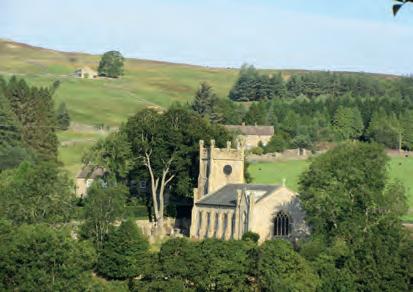
Above: Bunkhouses can be in some super locations: Broadrake Bunkbarn is next to Ribblehead Viaduct in North Yorkshire


Top right & right: Some specially chosen historic churches let you ‘camp’ inside, such as here at St Mary’s, Arkengarthdale, North Yorkshire: a special experience
50−odd historic examples to stay at through the Churches Conservation Trust (see ‘Champing at the bit’).
Hut trick
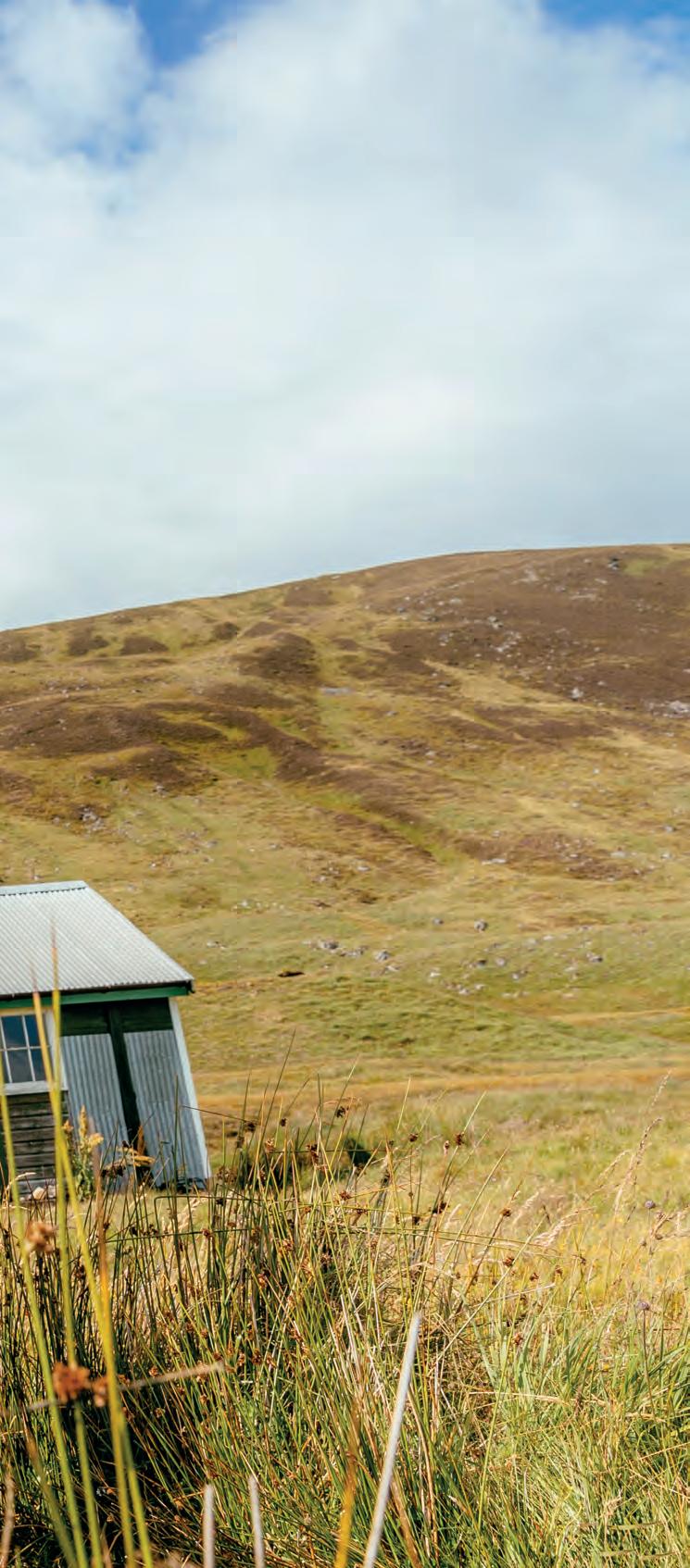
“Free but very basic are bothies: former (real) shepherd’s huts in remote country”
Free but very basic are bothies: former (real) shepherd’s huts in remote country, left unlocked as travellers’ shelter. No booking, no fee, just turn up. No facilities either: the ‘bed’ is a bare wooden platform, water is from a stream, it’s BYO wood for the fire, and your ‘toilet’ is a shovel. Plus you might well be sharing with others. There’s no definitive list but try mountainbothies.org. uk, or join the Mountain Bothies Association Facebook group. Most are in Scotland; great ones for off-road cyclists are Kervaig on the way to Cape Wrath, and Melgarve on the An Turas Mor route.
Finally, here’s an accommodation trick of York Rouleurs. Once a year the club rides to Hull for a specialoffer mini-cruise on the overnight ferry to Rotterdam. There they leave luggage in their cabin, ride round Holland for day, then sail back overnight. For the cycle tourer, there’s often an inventive way round the accommodation challenge!
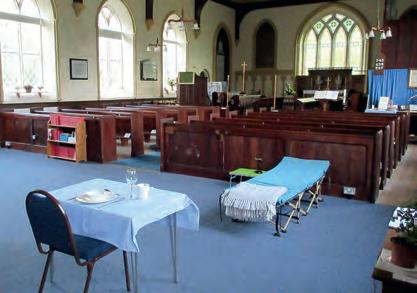
I stayed in a church last August: the wonderful St Mary’s in Arkengarthdale in the Yorkshire Dales. No, I wasn’t on the run or seeking asylum. I had it all to myself thanks to the Churches Conservation Trust (champing.co.uk). You can do the same at 50 or so others around England. Luxury it isn’t. There’s no shower, it probably won’t be heated, and you kip on the provided camp bed. (Bring your own bedding or rent it for the night.) Facilities might vary from an electrical socket and not much else, to indoor flushing loos, a well-appointed kitchen area, and zippy fast wi-fi (all of which I enjoyed at St Mary’s). Nor is it cheap.
But it’s a unique experience with a genuine goosebump factor: a place that’s touched thousands of lives is all yours. St Mary’s was left open for me when I arrived there about seven. A camp bed was laid out ready, by a table with plates, cutlery, mug and wine glass. Before making dinner there, I nipped down to the Red Lion at Langthwaite, five minutes’ walk away, for a pint of local IPA. My bike stayed inside in the porch, and I could bolt the door from the inside.
In the (ahem, literally) wee hours, I had another uplifting experience: this is Dark Sky country, where scant light pollution means velvety black backdrops for stargazing. Awesome!
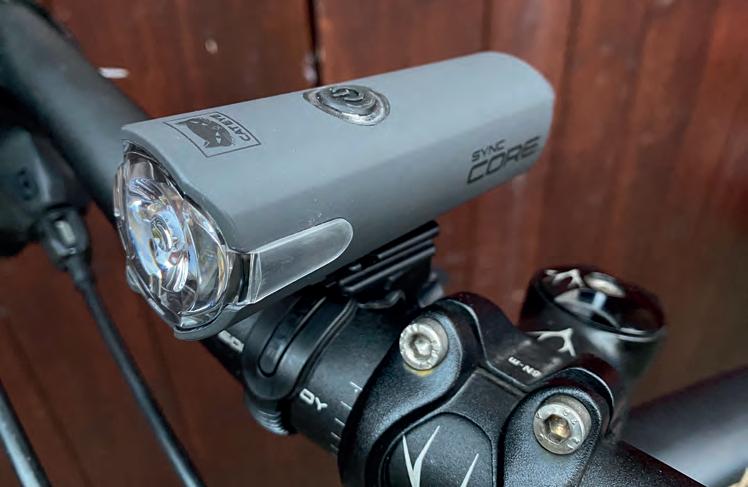
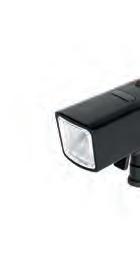
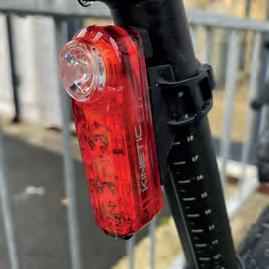
CatEye’s Sync range has been around since 2018 and remains essentially unchanged. I can see why. The lights make starting and finishing a ride time efficient, and they’re bright enough to be seen in all conditions.
As the name says, the lights work in sync via the CatEye Sync App. In the past, I’ve tested some bad bike tech apps. CatEye has ironed out any glitches in this one. The lights synchronised instantly, and I was able
Verdict
Functionality, user-friendly operation and reliable in-app controls outweigh my mount and runtime gripes. The sync function makes starting and finishing cold, winter rides hassle free, and the lights do get you seen – as well as lighting the way ahead.

SEAMLESS CONTROL
CUSTOMISABLE
RUNTIMES ONLY OK

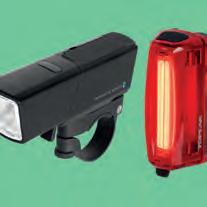

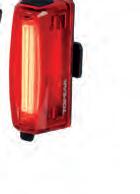
TOPEAK POWERLITE
BT COMBO £121.99
More powerful and with longer runtimes, these lights can be controlled independently via buttons on the front unit. topeak.com
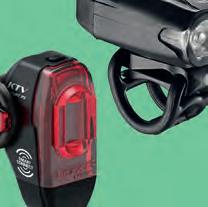
to use all features on the first try. A long press in the app switches on all lights, though operation directly from the front light is possible – and more convenient. You can toggle light modes, disable front light options, and turn off the rear light’s kinetic function in the app, too.
The rear’s kinetic function – a twosecond 50−lumen blast when braking – is effective in flash mode but barely noticeable in high mode. Disabling it also helps preserve battery life. I love that you can check battery levels in the app, rather than relying on vague indicators on the lights. The front light outputs up to 500 lumens. I’ve found it sufficient for moderate-paced rides in the dark. Its beam forms a bright circle with a fading halo. It’s effective for visibility but I wouldn’t

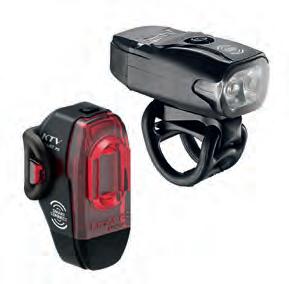
LEZYNE KTV DRIVE
PRO SMART PAIR £67
All Lezyne’s smart lights can be controlled via an app. The KTV Drive Pro Pair are be-seen lights. lezyne.com
use it for fast-paced nighttime riding due to the limited peripheral lighting. The rear light has a silicone backing and a band for mounting. It fits round and aero seatposts. The front uses CatEye’s Flex Tight system, which is a bit slow to swap between bikes. Both lights charge via micro-USB in 2.5 to 3 hours. For me the runtimes could be better, particularly the front’s maximum setting, which only lasts two hours.
Emma Silversides
Friction shifting comes to integrated brake/gear levers
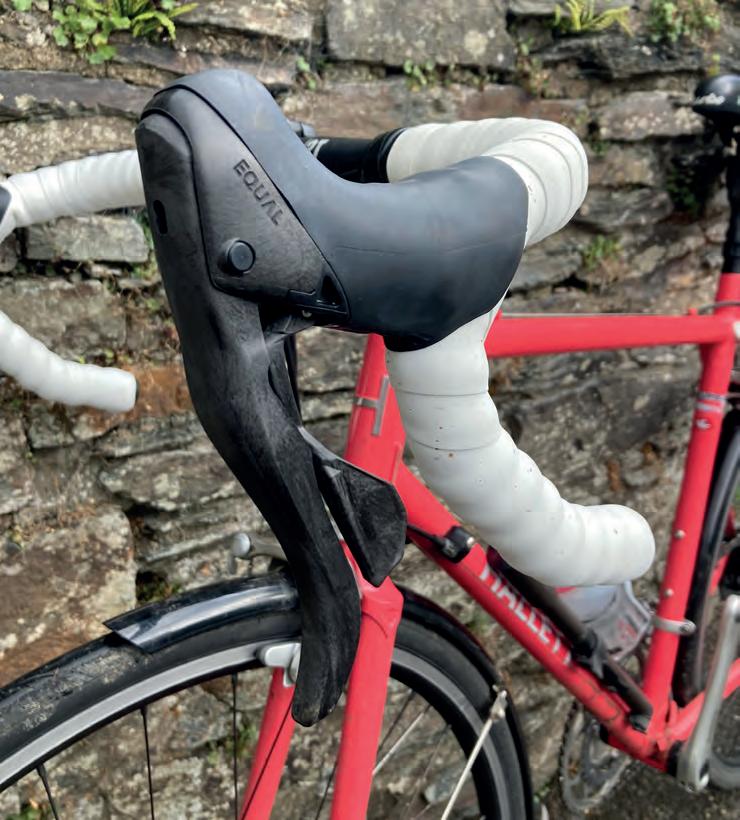
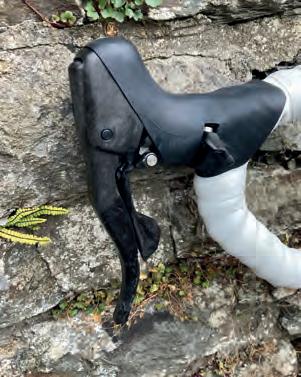
Rumours that friction shifting is enjoying something of a resurgence in popularity are true! For proof, note the arrival of Growtac’s Equal Control Levers, which combine the now industry-standard dual-control lever functionality with good, oldfashioned, friction-secured, nonindexed gear selection.
The idea is genius and its execution near flawless. Depending on your standpoint, it’s either the answer to your prayers or a complete irrelevance. While those cyclists who value the ease of use and reliability of indexed gear selection may scoff,
owners of boxes of incompatible or obsolete-but-sound transmission components will immediately get the point. Which is that any derailleur gear mech can be used with any cassette or multiple freewheel, provided the mech has enough chain wrap and the geometry to ensure it won’t foul a sprocket.
While mechanical (as distinct from electronic) indexed derailleur gear shifting is user friendly and ensures quick, reliable gear selection without much user engagement, it relies on a system of precisely matched parts. Front mechs are
less sensitive but nevertheless work well only when used as part of an integrated system. That’s fine until a component becomes obsolete and a replacement hard to find. Or the user wishes to upgrade a part without having to buy a complete new transmission. Or mix parts from different manufacturers. Or one of any number of scenarios that does not involve a dedicated groupset. Indeed, a whole cycling culture has grown up around the joys of getting non-matching parts to work together in something approaching harmony. Relying on friction to hold the shift lever at any chosen position avoids all this fuss. Simple in operation and requiring little by way of precision parts, it was the operating mode for derailleurs until largely supplanted by indexing in the early 1990s.
‘Retro-friction’ levers, popular shortly before indexing arrived, used a clutch, providing frictionless movement in one direction. Each Equal Control Lever has two of them. In fact, the internals are impressively complex, given the supposed simplicity of regular friction shifting. Executed in carbon-fibrereinforced plastic, the levers are pleasantly ergonomic, with a contemporary shape that feels comfortable in my large hands. A bulge under the lever’s rubber hood houses the cables as they exit, but isn’t obtrusive. The layout follows the
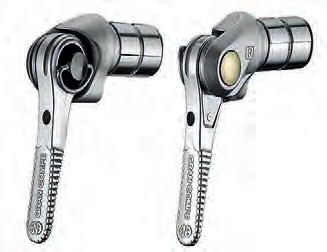
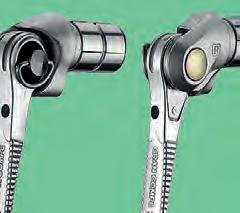
DIA-COMPE ENE BAR END SHIFTERS
£74.99
Retro-style levers with ‘power-ratchet friction control’. Similar downtube levers are available for £49.99. diacompe.com.tw
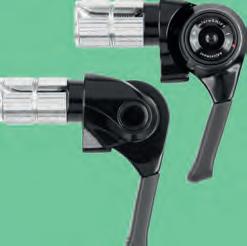
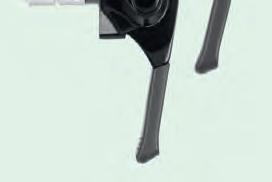
Campagnolo format, with a long-shift paddle behind the brake lever and a thumb-operated button for the return action. This sits high enough to be slightly awkward to reach from the drops, while being easily actuated from the hoods. The brake levers are angled outwards from the pivot for extra clearance when pulled back. The lever body underside is well made, with no major pressure points.
Attachment to the handlebar is straightforward, with the 4mm Allen bolt tightening the clamp band accessible once the rubber hood is peeled back from the bar. As always, the fun starts with cable installation.
which today’s chains swap between sprockets. Recognising the lack of sensation, Growtac sells various ‘click plates’ with from eight to 13 holes, depending on the number of cassette sprockets, to provide tactile feedback (although the clicks don’t determine derailleur position). Unlike conventional friction shifting, the levers do not stay in position once a gear has been selected. Each returns to its resting place on release thanks to its one-way clutch.
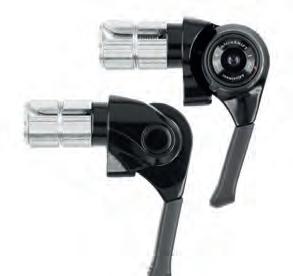
MICROSHIFT BS-M10 BAR END SHIFTERS
£99.99
Microshift makes bar-end shifters for most gear setups. Front shifters are all friction operated, while most rear ones can be switched to friction operation. This setup is 2/3×10 MTB. microshift.com
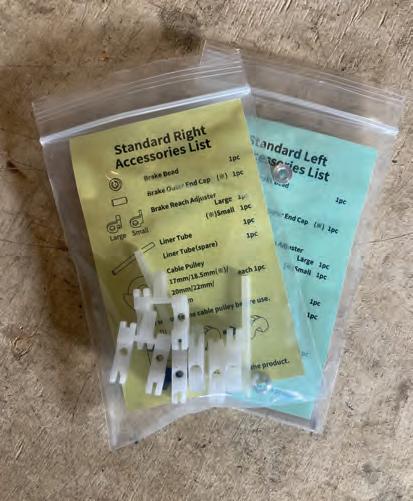
Nipple seating washers, or ‘brake beads’, must be fitted to the brake inner cables before they can be threaded into their levers and end caps fitted to the outer casings. Why not make them integral with the levers? Two brake-reach adjuster plates are provided for each lever to give three reach options. Shift inner-cable installation is no more tricky than with any other mechanical dual-control lever, but for a couple of considerations. A cover plate retained by a minuscule screw must be removed to install the inner cable – and replaced in a particular way to avoid cracking it. And there’s a choice of cable pulley spools. This allows the levers to be used with gear mechs requiring a range of cable pulls, while tuning the motion resistance sensation. The largest spool will pull the most cable but decreases the pull ratio. Luckily, the spools installed as delivered worked fine with my test bike’s Shimano Deore rear and Campagnolo Record front mechs, avoiding the need for fat fingers to juggle with yet more minuscule screws to effect a change. And the ride sensation? Braking: excellent feel and power with Shimano dual-pivot calipers. The short cable-pull is not suitable for V-brakes. Shifting gears: rapid and beyond smooth, to the point of lacking tactile sensation – an issue only exacerbated by the ease with
The result is that any trimming required means pushing on one or the other sequentially rather than moving a single lever around to find the best mech position. With only a few hundred miles’ practice, it is possible to get a feel for the lever movement needed to shift any number of gears without much trim needed, but I think the levers could usefully be shipped with a selection of click plates to help with gear selection, not offered as an extra. The only attention needed over weeks of use was to the ‘derailleur holding force’ on the first ride, which needed a 3mm Allen key. Otherwise, gear changing performance has been limited only by user skill – as always with friction shifting.
Richard Hallett
A game changer for any cyclist wanting dualcontrol gear shifting unconstrained by the need for transmission component compatibility. The materials are high end and the styling bang up to date.

An expensive but effective utility cycling coat you could happily wear over a suit


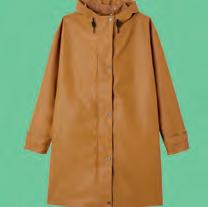

BTWIN UNISEX CITY CYCLING PARKA
£69.99
Longer than the Vulpine mac and more waterproof (25k), this parka isn’t breathable.
Sizes XS-XXL, in ochre, khaki or blue. decathlon.co.uk

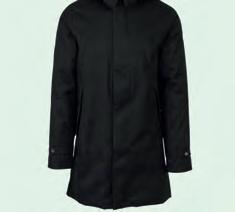
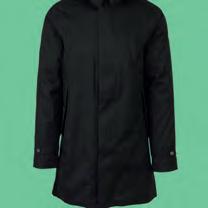
AGU MAC WINTER RAIN JACKET URBAN OUTDOOR MEN £155
Waterproof (20k) and breathable, Agu’s insulated mac also has a detachable hood.
Sizes S-XXL, black only. Women’s equivalent is the City Slicker Winter Rain Jacket Urban Outdoor (£172.50). agu.com

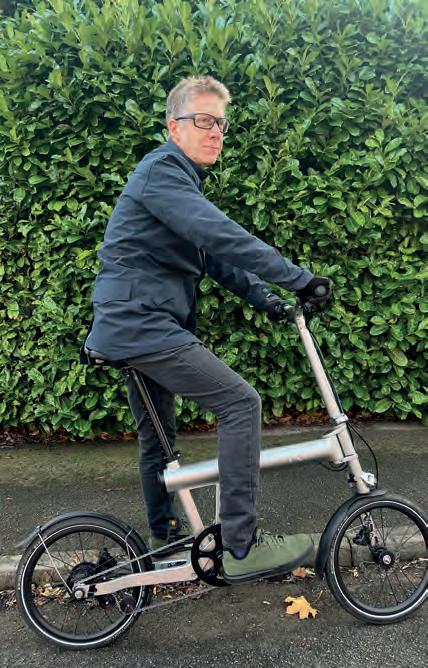
Off the bike, cycling jackets can look sportily, garishly out of place. And on or off it, they stop at the waist, exposing your lap to falling rain and to rivulets running off the jacket (unless you wear boil-in-thebag over-trousers).
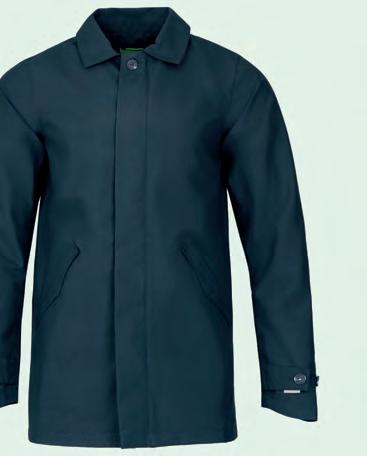
Vulpine’s Regents Mac is styled like a traditional mac. It solves both issues, reaching to the upper thigh and looking smart enough over a suit or casual clothing. While you could use any mac or overcoat for urban commuting, this one incorporates some cycling-friendly features.
It’s cut long enough in the arms. Not only is it very waterproof, with a 20,000mm hydrostatic head rating, it’s also breathable (15,000g/ m2/24h). Additionally, there’s a large vent across the shoulders and small ones under the arms. The mac’s two-way zip can also help prevent overheating.
There are discreet (in daylight) reflective tabs at the cuffs and under the raised collar. I’d have liked a button under one of the lapels and a subtle button hole opposite. You could then fasten the raised collar
+ VERY WATERPROOF + SMARTER THAN MOST JACKETS – EXPENSIVE
while cycling to keep the chill off your neck without needing a scarf.
There are four pockets: two front and one rear on the outside, all decently sized and closed with magnetic flaps; and one zipped inner pocket. This was big enough for my iPhone 13 Mini but will be too small for large phones.
The mac has a two-way zip behind a flap with buttons. You can use either or both. The zip was awkward to engage, especially to begin with. As I never needed to undo it from the bottom, I’d have preferred an ordinary, single pull-tag zip.
Colours: navy or charcoal. Sizes: men’s S-XL (S tested – I’m 177cm and 66kg); women’s XS-L.
Dan Joyce
It costs at least double what I’d normally pay for coat but the Regents Mac could replace two: a commuter jacket and an everyday coat for work or going out. While it would benefit from some minor refinements, during the test period it became my default on- and off-bike option around town.
01
Cycling UK gift membership £41.25







Less wrapping, more riding! Give someone a gift that lasts all year long. As a treat for Christmas, it’s 25% off.
That’s £41.25 instead of £55 (or only £3.44 per month!) for individual membership. cyclinguk.org/xmas-gift

04
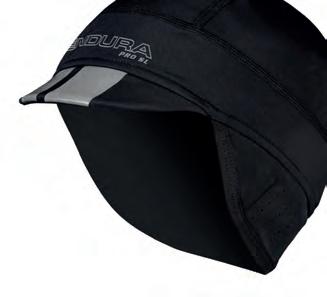
Endura Pro SL Cap
£34.99
Designed for roadies with a Belgian pro’s disregard for bad weather, Endura’s winter cap keeps the rain out of your eyes and the chill from your ears. Sizes: S/M or L/XL. endurasport.com



02
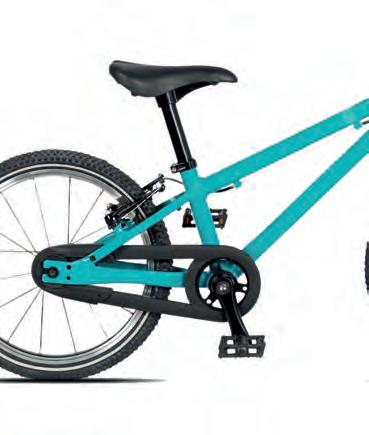
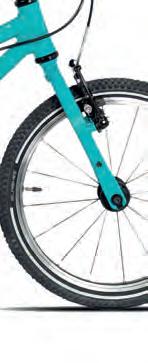
Islabikes Cnoc 14, 16 & 18 £499.99
Since 2023 Islabikes has been supplying spare parts only, but a small batch of new Cnoc starter bikes has been released in time for Christmas. Available in three sizes for lucky learners aged 3−plus.
03
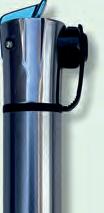
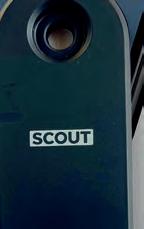
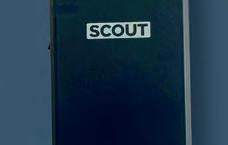
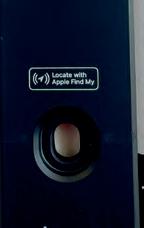
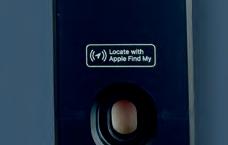
Knog Scout Bike Alarm & Finder £49.99

islabikes.co.uk/bikes














05 The Cycling Chef: Plant-Powered Performance £22
An 85dB motion-sensitive alarm plus a location sensor that works with Apple’s FindMy app (Android version coming). Fitting under a bottle cage, it particularly suits tours and club-run café stops where you lack a big lock. knog.com













Know a cyclist considering Veganuary or who just wants more plant-based meals in their diet? This recipe book could be the answer – and members get 30% off (see cyclinguk.org/cyclingchef) bloomsbury.com



07


Save money




As a member, you can save up to 50% on a wide range of cycling products and services. Visit cyclinguk.org/ member-benefits












06











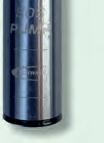
Schwalbe SOS Mini Pump
£34.99



Only 85g and 12.9cm long, Schwalbe’s aluminium SOS mini pump is a well-built, pocked-sized inflator (Presta or Schrader) that actually works. It’s no frame pump but will get you home.


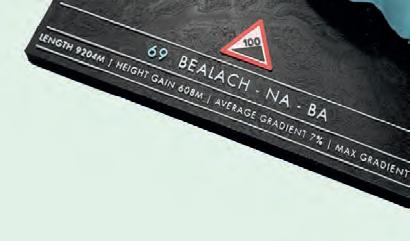
Print My Ride £30+

schwalbe.com/en

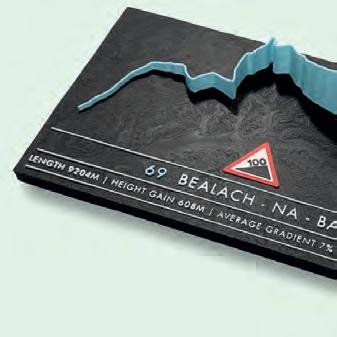
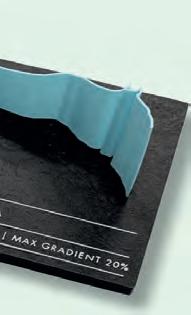
You can commemorate riding a Cycling UK Adventure Series route with an A3 poster (see p21). If you want a memento of a different ride, how about a 3D print? Get 20% off with code ‘CYCLINGUK’ printmyride.uk



Details
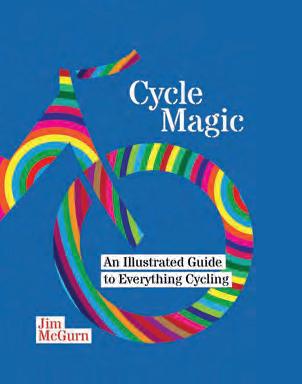
By: Jim McGurn
Publisher: Company of Cyclists
Price: £26.95
ISBN: 9781068233609
Jim McGurn gave me my first job in cycling journalism a very long time ago. (When? See the photo on page 334.) He was the driving force – or rather, the pedal power – behind New Cyclist, ByCycle, Bike Culture Quarterly, Encycleopedia and Mike Burrows’s Bicycle Design. These titles mixed an eclectic and practical view of bike technology (covering everything from recumbents to carbon-fibre monocoques and MTBs) with history, culture, travellers’ tales and a Richard-Ballantine-like optimism for the bicycle’s power to change the world for the better. I raise this partly as a disclaimer; I’m not a disinterested reviewer. But also because this ‘illustrated guide to everything cycling’ feels like a
compendium of greatest hits from the McGurn back catalogue, intermingled with more traditional bike-book fare like dealing with punctures and profiles of cycling personalities.
“Cycle Magic is a coffee-table book on cycling that has so much breadth it’s hard to categorise”
Cycle Magic is a coffee-table book on cycling that has so much breadth it’s hard to categorise. One moment you’re reading about cargo bikes, frame materials or velomobiles, then it’s Frank Patterson, Simone de Beauvoir, bicycle-related stamps or circus cycling. Depending on how familiar you are with Jim’s oeuvre, there will be things here you recognise: those David Eccles illustrations, such as the lovely one in the style of Van Gogh’s Road With Cypress and Star; Mike Burrows-isms like ‘annual pneumatic suspension’ (tyres); bikes in the 19th century Australian outback, in Cuba, in novels, in art, in the air. Yet it hangs together remarkably well. There’s no index but there is a comprehensive list of contents, which is really all you need; this is a book to dip into. In terms of tone, it reminded me of Richard’s Bicycle Book, in that it’s a celebration of cycling and not merely a manual.
Dan Joyce
Print queue Cycle doesn’t feature all books received. Reviewers pick the ones they think you need to know about from the editor’s shortlist. Send books to: Cycle, Cycling UK, Parklands, Railton Rd, Guildford, GU2 9JX
You can read excerpts from some of the books that Cycle has reviewed at: cyclinguk.org/cyclebook-excerpts
Details
By: Steve Silk
Publisher: Summersdale
Price: £10.99
ISBN: 9781837995721
Expecting yet another book by a middle-aged man about what sounds like a fairly underwhelming journey, I was happy to be proved wrong. Steve Silk is an acute observer, striking up conversations and bringing in economic and social history; he followed in the footsteps/cycle tracks of Charles G Harper from 1905. Recommended. Ian Small
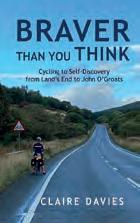

Details
By: Claire Davis
Publisher: Peard Publishing
Price: £12.99
ISBN: 9781068464331
LEJOG is not that unusual a ride. But Claire Davis’s decision to do it almost on a whim and solo makes it much more so. She provides insights into the challenges that women face and also of what we gain when we’re ‘braver than we think’. Cycle touring is in its nature quite repetitive – eat, ride, sleep, repeat – but this book remains interesting throughout.
Gwenda Owen

The World at 15 mph…ish
Details
By: Naomi Johnson
Publisher: Bold Font
Publishing
Price: £14.99
ISBN: 9781739381103
This book mixes a ride across continents with more traditional tourism. There’s a chapter per country or region, focusing on a theme, like food, freedom or friends. There are nice details, such as dealing with the bikes en route in Nepal and Italy. Yet the backdrop is a need for speed that’s winked at by the title. I wished we could stop and take in the view. Gosia Polanska

Compact electric folders are the easier-cycling option you can take almost anywhere.
Dan Joyce tests a FLIT M2 and MiRider 16 GB3 on roads, cycle tracks and trains
Small-wheeled electric folders are good for the same kind of journeys as their unassisted counterparts: urban commuting, mixed-mode travel and exploring from a holiday base such as a caravan. They’re heavier but the motor and battery help overcome hills, miles and excuses not to ride.
FLIT and MiRider are two relatively new British brands that design and assemble their bikes here – FLIT in Cambridge, MiRider in Wigan.
Frame, fork & folding: FLIT
The FLIT is built around Bromptonsized 16−inch wheels (ISO 349), using a futuristic-looking, bondedaluminium frame and monoblade fork. The battery is housed in the main tube; you can charge it in situ or remove the seatpost and slide it out.
Like the Brompton and Birdy, the FLIT folds into thirds rather than in half. This gives it a longer wheelbase, while minimising its folded dimensions. To fold, you turn the front wheel, release a frame catch with your foot and flip the rear end under. Then you undo the fork hinge and fold the front wheel back on itself, engaging a nodule on the axle with a retainer on the swingarm. Undoing the stem hinge drops the handlebar down between the wheels.
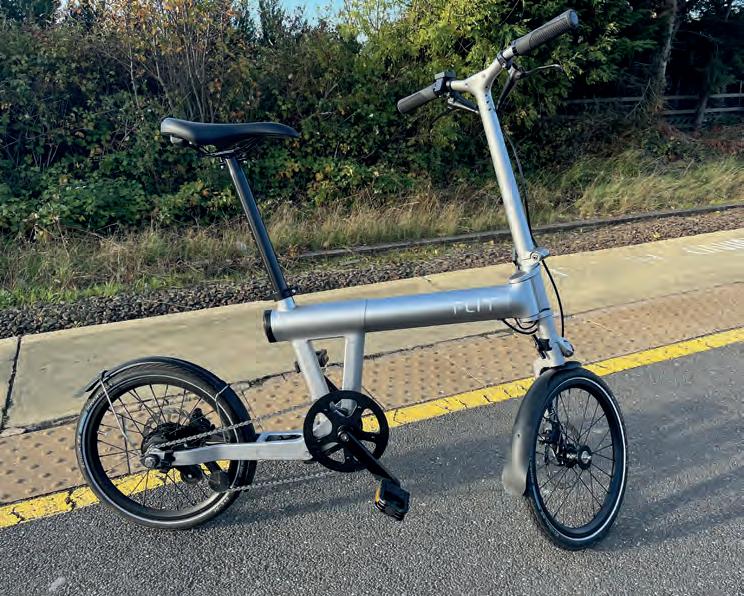
Then you lower the seatpost and fold the pedals.
There’s one more step I skipped. At the start, you retract the rear mudguard, sliding the rear section forward. This enables the folded FLIT to be rolled along on its rear wheel. It works fine – when you remember and don’t fold the bike onto the un-retracted ’guard – but risks dirty fingers. I’d prefer a fixed mudguard and castors, à la Brompton.
The folded FLIT is compact enough for two or three to sit side by side in a train luggage rack, and light enough (for me) to be carried in one hand. When rolling it, I occasionally found the fork unclipping, even after ensuring it was properly engaged.
There’s a max rider-and-luggage weight of just 100kg for the FLIT.
Frame, fork & folding: MiRider
Like its singlespeed stablemate, the MiRider 16 (£1,595), the GB3 features the smaller, ISO 305 version of 16−inch wheels. It’s a quirky-looking bike with a frameset of die-cast magnesium alloy rather than welded
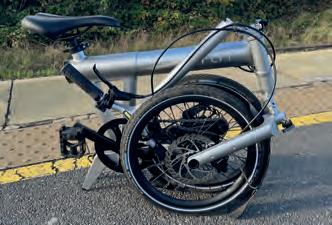
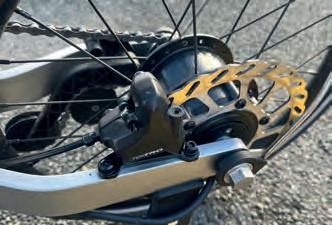
Middle: The folded FLIT is a compact package that’s easy to stash on a train
Bottom: A longer wheelbase lets you take advantage of the disc brakes’ power


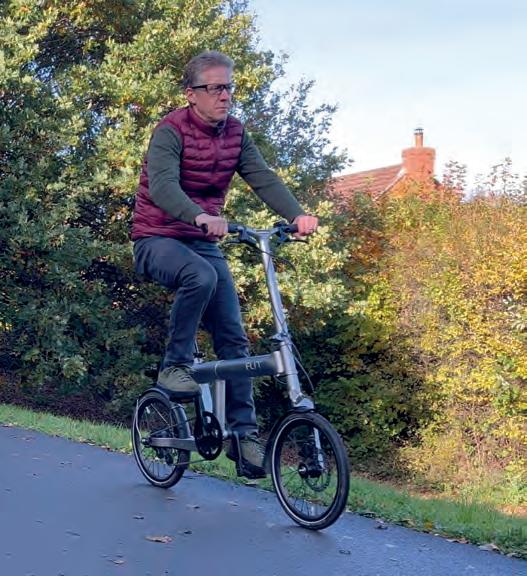
aluminium. Magnesium is lighter than aluminium – a moot point for a 19kg bike – but corrodes more easily. However, the bike’s protective green paint didn’t scratch during the test. The rider and luggage limit is 120kg.
This rear swingarm has suspension but doesn’t decouple at that point like a Brompton or Birdy as the rear end doesn’t tuck under. The MiRider simply folds in half, with the seatpost lowered and the handlebar dropped down. When the bike is folded, you can unlock the battery from the frame.
It rolls along OK as a folded package. There’s a castor under the bottom bracket and a strong magnet at the dropouts to prevent them flopping apart. Just as well as it’s a pig to carry, being heavier and bulkier than the FLIT. I avoided folding the MiRider until I was on the train, where it took up most of a lower luggage rack.
Price: £2,499.
Left: Dan also rode on bridleways and up some big hills
Below: Step on this and you can flip the rear end underneath

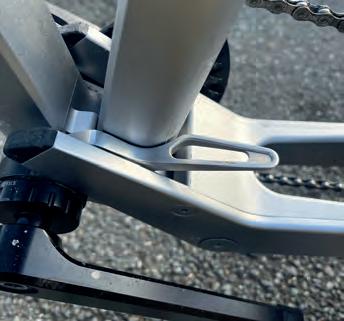
“BOTH BIKES PROVIDE A SIT-UP-ANDBEG RIDING POSITION THAT SUITS UTILITYORIENTATED E-CYCLING”
The MiRider’s suspension is a coilsteel spring with about 40mm of travel. It’s unified rear triangle (URT) design: the bottom bracket is part of the swingarm. This eliminates chain tension issues so is ideal for a belt drive, but means that the saddle-topedals distance is not fixed.
Components
Both bikes have 250W rear hub motors with five levels of assistance,
powered by modestly sized batteries. MiRider’s ownbranded motor has a little more torque – 40Nm versus 35Nm – than the Mivice hub of the FLIT.
However, the FLIT uses torque sensors on both sides of the bottom bracket for power delivery. Assistance thus starts when you press down on a pedal. The MiRider uses ‘torque simulation’ and is fundamentally dependent on cadence sensing. When setting off, the cranks turn almost 180 degrees before any assistance kicks in. Fortunately, it also has a thumboperated throttle by the right-hand grip, which provides instant power to help you get away from a standstill or to temporarily boost the assistance level while pedalling.
The FLIT’s mode-switch button is easy to use without looking, while the MiRider’s display has a USB-A outlet for charging, say, a phone.
The FLIT is a singlespeed with a chain tensioner. Its 66in gear is achieved with a 44−tooth
Sizes: One size (to fit riders from 4ft 10in to 6ft).
Folded: 797×600×305mm (claimed); 780×600×310mm (measured).
Weight: 15.5kg as shown.
Frame & fork: Folding, anodised aluminium frame and monoblade fork, with steering limiter and mudguard fittings.
Electric assistance: 250W Mivice rear hub motor with 35Nm torque, 230Wh FLIT battery with LG cells, bottom bracket torque sensor, Mivice handlebar display and mode switch.
Wheels: 35−349 Schwalbe Marathon tyres, 349×17mm rims, 24×1 spokes, 60mm stub-axle front hub, Mivice M070 250W rear hub. Transmission: VP folding pedals, 165mm aluminium chainset with 44t chainring, 73mm Mivice torque-sensor bottom bracket, KMC X8 chain, 11t sprocket. One ratio: 66in.
Braking: Tektro HD-R280 hydro discs, 160mm rotors. Steering & seating: Lock-on grips, integrated aluminium handlebar (490mm) and stem, 1 1/8in threadless headset. Velo Sport saddle, 34.9×530mm seatpost, QR clamp.
Equipment: FLIT mudguards, kickstand and integral lights (90−lumen front).
flit.bike
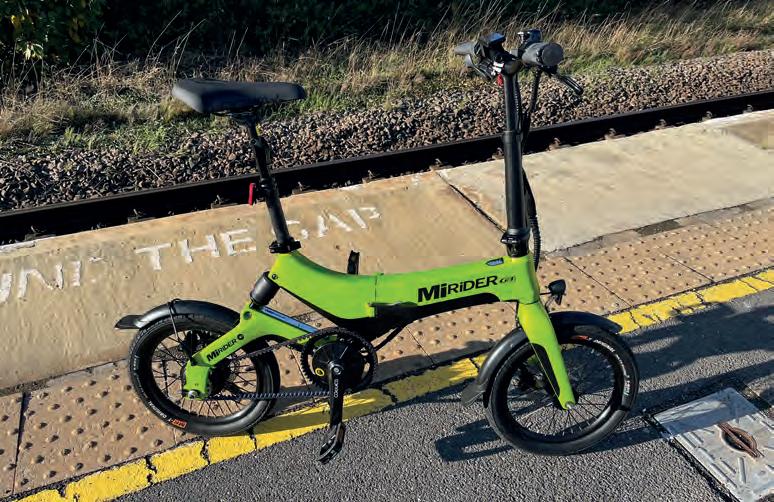
chainring and an 11−tooth sprocket. I’d prefer 50/13 for a similar-size gear with less rapid sprocket wear.
The MiRider has 3−speed epicyclic gearing with ratios of 1:1 (first), 1:1.43 (second) and 1:1.79 (third). The gears are housed not in the hub but, like a Schlumpf Speed Drive, in the crankset. Unusually for a hub-driven e-bike, that means the motor also gets the benefit of the gears. This should (and did) make it climb well.
Instead of a chain, the MiRider GB3 has a Gates belt drive. Belts are less efficient than chains but don’t leave oily marks on clothing or carpets, and are more or less maintenance free. Efficiency losses are easy to overlook when there’s an extra 250W on tap.
Both bikes have hydraulic discs that outclass the rim brakes or cable discs of some other e-folders.
The chunkier MiRider tyres offer better bump absorption but suffered one puncture. The FLIT’s Marathons roll better and seem tougher. I’d nevertheless prefer 35−349 Marathon Plus tyres for even better reliability. While you can fix a front wheel puncture on the FLIT with the wheel in place, a flat on any rear hub-motor wheel is more of a faff.
There’s no 305−size Marathon
MiRider 16 GB3
Price: £2,495.
Sizes: one size (to fit riders from 5ft to 6ft 4in).
Folded: 770×430×680mm (claimed), 770×470×655mm (measured).
Weight: 19.2kg as shown. Frame & fork: Folding magnesium alloy frame and fork, with 40mm-travel rear swingarm and fittings for mudguards and rear rack.
Electronics: 250W MiRider rear hub motor with 40Nm torque, 252Wh battery with Samsung cells, KT Sine Wave Torque Simulation Controller, KT-TF01 display with USB-A outlet, throttle.
it,
Below right: Gates belt drive: less efficient but easier to live with than a chain

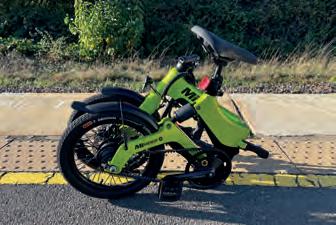
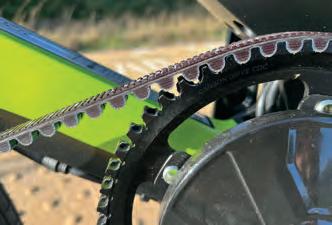
Plus available for the MiRider. If you do puncture, access to the valve for inflation is hampered by the unnecessarily large number of spokes (36). Get the £8 Weldtite valve extender that MiRider sells; it has a 90−degree bend.
The FLIT has hardwired be-seen lights built in, the front in the handlebar, the rear on the end of the battery. The MiRider has a front light but, oddly, no rear.
Wheels: 54−305 Ralson MiR-T Original tyres, 305×21 rims, 36×1 spokes, MiRider 250W rear hub, unbranded 100mm bolt-on front hub. Transmission: Wellgo folding pedals, 170mm G3ARED 3−speed crankset with 55t ring, G3ARED BB, Gates Carbon Drive belt, 22t sprocket, G3ARED shifter. Three ratios: 40, 57, 72in. Braking: Clarks HD-M3000 hydro discs, 160mm rotors. Steering & seating: MiRider grips, 640×25.4mm handlebar, telescopic folding stem, 1 1/8in threadless headset. Selle
Royal Lookin gel saddle, 31.6mm telescopic seatpost, QR clamps.
Equipment: Mudguards, front light, kickstand, bell.
mirider.co.uk


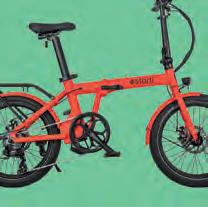
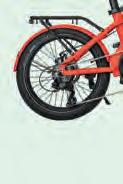
ESTARLI E20.7

£1,510
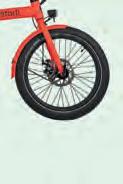
Despite its low price, this 20in-wheel, 7−speed e-folder comes with mudguards, rack and lights. It folds to 830×660×460mm and weighs 18.5kg. estarli.co.uk
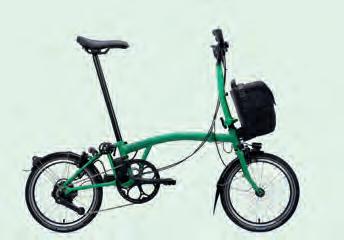
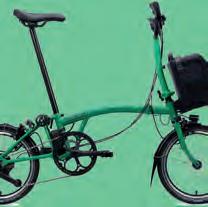
BROMPTON ELECTRIC C LINE
E-MOTIQ 4-SPEED
£2,999
Brompton has switched from front hub motors to rear but has kept the convenient battery bag up front. It folds to just 585×565×270mm and weighs from 17.6kg. brompton.com
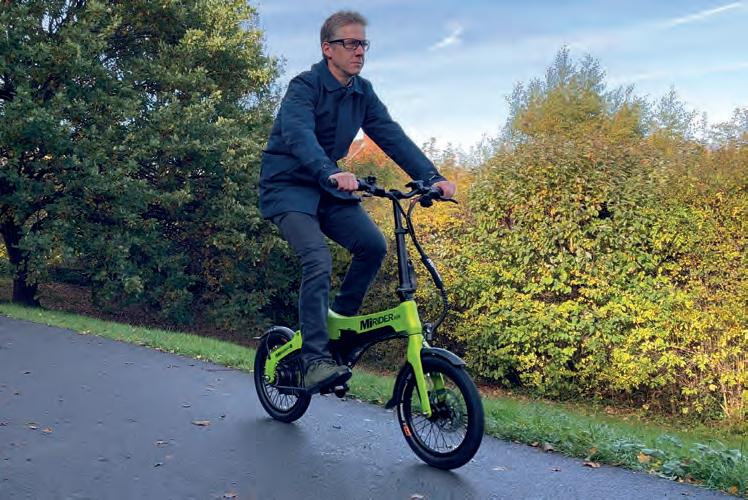
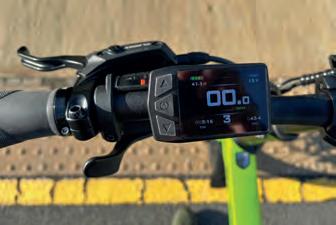
Both bikes provide a sit-up-and-beg position that suits utility-orientated e-cycling. There’s scope to adjust the MiRider’s position as it has a telescopic stem. I was happy with the FLIT’s handlebar height, however, and preferred its firmer, narrower saddle.
The FLIT rides more like a normal bike. That’s partly down to its torquesensing power assistance, which feels like an amplification of your own efforts instead of an accelerator switch. Also, the longer wheelbase provides more stable handling.
The MiRider’s assistance begins after half a crank revolution. This felt odd to me. On a hill start, I pulled an alarming and unexpected wheelie when the power lurched from about 200 Watts (me) to around 450.
I didn’t like the MiRider’s URT suspension. With a variable saddleto-pedal distance, I found myself bobbing on the saddle instead of pedalling smoothly. Preloading the spring (tightening it) minimises this, but I’d prefer no suspension at all.

Left: Your left hand changes both gear and assistance mode, as a throttle is on the right
When it comes to hills, the MiRider is the clear winner, despite FLIT’s video showing the bike being ridden (partly) up Snowdon. While the FLIT is brisk on slopes of 10% or so, it struggles on very steep hills. Motor and I gave up on the toughest, 25% section of the hardest test climb. The MiRider managed this in first gear –with only a little front wheel lift.
Steep climbs hammered the range of both bikes. I got around 20−25 miles on them using high assistance levels in hilly terrain. In better circumstances, the FLIT can do 50km (31 miles), the MiRider ‘up to 45 miles’.
The FLIT M2 is better as an everyday commuter. It’s light and compact, with Brompton-like attention to detail, decent handling and electric assistance that’s seamlessly integrated with its singlespeed drivetrain. I’d like a USB outlet and a different mudguard but, for around £500 less than a Brompton Electric C Line, it’s a compelling option.
The MiRider 16 GB3 will do bikerail but is harder to haul around. It’s more suited to the leisure market as a handily portable electric hybrid – one that will climb any hill. While it’s well specified and good value, I didn’t get on with its abrupt power delivery and short-wheelbase handling. The bigger MiRider 24 – still compact enough for a hallway – promises a nicer ride, and the singlespeed version is only £1,995.
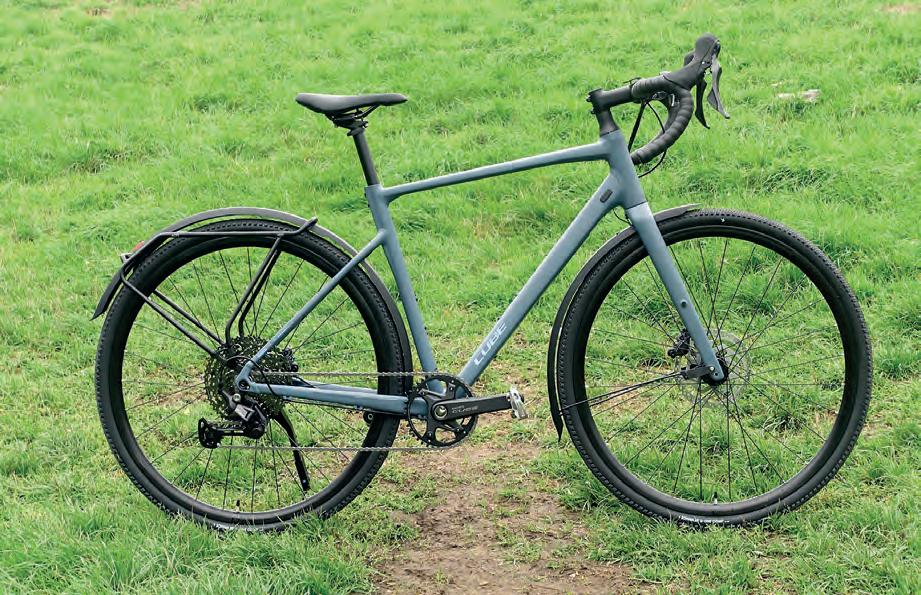
A fully equipped German all-rounder designed to tackle rough roads, light gravel and big days out with equal aplomb.
The Cube Nuroad is an all-roads bike that could cover a multitude of disciplines, from commuting to touring on poor surfaces and even the occasional off-road excursion. This FE version comes fully equipped out of the box, with rack, mudguards, kickstand and dynamo lighting.
It’s what you’d expect at this price: an aluminium frame and a full-carbon fork. It’s all neatly done and it’s good to see that Cube has specified thruaxles, which make the most of the hydraulic disc brakes.
The frame has three pairs of bottle bosses and there are low-rider mounts on the fork. I’m particularly impressed with how well Cube has integrated the mudguards and rack. It looks like the package was conceived as a whole rather than the extras being an afterthought. The bottle cage threads even came already greased, something I’ve only encountered on bikes from Cube.
The geometry is longer than a road bike’s, with a wheelbase of 1,055mm;
Cube Nuroad Pro FE
Price: £1,399.
Sizes: XS, S, M (tested), L, XL.
Weight: 13kg/28.6lb (M, without pedals).
Frame & fork: 6061 T6 aluminium frame with pressfit bottom bracket, 12×142mm thru-axle, mounts for mudguard, rack and 3 bottles.
Cube Nuroad full-carbon, tapered fork with 12×100mm thru-axle and mounts for mudguard and low-rider rack.
Wheels: 40−622 Schwalbe
G-One Comp tyres, ACID Pro GR 2.5 Disc wheels, 28/28 14g spokes, Shutter PD-7−07 front dynamo hub.

Top: Although it has a single chainring, a widerange 11−50 cassette means the bottom gear is lower (22in) than some tourers with triples
a tourer might be a few centimetres longer, a road bike around 5cm shorter. This puts the Nuroad Pro FE firmly in all-roads/light tourer/gravel bike territory. One bike for all seasons and various reasons.
While I’m not generally a fan of huge shouty logos on bikes, I would have preferred Cube’s logos to have been a bit larger as they’re reflective. With the tyres not having reflective strips, more nighttime conspicuity would have been useful.
Components
This is the first time I’ve used Shimano Cues, which the Japanese giant has introduced to replace a whole swathe of its lower- to mid-tier groupsets. And just as with the groupsets it’s superseding, Cues works very well and without fuss.
The single 40t chainring is paired with a super-wide 11−50t cassette for a 22−102in gear range. There are always going to be trade-offs with a 1× setup, but I think Shimano has hit the gear-range sweet spot for most of us, most of the time.
Transmission: 170mm Shimano Cues FC-U6030−1 chainset, 40t chainring, Shimano Pressfit BB, KMC xGlide chain, Shimano Cues CS-LG400 11−50t cassette. Shimano Cues ST-U6030 levers and RD-U6000−GS derailleur. 11 ratios, 22−102in. Braking: Shimano Cues U6030 hydraulic discs, 180/160mm front/rear rotors. Steering & seating: 420×31.8mm Cube Gravel Race bar, 90mm Cube stem, VP Z-t tapered headset. ACID Venec Lite saddle, 27.2mm Cube Performance post. Equipment: ACID kickstand, mudguards, rear rack, Pro-D 50 CMPT front light and mudguard rear light.
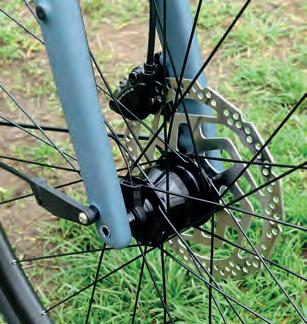
There are inevitably some biggish jumps as the sprockets reach the size of side plates, and in the two largest the more extremely angled chainline results in a little chain noise. Yet in spite of my deliberate efforts at clunky, ungainly gear changes and rapid back-pedalling, I could never get the chain to unship – and that’s without a chain guide. The Cues derailleur has a clutch, while the chainring uses Shimano’s ‘Dynamic Chain Engagement’ – teeth that are broader and taller and with a hooked leading edge. This is designed for ‘superior chain retention’ and a ‘lower driving sound’. Well, one out of two isn’t bad!
The braking is excellent, offering control and power with minimal effort, and there was no squeaking or squealing in the rain.
The FE part of the Cube Nuroad’s name denotes that it’s fully equipped, and it really does have the lot: chunky kickstand, tough mudguards and a rear rack that’s as solid as a rock, albeit incompatible with a rack-top bag. All these products bear the name of Cube’s component brand ACID. (The same bike is available as the Nuroad Pro without the extras for £1,199.)
The lights are powered by a front hub dynamo. The front is bright enough for urban riding but you’ll need assistance on unlit routes. Both lights stay lit when you stop, the rear staying on longer than the front. The neatlooking bell could have been louder, but that’s a very minor gripe!
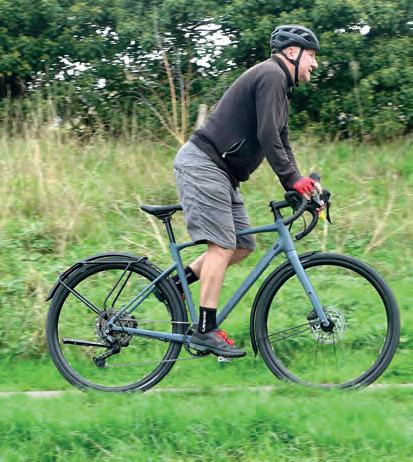
Hit your cruising speed and you’ll be in a good place – as you will be in pretty much every situation. The riding position is quite upright, putting no strain on your lower back, and the contact points are good, contributing to excellent long-distance comfort. I liked the shortish saddle, the slightly ovalised bar tops and the grippy bar tape. I was a little surprised there wasn’t more flare to the bar on a bike with touring and gravel in its sights, but it’s not a deal-breaker.
Apart from in the bigger sprockets, the drivetrain is smooth and silent when you’re pedalling, and the freewheel isn’t that loud when you coast. The bottom gear is low enough for seated climbing. If you do get out of the saddle, the frame is stiff and efficient, so you could even use it for training. It’ll never be super-fast and you’ll spin out eventually on the 102in top gear – though at a cadence of 100 you’ll be doing 30mph.
I tested the Nuroad Pro FE on poor tarmac (all too easy to find…), light gravel, canal towpaths and more, and it took them all in its stride. The tyres feel like they major on toughness over suppleness, and were unmarked after a month of riding. Their 40mm width still helps to take the sting out of everything, as well as offering reasonable rolling resistance on the road and decent grip away from it.
The Cube also boosts confidence on descents, where it offers great control and first-rate braking.
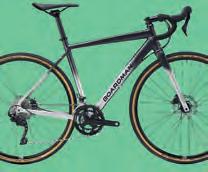

BOARDMAN ADV 8.9 £1,200

Above left: An SP dynamo hub is a very useful addition for touring and commuting Above: Unlike some practical bikes, the Nuroad FE doesn’t feel leaden when you’re out of the saddle
Aluminium-framed all-rounder that covers a lot of the same bases. While lighter at 10.5kg, once you factor in guards, rack, lights and kickstand it’ll be much the same. boardmanbikes.com

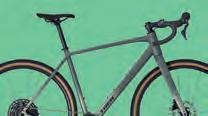
TREK CHECKPOINT
ALR 3 GEN 3 £1,400
Aluminium-framed, Shimano Cues-equipped adventure bike that comes set up tubeless. At 10.4kg it’s a very similar weight to the Boardman. trekbikes.com
Well-priced and versatile all-rounder that covers a lot of cycling bases. If you’re looking for one bike for commuting, leisure rides, weekends away and credit card touring, this could be it. It’s great on bad roads, towpaths and not-too-rough unsurfaced routes. While I wouldn’t take it on challenging gravel as specified – with stand and guards – those components come into their own the rest of the time.
The bike has very good long-distance comfort, yet is surprisingly lively when you put the hammer down. The components are well chosen, the gearing low enough for all but very heavily laden touring, and the braking is excellent.








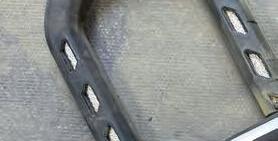
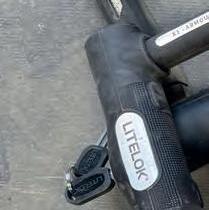



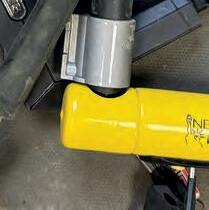


Attacking locks like these is noisy, time-consuming and costly in discs

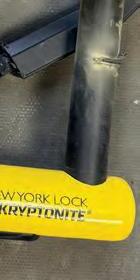

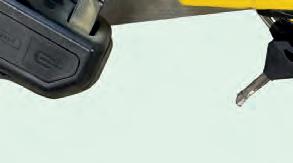

Portable angle grinders will go through most bike locks like butter. But not all. Guy Kesteven tests six designed to thwart tooled-up thieves
One of the biggest issues with using a bike for transport is the risk of having it stolen if you leave it anywhere. The risk of theft has increased in recent years due to the use of cordless angle grinders. These can be hidden under a jacket or in a bag, and they’ll cut through most D-locks, chains or bar locks in a matter of seconds.
Lock manufacturers are fighting back with specifically grinderresistant designs, using a whole new level of material technologies. I took an angle grinder to six of the best options from Abus, Hiplock, Kryptonite, Litelok and OnGuard to see which held out the best. Then I considered their other pros and cons in terms of security and everyday use
to find the best deterrent.
Note that these locks are grinder resistant, not grinder impervious. Any lock will fail, given time and enough cutting discs. I set a time limit of five minutes for attacking each lock.
You’d hope someone might raise the alarm after that or that the thief would give up and choose an easier target. I used as many cutting discs as each five-minute attempt required.
You’ll see that there are two Liteloks in this test. I’d hoped to include a Masterlock but it didn’t arrive in time. I also contacted Squire and Oxford Products for a lock but their new designs won’t be available until spring.
Videos from this test are on my YouTube channel @GuyKesTV



The reason I’ve attempted to break the locks rather than relying on the Sold Secure rating is because even the top ‘Diamond’ standard doesn’t have an anti-angle-grinder specification. However, those ratings are still useful as the gauge for resistance to other forms of attack.


Shackle size
Impregnable security is useless if the lock doesn’t fit around your bike or your normal locking point. That’s why I’ve listed the internal dimensions of each lock, as well as the coating so you can asses how paint-friendly it is.
For those using their locks out and about I’ve included weight and whether you get a carrying bracket included.
Other features
Weatherproofing, warranty terms, number of spare keys provided, replacement services or being able to get matching keys for different locks are all potential ‘yay or nay’ points, so I’ve considered those as well.
“These are grinder resistant, not grinder impervious. Any lock will fail, given time and enough cutting discs”
£149.99, litelok.com
The British-made Litelok X1 is the cheapest and lightest of the locks here. The slim shackle and shallow cladding mean it has still has reasonable shackle space to cope with large-diameter frame tubes or locking options. It’s rated Diamond by Sold Secure for both cycles and motorbikes.
The paint-friendly, soft rubber coating has reflective details and the silicone key cover is very weatherproof. You get two keys and a neoprene pouch included, with the Tactical or Twist-and-Go frame mounts available as extras. Litelok also runs various bundle deals, as well as bulk offers if you’re buying for a club, workplace or family.
In testing, I was able to cut through the Barronium composite armour shackle in two minutes and 38 seconds, with a couple of readjustments. The disc was toast, however, and the anti-twist design means you’d need to swap to a fresh one to cut through the other side before being able to take the bike. Weight: 1,734g. Shackle size: 197×101mm. Overall cut time: 158 secs to get through one side.
Light, affordable UK-made lock that offers reasonable resistance against grinders





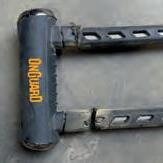






£249.99, hiplok.com
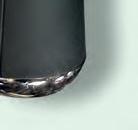

OnGuard Rocksolid 8950
£199.99, onguardlock.com
The OnGuard Rocksolid is the lightest lock in the test by over 200g but it’s also the narrowest and one of the shortest. So if there are big tubes on your bike or locking spot, it might be a struggle to fit both in. A ‘proprietary blend of ultra high-strength materials and multi-layered defence system’ gains it a Sold Secure Diamond rating.
The thick rubber cover on the shackle and body protect paintwork, and also display the highly textured face of the steel inner core. You don’t get a bracket included but you do get no fewer than five keys, which is great for family or workplace use.



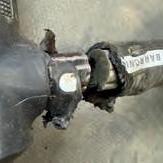






The textured finish uses a similar coating to most cutting discs, and I’ve seen some tests where the disc wears down without even damaging the lock. In my test, I had to change the disc after 40 seconds, which would add at least 30 seconds to the attack. It was another 26 seconds before I was completely through but, again, the anti-twist design means you’d need to get through both sides for a full release. Weight: 1,428g. Shackle size: 176×82mm. Overall cut time: 66 secs + 1 disc to get through one side.
Very light, paint-friendly lock but security seemingly depends on the disc used

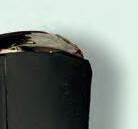

Hiplok was the first brand to bring out a specific anti-grinder lock, and it was the cheapest lock that I gave up trying to get through. While the D1000 is the shortest lock here, Hiplok also makes a D1000X, which has a longer shackle. A significant amount of space is taken up by the super-thick rubber, which makes it very paint friendly, and there’s a thick rubber tongue over the lock mechanism. It’s Diamond rated and you get a 10−year ‘lifetime’ warranty and three keys. Brackets are extra. Note that Cycling UK members get 20% off Hiplock products (see cyclinguk.org/hiplok).
Hiplok uses a ‘specialist composite material technology’ for the shackle, which toasted three discs in 30, 50 and 30 seconds respectively. The thick rubber meant the latter two shredded as well, which certainly scared me – and would likely do the same to a thief. Even after a combined cut time of almost two minutes I was only halfway through when I cut the rubber away to check. So you’re looking at over five minutes with disc swaps to even think of breaching one side. Weight: 1,917g. Shackle size: 155×92mm. Overall cut time: 110 seconds + 3 discs to get halfway through one side.
Relatively light lock in two shackle-size options. It toasts discs fast enough to defeat most grinder attacks













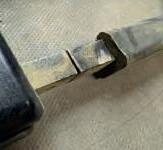






Litelok X3
£249.99, litelok.com
Litelok says the X3 is four times more grinder resistant than the cheaper X1. The internal space is only fractionally smaller than the skinnier X1 but the Abloy Sentry locking mechanism and chunkier build makes it almost 500g heavier. It’s still fairly light for the level of protection, which includes a Diamond Sold Secure rating for bike and motorbike.
The rubber coating makes it bikeframe friendly, and while the reflective detailing is ‘stealth’ it’s quite obvious at night. A neoprene pouch and two keys are supplied. Frame mounts are available as extras, as per the X1.
Litelok say the Barronium composite construction uses a ‘hardened fine-grain, high-tensile steel core’. While I made some initial progress, it soon slowed to effectively nothing. A lot of heat was generated as the rubber coating melted and sparks flew from the glowing metal. Yet after five minutes I was only a quarter of the way through. Weight: 2,222g. Shackle size: 195×99mm. Overall cut time: 300 secs to get 25% through one side.
Don’t let the skinny looks deceive you: this lock is a seriously tough thief-beater










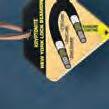


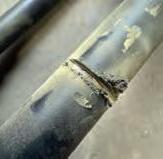






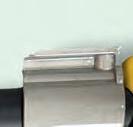





Diamond Standard
£269.99, kryptonitelock.com
abus.com
The Abus Granit is the biggest lock on test in terms of inner dimensions, depth of cladding and the 31 ×28mm thickness of the carbide steel core. It comes with a substantial multiposition bike mount as standard. ‘XPlus’ and ‘Power Cell’ locking tech ensure a Diamond Sold Secure rating. You get two keys as standard, and as well as the usual fast replacement scheme, Abus also offers ‘keyed alike’ synching. Every lock in your arsenal – including Abus’s e-bike battery or frame locks – can use the same key, which is super convenient and unique to the German brand.








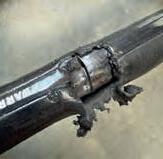













This beefy lock lives up to its name as Kryptonite for bike thieves. A thick body and generously sized shackle make it the heaviest on test, and it’s the only one to come with anti-theft insurance (£3,000 in the UK). It’s Diamond rated, there’s a five-year warranty, you get three keys, and the lock mechanism is hidden behind a little sliding door to keep it clean. Rubber coating protects your bike, and a frame mount is included. Despite an enthusiastic shower of sparks as the disc cut through the outer steel layer, it was soon obvious that the grinder had met its match. The discs couldn’t get through the secondary ‘diamond layer’ over the steel core. The first evaporated to the point where the grinder knuckled out in 22 seconds. The second was dust in 36 seconds without getting noticeably further. Another disc, another 30 seconds, and I was still less than a millimetre deeper. Weight: 2,418g. Shackle size: 204×95mm. Overall cut time: 300 secs +3 discs to get 10% through one side.
Comically casual grinder denial makes this Kryptonite lock the test’s security superhero

The Litelok X3, Hiplok D1000 and Abus Granit Super Extreme 2500 all casually resisted my attempts to cut through them. Most thieves would likely give up. Yet the most secure award has to go to the Kryptonite New York Diamond Standard
lock. It evaporated discs with barely a scratch to its ‘diamond’ inner layer, and the well-deserved reputation of its yellow colouring might stop thieves even trying. In terms of the ‘failures’, the Litelok X1 would still take a thief more than five

The hard plastic casing makes the lock slipperier and harder to pin down for attack. The thick coating not only hides progress and gums up the disc, it means the grinder knuckles out earlier so you have to switch the disc sooner. Five minutes, including a second disc, got me 25−30% through, but that would equate to 40 minutes to cut through both sides. Weight: 2,187g. Shackle size: 223×105mm. Overall cut time: 300 secs + 2 discs to get 25% through one side. Big but not overly heavy, with keyed-alike convenience and great, multi-layer grinder resistance











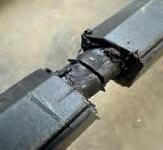






minutes to cut through enough to take your bike. While I managed to cut the OnGuard quickly, I’ve seen other tests where the coating was enough to toast the cutting disc without any lock damage, so you might be lucky there, too.







Thank you for another excellent edition of Cycle. I was particularly interested in Nick Sanders’s article on cycling from Wales to London on an electric bike. I have been touring for many years, and I’m possibly reaching the point where my old legs can’t take the pounding any longer.
So it’s maybe time to consider going over to electric. But I need something lightweight – for getting on and off trains and up steps – and something that’s possible to cycle when the battery runs dry. The battery has to be removable so I can take it into a café. And it has to have a decent range; wild camping means no power points. I want the impossible, I know. Range = weight! A light bike means an integral battery.
However, Nick seems to have solved the impossible. He has an extra battery, I know, but is it really possible to tour recharging only at cafés? Batteries surely take 2−4 hours to recharge.
Peter Lloyd
Nick rode a Yamaha Wabash RT, weighing a little over 21kg without luggage. He managed roughly 50 miles per charge, depending on the terrain and power-mode used. Sometimes he got 85. Nick has also travelled around the world this way (cyclinguk.org/charging-around-world).
The Wabash has ceased production but you could get something similar, such as a Boardman ADV 8.9E or Cairn E-Adventure, or there’s the Cube Nuroad Hybrid C:62 range (with an integrated battery) if you want something lighter. Some fast chargers can charge an e-bike battery to 50% in 90 minutes.
WIN THREE HIPLOK JAW+ RACKS
WORTH £113.97
THE LETTER OF THE MONTH wins three Jaw+ bike racks, worth £37.99 each, courtesy of Hiplok. These wall-mounted racks are adjustable to fit tyres from 20−75mm wide, and can be used in or outdoors. Each is supplied with fittings plus a lightweight Z Lok Combo, which can double as your café lock. For more about Hiplok storage and security, visit hiplok.com

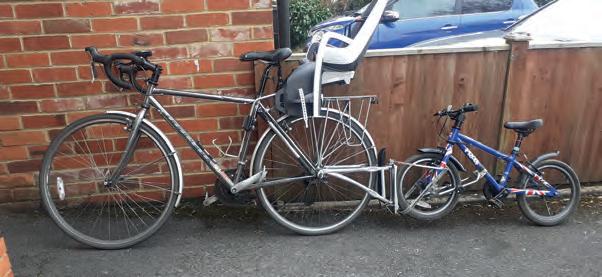
The article on front pannier racks in the Aug/Sep edition states that a child seat on the back of a bicycle prevents use of a rear pannier rack. It doesn’t. With the help of a reasonably cheap rack extender – which effectively lengthens the rear rack backwards, moving the panniers away from the leg area of the child seat – plus a framemounted child seat, everything fits fine.
The arrangement didn’t work so well for heavy loads, such as child plus a week of shopping – probably because most of the weight was at the back. But combined with a FollowMe it was perfect for transporting two children (and their bags) three miles to and from school and nursery. My only discovery was that padded cycling gloves were a must, due to the increased pressure on my hands needed to keep everyone upright when one of my passengers looked round!
Charlotte Dodson
Proper family transport! I’ve exclusively used rack-fitting child seats for my own children and (now) granddaughter, so hadn’t considered rack extenders. I’d still recommend a front rack unless money is tight. It will help prevent the tail wagging the dog and stop the front wheel lifting on climbs.
Inhospitable parking ↗ I recently had to visit Ipswich Hospital, and decided to take the
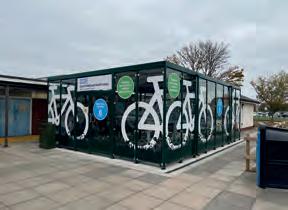
environmentally friendly option of my trusty bike. On arrival I spotted a shiny new bike parking facility, with an encouraging ‘Welcome Cyclists’ sticker on the side. I thought to myself: “Excellent. At last, some decent cycle sheds.”
I was soon sorely disappointed when I noticed a ‘staff only’ notice on the door. As far as I could see there was no provision for any public cycle parking; the old bike racks had been removed. Instead, I had to follow the lead of other cyclists and lock my bike to the handrails along the footway. To compound my frustration, the shiny new bike parking facility was almost empty.
Surely the hospital planners could have taken into account the needs of the public who want to cycle to the hospital? A huge missed opportunity to help those who want to take a healthier, more ecofriendly method of transport when they visit the hospital.
Dave Alley
One for all I liked your editorial in the Oct/Nov magazine. I also have an everything road bike – a Dawes Galaxy – and am
now embracing ‘beausage’. Having an old, reliable, possibly even iconic bike, I’m sometimes approached by other cyclists enquiring after the age of the bike. Often we get talking about their cycling past, touring on their Claud Butler or other such classic. In other words, my bike engages ‘real’ cyclists.
I have yet to be approached by a hipster cyclist, possibly because my everything road bike and I don’t look the part!
Douglas Hope
West Highland ways ↓
I wholeheartedly agree with Dr John Heathcote’s letter about riding on the A82 (Oct/Nov). However, there is an even bigger gap in the cycling network in Scotland.
Once you reach Glenoglehead on NCN7 (which is poorly surfaced), you are left with a problem: the West Highlands are only accessible by the A85 and A82. The West Highland Way is of limited use, yet there are many sections of Telford’s road through Glen Coe that could be the basis of a cycling/walking route. Incidentally, I was sitting in Red House Bothy when a man in his 80s arrived on a Brompton. It was a rough enough ride on my 29er MTB so I was impressed. I attach a photo of him leaving later on.
Niall Wallace
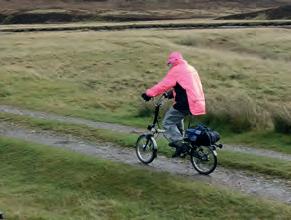
Get in touch Letters are edited for space and clarity. The editor reads and automatically acknowledges all letters but publishes only a selection. Please include your membership number. Write to: Cycle Letters, Cycling UK, Parklands, Railton Rd, Guildford, GU2 9JX or email editor@cyclinguk.org.
Mirror, mirror ↓
I have been trying to find out if there have been any reviews of bar-end mirrors in the magazine and can’t find out how to search this. I have found the forum and some useful advice, but is there a way to search the journal for product reviews?
Jonathan Simmons
We have reviewed bar-end mirrors but not recently. CatEye’s (below) is inexpensive and works fine. The easiest way to search through older magazine content is on the website, using the search bar.
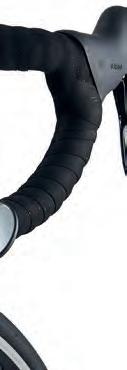
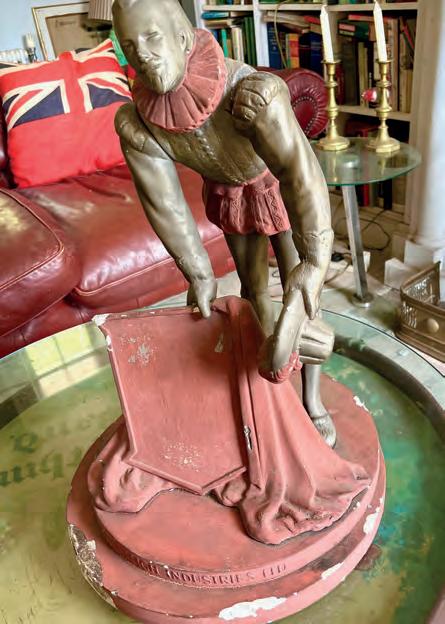
Thought your members would be interested in this vintage Raleigh Industries shop display we have just found. He’s missing his sword but is not in bad condition really, and now has pride of place in our living room. He’s 24 inches tall.
Numi Solomons
Get immediate feedback from other members at forum.cyclinguk.org. Here’s an abridged extract from a recent thread: cyclinguk.org/forumaluminium-touring-bikes
Boyonabike: I’m looking for a lightweight aluminium touring bike. Something like the Ridgeback Tour, except none are available in my size (just under 5ft 6in). Where are they all?
Nearholmer: A couple of bikes that are sold primarily for ‘gravel’, but which I think fit the bill are the Boardman ADV 8.9 and the Sonder Camino Al Hydraulic. Paulatic: I have the Giant Toughroad (flat bar) which I find good for laden touring. pjclinch: I suspect it’s just historical
trends. Tourers are relatively a niche market these days – where you’re really going to town now on a tourer, it tends to be titanium or steel.
rareposter: Are you looking for a ‘pure’ touring bike or something that can be made to tour? The fact you’ve mentioned the Dawes Galaxy and Ridgeback Tour seems to suggest the former.
Bmblbzzz: You could look for a trekking bike from a continental manufacturer such as Cube, Gazelle or Romet, and change the bars, assuming you want drops. Or learn to like flats.
freiston: Excepting specialist shops like Spa and SJS, touring bikes in name are not really a thing, but bikes for touring are - though they tend to be marketed for gravel, adventure, trekking and even ‘bikepacking’.
A serious accident forced Don Harding off his bike. He rediscovered his joy of cycling thanks to recumbent tricycles and electric assistance
JUST after retiring at the age of 60 in 2003, I lost my left leg above the knee in an accident (not cycling related) and was fitted with a prosthetic leg. When I resumed cycling, I found my balance precarious on two wheels due to the SPD pedals I needed to keep my tin foot in place. Eventually I fell off and dislocated my shoulder, ending up back in hospital.
I then read a magazine article about the Windcheetah recumbent trike, a Mike Burrows design. I went to try one, whizzed around the car park and was immediately hooked. Initially I rode without electric assistance, winching up Cumbria’s murderous hills with the help of a mountain bike cassette and three chainrings. After seven years, I added an electric motor. I could cruise up the hills without risk of an overexertion heart attack, and I got about 25 miles from each battery charge.
Since my accident, I’ve volunteered at the Bendrigg Trust near Kendal. It’s a specialist outdoor centre for people of all ages and with a wide range of disabilities, offering activities such as climbing, canoeing and adaptive cycling. It was here I met Alan.
Now in his early 70s, Alan had a serious car accident in 2005, which was not his fault. He has little use of his legs and drags himself around painfully on two sticks. Yet he still rides, thanks to a battery-powered wheelchair-trike made by DaVinci in Liverpool.
We’ve done many rides together. Our longest, over hilly country in Cumbria and North Lancashire, was 65
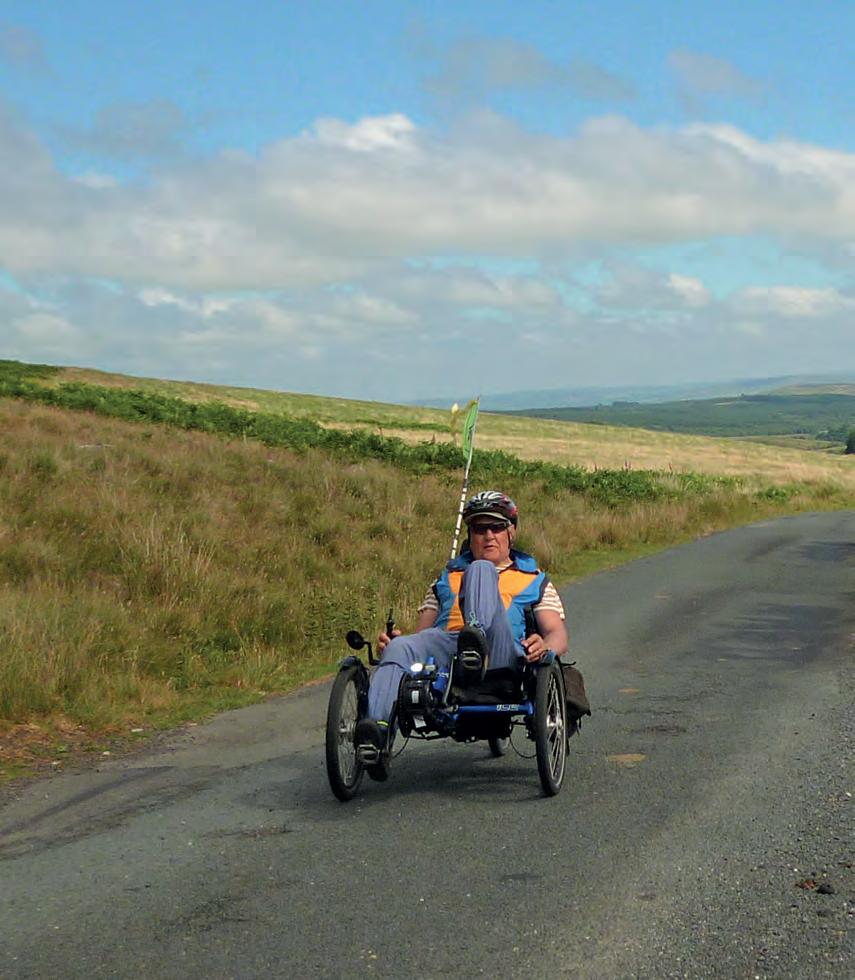
Cycling UK’s Inclusive Cycling Experience scheme offers free try-out sessions and non-standard cycle loans for disabled people to trial cycling as an active travel option for everyday journeys. The scheme is available in two areas, Greater Manchester and Inverness, and is funded by the Motability Foundation. For more information, see cyclinguk.org/inclusivecycling-experience
miles. Alan carries up to four batteries in a handlebar basket. Cycling delights have included trips to and through the Trough of Bowland, Barbondale and Gummers Howe. We’ve cycled in all weather conditions, including winter snow cover.
A new trike
I recently replaced my old Windcheetah with a secondhand ICE Adventure with 20−inch wheels and electric assistance. It was thanks to ICE Trikes agent Paul Hallinan at Adapt-e in Cheshire that I got this. Paul is himself an adaptive rider. He specialises in enabling amputees, stroke suffers and others with physical disabilities to get back on the road. My ICE Adventure can fold but fits comfortably in the back of my estate car without doing so. The trike has nine power settings and I generally ride

using modes six to nine, depending on the terrain. At the time of writing I have ridden 4,600 miles on it, including ascents of the steepest Cumbrian hills. It is comfortable to ride and has full suspension, which enables it to tackle rough conditions. I have been amazed at its stability and reliability.
Three wheels good
Riding an electrically assisted trike and overcoming my disability has been a rejuvenating experience and a joy. My e-trikes have taken me with friends to wonderful, memorable areas in UK. I once again have the sense of freedom I used to love so much when walking on the hills, something I still miss.
I’d be pleased to hear from anyone interested to know more about my triking journeys and experiences. My email address is: donaldharding123@ btinternet.com
Your technical, health and legal queries answered by Cycle’s experts
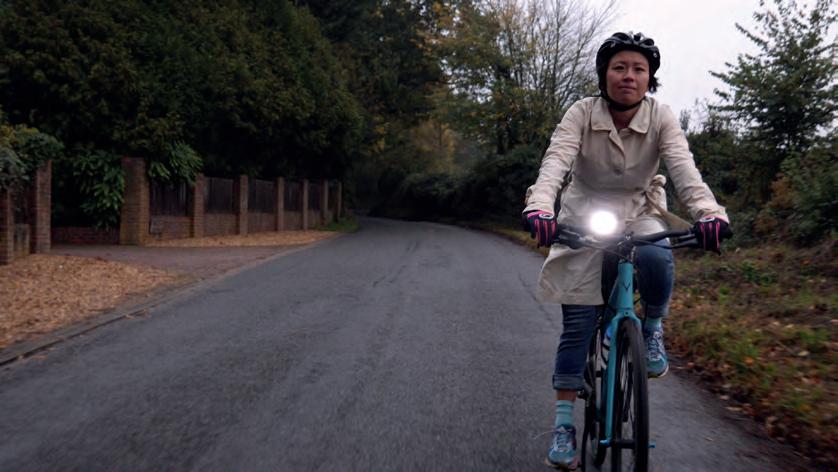
QI’m about to invest in some new commuting lights. I’d like to use ones that are ‘marked as confirming to BS6102/3 or an equivalent EC standard’, as that’s what the Road Vehicles Lighting Regulations require. But I can’t find any lights that are marked as BS6102/3. German-approved battery lights exist but are not particularly common in the UK. My question is: does it matter? Is it actually likely to lead to a counter-claim of contributory negligence in the event of a car-cyclist collision?
Name and address supplied
Technically it does matter because cycle lighting standards are set in line with the Road Vehicles Lighting Regulations. But I have never come across a case where a
point as detailed as the one you describe has been taken.
In compensation claims, I have often seen arguments of contributory negligence (partial fault) against the cyclist. These have included failure to have or display lights on the bike or for failure to wear a helmet or high-visibility clothing. I have not come across arguments, in my personal practice, as detailed as, for example, lack of pedal reflectors or lights not complying with the correct British Standard.
There are two issues here: criminal law and civil law. To be successfully prosecuted, there is a need for the prosecution to prove guilt ‘beyond reasonable doubt’, and the police can issue a fine. In civil cases the burden of proof is ‘on the balance of probabilities’. If liability against the cyclist is proved, it might give rise to a reduction in compensation. However, we always look at all the circumstances. Were streetlights lit? Did the vehicle have its headlights on? Were there any reflective strips on the cyclist’s luggage? And so on.
Nadia Kerr
QI have a Giant Defy with Shimano 105 and a 50-34 chainset. After changing the worn inner for a Stronglight 34, the chain lands on top of the inner ring’s teeth when shifting from the 50 to the 34.
Nicholas Tobin
If the chain rides on the tips of the inner ring teeth rather than dropping into them, you may have fitted a chainring made for a transmission with fewer ‘speeds’ than that fitted to your bike – for example, a 10-speed chainring with 11-speed transmission. The tooth centreline is offset from the main plate of the chainring by an amount suitable for the gearing. The difference is small and easily missed but enough to prevent clean shifting. Similarly, there may be enough of a difference between Shimano and Stronglight chainrings for the same gear count to cause the problem.
Richard Hallett
QA rattling noise has started coming from my bike’s drivetrain when freewheeling on rough roads. Chain length is fine. Could it be worn jockey wheels?
Colin Ward
Your noise may be caused by worn jockey wheels, although the tension maintained in the chain by the rear mech should prevent them from rattling unless their bearings are close to collapse. If the noise disappears when pedalling, it may be due to low derailleur spring tension. Otherwise, the source of your rattle is likely to be a component that has loosened. It might be anything from a chainring bolt to a bottle cage or mudguard stay.
Richard Hallett
QI’m 58 and have been road biking for over 30 years. For the last five years I have often exceeded my maximum heart rate, reaching the high 180s when I’m in Zone 5. I feel fine and have had an ECG and full blood tests – all normal. I have always had a fast heart rate, so could it be my genetics?
My average HR has been between 140− 155. Is there a test that could be done by a specialist or a cardiologist to see if there is an issue?
Johnyygo, on the Cycling UK Forum
Having a higher maximum heart rate (MHR) is not necessarily a problem as the method often used to calculate the
maximum – 220 minus age – is simplistic and unreliable. It does not allow for natural variation due to current fitness levels, genetics, stress levels and the ambient temperature.
Some of the most successful athletes have a MHR around 200. The important thing is that pushing yourself hard on the bike should not cause undue discomfort, whether chest pain or breathing problems. If you feel fine at a higher rate, that is good. Being adequately fed and hydrated, not having excessive caffeine and listening to your body when climbing hills will stop your heart from racing too fast.
Many cyclists like to train with a monitor using the five heart rate zones. The received wisdom is that to train your heart for endurance and a lower heart rate, you need to ride at less intensity (lower zones) for longer – that is, longer, flatter rides with fewer gradients. Riding at higher intensity on steeper gradients will improve your ability to produce short bursts of power. Which you choose depends on whether you want to be a sprinter or an endurance rider. Dr Kate Brodie
QI should be grateful for your thoughts on SPD-compatible footwear for users with bunions. My big toe bunion gets very painful after about 30 miles. I have tried to stretch the fabric of my Shimano shoes but without success. I generally need a wide-fitting shoe.

Peter Woodward

The upper of Lake Cycling’s MX242 model has ‘separated’ panels designed to enhance its flexibility and accommodate foot issues such as










bunions. The shoe is offered in regular and wide widths, has a heat-moldable heel cup and a sole suitable for SPD cleats.
Modifying cycling shoes for comfort was once common among professional racing cyclists, and can be a costeffective approach. I often trim the insoles supplied with a shoe to remove any trace of pressure on the instep.




Attempting to stretch the non-woven material used in panels over mesh fabric or for the entire shoe upper may not work well as the material used is usually tough. Cutting a slit or hole across a pressure point will allow the edges to move apart and relieve pressure, but be careful: slicing into any underlying woven fabric will weaken it and let it unravel.



Richard Hallett



Get in touch Email your technical, health or legal questions to editor@cyclinguk.org or write to Cycle Q&A, Cycling UK, Parklands, Railton Road, Guildford, GU2 9JX. Please include your membership number. Cycle cannot answer unpublished queries. Note: Cycling UK has an advice line for members’ personal injury claims, t: 0330 107 1789.
Which bike should I buy?
Ask us at cyclinguk.org/bikefinder


←For: Nell Percival, age 43, from Glossop. Bike needs: A hybrid for practical journeys. Mine was stolen when I lived in Manchester, and I’ve now moved somewhere hilly. Must have: Easy-to-use brakes and simple gears. Pannier space. Reliable, strong lights. Ability to carry a trombone, if possible. Maybe the ability to fold, but I want big wheels. not have: Drop handlebar. Fixed gear. Budget: I have no idea what bikes cost. I’m basically a beginner.
MATT LAMY


Must handlebar.





Funnily enough, my first ever cycling article was a ride from Sheffield to Glossop, so I know the kind of terrain you’re looking to explore – even if my expertise in carrying trombones is sadly lacking!




Marin Kentfield 1
£499
For all-round ease, my first suggestion is the £349.99 Riverside 500 hybrid from Decathlon (decathlon.co.uk). It has: a single chainring at the front, so only one gear lever to worry about; easily maintained mechanical disc brakes; a flat handlebar; and room for a rear rack. Your nearest Decathlon is in Stockport. You could buy a rack and lights there, too.
Most entry-level hybrids from big-name bike brands tend to have two or three rings at the chainset, complicating matters. But Marin has a few single-chainring bikes, such as the Kentfield 1 (£499, marinbikes.com), again with mechanical discs and room for a rear rack and mudguards. Marin also does a step-through version, the Kentfield 1 ST. Specialized’s Sirrus X range of bikes, starting with the 1.0 (£575, specialized.com), also comes in two frame shapes. The 1.0 features a simple 7−speed Shimano Altus drivetrain, alongside mechanical disc brakes. While a rack and mudguards can be fitted, these models feature Specialized’s ‘Plug+Play’ mountings, which might limit your options.
Finally, you mention folding bikes. An entry-level option is the Carrera Intercity Folding Bike from Halfords (£400, halfords.com), which comes with a rear rack fitted, an 8−speed drivetrain and a sub-14kg carry-on weight. It does have only 20in wheels, though. If you want a bigger-wheeled folder, the budget will have to be bigger, too – to the tune of £1,100 in the case of Tern’s 24in-wheeled Node D8 (ternbicycles.com/uk).

The hard thing here is knowing just how much you’re happy to spend. There’s a huge difference between what’s available for £300 and what you can get for, say, £1,000. But before getting into that, let’s look at your most unusual requirement: carrying a trombone. An online search tells me that a trombone case measures around 90−95×30−35×20−30cm. While you might squeeze that into a large rear pannier, poking out the top and secured to the rack with a bungee or two, there’s a better option: the Mundo AirPannier (£38.50, mundomusicgear.co.uk/products/airpannier), which is specifically designed for carrying bulky musical instruments.
As for the bike, the only one I can think of that ticks all your boxes is the Tern Node D8 that Matt mentions. I tested one for the Aug/Sep 2021 issue of Cycle and liked it; the review is online (cyclinguk.org/lessfamous-folders). With 24in wheels and fat tyres, it rides like a conventional bike. Yet it will just about fit a train luggage rack when folded. All you would have to add is battery lighting, which we tested last issue. See cyclinguk.org/commuter-bike-lights.
If the Node D8 is too expensive, you’ll need to forgo the folding aspect and buy a hybrid. You can take non-folding bikes on trains (see cyclinguk.org/bikecar-train), although it can be a frustrating experience. Conventional bikes can be transported by cars with a large enough boot space or a bike rack; tow-bar fitting racks are the easiest to use.
The best-value non-folding bike that meets your brief is the Elops Long-Distance Step-Through City Bike 500 (decathlon.co.uk). It comes with intuitive 1×9 gearing, mudguards, a rear rack, a kickstand and hub-dynamopowered lighting. Normally £499.99, it was discounted by £50 at time of writing.

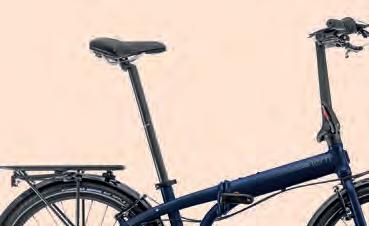
Tern Node D8
£1,100
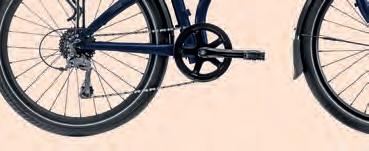

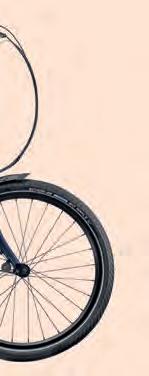
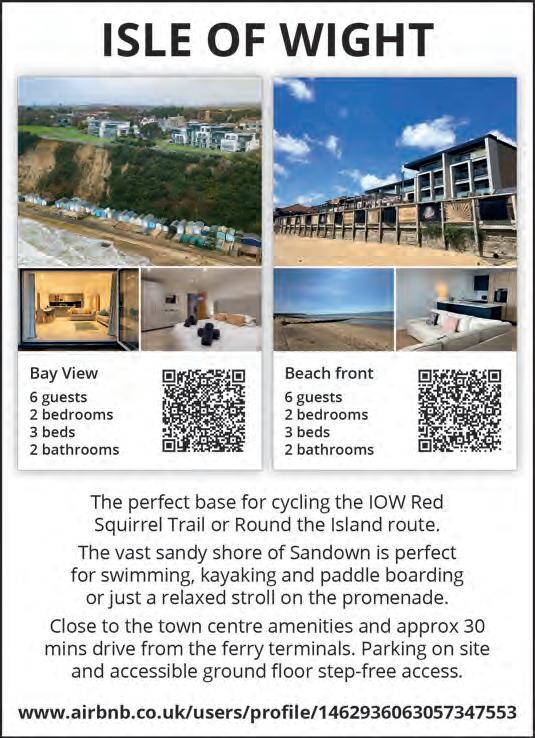

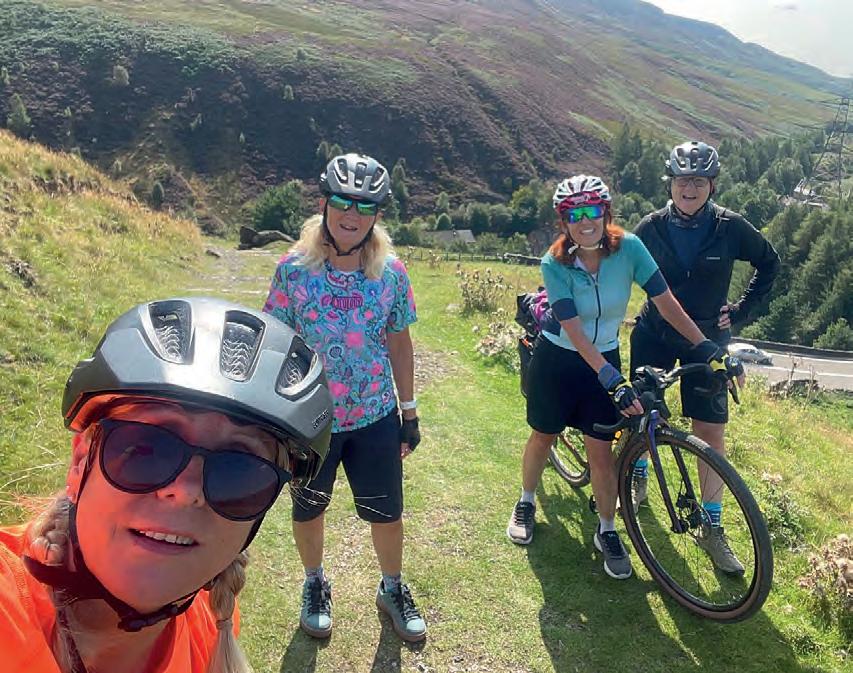
Where:
Northern England
Who: Ann Shrimpton
When: August 2025
There is something special about traversing the country from one coast to the other.
The TransPennine Trail is less well known than some of the more popular coast-to-coast (C2C) routes. It’s longer, at 215 miles, certainly flatter and almost all on traffic-free paths or quiet lanes. It’s rideable on a gravel bike or hybrid, having no technical sections.
Each day brought something different, and we really appreciated the diversity of England’s landscapes as we crossed the country.
Starting in Southport on the shores of the Irish Sea, we passed through Liverpool, along the Mersey Estuary, through the Peak District, Barnsley, Selby, the Humber Estuary and Hull. We reached

While not the hilliest C2C, it does cross the Peak District
Where: Tyne Valley
Who: Jonah York
When: May 2025
The source of the River Tyne is at Deadwater in Kielder Forest.
It’s a quiet place, especially first thing in the morning, which is when a group of young dads from the Wheel Good Dads cycling group – part of the North East Young Dads and Lads project – set off on an 85−mile journey to the sea.
the east coast and the North Sea at Hornsea. The path was signposted the entire way and largely followed old railway lines, canals and cycle trails.
Views en route included the beaches of Southport, the Antony Gormley statues on Crosby Beach as we approached Liverpool, and the beauty and wildlife of the Mersey Estuary. Then there were incredible Victorian railway bridges, the pretty Longdendale Trail through the Pennines, and the spectacular and remote sections of the moors as we passed through the Peak District National Park.
After we traversed the Pennines, it was predominantly downhill to the east coast as we followed the New Junction Canal. There were vast expanses of low-lying and empty agricultural terrain approaching the Humber Estuary. We enjoyed riding across the longest singlespan suspension bridge in the UK: the Humber Bridge.
There were many sections where it was so remote and rural that it was easy to think we were hundreds of miles from any urban sprawl.
Read more at veloann.com
The ride was part of the Birds, Bikes, Bees and Trees initiative, funded by the National Lottery Climate Action Fund. It involved cycling, environmental education, and community spirit. Armed with water-testing kits and a sense of purpose, these ‘green ambassadors’ paused regularly to check the Tyne’s water quality. At the source it was crystal clear. One dad said it looked clean enough to drink, although no one did.
On the second day, the landscape shifted from forest to bustling towns. The river widened. Water tests revealed signs of pollution: rising levels of nitrates and phosphates.
Salty sea air signalled journey’s end at North Shields. “It was an experience I never thought I’d get,” one dad reflected. “Testing the water and seeing the changes made me realise how important this river is, and how much we need to look after it.”
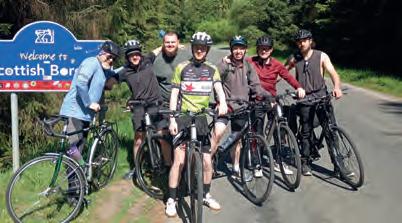
tales
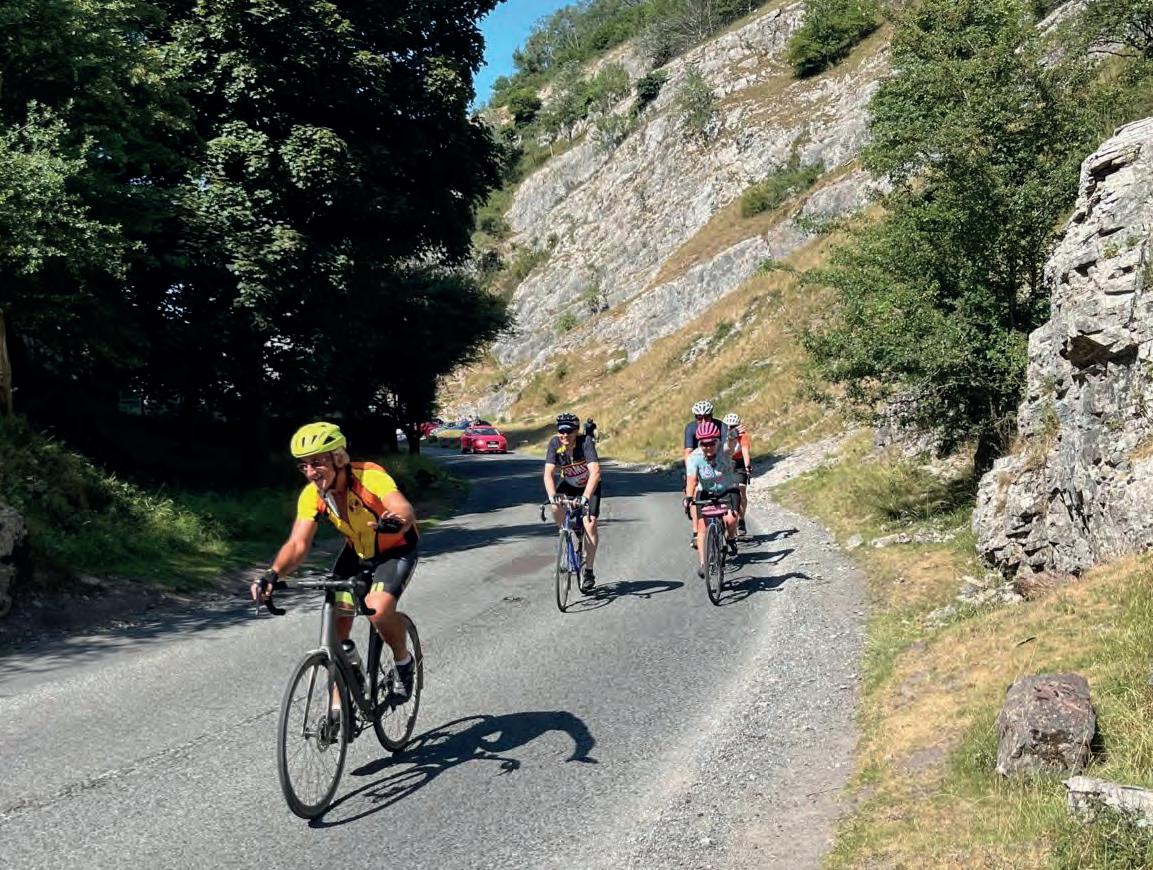
Where:
South-west England
Who: Tom Daltry
When: July 2025
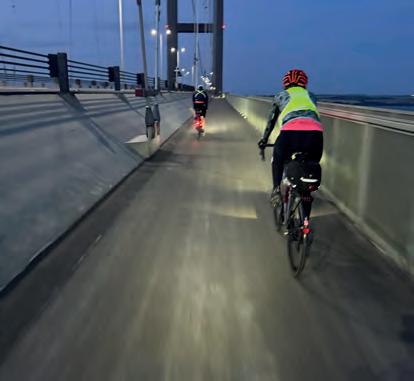
Where: England
Who: Nadia Kerr
When: August 2025
Share your story
We’d love to hear your Travellers’ tales! Email: editor@ cyclinguk.org
Last summer, Stroud Valleys Cycling Club (a Cycling UK member group) went on a touring and camping weekend in the Mendips. Friday saw us ride from Stroud, east of Bristol, to the campsite.
Our route on the Saturday took in some fantastic scenery. We climbed Cheddar Gorge and were rewarded with views across the Somerset Levels. Then we descended to the beautiful city of Wells. After riding across the Levels, we climbed to near the top of Glastonbury Tor, then down into the town.
There was a final sting in the tail: a long, steady climb back into the hills to our campsite. We had been mentally prepared for the ascent of Cheddar Gorge but not for the final, less spectacular
climb at the end of a long, hot day. And, boy, was it hot! With temperatures well into the 30s all weekend, we had to work hard at keeping hydrated, watching out for signs of heatstroke. Cooling-down ploys included tipping water over our heads and lingering in the haven of air-conditioned shops when buying the next round of cold drinks.
We cycled back to Stroud over the Avonmouth Bridge on the Sunday. Some of our group espoused a purist touring ethos, carrying all their camping gear on their bikes – quite an achievement in the gruelling conditions. Others were only too grateful to use an accompanying campervan for the transport of gear.
As always, a successful trip of this nature owes much to those who do the planning. In this case, ex-military man and club stalwart Paul Rothwell was chief planner. His rigorous preparation included an epic, 120-mile ride some weeks earlier, also in sweltering conditions, to check out routes and camping arrangements. Paul, your distinguished service (tropics) medal is being minted!
What was meant to be a 1,540km London-EdinburghLondon audax cycling adventure with 2,000 riders in 2025 was cut short by Storm Floris. I set off from Writtle at 5am on Sunday 3 August. I had cycled 470km to Richmond, North Yorkshire, by noon on Monday when the event was suspended. By evening, it was cancelled.
Around 1,000 riders groaned in unison. Richmond was the last control before the Pennines. Sending us on would have meant battling stormforce winds at one of the highest points. Safety came first but, after eight months of training, the disappointment was huge.
The cancellation created a major logistical task. Beds, blankets and food were suddenly in the wrong locations. My ride back to Writtle became a very different experience: sociable, relaxed and in near-perfect weather. Riders heading south were in good spirits. No stopwatch, no racing through food stops, just steady miles and conversations.
In the end I had a 940km ride that was far more leisurely than planned. Will I return in 2029? Quite possibly! londonedinburghlondon.com