
Decarbonization of the Steel Industry
Medium-Term Goals and Immediate Gains for The Construction Sector An output of the CTBUH Sustainability Initiative Program Partnership
World Steel Association
Avenue de Tervueren 270 1150 Brussels
Belgium
T: +32 2 702 89 00
F: +32 2 702 88 99
E: steel@worldsteel.org
C413 Office Building Beijing Lufthansa Center 50 Liangmaqiao Road Chaoyang District Beijing 100125
China
T : +86 10 6464 6733
F : +86 10 6468 0728
E : china@worldsteel.org
worldsteel.org
© 2025 constructsteel. All rights reserved.
Disclaimer
All intellectual property rights in this work, including the views, data and analysis expressed, are owned by constructsteel. It is provided to Council on Tall Buildings and Urban Habitat (CTBUH) for the sole purpose of publication on its official website. No part of this work may be copied, reproduced, distributed, or used in any form for any other purpose without the explicit prior written consent of constructsteel.
Information disclosed by herein is provided “As Is” and without any representation or warranty, express, implied or otherwise, regarding its accuracy, completeness or performance, or that reasonable care has been taken in its preparation. constructsteel is not liable for any damage arising in any way in relation to the use of the information contained herein. constructsteel does not accept any responsibility for any interpretation that any person may place on the information or for any opinion or conclusion that any person may form as a result of examining the information herein.
Cover image: © Carterdayne, iStockPhoto
The Steel Industry – EU and World Key Figures
Path for the Decarbonization of the Steel Sector
3.1 Introduction
3.2 Current Technological Developments (Short-Term Impacts)
3.2.1 Enhanced Electric Arc Furnace (EAF) Production
3.2.2 Natural Gas-Based Direct-Reduced Iron (DRI)
3.3 Breakthrough Developments (Medium-to-Long-Term Impacts)
3.3.1 Hydrogen-Based Direct-Reduced Iron (H2-DRI)
3.3.2 Carbon Capture, Utilization, and Storage (CCUS)
3.3.3 Biomass and Waste-Based Technologies
3.4 Design Efficiency of Steel Structures
Decarbonization Practices in the Built Environment
3.1 Adoption of Low-carbon Steel Solutions
3.2 Reuse of Steel Structures
3.3 Extension of the Service Life (Rehabilitation and Refurbishment)
Conclusions
1.0
It is the responsibility of humanity to ensure that our collective activities are sustainable, in that today’s needs are met without compromising future needs. However, climate change means that our current activities are not sustainable, and that economies must find ways to decarbonize, reduce carbon emissions across energy, industry and infrastructure and ensure long-term environmental, social and economic sustainability.
It is worth noting that the built environment and construction sector are responsible for about 40% of total global anthropogenic CO2 emissions (EC 2025), while the steel industry is responsible for about 7–9%.1 The global steel industry acknowledges that it is a contributor to climate change but also recognizes that its steel products are a solution to help mitigate the same.
The steel industry is working to deliver the technologies needed to produce low-carbon steel, but it must also be said that the transition is contingent on the availability of affordable renewable electricity, together with highquality raw materials. At the same time, while some nations have well-established scrap supply chains and can meet most of their steel demand using scrap, in many countries where steel production and use are still expanding, scrap availability remains low, and supply chains still need developing. In such countries, end-oflife scrap availability is expected to grow significantly
in the next decades. Although more scrap will become available, the continued growth in global steel demand means that even by 2050, around half of production will still need to come from iron ore.
It is very important to mention that while low-carbon steel gradually enters the market, the design and engineering community has steel solutions for construction available now, which will lower CO2 emissions via the “4Rs” principle: i.e., reduce, reuse, recycle, and remanufacture.
In 2024, each metric ton of steel produced generated, on average, 1.92 tCO2. With worldwide production reaching 1,885,000 metric tons that year, the industry was responsible for roughly 3.6 billion tCO2 emissions, about 85% of which came directly from production processes.1 Steel demand is projected to grow in the coming decades, driven by infrastructure development in emerging economies and the clean energy transition itself.
The traditional blast furnace-basic oxygen furnace (BF–BOF) route, which accounts for about 70% of global steel production, relies on metallurgical coal and produces on average 2.34 tCO2/t steel. This emissions intensity, combined with the sector's scale, makes steel decarbonization essential for achieving global climate targets.

The Steel Industry – EU and World Key Figures
The steel use by sector is illustrated in Figure 1, showing that the construction sector entails more than 50% of the total use.
The production of crude steel in 2024 was about 1,885,000 t, with the following geographical distribution (see Figure 2). The production of steel in Asia (China, India, Japan, South Korea, and Taiwan) is about 74% of global production.
Globally, in 2023, the distribution of steel production by process is about 71% for BF–BOF and 29% for the EAF (see Figure 3).
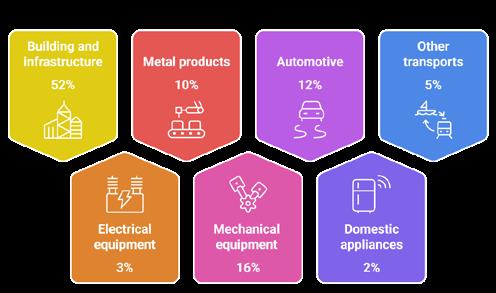
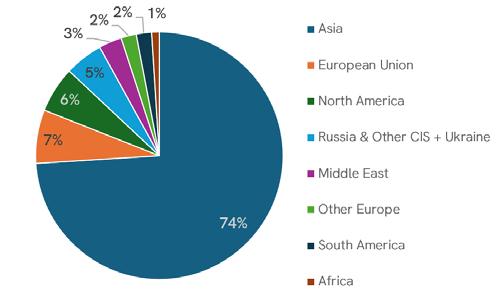
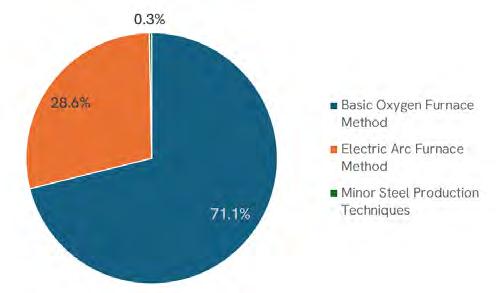
Figure 1. Steel use by sector.1 © worldsteel, 2024
Figure 2. Crude steel production by region.1 © worldsteel, 2024
Figure 3. Global crude steel production by process.1 © worldsteel, 2024

EAF(EPDs)EAF
Considering the distribution of steel production by process, in 2023, approximately 55% of steel in the EU27 (European Union) is produced via the BF–BOF (blast furnace–basic oxygen furnace) route, while in China, this share rises significantly to around 81%.1
Steel production via the BF-BOF route is more energyintensive and carbon-emitting compared to the EAF route. On average, producing one metric ton of steel sections via the BF–BOF route results in approximately a mean value of 2.34 tCO2 emissions. In contrast, the EAF route emits less, around 0.68 tCO2/t steel and depending on the amount of scrap used. DRI based EAF emit an average of 1.37 tCO2 1 Figure 4 shows the variability in values for the production of 1 ton of steel

(generic data)BF(generi cdata)
section. The values on the left are based on data from producers' environmental product declarations (EPDs), while the two sets of values on the right are sourced from the Ecoinvent database.2
However, it is noted that the data above is generic, I.e., average data from steel producers at the global scale. Although this data was retrieved from the most recent database, these values do not reflect the recent technological developments in the production of steel. To illustrate this, the first column in the graph of Figure 4 shows the variability of values from the most recent EPDs relative to the production of steel through the EAF route. In this case, the mean value is 0.67 tCO2/t steel.
“The production of crude steel in 2024 was about 1,885,000 t, with about 74% of global production in Asia (China, India, Japan, South Korea, and Taiwan).”
Figure 4. Global Warming Potential (GWP) for 1 ton of steel section via EAF and BF routes.1,
Source: Benchmark of software/tools for LCA (Gervasio et al, 2025)
Path for the Decarbonization of the Steel Sector
3.1 Introduction
Securing the long-term sustainability of the steel industry depends on reducing emissions and achieving decarbonization goals through the scaling of low-carbon technologies and the advancement of breakthrough innovations. Indeed, the technologies required are generally understood and feasible. However, the availability of affordable low-carbon electricity and high-quality raw materials are major constraints. Notwithstanding the above, reducing material demand by applying the 4Rs (reduce, reuse, recycle and remanufacture) in the design of buildings may deliver CO2 savings now.
The following sections outline the short- and long-term technological impacts, followed by key strategies for achieving efficiency in steel structure design.
3.2 Current Technological Developments (Short-Term Impacts)
3.2.1 Enhanced Electric Arc Furnace (EAF) Production
One of the pathways for steel decarbonization involves maximizing the use of electric arc furnaces powered by renewable electricity. EAF-based steel production primarily uses scrap steel. Currently representing about 28.6% of global steel production, this route offers immediate decarbonization potential as electricity grids become cleaner.3 Globally, around 80% of EAF production derives directly from scrap, while the remaining is obtained from Direct Reduced Iron (DRI; see section below). The process allows the recycling of steel, following circular-economy principles. One of the main benefits of this technology is the low carbon intensity, particularly scrap-based EAF production with renewable electricity.
“Currently representing about 28.6% of global steel production, the [Electric Arc Furnace] route offers immediate decarbonization potential as electricity grids become cleaner.”
However, it is noted that the production of steel through the EAF will not be sufficient to meet decarbonization targets, as this route is limited by, for example, scrap availability, the high demand for renewable energy, and the limitations on steel products and grades that can be produced via EAF. Indeed, worldsteel estimates that despite the increased availability of scrap at the global level, the continued growth of global steel demand means that around half of global steel production will continue via the iron ore route by 2050.
Current Developments:
Increased scrap processing efficiency EAF-based steel production depends on the availability and quality of steel scrap. Efforts are being made in advanced scrap processing, including cleaning, size control, and tramp element elimination.4
Advanced sorting and preparation technologies
Advances in scrap sorting technologies, including automated sorting with sensor-based systems, improve the quality control of scrap used in EAF. These technologies allow procurement of higherquality input streams and reduce contaminants.
Integration with renewable energy sources
Integration with renewable energy supply is a key factor to reduce emissions, since electricity accounts for over 50% of the carbon footprint of scrap-based EAF production.5
Improved furnace designs for higher efficiency: Improved designs incorporate heat recovery systems and enhanced levels of automation. These improvements allow to reduce energy losses and optimize power consumption.
3.2.2 Natural Gas-Based Direct-Reduced Iron (DRI)
Natural gas-based DRI production, followed by EAF steelmaking, offers a transitional pathway, reducing emissions by approximately 20–30% compared to BF–BOF. Shaft-furnace DRI plants can be adapted for hydrogen, though full conversion requires significant modification and depends on the design/licensor. DRI adoption depends on the availability and cost of natural gas.
DRI is obtained by reducing iron ore in the solid state at a temperature lower than the melting point of iron with natural gas or coal, though the former is predominant (around 85%). The resulting material (DRI) is then melted in an EAF to produce steel. Gas-based DRI/EAF steel production is less CO2-intensive than BF/BOF, typically emitting around 1.37 tCO2/t in 2024.1
Current Status:
Fully commercial Natural gas-based DRI technology has been used at industrial scale and commercialized for decades. The global capacity is around 100 Mt/year, showing commercial viability.
Significant capacity expansion planned globally Several projects are being developed in the United States, Middle East, and Europe. The EU has announced around 36 Mt of new DRI capacity.6
Can be retrofitted for hydrogen use and CCS later Gas-based DRI plants can be adapted to use hydrogen as the reducing agent. As aforementioned, this is already being planned. Additionally, coupling with carbon capture and storage (CCS) is already being adopted. Such plants are particularly viable in regions with abundant natural gas.
Natural gas–based DRI depends on securing low-cost natural gas supply. This explains the predominance in the Middle East and United States, whereas in Europe adoption has been more limited.
3.3 Breakthrough Developments (Medium-toLong-Term Impacts)
3.3.1 Hydrogen-Based Direct-Reduced Iron (H2–DRI)
Green hydrogen-based DRI represents a promising breakthrough for primary steel production. When powered by low-carbon electricity, this process can reduce emissions by over 80% compared to current production processes. This technology uses hydrogen as the reducing agent instead of gas to convert iron ore into direct-reduced iron, which is then melted in an EAF powered by low-carbon electricity. Green hydrogen is produced by splitting water molecules through electrolysis using renewable energy.
Development Status:
Demonstration scale
Several pilot projects are planned, but large-scale commercialization is still in the demonstration phase.
Expected commercial deployment: 2030–2035
H2–DRI steel production (DRI–EAF) is projected to be commercialized and competitive with conventional steel production in mid-2030s.
Some projects are underway in Europe and elsewhere (e.g., HYBRIT and Stegra) that will come online within the next couple of years.
Challenges
Low-carbon hydrogen availability, cost & high-quality ores.
Green hydrogen production is currently about 5% of total hydrogen production6 and large-scale availability is still limited. Moreover, H2-DRI requires high-grade iron ore, with only one-third of global reserves being suitable for direct reduction.
If hydrogen-based production is to expand to a significant proportion of global iron production, a solution needs to be found to enable the use of BF-quality ores, for example through enhanced beneficiation or the Electrical Smelting Furnace.
Key Breakthrough Potential:
Near-zero emissions primary steel production
Carbon intensities as low as 0.1–0.4 tCO2/t can be found.7
Utilization of existing EAF infrastructure
Existing EAF infrastructures can be used to melt the product given the output is DRI. In this case, retrofitting and adapting the infrastructures is more feasible than completely new process routes.
Scalable technology suitable for large-scale deployment
Green H2-DRI can be deployed at industrial scale once green hydrogen production and supply chains mature and expand.
3.3.2 Carbon Capture, Utilization, and Storage (CCUS)
CCUS refers to technologies that capture CO2 from large point sources (e.g. power plants or industrial facilities). The CO2 can then be compressed and transported for storage in geological formations (CCS) or used in the production of commercial products.5
CCUS technologies can be implemented to reduce emissions from existing BF–BOF or DRI production. While they do not eliminate emissions entirely, CCUS can capture 80–95% of CO2 emissions from steel production.
The International Energy Agency Net Zero Emissions Roadmap projects the capture of 0.7 GtCO2 per year from steel production by 2050, with about 50% of global primary steel production equipped with CCUS (CBI). Overall, it is expected to reduce around 25% emissions by 2050.5
Most projects have focused on blast furnaces, given they are the largest source of emissions.6 The main challenges are related to engineering and cost.7
“Green hydrogen-based DRI represents a promising breakthrough for primary steel production. When powered by low-carbon electricity, this process can reduce emissions by over 80% compared to current production processes.”
Current Implementations:
In pre-combustion systems, a primary fuel (coal, natural gas, or biomass) is first gasified or reformed to produce a synthesis gas (CO + H2). The CO is shifted to CO2, which is captured, leaving H2 as a clean fuel. Post-combustion systems capture CO2 from flue gases.
Integration with existing blast furnace and DRI operations
A key advantage is the possibility of integration of CCUS with existing BF–BOF plants, increasing the lifetime of assets while reducing carbon emissions.
CO2 utilization for chemical production
The captured carbon can be converted into commercial products such as fuels (e.g. methanol) and chemicals (e.g., ethylene), adding economic value and simultaneously reducing fossil resources use.
CO2 utilization for Enhanced Oil Recovery (EOR)
CO2 is compressed and injected into mature oil fields to increase oil recovery, with part of the CO2 remaining permanently stored underground. Storage in geological formations: CCS allows compression and injection of CO2 into geological formations for permanent storage.
3.3.3 Biomass and Waste-Based Technologies
The use of biomass and waste as an alternative to fossil coal in steel production is emerging as a potential decarbonization pathway. Biomass and biowaste
materials (e.g., sustainable forestry and agriculture residues) can be used to produce bioenergy for steel production or as an alternative reductant. Waste such as plastic waste can also be employed as energy source. These approaches may provide carbon-neutral or circular carbon sources. Although still in varying stages of technological readiness, pilot projects demonstrate their potential contribution to more sustainable steel production.7
Biomass Integration:
Using biochar and biogas in existing furnaces Biomass sources such waste wood, forestry residues or grown plant material can be converted into biochar and biogas to replace coal in BF and EAF.
Technical maturity dependent on specific applications.
Can provide carbon-neutral reducing agents.
Limited by sustainable biomass availability.
Waste Utilization:
Converting plastic waste and non-recyclable materials: non-recyclable plastics, rubber tires, and wastepaper may be used as alternatives to reduce coal dependency and divert waste from landfills.
Circular economy benefits.
Early-stage development with promising pilot projects.
“The use of biomass and waste as an alternative to fossil coal in steel production is emerging as a potential decarbonization pathway. Biomass and bio-waste materials (e.g., sustainable forestry and agriculture residues) can be used to produce bioenergy for steel production. Waste such as plastic waste can also be employed as energy source. These approaches may provide carbonneutral or circular carbon sources.”
3.4 Design Efficiency of Steel Structures
Enhanced design efficiency is a critical component of the roadmap toward carbon neutrality and broader sustainability, valued both for its impact and its near-term applicability. Techniques such as topology optimization, high-strength material utilization, lightweight structural systems, and modular or prefabricated design can reduce material demand without compromising performance. In parallel, design approaches that facilitate disassembly, reuse of structural components, and closed-loop recyclability further extend the potential for substantial embodied carbon reductions.
A hierarchy of design options is illustrated in Figure 5, in decreasing order of importance. Build less emphasizes repurposing, refurbishing, and reusing existing building stock instead of demolishing and starting anew. While repurposing or refurbishment may require some new materials, the primary goal is to preserve as much of the current structure as possible. Reuse, on the other hand, refers to creating new buildings that incorporate, wherever feasible, materials salvaged from deconstructed or obsolete structures.
“Building clever” refers to the selection of appropriate structural configurations and design criteria, avoiding overdesign. For example, steel solutions offer the opportunity of longer spans, thus maximizing the space utilization and allowing for a higher adaptability of the building to cope with new functional requirements over its life span.
“Building efficiently” relates, for example, to design optimization, tailoring components to their required functionality, or the use of high-strength steel to allow the use of lighter structural components.
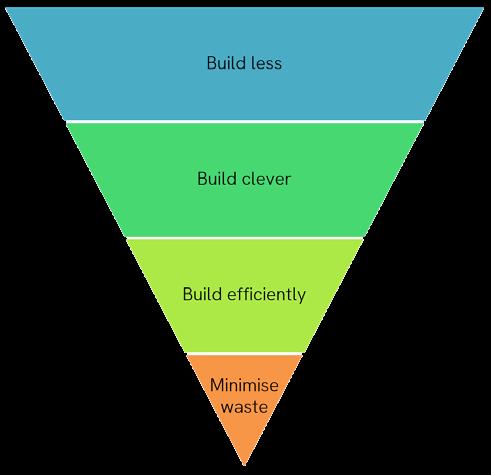
Finally, minimizing waste generation involves adopting circular economy practices to enhance recycling and reuse, as well as utilizing off-site construction and prefabrication techniques to reduce construction waste. Key design strategies to lessen the waste burden include: (i) designing components for reuse and recovery; (ii) designing for prefabrication; (iii) optimizing material use in design; and (iv) incorporating adaptability and flexibility to extend building lifespans.9
The above strategies for a more efficient design of steel structures are illustrated in the following examples of real-case buildings.
Figure 5. Hierarchy of design decisions.8 Source: Adapted from Balan et al. 2024
Decarbonization Practices in the Built Environment
The steel industry's decarbonization efforts are already making a tangible impact on the built environment. As low-carbon steel production methods continue to evolve and scale, their influence can be seen in both new construction and the renovation of existing buildings.
Beyond reduced emissions, steel offers a range of benefits compared to alternative structural materials. Its inherent properties—such as high strength-to-weight ratio, precision fabrication, and modularity—facilitate the reuse, adaptation, and refurbishment of structural elements. These characteristics not only extend the lifespan of buildings, but also reduce the demand for new raw materials, further supporting circular economy principles.
The following real-world examples showcase innovative projects where steel structures play a key role in advancing global decarbonization goals. These case studies highlight how thoughtful design and material choice can align architectural excellence with sustainability imperatives.
The following pages include cases studies showing the use of steel, according to the following categories:
Adoption of low-carbon steel solutions
Reuse of steel structures
Extension of the service life (rehabilitation and refurbishment)
“[Steel’s] inherent properties—such as high strength-to-weight ratio, precision fabrication, and modularity—facilitate the reuse, adaptation, and refurbishment of structural elements.”
4.1 Adoption of Low-carbon Steel Solutions
Below are cases studies showing the use of low-carbon steel, together with the application of the 4Rs: reduce, reuse, recycle and remanufacture.
The Korakuen PREX Building
Key Figure
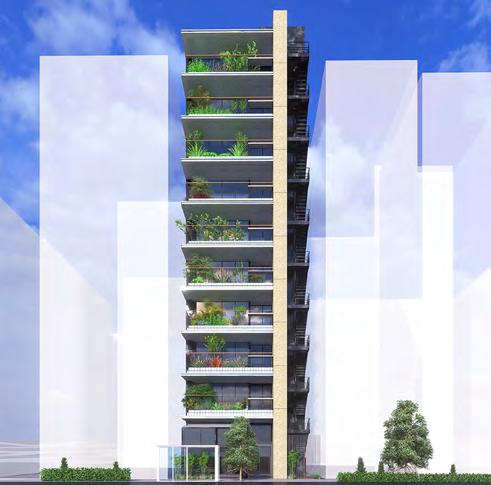
The Korakuen PREX building (Figure 6) was mainly built with lowembodied carbon steel, reducing about 30% of embodied carbon.
Project Summary
Type of Project Offices
Location 23-2, 1-chome, Hongo, Bunkyo-ku, Tokyo
Client Sumitomo Corporation
Architectural Team NIKKEN SEKKEI CONSTRUCTION MANAGEMENT
Contractor KUMAGAI GUMI
Steel Producer JFE Steel and others
Total Weight of Steel 400 t
No. Floors 10
Total Area 2,475 m2
2 Aldermanbury Square
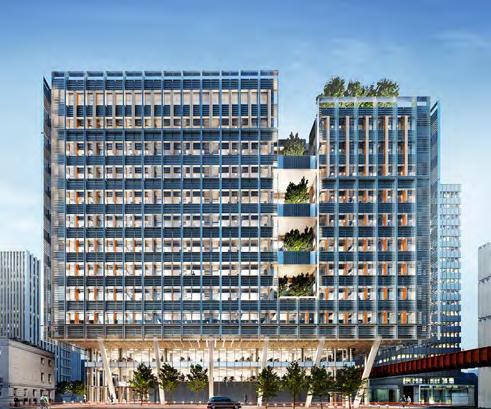
Embodied carbon reduction has been a central focus at 2
Aldermanbury Square (see Figure 7 and Figure 8). Since 2021, a roadmap of opportunities was developed to exceed Great Portland Estates’ 2030 target of 572 kgCO2e/m2 of gross internal area (GIA) (A1–A5). At Stage 4, the project measured 207 kgCO2e/m2 GIA (A1–A4), with a target of 179. Final results show 124 kgCO2e/m2 GIA (A1–A4) (I.e., a 31% reduction from Stage 4).
Project Summary
Type of Project Commercial Office
Location 2 Aldermanbury Square, London
Client Great Portland Estates Plc
Architectural Team Allies and Morrison
Structural Engineering Arup
Main Contractor Bovis
Steel Fabricator William Hare
Cost Gardier & Theobald
Services Sweco
Total Weight of Steel 3,700 t
No. Floors 13
Total Area 43,714 m2
Figure 6. Korakuen PREX Rendering. © Sumitomo Corporation
Figure 7. 2 Aldermanbury Square, View 1. © Allies & Morrison
Key Figures
Procurement of low-carbon steel produced with 100% renewable energy and scrap (333 kgCO2e/t).
Structural steel sizes optimized for efficiency.
Upgrading to S460 and innovative low-alloy steel grades with enhanced strength and weld-ability.
Reuse of 38 t of steel from the existing building.
Metal decking thickness reduced from 1 mm to 0.9 mm.
Third-party verified steel decking procured to support Scope 3 reductions.
A1–A3 emissions, comparing steel carbon, decking carbon, and intum. paint (Figure 9).
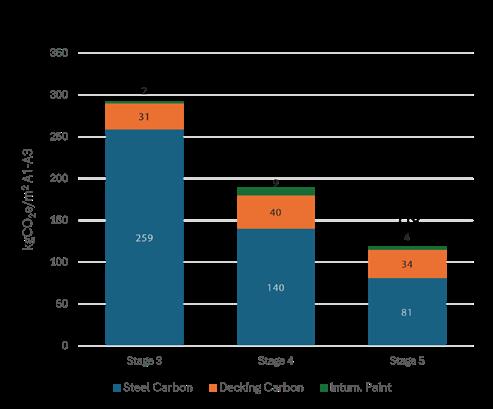
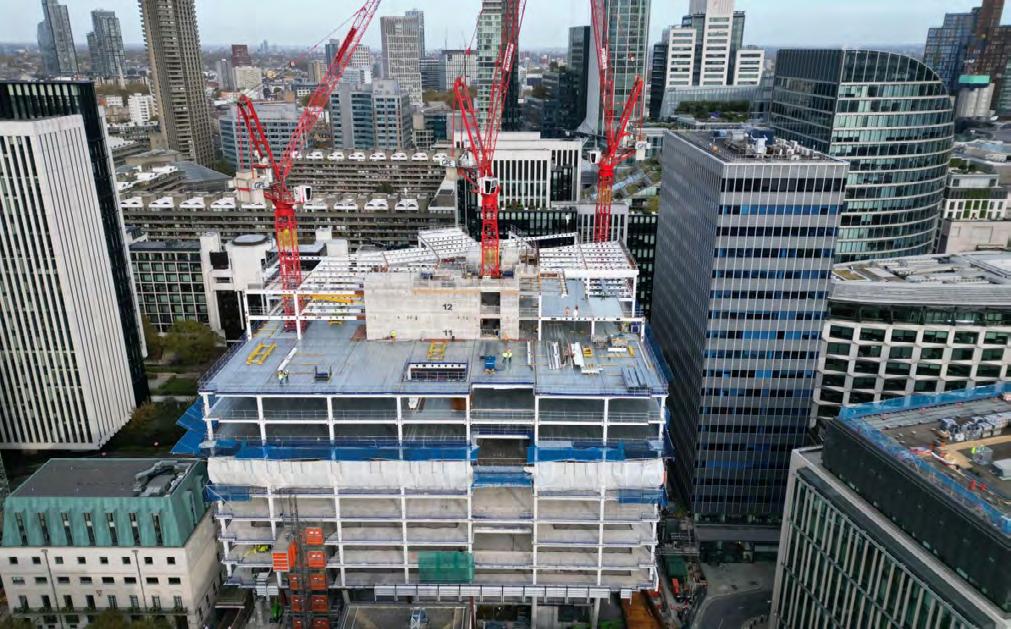
Figure 8. 2 Aldermanbury Square, under construction. © Bovis
Figure 9. Emissions in A1-A3.10 © Laura Mahoney, BOVIS
4.2 Reuse
of Steel Structures
The reuse of steel structures or steel components avoids the production of new steel and minimizes the reduction of waste flows.
34–35 Farringdon Street
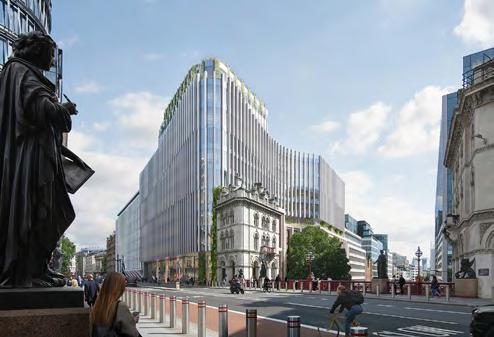
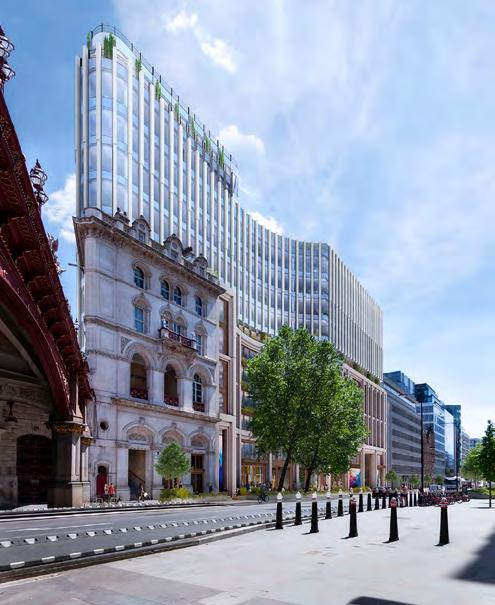
A 13-story modern, sustainable office building (see Figure 10 and Figure 11), and design prioritizes adaptability, sustainability, and health, incorporating biodiverse green terraces, communal social areas, and a dedicated Wellness Wing with fitness facilities.
The project is targeting BREEAM Outstanding and WELL Shell and Core Platinum certifications, with BHC Ltd. responsible for steel procurement, fabrication, and steel erection.
Project Summary
Type of Project Commercial Office
Location
34–35 Farringdon Street, London
Client Royal London Asset Management (RLAM)
Architectural Team PLP Architecture
Engineering Team Heyne Tillet Steel (HTS)
Contractor Multiplex
Steel Producer BHC
Total Weight of Steel 2,980 t No. Floors 13
Total Area 35,948 m2
Key Figures
87 t of reused steel columns used on the project with an embodied carbon of 46 kg CO2e/t.
60% of the total material procured on this project was lowembodied carbon steel, produced using 100% renewable energy and 100% scrap, leading to 333 kgCO2e/t (production stage).
Fabrication with 100% Renewable Energy, reducing carbon emissions associated with fabrication by 44% from 138 kgCO2e/t to 77 kgCO2e/t.
Steel fibers were used instead of reinforcement, which helped to reduce the carbon associated with the upper floor topping.
Embodied carbon of the steel structure: 67 kgCO2e/m2
Figure 11. Office building at 34-25 Farringdon Street, London. View from Holborn Viaduct. © PLP Architecture
Figure 10. Holborn Viaduct, view 2. © Wire Collective, image courtesy of PLP Architecture.
4.3 Extension of the Service Life (Rehabilitation and Refurbishment)
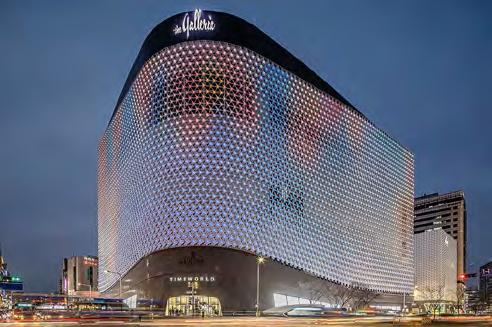
Urban Bloom – Galleria Timeworld
Project Summary
Type of Project Commercial
Location Daejeon, Republic of Korea
Client Hanwha Galleria
Architectural Team CA Plan
Engineering Team POSCO
Contractor Exhibit Korea
Steel Producer Infeso
Total Weight of Steel 500 t No. Floors 5
Total Area 17,178 m2
Key Figures
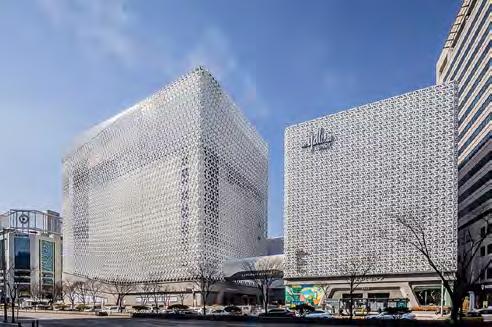
Refurbishment of the entire façade of a massive department store built 25 years ago (see Figure 12 and Figure 13).
The engineering team carried out alternative design and engineering by changing the originally planned 3-mm-thick aluminum exterior cladding to 1.2-mm-thick steel (see Figure 13 and Figure 14).
Carbon emissions were reduced by approximately 86% compared to the solution with aluminum.
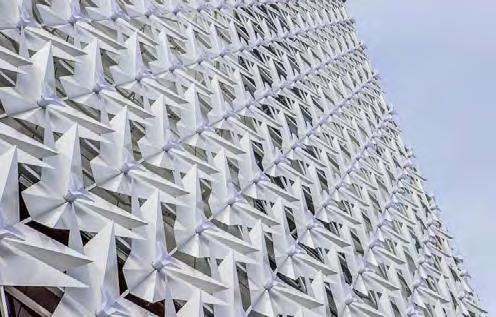

Figure 15. Urban Bloom – Galleria Timeworld. © CA-Plan, courtesy of POSCO
Figure 12. Urban Bloom – Galleria Timeworld. © CA-Plan, courtesy of POSCO
Figure 13. Urban Bloom – Galleria Timeworld. © CA-Plan, courtesy of POSCO
Figure 14. Urban Bloom – Galleria Timeworld. © CA-Plan, courtesy of POSCO
The global steel industry is committed to its long-term sustainability by reducing greenhouse gas emissions and meeting decarbonization targets via three main levers: (1) Energy efficiency, (2) Maximizing scrap availability and use and (3) Breakthrough technologies. It is important to mention that the decarbonization of steel will not follow the same path everywhere. Indeed, low-carbon energy and appropriate cost, relevant infrastructure for storage, transportation and conversions, are all key necessities in the decarbonization journey, together with a strong and reliable market demand, including government and policy support.
The steel industry is attempting to work closely with governments, industry, stakeholders and customers to collectively act on various issues to promote and speed-up the transition towards decarbonization.
For the construction industry, it is critical to create demand for low-carbon steel and to develop standards, procurement models and product certifications. The steel industry must engage proactively with construction stakeholders to ensure clear communication of progress, challenges and trade-offs during the transition and ensure interoperability of national policies with international frameworks.
At the same time, the design and engineering community have at their disposal levers that may reduce carbon emissions in buildings now and via the application of the 4Rs: reduce, reuse, recycle, remanufacture. For example, usage of high-strength steel (“reduce”) may lead to a 20–40% reduction of CO2 emissions. Implementation of low-carbon engineering and application solutions may lead to huge reductions in CO2 now.
“The global steel industry is committed to its long-term sustainability by reducing greenhouse gas emissions and meeting decarbonization targets.”
References
1. Worldsteel. (2024). 2024 World Steel in Figures. https://worldsteel.org/wp-content/uploads/World-Steel-inFigures-2024.pdf
2. Wernet, Gregor, Christian Bauer, Bernhard Steubing, Jürgen Reinhard, Emilia Moreno-Ruiz & Bo Weidema. (2016). “The Ecoinvent Database Version 3 (Part I): Overview and Methodology.” The International Journal of Life Cycle Assessment 21 (9): 1218–30. http://link.springer.com/10.1007/s11367-016-1087-8.
3. Rocamora, Cynthia and Lucie Pinson. (2023). Decarbonizing the Steel Sector: The Role of Financial Institutions. Reclaim Finance. https://reclaimfinance.org/site/wp-content/uploads/2023/04/Reclaim_Finance_Steel_Decarbonization_2023-2. pdf.
4. European Steel Technology Platform (ESTEP). (2021). Improve the EAF Scrap Route for A Sustainable Value Chain in The EU Circular Economy Scenario: Roadmap. ESTEP. https://www.estep.eu/assets/Publications/Improve-the-EAF-scraproute-Roadmap-Final-V2-3.pdf.
5. British Constructional Steelwork Association (BCSA). (2021). UK Structural Steelwork: 2050 Decarbonisation Roadmap. BCSA. https://www.bcsa.org.uk/resources/sustainability/steelwork-decarbonisation-roadmap/
6. Climate Bonds Initiative. (2022). A Green Future for Steel. https://www.climatebonds.net/files/documents/publications/AGreen-Future-for-Steel.pdf.
7. Deloitte. (2023). “Green Steel: Technology and Value Chain Shifts to Tackle Decarbonisation Challenges.” GreenSpace Tech by Deloitte.
8. Balan, B., Brown, D. G., Pimentel, R., and Sansom, M. R. (2024). Best Practice for Designing Low Embodied Carbon Steel Buildings. SCI Publication. https://www.steelconstruction.info/images/0/0d/SCI_P449.pdf.
9. Waste & Resources Action Programme (WRAP). (n.d.). Designing Out Waste: A Design Team Guide for Buildings. https:// build360.ie/wp-content/uploads/2023/01/WRAP_DOW_Guide.pdf
10. BOVIS (2021). 2 Aldermanbury Square on course to smash carbon targets. https://www.bovis.com/ news-and-insights/2-aldermanbury-square-on-course-to-smash-carbon-targets/
Additional Reading
1. European Commission (EC). (2025). “Internal Market, Industry, Entrepreneurship and SMEs - Buildings and Construction.” https://single-market-economy.ec.europa.eu/industry/sustainability/buildings-and-construction_en
2. he Institution of Structural Engineers (IStruct). (2025). The Role of Scrap in Steel Decarbonisation. Key Facts and Considerations for The Construction Sector. https://www.istructe.org/sitefiles/handlers/downloadfile. ashx?productid=10722
About the CTBUH
The Council on Tall Buildings and Urban Habitat (CTBUH) is the world’s leading resource for professionals focused on the inception, design, construction, and operation of tall buildings and future cities. Founded in 1969 and headquartered at Chicago’s historic Monroe Building, the CTBUH is a not-for-profit organization with an Asia Headquarters office at Tongji University, Shanghai; a Research Office at Iuav University, Venice, Italy; and an Academic Office at the Illinois Institute of Technology, Chicago. CTBUH facilitates the exchange of the latest knowledge available on tall buildings around the world through publications, research, events, working groups, web resources, and its extensive network of international representatives. The Council’s research department is spearheading the investigation of the next generation of tall buildings by aiding original research on sustainability and key development issues. The Council’s free database on tall buildings, The Skyscraper Center, is updated daily with detailed information, images, data, and news. The CTBUH also developed the international standards for measuring tall building height and is recognized as the arbiter for bestowing such designations as “The World’s Tallest Building.”
ctbuh.org
CTBUH Publications
CTBUH also produces a variety of publications on various research topics and technical guides. For more information, visit store.ctbuh.org.
CTBUH Headquarters
The Monroe Building
104 South Michigan Avenue, Suite 620 Chicago, IL 60603, United States
Phone: +1 312 283 5599
Email: info@ctbuh.org www.ctbuh.org
CTBUH Asia Headquarters College of Architecture and Urban Planning (CAUP) Tongji University
1239 Si Ping Road, Yangpu District Shanghai 200092, China
Phone: +86 21 6598 2972
Email: china@ctbuh.org
CTBUH Canada
Toronto Metropolitan University
ARC307–325 Church Street
Toronto ON M5B 2K3, Canada
Phone: +1 416 477 8744
Email: canada@ctbuh.org
CTBUH Research Office Iuav University of Venice Dorsoduro 2006 30123 Venice, Italy
Phone: +39 041 257 1276
Email: research@ctbuh.org
CTBUH Academic Office
S. R. Crown Hall Illinois Institute of Technology 3360 South State Street Chicago, IL 60616
Phone: +1 312 283 5646
Email: academic@ctbuh.org