My Architecture is about finding ways to use the built environment to improve ourselves and our world. When taking on projects, I first understand what unique opportunities a project has to give back. I drive myself to understand the challenges of a project so I can find the optimal solution through creative design ideas and adapting new technologies.
My friends & colleagues describe me as a reliable and easy-going yet hardworking team player. I am passionate about sustainability & creating human & eco centric designs that can have a positive impact on our world.
matthew.csorgo@gmail.com
104/124 Palmerston St, Carlton VIC, 3053, Australia
www.linkedin.com/in/matthew-csorgo
Restoring our environments through research, education and regeneration
Connecting with ourselves, others & the world around us
Unifying communities through mutually beneficial relationships
Creating spaces for practical use & site conditions
Adapting
RESIDENCES
CAFE/RESTAURANT
EDUCATION
REGENERATION
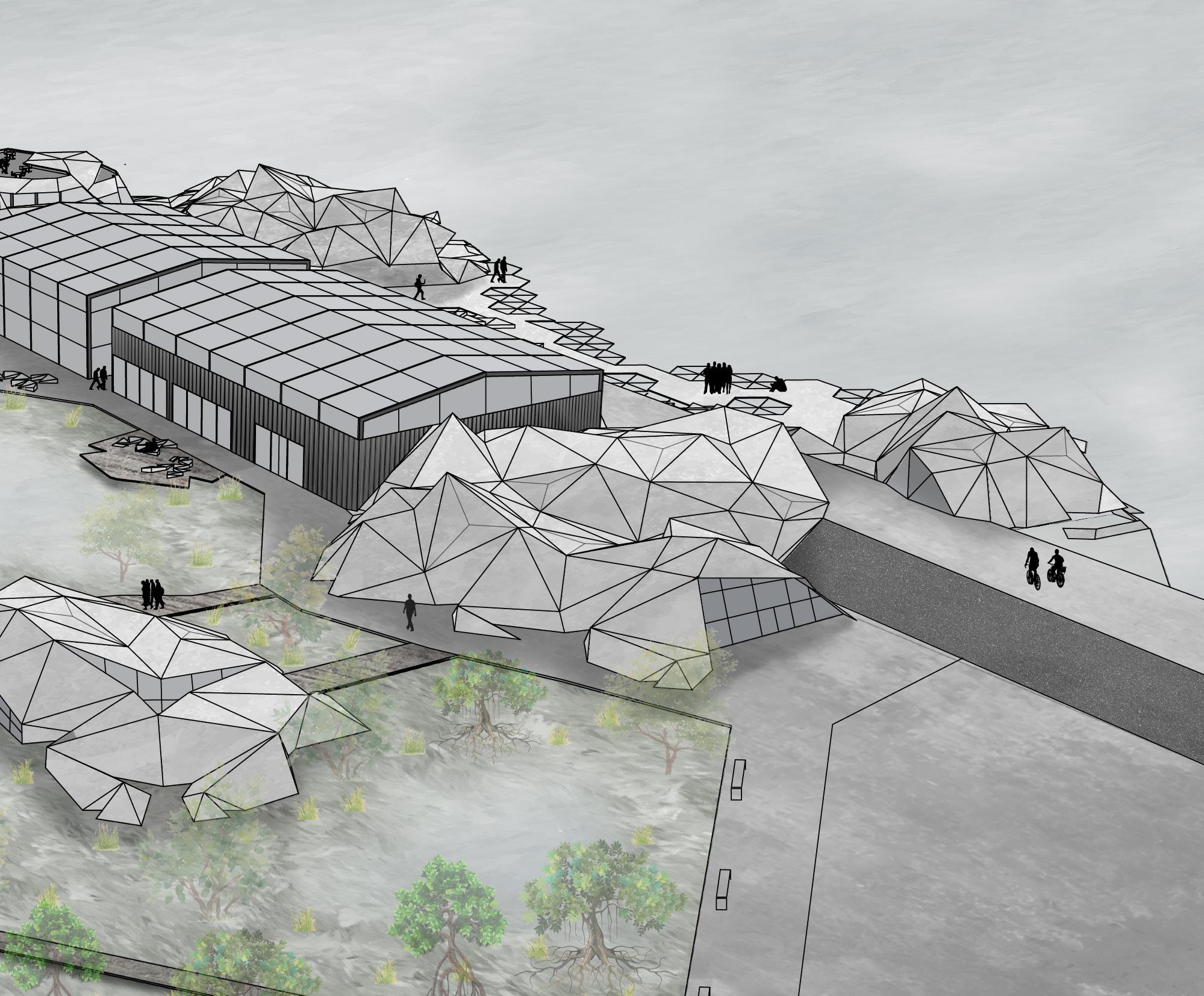
Regenerating the Yarra River and natural history of Docklands through Environmental Science, Education and Native Cleaning Ecosystems and bringing sustainability and biodiversity to future generations.
Site. North Wharf, Docklands, Melbourne
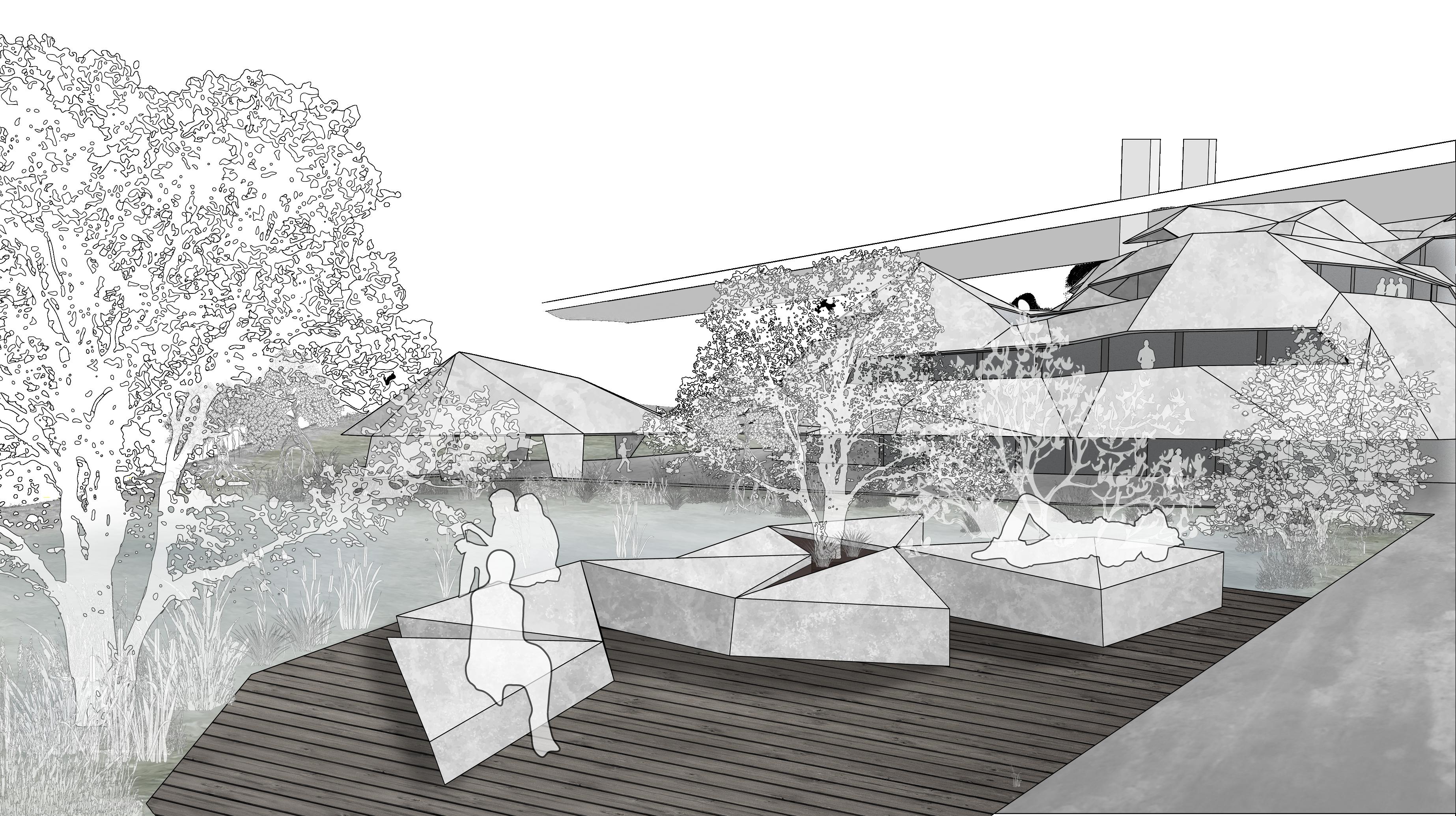
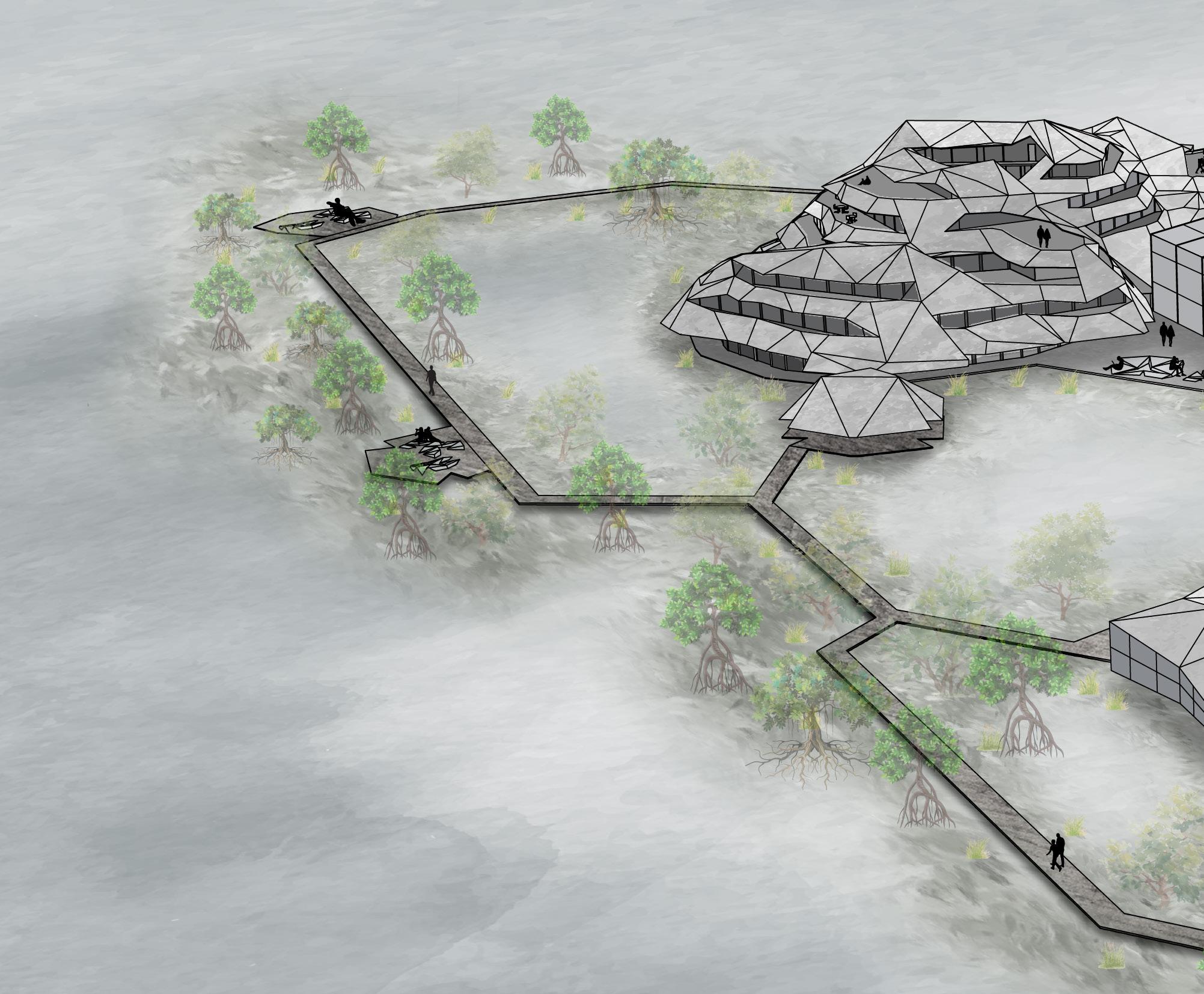
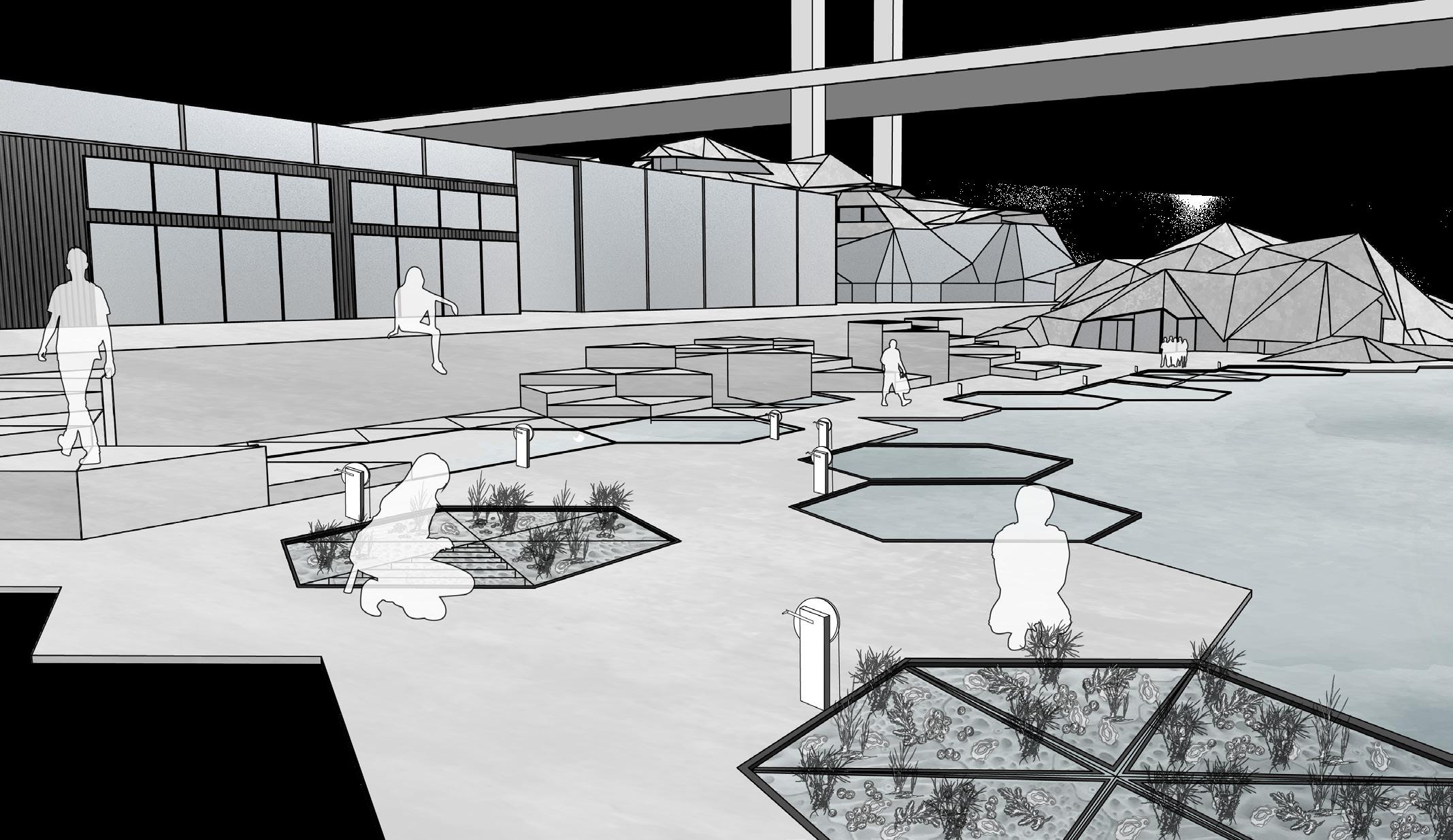
Regeneration is aimed at creating a healthier waterfront for not only the site but also the whole river. With the pollution and biodiversity issues surrounding the Yarra River, the solution that Regeneration provides is to use education and natural ecosystems to enhance the health of the river and waterfronts.
To do this, the design combines marine and environmental research and education facilities for both students and researchers to study and undertake practical coursework that cleans the river and regenerates the natural waterfront ecosystem. Student accommodation is also provided for students and researchers who move to the facility for study and research. Exhibition, lectures, classes and boardwalks allow the public to engage with the facility and learn about the work going on within.
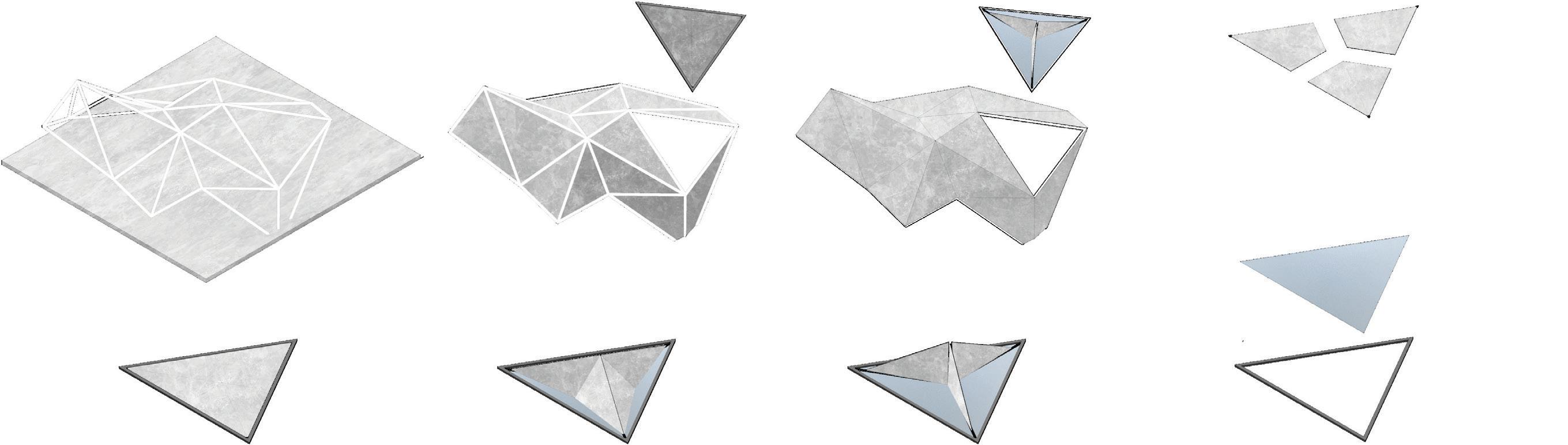
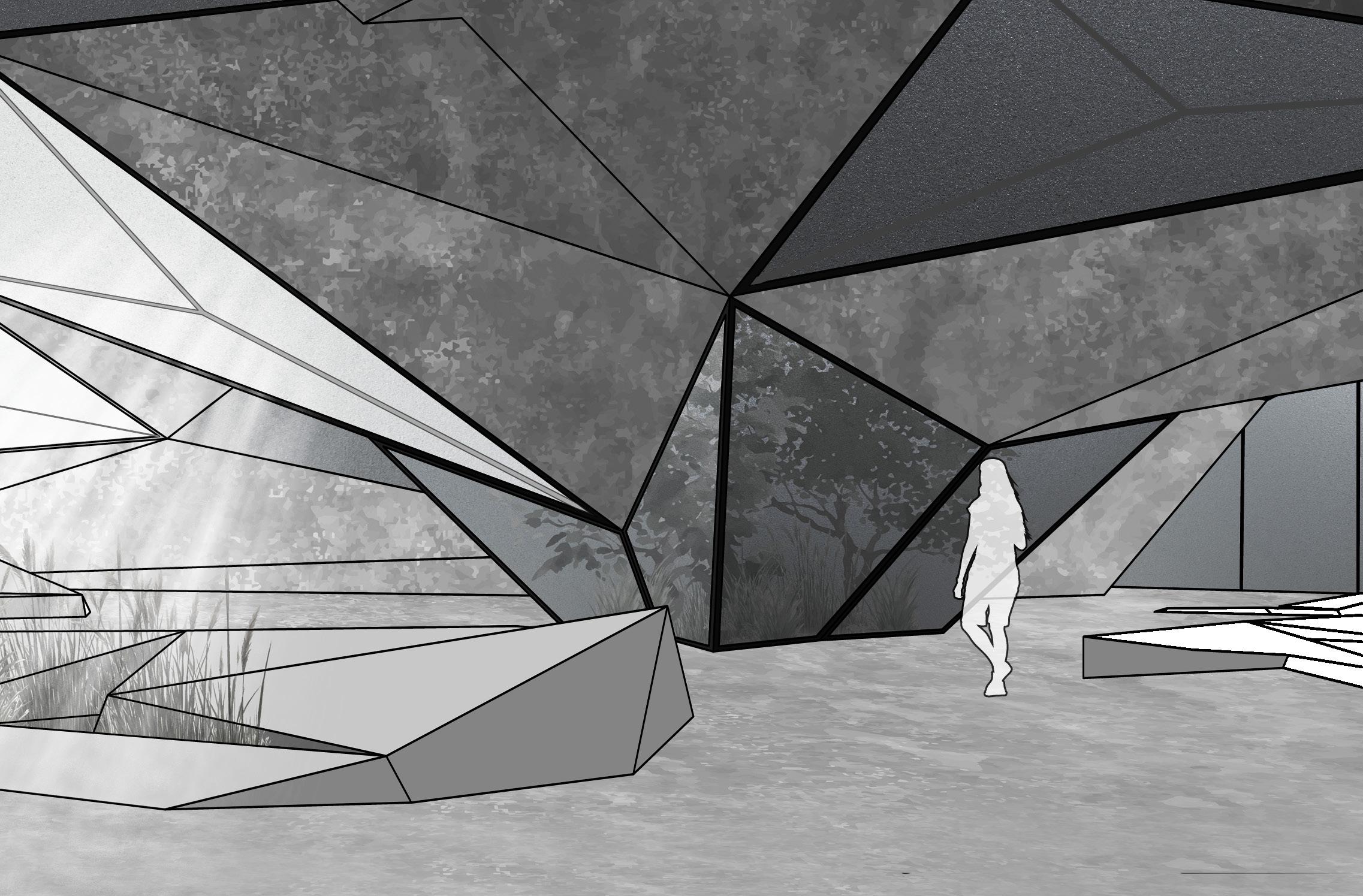
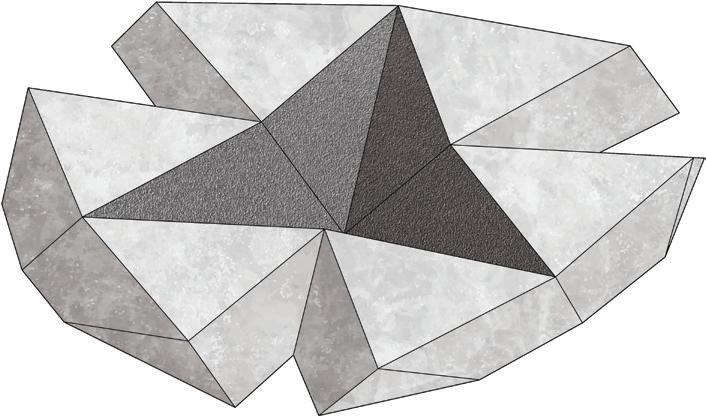
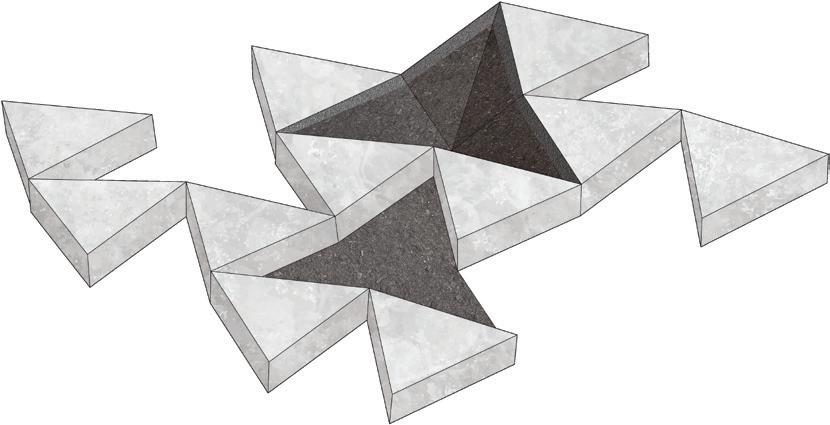
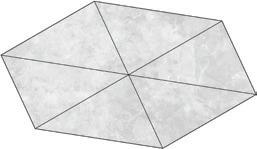
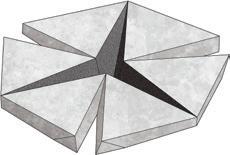
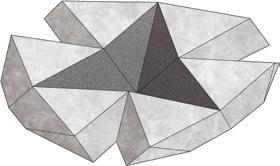
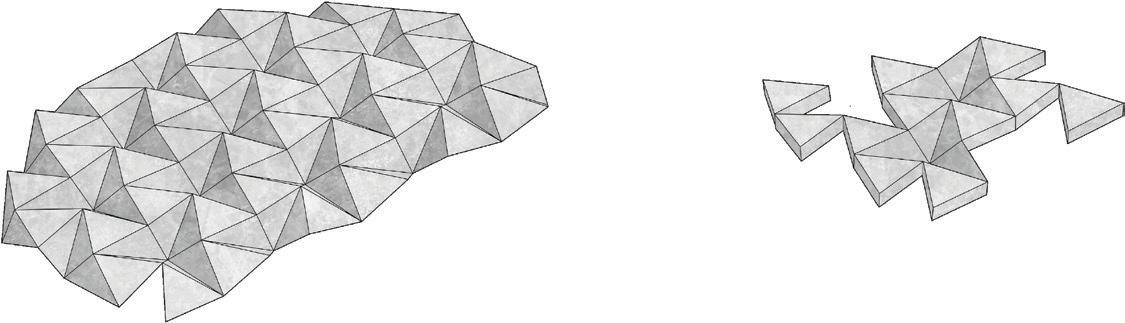
The form of Regeneration was created using a Resch Tessellation, a foldable expanding surface, expanded across the site. The surface creates natural rocky shapes that blend the structures into the surrounding wetlands and waterfront. This is further enhanced through facade materials, cement sheeting which gives the forms a rocky texture.
LECTURE HALL
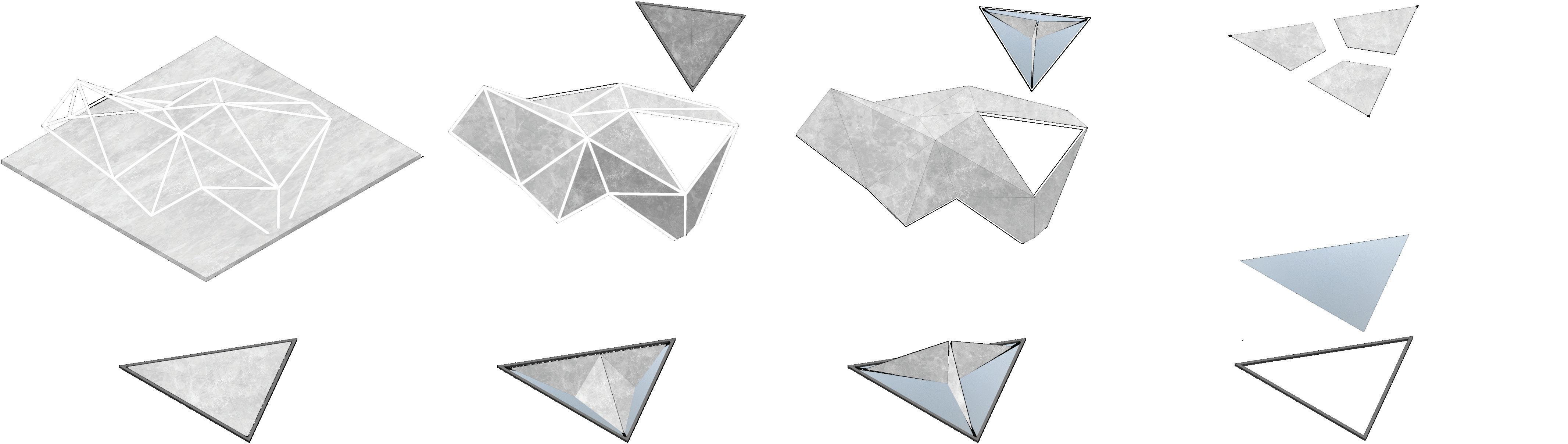
FORM FINDING
EXHIBITION
FORM CREATED THROUGH EXPANDING RESCH TESSELLATION ACROSS SITE
EXCESS FORM REMOVED CREATING RELEVANT STRUCTURES
EXHIBITION HALL
INTERIOR PANELING
FURTHER
FORM FINDING APPLICATIONS
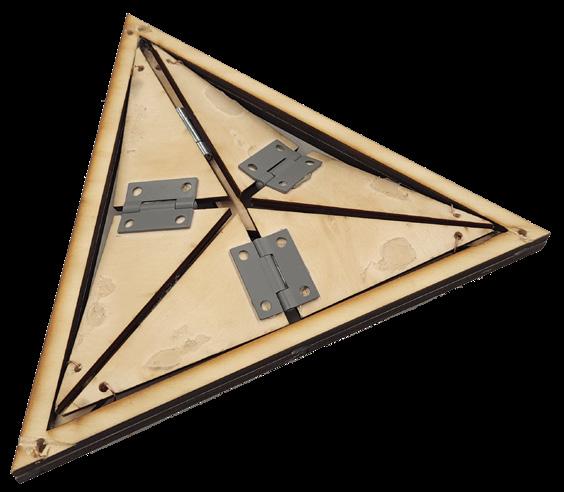
DYNAMIC FACADE
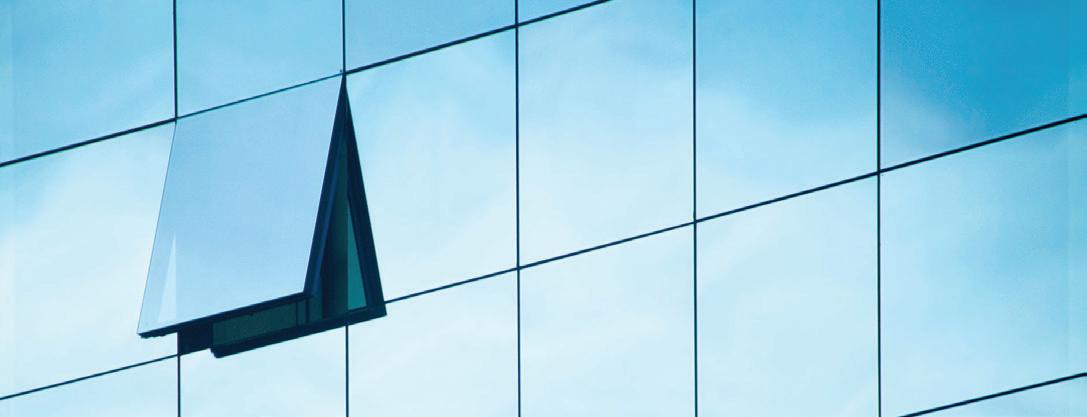
Regulating light conditions for variable interior uses & maintaining optimal comfort conditions throughout the year. Dynamic window panels can open manually for variable space usage or be set to automatically regulate sunlight into buildings.
EXTERIOR PANELING
STEEL PIPE FRAMING
MARINE EXHIBITS BENCH SEATING
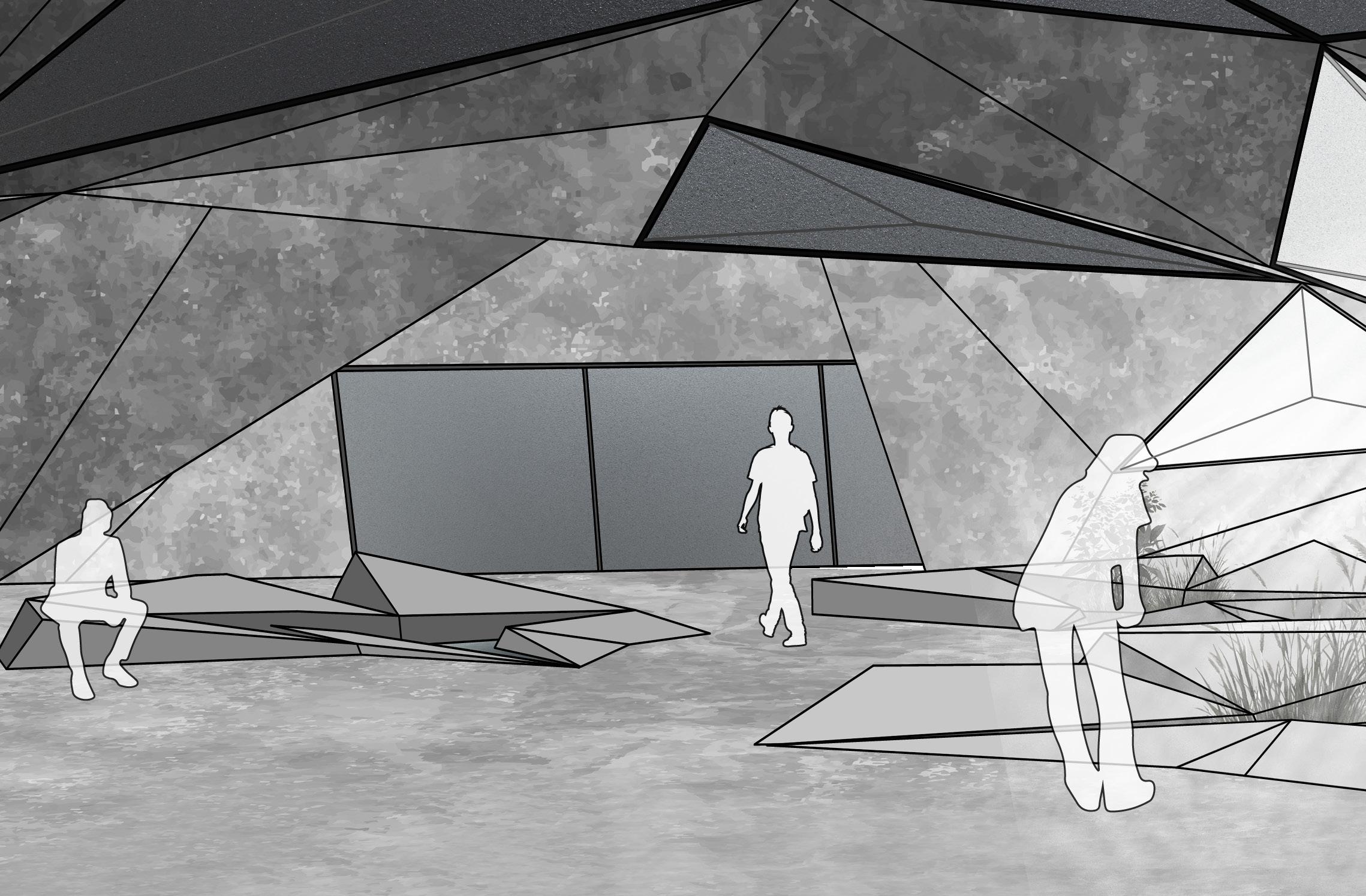
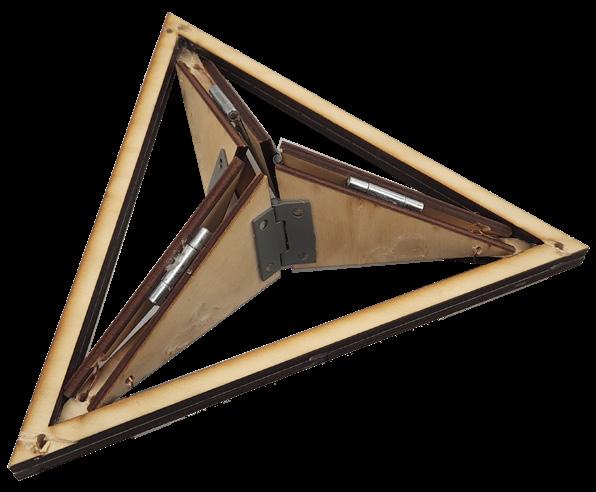
Creating adjustable exhibition stands for students and researchers to share their work through the site to spread education. The stands can be concealed in the ground and expanded upwards allowing the spaces to be utilised for different exhibits.
The Resch Tessellation is expanded through spaces to create seating layouts to that are unique and optimised for individual spaces throughout the site.
YOGA STUDIO
ASCENSION
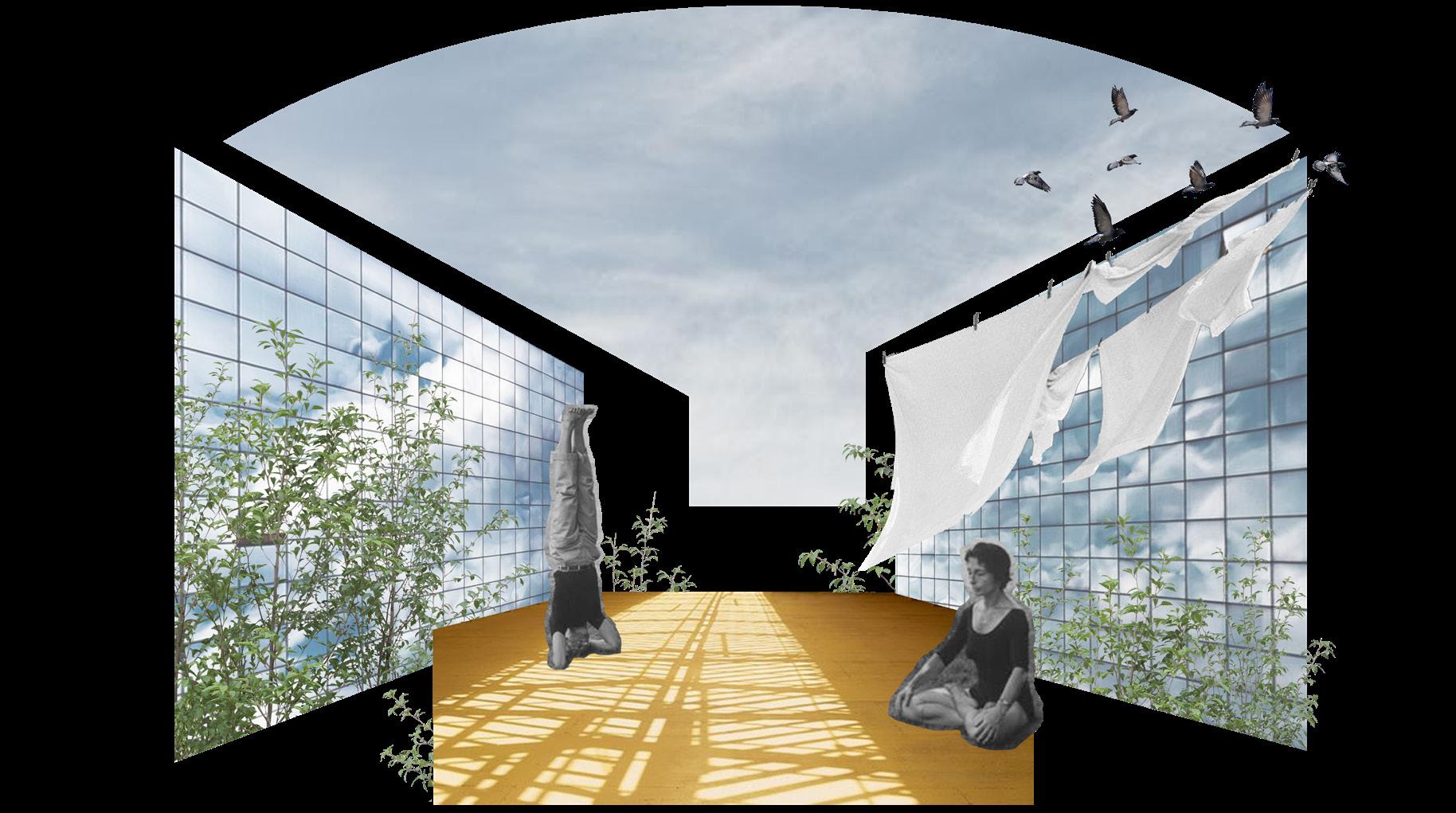
Finding relaxation and wellbeing by deepening connections with ourselves, our community and the world around us.
Site. Rural Latvia
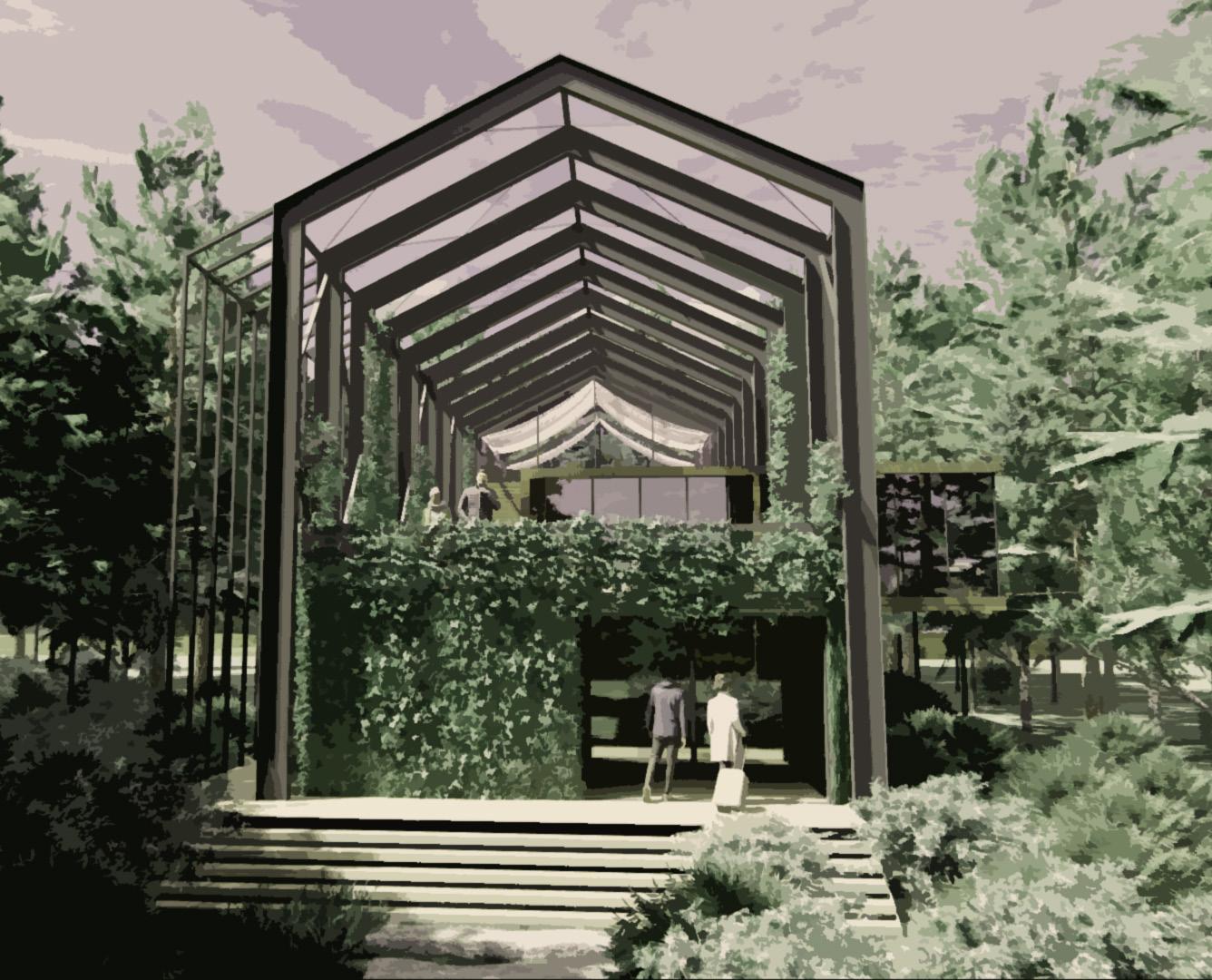
Ascension takes the opportunity of designing a Yoga House in Latvia’s rural bogs to find ways to reduce the stress and anxiety weighing on Latvia’s people. With shrinking living spaces and a mental health epidemic, it is more important than ever for people to find ways to connect with nature, their community and themselves.
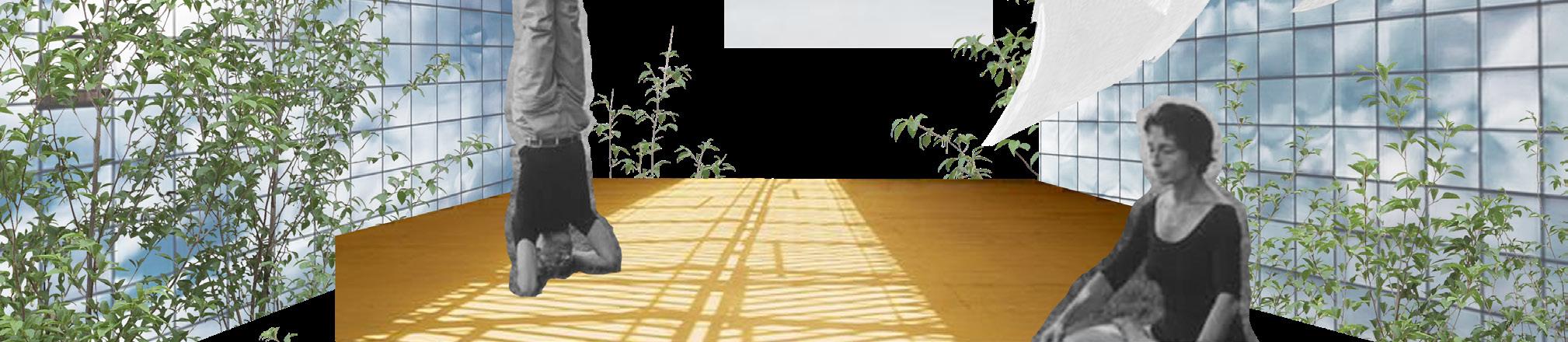
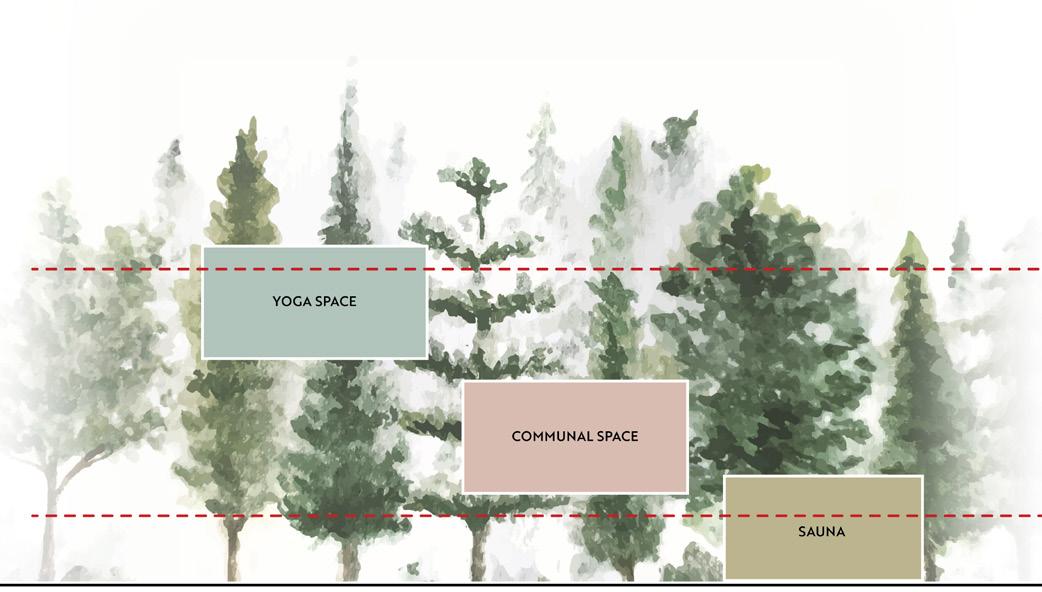
The design creates three spaces that focus on the fundamentals of Yoga and connects them with Latvian culture. To strengthen these connections the program takes advantage of elevation with ascending spaces starting at the earthy comforting Latvian Sauna and ending with the open, light Yoga studio amongst the swaying treetops.
SPATIAL LAYOUT
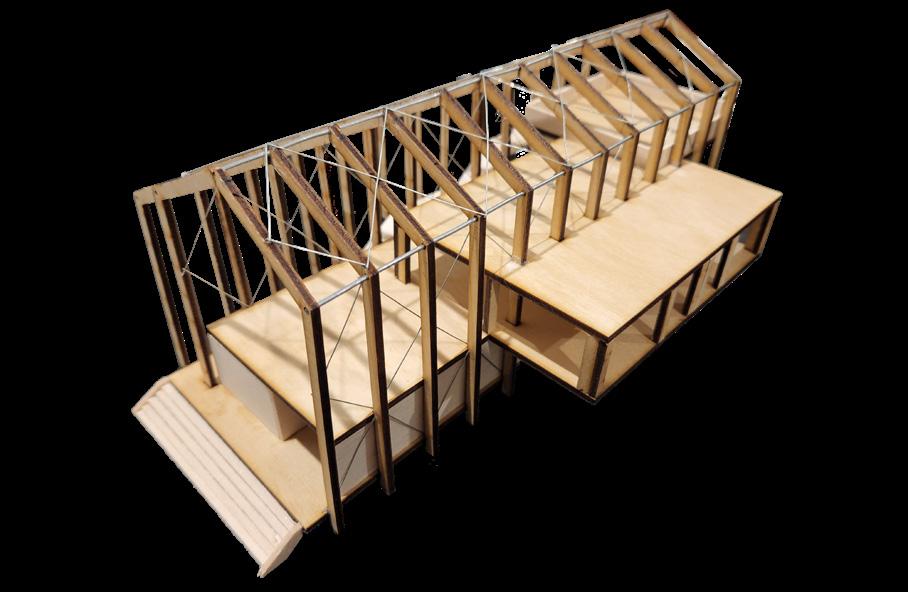
PHYSICAL MODEL
COMMUNAL AREA
CIRCULATION AXONOMETRIC
CONNECTIONS
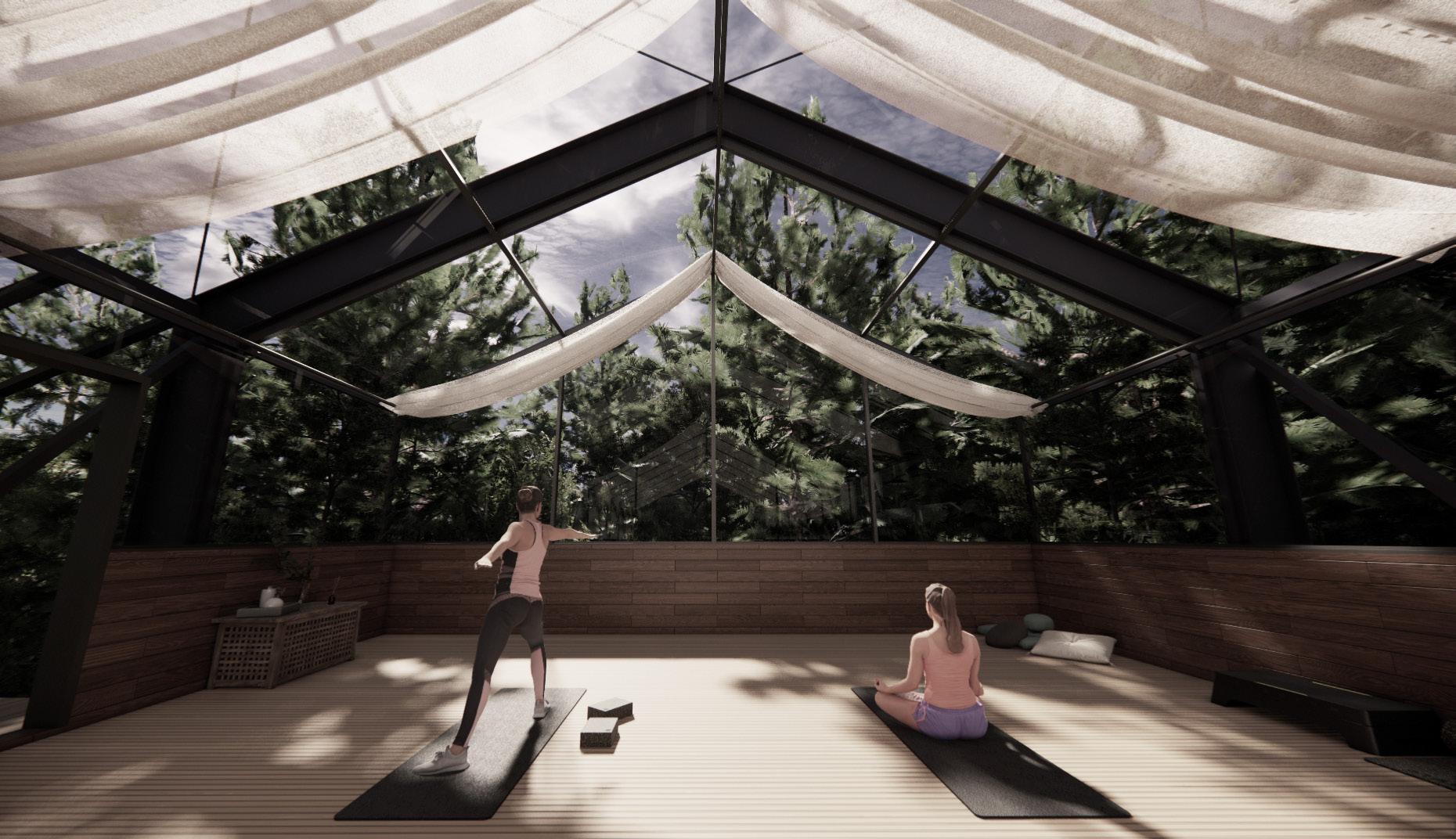
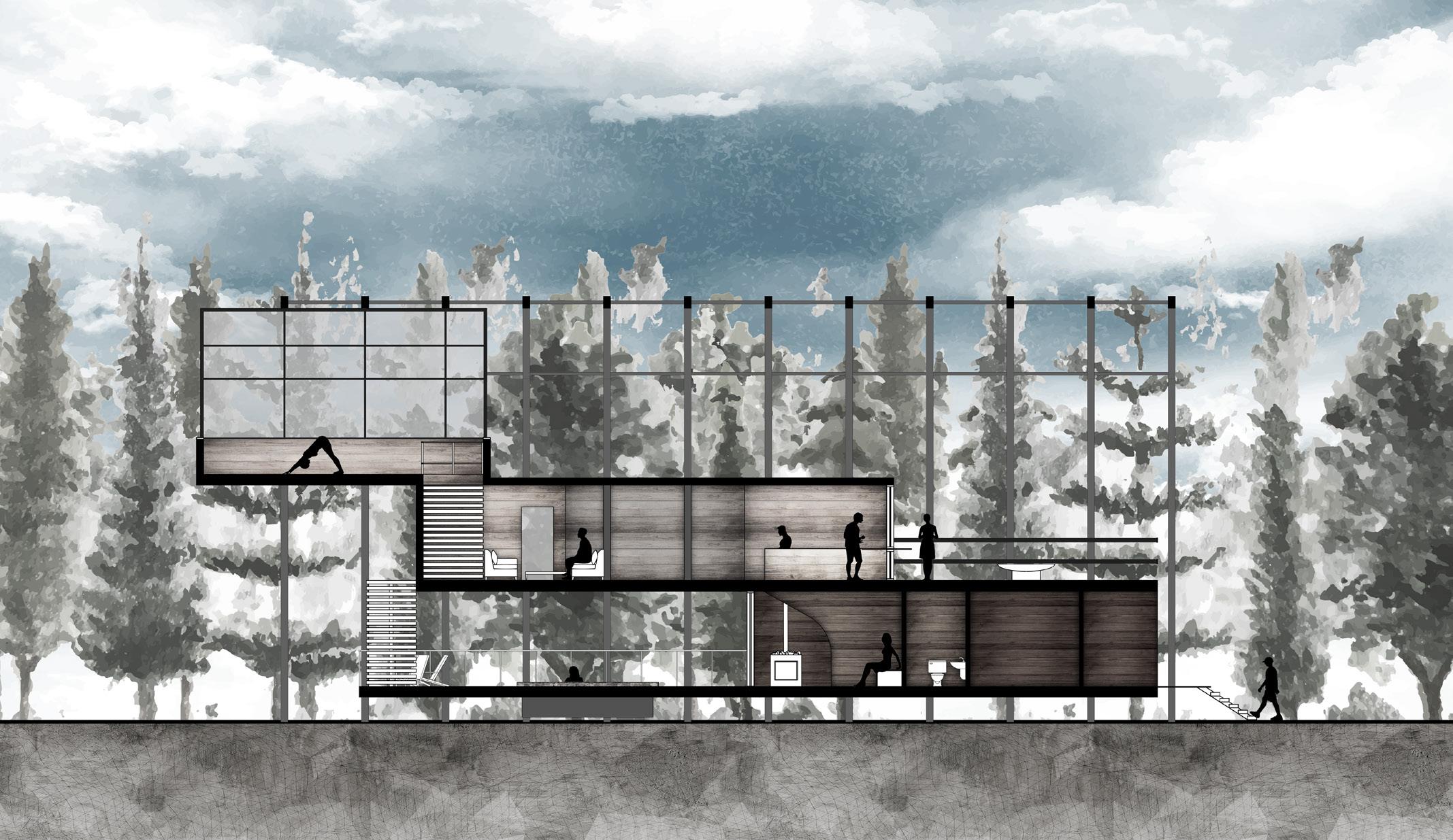
Each space is designed to use it’s surrounding to enhance the connection to it. The Yoga space at the top opens is built with windows extending over the roof, opening the entire space to nature projecting guests’ minds upwards and outwards into the surrounding world.
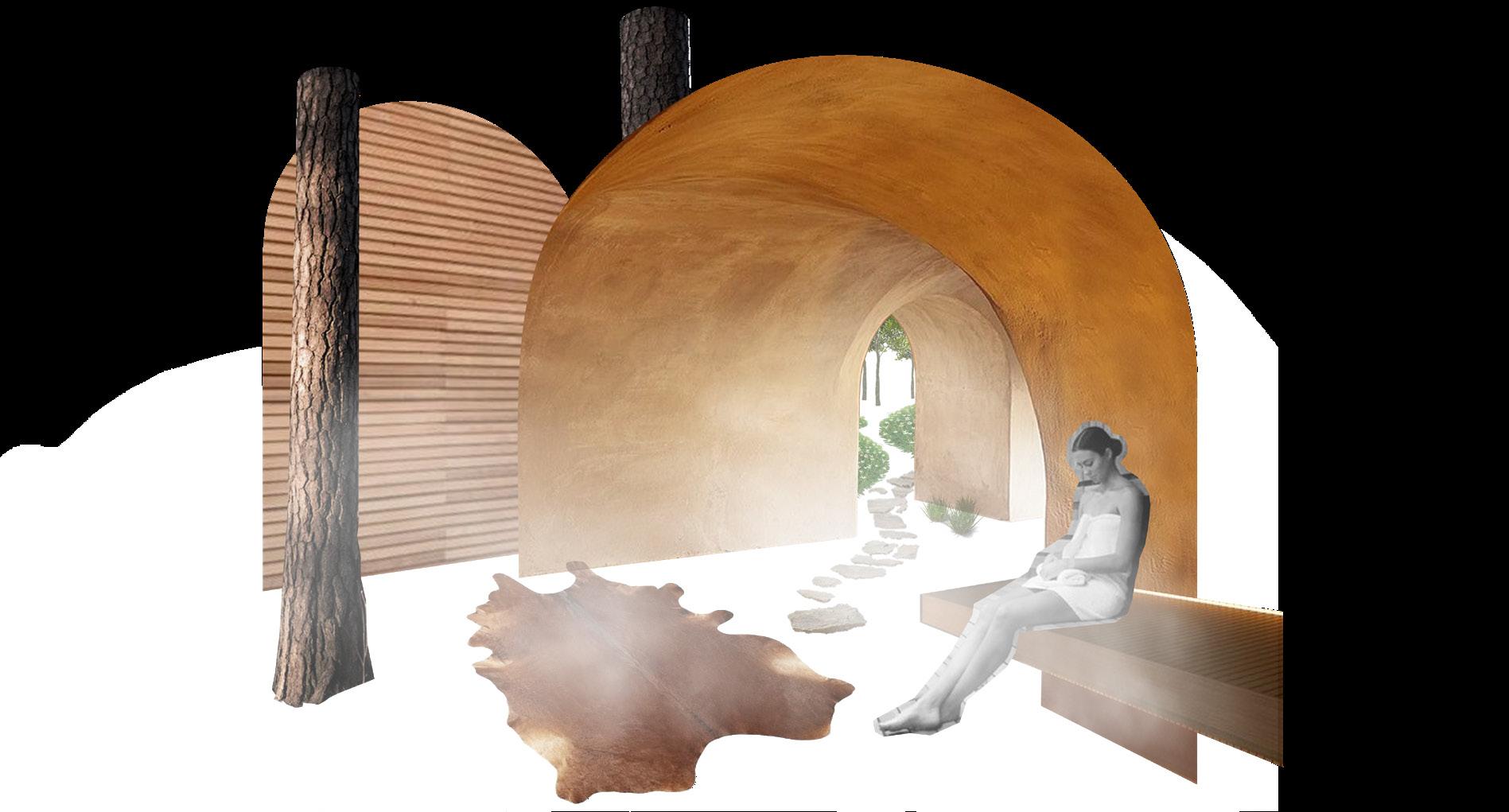
Whilst the sauna at the bottom uses dark, earthy materials to ground it to the forest floor and create a comforting, protected, secure and warm space; which work to suggest tranquility, peace and introspection.
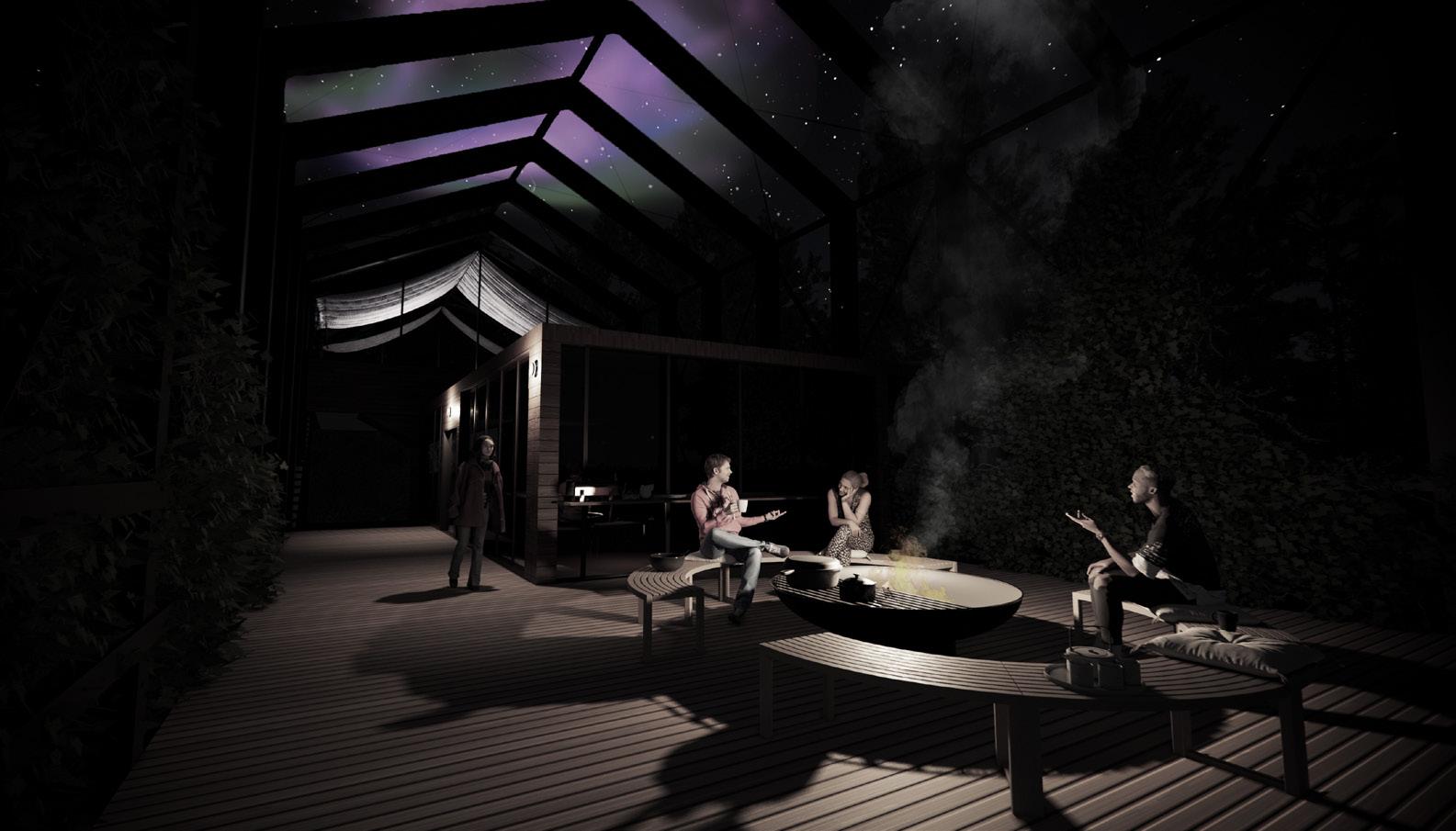
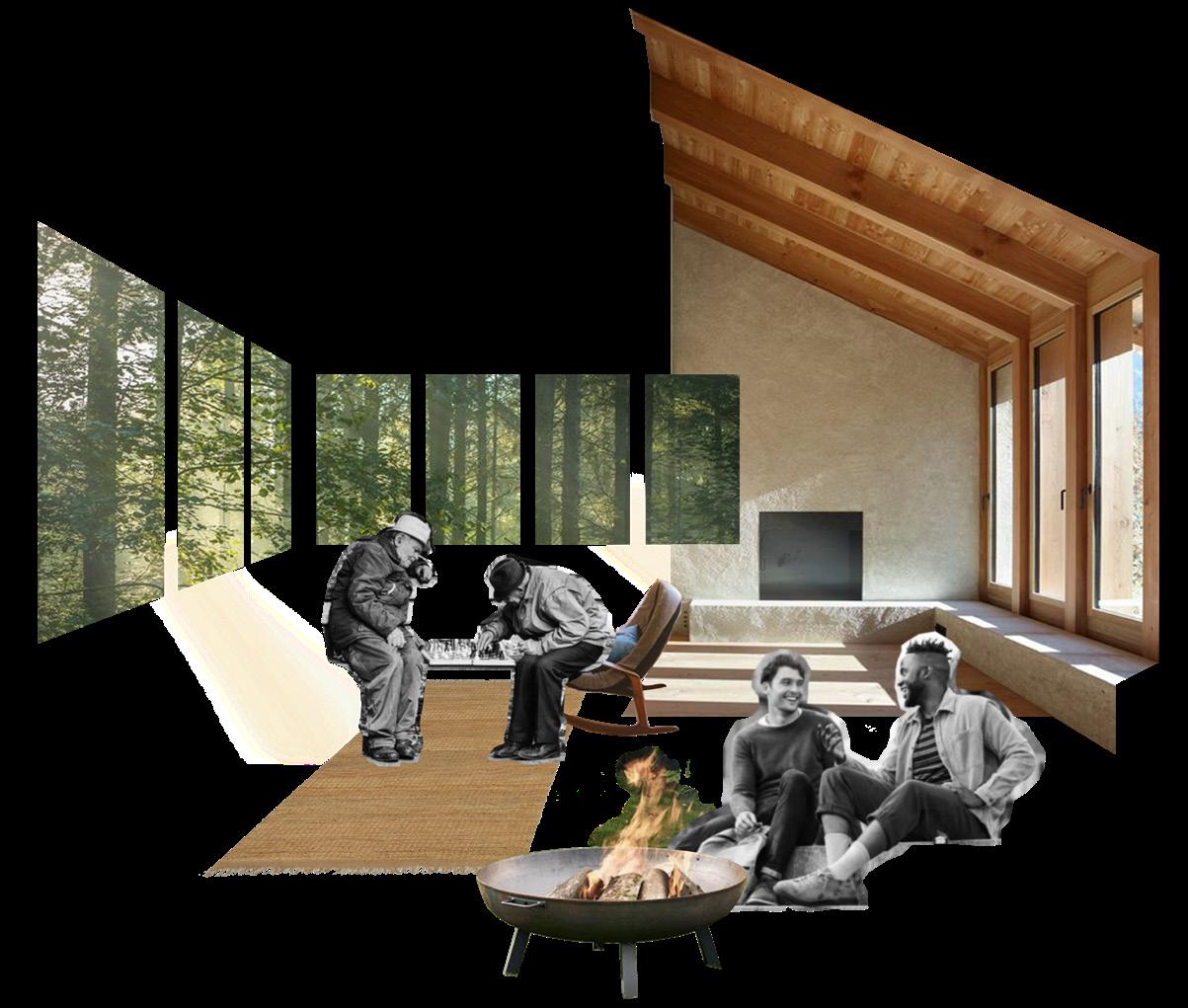
The middle communal area possesses large windows to create space and light, yet has a clear centralised focus, providing a large open space for people to connect with each other through activities and learn Latvian traditions.
YOGA SPACE
SAUNA
NORTH ELEVATION
EAST ELEVATION
WEST ELEVATION
SOUTH ELEVATION
SPACES
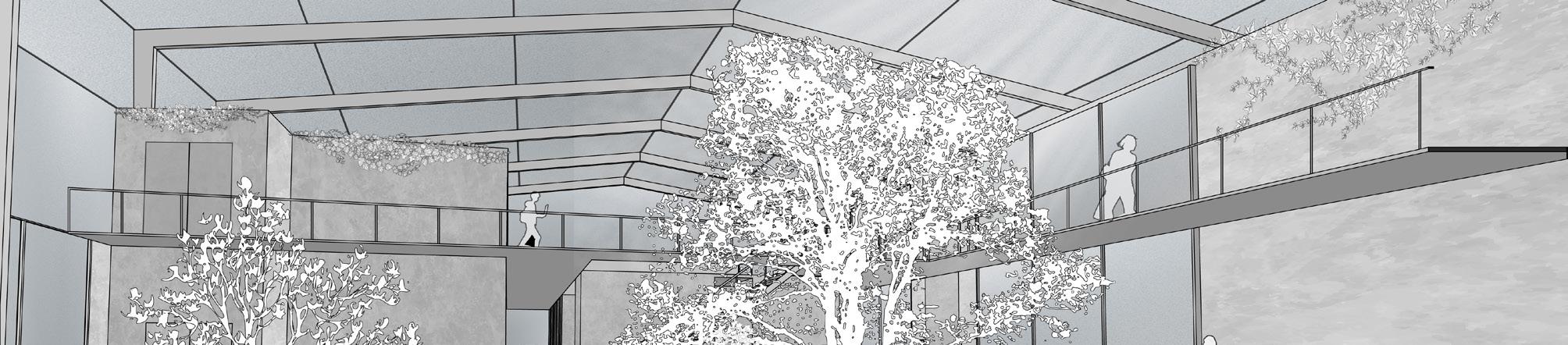
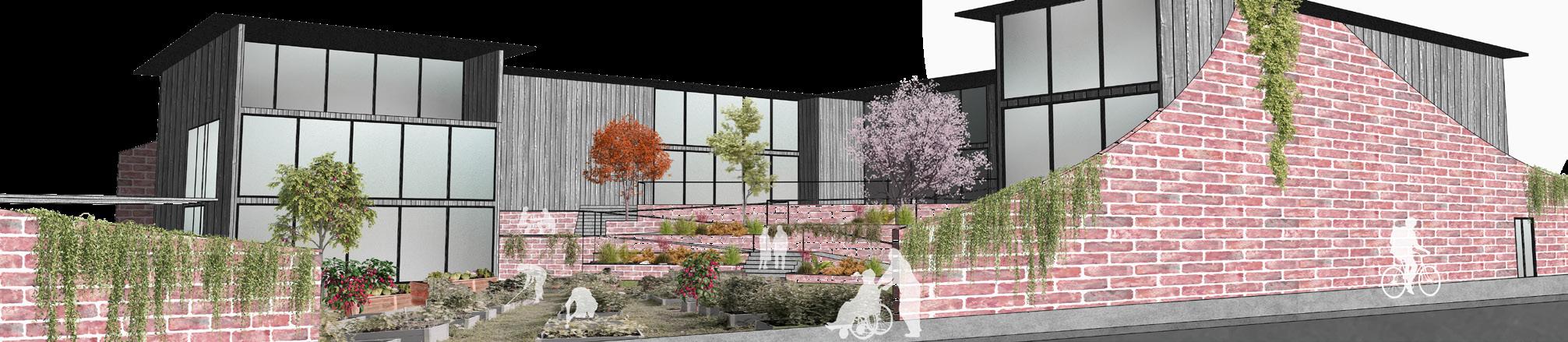
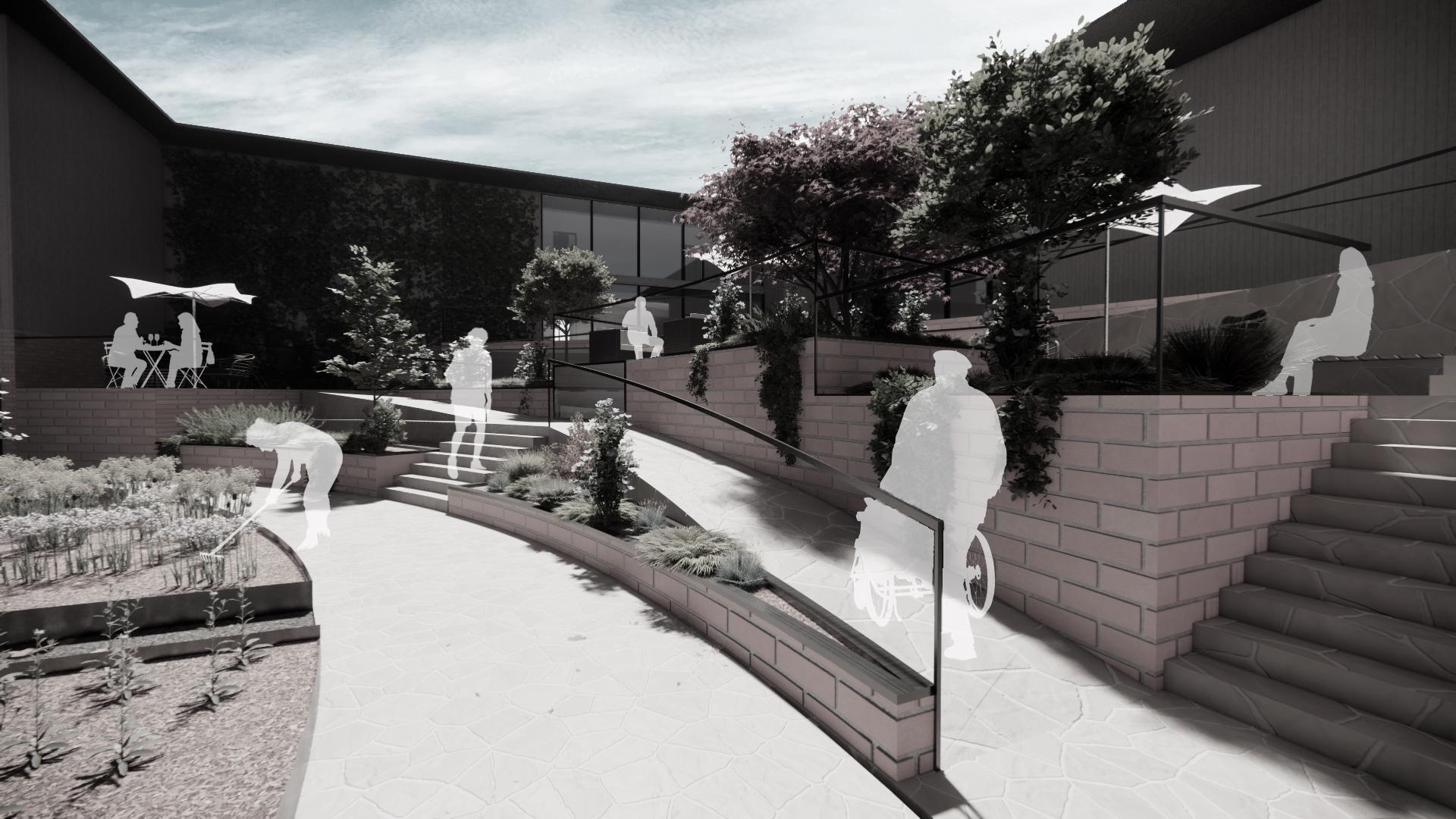
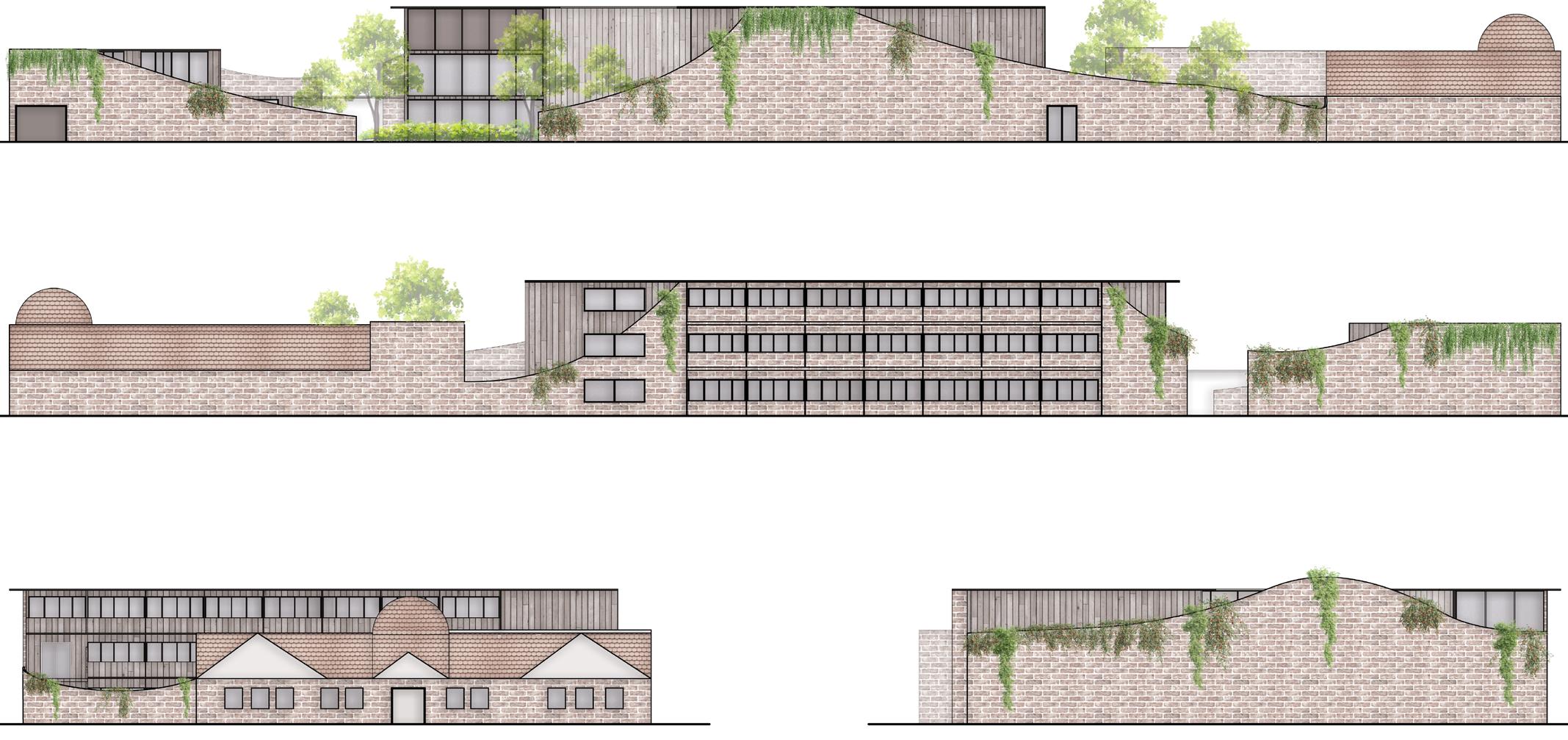
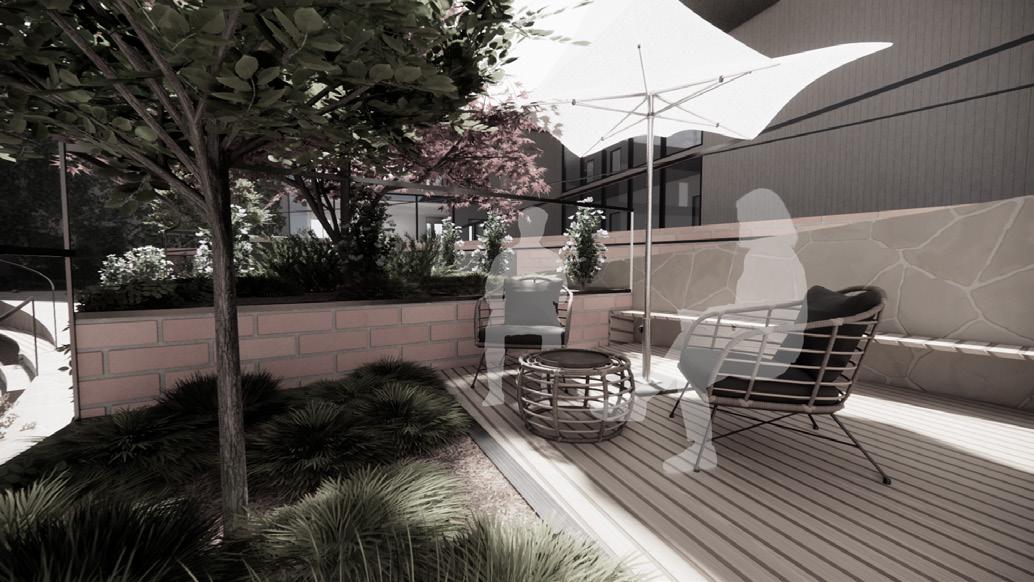
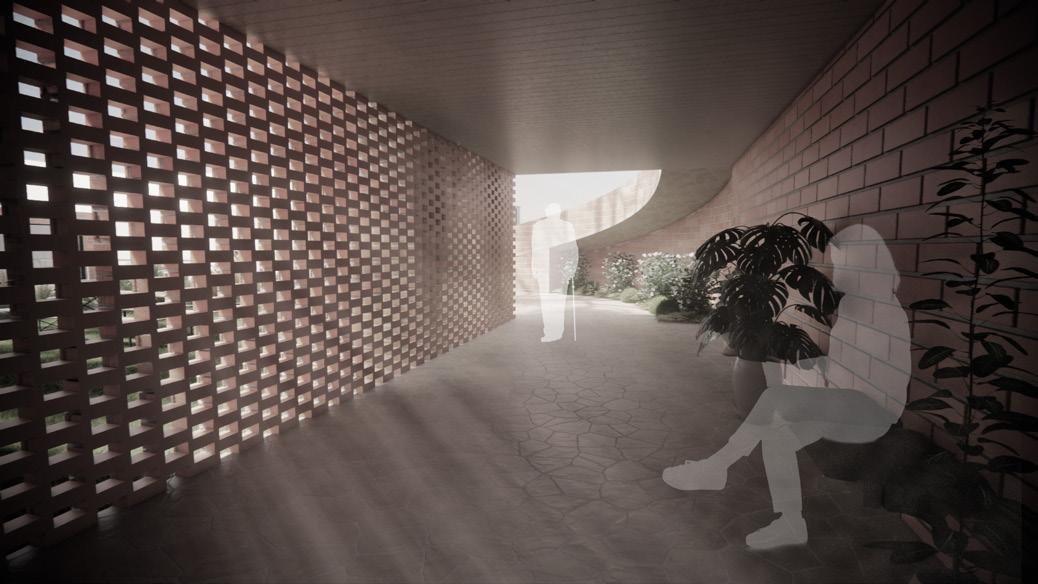
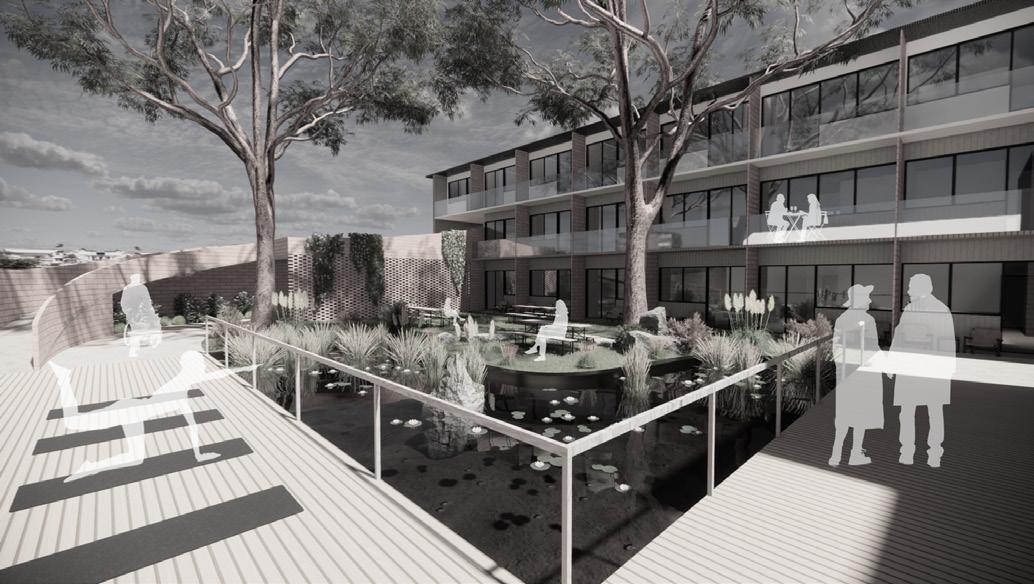
The spaces within are created to meet the needs of aged care residents, community members and workers. There are communal spaces to combat social isolation and quiet spaces so that residents have their own space.
The spaces are centered around either the community garden or the quiet garden so that depending on the activity, the residents and workers always feel an attachment towards the central green spaces.
COMMUNAL SPACES
CALMING SPACES
QUIET GARDENS
PAINTERS LAKEHOUSE
Creating practical spaces adapted to site conditions for both working and living.
Site. Rural Latvia
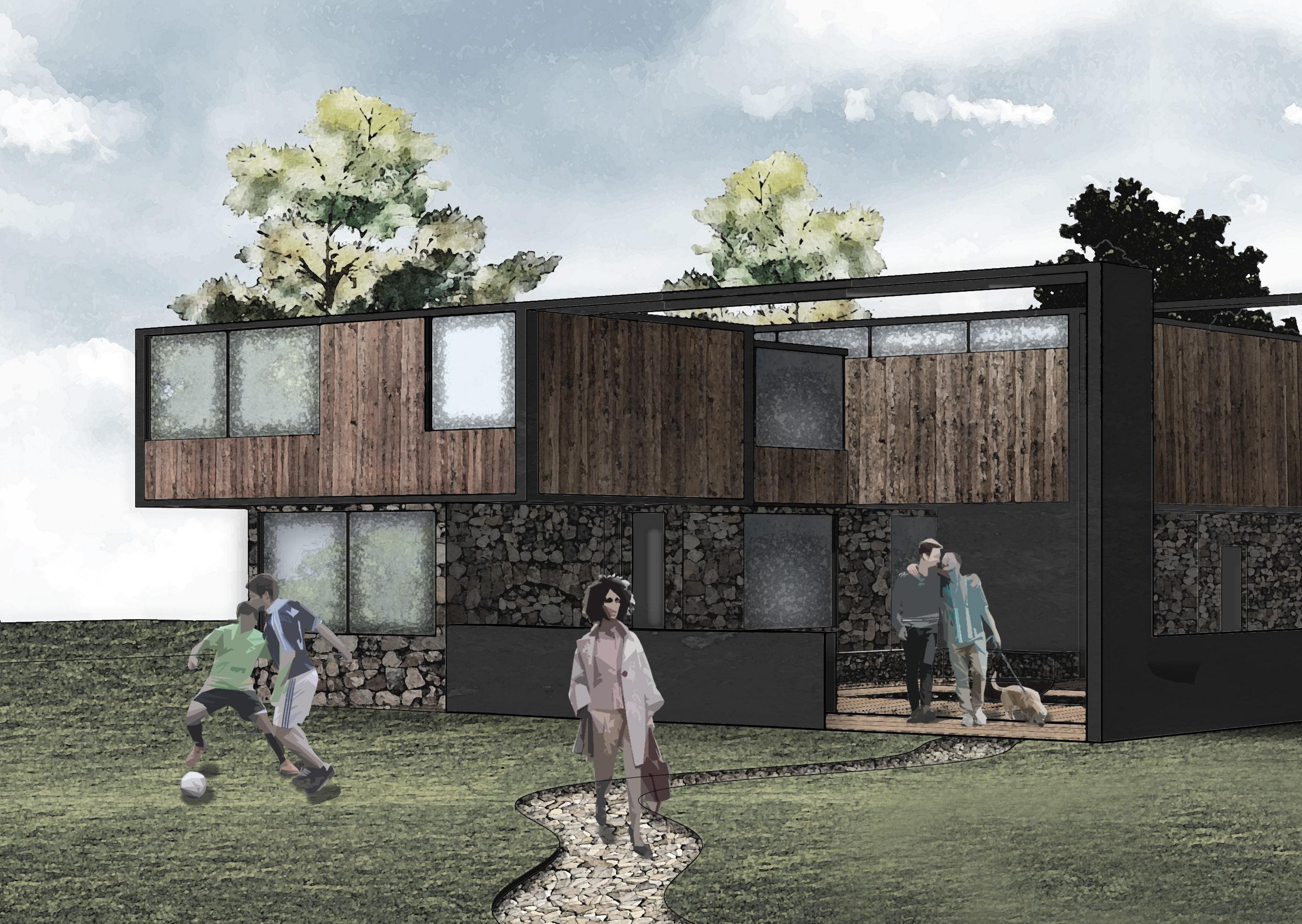
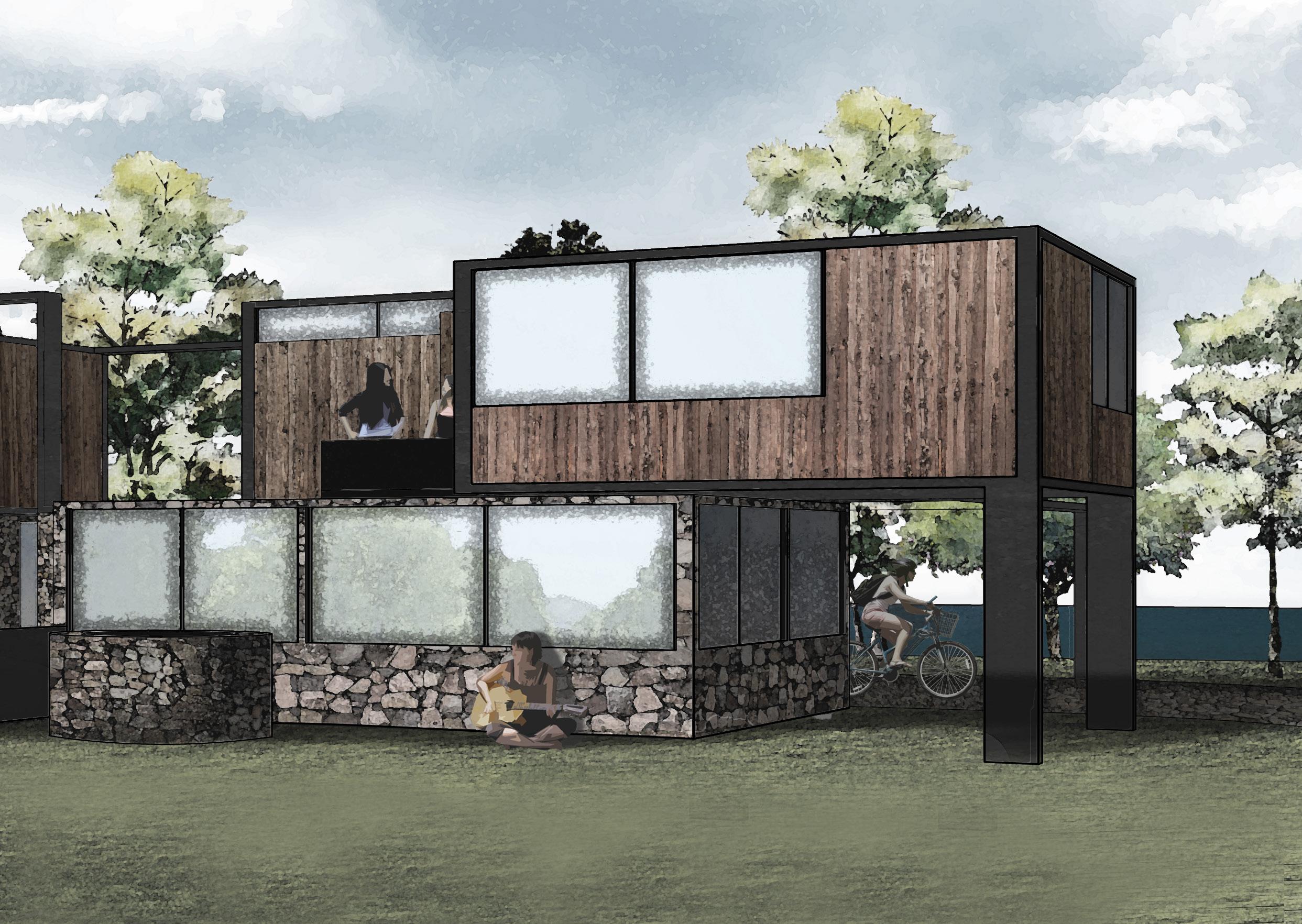
The painters lakehouse was an Architectural Design competition located in Latvia. The brief was to create a home for two families who would live there for 3 months whilst painting using workshop facilities.
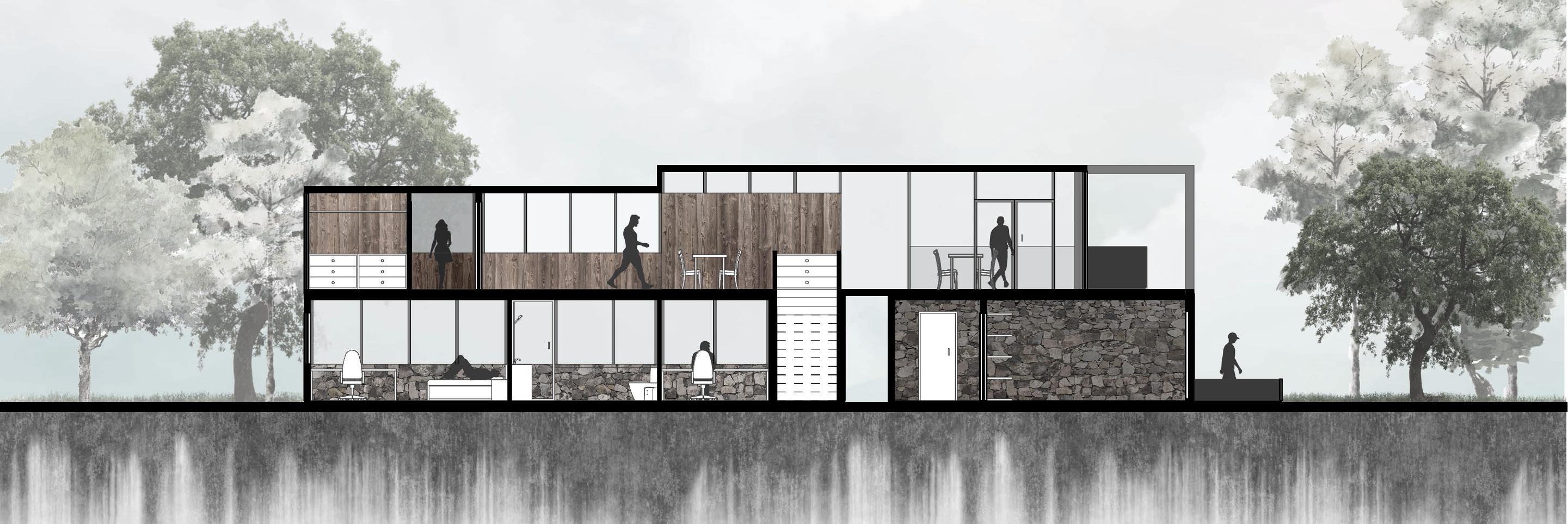
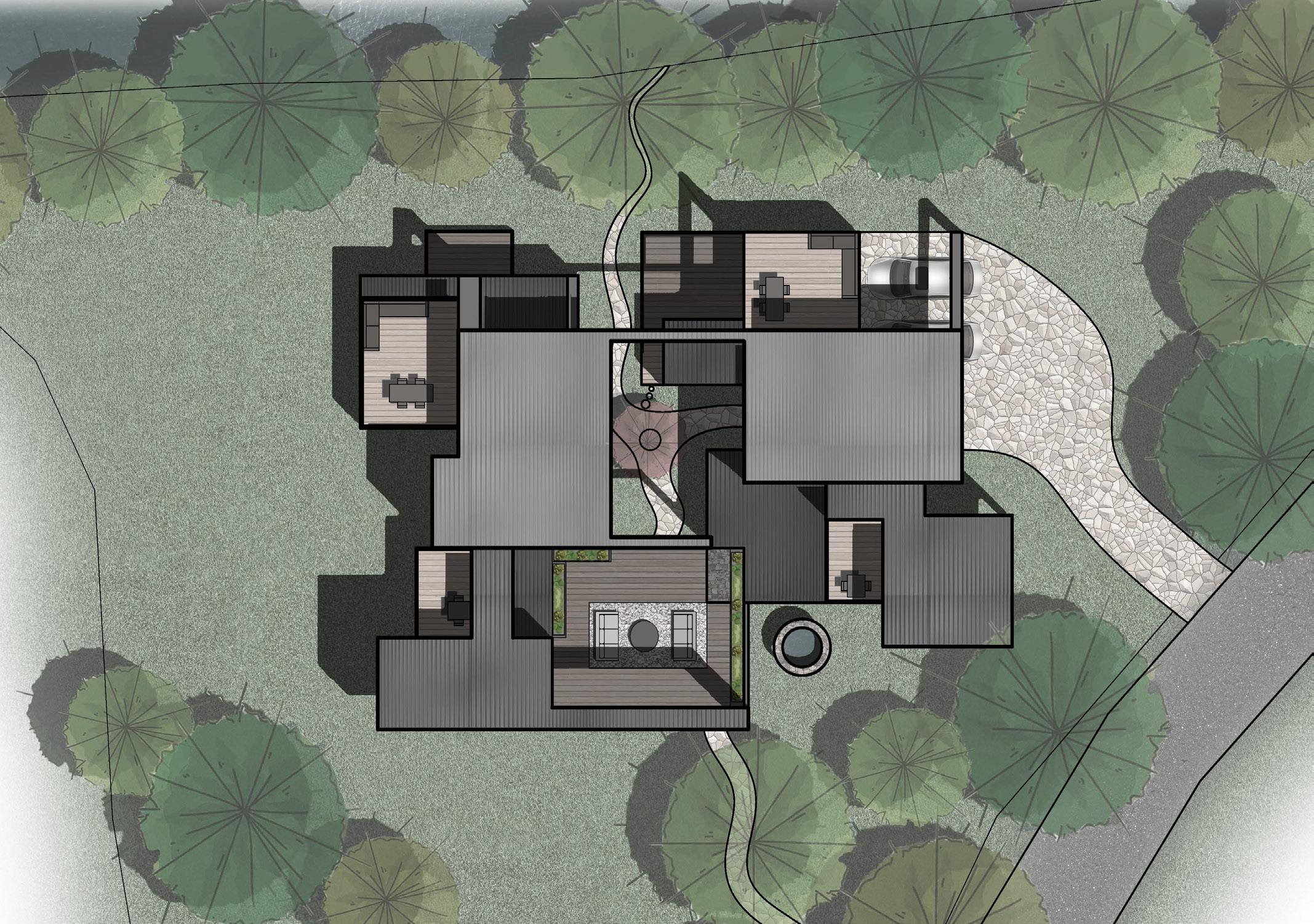
It was necessary to ensure adequate space for two families to live separately, whilst including communal spaces for them to interact. Space was also provided for the painters workshop and a general workshop facility, located on what used to be an old barn.
From an initial site analysis the following goals were established for the facility:
- Avoid cold north and north westerly winds during winter
- Ensure large windows and outdoor spaces facing the south sun
- Maintain views of the lake in living areas and painting workshops
- Use natural materials to fit into the country site location
- Provide plenty of outdoor spaces for families to enjoy the country environment.
LAKE FACING SECTION
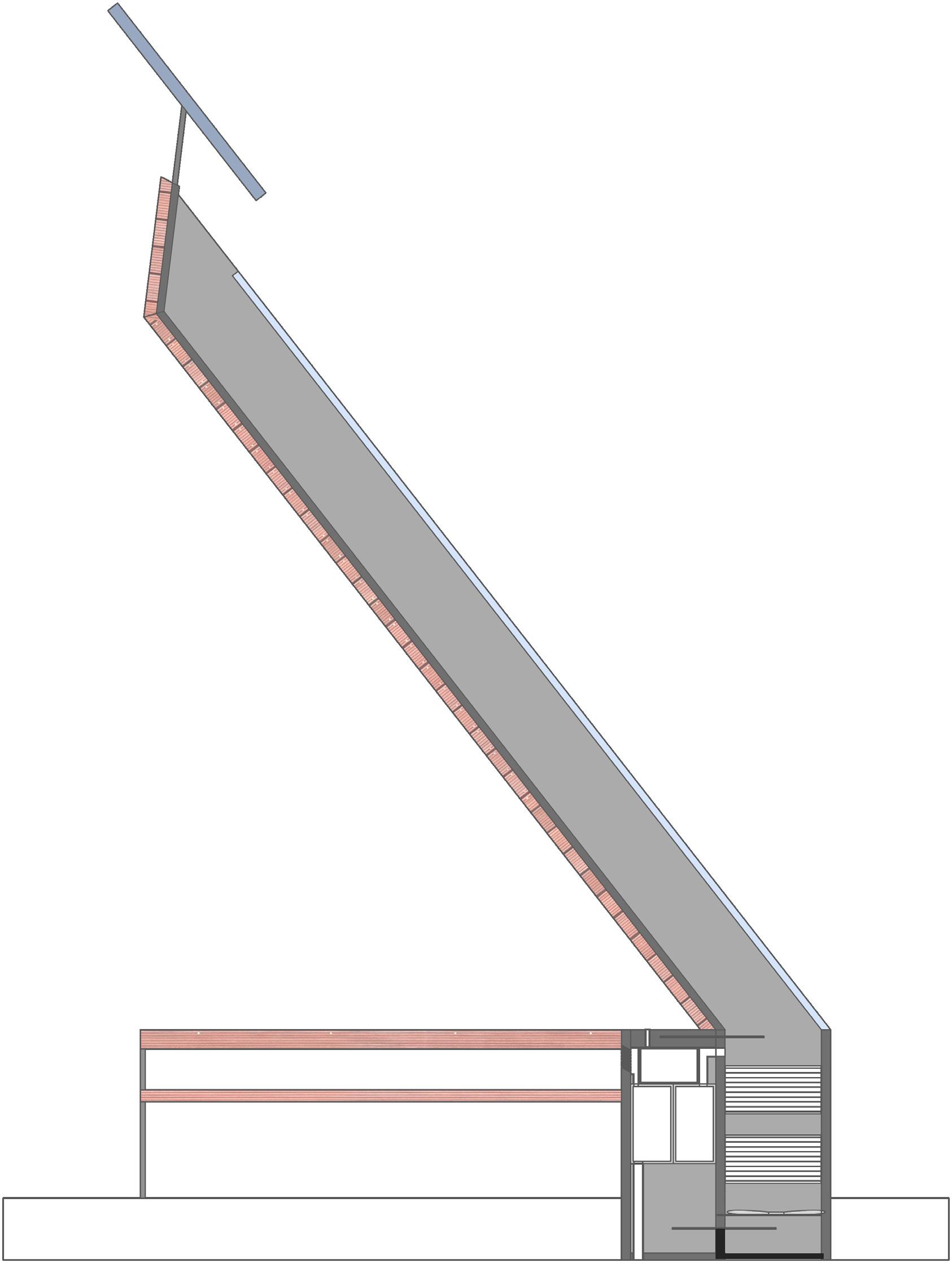
Solar Chimney creates air ventilation
SOLAR REVITALISER
Adapting new technology & techniques to optimise designs & improve our built & natural environment
Site. Melbourne Metro Tunnel/Federation Square, Melbourne VIC
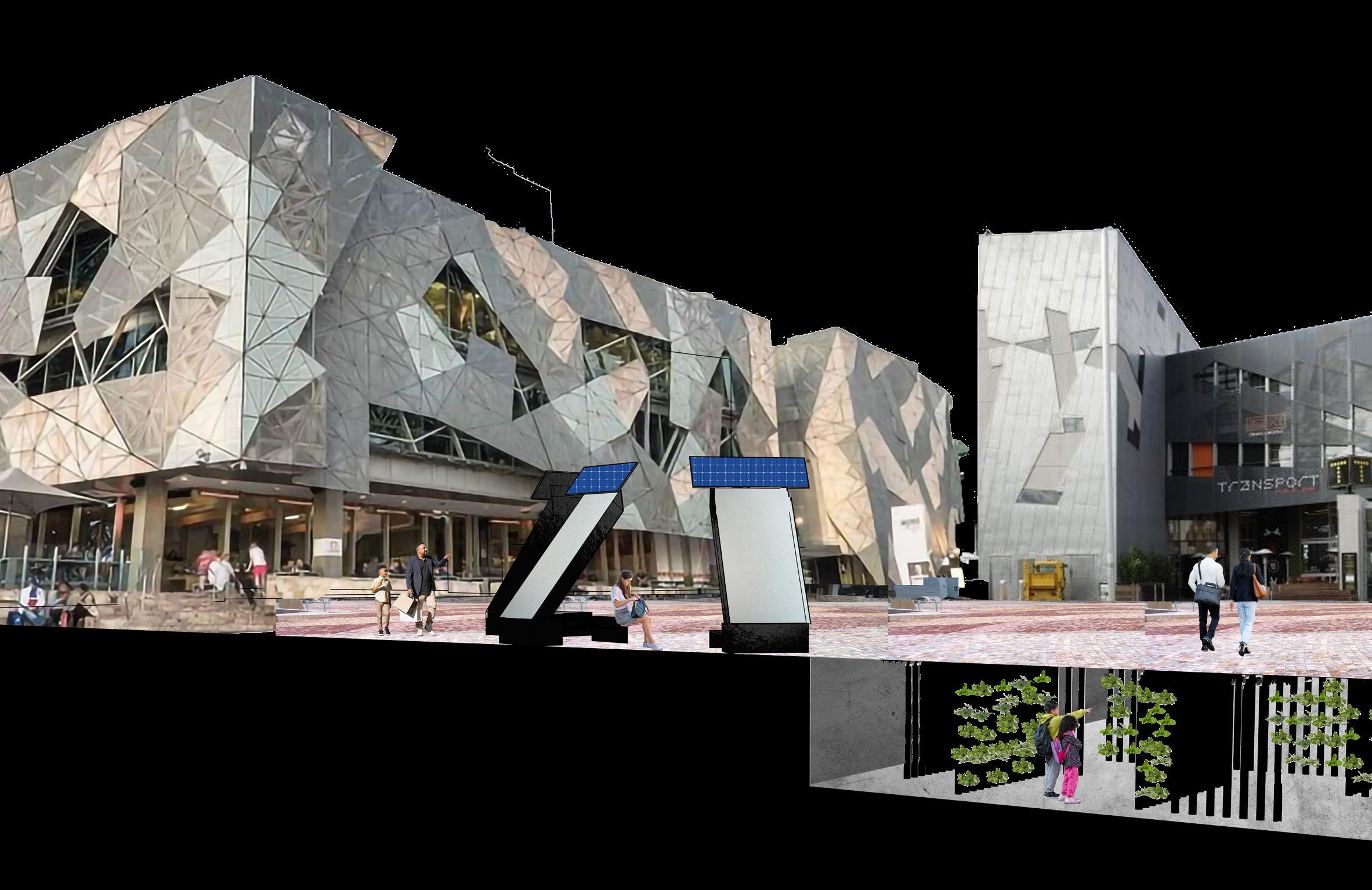
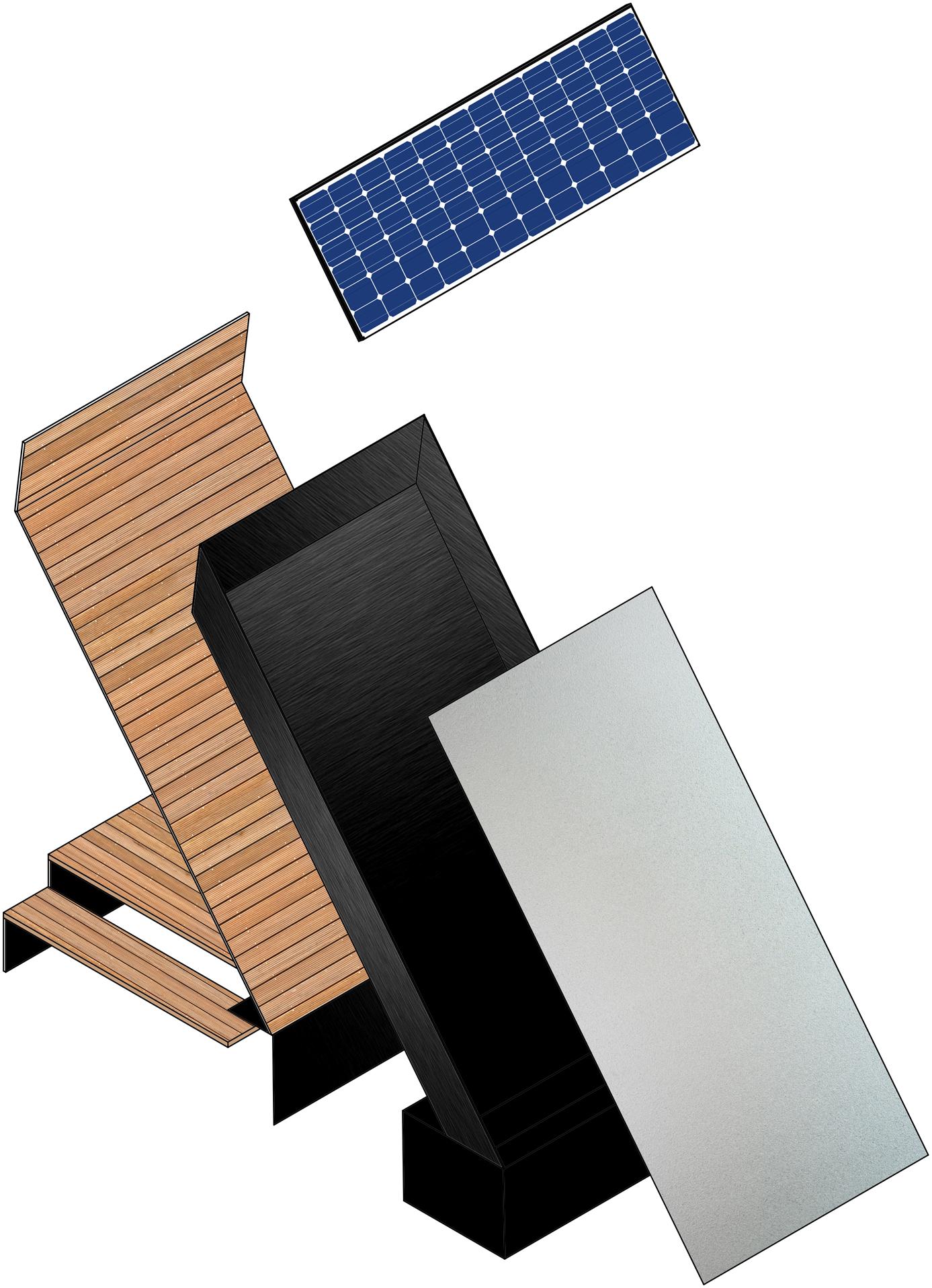
Designed for the new Melbourne Metro Tunnel project and placed in Federation Square, the Solar Revitaliser is a solar chimney that extracts Carbon Dioxide emitted from pedestrians in underground spaces by capturing it using an experimental system developed by MIT. The system then converts it to Oxygen and Acetate using the process of Artificial Photosynthesis.
The resulting acetate can be used to grow plants more efficiently than organic photosynthesis. Plants grown using this process are also able to grow without sunlight as the artificial photosynthesis meets their needs which can be used for the underground spaces of the Metro Tunnel Project.
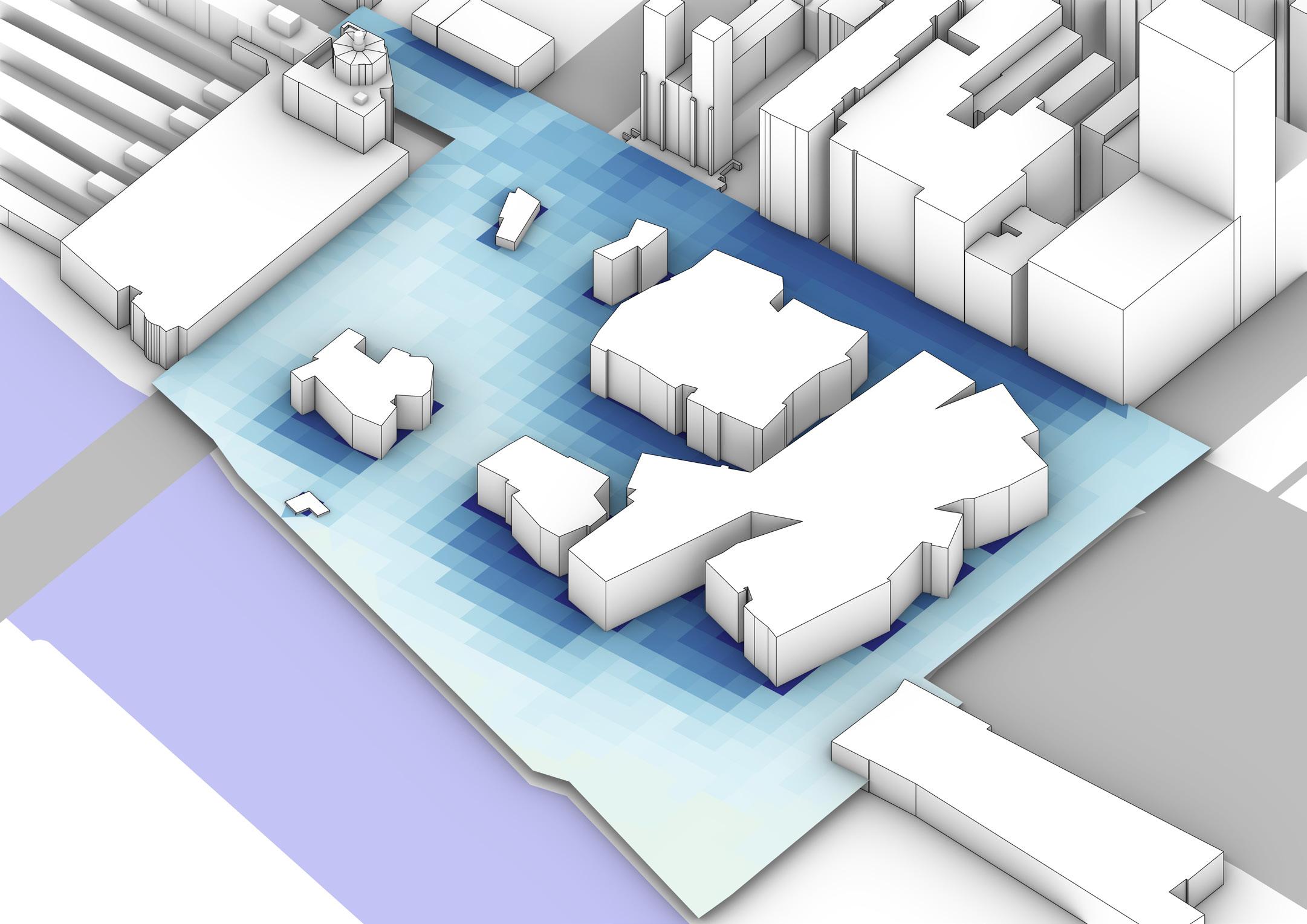
The units were developed through Grasshopper and research to optimise airflow through the solar chimeny by angling the chimney to the average sun direction and also placing it appropriately in Federation Square.