Critical Path respectfully acknowledges the Gadigal people as the traditional custodians of the land where the organisation is based. We recognise Australia’s First Peoples continuing connection to these lands and acknowledge the elders past and present.
WELCOME
Critical Path’s Annual Report 2020 sets out the activities of the organisation over the twelve-month reporting period. Let’s stop for a moment though and reflect on what 2020 saw. It was an incredibly confronting time for so many people and businesses and has changed the way we work, play and engage with each other in a monumental way. Critical Path has been through a year of change as well, with a change of Chair and farewelling of the previous Chair, Shane Carol, as well as changing and evolving how we work with artists in these times.
As this is my first message as the new Chair I don’t feel like it’s at all my place to speak about what the organisation went through in 2020, I started in September after a lot of the brunt of Covid-19’s initial impact on the sector had already been felt. I believe that during this trying time Critical Path worked hard to continue its role of s ector support, being at the forefront of choreographic research and being a voice within the sector.
Very early on in the first conversations I had with Claire and Shane we spoke about what the organisation’s place is, especially during times like this. In June 2020 we saw the resurgence across the
world of conversations sparked by the Black Lives Matter movement and the Aboriginal Deaths in Custody movement. Diversity, representation, equality and equity aren’t conversations that we ever stopped having in the dance sector and Critical Path is not one to shy away from these topics or to overstep our place within those conversations.
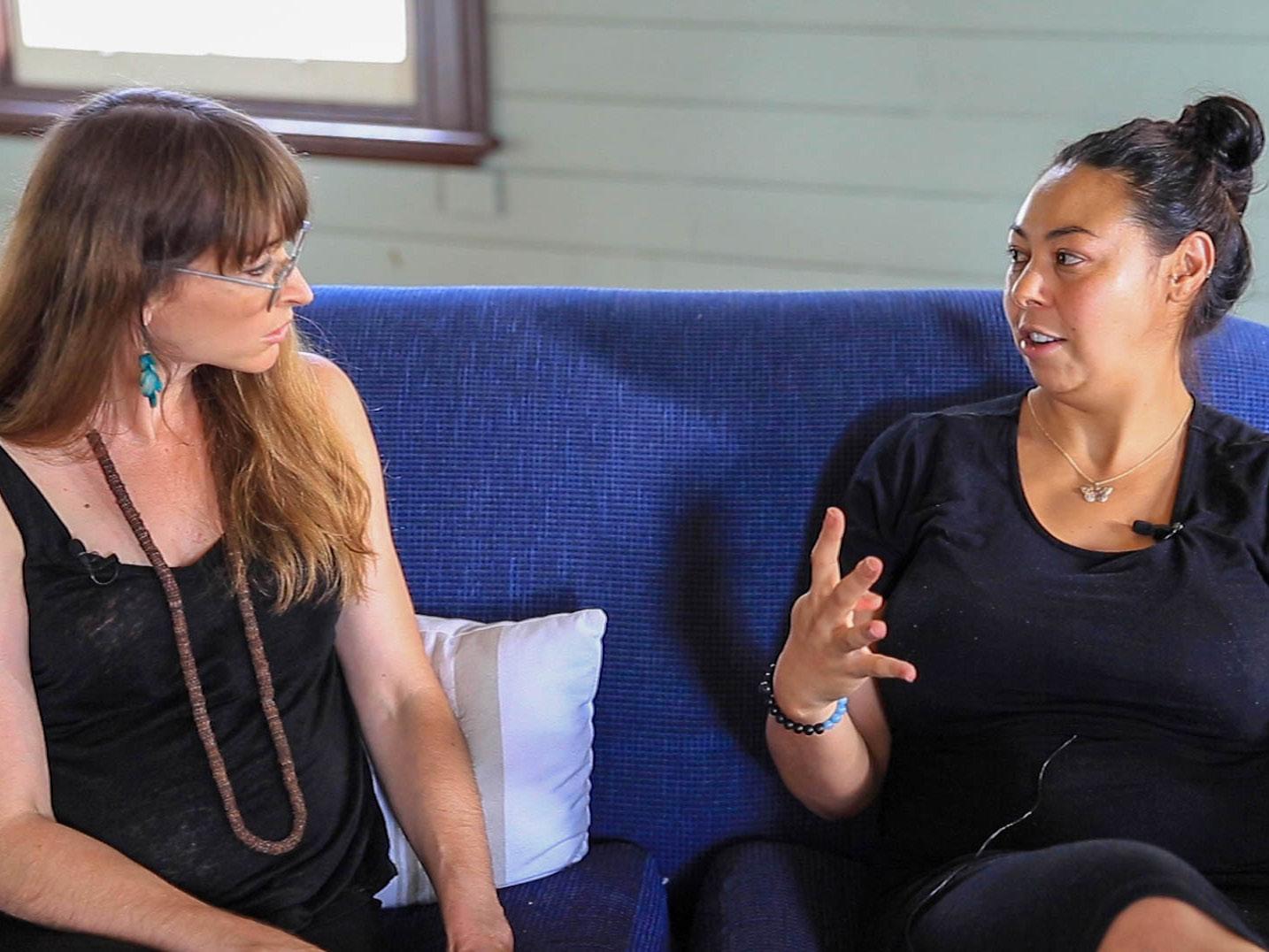
I am the first Gamilaroi Chair of Critical Path. I want to be very clear that this doesn’t make Critical Path a First Nations organisation in any way. We will continue to advocate across the board for a diverse dance sector led by the people that diversity claims to represent. When I was asked by Shane and Claire if I was interested in joining the board, I didn’t immediately affirm my place, I took the time to evaluate Critical Path through my lens. Around the same time, I was approached by other organisations in the arts sector about coming onto their boards as an Aboriginal representative and I wanted to make sure that if I said yes, it was for the right reasons. I wanted to make sure Critical Path didn’t just talk the talk. Critical Path is still on its journey, but it is walking along the right path and being guided by principles that help to ensure it stays on track.
We work incredibly closely with partner organisations and our own teams to help keep us accountable and continue to serve artists and art as our core mission.
I would like to take a moment to look towards the future. I am incredibly inspired by both the other board members of Critical Path, especially the passion and consideration of the artist representatives, but also the staff of the organisation. The last year has seen a few changes in staff and structure and I would like to thank those who have departed the organisation for their time and dedication and welcome those new staff into the fold. We appreciate you coming on this journey with us; I am excited to also be a part of the shared connection we represent as Critical Path’s family.
The Director, Claire Hicks has done an amazing job to lead the organisation particularly through the ups and downs of the last year. Funding and delivery of projects and programs has been an incredibly challenge which Claire and the team have delivered on. Claire’s wealth of knowledge and experience in strategic planning continues to be the lynchpin for Critical Path. Claire is the driving force of the organisation and her energy and commitment to Critical Path’s
vision and the artists it serves is deeply appreciated. As we go forward, I know that she is working with an incredible team that will ensure the organisation continues to learn and develop as it delivers its vital work.
Travis De Vries - Chair
ASSOCIATION INFORMATION
ABN
AND INCORPORATION NUMBER
ABN: 12 049 903 261
Critical Path Incorporated is an Incorporated Association (NSW)
Incorporation Number: INC9881671
REGISTERED OFFICE & PRINCIPAL PLACE OF BUSINESS
The Drill
1C New Beach Road
Rushcutters Bay NSW 2011
RESPONSIBLE ENTITIES
Auditors
Mitchell & Partners, Chartered Accountants
Public Officer (2020)
Claire Hicks
COMMITTEE MEMBERS
The Committee members of Critical Path Incorporated present their Report together with the financial statements for the year ending 31 December 2020 and the Independent Audit report, covering those financial statements. The following persons were committee members of Critical Path Incorporated during or since the end of the financial year.
There were 4 general meetings during the year (the AGM was held on 2 June preceding a general meeting). In addition, there was a Committee Planning Day and a gathering to discuss Structural-Racism. Meetings during the year and the number of meetings attended by each member are as follows:
Elle Evangelista (Artist Representative)
Patricia Wood (Artist Representative)
Catherine Sullivan has been Secretary since 8 April 2019. Claire Hicks has been the Association’s Public Officer since June 2016.
Details of Committee Member’ qualifications, experience and special responsibilities can be found below.
SHANE CARROLL
Chair (to 1 September 2020)
Shane has worked in the arts sector as a performer, teacher, consultant, manager, researcher, advocate and advisor for around 40 years. Currently she supports artists through strategic initiatives to create viable careers, and contributes to arts advocacy, funding and policy development.
TRAVIS DE VRIES
Chair (to 1 September 2020)
Travis De Vries is the producer and host of Broriginals and the producer of Fear of a Black Planet he is a concept artist and a gamer. He is also the founder and director of Awesome Black and an avid artist. Travis is a trained dancer and fine artist and is alumni of NAISDA Dance College. Travis has a wealth of producing experience having worked as a producer for Sydney Opera House and a range of arts programmes and festivals.
CATHERINE SULLIVAN
Secretary
Catherine is a lawyer with extensive law firm and in-house corporate legal experience and is currently Senior Manager & Senior Legal Counsel at ASX Limited specialising in financial markets, corporate, governance and regulatory law. She is a director of Urban Theatre Projects and National Young Writers Festival and former Chair of Critical Stages and director of Brand X.
ANNABEL MILLET
Treasurer (to 1 September 2020)
Annabel is a UK qualified Chartered Accountant and a senior management consultant at PwC. She has extensive experience across the private and government sector, helping clients to manage their Finance functions through business design, strategy and transformation programs.
VIRGINIA LEE
Acting Treasurer (from 1 September 2020)
Virginia is a legally qualified professional with extensive strategic and operational experience in government, think tanks and non-profit organisation. She has a background in international trade relations, Asia engagement and law. Her expertise is in developing sustainable corporate strategy, risk assessment, and governance. She currently works in Trade and Investment within the NSW Treasury and is a Board Member on the Professionals in International Trade.
BRENDON O’CONNELL
Brendan has held senior management, programming and producing roles at Sydney Opera House, City of Sydney, Performance Space, Sydney Festival, Adelaide Fringe, and the Australian Consulate-General in New York working across artforms and genres on a suite of large-scale projects and festivals. Brendan is currently Executive Producer at Lucy Guerin Inc.
ELLE EVANGELISTA
Artist Representative
Elle performance credits include Force Majeure, KAGE Physical Theatre, Murmuration, Carriageworks and Opera Australia. Elle has collaborated with other independent artists including Matt Cornell, Joshua Pether and on multiple works by Ghenoa Gela. Elle has worked as Rehearsal Director for Force Majeure and KAGE Physical Theatre.
KIRK PAGE
Artist Representative
Kirk has worked in film, television and theatre as a performer, movement consultant. choreographer and director for more than 20 years. He has worked as NORPA’s Associate Artistic Director, with Legs on The Wall, Bangarra Dance Theatre and Force Majeure. He was Co-Director for Bathurst Circus and Physical Theatre Festival 2012. He is director of Horse’s Mouth.
JASMIN SHEPPARD
Artist Representative
Jasmin is a contemporary dancer, choreographer and director, a Tagalaka Aboriginal woman with Irish, Chinese and Hungarian ancestry. She spent 12 years with Bangarra Dance Theatre, performing numerous lead roles and choreographed one major work for the company, ‘MACQ’.
In 2020 Jasmin will create works for NAISDA Dance College, Sydney Dance Company’s PPY program, and Catapult Dance. Her work is passionate, political and has been described as “surreal and highly evocative” (The Australian).
MARCUS BARKER
Marcus is the Chief Executive of the Sydney International Piano Competition. He has worked in the arts sector for over 20 years in Australia, the UK and the Republic of Ireland.
PATRICIA WOOD
Artist Representative
Patricia is an independent dancer, choreographer and performer. Her work draws from choreographic and ethnographic processes and takes multiple forms, including performance, radio transmission and text. She is also a teaching artist with Sydney Dance Company and a caretaker of ReadyMade Works.
CHANGES TO THE GOVERNING COMMITTEE
In 2020 changes to the Committee are as follows:
Virginia Lee and Jasmin Sheppard (Artist Representative) joined the board on 2 June.
Brendan O’Connell, Travis De Vries (Chair) joined the board on 1 September.
Kirk Page (Artist Representative) Marcus Barker stepped down 2 June. Annabel Millet and Shane Carroll stepped down 1 September.
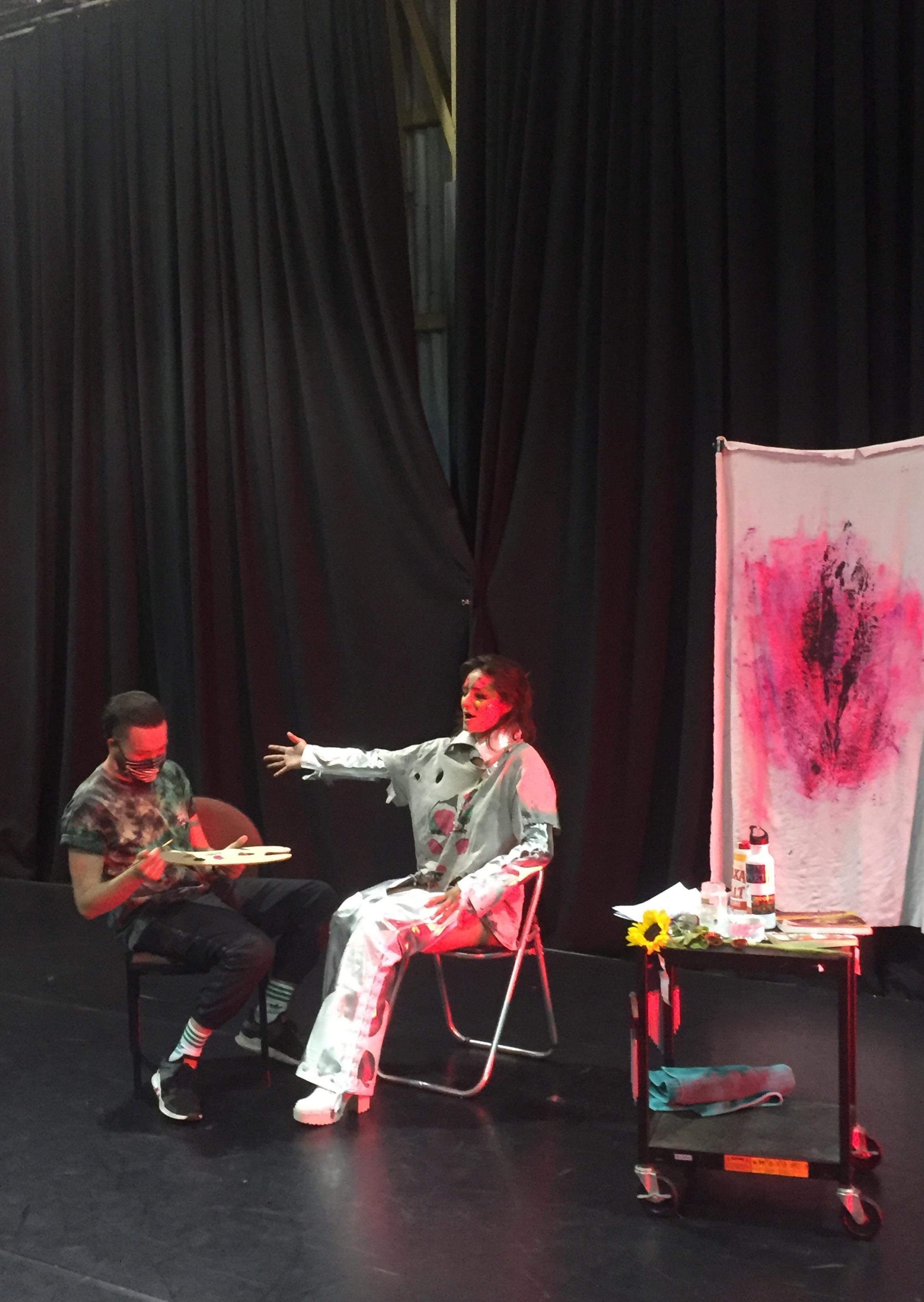
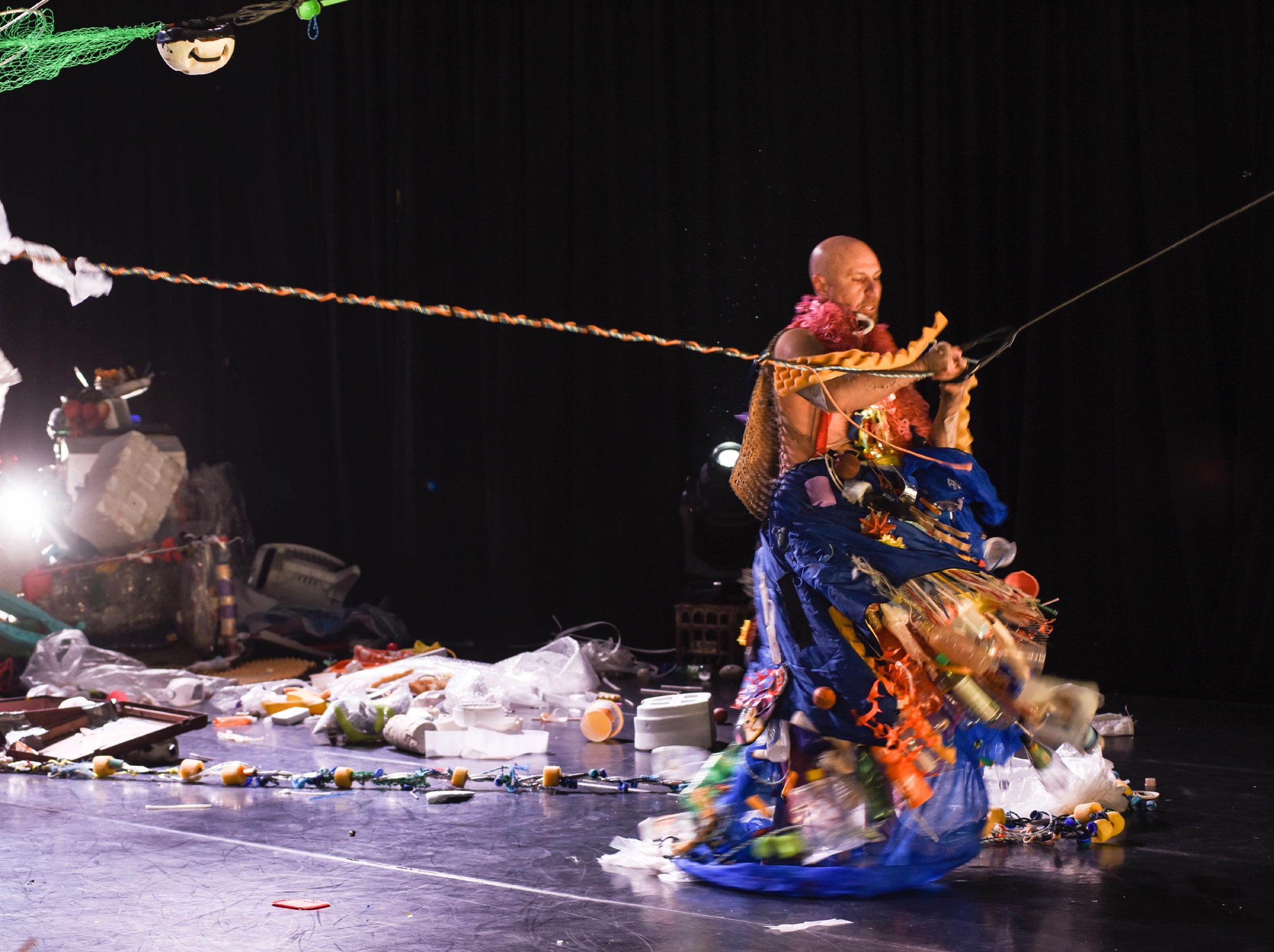
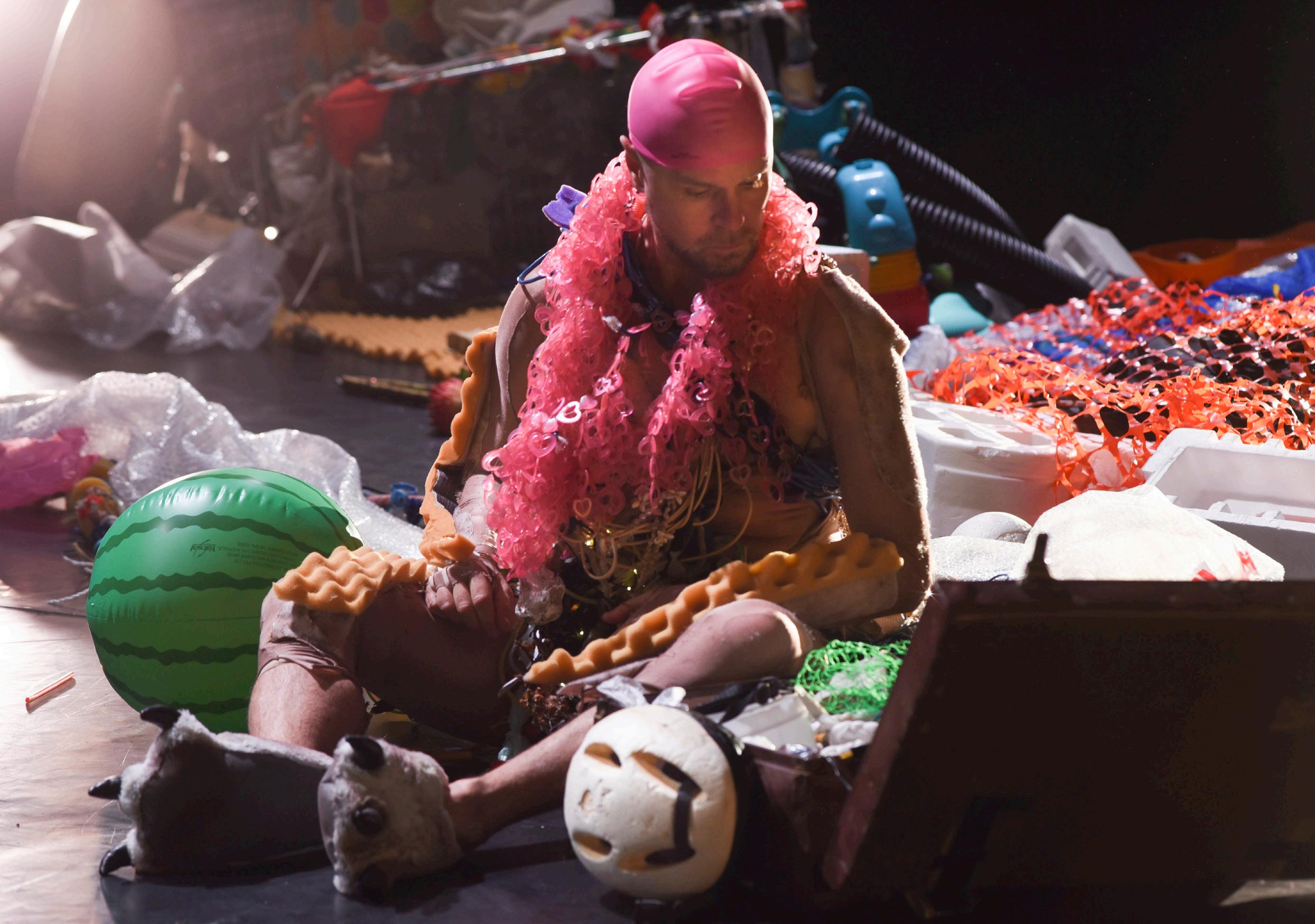
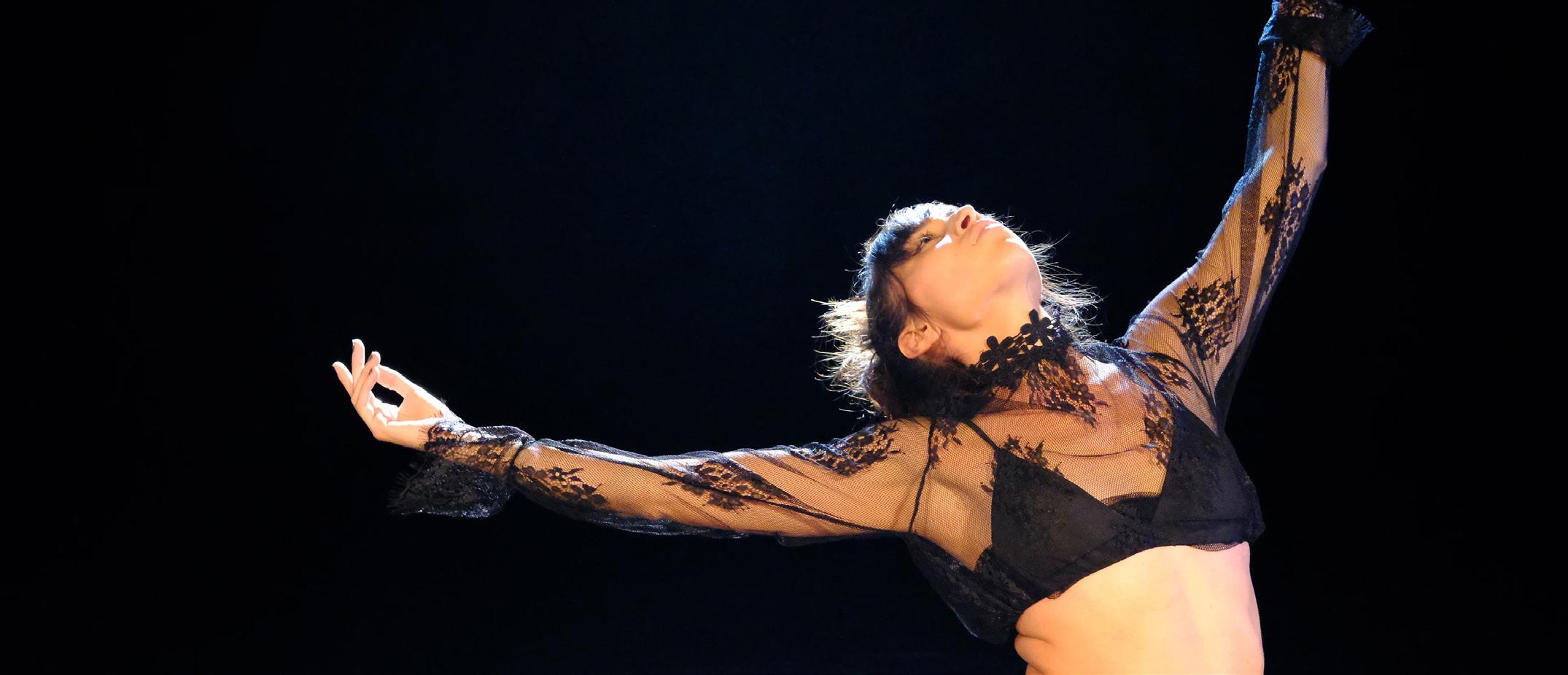
Betty Grumble Space Grant, Credit: Jonny Seymour
OPERATIONS REPORT
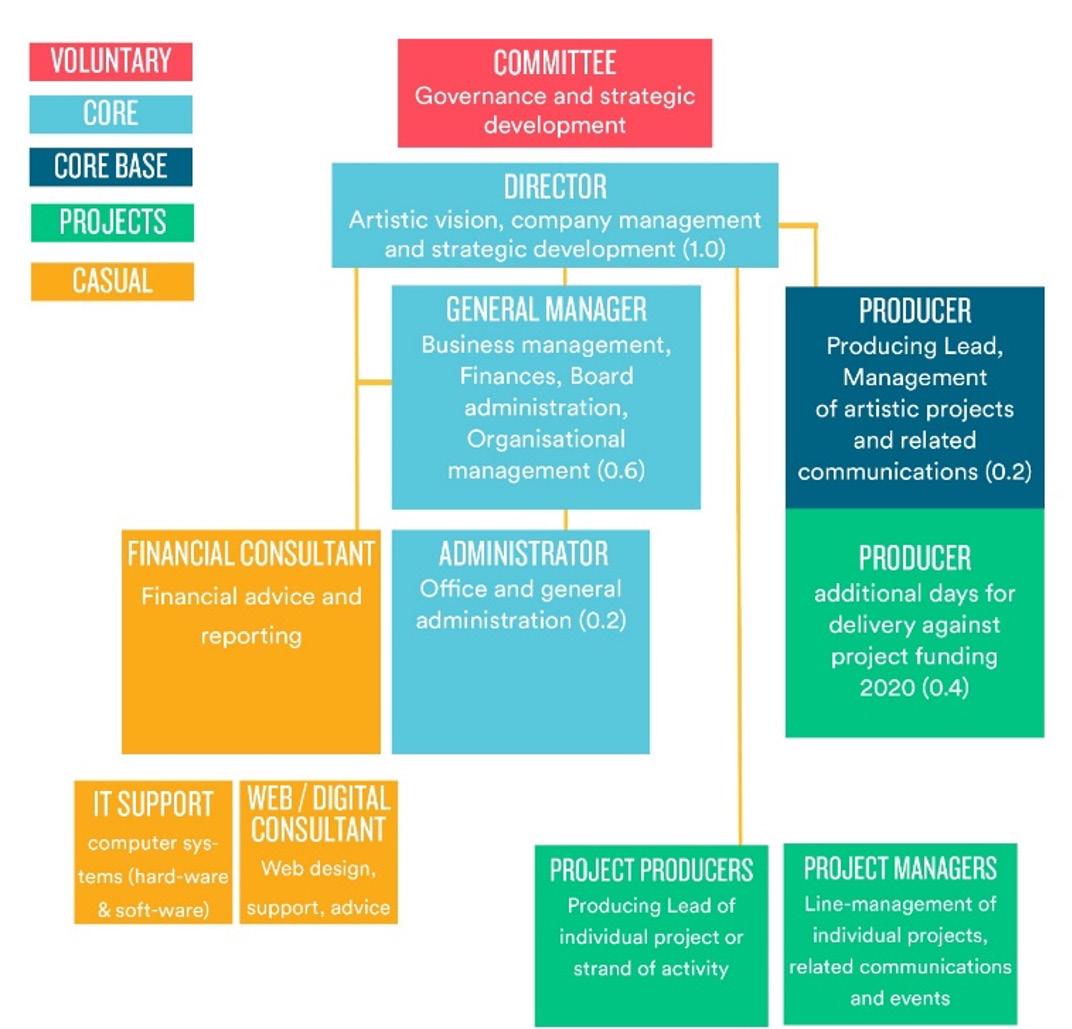
ORGANISATIONAL STRUCTURE AND KEY RESPONSIBILITIES
There were changes to staffing arrangements throughout the year, including temporary hires and changes to contracts. Please see next section for full details.
STAFFING NOTES
In 2020, Claire Hicks continued in the role of Director (full time).
Amber Popelaars left the organisation in February having been head-hunted to another arts organisation. Andrew BattRawden took up this role on 7 January 2020 and left end April 2020. Laura Osweiler returned as part-time General Manager – Finance (1.5 days per week) and continued until the end of the year.
Ozlem Bekiroglou Aldogan continued as Producer until taking parental leave from September. Tamar Kelly completed her contract as Project Manager Dancing the Drill (2019/20) in April 2020.
Paul Walker was Critical Path Administrator (1.5 days per week) from to end March 2020 and again in June and July 2020. He worked as part-time Project Manager in February and March and took up a freelance contract across the year on the Talking Dance: Dance Ecologies project when he moved to regional NSW. Elizabeth Chua undertook the temporary role of Administration and Projects (3 days per week) from 2 August 2020 until 19 December.
Critical Path also continued to contract Karen Steains on a monthly basis as a financial consultant.
Contracts with Webgirl (web and e-news support) and QBT Consulting (IT support) continued across the year.
PRINCIPAL ACTIVITIES
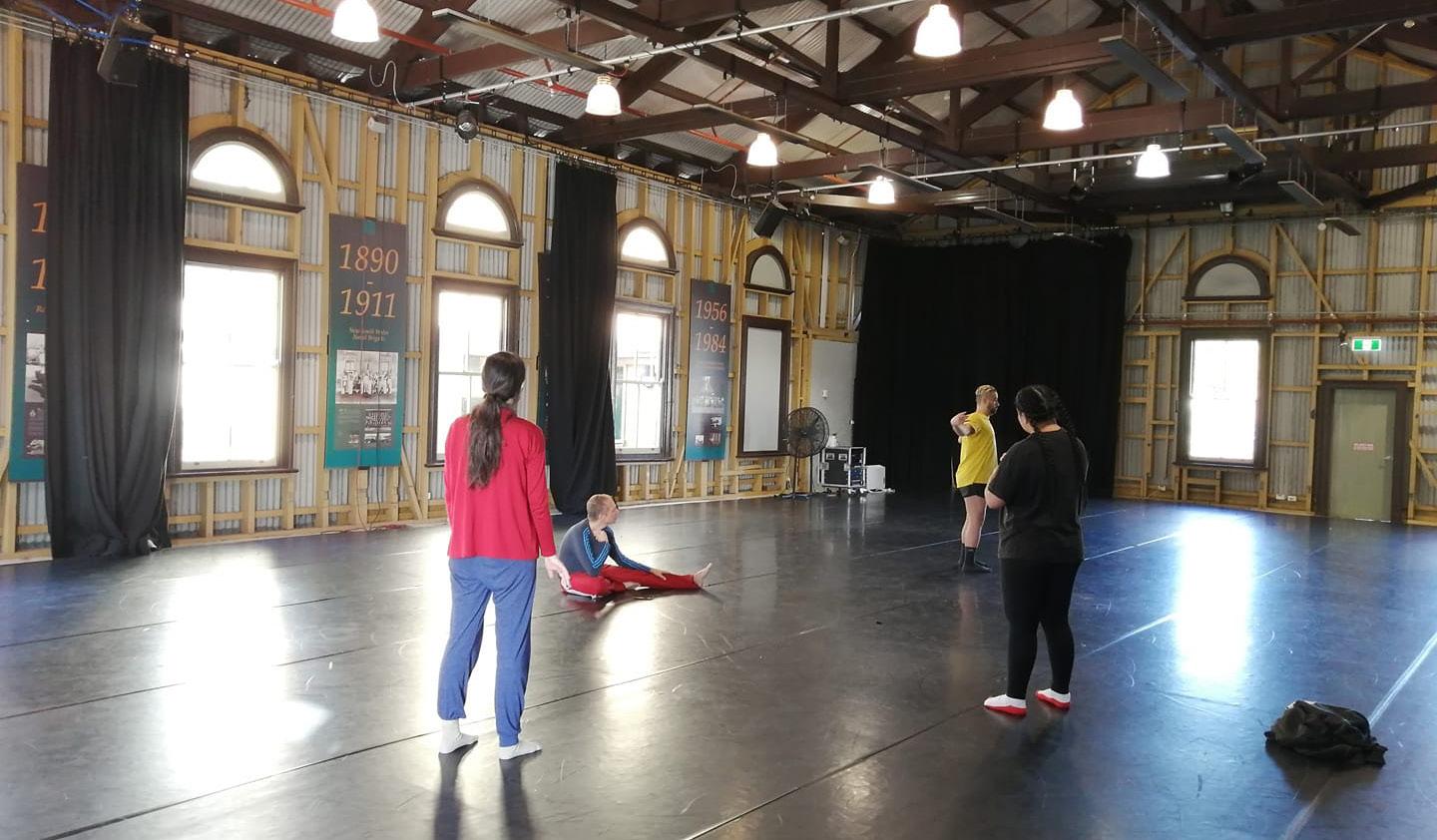
Critical Path is a choreographic research and development centre based at the Drill Hall, a large rehearsal space on the harbour in central Sydney, Australia. Our mission is to cultivate a program of research and practice development opportunities for choreographers and dance makers, nurturing diversity and excellence in a supportive critical environment which fosters creative risk-taking.
With a distinct focus on research and innovation, we support Australian choreographers to incubate new ideas and experiments in our studio so that excellent new work can make it to our stages. We aim to nourish a genuinely independent dance company as they push the boundaries of existing practice in relation to local and international fields, enhancing the vibrancy of the Australian dance sector.
We emphasise our role as a hub, a space for the independent artists to congregate, cross fertilise, debate, critique. A place connected into the broader arts sector through a host of partnerships.
OPERATING RESULT
The net surplus for the year amounted to $24,747 (2019: $20,321). Critical Path has been serving the contemporary dance community for 15 years.
2020 ARTISTIC PROGRAM FUNDING
STATE
In 2020, we continued to be supported by Create NSW with a further extension to our triennial funding that was originally for the period 2016-2018; $280,000 per annum to cover the period January through to December each year.
Additionally, we received a Covid-Digitise initiative award of $9,884.
AUSTRALIA COUNCIL
Adapt – Digital Artist-Curator
LOCAL
Woollahra Municipal Council supported Critical Path with a Cultural and Community Grant, for Dancing the Drill ($7,500) and Choreography for the Climate Emergency ($3,300).
City of Sydney provided a grant of $18,000 for Dancing Sydney : Dancing Histories archive project which was awarded in 2019 and completed in 2020. Project Name
FEDERAL
Federal Government Through the ATO, Critical Path received a Covid-10 Federal Government Stimulus Package of $29,971.
PARTNERS
Other partners provided in-kind support or spent cash directly on joint programs including Performance Space, PYT Fairfield, Chisenhale Dance (UK).
OTHER
Other income was generated through:
Donations
Venue Hire
In-kind rent and Rent Waiver
$7,995 (consisting of individual donations)
$8,665 (rehearsal and development periods for subsidised artists/companies and independent makers severely impacted by Covid-19 but picked up towards the end of the year)
Woollahra Municipal Council continue to offer Critical Path the Research Room at no hire cost to support our artistic program. In response to Covid-19 WMC provided $22,972 in-kind as a rent waiver for the Drill.
Federal Government Through the ATO, Critical Path received a Federal Government Stimulus Package of $29,971.
Other direct in-kind Various professional services and miscellaneous items
Sundries A combination of membership fees and interest income
AUSPICE
Critical Path auspiced the March Dance by the Independent Dance Alliance (an unincorporated group with a membership consisting of Critical Path, DirtyFeet and ReadyMade Works) which included a City of Sydney grant of $20,000.
STATISTICS REPORT
OVERALL ENGAGEMENT
Total artist participation (174
Unique*)
Total live audience for Critical Path activities in 2020
Total online audience for Critical Path activities in 2020
Digital readership of resources - reports, videos, e-journals, soundcloud
Online readership (including resources, Facebook, Vimeo and newsletter)
Website visitors
RESEARCH
Unique artists participated in the research program
Artist engagements in the research program
Live audience to research sharings
Online audience to research sharings
Research Projects, including Residencies
Space grants
Digital projects
Research Room residency
DEVELOPMENT
Unique artists participated in our development Program
Artist engagements in the development Program
Artists contributed to Critical Dialogues
Audience to development presentations (including talks)
Online audience to development presentations
Development programs, including Regional residencies / labs
Editions of Critical Dialogues
Artist development meetings
Digital projects
PUBLIC PROGRAMS
Public Events
Unique artists participated in our public program
Artist engagements in the delivery of our public program
Total live audience for Critical
Path activities in 2020
Total online audience for Critical Path activities in 2020
Audience and Participants across Public Program
Content-driven digital audience
YEAR ON YEAR OVERVIEW
ARTISTS INVOLVED IN CRITICAL
PATH 2020
Our focus is on those who identify as having and/or are connecting with a choreographic practice. The 174 Unique artists Critical Path worked with in 2020 are listed below.
Adam Linder
Adelina Larsson
Adrianne Semmens
Adrina Petrosian
Alan Schacher
Alex Warren
Alexa Wilson
Alexandra Ford
Alice Weber
Alison Plevey
Allie Graham
Amaara Raheem
Amy Butler
Amy Zhang
Anandavalli
Anca Frankenhaeuser
Angela Goh
Anna Breckon
Anna Kuroda
Anna Williams
Annalouise Paul
Anny Mokotow
Ashleigh Veitch
Benedict Carey
Bernice Lee
Bridget McAllister
Bronwen Kamanz
Carly Sheppard
Charemaine Seet
Chen Wu-Kang
Chidambaram R. Suresh
Chien Chingtzu
Chloe Dechery
Choy Ka Fai
Clare Grant
Claudia Collins
Cleo Mees
Daniela Zambrano
David Huggins
Dean Walsh
Don Asker
Eddie Ladd
Eliam Royalness
Elisabeth Burke
Elizabeth Ryan
Ella Watson-Heath
Elle Evangelista
Emily Flannery
Emma Maye Gibson aka
Betty Grumble
Emma Saunders
Emma Wilson
EO Gill
Eugenia Fragos
Faye Lim
Gabriela Green
Gabrielle Bates
Ghenoa Gela
Gideon Payten-Griffiths
Henrietta Baird
Holly Craig
Ileanna Cheladyn
Ira Ferris
Isabella Estrella
Ivey Wawn
Jade Dewi Tyas Tunggal
Jane McKernan
Jasmin Sheppard
Jay Bailey
Jennifer Eadie
Jestin George
Jodie McNeilly Renaudie
Jonathan Homsey
Julie Anne Long
Justine Shih Pearson
Karen Kerkhoven
Kate Murphy
Kathy Cogill
Katina Olsen
Kay Armstrong
Kayley Palmer
Kirk Page
Kristina Chan
Kristina
Wallbank-Hutton
Lara Week
Latai Taumoepeau
Lau Yan Suat
Laura Osweiler
Lee Pemberton
Lee Serle
Leisa Prowd
Leo Cremonese
Lili Occhiuto
Lim Soo Hiang
Lin I-Chin
Lizzie Thomson
Lu Shirley Dai
Lux Eterna
Maija Hirvanen
Margie Medlin
Martin del Amo
Mary Doumany
Matt Cornell
Matthew Doyle
Maxwell Burns Mcruvie
Melati Suryodarmo
Melissa Ramos
Michaela Ottone
Mikayla Nangle
Mish Grigor
Miska Mandic
Monica Stevens
Narelle Benjamin
Nat Randall
Natalie Fotti
Natasha Sturgis
Neda Taha
Nikki Heywood
Nikki Sekar
Noha Ramadan
Olivia Hadley
Opal Russell
Patricia Wood
Paul Walker
Paulina Quinteros
Peter Swain
Pippa Bailey
Priya Mistry
Raghav Handa
Rakini Devi
Ramya Kuganathan
Raynen O’Keefe
Rebecca Jensen
Reina Takeuchi
Rene Kang
Rhiannon Newton
Rima Te Wiata
Romain Hassanin
Ross Turley
Russell Dumas
Ryuichi Fujimura
Sahana Balachandar
Sarah Pini
Savannah Kang
Sebastian Henry-Jones
Shanthinie Ravindran
Shaun McLeod
Shobana Suresh
Simo Kellokumpu
Simon Ellis
Skip Willcox
Sonia York-Pryce
Stella Chen
Su Wei-Chia
Sue Healey
Tamar Elkins
Taree Sansbury
Terron Titus
Thomas E.S. Kelly
Tiana Lung
Tianye Kang
Tiarna Gibbs
Timothy Ohl
Ting-Ting Cheng
Tra Mi Dinh
Tsuki Becoming
Vanessa Goodman
Vicki Van Hout
Victoria Hunt
Vishni Ravindran
Vishnu Arunasalam
WeiZen Ho
Wen Huang
Yeh Ming-Hwa
Yolande Brown
ACTIVITIES
Research Residencies | Labs and Workshops | Discourse & Sharing |
Creative Response to the Climate Emergency | Interchange
RESEARCH RESIDENCIES
The Responsive Program emphasises the value of risk–taking for future choreographic development and seeks to give choreographers an opportunity to innovate their practices in an environment that promotes open discovery and experimentation. The program encourages self–directed and collaborative proposals by Independent choreographic artists that reflect their particular interests and goals. We have had many artists working at the Drill throughout the year engaged in research on their own artistic practice. This work has taken place in line with Covid-19 government restrictions and guidelines. As a workplace we moved all those activities that could be undertaken at home out of the Drill and our partner spaces, some work was re-shaped or postponed.
At the heart of CP’s work are our Responsive Research Residencies. Our annual program of residencies invites artists, to bring their research to us; new ideas, practice, collaborations, reflections. Participants selected by peers receive space and financial support.
Sarah Pini
Interdisciplinary researcher, anthropologist and choreographer Sarah Pini worked remotely with collaborators Jestin George, biolotechnologist and visual artist, and Melissa Ramos, visual artist and filmmaker. Sarah continued the research started in January 2019 during Critical Path’s ‘Choreographic Hack Lab’.
Together with her collaborators they explored ideas around what art, dance and movement could do for our society in facing and (re)thinking the Anthropocene, and how an embodied perspective can challenge and transform our cultural assumptions and why we should care. They tackled how dance and choreographic thinking in conversation with synthetic biology hold the potential to transform our bodies (self, social and politic), reshape our future and cope with uncertain times.
Jane McKernon
Sydney based choreographer and member of The Fondue Set, Jane McKernan investigated how to continue as a mid-career middle-aged dance artist in Sydney after living in the UK for 4 years. Her research had multiple strands, the first being research into coming back to the body as the site of her dance practice, and back to artistic practice as her primary focus, asking, ‘What is my dancing body now?’. Secondly, she had conversations with other mid-career middle-aged dance artists around the subject of existence and continuation. Lastly, she used The Unnamable by Samuel Beckett as a philosophic underpinning, and as a provocation towards moving and writing about the notion of existence, identity and uncertain futures.
Patricia Wood
Choreographer Patricia Wood and composer Benedict Carey worked together, remotely and at the Drill, for the collective research, under the framework of Mimetic/ Memetic Practice. Through a physical process of exchange, they looked closely at the nuanced relationship between sound, technology and choreography. They explored the development of a unified and dynamic language emerging between and beyond them – utilising the production of scores and creative frameworks, mediated by the authoring and co-reading of various kinds of scores. Writer, film-maker and body practitioner Cleo Mees embodied another feedback loop by participating in an attempt to physicalise a resonant field where information was tenuously negotiated and articulated between them.
Rhiannon continued her research into questions relating to making sense of, and with, the world. Following on from recent somatic practice studies she explored how touch-based technologies, cybernetic models, biological storytelling and feeling-led knowledge systems support movements, of chemical, nervous and fictive kinds, across fleshy borders and different scales. Due to Covid restrictions her research focused on solo practice. Rhiannon’s research was taken forward at the end of 2020 into a new duet for presentation in Sydney festival. She will continue her exploration in a lab in 2021 with key collaborators.
Yolande Brown
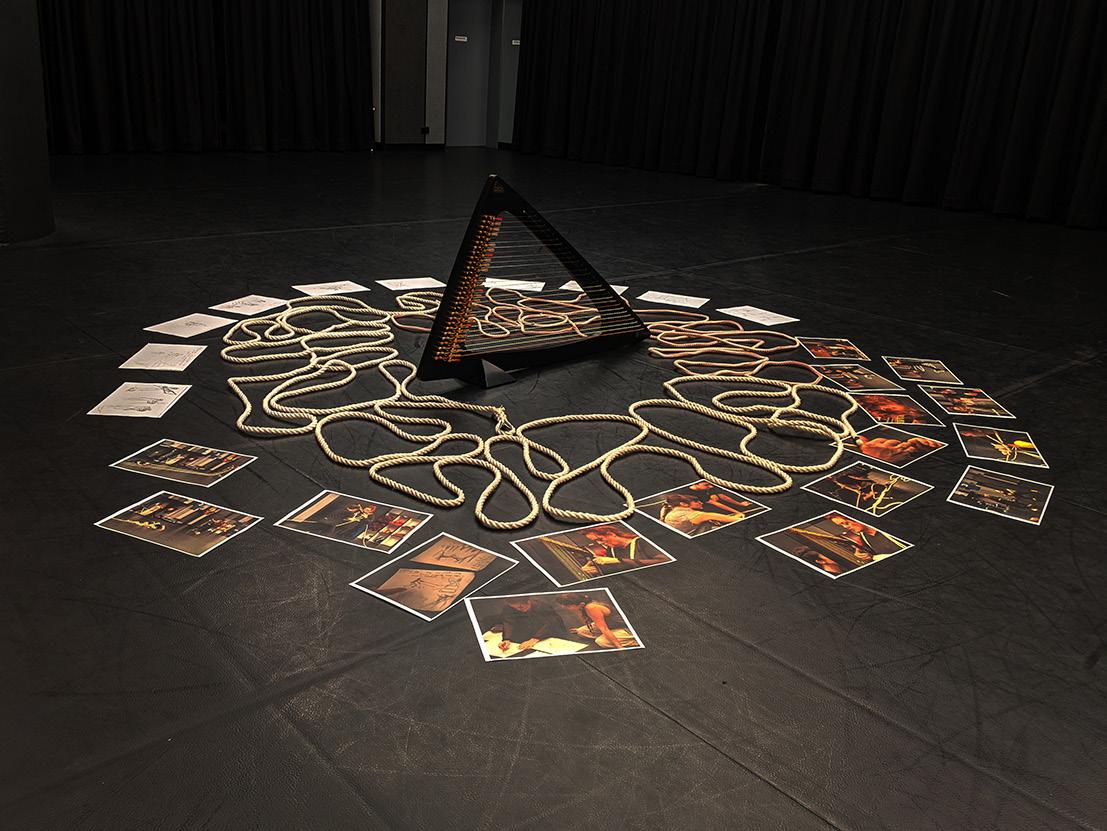
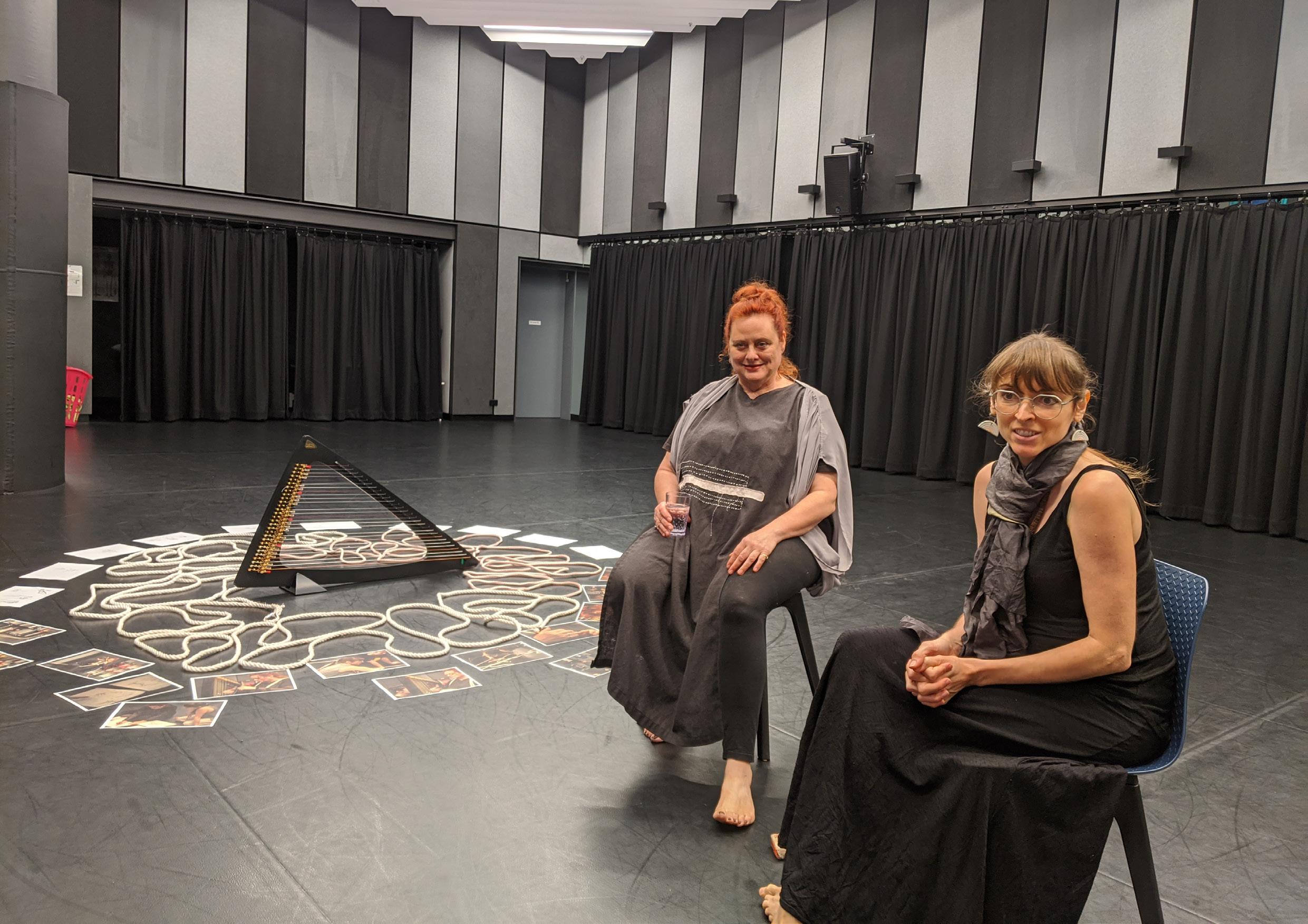
Yolande Brown collaborated with harpist, Mary Doumany to research the technical and physical possibilities between dancer and harp: the interplay of physical and aural resonance, and culture. Being a Bidjara woman, Yolande is drawn to not only researching her own heritage, but to questioning our Country’s history of assimilation practices and the consequential loss suffered by her family and all First Nations’ people.
Two forces … two cultures … two disciplines … two breaths … inhabiting space and time; within this there can be obliviousness, appreciation, understanding, reciprocity, respect, or on the other hand there can be intrusion, aggravation, domination, subjugation and war.
The artists will explore the inhabitation of a defined space/body, through presence, through movement, and through contact – physically and aurally – and a questioning of how we are inhabited, to varying degrees, by our environs, by the influence of others and by our own emotions. Through physicality, and using three elements – dancer, harp and musician – they will question how the spirit and mind dance in tandem, a delicate balance that can be thrown off kilter by often unbeknown or unrecognised triggers.
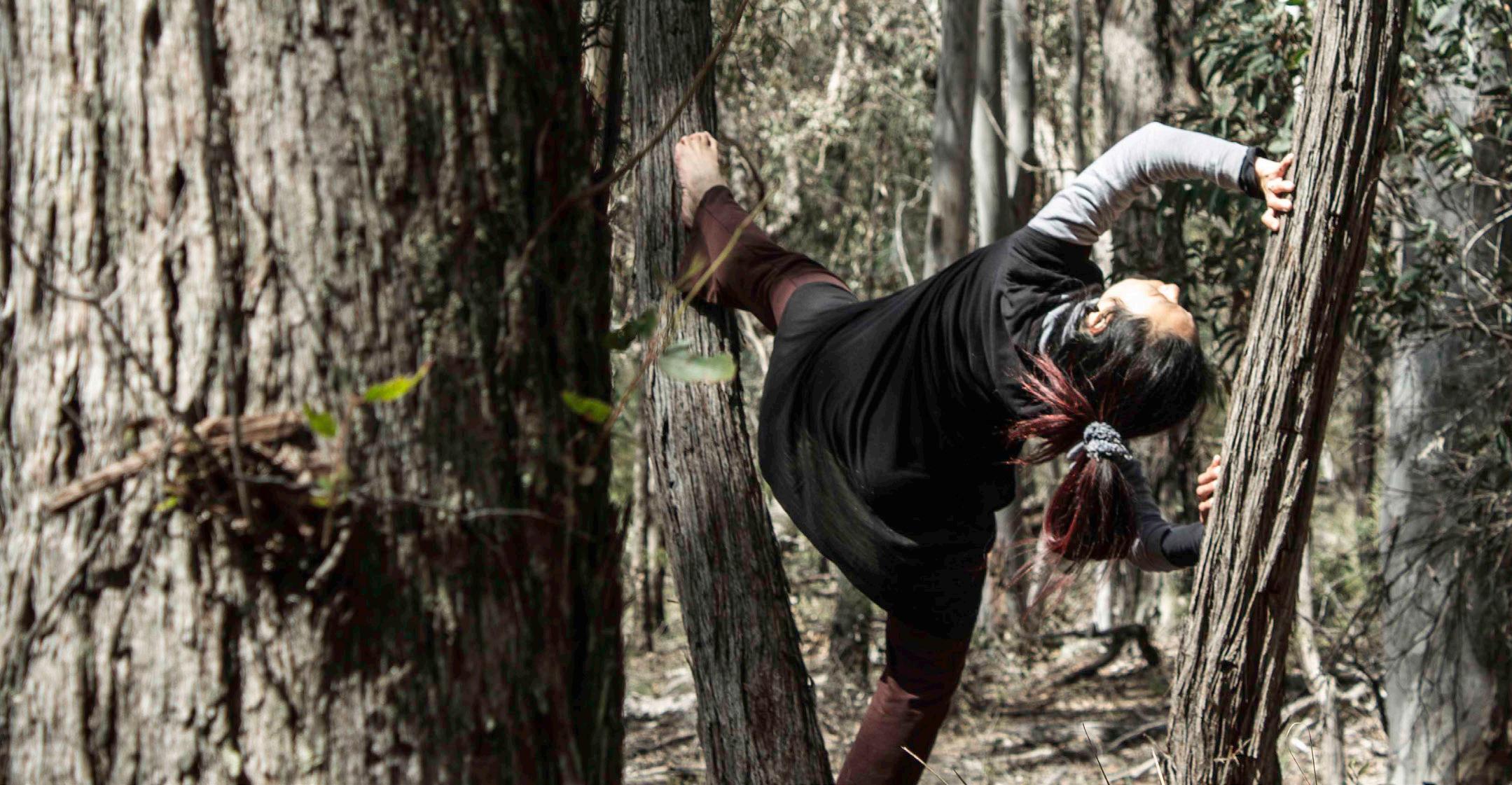
Responsive Residencies, Credit: Yolande Brown
Open Studio, Credit: Melissa Ramos
Matt Cornell
Matt worked through choreography, music and writing to discover and deepen analogues between bodies of water and our human bodies. Exploring issues and ideas around the value and ways we measure value in the labour force, job markets alongside that of water futures, and the trading of water options and the privatisation of the bodies and/of water. Howe do we feel about and identify fresh water? In what ways to we understand humanity and personhood and what does it mean to commodify and value these.
Matt collaborated with diverse artists in his research including Amy Shang, Elle Evangelist, Rhiannon Newton and Sebastian Henry Jones.
Following this research Matt hosted a digital project showing for ‘Tropical Glaciers’. He shared video and text and playlists. This sharing was part of the reflection before taking the next exploratory steps with this project.
Credit: Matt Cornell
Charemaine Seet
Charemaine is exploring the movement vocabulary of her own dialect group’s version of Chinese opera, Teochew opera. Charemaine began in 2020 online (due to Covid) to learn xiaosheng and huadan movements from Zenn Lim Soo Hiang, who has been performing Teochew opera more than 45 years. The project is a deep exploration of the movement vocabulary of an art form Charemaine grew up with in Malaysia and Singapore. Charemaine is interested to consider, how this exploration connects with and influences her dance practice which is based on North American modernist and postmodernist traditions.
Kirk Page and Jade Dewi Tyas Tunggal
2019 Responsive Recipients Kirk Page and Jade Dewi Tyas Tunggal were able to reconnect with Indigenous Elder Matthew Doyle for a ‘renewal’ session.
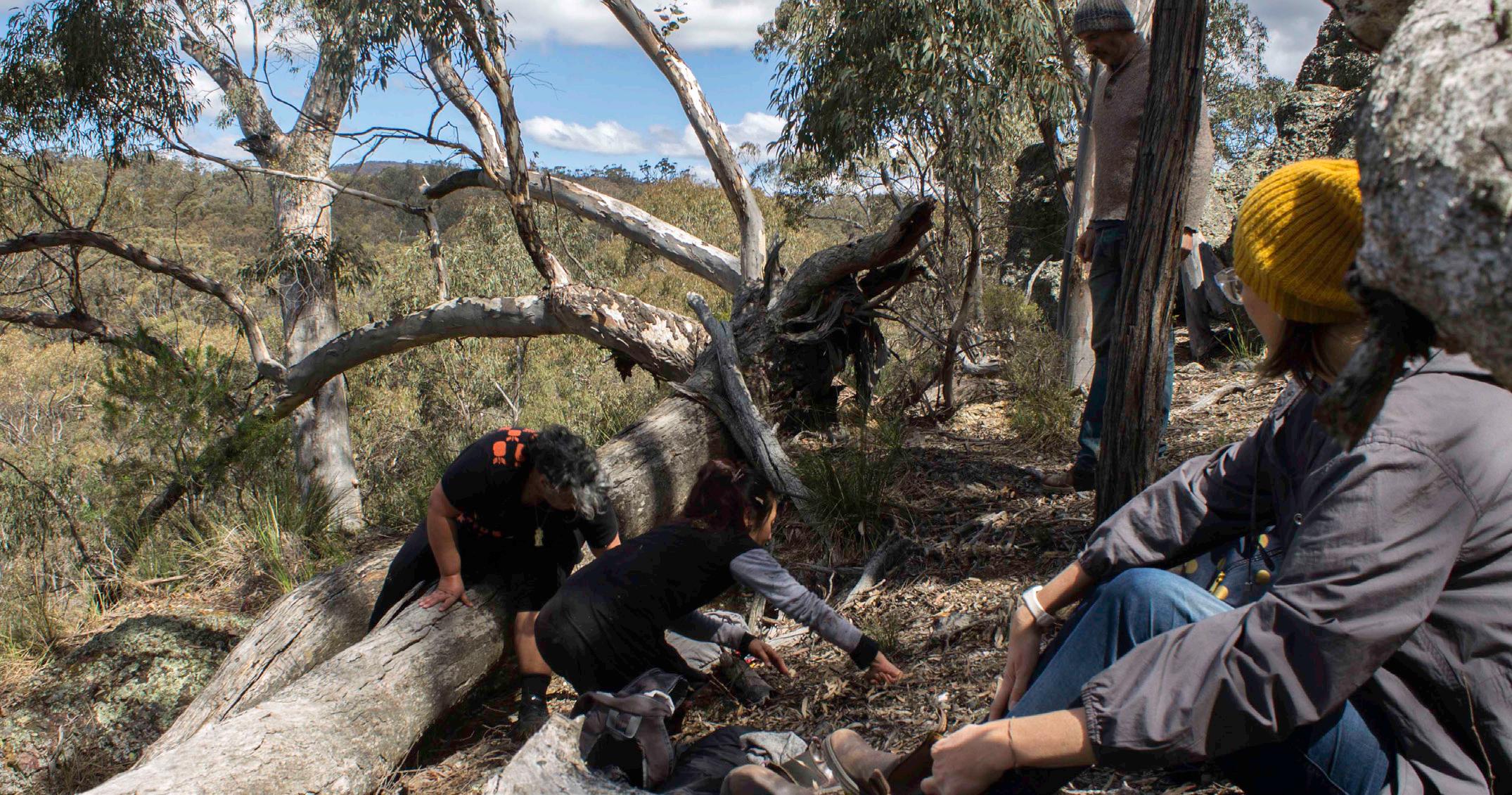
Kirk and Jade’s research asked what is the pivotal role of smoke in spiritual health –landscape, body and ritual. The research explores Indigenous approaches to wisdom and how to revive vitality, burning off the physical waste and promote finding new pathways together.
Henrietta Baird
This year’s Critical Path Associate Artist Henrietta Baird engaged in research in relation to her project Plant A Promise (working title). Plant A Promise is a project growing out of Henrietta’s ongoing research into native plants, First People’s land management practices and climate change. Building on work in the Chore-Hack Lab early 2019 and discussions during the Indigenous Artists Workshop – Articulating Practice Henrietta is exploring the opportunities to use dance and installation as a choreographic tool to create a socially engaged project on the subject of climate change.
The 2020 research activity included the testing of new ideas with a number of advisors, including possible collaborators, and the shaping of practice for Henrietta in relation to the needs of her project.
Dean Walsh
Choreographer, performer, educator and movement researcher, Dean Walsh’s latest production, Infinite Item, is a work focusing on environmental themes. Infinite Item was originally planned as a 3-day “mini festival” of events, talks, workshops and presentation, called, You Are Here! As with countless events this gathering of community around intersections between art, environmental science, Climate Change concerns and more unorthodox methods of communicating these intersectional concerns was reshaped by the COVID-19 lockdown. The continued uncertainty instigated the need to adapt and to move to an online version of sharing.
Dean decided to put all his efforts into finalising Infinite Item as a large scale “solo” work and to ensure, with his team of experienced artists and technologists, that two initial intimate “try-out” presentations were delivered for small in person groups and at best possible broadcast quality online.
Critical Path supported with 4 weeks of space, an initial research bursary (supported by Woollahra Municipal Council) and some funds towards the digital streaming and capture.
Dean Walsh, Infinite Item, Credit: Heidrun Lohr
Space Grants
We offered a number of space grants in 2020 responding to the need for artists local to our base to continue to work in a dedicated dance space.
Space grants were offered at the start of the year to Noha Ramadan (AUS-Netherlands) and to international artist Priya Mistry (UK, a collaboration with Chisenhale Dance, supported by the British Council).
Noha is developing a long-term video, dance and textiles project which explores the phenomenological and philosophical themes of orientation, proximity, braiding, weaving and visibility/projection. Noha will use her time at the Drill to process past iterations of the research and focus on her own movement practices within it.
Four Australia based artists Nikki Lam, Melissa Gilbert (Offerings), Frauke Huhn and Kate O’Boyle joined Priya in an exploratory week of grief, celebration, anger and beginnings. They met online for over 4 days. Central to their time together they explored “The body as a ‘vessel’ physically and neurologically, holding experience and trauma whilst storing information, impulses and patterns. And the question, “does human expression need to be more ‘psycho’, more ‘imagined’, ‘extreme’ or shamanic even?”
During their sessions they questioned: How do we take something that was intended to be a deep, intimate delving, a physical meeting of multiple bodies in one space, and convert it into digital platforms, Zooms, Messenger chats, File sharing, performing to camera, wailing and bashing objects into sound files and being held to account by a stop clock and a clanging sound you can’t see but can hear?
Patricia Wood, Credit: Cleo Mees
A short textural response for the 4 days they spent together:
An intimate exploration rippling into something new, unexpected, yet expanding. A collective conjuring, drawing of lines a coven of notes, gathering foreign bodies and an exhalation of sounds.
Unexpected.
Objects oscillating between apparition & function, fixing lines and pulling scores from our bodies.
Evolving subtly through disparate electricity penetrating our day to day lives.
The artists together created a palette of shared images, drawings, sounds, performances and texts.
Body as a Vessel was…
Shape and sound downloading from the storage space of your body and soul transferring energy through the digital space disappearing -getting lost- finding access-login in into my body evoking new spaces…
and has opened up possibilities in their practice about digital bodies and gestures.
Chloé Déchery (FR) spent a week in the Research Room navigating reading material and doing bouts of writing around her lecture-performance, “Under names other than mines”, around the use of alter egos in women’s creative work within contemporary art history.
Space Grant Daniella Zambrano, Credit: Mariana Calzada
During the residency, Chloé also met and talked through her projects with different Sydney-based makers and theorists including Theron Schmidt, Cat Jones, Jane McKernan, Julie-Anne Long and Barbara Formis (Lecturer in Aesthetics and Philosophy at Sorbonne Paris 1). The process involved conversations and informal interviews with female artists, mixing insights into documentary material and auto-fiction with reworking of more hefty theoretical material.
During March Dance we supported artists Reina Takeuchi, Patricia Wood, Jodie McNeilly, Adrina Petrosian.
Also in the first part of the year Matt Cornell received a Space Grant for Responsive ‘renewal’ work taking forward his project from 2019… He continued dancing with his collaborators as a process for thinking through liquidity as it impales fresh water and human bodies, financialising them into global trade ecologies.
During the early Covid-19 lock-down Space Grants continued for Alice Weber and Adam Linder who worked within regulations on their solo practice.
Alice developed her research around digital and long-distance intimacies, signification and scale. Through a variety of choreographic forms, from online dance class to public signage, Alice explored how desire and the banal meet in the body to disrupt standardisations of space, time and relating.
Adam worked on further developing some of the dance material derived from his exhibition at MoMA earlier in 2020.
Across the second part of the year following a Call Out Space Grants were given to Emma Maye Gibson, Lux Eterna, Natasha Sturgis, Daniela Zambrano – Plonova Dance, Tra Mi Dinh, Vishnu Arunasalam - Agal Dance Company.
A collaboration with Dance Makers Collective provided space for their own project with Lee Serle and Katina Olsen. Karen Kerkhoven was given space for another ‘edition’ of On The Cusp, this imagined as a recorded edition shared online. They used video and digital streaming to take audiences through digital outcomes of performances that were going to be presented in real-time.
Paulina Quinteros was given a Space Grant to augment work she was carrying out at the Drill (as a hirer) and Annalouise Paul was given space twice during 2020 to support the independent project she was undertaking in the local area.
Dancing Sydney Archive Project
In previous stages of this project 8 artists had been invited to consider the archiving of their body of work, in relation to the question of archive, legacy and its role in their current practice.
Artists 2017-2019: Anandavalli, Branch Nebula, Dean Walsh, Frances Rings, Julie-Anne Long, Kay Armstrong, Martin Del Amo, Rakini Devi.
A final group on the project starting at the end of 2019 with Narelle Benjamin and running into 2020 with Alan Schacher, The Fondue Set and Vicki Van Hout participated in research orientation led by Amanda Card (University of Sydney) after which each artist drew up an outline of how they want to approach their own archive project. Approaches varied as always and let to a range of sharings and documentation as the artists from this and previous ‘rounds’ took research forward.
Dancing Sydney Archive, Credit: Images Courtesy of the Artist
LABS AND WORKSHOPS
Space to Fail
An international residency ‘exchange’ that through its focus on dance-making processes sits in opposition to the sector’s priority of product / performance-making, by allowing time and space for artists to simply work without fear of failure. The project was realised with the partnership of Hyde Productions (Christchurch, New Zealand), The Dance Centre (Vancouver, Canada) and Critical Path (Sydney, Australia).
Continuing on from their 2019 residency in Vancouver, Canada, artists Alice Weber from Australia, Ileanna Cheladyn and Vanessa Goodman from Canada and Alexa Wilson from New Zealand participated in a residency in Christchurch, New Zealand.
Why is this Contemporary?
Second PYT Fairfield partnership lab across the Eastern Suburbs and Western Sydney. The lab explored contemporary dance practice, making space for different movement practices in our culture to share and work together. Participating artists from Western Sydney were Eliam ‘Royalness’ Motu, Neda Taha, Anna Kuroda with facilitation by Martin del Amo.
Why Is This Contemporary, Credit: Claire Hicks
Keir Choreographic Award
Following from 2016 & 18 partnerships a collaboration with DanceHouse provided opportunities in Melbourne for Rhiannon Newton (former Dancehouse housemate) and Ryuchi Fujimura to take part in workshops with Claudia La Rocco and Takao Kawaguchi.
Claudia’s writing/making/thinking/talking lab was for artists interested to explore collectively shaped questions and speculations.
Takao’s workshop connected the histories mapped by controversial sociologist Laud Humphreys to contemporary practices, as well as to the policing and pleasuring of bodies today and queer sociality.
Takao also spent time exploring and improvising with local artists Paul Walker and Gideon Payten-Griffiths in Sydney.
‘Mysteries’ Lab
Is there a place for magic in contemporary dance? During our ‘Mysteries’ Lab artists working with related ideas related shared their choreographic ideas and approaches. Participating artists were Gabrielle Bates, Latai Taumoepaeu, Leo Cremonese, Peter Swain, WeiZen Ho, with David Ryan. A collaboration with Cementa the lab took place in Kandos, NSW.
Mysteries Lab, Credit: David Ryan
Da:ns Lab 2021 – Online Satellite Gathering
Da:ns Lab 2021 collaboration with Dance Nucleus, Singapore. da:ns lab is an annual artist meeting as part of the da:ns festival presented by Esplanade – Theatres on the Bay in Singapore, and produced by Dance Nucleus since 2018. The theme for 2020 was CO-IMMUNITY : How To Dance When We Are All Ill. Critical Path led the Australia Satellite bringing 8 artists into a process with 42 others drawn from Hong Kong, India, Philippines, Singapore and Taiwan. Australian artists were Adrienne Semmens, Gabriela Green Olea, Patricia Wood, Matt Cornell, Mish Gregor, Taree Sansbury, Raghav Handa, Rakini Devi and Reina Takeuchi.
International satellites included Gati Dance (India) and Sipat Lawin / Komunidad X (Philippines) along with CCDC in Hong Kong and Thinkers’ Studio in Taiwan.
Experimental Choreography Residency with Performance Space
In the FIFTH annual iteration of Critical Path’s joint Residency for Experimental Choreography with Performance Space, Nat Randell and Anna Brecon undertook research toward their new work Set Piece. This work brings together film and theatre citations, interview material and improvisation to explore homosexual coupledom through the lens of power dynamics and erotic power play. Through deidealising portraits of the couple, Set Piece explores the abject nature of sexuality and desire, modes of competition and contempt generated by the immobility of the form, and the ways in which desire and attachment are bound up in broader hierarchical social organizations. Choreographic experiments have been the focus of the ECR residency for performers and camera operators.
DISCOURSE & SHARING
Talking Dance
These panel conversations, dialogues and forums make space for artists to exchange ideas and knowledge and to open this up to a wider public audience. A first Talking Dance project ran as part of our Dancing the Drill celebration at the end of February (see Sharings below) - artists Jasmin Shepard, Matthew Doyle and Yolande Brown participated.
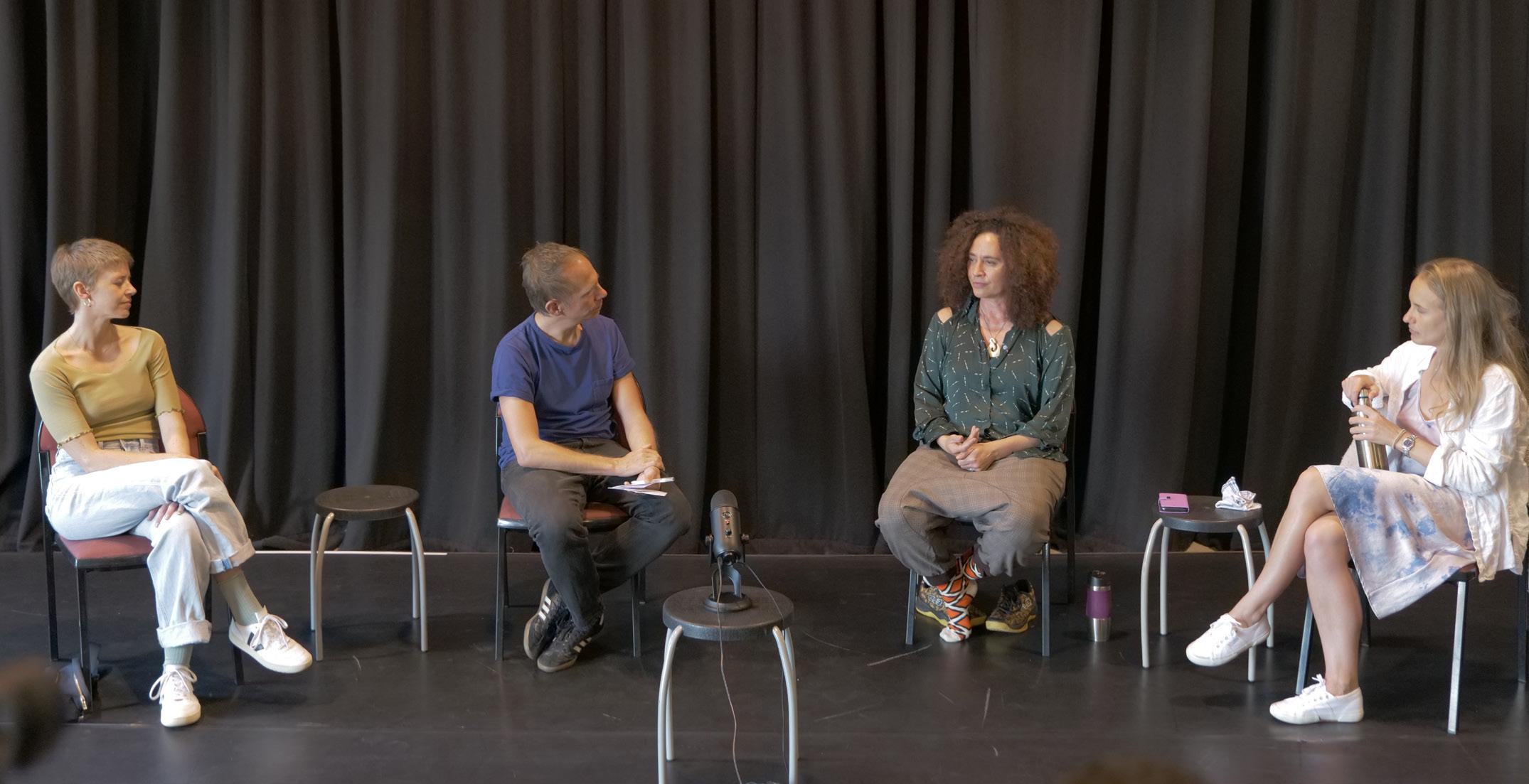
The second Talking Dance: Dance Ecologies was led by Martin del Amo and included artists Katina Olsen, Rhiannon Newton and Victoria Hunt in conversation as part of a larger writing/online project (other artists were Angela Goh, Ivey Wawn, Jade Dewi, Kirk Page, Taree Sansbury and Thomas E. S. Kelly).
Centred around a series of conversations, designed to explore more deeply the way independent choreographers work within the Australian arts sector, and how Critical Path relates to that inter-relationship, Martin’s interviews with the artists have been distilled into three texts.
The project concluded with a public conversation between Martin and Rhiannon, Victoria and Katina, where each artist discussed the project and shared some further insights into their artistic practice.
Dancing Ecologies, Credit: Paul Walker
The final Talking Dance ran as part of the Asian Network for Dance (AND+) meeting online. With a focus on Indonesia (originally planned as taking place in Jakarta) the activities included closed core group meetings, invited sessions on the relationship between industry and the academy with a new project in planning as the ‘hook’ of the dialogue and on pan-Asia practice development intensives. The project invited presentations to the core group by guests from Indonesia and commissioned a presentation on Indonesian contemporary practice from the three curators of Indonesian Dance Festival (IDF). The latter disseminated to 10 practitioners by each core group member (140 in total, including 20 to Australia). CP Director Claire Hicks was co-convener for the meeting ‘series’ and CP commissioned two guest talks with Melati Suryodarmo and Keni Soeriaatmadja and the IDF curators’ presentation.
Critical Dialogues
CP’s e-journal for promotion and dissemination of creative research & thinking was issued in two editions in 2020.
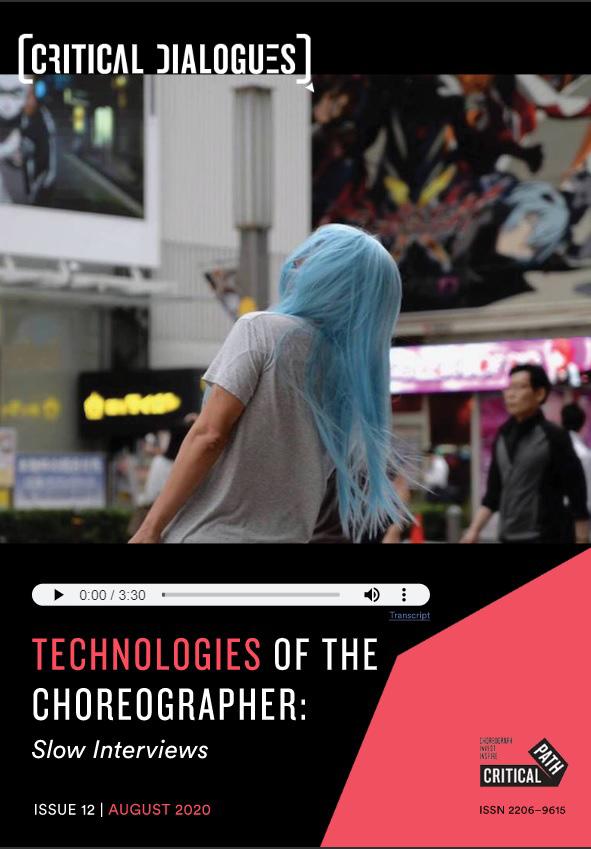
The first was guest edited by Jodie McNeilly Renaudie and explored digital technologies in research, development, and practice. As technology develops and improves, choreographers and performers explore the possibilities digital media can offer to the process of creating and performing dance. The contributing artists’ texts, audios, videos and images focus on the relationship between the live body and the digital technologies that become part of their daily life and an influence on the process of their work discipline. Contributions from Eddie Ladd, Matt Cornell, Monica Stevens and Simo Kellokumpu.
Critical Dialogues 12, Credit: Critical Dialogue
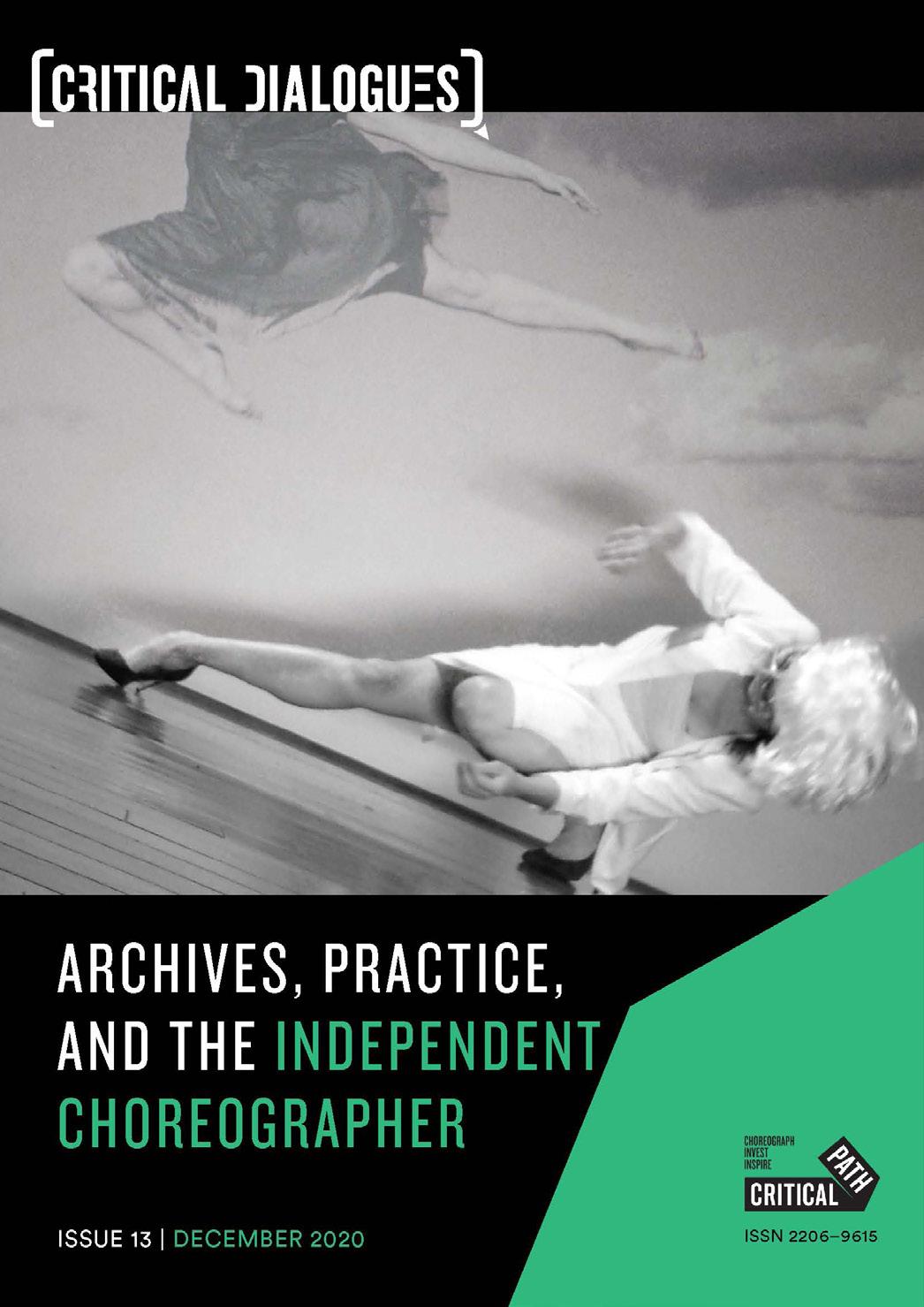
A second edition linked into to CP’s Dancing Sydney Archive Project, edited in-house by Claire Hicks and Elizabeth Chua. This issue of Critical Dialogues focuses on dance archives and specifically that of choreographers with an established and significant relationship with the City of Sydney. It marked the end of the first stage of a wider project, Dancing Sydney: Mapping Movements : Performing Histories, a partnership between Critical Path and the University of Sydney, University of New South Wales and Macquarie University, working with twelve artists/artist group from 2016 –2020 (detailed above).
The publication features writing by Amanda Card, Kay Armstrong, Narelle Benjamin, Julie-Anne Long, Dean Walsh, Vicki Van Hout, The Fondue Set (Jane McKernan, Elizabeth Ryan and Emma Saunders), Melati Suryodarmo, Ghenoa Gela and Erin Brannigan.
Sharings and Studio Presentations
Research and visiting artists opened up their process and/or present within the studio – within program above. This was curtailed by Covid, but many participating artists found alternate ways to continue to share their work and/or to meet restrictions whilst engaging with community around their practice. This included -
Dean Walsh
Online (up to 20 people) ‘Open Studio’ sessions for Dean’s Infinite Item project took place in June, with a limited number of people attending in person.
Two ‘try-out’ presentations in July, by invitation only, shared the work with industry peers, local community and those engaged in issues related to climate change.
Dancing the Drill
Marking 15 years of Critical Path the program included, opening research and development at the Drill in Woollahra to the public. Residencies and sharing that fed into this were those by Jane McKernan and Rhiannon Newtown. Alongside this, public talks with Jasmine Shepard, Matthew Doyle and Yolande Brown were disseminated online.
Dancing Sydney Archive Project
Final stage of multi-year project to explore the role of archiving in the current work and future legacy of a group of 12 significant independent Sydney dance-makers. Reflection, public sharing and the creation of a publication (as above) provided artists and audiences with an opportunity to celebrate the work of dancers whose work is rooted in the city.
Erin Brannigan (University of New South Wales) interviewed each artist creating a ‘portrait’ as part of a collaboration with the State Library of New South Wales. Erin works in dance and film as a journalist, academic and curator.
In 2020 the project was completed by a host of sharing activities live and online by 12 artists.
Dnacing the Drill, Credit: Melissa Ramos
Delving into Dance
An exciting partnership with online project Delving into Dance gave Critical Path the chance to commission 12 artists to create some form of online text on the subject of Why Dance Matters Now. These 12 new dialogue works were available to the public in the first part of 2020.
Artists participating were Bronwen Kamanz,Don Asker, Emma Wilson, Jonathan Homsey, Kayley Palmer, Leisa Prowd along with those featured in Interchange.
CREATIVE RESPONSE TO THE CLIMATE EMERGENCY
CP’s exploration around a Creative Response to the Climate Emergency, initiated in 2019 continued in 2020 with a focus on supporting artists who are engaging through their practice. Dean Walsh, Henrietta Baird and Matt Cornell all explored issues and concerns of climate change and these were raised also in conversations through Jodie McNeilly’s Critical Dialogues.
The team also considered this in going forward with specific plans and projects. Space to Fail shifted from a two locations project in Christchurch and Sydney to a single based and the Critical Path team did not travel to Christchurch, the lab was managed in situ solely by our New Zealand partner.
A conversation around a possible future online AND+ meeting (initiated in Tokyo February 2020) was pulled forward due to Covid allowing us to test the model of an online gathering at the end of the year for the ‘Indonesia’ meeting.
INTERCHANGE
Interchange Festival 2019-20 was an online festival that brought together international and national professionals that have included digital media in their practice.
Artists reflected upon the challenges, opportunities, and limitations of working with digital media in their own experience, as well as its influence on the process of their work. The festival provided artists with the opportunity to connect and work together from different locations, or at different times and their interactions shared online.
Part of CP’s larger Digital Drill strand of work the festival allowed us to try out different kinds of interactions for and with artists, to create a new mini-website and to commission new writings and videos for public sharing.
Artists Matthew Doyle, Charemaine Seet, Margie Medlin and Choy Ka Fai created new ‘conversations’ with other artists and for public. Adrianne Semmens & Jennifer Eadie, Alison Plevey, Ira Ferris, Simon Ellis & Shaun McLeod and Tsuki Becoming created ‘articles’ for CP in partnership with Delving into Dance as part of a larger commissioning project.
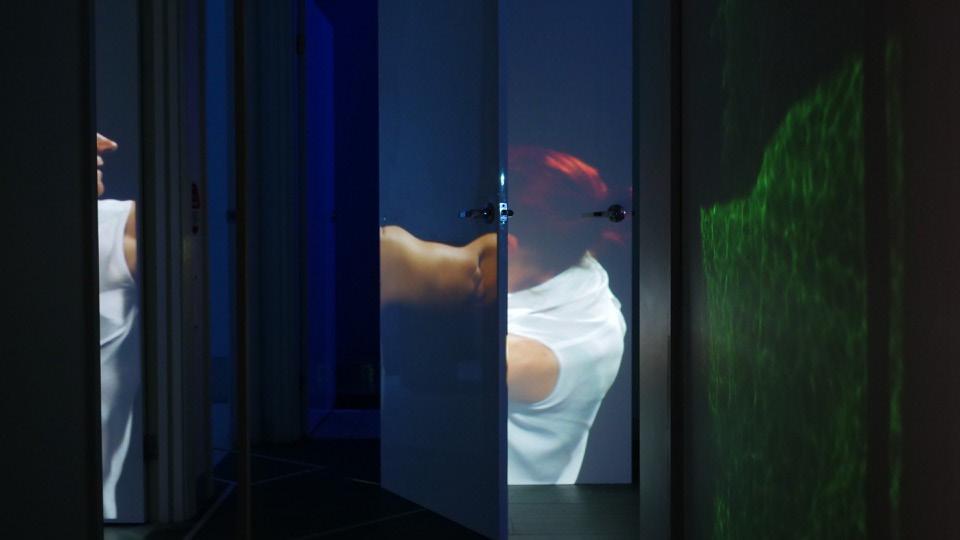
Experiment No.27.5, Credit: Margie Medlin
FINANCIAL REPORT
Committee Members’ Report
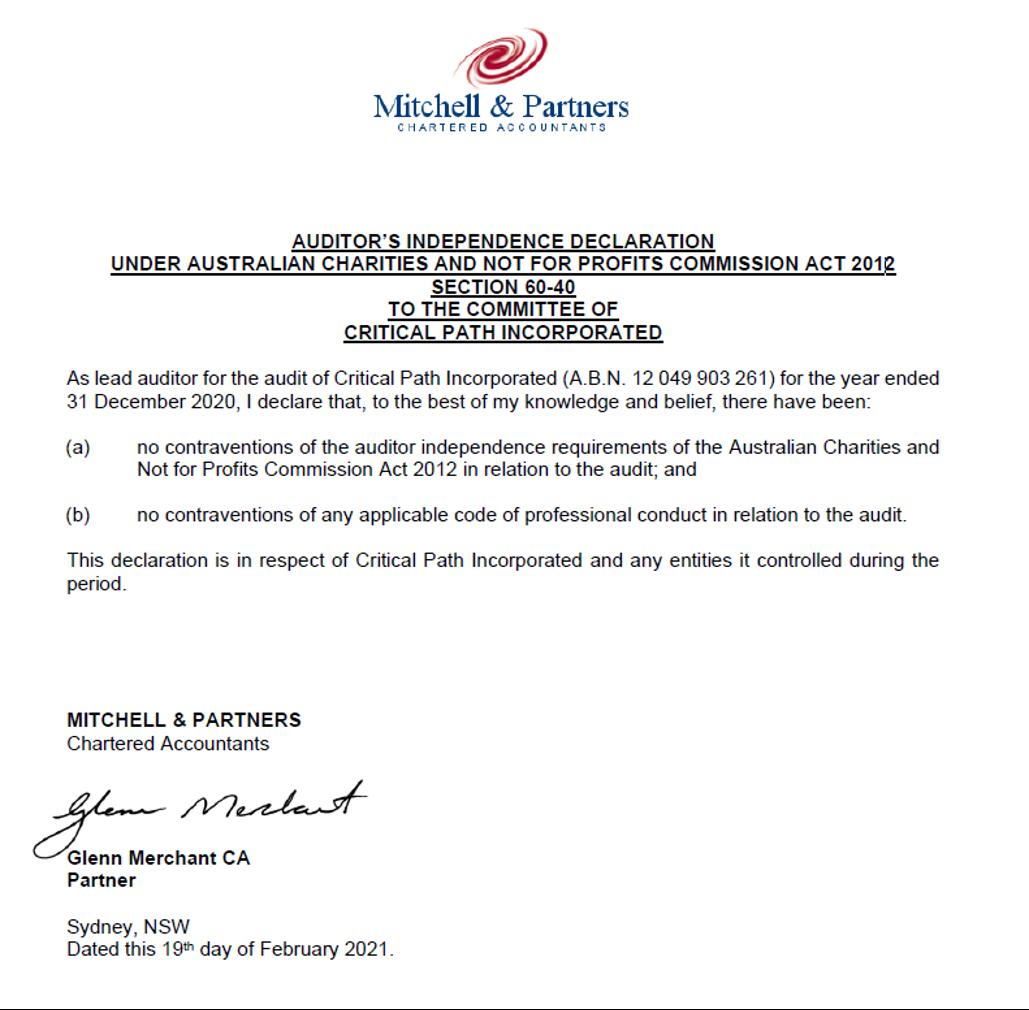
Auditor Independence Declaration
Financial Statements
Statement of Surplus or Deficit and Other Comprehensive Income
Statement of Financial Position
Statement of Changes in Equity
Statement of Cash Flows [3]
Notes to the Financial Statements
1 General information and statement of compliance 2 Changes in accounting policies
COMMITTEE MEMBERS’ REPORT
Contributions in winding up
The Association is incorporated under the Associations Incorporation Act 2009. If the Association is wound up, the constitution states that each member is required to contribute a maximum of $10 towards meeting and outstanding obligations of the Company at 31 December 2020, the total amount that members of the Association are liable to contribute if the company is wound up is $80 (2019: $80).
Auditor’s Independence declaration
A copy of the Auditor’s Independence Declaration as required under s.60—40 of the Australian Charities and Not–for–profits Commission act 2012 is included in page 25 and forms part of the Committee member’s report.
Signed in accordance with the resolution of the Committee Members.
AUDITOR INDEPENDENCE
DECLARATION
FINANCIAL STATEMENTS
STATEMENT OF SURPLUS OR DEFICIT AND OTHER COMPREHENSIVE INCOME
This statement should be read in conjunction with the notes to the financial statements.
STATEMENT OF FINANCIAL POSITION
This statement should be read in conjunction with the notes to the financial statements.
STATEMENT OF CHANGES IN EQUITY
This statement should be read in conjunction with the notes to the financial statements.
STATEMENT OF CASH FLOWS [3]
Operating activities
Receipts from:
418,530 390,494 1,587 (187,357) (636,156)
(15,831) 748,051
This statement should be read in conjunction with the notes to the financial statements.
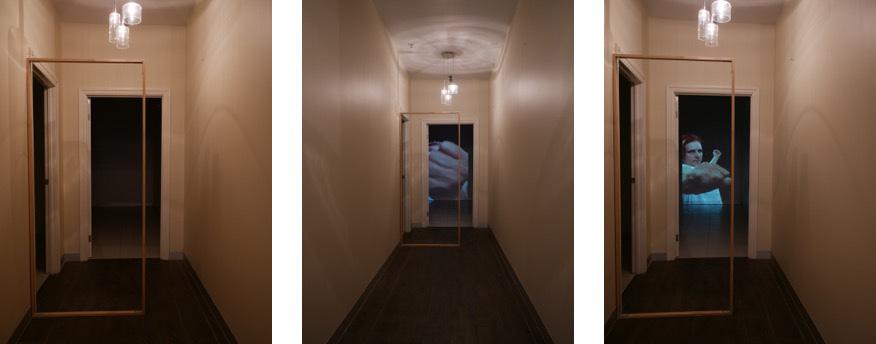
Experiment No.27.5, Credit: Margie Medlin
Space Grant Daniella Zambrano, Credit: Mariana Calzada
Mysteries Lab WeiZen Ho, Credit: David Ryan
NOTES TO THE FINANCIAL STATEMENTS
For the year ended 31 December 2020
Critical Path Incorporated
1. General information and statement of compliance
The financial report includes the financial statements and notes of Critical Path Incorporated.
These financial statements are general purpose financial statements that have been prepared in accordance with Australian Accounting Standards Reduced Disclosure Requirements and the Australian Charities and Not-for-profits Commission Act 2012.
Critical Path Incorporated is a not-for-profit entity for the purposes of preparing the financial statements.
The financial statements for the year ended 31 December 2019 were approved and authorised for issuance by the Committee members.
2. Changes in accounting policies
2.1 There are no new and revised standards that are effective for these financial statements
3. Summary of accounting policies
3.1 Overall considerations
The significant accounting policies that have been used in the preparation of these financial statements are summarised below.
The financial statements have been prepared using the measurement bases specified by Australian Accounting Standards for each type of asset, liability, income and expense. The measurement bases are more fully described in the accounting policies below.
3.2 Revenue
Revenue comprises revenue from the sale of goods, services income, government grants, fundraising activities and client contributions. Revenue from major activities and services is shown in Note 4.
Revenue is measured by reference to the fair value of consideration received or receivable by the Association for goods supplied and services provided, excluding sales taxes, rebates, and trade discounts.
Revenue is recognised when the amount of revenue can be measured reliably, collection is probable, the costs incurred or to be incurred can be measured reliably, and when the criteria for each of the Association’s different activities have been met. Details of the activity-specific recognition criteria are described below.
Government grants
A number of the Association’s programs are supported by grants received from Federal, State and Local governments. If conditions are attached to a grant which must be satisfied before the Association is eligible to receive the contribution, recognition of the grant as revenue is deferred until those conditions are satisfied.
Where a grant is received on the condition that specified services are delivered, to the grantor, this is considered a reciprocal transaction. Revenue is recognised as services are performed and at year–end until the service is delivered.
Revenue from a non-reciprocal grant that is not subject to conditions is recognised when the Association obtains control of the funds, economic benefits are probable and the amount can be measured reliably. Where a grant may be required to be repaid if certain conditions are not satisfied, a liability is recognised at year end to the extent that conditions remain unsatisfied.
Where the Association receives a non-reciprocal contribution of an asset from a government or other party for no or nominal consideration, the asset is recognised at fair value and a corresponding amount of revenue is recognised.
Donations and bequests
Donations collected, including cash and goods for resale, are recognised as revenue when the Association gains control, economic benefits are probable and the amount of the donation can be measured reliably.
Bequests are recognised when the legacy is received. Revenue from legacies comprising bequests of shares or other property are recognised at fair value, being the market value of the shares or property at the date the Association becomes legally entitled to the shares or property.
Interest income
Interest income is recognised on an accrual basis using the effective interest method.
3.3 Operating expenses
Operating expenses are recognised in surplus or deficit upon utilisation of the service or at the date of their origin.
3.4 Intangible assets
Recognition of other intangible assets:
Acquired intangible assets
Website construction costs as well as acquired computer software licences are capitalised on the basis of the costs incurred to acquire and install the specific website and software.
Subsequent measurement
All intangible assets are accounted for using the cost model whereby capitalised costs are amortised on a straight-line basis over their estimated useful lives, as these assets are considered finite. Residual values and useful lives are reviewed at each reporting date. In addition, they are subject to impairment testing as described in Note 3.14. The following useful lives are applied:
• Database development: 25%
• Software: 25% - 33%
• Website: 33%[4]
Subsequent expenditures on the maintenance of computer software, brand names and website are expensed as incurred.
When an intangible asset is disposed of, the gain or loss on disposal is determined as the difference between the proceeds and the carrying amount of the asset, and is recognised in surplus or deficit within other income or other expenses.
3.5 Property, plant and equipment
Leasehold improvements, plant and other equipment
Leasehold improvements, plant and other equipment (comprising office furniture and equipment) are initially recognised at acquisition cost or manufacturing cost, including any costs directly attributable to bringing the assets to the location and condition necessary for it to be capable of operating in the manner intended by the Association’ management.
Leasehold improvements, plant and other equipment are subsequently measured using the cost model, cost less subsequent depreciation and impairment losses.
Depreciation is recognised on a straight-line basis to write down the cost less estimated residual value of leasehold improvements, plant and other equipment. The following useful lives are applied:
• Leasehold improvement: 20% - 25%
• Plant and equipment: 15% - 33%[5]
In the case of leasehold property, expected useful lives are determined by reference to comparable owned assets or over the term of the lease, if shorter.
Material residual value estimates and estimates of useful life are updated as required, but at least annually.
Gains or losses arising on the disposal of property, plant and equipment are determined as the difference between the disposal proceeds and the carrying amount of the assets and are recognised in surplus or deficit within other income or other expenses.
3.6 Leases
Operating leases
Where the Association is a lessee, payments on operating lease agreements are recognised as an expense on a straight-line basis over the lease term. Associated costs, such as maintenance and insurance, are expensed as incurred.
3.7 Income taxes
No provision for income tax has been raised as the association is exempt from income tax under Div 50 of the Income Tax Assessment Act 1997.
3.8 Cash and cash equivalents
Cash and cash equivalents comprise cash on hand and demand deposits, together with other short-term, highly liquid investments that are readily convertible into known amounts of cash and which are subject to an insignificant risk of changes in value.
3.9
Employee benefits
Short-term employee benefits
Short-term employee benefits are benefits, other than termination benefits, that are expected to be settled wholly within twelve (12) months after the end of the period in which the employees render the related service. Examples of such benefits include wages and salaries, non-monetary benefits and accumulating sick leave. Short-term employee benefits are measured at the undiscounted amounts expected to be paid when the liabilities are settled.
Other long-term employee benefits
The association’s liabilities for long service leave are included in other long-term benefits as they are not expected to be settled wholly within twelve (12) months after the end of the period in which the employees render the related service. They are measured at the present value of the expected future payments to be made to employees. The expected future payments incorporate anticipated future wage and salary levels, experience of employee departures and periods of service, and are discounted at rates determined by reference to market yields at the end of the reporting period on high quality corporate bonds that have maturity dates that approximate the timing of the estimated future cash outflows. Any re-measurements arising from experience adjustments and changes in assumptions are recognised in profit or loss in the periods in which the changes occur.
The association presents employee benefit obligations as current liabilities in the statement of financial position if the association does not have an unconditional right to defer settlement for at least twelve (12) months after the reporting period, irrespective of when the actual settlement is expected to take place.
Post-employment benefits plans
The association provides post-employment benefits through defined contribution plans.
Defined contribution plans
The association pays fixed contributions into independent entities in relation to several state plans and insurance for individual employees. The association has no legal or constructive obligations to pay contributions in addition to its fixed contributions, which are recognised as an expense in the period that relevant employee services are received.
3.10 Provisions, contingent liabilities and contingent assets
Provisions are measured at the estimated expenditure required to settle the present obligation, based on the most reliable evidence available at the reporting date, including the risks and uncertainties associated with the present obligation. Where there are a number of similar obligations, the likelihood that an outflow will be required in settlement is determined by considering the class of obligations as a whole. Provisions are discounted to their present values, where the time value of money is material.
Any reimbursement that the association can be virtually certain to collect from a third party with respect to the obligation is recognised as a separate asset. However, this asset may not exceed the amount of the related provision.
No liability is recognised if an outflow of economic resources as a result of present obligation is not probable. Such situations are disclosed as contingent liabilities, unless the outflow of resources is remote in which case no liability is recognised.
3.11 Deferred income
The liability for deferred income is the unutilised amounts of grants received on the condition that specified services are delivered or conditions are fulfilled. The services are usually provided or the conditions usually fulfilled within twelve (12) months of receipt of the grant. Where the amount received is in respect of services to be provided over a period that exceeds twelve (12) months after the reporting date or the conditions will only be satisfied more than twelve (12) months after the reporting date, the liability is discounted and presented as non-current.
3.12 Goods and Services Tax (GST)
Revenues, expenses and assets are recognised net of the amount of GST, except where the amount of GST incurred is not recoverable from the Australian Taxation Office. In these circumstances the GST is recognised as part of the cost of acquisition of the asset or as part of an item of the expense. Receivables and payables in the statement of financial position are shown inclusive of GST.
Cash flows are presented in the statement of cash flows on a gross basis, except for the GST components of investing and financing activities, which are disclosed as operating cash flows.
3.13 Economic dependence
The association is dependent upon the ongoing receipt of Federal and State Government grants and community and corporate donations to ensure the ongoing continuance of its programs and fundraising. At the date of this report Management has no reason to believe that this financial support will not continue.
3.14 Significant management judgement in applying accounting policies
When preparing the financial statements, management undertakes a number of judgements, estimates and assumptions about the recognition and measurement of assets, liabilities, income and expenses.
Estimation uncertainty
Information about estimates and assumptions that have the most significant effect on recognition and measurement of assets, liabilities, income and expenses is provided below. Actual results may be substantially different.
Impairment
In assessing impairment, management estimates the recoverable amount of each asset or cash-generating unit based on expected future cash flows and uses an interest rate to discount them. Estimation uncertainty relates to assumptions about future operating results and the determination of a suitable discount rate.
Useful lives of depreciable assets
Management reviews its estimate of the useful lives of depreciable assets at each reporting date, based on the expected utility of the assets. Uncertainties in these estimates relate to technical obsolescence that may change the utility of certain assets.
Long service leave
The liability for long service leave is recognised and measured at the present value of the estimated cash flows to be made in respect of all employees at the reporting date. In determining the present value of the liability, estimates of attrition rates and pay increases through promotion and inflation have been taken into account.
The Association’s revenue may be analysed as follows for each major product and service category:
City of Sydney Grant 2020/21 196,00080,784 34,36423,000 18,000 280,000 30,619 99,9947,50018,000 352,148 436,113
5. Cash and cash equivalents
Cash and cash equivalents consist the following:
Cash at the end of the financial year as shown in the statement of cash flows is reconciled in the statement of financial position as follows:
6. Trade and other receivables
Trade and other receivables consist the following:
8. Property, plant and equipment
Details of the company’s plant and equipment and their carrying amount are as follows:
9. Intangible assets
Details of the company’s intangible assets and their carrying amounts are as follows:
Balance 1
10. Trade and other payables
Trade and other payables recognised consist of the following:
11. Employee remuneration
11.1 Employee benefits expense
Expenses recognised for employee benefits are analysed below:
11.2 Employee provisions
The
recognised for employee benefits consist of the following amounts:
12. Grants liabilities Grants liabilities can be summarised as follows:
13. Other liabilities
Operating leases as lessee
The Group’s future minimum operating lease payments are as follows:
31 December 2019
31 December 2020 -
15. Related party transactions
The association’s related parties include its key management personnel and related entities as described below. Unless otherwise stated, none of the transactions incorporate special terms and conditions and no guarantees were given or received. Outstanding balances are usually settled in cash.
Transactions with related entities
No remuneration is paid to Committee member or their related parties for acting as Committee members. From time to time Committee members who are also independent artists may be engaged in our Research and Development program and are remunerated under normal industry terms.
Transactions with key management personnel
Key management of the Association are the Executive Members of Critical Path Incorporated’s Committee and members of the Executive Council. Key management personnel remuneration includes the following expenses:
Total key management personnel remuneration
2020: $90,258 2019: $82,179
16. Contingent Liabilities and Assets
No contingent liabilities and assets to report.
17. Subsequent Events
No significant events have occurred since the end of the reporting period which would impact on the financial position of the Company disclosed in the statement of financial position as at 31 December 2018/9 or on the results and cash flow of the Company for the year ended on that date.
Since the end of the financial year the entity has suffered a downturn in its business as a result of restrictions imposed to combat the Covid-19 virus pandemic spread. The entity will likely qualify for some assistance under different Government support packages that have been announced however the loss of revenue is expected to exceed these benefits. The length and depth of the downturn cannot be determined at this stage and may affect the future operations of the entity. The Committee members are mindful of the situation and are taking all reasonable steps to mitigate the damage.
18. Members’ Guarantee - Contribution in winding up
The Association is incorporated under the Associations Incorporation Act 2009. If the Association is wound up, the constitution states that each member is required to contribute a maximum of $10 each towards meeting any outstanding obligations of the Association. At 31 December 2020, the total amount that members of the Association are liable to contribute if the Association wound up is $110 (2019: $110).
19. Charitable fundraising
The association holds an authority to fundraise under the Charitable Fundraising Act, 1991 (NSW) and conducts fundraising appeals throughout the year. Additional information and declarations required to be furnished under the Act are as follows:
All funds raised from fundraising activities, net of direct costs, were applied to the association’s normal operations. The association did not conduct any appeals in which traders were engaged.
COMPANY DETAILS
Critical Path Incorporated
is a company limited by guarantee, incorporated and domiciled in Australia.
The registered office and principal place of business is:
The Drill, 1c New Beach Road,
Darling Point NSW 2027
DECLARATIONS
COMMITTEE MEMBERS’ DECLARATION
Critical Path Incorporated
In the opinion of the Directors of Critical Path Incorporated (‘the association’)
(a)
Australian Charities and Not-for-profits Commission Act 2012, including;
(b) (i) (ii)
giving a true and fair view of the Association’s financial position as at 31 December 2020 and of it’s performance, for the year ended on that date, and
complying with Australian Accounting Standards (including the Australian Accounting Interpretations) and the Australian Charities and Not-for-profits Commission Regulations 2013; and
there are reasonable grounds to believe that the Critical Path Incorporated will be able to pay its debts as and when they become due and payable. ( Refer Note 3.13)
Signed in accordance with a resolution of the Directors:
TRAVIS DE VRIES
COMMITTEE MEMBER
Sydney, 27 April 2021
DECLARATION BY CHAIR, FINANCE & RISK COMMITTEE
in respect of fundraising appeals pursuant to the Charitable Fundraising (NSW) ACT 1991
Critical Path Incorporated
I, Virginia Lee, Treasurer of Critical Path Incorporated, declare in my opinion:
the Annual financial report gives a true and fair view of all income and expenditure of Critical Path with respect to fundraising appeal activities for the financial year ended 31 December 2020; the statement of financial position gives a true and fair view of the state of affairs with respect to fundraising appeal activities as at 31 December 2019; the provisions of the Charitable Fundraising Act 1991 and Regulations and the conditions attached to the authority have been complied with for the financial year ended 31 December 2019; and the internal controls exercised by Critical Path are appropriate and effective in accounting for all income received and applied from any fundraising appeals.
We have audited the financial report of Critical Path Incorporated (the association), which comprises the statement of financial position as at 31 December 2020, the statement of comprehensive income, statement of changes in equity, statement of cash flows for the year ended on that date, a summary of significant accounting policies and other explanatory notes and the committees’ declaration.
In our opinion, the accompanying financial report of Critical Path Incorporated is in accordance with Division 60 of the Australian Charities and Not for Profits Commission Act 2012 and the Corporations Act 2001, including:
• giving a true and fair view of the association’s financial position as at 31 December 2020, and of its performance for the year then ended ; and
• complying with Australian Accounting Standards, Division 60 of the Australian Charities and Not for Profits Commission Regulation 2013, and the Corporations Act 2001.
Basis of Opinion
We conducted our audit in accordance with Australian Auditing Standards. Our responsibilities under those standards are further described in the Auditor’s Responsibilities for the Audit of the Financial Report section of our report. We are independent of the association in accordance with the auditor independence requirements of the Corporations Act 2001 and the ethical requirements of the Accounting Professional and Ethical Standards Board APES 110: Code of Ethics for Professional Accountants (the Code) that are relevant to our audit of the financial report in Australia. We have also fulfilled our other ethical responsibilities in accordance with the Code.
We confirm that the independence declaration required by the Corporations Act 2001, which has been given to the committee of Critical Path Incorporated, would be in the same terms if given to the committee as at the time of this auditor’s report.
We believe that the audit evidence we have obtained is sufficient and appropriate to provide a basis for our opinion.
Emphasis of Matter – Covid-19
The Association has been affected by the Covid-19 pandemic with both revenues and expenses falling although it still recorded a surplus for the year. The ability of the Association to return to normal operations will be dependent on the ability of Governments to control the pandemic so that restrictions can be permanently lifted.
Key Audit Matters
Information Other than the Financial Report and Auditor’s Report Thereon
The committee members are responsible for the other information. The other information comprises the information included in the association’s annual report for the year ended 31 December 2020, but does not include the financial report and our auditor’s report thereon.
Our opinion on the financial report does not cover the other information and accordingly we do not express any form of assurance conclusion thereon. In connection with our audit of the financial report, our responsibility is to read the other information and, in doing so, consider whether the other information is materially inconsistent with the financial report or our knowledge obtained in the audit or otherwise appears to be materially misstated. If, based on the work we have performed, we conclude that there is a material misstatement of this other information, we are required to report that fact. We have nothing to report in this regard.
The Responsibility of the Committee for the Financial Statements
The committee members of the association are responsible for the preparation the financial report that gives a true and fair view in accordance with Australian Accounting Standards, the ACNC Act, and the Corporations Act 2001 and for such internal control as the committee members determine is necessary to enable the preparation of the financial report that gives a true and fair view and is free from material misstatement, whether due to fraud or error.
In preparing the financial report, the committee members are responsible for assessing the association’s ability to continue as a going concern, disclosing, as applicable, matters relating to going concern and using the going concern basis of accounting unless the committee members either intend to liquidate the association or to cease operations, or have no realistic alternatives but to do so.
Auditor’s Responsibility for the Audit of the Financial Report
Our objectives are to obtain reasonable assurance about whether the financial report as a whole is free from material misstatement, whether due to fraud or error, and to issue an auditor’s report that includes our opinion. Reasonable assurance is a high level of assurance, but is not a guarantee that an audit conducted in accordance with the Australian Accounting Standards will always detect a material misstatement when it exists. Misstatements can arise from fraud or error and are considered material if, individually or in the aggregate, they could reasonably be expected to influence the economic decisions of users taken on the basis of this financial report.
As part of an audit in accordance with the Australian Auditing Standards, we exercise professional judgement and maintain professional scepticism throughout the audit. We also:
• Identify and assess the risks of material misstatement of the financial report, whether due to fraud or error, design and perform audit procedures responsive to those risks, and obtain audit evidence that is sufficient and appropriate to provide a basis for our opinion. The risk of not detecting a material misstatement resulting from fraud is higher than for one resulting from error, as fraud may involve collusion, forgery, intentional omissions, misrepresentations, or the override of internal controls.
• Obtain an understanding of internal control relevant to the audit in order to design audit procedures that are appropriate in the circumstances, but not for the purposes of expressing an opinion on the effectiveness of the association’s internal control.
• Evaluate the appropriateness of accounting policies used and the reasonableness of accounting estimates and related disclosures made by the committee.
• Conclude on the appropriateness of the committee’ use of the going concern basis of accounting and, based on the audit evidence obtained, whether a material uncertainty exists related to events or conditions that may cast significant doubt on the registered entity’s ability to continue as a going concern. If we conclude that a material uncertainty exists, we are required to draw attention in our auditor’s report to the related disclosures in the financial report or, if such disclosures are inadequate, to modify our opinion. Our conclusions are based on the audit evidence obtained up to the date of our auditor’s report. However, future events or conditions may cause the registered entity to cease to continue as a going concern.
We communicate with the responsible entities regarding, among other matters, the planned scope and timing of the audit and significant audit findings, including any significant deficiencies in internal control that we identify during our audit.
We also provide the committee with a statement that we have complied with relevant ethical requirements requiring independence, and to communicate with them all relationships and other matters that may reasonably be thought to bear on our independence, and where applicable, related safeguards.
The additional financial data presented in the following pages is in accordance with the books and records of Critical Path Incorporated (“our client”) which have been subjected to the auditing procedures applied in our statutory audit of the association for the year ended 31 December 2020. It will be appreciated that our statutory audit did not cover all details of the additional financial data. Accordingly, we do not express an opinion on such financial data and no warranty to accuracy or reliability is given. Neither the firm nor any member or employee of the firm undertakes responsibility in any way whatsoever to any person (other than our client) in respect of such data, including any errors or omissions therein however caused.
MITCHELL & PARTNERS
Chartered Accountants
Glenn Merchant CA Partner
Sydney, NSW
Dated this 19 February, 2021
DETAILED STATEMENTS OF SURPLUS OR DEFICIT
For the year ended 31 December 2020
SCHEDULE 1 – GENERAL OPERATIONS
INCOME
Donations Net grant income
The above UNAUDITED detailed statement of surplus or deficit should be read in conjunction with the disclaimer.