CRITICAL PATH ANNUAL REPORT 2016



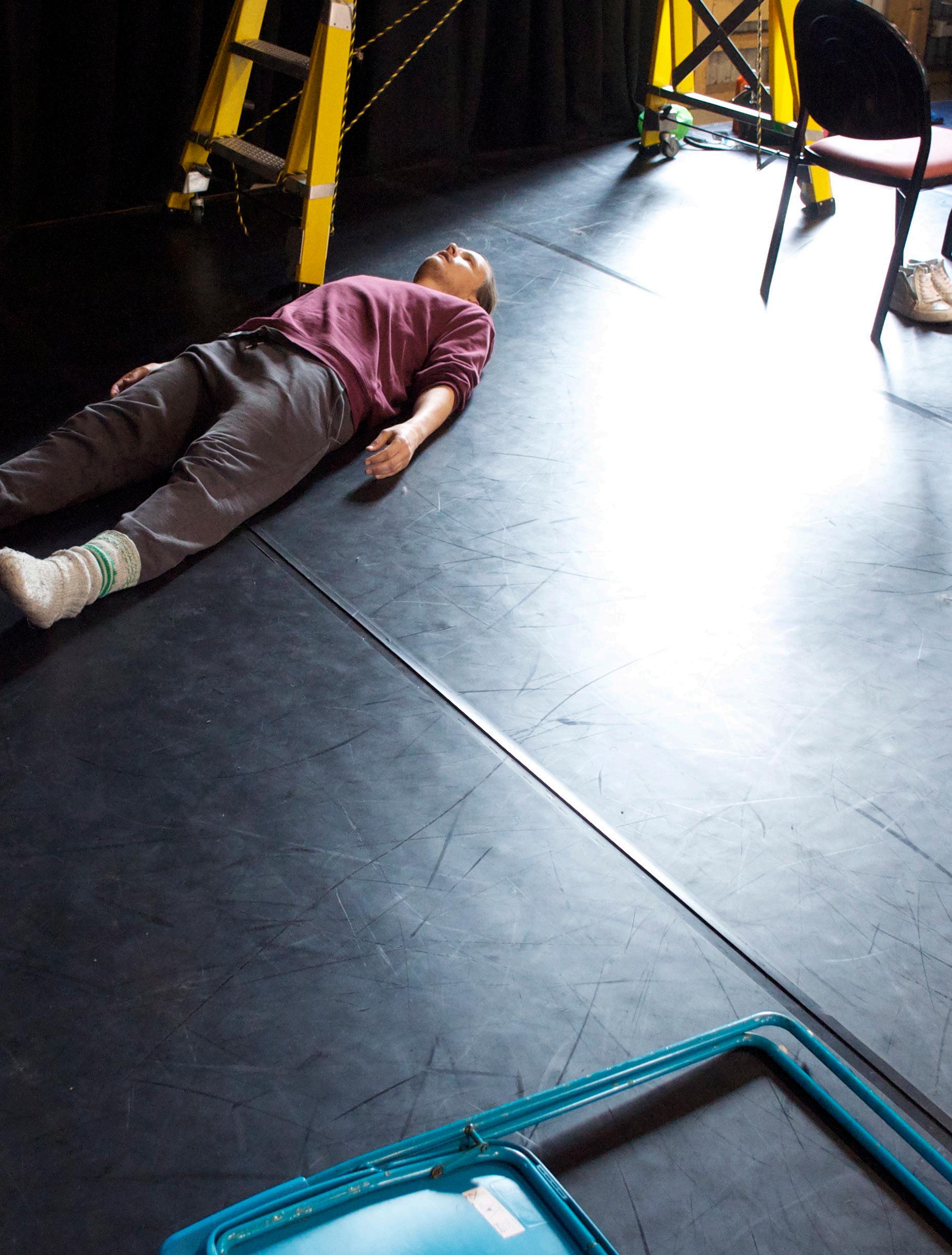
Simo Kellokumpu lying, flanked by ladder and folded chair, on floor of Drill Hall | Facilitated Program | Image by Claire Hicks

I am very pleased to present Critical Path’s 12th Annual Report which sets out how we continue to support, stimulate, challenge and promote independent choreographers and movement artists in Australia. Our small hardworking team lead by Claire Hicks — with Fabiana (Bibi) Serafim and Laura Osweiler and support from Karen Steains and a roster of interns — produces an astonishing array of programs within very tightly managed limited resources. This organisation efficiently leverages scarce public funds to make a broad impact on the creative landscape and we are very proud of the difference it makes to the lives of artists.
Residencies and workshops remain at the heart of what we do, but 2016 introduced a number of new strands to our program to allow us to expand our footprint and provide new opportunities for artists. Last year, our lease of the Drill Hall increased to full time all year, which permits us to accommodate projects for other arts organisations and offer flexible space options for independent artists. Our collaborations with both the Biennale and the Keir Choreographic Award brought new audiences to the Drill Hall and into conversations about choreographic practices. These, and other partnerships with aligned organisations in NSW, nationally and internationally, are becoming increasingly essential to create the capacity for us to grow and amplify our impact.
We have no illusions about the challenges facing the arts sector, which include our own need to meet increasing costs with a largely fixed revenue stream. However, since inception we have consistently delivered to budget and have employed all of our collective creativity to get things done regardless. Our future plans recognise that we need to continue to diversify our collaborations and partnerships and to uncover new resources to fund our initiatives.
I am most grateful to our volunteer board members who devote their skills, time and energy to ensuring the organisation remains viable. Many other individuals – artists and conscripted volunteers — also contributed to various projects during the year and their generosity is most appreciated. Thank you to all — but most of all to Claire, Laura and Bibi for their exceptional dedication to the cause.
Meredith Brooks, Chair
MEREDITH BROOKS
CHAIR & TEMPORARY TREASURER
Meredith is a non-executive Director of BT Investment Management Ltd, non-executive Director of General Reinsurance Australia Ltd and General Reinsurance Life Australia Ltd and a Council Member of Glaucoma Australia. She is an APMA Level 2 Pilates Instructor.
KAREN CARMICHAEL
TREASURER
Karen is a senior Finance Executive in Telecommunications. Most recently, she headed Procurement and IT Commercial operations for Optus and was awarded Who’s Who Financial Manger of the year for 2012. She specialises in financial transformation, receiving industry awards for both Financial IT and Procurement transformation programs during 2012 and 2013. She has held Treasurer positions for numerous not for profit and community organisations, including UTS Childcare and community sporting and education.
ANGELA GOH
ARTIST REPRESENTATIVE
Angela is a performer and choreographer from Sydney.
Fenn is a senior producer at Performing Lines and has worked with many of Australia’s leading artists including William Yang, Meryl Tankard, ILBIJERRRI Theatre Company, Gavin Webber and Grayson Millwood, and the late Tanja Liedtke.
THOMAS E. S. KELLY
ARTIST REPRESENTATIVE
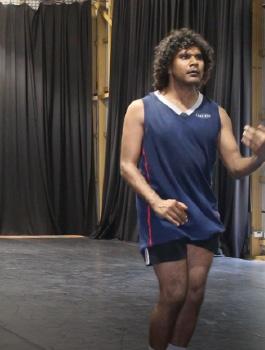
Thomas is a performer, choreographer, and composer. He graduated from NAISDA Dance College in 2012. He is a proud Wiradjuri and Bundjalung man from QLD and NSW.
NOELLA LOPEZ
Noella has extensive experience in strategy development, brand management, marketing and business development in both the private and government sectors. She is the Founding Director and Curator at Noella Lopez Gallery.
GENIA MCCAFFERY
Genia was Mayor of North Sydney from 1995 to 2012. She was President of the Local Government Association (NSW)
2004 to 2010 and President of Australian Local Government Association 2010 to 2012. She has extensive experience in working with Local, State and Federal Governments as well as with the community.
Annabel is a UK qualified Chartered Accountant and a senior management consultant at PwC. She has extensive experience across the private and government sector, helping clients to manage their Finance functions through business design, strategy and transformation programs. Annabel has recently relocated to her hometown of Sydney after fifteen years in London.
Gideon is a director, choreographer and founder of Australian dance company Chunky Move. More recently, Gideon has been a resident artist with Sydney Theatre Company and choreographer for Australian Ballet and Sydney Dance Company. He is a recipient of an Australian Creative Fellowship and is
currently chair of the Melbourne Fringe Festival.
Lesley is a media, entertainment and arts lawyer. She is General Counsel of SBS and a member of their senior executive team.
Sarah-Vyne is a director, choreographer and teacher and has worked across commercial and contemporary dance, theatre, film, television and arts development spanning two decades. She is a recipient of a Winston Churchill Fellowship in the arts and a passionate leader in the field of integrated arts practice in Australia.
Public Officer Claire Hicks
Auditors
Steven J Miller & Co, Chartered Accountants
Registered Office & Principal Place of Business
The Drill 1C New Beach Road Rushcutters Bay NSW 2011
The Committee members of Critical Path Incorporated present their Report together with the financial statements for the year ending 31 December 2016 and the Independent Audit report, covering those financial statements.
The following persons were committee members of Critical Path Incorporated during or since the end of the financial year.
The number of meetings during the year and the number of meetings attended by each member are as follows:
DATE APPOINTED NAME
COMMITTEE
Governance and strategic development
DIRECTOR
Artistic vision, company management and strategic development
PROJECT MANAGER
Management of Facilitated Program, communications and events
FINANCIAL CONSULTANT
Financial advice and reporting
GENERAL MANAGER
Management of Responsive Program, business administration and publications.
In 2016, Claire Hicks continued in the role of Director (full time).
Fabiana Serafim continued as Program and Communications Manager (part-time 0.6) with a change in title to Program Manager from 7 April.
Yeehwan Yeoh changed her work contract as Program and Business Manager on 31 Jan before stepping down from this role on 11 May. Julie Spatt replaced Yeehwan Yeoh with a change in position title to General Manager (part-time 0.8) starting 30 March and resigned during her probationary period on 21 April. Laura Osweiler (part-time 0.8) replaced Julie Spatt on 27 April.
Critical Path also continued to contract Karen Steains on a monthly basis as a financial consultant.
Financial Consultant***
Karen Steains Director
Claire Hicks
Program Manager*
Fabiana Serafim
Program and Business Manager*
Yeehwan Yeoh
General Manager**
Julie Spatt / Laura Osweiler
*part–time (Three days per week)
**part–time (Four days per week)
***contractor
In 2016 changes to the Committee are as follows:
Annabel Millet (Treasurer) was appointed to the Committee on 5 October 2016. Sarah-Vyne Vassallo (Artist Representative) and Thomas E S Kelly (Artist Representative) were appointed to the committee on 15 February and 8 August 2016 respectively.
Karen Carmichael (Treasurer) resigned from the committee on 25 May 2016.
Meredith Brooks acted as Temporary Treasurer from May to October 2016. In addition, Gideon Obarzanek and Angela Goh (Artist Representative) both resigned from the committee on 5 May 2016.
Claire Hicks hosted a Dance Producer/Curator gathering supported by Independent Dance, London on 6 September 2016.
Laura Osweiler co-produced the Austin Belly Dance Convention in the USA on 24 — 26 June 2016.
In 2016 Critical Path had three interns: Claire Bird (BA in Dance, UNSW), twelve weeks part-time, from March to June.
Keegan Spring (BA Design in Visual
Communications, UTS), eight weeks parttime from August to September and Kate Nguyen (BA in Visual Communications, UTS), eight weeks part-time, from October to December.
Claire Bird assisted the Project Manager in delivering Nicole Conibere (UK)’s work “Assembly” at the Biennale of Sydney in Association with Critical Path.
Keegan Spring designed and contributed an article for Critical Dialogues #7 “Claiming Spaces: Choreographers with Disabilities Redefining Dance” and designed Critical Path’s 2015 Annual Report.
Kate Nguyen is designing Critical Dialogue #8 “The Nexus of Dance and Visual Arts” and numerous e-cards.
In 2016, Critical Path had two volunteers, Fei Lee and Lily Bones, supporting delivery of Nicola Conibere (UK) “Assembly” at the Biennale of Sydney in Association with Critical Path.
Critical Path is a choreographic research and development centre based at the Drill Hall, a large rehearsal space on the harbour in central Sydney, Australia. Our mission is to cultivate a program of research opportunities for choreographers and dance makers, nurturing diversity and excellence in a supportive critical environment which fosters creative risk-taking.
With a distinct focus on research and innovation, we support Australian choreographers to incubate new ideas and experiments in our studio so that excellent new work can make it to our stages. We aim to nourish a genuinely independent dance company as they push the boundaries of existing practice in relation to local and international fields, enhancing the vibrancy of the Australian dance sector.
We emphasise our role as a hub, a space for the independent artists to congregate, cross fertilise, debate, critique. A place connected into the broader arts sector through a host of partnerships.
The net deficit for the year amounted to $5,161 (2015 deficit: $13,737).
Critical Path has been serving the contemporary dance community for over 10 years. During this time, online presence and communication has become increasingly important for accessibility to Critical Path programs as well as an important channel for ongoing research and innovation.
In 2014, an investment of $13,343 was approved to make a significant strategic investment decision in brand, communications and digital presence, reducing the planned profit for the year. Approximately $3,000 of these approved funds were offset in 2015 through prudent management of operational expenses.
In 2016, we launched into the first year of new Arts NSW triennial funding 2016-2018 (our majority funding), $280,000 per annum to cover the period January through to December each year.
Critical Path also received a $149,043 artform development grant from the Australia Council for the Arts – Dance Board for a program of work that started in 2016 and will end in 2017. An $800 Australia Council for the Arts grant supported Claire Hicks travel to Adelaide as part of OzAsia Arts Connect, meeting other practitioners from across the country interested and committed to extend connections into Asia. Additional income was raised through partnerships with University of New South Wales ($5,000), BMEC Bathurst ($2,525) and Carriageworks ($4,200). The Keir Foundation supported Claire Hicks to travel to TPAM in Yokohama and CP to bring delegates from Asia to the Keir Choreographic Award in Melbourne and Sydney, and to take part in a panel conversation within the public program. Other partners provided in-kind support
or spent cash directly on joint programs; Performance Space, PACT Centre for Emerging Artists, 20th Biennale of Sydney, Sydney Festival, and FORM Parramatta.
Total non-grant income came to $100,205. Critical Path generated income through donations of $65,969 (consisting of individual donations, monies from foundations, partnership contributions cash and in-kind) and through casual hire of the Drill Hall raising $19,939. The hirers in 2016 were increased significantly, in part due to the extension of our use of the hall in an agreement with Woollahra Municipal Council. WMC also continue to offer CP the Research Room at no hire cost to support our artistic program.
These combined funds allowed Critical Path to deliver:
496 TOTAL ARTIST PARTICIPATION
22 RESPONSIVE PROGRAMS
17 Space–supported projects, including the development of a partnership for a Switzerland/Australia exchange.
5
5 Funded research projects
142 Artists participated in the Responsive Program
2 Research Room residencies with International Artists
14
PUBLIC EVENTS ACROSS OUR RESPONSIVE AND FACILITATED PROGRAMS
3 INTERNATIONAL RESIDENCY PROJECTS WITH PUBLIC SHARINGS AND CONVERSATIONS
168 17
Artists participated in our Facilitated Program
Week–long workshop
1
3
6
1
Short workshops
1558 TOTAL LIVE AUDIENCE SIZE IN EVENTS HOSTED BY CRITICAL PATH IN 2016
Artist development labs (one curated by our Associate Artist Sam Chester)
Industry meeting in partnership with Accessible Arts
3
Research residencies for Australian artists
2
Online readership of
1151 NEW EDITIONS OF CRITICAL DIALOGUES
Artists contributed to Critical Dialogues
16
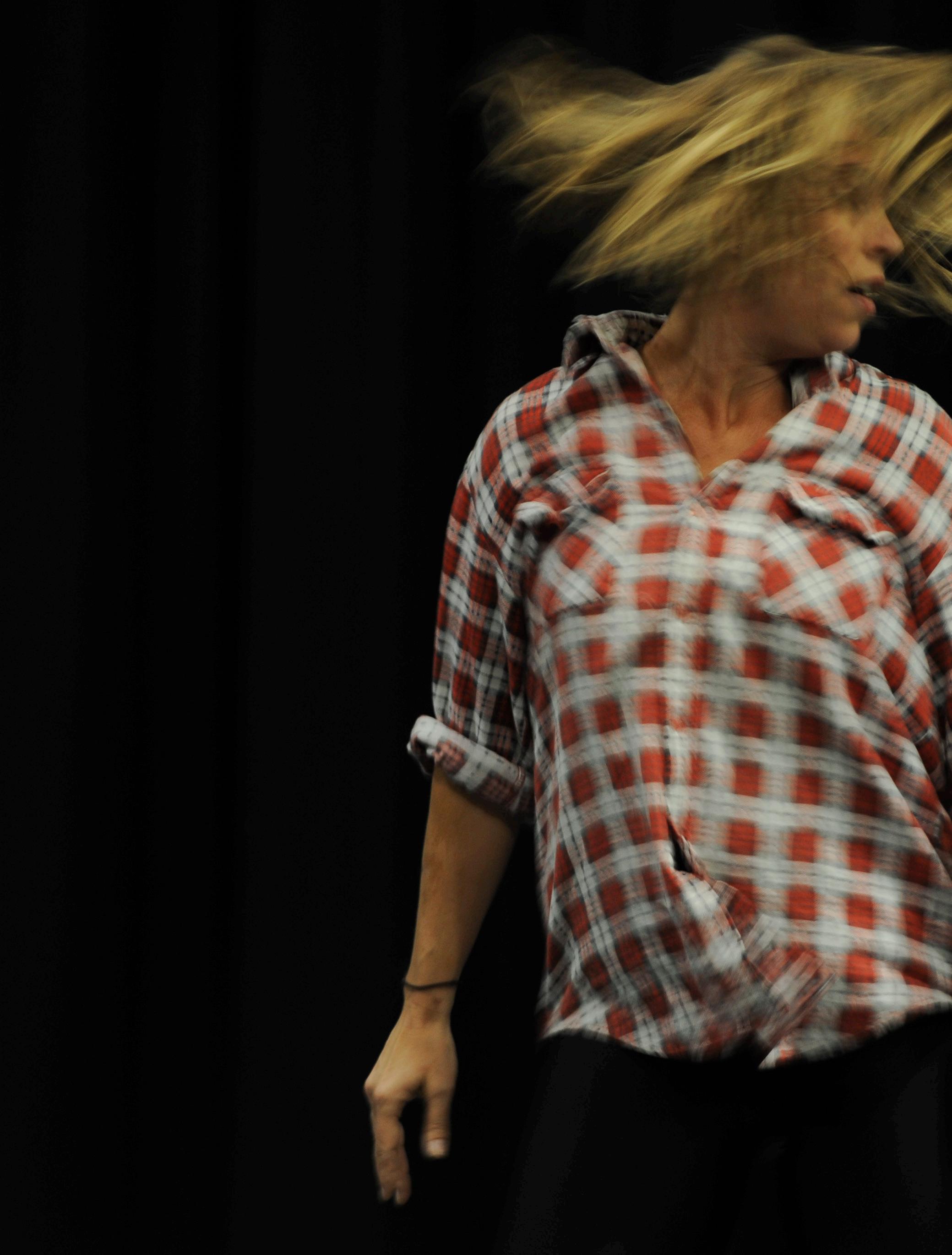
The Responsive Program opens up the Drill Hall to ideas and practice, conversations and processes initiated by artists. From funded Research Residencies to artist-led events, the program invites local, national and international artists to push forward their own work and that of the sector.
The Responsive Program emphasises the value of risk–taking for future choreographic development and seeks to give choreographers an opportunity to innovate their practices in an environment which promotes open discovery and experimentation.
The program encourages self–directed and collaborative proposals that reflect the particular interests and goals of participating artists.
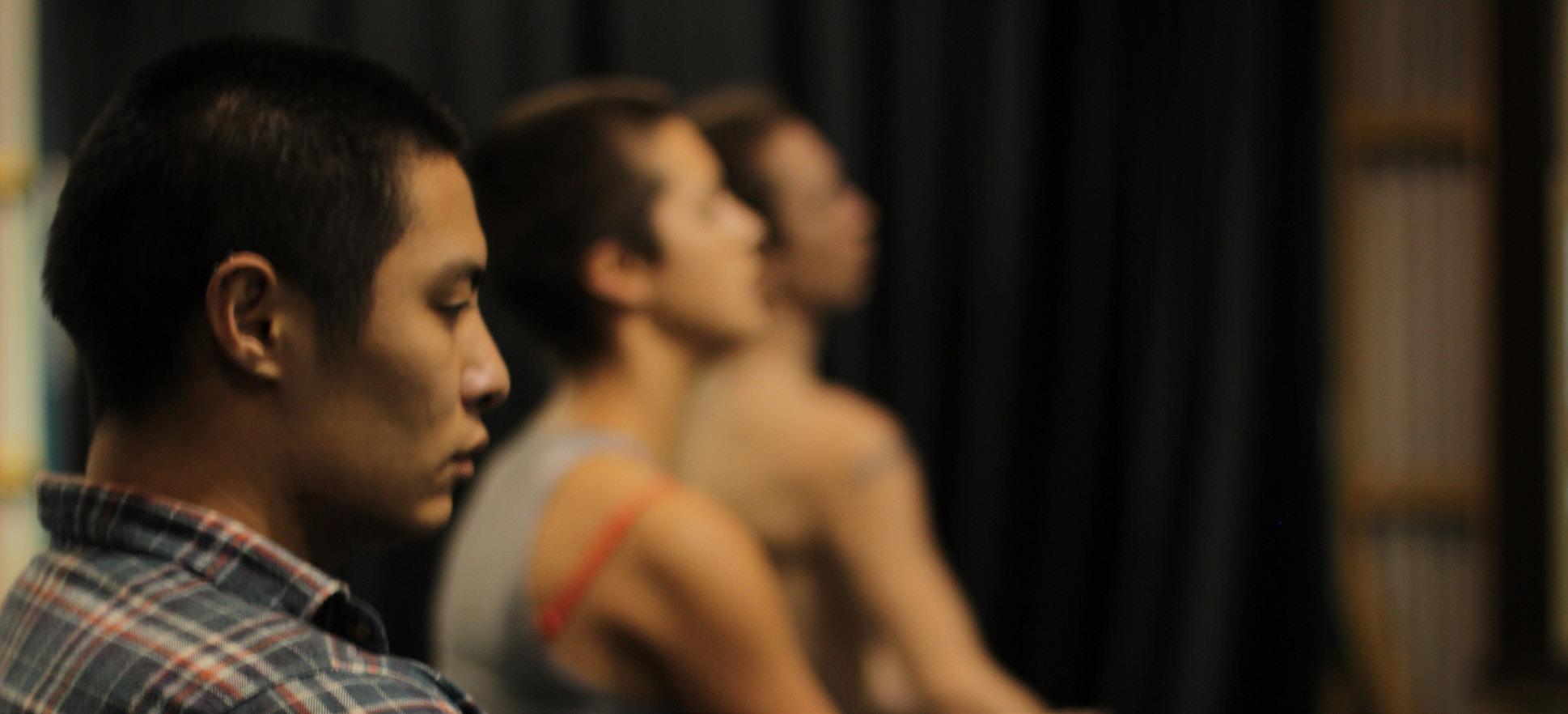
This competitive, peer-assessed funding program supported choreographers to undertake practice-based research in the choreographic field. The program, offered once each year, provides choreographers and their collaborators with substantial financial and in-kind support to conduct their research. It is run in partnership with the Creative Practice Lab, School of the Arts and Media, UNSW.
BROOKE STAMP
During her residency Brooke explored im/material bodily forces through improvisation and collaborative practices in sound, smell and material forms.
Responding to her interest in where dance and visual arts can intersect, Emma explored the place of dance around the interface with visual arts practice.
LIZ LEA
Liz worked on developing a broader pallet of movement and research enquiry, working with four other choreographers.
Rhiannon experimented with questions arising from her ongoing Bodied Assemblies practice.
RAGHAV HANDA
Raghav Handa investigated the use of speed/pace in his practice using the Kathak principle of dynamic shift.
CHOY KA FAI (SINGAPORE) spent his time investigating his new work Unbearable Darkness looking at the influence of the Butoh practice within contemporary performance.
IVEY WAWN thought about reproduction and representation as disguises for the choreographer (or dancer).
JOSHUA THOMSON & MATT CORNELL developed and then shared the language and thinking being built around their Being Blokes project in an effort to be more rigorous with both.
LIZZIE THOMSON spent time continuing her research into the relationship between dancing and
writing from different perspectives.
SIMO KELLOKUMPU (FINLAND) spent time in our Research Room continuing with his ongoing research on the relations, interconnectedness and reciprocity of choreography and context. In partnership with UNSW
Space Grants were made to independent choreographers from NSW some of these were opportunities for the artists to develop ideas previously proposed to Critical Path as a research project. Alongside these, space was made available to choreographers working in an open studio format that encouraged the cross-fertilization of ideas and skills, whilst simultaneously having their own project interests.
Amrita Hepi
Angela Goh
Anna Kuroda
Bonnie Cowan
Diane Busuttil
Erin Barney
Fiona Jopp
Florence Jiguet
Geraldine Balcazar
Ivey Wawn
Jahra Wassasal
Joshua Thomson a
Julie–Anne Long
Karen Kerkhoven
Kate Sherman
Katy Alexander
Kieran Mitchell
Kristen Packham
Laura Osweiler
Lucy Doherty
Lux Eterna
Matt Cornell
Miranda Whee
Omer BackleyAstrachan
Patricia Wood
Patrick ‘Lucky’
Lartey
Pixie EnrightHallett
Rakini Devi
Rhiannon Newton
Ryuichi Fujimura
Sharon BackleyAstrachan
Smadar Goshen
Sue Healey
Tanya Voges
RHIANNON NEWTON with BENJAMIN FORSTER:
Lo Studio (Bellinzona) & Tanzhaus (Zurich), Switzerland. Rhiannon and Benjamin undertook two residences in Switzerland exploring her work with extended performative processes of accumulation and erasure, the pluralised lineages within a single body and the radical nature of the dancing bodies to ‘become other’. Supported by Pro Helvetia, Arts NSW and Australia Council for the Arts.
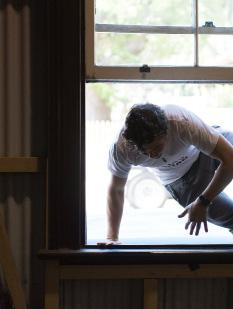
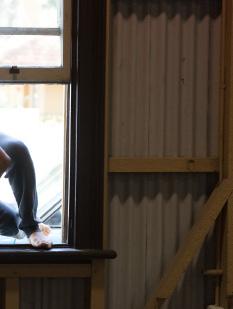
“I’m so grateful to have been able to work in the Critical Path space for the last two days. It was inspiring to be amongst other independent artists working creatively on their own projects
TANYA VOGES

The Facilitated Program offered professional development to experienced Australian choreographers including a public program, a series of workshops, laboratories, master classes and exchanges. Critical Path offers a participant fee where possible. It also provides opportunities for Australian dancers and choreographers, at different stages of their careers to support and learn from each other.
AA CREATIVE CAUSEWAY
Hosted in the Drill Hall, Accessible Art’s Creative Causeway meeting was held with guest presenter and facilitator Claire Bowditch, an Australian born and Glasgow based performance artist and choreographer.
RESIDENCY: CLAIRE CUNNINGHAM
Claire spent two weeks exploring her continuing project about walking and accessibility in big cities.
AUSDANCE NSW PARTNERSHIP
WORKSHOP: BEYOND THE TRAINING WITH CLAIRE CUNNINGHAM
This skills sharing and professional development workshop introduced participants to techniques from her own practice and when working collaboratively with other dancers with different bodies. Presented by Ausdance NSW and Critical Path.
SAMAG TALK: F ROM S COTLAND TO AUSTRALIA - C LAIRE C UNNINGHAM
This live conversation event, facilitated by Critical Path director Claire Hicks, was live-streamed by SAMAG.
RESIDENCY: LILACH LIVNE
As part of her three week research residency Lilach presented TRANSCENDING, for Peace an invitation to reshape our perception of the other. Audiences joined a temporary community with performers to dance, pray and strive for an abstract way of being outside of the violence of the image and the barriers and separations created by fear. Part of the 20th Biennale of Sydney
RESIDENCY: NICOLA CONIBERE
Over the course of three weeks, Nicola explored ideas, methodologies and collaborations of her current practice with local artists, subsequently presenting her work Assembly, a live gallery work that explored the shifts in relation between individual and collective bodies as part of
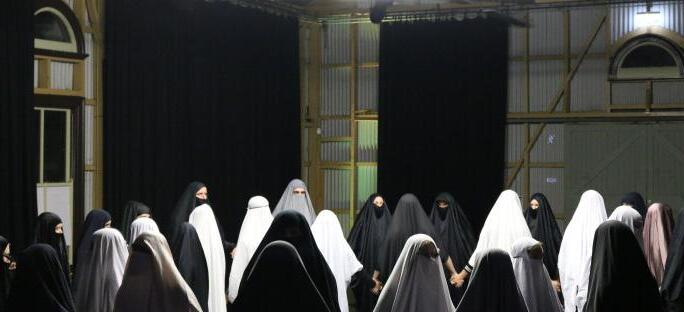
the 20th Biennale of Sydney.
AUSDANCE NSW PARTNERSHIP
WORKSHOP: BEYOND THE TRAINING WITH LIZ AGGISS
UK Choreographer Liz Aggiss presented her unique and distinct research, process and choreographic practice in this workshop which incorporated dance, live art, performance art. She invited participants to recover bodies from their libraries, dance the grotesque, reinvent expressionist works, brush up against Ausdruckstanz and write and deliver smart texts for the moving body.
WORKSHOP: NACERA BELAZA
French choreographer Nacera opened up her movement style of repeated gestures and slow stretching of time. Her practice focuses on an acute sense of the listening body. The four hour intensive brought participants into contact with her approach to, thinking and decision–making in her work. This was Nacera’s first and only workshop
in Australia to date. Supported by Dancehouse.
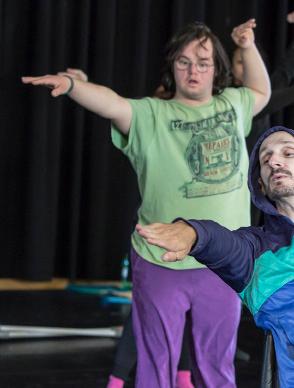
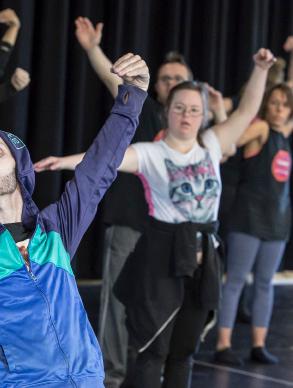
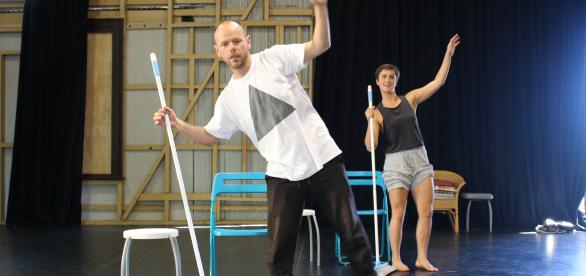
WORKSHOP: CONTEXTUAL CHOREOGRAPHY WITH SIMO KELLOKUMPU
The two day workshop aimed at sharing choreographic methodologies through discussion and experimentation with movement and its manifold definitions. Participants engaged with the movements that form the surrounding circumstances and choreographies that the human body is part of — movement, place and space and their various mentalities.
“Time and space are vital to critique and practice that functions outside of current thinking. It is necessary in the creation of new possibilities and futures.”
ANDREW HAINING
Parternship working is crucial to our program and to the reach and impact of our work. In 2016, along with existing established and re-invigorated partnerships, we were able to initiate new collaborations with local, national and international partners.
For the first time Critical Path partnered the Biennale of Sydney to undertake a series of research residencies, presentations and talks. The Biennale was led by Artistic Director Stephanie Rosenthal who has a strong track record in engaging with dance and choreographic practice within her work for galleries and exhibition.
Lilach’s work explores themes relating to gender, religion, body perception and the abstraction as a political agenda. Her practice is in constant research and experimentation, creating performances, lectures, public acts, meetings, praying books and video art – all with the aim to reach the “non-image”. Research artists: Alice Heyward (Australia), Andrew Haining (Australia), Lilach Livne (Israel), Moran Sivan (Israel), Shahmen Suku (Australia) and Tal Haring (Israel).
Nicola’s work engages choreographic processes to explore the potentials of how bodies relate. She often investigates notions of theatricality, public appearing and social choreography in her work. Participants: Adam Warburton, Tom Blake, Bonnie Cowan, Bonnie Curtis, Briarna Longville, Helene Markstein, Jayne Watt, Jessica Holman, Karen Fermin, Karen Kerkhoven, Laura Osweiler,
Taree Sansbury, Thomas E. S. Kelly and Veronica Barac.
Benoît Lachambre is one of the major artists/choreographers of his generation. He has created fifteen works since the foundation of his company Par B.L.eux, participated in more than twenty others productions and is the choreographer of twenty five commissioned works. Over three hours at the Drill Hall, Benoît’s research presentation of Lifeguard questioned the place of the artist, the passivity of the spectator and the finesse of experience.
Three conversations took place in relay across the Biennale, exploring the practitioners’ own practices alongside shared concerns and ideas.
— André Lepecki with Nicola Conibere — Nicola Conibere with Brooke Stamp and Agatha Gothe-Snape — Brooke Stamp with Lilach Livne
This biennial Australian choreographic award is dedicated to commissioning new work, promoting innovation in contemporary dance and providing significant support to the contemporary dance sector in Australia.
The Keir Choreographic Award’s Sydney public program included a series of thought provoking opportunities with international leaders in contemporary dance.
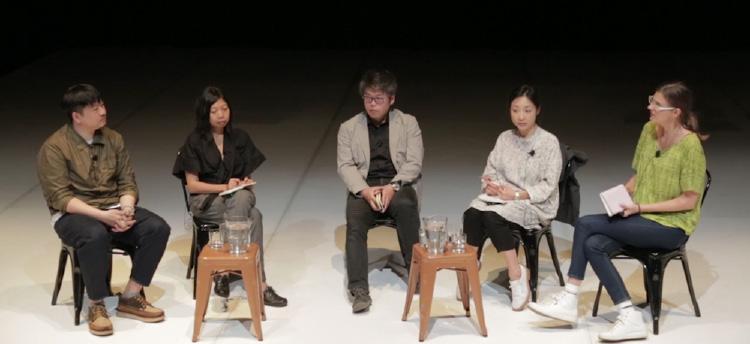
Critical Path hosted four practitioners from Asia who attended the semi finals in Melbourne (where they saw all eight commissioned works) and took part in a panel conversation in Sydney.
Dance practitioners explored the nature of contemporary choreography, the concerns of different nations, contexts and cultures and the geographies of
different approaches to dance. Hosted by the Director of Critical Path with Daisuke Muto, Helly Minarti, Choy Ka Fai and Kim Seong–Hee.
AFTERNOON TEA WITH SARAH MICHELSON
Twenty five Melbourne and Sydney artists from dance and visual arts backgrounds joined Sarah for an informal afternoon tea.
EXHIBITING DANCE
KCA Jury member Pierre Bal–Blanc
Director of the Contemporary Art Centre
Brétigny, in conversation with Stephanie Rosenthal, Artistic Director of the 20th Biennale of Sydney.
AUSDANCE NSW PARTNERSHIP WORKSHOPS: BEYOND THE TRAINING
Skills sharing and professional development led by; Claire Cunningham Liz Aggiss
PERFORMANCE SPACE PARTNERSHIP
RESEARCH RESIDENCY: JUSTIN SHOULDER
This project partnership forges a bridge between the research focus of Critical Path and the development and presentation work of Performance Space. In conjunction with mentor Victoria Hunt and composer Nick Wales, Justin continued his investigation into mythic avatars and becoming new figure Jax (evolving). Using the methodologies of Bodyweather, he explored finding the gestural language native to the figure
and the performance possibilities of articulating bodily transformation.
CHOREOGRAPHIC LAB PARTNERSHIP WORKSHOP: WRITING DANCING GROUP
The Writing Dancing is a group of dance writers and makers who have been meeting in Sydney since 2010 to explore approaches to writing towards, about, around and alongside dancing. Critical Path hosted the July meeting.
In partnership with Accessible Arts, this intensive choreographic laboratory held over six days, engaged leading dance practitioner Mark Brew in practicebased research with participating artists Allycia Staples, Annabel Saies, Charlie Smith, Chris Dyke, Elle Evangelista, Jianna Georgiou, Joshua Campton, Karen Veldhuizen, Kayah Guenther, Tara Coughlan, Lorcan Hopper, Matthew Massaria, Max McAuley, and Zakaria Ghomri.
The Catalyst Dance Residency is a national artist development program across two years supporting fourteen dance practitioners with and without disability who have demonstrated commitment to integrated dance practice. Program Director: Sarah-Vyne Vassallo
DANCEHOUSE PARTNERSHIP RESIDENCY: MATTHEW DAY
Matthew spent two weeks continuing research for new work Assemblage #1, part of Housemate 2016 Residency, which explored instinct, animality, ritual,
catastrophe, deformation and excess. Matthew’s movement research workshop (MATERIAL MOVEMENTS: STARTING IN THE MIDDLE) experimented with how everyday movements such as walking, sitting and standing may be deformed and turned towards dancing through attending to choreographic problems and scores.
PACT PARTNERSHIP: AFTERGLOW MINI FESTIVAL
Critical Path and PACT centre for emerging artists joined forces to present AFTERGLOW, a four-day festival featuring Sydney premieres of three productions from 2016 Next Wave Festival. The works by Angela Goh, Amrita Hepi & Jahra Wasasala and Thomas E. S. Kelly had all been supported in development by both Critical Path and PACT. The festival also included a free Public Talk with the choreographers in conversation with Critical Path director Claire Hicks to explore the process of developing ideas, researching movement and making new work.
PERFORMANCE SPACE PARTNERSHIP: LIVEWORKS FESTIVAL
A program which explored the ideas and processes behind the works of the artists performing at the Liveworks Festival of Experimental Arts. In partnership with Performance Space.
C ONVERSATIONS : DANCE AS PROTEST
Panel conversation with Kristina Chan, Liesel Zink, XiaoKe x Zihan. Chaired
by Claire Hicks.
MERGING FRONTIERS: PERFORMANCE IN THE ‘ASIAN CENTURY’
The panel of speakers consisted of Choy Ka Fai, Kee Hong Low (West Kowloon Cultural District), Anna Davis (MCA) and Curator Claire Hicks.
WORKSHOP: XIAOKE X ZIHAN ‘SOFTMACHINE’
This workshop provided a practical and theoretical introduction to the collaborative practice of XiaoKe x ZiHan (SoftMachine). Hailing from mainland China their work explores the body in its extremes, reflecting on the social and political context of a centrally planned economy. Working between disciplines and often in public space, XiaoKe and ZiHan explored their strategies for collaboratively devising socially engaged works. This was the first workshop ever held by XiaoKe x Zihan.
BLAKDANCE AND PERFORMING LINES PARTNERSHIP:
DANA WARANARA RESIDENCY: ERIC AVERY
As a follow up to the Dana Waranara convergence 2015, Eric Avery was selected from a shortlist of six Indigenous artists for a residency supported by creative producer Narelle Lewis, working on his extending movement vocabulary and considering choreographic decision making.
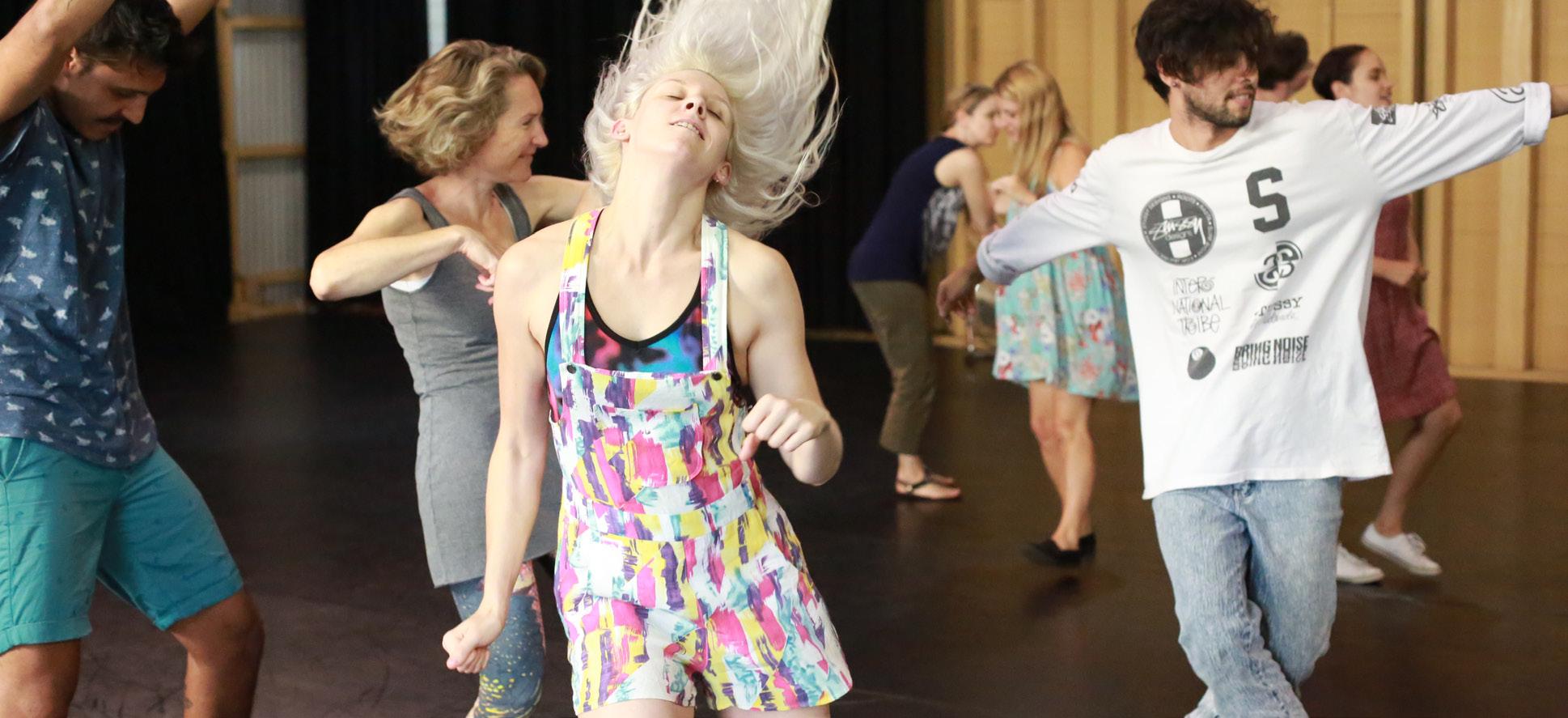
A four week development project taking place across 2016, Body As Material concentrates on solo practice and offered participants the opportunity to take some time to reflect on their own work, play, support the others through exchange, feedback and dialogue and start to think about making some work.
Artists: Alison Plevey and Ghenoa Gela (NSW), Joshua Pether (WA), WeiZen Ho (NSW). Facilitated by Julie Vulcan. This project is a partnership with Bathurst Memorial Entertainment Centre, supported by Bundanon Trust and FORM Dance Projects.
Curated by Critical Path Associate Artist
Samantha Chester, the Body of Ideas program looked at notions of the body and how it is reflected back in society, in art and in dance. The investigation was guided by four provocations that unpinned Chester’s travel as part of her Churchill Fellowship in 2014 and subsequent research from 2015.
—The Body as an Idea
—The Body as an act of Impossibility
—The Body as a system that Fails
—The Body as a Dilemma
Led by artists: Angela Goh, Frances Barbe, Lee Wilson and Tim Darbyshire. Participants: Amelia Ducker, Anthony Skuse, Diane Busuttil, Geraldine Balcazaar, Julia Cotton, Julie Anne Long, Kate Sherman, Leeke Griffith, Matt
Cornell, Rob McCredie, Ryuchi Fujimura, Shannon Ryan, Teresa Izzard and Tim Green.
Melbourne choreographer Antony Hamilton introduced participants to improvisational tools and games for groups, as a way to experience and observe patterns, difference and similarity. Discussed in the workshop was ‘the body as a system that fails’ in relation to physical and mental agency, perceptions of ‘exactness’, knowledge and practice, ageing and entropy, and the notions of free will and determinism.
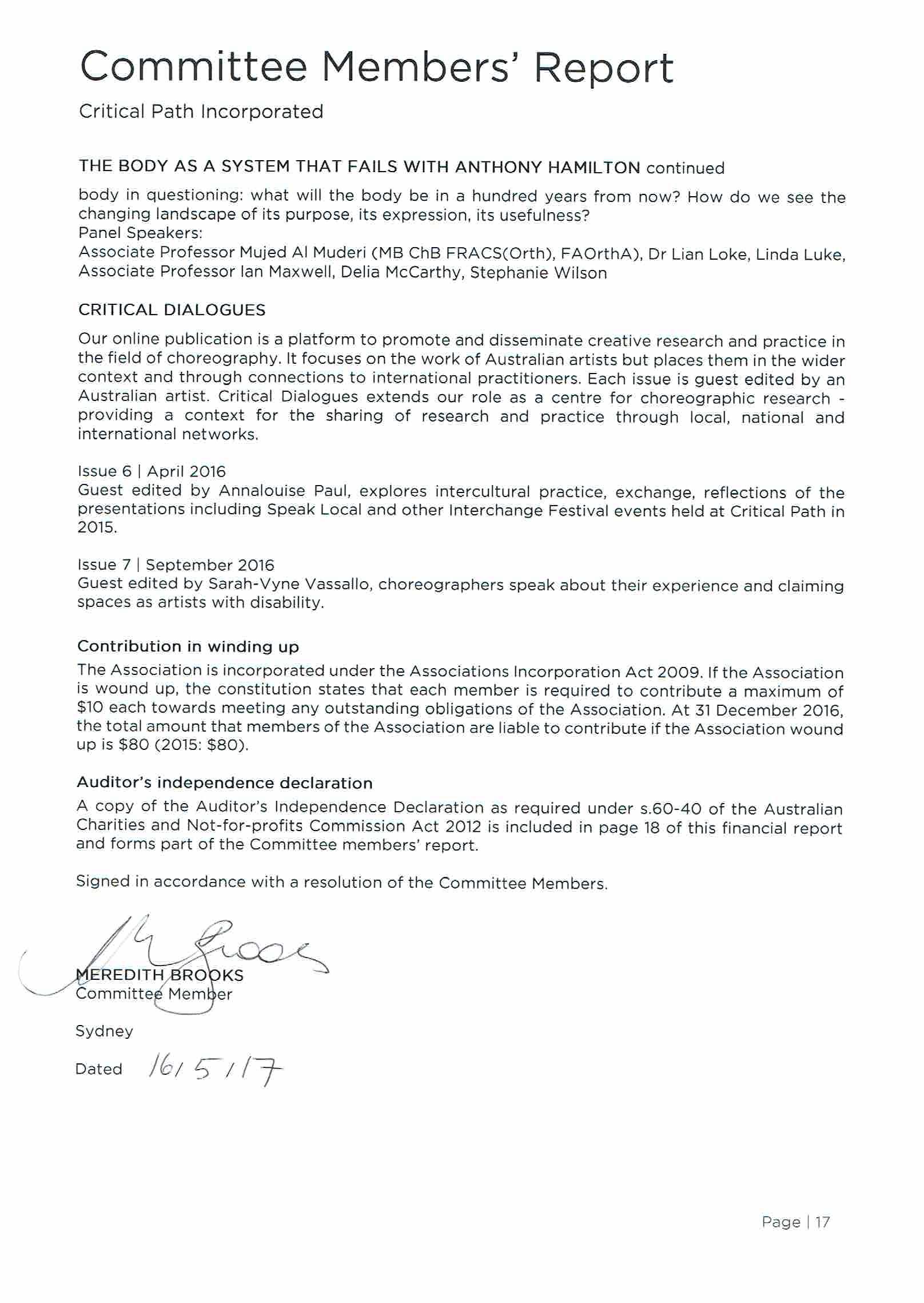
Sam Chester chaired a panel (from the arts, medicine and education) who explored the nature of the existing and potential forms of the body in questioning: what will the body be in a hundred years from now? How do we see the changing landscape of its purpose, its expression, its usefulness?
Panel Speakers:
Delia McCarthy
Associate Professor Ian Maxwell
Dr Lian Loke
Linda Luke
Associate Professor Mujed Al Muderi (MB ChB FRACS(Orth), FAOrthA)
Stephanie Wilson
Our online publication is a platform to promote and disseminate creative research and practice in the field of choreography. It focuses on the work of Australian artists and places them in the wider context and through connections to international practitioners. Each issue is guest edited by an Australian artist. Critical Dialogues extends our role as a centre for choreographic research — providing a context for the sharing of research and practice through local, national and international networks.
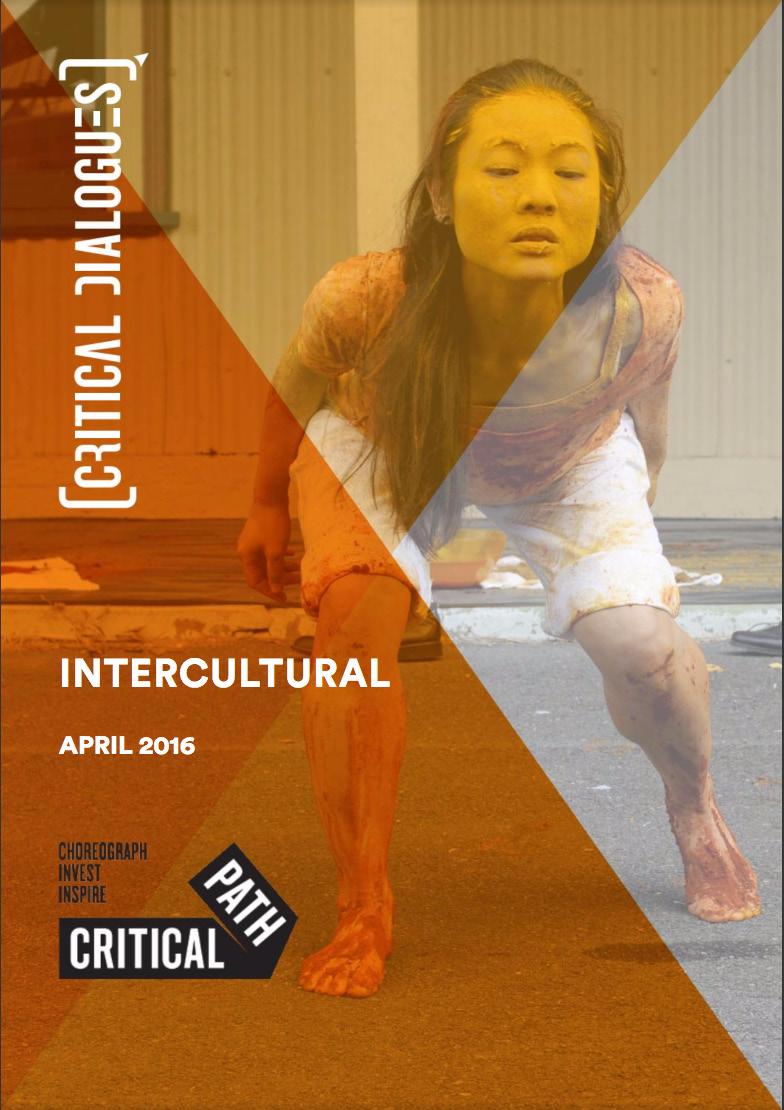
Guest edited by Annalouise Paul.
This edition explores intercultural practice, exchange, reflections of presentations including Speak Local and other Interchange Festival events held at Critical Path in 2015.
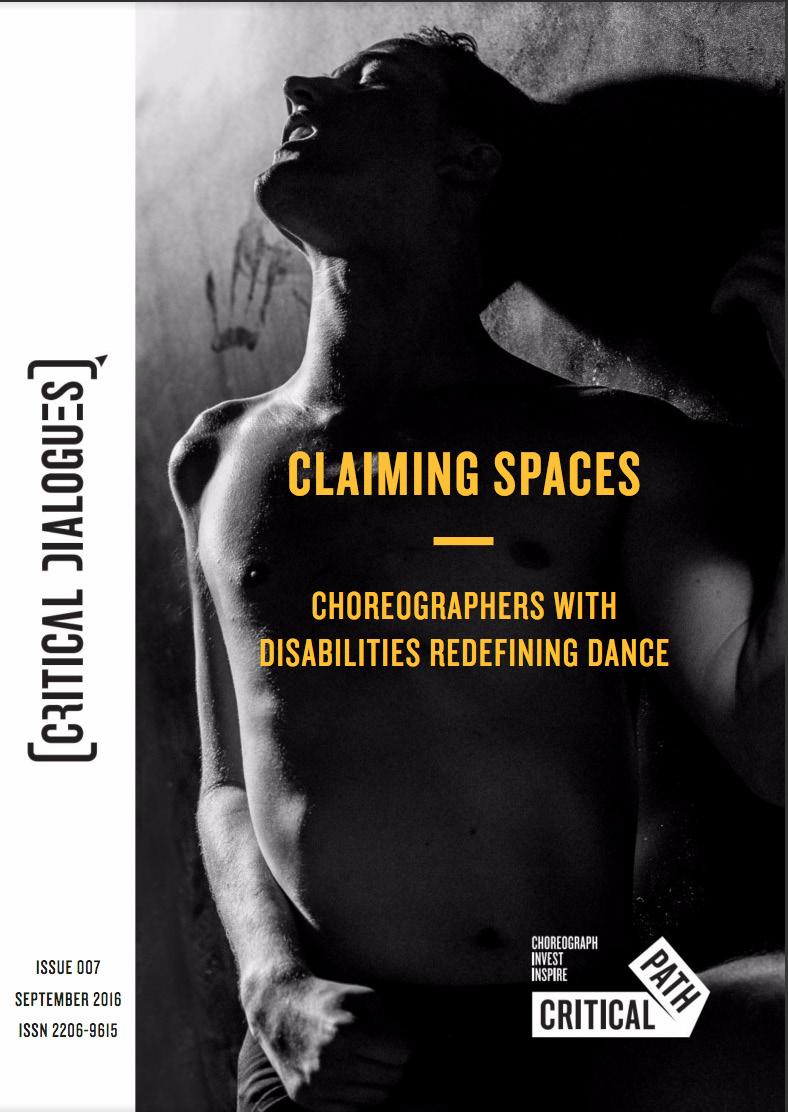
Guest edited by Sarah-Vyne Vassallo,
In this edition choreographers speak about their experience and claiming spaces as artists with disability.
Supported by Accessible Arts
Critical Path Incorporated
The Association is incorporated under the Associations Incorporation Act 2009. If the Association is wound up, the constitution states that each member is required to contribute a maximum of $10 towards meeting and outstanding obligations of the Company at 31 December 2016, the total amount that members of the Association are liable to contribute if the company is wound up is $80 (2015: $80).
Auditor’s Independence declaration
A copy of the Auditor’s Independence Declaration as required under s.60—40 of the Australian Charities and Not–for–profits Commission act 2012 is included in page X of this financial report and forms part of the Committee member’s report.
Signed in accordance with the resolution of the Committee Members.
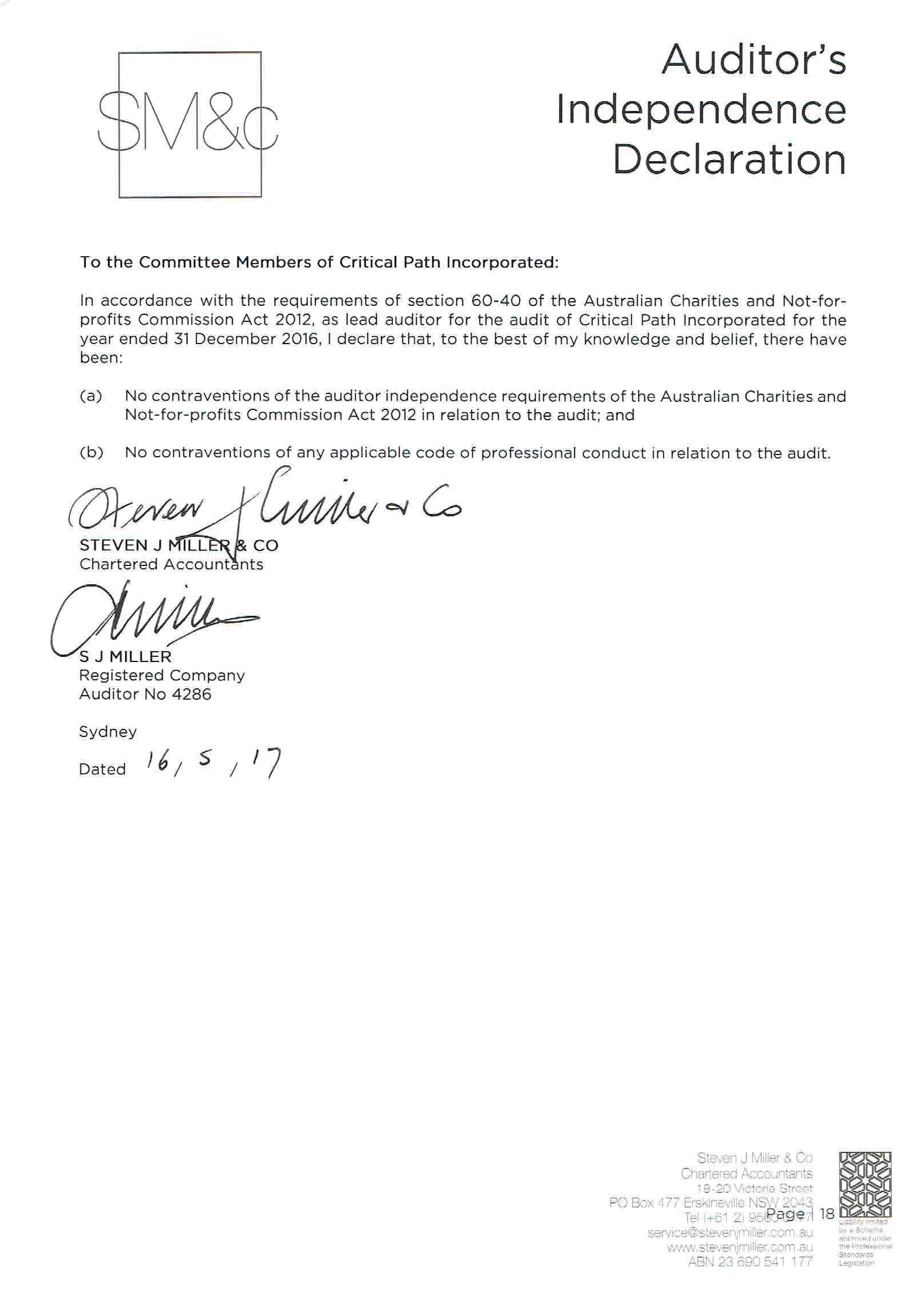
To the Committee Members of Critical Path Incorporated:
In accordance with the requirements of section 60—40 of the Australian Charities and Not-for-profits Commission Act 2012, as the lead auditor for the audit of Critical Path Incorporated for the year ended 31 December 2016, I declare that, to the best of my knowledge and belief, there have been:
(i) no contraventions of the auditor independence requirements of the Australian Charities and Not-for-profits Commission Act 2012 in relation to the audit; and
(ii) no contraventions of any applicable code of professional conduct in relation to the audit.
For the year that ended 31 December 2016 Critical Path Incorporated
For the year ended 31 December 2016
Critical Path Incorporated
For the year ended 31 December 2016
For the year ended 31 December 2016
Critical Path Incorporated
The financial report includes the financial statements and notes of Critical Path Incorporated.
These financial statements are general purpose financial statements that have been prepared in accordance with Australian Accounting Standards — Reduced Disclosure Requirements and the Australian Charities and Not-for-profits Commission Act 2012.
Critical Path Incorporated is a not-for-profit entity for the purposes of preparing the financial statements.
The financial statements for the year ended 31 December 2016 were approved and authorised for issuance by the Committee members.
2.1 New and revised standards that are effective for these financial statements
A number of new and revised standards became effective for the first time to annual periods beginning on or after 1 January 2016. Information on the more significant standard(s) is presented below.
AASB 2015-4 Amendments to Australian Accounting Standards — Financial Reporting Requirements for Australian Groups with a Foreign Parent.
AASB 2015-4 amends AASB 128 Investments in Associates and Joint Ventures to ensure that its reporting requirements on Australian groups with a foreign parent align with those currently available in AASB 10 Consolidated Financial Statements for such groups. AASB 128 will now only require the ultimate Australian entity to apply the equity method in accounting for interests in associates and joint ventures, if either
the entity or the group is a reporting entity, or both the entity and group are reporting entities.
AASB 2015-4 is applicable to annual reporting periods beginning on or after 1 July 2015.
The adoption of this amendment has not had a material impact on the Association.
The significant accounting policies that have been used in the preparation of these financial statements are summarised below.
The financial statements have been prepared using the measurement bases specified by Australian Accounting Standards for each type of asset, liability, income and expense. The measurement bases are more fully described in the accounting policies below.
Revenue comprises revenue from the sale of goods, services income, government grants, fundraising activities and client contributions. Revenue from major activities and services is shown in Note 4.
Revenue is measured by reference to the fair value of consideration received or receivable by the Association for goods supplied and services provided, excluding sales taxes, rebates, and trade discounts.
Revenue is recognised when the amount of revenue can be measured reliably, collection is probable, the costs incurred or to be incurred can be measured reliably, and when the criteria for each of the Association’s different activities have been met. Details of the activity-specific recognition criteria are described below.
A number of the Association’s programs are supported by grants received from Federal, State and Local governments. If conditions are attached to a grant which must be satisfied before the Association is eligible to receive the contribution, recognition of the grant as revenue is deferred until those conditions are satisfied.
Where a grant is received on the condition that specified services are delivered, to the grantor, this is considered a reciprocal transaction. Revenue is recognised as services are performed and at year–end until the service is delivered.
Revenue from a non-reciprocal grant that is not subject to conditions is recognised when the Association obtains control of the funds, economic benefits are probable and the amount can be measured reliably. Where a grant may be required to be repaid if certain conditions are not satisfied, a liability is recognised at year end to the extent that conditions remain unsatisfied.
Where the Association receives a non-reciprocal contribution of an asset from a government or other party for no or nominal consideration, the asset is recognised at fair value and a corresponding amount of revenue is recognised.
Donations collected, including cash and goods for resale, are recognised as revenue when the Association gains control, economic benefits are probable and the amount of the donation can be measured reliably.
Bequests are recognised when the legacy is received. Revenue from legacies comprising bequests of shares or other property are recognised at fair value, being the market value of the shares or property at the date the Association becomes legally entitled to the shares or property.
Interest income is recognised on an accrual basis using the effective interest method.
Operating expenses are recognised in surplus or deficit upon utilisation of the service or at the date of their origin.
Recognition of other intangible assets:
Website construction costs as well as acquired computer software licences are capitalised on the basis of the costs incurred to acquire and install the specific website and software.
All intangible assets are accounted for using the cost model whereby capitalised costs are amortised on a straight-line basis over their estimated useful lives, as these assets are considered finite. Residual values and useful lives are reviewed at each reporting date. In addition, they are subject to impairment testing as described in Note 3.14. The following useful lives are applied:
• Database development: 25%
• Software: 25% - 33%
• Website: 33%
Subsequent expenditures on the maintenance of computer software, brand names and website are expensed as incurred.
When an intangible asset is disposed of, the gain or loss on disposal is determined as the difference between the proceeds and the carrying amount of the asset, and is recognised in surplus or deficit within other income or other expenses.
Leasehold improvements, plant and other equipment
Leasehold improvements, plant and other equipment (comprising office furniture and equipment) are initially recognised at acquisition cost or manufacturing cost, including any costs directly attributable to bringing the assets to the location and condition necessary for it to be capable of operating in the manner intended by the Association’ management.
Leasehold improvements, plant and other equipment are subsequently measured using the cost model, cost less subsequent depreciation and impairment losses.
Depreciation is recognised on a straight-line basis to write down the cost less estimated residual value of leasehold improvements, plant and other equipment. The following useful lives are applied:
• Leasehold improvement: 20% - 25%
• Plant and equipment: 15% - 33%
In the case of leasehold property, expected useful lives are determined by reference to comparable owned assets or over the term of the lease, if shorter.
Material residual value estimates and estimates of useful life are updated as required, but at least annually.
Gains or losses arising on the disposal of property, plant and equipment are determined as the difference between the disposal proceeds and the carrying amount of the assets and are recognised in surplus or deficit within other income or other expenses.
Where the Association is a lessee, payments on operating lease agreements are recognised as an expense on a straight-line basis over the lease term. Associated costs, such as maintenance and insurance, are expensed as incurred.
No provision for income tax has been raised as the association is exempt from income tax under Div 50 of the Income Tax Assessment Act 1997.
Cash and cash equivalents comprise cash on hand and demand deposits, together with other short-term, highly liquid investments that are readily convertible into known amounts of cash and which are subject to an insignificant risk of changes in value.
Short-term employee benefits are benefits, other than termination benefits, that are expected to be settled wholly within twelve (12) months after the end of the period in which the employees render the related service. Examples of such benefits include wages and salaries, non-monetary benefits and accumulating sick leave. Short-term employee benefits are measured at the undiscounted amounts expected to be paid when the liabilities are settled.
The association’s liabilities for long service leave are included in other long-term benefits as they are not expected to be settled wholly within twelve (12) months after the end of the period in which the employees render the related service. They are measured at the present value of the expected future payments to be made to employees. The expected future payments incorporate anticipated future wage
and salary levels, experience of employee departures and periods of service, and are discounted at rates determined by reference to market yields at the end of the reporting period on high quality corporate bonds that have maturity dates that approximate the timing of the estimated future cash outflows. Any re-measurements arising from experience adjustments and changes in assumptions are recognised in profit or loss in the periods in which the changes occur.
The association presents employee benefit obligations as current liabilities in the statement of financial position if the association does not have an unconditional right to defer settlement for at least twelve (12) months after the reporting period, irrespective of when the actual settlement is expected to take place.
The association provides post-employment benefits through defined contribution plans.
The association pays fixed contributions into independent entities in relation to several state plans and insurance for individual employees. The association has no legal or constructive obligations to pay contributions in addition to its fixed contributions, which are recognised as an expense in the period that relevant employee services are received.
Provisions are measured at the estimated expenditure required to settle the present obligation, based on the most reliable evidence available at the reporting date, including the risks and uncertainties associated with the present obligation. Where there are a number of similar obligations, the likelihood that an outflow will be required in settlement is determined by considering the class of obligations as a whole. Provisions are discounted to their present values, where the time value of money is material.
Any reimbursement that the association can be virtually certain to collect from a third party with respect to the obligation is recognised as a separate asset. However, this asset may not exceed the amount of the related provision.
No liability is recognised if an outflow of economic resources as a result of present obligation is not probable. Such situations are disclosed as contingent liabilities, unless the outflow of resources is remote in which case no liability is recognised.
The liability for deferred income is the unutilised amounts of grants received on the condition that specified services are delivered or conditions are fulfilled. The services are usually provided or the conditions usually fulfilled within twelve (12) months of receipt of the grant. Where the amount received is in respect of services to be provided over a period that exceeds twelve (12) months after the reporting date or the conditions will only be satisfied more than twelve (12) months after the reporting date, the liability is discounted and presented as non-current.
Revenues, expenses and assets are recognised net of the amount of GST, except where the amount of GST incurred is not recoverable from the Australian Taxation Office. In these circumstances the GST is recognised as part of the cost of acquisition of the asset or as part of an item of the expense. Receivables and payables in the statement of financial position are shown inclusive of GST.
Cash flows are presented in the statement of cash flows on a gross basis, except for the GST components of investing and financing activities, which are disclosed as operating cash flows.
The association is dependent upon the ongoing receipt of Federal and State Government grants and community and corporate donations to ensure the ongoing continuance of its programs and fundraising. At the date of this report Management has no reason to believe that this financial support will not continue.
When preparing the financial statements, management undertakes a number of judgements, estimates and assumptions about the recognition and measurement of assets, liabilities, income and expenses.
Information about estimates and assumptions that have the most significant effect on recognition and measurement of assets, liabilities, income and expenses is provided below. Actual results may be substantially different.
In assessing impairment, management estimates the recoverable amount of each asset or cash-generating unit based on expected future cash flows and uses an interest rate to discount them. Estimation uncertainty relates to assumptions about future operating results and the determination of a suitable discount rate.
Management reviews its estimate of the useful lives of depreciable assets at each reporting date, based on the expected utility of the assets. Uncertainties in these estimates relate to technical obsolescence that may change the utility of certain assets.
The liability for long service leave is recognised and measured at the present value of the estimated cash flows to be made in respect of all employees at the reporting date. In determining the present value of the liability, estimates of attrition rates and pay increases through promotion and inflation have been taken into account.
The Association’s revenue may be analyased as follows for each major product and service category
4.2 Grants received in advance — 1 January Note
4.3 Grants received during the year
Note
4.4 Grants received in advance — 31 December
4.5 Unexpended grants — 31 December Note
and cash equivalents consist the following:
Cash at the end of the financial year as shown in the statement of cash flows is reconciled in the statement of financial position as follows:
Trade and other receivables consist the
Other assets consist the following:
of the company’s plant and equipment and their carrying amount are as follows:
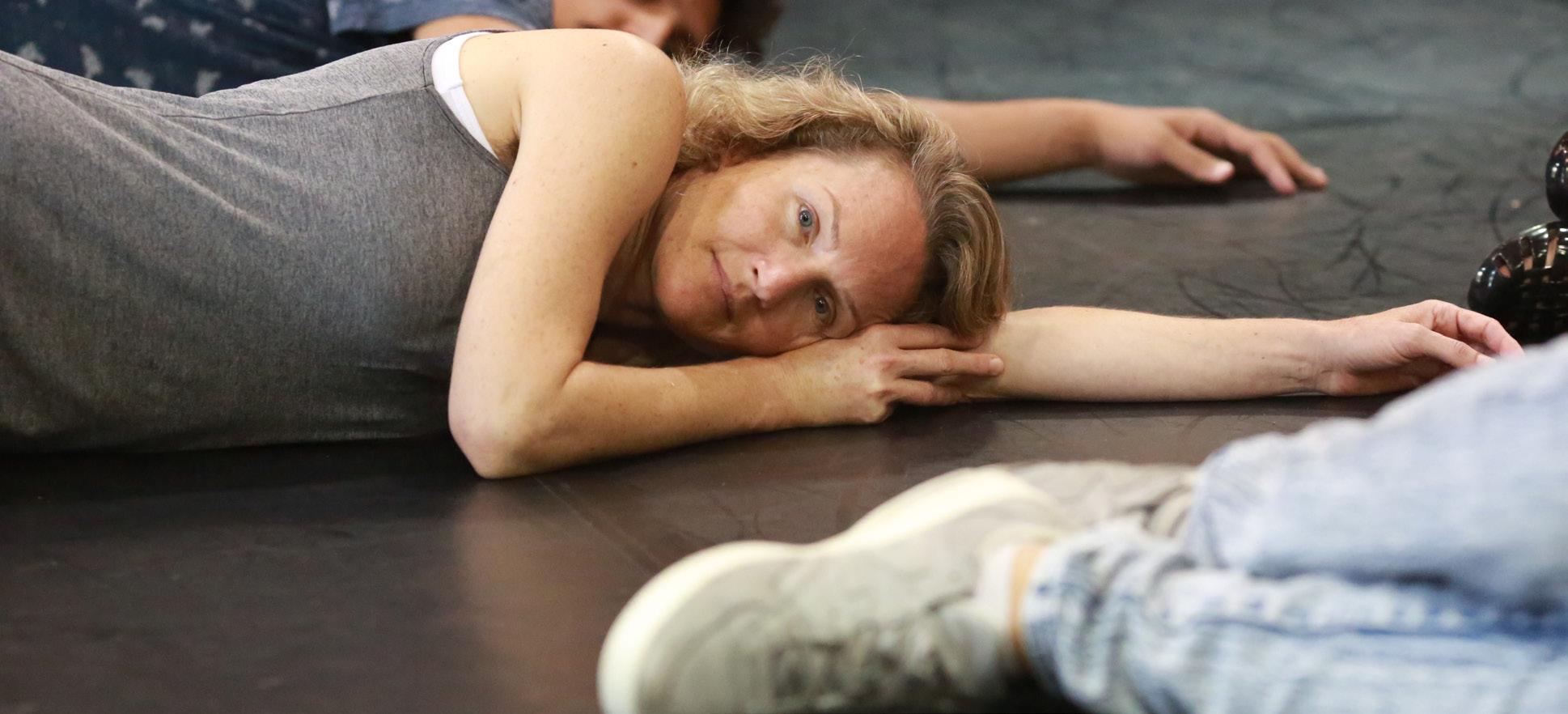
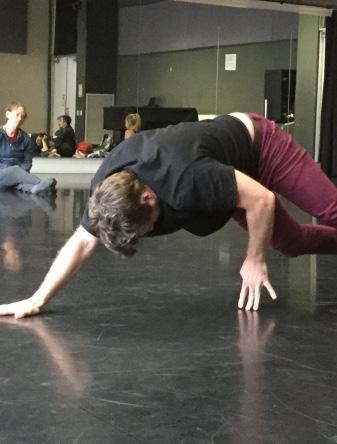
“Connection to breath as embodiement — not image. I’m always searching for more authenticity in my work, more embodiement. This has been wonderful.
LUX ETERNA
of the company’s intangible assets and their carrying amounts are as follows:
Trade and other payables recognised consisted of the following:
11.1 Employee benefits expense
Expenses
for employee benefits are analysed below:
11.2 Employee provisions
The liabilities recognised for employee benefits consist of the following amounts:
Grant
can be summarised as follows:
Other liabilities can be summarised as follows:
Operating leases as lessee
The Group’s future minimum operating lease payments are as follows:
The association’s related parties include its key management personnel and related entities as described below.
Unless otherwise stated, none of the transactions incorporate special terms and conditions and no guarantees were given or received. Outstanding balances are usually settled in cash.
15.1 Transactions with related entities
The Board paid $450 in total to several related parties of the Committee members of the Association for services provided during the ordinary course of business.
15.2 Transactions with key management personnel
Key management of the Association are the Executive Members of Critical Path Incorporated’s Committee and members of the Executive Council. Key management personnel remuneration includes the following expenses:
There are no contingent liabilities that have been incurred by the Association in relation to 2016 or 2015.
No adjusting or significant non-adjusting events have occurred between the reporting date and the date of authorisation.
The association is incorporated under the Associations Incorporation Act 2009. If the association is wound up, the constitution states that each member is required to contribute a maximum $10 each towards meeting any outstanding obligations of the association. At 31 December 2016, the total amount that members of the association are liable to contribute if the association wound up is $80 (2015: $80).
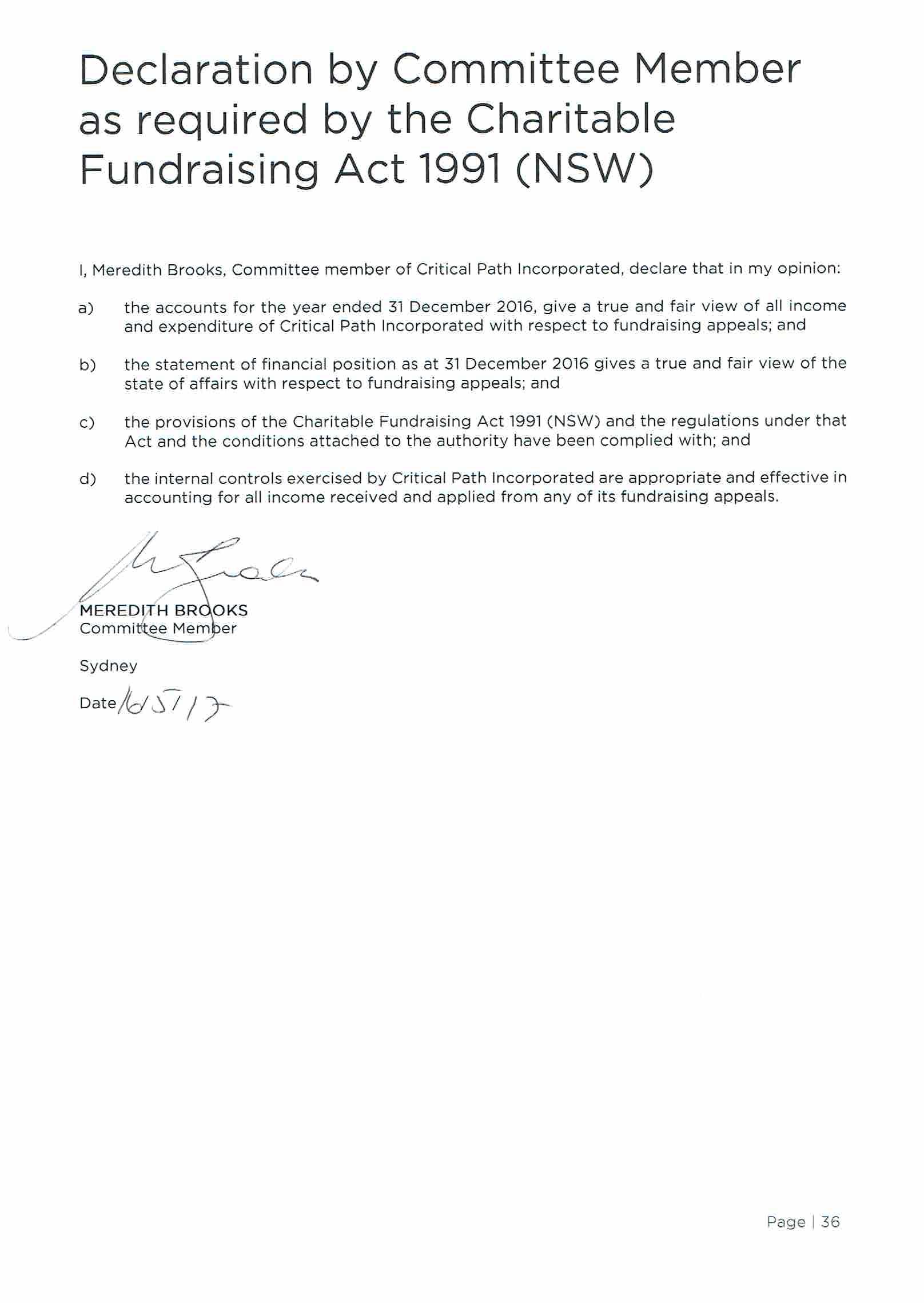
The association holds an authority to fundraise under the Charitable Fundraising Act, 1991 (NSW) and conducts fundraising appeals throughout the year. Additional information and declarations required to be furnished under the Act are as follows:
All funds raised from fundraising activities, net of direct costs, were applied to the association’s normal operations. The association did not conduct any appeals in which traders were engaged.
“Critical Path provides opportunities for all bodies to experience choreography and movement.”
GERALDINE BALCAZAR
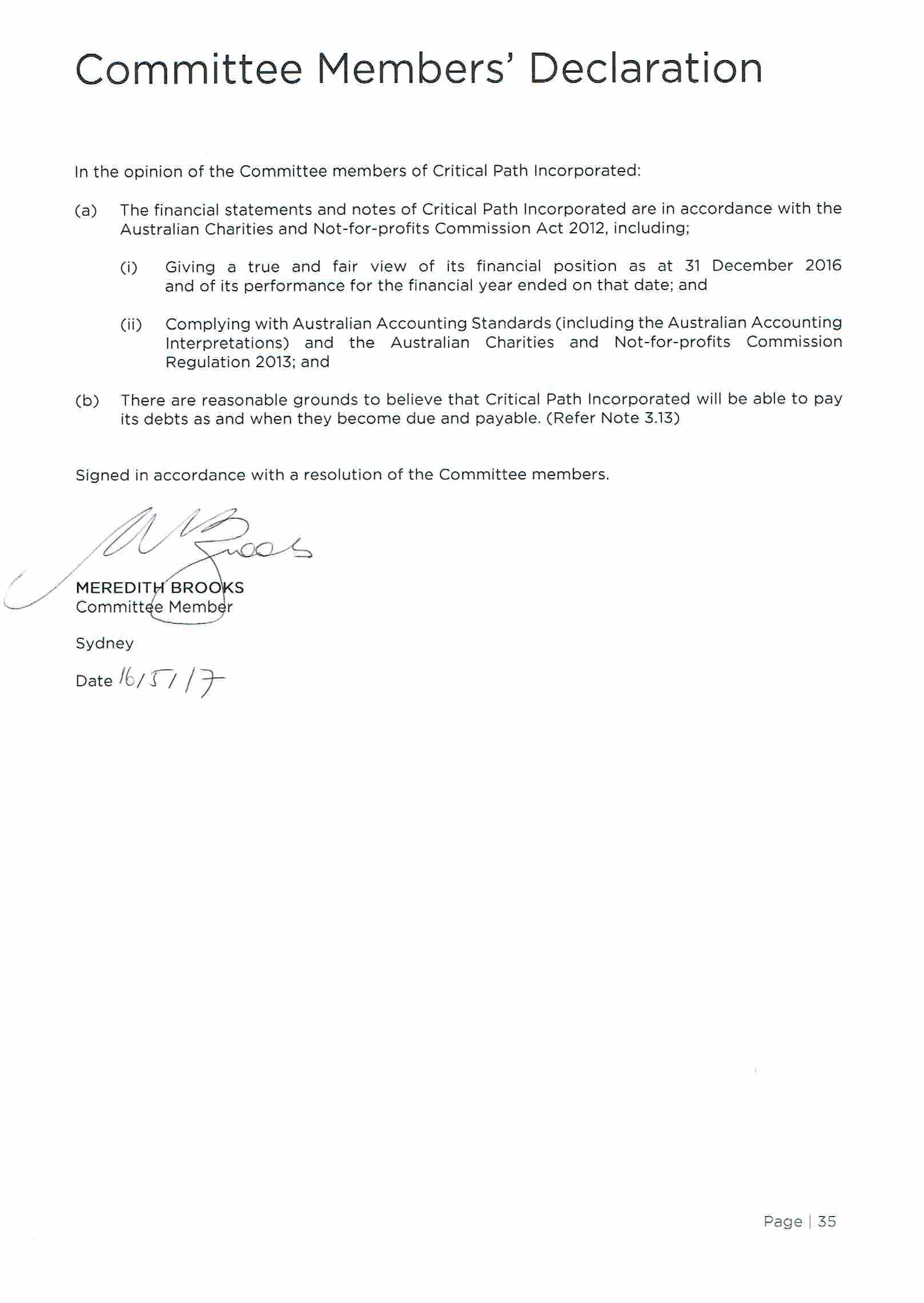
In the opinion of the Committee members of Critical Path Incorporated:
I have audited the financial report of Critical Path Incorporated, which comprises the statement of financial position as at 31 December 2016, the statement of surplus or deficit and other comprehensive income, statement of changes in equity and statement of cash flows for the year then ended, and notes to the financial statements, including a summary of significant accounting policies, and the Committee members’ declaration.
In my opinion the financial report of Critical Path Incorporated has been prepared in accordance with Division 60 of the Australian Charities and Not-for-profits Commission Act 2012, including:
(a) Giving a true and fair view of the association’s financial position as at 1 December 2016 and of its financial performance and cash flows for the year then ended; and
(b) Complying with Australian Accounting Standards and Division 60 of the Australian Charities and Not-for-profits Commission Regulation 2013.
I conducted my audit in accordance with Australian Auditing Standards. My responsibilities under those standards are further described in the Auditor’s Responsibilities for the Audit of the Financial Report section of my report. I am
independent of the registered entity in accordance with the auditor independence requirements of the Australian Charities and Not-for-profits Commission Act 2012 (ACNC Act) and the ethical requirements of the Accounting Professional and Ethical Standards Board’s APES 110 Code of Ethics for Professional Accountants (the Code) that are relevant to my audit of the financial report in Australia. I have also fulfilled my other ethical responsibilities in accordance with the Code.
I believe that the audit evidence I have obtained is sufficient and appropriate to provide a basis for my opinion.
Those charged with governance are responsible for the other information. The other information comprises the information included in the registered entity’s annual report for the year ended 31 December 2016, but does not include the financial report and my auditor’s report.
My opinion on the financial report does not cover the other information and accordingly I do not express any form of assurance conclusion.
In connection with my audit of the financial report, my responsibility is to read the other information and, in doing so, consider whether the other information is materially inconsistent with the financial report or my knowledge obtained in the audit or otherwise appears to be materially misstated.
If, based on the work I have performed, I conclude that there is a material misstatement of this other information, I am required to report that fact. I have nothing to report in this regard.
The Committee members of the registered entity are responsible for the preparation and fair presentation of the financial report in accordance with Australian Accounting Standards and the ACNC Act, and for such internal control as the Committee members determine is necessary to enable the preparation of the financial report that is free from material misstatement, whether due to fraud or error.
In preparing the financial report, committee members are responsible for assessing the registered entity’s ability to continue as a going concern, disclosing, as applicable, matters related to going concern and using the going concern basis of accounting unless the committee members either intends to liquidate the registered entity or to
cease operations, or has no realistic alternative but to do so.
Those charged with governance are responsible for overseeing the registered entity’s financial reporting process.
My objectives are to obtain reasonable assurance about whether the financial report as a whole is free from material misstatement, whether due to fraud or error, and to issue an auditor’s report that includes my opinion. Reasonable assurance is a high level of assurance, but is not a guarantee that an audit conducted in accordance with Australian Auditing Standards will always detect a material misstatement when it exists. Misstatements can arise from fraud or error and are considered material if, individually or in the aggregate, they could reasonably be expected to influence the economic decisions of users taken on the basis of the financial report.
As part of an audit in accordance with the Australian Auditing Standards, I exercise professional judgement and maintain professional scepticism throughout the audit. I also:
• Identify and assess the risks of material misstatement of the financial report, whether due to fraud or error, design and perform audit procedures responsive to those risks, and obtain audit evidence that is sufficient and appropriate to provide a basis for my opinion. The risk of not detecting a material misstatement resulting from fraud is higher than for one resulting from error, as fraud may involve collusion, forgery, intentional omissions, misrepresentations, or the override of internal control.
• Obtain an understanding of internal control relevant to the audit in order to design audit procedures that are appropriate in the circumstances, but not for the purpose of expressing an opinion on the effectiveness of the registered entity’s internal control.
•Evaluate the appropriateness of accounting policies used and the reasonableness of accounting estimates and related disclosures made by committee members.
• Conclude on the appropriateness of the committee members’ use of the going concern basis of accounting and, based on the audit evidence obtained, whether a material uncertainty exists related to events or conditions that may cast significant doubt on the registered entity’s
ability to continue as a going concern. If I conclude that a material uncertainty exists, I am required to draw attention in my auditor’s report to the related disclosures in the financial report or, if such disclosures are inadequate, to modify our opinion. My conclusions are based on the audit evidence obtained up to the date of our auditor’s report. However, future events or conditions may cause the registered entity to cease to continue as a going concern
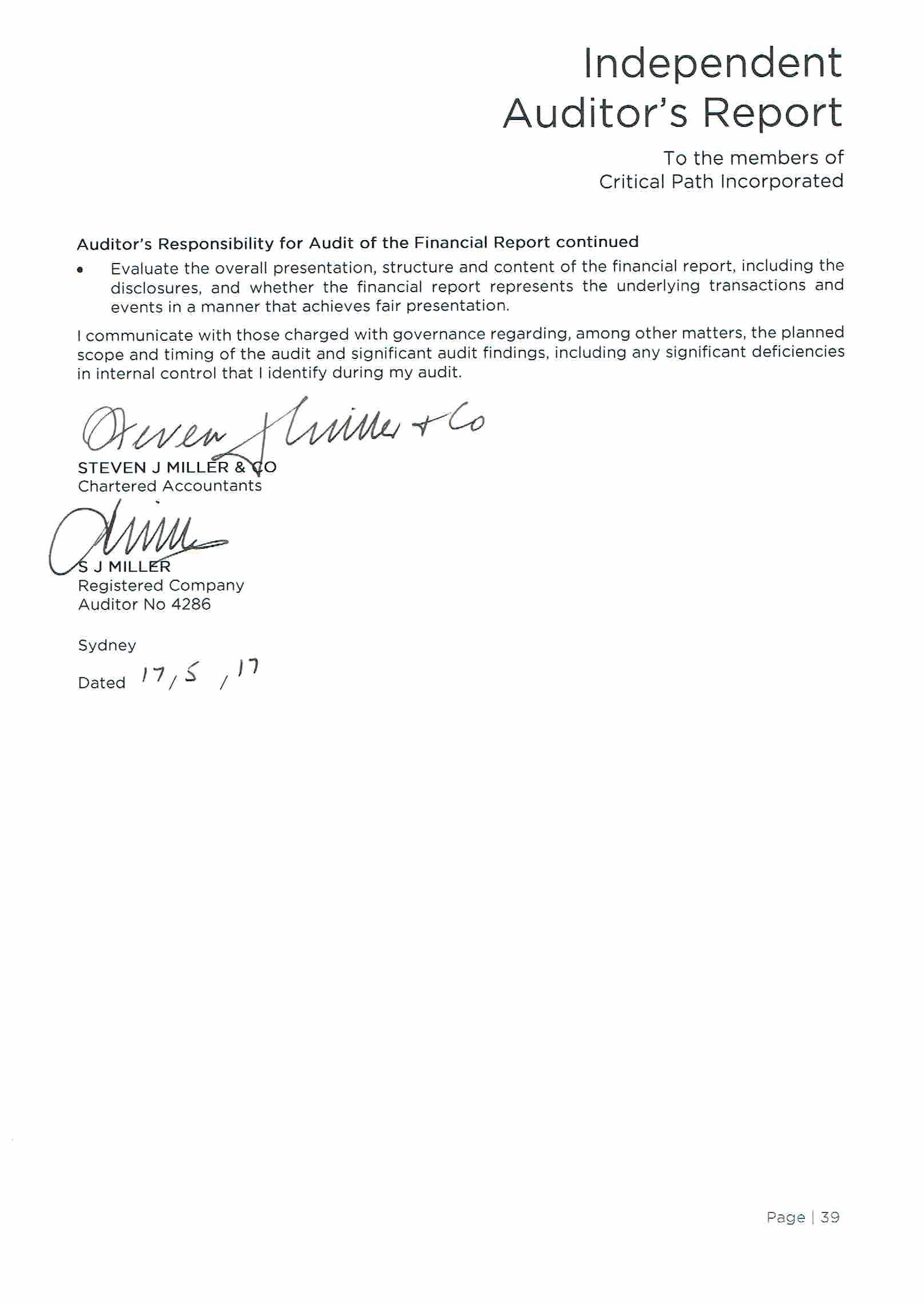
• Evaluate the overall presentation, structure and content of the financial report, including the disclosures, and whether the financial report represents the underlying transactions and events in a manner that achieves fair presentation.
I communicate with those charged with governance regarding, among other matters,
Critical Path Incorporated
For the year ended 31 December 2016
Critical Path Incorporated
SCHEDULE 1 — GENERAL OPERATIONS
For the year ended 31 December 2016 Critical Path Incorporated
SCHEDULE 2 — GENERAL OPERATIONS