
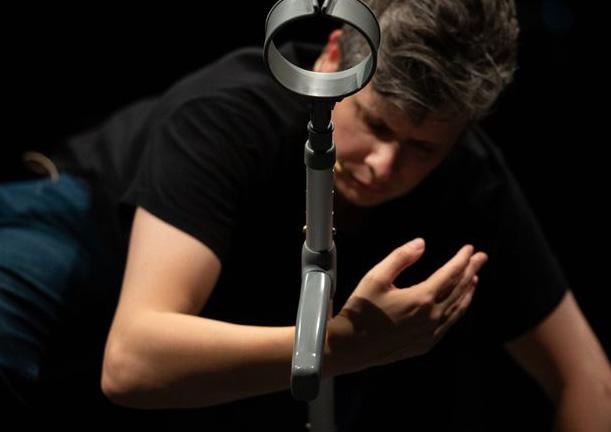
On Crip Technique, Knowledge and Expertise
Bodies of Knowledge: Choreographies of Care
A gathering as part of Claire Cunningham’s Einstein Strategic Professorship at HZT Berlin
Gathering Guidelines
About This Workbook and the Next Few Days
Welcome
Claire Cunningham, Einstein Professor of Choreography, Dance & Disability Arts, HZT
Our Intention and Approach
Luke Pell, Research Associate
The Space/s We’ve Created
Bethany Wells, Designer
Artworks and Opportunities
Who You Might Meet at this Gathering
Biographies
In order of presenting artist / researcher appearance
Credits and Thanks Daily Schedule In table format
Gathering Guidelines Gathering Guidelines
Hygiene Recommendations - to ensure this gathering is as safe as possible for everyone, we ask you follow these hygiene recommendations:
Covid Testing - everyone attending should carry out a Covid19 test before joining the gathering. The test should be up to date. Please carry out a self-test every day you intend to be present. If you have a positive test result, or if you have symptoms of a respiratory illness (e.g. a sore throat / cough) or fever, please do not attend.
Hand Hygiene - hand sanitiser will be provided throughout the gathering space. Please use regularly.
Masks - other than when eating/ drinking, we recommend attendees wear FFP2/medical masks when possible. Masks will be provided at the Access Desk on Level 01 and in the other spaces. For each artists’ session and other conversation and exchange formats, masks will be removed to allow for lip-reading.
Access Support - our Access Support Team will be present throughout the event. They will have yellow lanyards and their desk is in the lobby as you arrive on Level 01.
Live Audio Description - will be provided for most sessions. Headsets and further information are available from the Access Support Team.
Assistance Dogs - may be present at the event. If this causes you concern or discomfort, let us know. We are happy to try to find a solution with you.
Captioning - is provided by Panthea in German and English throughout. Captions will appear on a screen in the far right corner of the main space.
DGS (German sign language)is provided by Oya Ataman, Mille Skovdal Jepsen and Britta Durczok.
An Open Door Policy - is in place for most sessions. We hope this gathering can be somewhat informal, soft and spacious. In most sessions, you will be able to come and go as you need in relation to your own levels of energy and stimulation. We will make clear if this is not the case.
‘No Photo’ Stickers - are available at the Access Desk on Level 01. These indicate that you do not wish to be photographed. We will not print or share photos of anyone wearing these stickers.
The Main Gathering Space - is where all the sessions from presenting artists will happen. Please make yourselves comfortable, and come and go as you need. Level 01.
Breaks - Most propositions are no more than 30 minutes followed by a pause and dedicated time for processing before a break.
The Resting Room - designed by Angela Alves with Bethany Wells, this is a dedicated quiet space. You can come and go whenever you wish. This is not a space for conversation. Located on Level 02, it is available throughout the day to all attendees and contributors.
Social Battery - please bear in mind that many of us most likely have different social batteries and energy levels; we process information differently; have different first languages (e.g: DGS, German, Italian, Swedish, Portuguese, English) as well as different perceptual modalities, in/ visible disabilities and varying access needs.
Please take a social battery badge from the Access Desk on Level 01 if you wish to signal your availability for conversation and interaction.
Interaction - space for interaction, being alongside one another, in conversation and exchange, are a key part of this gathering. It has been our hope, and we know from bookings, that everyone attending comes from a wide range of lived experiences; crip, disability; dance, arts and research communities.
Recognising that we all come from differing cultural contexts and experiences, we’d like to encourage everyone to remember we will all have different levels of familiarity with the sort of crip and disability positive space this gathering proposes.
The ways we each perceive the dynamic in a room or in smaller conversations probably varies depending on our own perceptual styles and processing. So do take time to sense carefully how first connections and conversations can happen and what might work well for others, as well as for yourself.
Your hosts will say some more about this at the welcome and the beginning of the different processing and conversation formats.
Hello,
About This Workbook and the Next Few Days
This workbook has been designed as a guide to accompany you through the next few days. It will let you know what’s happening now and next.
It begins by sharing some guidelines for the gathering - information about our hygiene recommendations; access support, interaction, room etiquette and resting - as well as where you can find our Access Support Team, a welcome from Claire Cunningham, as well as information about our intention and approach and the different spaces the gathering takes place in.
This includes: the main gathering space, welcome and social spaces, dedicated resting space, some installed artworks and opportunities throughout, as well as where you will find food, refreshments and other facilities like accessible toilets.
The guide follows, chronologically, the sequence of planned events - day-by-day - giving you further information about each session as we go along. It also gives you a pull out summary of the timings for each day.
Further information about all of the artists, thinkers and researchers contributing to this gathering can be found towards the back of the guide,
along with the different roles people you might meet have.
We have deliberately scheduled dedicated pauses and formats for processing as part of each session, as well as lunch and formal breaks. The gathering hosts will talk about this in their welcome and we would also like to say here, we encourage you to do what you need to do in those moments.
You might stay in the main gathering space for conversation, reflection and exchange. You might use the resting room or the social foyer space or visit installed artworks or leave the building. Most of the programmed sessions from artists also have an open-door policy, you can come and go as you need, and we will advise if and when this is not the case.
This guide is also a place to scribble things down, doodle, make notes. It will also gently remind you to pause; process things as you need; have a rest; go to lunch, maybe have a chat.
If you have any questions about this guide or anything else over the next few days, do just ask a member of the Access Support Team who will be wearing Yellow lanyards.
Welcome, Claire Cunningham, Einstein Professor of Choreography, Dance & Disability Arts
A sincere welcome to this gathering On Crip* Technique, Knowledge and Expertise.
It is one of several imagined modes of meeting and exchange under the umbrella of Bodies of Knowledge: Choreographies of Care as part of our research in the Crip | Choreo | Care team at the Inter-University Centre for Dance Berlin (HZT) between 2023 and 2028.
They all take different forms – some have been online, some are in person, some will be hybrid. This one is a moment to come together and share physical space and ideas, to be alongside and in exchange with one another. We are also documenting the event so that we
can share some of what happens here in different ways afterwards. Knowing well that attendance at ‘in presence’ events is only possible for some people in some instances.
The frame for this gathering is my very specific interest in: Crip Technique, Knowledge and Expertise. This was the starting point of my recent work Songs of the Wayfarer and the first piece of research I undertook as part of this professorship. This enquiry into Crip Techniques has run throughout my training and professional practice in choreography and dance and is, in many ways, my central focus during my time at HZT.
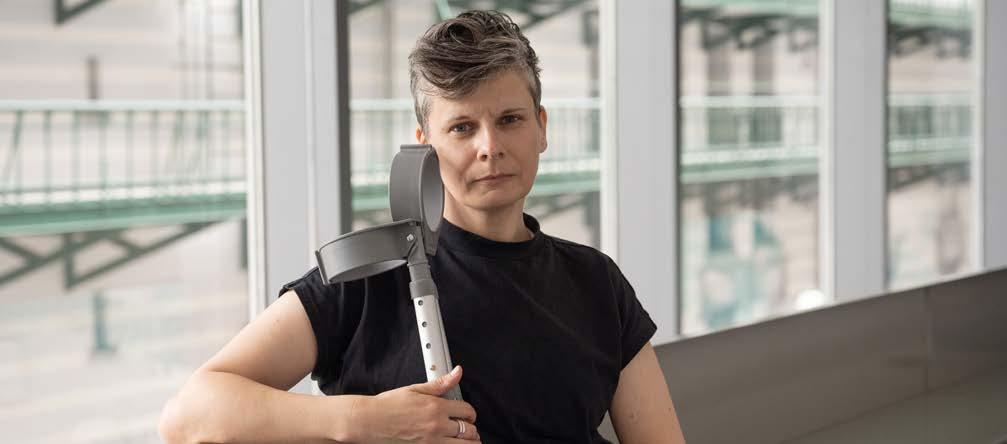
This first gathering is an important opportunity to bring together some of the artists, writers and researchers, from my community, who have really informed my thinking and practice in the long-term. Notably the contributors to each of our morning Three-notes: On Crip Technique, Knowledge and Expertise - Eli Clare, Kenny Fries, Julia Watts Belser & Sandie Yi.
I am thrilled that we’ve been able to invite them and several incredible crip and disabled identifying artists; thinkers, peers and allies from dance and research communities, here in Berlin and Germany; as well as my home in Scotland and the UK, across Europe and beyond, to contribute to this event. Each of their established and evolving practices have been deeply impactful for me and, I believe, should be recognised and cherished more widely.
I want, always, to insist upon the inherently inventive nature of our crip and disabled lives and the critical contributions we make to arts, culture and academic/scientific research. Especially in this moment when we are facing an omnipresent backslide in disability justice.
I really look forward to spending time together over the next few days and thank you, deeply, for coming to be part of this gathering.
It matters that you are here.
Claire Cunningham Einstein Professor of Choreography, Dance & Disability Arts
*We will speak a little about this term in our welcome. For me, and many other disabled folks, crip is a term that we have reclaimed as an affirmative way of celebrating and describing our identities, community, practice and culture. I use it not only as a noun, but also as a verb. ‘To crip’ is to bring our embodied experience, knowledge and expertise to the world. This is what I do in dance and choreographic practice. My own thinking about these terms has been informed by disabled writers and activists including: Alison Kafer, Carrie Sandahl, Petra Kuppers, Julia Watts Belser, Eli Clare, Kenny Fries, Sandie Yi and Patty Berne.
© Bea Borgers
Our Intention and Approach
Luke Pell, Research Associate
As Claire has said: It matters that you are here. With this, I’d also like to say: It matters that you are here and that we are here together.
We recently began and ended a conversation with these words as part of our contribution to a forthcoming publication on Care Aesthetics and the Arts. In that conversation we found ourselves talking about something we have many times: How, from the moment we begin to imagine making any kind of performance, we begin by thinking about who we are making with and for and the sort of space they might inhabit.**
Our processes unfurl out of a desire to cultivate the kinds of conditions whereby many differing bodyminds, with varying access needs and lived experiences, can come together in time and space. Concerned about who and what is afforded our attention, we are also keen to recognise and welcome subtlety, complexity and contradiction. To be in and with the inbetween and the emergent. Resisting that ableist human tendency toward there being ‘one approach’ or technique that is ‘better’ than another; that there is ‘a way’ to do choreography, dance, disability/arts.
For me, a large part of a researchful practice is about actively engaging with different modes of attention/ attending. Paying attention to a plurality of perspectives; being curious about what happens when they are alongside and in relationship with one another. To intentionally make space for possibility
and what might emerge from such re/constellations.
This is also how we began thinking about this gathering. Purposely choosing to make a moment to gather, in this space and time, with all of these bodies of knowledge: choreographies of care to explore:
What are crip techniques?
What particular knowledge and expertise arise from the lived experience and phenomenology of disability?
How do we better understand, articulate and appreciate these crip techniques, knowledge and expertise?
How can and do they contribute to cultivating more accessible and anti-ableist conditions in dance, choreography and arts research - for disabled and non-disabled artists - in our own communities and institutions?
How are they remembered and passed on - by and for whom; for what purpose?
This gathering is purposefully spread softly over three days - with space for rest and reflection, exchange and conversation - intended as an alternative format to traditional symposia. You will experience a series of daily sessions that contain a range of artistic offers: performancelectures, provocations, encounters and interventions, that shift in focus and form. Each proposing different aesthetic, political and philosophical potentialities of
crip techniques, knowledge and expertise from varied experiences of disability, neurodivergence, perception, sickness, crip-ness, chronic-illness.
Every person contributing to this gathering approaches research, or - what I would describe as - researchfulness, in really distinct and particular ways. Coming from a range of perspectives and routes into choreography, dance and disability/ arts, they bring with them insights from different generations and geographies, as well as social histories and movements, in terms of disability and arts practice and their respective traditions of scientific/ artistic research in and outwith the academy.
We welcome this plurality, the awkward, the messy and the porous. We come with a willingness to lean into what might be un/comfortable, hard/soft and slippery. Led by a desire to encourage and better share raw, tentative, tenacious thinkingfeeling and a deep appreciation of the bold and oftentimes tender nature of doing so. These are crip techniques in and of themselves.
What matters - in it mattering that you are here and that we are here together - is what might come from our being alongside one another in this emergent space. In researchfulness. A/live in mutual curiosity and exchange. We aren’t here for one authoritarian or definitive approach to choreography, dance and disability arts, or reductive how-to’s. Rather, we are here for,
and because of, nuance and divergence. Re-remembering: that we can’t all be lumped into one easy (for ableism) box.
Most of what you will encounter in the next few days has deliberately been designed as multivocal. Our daily Threenotes take the form of pre-recorded musings and hand-crafted objects, created in parallel and at distance. Notes, as a kind of conversation, that ruminate on possible crip techniques and affinities, kinship and community; porousness, legacy, passing things on.
The other sessions from invited artists offer provocations on the politics and poetics of disabled bodies and perception; multi-modal neuroqueer performance-lectures; temporal sound worlds and somatic rituals for rest and resistance. They invite us to lay down, to sit or stand, alone and together. In twos, in threes, as four-legged creatures. These are experiences and experiments in what it is to share - our bodies, knowledge, techniques, trust and care, with one another.
We come with (and for) those who can’t be here. To be with you and what might come from all of us gathering to spend time with and on crip technique, knowledge and expertise.
Luke Pell Research Associate Crip | Choreo | Care, HZT
**Part of why we called our team Crip | Choreo | Care is because of this. Our research begins from lived experiences of disability, from crip identities and experiences, from crip practice. They then meet with and/ or navigate other bodies in space and time as in choreography. Our attention, or care, is given to those encounters and relationships, to the spaces in between.
The Space/s We’ve Made
Bethany Wells, Designer
I would like to welcome you into the gathering space/s. I invite you to see the spaces we’ve made as your home, studio and landscape; a canvas for new discoveries and connections to unfold throughout these three days.
I am always looking for ways to challenge the hierarchies between stage & tribune, artist & audience, artistic & access content, and hope that you feel able to move and occupy the spaces in a way that makes you both comfortable and curious.
The Main Gathering Space is set out in a casual horseshoe / in-the-round layout, with flexible seating options. Artists and contributors sit at working tables - much like we would have in a studio or rehearsal room.
The material palette is inspired by the scenographic world we created for Songs of the Wayfarer. It takes many conversations and minds to create these carefully co-authored spaces, and I’d like to thank the wider creative team for their generosity as collaborators as we created the world of that show together.
As a designer, I am fascinated by how the form of a space precedes the social relationships - and even the content of the conversations that happen with it. By loosening the edges, and letting the artistic offers spill out into the foyers and circulation spaces, I hope to enable moments for casual interaction, and also spaces for you to wander through and reflect on by yourself; to find rest and privacy within a collective experience.
Bethany Wells Designer
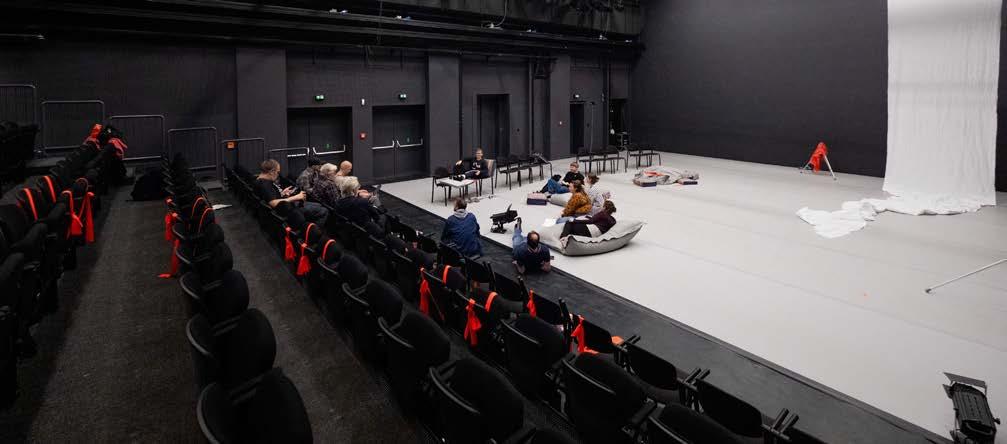
Map of Spaces
Songs Of The Wayfarer creative team in a notes session after a dress rehearsal Mousonturm, Frankfurt, October 2024 / © Sven Hagolani
Daily Recurring Formats Daily Recurring Formats
Three-notes - On Crip Technique, Knowledge and Expertise
Eli Claire, Kenny Fries, Julia Watts Belser & Sandie Yi
In this alternative across-form format (from a traditional keynote) leading contributors, writing and creating, in the fields of disability studies and poetics, in disability and environmental justice and crip couture, make a ‘braided’ offer through words, sound and image to guide us on our way at the opening of each day.
Their notes, written in parallel and at distance, across varying geographies and generations, set up the premise of being alongside each other in emergent thinking. Inviting and encouraging us to share ideas and experiences; riff off of one another, take tangents; allow for awkwardness, for resonance and friction, for porosity and unfurling.
Drawing from their own particular, and differing, formal practices and positionalities in relationship to disability arts, culture, identity, ethics and experience, this multi-vocal three-note introduces different thinking and practice with regards to what we might understand as crip techniques.
Each considers, via their own lens and writing practice, what crip and disability techniques bring to arts, culture, dance and disability arts, to artistry and/as access, by asking where crip kinship, community, understanding and affinities can be found. Together they surface important questions about the need for better disability arts archives, recognising and undoing ableism, legacies and the practice of passing things on.
Dedicated Time for Processing
Knowing well that we all process information differently - but often feeling at some events, talks, conferences and symposia, things move so quickly we don’t really get to do that - we’ve allocated dedicated time, as part of each session, for processing in different formats.
This morning and afternoon processing will be hosted and supported by members of the Crip | Choreo | Care team and some invited reflectors including: Kate Brehme, Sandra Noeth, Kate Marsh, Diane Niepce, Fia Neises, Luke Pell, Dan Watson and Bethany Wells.
Morning Session Processing
Following the daily Three-notes and invited artists offers, time has been allocated to start processing some of the thinking we’ve just encountered.
You may want to do this independently, or alongside others, in the main working space; the social or resting spaces through conversation, writing, drawing, reflecting, resting, micro-moving.
Prompts will be provided by invited artists/ reflectors for those who would like to gather in small groups in the main working space or foyer.
Afternoon Session ProcessingStroll/Loll & Talk
This is a conversation format Claire developed with our much missed colleague Jess Curtis. It was used in their duet The Way You Look (at me) Tonight and in subsequent symposia Making Sense of Each Other with Gravity in New York and The Choreography of Care symposium at Tanzhaus nrw in Düsseldorf.
Two speakers stroll/loll in space in conversation with one another.
It’s a space for live thinking - musing, chewing, on what we’ve encountered so far, from their perspectives.
It’s a space to reflect, unpack and explore ideas surfaced in the day, together, in motion - moving away from the formality and ‘uprightness’ of conventional panel formats.
Other invited artists and reflectors can join to pick up on a thread of thinking by swapping out with someone else.
Claire will set up this format and how it functions for us each day.
11:00
Three-notes
On Crip Technique, Knowledge and Expertise, Part 1
Eli Claire, Kenny Fries, Julia Watts Belser & Sandie Yi
11:45 Session 1
The Stage as a Square: Disabled Bodies and the Poetics of Resistance
Chiara Bersani
As a disabled performance artist, my work investigates the political and poetic power of the body in space. In this provocation I will explore how disabled artists—who are also citizens of their countries and of Europe—can position themselves politically in today’s global crisis. When public demonstrations fill the streets, these spaces often become inaccessible or unsafe for disabled bodies. In that context, can the protected space of performance become a site for political action—or does it risk turning resistance into self-referentiality? Drawing from my recent projects, I will reflect on how slowness, fragility, and interdependence can shape new aesthetic and political strategies.
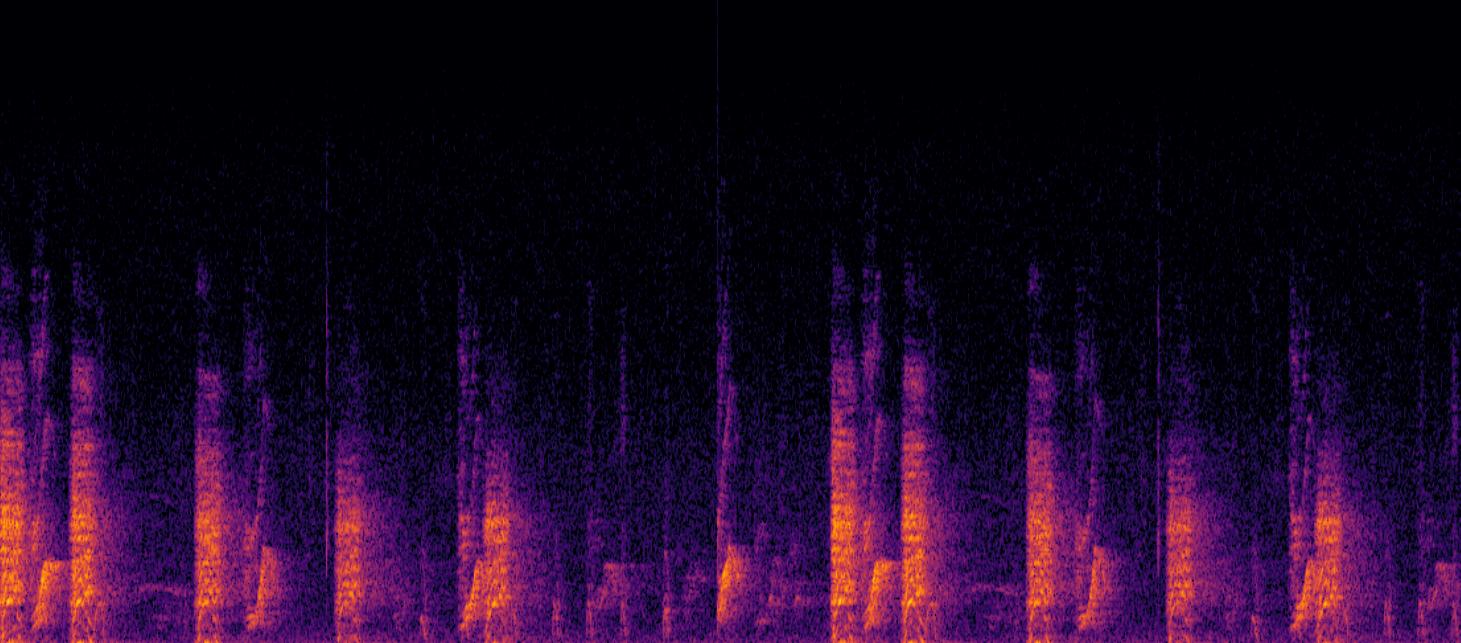
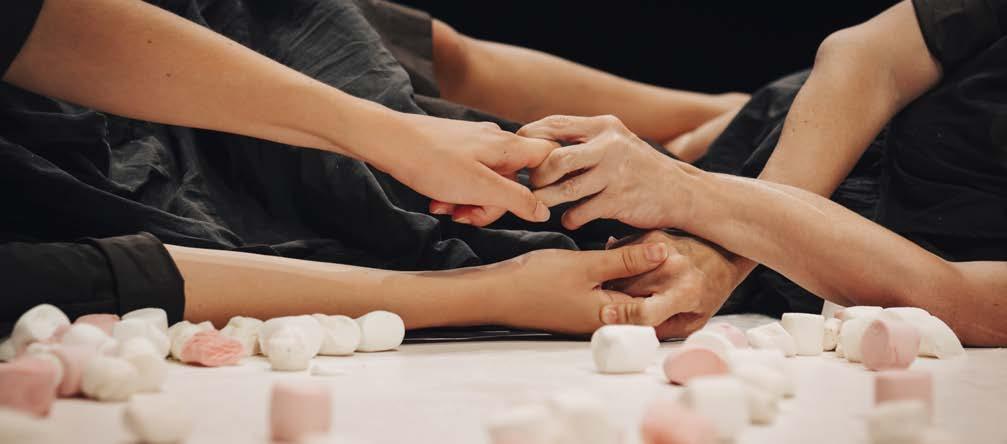
Image: Sottobosco, Chiara Bersani / © Alice Brazzit
Image: Crow Call - Spectogram, Julia Watts Belser
12:15
13:00 Morning Processing
You may want to do this independently, or alongside others, in the main working space, the social or resting spaces; through conversation, writing, drawing, reflecting, resting, micro-moving.
Lunch
Vegan lunch available at WAU. If you have pre-registered for lunch, please collect a sticker from the Access Desk to redeem your lunch.
14:15 Afternoon Welcome
14:30 Session 2
Stimprovisation as Neuroqueer Choreographic Technique
Dr Aby Watson
Stimming is action that self-regulates by self-stimulating or selfsoothing oneself into balance. Often rhythmic and repetitive, it is neurodivergent embodiment that brings equilibrium through sensory processing. Improvisation is spontaneous composition, creating something from nothing in response to the here and now. With their offer, Dr Aby Watson performatively outlines their choreographic practice of Stimprovisation – sensory-seeking improvisation that seeks bodymind balance, safety, and sensorial play. Discovered through her neuroqueer choreographic doctoral research, Stimprovisation invites an ‘unmasking’ of neurodivergent embodiment to liberate from neuronormative tradition in the dance space. With use of playful and sensorial voice, movement and object, Dr Watson stimprovises her way through to demonstrate and articulate Stimprovisation as a crip choreographic technique.
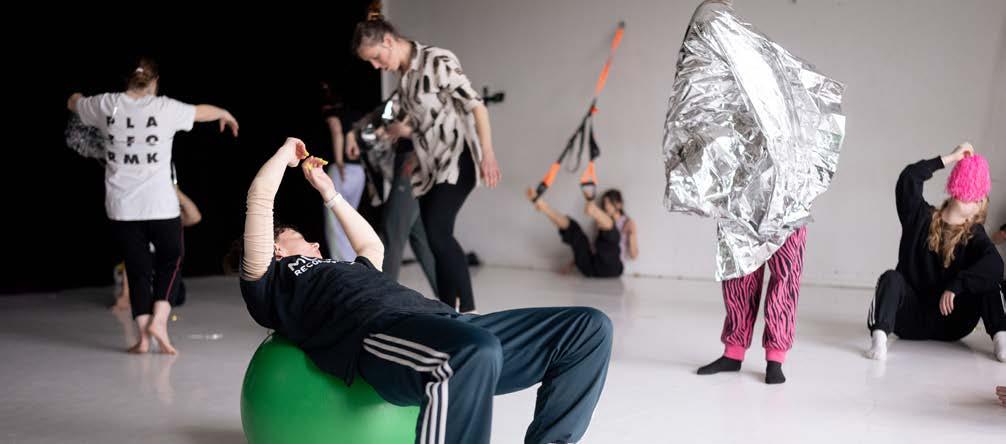
Image: Stimprovisation, Dr Aby Watson / © Rudy Carlier
15:00 16:15 15:20 Break
Afternoon Processing - Stroll/loll & Talk
with Claire Cunningham, presenting artists Chiara Bersani & Dr Aby Watson and guest reflectors Diana Niepce & Sandra Noeth
Summary of the Day So Far and Outline of Tomorrow
16:50 Session 3
A World to Exist in for a Day
Raquel Meseguer Zafe & Jamie McCarthy
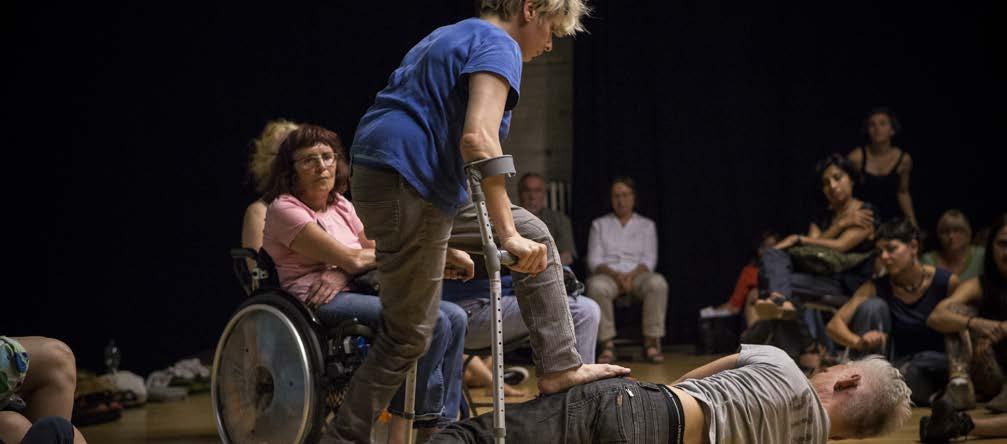
Taking inspiration from the slow, expansive world of mosses and grounded in conversations about crip techniques for creating nurturing spaces in the midst of illness and loss, Raquel and Jamie create a sonic and spatial boundary layer.
This gentle space offers a chance to imagine what you truly need— and to dream into the kind of work that might emerge from within that soft, in-between place.
This artist offering is adapted from material created during the R&D of Raquel’s new work Proper Time (working title). Proper Time explores the physics of spacetime and disabled experiences of time, seeking to dismantle normative temporalities and expand our collective understanding of ‘time’.

Image: Proper Time / © Lesley Martin
Image: Credit Claire Cunningham and Jess Curtis in The Way You Look (at me) Tonight / © Sven Hagolani
notes
17:30 Social & Drinks in WAU
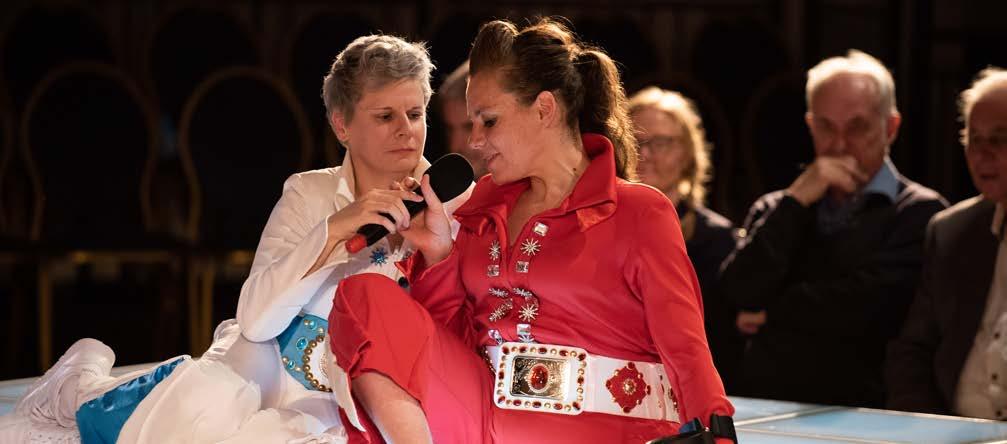
Image: Claire Cunnigham with Tanja Erhart in Thank You Very Much / © Hugo Glendinning
/ 11.10.2025
11:00
Three-notes - On Crip Technique, Knowledge and Expertise, Part 2
Eli Claire, Kenny Fries, Julia Watts Belser & Sandie Yi
11:45 Session 1
Bed Connection
Jeanne Eschert & Angela Alves
Jeanne Eschert and Angela Alves prepare our nervous systems in these more than troubled times, using nothing more than a trick. With the power of rest and magic, they will share practices trying to unfold the isolation of the sick body along the imprints we leave in the sheets.
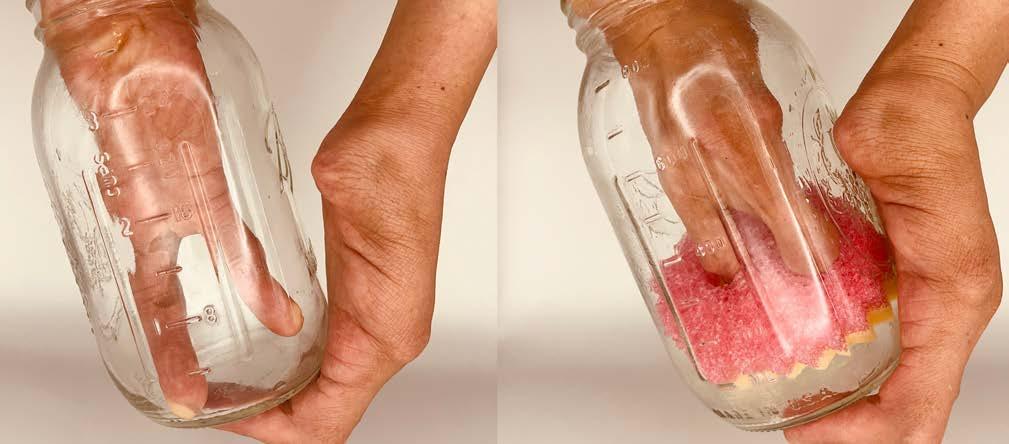
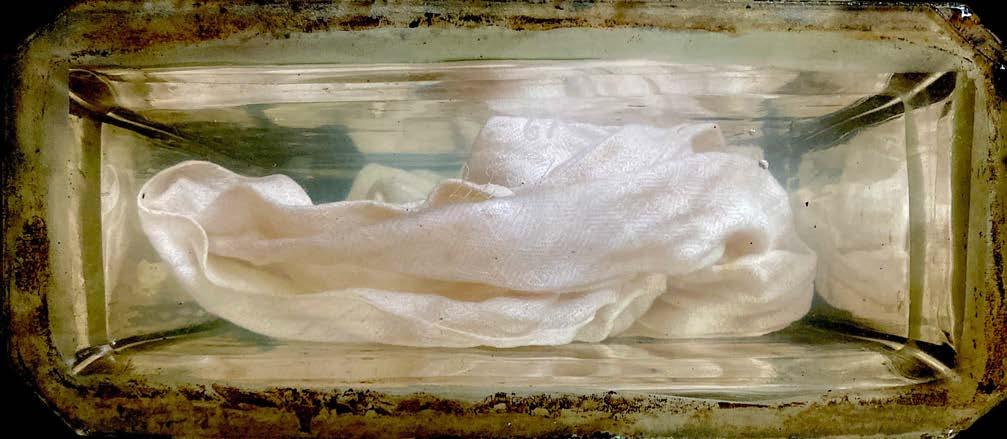
Image: Bed Connection / © Angela Alves
Image: Scrubbies / © Sandie Yi
You may want to do this independently, or alongside others, in the main working space, the social or resting spaces; through conversation, writing, drawing, reflecting, resting, micro-moving. Lunch
Vegan lunch available at WAU. If you have pre-registered for lunch, please collect a sticker from the Access Desk to redeem your lunch.
14:15 Afternoon Welcome
14:30 Session 2
Rehearsal 6: EXTRA SET
Márcio K. Canabarro & Sindri Runudde
An introspective, experimental meditation on intimacy, disability, identity, and the complexity of love, Márcio and Sindri, two visually impaired queer artists, explore emotional and physical connection through a performative dance-dialogue inspired by the ‘36 Questions That Lead to Love’. Their collaboration blurs the lines between roughness, care, urgency, and vulnerability. Through poetic inquiry and sensory memory, the experiment articulates questions around the emotional labor of love, metaphors of vision and dependency, and the tension between desire and exhaustion, becoming a philosophical and embodied reflection on how we hold - and are held by - others.
Created and Performed by: Márcio K. Canabarro & Sindri Runudde Assistance and Dramaturgy: Savio Debernardis

Image: Rehearsal 6 / EXTRA SET / © Leo Naomi Baur
Afternoon Processing - Stroll/loll & talk
with Claire Cunningham, presenting artists Raquel Mesegeur Zafe, Angela Alves & Jeanne Eschert & Márcio
Canabarro & Sindri Runudde and guest reflectors Kate Brehme & Fia Neises
16:30 Break
Please make your own dinner arrangements. Feel free to ask us for local recommendations.
19:00 Session 3
4 Legs Good - 2025
Claire Cunningham
In this Lecture Demonstration Claire Cunningham will share her distinct movement style Quanimacy, illustrating how the use/ misuse, study and distortion of her crutches as well as rejecting formal dance training and techniques created for non-disabled bodies have informed her practice.
She will discuss how her focus has shifted from exploring the connection between her crutches and her body to investigating how her crutches connect her to the world; how her work is influenced by her lived experience of disability and its impact on how society thinks about knowledge, value, connection, and interdependence.
Devised and Performed by: Claire Cunningham Outside Eye: Orrow Bell

Image: Claire Cunningham / © Pierre Gondard
SUN / 12.10.2025
Three-notes - On Crip Technique, Knowledge and Expertise, Part 3
Eli Claire, Kenny Fries, Julia Watts Belser & Sandie Yi
SUN / 12.10.2025
11:00 11:45 12:30 Session 1
Morning ProcessingStroll/Loll & Talk
with Claire Cunningham, presenting artists Chiara Bersani, Raquel Mesegeur Zafe, Angela Alves & Jeanne Eschert, Márcio K. Canabarro & Sindri Runudde and others
Lunch
Vegan lunch available at WAU. If you have pre-registered for lunch, please collect a sticker from the Access Desk to redeem your lunch.
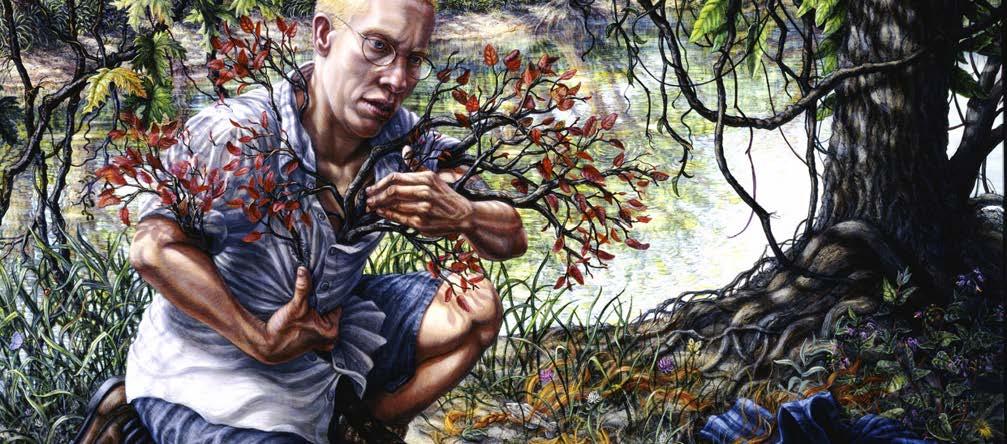
Image: Eli Clare / © Riva Lehrer
SUN / 12.10.2025
13:45 Session 2
In Trialogue: On Crip Technique, Knowledge and Expertise
Kate Brehme with Diana Niepce, Sandra Noeth, Kate Marsh and others
Hosted by Kate Brehme and taking the form of a trialogue this conversation will begin with invited inputs from Diana Niepce, Sandra Noeth and Kate Marsh.
Then opening out into conversation with other artists and researchers from the gathering including: Chiara Bersani, Raquel Meseguer Zafe, Angela Alves & Jeanne Eschert, Márcio K. Canabarro & Sindri Runudde, Claire Cunningham, Fia Neises and then with the wider room.
We’ll circle back to themes surfaced in the daily morning Threenotes and all of the sessions throughout this gathering, to where we find ourselves today when asking:
What are crip techniques?
What particular knowledge and expertise arise from the lived experience and phenomenology of disability?
How do we better understand, articulate and appreciate these crip techniques, knowledge and expertise?
How can and do they contribute to cultivating more accessible and anti-ableist conditions in dance, choreography and arts research - for disabled and non-disabled artists - in our own communities and institutions?
How are they remembered and passed on - by and for whom; for what purpose?
SUN / 12.10.2025
15:00 Closing and Goodbyes
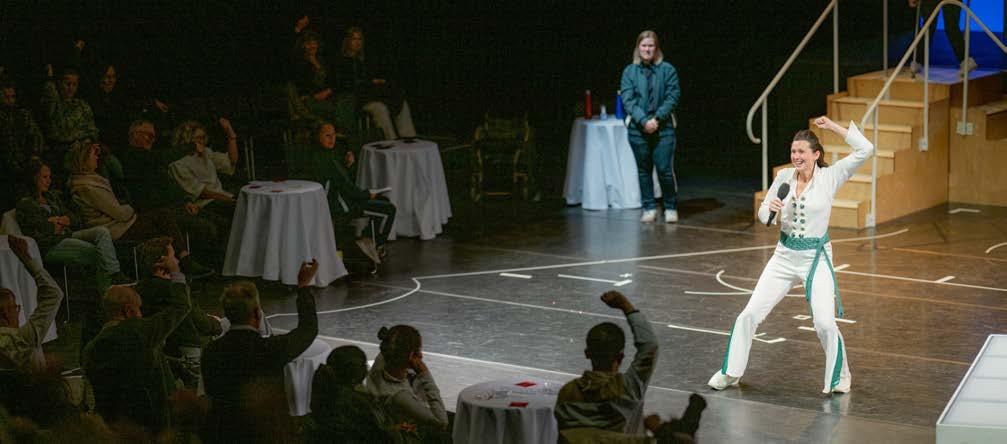
Image: Vicky Malin in Thank You Very Much / © Lars Opstad
Artworks and Opportunities Throughout
Level 00, 01 and 02 - throughout the circulation spaces
Ground Studies and Crap Ceilings
Claire Cunningham & Raquel Meseguer Zafe
Claire and Raquel have each been making studies during moments of rest, from their distinct perspectives for over a decade.
Making subtle interventions in time and place, a collection of some of these photographs appear here together for the first time. Taking necessary moments to rest and pause, whilst in transit, wherever they can, need and are allowed (or not) the artists ask us to look again, at the undersides and the unappreciated. Paying attention and connecting, through a crip lens, to the world and other bodyminds around us.
Recorded audio description is available. Please ask at the Access Desk on Level 01.
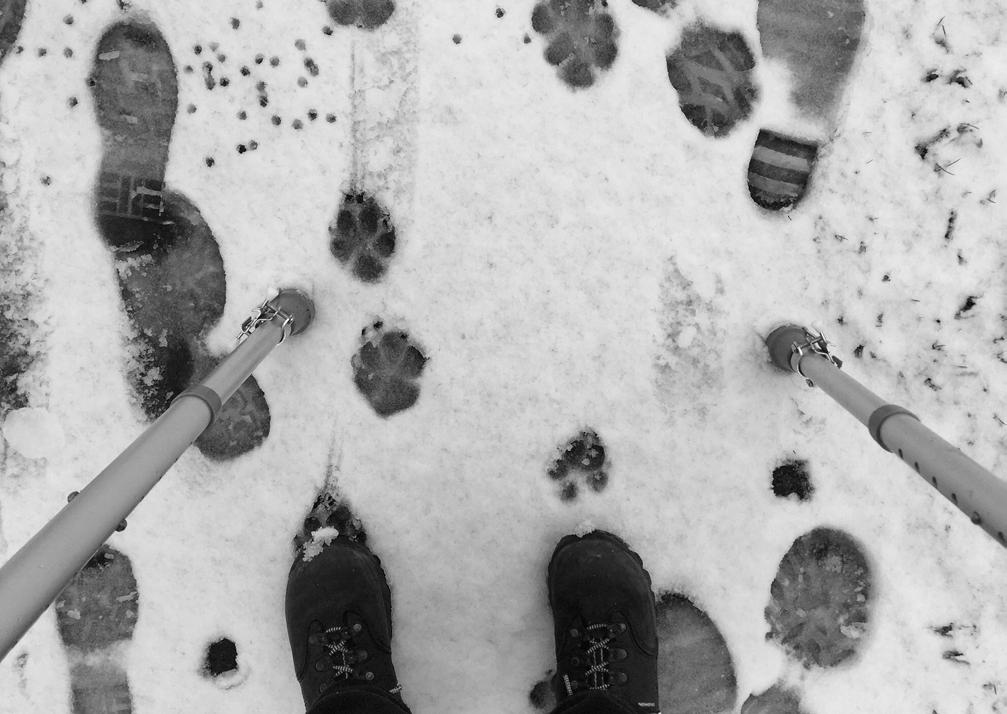
Design: Bethany Wells
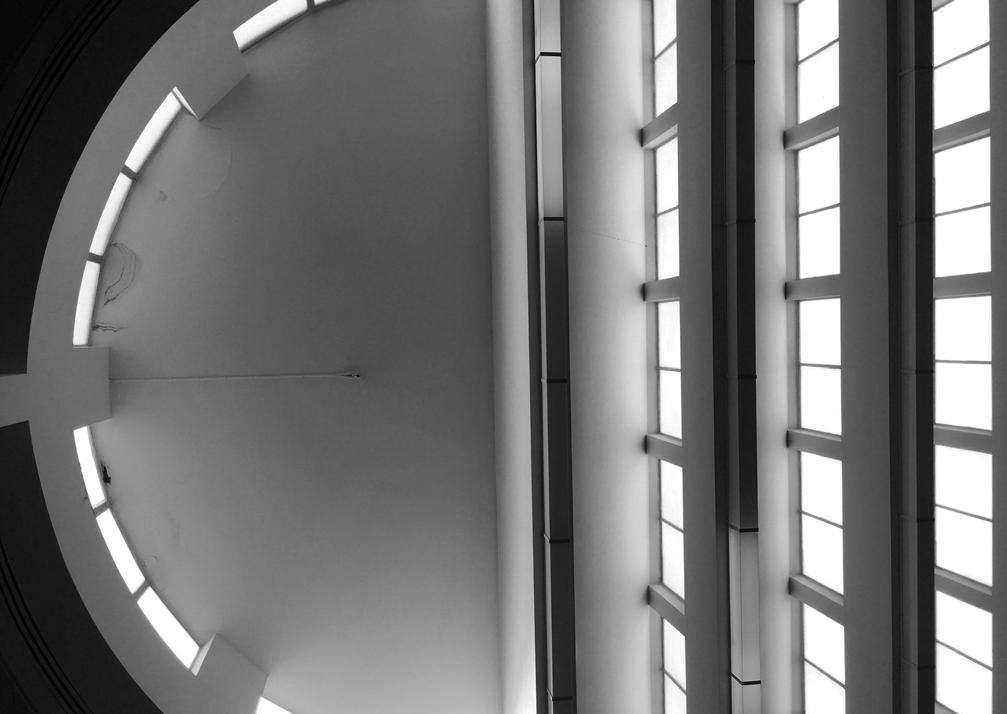
Images: Claire Cunningham & Raquel Meseguer Zafe
Artworks and Opportunities Throughout
Crip Kin Call for photoshoot during the gathering
Steven Solbrig
The history of the Crips is one of care, solidarity, resistance, and self-assertion. Their legacy is not a footnote. It is part of our collective history and the present.
Crip Kin is a long-term non-profit work by Steven Solbrig. For almost a decade, Steven has been portraying Crips and Queers, continuously, fragmentarily, connectedly.
Solbrig’s photographic approach is technically austere, associative, documentary, poetic, or symbolic.
Crip Kin is about your presence, your stories, your connection to those who came before you and those who will come after you.
A photographic project for those who were. For those who are. And for those who are coming.
Before, during, or after the gatherings, Steven invites you to a short, open photo shoot. Afterwards, you are invited to answer three questions.
It’s about presence, about connection, about carrying on what must not be forgotten, a tender, joyful, or proud memory against forgetting. The photos and your short answers will be collected and published when the opportunity arises.
Interested?
Catch up with Steven during the gathering.
Or feel free to write to him: stevensolbrig@gmail.com stevensolbrig.de
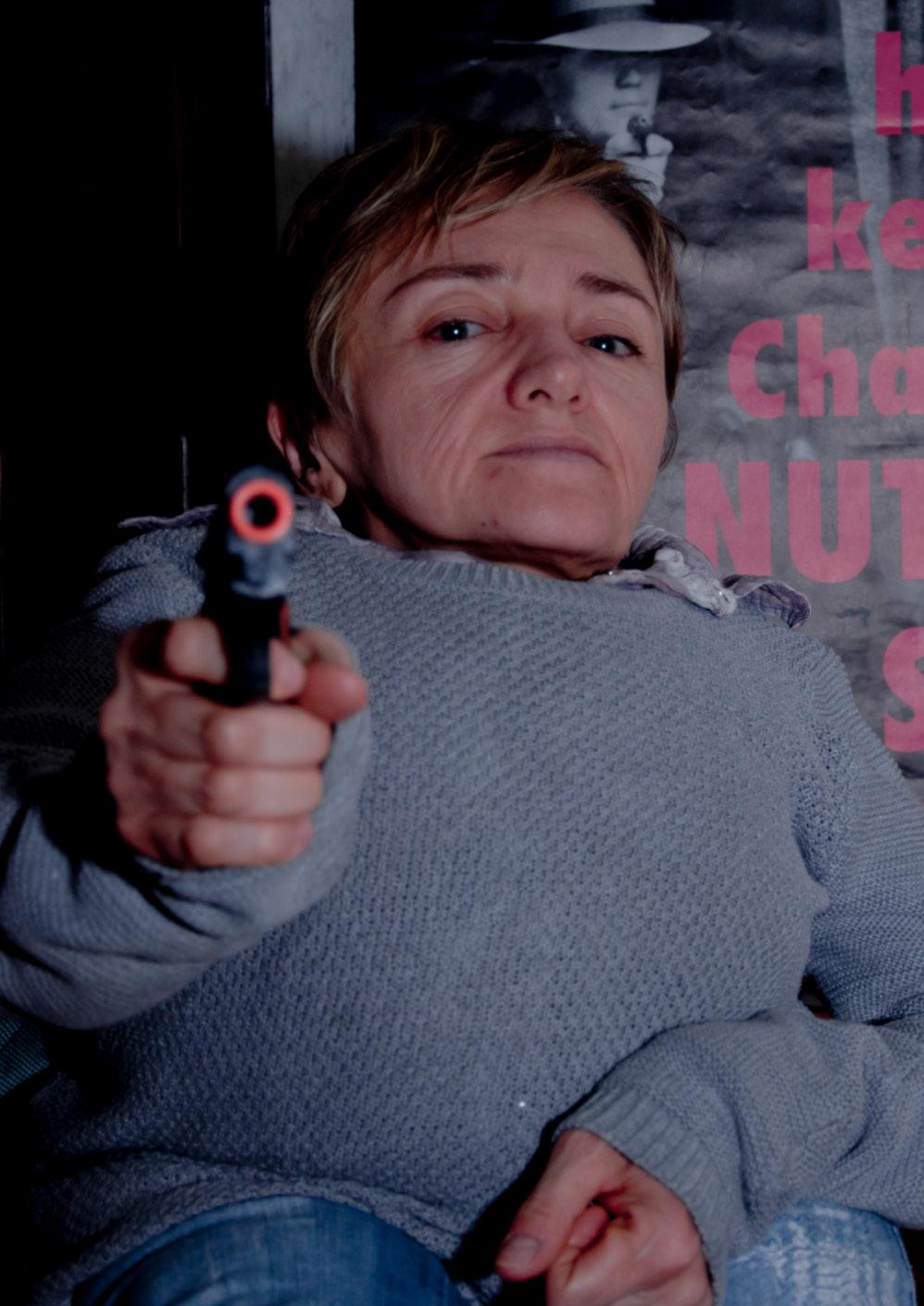
Level 01 Foyer - outside Main Gathering Space
Artworks and Opportunities Throughout
We Run Like Rivers
We Run Like Rivers is a series of short audio provocations by disabled artist Claire Cunningham and disabled scholar Julia Watts Belser. Designed for headphones, Claire and Julia offer provocations on wilderness, terrain, time and energy from a disabled perspective and consider climate justice, crip expertise and the dynamics of climate denial.
Scan the QR code on the poster in the foyer to access the audio on your own device.
A transcript is available. Please ask at the Access Desk on Level 01.
Originally produced by Festival Theaterformen in the frame “We are in this together but we are not the same” supported by the German Federal Cultural Foundation.
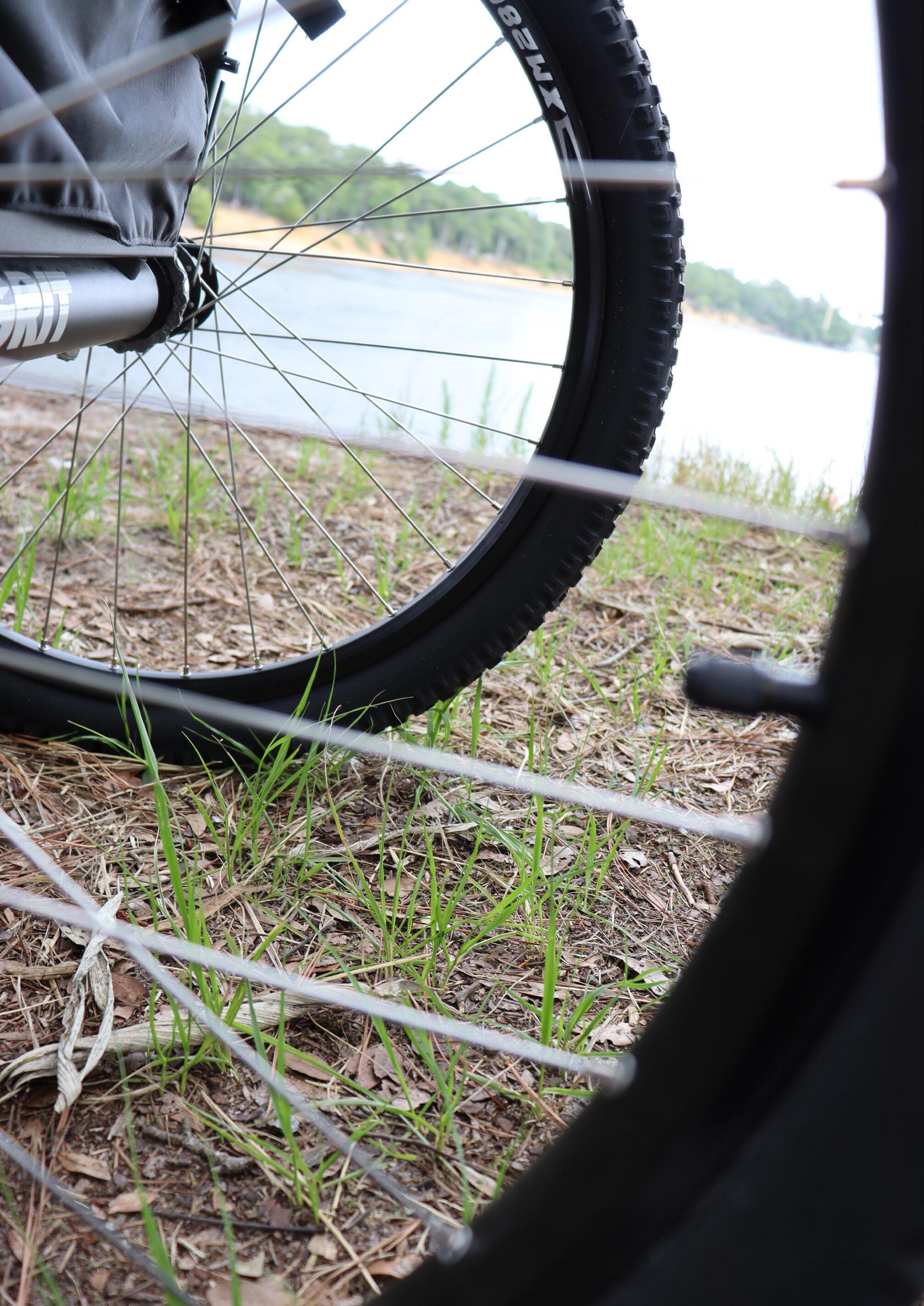
Claire Cunningham & Julia Watts Belser
Created by Claire Cunningham & Julia Watts Belser
Musical arrangements by Matthias Herrmann
Images by Claire Cunningham, Julia Watts Belser, Paul Blakemore courtesy of Situations and Josh Johnson
Level 01 Foyer - outside Main Gathering Space
© Julia Watts Belser
Artworks and Opportunities Throughout
With (and for) Those Who Aren’t Here
As noted in our welcome, and throughout the gathering, we recognise that there are many people - our kin, colleagues and peers - especially from crip and disabled communities who aren’t and/or can’t be here in presence.
For some, as Julia describes in her Threenote, travelling is no longer possible. For others ‘in presence’ attendance at events is only possible on some occasions, in some instances. For many it is not possible, an option or choice at all. As the rest of our Three-noters Eli Clare, Kenny Fries, Sandie Yi and many others have noted, there are also too many people who are no longer with us in this world.
A station has been set up to be With (and for) Those Who Aren’t Here. This can be found in the Foyer on Level 01, and is available throughout the gathering.
You can make and leave notes on postcards we have provided, to send, share with and/or remember others, relaying your experiences, questions and thinking, with the intention of extending and continuing our communities, connections and conversations beyond the gathering space.
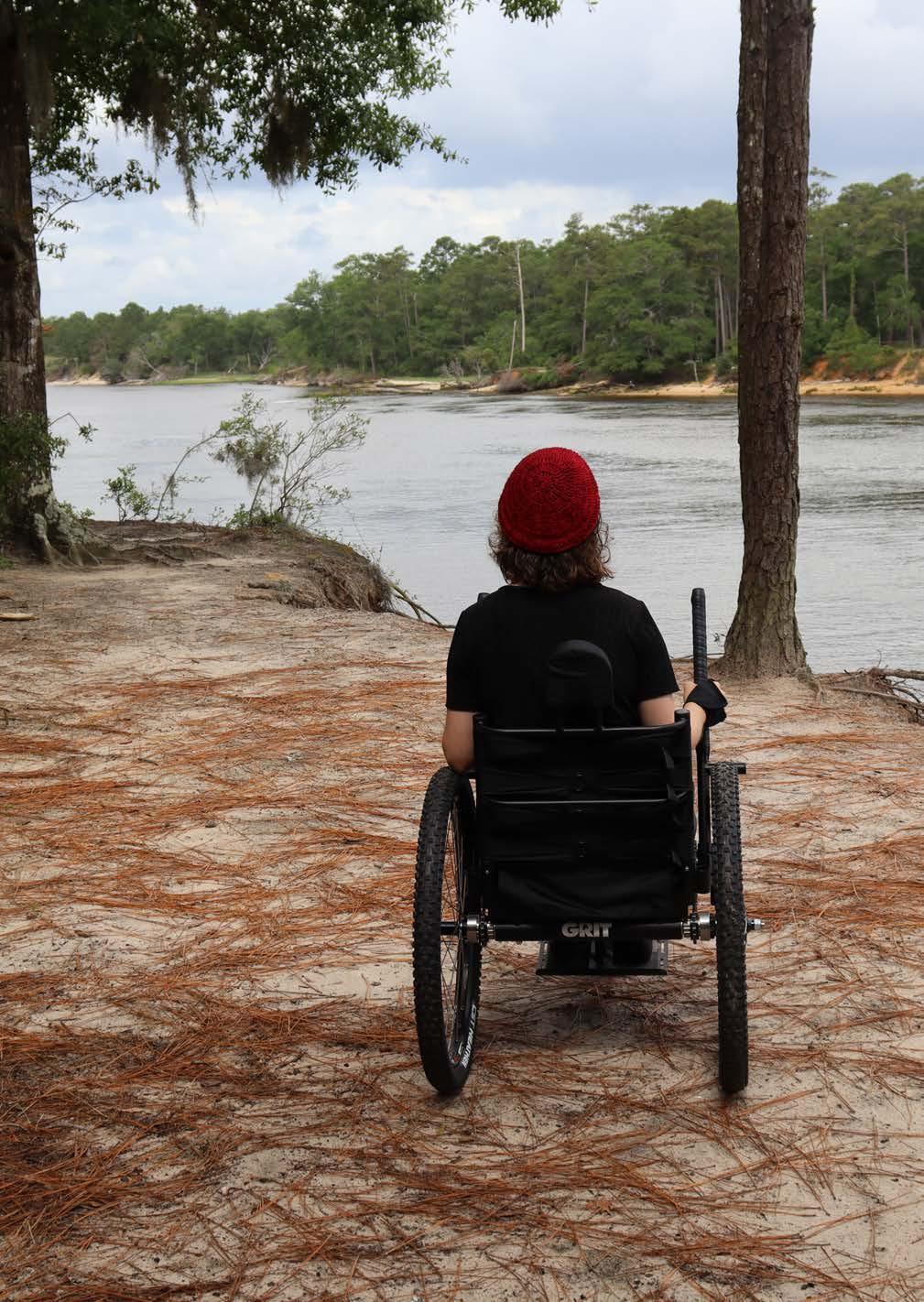
Level 01 Foyer - outside Main Gathering Space
© Julia Watts Belser
Artworks and Opportunities Throughout Water Folds.
Crip Body Memory and Storytelling
Installation by Angela Alves & Jeanne Eschert, 2025
Preservation glass filled with bath water & canvas
Water
Folds
The bathtub and the bed – two places where chronically ill bodies often seek rest. To reduce pain and recover from stressful environments. Or to spend their lifetime.
The two installation objects refer to the absence of these bodies, their stories and their histories. Angela and Jeanne spend time with them and turn these encounters into choreographies. Taking baths and reading bedfolds. Collecting water and folds, capturing traces of physical presence and body memories, we are talking back and reclaiming the power of ‘sick storytelling’.
Recorded audio description is available. Please ask at the Access Desk on Level 01.
The preparation jar filled with bath water refers to a historical medical treatment practice. During the so-called ‘Dauerbadtherapie’ (continuous bath therapy), which was used in psychiatric institutions until the mid-20th century, patients had to bathe for days, weeks and months. Tracing the history of the sick woman, Angela Alves has invited chronically ill women to bathe with her and talk about their relationship to bathing and to the medical system. The bathwater from these encounters has been collected and displayed alongside the edited conversations.

The QR code inside the jar and on this page will take you to a website where one of the conversations will be available for the duration of the gathering.
These conversations are part of the audio installation ‘DAUERBADEN’ (continuous bathing) which will be presented from Oct 2025 to Oct 2027 in collaboration with the Berlin Medical History Museum of the Charité within the exhibition ‘On Water’ at the Humboldt Labor.
The conversations are spoken in German language. A written English Transcript is available via the website.
The work ‘Fate Folds’ is from the series ‘Pretend’ in her exhibition ‘Fortune Telling Folds’ at Basis Projektraum Frankfurt am Main 2024. The Fate Folds got their name because they are the so-called Kink Folds that often form in bed sheets where we stay for long periods of time. The ‘Pretend’ series collects a typology of bed fold images for her bed fold readings by trying to transfer the relationship between bodies and bed folds to the relationship between canvas and folds when stretching canvas frames.
Jeanne Eschert does one-to-one bed fold readings where she mixes magic, rituals, palm reading, and experiences in bed. Together with the participants, she explores physicality and temporality in bed to have a good time.
If you are interested in a bed fold reading via home visit, video call or chat, write to bedfoldreadings@gmail.com.
It is aimed at people who spend a lot of time in bed and have built up a special relationship with it - people with chronic or mental illness, disabilities or the people around them.
Level 02 - outside Resting Room
Who You Might Meet at this Gathering
Attendees
Light Blue lanyard
Everyone attending this gathering.
At the time of booking we know we will be joined by other disabled and neurodivergent artists, academics, researchers, artsworkers, activists, friends and peers from across the worlds of choreography, dance and disability arts. We hope you find space together here to catch up and/or connect.
Presenting Artists
Dark Blue lanyard
Over twenty artists and researchers are making different contributions to this gathering.
They are: Eli Claire, Julia Watts Belser, Kenny Fries and Sandie Yi (remote contributions). Chiara Bersani, Dr Aby Watson, Raquel Meseguer Zafe & Jamie McCarthy, Angela Alves & Jeanne Eschert, Márcio K. Canabarro & Sindri Runudde, Steven Solbrig and Claire Cunningham (in presence contributions).
Kate Brehme, Kate Marsh, Sandra Noeth, Diana Niepce & Fia Nieses have also been invited to bring specific reflections from their professional perspectives and lived experience to different conversation formats at the end of each session.
Considering the core questions of the gathering and the different artist sessions each day, they will initiate and activate conversation and exchange that pick up on particular ideas, approaches and potentialities they would like to give further attention to.
Who You Might Meet at this Gathering
Access Support Team
Yellow lanyard
An Access Support team is present throughout the event. They are here to welcome you, to enable and facilitate the best experience possible for everyone attending.
They should be able to respond to and answer any questions regarding specific access queries or provision across the gathering. The Access Desk is on Level 01.
Crip | Choreo | Care Team Pink lanyard
Professor Claire Cunningham with Research Associate Luke Pell will be your hosts for this gathering. They will introduce and guide us through each day, each session and summary. Claire will lead each afternoon ‘Stroll/Loll and Talk’. Luke is available to give further information about the programme and the shape of the next days.
Some of Claire’s regular collaborators: Dramaturge Luke Pell, Designer Bethany Wells and Associate Director Dan Watson, as well as other members of the Crip | Choreo | Care team listed in the back of this workbook, will also move between breakout groups in processing sessions, carrying and connecting collective thinking and supporting reflection.
Backstage & Technical Team
Beige lanyard
The HAU Technical support and Front of House team will be supporting us with lighting, sound and building logistics.
Biographies Biographies

Eli Clare
Eli Clare has written two books of essays, the award-winning Brilliant Imperfection: Grappling with Cure and Exile and Pride: Disability, Queerness, and Liberation, and a collection of poetry, The Marrow’s Telling: Words in Motion. His next book, a mixed genre volume titled Unfurl, will be released in September 2025. Additionally he has been published in dozens of journals and anthologies.
White, disabled, and genderqueer, Eli works as a traveling poet, storyteller, and social justice educator. Since 2008, he has spoken, taught, trained, and consulted (both in-person and remotely) at well over 150 conferences, community events, and colleges across the United States and Canada. He currently serves on the Community Advisory Board for the Disability Project at the Transgender Law Center and is also a Disability Futures Fellow (funded by the Ford Foundation and the Andrew W. Mellon Foundation). Among other pursuits, he has walked across the United States for peace, coordinated a rape prevention program, and helped organize the first ever Queer Disability Conference. eliclare.com

Julia Watts Belser
Julia Watts Belser (she/her) is a rabbi, scholar, and spiritual teacher who works at the intersections of disability studies, queer feminist Jewish ethics, and environmental justice. She is a professor of Jewish Studies at Georgetown University, Senior Research Fellow at the Berkley Center for Religion, Peace, and World Affairs, and core faculty in Georgetown’s Disability Studies Program.
A longtime advocate for disability and gender justice, she currently directs the Disability and Climate Change Public Archive Project, an initiative that documents the wisdom and insights of disabled activists, artists, and first responders navigating climate crisis. Her latest book, Loving Our Own Bones: Disability Wisdom and the Spiritual Subversiveness of Knowing Ourselves Whole (Beacon Press, 2023), won a National Jewish Book Award. She is a passionate wheelchair hiker, an avid gardener, and a lover of wild places.
juliawattsbelser.com
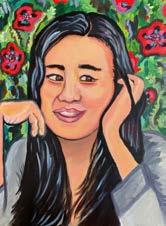
© Irina Zadov
Chun-shan (Sandie) Yi
Yi is a disabled artist and disability culture worker. As a part of the Disability Art Movement, Yi’s practice, Crip Couture focuses on wearable art about the disabled bodymind. She has a Ph.D. in Disability Studies from the University of Illinois at Chicago; a MA in art therapy from SAIC, and MFA from the University of California Berkeley.
She is an assistant professor in the department of art therapy and counseling at the School of the Art Institute of Chicago (SAIC). Her research interests include Disability Arts and Culture; disability fashion; accessibility design and programming for arts and cultural venues; and disability culture-informed art therapy. cripcouture.org

Kenny Fries
Kenny Fries is the author of In the Province of the Gods, which received the Creative Capital literature award; The History of My Shoes and the Evolution of Darwin’s Theory, winner of the Outstanding Book Award from the Gustavus Myers Center for the Study of Bigotry and Human Rights; and Body, Remember: A Memoir. He edited Staring Back: The Disability Experience from the Inside Out and was commissioned by Houston Grand Opera to write the libretto for The Memory Stone. His books of poems include In the Gardens of Japan, Desert Walking, and Anesthesia.
Kenny’s work has appeared in The New York Times, Washington Post, Granta, The Believer, Kyoto Journal, LiteraryHub, Electric Literature, The Progressive, Catapult, Los Angeles Review of Books, and in many other publications and anthologies. He wrote the Disability Beat column for How We Get To Next, and developed the Fries Test for disability representation in our culture. His work has been translated into Spanish, Polish, German, French, Greek, Ukrainian, and Japanese.
Kenny is recipient of a Rockefeller Foundation Bellagio Center Arts and Literary Arts Fellowship, and was a Creative Arts Fellow of the Japan-U.S. Friendship Commission and the National Endowment for the Arts. He has twice been a Fulbright Scholar (Japan and Germany), and has received grants from the DAAD (German Academic Exchange), Fonds Darstellende Künste (Performing Arts Fund), Berlin Senate Department for Culture and Europe, Canada Council for the Arts, Ontario Arts Council, and Toronto Arts Council. He was an honoree on Diversability’s inaugural Disability Impact List and a Cultural Vistas/Heinrich Böll Foundation DAICOR Fellow in transatlantic diverse and inclusive public remembrance. He is the recipient of a 2022 Disability Futures Fellowship from the Ford Foundation, Mellon Foundation, and USA Artists.
His work-in-progress is Stumbling over History: Disability and the Holocaust, excerpts which are featured in his video series What Happened Here in the Summer of 1940?. He curated ‘Queering the Crip, Cripping the Queer’, the first international exhibition on queer/disability history and culture, which opened at the Schwules Museum Berlin on September 1, 2022.
For 27 years, Kenny taught in the MFA in Creative Writing Program at Goddard College, and he has also taught at Fordham University and OCAD U (Toronto). kennyfries.com
© Alexandra Hu
© Micheal R. Dekker
© Samuel Lurie
Biographies Biographies
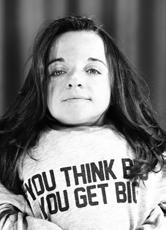
Chiara Bersani
Chiara Bersani is an Italian performing artist and choreographer exploring the politics of the body and how the images we create interact with society’s narratives. Her research is based on the concept of the “Political Body” and the creation of practices aimed at training its presence and action. As an activist Chiara works on the accessibility of disabled artists in the performing arts scene. Her “manifesto” work of this research is Gentle Unicorn, a performance included in the Aerowaves circuit.
In 2018 she won the Ubu Award as best performer under 35. Her new creation, Sottobosco (undergrowth) explores the relationship between disabled bodies and natural landscapes. Chiara Bersani has been an artist of apap – Advancing Performing arts project – Feminist Future, co-funded by the Creative Europe Programme of the European Union. In 2023 the Kunsthaus Baselland, hosted Deserters, Bersani’s first solo exhibition in a European institution in collaboration with Gamec in Bergamo and with the support of the 11th edition of the Italian Council, promoted by the Directorate General for Contemporary Creativity within the Italian Ministry of Culture. For the three-year period 2025-2027, she is an associate artist of Triennale di Milano chiarabersani.it
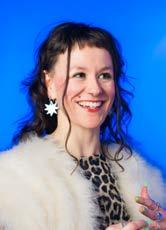
Dr Aby Watson
Dr Aby Watson is a polymorphic neuroqueer artist, academic & activist — shifting fluidly across contemporary performance and knowledge exchange, with a focus on radical neurodiversity. With special interests in neuroqueering, stimming, sensuality, and consciousness, her playful, stimulating choreographic sensibility explores nonneuronormative potentials through rhythm, repetition, ritual, and togetherness.
Working nationally and internationally; she’s taken her creative work to Internationale Tanzmesse NRW, Royal Conservatoire of Antwerp, and Festival de Artes Escénicas de Lima; toured her shows to venues including Southbank Centre, Sophiensaele, Wales Millennium Centre, and Tramway; and has been supported by the National Theatre of Scotland, Unlimited, British Council, Creative Scotland, and The Work Room. Her PhD in Neuroqueer Choreography explores nonneuronormative approaches to making and experiencing dance, and was earned from Royal Conservatoire of Scotland in partnership with the University of St Andrews.
She is the founding director of the Scottish Neurodiverse Performance Network, an emerging organisation forging space, solidarity, and visibility for Scottish neurodivergent creatives working with/in performance.
abywatson.co.uk
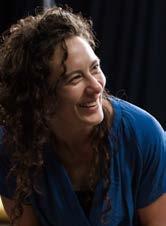
Raquel Meseguer Zafe
Raquel’s work straddles theatre, dance, installation, performative conversations and photo-documentary. In 2016 she founded Unchartered Collective to create theatrical encounters that explore the lived experience of disability. Her project A Crash Course in Cloudspotting is an installation & performance, an app, and a digital archive. She is currently in the R&D phase of a new work entitled ‘Proper Time’.
Raquel was a founding member of Lost Dog Dance and was Associate Artist on Paradise Lost (lies unopened beside me) and Juliet + Romeo. In 2023 she was nominated for an Olivier Award for her Dramaturgy on Lost Dog’s Ruination. Raquel was movement director on Rachel Bagshaw’s The Shape of the Pain and Amy Hodge’s Mother Courage. Raquel was Co-Artistic Director of Candoco Dance Company from January 2024 - July 2025.
uncharteredcollective.com
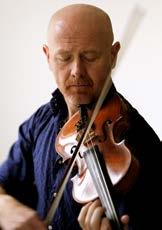
Jamie McCarthy
Jamie has worked for many years composing and performing music in a wide variety of situations, with a main focus on cross-artform work and collaboration. He was formerly Head of Music at London Contemporary Dance School and was lucky enough to spend eight joyful years touring the world as a violinist with Canadian Queer band The Hidden Cameras. Jamie also releases his ‘symphonic drone music’ under the name ‘CERFILIC’.
jamiemccarthy.net
© Tiu Makkonen
© Lorenza Daverio
©James McMenamin
© Paul Blakemore
Biographies Biographies
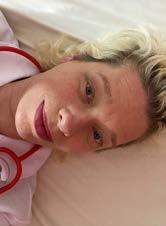
Angela Alves
Angela Alves is a choreographer, dancer, and cultural worker based in Berlin, whose artistic practice is shaped by her lived experience with a chronic neurological illness. At the intersection of art, the body, and politics, she explores and challenges dominant narratives of “health” and “sickness” through the lens of an intelligent and sensitive nervous system. Through embodied storytelling as an artistic justice practice, she seeks to expose, disrupt, and transform these narratives. Her work includes anti-ableist performances, sound installations, and a culture of mutual care developed in close collaboration with others.
She studied dance at ArtEZ (NL) and dance studies at Freie Universität Berlin. Since October 2023, she has been part of Prof. Claire Cunningham’s project team at the Inter-University Centre for Dance Berlin (HZT), where she explores neurocripfeminist practices such as resting, stopping, and pleasure.
angelaalves.de

Jeanne Eschert
Jeanne Eschert developed “bedfold readings” in response to her chronic illness. For this she uses magic tricks and rituals to focus on the physicality and temporality of bedriddenness in the bed sheet imprints. The art of magic has accompanied her since her childhood, when she grew up with a circus and most recently linked it to her gender transition. During and after her studies of Applied Theatre Studies in Gießen and Geographies of the Globalisation of Markets in Frankfurt am Main, together with others, she created choreographies, texts, performances, films, sculptures and ongoing gatherings.
If you are interested in a bedfold reading via home visit, videocall or chat, write to bedfoldreadings@gmail.com. It is aimed at people who spend a lot of time in bed and have built up a special relationship with it - people with chronic or mental illness, disabilities or the people around them.
jeannejeschert.de
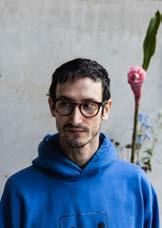
Márcio K. Canabarro
Márcio K. Canabarro was born in 1985 in Brazil. He is a dancer and choreographer with a BA in Social Communication, a Performing Major from SEAD, and certification as an Embodied Myoreflex Therapy Practitioner. Márcio is interested in exploring the intersections of narratology, performance, and mindfulness practices. His work focuses on the socio-emotional implications of accessibility—specifically, how cultural biases around vision shape the intimacy, self-esteem, and social roles of blind and visually impaired individuals. Currently, Márcio collaborates with film director and artist Savio Debernardis on Rehearsal Series, an ongoing study that explores auto-fiction as a tool for radical honesty and art fragmentation as a means of collaboration and access articulation. Márcio also works as a freelance dancer with Hodworks (HU), CRANKY BODIES/a company (DE), and Meg Stuart/Damaged Goods (BE/DE). In the past, he has collaborated with Benoît Lachambre, Sara Shelton Mann, Mark Tompkins, Keith Hennessy, and others.
mkerbercanabarro.com
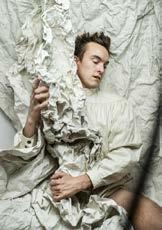
Sindri Runudde
Sindri Runudde is a Swedish dancer and choreographer whose work is characterized by an interdisciplinary and sensory exploration of the body as a living archive. They were educated at the Stockholm University of the Arts and have also received international training in contemporary circus. Sindri’s artistic practice combines dance with sound, storytelling, and visual art, often with a playful and humorous tone that carries deeper perspectives on identity, the body, and perception. They work from a queer and disability rights perspective and are active both in Sweden and internationally, as a solo artist and in collaboration with institutions and independent groups. Sindri has collaborated with institutions such as the Royal Dramatic Theatre (Dramaten) in Stockholm, Stockholm City Theatre, Skånes Dansteater, The 7 Fingers (Les 7 Doigts de la Main), Candoco Dance Company, and Norrlandsoperan Umeå. Sindri is based in Stockholm, and their current work is based on sound archiving and recordings of dance and rehearsals within the project ‘Rehearsal Radio: Outside Ear’. The upcoming year they are also working as a dancer/performer in n new works by Sidney Leone, Halla Olafsdottir, and Marta Forsberg. In the symposium Bodies of Knowledge: Choreographies of Care Sindri is collaborating with Marcio K. Canabarro in EXTRA SET.
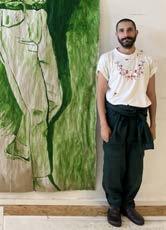
Savio Debernardis
Savio Debernardis is a film director and multimedia artist based in Berlin. He holds a bachelor degree in History of Art and Archeology from the University of the Sorbonne Paris-IV, a BA and MA in Fine Arts from the École Nationale Supérieure des Arts de Paris-Cergy (ENSAPC), and a Master’s in Film Directing from the Babelsberg Film University KONRAD WOLF.
His artistic research focused on the translation of relational aesthetics and conceptual practices into performance, film, drawing, and painting. His films and multimedia works have been shown in major cities around the world, including Berlin, Paris, Los Angeles, and Madrid, and have been featured in numerous international film festivals.
© Michiel Keuper
© Jeanne Eschert
© Angela Alves
© Graham Adey
Biographies Biographies
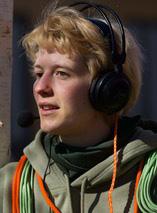
Fia Neises
Fia/Sophia Neises is a freelance performer, choreographer, access dramaturge, theater educator and disability rights activist. In her artistic research, she explores the aesthetics of access for blind audiences with Zwoisy Mears-Clarke, Jess Curtis, Michael Turinsky, [in]operabilities and Rykena/ Jüngst among others.
She is currently working with her collective “LIFT” on the next dance piece “Biofuck”, which will premiere in Berlin in January 2026. She identifies as a disabled artist and encourages the appreciation of people’s individual styles of perception and the creation of unconditional access to art during the process.

Orrow Bell
Orrow’s work encompasses performance, dramaturgy, choreography, facilitation, producing and artist wellbeing. Their recent practice and research centres trans creativity and care in contemporary dance. They enjoy slipperiness across embodiment, movement and language. Dramaturgy and facilitation work has included: Anders Duckworth, Charlotte Spencer, Chisato Minamimura, Ebony Rose Dark, Edit Domoszlai, Eli Lewis & Joe Garbett, Fuel/Travis Alabanza, Gary Clarke, Jules Cunningham, Neve Harrington, Performing Gender EU Project, Raze Collective, South Asian Dance Development Programme with Akademi/Sadler’s Wells. Orrow was a Work Place Associate Artist at The Place (2017-18), where they were also Artist Development Producer (2018-2022) and curator of Splayed, international festival of queer performance and digital arts (2018-2020). Other curation has included for Rambert and Yorkshire Dance.
Orrow’s solo performance works included installation TOMBO(Y)LA (2017), commissioned by Wellcome Collection and theatre show The Forecast (2018), winner of Total Theatre Award at the Edinburgh Festival and selected for the British Council International Showcase. Orrow has performed for emilyn claid, Charlotte Mclean, Alessandro Sciarroni, Tino Sehgal, Hussein Chayalan & Damien Jalet, Lea Anderson, Maresa von Stockert, Neon Dance, Giorgia Ohanesian Nardin, Marco D’Agostin and Chiara Frigo. Orrow has led creative practice workshops in Brazil, Hong Kong, Russia, the US, across Europe and the UK. They were Lecturer on the Expanded Dance Practice MA at London Contemporary Dance School (2022-24) and Facilitator for Next Choreography at Siobhan Davies Dance (2016-18).
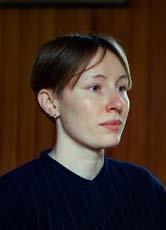
Aniela Piasecka
Creative Enabler and Access Support for Aby Watson, Aniela Piasecka’s practice spans performance for galleries, film, digital technologies, unconventional spaces and theatres; it also includes community practice, facilitation, teaching and support work for other artists. Central to this practice is a desire for collaboration and for working with others beyond the model of the solo artist, as a means to resist artistic and personal atomisation and as a means to generate ideas.
Past works have been presented with Bergen Kunsthall, Norway; CAPC Museum of Modern Art, Bordeaux, France; The Irish Museum of Modern Art, Dublin, Ireland; CCA, Glasgow, UK; Den Frie Centre of Contemporary Art and Dansehallerne, Copenhagen, Denmark; Cubitt Gallery, London, UK; Soy Capitan Gallery, Berlin, Germany.
anielapiasecka.site
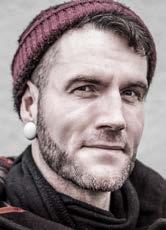
Steven Solbrig
Steven Solbrig studied cultural studies and aesthetic practice at the University of Hildesheim. Steven Solbrig’s artistic approach is based on an in-depth examination of the body/psyche, public or digital space, society, and science. Solbrig uses transdisciplinary formats of performing arts in the visual arts, literature, and vice versa. With these, Steven explores questions particularly related to staging, perception and access in society.
Their most recent publication is the essay “Die Kunst zu(m) Umgehen – Disability Arts und Disability Culture in der DDR und Ostdeutschland” (The Art of Circumvention – Disability Arts and Disability Culture in the GDR and East Germany.
stevensolbrig.wordpress.com
© Dieter Hartwig
© Christa Holka
© Jenny Bank
© Margaret Salmon
Biographies Biographies
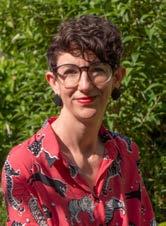
Kate Brehme
Kate trained initially as an artist, has a Masters in Museum Studies, and completed her doctorate on the contemporary art biennial and urban space at Berlin’s Technical University. Kate has worked in Australia, Scotland and Germany on a variety of independent projects, exhibitions and events, and as an arts educator for organizations such as The National Galleries of Scotland. In 2017, Kate co-founded Berlinklusion, a collective of artists and arts mediators with and without disabilities who curate arts projects and advise arts organisations on accessibility. Together, Berlinklusion has advised organisations such as KW Institute for Contemporary Art, Haus der Kulturen der Welt, The Bauhaus Archive and Documenta, and initiated projects including UNBOUND, Germany’s first accessible transdisciplinary residency program.
Kate’s recently curated exhibitions include Queering the Crip, Cripping the Queer, an exhibition on Queer/Disability History, Activism, and Culture (the Schwules Museum, 2022-23), The Space Between (CLB Berlin, 2023), and Unruly Splendour: Exploring Nature Through the Spectrum of Bodies (Galerie in Körnerpark, 2024). Kate has taught for NODE Center for Curatorial Studies (2013-2023), the Goethe Institute (2021-22) and for the Masters Education in Arts at the Piet Zwart Institute in Rotterdam (2014-2024). She currently lectures on Disability Art Studies at the University of the Arts (UdK), Berlin. Kate is a member of the Berlin Arts Council (Rat für die Künste) and the European Arts and Disability Cluster (ADICLUS).
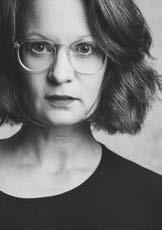
Sandra Noeth
Sandra Noeth is a professor at the HZT Berlin, and a practicing curator and dramaturge. She specializes in body- based research in the arts, in society, and politics. Recent projects focused on the role, status and agency of bodies in bordering processes; the relation between arts, bodies and unequal politics of protection; the embodiment of violence; the ambivalent status of the body in international humanitarian law. She is the author of Resilient Bodies, Residual Effects. Borders and Collectivity from Lebanon and Palestine (transcript, 2019) as well as a co-editor of Breathe. Critical Investigations into the Inequalities of Life (with J. Janša, 2023) and Shielding: Body-based Studies on Integrity and Protection (with J. Janša and S. Umathum, 2024). Sandra was Head of Dramaturgy and Research at Tanzquartier Wien (2009–2014) and worked as an educator with SKHStockholm University of the Arts and Ashkal Alwan Beirut, among others.
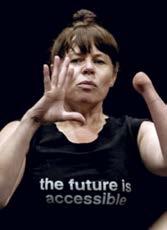
Kate Marsh
Kate Marsh is a disabled dance artist-researcher with over 20 years of experience in performing, teaching, making and researching dance. Her interests are centred around perceptions of the body in the arts and notions of corporeal aesthetics. Specifically, she is interested in each of our lived experiences of our bodies, and how this does (or doesn’t) inform our artistic practice. Her practice-research focusses on leadership in the context of dance and disability and draws strongly on the voices of artists to interrogate questions around notions of leadership, perceptions and the body.
Kate’s work is strongly fed by co-design and co-facilitation, where we all arrive into our practice from our own place and pace and this informs the ways we work together. Privileging all experiences and ways of being in, prioritising a playful, accessible and generative environment.
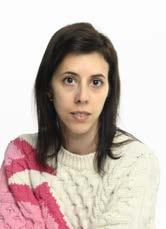
Diana Niepce
Diana Niepce is a dancer, choreographer and writer. She graduated from the Escola Superior de Dança, did an Erasmus at Teatterikorkeakoulun (in Helsinki), and a Masters in Art and Communication at the Universidade Nova de Lisboa. She is an associate artist at Espaço do Tempo and the creator of the pieces “Forgotten Fog” (2015), “Raw a nude” (2019), “12 979 Dias” (2019), “Dueto” (2020), “T4” (2020), “Anda, Diana” (SPA Prize, 2021), “The other side of dance” (2022), “Enfreakment” (2024), “Utopia” (2024) and “Norma” (2024). Curator of the Political Bodies Cycle of conferences and performances (2024, Culturgest). As a dancer and performer, she has collaborated with national and international artists. She is the curator and trainer of the Introduction to the Performing Arts for Artists with Disabilities (2020), Fora da Norma (2023, Biblioteca de Marvila) and Norma (2023, TNDMII). Her most recent publications are the article “Experimenting with the body” in the newspaper Coreia, the book “Anda, Diana” (ed. Sistema Solar) and the story “Broken and stinky, they are the pebbles.” for the Rota Memorial do Convento. aniepce.com
© Francisco Levita
© Kate Marsh
© Kate Brehme
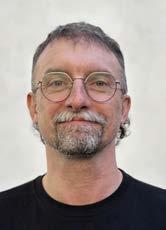
Dan Watson
Dan Watson is a London based artist working in dance and things like it.
Dan was a formative member of StopGAP Dance Company before working with such artists as Gecko, Wendy Houstoun, Nigel Charnock, Stan Wont Dance, 5 Men Dancing, Slung Low Theatre, Protein Dance, Sweetshop Revolution, Seven Sisters Group and Freddie Opoku-Addaie amongst others. He was a collaborating artist on UNDER directed Miguel Moreira (Utero) and features in the award winning short film You, directed by Graham Clayton Chance.
As a maker he has created the solos Semi Detached, Precariously, Sweetest Things and VENUS; and the duets Jacket Dance and Largely Unsung. He has also been commissioned by StopGAP, Flight Effect and Them Two Dance and UCLan Dance. Dan was the Choreographic Assistant on the Universal/Working Title movie of the musical Les Miserables. Other choreographic/movement work includes Rita, Sue and Bob Too (Out Of Joint), Dancehall (CAST) and The National Commemoration of the Battle Of The Somme in Manchester. More recently he has worked on Pan Elo’r Adar (Rhiannon Williams and Stefan Phillips) and Misummer Nights Nightmare (Midnight Circle). He was co-director/creator on A Little Space, a collaboration between Gecko and Mind The Gap. Since 2018 Dan has been working with Claire Cunningham as associate director on Thank You Very Much (MIF) and Songs of the Wayfarer.
danwatsonperforms.weebly.com
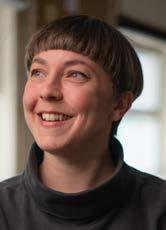
Bethany Wells
Bethany is an award-winning performance designer working across dance, theatre and installation. Trained in Architecture at the Bartlett and Royal College of Art, she has a particular interest in site-specific + devised performance. With a focus on amplifying the lived experiences of disabled, chronically ill and marginalised artists, she is interested in expanding what can be achieved politically and socially by collective live experience. She trusts in the power of performance to open up space and time to new possible realities. Her practice is trauma-informed, in terms of both process and audience experience.
Recent work includes Iconic Fatigue (Polite Rebellion), Common Threads (The Bare Project), Biting Point (Middle Child), The Fabric Of Us (Lizzie Klotz & Luca Rutherford) and We Are All Memory Bodies (Charlotte Spencer Projects). She is a regular collaborator with Polite Rebellion, Middle Child, Lizzie Klotz & Luca Rutherford, and Associate Artist with The Bare Project. With Claire Cunningham she has designed Thank You Very Much (MIF), Choreography of Care Symposium and Songs of the Wayfarer.
In her solo practice, Artists’ Child, she uses modular synthesis to sculpt meditative sonic journeys, creating immersive spatial worlds for audiences to enter into. She is Artistic Director of WARMTH Community Sauna in Sheffield, UK. bethanywells.com
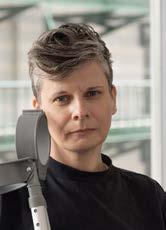
Einstein Professor, Claire Cunningham
Claire Cunningham is a performer and creator of multi-disciplinary performance based in Glasgow, Scotland.
One of the UK’s most acclaimed and internationally renowned disabled artists, Cunningham’s work is often rooted in the study of crip & disabled experience, practices of care and questioning societal ideas of knowledge and value.
In 2021, Claire was honoured for her Outstanding Artistic Development in Dance at the German Dance Awards. In October 2023, Claire joined the Inter-University Centre for Dance (HZT) in Berlin as the Einstein Professor of Choreography, Dance and Disability Arts. Claire premiered her new solo work, Songs of the Wayfarer in November 2024, which has recently been nominated for the Achievement in Dance Award from the UK Theatre Awards 2025.
clairecunningham.co.uk
Luke Pell
Maker, dramaturge and part-time Research Associate in the Crip | Choreo | Care team at HZT, Luke’s research interests are concerned with alterity; attention and touch; crip/disabled/neuroqueer dramaturgies; death, dying and loss and intermedial essaying/researchfulness as embodied praxis of poetics. Alongside working as a companion in practice to other artists whose practices/research question dominant norms - including Caroline Bowditch, Nigel Charnock, Emilyn Claid, Fevered Sleep, Janice Parker, Kitty Fedorec, Kate Marsh, Farah Saleh and Queer by Extension - Luke has been practice/production dramaturge for Claire Cunningham since 2014.
Having curated/supported programmes for research and exchange with artists/ institutions internationally, including time as Head of Learning & Research for Candoco Dance Company, Luke’s creative/critical writing features in: In Other Words from Metal, Live Art Development Agency and Necessity; Contact Quarterly; Dance, Disability, Law: Invisible Difference - Intellect Books; Access All Areas: Live Art & Disability - Live Art Development Agency. They were co-editor of the Embodiment, Interactivity and Digital Performance edition of the Journal of Dance and Somatic Practices and more recently Fevered Sleep | Love and Not Knowing with Laura Cull Ò’Maoilearca as part of Performance Research Books’ Inside Performance Practice series. A former adviser to researchers/funders including: Invisible Difference: Coventry University, Wellcome Trust, Jerwood Arts and Paul Hamlyn Foundation, Luke was chair of the board for Chisenhale Dance Space and is a trustee of Siobhan Davies Studios, London.
lukepellmakes.org
© Lucy Cash
© Bea Borgers
© Smart Banda
© Peter Collins
Credits Credits
HZT | Crip | Choreo | Care Team
Einstein Professor of Choreography, Dance & Disability Arts
Claire Cunningham
Artistic Associate
Nadja Dias
Artistic Associate
Angela Alves
Gathering Curation | Research Associate
Luke Pell
Project Coordinator
Susanne Adam
Project Coordination
Jeanette Gogoll
Access Producer
Vicky Wilson
Access Support
Leo Naomi Baur
Jojo Büttler
Intern
Johannes Schiller
Student Support Assistants
Agnes Ehlich & Tessa Kolberg
Production Assistant
Iván Simonovis Pertiñez
Claire Cunningham Projects
Claire Cunningham
Executive Producer
Nadja Dias
Projects & Access Producer
Vicky Wilson
Dramaturge
Luke Pell
Designer Bethany Wells
Artistic Associate/Co-Director
Dan Watson
Access Support - Claire Cunningham
Orrow Bell
Symposium Access Team
Audio Description
Irene Baumann - Friday
Emmilou Roessling - Saturday / Sunday
Captioning
Panthea: Maria Wünsche, Tino Berndt, Anna Johannsen, Alexander Kurch, Ariane Mondon
DGS
Oya Ataman, Mille Skovdal Jepsen, Britta Durczok
Thanks
Our huge thanks for generous steering and support from our colleagues at HAU, especially Margarita Tsomou, Jana Penz, Petra Poelz, Sven Nichterlein & Sophie Gruber and at HZT, in particular Nik Haffner & Sabine Trautwein, along with our colleagues and the student body who have welcomed us in our mutual research over the past years.
Big thanks also to Access Consultants Fia Neises & Swantje Henke and to Hattie Gregory & Giulia Traversi for their close support.
To Anita Clark, Laura Fisher, Kimberley Harvey, Kat Hawkins, Sarah Hopfinger, Nathaniel Parchment & Nicky Napier in Disrupting Leadership; to Saša Ascentic; Annie Hanauer & Susanna Recchia; Zwoisy Mears-Clarke; Tanja Erhart; Laura Cull Ò Maiolearca; Romany Dear; Loren McKillop; James Thompson; to the Europe Beyond Access Lab artists with Laila White and Kate Marsh, alongside all the artists and researchers gathering here - Thank You all, immensely. For your practice, your presence, your companionship. For your ongoing searching, your deep intentionality and many critical conversations throughout the curation of this gathering.


Attendees arrive check-in, building orientation
Attendee Arrivals
Three-notesOn Crip Technique, Knowledge and Expertise, Part 3 Eli Claire, Kenny Fries, Julia Watts Belser & Sandie Yi
Pause Session 1 Morning ProcessingStroll/Loll & Talk with Claire Cunningham, presenting artists Chiara Bersani, Raquel Mesegeur Zafe, Angela Alves & Jeanne Eschert, Márcio K. Canabarro & Sindri Runudde and others
Earlier Lunch at WAU
Session 2 In Trialogue: On Crip Technique, Knowledge and Expertise Kate Brehme with Diana Niepce, Sandra Noeth, Kate Marsh and others
Closing and Goodbyes
10:30 11:00 11:30 11:45 12:30 13:45 15:00 10:30 11:00 11:30 11:45 12:15 13:00 14:15 14:30 15:00 15:20 16:00 16:15 16:30 19:00
Welcome and Orientation
Claire Cunningham and Luke Pell
Three-notesOn Crip Technique, Knowledge and Expertise, Part 1
Eli Claire, Kenny Fries, Julia Watts Belser & Sandie Yi
Pause Session 1
The Stage as a Square: Disabled Bodies and the Poetics of Resistance
Chiara Bersani Morning Processing
Lunch at WAU
Afternoon Welcome
Session 2 Stimprovisation as Neuroqueer Choreographic Technique Dr Aby Watson
Break
Afternoon ProcessingStroll/loll & Talk with Claire Cunningham, presenting artists Chiara Bersani & Dr Aby Watson and guest reflectors Diana Niepce & Sandra Noeth Pause Summary of the Day So Far and Outline of Tomorrow
Pause Session 3 A World to Exist in for a Day
Raquel Meseguer Zafe & Jamie McCarthy
Social & drinks in WAU
Attendee Arrivals Three-notesOn Crip Technique, Knowledge and Expertise, Part 2 Eli Claire, Kenny Fries, Julia Watts Belser & Sandie Yi Pause Session 1 Bed Connection Jeanne Eschert & Angela Alves Morning Processing Lunch at WAU Afternoon Welcome Session 2 Rehearsal 6: EXTRA SET Márcio K. Canabarro & Sindri Runudde Break Afternoon ProcessingStroll/loll & Talk with Claire Cunningham, presenting artists Raquel Mesegeur Zafe, Angela Alves & Jeanne Eschert & Márcio Canabarro & Sindri Runudde and guest reflectors Kate Brehme & Fia Neises Pause Summary of the Day So Far and Outline of Tomorrow Day Event Closes Please make your own dinner arrangements Session 3 4 Legs Good –2025 Claire Cunningham 10:00 10:30 11:00 11:30 11:45 12:15 13:00 14:15 14:30 15:00 15:20 16:00 16:15 16:30 16:50 17:30