
Richard Colson

Page 1


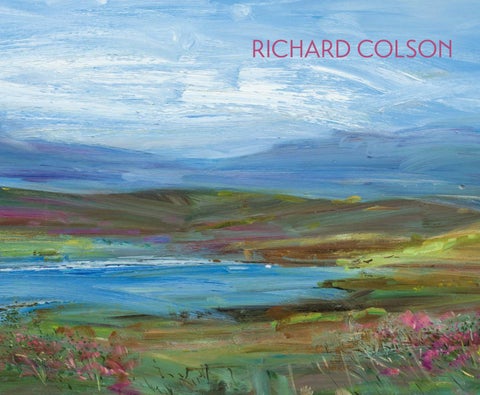
RICHARD COLSON

For the ancient Romans, the genius loci was the literal spirit of a place. It was the guardian deity who inhabited a site, embodying and protecting and lending meaning to the landscape amid which it dwelt.

Nowadays we are less inclined to believe in mythological divinities. Yet a notion first conjured by classical mythology still survives to this day: manifest in what we perceive as the character or ambience of a place. It is this elusive spirit which Richard Colson would appear to capture. His paintings are far less precise descriptions, than evocations of atmosphere. He taps into the mood of a place and the feelings that it can stir.

The works that now go on show were painted over the course of the last couple of years. Ranging in size from huge, expansive canvases to postcard-size images, they set the viewer down upon North Norfolk coastlines, amid the highlands of Scotland, among London street scenes, beside Thames riverscapes. They show us the mudflats and marshlands and fishing boats stranded by tides; a loch set

like an eye amid encircling moorlands; a purple cloak of heather chucked over a hill; the arches of a bridge as it frog-hops the flow of a river; the colours of fall in Massachusetts.

The ostensible subject matter, however, seems mostly secondary. These are seldom obvious views or conventionally picturesque scenes. Rather, they are about the way the light shines on mirroring stretches of water; about how the clouds scud across vast expanses of sky; about windblown brightness and newly awoken colours and the way that a thundery squall might set them athrob.

Colson, scribbling in his sketchbook or setting his easel up amid nature, might be seen like some modern-day version of the spirit of place. He engages at a physical level with the landscape he paints: ‘I have to let go,’ he says. ‘I respond in an almost violent, but not an aggressive way. I let the process subsume me. It’s a very organic, instinctive way of working,’ he explains. His gestures are recorded by the paint: the great dragging sweeps and the thick, scabby clots; the stabs, streaks and scratches; the dribbles and splashes.

Some en plein air pictures might be completed in a day. Others are laboured over for months in a London studio. But each, in its own way, embodies a landscape. Each captures a sense of atmosphere and mood so that we, as viewers, less merely look at, than find ourselves immersed in, the scenes. Spend a bit of time, and you can all but feel the briskness of the wind, hear the lap of the water, sense the plunge of the slope, taste the salt on the air.

And yet you cannot help wondering why Colson chooses these particular places: that featureless stretch of a mudflat, that empty patch of moor? It’s a bit like freeze-framing, for a moment, a scene from a train window. Why was that spot selected and not the next one? Brushstrokes slide towards edges as if, were there more canvas, they might easily have gone on. It is less the exact locality that appears to interest Colson. It is less some specific view than an elemental interplay of water, air and light. It is not the spirit of place that these paintings conjure. It is the spirit of space.

front cover (detail)

Heathered Hills Oil on canvas 92 × 153 cm back cover Rowers on the Thames

on canvas 71 × 122.5 cm

Richard Colson, Norfolk
With thanks to Paul Tucker Photography

FINE ART

Paintings are for sale on receipt of this catalogue The entire exhibition can be viewed online at www.cricketfineart.co.uk requests the pleasure of your company at the

Exhibition dates: 15 th April - 1 st May 2026

The Squall, Skye Oil on canvas 101 × 131 cm
On the Staithe, Burnham Overy
Oil on canvas 91 × 121 cm
Lochgoilhead Oil on canvas 61.5 × 82 cm
Dunderave Castle
Oil on canvas
61.5 × 82 cm
Rannoch Moor VI
Oil on canvas 61.5 × 82 cm
River Burn at Burnham Overy III
Oil on canvas 61 × 81 cm
On the Staithe, Brancaster Oil on canvas 171 × 221 cm
Boat on the Loch Shore II Oil on canvas 61 × 90 cm
On the Loch Shore Oil on canvas 66 × 82 cm
Morston Moorings XI
Oil on canvas 101 × 131 cm
Cley Mill and Fields
Oil on canvas 100 × 130 cm
River Burn at Burnham Overy
Oil on canvas 121 × 181 cm
Ice on the Round Pond Oil on gesso board 12.5 × 18 cm
Gulls on the Round Pond Oil on gesso board 12.5 × 18 cm
Swans and Gulls on the Round Pond Oil on gesso board 12.5 × 18 cm
Dunderave Castle, Loch Fyne IV
Oil on gesso board 12.5 × 18 cm
Westminster, Autumn Light
Oil on gesso board 12.5 × 18 cm
Twilight, Battersea Bridge
Oil on gesso board 12.5 × 18 cm
Ebb Tide, Burnham Overy Staithe
Oil on canvas 92 × 153 cm
Pelham Crescent II
Oil on canvas 51 × 41 cm
Launceston Place II
Oil on canvas 25 × 30.5 cm
Magnolia Oil on canvas 61 × 76.5 cm
The Grenadier Oil on canvas 51 × 41 cm
Wilson Steer's House Oil on canvas 51 × 41 cm
Thatched Cottage, Ham Oil on canvas 41 × 51 cm
Fall Colours, Massachusetts
Oil on canvas 61 × 76.5 cm
Dunderave Castle, Loch Fyne
Oil on canvas 61.5 × 81.5 cm

In the Shallows

Oil on canvas 101 × 130.5 cm
Dunderave Castle, Loch Fyne II
Oil on canvas 100.5 × 130.5 cm

Turn static files into dynamic content formats.
Create a flipbook
Richard Colson by Cricket Fine Art Ltd - Issuu