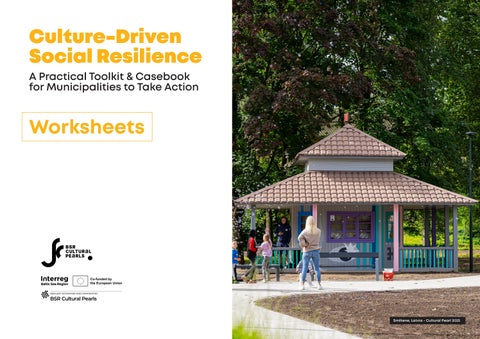
Culture-Driven Social Resilience Worksheets

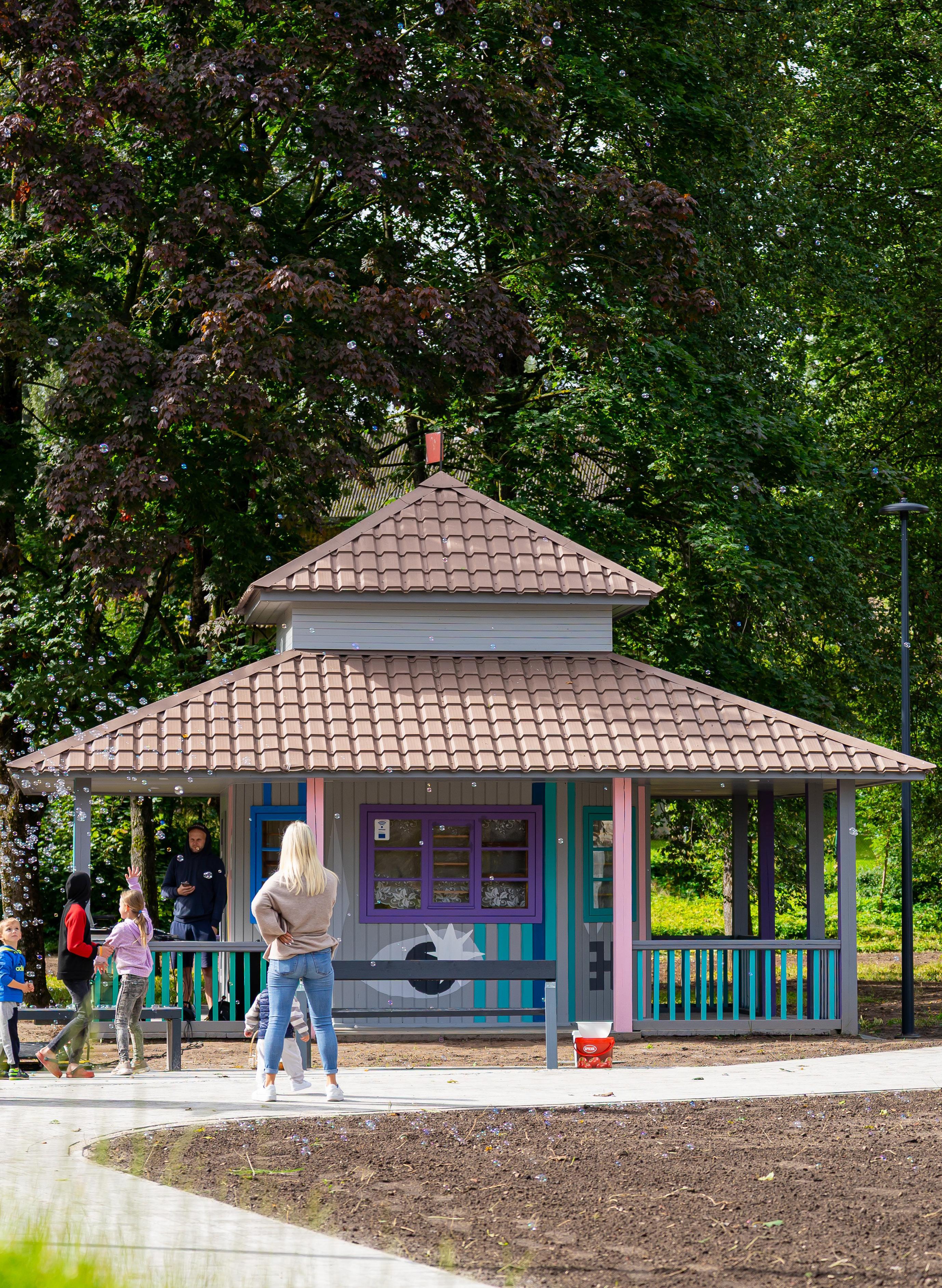
Smiltene, Latvia - Cultural Pearl 2025
Culture-driven Social Resilience
A Practical Toolkit & Casebook for Municipalities to Take Action
Developed & designed by Abbas Sbeity
Creative Insights Studio www.creativeinsights.studio
Commissioned development by Northern Dimension Partnership on Culture, project partner of BSR Cultural Pearls www.ndpculture.org
Contact info@ndpculture.org

© 2025 Northern Dimension Partnership on Culture (NDPC) & Creative Insights Studio AB.
This publication is licensed under a Creative Commons Attribution–NonCommercial 4.0 International licence (CC BY-NC 4.0): https://creativecommons.org/licenses/by-nc/4.0/
You are free to share and adapt the material for noncommercial purposes, provided that appropriate credit is given and any changes are indicated.
Photos, logos, and other third-party materials are not covered by this licence and remain the property of their respective rights holders. Their reuse may require separate permission.
These worksheets are the practical tools of the Culture-Driven Social Resilience Toolkit. They translate the 5-phase roadmap into hands-on formats that you can use directly in your collaboration work.
These 11 worksheets are designed to support collaboration throughout the 5-phase process. Use them in workshops and meetings to structure discussion, make decisions together, and keep your partnership aligned from first idea to future steps.
For best use, print the worksheets in A3 or A2 format. You can also upload them to digital whiteboards such as Miro or Mural and work with them online.
1. Conditions
Worksheet 1.1 – Entry Point Canvas
Worksheet 1.2 – Ecosystem Mapping Canvas
Worksheet 1.3 – Preparedness Canvas
2. Initiation
Worksheet 2.1 – Establish Collaboration Canvas
Worksheet 2.2 – Collaboration Agreement Canvas
3. Design
Worksheet 3.1 – Project Co-Creation Canvas
Worksheet 3.2 – Community Engagement Canvas
Worksheet 3.3 – Action Plan Canvas
4. Pilot
This phase is all about doing. There are no dedicated worksheets. Use your Action Plan (Worksheet 3.3) and the considerations in this phase to guide implementation.
5. Scaling & Learning
Worksheet 5.1 – Evaluation Canvas
Worksheet 5.2 – Storytelling Canvas
Worksheet 5.3 – Future Steps Canvas
Download the full toolkit
click here → or scan this QR code
Cultural Pearls
Clarify your starting point and define why this project matters.
Goal: To help municipalities identify the trigger for their collaboration project, align how it connects to existing strategies or community needs, and clarify whether the initiative is strategic or tactical.
What frameworks, strategies, or plans already exist? List existing municipal strategies, plans, and policy goals (e.g., sustainability, inclusion, urban development).
Which strategic priorities could this project connect to?
What commitments or mandates support this type of work?
Tip: Use color codes: internal (municipal) / external (regional, national).
Participants: Municipal project lead, 1–3 colleagues
Time: 45–60 minutes
Preparation: Review current strategies and plans, bring notes on ongoing projects and priorities
Materials: Printed worksheet, Sticky notes and pens
What prompted this project idea? Identify immediate drivers that make this project timely.
Is it responding to a challenge, event, or opportunity?
Who initiated the idea (citizen, CCS, department)?
What window of opportunity or momentum exists?
What change do we want to see?
Define the desired outcomes and how they align with municipal priorities.
Map your outcomes along the timeline:
Immediate effects → Medium-term outcomes → Long-term goal
Ask: Is the focus on immediate results or long-term transformation?
Once you have clarified this, you will know whether your entry point is strategic or tactical.
What is the issue we’re addressing and why does it matter?
Who is affected?
What evidence supports this problem?
How does it relate to resilience?
1. Context & Strategies
2. Triggers & Opportunities
4. Intended Impact
3. Problem Definition
Map your ecosystem to find collaboration opportunities
Goal: To help municipalities map their local cultural and creative ecosystem, understand existing connections, and identify where new partnerships can emerge.
Participants: Municipal project lead, 1–3 colleagues
Time: 60-90 minutes
Preparation: Gather any existing lists of cultural actors, venues, associations, review previous collaborations or projects
Materials: Printed worksheet, Sticky notes and pens
to Create Your Ecosystem Map
To create a comprehensive map of your ecosystem, follow these steps:
Step 1. Cultural & Creative Assets
List and cluster all actors and assets across the categories in the ecosystem map on the right. Put the municipality or the city at the center. Use sticky notes.
Step 2. Relationships & Connections
Map how these actors relate to each other and to the municipality.
→ Draw arrows or lines to show collaboration or dependency.
Then discuss:
• Who collaborates with whom?
• Which actors bridge multiple networks?
Step 3. Opportunities
Reflect on the ecosystem you’ve mapped and fill the opportunities section:
• Which actors or clusters are most relevant to your entry point?
• What collaboration opportunities exist or could emerge?
• Where can the municipality add value or connect dots? How
Who is the potential partner, what is the collaboration opportunity, why is this an opportunity? Have you collaborated with them before?
Preparedness Canvas
Assess your preparedness and needs before collaborating
Goal: To help municipalities assess their internal capacity and readiness for collaboration, visualise their current level of preparedness, and define immediate next steps.
This circular, six-axis radar chart represents the key dimensions of your municipality’s internal readiness for collaboration. Rate your current status on a scale from 1 to 5, where: 1 = very low readiness (inner circle) 5 = fully ready (outer circle) Place a dot on each axis to represent your score. Connect the dots to form your municipality’s Preparedness Radar shape.
Leadership Support
Is there visible commitment from political or senior leadership?
Internal Capacity Do staff have the skills, time, and mandate to collaborate with CCS?
Cross-Department Collaboration Are departments aligned and working together on shared goals?
Legal & Structural Frameworks
Do existing rules (procurement, IP, data) enable or limit collaboration?
& Budget Are there financial and material resources available for pilots?
& Understanding Do staff and decisionmakers understand the value of CCS collaboration?
Participants: Municipal project lead, 1–3 colleagues
Time: 60-90 minutes
Preparation: Review internal structures: roles, budgets, existing collaboration routine, talk briefly with legal/procurement department
Materials: Printed worksheet, Sticky notes and pens
Reflection Table
Start by interpretin the radar map. The more balanced and expanded the shape, the stronger your internal readiness. A smaller or uneven shape indicates areas that need attention before engaging external partners.
Then use this table to dive deeper into selected dimensions:
What do we already know about this area?
What is unclear or needs further exploration?
Focus on 2–3 dimensions where your team’s scores were lowest or most uneven.
Cross-Department Collaboration
Turn key insights from your reflection into 2–3 concrete actions.
Focus on small, achievable steps that improve internal readiness. What needs more preparation to increase your preparedness level?
Establish Collaboration
Design your partner selection and engagement approach
Goal: To help municipalities define what they need in a collaboration partner, set clear selection criteria, and choose how to identify, reach out to, and build relationships with potential CCS collaborators.
1. Define What You Need
Why and with whom do we want to collaborate?
Clarify the purpose and profile of the ideal partner. Start from your project’s challenge and desired impact, not from who you already know.
What is the main goal or focus of this collaboration?
What type of partner do we need? (individual, organisation, network, community group)
What roles or contributions are we looking for? (artistic, strategic, community engagement, communication, etc.)
2. Define Selection Criteria
Participants: Municipal project lead, project team
Time: 60-90 minutes
Preparation: Bring results from Worksheets 1.1 and 1.2, list any potential partners already in mind
Materials: Printed worksheet, Sticky notes and pens
Does the partner fit what really matters?
Use this space to define clear criteria for selecting a partner who aligns with your goals and values.
To achieve our goal, our partner must have: (non-negotiable qualities or capacities)
To achieve our goal, our partner could have: (desirable but not essential attributes)
To achieve our goal, our partner cannot have: (conditions or attitudes that could block collaboration)
Create the first shortlist of potential partners:
3. Plan How to Engage
Decide how to reach out to potential partners, who will take the lead, and what the first interaction should look like.
How do we want to find our partner(s)?
Open call
Procurement
Direct invitation
Competition
Why does this approach make sense for this collaboration?
How will we communicate the opportunity or invitation to reach the potential partners?
How will we make a final selection? (who, when, criteria, etc.)
What are our next steps?
Worksheet 2.2
Collaboration Agreement Canvas
Translate your collaboration into a clear shared framework
Goal: To help municipalities and partners summarise the essential elements of their collaboration in an accessible format that complements formal legal agreements.
Roles & Responsibilities
Who are the partners involved?
What are our different key responsibilities?
What are our needs and expectations to succeed?
How will success look like?
Ownership & Visibility
How will results, materials, and credit be shared?
Who owns creative outputs or materials?
How can each partner use them (licensing, attribution)?
How will we communicate and credit each other publicly?
Our Shared Purpose
Participants: Municipal project lead, project team, CCS partner
Time: 60-90 minutes
Preparation: Bring draft collaboration ideas, roles, and budget; Have any formal agreement templates available for reference
Materials: Printed worksheet, Sticky notes and pens
Communication & Decision-Making
How will we stay aligned?
What are our collaboration routines (meetings, emails, etc)
How do make key decisions?
How will we handle feedback or changes?
If the collaboration needs to end early, how will that be handled?
Funding & Resources
What resources are being shared?
How much is the funding? What is the payment mechanisms?
What other resources are needed and who will cover them? (spaces, equipment, communication, staff time)
Design your pilot initiative together with partners
Goal: To help partners move from a shared challenge to a clear pilot concept by framing the challenge, generating ideas, and developing a coherent concept before implementation.
1. Challenge Framing
Agree and align on the scope and challenge this project will tackle. Discuss these questions: What issue or opportunity are we addressing? Why is it important now, and who does it affect? What change or outcome do we want to achieve through this project? What assumptions do we need to test or clarify?
2. Ideation
How to:
Write one challenge statement that everyone agrees on. We want to tackle [the issue/challenge] in [place/community/context] with the aim to [desired outcome] in [timeframe or scope].
3. Idea Selection
Place your clustered ideas on the Impact vs. Feasibility Matrix. Judge each idea based on:
• Impact: How valuable or transformative could this idea be?
• Feasibility: How realistic is it to implement given time, budget, and resources?
Agree on one main idea or theme to move forward with.
Participants: Municipal project lead, project team, CCS partner
Time: 90-120 minutes
Preparation: Bring challenge/context from Worksheet 1.1, bring any insights from previous projects or research
Materials: Printed worksheet, Sticky notes and pens
Use your wall, a whiteboard, or another flipchart to do the ideation. Write one idea per sticky note, add visuals or quick sketches, and place them freely.
Once you have many ideas, move and cluster the sticky notes. Group those that feel connected, coherent, or could be merged into larger themes.
1. Generate as many ideas as possible — think broad before narrowing down.
What ideas, activities, or approaches could address this challenge? What creative methods or formats could we use? What inspiration or reference projects can we learn from? What do we already have (skills, resources, networks) that can spark ideas?
2. Cluster ideas into 2–3 themes or directions. Write the title of each theme here.
4. Cocnept Development
Concept Title
Describe your proposed concept: what it is and what it does.
Explain what makes your concept valuable. Why is it worth implementing?
Theme 1 Theme 2 Theme 3
Impactful
Feasible
Plan meaningful and inclusive community engagement
Goal: To help partners map what they already know about the community, identify what they still need to learn, and design engagement that is meaningful, inclusive, and beneficial for everyone involved.
Assets & Opportunities
What are the existing assets, resources, and capacities in the community?
What forms of knowledge or skills already exist locally?
What current opportunities could the project build on?
Outreach Strategy
How do we plan to reach and invite participation?
What methods or channels will we use?
What barriers to access (language, trust, time, space) do we need to consider?
How can we make engagement inclusive and accessible?
Community
Who are they, and what do we already know?
Participants: Municipal project lead, project team, CCS partner, community representative
Time: 60-90 minutes
Preparation: Bring notes on target community and previous engagement
Materials: Printed worksheet, Sticky notes and pens
Learning Opportunities
What do we still not know about the community’s needs, interests, or challenges? What assumptions do we need to test?
How can this project help us understand the community better? What methods could help us learn (observation, dialogue, participatory research)?
Benefits & Offerings
How will the project create value or benefit for the community?
What will participants gain (knowledge, access, visibility, networks, resources)? What commitments are we making to the community?
What will we do?
List the main actions that will bring your project to life. Place them in sequence.
Turn your pilot concept into a concrete plan
Goal: To help partners transform the co-created concept into a clear and achievable plan by defining activities, roles, timeline, resources, and how learning will be tracked.
Who will do what?
Define the roles and responsibilities of each partner or team member.
When will it happen?
Mark approximate start and end dates for each activity.
Participants: Municipal project lead, project team, CCS partner Time: 60-90 minutes
Preparation: Bring the refined concept from Worksheet 3.1; bring calendar, budget draft, and key dates
Materials: Printed worksheet, Sticky notes and pens
What do we need?
List the resources required for each key activity. These may include funding, space, equipment, communication, staff time, or materials.
How will we know if it’s working?
Define how you’ll track progress and learning throughout the pilot.
Review your pilot and capture what you’ve learnt
Goal: To help partners carry out a structured after-action review by comparing what was supposed to happen with what actually happened, and summarising key learnings for future decisions.
After-Action Review
1. What was supposed to happen?
Revisit your original intentions. What change did we want to see? What did we plan to do and produce?
3. Why was there a difference?
Explore reasons, enablers, and barriers. What helped things go well? (enablers, good decisions, conditions) What made things difficult? (barriers, constraints, assumptions) What surprised us?
2. What actually happened?
Describe what took place in reality. Consider outcomes, activities, collaboration process, and engagement.
Was there any unintended outcomes (positive or negative)?
Participants: Municipal project lead, project team, CCS partner
Time: 90–120 minutes
Preparation: Collect monitoring notes, photos, feedback, and basic numbers from the pilot; Bring the original action plan
Materials: Printed worksheet, Sticky notes and pens
Key Learnings & Implications
Write the three most important learnings. Then reflect on what does this mean for future steps? What would you scale or replicate? What would you keep and sustain at the same level? What would you close or let go of?
4. What can we learn and do differently next time?
Translate reflection into concrete learning. What should we keep doing? What should we change or improve? What should we stop doing? What new ideas or approaches emerged?
Which moment is worth telling?
Turn your pilot into a story of meaningful change
Goal: To help you capture one most significant story of change from your pilot and shape it into a clear, shareable case that can inform and inspire others.
Think of one moment, situation, or shift in this pilot that felt especially important or meaningful. It could be an “aha” moment, a turning point, a small but powerful change, or a story that you would tell someone to explain why this work matters. Consider: What is the situation or moment you want to describe? Who was involved?
Where and when did it take place?
What changed in or after this moment?
2. Why is this change significant?
Why does this story matter?
What changed for people, communities, or partners because of this pilot? Why do we consider this change important?
What does this story show about culture-driven resilience in our municipality?
Participants: Municipal project lead, project team, CCS partner
Time: 60-90 minutes
Preparation: Review evaluation outcomes (Worksheet 5.1); Engage participants to suggest powerful moments or stories in advance
Materials: Printed worksheet, Sticky notes and pens
4. How could this story inspire others?
What can someone else learn or do from hearing it?
What does this story show about what is possible with culture and collaboration?
What would we want another municipality, partner, or community to try after hearing it?
What simple advice or “lesson in one sentence” could we share?
3. Evidence & Voices
Ground the story in real experiences.
What concrete signs of change can we point to? (e.g., participation, new relationships, new uses of space, follow-up initiatives)
Which quotes from participants or partners capture this change?
Do we have any simple data that supports the story? (numbers, observations, feedback)
5. How will we share this story?
Turn this into something you can actually use. Now that you have shaped the story, package it so it can travel.
Who needs to hear this story?
In what format will we share it?
What is the headline or key message?
1. The Story of Change
Future Steps
Decide what happens next: scale, sustain, or close
Goal: To help partners translate evaluation and learning into clear future decisions about what to scale, what to sustain, and what to close or pause, and to agree on concrete next actions.
Key Learnings & Decision Criteria
What are we deciding based on?
List 3–5 learnings from the pilot that feel most important for future decisions. What matters most when deciding to scale, sustain, or close? (e.g. impact, feasibility, strategic fit, partner commitment). Is there a specific part of the pilot we are deciding about? an activity format, a partnership model, a method of community engagement, etc.
Scale
What could we grow or expand?
Which elements have strong impact and potential to reach more people or places?
Where or with whom could we expand or replicate this work? What would be needed to scale (resources, partners, political support)?
Participants: Municipal project lead, project team, CCS partner
Time: 90–120 minutes
Preparation: Bring summaries from Worksheets 5.1 and 5.2; Clarify current resources, funding horizon, and strategic priorities
Materials: Printed worksheet, Sticky notes and pens
Decisions & Next Actions
Based on your reflections, agree on what you will scale, sustain, or close, and turn these decisions into clear next steps. For each element, decide who is responsible, what the first action will be, and by when it should happen.
Sustain
What should we maintain at current level?
Which elements are valuable and realistic to keep at their current scale?
What do we need to keep them running (budget, time, owners)?
How could they be integrated into regular work or existing programmes?
Close
What should we end — and how do we end well?
Which elements are not effective, not feasible, or no longer needed?
Where is it better to stop, pause, or hand over? How will we close respectfully and ensure learning is kept?