



The Old Cranleighan 2025 No. 20 December 2025
Editorial
Design: screambluemurder.co.uk
The
President:
Chairman:
OCS and Cranleigh Network
e-mail: vli@cranleigh.org
The OC Society website: www.ocsociety.org www.facebook.com/ oldcranleighans
Follow @oldcranleighans ocsociety.cranleigh.org
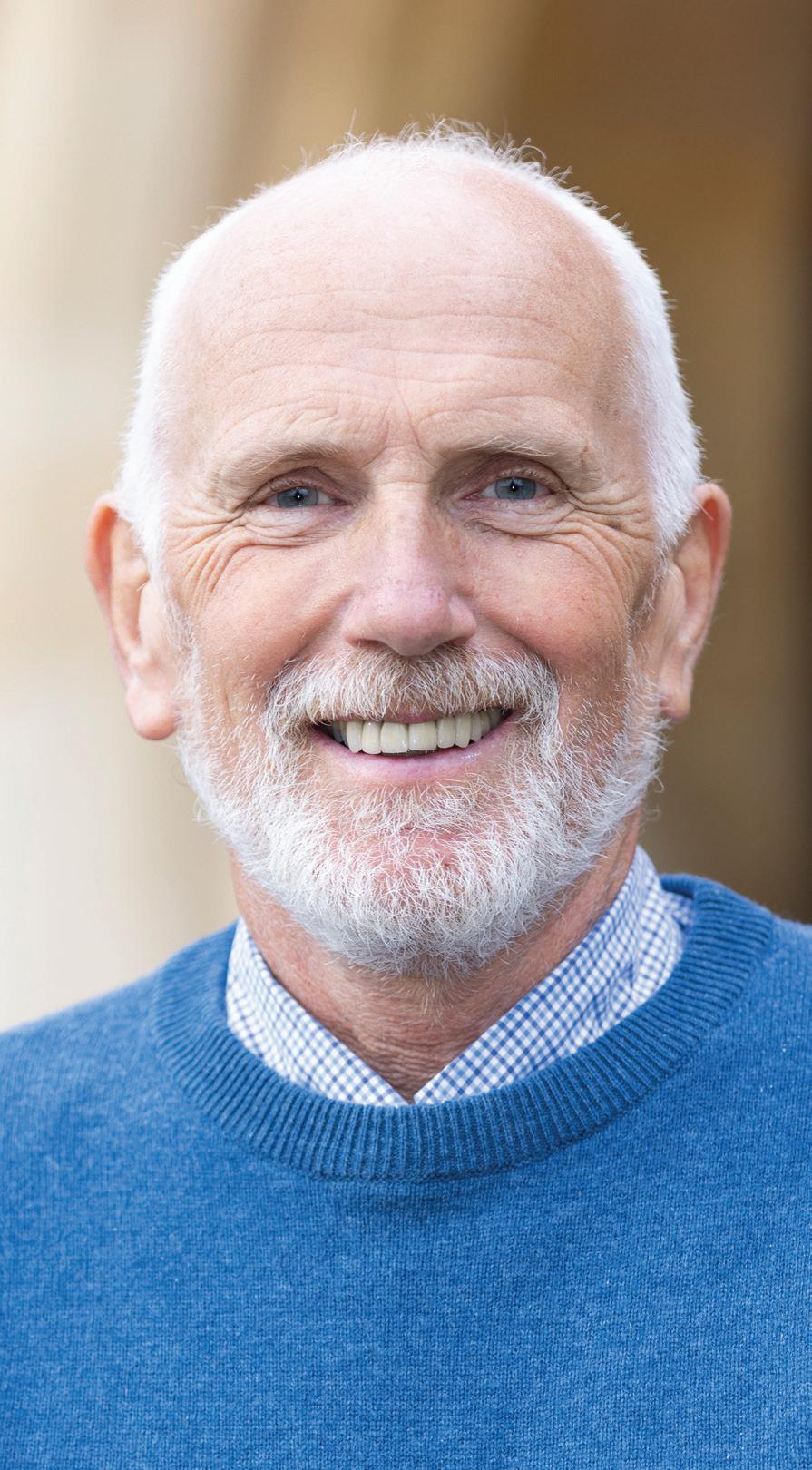
CHAIRMAN, MARTIN WILLIAMSON (2&3 SOUTH 1980)
We all spend a relatively brief period of our lives at Cranleigh School, five admittedly very important years, before we leave and move out into the world. Many stay in touch with contemporaries but quite a few do not return often, if at all.
Those of us with closer ongoing links, either personally or through children and/or grandchildren, do regularly revisit and so are conscious of the gradual but remorseless changes which are vital to any establishment. Those who do not are forgiven for thinking that the place is largely the same as it was the day they walked out as a Cranleighan for the last time, years or decades earlier.
Some parts of the School, as it stands now, would be familiar to someone from the earliest days. If a Cranleighan from 1870 was to be transplanted from the Quad they knew to the one today the differences would be relatively minor. The grass instead of tarmac and the ‘new’ offices on the north side is about the extent of it. The view of the buildings from Horseshoe Lane is barely changed since the major development which saw the construction of the Connaught Block and Speech Hall in the late 1920s.
The same cannot be said for the north of the main buildings where the open space of the North Field, purchased in 1911 and for almost seven decades an area of sport and recreation with spectacular views over Winterfold and Hascombe Hill, is now almost completely built over. The idea for expanding the buildings over the field is nothing new. Extensive plans were drawn up in 1915 which would have seen almost as many structures as there are now, but they were delayed because of restrictions on construction materials resulting from the ongoing World War and eventually scrapped in the recession which followed.
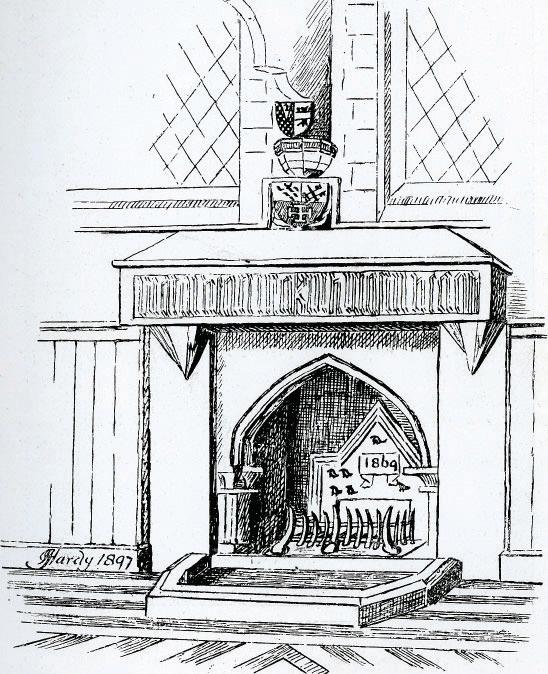
The Dining Hall remains fundamentally as it was when it opened in 1869. The floor and ceilings are different, the fireplace has been blocked for decades, and the myriad serving girls who waited on the tables have given way to a cafeteria, but it is recognisable.
In communications with Old Cranleighans we inevitably refer to new buildings and sporting areas as if everyone knows what we are talking about, just because we do. It soon becomes apparent talking to OCs on occasions such as OC Day and the Over 70s lunch that many do not. This is why in this edition of the OC magazine we have tried to explain changes, primarily those on the lost North Field but also to two other rooms well known to almost everyone, the Reading Room and the Williams Library.
Progress is inevitable and vital but it inevitably comes at a cost. Most people are conservative when it comes to change, especially when it involves their childhoods.
Norman Grant, the Bursar from 1968 to 1976, said: “If Cranleigh ever stops building then it will have lost the will to survive.” Were he alive today he would be delighted to see how Cranleigh has evolved in the half century since he left.
“Most people are conservative when it comes to change, especially when it involves their childhoods ”
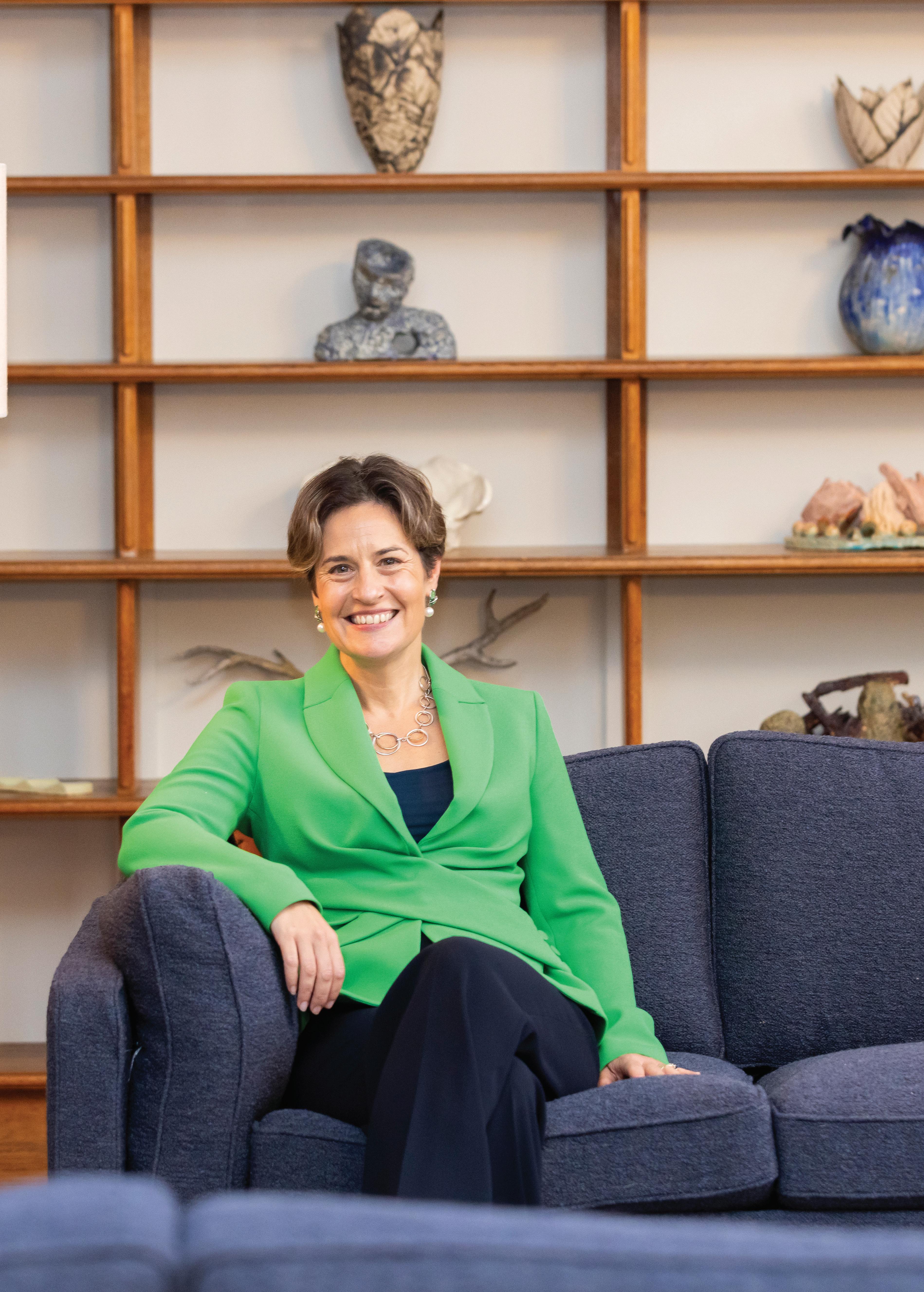

As I come to the end of my first year as Head, I’ve found myself reflecting on what a privilege it has been to join this extraordinary community. From the moment I arrived, I felt the strength of Cranleigh’s culture—something you, as Old Cranleighans, will of course relate to well. That sense of warmth, loyalty and belonging is real, and it is one of the reasons I have fallen in love with this school so quickly.
Although not enough to date, over the past year I have enjoyed meeting a good number of Old Cranleighans at events both here and further afield. Hearing your stories and experiences — many heart-warming, some eyeraising, and many very amusing — has given me a richer understanding of Cranleigh through your eyes. What has struck me most is the sheer depth of loyalty within the OC network. This loyalty is not only evident in the support you offer, but is reflected so clearly in the number of OCs who choose to send their own children here. There is no greater testament to a school than that.
Of course, coming in as a new Head means finding the right balance between honouring the heart and culture of the school and considering how best to evolve it for the future — without ever compromising what makes Cranleigh, Cranleigh. This year has been about getting to know the school properly and understanding it from the inside out. For me, nothing captures the spirit of this place more powerfully than hearing our boys and girls singing in Chapel; it epitomises the warmth, unity and joy that lie at the core of Cranleigh life. I have loved seeing the teamwork and passion on our pitches — in rugby, cricket, football and hockey — matched by the creativity and confidence on display in countless performances throughout the year. And nothing quite prepares you for the camaraderie and sheer exuberance of House Dance, which showcases the bonds forged so naturally through our Houses. These moments have been genuinely special and have helped me understand exactly why this school means so much to so many.
This 160th anniversary year has offered the perfect moment not only to celebrate where we have come from, but to look ahead with renewed purpose. As we reflect and cast our eyes forward, we have been considering how best to ensure that the educational experience we offer continues to capture the imagination of prospective families, particularly in an increasingly competitive market. Our priority is clear: to ensure that Cranleigh continues to thrive long into the future, so that today’s pupils will look back with pride as Old Cranleighans fifty years from now.
To achieve this, we must be ambitious. We want Cranleigh to be better known and clearly understood as a leading school offering an outstanding, dynamic and forward-thinking education. Our motto, Ex Cultu Robur — From Our Culture Comes Strength — remains at the heart of who we are and will continue to shape the character and confidence of Cranleighans as they step into their future lives and careers. This is a very exciting time for the School and I feel honoured to be the one to be leading the school at this time.
I very much look forward to meeting more OCs in the year ahead and, in the meantime, please do keep in touch with the School and, where you are able to, join us for one or more of the events that take place across the year.
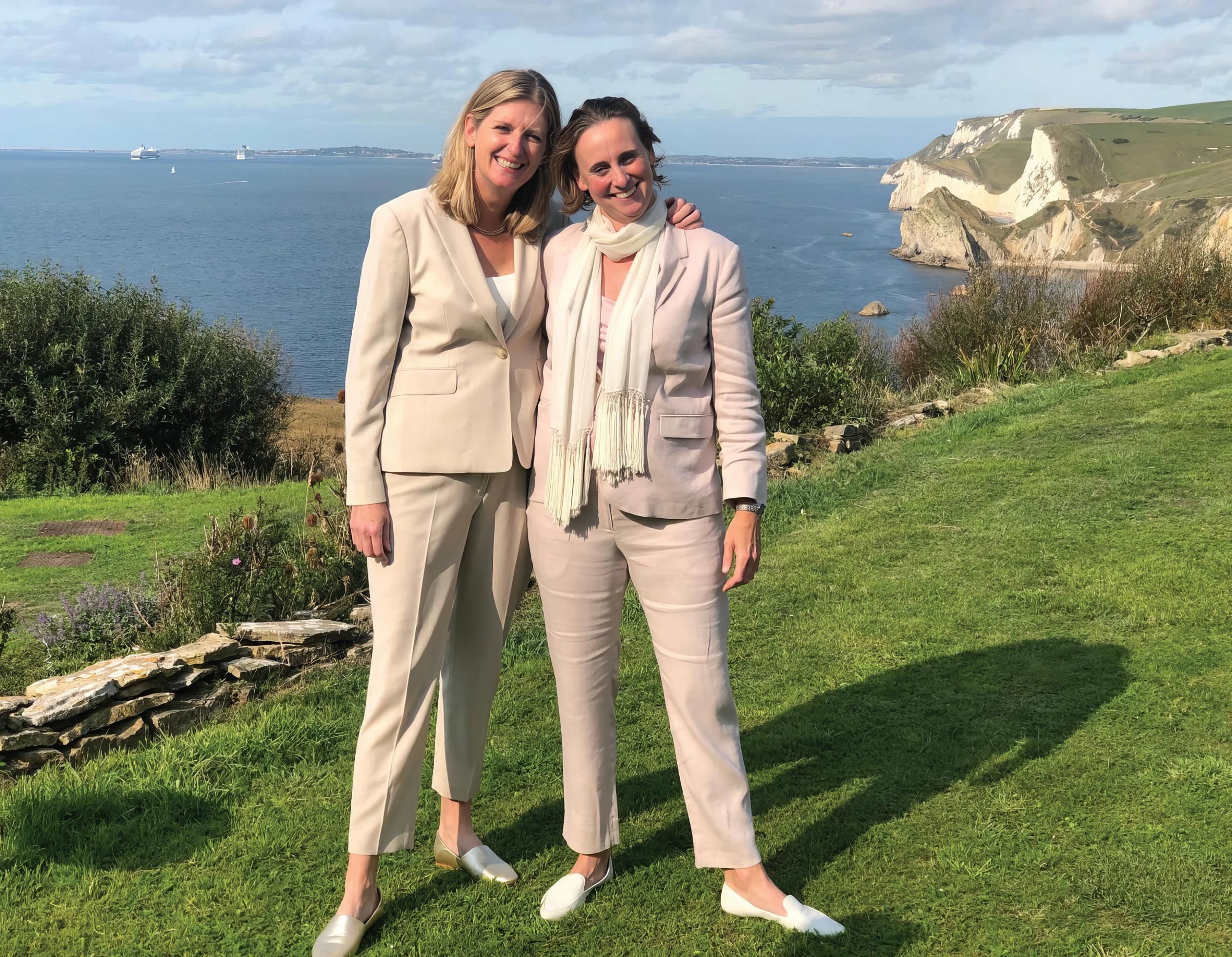
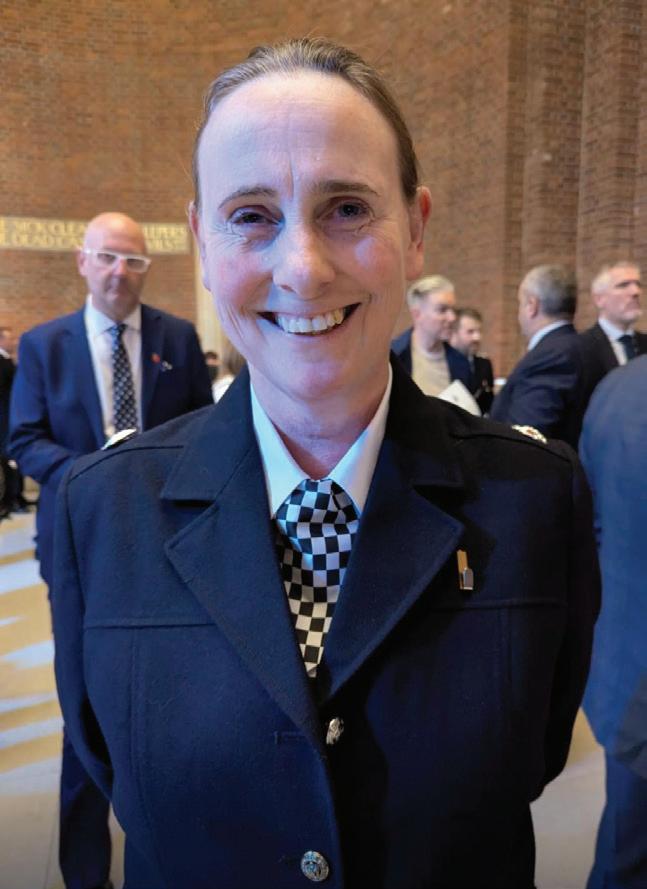
NENS CORRAN (2&3 SOUTH 1991) DAUGHTER OF THE LATE ANDREW CORRAN (MCR 1968-1995), IS FORGING A VERY IMPRESSIVE CAREER IN THE MET POLICE. CURRENTLY SHE IS ACTING DETECTIVE SUPERINTENDENT IN CHARGE OF CID IN TWO NORTH LONDON BOROUGHS, WHERE PREVIOUSLY SHE WAS A DETECTIVE INSPECTOR IN COUNTER TERRORISM.
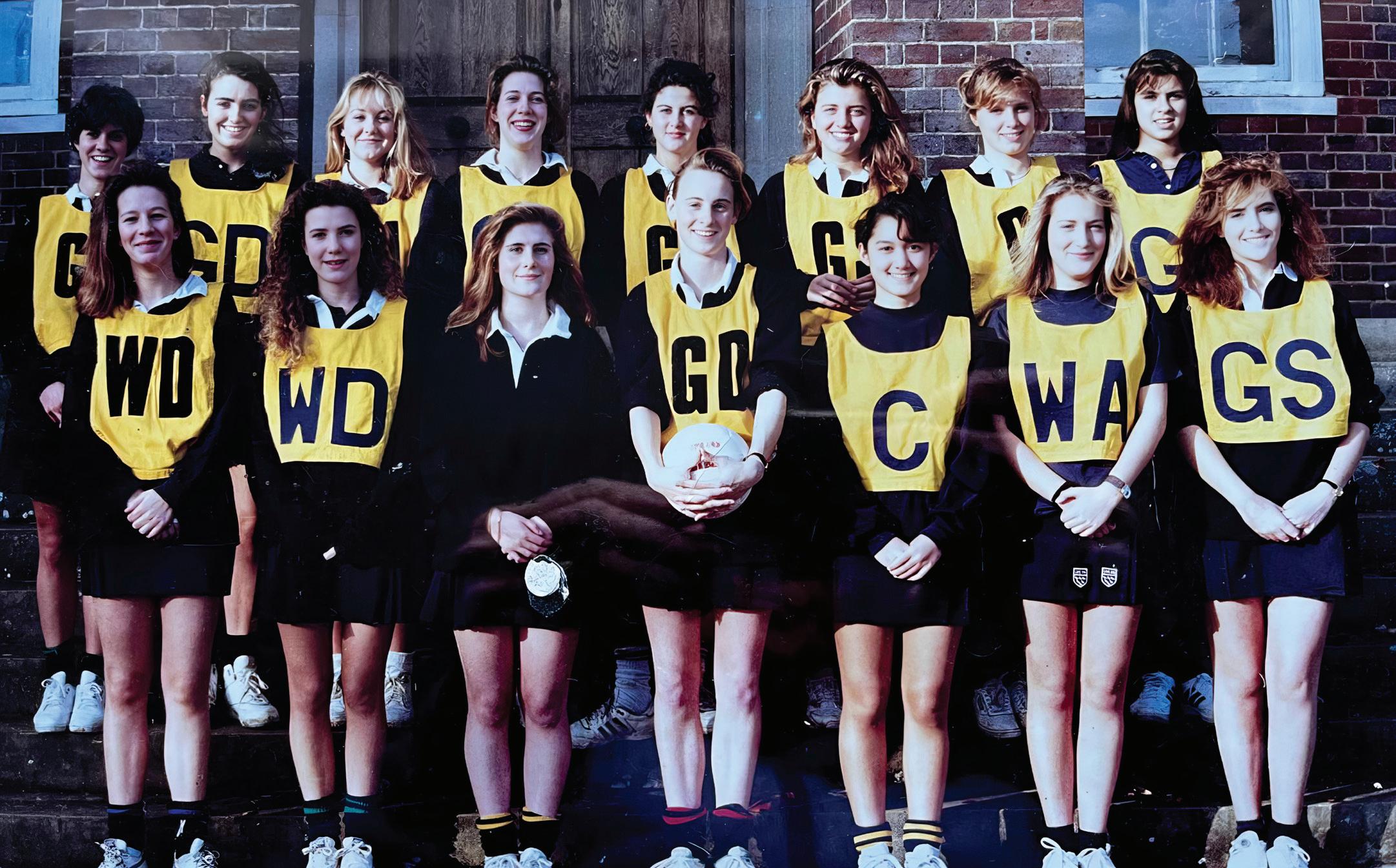
For Nens, Cranleigh was a happy time. She was in 2&3 South with a great year group – “I just loved it, it was brilliant.” Her Dad, AJC, had just stepped down as Housemaster of 2 North, so that made it easier for her, even though he was still a major figure around the school. As Nens recalls, “The only tough thing was, when I was foolish enough to get into trouble, it still was important that the right thing was done by me. So the book did get thrown at me a few times because I was stupid enough to get caught!”
She studied English, History and Ancient History A Levels and spent her UVI year in the Sixth Form Centre in order to do Oxbridge. Unfortunately, she didn’t get in to Oxford, so went to Royal Holloway, “which was brilliant
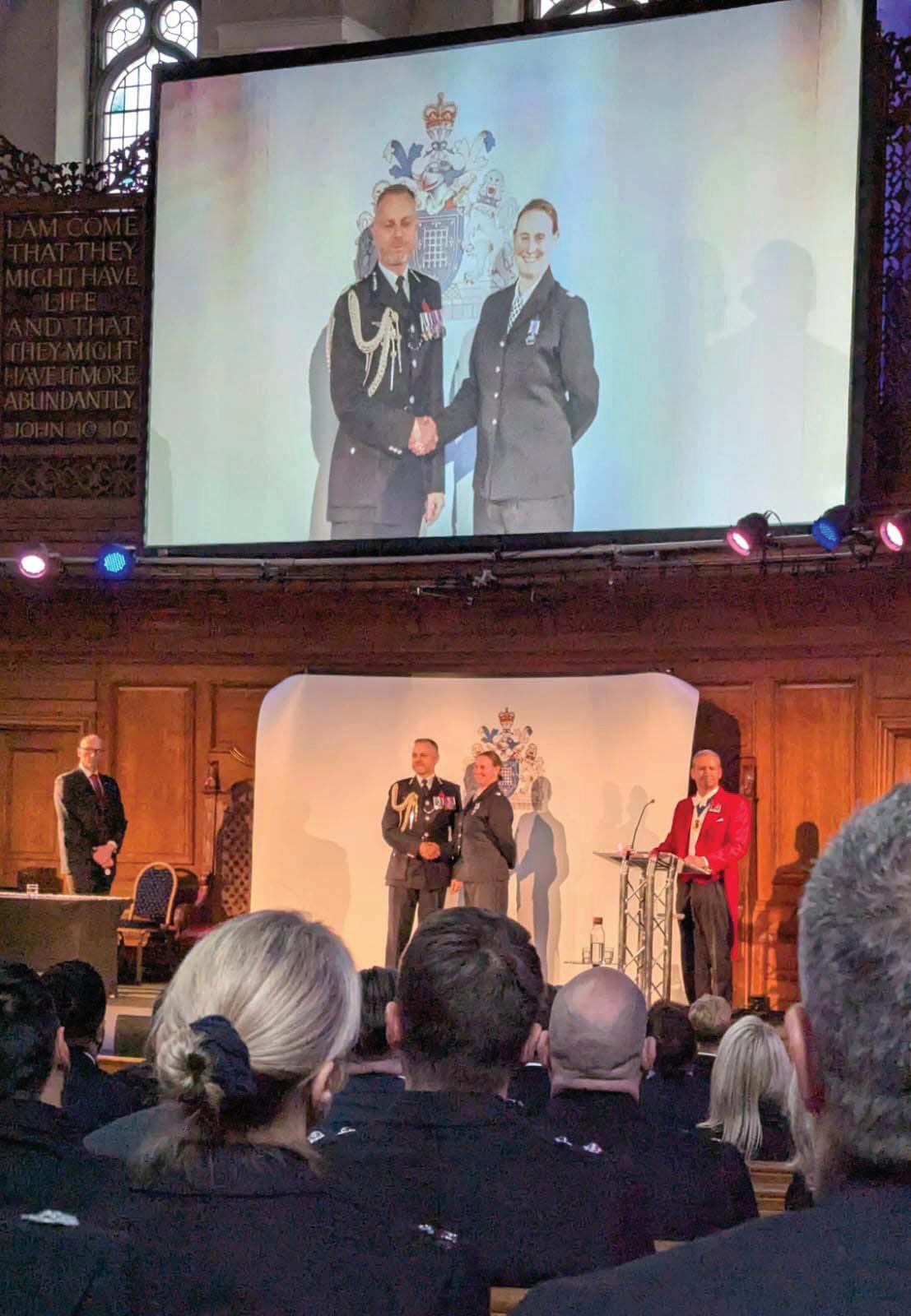
for history” and did a postgrad at UCL. While finishing up her PhD, she decided to change course and not do a law conversion, but apply to the police force. “I actually did a research project with the MOD while I was waiting, because it’s a long process to join the police. I had no idea what it was going to be like and I hated training school. But as soon as my boots touched the ground, I just loved it - literally from the minute I started being a copper I adored it.”
Training was 10 weeks followed by two years of probation, doing street duties and being “puppy walked”- looked after by a team. After six months-worth of theoretical and practical training she had another 18 months of being a probationer before becoming a fully-fledged PC.
Her career began in Tower Hamlets where “you’ve got Canary Wharf, cheek by jowl with some of the poorest migrant communities in London, so there were quite a lot of community tensions.” As Nens states, “the whole thing about policing is that you have to be thoughtful about how to protect people’s liberties whilst also infringing some people’s liberties. That’s what really drew me to policing, that you really do need to think carefully about what’s proportionate and where that line is.” She loved her time in Tower Hamlets, “a great place to work”, although it has changed now and has been gentrified, back then it was still the ‘old school’ East End.
Nens spent ten years working in Tower Hamlets, three of those as a PC, before moving on to CID, where she knew she wanted to be to develop further as a career detective. She decided to specialise so went into Operation Trident, which “does the gangs and the guns and those sorts of things and uses the more covert tactics to get those off the streets.” After doing that for a bit, she knew she wanted to progress further so did her Detective Sergeant exams, was promoted again and went back to the front line in Lewisham.
After four years in Lewisham, where she acted up as a DI, she moved to be a substantive DI in Counter Terrorism. “I really enjoy front line, in terms of being engrossed in a job and feeling like you’re in the middle of a news cycle almost. It can be really engrossing, but it’s a bit feast or famine – when you’re busy it’s just an extraordinary machine to be part of, but when you’re not busy, it’s a bit of a strange place to be” says Nens. “In terms of the biggest cases that I’ve dealt with, it’s Counter Terrorism.”
Having come from a private school background, Nens found people didn’t quite know how to deal with her initially. However, it was easy to dispel that by working hard and getting stuck in. “My team jokingly used to call me Ma’am, even when I was a PC, but in terms of being on the street, nobody who I’ve stopped or spoken to or dealt with as a criminal or as a victim has ever commented on how I speak.”
Being female and gay in the Met poses its own challenges, but Nens has not really had any problems. “There are lots of gay coppers, and honestly it’s so busy, no-one cares what you are, as long as you’re getting stuck in.” Homophobia and misogyny “is less acceptable in the Met and I think the Met is trying to do something about that. People unconsciously put people in boxes and I would say there are quite a lot of men who prefer working with men. They find it easier, they know where the lines are quicker.” She has, throughout her career, been supported by both men and women for promotion and feels that barriers are being broken down. “In some ways I have arrived at a really good time to be a woman in the Met.”
Nens was Deputy Senior Investigating Officer for the David Amess murder,
LEFT: Nens and Gill on their wedding day
ABOVE: Nens receiving her long service and good conduct medal BELOW: Nens in uniform
which is one of her most high-profile cases. But everyday policing can itself be dangerous, “There have been times when I’ve been going after burglars on roofs, which we’re not allowed to do! This was when lead stealing was going on all the time and we had the helicopter up and they had the infrared of them on the roof. Really weirdly, when I got up there, the people who were on the roof I had dealt with earlier on in the week, so they recognised me and I recognised them and I was able to talk them off the roof. But I suddenly realised if that coincidence hadn’t happened, I was in a lot of trouble!”
Nens has always felt that if you “treat all people with the humanity required then by and large they’re not going to be really violent towards you.” However, the police are seeing an enormous amount of mental ill health that can create a lot of violence, particularly with the proliferation of very strong skunk in young people that causes psychosis and violence. Some of Nens’ team are assaulted on the front line every day and the increase in mental health issues has been a big cause of that.
Things have changed since Nens started in the police 22 years ago; “I think the government stance since Theresa May was Home Secretary has largely been
anti-police, and it’s much harder to feel like you’re on the side of the angels when you’re not supported widely by government. And if you’re not supported by government, it feels like you’re not being supported by society. With policing by consent you’re vulnerable and that’s been really tough to deal with, as someone who joined the police when by and large the public were positive about policing.”
She feels passionately that the police should remain independent and that the financial review body should be independent, “because you’ve got to have those checks and balances. The police have to act in the best interests of the public, not in the best interests of the government. Being part of the police, if my Prime Minister required me to do something that I thought was contrary to the public good or to common law, I would have to leave. That’s my choice – do what they’re saying or leave my livelihood and my job. I know which one I would choose.”
During Covid, Nens was in Counter Terrorism and they had to divide their team into bubbles. Working from home was tough for her as she prefers being in the office and being “part of the team or a visible leader to your team.” However, it has been difficult getting some people back into the office full time and Covid has thrown up some conundrums. “It was really tough on some people as there are some jobs in the police that you could kind of do from home if you had to, but there’s stuff you just can’t. Frontline really got hit.”
Happily, Nens got married during Covid, after meeting her future wife while working away on a case. “I was basically living out of a suitcase for three months and Gill was the hotel manager of the hotel I stayed in! She’s an absolute magic woman and I am very very happy.” They now live in Hertfordshire.
For those coming out of school or university wanting a career in the police, Nens says “there are huge things to recommend it. It is good for people who are thoughtful and engaged in what justice means and what policing means in society.” There are graduate schemes and there are apprenticeship schemes to look out for, as well as the traditional pathway in. Nens is incredibly passionate about being in the police force and wishes more people would think about it as she believes it is a great career.
www.careersmetpolice.co.uk
www.joiningthepolice.co.uk
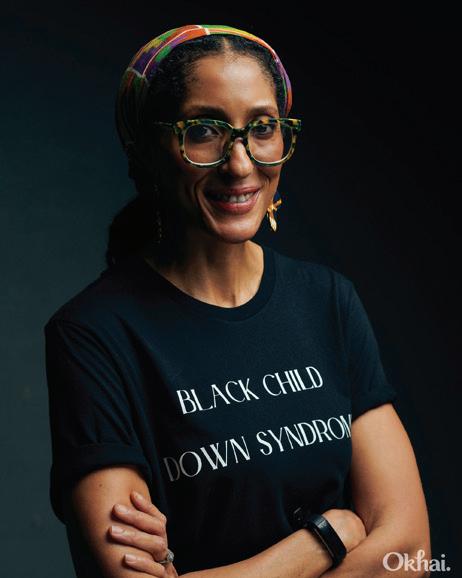
When Tonye Faloughi-Ekezie (East 1996) couldn’t find a book to help her son understand his sister Simone’s Down’s syndrome, she wrote one herself. What began as a humble, two-copy project for her family has since grown into a six-book series, Ugo and Sim Sim, captivating young readers across Nigeria and beyond.
“There is a severe lack of local content that depicts the modern African family,” Tonye explains. “African children with special needs have very few stories where they can see themselves represented.” Through her writing, she has created a mirror for families like hers, bringing joy, understanding, and representation to children who have long been overlooked.
Tonye’s work also intersects with a wider movement transforming Nigeria’s children’s publishing industry. Poet and publisher Lola Shoneyin’s Book Storm programme trains writers, illustrators, and editors to breathe new life into a historically challenging market. Shoneyin was immediately drawn to Tonye’s stories. “Before I met Tonye, the only Nigerian book I knew that featured a child with disabilities was Splendid by Mobolaji Adenubi,” she says. “Tonye’s books are brave, candid, and absolutely necessary.”
Before motherhood, Tonye worked in TV and film, commissioning shows such as Big Brother Nigeria and Idols West Africa. When Simone was born with a heart condition and Down’s syndrome, her career paused—but writing became a lifeline, a way to reclaim control and channel her love into something enduring.
Today, Simone is thriving: a swimmer, gymnast, and young painter already signed to The Children’s Art Gallery, Lagos. Through her books and her advocacy, Tonye continues to shine a light on the importance of representation, acceptance, and love.
“Every child with special needs should be loved exactly as they are.”






Ugo and Sim Sim: What is Down Syndrome? – Explains Down’s syndrome in a relatable way for young children.
Ugo and Sim Sim: I Can Do it Myself. Sim Sim is fed up with everyone doing things for her, and comes up with a plan to show them how independent she really is.
Ugo and Sim Sim: Power Cut. The children are having fun playing video games at their grandparents, but it all comes to an abrupt end with a sudden power cut. Ugo is devastated, Sim Sim is frustrated, but with a little help they discover a new way to have fun.







Ugo and Sim Sim: Fruits & Vegetables: Delicious pawpaw, coconut, yam, pineapple and more. Explore the yummy fruits and vegetables Ugo and Sim Sim love to eat in Lagos, Nigeria.



























Ugo and Sim Sim: I Don’t Like the Birthday Song. It’s Sim Sim’s birthday but she’s scared. She doesn’t like the birthday song. The guests arrive. They eat, they dance and have lots of fun. But what happens when Aunty Bukola brings out the birthday cake and everyone starts to sing?











Sim Sim goes to the Salon. Sim Sim wishes she has long, straight hair like Princess Peony. But when Mummy takes her to the hair salon, Aunty Yemi shows her how beautiful her own black, curly hair can be.
Fun Fact: Tonye printed the first edition herself — just two copies for her children. Today, thousands of readers enjoy her work, helping to change narratives across Nigeria and beyond





To find out more about Tonye’s work and the Simone’s Oasis Foundation go to simonesoasis.org and follow @simonesoasis on social media.
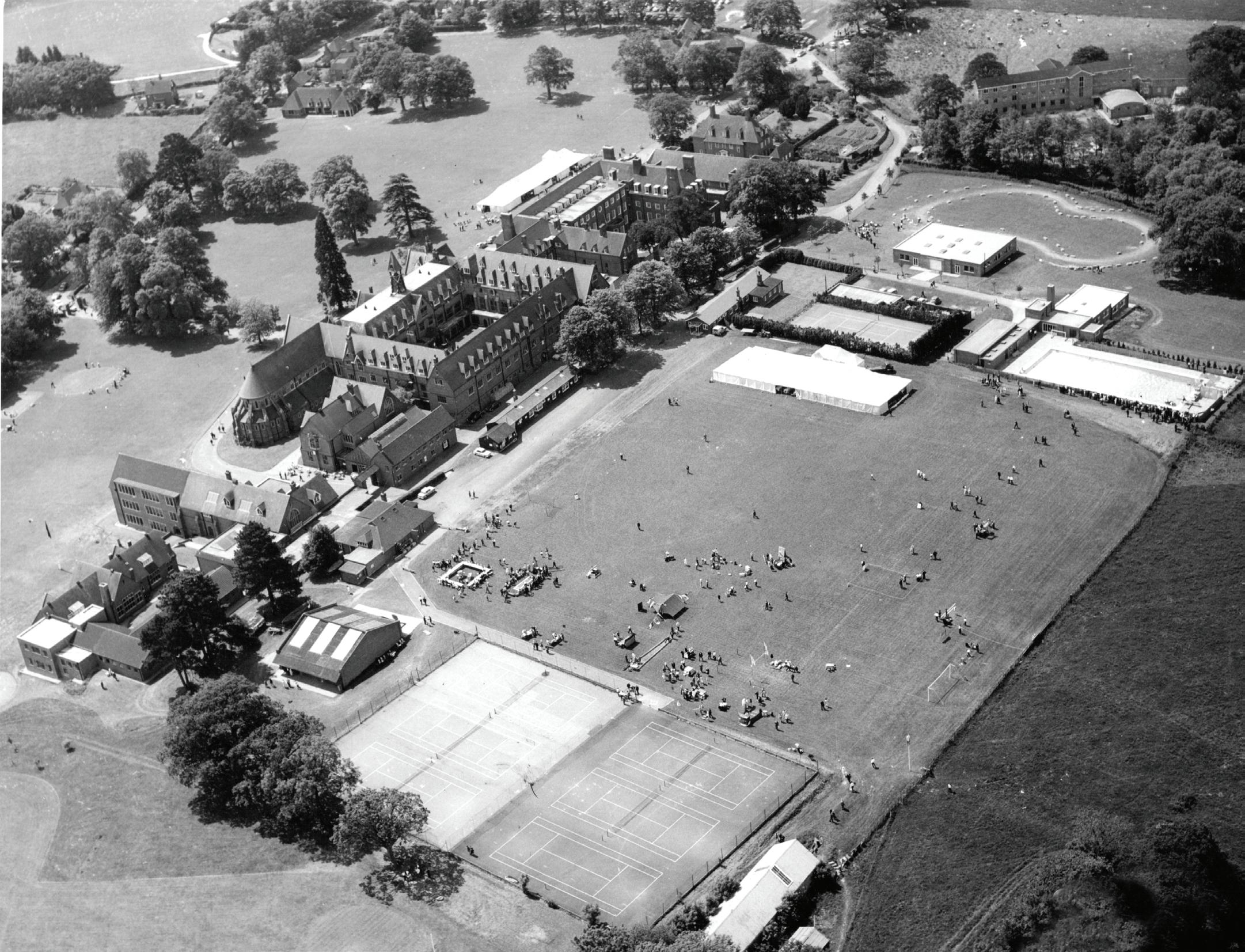
HERE WE COMPARE THE NORTHERN SIDE OF THE SCHOOL, WHICH HAS CHANGED THE MOST OVER THE YEARS, IN TWO PICTURES TAKEN 60 YEARS APART. THE FIRST IS FROM MAY 31ST 1965 WHEN THE SCHOOL HELD AN OPEN DAY TO MARK ITS CENTENARY; THE SECOND IS FROM AUGUST THIS YEAR.
The North Field was purchased in 1911 thanks to a gift from George Cubitt.. It was used for sport and recreation until the late 1970s. The first building – a physics block – appeared in 1977.
1 1 North under construction. The first purpose-built outhouse was opened in September 1965. It stands on the site of the old school rubbish dump
2 Built in the early 1960s the woodwork shops were demolished in 2000 to make way for West which opened in 2001
3 The metalwork shops, opened in the early 1960s
4 The outdoor swimming pool which opened in 1959 and closed in 2010. Hugely popular on hot summer days as it could accommodate large numbers of sunbathers and swimmers. During heatwaves it was opened to Houses on a rota basis after prep in the evenings
5 The Common Room with a well-hidden garden and tennis court behind. When the new Common Room opened in
1985 the hut became the buttery and subsequently the popular Gatley’s café/sweet shop which closed and was demolished in 2018 to make way for the van Hasselt Centre
6 The Rifle Range opened in 1916 and was dismantled in 2010
7 The golf course, reopened in 1959 after being closed at the outbreak of WW2, extended to a par 4 hole near the main gates. The course was redesigned to its current format the following year after a series of accidents as this hole cut across the fairways of several others
8 The biology labs, opened in 1955, were demolished in 2010
9 The hut which housed the old School Shop which was demolished in 1980. There were originally four huts on either side of the road behind the School, erected as a temporary solution to overcrowding in 1919. By 1965 only this and the Common Room remained
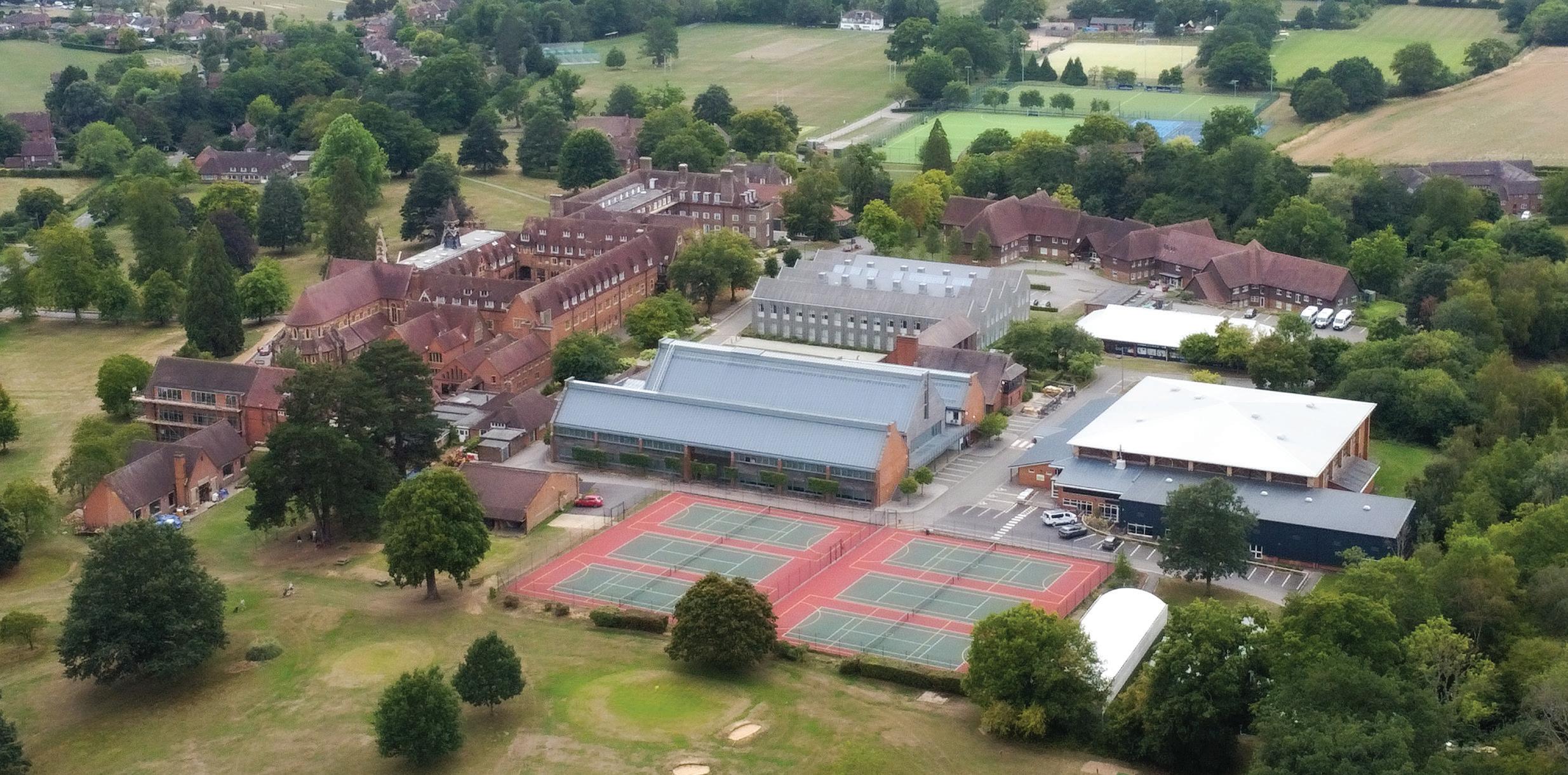
1 Rhodes House. Originally occupied by West, this became Rhodes in 2018 when West moved into a new build next door
2 West House
3 The indoor covered swimming pool opened in 1991
4 The Trevor Abbott Sports Centre opened in 2002
5 The Fitness Suite opened in 2024
6 The indoor cricket school opened in 2011
7 The Emms Centre opened in 2009 and incorporating the Emms Block
8 The Sixth Form Centre which opened in 2025. From 1985 until then this was the Common Room
9 The van Hasselt Centre which opened in 2018
10 The Science Block, built in 1912, which became part of the Art and Design studios in 2009 and was converted into the new Common Room in the summer of 2025
11 Loveday House, opened in 1980
12 Marcon astroturf. Originally a hockey redgra opened in 1968, this was converted into a all-weather hockey pitch in 2005
13 Lintotts astroturf. Originally a grass rugby pitch, the School’s first all-weather hockey pitch was opened on it in 1986
14 Pickup astroturf. Originally a hockey redgra formally opened in 1980, this was converted into an all-weather hockey pitch in 1996. The surface, which had an expected ten-year lifespan, is still in use
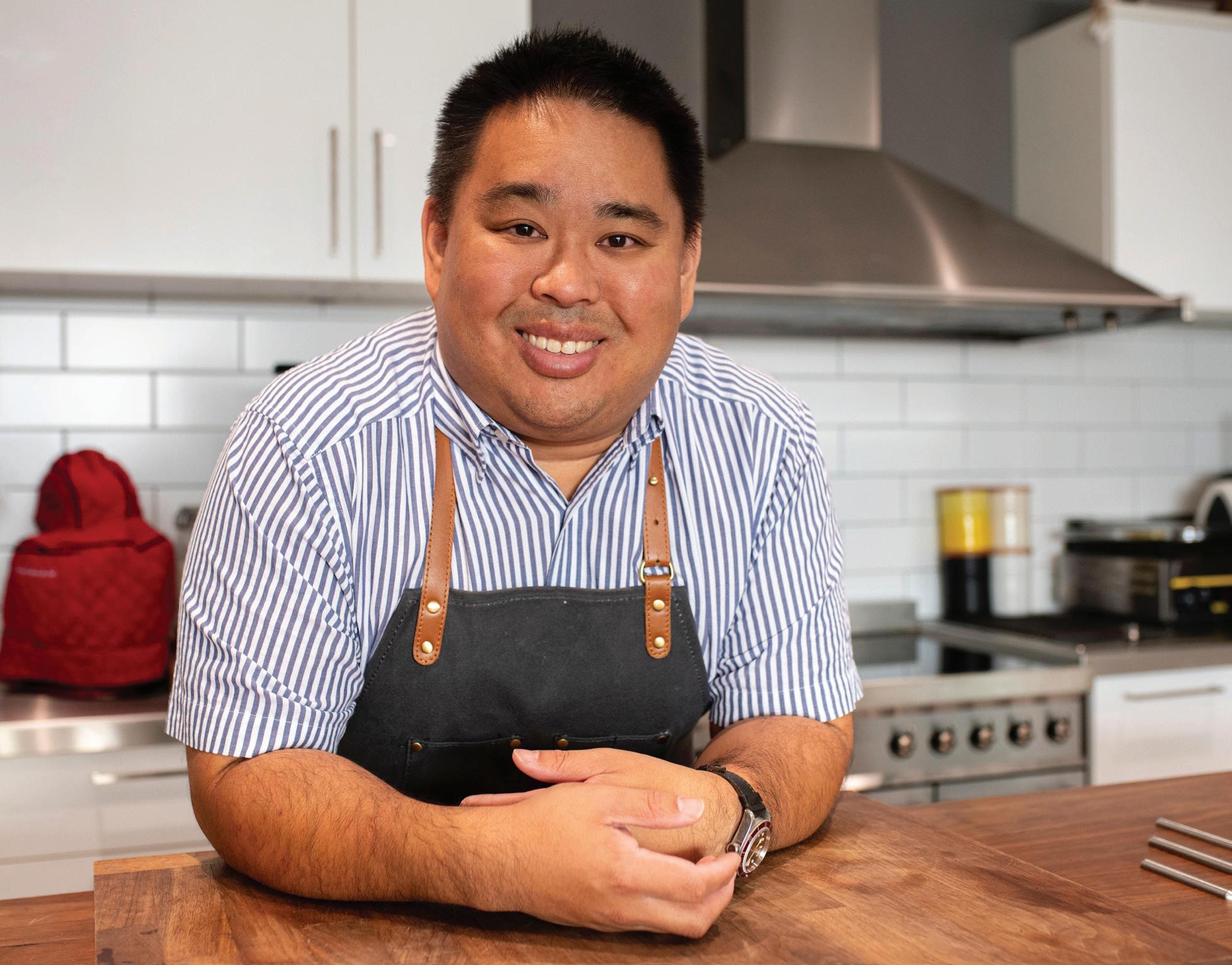
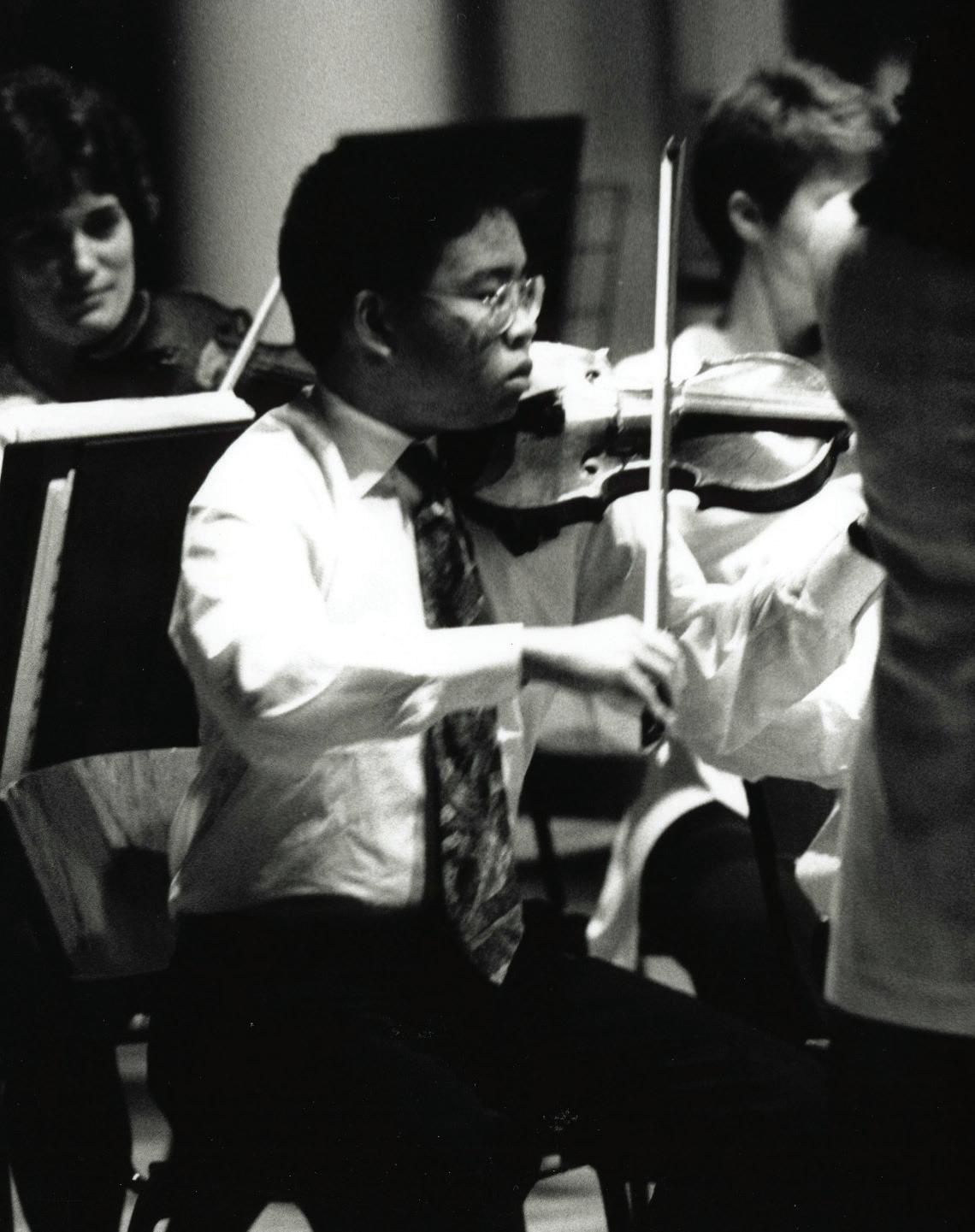
At ten years old, while performing at a concert at Downsend Prep School, Tony caught the attention of Cranleigh’s then Headmaster Tony Hart. Impressed by his talent, Hart approached Ho’s parents after the performance, offering their son a full scholarship to Cranleigh regardless of exams. “It just so happened that I also received an academic scholarship,” he said. “So I was a double scholar and ended up at Cranleigh on my own merit. Tonbridge and Charterhouse had made similar offers, but I preferred the vibe of the Surrey Hills.”
At Cranleigh, he discovered passions that shaped both his outlook and career. Independence, fairness, and equality were values that resonated deeply with him. “Academics came easily, but I always knew my future would be about people rather than textbooks.” Music, too, was a defining thread of his school life. For years, he imagined a professional path in classical performance — until witnessing the challenges his brother faced as the principal violinist of the Hallé Orchestra. “That made my mind up. I decided to keep music as a passion rather than a profession.”
That conscious decision came when he was around 16 or 17. “I’d done well at Cranleigh, and it opened up a lot of options for me. I just didn’t expect that food would be the one I’d end up pursuing.” Even as a teenager, his culinary curiosity was evident. “When I was about 14 or 15, I’d go down to the Co-op, buy smoked salmon, lemon and a baguette, and have that at break time or instead of lunch. I think I caught some flak from my housemaster at the time.”
Food had always been his quiet passion, but it became a calling once he began working in hospitality in his early 20s. “I started out young and eventually found myself running some of London’s most prestigious restaurants.” Though largely selftaught, he was guided by industry icons including Raymond Blanc and Alvaro Maccioni. “They were generous with their advice and encouragement.”
In 2010, Tony opened his own restaurant in Chelsea — The Penny Black — which ran successfully for five years. “At the time, my
next-door neighbour was the Crown Prince of Bahrain. He encouraged me to grow the private catering side of my business and gave me a lot of opportunities. I never looked back.”
Sublime Butter, his signature creation, emerged a few years later in 2017 and like many great ideas, it started from something simple. “It came out of a steak club I was part of. We travelled around to different restaurants eating steak, but we always wanted a chimichurri butter to go with it. So we started bringing our own. From there, the commercial idea grew and became a business.”
Unlike many in food manufacturing, Tony approaches product development as a chef, not a technician. “Flavours evolve from what I’ve used and created in my restaurant,” he says. “The goal is to place those flavours in an easy-to-use format for home cooks.” Purity and quality remain non-negotiable — principles that helped Sublime Butter pioneer the entire flavoured butter category, earning global accolades including the World Dairy Innovation Award and the Golden Fork.
“I do have a team. I run the company and create the products, while the team handle the creatives, marketing, and sales. It’s very much a joint effort … that’s why I always say ‘we.’”
Today, Sublime Butter can be found in around 400 independent shops across the UK, from delis and farm shops to butchers and fishmongers as well as in Harrods, Selfridges and Whole Foods. “We handle most of our sales directly but also work with a network of distributors. We’re now expanding overseas, exporting to markets in the Far East and Australia, and we’re aiming to establish a strong foothold in the UAE, the US and Canada early next year.”
His international ambitions also see him collaborating closely with government bodies such as the Department for Business and Trade and the Agriculture and Horticulture Development Board promoting UK dairy around the world.
Then there are the Ridiculous Butters, a playful offshoot of his creativity that became a viral success. “I actually dreamt up the lobster butter in my sleep. I start with a primary flavour — lobster, duck, chocolate — then build around it with the best ingredients I can find. Cost doesn’t matter. It’s about pure expression of flavour.”
That passion for excellence has taken him far beyond the kitchen. As a private chef, his CV includes the Formula 1 circuit, Hollywood sets, and music industry icons. Some stories remain under wraps, but a few stand out, like serving Harrison Ford as he signed the contract for Indiana Jones 5, or being flown to Ibiza to cook a dinner that turned out to be for a Golden Retriever’s fifth birthday. “Memorable for very different reasons.”
Catering on superyachts and for ultra-high-net-worth clients brings its own challenges, not least the unpredictable demands of those used to limitless possibility. “The practical problems — suppliers, equipment — those are easy to solve. The main challenge is always the client. You have to be ready to cook anything, anywhere, with any equipment.” His adaptability once saw him helicopter in a replacement oven mid-charter, and on another
occasion, arrange for a turkey to be flown from London to Sardinia for a last-minute Thanksgiving dinner, a meal that ended up costing €25,000.
As a non-executive director in the food and hospitality space, he’s observed the pressures facing the industry today: rising costs, staff shortages, and the lingering impact of Brexit. “Successive governments have made it harder to run hospitality businesses. The input cost of cream alone has risen 60–70% in two years.” His advice to food entrepreneurs is simple but sharp: focus. “Do one or two products brilliantly, not five or six averagely. Consumers are more discerning than ever.”
He credits Cranleigh for shaping the resilience and lateral thinking that underpin his success. “Cranleigh taught me to problemsolve and focus on the end goal. But most importantly, it taught me the value of a network. The OC community is unmatched.”
Looking ahead, his attention is on expanding Sublime Butter’s export markets, launching new bakery innovations, and growing the brand’s pantry range, all while juggling life as a new father. “It’s the silly season of Christmas, but having a newborn gives me focus and drive.”
For students and young OCs considering a career in food or hospitality, his message is one of courage and persistence. “Try. Don’t be afraid to fail, just try again. Adaptability is key. The pursuit of perfection comes after mistakes, not before them.”
And as for the chef’s personal tastes? His favourite butter remains a rich combination of bone marrow, winter truffle, Stichelton blue cheese, and Madeira. The dream dinner guest? Barack Obama. And the most underrated ingredient in any kitchen? “Patience,” he says, … “or white pepper.”
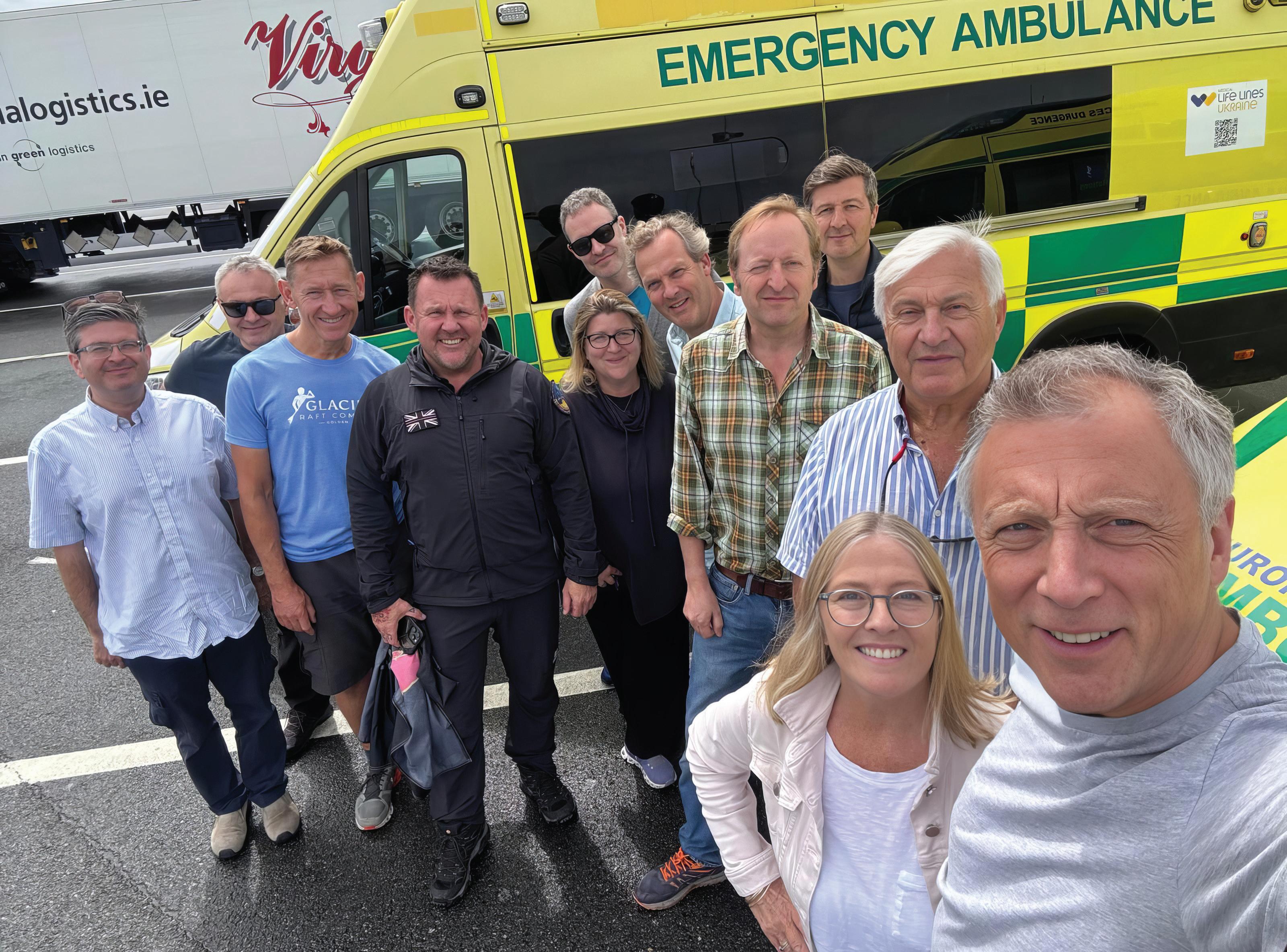
ANDREA SPARKE (WEST 1989) TALKS TO US ABOUT HER EXPERIENCE THIS SUMMER AS A VOLUNTEER DRIVER OF ONE OF SIX AMBULANCES CARRYING MEDICAL SUPPLIES BOUND FOR UKRAINE.
In early July I embarked on one of the most incredible trips of my life. Twelve strangers from the UK as volunteer drivers, drove our six ambulances to Ukraine over the next three-and-a-half days. These ambulances were full to the brim with medical supplies and urgently needed items that we were donating to different communities and regions throughout Ukraine.
We left at a very volatile time, when Russia was increasing its bombing campaign as they tried to force the US’s hand to side with them and I was extremely nervous about what was ahead of me but determined to safely get my ambulance to its new owners.
Travelling across seven countries, we encountered a huge amount of support for what we were doing, most noticeably and most vocally in Germany where many cars tooted their horns, people waved at us as we passed. When one of the ambulances broke down, a local (very plush) car dealership spent hours working on our vehicle and when he gave us the good news that he had fixed it, refused to charge us for the parts and labour. “This is a gift from us to you” the mechanic said. “For your service on behalf of all of us in Europe. Ukraine is fighting for our freedom.” It was a deeply moving
Ambulance drivers for Medical Lifelines Ukraine (including Andrea and journalist, Tom Newton Dunn)
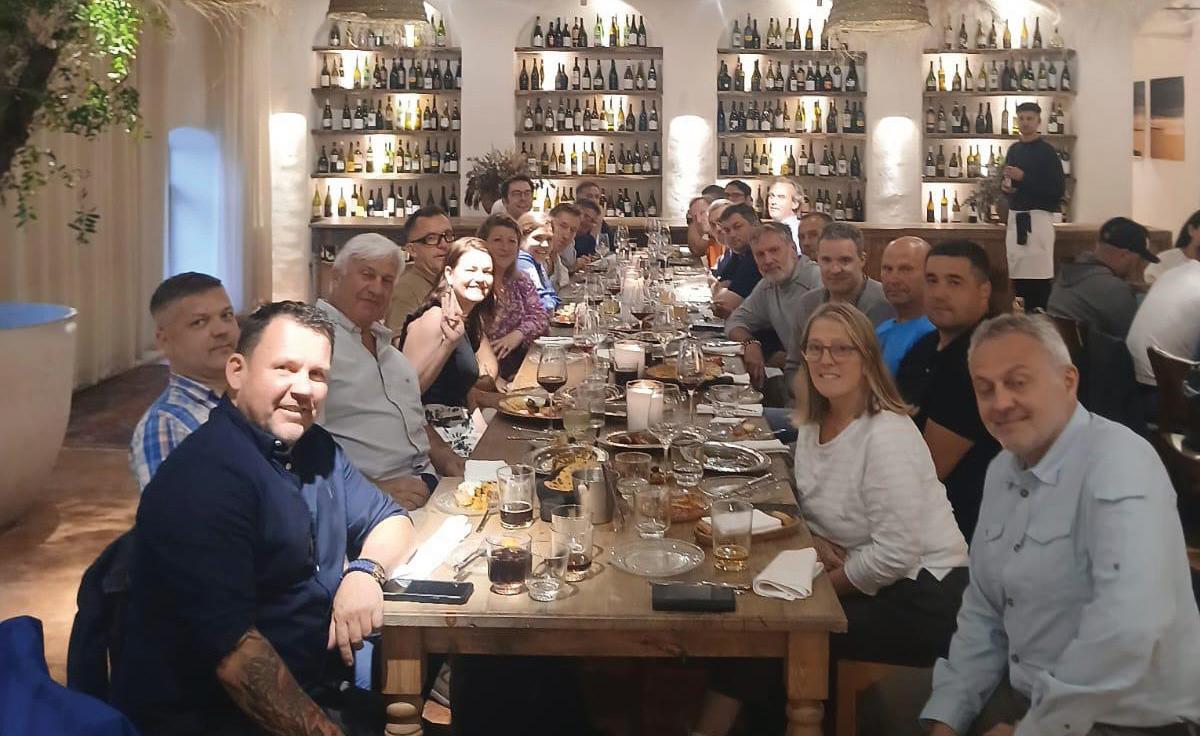
BELOW: On the left is one of two tables at the dinner on the final evening and on the right Andrea is pictured with MP Natalya Pipa and two Ukrainian soldiers including the Colonel she mentions in the article
and appreciated gesture. It felt as though all of Europe appreciated the fragility of the situation. As we drove closer to the Polish/Ukraine border the atmosphere grew darker and heavier.
When we arrived in Lviv, the reality of being in this beautiful war torn country hit me hard. The Ukrainians were going about their day while sirens wailed across the sky. I asked someone whether we should be running to a shelter. They replied that “when everyone else starts running then go but this one is not landing near us”. As if it were an airplane instead of a missile or drone.
That evening, once we had unloaded our precious cargo and given all of it and the ambulances to their new owners, we were invited to a dinner organised by them. All of those who had come to collect them were men. These beautiful people have had to divide roles and they are fiercely protecting their women and children – the future. I thought about my grandparent’s generation back in England during the Second World War. Alongside these incredibly brave people was a local MP, some unbelievable international volunteers and a senior member of the Special Forces who had travelled from the frontline to be with us to thank us in person.
That evening had a profound and lasting impact on me. It became a safe space for all these brave men to share their stories with us. A little band of British volunteers listening to story after story of struggle, loss, heartbreak, courage and resolve. I was so captivated by every story, told through a translator. Often and surprisingly, talking so openly about their own mental health or the mental health of their people, their children and their fears for the future and the psychological damage this war would have on their children.
Every one of them thanked us for being there with them. They felt abandoned and forgotten by the world, were heartbroken and very uncomfortable because of the White House’s treatment of President Zelensky and also the USA’s apparent allegiance to Putin at the time.
The very last man to stand up and speak was the Colonel. He cannot have been more than 35-40 years old. He had sat in silence, uncomfortably the whole din-
ner, constantly checking his phone and giving orders remotely. He had a hardened resolve as you would expect and then he spoke. With a heavy heart, so eloquently even through the translator, he shared with us how tough life was on the front line for him and his men. He talked about the casualties and the loss of lives, the young men, how hard they were fighting and would keep fighting because they were in the fight for their lives not just for Ukraine but for all our freedom in Europe.
He talked a lot about Britain, about Churchill, about WW2 and how we had persevered. Only Britain had stood shoulder to shoulder with them since the day the war broke out. Then he said in a quiet but profound voice. “More than anything we thank you for the gift of your presence. This means more to us than anything else because you are sacrificing your safety, freedom and the comfort of your homes to be with us. They say that a friend in need is a friend indeed and we are truly friends in need and you are truly friends indeed.” It was deeply moving and utterly heartbreaking.
Our six vehicles seemed so inadequate in the context of the outpouring of gratitude they gave us but we gave them hope and the gift of friendship in person.
Ukraine has a special place in my heart as we have a large number of Ukrainians in our tech teams at Toppan Merrill where I work. At the start of the war, Lviv was where we moved our team when the fighting broke out. It is a beautiful city and the following evening I met with two of them. Both in their early 20s, one year away from conscription age. That really brought it home to me. To be living in your home country and not able to leave it from the age of 18 as you will be called up is quite something, Both had lost close friends who had signed up early and died fighting for their country. I thought about my own three boys and how life looked so different for them back home in the safety of the UK.
The trip was one of the best things I have ever done. It was not without danger but we took a calculated risk and sometimes it is important to show up for others who are doing so much for us all. I am returning next year as I left a little piece of my heart in Ukraine and there is so much more to do and that needs to be done.
THE
SCHOOL
RECEIVES
REGULAR QUESTIONS CONCERNING THE ORIGINS OF THE CRANLEIGH CREST WHAT THE VARIOUS COMPONENTS ON IT MEAN, AND HOW IT HAS CHANGED OVER THE YEARS. THIS YEAR SAW THE MOST SUBSTANTIAL CHANGE SINCE THE SCHOOL OPENED
Cranleigh’s motto, Ex Cultu Robur, which has a variety of translations, the most used of which is “From culture comes strength”, was one of three options offered to Joseph Merriman by Edward Benson, at the time the headmaster of Wellington and one of Cranleigh’s founders, in the months before the School’s opening in 1865. The rejected alternatives are unknown but The Cranleighan in 1925 listed the alternative translations as “knowledge is power”, “training makyth man”, and the decidedly clumsy “fear of the Lord is the beginning of virtue”. In 2025 the School revisited this and the official translated motto is now “From our culture comes strength”
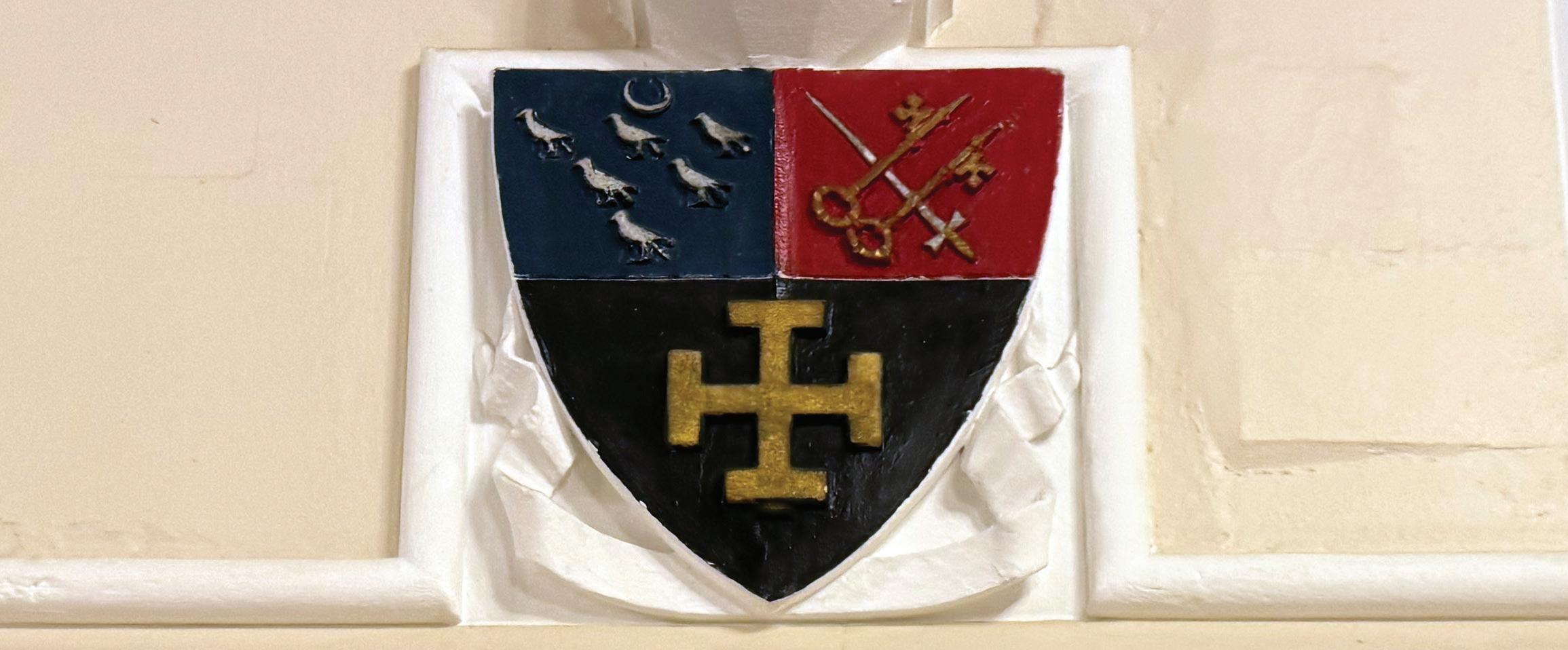
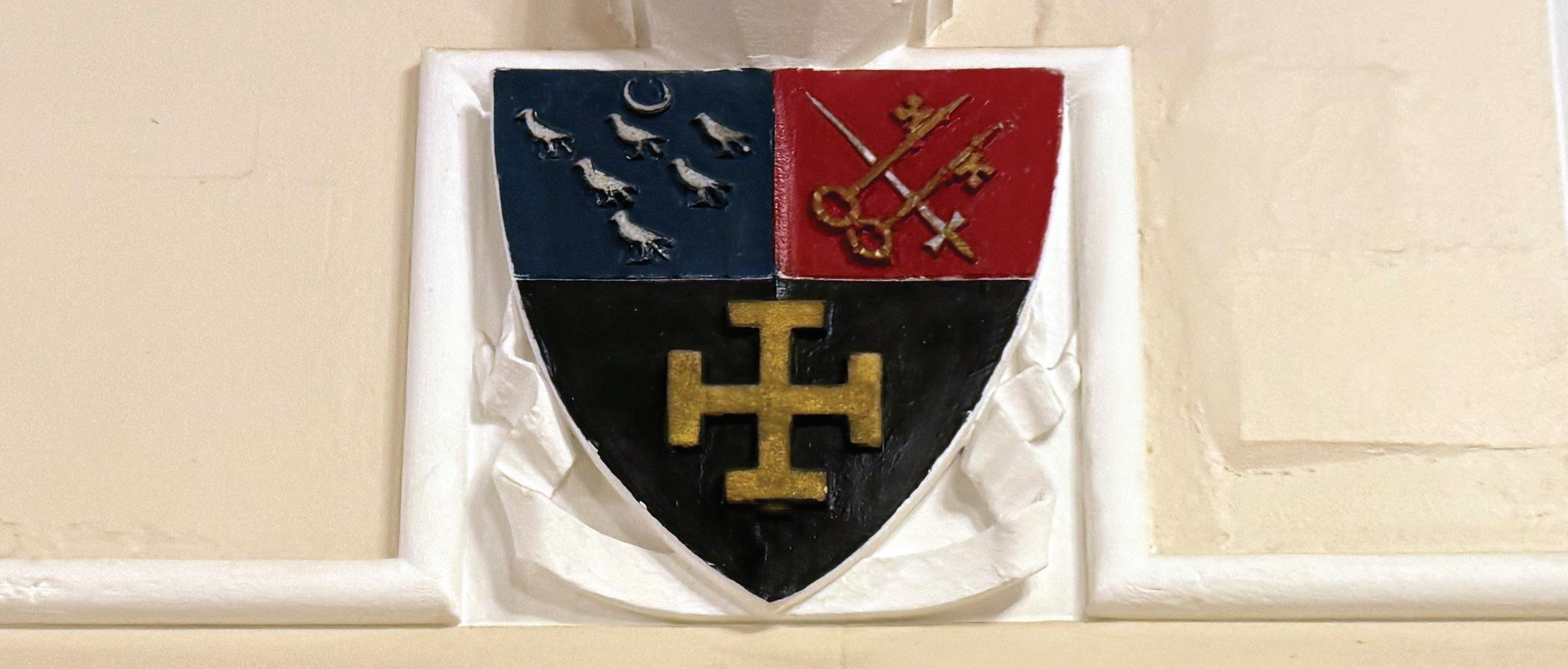
Early histories of Cranleigh state that the crest was devised by Joseph Merriman, the School’s first Headmaster, and his first art master — something Elystan Phillips (MCR 1938–1970), an heraldic expert — said was far from uncommon in Victorian times. However, elements of the shield can be seen on some of the original buildings, which predate Merriman’s appointment. The dedication stone above the main entrance, for example, shows the martlets of Sussex “differenced” by the half-moon above them; it may simply be that Merriman incorporated this into the more expansive crest.
Although generally referred to in a series of publications as Cranleigh’s crest, this was inaccurate; Phillips insisted it was not and is not a crest as such, but “an heraldic device” or “shield”, adding that referring to a crest was “like talking about bails when you mean stumps”. He was fighting a losing battle.
But what does each element of the crest represent? The six martlets on the top left relate to the county of Sussex. Cranleigh was in an area administered as part of Sussex in those days, and
Surrey did not obtain its own arms until 1934. Some boys offered the view the birds were cranes with the legs shot off. The half-moon over the martlets is an heraldic device to show a second son, indicating the less than complete association with Sussex. The cross-keys and sword on the right derive from the arms of the Diocese of Winchester. The ecclesiastical connection is appropriate, with keys to knowledge and a sword for valour reflecting the school motto. The golden cross potent on a black background has been used in isolation since the earliest days; the only item of official clothing in Merriman’s time was a cap with the cross on it. Originally, the lines on the cross were thin but these, like many Old Cranleighans, became meatier with the passing of years. The cross potent eventually became the stand-alone emblem of the Prep School.
In the Baptistry in Guildford Cathedral there are two crests denoting the donors of the windows in it, namely St Catherine’s and Cranleigh schools. The latter’s Arms were emblazoned: “Sable, A Cross potent Or. On a chief per pale Azure and Gules, dexter 6 martlets 3, 2 and I and in chief a crescent Argent; sinister, a
1
2 The 1987 version of the crest which was approved by the College of Arms
3 The earliest known crest over the main entrance, which only shows the Sussex martlets
4 The new School crest
sword point in chief in bend proper interlacing two keys in bend sinister, the upper Argent, the lower Gold, their bows conjoined in base, wards addorsed.”






[2]
The crest has been through several versions in 160 years, not always by design. In 1961 Phillips pointed out that there were two similar versions in circulation. “The older version has three background colours. In the upper part of the shield, blue and red, and in the lower part, behind the Cross, black. This version is to be seen over the fireplace in the dining-hall, on a shield hanging in the window of the sergeant’s office, on the drums of the CCF … the newer version substitutes pale blue for the blue in the upper part of the old version and dark blue for the black behind the Cross. This version is to be seen on the War Memorial in the Reading-room, the Rhodes Memorial in the Chapel … as only one blue is permitted in heraldry, it is hard to understand why this second version was ever allowed. It seems a pity to allow two different shields to be displayed, side by side, when one is armorially incorrect.”
The most significant overhaul happened in 1985, when Phillips alerted the governors to the fact the crest was not registered with the College of Arms and, as such, could not be copyrighted. This raised concerns, however unlikely, that a third party could try to copyright it and then hold the School to ransom for its use or simply use it themselves.
As a result a design agency was employed, and they came up with an amended crest designed to comply with the strict rules of the College of Arms, a process which took over two-and-a-half years to complete. For a brief period this new version included “the traditional mantling, helm and crest” capped by a crane
[3]




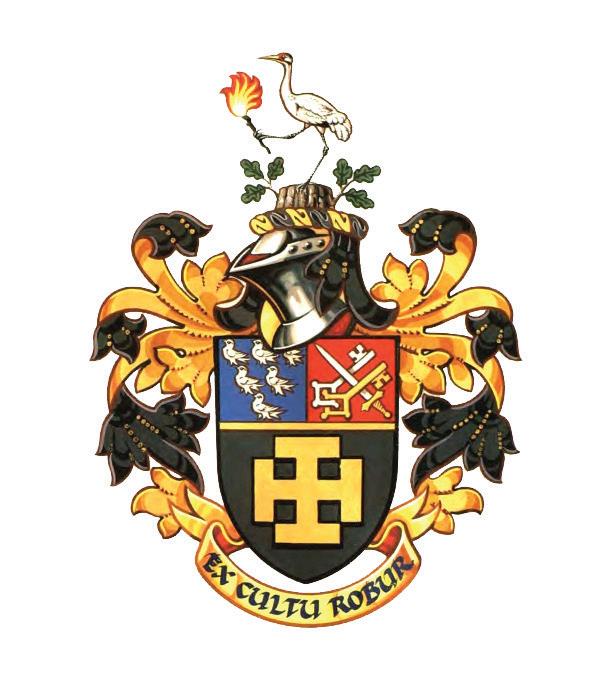
This was far from popular as it made day items so the crane, its torch and the foliage

it was now officially registered as part of was
holding the flaming torch of knowledge. This was far from popular as it made what had been a simple thing became overly fussy. It was also impossible to replicate on clothing and other everyday items so the crane, its torch and the surrounding foliage were quickly and quietly euthanised. The half-moon disappeared as part of this revision; as it was now officially registered as part of Cranleigh’s arms, the need for cadency was redundant.
With or without the crane, the new design did not please everyone and heated exchanges followed, both privately and in The Cranleighan. Hugh Hawes (Cubitt 1968) wrote an indignant letter to Contact magazine describing it as looking like “a chocolate box, a bogus regimental blazer, an airline’s livery … in short, it looks cheap”.
And so it remained until this year when, as consultant Judy Mitchem explained, there was “a strategic imperative to review and refine our brand identity”. As a result of this the most radical change was made. “The crest has been preserved, with all its precious iconography, although it has been subtly refined,” the new logo has been re-balanced, centre aligned and uses a confident and contemporary new font. The bold change has been to pare back the colours to dark blue and pure gold, creating a sense of understated elegance. The new logo is more sophisticated, allowing us to position Cranleigh as a more aspirational school. Importantly it reconciles our history and heritage with a clean and modern approach.”
The School now uses the instantly recognisable simplified crest, while the Old Cranleighan Society has opted, as it did in 1987, to keep using the familiar and traditional crest.
[4]

Carolyn graduated from Oxford University in 1980 with a degree in Engineering Science and, with no clear career path in mind, joined one of the big accounting firms in the City, qualifying as a chartered accountant three years later. But she was not settled. “I had become increasingly disillusioned with an environment where making money was the main motivator for most of the people I worked with. I was persuaded by the experiences of a couple of my close friends from Oxford who had gone straight into teaching that the role of a ‘schoolmaster’ in a boarding school would suit me.” She had won Blues at tennis, squash and lacrosse so “the idea of doing a job that would enable me to be involved in sport as well as teaching in the classroom was very attractive.”
After enrolling on a PGCE course in London she set out to find a teaching job. She only applied for two – Cranleigh and Stowe –and was offered both. “As I had grown up in Surrey and still have several family members living in the area it wasn’t a difficult choice to make.”
The world she entered was a very different one from today.
“When I started there were only three full-time female members of the Common Room. We still used chalk and blackboards, reports were written by hand, and hockey was played on grass [Cranleigh’s first astroturf did not open until 1986].” For her first half a term she experienced the old Common Room, the hut which was to become Gatley’s café, and encountered some traditions among staff dating back decades. “To some, having a woman in there in the first place was a problem. One evening I walked into supper wearing jeans. And oh my goodness, the fuss that was made …”
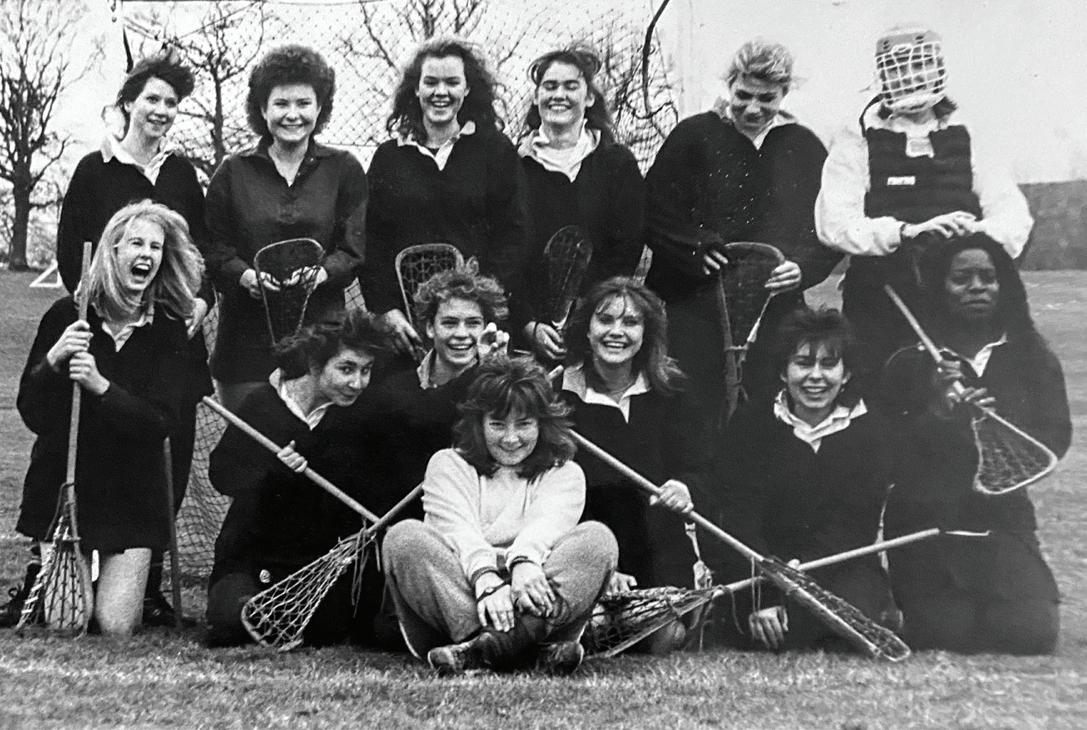
The School at the time had full boarding which meant most pupils stayed in over weekends and most of the staff were expected to be around as well. “I was warden of one of the girls’ residences so I was on duty every Saturday night … there was lots on Sundays too. I saw that as a positive thing and I enjoyed being part of it”
Inevitably, given her background, Carolyn was almost immediately immersed in sport, initially with the girls but soon boys as well. “When I started we put out one, possibly two girls’ teams on a Saturday and it was not unusual for a girl to play in several matches a week … hockey, netball, and lacrosse were played in both winter terms. Initially we built a reputation for excellence in girls hockey but that later extended into lacrosse, squash, and tennis.
Although there were fewer girls – 64 in all when she arrived, and only in the Sixth Form – “the girls we got were high quality girls. They were all good at something because otherwise they wouldn’t have come to Cranleigh. They wouldn’t have left their girls’ school unless they were quite strong characters.”
For the first 15 years she was Head of Girls Games, later taking on the vital role of administration and management of the boys’ sports programme, as well as the girls’. She subsequently became Director of Sport for a number of years and has also been Head of hockey and tennis as well as squash. “In more recent years my role in sport has been more behind the scenes, administering the hockey and tennis programmes and arranging fixtures for a number of sports, as well as being able to advise on a wide variety of sporting issues.”
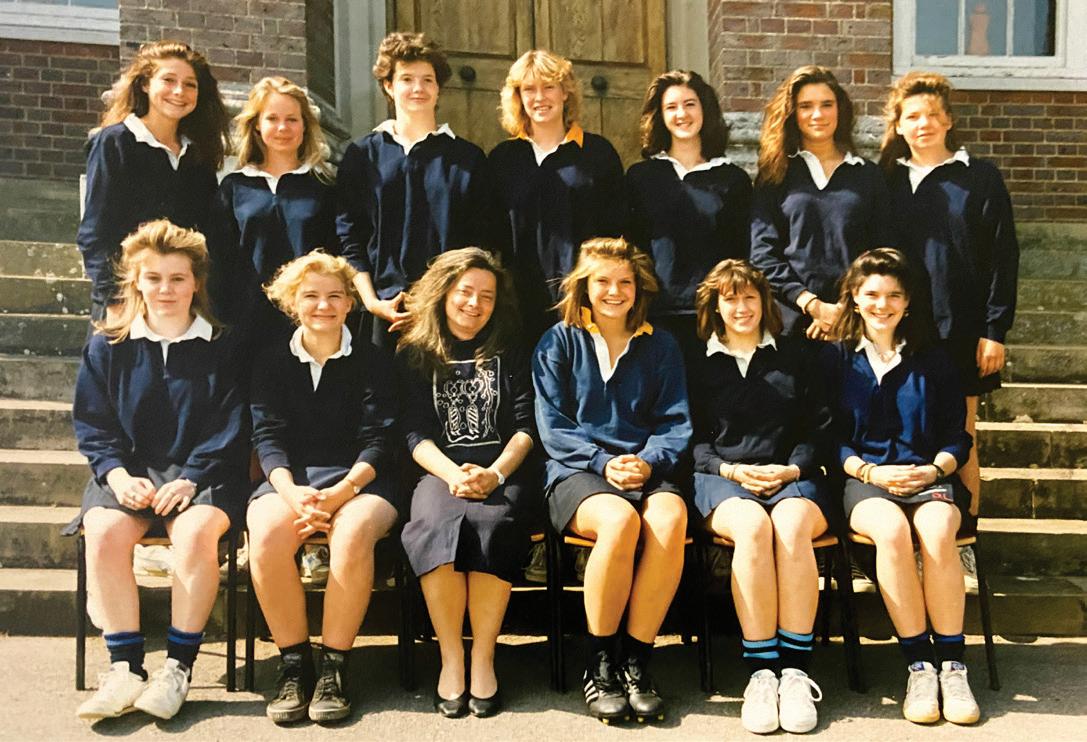
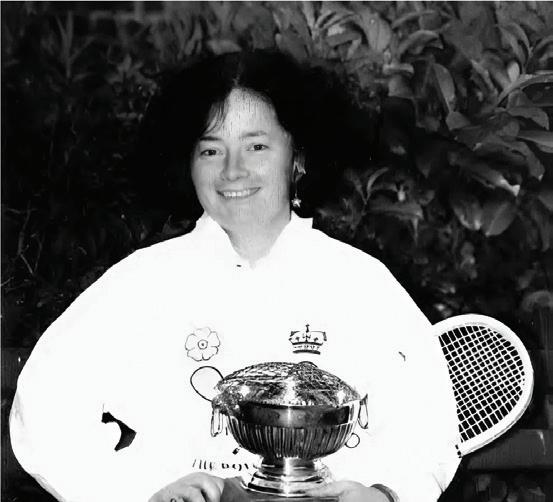
It is not hard to detect Carolyn’s passion for hockey, surprising given her admission she had “never played hockey before I came to teach here. I joined in with Sixth Form girls’ practices and my love of the game started there. Before long I was invited to play for the first OC Ladies hockey side.” Sadly Carolyn’s own sporting participation was affected when she picked up a serious knee injury playing hockey for the OCs in 1994. In the days before MRIs and greater awareness of how to treat ligament damage she struggled to carry on playing sport at a high level “especially squash which was my main sport as an adult”. She then took up Real Tennis, where less running was involved, twice winning the national Over 40 title.
She clearly takes great pride in all Cranleigh’s sporting successes. “We’ve always been a school that puts out as many teams as possible on a Saturday. As the number of girls has grown, this sport for all ethos has become a truly co-educational feature. We may win national titles but fostering a love for sport at all levels is just as important.”
She does, however, lament the demise of pupils having the time to play in a wider variety of sports at the top level. “Specialisation is driven by sports’ governing bodies and seen as necessary and attractive. The all-rounder is much less common and less valued that it used to be. Sometimes the quest for individual glory seems to become too important and as a result some of the benefits of team-based experience, with friends you live and work with on a day-to-day basis, get sacrificed.”
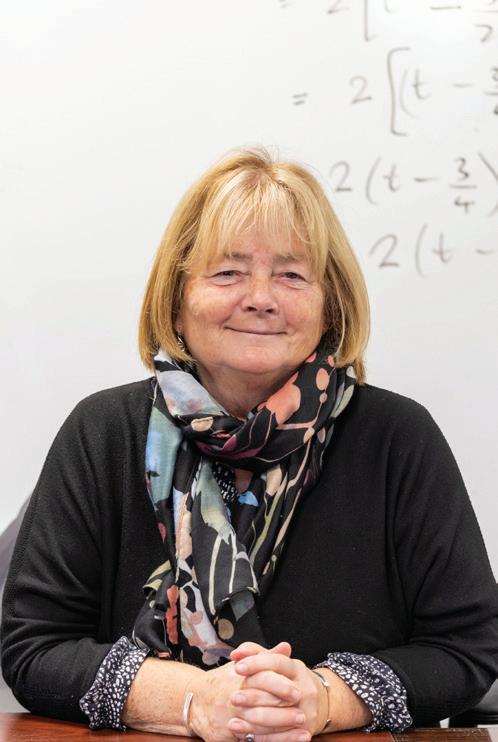
But Carolyn’s main role has been in the Maths department. “It’s one which I enjoy now as much as I did when I started. It continues to excite and reward. Every year I find new ways to explain things, I try out new resources, and I have new colleagues to work with. But most importantly, there is a new set of pupils sitting in front of me each year, most eager to learn, and with a variety of skillsets and personalities. I still love teaching in the classroom and I’m very lucky that I’m in a lovely department.”
If the fundamentals have not changed, the methods have. “The impact of technological advances has been significant. Life has become busier. There is much more paperwork to deal with and methods of communication have been transformed. The ease and immediacy of email has changed the nature and extent of contact with parents.”
But back in the classroom much has remained. “The role of a Maths teacher hasn’t altered significantly. Algebra and calculus haven’t changed and a large proportion of the syllabuses are the same as they were when I started. Nowadays there are pupils among those I teach whose parents were also taught by me …”
Many problems facing the pupils are familiar but social media and the digital world has brought a whole raft of new ones. “Even though these are the issues of a new generation, as teachers we have to be able to advise and guide appropriately … not always an easy task for older staff!”
As well as undertaking almost every senior role on the sporting side, she was also heavily involved in the pastoral side of things. After many years as warden of Edgefield Close, one of the Sixth Form girls’ residences, she became Head of Girls in the years
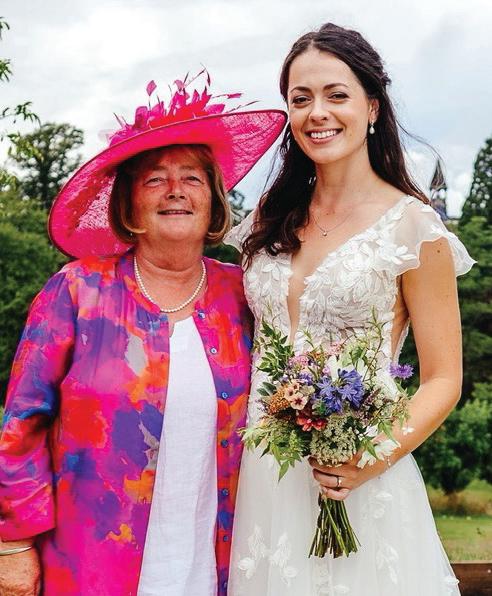
leading up to the introduction of junior girls in 1999 and was then asked to become the first full-time housemistress of South in 2000. “I have never regretted my decision to say no to that. At the time my daughter Chloe was just three years old and I was bringing her up as a single mother. I felt there would be too many compromises to make if I was to take on a big pastoral job. Moving up the career ladder isn’t the only way to make your mark. I hope I have still managed to shape the growth of the School and make a difference to young people’s lives even if not through high office.
“I came here as a vocation and immersed myself in a way of life. I quickly grew to love Cranleigh and all it stood for. The community here has been supportive and valuable to me, throughout my career so far. Part of the reason I have stayed such a long time is my daughter, Chloe, who thrived as a pupil here, and I’m sure other colleagues stay a long time for that reason too.”
So could she imagine anyone these days staying as long as she has? “Obviously some teachers are more keen than I have been to progress up a career ladder and move around other schools. So who knows, I suspect a stay as long as mine will be rare, but who knows?”
What advice would she give to a teacher just starting out at Cranleigh? “Get involved as much as possible … the same advice I would give a new pupil. While a work-life balance is important, if you say yes to as much as possible in terms of being asked to take on new responsibilities and new experiences, the rewards can be significant. Being involved with the pupils outside the classroom makes the teaching role easier and enjoyable and you probably do it better. There are always the long holidays to rest and recharge the batteries.”
Carolyn has no plans to retire just yet so maybe she will make it to the top of the list of longest-serving teachers.

The following are the longest serving members of the Common Room:
Dick Harris 1882-1924 42 years, 126 terms
Monty Aldridge 1912-1954 42 years, 120 terms
Carolyn Nicholls 1985- 40 years, 121 terms
Ken Wills 1949-1988 39 years, 118 terms
Alan Smith 1973-2011 38 years, 114 terms
Tony Young 1938-1976 38 years, 104 terms
Ray Dunnett 1969-2007 38 years, 114 terms
Brian Dimmock 1957-1996 38 years, 114 terms
Robin Lailey 1979-2016 37 years, 111 terms
Eric Hall 1927-1964 37 years, 111 terms

Among the many reasons to have admired the late Robert Redford is the sheer number of people who were drawn to journalism by seeing how devastatingly attractive and powerful an average beat reporter could be.
Not just Redford, Dustin Hoffman, too. And the growling, stunningly charismatic Jason Robards as Ben Bradlee, the unflinching Washington Post chief, who brought down Nixon in All the President’s Men. Who wouldn’t want a life in newspapering after seeing that?
I watched the film just as I, myself, was deciding on a career choice after university (editing The Cranleighan had been my formative experience of journalism!) and I was certainly one of those beguiled by the vision of righteous crusaders rolling up their sleeves to target the corruption of power.
Fast forward nearly 50 years, and I found myself watching another editor targeting the corruption of power. Only this time the editor is me - and the corrupted power is the press itself.
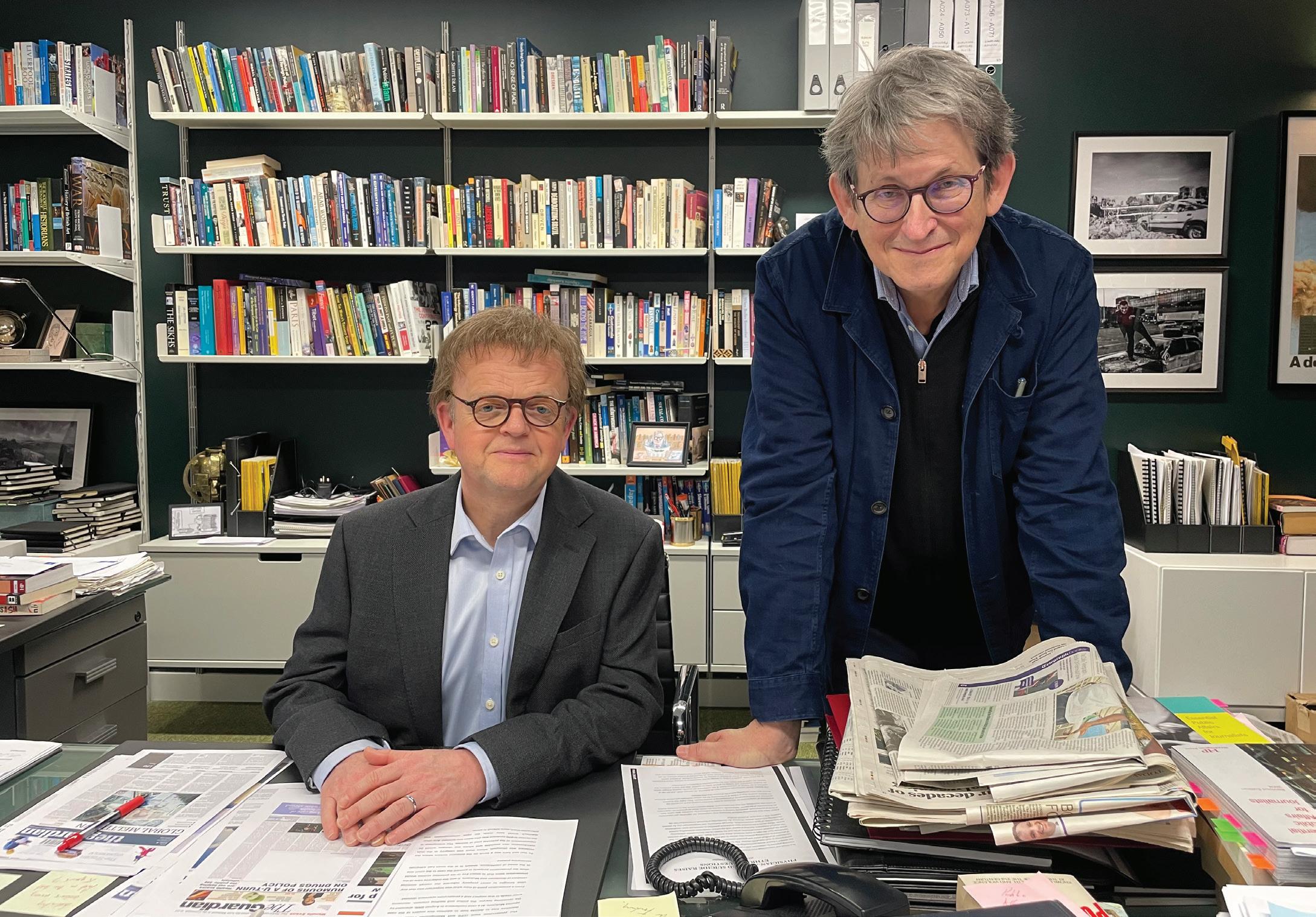
The great Toby Jones, who plays me, is no Jason Robards, but then I was no Ben Bradlee. My style, if you can call it that, was rather more muted, and Toby very skilfully avoids the screen cliches of rampaging editorial tyrants. You would not pick him to play Piers Morgan.
The other thing that distinguishes The Hack from the Watergate books and films is that the corruption of power was not political, but journalistic. This was Nick Davies (brilliantly captured by David Tennant) turning on his own profession. A great reporter rooting out something rotten in his own backyard.
Jack Thorne (who has just won an Emmy for Adolescence) turned this drama into a series about the cloak of impunity granted to Rupert Murdoch because he had the power to make or break people. Let’s be honest: people were afraid of him. With cause.
It shows journalism at its worst - but also at its best. It shows the corruption of power - but also how the craft of reporting can still bring about change. Perhaps David Tennant can do what Robert Redford did nearly 50 years ago, and inspire future generations of young people to shine light where it’s needed.
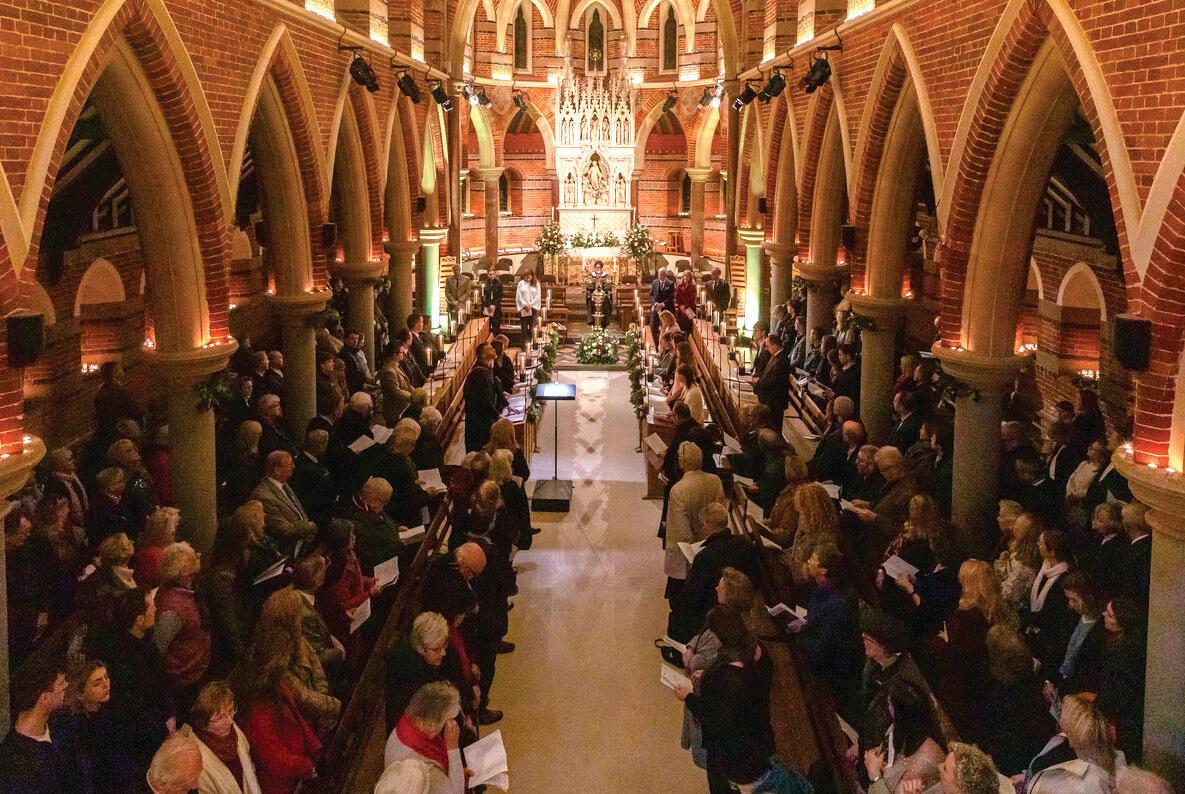
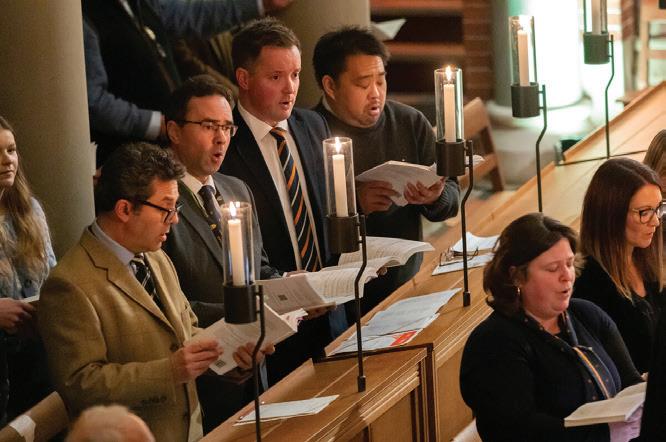
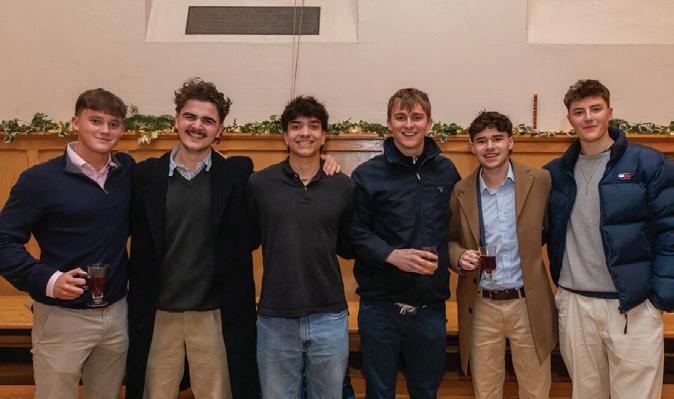
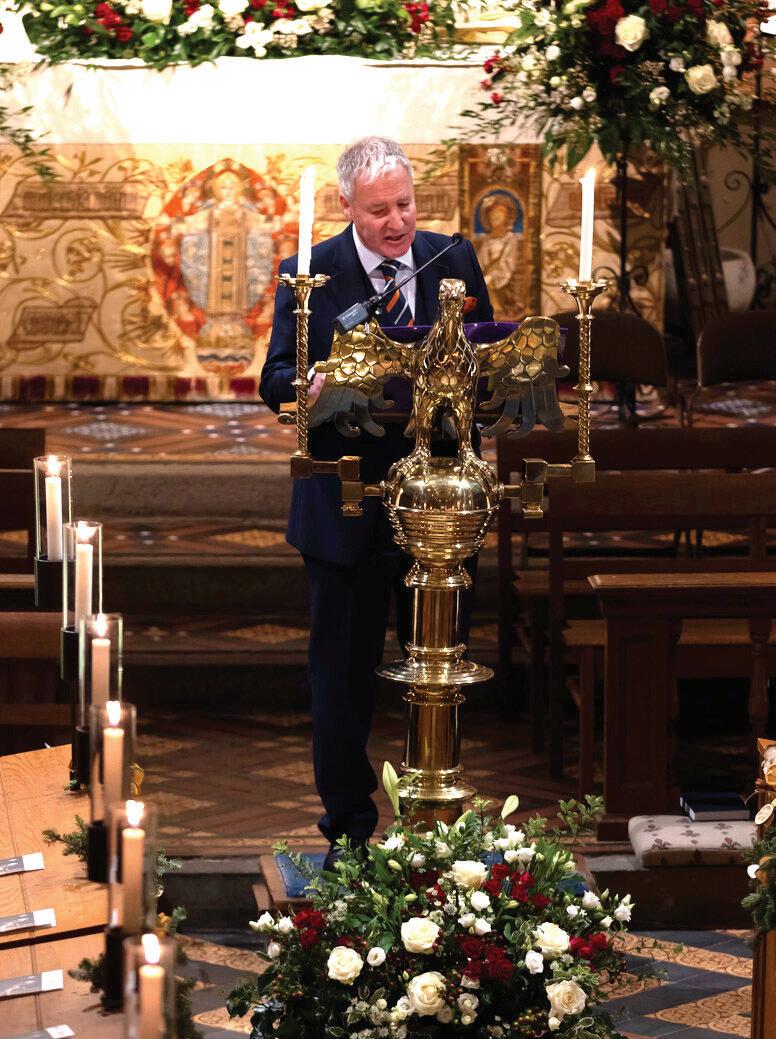
ABOVE: Last year’s wonderfully attended OC Carol Service
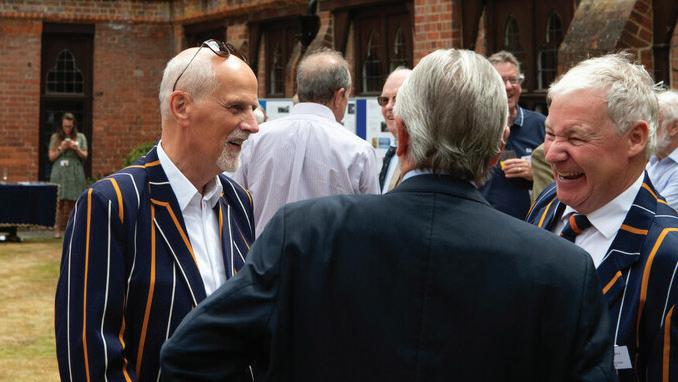
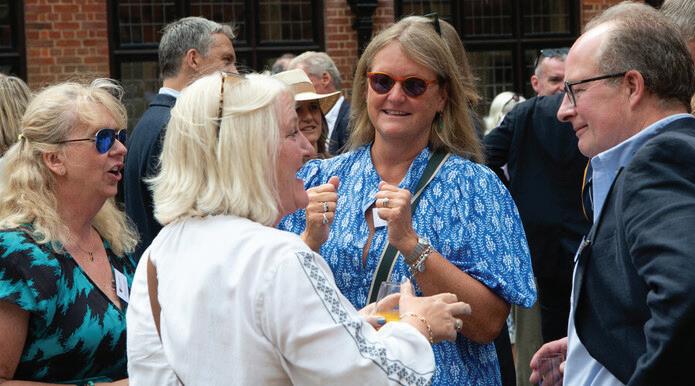
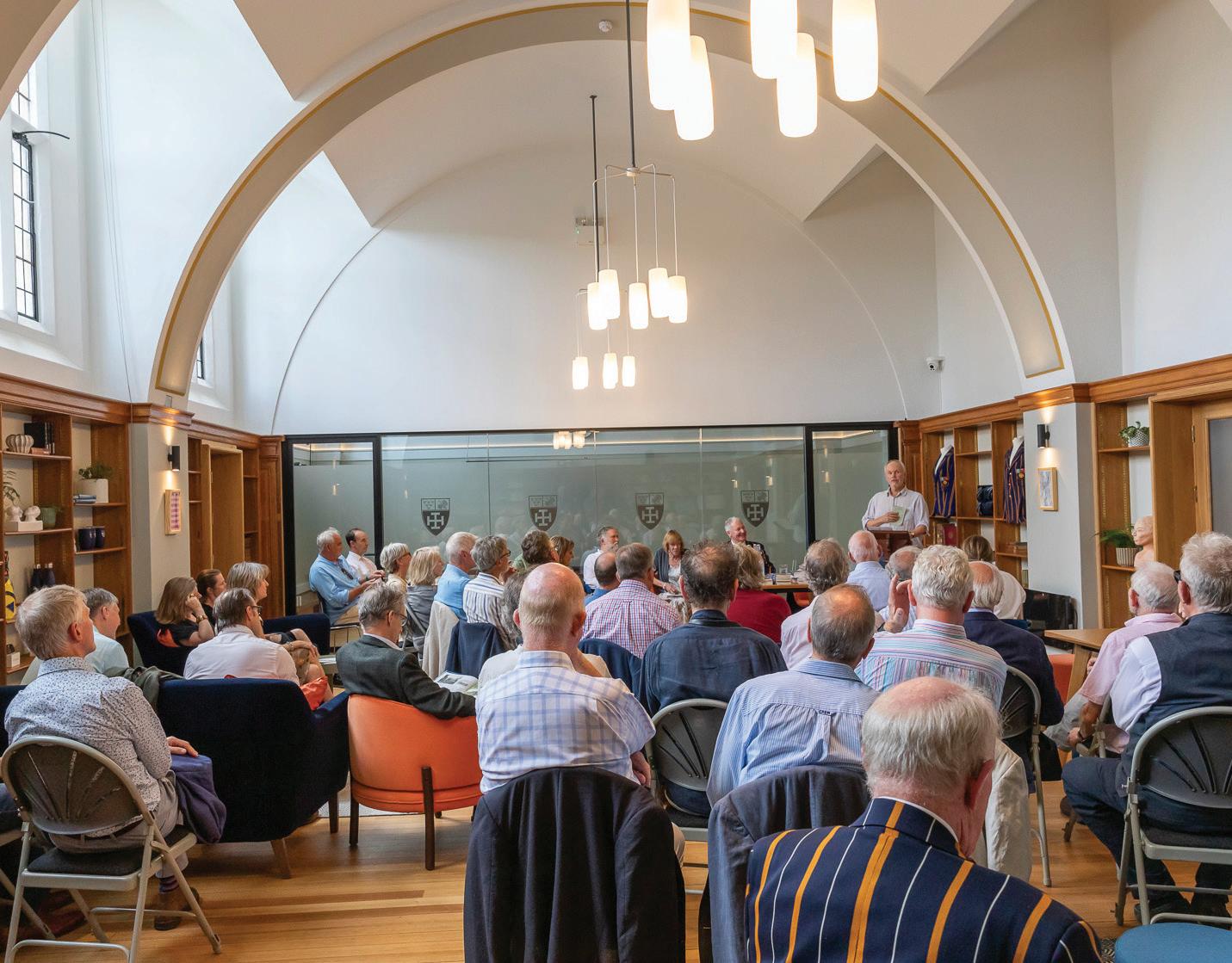
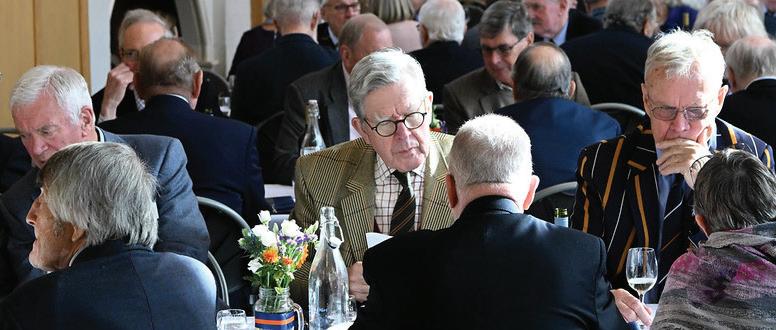
MIDDLE: OC Day, when several decade year groups had record numbers for their lunch in Hall, and James Harpur (2 North 1975) and friends gave a very well attended poetry reading in the Reading Room after lunch
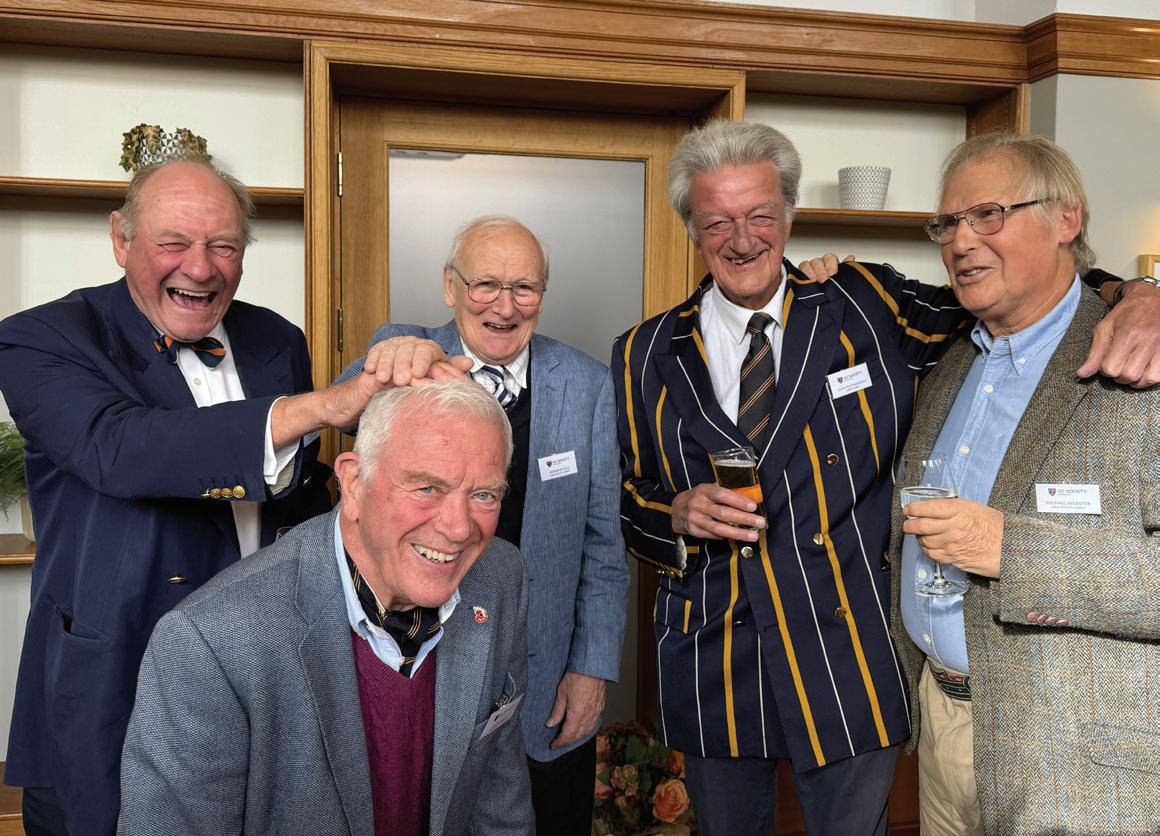
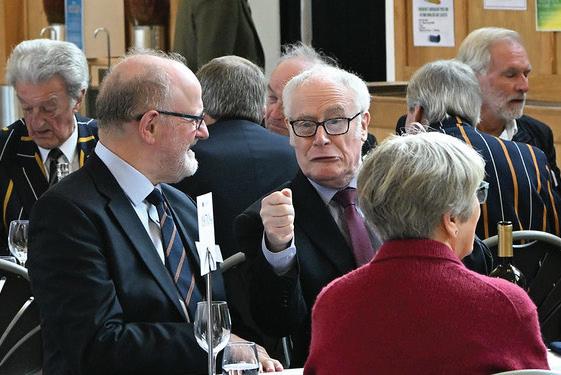
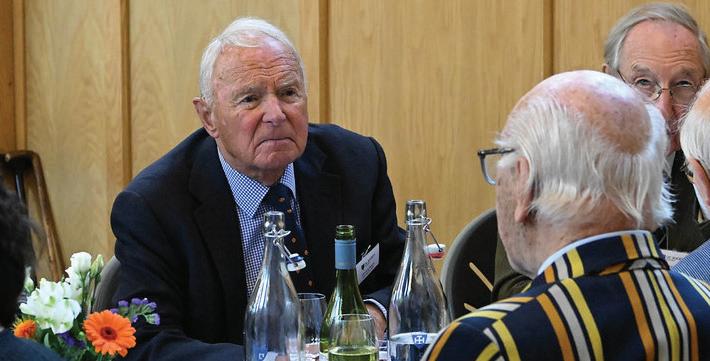
BOTTOM: The always popular Over 70s reunion. If you are due to turn 70 next year please add the date to your diary!
IN THE SUMMER OF 2014, THE OC SOCIETY APPOINTED VICKIE INGLE AS THE FIRST FULL-TIME OLD CRANLEIGHAN SOCIETY MANAGER. IN THE 11 YEARS SINCE THEN SHE HAS BECOME A VITAL PART OF OUR OPERATION AND A FAMILIAR FACE TO HUNDREDS OF US.
The decision to create a new full-time role working out of the School to support the day-to-day operations of the OC Society came on the back of a three-year intern programme which had seen us employ recent leavers to support Mike Payne in his position as OC Liaison. Working with Guy Waller, the outgoing Headmaster, the OCS formed a job description and a financial structure to make the role viable. Then came the small matter of finding the right person.
At the same time, Vickie Ingle was looking for a new beginning. “I was working as a studio manager for a very high-end interior designer in London, and before that I’d been the head of IT for a company of about 200 people – over the course of about 20 years it nearly killed me. The studio manager role was exhausting and nerve-wracking. We had clients such as David Bowie, Bryan Adams, Elle Macpherson, Ant and Dec … it was pressurised. You just didn’t get things wrong.
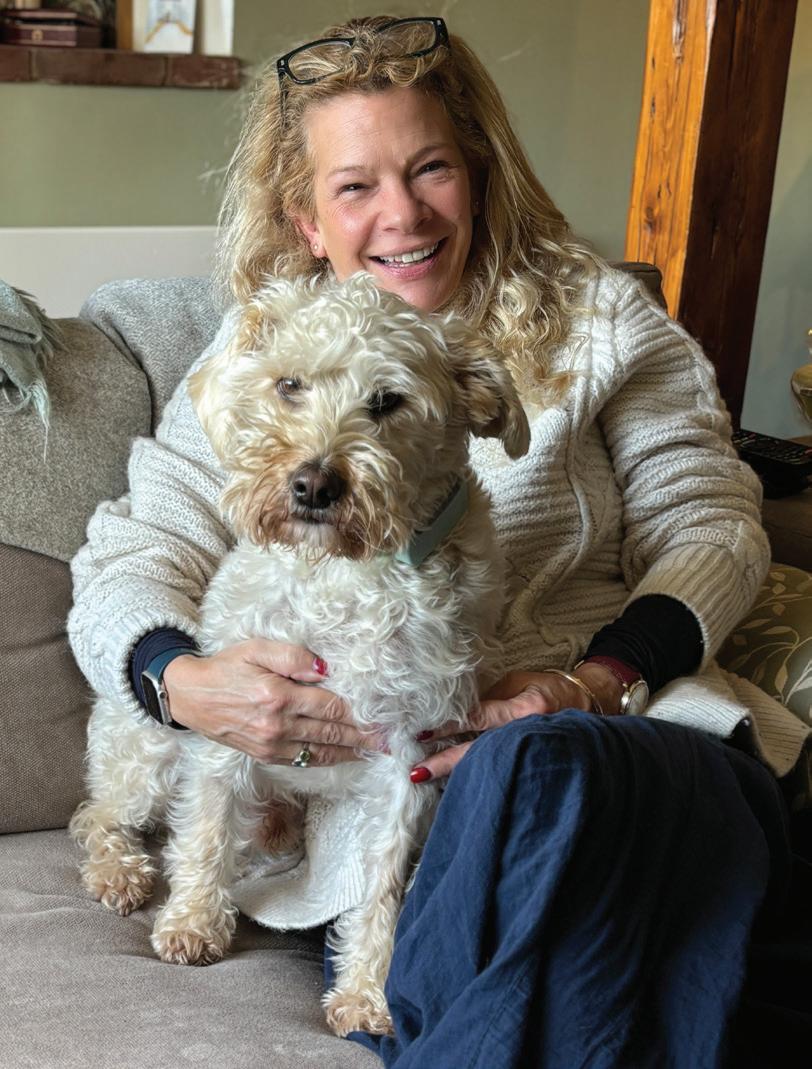
“Then, the boss’s PA died of a brain tumour shortly after leaving to follow her dreams. She was younger than me, and at that point I just looked at my life in London and the stress levels and thought, I’m not doing what I want to do. I’m not living where I want to live. I wanted to get out of London, and a job that wasn’t quite so stressful. I looked around, saw the OC position, and thought it looked rather interesting.”
Although she had lived in London for many years, Vickie knew the Cranleigh area well having grown up near Petworth, with a sister living in West Sussex. After three interviews – two at the School and one in London – she joined. “After the first interview I decided this was what I wanted to do.” She wasted no time; she put in an offer on a house as soon as the job offer came through and completed the purchase the week before starting.
Her first few weeks weren’t straightforward. “My job description – well, there wasn’t really one on the OC side – was to work for the OC Society, but Jody Cooksley [Cranleigh’s Director of External Relations] desperately needed some admin help, and the intention was that I would provide it. I think I did about three weeks of that before the OC role started to develop and sort of squeezed out helping Jody. It was extraordinary how it grew, because initially I was quite worried about what it was going to be. There were really no guidelines.
“One of the things that helped enormously was having Mike around. He could tell me what had gone before and we were able to filter out the noise — and there was a bit of that. His knowledge of the Society, the things he’d set up, and his contacts were invaluable. He put me in touch with a lot of people and I was able to go to events with him and meet them.”
Support from within the School also proved vital. And crucially, she won over the never-easy-to-please John McDermott, a fixture at many OC events. “If he had taken against me, it could have been very different. As it was, I got on very well with Mac. I didn’t care if he was rude to me! Ultimately, I was involved in helping to arrange for his ashes to be buried under Clare’s Oak – one of the stranger requests I’ve had to deal with!”
Over the years she has witnessed significant progress. “I think across the board, the events are much better attended because I’ve had the time and opportunity to work on them and engage people.”
Her years in IT have been put to good use too. “Before I joined Mike had infrequent, indirect access to a database via the interns, but not the opportunity to interrogate it. So, for example, with OC Day decade reunions I can go through the Call Over books, match them to the database, then compare with LinkedIn. The data is much better than it ever was, and having Lucy (Goundry) working part time as Network Co-ordinator has helped greatly.”
Vickie has also introduced many initiatives of her own. “I send Christmas cards to everyone who’s going to turn 70 before the next Over 70s Lunch, with a personal invitation. So you’re not relying on a publication or digital newsletter. They’ve got something on the mantelpiece they can look at and think, ‘I’d like to go to that’.”
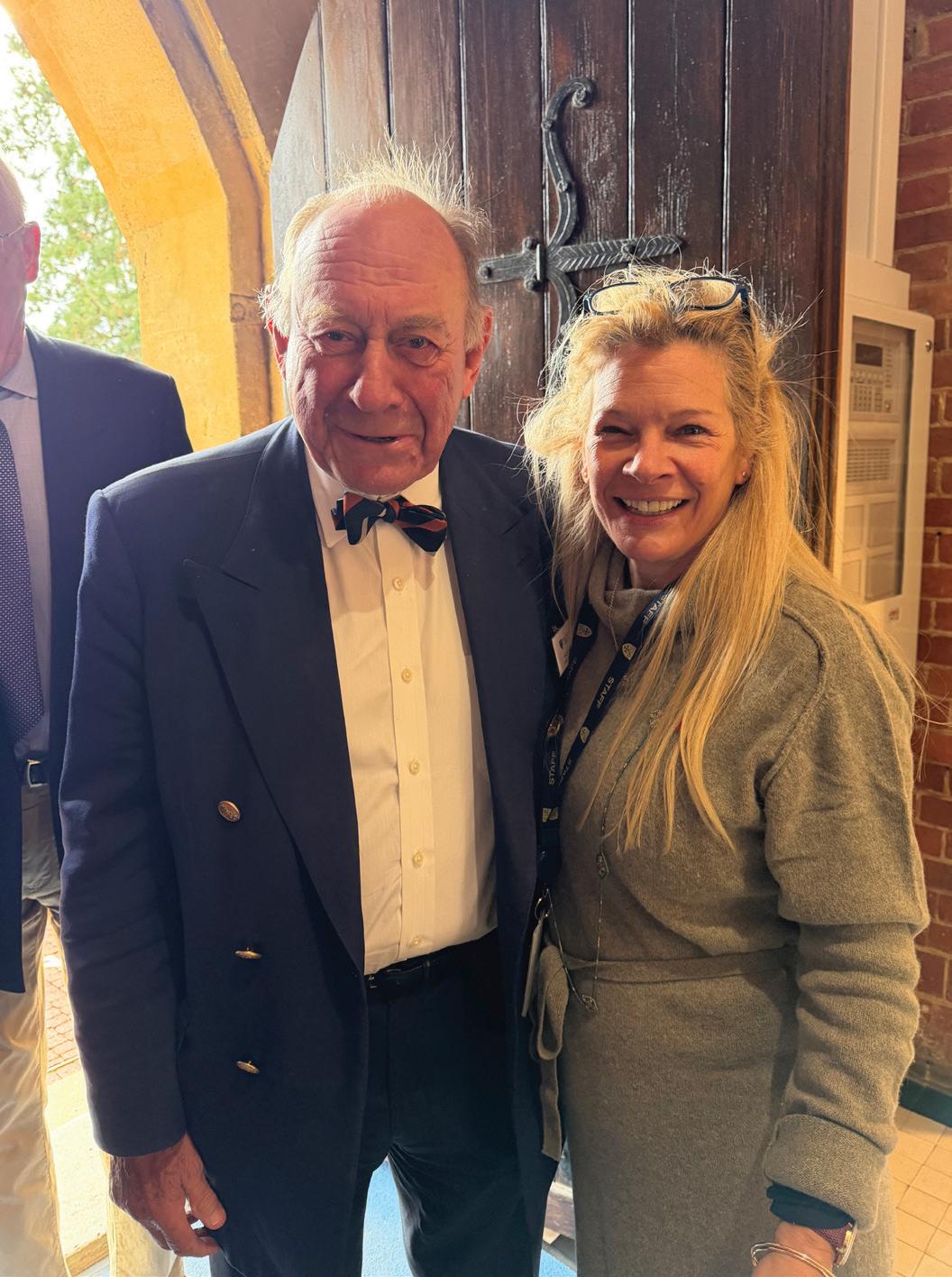
And then there are the other things — the things you would never imagine fall under “OC Society Manager”. Over the years, Vickie has comforted grieving adult children after arranging their father’s memorial; plotted, organised and even joined an extraordinary Cornish coastal walk for Nick Meyer’s (2&3 South 1962) 75th birthday (right with Nick at this year’s Over 70s reunion); sent teddies to newborn OCs; rung solo alumni during COVID to make sure they were coping; arranged the sale of pews from
the chapel; coordinated plaques for the new benches; cheered on fundraising OC cyclists and designed their team jerseys; curated a pop-up museum for OC Day; helped with tree dedications; reunited the original cast of a school musical so they could dance with today’s pupils; and even listened to a slightly eccentric OC musician playing bizarre instruments over dinner. “It’s a mad job all round when you think about it, but I suspect it is the madness that keeps me sane”.
She receives calls most days from OCs seeking information or help. “With increased attendance and participation, more people know I’m a contact here, so a lot more people get in touch. You never know what’s going to come in, and often it sends you down a rabbit warren … but they’re all valuable connections.”
Vickie’s dedication shone particularly during Covid. “We sent postcards to all OCs over 70 saying if you need help, and it’s within our gift to give it, then please call me.” Some did; many others simply wanted a friendly voice.
The Society and School have also been keen to develop networking and mentoring. Although it has grown, the challenging employment landscape means there is room to expand. “I think if we pushed it more, there’d be more demand. But it’s time consuming. Helping one person can take half a day – going through the database, checking LinkedIn, working out who’s practical to involve, and figuring out what the person actually wants, because often they haven’t thought it through. Some haven’t even got a CV!” She also assists the School: “If they want recent leavers to talk to students, I’ll send out an email to appropriate people.”
Never far from Vickie’s side is Basil – a popular visitor to the Cranleighan Room, offering support and cuddles to all – apart from the Chairman of the OCS with whom he has a love/hate relationship – something to do with jelly babies and a propensity to whip him up into a playful frenzy ….
Over time, Vickie has grown increasingly impressed by Old Cranleighans. “They are special. I can’t imagine many old-school societies have the same level of connection across generations. At reunions, people who haven’t seen each other for decades just melt back into conversation.” She was genuinely thrilled and honoured to be made an Honorary OC in 2018.
“What Vickie modestly fails to mention is the incredible dedication she brings to the role,” said OC Society Chairman Martin Williamson. “Aside from working long hours, and often weekends when events are happening, she politely and efficiently deals with endless requests, as well as the occasional unreasonable demand from OCs – usually me! She patiently helps with publications, acts as a vital conduit with the School, and the time – often her spare time – she spends organising the Carol Service, Over 70s Lunch, the golf day and OC Day has to be seen to be believed.
“It’s no exaggeration to say the OC Society as it stands could not operate without someone like Vickie – and I’m not sure there’s anyone else quite like her. We are incredibly fortunate she chose us.”
Vickie, of course, brushes away such praise. “Most alumni associations aren’t like the OCS. It really is a very special thing.”
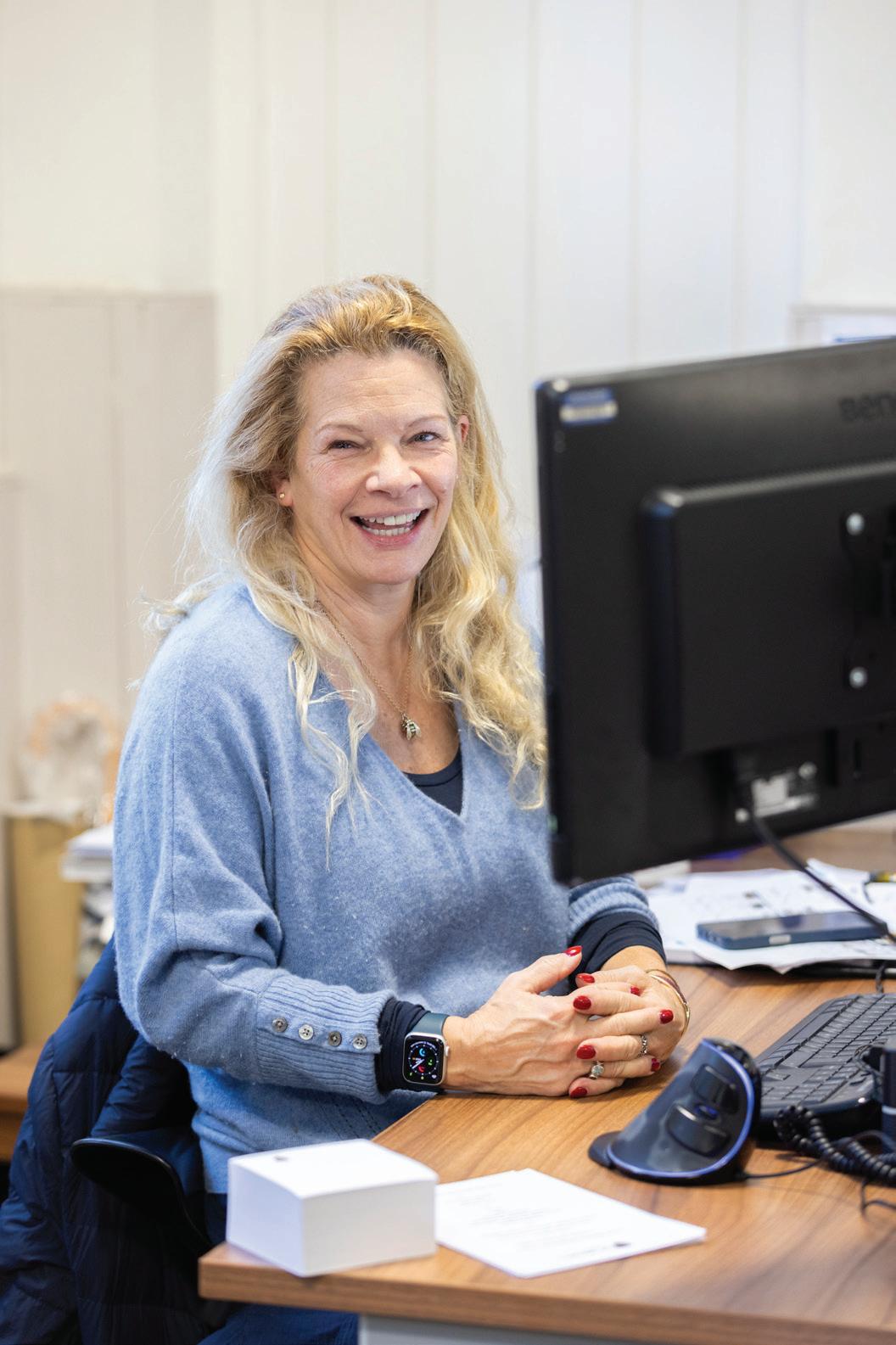
“Most alumni associations aren’t like the OCS. It really is a very special thing.”
CHAIRMAN MARTIN WILLIAMSON
Two years ago, the OC Society announced in this magazine ambitious plans for an extensive renovation and improvement of the OC Club at Thames Ditton. A visitor to the site in late 2025, however, would be forgiven for thinking those proposals were little more than wishful thinking, as the Club remains very much as it was back then.
Not long after the article was published it became clear there were some fundamental planning problems with what we then had in mind. Our original pre-planning application threw up a number of issues, primarily with respect to the location of the second all-weather hockey pitch and the proximity of the padel facility to neighbouring housing. This meant we had to go back to the drawing board.
Our planning consultants warned that any significant development on the Weston Green side of the site – the nine-acre plot we bought in 2021 with a view to being able to expand and improve the Club – was going to be far more problematic than undertaking the work on the Thames Ditton side of the ground, which is largely surrounded by woodland and so less intrusive as far as neighbours are concerned.
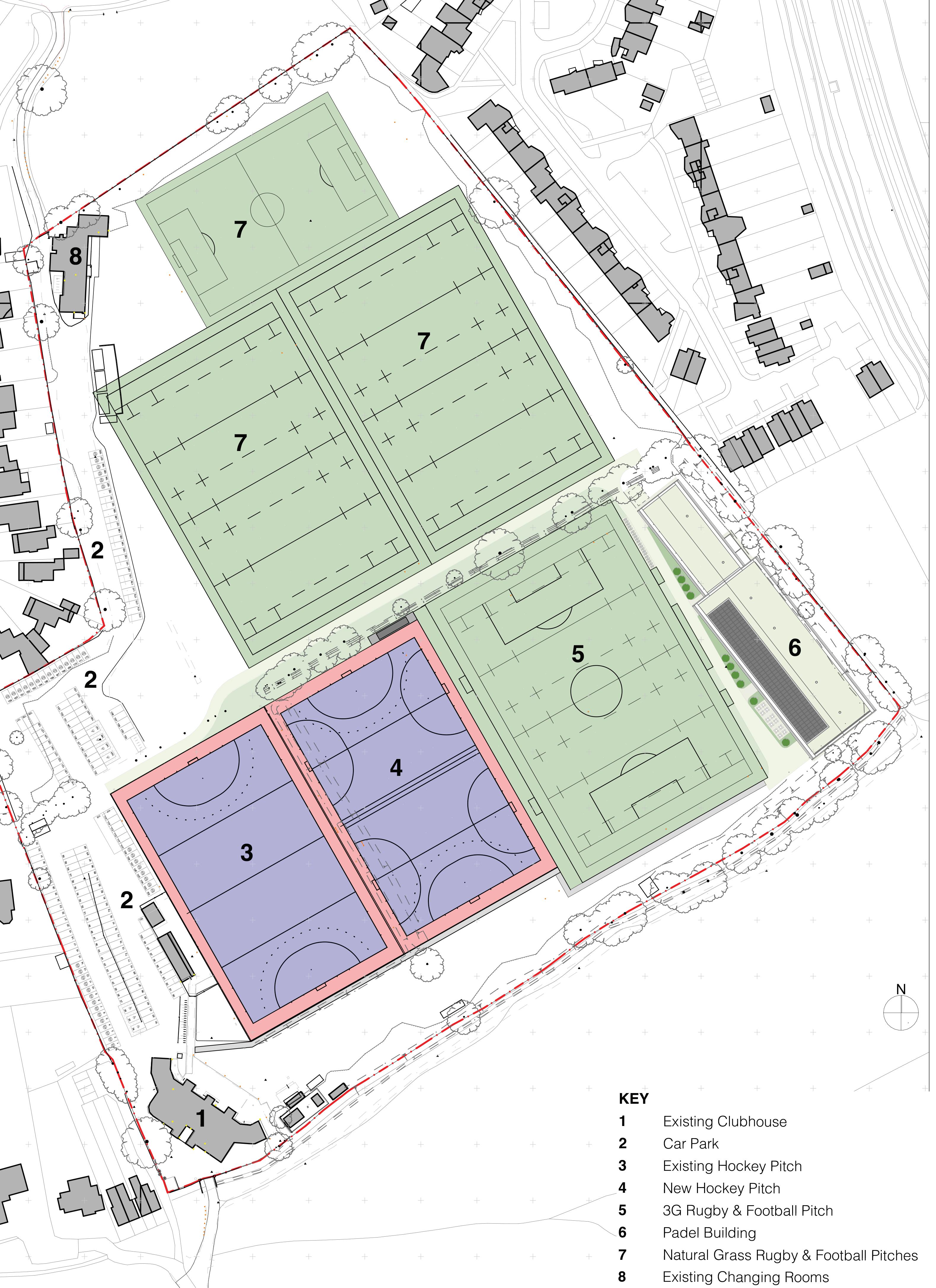
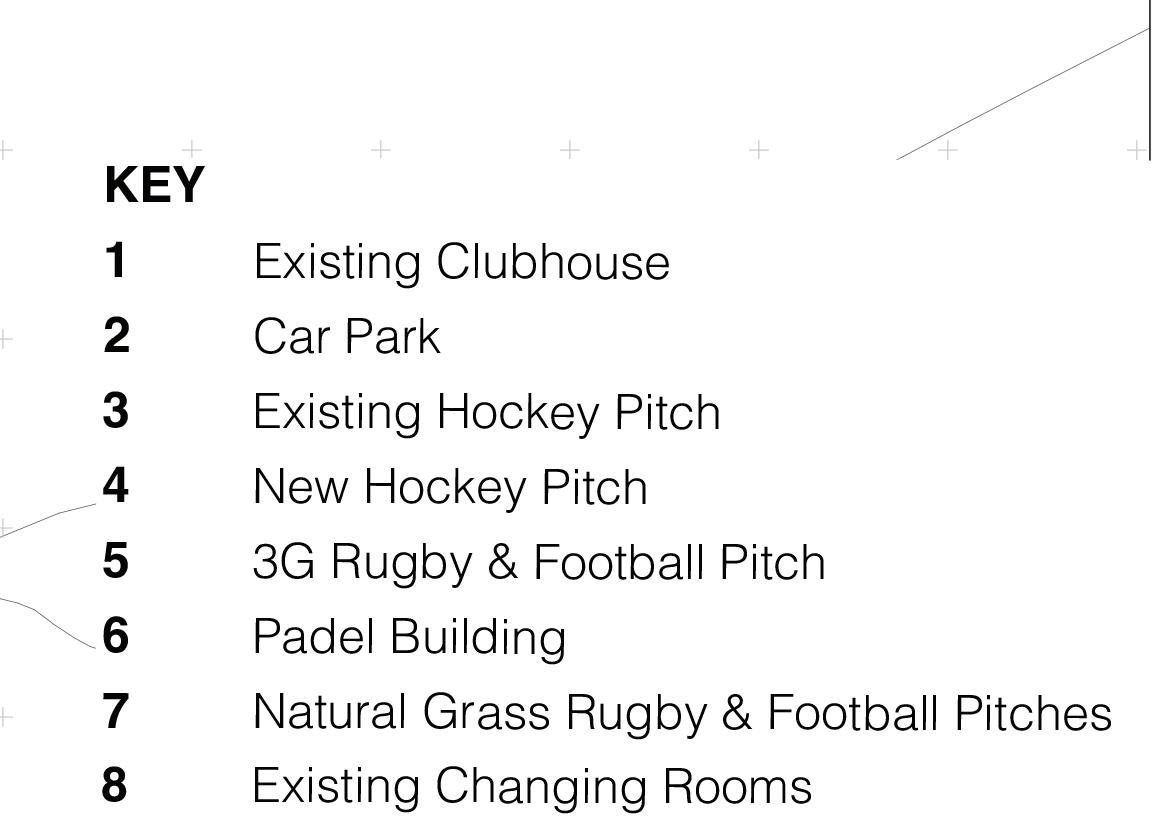
Several months of back-and-forth followed with the end result that a completely revised masterplan emerged with the second all-weather hockey pitch and the six-court indoor padel tennis centre both sited on the Thames Ditton side.
The original consultations with various sporting governing bodies alerted us to one common requirement – an artificial 3G pitch which could be used for football and rugby. This is also a key need for Elmbridge Borough Council. The plans were therefore revamped to include a 3G pitch. While this represents another considerable investment, the revenue generated from third-party hiring (in addition to OCRFC and OCFC use) should cover this investment over the lifetime of the surface, with any surplus being used as a sinking fund for a replacement surface in due course.
The new masterplan required cooperation of the OCRFC, since the second allweather pitch and the artificial 3G pitch will both be located in the area currently occupied by the two senior rugby pitches, necessitating the moving of those two pitches over to the Weston Green side of the Club, which the OCRFC have kindly agreed to do. The ‘new’ pitches will have to undergo extensive work as, even though the RFU requirement is that they be of the same standard as the existing playing surfaces, our aim is to make them significantly better.
The mothballed Weston Green clubhouse, which originally was going to be replaced by the padel courts, will need to be demolished and rebuilt as a smaller building containing changing rooms, toilets, storage and possibly a multi-purpose space which can be used as a dance studio or for Pilates or for some other community use. The Weston Green clubhouse will not have any communal areas or catering facilities, as we want to retain the main clubhouse as the social hub of the Club.
As we started to get deeper into the planning process, and to consider the results of a second pre-planning application, it became frustratingly clear that there were far more hurdles to jump than even the most pessimistic of
us had feared. The catalogue of surveys was extensive and expensive with almost every one of them throwing up unforeseen headaches. Removing even the worst specimen of self-sown tree meant offset costs running into tens of thousands of pounds; renovating the car park raised the possibility that under local rules we would have to install as many as a hundred electric charging points. The list was long, as was the number of specialist consultants required to advise us on lighting, transport, ecology … On the positive side our consultations with Sport England and the national governing bodies for football, rugby union, rugby league, hockey and tennis (for padel) were entirely positive, as were our consultations with users and potential users, our neighbours and local councillors.
We had hoped to submit the full planning application over the summer but that drifted into the autumn, largely because of the need to involve an array of consultants, allied to the seemingly never-ending requirement to confirm there was no local bat population. The aim now is that the application will happen in the final few weeks of the year. We are then at the mercy of the planners.
Assuming we clear that hurdle then the real work starts. The OCHC have already started down the road of raising the £1m they need to build their second artificial pitch, and the OC Society is working hard on the funding of the 3G. There are also considerable other costs relating to the site – car parking, landscaping, security – before we even think about the clubhouses. On the plus side, the padel consortium is ready to go as soon as they get the green light.
It is likely that there will be three phases to this work. The first is the installation of the two artificial pitches, the padel facility, and the renovation of the Weston Green grass pitches; the second will be the car park and the Weston Green clubhouse; and the third, and most daunting will be the reconstruction of the 1928 Thames Ditton clubhouse.
Two years ago, the intention was to rebuild the back of the existing clubhouse while retaining the familiar façade. It has become clear that this will not only limit what we can do internally but also be more expensive than starting again. The OC Society Excom has provisionally given its blessing for the demolition and replacement of the clubhouse with the understandable proviso that the replacement has to be sympathetic to what is there now. As soon as the main planning application is submitted, work will start on what kind of building we want and how it will be funded.
There remains a lot of uncertainty in terms of planning, building, and funding but we have little option as the Club we have currently is not sustainable either operationally or financially. The expectations of sports players and parents is far different now than a generation ago. They demand the best surfaces to play on and facilities to socialise in. If we do not give them both of those, then the Club will slowly become an irrelevance. If we are to attract the next generation of Cranleighans we need to offer them a Club which they can be proud of.
Finally, I want to acknowledge a relatively small number of people who have worked tirelessly behind the scenes. Toby Stevenson (OCHC), Charlie Packham, (2 North 1994) (padel) and Liz Norrington (architect) have given up huge amounts of time to attend interminable meetings and review everchanging plans. But the real driving force has been – and hopefully continues to be – OC Society Hon Secretary Dodie Khurshid (West 1989) who patiently liaises with consultants, councillors, sporting bodies as well as offering advice and common sense as only a KC can.
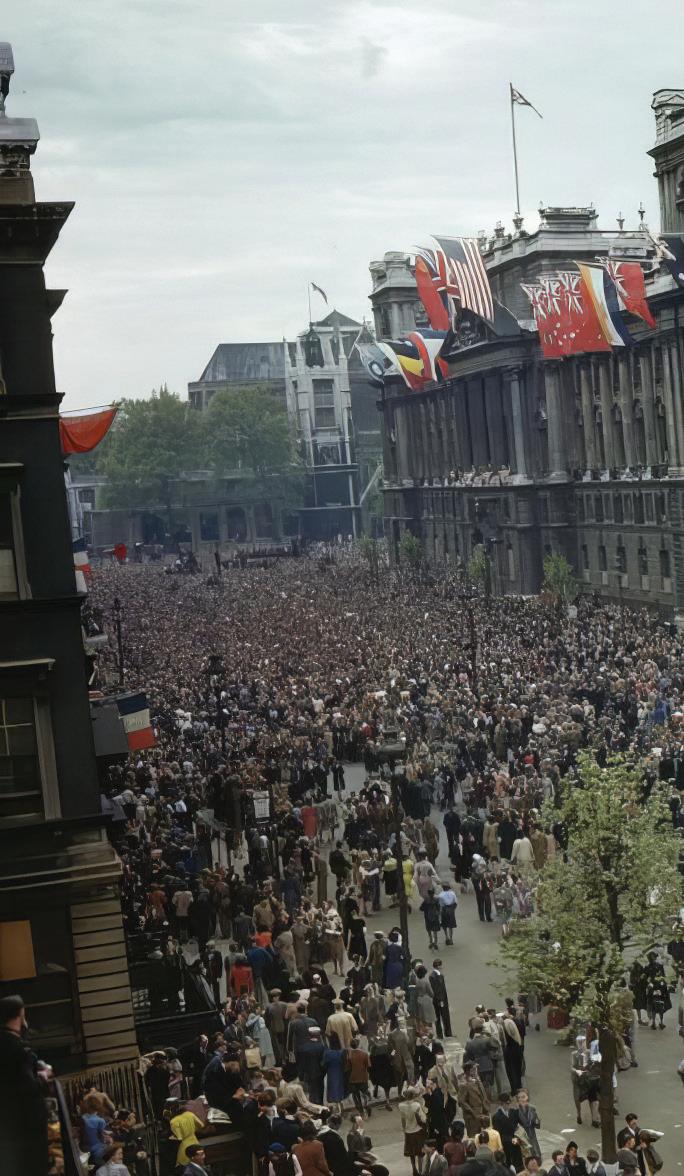
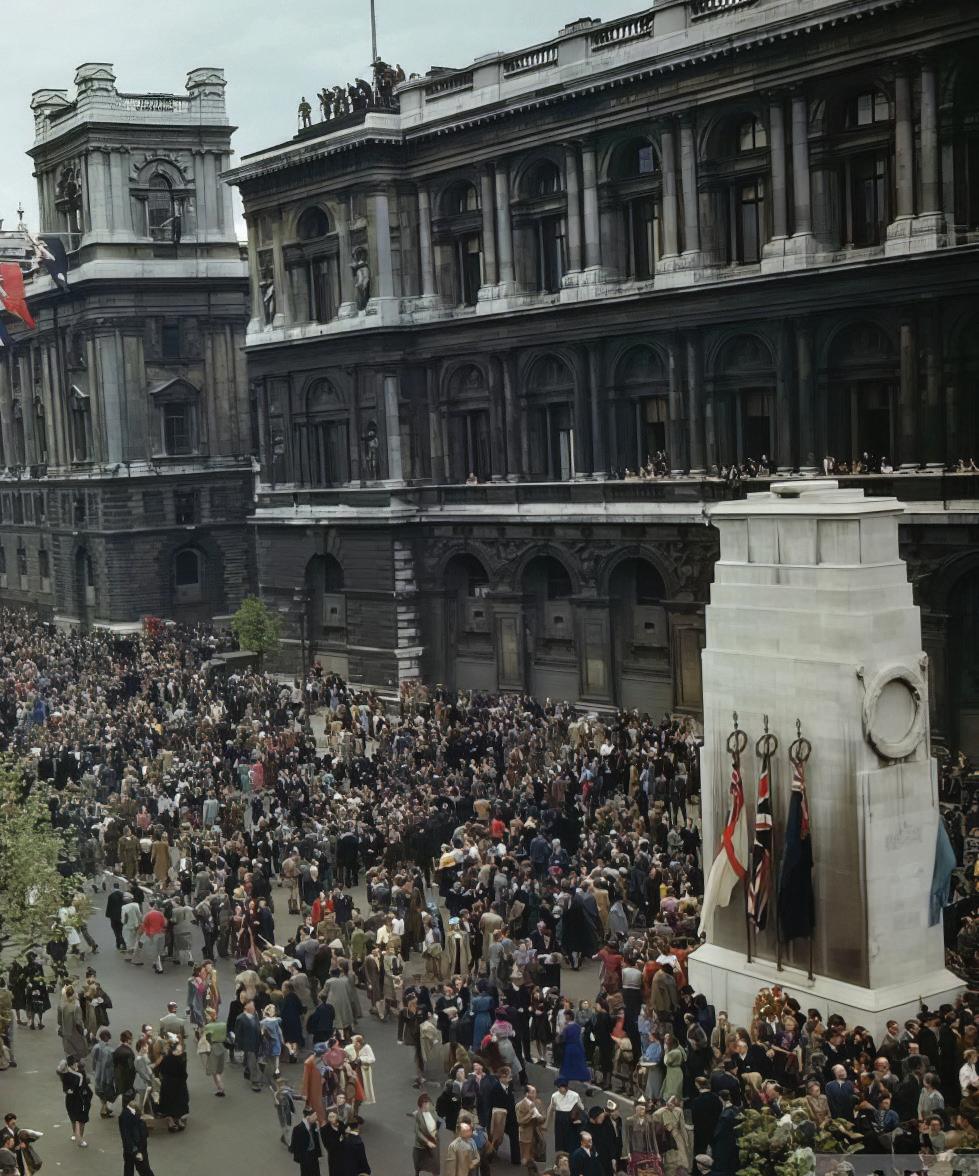
ON MAY 8TH 1945 GERMANY AND ITS REMAINING ALLIES SURRENDERED AND THE WAR IN EUROPE CAME TO AN END. TO MARK VE DAY CELEBRATIONS WERE HELD ALL OVER THE COUNTRY AND CRANLEIGH WAS NO EXCEPTION.
At the end of the war in November 1918 there had been no party at the School; an outbreak of Spanish Flu meant all boys had been sent home a few days before. But in 1945 the summer term had only just started and the sense of excitement was universal.
The first week of term (which had started on May 1st) was slightly surreal. For the first time since the start of the Michaelmas Term of 1939, boys returned for the start of the term to find the blackouts were removed from the corridors around the Quad. On the Common a huge bonfire had been built ready for the celebrations that everyone knew were imminent.
Ex Cultu Robur, the School’s excellent account of Cranleigh during the war noted: “All were strung up to a tense fever-pitch of an excitement too clutching for joy and relief. That would come later after “the tumult and the shouting died”—sorrow, pride, gratitude, awe and remembrance; but meanwhile England waited to go mad. The amount of prep that was done throughout the School can be imagined; every wireless was surrounded by a crowd of impatient prefects, waiting to pass on the news of the German surrender to the Houserooms as soon as it came through.”
The official announcement came at 8.15pm on May 7th stating that the terms had been agreed by the German High Command and would be signed the following day. As boys listened in their houserooms on the radio “such cheering broke out as may never be heard again”. Although prep continued “no more work was done … a surprising number of flags appeared out of study windows, East contributing a large black Swastika hung upside down”.
After prayers the Headmaster visited all the dormitories and announced that School would end early the next day and until the King’s broadcast to the nation at 9.00pm the boys would be free to do as they pleased.
Lessons ended at lunchtime and straight away boys headed to all parts, with the usual boundaries ignored. Some took the chance to visit pubs, many offering customers a free pint to mark the occasion, and a blind eye was turned. Some went home, others headed to Guildford, while what the Cranleighan described as “the unlucky few” remained at School. Local buses and the trains to Guildford “were filled to bursting point as we sweated in the sultry heat”.
A few more daring soles ventured up to London to join in the celebrations there. David Cooper (2 North 1951) was able to witness the procession of MPs, headed by Winston Churchill, as they made their way for a service of thanksgiving in Westminster Abbey (scan QR code for a full account of his day).
Everyone managed to make it back to Cranleigh by the 9pm curfew. “We went to the houserooms for call over and in time to listen to the King on the radio,” Bryan Wordsworth (1 North 1949) said. “In 1 North a boy in one of the toyes was asleep when the National Anthem was played; woken roughly to show proper respect he shot up and laid himself out by hitting his head on his locker and was then left until after the speech when he was brought round with some cold water.”
Then, “in pairs and crowds, stringing the road, no longer singly, we came down at 9.30pm to join in the village festivities. Imbued with the village spirit, our hearts opened with the sheer joy of it all as twilight descended. We attended the dance in the Village Hall, we joined in the torchlight procession as it made its way from the opposite end of the village to the Common where a huge bonfire had hastily been built.
“The flickering, waving lights were an impressive sight in the falling dusk as the long snake with the band playing made its way,” Ex Cultu Robur noted. “The glare of the bonfire lit up all the houses round about and shone on their flags with ruddy fierceness. The Swastika, silhouetted on its summit, fell with a crash into the flames as cheers rang out, and fireworks and crackers shot into the air. At length the school tore themselves away from their dances and their celebration pints and trudged up the road to bed.”
Others recall the party continued. “It was a fairly riotous night,” Wordsworth said. “with Monty Aldridge [the second master] doing his normal night patrol armed with a suitable flexible piece of wood.”
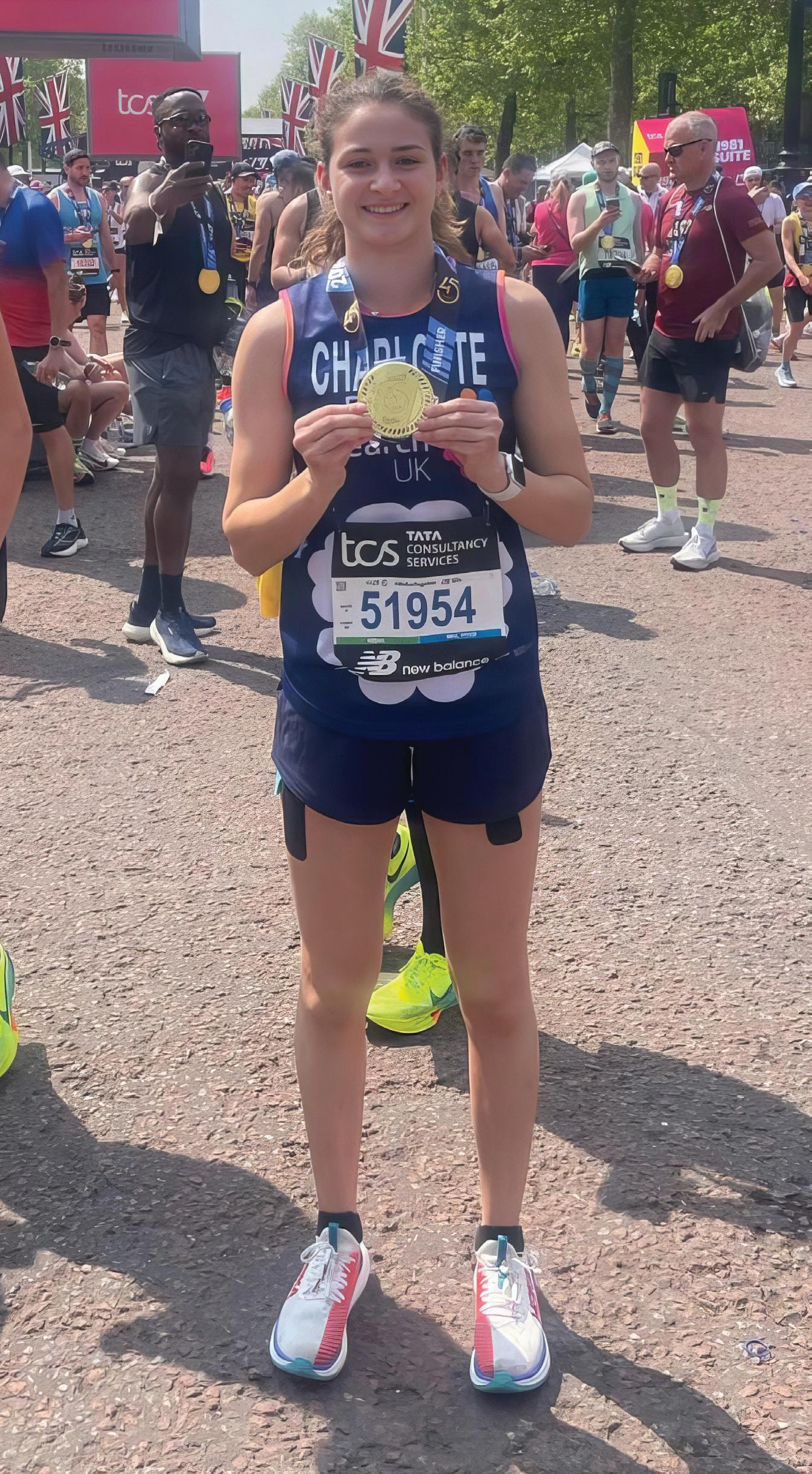
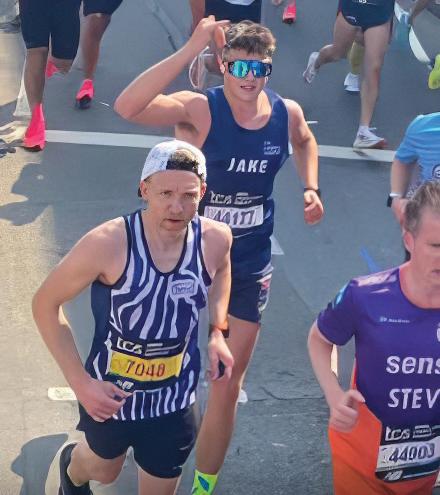
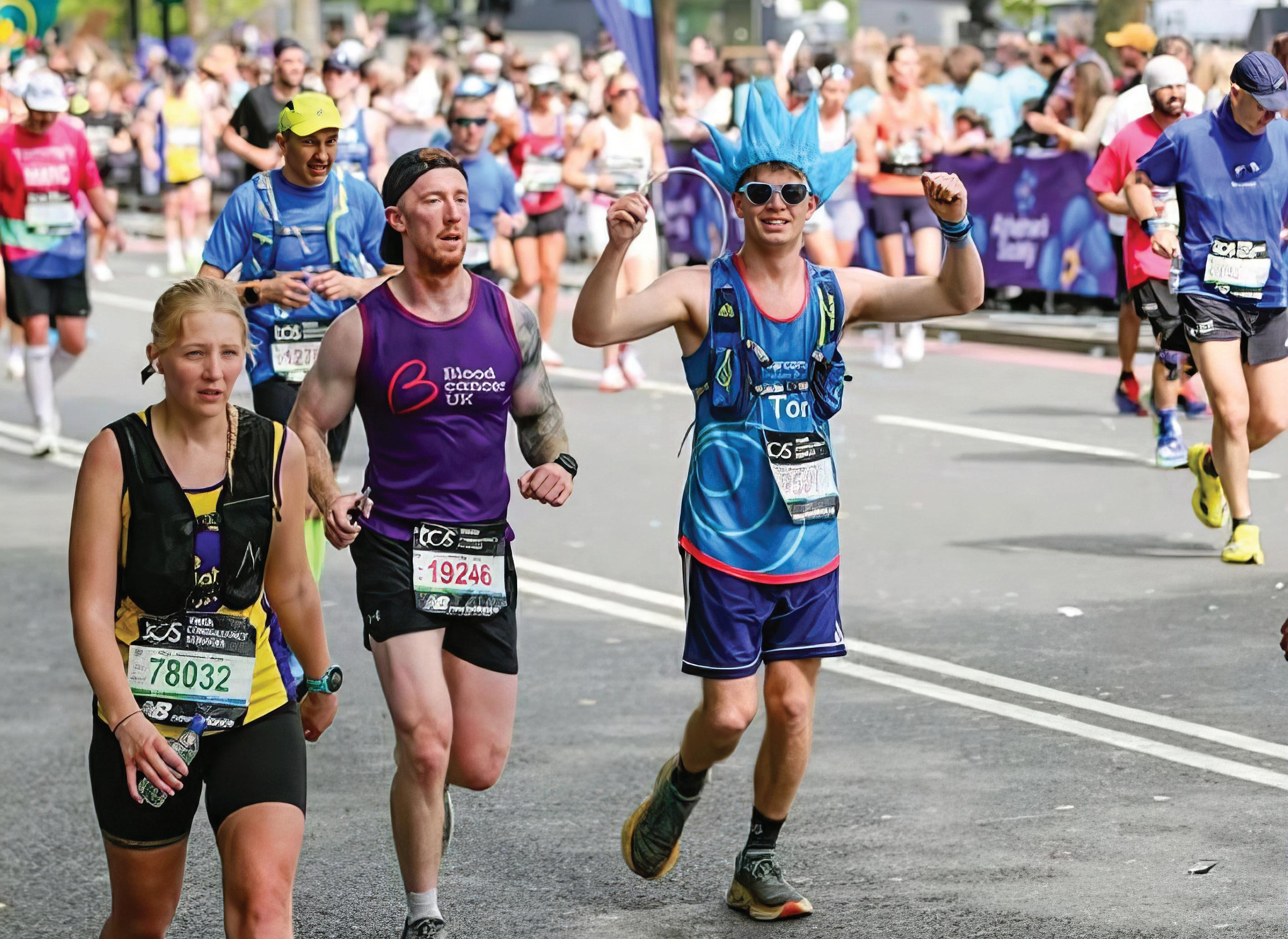
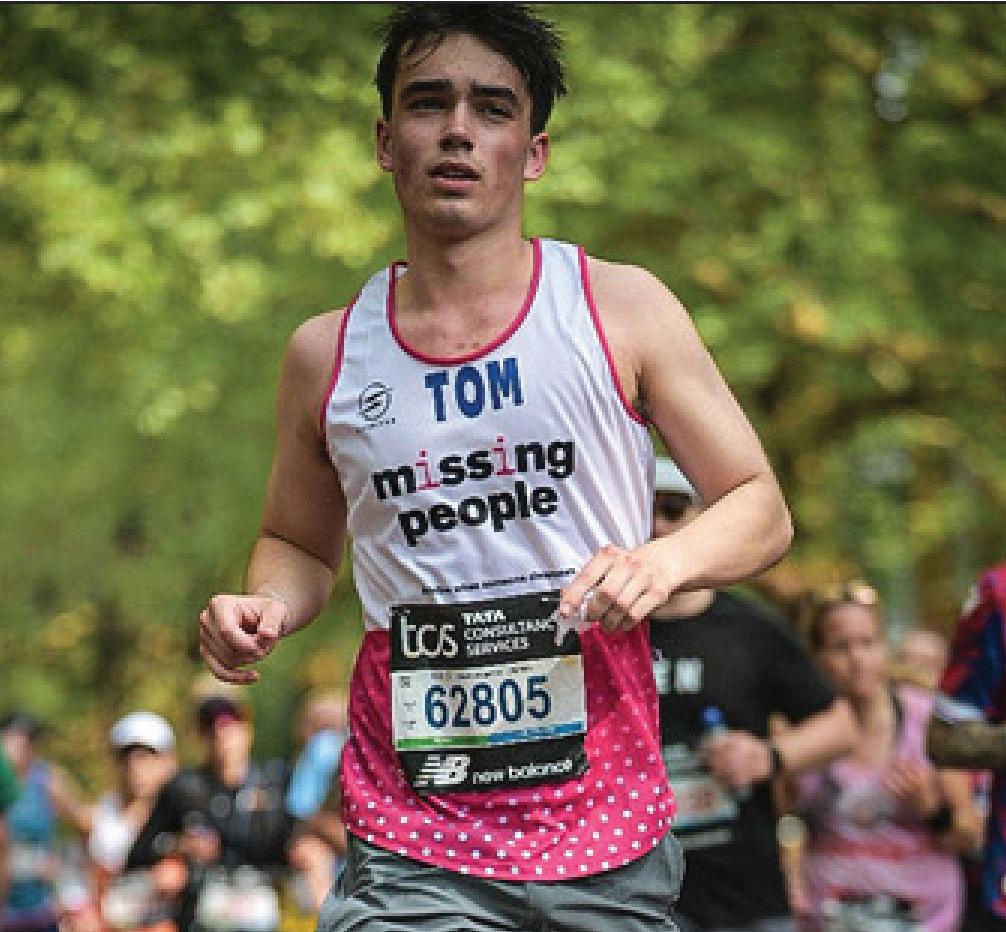
Congratulations go to all 11 OCs (that we know of) who completed the 2025 London Marathon on 27th April, raising almost £42,000 for their chosen charities.
Tom Hunt (Cubitt 2025) – 04:39:22 (Team Sarcoma)
Charlotte Barr (South 2024) – 03:46:02 (Brain Research UK)
Robert Buckley (East 2004) – 04:14:54 (RFU Injured Players Association)
Abi Dahl (West 2015) – 04:47:18 (St Catherine’s Hospice)
Robert Deeks (1&4 South 1997) – 04:06:36 (Save the Children)
Laura Ebbs (nee Bryett) (2&3 South 1997) 02:56:12 (ran in a championship place)
Jake Harris (East 2023) – 03:38:56 (My Name’5 Doddie Foundation)
Jake Harvey (North 2016) – 03:15:14 (Teenage Cancer Trust)
Jumbo Jupp (Loveday 2006) – 03:57:17 (Bliss)
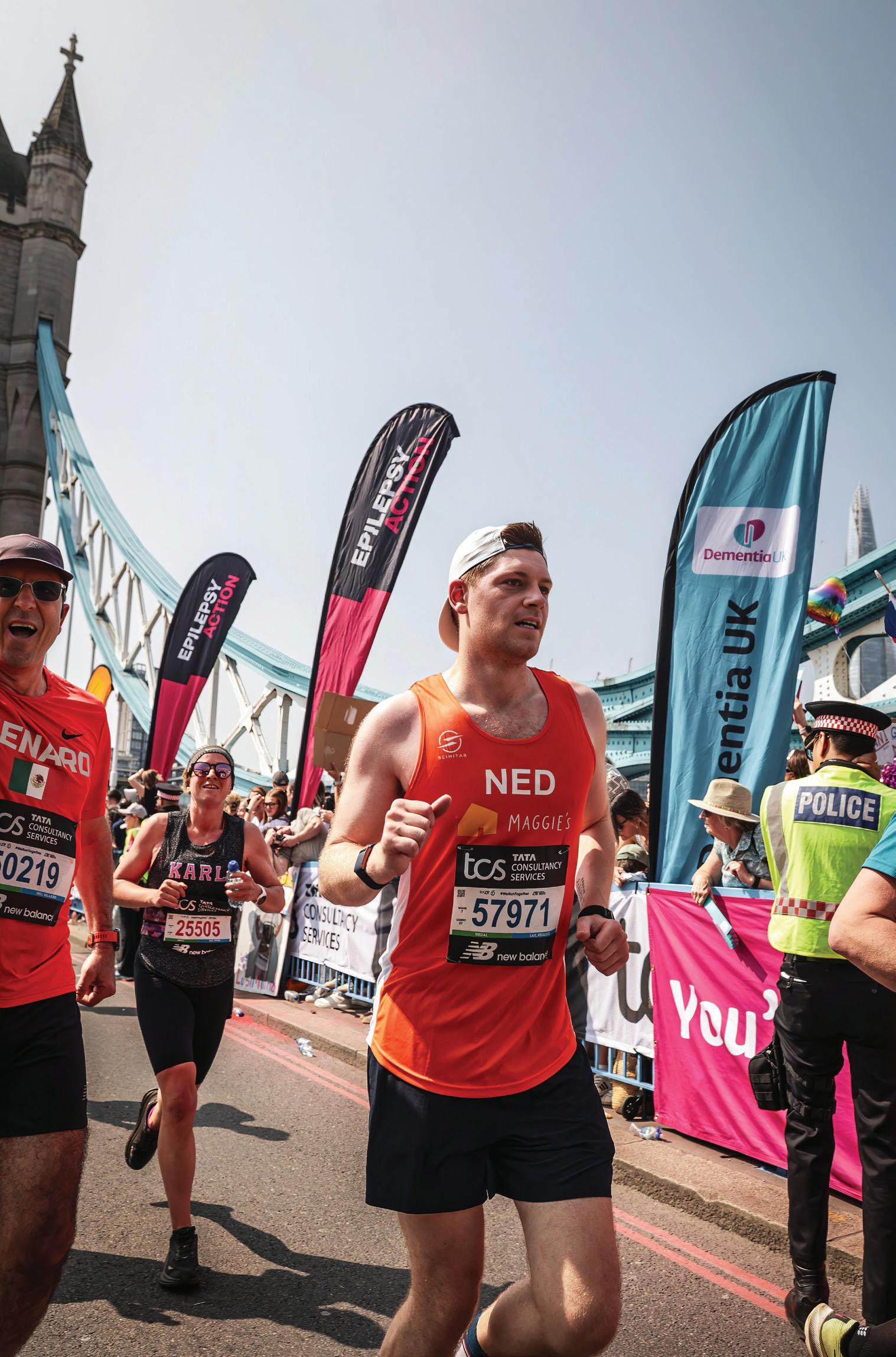
Ned Weston (North 2018) – 04:01:28 (Maggie’s)
Tom Wheeler (Cubitt 2023) – 04:31:32 (Missing People charity)





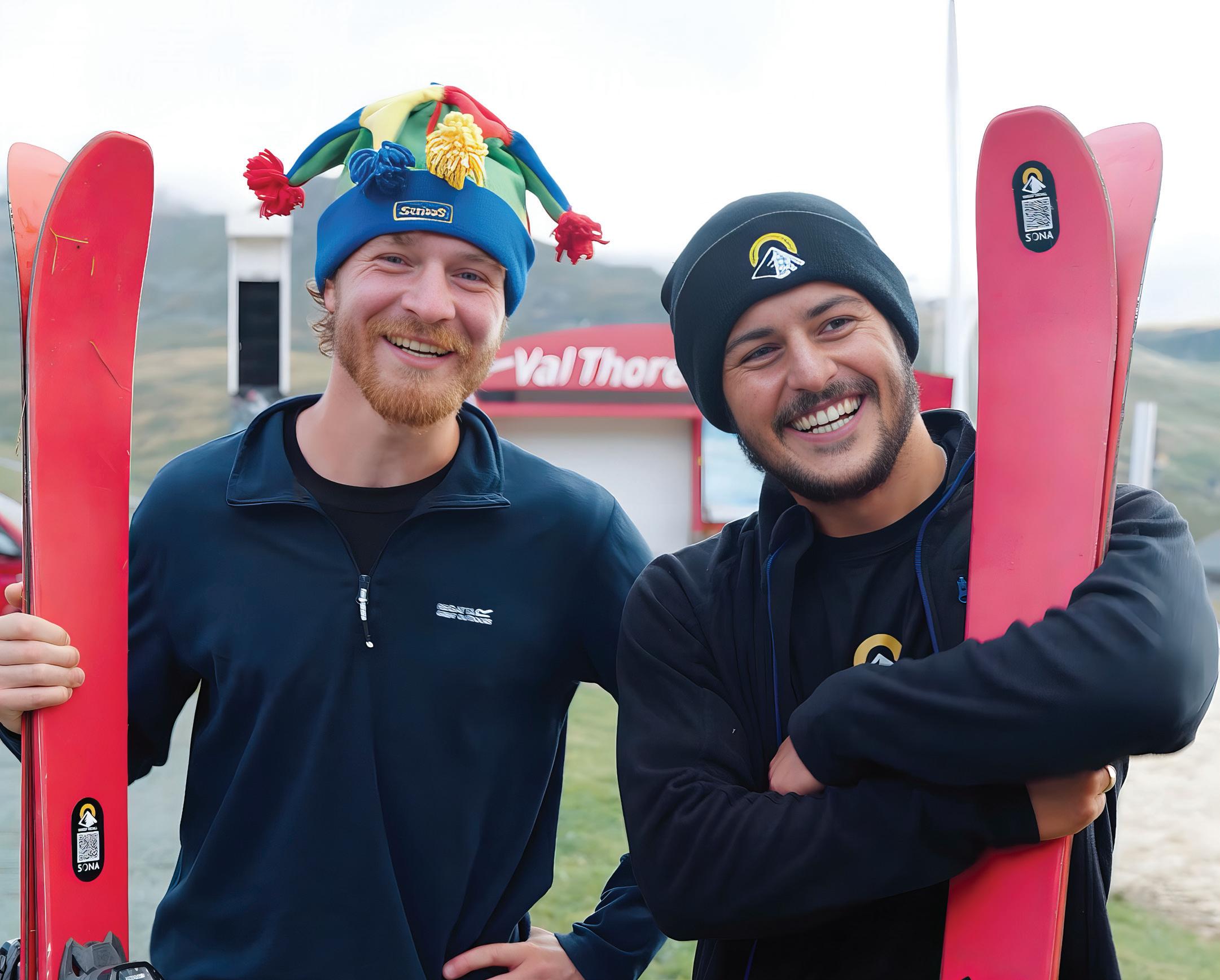
On June 13th Reuben Gray (Loveday 2019) and his business partner Matt Brinkley set off on a world-first challenge: walking more than 750 miles from Oxford Circus to Thorens in the French Alps in ski boots and carrying skis. After 45 gruelling days, countless blisters, and some unforgettable encounters with boiling heat, angry dogs, and even attack cows, the pair reached their goal on August 20th.
The walk — dubbed the #KOTHBootsChallenge — was about more than endurance. The pair aimed to raise £30,000 for two charities: Snow Camp, which transforms young lives through snowsports, and Macmillan Cancer Support, providing vital help to people living with cancer. So far, they have raised 20% of their target, but the fundraising continues.
The challenge also launched King of the Hill, their new gamified adventure app designed to make group trips more engaging with live leaderboards, daily challenges, real rewards, and AIpowered planning.
The journey was personal too. It was dedicated to Jerry Chilvers — Reuben’s godfather — whose adventurous spirit inspired the app’s name and the drive behind the challenge.
Support the causes here: Check out the app here
Rick Johnson (1 North 1991) is undertaking a gruelling sixweek tour of Australia to try to raise £150,000 for Take Her Lead, a charity promoting equality & diversity, working to ensure every woman and girl can fulfil her potential & thrive in cricket.
Rick has been in training for months to prepare him for the challenge of attending every day of the five-Test Ashes series in Australia. He has generously pledged personal donations throughout the tour, based on the people he meets and those who contribute along the way. He will be joined along the way by many friends, sports players, and celebrities.
The tour will feature fundraising events across Australia, bringing together players, fans, and supporters, with all proceeds going to the charity.
“Watching my daughters grow through cricket has shown me how vital it is that girls are not just welcomed into the game, but supported to stay in it,” he said. “That’s how we change cricket for good.”
If you would like to join Rick or donate to the charity please scan the QR code below.
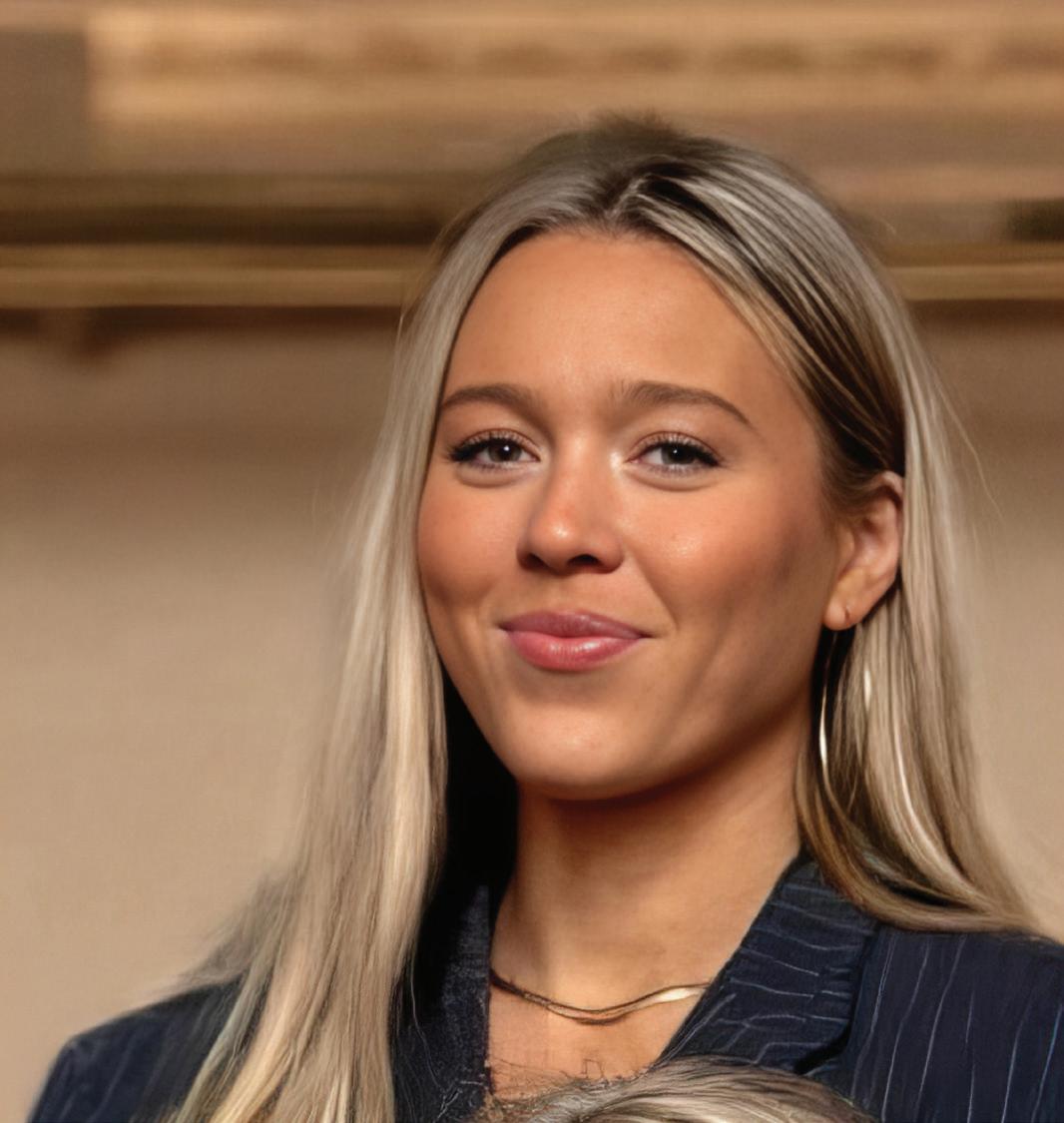
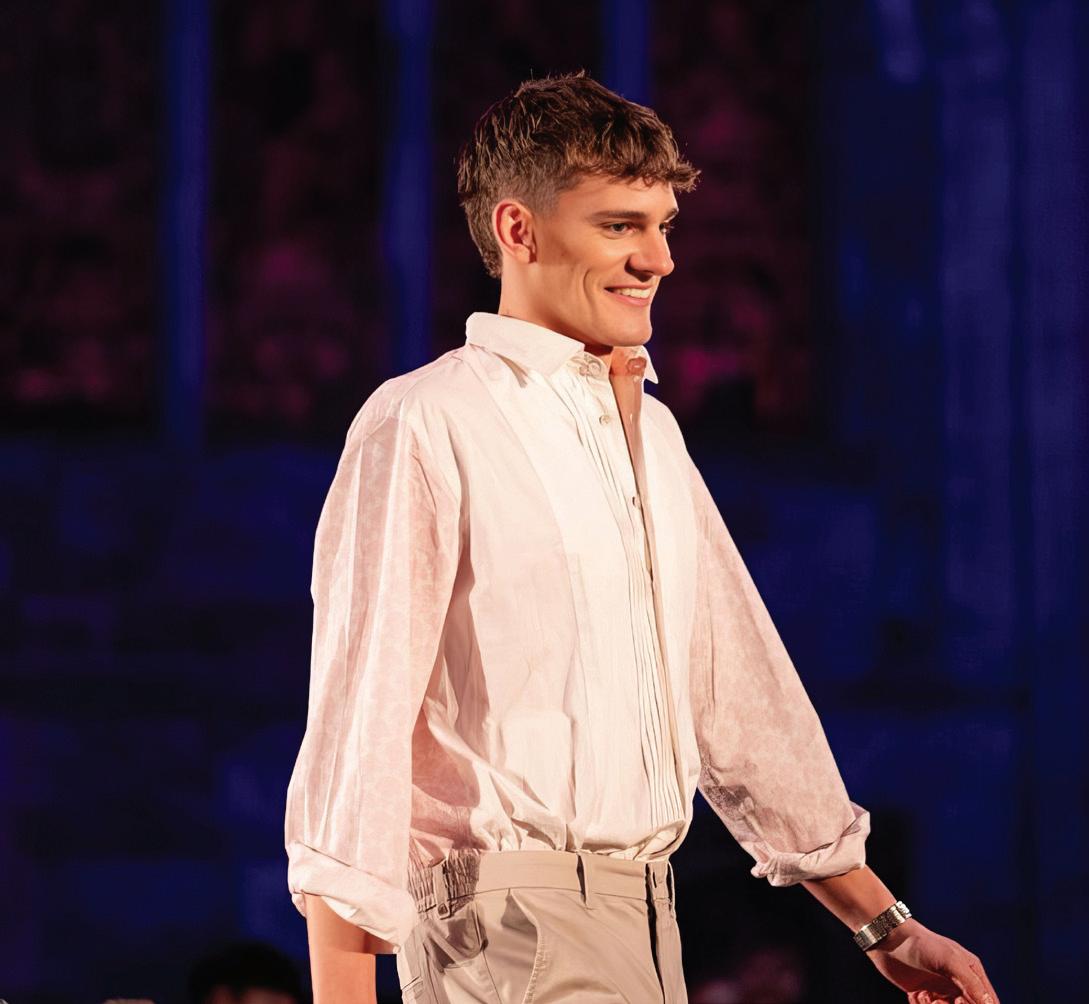

In February Poppy Edmonds (Martlet 2021) was part of a dedicated team running Exeter’s Charity Fashion Show – one of the university’s largest fundraising events. Among other things Poppy ran the incredibly successful social media programme and the team also included Dom Hounsell (1 North 2024) and Nicola Olsen (Martlet 2024) as models. On the night they helped raise more than £20,000 for the charity Student Minds.
Having lost his best friend Max to suicide last year, in November 2025 Tom Nicholas (North 2022) along with some colleagues launched the inaugural HSBC Movember Early Careers Challenge. As part of an overall combined 3.300km target he ran 200km (just over 7km) a day and made an attempt to grow a moustache.
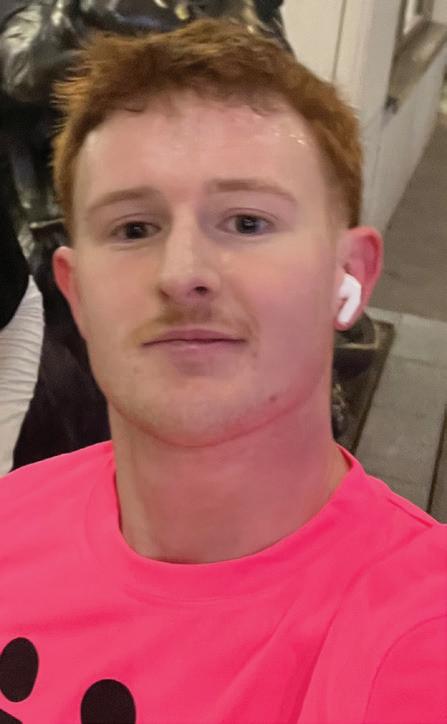
Last year Hector Berry (Loveday 2018) walked/ran 100km non stop to raise funds for The Maggie’s Centre at the Royal Marsden in Sutton.
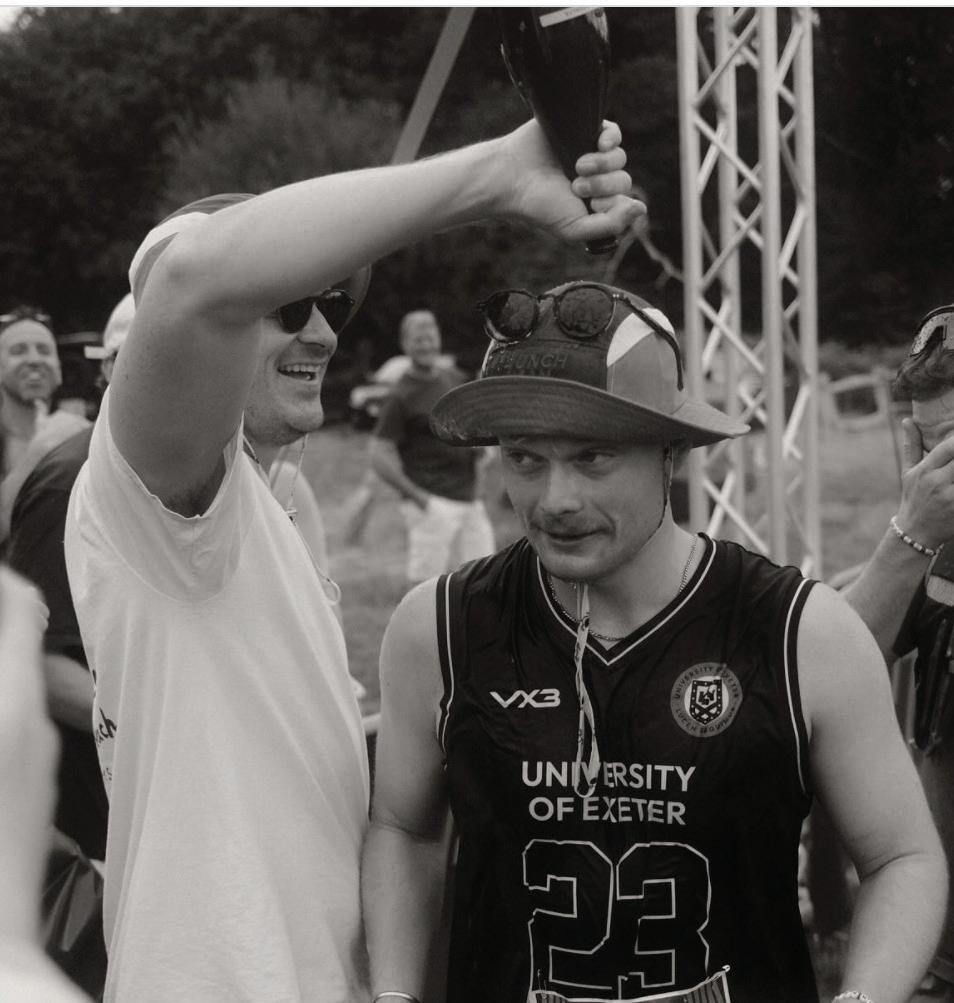
In August this year he ran two marathons in 2 days to raise money for the Hunchman Trust, a grant-giving charity that helps people build strength whilst grieving a loss, with a specialised focus on those affected by suicide. Hector ran the marathons with 56 other people and together they raised an extraordinary £135,922.
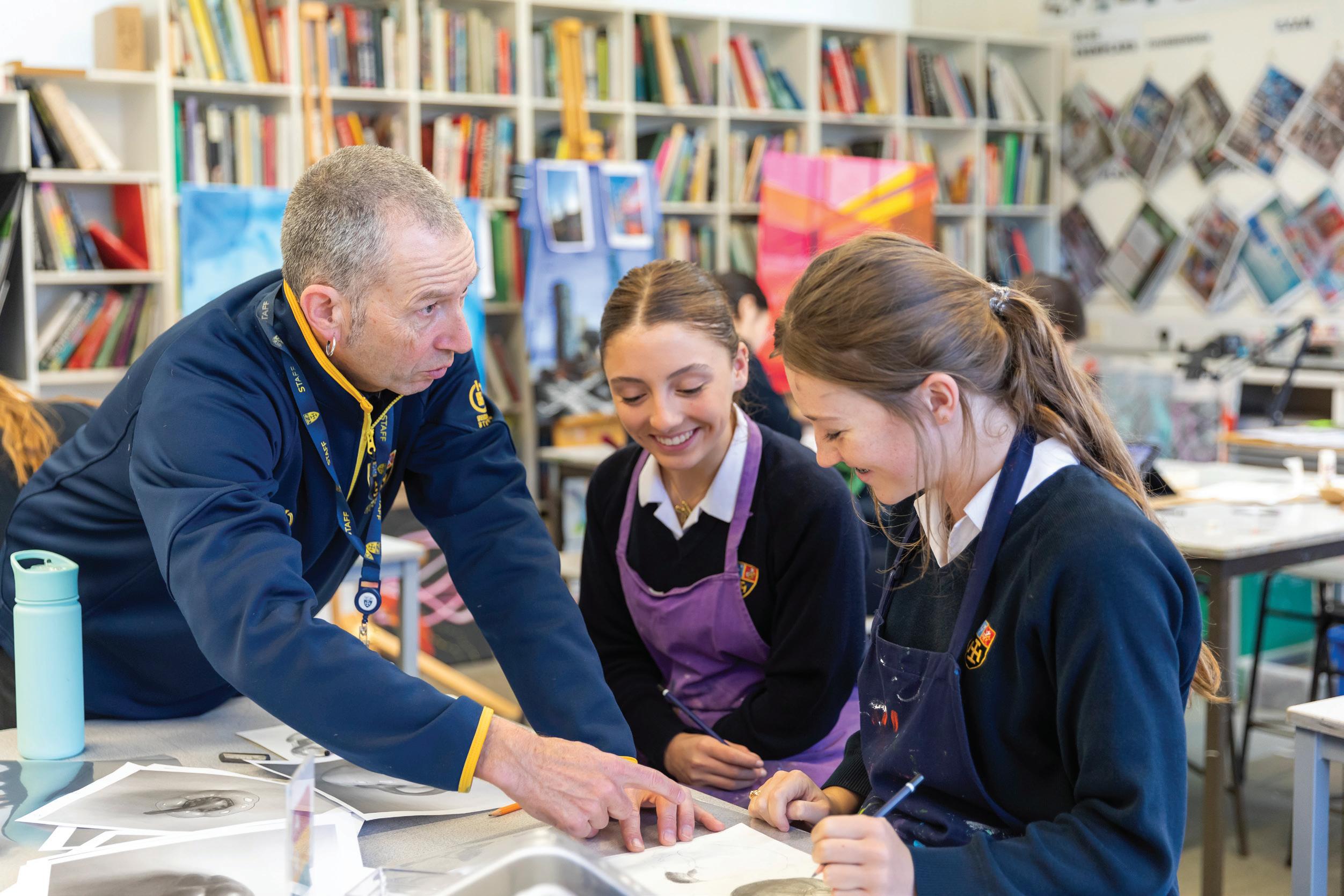
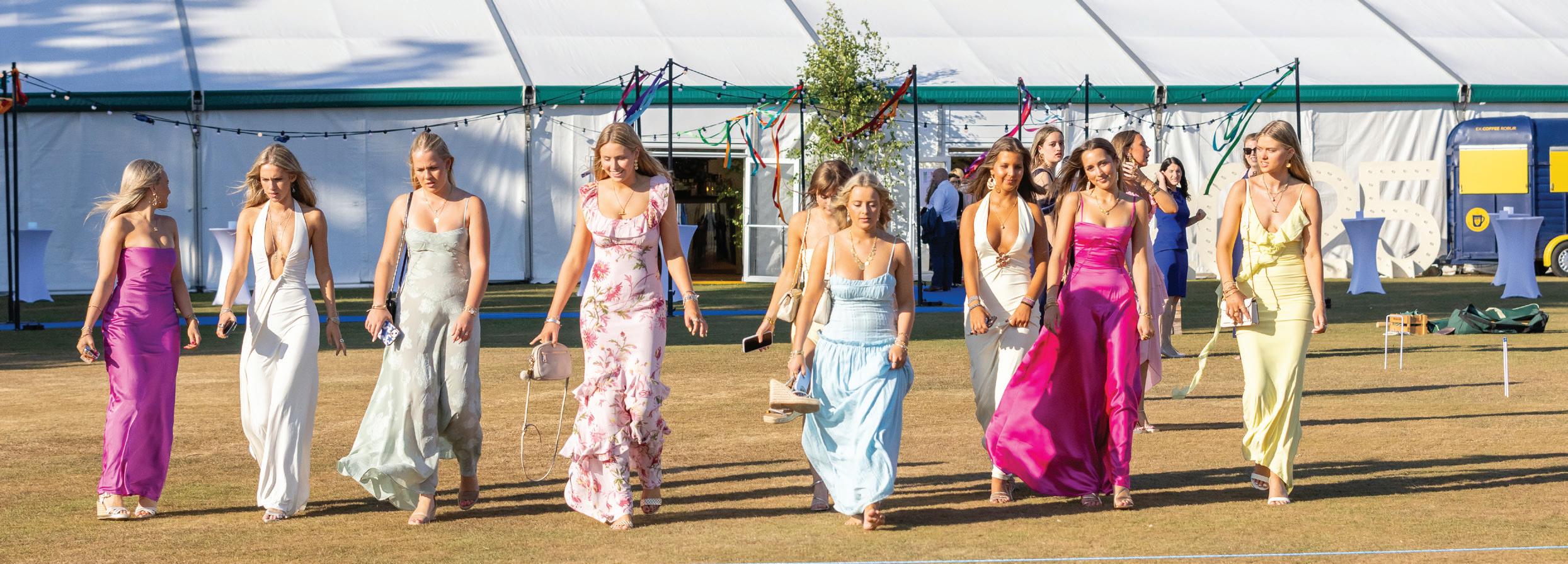
OVERVIEW OF THE SCHOOL’S ACTIVITIES IN THE ACADEMIC YEAR 2024-2025.
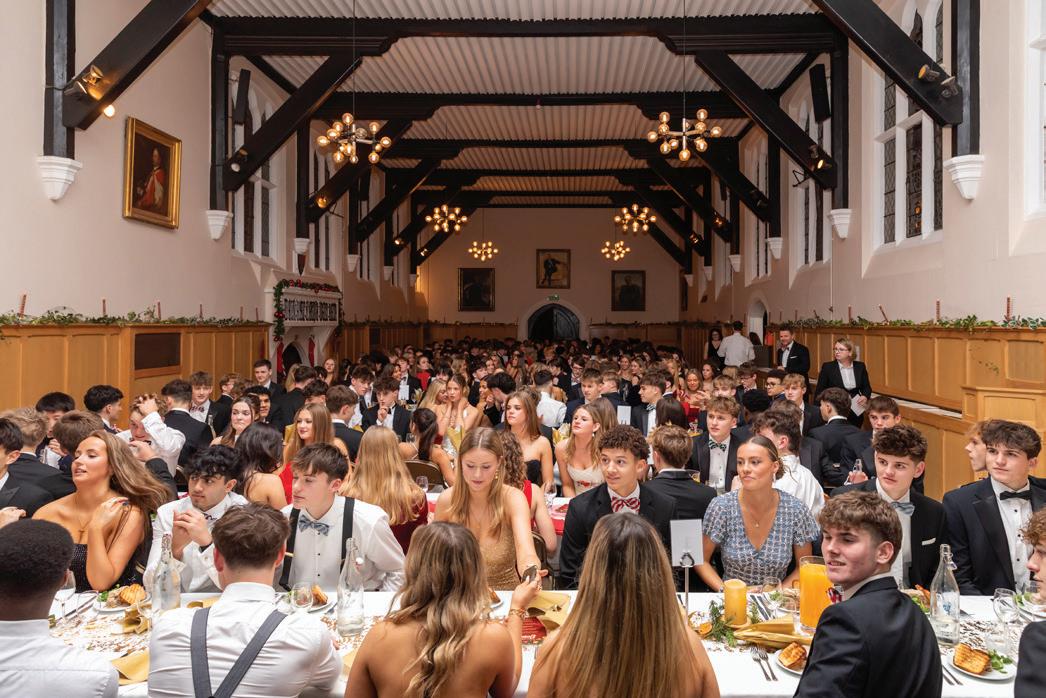
The 2025-26 academic year marks the School’s 160th anniversary, and the second full year under the leadership of Sam Price, who is now firmly established as Head.
In January, Will Newman, formerly the Head at Sedburgh School, arrived to lead our Prep School and between them Sam and Will have begun to embed a ‘One School’ approach to their leadership. In March 2025 the Department of Education ratified the School’s application which now means that Cranleigh Prep and Senior are officially one school.
The Governors made the decision to offer Pre-Prep places from September 2025, initially for Years 1 and 2. It is encouraging to report that entry for these two years filled quickly. At the start of Michaelmas Term 2025 there were 27 pupils in Years 1 and 2. There are plans to offer Nursery and Reception places from September 2026.
Cranleigh’s Upper Sixth Formers have delivered the school’s strongest post-pandemic A Level performance, with 83% of grades at A*– B, an increase from 78% in 2024. 43% of students achieved two or more A* or A grades – up from 38% last year. 83% of grades at A*- B, 52% of grades at A* – A, a quarter of all students achieving a clean sweep of A*/As and an overall pass rate of 100%. STEM subjects were a particular strength, with 63% of Mathematics students gaining A* or A and a combined A*/A rate of 60% across all maths and science courses. Economics also impressed with 70% at A*/A, while the Arts excelled with 86% in Art, 80% in Music and 78% in Drama.
74% of students accepted their first choice university offer with 86% of the year group (113 students) going to Russell Group or equivalent universities - the joint highest percentage in recent
memory. This was our most successful year in terms of offers received since 2016. The most striking statistic from this year’s application cycle was the number of students going to Durham, which far exceeds anything we have seen at Cranleigh before, and reflects this university’s increased popularity and national reputation.
Our GCSE results this year were equally impressive with 76% of all grades in English, mathematics and science graded 9-7. 73% of all grades were in the 9-7 range – up 5%. 59% of students achieved seven or more grades 9-7, up 4% from 2024. 84 out of the 142 students in the year (59%) achieved seven or more 9-7 grades. 62 students (44%) achieved nine or more 9-7 grades –an increase of 7% on 2024.
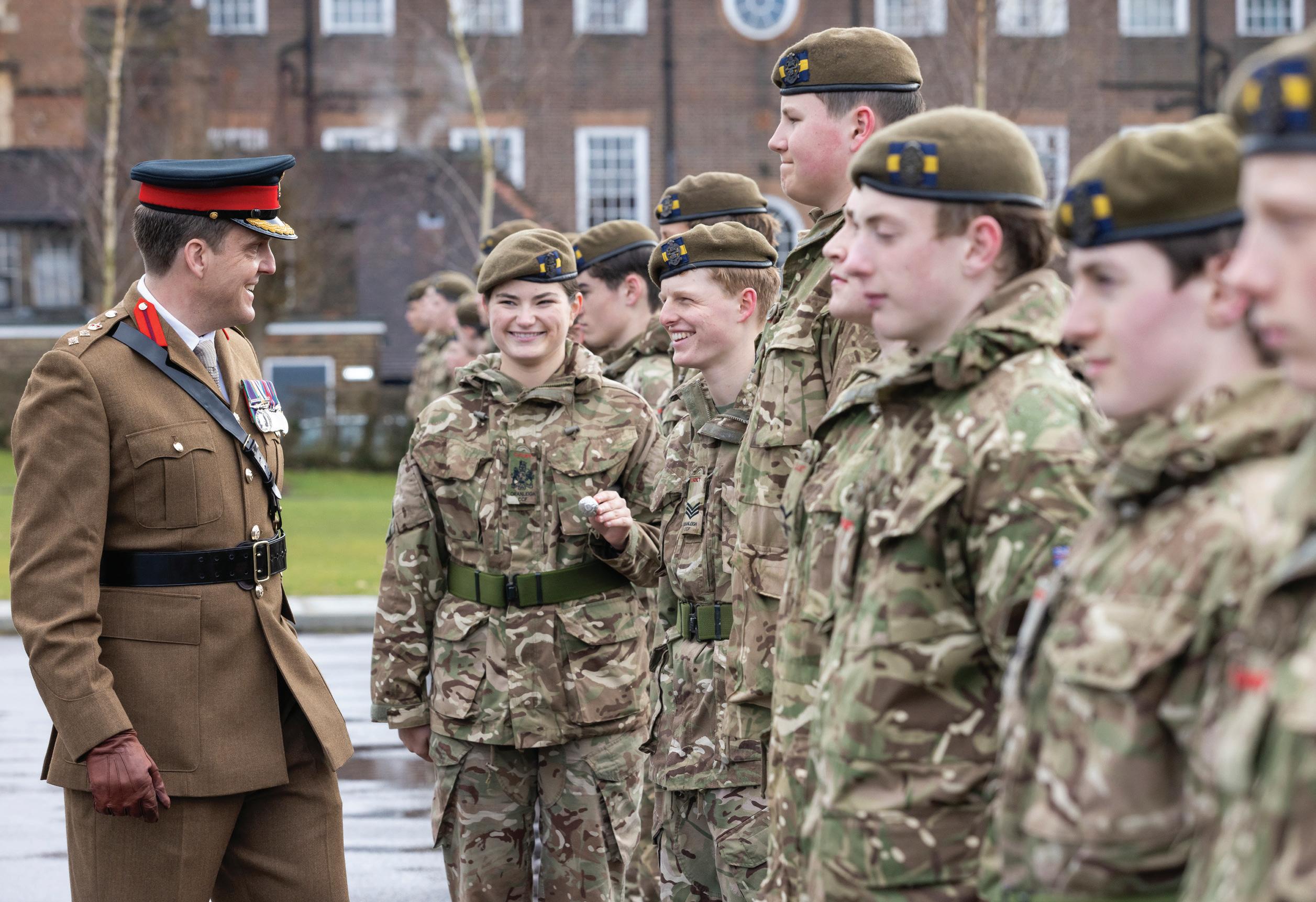
The boys’ 1st XI cricketers won more than 90% of their matches, including a significant victory away at Whitgift, achieved with four U15 players in the team. They also reached the Regional Final of the National T20 competition.
The girls’ cricket programme continues to grow rapidly. The girls’ 1st XI and U15 sides both reached the last 16 of their respective national cups. Abby Stevenson scored a century against Hurstpierpoint. Across the club, five different boys’ and girls’ teams finished the season with win rates above 70%, reaffirming Cranleigh’s place among the top cricketing schools in the country.
This year, a record number of girls opted to play hockey at senior level. Our girls’ 1st XI continues to compete in the top tier of national school hockey and our U15A side were impressive. Four pupils (three boys and one girl) were involved in international teams.
The boys’ 1st XI footballers reached the semi-finals of the ISFA Shield, meaning the team has now reached two national finals and a semi-final over the past three seasons. With pupil interest growing year-on-year, football is fast becoming one of Cranleigh’s flagship sports and a decision has been taken to expand boy’s football to all senior school boys in a phased roll out over the next three years.
In netball the U14A team reached the knock out rounds of the Sisters n Sport Cup. Strong performances were also seen across our C and D teams in particular with the 15Cs who remained unbeaten, demonstrating the club’s depth.
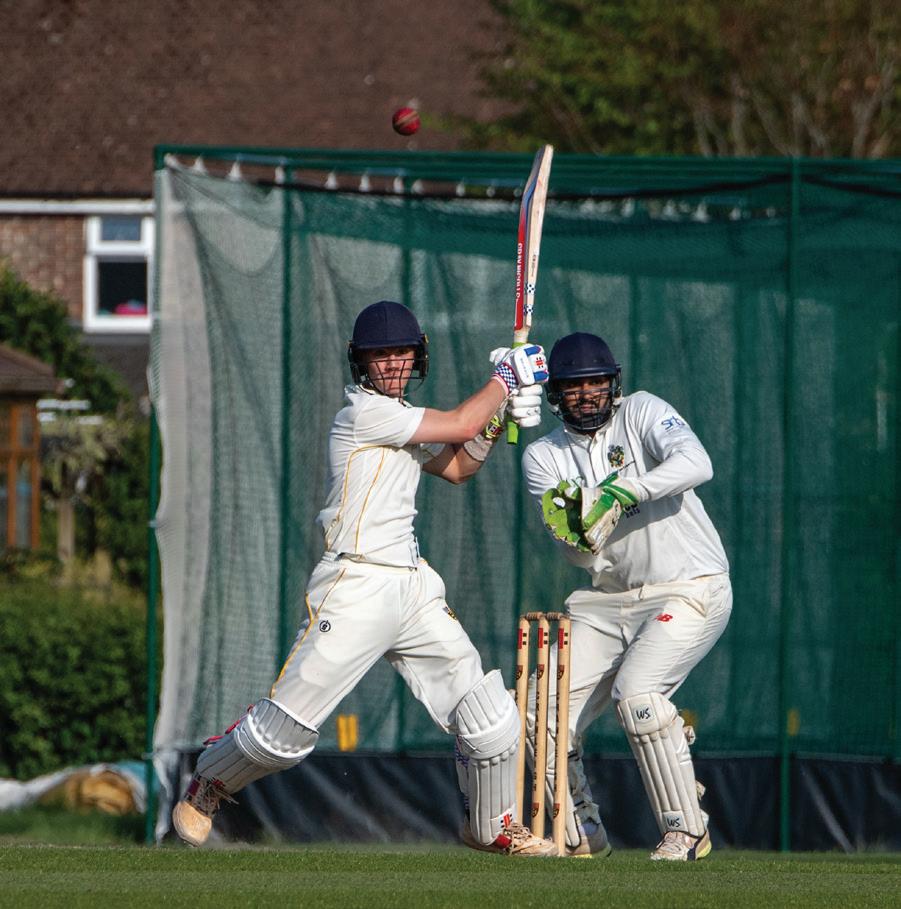
The 1st XV rugby team enjoyed an outstanding season, going unbeaten and finishing as runners-up in the prestigious Daily Mail National Trophy. Their performances confirmed their place among the top school rugby sides in the UK. Two pupils signed professional contracts upon leaving school, adding to an impressive tally of 18 Old Cranleighans who have moved into the professional game over the past decade. Our tradition in Sevens rugby continued strongly. The 1st VII reached the semi-finals of the National Sevens Tournament and claimed the Hampton Plate. Both the 1st and 2nd VII sides also reached the finals of the Surrey Sevens Tournament. This season marked a historic milestone for Cranleigh rugby, with the school proudly celebrating its first-ever female international player. Across the board, Cranleigh’s rugby sides won 88% of their Sevens fixtures and 67% of all rugby matches. Another exciting development was the debut of our first Touch Rugby team, who
impressed by reaching the final of the South East Divisional Tournament.
Our golfers opened the season by winning the team handicap prize at the West Sussex Golf Club Schools Invitational, competing against 16 schools. At the National Arena Eventing Championships in May 2025, the Cranleigh team claimed the National Open title and a Team Silver Medal. Six athletes were selected to represent Waverley at the Surrey Schools’ Championships. The home meet in June was the most successful in recent memory, with 30 personal bests recorded and new school records set in the Swedish Medley Relay by both the boys’ and girls’ teams. After a period of absence, sailing returned this year. Two pupils led the way with an excellent performance, crossing the line first in the RS200 category. Sailing’s reintroduction marks a new chapter for this exciting area of school sport as well as one pupil representing Great Britain at junior age group.

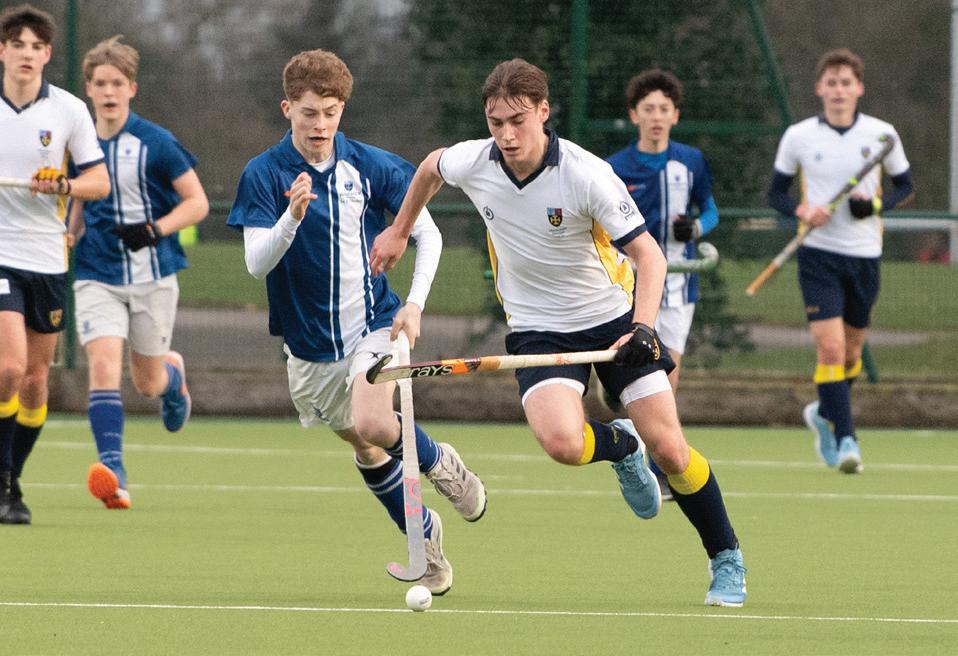
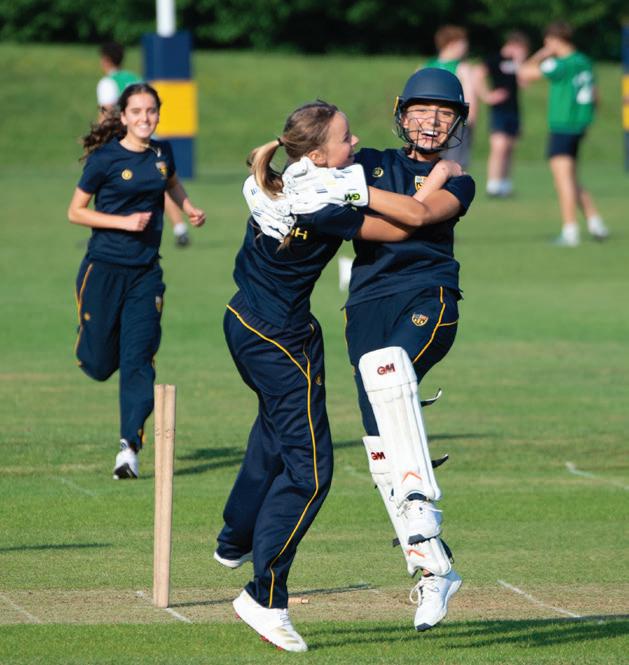
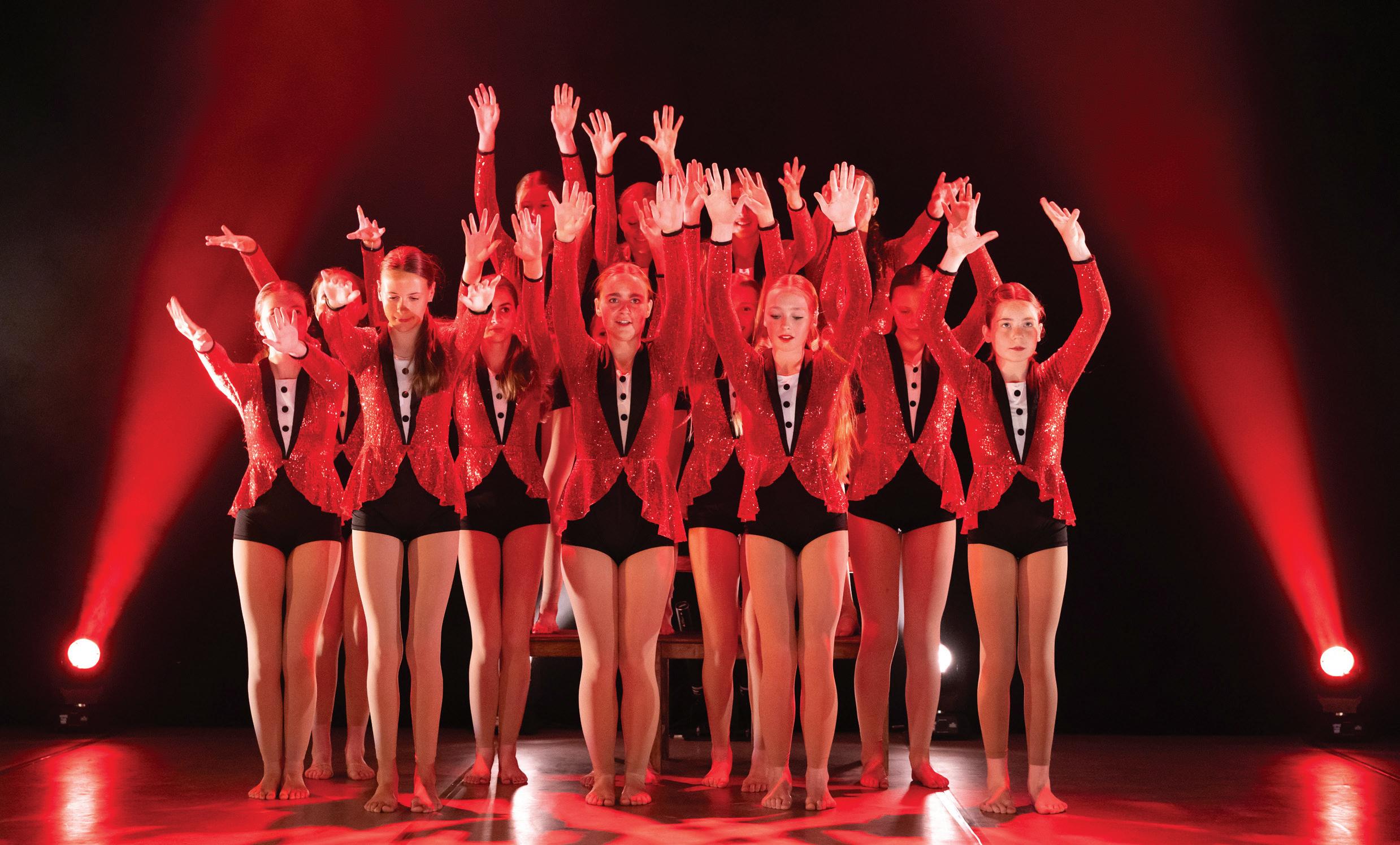
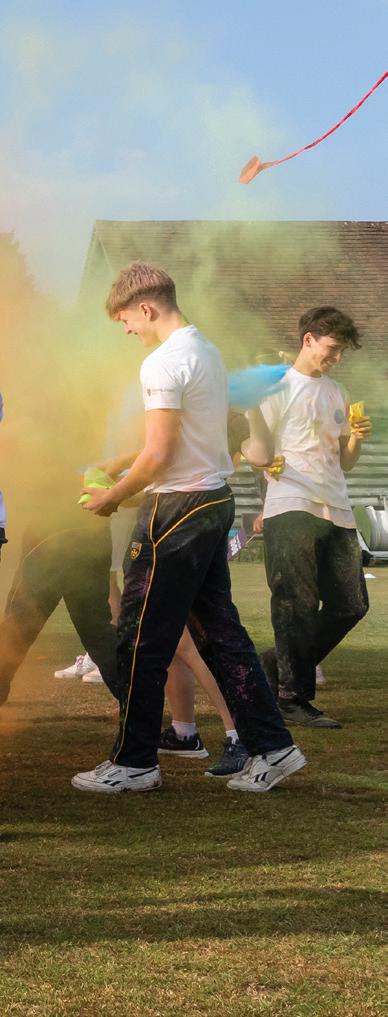
During the academic year 2024-25, the Music Department staged 60 events in 33 weeks.
Our musicians have performed in nursing homes, churches, the local Arts Centre, in our boarding houses, on stage in the music school, Speech Hall, the Chapel, at the Prep School, inside, outside, at Speech Day, and together with our school in Abu Dhabi. We’ve been to concerts in London, Cambridge and elsewhere, scored a million plus views on Instagram for singing the 12 days of Xmas, and shared our talents globally with our schools in the Middle East and China.
In January we welcomed musicians from Cranleigh Abu Dhabi for a brilliant Winter Music Festivalthe concerts in the Emms centre and then the Big Band Supper Dance were real highlights - and the standard of the Big Band in particular was as high as it has ever been. The links that are being forged between the music departments of the international schools are important; music remains one of the few activities that can genuinely be experienced and enjoyed across all our international schools, and the online Cranleigh International Musician of the Year competition provided a wonderful showcase for musicians from all our schools.
“The girl on the train was nominated in four categories at the national school theatre awards.”
Our Michaelmas senior school production The Girl on the Train broke all expectations of what a school show should look like. The production was nominated in four categories at The National School Theatre Awards. Sophia Ferguson (South 2025) won Best Actress and was accepted onto a foundation course at LAMDA this summer and will then embark on a course at The American Academy of Dramatic Arts in New York. Also in the Michaelmas term we held the revived House Drama Competition with all four pairs of affiliated houses producing a play in five weeks. Our Lent play offered another opportunity for students in U5th to U6th to take to the stage with Welcome to Thebes. The cast of High School Musical 2 put on a wonderful production. To watch them grow in confidence every week, and produce such an amazing show in the end was truly inspiring.
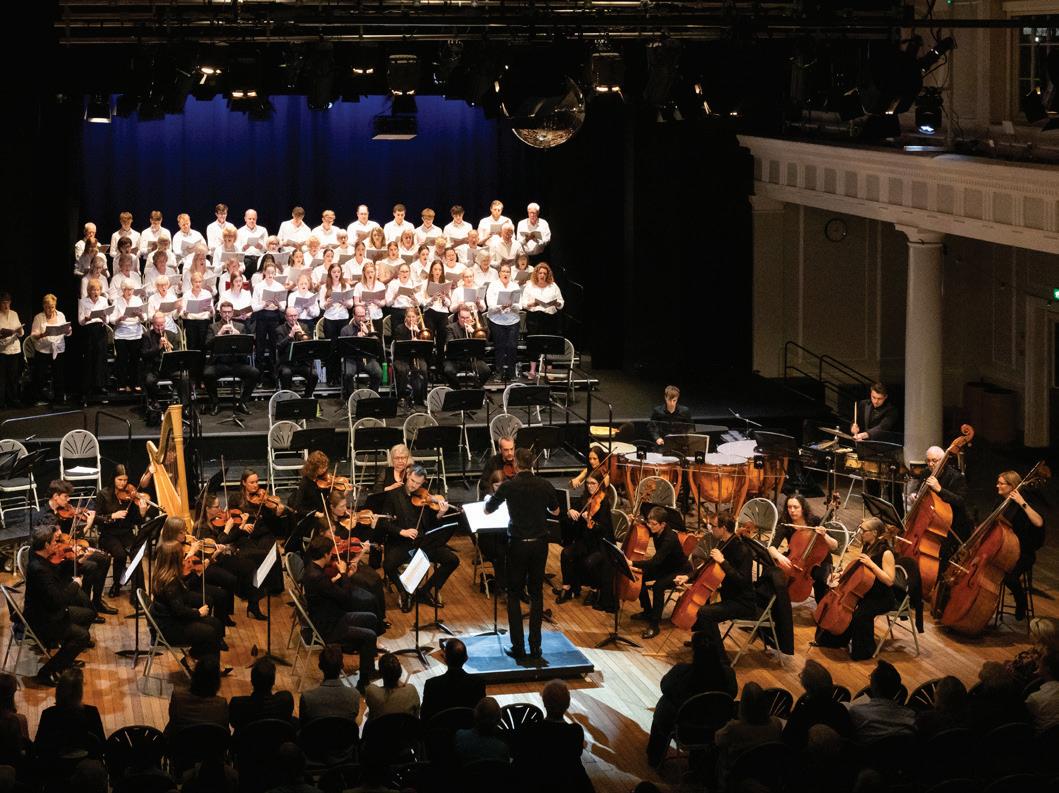
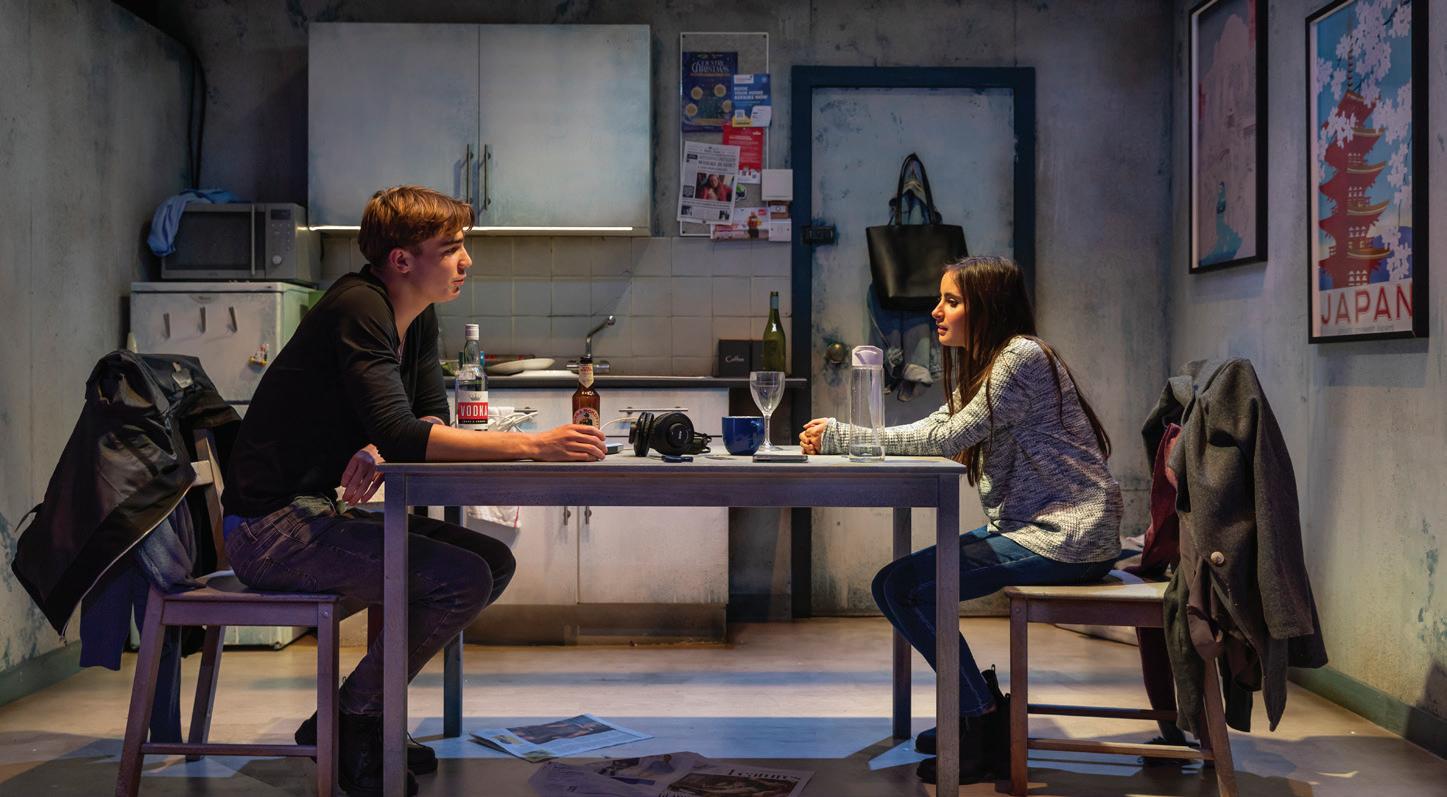
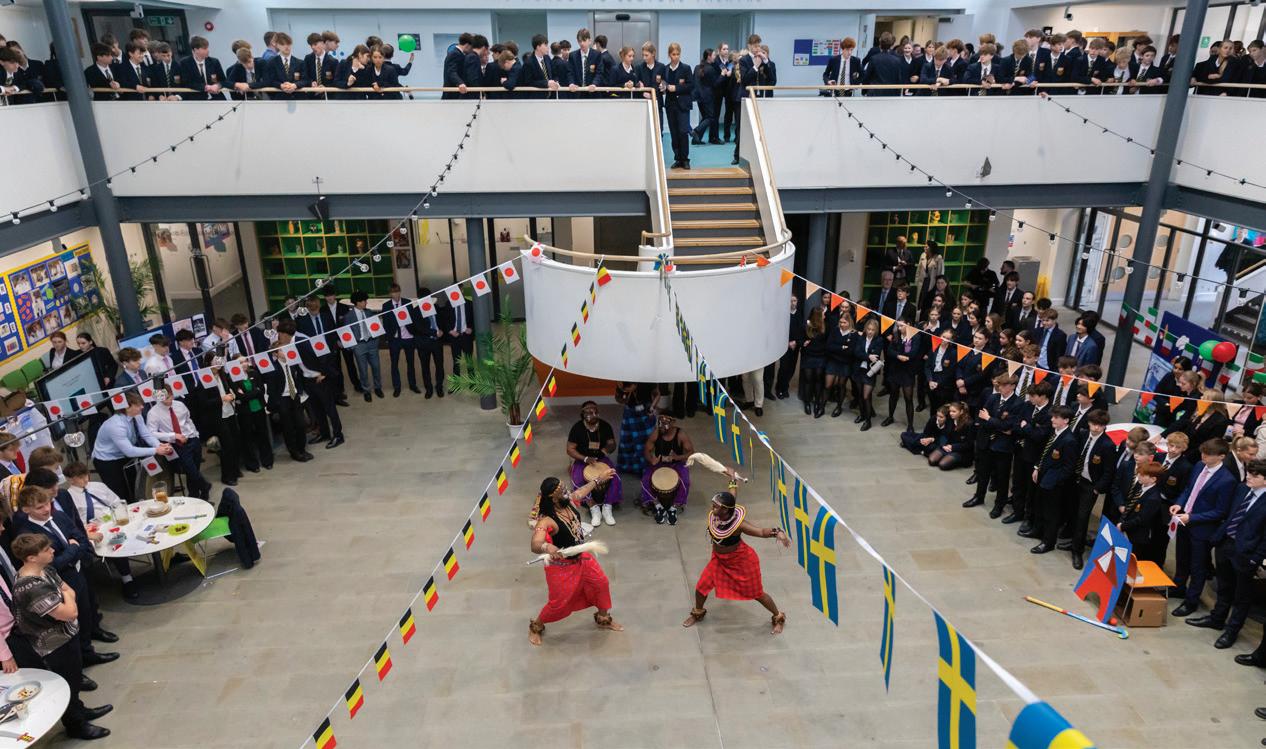
Our Sixth Form pupils are now benefiting from a new Sixth Form Centre which has been created from the existing staff common room, with the staff being relocated to a refurbished facility between the art department and the golf course. The School has also continued its drive to improve the overall look and feel of its impressive estate, with considerable investment being made in new windows, road surfaces and lighting. The Williams Library has had its first significant upgrade for many years and is now a modern study centre to complement the Reading Room and reception area completed last summer.
At the Prep site, work consisted of a refurbishment of the Roulston area and classrooms and work in other areas of the School so that we were ready to welcome our first ever cohort of year 1 & 2 children. Bluett’s, our premier rugby pitch, had significant drainage work undertaken to improve the performance of the drain channels in poor weather. All this while continuing with our rolling redecoration, maintenance and compliance programmes in boarding houses, classrooms and across the wider estate.
In every aspect of School life, Cranleigh is building on solid foundations and reaching further afield and with greater confidence to secure its reputation as one of the leading co-educational schools in the South of England. Our family of schools in Abu Dhabi and China are proof that we can compete on the international stage too.
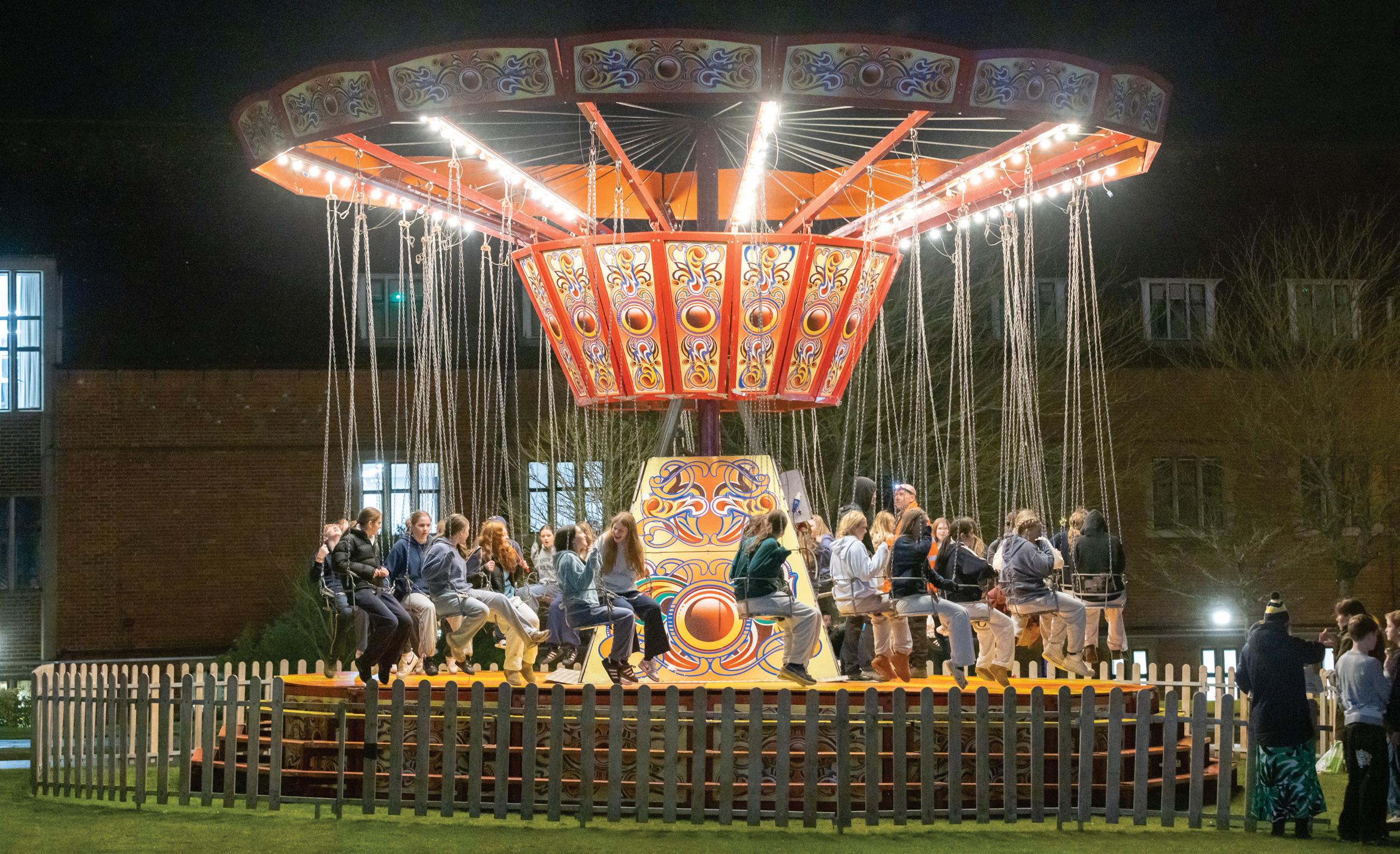
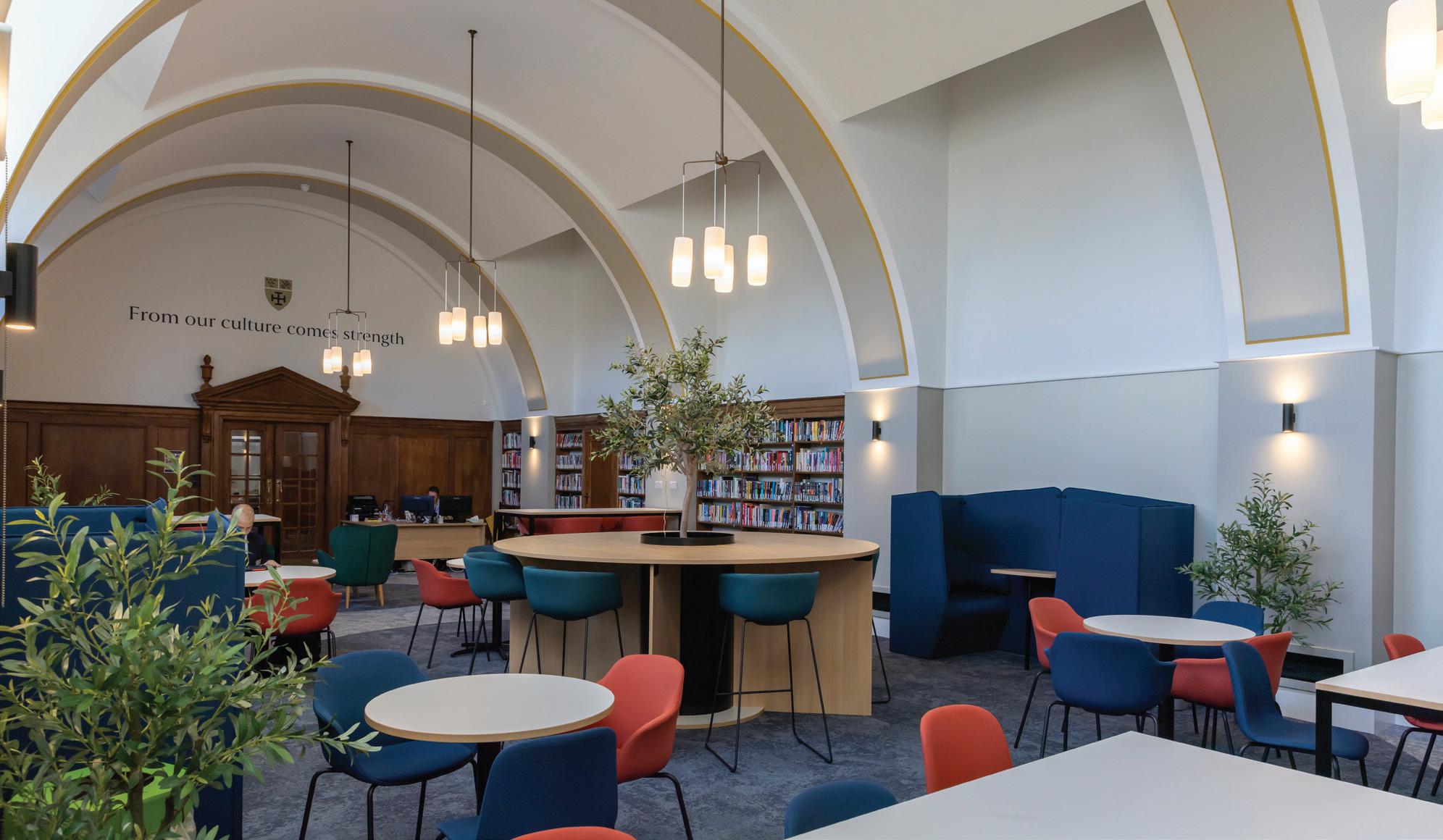
Over the summer the Williams Library underwent a major overhaul and was converted into a study area.
What are now the Library and Reading Room were originally the middle and lower school classrooms and subsequently houserooms until they were converted in 1929 thanks to the generosity of John Wheeler Williams (1 South 1876). “The supporting beams were boxed in by a curious barrel vaulting, thereby ingeniously leaving the large windows to give light, and the wooden bookshelves were installed,” noted The Cranleighan, “thus completely changing the character of both areas. Gone were the dismal Victorian classrooms, instead a place for quiet study or elegant entertaining.”
The Reading Room was converted into a waiting and meeting area in 2024. The books from both rooms have either been relocated into departmental libraries, donated to charity, or are currently waiting to be sorted.
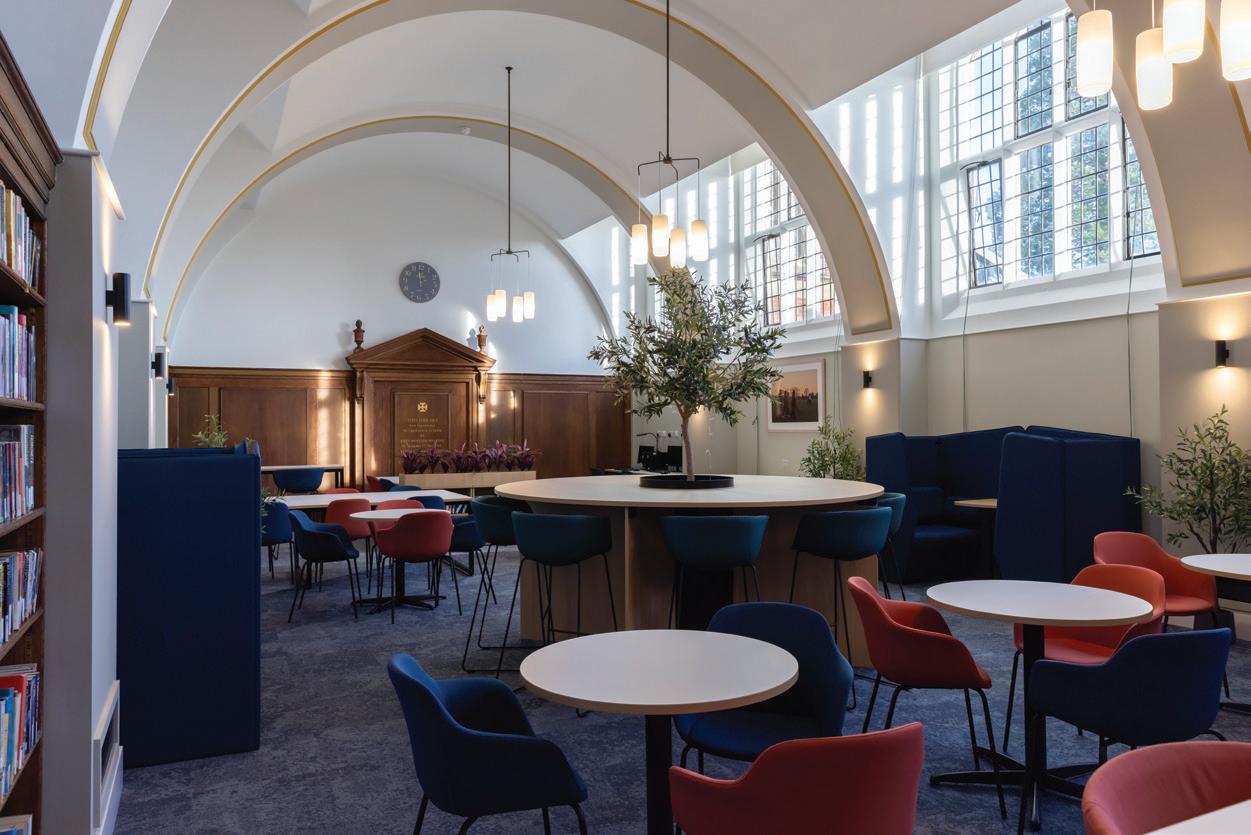
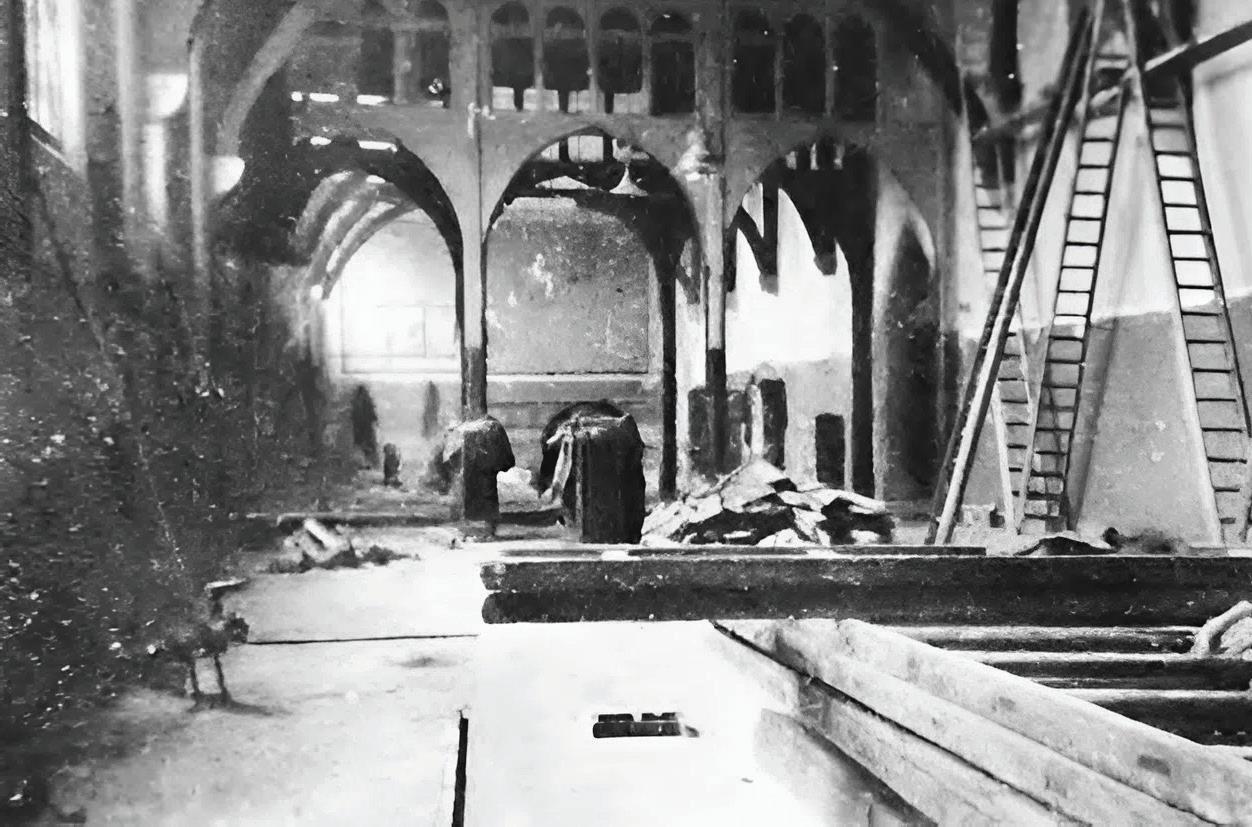
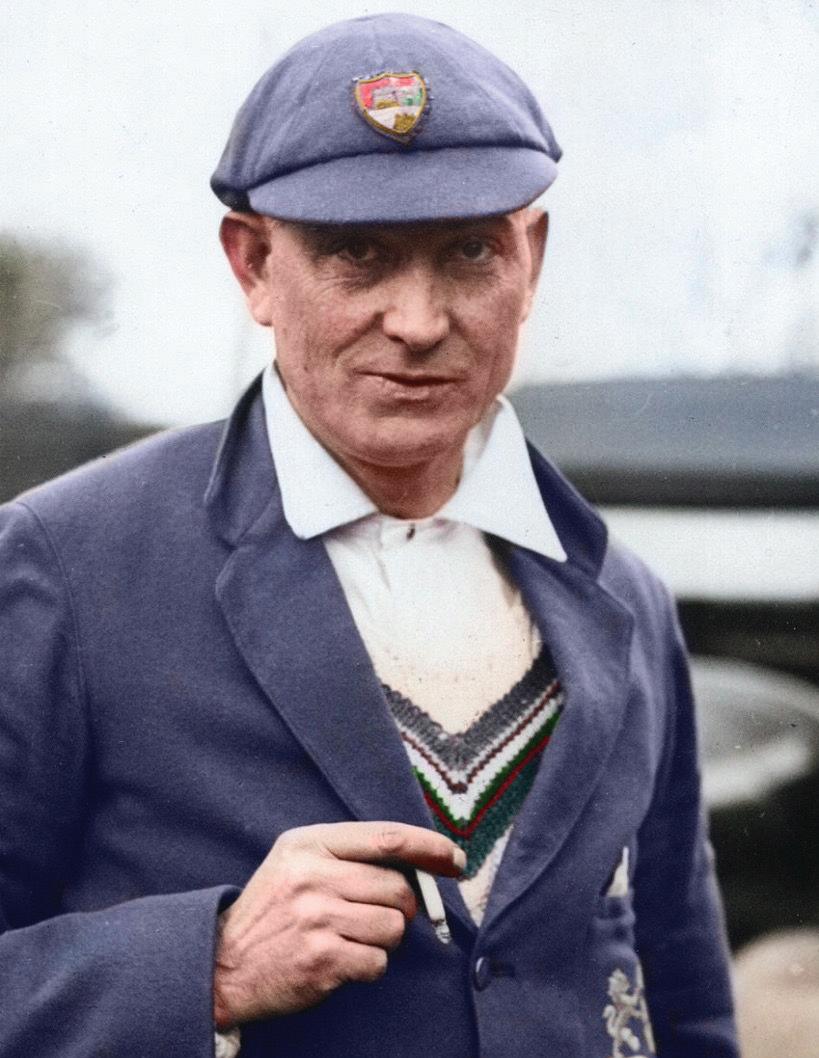
Although Parker is not well known these days, he was one of the game’s great spin bowlers, finishing his first-class career with 3278 wickets, the third highest aggregate of all time. Although he made his debut for Gloucestershire in 1903, it was not until 1919, by which time he was 36, that he cut his pace to rely more on spin than seam. In every season from 1920 until his retirement in 1935, by which time he was 52, he took more than 100 wickets. In five seasons he passed 200. He took five wickets in an innings 227 times and ten in a match on 91 occasions. On a wet wicket he was reckoned to be the best bowler in England. In 1930 he bowled to Don Bradman in three innings and dismissed him in all of them. Bradman chose to sit out the Gloucestershire match when the Australians toured again in 1934. Writer RC Robertson-Glasgow wrote: “On a sticky wicket [Parker] was the greatest bowler I have seen; for, then, there was no man whom he could not make to look like a child batting with a pencil… slim and angular, he was a sad-eyed executioner.”
So why did he only play once for England, in the drawn 4th Test of 1921 when in Australia’s only innings he returned figures of 28-16-32-2? In part it was because he played for an unfashionable county, but more it was his outspokenness in an era when professionals were expected to adopt a servile demeanour with their amateur ‘betters’. Parker, self-educated, politically very aware and a voracious reader, spoke his mind and too often that rubbed those running the game up the wrong way. With dismissive ease he was labelled a Communist. He was also, as The Times’ Alan Gibson noted, “a poor fieldsman and a difficult man”.
In an era when the difference between amateurs and professionals was core to the game, Parker was having none of it, addressing them as equals. “Why do you rub ’em all up the
IN THE SPRING OF 1943 CRANLEIGH SCHOOL APPOINTED CHARLIE PARKER AS CRICKET COACH. FEW GREATER PLAYERS HAVE COACHED AT SCHOOLS, BUT PARKER’S HIRING WAS SURPRISING GIVEN HIS STRONG LEFT-WING VIEWS ON MOST ASPECTS OF LIFE.
wrong way?’ a Gloucestershire pro once asked him. “Because of their privileged backgrounds,” Parker replied. “What do those buggers know about life?”
The most famous story about Parker’s attitude is well documented. At a festival match in 1929 Parker was about to enter a lift in the team’s hotel when Pelham Warner, perhaps the ultimate establishment man, approached. The lift operator tried to push Parker aside to make way for Warner. In his excellent book Holy Trinity, David Foot wrote about what happened next. “Parker flung his arms out and grasped Warner by the lapels. ‘I’ll never once in my life make way for that bugger. He’s never had a good word to say for me. This so-and-so has blocked my Test match career. I played once in 1921 - and he made sure I’d never play for England again. He even got me up to Leeds in 1926 and then left me out. Make way for him…? Mr Bloody Warner will go to bed when I’ve finished with him.’ Parker’s hands were trembling, and for several seconds it seemed possible he was going to give one of the game’s most eminent men a punch up the bracket.”
Fortunately he was persuaded to let go. The story may have been embellished over the years but there were enough witnesses to guarantee it happened. It did not finish Parker’s England career as many claimed, as Parker was 46 at the time. But it summed up his approach to life.
He retired at the end of the 1935 season and followed the welltrodden path of becoming a first-class umpire up to the outbreak of World War II. By the early 1940s he was working in a factory when Cranleigh came calling. The public schools offered good employment for former professionals at that time – in the 1930s Wilfred Rhodes had gone to Harrow and Patsy Hendren to Eton.
Parker, by then a widower, and with age more able to rein in his stronger views, moved to the village, where he was described as being popular with his neighbours although keeping very much to himself, with three of his four children. He started coaching in the summer of 1943. In the winter he spent much of his time in the pavilion mending sports equipment which was at the time in short supply. Cranleigh was allocated ten new cricket balls a year at the time, so polishing and repolishing old ones was another job.
Contemporary reports confirm he made an immediate impact. He was good enough for Cranleigh to allow him time off in April for several years to help coach his old county in their pre-season nets. On his death in 1959 the Cranleighan reported: “Charlie had an immense knowledge of the game and expected his pupils to apply themselves with all the keenness and zest which he himself showed; he set out to achieve a very high standard and those boys who were prepared to co-operate could, and did, learn a great deal. He had no use for the dilettante. His approach to the game was as direct and forceful as his character, and if at times he was sparing of praise it was only because he set himself so high a standard.”
Don Tanner (2&3 South 1949) recalled: “I remember the first time I was in the nets facing Charlie, I was so overawed that I played entirely defensively, only intent on keeping my wicket intact. Finally an exasperated Charlie yelled at me: ‘Play some stroookes, lad … hit bloody ball!’”
Another former pupil said that one day in the nets a ferocious straight drive hit Parker in the shin. A string of colourful words followed, at which point he rolled up his trousers to reveal a heavily bandaged leg. After a few more choice curses aimed at the batsman he hobbled away and was not seen again for several days.
John McDermott (2 North 1957) recalled his first contact with a man the boys called Parlie Charker (but never to his face) as a 15-year-old in the nets at the start of the summer term of 1954. “Seventy-two years old, lean, weather-beaten, six-foot-tall, dressed in an old suit and his trilby hat, Charlie welcomed me gruffly with one of his typical acerbic remarks that I got to know so well. As a junior and aspiring bowler, I was scheduled to bat last in the nets. As was his habit Charlie stood behind the net offering sharp critical comment.
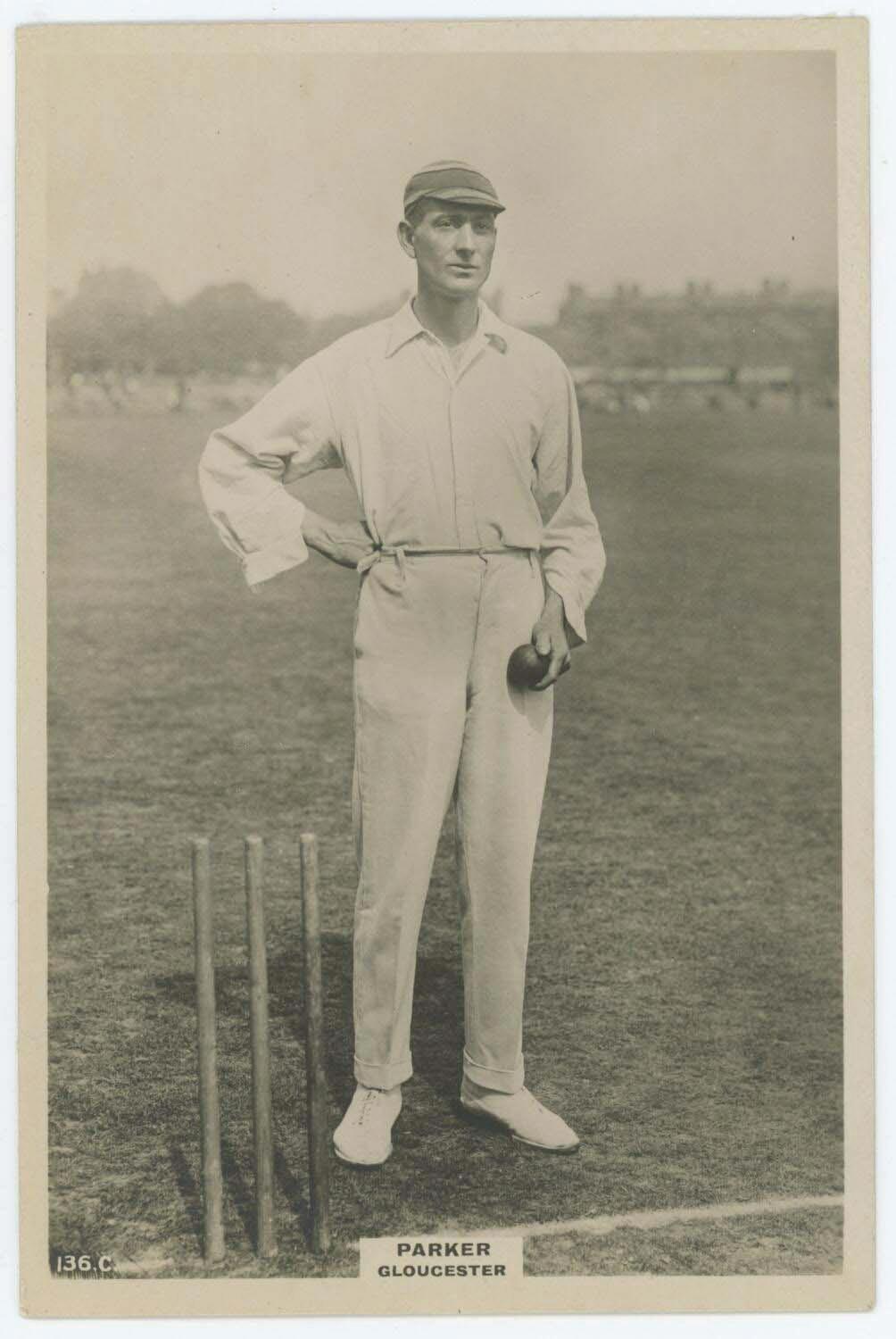
“Frustrated by the inability of the bowlers to bowl an accurate line and length, Charlie finally came into the net. From his pocket he took a white linen handkerchief and carefully laid it out on the ground on a good length. Nothing much improved. Ultimately Charlie was challenged to show us how to do it. Brusquely he removed his suit jacket to reveal old braces and off three paces, his classical left-arm action, hit the handkerchief five times out of six. His first loosener ball missed by about three inches.
“Since that day I have played and umpired a lot of cricket, but I have never heard a ball buzz like a bee as Charlie made it do to me that afternoon. As a right hand batsman you heard his fingers click at the point of delivery, the ball fizz towards you in flight, and accelerate sharply towards the slips as it pitched and spun viciously. During my time at Cranleigh I would hunt Charlie out summer and winter and listen to his stories for hours.
“After his retirement, I would go down to his home in the village, armed with some bottles of his favourite stout and cigarettes, and continue our conversations. I recall when I was House Captain of 2 North, an enraged Tommy Tucker, my Housemaster, telephoned Charlie’s daughter to summon me back to school for Sunday evening Chapel. I was now hooked on cricket and had lost all sense of time listening to the anecdotes.”
Parker retired from Cranleigh at the end of the 1954 summer term but returned to help out the following spring when his replacement had not yet been found. He continued to live in the village until his death in July 1959 at the age of 76. He is buried in the village churchyard.
THE LAST YEAR HAS BEEN A SUCCESSFUL ONE AT THE OC CLUB IN THAMES DITTON WITH THE IMPROVEMENTS UNDER THE MANAGEMENT OF BEVAN HOOGEWERF CONTINUING TO REAP DIVIDENDS IN BOTH THE OFFERING OF THE CLUB AND ITS FINANCIAL STABILITY.
We took a decision a decade ago that the Club had to be financially independent following years where it had had to be underwritten by the OC Society. It was felt this was not only unfair on the many OCs who did not use it but was also not sustainable in the long term. So, while the OCS has continued to provide funding for capital projects this has been by way of repayable loans and that will be the model going forward.
Part of this transition has seen the OCS regain control of the operation of the Club after two decades of allowing it to be run under a licence with all profits (and losses) the responsibility of the licensee, initially Ed Breton and subsequently JJ Griffin. This arrangement worked well for many years. However, the expansion of the operation with the burgeoning junior sections and, more recently, the purchase of Weston Green Sports Club, has made it clear that the Club needed substantial investment and the revenue from the facilities needs to pay for it.
The retirement of JJ and Georgie Griffin in August 2023 gave us the opportunity to start the process of change
with the aim of being able to reinvest all surpluses back into the facility. The first headache was that we did not know how profitable the Club’s food and beverage business was; in fact, we did not know if it was even financially viable. We now know that despite the increasing challenges faced by the hospitality sector the Club is profitable.
From the summer of 2025 the OC Society has taken over full responsibility of the running of the Club with Bevan and two other staff as full-time employees. This presents new challenges but seems to be working well and we have to thank Bevan and his staff for all their help in making this transition relatively painless.
The Club has continued to build on being a thriving members’ club for all Old Cranleighans and users and also an increasingly important part of the local community. The senior and junior sections of the OCRFC and OCHC, reports on which can be found in their individual sections, are the heartbeat of the Club with upwards of 1000 children on site most Sundays over the winter months. In September 2024 we also welcomed back the reformed OC Football Club who now have a base for all their home league games. In the summer months the Elmbridge Eagles, a vibrant Rugby League club currently homeless, use the Club as their base. They too have a successful junior section.
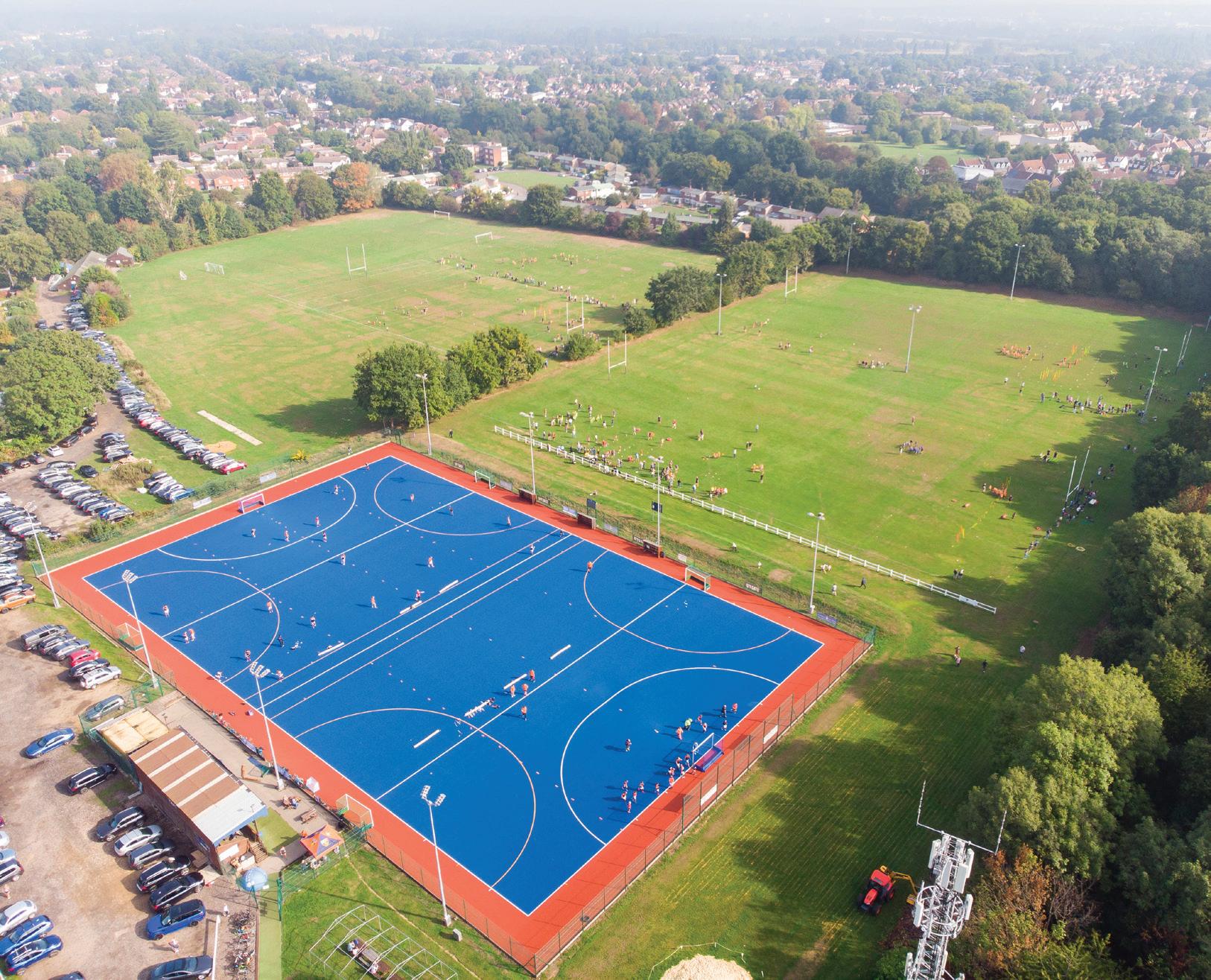
The Club itself hosts a wide variety of events including parties, to dinners, and the Friday-night Comedy Club continues to sell out every month. There are no hire charges for members of the Old Cranleighan Society.
The long-awaited changes to the Club will hopefully start with the building of the padel facility as well as a second astroturf and a new multi-use 3G pitch. General improvements to the car park and grounds will follow this, with the complete refurbishment of the 97-year-old clubhouse the jewel in the crown.
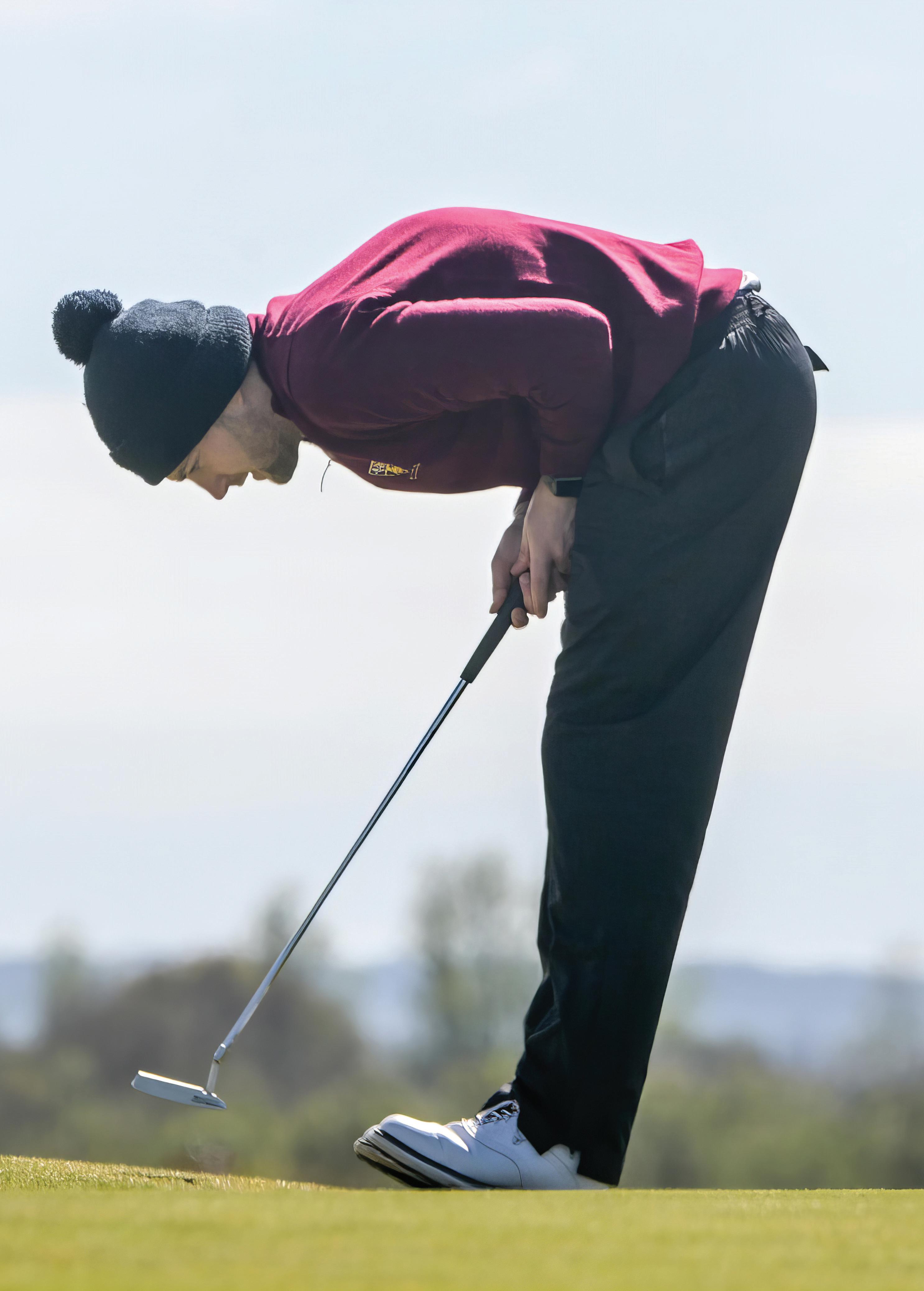
This was another far from easy season for the club with the seemingly endless struggles with availability – both ours and our opposition’s - and weather with a scorching June giving way to a damp July just as the bulk of our fixtures was due to take place.
The Cricketer Cup this year gave more cause for optimism than has been the case recently. A refreshingly young side crushed our first opponents, Marlborough Blues, by eight wickets in a match which barely reached the halfway point, and then in the second round at Radley we chased down a daunting target of 274 with 16 balls and six wickets in hand. George Ealham led the way with 112*, adding 128 for the third wicket with the veteran Alan Cope (88), Luca La Costa (42*) adding a final flourish to get us over the line. Perhaps the less said the better about an ill-tempered quarter-final against Old Cliftonians, a game we lost despite a gallant 89 from Michael Burgess.
The fixture list, which has undergone an Ozempic-like shrinkage in recent seasons, is now largely down to the game against the School and the cricket week. In the School match we at least acquitted ourselves after a couple of lamentable performances, posting a decent score thanks largely to an unbeaten 74 from Ethan Stiles, an innings where his skill and sweeping and paddling the spinners was a delight to watch. The School briefly wobbled before Zan Copleston (75) and Nat Atkins (79*) steered them to a sevenwicket win.
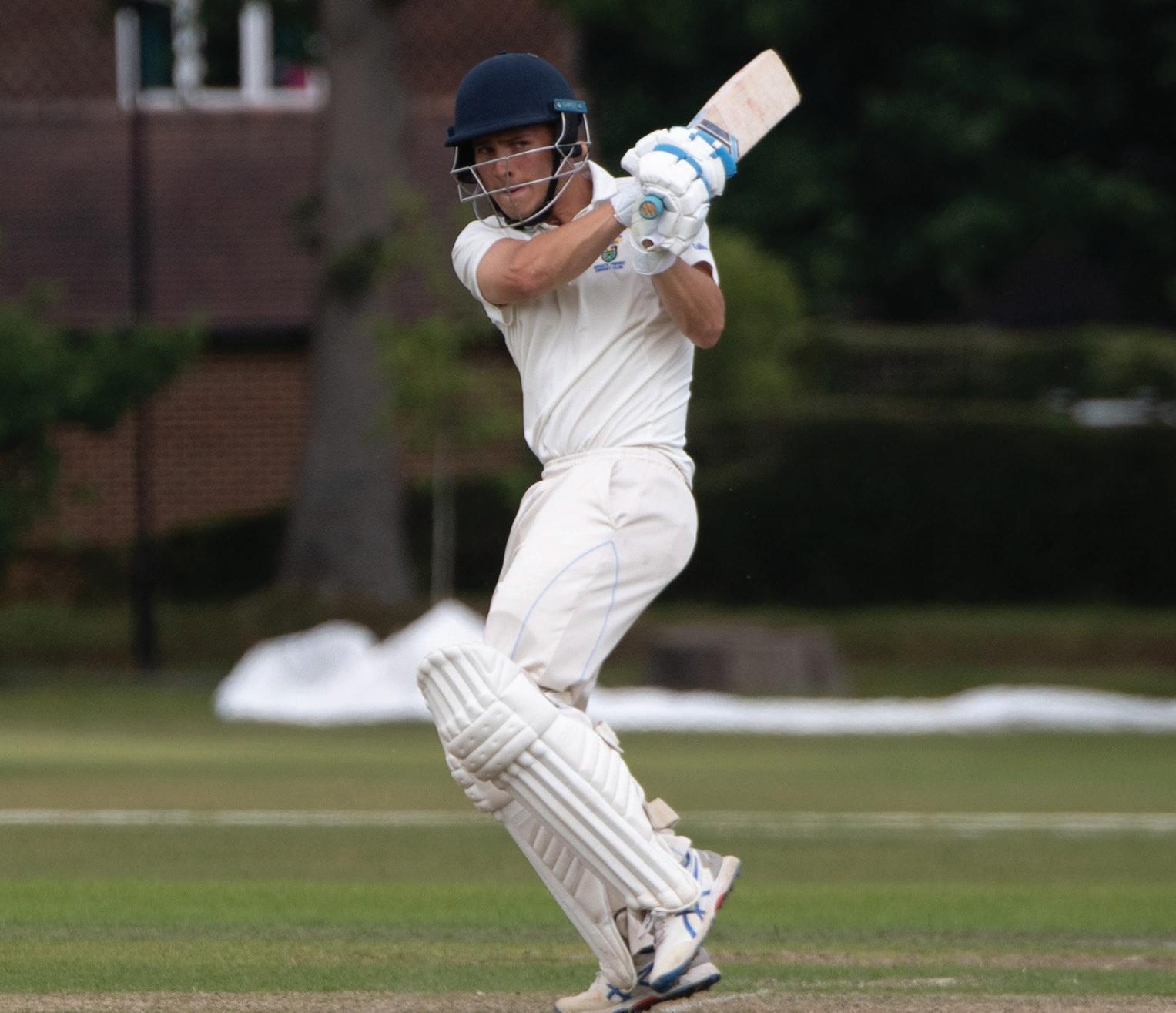
The week was not back-to-back matches as Eton were unable to raise a side on the first Sunday. We had a similar problem on the Friday, and the Frogs game on the second Sunday was called off as it clashed with our Cricketer Cup quarter final. All games were won by the chasing side which is not overly surprising bearing in mind the excellent wickets and dry, fast outfields. The best game of the week was against Old Hurst Johnians which was won by six wickets by the visitors off the last ball. OCs had been reduced to 126 for 7 but a rearguard action led by Luca La Costa (62*) led us to a respectable 225 for 9 off 40 overs. An opening partnership of 92 from 14 overs gave Hurst a good start but Will Hamblin (342), still in the XI at school, and Tom Selby (1-45) brought a measure of control until Tunley Lowe (69*) saw the visitors home.
Abinger came on Tuesday and a declaration game ensued. We batted first, mak-
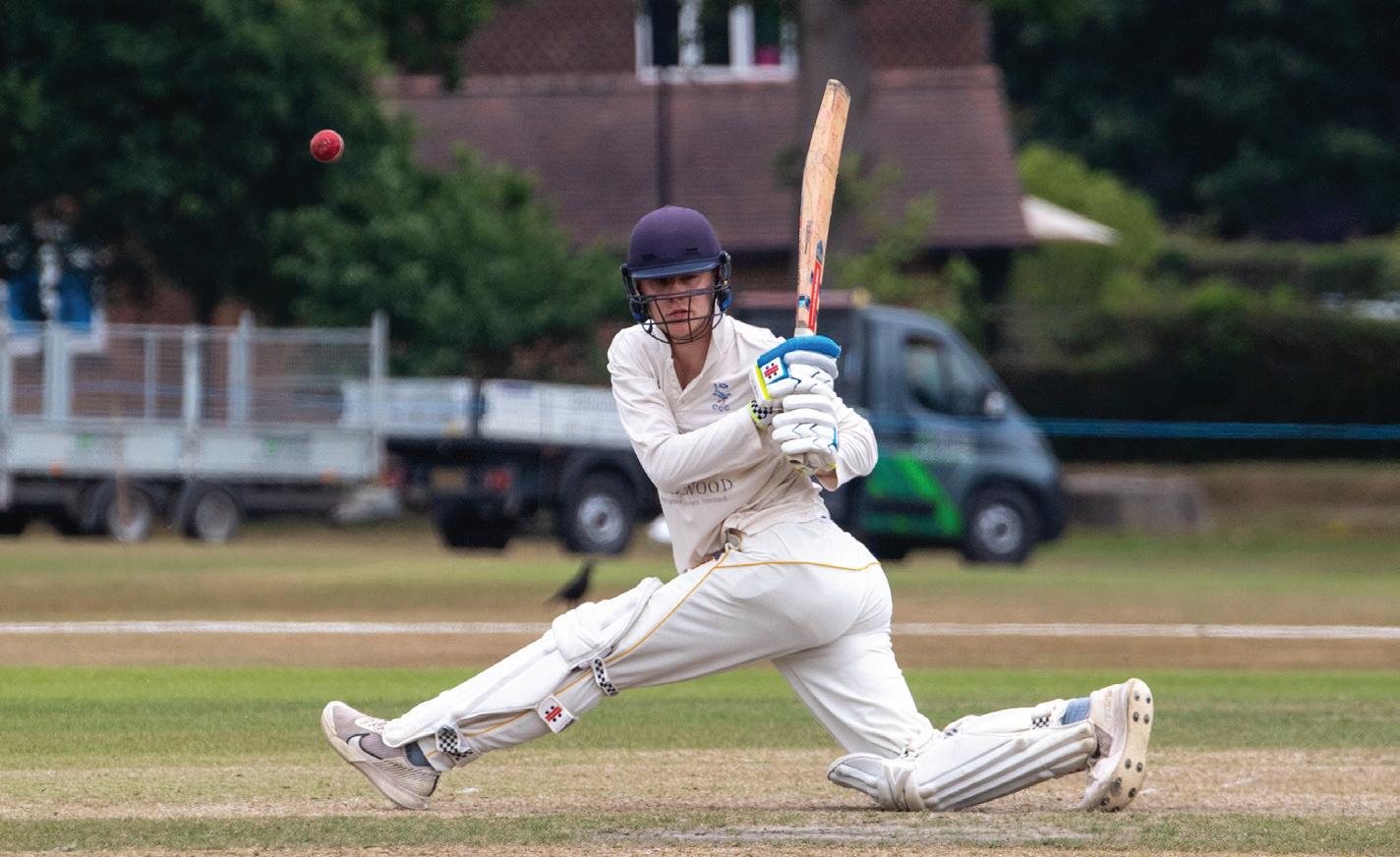
ing 172 with captain Rob Merry (33) top scoring. Abinger eased to a seven-wicket win with seven balls remaining of the last 20 overs. Opener Rumble remained not out on 84.
The visit of Lancing Rovers gave us our only win of the week. A good opening partnership led to a competitive 259 for Lancing which was chased down by a strong OC side for the loss of six wickets. Archie Freeth (67), Brad Scriven (94) and brother Jack (50) saw us home with five overs to spare.
The final game of the week saw a strong Wimbledon side overpower a young OC XI. James Fortescue, fresh out of school, won the toss and batted and felt a score of 274 was an excellent total with La Costa (67) and Burke (64) being the main contributors. James’s confidence turned out to be misplaced as Wimbledon took 40 off the first two overs and ran out easy winners by five wickets with three overs to spare. Billy Sewell scoring 130 off only 97 balls.
The games that took place were enjoyable and with the one exception already noted, all played in the right spirit. The OCCC remains afloat but is in need of a new generation to come forward and take over the reins. The reduced number of fixtures and limited-overs format means it is far less onerous a task than it used to be, but it still needs to be done.
Scan QR code for contact details
This was the first full season of the reformed OCFC with the team playing in Division 5 of the Arthurian League. The league was founded in 1961 and the old boys of all major football-playing public schools take part so it is great to see Cranleigh finally in the mix.
Playing out of the OC Club at Thames Ditton, it was a real success with the team finishing in the top half of the table. Over 30 players featured across the season, mixing different age groups including leavers from 2011 all the way up to 2023. The start of this season has already seen us include leavers from last summer.
In February the OCFC played the School in the inaugural Heron Cup fixture which we won 2-1 thanks to a brilliant winner five minutes from time from Tom Farrelly.
All in all, it was a strong debut season that gives us plenty to build on for the future, so if anyone is keen to join please drop Max Richards an email or follow the club’s instagram.
Scan QR code for contact details
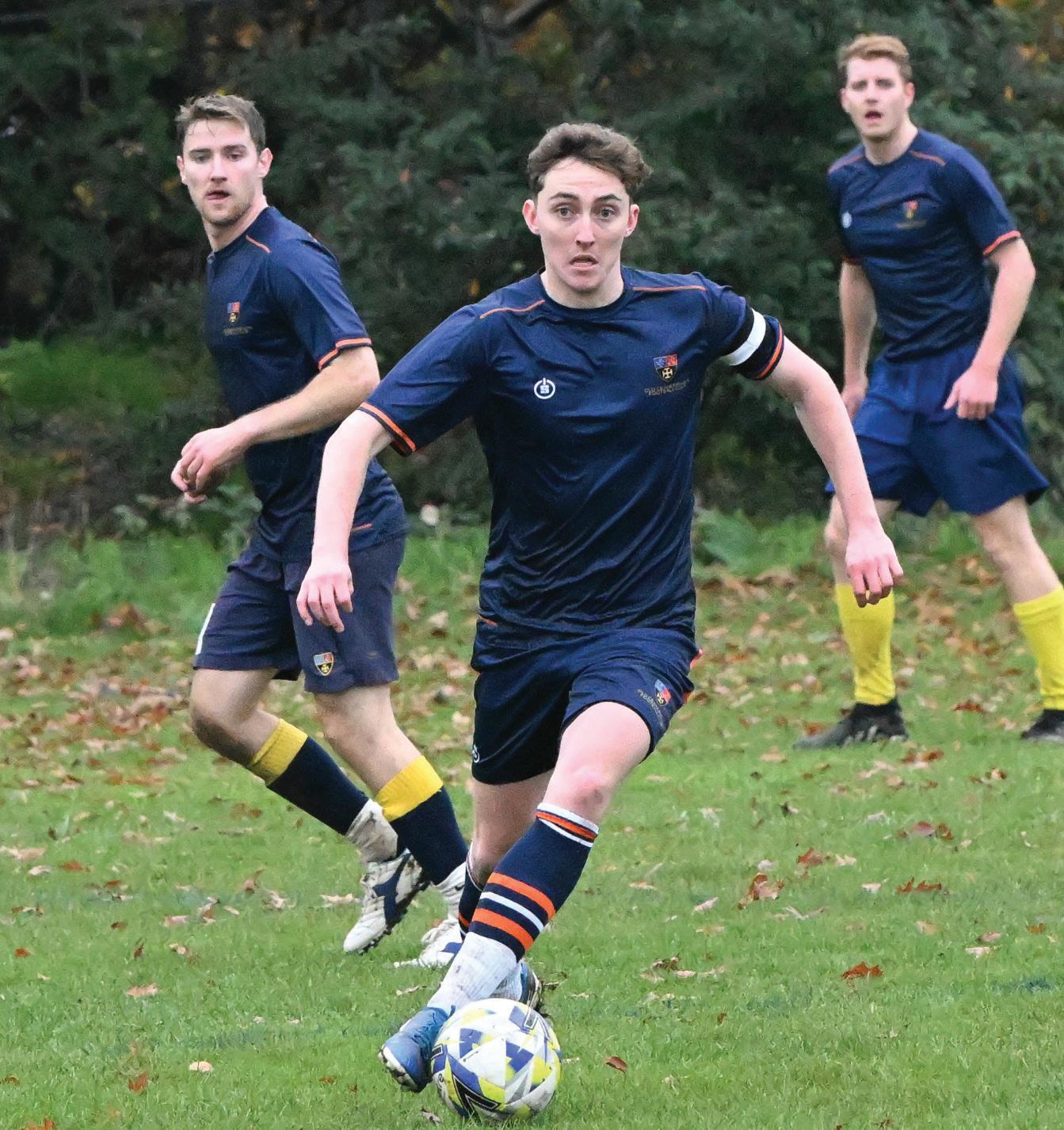
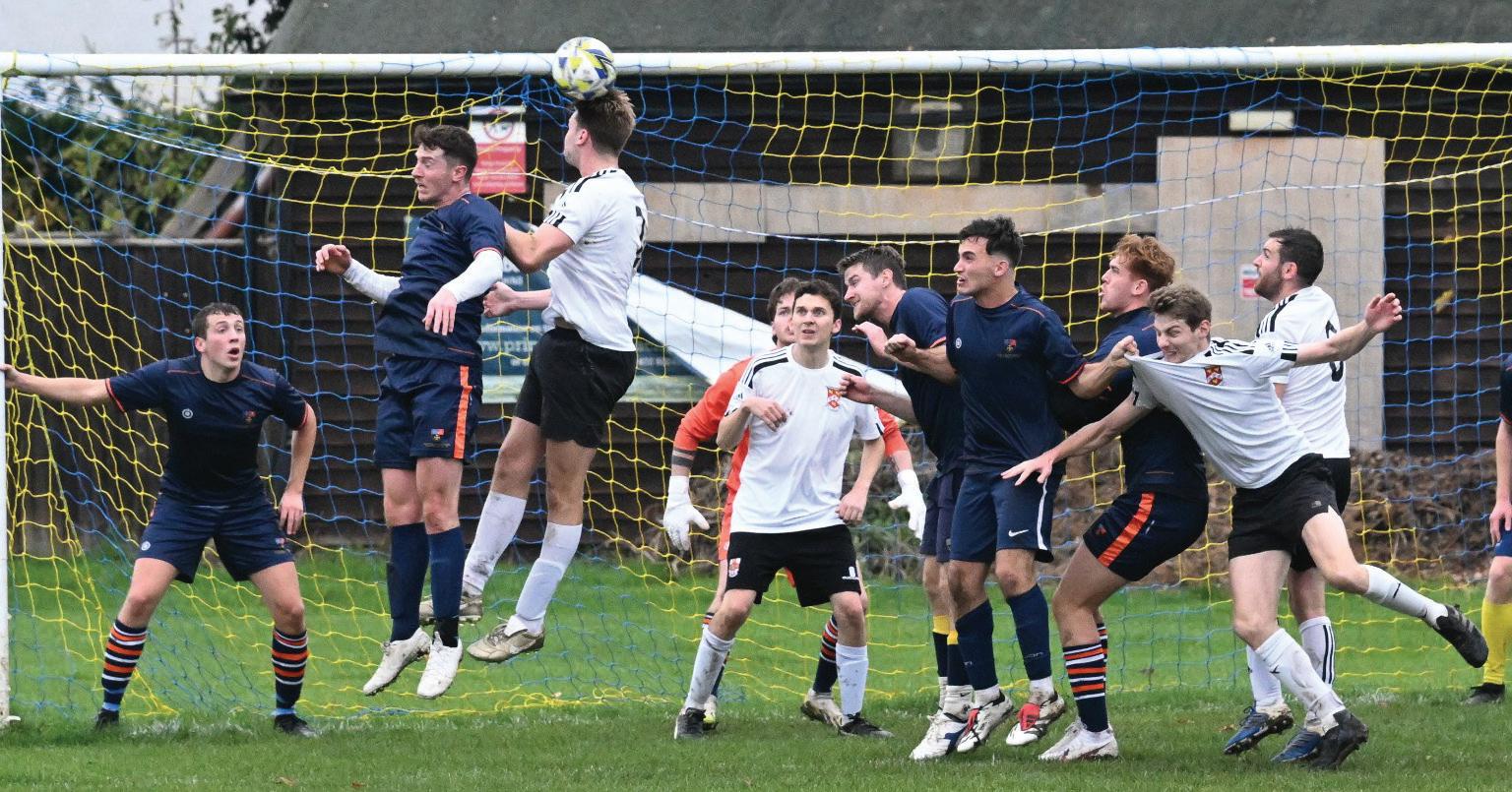
The Heron Cup is an annual event which will be played between the Old Cranleighan FC and the School. It follows on from the Roger Loveland Trophy (hockey), the Colin White Trophy (cricket) and the Gower match which are annual OC v School events.
George Hubert Hugh Heron (South 1867) was one of the first boys in the School (he is listed as No.34 in the register, his younger brother Frank was No.35). A wine merchant by trade, he won five caps for England at football between 1873 and 1878 and captained them against Scotland in 1876. The one game Heron missed in the sequence between his first and last caps was at The Oval in 1877 but he still participated as one of the umpires - football did not have on-field referees until 1891.
At club level Heron played in three FA Cup-winning sides for Wanderers in 1876, 1877 and 1878. In the first Frank also played, a week after his only England cap, the last instance of brothers being in an FA Cup final and an England side in the same season until Phil and Gary Neville in 1996. Hubert, who also served on the FA committee, retired from competitive football after the 1878 final.
In the same match v Scotland in 1876 a third OC, Walter Buchanan (South 1873), was also in the England XI.
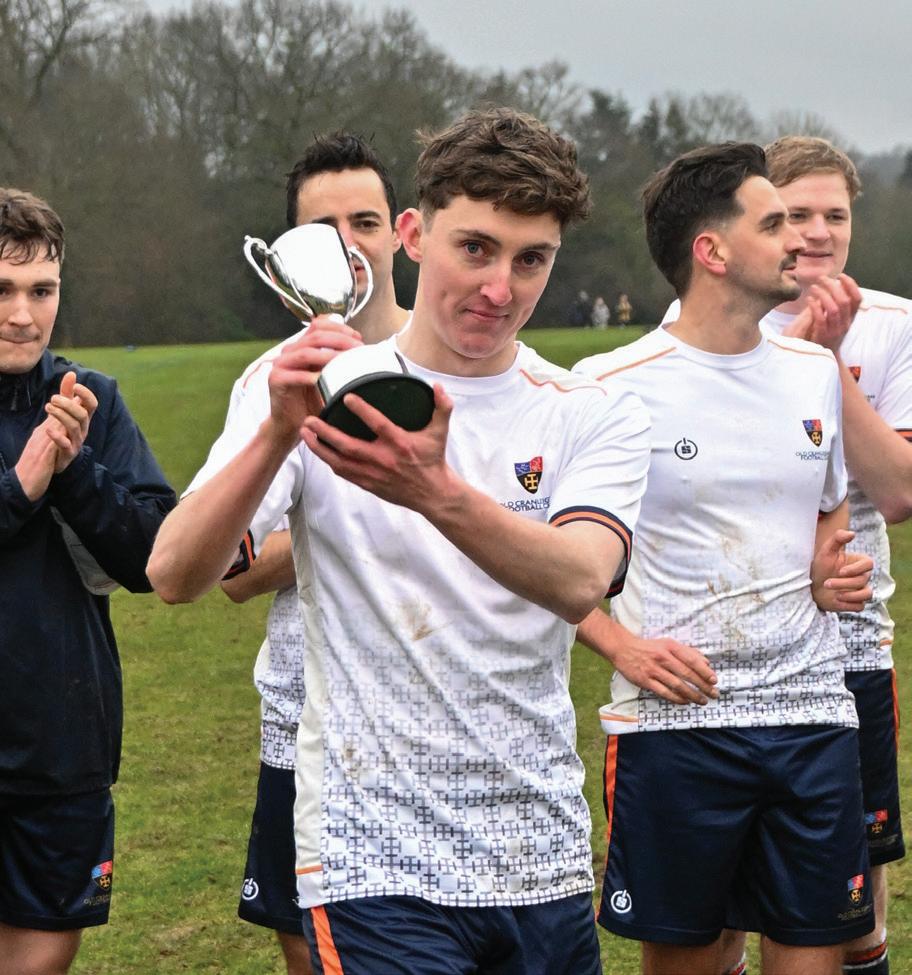
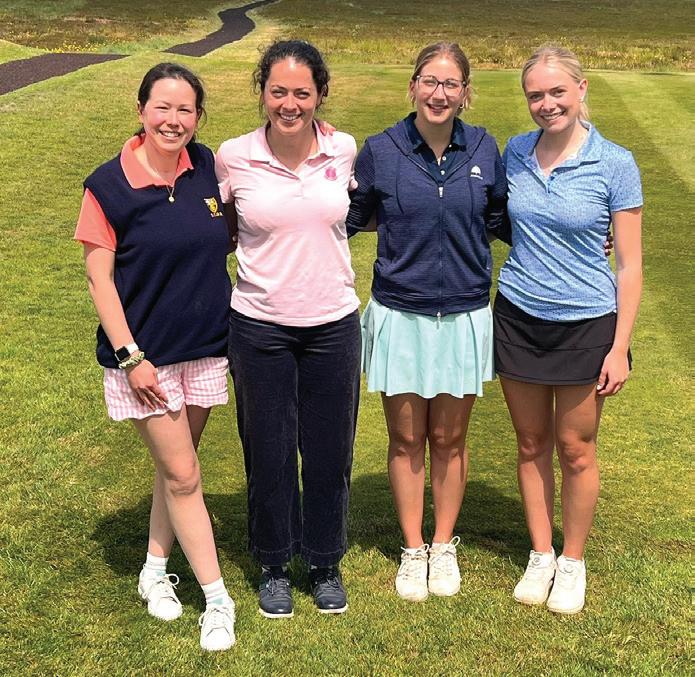
OCGS now has over 200 members and more than 20 annual fixtures which are available to all standards of golfers. There were many other matches against clubs and old boys’ sides and in particular the Inter Years competition at Reigate Heath was a real highlight with 40 OCs playing and ages ranging from 20 to 80+. Towards the end of the year we had a weekend at Royal Cinque Ports and the annual dinner at Boodles on 6 November.
The first main scratch competition of the year is the Brent Knoll Bowl at Burnham and Berrow where unfortunately we lost in the first round against the Club. A win and a loss followed in the plate but our young side had great fun.
The Halford Hewitt is played in early April and 64 old boys teams take part at Royal Cinque Ports and Royal St Georges. This year we had another very successful run through to the quarter finals beating
Lancing, Greshams and Kings Canterbury before losing to the eventual winners, Bradfield.
In May we qualified for the finals of the Grafton Morrish which are played at Hunstanton and Royal West Norfolk in October. We also competed in the Mellin which is for over 55s, the scratch competition, The Alba and the Scottish “Halford Hewitt”, The QE11.
In June our Old Cranleighan ladies proudly represented Cranleigh at the prestigious Silver Tassie competition, hosted by The Berkshire Golf Club. This was only Cranleigh’s second appearance at the event, which brings together alumnae from independent schools within the Independent Schools Council.
The talented team of Chloe Pearson neé Nicholls (West 2015), Iola Andrew (South 2018), Tash Rieck neé Ferguson (South 2009), and recent leaver Jaya Wilkinson (West 2023) — currently playing golf in America — delivered an outstanding performance. They finished just one point shy of the Silver Tassie trophy, scoring an impressive 80 points in the team Stableford, and claimed the Scratch Prize with a superb gross score of 150. A fantastic showcase for Cranleigh on such a prestigious stage.
Scan QR code for contact details
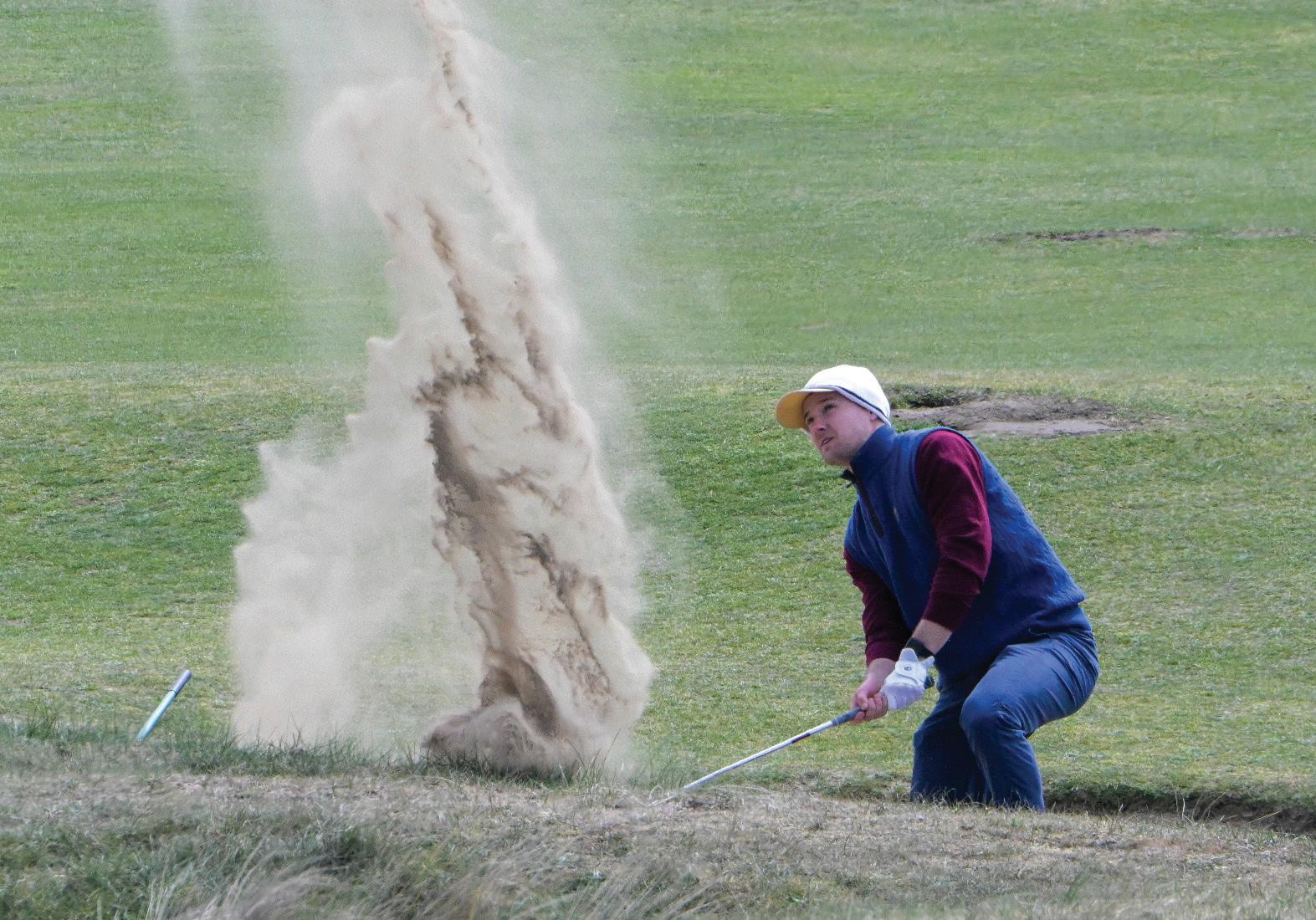
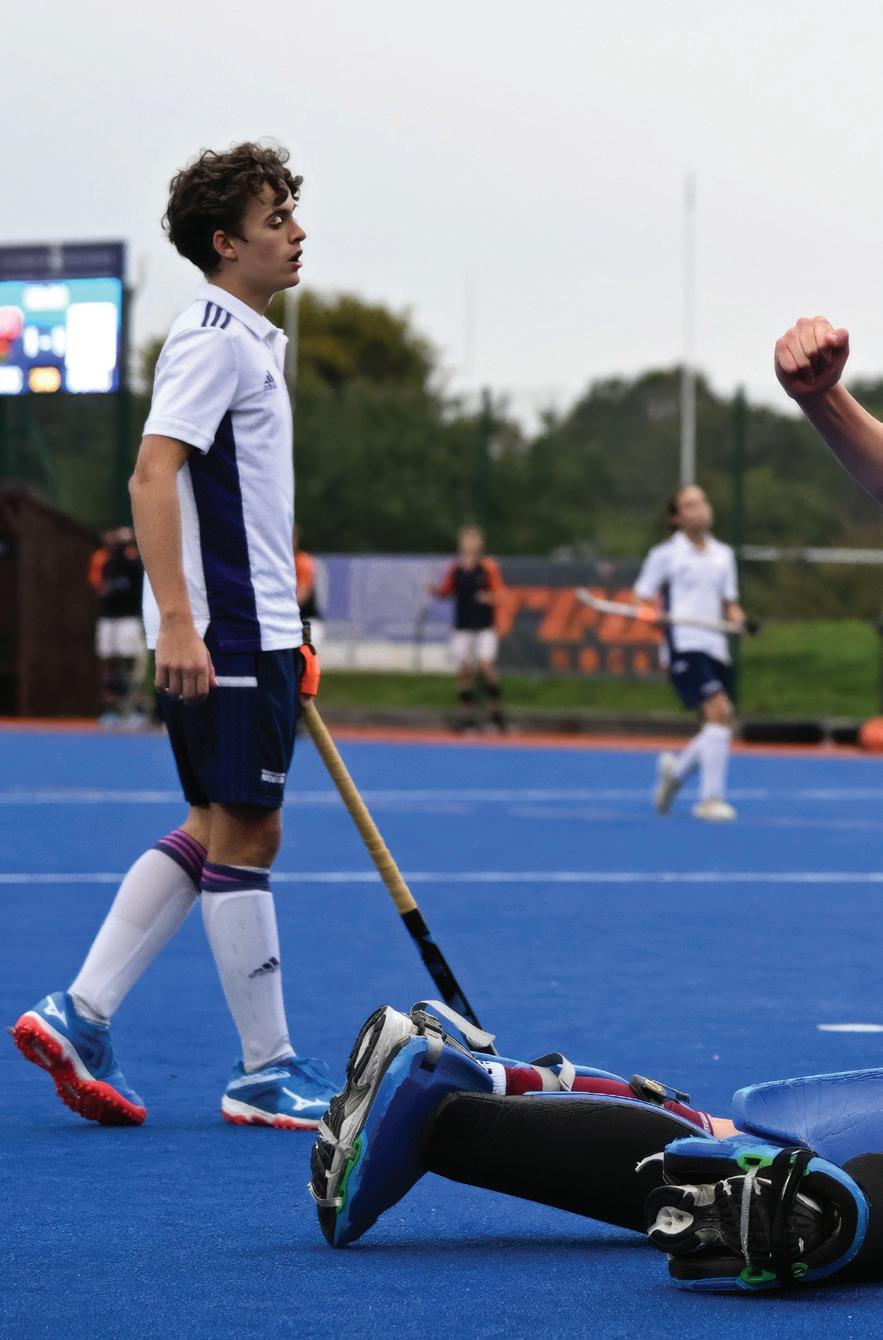
The aim for the 2024-25 season was stability, and despite being faced with a bit of a rocky start to the season, overall, this was achieved. Following relegation to the National East Conference at the end of the previous season, it was crucial that the Men’s 1st XI maintained their place in the National League. Though the start of the season posed some challenges, the team finished mid-table, establishing a solid foundation for the coming year. Unfortunately, the Ladies 1st XI experienced a different outcome. Despite scoring 42 goals during the season, and a strong second half, the results were a little too late, and they finished in 11th place, facing relegation back into London Division 1.
We had great successes further down the club however, the Ladies 2nd XI finished 2nd in their league, securing promotion, and narrowing the longstanding gap between the 1st and 2nd teams - a strategic focus for the club. Furthermore, the Ladies 3rd XI finished top of their league and with their promotion, we see a far more stable position from ours 1s-5s.
The Men’s Stormers completed another season undefeated, winning both their league and the Men’s Over 45s England Hockey National Cup. This was a tremendous achievement, beating three-timewinners Clifton Robinsons 3-0 in front of a huge number of the club who travelled to Lea Valley to support them. Their success was recognised in them being Short
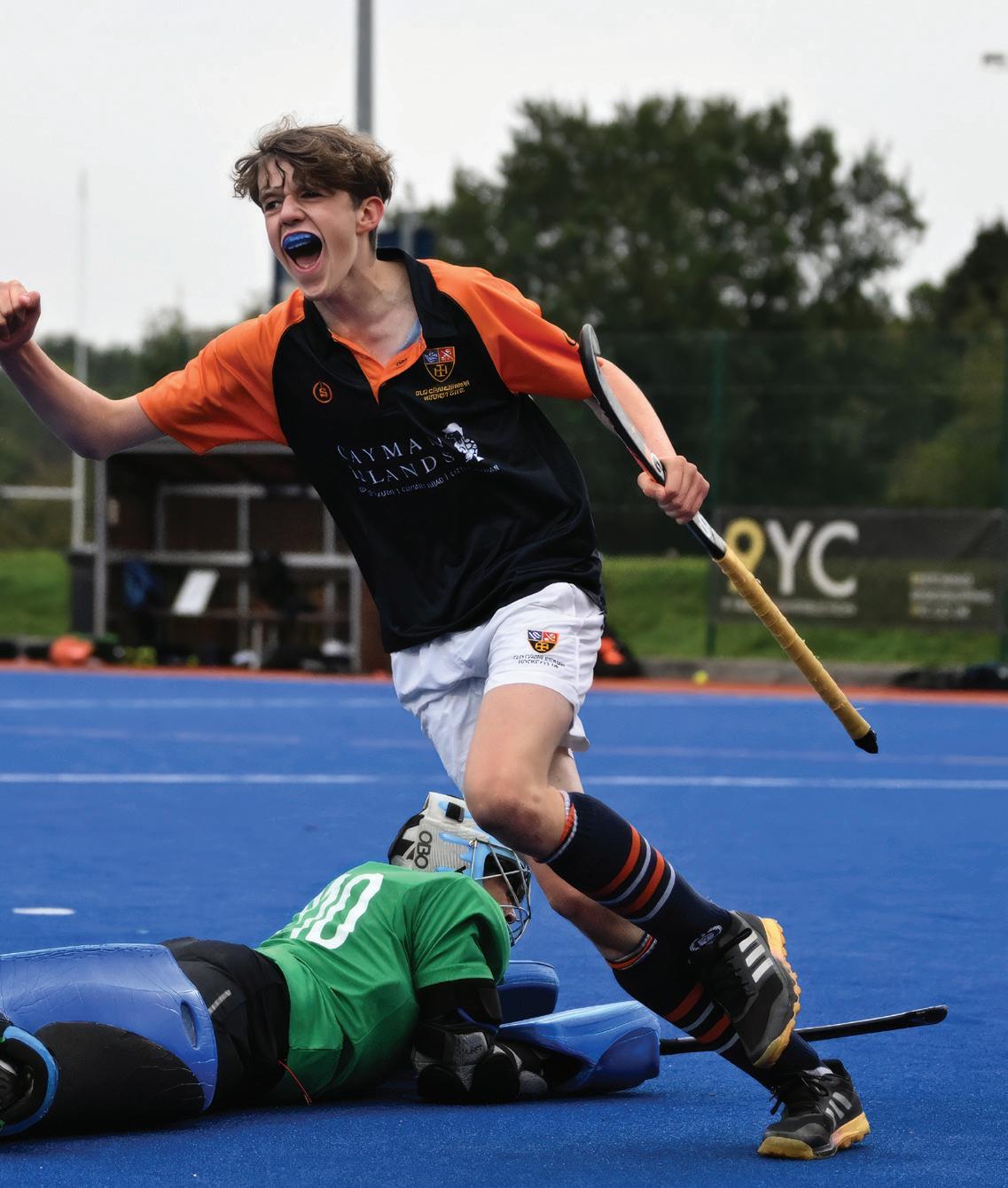

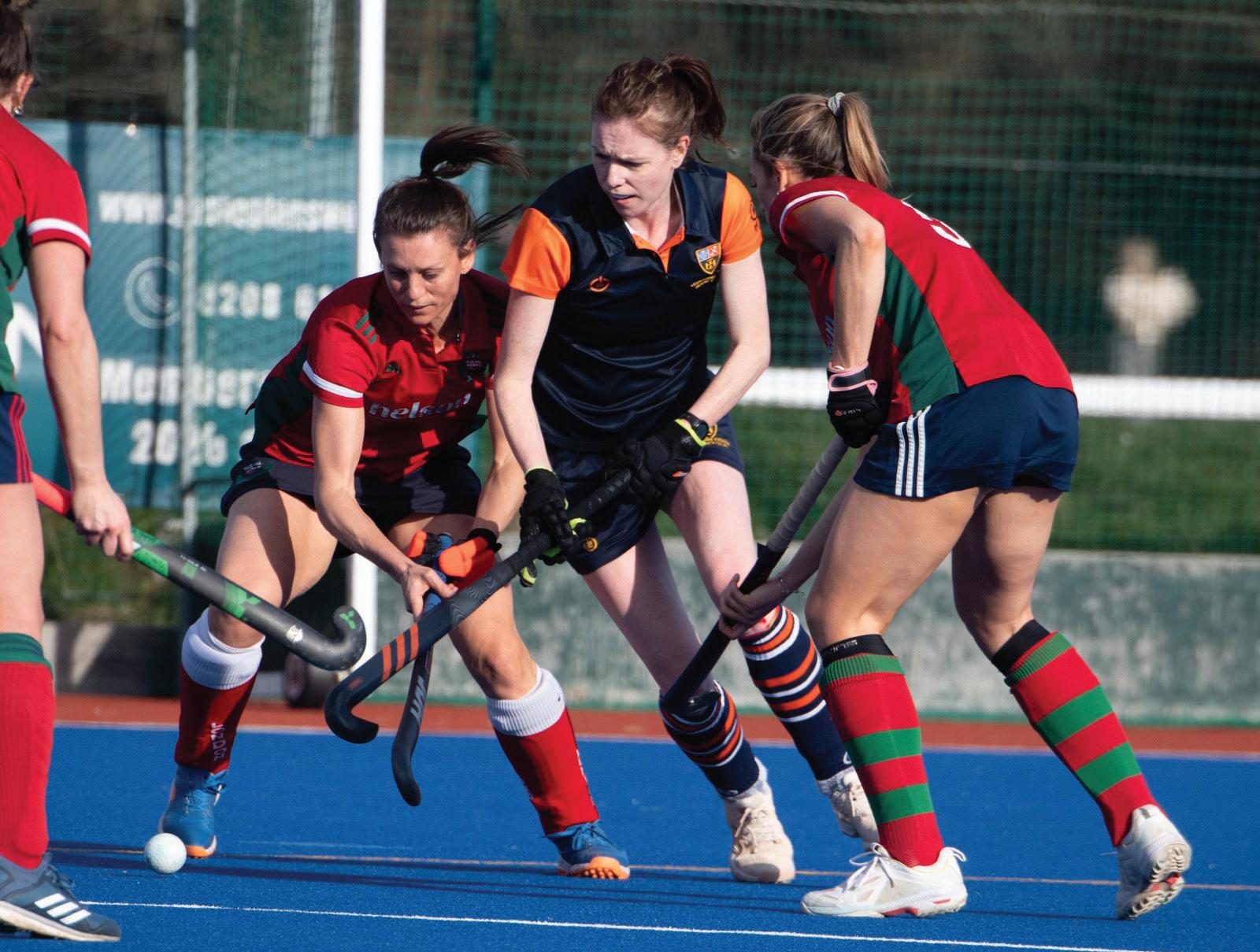
Men’s Samurais or Ladies’ 6th / 7th XIs. As they grow and gain experience, we expect them to challenge for spots in our performance squads.
Meanwhile, the Men’s 2nd XI, under the captaincy of Charlie Lamb, battled through the latter part of the season and secured a second-place finish, earning promotion to the London Premier Division - a significant achievement.
We continue to have incredibly low subs for our graduate memberships, which, although we will have to raise this coming season due to increasing costs, still remains the lowest in the area. We also created a graduate pack, highlighting the benefits of joining a club like OCHC. This was sent to all the universities that we have a connection with, including Birmingham, Exeter, Nottingham, Nottingham Trent, Bath and Bristol, to name a few. We, of course, have special rates for recent OC leavers and graduates.
Our junior section continues to thrive with around 550 members—a figure approaching capacity due to pitch limitations. Many age groups have waiting lists, but we are particularly pleased with the growth in boys’ participation, highlighted by our U14s fielding three teams for the first time. This year we also had national success with our boys U14s reaching the Supra League, a first for the club, as well as reaching the Tier 1 Plate semi-final. In addition, our U16 girls made the Tier 2 Cup final and were narrowly beaten by Richmond. Next year we aim to compete at national level once again and will enter more junior sides into Tier 1—the top level of junior hockey in the country. Talent development remains a key focus. The Friday night Performance Academy, led by John Shaw and Miguel Ralha, continued to support our most promising U12 and U13 players, many of whom made their senior debuts this year in either the
The Men’s and Ladies’ indoor squads both competed in the London qualifiers of the England Hockey Super 6’s competition. The ladies competed valiantly and finished in a credible third place after competing against National League opposition throughout the day. The Men’s indoor squad aimed to bounce back immediately after relegation from National Division 2 South. They had a dominant showing in the group stages and reached the final, where they narrowly missed out on victory, losing in a penalty shootout to Brom Becks.
There are so many people who put so much time into a club the size of the OCHC that it seems invidious to single out one, but there’s always room for some invidiousness. Helen Hawes has been a part of the OCHC for a quarter of a century – at times it feels as if she has spent more time at the OC Club than she has at her home - and it would be boring, not to say impossible to list all she has done and continues to do on and off the pitch. Suffice to say, the OCHC would not be the success it is today without her.
Scan QR code for contact details
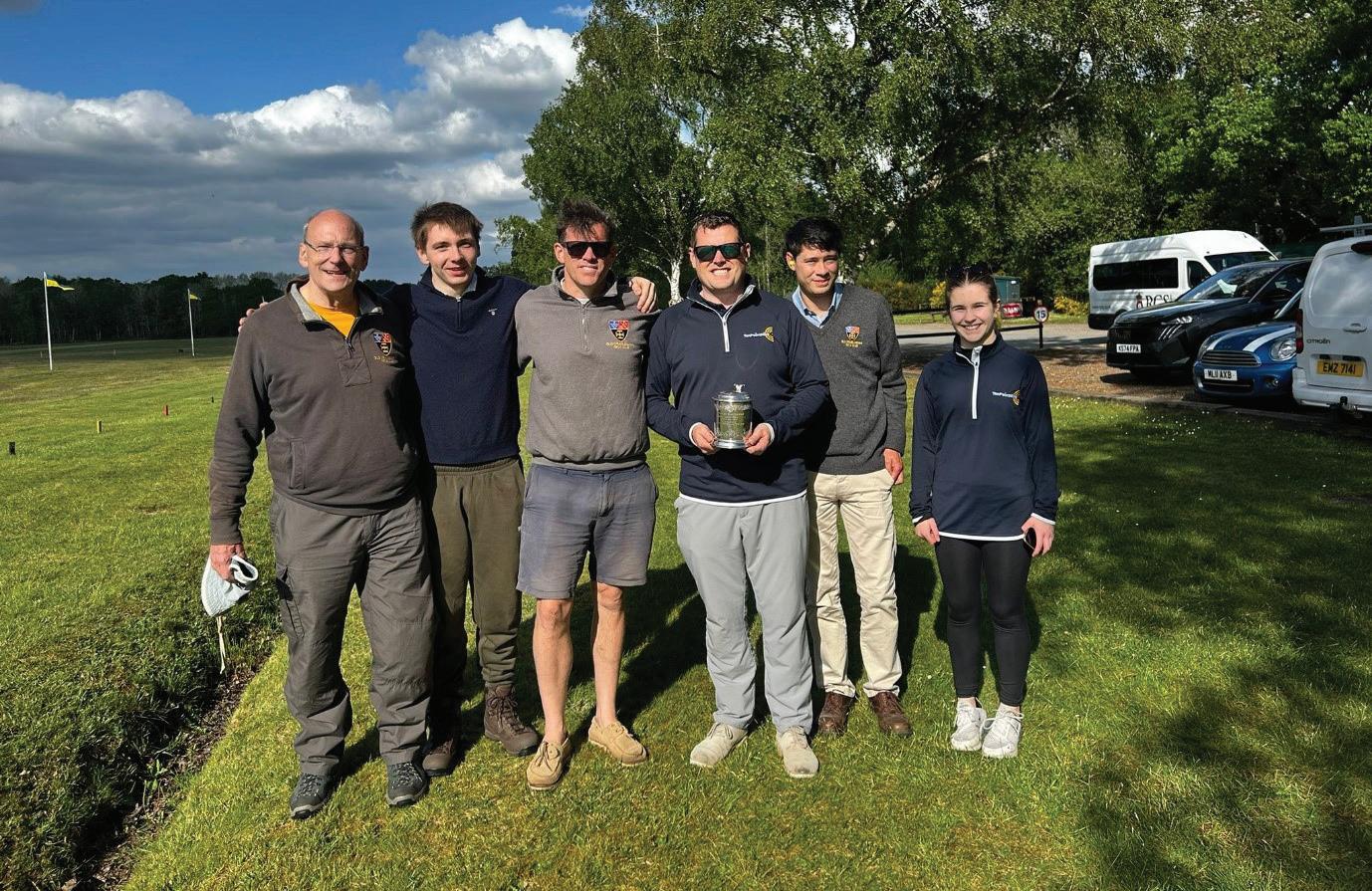
This has been another exciting year for the Old Cranleighan Rifle Club. We ended last season with Tim Bourne commencing training with the 2025 NRA Channel Islands touring team, and Simon Hayton helping to secure a narrow win for England at the European Long Range Championships, and gaining a 4th place finish in the individual stage.
Starting a busy 2025 schedule in April, OCRC narrowly took 2nd place at the Short Range Q Match, having warmed up with our annual pre-season training weekend held jointly with the Cranleigh School team. In May, OCRC won the inter-schools All Day Match trophy by a clear 8 points with a score of 746.52 ex 800, against some very strong competition in some challenging conditions.
During May, Tim Bourne, as part of the 2025 NRA Team, departed for matches against the Channel Islands. The team comprises uncapped but talented county level shooters with the aim of preparing them for international selection. Tim was part of an imposing team and achieved the second highest score for the NRA in the Guernsey match with a perfect 150 ex 150.
OCRC then progressed to our annual match against Cranleigh School in June which served as a great warm-up for both teams in preparation for the CCF Schools’ Meeting and NRA Imperial Meeting respectively. Despite a strong improvement in the school team’s scores, OCRC was victorious.
In July, members of OCRC once again volunteered to coach, mentor and support the School team during the main CCF Schools’ Meeting. Building on last year’s knowledge and experience, 2025 saw the School team achieve an outstanding result by coming 3rd in the Schools’ Ashburton IVs with a score of 349.13 ex 420 across 300, 500 and 600 yards.
This was another momentous result for Cranleigh on an upward trajectory and we cannot wait to welcome the team members to the OCRC in a few years’ time.
The annual Schools Veterans match saw the OCRC pit our best team of five against those of all other UK school alumni clubs, in-
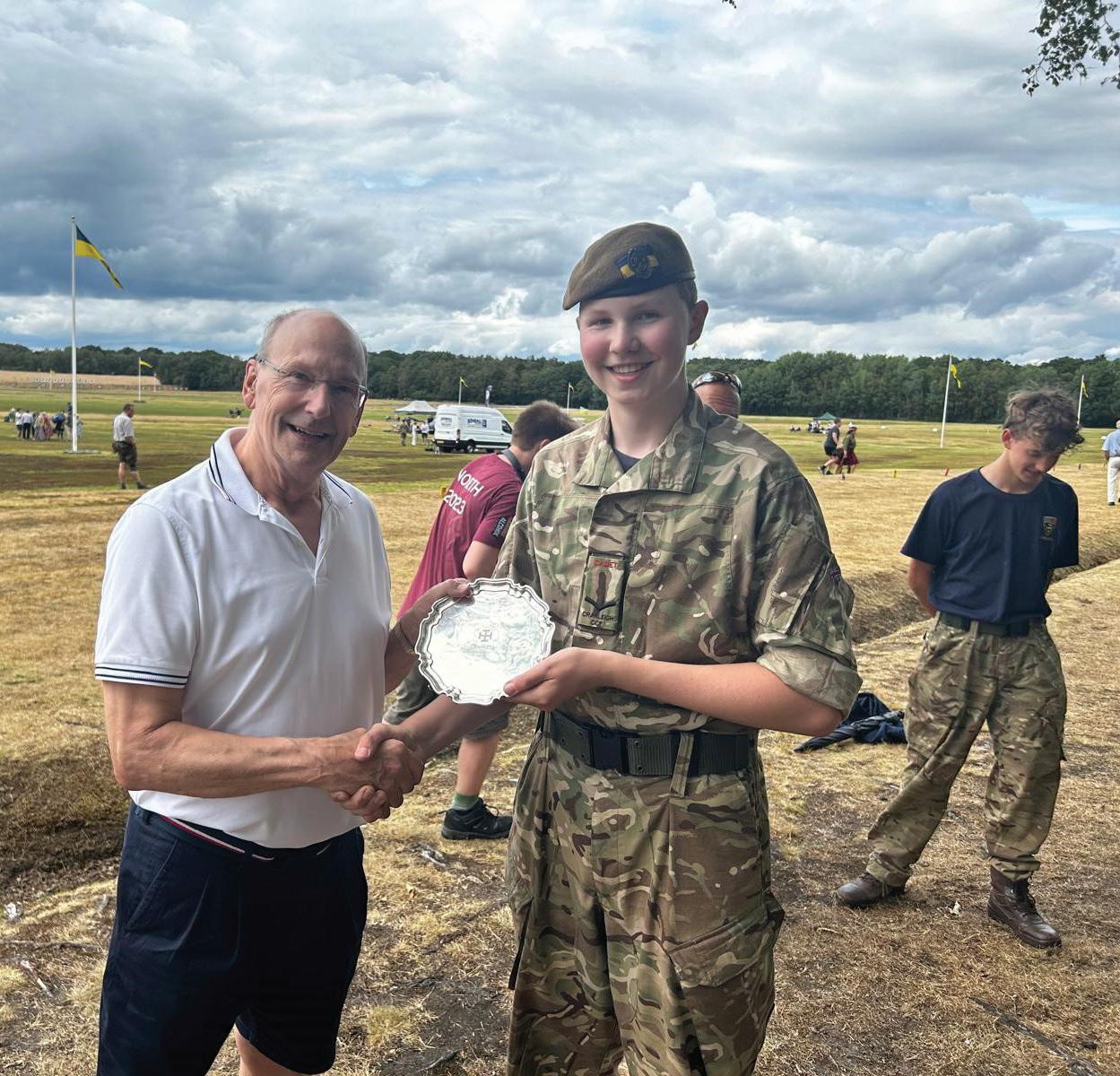
cluding heavy hitters such as Bradfield, Epsom, and Wellington. We had a fair showing but arguably not to our full potential given the calibre of shooters. We scored 241.24 ex 250 and achieving 21st place ex 45.The NRA Imperial Meeting OCRC had another good showing in the Imperial Meeting in July with a record five OCs taking part. Four OC’s represented their respective counties – with Rob Welford and Simon Hayton taking a record win in the Astor County Clubs Championship for Wimbledon Common RC (London), and Tim and Richard Bourne representing Hertfordshire. Simon also achieved his second National Match cap for England, again being part of a victorious team.
Richard took home 18 medals to break his ‘tyro’ status and on the strength of these results, was selected to be part of the NRA’s development squad for 2025-26 as well as making the reserve spot for the England Lions squad. Off the back of a very strong 2024-25, Tim Bourne was selected for the 2025 England Lions Squad and Simon Hayton was selected to be part of the Great Britain touring team to the USA and Canada in 2026, and GB’s initial training squad for the 2028 World Championship Team.
The OCRC is in excellent shape with several members now representing county and country. The club looks forward to continued growth this year at all levels as well as continuing our support of Major Money’s Cranleigh team which we expect to continue to generate new OCRC members over the coming years.
OCRC is always open to new membership enquiries from Old Cranleighans, young or old, experienced or not. You do not have to have shot while at the school since we are equipped to coach novice members up to whatever standard they will wish to shoot to.
Contact: ocrc.hon.sec@outlook.com if you wish to join us.
OCRC will also have a new improved website going live soon, so watch this space!
Scan QR code for contact details
A challenging 1st XV season was salvaged by a fine performance in defeating Old Whitgiftians in the final match, ensuring OCRFC play in Surrey Counties 2 in the coming year. A full complement swept OCs to a tenth victory of the season, winning all but half our matches in a competitive league. Therein lies the conundrum. With consistent availability, the OC team was a match for anyone in the league, but an inability to select the same side on a regular basis hampered mid-season prospects, leading to a late urgency to win matches. The club is not alone in this dilemma, but as with so many rugby clubs in the current climate, it does require players to commit on a more constant basis. With so much potential however, there is plenty that is positive to report.
Tom Fuller led the side for a second season, battling hard on and off the pitch to ensure his team held firm in the league. With a raft of ex Exeter University players introduced via OC Sam Lubbock, the portents are positive, as young players emerge from the Colts (U17/18) to play adult rugby. Former Colts captain Theo Tyler-Low scored 13 tries across the competition, representing England in winning the international Men’s U20 Touch Rugby tournament. Our Vets team played a consistent number of matches, including the annual fixture against Hong Kong Vets, a memorable afternoon of rugby and tribute, played in memory of HK expats who died in the Bali bomb two decades ago. The Past Players lunch welcomed a bumper turn out, honouring former play-
ers, providing a vibrant gathering for tall tales and memories of heroic triumphs and disasters.
The Youth sections continue to flourish, Sunday mornings providing a magnificent spectacle as the club hosts more than 700 players, their parents, assorted opposition teams, dogs and patio pints. The future takes on a robust hue on such occasions, as the local community thrives in our friendly family environment. Age groups have produced consistent success in Harlequins Academy trials, OCs recognised as a redoubtable force in the South East.
Thanks as always to ebullient President Nick Meyer, to stalwarts Mark Lubbbock (Hon Sec), Robin Board (Fix Sec) and chameleon of all jobs Simon Laws, for all they do in supporting and managing the club. Director of Youth rugby Piers Cushing, an effervescent force of nature, inspires the Youth section through his relentless energy and passion. Thank you to clubhouse manager Bevan Hoogewerf for the catering and clubhouse vivacity, the innovation of a karaoke machine providing further occasionally harmonious incentive to linger. A spectacular Christmas party saw the National Grid tested by the scale of the seasonal illuminations decorating the clubhouse, visiting clubs universal in their praise of the atmosphere and hospitality the OC Club provides.
With planning applications imminent for a major redevelopment across the OC campus, the vision for new all-weather
pitches, improved grass pitch facilities, padel courts, enhanced parking and approach roads, make this is a hugely exciting time for the entire OC club. Future plans to reinvigorate the splendid but now dated clubhouse are set to follow. The OC Rugby club remains the beating heart, the vigour, commitment and pure love of the game and all that it inspires, ensuring that rugby, despite the self-evident challenges the game faces, remains the very essence of OC spirit. After more than a decade as Chairman Will Fawcett invites alumni of Cranleigh School to join the new future, to revel in the sheer fun, laughter, competition, and sporting challenge our historic community club provides. Roll on season 2025-26, come and join the party.
Scan QR code for contact details
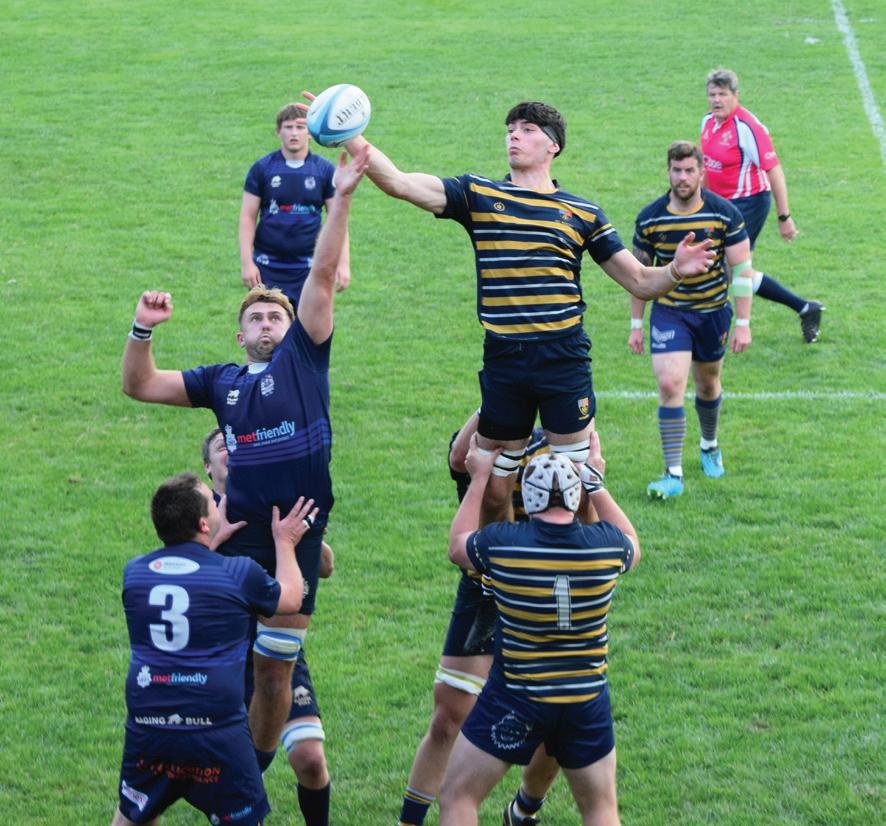
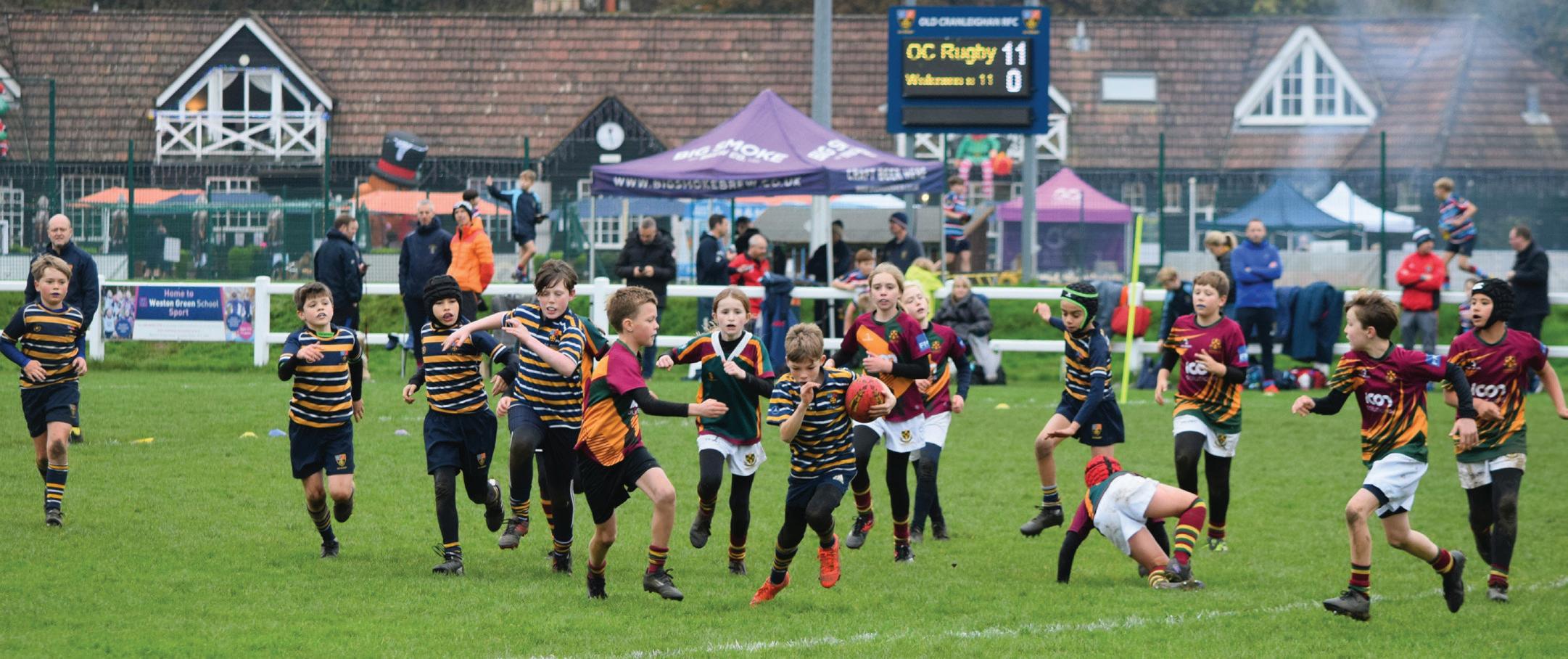
The Arrow Trophy 2025 ran the weekend of the 4th and 5th of October and we were met with some extremely mixed weather, strong winds and sunshine with a very wet delivery trip to the Isle of Wight on the Friday afternoon. This year we had a nice mix of regulars as well as some newcomers, Ben Mein, Bill Mellstrom, James Ware, Jeremy Kaye, Simon Steel, Tim Barnett, and Will Yule.
Unfortunately, the full impact of storm Amy came through overnight Friday and during Saturday and there was no sailing to be had on the first day. The crew made the most of Friday night, with dinner at RORC followed by the usual ending at the Anchor with some live music. On Saturday the majority of the crew enjoyed a lovely walk up the River Medina for a pub lunch in strong winds, but thankfully glorious sunshine. The evening formal dinner was at RORC again this year, although in anticipation of better luck for sailing Sunday the crew was more hesitant to go too wild.
The Old Cranleighan Squash Club is in rude health. Unfortunately we crashed out of the Londonderry Cup in the 2nd round losing to a very strong Old Millfieldians team at the Royal Automobile Club. Michael Roper, Richard Winter and Chris Watling all battled hard but were unable to secure any wins, whilst Jonny
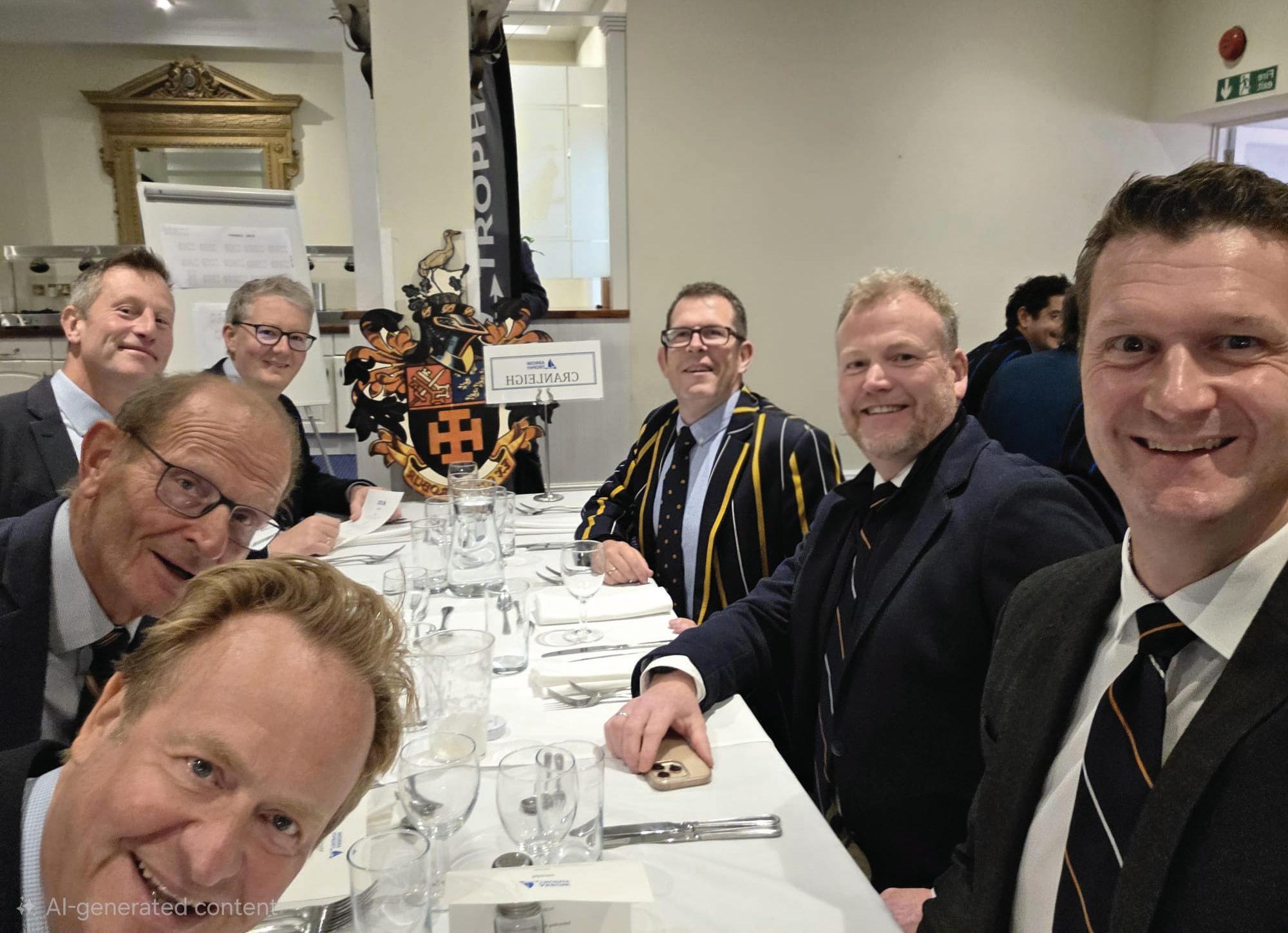
Sunday dawned somewhat calmer so the fleet headed out for some racing. The first race was pretty successful, with the Cranleigh boat coming in a healthy mid-fleet position and enjoying some close racing. Unfortunately, the skipper (mea culpa!) suffered a lapse of his usual standards and had a slight ‘coming together’ with the committee boat on the startline of the second race, so we did the honourable thing and retired. We definitely didn’t let the setback get to us though and had a good - if more conservative - start in
the third race and sailed to another solid seventh position. Had it not been for the retirement, the overall result should have put us in the top half of the fleet.
A great weekend was had by all. If anyone is interested in joining the crew for next year, please get in touch with Tim Barnett.
Scan QR code for contact details
Haynes was given a free personal training session by former World Number 2 Peter Marshall. While we didn’t win it was another good evening of squash and social and we go again next year.
We are thrilled to have been invited to come back and play the school on December 4th
when we will be combining with some squash players from The Jesters Club.
Scan QR code for contact details
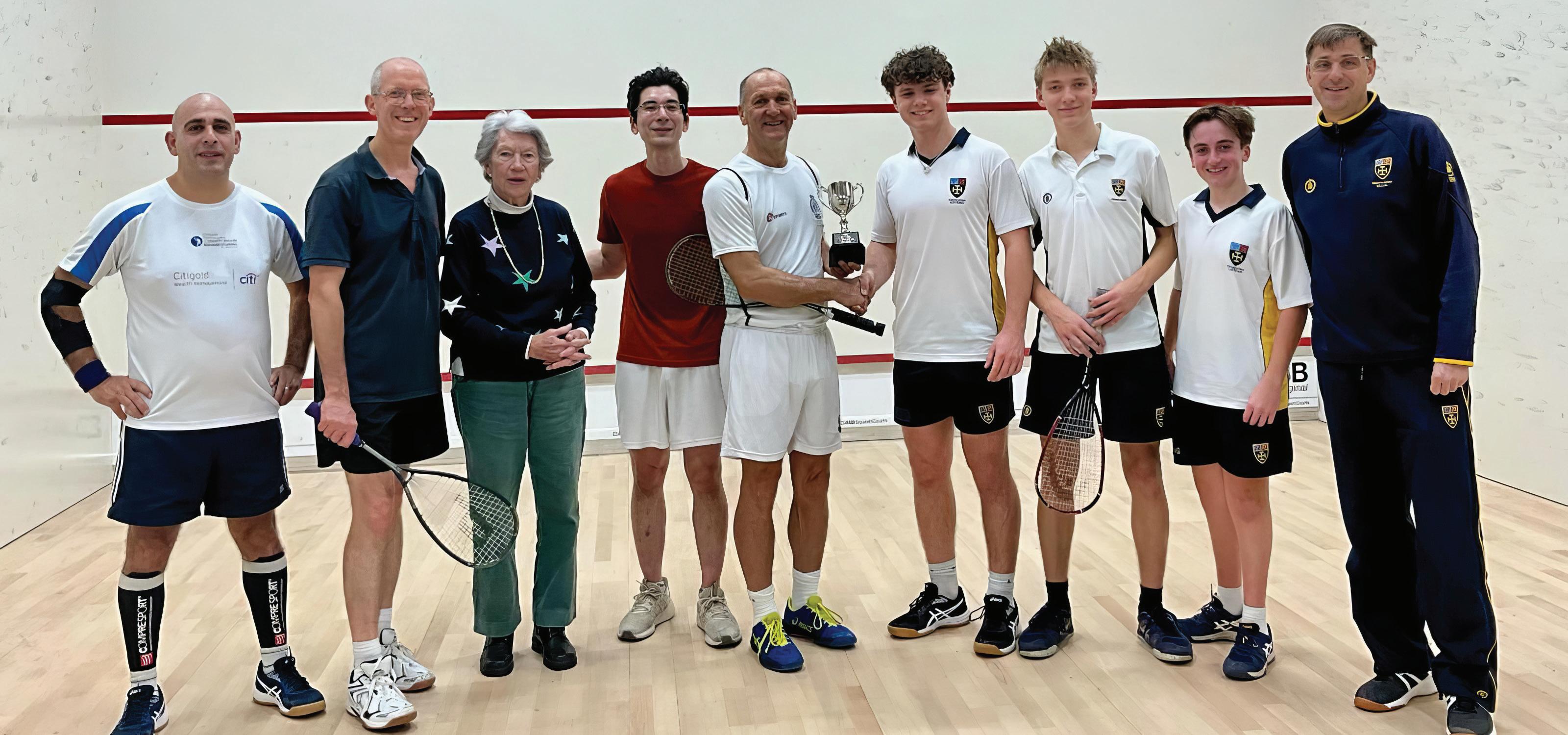
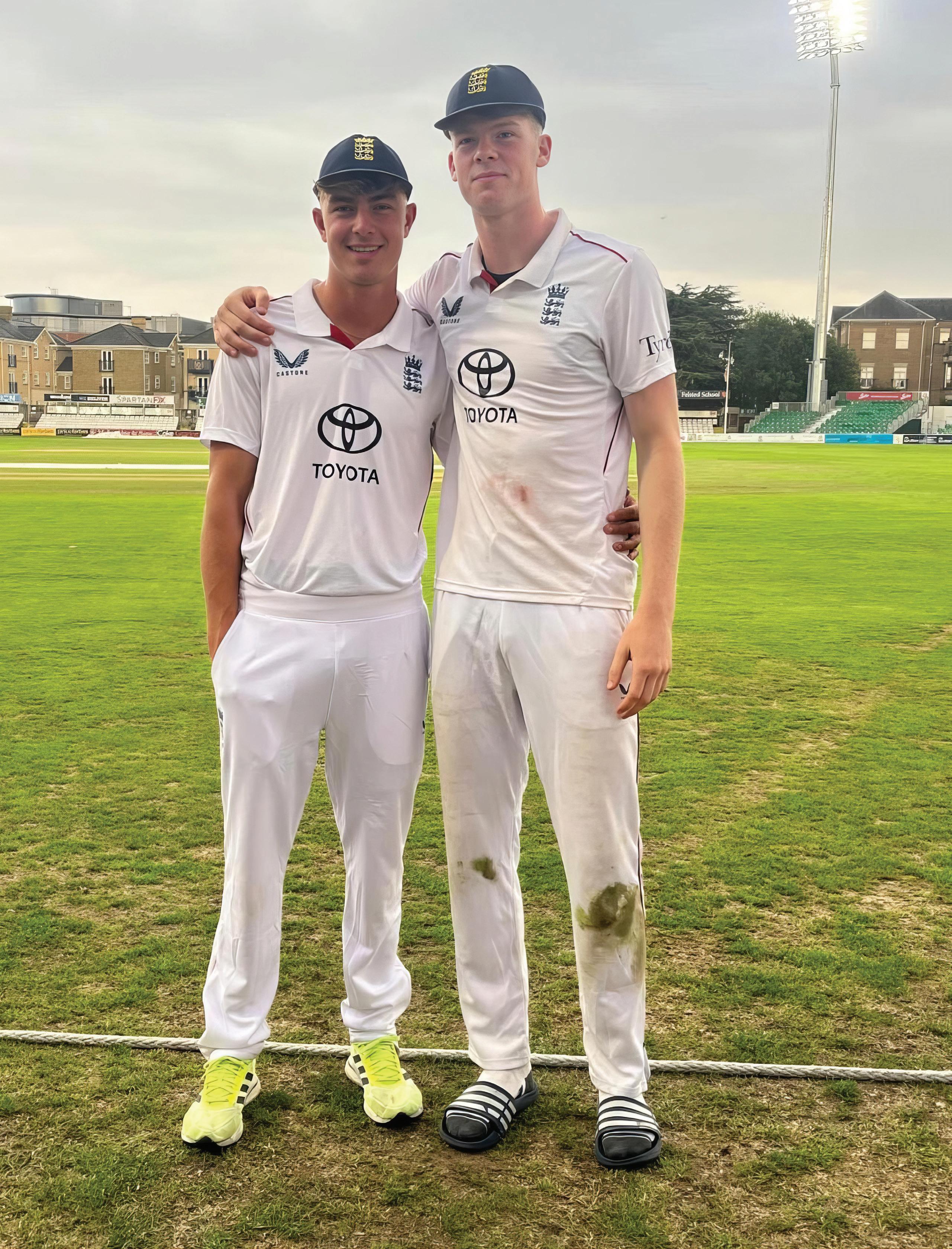
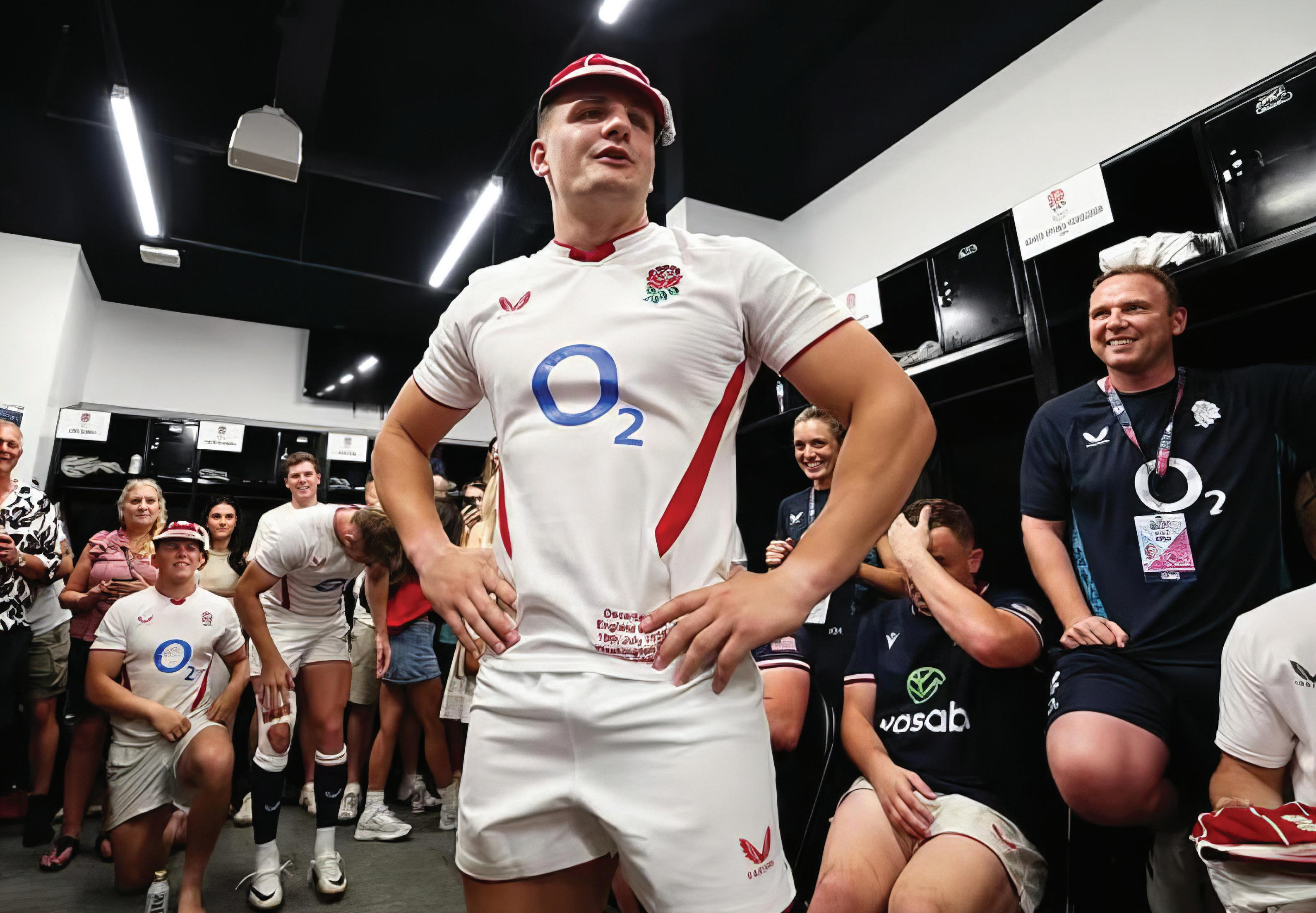
It has been another year of success both on and off the field for Old Cranleighans across the sporting world.
In rugby, Oscar Beard (North 2020) became the ninth OC to play for England when he made his debut in the summer international against the USA. Beard remains at Harlequins but the core of OCs at the club has been broken up. Italy international Dino Lamb-Cona (East 2016) left in the summer and joined Japan Rugby League One outfit Yokohama Canon Eagles. He had been linked with a move to Brive. He played in three of Italy’s autumn internationals and another three Six Nations games, taking his tally of caps to 12, making him the most capped OC international rugby player. Another player leaving The Stoop in the close season was Will Trenholm (North 2020) who moved to Gloucester and made an immediate impression with a lastminute match-winning try against Munster. Hayden Hyde (East 2019) continues to represent Quins as well as spending time on loan at London Scottish.
England Prop Will Collier (East 2009) has enjoyed his first year with Top 14 side Castres Olympique and finished the season representing the Barbarians in South Africa. He still retains an interest in a restaurant in Bath and said: “Everything revolves around rugby and food, which just happen to be two of my big
passions. You can’t throw a stone without hitting a boulangerie here.” Lock Hugh Tizard (Loveday 2018) continues to be a regular starter at Saracens where he signed a long-term contract earlier in the year. He also made two appearances for England A in 2024-25. Sam Arnold (East 2014) enjoyed a good start to his time with Newcastle Falcons.
Charlotte Brooks (Martlet 2026) became the first female Cranleighan to win international rugby honours when selected to represent England U18s. There were also England U18 callups for Joe Taylor (Loveday 2025) and Cameron Ward (North 2025).
In cricket, Ollie Pope continued to be ever present in the England Test side. After a tough winter tour to Pakistan he started the season with a big hundred against Zimbabwe and followed that with a century against India, finishing the summer with 477 runs at 47.70. He spent some of last winter in Australia playing for the Adelaide Strikers in the Big Bash and returns to Australia this winter for the Ashes. Shortly before going he was given a oneyear central contract extension by the ECB.
Tom Lawes (Cubitt 2021) was also handed an ECB development contract as well as being included in the England Lions squad to

tour Australia this coming winter. As well as playing for Surrey he represented Northern Superchargers in the Hundred. Yousef Majid (North 2022) once again impressed for Surrey in the Metro Bank One Day Cup, a competition in which Cranleighans featured heavily. In the two matches Surrey played at Guildford Tommy Ealham (Loveday 2022), Alex French (Cubitt 2025) and Adam Thomas (Loveday 2024) also played.
French toured South Africa with England U19s last winter and also played for them in the Test and ODI series against India in the summer. Thomas, who also featured in one Test of that series, made headlines by blasting 162 for Surrey v Derbyshire in the Metro Bank One Day Cup in August. Both Thomas and French were awarded professional contracts with the county.
In hockey Izzy Petter (South 2018) continued to feature regularly for both England and Great Britain and like Will Calnan (Cubitt 2014) has achieved the milestone of passing 100 combined international caps.
Quad tennis player Greg Slade (Cubitt 2020) rose to No.7 in the world rankings with a series of wins over top players and an appearance in the doubles final at Wimbledon. “I feel I have been knocking on the door of something like this for a while. I have had some big wins and this year I have really seen improvement,” he said. “Sport is brutal and professional sport is tough. There are times you doubt whether this is for you, you doubt that you belong at this level and you doubt you belong among such fantastic players.”
It has been another impressive year for Will Barnicoat (North 2021).In March he ran the fifth fastest 5K road time in British history. In May he defended his British University Championships 5000m title and then won the bronze medal in the 5000 metres at the 2025 European Athletics U23 Championships. In October he was retained on the British Athletics Olympic Futures Programme for 2025-26.
BELOW:Greg
BOTTOM: Will Barnicoat
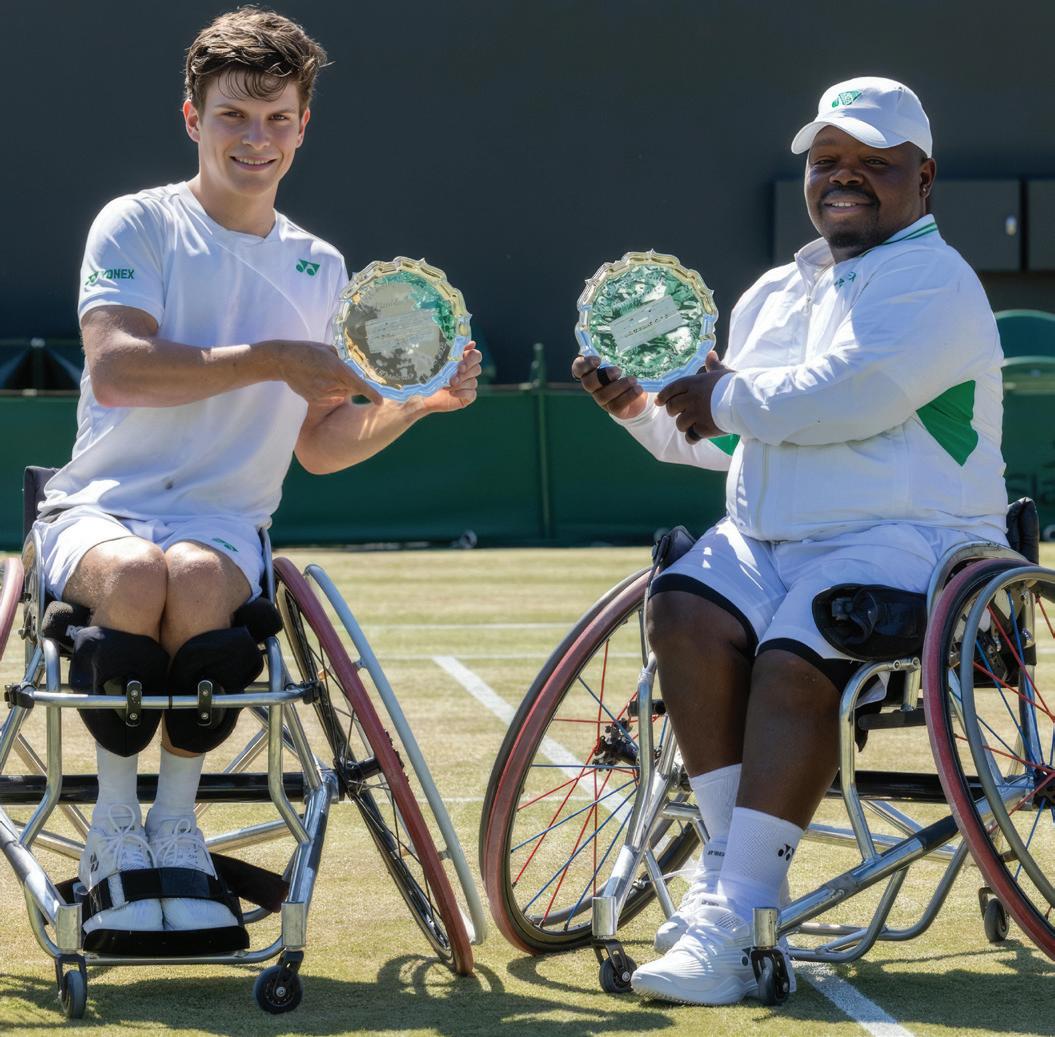
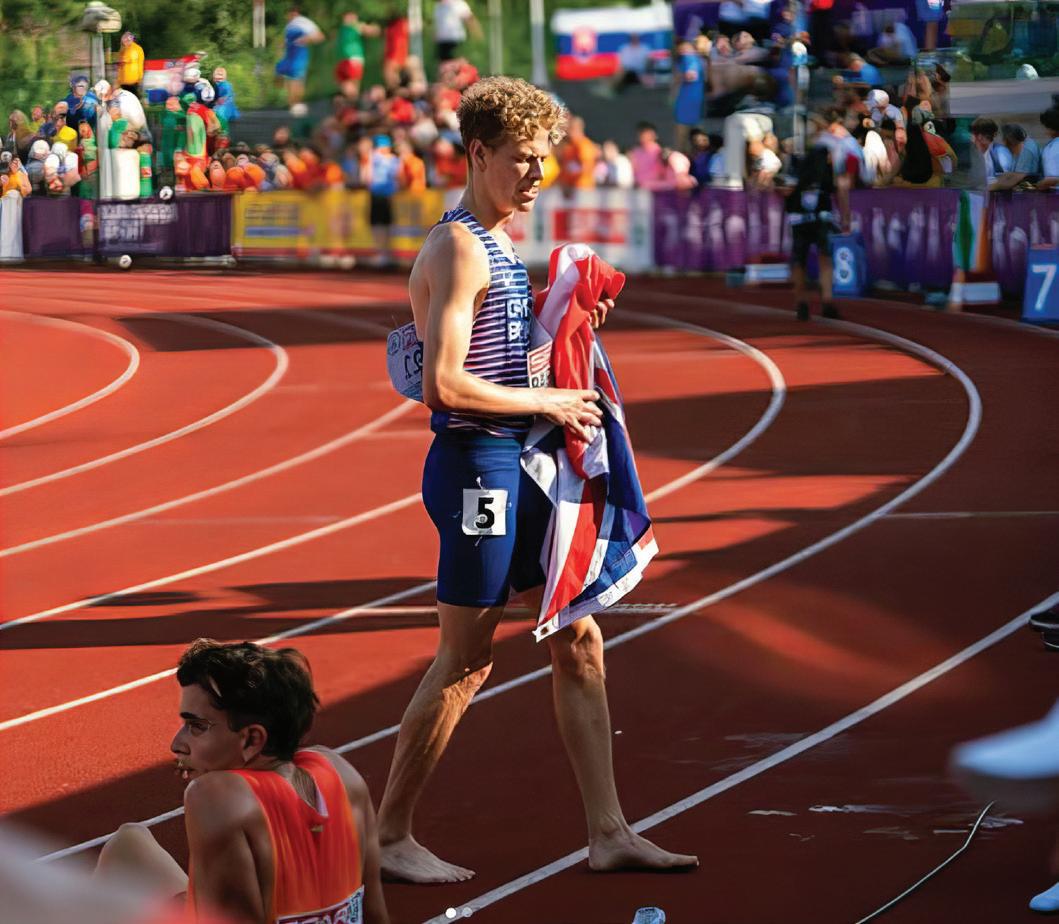
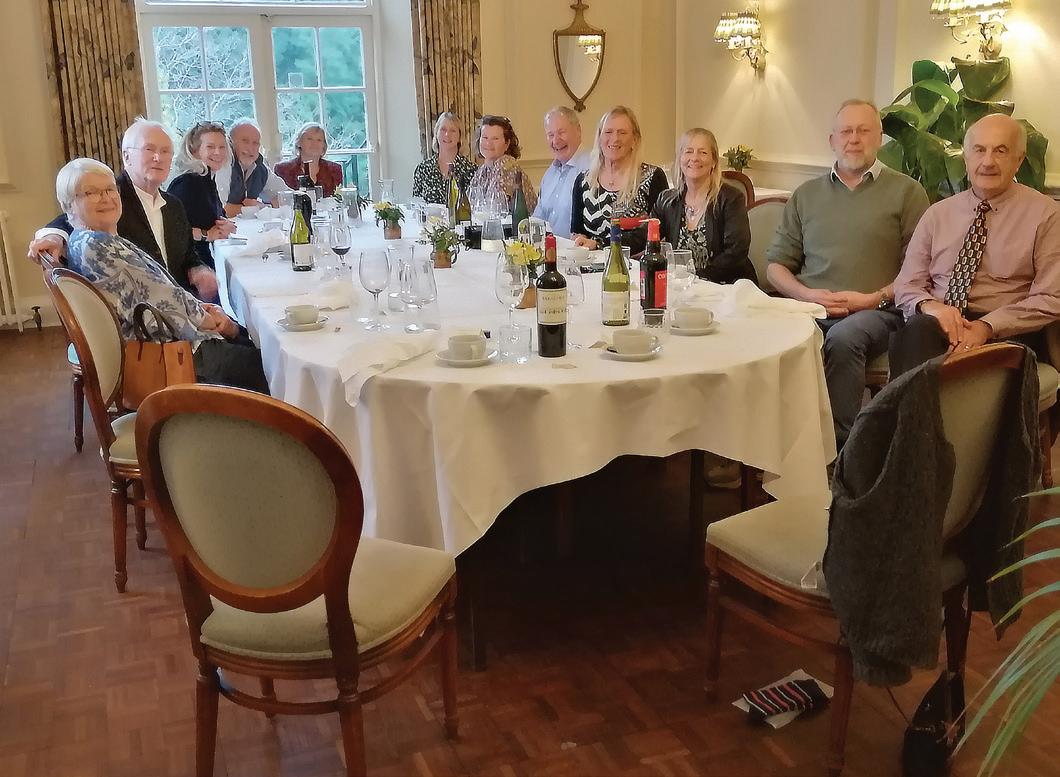
OC Business Forum
Vickie Ingle vli@cranleigh.org
In April around 80 Old Cranleighans, a few former/current parents, and some current students, gathered in the Riverside Room at the IET in Savoy Square. Abigail Meaker (West 2008), Bunmi Olaye (Loveday 2000), and Dylan Salamon (Cubitt 2008) made up the panel for a fascinating discussion about “Young Entrepreneurs: Empowering the Future” which was expertly moderated by Simon Broadhurst (2&3 South 1997). It was wonderful to see some current students as well as OCs of all ages and hear the buzz in the room after the discussions as students and OCs young and less young caught up and did some valuable networking. We are hoping to repeat this success with another event in September 2026, this time reprising our discussion from 2 years ago when we looked at how businesses could future-proof themselves; for the 2026 event we will explore how you can adapt,
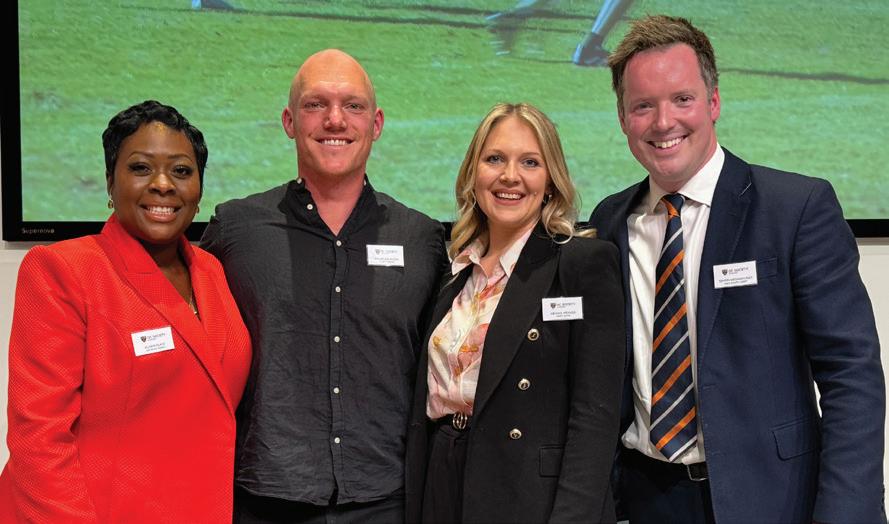
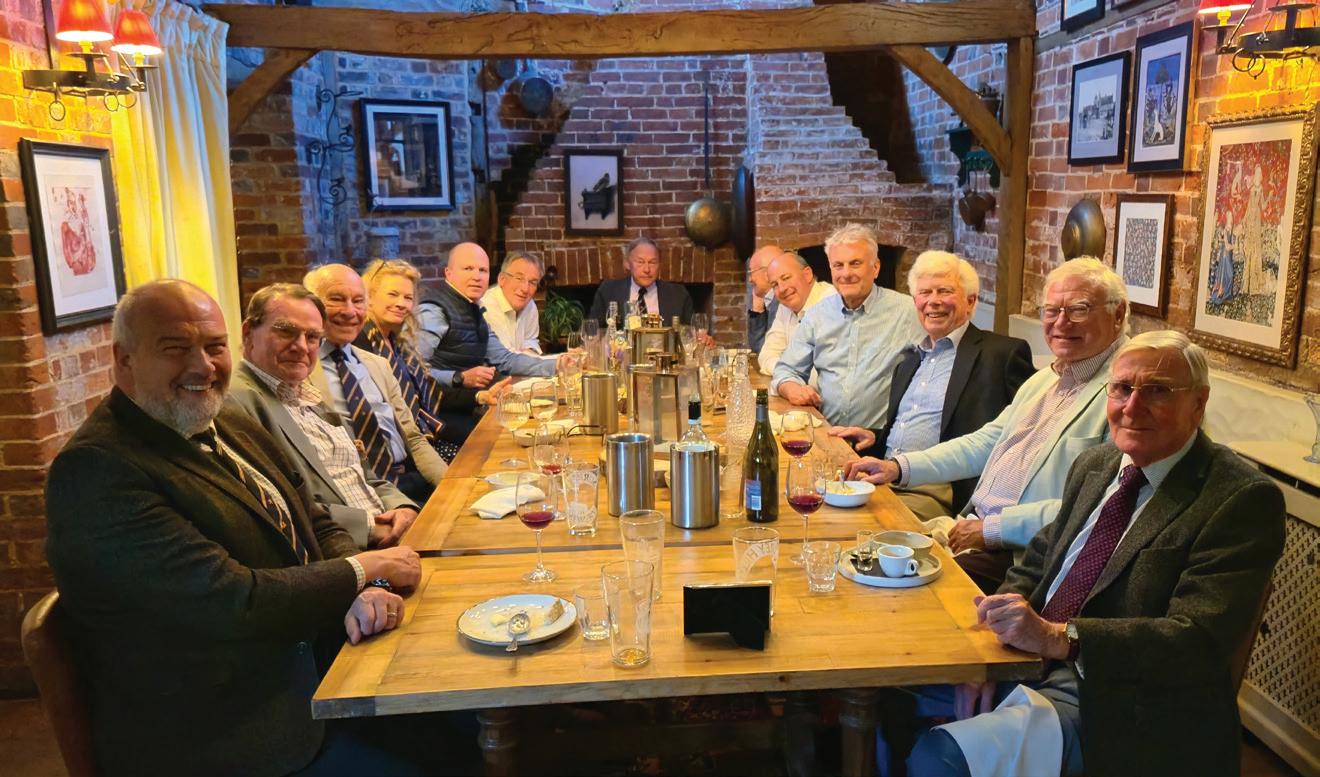
differentiate and excel at a personal level in the age of intelligent machines - more details in due course. If you would like to hear about future events or would like to suggest convening a dinner, connect to the LinkedIn group (https://www.linkedin. com/groups/2364204/) or email Vickie who will be able to pass on your idea/add you to the distribution list for invitations.
Ian Ferguson (Secretary Fu) iamf@btinternet.com 07768066975
It may appear that a number of OC Societies are finding it harder to assemble more encouraging numbers for events, and the Christmas lunch at the Boot & Flogger last year reflected our smallest turnout with but 8 Members sitting down to lunch. However, there was no shortage of warmth and conviviality and some exquisitely directed banter, requiring all those attending to remain on their toes, and Acker-san’s (John Emms) defence of his Tonbridge wicket from swift OC bowling was a masterful performance, sparked by the number of those at the table who had the pleasure of being caned by his father! We gather again at the Boot & Flogger this Christmas and a quality line-up is already in the making as I write.
Most unfortunately, Fireworks (once known by many as Mike Payne, or, as we
were recently reminded, Paddy Payne), our most steady and celebrated supporter for many years, has found it difficult to join us in London, so it was decided that this May we would organise The Fireworks Dinner at the very hospitable Grantley Arms in Wonersh, being rather more convenient for Fireworks, not to mention Nookie (our wonderful Honorary OC and OC Co-ordinator) and quite a few Members, including Secretary Fu. Unsurprisingly, Fireworks was on scintillating form and, indeed, was a big draw as we were due to be 16 before one or two fell by the wayside. Another very spirited dinner, running till really quite late, was a fitting tribute to one who has played such an important role in many of our school days and thereafter.
What we miss, after an initial show of interest and an injection of welcome vim, and shots, is our younger Members, so we all hope they will join us again. OC society is something to value and the LCSC is an opportunity to spend a little time with OCs from the same stretch of water.
OC Lodge
Tom Ware twware@gmail.com
What a splendid year! The OC Lodge celebrated its Centenary in spectacular fashion culminating in the Christmas meeting with many friends and guests from other great public school Lodges in attendance.
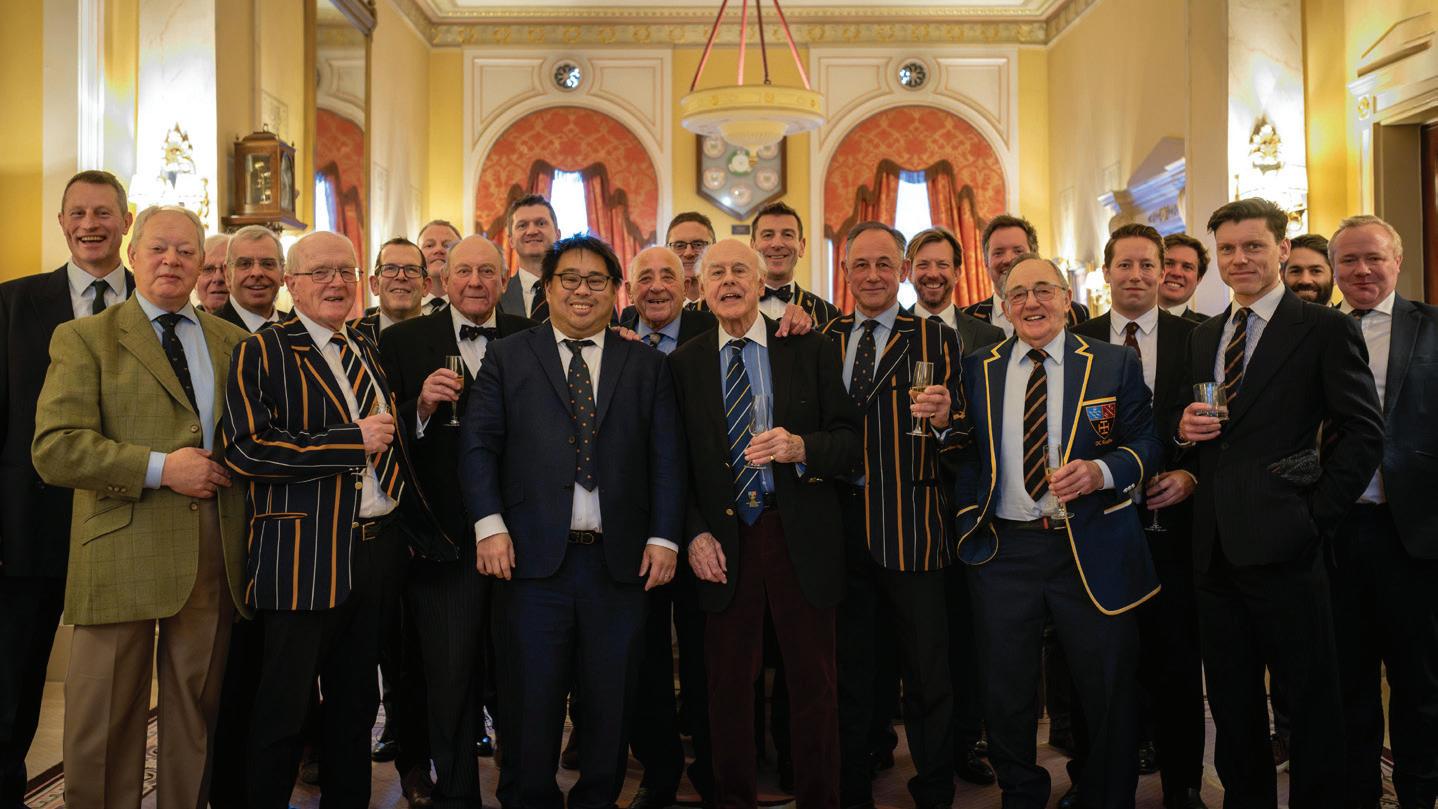
On 23rd January 2025, 100 years to the day that the Old Cranleighan Lodge was consecrated, all the members of the Lodge, young and old, attended a very special centenary lunch at the East India Club which lasted long in to the evening! At the 2025 February meeting The Worshipful Master Tony Ho installed Will Yule (1&4 South 1994) as Master for 2025. Will has had a busy year and has been a very popular and committed leader in such an important year – Thank you Will! Tony Ho generously sponsored stunning centenary silver cufflinks and new OC ties which we wear with pride. Thank you Tony! Engraved toasting glasses were commissioned for future Lodge dining to further mark the centenary year. During 2025 there have been many celebrations with a focus on fine wines, fine food and excellent company. With so many young OCs joining the Lodge we are blessed with a strong leadership which bodes well for the next 100 years.
The Lodge members, as well as many OCs, were however deeply saddened to lose a very fine Old Cranleighan in our friend and brother Simon Spreckley who sadly passed away in August. He was a wonderful fellow, committed to many OC societies, including being a long-standing player for OCRFC and a fine Freemason. Simon always gave his time generously and had a proud record, twice serving as Worshipful Master of the Lodge. Our thoughts are with the whole Spreckley family. RIP “Spreckers”. The values of Freemasonry are based on integrity, kindness, honesty and fairness which compliments the values of our public schools and why all the major public schools have popular Lodges. Charity is a key tenet of these values. Each year the
Lodge donates £1,000 to the Cranleigh School Foundation to sponsor places at the school as well as supporting multiple charities.
The Lodge has close ties with other old school Lodges, especially the Old Epsomians and Old Johnians who are regular visitors (most alumni Lodges are based in London). The OC Lodge meets four times a year (February, May, October and December) in St James’s and dines at the East India Club.
If you are an OC or member of Common Room who is interested in Freemasonry then please do not hesitate to contact the OC Lodge Secretary, Simon Broadhurst at sjbroadhurst@gmail.com.
OC South-Western Area
Nick Clift
nickclift1@outlook.com
In November a very jolly group gathered for an excellent lunch at the Arundell
Arms in Lifton. With numbers up again on last year, there was the always enjoyable wine raffle and a small amount of money was raised for the Devon and Cornwall Air Ambulance. If you have a more general enquiry about the west country lunches or might be interested in hosting one in your own region of the UK please do get in touch with Vickie Ingle at vli@cranleigh. org.
OC Property Society
Rory Field
rory@lechampholdings.com
The OC Property Society met again this year at the Parliament Square HQ of the Royal Institution of Chartered Surveyors, The RICS. There was yet again a strong turnout of recent school-leavers and graduates all the way up to founders/ directors of businesses.
The evening was enjoyed by nearly 40 OCs across the property industry. We are very keen to grow this group, so if you would like to join, please email Rory on field.rory@gmail.com.
It is a great networking opportunity for all OCs who are in and around the property world. Some great conversations, deals, and new relationships were formed during the evening, as usual.
A huge thank you, as always, to Paul Jackson (Founder) and Holly Botros who really made the evening happen. Please feel free to reach out if you would like to attend the next annual event, which will be held in May 2026. (Normally the day before the Surveyors 7’s Rugby. Best wishes, Rory, Holly and Paul.
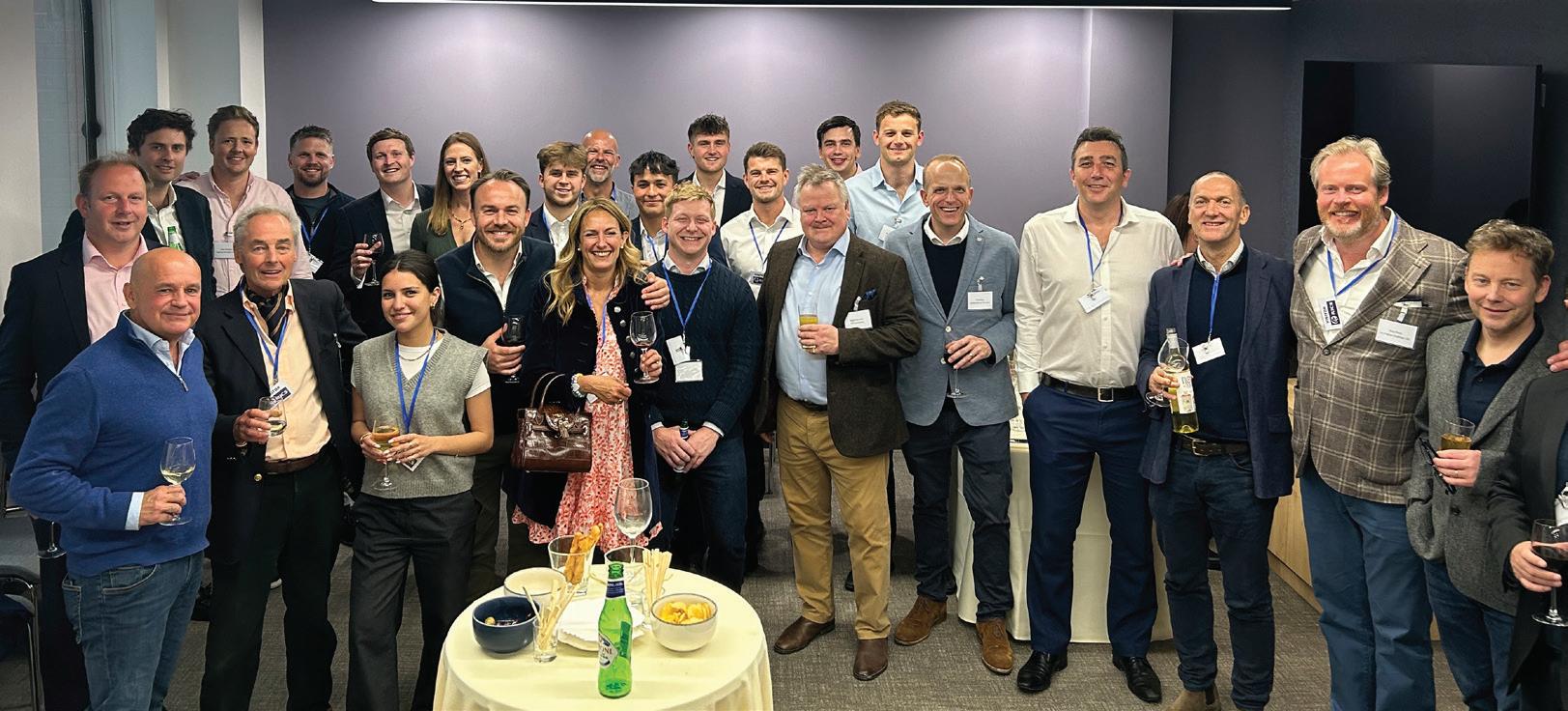
One of the things always welcomed by the archives is receiving pictures taken by OCs while they were at the School. We have a lot of formal pictures but those taken by students o er a far more personal and candid insight into day-to-day life.
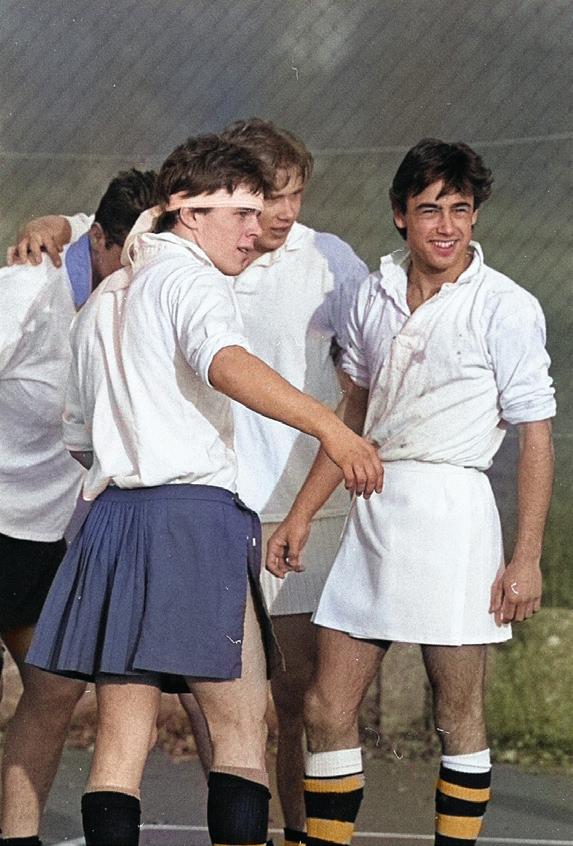



Most recently, Adrian Weiss (2 North 1973) has kindly spent hours scanning hundreds of negatives taken between 1969 and 1971 and that has unearthed some excellent pictures. Bob Woods (1 North 1963), our first incoming ESU scholar, sent some wonderful colour slides from his year at Cranleigh. Dan Helin (2&3 South 1986) let us have his sheets of negatives which have helped fill a large gap. Richard Redfern (West 1962) sent us some lovely shots taken by him and his brother, Colin (West 1956). And Emma Happisburgh (Davey, West 1992) shared pictures from the 1991 production of Cabaret.
1969



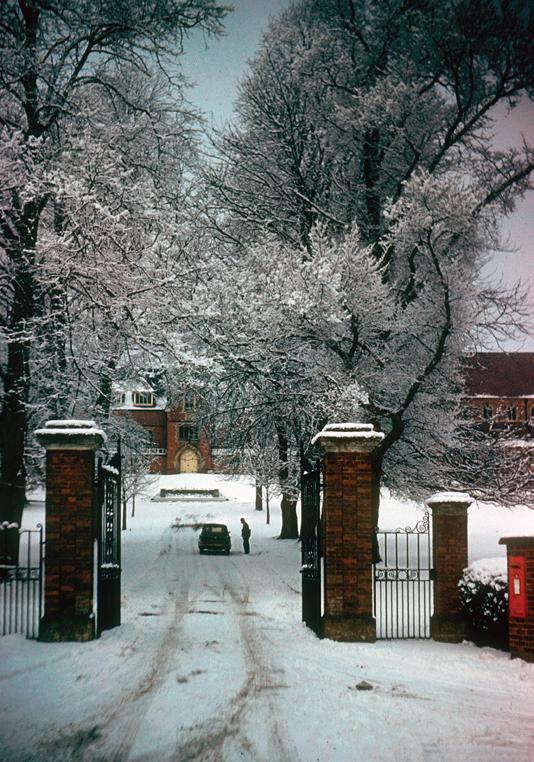

to have these scanned and returned. If you would of

We would very much appreciate anyone who has prints, slides, or negatives taken during their time at the School letting us see them. We are happy to have these scanned and returned. If you have anything you think would be of interest please contact the archivist Martin Williamson (msw@cranleigh.org) or Vickie Ingle (vli@cranleigh.org).

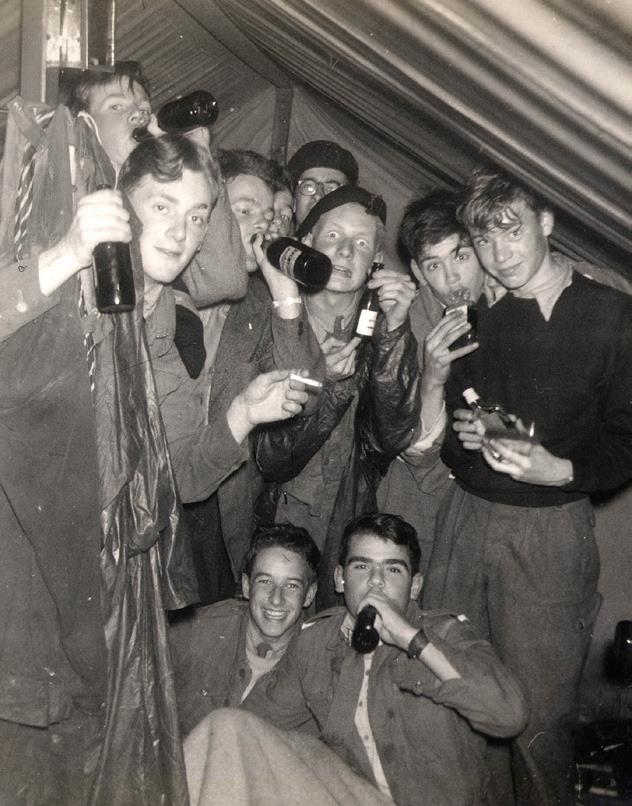






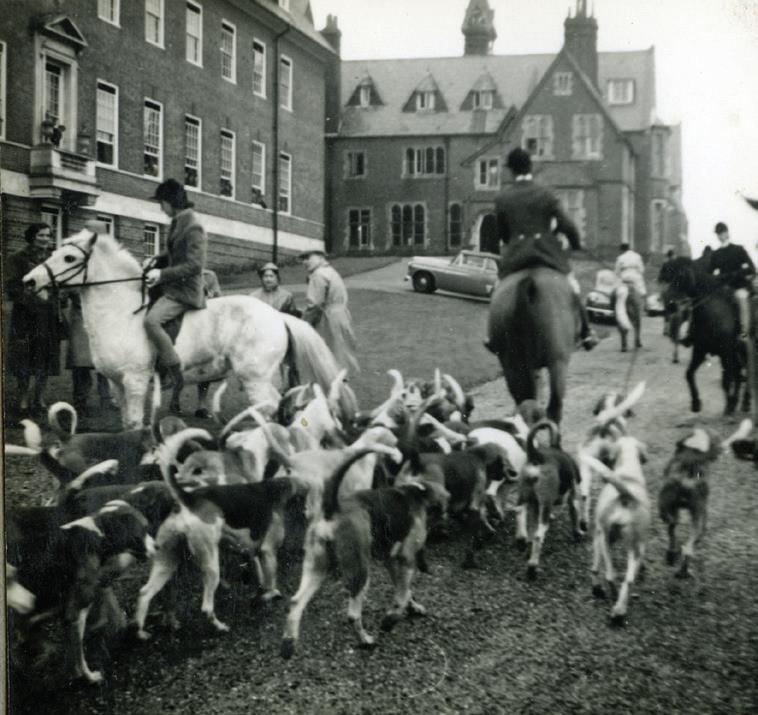
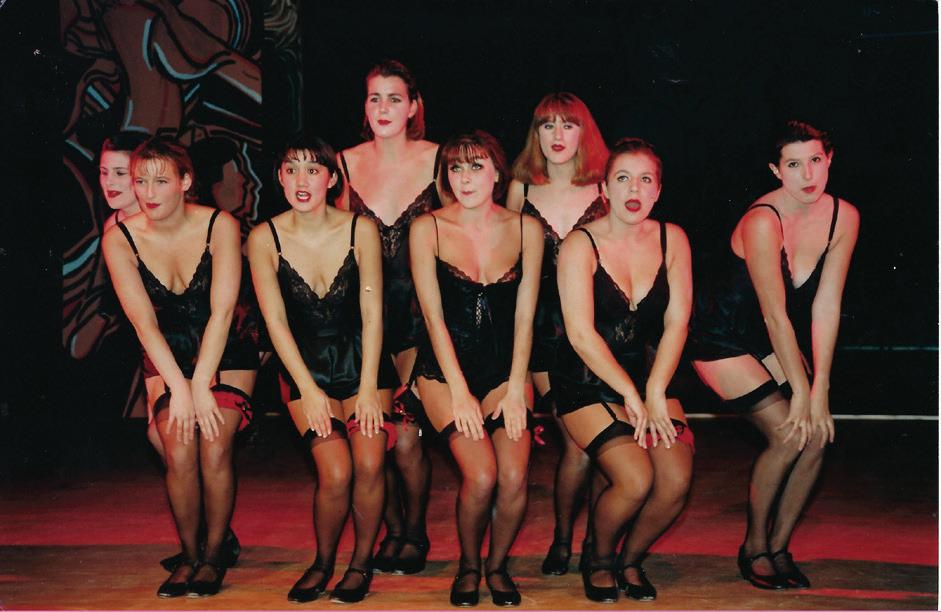
















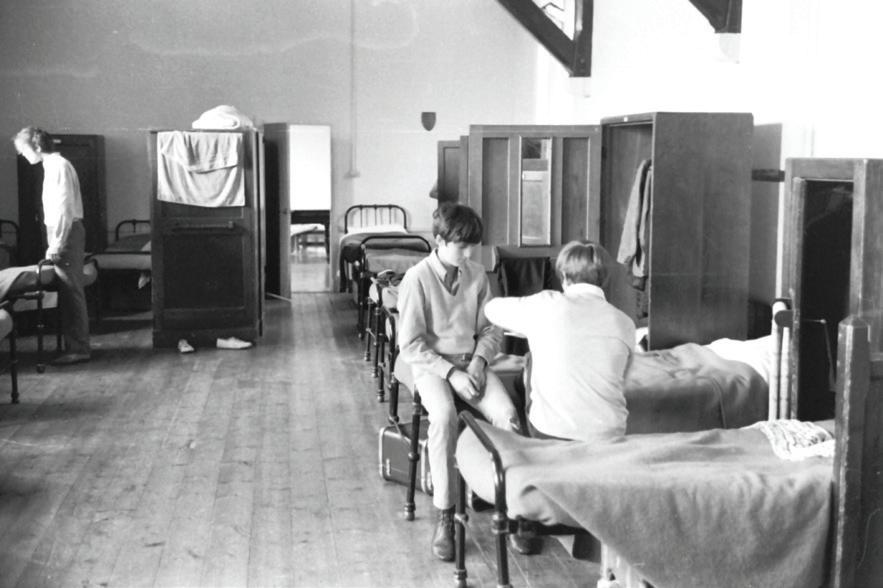





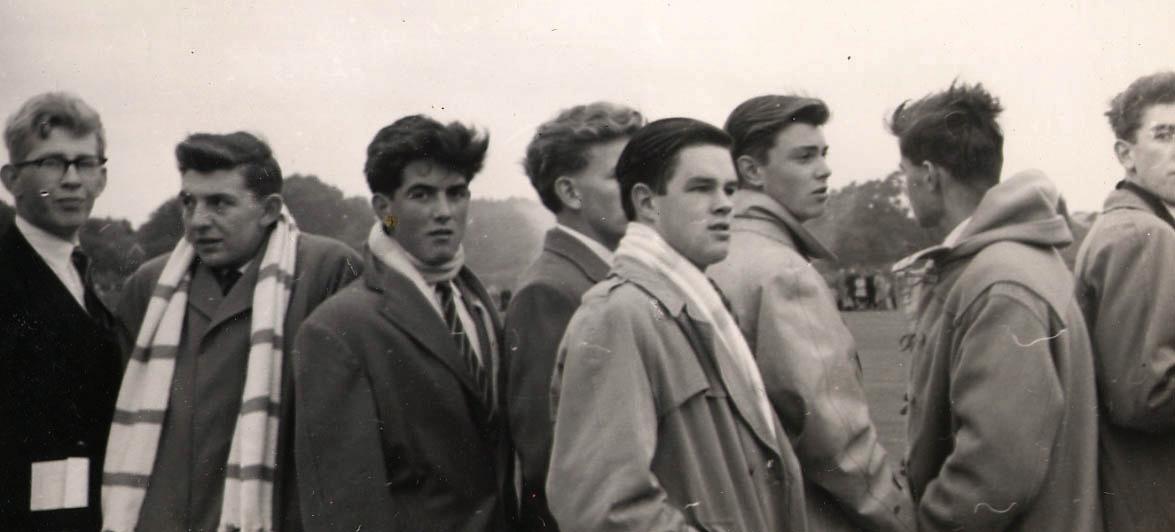



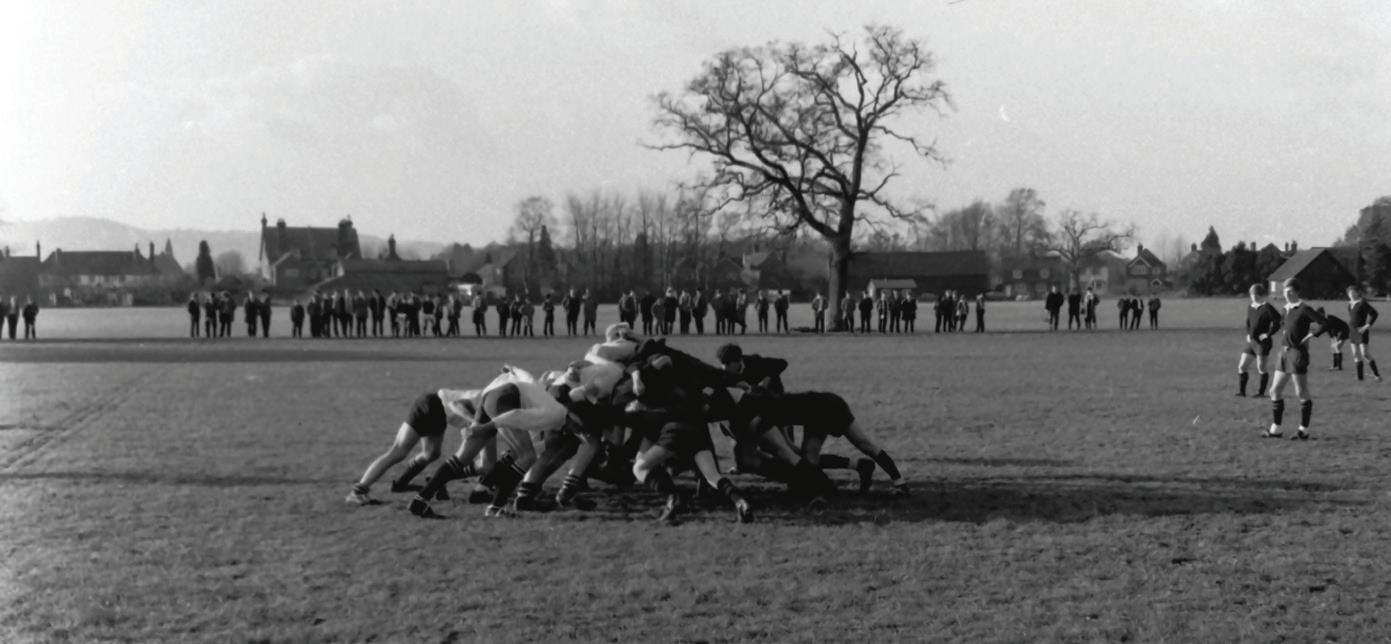


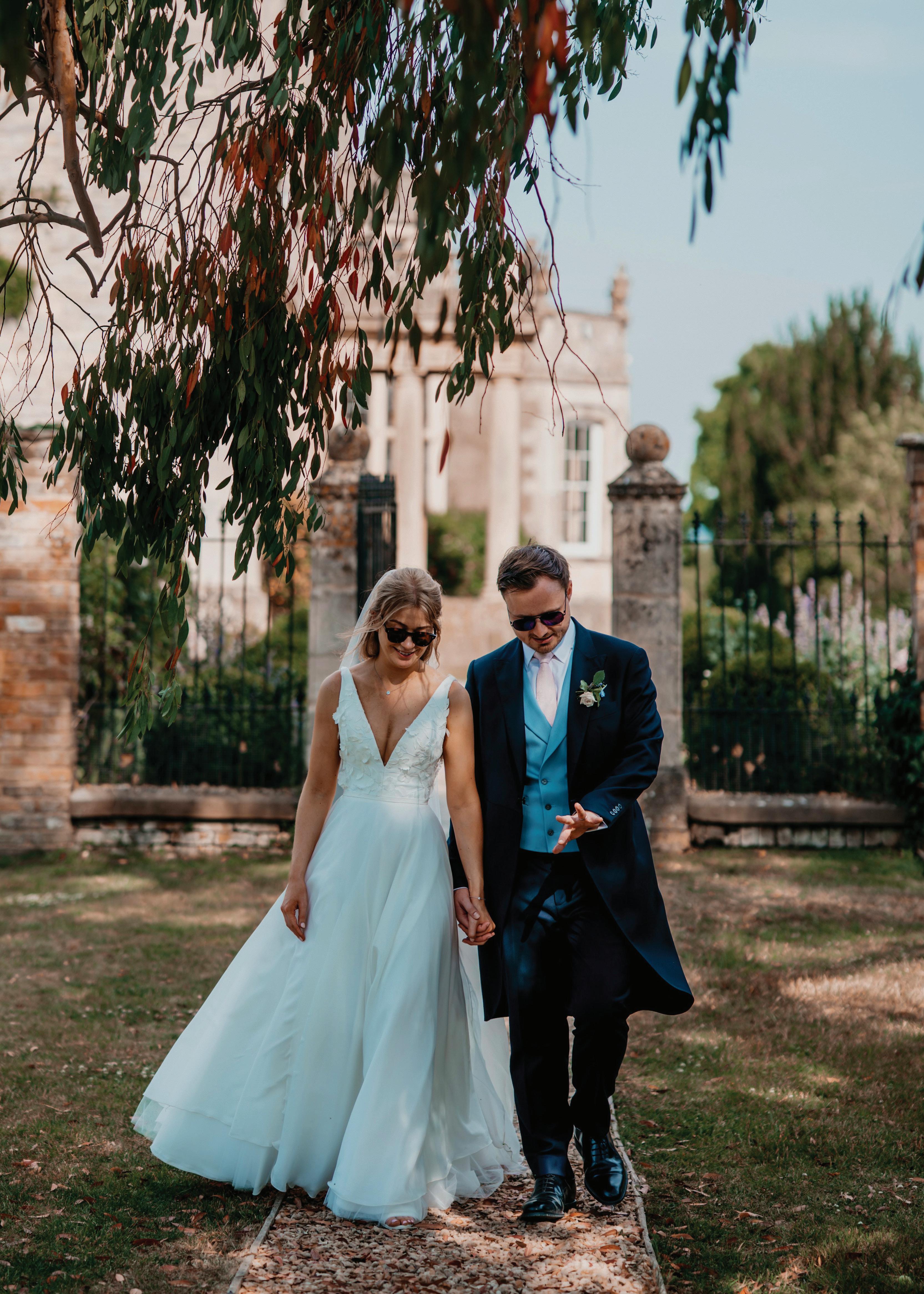
SOPHIA AMBROSE (West 2013) and DANNY DOWNES
BOWSER (South 2015) and
ANGUS BURNS (Cubitt 2017) and JEN HICKMAN

WILLIAM GRAINGER (East 2018) and REBEKAH WOODS

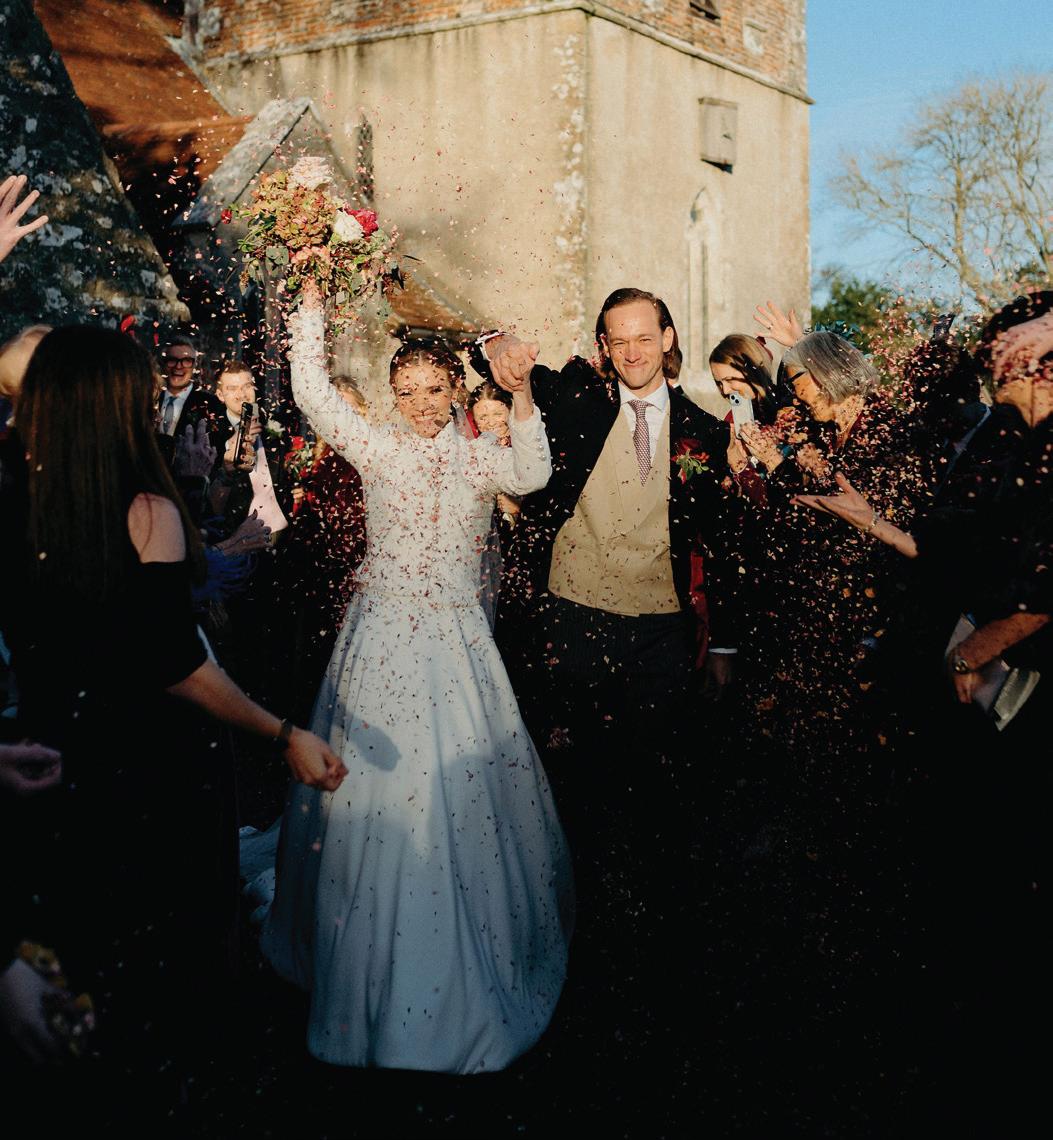

Within the wedding party there were over 20 OCs from the same era proving again that friendships at school last a life time. The best man was Daniel Sennett (1 North 1992) and both Tom and Daniel have children who started Cranleigh Fourth Form this September.
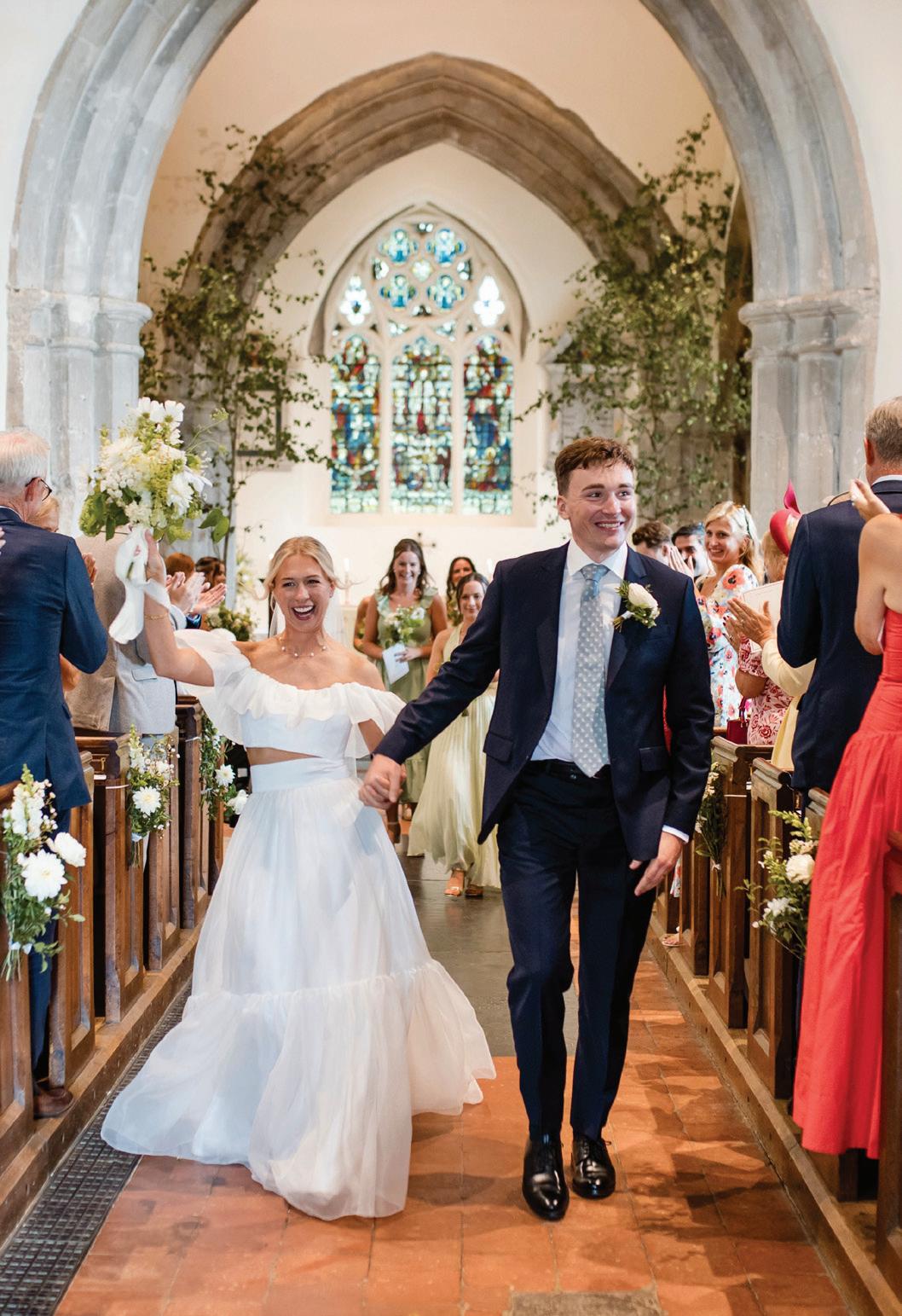
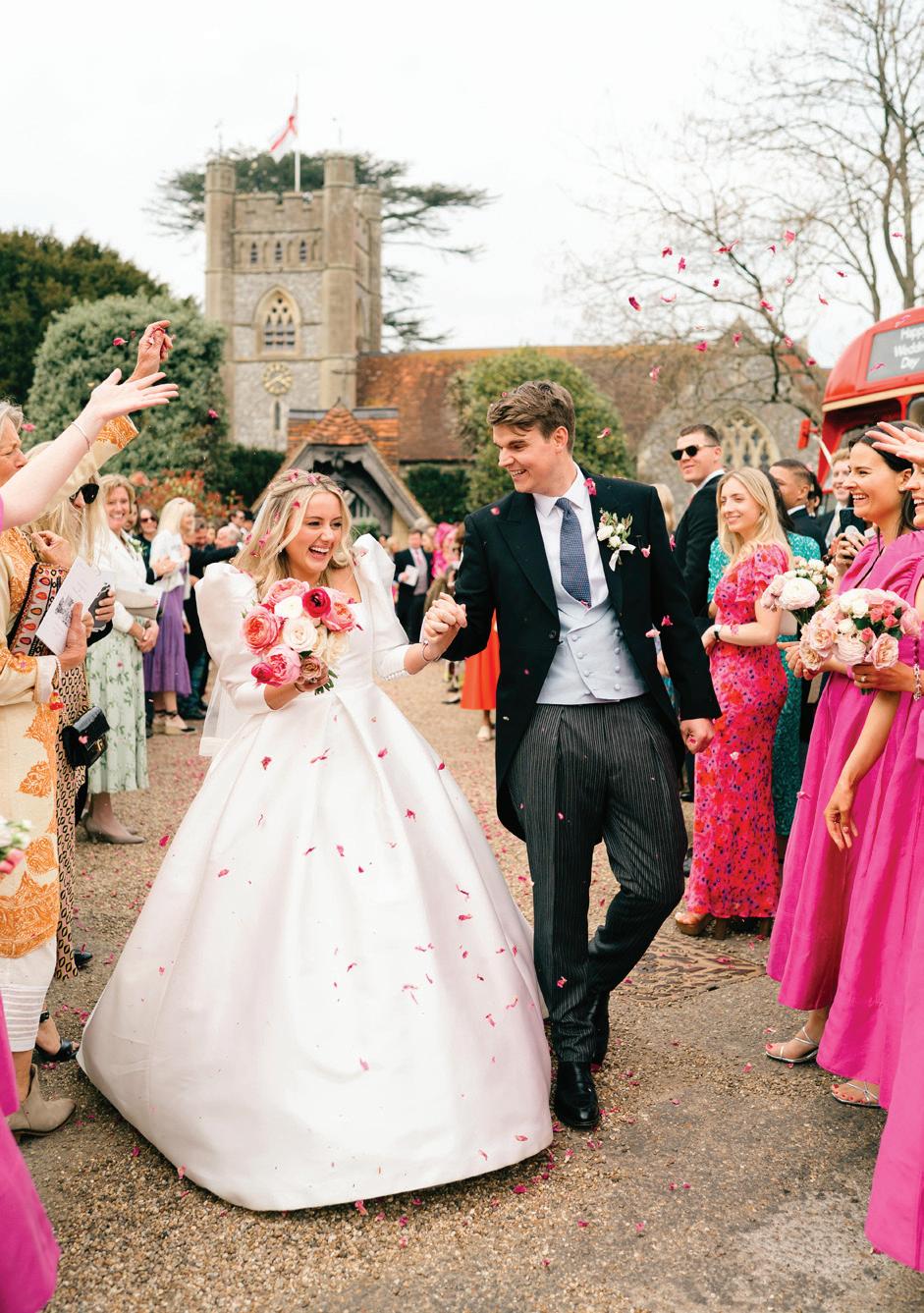
ROLLINGS (East
and POPPY PAGE on 26 April 2025
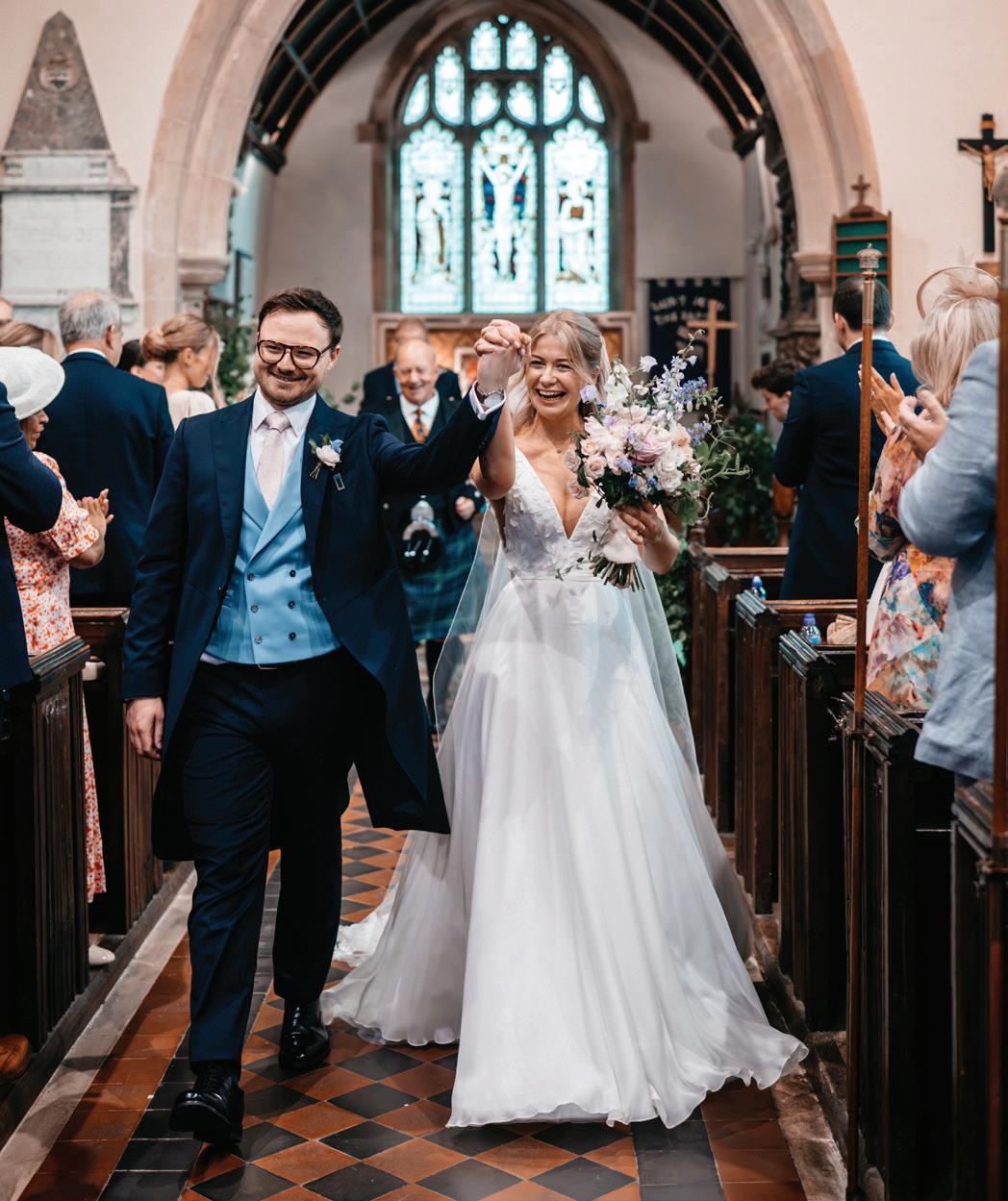
JOSH
RUSSELL (East 2007) and KIRI RAYNER on 9 January 2025
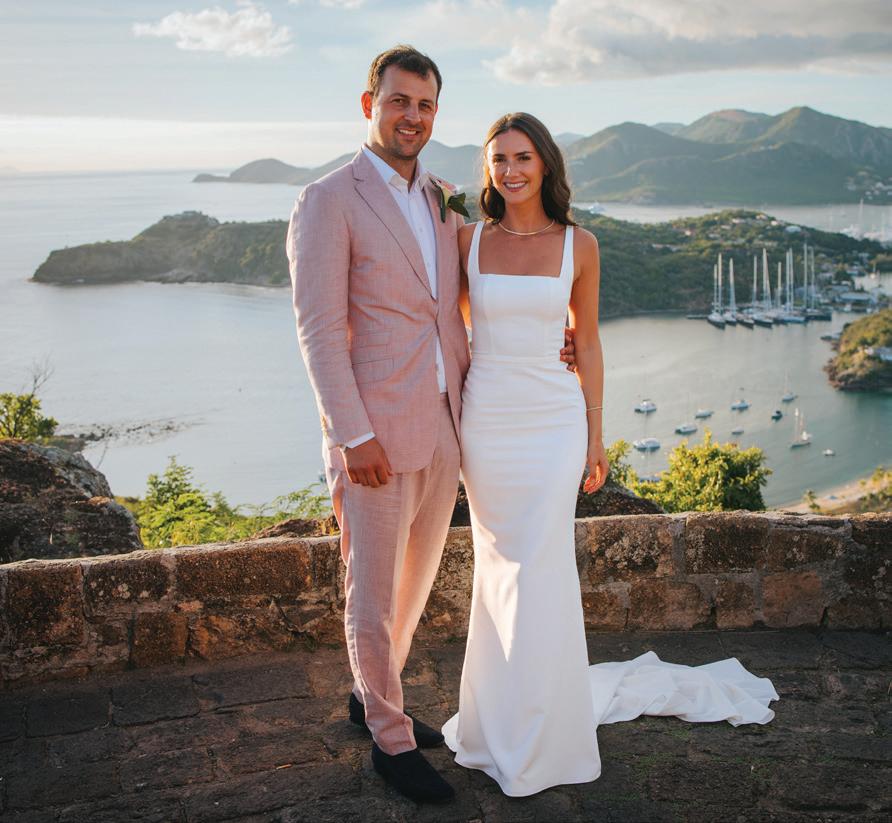
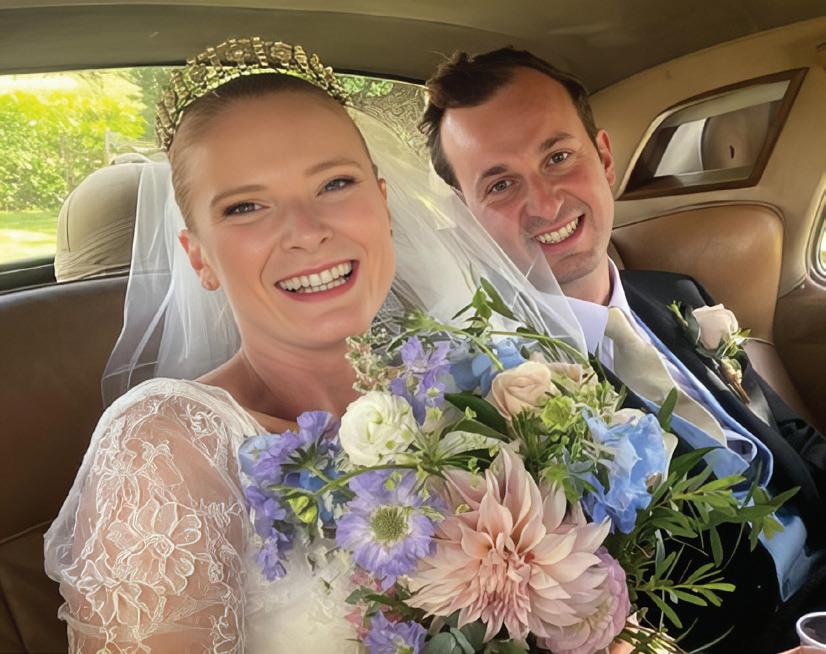
RUSSELL, JONATHAN (East 2010) and ELLIE DAVIS on 13 September 2025
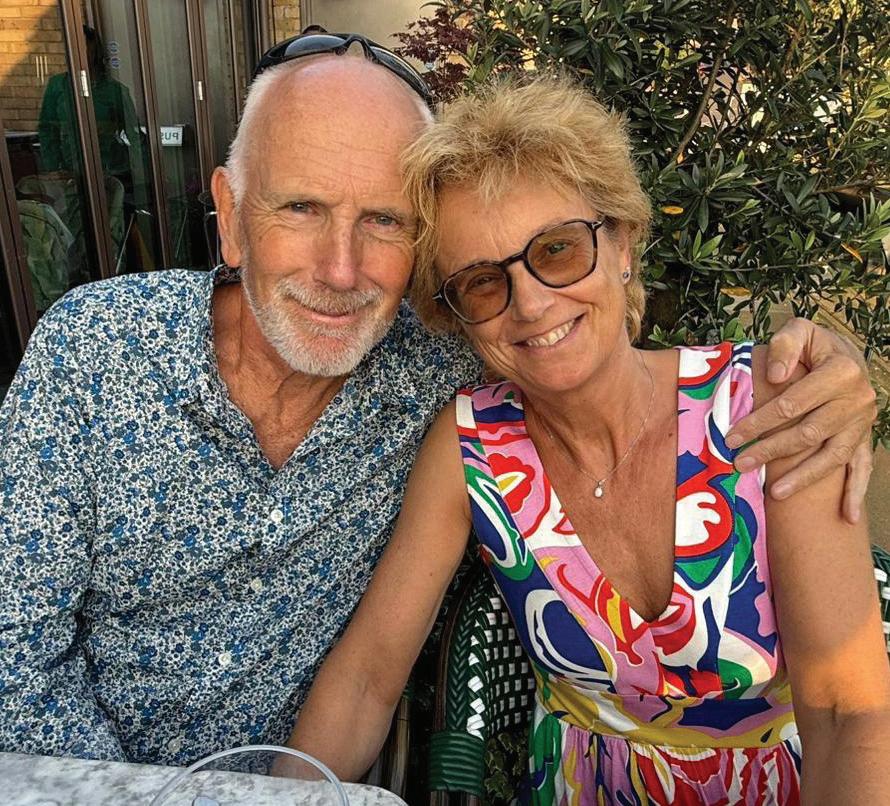
WILL LANGMEAD (East 2010) and REBECCA a son, Walter, joining Tabitha and Hector on 31 October 2024
(Cubitt
and GEORGIA (NÉE LUBBOCK) (South 2010) a daughter, Lily on 6 August 2024
OLI ROBSON (Loveday 2005) and ESME a son, Rory on 13 August 2024
GILES PICKFORD (Cubitt 2006) and ROZ (NÉE KENNEDY) (West 2006) a son, Archie, joining Freya and Alexandra on 27 June 2025
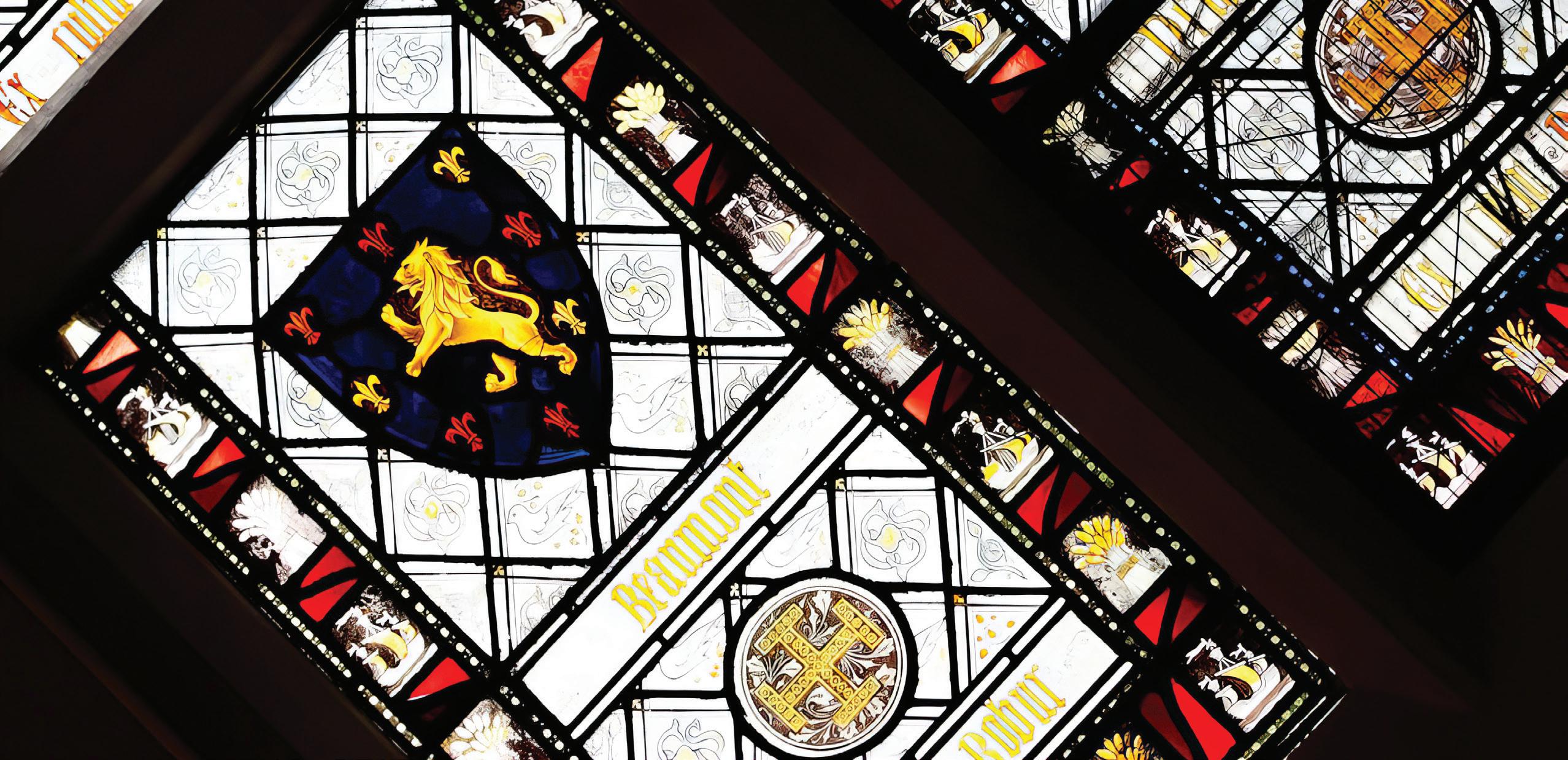
Obituaries included in the magazine are marked with an asterisk. XXXXXXX
Wilkins, J. P. (John) 1&4 South 1936-1938*
Stevens P.B.O (Peter) 1&4 South 1940-1944
Camden B.H. (Brian) 2&3 South 1943-1945
Sams J.D. (James) 2&3 South 1944-1947
Stevens T.A. (Tony) 1 North 1947-1950
Triggs W.R. (Wally) 2 North 1948-1951
Høegh O.D. (Ove) 2&3 South 1951
Hester P.M. (Patrick) 2&3 South 1948-1952
McCullagh I. O’N (Ian) East 1948-1952
Adam R.J.(Richard) East 1948-1953
Clarke B.G. (Brian) West 1950-1954
Trembath, D.A. (David) 2 North 1950-1954*
Dunkley, M. J. (Michael) West 1951-1955*
Watkins, C. (Christopher) 2&3 South 1951-1955
Booth J.M.A. (Monty) East 1951-1956
Evamy, B.D. (Brian) 2&3 South 1951-1956*
Cholmeley, J. M. (John) 2&3 South 1953-1957
Lock, C J (Christopher) 2&3 South 1953-1957
Alexander, W.D. (Bill) 1 North 1953-1958
Matthews, H. C. D (Henry) East 1953-1958
de St Legier, R. G (Richard) 2&3 South 1956-1959
Armitage, J.D.R (John) West 1956-1961*
Puddick, R.A.G (Robert) 2&3 South 1958-1961
Moore, M.S. (Stuart) 1 North 1958-1962*
Hook, A.M. (Andre) East 1958-1962
Aten, J. (Jan) Cubitt 1962-1966
Dunnett, P.A. (Paul) 2&3 South 1962-1967*
Meyer, J.T. (Jeff) 2&3 South 1964-1967*
Rusbridger, R. (Richard) 1 North 1963-1968*
Spreckley, S. J (Simon) 2 North 1969-1974*
McClure, A.C.A (Andrew) 2 North 1970-1974*
Thomas, A.M. (Adrian) 2&3 South 1970-1975*
Vine, T. (Tim) 2&3 South 1977-1982*
Shorthouse, P. (Peter) West 1979-1984
Barker C.J.J (Chris) 1 North 1984-1989
Vile, K.J. (Katharine) 2&3 South 1987-1989*
Howard, T.H. (Tom) Cubitt 2010-2015*
Peter Colville CS Common Room 1961-1964
Jared Armstrong CS Common Room 1953-1967*
David Bird CS Common Room 1961-1972*
Gerry Redmond CS Common Room 1972-1979*
Lyn Adam CS Common Room 1974-1983*
Tom Avery CPS Common Room 1978-2003
Wilkins, J. P. (John)
1&4 South 1936-1938
John died on 6th September 2025 aged 103
At the time of his death John Wilkins was the oldest Old Cranleighan and one of only two who had been at the School before World War II. He came to Cranleigh in 1936 and recalled just before Chamberlain’s return from Munich in September 1938, David Loveday ordered the boys to start digging trenches for use during air raids on the site of what was then the North Field. Later that year, as a result of a severe mumps epidemic, the school closed early for Christmas and all the boys were sent home marking a low-key end to John’s time at the School.
In February 1939 he began his civil engineering career with Reigate Town Corporation, and almost immediately underwent Air Raid Precaution training in preparation for a war that most now realised was inevitable. Too young for the forces at the outbreak of war, he contributed to Air Raid Precautions, surveying the Reigate caves for shelters and cycling out to plot bomb craters during the Blitz
in search of unexploded ordnance — work of great responsibility for an 18-yearold.
In 1942 he completed his engineering examinations before joining the Army. Initially training in Clitheroe and Northern Ireland, he applied to become a Royal Engineer officer cadet in India. He embarked in April 1944, celebrating his 22nd birthday while passing through the Suez Canal, and was stationed in Lahore for the remainder of the war. He returned to Britain in 1946 and was released from service soon after to resume his civil engineering career.
John met Helen (known to all as Bobbie) at a tennis circle in Reigate and they married in Reigate in 1951. John qualified as an Associate Member of the Institution of Civil Engineers and joined the Brighton Borough Engineer’s Office, where he worked until his retirement in 1986. In later years he continued to serve the community through his involvement with local almshouses. Fiercely independent, John refused to enter care until after his 100th birthday.
Trembath, D.A. (David) 2 North 1950-1954
David died on 18 January 2025 aged 88
David was a keen cricketer and hockey player at Cranleigh and played regularly for both second teams. When he left Cranleigh he joined the Navy and thoroughly enjoyed travelling the far east for three years. His father was Australian and he treasured his roots, always supporting them when the Ashes were played.
David joined the family business, Trembath Refrigeration in South Croydon. He built the business up over 40 years before selling the company and retiring. He was an active member of Cheam Sports Club where he played cricket and hockey with much success. It was there that he met his beloved Kate. They welcomed their daughter Sara followed by their son Jamie (1 North 1995).
David’s two great interests were fishing and butterflies. On retiring he, with Kate's enthusiastic support, bought a fishing estate in Banchory, Aberdeenshire, on the Royal Dee where he revelled in tirelessly tending the banks and grounds. They generously hosted and entertained their many friends over the years enjoying great company and fishing. This much valued estate is now in the hands of his equally suited and environmentally aware son.
David’s butterfly collection is one of the finest private collections in the country and he was proud to have caught hitherto unknown species in both Ecuador and Kenya, which are called Trembath's cerulean-satyr (Caeruleuptychia trembathi) and Trembath's Gem (Chloroselas trembathi)
respectively. It is hoped that his collection may well pass into the valued care of the Natural History Museum.
Written
by Andrew Cronk, 2&3 South 1959
Dunkley, M. J. (Mike) West 1951-1955
Michael died on 9th February 2025 aged 87
Mike represented the school at hockey and rifle shooting and after leaving, found employment as a trainee Quantity Surveyor in London. He attended night school for three years to gain his qualification. In 1957, on a trip to Queen’s Ice-Skating rink, he met his future wife, Anne. They married in 1961.
Mike and Anne moved to Godalming and in 1964, Mike joined the Central Electricity Generating Board (now National Grid) in Guildford, where he made many life-long friends. Their only child, Paul was born in 1966 and the family moved to their current home in Farnham.
Mike loved radio-controlled model aircraft and freely admitted to being a frustrated pilot. He became a very proficient flyer, winning
various national competitions across south and west England. In later years Mike branched out into model boats, helicopters and every style of plane imaginable. Wherever he went he was always happy to share his knowledge and enthusiasm with others. He also loved skiing and became hooked after a trip to Austria in the early 1970s. He was extremely proud to still be skiing black runs aged 80.
A lifelong Charlton Athletic supporter, Mike also used to referee local league matches.
In 1994 Mike was offered the opportunity of early retirement from National Grid and was delighted to accept. This presented the perfect opportunity to embrace his many hobbies. He enjoyed a long and happy retirement, and he and Anne celebrated their Diamond Wedding in 2021.
Written by his son Paul
Evamy, B.D. (Brian)
2&3 South 1951-1956
Brian died on 28 April 2025 aged 87
Brian spent his early years in Shanghai, but at the age of five, he, his parents and aunt were all interned by the Japanese in Lunghua prisoner of war camp in Shanghai. After their release, they came to the UK in 1945, but his parents soon returned to the Far East. Brian was left with relatives in the UK, and after schooling in Worthing he came to Cranleigh in 1951. He won a Scholarship to study Geology at Trinity Dublin where he excelled, receiving 1st Class Honours BA with Gold Medal Award in 1960, and later was sponsored by Shell to study for his Doctorate at Imperial College London, which also took him to the Jura Mountains in France to do his fieldwork.
His 25-year career with Shell took him to The Netherlands, Port Gentil in Gabon, Lagos in Nigeria and Ankara in Turkey, and he was Chief Geologist for Shell Expro’s North Sea joint venture with Esso. The final ten years of his career were spent with BP and then Enterprise Oil, based in London.
Brian joined The Roehampton Club in February 1986. His main sport then was tennis, but as a schoolboy
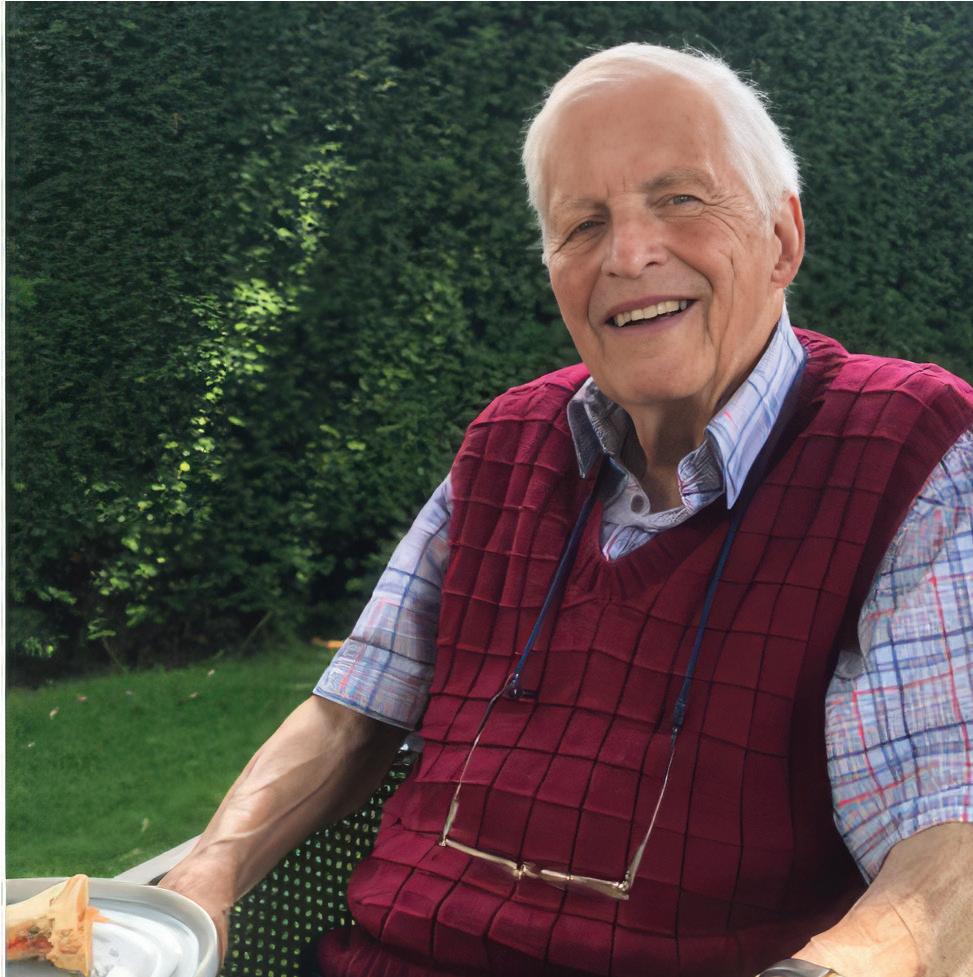

at Cranleigh he had played some golf, and also in Africa where they would putt on browns rather than greens. He decided to take some lessons and golf then became his passion. In his earlier years, Brian was a keen skier, sailor and windsurfer, and he travelled extensively with his wife, Gill, to pursue these sporting interests. His enthusiasm for geology never waned, and on these holidays his attention would often be taken by an interesting fossil or geological landform. He is survived by his wife, two daughters, son, and four grandchildren.
Written by his wife Gill
John died on 9 May 2025 aged 82
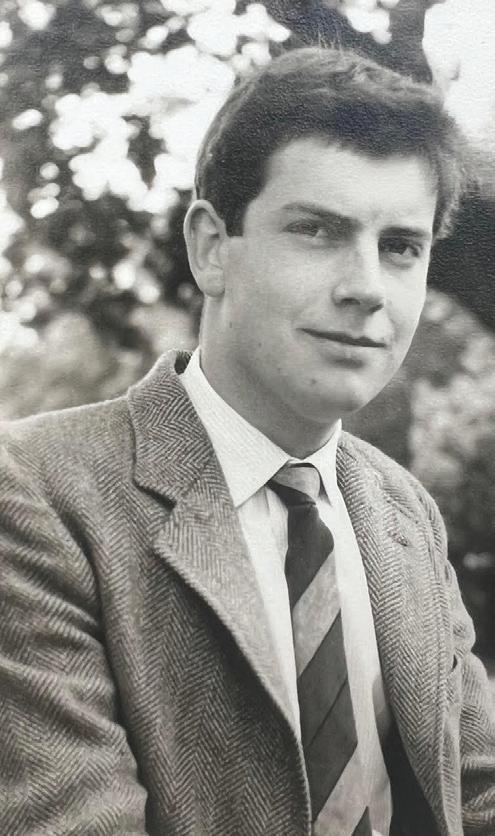
After leaving Cranleigh, John went to The London School of Flying in Elstree before taking a job at BAC, piloting small and medium sized De Havillands, around age 20, before transferring to BWIA in Trinidad aged 24 as a 727 Flight Engineer, where he then met his future wife of nearly 56 years. They relocated back
to the UK where he took a job as a First Officer on the Ambassador, and later 727 with Dan-Air. John then had spells as a Boeing 727 First Officer for Jet Aviation in Switzerland, a 727 Captain for Air Djibouti, and a BAC 1-11 First Officer for British Island Airways in the early to mid-80s before settling at Air Europe & Inter European Airways as a Boeing 737-300, 737-400, and F100 Captain.
In the early 90s, he had a spell as a Boeing 737-300 Captain for Transavia Airlines, where the family briefly lived in the Netherlands, before joining his flagship role as a ‘queen of the skies’ Boeing 747-400 Captain for EVA Air, based in Taipei, Taiwan.
Music was always John’s other passion. A very keen, and skilled guitarist, who once opened for The Rolling Stones in Guildford in the 1960s with his band Ad Finitum; he opened a family guitar shop in Billingshurst, West Sussex in 1995 for his eldest son to run, and also for him to import rare guitars he found on his journeys as an airline pilot.
John retired from flying in 1999, before transitioning to flight simulator instructing in 2000 for Flight Safety Boeing in Seoul, Korea on the 747400s, and later CAE London Burgess Hill for the Falcon 7X, whilst also co-running the shop which later moved to a bigger location expanding to all musical equipment.
In 2020 John was diagnosed with Parkinson’s Disease and Lewy Body Dementia, an immensely challenging condition.
Moore, M.S. (Stuart) KC 1 North 1958-1962
Stuart died on 29 December 2024 aged 80
Stuart went to Cranleigh after the family moved from London to a property just off the Cranleigh cricket green. The eldest of seven boys and a girl, three attended Cranleigh between 1957 and 1967 and the family still retains a connection to the school: four of Stuart’s nephews and nieces having attended between 2012 and the present day.
Stuart was a day boy in 1 North, enjoying academic, sporting and musical activities.
He was a prefect, captained the 2nd XI cricket, achieved Grade 7 on the flute and, in 1961, was a member of the
ensemble that won the Music Competition.
Leaving Cranleigh in 1962, he took the opportunity of travelling to India with Voluntary Service Overseas teaching English and cricket at the old established Lawrence School, Sanawar, in the beautiful Simla Hills District of Himachal Pradesh, north India. So began a lifelong association and love for the subcontinent, its culture and people.
Returning from there he attended Middle Temple to study for the bar exams and, having completed his dinners, was called to the Bar at the age of 22, joining 1 Hare Court (later 2 Hare Court). As a pupil he witnessed the trial of the infamous Richardson gang, as part of the team that defended in that case. After 27
years in the Middle Temple as a criminal barrister, focussing on prosecution and building a formidable winning reputation, he was often the preferred prosecution barrister for the Flying Squad.
In 1985, Stuart began sitting as a Recorder at the Old Bailey, and in 1990 was appointed a Queens Counsel. In 1993, he was invited to join the High Court in Hong Kong in what was the last British administration before the 1997 handover. Stuart was promoted to Court of Appeal Judge in 1998, and to Vice President of the Court of Appeal in 1999. Ten years later, upon his retirement, he was awarded the Gold Bauhinia Star for distinguished service in the law.
After 2009, Stuart remained in the High Court as a Deputy
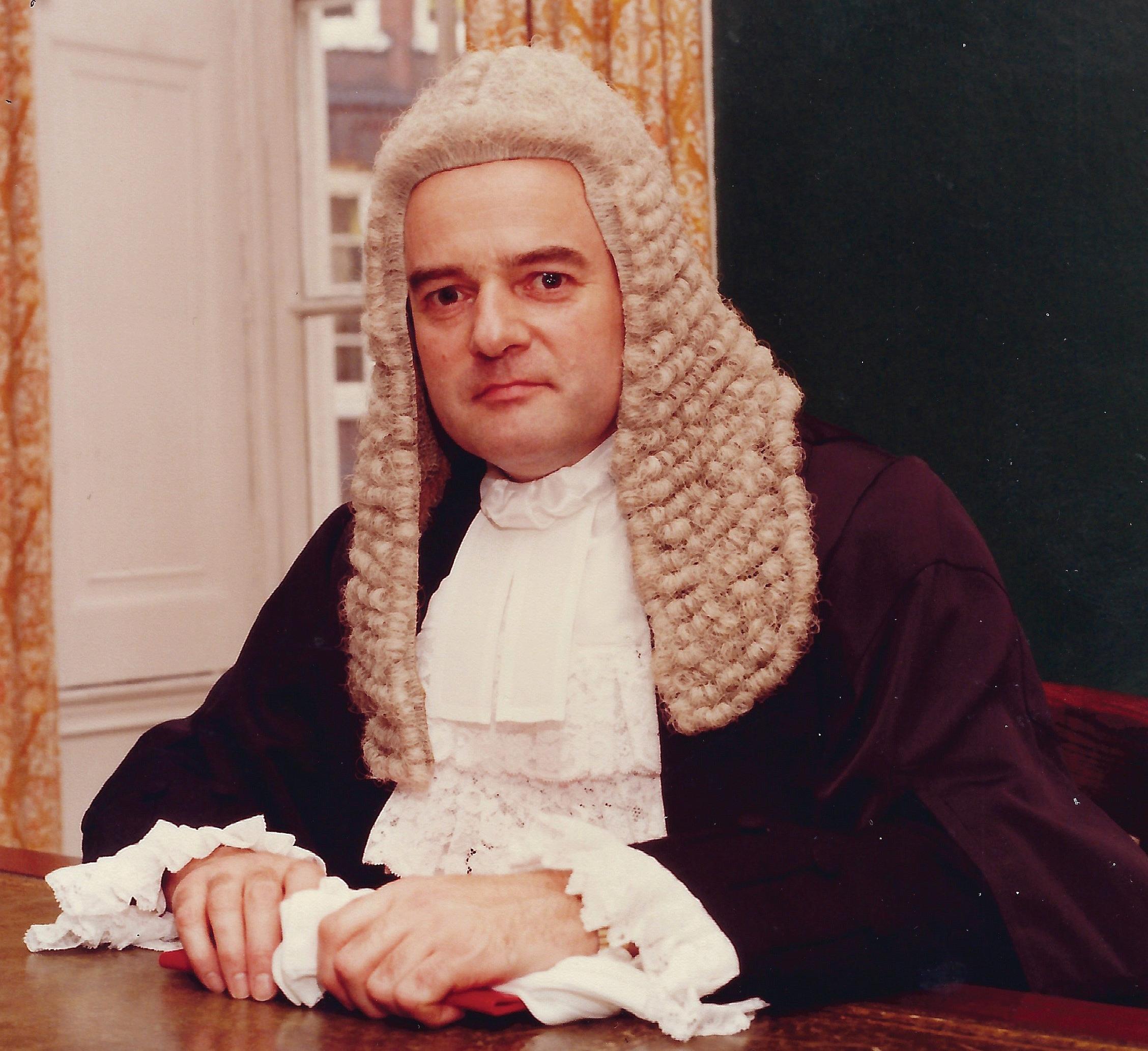
Judge for a further decade. In his 26 years in Hong Kong, he heard several high-profile cases including the appeal of Nancy Kissel, who came to be known as the Milkshake Murderer.
Another to hit British headlines was the trial of Rurik Jutting, the banker who murdered and tortured two Indonesian sex workers, hiding one of the bodies in a suitcase on his balcony in Wan Chai.
He finally retired in December in 2019 and moved to Brisbane, Australia. As an avid cricket fan, time was spent there in robust debate with his Aussie in-laws challenging the ups and downs of the latest Test series.
He leaves his wife Katherine of 51 years, two children James and Zoe, and three grandchildren.
Written by his brother Rod & his son James
Dunnett, P.A. (Paul) 2&3 South 1962-1967
Paul died on 8 December 2024 aged 75
Paul went to Cranleigh along with his two brothers Nigel and Chris, throwing himself into sport and other activities with great energy and enthusiasm. He proudly represented the OCs at both cricket and rugby, enjoying both the competition and the camaraderie and laughter shared post-match at Thames Ditton.
In 1980, he moved with his family to Hong Kong. He initially worked as an accountant for Dunhill, where he flourished and rose to the position of Managing
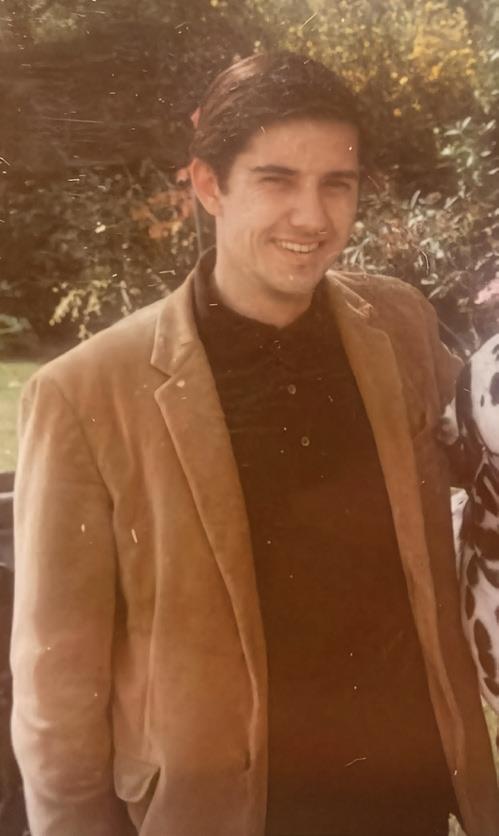
Director for Asia Pacific. Hong Kong was the back drop of many happy years where he continued to play cricket, captaining his team The Nomads with great success.
Returning to the UK in 1998, Paul settled in London and continued working at Dunhill where he concluded his career as Group Finance Director. He is survived by his two children, Alexandra (2&3 South 1994) and John-Paul (2&3 South 1997), and his three grandsons.
Written by his son John-Paul Dunnett, 2&3 South 19921997
2&3 South 1964-1967
Jeff died on 26 February 2025 aged 74
Jeff was ‘middle of the road’ academically but ferocious on the rugby field, where he was a very strong tackler and played
in the Junior Colts and Colts scratch. Being light of build, he was a very good long-distance runner and represented the School in Cross Country and the mile in track and field. He was of a rebellious nature, which eventually got the better of him and he left the school prematurely.
Jeff’s career was basically in the artistic world and, in particular, he had a love of antiques, which he inherited from his paternal grandfather. He was one of the country’s leading experts on Victorian barge-wear and also Victorian fairground equipment. He also had a very fine knowledge of the Newlyn School of Art. His latter years were spent in Cornwall with a heavy involvement in the fishing industry. He passed away in February 2025 after a long illness.
Written by his brother Nick Meyer, 2&3 South 1958-1962
R.
1 North 1963-1968
Richard died on 10 July 2025 aged 75
Richard Rusbridger, who has died from brain cancer aged 75, was a leading British psychoanalyst in the tradition of Melanie Klein. He taught, wrote and lectured in the UK and abroad; as well as training many future analysts. But it was his clinical work over the course of 40 years or more that gave him the greatest satisfaction.
Richard started formal training as what was sometimes called a “postKleinian” in the late 1980s. Once established in private practice, he saw patients in his north London home. When
his death was announced, several of his patients took to social media to say what a profound effect their time with him had had. One wrote: “He completely changed my life, my relationship with myself and with my family.” Another said: “Richard was my life witness. It’s a sad and scary world without him in his chair behind my head, occasionally saying ‘quite.’”
Richard was born in 1949 in Lusaka, in what was then Northern Rhodesia. His father, GH Rusbridger, was deputy director of education and his mother, Barbara [nee Wickham], was a nurse. Once the family was settled back in the UK Richard was a chorister at Guildford Cathedral under the redoubtable Barry Rose, and sang at the building’s consecration in 1961. He progressed to become a music scholar at Cranleigh and took part in the groundbreaking 1964 performance of West Side Story.
At Magdalene College, Cambridge, he juggled studying both his two loves, music and literature.
After a brief period of teaching at Radley he began his long immersion in the world of professionally helping others: as a social worker, as a child psychotherapist and then a child analyst and training analyst. He was, his colleagues said, a skilled clinician, with a combination of sharp clinical perception and sympathetic humanity. He was also a popular supervisor, an inspiring trainer of future analysts, and was appointed honorary reader at University College London.
His interest in music and literature surfaced in a number of papers exploring artistic works through the lens of psychoanalysis, including studies of Mozart’s Don Giovanni, on narcissism in King Lear, and comparing Shakepeare’s Othello and Verdi’s Otello. In 1982, he married Gill, a psychotherapist; they had two
children, Charlie and Alice. His younger brother, Alan, was also a pupil at Cranleigh.
Written by Alan Rusbridger, (1 North 1967-1972)
Spreckley, S. J (Simon) 2 North 1969-1974
Simon Died on 31 August 2025 aged 69
Simon – known as Dude –was one of five Spreckleys who went to Cranleigh or the Prep School in the 1970s, following his father Gordon (2 North 1944) and uncle Bill (East 1946). A bachelor, he never married or had children but was a great mentor to his niece and seven nephews.
He was a gifted musician and artist and achieved excellent A-level grades; he also enjoyed his sport. Despite gigging around London, he did not manage to make music his career, but was a building contractor with his own company.
He played OC rugby at Thames Ditton, starting in his mid-30s into his mid-40s, playing in the 1st XV and also helping with the property management of the Club. He was a keen Freemason with the OC Lodge, introduced by his sibling Toby (2 North 1977) and undertaking a memorable double initiation into the Lodge with his brother Justin (2 North 1980) in 1998. He went onto London rank and higher levels within the craft, being active in retirement around Salisbury too. Freemasonry provided a fraternity of friendships, intellectual stimulation and a sense of belonging with like-minded individuals, who promoted personal growth and self-improvement.
He was of course, like all Spreckleys’, a water baby (liquid or frozen). A strong swimmer, as a boy he was talent scouted to potentially swim for England. He was brought up dinghy sailing, yacht racing in the Solent and at Cowes Week with considerable success. From
the age of 16 he was a keen surfer and windsurfer and in later hears he rebuilt a wooden yacht which he sailed from Poole. He was also a very accomplished downhill skier.
He lived for most of his career in London, retiring early to Dorset in 2018.
Written by his brother Justin Spreckley, 2 North 1975-1980
A.C.A (Andrew) 2 North 1970-1974
Andrew died on 14 September 2024 aged 68
Andrew McClure followed his father to Cranleigh – both were house captains of 2
North – and from there went to university at St Andrew’s. In 1973, at Cranleigh, he played Samson in the Redgrave Society’s production of Samson Agonistes. The same term Sir Michael Redgrave, who had produced the same play at Cranleigh four decades earlier, paid what was to be his final visit to the School and asked to meet Andrew and held him spellbound for half an hour while they discussed the part. In later years he was chairman of the Broadland and Fakenham Conservative Association in Norfolk, where he was recognised for his tireless commitment and central role in local campaigning. He died suddenly while attending a Conservative Party meeting in Bungay, Suffolk.
Thomas, A.M. (Adrian) 2&3 South 1970-1975
Adrian died on 4 February 2025 aged 68
Adrian, known to all as “Tommo,” was educated at Carn Brea Prep, and then Cranleigh before studying Geology at Birmingham University. He went on to have a long career as a geophysicist in the oil industry, working in Indonesia, Peru, and Libya.
A lifelong playing member of Beckenham Cricket Club from the age of seven, Adrian was a fine off-spinner, hard-hitting left-hander, and excellent gully fielder. He played in the 1st XI and became a local legend captaining the Beckenham Sunday Wizards for nearly 30 years, as well as playing for the Jolly Rogers. Off the field, he served as Hon. Secretary and later Fixture Secretary, and was awarded Life Membership
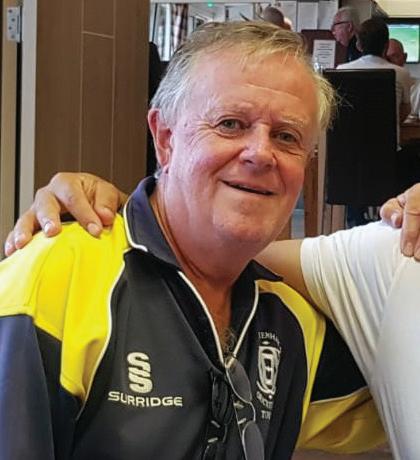
in 2020. A qualified coach, he inspired many young cricketers with his warmth and encouragement. He is survived by his former wife Susie and his twin sons, Benji and Daniel.
Vine, T. (Tim)
2&3 South 1977-1982
Tim died in on 10 August 2025 aged 61
Tim Vine, dear lifelong friend, music connoisseur, football fan, family man.
Tim was passionate about music, embracing all genres at a time when a student at Cranleigh was expected to pin their colours to the Heavy Metal, Mods, Punk or Indie scene. He was welcomed in all of those camps. Live music was an important feature in Tim’s extra-curricular
education; he enjoyed gigs all over the country. One such gig included going to London at 13-years old with a group of school friends to see The Buzzcocks. His love of music and gigs continued throughout his life.
He was known and liked throughout the school due to his infectious enthusiasm and lovely smile, both of which remained engaging throughout his life and stood him in good stead in his professional life. Along with a few others, he frequented The Four Elms and The Cranleigh Hotel in the pursuit of a fine ale, locally brewed King and Barnes a particular favourite.
His peers may remember his mum, Hazel, who used to work in the school biology labs and was loved by many. One of Tim’s friends recalls calling out ‘Hi Tim’s Mum’ in class whenever she came into their lab.
Cranleigh, at the time, was a rugby school and, although Tim played rugby, he was a football fan - instrumental among the group of football lovers in the school. Tottenham Hotspur were even winning trophies back then! After Tim left Cranleigh he continued to be a part of its sporting life through the OC hockey team. When he stopped playing in the OC hockey team, and after his socks had been cleaned thoroughly, he used to use these as stockings for his children at Christmas.
Tim loved his time at school. He loved his friends and he loved the school itself. He told his children often of his time at school and the friends he made there. Thanks to the great time he had at Cranleigh, Tim made sure his
children knew he wanted them to enjoy every second of their school life, even if it meant some harmless mischief. Tim believed your school days are the best days, and they don’t last long enough. While not everyone may feel the same way, it is quite probable that his friends’ school days were made better for having Tim with them.
Tim was a true friend to many and our lives were made all the richer for his presence. He is survived by his father Brian and his two daughters, Abigail and Georgina. Tim’s daughters would love to hear stories about their dad. If you have any stories of Tim which you would like to share with them, please send them to Abigail using the email address: abigailvine@aol.com
Peter died on 23 November 2022 aged 55
After Cranleigh, Peter Shorthouse gained a BSc in Chemical Engineering at the University of Birmingham.
He trained as a Chartered Accountant with the ICAEW, beginning a distinguished career in finance that spanned decades. He started as a Chartered Accountant with Arthur Andersen & Co in 1987, later serving as a Senior Client Advisor with UBS Wealth Management for 11 years, during which time he moved to Sydney and later became a Senior Partner at LGT Crestone in Australia.
Peter was deeply committed to community and culture. Living in the greater Sydney area he volunteered as a nonexecutive director of the Violet Initiative — supporting carers at the end of life in Australia — and was a non-executive director of the Australian Chamber Orchestra (ACO). Together with his wife Victoria, he helped establish the Peter Shorthouse Emerging Artist Scholarship, ensuring ongoing support for young, talented musicians.
A lover of skiing and nature, Peter was known to friends and colleagues for his warmth, generosity, and keen intellect. He will be remembered for his quiet dedication, thoughtful
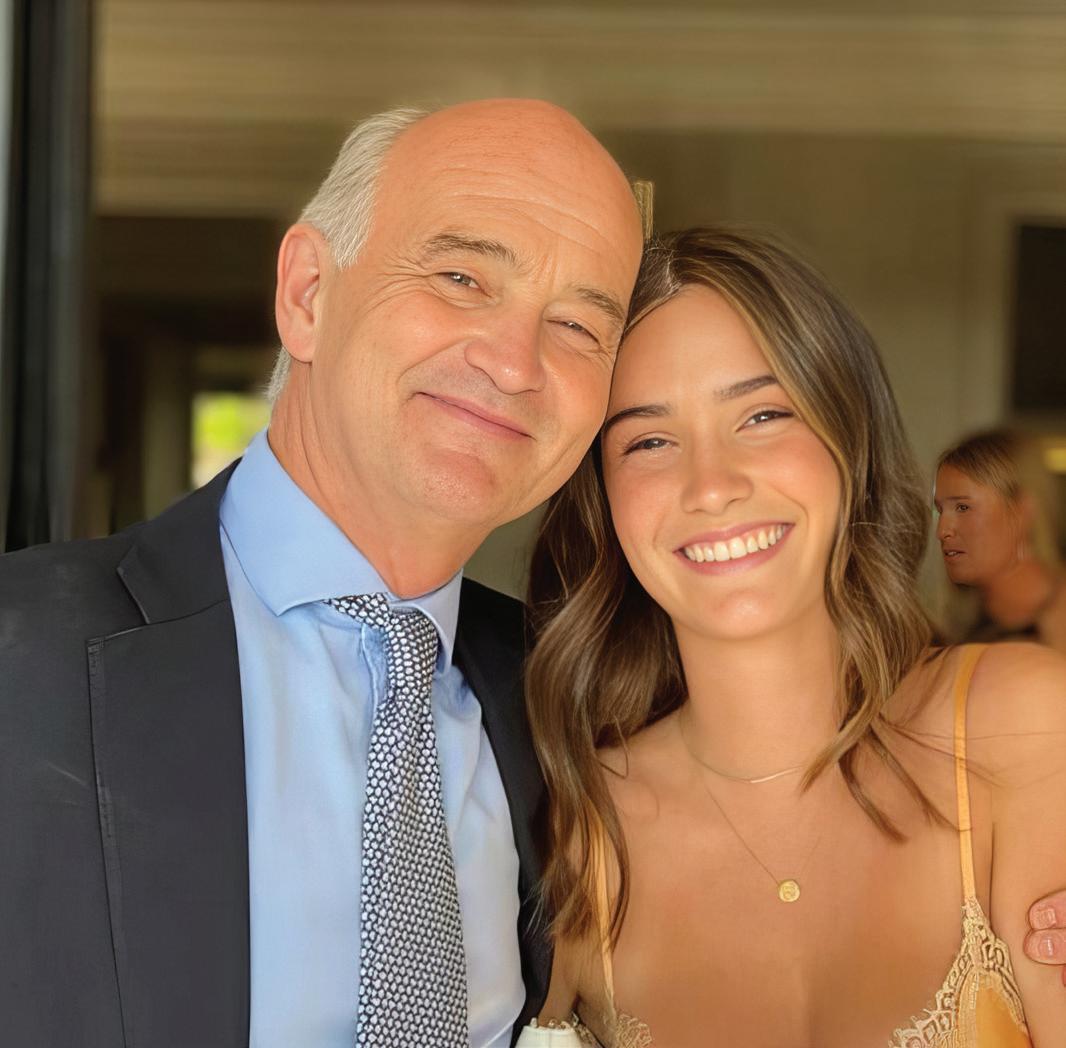
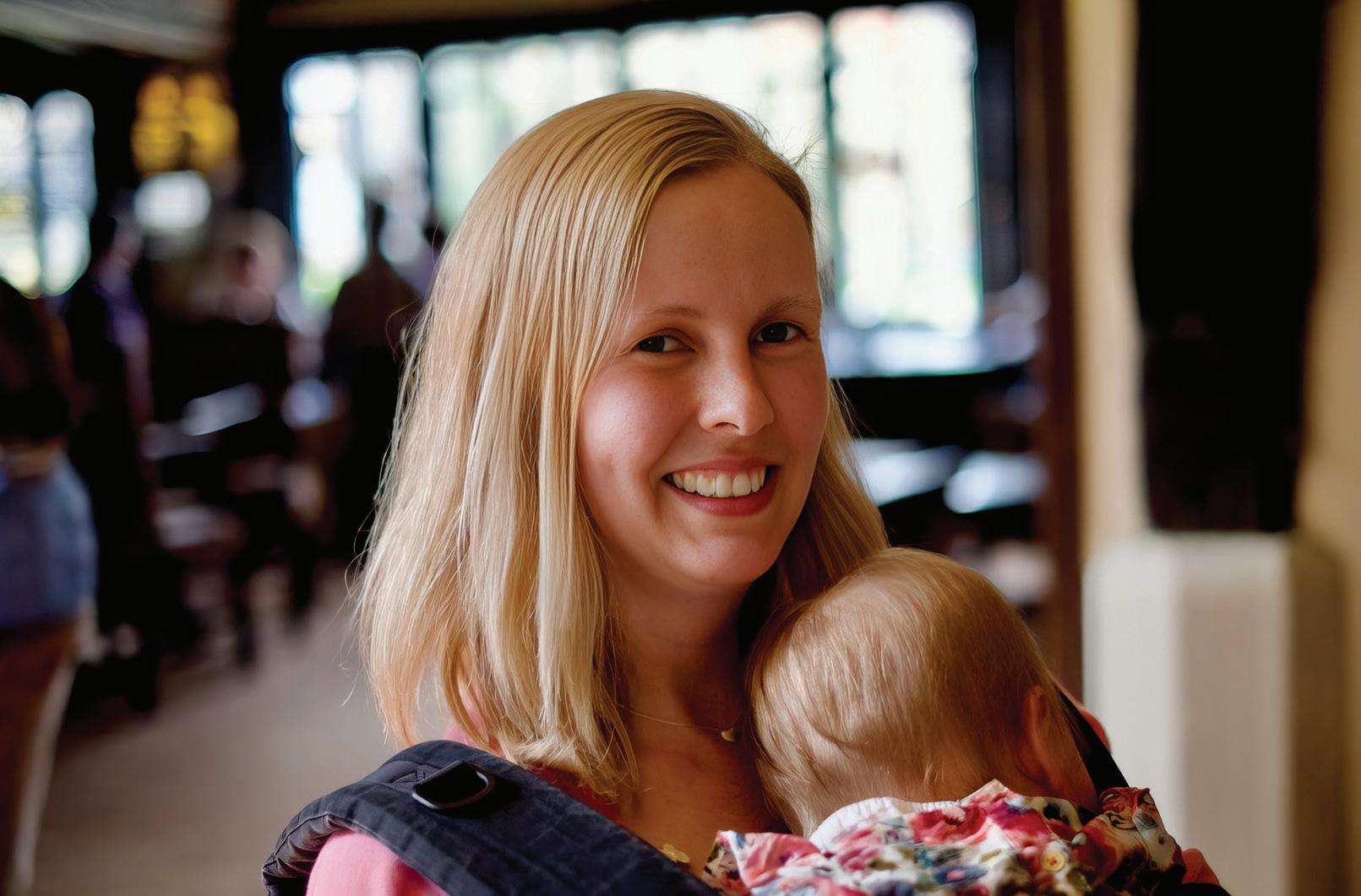
mentorship, and enduring contributions to both his profession and the wider community. He died following a gallant battle with brain cancer and leaves his wife, and daughter Emily (pictured with him).
2&3 South 1987-1989
Katharine died on 20 November 2023 aged 52
Katherine grew up in Cranleigh going to school at Longacre, St Catherine’s and finally following her brothers into the VIth form at Cranleigh. She loved ballet, auditioning for the Royal Ballet school and only missing out as she was deemed too tall. Her love of horse-riding led her to becoming the National Junior Side-Saddle Champion competing at the national championships at Olympia.
Always academic she gained a place at Wadham College, Oxford to read French and Philosophy and whilst there she discovered rowing. She
loved the rowing but soon found she was an even better cox and being light-weight and naturally bossy with a powerful pair of lungs helped enormously!
Her degree was interrupted by illness but she persevered and completed her degree and then went on to Birkbeck College in London to do her Masters and PhD and continue her rowing adventures. She eventually became the cox for the Women’s National Eight competing nationally and internationally. Katharine met John at Henley Royal Regatta in 2006 and they formed a strong and loving relationship, starting a family in 2013.
In her 40s she started competing in Triathlons and, true to form, took this to elite level competing in the World Championships in Sydney coming second in her age group.
She worked for United Artists in Soho, as a literary agent, a job she thoroughly enjoyed, but when she became
on stage a piece she had choreographed herself. A video of this exquisite piece was shown at her funeral. Not a dry eye in the house.
Despite all her achievements these are not the attributes that define who Katharine was. Rather she will be remembered by us as the most kind, empathetic, loving person, devoted to her children and her wider family. We are all still devastated by her loss and miss her dreadfully
Written by her brothers, Chris Vile (2 North1974 -1979) & Philip Vile (2 North 1976-1981)
pregnant she decided to concentrate on being a mother and directed all her energies into a role she adored.
When she was first diagnosed with cancer she was fiercely private about the diagnosis not wanting to be defined by it. She threw herself into doing everything she could to survive, as she so desperately wanted to be here to see her girls grow up. She continued to live life to the full despite a gruelling treatment regime.
During Covid, when she was forced to shield, she started a business making decorated biscuits that were exquisite works of art. A few weeks before her death she even took part in a taxing sponsored group cycle to Paris as a fund raiser for her school, against the advice of her medical team. No-one in the school group even knew that she was ill. Despite this and many challenges along the way she made it to Paris feeling elated, if a little exhausted. She took up ballet again and even performed
Howard, T.H. (Tom) Cubitt 2010-2015
Tom died on 17 February 2025 aged 27
After Cranleigh Tom attended Durham University and then joined a financial security firm in London where he had been promoted to a senior data engineer. He died in February in a tragic accident while trekking in the Himalayas with a friend from University.
Jared Armstrong (MCR 1953-1967) died 9 April 2025
Jared Armstrong, who died a month short of his 99th birthday, was one of the last members of the Common Room to be appointed by David Loveday after an interview he was convinced he had blown. “All my conversational gambits foundered before they were even launched and DGL’s penetrating gaze, below those bushy eyebrows, was, frankly, unnerving.” He joined the staff as Director of Music in 1953, a post he retained until be moved on to a similar role at Wellington College in 1967.
Sunderland-born, Newcastleraised, he always considered himself a Geordie.
Growing up in a deprived area during the Depression he recalled the abject poverty of the area, but both his parents were musical and that was to forge his future career.
In 1943 he went to the Royal College of Music and a spell with the Intelligence Corps in Burma followed. On being demobbed he won an organ scholarship at Exeter College, Oxford.
After little more than a year teaching at Oundle he came to Cranleigh where there were talented individual musicians and a rich tradition of organists. He built on this and also turned his attention to more diverse and dramatic material. He also introduced an orchestra for the first time.
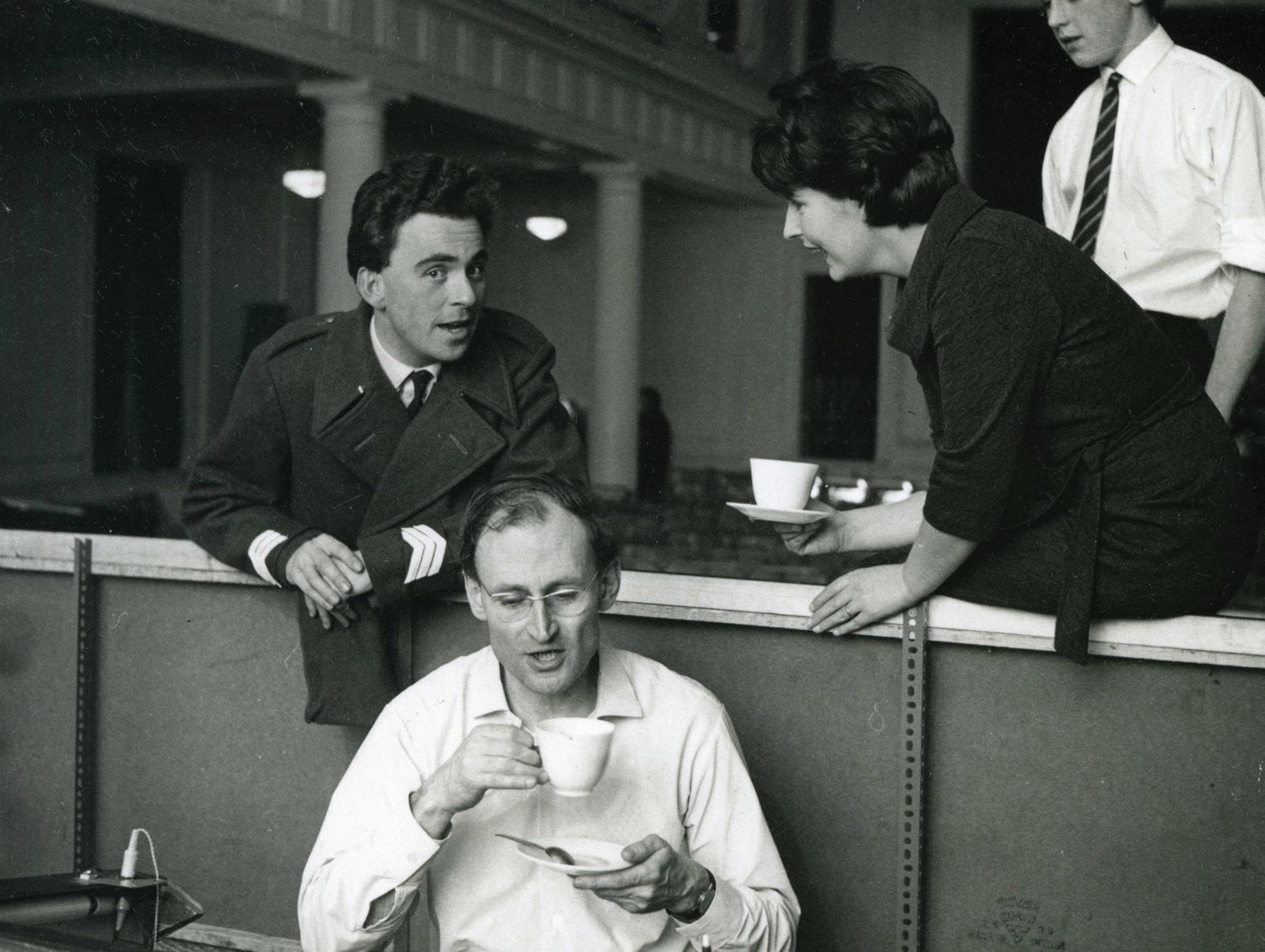
With Duncan Noel-Paton he was the driving force behind the seminal West Side Story in 1964 as well as the Centenary Concert in the Guildford Civic Hall the following year. He also, against some fierce opposition from within the Common Room, brought in female voices from neighbouring schools and the village for performances of such works as Verdi’s Requiem, and introduced subscription concerts which brought many talented musicians to the school. In later years when asked what he considered his greatest triumph at Cranleigh he said it was during West Side Story “when characters of the 1st XV and those of the Chapel Choir were interchangeable”.
He galvanised music at Wellington as he had done
at Cranleigh, and retiring to Sussex he threw himself into the local music scene there. In the late 1990s he suffered a stroke which left him unable to talk (temporarily) or play keyboards (permanently). He taught himself to speak again and continued to teach, write, and lecture on music well into his 90s.
Colin Howard (2 North 1968) sent the following:
Few of us are privileged to have the benefit of the living influence of an inspirational teacher for the greater part of our lives, yet Jared provided this thread of encouragement and friendship for over 60 years for a select band of expupils and colleagues from Cranleigh School, Wellington College, Bigshotte School
and the many individuals who were drawn to his side in East Sussex through his practice of music as conductor, organist, pianist and scholar. His ability as a teacher was based on a passion to disseminate and share his wide-ranging love of music from Bach to Bernstein, by way of Dave Brubeck and the Beatles, embracing with pride the rich out-pouring of works by Derek Bourgeois, his erstwhile pupil - and this is to touch only on an eclectic range of music by musicians whose names begin with ‘B’.
Jared possessed the invaluable skill as a teacher of taking you into his confidence as if you knew already the glories of the music whose qualities he extolled. He never pontificated. His style of pedagogy was light of touch. He embraced
the new at the same time as grounding you in the power and legacy of the old. He would bring out the originality of the traditional and mark the origins of the new. In my years at Cranleigh starting in 1964, my musical taste and that of my esteemed colleagues and friends was nurtured by Jared, who poured delight in his art into our receptive ears and eager minds. The Director of Music who had planned and executed with Duncan Noel Paton at Cranleigh the first amateur performance of West Side Story, took us to hear Bach at Tilford and Britten’s then newly-composed opera A Midsummer Night’s Dream at Covent Garden. In the summer term of 1967, before Jared was swept off to become Director of Music at Wellington College, he introduced Sergeant Pepper to us, recognising immediately the integrity of The Beatles innovative disc.
Jared was ever the quality technophobe, adopting the latest and finest Hi-Fi and filming equipment. Miraculously for us – the class of ‘67 - he filmed many of the above and others from that summer and added the opening track of Sgt Pepper as the soundtrack, so that we can all be said to have become Jared’s ‘Lonely Heart’s Club Band’.
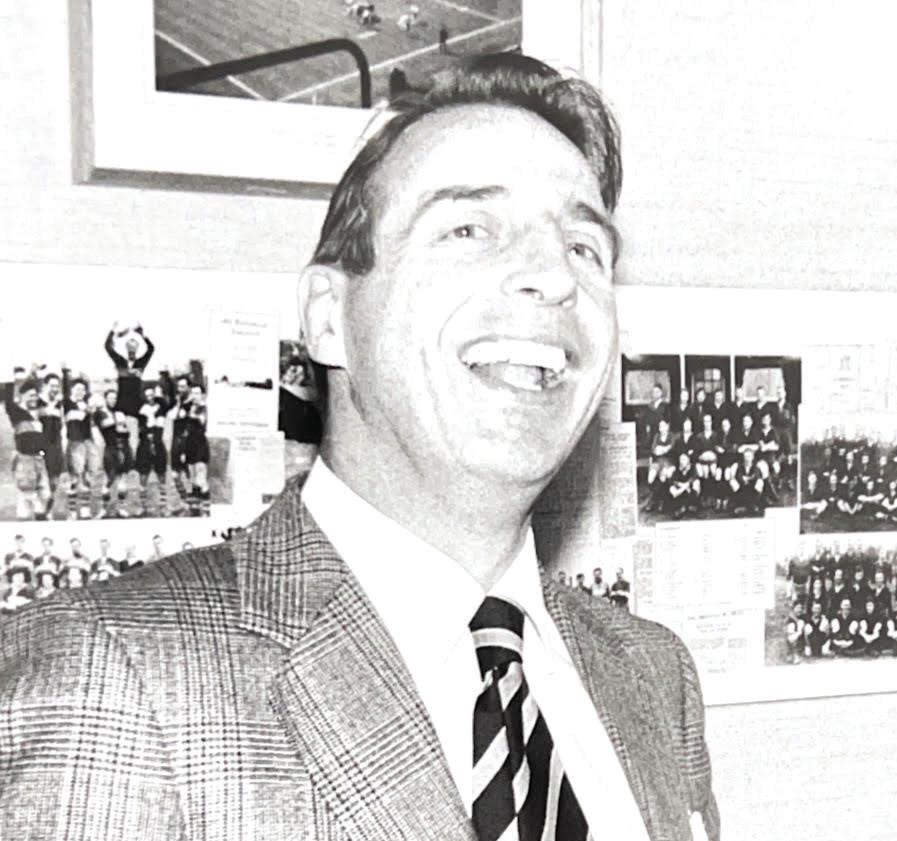
David Bird (MCR 1961-1972) died 21 August 2025 aged 89
David Bird arrived at Cranleigh in 1961, after a brief foray into the business world, to teach Geography but with a reputation as a good rugby player having won his Blue at Cambridge and played for the Barbarians.
Almost inevitably he was appointed to coach the 1st XV which he did for eight seasons, producing spirited enterprising attacking rugger, entertaining to watch and stimulating to play. In 1964 he played a key role in the foundation of the Gower Club. He was also involved in hockey and cricket, fulfilling David Emms’ brief to raise the profile of Cranleigh sport.
He gave a fillip to the Geography department, inspiring many to go on to study Geography at university. With Laurie Tanner and later John Lowry, he ran fieldwork trips to the Isle of Wight, and Geography grew in popularity and success. His daughter still teaches Geography at Winchester.
His enthusiasm and qualities of kindness and hard work from his strong personal Christian faith led him to being chosen as Housemaster of 2&3 South in 1967 aged only 29, one of the youngest ever appointments. David and Val’s Friday afternoon pre-match rugby team teas of toast and cake at Horseshoe Cottage became legendary.
David led by example, he had a warm and generous spirit and was always quick
to offer praise and to thank his colleagues. He had a wonderful sense of fun; a shining light at work and play. The Cranleighan said: “David always found something to encourage in every boy and, because he is a humble person himself, he did it from sincerity not from policy. He possesses the heart-warming gift of appreciativeness. He has the gift of inspiring ideas in others, so that latterly he could stand aside, acting as merely the arbiter.”
It was inevitable he would move on to greater things. In 1972 he became Deputy Head at Goffs School, going on to be Headmaster at Dartford and Stockport Grammar Schools and Chairman of North West Headmaster’s Conference.
“What a lovely man David was. Such a life, well lived to the full”.
Gerry Redmond (MCR 1972-1979) died 1 June 2025, aged 82
Gerry Redmond arrived at Cranleigh in 1972 after a mature studentship at Cambridge which had seen him captain the university rugby side in the Varsity match and win his one England cap. He proved to be a popular and effective geography teacher and
valued tutor in 1&4 South. Inevitably he was drawn into school rugby, initially with the Colts and then for four years coaching the 1st XV. In the summers he revitalised a moribund swimming section and turned it into a thriving section. As if that weren't enough he briefly increased the profile of school basketball, even if the challenge of bringing many of
the 1st XV into a non-contact sport proved immense. In the Common Room he was a popular figure and it was with sadness that he decided to return to the West Country in 1979 to run a bed and breakfast.
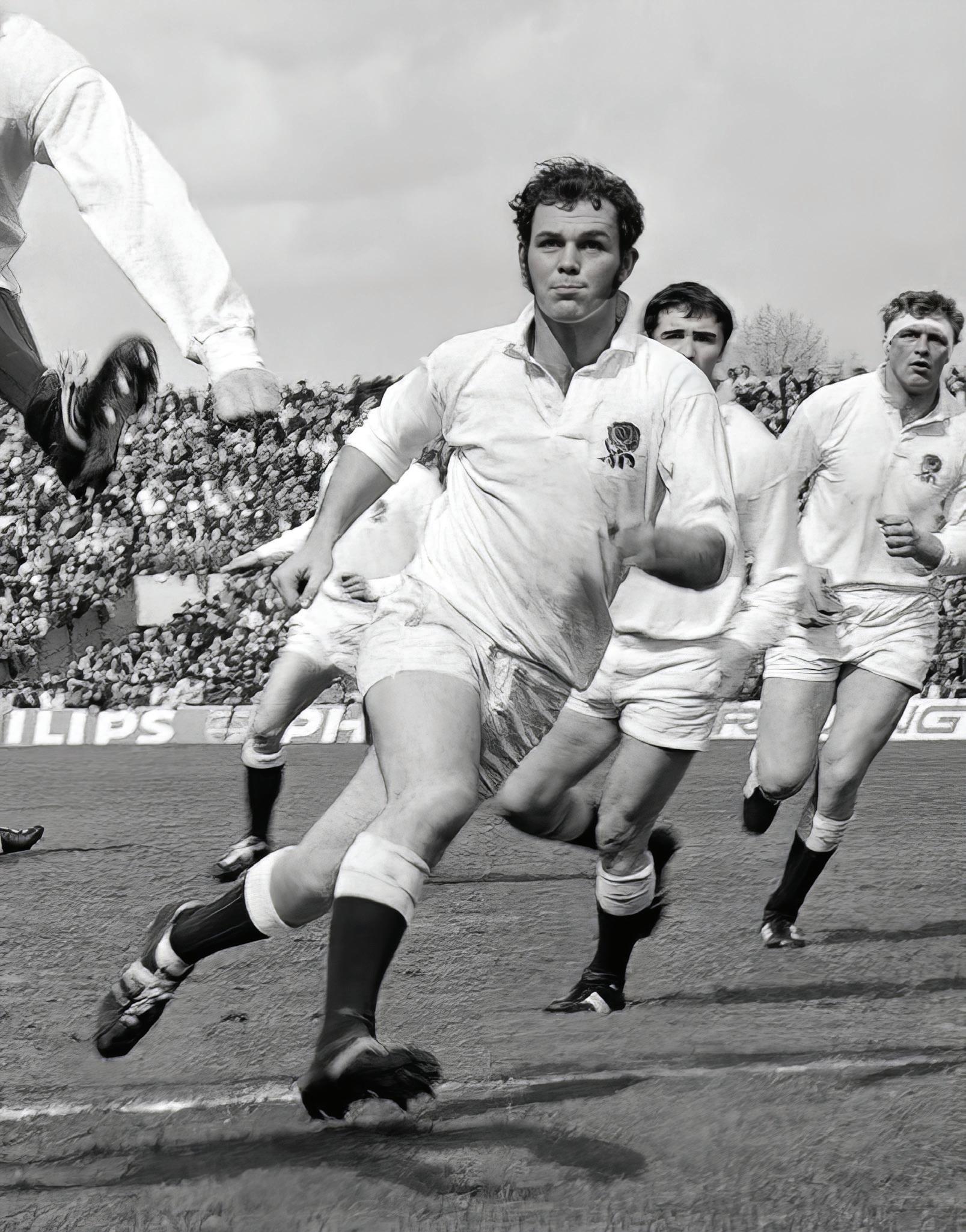
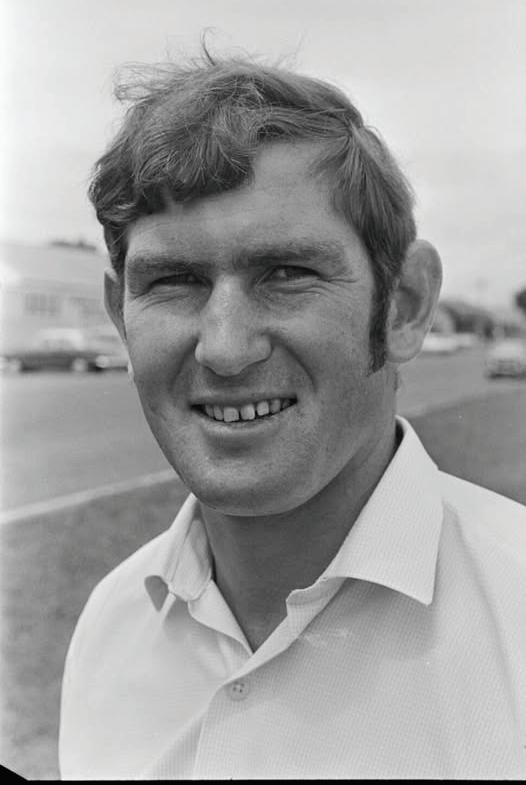
Lyn Adam
(MCR 1974, 1979-1983 died 5 August 2025
Lyn Adam initially came to Cranleigh in 1974 on a secondment from Tauranga Boys' High School in New Zealand as a geography teacher but proved so much more than that. A good rugby player himself, he quickly gave up playing for Richmond to be with his team on match Saturdays. It was a mark of the impression he made that when he left the Headmaster offered to pay his fare back at any time. Consistent pestering paid dividends and in 1979 he returned with his family, taking over coaching the 1st XV and the following summer the Housemastership of 2&3 South. John Bain, his predecessor in that role, said: “His gift of almost instinctive understanding of people and their problems made him a natural Housemaster. His commitment to his boys (and girls!) in 2 and 3 was absolute. He had the knack of getting through to them and they all valued his utter dependability, his rock-solid integrity and his generosity of spirit.” In 1983 he decided to return home so his children could enjoy their Kiwi heritage and reap the benefits of New Zealand family life.
Abraham Katie 2024 West Exeter
Allera Bruno 2025 East Bristol
Alsalloum Hamza 2025 Cubitt Nottingham
Andreiko Andrii 2025 Cubitt Bath
Andrew Piers 2024 Cubitt Durham
Atkins Theodore 2024 North Oxford Brookes
Barbour-Smith Molly 2025 Martlet Loughborough
Barros Luisa 2025 Martlet Durham
Beaumont Daisy 2025 Martlet Durham
Becker Caitlyn 2025 West Birmingham
Bell Camilla 2024 West Nottingham
Bemelmans Finley 2024 Loveday Cardiff
Berezi Peremobowei 2025 Cubitt Cardiff Met
Beuden Logan 2024 North Bristol
Blaskey Isabella 2024 Rhodes Exeter
Brewer Maisy 2025 Martlet Royal Holloway
Brooke Ella 2024 Rhodes Newcastle
Burrell Alexa 2025 Martlet Bath
Buxton Rafe 2025 East Bath
Carr Arabella 2025 Martlet Newcastle
Cartledge Paige 2025 West Bristol
Chinwala Zubin 2024 East Edinburgh
Law
International Business Management
Accounting and Finance
Business and Management
Business Management
English and History
Sport and Exercise Psychology
Economics and Politics
Natural Sciences
Psychology
Chemistry
Business Economics
Sport Management
Theatre and Film
Communications and Media
Music
Marketing and Management
Marketing and Management
French and International Relations
Sociology
Law
Business and Economics
Cook Amelia 2025 West Nottingham History
Cotterell Darcy 2024 West Oxford Brookes
Coveney Christian 2025 Cubitt Durham
Cripp Thomas 2024 Cubitt Bristol
Crossan Lauren 2024 Martlet Oxford Brookes
Davison Scarlett 2025 West Loughborough
Derrick Kit 2024 Cubitt Exeter
Dodsworth Alexander 2024 Loveday Exeter
Draper Sasha 2025 Martlet Durham
Draper Theodore 2025 Loveday Dur
Dupuy Ella 2025 South Imperial College London
Elliot Alice 2025 South Warwick
English Richard 2025 Cubitt Leeds
Evelyn Georgina 2025 South Durham
Farris Jamie 2025 Cubitt Bath
Fawcett Saskia 2024 West Cardiff
Fay Jacob 2025 Loveday Oxford Brookes
Fincken Maximillian 2025 Cubitt Reading
Flanagan Olivia 2023 Rhodes Durham
Fortescue James 2025 East Edinburgh
Foster Elena 2025 Martlet Durham
Godber Frederick 2024 North Northumbria
Golding Oscar 2024 Cubitt Newcastle
Goodburn Scarlett 2024 South Newcastle
Graham Thomas 2024 Cubitt Newcastle
Marketing Management
Natural Sciences
Aerospace Engineering
Business and Marketing Management
Liberal Arts
Sport and Exercise Science
Marine Biology
Natural Sciences
Physics
Medicine
Theatre and Performance
Economics and Politics
Chemistry
Economics and Politics / International Development
Physiotherapy
Business Management
Accounting and Finance
Visual Arts and Film
Law and Politics
Geography
Sport Management
Marketing and Management
Ancient History and Archaeology
International Business Management
Gray Phoebe 2025 South Durham Law
Groocock Brandon 2025 Loveday Cambridge
Hands Jemima 2024 South Leeds
Hanna Archibald 2025 North University of British Columbia
Hanna Thomas 2025 North Durham
Harding Anna 2024 South East Anglia
Hatley Bertie 2025 Loveday Durham
Heming Tara 2025 Martlet Oxford Brookes
Herring Jack 2024 North Edinburgh
Hewitson Laith 2025 East Exeter
Jackson Felix 2025 Loveday Leeds
Joyce Dylan 2024 North Barcelona
Kapotwe Kasanda 2025 North Exeter
Kitov John Dhavid 2025 North IE University, Madrid
Natural Sciences
English Literature
Liberal Arts
Accounting and Management
English with Creative Writing
Law
Fine Art
Interdisciplinary Futures
History and Ancient History
Mechanical Engineering
Business Management
History
International Management
Little Adam 2024 North Surrey
Lodge Sophia 2025 South Bath
Manning Emma 2025 Rhodes Erasmus University, Rotterdam
Mannix Oliver 2025 East Edinburgh
Mansfield William 2025 North Salford
Maskery Charles 2025 North Durham
Mason Sam 2024 East Bristol
Messer Luke 2024 Loveday Durham
Mills Edward 2025 Cubitt Durham
Norwood-Perkins Lola 2025 Rhodes Exeter
O’Connor Freddy 2024 North Newcastle
Overend Harry 2025 North Exeter
Pakzad Sirus 2025 East Edinburgh
Patterson James 2025 East Reading
Phillips Freddie 2024 East Oxford Brookes
Pitts-Tucker Sophie 2024 South Durham
Porter Henry 2025 East Newcastle
Powell Isobel 2025 Martlet Edinburgh
Price Annabel 2025 West Leeds
Prior Maximillian 2024 Loveday Newcastle
Ramsay Hamish 2024 Cubitt Nottingham
Rayer Tabitha 2025 South Newcastle
Reed Emily 2024 South Queen’s University, Belfast
Reilly Liam 2024 North Exeter
Rimmington Sienna 2025 West Cardiff
Robinson Digby 2025 East Leeds
Rodney-Smith Oliver 2024 Loveday Cardiff
Roe Milo 2024 Loveday Oxford Brookes
Roger Charlie 2024 East Exeter
Rowe Alexandra 2025 Martlet King’s College London
Rowe James 2024 Cubitt Bath
Ruddell Jack 2025 East Loughborough
Savage Caamano Sebastián 2025 Loveday Leeds
Scott Edward 2025 Loveday Durham
Shepard Frederick 2025 Cubitt Durham
Sicoli Vidal Vivi 2025 Martlet Exeter
Simpson William 2024 East Nottingham
Skinner Harry 2024 Cubitt Newcastle
Slatter Max 2025 Cubitt Bath
Slipper Jonathan 2025 Cubitt Newcastle
Squier Molly 2025 Rhodes Newcastle
Stanley Kyle 2025 Loveday Cardiff
Stewart Sophie 2024 Martlet Newcastle
Music and Sound Recording
Economics and Politics
Business and Finance
Geography
Sound, Light and Live Event Engineering
Aerospace Engineering
Business and Management
Classical Civilisation
Aerospace Engineering
History
International Relations
Economics with Industrial Experience
International Business Management
Business and Management (Entrepreneurship and Innovation)
International Business Management
Psychology
Architecture and Urban Planning
Politics and International Relations
Fashion
Sustainable Land and Business Management
Sport and Exercise Science
Marketing and Management
Biochemistry
Astrophysics
Business Management
International Business Management
Business Management with a Professional Placement Year
Real Estate
Accounting and Finance with Industrial Experience
Politics
Business Management
Design
International Relations
Economics
Chemistry with a Year in Industry
Media and Communications
Geography with Business BA
Marketing and Management
Mechanical Engineering
Geography
Computer Science
Biomedical Science
Business Management
Stupak Ivan 2025 Cubitt Oxford Physics
Syvret Effie 2024 Martlet Oxford Brookes
Thomas Adam 2024 Loveday Loughborough
Vidal Sebastian 2025 Loveday Exeter
Walford Jacob 2024 East Bristol
Waller Fenella 2025 Rhodes Birmingham
Walton Arabella 2025 South Nottingham
Ward Cameron 2025 North Bath
Warr Luella 2024 South Durham
Washington Alexander 2025 North Exeter
Wates Emily 2025 South Bath
Wates Herbert 2024 North Northumbria
Webster Tom 2025 Cubitt Exeter
Wessels Sienna 2025 Rhodes Bath
Wheatcroft Harry 2024 Loveday Exeter
Wilks Rafe 2025 East Reading
Wolfson Tom 2024 Loveday Exeter
Fine Art
Business Management
English and History
Economics and Finance with Study Abroad
Chemistry and Business Management
Mechanical Engineering
Sport Management and Coaching
Sociology and Anthropology
Liberal Arts
Business with Work Placements
Sports Management
English and Spanish
Politics
Business and Management
Real Estate
Law
Peter Evison
1 North 1950
Peter, aged 94, is in a wheelchair and living in a nursing home in Bromley. He would welcome visitors! Please contact vli@cranleigh. org for more information.
Dr Marcus Braybrooke West 1956
Marcus started at the Prep School in 1947 as a day boy before continuing on to the Senior School. In September he celebrated the 60th anniversary of his ordination. He is a retired Anglican parish priest and President of the World Congress of Faiths, which he has served for over 50 years. A pioneer of interfaith dialogue, he co-founded the Three Faiths Forum, is Patron of the International Interfaith Centre at Oxford, and serves as a Peace Councillor. Awarded a Lambeth Doctorate of Divinity in 2004 for his contribution to inter-religious understanding, he is also the author of over 40 books on world religions and Christianity and most recently has published an autobiographical book, A Faith-full Journey, which reflects on his work for interfaith understanding and peace. He has, mostly, happy memories of school days and would like to hear from any contemporaries at marcusbraybrooke4@gmail. com.
David Evered 2 North 1957
David Evered has returned to his early passion for history with the release of his second novel, The Long Shadows of War (Troubador Publishing). A retired physician with a distinguished career in academic medicine and research—including roles as Deputy Head of the UK Medical Research Council and Special Adviser to the WHO’s International Agency for Research on Cancer—David now turns his attention to historical fiction. His latest novel explores the personal and political upheavals of post-war Germany, weaving in experiences inspired by his father’s wartime service. David lives in West Berkshire.
Mike Walsham East 1957
Mike’s fourth book The Line to Freedom (Austin Macauley Publishers) was published in April. It is described as having a compelling narrative, rich with exciting and lessercovered themes in spy fiction. Mike’s attention to detail and meticulous research offers readers a vivid and comprehensive insight into the complex and colourful world of intelligence during WWII.
David Empson 2&3 South 1975
In April, David and his son Hugo, founders of Generous Ape (short for Animals, People and Environment), appeared as guest buyers on BBC’s The Apprentice. David, the company’s Chairman, has built a distinguished career in retail — beginning at M&S, serving as a Director at Sainsbury’s, and later helping launch clothing lines such as Miniclub for Boots and TU for Sainsbury’s. He also worked with Robbie Williams to launch the global clothing brand Farrell. Generous Ape represents a conscious counter to fast fashion, curating sustainable, style-led brands and donating 10% of annual profits to charity, ensuring every purchase has a purpose.
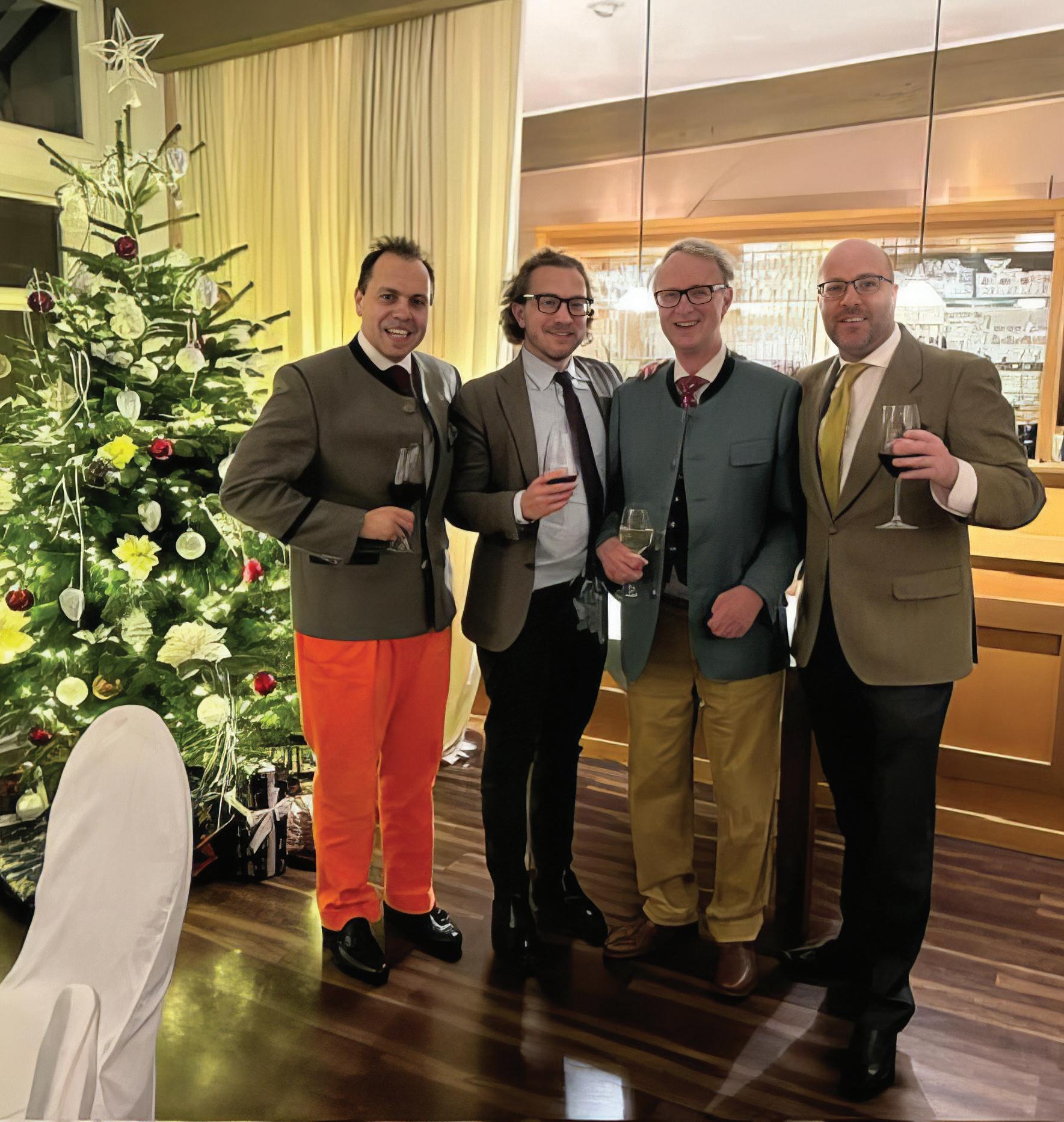
Adam Holloway Loveday 1983
Adam, who after 19 years lost his Gravesham seat to Reform in the 2024 General Election, left the Conservatives in July to join Reform. "Reform’s policies are not extreme," he said. "Some of my former media colleagues smear them as such. They should look to themselves. I didn’t leave the Conservative party, it left me."
David Corran Loveday 1985
David announced his retirement as Deputy Head of King Edward’s Witley school, where he has been since 2019, at the end of the current academic year.

Matthew Hinton 2&3 South 1989
Matt, executive coach and musician, has released his debut album The Hour Glass with his band Arcane Moon, following their win in the New Band category at the 2025 NMG Awards. The album reflects on the fragility of time, love, and human choices, urging listeners to stay present, act with awareness, and protect the environment.
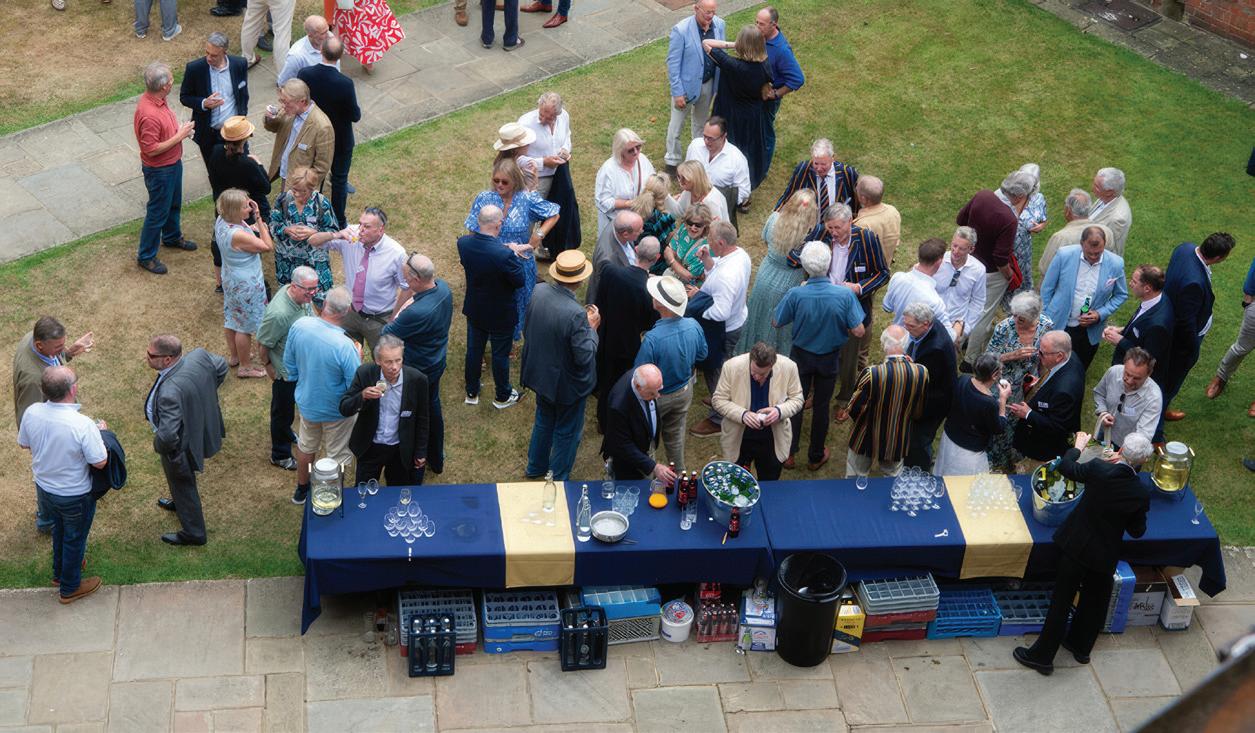
Since the first reunion in May 1869, Old Cranleighans have returned to Cranleigh every year (Covid excepted) on OC Day. For almost a century the event was a long weekend over the Whitsun holiday with OCs staying at the School for two nights. In the 1960s this became a oneday non-residential affair and in the 1970s OC Day was combined with Speech Day, the logic being OCs could see the various displays and events on offer to parents. The combined day has remained, other than a brief and frankly unsuccessful period when it was relegated to a stand-alone Sunday.
A German gathering in December last year:
CHRISTIAN MIKKEL DOBLOUG (Norway) 1+4 South 1997-1998
PHILLIP VON DRYANDER (Germany)1+4 South 19951996
PRINCE STANISLAUS ZU SAYN-WITTGENSTEIN BERLEBURG (Germany) 2&3 South 1956
ERIK CHRISTIAN ASKVIG (Norway) 2+3 South 19951996
Old Cranleighans meeting up in northern Germany on a driven Shoot at the Wittgenstein family estate, remembering the days at Cranleigh and how the School as an institution leaves long lasting friendships and common histories and values.
Ex Cultu Robur.
Understandably, the main concern of the school on Speech Day are parents and pupils, and the changing nature of the day has meant there is little on offer to OCs other than the increasingly popular decade reunions.
In 2026 at the instigation of the School and with the full support of the OC Excom, OC Day will revert to a stand-alone event. However, it will be held on a term-time Saturday so in addition to the decade reunions, chapel service and drinks in the Quad there will also be a full afternoon of sport to watch, and some special performances laid on by the School. It will also allow our new Head, Sam Price, to meet a lot more OCs. The afternoon will conclude with a full tea for OCs and families on Jubilee.
The provisional date for OC Day is Saturday, May 16th 2026.

Sarah Ionnides Cubitt 1990
Sarah, Conductor and Music Director of Symphony Tacoma and Professor of Orchestral Conducting at Boston University, has been awarded the inaugural Bill and Estelle Reid Lifetime Achievement Award. Recognised for “12 years of devoted service to Symphony Tacoma and a lifetime of exceptional commitment to symphonic music,” the award celebrates not only Sarah’s achievements but also the shared journey with musicians, staff, and audiences who continue to champion the transformative power of music.
Zane Sennett 2&3 South 1994
Squadron Leader Zane Sennett fetured in the BBC documentary series Top
Guns: Inside The RAF which aired earlier this year. A former Royal Air Force and Royal Australian Air Force fighter pilot who is once again an RAF pilot, Zane amassed over 5,000 flight hours in the Hawk, Harrier, Hornet, and Typhoon, besides multiple trainers.
Adam Ashcroft West 1995
After two decades working with leaders and teams across 68 countries, Adam has published Unlock Your Advantage. Written in partnership with Right Selection Global Thought Leadership, the 400-page book debuted at a conference in Dubai this September. Overcoming dyslexia to write it, Adam has turned challenge into momentum. His Advantage Coach Operating System offers a roadmap for purpose, progress, and passion.
Chris Lloyd 2&3 South 1997
In September Chris won the ITF Masters 400 in Woking in the over 45s bracket - he described it as the best win of his life.
Emily Hartley West 2005
Having taught Geography at Cheltenham College for the last 13 years, Emily returned to Nairobi this August after a 20-year hiatus, to join Braeburn Secondary to teach Geography and Environmental Management.

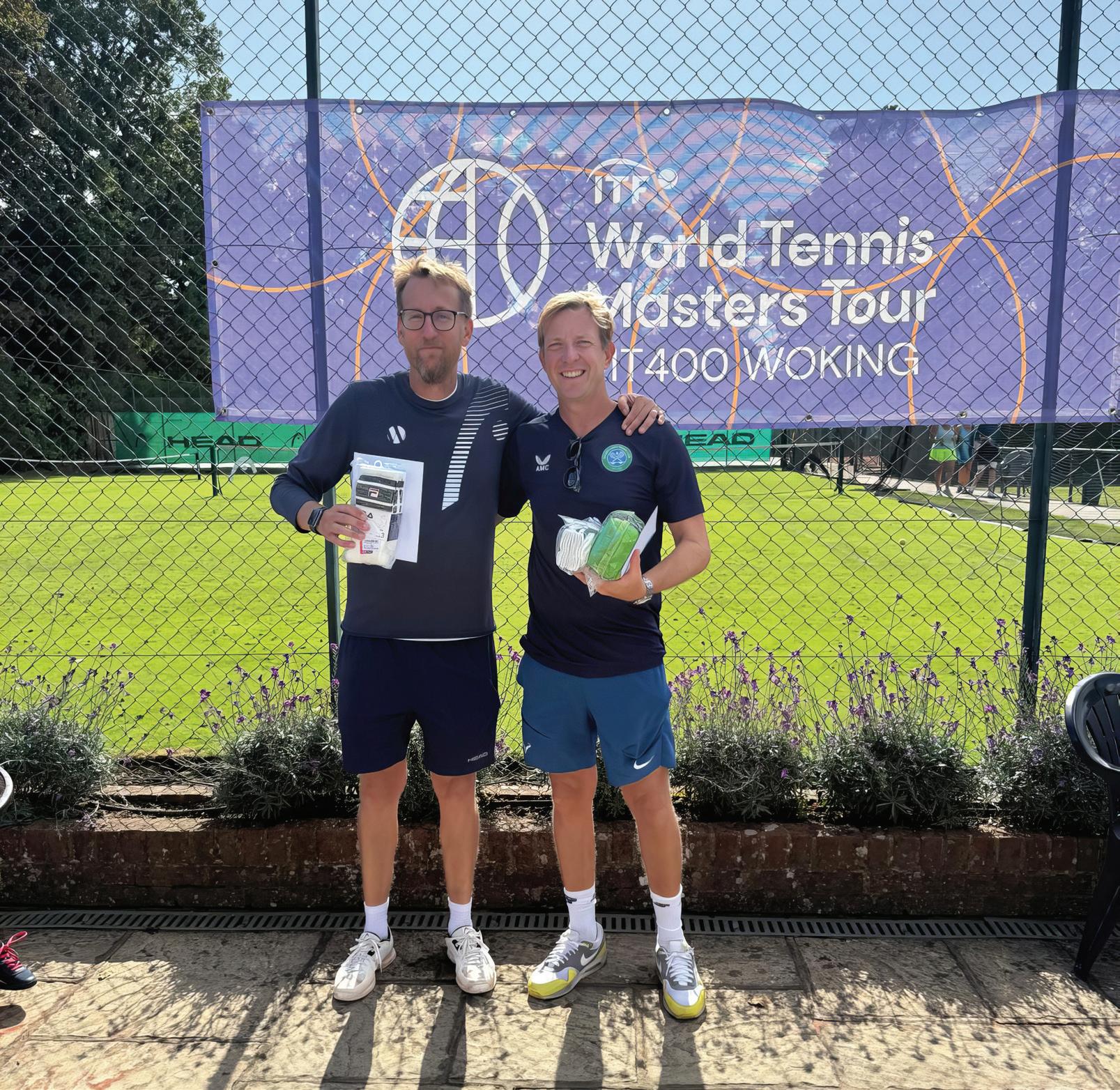
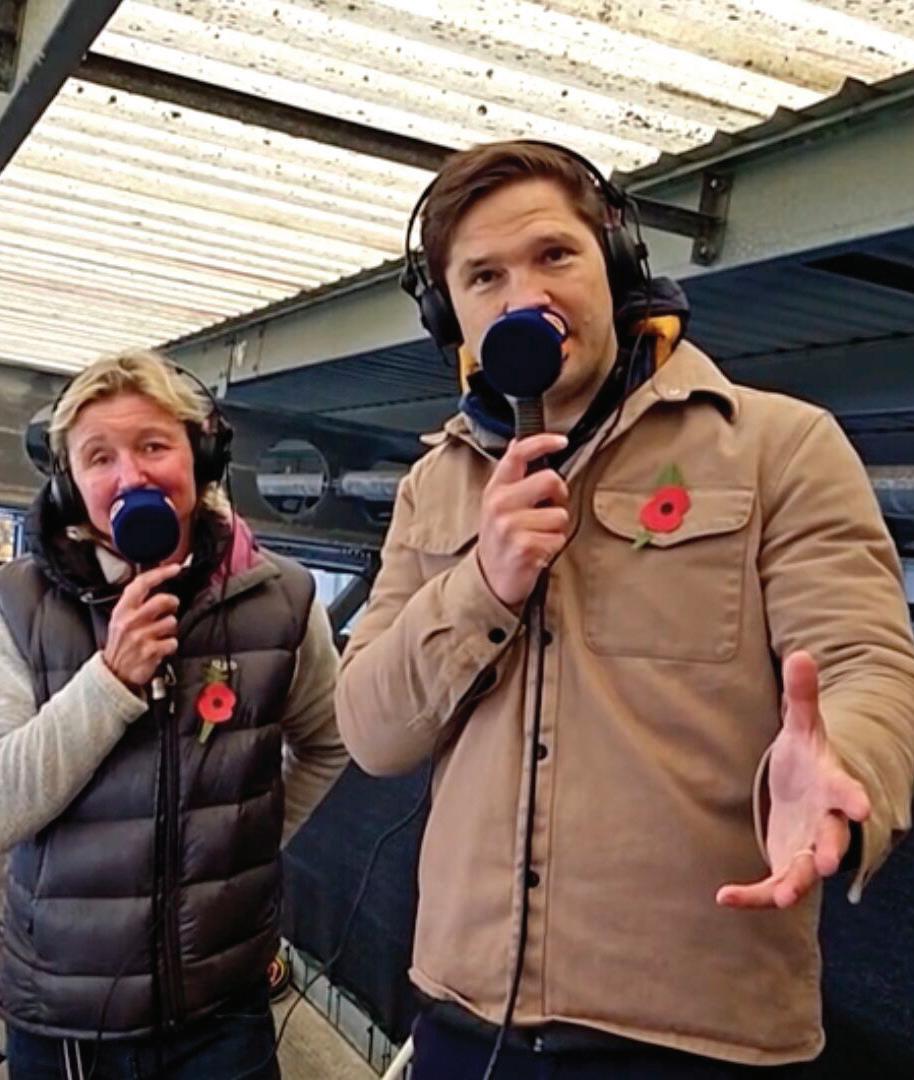
Jack Zorab Cubitt 2005
Jack is a multi-sport commentator, reporter and writer. He recently spent a couple of weekends covering the opening rounds of the new Premiership Women’s Rugby season on the BBC. Among others he worked alongside the former Scotland international Lisa Martin in Sale as part of the LIMITLESS broadcast team.
Matt Crump Loveday 2006
After three years as Deputy Bursar at Highgate School, in August Matt became Managing Director of Highgate International.
Eva Namusoke
West 2006
Dr Eva Namusoke is Senior Curator, African Collections Futures at The Fitzwilliam Museum, where she works across the University’s African collections in museums, libraries, archives, and departments. Eva recently published a report on these collections and curated Bound Together: Leather from Northern Nigeria Her research spans East African postcolonial history, contemporary politics, and modern Commonwealth history, building on a PhD from Cambridge and an MA in African Studies from Yale. Eva has also contributed to public engagement through initiatives such as the Being Human festival, the Black Cantabs Society, and the Africa Together conference. A free guided tour based on her report has just launched – a thought provoking journey into African collections and histories with the University of Cambridge Museums.
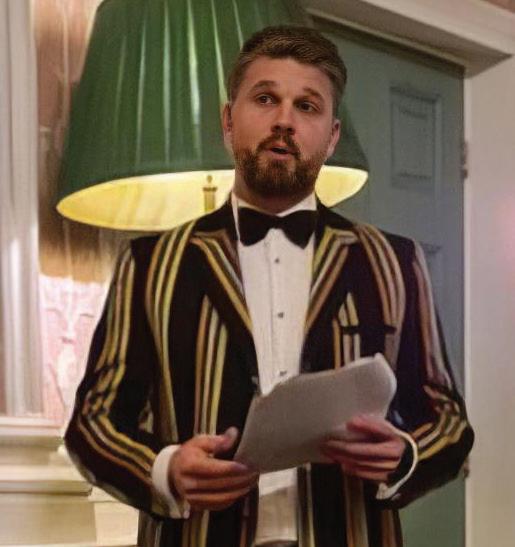
Stuart Meaker
North 2007
Following his successful cricket career, Stuart is now a Senior Account Manager at Pitch Experiences, selling corporate hospitality and VIP experiences to all the major sport and music events in the UK and abroad.
Five years ago, Jamie launched Quadrant, a company with a bold vision: to capture the energy, creativity, and culture of motorsport in a fresh, authentic way. Co-founded with Lando Norris during the COVID lockdown, the brand has since grown into a global motorsport and content powerhouse, inspiring millions of fans worldwide. Blending racing passion with lifestyle and entertainment, Quadrant has built a thriving community, produced engaging behindthe-scenes content, and partnered with leading creators and brands who share their vision.
Jolyon Palmer North 2009
Former Formula 1 driver Jolyon Palmer has worked with F1 TV, BBC Sport and Channel 4 as a colour commentator and hosts his own show on F1 TV named Jolyon Palmer's Analysis. He continues to be a commentator on F1 TV's prerace and post-race show.
Dr Tash Foshergill-Misbah West 2011
Dr Natasha FothergillMisbah has been announced as the ESRC Keynote Speaker for the QualSIG Annual Symposium 2026. A
postdoctoral researcher in the Population Health Sciences Institute at Newcastle University, Natasha’s work spans biomedical sciences, anthropology, gerontology and global public health. Her research explores ageing and the experience of living with Parkinson’s in Africa, grounded in values of social justice and community empowerment. Awarded the 2023 Tom Isaacs Award for her participatory work with people living with Parkinson’s, she also consults for the World Health Organization and is an award-winning documentary producer of Shaking Hands with the Devil and Uhuru
Brad Scriven Loveday 2012
Brad is Partnerships Development Director at Wasserman in Dubai.
Charlie Adorian East 2013
Charlie is a Brazilian Jiu-Jitsu (BJJ) black belt who is ranked No.2 in the UK and No.11 in Europe. He has recently opened his own club Apollo BJJ, located in the Sands End Arts and Community Centre (SW6 3EZ), just a few minutes walk from Parsons Green tube station. He can be contacted at charlieadorian@gmail.com.
Joseph Quinn North 2014
Joseph Quinn is the Managing Director of Tea Huggers, a UK-based wellness tea brand that has recently signed a nationwide US distribution deal with Mr Checkout, opening doors to over 35,000 stores across the US, Canada,
and the Caribbean. Earlier this year he was named in the Fores 30u30 Europe list which celebrates the top/most influential people under the age of 30 in their respective industries.
Felicity Bull West 2016
Felicity joined Avery Law in 2022 and qualified as a solicitor in September 2024, recently being featured in the firm’s Faces series. Since completing her training contract, she has advised founders, investors, and growing businesses across a wide range of corporate and commercial matters.
Alastair Loedolff Cubitt 2016
In September Alastair moved to his next role in the Army as Platoon Commander at the Army Training Centre, Pirbright, where he will be shaping the next generation of soldiers. Previously, as Troop Commander of EVAC Troop at 3 Medical Regiment, Alastair led a team of 30 soldiers on operations ranging from NATO missions in Poland to D-Day commemorations in France, and providing medical evacuation support in Kenya.
Edward Russell East 2016
Edward is working for Beyond Associés between Paris and London, as a trilingual executive search consultant. In April he ran the Marathon de Paris and was supported on the day by at least two OCs from his year.
George Ealham
Loveday 2020
In last year’s magazine we told you about George’s new business - The Coaching Grid– a year on and he has launched a podcast, Inside The Grid, offering honest, unfiltered conversations with professional athletes about life in sport . Produced under The Coaching Grid platform, the podcast aims to inspire listeners through real stories and practical insights. You can find all the episodes on Spotify, YouTube or Apple Podcasts.
Freddy Moore Loveday 2022
Freddy made his West End debut in April in The Choir of Man. He trained at the London School of Musical Theatre and In2Drama.
In February Max founded Zeroo Degrees, a network which helps school leavers who have chosen not to go to university (and so miss out on the social aspects of that) to land jobs and still have an enjoyable and supportive social life. Max himself got 3 A* at Cranleigh and went straight into work, but he found there was no community or structure for people like him – so he built one.
A third-year Marine Biology student at Newcastle University, Kasim has founded and now leads the University’s Beach Cleaning Society, which has mobilised 197 volunteers to remove 232kg of litter from 11.9km of coastline. As well as coordinating beach cleans with local councils and organisations, Kasim is the Northeast Regional Representative for Surfers Against Sewage, helping deliver initiatives such as Hope not Heat, a week-long programme of climate action events in Newcastle. Also a volunteer with the Wild Oyster Project, Kasim contributes to native oyster restoration through regular biodiversity surveys and monitoring work.
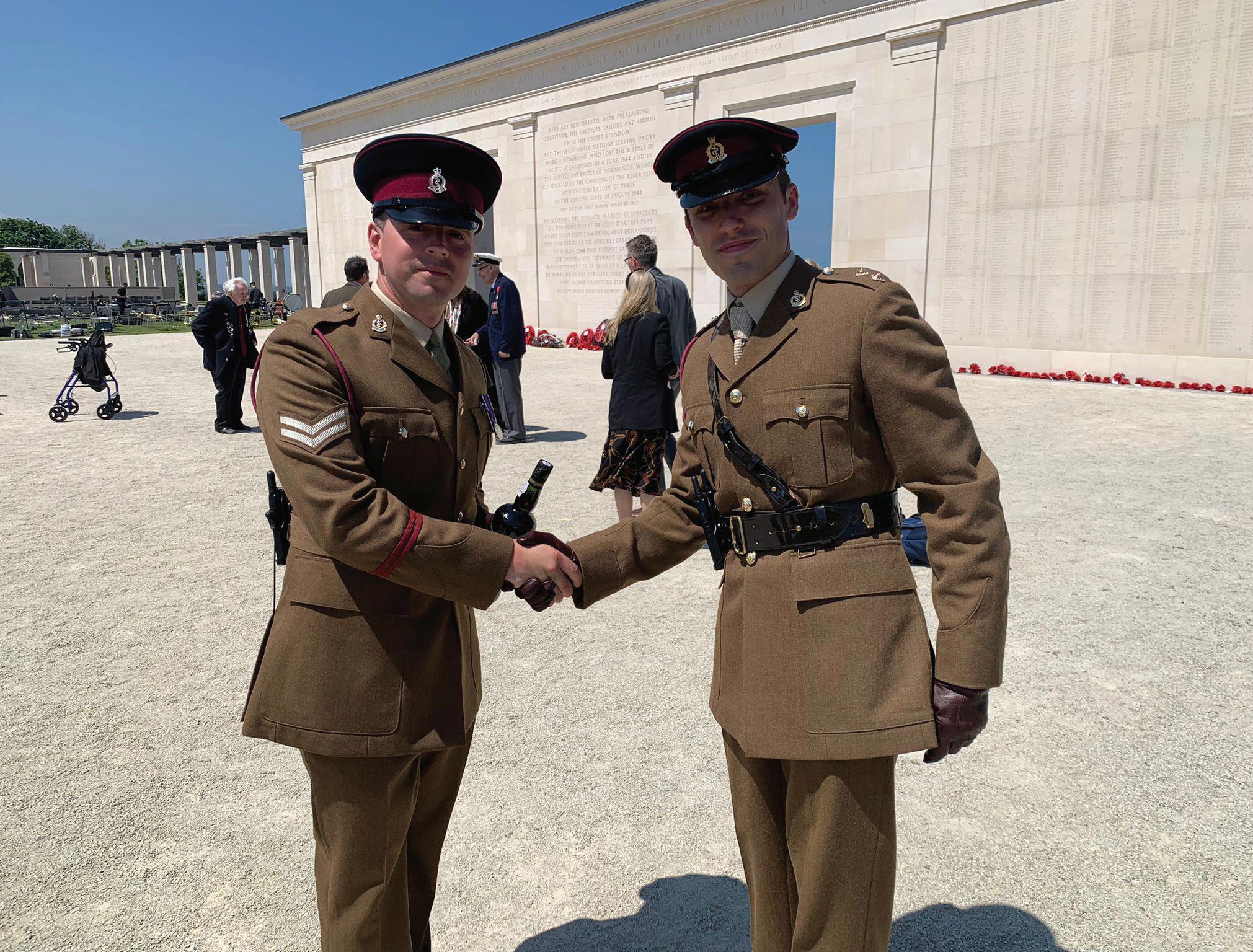
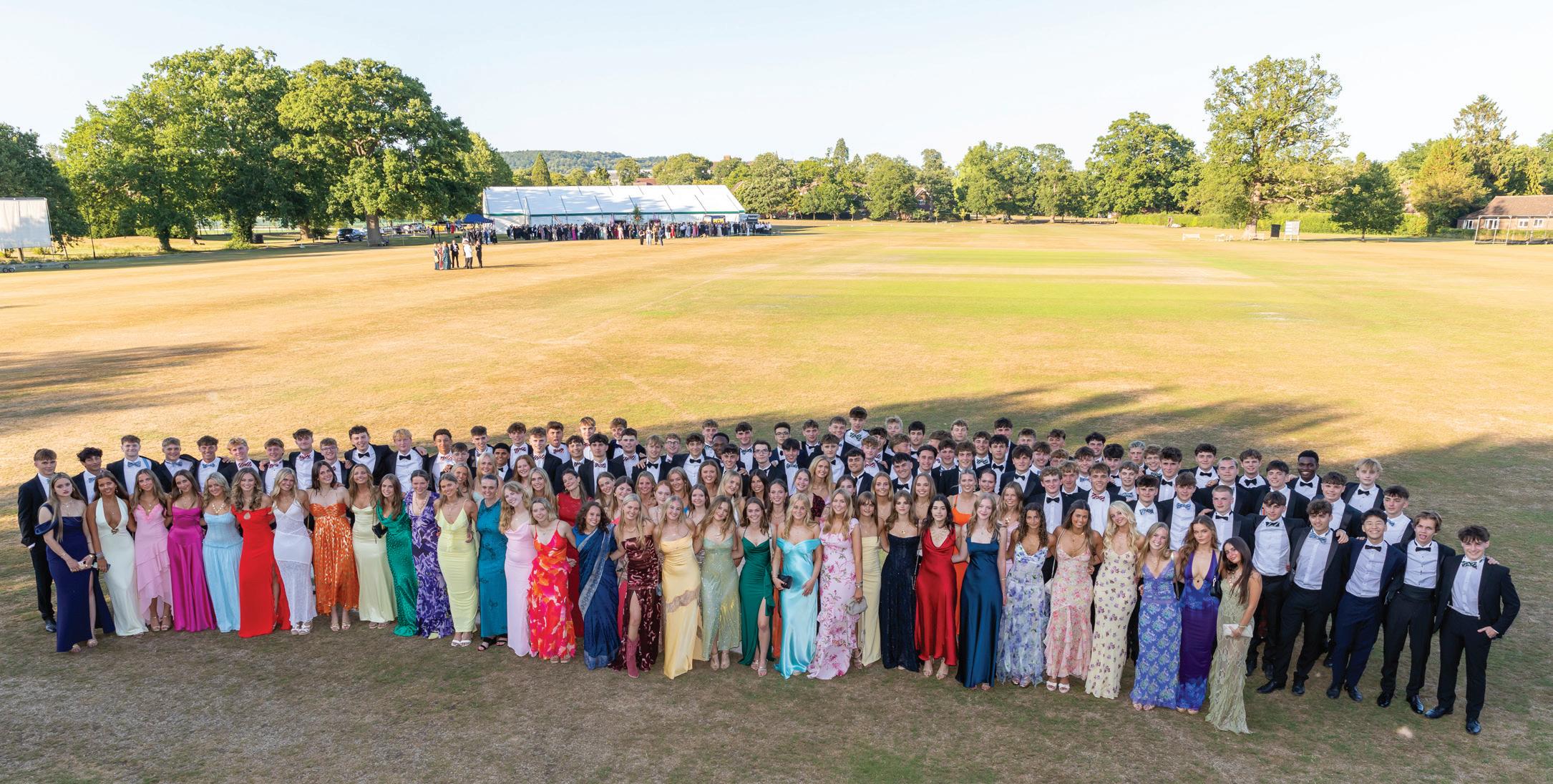
As the leavers' Chapel Service took place in the morning this year they weren't dressed in their finery for the traditional front steps photo, instead they gathered on Jubilee in the evening ahead of the Ball.
Rhys Williams 2017-2025
Rhys brought exceptional energy, warmth and humour to Cranleigh throughout his time here. Despite a famously full social calendar, he was a highly accomplished Geography teacher, an excellent East tutor and a committed sports coach.
Rhys’s enthusiasm extended well beyond the classroom: he was a dedicated chorister in a Welsh male voice choir and a constant source of good spirits among colleagues. His ability to balance such a vibrant life with outstanding professional commitment made him a much-loved member of the community.
Rhys left Cranleigh to pursue his ambition of a career on the stage.
Megan Williams 2019-2025
Imagine a schoolroom where a mahogany haired maiden stands;
Her profile illuminated against the ivory backdrop, tome in outspread hand.
Her top lip curled in a sweetheart smile as her words flow
mellifluously down to her charges - perfectly poised, focused, listening.
KK, says a naysaying, nonchalant mischief, who’d rather believe school utterly futile, getting out there and working the way forward
and teachers, any teachers, a waste of time.
The lesson unfolds, the wisdom unfurls and the children ignite under her gentle, crisp wisdom.
Can you C the difference she’s made? Did you see the way she managed that problem?
Can you believe how many hours she spends in the theatre?
Her purpose and prowess in one so young is bewildering.
She’s leaving us though.
What? She can’t be?
But what will we do without her? Who can possibly fill her shoes?
The decision is made. We grapple with it, but ultimately, begrudgingly, accept our fate.
We wish her well and smile, genuinely behind her, her future successes, her oh so exciting new life in London and mean it with every bit of our heavy hearts.
But the head makes sense of what the heart doesn’t understand.
Our school will not be the same without her.
If only there was a W.
Kate Cummins 2021-2025
Katie arrived at Cranleigh in the midst of the pandemic in January 2021 from the exotic paradise of the Cayman Islands. Her time here started with teaching Drama on an iPad, not the easiest of tasks, but in doing this she showed that she was adaptable, independent and strongqualities that were in evidence again and again over the 4 and a bit years she was at the school. Katie contributed in a wide range of areas, Drama, English, Learning Support, in the boarding houses and on the sports fields. We wish her and Monty all the best as they move to Lincolnshire.
Ally Robinson 2021-2025
Ally has been an extraordinary presence at Cranleigh, combining warmth, humour and dedication in everything she did. As a tutor in Cubitt, she had the rare gift of making
every student feel valued and supported, and her interpersonal skills ensured that all who worked with her felt uplifted.
In the Photography department, Ally inspired creativity and confidence, encouraging every pupil to explore their talents. She also gave tirelessly to the Duke of Edinburgh programme, guiding students with patience and good humour, even when the paths were dark and challenging and she couldn’t find the children! Her kindness, energy and generosity of spirit have left a lasting mark on the school, and she will be greatly missed.
Tom Wilson 2021-2025
Tom started in 2021 fresh from Lancaster University, and quickly impressed both staff and students with his professionalism, energy and natural rapport. An excellent Geography teacher, Tom played a key role in maintaining the subject’s popularity and was admired for his clarity, humour and commitment to his pupils.
Beyond the classroom, Tom embraced every aspect of school life. He coached rugby, cricket and, above all, football—where his passion and drive helped propel Cranleigh teams to new success. His contribution as a regular in the staff football side was equally valued.
As Deputy Housemaster of East, Tom brought dedication, warmth and high standards, supporting the boys wholeheartedly and strengthening the house community. His leadership, particularly during East’s
famous Quiz and Curry evenings, earned him the respect of colleagues, parents and students alike.
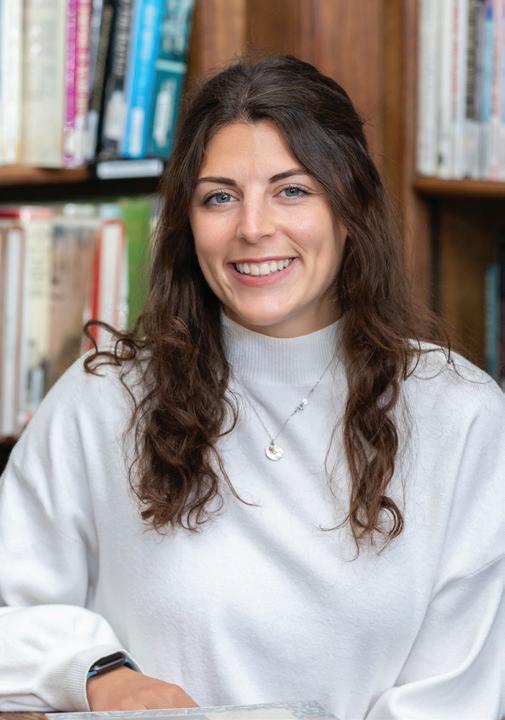
Julie Wise 2021-2025
Julie arrived in 2021 postCovid like a comet, and burned brightly ever since. A Cambridge grad with superb academic credentials and an elite sporting background, she was the perfect fit here and over the past four years she has been a whirlwind who has given everything to Cranleigh, whether on the astro with the 3rd XI and APS, running PT lacrosse, providing exemplary pastoral care in East as Assistant HM, or taking Class Civ and Latin including cultural trips abroad. What a legacy she leaves behind.
Those who know Julie will recognise her ‘heart on her sleeve’ character - you don’t have to guess the sort of day she is having as she makes her enthusiasm for life completely known. One of her exhortations is to ‘slay the day’ or ‘carpe those diems’, catchphrases at morning call over that really set the tone to make the best of everything, bringing a huge positivity to the house environment. I can’t praise her pastoral care highly enough, but don’t just take
my word for it: comments from parents like this sum it up: “Obviously, we have been totally spoiled having Julie who is the most brilliant tutor”.
In 2023, Julie set up the Jewish Society, affectionately known as J-Soc. With J-Soc she has been relentless in engaging those pupils of Jewish heritage and helping provide a space to explore this sense of belonging. It began with four or five students and has mushroomed to around 15, meeting twice a term. For the first time in the school’s history the Jewish students had a community to go to with a kind and caring figurehead to support them. This has been another of Julie’s remarkable gifts: dynamically socially adept at bringing people together, and this legacy has meant so much to the collective, something very few other clubs or societies will manage.
Ollie Edwards 2022-2025
Ollie Edwards (Loveday 2012) returned to Cranleigh with a deep understanding of what makes this community special. As a Business Studies teacher, his attention to detail and continual refinement of resources saw him become a true craftsman and very popular in the classroom. His dry wit, collaborative spirit and steady support made him an invaluable colleague. Beyond the classroom, he was a dedicated sports coach and much-loved tutor in both Cubitt and North. As Head of Tennis, he not only enhanced the programme with his willingness to get involved with coaching at every age group but also launched the first Portugal training camp. His leadership of Green Dragons
and Cran.do showcased his passion for enterprise and sustainability. He will be greatly missed
David Reid 2023-2025
Rachel Jung 2023-2025
Will Statham 2023-2025

Invest your expertise in the next generation Join us in one (or more!) of our exciting Futures opportunities this year:
Your experience can shape the future. We’re inviting OCs to share their insight, inspire pupils, and help Cranleigh stay at the forefront of education.
Careers Conference & Exhibition | 9 Feb 2026 Share your story or showcase your organisation to inspire our pupils Become a “Crando” Mentor | Jan–Mar 2026 Guide entrepreneurial students as they turn £160 into a real business Future Skills Forum & OC 30 under 30 Awards Dinner | 28 April 2026 Help bridge the skills gap between education and industry
Be part of Cranleigh’s future. Scan QR Code to express your interest or contact Naomi Ambrose – njda@cranleigh.org