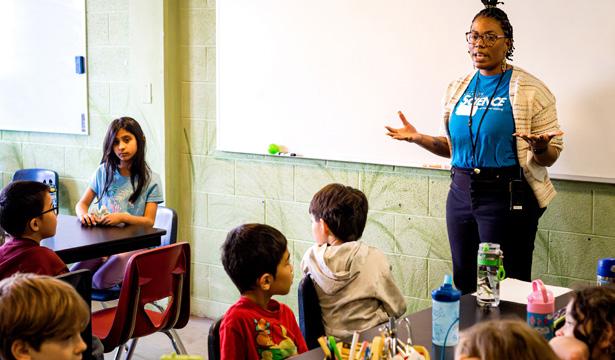
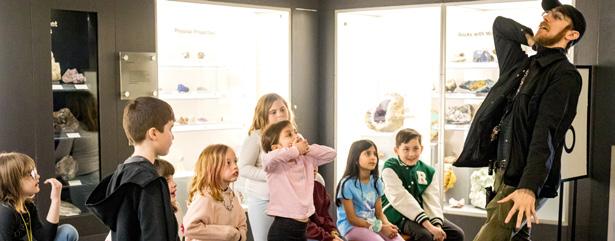
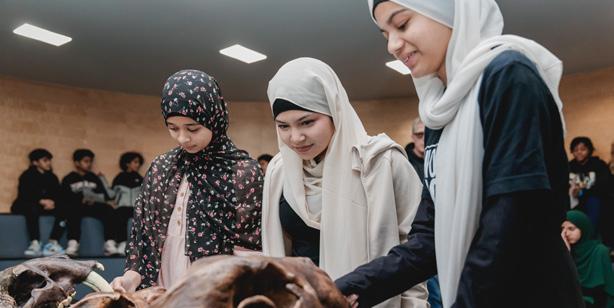
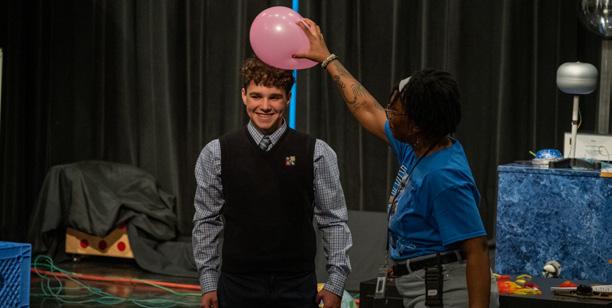
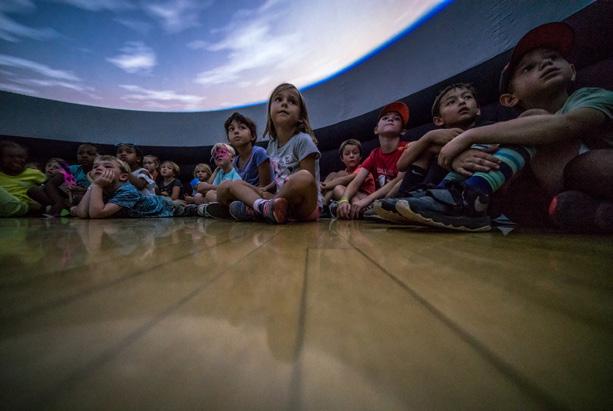
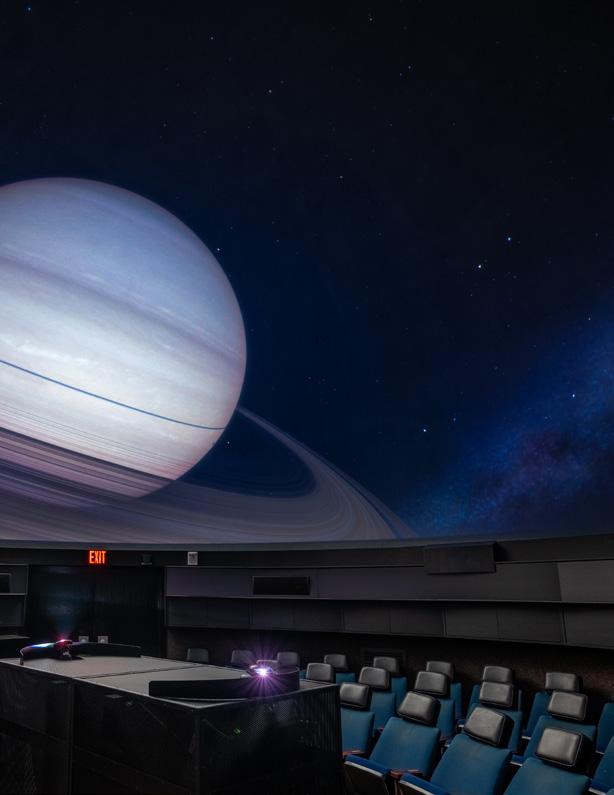
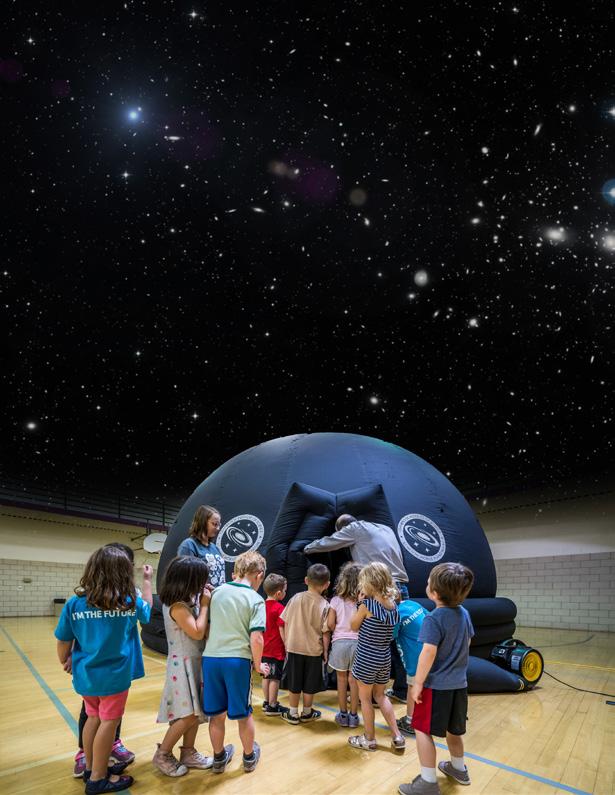
at the Acheson Planetarium or we can bring our Mobile Acheson Planetarium to your school or venue!
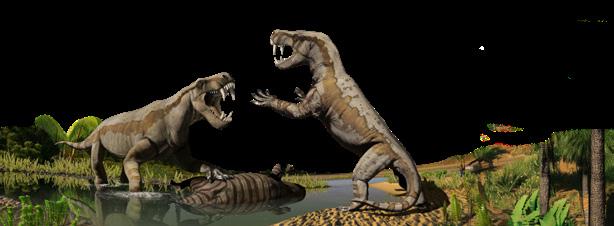
PLAN A TRIP to our newest traveling exhibits: Permian Monsters: Life before the Dinosaurs or Mystery of the Mayan Medallion! INTERACTIVE PROGRAMS at your location
VIRTUAL PROGRAMS that can take place just about anywhere
Experiences are designed for Pre-K-9+ classrooms/groups and include programs in astronomy, earth science, engineering, life science, physical science, computer science, and social studies. Our programs are Michigan Standards-aligned and can be customized to meet your curriculum.
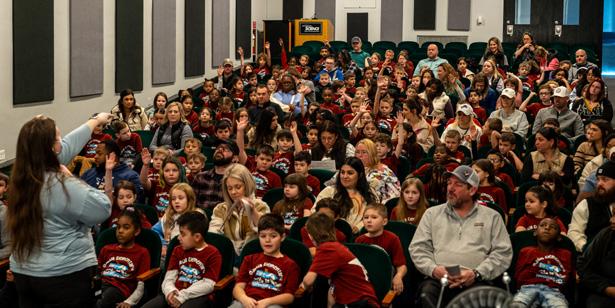
Every program participant gets an opportunity to visit the museum for FREE! After your programming, keep an eye out for your post-visit survey email with details.
PLANDAYYOUR OF DISCOVERY
Plan your field trip, outreach, or virtual program with Cranbrook Institute of Science by following the steps below, then complete your registration.
STEP ONE
Explore our program descriptions in this guide to discover the perfect experience for your class or venue.
STEP TWO
Consider the following for registration:
• Will this experience be virtual or in-person? If inperson, would you prefer a field trip to the Institute or a visit to your location? What time of year are you considering?
• Planning for a date more than 45 days away? Let us know your top three choices, and we’ll do our best to accommodate your first pick. Field trips are available Wednesday–Friday, while outreach programs are offered Monday–Friday, with weekend availability upon request.
• Looking to visit in less than 45 days? Email us at CISReservations@cranbrook.edu or call (248) 6453210, and we’ll check availability for your preferred date.
• Which experiences interest your group? Are you unsure? Programs are organized by grade level. We’re happy to help with recommendations! Email or call us.
• Field trip programs are available Wednesday–Friday, starting on the hour at 9:00am. Outreach program times can be adjusted to fit your schedule. Most programs run approximately 45 minutes.
• How many students, teachers, and chaperones will attend?
• What are the special needs of your group?
• If you’re visiting the museum, will your group be arriving by car, bus, or a combination of both?
• We occasionally take photos of visiting groups for future PR use. Please let us know at registration if you do not consent.
• PLEASE NOTE: A non-refundable $100 deposit is required at the time of booking to secure your date. This deposit will be applied to your total field trip cost.
STEP THREE
permission slips.
PROGRAMS FOR GRADES K-2 PROGRAMS FOR PRE-K
Programming is available through field trips to the museum, Science on the GO! (at your location), and Science on the SCREEN! (virtual). Use the key to determine how your classroom will experience each program.
Dino Tale | Earth and Space Science
Light & Sound | Physical Science
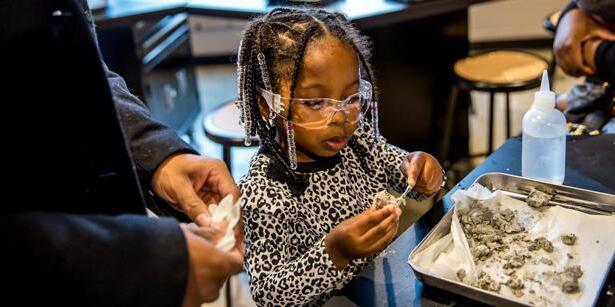
Work like a paleontologist and travel back in time to visit the land of dinosaurs and uncover the fossilization process. Using real specimens and model casts, piece together the story of those that ruled the land millions of years ago. For Science on the GO!, this is a single-class program.
Focus on the physics of waves to explore and describe the properties of light and sound, and discover how these forms of energy are generated, measured, and controlled. This auditorium presentation utilizes volunteer participants. For Science on the GO!, this program can accommodate multiple classrooms at one time.
Webs, Wings, and Crawling Things! | Life Science
Explore the fascinating adaptations of insects, arachnids, and more! This hands-on program investigates anatomy, adaptations, and behavior using models, mounted specimens, and assorted live insects from the Institute’s collection. For Science on the GO!, this is a single-class program.
What Makes Objects Move? | Physical Science
Utilize this inquiry-based experience to explore the concept of motion and study cause and effect relationships. Practice scientific processes by asking questions, observing, designing solutions, exploring materials, and communicating your ideas, all while discovering what causes objects to move. For Science on the GO!, this is a single-class program.
Many of our field trip programs can be customized for delivery at your location or virtually. Contact us at CISReservations@cranbrook.edu to inquire about creating a tailored experience for your group!
Programming is available through field trips to the museum, Science on the GO! (at your location), and Science on the SCREEN! (virtual). Use the key to determine how your classroom will experience each program.
NEW! Digital Literacy: What is AI? | Computer Science
Engage in digital literacy through AI simulations that help your students to uncover what artificial intelligence really is and how it works. The building blocks of AI offered in this program engage young learners in becoming more informed on their pathway to becoming digitally literate. Students participate in hands-on activities including the science of categorizing, creating a generative art model to predict outcomes, and utilizing children’s literature with probability to design small language models.
Dino Tale | Earth and Space Science
Work like a paleontologist and travel back in time to visit the land of dinosaurs and uncover the fossilization process. Using real specimens and model casts, piece together the story of those that ruled the land millions of years ago. For Science on the GO!, this is a single-class program.
Forces & Motion | Physical Science
Explore how scientists define “force” and “work.” Investigate how to make work easier by applying pushes and pulls to play tug-of-war and lift an adult off the ground using simple machines. This auditorium presentation utilizes volunteer audience participants.
Frontier Michigan | Social Studies
Embark on an interactive exploration of a multicultural community made up of Native Peoples, French habitants, and American settlers that lived in and around Southeastern Michigan in 1796. Pursuing the compelling question, “How did residents of the past live in the area currently known as Detroit?” students will have the opportunity to investigate various tools used by four 18th century residents.
SCIENCE ON THE GO! at your location
SCIENCE ON THE SCREEN! virtual program
FIELD TRIP at the museum
Learn how all these programs align with Michigan Standards!
Learn how all these programs align with Michigan Standards!
Light & Sound | Physical Science
Focus on the physics of waves to explore and describe the properties of light and sound, and discover how these forms of energy are generated, measured, and controlled. This auditorium presentation utilizes volunteer audience participants. For Science on the GO!, this program can accommodate multiple classrooms at one time.
Science Sampler
General Science
Let Cranbrook Institute of Science bring science to your school for a Family Science Night! During this 2-hour event, your school community will engage with 14 different hands-on science activities that your school selects from a list of options. You provide the volunteers, and we provide the fun!
Matter & Energy
Physical Science
Investigate matter and the qualities scientists use to classify it as a solid, liquid, gas, or plasma. Explore mechanical energy, sound energy, light energy, heat energy, electrical energy, and chemical energy, and the effect each has on matter. Observe how energy is neither created or destroyed but can change from one form to another. This auditorium presentation utilizes volunteer audience participants. For Science on the GO!, this program can accommodate multiple classrooms at one time.
Webs, Wings, and Crawling Things!
Life Science
Enter the world of insects, arachnids, and more! This hands-on program investigates anatomy, adaptations, and behavior, using models, mounted specimens, and assorted live insects from the Institute’s collection. For Science on the GO! and Science on the Screen!, this is a singleclass program.
What Makes Objects Move?
Physical Science
Utilize this inquiry-based experience to explore the concept of motion and study cause and effect relationships. Practice scientific processes by asking questions, observing, designing solutions, exploring materials, communicating ideas, all while discovering what causes objects to move. For Science on the GO!, this is a single-class program.
Many of our field trip programs can be customized for delivery at your location or virtually. Contact us at CISReservations@cranbrook.edu to inquire about creating a tailored experience for your group!
PROGRAMS FOR GRADES 3-5
Programming is available through field trips to the museum, Science on the GO! (at your location), and Science on the SCREEN! (virtual). Use the key to determine how your classroom will experience each program.
Approaches to Problem Solving | Science and Engineering
Experience the engineering skill of empathizing with others, the power of brainstorming ideas, and the necessity of creating a design prototype to meet the needs of a predetermined user. Participating in this Design Thinking process includes sharing and receiving group feedback to enhance prototypes. For Science on the GO!, this is a single-class program.
Archimedes’ Principle | Physical Science
Students investigate the phenomenon of why objects are lighter in water. Utilizing the claim, evidence, and reasoning method (CER), they will evaluate a hypothesis. Students work in groups to collect and analyze authentic measurements and data, creating a model of their investigation and applying critical thinking to scientifically connect their evidence to their claim. For Science on the GO! this is a single-class program.
In tandem with our traveling exhibit about life before dinosaurs, utilize the claim, evidence, and reasoning method to support what we know about life on Earth before dinosaurs. Students investigate fossil specimens and manipulate models of both Earth’s rock patterns and food webs to understand the fauna and flora of ancient time. For Science on the GO!, this is a single-class program.
NEW! Digital Literacy: How Do We Train AI? | Computer Science
Engage in digital literacy through AI simulations that help your students uncover what artificial intelligence really is and how it works. The building blocks in this program invite learners to participate in making informed decisions on their pathway to becoming digitally literate. Utilizing the science of perception, students immerse themselves in hands-on activities to discover if machines can learn. Students will build decision trees to ID content and better understand how machines make meaning from an input. For Science on the GO!, this is a single-class program.
PROGRAMS FOR GRADES 3-5
CONTINUED
Dinos Drawn Wrong | Life Science
Ponder the fact that every dinosaur image ever constructed was based solely on the evidence or knowledge available at the time. As scientists unearth new evidence and data is updated, so is our understanding of what dinosaurs may have looked like – possibly rendering previous images inaccurate! This hands-on program demonstrates how paleo artists use current science to make the most accurate designs possible.
Electricity & Magnetism | Physical Science
In this energetic program, examine the properties of magnets and how they interact with common materials and each other. Investigate the discovery of electricity and its connection with atoms. Create a human magnet, a human circuit, perform a hair-raising experiment, and experience our million-volt lightning generator to observe how electricity and magnetism interact with matter. This auditorium presentation utilizes volunteer audience participants.
Forces & Motion | Physical Science
Explore how scientists define “force” and “work.” Investigate how to make work easier by applying pushes and pulls to play tug-of-war and lift an adult off the ground using simple machines. This auditorium presentation utilizes volunteer audience participants.
Fur Trade Alive! | Social Studies
Meet a French voyageur on the middle ground between Native Peoples and European traders of 18th century Michigan. Hands-on materials enliven the adventure, which takes place in a period Native American replica wigwam (weather permitting).
How Did T. rex Become the Ruler of the Dinosaurs? | Life Science
Examine fossil casts of T. rex from different stages of development and draw conclusions on how this massive dinosaur’s structures supported its growth, behavior, and overall survival as the apex predator of its time. Recent studies focusing on the T. rex brain, including how it likely processed information and its perceived level of intelligence, will be analyzed. For Science on the GO!, this is a single-class program.
Light & Sound | Physical Science
Focus on the physics of waves to explore and describe the properties of light and sound, and discover how these forms of energy are generated, measured, and controlled. This auditorium presentation utilizes volunteer audience participants. For Science on the GO!, this program can accommodate multiple classrooms at one time.
Matter & Energy | Physical Science
Investigate matter and the qualities scientists use to classify it as a solid, liquid, gas, or plasma. Explore mechanical energy, sound energy, light energy, heat energy, electrical energy, and chemical energy, and the effect each has on matter. Observe how energy is neither created or destroyed but can change from one form to another. This auditorium presentation utilizes volunteer audience participants. For Science on the GO! this program can accommodate multiple classrooms at one time.
Michigan Ecosystems | Life Science
Explore the interrelationships between living and nonliving things to see how energy flows through food webs to sustain life. Students work in groups to create a manipulative model of a food web and then participate in collaborative, design feedback.
Money! | Social Studies
Explore the compelling question of how we meet our wants and needs in a world of limited resources. Trace the development of human economies across the centuries, with close-up views of ancient and modern currencies from around the world. Interactive activities bring to life marketplaces past and present and the choices consumers make each day. For Science on the GO! and Science on the Screen!, this is a single-class program.
Our Dynamic Earth | Earth and Space Science
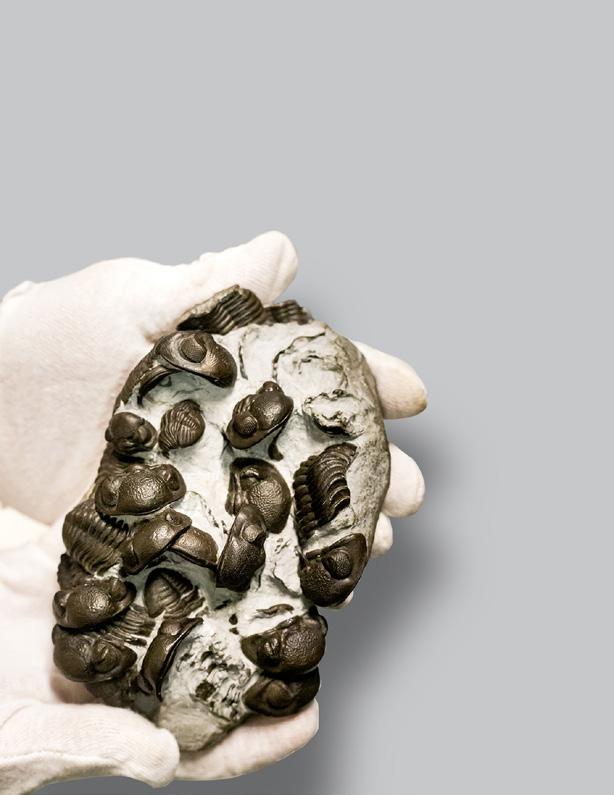
Investigate actual fossils, rocks, and minerals from the Institute’s collection! Consider what clues the samples of glacial till, limestone, halite, copper, and marine fossils provide about Michigan’s geologic history. Gather evidence to support explanations about changes in Michigan’s landscape over time. For Science on the GO! and Science on the SCREEN!, this is a single-class program.
PROGRAMS FOR GRADES 3-5
People Of The Three Fires | Social Studies
Trace the story of Michigan’s Native Peoples from the end of the last Ice Age to the present day. Investigate the lifeways of Anishinaabeg (Ojibway, Ottawa, and Potawatomi) across the centuries, touching on language, technologies, and artforms.
Pegboard Challenge | Science and Engineering | Recommended for grades 5+
Learn about one of NASA’s greatest engineering “square peg in a round hole” problem solving moments that took place during the Apollo 13 mission. Then test your own problem-solving skills to work out the Pegboard Challenge. Like an engineer, think outside the box, and collaborate with your group to move a small ball across obstacles with a limited amount of time and resources.
Physics of Fling | Physical Science
Explore Newton’s three laws and how forces cause motion. Learn the history of the trebuchet and observe the power of physics using the Institute’s three-ton trebuchet, capable of launching a watermelon-sized object the length of a football field or more! This program takes place outside, and is offered, weather permitting,September 17 - November 7, 2025 AND April 15 - June 12, 2026. This program can also take place at your location, however, a large outdoor space (size of football field) is required for the trebuchet launch. For Science on the GO!, this is a single-class program.
Weather, Climate, and our Planet | Earth and Space Science
Immerse in this thought-provoking and entertaining program to gain a better understanding of weather and climate and how one drives the other. Live demonstrations support an empathetic comprehension of climate systems, and the natural and human roles that trigger positive and negative outcomes for our planet. This is an auditorium presentation.
Diets of Giants | Life Science
Challenge common knowledge of carnivores by comparing three of the largest predatory dinosaurs of prehistoric time. Although they seemed to have similar traits, these dinosaurs had little in common. Investigate adaptations that allowed them to exploit unique niches in their ecosystems and analyze how they achieved apex status.
Science Sampler | General Science
Let Cranbrook Institute of Science bring science to your school for a Family Science Night or School Daytime Event! During this 2-hour event, your school community (up to 300 guests max) will engage with 14 different hands-on science activities that your school selects from a list of options. You provide the volunteers, and we provide the fun!
PROGRAMS FOR GRADES 6-8
Many of our field trip programs can be customized for delivery at your location or virtually. Contact us at CISReservations@cranbrook.edu to inquire about creating a tailored experience for your group!
Programming is available through field trips to the museum, Science on the GO! (at your location), and Science on the SCREEN! (virtual).
Use the key to determine how your classroom will experience each program.
Archimedes’ Principle | Physical Science
Students investigate the phenomenon of why objects are lighter in water. Utilizing the claim, evidence, and reasoning method (CER), they will evaluate a hypothesis. Students work in groups to collect and analyze authentic measurements and data, creating a model of their investigation and applying critical thinking to scientifically connect their evidence to their claim. For field trips and Science on the GO! this is a single class program.
NEW! Claim, Evidence, and Reasoning (CER) Permian Monsters Science and Engineering
In tandem with our traveling exhibit about life before dinosaurs, we utilize the claim, evidence, and reasoning method to support what we know about life on Earth before dinosaurs. Students investigate fossil specimens and manipulate models of both Earth’s rock patterns and food webs to understand the fauna and flora of ancient time.
NEW! Digital Literacy: How Does AI Work? | Computer Science
Engage in digital literacy through AI simulations that help your students more accurately understand what artificial intelligence really is and how it works. The foundational concepts offered in this program invite learners to participate in making informed decisions on their pathway to becoming digitally literate. Utilizing the science of perception, students participate in hands-on activities to uncover how machines learn. Students will design and apply unbiased decision trees to classify information, discover how machines are able to beat you in a game, and better understand how machines make meaning from an input.
Every Rock Has a Story | Earth and Space Science
Explore and evaluate geologist Alfred Wegener’s evidence for continental drift and the existence of the supercontinent Pangaea with numerous rocks, fossils, and casts from Antarctica, Africa, and Australia. See how new technology and exploration of the deep oceans provided further evidence for the theory of plate tectonics, including how this explains the present-day distribution of earthquakes, volcanoes, mountains, rift valleys, rocks, and minerals. Also included are plate tectonic events that occurred in Michigan over 1 billion years ago! For Science on the GO! and Science on the SCREEN!, this is a single-class program
SCIENCE ON THE GO! at your location
SCIENCE ON THE SCREEN! virtual program
FIELD TRIP at the museum
Learn how all these programs align with Michigan Standards!
Learn how all these programs align with Michigan Standards!
Earth’s History
Earth and Space Science
Gather evidence from the fossil record using Institute fossil specimens to construct an explanation of how the geologic time scale is used to organize Earth’s history. Examine real fossils, place them in order of emergence from oldest to youngest following the law of superposition, and identify time periods of a species’ existence, extinction, or adaptation over time.
Electricity & Magnetism
Physical Science
In this energetic program, examine the properties of magnets and how they interact with common materials and each other. Investigate the discovery of electricity and its connection with atoms. Create a human magnet, a human circuit, perform a hair-raising experiment, and experience our million-volt lightning generator to observe how electricity and magnetism interact with matter. This presentation utilizes volunteer audience participants.
How Did T. rex Become the Ruler of the Dinosaurs? | Life Science
Examine fossil casts of T. rex from different stages of growth and development and draw conclusions on how this massive dinosaur’s structures supported its growth, behavior, and overall survival as the apex predator of its time. Recent studies focusing on the T. rex brain, including how it likely processed information and its perceived level of intelligence, will be analyzed. For Science on the GO!, this is a single-class program.
Matter & Energy | Physical Science
Investigate matter and the qualities scientists use to classify it as a solid, liquid, gas, or plasma. Explore mechanical energy, sound energy, light energy, heat energy, electrical energy, and chemical energy, and the effect each has on matter. Observe how energy is neither created or destroyed but can change from one form to another. This auditorium presentation utilizes volunteer audience participants. For Science on the GO!, this program can accommodate multiple classrooms at one time.
More Money! | Social Studies
Go global in this exploration of Macroeconomics! How do world-shaking events, natural and man-made, affect the World’s economic system? How does that impact our daily lives? Students explore the roots of modern free-market and command economies and play a fastpaced, interactive card game, taking the role of world traders in commodities such as oil and electronics. For Science on the GO!, this is a single-class program.
Pegboard Challenge Science and Engineering
Learn about one of NASA’s greatest engineering “square peg in a round hole” problem solving moments that
took place during the Apollo 13 mission. Then test your own problem-solving skills to work out the Pegboard Challenge. Like an engineer, think outside the box, and collaborate with your group to move a small ball across obstacles with a limited amount of time and resources.
Physics of Fling | Physical Science
Explore Newton’s three laws and how forces cause motion. Learn the history of the trebuchet and observe the power of physics using the Institute’s three-ton trebuchet, capable of launching a watermelon-sized object the length of a football field or more! This program takes place outside, and is offered, weather permitting, September 17 - November 7, 2025 AND April 15 - June 12, 2026. This program can also take place at your location; however, a large outdoor space (size of football field) is required for the trebuchet launch. For Science on the GO!, this is a single-class program.
Weather, Climate, and Our Planet Earth and Space Science
Immerse in this thought-provoking and entertaining experience to gain a better understanding of weather and climate and how one drives the other. Live demonstrations support an empathetic comprehension of climate systems, and the natural and human roles that trigger outcomes for our planet. This is an auditorium presentation.
Science Sampler | General Science
Let Cranbrook Institute of Science bring science to your school for a Family Science Night! During this 2-hour event, your school community (up to 300 guests max) will engage with 14 different hands-on science activities that your school selects from a list of options. You provide the volunteers, and we provide the fun!
NEW! Groundwater Detectives Earth and Space Science
Explore the importance and mechanics of groundwater resources and their importance to Michigan communities. Students will work in teams to investigate groundwater contamination and utilize detective skills following clues to determine the pollution source, then brainstorm solutions to clean up contamination.
NEW! Live in a Watershed Earth and Space Science
Investigate the ways in which land use impacts the water quality of local watersheds and ultimately the Great Lakes through hands-on learning. Students will work in teams to examine the problem of stormwater runoff by designing and polluting a model community and discover how green infrastructure can protect their watershed.
PROGRAMS FOR GRADES 9+/ADULTS
Learn how all these programs align with Michigan Standards!
Programming is available through field trips to the museum, Science on the GO! (at your location), and Science on the SCREEN! (virtual). Use the key to determine how your classroom will experience each program.
Many of our field trip programs are customizable for delivery at your location or virtually. Send a message to CISReservations@cranbrook.edu to inquire about curating an experience for your group!
NEW! Digital Literacy: Critical Thinking | Science and Engineering Practices
Students become more skilled consumers and producers of information as they uncover the importance of determining the purpose and source of the information with which they engage. Students analyze examples of various digital content to become familiar with identifying the content’s purpose, credibility, and how to consider if it is AI generated. Ultimately, conducting a practice to determine the validity of claims made related to globally shared digital content
Every Rock Has a Story | Earth and Space Science
Explore and evaluate geologist’s Alfred Wegener’s evidence for continental drift and the existence of the supercontinent Pangaea with numerous rocks, fossils, and casts from Antarctica, Africa, and Australia. See how new technology and exploration of the deep oceans provided further evidence for the theory of plate tectonics, including how the theory explains the present-day distribution of earthquakes, volcanoes, mountains, rift valleys, rocks, and minerals—including plate tectonic events that occurred in Michigan over 1 billion years ago! For Science on the GO and Science on the Screen!, this is a single-class program.
Earth’s History | Earth and Space Science
Gather evidence from the fossil record using Institute fossil specimens to construct an explanation for how the geologic time scale is used to organize Earth’s history. Examine real fossils, place them in order of emergence from oldest to youngest following the law of superposition, and identify time periods of a species existence, extinction, or changes over time.
How Did T. rex Become the Ruler of the Dinosaurs? | Life Science
Examine fossil casts of T. rex from different stages of growth and development and draw conclusions on how this massive dinosaur’s structures supported its growth, behavior, and overall survival as the apex predator of its time. Recent studies focusing on the T. rex brain, including how it likely processed information and its perceived level of intelligence, will be analyzed. For Science on the GO!, this is a single-class program.
PROGRAMS FOR GRADES 9+/ADULTS
CONTINUED
My Money! | Social Studies
Help students prepare to enter the working world in this activity-based program that starts with a whirlwind tour of the history of money with artifacts from the Institute’s collections. Then it poses the question, “How can I retire as a millionaire?” Using the Financial Literacy & Education Commission’s My Money Five principles approach, participants engage in activities to understand the importance of creating a household budget and building a retirement plan. For Science on the GO!, this is a single-class program.
Physics of Fling | Physical Science
Explore Newton’s three laws and how forces cause motion. Learn the history of the trebuchet and observe the power of physics using the Institute’s three-ton trebuchet, capable of launching a watermelon-sized object the length of a football field or more! This program takes place outside, and is offered, weather permitting, September 17November 7, 2025 AND April 15 - June 12, 2026. This program can also take place at your location; however, a large outdoor space (size of football field) is required for the trebuchet launch. For Science on the GO!, this is a single-class program.
Process of Photosynthesis | Life Science
Use LEGO® Bricks to build and talk through the process of photosynthesis to demonstrate conservation of mass. In this program students will: visualize how atoms combine to form molecules and how each has a specific shape; use chemical formulas to represent the number and kinds of atoms in a molecule; physically build the photosynthesis/ respiration equation with LEGO® Bricks to model both the reactants and products; and discover that most of a plant’s mass comes from air and water rather than soil.
ACHESON PLANETARIUM
Educational Shows
Cosmic Colors: An Adventure Along the Spectrum | Earth and Space Science
Recommended for grades 6 - 9+
Journey with us across the entire electromagnetic spectrum. Discover the many reasons for color – why is the sky blue, or why is Mars red? Take a tour within a plant leaf and journey inside the human eye. Investigate x-rays by voyaging to a monstrous black hole and then back to your doctor’s office. You will even see the actual color of a dinosaur based on recent evidence.
Dinosaurs at Dusk Earth and Space Science
Recommended for grades 3 - 9+
Take to the skies and discover the origins of flight with a father and his teenage daughter who share a fascination for all things that fly. Navigate with them across continents, meet the ancestors of modern-day birds (the feathered dinosaurs), and experience the cataclysmic “last day” of the dinosaurs.
Earth’s Changing Climate Earth and Space Science
Recommended for grades 3 - 9+
Students will examine how clouds and gases in our atmosphere affect climate, and how wind and ocean currents modify climate on a global scale. We’ll discover how ice cores tell us what the climate was like hundreds of thousands of years ago, see how global temperatures have changed in the last 125 years, and what the future may hold if current trends continue. Together, we’ll explore what may be causing climate change and how it could affect the future of our planet. Could Earth end up like Venus or Mars? This is a live-narrated program.
Evolution of the Stars
Earth and Space Science
Recommended for grades 6 - 9+
Learn about the evolution of the stars, the Sun in particular, in this energetic, informative program. From the turbulent cauldron of their birth, through the multitude of cataclysmic ways they can meet their end, discover the many untold secrets of the stars. This is a partially live-narrated program.
From Dream to Discovery: Inside NASA Engineering | Engineering
Recommended for grades 6 - 9+
Experience the challenges of the next generation of space exploration in this immersive program. By using exciting, real-life projects like NASA’s James Webb Space Telescope and the New Horizons mission to Pluto, the show highlights the extreme nature of spacecraft engineering and the life cycle of a space mission – from design and construction to the rigors of testing, launch, and operations. Blast off and take the voyage with us! This program also contains an interactive segment that allows participants to assist in the design of a virtual space mission. From Dream to Discovery is made possible by the generous support of the Baiardi Family Foundation
Michigan Sky Tonight Earth and Space Science
Recommended for grades 3 - 9+
What will we see when I go outside tonight? What’s happening on Saturn? What are the latest hot topics in astronomy? Michigan Sky Tonight is a live-narrated program about what’s happening in the current night sky and in the universe of astronomy, from constellations to comets, planets to nebulae. This program is updated weekly to reflect the latest astronomical discoveries or topics of interest.
Natural Selection | Life Science
Recommended for grades 6 - 9+
Join young Charles Darwin on his adventurous voyage of exploration. Witness the thrill of scientific discovery by seeing the world through Darwin’s eyes, make observations of the most beautiful natural scenery, and let the pieces of the scientific puzzle fall into place. Darwin himself reveals the simple and most beautiful mechanism that explains the evolution of all life on Earth: natural selection.
Night Sky Objects & Beyond Earth and Space Science
Recommended for grades 3 - 9+
Many of our field trip programs are customizable for delivery at your location or virtually. Send a message to CISReservations@cranbrook.edu to inquire about curating an experience for your group! All programs are Michigan Standards-aligned.
Find the Big Dipper, North Star, planets, constellations, and more in the current sky. Observe the apparent motion of the sky and venture into interstellar space to explore our starry home – the Milky Way Galaxy – in stunning three dimensions! This partially live-narrated program is updated weekly to reflect the latest astronomical discoveries or topics of interest.
One World, One Sky: Big Bird’s Adventure | Earth and Space Science
Recommended for grades Pre-K - 2
Join Big Bird, Elmo, and Hu Hu Zhu on an exciting discovery of the Sun, Moon, and stars. Find the Big Dipper and the North Star and take an imaginary trip that explores the differences between the Moon and Earth. Then join them back on Earth to celebrate the idea that even though they live in different countries, they still share the same sky.
Reason for the Seasons | Earth and Space Science
Recommended for grades 4 - 9+
Could the seasons and the ever-changing night sky be linked? Find out in this dynamic, live presentation demonstrating why the start of the seasons depends on your location on Earth, as well as Earth’s position around the Sun. Observe the Sun’s altitude and daily motion from various latitudes and discover why your favorite constellations aren’t visible every night. This is a live-narrated presentation.
Season Changes & Moon Phases | Earth and Space Science
Recommended for grades 4 - 9+
Discover the reason for the seasons and learn why the start of the seasons depends on your location on Earth, as well as Earth’s position around the Sun. Observe the sun’s altitude, daily motion from various latitudes, visit Mars, discover the phases of the moon, and uncover the mysteries of both solar and lunar eclipses. This is a live-narrated presentation.
Secret of the Cardboard Rocket | Earth and Space Science
Recommended for grades K - 4
Join two young adventurers as they turn an old cardboard box into a rocket and blast off on an out-of-this-world experience to the most amazing places in the solar system! On the journey, they’ll visit the planets in our solar system and learn what makes each one unique. This program is available in either a 30- or 40-minute format.
Solar System Exploration Earth and Space Science
Recommended for grades 4 - 9+
Through this in-depth experience, explore the planets in our solar system, from their formation billions of years ago, to the current robotic missions sent to unlock their secrets. Learn about the latest discoveries of comets, moons, and icy bodies in the Kuiper Belt and beyond. See what the planets look like in the night sky and how they move along their orbits over time. This is a live-narrated presentation.
Stars of the Pharaohs Earth and Space Science
Recommended for grades 3+
Travel to ancient Egypt to see how science was used to tell time and align huge buildings. Learn about the connection the ancient Egyptians felt with the stars and various astronomical phenomena and see some of the most spectacular temples and tombs of the ancient world recreated in their original splendor.
Stories in the Stars Earth and Space Science
Recommended for grades 5 - 9+
Travel to the Isle of Crete where the legends of Zeus, Hercules, Orion, Perseus, Medusa, and many others come to life. The Ancient Greeks and Romans may not have understood the nature of the stars, but they certainly had vivid imaginations as they created their mythological legends and stories while looking at them. This is a live-narrated presentation.
The Great Lakes & Beyond Earth and Space Science
Recommended for grades 3 - 9+
Water is plentiful here in Michigan, including the beauty and majesty of the Great Lakes as well as countless other smaller bodies of water. Our water resources are not infinite, and they must be wisely cared for, thoughtfully preserved, and meticulously improved to ensure they can sustain use and enjoyment for current and future generations. We’ll answer the questions, “Does water exist elsewhere? If not now, did it in the past? Will it in the future? What do the other planets in our solar system tell us about water here on Earth?”
Young Stargazers Sky Journey Earth and Space Science
Recommended for grades Pre-K - 2
We’ll make the sky turn dark and sprinkle it with stars in this interactive show. During the program, your students will embark on a mesmerizing and educational journey through space watching the Moon change phases, tell stories by playing with connect-the-dot stars, and travel to the eight planets in our solar system – and even Pluto! This is a livenarrated program.
Learn how all these programs align with Michigan Standards!
ACHESON PLANETARIUM
Entertainment Shows
Dark Side of the Moon
Recommended for grades 10+
Dark Side of the Moon is the eighth album by the English rock band Pink Floyd. Originally released on 1 March 1973, on the label Harvest, it built on ideas explored in the band’s earlier recordings and live shows but departs from instrumental thematic by founding member Syd Barrett. The album explores themes including conflict, greed, the passage of time, and mental illness, the latter partly inspired by Barrett’s deteriorating mental state.
Let It Snow
Recommended for grades Pre-K - 9+
An energetic, fun, and entertaining adventure for all ages, Let It Snow features festive classics from Frank Sinatra, Chuck Berry, Burl Ives, and Brenda Lee. Students will be mesmerized by a stunning, multimedia finale by the TransSiberian Orchestra.
Mystery of the Christmas
Recommended for grades 3 - 9+
Star
Journey to Bethlehem as we examine the possible scientific explanation for the Star the Magi followed to find baby Jesus. Using recorded sightings of significant astronomical occurrences during related historical events, we’ll investigate possible dates for the birth of Jesus, which have been investigated by historians for centuries.
SPACEPARK360
Recommended for grades K - 9+
Dip toward molten pools on Io, one of Jupiter’s moons, dodge flying particles in the rings of Uranus, do a loop-the-loop through the canyons of Mars, and more on nine different “rides.” Set to popular music by White Zombies, U2, Stealers Wheel, Lenny Kravitz, and others, SpacePark360 is an immersive, allages experience.
SPACEPARK360:
LUCID DREAMING EDITION
Recommended for grades K - 9+
Experience the same great visuals as SpacePark360, but this time set to the infectious music of A Burning Century, an Atlanta-based alternative-rock-electronica band that combines soaring melodies with hard-hitting rhythms.
MAKE IT TO THE INSTITUTE?
We can bring the planetarium to you!
Embark on an out-of-this-world adventure in our portable digital planetarium! Explore the night sky, distant stars, planets, constellations, and so much more!
All planetarium programs offered at the Institute are also available year-round at our Acheson Mobile Planetarium, with the exception of Spacepark360 and SpacePark360: Lucid Dreaming Edition.
Shows available are designed for grades Pre-k - 9+
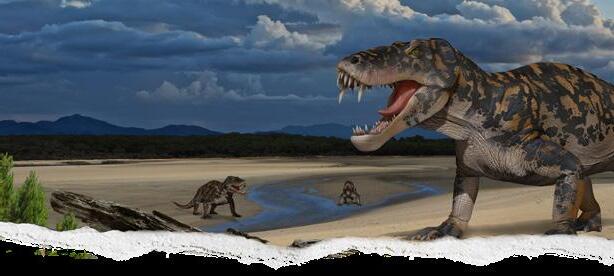
TRAVEL BACK IN TIME WITH PERMIAN MONSTERS:
September 28, 2025 – January 7, 2026
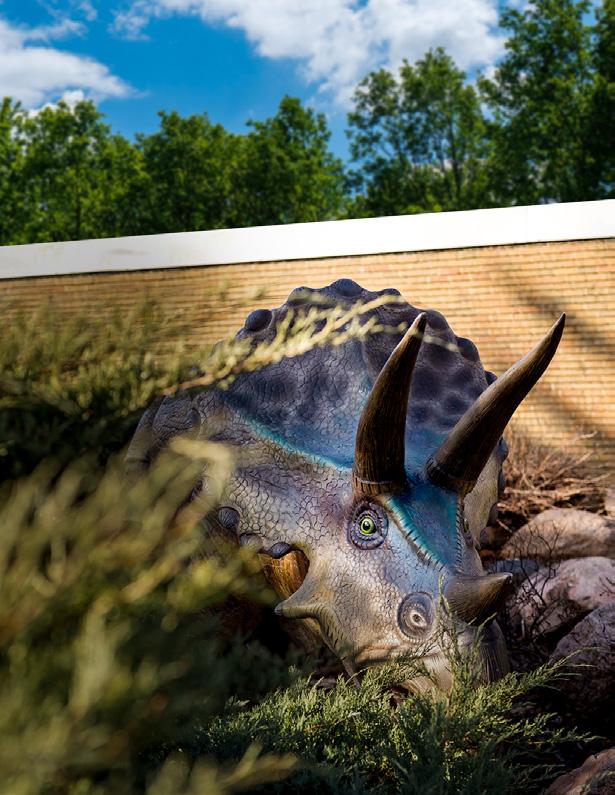
Transport your students 290 million years into the past to an Earth crawling with bizarre creatures and prehistoric wonders, just before the planet’s largest extinction event, at Permian Monsters: Life Before the Dinosaurs, one of the Institute’s newest traveling exhibits!
Be immersed in activities, life-sized displays, fossilized skeletons, and more to deepen your class’s understanding of the Permian Period, the creatures of this time, and what led to their extinction.
Uncover epic Earth science and thrilling ancient life that sparks curiosity and inspires STEAM discovery:
Dig, discover, and explore the weird and wild world that came before the dinosaurs with:
• Fossil dig boxes for hands-on exploration
• Life-sized models and fossilized skeletons
• Stunning paleo-art that fuses science and creativity
• Interactive computer games and lifelike animatronic creatures
DID YOU KNOW…
Long before the dinosaurs, the Permian Period set the stage for Earth’s greatest extinction—and a burst of bizarre and brilliant life!
UNCOVER THE MYSTERY OF THE MAYAN MEDALLION
SECRETS OF AN ANCIENT
WORLD AWAIT! Is your class ready to uncover them? Embark on an adventure to Palenque, Mexico, and follow the clues to locate the legendary jade medallion at Mystery of the Mayan Medallion one of the Institute’s newest traveling exhibits!
Your students will step into the role of archaeologists as they trek through a fully immersive, staged dig site. Along the way, they’ll explore interactive field stations, an observatory, a reconstructed Mayan tomb, burial scenes, and more—all designed to illuminate the life, culture, and achievements of the Mayan people.
Students will put their STEAM skills to the test while discovering how science helps us uncover the past. Key concepts they’ll encounter include:
January 30, 2026 – June 7, 2026 DIDYOUKNOW… TheMayaweremasterastronomers! Thisancientcivilizationclosely observedthesun,moon,andstars— creatingdetailedmapsofthenight sky,predictingcelestialevents,and evendevelopingtheirown calendarsystem. NEW TR AVELING EXHIBITION
PERMIAN PERIOD: The wild finale of the Paleozoic Era—before dinosaurs ruled the Earth!
PANGEA: One supercontinent to unite them all.
PALEONTOLOGY: Dig into the science of ancient creatures and fossils.
GEOLOGY: Explore Earth’s layers, history, and dramatic changes.
EVOLUTION: Meet the early ancestors of mammals, dinosaurs—and even modern birds!
During the Permian Period, early synapsids—reptilelike mammals—ruled the land, paving the way for modern mammals like us. Trees like conifers and ginkgos took root, and insects soared as the most diverse animal group. By the end of the Permian, 22 of today’s 36 insect orders already appeared.
YOUR NEXT FIELD TRIP Give your students a front-row seat to Earth’s strangest chapter! science.cranbrook.edu/explore/exhibits
HIEROGLYPH: A stylized picture that represents a word, syllable, or sound.
ASTRONOMY: The study of space and celestial objects beyond our planet.
ARCHAEOLOGY: The exploration of human history through excavation and analysis.
BIOLOGY: The science of life and living organisms.
ASTRO-MATHEMATICS: The application of math to understand the cosmos.
Now, your students can step into the role of junior archaeologists to uncover the Mystery of the Mayan Medallion and explore this incredible culture through:
• A reconstructed Mayan observatory that reveals how the Maya predicted astronomical events
• Interactive puzzles and displays that bring Mayan culture and scientific achievements to life
• An immersive tomb experience showing how archaeologists study ancient remains
• Hands-on STEAM stations that challenge students to apply knowledge in astronomy, biology, and archaeology
YOUR NEXT FIELD TRIP!
Give your class an unforgettable journey into the ancient world—where science meets mystery! science.cranbrook.edu/explore/exhibits
Mystery of the Mayan Medallion is an exhibit by the Discovery Network, a statewide program of the Museum of Discovery in Little Rock.
EVEN MORE TO EXPLORE!
Your students will be immersed in educational experiences and opportunities when they visit the Institute of Science. From rare and dazzling minerals to REAL meteorites, and even a full-size T. rex, there’s an incredible array of wonders to explore. We invite you to schedule a self-guided visit to one or more of our galleries during your next field trip!
ACHESON LIGHT LAB
Constructed of textured concrete block and seven different kinds of glass, the Light Lab rises nearly 40 feet and will shower students with patterned light and color as the Sun’s rays pass through the glass.
ASTRONOMY GALLERY
Highlights meteorites collected from around the world, tools of astronomy, and a mechanical model of our solar system.
EVERY ROCK HAS A STORY
Learn about materials that make up the Earth and processes that have shaped the globe over time. The Earth is constantly changing and the astonishing results include earthquakes, diamonds, and more.
FLINT ANTHROPOLOGY GALLERY
This exhibit features video clips and a soundtrack narrative telling the story of the Native People of the Great Lakes region and illustrates the impact new influences had on their way of life.
ICE AGES COME AND GO
Explore seasons, heat distribution, and how heat travels across the globe. Learn how Michigan’s landscape was carved by the movement of glaciers and how the Sun causes climate change on Earth.
ICE AGE SURVIVORS
Showcases large animals that survived the last pulse of the Late Quaternary extinctions in North America that occurred between 11,500 and 10,000 years ago.
LIFE CHANGES OVER TIME
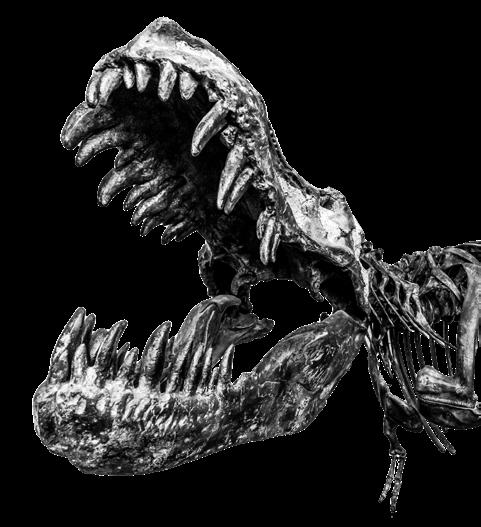
Come face-to-face with a full-sized cast of Tyrannosaurus rex and examine natural selection. Discover what dinosaur features are shared with common birds and so much more.
LIFE ON EARTH
Explore unique specimens and visual elements to present the complexities of Earth’s biodiversity. Earth’s ecosphere is stratified into zones, and some of them appear to be extremely inhospitable to life, yet organisms still thrive there.
M1 HYPER-LOOP CAR
Unlike more modern versions of tube-trains, where air is removed from the tube to reduce drag and friction, our model uses air pressure to propel the vehicle. Using air pressure to move objects, cargo, and people had been proposed by engineers as early as the late 18th century.
MASTODONS DID NOT SURVIVE
Examine extinction through the example of the mastodon, and learn about animals that went extinct by the close of the last Ice Age.
MEGALODON
This exhibit provides a wonderful photo opportunity to get your picture taken in front of the jaws of one of most dangerous ocean-go ing apex predators in history, Megalodon! As you get your photo taken, discover some in teresting facts about this giant fish and examine a real fossil tooth.
MINERAL STUDY GALLERY
Examine and discover more than 1,800 sparkling treasures in our Mineral Gallery, including 300 minerals from Michigan, such as gypsum, copper, and halite.
MOTION GALLERY
Encourages imagination and finesse as students play with physics, illustrating how matter, including you, travels, balances, and spins.
THE STORY OF US
Showcases the very best of the Institute’s nationally-regarded anthropology collection and offers an unprecedented immersion experience.
LEARN MORE ABOUT THESE EXHIBITS HERE!
PRICING & PAYMENT
SCHOOL-DAY FIELD TRIPS
Programs at the museum
Prices include admission, access to permanent and changing exhibits, parking, programming, and themed scavenger hunts to enhance your visit. Programs are approximately 45 minutes and begin on the hour.
Field trips require a minimum of 20 paying participants to qualify for group rates. Cranbrook Institute of Science memberships, museum passes, and reciprocal membership discounts do not apply to field trip costs.
Lunch space is limited and reserved on a first-come, first-served basis after we receive your field trip deposit. Lunch and transportation are NOT provided, but you are welcome to bring your own food or pre-purchase meals by calling the Reflections Café at 248.645.3201 at least 3 WEEKS prior to your visit. If you wish to pre-purchase, please indicate this in the ‘List Any Special Needs/Requests’ section of the registration form.
Pre-K and Kindergarten groups are allowed one free chaperone for every three students. For groups, grades 1-12, one free chaperone is allowed for every five students. Additional adults beyond the free chaperones are $14 per person.
SCIENCE ON THE GO!
Programs at your location
Programs last approximately 45 minutes.
SINGLE CLASS PROGRAMS
Max 30 students per program $385
Each additional same day program $225
MULTI-CLASS PROGRAMS
Max 150 students per program .................................... $485
Each additional same day repeat program $325
TRAVEL FEES LISTED ON PAGE 24
Email us for custom programming!
SCIENCE SAMPLER
Offered school days or evenings at your location
PRICE INCLUDES: 14 school-selected activities (three options include make-and-takes) for up to two hours
REQUIRES: 14 tables, 14 chairs, 14 adult/highschool volunteers (min.), 1 power outlet, access to water
High School students make great volunteers and require an adult chaperone, secured by the school, who provides onsite supervision throughout the entire program
MAX 300 participants per program $800
Additional consecutive time ............................... $300/Hr
Price per Class per Program $200 (MAX 30 Students)
Venue is responsible for providing connection link to the Institute of Science and participants (Zoom or Teams compatible).
For information about custom student kits and costs please email us!
INTERESTED IN BOOKING A VISIT TO OCCUR WITHIN 45 CALENDAR DAYS?
FULL PAYMENT is due at booking and the below cancellation policies apply.
PAYMENT & CANCELLATION POLICIES
A $100 non-refundable registration fee is required at time of booking to place a temporary hold on your requested date. This will be credited toward your reservation or forfeited if (at any time) the program is canceled by the school.
No less than 45 calendar days before your program date, the remaining balance is due. Non-payment will result in cancellation of your reservation and loss of registration fee and any deposits.
Final balance due is based on attendance reported 45 calendar days before the date of your reservation or the number of attendees on the day of the visit (for field trips), whichever is greater.
Less than 45 days from the date of your reservation, balances will only be updated due to increased attendance (for field trips).
If we receive a cancellation in writing more than 45 calendar days before the date of your visit:
• You may reschedule with no additional fees.
• Your registration fee and payments will be credited towards a future reservation before May 29, 2026.
If we receive a cancellation in writing 45 calendar days or less before the date of your visit, your registration fee and payments are forfeited.
All cancellations must be in writing and received no less than 45 calendar days prior to your scheduled reservation day.
CISReservations@cranbrook.edu
FAQ’S
How many people are required to receive group rates at Cranbrook Institute of Science?
20 paying participants. This can be any combination of adults and students.
What if my group is less than 20, but I still want a private program?
What are your group rates for homeschool groups?
During the week, school-day field trip fees apply. Chaperones are $14 per person, with one chaperone admitted free of charge per every five students, after the 20-person group minimum has been met.
FAQ’S
You may pay for 20 people at the group rate (even if your group is smaller), and you can still receive a program for your group.
We only want to see a planetarium show. Can’t we just pay for the planetarium?
The Acheson Planetarium may be rented for private shows at mutually agreeable times. For school-day groups, planetarium programs may be selected as one (or more) of the group’s programs.
Can we visit the museum without seeing a program?
School-day group visits have the cost of programming factored into ticket prices. Foregoing programming will not affect pricing, and your visit will be limited to a total of two hours from arrival. Admission pricing for senior/private weekend groups is independent of program charges.
Teachers are free, provided the 20-person group minimum has been met.
How far in advance should I secure my group visit?
Reservations are accepted on a first-come, firstserved basis. We recommend scheduling as soon as possible and no less than 45 calendar days in advance of your desired date of visit.
When are my final attendance numbers due?
45 calendar days, minimum, in advance of your group’s visit.
What if fewer people come on the day of our scheduled field trip?
Final balance due is based on attendance reported 45 calendar days before the date of your visit or the number of attendees on the day of the visit, whichever is greater.
Fewer than 45 days from the date of your visit, balances will only be updated due to increased attendance.
What if I need to cancel my group’s reservation?
All cancellations must be in writing and sent to CISReservations@cranbrook.edu more than 45 calendar days before the date of your reservation to qualify for:
• Reschedule with no additional fees
• Your registration fee and payment(s) will be credited towards a future reservation occurring before May 29, 2026
If we receive a cancellation in writing 45 calendar days or fewer before the date of your reservation:
Registration fee and payments are forfeited
What deposit is required to secure my group’s reservation?
A $100 non-refundable registration fee is required at time of booking to place a temporary hold on your requested date. This will be credited toward your reservation or forfeited if, at any time, the trip is canceled by the school.
How long are your educational programs?
Most programs are approximately 45 minutes in length.
When are programs offered?
Group programs are offered Wednesdays, Thursdays, and Fridays, on the hour, beginning at 9:00am.
Sometimes we can request alternate schedules – do not hesitate to ask!
How far in advance of my group’s program do I need to arrive?
Groups are expected to arrive no less than 15 minutes prior to the first scheduled program start time.
What if my group is running late?
Please call the Reservations Office at 248.645.3210 or 248.645.3290.
What are the expectations of chaperones?
Teachers and Chaperones must remain with their group at all times – always watching over the children in their care. Phones are required to be silenced during program times; please limit adult-to-adult conversations during museum visit time. Beverages and food are only allowed in lunch rooms.
Transform your lessons into memorieslasting with Cranbrook Institute of Science!
If you have any questions about our programs or would like to customize an experience for your group, please contact us by email or phone. We’re happy to work with you to create a field trip that meets your needs, whether at the museum, at your location, or virtually!
CISReservations@cranbrook.edu 248.645.3210
Free Educator Resources!
Have you received grant funding and are seeking Out of School Programs? The REMC Association of Michigan is committed to improve learning for all students by offering free resources for educators and provide effective cost savings through statewide cooperative purchasing. Visit remc.org for more details!
We offer more than just field trips!
Cranbrook Institute of Science can bring excitement to your school with our summer outreach programs, whether it's a one-time visit, repeated sessions, or community events. Many districts and groups love booking us for end-of-summer experiences, including back-to-school picnics and open-house events featuring our Science Samplers and shows! Teacher Open House! Save the Date! Wednesday, June 3, 2026
Educators are invited to come enjoy a free evening out! Enjoy the museum, engage in experiences to benefit your teaching practice and your classroom, have a delicious meal and a chance to win great prizes!