From the EDITOR
Sometimes the paths we don’t take tell us as much as the ones we do. In 1971, after returning from nearly a year in northern India researching for a PhD in History, I found myself at such a crossroads. On one hand was a role with Senator Bob Cotton, Leader of the Liberal Party in Federal Parliament, who offered me a position as his public relations manager — and even hinted that he could “find me a seat” in Canberra if things worked out. On the other was a role at Cranbrook, offered by Headmaster Mark Bishop: to teach History, inaugurate Asian Studies in the Senior School, tutor in Northcott House, and coach cricket for the 3rd XI.
The choice might have looked difficult on paper, but in truth it wasn’t. Cranbrook represented something more enduring than politics ever could — a community of curiosity, character, and spirit. I shook Mr Bishop’s hand and told him I would stay only two years. He was delighted enough with that promise. Yet as the old line goes, the rest is history.
That decision opened the door to something far greater than a career in politics—it brought me into the company of colleagues, families, and Old Cranbrookians who would go on to shape the next 54 years of my life. What began as a two-year commitment became a lifelong connection, and one I will always count as one of the greatest privileges of my life.
What has emboldened me most over those years is seeing the many different paths our Old Cranbrookians have taken — across professions, countries, and causes — each one a testament to the spirit of Esse Quam Videri. Their journeys remind me daily that to be, rather than to seem, is not just a motto but a way of living. It has been their example that has inspired me to progress in my own path, with gratitude for the community that has always been at the heart of it.
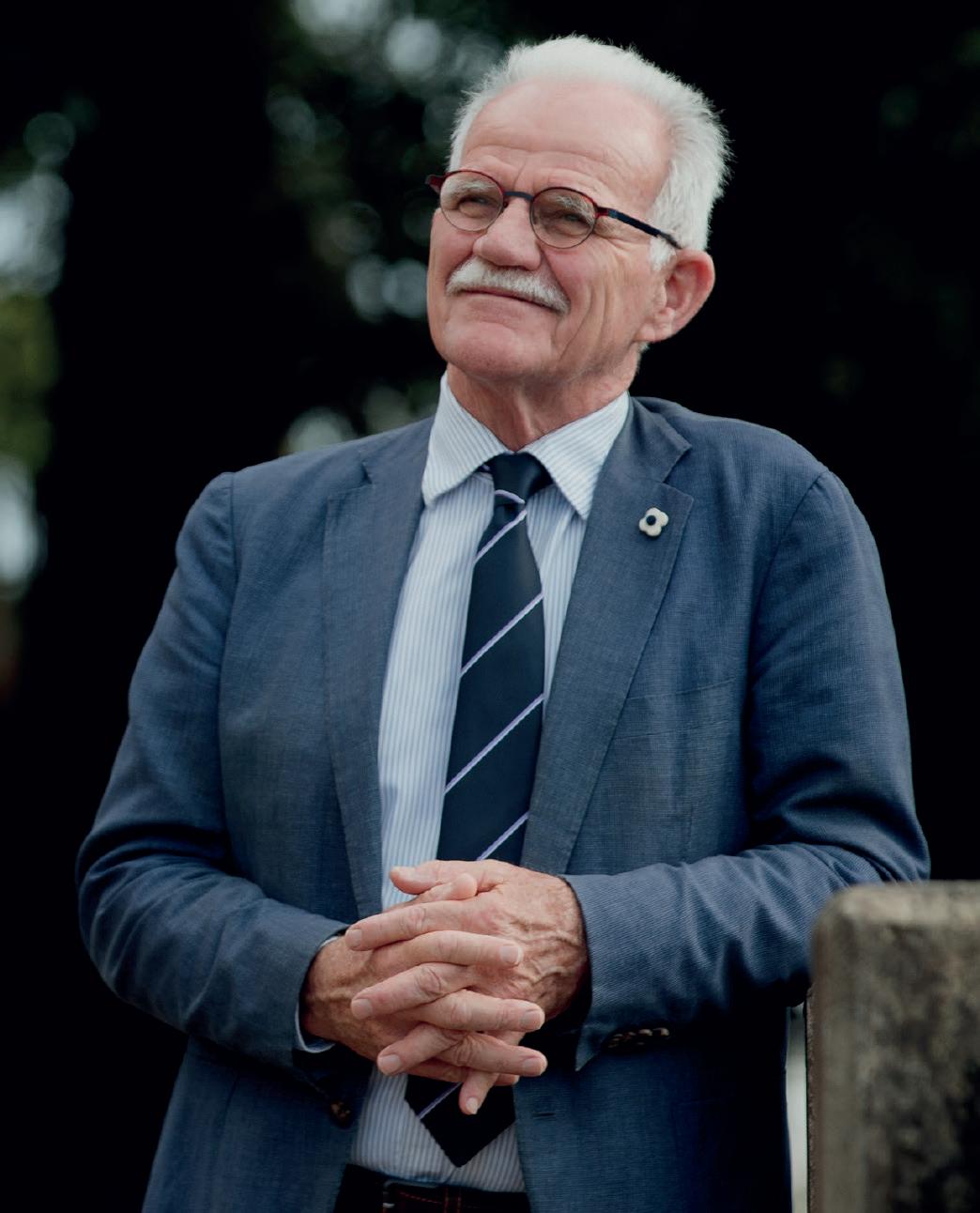
Dr David Thomas Editor, OCA Magazine
From the President MARTIN CAYZER
At the centre of Cranbrook beats the spirit of its Old Cranbrookians, whose connections span lifetimes and generations.
It has been a remarkable year for the Old Cranbrookians’ Association. In 2025, our calendar of reunions, gatherings, and connection events has been fuller than ever, a true reflection of the strength and breadth of our community. From the return of the Vintage Club in February, through to our milestone reunions in May and June, the OCA has welcomed back hundreds of Old Cranbrookians spanning generations. Whether cheering on the 1st XV against Knox and Trinity, reconnecting at our Finance Connection evening, or joining one of the many year-group reunions, each occasion has carried with it a deep sense of shared history, belonging, and the enduring friendships that define Cranbrook.
These events are more than social occasions: they are moments of continuity that bind the past with the present and the future. This year, as we gather in increasing numbers, we also mark an important moment in the School’s story. The appointment of Dr Anne Johnstone as our ninth Head of School ushers in a new era for Cranbrook. Dr Johnstone’s leadership, vision, and commitment to coeducation will shape the next chapter of Old Cranbrookians, and it is fitting that the OCA continues to stand side by side with the School at this time of exciting transformation.
Equally, we take pride in celebrating the remarkable achievements of our Old Cranbrookians across the world. In the pages that follow, you will read about the diverse and inspiring contributions of our alumni — individuals who carry the values of Cranbrook into their fields, their communities, and their lives.
I want to thank all those who returned for their reunions, attended our community events, and continue to support the work of the OCA. It is your participation, generosity of spirit, and willingness to reconnect that ensures our Association thrives.
As we look ahead to 2026 and beyond, I encourage you to remain engaged, to bring along a fellow OC to the next event, and to continue to celebrate the unique Cranbrook connection that unites us all.
Esse Quam Videri.
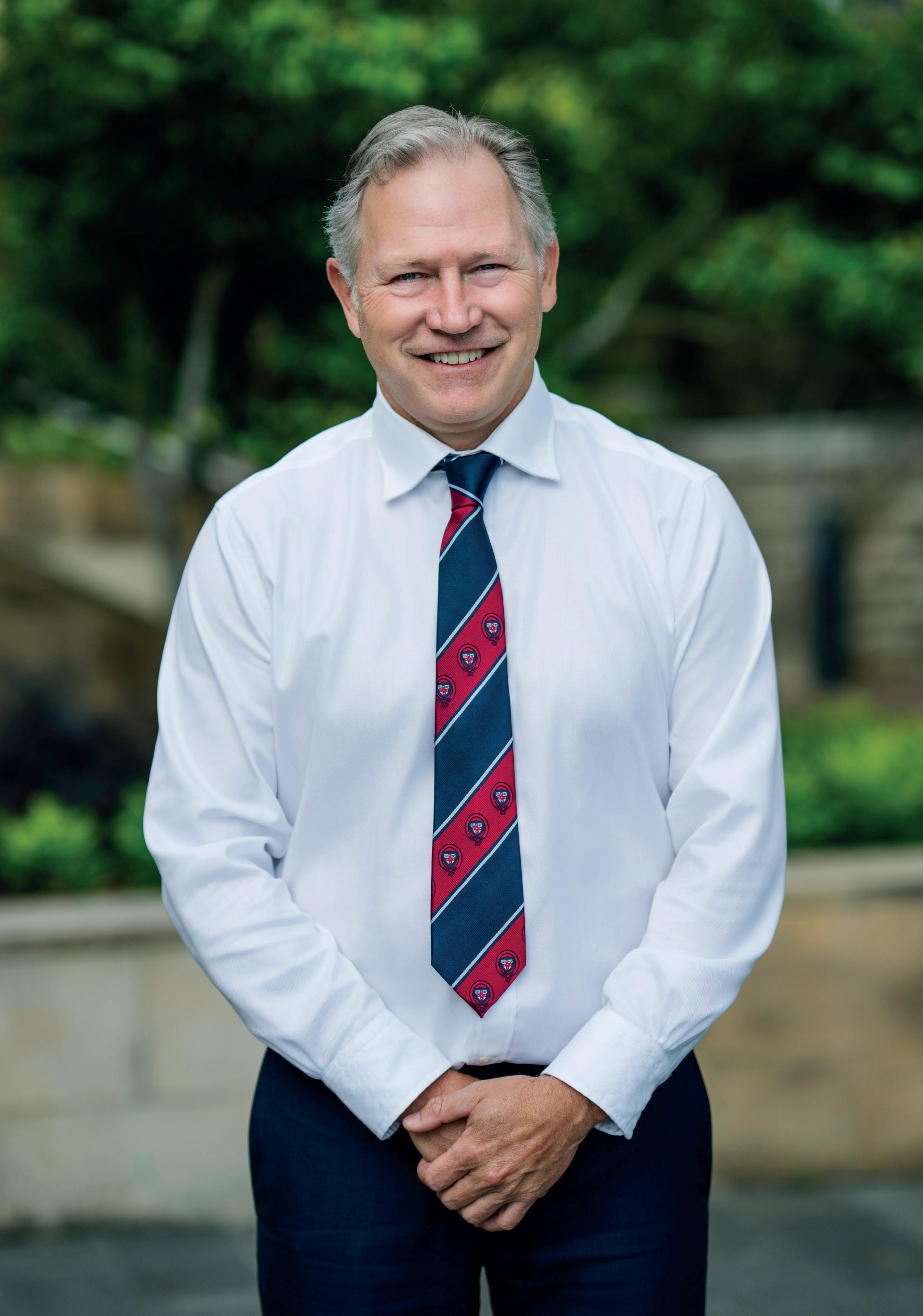
Martin Cayzer (OC 1988) President, Old Cranbrookians’ Association
Dr Johnstone’s leadership, vision, and commitment to coeducation will shape the next chapter of Old Cranbrookians, and it is fitting that the OCA continues to stand side by side with the School at this time of exciting transformation.
From our PATRON
It is with great joy that I write my first foreword for the OCA Magazine as the ninth Head of School and Patron of the Old Cranbrookians’ Association (OCA).
It is a special privilege to be a part of this extraordinary community. I am so grateful to you, our generations of inspirational Cranbrookians, who since our founding in 1918 right through to today, have helped to shape our School and indeed have helped shape our nation and world, well beyond our gates. Thank you so much for the warm welcome you have extended to me and my family. I have truly valued the opportunity to get to know you through a myriad of events since my commencement last term: from the London OCA gathering to the Vintage Club and the recent Sydney OCA luncheon, to the dynamic OCA committee
meetings. It has also been so enriching to hear about how Cranbrook has helped shape you: your lived experiences, insights, perspectives, and connection to the School – and one another – sometimes through lifelong friendships. Most of all I have been so inspired by your affection and aspirations for Cranbrook.
I am to honoured to help lead Cranbrook forward into its bright future and I look forward to working with you, along with our treasured students, staff and families as we take our School from strength-to-strength at this momentous time. After 107 distinguished years
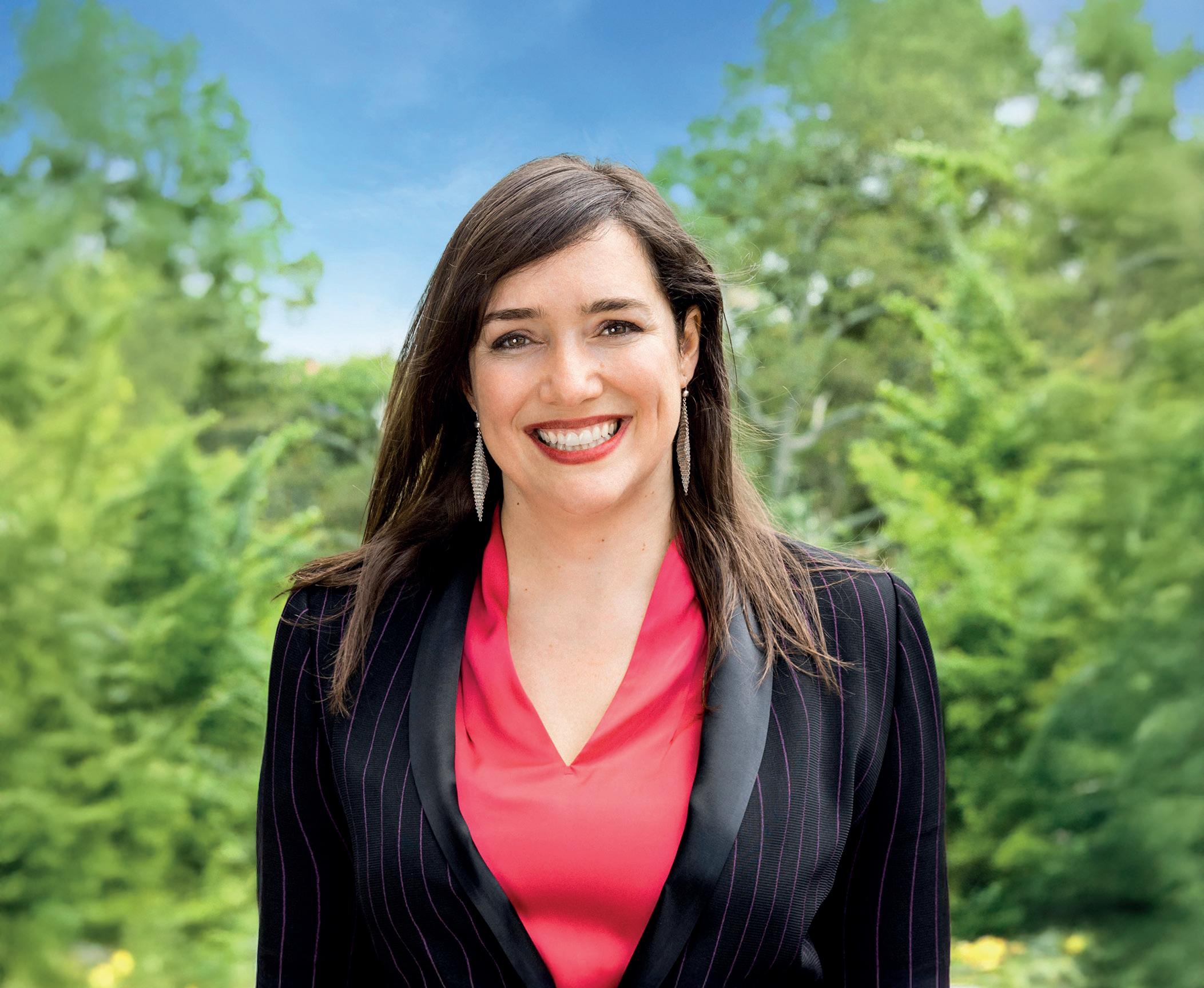
Dr Anne Johnstone
of educating boys, we will now welcome girls into Year 7 and Year 11 and begin an exciting new era of coeducation.
Cranbrook’s story began with the highest ideals, shaped by our founder, Reverend F.T. Perkins, whose vision encompassed expansive scholastic and cocurricular endeavours, and yet something more. He was committed to establishing a vibrant and multifaceted educational offering characterised by the “best traditions in heart and spirit.” Importantly, that Cranbrookians would be truly well-rounded, known for their authenticity, integrity and their values. That each student had an opportunity to make a difference: regardless of “age or rank”, all could “contribute to the character and glory of their School.” At the core of his vision, our founding Headmaster placed our School motto: Esse Quam Videri – To be, rather than to seem to be.
Through the shared contribution, commitment and passion of successive generations of leaders, staff, students and community members, this powerful legacy continues to thrive today. Cranbrook is a School that strives to give expression to Esse Quam Videri and encourages each student to be true to themselves and inclusive of others – celebrating the unique strengths of each other, in community. In this way, Cranbrook fosters a strong sense of connection and belonging. We also encourage a culture that eschews social comparison and where everyone is willing to have a go, pursue a variety of endeavours and is not held back by a fear of failure.
As we look to the future, my goal is to continue to build this culture and to focus on three key areas: accomplishment, character and contribution. To help our students be the very best they can be, to equip and empower them to activate their potential, achieve their goals, and to thrive in all aspects of their lives. Importantly, it is to help them to develop as upstanding young people of authenticity, purpose, and integrity who strive to make a positive difference in the world.
I am passionate about taking an integrated approach to education – one that recognises learning and wellbeing are inextricably linked. Now, more than ever, our young people need to be supported and to develop agency in both these areas to truly flourish – particularly with the rise of Artificial Intelligence and of course in navigating the complexities of social media and our online world, more generally. Through our cherished House System we are bringing together evidence-based strategies and approaches informed by the science of wellbeing combined with
educational neuroscience through a tailored Positive Education programme.
Finally, I look forward to opportunities to see our core values here at Cranbrook further developed. To ensure that personal excellence is pursued by all, and that our students understand that the pathway to excellence is paved by grit – that is, tenacious, dogged perseverance combined with passion. We will focus on a strengths-based approach to support the development of effective learning dispositions and habits of mind such as learned optimism, courage, resilience, and a growth mindset to help them overcome challenges and bounce forward from setbacks. In doing so, students develop a toolkit that builds their psychological capital and supports them in seeking mastery, striving for excellence, and achieving their highest potential.
Through our value of service, we encourage students to move beyond a ‘me’ mindset to a ‘we’ mindset through serving worthy causes, whether this is through the vast array of charitable organisations we support, immersive experiences we facilitate, or even self-directed service opportunities and, of course, day-to-day acts of kindness within our community and beyond. In my own research for my PhD, I found that looking beyond ourselves to have an Other Person Mindset helps promote higher levels of wellbeing in those around us and indeed in ourselves, thereby creating virtuous cycles and upward spirals of positive emotions that help provide conditions for strong relationships and flourishing. Prosocial behaviours are not only incredibly important to thriving, but also contribute to academic and Co-Curricular attainment.
Of course, none of this can be accomplished in isolation and one of the great hallmarks of our School is our truly vibrant Community, of which the OCA is an integral part. A special thank you to our dedicated OCA President, Marty Cayzer, and Committee who serve as great role models and contributors in this regard.
May you enjoy perusing the pages of this wonderful publication, reminiscing about your own time here and being encouraged by all that our School is today. I look forward to the journey ahead with you all, as we build into Cranbrook’s future for the benefit of past, present and future generations of Cranbrookians.
Dr Anne Johnstone Head of School
OC in Profile: Scott Hahn (OC 2005)
One of the most enduring values Scott Hahn gleaned from his time at Cranbrook was open-mindedness — a liberal attitude fostering an adventurous spirit.
That adventurous spirit and willingness to try new things has been a defining characteristic of Scott’s life and career – a career that has spanned consulting, risk management, accounting, project management, strategy and sales – and now brewing.
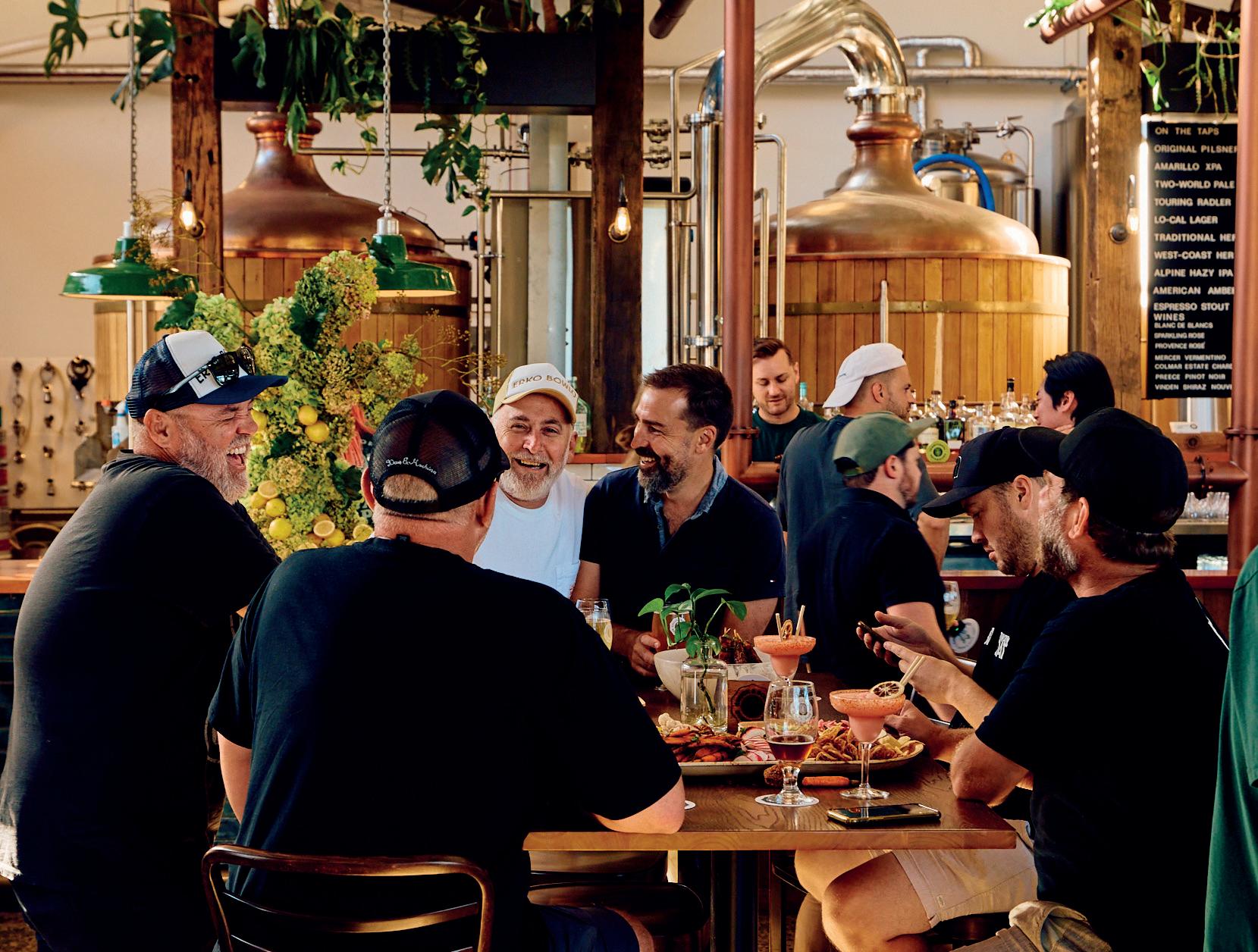
At a heritage industrial site in St Peters in Sydney’s inner-west, the 38-year-old Cranbrookian has just celebrated the first anniversary of his own brewery and tap room.
In doing so, he has defied the plethora of so-called experts who had warned of a downturn in the industry and other perils.
Not that it bothered Scott. He has his own coterie of experts, including the Godfather of craft brewing: his dad Chuck.
Combining Chuck’s legendary brewing smarts and his own business acumen, they have formed Chuck and Son’s Brewing Co., specialising in classic craft beers with a distinctly Germanic DNA.
That means brews without overbearing fruity flavours or trendy twists. Instead, quality session beers such as pilsners, ambers and pale ales that are balanced and refreshing.
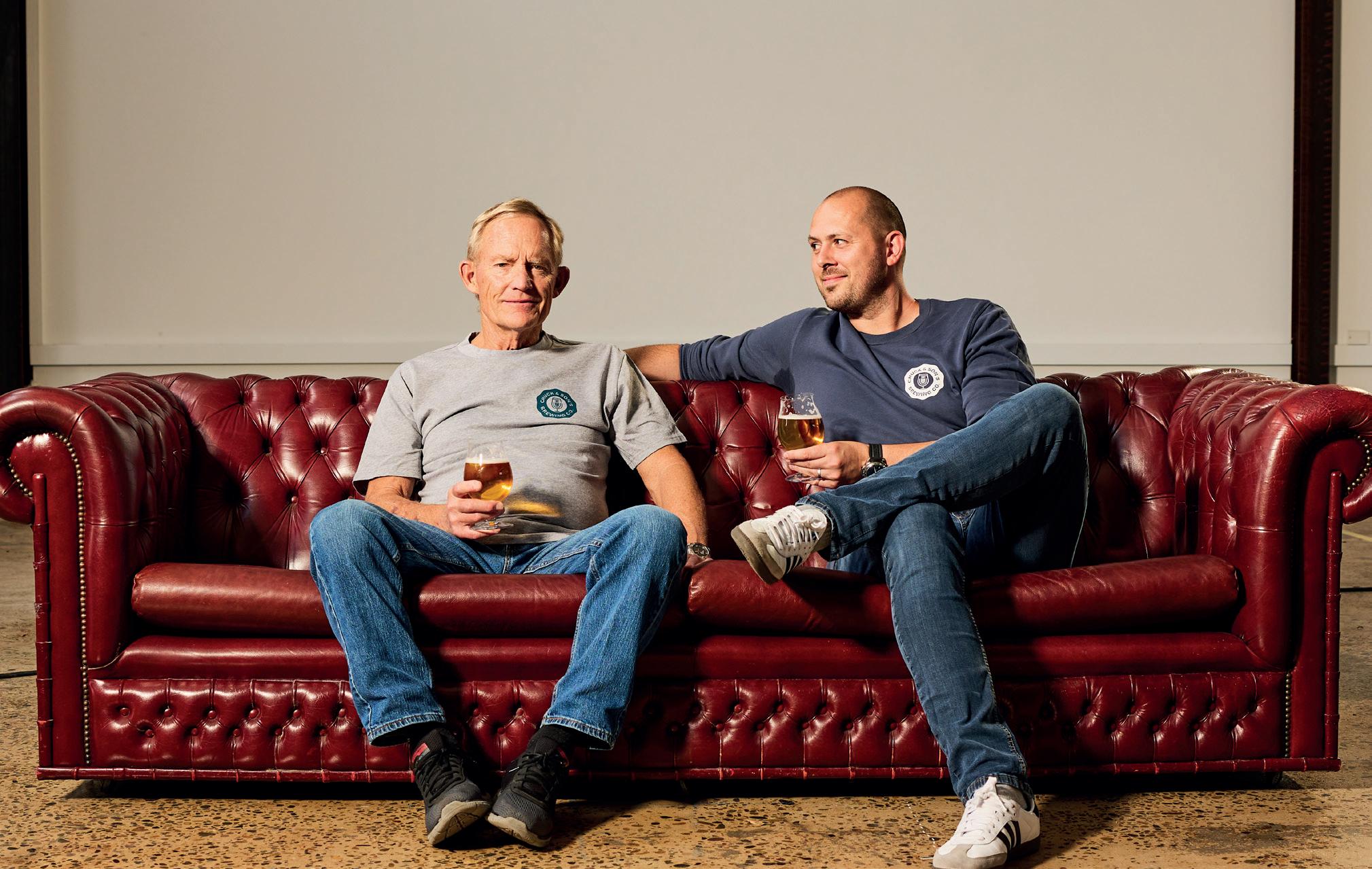
Chuck & Sons Brewery
In their first 12 months, Chuck and Son’s have already bagged medals for all of their beers including two gold at the Australian International Beer Awards for their Two World Pale and Traditional Hefeweizen, and their 230-person taproom is abuzz with families and craft beer aficionados every weekend.
Scott’s decision to pitch the brewery at more of a family demographic has paid off.
“The market has shifted a little bit in terms of what consumers want,” he says. “Early on, it was cool to start a brewery at the back of a warehouse with your mates with milk crates as seats, but now there’s a market for people who have a different level of expectation – where a full-service venue and experience is what gets cut-through.”
“We see ourselves as part of the community where families can enjoy the experience.”
Family is key to the success of Chuck and Son’s. Apart from his famous dad, his wife Amy is general manager, his brother-in-law Jono Carr the licensee and venue manager – and Scott and Amy’s three sons (Isaac 11, Charlie 8 and Henry 6) can often be seen playing in the tap room’s bespoke kids area.
Indeed, it was a sense of family that made his experience at Cranbrook so pivotal. He has four sisters and didn’t attend the preparatory school, so walking through the Victoria Street gates for the first time back in January 2000 was a little daunting. But he immediately felt at home.
“This school is like a big family. There was a great mix of boys, it was so much fun and there was a really welcoming support system.”
He has fond memories of Hone house and the encouragement and togetherness he experienced under housemaster Dr David Thomas, who pushed students to be critical thinkers and challenge the status quo.
In sport, Scott was a keen basketballer and swimmer who represented Cranbrook and the CAS. He also enjoyed playing the trumpet in Mr Hartley’s jazz band.
In class, he was drawn to languages and drama, and the broad thinking they inspired. Head of Drama Mr Wickham was one of his favourite teachers. He saw Scott’s potential and even gave him the lead role in Little Shop of Horrors.
“I probably didn’t think I could do it but he took a risk and believed in me,” Scott says. “Drama at Cranbrook opened up your mind. You learnt how to act out characters with distinct personalities and physicalities.
It gave you a real sense of empathy and patience.”
He also responded to the call to authenticity implicit in Cranbrook’s motto Esse Quam Videri “To be, rather than to seem to be”.
“It’s the difference between the talk the talk of others and the walk the walk of yourself. It’s about who you want to be without relying on the expectations of others. At school, it underpinned this idea that you could take your own path and feel good about it, and that you would be supported even if you failed.”
Five years ago during Covid lockdown, Scott had his own Esse Quam Videri moment. For many of us as the world stood still, the enforced time-out became a period of self-reflection and goal re-setting. Scott was also on paternity leave from his sales strategy leadership role at Lion Brewery.
“I kept on going back to who do I want to be and where do I want to go,” he says. “I thought I’d rather take a risk and create a family-owned independent local brewery that could add something special to the craft beer industry.
In a reversal of the time-honoured cliche – it’s usually the father pushing the son to join the family business – Scott coaxed his dad out of retirement and Chuck and Son’s Brewing Co. was born.
There began an intense period of beer testing and capital raising as Scott’s vision to bring “the best beers, designed by the best brewer, to the modern Aussie connoisseur” gradually came to fruition.
Situating the new brewery in the inner-west amber triangle was a no-brainer. It was where Chuck had made his name with the Hahn and Malt Shovel breweries in the 1980s and 1990s and it guaranteed foot traffic and keen interest.
The brewery hosts special beer-food matching nights – Scott recommends pairing their Original Pilsner with Thai-style crispy barramundi – and there are lounge areas and games for families.
The immediate plan is to have Chuck and Son’s on tap and in bottle shops all over the country – and the grand plan is to become “Australia’s most respected and adored craft beer brand”.
Although the past four years have been a blur of activity for Scott ‘s family and team, he still manages to keep up with Cranbrook news.
He is thrilled the school has made the decision to go co-ed.
“It’s great news in terms of bringing that additional perspective into the learning environment. It adds to that sense of open-mindedness and respecting everyone as humans. It makes the Cranbrook family bigger.
“The more students that can have access to Cranbrook and develop their way in life and spirit of adventure and inquiry, the better. I know it’s really stayed with me.”
“Esse
So what advice would he give new students beginning their Cranbrook journey?
“Throw your hat in the ring. Take every opportunity to make the most of it. Learn, fail, grow, because this is a school that will support whatever path you take.”
Quam Videri, it’s the difference between the talk the talk of others and the walk the walk of yourself. It’s about who you want to be without relying on the expectations of others. At school, it underpinned this idea that you could take your own path and feel good about it, and that you would be supported even if you failed.”
OC in Profile: James Summerhayes (OC 2011)
In James Summerhayes’ final school report, Woodward housemaster Mr William Braddock wrote glowingly of his time at Cranbrook, describing him as a “remarkable young man” with an “enormous legacy”, who inspires all those around him.
Fourteen years later, that description still applies.
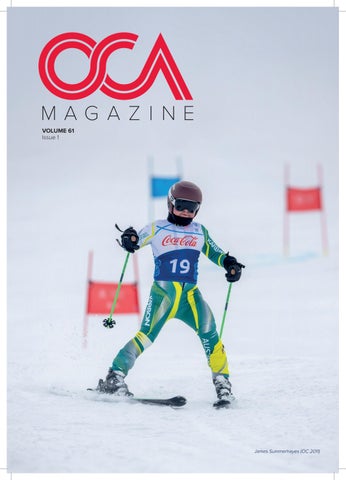
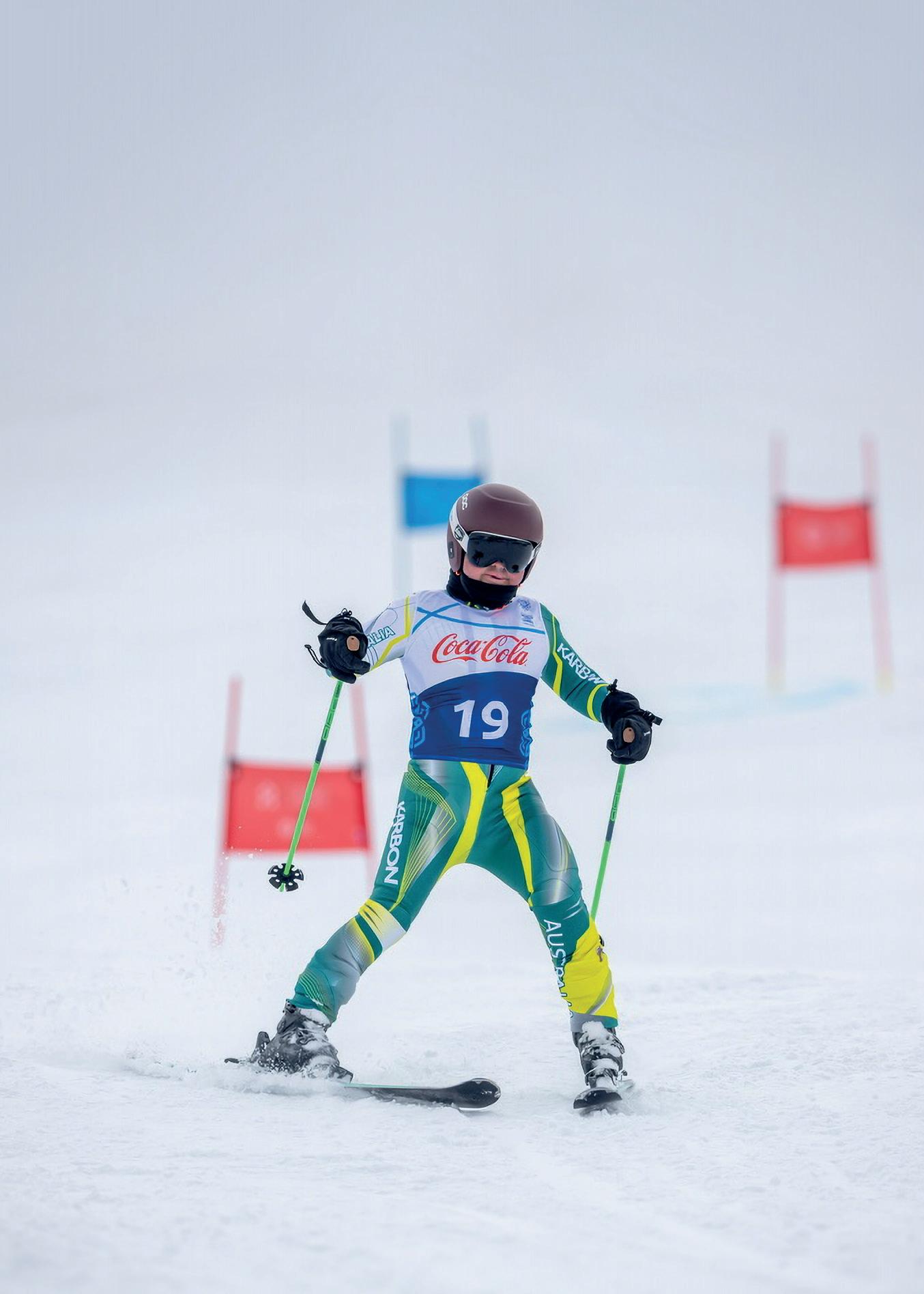
Earlier this year, the 32-year-old Cranbrookian competed at the Special Olympics World Winter Games held in Italy and earned two silver medals in alpine skiing.
It was a herculean effort that underscored his determination to succeed and make the most of every opportunity that comes his way.
Born with a mild intellectual disability, James was not initially selected for the slalom team, but when a competitor pulled out, he seized the moment.
“Getting stuck in was something I was always taught at Cranbrook, so I knew this was a chance of a lifetime for me to represent my country and I was excited by the challenge.”
What followed was an intense six months of training with the goal of being in peak shape to hit the slopes of Turin in March.
Pushups, swimming at Bondi Icebergs and lungbusting runs up Cooper Park stairs at Bellevue Hill became his weekly regime.
He was so focused he even exercised during the festive season when everyone else was relaxing.
Typically humble, by the time James was on the snow in Italy he was more concerned with doing his family and country proud than reaping any kind of personal glory.
“Going into that week of competing I just wanted to bond with the Australian team and meet up with people from all over the world,” he says. “I didn’t have
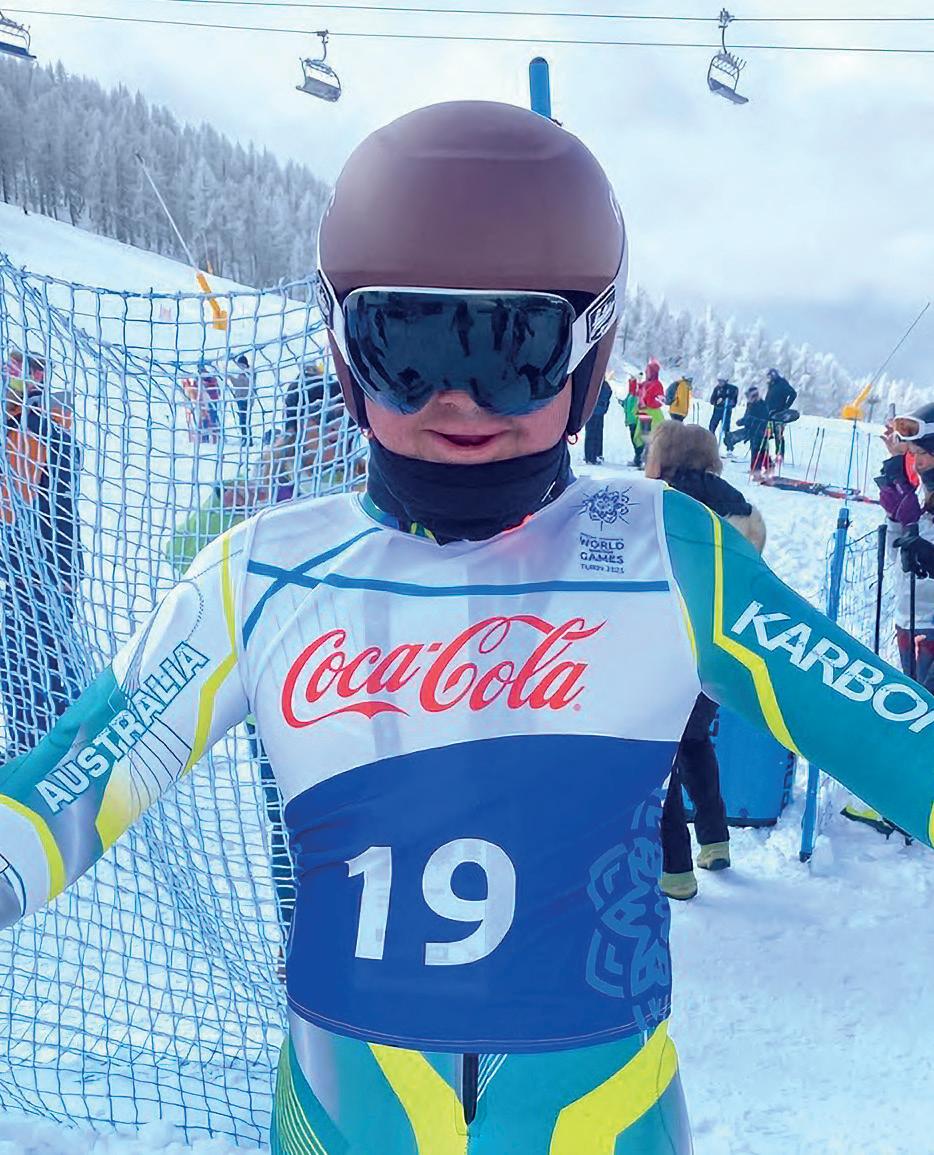
any expectations. Winning medals was the last thing on my mind.”
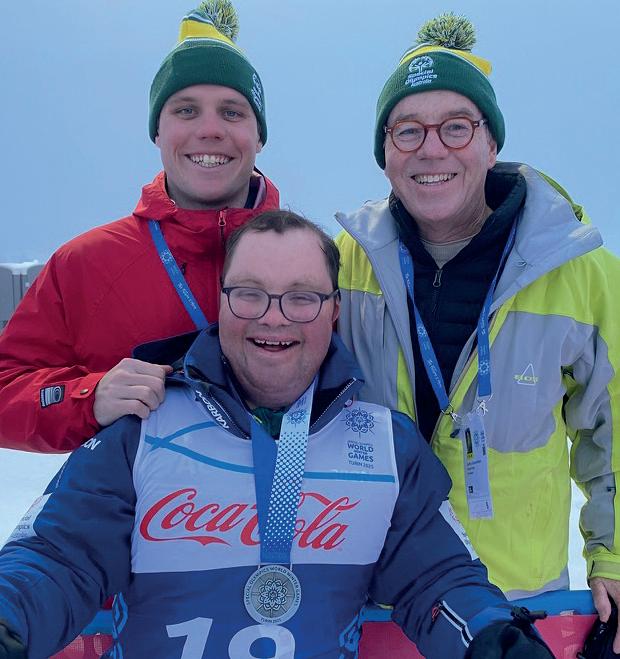
So when he made it to the podium in both the novice and intermediate slalom categories, he was stoked.
What made it even more special was that his younger brother Hugh – a fellow Cranbrookian – and dad Geoff were there to witness his triumph.
James Summerhayes
“It was just such a good feeling. I would have been happy with anything, James says. “To have my dad and brother there was fantastic, plus the second day I got the silver medal was my birthday.”
For Geoff, it was a very proud and emotional moment.
“I was just so happy for him. While he had no expectation, he had worked really hard in the lead-up, so it was one of those life highlights.”
Much of the confidence and resilience James displayed in the Special Olympics was instilled in him at Cranbrook where he was encouraged to follow his own path from the get-go.
Coming from Sacred Heart Mosman primary school, James was the new kid on the block, but he was quickly accepted into the Cranbrook brotherhood.
“One of the things I value most about Cranbrook is the mateship you feel there,” he says. “I was welcomed straight away and I’m still friends with a lot of those guys.”
He also appreciated the school’s commitment to inclusion – there was no stigma attached to boys with disabilities.
He says Cranbrook’s Learning Support Centre was key to his development as a student and has particularly fond memories of Miss Biffen who was a great source of support and wisdom.
Mr Braddock was also a comforting presence – “He always had time for you; he always made time to chat.”
James revelled in the caring environment, coaching house basketball teams and becoming famous for his entertaining and strategic white board talks and rousing sports sermons.
He also loved the CITF (Cranbrook In The Field) camps, where he led his group by example whether it was abseiling, rafting, cooking or setting up a bivouac.
“It was great fun challenging ourselves out in the bush and learning new skills,” he remembers.
When he’s not conquering the slopes, James splits his time between his dog-walking business and working as an assistant at Timbermill, a furniture rental warehouse in Marrickville.
On weekends he runs the kicking tee out at Sydney University rugby games and follows his beloved Sydney Roosters around in the NRL.
IT’S A FULL LIFE.
It’s no wonder the nation’s snow skiing fans are asking whether he will be able to fit in another tilt for gold at the next Special Olympics in Switzerland in 2029.
“Everybody asks me that!” James laughs. “Absolutely, I definitely want to push myself to new heights and qualify directly by my own performance.
“That means working hard to place in the top two in my division at the nationals, so I wouldn’t have to rely on someone dropping out. That would be an even better feeling than last time.”
When he graduated in 2011, Acting Head of Senior School Ms Hilary Dixon wrote that Cranbrook was “proud of his achievements” and James was destined for future success.
Those words are as poignant now as they were then.
“Getting stuck in was something I was always taught at Cranbrook, so I knew this was a chance of a lifetime for me to represent my country and I was excited by the challenge.”
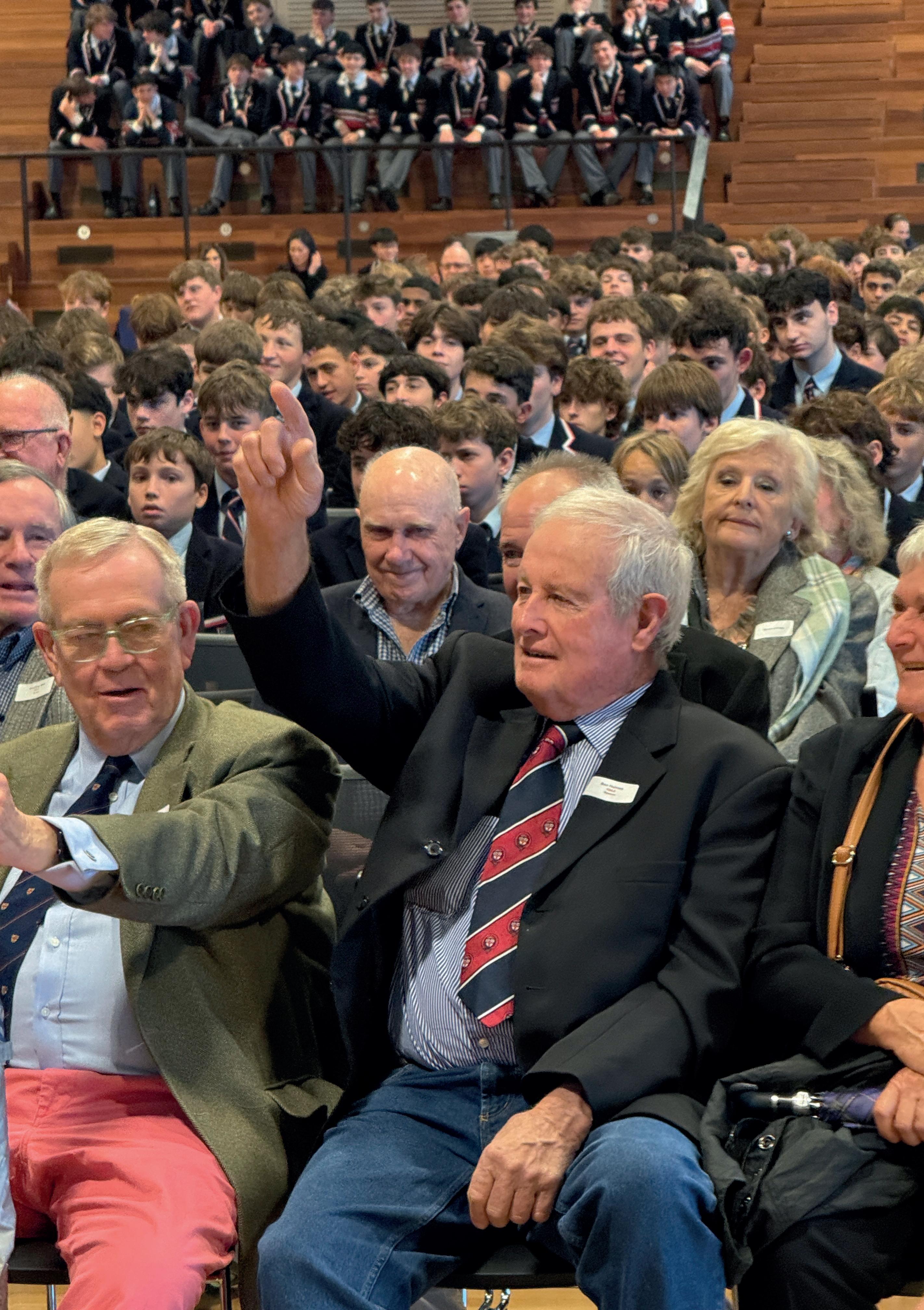
OC Connect: The Vintage Club
The Vintage Club has grown from a single annual gathering into a vibrant programme of events designed especially for Old Cranbrookians who graduated 50 or more years ago. What began as one special day on the calendar has now blossomed into a series of opportunities for our Vintage members to connect, reminisce, and enjoy experiences together throughout the year.
In 2025, the programme expanded to include a private tour of the Art Gallery of New South Wales, where Old Cranbrookian architect Luke Johnson (OC 1986) shared insights into the award-winning Naala Badu building, followed by an exclusive Archibald exhibition tour hosted by past parent Pia Hughes. The highlight of the calendar remains the Vintage Club Day in August — an occasion steeped in tradition, beginning with assembly and the roll call of attendees, followed by student-led tours of the School and a warm gathering over lunch in the Dining Commons.
Looking ahead, the Vintage Club programme will continue to evolve, introducing excursions and experiences to suit a wide range of tastes and interests. From cultural outings to on-campus celebrations, there will be something for everyone to enjoy — and partners are warmly welcomed to share in the experience.
In 2024 and 2025, we welcomed the Classes of 1974 and 1975, respectively, to the Vintage Club.
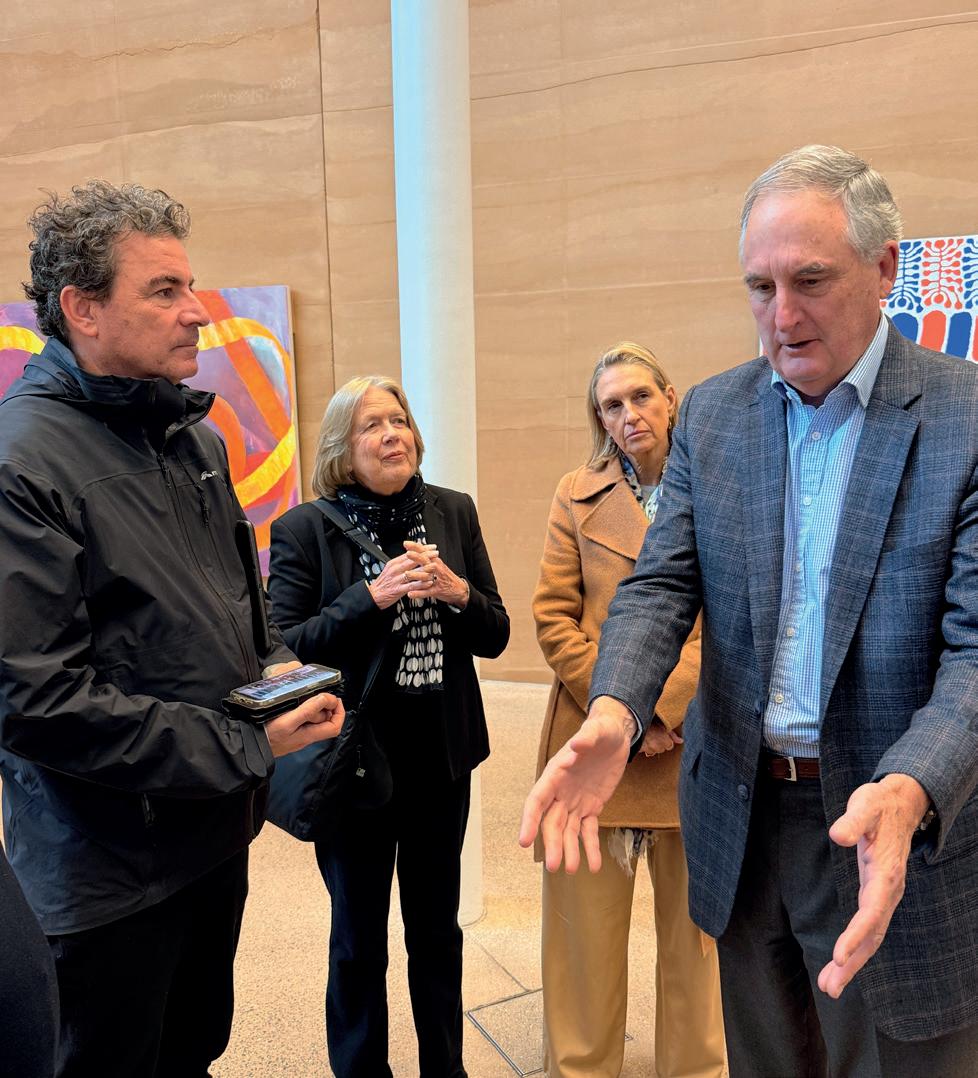
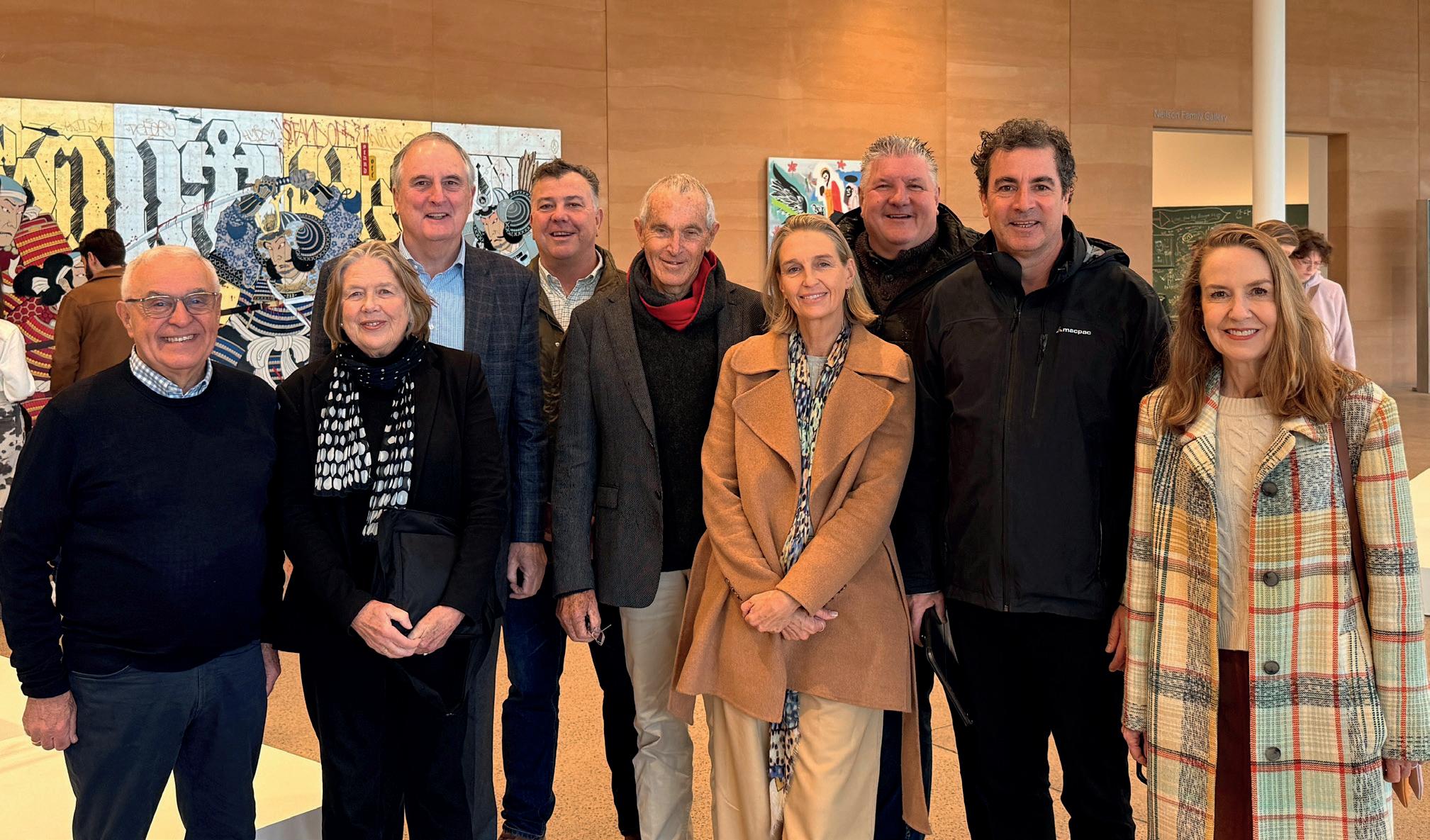
Old Cranbrookian architect Luke Johnson (OC 1986) providing a tour of the Archibald with members of the Cranbrook Community
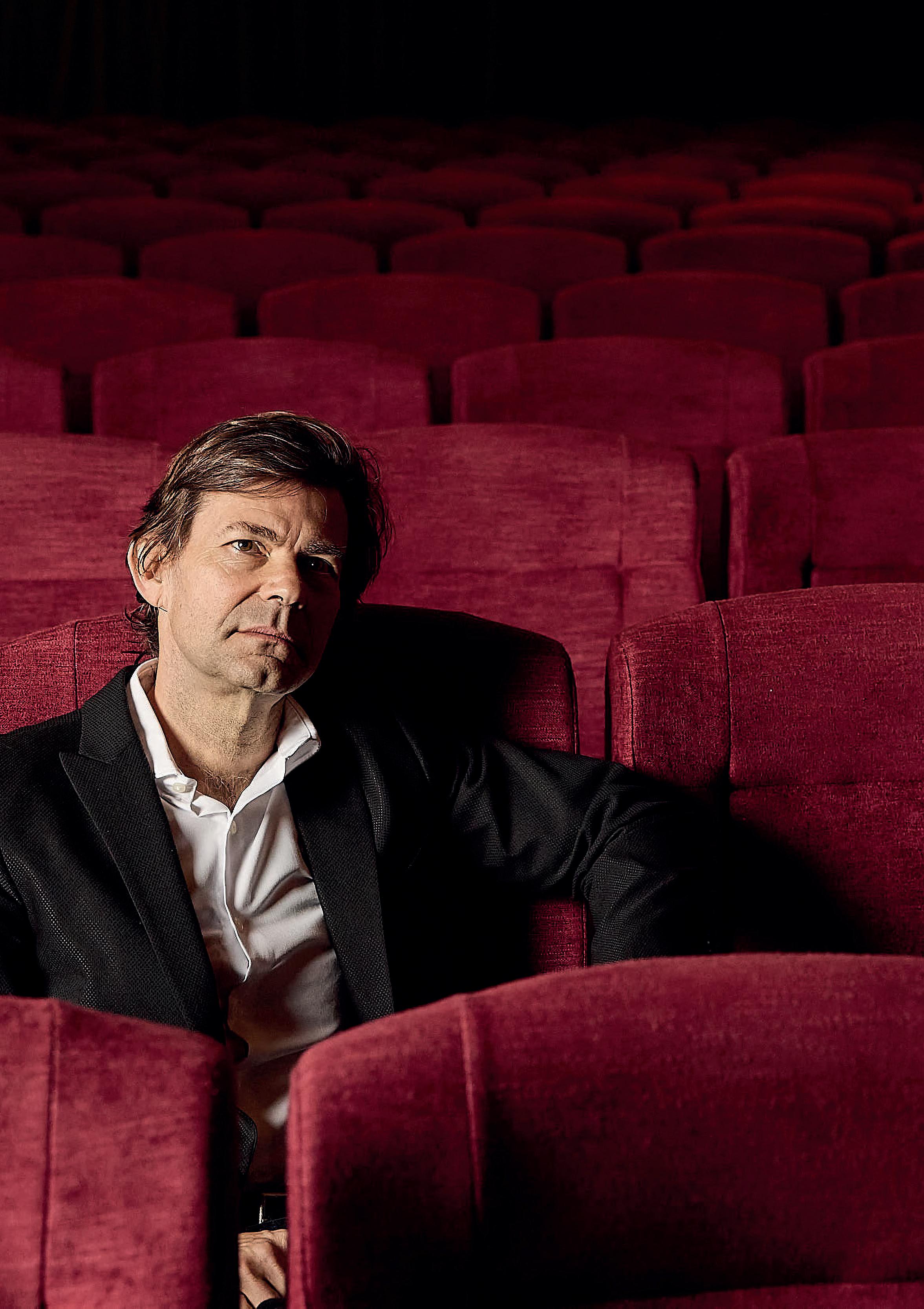
OC Connect: Christopher Johnson (OC 1988)
Could you watch a movie every day of the year? That’s what Old-Cranbrookian Christopher Johnson, known professionally as CJ Johnson, does. It’s what you have to do when you’re one of Australia’s premier film commentators.
CJ has viewed many thousands of movies over his 20-year-plus career, building the breadth of knowledge needed to comment with authority on all matters silver screen. He’s been a film critic and commentator for 17 years on ABC Radio, was president of the Film Critics Circle of Australia for four years, and this year was the president of the Jury of International Film Critics at the Cannes Film Festival.
His love of cinema can be traced back to Friday and Saturday nights in the 1980s watching Bill Collins present movies from the golden years of Hollywood on TV.
As an only child, he would lose himself in the fantastical world of films and filmmakers, taping movie after movie on VHS for his burgeoning collection.
“I think there are a disproportionately high amount of only children who grow up to be cinephiles,” CJ says.
“You’re never alone when you’ve got movies. Actors and directors become like friends, a community you’re seriously engaging with.”
CJ wasn’t alone at Cranbrook. He had lots of mates who were into artistic and intellectual pursuits, and teachers who encouraged him. English mentor Richard Sheehan was a particular favourite.
“The way he taught Shakespeare gave me a great love of the English language and drama, which fuelled my appreciation of cinema.”
Another big influence was history teacher Dr David Thomas and his maverick methods.
“He didn’t stand at the front of the classroom. He would come and sit on someone’s desk in the middle of the room and launch a discussion, pointing to us and grilling us on why so and so invaded so and so, and what you think of this Greek or Roman politician. He was amazing. He taught us not just to know, but to think.”
One of CJ’s proudest achievements at Cranbrook was playing the lead in a 1987 production of Julian Mitchell’s play Another Country, directed by Sheehan. It was a trailblazing production that featured a positive portrayal of an openly gay man for what was probably the first time in an Australian high school.
“I think people were quite shocked – and then quite impressed – that we had the guts to put it on,” CJ says.
Since leaving school in 1988, he has drawn on his Cranbrook experiences to forge a stellar career in movie criticism. Along the way, he has also performed lead roles in Shakespeare plays in New York and across the United States, directed short films, written seven produced plays and lectured at tertiary institutions.
He says the key to being a respected film critic comes down to watching a lot of movies.
“When you’ve watched, say, 4,000 movies, you have the context to understand why something works or doesn’t; you can place it against all the other films that it’s in conversation with,” he says. “You need that body of knowledge.”
And when your cinema memory bank is bulging with classics – and rotten tomatoes – you’re in a much better position to rate the greatest films of all time.
CJ says his favourite of all is Day for Night, a French film from 1973 by François Truffaut about the trials and tribulations of filmmaking, while his most admired actors are Barbara Stanwyck and Humphrey Bogart partly because they could both “sling reams of dialogue faster than anyone and yet make it clear and compelling.”
During his stint on Movieland, a radio show and podcast he produced and hosted on the ABC from 2011 to 2017, he interviewed the famously passionate – and quirky – director Quentin Tarantino. It was a match made in cinephile heaven. “If I’ve seen 4,000 films, Tarantino’s seen 7,000,” CJ recalls. “He’s obsessed, and odd, in the best possible way. I really love his work and as I was finishing the interview he invited me to tell him my ranking of all his films, which was a pretty special moment, film geek to film geek.”
This year, CJ served as the President of the Jury of International Film Critics at the glamorous Cannes Film Festival, a role that entailed viewing the world premieres of 22 movies, dissecting them with fellow jurors and awarding the prestigious FIPRESCI prize.
He was impressed with the festival’s smooth, watertight operations.
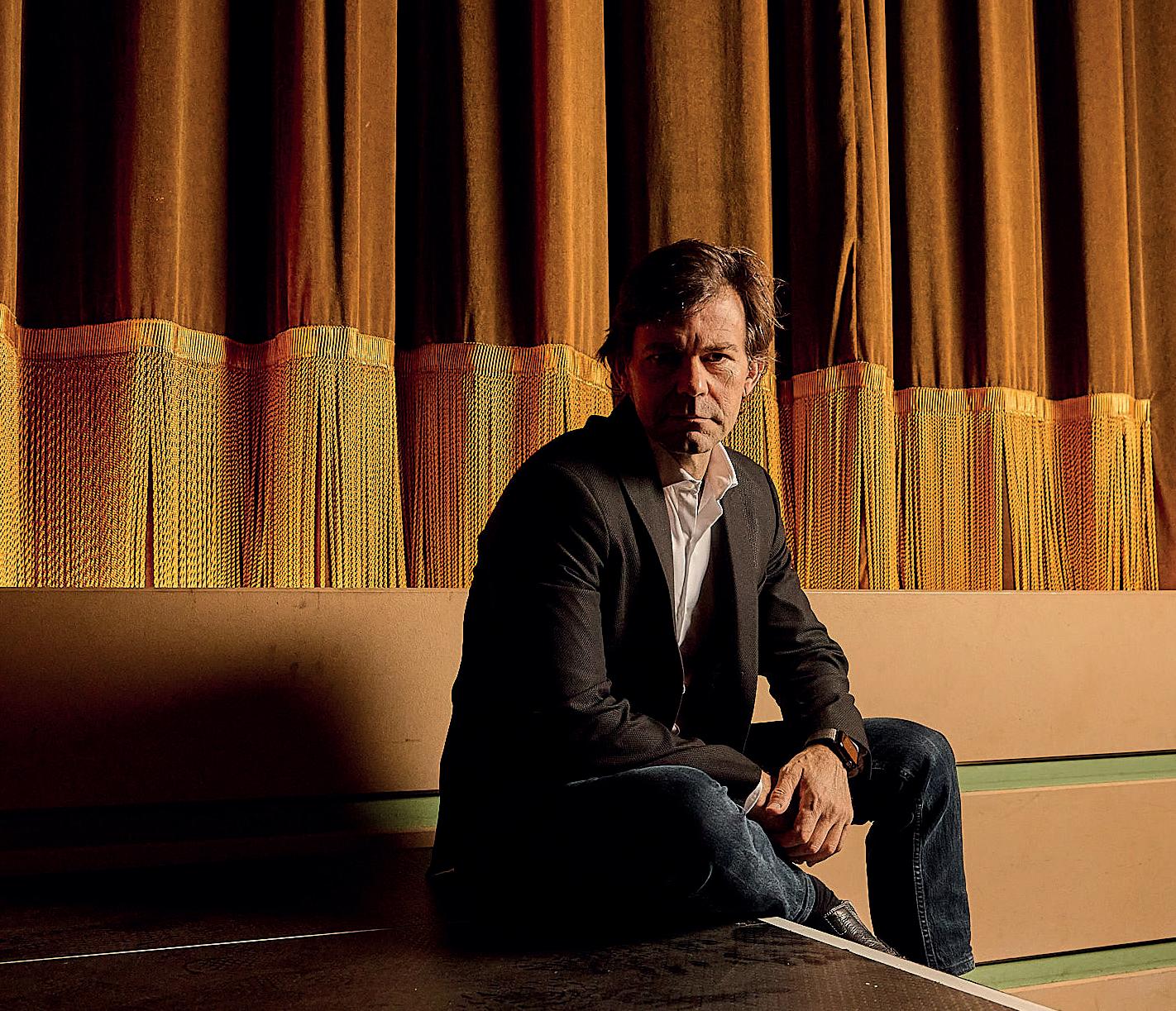
“On the opening night, the MC, French actor Laurent Lafitte, was about to give an honourary Palme d’Or to Robert de Niro, but suddenly stopped and said, ‘But why should I do it, when…’ and out walked Leonardo DiCaprio from behind the curtains. Two thousand three hundred and nine people in the auditorium gasped. No-one knew. They’d kept the world’s biggest movie star a secret!”
CJ also delivers monthly lectures on cinema at the Art Gallery of New South Wales where he attracts a loyal audience of hundreds. He recently completed a series on the revolutionary cinema of the 1960s. “I love lecturing at the AGNSW because I love the audience there,” he says. “They push themselves. They came to lectures on François Truffaut, Agnès Varda, Shakespeare on film, screwball comedy ... and they will be coming in November for my three-lecture series on Ingmar Bergman. They’ve developed a real taste for great cinema.”
Despite his busy schedule, the Maroubra-based 54-year-old has a feature film screenplay he wrote “bubbling away, with some well-known actors attached”, and will soon be lecturing on cruise ships.
“For a big Asian cruise in early 2026 I’ll be talking on Hong Kong, Taiwanese, Vietnamese and Japanese cinema. Later that year I’ve got one down the Amazon where I’ll lecture on films shot on and around that river and forest. The research for this kind of work is really rewarding – to program your viewing and reading with these fascinating goals in mind.”
And there will certainly be more jury work.
“Cannes was thrilling. It was a real career high. But there are a lot of festivals in the world, and global cinema’s where I’m at. It’s vast and deep and I’ll just keep swimming in it.”
Future Old Cranbrookian: Jack Okill (Class of 2028)
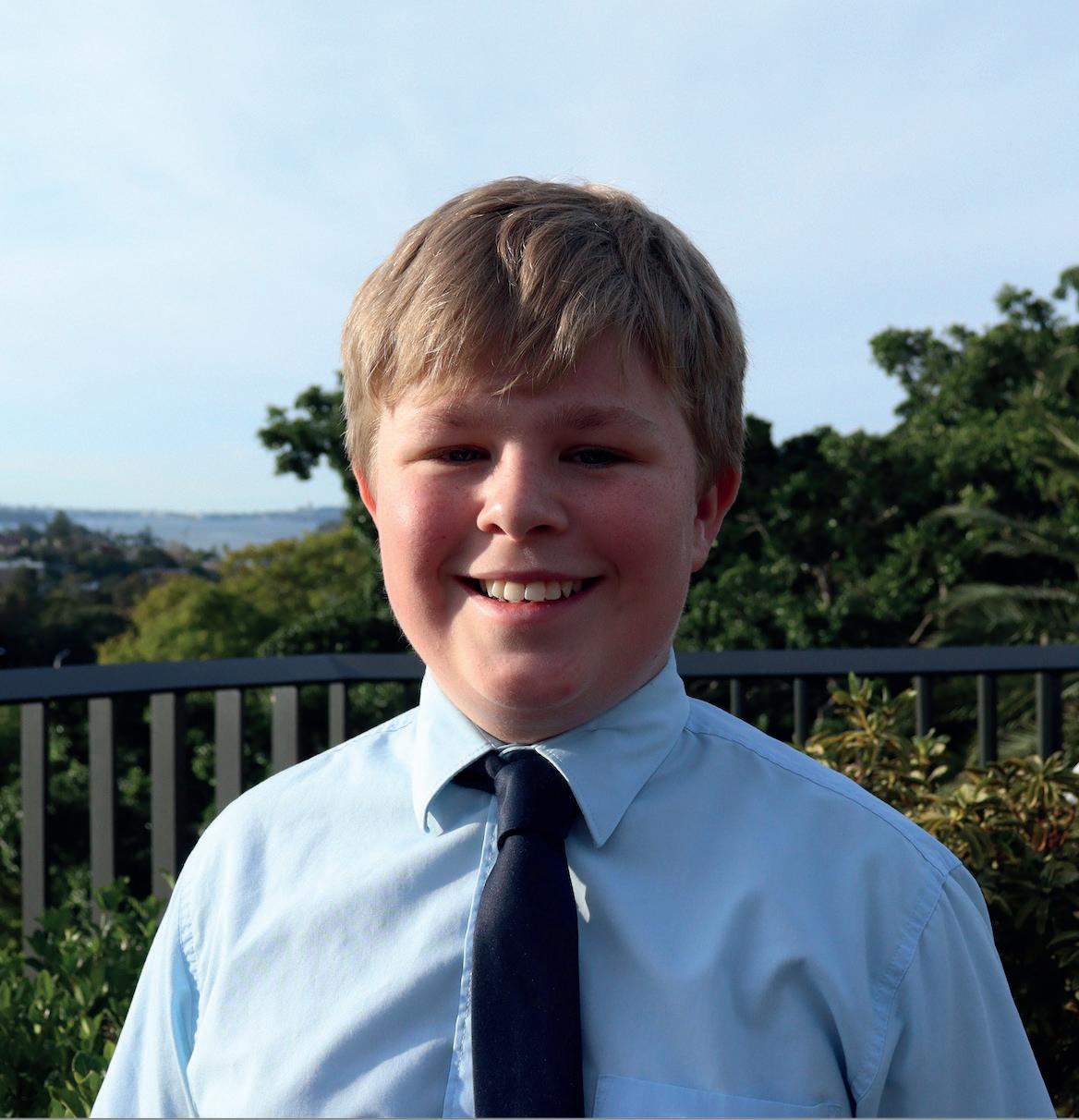
SNAPS: Jack
YEAR: 9
PODCAST: Your First Vote
FOCUS: Making politics engaging for young Australians
KEY VALUE: Respect, compassion, fairness
FUTURE
AMBITIONS: Politics, journalism, or media
Year 9 student Jack is already making waves. With a passion for politics and media, he has launched Your First Vote — a podcast designed to make politics accessible, relevant, and engaging for young Australians. Each episode attracts thousands of listeners, and Jack is building a strong online following.
“I want to show young people how politics connects to their daily lives,” Jack says. “It doesn’t have to be boring.”
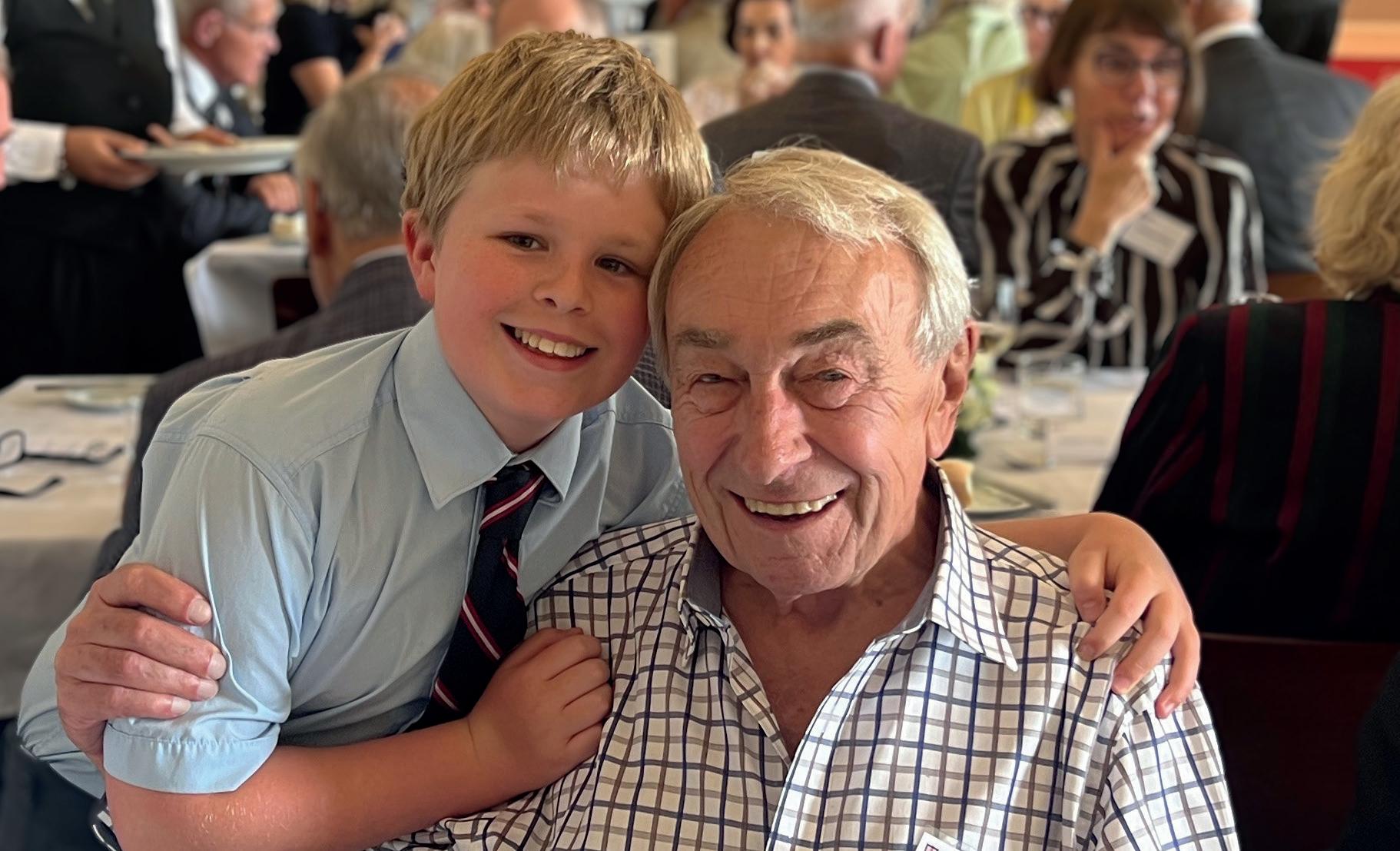
Jack’s entrepreneurial spirit is no accident. His late grandfather, Philip (“Phil”) Okill (OC 1967), was a Cranbrookian who left a mark through his boldness and drive. To Jack, though, he was not defined by titles or achievements, but by his character: “He was impulsive, a daredevil, and caring.” Those traits inspire Jack’s own outlook as he forges his path.
What Phil passed on most clearly were values — respect, compassion, and fairness. These have become part of Jack’s foundation, shaping how he approaches opportunities and challenges. Whether his future leads him into politics, journalism, or media, Jack carries with him the spirit of a grandfather whose example continues to guide him.
For now, Jack is focused on building connections, sharpening his voice, and seizing opportunities. His journey reflects both his own ambition and the inspiration of the family who came before him — a bridge between Cranbrook’s past and its future.
“I run a podcast called Your First Vote where I chat with politicians and young people about politics in a way that actually makes sense. It’s about making it less boring, more relevant, and helping young Australians understand how it all connects to their everyday lives.”
Philip “Phil” Okill (OC 1967)
2 April 1949 – 2 August 2025
Phil Okill was a pioneering Old Cranbrookian whose entrepreneurial drive reshaped the Australian print industry. After starting his career in 1974, he cofounded Print Management Services in 1988 — a bold venture that grew into PMA Global, an international business spanning Australia, Malaysia, New Zealand, Brazil, and the Philippines.
He transformed a modest Sydney print order into a worldwide enterprise, guided by principles of innovation, independence, and client-first service. Widely respected for his integrity and daring approach, Phil became a leading figure in the industry.
Beyond business, Phil was remembered for his generosity of spirit and sense of adventure. His life was celebrated by family, friends, and colleagues in August 2025. His enduring legacy continues through both the company he built and the inspiration he passed on to his family, including his grandson Jack, who now carries Cranbrook’s story forward.
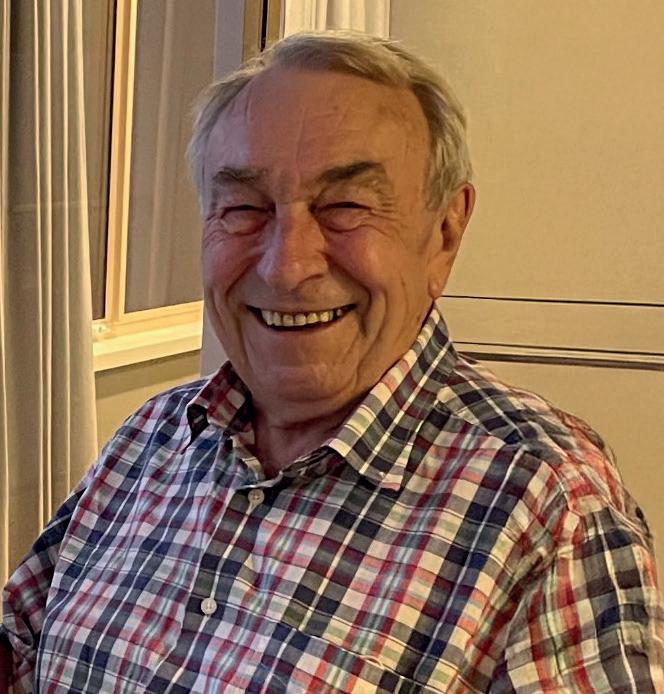
OC in Profile: Frank’s Century of Connection to Cranbrook (OC 1944)
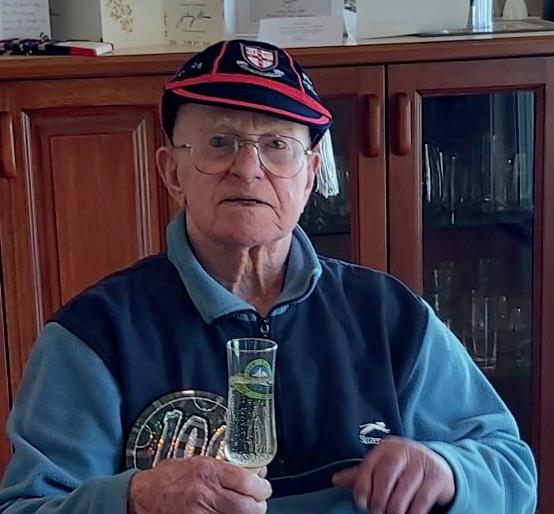
In August this year, Frank Tebbutt celebrated his 100th birthday, making him Cranbrook’s oldest living Old Cranbrookian — a milestone that reflects not only a long life, but a life deeply woven into the fabric of our School’s history.
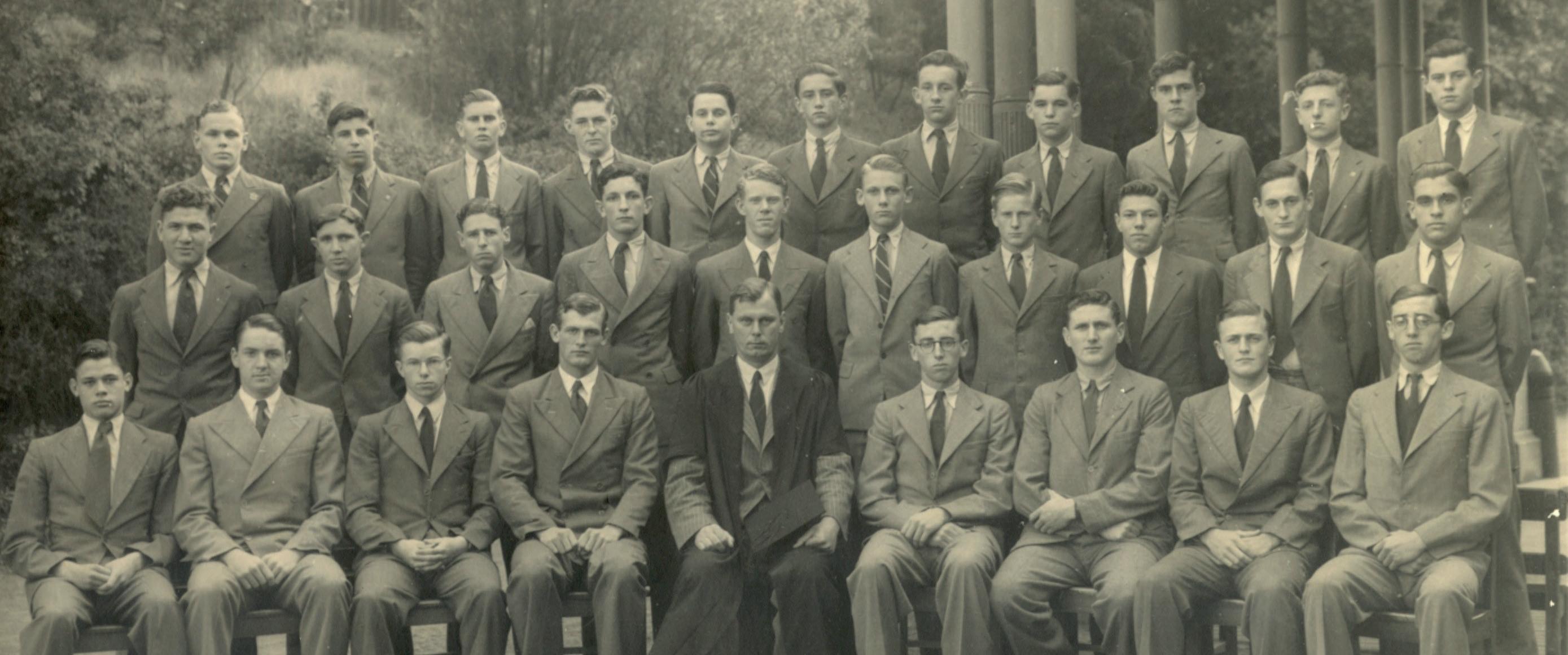
Frank graduated from Cranbrook in 1944, an incredible 81 years ago. As a student, he boarded in Rawson House and vividly recalled the wartime atmosphere, including sleeping on the balcony when Japanese submarines entered Sydney Harbour during World War II. He remembered being allowed only two warm showers a week, a detail that speaks volumes about the era’s austerity. Despite claiming modestly that he didn’t excel in any subject, Frank was a hard-working student who enjoyed a wide range of academic pursuits. On the sporting field, he was a 1st XV Rugby halfback and wicketkeeper for the 2nd XI cricket team.
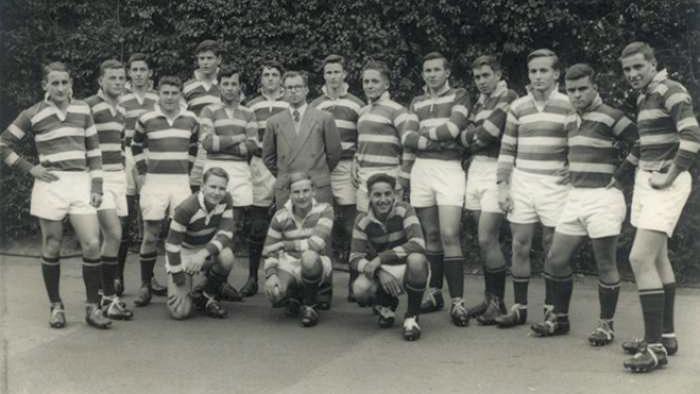
Frank returned to Cranbrook in 1950 as a teacher and remained on staff until 1970. During those two decades, he became a beloved and respected Geology master and Head of Science, taught junior Geography, served as Rawson Housemaster, and in his final role, as Second Master of the Senior School. He coached the 2nd XV rugby team, led the School Band, and even founded an Adventure Water Sports
Frank Tebbutt celebrates his 100th Birthday
School and House Prefects in 1944: Frank is Front Row, 3rd from the right
Club for boys who didn’t enjoy cricket — then the only Summer sport offered. His creativity and dedication helped shape a more inclusive and dynamic cocurricular environment.
After leaving Cranbrook, Frank continued his teaching career in several public schools across Sydney and also as a lecturer at the University of NSW until 1987, always carrying with him the values and spirit of the School. He spoke fondly of the camaraderie and lifelong friendships he built during his time at Cranbrook, both as a student and as a teacher.
One of the most remarkable chapters of Frank’s life was the journey he and his wife Marg undertook in 1954. After a teaching sabbatical in the UK for a couple of years, they drove from London to Bellevue Hill in their 1937 Austin, which included shipping the car from Bombay to Fremantle — a testament to their incredible adventurous spirit. Marg passed away about ten years ago, but their shared story remains a cherished part of Frank’s legacy.
According to his daughter, Frank proudly wore his Cranbrook honour cap for the entire day on his 100th birthday — a touching symbol of the deep affection he held for the School and the role it played throughout his life.
Frank’s century is not just a celebration of age, but of enduring connection, contribution, and character. His life reminds us of the lasting impact Cranbrook can have on its students and teachers alike.
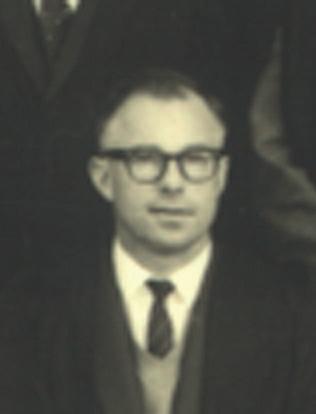
Frank as a Staff Member in 1964
Frank as the 2nd XV Rugby Coach in 1958
OC Sports Day
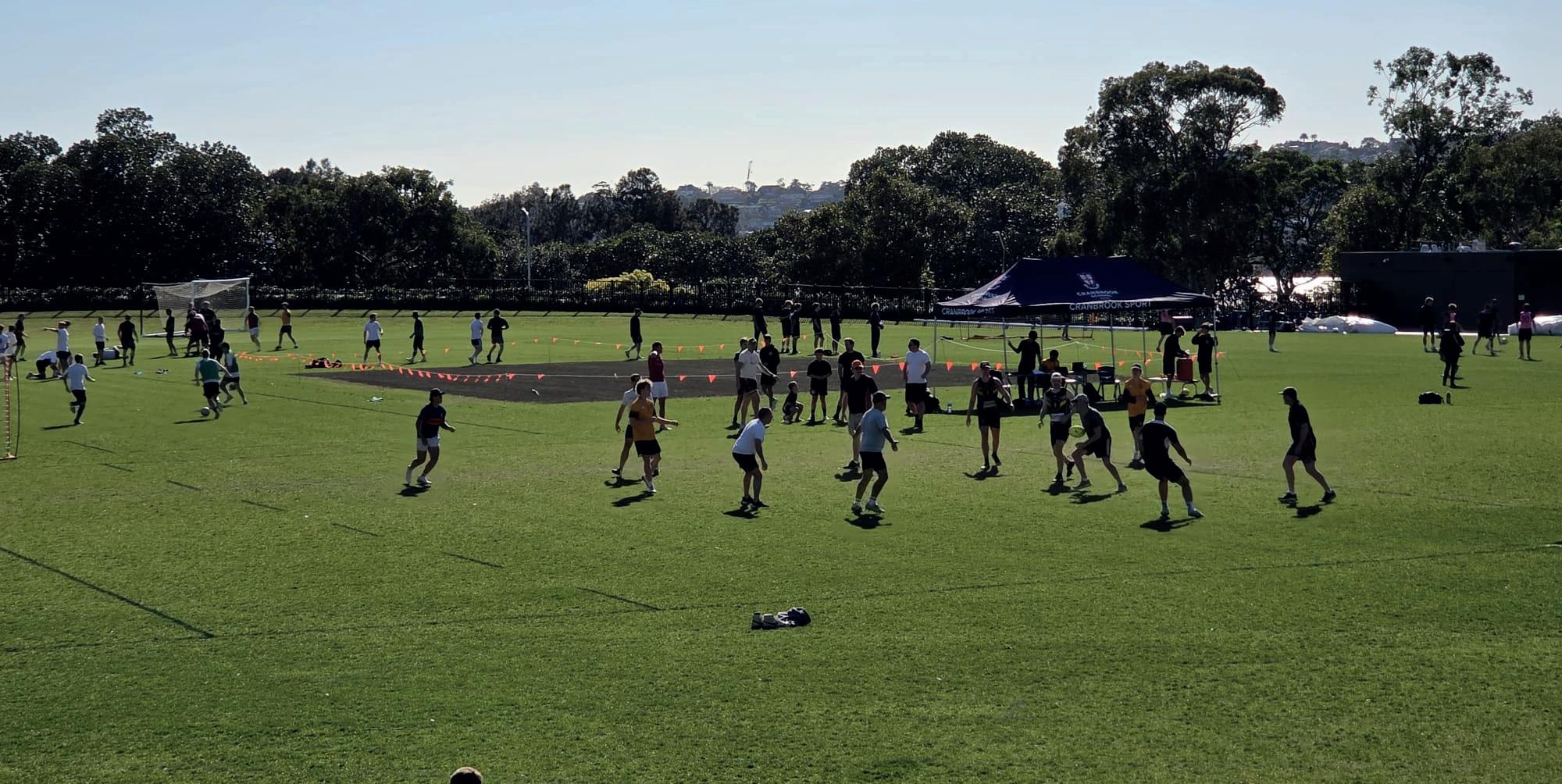
The OCA Sports Day has become one of the most anticipated events on the Old Cranbrookian calendar — a celebration of sport, camaraderie, and friendly rivalry across generations. This year’s event brought together Old Cranbrookians of all ages, current students, and families for a day that highlighted the enduring role sport plays in the Cranbrook story.
From the moment the first whistle blew, the spirit of competition was matched only by the laughter and good-natured banter on the sidelines. OCs dusted off their boots, racquets, and bats to take on current Cranbrook teams across rugby, football, tennis, cricket, and more. While fitness levels may have varied, enthusiasm certainly did not — and the pride of representing one’s year group or era was clear to see.
A particular highlight was the rugby clash on Hordern Oval, where Old Cranbrookians tested themselves against the next generation in a contest that was as much about respect as it was about points on the board. Meanwhile, the tennis and basketball courts buzzed with spirited matches that reminded all present that sport at Cranbrook is as much about community as it is about competition.
The day concluded with a barbecue and refreshments, where stories of triumphs past and present flowed as easily as the laughter. For many, the greatest joy lay not in the final scores but in reconnecting with old friends, meeting new ones, and once again feeling the sense of belonging that comes with being part of the Cranbrook family.
OCA Sports Day continues to grow as a cornerstone of the Association’s calendar — a reminder that while school days may end, the bonds forged on the playing fields endure for life.
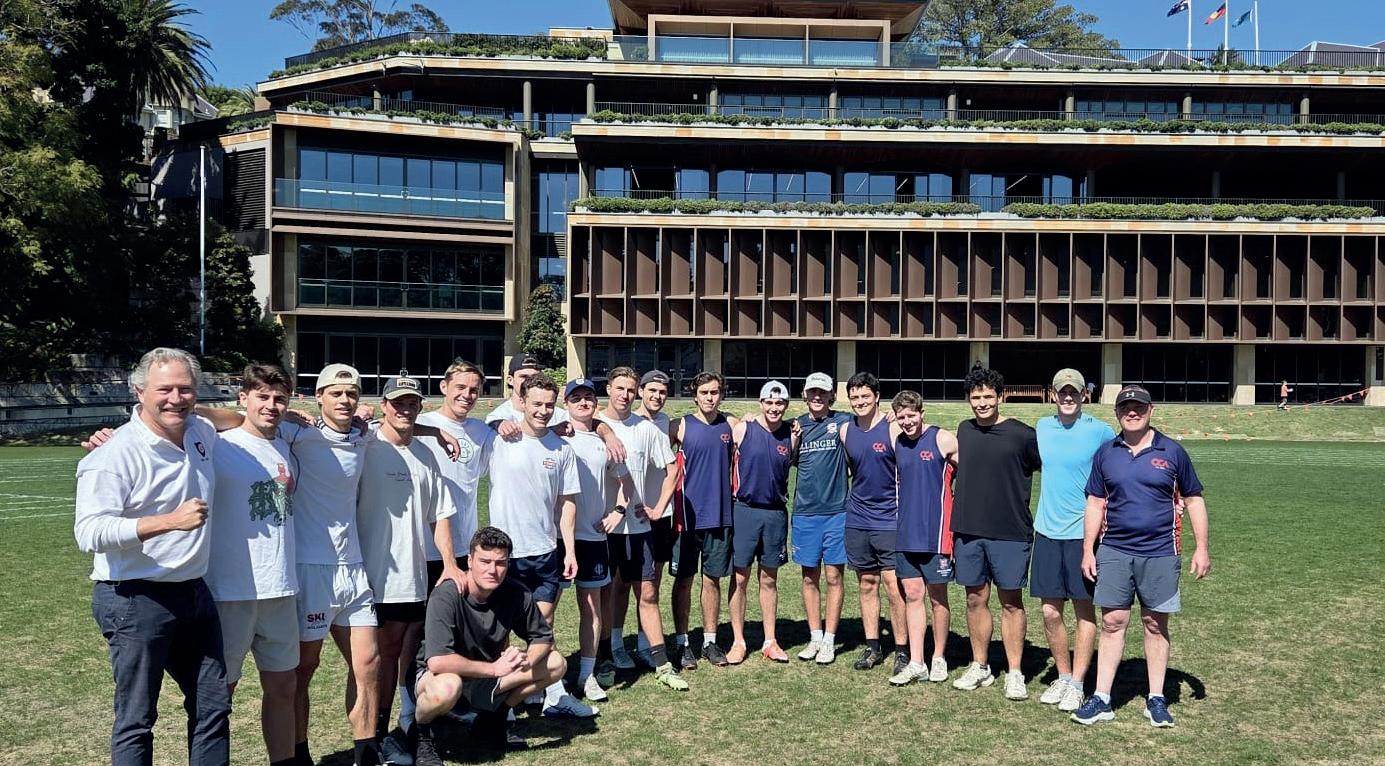
Team in front of the Vicars building : Grand Final OCA’2019 (Winners for 2025) vs OCA’2023
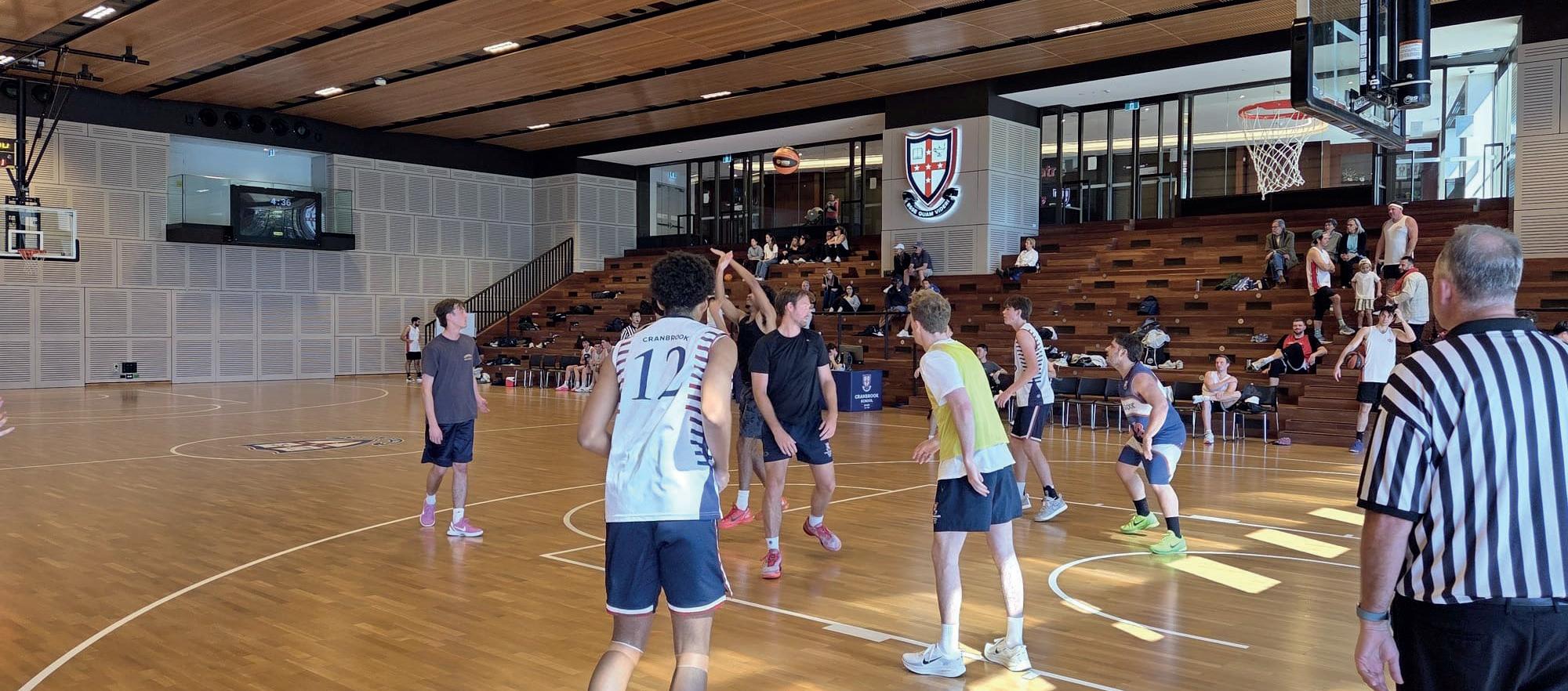
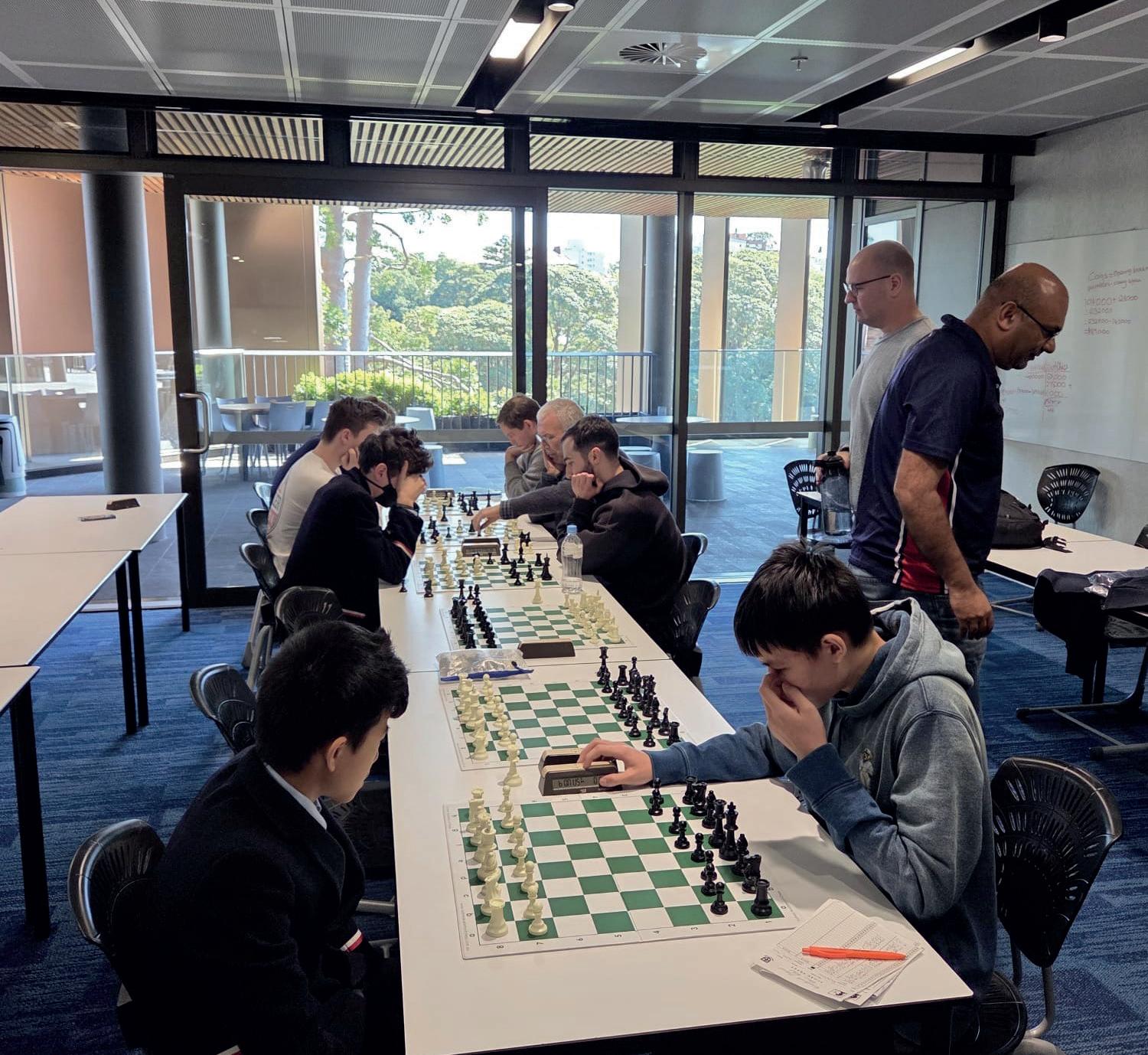
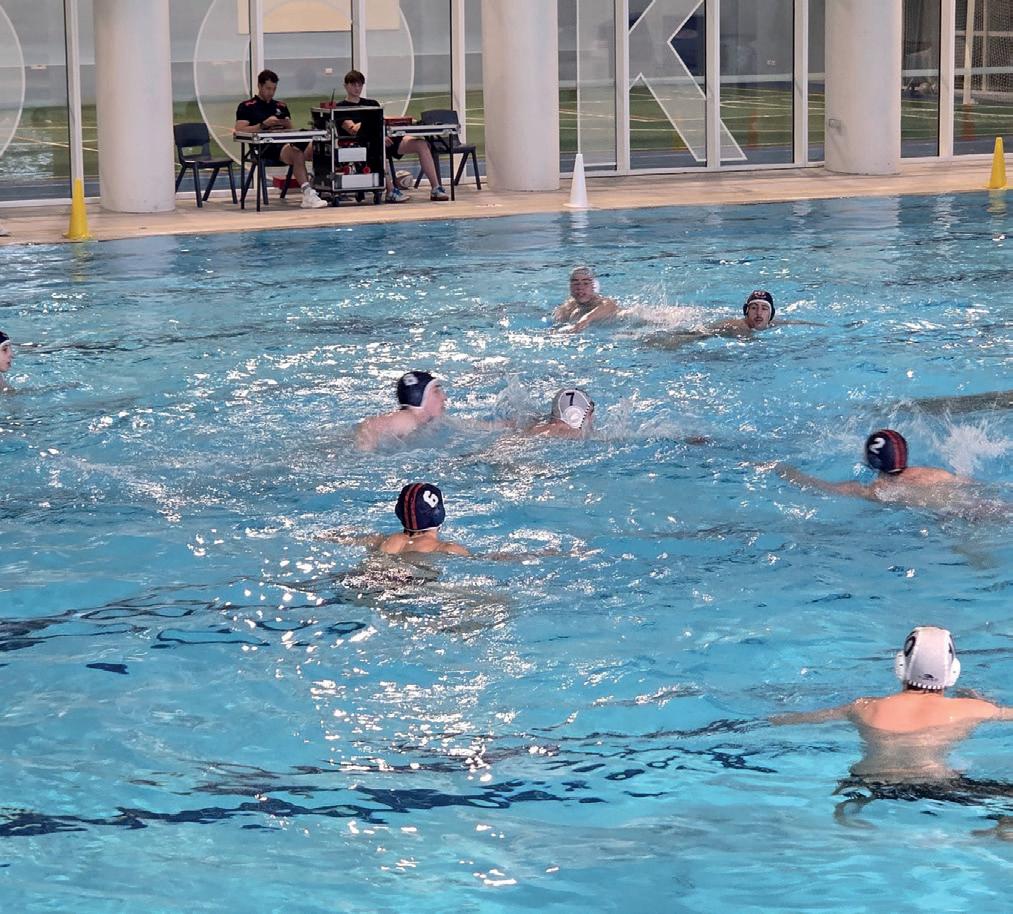
OCA 2014 vs OCA 1994/96 Meares
Chess: OCA vs School Team
Water Polo: OCA vs School Team
Basketball: OCA vs School team
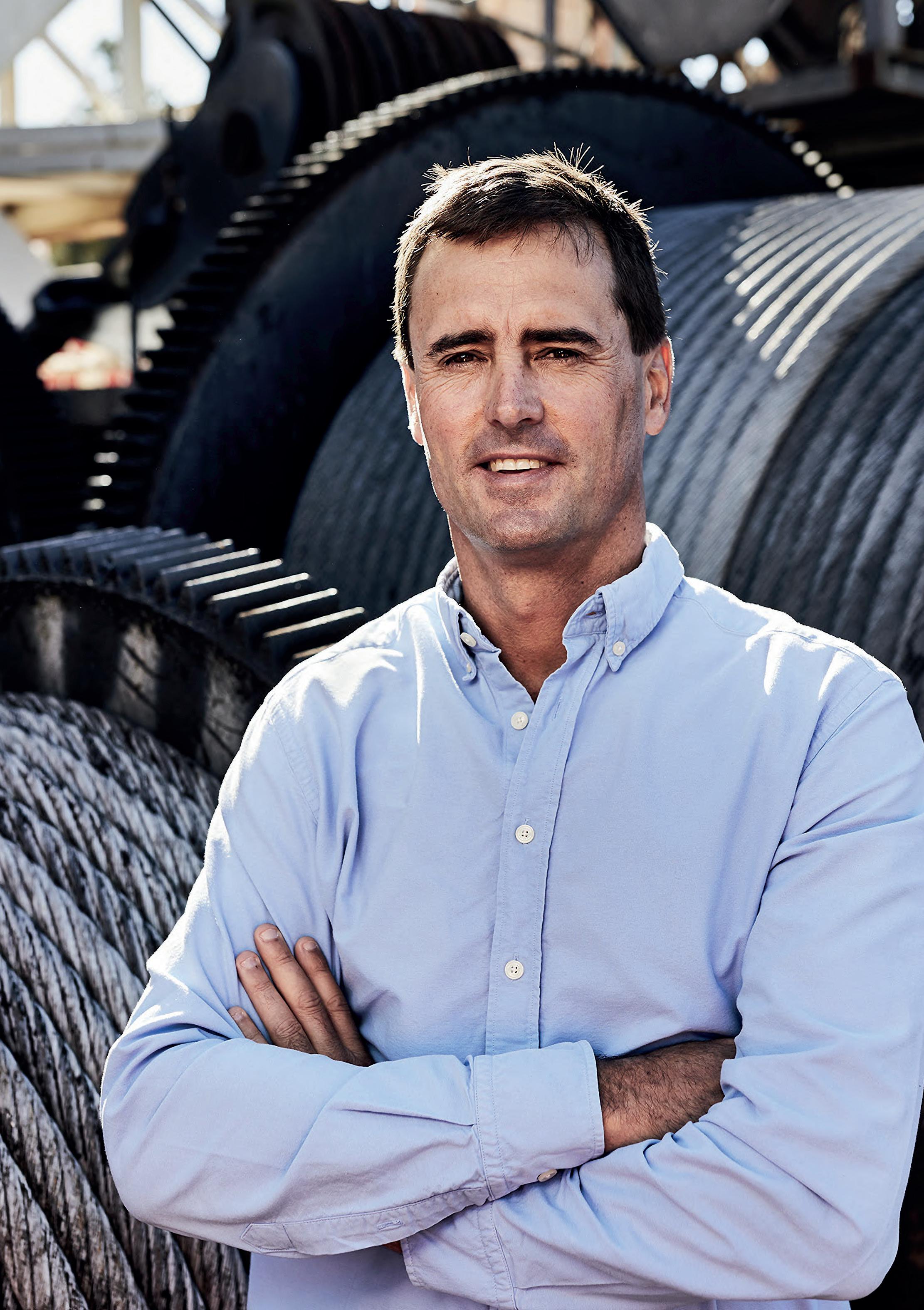
OC in Profile: Simon Marr (OC 1987)
It may come as a surprise that the man who helms a major international construction company was only a Bs and Cs student, but Simon Marr is not one for taking the welltrodden path.
A 1987 Cranbrook graduate, the 56-year-old managing director of Marr Contracting presides over a business that has helped build some of the planet’s biggest infrastructure projects including nuclear power plants and the longest suspension bridge in the world.
Started by his grandfather in 1926, Marr Contracting was born out of the need to innovate. Back then, Gordon Marr designed and built Sydney’s first crane as a way of installing steel fittings around the city.
Innovation is in the company’s D and A. When Simon and his brother, also named Gordon, took over running the business from their father in 2000, they didn’t rest on their laurels, instead they made a push into the international market, securing huge contracts and turning their family firm into a world-beating organisation.
Part of their success is based on the idea that they will fit their kit to the project and not the other way round. No challenge is too great.
Their Marr 2480D luffer, a self-designed tower crane, can lift loads three times more than any crane in existence.
It gives them the edge in mega projects such as the building of the 1915 Canakkale suspension bridge – named in honour of the World War One battles between Turks and the Anzacs – and one of Simon’s proudest achievements.
“It’s the biggest in the world,” he says. “And it was special because it was Gallipoli and it was during Covid so there were huge obstacles. But because of the innovation we brought to the project we completed it 18 months ahead of schedule.”
THE MIGHTY MARR 2480D LUFFER WAS KEY.
“Originally, they were lifting 20-tonne panels on the project – but we joined them into panels that were eight times as large, which reduced lifting time.”
It’s that firm commitment to the point of difference that sets Marr Contracting apart – “you can’t offer the same thing your competitor’s got” – and that has been the way to their success..
Simon left Cranbrook in 1987, and he says individuality – or point of difference – was something he always felt was nurtured at the school.
“Cranbrook fosters it in every student that goes through there. It’s like the motto says: ‘To be, rather than to seem to be.’ Don’t pretend to be something, just be yourself.”
He appreciated the school’s emphasis on developing students’ unique talents rather than squeezing them into dull stereotypes.
“Cranbrook was so different to other schools because it was okay just to be you... there was no chest-beating.
“They didn’t put boys on a pedestal because they were great rugby players or cricketers, which you see at other schools.
“If you were good at chess or rugby or acting or maths it didn’t really matter – as long as you were giving it your best shot and enjoying it.”
A self-confessed average pupil – “my favourite subjects were geography, economics and free periods!” – Simon particularly enjoyed house life at Northcott under the relaxed guidance of Mr Shellshear.
“He was a great housemaster – he was hilarious and a fantastic human being,” Simon recalls. We were an unconventional house in many ways yet we would somehow win the rugby even though we never took it seriously, and afterwards he would get up and say: ‘How the hell did we win that!’”
He also made the first XV as an outside flanker, which considering he weighed 60kg ringing wet, was a tremendous achievement. It was one of many instances where he was encouraged by his teachers to back himself even if the odds weren’t always in his favour.
“I wasn’t the most talented player, so I trained really hard so I could wear that white jersey – I was so determined to make that side.”
Defying the odds has been a hallmark of Simon’s postschool career. He didn’t study at university – and his only tech certificate is in accountancy, which he says he has barely used.
The family business now has offices in Britain and is increasingly the go-to firm for major infrastructure projects around the world.
But achieving this level of international recognition hasn’t come easy. Hard work has been at the heart of everything the “Men from Marr’s” do.
“For example, setting up in the UK took a long time,” Simon says. “We had to knock on a lot of doors and they kept saying to us: ‘We don’t do what you do’, but eventually it flipped and now they’re coming to us.”
We are now working on some of the biggest infrastructure projects in the world and they see us as being key to the success of those projects.”
As for the future, Simon is confident Marr Contracting will continue to prosper.
“There are a lot of opportunities for us globally. There’s a big push around the way we generate power, so we are involved in nuclear construction, which is a hell of an opportunity for us, and we’re right there amongst it.”
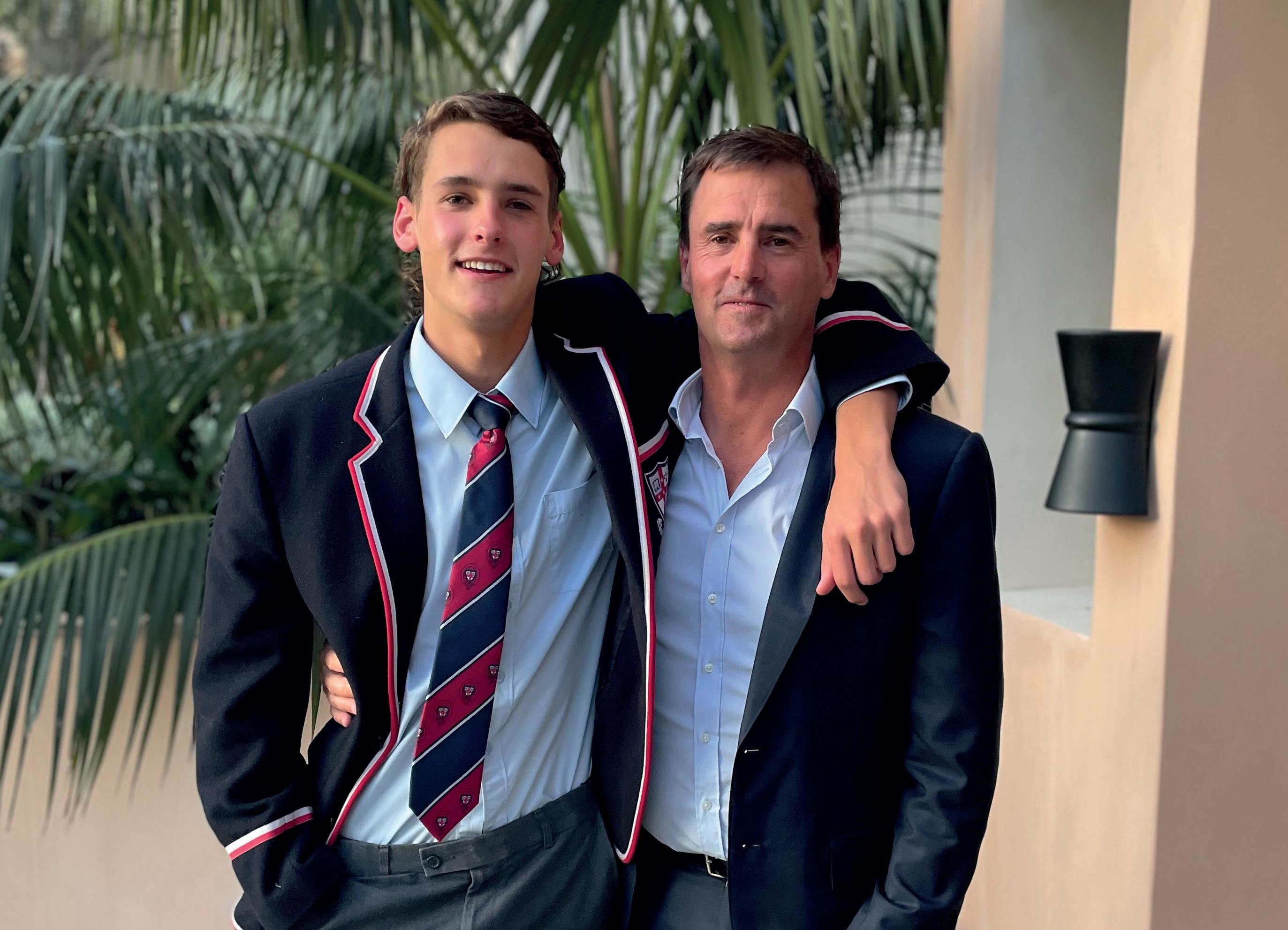
Tom and Simon Marr
OC in Profile: David Handley AM (OC 1983)
Understanding history is central to understanding David Handley AM and what makes him tick. The founder of Sculpture by the Sea has been present at some of the world’s most cataclysmic turning points.
He was there when the Berlin War came down. He was there in the aftermath of Czechoslovakia’s Velvet Revolution. The historical process and how it can work for the good of humanity is what has driven David in his career as a social entrepreneur.
It is why Sculpture by the Sea – one of the most successful public art projects in the history of Australia – exists and continues to draw hundreds of thousands of viewers every year.
David’s keen appreciation of the past can be traced back to his time at Cranbrook in the late 1970s and early 1980s, which he says opened his eyes to the world and the way it works.
HISTORY TEACHER DR DAVID THOMAS WAS A HUGE INFLUENCE.
“He showed me how humankind makes the same mistakes generation after generation, millennia after millennia – the hubris of empires and egotists that take more than belongs to them.”
In English, he was exposed to South African black playwrights working under the tyranny of apartheid and it awakened in him a sense of how the individual can strike a blow against injustice.
Cranbrook also revealed to him the importance of contributing to the wider community, the sense of working for the common good.
It’s one of the reasons why David – a scion of a prominent law family, and a Master of Law graduate of Kings College at the University of London – ditched his career in the legal profession and moved to the Czech Republic in 1993 to “live the period of historical change”.
IT WAS THERE IN PRAGUE THAT HE FELL IN LOVE WITH SCULPTURE.
“I was taken to this exhibition of the sculptors who had been persona non grata during the communist years set among the ruins of a 13th century castle and I was just blown away.”
A huge fan of rock music, he had become disillusioned with the way marketers and public relations had commercialised its soul, and he began to mull over the idea of setting up a free-to-the-public community arts event.
SCULPTURE WOULD BE THE ART FORM.
“I thought, why not contrast sculpture with the Australian coast? “ Someone suggested I check out the Bondi to Tamarama walk and as soon as I visited I could visualise the exhibition,” David says. “I like to joke it is as if God and the Mayor of Waverley created the perfect place for an outdoor sculpture exhibition!”
Utilising his Cranbrook connections – famous sculptor Ron Robertson-Swann OAM, father of school mate Kashell, became a trusted advisor – and making every decision through the lens of the visiting public rather than stakeholders, David turned his fledgling vision into reality. On a marketing budget of just $400, 25,000 people turned up for the first one day exhibition.
That was in 1997. Twenty-eight years later Sculpture by the Sea is a highlight of Sydney’s arts calendar, recognised throughout the world as a trailblazing public exhibition that attracts nearly half a million visitors and cutting-edge artists from over 50 countries.
David says its success is rooted in a decision to steer clear of commercialising the public response – and Australians’ love of the outdoors.
“A lot of people feel life has become way too commercial. Things like giving naming rights to sports stadiums built with public money and calling our national teams by sponsors’ names don’t sit easily. People appreciate the generosity of our donors and sponsors who help us stage Sculpture by the Sea, making sure it’s not ‘Logo by the Sea’.
“Plus, Aussies love the beach, which is synonymous with freedom and our sense of society.”
Having experienced almost three decades of spectacular sculptures first-hand, his favourite is the sustainable-living-themed ‘Ruin’ by Tasmanian artist Marcus Tatton from 2011 – a “ building with a chimney and fireplace made of firewood reminiscent of the ruins of early settlers homesteads that looked stunning on Tamarama beach”.
Of course, Sculpture by the Sea cannot prevent wars or cleanse the world of the “hubris of empires and egotists” but David says it can spread goodwill and provide something of an antidote to rampant commercialism.
It also plays a small part in lifting the international perception of Australia beyond the “roo, rock and reef“ stereotypes.
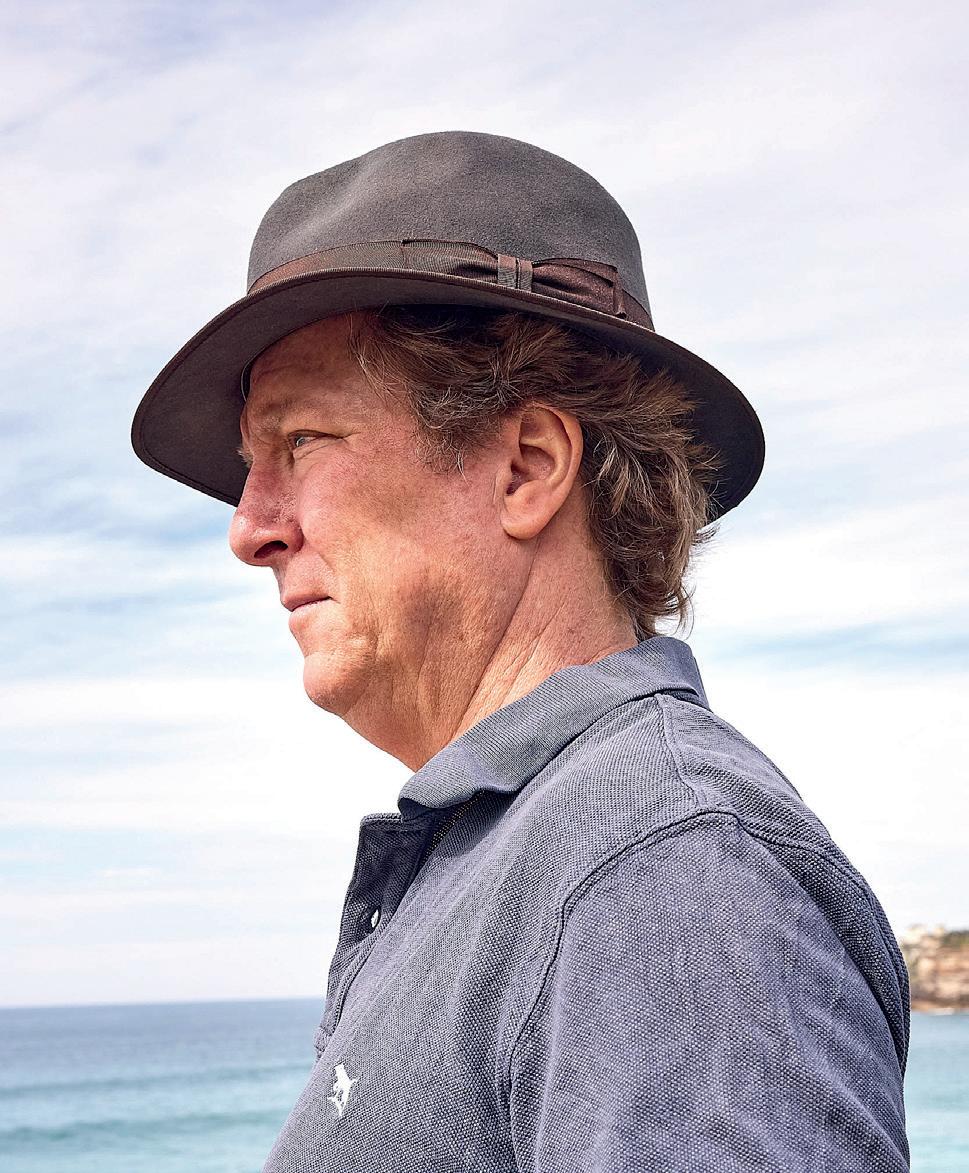
A new associated project, the Snowy Valleys Sculpture Trail, created in response to the Black Summer fires, features 64 permanent sculptures across 150 kilometres of picturesque countryside, and has already become a major tourist drawcard.
David is pleased that over the years, many Cranbrookians have stepped up as philanthropic supporters of Sculpture by the Sea, while old boys such as Axel Arnott (OC 1988) and James Bush (OC 1984) have been key colleagues.
He is hopeful the exhibition will continue in perpetuity despite the challenges of securing government funding.
“I wanted to build something that hopefully outlasts myself and becomes a permanent part of our community and the Australian way of life, while fostering the dreams of artists,” he says. “I’d like to think Sculpture by the Sea in some way makes the world a better place.”
Sculpture by the Sea has a long-standing relationship with the Czech Republic, having showcased many of its artists, and this year the Czech Ministry of Foreign Affairs awarded it the prestigious Gratias Agit Award in recognition of benefits to the “whole of society, for the promotion of friendship among nations and for the promotion of the good name of the Czech Republic abroad”.
OC in Profile: Kip Williams (OC 2004)
2025 has been a landmark year for Australian theatre director and adapter Kip Williams, thanks in large part to the extraordinary success of The Picture of Dorian Gray on Broadway.
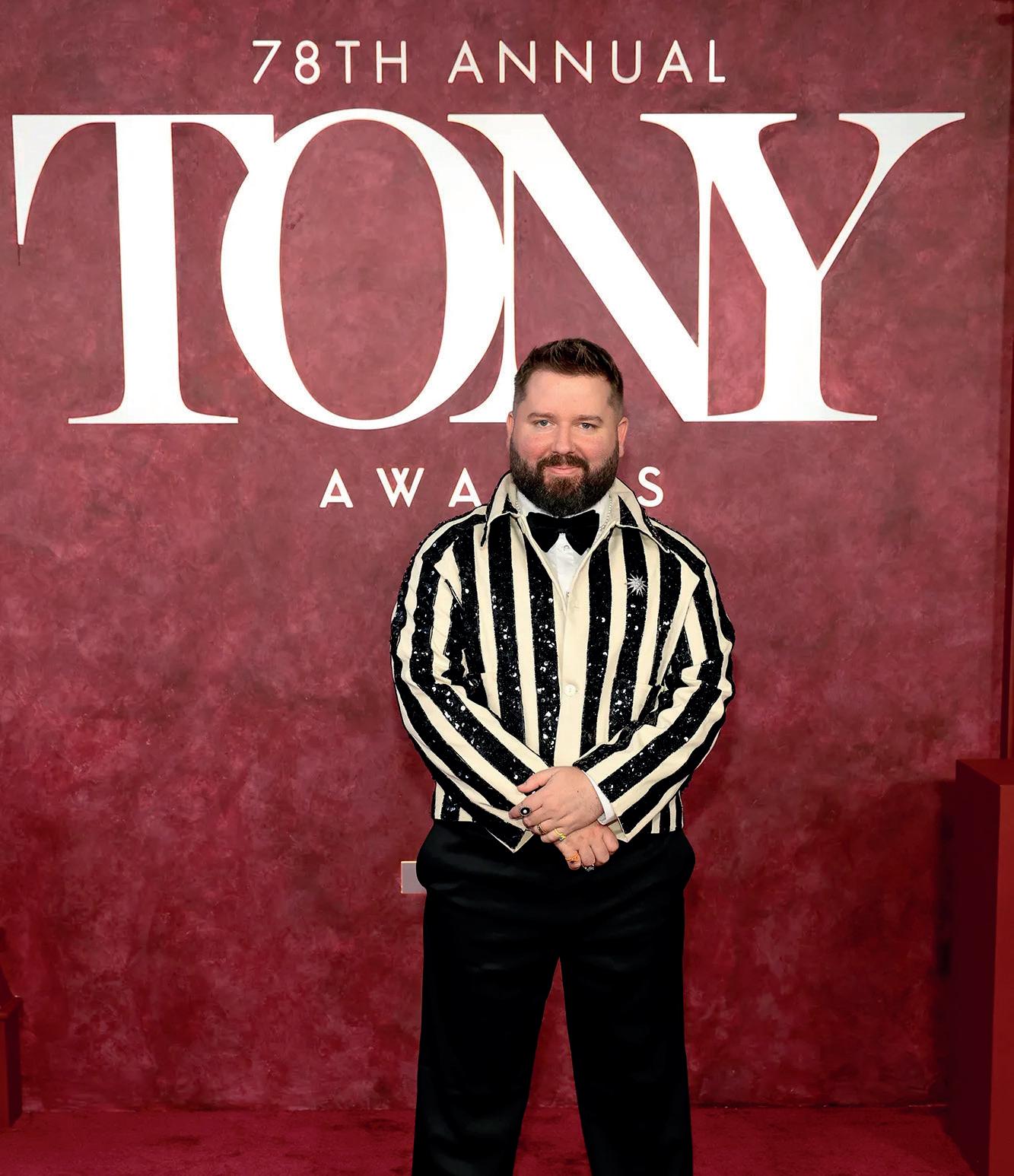
Originally a bold cine-theatrical adaptation premiering with the Sydney Theatre Company in 2020, The Picture of Dorian Gray made a stunning journey from Australia to London’s West End and eventually to Broadway. The production — featuring Sarah Snook in the titanic feat of performing all 26 roles live — opened at New York’s Music Box Theatre in March 2025 to high accolades and audience acclaim.
Audiences were blown away by the show’s seamless blend of live performance and multimedia innovation — integrating on-stage cameras, rapid costume changes, and over 400 video edits to produce an immersive theatrical experience.
The Broadway run not only turned heads but also turned a profit. The show successfully recouped its initial US$8.75 million capitalization by closing its run on June 29, 2025. Beyond its financial success, the production earned serious industry recognition: at the 78th Tony Awards, Sarah Snook was named Best Actress in a Play — a testament to the magnetic power of Kip Williams’s vision — while Williams himself was nominated for Best Direction of a Play. Williams’ achievements were further celebrated with a Drama Desk Award for Unique Theatrical Experience, along with nominations for Outstanding Direction and Production of a Play. The production also received a Dorian Award for Outstanding Lead Performance in a Broadway Play, honoring Snook’s portrayal in Williams’s adaptation.
In interviews, Williams has shared deep insights into the creative journey behind Dorian Gray. Speaking with Rose Byrne, he noted the staggering logistical feat: “more than 300 marks on stage, over 400 camera edits, live costume changes, and an onstage crew of about 25 people” — crafting a piece that reimagines theatre for the digital era while rooted in storytelling tradition. He also acknowledges that while his work is high-tech in execution, it remains grounded in Wilde’s timeless exploration of identity and performance.
The Broadway chapter of The Picture of Dorian Gray represents a high point in Williams’s career — a synthesis of experimental form, critical acclaim, and industry awards. It not only amplified his international profile but also reinforced the power of Australian theatre on the world stage.
Williams’s ambition to push the boundaries of what theatre can be — blending cinematic techniques with live performance — has paid off spectacularly.
Kip Williams at the 78th Tony Awards

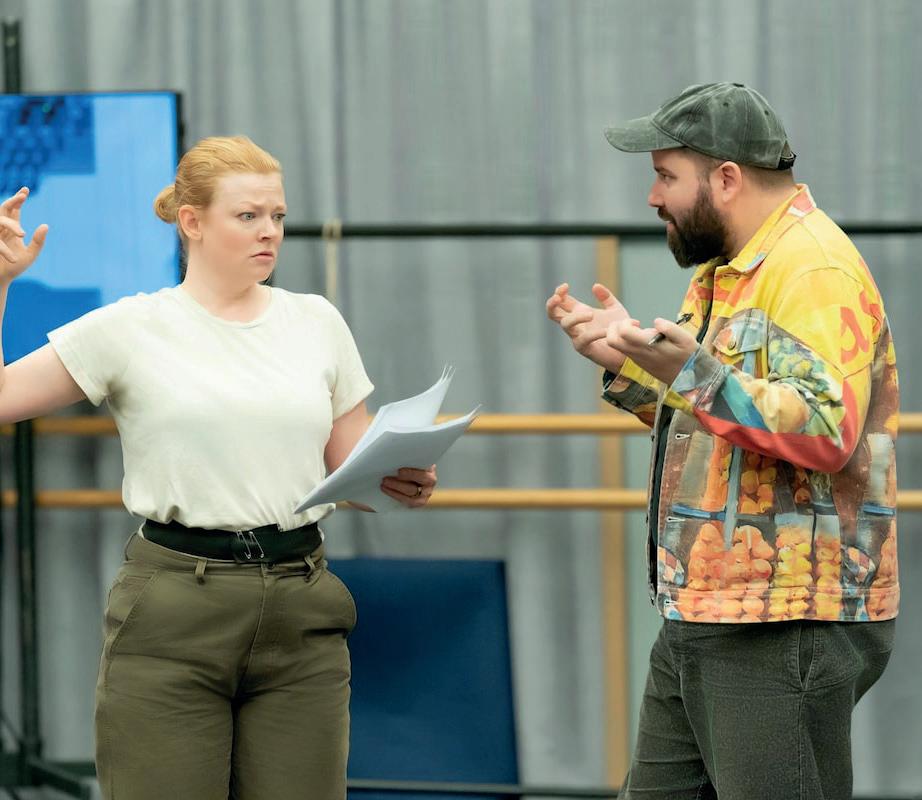

As he transitions from his tenure as Artistic Director at Sydney Theatre Company to focus on his burgeoning global presence, it’s clear that 2025 will stand as the year when Kip Williams truly made his mark on Broadway.
Following the Broadway triumph of The Picture of Dorian Gray, Kip Williams (OC 2004) is entering an exciting new chapter in his career. After eight years as Artistic Director of the Sydney Theatre Company, Williams will conclude his tenure with Dracula, completing his acclaimed Gothic cine-theatre trilogy. Internationally, he will premiere a new translation of Jean Genet’s The Maids at London’s Donmar Warehouse in October 2025. Reflecting on his bold, screen-infused approach to theatre, Williams has said, “What excites me is the chance to push at the boundaries of what theatre can be, while always holding onto the heart of great storytelling.” With his Broadway success still resonating, Williams now stands as one of the most innovative theatrical voices of his generation, poised to expand his influence on the global stage.
Dracula 2024
The Picture of Dorian Gray
Kip and Sarah Snook in Dorian Grey rehearsal
Reunite:
OC’s Get
Together
2024 & 2025
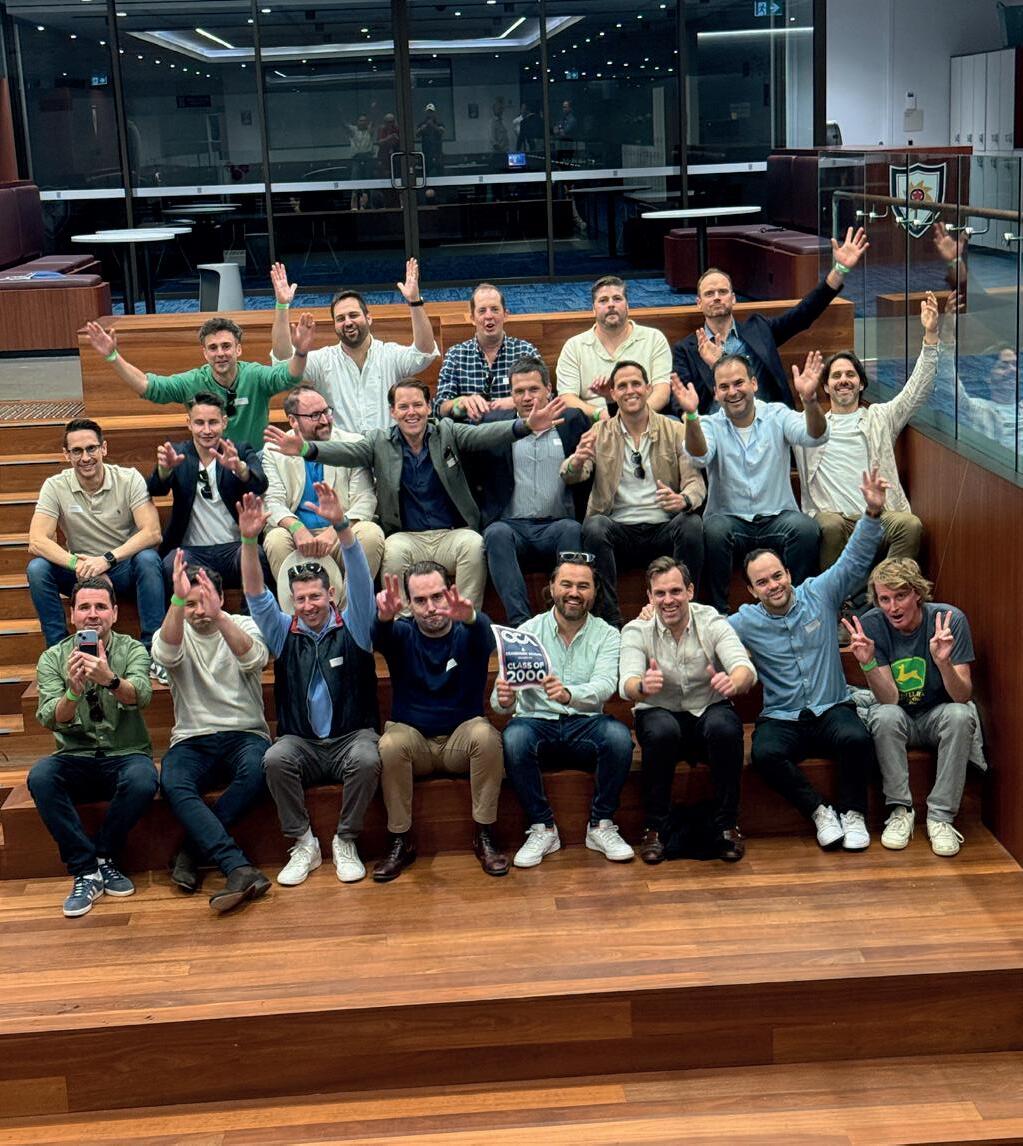
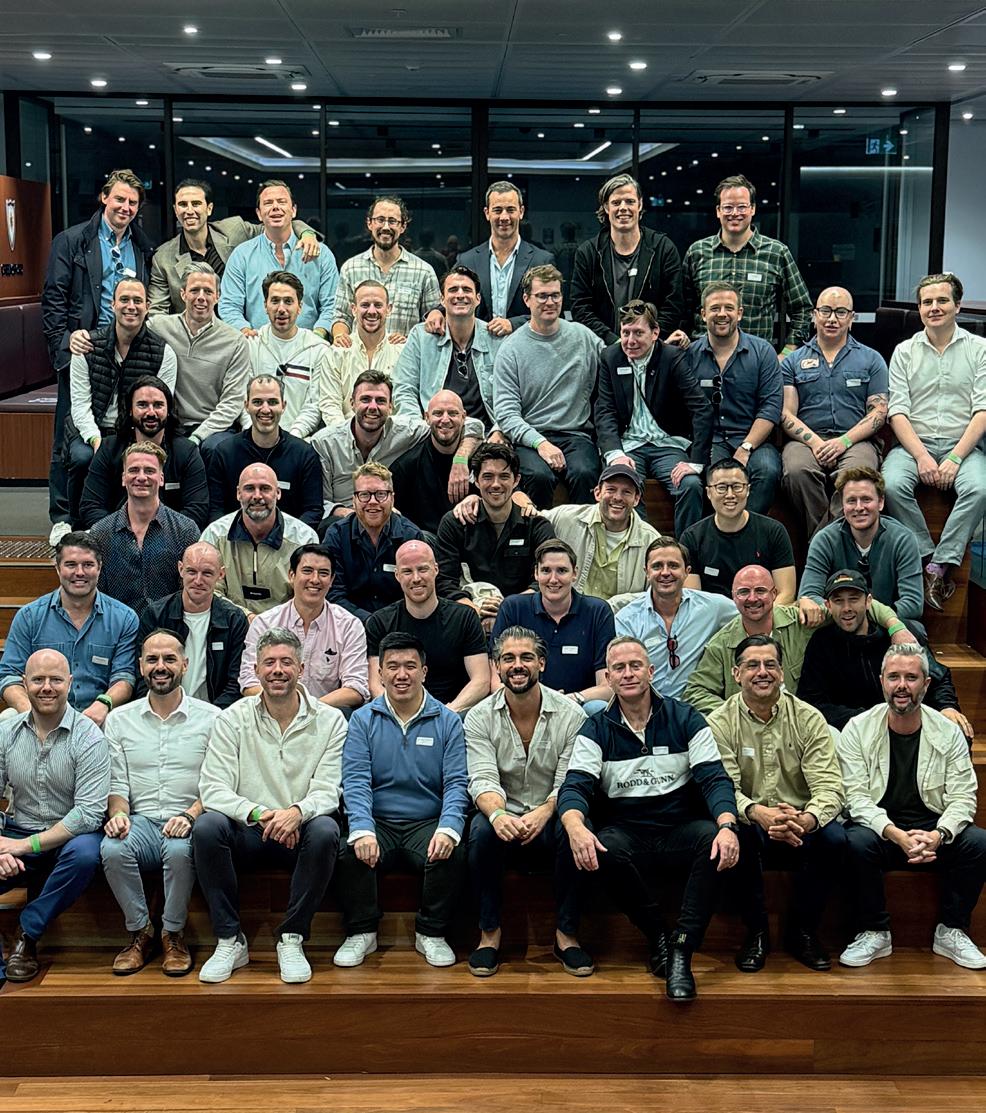
This year’s reunions reminded us why Old Cranbrookians return time and time again. Whether reconnecting with lifelong friends, renewing ties after many years, or simply “dipping a toe back in,” these relaxed gatherings offered something for everyone. The focus was on creating a warm, welcoming atmosphere where stories could be shared, friendships rekindled, and new memories made. The formula is a simple one – tour of the School, lunch and drinks on the OCA Terrace, rugby and sunshine. Seeing happy OCs up on the terrace is an added bonus to a great community day for our current parents, students and staff.
Above all, the reunions highlighted the importance of staying connected — to each other and to the School — ensuring that the Cranbrook spirit remains a constant thread across generations.
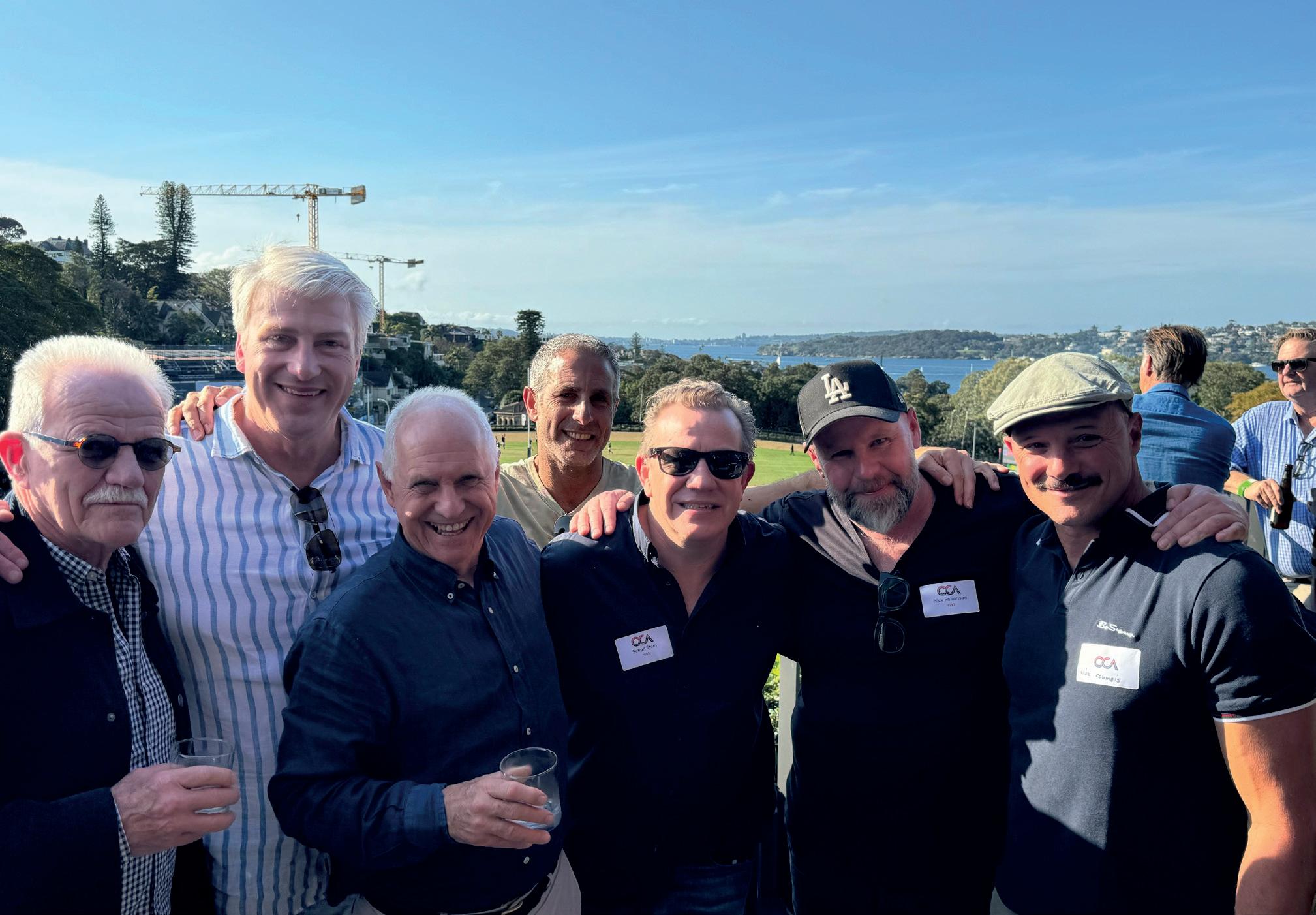
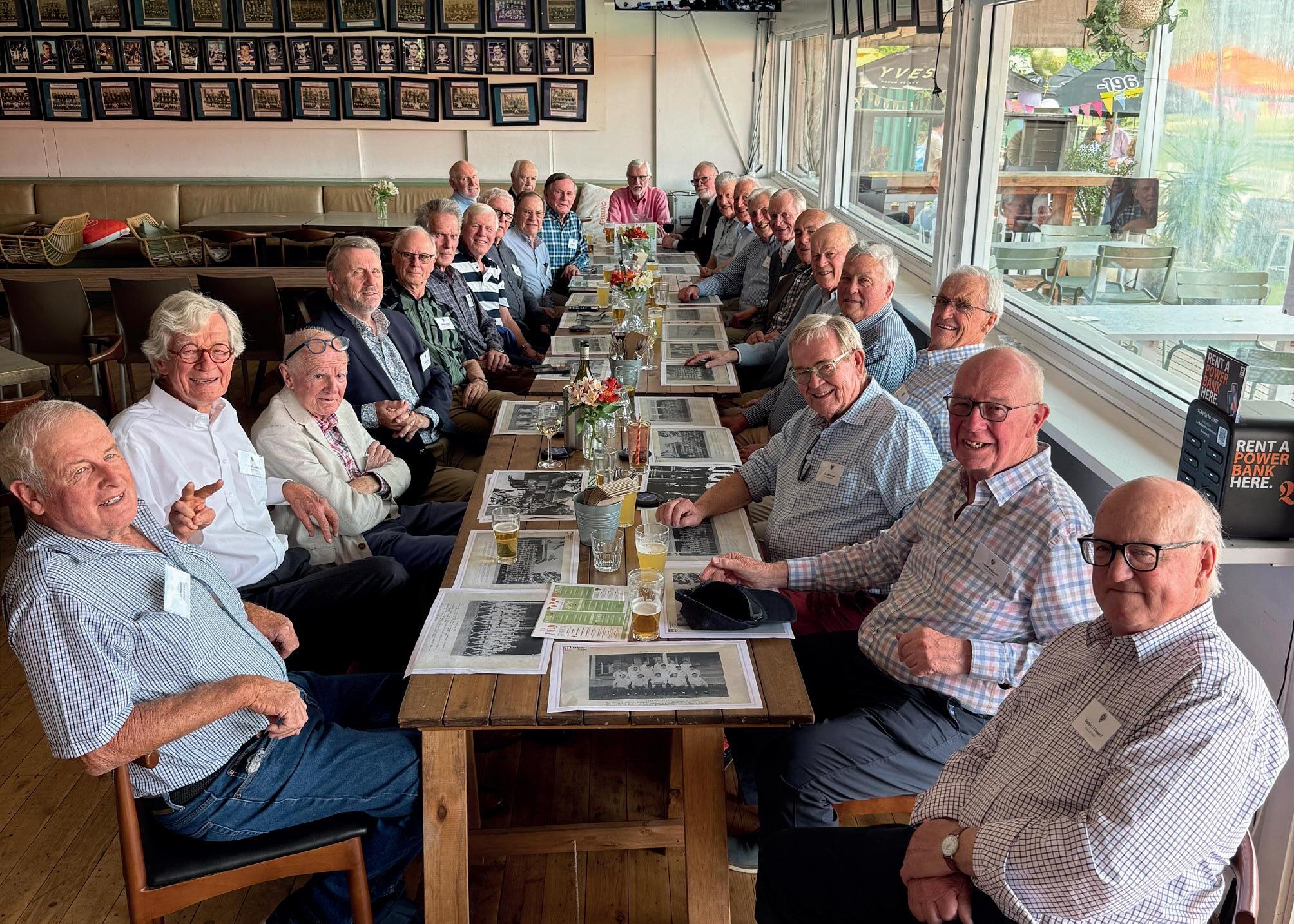
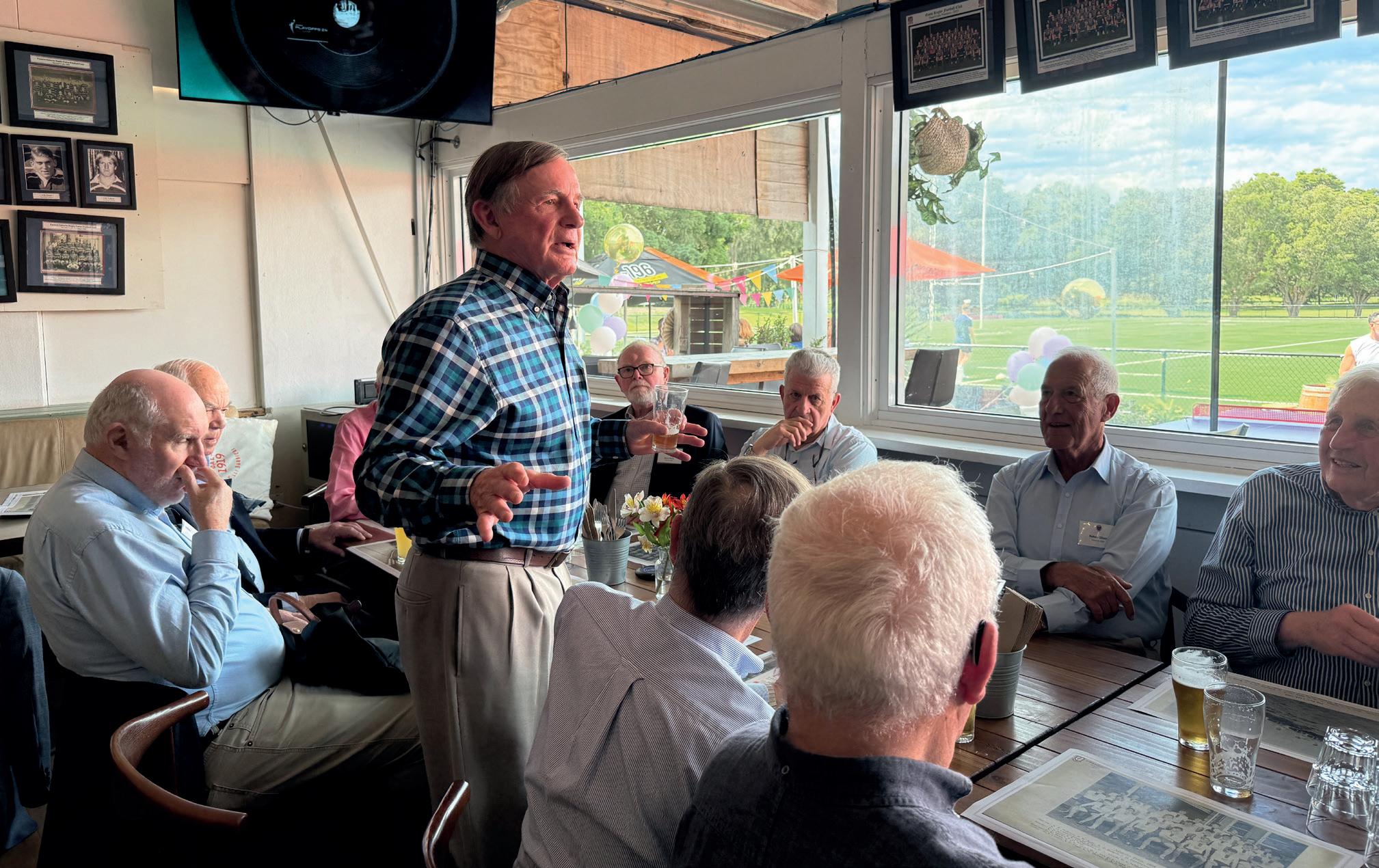
Class of 1964 Reunion
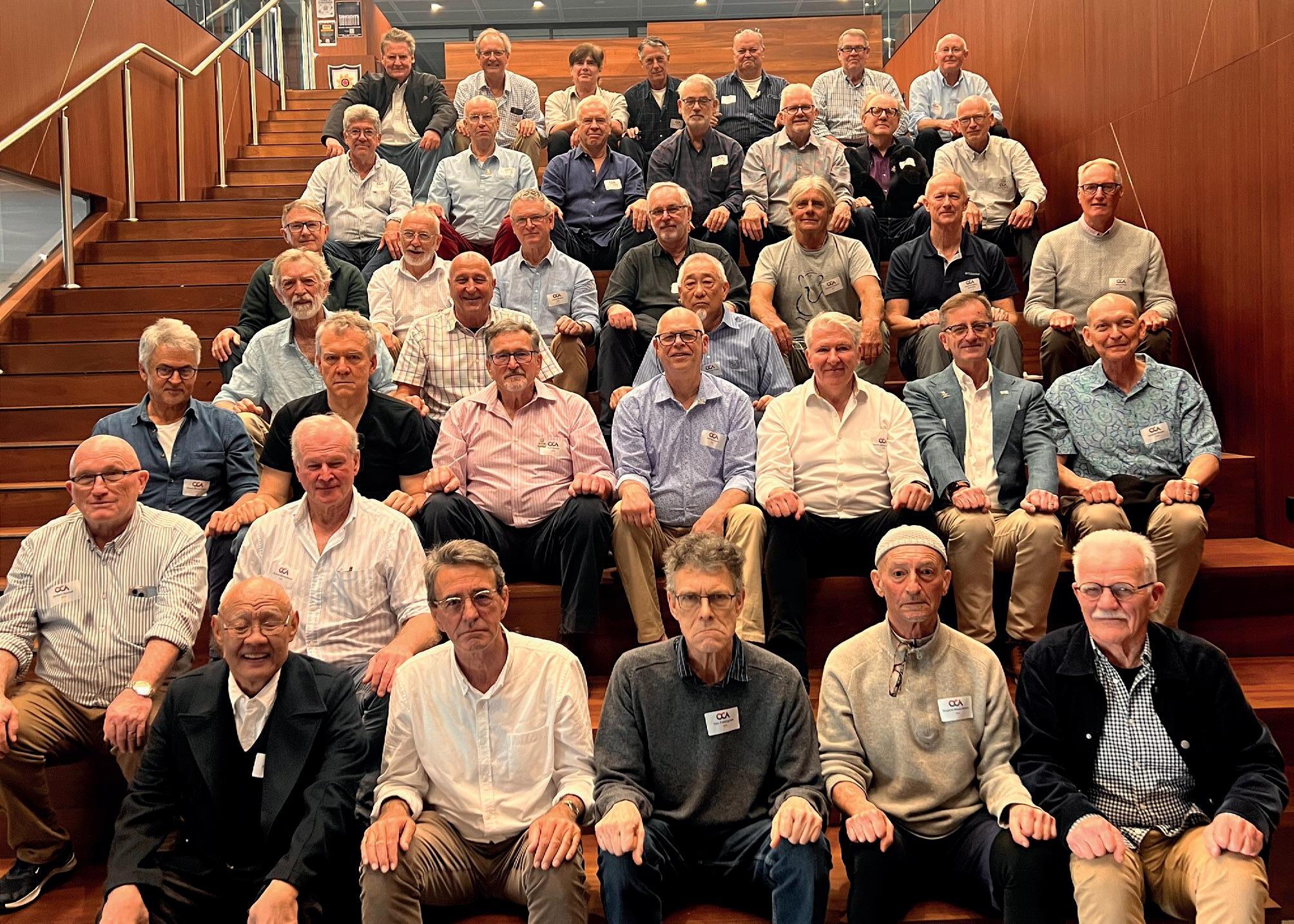
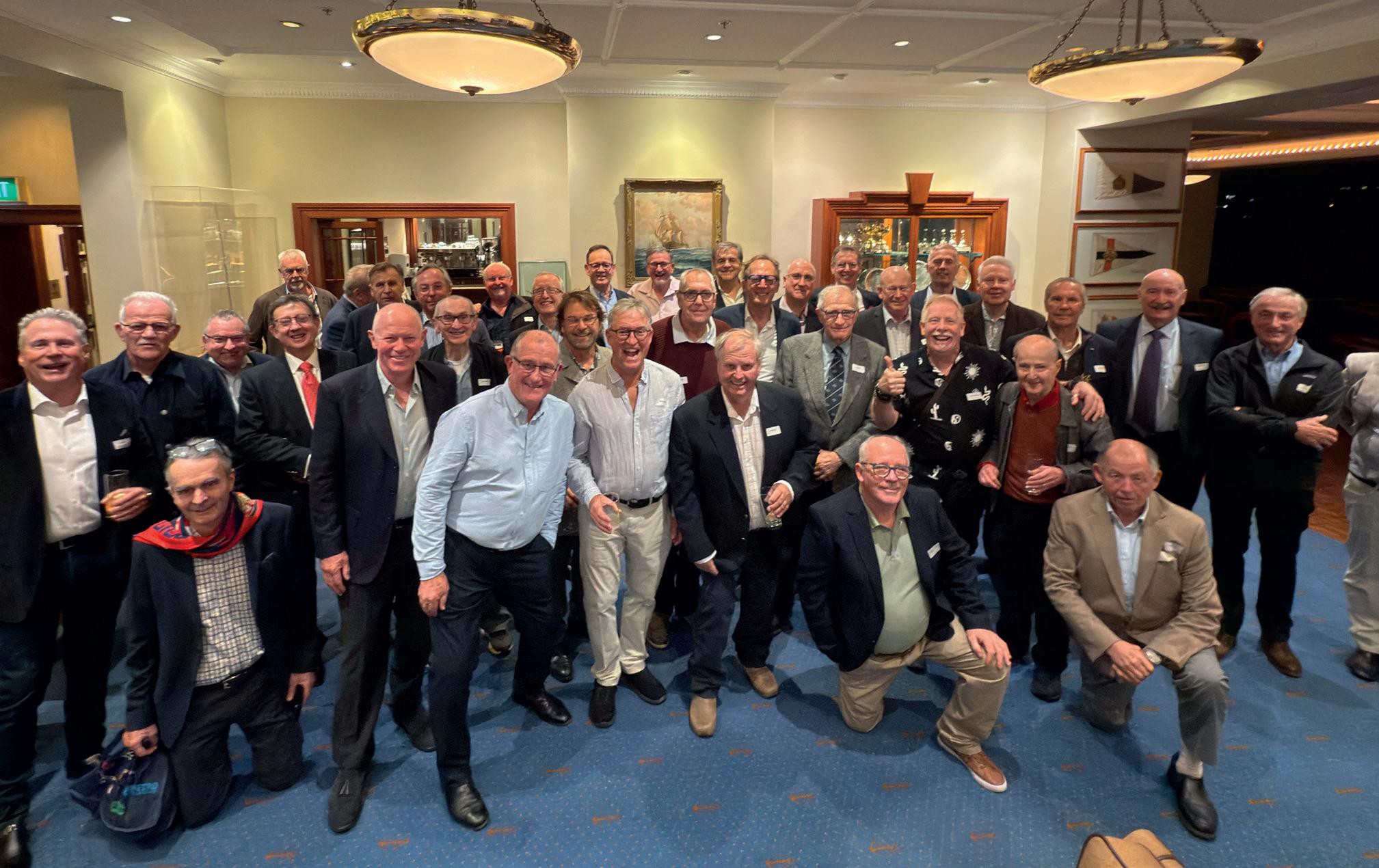
Class of 1974 Reunion
Class of 1979 – 1984 & 1989 Reunions
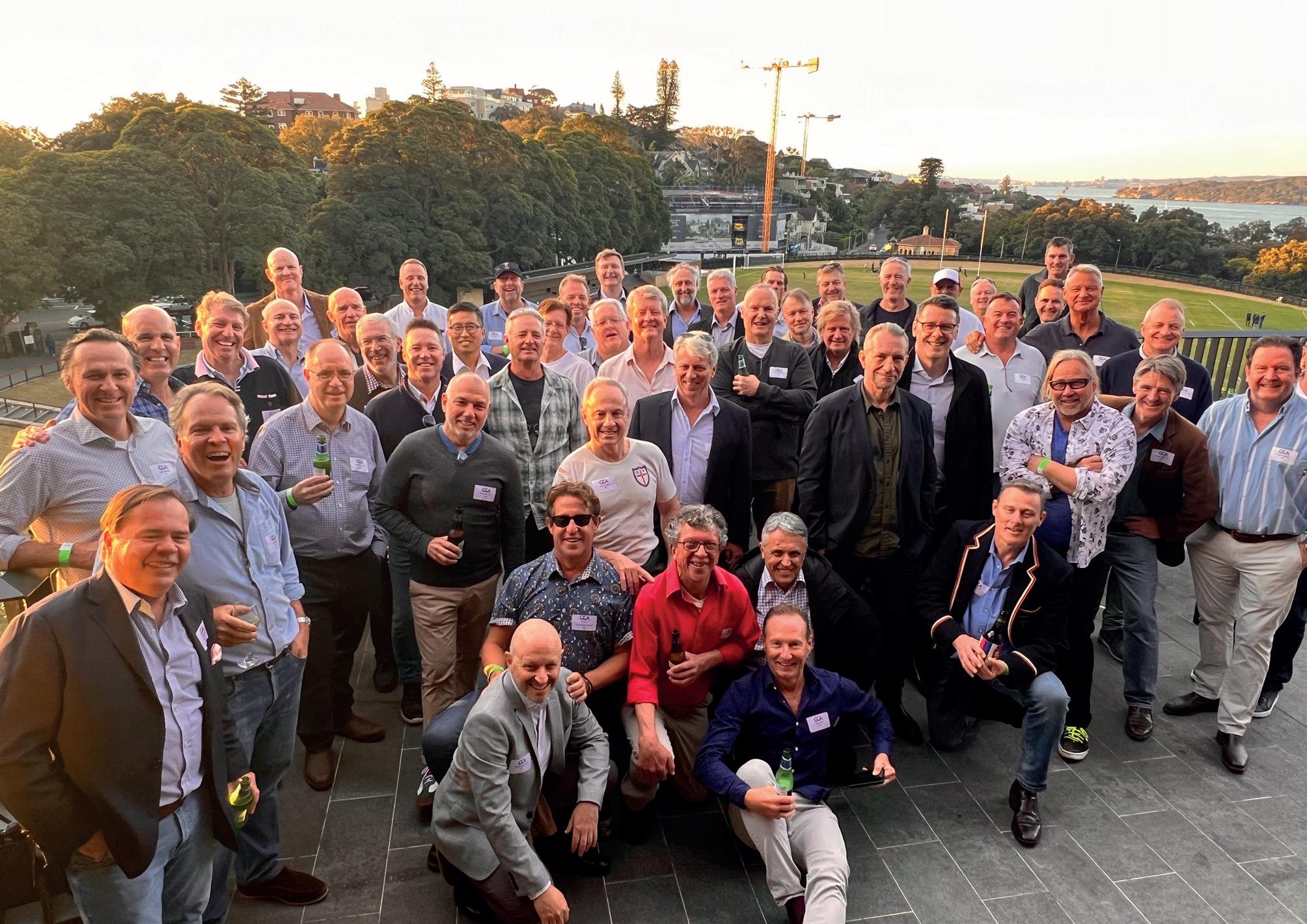
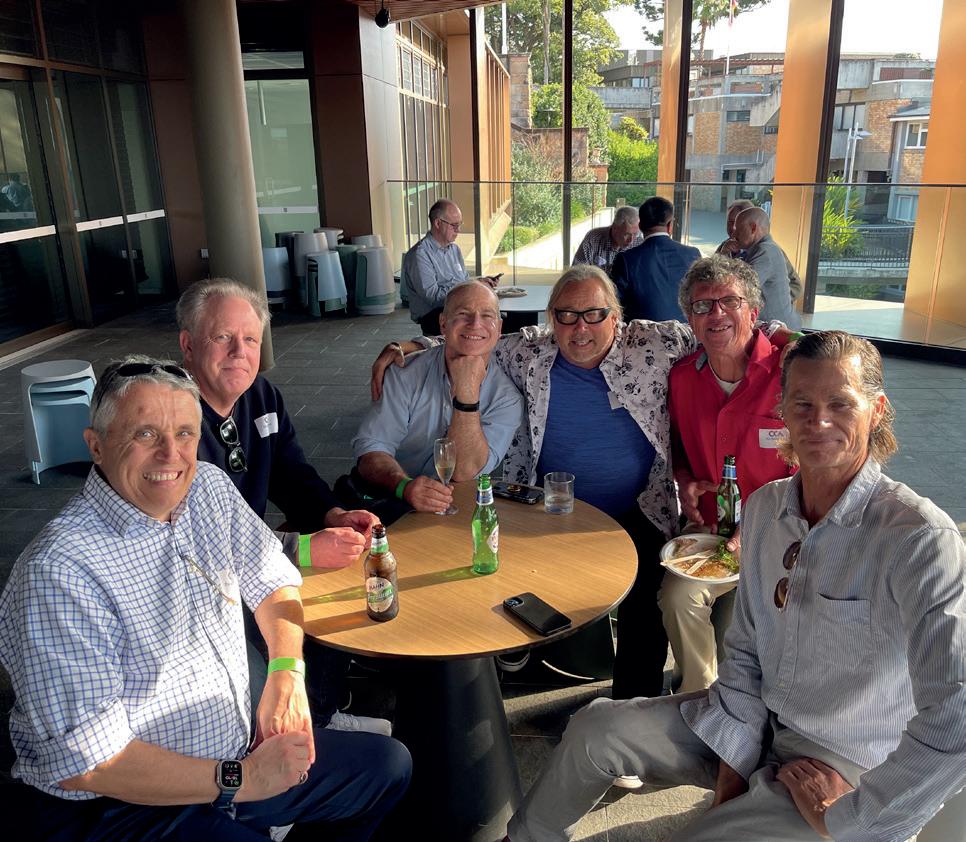
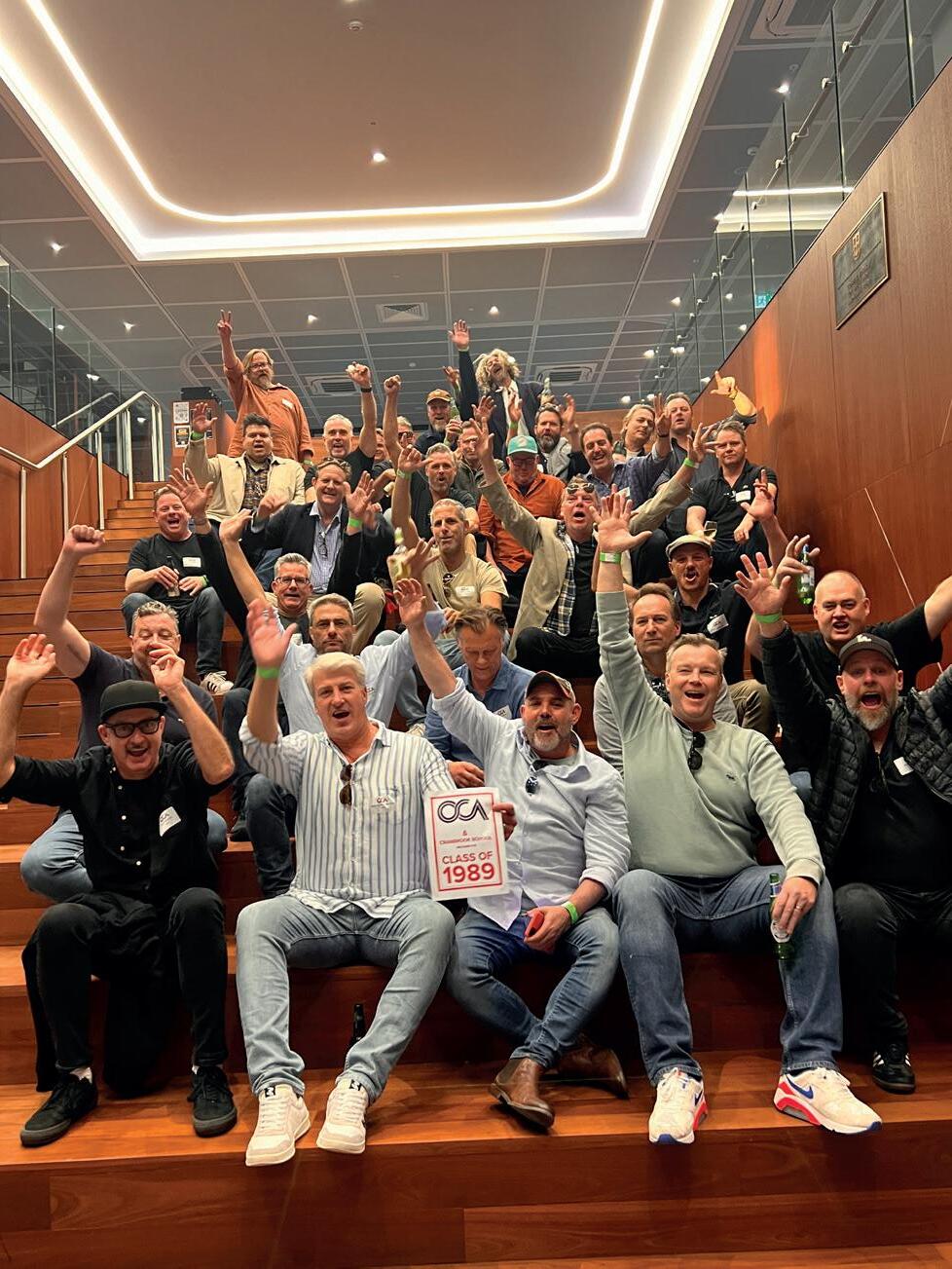
Top: Class of 1984, Left: Class of 1979, Right: Class of 1989
Class of 1980 – 1985 – 1990 Reunions
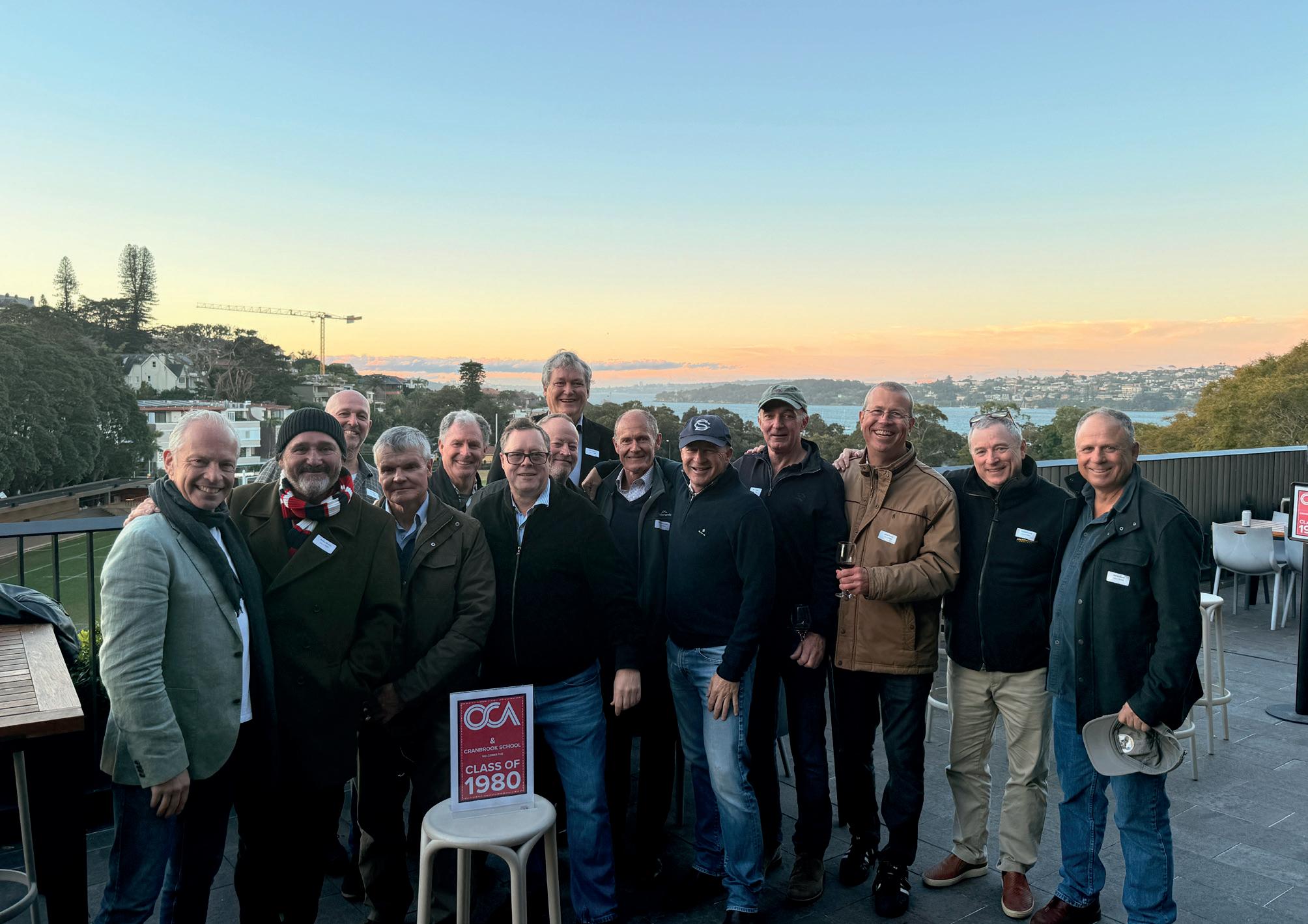
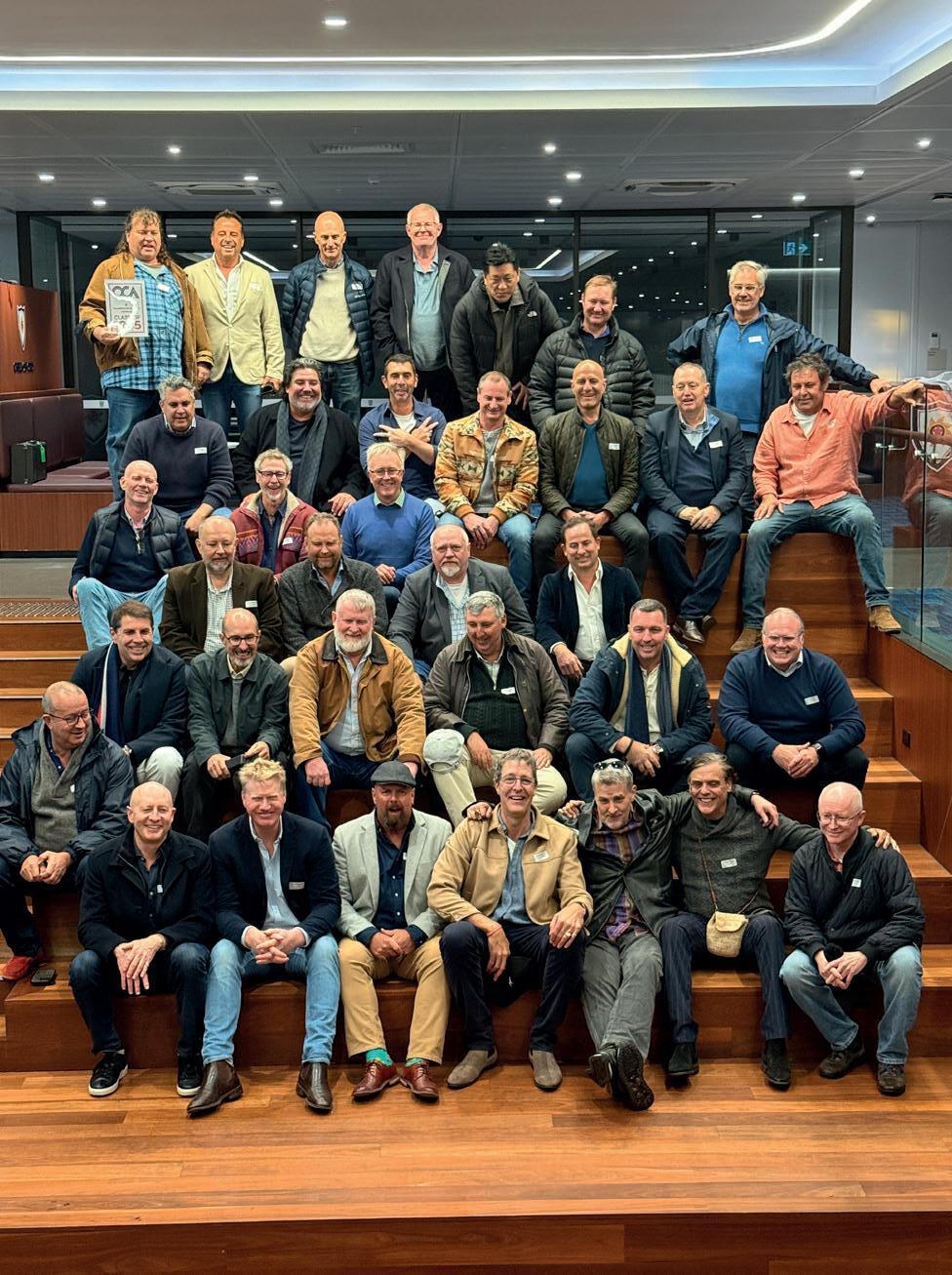
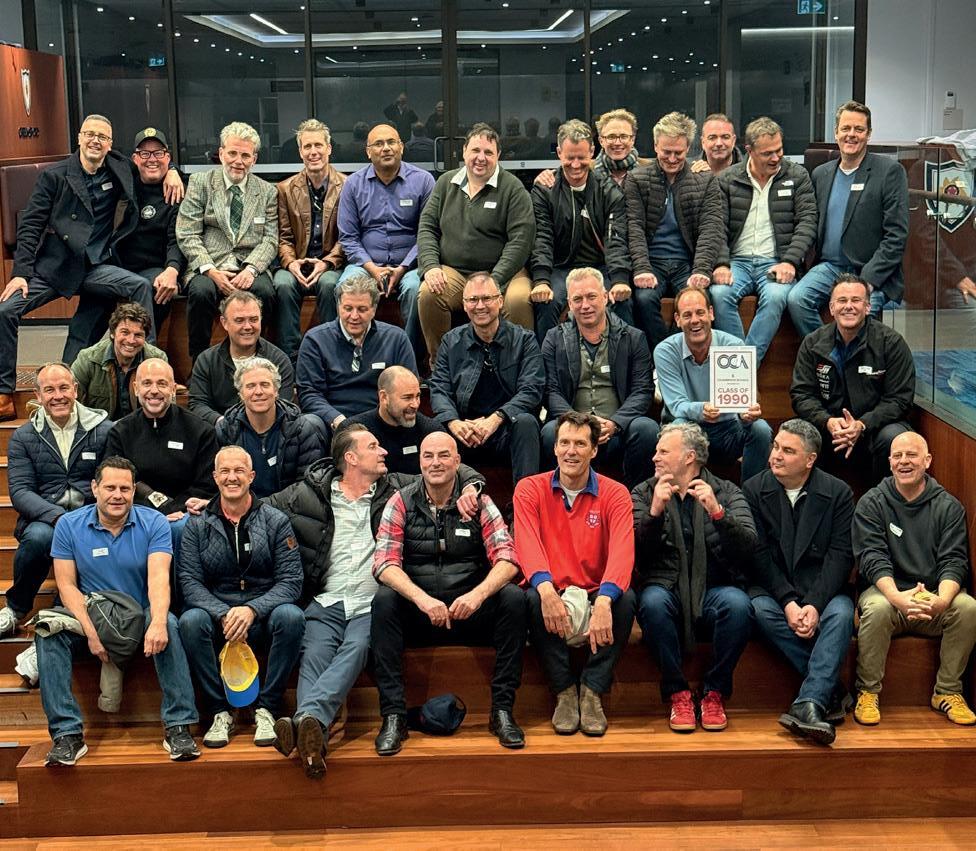
Top: Class of 1980, Left: Class of 1985, Right: Class of 1990
Class of 1994 – 1999 – 2004 Reunions
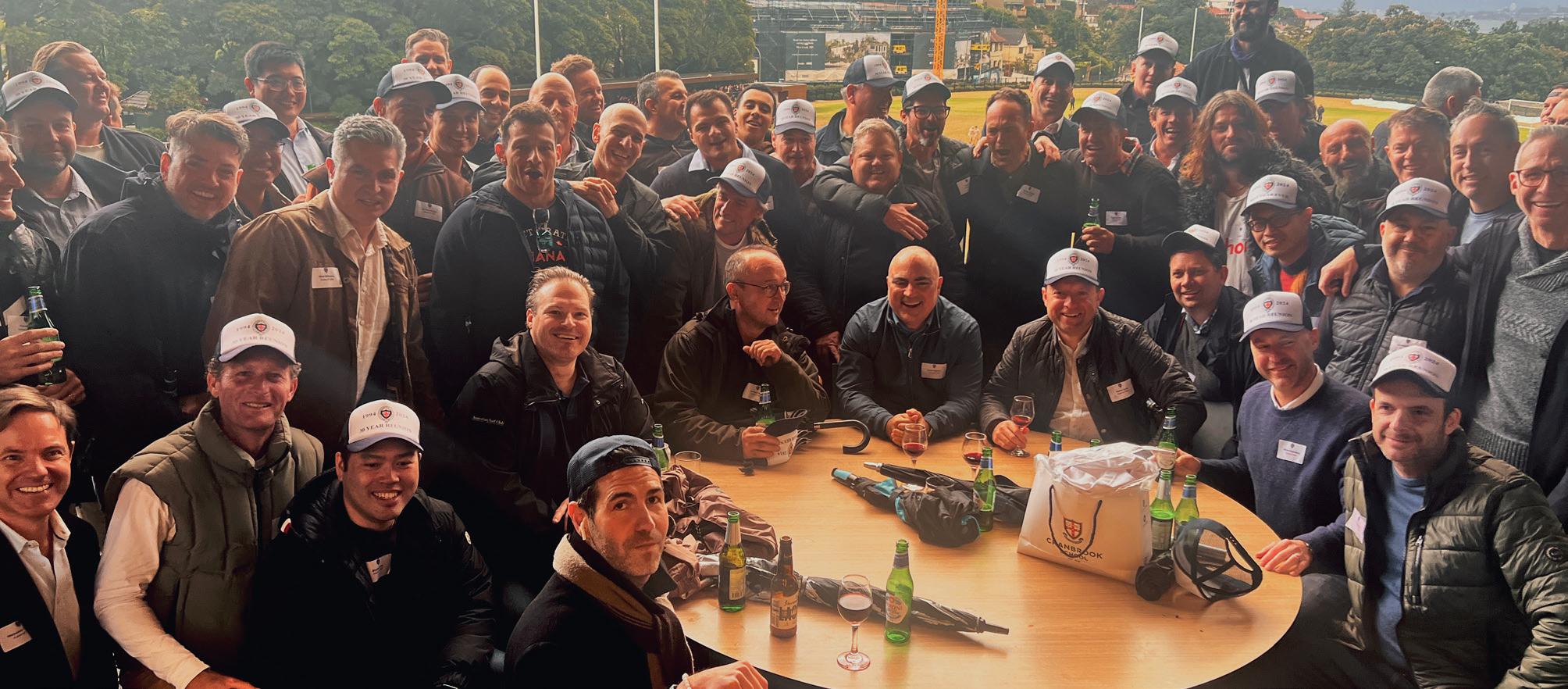
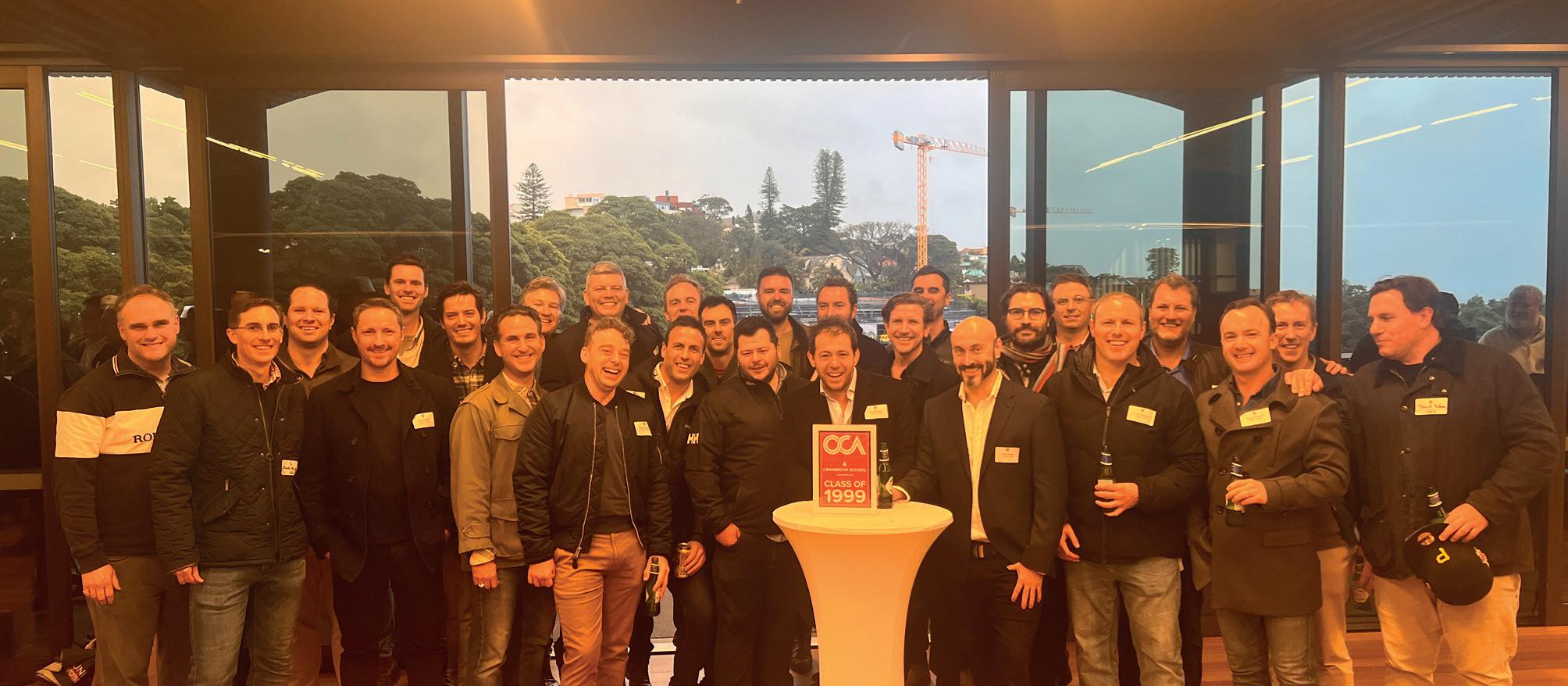
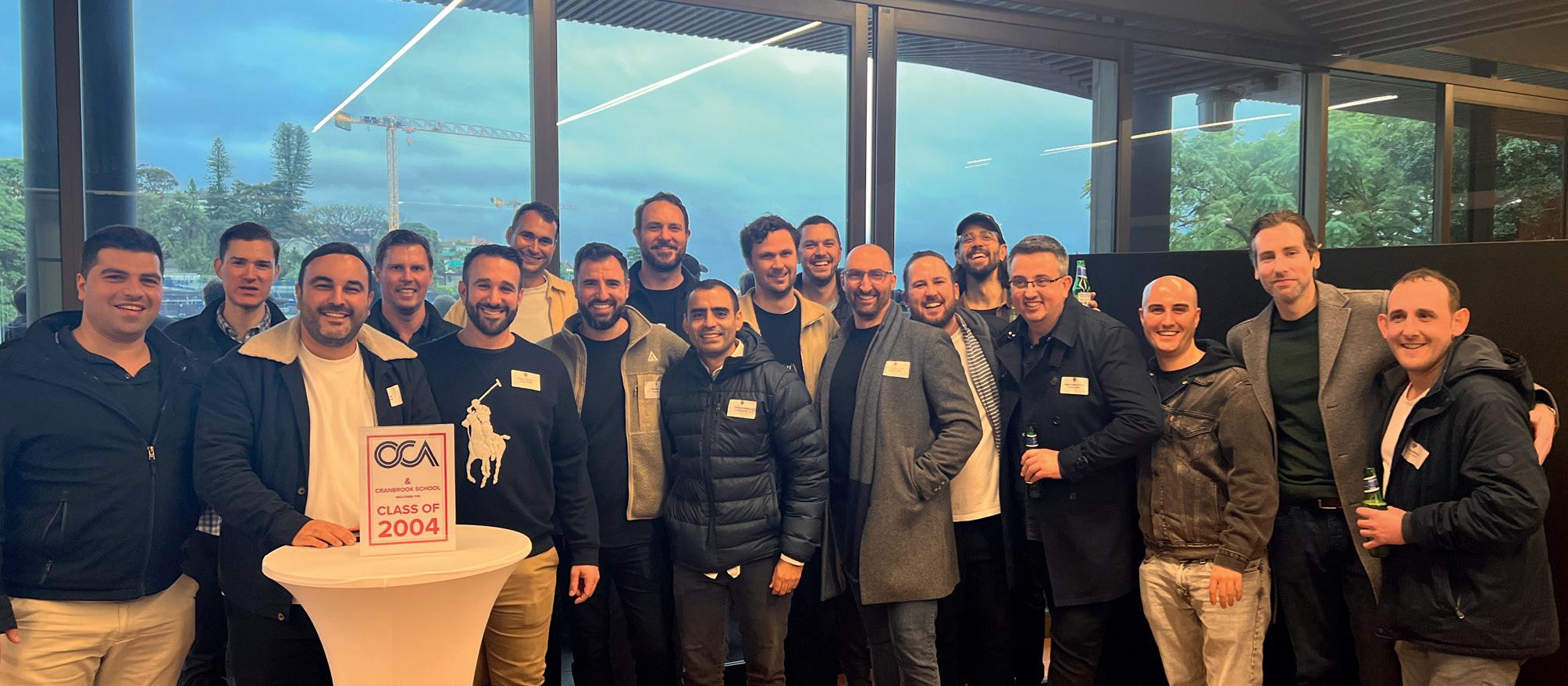
Class of 2004
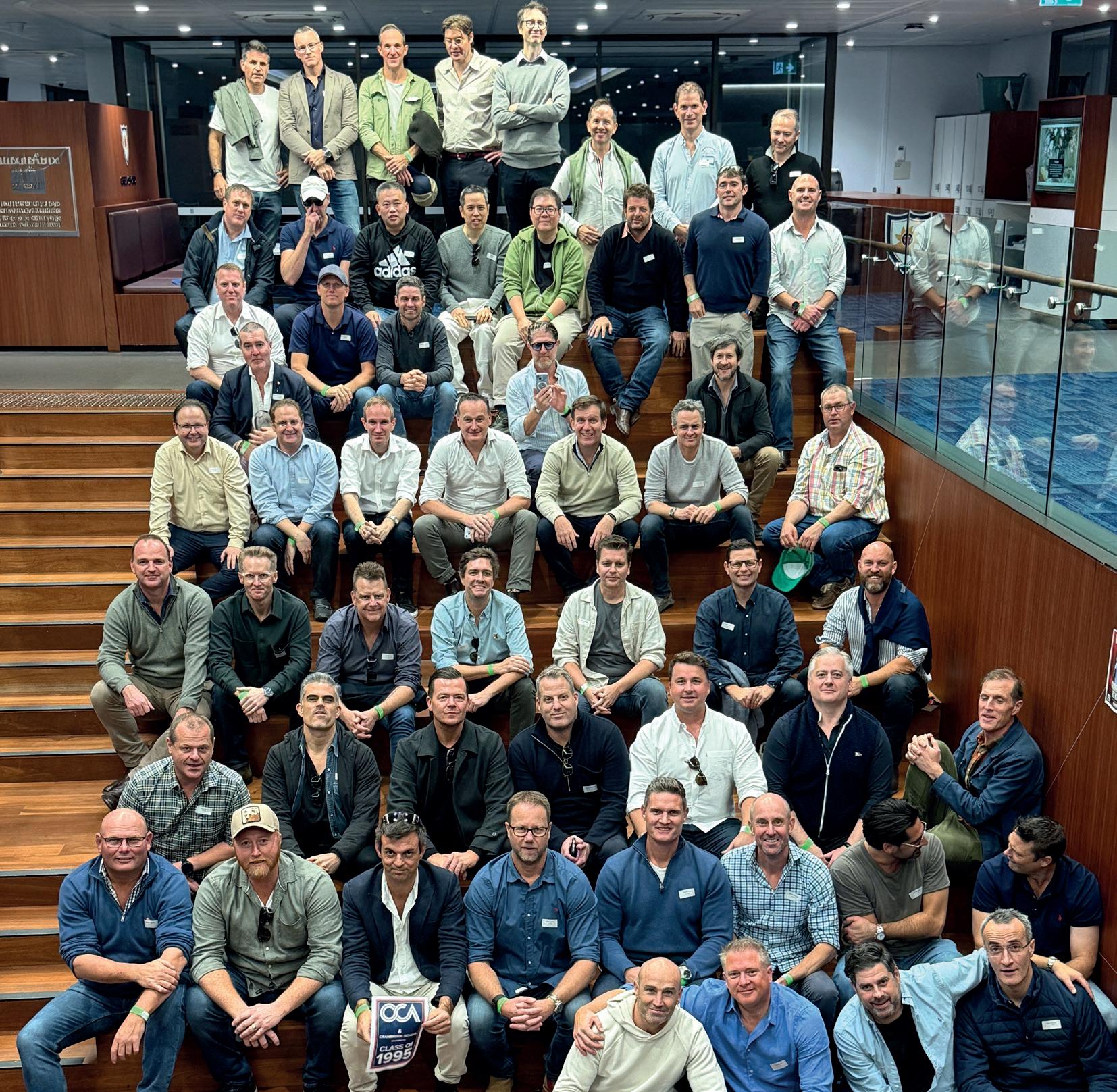
Top: Class of 1995
Left: Class of 2000
Right: Class of 2005
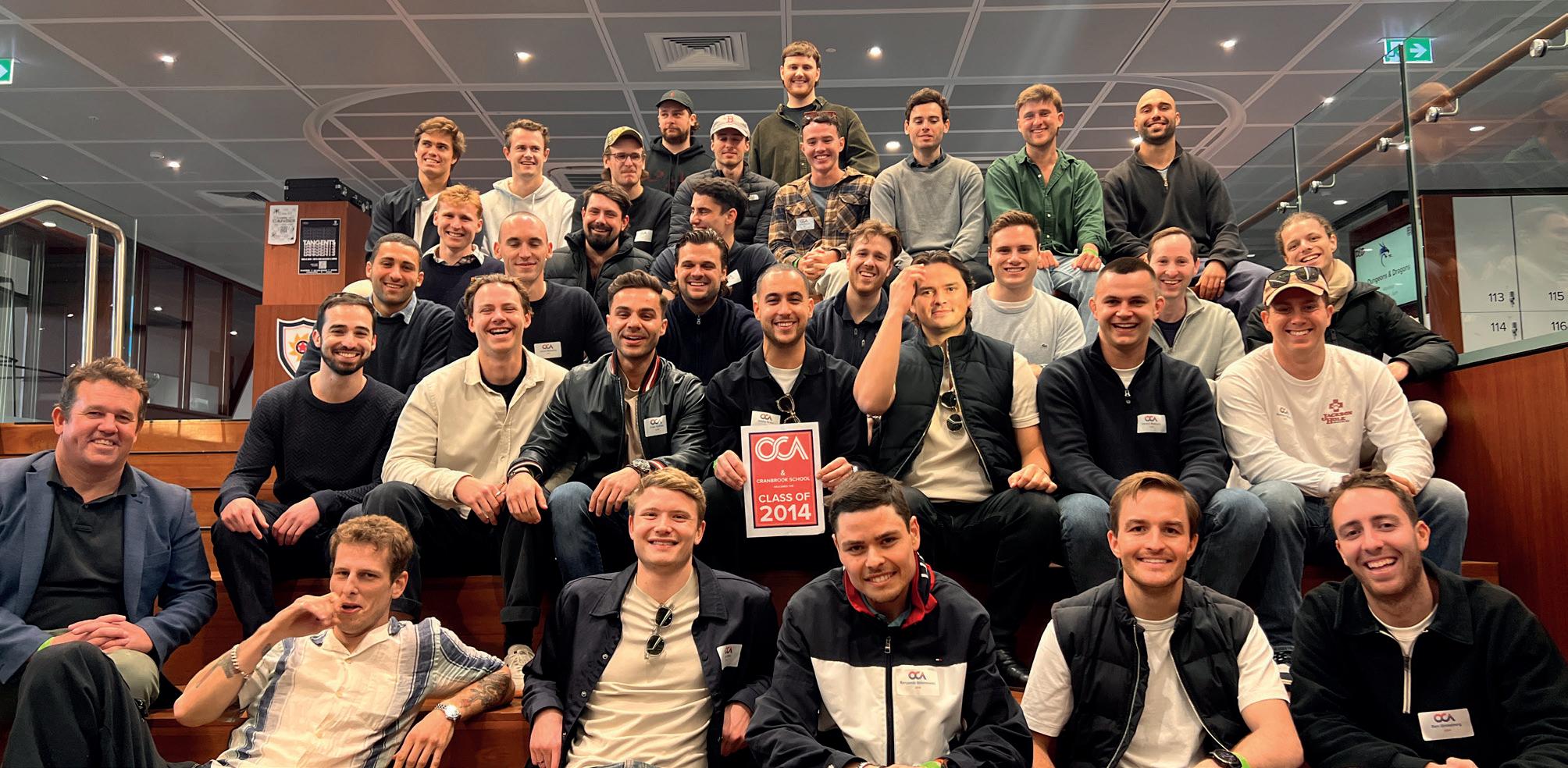
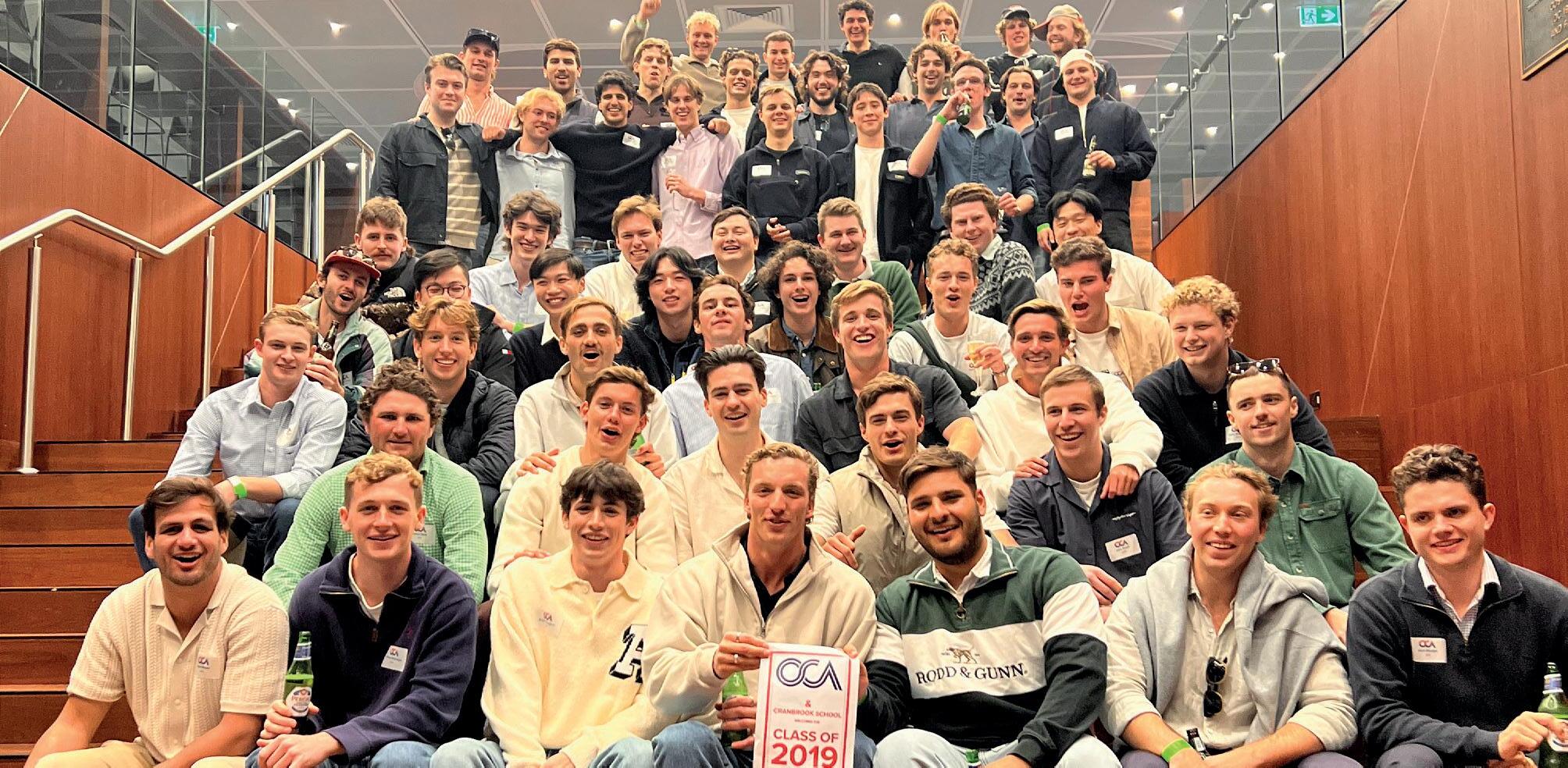
Class of 2009 – 2014 – 2019 Reunions
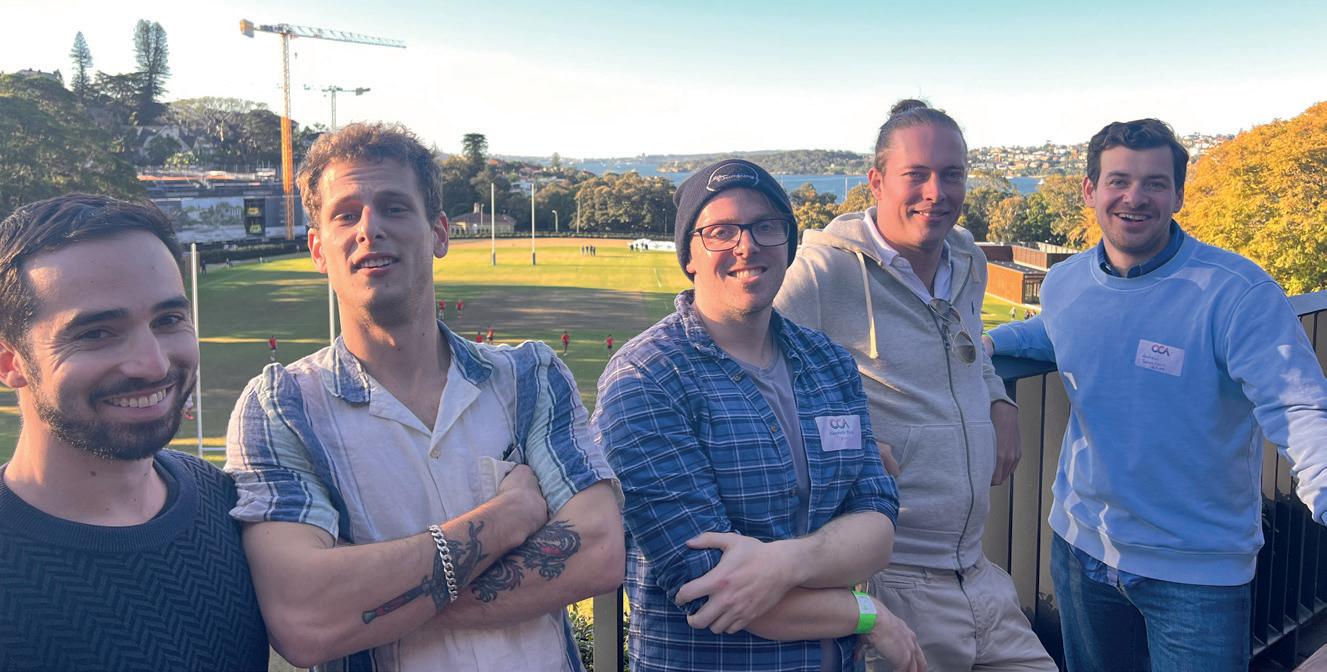
Top: Class of 2009
Middle: Class of 2014
Bottom: Class of 2019
Class of 2010 – 2015 – 2020 Reunions
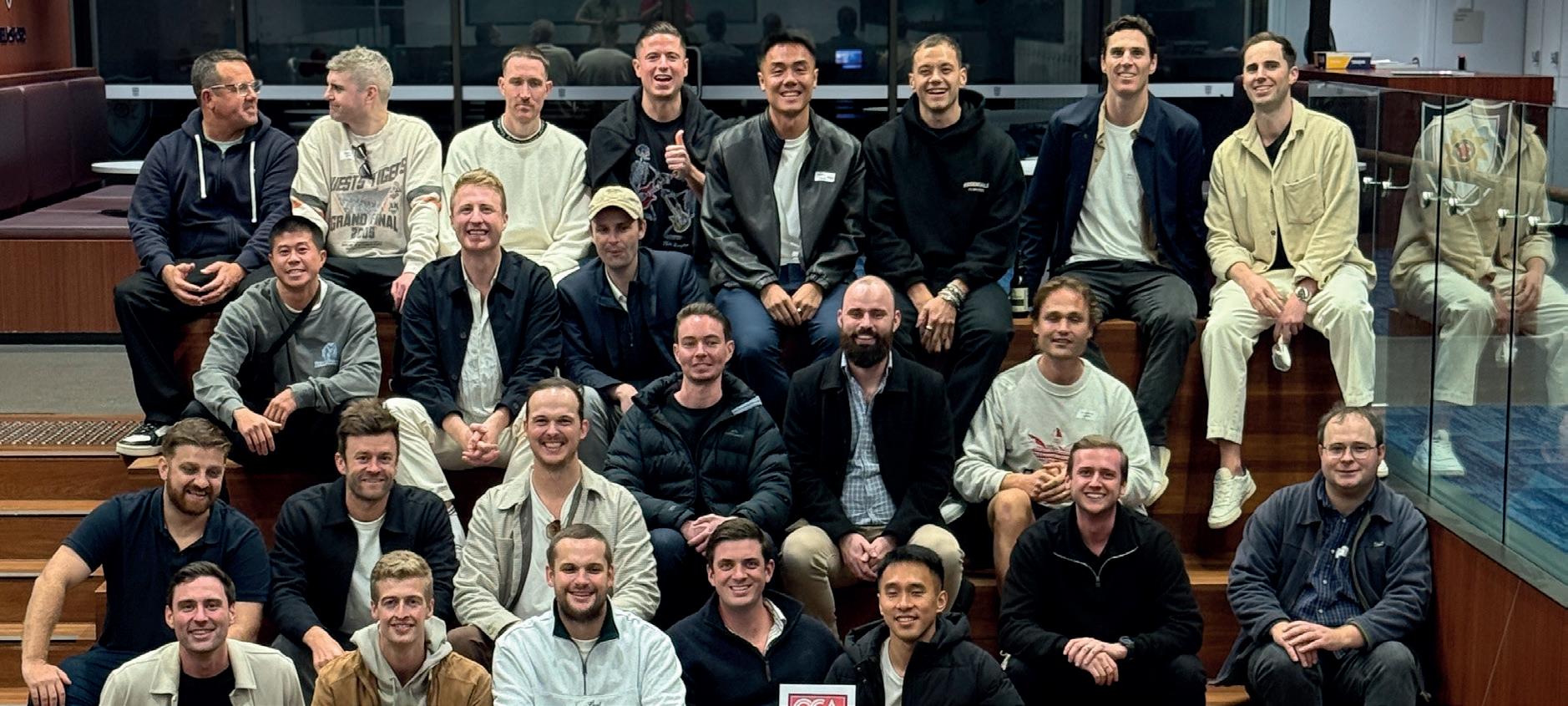
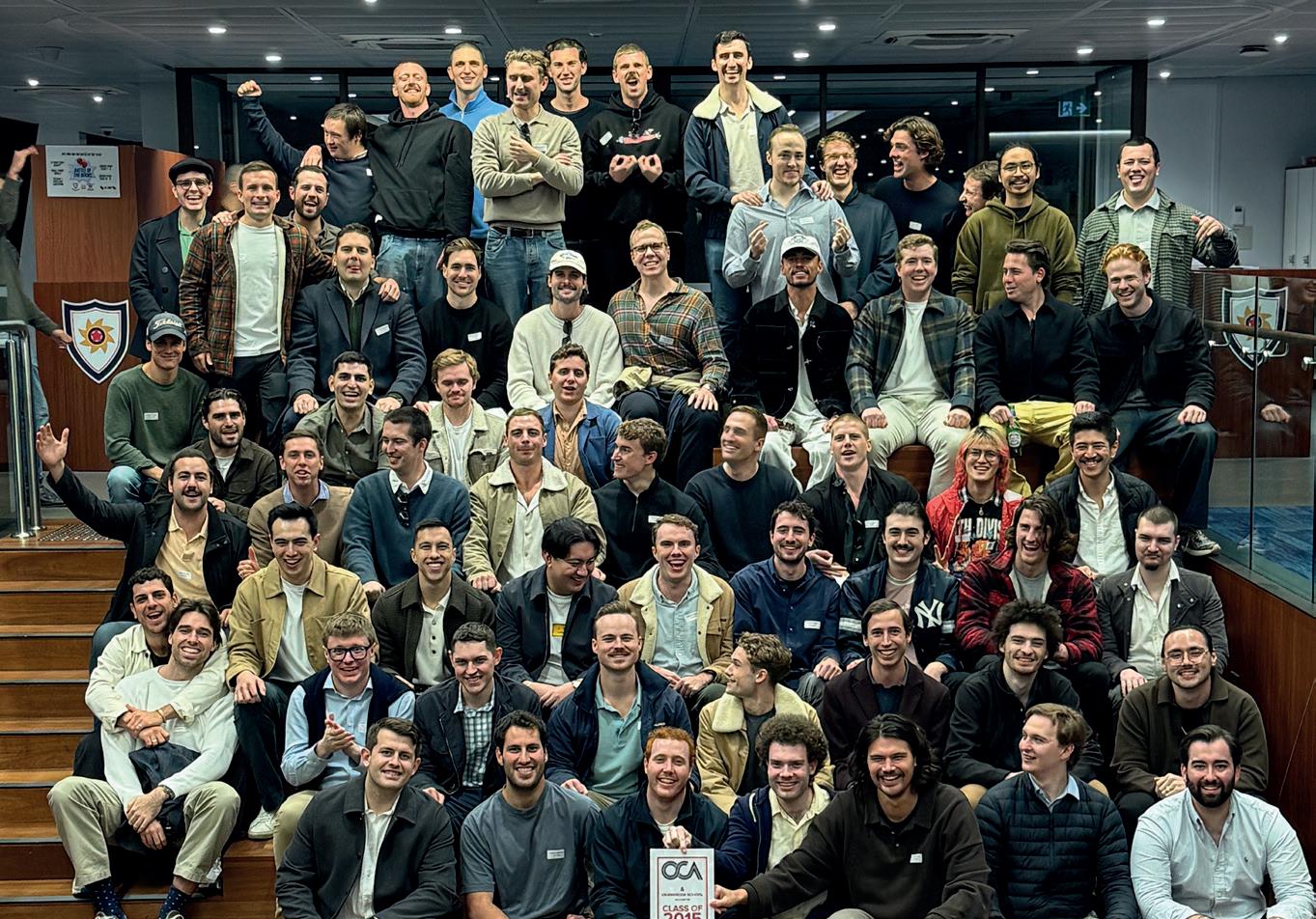
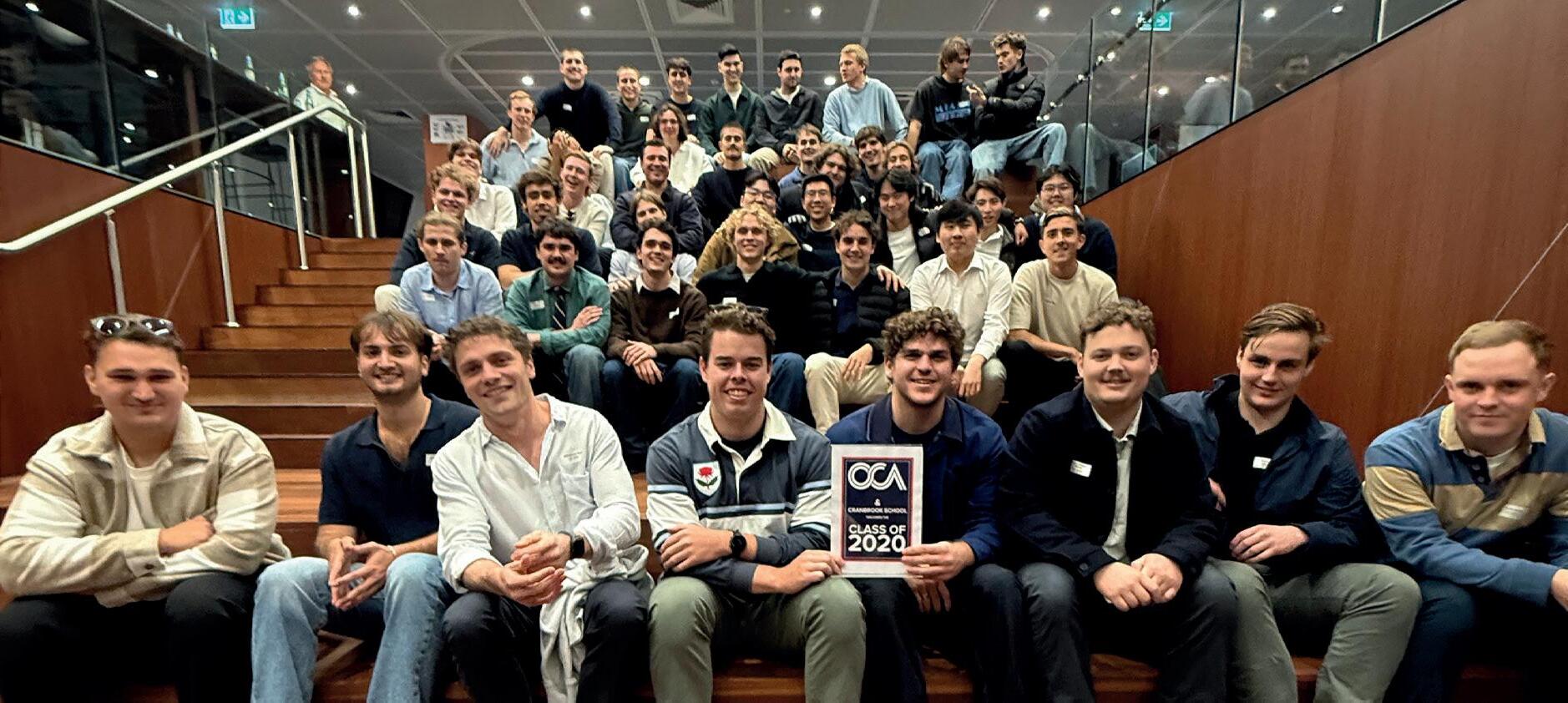
Top: Class of 2010
Middle: Class of 2015
Bottom: Class of 2020
Reunite: OC’s in the UK
A CELEBRATION OF CONNECTION ACROSS GENERATIONS
In a remarkable display of enduring camaraderie and global community, the Old Cranbrookians now living in the UK, gathered in London for a special reunion spanning generations — from the Class of 1956 through until a class of 2025 leaver. Held in the heart of one of the world’s most iconic cities, the gathering of OCs provided a unique opportunity to reflect on shared roots, celebrate the Cranbrook Community, and forge new connections whilst on the other side of the world, a great distance from the gates of 5 Victoria Road Bellevue Hill.
The greatest of thanks provided to Ken Kwok OC ’56 who hosted the reunion in the historic building of the Oriental Club on Bond St London. The club which was founded by the Duke of Wellington in 1824 offered a perfect blend of tradition and energy, mirroring the spirit of Cranbrook itself. The venue, a beautifully restored heritage hall in central London, echoed with laughter and storytelling as old classmates reconnected and new friendships blossomed. On behalf of the OCA, we express our sincere gratitude for being our host for the evening and you were deeply missed Ken. Oliver Corlette OC’92 during his words raised a glass in your honour Mr Ken Kwok.
What set this reunion apart was the extraordinary range of graduating years represented. The gathering brought together recent school-leavers full of energy and fresh memories, with seasoned alumni whose ties to Cranbrook span more than six decades. The age range fostered a unique kind of dialogue — one filled with storytelling, reflection, and shared pride in how Cranbrook has evolved over the years.
A highlight of the evening was the attendance of Matthew Li OC 2025, yes that is correct class of 2025. Matthew has been awarded a scholarship to attend the Guildhall School of Music and Drama and commenced his studies in September. At the other
end of the spectrum we had strong appearances by James Hirschfield OC 1957, along with Nick Beattie and Peter Doran OCs 1959. Peter with a massive effort from the 83 year old, hoping on his train bound for London at 2pm which got stuck on the tracks and he entered the club at 9pm sporting his Wakehurst House tie and thirsty for a cold one. Sean Tai OC 1986 showed his commitment to the Red White and Blue flying in from Spain to join the crew being assembled.
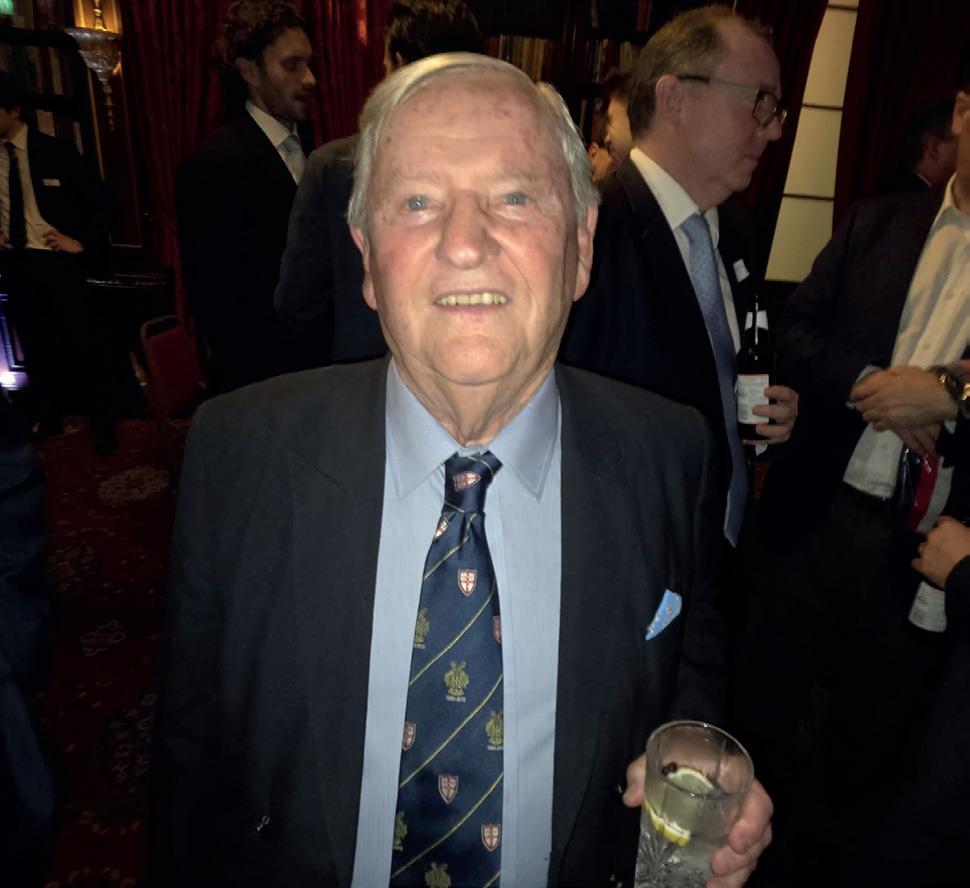
Bridging the Generations – our OCs shared experiences of vastly different school eras — from chalkboards and tuck shops to smartboards, coeducation and global exchange programs. Yet despite changes in technology, curriculum, and even uniforms, what remained constant was a sense of identity, values, and belonging that only fellow Old Cranbrookians could fully understand. Passion was flowing strongly through the vibe in the old room of the Oriental Club with the Duke of Wellington looking down upon us.
London OCA Reunion with Dr Anne Johnstone. 3 October 2025.
Peter Doran (OC 1959), proudly wearing his Wakehurst House tie
Prior to dinner being served, I had the great pleasure of introducing our ninth Head of School Dr Anne Johnstone to our OCs and invited Dr Johnstone to speak. Dr Johnstone had a busy and full schedule whilst in the UK during these school holidays. I want to extend our heartfelt thanks for Dr Johnstone being able to join us and for her inspiring words delivered to our 39 OCs present. Reflections on the importance of history, the values of Esse Quam Videri and the vital role our OCs play in the ongoing life of the school truly resonated with everyone in the room.
Our OCs appreciated the personal insights shared about Dr Johnstones career and background, which gave us a deeper connection to her journey and leadership. Finally, Dr Johnstone provided emphasis on positive education underscored the values that continue to guide us all, fostering wellbeing and resilience among our students, our teaching staff and alumni alike.
Post function debrief, it was evident that Dr Johnstone impressed and resonated with the OCs present. Thank you, Dr Johnstone, once again for your time, wisdom, and dedication. We are proud to have you as our 9th Head of School and look forward to the bright future ahead.
Oliver Corlette OC 1992 expressed “There’s something poetic about meeting so far from where it all began. It reminds us just how far we’ve all come, and yet how deeply connected we remain.” Ollie is very keen to keep the OCs of the Europe / UK connected and find ways to remain in contact and assist each other beyond such annual reunion.
No matter where life takes us Old Cranbrookians, events like this one ensure that the Cranbrook spirit continues to thrive — across generations, across continents, and across time. Go safe and go strong!
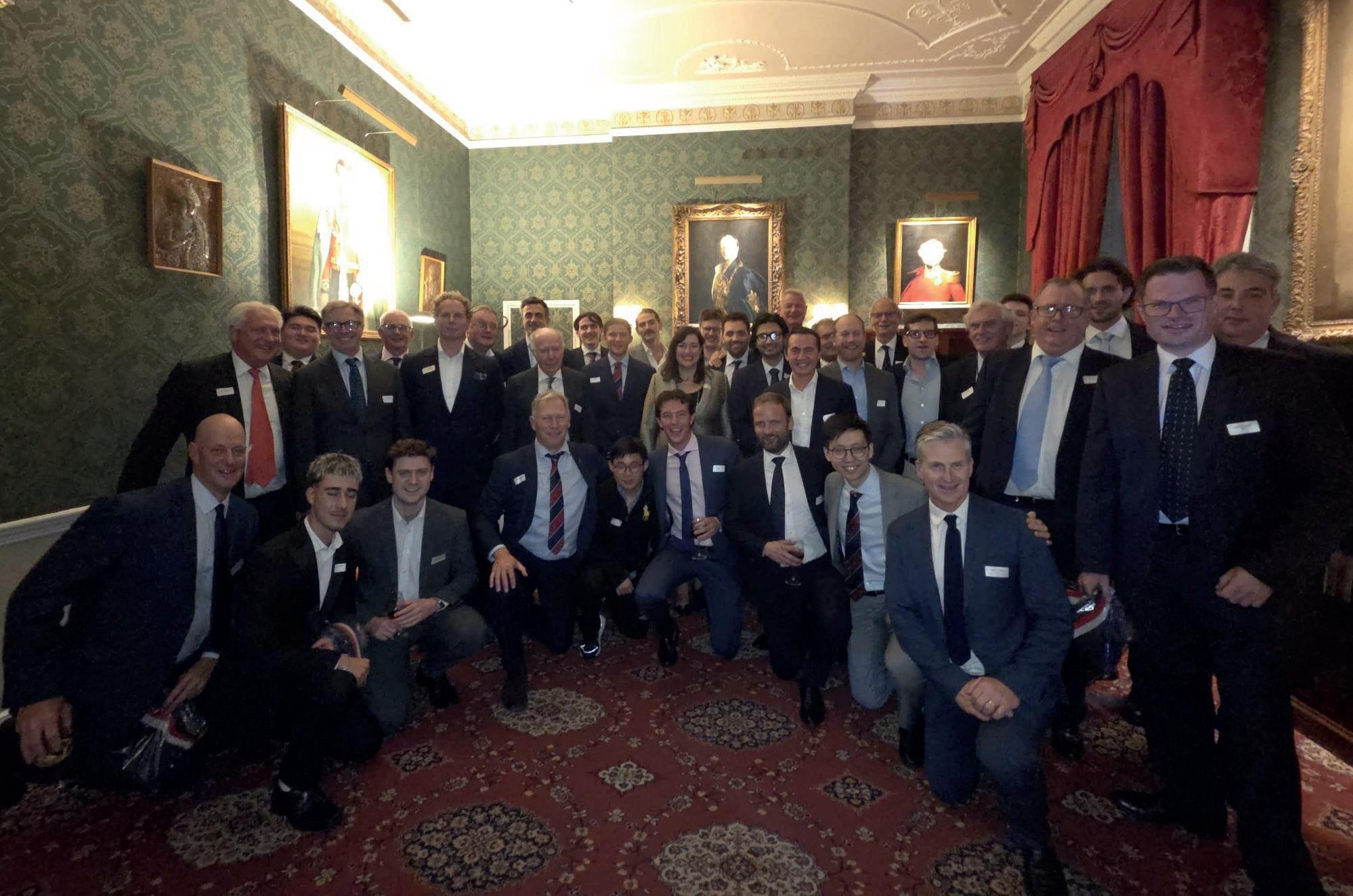
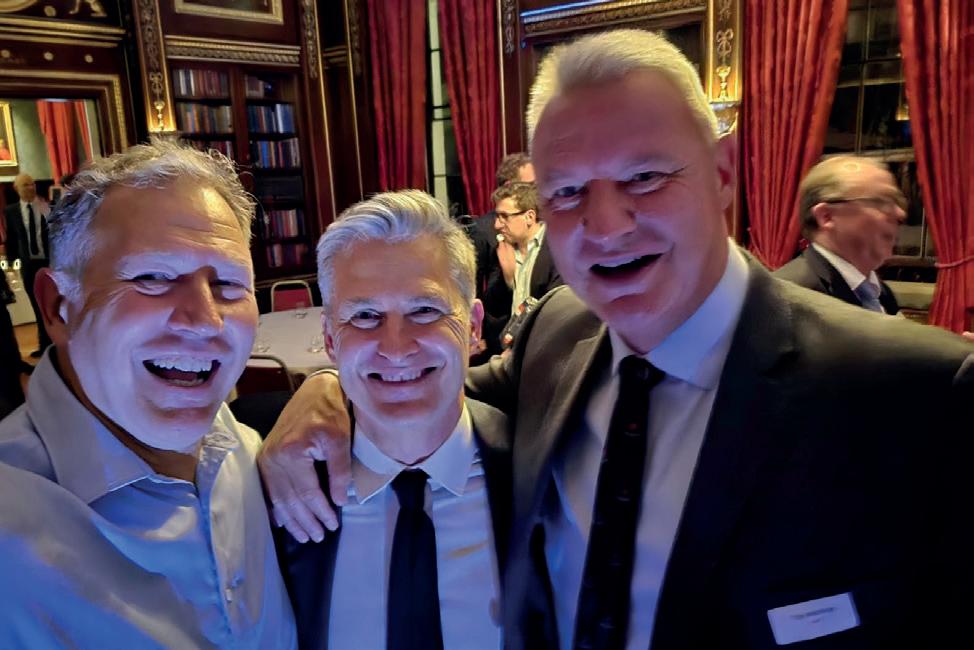
Marty Cayzer (OCA President & OC 1988), Oliver Corlette (OC 1992) and Troy Wakefield (OC 1984)
UK gathering of 40 strong at the Oriental Club
Reunite: OCA Annual Lunch
A Celebration of Connection and School Spirit
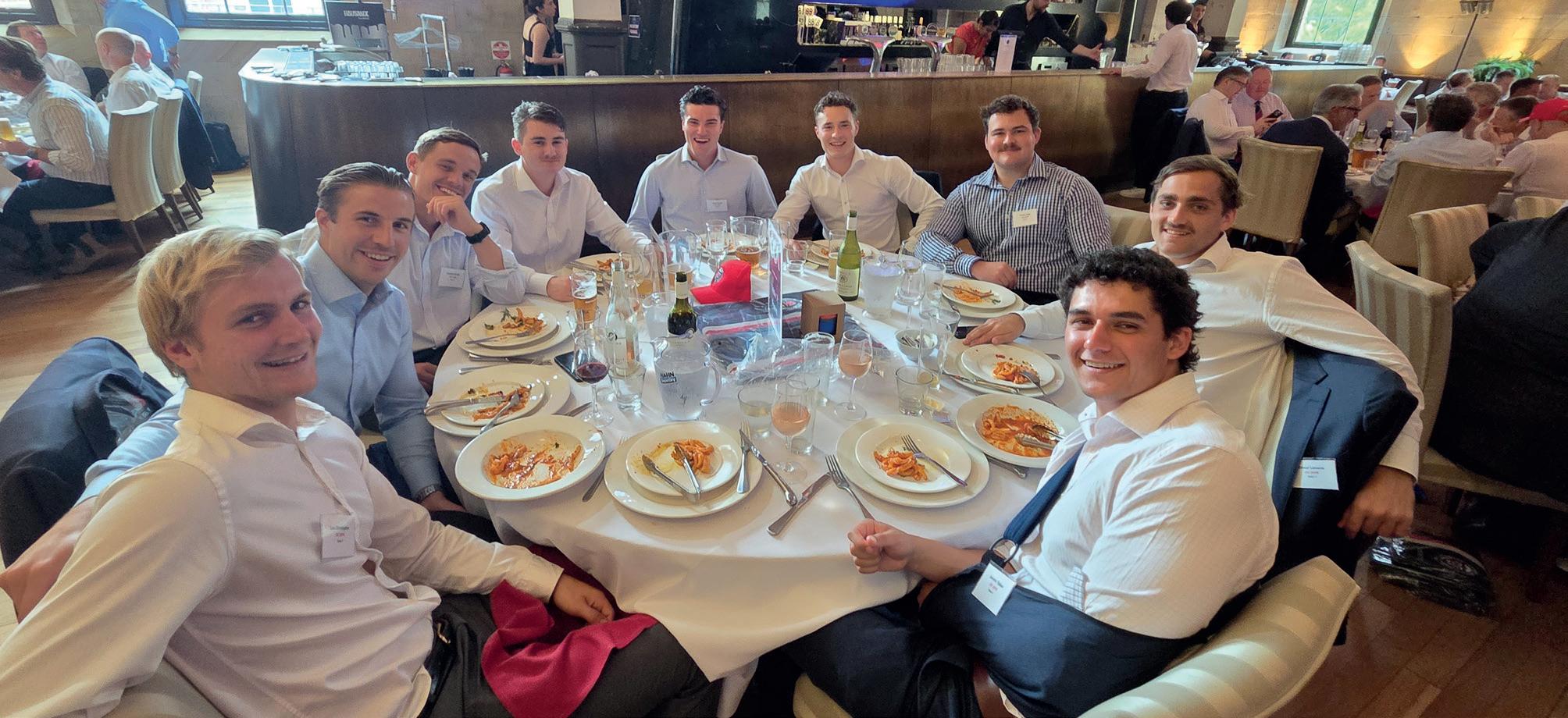
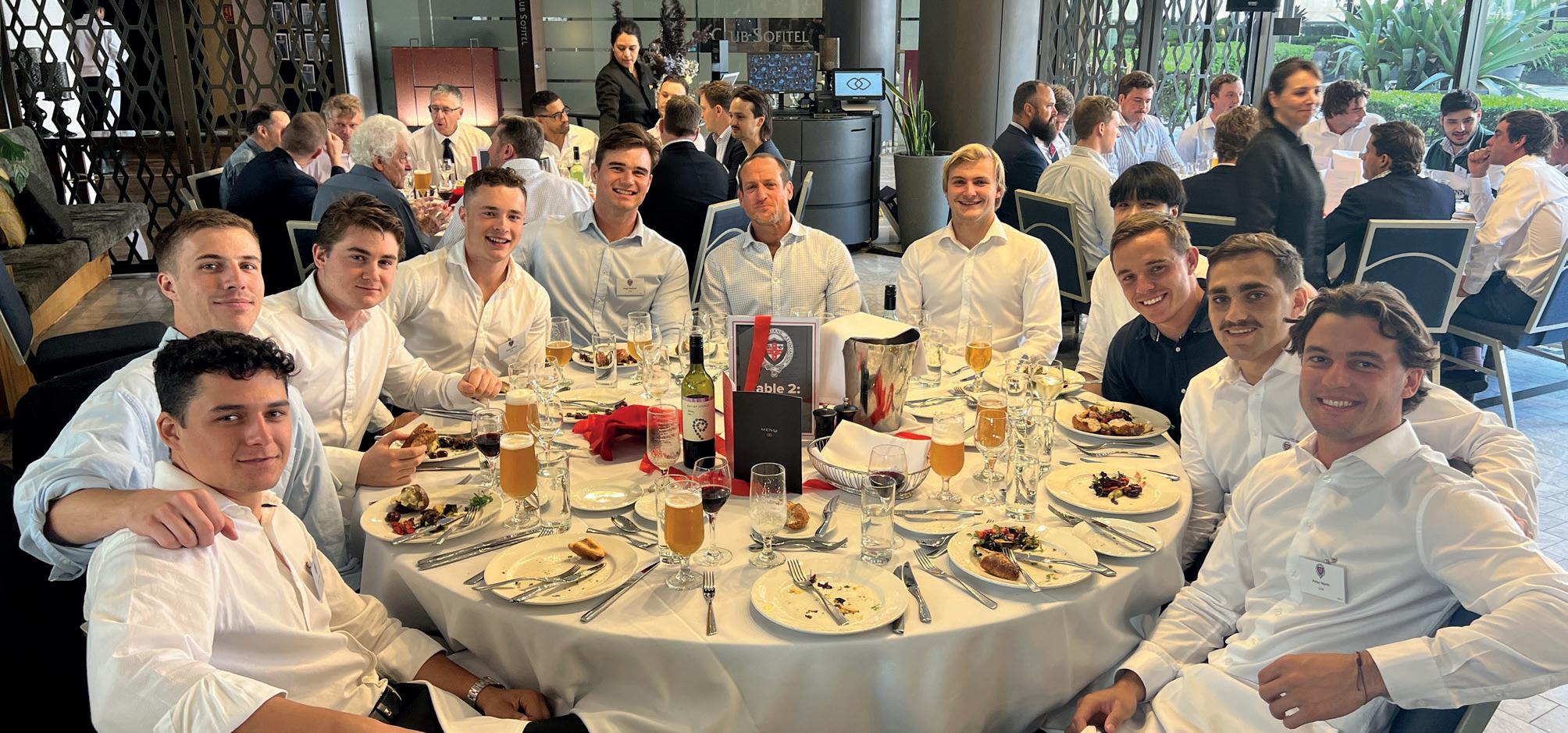
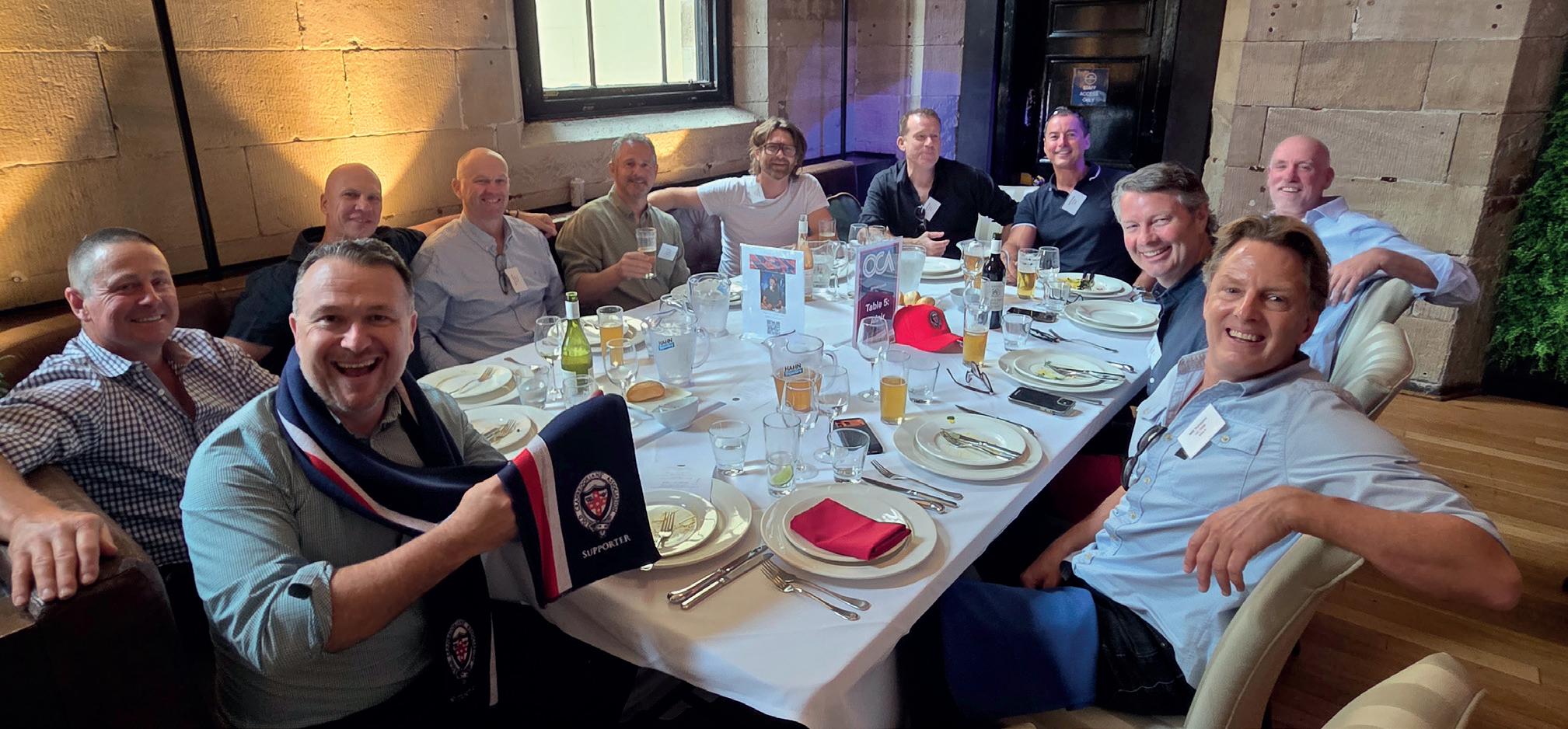
On Friday, 17 October 2025, we gathered for our third annual OCA Lunch at the historic Rawson Hotel, nestled in Sydney’s iconic Rocks district. The day brought together nearly 100 Old Boys, along with 16 teachers, staff, and council members led by our Deputy Head of School, Mr Bob Meakin, all united by shared memories, laughter, and the enduring spirit of the Cranbrook community.
Our guests spanned generations, from those who graduated as recently as 2019 (PJ Foord and crew, best on ground for the 3rd year in a row!) to our most seasoned attendees from the Class of 1982, led by Howard Barton. A special mention goes to the 21 OCs from the Class of 1988, whose enthusiasm and strong turnout earned them the prize for the best-attended cohort. (And if we include Justin “JT” Taylor, that record rises to 22 from the Class of ’88!)
The lunch also marked the warm welcome of our ninth Head of School, Dr Anne Johnstone, who spoke passionately about Positive Education and the continuing relevance of our school motto, Esse Quam Videri, in shaping the character and values of Cranbrookians past and present. Welcome to Cranbrook, Dr Johnstone, the Old Cranbrookians’ community looks forward to following your leadership journey.
As the OCA President, I took the opportunity to recognise the outstanding service and dedication of Mr Geoff Lovell, President of the School Council over the past three years. In appreciation of his exceptional leadership, Geoff was presented with Honorary Life Membership of the OCA and a distinguished OCA tie. The highlight of the day was undoubtedly the attendance of our very own Olympic Silver Medallist, Mr Grae Morris (OC 2021, Wakehurst House legend). It was an honour to have Grae, our Young OC of the Year for 2025, join us, along with Evelyn and Brett Morris. In a lively Q&A, Grae shared how his
Cranbrook education helped shape his journey to the Paris Olympics and continues to fuel his pursuit of Olympic gold.
Lunch concluded with the announcement of this year’s Young OC of the Year, awarded to Kip Williams (OC 2004) for his outstanding contributions to theatre, and OC of the Year, awarded to Peter Chun (OC 1988, Wakehurst legend) for his remarkable achievements in financial services. We were fortunate to have Peter attend the lunch and accept his OCA tie in front of his 1988 classmates, a proud and fitting moment that captured the spirit of the day.
The lunch was a wonderful success, filled with friendship, storytelling, laughter, and nostalgia. Old Cranbrookians reminisced about their school days, celebrated sporting triumphs, and rekindled lifelong bonds. The atmosphere was electric, marked by camaraderie, pride, and the unmistakable Red, White, and Blue.
After the formalities, celebrations continued downstairs in the Rawson Bar, where OCs enjoyed spectacular views of Sydney Harbour and the company of old friends well into the afternoon. (The score now stands at Young OCs 2 – Old OCs 1 in the post-lunch challenge!) James Stevenson (OC 1992), thank you for being a generous host, your venue and team ensured the day ran seamlessly.
Finally, a huge thank you to Hamish Thomson (OC 1997), our dedicated OCA Lunch Convenor. Thanks to you, HT, the 2025 OCA Lunch was a truly memorable occasion that reflected the enduring strength of our community, a celebration of connection, friendship, and Cranbrook spirit, past, present, and future.