Reinsdorf’s legacy tied to next Sox move
He could sell the team, relocate it or work out a deal for a new eld, probably with public money
 By Steve Daniels
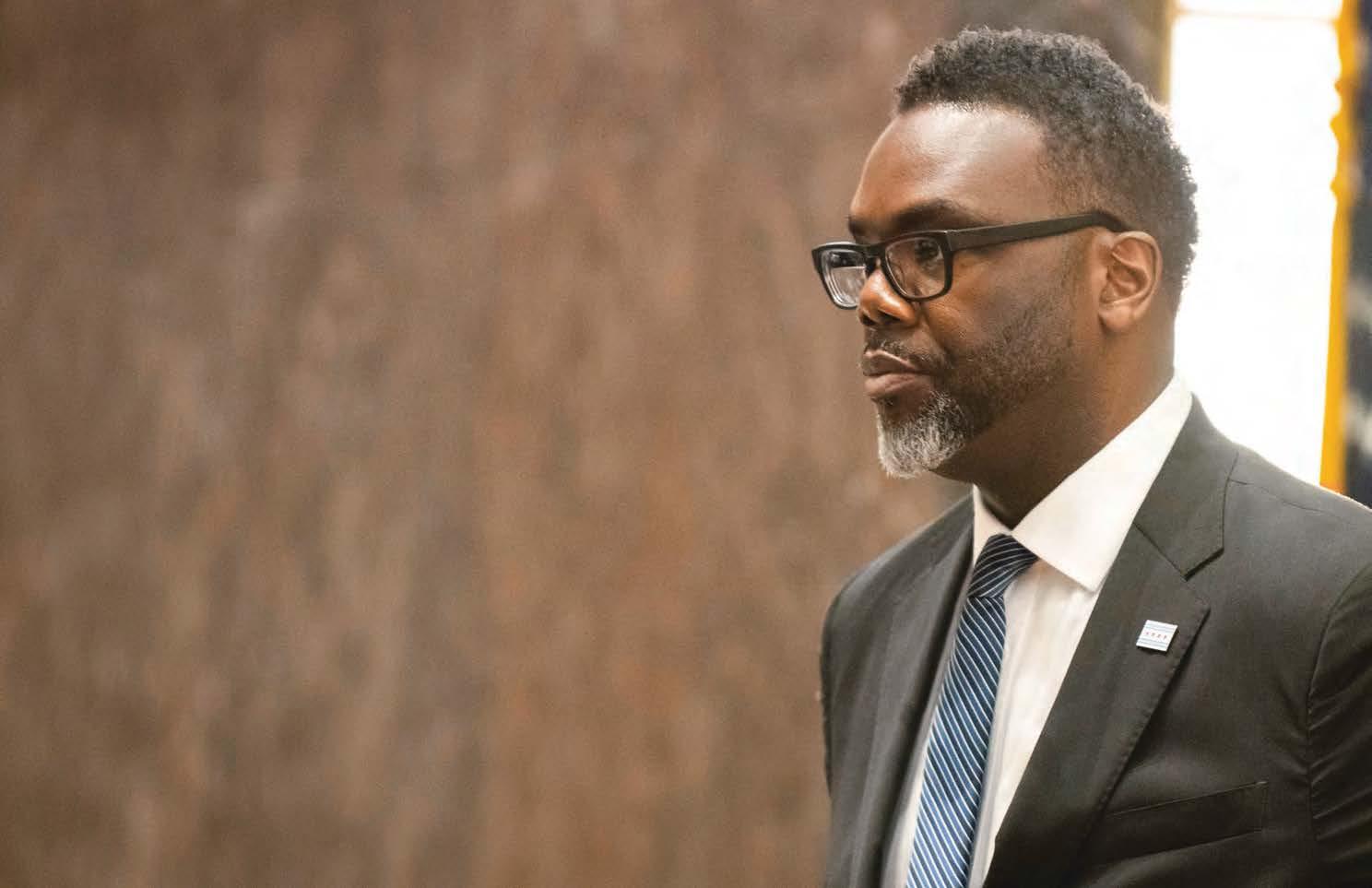
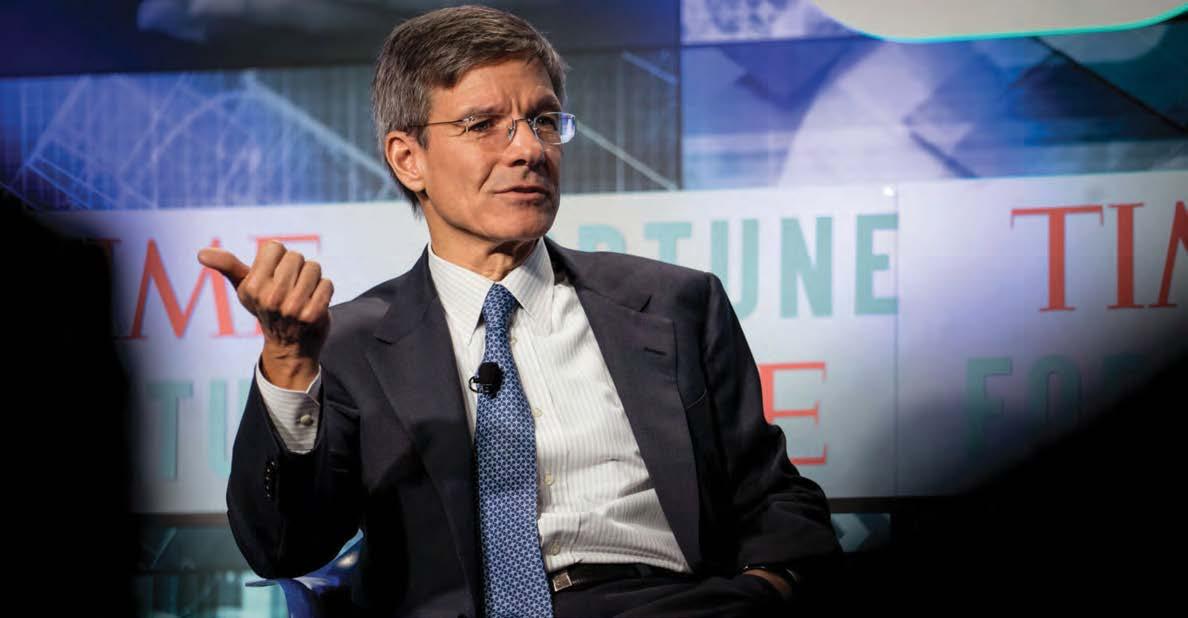
At age 87, Jerry Reinsdorf has owned the Chicago White Sox longer than anyone — even team founder Charles Comiskey. His long tenure spans milestones such as the team’s rst World Series championship in 88 years and the move to its rst new stadium since 1910. But it’s his next move that likely will de ne his legacy.
Even auctions can’t always sell mansions
The latest example is an opulent Barrington Hills property that was featured in the show ‘Empire’
By Dennis Rodkin
News that the South Side franchise is mulling leaving Guaranteed Rate Field, which Reinsdorf got built with public money in the early 1990s after threatening to move the team to Florida, gives the Chicago sports mogul multiple options for securing the team’s future — and the
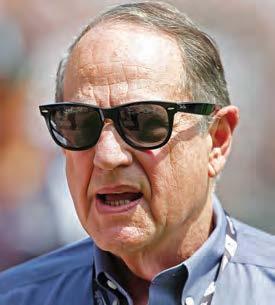
 Jerry Reinsdorf
fortunes of his family and limited partners.

If past is prologue, the wallets of Reinsdorf and his family and investors will come rst on the priority list. But how he achieves
See REINSDORF on Page 34
In May, when a lavish Barrington Hills mansion that appeared on the television show “Empire” had sat on the market unsold for a decade, a Floridabased auction company took on the task of selling it.
At auction, the baronial property, whose asking price had slipped from $15.3 million in June 2013 to $9.5 million in May
2023, would nd the price the market is willing to pay. On its website, Elite Auctions described the property as an “extraordinary, elegant testament to opulence and re nement” that was being o ered “without reserve.”
In auction language, that means the house would be sold at the top bidder’s price, no matter how low.


See AUCTION on Page 35

Allstate

C HICAGOBUSINESS.COM I AUGUST 28, 2023 VOL. 46, NO. 34 l COPYRIGHT 2023 CRAIN COMMUNICATIONS INC. l ALL RIGHTS RESERVED GREG HINZ
CTA is still suffering from COVID’s effects but is making some progress toward normalcy. PAGE 2 INSURANCE
The
discovers a novel way to reduce its agents’ pay for the policies they sell. PAGE 6 CHICAGO’S
PROBLEMS
The new mayor’s administration has major challenges to tackle: A migrant crisis, crime and revitalizing the Loop and Magni cent Mile I PAGE 13 CRAIN’S FIND THE COMPLETE SERIES ONLINE ChicagoBusiness.com/CrainsForum
PROBLEMS BECOME JOHNSON’S
TO SOLVE
GETTY IMAGES
DAN McGRATH: Stadium not near top on list of Sox’s woes. PAGE 2
Is the CTA nally getting on the right track?
The Chicago Transit Authority racked up a remarkable accomplishment the other day. According to Commuters Take Action, an ad hoc civic group that carefully monitors CTA operations, on Aug. 22 the agency ran a nifty 97% of its scheduled el trains, the highest since heaven knows how long ago. On behalf of commuters everywhere who are sick and tired of looooooong waits: Hip hip hooray.
But just a couple of days earlier, on Aug. 20, the story was different. Only about 90% of scheduled trains actually pulled out of the rail yard and picked up passengers, with a depressing 30% of scheduled trains on the backbone Red Line never
making it to the third rail.
So it goes at the CTA, which riders sadly know is still suffering from the transit version of long COVID.
The transit agency is making progress toward getting back to normal. Passengers are returning, crime is down and an influx of riders means the CTA may soon restore some service that was cut in the middle of the pandemic. Even long-filthy el stations look better thanks to a new deep-cleaning policy and the hiring of dozens of new janitors.
“We’re getting there,” CTA President Dorval Carter said at a press briefing. But, he quickly added, there’s lots more to do.

In the briefing, Carter and other CTA officials laid out their case as to how the CTA, despite a COVID hangover that’s still hobbling the agency’s ability to hire enough workers, has made enough progress that it soon will
begin adding service and be able to avoid a fare hike in 2024.
For instance, in July the CTA operated 88.8% of its scheduled trains, up from 71.8% in August 2022. The bus figures are even better: 96.4% vs. 81.1% last August. And large gaps in frequency — “large” defined as at least twice the scheduled time between trains or buses — has been slashed by roughly twothirds.
Hiring more staffers has been tough, just as it has been filling nurse vacancies at hospitals, Carter said. But progress is being made, with the agency now hiring at a record rate and more people now entering than resigning or retiring. It doesn’t hurt that starting salaries for bus and train operators are $29.65 an hour, rising to $39.53 after three years. That’s $82,000 a year — for a job that does not require going to college and running up a lot of debt.
On crime, Carter repeated figures coming out of the Chicago Police Department reporting that incidents on the CTA system are down 21% year over year. I take CPD stats with a pinch of salt, but Carter also reported that more police are being assigned to the system than before — he said he’s not allowed to say how many — and indicated that the CTA has begun working closely with the state’s attorney’s office to ban repeat offenders from riding, with at least nine offenders now facing that provision as part of their bond.
On the other hand — you knew this was coming — CTA ridership still is only two-thirds at best of what it was pre-pandemic.
Ridership on weekends or for big events such as the Taylor Swift concerts or Cubs games is healthy. But the trains are nearly empty on weekdays going to the
Loop, especially on Mondays and Fridays, when much of Chicago still is working from home.
The CTA will have to deal with that reality soon, with federal COVID relief money due to run out around the end of next year. That’s why a forthcoming report from the Chicago Metropolitan Agency for Planning on how to recalibrate and refund local transit will catch a lot of eyeballs when it’s released in coming weeks.
As previously reported, the report is expected to float the idea of stripping the CTA and Metra of much of their autonomy and concentrate decisions in a newly empowered Regional Transportation Authority. Carter doesn’t want to talk about that now, or about his own future. For the moment, let’s just say he finally is making some progress fixing the CTA. Hopefully more will come soon.

On the list of Sox’s woes, ballpark isn’t near the top
Jerry Reinsdorf’s inexhaustible patience nally wore out.


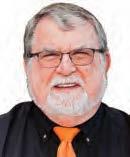
And his common sense followed. With his team wallowing through an unconscionably underperforming season, the White Sox chairman cleaned out the top tier of his baseball operation last week, ring Executive Vice President Ken Williams and General Manager Rick Hahn.
It had to be a tough call for an owner long known for his loyalty — Williams and Hahn put in a combined 54 years with the White Sox. But an increasingly alienated fan base rejoiced, greeting the move as long overdue. en, before the huzzahs died down, Reinsdorf undid a good measure of the goodwill he had engendered. He brought back his creaky old pal Tony La Russa as a consultant and hinted at expanded duties for Chris Getz, an assistant GM whose job included overseeing a farm system that has been one of MLB’s most fallow.
And this is supposed to make things better?

e Sox’s plunge into irrelevance was underway when health issues forced La Russa to the sidelines last year. Fans thought . . . hoped . . . they had seen the last of him. Bad decisions, bad explanations, bad vibes, bad hair . . . what was Reinsdorf thinking when he overruled his front o ce and turned a young, frisky team over to a septuagenarian who’d been away from the dugout for a decade and was known to be
cranky on his good days?
at La Russa, now 78, is healthy enough to work again is good news, as is his decision to dump the bizarre, not-found-in-nature hair color.
Tony, stop. You’re closer to 100 than to 50.
But why here? Why now?

e Sox can’t be called the worst team in baseball when Oakland and Kansas City are out there stumbling around. But they’re fourth in the pathetic AL Central, with a better shot at losing 100 games than nishing .500. ey rank 23rd among 30 MLB teams in attendance, down more than 180,000 from last year, the largest decrease in baseball.
Here’s how bad it is: Leo High School, where I moonlight as an administrator, is a proud South Side institution, with a large alumni base of proud South Siders whose baseball allegiance is implacably rooted at 35th and Shields.
I had two decent-seat tickets for a White Sox-Seattle game last week, and I donated them as an auction item or ra e prize for Leo’s alumni golf outing held earlier this month. Proceeds from the event bene t our school.
I hadn’t heard from the lucky winner/successful bidder as the game approached, so I called the prize chairman.

“Use them yourself,” my friend Dennis said. “No one bid on them at auction, and they weren’t claimed as a ra e prize.”
at might sum up White Sox baseball 2023 more de nitively than Tim Anderson getting knocked on his butt in Cleveland, an ill-fated attempt to show a sign of life for maybe the rst time all season.
White Sox fans are worse than angry. ey’re apathetic. And without regime change, what of next season’s marketing campaign, Year 2 of Touki Toussaint? Can Yoan Moncada actually make it to 80 games?
Against that backdrop, the Sox are making noise about nding a new home when their lease at U.S. Comiskey Guaranteed Cellular Rate Field expires in six years, as if the ballpark is to blame for their troubles.
Granted, by whatever name it goes by, their ballyard is no jewel, no tourist attraction to rival its counterpart 8 miles to the north. But the team that plays there is a bigger problem than a steep upper deck or overpriced beers.
If the relocation talk was a smokescreen to divert attention from how awful the White Sox are, it had the opposite e ect. It underscored what a poor operation they’ve been running.
Williams and Hahn, front-o ce
xtures since 2000, were nally held accountable.
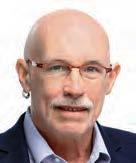
Hahn, the GM since 2012, was portrayed as the ultimate shot caller on personnel matters. Williams — GM from 2000-2012 and executive VP since Hahn’s elevation — had the loftier title, and a propensity for being around when things were going well and rather scarce when they weren’t. Reinsdorf nally acknowledged
See MCGRATH on Page 7
2 | CRAIN’S CHICAGO BUSINESS | AUGUST 28, 2023
GREG HINZ ON POLITICS
DAN MCGRATH ON THE BUSINESS OF SPORTS
Dan McGrath
For J.D. Power 2023 award information, visit jdpower.com/awards. See why we’re also ranked #1 in Convenience, People, Value, and Trust by J.D. Power. WINTRUST COMMUNITY BANKS RANKED #1 IN CUSTOMER SATISFACTION FOR PERSONAL BANKING IN ILLINOIS 2 YEARS IN A ROW!
Greg Hinz
Huge Near South Side rental complex for sale
The Prairie Shores apartments just south of McCormick Place are on the market as work is underway to redevelop the former Michael Reese Hospital site next door
The developer planning to turn the former Michael Reese Hospital property into a mixed-use campus is part of a venture looking to cash out next door on one of the city’s largest apartment complexes.
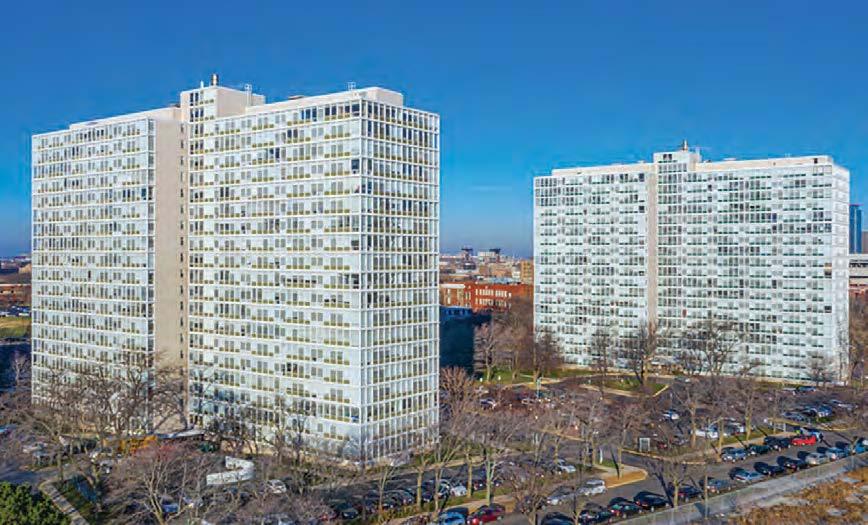
Chicago-based real estate firms Farpoint Development and Golub have hired Jones Lang LaSalle to sell Prairie Shores, a five-building, 1,675unit apartment complex just south of McCormick Place, according to a marketing flyer.
No asking price is listed for the property, which sits on 20 acres along King Drive in the Douglas neighborhood. Farpoint and Golub paid $177 million for the complex in 2019, completing what at the time was the largest Chicago apart-
Home prices fall again in the city but keep growing in the area
It’s another sign that the regional housing market has continued plugging along despite weakness within Chicago
Dennis Rodkin
Home prices in Chicago fell in July for the ninth month in a row, while prices in the metro area went up by the most in 13 months, according to data released last week by Illinois Realtors.
e bifurcated performance of the city and the metro area in July continues a pattern that rst showed up in August 2021, when home price growth in the city went at, unchanged from a year before. Since that time, monthly home price reports from Illinois Realtors have been far weaker for the city than for the nine-county metro area.
I
By Danny Ecker
ment deal in over a decade.
Now it’s a difficult time to be selling. Surging interest rates over the past year and weak demand for local real estate from investors wary of crime issues and rising property taxes have driven down property values. Some downtown apartment buildings that changed hands during that span have illustrated the pain, selling for substantially less than they were worth before the COVID-19 pandemic.
But demand for apartments in the city remains strong, with rents at top-tier buildings pushing record highs. at demand gives landlords like Farpoint and Golub a compelling sales pitch to investors looking for cash ow from a big asset.
pandemic.
Prairie Shores also could benet from a huge investment next to it on the former Michael Reese site, where Farpoint is leading a team of developers planning a 7 million-square-foot megaproject known as Bronzeville Lakefront.
e causes, Crain’s has reported in recent months, include the slower-than-expected return to working downtown, which has reduced demand for city homes, as well as people’s perception that crime is not under control in the city and ongoing population loss to warmer climates and healthier job markets.
Of course, those last two a ect the suburbs as well as the city.
In 10 of the past 12 months, the median sale price has declined in the city. In one month, it was unchanged, and in another month, October 2022, the median price in the city was up, by 2.3%.
In those same 12 months, the median price of homes sold in the metro area has risen in six of them. In ve months, the price gure was at, largely pulled down by deep dips in the city median, which is included in the metrowide median.
e median price of homes sold in the metro area went neg-
ative just once in the past 12 months, in April. e metro median was down 1.5%, in large part because the city median took its biggest recent dive, a drop of 8.1%.
City home sales are about one-quarter of all the sales in the metro area each month, giving a big drop in the city the power to pull down the metro-area gure. e nine-month stretch of declining prices is the longest the city has seen since a 13-month stretch that ended in May 2011,
during the tful recovery from the housing crash of 2007-2008.
This is good news for potential homebuyers in the city, but as a barometer of the economic vitality of the city, it’s not as good.
The median price of homes sold in the city in July was $342,500, down 2.1% from a year ago. It’s down 7.7% from the peak, April 2022, when the median sale price in the city was $370,000.
In the metro area, the July median sale price was $340,000, up 5.3% from the same time a year ago. The last time prices
Glendale Heights hospital plans to end birthing services
GlenOaks’ intended move is part of a national trend as birth rates fall
Katherine Davis
A Glendale Heights hospital operated by the University of Chicago Medicine and AdventHealth plans to discontinue its birthing services, citing low demand, one of several providers in Illinois cutting back or making changes to obstetrics services.
UChicago Medicine AdventHealth GlenOaks hospital reported the planned changes in a recent filing with the Illinois Health Facilities & Services Re -
view Board, saying it will discontinue its 15-bed obstetrics unit and remove a Level 1 nursery from the hospital upon approval from the board. GlenOaks will, however, continue to offer outpatient obstetrics-related services and inpatient gynecologic services, which include ultrasounds, pap smears and gynecology surgery.
In its filing, GlenOaks argues that the planned closure of the primary obstetrics unit, services from which are already
suspended, will have minimal impact on access to birthing services in the area because the services are available at nearby hospitals. The closest available sites for full-range obstetrics services are eight miles away at Northwestern Medicine’s Central DuPage Hospital and about nine miles away at Ascension Alexian Brothers in Elk Grove Village, which has a 28-bed obstetrics unit, according to the filing.
Additionally, comprehensive obstetrics services are avail -
able at other UChicago Medicine AdventHealth hospitals in the region, including hospitals in Bolingbrook and Hinsdale, the providers say.
A spokesman for GlenOaks says the changes stem from falling birth rates in Illinois, which reflect a broader phenomenon nationally.
The number of annual births at GlenOaks dropped 32% to 246 in 2021, according to the hospital’s filing, with fewer than five babies being born in the hospital per week as the area ages.
The spokesman said the me -
dian age in Glendale Heights is 51.
“This decision was not made lightly and was based on low utilization of this service at our hospital,” GlenOaks said in a statement to Crain’s.
The hospital also says it has faced difficulty staffing the obstetrics program, which was also growing more expensive. The program cost nearly $2,000 per admission last year, according to the filing.
GlenOaks says the planned changes would not trigger any
AUGUST 28, 2023 | CRAIN’S CHICAGO BUSINESS | 3
Some downtown apartment buildings have sold for substantially less than they were worth before the
The nine-month stretch of declining prices is the longest the city of Chicago has seen since a 13-month stretch that ended in May 2011.
COSTAR GROUP
See COMPLEX on Page 35 See PRICES on Page 32 See BIRTHING on Page 32
Two of the ve buildings at the Prairie Shores apartment complex on the Near South Side
Vintage wine uncorked weekly from a family collection
When Chicago restaurant owner Keegan Moon was growing up, his dad would order Domino’s pizza for the family. It was a typical scene, except for one part: the bottle of wine his dad would open.
Moon’s father often was cracking into a bottle of vintage Château d’Yquem, a white Sauternes dessert wine from France’s Bordeaux region that if bottled in this decade retails in the hundreds of dollars. Bud Moon sometimes opened bottles from the 1800s.
e rare vintages were part of a trove of wine and spirits that Bud Moon, who was in real estate, uncovered in 1986, when he was demoing a newly acquired property. ough some bottles have been auctioned o , most remain in the Moons’ private collection.
is summer, Keegan Moon has been opening one bottle a week at his River North restaurant, No Vacancy, and selling it by the ounce.
e o erings started in June, and Moon said he’s been touring the Bordeaux region. ere was the 1983 Château d’Yquem Premier Cru Supérieur Sauternes, the 1976 Château La te Rothschild, the 1982 Château Pichon-Longueville and, recently, a 1982 Château Margaux. Tastings of the Margaux were $90 an ounce, or $450 a glass.
e o erings are gaining attention, Moon said. e 2,000square-foot restaurant bills itself as an upscale dive bar and isn’t the typical locale where one would look for high-end wine.
“People don’t expect it in a spot like this,” he said. “It denitely legitimizes my cheeseburger.”
e wines are opened on Wednesday night, just before 6 p.m., Moon said. His dad comes to help with the uncorking — some of the vintage wines can be di cult to open, and the elder Moon has more experience there. en Keegan Moon, his brother and his dad all take a taste.
Most patrons try one to three ounces, Keegan Moon said.
ose in attendance usually include No Vacancy’s regulars, servers from nearby restaurants that have heard talk of these vintages but never thought they’d taste them, and sometimes sommeliers. Wine clubs have asked about hosting meetings there, too.
“People are responding to it,” Moon said. “It’s building faster than I thought it would.”
Vintage bottles aside, No Vacancy already had a robust wine program. e restaurant uses a machine that preserves open bottles of wine using argon gas instead of the typical carbon dioxide. at technology can keep a bottle fresh for 30 to 60 days, Moon said. It allows the restaurant to serve wines by the glass or ounce that typically are sold only by the bottle at upscale restaurants. Such availability of wines like Opus One and Quintessa draw a crowd that appreciates the juice, he said.
ere are plenty of people in the market for a taste of rare and expensive wines or spirits, said Darren Tristano, CEO of research and consulting rm Foodservice Results. He pointed to the coveted Pappy Van Winkle bourbon, which can sell for more than $100 a shot at a bar.

“It creates a unique opportunity for a patron to be able to try something that they normally
wouldn’t be able to,” he said. “It will draw people who are interested and who are looking for an experience.”
ese days, people are lingering longer at dinner instead of hopping to multiple places for pre- or post-dinner drinks. ey’re looking for restaurants to create experiences. No Vacancy, which opened earlier this year, is likely still looking to solidify its clientele, Tristano said. O ering expensive, rare wines indicates it wants to keep attracting a uent people.
Moon said the o ering isn’t about price gouging, it’s about letting people taste wines they never thought they would.
Bars and restaurants typically mark up wines two to four times. To price the vintage wines, Moon said he starts by looking at what
some of the bottles sold for at auctions. en he takes the standard markup and prices the wine tastes at about 20% of that.
e family is not worried about draining its collection, either, Moon said. When his father’s crew rst torched the underground vault and discovered the collection, it had thousands of bottles of wine, plus aged whiskey, rum barrels and more.
e oldest bottle was from 1811, a vintage Château d’Yquem, like the ones Bud Moon used to pair with his Domino’s.
e Château d’Yquem is Keegan Moon’s favorite. It’s the last thing he would want to taste if he were heading to the electric chair. “In the wine world, they call it liquid gold,” he said.
e 1986 discovery turned Bud Moon into a fast a cionado.
ough the family has not been shy in drinking the bottles — Keegan Moon said he grew up drinking 100-year-old Bordeaux — and auctioned some o , they’ve also added to the collection. Keegan Moon estimates it’s about 6,000 bottles now.
“A lot of wine collectors are hoarders,” he said. “It doesn’t do any bene t to anyone to leave this stu locked up and unseen or untasted.”
How do they decide which bottle to uncork each week? Moon looks at which bottles have sold well by the ounce in previous weeks, what he has uncorked so far, then heads over to his dad’s house to discuss.
“ e options are so vast,” he said, “we just kind of sit around and order Domino’s pizza and gure it out.”
Shipping-container houses now planned in Ford Heights
With their proposal to build a dozen homes from shipping containers on the South Side stalled, a pair of developers now plan to build homes made from the metal containers in south suburban Ford Heights.
“We’re excited to have them built here,” said Vernell Tobias, assistant mayor of Ford Heights, a village of 1,800 about 30 miles south of the Loop. If built, the initial phase of ve to 10 houses would be the rst new-construction homes in Ford Heights “in decades,” Tobias said.
ey’ll also be the rst completed cluster of container-built homes in the Chicago area. Individual homes built of containers have been completed in St. Charles and a few other locations.
Village officials expect developers Darryl Burton and Anthony Casboni to get the homes built within the next year, Tobias said. Planned for a long-vacant site at 12th Street and Lexington Avenue, the homes will be 900 square feet, with a target sale price of about $150,000, he said.
The Ford Heights news comes to light after Block Club Chicago reported Aug. 22 that Burton and Casboni’s year-old plan to build a dozen shipping container houses on a site at 72nd Street and Vincennes Avenue in Greater Grand Crossing has been put on hold.
In August 2022, Crain’s reported that neophyte developer Burton had teamed up with Casboni, a northwest Indiana investor whose family has
owned the Greater Grand Crossing site since the 1930s, to build a first phase of a dozen metal houses. Another eight might follow, the developers said at the time.
With each house built of five shipping containers, the proposed Vincennes Village “would be innovative. It would look good,” Casboni told Crain’s last year.
The three-bedroom houses, Burton said at the time, would be priced at about $300,000 and be “colorful, with industrial materials and a lot of light.”
They had a ceremonial groundbreaking in June 2022 and expected the first units to be ready by early 2023.
Now the project is “paused,” Burton told Block Club Chicago. He did not give the publica -
tion details on when the project might start up again.
Burton did not respond to Crain’s request for comment. Neither did Casboni.
The units planned in Ford Heights are about half the size and half the price of last year’s proposal. “We think that’s more viable here,” Tobias said.
No images of the proposed units were immediately available, but Tobias said the developers have indicated they’ll look similar to what was proposed for Greater Grand Crossing, only smaller.
Building with shipping containers is chic because of the industrial look it imbues a project with, but it’s also about reduced cost. Burton told Crain’s last year that with the shell arriving on-site pre-built, the
houses can be completed in about six weeks, compared to up to six months for conventional home construction. The time savings, he said, “goes into what we price them at.”
Tobias said Ford Heights officials “want this to happen fast,” as it’s part of an effort to revitalize the town by filling hundreds of vacant lots.
The developers are buying the lots, five so far, for $1,000 each, Tobias said, and have signed a memorandum of understanding that they’ll have homes completed on those lots “within our reasonable time limit,” a year.
If that happens and the new homes sell, Tobias said, there’s potential to build many more. “We have room for 300 new homes,” he said.
4 | CRAIN’S CHICAGO BUSINESS | AUGUST 28, 2023
Dennis Rodkin
Ally Marotti
Keegan Moon
River North’s No Vacancy, which calls itself an ‘elevated dive bar,’ sells it by the ounce
GEOFFREY BLACK









Allstate cuts agent pay again, creatively
that Allstate buys
Steve Daniels
Allstate has discovered a novel way to reduce its agents’ pay for the insurance policies they sell.
Starting next year, the Northbrook-based insurer will subtract reinsurance costs from customer premiums for purposes of calculating agents’ commissions. Allstate buys reinsurance to help absorb the costs of catastrophes, mainly weather-related.
To illustrate the e ect of the change, a company document obtained by Crain’s explains that if Allstate reduces the premium on which an agent is paid by 4%, the company would deduct $100 from a $2,500 homeowners’ policy before calculating the agent’s commission.
In states particularly vulnerable to weather disasters, like Florida, the deductions will be far deeper. Allstate’s reinsurance costs generally are much higher in coastal states than the interior of the country.
e change, laid out in documents to agents obtained by Crain’s, appears to be a rst among major auto and home insurers. Reinsurance — policies direct insurers buy from other companies to help cover largescale claims payouts — generally is re ected in the price policyholders pay to their direct insurers. Agents get commissions based on the premiums their customers pay.
Now, Allstate is making agents help pay for reinsurance while — presumably — continuing to include those costs in policyholder premiums.
An Allstate spokesman didn’t respond to a request for comment.
e company didn’t wait long to deliver the bad news to agents after executives earlier this month
said Allstate would include agent compensation in the areas where it will cut costs by year-end. e company has lost money in six straight quarters as it struggles to cope with higher claims-settlement costs in both its auto and property business lines.
Speaking to analysts Aug. 5 on the company’s quarterly earnings call, Mario Rizzo, Allstate’s president of property-liability, set a goal of reducing costs as a percentage of premiums collected to 23% from 24.6%. One of the target areas, he said, was “enabling higher growth distribution at lower cost through changes in agency compensation structure and new agent models.”
He provided no other detail at the time.
e reinsurance reductions in Florida are possibly the deepest in the country. Allstate will pay agents commissions on just 50% of the premiums customers pay for condominium policies, according to an agent source who requested anonymity for fear of reprisals from the company. On policies covering single-family
homes, agents will be paid only on 71% of the premium.
Documents obtained by Crain’s show that agents in Connecticut also will see a big cut, with commissions paid on 84% of single-family home premiums and 90% of condominium premiums.
In New York, where Allstate was the largest home insurer in 2021, agents will be paid commission on 89% of single-family home premiums and 94% of condo premiums. Agents in New Jersey, the only other state where Allstate was No. 1 in 2021, will see similar cuts.
Illinois agents won’t be hit quite as hard: ey’ll get commissions based on 98% of single-family premiums and 99% of condo premiums.
“Reinsurance is just the cost of doing business,” an agent said. e compensation reductions are just the latest in a series of cuts Allstate has imposed on agents over the past several years.
In 2021 Allstate moved to substantially cut the commissions agents receive when their customers renew policies — far and
away the largest source of agent revenue for decades.
Other than the reinsurance deductions, the documents describe other cuts beginning next year for all but the top agents in the U.S. — a category Allstate labels “elite,” believed to apply to about a quarter of agents. e remaining 75% or so of agents will see renewal-commission cuts ranging from 6% to 22% on business generated before 2023.
Allstate traditionally depended almost entirely on its agent force, which numbered well above 10,000, for sales of auto and homeowners’ insurance. CEO Tom Wilson has moved in recent years to broaden the company’s distribution, emphasizing online sales and acquiring a company that sells through independent agents.
Allstate prices auto insurance 7% cheaper for customers who buy online or over the phone rather than through an agent.
Allstate agents are not allowed to sell auto or home insurance policies for other insurers. But they’re technically independent
contractors, responsible for o ce rent, personnel, health care and other typical business costs. Revenue reductions they’re experiencing have led to layo s of workers for their agencies, agent sources say.
e National Association of Professional Allstate Agents, or NAPAA, an organization representing more than 1,000 agents, has sued Allstate, alleging heavy-handed treatment of agents that the group says violates the terms of agent contracts. at suit remains pending in Cook County Circuit Court.
In addition, there are far fewer Allstate agents now than in the past. e number Allstate reported as of February was 8,400, down 19% from 10,400 just two years before.
e new reinsurance deduction does more than just reduce agent payouts now. It potentially gives Allstate a new incentive to protect its own bottom line from the vagaries of climate change by purchasing even more reinsurance, since it now can pass along much of that cost to its sales force.
Illinois closes in on $2B electric vehicle battery plant
abatement needed to lure a battery maker to a 160-acre site in Manteno, a village about 50 miles southwest of the Loop.
Officials declined to name the company, but sources close to the situation believe it to be Gotion, a Chinese battery maker that announced plans last year for a factory in Michigan.
No final decision has been made, but “I’m told we’re on the shortlist,” Nugent said. “I’m hopeful.”
Gotion also has considered sites in Joliet and in Ohio and South Carolina, says a source familiar with the project.
the state and local officials have put on the table a total incentive package worth hundreds of millions of dollars. Most of that would come from a $400 million “deal-closing fund” that state lawmakers have made available to Pritzker.
After years of public and private maneuvering, Illinois nally is close to reeling in a big electric vehicle battery manufacturer. A crucial step came last week when, according to local officials, the Kankakee County Board approved a property tax
Manteno Mayor Tim Nugent said his board and other local taxing bodies approved the abatement earlier this month, after being told by the state and a company agent that the facility will create 2,600 jobs and involve more than $2 billion in investment.
Manteno is about a 90-minute drive from Normal, where Rivian has an electric vehicle plant and has been looking for a battery maker to set up shop nearby.
Gov. J.B. Pritzker’s office declined to comment on the project, which is covered by nondisclosure agreements. But sources close to the matter said
The Manteno site is mostly vacant but includes a warehouse formerly used for distribution by the defunct Kmart retail chain. Under the terms of the abatement deal, property taxes on the land would double to $2 million a year once the site is in operation but then be frozen for 30 years.
e project Manteno is chasing is an additional plant to Gotion’s proposed Michigan factory. e company announced plans last fall to build a $2.4 billion battery parts plant near Big Rapids after the state of Michigan o ered an incentive package valued at $715 million. e Michigan factory would be a supplier for the prospective battery pack assembly plant in Illinois. e Michigan project has generated controversy because of questions about the company’s ties to the Chinese government. Crain’s Detroit Business reporter Kurt Nagl contributed.
6 | CRAIN’S CHICAGO BUSINESS | AUGUST 28, 2023
The insurer’s latest cost-cutting gambit entails making agents pay for reinsurance
Allstate CEO Tom Wilson has moved in recent years to broaden the company’s distribution, emphasizing online sales and acquiring a rm that sells through independent agents.
BLOOMBERG
Greg Hinz and John Pletz
The state nally is close to reeling in a big battery maker — but it’s not a done deal
Illinois Center faces exit of largest tenant
 Ecker
Ecker
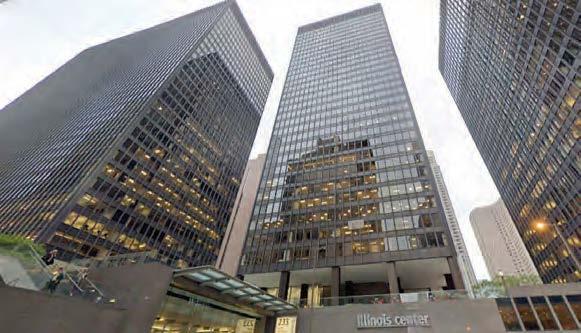
e largest tenant at the Illinois Center complex in the East Loop is about to move out, dealing a gut punch to its landlord as high vacancy and weak demand continue to plague the downtown o ce market.
e U.S. Department of Health & Human Services con rmed it will vacate its roughly 170,000-squarefoot o ce at 233 N. Michigan Ave. when its lease expires in November.
e agency said in a statement that it will move its downtown employees into available space in federally owned buildings at 230 S. Dearborn St. and 77 W. Jackson Blvd.
e move stands to open up a big chunk of available o ce space in a downtown market already awash in it. e remote work movement has hammered demand for workspace, driving up the vacancy rate to an alltime high and fueling a wave of distressed o ce buildings.
e departure is on track to bring occupancy to just 48% at the 2.1 million-square-foot complex, according to a Fitch Ratings report tied to the debt on the property. at is dramatically lower than the 77% average for downtown o ce buildings midway through the year, according to data from brokerage CBRE. Fitch downgraded its rating on the $260 million mortgage that owner AmTrust Realty has on the property, which was packaged with other loans and sold to commercial mortgage-backed securities investors.
It’s an unsettling reality for AmTrust, the New York-based investor that bought Illinois Center for $376
MCGRATH
From Page 2
that the shared-power arrangement didn’t work, particularly as the Williams-Hahn relationship deteriorated — did Williams really execute the puzzling Jake Burger trade with no input from Hahn?
e search is on for “a single decision-maker to lead the baseball operations department,” Reinsdorf said.
e relocation talk could also be a leverage ploy to convert
million in 2015, when the buildings were about 70% leased. After some occupancy losses, the property generated nearly $15.9 million in net cash ow last year, according to a Bloomberg report on the CMBS loan. at was just slightly more than AmTrust’s $15.8 million debt service payment on the complex for the year and well below the property’s pre-pandemic net cash of $23.7 million in 2019, Bloomberg loan data shows.
With the federal government moving out later this year and Bankers Life & Casualty — Illinois Center’s second-largest tenant — departing for another nearby building as its lease expires this month, Fitch downgraded the CMBS loan and predicted AmTrust will default on the mortgage, “given re nancing concerns.” e mortgage has a balance of just under $248 million and is scheduled to mature in August 2025, according to Bloomberg data.
Yet AmTrust, which owns six downtown Chicago properties totaling seven towers, has no plans to give up on its largest one in the city. A recent report from a special servicer overseeing the loan on behalf of bondholders said AmTrust “has engaged a world-renowned architectural rm to develop plans for a new and upgrade conference center with tenant lounge” and that its plan “includes the creation of hospitality areas in the renovated lobbies.”
An AmTrust spokesperson said in a statement Aug. 18 that the rm “does not foresee any adverse impact on the Illinois Center property from the Fitch Ratings change.”
some of that vast parking-lot acreage around U.S. Comiskey Guaranteed Cellular Rate Field into revenue-producing amenities that are must-haves at new ballparks (Atlanta’s Truist Park) and old (Chicago’s Wrigley Field).
If that’s the play, and it succeeds, the White Sox presumably will have more money to spend on resources. But with Reinsdorf involved, will it matter?
Crain’s contributing columnist
Dan McGrath is president of Leo High School in Chicago and a former Chicago Tribune sports editor.
Software company slashes space in LaSalle Street of ce building
Tech company Relativity has recommitted to its LaSalle Street headquarters with a long-term lease, but is shedding almost half of its o ce space there as it embraces the remote work movement.
e software maker con rmed it has signed a new lease for just under 100,000 square feet on two oors in the 23-story building at 231 S. LaSalle St. Relativity will relocate to the 19th and 20th oors of the vintage building from the roughly 180,000 square feet it occupies today across four oors lower in the property.
e move adds to a long list of companies getting rid of workspace they don’t need in the postCOVID-19 era, with more employees working remotely or going to the o ce less frequently. e trend has ooded downtown with available o ce space and depleted regular foot tra c in the central business district, a lingering problem for the city’s urban core even as e ects of the public health crisis fade.
But Relativity is also bucking a di erent trend by tying itself to the future of LaSalle Street, the historic corridor that is awash in vacancy and distressed properties after the defection of a series of big tenants. Roughly one-third of o ce space along LaSalle in the Loop is empty, according to a recent analysis of the street by the Urban Land Institute, largely a result of banking giants BMO and Bank of America decamp-
ing for new towers in the West Loop. Many tenants have left the outmoded buildings on the corridor for newer and more updated buildings elsewhere downtown.
Relativity is betting that brighter days are ahead for the center of the Loop, and sticking with a building whose owner has invested heavily in new amenities over the past few years. Boston-based landlord Beacon Capital Partners, which bought the building in 2017 for $162 million, has since added a restaurant in the lobby, renovated the tenant lounge and tness center and added a new rooftop deck.
Relativity’s move “aligns with the company’s commitment to a exible work model, which empowers its employees to choose to get their work done in the space that’s most conducive for their unique needs, whether that’s in o ce or at home,” a Relativity spokeswoman said in a statement, noting that that approach requires less o ce space. “We see exibility as the key to a happy, productive and diverse workplace.”
Relativity’s new space will include a private outdoor terrace and a “more modern, inviting environment” for its employees, the statement said.
Relativity has been in the building since 2009 — it was then known as kCura — and has expanded several times as it has grown to become one of the largest tenants at 231 S. LaSalle. e company’s most recent lease
term was due to expire in 2026, but it had an imminent termination option that prompted its hunt for new workspace, according to a source familiar with the company’s o ce search. e new lease term is said to be for more than 10 years.
Relativity’s downsizing is unwelcome news for most downtown ofce landlords, who now have even more available o ce space to compete with as they already grapple with record-high vacancy. Companies slashing their footprints have combined with higher interest rates to push many landlords to the brink and fuel a wave of foreclosures.
But the new lease could be seen as a critical win for Beacon. ough one of its largest tenants is dramatically shrinking, it is shoring up its rent roll with a company that could have left altogether, a loss that might have left Beacon scrambling to back ll a big chunk of space.
Relativity is also renewing its commitment to the building as Beacon loses its largest tenant, Northern Trust. e Chicago-based bank is leaving behind more than 200,000 square feet in the building as part of a consolidation of several downtown o ces at 333 S. Wabash Ave.
Beacon also saw siding products manufacturer James Hardie leave 231 S. LaSalle St. for a new o ce in another Beacon building at 303 E. Wacker Drive.
Wintrust remains the largest tenant in the building, with more than 180,000 square feet.

AUGUST 28, 2023 | CRAIN’S CHICAGO BUSINESS | 7 Advanced research programs at your fingertips Product development facilities and technology Business and innovation incubators mississippi.org An 8-university R&D department. GET MIGHTY.
Danny
This latest loss deals a gut punch to the landlord as high vacancy and weak demand plague the downtown of ce market
233 N. Michigan Ave. (center) is part of the Illinois Center of ce complex.
GOOGLE
Danny Ecker
Spanish billionaire pays $232M for West Loop tower
Danny Ecker
e real estate arm of Spanish billionaire Amancio Ortega has paid nearly $232 million for a West Loop apartment tower, the highest price paid for a downtown apartment building since before the COVID-19 pandemic.
A venture of Miami-based property investment rm Ponte Gadea USA this month bought the 45-story apartment building at 727 W. Madison St., according to Cook County property records. e company bought the 492-unit tower overlooking the Kennedy Expressway from its developers, a joint venture of Los Angeles-based Ares Management and Skokie-based F&F Realty, which completed the building in 2019.
At roughly $471,000 per unit, the sale price shows the relative strength of the downtown apartment market — particularly in the West Loop — as demand for rental units remains high, but also the negative impact that higher interest rates have had on property values. e building was valued at around $251 million, or about $508,000 per unit, when Ares and F&F re nanced it with a $186 million mortgage in 2019, according to property records and regulatory lings from New York-based lender KKR Real Estate Finance Trust.
Demand for downtown apartments has proved to be resilient after the initial sting of the public health crisis, with tenants at top-tier apartments in the heart of the city paying record-high rents. But landlords aren’t immune to higher borrowing costs, which have driven down what real estate investors are willing to pay. Other downtown apartment towers that have sold over the past year have fetched prices that are well below their pre-pandemic values.
On Madison Street, however, Ares and F&F are still enjoying a big windfall. e duo already cashed out once when they took out the 2019 loan, which was used to pay o $118 million in construction nancing for the project. Developers often pocket the di erence between a new loan and an old one, meaning Ares and F&F were able to pull around $68 million out of the property.
Some of the shine appears to have come o of that deal last year, when the owners renanced again with a $177 million mortgage, according to property records. at implies Ares and F&F had to kick in new equity to pay o the previous loan, though it’s likely the 2022 mortgage reduced their interest rate.
ough the recent sale price
implies the property’s value has fallen since mid-2019, the developers are still walking away with a hefty pro t from their equity share of the building.
Spokesmen for Ares, F&F and Ponte Gadea did not respond to requests for comment.
e sale marks the biggest downtown Chicago apartment deal since December 2019, when real estate investment trust Morguard North American Residential bought the controlling interest in the 690-unit Marquee at Block 37 apartment tower, according to data from MSCI Real Assets. at deal val-

ued the rental units atop the Block 37 shopping center at $265 million.
Apartment developers have been betting heavily on the West Loop. As of early last year, more than 9,000 new West Loop apartment units were in various planning stages, more than all other downtown neighborhoods combined, according to consulting and appraisal rm Integra Realty Resources.
Ponte Gadea USA invests in real estate on behalf of Ortega, the billionaire founder of the company behind the Zara retail clothing chain. e real estate
arm is best known for owning retail properties, but Ponte Gadea also owns the Eurostars Magni cent Mile hotel at 660 N. State St. in River North. e rm bought the 216-room hotel — then known as the Dana Hotel & Spa — for $72.5 million in 2019. F&F has a big stake in the local apartment sector, primarily in the Chicago suburbs. e rm, led by founder David Friedman, paid $74 million last year for the Glen Oaks Commons, a 504-unit apartment property in suburban Des Plaines.
Real Deal Chicago rst reported the 727 W. Madison sale.
A new exhibition allows guests to become cartoons
Visitors
Corli Jay
A new immersive exhibit at the Camp retail space in Lincoln Park allows visitors to transform themselves into cartoons and “teleport to a Rainbow World.”
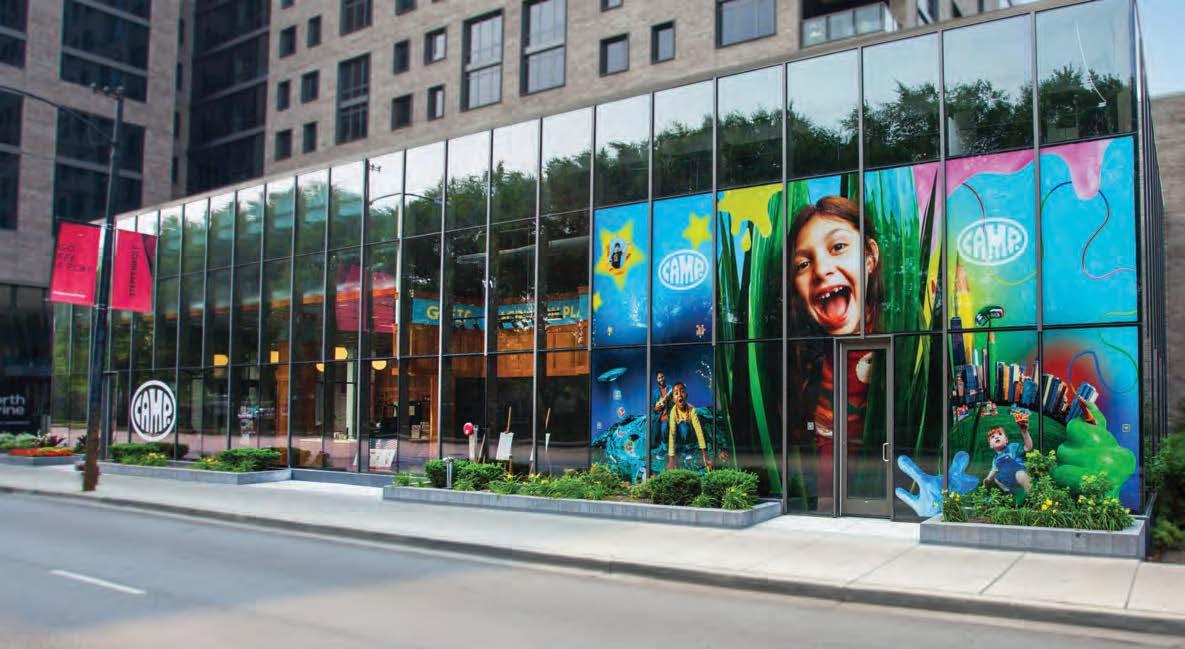
The exhibit, which opened Aug. 19, is a collaboration between family-experience company Camp and multimedia company Doodles.
Camp also has locations in New York, Atlanta and Los Angeles, but the Chicago location is the only one to offer the Doodles experience, according to Block Club Chicago.
“They’re a young company, we’re a young company, both of us have the same core idea of using creativity to make the world better,” Kirk Larsen, chief creative officer for Camp, told Block Club. “Coming together to bring their core idea of bringing color to the world with creativity, we wanted to bring play into that, so
Family-experience company Camp opened its Chicago location last month at 647 W. North Ave.
it was really fun and harmonious.”
The Camp x Doodles collaboration is promoted as an “all-ag -
es experience,” where guests will be “sucked into a magical glowing portal, explore gloopy caverns, slide down rainbows,
and play in rivers, fluffy clouds, a crashed spaceship, a ball pit, and tons more,” according to Camp’s website.
Camp opened its Chicago location last month at 647 W. North Ave. Tickets start at $28 and can be bought online or on-site.
8 | CRAIN’S CHICAGO BUSINESS | AUGUST 28, 2023
The 492-unit apartment tower at 727 W. Madison St. (center) was completed in 2019.
The sale of the 45-story building is the biggest deal for a downtown apartment building since before the COVID-19 pandemic
COSTAR GROUP
CAMP X DOODLES
to the attraction in Lincoln Park will be ‘sucked into a magical glowing portal’
Grocery union organizing local Home Chef workers
Brandon Dupré
e union representing the most U.S. grocery store workers is organizing employees at Chicago-based meal kit company Home Chef, which Kroger acquired in 2018.
e United Food & Commercial Workers International Union, or UFCW, which has been vocal in its opposition to the Kroger-Albertsons merger and Aldi’s plans to acquire Winn-Dixie, will seek to represent some 188 employees at Home Chef’s warehouse in Bedford Park, according to a union petition ling with the Chicago o ce of the National Labor Relations Board.
e employees include machine operators, production associates, sanitation workers and shift leads, among others, and would be represented by UFCW Local 1546, which con rmed its organizing e orts but said it would not comment this early in the organizing process. ere is no date scheduled for the union election, according to the union and NLRB listing.
UFCW, which represents 1.3
million workers in grocery, meatpacking, retail and other industries, has grabbed headlines of late for publicly opposing two massive mergers that look to shake up the grocery industry.
In early May, the union came out against the $24.6 billion proposed deal between Kroger and Albertsons, citing concerns over potential store divestitures and worries that any stores sold — which would be done to ease lawmakers’ concerns over a monopoly — might be saddled with heavy debt loads and would not be viable.
“Given the lack of transparency, and the impact a merger between two of the largest supermarket companies could have on essential workers — and the communities and customers they serve — the UFCW stands united in its opposition to the proposed Kroger and Albertsons merger,” the union said in a statement at the time.
And last week the union hit back at Aldi’s plans to acquire Winn-Dixie, saying in a statement that it opposes “any merger that further consolidates
the grocery industry.”
Home Chef was acquired by Mariano’s parent Kroger in 2018 for a reported $200 million upfront payout, with the potential for another $500 million if the

company hit its targets over the next ve years. In October 2021, Home Chef announced that it passed $1 billion in annual sales, helped by pandemic-fueled interest in meal kits and its pres-
ence on the shelves of more than 2,200 Kroger-owned grocery stores around the country. Kroger and Home Chef did not respond to requests for comment.
AUGUST 28, 2023 | CRAIN’S CHICAGO BUSINESS | 9
UFCW, which opposes the merger of the parents of Mariano’s and Jewel, is seeking to represent some 188 workers in Bedford Park
Home Chef was acquired by Mariano’s parent Kroger in 2018.
Get set to write the mayor a big blank check
Would anyone who has followed Chicago politics for any length of time ever write City Hall a giant blank check?

Certainly no one in their right mind.
And yet, that’s precisely what proponents of the newly redrafted “mansion tax” ordinance would have us do — and they have the added advantage of being able to characterize anyone who opposes their idea as a heartless creature who doesn’t care about the homeless people their measure is designed to help.
at’s the state of a airs as owners of ofce towers, apartment buildings, retail properties and high-end residential real estate absorb the news that Mayor Brandon Johnson has given his blessing to a revamped version of the real estate transfer tax hike that was once a major plank of his campaign platform.
Even in its current, three-tiered form, the proposed hike in the real estate transfer tax is engineered to generate $100 million in revenue, which the Johnson administration says it would use to combat homelessness. And yet the proposal sets no parameters for how that $100 million would be spent. No guidelines. No rules on what sorts of projects would qualify for support, or what to build, or where to build. No yardsticks for measuring success.
Carte blanche.
As we have already witnessed with Lori Lightfoot’s signature Invest South/West program — in which the mayor’s o ce took credit for practically every building project that took place within spitting distance of one of the program’s focal points — major mayoral initiatives launched with much fanfare but little supervision can become expensive boondoggles.
e concern about what to do with the
PERSONAL VIEW
proceeds, of course, sidesteps even larger concerns, already expressed here and elsewhere, that a major tax increase on commercial real estate is the last thing downtown Chicago needs as the central business district struggles to recover from the pandemic slowdown and the work-from-home patterns reshaping the o ce landscape. Johnson and his allies have been urged to rethink the very idea of such a tax, but what they produced instead was a tweak that may make the tax more appealing to the majority of residential property owners — who, of course, vote — but would shift the burden to
commercial building owners, whose ballots are far outnumbered.
If the proposal in its current form goes through, Johnson will abandon his original plan to hike the real estate transfer tax on residential and commercial property sales of $1 million or more to 2.65% from 0.75%. In its place will be a graduated rate broken into three tiers.

ose three tiers, as currently drafted:
e transfer tax on property sales of under $1 million would be lowered to 0.60%.
e transfer tax on property sales of between $1 million and $1.5 million would
be set at 2%.
e transfer tax on property sales of over $1.5 million would be raised to 3%, quadruple the current rate.
e higher rates would apply only to increments above the $1 million level. And it should be noted that the reduced transfer tax for sales under $1 million is new — no doubt to make the whole proposal more politically palatable.
So City Hall will seek to solve the homelessness problem — a very real problem — with a tax that will fall mainly on commercial property owners, including the supposed fat cats who own and rent out space in two- ats and three- ats all over town, or happen to own the buildings in which their small businesses operate. And we’re somehow not supposed to worry about the owners of downtown o ce towers in a marketplace that’s already staggering: During the rst half of this year, commercial property sales totaled just under $5.3 billion, a 51% decrease from the same period last year. And it’s also apparently not important for us to know how the new revenue pulled in by this tax will be spent.
Fortunately, there’s time to push back on all of this, though the timeline is moving fast. In order to be placed on the March primary ballot, a resolution authorizing the referendum must be approved by Jan. 3. e plan’s proponents plan to introduce a resolution authorizing the ballot referendum at the Sept. 13 City Council meeting, with the hope of having it approved in October. And if a referendum is approved in March, a new ordinance would need to be approved, likely in the spring, to codify the increased tax and dedicate it toward homeless services. Here’s hoping a better plan emerges before then.
A tough truth about police management in Chicago
With Mayor Brandon Johnson’s appointment of Larry Snelling as the next police superintendent, his task is clear: reduce violence and restore faith in the Chicago Police Department. To do this, Snelling must implement sound management practices that are new to CPD.
From my vantage point as a West Side resident, a community-based nonpro t executive, a member of the inaugural commission that selected the three superintendent nalists and one of two commissioners that sets and evaluates the superintendent’s goals for 2023, I’ve learned a tough truth about police management in Chicago.
e department lacks a strategic plan tied to its $2 billion budget, robust data-informed decision-making and proper performance-management practices to supervise 13,000 employees.
is leads to wasted e orts that threaten safety for the entire city.
Take, for example, CPD’s policy on tra c stops. Over the past eight years, police leadership has championed these stops as a way to reduce violence. e theory is that by pulling over a lot of cars, police remove guns and contraband from vehicles, thereby preventing violence.
But if CPD measured and tracked this strategy, leadership would know it caused more harm than good. From 2015 to 2019, police increased tra c stops by 700%. O cers conducted 85,000 tra c stops in 2015 and nearly 600,000 in 2019. is strategy did not produce the expected public-safety results. Instead, the city experienced historic spikes in homicides and violent crime, fewer than 1% of stops yielded contraband and fewer than
4% resulted in tra c citations.
Snelling must take a hard look at these numbers. Out of roughly 600,000 drivers stopped in 2019, about 575,000 were law-abiding people going about their day.
In the business world, we call this waste. If the goal is to nd people breaking the law, it’s not working when 99% of stops fail to seize contraband and 96% of stops don’t even result in tra c tickets.
Along with this waste of o cer time and department resources, there’s the signi cant loss of trust and reputation with the taxpayers who fund the department — particularly among Black and Latino people, who account for 85% of all tra c stops.
In business, if one of your core services harmed customers 96% of the time and the vast majority of that harm was suffered by people of color, your company would not survive.
is is particularly troubling when, in 2019, the CPD clearance rate for murders was 23%. e opportunity cost here is
high. While a half-million law-abiding Black and Latino people were being stopped in 2019, nearly 80% of people who committed murder were free on the streets.
e city would be better served, and safer, if we eliminated the waste of high-volume tra c stops, hired more detectives to solve violent crime and better utilized patrol o cers to improve emergency-response times and build quality relationships with local communities. Snelling should assign o cers consistently to local communities, train them in constitutional community policing and give them the bene t of guidance from the same supervisor managing no more than 10 o cers.
e department needs to run an e cient $2 billion budget, identify and track key performance indicators and reassess practices that fall below KPI targets.
Everybody wants answers to crime in Chicago. e best practices in business and performance management can ensure a better use of resources to get us there.
10 | CRAIN’S CHICAGO BUSINESS | AUGUST 28, 2023 Sound off: Send a column for the Opinion page to editor@chicagobusiness.com. Please include a phone number for veri cation purposes, and limit submissions to 425 words or fewer. Write us: Crain’s welcomes responses from readers. Letters should be as brief as possible and may be edited.Send lettersto Crain’s Chicago Business, 130 E. Randolph St., Suite 3200, Chicago, IL 60601, or email us at letters@chicagobusiness.com. Please include your full name, the city from which you’re writing and a phone number for fact-checking purposes. EDITORIAL
EVAN WISE/UNSPLASH
Cliff Nellis is executive director of the nonpro t Lawndale Christian Legal Center and one of seven interim commissioners on the Community Commission for Public Safety & Accountability.
e right way to build the public health
e COVID-19 pandemic increased awareness of the presence, impact and need to address health and social inequities nationwide.
e associated public health emergency revealed holes in the public health infrastructure, including the absence of community health workers (CHWs), trusted members of communities who can be rapidly trained and deployed to educate, connect and advocate for the health and safety of historically disinvested communities.
is awareness led to an infusion of federal grant resources for CHW workforce development and programs and increasing actions at the state level to establish CHW certication and reimbursement policies.



ese are promising actions to expand an increasingly depleted public health workforce. Now that the public health emergency has ended, we need to seize the opportunity to ensure those investments are sustained toward a robust public health system ready to respond to everyday and emerging public health emergencies.
Illinois legislation signed in November 2021 paves the way toward CHW sustainability through certication and reimbursement processes. We applaud the state for passing this legislation and for convening a CHW advisory board. e board includes CHWs, an important step in recognizing the wisdom of CHWs through their lived experience and training. ey are an essential component of the public health workforce and closing the equity gap.
Illinois now has an extraordinary opportunity to proactively develop the public health workforce of tomorrow and to creatively form solutions that weave health care, social services and public health together to transform the health of communities. At the center of these e orts should be the thoughtful development of the CHW workforce, a workforce working for, by and with the communities served.
We urge the state and the CHW advisory board to consider three key areas during this critical planning process:
Maintain the community roots of the CHW model within emerging reimbursement models.

Ensure thriving wages, bene ts and career pathways for CHWs that value their lived experiences above all.
Prioritize supervision of CHWs from individuals (licensed or not licensed) that understand the unique value of the CHW model.
e Illinois reimbursement model will consider Medicaid funding for the e orts of CHWs. e model will incentivize health care organizations, and some large non-pro t community organizations, for their CHW activities on behalf of patients and community members. Innovative reimbursement models should also incentivize non-medical, community-based and smaller organizations to support their CHW activities. If we limit reimbursement to the clinical setting, we run the risk of repeating the mistakes of the past and focusing on clinical interventions only, ignoring the critical role
communities play in health.
Further, we have seen wages for CHWs increase during the COVID-19 pandemic, especially with minimum pay requirements set forth within the community-based pandemic response work.
is is an important step toward providing a living and thriving wage for CHWs. It is imperative to maintain these minimum pay requirements within the emerging reimbursement models, despite the potential challenges in doing so. Additionally, we need to consider career pathways for advancement of CHWs within the context of certi-
cation and reimbursement practices so we do not lose these essential workers to other professions.

Finally, for the greatest e ectiveness of the CHW workforce, we urge exibility in the de nition of who can supervise a CHW in order to obtain reimbursement. In most reimbursement models, CHWs need to be supervised by a licensed health care professional, which can prove challenging for non-health care organizations.
Even within health care organizations, clinical team members often lack the experience or knowledge of the inner workings and scope of the





workforce to be e ective supervisors. Our own experiences suggest, when possible, that the best supervisors are experienced CHWs. Non-licensed professionals are often the better supervisors for CHWs, especially those who understand the role of the CHW, have experience supervising CHWs and/or are willing to be trained in CHW supervision.
ese are challenges, to be sure. But addressing them will provide real opportunities to advance equity and more thoughtfully and innovatively connect health care, public health and social care.

AUGUST 28, 2023 | CRAIN’S CHICAGO BUSINESS | 11 Leadership In Uncertain Times Learn Strategies To Manage Today’s Workforce More information crainsacademy@crain.com | crainsacademy.com Designed and taught by renowned faculty from Chicago Booth School of Business. This executive education program is a 5-week series in leadership development. Crain’s Leadership Academy is custom-designed to hone the leadership skills of executives across the Chicagoland area. CRAIN’S LEADERSHIP ACADEMY APPLY NOW In Person | Fridays 9 AM–1:30 PM October 13–November 10 PERSONAL VIEW
workforce of tomorrow
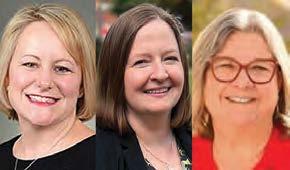
Stacy Ignoffo (left) is executive director of community health innovations at Sinai Urban Health Institute. Helen Margellos-Anast is president of Sinai Urban Health Institute. Margie Schaps is executive director of the Health & Medicine Policy Research Group.
ARCHITECTURE / DESIGN




CannonDesign, Chicago Charles T. Smith, FAIA, LEED AP, has been named the Of ce Practice Leader of our Chicago of ce, our rm’s largest of ce. After serving as the co-leader of our national education practice for nearly four years, Charles steps into this pivotal role to take our presence in Chicago to the next level. He’ll foster new community relationships, grow and develop our talented workforce and cultivate client collaborations across the health, education, commercial, civic and science sectors.
FINANCIAL SERVICES
Lakeshore Financial Group, Chicago

LSFG welcomes Sean McCarthy as a Financial Representative. After 5 years as a CPA, Sean is eager to use his knowledge of accounting and taxes to help his clients grow and distribute their money in a tax-ef cient way. He’s most looking forward to taking the stress out of personal nance for individuals and families by way of developed trust and ongoing education at a rm known for its extensive resources and support.

LOGISTICS

BravoTran, Chicago

BravoTran, the leading payables automation platform for freight forwarders, has promoted Tom Durrenberger to CEO from COO. With a background in innovation strategy, intellectual property and cutting-edge product development, he’s played a key role in driving BravoTran’s rapid expansion and will lead the company in its new growth phase.




PROFESSIONAL SERVICES


West Monroe, Chicago
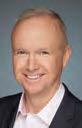
Kevin Rooney has been appointed to Chief Information Of cer at West Monroe. As interim CIO since April 2022, Rooney’s experience from his previous tenure as CIO at a leading auto insurer positions him to excel in driving the rm’s digital initiatives. Under his leadership, the IT team has made signi cant strides in reshaping the company’s digital landscape, propelling it toward further ef ciency, connectivity, and collaboration. Rooney will continue to serve as Chief Administrative Of cer.
REAL ESTATE
CENTURY 21 Circle, Chicago
Melissa Archer-Wirtz steps in as the new CEO of CENTURY 21 Circle, a multi-state full-service real estate brokerage serving Illinois, Indiana and Florida. ArcherWirtz will oversee the company’s brokerage, title and insurance operations, totaling more than 1,200 af liated agents in 40+ of ces. As a former Chief Operating Of cer of two preeminent Chicagoland rms, Archer-Wirtz experience will elevate the company’s services via technology, digital marketing, and lead generation advancements.

FINANCIAL SERVICES
Wintrust Financial Corporation, Rosemont
Wintrust Financial Corp., a nancial services holding company based in Rosemont, Illinois, with 175 locations across Illinois, Indiana, and Wisconsin, is pleased to announce the promotion of Briana Hansen. Briana was promoted to Retail Market Head position for Wintrust’s Southwest and Northwest regions. Briana joined Wintrust in 2019.
HEALTH CARE
City of Hope Chicago, Zion
Nazia Khatoon, MD, joined City of Hope Chicago in August as a pathologist at the hospital in Zion, Ill. Board-certi ed in anatomic and clinical pathology, Dr. Khatoon completed a residency in combined anatomic and clinical pathology followed by a surgical pathology fellowship at Mayo Clinic in Jacksonville, Fla. and a cytopathology fellowship at University of Minnesota. She has participated in multiple research studies and presented her work nationally. For more, visit cancercenter.com.

LEGAL
Benesch, Chicago
Eric Krischke has joined Benesch as a Partner in the rm’s Intellectual Property Practice Group.
MARKETING

EA Collective, Chicago
Lucy Stratton has been named the new CEO of EA Collective, a group of creative agencies, including Agency EA, Storyhorse and Studio Sage. Agency EA is Chicago’s top event marketing agency, complemented by Storyhorse providing branding and messaging and Studio Sage providing video production. Lucy will be dedicated to growing the Collective and protecting the culture of the now employee-owned agency, which has grown from 20 people when she joined 16 years ago to over 100 employees today.
COMPANY LAUNCHES

HEADQUARTERS MOVE
FINANCIAL SERVICES


Wintrust Financial Corporation, Rosemont



Wintrust Financial Corp., a nancial services holding company based in Rosemont, Illinois, with 175 locations across Illinois, Indiana, and Wisconsin, is pleased to announce the promotion of Elizabeth Mackel. Elizabeth assumed the role of SVP, Head of Retail for Hinsdale Bank & Trust Company, N.A. Elizabeth joined Wintrust in 2014.

Eric focuses his practices on counseling clients on all aspects of intellectual property law with a focus on patents. He has more than two decades of comprehensive experience providing effective counseling and advice to clients.

Caitlin Kovacs has joined Benesch as a Partner in the rm’s Litigation Practice Group.
Krischke Kovacs
Caitlin is an experienced complex commercial litigator who specializes in the most challenging and signi cant matters her clients face. She leads effective teams on bet-the-company cases in both state and federal courts involving disputes of all kinds.





NON-PROFIT
Schreiber Philanthropy, Lake Forest
Whitney Smith began as CEO of Schreiber Philanthropy in July. Smith will lead the effort to scale impact as the family’s giving grows. Smith previously served as Executive VP of Programs and Chief Strategy Of cer at The Joyce Foundation and, prior to that, was JPMorgan Chase’s Head of Regional Philanthropy for North America. Smith chairs the Board for the National Fund for Workforce Solutions. She holds a BA from Bowdoin College and a MA from University of Chicago.
Uturn Data Solutions Chicago, IL (312) 985-9114 uturndata.com

Chicago-based AWS consulting provider, Uturn Data Solutions, is thrilled to announce we are moving headquarters. After years of continued growth (#11 on Crain’s 2023 Fast 50), Uturn is relocating to a larger location to better serve our customers and employees.
Beginning August 1st, all correspondence and in-person business will move to 343 W. Erie Suite 520, Chicago IL 60654. We would like to thank each one of our clients, and we look forward to continuing our great work in the years ahead.
Why not? PROMOTE. For more information contact: Lauren Melesio • Director, Reprints & Licensing lmelesio@crain.com • (212) 210-0707 Overall Small Businesses home,makingo ceperkslikecateredlunches,tabletennisandhappyhoursmoot remotelyintoughtimes:cashforo ceequipmentandchildca ,additionalPTO tifythe100BestPlacesto Work,alistt tg Overall Small Businesses Morethanayearintothepandemic,mosto ceworkersarestilldoingtheirthingfrom home,makingo ceperkslikecateredlunches,tabletennisandhappyho utthebestcompanies ameup ithwaysto upporttheir ops withCOVIDchallenges.Onceagainthis r,Crain’spartne more competitive each year. #25 #18 Small Businesses Morethanayearintothepandemic,mosto ceworkersarestilldoingtheirthingfrom home,makingo ceperkslikecateredlunches,tabletennisandhappyhoursmoot p utthebestcompanies ameup remotelyintoughtimes:cashforo ceequipmentandchildca withCOVIDchallenges.Onceagainthisy more competitive each year. S Yoon e upPEOPLE
THE
Advertising Section To place your listing, visit www.chicagobusiness.com/peoplemoves or, for more information, contact Debora Stein at 917.226.5470 / dstein@crain.com
ON
MOVE
SHARE YOUR COMPANY’S JOURNEY
more information, contact Debora Stein at dstein@crain.com or submit directly to CHICAGOBUSINESS.COM/ COMPANYMOVES To place your listing, visit www.chicagobusiness.com/companymoves or contactDebora Stein at 917.226.5470 / dstein@crain.com COMPANIES ON THE MOVE ADVERTISING SECTION
For
— Mayor Brandon Johnson describing his “unique approach” to uplifting Chicago’s youth and continuing to welcome migrants
CHICAGO’S PROBLEMS BECOME
JOHNSON’S PROBLEMS TO SOLVE
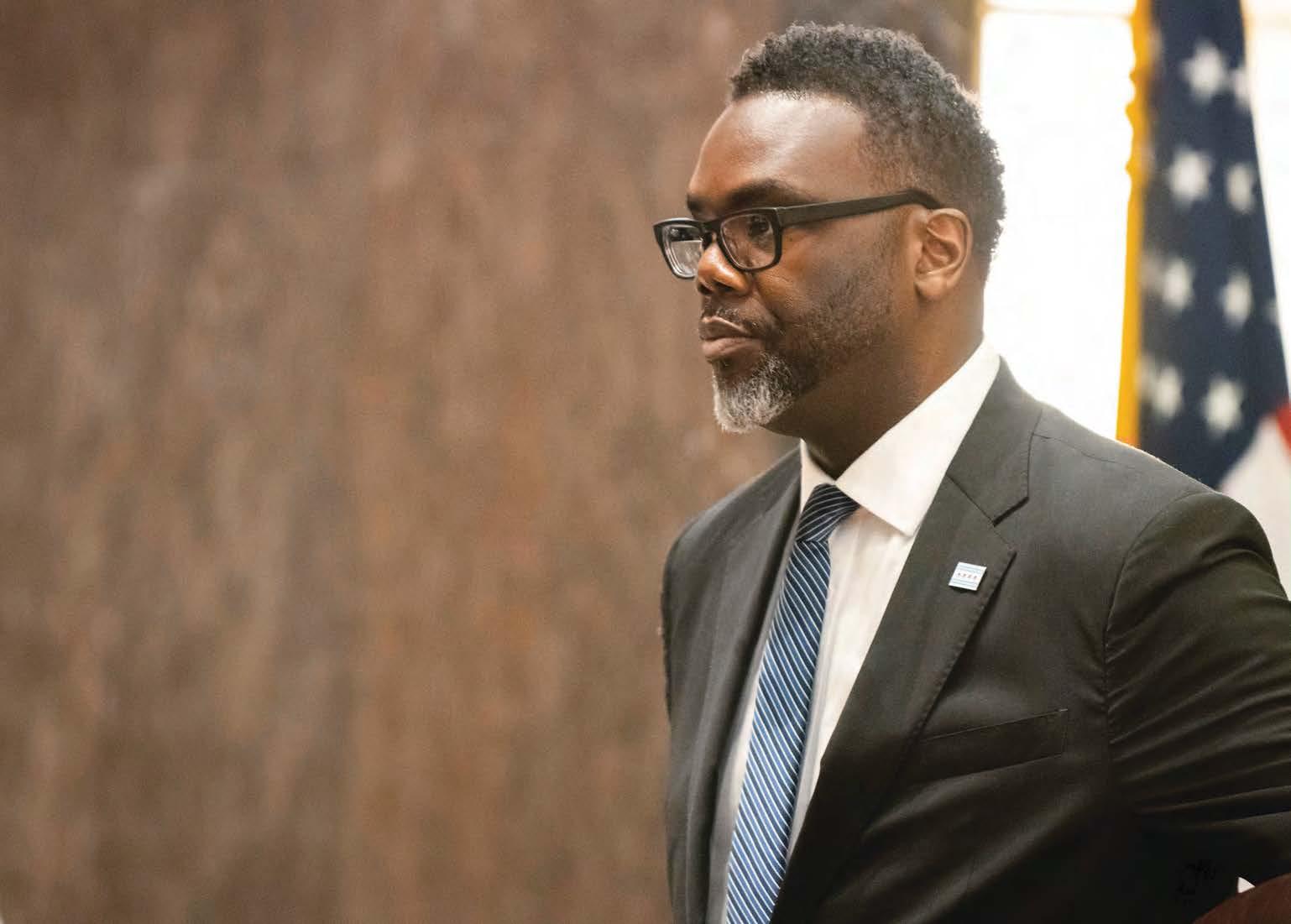
Mayor Brandon Johnson takes a measured approach early on, but will collaboration and compromise be an effective strategy for running the city?
I

Chicago doesn’t yet know what a Brandon Johnson city budget will look like, and won’t until the middle of October. It’s one of the great mysteries of Johnson’s nascent mayoral administration, especially given his acknowledgment on the campaign trail that $800 million in new revenue is needed to fund his proposed social programs.
Yet while the nancial speci cs remain fuzzy, Johnson’s early approach to the budgetary process nonetheless reveals plenty of clues regarding his broader style of governance — how much he values access and engagement, his skill and inclination to broker compromises, and the extent to which he
By Steve Hendershot
plans to work collaboratively with the City Council.
One clue comes from the city’s recent budget forums. In many other large U.S. cities, the budget process takes many months to complete and plays out mostly in public view.
at’s not usually the case in Chicago, where traditionally “most of the community budget hearings were pro forma,” according to retired University of Illinois Chicago professor Dick Simpson, author of a forthcoming book comparing Chicago mayoral administrations. is summer, the Johnson administration
See APPROACH on Page 14
The new mayor’s administration has major challenges to tackle: a migrant crisis, crime and revitalizing the Loop and Magni cent Mile I
By Judith Crown
As Mayor Brandon Johnson passes the 100-day mark in o ce, we look ahead at the biggest issues he’ll be tackling through the rest of the year.
MIGRANT CRISIS:
Waiting for shelter beds to open
It’s been a year since busloads of migrants from the Southern U.S. border began arriving in Chicago — many of whom don’t speak English and have few possessions. Mayor Brandon Johnson must establish a longterm plan that enables new arrivals to get into shelters quickly, but also gain independent housing, health care and education,
SPONSORS


immigration experts say.
“We have to make sure that folks have the tools and the ability to move on from the shelters and do it fast,” says Eréndira Rendón, vice president of immigrant justice at e Resurrection Project, a local nonprofit.
City and state o cials scrambled in the early months to meet the crisis, and coordination was weak, immigration specialists say. State o cials covered expenses for families or people with disabilities to stay in hotels, while individuals were largely
See PROBLEMS on Page 14
AUGUST 28, 2023 | CRAIN’S CHICAGO BUSINESS | 13 CRAIN’S
JOHNSON’S FIRST 100 DAYS
JOHN R. BOEHM
“My administration is different.”
PROBLEMS
From Page 13
assigned to shelters. Hundreds are still sleeping at police stations, waiting for a shelter bed to open up. Former Mayor Lori Lightfoot’s administration hired a national sta ng agency to manage city shelters, but Johnson has begun to draw on the expertise of nonpro ts and charitable organizations. ey are providing for case management that helps asylum-seekers adjust as well as legal support for asylum applications.
“We’ve been in survival mode,” says Veronica Castro, deputy director of the Illinois Coalition for Immigrant and Refugee Rights. “How do we do this in a more coordinated way?” at involves rental assistance to help migrants settle in apartments, getting children enrolled in school and receiving mandated vaccinations. Federal work permits are required, Castro says, but in the meantime, many migrants seek out o -the-books jobs. “ ey nd a way to manage.”
Johnson must also nd ways to tamp down illegal and bad behavior around shelters. At a City Council hearing in late July, mem-
APPROACH
From Page 13
hosted three mandatory public forums and also added a fourth, youth-focused event on the skylit top oor of the Harold Washington Library Center in the Loop.

at one wasn’t exactly pro forma.
ere was a DJ. And dancing. And a caterer. And ra e tickets to Lollapalooza. e room was packed with more than 300 teens and early 20-somethings from across the city — more than the total number that attended all three of last year’s budget forums, according to city records. Johnson promised the crowd that “as we chart out the future of our great city, the entire budget process will be collaborative,” and briefly sat in on one of the roundtable discussions before exiting.
“It was unprecedented that we had that number of young people come on their own to a city event,” says Rebecca Langan, director of government relations at Youth Guidance, a Chicago-based nonpro t that operates youth engagement programs in 200 schools across the country. Youth Guidance students attended the budget event, but the group didn’t act as a coordinator. “ is was an intentional e ort that we haven’t seen before” from City Hall, Langan says.
What does it mean? e jury is out regarding policy impact: Simpson says he’s waiting to see whether Johnson’s o cial proposed budget incorporates suggestions from any of the public roundtables, or whether the events are just for show.
Considering that many of the youth event attendees sported T-shirts from Johnson-aligned organizations, such as the Service Employees International Union and
bers called out lawlessness around shelters, including drug dealing, prostitution and sex tra cking. In a letter to the mayor, Ald. Ray Lopez, 15th, warned of the risk of gang recruitment. “ e level of disrespectful behavior toward Chicago residents by the migrant asylum seekers is reaching a boiling point,” Lopez wrote.
In the Edgewater neighborhood, Ald. Leni Manaa-Hoppenworth, 48th, worries about the loss of services at the Broadway Armory, which opened as a shelter to 250 migrants on Aug. 1. Luckily, the Chicago Park District is keeping in place a senior program that o ers hot meals and other services. An after-school program for teens will relocate to a church in Andersonville, she says. Federal help is needed, she adds, but is unlikely to materialize soon given congressional gridlock. Immigration experts warn that the city shouldn’t ignore the thousands of migrants who arrived before August 2022 and still need help integrating to life in Chicago.
CITY BUDGET:
Addressing the pension funding gap
Johnson has ambitious plans to tackle crime and poverty. But
Brighton Park Neighborhood Council, it’s also possible their suggestions mostly included stu that the Johnson team already favored. Still, the fact that the mayor not only scheduled a youth-focused budget forum but also put forth enough organizational e ort to ensure that it resulted in a packed house suggests an administration that is serious about expanding public access and input.
Transfer tax deal
A second indicator of Johnson’s style is his apparent willingness to entertain and broker compromise. For example, his administration has agreed to a deal with regard to the Bring Chicago Home ordinance, which would raise taxes on real-estate transactions of $1 million or more and funnel the proceeds to programs that address homelessness.
Johnson’s team is willing to modify the measure, with a current compromise creating a tiered structure in which increased rates a ect only the amount of a sale price greater than $1 million and the rate would decrease for sales under $1 million. at doesn’t exactly make it uncontroversial — especially to those in downtown commercial real estate — but it does suggest that Johnson can function as a pragmatist rather than an immovable ideologue.
e ordinance is also an interesting test of Johnson’s ability to work with business interests that largely opposed him during the election, in part, because of the specter of tax hikes the bill seeks. Yet there’s some opportunity for common cause here because downtown retail businesses also are wary of sprawling homelessness, and the bill promises to address those concerns.
Pension funding laggard
With its four pension funds only 22% funded, Chicago’s grand total funded ratio percentage is behind other large U.S. cities, including New York and Los Angeles.
Chicago Dallas Houston Los Angeles New York Philadelphia
there’s a $33 billion obstacle in his way: Chicago’s grossly underfunded pension plans. Investors say the city must place a priority on paying down the debt.
e city’s four pension plans are funded only at 22%, a far cry from the 80% level for U.S. cities with more than 1 million residents, according to Merritt Research Services. Lightfoot, Johnson’s prede-
cessor, committed to an aggressive paydown, which boosted the city’s credit ratings. In her nal days in o ce, she issued an executive order that $641.5 million in projected surpluses be used for pre-payments beyond the yearly mandated amount.
Investors worry that Johnson won’t continue Lightfoot’s commitment to paying down the pen-
sion debt, which could reverse progress in credit ratings and increase borrowing costs.
e market is looking to the city to continue that commitment, says municipal bond expert Richard Ciccarone, president emeritus at Merritt Research Services. “If you can’t get that support, you raise your nancing cost for the capital programs you’re going to
Shoppers “don’t always feel comfortable coming downtown post-pandemic because there may be more homeless people here,” says Michael Edwards, president and CEO of the Chicago Loop Alliance. rough the transfer-tax bill, “the mayor is sort of o ering a way to x that problem.”
Johnson’s team also tweaked the timeline for its budget rollout — but not by much. Chicago has taken steps over the past decade to emulate other cities with more deliberative and collaborative budgetary processes, such as San Diego and New York City, notably through the creation of the City Council O ce of Financial Analysis, which advises the council on budgetary matters. Yet Chicago’s tight budgetary timeline cuts against those ambitions, giving City Council members just a few days to prepare for hearings rather than weeks as in San Diego and New York.
Johnson’s timeline stretches the period from the budget’s introduction to the nal vote to 35 days, up
from an average of 26 over the last de - cade, according to a Better Gov - ernment Association analysis. But most of the added time comes after the hearings, not before. at begs the question: Is this a rst, small step in the direction of expanded collaboration with the City Council? Or could this be just a one-time concession from a mayor who otherwise hopes to follow in the steps of Chicago’s previous mayors who wielded exceptionally strong control over the budgetary process.
Stretching out only the last part of the process indicates it could be the latter. If Johnson wanted more collaboration, it would make sense to allow council members more time to prepare for hearings, but instead the only part that’s elongated is the post-hearing debate.
at suggests Johnson “realizes this is going to be a contentious year, and that it’s going to take a while to get to the 26 votes” needed to secure the budget’s passage, says Geo rey Cubbage, a policy and budget ana-
lyst for the Better Government Association.
Johnson’s timeline also includes another change that’s likely to win points with City Council members: He plans to brief them on the budget’s contents the day before its release. It’s long been a sore point with some council members that their rst look at the budget comes at the same time that it’s made available to the media and general public.
rough Johnson’s rst 100 days in o ce, there are hints of a leader who is determined to expand community engagement, broker creative compromises and work more collaboratively with the City Council. ere also are no promises.
“ ese are promising rst steps in terms of what we hope to see in the next year,” says Youth Guidance’s Langan. “But I think there’s still a little bit of a question: Will the investments follow the (budget engagement) forums? Will the ideas take root? And can they lead to sustained solutions?”
14 | CRAIN’S CHICAGO BUSINESS | AUGUST 28, 2023 CRAIN’S JOHNSON’S FIRST 100 DAYS
Mayor Brandon Johnson listens during a budget roundtable discussion for Chicagoans ages 13 to 24 in July at Harold Washington Library. PHOTO BY STEVE HENDERSHOT
100% 80% 60% 40% 20% 0%
Jan. 1, 2015 Jan. 1, 2016 Jan. 1, 2017 Jan. 1, 2018 Jan. 1, 2019 Jan. 1, 2020 Jan. 1, 2021 Jan. 1, 2022
Source: Merritt Research Services, an Investortools company • Note: Grand total funded ratio percentage refers to combined net pension liability of all plans, which cover city employees (includes single, agent and the respective city liability of multiemployer cost-sharing plans) relative to the plans’ net pension position (assets).
need,” he says.

It’s not clear whether Johnson has the same enthusiasm for the pension paydown, given his expansive social agenda. Johnson adviser Jason Lee has hinted that the mayor might reverse his predecessor’s executive order. Lee didn’t respond to an email seeking comment. e mayor’s approach is expected to be spelled out in his September budget forecast.
Complicating the budget picture is Johnson’s campaign pledge to freeze property taxes. Under the Lightfoot administration, higher rates helped pay for pension obligations and other liabilities. In forgoing additional money from property tax hikes, Johnson will have to access new revenue sources or broaden the tax base, warns Michael Belsky, a public nance expert who headed Fitch Ratings’ publicnance group and was mayor of Highland Park. “Otherwise, pensions will remain underfunded.”
e search is on for those alternate revenue sources. During his campaign, Johnson proposed a head tax on employees, a jet fuel tax and a tax on nancial transactions.
e latter two would require approval from the Illinois General Assembly, and a higher tax on jet fuel would likely require a federal signo . Budget experts have put forward other ideas, including a sales
tax on services as well as goods, a city income tax, a commuter tax and congestion pricing. Johnson this month agreed to a compromise on his proposed real estate transfer tax — also called the “mansion tax” — that would use a graduated tax approach.
step in the wrong direction. Critics say Johnson hasn’t helped himself by excusing the behavior
Attention now shifts to the mayor’s selection of Chief Larry Snelling to be the new police superintendent, who must restore morale among rank-and- le o cers and try new ways to deter street violence. Snelling heads the Chicago Police Department’s Bureau of Counter-Terrorism and is a 29year veteran of the force. “Chief Snelling is a proven leader who has the experience and the respect of his peers to help ensure the safety and well-being of city residents, and address the complex challenges we all face related to community safety,” Johnson said in an Aug. 13 statement

quire new revenue, says Andrew Papachristos, a professor at Northwestern University and a specialist in criminal justice. Hiring more detectives to solve outstanding crimes or other specialists will be costly “if you’re trying to hire better-caliber folks,” he says.
DOWNTOWN:

Revitalizing the Loop and Mag Mile
e Loop and North Michigan Avenue are still reeling from pandemic fallout.
hoods by expanding Lightfoot’s Invest South/West initiative, he’ll have to attend to the downtown areas that are the city’s economic engine. Michigan Avenue historically has been one of the city’s star attractions. Before the pandemic, it was the single biggest contributor of sales tax revenue in Cook County.
CRIME:

New superintendent must nish police reform
If Johnson can make a dent in crime, including street violence, he’ll be a hero. Crime is a big reason people move away from Chicago and why businesses decline to locate or expand in the city.
ere have been some recent improvements, such as a drop in carjackings. But recent incidents involving teen mobs — most recently in the looting of a South Loop convenience store — are a
Central to the new superintendent’s mission will be gaining department buy-in to enact a fouryear-old federal consent decree for department reform ordered after a Chicago police o cer shot and killed Laquan McDonald in 2014. A large part of reforms lies in building trust with Black and Brown communities, says Alexandra Block, senior supervising attorney at ACLU of Illinois. “ at means protecting them when they call, responding promptly and effectively, and in a professional manner,” she says.
Meaningful reform also will re-







In the Loop, o ces have been shrinking or closing amid the shift to hybrid work schedules. At midyear, the o ce vacancy rate in the central business district had increased to 22.6%, an all-time high, according to CBRE.
On the Magni cent Mile, crime and the fear of crime have spooked retailers and deterred visitors, although the street was full of shoppers during the summer months.
Nevertheless, the retail vacancy rate is hovering at a near-high of 32%, according to Cushman & Wake eld. e corridor has suffered a stream of store exits including, most recently, AT&T and Banana Republic.
While Johnson has prioritized investment in disenfranchised South and West Side neighbor-
“You have to get on top of the safety problem,” says Rob Karr, CEO of Illinois Retail Merchants Association. “ at safety extends to how people get to and from Michigan Avenue and ensuring that public transportation is safe, clean and easily accessible.”
Stakeholders want to reimagine the corridor by reducing reliance on traditional retail and expanding dining and entertainment options. Clearly, that will take time.
Johnson must also guide a reimaging of the Loop. Lightfoot pushed to convert empty o ce space on LaSalle Street to residential, with a 30% component set aside for a ordable housing. ose a ordable units require big public subsidies and Johnson will have to decide where to focus those a ordable e orts. More dining and entertainment options in the Loop would help, Belsky says, adding, “Corporations can play a role in insisting that employees come back to work.”

AUGUST 28, 2023 | CRAIN’S CHICAGO BUSINESS | 15 JOHNSON’S FIRST 100 DAYS CRAIN’S
Chief Larry Snelling
Working to advance racial equity and economic mobility for the ne xt generation inthe Great Lakes region.
Immediate migrant needs require attention, but so do those of long-term residents

The migrant crisis is not going away. e people arriving in Chicago, through no choice or fault of their own, are victims of injustice and inequity in their home country and how they have been treated at our southern border. Because cities like Chicago have had the social, moral and economic view that migrants are good for our city, state and country, they have become dumping grounds for governors trying to score political points in their backyards.
In the meantime, cities such as Chicago have a set of immediate problems: how to care for the migrants, how to treat them with dignity, how to ensure their safety, how and where to house them and how to pay for it all. At the same, the needs of long-term Chicagoans also must be addressed. After all, the challenges of the unhoused, day-today survival, health and educational conditions disproportionately a ecting Black and Latino residents of Chicago cannot be ignored or pushed aside.
Mayor Brandon Johnson has taken an essential rst step in appointing a Deputy Mayor of Immigrant, Migrant & Refugee Rights, a point person to ensure that the city’s policies address the actual short- and long-term challenges facing migrants and address the stresses being placed on the
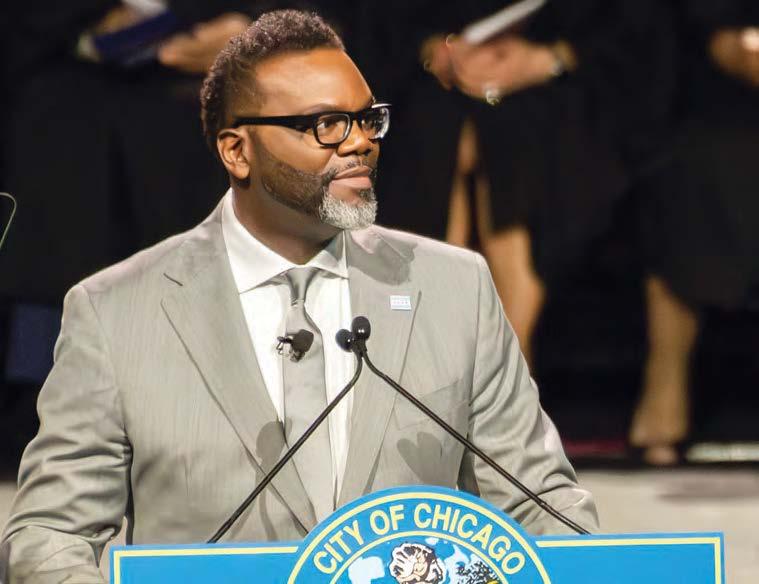

city. is includes coordinating the heroic e orts of non-pro t, faith and philanthropic institutions and a reactivated immigration committee of the City Council. Not to be overlooked are the everyday Chicagoans volunteering to provide necessities, such as food, water, shelter and mental health services, to lessen the crisis.
Seeing the tremendous outpouring of support to assist those in need, I have never been prouder of our Welcoming City. My organization, the Latino Policy Forum, plays a role in organizing the Welcome to Illinois coalition, which provides a space for regular updates and coordinated e orts around the crisis. It provides a space for all institutional actors, including the city of Chicago, to transparently share information surrounding the response.
We believe Mayor Johnson when he says there is enough for everyone and that he is putting the city on a path that does not pit one group in need of help against another. is cannot be done without acknowledging the true costs of addressing the problems of all and recognizing that there are tensions between the migrants and those in need who are already living here. We also must remember that the migrants are now part of our city; we can proactively
Measure progress, not media-friendly benchmarks
One hundred days ago, Chicago made history, electing the rst mayor in a generation to live on the West Side, someone with rsthand knowledge of systemic disinvestment. Voters sent a message: We want to see government transformed to repair the harm caused by decades of public policies that have created a city of haves and have-nots.
Last month, Brandon Johnson’s administration unveiled its “Blueprint for Creating a More Just and Vibrant City For All.” While the transition subcommittees generated an array of bold ideas — among them, de ning and incentivizing “good jobs” and embracing innovative models for a ordable housing — the administration has been careful to frame the report as a starting point, not a nal vision.
e Metropolitan Planning Council and Chicago United for Equity share the values the report is built upon. We applaud the call for greater inclusivity, co-governance and accountability. But experience has taught us that equity-centered initiatives in Chicago require the mayor’s sustained attention and e ort, and an ability to build a coalition that will hold beyond the moment.
ese are the concrete steps we believe
can build on the Blueprint and make good on a promising beginning:
De ne equity and our commitment to achieve it.
Equity is a goal we hear a lot about these days. e report uses the term over one hundred times but fails to de ne what equity means. e administration should commit to a de nition that is explicit about shifting power to communities most harmed by discriminatory policies and hold themselves accountable to these communities going forward. We must establish clear targets and agree to a common standard to measure progress. Reducing the racial wealth gap, for example, could be measured not just by individual income, but also by the rising value of residential and commercial assets in our Black and Brown neighborhoods.
Build on past success while challenging the status quo.
e new administration should embrace and build on useful work.
Former Mayor Lori Lightfoot’s creation of the O ce of Equity and Racial Justice, which holds city departments accountable for racial equity via their budget requests, was a clear advance. Likewise, We Will Chicago introduced a collaborative
help them. If we ignore them, we will see an increase in our unhoused population and more unplanned stresses on our social service infrastructure.
What is needed is a long-term plan for investment in the social, educational, housing, health and economic response to this emergency: the epidemic of need. e federal government must contribute to the -
nancial support needed by cities faced with the continuing in ux of migrants while also easing work and other restrictions that are preventing migrants from obtaining the jobs they seek. ese jobs will allow the migrants to build on the historical legacy of immigrants who have built the city and be more fully integrated into the city’s social and economic fabric.
model for growth informed by lived experience. Building more robust and e ective civic infrastructure and investing in inclusive workforce development to build resilient economic clusters are good ideas that get us closer to our goals. We should not reject them just because they started under di erent leadership.
Engage the public in a shared future.
is starts with rebuilding trust, by acknowledging unjust structures and renewing commitments to institutional change. We need more diverse voices to help shape public policy. Process matters, and to gen-
erate the best ideas and make them real will take all of us.
e Johnson administration’s legacy won’t be built in 100 days. Transformation resists media-friendly timeframes. We need transparency, clear communication, sustained and meaningful public participation. A hundred years from now, it won’t be the rst 100 days that matter so much as it will be the hundreds of ways Johnson could change Chicago for the better. Because in 100 years, the rst 100 days won’t matter. Let’s do this work right to truly transform government.

16 | CRAIN’S CHICAGO BUSINESS | AUGUST 28, 2023 CRAIN’S
JOHNSON’S FIRST 100 DAYS | COMMENTARY
Sylvia Puente is president and CEO of the Latino Policy Forum.
Migrants board a chartered bus traveling to Chicago outside the Migrant Welcome Center in El Paso, Texas, in September 2022. | BLOOMBERG
Niketa Brar is executive director of Chicago United for Equity.
Darlene Hightower is president and CEO of the Metropolitan Planning Council.
JOHN R. BOEHM
How TIFs play into the city’s crime and violence
One of the greatest hypocrisies of Chicago politics is expecting any mayor, let alone a newly elected one, to have all the answers to Chicago’s ills. is is especially true for crime and violence, which is deeply rooted in decades of structural disinvestment at the hands of politicians — politicians who routinely directed city nances to political insiders and wealthy developers rather than Chicago’s most disadvantaged communities. One only needs to look at the unprecedented corruption in Chicago’s Tax Increment Financing program to understand how the city’s nancial structure funnels taxpayer money away from Chicago’s communities — immorally — and instead uses it to subsidize wealthy real estate developers.
Most of the complaints provided on the local news about how a new mayor is failing on crime and violence come from political foes who have historically o ered only a police-centric and naïve solution that science has proven over and over will not x anything. at naive solution is to pour more money into policing, hire more o cers, give them more military-grade weapons and never allow anyone to question the tactics the police use to ght crime, no matter how
ine ective or deadly they may be. Chicagoans must come to terms with the fact that the causes of crime and violence experienced today are rooted in the decisions and actions of Chicago’s leaders from decades ago. Expecting the Chicago Police Department to provide some miraculous solution that will address all the causes overnight could not be more against the interests of the women and men of the department.
Chicago’s leaders continue to expect the department to deal with escalating crime and violence yet refuse to provide it with tools to address the underlying and persistent causes of crime and violence, such as intergenerational poverty. It is a Chicago tradition for politicians to do nothing to solve these persistent problems and instead to scapegoat the women and men of the Chicago Police Department.
Mayor Brandon Johnson’s e orts to address crime and violence should be rooted in his ability to meaningfully address the intergenerational transmission of poverty that many communities in Chicago have been left on their own to solve. Suppose Chicagoans want to achieve tangible results in re-
ducing crime and violence. In that case, they will force the City Council to eliminate Tax Increment Financing districts and reinvest the billion dollars collected yearly into communities on Chicago’s South and West sides. Not to drive gentri cation for developers but to uplift the current residents of those communities.

Not until Chicago o cials take these steps will they realize a meaningful change in crime and violence in Chicago. Except it will take time and dedication, but unfortunately, Chicago’s unscrupulous politicians can never pass up a chance to exploit crime and violence for their political gain at the cost of hurting Chicago’s communities.
e solutions for Chicago’s housing problem already exist
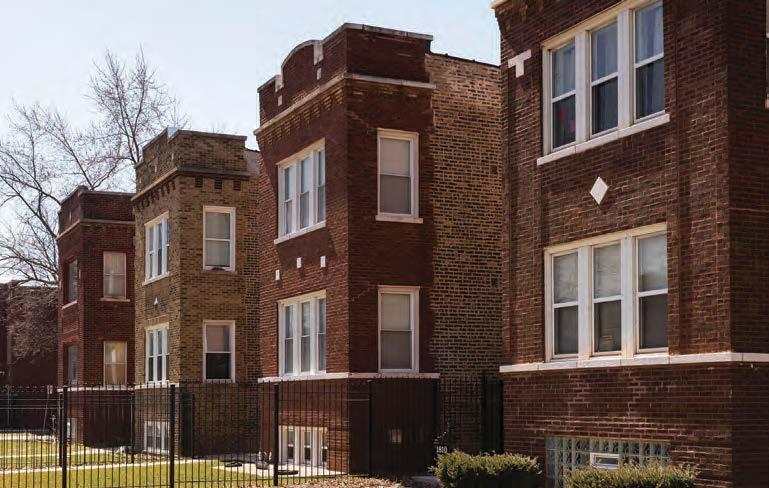
Like virtually every past mayoral administration, Brandon Johnson’s team has vowed to accelerate housing and job growth, promising to reform the systems that help or hinder these essential ingredients of a vital city. Yet over decades little has changed.
While improvements have been made here and there, policies and bureaucratic hurdles continue to discourage and defer the investment the city needs, especially on the South and West sides. If we are to ensure every community is a place of opportunity, contributes to a more robust tax base, provides a ordable housing at all price points and provides needed commercial and community amenities, it’s time to change the pattern.
As leaders in a ordable housing and community development, we are strong proponents of investment in real estate. As always, the devil is in the details. Now, as before, the instinct is to aim for sweeping changes in planning, development, zoning and housing.
Let’s not wait for the complete overhaul that’s needed. Let’s just get started and see what it takes to x a problem that’s highly correlated with the high unemployment, low per-capita income and other challenging indicators found in so many of the communities on the South and West sides that are overlooked and undervalued — the 30,000 vacant lots in the city, 10,000 of them owned by the city itself.
Using what we’ve learned from past efforts — successful or not — we can get these assets back into productive use, increase the tax base, reduce disorder, crime and fear and add to the density communities need to attract stores and amenities. We propose New Life for Lots, a doable prototype program that will facilitate homeownership or a ordable rents in disinvested communities, compatible commercial development or desired amenities, o er attractive nancing incentives, help rebuild communities and create the playbook for broader reform. Here’s what it will take.
First, designate a high-level project di-
rector for the program in the mayor’s ofce. at person’s sole responsibility is to get this done and identify the long-term changes needed to make the process work more quickly and e ectively for owners and developers of properties of all types.
Charge this person with creating and leading a standing task force, or SWAT, team of representatives of the law department, planning and development, housing, buildings, water and any other department whose processes a ect the acquisition and development process in any way. e SWAT team should examine every process, every request and every requirement to ensure coordination and eliminate unnecessary steps, duplication, and fees.
Clear the title on every city-owned lot, including an omnibus agreement with the U.S. Department of Housing & Urban Development or any other city, state or federal government entity to remove all encumbrances.
Ensure city responsibility for environ-
mental cleanup by setting clear, unchangeable standards for what constitutes clean, requiring city pre-sale cleanup of known problems and providing nancial resources for owners and developers to tap should problems be discovered after a sale.
Create a public database with information on all city-owned lots, including the status of clearing the title and other steps required to make them acquisition-ready.
Update it monthly to demonstrate progress. Invite proposals for single-family and multiunit housing, commercial and other business uses, consistent with existing zoning or community plans or priorities.
Pre-qualify or award preference points to community-endorsed housing developers and others with a commitment to or track record of community-focused projects.
Create financing incentives to invest in underinvested communities with an initial $100 million fund for homebuyer subsidies and to reduce rents for existing
and new residents.
Designate a single point-of-contact city services coordinator for each prospective buyer to ensure that city agencies are coordinated, problems are quickly identi ed and solved, the acquisition and approval processes are e cient and the time to completion is reduced.
History shows that it won’t be easy. But we are a city that prides itself on making “no small plans” and turning those plans into visionary reality. New Life for Lots is a rst, doable step in an audacious plan to ensure that the city of Chicago is an e ective partner in the process of transforming communities and eliminating the inequities that have stymied the vitality, growth and prosperity that every resident of this city desires and deserves.
AUGUST 28, 2023 | CRAIN’S CHICAGO BUSINESS | 17
Raul Raymundo is founder and CEO of e Resurrection Project.
Richard Townsell is executive director of the Lawndale Christian Development Corp.
David Doig is the president of Chicago Neighborhood Initiatives
COMMENTARY | JOHNSON’S FIRST 100 DAYS CRAIN’S
Helen Shiller is a former alderperson of Chicago’s 46th Ward.
GETTY
IMAGES
Tracy Siska is founder and executive director of the Chicago Justice Project.
GETTY IMAGES
For the common good, downtown and the rest of the city must be allies
As an advocate for the downtown community through various industries, Chicago Loop Alliance hopes to collaborate with the mayor’s o ce to connect the community outside of the Loop to a thriving and inclusive downtown neighborhood.
Despite Chicago’s continuing impressive recovery, the past several years exposed the substantial challenges that downtowns across the country face in their future, particularly highlighting traditional central business districts like the Chicago Loop.
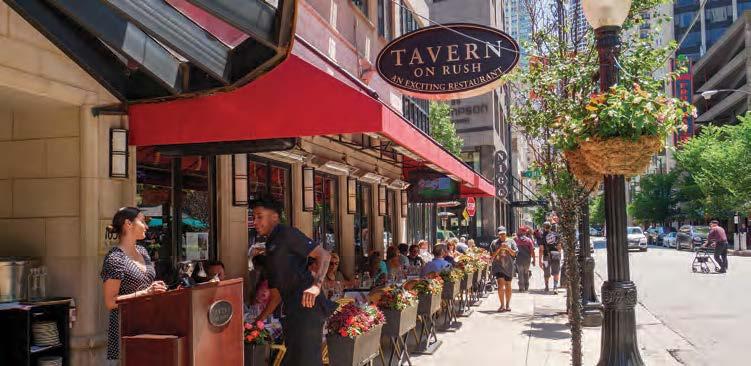
We hope Mayor Johnson and his team recognize the simultaneous successes and mounting obstacles to a vibrant Loop, which in turn a ect the entire city of Chicago. e Loop stands at a critical crossroads for our future.
nize the downtown business community’s vital role in the city’s ability to achieve his vision and enhance other Chicago neighborhoods. By contributing over 40% of Chicago’s tax base, we need to address and remedy our district’s challenges as well.
e entire downtown workforce and each community area need safe neighborhoods, reliable transit and an opportunity to thrive for any of our Loop businesses to succeed.
Restaurants deserve a seat at Johnson’s policy table
We appreciate the mayor’s recognition and advancement of initiatives like our longstanding ambassador program and award-winning event series Sundays on State. We hope his administration continues to support and amplify these types of initiatives. His commitment to advocating for downtown is evident in his planned upcoming appearance this October at the International Downtown Association Conference.
e mayor’s grand and hopeful vision for our city inspires us, but we must recog-



e Loop workforce is as diverse as the city itself, with varying beliefs, backgrounds and opinions. Opportunities for everyday Chicagoans to access wealth and power remain located vastly within our central business district. We would like to help create clearer pathways to make the downtown business community an opportunity, not an adversary, for people from historically disinvested communities. Of course, we also should invest in those communities directly, but to only silo the two and pretend that wealth and power historically held downtown is not an untapped asset for all Chicagoans is a wasted opportunity.
Working together, organizations like ours and the Johnson administration can formulate strategies for how to strengthen downtown’s revenue to better support key causes while not unintentionally sti ing resources needed for the success of our entire city.
As the mayor said in his inauguration speech, “there’s more than enough in Chicago for everybody,” and Chicago Loop Alliance looks forward to playing an important and necessary role in making the city that works, work for everyone.
Chicago is a food town. Home of everything from scores of Michelin-starred restaurants and the James Beard Awards to critically acclaimed spots o the beaten path and family-owned neighborhood restaurants that serve as the economic backbone and soul of our 77 communities.
We have already experienced sweeping temporary and permanent restaurant closures during the COVID-19 pandemic and the dramatic impact it had on our communities. As the industry continues to slowly rebound, the stakes are still high, especially for our smaller restaurants that often are just getting by.
While there was no mention of the restaurant industry in Mayor Brandon Johnson’s 2023 Mayoral Transition Report, we understand he is just getting started. Over the next 100 days and beyond, we hope to play a key role in supporting economic development, maintaining a vibrant downtown and bringing in more visitors, all while continuing to serve our residents with an incredible dining and takeout experience in communities across city. As Chicago gets to know Mayor Johnson and his
Mullets, celebrities and Block Club Chicago. Parsing Johnson’s social media usage.
The new mayor is seen sharing the fun he’s had in his rst months on the job
 By Steve Hendershot
ree months into his term as Chicago mayor, Brandon Johnson’s approach to the city’s Twitter (er, X) account — @ChicagosMayor — o ers a glimpse into how his personality and governance style may di er from those of his City Hall predecessors, Lori Lightfoot and Rahm Emanuel.
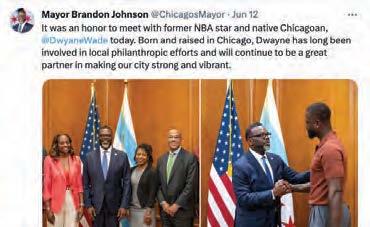
All three mayors used social media at the beginnings of their terms to espouse policy priorities and highlight community appearances and events, while also showing o a little personality. Johnson, though, has especially leaned into the latter category, not only posting much more frequently than Lightfoot or Emanuel, but also exhibiting more willingness to give Chicagoans a peek behind the curtain by sharing some of the fun he’s had in his rst days on the job.
Celebrity sel es weren’t really a thing under Emanuel or Lightfoot, for example, but




Johnson has shared photos of himself rubbing shoulders with Chicago sports legends such as Andre Dawson, Dennis Rodman and Dwyane Wade. He also posted a video address welcoming Beyoncé to Chicago, then gleefully reposted a video of the pop star giving him a mid-concert shoutout a few days later.
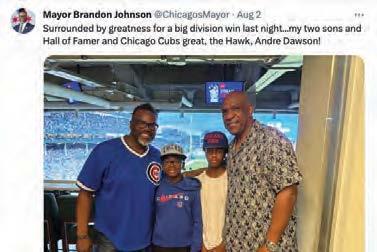
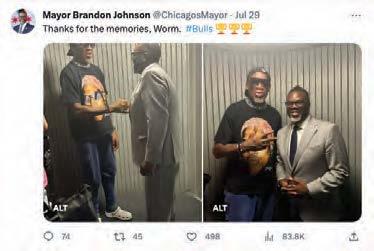
Johnson also dedicated several posts to 7-year-old Chicagoan Evan Hall’s bid to win the USA Mullet Championships, perhaps cracking wise in the process about his tenuous relationship with city business leaders.
Johnson’s post: “Collaboration with business is essential to building a great city...and this time I’m talking about business in the front and party in the back!”
Being so active on social media makes it easier for Johnson’s critics to drop a line about his not doing enough to address the city’s crime and violence, or to deride him for the frequency of his sel es.
e takeaway? Being Chicago’s mayor comes with a host of intimidating, highstakes challenges, but it’s also kind of awesome. Chicago’s Twitter account, under Johnson, is more fun and less formal. He did recently say, “My administration is di erent.” Obviously.
His social media usage also seems to be evolving. For example, during Johnson’s early days in o ce, he rarely reposted news articles — but lately it’s become a staple of his account. He seems especially fond of the neighborhood-focused online publication Block Club Chicago, reposting dozens of its articles, as well as Black-focused publication e Triibe, along with a relative dearth of callouts to Chicago’s traditional media powers.
Crain’s — unless I missed something — is still awaiting its first repost from @ChicagosMayor.
Cassandra West contributed.

administration’s priorities, the Illinois Restaurant Association and restaurants across the city are ready and eager to be a partner to him to ensure that restaurants continue to be community anchors and major economic drivers, particularly on the South and West sides.
City Hall is already considering possible changes to the restaurant industry via an ordinance that would eliminate the tippedwage credit. We hope to have a seat at the table, so to speak, for these discussions to ensure that restaurant owners are fairly represented and can help shape a positive outcome for all. Monumental shifts to large industries like ours can have major unforeseen consequences that can a ect not only the individuals and families who work seven days a week to keep their restaurants going but also the neighborhoods who depend on them as gathering places and points of pride.
To maintain and build vibrant communities, restaurants can and must be part of Johnson’s plan to make for a “better, stronger, safer Chicago,” and we look forward to working with him to do just that.
18 | CRAIN’S CHICAGO BUSINESS | AUGUST 28, 2023 CRAIN’S JOHNSON’S FIRST 100 DAYS | COMMENTARY
Tavern on Rush was located at 1031 N. Rush St. The restaurant closed Jan. 1, 2023, after 25 years in business.
Michael Edwards is president and CEO of Chicago Loop Alliance.
Sam Toia is president and CEO of the Illinois Restaurant Association.
To pretend that wealth and power historically held downtown is not an untapped asset for all Chicagoans is a wasted opportunity.
FILE PHOTO
Chicagoans not expecting early miracles from Johnson
But many worry that the new mayor’s approach won’t effectively bring a reduction in crime, especially in the near term
 By William Johnson
Chicago’s 57th mayor passed a signi cant milestone this month: 100 days in o ce. at’s not enough time to evaluate Mayor Brandon Johnson’s e ectiveness or gauge whether he will accomplish his campaign goals, but these early days reveal his priorities and outline how he plans to address Chicago’s pressing issues — including crime, the migrant crisis, housing a ordability and burdensome debt.
He has the city’s attention: Twothirds of Chicago residents (68%) are closely following Johnson’s administration, according to a recent Harris Poll survey. Little wonder, as Chicagoans recognize that these early days set the tone for the administration. Nearly 8 in 10 city residents (78%) agree that the beginning of a new mayor’s time in o ce is impactful on his term’s trajectory.
college fund for all Chicago-born babies, among other priorities.
Beyond these long-term goals, the rst three months of Johnson’s term have underscored the urgency of Chicago’s crime crisis. Seventy- ve people were shot (with 13 killed) over the Juneteenth holiday weekend. Similarly, 73 were shot (11 of them killed) over the Fourth of July weekend. is summer’s violence has led many to call for Johnson to toughen his stance on crime.
More than half of city residents (53%) say that they wanted the mayor to prioritize planning and goal-setting during his rst 100 days, with 28% of those saying it should be Johnson’s top priority. At the same time, many Chicagoans expect that such planning will evolve into action, with an emphasis on new policy decisions, though they are split on how quickly that should occur: Nearly 4 in 10 residents (36%) think that making new policy decisions should have been a 100-day priority, while slightly more (40%) believe it should occur later in his term.
Methodical approach
Like his constituents, Johnson recognizes the importance of establishing a plan early on. Two months into Johnson’s administration, his team released a 223page transition report, “Building Bridges and Growing the Soul of Chicago: A Blueprint for Creating a More Just and Vibrant City for All.” e document re ects the progressive ideology upon which Johnson ran: It outlines plans to reopen shuttered mental health clinics, start a public bank to fund minority-neighborhood development, investigate slavery reparations and establish a guaranteed
Rather than simply ramping up policing e orts, Johnson often looks to long-term solutions aimed at xing the root causes of Chicago’s crime problem. He aims to engage Chicago’s at-risk youth and to o er them an alternative to destructive behaviors. is summer, Johnson expanded the One Summer Chicago program, which provides jobs to young people throughout the city, including within the Chicago Police Department, City Hall, the Chicago Cubs organization and with other local businesses. Last year, the program provided 19,000 summer jobs, but Johnson wants to expand this program to 40,000.
Many worry that Johnson’s approach won’t e ectively reduce crime, however, especially in the near term, with high-pro le incidents such as “teen takeovers” and his responses to them continuing to go viral. Chicago’s ongoing crime wave has been hard on residents and has chased out large employers — like Citadel, which moved to Miami last summer. e business community has recently signaled its willingness to contribute to meaningful solutions to improve public safety in the city.
Johnson has prioritized a methodical approach so far during his time in o ce, and most agree that he should focus on strengthening his administration’s external relationships early on. During the rst 100 days, city residents wanted to see Johnson prioritize connecting with Chicago residents (55%), local representatives (47%) and other levels of government (41%). E ective relationships built now may help the mayor more successfully enact and execute transformational policies during his time in o ce.

Time will tell how e ectively he’s laid that groundwork. We all certainly hope that Johnson’s tenure proves to be a time of positive change for the Windy City.
Harris Poll: Awareness and impact
Somewhat closely Not closely
Somewhat impactful Not impactful
How closely are you following Mayor Brandon Johnson and his administration?
How effective do you think the beginning of Mayor Brandon Johnson’s term has been?
Harris Poll: Which of the following do you think Mayor Brandon Johnson should priortize?

AUGUST 28, 2023 | CRAIN’S CHICAGO BUSINESS | 19
JOHNSON’S FIRST 100 DAYS CRAIN’S
William Johnson is CEO of e Harris Poll, a global public opinion polling, market research and strategy rm.
Source: Harris Poll • Chicago residents BLOOMBERG
22% 32% 78% 68%
First 100 days Later in mayoral term 47.37% 50.62% 52.81% 55.21% 52.88% 52.63% 49.38% 47.19% 44.79% 47.12% 0% 10% 20% 30% 40%50% 60%70% 80% 90% 100%
Source: Harris Poll • Chicago residents
Rather than simply ramping up policing efforts, Johnson often looks to long-term solutions aimed at xing the root causes of Chicago’s crime problem.
More to do, but pieces are in place to achieve goals
Crain’s Forum asked Mayor Brandon Johnson to re ect on his rst few months in o ce. Questions were submitted in writing and responses returned via email. is transcript has been edited for length and clarity.
What has surprised you about Chicago after 100 days in of ce?
I didn’t know the economic power of Taylor Swift and Beyoncé fans. at was impressive. But in all seriousness, while I have always believed in the power of the people of Chicago, and never doubted what the people of Chicago can achieve, it has been incredibly heartening to feel the soul of Chicago alive and well in every corner of the city. You can feel something special happening, you can feel our community growing and uniting. Whether it’s among massive crowds at big events like Lollapalooza or in small groups of people coming together to help their fellow neighbors — the people of
Chicago feel our city is coming together. I hope we can build on that excitement I felt from Chicagoans this summer and deliver for folks across the city.
ere’s obviously a lot of work still to do, and much of it will take years, not days, but I do feel like things have shifted and we’re moving in the right direction.
How would you describe your emerging management style?
First and foremost, I know you can’t do this job alone. It not only takes talented people, it requires engaging and organizing on the grassroots level. When it comes to my team, I’ve looked for people who can t the three C’s: collaborative, compassionate and competent. at’s what it takes to run a government that works e ciently and e ectively for the people of Chicago. at collaboration, compassion and competence go beyond just the relationships with others in city government, it must also be present in our engagement with everyone, from the business community to community organizations.
What have you learned from other big city mayors?
I recently sat down with my colleagues from Houston, Los Angeles and New York City. All four of us, Black mayors of the four largest cities in the country, are facing many of the same challenges, and thankfully we have been able to share advice in a spirit of collaboration rather than competition. Whether it is learning how to navigate with federal partners, seeing how other cities nd creative ways to strengthen community safety, or just talking through the stresses and responsibilities of the job, it’s been invaluable, and I’m deeply grateful for their support.
You have vowed not to demonize youth from disinvested communities and make teen employment a public safety priority. Did this summer yield the results you wanted?
While we have only been in o ce for 100 days, we’ve moved quickly to deliver on the mandate from voters from across the city to lift up and support young people. is work takes time, but we’ve
been able to expand year-round youth employment to 24,000 jobs by taking an all-hands-on-deck approach that brings everyone together across government, philanthropic and business sectors. at collaboration is key to allowing Chicago’s young people to develop critical skills, engage with the community, and build a brighter future for themselves, and for all of us. We are still mourning the unconscionable losses of far too many young people to gun violence this summer, but I know we are building that progress together. We are looking forward to the upcoming school year, and I’ve been able to get to work with the diverse new school board that brings together school parents from local community, business and philanthropy to create learning environments that support our children in the classroom and beyond.
You campaigned on “a stronger, better, safer Chicago.” What movement are you seeing toward those goals?
My top priority in my rst 100 days has been delivering a safer
Chicago, whether that is in my home neighborhood of Austin on the West Side to Morgan Park to Rogers Park, and everywhere in between. It’s true that we’ve seen the number of shootings and carjackings both decrease by about 10%, but we also know that building a better, stronger, safer Chicago goes beyond statistics. I recently put forward Chief Larry Snelling to serve as CPD superintendent. I selected him in part for his remarks in his interview process, where he discussed how the department must create stronger bonds of trust with the community, demonstrated a strong commitment to work with violence interrupters and the entire public safety ecosystem, and spoke of his belief that at the heart of public safety is compassion, empathy and problem-solving. at goes hand-in-hand with our e orts to rapidly expand youth employment, increase funding for community safety projects and create 4,000 new community safety jobs. We still have more to go, but I know the pieces are in place to achieve our goals.
Johnson follows a line of colorful, consequential mayors
Many believe Harold Washington, Chicago’s rst Black mayor, paved the way for Brandon Johnson to reach the fth oor of City Hall. But both charted distinct paths to becoming mayor of Chicago. In the 40 years since Washington won election, three others — Richard M. Daley, Rahm Emanuel and Lori Lightfoot — have served as Chicago’s top elected o cial, bringing their own unique political skills and personalities to the job. Here’s a look at Chicago mayors, from Washington to Johnson.
Brandon Johnson(2023)
Once said: “We’re not talking about mob actions. We have to be careful when we use language to describe certain behavior. There’s a history in this city, and, I mean, to refer to children as like baby Al Capones is not appropriate.”
— During an Aug. 2 news conference several days after police arrested several dozen youth who had fought and stormed a convenience store.
Key decisions: Firing Chicago Department of Public Health Commissioner Dr. Allison Arwady and naming his pick for the next Chicago Police superintendent, Chief Larry Snelling.
Governing style: Though still too early to tell, the general consensus would be: evolving, cautious, methodical. Johnson would say “collaborative.”
Center of gravity/support: South and West sides. North Side progressives. Labor unions.
Relationship with City Council: So far, so good. But it’s early, with most big decisions yet to come, like how to balance the city budget while paying for new spending, and what type of stadium offer to put on the table in hopes of keeping the Bears in town.
Lori Lightfoot (2019-2023)

Once said: “The people in the city don’t want me to focus on the nonsense, they want me to get shit done.”
— On radio station 107.5 (WGCI-FM), several days after her 2019 inauguration
Key decisions: Signed an executive order to strip aldermen of their control over licensing and permitting powers in their wards. Shook up City Council power structure, demoting former Ald. Ed Burke to the back bench.
Governing style: Described as “hypersensitive and thin-skinned,” a litigator by trade who couldn’t gure out when to turn it off. But passionate in what she believes.
Center of gravity/support: She originally was elected as a reformer, with broad support around the city, including the North Side lakefront. That support steadily slipped away during her tenure, leaving her mostly with elements of organized labor.
Relationship with City Council: Rocky at best.
Rahm Emanuel (2011-2019)

Once said: “I am the mayor. As I said the other day, I own it. I take responsibility for what happened because it happened on my watch. . . . But if we’re also going to begin the healing process, the rst step in that journey is my step. And I’m sorry.”
— Apologizing during an address on police accountability for the 2014 fatal shooting of Laquan McDonald by a Chicago police of cer
Key decisions: The 2013 closing of 50 Chicago Public Schools. The hiring of former executive Mark Angelson as deputy mayor, who became the prototype for a new sort of City Hall outreach to corporate Chicago.
Governing style: Fast and very direct. Emanuel was careful to keep good relations with aldermen, but not with community groups and progressive unions, especially after Laquan McDonald’s death. Was quick to announce big development programs, but not as good on follow-up.
Center of gravity/support: Mostly North and Northwest sides. But his service as former President Barack Obama’s chief of staff gave him a huge entry into Black neighborhoods.
Relationship with City Council: Solid. Emanuel had his problems, but not with aldermen.
Richard M. Daley (1989-2011)
Once said: “Scrutiny? What else do you want? Do you want to take my shorts? Give me a break. How much scrutiny do you want to have? Go scrutinize yourself!”
— On March 31, 2003, defending a decision to bulldoze Meigs Field.
Key decisions: The 1995 decision to assume control of the Chicago Public Schools system. The midnight bulldozing of Meigs Field. Leasing the city’s public street parking meters to a private company for $1.15 billion in an agreement that doesn’t expire until 2084.
Governing style: Toward the end of his record-long tenure, Daley’s style became more autocratic. But in the beginning, he was considered a bit of a reformer who knew how to listen and recruit top, diverse City Hall talent. Also a micromanager known for keeping a list of potholes and sidewalks needing repairs as he drove around the city.
Center of gravity/support: Deep and wide. After the divisions of the “Council Wars” era, Chicagoans were looking for a uni er. It helped that the city’s economy boomed during most of his tenure, but he left the city with huge debts, especially unfunded pensions.
Relationship with City Council: He led, they followed. But usually willingly.
Harold Washington (1983-1987)
Once said: “We have destroyed the dinosaur.”
— After defeating the fabled Chicago Democratic machine by winning election as mayor in 1983.
Key decisions: At the beginning of his tenure, he was unable to work out an armistice with foes, especially the “Vrdolyak 29” in the City Council. But Washington nally gained some power after electing allies to ll council vacancies mid-term.
Governing style: Amiable, but rm. Center of gravity/support: Overwhelming backing from the Black community, combined with a crucial slide of the North Side lakefront and Latino progressives.
Relationship with City Council: Strained at rst; Washington couldn’t even get an infrastructure program for sidewalks and street paving through. That changed after he won a council majority mid-term, but he died early in his second term. Compiled by Greg Hinz, Judith Crown and Cassandra West
Note: Only mayors who served full terms are included. Chicago had two other mayors between Washington and Johnson, Eugene Sawyer (1987-1989) and David Orr (eight days in 1987).
20 | CRAIN’S CHICAGO BUSINESS | AUGUST 28, 2023
CRAIN’S 5 QUESTIONS FOR JOHNSON ON HIS FIRST 100 DAYS
Judith Crown and Cassandra West

SPONSORED CONTENT Your guide to holiday party planning 2023 Corporate Holiday Guide
CREATE YOUR HISTORIC MOMENT
With breathtaking views just steps from the lake, the Chicago History Museum is the perfect location for your next event.
We offer several event spaces, an outdoor plaza, and a theater to allow for gatherings of up to 1,500 people. Add a lively after-hours cocktail reception to unwind after a productive day.
Set the perfect scene for your next event at the Chicago History Museum.

MANGIA & BE MERRY!
HOST YOUR NEXT CORPORATE EVENT AT ROSEBUD RESTAURANTS!
Crain’s Corporate Holiday Planning Guide 2023

With the holidays around the corner, it’s never too early to start planning your annual holiday party. Be stress-free when it comes to your celebration with help from Crain’s Corporate Holiday Planning Guide. This guide has the inside scoop for hosting the perfect holiday event for employees, clients, vendors and beyond. With a variety of suggestions for the perfect endof-year party – from locations to group activities to inspiration – it ensures your party is better than ever.
Sit back, relax and reunite with colleagues at an entertaining dinner show. Engage in a little friendly competition with your co-workers. Or keep it classic and book a private event space! Every holiday party celebrates a little differently, and everyone deserves an unforgettable experience.
Let the party planning begin!

SPONSORED CONTENT CORPORATE HOLIDAY GUIDE
1601 N. Clark St. | chicagohistory.org | 312.799.2254 | events@chicagohistory.org
BLVD Steakhouse

817 W. Lake St., Chicago, IL 60607 • 312-526-3116



Elevate your next holiday event in the heart of Fulton Market at BLVD Steakhouse. Enjoy sophisticated yet approachable service and Celebrity Chef Joe Flamm’s menu of prime cuts and fresh seafood in the restaurant’s luxurious dining room or on the new all-season covered patio. Events for up to 300 guests with customizable coursed menus and selections from an award-winning wine list can be accommodated.

host@blvdchicago.com • blvdchicago.com
Chicago History Museum
The Chicago History Museum invites you and your guests into our warm, historical home for the holidays. Be a guest at your own holiday celebration at the Chicago History Museum. Tucked along the gardens of Lincoln Park, the Chicago History Museum offers a variety of spaces that can be used for corporate events, daytime meetings, cocktail receptions, reunions and, of course, your holiday festivities. events@chicagohistory.org • chicagohistory.org/corporate-events
SPONSORED CONTENT CORPORATE HOLIDAY GUIDE ThinkOutside TheBallroom ThisHolidaySeason lmstudiochicago.com twentysixchicago.com
Esenam Photography
1601 N. Clark St., Chicago, IL 60614 • 312-799-2252
Jake Melnick’s Corner Tap

41 E. Superior St., Chicago, IL 60611 • 312-266-0400



















































LM Studio





Make your next event one to remember at LM Studio. The light- lled two-level atelier overlooking historic Michigan Avenue and Grant Park features an open oorplan, custom bar and a modern design; the perfect setting for your next celebration.





At LM we have years of experience catering a wide variety of events; no event is too small or too large. Our clients love us because we make even complex events easy. Our expert team will work with you through each step of the process to create unique and memorable experiences that your guests will talk about for years to come.
info@lmstudiochicago.com • lmstudiochicago.com


Jake Melnick’s Corner Tap is Chicago’s favorite hangout for great burgers, terri c salads, home-cooked specialties, decadent desserts and an awesome selection of beer and cocktails — all enjoyed in a comfortable and welcoming neighborhood spot.
Whether you’re hosting an intimate get-together for family and friends or a corporate reception, our experienced event planner will customize a menu that is sure to satisfy the cravings of 15 to 400 guests. The crew at Jake’s will make your event a huge success by providing rst-class service in a laid-back setting and enough fun to keep the good times owing and the partygoers going!



jmctevents@levyrestaurants.com • jakemelnicks.com/private-events

CORPORATE HOLIDAY GUIDE SPONSORED CONTENT Holiday events in the heart of Fulton Market that ELEVATE YOUR EXPECTATIONS Enjoy sophisticated yet approachable service and Celebrity Chef Joe Flamm’s menu of prime cuts and fresh seafood in our luxurious dining room or on our new all season covered patio. blvdchicago.com 817 W Lake St, Chicago, IL Host an energetic dinner party at our award-winning restaurant inspired by Celebrity Chef Joe Flamm’s Italian heritage and the bold, bright flavors of Croatian cuisine. rosemarychicago.com 932 W Fulton Market, Chicago, IL
808 S. Michigan Ave., Chicago, IL 60605 • 312-995-0134
Maple & Ash Chicago
8 W. Maple St., Chicago, IL 60610 • 312-944-8888

Museum of Contemporary Art Chicago
220 E. Chicago Ave., Chicago, IL 60611 • 312-397-4017
Add an artful twist to your next event! Featuring spacious and exible event spaces, the Museum of Contemporary Art Chicago provides a sophisticated and distinct setting for your company’s event. Our unique indoor/outdoor event spaces are centrally located in Streeterville and will impress your guests and inspire creativity among colleagues.
Interested in hosting your next event at the MCA? Schedule a walkthrough by submitting an information request at mcachicago.org/events. You can also contact us via email at events@mcachicago.org or by phone at 312-397-4017, Monday–Friday, 9 am–5 pm.

events@mcachicago.org • mcachicago.org/rentals
Located in Chicago’s luxe Gold Coast neighborhood, Maple & Ash is known for its grand celebrations. Opened in 2015, the award-winning destination is an innovative take on the traditional steakhouse — mixing modern aesthetics with world-class service to deliver multiple unique hosting experiences.

From corporate holiday dinners to family gatherings to full buyouts, we love to make you and your group feel special. No matter your party size or occasion, Maple & Ash has a space to make your experience unforgettable! chicago.events@mapleandash.com • mapleandash.com
HOST YOUR HOLIDAY EVENT AT THE FRIENDLY CONFINES




CORPORATE HOLIDAY
SPONSORED CONTENT
GUIDE
Pazzo’s Chicago
311 S. Wacker Drive, Chicago, IL 60606 • 312-913-1600
Rosebud Restaurants
Various Locations • 773-325-9700
Mangia and be merry this holiday season with Rosebud Restaurants! With nine locations across Chicago and the surrounding suburbs, our versatile spaces cater to every need, ensuring that your event is nothing short of extraordinary.
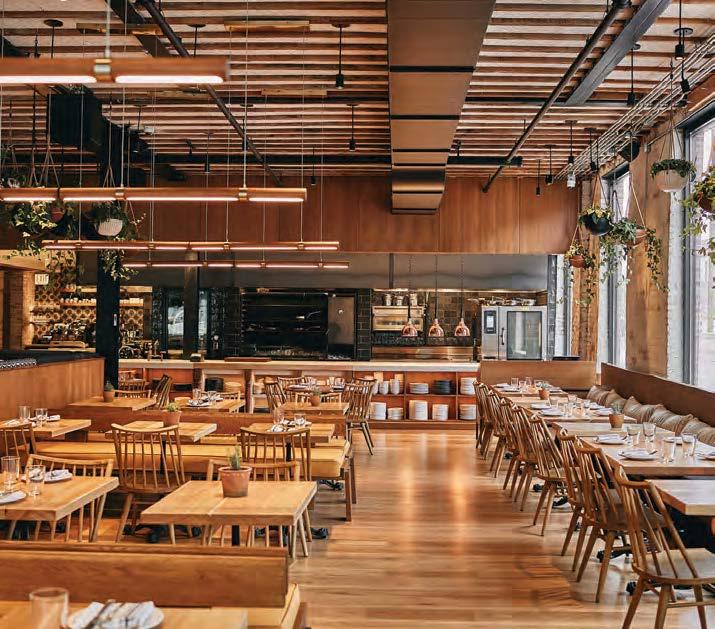

Whether you envision an elegant corporate affair, a heartwarming reunion, or a festive cocktail reception, our talented team is dedicated to bringing your vision to life. From meticulous event planning to awless execution, we take care of every detail, ensuring a seamless and memorable experience for all.
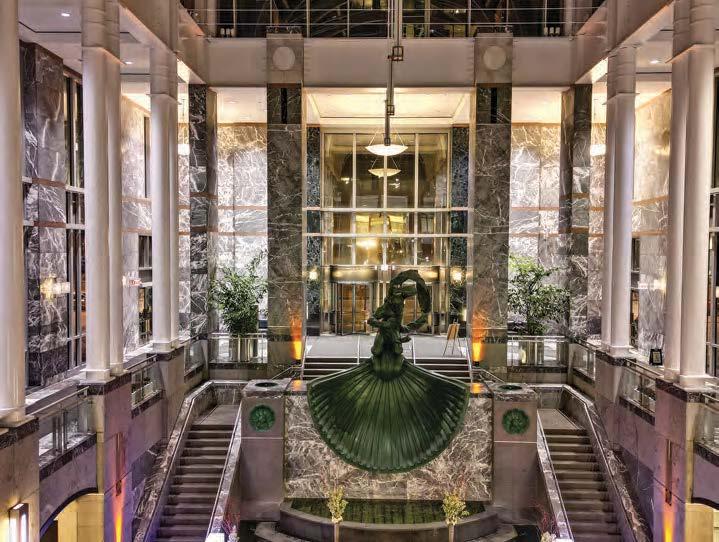
Join us this holiday season and embark on a culinary journey that will leave a lasting impression.
social@rosebud-restaurants.com • rosebudrestaurants.com
Pazzo’s Chicago is a prestigious restaurant and event space that has its home within the extraordinary architecture of 311 S. Wacker Drive. For more than two decades, we’ve been serving authentic recipes with an urban air, suitable for ne outings or daily dining. Our events are second-tonone, whether for business or pleasure. At Pazzo’s Chicago, we know how to celebrate! Whether for a small business meeting in a private room or a large corporate gathering in our Atrium – we’ll work with you to plan a awless event. And if you are celebrating a personal milestone or choosing Pazzo’s for your special day, let our Event Managers and Chefs work with you to create an experience that neither you nor your guests will ever forget.
pazzos311@pazzoschicago.com• pazzoschicago.com
Rose Mary
932 W. Fulton Market, Chicago, IL 60607 • 312-995-0134
Elevate your next holiday event in the heart of Fulton Market at Rose Mary, a 130-seat, award-winning restaurant inspired by Celebrity Chef Joe Flamm’s Italian heritage and the bold, bright avors of Croatian cuisine. With a variety of spaces for seated or reception-style events and customizable coursed menus, we’ll surely take your celebration to the next level.
host@rosemarychicago.com • rosemarychicago.com
Twenty Six
2 W. Erie St., Chicago, IL 60654 • 312-995-0134
Overlooking Chicago’s bustling River North neighborhood, Twenty Six is the ideal destination for your next celebration. With a unique combination of indoor/outdoor space, the venue is complete with an open-air rooftop terrace, custom lounge furniture and two bar areas. No matter the occasion, your guests will enjoy the expansive views, delicious food and drink and modern lounge environment.

Every event at Twenty Six is expertly catered by our in-house caterer, LM Catering & Events. With over 10 years of experience producing events large and small across the Chicagoland area, you can rest easy knowing that the team at LM is handling all the details.
Info@twentysixchicago.com • twentysixchicago.com
CORPORATE HOLIDAY GUIDE SPONSORED CONTENT
Waldorf Astoria Chicago
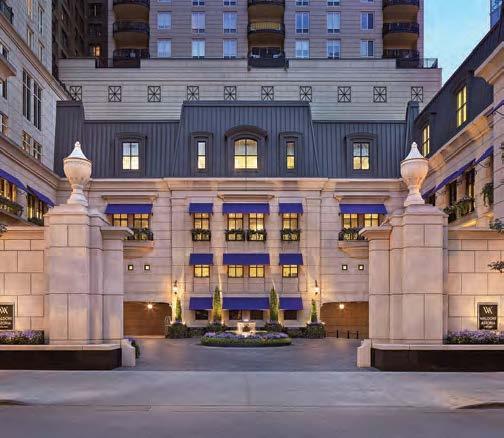
11 E. Walton St., Chicago, IL 60611 • 312-646-1324
Experience the ultimate indulgence at the Waldorf Astoria Chicago with our curated selection of favorite things. Delight in exclusive perks, including 10% off food and beverage, complimentary event space rental, and a private 30-minute consultation with our Cocktail & Couture Manager to craft a unique holiday mocktail or cocktail.
Enjoy a special guestroom rate and double Hilton Honors points to elevate your stay.
To add a touch of surprise, mention the word ‘holiday’ during your inquiry, and we’ll reveal an extra favorite thing just for you! Our opulent hotel offers a choice of three ideal holiday event spaces, accommodating 10 to 170 guests. Situated in the heart of the prestigious Gold Coast, Waldorf Astoria Chicago exudes glamour and luxury, promising an unforgettable experience.
From the awe-inspiring courtyard to the breathtaking lobby, every moment here is designed to make your guests feel exceptionally cherished. Allow us to treat you and your guests to an enchanting celebration lled with sparkle and elegance because everyone deserves something extraordinary.
chiwa-salesadm@waldorfastoria.com
• waldorfastoriachicagohotel.com
Windy City Limousine
847-916-9300
Holiday season is soon upon us. There is no better way to enjoy it than from a Windy City Limousine Bus or upscale Black Car. From of ce parties to theatres to Casinos and sporting events, we have you covered. Our Buses range from 14 to 56 Guests. We even have Party Buses. Our Black Cars are perfect for a romantic night out. We also have scheduled Holiday light tours for groups of six to 56. All our vehicles are sanitized, modern and beautiful. Our Chauffeurs are uniformed and professional.
Windy City has the largest eet in Chicago, but we still sell out for these events. Book early and enhance your experience. Find out why we have been named “Best Transportation Company in Illinois 11 times. Call 866-94-WINDY or download the Windy City App. Our Team is waiting to assist you.

PS: We can also get you to the airport on time and help you in every other city.
info@windycitylimos.com • windycitylimos.com
WhirlyBall
1825 W. Webster Ave. Chicago, IL 60614 • 773-486-7777
Celebrate the holiday season at WhirlyBall! Our venue in Bucktown features st-pumping activities, chef-driven holiday event packages, built-in A/V, and meeting spaces perfectly suited for your group’s holiday celebration. Between our signature game, WhirlyBall, along with bowling, LaserTag, and pop-up games we have everything covered for you to Eat. Drink. and Game ON this holiday season!
Our Chicago location is two oors and 50,000 square feet of fun! It features three WhirlyBall courts with spacious gathering spaces, eight bowling lanes, and a 32-tap craft beer bar on the rst oor. Upstairs features VIP private bowling lanes, a multi-level LaserTag arena, break-out rooms and divisible event spaces with seating for up to 250 people. Add our complimentary parking and a festive atmosphere and the venue is perfect for end-of-year corporate celebrations or your next team outing. New this year: We’ve added live action stations created for groups of 50 or more! Ask us about buyout events for over 1,000 people!

Book your holiday party before it’s too late! Prime dates in December book quickly: Call us at 773-486-7777 or submit your event inquiry at whirlyball.com.
reservations@whirlyball.com • whirlyball.com
Wrigley Field
Wrigley Field invites you and your guests to make the Friendly Con nes your home for the holidays! With festive, unique event spaces across the ballpark and surrounding campus, Wrigley Field is the perfect setting to host your holiday parties, corporate gatherings, intimate celebrations and more. Take your holiday event to the next level this season by offering one of our many exclusive holiday experiences, including on- eld private chalets, private ice rink rentals, premier club rentals, team-building curling experiences, seasonal food and beverage packages, and other holiday activities that your guests will enjoy!

Our talented events team will bring your vision to life from start to nish and create an unforgettable and distinct holiday experience.
wrigley eldevents@levyrestaurants.com • wrigley eldevents.com
SPONSORED CONTENT CORPORATE HOLIDAY GUIDE
1101 W. Waveland Ave., Chicago, IL 60613 • 773-388-8165
Elevate the experience

How to create a successful corporate holiday event


 By Jane Adler
Forget the ho-hum chicken dinners and Santa hats. is year, planners are taking events from ordinary to next level. e goal is not only to make a big impression but also to boost engagement and interaction, especially since more hybrid work means less time together in the o ce.
“Companies want experiential events,” says Adam Elias, CEO at WhirlyBall, with three locations in
CORPORATE HOLIDAY GUIDE SPONSORED CONTENT
CHIWA-SALESADM@WALDORFASTORIA.COM 11 E Walton Street, Chicago, IL
312-646-1324
Bring warmth to your holiday event surrounded by sparkle and elegance only at Waldorf Astoria Chicago.
|
the Chicago area. WhirlyBall combines lacrosse, hockey, basketball and bumper cars. “ e game promotes teamwork on a level playing eld,” Elias adds. e venue also o ers bowling lanes, a laser tag arena and a private, four-lane VIP bowling suite, along with catering packages.

At the Chicago History Museum, a corporate scavenger hunt was based on the venue’s popular Chicago Fire exhibit. “It was a great team building experience,” says Lorelei Kroulaidis, director of special events at the Museum. “People want to connect.”

Building on the experiential theme, chef-driven food stations are growing in popularity. “Guests want to be social, not seated,” says Madison Larson, event sales director at the Sancerre Hospitality. It operates the BLVD Steakhouse and Rose Mary, a Croatian-Italian restaurant.

“We’re not seeing as many seated events,” agrees Lauren Hammond, director of branding and communications at LM Catering & Events, which operates several catering venues and restaurants. Instead of formal table seating, guests move from



(Continued on next page)























CORPORATE HOLIDAY GUIDE A Hidden Gem in the Heart of Chicago Celebrate at Pazzo’s. Corporate and Private Events. 311 S. Wacker Dr. Chicago, IL 312-913-1600 PazzosChicago.com WHIRLYBALL.COM
station to station, a setup that promotes interactions and free- owing conversations. Guests can mingle while they customize their own meals from stations o ering everything from tacos to poke bowls and homemade pasta. Steakhouse stations are winners too, along with holiday dessert bu ets.





e latest food o erings have a creative twist. At WhirlyBall’s recent holiday menu showcase event, the top choice was a familiar and satisfying comfort food—a grilled cheese and tomato soup appetizer. LM Catering & Events o ers an individual cone charcuterie instead of the traditional shared board. “It’s a conversation point,” Hammond says.

Cocktail receptions haven’t gone out of style, but they’re going modern. ere’s more variety. Heavy hors d’oeuvres and custom drinks are popular options. More attention is being paid to dietary restrictions and healthy food alternatives, according to Maya Kobaslija at the Rosebud Restaurant Group, which has eight area locations. “Mocktails are big,” she says. Food station signage that lists ingredients is becoming routine.

Venues are decked out for the holidays. e Waldorf Astoria Chicago o ers a “red-hot holiday.” Everything is red. e ballroom walls are covered with red gel. e candles and linens are red. Traditional red poinsettias dot the room. “It’s really impactful,” says Waldorf’s








CORPORATE HOLIDAY GUIDE SPONSORED CONTENT 8 West Maple Street Chicago, IL 60610 (312) 944-8888 | www.mapleandash.com
HOLIDAY
UNFORGETTABLE
MAPLE & ASH Contact us at chicago.events@mapleandash.com to start planning today!
MAKE YOUR
EVENT
AT
Steve ompson, director of catering and events. Companies are also customizing event spaces with their own branding. Photo backdrops ready for Instagram postings are popular. Another way to elevate the experience is with entertainment. Companies are bringing in speakers and hiring DJs. Casino nights and ra es are still crowd-pleasers.
“Businesses want holiday events with that big wow factor,” says Emily Carley, director of marketing at Maple & Ash, an upscale steakhouse and seafood restaurant in Chicago’s Gold Coast neighborhood. Menus can be customized. e re-roasted seafood tower served tableside is a showstopper. “It’s decadent,” Carley says.

A tight budget doesn’t mean companies have to skimp on the experience. Opt for breakfast or lunch. Also, companies are hosting holiday parties before anksgiving or in January. Prices are lower and the dates are less likely to con ict with personal holiday plans.


e most popular days for corporate events are during the workweek on Wednesday and ursday. Weekends are generally reserved for family time. e best advice from event planners: Get started now.


CORPORATE HOLIDAY GUIDE SPONSORED CONTENT
To
PRICES
From Page 3
8,292 homes sold last month, down 21.5% from July 2022.
To

grew by more was June 2022, when the median price was up 6.8%. e metro-area gure beat the national increase in home prices. e median sale price nationwide in July was up 1.9% from a year ago, according to a separate report released last week by the National Association of Realtors. At a 5.3% increase, the Chicago metro gure is close to three times the national gure, yet another sign that the Chicago area’s housing market has plugged along while previously zzy sections of the country stumble.
e number of homes sold in July was down sharply from a year before, not surprising as the inventory of homes available to buy has been persistently low as rising interest rates have made existing homeowners hesitant to sell a house with a low-rate mortgage and buy one at a higher rate.
In the city, 1,986 homes sold in July, down 20% from the same time last year. In the metro area,




BIRTHING
From Page 3



layoffs. Instead, the hospital would transition former obstetrics workers to other units at the hospital or to OB departments at the Bolingbrook and Hinsdale hospitals. The 15 obstetric beds would be transitioned into a medical and surgical unit, increasing the hospital’s number of approved beds to 72 in the medical and surgical category.
e planned change comes about eight months after UChicago Medicine and AdventHealth announced they had nalized a joint venture that e ectively combined the two health systems and gave UChicago a controlling interest in AdventHealth’s four Illinois hospitals: in Bolingbrook, Glendale Heights, Hinsdale and La Grange. AdventHealth, a Seventh-day





In both the city and the metro area, the July sales volume was the lowest for any July since 2011.
Year-to-date at the end of July, city home sales were down 21% from the same period in 2022 and the metro area was down 33%. This has largely been expected because of the end of the COVID-era housing boom.
A more telling comparison might be made between 2023 and the years prior to 2020, the last normal years before COVID changed everything.
From 2016 to 2019, the city averaged 16,757 home sales in the first seven months of the year. This year, 13,575 city homes sold by the end of July. That’s about 71% of the old average. For the metro area, the old average was 68,751. In the first seven months of 2023, there were 44,405 home sales in the metro area, or about 64.5% of the old average.
The lower sales volume means significant reductions in the knock-on spending that typically follows a home purchase, such







Adventist health care system based in Altamonte Springs, Fla., operates more than 50 hospitals in nine states. Its GlenOaks hospital reported more than $101 million in 2022 net patient revenue, according to the filing.









GlenOaks’ planned obstetrics closure reflects a broader trend in which more hospitals in Illinois and around the country are closing birthing units as demand drops.
Other recent local examples include OSF HealthCare, which plans to close its birthing center at a hospital in Pontiac in September, and Advocate South Suburban Hospital in Hazel Crest, which discontinued its 16bed obstetrics inpatient unit last year.
In a related action, NorthShore Edward-Elmhurst Health’s Swedish Hospital on the North Side is merging its midwife and obstetrics program on Sept. 1, a
as buying new furniture. In 2022, the National Association of Realtors estimated that the typical home sale in Illinois generated $99,800 in economic impact, including housing-related expenditures and income to people in the real estate industry. The Illinois Realtors data uses the U.S. Census Bureau definition of the Chicago metro area, which comprises Cook, DeKalb, DuPage, Grundy, Kane, Kendall, Lake, McHenry and Will counties.
downsizing move that’s attracted criticism from some families, according to Block Club Chicago.
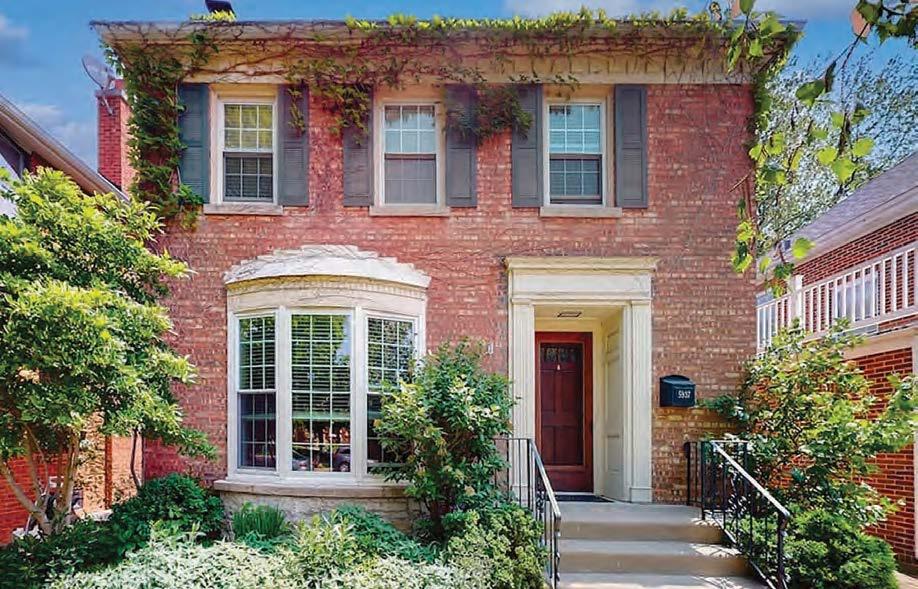
While hospital operators often argue that an aging population means there’s less need for birthing services, obstetrics unit closures can sometimes create
birthing deserts for those still having babies, an issue particularly acute in rural areas.
About 2.2 million women of childbearing age and almost 150,000 babies live in “maternity care” deserts in the U.S., according to a 2022 report published by the March of Dimes.
32 | CRAIN’S CHICAGO BUSINESS | AUGUST 28, 2023 CLASSIFIEDS Advertising Section
place your listing,
eds CAREER OPPORTUNITY OUR READERS ARE 125% MORE LIKELY TO INFLUENCE OFFICE SPACE DECISIONS Find your next corporate tenant or leaser. Connect with Suzanne Janik at sjanik@crain.com for more information. BUSINESS OPPORTUNITY CAREER OPPORTUNITY CAREER OPPORTUNITY Crain’s Career Center jobs.chicagobusiness.com ServPro South Chicago seeking a Controller jobs.chicagobusiness.com jobs.chicagobusiness.com CAREER OPPORTUNITY
advertising opportunities available
contact Suzanne Janik at (313) 446-0455 or email sjanik@crain.com .www.chicagobusiness.com/classi
AUCTIONS
advertise contact
Suzanne Janik sjanik@crain.com (313) 446-0455
BERKSHIRE
This house on Kenneth Avenue in Chicago’s Sauganash neighborhood sold for $725,000 in July.
HATHAWAY HOMESERVICES CHICAGO
Home sales volume Chicago Through July Chicago area Through July 2016 to 2019 average 2016 to 2019 average 2023 2023 16,757 68,751 13,575 44,405 Source: Illinois Realtors
GlenOaks’ planned closure of its obstetrics unit re ects a broader trend as demand drops.
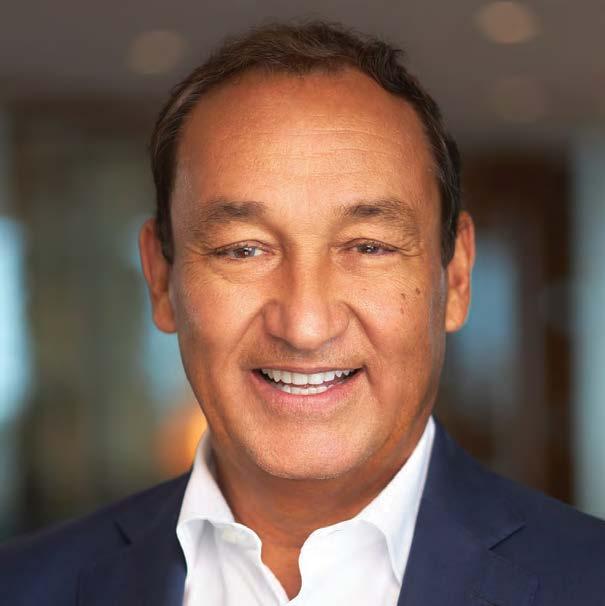

TUESDAY, SEPTEMBER 26 7:30–9:45 a.m. The Chicago Club REGISTE R HER E Oscar Munoz FORMER CEO AND EXECUTIVE CHAIRMAN United Airlines ChicagoBusiness.com/SeptPB PRESENTING SPONSOR
that is perhaps not as clear as it was in the late 1980s, when thenGov. Jim Thompson twisted arms in Springfield to build the White Sox a new stadium with taxpayer money.
The quickest and surest route to a financial home run would be to sell the team. Experts peg the franchise’s value at around $2.5 billion, more than 130 times the $19 million Reinsdorf and his partners paid for the team in 1981. That translates to an annualized return of more than 12%, slightly beating the S&P 500 over the same period.
Reinsdorf is on record saying he’s advised sons Michael and Jonathan to sell the team once he passes away. But baseball is a life’s passion for the elder Reinsdorf, who also owns the Chicago Bulls. He shows no signs of wanting to part with the team now and just last week fired longtime front-office executives Kenny Williams and Rick Hahn as the team plays out the string in one of its most miserable seasons of the Reinsdorf era.
A more likely course of action, Reinsdorf watchers say, is pursuit of another new stadium deal. The club’s opinion of its home ballpark has been mixed at best, and it is beyond dispute that the stadium currently known as Guaranteed Rate Field hasn’t spawned meaningful development around it.
With six years left on the team’s lease with the Illinois Sports Facilities Authority, there’s plenty of time for Re -
Will Reinsdorf want to hold on to the team’s South Side roots, or will he be open to another site in the city or even a suburban location?
insdorf to determine whether the state, city of Chicago or perhaps a suburb or group of suburbs are willing to help finance a new park that could serve as an anchor for ancillary development like a hotel, retail shops, restaurants and bars.
He doesn’t have to look far to see the potential upside of such development. The Cubs’ owners, the Ricketts family, have turned the area around Wrigley Field into an entertainment and nightlife hub.
“Getting a new stadium with a significant mixed-use district surrounding it in Chicagoland in a great location (nice suburb or attractive part of the city) would still likely be his best return on investment,” says Rob Hunden, president of Hunden Partners, a real estate development consultancy that advises on largescale projects.
The last time this negotiation took place, the choices were between a new stadium near old
Comiskey Park or a move to an already-built park in St. Petersburg, Fla. This time there are likely to be more options.
Will Reinsdorf want to hold on to the team’s South Side roots and try again at a site that so far hasn’t proven to be a destination for fans in the way Wrigley Field is in Lakeview? Or will he be open to another site in the city or even a suburban location?

e southland, where many of the team’s most hardcore fans live anyway, might make sense geographically and also could appeal to public o cials as an economic-development prospect in the way that Arlington Heights in the northwest suburbs so far hasn’t for the Chicago Bears and their stadium dreams.
A White Sox spokesman declined to comment.
ose close to Reinsdorf say he’s well aware that taxpayers are souring on nancing stadiums for pro sports owners whose teams are valued in the billions.
It’s also true, though, that owning a stadium isn’t a nancial winner for baseball team owners. While the Ricketts family won valuable concessions from the city to boost revenue year-round, it paid for a costly renovation of Wrigley Field itself.
“Ownership of the stadium is actually a negative,” says Marc Ganis, an expert on the business of pro sports who’s worked as a consultant on stadium deals.
Look at the Bears, he says. eir desire for a property tax break in Arlington Heights demonstrates the downside of outright ownership. If a stadium is publicly owned, it pays no taxes.
E ective control by the team, however is key, he says. “ at is very di erent than ownership.”
Having say over what other
events can occur at the park and revenue-sharing arrangements with the stadium owner are always a point of negotiation in such deals.
e best return Reinsdorf can secure for his family and investors, Ganis and Hunden agree, is to hammer out a new-stadium deal that includes some taxpayer investment and provides opportunity for development outside the park. en, if his sons indeed opt to sell after he’s gone, the value will be substantially higher than what the team would fetch now.
at leaves the third option, which is to move the White Sox out of the Chicago market. Nashville, Tenn., is angling for a team, although it’s currently seeking an expansion club. at easily could change if teams like the Sox that are seeking stadium deals don’t like what they hear from politicians in their home markets.
There is, of course, a recent example. The A’s are moving to Las Vegas after failing to win support for a new stadium in Oakland.
Nashville is an enticing option, Ganis says. “It is a market

that is growing and has zero income tax,” he says.
Officials there have shown a willingness to develop stadiums with public money, recently pumping $1.1 billion into a new facility for the NFL’s Tennessee Titans.
e market is smaller than Chicago, but the White Sox wouldn’t share it with another team. Television rights would presumably yield less — the White Sox are co-owners of NBC Sports Chicago, which is an important part of their value — but the future there is murky anyway, with cord-cutting viewers pushing teams to consider streaming deals directly with their fans.
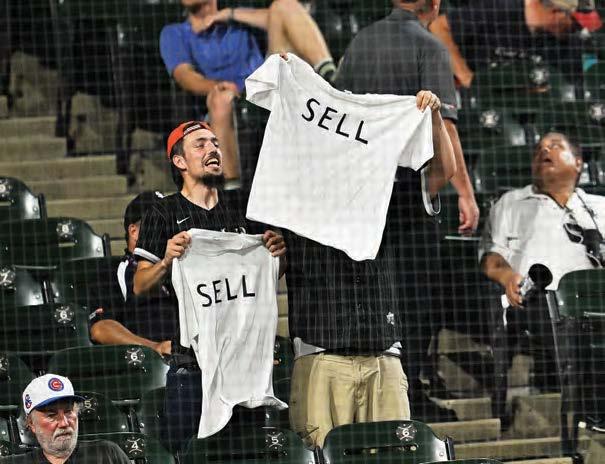
“There’s lots of reasons to stay and potentially some interesting reasons to go,” Ganis says.
Could we see a replay of the St. Petersburg leverage tactics? That probably will depend on Reinsdorf’s assessment of the state and local officials across
the table when talks about the White Sox’s future in Chicago get serious.
Yet Reinsdorf is in his late 80s, not his late 50s, when he was wheeling and dealing with Big Jim Thompson. Would he mind going down in White Sox history as the man who moved the team out of Chicago after 125 years? A self-professed lover of baseball and its traditions, Reinsdorf more than once has spoken of his childhood heartbreak when the Brooklyn Dodgers decamped for Los Angeles. e White Sox have been in Chicago far longer than the Dodgers were in Brooklyn.
On the other hand, he has proven himself to be an unsentimental businessman who looks to maximize his financial advantage. All these ingredients will likely come into play as Reinsdorf maps out his next move.
Says Ganis, “He’s creating optionality.”
34 | CRAIN’S CHICAGO BUSINESS | AUGUST 28, 2023
REINSDORF From Page 1
White Sox Chairman Jerry Reinsdorf talks with rst baseman José Abreu (now with the Houston Astros) before a game at Guaranteed Rate Field on May 9, 2022.
GETTY IMAGES
Although Jerry Reinsdorf may have no current plans to sell the Sox, these fans at Guaranteed Rate Field last week apparently wish he would.
Michael Reinsdorf
GETTY IMAGES
STEPHEN J. SERIO
Properties of this one’s caliber are often frustratingly di cult to sell on the conventional market, Elite Auctions CEO Randy Haddaway told Crain’s at the time. For the sellers, Sam and Geralyn Cecola, an auction “establishes a date-certain sale,” after which they could nally move on.
On July 15, “the house will sell to the winning bidder,” Haddaway said.
at’s not what happened.
July 15 came and went, and the 17,600-square-foot house, built in 2008 on a little more than 8.2 acres, is still for sale.
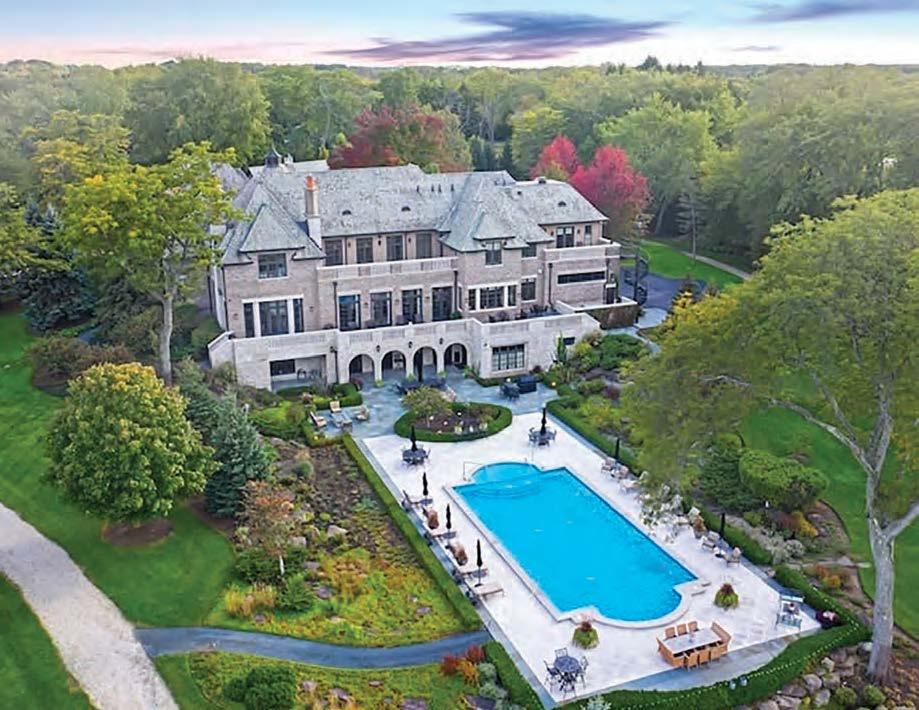
It was the latest in a series of upper-end Chicago-area homes that have gone up for auction without selling in the competitive bid environment. Among the others are Michael Jordan’s Highland Park mansion, an opulent property in Winnetka, a Lincoln Park house by architect Larry Booth and a 19th-century mansion on Dearborn Street in Chicago’s Gold Coast neighborhood. e rst two went back onto the conventional market, and the latter two sold to pre-emptive bidders who put in a high o er before the auction to avoid vying with other bidders.
Despite the romantic notion about “ nding the price” from bidders who compete with one another, high-end house auctions in the Chicago area often fail to nish. e reasons have to do primarily with the procedural trap doors built into some auctions.
“If you’re not going to have an absolute auction,” where the property will for sure be sold to the highest bidder, “you probably shouldn’t tell people you’re auctioning their home,” says Diana Peterson, CEO of Northbrook real estate rm AW Properties Global, which has an auction division called AuctionWorks. e rm has auctioned several properties absolute in recent years, including a sixacre Lake Forest estate, a Glenview house designed by Frank Lloyd Wright and a house on Dayton Street in Chicago’s Lincoln Park. Peterson doesn’t use the term “trap doors.” She refers to “reassurances for the seller.” In Barrington Hills, the Florida-based auction house provided the Ceco-
COMPLEX
From Page 3
It’s unclear what prompted Farpoint and Golub to test the market. Farpoint CEO Scott Goodman did not respond to a request for comment, and a spokeswoman for Golub declined to comment.
JLL is playing up the prospect of a buyer adding new value to Prairie Shores by continuing renovation work that the current owners have performed over the past few years. Backed by the Goldman Sachs Urban Investment Group, Farpoint and Golub have renovated roughly 25% of the units at the complex. e updates helped them boost rent at
las one such reassurance in case the market was telling them a price so low they didn’t want to hear it. Elite’s arrangement allows the sellers to check bidders’ proposed opening bids ahead of auction day. en on July 15, if they opted not to start the bidding, there’d be no option and no sale.
It appears the market disappointed them with its numbers, because the Cecolas did not proceed. ey could not be reached for comment, and Haddaway said he was not authorized to comment after July 15.
“We did exercise the right to cancel the auction,” said Michael LaFido, the Exp Realty agent who represents the property. But LaFido said he could not speak for the sellers on why they didn’t go ahead.
Despite the cancellation, LaFido said, the promised auction “got us a lot of attention for the property. We had 20 quali ed showings in the last month before the (auction) date,” which was the most of any month of the decade the house has been on the market.
Rick Levin says “getting the spotlight on the property” should be counted as a win for the auc-
those units by about 20%, according to the JLL yer. e property, which JLL describes as workforce housing, also includes 5 acres of land that could be developed.
e owners since 2019 have invested around $40 million into a new clubhouse and other property upgrades, according to a report from CoStar News, which rst reported that Prairie Shores was up for sale. e publication cited a source familiar with the property who estimated it could fetch bids close to $200 million.
e Prairie Shores o ering comes a few months after the sale of the massive Lake Meadows apartment complex just a block south. A venture of Englewood, N.J.-based Antheus Capital paid
tion house. “Anything that gets people looking at your property is good for your sale,” he says.
e head of Rick Levin & Associates, a Chicago-based auction house whose real estate o erings are primarily commercial properties and developers’ portfolios of unsold residential property, sometimes auctions individual homes.
Levin’s rm was the auctioneer on both the Larry Booth house and the Gold Coast house where pre-emptive bidders swooped in with a strong enough number to ward o all competitors. While that’s not the intended route of an auction, he says, “if it works, if it gets people thinking they’d better act right now to get that house that used to be just kind of sitting there, you as the auctioneer should be commended for that because you got the job done.”
Maybe, but it’s not appreciably di erent from turning up the marketing noise on a house that’s being sold conventionally, where the buyers say what they’ll pay and the sellers say yes or no to the number.
When an auction is announced, sellers have a speci c image in
$161 million for that 1,869-unit property in May, the biggest Chicago multifamily property to change hands in more than 15 years.
Prairie Shores and Lake Meadows both were developed in the 1950s by real estate rm Draper & Kramer, which continued to own them until the recent respective sales to the Farpoint-Golub venture and Antheus.
Farpoint has been among the most active real estate rms in the city over the past few years. In addition to the Bronzeville Lakefront project, where it began work earlier this year on infrastructure for the site, Farpoint recently signed a deal to develop a $158 million control center complex in Gar eld Park for the Chi-
ChicagoBusiness.com
President and CEO KC Crain
Group publisher Jim Kirk, (312) 397-5503 or jkirk@crain.com
Editor Ann Dwyer
Creative director Thomas J. Linden
Director of audience and engagement
Elizabeth Couch
Assistant managing editor/audience engagement
Aly Brumback
Assistant managing editor/enterprise Joe Cahill
Assistant managing editor/digital content creation
Marcus Gilmer
Assistant managing editor/special projects
Ann R. Weiler
Assistant managing editor/news features
Cassandra West
Deputy digital editor Robert Garcia
Associate creative director Karen Freese Zane
Digital design editor Jason McGregor
Art directors
Kayla Byler, Carolyn McClain, Joanna Metzger
Senior digital news designer Stephanie Swearngin
Copy chief Scott Williams
Copy editors
Todd J. Behme, Beth Jachman, Tanya Meyer
Political columnist Greg Hinz
Notables coordinator Ashley Maahs Newsroom (312) 649-5200 or editor@chicagobusiness.com
SENIOR REPORTERS
Steve Daniels, Ally Marotti, John Pletz, Dennis Rodkin
REPORTERS
their heads, Levin says.
“It’s always fun to be a spectator watching multiple bidders going up against each other and raising the price until the market level is achieved,” he says. “Open auctions like that have been going on since Mesopotamia, and it’s fun.”
But both Levin and Peterson say auctions are more likely now to be held online. Bidders appreciate the privacy and feel more secure, Peterson says.
If auctions on any terms other than an absolute sale to the victor in a bidding war often don’t work, why do they keep happening?
Peterson suggests it’s because some people don’t realize that Chicago’s upper-end market is rooted in workaday Chicago, not in the playground markets like Aspen, coastal Florida and Palm Springs.
Because of the dual concentrations of wealth and trophy properties in some of those markets, “you can start the bidding at a dollar and people with a couple hundred million dollars will start there and compete with each other” up to a healthy market value, Peterson says. “But it doesn’t work here.”
cago Transit Authority, is helping lead a mixed-use project in Englewood and is part of a venture under contract to buy a large, vacant retail property near the northern end of the Magni cent Mile.
Goodman, who co-founded developer Sterling Bay in 1987, got choked up earlier this year speaking about Prairie Shores during a Bronzeville Lakefront groundbreaking ceremony, which was held at the apartment complex. One of Goodman’s earliest jobs was working for his father’s plumbing business, where among other jobs he rodded sewers at Prairie Shores.
JLL brokers Kevin Girard, Mark Stern and Zach Kaufman are marketing Prairie Shores for sale.
Katherine Davis, Brandon Dupré, Danny Ecker, Leigh Giangreco, Jack Grieve, Corli Jay, Justin Laurence, Steven R.Strahler
Researcher Sophie H. Rodgers
ADVERTISING
Senior vice president of sales Susan Jacobs (312) 649-5492 or susan.jacobs@crain.com
Sales director Sarah Chow (312) 280-3172 or schow@crain.com
Events manager/account executive Christine Rozmanich
Events specialist Kaari Kafer
Account executives

Linda Gamber, Claudia Hippel, Menia Pappas, Bridget Sevcik, Laura Warren
Sales administration manager Brittany Brown
People on the Move manager Debora Stein
Classi ed sales Suzanne Janik, (313) 446-0455 or sjanik@crain.com
Inside sales Isabel Foster
CRAIN’S CONTENT STUDIO
Senior director of Crain’s Content Studio
Kristin Bull, (313) 446-1608 or kbull@crain.com
Crain’s Content Studio manager Jordan Dziura
Custom content coordinator Allison Russotto
PRODUCTION
Vice president, product Kevin Skaggs
Product manager Tim Simpson
Digital designer Christine Balch
Production manager David Adair CUSTOMER SERVICE (887) 812-1590
Reprints (212) 210 0707
Crain’s Chicago Business is published by Crain Communications Inc.
Chairman Keith E. Crain
Vice chairman Mary Kay Crain
President and CEO KC Crain
Senior executive VP Chris Crain
Chief Financial Of cer Robert Recchia
G.D. Crain Jr. Founder (1885-1973)
Mrs. G.D. Crain Jr. Chairman (1911-1996)
Editorial & Business Of ces
130 E. Randolph St., Suite 3200, Chicago, IL 60601 (312) 649-5200
AUGUST 28, 2023 | CRAIN’S CHICAGO BUSINESS | 35
Vol. 46, No. 33 Crain’s Chicago Business (ISSN 0149-6956) is published weekly, except for the rst week of July and the last week of December, at 130 E. Randolph St., Suite 3200, Chicago, IL 60601-6201. Periodicals postage paid at Chicago, Ill. © Entire contents copyright 2023 by Crain Communications Inc. All rights reserved. Reproduction or use of editorial content in any manner without permission is prohibited. Subscribe: $169 a year • Premium Print + Digital Subscription • Print delivery of Crain’s Chicago Business • Unlimited basic digital article access across all devices • Access to archived articles • Editorially curated newsletters For subscription information and delivery concerns please email customerservice@chicagobusiness.com or call 877-812-1590 (in the U.S. and Canada) or 313-446-0450 (all other locations). Postmaster: Send address changes to Crain’s Chicago Business, 1155 Gratiot Ave., Detroit, MI 48207-2732. Four weeks’ notice required for change of address.
AUCTION From Page 1
The palatial mansion in Barrington Hills that was featured in the TV show “Empire” | EXP REALTY
CHILDR EN IS FACI NG HUNGER.
Let
Only a hunger-free community can really be healthy. When we help feed our neighbors, we truly become a greater Chicago.

1 IN 4
’s rise to the
challenge, Chicago.
give now.
chicagosfoodbank.org/rise Please