FID achieves 95% enrolment target FID leading with innovation and inclusion
Inclusive graduation gown empowers wheelchair user
Who Am I? – CPUT and Portuguese students explore identity through art
Students bring Grade 7 pupils’ ‘Dream Machines’ to life
Education strengthens ties between SA and France
advances digital learning for adult education
Design and Manufacture shines at PlatAfrica Awards
Submit story ideas to nombembep@cput.ac.za or mjimarrow@gmail.com no later than the 15th of every month.
Faculty of Informatics andDesign
03 04 05 06 07 08 09 10 11
Editorial
FID ACHIEVES 95% ENROLMENT TARGET, PLANS FOR FULL COMPLIANCE BY 2026 FID LEADS WITH INNOVATION AND INCLUSION
The Faculty of Informatics and Design (FID) is at the forefront of transforming higher education through a commitment to inclusivity, innovation, and global collaboration.
A standout example of this is Zena Julies, who graduated wearing a wheelchair-friendly gown designed by lecturer Sindiswa Papa. This is a first in academic attire and a significant step towards greater accessibility.
Innovation within FID begins early. The MyMachine project saw Industrial Design students
bring primary school pupils’ imaginative ideas to life as functional prototypes, sparking creativity in the next generation. On the international stage, CPUT partnered with Portugal’s Polytechnic of Porto to explore identity through film and photography and strengthened ties with French universities to expand student exchange opportunities.
Alumni success also underscores the faculty’s impact.
Journalist Lorenz Köhler has built a prominent social media following focused on African football, while fashion student
Amanda Sakarombe blends her Zimbabwean heritage with modern design. The CET Digital Learning Space is also helping bridge educational divides, and the faculty is on track to meet its enrolment targets.
The Jewellery Design programme continues to excel, with lecturer Ronel Jordaan and students securing top honours at the PlatAfrica Awards.
By prioritising accessibility, creativity, and global engagement, FID is not merely adapt-
By Philani Nombembe
The Faculty of Informatics and Design has achieved 95% of its overall enrolment target this year, reflecting strong demand for its programmes and effective student recruitment strategies. Faculty officer Nkosiphendule Kashe reported that first-time entry (FTE) enrolment had exceeded expectations, reaching 107%.
“We take pride in meeting our target for the second consecutive year. While we have achieved the FTE target, some programmes remain above 80% of their enrolment targets. Last year, one qualification fell short of its FTE target, but this year it has met its goal,” Kashe said.
He said strategies used to improve enrolment in that qualification would be applied across all programmes for 2026.
“Our aim is to ensure that every qualification meets its FTE target in the coming years.”
Kashe highlighted recent innovations in the registration process aimed at improving efficiency and student experience.
“We focused on student engagement and resolving queries swiftly. However, some issues took longer to address due to limited staffing.
Our registration strategy was based on having a full staff complement, and we have learned valuable lessons. We assure the faculty community that the 2026
registration process will be significantly improved,” he said.
The faculty’s success will be evident at the upcoming graduation ceremony.
“We will be awarding degrees to 1,123 undergraduate students.
Of these, 21 will graduate Cum Laude and 16 Summa Cum Laude. We will confer 10 postgraduate degrees, including two PhDs,” Kashe said.
However, he acknowledged challenges during the registration period.
“Some students were overlooked when bulk admission and bulk WebR processing were implemented. This delayed registrations and affected our statistics.
Additionally, students with outstanding fees faced registration delays, despite being notified in advance of potential exclusion if their accounts were not settled from the previous year.” Kashe said the faculty had taken note of these issues.
“We have documented the challenges we encountered and will hold a debriefing session to refine our approach. Our goal is to develop a more effective system that benefits students, academic staff, and support staff,” he said.
ing to change but leading it.
Jim Mohlala News Editor
INCLUSIVE GRADUATION GOWN EMPOWERS WHEELCHAIR USER
By Philani Nombembe
When Zena Julies crossed the stage in her wheelchair to graduate in December, wearing a specially designed gown, she felt empowered and transformed.
The “inclusive graduation gown,” created by fashion design lecturer Sindiswa Papa, was tailored to meet Julies’ needs as a wheelchair user. She graduated with a Diploma in Business Information and Administration and is now pursuing an Advanced Diploma.
“Putting on the specially designed graduation gown was a transformative experience. It felt liberating to have a gown that not only represented my academic achievements but also met my specific wheelchair needs,” said Julies.
“Unlike standard gowns, which can be cumbersome and ill-fitted for someone seated, this design embraced functionality and elegance. It allowed me to move with ease, avoiding the frustrating tangling or dragging that often comes with traditional gowns.”
Julies described the graduation as “a moment of great pride and empowerment.”
“Wearing the gown was more than just a personal achievement; it was a message of inclusivity and ingenuity,” she said.
“As I pushed myself onto the stage, I felt like I was redefining what tradition could be, challenging others to consider how small adjustments can have a significant impact. The plaudits I received were not just for my academic achievements but also for the breakthrough this design represented.”
Julies said traditional gowns often pose challenges for wheelchair users. They can be overly long, catching on wheels or dragging on the ground, and their design rarely considers the seated position.
“Making them more comfortable and dignified becomes a chore in itself. This new gown, however, was designed with these obstacles in mind. It included practical features such as a shorter length, strategic openings for ease of dressing, and a fitted yet flowing design that balanced form and function,” she said. She believes the innovation sets a strong precedent for inclusive aca-
demic traditions.
“It demonstrates that with intelligent design, we can celebrate everyone’s achievements equally,” said Julies.
“Future graduates with disabilities will no longer have to choose between comfort and confidence on such a significant day. It also pushes institutions to move beyond onesize-fits-all approaches, fostering a culture where accessibility is the norm rather than the exception.”
Julies said inclusive fashion is not just about practicality but also dignity, representation, and empowerment.
“In academic and professional settings, what we wear reflects who we are and how we want to be perceived. Ensuring attire is inclusive sends a message that everyone belongs and deserves to participate fully. It’s a step towards breaking down barriers and promoting diversity,” she said.
Papa developed the gown after then Cape Peninsula University of Technology (CPUT) lecturer Professor Mugendi M’rithaa, introduced the idea to her.
“I thought it would be a noble initiative to design an inclusive gown for graduates with disabilities so they could experience the same freedom as others,” said Papa.
“The design and sampling took about a year. It was informed by research involving persons with disabilities who had worn conventional graduation gowns. We went through three iterations, with fittings and feedback at each stage, leading to adjustments until the final inclusive gown was produced.”
Papa found Julies through the CPUT Disability Unit after receiving ethics approval.
“She was so happy to push herself across the stage to receive her certificate. That made me proud because the gown was designed to provide exactly that freedom to graduates with disabilities,” said Papa.
The design is already attracting attention. Umhlobo Wenene radio station recently invited Papa to share her idea with thousands of listeners.
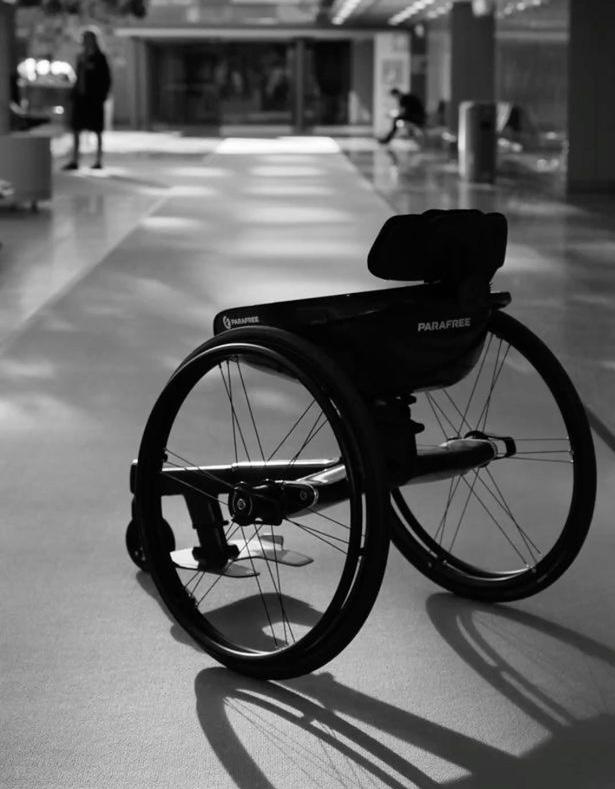
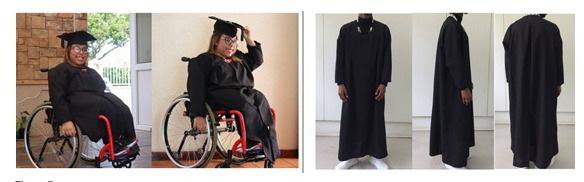
INCLUSIVE DESIGN: Graduate Zena Julies proudly wore a custom-designed gown by fashion design lecturer Sindiswa Papa, created to accommodate the needs of wheelchair users.
PICTURE: Supplied.
INNOVATIVE: Fashion design lecturer Sindiswa Papa has crafted a bespoke graduation gown designed for the comfort and accessibility of wheelchair users. PICTURE: Supplied.
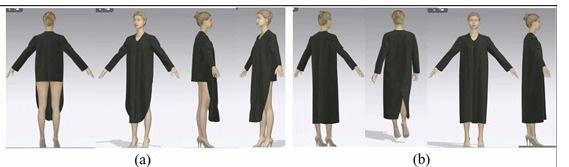
FROM SKETCH TO STITCH: Tracing the poetic journey of an inclusive graduation gown, from the first whisper of an idea to the final thread of celebration. PICTURE: Supplied.
EXPLORE IDENTITY THROUGH ART WHO AM I? – CPUT AND PORTUGUESE STUDENTS
Have you ever questioned your own identity?
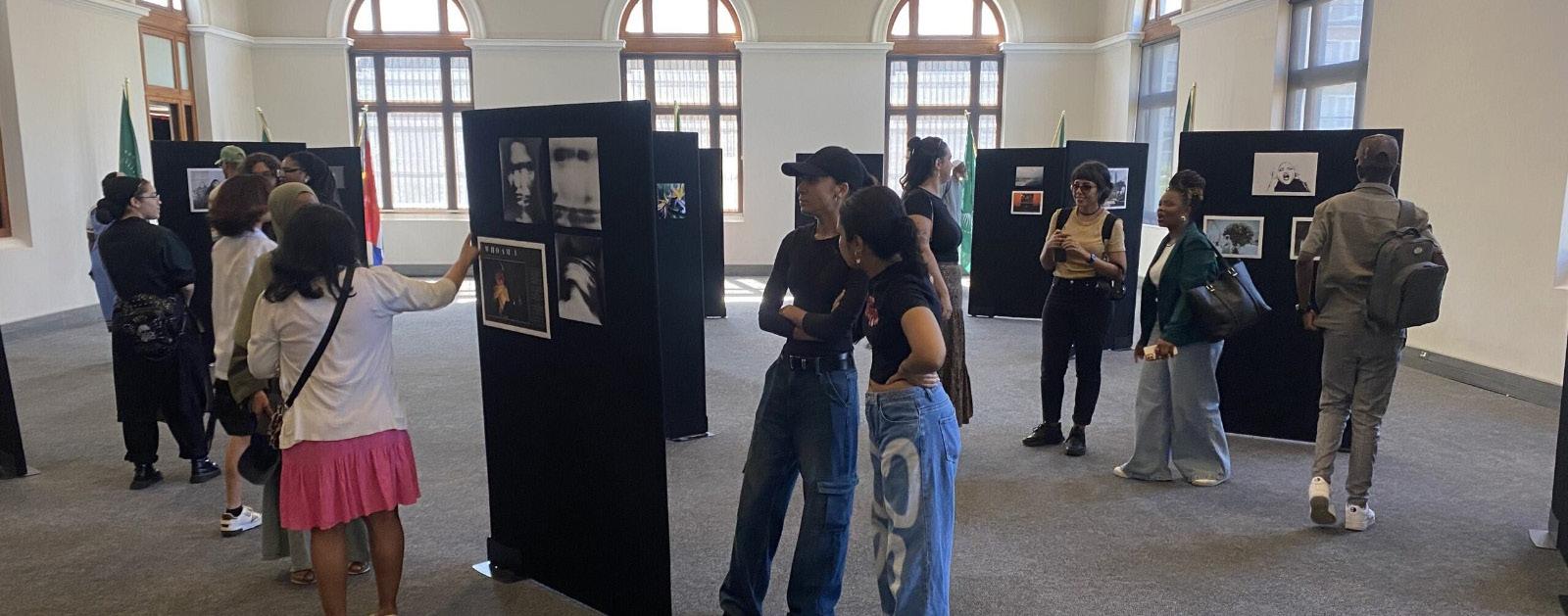
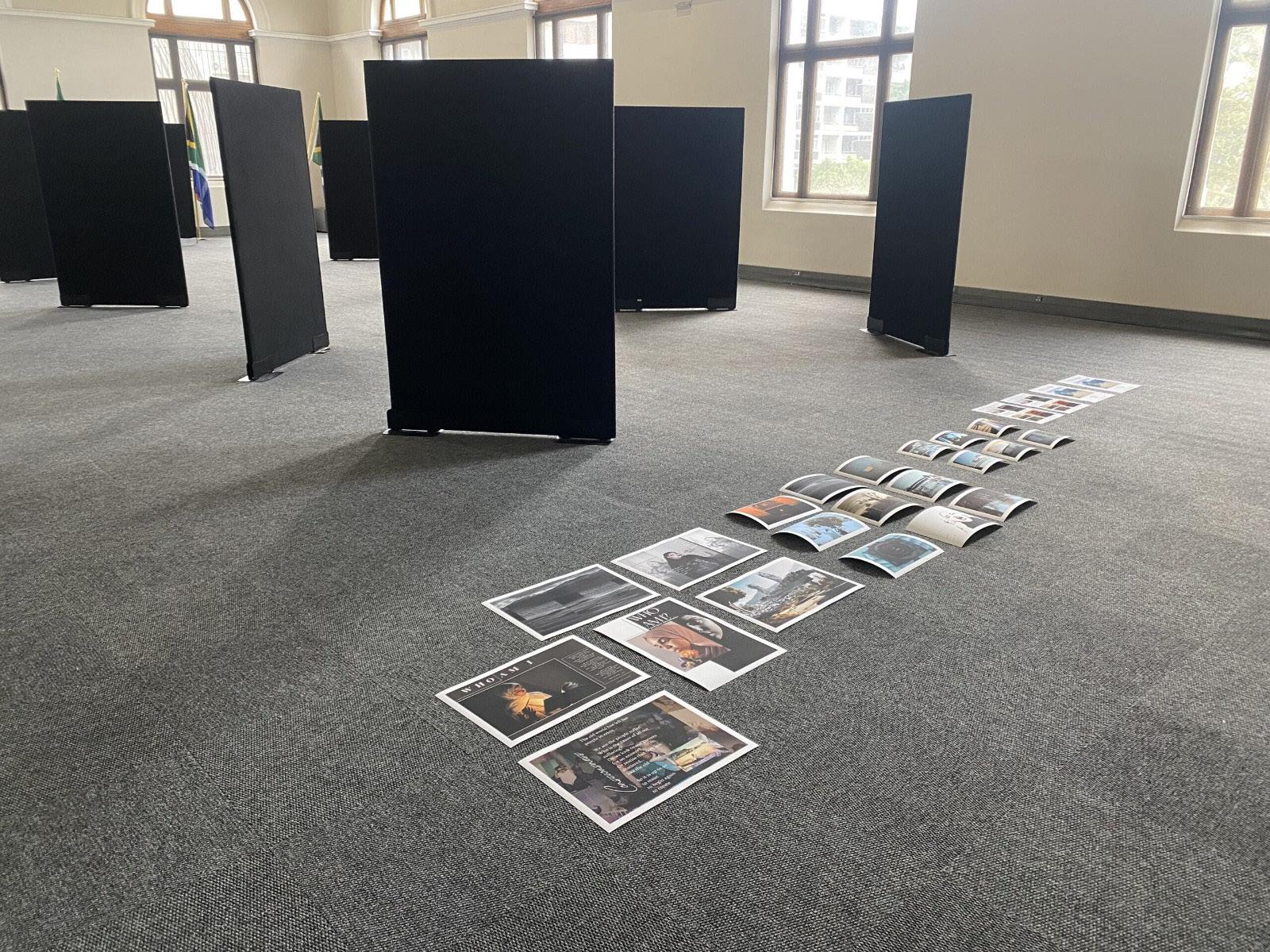
This is the theme of Who Am I?, an exhibition created by collaborating film and photography students from Cape Peninsula University of Technology (CPUT) and the Polytechnic of Porto, Portugal. First showcased at Cape Town’s Iziko Museum in March, the exhibition will be displayed at the Polytechnic of Porto in May. Through their work, students explore the evolving nature of self-perception, offering a critical reflection on identity.
Dr Waldemar Bussiahn, head of CPUT’s photography programme, said 12 students from both institutions participated in the exhibition. He said students at the Polytechnic of Porto primarily study fine art.
“That created an interesting mix,” he said.
“We had commercial photography students collaborating with fine art students, which led to diverse approaches and unexpected creative outcomes.”
The students were given the same brief and spent about seven months developing their work.
“We started discussions in mid2023, identified student groups in early 2024, and worked from March to around September or October,” said Bussiahn.
Former photography student Saadiqah Ebrahim said she was happy to be among the first students involved in the collaboration.
“We have been working with this for a year now. We didn’t think it would take long,” she said.
Ebrahim described the project as challenging.
“It is hard to show how we are as people in images,” she said. “I remember concluding that we are more than the things we like, our experiences and the people who are part of our lives. We change from our experiences, and that is real life. We will continue to change and that is how I created my image. We are forever changing.”
Polytechnic of Porto lecturer, Professor João Leal, who also exhibited his Farpado/Barbed series, took the students’ work with him to Portugal to prepare for the May exhibition.
Bussiahn and Eran Tahor, head of CPUT’s film production programme, will travel to Portugal in mid-May to set up the exhibition.
“We will likely take ownership of our students’ work again. There’s already interest from potential buyers. I haven’t discussed this with my students yet, but I’d encourage them to swap artworks — a great way to start building their collections,” Bussiahn said.
Leal said the collaboration was made possible by the Erasmus+ Programme, the European Union’s student exchange initiative. He said this was the first partnership between CPUT and the Polytechnic of Porto’s School of Media, Arts and Design.
“The collaboration has been a success,” he said. “In 2022, the first year after the COVID-19 pandemic, students weren’t involved yet, but we got to know each other. The following year, we
started planning how to structure the project. By early 2024, we finalised the assignments, held online meetings, and selected the final works.”
Leal’s exhibition was inspired by a visit to Cape Town, where he was struck by a stark contrast with his country “I saw a beautiful building surrounded by barbed wire,” he said.
“We don’t have that kind of security fencing in Portugal. I asked why it was so protected and learned it was the parliament. In Portugal, our parliament is open to the public. Then I discovered there had been a fire, and I became fascinated by the story. That’s when I started photographing it.”
However, Leal said a walk up Lion’s Head gave him a more expansive perspective on Cape Town.
“Not just in terms of nature, but also the potential the city holds,” he said. “In 2023, I visited Langa and Gugulethu. I’m aware of the challenges people face there, but I also saw vibrant communities — children going to school, smiling and full of energy.”
THOUGHT-PROVOKING SERIES: Polytechnic of Porto lecturer, Professor João Leal, exhibited his Farpado/Barbed series. PICTURE: Supplied.
IDENTITY ON DISPLAY:
Cape Peninsula University of Technology photography and film students collaborated with Portuguese students to explore identity through art in an exhibition showcased at the Iziko Museum in March.
PICTURE: Supplied
Philani Nombembe
STUDENTS BRING GRADE 7 PUPILS’ ‘DREAM MACHINES’ TO LIFE
By Jim Mohlala
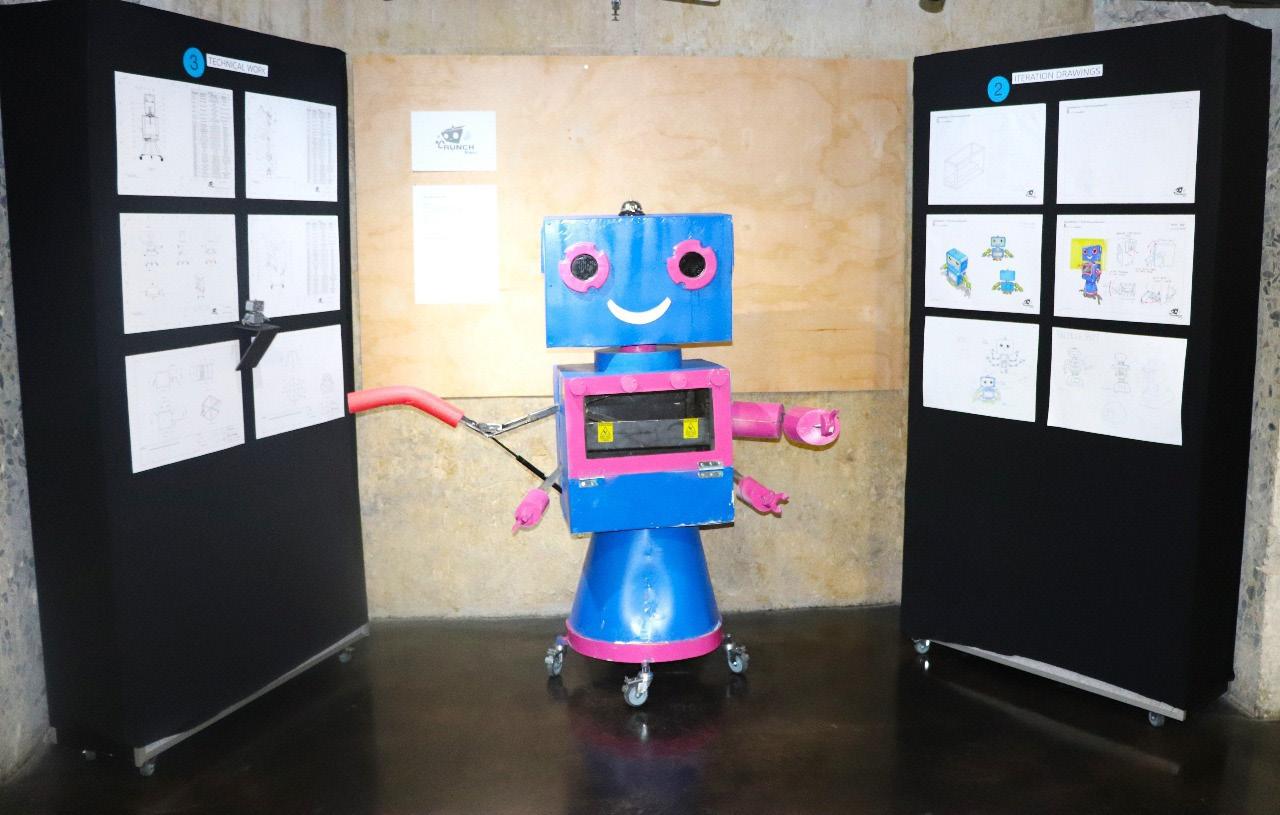
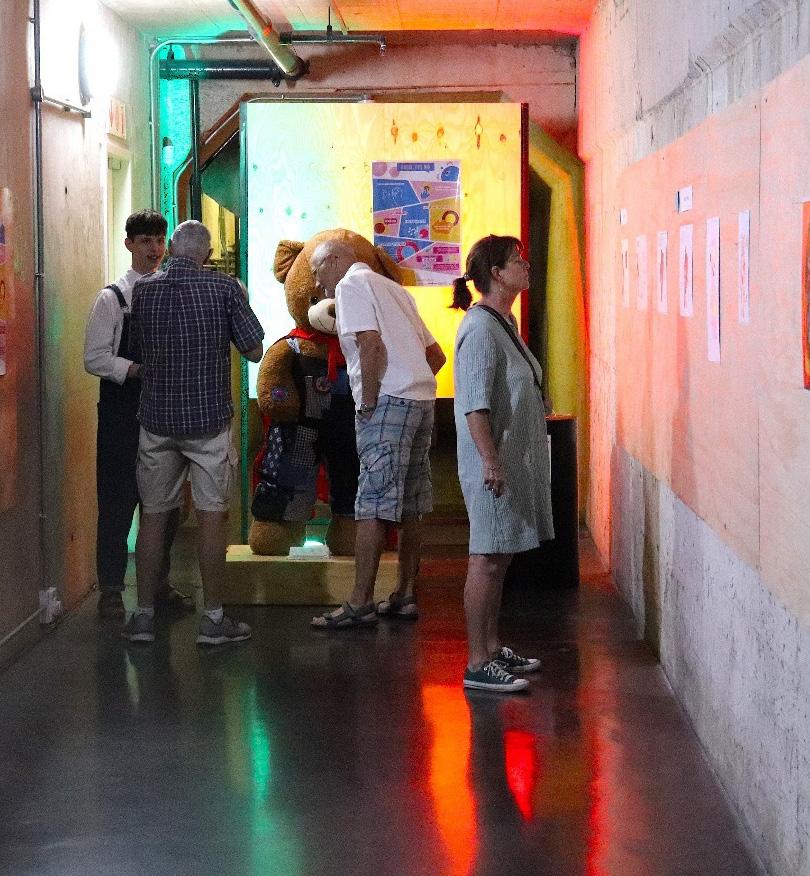
Cape Peninsula University of Technology (CPUT) Industrial Design students have transformed children’s ideas into reality. Five machines, designed by 2024 Grade 7 learners at Steenberg Primary School, and built by CPUT students, are on display at Zeitz MOCAA at the V&A Waterfront as part of the ongoing MyMachine exhibition. The “Dream Machines” turn childhood concepts into functional prototypes. The exhibition, which opened on 15 February, runs until 26 April.
MyMachine, active in 47 countries, challenges conventional education by empowering children
to recognise the value and impact of their ideas. Through hands-on STEAM (Science, Technology, Engineering, Arts, and Mathematics) education and intergenerational collaboration, primary school pupils design their own “Dream Machines”.
“Their imaginative concepts are transformed into fully functional prototypes by third-year Industrial Design students from CPUT, who work closely with the young innovators as their clients,” said Zeitz MOCAA Museum in a statement. Each year, a primary school from a disadvantaged community is chosen to ensure the transform-
IMAGINATION MEETS INNOVATION – Cape Peninsula University of Technology Industrial Design students have transformed Steenberg Primary School learners’ ideas into intricate machines, bringing their creativity to life. These visionary creations are on display at the ongoing MyMachine Exhibition at Zeitz MOCAA. PICTURES: Supplied.
ative power of creative education reaches those who need it most.
This process nurtures critical thinking, problem-solving skills, and bridges generations, empowering children to become innovators and future leaders.
Zeitz MOCAA described MyMachine South Africa as “more than an educational project.”
“It is a beacon of hope, a catalyst for aspiration and systemic change, a celebration of creativity, and a platform empowering youth to shape a brighter future for themselves, their communities, and the world,” the museum said. The project, supported by CPUT
and the BMW Centre for Art Education at Zeitz MOCAA, integrates STEAM education, project-based learning, and intergenerational collaboration to equip South Africa’s youth with the skills, imagination, and resilience needed to navigate an uncertain future.
“Together, we can nurture the next generation of change-makers — one Dream Machine at a time.”
EDUCATION STRENGTHENS TIES BETWEEN SA AND FRANCE
By Jim Mohlala
South Africa and France may be known for their rivalry on the rugby field.
But in the world of education, they are playing in the same team. In March, the Cape Peninsula University of Technology’s (CPUT) Department of Information Technology (IT) visited Paris to strengthen ties with French universities.
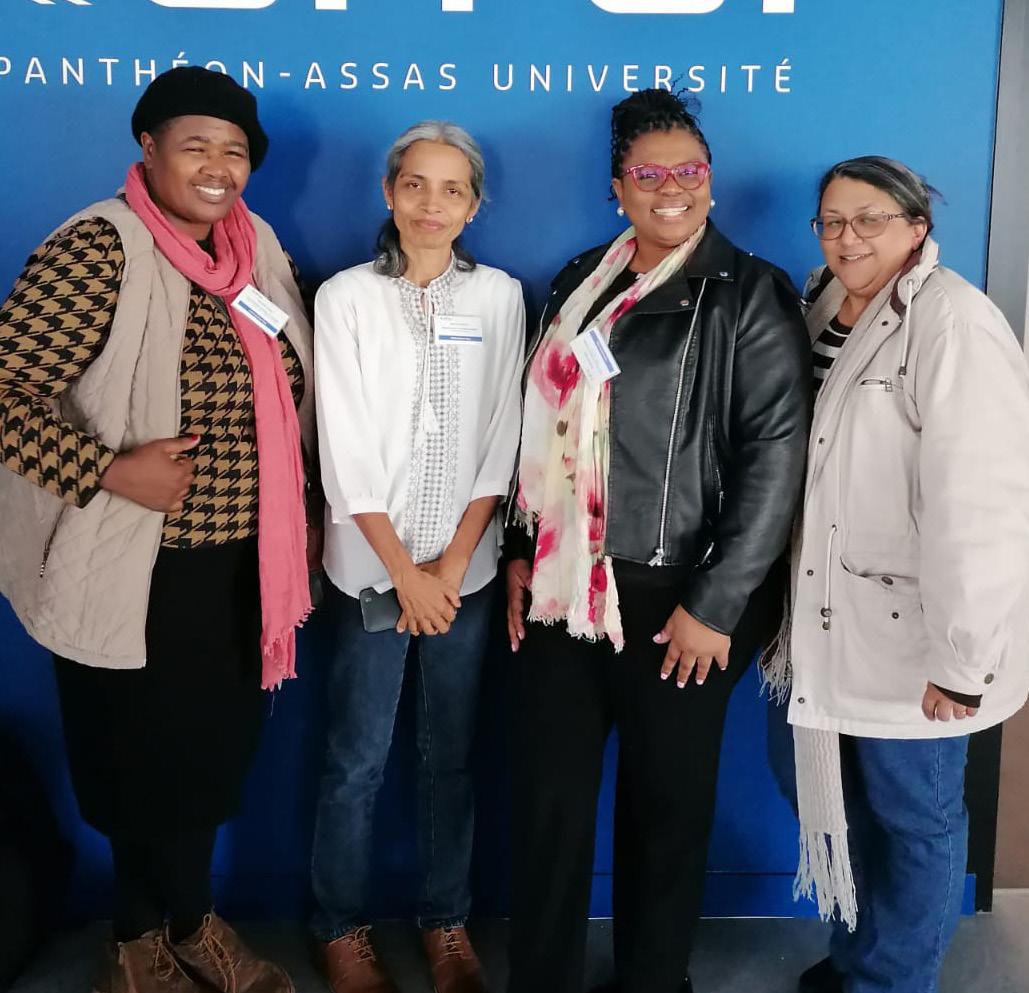
Faculty of Informatics and Design Dean Professor Tembisa Ngqondi, IT head of department Dr Tabisa Ncubukezi, programme coordinator Kruben Nadio, and senior lecturer Dr Deidre Lakay represented CPUT at Efrei University’s 2025 Open Day. The annual event, Efrei Partners Day, introduces students to study-abroad opportunities through the university’s global partnerships.
CPUT was the only South African institution invited. This underscores the institution’s decade-long collaboration with Efrei. Ngqondi said the partnership enhances CPUT’s reputation in international academic exchange, as Efrei students are required to study abroad at institutions with aligned curricula.
The visit extended beyond Efrei. CPUT delegates met with Assus University and ISIT University, both specialising in business and management studies. Just as South Africa’s wine and France’s cheese bring people together, so too does the exchange of knowledge and ideas. The discussions that focused on potential collaborations, with both institutions expressing interest in partnerships with CPUT are testimony to this. CPUT’s appeal as a study destination was evident.
Efrei students showed strong interest in exchange opportunities. Positive feedback from the 2024 group, citing Cape Town’s aca-
demic and cultural environment, reinforced this enthusiasm.
Ngqondi said the partnership strengthens the faculty’s global presence.
“It affirms that our programmes are internationally competitive and positions CPUT as a university of choice for global exchange. This collaboration will open valuable opportunities for both staff and students,” she said.
GLOBAL COLLABORATION: Faculty of Informatics and Design Dean Professor Tembisa Ngqondi, Efrei University project collaborator Professor Keerthana Prasada, Manipal Academy of Higher Education, India, Dr Tabisa Ncubukezi, Head of the Information Technology Department, and senior lecturer Dr Deidre Lakay share a moment in Paris.
PICTURE: Supplied.
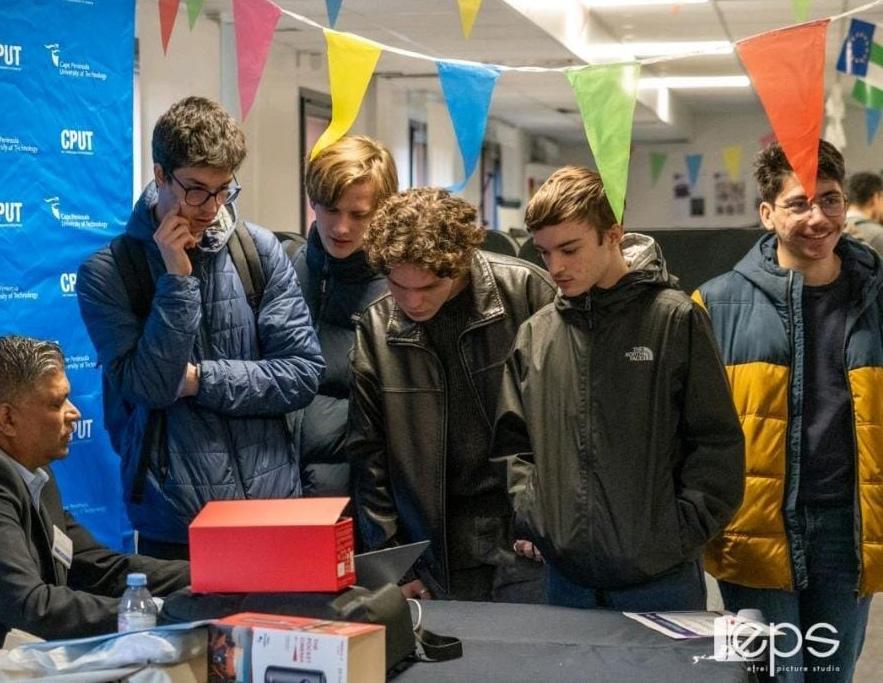
BRIDGING BORDERS: Cape Peninsula University of Technology’s Efrei University exchange programme coordinator, Kruben Naidoo, connects with French students during a visit to Paris.
PICTURE: Supplied.
FID ADVANCES DIGITAL LEARNING FOR ADULT EDUCATION
By Jim Mohlala
The Cape Peninsula University of Technology (CPUT) is committed to adult education.
This was evident in the Faculty of Informatics and Design’s role in reviewing the National Senior Certificate for Adults (NASCA).
The workshop, hosted by Deputy Minister of Higher Education Buti Manamela, took place at Emperors Palace, Johannesburg, in February.
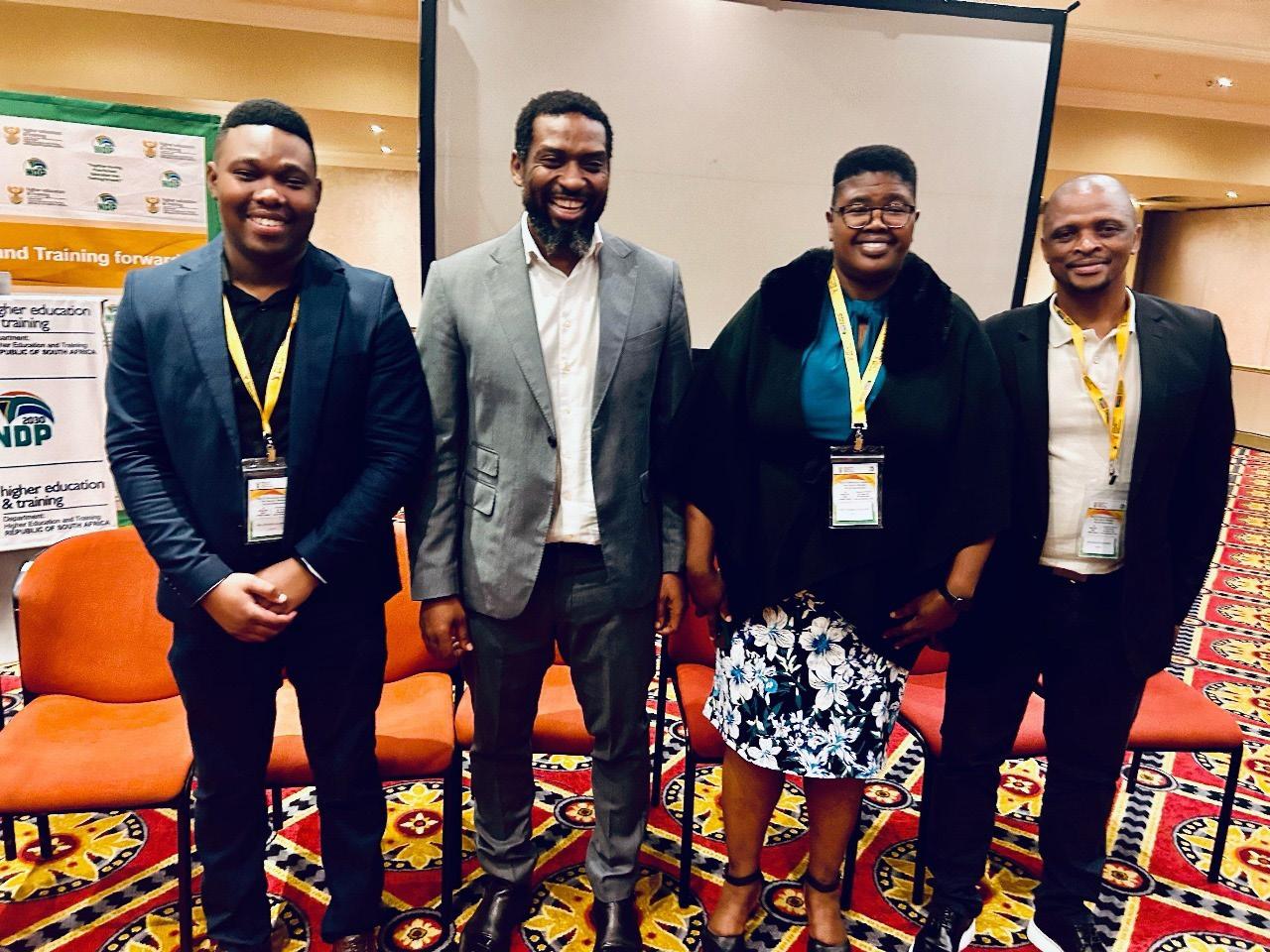
FID Dean Professor Tembisa Ngqondi attended, along with IT Department Moodle specialists Aphiwe Hlophe and Thulani Shongwe, who presented the progress and capabilities of the
Community Education and Training (CET) Digital Learning Space.
Hlophe said CPUT is at the forefront of digital education innovation.
“This initiative is a collaboration between the Department of Higher Education and Training (DHET) and CPUT, aimed at driving digital transformation in the CET sector,” he said.
“The presentation demonstrated the platform’s features to the Deputy Minister and delegates. It highlighted CPUT’s efforts in digitising the Adult Education and Training Level 4 qualification and explored how the platform could support the proposed NASCA qualification by making its content
SHAPING ADULT EDUCATION: IT Department Moodle specialists
Aphiwe Hlophe and Thulani Shongwe, Deputy Minister of Higher Education Buti Manamela, and FID Dean Professor Tembisa Ngqondi at the National Senior Certificate for Adults review workshop in Johannesburg. PICTURE: Supplied.
accessible to learners from diverse backgrounds.”
He said the event allowed him to engage with delegates who were eager to learn about the CET Digital Learning Space, which CPUT is currently developing.
“The CET Digital Learning Space aims to bridge the digital divide by providing an inclusive online platform tailored for adult education,” he said.
“It aligns with DHET’s vision of improving accessibility and learning outcomes for students, regardless of their background or location.”
“The key takeaway from the event is that the higher education sector is evolving towards alternatives to the conventional matric qualifi-
cation, with a stronger focus on skills-based education. This shift must be underpinned by technology to create a more accessible and inclusive learning environment.”
CRAFTED TO PERFECTION: Lecturer
Ronel Jordaan’s award-winning bracelet takes shape in the furnace during its refinement process before claiming top honours at the PlatAfrica Awards. PICTURE: Supplied.
JEWELLERY DESIGN AND MANUFACTURE SHINES AT PLATAFRICA AWARDS
Cape Peninsula University of Technology’s (CPUT) Jewellery Design and Manufacture programme’s lustre shines bright. Ronel Jordaan, a lecturer and goldsmith, won in the professional category of the 2024 PlatAfrica Awards, held at Melrose, Johannesburg, in October.
“This achievement showcases my work on a prestigious platform, enhancing my credibility and visibility in the industry,” said Jordaan.
Her entry, Resonance, was inspired by the theme Legacy and Beyond and drew on Villarceau Circles, a mathematical concept first described by Yvon Villarceau in the 19th century. The design was realised in platinum and polyethene terephthalate (PETG) plastic, combining traditional craftsmanship with modern technology.
“The techniques used include hand manufacturing, 3D printing, casting, laser cutting, laser welding, and computer-aided design,” said Jordaan.
She described the bracelet as a
fusion of design, mathematics, and symbolism.
“Two seemingly opposite materials unite to create a piece that reflects everything around it.
Visually, the bracelet resembles ripples formed when a pebble is dropped into calm water,” she said.
“These ripples symbolise the impact we have on the world, forming our legacy. As they expand, they represent growth.
For the wearer, they reflect the positive effects of responsible actions. A legacy can be permanent, like platinum, or fragile and fleeting, like plastic. Platinum also has a lasting economic impact on South Africa. Through this piece, I wanted to show how patience, intent, and balance contribute to creating a lasting and meaningful legacy.”
Jordaan said being recognised at PlatAfrica was deeply rewarding.
“It validates the hard work and creativity that went into not only the design and manufacture of this piece but also my career as a goldsmith and, more recently, as
SHINING BRIGHT ON THE BIG STAGE: Jewellery Design and Manufacture Programme Leader Vassi Konstandakellis and lecturer Ronel Jordaan with recent students and alumni, while lecturer Osmond Davis looks on in the background, at the PlatAfrica Awards. PICTURE: Supplied.
a lecturer.”
CPUT students also excelled at the competition.
“Vuyani Gumede, an alumnus, placed first in the student/ apprentice category. His piece demonstrated both technical skill and innovative design. Third-year student Mongameli Obed Thafeni placed second, standing out for his unique interpretation of the theme and technical excellence.
Third-year student Julia Sithole shared firth place at the competition,” she said.
Jordaan hopes her success will inspire her students.
“I want to encourage them to pursue their passions and strive for excellence, showing them that dedication leads to great achievements.”
She also highlighted the contribution of Osmond Davis, who teaches platinum techniques to CPUT students for the PlatAfrica competition. Davis placed second in his category.
Philani Nombembe
ROOTED IN AFRICA
SHARING HERITAGE THROUGH FASHION
Philani Nombembe
How do you share your heritage in a foreign country?
For Zimbabwean Surface and Fashion Design student Amanda Sakarombe, the answer is design.
Now pursuing her Advanced Diploma, she introduced her heritage to the Faculty of Informatics and Design (FID) through her Heritage Fashion Design project.
Blending culture with contemporary fashion, Sakarombe continues to explore identity through design. In an interview with FID Pulse, she reflected on her decision to study at the Cape Peninsula University of Technology (CPUT), her experience as an international student, and the challenges she has faced.
“I chose CPUT because of its strong reputation for fostering creativity and innovation in Surface and Fashion Design,” she said.
“The curriculum balances theory with hands-on learning, encouraging experimentation and critical thinking. This approach has deepened my understanding of design and how to apply it in real-world contexts.”
Unlike many international students, Sakarombe did not experience culture shock at CPUT.
“I moved to South Africa when I was five, so by the time I enrolled, I was already familiar with the cultural environment. Nothing surprised me,” she said.
Her biggest challenge has been the annual registration process, which she finds stressful and longer than expected. However, she described the CPUT community as welcoming.
“The support from faculty and students has made a difference. My lecturers are approachable and always willing to guide us, and my classmates have created a collaborative space where we all learn from each other,” she said.
Heritage and identity remain central to her work. Through the Heritage Fashion Design project, she explored traditional Zimba-
bwean garments, their cultural significance, and their relevance in contemporary fashion.
“I focused on fabrics, patterns, and garment styles from my home country and explained their stories to my classmates. It wasn’t just about showcasing traditional clothing — it was about expressing identity through design.
Seeing how others approached their heritage was just as inspiring,” she said.
For international students considering CPUT, she offered simple advice:
“Come with an open mind. CPUT is diverse, and there’s so much to learn from different cultures and perspectives,” she said.
“Get involved — join clubs, attend events, and work on projects.
University isn’t just about academics; engaging with the community will shape your experience and personal growth.”
She also encouraged students to make use of CPUT’s support services and seek help when needed, whether for academic or personal challenges.
“My lecturers and guides—Walter, Jas, Sindy, Bongi, Marquine, Nike, Mr Zandisile, and Mr Gabriel — have been instrumental in my journey. They don’t just teach; they challenge and inspire us,” she said.
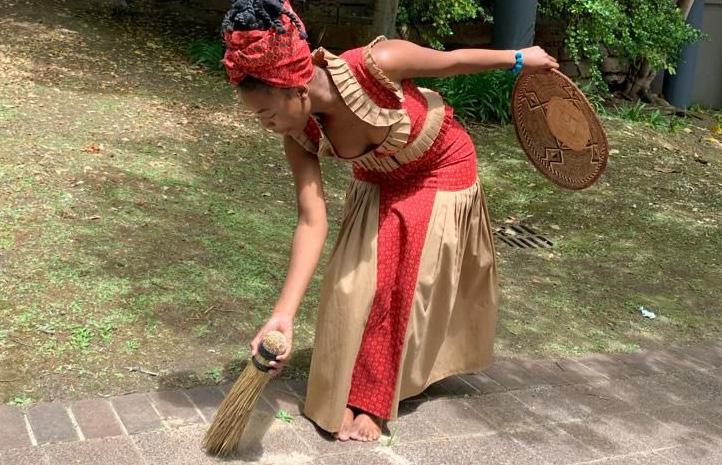
WEAVING HERITAGE INTO FASHION: Zimbabwean Surface and Fashion Design student Amanda Sakarombe showcases her cultural heritage through stunning design creations. PICTURE: Supplied.
WHERE ARE THEY?
Köhler acknowledged facing challenges such as limited career advancement and extended periods away from home.
He overcame these by setting clear goals and dedicating years to self-development. Looking ahead, he emphasises the importance of adapting to technological advancements like mobile journalism and artificial intelligence.
FROM CPUT TO GLOBAL STAGE: Former CPUT journalism student Lorenz Köhler, who covers major sporting events and interacts with football legends like Lionel Messi, proudly flies the faculty’s flag.
PICTURE: Supplied.
ALUMNI BUILDS SOCIAL MEDIA EMPIRE
Philani Nombembe
As Lorenz Köhler reports on major sporting events and interacts with football elites like Lionel Messi, few realise he honed his craft at the Cape Peninsula University of Technology (CPUT).
The award-winning journalist commands a significant following across multiple social media platforms, reflecting his influence in sports journalism. In an interview with FID Pulse, Köhler reflected on his time at CPUT, career milestones, and the evolving sports media landscape.
“My time at CPUT initially diverted me from sports journalism,” Köhler said.
“Learning from great minds like Charles Kings, Gustav Swart, Nic Theo, and Ashraf Jamal broadened my intellectual horizons, making me realise how confined my previous perspectives were.”
He admitted to youthful procrastination, securing a last-minute internship at a sports media house producing shovelware journalism. Despite working without pay for a
year, his passion for the field kept him committed.
“I never left the industry since,” he said.
His journey led him to Media24’s KickOff and later to iDiski Times in Johannesburg, where he flourished.
Joining KickOff was a dream fulfilled for Köhler.
“I convinced the hierarchy to invest in my vision of covering African football,” he said.
This led to a six-week assignment in Egypt for the 2019 Africa Cup of Nations, where he navigated a military state, understood the politics of sport, and expanded his network. His career has since taken him to events in the Ivory Coast, Tanzania, Morocco, the United Arab Emirates, and several Confederation of African Football Award ceremonies across Africa. Köhler leverages his social media platforms to disseminate accurate, verified information.
He offers a variety of content, including online news stories, long-
form interviews, YouTube videos, reels, polls, and interactive posts about his daily experiences.
“I’ve evolved from a journalist to a content creator, which has significantly elevated my opportunities with brands and increased revenue streams,” he said. This dedication has cultivated a loyal community that values informed and engaging discussions.
“It’s about balancing efficiency, entertainment, and knowledge for the audience,” he said. He envisions mentoring the next generation of sports journalists, acknowledging the demanding nature of the profession.
Köhler commands a significant social media presence, with over 127,000 followers on X (formerly Twitter), approximately 1.7 million on Facebook, around 143,600 on TikTok, and a growing subscriber base on YouTube.
He prioritised Facebook to counteract the unauthorised sharing of his articles, ensuring his audience receives information directly from him.
“I was a football fan before a journalist; I know what the audience wants,” he said, focusing on transfer windows and staying close to major teams after relocating to Gauteng.
Köhler’s journey from CPUT to a leading role in sports journalism highlights his dedication, adaptability, and commitment to quality content in a changing media landscape.
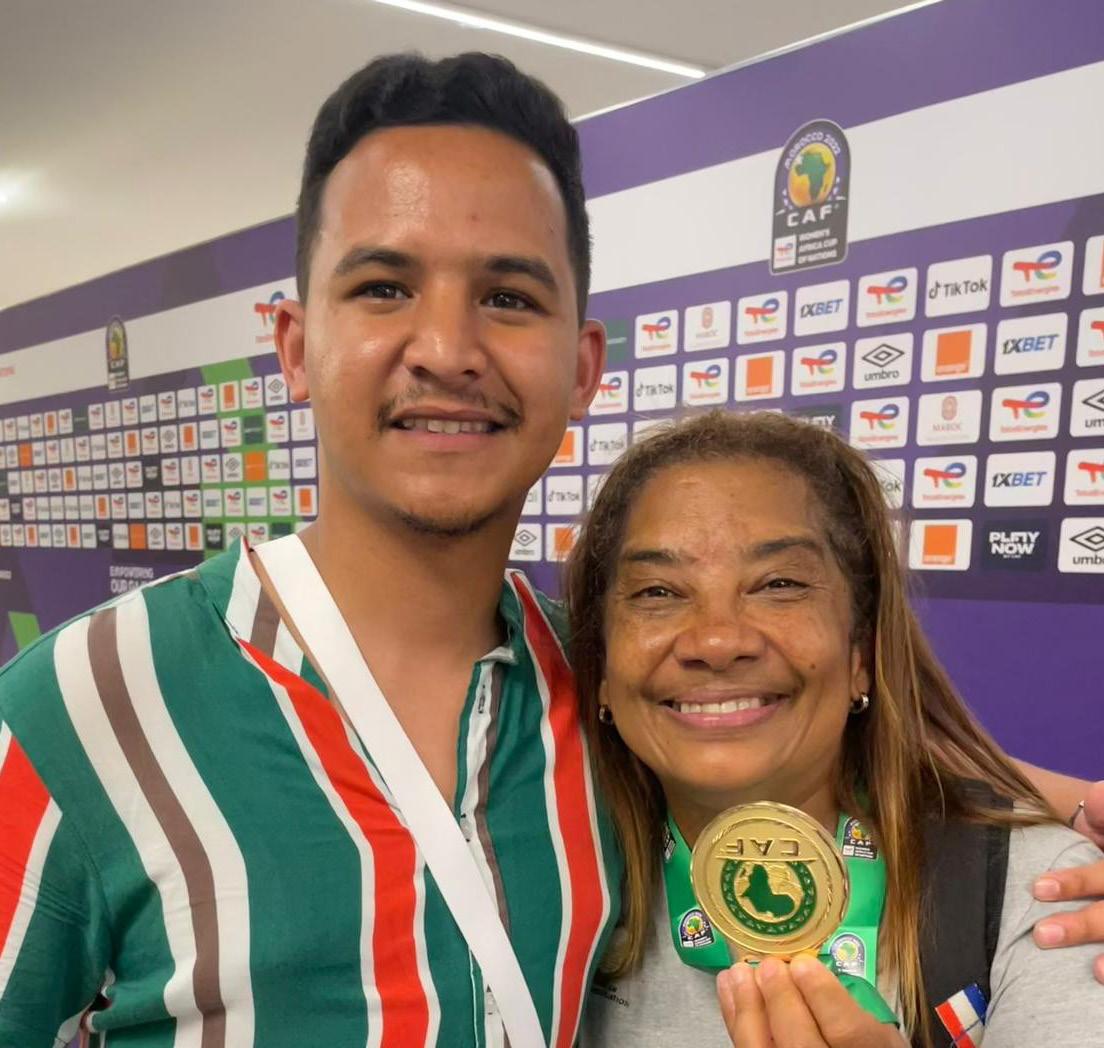
ALUMNUS MAKING WAVES: Former CPUT journalism student and sports reporter Lorenz Köhler shares a moment with Banyana Banyana coach Dr Desiree Ellis.
PICTURE: Supplied.
Applied Design
Fashion
Jewellery Design & Manufacture
Visual Communication Design
Product & Industrial Design
Design Post graduate studies
Design Foundations ECP
Head of Departments
Dr Monica Di Ruvo
diruvom@cput.ac.za
FID Assistant Dean & Acting Research Coordinator
Architectural Technology and Interior Design
Architectural Technology
Interior Design
Architectural Technology & Interior Design (ECP)
Prof Masilonyane Mokhele
Mr Rayner Moodley
Urban & Regional Planning
Information Technology & Multimedia
Urban & Regional Planning
Higher Certificate: Information & Communication Technology Service Management
Information & Communication Technology: Applications Development
Information & Communication Technology: Communication Networks
Information & Communication Technology: Multimedia Applications
BTech and Advanced Diploma in Information & Communication Technology