Brave new world How DSPs cope with uncertainty

Samurai spirit Japan's Affiliates stay calm in the chaos
Brave new world How DSPs cope with uncertainty
Samurai spirit Japan's Affiliates stay calm in the chaos
How RMCs are changing
Reducing risk Why FIDI Netting can prevent fraud





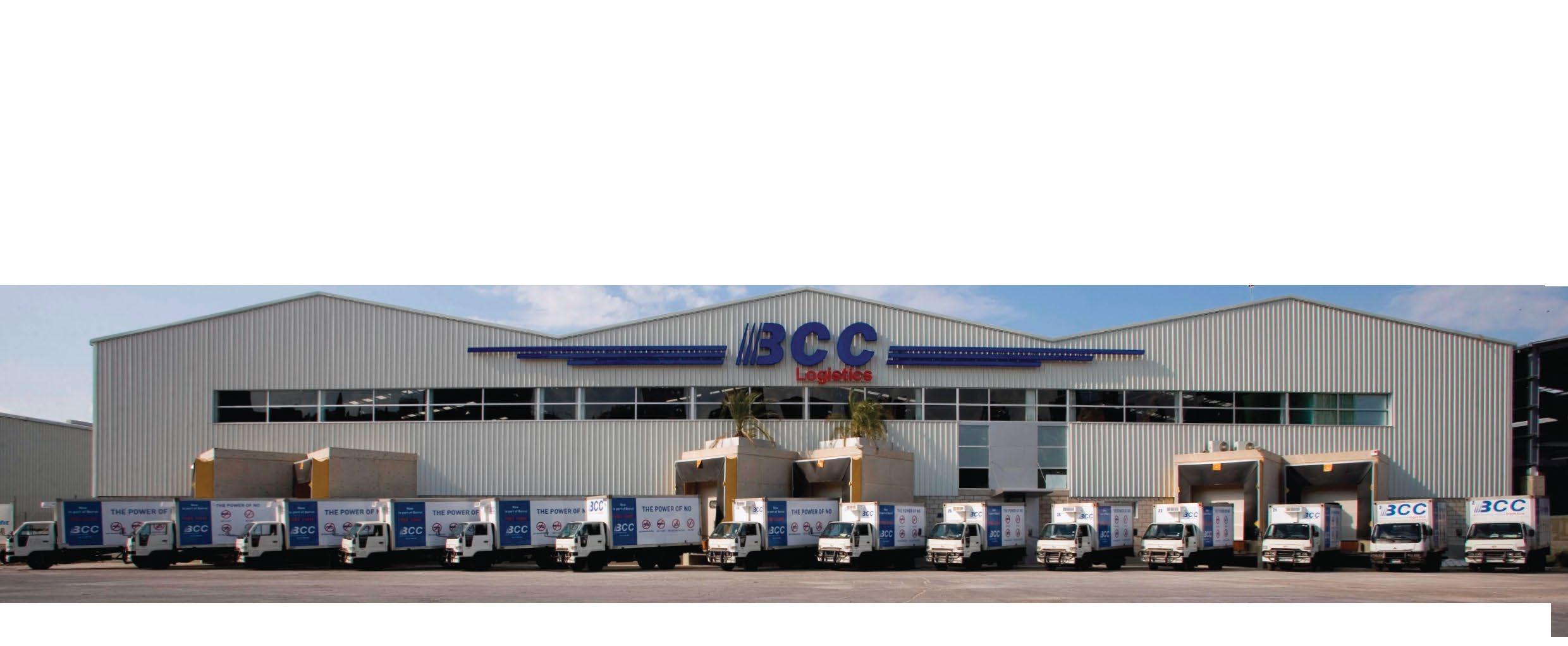
We Solve the Puzzle of Global Moving, One Piece at a Time.

From the UK to the World, Let Eurogroup Handle your Moves. At Eurogroup, we’ve perfected the art of problem-solving in the moving industry. With decades of experience and FIDI accreditation, we’re your trusted partner for seamless origin and destination services in the UK. Master UK removals with Eurogroup. Partner with us. www.the-eurogroup.com or call+ 44 (0)1638 515 335





As FIDI opens registration to its twice-postponed conference – due to take place in Osaka, Japan, in May – President Cédric Castro looks at other milestones the industry will be acknowledging in the meantime
By the time you read this, registration for the 2026 FIDI Conference in Osaka, Japan, will be open and you can book your tickets for this particularly long-awaited event. FIDI originally planned to host its annual meeting in Osaka in 2020, launching at the end of 2019 – and we know what happened next. The event was postponed again two years later. Now, finally, it is set to go ahead in May 2026. Third time lucky.
I know I’m not the only one who is really excited about seeing FIDI friends from around the world and meeting in such a vibrant, fascinating and unique city, which is a bucket-list destination for many. You can find details about the conference venue and social programme on pages 68-74. At the conference – and in the pages of this issue (pages 76-78) – we are celebrating the work of our incredible training institution, the FIDI Academy, which, for years, has given FIDI Affiliates access to the best training on the market, delivered by expert trainers from within our community. It has developed the skills, confidence and networks of the many students who have taken part in its programmes, and brought many tangible benefits to the companies in which they work. Any business that has sent staff members on Academy courses will tell you that the return on investment (ROI) is real and significant.
The pandemic and subsequent (and ongoing) trading challenges have been a test for the Academy, as some businesses have reduced
their spend on training. I would remind anyone thinking of doing this in their own company that, in addition to the ROI, training your people well helps you retain them well, too. Investing in the right employees makes them more likely to stay with your company – that’s a fact.
For the moment, however – and following approval at the most recent Delegates Meeting during October – the Academy will now open its Essentials in Moving (EiM) courses beyond FIDI Affiliates, to the wider industry. Not only will this support the Academy, but it will also help support smaller businesses and improve the pool of talent throughout the industry. Raising standards across the board is good for us all. The LiM remains exclusive to FIDI Affiliates.
Meanwhile, after a dip, it appears that optimism is returning to the industry. The latest Global Business Confidence Barometer showed an uptick in confidence for the third successive quarter. That’s good news for us all.
Finally, FIDI has reached a record number of Affiliates – 623, made up of 474 head offices and 149 branches. Being able to show that you, as a business, are capable of passing the strict FAIM audit is a compelling differentiator that really does make a difference to clients. FIDI’s services to its membership – including FASI, Netting, the Academy, market intelligence and more – continue to evolve and attract the very best operators in the business.
That’s certainly something to celebrate.
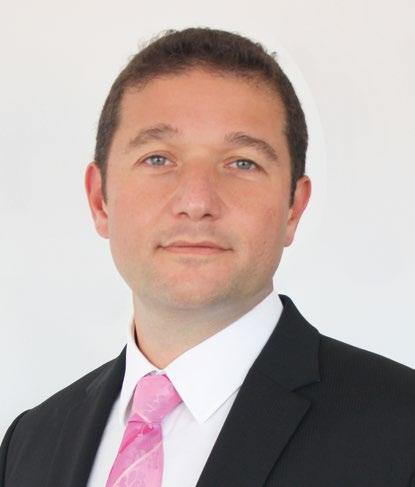
CÉDRIC CASTRO, FIDI President
www.linkedin.
com/in/cédriccastro-43489133
Email:
cedric.castro@ mobilitas.org

Suez shipping to resume; FIDI and IAM attend biodiversity group; IATA disruption tool launched; climate threats to supply chains growing; FIDI at IAM in New York; Bulgarian weigh-in-transit introduced
Andrew Bennett looks at how relocation management companies (RMC) are reinventing their businesses models and the implications for FIDI movers
34-36 THE INTERVIEW
As Graebel Companies marks 75 years, CEO Ron Dunlap reflects on the decisions that have positioned the business so well for the future
38-40 UNPACKING RELOCATION
The RMC model needs to change, argues author Chris Kline
Andrew Bennett reports on the strategies DSPs in the FIDI network are employing to face up to unreliability in their supply chains
42-51 JAPAN
Global and local difficulties have challenged Japan’s Affiliates –but optimism remains. Andrew Mourant reports
18-19 DELEGATES MEETING
The key outcomes of October's online Delegates Meeting and General Assembly by FIDI Customer Relations Manager, Lydia Cope
24-25 BUSINESS CONTINUITY PLANNING
FIDI’s Magali Horbert and Sofie Vertenten discuss the implications of the new requirement for FAIM applicants to have a plan ready for coping with disruption
57 USING YOUR FAIM
FIDI Marketing Coordinator Shola Gallard presents a round up of the ways in which Affiliates can make the most of their credentials

61 FIDI SERVICES
FIDI Netting is helping shield businesses from the rising tide of invoicing fraud. FIDI Business Intelligence Manager Marie-Pascale Frix explains
64-66 FIDI 39 CLUB
Vice President Sonja Tuomela meets the first three FIDI Future Fellows on the new programme
68-74
After two postponements, FIDI is preparing for its conference in Osaka, Japan, in May. FIDI Sustainability & Strategic Communications Manager Magali Horbert tells us what to expect
76-78
FIDI Academy Manager Chantal Fera explains the importance of investing in staff – and and why the FIDI Academy EiM is now available beyond the FIDI community
20 AT A GLANCE
Japan’s moving industries
84-85 OBITUARIES
Maarten van Zutphen; Stefan Chorus; Michael Scott
86 PEOPLE MOVES
Adams takes on head role at Britannia; Bättig is MW's new commercial officer; Stranak takes Graebel CFO position





EDITORIAL
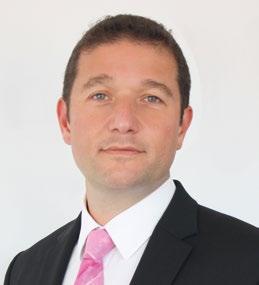
FIDI President Cédric Castro on the longawaited Osaka conference and the latest priorities for FIDI Page 5
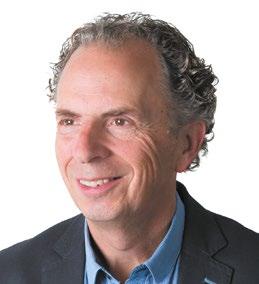
Without good cash flow, new business can become a liability, says FIDI Secretary General Jesse van Sas Page 22
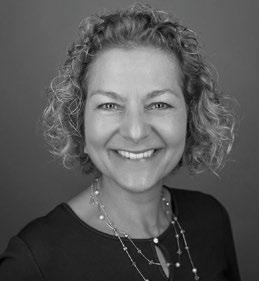
Why cultural intelligence is increasingly important, by Marina Ibrahim from Globility Coaching Page 27
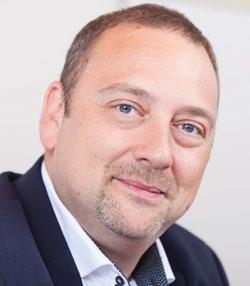
Defining packaging standards is an essential step for the moving sector, says Andreas Eibel of Sobolak Page 58
FIDI 39 Club President Juan Guillermo Diaz on why the future of the industry depends on reinvention and accepting change Page 63
Editor: Dominic Weaver email: editor@fidifocus.org telephone: +44 7305 911 889 web: fidifocus.org
Advertising Sales Manager: Chris Dixon email: sales@fidifocus.org telephone: +44 1223 378 012
Published on behalf of FIDI
+44 1223 378000 web: cplone.co.uk
FIDI GLOBAL ALLIANCE
President: Cédric Castro email: cedric.castro@ mobilitas.org
General Manager: Jesse van Sas email: jesse.vansas@fidi.org telephone: +32 2 421 4751
Communications Manager: Magali Horbert email: magali.horbert@fidi.org telephone: +32 2 426 5160 FIDI Global Alliance



The changing nature of RMC businesses in response to a rapidly evolving market is a topic of huge interest within global mobility.
With every link in the supply chain under pressure, corporate clients are among those cutting costs while demanding greater transparency, speed and efficiency – challenges that are testing the sector like never before.
As you’ll read in our features on this subject, and in interviews with Graebel CEO Ron Dunlap and Chris Kline, author of Unpacking Employee Relocation, the challenge is being met on several fronts. This includes diversification into areas beyond traditional relocations – HR, for example –and building agility and efficiency into business models in ways unseen in large corporations.
Technology is playing a huge role in this transition, as Graebel’s recent US$50m investment in this area shows. Dunlap believes up to 90 per cent of a relocation can be automated –and the mobility sector is no longer holding back
on the significant investments needed to realise the productivity rewards on offer.
As digitalisation accelerates, however, it is being counterbalanced by a rising emphasis on human experience. Here, firms are coming to understand that everything from loyal workforces to engaged clients to successful relocations is driven by empathy and understanding – and that this human factor genuinely contributes to bottom-line performance.
Graebel may be forging ahead with tech projects, but the humanity on which it was founded is more important than ever today. Our articles on cultural intelligence, and on how giving more attention to looking after transferees’ families can make or break a move, highlight examples of this emerging focus.
Both technology and the human side of moving will be showcased at the 2026 FIDI Conference in Osaka, Japan, in May. You can find more details on pages 68-74 about the programme, as well as tips on how to make the most of your visit to this extraordinary city.
DOMINIC WEAVER, Editor, FIDI Focus


Western ships are expected to start using the Suez Canal and Red Sea routes again after the leaders of Houthi rebels behind strikes on vessels linked to Israel declared an end to their campaign.
Although a US-Houthi ceasefire has been in place since May, the Iranbacked Yemen-based militia group has
continued to target vessels with clear connections with Israel, meaning most Western shipping lines have chosen to avoid the Red Sea areas.
However, following the recent IsraelHamas ceasefire, the Houthis have reportedly said they will cease attacks on Israeli-linked shipping and halt the firing
John Mason International has opened its new ‘super-hub’ at AGM Group’s central logistics centre in Thurrock, after relocating its southern UK operations from Hemel Hempstead.
The 141-year old company’s 56,515 sqft (5,252 sq metres) facility at the Queen Elizabeth Distribution Park opened on November 3, just a mile from London’s M25 motorway and 11 miles from London Gateway deep-sea port.
John Mason International says the new hub is ‘designed to handle scale, speed, and growth, ensuring faster and more efficient services for clients across the world’.
All the company’s southern trade groupage will run through the new site in Essex, with imports received and exports loaded directly there.
Russell Start, CEO at AGM Group, said: ‘We are very pleased to welcome John Mason International into AGM Group’s central logistics centre in Thurrock.
‘The new facility, which is strategically located just minutes from London Gateway, will improve logistics capacity and service synergies between our organisations, as well as enhance our ability to service the needs of our valued customers.’
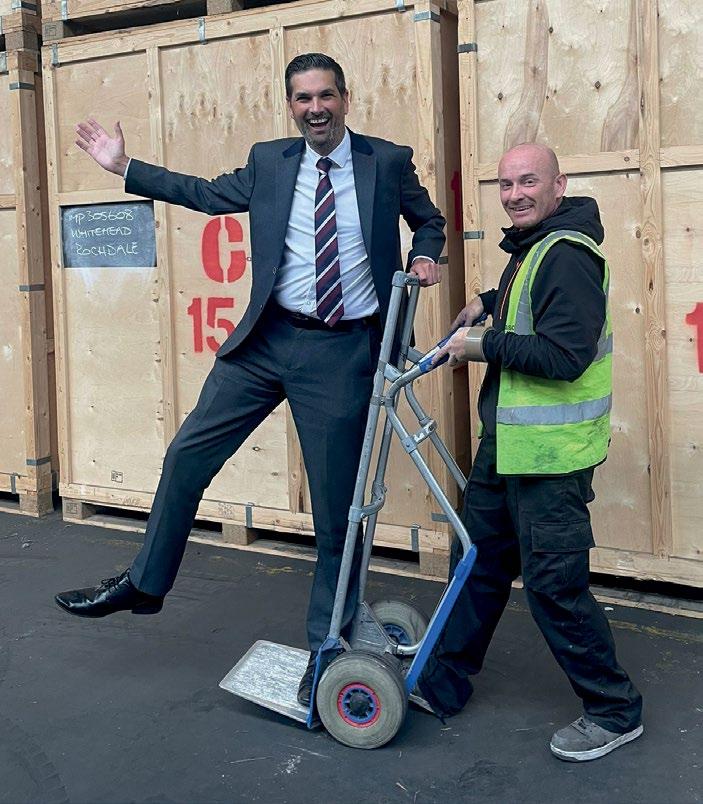
Simon Hood, Executive Director at John Mason International (pictured with John Mason’s Warehouse Manager Alan Yates) said: ‘This is a turning point for us. Thurrock gives us scale, connectivity, and a modern facility that matches our ambition.
‘After years of searching, we’ve found the perfect southern base. This move
of missiles into the country, a campaign aimed to limit use of Israel’s ports.
The article on The Maritime Executive news site said normal shipping flows could be expected to resume in the area ‘after a period of watchful waiting’ – but warned a breakdown in Gaza agreements could reactivate the attacks.
marks the beginning of an exciting new chapter, one where we’re stronger, faster, and better placed than ever to serve our clients across the globe.’
The company is also investing in its northern facilities, with construction underway on a new headquarters in Liverpool.

How to control pest contamination while protecting biodiversity and preserving the efficiency of global trade was the focus when FIDI and the International Association of Movers (IAM) attended a meeting of leading associations, carriers and regulators.
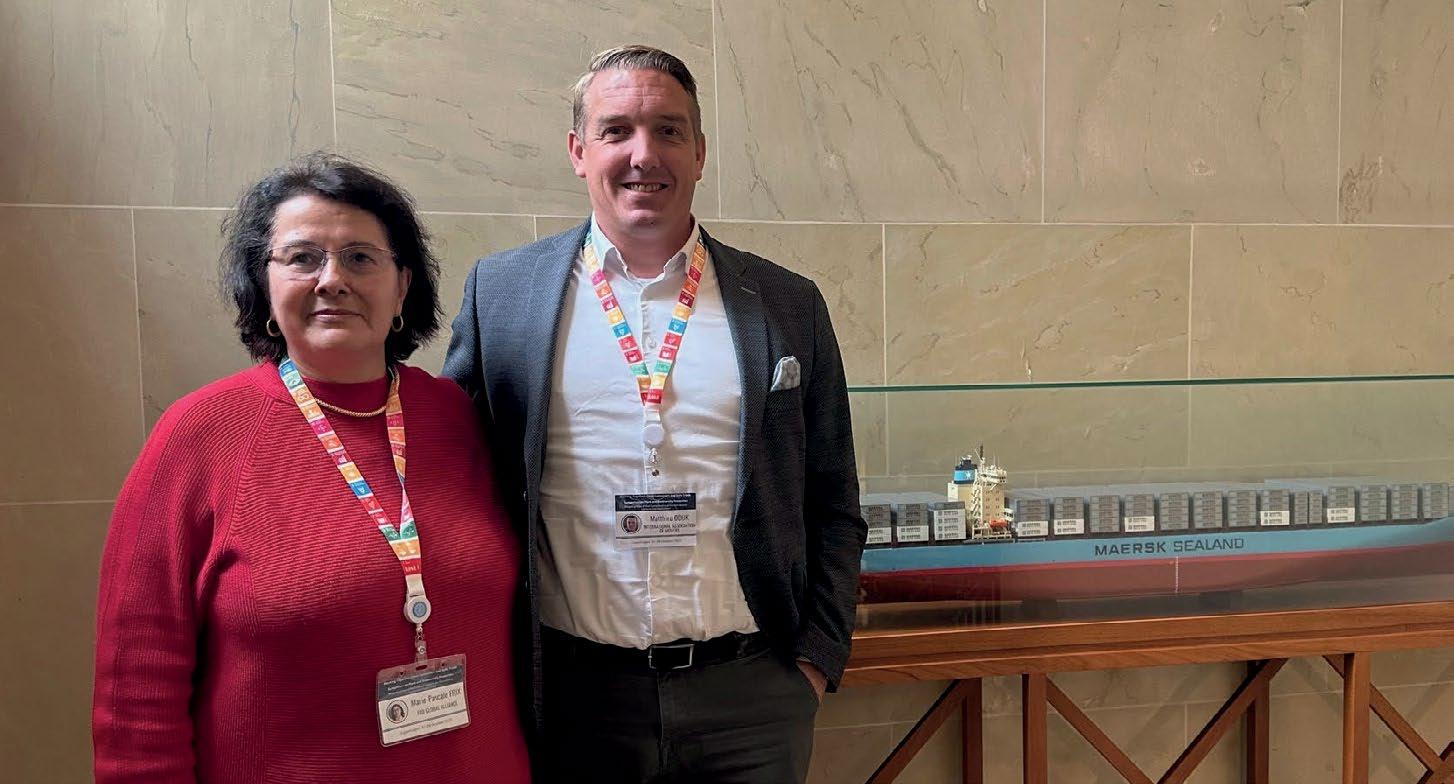
FIDI’s Marie-Pascale Frix and IAM’s Matthieu Odijk attended the Symposium on Plant and Biodiversity Protection: Mitigating Risks of Pest Contamination in the International Containerized Supply Chain, held in Copenhagen in October.
The pair underscored the need for a balanced approach that safeguards biodiversity while preserving the efficiency of trade – and protecting movers from disproportionate liability.
‘If IAM, FIDI, and other trade associations don’t take an active role, custodial responsibility could quickly become a binding regulation imposed on movers, adding costs, administrative burdens, and operational delays,’ said Odijk.
‘Whether we like it or not, our industry is directly influenced by the decisions of phytosanitary authorities,’ added Frix. ‘To avoid regulatory setbacks, it’s crucial to demonstrate that the international moving sector understands the risks of container contamination by invasive species – and has taken proactive steps to address them. That’s why integrating proper protocols into your operational procedures isn’t optional, it’s essential.’
Custodial responsibility refers to the idea that each party that takes control of
a sea container during its journey – from the shipping line to the shipper, to the receiver, and interacting parties such as terminals, agents, depots, hauliers, customs, and others – has a duty to ensure the container remains clean and free from pests while it is in their care.
The symposium highlighted a growing global push toward assigning custodial responsibility for preventing pest contamination in containerised shipping. While the concept is well-intentioned, it raises important operational and liability questions for the moving sector:
l Role of shipping lines: Will carriers cap their liability and shift risk downstream?
l Position of movers: As non-shippers, will moving companies be unfairly targeted?
l Cost and liability implications: Who bears the expense when containers are rejected, causing delays, client frustration, and complications?
It’s clear custodial responsibility aims to get ahead of future environmental and biosecurity challenges. The key question is whether this becomes a workable industry approach or a heavy-handed regulatory mandate.
FIDI and IAM are urging their membership and all international moving companies to stay informed and prepare early.
They said they will continue to monitor developments and advocate for fair, practical policies that protect movers’ interests. They also urged members to begin documenting pestcontrol and inspection procedures now to demonstrate due diligence if regulatory frameworks tighten.
FIDI and IAM said their involvement ensures movers are ‘part of the conversation, not just subject to its outcomes’.
If you have question or comments, email marie-pascale.frix@fidi.org
Get professional marine insurance solutions from experts with over 100 years combined experience. With fully automated online solutions for you, competitive rates from A rated insurers, and peace of mind claims handling for your clients.

A new US policy on temporary visas could increase waiting times in busy locations.
The US Department of State has ruled that people travelling to the country on non-immigrant visas must attend any visa interviews required in their country of citizenship or legal residence.
The new policy, introduced on 6 September, means applicants for temporary visas are no longer able to save time by booking their interviews in third countries.
Applicants from countries with no, or limited, US consulate presence (Iran, Cuba, or Russia, for example), can only

book new appointments at designated alternative embassies.
Meanwhile, the US has proposed a US$250 application fee for most nonimmigrant visas, a substantial increase on current rates of $160 to $190.
People applying for visas to work in the UK will need a higher standard of English language from January.
Those seeking Skilled Worker, HPI and Scale Up visas will require B2 English language – equivalent to A-level standard – instead of the current B1, in a raft of immigration reforms announced by the UK government.
The changes, which come into force on 8 January, were outlined in a government White Paper in November and are aimed at
attracting skilled talent while reducing the country’s net migration.
Other recent new rules include a requirement for nationals of Botswana to have a visa to visit the United Kingdom (effective as of 14 October) and the addition of Palestine to the visa list (from 11 November).
The immigration skills charge is also outlined to increase by 32 per cent, rising to £1,320 (US$1,770) for large sponsors and £480 (US$643) for small sponsors.
India-, Qatar- and UAE-based Affiliate Interem Relocations has announced that it has transitioned to a ‘new and improved’ digital domain, https://interem-relocations.com/
The company said: ‘We request all our clients, partners, and associates to update their records and stay connected with the authentic Interem Relocations.’
It has also updated its official email addresses as follows:
l International enquiries (India): enquiry@interem-relocations.com
l Middle East: rates-me@interem-relocations.com

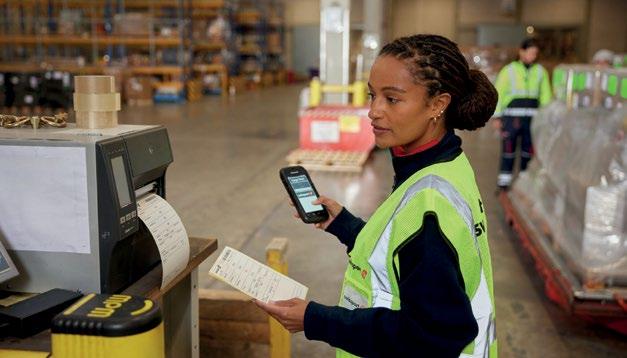
Swissport has opened a new cargo hub at the UK’s Manchester Airport, which it says doubles its handling capacity to 110,000 tonnes a year.
The facility includes advanced cargo handling systems, a dedicated centre for pharmaceutical shipments, and sustainability measures including an ‘A’ EPC rating and infrastructure for a fully electric ground service fleet within two years.
The EU has begun rolling out an entry/exit system that requires non-EU citizens to provide facial and fingerprint scans when entering any of the 28 Schengen countries.
The system, which will detect any drivers who stay beyond the legal maximum of 90 days in the previous 180 days, is expected to cause delays at borders.
Dutch Affiliate Schmidt Global Relocations has announced a change of headquarters.
Its new address is: Schmidt Global Relocations, Parallelweg 80a, 3931 MT Woudenberg, the Netherlands.
Contact us or scan the QR code today, to learn how we can help you unlock the full value of your
and keep your clients protected with ease.
Moving businesses in Bulgaria must build risk and compliance reviews into their processes as standard, after a weigh-in-motion (WIM) system was introduced there, says Stefan Dimitrov of Matrix Global Mobility.
As of 15 October, 10 underground sensor scales are now operational in Bulgaria, automatically detecting and fining overloaded trucks. They were installed several years ago but have only just become legally enforceable.
Dimitrov, who is Matrix’s Group Managing Partner, said the change is a ‘compelling reminder to the global relocation specialists: the “moving” component lives not only in pack-and-ship but in understanding and managing transport risk, infrastructure cost and compliance frameworks’.
He added: ‘First, outbound and inbound household shipments often

rely on heavy road elements: longhaul legs, large containers, trucks with multi-axle configurations. When transport regulation tightens and enforcement activates, carriers must respond with robust weightmanagement, documented load-plans and compliant partners. Second, it shows modern toll-and-infrastructure regimes are evolving: automated inmotion weighing, digital data capture, integrated proof-systems.
‘For FIDI Affiliates committed to the highest quality, this is another area of due diligence: your logistics chain must not only move items but anticipate regulatory intrusion, infrastructure-risk and cost volatility.
‘We recommend reviewing your transport-partner criteria for jurisdictions where WIM enforcement exists or is coming; strengthening your internal load-audit processes; and communicating with corporate clients about how infrastructure regulation influences costing, risk and timing of moves. In the age of mobility, operational excellence means being regulatory-ready – not just service-ready.’

The World Shipping Council (WSC) has launched a new AI-based screening tool to detect misdeclared and undeclared dangerous goods in shipping containers. It launched the initiative as part of its Cargo Safety Programme, to improve the capacity to identify fire risks and increase protection for crews, ships and the environment.
Carriers representing more than 70 per cent of global 20-foot equivalent units capacity have joined the scheme, which is based on National Cargo Bureau technology and scans millions of bookings using keyword searches, tradepattern recognition and AI algorithms to identify potential risks. Alerts are
FIDI has joined FEDEMAC and the Austrian Movers Transport Association (ÖMTV) in supporting a proposal for a new emoji representing the moving profession.
The idea was originally put forward by Marc Weinard, editor-in-chief of logistics magazine Der Möbelspediteur, and has since been developed by Karin Lang and Manuela Stocker of ÖMTV. Inspired by similar campaigns from other essential services, such as postal workers, the goal is to create a dedicated emoji that reflects the vital – and often overlooked –work of professional movers.
The project aims to submit a formal application to the Unicode Consortium,
reviewed by carriers and verified, if needed, by targeted physical inspections.
Ship fires are at their highest level in a decade and a quarter of all cargo incidents are caused by misdeclared goods, according to maritime insurance provider Allianz’s Safety and Shipping Review 2025.
Joe Kramek, WSC President and CEO, said: ‘We have seen too many tragedies where misdeclared cargo has led to catastrophic fires, including loss of life. The WSC Cargo Safety Program strengthens the industry’s safety net by combining shared screening technology, common inspection standards and realworld feedback.’

the organisation that oversees emoji standards across platforms such as Apple, Google, Microsoft and WhatsApp.
The inspiration came from observing the efforts of postal service representatives, who have been campaigning for their own emoji, said Stocker. ‘An emoji might seem a small thing,’ she added, ‘but in our digital lives, symbols matter. A mover emoji would be a meaningful way to show who we are and what we do.’
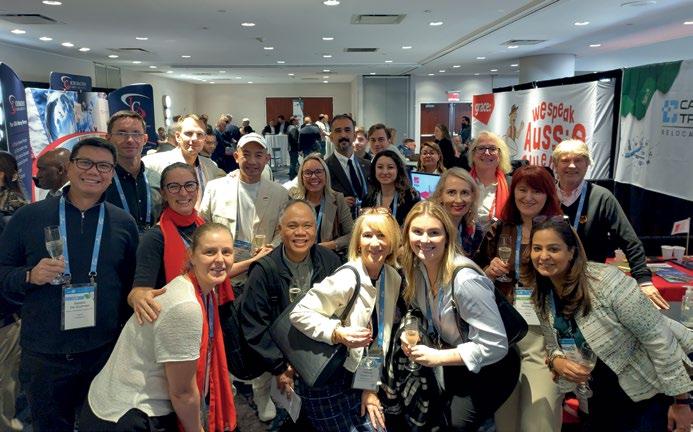
The FIDI team was delighted to exhibit at the 63rd IAM Annual Meeting in New York at the end of October.
The FIDI booth welcomed hundreds of visitors during the event and the team thoroughly enjoyed welcoming everyone with Belgian chocolate, good coffee, and great conversation. We met many Affiliates, our industry partners, suppliers, applicants, and prospective members interested in joining FIDI.
We attend IAM so we can attract new members to the network, explain the
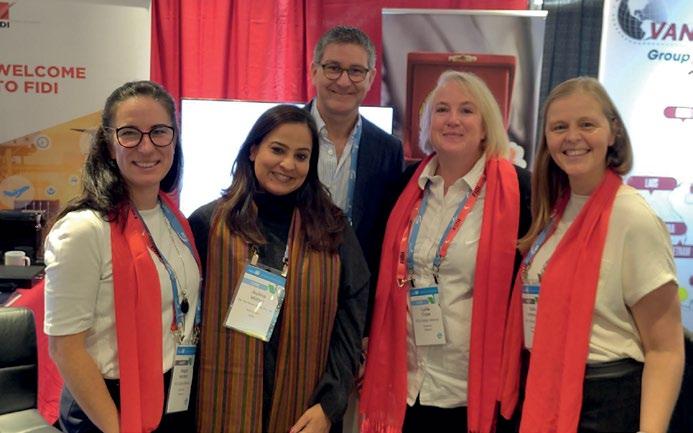
application process in full to them, and support current applicants with any help they need in understanding and implementing the FIDI-FAIM processes.
The flurry of new FIDI applications received immediately after IAM is testament to why we attend every year.
We also had the opportunity to host our annual new Affiliates’ Welcome cocktail and FIDI 39 Club social hour events at the booth.
Thank you to everyone who attended. We are looking forward to exhibiting again in San Diego in 2026.

DP World has signed a memorandum of understanding with ITOCHU Corporation in Japan, to expand logistics, supply chain infrastructure, and distribution capabilities in subSaharan Africa.
The agreement, signed during the Tokyo International Conference on African Development (TICAD9) held in Yokohama, will see the firms explore opportunities to enhance connectivity and market access across Africa, supporting Japanese businesses seeking to grow their presence on the continent.
Initial focus will be on fleet and logistics operations, supply chain optimisation, and the distribution of commodities and food products.


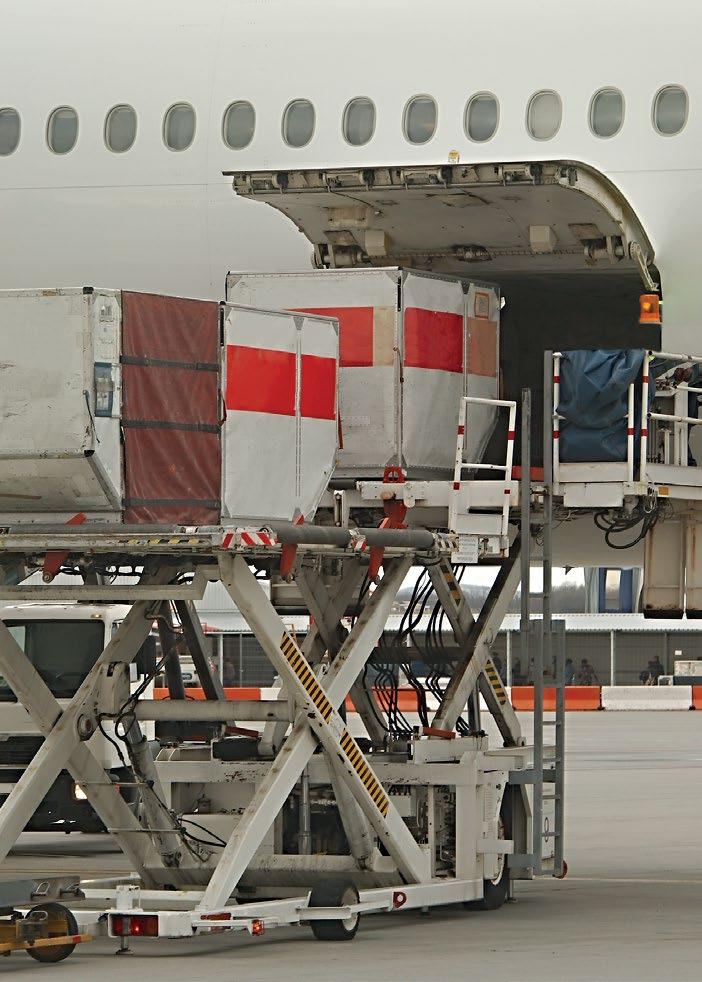
The International Air Transport Association (IATA) Cargo Handling Council (ICHC) has launched a framework to help cargo and supply chain stakeholders prepare for operational disruptions.
The free tool also gives an overview of how to deal with risk mitigation, resource protection and business continuity, according to principles of ‘proactive preparation, stakeholder collaboration, flexible planning, and continuous improvement’.
The document highlights potential scenarios of disruption, including cyber threats and technology failures, staff shortages and the shutdown of facilities, with practical strategies to manage them.
‘By embedding contingency planning into quality management systems and aligning with IATA best practices, the framework empowers organisations to maintain service reliability and operational integrity even in times of crisis,’ said IATA.
A PDF of the framework can be downloaded on the IATA website, iata.org.
Climate-related risks to supply chains are on the rise, according to a new white paper by insurance and risk management services firm TT Club.
The publication says ports, terminals and logistics operations are significantly impacted by hazards arising from climate change.
With nine out of 10 major ports now affected, and around 80-90 per cent of worldwide trade passing through ports, there are clear effects on international supply chains, operational models and the global economy.
The white paper also details risks caused to logistics by geopolitical factors, and provides a practical framework for businesses to understand climate risks.
See ttclub.com
The organisation has also released 2026 editions of its manuals, with major updates affecting cargo transport.
The guides – including Dangerous Goods Regulations, Battery Shipping Regulations, Live Animals Regulations (LAR) and the Ground Operations Manual – feature nearly 100 updates to reflect evolving safety, regulatory and digital standards.
They include:
l New names for shipping hybridpowered vehicles, stricter charge limits and revised passenger guidance on power banks
l Updated requirements for containers, training guidance for attendants, and new standards for species such as poultry and raptors
l Baggage tracking based on IATA Resolution 753
l Introduction of LAR Verify for automated compliance, a digital dangerous goods list and an upgraded tool for classifying battery types (including sodium-ion batteries).
Frédéric Léger, IATA’s Senior Vice President of products and services,
said: ‘This year’s IATA manuals updates reflect advancements in technology, digitalisation, regulation and customer needs that are critical for safer, more efficient and increasingly sustainable operations.
‘It helps to plan adaptive responses, with the aim of improving resilience.
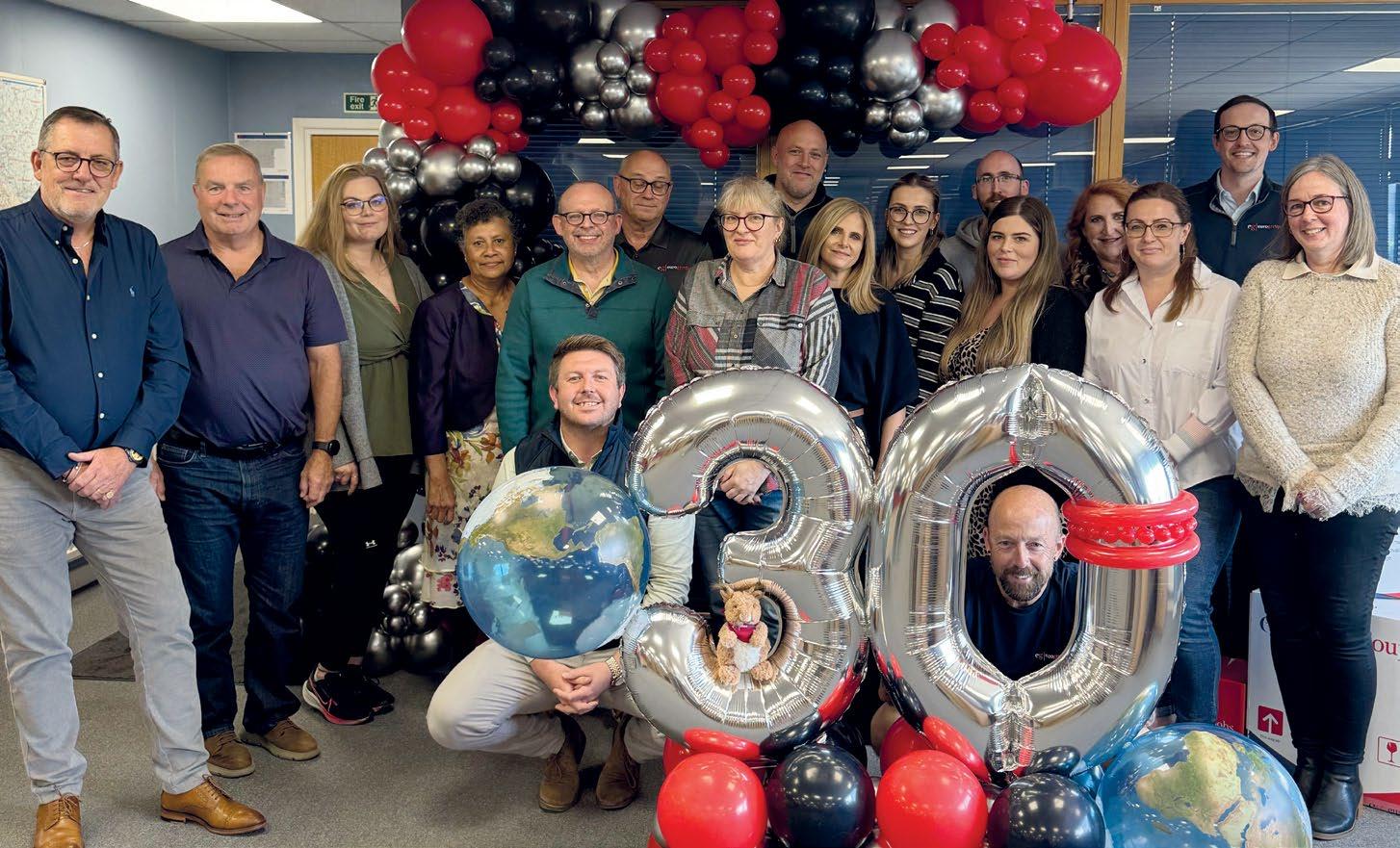
The Eurogroup has celebrated its 30th anniversary in the international removals sector.
Owner Tony Tickner said: ‘From our beginnings in 1995 to becoming a global
leader, the Eurogroup has helped thousands of families and businesses move over the past 30 years.
‘I’m incredibly proud of what we’ve built. It’s been an amazing journey.’


FIDI Customer Relations Manager Lydia Cope reports on the outcomes of the online Delegates Meeting and General Assembly held on 14 October
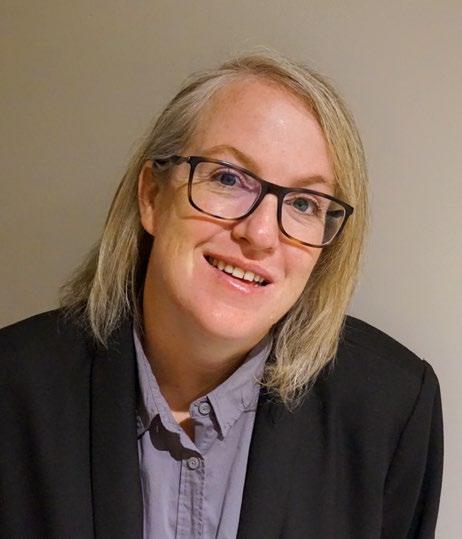
The latest FIDI Delegates Meeting and General Assembly was a full session, involving representatives of all 26 FIDI Associations. As usual, there was a lot of debate and discussion on key FIDI topics. Here is a summary of the items and decisions made:
Membership numbers were at a record high of 623 at the time of the Delegates Meeting. There is also a healthy pipeline of prospective members and applicants in the FAIM pre-audit preparation stage, suggesting that membership numbers going into 2026 will remain well over the 600 mark. Affiliates were invited to keep taking part in surveys for the quarterly FIDI Global Business Cycle Barometer, which currently indicates cautious optimism among the FIDI community about the state of the industry.
There was a marked decrease in subscriptions to seminars and online webinars during 2025, despite 90 per cent satisfaction scores from participants. To ensure the health and survival of the FIDI Academy, the EiM course will be opened to members of other industry associations, in the hope of boosting participation numbers and FIDI membership interest.
At the time of the meeting, there are no FASI payouts expected for 2025, which means the upper FASI bandwidth may be reached, leading to a reduction in Affiliates’ FASI contribution in 2026 should no payouts happen in the last weeks of 2025. New FASI rules –and new FASI rules for FIDI-DSP – were presented to Delegates and approved by the General Assembly.
Among the key changes are the inclusion of DSP services and funding methodology details for FASI.
The new FAIM 3.4 Standard was presented by FAIM Quality Manager Sofie Vertenten, with the changes covered in detail on page 24-25 of this edition. The FIDI-DSP 1.1 Standard has also been reviewed to cover the same process changes as in FAIM 3.4. Both the FAIM 3.4 and FIDI-DSP 1.1 Standards were approved by the General Assembly. The standards and supporting documentation are available for download on FIDINET.
FIDI Austria representative Andreas Eibel introduced the topic of how we can strengthen quality in operational packing and loading. He proposed best practices and peer-to-peer packers training, while suggesting that a gold standard for packing would also allow FIDI Affiliates to choose the best partner for their clients. The motion was supported by other FIDI Associations, and the FIDI Board and FIDI office will now work further on tackling this important topic.
FIDI’s Communication and Marketing Manager, Magali Horbert, presented new developments in the FIDI Carbon Footprint Calculator, which now includes packing material and improved reporting functionality. A key feature is a new reporting template that allows Affiliates to easily input data and generate a quick and accurate carbon footprint report for their company.
Registration for the next FIDI Conference in Osaka, from
10-13 May 2026, are open. Numbers are capped at 650 attendees, so early registration is recommended. Buenos Aires was approved by the Delegates as the location for the FIDI Conference in 2027, which will take place from 10-13 April. The event will be held in Germany in 2028 and in the USA in 2029.
FIDI 39 Club Vice President Sonja Tuomela talked about the launch of the FIDI Fellows programme and confirmed that registration is open for the FIDI 39 Club’s Future Mentorship and Scholarship programmes. Affiliates can follow the FIDI 39 Club social media channels – LinkedIn, Facebook and Instagram – for the latest news and developments.
At the request of the FIDI Board, the General Assembly approved the new membership pricing structure for DSP companies. This allows FIDI to align its pricing with similar industry association costs, making it more competitive. The fee for DSP associate members and applicants is now €1,850 a year, which includes audit, membership, FASI and netting fees.
This is working flawlessly and exceeding the expectations of the FIDI Board and FIDI office. During September and October, more than €6.5m was reported into the netting system, with more than


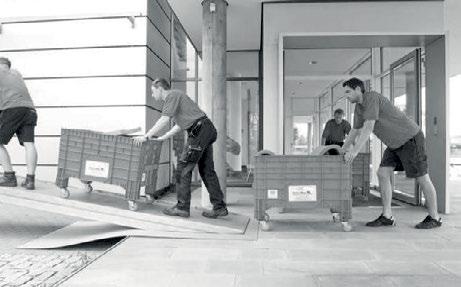
2,000 invoices uploaded monthly. Members who have not yet subscribed are invited to sign up.
FIDI Treasurer Marcel Jörg reported on the forecast for 2025 and the budget for 2026, which was subsequently approved during the General Assembly. The full financial reports are available to download on FIDINET. Because of ongoing inflation, the FIDI Board has applied a 5.45 per cent index for full Affiliates and affiliated Branches in 2026, to ensure its revenues stay in line with rising costs. This was approved by the General Assembly.
The Board Nomination Committee (BNC) initiated the search for a new FIDI Board member on 3 November, to be nominated for election by the General Assembly in Osaka, on 13 May 2026. The deadline for applications is 15 December 2025. Affiliates are invited to apply or nominate industry colleagues for this critical executive role. Positions on the FIDI Quality Supervisory Committee (FSQC, formerly FSC) and BNC Committee will also become available in 2026, with a call for applications due to be launched in January.
The next Delegates Meeting is due to take place in person during the FIDI Conference Osaka, on Sunday 10 May 2026, with the General Assembly on Wednesday 13 May. The full minutes of the latest governance meetings are available to download on FIDINET.
“FIDI Netting is working flawlessly. During September and October, more than €6.5m was reported into the system”


Japan’s global economy size ranking
Tariffs agreed between Japan and the US
845,000
4th 15% 29%
Japanese companies operating in China 56,000+
Chinese nationals in Japan (as of December 2024)
Population aged 65 or over
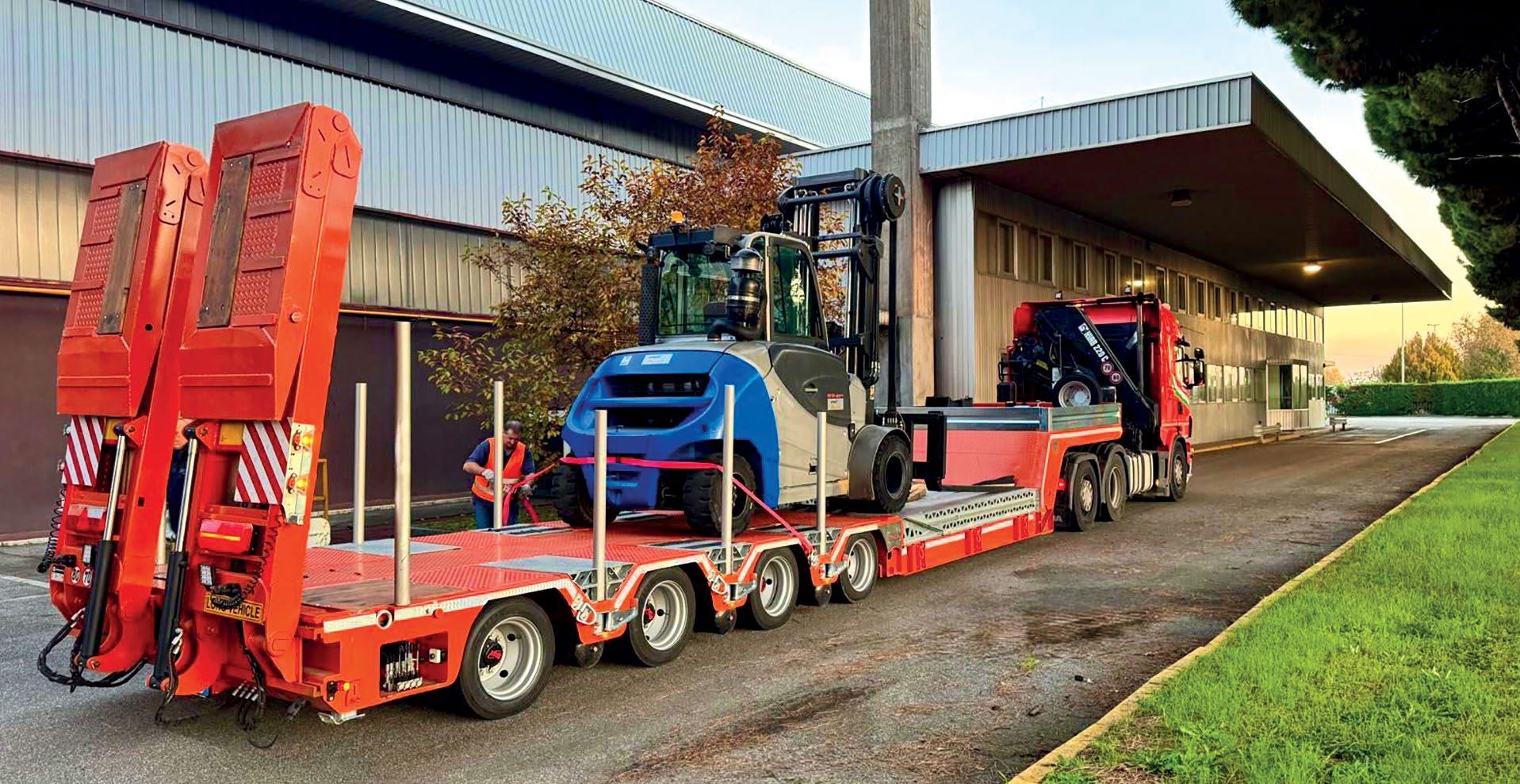
Franzosini International Movers, a leading company in Italy in the logistics and relocation sector, has inaugurated its new operational and administrative headquarters in Via Lazzaretto 5/7, Inveruno, in the industrial heart of Milan.
This decisive step marks the beginning of a new chapter for the company, as it aims to strengthen its presence in northern Italy and further optimise the efficiency of its services to both private and corporate clients.
Located just 15 minutes from Milan Malpensa Airport, the site enjoys a prime logistical position for managing international freight flows. Moreover, its proximity to one of Europe’s main logistics hubs will allow Franzosini to offer faster response times, greater operational accuracy, and increasingly competitive services for international shipping and relocations.
With this new opening, Franzosini reaffirms its commitment to innovation and sustainable growth, strengthening its role as a reliable partner in the international logistics landscape.
The new headquarters covers an area of 25,000m², and is designed to accommodate vehicles and more than 500 containers for the functional and secure storage of goods and documents. The scale and modernity of
the facility enable optimal management of logistics operations, improving process efficiency and the quality of service offered to private clients, companies, and institutions alike.
“We are excited to begin this new chapter in a facility that reflects our vision: dynamic, connected, and service-orientated,” said the company’s management.
“This investment represents not only an infrastructural upgrade, but also a concrete commitment to innovation, efficiency, and customer-centricity.”
With this move, FMN Logistics group – Franzosini consolidates its leadership in the sector by focusing on cutting-edge technology, integrated logistics, and an increasingly global network.
The relocation of the new headquarters marks a key milestone in the company’s growth and development strategy, as it positions itself to meet the challenges of the future.



Big wins may look great on paper, but if they’re not accompanied by good cash flow, they can push even strong businesses to the brink. FIDI Secretary General Jesse van Sas tells us why
One of my former employers in the moving business repeated this saying many times:
‘Revenue is vanity, profit is sanity.’ It still rings true – but in today’s business environment, it’s important to add a third dimension: cash flow. If you want to be strategic, you start with reality, and reality is how money moves.
Next time you celebrate a great win for your company, such as securing a large contract for a global corporate customer, have a look at your CFO’s face. Sales and management may be cracking open a bottle of champagne to toast the success, but your CFO will have a very worried look. Why? Because implementing a large contract requires a lot of upfront cash. Creation of bespoke IT reporting systems, extra staff, training, on-boarding suppliers, and more, all costs a lot of money – and usually before the revenue begins to roll in.
Booking a large contract, while a fantastic win for your business, is almost certain to put your company under financial strain. Sure, securing contracts looks great and are a boost for the morale of a company, and once the revenue makes it into the profit and loss account everything looks
wonderful. However, that is not the whole story. Numbers on paper can be deceiving; the movement of money tells us the real truth. I’ve seen companies that look profitable but are constantly strapped for cash, and are therefore often in imminent danger of collapsing.
At one company, 40 per cent of its annual revenue was collected in just two months of the year. On paper, the business looked healthy. In practice, it was gasping for liquidity. The fix wasn’t a new marketing campaign or cost cutting, but rather securing a lending facility tied to receivables. That single move changed the trajectory of the business. The owners could breathe again and found time to further develop their service offering.
Another company booked a contract that tripled its annual revenue. Every entrepreneur’s dream – but there was no cash plan behind to finance this huge expansion. The result was a cash squeeze that throttled the rollout and brought the company to the verge of bankruptcy, by the sheer lack of cash.
These experiences taught me that cash-flow planning is about being prepared, rather than simply being conservative. It gives you the power to say yes when opportunity knocks and the resilience to survive when the unexpected hits. So, let’s rewrite that old saying: ‘Revenue is vanity. Profit is theory. Cash flow is reality.’ And if you want to be strategic, start with the reality. I will leave you with this question: how often do you treat cash-flow planning as a priority rather than an afterthought? In a world where uncertainty is the only constant, those who master cash flow will be those whose businesses thrive.


Every relocation business must be ready to rise above unexpected hurdles and, under the new FAIM 3.4 Standard, FIDI Affiliates are now required to prove they can stay operational when disruption hits. FIDI Sustainability and Strategic Communications Manager Magali Horbert sits down with Sofie Vertenten, Quality Project Manager at the FAIM Coordination Centre, to get insights
When disaster strikes, how confident are you that your business can keep its essential operations running and recover smoothly? It’s a question most companies dread investing time and effort into, and one that is often ignored until experience proves costly. However, every professional moving, relocation and destination services company needs to be ready to answer it.
From cyber attacks to floods or other natural disasters, and supplier collapses to sudden political unrest, disruption can come from many directions.
Under the new FIDI-FAIM 3.4 Standard – which is coming into effect in early 2026 – FIDI Affiliates will be required to demonstrate not only that they understand the risks to their business, but also that they have a clear, practical plan to keep operating if those risks become reality.
As Sofie Vertenten, FIDI’s Quality Project Manager, explains, the new requirements on Business Continuity Planning (BCP) go far beyond ticking a compliance box. ‘This is about resilience,’ she says. ‘A Business Continuity Plan helps you think through what matters most in your operations, and makes sure you are prepared to protect your people, your customers and your reputation when the unexpected happens.’
The BCP is part of the broader risk-management framework, which was part of previous FAIM Standards, but now receives stronger emphasis under FAIM 3.4. This includes clear requirements on what a BCP should include and how it should be maintained.
This focus is mirrored by the new FIDI-DSP 1.1 Standard. It requires every FIDI-certified company to identify its critical processes and prepare procedures for continuing operations in the case of major

disruption to business. That means being ready for anything – from a power cut or cyber incident to warehouse damage or a key supplier failure.
For relocation companies, the stakes are high.
A single disruption can have a domino effect across shipments, partners and clients. Just as importantly, it can quickly drain a company’s finances.
‘In our industry, delays mean lost revenue,’ says Vertenten, ‘and, if operations stop, income stops too. If you can’t respond fast, the disruption can hurt your reputation and hit your bottom line.’
A well-designed BCP protects against crisis. It safeguards your business continuity and your financial stability. Corporate clients and RMCs increasingly assess their suppliers’ ability to manage risk and stay operational. Having a tested, up-to-date plan in place shows professionalism, reliability and accountability.
Under the new FIDI-FAIM Standard (section FD 5.10), each certified company must maintain a documented Business Continuity Plan that includes:
l Identification of core processes and the systems or suppliers on which they depend

l Clear accountability, with a plan owner and crisisresponse team
l Activation criteria, defining when the plan should be triggered
l Continuity procedures for at least four critical areas: IT and data, facilities, supply chain, and workforce
l A Disaster Recovery Plan and an Incident Response Plan, particularly for cyber incidents
l An internal and external communication plan
l Annual testing, review and staff training.
Auditors will look for evidence that the plan exists, is reviewed, and that staff know what to do in practice. It must be a living document, not something written once and forgotten. If no-one knows where to find it or how to activate it, valuable time will be lost – and, in a crisis, every minute counts.
As Vertenten notes: ‘It doesn’t have to be complicated or expensive. The key is that it’s practical, tailored to your company and tested regularly.’
For many companies, the first challenge is simply getting started. FIDI’s Business Continuity Plan Guide, published in October 2025, offers a step-by-step approach that Affiliates can use to identify critical processes, assign responsibilities, develop response procedures and keep plans updated.
‘Start small and focus on your most essential operations. Ask yourself: if this process stopped tomorrow, what would happen? Then build your plan around keeping those processes running,’ advises Vertenten, who emphasises the importance of linking the BCP to your risk register and cyber-security plan, for consistency across your management systems.
A BCP is useful not only in a crisis, but also for helping leaders understand their organisation’s dependencies and make better decisions as a result. ‘Every time you map out your core processes, or review your suppliers, there are valuable lessons to learn about your business,’ says Vertenten. ‘It’s a way to make your operations stronger, not just protect them.’
A strong BCP contributes to greater efficiency, reduced downtime and a culture of preparedness. As Vertenten concludes: ‘Continuity planning is not about predicting what’s going to happen to your business in the future. It’s about being ready for it.’
The FIDI Business Continuity Plan Guide is available to download on FIDINET. If you have questions about FIDI Quality Standards or the FIDI-FAIM and FIDI-DSP Compliance Procedures, email the FAIM Coordination Centre at fcc@fidi.org
“Every time you map out your core processes, or review your suppliers, there are valuable lessons to learn about your business”

Cultural intelligence quotient, or CQ, is an essential skill for global leaders, helping them bridge difference, build trust and thrive across borders. Marina Ibrahim, Founder of Globility Insights, asks how is yours?
When international assignments fail, it’s rarely because of logistics hiccups. While most global mobility professionals know how to handle visas, shipping or orientation briefs, the challenges that can derail relocations – and international team integration – often stem from something far less visible: cultural misunderstanding.
You’ve ticked every box on the relocation checklist. Flights booked. Flat found. School enrolled. But within months, the assignee is disengaged, the team dynamics are tense and performance is slipping. What’s gone wrong?
In addition to the move itself, global mobility is about preparing people to lead, work, and live – and thrive – in different cultures. Soft skills are becoming the hard currency of success. At the heart of these soft skills lies one increasingly vital capability: cultural intelligence quotient, or CQ.
CQ refers to a person’s ability to function effectively in culturally diverse settings. It’s more than etiquette rules or avoiding clumsy faux pas. It’s about being able to read between the lines, adapt behaviour, and communicate with empathy and awareness, even when things feel unfamiliar.
Today, cross-border work is the norm –regardless of tightening immigration rules around the world. From hybrid teams to virtual leadership across time zones, managers are constantly navigating cultural complexity. But traditional training often overlooks the deeper layers of culture: values, decision-making styles, power dynamics, and emotional expressiveness.
Without CQ, even well-intended managers can struggle. For example:
l A UK leader might be seen as too blunt in Japan.
l A German manager might frustrate their Brazilian team with overly structured timelines.
l A US executive may misinterpret silence from Finnish colleagues as disengagement, when it’s actually a sign of respect.
So, what makes a culturally intelligent leader? Here are four key traits I see time and time again in successful cross-cultural managers:
1 Cultural curiosity
The best leaders approach difference with interest not judgement. They ask questions, seek perspective and resist assumptions.
2 Inclusive communication
Culture, tone, timing and body language all

vary. Culturally intelligent leaders adapt their style without losing authenticity.
3 Empathy across difference
Cultural empathy is the ability to understand how someone’s context shapes their behaviour – and respond accordingly.
4 Agility in uncertainty
The best leaders hold space for ambiguity, change, and multiple ways of doing things.
Technical expertise can get someone to a global leadership position, but it’s cultural intelligence that determines whether they thrive. However, most mobility programmes prioritise process over people. Forward-thinking firms do the following:
l Integrate cultural agility development into leadership training.
l Provide tools for cross-cultural self-awareness and team diagnostics.
l Support international assignees with tailored coaching or mentoring.
Working closely with international leaders and teams, I’ve seen how developing CQ transforms collaboration. It builds trust faster, reduces conflict and enables more inclusive decision-making – all of which are essential in a global business landscape.
Cultural advantage
The future of global mobility lies in understanding not just where people are going, but who they are becoming. When we equip leaders with the cultural intelligence to bridge differences, we reduce risk and unlock people’s potential.
As you plan your next cross-border team alignment, ask yourself: Have we prepared for the human side of working globally?
“Soft skills are the hard currency of success in international assignments”

Cultural intelligence belongs at the heart of every successful international assignment.
About the author
Globility Insights, founded by cultural agility expert Marina Ibrahim (www.linkedin.com/in/marinaibrahim), equips leaders and teams to turn cultural differences into strategic advantage. www.globility-insights.com

For years, relocation management companies (RMCs) have occupied a dominant position in the global mobility world. Now - thanks to changing attitudes of corporate clients, who wish to see more transparency, and the greater influence of technology platforms – is their operating model changing? Andrew Bennett spoke to leaders at three international moving companies, who gave their thoughts on what the future might hold for RMCs and how this could affect FIDI Affiliates

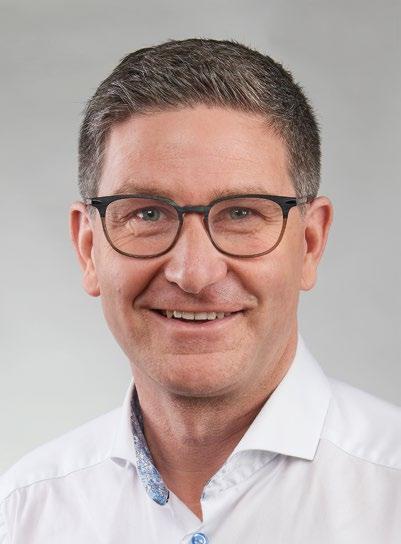
Marcel Jörg, Gosselin Moving Headquartered in Antwerp, Belgium, Gosselin Moving is a large international moving company with a European network of removal firms –and Marcel Jörg is its Chief Executive Office and FIDI’s Treasurer and Board member.
While he has seen ‘little change’ in the way large RMCs work, Jörg believes a new era is coming, driven to a large degree by technology.
In terms of recent dynamics in the RMC market, he says: ‘The good news is that some have finally implemented APIs [application programming interfaces] with their main providers.’
These APIs allow different software programs to communicate with each other, meaning better data accuracy, faster transfer of data, and time saving for all parties involved, including the moving companies.
‘We have also seen changes in RFPs [requests for proposals],’ Jörg says. ‘While the focus was previously on sustainability, and diversity, equity and inclusion, it has shifted to cyber security in recent years.
‘As a household goods moving provider, this requires us to adapt quickly and ensure we not only give the right answers during an RFP, but also elevate our performance in the application of those topics.’
As a result of reduced returns on home sales in the US, Jörg believes pressure has increased to focus on profits on the international side of mobility programmes.
‘The referral fees on our services are retained, if not increased, even if the corporate customers are seeking more transparency in pricing.’
Along with moving companies, RMCs are having to adapt to the onrush of new technology, but Gosselin Moving’s CEO still sees a role for humans at crucial points of the moving process.
‘There will always be companies that are between the first- and final-mile service delivery companies and the corporate customer,’ says Jörg.
‘The corporate clients will continue to work with one global partner that manages their mobility programme. Yet, the RMCs that will thrive to fulfil that mission at a lower cost base will be driven by technology and move away from an army of people who manage relocations with emails.’
He adds: ‘I doubt that all of today’s market leaders will succeed in the massive shift that is required. I foresee that some of them will be replaced by tech companies that enter this industry. We are entering a world in which the relocation process can be managed by IT solutions, bots and AI agents.
‘RMCs, as well as their suppliers, have to work on having the right technology in place. Humans

will be involved in first- and final-mile services, as well as moments when the technology that manages the relocation process will fail, when unforeseen events occur.’
Technology has caused huge disruption across many industries and Jörg believes RMCs will need to adopt the model that the technology platform companies use: ‘There is no other way. The human touch is required at the first and final mile, but not in the coordination of dates and information any more.’
While corporate clients who have outsourced their mobility services to RMCs are unlikely to go back to ‘managing direct relationships with multiple providers’, Jörg sees opportunities ahead for regional moving companies and destination service providers (DSPs), although RMCs will continue to wield an influence.
‘However, we are seeing an increased number of corporates who are choosing their regional local suppliers while they ask the RMC to manage the financial flow and reporting on these clientdirected suppliers,’ he says.
This business operating model sees contracts drawn up between the mover and the corporate client, while the RMC will initiate actual moves and be involved in the invoicing process, including checking invoices from suppliers.
Founded in 1993, Relocation Africa is billed as the largest female-owned, African-owned and independently run DSP company on the continent. Founder René Stegmann values the relationship her company has built with RMCs over the years, but believes ways of working with key members of the supply chain need to evolve.
Stegmann has been an advocate for change regarding payment terms, launching the #Payin30 campaign in South Africa during the COVID-19 pandemic, when it emerged that some corporates and their payment practices were putting small and medium-sized enterprises (SMEs) under severe pressure.
‘While many corporates pledged 30-day payment terms, we saw gaps in practice, especially in global mobility. Some RMCs hadn’t aligned their own payment timelines, prompting us to advocate for change,’ she says.
‘Grounded in people, planet and profit, the campaign highlights payment practices as a lever for economic sustainability. Governments in South Africa and the UK now mandate 30-day terms, recognising SMEs as vital economic contributors

and driving greater accountability.’
Stegmann adds: ‘As an SME, we are not a bank – if we’re forced to absorb long payment cycles, those costs are eventually passed back up the value chain to the client. Maintaining 30-day terms isn’t just fair; it’s future-fit and supports sustainable supply chains.
‘We’re not seeking preferential treatment – just fair, future-fit commercial terms that recognise the role and realities of smaller, owner-managed businesses. A sustainable ecosystem requires transparency and balance, not just cost compression.’
When Relocation Africa began, the business worked directly with corporate clients. ‘While valuable, this route didn’t deliver sufficient volume for growth. Partnering with RMCs became essential to access larger corporates headquartered in the US, the UK and Europe,’ says Stegmann.
‘It took 10 years to secure our first RMC contract, but over the past 23 years this model has worked well, allowing us to serve all major RMCs with varying volumes.’
In recent years, however, the market has changed dramatically – which has largely benefited DSP companies. Factors behind this include COVID-19, which forced businesses to scrutinise the necessity of every assignment. Rising sustainability imperatives and targets to cut carbon emissions led many companies to slash carbon-intense sectors, directly impacting RMC revenue models.
Other contributory factors included the erosion of a major US revenue stream when the National Association of Realtors commission structure was dismantled. AI integration and automation – a disrupter between efficiency and holding on to the human touch – plus general geopolitical and landscape turmoil have all been felt.
With a less predictable, more fragmented environment, Stegmann believes the time is ripe for change. ‘While RMCs still have a critical role as global integrators, their protectionist stance must evolve,’ she says.
‘To remain relevant, they need to trust and embed regional experts as strategic partners,
“A massive shift is required”
“We see ourselves as the RMCs’ eyes, ears, and feet on the ground”
not just downstream suppliers. If they don’t, corporates will begin to unbundle and work directly with suppliers to achieve more agile and costeffective mobility outcomes.’
She adds: ‘I’ll be transparent – the DSP–RMC relationship is critical to delivering seamless client outcomes, yet, at times, it can feel constrained. Certain operating models unintentionally create communication barriers, which can slow down problem-solving on the ground.
‘As destination experts, we deeply value the trust RMCs place in us and recognise the critical role they play in the global mobility ecosystem. After 33 years in this space, our success has been built on mutual respect, alignment and shared accountability.’
For the future, strengthening collaboration and increasing transparency will enable suppliers, such as DSPs, to collectively deliver a more agile, responsive experience centred on the client. ‘We see ourselves as an extension of the RMC team – their eyes, ears, and feet on the ground,’ Stegmann says,
While Africa’s market situation is unique, with just one RMC with a physical presence on the continent, Stegmann adds: ‘The trend is clear: as corporates regionalise decision-making, direct relationships will increase.
‘RMCs have taken the “easy” option of going to a global supplier, for instance, for immigration, which layers the experience and costs. I believe clients are getting wise and are expecting better value, oversight, control and communications.
‘That said, I value RMC partnerships. They can add structure, scale and access to clients. The balance between direct and indirect work will evolve naturally and, for us as a business, the balance is key.’
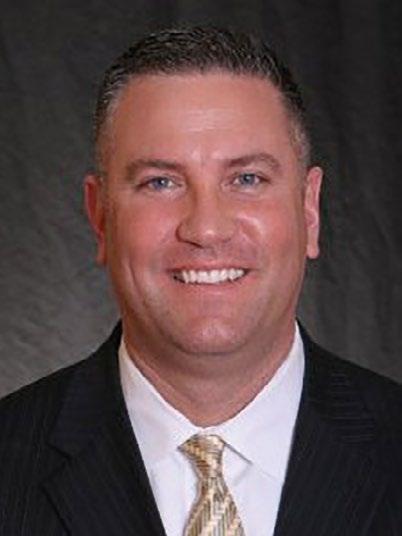
One of the best-known names in global mobility, Graebel’s operations centre on providing relocation services and international moving operations to clients.
Matt Brownlee is COO at Graebel
Graebel was founded in the US and now has regional headquarters on three continents. Brownlee notes significant changes in the market, including declines in the volumes being moved.
‘Move-mix changes have heavily impacted the RMC market in the past five years,’ Brownlee says.
These are the types of moves that clients initiate with Graebel, for example - long-term assignments versus short-term assignments, versus permanent moves.
‘Those differing policy or move types have a massive impact on the number and type of services that our clients are purchasing for their
assignees,’ he adds. ‘More lump-sum and cash-out options, along with overall declining volumes, have forced RMCs to diversify service offerings.’
These challenges, along with ageing technology, have ‘pushed RMCs to invest in new, more efficient technologies to increase revenues and margins’, Brownlee says.
Faced with an on-rush of technology platforms –some of which offer direct sourcing of moving and relocation services to clients – RMCs are fighting back by developing their own solutions.
‘In some cases, it makes sense for RMCs to partner with supplier partners and, potentially, with competitors to leverage technology solutions,’ says Brownlee. ‘It is imperative that RMCs not only stay ahead of the competition, but also work with the supply chain to leverage best-in-class solutions to serve our collective clients.’
He believes RMCs can still deliver value, despite difficult and changing market conditions. They do this by continuing to ‘provide fantastic service and, ultimately, provide value to their company and transferees by flawlessly executing the mobility experience on behalf of their company.
‘They continue to find more cost-effective mobility solutions, as well as enhance the transferee experience. This is at the very core of what RMCs have done since the 1970s. There will be a massive move towards using more AI and agentic solutions.’
Agentic AI is a type of artificial intelligence that can make decisions and/or perform certain tasks with limited – or no – human interaction. It is yet to be seen what form this will take from the RMC perspective, but, nonetheless, clients expect it and the RMC industry is responding.’
For the future, Brownlee believes there must be change. ‘RMCs will need to diversify their offerings… not only focusing on mobility work, but also looking to expand into other HR service “verticals” (sectors),’ he says. ‘We are likely to continue seeing consolidation at all levels of the mobility industry as well.’
“It is imperative that RMCs not only stay ahead of the competition, but also work with the supply chain to leverage best-in-class solutions”


As Graebel marks its 75th anniversary, CEO Ron Dunlap reflects on the bold decisions, company culture and appetite for risk that have been central to its story – and will define its future, too.
FIDI Focus Editor Dominic Weaver reports
Like FIDI, Graebel Companies recently reached its 75-year milestone, marking a time to reflect for one of the industry’s best-known family-led businesses. Founded in 1950 by Dave Graebel, the company has grown from a local moving firm into a leading global relocation management provider, with more than 1,000 employees and operations across three continents. Today, Graebel is prepared to ascend beyond mobility and relocation management, with new services and solutions for HR and workforce management.
CEO Ron Dunlap says the anniversary gives the firm an opportunity to reflect on the factors that have defined the organisation’s success to date and the vision for Graebel’s future, too.
‘As a company, it’s a good time to reflect back, think about where we are, when we started, how we’ve grown over the years and where we’re going,’ he says. ‘It’s about looking at our journey and what has worked in order for us to reach this 75-year milestone, while reflecting on what we’ve done, and looking at how we can and will apply those same strategies in the future.’
Taking risks is a consistent feature of the company’s story, he adds, whether that was company co-founder Dave Graebel (who died at the end of 2023, aged 94), or his sons Bill Graebel and the late Ben Graebel.
‘There has always been a willingness to take a chance, or to try something new. They took chances many times over the years, and there has always been this willingness to move forward.’
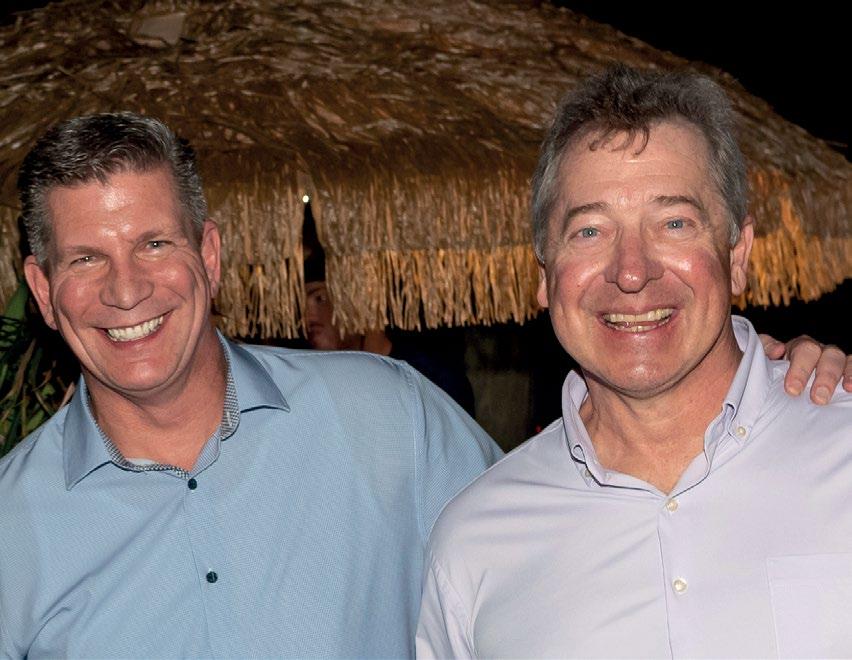
Moving from an agent model and opening their own van line is an example of the bold decisions that have shaped the business, says Dunlap. ‘It was critical for the organisation because it allowed us to grow nationally across the US. This later progressed into the international household goods business, which took us global from a recognition standpoint.’
Then came the choice to establish Graebel as a relocation company, a move which initially saw business drop by 50 per cent overnight. ‘This was driven by the belief that we were separated from our clients and didn’t have direct influence or contact with them,’ says Dunlap. ‘At the start, our competitors didn’t want to give us volume, but we found a way to grind through the first four or five years.’
It was the decision to sell Graebel Van Lines in 2014 that had the biggest impact on the firm’s operations today. ‘We had both non-asset and asset-based businesses, and it’s hard to do both well as each requires substantial investment – so we sat down as an organisation and decided to let go of the van line.’
‘After 60 or more years, it was a hard choice to make,’ says Dunlap, ‘but this is the moment when we truly changed direction and became a mobility provider. As we look into the future, while mobility is at the core of who we are, we are also now adding other workforce management services to our stack in order to provide our clients with new capabilities and new ways to provide services. That’s our strategy now, but we’re never resting. As Dave always used to say: “We are always grateful, but never satisfied”. It’s a great statement that represents how we think as an organisation: we are very grateful for what our clients have provided us with, but we know we can do more for them, and we are always focused on this.’
Graebel’s emerging new services include leveraging its existing network and tech to provide HR business processes including such capabilities as employee onboarding, business travel management and nonrelocation expense management. ‘When you look at what we are adding to our portfolio, it’s a complete redesign of the services we offer,’ says Dunlap. He adds that while he doesn’t expect to develop financial benefits management or process medical claims, for example, clients have clearly evolving requirements
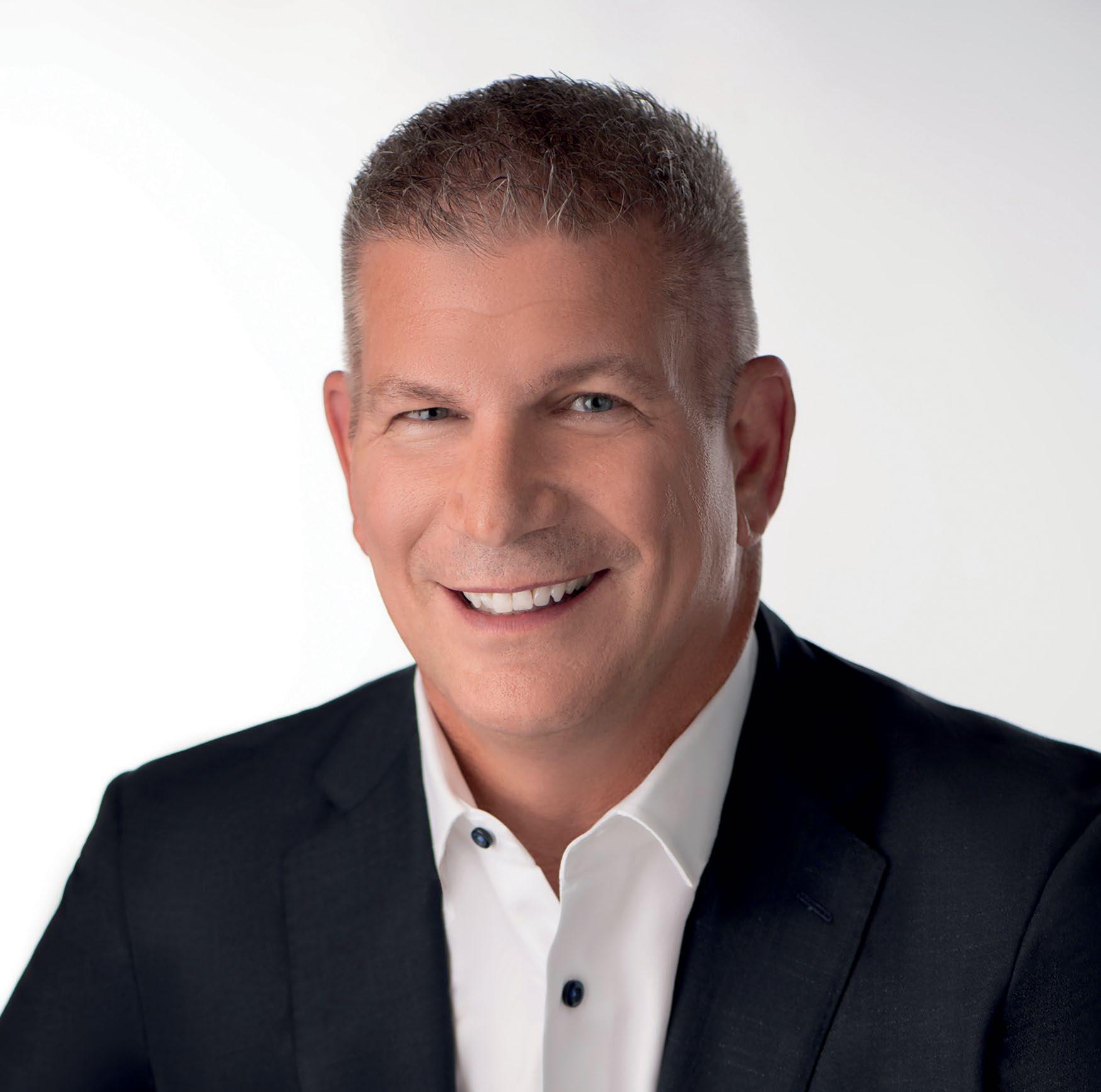
they want businesses such as Graebel to service.
‘We recently talked to CHROs (chief human resources officers) and CFOs and they’re telling us a completely different story about what they want to do around HR and HR services. They want to outsource some of those activities while keeping others in house and using AI to reduce costs and improve efficiency,’ he says. ‘It’s a great opportunity for us to build those solutions and provide them.’
The upshot, he says, is a supply chain that delivers an evolving suite of services in 165 countries, with Graebel’s consultants managing multiple facets of a relocation. ‘They give a single point of care for the person relocating,’ he says. ‘This is really the foundation of what we do and we’re just adding to that in other areas where it makes sense. When you add in the capabilities of AI and the use of agents, the relocation of tomorrow will look very different from the relocation of today.’
Dunlap himself started his 25-year career at Prudential Financial and ended up in the company’s real estate and relocation division. He switched to Graebel 17 years ago and has remained with the company ever since.
He has stayed uncommonly long in the business, largely down to the responsibility and freedom he was afforded by Graebel from the outset. ‘My background is in psychology and statistics,’ he says. ‘That’s a bit of a unique combination, but it actually plays well when you’re trying to build and grow organisations. When I came to the company, the mindset was “help us
perform and serve our clients better, wherever you need to go and whatever you need to do”.’
However, it was also about the connections that, from the beginning, he has felt with the company and its people, most notably with Bill Graebel.
When Dunlap arrived for his interview, on the Monday after Thanksgiving, the Graebel family had just lost Bill’s brother Ben, who died during the holiday period. ‘When I arrived for my interview, I was told that Bill wouldn’t be present, given what was going on,’ says Dunlap. ‘But while I was interviewing, there was a knock at the door and in walks Bill. You could tell he’d had an emotional few days and he said: “I’m glad you are interviewing with us – can I take you to lunch?”
‘I thought: if this man is going to come in and have a conversation with me with everything he’s going through, this is a guy I want to be working with. We quickly connected and we’re truly like brothers now. We’ve spent 17 years together navigating amazing opportunities – and certainly some challenging times, too.’ In that time, he says, ‘I think we’ve had only one disagreement, and that was on me, not him. So, it’s been a blessing.’
Dunlap believes his knowledge of psychology is an asset in mobility. ‘Five of the 10 big life stressors – from selling and buying a home to starting and changing a career – happen during a relocation,’ he says. ‘So, from a psychological perspective, you have to understand what the transferees and their families go through. The companies that thrive understand that relocating family members are equally – if not more so – important as the relocating individual.’
“We want to work with clients that understand and align with our values and beliefs”
“We will continue to look at risk... as something to run toward, understand and manage”
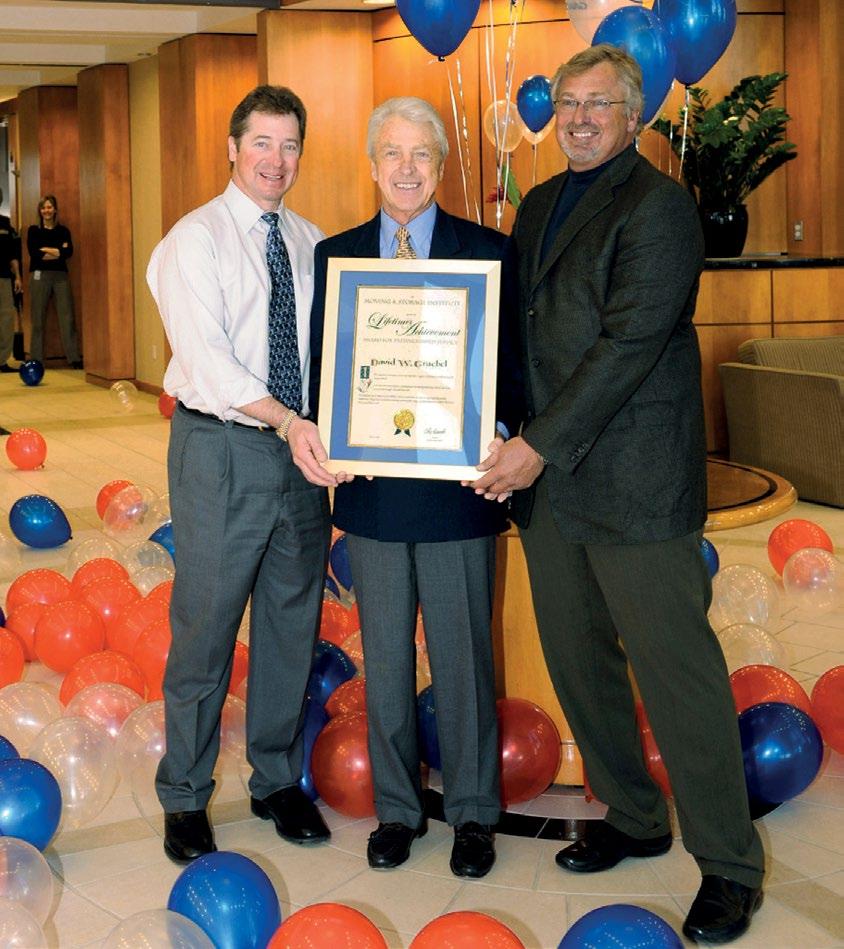
But, he adds, understanding a company is vital, too. ‘You have to understand the psychological profile of the companies you are working for, too,’ he says. ‘If you look at Graebel, for example, our culture and our values all represent the psychology of who we are,’ he says. ‘Accordingly, we’re not the right fit for every client, and we try to recognise this early on. We want to find clients that understand and align with our values and beliefs, and how we treat one another.’
Dunlap says companies that truly value employee experience are those who invest in their people – but that doesn’t always mean giving the largest relocation package. ‘You can invest in people in different ways,’ he says. ‘Relocation is a strategic investment to grow your talent, and we look to work with organisations who also have this view. We believe we have a duty of care to our clients to ensure we are positioned well to provide the best experience possible to their employees. That mindset does not lead to the cheapest solutions, and I believe our clients recognise that fact.
‘This is reflected in Graebel’s own culture. In a volume-based business, it is critical to have the right processes and tools in place to ensure we are correctly staffed at all times. It’s a balance that we constantly strive to achieve and is reflected in the amazing performance our teams demonstrate year-after-year.’ Communication, he says, is also key, with a continual flow of well-considered scheduled leadership or wider company meetings, and more spontaneous – but equally meaningful – contact between staff throughout the organisation.
‘It centres on constantly reinforcing who we are, what we are, and how we deliver our services. This is how we keep the Graebel culture alive,’ he says. ‘Equally important is that we hold each other accountable and we are clear that accountability goes up in the organisation, as well as down. I expect our employees to call me out if I fail to deliver on their expectations.’
The company’s ‘Graebel 2030’ strategic plan – a vision for adapting to changing client expectations and future mobility – aims to reduce overall reliance
on traditional relocation and household goods and diversify revenue streams through new partnerships and business models. It will also see the company move toward a spectrum of delivery models. From full tech-driven relocation management offerings to dedicated, consultant-led support at the other end of the spectrum for those requiring personalised services – as well as hybrid models in between the two.
With Graebel just finishing a substantial eight-figure (USD) investment in technology, digital transformation is a core part of this strategy, supporting the development of new platforms, data and AI capabilities.
‘You have to look at how you can transform the experience. So much of what people do today is transactional and around 80 per cent of what you’re doing when you’re relocating can be automated, which is what some people – but not everyone – prefer.’
‘So, we can take an initiation, provide you with a link to a virtual survey, which is done and passed to a provider, who sends a link to a calendar so you can pick when you want to pack and load, and you’re sent the information about the driver and crew that will be showing up,’ he says. ‘If you so choose, you don’t have to talk to someone until the driver knocks on the door and says they’re here to pack and load. That is transformative – the household goods industry has to think differently about the value they bring to the table.’
As more corporate clients move towards core-flex policies, he says, it will challenge moving and relocation companies to introduce efficient technology that provides maximum value to transferees spending what they regard as “my money” rather than their company’s. ‘We have to change how we deliver our services, how we talk about our services, and how we talk about the benefits and the value,’ says Dunlap.
AI will be a crucial part of this, he adds, and one that will define the successful operators of the future.
‘In March this year, we had a board meeting about introducing AI and by July we had 159 potential AI projects,’ he says. ‘I’m not sure most people have wrapped their heads around the technology yet, so it will quickly delineate the organisations that have and have not made that switch. It’s going to create more noise in our industry. It is an opportunity to change and get better at what you do; you just have to take it.’
Graebel’s characteristic approach, which has served the company, its staff and clients so well for the past seven and a half decades, will guide the company during its next chapter, says Dunlap.
‘Dave’s culture – based on a belief in taking care of people, prioritising heart-led leadership, and duty of care – still resonates in our values, and we will continue to live by this foundation as we move forward. We’ll continue to reflect, learn, carry forth the tools and strategies that have worked for us while exploring new avenues, and move the organisation forward.’
‘Into the next 75 years, we will continue to look at risk not as something to fear, but as something to run toward, understand and manage – that’s all part of growing and staying relevant.’

In his new book, Unpacking Employee Relocation, Chris Kline, of Orion Mobility, argues that the future of mobility will be defined by transparency. This is challenging the RMC sector to rethink its business model – and creating opportunities for movers and DSPs. Dominic Weaver reports
After more than 30 years in the relocation management industry, Chris Kline has seen the mobility market evolve beyond recognition. However, he says, the RMC model has not kept pace – and needs to change.
Now with Orion Mobility, a business that provides relocation and expense management services for corporations, Kline has written a book - Unpacking Employee Relocation - about the sector, the product of a career’s worth of sales presentations, training sessions and his own experience. The aim, says Kline, was to set out an overview of the issues mobility operators face so they can understand them and adapt.
‘Everybody talks about these things at the bar at industry events, but they don’t take action. The idea was to put it in a single book that can be used by corporates, suppliers – anyone involved in relocation –to help them understand what’s happening in this complex industry,’ he says.
Kline stresses that the book is a constructive critique of the prevailing model of relocation management, not an attack on it. He spent 30 years in RMCs himself – part of the team when Graebel made the switch from van line to relocation management company, for example – and understands the value, but also the vulnerabilities, of the sector.
The fundamental issue is the mismatch between how the market was and how it is now. ‘The industry was built on relocation experience for executive
employees,’ he says. ‘At that level, it made a lot of sense. It was also very lucrative through referral fees, management fees, and rebates on all the services.’
While the world has changed significantly since then, however, the model and economics have not, says Kline.
‘You’re now moving engineers, developers, marketing people – highly compensated, yes, but not always C-suite, often not homeowners, and not going on traditional long-term international assignments. The industry has tried to take a model that was built for executive relocation and deploy it across the board – and the numbers just don’t work. You’re an RMC that’s used to thousands of dollars in retained revenue on an executive relocation, and now you’re talking about US$500–700. So not only are suppliers feeling squeezed, but the RMCs are feeling squeezed, too.’
Savvy RMCs have begun to think hard about their business mix, says Kline. ‘You’re starting to see some RMCs walking away from [certain] business. They’ll do lump sum if it’s tied to better business, where executives get a platinum package and everybody else gets a lump sum, for example. You’re starting to see some RMCs saying if it doesn’t have that executive component, they’re going to walk away from it.
‘It’s important for the RMCs to realise what they’re ultimately looking for in their ideal customer profile and focus on that.’
At the same time, Kline says a new generation of RMCs will move at least partly away from mark-ups and commissions towards transparent transactionbased pricing.
‘One of the reasons the RMC model does work is the client doesn’t want a bunch of contracts,’ he says. ‘They want to go to a single provider, negotiate one contract and have them work with the suppliers. Imagine when an RMC comes along and says, “we’ll do that – and, by the way, we just charge a set transaction fee, not

a referral mark-up or rebate”. Technology is going to allow a new type of RMC to do that very soon.’
‘There is a day of reckoning coming’ with old models, adds Kline. ‘If you’re running your business by overcharging when it comes to air freight, surface freight, drayage and the other components… I don’t believe that is sustainable.’
‘Models are going to enter the market that are fully transparent. At Orion, we work with some very large global programmes that are with very large RMCs. This wasn’t a matter of “we think we’re being taken advantage of by the RMC”, it was more, from an internal audit perspective, we’re not going to engage with a single company that negotiates all the supply chain costs, pays all the suppliers, pays themselves, and then reports the performance and the financial costs back.
‘The idea is not the lowest price; it’s the best value – and that’s where some of these models don’t work. They are not the best value and certainly not the lowest cost.’
Looking a decade ahead, Kline says he expects significant change in the relocation industry. ‘I think some of the bigger players will be split up and sold –the assets by themselves may be more valuable than what the whole is worth. Technology is going to advance to the point where it’s going to become easier to introduce competition.’
With the traditional model under pressure and RMCs apparently moving out of the parts of the market they find less lucrative, there is ‘an unbelievable opportunity’ to fill the gap, says Kline, who believes movers and DSPs are best placed to do this.
‘If you think about what it takes to be an RMC, you need the global footprint, the locations – and a lot of moving companies do. You have to be able to deal with
“We’re going to see some movers and DSPs come back into the market – and AI is going to make it easier to put the pieces together”
global currencies, which many of them do,’ he says. ‘I think you’re going to see some of those players get back into the market and AI is going to make it easier to put the pieces together.’
Kline says his recent personal move – where he received text check-ins, reminders and prompts about extra services – is a great example of how automation is already transforming the transferee experience and saving companies’ coordinator time. However, technology alone isn’t enough, he stresses – having the
Is the end customer a transferee; an assignee; seller; buyer; consignee; shipper; or something else? Kline says the lack of shared language and interoperability in mobility speaks volumes.
‘We don’t have a consistent naming convention within the moving or relocation industry,’ he says. ‘There are a lot of different names for an individual who is going through their relocation.
‘By now, we should have a mesh developed where suppliers can communicate and work together. Essentially, this would be like the Sabre system for the airline industry, where I can go in and see every flight that’s out there, the scheduling, pricing, and so on.’
“There is a day of reckoning coming with the old model”
right infrastructure and know-how is essential, too.
‘The technology can be great, but if you don’t have a robust supply chain, if your supply chain doesn’t introduce competition, if you’re marking everything up, if you’re taking huge referral fees, if you’re not shopping smart on behalf of the employee, if you don’t really understand the concept and you’re trying to deploy it - then it doesn’t matter how good the technology is,’ he says.
The winners will be those who create the right experience and value for clients – not unlike a modern discount retailer. ‘They deliver value, they have the best prices, the quality is pretty decent –and you get in and get out,’ says Kline. ‘Relocation needs to be similar.’
For movers and DSPs who are willing to move outside of their comfort zone and become ‘complete solutions-orientated providers’, there could be great rewards. This might mean offering services in completely new areas, such as tax gross-ups and payrolls reporting in partnership with specialist providers. ‘With the right partner, you can provide all the services that clients are looking for,’ he says.
Leveraging relationships is key. ‘If I was a DSP, I would be exploiting and growing my relationship with the local buyers and the local HR community. There’s a good possibility the DSP is getting those people before they even get to the relocation company,’ says Kline. ‘I’ve had movers that were ingrained in a 20- or 30-year corporate relationship because they moved some executive years ago, took really good care of that person, and they stayed in contact. Movers and DSPs are the secret weapon, because they are local and have a more intimate relationship with that customer. They can do things on a regular basis that the RMC cannot.’
Creating a truly good transferee experience is something even the largest, most well-respected operators have missed, says Kline. ‘There are some phenomenal brands out there, but when you look at their relocation programmes, it doesn’t match that –they don’t deploy the right policies or benefits for the employees,’ he says.
This isn’t necessarily about spending more, he adds, but about spending smarter and thinking about trade-offs more strategically.
‘My son-in-law recently relocated with a company
that just gave him US$5,000 and said: “We’ll see you Monday; get here the best way you can.” Meanwhile, his stock options for joining the company were worth more than US$100,000. But they didn’t give him resources or information on the community he was moving to, or connect him with a mover who could help him – and these things don’t cost a great deal of money.’
The early days of a relocation are critical, too, says Kline. ‘Whatever you’re doing really reflects on your transferee’s first 30 or 90 days with the company. If your employees are separated from their families, maybe trying to sell and buy a house, and there’s no support, it hurts the company brand.’
Not only this, but there is obviously an imperative for business to get employees up and running quickly, too. ‘Some clients say they want to save money, but you need to ask how much that employee is worth per day and what it costs you in revenue a day if they’re distracted by their relocation.’
Having a sense of return on investment (ROI) is essential, Kline adds. This includes fostering awareness of the difference between a well- or poorly executed move, from the leadership executives to the people in regional offices who can pass on lessons from their own relocation experiences.
‘Try to figure out why you are moving people at all. What are you looking to accomplish?’ he asks. ‘If you’re moving somebody for training, what’s the value of that? If you’re moving them because the business is on fire and you need to improve it, that business is losing money every day – that’s a pretty easy ROI calculation. If you’re opening up a new business, what do you expect the revenue to be?’
Calculating ROI should be continuous and feed into regular reviewing of programmes – within the company, with transferees and, often, with outside experts to bring perspective and insights.
If Kline could achieve one thing with his book, it would be ending the enduring commission culture. ‘No more referral fees, mark-ups, rebates – everything based on transparent, transaction pricing,’ he says, ‘That’s better for the suppliers and it’s better for the client, because you have complete visibility.
‘The book is for corporate clients, but equally suppliers, who should be able to read this and say: what could we be doing differently as a provider? What services are RMCs providing, that the client needs, that I can do myself?
‘Partners should read the book, focus on what this means for you as a company and where you go as an organisation from there.’
Unpacking Employee Relocation by Chris Kline is available from Amazon in paperback or as a Kindle edition.
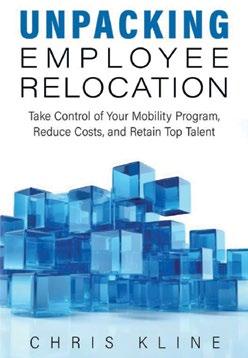
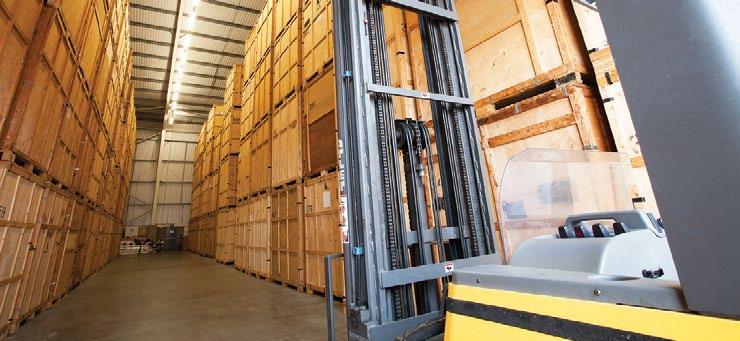










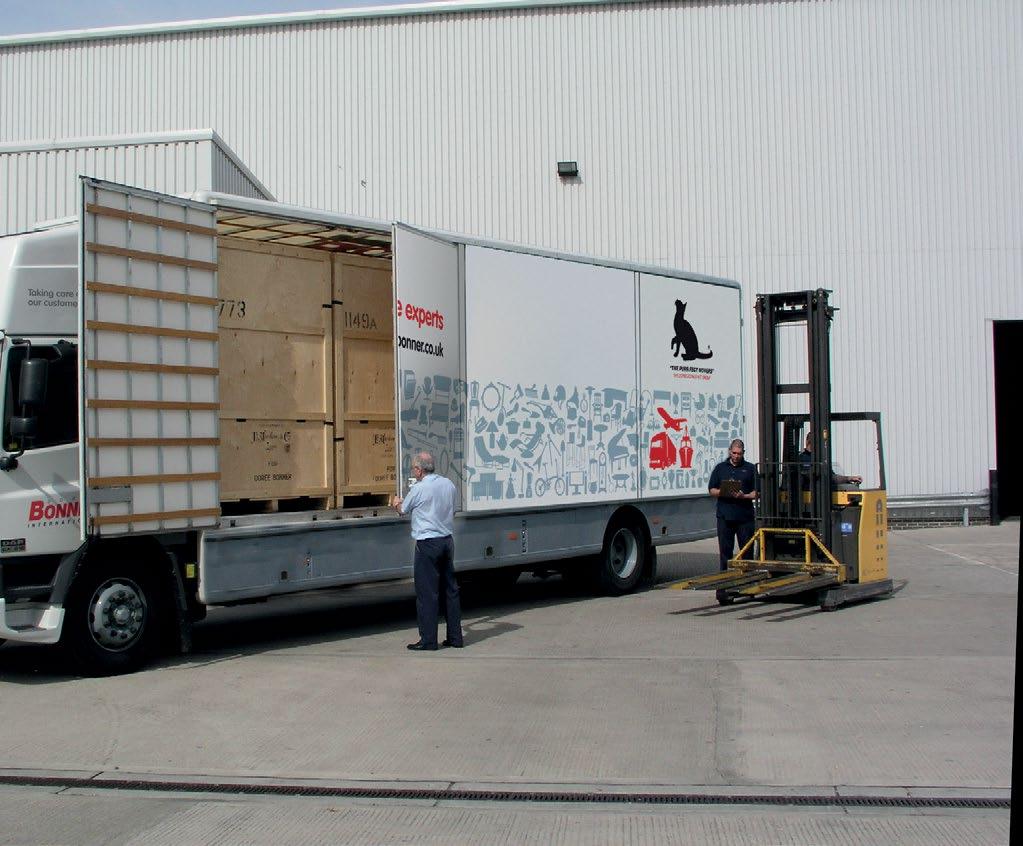

From whole house contents to cars, single items or pieces of art, no one is more careful than Doree Bonner International. We’ve been moving our customers’ possessions around the world for over 90 years - providing the highest standards of service at sensible prices.
For a free origin survey or destination rate, email us and get your clients move off to the ‘Purr-fect’ start. email: imports@dbonner.co.uk website: www.doreebonner.co.uk



While Japan’s movers are used to handling change, today’s mix of geopolitical tension, trade disruptions and an ageing workforce are testing their traditional resilience. As Andrew Mourant discovers, however, FIDI Affiliates in the country remain quietly optimistic


Japan is a beacon of democracy, synonymous with decades of economic success and innovation, but that doesn’t make it immune from political stresses and economic turbulence. The world’s fourth-largest economy has had a bruising time lately, and, like the rest of the world, been sent spinning by the policies of US President Donald Trump.
Japan’s economy shrank modestly between July and September 2025, reversing fragile signs of recovery earlier in the year. Economists cited factors such as weaker exports because of global trade tensions, rising energy prices, subdued household consumption and the impact of newly imposed tariffs, which hit manufacturing particularly hard.
Trump’s visit to Japan in late October, however –for a meeting with recently elected Prime Minister Sanae Takaichi – may have settled things down, at least as FIDI Focus was going to press (end of November). The leaders signed a document reiterating their countries’ commitment to implement previously struck deals, including a 15 per cent tariff.

So, calm – of a sort – for now. Indeed, Trump’s parting promise was that the US would be there for ‘any favours you need, anything… to help Japan’. Even so, its business sector, in which removals play a key role, remains wary after several volatile months during which export volumes surged at times, while, at others, shipments were postponed.
‘Japanese companies are cautious, leading many to hold cash and delay spending until the policy direction becomes clearer,’ says Aimee Zhang, Tokyo Branch Manager at UniGroup Asia’s Japan operation.

‘This climate of uncertainty has also influenced the labour market, as professionals adopt a “wait and see approach”. Despite these fluctuations, the Japan-U.S. route remains our busiest line of business.’
Dealing with the worst the world can throw at it is nothing new for Japan. This, after all, is a country intermittently battered by storms, floods, earthquakes and tsunamis. ‘Natural disasters have become increasingly severe and frequent,’ says Zhang. For removals and logistics firms, that’s meant establishing alternative transport routes and ‘distributing inventory across hubs to mitigate supply chain risks’.
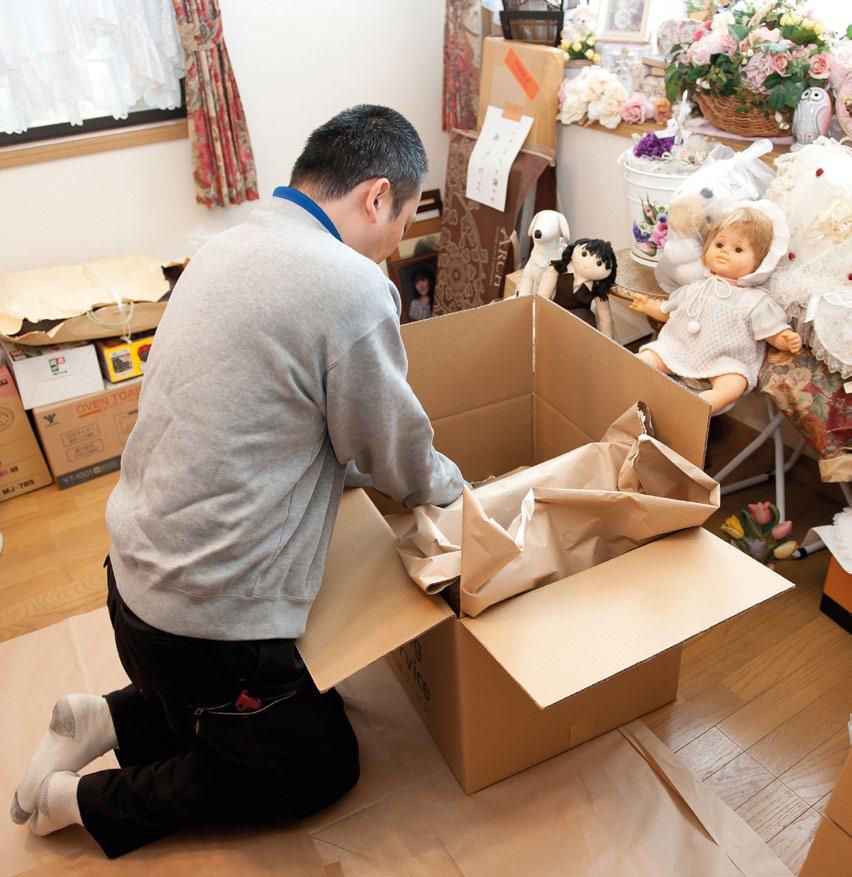
Yuji Inoue, Global Move Specialist at air freight forwarders MSE Global Mobility Services, says those risks have driven the need for comprehensive riskmanagement systems and emergency response plans. ‘By operating multiple warehouses, implementing realtime cargo tracking and coordinating closely with our nationwide network, we’re able to ensure rapid recovery in the event of disruptions,’ he says.
For some FIDI Affiliates, the worst crisis in living memory has been the hurricane force of the COVID-19 pandemic. Its legacy has been a prolonged decline in

the number of international moves in and outbound, a shift from long-term to short-term assignments, and a growing trend for global firms to employ locals.
One unwelcome consequence for Japan’s logistics industry has been wildly fluctuating freight rates. ‘Before the pandemic, Japanese shippers held stronger bargaining power than shipping lines, and any attempt to raise freight rates during the contract period – especially by a large margin – was unacceptable,’ says Zhang.
‘But the worldwide container shortage triggered a surge in rates, which have continued to fluctuate in line with global events. Such volatility was unprecedented in Japan, where the freight market had remained stable for decades. Today, that old “Japanese exception” no longer exists.’
Some FIDI Affiliates found the fallout less severe than first feared, however. ‘It had a huge impact, but I thought the damage would last longer,’ says Tomomi Fujita, Managing Director of Asian Tigers, Japan. ‘In 2023, we did record trade – the industry recovered quite quickly.’
Another who had anticipated the worst was Hiroyuki Kobayashi, from Crown Moving Service. ‘Our business stagnated, but we managed because many Japanese expatriates returned all at once,’ he says. ‘Japanese customs permitted the import of their belongings as personal moving goods. This

Creseada International Limited proudly marks 40 years of dedication, resilience and reliability. Our commitment to excellence, strong partnerships and value creation has been the foundation of every aspect of our journey.
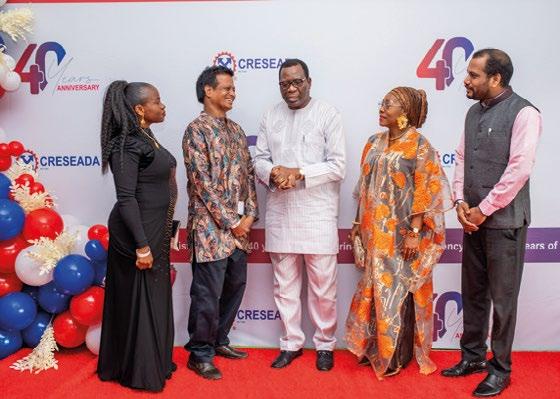

This milestone allows us to pause and reflect, not only on the progress we’ve achieved, but also on the people and principles that have guided us. It stands as a testament to the unwavering dedication of our team, the trust of our clients and the collaboration of our partners.
As we look forward, we are inspired by the future, driven by innovation, anchored in integrity and dedicated to making a positive impact.


Left: Crown Move’s business has faced challenges in the region, but is on an ‘upwards trajectory’
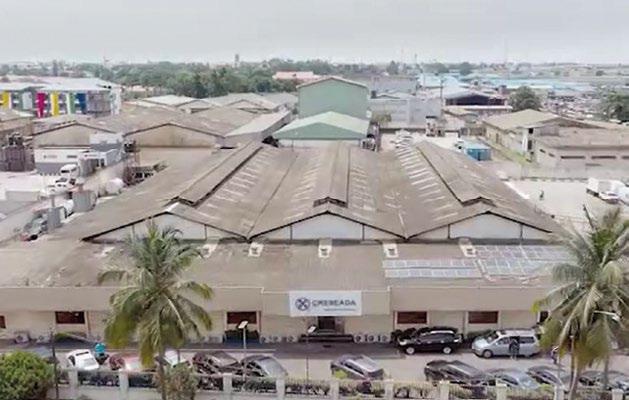
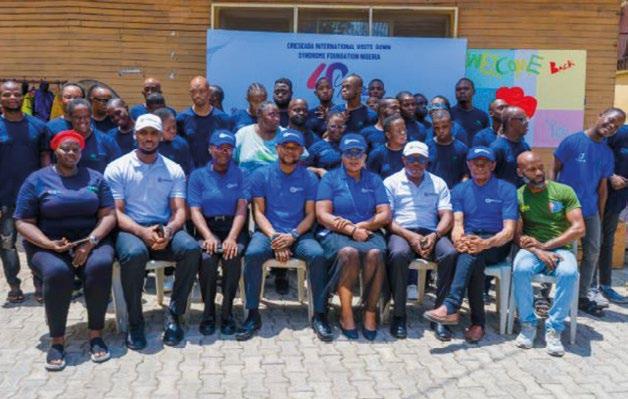


“Japanese companies are cautious, leading many to hold cash and delay spending”

allowed us to receive inbound shipments over an extended period.’
Inoue says the domestic logistics market has largely recovered from the pandemic, but Japan’s economy now faces other challenges, such as rising costs and labour shortages. Stable demand is evident across e-commerce, retail and industrial sectors, however. ‘The domestic transportation network remains highly reliable, supporting efficient nationwide supply chain operations,’ he adds.
Post-pandemic, UniGroup’s core business remains international moving and storage, but the company is also developing other markets. ‘Growth over the past 2-3 years has been driven primarily by logistics projects,’ says Zhang. ‘At the same time, we’re expanding into office relocations, and new destination services (anything from home finding to school and educational support).’
Governments are as powerless over global geopolitics as they are over pandemics and the forces of nature. Of growing concern to Japan are relations with neighbouring China, the world’s second-largest economy, which is flexing military might to enforce its regional presence.
‘Over the past 20 years, there has been a phenomenal increase in business expansion into China,’ says Kobayashi. ‘As the number of expats moving there grew, our outbound shipments increased. But, in recent years, many companies have been withdrawing or downsizing, and the volume of shipments to and from China has decreased dramatically. Given rising tensions, we’re not considering expanding our business there.’
Political developments in Hong Kong have, he adds, left Crown Moving uncertain about doing trade there too. ‘We don’t handle a large volume of shipments… but if its stability as an international financial centre can be guaranteed, it would be possible to build a good trading relationship.’ Meanwhile Fujita reports that Asian Tigers’ Chinese trade is ‘quite quiet’. As for Hong Kong, recent events have hit ‘very hard… companies have stopped sending people there’.
UniGroup sees things differently. ‘Economic and people-to-people ties between Japan and China remain remarkably close,’ says Zhang. ‘More than 56,000 Japanese companies operate in China and, as of December 2024, there were 845,000 Chinese nationals resident in Japan with long-term visas – the largest single-nationality group. This underscores the strong underlying demand for household goods and relocation services linked to Chinese residents in Japan.
‘Many Japanese enterprises are undeterred by global events and are still exploring business opportunities in China. We also see strong growth potential for our commercial cargo business. Hong Kong has faced significant challenges, but we’re seeing increasing inbound activity. It continues to be regarded as Asia’s financial centre and the gateway to China, and remains the largest IPO (initial public offering, when a private company first sells shares to the public on a stock exchange) market in Asia.’
Japan’s recent economic hiccups have brought mixed fortunes. Crown Moving’s primary business field is international moving, run through two departments – one specialising in overseas moves for Japanese clients, the other for foreigners.
‘We’re on an upward trend overall,’ says Kobayashi. ‘This is probably influenced by the fact that some






other companies have downsized or withdrawn from international moving.’
While events in China create uncertainty for some FIDI Affiliates, Kobayashi sees potential in other parts of the Far East. ‘Areas with potential for significant leaps forward include the Philippines, Vietnam, Myanmar, Cambodia and India – provided there is political stability and good public order,’ he says.
Zhang includes Singapore, Indonesia and Malaysia in her list of potential hotspots, while also singling out India. ‘Its real GDP [gross domestic product] is projected to grow by 6.3 per cent to 6.6 per cent in 2025, underscoring its position as one of the fastestgrowing large economies in the world,’ she points out.
MSE’s specialist area is air freight, which, says Inoue, continues to show high demand in sectors such as automotive, electronics and pharmaceuticals. ‘In recent years, we’ve observed an increase in timesensitive and high-value shipments,’ he says. Other, cut-price operators may be vying for business, but Inoue seems unfazed, confident that ‘long-term customers prioritise reliability, safety and service quality over short-term pricing’.
In recent years, MSE has diversified, collaborating with other companies in the MSE group. Its expanded services include office relocations, fine art logistics, and storing household goods and artworks, as well as handling temperature-controlled and hazardous cargo.
Asian Tigers is seeing growth in household goods projects and office moves – not least smallscale ones. ‘I think this will step up and continue,’ says Fujita. But what about the impact of artificial intelligence? So far, her company seems content to
take that in its stride. ‘Many people still want to move and work in offices. I’m quite optimistic.’
Meanwhile, Asian Tigers is flourishing in sectors such as factories, engineering and manufacturing, Fujita reports. ‘We have some huge projects with a couple of big factories (moving components and personnel) – moves we never used to get.’ Her topthree industries for moving potential are pharmacy, manufacturing and IT.
While many FIDI Affiliates in Japan appear sanguine about current and future business prospects, all face the practical problem of finding enough good staff. It’s a topic often discussed in FIDI Focus – and Japan faces some very local headaches. ‘The huge issue we have now is a truck-driver shortage,’ says Fujita. ‘The logistics industry is very well protected by government labour laws. These include a cap on overtime and strict rules about HGV drivers taking breaks.
‘Also, we’re an ageing society and drivers will be retiring – the younger generation doesn’t want to go to warehouses. Recruits to removals tend to join later in life. We have quite a small city office; we don’t have a big workforce and have more work than we can handle. We subcontract.’
Crown Moving’s experience, says Kobayashi, is that talented individuals tend to find employment at large corporations: ‘That makes it difficult for those of us in specialised fields at small and medium-sized enterprises to recruit.
‘Furthermore, the young labour population is decreasing, so although we recruit year round, only a few people make it to the interview stage. Even when we do hire, half of them end up resigning.’
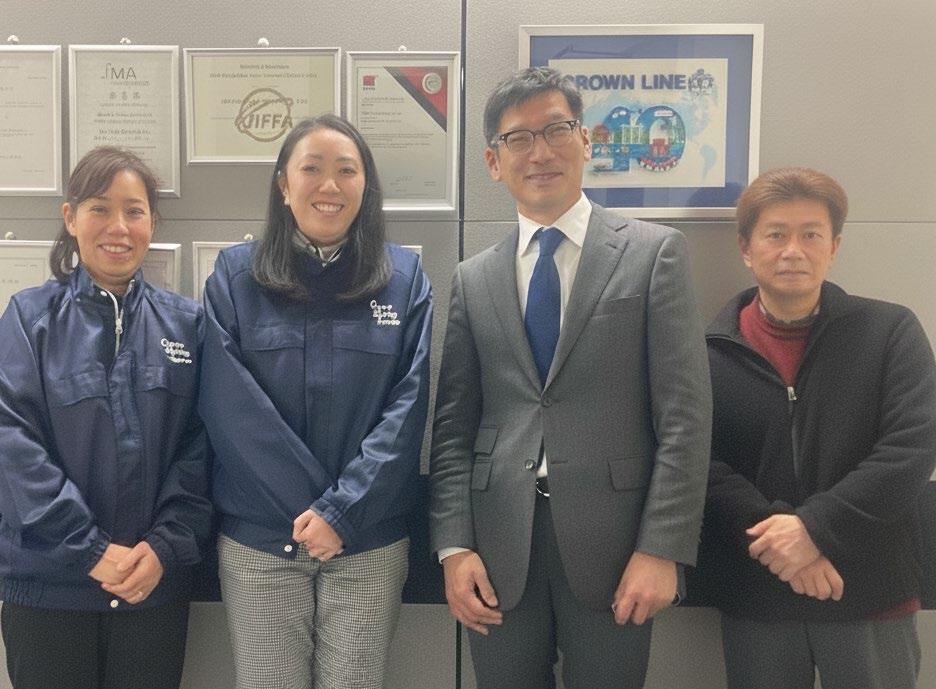
“Competition for talent is intense, and skilled personnel with English fluency and cross-cultural abilities are especially rare”


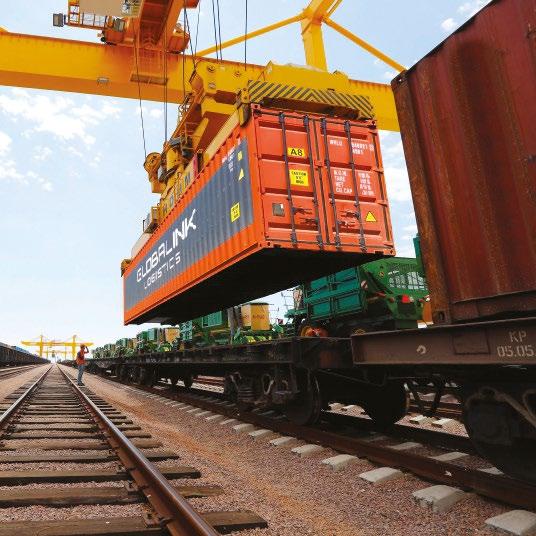


It looks as if this will be a protracted problem, driven by declining birth rates and an ageing population. ‘Around 29 per cent of the population is aged 65 or over – wage inflation has been driven by a severe labour shortage, rising living costs and government-mandated minimum wage increases,’ says Zhang. ‘Competition for talent is intense, and skilled personnel with English fluency and cross-cultural abilities are especially rare, making recruitment costly and time-consuming.’
MSE’s experience is much the same. ‘Securing frontline staff, such as truck drivers and warehouse
Company
workers, can be particularly difficult, as younger generations often prefer office-based or ITrelated roles,’ says Inoue. ‘To address this, we’ve strengthened our operations by increasing the number of partner companies, enabling us to meet demand even during peak periods.’
All this puts the onus on FIDI companies to offer competitive pay, flexible work arrangements and clarity on career progression if they’re to attract and retain talent. It makes perfect sense: the Japanese are past masters at ingenuity and finding the practical means of tackling any impasse in their way.
ASIAN TIGERS JAPAN FAIM Affiliate Tokyo
CROWN MOVING SERVICE CO., LTD FAIM Affiliate Kobe
CROWN MOVING SERVICE CO., LTD FAIM Branch Tokyo
FUKUOKA SOKO CO. LTD FAIM Affiliate Tokyo
MSE GLOBAL MOBILITY SERVICES FAIM Affiliate Tokyo
SAKAI MOVING SERVICE CO., LTD FAIM Affiliate Osaka
SANTA FE RELOCATION – TOKYO FAIM Affiliate Tokyo
UNIGROUP WORLDWIDE MOVING – TOKYO FAIM Affiliate Tokyo
YAMATANE CORPORATION FAIM Affiliate Tokyo
YOKOHAMA SYSTEM MOVER CO., LTD FAIM Affiliate Yokohama
“The industry recovered quite quickly –in 2023 we did record trade”


moves and managing global logistics is no small feat. But it’s what we do best. We thrive in complexity because we’ve built a culture rooted in clarity, collaboration and care.
Today, we are a network of people united by a belief in thoughtful service, environmental responsibility and continuous learning. We’re proud of what we’ve built and even prouder of how we show up every day.

– the spark that started it all – remains unchanged. It lives in every handshake, every carefully packed piece, and every client who feels seen and supported.
Looking back, we don’t just see milestones. We see moments and those moments are the foundation of who we are today.
Our international operations team stands as a testament to resilience. Among transitions, new roles, and fresh faces, we’ve embraced change not as disruption, but as opportunity reaffirming our commitment to progress. Training new staff, coordinating complex
Sustainability is no longer a side project; it’s a core pillar of our strategy. We’re deepening our commitment to Environmental, Social, and Governance (ESG) principles by advancing carbon reporting, promoting responsible operations, and ensuring transparent impact. These efforts empower us to track and reduce our footprint with clarity and confidence.
We’re also embedding Diversity, Equity and Inclusion (DEI) into every layer of our organisation, fostering a culture where every voice is valued and every perspective contributes to progress. Strong governance
practices guide our decisions, ensuring accountability, ethical leadership and long-term resilience.
Together, these commitments reflect our belief that sustainable growth is only possible when people and purpose are aligned.
We’re investing in people.
Our international operations team is growing stronger, and we’re cultivating a culture where every voice matters. We’re mentoring new
talent, fostering collaboration and creating space for bold ideas.
The road ahead may hold uncertainty. Challenges may arise. But we’re ready to walk it with purpose.
We’re not standing still. We’re investing in innovation, sustainability and the next generation of leaders. We’re asking bold questions and embracing change with open arms.
Thank you to all our staff. Your dedication and hard work have been instrumental in achieving Top Performer status.
Thank you to all our clients and partners –past, present and future – for being part of our story.
Thank you FIDI. Your 75 years of global leadership have set the standard. We salute your legacy, celebrate your impact and stand ready for the future driven, united, unstoppable.
Transcontainer Group
Gustavo Baz 295-F, Tlalnepantla, Estado de México, 54080 info@transcontainer-group.com
Innovation is at the heart of everything we do. We’ve invested in new server infrastructure to ensure data integrity and security, enhanced our software capabilities, and are developing digital tools that streamline move coordination. We’re exploring automation, data analytics and emerging service models to meet the evolving needs of our clients. Our focus also includes strengthening cybersecurity and expanding API integrations to deliver seamless, secure and scalable solutions.






Whether it is armed conflicts around the world, sudden changes in immigration policy, major floods or natural disasters that wipe out housing stock, or travel bans affecting certain countries, you can be certain of one thing in international relocation – things are very uncertain. Andrew Bennett looks at how two FIDI-DSP certified companies are dealing with unpredictable conditions and fragile supply chains
When the war in Ukraine started in 2022, the conflict caused misery and disruption that stretched far beyond the borders of the Eastern European nation itself.
One challenge that involved countries in Europe and elsewhere was accommodating families who left their home nation to start new lives elsewhere.
‘When the war in Ukraine started, our immigration team quickly got ready to welcome and support people arriving in Italy,’ says Renata Busettini of FIDIDSP-certified company Vinelli & Scotto by Fercam.
‘We made sure we understood the new visa rules and guided Ukrainian families through every step with care and clarity. This experience reflects how we react to world events – by staying informed, moving fast and always focusing on people first.’
Vinelli & Scotto in Italy is not the only DSP company in the FIDI network grappling with the issues caused by constant global upheaval.
Bedel Mobility Solutions, based in Turkey, has also worked creatively and adopted strategies to cope.
The company’s Ebru Demirel says: ‘We have learned to stay agile and resourceful. Our compact structure allows us to make decisions quickly, and our close relationships with local partners, embassies and authorities mean we can act immediately when something changes.’
As an example, when new visa regulations or travel restrictions were introduced, Bedel reorganised its schedules, informed clients and implemented alternative solutions to keep their relocation plans on track.
Demirel adds: ‘Once, we even handled a large group immigration case in a city where we didn’t have an office and the volume exceeded our normal capacity – yet we acted fast, hiring and training new team members to ensure a smooth transition.
‘We’ve realised that being available, communicating clearly and staying calm under pressure are often the most effective ways to adapt quickly and maintain trust.’
Uncertain and volatile times can cause anxiety – to assignees undergoing relocation, and the staff of the DSP companies themselves.
Busettini explains her company’s philosophy on managing stress: ‘We manage anxiety by creating a calm, welcoming environment – both for our clients and our team.
‘Being knowledgeable helps us give clear answers and reduce uncertainty, while being fair and transparent builds trust. People feel reassured when they know they’re in good hands.’
Demirel says: ‘We know relocation is not only a logistical process but also an emotional one, especially in uncertain times.’
‘For assignees, we offer clear, timely information and personalised support at every stage, including regular updates, empathetic communication and 24/7 accessibility when needed,’ she says.
‘For our staff, we keep an open, supportive environment with regular briefings and recognition. We make sure everyone feels heard and appreciated.’
She adds: ‘Like many in our industry, we face challenges in retaining young talent, but we’re lucky to have a strong, loyal, core team that truly cares about what they do.’
DSP companies are finding that a resilient mindset is a vital asset, helping them cope with continual upheaval – alongside a communications strategy that focuses on clients and their needs.
Busettini says: ‘We build trust by being transparent and consistent. In such an unpredictable world, we don’t make promises we can’t keep – we focus on clear, honest communication and staying close to our clients.
‘Throughout the entire service period, we continuously monitor the quality of every aspect of our work and the client’s satisfaction. Should any issue arise, we are ready to step in immediately to resolve it.
‘This additional layer of support gives our clients true peace of mind. Our updates have also become more proactive and personal: we share information early, explain possible scenarios, and make sure clients always know we’re beside them – even when things change unexpectedly.’
Demirel explains that their DSP company’s ethos comes from ‘flexibility, and a strong problem-solving mindset’.
‘We closely monitor legislative updates and immediately adjust our internal processes. For example, by revising work/residence permit documentation checklists or rescheduling moves in coordination with clients.
‘In addition, our service model incorporates flexible scheduling, backup suppliers and internally developed digital tools that help us maintain service continuity even during sudden disruptions.’
One way of managing the unpredictability in such uncertain times is being upfront about expectations, says Demirel.
‘Our clients value our honesty about what can and cannot be achieved, and this straightforward communication has been the cornerstone of our longterm relationships in an unpredictable global landscape.’
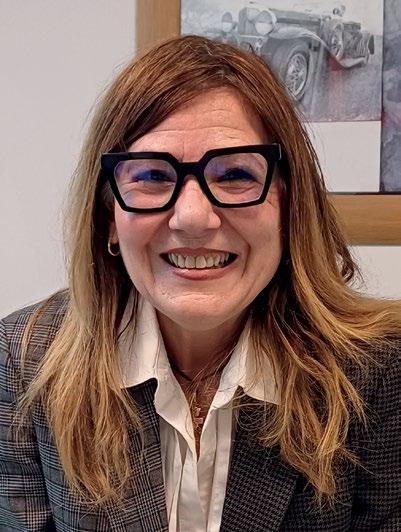


“Being transparent and consistent builds trust. In an unpredictable world, we don’t make promises we can’t keep”

FIDI Affiliates can maximise the benefits of FIDI membership beyond FIDI-FAIM or FIDI-DSP Certification. Shola Gallard, FIDI Marketing Coordinator, explains how
“You don’t always need a plane ticket to build relationships; sometimes it just takes a thoughtful comment or post”
At the FIDI office, our Affiliates often ask us how they can get more involved in our organisation, beyond going to the annual conference or joining FIDI committees. It’s a great question, and we love explaining that there are many meaningful ways in which they can engage with and create impact in the FIDI community – for staff members in every role and level of seniority. Here are some of the simplest and most accessible ways to maximise the value of your membership and deepen your connection within the network.
1. Networking beyond the FIDI Conference
Yes, conferences are wonderful for networking, but they take place for only a few days of the year. If you’re looking to engage and develop deep connections at other times of the year, look at FIDI’s social networks, including LinkedIn and Instagram.
FIDI’s active social media presence encourages meaningful conversations and the sharing of different perspectives on our industry, and sparks discussions on topics that matter to you, our membership. You might be surprised by who relates to your experiences or insights – and who you end up interacting with.
You don’t always need a plane ticket to build relationships; sometimes it just takes a thoughtful comment or post. Or you could even send a good old direct email to the FIDI office.

contribute: you can volunteer for committees; help develop and update industry guidelines; educate; share news from your local or regional market; host or co-host webinars; or speak on topics on which you have expertise. Don’t wait to be asked – take the initiative. Your unique perspective helps broaden and enrich our entire community.
Earning a FIDI-FAIM Certification is a significant achievement – use it proudly in your branding to stand out in the marketplace. FIDI provides various branding assets and guidelines to help Affiliates showcase their affiliation effectively, including logos and marketing materials that communicate your commitment to quality standards. If you have some bright ideas or innovations to share, we’d genuinely love to hear them – get in touch with the FIDI office any time.
One of the most valuable (yet underused) benefits for Affiliates is access to FIDI Academy training courses. Tailored to the moving and relocation industry, these programmes cover essential topics that can enhance your skills and knowledge, whether you are an industry newcomer or a seasoned professional. In addition to the fantastic in-person seminars, the FIDI Academy offers many free training courses that are available to all FIDI Affiliates. Take advantage of these resources and keep yourself growing professionally. You can find all the necessary information on the FIDI Academy webpage
Share your feedback
Almost all of FIDI’s online events are free and open to anyone working for FIDI-affiliated companies, allowing you to interact with industry peers from around the world without leaving your desk. When used intentionally, these virtual gatherings are golden opportunities to show up, meet new faces, learn something valuable and engage authentically. You can find all upcoming online events on the FIDINET events calendar.
FIDI is an organisation governed by its membership, which means your voice matters – and taking action matters even more. There are countless ways to
Use your voice to help shape FIDI into the organisation you want to be part of. Your feedback, suggestions and ideas on how we can work better together as a community are invaluable. There are so many opportunities to contribute your thoughts, through surveys, direct communication with the FIDI office, and informal conversations with fellow members. You don’t have to be in a senior industry position or travel to every event to get involved. It just means showing up in whatever way works for you – whether that’s engaging on social networks, joining a webinar, volunteering for a project or sharing your feedback. Your membership is what you make of it and FIDI is here to support you with this.
While it is one of the industry’s most important roles, the quality of packing generally still lags behind the high standards set in other parts of the business. Andreas Eibel, of Sobolak, explains that defining standards and a professional term for ‘a mover’ is a vital part of changing this
The new FIDI-FAIM 3.4 Standard has been approved and is ready to be rolled out in 2026. As FIDI members, we all agree that administrative standards, processes and hard facts are important to define quality. We have the Professional Cooperation Guidelines (FIDI PCG), giving us guidance on how to act as a professional movers, covering best practices in operations, move coordination and in sales. Unfortunately, they do not cover the core of what we do at all: packing household goods.
We take it for granted that a company that puts effort into all these aspects will produce quality work when it comes to packing. Our packers are busy with checklists and signatures on documents, on compliance and safety issues, and so on. However, the most important part –packing, unpacking, dismantling, reassembling – has not improved in the last few years.
If we want to be the gold standard holders of our industry, we need to do something about this.
meets personally. Our workers should showcase what your organisation stands for, and we should acknowledge this – at least with the creation of a name that reflects a skilled profession. I encourage every FIDI national or regional association to champion this in their respective countries.
Educating our operational staff is the next part of the equation. The FIDI Academy has great online training for packers, teaching them why we use different packing techniques and materials, and showing the risks of poor quality. Wouldn’t it be great to go a step further and train people in how to handle different items?
Skilled professionals also need to practise their skills. What’s better than using the best available packers in the region? I am sure some Affiliates have great staff who can help us raise the bar. There are so many ways to communicate nowadays: videos, online meetings etc. Let’s use all means of technology to teach best practice.
“FIDI and its Affiliates need to identify some core gold standards or ‘do’s and don’ts’ of packing for international moving”
Do
Don’t get me wrong: there are many skilled companies among us, training their staff to keep their own standards high. But it doesn’t appear to be the norm.
How can we reverse the trend? Firstly, we could define some industry standards on what proper packing and a good job looks like. This would enable us to measure it and to hold partners accountable for what they produce. It helps our customers, and this means that the business stays within the FIDI family.
Sourcing blue-collar staff is a challenge. Being a ‘mover’ doesn’t have the same connotation as being a carpenter or a plumber. However, our local Austrian movers’ association, ÖMTV, has done an amazing job, under Karin Lang’s presidency, of improving the image of the job of a mover.
The Austrian employment service (AMS) now recognises an ‘Umzugsfachkraft’ – or ‘moving specialist’ – elevating the status of our core profession: a crucial step to give our people pride in what they do. Let’s not forget that other than sales staff, our packers are the only ones a client
FIDI and its Affiliates need to identify some core gold standards or ‘do’s and don’ts’ of packing for international moving. Let’s agree on what basic re-assembly really means, what tools should be in every mover’s toolbox, and finally, how certain items need to be wrapped, packed and handled. I am confident that the insurance companies can tell us exactly where our pain points are.
Once defined, implementation in our organisations can start and we can move towards a time when we no longer receive rattling boxes from our overseas FIDI partners. Then we can work together to drive these standards throughout our industry.
Who will volunteer to define standards of proper packing, wrapping and handling, and possibly to update the FIDI PCG? Who is up for working on practical packer training or is willing to identify which objects are most often victims of incorrect handling?
I am confident there is more than enough knowledge in the FIDI family. FIDI stands for the best possible quality. We owe it to our customers and to ourselves to look into this.
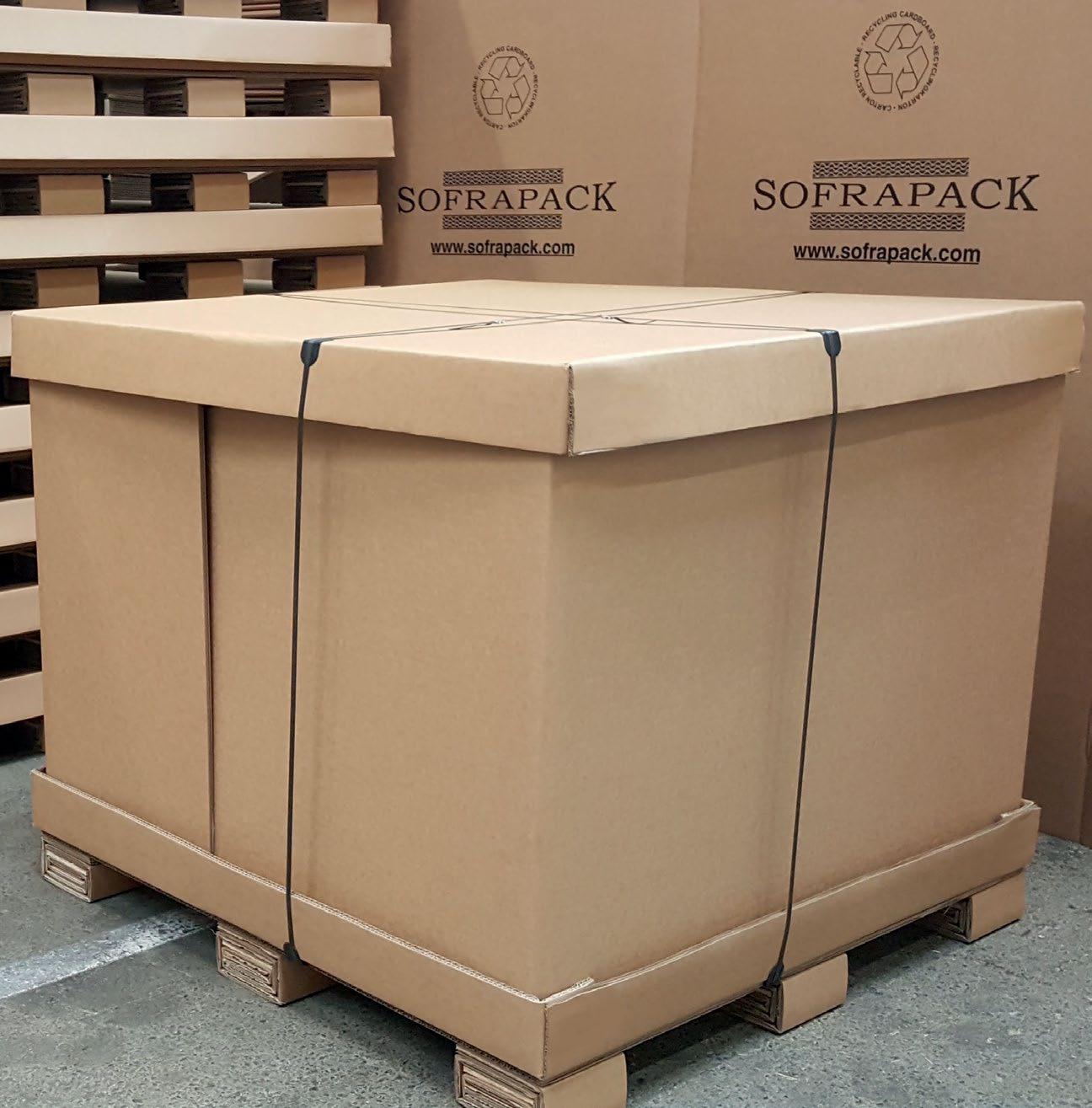













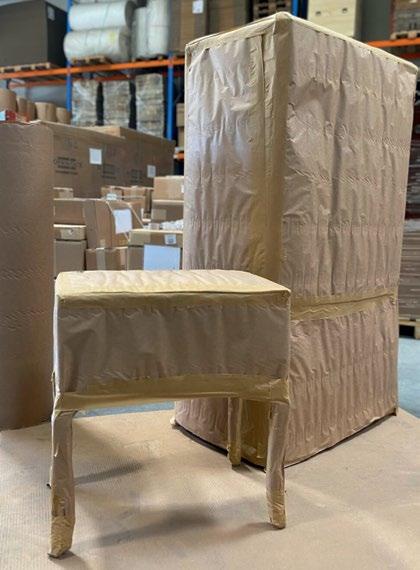











































“For our freedom and yours”
Embracing our shared values of freedom, Poland stands as a pivotal bridge between East and West.
As a committed member of the EU, NATO, and the Council of Europe, its strategic significance is unparalleled.
Since 1992, Move One Poland has facilitated business expansion into Poland and beyond."
FIDI-FAIM CERTIFIED LOCATIONS: BUDAPEST AND DUBAI



With real-world examples from Affiliates, FIDI Business Intelligence Manager Marie-Pascale Frix describes how FIDI Netting is helping businesses mitigate the chance of falling victim to invoicing fraud
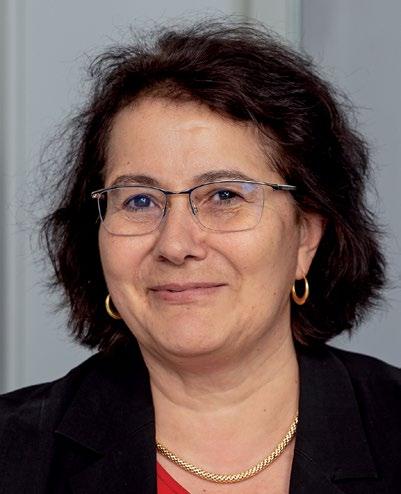
This year alone, FIDI’s dispute resolution service has been approached several times about phishing attacks that have led to invoice payments being diverted to fraudulent bank accounts. In the aftermath, the parties involved often disagree about who should bear the financial loss. Within the FIDI community, however, there is an easy and effective way to mitigate this risk: FIDI’s Netting service.
Earlier this year, Asian Tigers China reported a phishing attempt, in which fraudsters impersonated the company using a fake domain and instructed partners to await ‘new banking details’. The firm issued a warning, highlighting that its banking details had not changed and that FIDI members could safely use FIDI Netting to settle accounts instead.
Jordan-based logistics providers CML was impacted when several trading partners paid their service invoice to fraudulent bank accounts. President Nadine Khouri Halaby said: ‘The rise in phishing emails in our sector can lead to fake payment requests and funds being sent to the wrong accounts, potentially resulting in disputes between trading partners, eroding trust and disrupting operations. FIDI Netting helps reduce this risk by handling payments in a secure, centralised way.’
The FIDI Netting system consolidates all monthly payments between Affiliates into a single, net transaction. This significantly reduces opportunities for fraud because:
l There is no direct exchange of banking details: Affiliates don’t need to rely on email instructions, the main entry point for phishing
l Fewer transactions take place: one net payment is made, dramatically lowering businesses’ exposure to fraud
l Bank details don’t have to be exchanged for every invoice
l Central oversight: the process is standardised, transparent and less vulnerable to manipulation. Netting saves time, reduces transaction costs and creates a safer environment for financial settlements.
l Verify payment requests. Confirm any changes to bank details using a known phone number – treat urgent or unusual requests with caution.
l Pay your invoices to FIDI Affiliates using FIDI’s Netting service
l Secure emails and accounts. Enable multi-factor authentication for email and financial accounts, train staff to recognise phishing attempts, and report suspected phishing to your IT department or provider immediately.
l Use dual approval systems. Implement multilayered approval processes for significant payments, to reduce the risk of a single point of failure.
l Monitor payments: Have procedures for reviewing outgoing payments and auditing for irregularities.
l Have a response plan. Prepare a protocol for responding to phishing incidents, including: who to notify internally; how to contain any threat; and how to communicate externally if needed.
l Update security software: Protect email and financial systems with up-to-date software and firewalls.
l Report fraud early: Notify your bank and authorities immediately if targeted.
l Get cyber insurance: A robust policy can mitigate the financial impact of fraud.
Phishing continues to be one of the most pressing financial risks for international moving companies. By adopting FIDI Netting, and using tools such as FIDI’s Dispute Resolution Scheme, Professional Cooperation Guidelines (PCG) and FASI, Affiliates can help protect themselves and their partners against fraudulent payment diversions and overdue payments.
For more information:
l On FIDI Netting, email: jesse.vansas@fidi.org
l On FIDI Dispute Resolution Scheme, FASI and the FIDI PCG, email: Marie-Pascale.Frix@fidi.org




Those who say the industry is doomed are wrong, says Juan Guillermo Díaz, FIDI 39 Club President, but we have to lean into change and accept that we must reinvent how we do business – and what we mean by moving
I’ve lost count of the times I’ve heard that our industry is doomed to disappear. Someone says it at every conference or dinner I go to – sometimes jokingly, sometimes with resignation.
It’s not an entirely crazy though, because, let’s face it, the world in which our industry was founded no longer exists. Political instability has shaken global economies. Corporate accounts are tightening budgets. Private clients have changed their priorities and younger generations see the concept of personal belongings differently. Add this to unstoppable technological revolution, where our world is getting faster, smarter and less human, and it often feels as if we are standing in the eye of a perfect storm.
chaos, it’s that our core advantage has never been clearer. Technology can predict, calculate and optimise, but it can’t reassure. It cannot look a client in the eye when their shipment is delayed, or when their life feels suspended between two worlds. The emotional intelligence of humans is not a ‘nice to have’; it’s our most valuable currency.
The next generation of movers will be bridges between human emotion and digital precision. They’ll use data and automation, but without giving up empathy and storytelling, and focusing on how to make a family feel seen. Technology is there to do what we really don’t want to do, so that we focus on what really matters: strategy, profitability, customer satisfaction and sustainability.
As movers, we are proud of our ability to manage chaos in the form of logistics, paperwork, customs and deadlines – but have we been so busy managing that we have forgotten to question the way we do things. Our business models are still built for a world that valued ownership, corporate relocation packages and long-term assignments. Yet today’s client moves lighter, faster and more independently. They rent furnished apartments, live remotely and store their memories in the cloud. Meanwhile, technology is transforming customer experience in ways we never imagined. Algorithms are replacing empathy and artificial intelligence is replacing entire departments. But we should know better than to fear movement – change is quite literally our business.
Adapting is necessary, even though it’s painful. Transformation isn’t romantic. It’s tough. It hurts. It challenges how we think, charge and operate. When our companies have spent decades building credibility, the idea of reinventing them feels almost disrespectful. However, not changing would be the greatest act of disrespect to ourselves, our teams and the future of the craft we love.
We can’t stop technology, demographic shifts or the pace of innovation, but we can choose how we respond. Rather than a threat, we should see tech as a tool, amplifying what we already do best: caring for people in transition. Because that’s what moving has always been about: people’s lives.
We need to rediscover our human advantage. If there’s one bright side to the current feeling of

The first step towards understanding a future for the industry is brutally simple: accept that the change has already happened. Stop debating whether it’s coming. It’s here. The question now is who will overcome change faster? Who will be left behind and who will take action?
We can’t cling to ‘how we used to do things.’ We have to be curious again, uncomfortable again, and brave again. Diversification, mergers and acquisitions should be on our board agendas in every meeting, to prevent our deepest fears about extinction from becoming a reality. For the first time in decades, we have a chance to rebuild what moving means for our clients and for ourselves.
I don’t think the industry is dying; it’s waking up – but with every rebirth come contractions, noise and fear. And that’s OK. Having this conversation will bring discomfort, chaos and uncertainty, but also creativity, evolution and even a more certain future. We movers know better than anyone else: nothing truly moves without a little pressure.
Juan Guillermo Díaz

With the first three candidates signed up for FIDI 39 Club’s Future Fellows programme, Vice President Sonja Tuomela finds out why they applied and what they hope to achieve, personally and professionally, from the new initiative
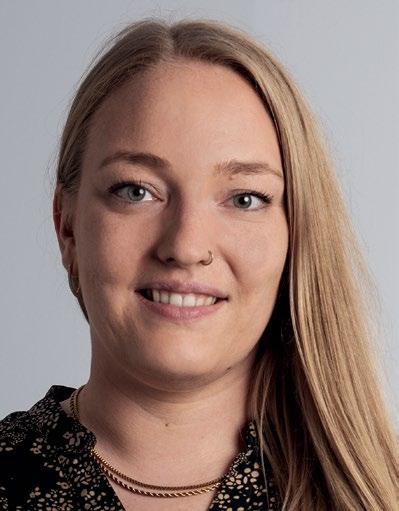
The FIDI 39 Club has a clear mission to help our members learn, grow, increase confidence and connect with one another across international borders.
Doing this justice requires a clear vision and strategy. The club’s core responsibility is to develop and maintain programmes that support its initiatives, encourage engagement of our industry for the long term, and develop the next generation of moving and relocation industry leaders. This is vital for building a strong foundation for young professionals whose careers are just beginning to take shape as our industry evolves.
Over the past few years, the club has focused on expanding the range of tools, opportunities and experiences available to its members. A key theme during this period has been sustainability - not only in the environmental sense, but also in the sense of ensuring the club’s ongoing stability and relevance.
Like any organisation that wants to thrive in the long term, the FIDI 39 Club recognises the importance of succession – preparing future leaders to take the baton. To address this, the club launched a new initiative – the FIDI Future Fellows programme – to nurture engaged, capable professionals who will carry forward FIDI 39 Club’s strategy for years to come.
Our club already benefits from a passionate and diverse member base, made up of professionals from every corner of the world. The idea behind the Future Fellows programme is to harness that enthusiasm and provide members with a structured and accessible way to get more involved – a stepping stone that will inspire further participation in the club and across the wider FIDI network.

The aims of the FIDI Future Fellows project are twofold: encourage emerging leaders in the industry to engage more deeply with the broader FIDI community; and give these individuals a front-row view of the workings of the FIDI 39 Club Board. Fellows will assist the board with its activities, participate in discussions and be encouraged to join FIDI’s regional associations, contributing fresh insights and helping shape the club’s direction.
Fellows act as both ambassadors and contributors. They represent the voices of members, while simultaneously learning how leadership operates within FIDI. The programme runs for a year, with the possibility of renewal for a second year depending on the Fellow’s interest and the club’s evolving needs.
We launched the programme in September and the response exceeded all expectations. In total, 19 talented candidates applied for just three positions. It was a challenge to select the first participants from the pool of strong and motivated applicants. The decision-making process, conducted via a closed vote among FIDI 39 Club Board members, turned out to be one of the toughest the team has faced. Ultimately, after much deliberation, the following three were chosen:
l Joanna Dowling, JVK International Movers Ltd (Bangkok, Thailand)
l Şeyma Kaplan, Benice Fine Art & Relocation (Istanbul, Türkiye)
l Giancarlos Marí, JJ Marí International Movers (Caracas, Venezuela)
We have asked each of them to share their motivations for applying, what they hope to gain from the programme, and their thoughts on the future of our industry.
Joanna has been part of the moving industry for more than a decade, following in her father’s footsteps. Her main motivation for applying to the programme was to increase her engagement with the FIDI 39 Club community and to contribute to the continued evolution of the industry. She also wants to understand how the club operates behind the scenes - how we develop our ideas into actions and how board decisions shape the experiences of our members.
As she becomes a Fellow, Joanna is most excited about collaborating with the club board, learning from its approach to industry challenges and opportunities, and strengthening her leadership and networking skills. She believes the lessons she will learn from the programme will not only benefit her personally, but also bring added value to her organisation.
In line with the programme’s ‘Future’ focus, Joanna gave us her thoughts on the direction of the industry, which fit well with FIDI 39 Club’s emphasis on stronger digital solutions, sustainable practices, and greater collaboration across regions and generations.
‘Our customers’ expectations are changing, and so must we,’ she says. ‘By embracing innovation -
while ensuring that high-quality service remains at the core of everything we do – we can find the right balance between traditional ways of operating and transformation. The future of our industry depends on this – and I want to be part of it.’

Şeyma’s entry into the moving industry happened ‘by sheer luck’. She began her career just ahead of the busy season and, after surviving this first hectic experience of the sector, she was hooked. Five years on, she is still proud to be involved.
Şeyma’s application for the Future Fellows programme was inspired by Stefanie Sword-Williams, the keynote speaker at the FIDI 39 Club Conference in Dubrovnik and author of F*ck being humble. SwordWilliams’ message about taking risks, stepping out of one’s comfort zone and creating opportunities, rather than waiting for them, connected deeply with Şeyma. So, when the Fellows programme was announced, she decided to seize the moment and apply. And it paid off.
As a Fellow, Şeyma is most excited about finding out what happens behind the scenes; how the board works and drives its initiatives forward. She has participated in events as an attendee and now wants to be part of the process that makes them happen.
She is also looking forward to challenging herself with new tasks, expanding her skill set and learning through collaboration. ‘I’m confident this programme will help me grow in my ability to manage processes, work in diverse teams, and strengthen my leadership skills,’ she said.
Şeyma believes the future of the industry will be shaped by technology. ‘Technological transformation is only accelerating,’ she says. ‘As someone representing the younger generation in moving and relocation – and knowing that more generations of professionals will follow – I hope to see the industry embrace these changes in a smoother, more adaptive way. It’s important that we maintain the human touch and craftsmanship that define our work, while staying open to innovation and new perspectives.’
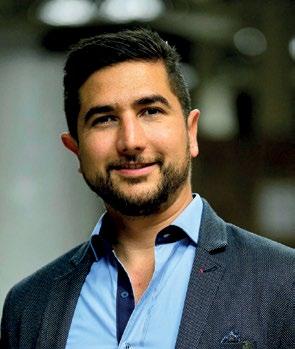
Giancarlos’ journey into the industry began like many otherswith a part-time job. He was 21 and the job was only meant to last until he graduated. Thirteen years later, the temporary role has evolved into a lifelong passion for moving. Today, he is proud to represent the second generation in his family’s business, combining academic achievements – including a Master’s degree – with hands-on experience and a genuine love for the global community the industry provides.
‘What I value most is the people,’ says Giancarlos. ‘Over the years, I’ve had the chance to meet incredible
By embracing innovation… we can find the right balance between traditional ways of operating and transformation. The future of our industry depends on it
colleagues from all over the world – many of whom now feel like family.’
Having gained a lot of experience, Giancarlos felt he wanted to give back – share ideas, collaborate on projects and input into the future of the moving and relocation industry. With rapid advancements in areas such as technology, communication and marketing, he says the sector needs fresh perspectives and active participation more than ever.
In his application, he said the FIDI Future Fellows programme offered the perfect platform for him to contribute. Giancarlos is especially keen to take part in brainstorming sessions, contribute new ideas
The Future Fellows programme is the perfect example of what FIDI 39 Club set out to be. The club’s strength lies in its members and its ability to create practical opportunities for growth. Initiatives such as this give our membership real experience, mentorship and the chance to make a tangible difference in the community.
In Seyma’s words: ‘I feel truly excited and grateful to be part of the Future Fellows programme. I believe FIDI and the FIDI 39 Club play a vital role in giving young professionals the space to share their
and help turn these into real projects – particularly in areas such as digital transformation, customer experience and sustainable business practices. He values the opportunity to work closely with the FIDI 39 Club Board, seeing it as a way to further develop his leadership skills.
Giancarlos envisions ‘a future where the international moving and relocation industry is driven by accessible, practical technologies that help us expand and diversify service offerings. He says these tools ‘will help family-owned businesses evolve into more structured, scalable organisations, supported by standardised processes and stronger governance’.
perspectives and get involved in decision-making –even before they’re considered to be “experienced enough”. This approach is empowering and creates a culture of learning by doing.’
The FIDI 39 Club is proud to champion young professionals in our business, equipping them with the knowledge, confidence and connections to lead the way in innovation. The Future Fellows programme strengthens our commitment to nurturing talent, and ensuring that the moving and relocation industry remains dynamic, connected and resilient for the future.
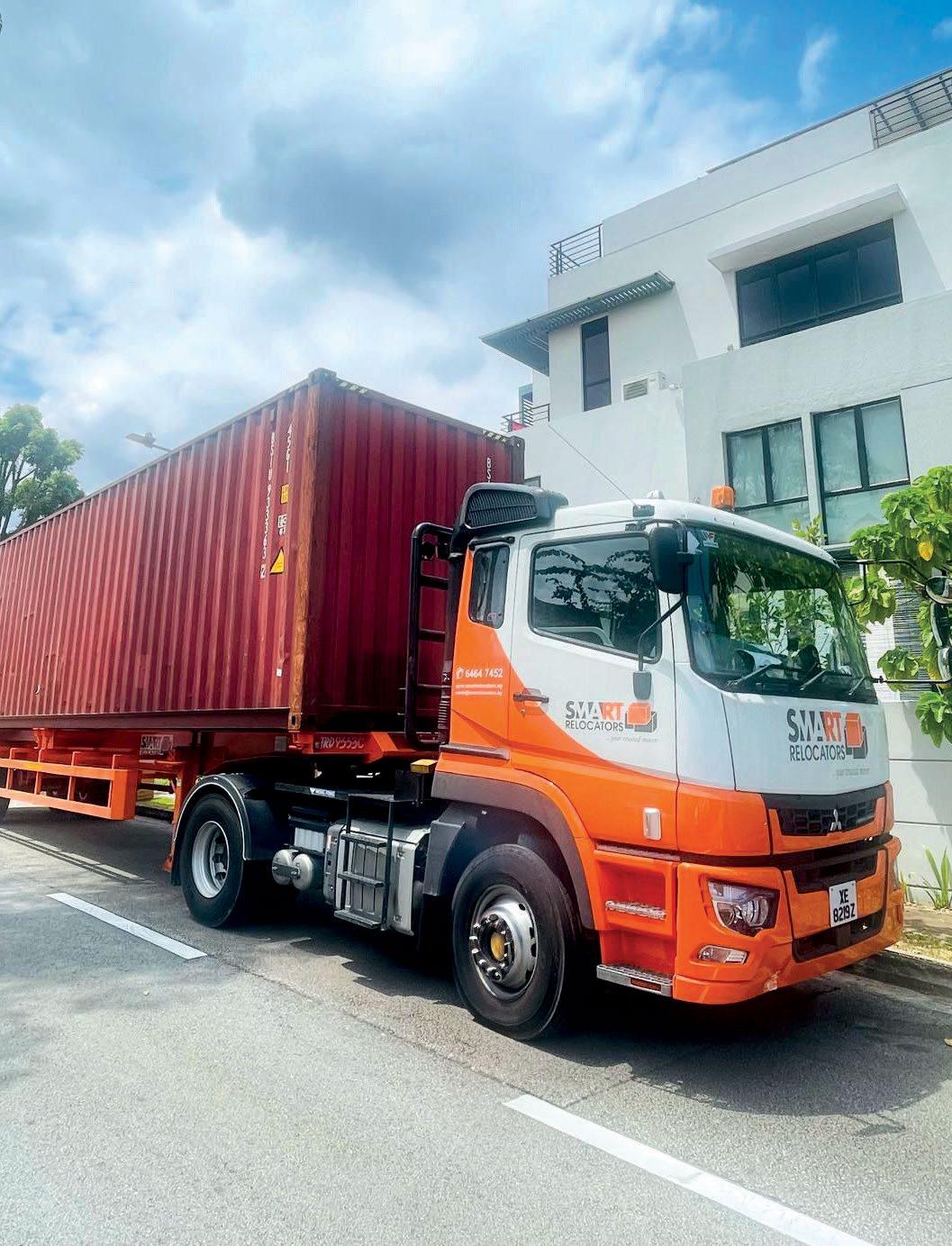
“Over the years, I’ve had the chance to meet incredible colleagues from all over the world – many of whom now feel like family”
At Smart Relocators, we aim to be the most trusted partner in providing seamless International Moving, Shipping and Storage Services from Singapore and beyond. Simplify your supply chain today with our full tailored suite of origin and destination solutions across all freight modes.
www.smartrelocators.sg admin@smartrelocators.sg terence@smartrelocators.sg








After two postponed attempts, the FIDI Conference is finally heading to the vibrant city of Osaka in Japan in May 2026. FIDI Sustainability & Strategic Communications Manager Magali Horbert gives us a preview of the unforgettable mix of business, culture and connection planned for the event.
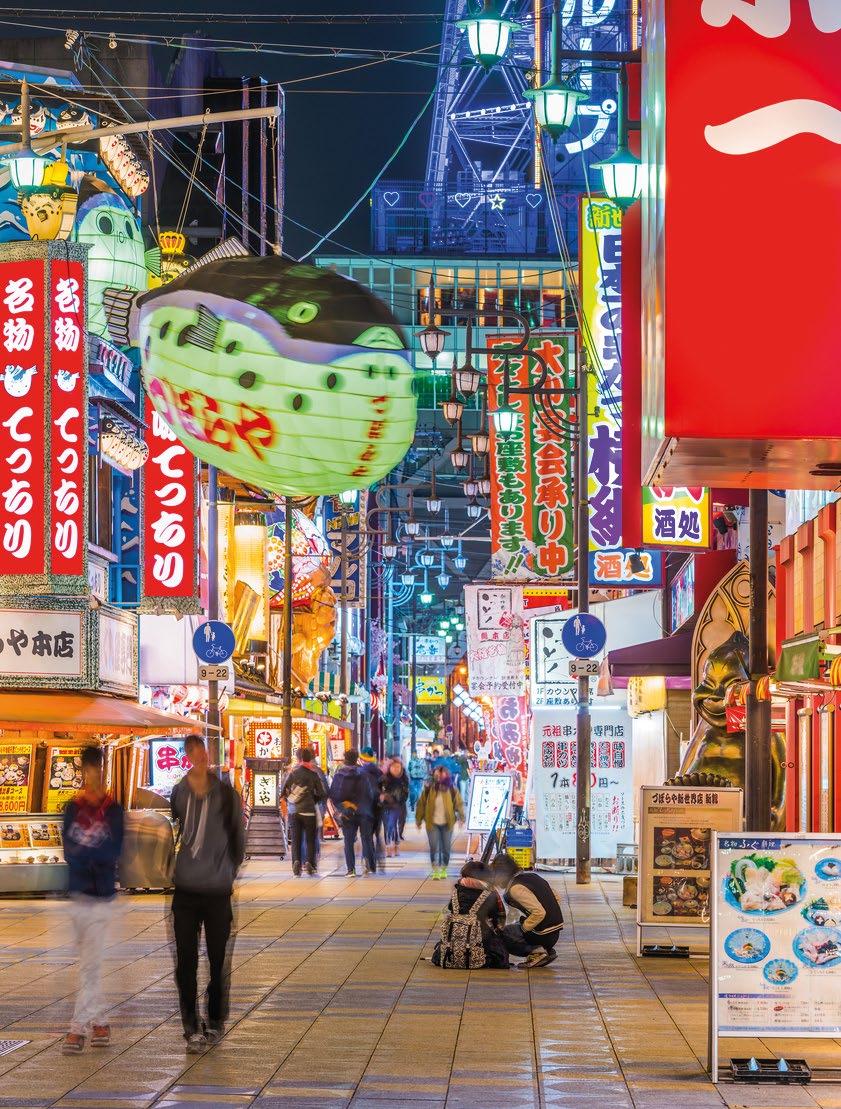
We were meant to host the FIDI Conference in Osaka in 2020. None of us could have imagined that it would take six years (and a global pandemic) before we’d finally make it there. As we prepare for the 2026 FIDI Conference, we can truly say it’s third time lucky –although luck has little to do with how excited we are to finally head to Japan in May 2026.
Japan is one of those rare places that is on almost everybody’s bucket list. It’s endlessly fascinating, beautifully contradictory, and just far enough away (for many of us) to feel like a true adventure. If you’ve always wanted to visit, this is your moment – and what better way to experience it than with your FIDI family?
It’s hard to sum up Japan in a few words. It’s a country where the trains run faster than you think possible, the toilets are smarter than your phone, and you’ll regularly find yourself bowing back at strangers without really knowing why.
However, behind the headlines and stereotypes lies a culture built on respect, resilience and a deep sense of community – all values that resonate strongly with our international moving and relocation industry, especially in the current turbulent times. Through its blend of ancient traditions, unique culture and cutting-edge innovation, Japan invites you to slow down, observe and take part - carefully.
From the quiet grace of Kyoto’s temples to the electric energy of Tokyo, Japan’s contrasts find their perfect balance in Osaka. Often described as Japan’s friendliest city, Osaka is lively, warm and unpretentious, with a food scene that rivals any in the world. As such, it’s a perfect backdrop for the FIDI Conference: professional when it needs to be, and playful when business meets pleasure
The main conference activities will take place at the Swissôtel Nankai Osaka, located above Nankai Namba Station in the heart of the city. This means you’ll have direct train access from Kansai International Airport and be sitting on top of one of the country’s bestconnected transport hubs, including easy transfers to the famous Shinkansen bullet train network.
From here, you can be in Kyoto, Nara or even Hiroshima in the time it takes to read your morning emails. This makes the location ideal not only for conference sessions but also for exploring further afield. Which brings me to the next point...
The FIDI Conference is about much more than meetings and business sessions. It’s also about discovery, of ideas, perspectives and new places. That’s why we’re offering a wide range of optional payable tours for those who want to take full advantage of being in Japan.
These are small-group experiences, available on Sunday 10 May (full day), Tuesday 12 May and Wednesday 13 May (afternoons), and are open to all registered participants. The full details of the tours can be found on the conference website; see overleaf for a small taste of what’s on offer:



“The real magic of our conference happens outside of business meetings”
l Kyoto’s wonders
Visit Japan’s former imperial capital, with its golden temples shimmering over still ponds, and streets lined with historic wooden houses leading to breathtaking views at Kiyomizu-dera temple. With expert guides and seamless transport, you’ll get the highlights without the stress of finding your way alone.
l Nara’s secrets
Meet the famous bowing deer of Nara and explore the awe-inspiring Great Buddha and peaceful forest shrines. A beautifully balanced day of culture, history and a bit of animal magic.
l Hiroshima’s whispers
A moving and powerful day at the Hiroshima Peace Memorial Park and Museum, including the haunting Genbaku Dome. This is a tour that invites reflection and perspective - one of the most meaningful experiences on offer.
l Osaka from above (and below)
Soar to the top of the Harukas 300 Observatory for stunning views, then head into the vibrant, slightly chaotic retro world of Shinsekai for a flavour of Osaka’s everyday charm.
l Bike tour to Osaka Castle
Glide along the O River on a guided cycling tour that takes you through quiet green spaces and straight to the gates of Osaka’s most famous fortress.
l Osaka Bay: Ferris wheel and aquarium
Take in panoramic views from the Tempozan Ferris Wheel followed by a deep dive into Japan’s marine life at the Kaiyukan Aquarium.
l Sushi masterclass
Learn how to prepare sushi under the watchful eye of a pro chef and discover just how tricky (and satisfying) the perfect nigiri really is.
l Fugu tasting experience
Take a walk on the culinary wild side and sample Japan’s most legendary (and dangerous) delicacy - the pufferfish - served as part of a full traditional meal by a licensed expert.
l 10,000 Torii Gates hike
Wander through the iconic red gates of Fushimi Inari Shrine in a guided hike up Mount Inari. Follow peaceful forest trails, listen to local legends and capture moments that feel timeless.
l Geisha tea ceremony
Step into a peaceful tatami room and take part in a traditional tea ceremony hosted by a geisha — a rare and elegant glimpse into Japan’s cultural heart.
l Takoyaki vs mochi street food challenge
Ride a rickshaw to your next bite as you sample Osaka’s most famous snacks and discover the unexpectedly competitive world of Japanese sweet and savoury “balls”.
l Canal cruise and street food
Savour Osaka’s culinary street scene, then see the city from a new angle on a laid-back boat tour through the Dotonbori district.


l Japanese craft workshops
Try your hand at origami, calligraphy or ikebana in a guided session held at the conference hotel. A low-key, hands-on way to connect with Japanese traditions.
All tours must be booked via fidiconference.org. Places are limited, so early registration is recommended.
The FIDI Conference is our organisation’s flagship event, a place for our global community to gather, share insights, and shape the future of our industry.
The programme includes business sessions on the current trends in international moving and relocation, governance meetings, and social and networking events that bring our community together in meaningful (and fun) ways.
When preparing your own agenda, keep in mind that the FIDI Conference is best when you don’t stack your calendar with back-to-back meetings; we gently discourage that, as you will be missing out on what makes this event so special.
The real magic of our conference happens outside of business meetings. It’s all about making meaningful connections with people who may just become much more than just business partners.
For any questions about the FIDI Conference, please reach out to the FIDI Conference team at admin@fidievents.org
Important note: because of space constraints for certain events and activities, we are forced to cap the number of conference attendees at 650. Tickets will be sold on a first come, first-served basis, so don’t delay and register now at fidiconference.org .
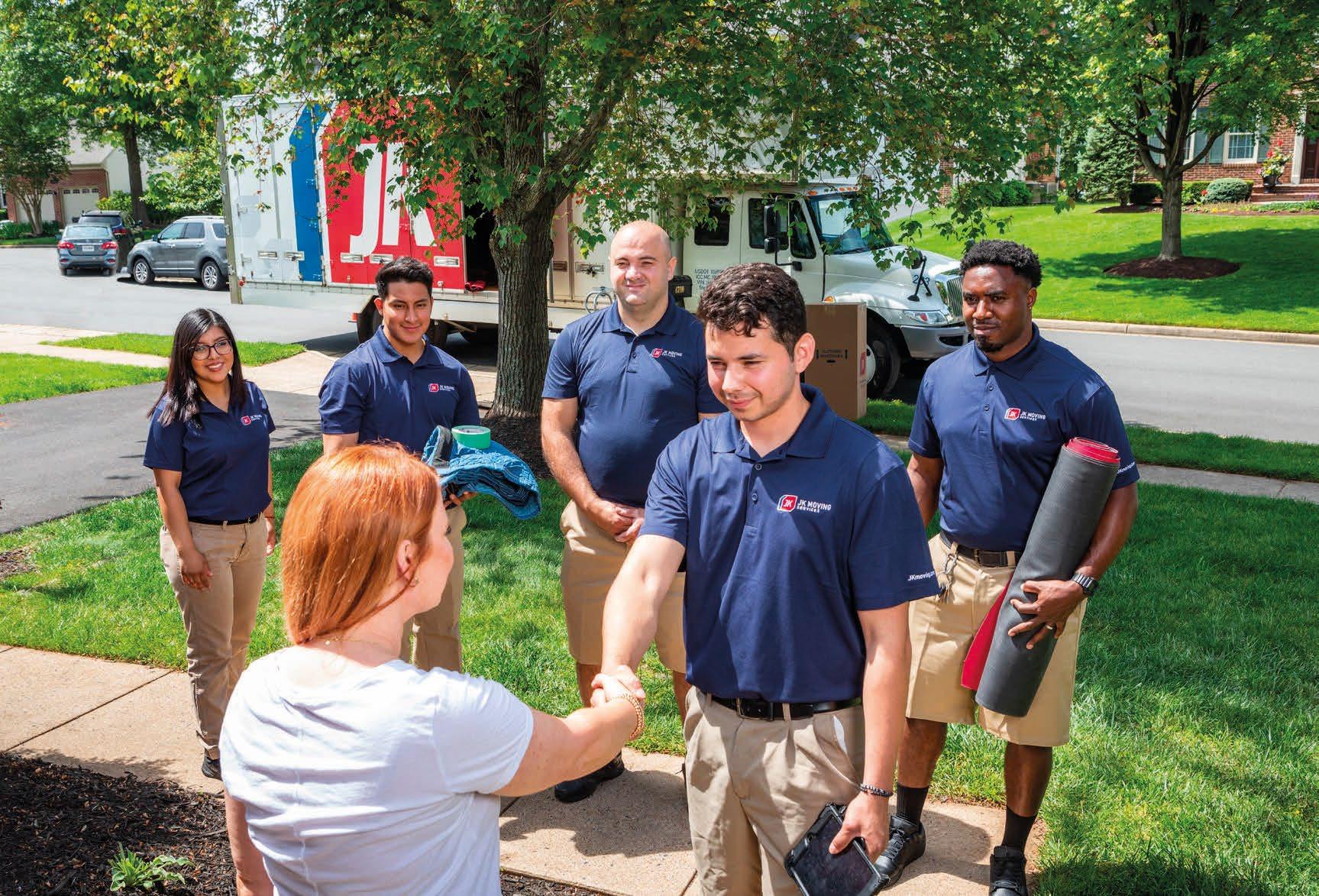
Making a difference – for our customers, our employees, and our communities
Beyond our dedication to customers, we support initiatives in our community to make a positive impact and uphold our brand promise in every aspect of our business practices.
• The JK Community Farm: 150-acre, chemical-free nonprofit donating 100% of its harvest.
• Belonging & Inclusion Council: Employee-led council with a mission to foster a culture where everyone’s valued.
• Sustainability practices: Enterprise-wide initiatives to monitor and reduce our carbon footprint.

Japanese social etiquette: Do’s and don’ts every visitor should know A helpful guide for FIDI Conference 2026 attendees exploring Osaka and beyond DO: follow these local customs
1. Be quiet in public spaces: Japan places a high value on public harmony. Speaking loudly (especially on phones) in trains, buses, and public areas is considered disruptive.
2. Queue up (patiently): Whether boarding trains or waiting for food, Japanese people form neat lines and wait their turn. Cutting in is not accepted.
3. Take off your shoes indoors: In traditional places – temples, certain restaurants and homes – you’ll be expected to remove your shoes. Slippers are often provided.
4. Bring cash: Japan is still a cash-orientated society, especially in smaller restaurants, local markets and rural areas. Have yen on hand, as many places don’t accept cards.
5. Use both hands when giving or receiving: Whether it’s a gift, a receipt, or a small item, using both hands is seen as a sign of care and respect.
6. Be mindful with rubbish: Public rubbish bins are rare. You’re expected to carry your waste with you until you can dispose of it properly.
7. Show gratitude politely: Phrases like “Arigatou gozaimasu” (thank you) go a long way. A small bow or polite nod shows appreciation.
8. Respect sacred and historic sites: At temples and shrines, follow posted signs, keep quiet and don’t enter restricted areas. Watch what locals do –and follow their lead.
9. Slurp your noodles: In ramen and udon shops, slurping is a sign of enjoyment and totally acceptable!
Avoid these common tourist mistakes
1. Don’t eat while walking: street food may be available, but it’s considered bad manners to eat on the go. Find a spot to stand or sit nearby before digging in.
2. Don’t talk on the phone in trains: Phones should be on silent mode (“manner mode”), and phone calls are discouraged. Text or wait until you’re off the train.
3. Don’t point with your finger: Pointing directly is seen as rude. Use an open hand or gentle gesture instead.
4. Don’t stick chopsticks upright in rice: This resembles a funeral ritual. Also, avoid passing food directly from one pair of chopsticks to another – another funeral-related gesture.
5. Don’t tip: Tipping isn’t part of Japanese culture and may cause confusion. Excellent service is standard and already included in the bill.
6. Don’t hug or touch strangers: Japan is more reserved than many Western cultures. Avoid touching, hugging or being overly physical unless you know the person well.
7. Don’t blow your nose in public: Sniffling is tolerated more than nose-blowing, which is considered impolite in shared spaces. Step aside if you need to.
9. Don’t expect English everywhere: While signage is improving, not everyone speaks English. A translation app and a few Japanese phrases can be extremely helpful.
A little awareness goes a long way – and shows the respect that lies at the heart of Japanese culture. Taking the time to understand local customs is part of what makes travelling in Japan such a rewarding and enriching experience.
“A little awareness goes a long way – and shows the respect that lies at the heart of Japanese culture”
Thank you to our sponsors




















As global challenges continue to test international moving and relocation, investing in the skills and confidence of your team has never been more important. FIDI Academy Manager Chantal Fera explains and tells us why the Academy is now opening certain courses to stakeholders outside of the existing FIDI community
For FIDI’s more than 600 Affiliate companies across more than 100 countries, their strength and ability to cope with continuously changing global challenges is influenced significantly by their people – which is why continuous high-quality staff training is so important.
As the Manager of the FIDI Academy, I’ve seen first-hand how our programmes can transform individuals and, by extension, the teams in which they work and entire organisations. They can help moving companies’ people master industryspecific regulations, enhance their soft skills, or develop leadership capability, with content for professionals of every level.

Since the FIDI Academy was founded in 1988, we have trained thousands of staff within the FIDI network, helping them to grow, adapt and lead. We are now ready to open our doors wider and welcome more businesses – especially those who haven’t yet become a part of the FIDI network – to explore what tailored training can do for their teams. The FIDI Board proposed the opening of certain Academy content to external stakeholders, and this was supported at the recent Delegates Meeting.
In difficult times, it’s tempting to cut back, but difficult times makes investing in your best talent more important than ever. Training gives you a strategic advantage, developing skilled employees who are confident in what they do, more efficient and more loyal. Some companies are hesitating to train their staff, fearing that increased skills will lead to demands for higher salaries or, worse, that their staff will seek out better offers and leave. In fact, investing in people through training builds trust and loyalty. Employees who feel valued are more likely to stay and grow with the company. The cost of losing talent outweighs the cost of training by far.
We understand that for small, family-run businesses, allocating a large training budget can be daunting. But the return on investment is tangible. Even investing in entry level training can lead to significant improvements in service quality, customer satisfaction and employee retention. With flexible, scalable options, the Academy makes it easier than ever to start small and grow.
The future of the moving and relocation industry depends on the people who drive it forward. Investing in your people’s future is an investment.
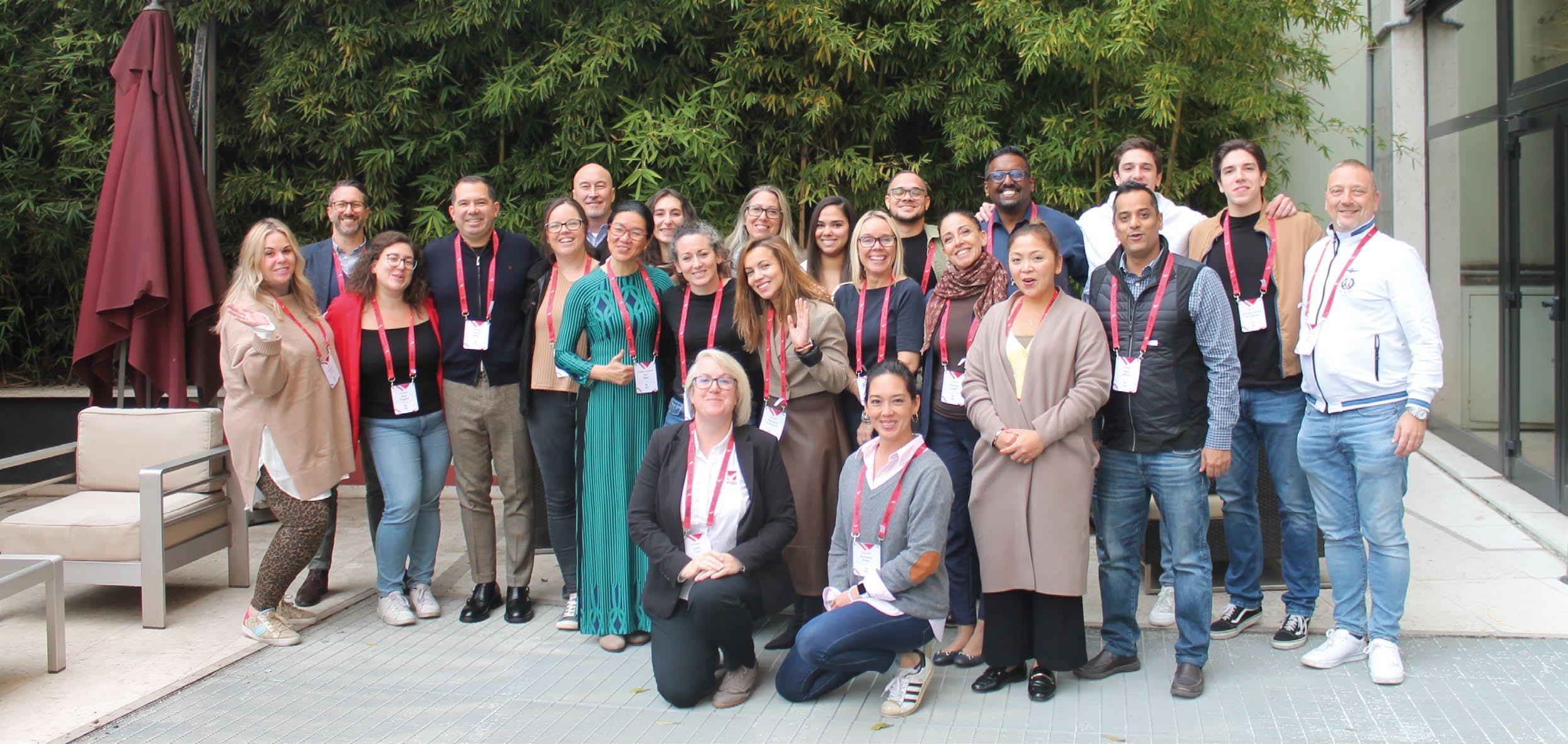
Members of FIDI’s training team on the many ways in which they – and the businesses in which they work –benefit from spending time training with the FIDI Academy
Robert Cormier, Lead DSP Trainer at the FIDI Academy, says he wants to see momentum return to industry training and investing in the success of employees.
‘There are so many reasons why companies need to develop their internal talent, and the FIDI Academy is essential to this process because our industry depends on developing its people,’ he says.
‘The only way to achieve this meaningfully is by combining the expertise of experienced industry professionals who volunteer their time with the dedication of FIDI staff to deliver world-class training. Each programme is packed with more practical knowledge, shared experience and professional insight than any other learning opportunity available in our field.
‘Beyond the classroom content, the Academy provides something equally valuable: lifelong professional relationships. Students spend days and evenings learning, growing and collaborating together with trainers who are equally passionate about helping them succeed. Every participant takes away not only new skills, but also a deeper sense of connection to the industry.
‘At a time when the global economy challenges all of us, this is exactly when companies should be investing in their teams. The organisations that continue to develop their people through FIDI Academy programmes will be the ones that emerge stronger and better prepared for the future.’
Andreas Eibel, Sobolak, is a FIDI Academy trainer and regularly sends company employees on training programmes, too.
‘At Sobolak, we have supported the FIDI Academy since 2000,’ he says, adding that attending a course is as much about building lasting relationships as developing skills.
‘FIDI training exposes our employees to the best part of our industry – the friendships they make and develop. ‘Being a part of the FIDI family means also sharing experiences and challenges. Our staff gets a better understanding of our worldwide industry, which really makes a difference when they are communicating with our customers.
‘Educated employees are motivated and also understand the necessity of process with regards to FAIM and other management decisions.
‘Every time somebody comes back from FIDI training you notice a special look in their eyes. They take away so many ideas they have learned not (only) from the course but from their industry peers, and they are always keen to share the experience. Our company benefits from these ideas from bottom to top, making it far easier to embrace positive change.’
“Every participant takes away not only new skills, but also a deeper sense of connection to the industry”
“Organisations that develop their people on FIDI Academy programmes will be stronger and better prepared for the future”
MiM2 trainer Lennert de Jong says the MiM2 course is a ‘challenging and inspiring journey’ that helps participants grow in their leadership roles.
‘The long days push you to step out of your daily routine and look at your work from new angles,’ he says. ‘You explore different sides of the company from a more strategic and managerial perspective, gaining a broader and more complete view of your business and the industry as a whole.
‘Along the way, you define your own growth area and master project, supported by the different modules, trainers and fellow participants. You learn from each other’s experiences and perspectives, and you bring those insights back into your own company to create real impact.’
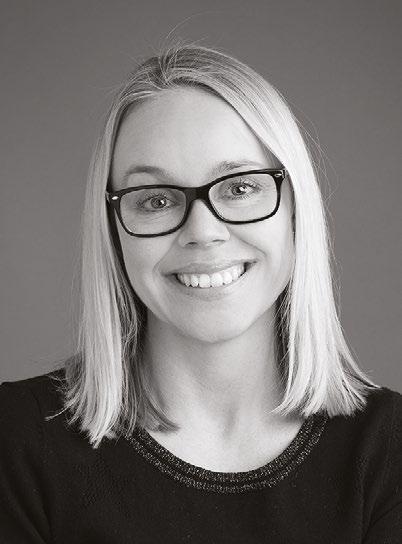
‘As a Lead Trainer of the MiM2 I can strongly recommend this training to all team leaders, middle management, or managers,’ says Sara Lyrum Kronkjaer. ‘The programme is tailored to general challenges these people are facing – and, at the same time, the training is specific to our industry, so it’s twice the value.’
The courses cover up-to-date content that help employees keep informed in their businesses, she adds. ‘Digital platforms, focus on pricing, sustainability metrics and geopolitical volatility have transformed how our industry operates, and the FIDI Academy helps professionals stay ahead. From data protection and ESG awareness to risk management, cultural intelligence and customer experience, the FIDI Academy seminars are continuously updated to reflect the real-world challenges we have and not just outdated textbook theory.’
Lyrum Kronkjaer also says there is the uniquely close global network that students gain from taking part in Academy training.
‘After one intense week of on-site training, most students build friendships for life. ‘This means that whenever a student needs a favour, a discounted rate, or something else, they usually have a fellow student who will go above and beyond to help. There really is no price tag for these deep connections.
‘I took part in my very first FIDI onsite training over 25 years ago and still today, I can reach out to my fellow students and ask for a favour, when I need one. If this is not a return on your investment, then what is?’.
Having intense, in-person seminars adds to the
experience and development of students who attend the FIDI Academy, too.
‘On the first day, the students are normally a bit nervous and not willing to take a lead on the tasks,’ says Lyrum Kronjaer. ‘During the week, their learning deepens and their confidence kicks in. The result is often that by the very last training day, everyone’s confidence is high and they are all happy to take the lead. Most students say they would go back the following Monday and start the whole week again.
‘For me, this is one of the most rewarding elements: how quickly the students grow in their knowledge, leadership, and how confident they become – it is truly amazing. I love meeting my past students at FIDI conferences and they share their learnings, experience and rewards that have come as the result of the training we did. I’m always so proud of them.
‘For those looking at the cost of on-site seminars and thinking “that’s expensive” or “what if my employee leaves after they’ve done the training”, I say “what if you don’t train them and they stay?” Our industry is not a guessing game, it’s all about quality and service delivery, and our clients can easily see the difference.
‘You need to invest in your employees because they are more likely to stay with you – but you’ll boost your client satisfaction 100 per cent, too.’
The FIDI Academy is one of the most valuable investments a company can make in its people. For organisations without large internal mobility programmes, or those that do not regularly rely on external relocation management or destination service providers, the Academy offers a practical and cost-effective way to develop their teams in critical areas such as leadership, customer experience, destination services and sales.
What makes the FIDI Academy unique is that its programmes are designed and delivered by experienced professionals who live and breathe this industry every day. They bring real-world knowledge, genuine passion and a collaborative spirit that transforms training into lasting development. Participants not only learn best practices, but also gain the confidence and perspective that come from being part of a global learning community.
This is an ideal time for companies to invest in their people. Training through the FIDI Academy is an affordable alternative to traditional corporate programmes, and the return on that investment is significant. The skills, confidence and relationships developed through the Academy will strengthen teams, improve service delivery and, ultimately, define which organisations emerge stronger in the next market cycle.
To learn more about what the FIDI Academy has to offer, visit the Academy website or contact Chantal Fera at academy@fidi.org

Their honeycomb is strong and reliable, just like our international moving, packing and delivery services

Int’l Moving
Relocation Services
DSP (V&I, Home finding, settle-in services)
Pet Transport
Automobile Transport
Global Logistics

y Int’l Moving
y Relocation Services
y Pet Transport
Our service scopes
y Automobile Transport
y Project Cargo
y Sea &Air Freight
y Storage (RMS)








While demand for international talent is surging, today’s professionals expect more support than outdated policies offer. To stay relevant, employers and service providers must evolve from logistics-focused to empathetic solutions, where the wellbeing, expectations and long-term success of the whole family is at the centre. Karlijn Jacobs, of Expat Valley, tells us more

The demand for global talent has never been higher, yet qualified, highpotential people are decreasingly interested in international assignments. The world is constantly changing, and it is about time that we face what is right in front of us: the era of family life evolving around one parent’s life-long career with the same employer is long gone.
The global mobility policies and practices that ensured success before are no longer meeting the needs and expectations of the global talent pool. This industry is failing to keep up with people’s priorities and the new labour-market reality, proving that ‘what got you here, won’t get you there’. We can see this shift as an existential threat or as a massive opportunity to deliver the missing piece: holistic family wellbeing support.
The global mobility infrastructure was built on foundations that no longer reflect the modern workforce. Policies centred on a traditional, Western model of family – the married, male assignee with a dependent spouse who was homemaker for their children – no longer fit the life of many people we want to encourage to move.
Such policies are not suitable for female-led assignments or dual-career couples, for example, which immediately shrinks the pool of eligible talent. Where moving a dependent spouse is a relocation, moving a highly skilled partner is a career disruption. We are seeing a profound market
power flip, where talent has leverage and demands support for their entire life, not just their job.
This development has taken place alongside a technological shift. Service providers face increasing pressure as employees are now more than capable of handling large parts of the logistical process online. The need for extensive household goods shipment is diminishing, and detailed home or school searches can often be initiated digitally. This transition means the provider who still focuses solely on being a logistics executor will be commoditised. The value lies in moving to the role of a proactive risk consultant. We must also acknowledge that we have entered an era in which wellbeing is a key priority. People experienced a new standard of work-life balance during the pandemic. During this time, they got to have a thriving career and an active and equitable role in family life.
The success of a move goes hand in hand with managing complicated change and transition that global mobility cannot prevent. We must acknowledge that some things are simply less than ideal and not easily changed. This includes navigating complex tax and immigration environments; adapting to unfamiliar public systems – such as education and healthcare – that were not designed for foreign users; the socioemotional impact of leaving a trusted support system behind and building a new one from scratch; and the uncertainty of what a new home is going to be like because of the highly competitive nature of the housing market in key relocation cities.
The solution is not to add more benefits or increase allowances; it is better communication. Expectation management is key to mitigating shock, resentment and assignment failure postarrival. The employer has a duty to educate the family on the realities and complexities before the acceptance signature. Stress that accountability with the employee is OK, but only once you’ve

confirmed they have all the relevant information. This is a strategic intervention point for service providers. We can add immense value by helping corporate clients proactively manage these expectations, rather than simply executing the logistics. The shift is from saying, ‘we found you three houses’, to saying, ‘we prepared the family for the reality that a house search might take eight or more weeks, and here is the plan for how we will help them navigate that period of uncertainty’.
The biggest opportunity for change is empathy. We must shift the focus away from bottom lines and recognise that this is a team effort. Employers should acknowledge how a colleague and their family are navigating enormous change when they uproot and resettle their lives in a foreign country.
A person accepting an international role needs to take accountability for the impact on their family life, and ensure all measures are taken to support their family needs and wellbeing during this period of transition and the new reality of life after.
They are both players on the same team and should work towards the same goals, because a thriving career and happy family life go hand-inhand. A key ingredient to reach this destination is reliable information. Only when people understand how their lives and the needs and wellbeing of their children will be impacted, and how unique aspects of their family life will develop under the conditions of international relocation, will it become clear what aspects of their move should be proactively supported. This is where service providers transform their role. By integrating a proactive family risk assessment into the early stages of the assignment briefing, providers can identify and help their corporate clients mitigate issues that lead to assignment failure.
A great global mobility programme today must offer holistic and tailored support that addresses the journey of the whole family. This goes beyond the destination service checklist, to include the
child’s sense of identity, the family’s ability to build a new support system, and the complexity of moving a family unit and connecting with local resources that support their needs and wellbeing, with an understanding and empathy for their international lifestyle.
The return on investment (ROI) is clear and in high demand by employers challenged by workforce dynamics in which people quit quietly or simply move on to the next opportunity. Great global mobility programmes are founded on understanding and empathy, and offer holistic and tailored support. This leads to the ultimate ROI: employee loyalty and retention. A supported family equates to a stable, productive and committed employee.
This is the mandate for service providers: it’s time to move beyond the operational checklist and embrace your role as consultant and coach. When you can proactively assess family-related relocation risk factors as standard, this is a high-value offering for corporate clients – especially when you can pair that assessment with solutions developed with genuine understanding of the impact of relocation on family life, and vice versa.
Shift sales conversations away from the cost of services (efficiency) to the cost of family failure (risk mitigation). By encouraging corporate partners to address these issues, you are securing their talent pipeline. By supporting their employees and families effectively, you do more than this –you expand their talent pipeline.
The old, transactional mindset is failing because it ignores the human being at the centre of the assignment. For service providers, the time for marginal improvements in logistics is over; they must embrace design thinking, empathy and strategic partnership. Integrating a humancentered, proactive approach to family wellbeing is good ethics or a social sustainability effort; it is the most strategic move you can make to future-proof your business and become a trusted partner in a new era for global mobility. Moving on from the policies and assumptions of the past allows you to reach the global business goals of the future.
Karlijn Jacobs is the Ombudsperson for International Children and Families and the Founder of Expat Valley. She built the world’s first human-centric global mobility ecosystem to transform the family relocation journey from a business risk into a strategic advantage, ensuring global talent and their children thrive. For more information, contact Karlijn Jacobs, of Expat Valley, at: karlijn@expatvalley.com
“We must acknowledge that we have entered an era in which wellbeing is a key priority”
“A supported family equates to a stable, productive and committed employee”

Tom Ansley, owner and Chairman of Elliott International, and the first – and, to date, only – South African to hold the role of FIDI President, has retired, ending ‘a remarkable era’ in the international moving industry.
Elliott was established in 1947 and, in 1979, Tom acquired the business, which was on the verge of bankruptcy at the time, and had just one small warehouse and an office in an old house in the west of Pretoria. He had previously worked for and gained experience in moving businesses, including Stuttaford Van Lines.
With a focus on quality, Tom set about expanding the Elliott business, introducing the Elliott Customer Protection Guarantee and transforming the company into a globally recognised brand.
In 1987, the firm was awarded the ‘Number One in the World’ platinum award from Overseas Moving Network International (OMNI) and, in 1988, was runner-up in the South African Non-Listed Company of the Year Award. Today, Elliott is recognised nationally and internationally as one of the foremost members of the international moving industry.
Tom believes the first ingredient of success is ‘having the right attitude’, and his aspirations and activities were underpinned by being a part of FIDI, of which he became President in 1998.
‘I started devoting energy to the criteria that make for a quality mover, and the widely different standards and qualities of FIDI Affiliates around the world,’ says Tom. He believes firmly that his greatest achievement for the industry has been the role he and his late and great friend Bryan Bennett played in the formation and establishment of FIDI’s certification programme, FAIM, which launched in 1997.
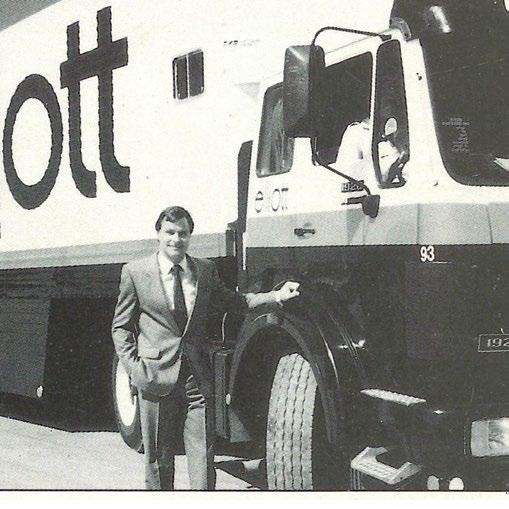
time and she has supported him hugely in his career.
‘The removals, moving, relocations or mobility industry – or whatever you’d like to call it – has been my career of choice, and I’m so very glad and happy that I chose it,’ said Tom, in his 2015 FIDI Conference address.
In a presentation to the 2015 FIDI Conference at the Cape Town International Convention Centre, Tom said Elliott was ‘eternally
‘Wherever Loy and I travel in the world, we have a friend or two, or more. The industry I chose is responsible for that. Some of our best and closest friendships were established from and in the
‘Thank you FIDI; thank you FAIM; thank you to each and every person around the world who has given us such fun, enjoyment, hospitality and true friendship.’
Elliott’s Executive Director, Brad Barker, said: ‘Tom’s vision and steadfast commitment not only shaped our international reputation, but also set new standards for the industry. As he closes this remarkable chapter, we pay tribute to a man whose influence will continue to guide and inspire us.’
Well-respected moving industry consultant Maarten van Zutphen died on 18 September 2025.
A FIDI office statement said: ‘Maarten was a highly respected, larger-than-life industry personality who devoted more than 40 years of his life to the moving industry.’
Maarten began his career in 1983, working for the Dutch Department of Defence, managing moves from and to the Netherlands. After turning out the lights at the local air force base and managing 1,500 moves as project leader in one year, Maarten switched to the commercial moving/relocation industry in 1995.
During the past 35 years, Maarten held several management and board positions in the Netherlands and Belgium, with FIDI Affiliates KHZ, De Gruijter, Noble Mobility, Passies, and Gosselin.
He was passionate about industry training and development, was a certified Global Mobility Specialist with talent accreditation, a FIDI Academy Master in Moving (MiM²) alumni, and held various advisory positions in the market.
Maarten was also a lecturer and adviser at Expatise Academy, a training institute for global mobility professionals in the Netherlands. At FIDI, Maarten also served as Chair for the FAIM Supervisory Committee (FSC) for several years.
He ultimately went on to set up a successful consultancy business for the moving industry. In that capacity, he helped numerous FIDI Affiliates and applicants through the FAIM process.
‘Maarten worked closely with the FCC and the FIDI Office on a regular basis and we feel his loss acutely,’ said the FIDI statement. ‘A passionate FIDI and FAIM fan, we valued his expertise and unwavering support. He loved working with us, our Affiliates and applicants, and would always go the extra mile to support them.’
FIDI Secretary General Jesse van Sas, said: ‘I have known Maarten for more than 25 years, from the time we were both working as movers and competing with each other, and later developing a close relationship with him as FAIM consultant for FIDI applicants. He was

Stefan Chorus, co-owner of Luxembourg-based moving and storage business Streff, has died at the age of 63, following several months of serious health challenges.
The company made the announcement on LinkedIn on Monday 27 October.
‘For four decades, Stefan’s unwavering dedication and visionary spirit were instrumental
so dedicated to quality and to the clients he guided through the FAIM process, before, during and after. His enthusiasm and energy were infectious. What a loss for our moving industry.’
FIDI’s Customer Service Officer Prachi Sharma said: ‘Maarten always had a great attitude – to get on with things and make them work.’
Isabel Chillopa of FIDI’s FAIM Coordination Centre paid tribute to ‘a true gentleman’, saying: ‘Maarten was a passionate supporter of FIDI and FAIM, leaving a lasting mark on the FIDI community. For many years, he served as our exceptional FSC Chair. Over the past years, he guided FIDI applicants through the FAIM process with care and professionalism. His sense of humour and dedication to his work made him a pleasure to work with.
‘Maarten was a kind and hardworking man, with a love for life’s simple pleasures, and as nice as he was tall! Always ready to lend a hand – whether helping us setting up a booth at events or supporting the FCC team – he brought warmth, generosity and laughter wherever he went. We once joked with him over a beer that he would need to polish his English accent so we could communicate better. From then on, whenever we met, he would ask with a smile, “Is my English getting good?” – a light-hearted moment that added charm to every conversation.
‘He will be greatly missed, but always fondly remembered.’
in shaping the foundation of our company. His integrity, vision, and relentless drive defined his work for our team, clients, and partners,’ it said.
‘Beyond business, Stefan demonstrated notable generosity and compassion towards everyone he encountered, particularly non-profit and cultural organisations. His actions served as an inspiring example and motivated others to contribute to their communities and those around them.’
It said Stefan will be ‘profoundly missed by all who have had the privilege to know him’.
FIDI Secretary General Jesse van Sas said: ‘This is devastating news for the Chorus family as well as the staff at Streff – and so shortly after the loss of Stefan’s brother Max in July 2024.
‘Max and Stefan had key roles to play in the expansion and success of Streff and for the professionalism of Luxembourg’s moving industry, and both were keen supporters of FIDI and very involved in our programmes and initiatives. With Stefan’s passing we have lost yet another force and character in the moving industry.’

Michael Scott, former Executive Director of FIDI, died on 24 August at the age of 87. Following a short obituary in the previous issue of FIDI Focus (319) here are some additional tributes to Michael who, during his tenure, helped establish the FIDI Institute, which later became the FIDI Academy.
used in the industry was met with a considerate ‘hmmmmmm’ – it stayed for another few years.
‘After a long training day, there was always time for a glass of red wine – never too many and never too late at the bar.
‘Michael impacted the professional lives of so many in this unique industry. He was instrumental in the launching of FIDI’s educational programme. He was dedicated to FIDI as an organisation, and to the people within it.
‘There was no doubt that his first love was for his wife, Jilly and his three sons who have lost a husband and father. At his funeral it was clear how much family mattered to Michael.
‘When I reflect on the time spent with Michael, I feel privileged and grateful. I feel appreciation and humility. When reflecting on comments from participants during and long after their training with Michael, there is one single word that comes up every single time: gentleman. Because it is who he was: a gentle man. Thank you, Michael.’
‘I will remember Michael with fondness and with heartfelt gratitude,’ said AMJ’s Danielle Oaks. ‘He was an exceptional gentleman and my trainer for the Fundamentals of Moving course, now known as the FIDI EiM. I remember the course vividly: it was both exhausting and challenging. Michael spoke with deliberate clarity, and I was awed by his experience and knowledge. I hung on his every word.

‘Having spent countless weeks together with Michael, tutoring at FIDI-seminars, he became a very special friend to me,’ said Ernst Jörg.
‘It started with an invitation to take one lesson on international freight at an “observation day” during one of FIDI’s first seminars in Ittre, Belgium. I passed the exam and we became a team, tutoring hundreds of young (and not-so-young) professionals. Michael, obviously, was the lead trainer.
‘Michael’s personality, his charisma and his dedication were unique. Strict, clear, disciplined and yet gentle, friendly and approachable. He had the ability to capture the audience, to explain complex information simply. His voice was steady but clear – and he was always in a suit and tie when in front of a class.
‘He wasn’t a friend of frequent changes; stability, continuity and predictability were important to him. My suggestion to delete a UN-contract form that was more than 30 years old and no longer
‘I must have made a good impression, because several months later, I received a letter from him –imagine that, a stamped envelope arriving in the mail! Inside was an invitation to join him as an Academy trainer. This opportunity expanded my horizons and transformed the trajectory of my career. Thank you, Michael, for recognising something in me and setting me on a rewarding path in this incredible industry.’
FIDI Past President Derek Duffy said: ‘The success and industryleading position the FIDI Academy enjoys today would not be possible without Michael’s innovation and leadership. Michael reminded me of an English boarding school headmaster; feared and respected, yet fair and compassionate. Any student or trainer that had the good fortune of sharing his classroom are wiser for the experience. Thank you, Michael.’
Managing Director of Transpack Argentina Patricia Fluck said: ‘Michael was a gentleman who will always have a place in my heart. His teachings made me a better professional.’
‘My first FIDI learning experience was under the supervision of Michael,’ said Ed van Bodegraven, Network Manager RIN Global Mobility Network. ‘He was a dedicated, knowledgeable and pleasant person to work with.’
Nicki French, from Grace, said: Michael’s contributions to our industry are a legacy he leaves. It was an honour that he invited me to train alongside him and I was in awe, he taught me lots, never mind the students!’
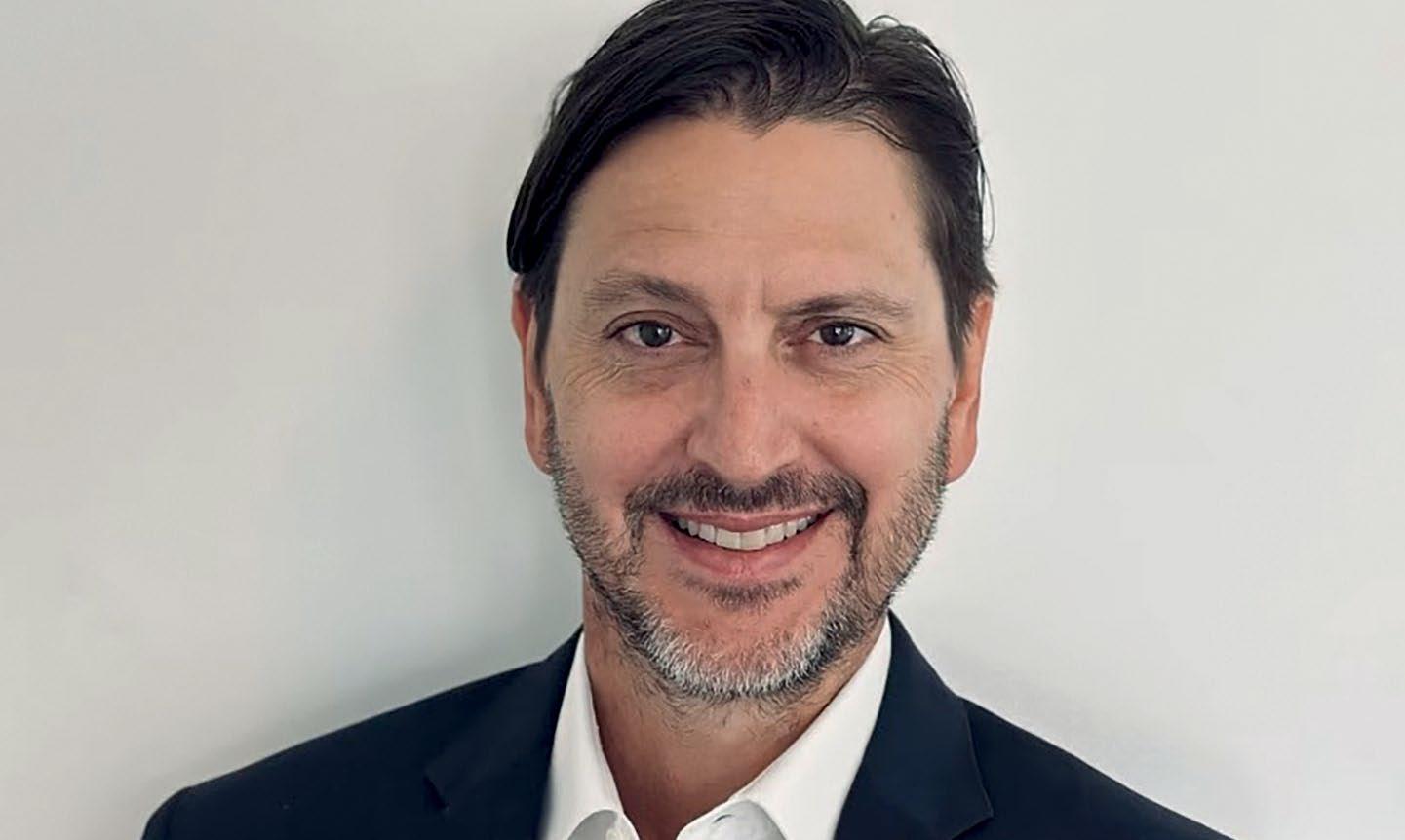
Stranak has been appointed Chief Financial Officer (CFO) at Graebel.
An established member of the company’s leadership team, Stranak’s most recent role was Senior Vice President of Tax and Global Treasurer, helping shape financial strategy and expand the global footprint of the business.
‘John’s promotion to CFO reflects his deep expertise and unwavering commitment to Graebel’s mission,’ said CEO Ron Dunlap. ‘With more than 25 years of global experience across international tax, treasury, financial planning and analysis, investor relations, strategic planning and international business, John brings a wealth of knowledge and leadership to
this role. His insights have consistently guided our organisation through complex financial landscapes and positioned us for long-term success.
‘As CFO, John will lead Graebel’s global finance organisation and play a critical role in advancing our strategic priorities, including the evolution of our services offerings and broader transformation initiatives as we ascend beyond mobility.’
‘Graebel’s purpose-driven culture and global reach make this an exciting time to step into the CFO role,’ said Stranak. ‘I’m looking forward to partnering across the business to drive financial performance and support our continued growth as we expand into new service areas.’
MW Relo has appointed Raphael Bättig as Chief Commercial Officer to strengthen its leadership team as the company targets further expansion and meeting clients’ evolving needs in a more competitive market.
Bättig has more than 25 years’ industry experience and a network of international relationships.
MW Relo’s CEO, Mark Muss, said: ‘Raphael’s knowledge, vision and experience will be instrumental in accelerating our commercial development and reinforcing MW Relo’s position as a trusted partner in the international relocation sector.’
Bättig added: ‘It is an exciting time for the
industry and I am honoured to join MW Relo in this next chapter. I look forward to working with the team to deliver innovative solutions and long-term value for our clients.’
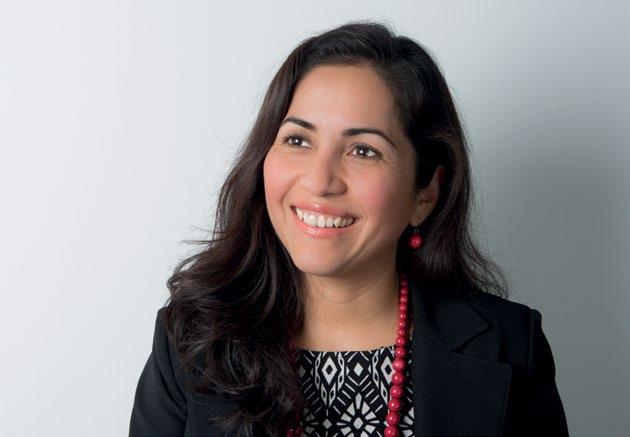
This December, the FIDI team says goodbye to Isabel Chillopa, Customer Service Coordinator at the FAIM Coordination Centre (FCC), who will be leaving FIDI after more than a decade of service.
As one of the first team members to join the FCC after it was insourced by the FIDI Office, Isabel played a key role in shaping how the FCC supports FIDI Affiliates with their FAIM Compliance Procedure. In particular, she took the lead in working with First-Time Applicants (FTAs), guiding them through the FAIM certification process and helping them take their first steps into the FIDI community. Her patient and consistent support has left a lasting mark. For many Affiliates, Isabel was the first person they interacted with at FIDI, helping clarify the process, answer questions, and offer reassurance at what can be a challenging moment.
’Isabel has been an important part of the FCC’s development,’ said Jesse van Sas, FIDI Secretary General.
‘She worked with dedication and professionalism and has supported hundreds of companies as they prepared to join our network. We thank her for everything she has done and wish her all the best in what comes next.’ Gracias, Isabel, we wish you well for the future!
Britannia Movers International in the UK has appointed Iain Adams as its new Managing Director.
He took up the post in September, having most recently served as Gosselin’s UK Regional Manager. Adams has 27 years’ industry experience, including senior positions at Sterling and UniGroup.








No two moves are alike. They are as unique as the people moving, each with their own reasons, destinations and unique personalities. People move for personal or professional reasons, but here at Gosselin, moving means more than just relocating people and their belongings. We support you throughout the entire process, with care, confidence, and dedication. We cater to your needs and adapt to your world, down to the smallest details.
www.gosselin-moving.com