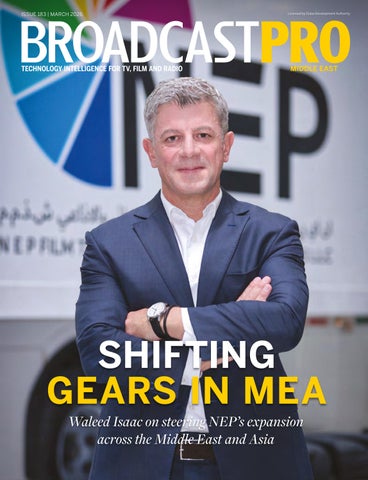
SHIFTING GEARS IN MEA
Waleed Isaac on steering NEP’s expansion across the Middle East and Asia

GROUP
Managing Director Vijaya Cherian vijaya.cherian@cpipromedia.com
+971 (0) 55 105 3787
EDITORIAL
Editorial Director Vijaya Cherian vijaya.cherian@cpipromedia.com
+971 (0) 55 105 3787
Editorial Contributors
Kalyani Gopinath
Nusrat Ali
Urooj Fatima
Sub Editor Aelred Doyle
ADVERTISING
Group Sales Director Sandip Virk sandip.virk@cpipromedia.com
+971 (0) 50 929 1845 / +44 (0) 7516 993 862
FINANCE
Finance Executive Yonwin D’souza finance@cpipromedia.com
DESIGN & PRODUCTION
Art Director David Fraser design@cpipromedia.com
EVENTS & MARKETING events@cpipromedia.com
DIGITAL SERVICES
Web Developer Hafiz Muhammad Waqas IT@cpipromedia.com
FOUNDER
Dominic De Sousa (1959-2015)
PARTNER
Maria De Sousa
Published by
WELCOME
Over the past few days, political tensions have escalated across the Middle East. Against that backdrop, the BroadcastPro Summit KSA already seems like a distant memory. But even in such times, the media business continues to gain momentum in the region.
The summit brought together nearly 200 delegates last month. Every discussion reflected how mature this market has become, but I’d like to share some key takeaways from the conversation between Shahid Khan, Senior Partner at Arthur D. Little, and Esra Assery, Deputy Minister at Saudi Arabia’s Ministry of Media.
For one, she spoke about how KSA has restructured its media governance to reflect an ecosystem in which publishing and broadcast are no longer separate. Content is content, regardless of the medium. KSA, therefore, has moved from medium-based oversight to an ecosystem-wide perspective.
Secondly, she pointed out that scale without measurement is meaningless. Saudi ranks among the top three countries globally for per capita social media use and leads the world in YouTube consumption. Until recently, the Kingdom lacked a definitive measure of the size of its advertising market. It is now pushing for standardised metrics and localisation to bridge that gap.
Thirdly, this change has begun to show. Twenty international agencies have set up operations in Riyadh. The Saudi box office now ranks among the top 15 globally and is number one in the region. Under Vision 2030, media is expected to contribute $11bn to the country’s GDP by decade’s end. Export is also underway, with eight films submitted to the Oscars thus far and global studio partnerships becoming routine.
The work of building creative economies, therefore, continues steadily, visible not only in policy reform but also in the expansion of global players such as NEP Group that are setting down deeper roots in the region. This momentum is explored in our cover story this month. In the meantime, stay safe and Ramadan Kareem.

VIJAYA CHERIAN, EDITORIAL DIRECTOR

UPDATE NEWS
New micro-drama platform BlingWood launches in the Middle East; OSN and iQIYI partner to launch new TV channel; Expo City Dubai to host CABSAT; Active Media’s Ramadan slate drives Gulf scripted market; and more

12 COVER FUELLED BY VISION
NEP sets new regional benchmark with acquisitions, fleet growth, a flagship facility in KSA, and a training academy, led by MEA President Waleed Isaac
PANEL – TECH BUILDING FOR SCALE
Cloud infrastructure and AI-driven workflows are vital to keep pace with Saudi Arabia’s mega sports and highoctane live events, tech experts say
22
ANALYSIS
TACKLING LINEAR TV’S ANALYTICS
BLIND SPOT
Through real-time satellite data, Audimatic aims to bridge the analytics gap in linear TV

EVENT – SAUDI ARABIA
FOMEX SPOTLIGHTS
SAUDI MEDIA AMBITIONS
Immersive tech, cloud workflows, XR and AI-powered content tools took centre stage at FOMEX, signalling the Kingdom’s push to become a regional media innovation hub
FIRESIDE CHAT
THE SAUDI CONTENT NARRATIVE
Through legislative reform, strategic investment and ecosystem building, Saudi Arabia is accelerating production and empowering talent, says Deputy Minister Esra Assery
PANEL – OTT
CASE STUDY
OSNTV: REINVENTING LIVE FOR THE IP AGE
How OSNtv leveraged Harmonic’s SSAI capabilities to shift to measurable, targeted digital ad inventory
MAXIMISING MONETISATION
Industry leaders examine how KSA is reshaping Arab streaming economics and longterm platform profitability 28
GUEST COLUMN STREAMING’S NEW WEAPON: NOSTALGIA

Familiar franchises help streamers win back distracted audiences, says TOD’s Peter Mrkic



03/26
New micro-drama platform BlingWood launches in the Middle East
BlingWood has launched as a dedicated micro-drama OTT platform in the Middle East, aiming to expand access to premium vertical shortform storytelling through multilingual and dubbed content. The new service introduces professionally produced original micro dramas that blend regional narratives with international

EXTREME H EXTENDS BROADCAST PARTNERSHIP WITH MBC GROUP
Hydrogen-powered motorsport series
Extreme H has renewed its broadcast partnership with MBC Group. Under the renewed two-year agreement, all FIA
Extreme H World Cup programming will air across MENA markets in both English and Arabic, broadening accessibility for motorsport fans throughout the region.
DEPARTS EL GOUNA FILM FESTIVAL
The festival is now preparing to appoint a new artistic director following Khoury’s departure. During her three-year tenure, Khoury focused on
repositioning the festival as a more filmcentred platform while reinforcing its role in networking, upskilling and supporting emerging talent.
production standards. It seeks to establish micro drama as a mainstream OTT category in the region. Early BlingWood Originals include Dooriyan Hi Hai Zaroori and Forget Me Not. Each series is structured as 30 episodes running approximately two minutes each. Content is available in more than eight languages,
including English, Hindi, Urdu, Arabic and Korean, through original and localised versions. The company plans an initial rollout focused on key markets such as the UAE and India, followed by broader international expansion. The app is now available for download via major mobile app stores.
NARATIV MEDIA TO DRIVE COL GROUP’S REGIONAL MICRO DRAMA GROWTH
COL Group has appointed Narativ Media as its official distributor across the Middle East, Africa and CIS. The agreement positions Narativ at the forefront of building a structured micro drama distribution infrastructure where it will lead market development efforts, forge platform and broadcaster partnerships, and establish tailored digital monetisation frameworks. The mandate includes regional distribution of COL Group’s vertical micro drama catalogue of more than 1,700 titles.
A key pillar of the collaboration includes
integration with FlareFlow, enabling strategic telco partnerships, bundled carrier offerings and alternative monetisation pathways to accelerate scale across mobile ecosystems and OTT platforms.
MARIANNE KHOURY
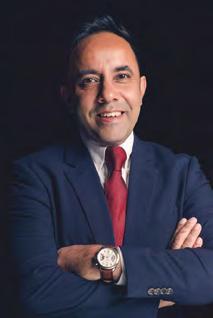
Manjyot Sandhu, CEO and co-founder of Narativ Media.
OSN and Asian streamer iQIYI partner to launch new channel
OSNtv iQIYI, a cobranded channel formed in partnership with Asian streaming platform iQIYI, offers a wide range of genres including drama, romance, fantasy, anime and action. Available as a linear pay-TV channel within OSN’s owned and operated network, it will also feature select titles on demand through the OSNtv content library. New titles will be introduced monthly. Programming will be presented in original languages with English and Arabic subtitles. Select
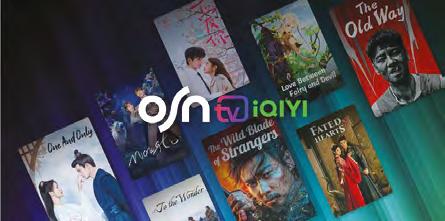
titles will also be available in Arabic-dubbed versions. The channel launch forms part of a wider collaboration between the two companies. It will be distributed via satellite and IP on OSN set-top boxes and rolled out across OSNtv packages directly
and through regional partners. The iQIYI app will be preloaded on OSNtv set-top boxes, accompanied by a dedicated section on the OSNtv homepage to enhance discoverability. Further bundled offers and integrations will be announced at a later stage.
E& PARTNERS WITH SAMSUNG TO ROLL OUT UNIFIED TV AND STREAMING SUBSCRIPTION
E& UAE has partnered with Samsung Gulf Electronics to introduce All-In TV, a bundled home-entertainment service that allows customers to acquire a new Samsung Smart TV together with major streaming subscriptions through a single monthly payment consolidated into their telecom bill. Each plan combines a Samsung television with streaming platforms including StarzPlay,
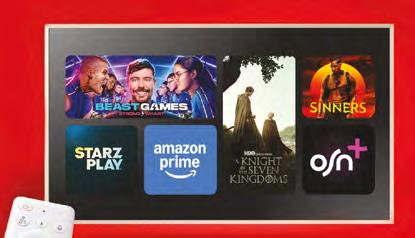
OSN+ and Amazon Prime Video, alongside delivery, professional installation and a twoyear extended warranty. Customers are also offered an upgrade pathway that enables them to switch to a newer TV model when renewing their contract. All-In TV is available across a curated lineup of Samsung displays, including designfocused and highperformance models spanning 55-inch to 85-inch screens.
ART JAMEEL AND TODAY AT APPLE TO SUPPORT NEXT GENERATION OF SAUDI FILMMAKERS
Their new filmmaking initiative, the Creative Lab Film Academy, aims to support the Kingdom’s emerging storytellers by offering a blend of mentorship, handson production and technology-led learning. Participants will shoot short films using iPhones and edit their work on Mac devices. They will also gain direct access to industry mentors and guided production development.
The inaugural cohort is now open to Saudi-based filmmakers. Selected participants will undergo a sixmonth curriculum that combines creative sessions, workshops and oneon-one mentorship from filmmaking professionals.
Today at Apple will offer participants technical guidance and workshops on filming and editing workflows.
ATEM Mini Extreme ISO G2 makes it easy to create professional multi camera productions for live streaming! Simply connect ATEM Mini Extreme and you can live switch up to 8 high quality video camera inputs for dramatically better quality images. You can even sync your recording to Blackmagic Cloud, so you can edit your live production with DaVinci Resolve anywhere in the world!
Build the World’s Most Amazing Broadcast Studio!
Share Internal Storage with Multiple Users
ATEM Mini Extreme ISO G2 is not just a switcher, it’s also a shared network disk using the 10G Ethernet port to the internal CFexpress memory card or external USB disk! CFexpress cards are extremely fast so they can keep up with recording multiple ISO video files while external network users all work on separate computers for editing, color correction, VFX and audio post production.
The Most Advanced Broadcast Quality Control Panel

The ATEM Mini Extreme ISO G2 is ideal for building a high-end broadcast studio as it offers all the ATEM Mini features plus extra features! It has a professional style control panel with amazing input buttons. It has 3 independent video outputs that can be routed. The built-in Thunderbolt offers live video capture and playback, enabling real-time effects software or live action replay.
Get Powerful Broadcast Replay with DaVinci Resolve
Blackmagic Replay uses the ISO files recorded by ATEM Mini Extreme ISO G2 to do replay in DaVinci Resolve. The ISO files are recorded to a CFexpress card which DaVinci can access via Ethernet. You can use multi-view in the cut page to view all cameras in DaVinci Resolve at the same time. The files will even continuously upload as you’re recording so you can edit live!
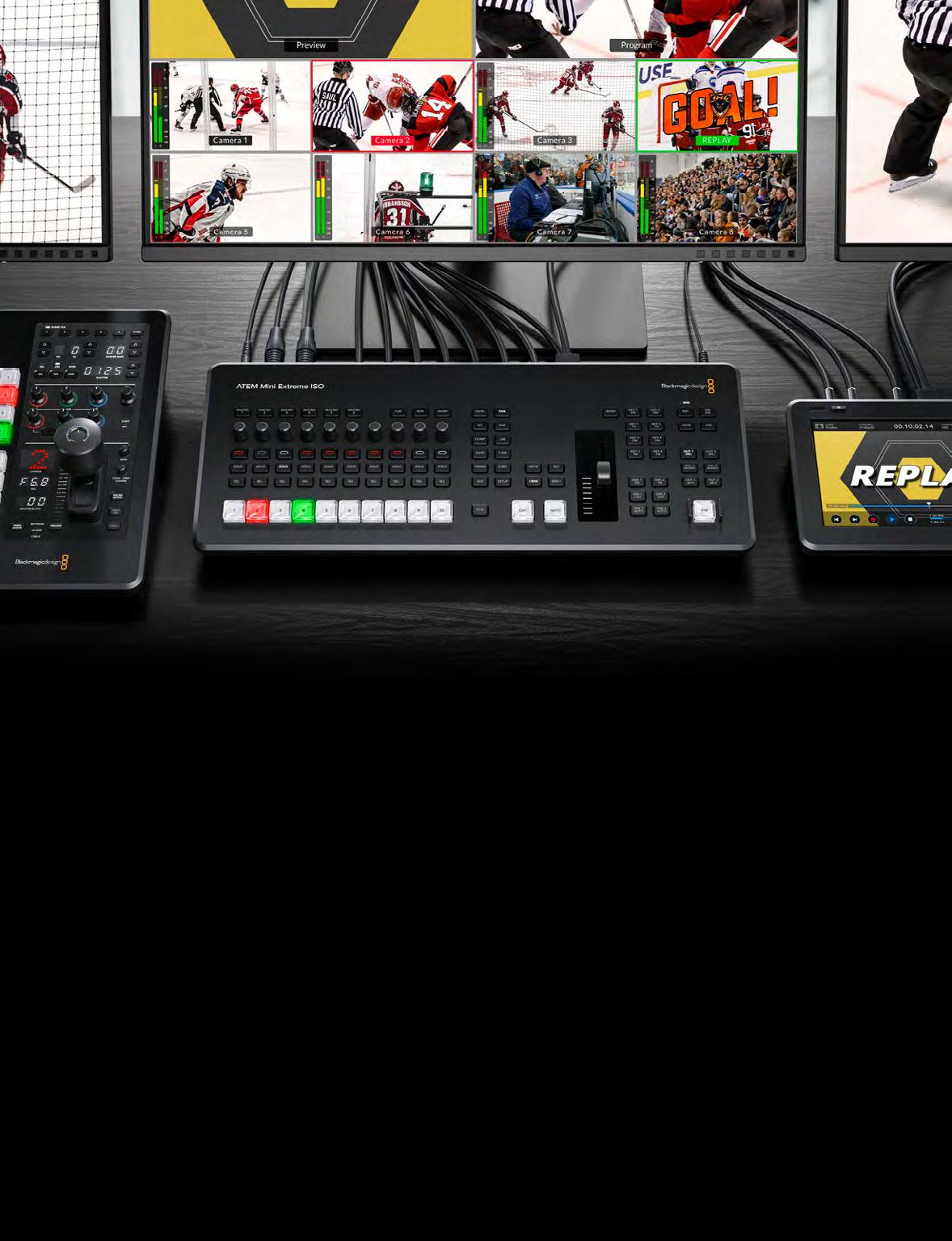
The front panel has buttons for selecting sources, triggering transitions, and setting video effects. It also features an innovative audio mixer control area with live metering on a Fairlight style HDMI status output. You get buttons for recording, streaming, and dedicated output buttons for changing outputs between the 8 cameras, program, preview, multi-view, or Fairlight status.
ATEM Mini Extreme ISO G2
US$2,025
ThreeSixtyPlus and Kaband Media partner on youth-driven Ramadan dramas
Dubai firm ThreeSixtyPlus and Syria’s Kaband Media co-produced two new scripted youth-driven Arabic series which premiered this Ramadan. The projects underscore a broader regional

RUBA IBRAHIM NAMED CEO OF AL GHAD NEWS CHANNEL
Ibrahim’s appointment is part of wider board-level changes and a restructuring process that has been underway for several months in Al Ghad. Ibrahim has built an extensive career spanning traditional broadcasting and digital media, with a strong record in driving transformation, improving editorial and operational performance, expanding audiences, developing sustainable media organisations, and leading strategy execution in highly competitive content environments.
shift toward characterfocused storytelling that speaks to younger Arab audiences grappling with questions of identity, pressure and ambition. The Back Desk and House
RADIO BAHRAIN COMPANY APPOINTS ALA GHAWAS AS CEO
Radio Bahrain Company has announced the appointment of Ala Ghawas as its new CEO. Ghawas brings wide-ranging experience across the telecommunications, media and creative industries, having most recently served in a senior leadership position at STC Bahrain. He is also an independent artist and music entrepreneur with an extensive catalogue of original work and a history of building engaged communities around music, arts and culture. In his new role, he will be responsible for setting the company’s strategic and operational direction, with a focus on content quality, digital transformation and partnership development in Bahrain and the wider region.
of Dreams premiered exclusively on Viu across the GCC, where they will stream for three months before being shown on Rotana (LBC) and Iraq’s Dijlah TV. The Back Desk is also scheduled for
broadcast on Syria’s Lana TV. Both productions were initially to be filmed in Lebanon but were relocated to Syria following a sudden escalation in tensions between Israel and Iran.
OSN EXTENDS LINEAR TV TO CONNECTED TV S WITH NAGRAVISION AND SAMSUNG
Nagravision has launched a new directto-TV service by OSN, powered by TVkey Cloud, in collaboration with Samsung. Viewers in 20+ MENA countries will be able to access OSN’s
pay-TV service on Samsung connected TVs, without the need for a set-top box. The service is compatible with all Samsung Ultra HD connected TV models produced from 2021 onwards.
VILPA FILMS LAUNCHES SHORTFILM STREAMING PLATFORM
Vilpa Films has launched a new streaming platform, Vilpa Max, dedicated to global short films. Vilpa Max will initially roll out across the UK and MENA, expanding
to additional territories later. Two viewing options are available: a freemium, adsupported tier and a paid subscription model priced at £4.99 in the UK and $3.99 in MENA.
Expo City Dubai to be new home of CABSAT 2026
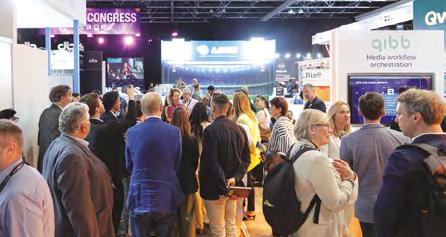
CABSAT will return from 2-4 June 2026 at the Dubai Exhibition Centre at Expo City. The new venue signals a new phase for the broadcast and satellite event. Organisers say the move reflects a sharper focus on next-generation production and evolving
industry requirements. Virtual production will feature prominently, with a dedicated exhibition zone showcasing end-toend, real-time production workflows, giving visitors hands-on access to integrated solutions. Content Congress,
ACTIVE MEDIA DRIVES GULF SCRIPTED MARKET WITH RAMADAN 2026 SLATE
UAE’s Active Media Production has cemented its role in the Gulf’s platformdriven scripted market with its Ramadan 2026 line-up, currently airing across multiple platforms. Headlining is Khotuwat Saghira, the first Khaleeji original commissioned by Yango Play and the platform’s first Kuwaitiordered series. The social drama, produced in collaboration with Al-Yahya Artistic
Production, is streaming across Yango Play, Arab Radio and Television Network, STC TV, Sharjah TV and its AVOD service

the event’s conference pillar, will address digital transformation, immersive content, cloud adoption, AI integration and interactive sports broadcasting.
New for 2026 is the Micro Short Drama Clinic, a two-day programme, developed with Whitebee Media. Designed for Arabic audiences, it explores vertical, bitesized storytelling through practical sessions. Expanding the participant roster, new exhibitors this year include Nordlys, Shotoku, Cobalt and Workflowlabs.
MBC GROUP SIGNS MEDIA SCHOLARSHIP AGREEMENTS UNDER WA’ED TRACK
Maraya, Al Dhafrah TV and Oman TV. Also airing on Sama Dubai TV and Dubai Plus right now is season 5 of Emirati comedy franchise Wadeema & Haleema. Active Media produces four to five titles annually, spanning Gulf social dramas, Emirati franchises and cross-border projects, while distributing over 1,000 hours of Arabic content across the region.
In partnership with Saudi Arabia’s Ministry of Media, under the patronage of Salman Al-Dosari, the agreements are part of a national initiative to bridge education, practical training and employment opportunities within the media sector. The programme aims to cultivate specialised Saudi talent capable of contributing across the entire media value chain, from creative development and production to technology, distribution and content creation.
As part of the initiative, the Ministry of Media signed agreements with nine private-sector media companies, including MBC Group, to provide 94 fully funded study and training opportunities. These placements span multiple academic pathways across the UK, USA, Canada and Spain.
FOMEX 2026 spotlights Saudi Arabia’s AI, XR and media innovations
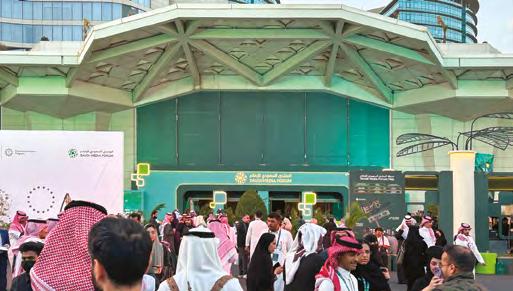
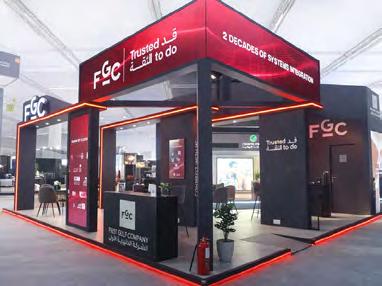
The Future of Media Exhibition (FOMEX) 2026, held in Riyadh from 2-4 February as part of the annual Saudi Media Forum (SMF) under the patronage of King Salman bin Abdulaziz Al Saud, convened regional and global media leaders, policymakers, technology innovators and content creators to explore the future of media in an evolving digital landscape. With participation from over 250 companies including Saudi Arabia’s leading systems integrator First Gulf Company. FOMEX showcased the latest trends in media technology, with a strong emphasis on AI, extended reality (XR) and immersive solutions and their impact on production workflows, storytelling and audience engagement.
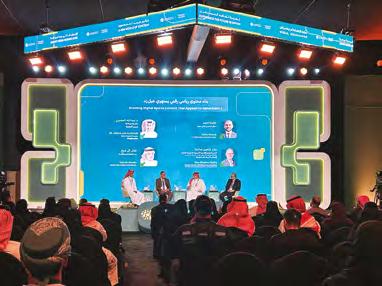
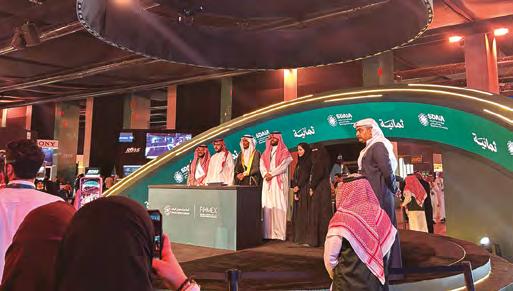
Saudi Arabia’s Minister of Information, Dr Ramzan bin Abdullah Al Noaimi, announced 12 flagship initiatives aimed at advancing media innovation in the Kingdom. These included programmes focused on augmented journalism, intelligent content creation, virtual presenters and media-centric artificial intelligence principles developed in partnership with the Saudi Data and Artificial Intelligence Authority (SDAIA).
FOMEX 2026 reinforced Riyadh’s growing reputation as a hub for media, broadcasting and digital innovation, drawing participation from over 300 local, regional and international companies such as Sony, Ross Video, Lawo, Grass Valley, Blackmagic Design and Sennheiser. The companies presented live demonstrations and
product unveilings, giving visitors first looks at new offerings tailored to the evolving needs of the media market. Additionally, several key global and regional technology brands demonstrated the latest solutions in content creation, immersive production, cloud workflows, IP-based systems, virtual production and advanced audio tools. Local Saudi firms and governmentlinked entities featured prominently. Saudi Broadcasting Authority (SBA) signed a strategic agreement with home-grown AI tech company HUMAIN, underscoring the growing focus on AI in media workflows. The partnership is set to shape the frameworks, governance and operating models needed to deliver AI-driven capabilities across TV, radio and
print, laying the groundwork for nextgeneration media innovation in the region. Other key Saudi participants included stc, Diriyah Company and the Royal Commission for Riyadh City.
Industry delegations and private firms also used the event to deepen ties with the Middle East’s media ecosystem. Black Dragon Capital highlighted its media technology expertise and engaged with the forum’s high-level roundtables and innovation bootcamp, aiming to bridge US and Middle East technology collaborations and support Saudi Vision 2030 goals.
Hatim Abounassf, EVP for Engineering Affairs and General Supervisor of the Strategy and Planning Sector at the SBA, described FOMEX
2026 as a platform reflecting the rapid transformation of Saudi Arabia’s media and broadcast landscape, in alignment with national priorities like digital transformation, cloud-based production and AI-driven workflows. Abounassf further highlighted the event’s expanded exhibition spaces, deeper technical sessions and more hands-on technology demos shaped by industry feedback. He also noted the SBA’s strategic role in fostering collaboration between local and international companies and in positioning FOMEX as the future of broadcasting in the Kingdom. Sessions and dialogue explored the impact of digital transformation, with deep dives into advanced
production workflows, content automation, credibility and influence building, and media economics. Participation from global news agencies and international delegates demonstrated the forum’s expanding global profile, with more than 300 media leaders and experts from over 20 countries present at the event.
Together with the Saudi Media Forum, FOMEX attracted over 65,000 visitors, setting a Guinness World Record. It successfully reinforced the Kingdom’s role in the media industry with discussions spanning content production, regulation, digital transformation and new business opportunities in the global media sector.
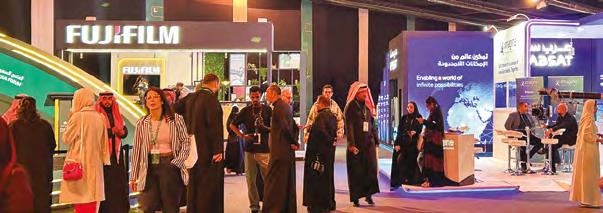
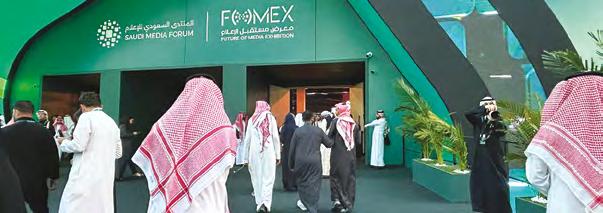
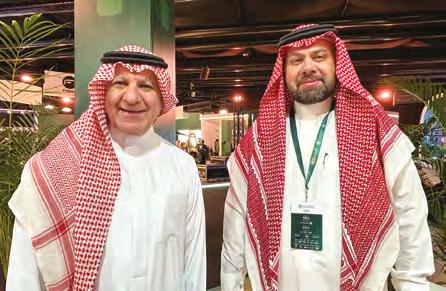
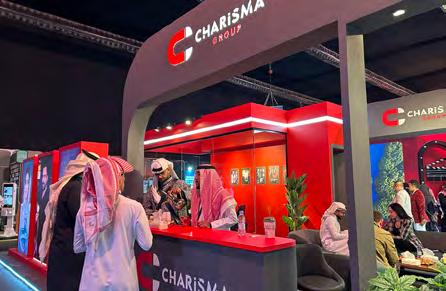
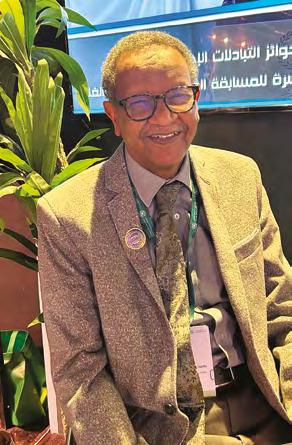
Abdelrahim Suleiman, DirectorGeneral of ASBU, at FOMEX.
Turki Al-Shabanah (L), former Minister of Media, Saudi Arabia, with Hatim Abounassf, EVP for Engineering Affairs, SBA.
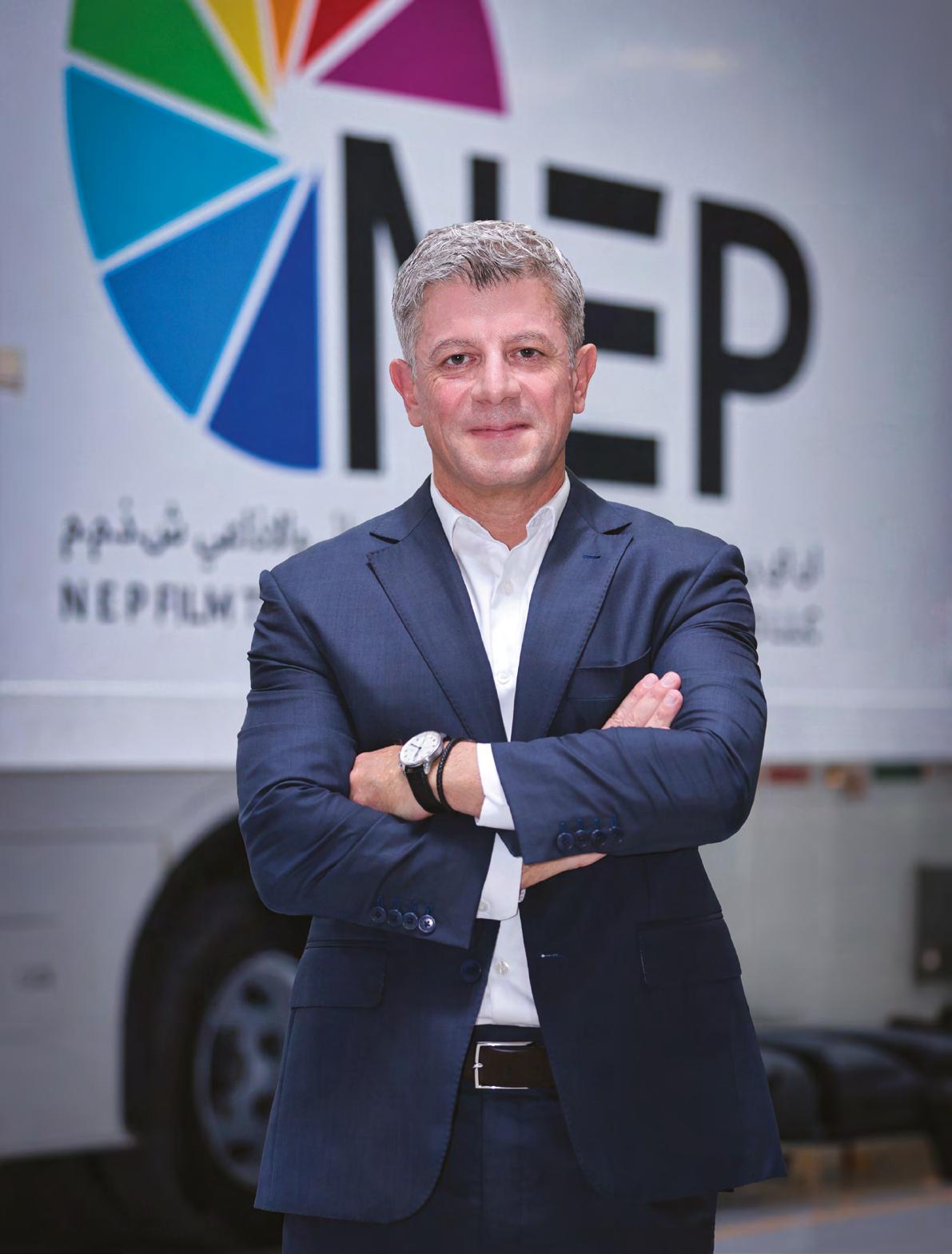
DRIVEN TO DELIVER
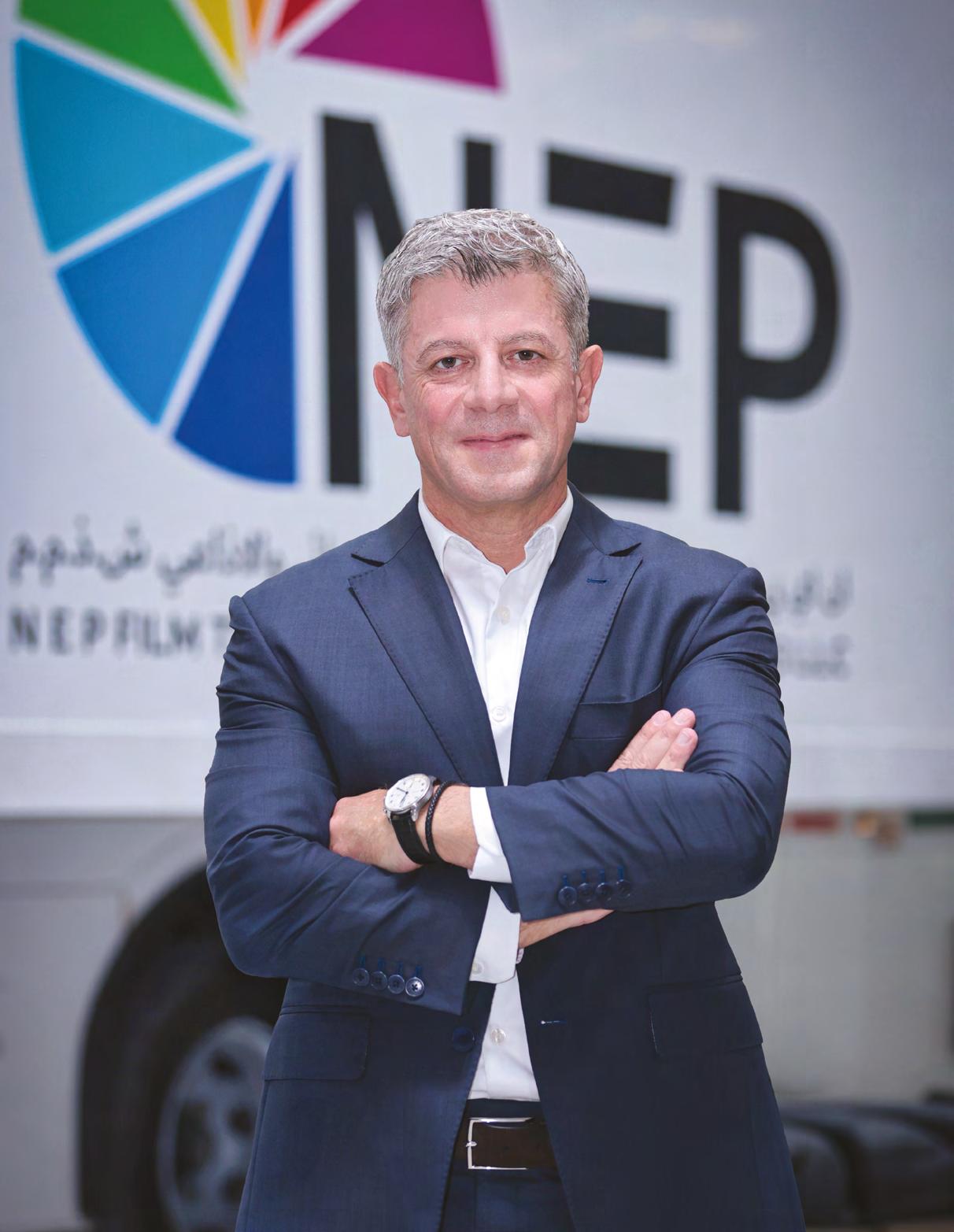
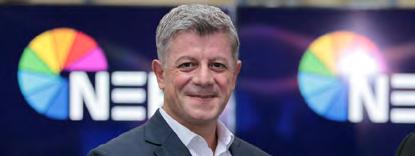
Under President Waleed Isaac, NEP Middle East & Asia is taking a bold approach, combining local leadership, operational excellence and clientcentric responsiveness to ensure a strong regional footprint. In an exclusive interview with Vijaya Cherian, Isaac shares how the company is investing significantly in a region fuelled by Vision 2030 ambitions
Most technical service providers entering the Middle East take a cautious approach. They service major tournaments, deploy fly packs for tentpole events and operate largely as extensions of their global headquarters. The regional presence is often projectbased and contractual. NEP Middle East and Asia has chosen a different strategy under the leadership of its new president Waleed Isaac, with the objective of being here for the long haul.
In less than a year, the company has moved from being perceived primarily as a sports OB operator to establishing a multi-layered, regionally embedded operation spanning Saudi Arabia, the UAE, India and Singapore. And it has backed its strategy with significant investment in local acquisition, talent pool and fleet.
A look at the numbers reveals the level of investment. Around 140 staff are now based across the Middle East, with 60 stationed in Saudi Arabia.
More than 17 OB vans are deployed in the region, with 10 situated in the Kingdom. A brand new 2,500sqm facility launched in Riyadh last month houses warehousing, equipment preparation areas and production space. Additional capacity has been added in Dubai, Abu Dhabi and India. Singapore remains the largest base with nearly 100 engineering and operational
staff, and a further 50-60 in India. Isaac has only been helming the Middle East and Asia operations since August 1, 2025. He doesn’t come from a traditional broadcast lineage, but has been operating in the region for a long time. That combination has helped the regional operation pursue a slightly disruptive strategy.
“I’ve been in the region for more than 30 years. I built my foundation with General Electric, where I spent half of my career understanding what good looks like. That early grounding has been invaluable to my role at NEP today, because this region demands quality and operational excellence. After GE, I moved into the service industry, working closely with the events sector, where proximity to the client is imperative –which is exactly our philosophy at NEP.”
In Europe and the US, everybody values quality. Here, regional clients also value presence and accessibility
WALEED ISAAC, PRESIDENT, NEP MIDDLE EAST & ASIA
That emphasis on operational excellence is not incidental. Nor is his service-sector grounding.
“At the core of it, most of the businesses I worked for, including Loxam, BrandSafway and SES, operated on the same principle. We own and design a certain amount of assets, but we sell a service to the client. And when you do sell a solution to the client, you always put the client’s needs and responsiveness at the forefront. Regardless of how great your assets are or how good your technology is, if you cannot deliver a functional solution when the customer wants it at the right speed, you won’t ever get that second call.”
This service-first framing is particularly relevant in Saudi Arabia, where large-scale sports, entertainment and cultural events are continuous, Isaac points out. He is acutely aware that in this market, quality alone is not enough. Local presence is crucial.
“In Europe and the US, everybody values quality. Here, regional clients also value presence and accessibility. Companies come here with great technologies but adopt a fly-in-fly-out approach. Many deliver and leave. Clients here, especially the larger governmentfunded entities, have a mandate to bring in IP, expertise and uplift local capability. If you don’t offer that, you will always be thought of as a supplier, and not a partner.
“The challenge from Martin Stewart, our Group CEO, was to become relevant in the region and prove to the client base and production community that we are the best at what we do, both globally and locally within the region.”
That distinction between supplier and partner underpins the company’s strategy. “Localisation is a term that needs depth. It cannot be loosely used. You cannot say I’m local just by getting a trade licence in the country; that’s not local.”
NEP therefore went all out with a four-pronged approach meant to be truly local. The first step was licensing. NEP is now licensed with twofour54 in Abu Dhabi, Dubai and Saudi Arabia, with an already established presence in India and Singapore.
The second was acquiring Seven, a leading production company in Dubai, which brought 60 new staff members to the NEP team, including engineering, sales and operational experts. The acquisition also helped NEP scale quickly to add 11 trucks, pods and additional production equipment, strengthening its entertainment and production capabilities. “We now have more than 17 OB vans, and I don’t think any other company in the region is operating
Vision 2030 places a real emphasis on developing local talent, and we see ourselves as part of that journey
WALEED ISAAC, PRESIDENT, NEP MIDDLE EAST & ASIA
at that scale,” says Isaac proudly.
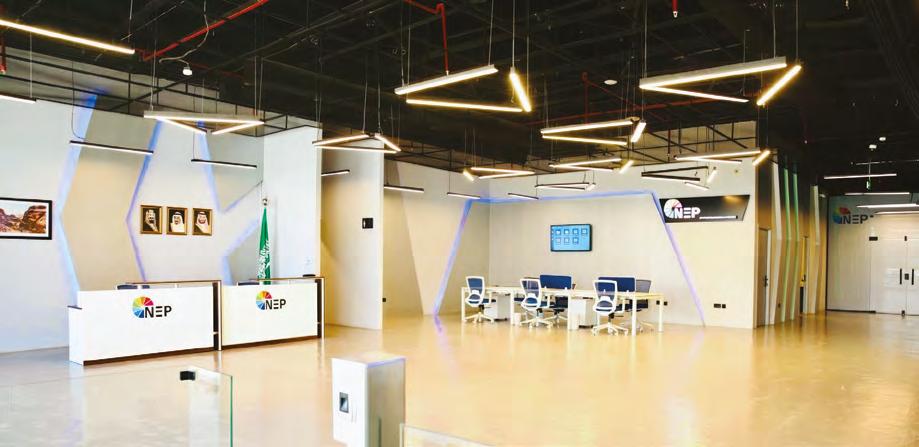
The third was investment in local facilities. On February 4, NEP inaugurated its flagship facility in Riyadh’s media production zone. The site spans 2,500sqm and can function as warehousing, equipment preparation and production studio space. It consolidates trucks, flypacks and operational support inside the Kingdom.
“We didn’t want to keep moving assets back and forth. That’s why we housed it in Saudi Arabia. We wanted our fleet to be closest to the next job and closer to the customer, not to the comfort zone or where they used to be. We want to work for the region, but from the region also. The new facility has more than 60 people. It will have more than 10 OB vans and two flypacks in it. This is a significant investment in the country for us.”
The fourth prong is talent and, in parallel, the company’s own team. In that context, Isaac says growth and empowerment are inseparable.
“If you don’t have growth in a business, you lose your fire. But growth happens only if you empower your
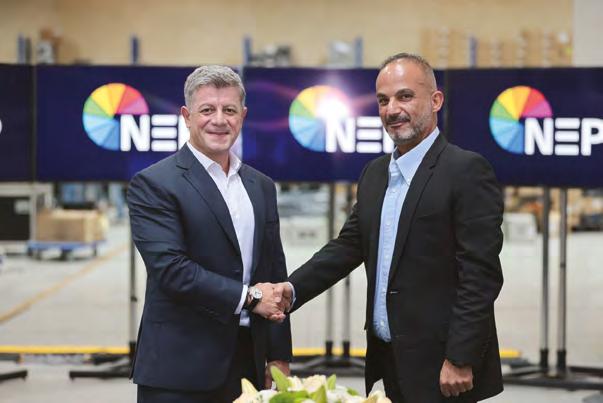
Waleed Isaac and Pierre Tabet, MD of Seven Production, seal the agreement as NEP completes its acquisition of Seven.
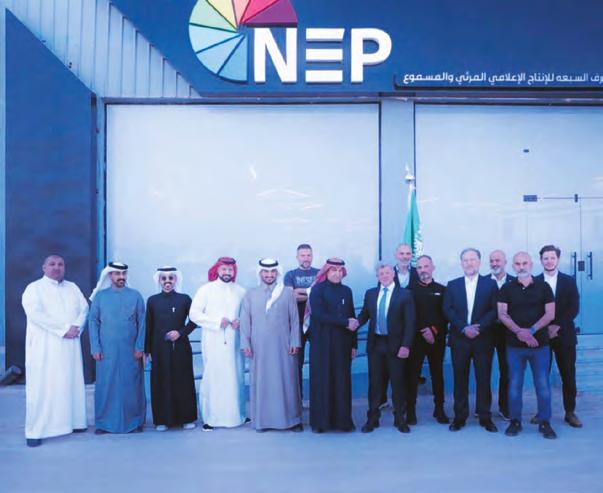
NEP and Seven teams at the new Riyadh facility.
team. We have excellent competency on the tech side and the ability to understand broadcasting needs. What we are working on is accessibility and localisation. That’s the enabler so that we can continue the growth and prove to our customers that we are a partner they can call on at any time. It’s Ramadan now. Clients will call at 11am and 11pm. We answer to both.”
That responsiveness has already been tested at scale. For the 2025 Esports World Cup, NEP built and commissioned the end-to-end set-up in just weeks, complete with a fully-IP SMPTE ST 2110 architecture orchestrated by TFC. NEP then deployed around 250 engineers to deliver it on time.
“Talent in the media services sector is available globally. But not all of the talent is available when we require them to be. In Riyadh, for example, to get nearly 250 people in the heat of the summer can be a challenge.”
To address that, NEP is bringing its training academy to Saudi Arabia. The company, which has already established a similar academy in India, is in direct discussions with TVTC (Technical and Vocational Training Corporation)
Opened last month in Riyadh, the 2,500sqm facility combines warehousing, technical preparation and production capabilities under one roof.
in Saudi Arabia to accredit a training academy at its Riyadh facility, with the hope of launching the first cohort shortly after Ramadan this year.
“Vision 2030 places a real emphasis on developing local talent, and we see ourselves as part of that journey. If we bring in 30 or 40 people in each training cohort, that’s 30 or 40 professionals building careers here in the Kingdom and strengthening the industry from within. Some will stay with NEP, others
The new facility has more than 60 people. It will have more than 10 OB vans and two flypacks in it. This is a significant investment in the country for us
WALEED ISAAC, PRESIDENT, NEP MIDDLE EAST & ASIA
may go on to freelance or join different organisations – and that’s a positive outcome. Wherever they end up, they carry with them the standards, expertise and approach to quality that define NEP, and in that sense they become ambassadors for the way we believe live production should be delivered.”
While NEP is traditionally synonymous with sports in other markets, the Middle East operation now has a broader scope with the acquisition of Seven, which was already doing shows as part of its remit for big broadcast networks in the region.
“Sports is a major driver, of course. We are partnering with the UFC, WWE, LIV Golf, Power Slap and many big events coming into the region, including the inaugural Fanatics Flag Football Classic in Riyadh. But we also see the opportunity in entertainment. The technologies we have, such as remote production, media banks and softwarebased solutions, are all great enablers for entertainment on the scale that the likes of Saudi, Abu Dhabi Media and Dubai Media are working on. So we are ensuring focus on entertainment and corporate events as well.”
He acknowledges that the region’s structure could be perceived as unique within the global NEP network. “That’s by virtue of the acquisition of Seven.”
NEP’s global edge is its technical expertise, which Isaac says is the final pillar of differentiation. “The broadcast world keeps evolving and clients keep demanding higher technology and higher-quality productions, on different scales. From the transition from HD to 4K and baseband to IP, and now the need for hybrid workflows that combine hardware and software, we’re the leaders on those fronts.”
NEP’s broadcast orchestration system TFC is now standard across global operations and increasingly deployed regionally. “TFC allows broadcast orchestration and the hybrid use of traditional broadcast hardware with new software solutions to happen seamlessly for the client.”
IP-native equipment and softwarebased solutions are becoming more prevalent. Remote production is also expanding beyond Singapore, with GCC plans under evaluation. Isaac alludes to a major advancement in NEP’s software platform capabilities, to be
announced ahead of NAB, but details are under wraps. “What we launch will be a game changer,” he promises.
NEP requires this level of regional strategy for several reasons, and there are many challenges, Isaac concedes. For one, the region’s geography adds complexity.
“The region is dispersed and large. We cannot be everywhere with everything. We studied where the key market demand is and where quality and differentiation are valued, because some markets are more price-sensitive.”
In addition, such rapid growth within
the span of seven months brings its own pressure. “There will be challenges about what we promise to the customer and how we deliver it. We need to enable the team with process, software solutions and data analytics. Because of the increase in volume, that is a work in progress.”
Agility, he concludes, is nonnegotiable. “The Middle East is an evolving region. Priorities change. Visions pivot. We must be agile and flexible and see it as a great opportunity. We are always in the fast lane. We always bring content to life, and that is a responsibility we take seriously.”
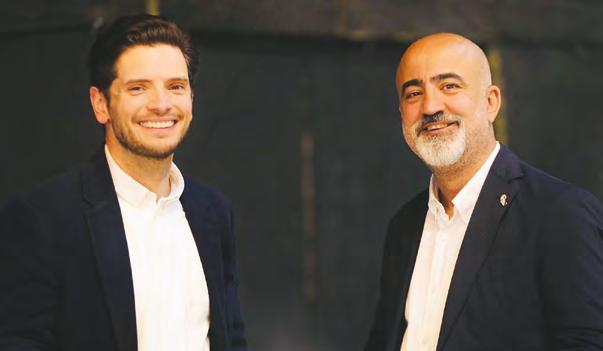
From left: NEP MEA CFO Gareth Jones and CTO Jean-Claude Rahme.
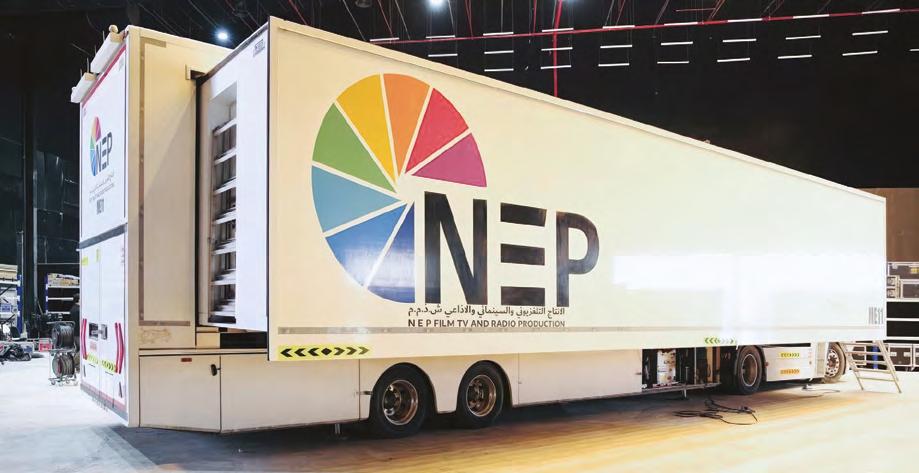
NEP’s regional fleet includes 17 OB vans operating across the Middle East.
700+ EXHIBITING BRANDS







THE RISE OF SAUDI ARABIA’S MEDIA ECOSYSTEM
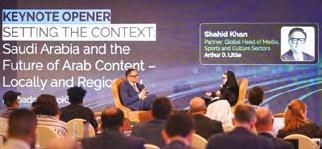
At the BroadcastPro Summit KSA, Shahid Khan, Senior Partner and Global Head of Media, Entertainment, Sports and Culture at Arthur D. Little, and Esra Assery, Deputy Minister and Head of Sector Development at the Ministry of Media, explored how Saudi Arabia’s media sector is being transformed. Through legislative reform, strategic investment and an integrated ecosystem, the Kingdom is accelerating content production, nurturing local talent and positioning Saudi stories for a global audience

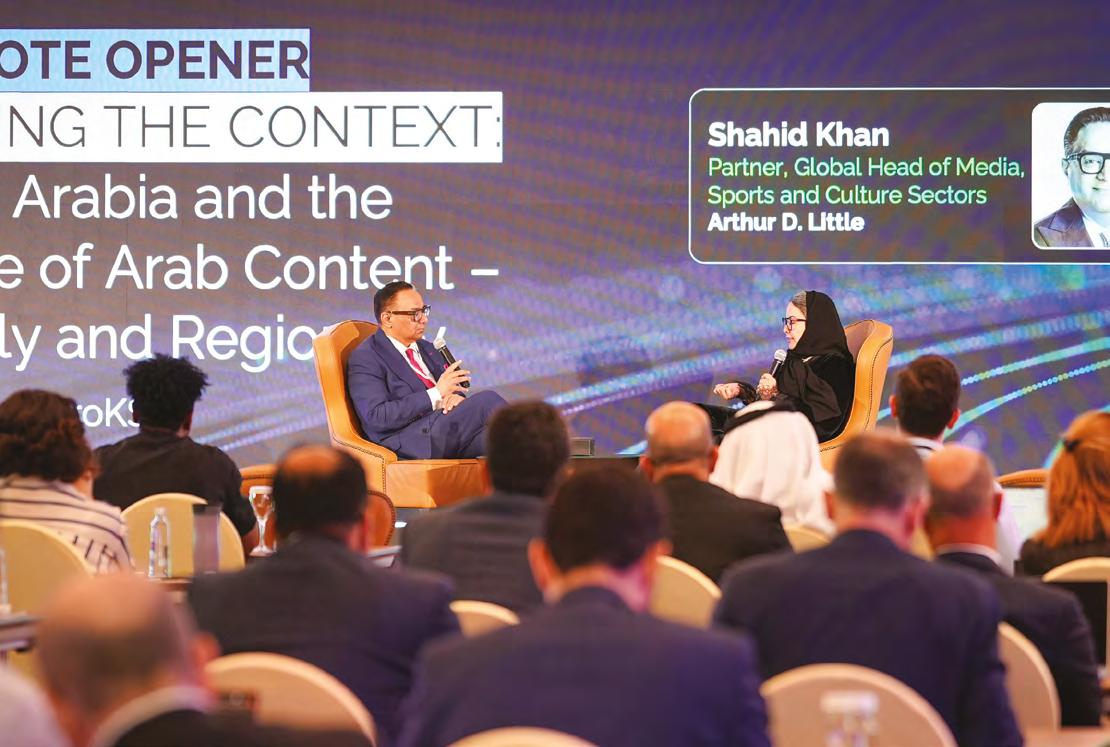
The keynote opener between Khan and Assery set the stage for the BroadcastPro Summit. Their conversation traced Saudi Arabia’s media journey, showing how rapid legislative, regulatory and structural reforms are changing the Kingdom’s media landscape and strengthening its role within the wider Arab content economy. Throughout the session, Khan’s questions drew on his global advisory experience, consistently anchoring the discussion in international benchmarks, economic impact and execution discipline.
He began by asking Assery to explain how the Kingdom’s media architecture has evolved. A software engineer and entrepreneur with experience in banking, the Saudi Broadcasting Authority and the General Commission for Audiovisual Media (GCAM), and now working at the Ministry of Media, Assery offered a detailed account of the media sector’s transformation.
“When GCAM was first established, media was considered by medium, not by media and content. So GCAM was previously in charge of regulating audiovisual media and the Ministry of Media was regulating press, publishing and so on,” she explained.
Convergence made that distinction obsolete.
“With the rapid changes in technology, there was no longer something called publishing or print versus audiovisual content. Visual content is content. It required a change in legislation, and what we worked on is restructuring the whole ecosystem of media, and having the Ministry as the policy setter and GCAM as the regulator of all kinds of media and content. I’m proud to have been part of the team that worked on this.”
GCAM has since been rebranded as GMedia (General Authority for Media Regulation), reflecting its expanded mandate across the full spectrum
We’re not just selling one narrative. We’re selling the authenticity of Saudi, the real Saudi stories
ESRA ASSERY, DEPUTY MINISTER AND HEAD OF SECTOR DEVELOPMENT, THE MINISTRY OF MEDIA
of media and content regulation. Social media was an early pressure point, Assery noted. Saudi Arabia ranks among the top three countries globally for per capita social media consumption. It also has the highest per capita consumption of YouTube in the world, underlining the scale and speed of digital video engagement in the Kingdom. “We needed to act fast, and indeed were one of the fastest globally to introduce policies and
bylaws for social media regulation.”
Age classification for films and games was another structural lever. This was formalised, bringing previously greymarket consumption into the regulated economy. “This was a key milestone for us, because the rating helped shift content drastically from the grey to the white market. Content was being consumed in Saudi, but revenues were not retained in the Kingdom.”
Saudi Arabia is now certified by the International Age Rating Coalition (IARC), meaning its classification system carries international recognition.
Khan steered the discussion toward economics, noting that despite Saudi being home to one of the youngest populations globally and having among the highest per capita digital consumption rates, it has not been able to capitalise on the advertising value.
Assery agreed, recalling a meeting during which four senior officials cited different figures for the size of the advertising market. “No one had the actual number, so we began working
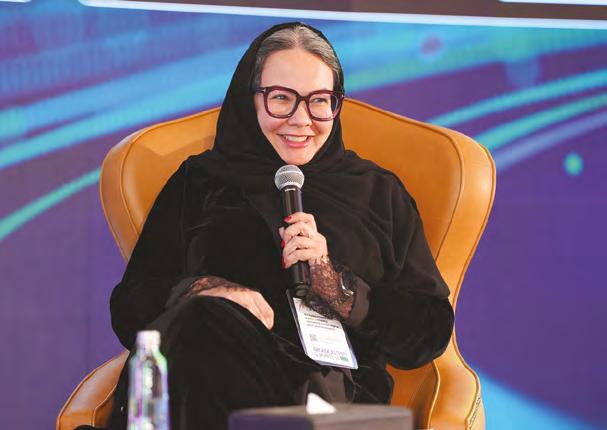
on a national advertising localisation project across the whole value chain. Part of it is introducing metrics and measurements, because if you can’t measure, you cannot track.”
The localisation effort spans definitions, classification and capital attraction, with the results now beginning to surface: “Just last year, we had 20 international agencies establishing their headquarters in Riyadh.” Media has also been placed on a fast track at the Ministry of Investment, with licensing, incentives and premium residency mechanisms in place to accelerate the Vision 2030 plans.
Asked why global players should commit to Saudi Arabia, Assery said: “We are the largest media consumer and producer market in the region. We provide speed, scale, execution and reliability. Change here is not just happening in media but across all sectors. In media, we’ve modernised classification and licensing and introduced IP protection laws. We are easing access for businesses to enter the market and connect with the right networks, offering support with improved facilities, targeted incentives and legislative reform.
With these changes streamlining the way business is done, this is the right market to scale. Media is also fundamentally dependent on people. We have the talent and we have the right environment to attract talent, with a whole ecosystem of lucrative incentives.”
Drawing on his own experience establishing Arthur D. Little’s regional headquarters in Riyadh, Khan reinforced the point, noting that long-term value creation depends on building operational bases rather than maintaining transactional relationships.
We are the largest media consumer and producer market in the region. We provide speed, scale, execution and reliability
ESRA ASSERY, DEPUTY MINISTER AND HEAD OF SECTOR DEVELOPMENT, MINISTRY OF MEDIA, KSA
Under Vision 2030, media is targeted to contribute SAR 41bn ($11bn) to GDP by the end of the decade. But Assery explained that economic contribution is only one metric. Asked what success would look like three years from now for KSA in international markets, she said: “Success will look like the diverse stories that are being produced about Saudi Arabia. We’re not just selling one narrative. We’re selling the authenticity of Saudi, the real Saudi stories.”
Export is also already in motion. Over the years, Saudi Arabia has submitted eight films to the Oscars, with Hijra the most recent submission. The film was also featured at the Venice Film Festival, signalling growing international recognition of Saudi cinema.
Media, she stressed, extends beyond broadcast to encompass IP development, gaming, esports and licensing. The Saudi box office now ranks among the top 15 globally and is number one regionally, underscoring the scale and maturity of the domestic theatrical market.
Referencing export powerhouses such as Turkey and South Korea, Khan pressed on lessons learned from markets whose content now travels in dozens of languages. “How can Saudi Arabia replicate that scale while retaining cultural authenticity?” he asked.
Assery responded that the key is integration rather than imitation. “The Ministry of Media is not operating in silo. We have the Ministry of Culture enabling talent and content creators. The Ministry of Media provides all the facilities for licensing and locations. We have the entertainment ecosystem that has its own set of incentives.
So the synergy and the integrated ecosystem is creating an environment where content can be produced, can flourish and can be exported.”
At the distribution level, collaboration with MBC and its streaming platform Shahid has extended reach far beyond
Arabic-speaking audiences, Assery noted.
“Shahid [was] introduced with the help of AI subtitles and captions in 29 languages. So you’ll watch Arabic Saudi series with Chinese, Indonesian, Malay subtitles. And I look at numbers and the content is being consumed in Indonesia and China. We then got a call from the official regulator or the TV and audio commission in China telling us they wanted to collaborate with MBC, because they saw huge content consumption on one of their series. They wanted to dub it in Chinese and distribute. Those are tactical examples of how our content is being consumed globally.”
The shift, she argued, is cultural as much as economic. “I meet kids when we go on official trips who say they know Shabab, the Saudi series. And when I asked a German kid how he knew about Shabab, he said he plays Roblox. I guess that’s media for you.”
Platforms such as Roblox have become distribution channels. “We are co-producing games now in esports.
We are partnering with the largest studios in the world, like EA, and then localising these games and introducing Saudi culture. What we are seeing today is what we planted a decade ago.”
Infrastructure underpins that ambition. From JAX Film Studios and NEOM to AlUla, Big Time Studios and other hubs, Khan pointed out that the Kingdom’s production footprint has been strengthened. Beyond studio infrastructure, he also noted that Saudi Arabia offers varied and visually distinctive terrain, from the deep blue waters of the Red Sea to the dramatic rock formations of AlUla and vast desert landscapes, giving producers access to a wide range of cinematic backdrops within a single country.
Assery agreed: “You can’t even keep up with the changes that are happening in Saudi Arabia. I’m proud to be part of this vision and the teams that are working on this. It’s inspiring. When you see the likes of Tim Miller coming to Saudi Arabia and wanting to work
here, who would have imagined this could happen, say ten, eight, even three years ago? Some of the largest production houses are coming to Saudi to scout locations. We still have a lot of untold stories to be told.”
Across regulatory consolidation, advertising localisation, IP expansion, gaming partnerships and export infrastructure, Saudi Arabia’s transformation is already operational and not just an off-plan project. Studio infrastructure, post-production capabilities and production capacity are expanding in parallel. The emphasis is on long-term presence rather than one-off projects: “We want actual longterm commitments,” Assery clarified. The conversation reinforced the fact that Saudi Arabia’s ongoing transformation, with its structural reforms, ongoing regional and international investments, and an expanding talent and infrastructure base, is cementing the Kingdom’s growing influence in the regional and global media landscape.
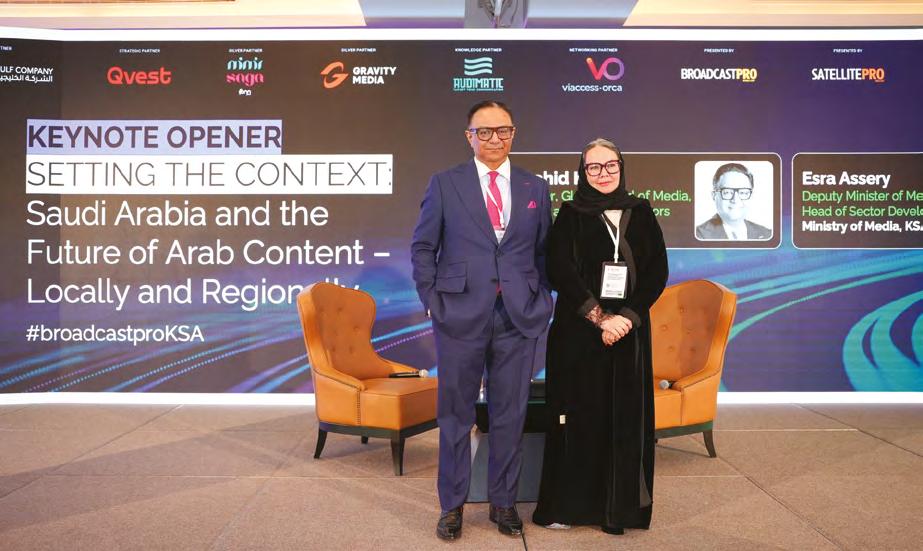
From left: Shahid Khan, Senior Partner and Global Head of Media, Entertainment, Sports and Culture at Arthur D. Little, with Esra Assery, Deputy Minister and Head of Sector Development at the Ministry of Media, KSA.
FUTURE-PROOFING BROADCAST: CLOUD, AI AND NETWORKS ACROSS MENA
Mega sports and high-powered live events are becoming a regular fixture in the MENA media landscape. In Saudi Arabia, which is fast becoming a dominant regional force, key players are devising systems designed to deliver scale, growth and sustainability across the region’s production and streaming market
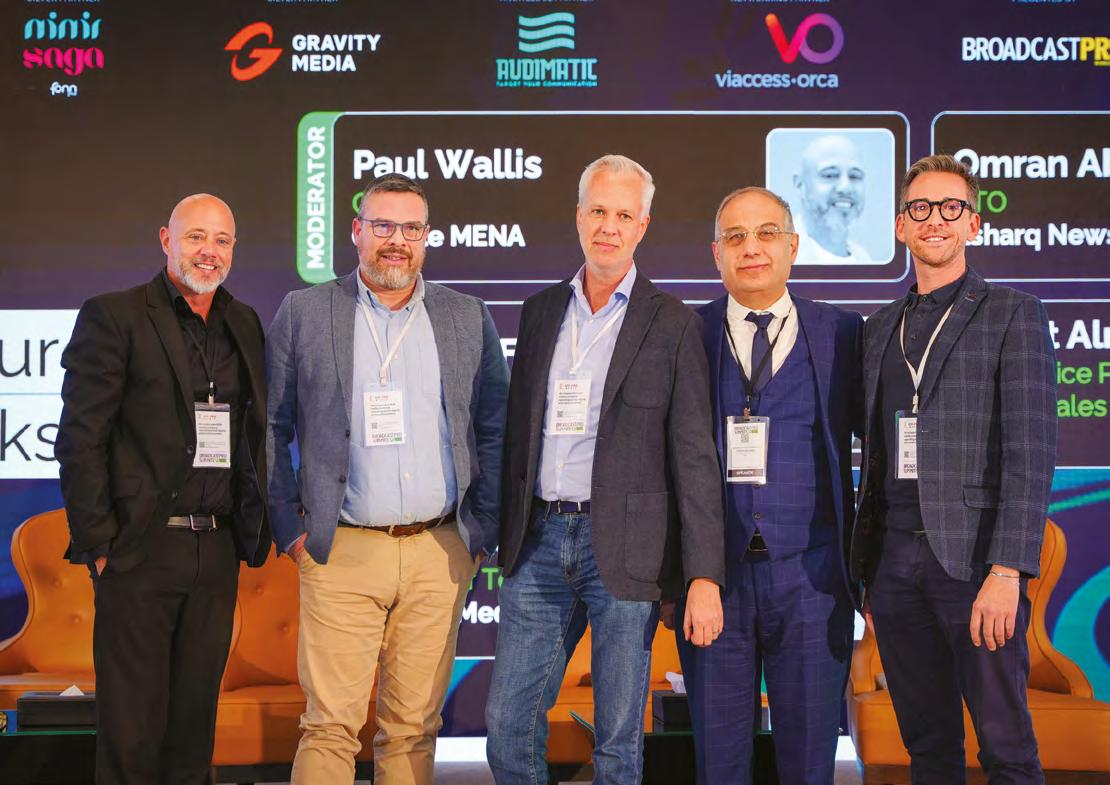

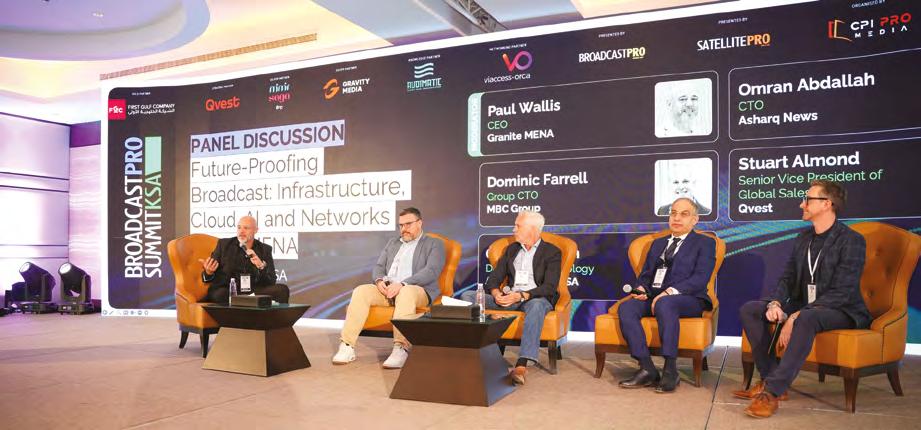
Designing foundational infrastructure that can withstand the pressures of daily high-powered operations, exploring cloud options and network optimisation, and the role of AI across production were some of the topics covered by a panel of industry leaders at the BroadcastPro Summit KSA 2026 held last month in Riyadh.
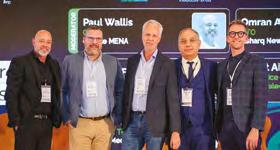
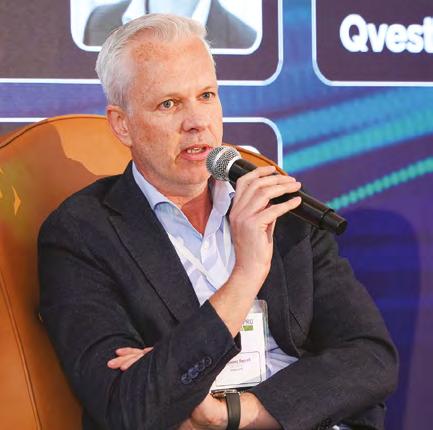
Expertly moderated by Paul Wallis, CEO, Granite MENA, the speakers were Dominic Farrell, Group CTO, MBC Group; Geert Thoelen, Director of Technology, Alamiya Media; Omran Abdallah, CTO, Asharq News; and Stuart Almond, Senior Vice President of Global Sales, Qvest.
For a country that was a consumer of global content and global IP, Saudi Arabia is undergoing a role reversal. It has now become an exporter of content production and IP – a breakthrough moment for the Kingdom as it accelerates trajectories and adopts disruptive innovations that are influencing the media ecosystem. Within this scenario, Wallis began the conversation asking if the present-day building for the future was focused on project-based or long-term infrastructural capabilities, and whether it centred around cloud and AI as the country prepped for remote production possibilities.
“Looking at the scale of events happening in Saudi with the Riyadh Season, esports, the Saudi League and FIFA in the near future, a sustainable model would be a regional-scale production platform that is ready for reuse in the future and is centralised between cities,” said Omran Abdallah, CTO of Asharq News.
And central to that when talking scale is remote production, added Stuart Almond, Senior Vice President of Global Sales, Qvest. “Remote production is critical because it changes the economics and the
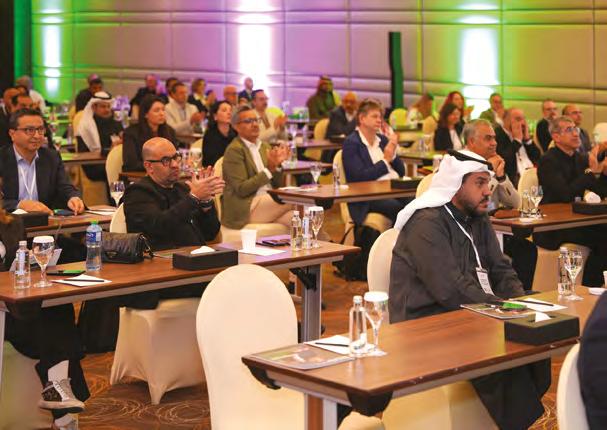
value model. It reduces travel, on-site crew and increases asset reuse, but fundamentally it allows for a centralised talent to work on multiple productions in a market where it is very high priority.”
What makes remote production viable is its architectural design, with scale being an essential component. “That’s what allows the resources in, whether it’s Riyadh, Jeddah, Neom or Cairo,” said Almond. IP becomes an enabler in remote production, helping decouple location versus production. “And once you have the signals, the control and the monitoring, you realise you don’t have
There is 100% desire in the region to build production infrastructures that can handle big events as well as daily operations
DOMINIC FARRELL, GROUP CTO, MBC GROUP
the restrictions that are typical to broadband routes or static facilities.”
A case in point is Thmanyah, with a fully operational production environment built in less than 12 weeks that was effectively softwareand cloud-enabled. That speed would have been impossible with a traditional broadcast build.
The size of the acceleration is what makes this market unique and advantageous. “Having a 10-year experience in centralising and IP technology for broadcast, the Saudi market is the perfect example of where you can use this technology,” said Geert Thoelen, Director of Technology, Alamiya Media KSA. “We have only been here four months, and we can see it is a rapidly growing region of significant scale where a project starts today for tomorrow, so it is extremely agile. It is hitting all the points where IP can be great. And we at Alamiya strongly believe in building a centralised location for production.”
Saudi Arabia is seeing the emergence of media hubs capable of hosting multiple events, and bespoke integrators are creating one-off events. Operators are reliant
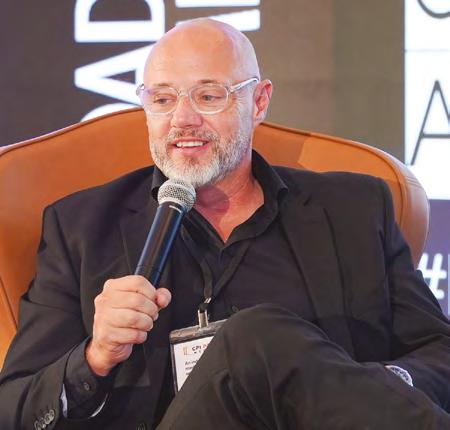
on OB trucks, temporary satellites and microwave links. “There is 100% desire in the region to build production infrastructures that can handle big events as well as daily operations. Two of the biggest cloud providers opening in the Kingdom will give the added impetus to build resilience. It will also give us options and the confidence to get to a place where we have reusable infrastructure and repeatable workflows,” said Dominic Farrell, Group CTO, MBC Group. While the landscape looks promising from an engineering perspective, operating models are often more critical than the technology itself. Addressing
If we have affordable connectivity, this market can blossom like no market that has blossomed before
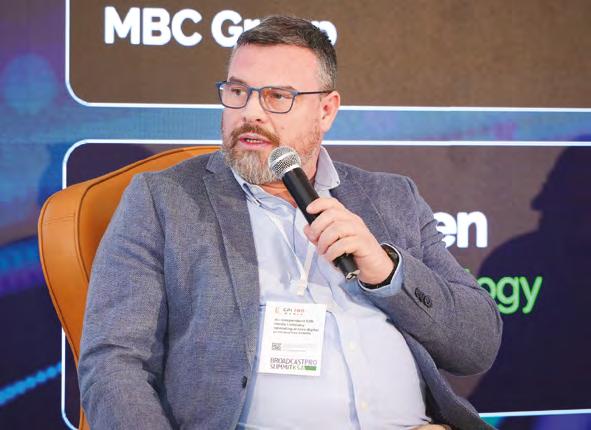
GEERT THOELEN, DIRECTOR OF TECHNOLOGY, ALAMIYA MEDIA
technical gaps is crucial, said Abdallah. “If your operating models are wrong, whatever technology you adopt will not work. For instance, if we talk about OBs at mega events, whether UHD, HDR, Dolby, IP gateways, it must have the remote production capability to connect to a central facility. The other gap is network resiliency and connectivity between cities. More studies and better evaluations must be done that can go towards the building of a centralised infrastructure with the federated MCR in different cities, so multiple scattered production units are interconnected into a cohesive network.”
Connectivity is the essential part and the cost in this model, agreed Thoelen. “If the cost of connectivity is too high, people will not get rid of their satellite trucks and their OB vans. If we have affordable connectivity, this market can blossom like no market that has blossomed before. We can train the talent that’s in the country, but the industry needs help in connectivity.”
Before investing in groundwork solutions to achieve scale, everything comes down to the design. “This territory does not need to be modular. To scale, the software must be
designed for live environments but also designed to degrade gracefully over networks that are imperfect. That’s the actual challenge, not the technology itself,” said Almond. In improving scalability, costefficiency and flexibility, the shift to cloud is an inevitability. While friction points linger with last-mile delivery, latency, CDN, capacity and incompatibilities between cloud vendors, particularly around media services, the benefits to
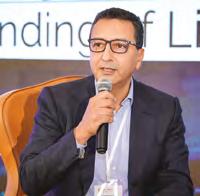
Geert Thoelen, Director of Technology, Alamiya Media.
Paul Wallis, CEO, Granite MENA.
Dominic Farrell, Group CTO, MBC Group.
cloud as a broadcaster are many, said Farrell. “At MBC we are a traditional satellite broadcaster, but our streaming platform MBC Shahid would not exist without cloud.”
MBC uses cloud for many vital functions that cover remote production, remote edit, remote QC, storage and archive, ad tech and monetisation. Its biggest advantage, however, is scale, continued Farrell. “We make a lot of content specifically for the holy month of Ramadan. And each year we see an influx of viewers and an increase in concurrent views that are between five to 10 times higher than what we see outside of that month. Cloud gives us that ability to rapidly scale up and back down again after Ramadan, and maintain stability while reducing costs. To do that with traditional on-prem infrastructure makes no economic sense for the remaining 11 months of the year.”
Cloud brings operational efficiencies to the business, and in terms of access it is the next step, agreed Thoelen. “But I’m a strong believer in having your base capacity on land, supported by solid connectivity, with the ability to expand into the cloud
More studies and better evaluations must be done that can go towards the building of a centralised infrastructure
OMRAN
for additional processing power or storage when the need arises. It should function as a business model where you shift to OpEx only when required, while your base CapEx remains firmly on premises.”
Cloud drives innovation and has started to deliver value in the MENA since adoption models began in the region. But broadcasters identify models based on ROI, business justification and outcome goals.
“We built Thmanyah’s 13 channels based on cloud infrastructure, with Qvest as our systems integrator. That does not mean everyone must now build pure cloud-native operations or
go on-premises, which will not scale even with SMPTE 2110. There will be challenges, but if we balance between performance and cost we see that the scalability for the kind of projects in Riyadh is good,” said Abdallah.
The panel concurred that the best options for the MENA region and Saudi Arabia are hybrid infrastructures. These balance cost, scalability and reliability, and help with meeting targets for future operations. But hybrid is not a compromise, said Almond. “It is a solution, and again it comes back down to the design and what you want to work with, and how you want to do it.”
Most organisations understand the strategic value of cloud and start the journey as a technology project, when in fact it is a business transformation. “If you think of it as lift-and-shift, you’re not taking advantage of the technology and the tools on offer. Those that are succeeding are those that come with a commercial or product objective. They think about skills and integration from day one. Business framing is key when thinking about cloud,” said Almond. Whether in terms of quicker SVOD launches, elastic live events
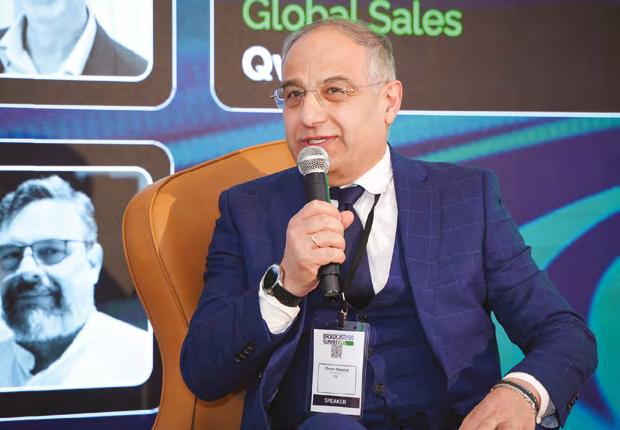
Omran Abdallah, CTO, Asharq News.
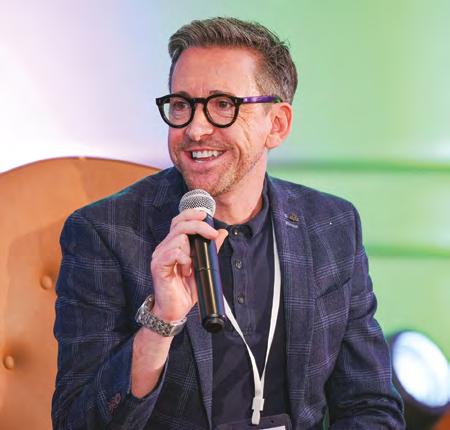
Stuart Almond, Senior VP of Global Sales, Qvest.
ABDALLAH, CTO, ASHARQ NEWS
or personalised advertising, cloud is a better solution, especially when covering a large geography. And into that framework enter AI-aided practical applications. As people evaluate and grasp the range of possibilities AI can bring, it is easy for organisations to become overwhelmed with the breadth and depth of options made available. The challenge is to prioritise a cohesive strategy and see ways in which it brings a tangible return on investment.
AI eases difficult workflows, said Thoelen. “AI is a tool we can use, but it must be utilised with the human brain behind to validate what exactly it is doing.”
Broadcasters use AI to create clip highlights, generate shortform from long-form content, for recommendations and personalisation, and for metadata enrichment. But there is no better example of where AI is truly adding real value for broadcasters than localisation, said Farrell. “We are the largest creators of Arabic content in the world. Some of that has the viability to travel, and for that purpose we are using AI for localisation work. The technology uses humanised voices and overlays the video with lip synchronisation, giving
Remote production is critical because it changes the economics and the value model
STUART ALMOND, SENIOR VICE PRESIDENT OF GLOBAL SALES, QVEST
us a quicker, cheaper way to monetise our content in regions where we were previously unable to penetrate.”
NVIDIA revealed an interesting statistic last year: it said that only 20% of POCs in AI proceed to be fully adopted in an organisation, meaning 80% of investments fail while the organisation continues to invest in something else. There are three pain points that go unnoticed when companies adopt AI, explained Almond –over-investment, hidden cost of implementation and productivity lag.
“When we talk about AI, just because you could doesn’t mean you should, until you know exactly what the business case is that you’re trying to fix. Sometimes products don’t fully fit the
environment or the way you’re trying to drive them in. Operationally, you must think how you can integrate a tool and scale it across what you need to do.”
In Saudi Arabia’s dynamic media ecosystem, as companies determine deployment options, IP-based infrastructures and AI, the single most important decision for broadcasters is to build a model that can be reused. While digital transformation is happening both globally and in the region, an organisation’s architectural philosophy must be right. For the full working capabilities of AI, a cloud strategy beneath is vital to streamline the supply chain from content creation to audience delivery, with IP driving scale.
While KSA surfaces as a regional powerhouse with improved media investments and liberalisation, operators must recruit for emerging technologies, focus on building teams with the right skill sets, bring in cloud and data engineers, and hire people who know DevOps and understand AI. In an incredibly competitive region, while technology is of the essence, it is also about attracting and retaining talent to execute plans. Without them, the technology is superfluous.

THE NEW ECONOMICS OF ARAB STREAMING
At the BroadcastPro Summit KSA in Riyadh last month, platform leaders debated how audience fragmentation, subscription fatigue and hybrid models are influencing ad spend, content discovery and long-term platform profitability. We bring you the details
Against the backdrop of a rapidly expanding Arab media ecosystem, Saudi Arabia’s content economy is entering a new phase of investment, digital-first monetisation models and creator-led growth. Businesses are prioritising streaming across the value chain as they compete for attention in a young, mobile-first market increasingly shaped by on-demand consumption.
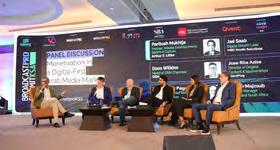
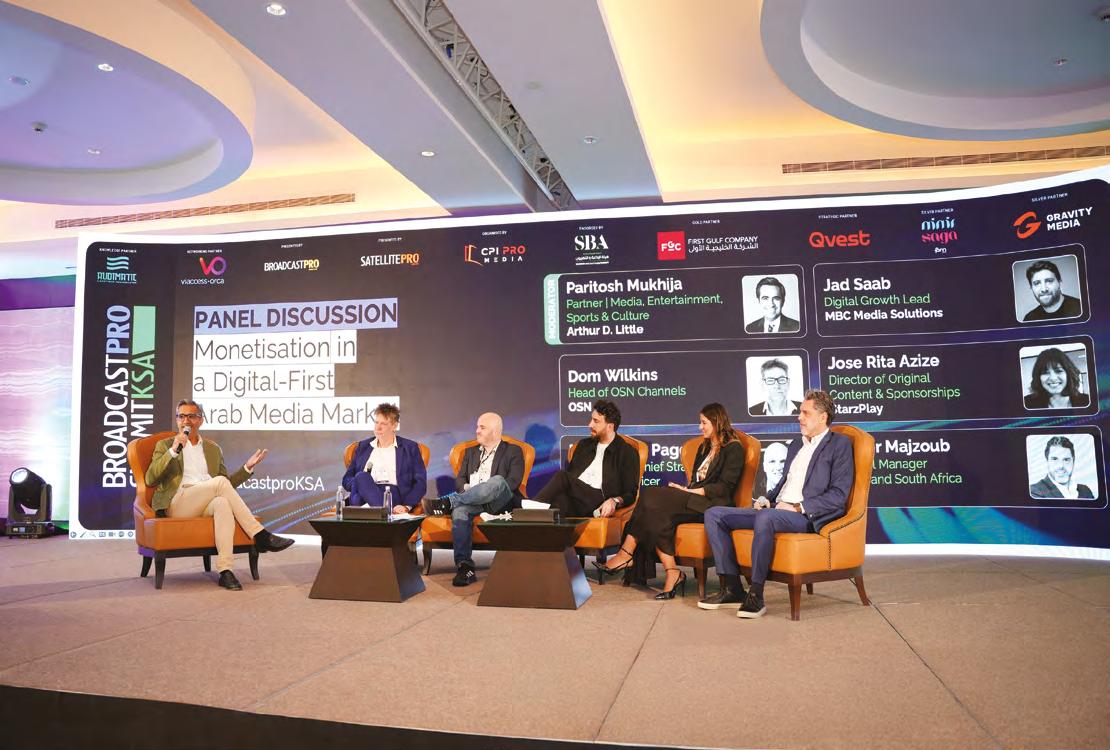
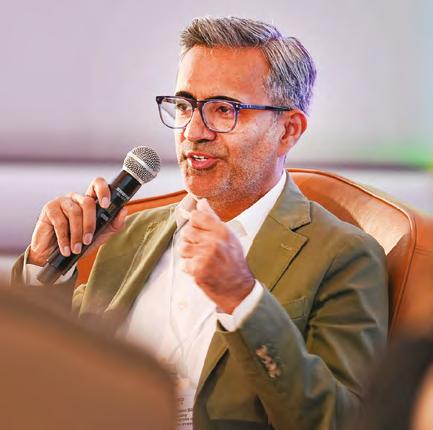
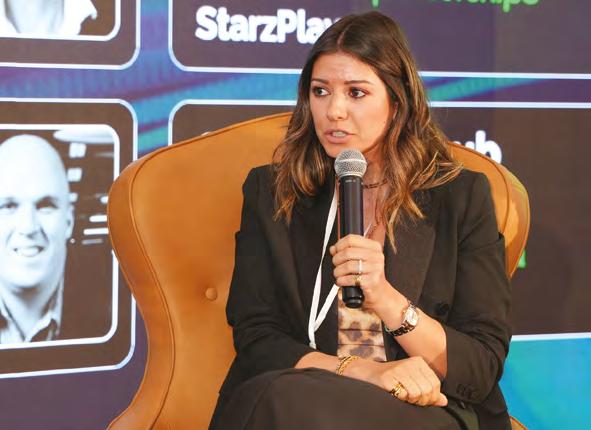
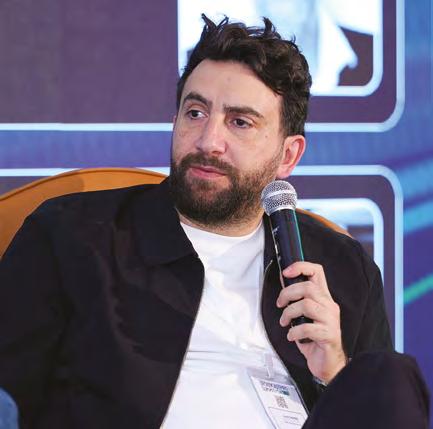
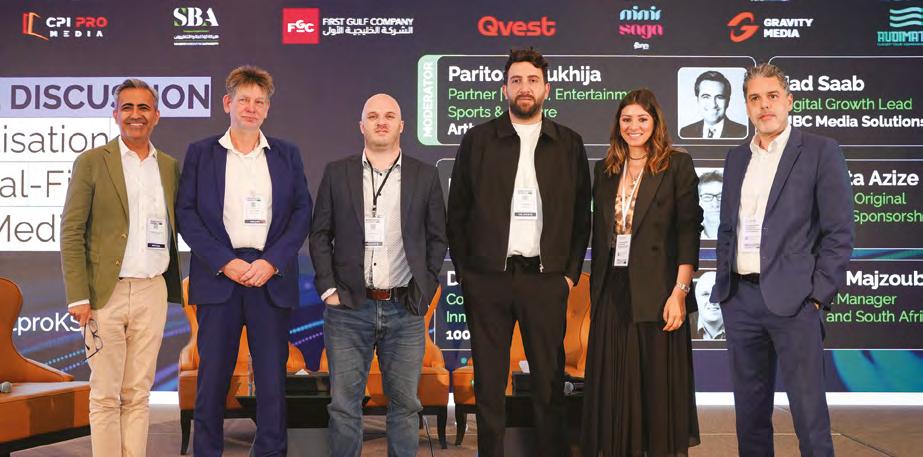
Steering the discussion at the Summit was Paritosh Mukhija, Partner – Media, Entertainment, Sports and Culture, Arthur D. Little. The panel consisted of Dom Wilkins, Head of OSN Channels, OSN; Dr William Page, co-founder, Chief Strategy and Innovation Officer, 1001; Jad Saab, Digital Growth Lead, MBC Media Solutions; Jose Rita Azize, Director of Original Content and Sponsorships, StarzPlay; and Samer Majzoub, General Manager MENA and South Africa, Viu. Broadcasters focus on server-side infrastructure, database application, vendor opportunities in analytics and multi-platform integration, while juggling revenue models that will
possibly power end-user consumption. Within this overarching view of where platforms are today, Mukhija began the conversation by wishing to understand what the panel was doing to achieve sustainable growth and what is critical to long-term profitability. Impacting everyone significantly in the media value chain, the immense pace of change has triggered a shift in where investment is moving. “It is important to stay relevant,” commented Samer Majzoub from Viu. “If you’re not, no one will download your service, especially as the audience moves seamlessly between social media
Social media and platforms are not competition, but the two are not allies either
JAD SAAB, DIGITAL GROWTH LEAD, MBC MEDIA SOLUTIONS
and other streaming platforms. If we don’t have the agility, we are out of the market. We are being disrupted, and we must look at it positively and in a way that frames our priorities.”
With one of the lowest SVOD penetration rates in the region, relevance becomes critical in emerging markets such as Iraq, where consumer behaviour and distribution dynamics differ significantly from more mature markets. In markets with historically high piracy and fragmented access models, winning audiences requires a combination of personalisation, frictionless access and strategic bundling, noted Dr William Page from 1001. “We have partnered with OSN+, TOD and StarzPlay amongst a host of others to provide users with as much content in one place, and with a single sign-on within our app or our partners’ apps.”
This approach is critical for 1001 in a market where users are used to consuming all their content through illegal platforms provided by ISPs. Replicating that experience legally is a priority, and building a rich data lake gives a competitive edge in a piracy-driven market.
“We made the decision to take our entire tech stack in-house, enabling continuous experimentation and faster deployment cycles. That agility has translated into significant improvements in user engagement and satisfaction, discoverability and personalisation,” said Page.
Even as technology fuels engagement, competition drives up costs for production houses as they navigate declining ARPUs. While the West produced and sold content at high rates globally for decades, the industry is now at “a pivot moment”, Dom Wilkins from OSN commented.
“Most producers have turned into providers, and there are two models that work well. Ones that make and

sell to the Disneys and the Netflixes who have the reach, the broadness and the ability to monetise across a huge number of people, and the standalone studio that sells content and has a good IP that everybody wants.”
Wilkins noted that a decade ago, SVOD was a value-add for studios and producers. “It was a smaller fraction of the overall cost of a piece of content. That has changed. To cite two studios: one values content where three-quarters of the overall price is tied to SVOD and one-quarter to linear, traditional pay-TV rights. Another studio splits it roughly half and half.”
Pay TV has been the great leveller. “The ARPU on a pay-TV
customer is four times greater than a streaming customer, but it has been declining and the big challenge is to move to an environment where everything can stand on its own.”
Whether streaming will eclipse IPTV and linear television is a question only time can answer. In the meantime, everyone is preparing for a future by experimenting with concepts that can offset rising costs. Larger production houses – or those with a clear vision, sufficient revenue and the capacity to manage test productions – are planning original content. These originals are pieces of intellectual property that the producers can own and exploit in multiple ways, generating revenue
and creating new entry points for monetisation on their platforms.
In the meantime, everyone is preparing for a future where they experiment with concepts that will work against rising costs.
“Most companies that make content have a 70:30, 80:20 way of looking at making profits,” continued Wilkins. “The 20% they know is more risky and less sellable, but that’s perfectly valid because it opens the door to a user contemplating whether to stay and check other options. It is a smart way to drive revenue for other content.”
In the age of abundant content, personalised stories and influencer marketing, players adopt different
methods to cater to platformexperimenting viewer behaviour.
“Before experimenting with what works, it is important to identify what outcomes you are aiming for. In Saudi Arabia and the rest of the globe, everyone is optimising strategies and goals to compete on screen time and attention,” said Majzoub.
relevant while operating in this part of the world and especially in Saudi Arabia, is our Arabic proposition. We have several originals and coproductions that we are leveraging.”
Knowing what’s working and optimising how you promote content plays a significant part in trapping audiences. “A strong discovery engine is also very important for us, not just to push content but also to gauge value,” added Majzoub.
“That’s what we are working on – how do we crack the formula that creates a daily habit of accessing our platform? Our unique selling proposition is the localised Korean content that we have built thanks to our strong relationship with the Korean studios. Secondly, with our Turkish content we are aiming for a female audience; and the third and most important, to be and even if they are spending time on social media, we need them to come back to us and binge watch and spend long hours nonstop on our platforms.”
Our data shows that over 80% of users want to have everything in one place
DR WILLIAM PAGE, CO-FOUNDER, CHIEF STRATEGY AND INNOVATION OFFICER, 1001
Led by an interactive, tech-savvy demographic, viewer consumption points are concentrated on social platforms. This remains a fragmented space, forcing brands to pay attention to influencer communities as they become discovery funnels and advertisers to leverage performance-led advertising to improve digital ad yields.
“Social media and platforms are not competition, but the two are not allies either,” said Jad Saab from MBC Media Solutions. “The mindset that drives the consumption patterns of long-form and short-form content is different, their viewing nature and purpose are different, but it helps increase viewership. And realistically speaking, we need people’s attention,
There is, however, a difference when it comes to commercials. Advertisers are increasingly targeting social media for targeted consumer engagement and more visibility. “And this is where the competition is. They are paying very cheap CPMs to have high social media visibility for short-term videos and taking the budget away from OTTs.
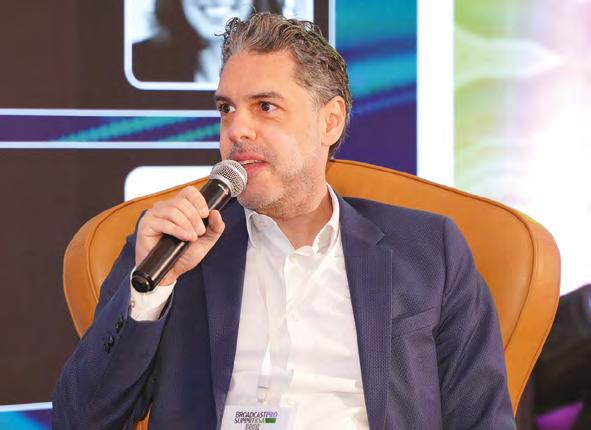
Paritosh Mukhija, Partner –Media, Entertainment, Sports and Culture, Arthur D. Little.
Dr William Page, co-founder, Chief Strategy and Innovation Officer, 1001. Samer Majzoub, General Manager MENA and South Africa, Viu.
Once we are at a space where TV is, then people and advertisers will start to realise that the streaming space and the VOD space are totally different in behaviour from social media.”
“Because they have the highest impact on marketing or any kind of launch, you need social media platforms,” commented StarzPlay’s Jose Rita Azize. “From a monetisation perspective, it is not about them competing with us. Rather, it’s about the perception of it.”
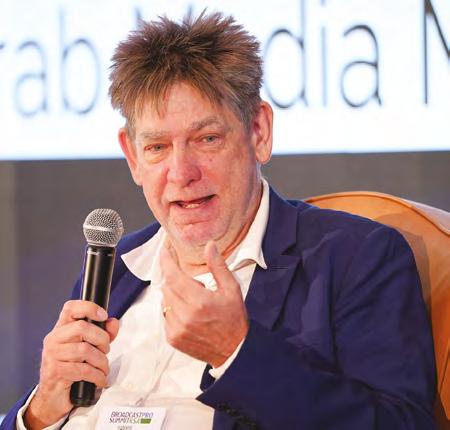
“If your CPM is X amount here, X amount there, your reach is higher here, but less there. When you’re on social media, you’re just scrolling down –your minute of consumption on OTT is much higher than your minute of consumption on social. This is where we must get to a point where you position content differently, by minutes of spend rather than reach versus CPM costs. It changes the perspective when the approach is 50 minutes of consumption on a show that will give you X, Y, Z in revenue and reach.”
Within the co-existing AVODSVOD models, more platforms are blending an ad layer to increase revenue and combat subscription fatigue. The notion of having something for free or supported by ads is always more appealing for audiences.
“None of the models are free, whether hybrid or AVOD. They are paying in one way or another, either with their eyeballs or with their time watching ads. And having progressed from TV and VODs, people are accepting of advertisements because they are historically used to TV ads since the ‘40s and the ‘50s. You expect to see it on the screen; it becomes
Most companies that make content have a 70:30, 80:20 way of looking at making profits
DOM WILKINS, HEAD OF OSN CHANNELS, OSN
more of a disruptive experience on the mobile device,” said Saab. “But what form works is entirely dependent on each company and organisation, their policy and their own experience. Whether hybrid or SVOD, AVOD, BVOD or an unsupported tier, each company decides what works best for them.”
From an AVOD perspective, it’s not just about reaching a large audience; the viewers themselves differ from those of SVOD, with distinct habits and engagement patterns. StarzPlay’s core audience for premium sports, for example, is predominantly male, whereas AVOD draws a broader audience, said Azize.
“From an entertainment perspective, it’s easier to have it on AVOD than SVOD. You keep your premium kind of
Jose Rita Azize, Director of Original Content and Sponsorships, StarzPlay.
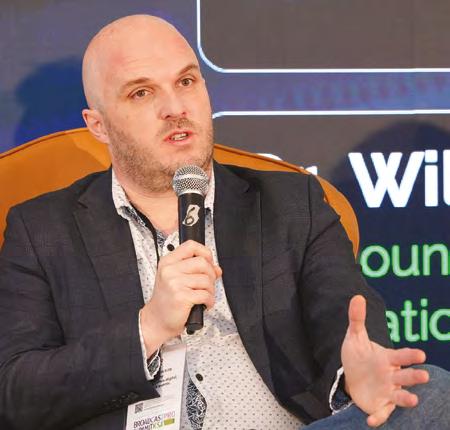
Dom Wilkins, Head of OSN Channels, OSN.
Jad Saab, Digital Growth Lead, MBC Media Solutions.
sport entertainment and some series for SVOD users, whereby from an original production standpoint, you’re able to classify an original production that goes for SVOD users. That works perfectly well for SVOD users with a different calibre of advertisement versus what we have on AVOD.
“But whatever the model, we need to have the mass reach audience for a monetisation layer. You cannot function with only one arm; you need all three together in a proper strategy that maximises reach. And the more TV is dropping, the more people expect the luxury to watch content for free.”
User behaviour analytics reveal viewers increasingly want to pay for fewer subscriptions or want free content with ads. In piracy-prone markets such as Iraq, bundling becomes essential, explained Page. “Our data shows that over 80% of users want to have everything in one place, also that users see about 45% of 1001’s hyper-localised content including originals on our app, and the rest on our partners’ content. That shows our bundling strategy is working.”
Due to historic levels of piracy and
It is important to stay relevant. If you’re not, no one will download your service
SAMER MAJZOUB, GENERAL MANAGER MENA AND SOUTH AFRICA, VIU
fragmented distribution, Iraq is one of the most under-monetised markets in the region. “If we can successfully partner with more providers in our lobbying efforts with the government, Iraq will become the second biggest market in the region, behind just this market. Iraq is a sleeping giant. With coordinated anti-piracy enforcement, ISP alignment and government collaboration, the ARPU has the potential to be incredible,” said Page. Moving forward, organisations must adopt best practices that enhance experience, add longevity in subscription, reduce churn and achieve predetermined monetisation goals. Driven by swift changes in
technology, companies are led by the latest innovations and no one wants to be behind the curve, said Wilkins. “They work on improvements and advancements that will add services and benefit the consumer. The other important factor to focus on is properly validated, clean data. It ensures that everything you run off it – the algorithms, the recommendation engines, the AI projects – all of those will work better on data reliability.”
In conclusion, the panel agreed that Saudi Arabia is helming change in the region.
“Saudi Arabia is no longer a market catching up to global media; instead, it is redefining where media is going next,” commented Majzoub. That shift is reflected not only in regulatory reform and investment, but in how audiences are evolving and how platforms are responding to them. To remain sustainable, organisations must stay agile to that transformation, adapting quickly, seizing emerging opportunities and positioning themselves as active participants in the industry’s evolution rather than passive observers.
8,000+






OSNTV TURNS LIVE CHANNELS INTO DIGITAL INVENTORY
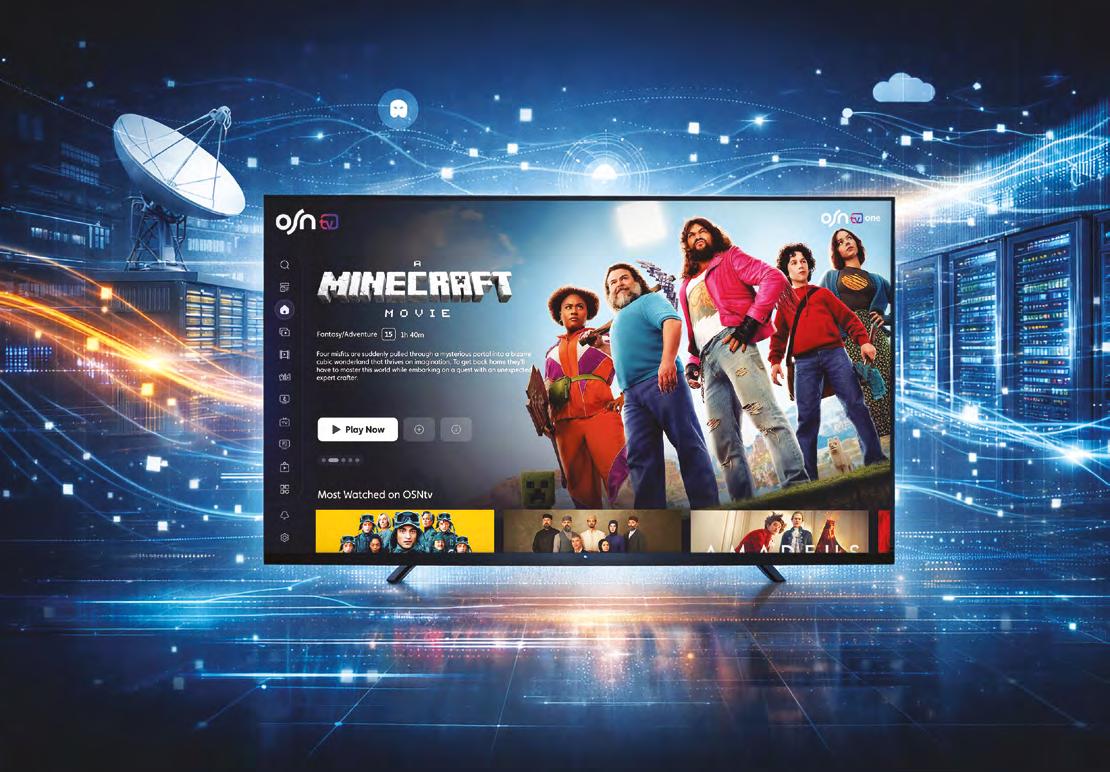
As premium broadcasters across the Middle East accelerate their shift to IP delivery, monetisation has become the fault line between legacy television economics and digital advertising expectations. Shaharyar Bhatti, Senior Engineering Manager at OSN, spoke to BroadcastPro about what that transition entailed with the launch of OSNtv

The launch of OSNtv in 2023 required OSN to bridge the gap between live satellite channels and digital apps, and serve connected audiences in the KSA, the UAE and neighbouring territories. Like many global broadcasters, OSN has navigated a steady move toward IP-based delivery.
“While this shift offers immense flexibility, it exposes the limitations of monetisation models built for legacy broadcast workflows,” points out Shaharyar Bhatti, Senior Engineering Manager at OSN.
“OSNtv needed to monetise linear streaming channels without sacrificing the premium viewing experience subscribers expect. Our strategy centred on introducing targeted ad insertion (SSAI) to bridge the gap between linear broadcasting and addressable, digital-first advertising.”
OSNtv’s key technical challenges
Historically, OSNtv’s linear streaming channels have relied on traditional broadcast advertising techniques, limiting the network’s ability to meet modern advertiser expectations. Today, ad agencies seek a digital-first inventory that delivers measurable impressions, frequency capping, geo-targeting and reliable reporting, all delivered server-side. These capabilities enable advertisers to validate performance, optimise spend in real time and align linear streaming buys with the standards established in digital and connected TV environments. For OSNtv, moving to digital ad delivery was commercially necessary but technically complex.
The complexity of ad signalling
OSN’s engineering team had to ensure frame-accurate playback, seamless transitions and strict editorial control over promotional content, explains Bhatti.
OSNtv needed to monetise linear streaming channels without sacrificing the premium viewing experience subscribers expect
SHAHARYAR BHATTI, SENIOR ENGINEERING MANAGER, OSN
“One of the most significant challenges was signalling. OSNtv’s existing playout environment lacked explicit ad duration information within SCTE-35 markers, a critical requirement for accurate ad decisioning and reliable ad insertion. Without precise break duration data, SSAI platforms are forced to rely on assumptions, which increase the risk of truncated ads, buffering or content disruptions that negatively impact the viewer experience.”
In a premium subscription environment, such disruptions are unacceptable.
“We needed an SSAI solution that could guarantee frameaccurate switching between content, promos and advertising, without introducing latency or visual artifacts. Furthermore, OSNtv required granular control over ad breaks, enabling us to selectively replace individual ad spots with targeted advertising while leaving specific high-priority promos untouched.”
Building an SSAI platform for reliability and scale
Beyond signalling and playback accuracy, OSNtv defined operational requirements for the new platform. It needed accurate server-side
ad tracking and benchmarking, alongside reliable reporting across both the SSAI platform and backend ad decisioning systems. To support uninterrupted service, the solution required high availability, monitoring and robust failover mechanisms.
Scalability was also essential to handle high-concurrency viewing.
As an added challenge, OSNtv needed to deploy the ad solution quickly and integrate it into an existing ecosystem of playout servers, content management platforms, DRM, ad decision servers and client devices without overhauling its core infrastructure, explains Bhatti. To address these requirements, OSNtv implemented an SSAI workflow using Harmonic’s VOS 360 Ad SaaS platform. The platform enabled ingestion of external ad schedules, alignment with SCTE-35 markers and enrichment of ad break metadata to support deterministic ad playback.
By leveraging the scheduler, OSNtv now ingests external ad schedules generated by its playout workflow. These schedules are correlated with incoming SCTE-35 markers, allowing the placement opportunity information service to normalise and enrich the signalling by inserting accurate ad duration information before the stream reaches the SSAI layer.
“This step is fundamental: with precise break duration data available, SSAI workflows can execute deterministically. This ensures ads play for their full duration and that content resumes seamlessly, without truncation or buffering,” confirms Bhatti.
Preserving editorial control within ad breaks
The architecture also supports a selective ad replacement model.
Rather than replacing entire breaks, individual promos within a break can be dynamically substituted with one or more targeted ads while preserving high-priority promotional content. This allows monetisation without surrendering editorial control.
During the integration phase, the team addressed a common industry challenge: mismatches between creative durations and scheduled avails. “Ads arriving from multiple agencies often vary slightly in format or frame count, which can lead to technical disruptions. In such cases, Harmonic’s solution automatically inserts slate content to absorb minor timing gaps, preventing premature transitions back to programming. The result is a workflow that delivers consistent, deterministic ad playback, ensuring clean transitions and uninterrupted viewing experiences,” explains Bhatti.
Deployment speed and ecosystem integration
From purchase order to production, the SSAI deployment was completed in approximately four months. Bhatti lauds this effort, given the complexity of the ecosystem and the number of integration points involved.
“A key factor in the streamlined deployment was the SaaS-based delivery model. Harmonic’s VOS360 Ad was provisioned rapidly, allowing OSNtv to begin testing almost immediately. Rather than relying on custom development, much of the integration effort focused on configuration, security and network connectivity, which are common challenges in modern broadcast and OTT deployments.”
Collaboration was central to the project’s success. Harmonic’s team worked closely with OSNtv’s engineering and ad-operations teams
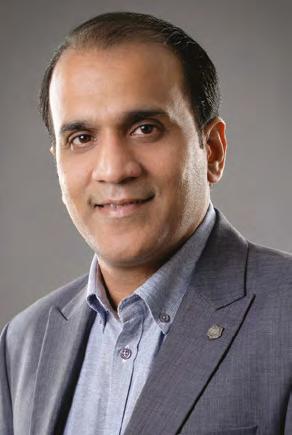
Since the launch of targeted advertising, OSNtv has onboarded more than 20 firsttime advertisers to the platform
SHAHARYAR BHATTI, SENIOR ENGINEERING MANAGER, OSN
to coordinate integration across ad decisioning, content management, DRM, CDN and client applications.
“This technical partnership, combined with Harmonic’s experience in delivering SSAI at scale, was essential to meeting the project’s tight timeline,” says Bhatti.
Commercial impact
Today, OSNtv monetises 15 linear streaming channels using SSAI. Advertisers can target campaigns at the country or city level, enabling localised messaging in key markets such as Riyadh and Dubai.
Frequency capping and server-side measurement ensure consistent delivery and reliable reporting, aligning linear streaming inventory with digital buying expectations.
“Since the launch of targeted advertising, OSNtv has onboarded more than 20 first-time advertisers to the platform. Many of these are digital-first brands seeking premium, brand-safe environments alongside world-class content. Early results show increased CPMs, and the solution supports both direct and programmatic demand models, giving OSNtv flexibility as the market continues to evolve,” explains Bhatti.
From an operational perspective, the SSAI workflow delivers stable playback, frame-accurate transitions and a seamless viewer experience. By localising signalling intelligence within the SSAI layer, OSNtv reduces dependency on upstream correction and can adapt workflows as commercial requirements evolve.
A scalable foundation
Looking ahead, OSNtv plans to expand monetisation across additional linear channels and extend SSAI capabilities to VOD services using the same infrastructure. Its experience reflects a broader reality facing broadcasters across MENA and beyond: as linear content increasingly shifts to IP delivery, monetisation strategies must evolve to provide digital metrics and broadcastgrade reliability while preserving a high-quality viewer experience.
The project demonstrated that targeted advertising at scale requires a flexible, cloud-based SSAI solution, with precise signalling and tight integration across the video and ad-tech ecosystem. With this project, OSNtv is poised for the next stage of its revenue growth.
MEASURING THE UNMEASURED
Linear television has long operated without the granular analytics available to digital platforms.
At BroadcastPro Summit KSA, Audimatic’s
Badis
Khaldi explained
how real-time
satellite audience data may begin to close that gap
At the recent BroadcastPro Summit KSA, Vijaya Cherian sat down with Badis Khaldi, founder and CEO of Audimatic, for a fireside chat that challenged one of the industry’s most persistent assumptions: that linear television is a declining medium with limited data intelligence.
Khaldi, a former satellite engineer with Eutelsat, positioned Audimatic as operating in a space few companies globally have addressed at scale. A platform built to measure linear satellite television audiences in real time, it brings digital-style analytics to a part of the industry often described as opaque when it comes to data transparency.
“Audimatic is a platform that I developed to measure audiences across the world in real time,” he explained. “It measures online and TV audiences in real time, second by second, and provides audience measurement for linear TV broadcast via satellite, IPTV and OTT — something that did not exist before.”
That absence of data has historically placed broadcasters at a disadvantage. Khaldi, speaking of his former roles, recalled the questions he was repeatedly asked: Who is watching our channel? In which territory? Are investments in HD or 4K upgrades justified?
“We had no answers for linear TV channels who asked us this.”
Traditional audience measurement, where it existed, relied on surveys and telephone research and was delivered long after the fact. “It was always delivered one week after the event had passed. So when we got the audience numbers, it was too late because the event and the moment had both passed, and there was no way to correct this audience.”
Audimatic’s model aims to address that lag. The company currently operates a panel of 350,000 connected receivers across multiple countries in Europe
and MENA, recording viewership data in real time, Khaldi claims. Over the past two years, the company has moved “from the data, then the KPI, then the insight” to help broadcasters make operational and programming decisions based on live performance rather than retrospective reports.
A recent example came during the FIFA Arab Cup and AFCON tournaments, during which the audience measurement company publicly shared daily top 10 rankings and minute-byminute trends across four participating countries: Egypt, Tunisia, Algeria and Morocco. The dashboard allowed users to select a country and a day, and see audience fluctuations in real time.
“When you have a football game, you see exactly how the audience changes,” Khaldi noted. “You see the drop or the peak in audience and how their viewing behaviour changes. When the content is attractive, the audience really changes.”
One particularly revealing insight emerged in North Africa. Khaldi observed that when local broadcasters did not carry national team matches, viewers actively sought alternative feeds. “In Morocco, for instance, they were following a German channel that had the rights to broadcast this particular
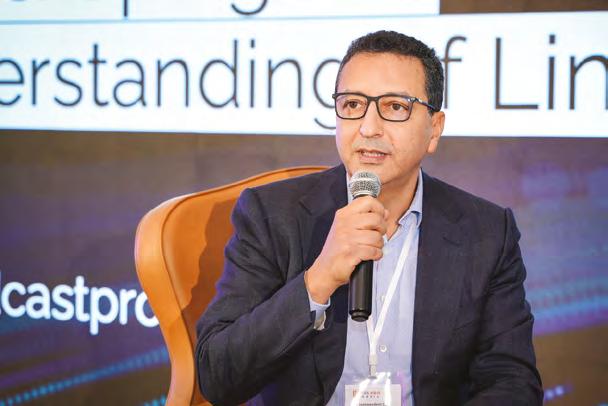
Badis Khaldi, founder and CEO, Audimatic.
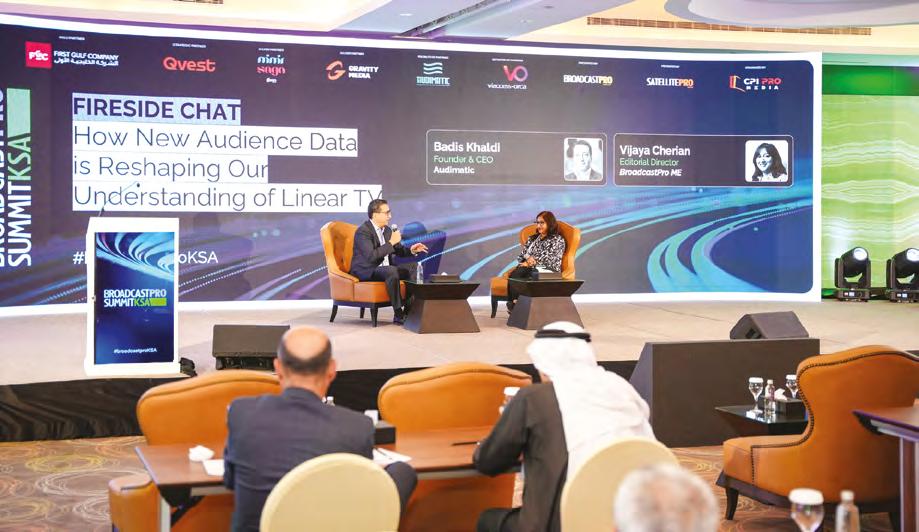
football match. So a German channel which no one in North Africa would normally watch suddenly had 70% of the region’s TV audience. When the match was over, the audience left.”
The takeaway, he argued, is straightforward. “If we want to improve our media, we have to understand what the people are watching.”
Beyond measurement, Khaldi highlighted a structural gap in the linear ecosystem. While digital platforms employ teams of data scientists, many traditional broadcasters do not. “For digital, we have many data analysts and many people who study data. For linear TV, there are no data scientists because previously there was no data to analyse.”
Audimatic has since expanded beyond audience tracking into ad detection, content monitoring and copyright protection. Moving away from watermarking, which requires heavy pre-processing, the company developed a system that identifies content directly from image and sound
recognition. “It’s the same as Shazam [a music recognition app that identifies songs based on short audio samples]. We do Shazam, but for video.”
For advertisers, the platform can now confirm when and where an ad aired, down to the second, and report on the audience at that precise moment. “We can say your ads were aired on this channel at this second. It started at this second, stopped at X second. The added value is not only about ad monitoring but detecting
If we want to improve our media, we have to understand what the people are watching
BADIS KHALDI, FOUNDER AND CEO, AUDIMATIC
how many people watched it.”
That data also reveals viewer behaviour during ad breaks, including zapping patterns when creatives are over-exposed. The same detection technology is now being used for copyright monitoring and even political tracking, identifying when specific individuals appear on screen and analysing associated audience levels.
The company’s objective, however, remains clear. Khaldi described linear television as having long operated in darkness compared to digital. “Before, linear TV was like a black box. Now we bring this data to the linear ecosystem so we can be competitive and continue to attract the ads business.”
In an industry quick to declare linear television obsolete, the discussion showed how improved measurement could alter how the medium is evaluated commercially. With real-time measurement entering the satellite space, linear TV becomes easier to quantify, which may influence advertiser confidence.
PETER MRKIC
Premium streaming wins by offering what social platforms can’t: depth, narrative payoff and sustained emotional engagement
Why Nostalgia is Powering Streaming Engagement
Millennials and Gen Zs are entering their peak spending years, and nostalgia offers a low-friction way to capture their attention. Familiar IP carries emotional memory, which reduces discovery fatigue and increases the likelihood of viewing for longer periods of time. Reviving old franchises reintroduces these stories in ways that feel relevant to today’s audiences.
This also simplifies choice. When audiences recognise a title or franchise, it reduces the cognitive load of deciding what to watch. This is particularly important in crowded streaming environments. Platforms can surface a small number of relevant, recognisable titles to guide viewing without overwhelming users or being promotional.
Iconic IP is being reactivated through modern reinterpretations across both series and film. Titles like Twisted Metal, Dexter: Resurrection, Star Trek: Discovery and Titanic
Sinks Tonight are examples of how legacy brands can be refreshed with contemporary storytelling, production values and formats. On the film side, millennial-familiar franchises such as The Karate Kid, Bad Boys and Gladiator have expanded to appeal across generations, driving engagement and long-term value.
Talent formats further extend this nostalgia ecosystem by offering familiar, repeatable viewing that fits naturally into modern consumption habits. The latest episodes of legacy shows such as America’s Got Talent, Shark Tank and American Idol continue to attract Gen Z and millennial audiences who grew up with these franchises. Their episodic, low-stakes structure makes them ideal in-between content – easy to sample between live sports, gaming or social scrolling. Unlike heavy dramas, these talent shows deliver emotional payoff without demanding sustained cognitive investment. Viewers seem to engage casually while still feeling culturally connected to buzzy moments, viral auditions or standout pitches. This balance of comfort, recognisability and flexibility allows platforms to deepen session time while preventing decision fatigue or content overwhelm.
Social media vs streaming platforms
Social platforms have reshaped video consumption by prioritising speed, volume and constant novelty. While this has driven growth, it has also contributed to fragmented attention and screen fatigue. Audiences are becoming more intentional about how they spend their time and are increasingly drawn
to experiences that feel immersive, meaningful and worth committing to. Premium streaming wins by offering what social platforms can’t: depth, narrative payoff and sustained emotional engagement. Long-form sport and entertainment reward attention over time, creating a sense of progression and immersion that shortform content can struggle to replicate. Interactivity turns viewing into participation. Features such as live predictions, fan engagement tools and real-time participation give audiences an active role in the experience. This extends the value of long-form content beyond passive watching, allowing fans to engage with key moments across digital and social spaces. As audiences become more deliberate in how they spend their time, streaming platforms that combine nostalgia, long-form storytelling and meaningful engagement will help to both capture attention and create experiences that audiences return to again and again. The challenge for the industry, therefore, is not limited to producing content. There is an increasing need to create connection in an era of endless choice.
PETER MRKIC IS MANAGING DIRECTOR OF TOD MENA