
Beatrice Lauckner
Vik Mock
Benjamin Norris
Christopher Samuel
Caroline Anne Sharma
MFA 2024–25
Caroline Anne Sharma
When I first came to London Met in September 2023, I was newly retired and had only just started painting again after a break of nearly 30 years. When I applied, I had a series of black on white drawings/paintings and that was all - I had been in an art environment but not a studio and I was very out of practice in terms of being able to focus 24/7 on my work.
Prior to this, artwork was done in an ad hoc manner owing to the demands of fulltime work. I did however know that I wanted to explore line, and texture and to communicate emotion through abstract form. For me line has always been the most important component in art. Making one’s mark is usually used in terms of being seen and appreciated but I feel for me it is more significantly about individual self-expression and agency.
The course for me began in Sept 2023. The year before I had spent six weeks in hospital and had newly retired – so it was an intense period of transition for me. I was initially encouraged to go bigger and to use colour, and I began to work on 80 × 100 cm camvases. I was still using black lines and interspersing colour both in the background; but also started using colour in the mark making, layering one set of marks over another. This made the colour texture area sink and become more homogenous and with the black mark-making alongside it created an interesting contrast. I was still drawn to the more graphic line drawing, but I was in some ways encouraged away from this and towards a more fine art abstraction. Changing my way of working and subsequently my thinking is one of the reasons I wanted to do the MA, but it is difficult in practise, when you perceive your way of working as intrinsically linked to yourself so closely. If you abandon it, will you abandon parts of yourself?
In the first exhibition I showed four of these new paintings and
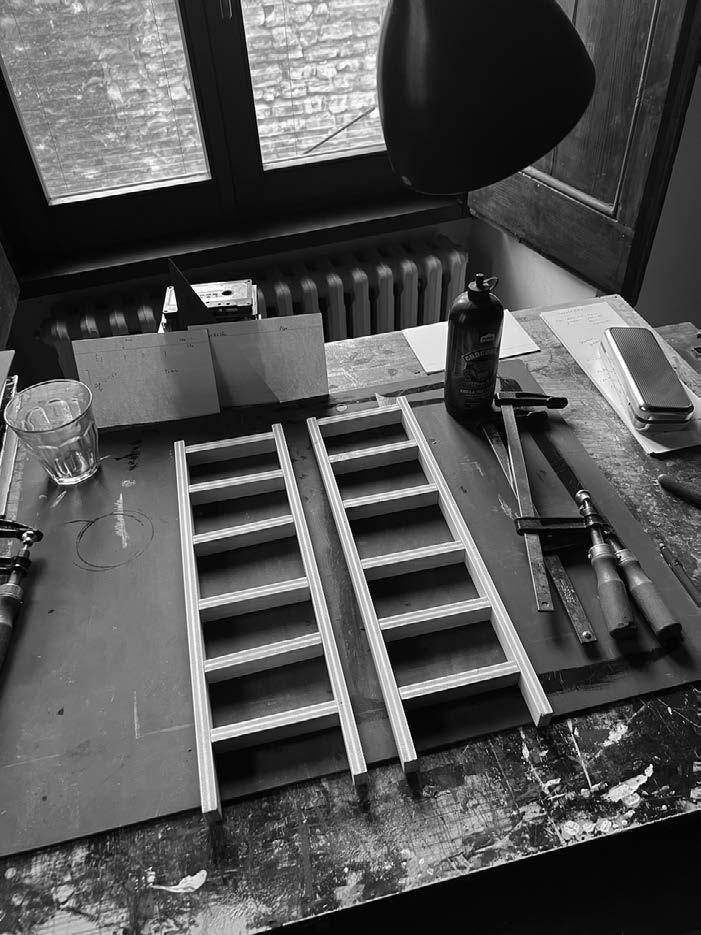
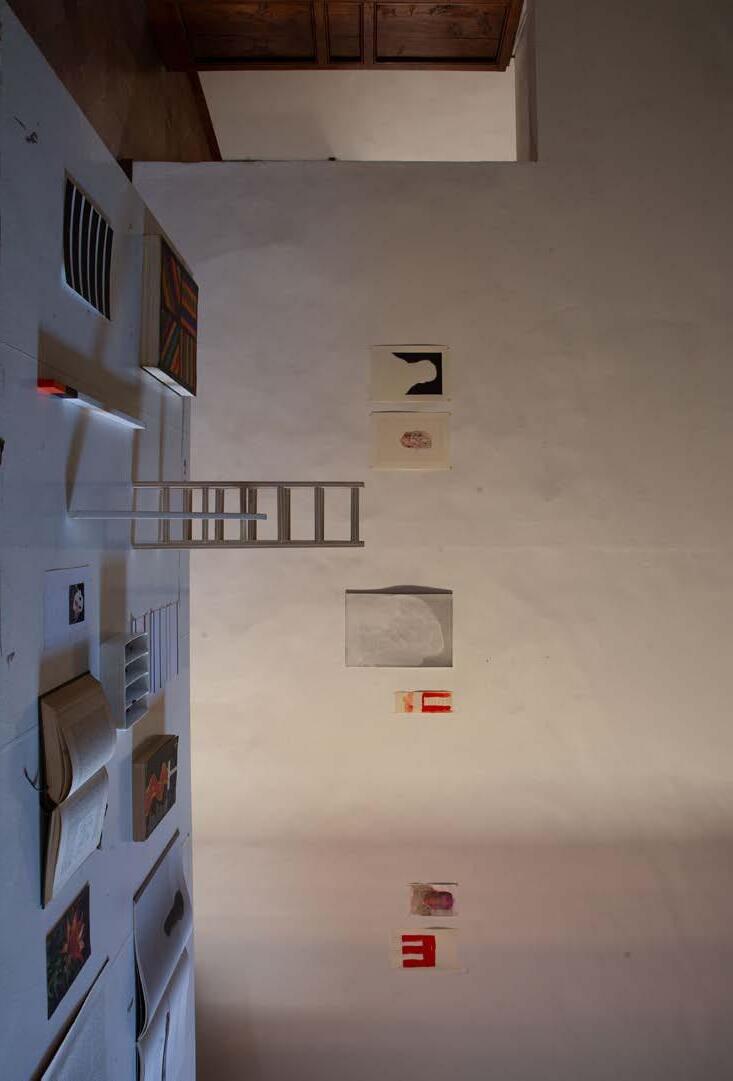
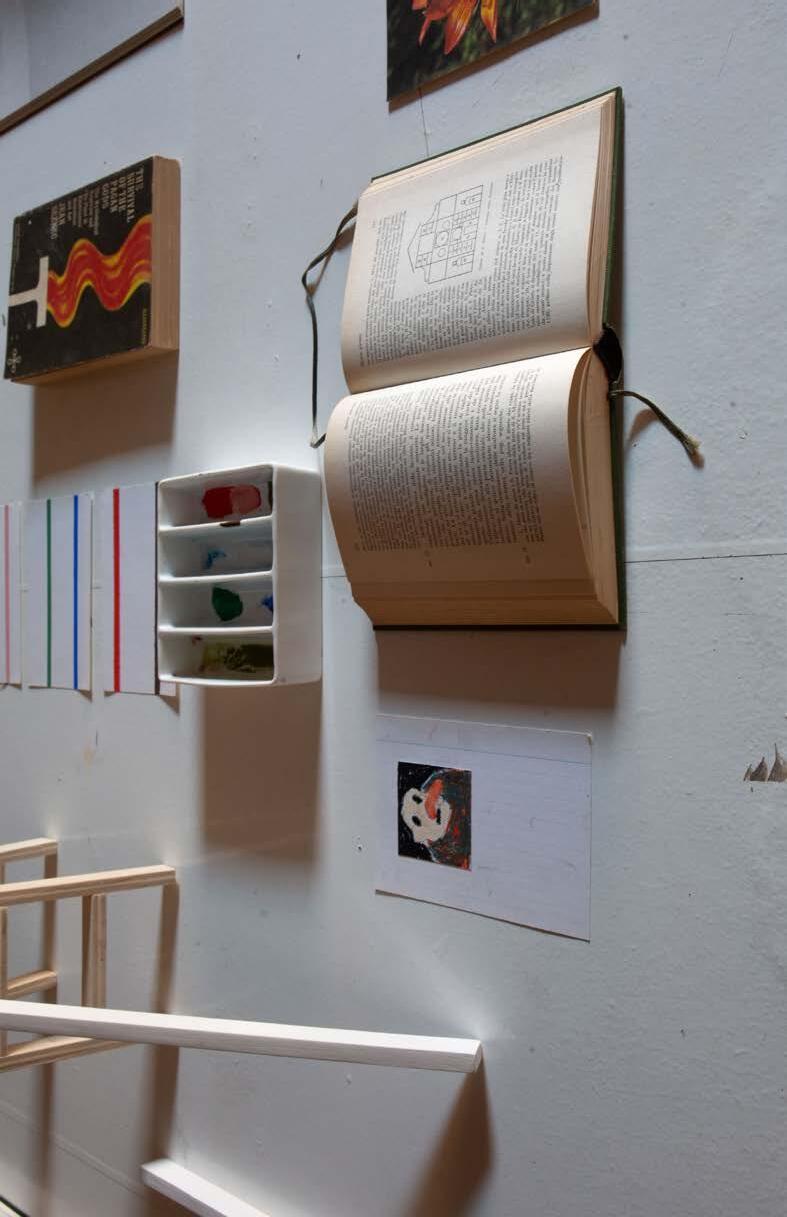
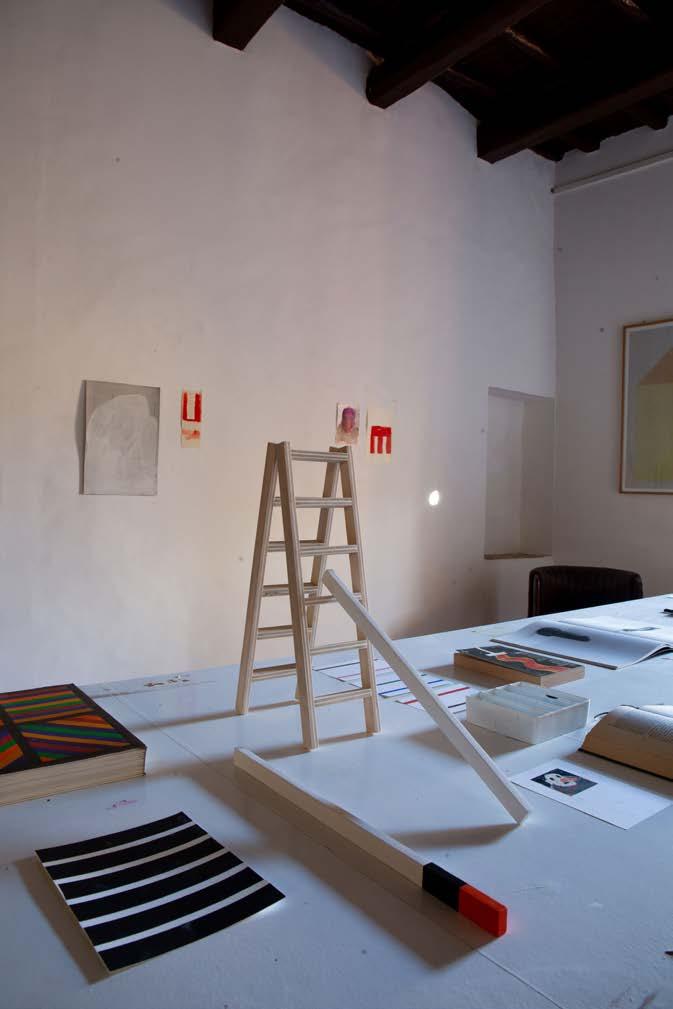
Captions for process images are optional. They can simply convey an insight into the working lives of the artists, their studios, or relate to reference materials etc.
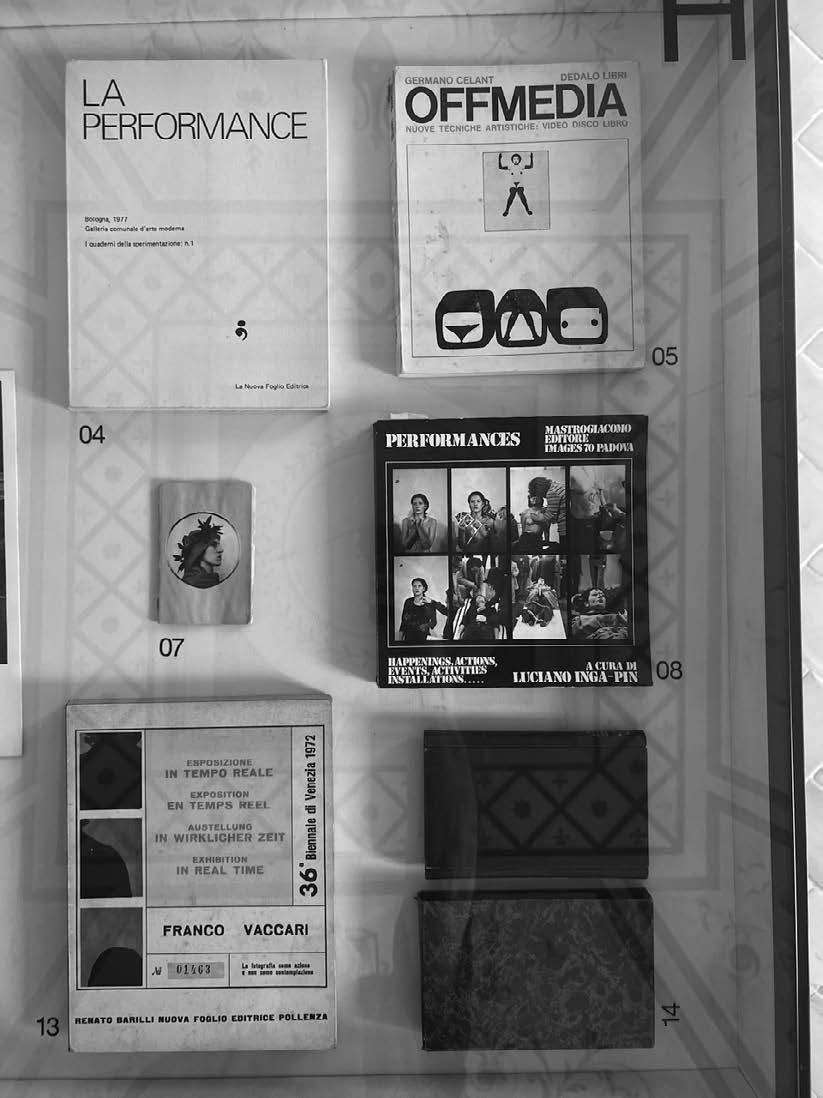
My paintings are abstract self-portraits, reflected in the dimensions of the pieces, and are a record of the ideas, feelings and events taking place for me during the making process.
My practice has three stages. The initial painting is mostly composed of line/ texture/ colour, rendered in a free associative and experiential way. I then edit the image digitally and the final piece is created using colour blocking, masking, and connective lines. The paintings at times recall prints but are entirely made using acrylic ink and paint on canvas.
I am interested primarily in psychoanalytical ideas e.g. mirroring and how painting reflects our inner life and its relationship to the outer world. My titles reflect these ideas, e.g. ´Meeting, Hardly Meeting’, implies two characters together but apart and refers to real and online interaction, fact, and fiction. My influences are varied and range from Kevin O’Neill to Charlene Von Heyl.
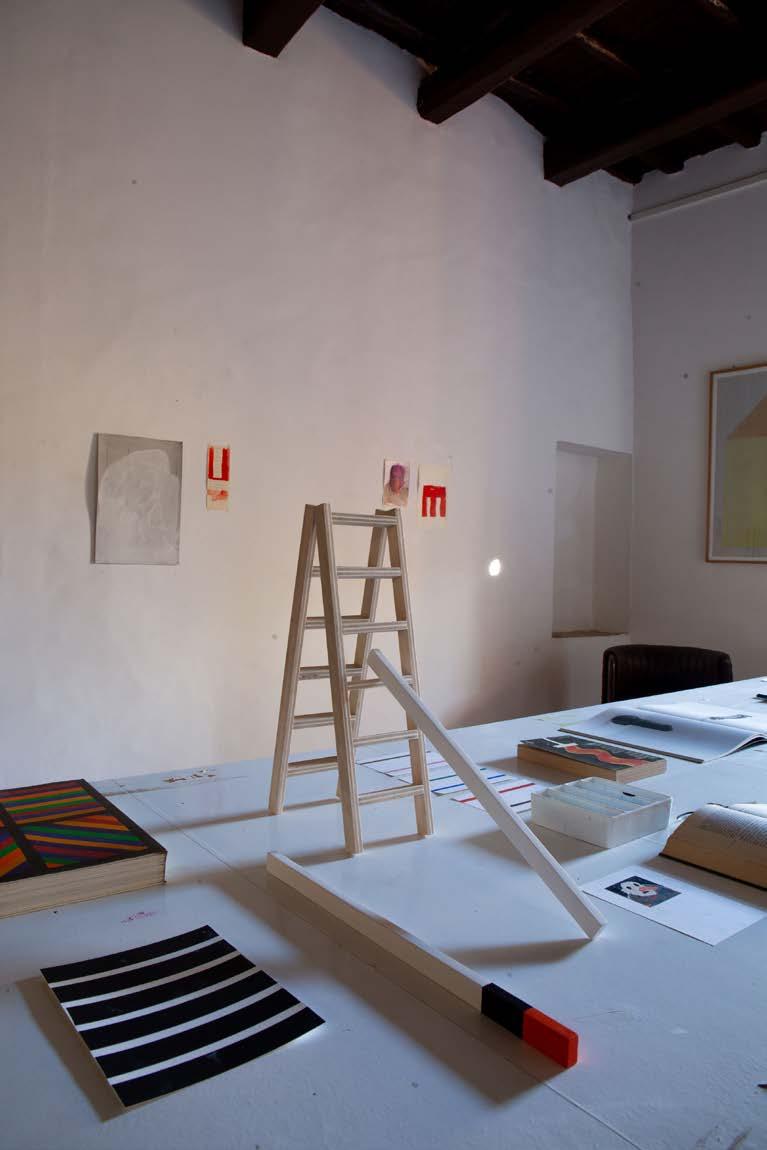
Praying Mantis
100 × 150 cm
Acrylic ink, acrylic paint, an household paint on canvas 2024–25
was quite surprised with how different they were from my initial starting point. I had been encouraged by tutors to add contrast with the thickness of the lines, and to add more spontaneous marks with bigger brushes and more dynamism. This continued through the next term and by our second exhibition in Devonshire Square I added one larger canvas which was 100 × 150 cm. I had recently started to go bigger after tutor suggestion and was surprised how the difference changed my perception and use of space on the picture plane. The picture size seemed life like and underlined the idea of self-portraiture. Tutors suggested adding more abstract forms to juxtapose with the thinner more delicate lines and by the third exhibition also in Devonshire Square I was now experimenting with the interplay between more conventional abstraction and markmaking. I was trying to experiment with a new technique or idea or texture with each painting and was encouraged to not just make a body of work.
At first this seemed strange as if a body of work was a ‘bad thing’. But I later understood that to try out new things with each picture was a way of not playing it safe – although conversely the downside of this was, would all one’s work look different from the next? And if so, did this matter?
Having different opinions from tutors is like google! You get a lot of suggestions but ultimately you have to choose the answer that feels right for you in the hope that you haven’t chosen from an overly defensive position. And hopefully too, building confidence and resilience against perceived and forthright criticism. Progress seemed slow for me but in reality, I had developed new ideas and work in less than a year and the confusion and questions proved that the course was enabling me to think in new ways. It was suggested I take the mark-making overall and see what happens. This led to a period of just working on mark-making and experimenting with using only line which did not leave a border or an edge. This all over mark-making was interesting but somewhat safer for me. I think tutors thought it was a backwards step, and I think in retrospect it was a feeling of having reached a plateau and ‘not wanting to push my luck’. One tutor described an area of
mark-making as ‘fluff’, but how do you describe areas of abstract mark-making in terms of personal meaningfulness? Was eliminating space with lines purposeful or distracting from pushing forward from an idea? As if this thought had been verbalised, one of the visiting lecturers told me about a tutor who once said to him, ‘But where are the bad paintings?’ And at the time I remember saying to myself, ‘but I don’t want to make bad paintings – who does?!’
But this did generate thinking. Did I have the courage to take risks that might not pay off, but which would teach me something more about development? It took time for these things to be absorbed and accepted, and I continued with the all-over textured paintings for a while because I liked the obsession of them. The way I was working was very instinctual and experiential- sort of a conscious unthinking.
When I was working, I would almost go into a meditative trancelike state. But a visiting tutor one day jolted me out of this reverie abruptly and asked if I ever considered the viewer? -another bombshell! But I knew the directness of the question was also, who do you make paintings for? Is it just you or do you want people to connect with them? It is very interesting how a simple question can throw the neat little world that you have created for yourself into confusion!! And again, this took time to percolate and assimilate- the thought that I was not considering the viewer gave me anxiety. Was I just painting for myself to mark out time? Later in a group crit with the BA students I noticed that two paintings that had (breathing) space in them were more appreciated. I received comments that the contrast between the intense mark-making and blanker areas enabling the textured areas to be seen more clearly. I think there was an inner conflict of wanting to be seen and not, being played out on the canvas. Losing oneself in a pictorial maze can lose the viewer too. The lines themselves were disappearing because they were competing. It was like a very visible disappearing
In the second year the new tutors introduced different ideas and ways of working that again brought up new possible directions to follow. Karen saw my work in a sort of sci fi arena which was
Praying Mantis
2024–25
100 × 150 cm
Acrylic ink, acrylic paint, an household paint on canvas
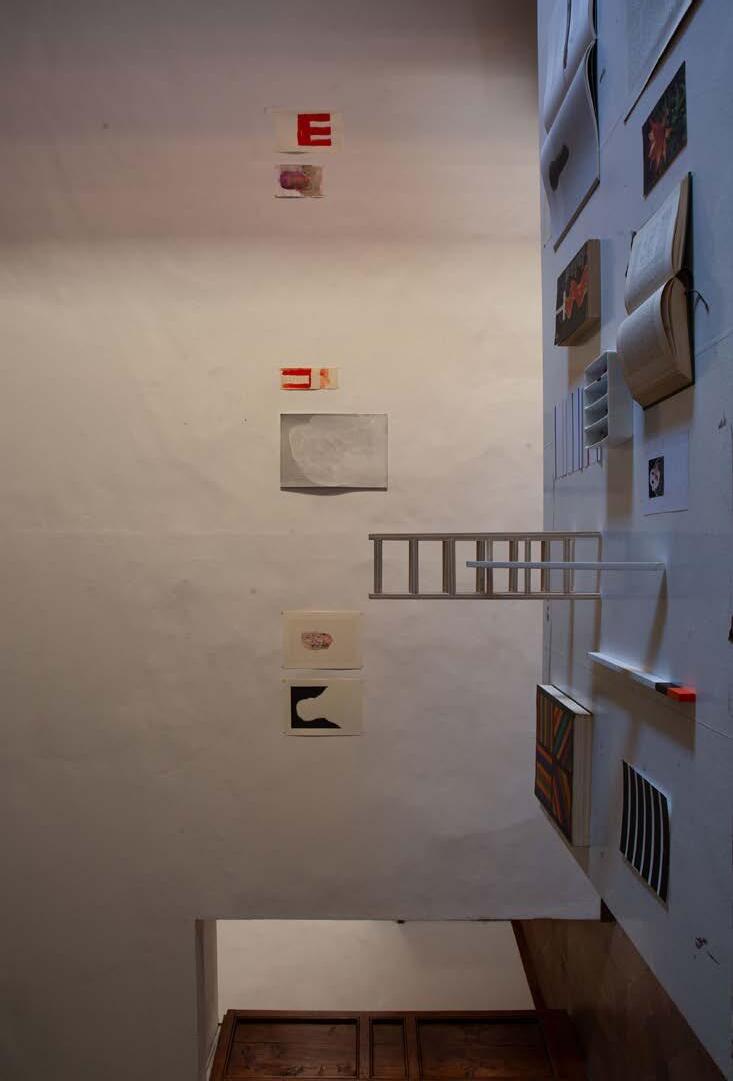
Praying Mantis
100 × 150 cm
Acrylic ink, acrylic paint, an household paint on canvas
2024–25
Praying Mantis 100 × 150 cm Acrylic ink, acrylic paint, an household paint on canvas
Praying Mantis
100 × 150 cm
Acrylic ink, acrylic paint, an household paint on canvas
Praying Mantis
100 × 150 cm
Acrylic ink, acrylic paint, an household paint on canvas 2024–25
interesting as I am very fond of Kevin O’Neill’s black line pen work on ‘2000 AD’. Karen would often say to me, ‘What hits me first?’ – as if each area was flying through an imaginary cosmic space. What is nearest to me? Which areas are in the background and the foreground? and this was an interesting way to think about the abstract picture plane- How do you take abstract areas and push them forward or backwards?
I tentatively started to add areas of flat colour but was always held back by the feeling that I might ruin the work and obliterate areas I had spent time developing. Was this a sort of self-sabotage? The recurring fear was being left with nothing. It also made me think on a wider scale and ask, was I risk averse? And there were plenty of reasons to be so!
One of the things that really helped me to break out of this, I think, was the making of a sketchbook. I have used sketchbooks before but always because it was prescribed and not as something that I felt would expand and help me to develop my work – so I started, I confess, a little half-heartedly, collaging colour ink drawings, adding text and just being quite playful. However, despite my initial reticence I soon began to feel very engaged. One of the tutors Karen, was very good at introducing the idea of the possibilities of playfulness and showed us in her own work how she would become obsessed by certain random things and make a series of works exploring this. It was part thoughtful, part silly. I felt this was what was lacking in my own work. A sense of carefree silliness. Abstract paintings don’t tend to be playful- maybe this was an avenue to explore.
I started to mess around with my own images by photographing them on my phone and then playing around on the ‘notes’ function on my way home on the train. In this way I could experiment in all different forms, colours and cut outs. I started to like some of these effects more than the actual paintings and this began the body of work that has formed my final show. All but three are redoes from the beginning of the year when I was playing it safer and maybe too inside my own head. This method took away the anxiety of what happens if I ruin it because if it worked on the smaller scale there
was no reason that it shouldn’t on the larger. Enlarging did prove challenging however but to see the playful smaller pieces as larger paintings has opened many avenues of thinking for me. By adding more space, I think it allows the viewer in- whereas before perhaps I wanted to keep everyone out. The resulting show is essentially do overs and because my life in the past few years has also been a reworking- there is a feeling of life imitating art but also art imitating life – in a circle.
In general, I think that in the last two years I have finally developed a practice that will sustain me over the coming years. Moving forward I want to start from the reverse process by working on the blank canvas and adding rather than a finished one and subtracting. Perhaps this way will be the only way it works for me in a sense to do two paintings in one.
One of the things I will take with me from this experience which ran the whole gamut of emotions for two years is to constantly question myself, ‘Why am I doing this, this way? Could I try it another way? Am I pushing myself hard enough or just resisting change and staying with what is safe? And if so, why?!’. So many questions with no real answers but because of the course I feel that whatever comes next, I will have the knowledge and experience to cope. In addition, knowing how to write artist statements, biographies, and press releases etc. has been very useful. In short, an experience I will not forget, which sometimes had its shortcomings but which I know will influence a large part of my artistic practice in the future.
Praying Mantis
2024–25
100 × 150 cm
Acrylic ink, acrylic paint, an household paint on canvas
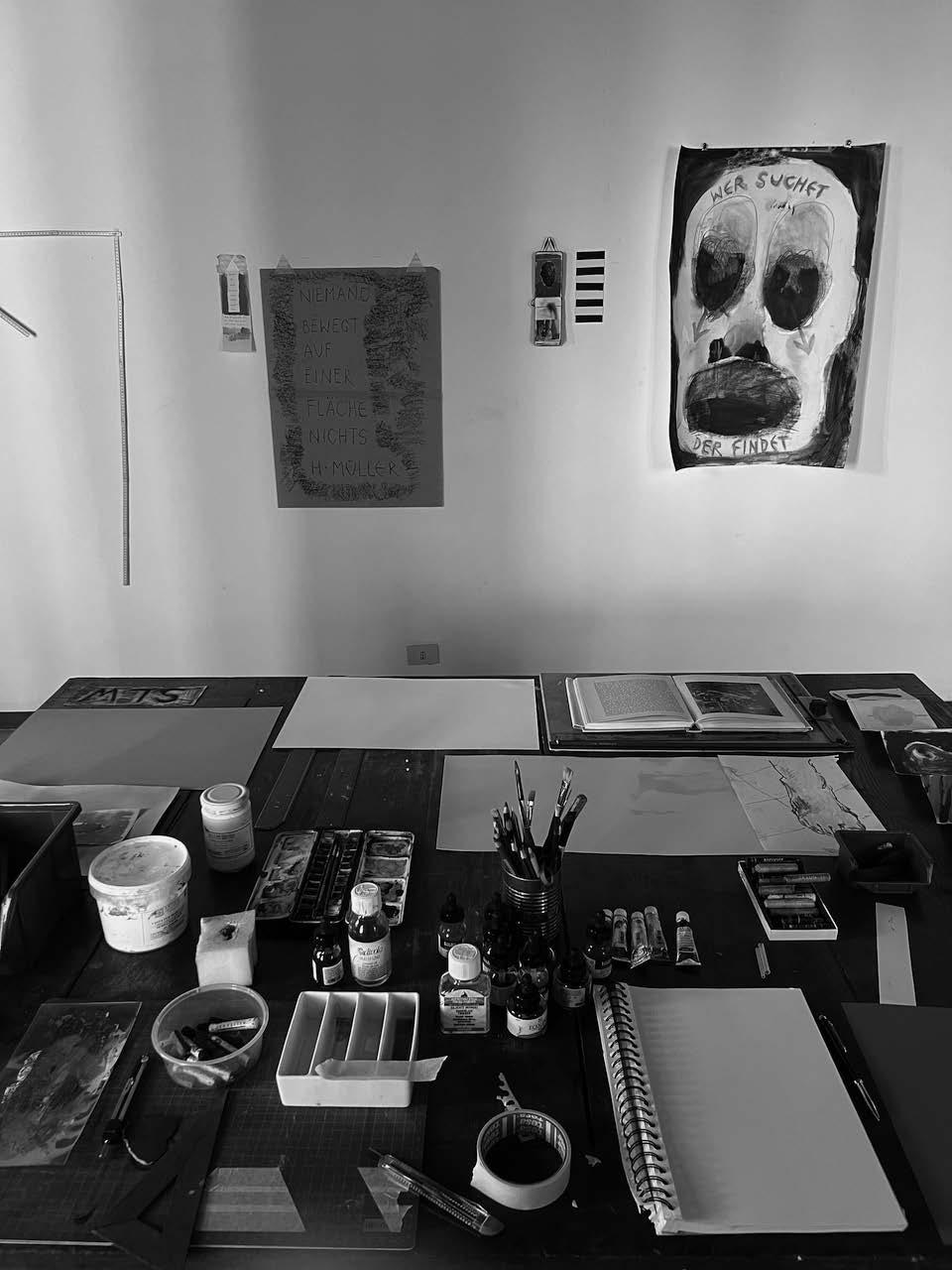
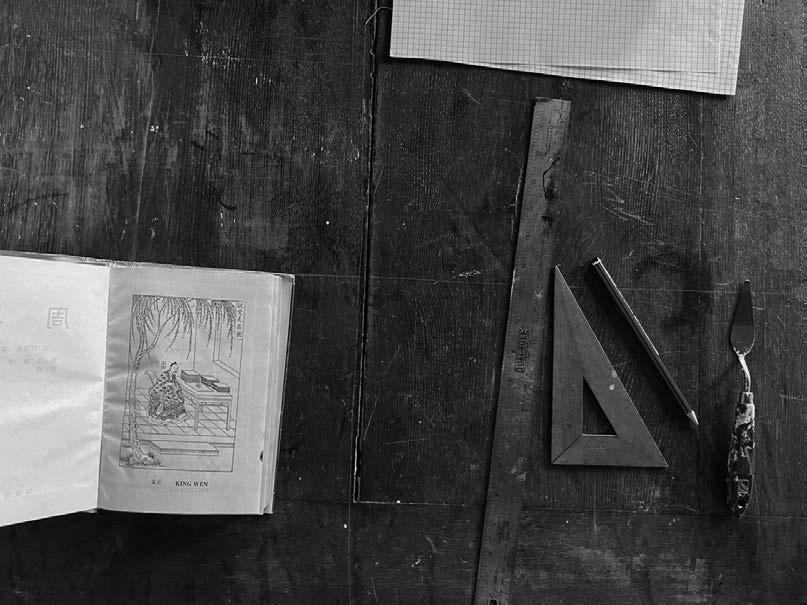
Captions for process images are optional. They can simply convey an insight into the working lives of the artists, their studios, or relate to reference materials etc.
In general, I think that in the last two years I have finally developed a practice that will sustain me over the coming years. Moving forward I want to start from the reverse process by working on the blank canvas and adding rather than a finished one and subtracting. Perhaps this way will be the only way it works for me in a sense to do two paintings in one.
One of the things I will take with me from this experience which ran the whole gamut of emotions for two years is to constantly question myself, ‘Why am I doing this, this way? Could I try it another way? Am I pushing myself hard enough or just resisting change and staying with what is safe? And if so, why?!’. So many questions with no real answers but because of the course I feel that whatever comes next, I will have the knowledge and experience to cope. In addition, knowing how to write artist statements, biographies, and press releases etc. has been very useful. In short, an experience I will not forget, which sometimes had its shortcomings but which I know will influence a large part of my artistic practice in the future. In general, I think that in the last two years I have finally developed a practice that will sustain me over the coming years. Moving forward I want to start from the reverse process by working on the blank canvas and adding rather than a finished one and subtracting. Perhaps this way will be the only way it works for me in a sense to do two paintings in one.
One of the things I will take with me from this experience which ran the whole gamut of emotions for two years is to constantly question myself, ‘Why am I doing this, this way? Could I try it another way? Am I pushing myself hard enough or just resisting change and staying with what is safe? And if so, why?!’. So many questions with no real answers but because of the course I feel that whatever comes next, I will have the knowledge and experience to cope. In addition, knowing how to write artist statements, biographies, and press releases etc. has been very useful. In short, an experience I will not forget, which sometimes had its shortcomings but which I know will influence a large part of my artistic practice in the future.
London Metropolitan University 2025
Caroline Anne Sharma
This is an optoinal, short biography. It can be left out. In general, I think that in the last two years I have finally developed a practice that will sustain me over the coming years. Moving forward I want to start from the reverse process by working on the blank canvas and adding rather than a finished one and subtracting. Perhaps this way will be the only way it works for me in a sense to do two paintings in one. One of the things I will take with me from this experience which ran the whole gamut of emotions for two years is to constantly question myself, ‘Why am I doing this, this way? Could I try it another way? Am I pushing myself hard enough or just resisting change and staying with what is safe? And if so, why?!’. knowing how to write artist statements, biographies, and press releases etc. has been very useful. In short, an experience I will not forget, which sometimes had its shortcomings but which I know will influence a large part of my artistic practice in the future.