NEWS
News from the Heart of Idaho Camas • Lincoln • Gooding


News from the Heart of Idaho Camas • Lincoln • Gooding
January 1, 2025 Vol 49 Num 1
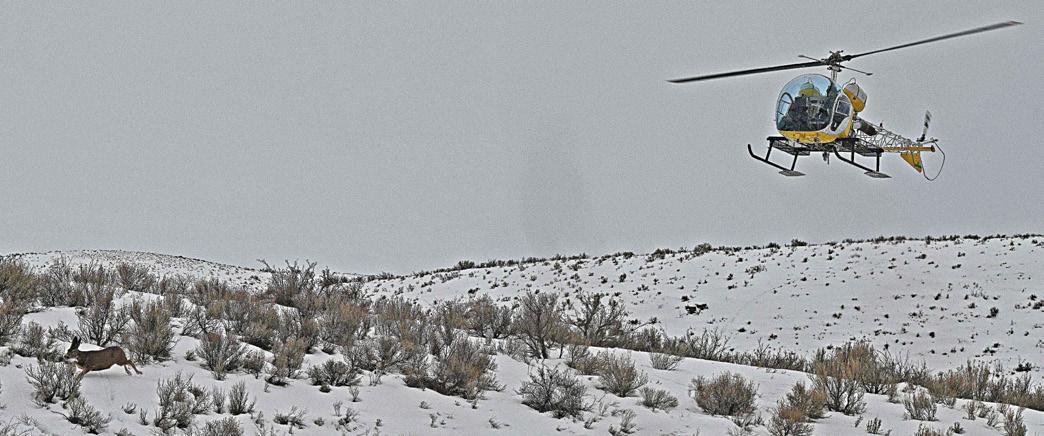
Over the next several weeks wildlife biologists from Fish and Game’s Magic Valley Region will be flying mule deer herd composition surveys and capture operations across many of the region’s game management units. Area residents should be aware that they may see the survey helicopter flying low over the landscape over the next several weeks. In mid to late December, Fish and Game biologists will be flying herd composition surveys in the northern part of the region, primarily in the Bennett and Picabo hills and the desert area north of Gooding and Shoshone, which includes game management units 45, 52 and 49. Flights will also be occurring in the southern portion of the Magic Valley Region south of Twin Falls and Burley, in game management units 54 and 55.
The purpose of the herd composition survey is to gather herd composition of bucks, does and fawns. The information is used by game managers to evaluate herd productivity, which when combined with other sources of data like hunter harvest, deer abundance, fawn survival can help inform big game season-setting discussions.
Starting in late December, helicopter operations will also be used to place GPS collars on around 70 mule deer fawns in the South Hills, Bennett Mountains, and Picabo Hills in game management units 45, 49, 52, and 54. 20 elk calves will be captured in game management units 45 and 52 along the Bennett front.
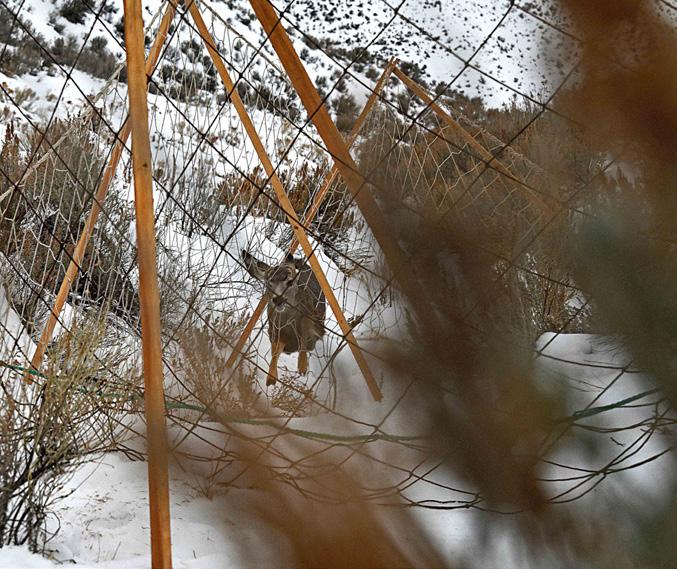
Capture operations for mule deer fawns will use both drive nets and net gunning while net gunning will be used to capture elk calves.
The information gained from these projects will be used to estimate survival of mule deer fawns and elk calves and document seasonal movements.
Cow elk captures will be occurring in game management unit 49, east of the Wood River Valley to place GPS collars on 15 elk in late December. The elk will be captured using immobilizing drugs from a dart. Information gathered from these collars will help wildlife managers understand habitat use and movement patterns of this elk population.
Abundance Survey
Later this winter, Fish and Game biologists will once again be conducting low-level flights over a large expanse of mule deer winter range to gather abundance data. Flights will be occurring north of the Snake River from Mountain Home to the west, Galena Summit to the north, and Minidoka area to the east.
During this multi-week survey, 2-3 helicopters will be used...
continued on page 3...
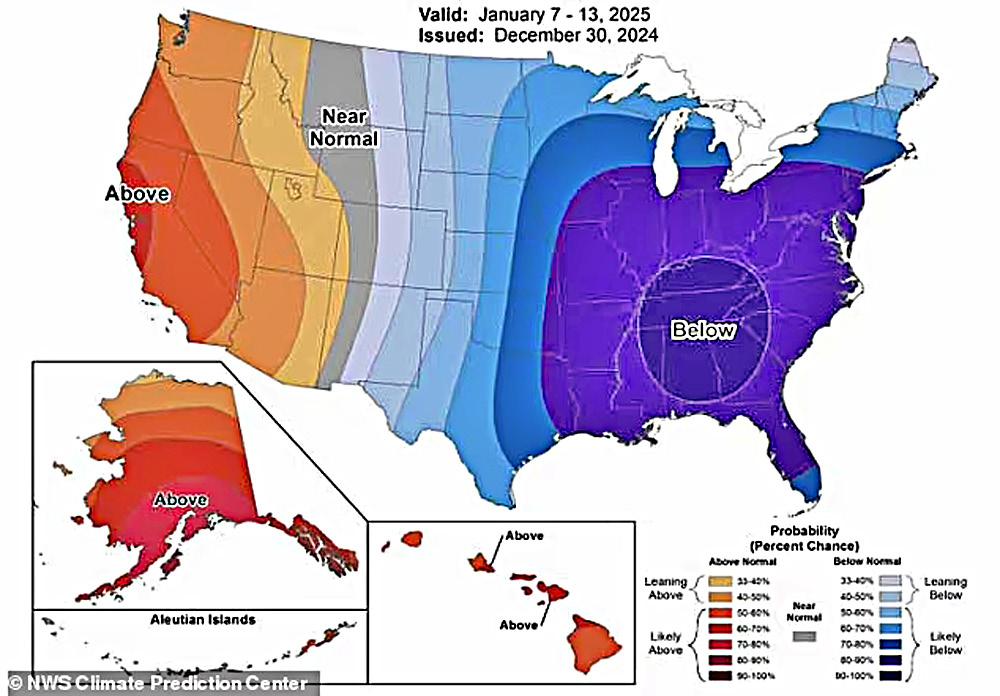
According to the National Weather Service, an arctic blast will affect a large swathe of the U.S. spreading from the northern Rockies to the East Coast by New Year's Day.
"A significant pattern change is expected across much of the country as an Arctic Outbreak is forecast to spread from the Northern Plains to the south and east, leading to exceptionally high probabilities of below-normal temperatures expected across much of the East," the NWS said.
The plunge will bring wind chills across the Midwest with temperatures dipping below zero in at least 30 states. "The coldest air of the season to date and dangerous wind chills are likely across many areas of the Southeast," the NWS warned. Meanwhile, the West Coast and Alaska are predicted to have above normal temperatures with Idaho sitting right on the edge of normal.
The current Snow Water Equivalent in the Big Wood Basin is at 110% of average with Year-to-Date Precipitation at just over 80% of average. Snow Water Equivalent in the Little Wood Basin is at 80% of average with Year-to-Date Precipitation at 64% of average. Updated water reports will come out over the next two months as the area reaches it's peak snow pack in late February and early March.
The 2025 Annual Membership Meeting will be held January 18, 2025, at 11:00 a.m. All society members are invited to attend but visitors are also welcome.
Thank you for all help and donations during the holiday season, but don't forget us as we begin the new year... Your local food pantry needs your donation year round.


Lincoln County Clerk, Cindi Sievers, has announced she is leaving her position as Count Clerk. The Lincoln County Central Committee is preparing to hold panel interviews for a prospective replacement on January 14th. If you are interested in serving in this position, please send resume and cover letter to: c@leggfamily.org C/O Lincoln County Central Committee Chairman Carl G. Legg, or call 208-308-1704.
The official position, Clerk of the District Court, is responsible for clerical support of the courts and for the processing and maintenance of all court cases. However, over the years the Idaho Legislature has added several other responsibilities to that position including ex officio Auditor and Recorder, and as ex officio Clerk of the Board of County Commissioners. In fact, Idaho leads the nation in the number of major responsibilities combined into one position.
For a complete responsibilities and duties go to the Idaho Association of County Clerks – IAC.

A family of mice were surprised be a big cat. Father mouse jumped and said, "Bow-Wow!" The cat ran away. "What was that, father?" ask the baby mouse. "Well son, that's why it is important to learn a second language."
-- -- --
Why don't pirates take a shower before walking the plank? They just wash up on shore.
-- -- --
Why don't anteaters ever get sick? The antybodies keep them healthy.
-- -- --
How do you light up a sports arena? With a soccer match.
-- -- --
After a long discussion, my husband and I have decided we don't want children. If anyone does, please send us your contact information and we can drop them off tomorrow.
-- -- --
After the man who created the Hokey-pokey died, it took a while to get the body in the casket. They put his right foot in. They took his right foot out...
-- -- --
I can cut a piece of wood in half by looking at it. You might not believe me, but I saw it with my own eyes.
-- -- --
What is the leading cause of dry skin? Towels.
-- -- --
The real estate agent says, "I have a good cheap apartment for you." The man asked, "By the week or by the month?" The agent replies, "By the dumpster."
What's the difference between a $20 steak and a $50 steak? February 14th.
-- -- --
Why did the snail pint a giant "S" on his car? So when he drove around people would say, "Look at that S car go."
-- -- --
Mother: "Did you enjoy you first day at school?" Girl: "First Day! You mean I have to go back tomorrow?"
-- -- --
Pupil: "Would you punish me for something I didn't do?"
Teacher: "No, of course not."
Pupil: "Good, because I didn't do my homework."
-- -- --
Man: "I would go to the other side of the world for you."
Woman: "But would you stay there?"
-- -- --
Teacher: "Why are you so late?"
Student: "A man lost a $100 bill."
Teacher: "It was nice of you to help him look for it."
Student: "No, I was standing on it."
-- -- --
Weather - that about which the most is said and the least is done. Mark Twain
-- -- --
Clam Digger – a person who is mussel bound.
-- -- --
Parents – persons who spend half of their time worrying how a child will turn out and the rest of the time wondering when a child will turn in.

Consumers lost over $10 billion to fraud in 2023, according to data from the Federal Trade Commission. Here are a few things to watch out for:
1. Fake QR codes: QR codes offer quick access to menus, event schedules, and more. However, it is easy to create fake codes that redirect users to malicious websites designed to steal personal information.
2. Public Wi-Fi: Public networks are unencrypted and transmit data in plain text. As such, criminals on the same network can intercept sensitive information, such as passwords, banking details, or personal data.
3. Fake gift cards and shipping emails: To avoid being scammed, be cautious when opening unsolicited emails, especially ones that include gift cards or are requesting payment for undelivered packages.
4. Unexpected deliveries: Avoid being scammed by inspecting all packaging carefully and remember that legitimate businesses will not require customers to scan a QR code for further action. However, if people are still unsure, they should contact the delivery service directly.
5. Create safe words with friends and family: Impersonation scams cost victims over $1 billion in 2023, according to data from Tech Radar. These happen when a scammer poses as a friend or family member in distress to request money, often through WhatsApp, text messages, or social media.
To make sure this doesn’t happen, people can create a safe word with friends and family. Then, if someone receives a suspicious message, it will be easier to confirm the sender’s identity and prevent fraud this new year.
...because of the extensive area encompassed by this survey. During abundance surveys biologists count deer within a specific data analysis unit by flying a grid across winter ranges. All areas that have the potential to support wintering mule deer are surveyed. Abundance surveys occur every 4-5 years.
The survey is done during winter months to ensure deer are concentrated on low elevation winter ranges. For more information about big game management in the Magic Valley Region contact the regional office at (208) 324-4359.
Idaho Fish and Game is gathering public input on the 2025-2026 moose, bighorn sheep, and mountain goat season proposals, and the comment period will run through January 9, 2025 at 6 p.m. Proposals can be found at idfg.idaho.gov/comment.
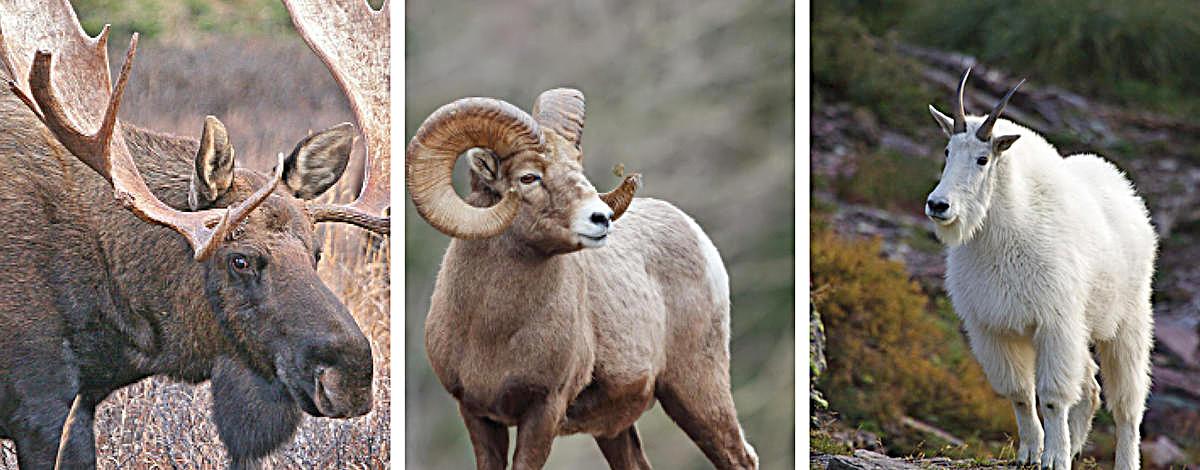
Moose, bighorn sheep, and mountain goat seasons will be finalized by the Fish and Game Commission during its January 29th meeting in Boise. The application period for moose, bighorn sheep, and mountain goat controlled hunts runs April 1-30.
The public comment process will also include open houses hosted at Fish and Game’s regional offices and other venues at the times and dates listed below. Staff at some regions will host a meeting and provide an overview of their proposals, while others will hold office hours where people can stop in and talk to a biologist during that time.
Magic Valley Region: Magic Valley Regional Office (Open House)
Tuesday, January 7th, 3-7 p.m. at 324 South 417 E. Suite 1, Jerome



Gooding: 345 Main St, Gooding Twin Falls: 2732 Kimberly Rd, Twin Falls Fairfield: 516 Solider Rd, Fairfield




All menus are subject to change without notice.
886–2369 (218 N Rail St. W)

487–2722 130 S Main Street
Lunch: $2 (under 12) $6.00 (12-59) $5 over 60 (suggested)
Thursday, Jan 2 (Rich) We are Back, Friday, Jan 3 (Sho) to making food, Monday, Jan 6 (Rich) to warm your hearts, Tuesday, Jan 7 (Sho) come gals and dudes!
Wed, Jan 8 (Sho)
Fairfield 764-2226 (129 Willow Avenue West)
Open Tuesdays, Wednesdays & Fridays for Lunch
Friday, Jan 3 Oh My,
Tuesday, Jan 7 what will the New Year
Wednesday, Jan 8 Bring?
Gooding 934-5504 (308 Senior Avenue)
Breakfast every First Saturday 7:30-9:30..... $6.00
Thursday, Jan 2 Orange Chicken
Monday, Jan 6 Hamburger Gravy & Biscuts
Tuesday, Jan 7 Fish & Chips
Wednesday, Jan 8 Spaghetti
Hagerman 837-6120 (140 East Lake Street)
Lunch is served every Monday, Wednesday & Friday.
Friday, Jan 3... Spaghetti Monday, Jan 6... Chicken Enchiladas Wednesday, Jan 8... All Beef Hot Dogs
Wendell 536-9951 (380 East 1st Street)
Lunch is served every Monday & Friday at Noon.
Friday, Jan 3... Welcome to the New Year Monday, Jan 6... Food is Great.
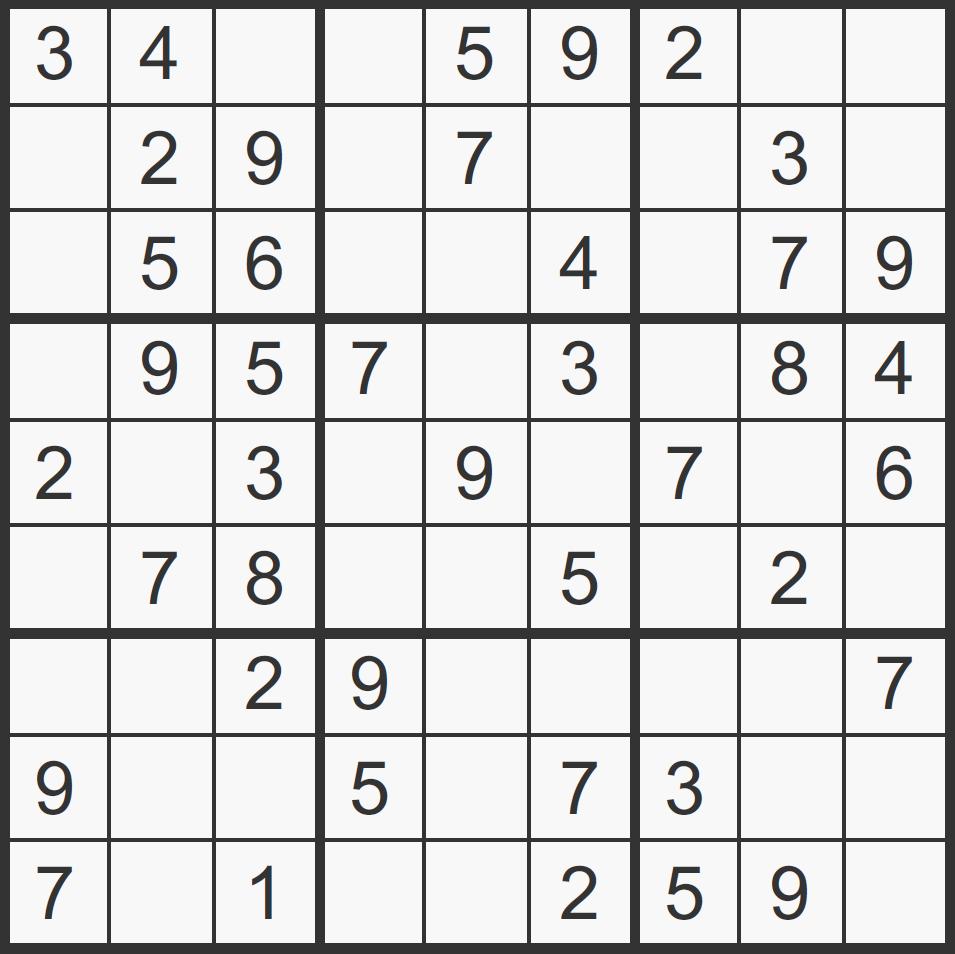
This Week’s Sudoku Puzzle Answers
Puzzle #1 - Easy Puzzle #2 - Hard


Gerry was born September 9,1934 to Joseph William Wiscombe and Helen Lorna Whiting in Mapleton, Utah and passed away December 23, 2024 in Gooding, Idaho. Gerry was the oldest of three children.
Mom attended school in Mapleton and graduated from Mapleton High School. After graduating she got a job at a drug store working behind the counter serving ice cream. She used to say everyone wanted her to serve them because she always added a little extra ice cream to their malts. She also worked at the Boy Scout Office for a time.
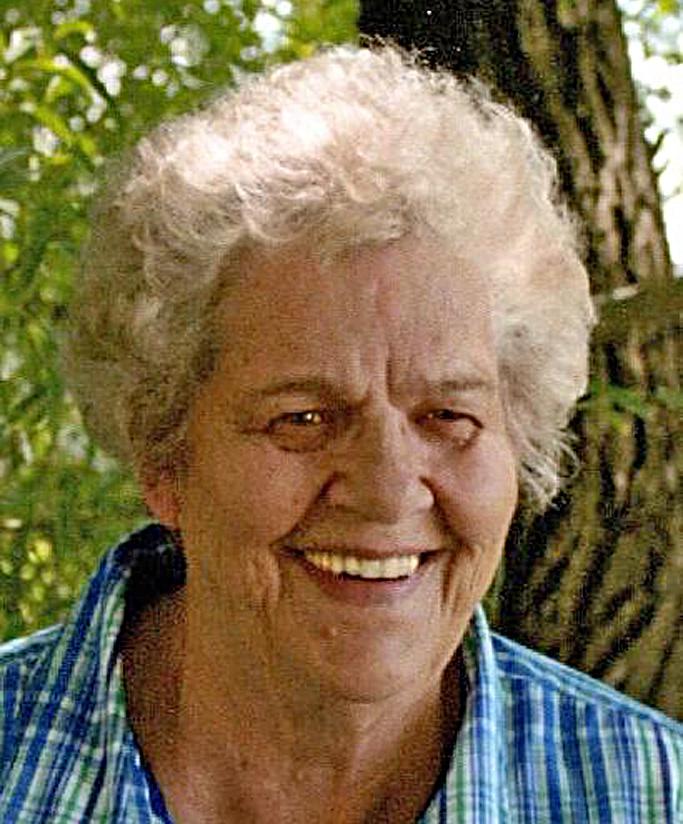
Mom liked the outdoors, especially the mountains. Growing up she loved to ride horses with her dad and Uncle Elmer at her parents’ ranch.
Mom wasn’t afraid of hard work. She hoed beets on the farm, worked at the pea cannery, picked cherries and various other jobs on the farm. The one thing she hated was killing chickens and plucking the feathers.
Mom married Sem Dutson Astle on December 10,1953 in the Salt Lake Temple. In May 1962 they moved to Dietrich with 4 small children and began farming and milking cows. Mom would get up early every morning, milk the cows and go in the house to make sure her kids were ready for school and off to seminary.
Mom survived many obstacles in her life, some of them being taken by a bull, freezing her foot, COVID and various surgeries. Mom always said, “I’m going to keep fighting.” And she did right to the end.
Her favorite job later in life was cooking at the Dietrich School. She said the kids needed fresh food for their lunches and she enjoyed making them cinnamon rolls.
Mom was known for her yarn collection and all her unfinished projects. She liked to crochet, embroidery, and make plastic canvas villages. Often in the winter you would find mom at the table, in front of the living room window, drawing or making puzzles.
Mom was a member of the Church of Jesus Christ of Latter-day Saints. She served in many callings throughout her life, Primary President, Relief Society President, Scout Leader, Teacher and Visiting Teacher. She loved the youth. She was always so happy when the boys she taught, would come visit her, with their families. She would often say, “I must have done something right, you know a little kindness goes along ways.”
Mom was preceded in death by husband, Sem; three sons, Jeff, Brad and Rick; and one grandson, Tyler. Surviving children include Debra (Kelly) of Kimberly; Brenda (Matt) of Wendell; Doug (Janis) of Montana; Sherrie (Brian) of Utah; and Jed (Leslie) of Blackfoot; 27 grandchildren and 20 great grandchildren.
The family would like to thank all the caregivers that took care of mom, the many community people that would always rescue her and the many friends that would stop by to visit. A very special thank you to Dusty and Cherie. She wouldn’t have been able to stay in her home for as long as she did without their loving care.
A viewing will be held from 6 to 8 p.m. on Friday, January 3, 2025, at the Church of Jesus Christ of Latter-day Saints, Dietrich, Idaho. Funeral service will be held at 11:00 a.m. with a viewing beginning at 10:00 a.m. Saturday, January 4, 2025, at the Church of Jesus Christ of Latter-day Saints, Dietrich, Idaho. Grave dedication will conclude at Shoshone Cemetery. Memories and condolences may be shared with the family on Gerry’s memorial webpage at www.farnsworthmortuary.com
Michael Joseph Luther, 51, a resident of Twin Falls and formerly of Gooding, passed away at his home, late Saturday, December 21, 2024 due to complications of having Diabetes 1. Michael was born in Gooding on April 26, 1973 to his mother, Carmen (Petroch) Luther Kiska and father, Gerld Martin Luther.
He was raised in Jerome and after graduation, he joined the Navy and was a Sonar Technician on Nuclear Subs for 15 years until his honorable discharge. Michael then worked at Moore’s Business Forms doing electrical maintenance and currently for Independent Meat (Falls Brand) as a meat smoker.
Michael was preceded in death by his grandparents - Victor & Patricia Petroch and Carter & Luella Luther; and his father - Gerald Martin Luther.

He is survived by his brother - Morgan A. Luther; mother - Carmen Kiska; step-father - Frank Kiska of Gooding; uncle and aunt - Robert & Leanne Petroch of Gooding; uncleJohnny Batis of Tremonton, UT; and uncle - Bob & Trina Fink of Abilene, TX and several cousins and service friends.
At Michael’s request, there will be no services but please include him in your prayers. Condolences, memories and photos can be shared with the family by following the obituary link at www.demarayfuneralservice.com

Gilbert Leroy Wheeler, Jr., 85, a resident of Gooding, passed away on Friday, December 20, 2024 at his home.
Leroy was born in Hanford, California on November 16, 1939 to Gilbert Leroy Wheeler, Sr. and Oma Beatrice Tibbett Wheeler.
Leroy loved family, his dogs, horses and westerns. He enjoyed gardening, pool and ping pong, bowling, bird watching, and raising his farm animals. He loved singing and had a great voice! He was a bus driver and a truck driver for most of his life.
He is preceded in death by his mom and dad and his grandson, Blake Gartner. He is survived by his wife, Sharon Wheeler and his sister, Nancy Wheeler Limberakis. He leaves a legacy in his children, Toni Lynn Wheeler of Longview, Texas; Gilbert Leroy Wheeler III of Kilgore, Texas; Darrell Bryant Wheeler of Navarre, Florida; Stacey Wheeler Duljkovic of Boise, Idaho; Lorie Wheeler Muro of Fresno, California; Julie Wheeler Gartner of Twin Falls, Idaho; Michael Joe Kelso of Idaho Falls, Idaho; Debbie Carter of Gooding, Idaho; their spouses; 18 grandkids and 24 great-grandkids. He is also survived by his niece and nephew, Chris Limberakis and Tina Limberakis. He will be missed by all and we will especially miss his beautiful smile.
A graveside service will be held on Saturday, January 11, 2024 at 11:00 am at the Elmwood Cemetery in Gooding.
Funeral arrangements are under the care of Demary Funeral Service – Gooding Chapel.
Ruth Louise (Sanford) Harrison, 100, (or as Ruth would say "I am 107; 100 plus 7 months), a resident of Cooper City, Florida and formerly of Hill City and Bliss, Idaho, passed away on Saturday, December 28, 2024 in Florida. Cremation arrangements will be handled in Florida. The family will plan a celebration of life for Ruth in the Spring of 2025 in Idaho.
Wanda Faye (Mays) Ohlinger, 85, a resident of Gooding, passed away on Saturday, December 28, 2024 at her home in Gooding. Funeral arrangements are under the care and direction of Demaray Funeral Service - Gooding Chapel.
Theresa K. Morris, 67, a resident of Gooding, passed away on Friday, December 27, 2024 at Bennett Hills Assisted Care in Gooding. Funeral arrangements are under the care and direction of Demaray Funeral Service - Gooding Chapel.
Rodney Carlson, 81, a resident of Gooding, passed away on Tuesday, December 24, 2024 at his home in Gooding. Funeral services are under the care and direction of Demaray Funeral Service - Gooding Chapel.

Medical: Monday & Friday 8:30 a.m. to 3:30 p.m. Wednesday 8:00 a.m. to 2:00 p.m.
Dental: Tuesday & Thursday 8:00 a.m. to 2:00 p.m.
Pharmacy: Monday thru Friday 8:30 a.m. to 4:30 p.m.
Dr. Levin, MD • Dean Rodemack, PA-C • Bryce Bennion, Pharm.D (Sliding Scale fees available)


NOTICE IS HEREBY GIVEN by the Gooding County Planning and Zoning Commission that the following Public Hearing will be held January 21, 2025, starting at 5:30 p.m.
CAFO MODIFICATION application
submitted by: Hannah Dutrow of AgPro, representing Rodney Fernandes, 3191 A S 2000 E, Wendell, ID. Request is for CAFO footprint modification. Located at same address. It is within Section 9, Township 8 South, Range 15 East, zoned Agricultural.
NEW ORDINANCE REVIEW AND PUBLIC COMMENT:
Energy Project Ordinance: Upon hearing recommendations from the Gooding County Planning & Zoning Commission, the Gooding County Board of County Commissioners will review and adopt an Energy Project Ordinance regarding projects involving wind, solar, battery energy storage systems, electric vehicle charging stations, and relevant emerging technology. Public comment on the ordinance draft is invited.
The application and ordinance draft are on file with the office of the Planning and Zoning Administrator and available upon request; ordinance draft is online at www.goodingcounty.org. Any person(s) may attend the hearings in person and written and/or oral testimony shall be taken. Time limits on oral testimony of supporters and opponents shall be enforced, according to hearing procedures. Please submit written testimony which is more than one page long to the Planning and Zoning Office by 5:30 p.m. on January 14, 2025.
The regular meeting of the Planning and Zoning Commission will follow the hearing and the general public is invited to attend. This notice is in accordance with Idaho Code § 67-6512 and Gooding County Ordinance 104.
Dated this 19th day of December, 2024
Submitted by:
Nancy Eilers, Administrator
Gooding County Planning & Zoning
PUB: 12/25/2024, 1/1/2025, 1/8/2025
NOTICE IS HEREBY GIVEN that the Fairfield City Council will hold a public hearing on January 16, 2025, at the Fairfield City Hall located at 407 Soldier Road in Fairfield, Idaho, to take public comment regarding a parcel of land adjacent to and contiguous with the city limits of the City of Fairfield. The parcel is approximately 9.37 acres laying east of Soldier Road and north of Sage Avenue East, and more particularly described as:
The SW¼ of the SW¼ of the NW¼ Less Tax Deed 1501, Section 10, Township 1 South, Range 14 East.
At 7:05 p.m. or as soon after as possible, a hearing will be held to consider changes to the City’s Zoning Map relating to the proposed annexation of the above real property. The Fairfield Planning & Zoning Commission has recommended a zoning designation of R1 (single-family dwellings) for this property. If the recommended zoning is acceptable, the City Council will consider annexation of the above real property into the City of Fairfield, along with various conditions and/or restrictions for the future development of this property.
NOTICE IS FURTHER GIVEN that at the aforementioned time and place, all interested persons may appear and shall be given an opportunity to comment on the matters stated above. Comments and questions prior to the hearing should be directed to the Fairfield City Planning Administrator, PO Box 336, Fairfield, ID 83327, or to pandzfairfield@frontier.com a minimum of five (5) days prior to the scheduled hearing. Any person(s) requiring special accommodations should call City Hall 5 days prior to the public hearing at (208) 764-2333.
A copy of the proposed changes are on file at the Fairfield City Hall and available for public review.
Edward Reagan - P&Z Administrator published in the Courier News on January 1 & 8, 2025
Annual Road & Street Financial Report
CAMAS COUNTY ROAD & BRIDGE DEPT
Fiscal Year Ended September 30, 2024
BEGINNING BALANCE OCTOBER 1, 2023 $ 1,811,362
RECEIPTS
LOCAL FUNDING SOURCES
All other LOCAL receipts or transfers in 7,774
Total Local Funding $ 26,369
STATE FUNDING SOURCES
Highway user revenue
DISBURSEMENTS
ADMINISTRATION
REPORTING MEASURES
NEW CONSTRUCTION
Total square feet of bridge deck constructed 480 ROUTINE MAINTENANCE
Dated this 25th day of November, 2024
Commissioners: Travis Kramer, Marshall Ralph & Galen Colter ATTEST: Brianna Walter - Clerk
Pursuant to Idaho Code §40-203, NOTICE IS HEREBY GIVEN that the Camas County Board of Commissioners will hold a public hearing in the Camas County Courthouse Upstairs Courtroom, located at 501 Soldier Rd, Fairfield, ID 83327, on the 13th day of January, 2025 at 10:00 a.m. The purpose of this hearing is for the public as well as the Board of Commissioners to discuss a proposed road abandonment for two sections of road.
Proposed road abandonment for section of S 700 W 200 S Road.
Legal Description: The public road in Township 1 South, Range 13 East, EBM, in Camas County, Idaho and proceeds south from and existing county road along the section line between section 28 and 29 for a total length of approximately ½ mile or less from the point of beginning to a point exactly two thousand six hundred and forty (2,640) feet south of the corners where section 21, 20, 28 and 29 meet.) AND proposed road abandonment for a section of South 400 West & 200 South Road.
Legal Description: the public road in Township 1 South, Range 13 East, EBM, in Camas County, Idaho, and proceeds south from an existing county road along section lines between sections 25, 26, 35 and 36 for a total length of approximately 1 mile more or less from the point of beginning to a point exactly five thousand two hundred eighty (5,280) feet south of the corners where section 23, 24, 25 and 26 meet.
Written comments and other documentation will be received by the Camas County Courthouse Clerk until 5:00 p.m. January 8, 2025 at PO Box 430, Fairfield, ID 83327 or deliver to 501 Soldier Road. Public comment will be limited to 5 minutes per speaker at the public hearing. Services for persons with disabilities may be made available by calling the Clerk’s office at the Camas County Courthouse 764.2242 three (3) days in advance of the hearing.
Attest: Brianna Walter, Clerk for the Camas County Board of Commissioners published on December 4, 2024 and January 1, 2025
The City of Gooding, Gooding County, Idaho, hereby gives notice of the adoption of Gooding City Ordinance No. 731, an ordinance of the City of Gooding, a municipal corporation of the State of Idaho, amending Gooding City Code Chapter 7, Title 10, redesignating GCC 10-7-27 as GCC 10-7-28 and adding a new 10-7-27 to allow the City Council to create, modify, or remove specialty handicap parking; amends GCC10-7-12 clarifying parking, loading, and unloading in alleys; providing an effective date.
The full text of the summarized Ordinance No. 731 is available at Gooding City Hall, 308 5th Ave W, Gooding, Idaho 83330, in the office of the City Clerk.
Hollye Haney - City Clerk published on December 25, 2024 & January 1, 2025 DIETRICH HIGHWAY DISTRICT #5
The CITY OF GOODING, IDAHO, currently has 103.2 shares in AMERICAN FALLS RESERVOIR DISTRICT #2 and BIG WOOD CANAL COMPANY for lease for the 2025, 2026 and 2027 irrigation seasons. Sealed bids for the shares, or any portion of them, shall be accepted by the City at 308 5th Avenue West, Gooding, Idaho 83330. Bidder is responsible for operation and maintenance charges to the canal companies. Therefore the bid will reflect the amount the bidder is willing to bid for each year for the shares. It being understood that the City will not pay the operation and maintenance charges. Such charges will be in addition to the amount bid. Bids must be received on or before 4:30 p.m. of February 3, 2025. Bids shall be opened at the regular city council meeting on February 3, 2025. Bids will be awarded to the highest bidder pending delivery approval by the Board of Directors of Big Wood Canal Company and/or American Falls Reservoir District #2. If identical bids are received as high bids and there are not sufficient shares available to cover the number of shares bid for, each high bidder shall be entitled to receive a pro rata number of shares.
Hollye Lierman – City Clerk published on 12/11, 12/18, 12/25, 2024, and 1/1, 1/8, 1/15, 1/22, 2025
Fiscal Year 2024

My boss is very unpopular. Even his shadow won't follow him.

► Old Glory Firewood Home Care & Craftsman contruction. Call 208-450-9411
► PATCHING Levi, coveralls, etc. Repair broken zippers in anything: jackets, bags, pants, etc. Hemming: pants, dresses, coveralls, etc. Drop Off at 380 East Salmon Street in Hagerman, or Julie’s Ace Hardware in Gooding. 208-837-6267 - Kathy.
► Golden Retriever/Border Collie mix puppies for sale: Ready for a new home just in time for Valentine's Day. Will have 1st shots & vet visit, rehoming fee to help cover expenses. Contact Kaylee Perron for details 208-670-0748.
► Fat lambs for sale. 10 months old call or text 208-320-6094
► JD Air Compressor. Portable w/Honda Motor & hoses. $350 • 9 HP Evinrude boat motor. Like new. $300 • 7 HP trolling motor. $150
• Electric trolling motor. $35 • 056 AV Stihl chainsaw $250 • 026 Stihl chainsaw. $100 • Liberty Gun Safe, like new. $1450-1000 • Forney C-5 welder, 180 amp battery charger. $100
• Timberline Woodstove $300. Call Doug at 208-539-5325.
Do you have a Subscription?
1 Yr - $25.00 2 Yr - $45.00
Courier NEWS
P.O. Box 339 - Fairfield, Idaho 83327
Gooding Customers can drop off checks and/or news articles at: 122 5th Ave W. in Gooding
Send News & Articles to:
News@Highway46.org or call
208-246-9999

SUMMARY OF LINCOLN COUNTY, IDAHO ORDINANCE 2024-12
PUBLIC NOTICE IS HEREBY GIVEN that the Lincoln County Board of Commissioners, at the regular meeting of the Board on December 23, 2024, approved, adopted, and enacted Ordinance No. 2024-13 titled: AGRICULTURAL PROTECTION AREAS
AN ORDINANCE IN AND FOR LINCOLN COUNTY, IDAHO PROVIDING FOR THE PURPOSE AND ESTABLISHMENT OF AGRICULTURAL PROTECTION AREAS; PROVIDING FOR DEFINITIONS; PROVIDING FOR RESPONSIBILITIES AND APPOINTMENT OF THE AGRICULTURAL PROTECTION AREAS COMMISSION; PROVIDING FOR AN APPLICATION FEE, REVIEW PROCESS, AND APPROVAL FOR DESIGNATION OF AGRICULTURAL PROTECTION AREA; PROVIDING FOR TERMINATION AND ENFORCEMENT OF AGRICULTURAL PROTECTION AREAS; AND PROVIDING FOR AN EFFECTIVE DATE.
PUBLIC NOTICE IS HEREBY GIVEN that the Lincoln County Board of Commissioners, at the regular meeting of the Board on December 23, 2024, approved, adopted, and enacted Ordinance No. 2024-13 titled: CONFINED ANIMAL FEEDING OPERATIONS
AN ORDINANCE IN AND FOR LINCOLN COUNTY, IDAHO AMENDING THE LINCOLN COUNTY CONFINED ANIMAL FEEDING OPERATIONS ORDINANCE 1212-082, PROVIDING FOR PURPOSE, INTERPRETATION, AND ENACTMENT; PROVIDING FOR DEFINITIONS; PROVIDING FOR ADMINISTRATION; PROVIDING FOR EXISTING OPERATIONS; PROVIDING ZONING CLASSIFICATION; PROVIDING FOR SITING PERMITS AND THE CONTENTS OF APPLICATIONS THEREOF; PROVIDING FOR NOTICE REQUIREMENTS AND HEARING PROCEDURES; PROVIDING FOR SITING PERMITS AND ISSUANCE OF SITING CERTIFICATE; PROVIDING FOR APPEALS AND ACTIONS OF AFFECTED PERSONS; PROVIDING FOR ENFORCEMENT; AND PROVIDING AN EFFECTIVE DATE.
Copies of these ordinances are available upon request at the Clerk’s office, 111 West B Street, Shoshone, Idaho. Office hours are from 8:30 AM to 5:00 PM, Monday through Friday, excluding holidays. Norma Anaya, Lincoln County Planning & Zoning Administrator