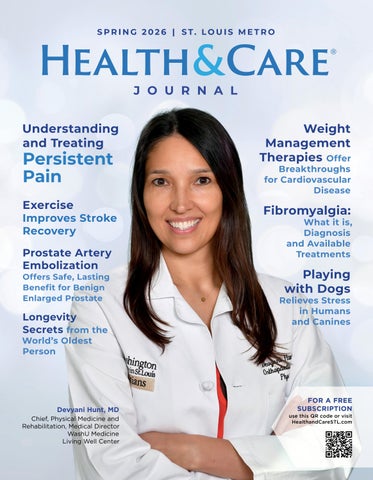
Offers Safe, Lasting Benefit for Benign Enlarged Prostate Longevity
Secrets from the World’s Oldest Person
Devyani Hunt, MD Chief, Physical Medicine and Rehabilitation, Medical Director
Publisher
Editor
Todd Abrams
Design Art Direction Production
Michael Kilfoy
Studio X
Printing
Walsworth Fulton
Advisory Board
Dr. Donald Bassman
Dr. Joshua Cohen
Katy Dowd
Robert Fruend
Joel Iskiwitch
Dr. James Jenkins
Dr. Steve Lauter
Catina O’Leary, PhD
Dr. Harvey Serota
Mark Tucker
Healthy Humor
Cartoon Bank
Welcome to the Spring 2026 Issue of HEALTH&CARE® Journal
Our mission is to provide information, understanding and confidence to help you make health decisions for yourself and your family. We offer relevant, up-to-date news about many important health discoveries from experts locally, nationally and internationally.
This issue focuses on a topic many of us unfortunately deal with every day –chronic pain.
In The Patient’s Advocate on page 8 Jane Tucker talks about the invisibility of chronic pain. Unlike other conditions, chronic pain is often unexplained, difficult and costly to diagnose and lacking a clear cause.
The cover story on page 22 offers a broad look at pain and its treatment. Dr. Devyani Hunt, Chief of Physical Medicine and Rehabilitation at the WashU Medicine Living Well Center., guided the discussion of three key aspects of pain – the physical or biomechanical, how the brain processes pain, and the biochemistry of pain including medications.
On page 26 is an article about fibromyalgia, a chronic disorder characterized by widespread pain in the muscles and soft tissues surrounding joints that is often misdiagnosed. The article offers treatment options and tips for managing the condition.
Another hot health topic is weight reduction and management therapy, including the use of GLP-1 drugs. On page 14 is an article about the breakthrough results for these therapies in treating cardiovascular diseases, as explained by Chesterfield Dr. Deepu Sudhakaran.
There is an inspiring story on page 16 about a 10-year-old boy whose stem cell donation is helping his father’s fight with acute myeloid leukemia, and makes him the youngest-ever stem cell donor.
Please leave this magazine for another reader! You can get your own free digital subscription at the links below. And let us know what you think about content in the magazine and other information that you would find helpful. You can contact us at www.healthandcareSTL.com.
Todd Abrams Publisher toddabrams1@gmail.com
Play Hard. Recover Fast. Live Well.
Let us walk alongside you in your wellness journey. More than cryotherapy, we are wellness.
Massage Therapy
Muscle Release, Deep Tissue, Lymphatic Drainage, Myofascial Release and Compression.
FRIDAY, Jan. 3, 2025 (HealthDay News) –
Whole Body Cryotherapy
Brief and intense exposure to cold that triggers the body's natural healing process.
Infrared Sauna
Alleviate joint pain, speed up muscle recovery and promote relaxation.
Red Light Therapy Naturally stimulates cellular regeneration, improving circulation and cellular respiration.
Visit our website or call 636-778-2233 to schedule an appointment
subzero-wellness.com 703 Long Road Crossing Drive Suite 5 Chesterfield, MO 63005
Specialty Pharmacy and Infusion Care Right Here in St. Louis
Soleo’s team of experienced pharmacists, nurses, and insurance specialists works with your provider to manage your complex condition.
Receive treatment at our local infusion center or in the comfort of your own home.
OUR THERAPEUTIC EXPERTISE
• Allergies and Asthma
• Autoimmune Disorders
• Bleeding Disorders
• Eye Disorders
• Immune System Disorders
• Infectious Diseases
• Inflammatory Conditions
• Nervous System Disorders
• Nutritional Disorders
• Rare Diseases
Simplify Your Treatment Journey
Contact Us Today at 636.764.0081
702 Spirit 40 Park Drive, Suite 120, Chesterfield, Missouri 63005
6 Health Briefs
8 The Patient’s Advocate
Cardiovascular Health
10 Most of US Adults Are on Their Way to Heart Disease
12 Walking Exercises Improve Stroke Rehab
14 Weight Management Therapies Offer Breakthroughs for Cardiovascular Disease Treatment
Cancer Prevention & Treatment
16 10-Year-Old Boy Donates Stem Cells to His Father Fighting Cancer
17 Quitting Smoking Doubles Cancer Patients’ Survival Odds
18 Immune Therapy Works As Well in Senior Cancer Patients as in Younger Adults
19 Too Much Drinking Contributes to Cancer Risk
Better Breathing
20 Two Louisiana Infants Die of Whooping Cough Amid Drop in Vaccinations
Aches & Pains
22 COVER STORY: Understanding and Treating Persistent Pain
25 5,000 Steps a Day May Help Slow Alzheimer’s Changes in the Brain
26 Fibromyalgia: What it is, Diagnosis and Available Treatments
Women’s Health
28 Early Menopause May Raise a Woman's Odds for Dementia
29 Increasing Number of Pregnancies Are Affected by Heart Complications
32 Deaths from Accidents Related to Drug Use Rose 60% in Five Years
Kid & Teen Health
34 U.S. Teen Substance Use at Historic Lows for Fifth Year
35 Early Exposure Guidelines Cut Down Peanut Allergy Cases
Aging & Caregiving
36 Longevity Secrets from the World’s Oldest Person
37 How to Spot, and Talk About, Hearing Loss in a Loved One
38 Want a Younger Brain? Keep the Muscle, Shed the Fat
39 A Sense of Purpose Can Protect Brain Health in Aging
HEALTH&CARE ® JOURNAL is published three times a year by Healthcom Network LLC and distributed to Missouri and Illinois healthcare locations in the St. Louis Metro area. Article topics are chosen to provide readers with helpful information about health and care topics of interest.
Opinions expressed in articles and editorials are those of the authors, and do not necessarily reflect the views of Healthcom Network. While every effort is made to assure accuracy, we are not responsible for how information found in HEALTH&CARE Journal is used. Readers are encouraged to consult with their healthcare providers for advice about their own health and care. We are very interested in hearing from readers about content in this magazine, and about topics they would like covered. Correspondence should be sent to the address below or to editor@healthandcarestl.com
Reproduction of content of this magazine without permission is prohibited. All submitted materials, including images, logos and text for advertising, articles and editorials are assumed to be the property of the contributor, and Healthcom Network does not take responsibility for unintentional copyright infringement. Healthcom Network has the right to refuse advertising and content not deemed appropriate for this publication.
Mental Health
40 Playing with Dogs Relieves Stress in Humans and Canines Alike
40 Therapy Dogs Can Ease Nurses’ and Doctors’ Stress, Too
Book Review
42 Breath: The New Science of a Lost Art
For information regarding advertising opportunities in HEALTH&CARE Journal, use the QR code at left.
Or call, write or email Todd Abrams, publisher: HealthCom Network P.O. Box 411036
St. Louis, MO 63141 toddabrams1@gmail.com 314-443-3024
HEALTH&CARE is a registered trademark with the US Patent and Trademark Office
Association of Health Care Journalists
Health Briefs
Music Soothes
Savage Motion Sickness
Carsick or seasick? Reach for some feel-good music, a new study suggests. People who listen to soft and joyful music tend to recover more quickly from motion sickness, researchers found. On the other hand, sad music might do less than nothing, results show.
Frontiers in Human Neuroscience
Breakfast Timing that Shifts with Aging Is Linked to Health Changes
Physical and psychological illnesses, such as fatigue, depression, anxiety and even increased mortality are associated with habits of eating a later breakfast. Changes in when older adults eat, especially the timing of breakfast, could serve as an easy-to-monitor marker of their overall health status.
Industry Payments Common Among Neurologists Prescribing MS Drugs
Nearly 80 percent of neurologists prescribing multiple sclerosis (MS) drugs receive payments from the drug industry. The likelihood of prescribing was increased in association with larger payments, longer durations of payments, and more recent payments.
Scrolling On the Toilet Increases Risk Of Hemorrhoids
Do you use your time on the john to catch up on the news, go through your e-mail or check out social media? Be careful – you might be more likely to develop hemorrhoids, new research shows.
Folks who use a smartphone on the toilet have a 46% higher risk of hemorrhoids than those who don’t. Smartphone use might inadvertently prolong toilet time, potentially increasing pressure on the anus and contributing to hemorrhoids, researchers explained.
Cats Get Dementia Just Like People, Making Them a Potential Research Tool
Like humans, cats may act cranky or confused and have trouble sleeping as they age. They may even yowl more than usual at night.
These are dementia-like behaviors that may owe to an accumulation of plaques in their brain, like people with Alzheimer’s disease. This similarity could offer scientists an important new model of human Alzheimer’s and how to treat the irreversible disease.
European Journal of Neuroscience, JAMA Network Open
Saliva Might Keep Fruit Juice from Rotting Teeth
Some parents avoid giving their kids fruit juice, for fear that it might rot their teeth. But the bad effects could be short-lived, thanks to the remarkable properties of saliva, according to a new study.
Saliva protects teeth and gums from bacteria by creating a slippery film on teeth and also can help repair early damage to tooth enamel. Researchers advise drinking juice quickly, using a straw, and rinsing with water to minimize contact between juice and teeth.
Most Americans keep health issues secret from their boss
59% of adult workers in the U.S. are battling a chronic health condition that may need to be managed on the job – but most aren’t telling their employers. They felt they could not take time off or schedule a break during work hours to take care of their themselves, skipped medical appointments or delayed getting care to avoid interfering with work.
Harvard T.H. Chan School of Public Health and The de Beaumont Foundation
New Gel May Help Prevent Hair Loss During Chemotherapy
A new shampoo-like gel developed by researchers at Michigan State University could help protect cancer patients from a common and dreaded side effect of chemotherapy: Hair loss. The gel, which has been tested in animal models, is designed to be applied to the scalp before treatment and left on while chemotherapy drugs circulate through the body.
Biomaterials Advances
The Invisibility of Chronic Pain
By Jane Tucker
Chronic pain is largely invisible. Rarely do you even know someone is living with it unless they tell you—and even then, do we truly listen or empathize? I’ll admit I’ve been guilty of brushing it off, assuming someone was being a hypochondriac or offering a quick response like, “Just rest” or “Take a couple Advil.”
Many people living with chronic pain don’t want to complain. They push through, often in silence, which can lead to depression, isolation, frustration, and a sense of abandonment—not just by family and friends, but sometimes by the medical community itself when there’s no clear remedy or diagnosis.
Chronic pain has always been present in my family—migraines, arthritis, autoimmune disease, stenosis. I’ve had cancer myself. And cancer, unlike chronic pain, isn’t invisible. Whether it’s the endless doctor visits or the visible changes in
your body, it’s hard to miss. Cancer gets attention. People rally around you with rides to appointments, offers to help with chores, and yes—even the offers of another casserole!
Many diseases demand recognition. People see the effects of Parkinson’s or dementia, for instance. But what about the headaches that last for years? Nothing to see. Or arthritis that quietly chips away at mobility? The silent autoimmune conditions that wreak havoc beneath the surface? Who checks in then? Who notices?
For instance, 4 million people in the U.S.—about 2% of the adult population— live with fibromyalgia. Fibromyalgia can have many symptoms, some invisible but very real: fatigue, sleep disturbances, depression, and widespread muscle pain. One of the challenges with fibromyalgia is that not all of the medical community fully recognizes it, largely because lab results often show nothing definitive. This fits into the broader story of chronic pain—frequently unexplained, difficult and costly to diagnose, and often lacking a clear cause.
I spoke with a 75-year-old woman who has lived with fibromyalgia for many years. She described one doctor telling her she just needed to “stop thinking about her health,” and another who took her seriously, sending her to multiple specialists. Despite many tests and consultations, no clear answers ever emerged.
She summed it up by calling fibromyalgia “a ghost of a disease.” To her, it is very real and deeply frustrating, but like ghosts, many people just don’t believe.
Chronic pain is easy to ignore or not take seriously. We might even unconsciously tune it out. Perhaps we have grown tired of hearing all the problems or complaints. We assume it’s the “same old story,” or that the person is too sensitive or just seeking attention. Many diseases cause lingering pain and symptoms invisible to others. If those are real and believed, why would chronic pain be any less so?
It is hard to imagine the burden of feeling unwell for years but not validated. How difficult, time-consuming, and uncomfortable it is to go through test after test, only to hear from doctors that they can’t find anything to explain your symptoms. All of us have been there to some degree— we go to the doctor not feeling quite right, but there just isn’t an answer other than, “It should go away soon.” That’s frustrating, and sometimes even embarrassing, to bother the doctor. For chronic sufferers, this is routine.
Recognition matters. Just listening, just acknowledging, just saying: “I know you’re in pain. I see you. I hear you. Your pain matters. I believe you.” That alone could make a world of difference to someone carrying the weight of invisible pain every day.
Stay well.
Medicare Insurance Doesn’t Have to Be Mind-Numbing.
We help you find and understand options that meet your needs and budget, and we actually make it enjoyable.
Allraya is your local, independent health insurance agency where we have access to the leading carriers for Health, Medicare and Life insurance, to select the most affordable plans that cover all your health care providers and medications.
Our commitment to your satisfaction is reflected in our client retention and referrals. Our goal is to provide a positive and enjoyable experience throughout your journey with us.
Call today for a no-obligation, no-pressure meeting to discuss your specific health insurance needs.
Most U.S. Adults Are on Their Way to Heart Disease
Heart disease is the leading cause of death in the U.S., according to the U.S. Centers for Disease Control and Prevention (CDC) and could become even more common in the future.
A 2024 report from the American Heart Association (AHA) projected that by 2050, more than 6 in 10 adults (61%) will have some form of cardiovascular disease (CVD). This increase owes largely to rising rates of high blood pressure.
Cardiovascular, kidney and metabolic (CKM) syndrome
Nine of 10 American adults are in the early, middle or late stages of a syndrome that leads to heart disease, a separate report finds, and almost 10% have the disease already.
"Poor cardiovascular, kidney, and metabolic health is widespread among the U.S. population," concludes a team led by Dr. Muthiah Vaduganathan of Brigham and Women’s Hospital and Harvard Medical School in Boston.
Researchers looked specifically at rates of what the American Heart Association has dubbed cardiovascular, kidney and metabolic (CKM) syndrome – interrelated factors that progress with time and, if left unchecked, lead to heart disease.
CKM syndrome is divided into four stages:
■ Stage 1: Excess fat buildup in the body (a risk factor for poor health)
■ Stage 2: Emergence of other metabolic risk factors (for example, high blood pressure, high cholesterol, diabetes)
■ Stage 3: Emergence of high-risk kidney disease and/or a high predicted risk of heart disease being diagnosed within the next 10 years
■ Stage 4: A diagnosis of full-blown heart disease, with or without kidney disease
CKM syndrome in the US population
To find out how many Americans might fall into one of these four categories, the Boston team tracked U.S. federal health survey data for 2011 through 2020.
Among adults age 20 or older, only 10.6% did not have some level of CKM syndrome, the researchers reported May 8 in the Journal of the American Medical Association.
About 26% fell into the early stage 1 category, meaning they were gaining dangerous levels of body fat. Nearly half (49%) of adults fell into stage 2 CVM syndrome, and 5.4% were stage 3.
According to the study, 9.2% of adults were in stage 4, with full-blown heart disease and, in some cases, failed kidneys. All these numbers were roughly unchanged throughout the nine-year study period.
Not surprisingly, the severity of CKM syndrome rose with age: 55.3% of people 65 or older were in an advanced stage of CKM syndrome, compared to 10.7% of those aged 45 through 64, and 2.1% of those aged 20 through 44, the study found.
The young were at risk, too. Most Americans ages 20 through 44 (81.8%) were already affected by these heart and kidney risk factors, Vaduganathan's team noted.
Race also mattered, with Black Americans 38% more likely to be burdened with CKM syndrome compared to whites.
The bottom line: "Almost 90% of US adults met criteria for CKM syndrome (stage 1 or higher) and 15% met criteria for advanced stages, neither of which improved between 2011 and 2020," according to the Boston researchers.
Habits and overlooked issues that increase risk for heart disease
Another recent study shows that many Americans don't realize how everyday habits and overlooked health issues can increase their risk for heart disease, ac-
cording to a Cleveland Clinic survey. The nationwide survey found numerous gaps in heart health knowledge.
While some risk factors are genetic, others can be managed with simple lifestyle changes. These include:
■ Tobacco use
■ High blood pressure
■ High cholesterol
■ Diabetes
■ Being overweight or obese
■ Physical inactivity
■ Sleep deprivation
■ Skipping heart medications
On this last point, 3 in 5 Americans ad-
mitted to skipping their prescribed heart medications, a decision that can be very dangerous.
Common reasons cited included simply forgot (59%); feeling depressed or experiencing mental health issues (17%); feeling healthy (16%); not liking being on so many medications (15%); medication was too costly (11%).
"Repeatedly skipping heart medications, such as those used for blood pressure or cholesterol management, may not produce immediate symptoms," Dr. Samir Kapadia, chairman of cardiovascular medicine at Cleveland Clinic, said in a news release. "However, not taking prescribed medication correctly can have serious long-term consequences on heart health."
More information
Find out more about CKM syndrome at the American Heart Association.
Source: Journal of the American Medical Association and Cleveland Clinic
Bold Visual Statements
We specialize in eyewear as unique as the person wearing it. Stylish frames and fashionable sunglasses, featuring independent designers, limited-edition pieces, and hard-to-find brands.
We’re committed to keeping your vision clear and your eyes healthy. Our optometrists provide comprehensive eye exams, top-quality contact lenses, vision prescription exam, and ongoing eye health monitoring.
Visit Eyewearhaus for all your eye care needs, where vision meets style and quality.
Walking Exercises Improve Stroke Rehab
Stroke patients leave the hospital with better prospects if they’re forced to hoof it more during recovery, a new study suggests.
Adding a half-hour of progressive walking exercises to standard stroke rehab measurably improves patients’ quality of life and mobility by the time they go home, researchers say.
“Although guidelines recommend structured, progressive exercise after stroke, the uptake of these approaches that have sufficient intensity for rehab programs is still lagging,” researcher Janice Eng, a stroke rehabilitation specialist and professor of physical therapy at the University of British Columbia in Canada, said in a news release.
The rehab walkers also had significantly improved quality of life, balance, mobility and gait speed, researchers found. “The first couple of months after a stroke are when the brain has the greatest ability to change,” Eng said. “Our study shows positive results during the initial rehabilitation stage.”
Robotic hip 'exoskeleton' helps with stroke rehab
A new robotic hip exoskeleton could help stroke patients improve their walking stride, a separate new study shows. More than 80% of stroke survivors develop problems walking, often because their step is shorter on one side than the other, researchers explained in background notes.
The hip exoskeleton helps people adapt their stride by forcing both legs to take similar strides, researchers report. It provides powered assistance to the hip with the impaired stride, while also holding back the more capable hip.
“Structured and progressively more challenging exercise, aided by wearable devices to provide feedback on intensity, can help people maintain safe intensity levels that are crucial for neuroplasticity – which is the brain’s ability to heal and adapt,” Eng added.
The study
For the study, her team recruited more than 300 stroke patients rehabbing at 12 hospitals across Canada. At the start, patients could walk an average of about 500 feet, nearly the distance of two average city blocks, during a standard six-minute walk test.
Roughly half were randomly assigned to add a minimum of 30 minutes of weight-bearing and walking activities to their daily rehab, with these activities increasing in intensity over time.
The goal was to get up to 2,000 steps of moderately intense exercise for a halfhour five days a week, researchers said. Those assigned to walk as part of their rehab were able to go more than 140 feet farther on a six-minute walk test than those who received usual rehab, results show.
Building the new exercise into rehab programs
Not only does the study show the benefits of walking in rehab, but it also shows that stroke units can easily build the new exercise into their existing programs, she said. “This was a very successful real-world trial,” Eng said.
Dr. Preeti Raghavan, an associate professor of physical medicine and rehabilitation at Johns Hopkins University who reviewed the findings, said in a news release, “it is very difficult to change practice. The researchers show that it can be done on the inpatient rehabilitation unit, at a critical period after stroke when the brain is most plastic.”
“The protocol increased endurance and further reduced disability after stroke,” added Raghavan, who was not involved in the study. “This is very positive data for stroke recovery.”
The new research was presented at the American Stroke Association’s annual meeting in Los Angeles in February. Findings presented at medical meetings should be considered preliminary until published in a peer-reviewed journal.
“Such a device can be seamlessly integrated into the daily lives of chronic stroke survivors, offering an accessible way to increase training time, which is critical for improving walking,” said lead researcher Banu Abdikadirova, a doctoral candidate in mechanical and industrial engineering with the University of Massachusetts-Amherst.
Tests with 13 stroke patients found that the participants adopted a more symmetric gait pattern after using the exoskeleton, in much the same way as with treadmill training, researchers reported recently in the journal IEEE Transactions on Neural Systems and Rehabilitation Engineering.
Key Takeaways
■ Stroke patients who walk more during rehab benefit from the added exercise.
■ Patients leave the hospital with better quality of life and mobility.
■ The exercise involved an additional half-hour of weight bearing and walking workouts.
■ Stroke patients and their families should ask their doctor about incorporating walking exercises into their rehab program.
■ Robotic hip 'exoskeleton' helps with stroke rehab.
The American Stroke Association has more on exercise after stroke.
Primary Care for Adults 60+
With centers conveniently located right in your neighborhood, ArchWell Health makes it easy to live life on your terms and make better healthcare part of your normal routine.
You’ll also enjoy:
More time with your doctor
Same-day member appointments
Activity room for community events
Join today at ArchWellHealth.com or call (314) 449-9727
Finest Custom Table Pads at Factory-Direct Prices
The way to insure perfect table pads is for the provider to visit your home to accurately measure and show you sample colors and textures to match your table and décor.
Custom Table Pads, an independent St. Louis dealer, provides the finest custom American-made table pads at factory-direct prices. They measure at your home or business, and show you a choice of 23 vinyl tops and 5 velvet bottoms. Perfect fit is guaranteed. Pads are heat resistant to 550 o, moisture and warp resistant. Patented hidden magnets minimize separation and slippage on your table.
Our medical weight loss and aesthetic treatments enhance health, confidence, and longevity, with surgical options when appropriate, guided and personalized by Dr. Sudhakaran.
CUSTOM TABLE PADS
OF ST. LOUIS
Phone: 314-752-5577
Email: thetablepadman@gmail.com
www.cbsurgery.com info@cbsurgery.com
www.zaehealth.com info@zaehealth.com
Louis
Louis 63128 (314) 500-2424
Weight Management Therapies Offer
Breakthrough Results in Cardiovascular Disease Treatment
GLP-1 drug therapy
Glucagon-like peptide-1 (GLP-1) drugs mimic a natural hormone in the body called glucagon-like peptide-1. This hormone helps regulate blood sugar by increasing insulin when needed, slowing how fast food leaves the stomach, and reducing appetite. These effects help people with diabetes manage blood sugar and allow many patients with obesity to lose a significant amount of weight safely and effectively.
In a recent RAND Panel Survey, about 12% of US adults say they’ve tried GLP-1 drugs like Ozempic, Wegovy or Zepbound, with rates of use highest among people ages 50 to 64. “Of all demographic groups, women between the ages of 50 and 64 had the highest use rate,” wrote a research team led by Robert Bozick, director of RAND Survey Panels. “One in five women, or 20%, reported having ever used GLP-1 agonists.”
Bariatric surgery
For patients with severe obesity, generally defined as a body mass index (BMI) of 35 or greater, bariatric
surgery has been the “gold standard” for achieving significant weight loss. The two most common types of bariatric surgery are gastric bypass and sleeve gastrectomy. Gastric bypass surgery creates a small stomach pouch and connects it directly to part of the small intestine, allowing food to skip most of the stomach and the first part of the intestine. This limits how much food you can eat and how many calories your body absorbs. Sleeve gastrecto-
my removes most of the stomach, leaving a narrow, tube-shaped section.
In both surgeries, the smaller stomach makes you feel full after eating only a small amount of food. These procedures also change gut hormones and increase the body’s natural production of GLP-1, which helps reduce hunger, improve blood sugar control, and enhance the overall effectiveness of bariatric surgery.
A paradigm shift in cardiovascular care
Traditionally, treatment of cardiovascular disease, primarily heart, stroke and other artery conditions, has focused on managing individual risk factors - hypertension, or high blood pressure, dyslipidemia, (abnormal levels of fats in the bloodstream) and diabetes - through drug interventions that target these specific risk factors.
The paradigm shift is that therapies now target obesity itself as the primary modifiable driver of cardiovascular disease, addressing the root cause rather than these downstream effects.
Dr. Deepu Sudhakaran, MD, MBA, FACS, FASMBS, is general and bariatric surgeon and principal at Chesterfield Bariatric Surgery in Chesterfield, with years of experience helping patients with weight management through both bariatric surgery and GLP-1 drug therapy.
In articles and professional group presentations, including one in October at the New Cardiovascular Horizons National Conference held in St. Louis, he points out that these are now recognized as game-changing interventions for cardiovascular patients.
“Semaglutide and other GLP-1 receptor agonists have shown significant cardiovascular benefits across a wide range of patients, expanding their use beyond diabetes management. Meanwhile, bariatric surgery remains the most effective approach for achieving long-term weight loss and further reducing cardiovascular risk.”
For people with Type 2 diabetes, earlier studies showed that GLP-1 medications help lower the risk of serious heart problems — such as heart attack, stroke, or death from heart disease. More recent research found that these heart-protective benefits also apply to people who are overweight or obese, even if they don’t have diabetes.
We Specialize in Transportation for:
• Nursing Homes
• Adult Day Care Centers
• Rehabilitation Centers
• Specialist Appointments
• Physical Therapy
• Dialysis Centers
• Transportation back home from outpatient surgery
In the large select trial, people with extra weight and existing heart disease were 20% less likely to experience a major heart event — like a heart attack, stroke, or death from heart disease — when they took a GLP-1 medication for nearly three years. This shows that GLP-1 drugs can help protect the heart as well as support weight loss.
Beyond weight loss, Dr. Sudhakaran explains that GLP-1 receptor agonists exert cardiovascular protection through multiple pathways, creating comprehensive metabolic improvement. These include blood pressure reduction, anti-inflammatory effects, glycemic control offering improved insulin sensitivity and maintaining blood glucose levels, as well as stabilizing plaque in arteries, thus reducing progression of atherosclerotic disease.
Sustained Outcomes
Large studies and meta-analyses have consistently shown that both bariatric surgery and GLP-1 therapies lead to long-term reductions in cardiovascular deaths, lower rates of heart attacks, and fewer cases of heart failure. Bariatric surgery
offers greater and more sustained weight loss with a stronger long-term impact on reducing cardiovascular disease, while GLP-1 medications provide a less invasive alternative that delivers meaningful heart and metabolic benefits with excellent tolerability.
Dr. Sudhakaran explains, “Recent comparative studies emphasize that these are complementary approaches rather than competing therapies. The best treatment depends on each patient’s characteristics, surgical eligibility, and individual balance of risks and benefits.”
Transforming Cardiovascular Care
The American College of Cardiology recommends GLP-1 receptor agonists,
showing proven cardiovascular benefit for type 2 diabetes patients with established cardiovascular disease, and the American Heart Association highlights bariatric surgery as a key intervention for eligible patients with careful risk assessment before, during and after surgery.
The integration of GLP-1 receptor agonists and bariatric surgery represents a fundamental evolution in cardiovascular medicine, from symptom management to addressing obesity as the primary modifiable risk factor.
More information
If you would like to learn more about comprehensive approaches to weight reduction that integrate medical weight management, advanced medications, and surgical options for appropriate candidates—supported by dietary, psychological, and lifestyle guidance to promote lasting weight loss, improved metabolic health, and cardiovascular benefits—you are welcome to contact Chesterfield Bariatric Surgery for a consultation at (314) 500-2424 or visit www.cbsurgery.com.
10-Year-Old Boy Donates Stem Cells to His Father Fighting Cancer
ALos Angeles-area dad is surviving leukemia thanks to his 10-year-old son, who earlier this year became the youngest-ever stem cell donor at Cedars-Sinai Medical Center.
Stephen Mondek’s donation provided a brand-new immune system for his father, Dr. Nick Mondek, who has been battling acute myeloid leukemia.
Nick made it home from treatment on Aug. 16, in time to see the final inning of Stephen’s Little League game. “I felt good helping my dad, and it felt good to have him home,” Stephen said in a news release.
“A donation from a child this young is very rare,” Dr. Hoyoung Chung, a critical care pediatrician at Cedars-Sinai Guerin Children’s, said in a news release. “Stephen was very brave, and our team made sure everything went perfectly so that this young boy could help his father.”
Nick Mondek, an anesthesiologist, was first diagnosed with leukemia in 2022. A stem cell transplant from his brother sent him into remission, but Mondek’s cancer returned in April last year.
“We followed every clinical protocol but the disease still managed to come back, so we had a new problem on our hands,” Dr. Ronald Paquette, clinical director of the Stem Cell and Bone Marrow Transplant Program at Cedars-Sinai Cancer. “How could we treat his cancer a second time around and have a better chance that it doesn’t return?”
A search among Mondek’s relatives and the National Bone Marrow Registry failed to turn up a match. It was then that Mondek recalled a close friend with lymphoma who’d received a transplant from his 18-year-old son.
“How young could you go with a donor?” Mondek asked Paquette.
Paquette said Stephen would need to be tested to make sure his immune system was compatible with his father’s, but that
the genetics from his son’s donation might actually prove better for fighting leukemia than the perfectly matched stem cells Mondek got from his brother.
Kids receive half their DNA from their parents, so Stephen would be halfmatched to Mondek. A half-matched immune system might more easily recognize and kill blood cancer cells, Paquette said.
After several weeks of pre-donation prep, Stephen went to Cedars-Sinai’s pediatric intensive care unit in July for the donation. He was placed under anesthesia for about an hour while doctors inserted a catheter into a vein in his neck.
Then Stephen spent six hours in a hospital bed while his blood cycled through a centrifuge that separated out the stem cells.
“Being an anesthesiologist, I put people to sleep every day, so I reassured myself that everyone wakes up when they go to sleep under anesthesia,” Mondek said. “But during the whole process that I've gone through, those 60 minutes when Stephen was asleep were probably the toughest.”
A week later, Mondek received the collected stem cells, after undergoing six days of chemo to clear out his immune system and make it more likely his body wouldn’t reject Stephen’s donation.
“Transplant day is always dramatic,” Paquette said. “The patient knows that they cannot survive without the stem cells, and the delivery of the stem cells into their body is like a rebirth. We call that day their stem cell birthday.”
Mondek spent two more weeks in the hospital to protect the reborn immune system he got from his son. It could be a year or more before docs know for certain whether the donation will help Mondek beat his leukemia, Paquette said.
But Mondek is optimistic that his son’s donation will prove lifesaving.
“Everything lined up for this,” Mondek said. “Dr. Paquette said the perfect donor for me would be someone who's young and healthy and a 50% match, and we found him. He was right here in front of us.”
Source: Cedars-Sinai Medical Center, news release, Sept. 16, 2025
Quitting Smoking Nearly Doubles Cancer Patients’
Short-Term Survival Odds
Experts argue it’s never too late to quit smoking, and a new study says that applies to people with late-stage cancer as well.
Patients with advanced cancer gained nearly a full year of additional life if they quit smoking, compared to those who kept lighting up, researchers reported Oct 9 in the Journal of the National Comprehensive Cancer Network.
“It is never too late, and no one is ever ‘too sick’ to quit smoking,” said senior researcher Dr. Li-Shiun Chen, director of the smoking cessation program in the Barnes-Jewish Hospital’s Siteman Cancer Center at Washington University School of Medicine at St. Louis.
“Individuals with cancer who stop smoking after their diagnosis live significantly longer than those who continue smoking, even when their cancer is at an advanced stage,” Chen continued in a news release.
The Study
For the study, researchers followed more than 13,000 cancer patients treated at the Siteman Cancer Center between June and December 2018, tracking whether they quit smoking following their diagnosis.
Of those patients, 13% said they were currently smoking, researchers found.
Only about 1 in 5 of those smokers quit within six months after their first visit for cancer treatment, according to the study.
Those who kept smoking had a nearly doubled risk of dying within two years, compared to those who quit smoking as part of their cancer care, results showed.
The Fourth Pillar of Cancer Care
“Lifestyle change such as quitting smoking can prolong survival even more than some chemotherapies,” lead researcher Dr. Steven Tohmasi, a surgical resident at Siteman Cancer Center, said in a news release.
“Our research reinforces the idea that smoking cessation should be considered the fourth pillar of cancer care — alongside surgery, radiation therapy and chemo/immunotherapy,” he continued. “Future cancer care must treat smoking cessation not as an optional extra, but as a core part of the treatment plan. By doing so, we can maximize survival, improve quality of life and truly deliver comprehensive oncology care.”
More information
The American Cancer Society has more on the benefits of quitting tobacco if you have cancer.
From patient trust to physician autonomy, independent practices are vital to ensuring healthcare remains rooted in quality and integrity.
Healthcare today is defined by consolidation, corporate expansion, and declining reimbursements—all of which put tremendous strain on physicians. Yet in this challenging environment, independent practices continue to prove their value: delivering patient-centered care, innovating new models, and preserving physician autonomy.
When hospitals and corporations absorb practices, patients often face higher costs and less personalized care. Independent physicians, on the other hand, have the flexibility to adopt care models that prioritize outcomes and access. Across the country, groups are redefining practice structures—partnering with surgery centers, forming collaborative networks, and offering more sustainable work schedules. These changes benefit physicians’ well-being while giving patients greater continuity of care and trusted doctor-patient relationships.
Standing Together
Independent practices also don’t stand alone. A growing ecosystem of specialty and national organizations—including physician-led alliances, advocacy coalitions, and professional societies—are working together to strengthen independent medicine. By pooling resources, negotiating fair reimbursement, and amplifying physician voices, these efforts help keep private practice viable in the face of corporate pressures.
The future of healthcare depends on policies that protect physician autonomy and fair reimbursement. Independent physicians are uniquely positioned to lead this advocacy, showing how locally rooted, physician-led care improves outcomes and lowers costs. At the same time, educating patients about the benefits of independent medicine builds demand for accessible, transparent, community-focused care.
The challenges ahead are real—but so are the opportunities. By embracing innovation, aligning with colleagues, and speaking with a collective voice, independent physicians can reclaim control of their profession and secure a sustainable future for patient care.
Supporting Independent Practices
Learn more about how the Association for Independent Medicine empowers independent physicians through education, advocacy, and networking by scanning the QR code or visiting www.associationforindependentmedicine.org Association for
Immune Therapy Works
as Well in Senior Cancer
Patients as in Younger Adults
Cancer is no longer the unbeatable foe it once was.
As of early 2025, there are approximately 18.6 million cancer survivors in the United States, comprising about 5.4% of the population. This number is projected to surge by 24.4%, to 22.5 million by 2032, the National Cancer Institute says.
This progress is attributed to advancements in cancer treatments and a growing emphasis on healthier lifestyles. A key advance in cancer treatment is immunotherapy, which uses your body’s own immune system to fight cancer.
Dr. Jyoti Patel, with the oncology department at Northwestern University Medical Group, explains that there are a couple of different ways to do it.
“We can stimulate your immune system or rev it up to recognize and fight cancer. We can also give patients part of the immune system, such as proteins or antibodies that help their system fight the cancer,” Patel added.
Effects of aging on the immune system
It’s well known that a person’s immune system wears down over time, becoming less effective as folks progress through middle age and into their senior years. But that doesn’t appear to hinder the effectiveness of immunotherapy for cancer in seniors, a recent study says.
Seniors with cancer respond just as well as
younger patients to immune checkpoint inhibitors — drugs that take the brakes off the immune system so it can target and kill cancer cells more effectively, researchers reported in April of 2025 in the journal Nature Communications.
Immune checkpoints are a normal part of the immune system. Their role is to prevent an immune response from being so strong that it destroys healthy cells in the body.
Immune checkpoints engage when proteins on the surface of immune cells called T cells recognize and bind to partner proteins on other cells, such as some tumor cells. These proteins are called immune checkpoint proteins. When the checkpoint and partner proteins bind together, they send an “off” signal to the T cells. This can prevent the immune system from destroying the cancer.
Immunotherapy drugs called immune checkpoint inhibitors work by blocking checkpoint proteins from binding with their partner proteins. This prevents the “off” signal from being sent, allowing the T cells to kill cancer cells.
“Older patients do just as well, sometimes better than younger patients with immunotherapy treatments,” said senior researcher Dr. Daniel Zabransky, an assistant professor of oncology at Johns Hopkins University School of Medicine.
“We found clues about important pathways mediating the immune system
response to immunotherapies in younger versus older patients that may help us improve the next generation of therapies or allow us to use current therapies in all patients more effectively,” Zabransky added in a news release.
Most new cancer diagnoses occur in people 65 and older, and overall, these folks have worse cancer treatment outcomes, researchers said in background notes. In part, this is because their aging immune systems make it harder for their bodies to fight cancer cells, researchers said. But it’s unclear whether immunotherapy can help people overcome these effects of aging.
The study
For this study, researchers examined immune response in the blood of about 100 cancer patients treated with immune checkpoint inhibitors, of whom about half were 65 or older. Both groups benefitted from immunotherapy equally, researchers found.
There were, however, important differences in their immune responses, results show. For example, hunter/killer T cells in seniors appeared less ready to respond to threats like cancer without a boost from an immune checkpoint inhibitor, researchers found. These differences might make immunotherapy drugs even more beneficial for older patients, they said.
Further research
Researchers next plan to look at differences in the immune cells found inside tumors and compare them across age groups to see how they react to immunotherapy. By understanding age-related differences, researchers might be able to hone new cancer therapies so they can be better targeted to patients based on age.
“Right now, we give immune checkpoint inhibitors to patients in the same way without major consideration about how their age may influence how the immune system may recognize cancer cells,” Zabransky said. “By better understanding age-related changes that we all experience over our lifespan, we hope to identify new strategies and personalize our therapies even further based on those important patient-level factors.”
More information
The National Cancer Institute has more on immune checkpoint inhibitors.
Source: Johns Hopkins Medicine, news release.
Excess Drinking Contributes to Cancer Risk
Anew study offers some sobering information for folks preparing to raise more than a couple celebratory glasses this year.
Alcohol significantly increases a person’s risk of developing a wide range of cancers, and that risk rises further as more is imbibed, researchers reported in the journal Cancer Epidemiology.
“Across fifty studies in our review, higher alcohol consumption consistently raised cancer risk, with risk increasing as intake grows,” senior researcher Lea Sacca, an assistant professor of population health at Florida Atlantic University (FAU) in Boca Raton, said in a news release. Drinking also worsened a person’s odds of surviving cancer, researchers added.
For the new review researchers analyzed data from 62 previous studies, with sample sizes ranging from 80 to nearly 100 million participants. Results showed that higher alcohol intake increased cancer risk, especially for breast, colon, liver, mouth, throat and gastrointestinal cancers.
importance of moderation and following cancer prevention guidelines,” Sacca said. Many other factors also played a role
Certain groups – older adults, socioeconomically disadvantaged individuals, and those with comorbidities – are especially vulnerable. African Americans, people genetically predisposed to cancer, and folks with obesity or diabetes had even higher cancer risk from alcohol, researchers found. There also were gender differences. Frequent drinking increased cancer risk among men, while just occasional heavy drinking increased risk for women.
and drinking is more likely to cause cancers in the mouth or throat than smoking or drinking alone.
Alcohol might also affect your body’s ability to absorb some nutrients, such as folate. Folate is a vitamin that your cells need to stay healthy. Low folate levels may play a role in the risk of some cancers, such as breast and colorectal cancer. Over time, if people do not consume enough folate and drink heavy amounts of alcohol, their absorption of nutrients can be worse.
Effects of weight gain
Too much alcohol can add extra calories to your diet, which can contribute to weight gain in some people. Having excess body weight is known to increase the risks of many types of cancer. The link to excess body weight is stronger for some cancers than for others.
How alcohol can increase cancer risk
For some cancers, like liver cancer, the more alcohol you drink, the higher your cancer risk. But for other types of cancer, mainly breast cancer, drinking even small amounts of alcohol increases your risk. Drinking alcohol and its link to cancer were higher in men than in women, except for esophageal cancer.
Moderation for lower risk
But people whose alcohol and healthy lifestyle choices are consistent with American Cancer Society (ACS) guidelines had a lower risk of developing or dying from cancer, researchers found.
The ACS recommends that people limit alcohol intake to two drinks a day for men and one drink a day for women. “Heavy, daily or binge drinking is strongly linked to multiple cancers, highlighting the
“Biologically, alcohol can damage DNA, the molecule that carries genetic instructions for development, functioning, and reproduction. Cells that are damaged by alcohol may try to repair themselves, which could lead to DNA changes that can be a step toward cancer.
Alcohol can alter hormone levels, trigger oxidative stress, suppress the immune system and increase carcinogen absorption,” said researcher Dr. Lewis Nelson, dean and chief of health affairs at FAU’s Schmidt College of Medicine.
Alcohol may help harmful chemicals enter the cells lining your upper digestive tract more easily. This includes harmful chemicals in tobacco smoke. It might explain why the combination of smoking
There’s growing evidence that intentional weight loss might reduce the risk of some types of cancer, such as breast cancer (after menopause) and endometrial cancer. Some body changes that occur with weight loss suggest it may, indeed, reduce cancer risk. For example, people with excess body weight who intentionally lose weight have reduced levels of certain hormones related to cancer risk, such as insulin, estrogens, and androgens.
FAU researcher Dr. Maria Carmenza Mejia said the findings highlight another factor underlying risk. “Our findings underscore that alcohol-related cancer risk is not driven by alcohol alone, but by a complex interplay of biological, behavioral and social factors,” Meija, a professor of population health, said in a news release. “Recognizing how these forces intersect – shaping exposure, vulnerability and long-term health outcomes – is essential for building a more accurate understanding of cancer risk,” she said. More information
The American Cancer Society has more on alcohol and cancer.
Source: Florida Atlantic University, news release
Two Louisiana Infants Die of Whooping Cough amid Drop in Vaccinations
Health experts are warning that whooping cough, also known as pertussis, is making a dangerous comeback.
Cases are rising across the country, and Louisiana recently reported that two infants have died – the state’s first deaths from the illness since 2018.
“For infants, it’s really rather terrifying,” Dr. John Schieffelin, an associate professor of pediatrics at Tulane University, told CNN. “They’re just coughing so much, they can’t eat, they can’t drink, and they often get a pneumonia, which means we have to put them on a ventilator. They just never stop coughing.”
Whooping cough is a contagious bacterial illness that causes long, painful coughing fits. Many have to be placed on ventilators due to pneumonia, an infection that triggers inflammation in the air sacs of the lungs, and nonstop coughing, Schieffelin added.
last year – the most in over 10 years. Ten people also died, including six babies under 1 year old, according to data from the U.S. Centers for Disease Control and Prevention (CDC).
Experts say that low vaccination rates and fading immunity are driving the surge.
“When you start to see these outbreaks … it tends to be as a result of that increased circulation of the microbe in the community, as well as populations with no immunity or reduced immunity that are susceptible to the infection,” Lisa Morici, a professor of microbiology and immunology at the Tulane University School of Medicine, told CNN.
Recommended vaccinations
Children should get the diphtheria-tetanus-pertussis, or DTaP, vaccine at 2, 4, 6 and 15-18 months, and again at 4 to 6 years of age. A booster (Tdap) is recommended at age 11 or 12, and again every 10 years for adults, according to the CDC.
Cases are increasing – low vaccination rates and fading immunity to blame
In just the first quarter of 2025, Louisiana reported 110 cases of pertussis. That’s close to the 154 total cases reported for all of 2024, CNN reported.
The U.S. saw more than 35,000 cases
Pregnant women are urged to get the Tdap vaccine during their third trimester.
This helps protect babies too young to get vaccinated, according to the CDC.
The CDC says this prevents 78% of cases in newborns and is 91% effective at preventing hospital stays.
Schieffelin also recommends "cocooning," a tactic in which family members and caregivers get vaccinated to help protect infants.
Declining vaccination rates are a big concern, experts say. Fewer kindergartners in the U.S. are getting the DTaP shots, leaving many kids at risk. Some experts also blame a lack of access to care.
“Especially in a state like Louisiana, we’ve
got a lot of poverty. We’ve got a lot of rural populations, and not everyone has access to regular medical care,” Jennifer Herricks, founder of Louisiana Families for Vaccines, told CNN.
Some are also worried about the messages about vaccination that are coming from the government.
“The State of Louisiana and [Louisiana Department of Health] have historically promoted vaccines for vaccine preventable illnesses through our parish health units, community health fairs, partnerships and media campaigns,” state Surgeon General
Dr. Ralph Abraham wrote in a memo.
“While we encourage each patient to discuss the risks and benefits of vaccination with their provider, LDH will no longer promote mass vaccination.”
Dr. Jennifer Avegno, director of the New Orleans Health Department, warned about the consequences. “When you cast aspersions or doubt about the safety and efficacy of one vaccine, I think it really has a ripple effect for all vaccines,” she noted. Abraham has since shared pertussis vaccine guidance online, but Avegno fears that it may be too late. “I’ve been encouraged that our state Department of Health is putting out good messaging about pertussis, but I worry that it’s going to get sort of lost in the shuffle,” Avegno said. “It’s maybe too little, too late.”
Impact of whooping cough here
In the fall of 2024, Missouri saw a dramatic rise in whooping cough cases. One report noted 422 cases as of early November 2024, compared to only 50 cases at the same time the previous year. By December 2024, Missouri's total had surpassed 600 cases for the year.
St. Louis County reported a substantial rise in infections, with 136 cases by late October 2024, compared to just five in all of 2023. The county health department noted in August 2025 that July surveillance data showed a 1400% increase over the past few months, with 30 cases reported so far that year.
More information
The Mayo Clinic has more information on whooping cough.
Latitudes,Changes inAtitud
Missouri Medical Group Management Association (MO MGMA) is the premier state association for professionals who lead medical practices. Through education, insights, advocacy and networking we empower medical group executives, administrators, and managers to innovate and create meaningful change in healthcare.
Our Annual Conference is May 13-15 at Margaritaville Resort. Nationally-recognized speakers present sessions designed to create strategies to enhance medical practice efficiency and develop you as a leader.
Join MO MGMA today and start taking advantage of our many member benefits.
ACHES & PAINS
Understanding and Treating Persistent Pain
Chronic pain is defined as pain that persists or recurs for more than three months, lasting beyond the usual course of an acute illness or injury. Each year about sixteen million adults in the U.S. experience chronic back pain that limits their daily activities. Back pain is the leading cause of job-related disability worldwide, and the prevalence of chronic back pain generally increases with age.
In most cases, there is not one thing to “fix” the pain. For understanding and effectively treating chronic pain, it is useful to think of three aspects of it: the biomechanical, mental pain processing and the biochemical aspects of pain, including medication. In addition, there is the practice of lifestyle medicine that uses lifestyle interventions to address root causes of pain. Here is an overview of these causes of pain and their treatments to address it.
Biomechanical or musculoskeletal
The biomechanical aspects of pain de-
scribe how physical forces and movements of the body can lead to, influence, or exacerbate pain. This includes how poor posture, repetitive motions, and abnormal movement patterns can put stress on joints, muscles, tendons and nerves, leading to irritation and pain. Biomechanics also involve how the body adapts to pain, which can change movement and muscle activity, sometimes with negative long-term consequences.
Biomechanical treatments for pain focus
on correcting abnormal movement patterns and joint loading to reduce stress on the body. The realistic goal is to improve function and thus decrease pain. Common non-surgical treatments include:
Physical therapy addresses back pain through a combination of active and passive treatments, including targeted exercises to improve strength, flexibility, and mobility, as well as passive techniques like heat/ice, massage, and electrical stimulation to reduce pain and inflammation. Manual techniques to adjust the length of muscles or position of joints can be helpful. Therapists also teach patients proper posture, safe movement techniques, and lifestyle changes to manage pain and prevent future injury.
Joanne Macza, a Physical Therapist, Board Certified Orthopedic Clinical Specialist and owner of Boutique Physio in University City, adds, “Physiotherapy is a critical component in pain control and in returning individuals to their prior level of function, regardless of activity level. Chronic pain often includes a mechanical dysfunction that exists both before and beyond the three-month chronic pain threshold. In my more than 30 years of analytical clinical experience, incorporating qualified, manual-based physiotherapy is essential for treating chronic pain in any area of the body.
“For example, with back pain—particularly chronic back pain—there is often reduced mobility and stability in the spine and surrounding joints. The lumbar spine and pelvis progressively lose mobility due to age, injury, genetics, and time, while the multifidus, a key spinal stabilizer, loses activation and endurance.
“This imbalance destabilizes the lumbopelvic junction, a critical connection influencing whole-body function and pain control.
Devyani Hunt, MD, (left) Chief, Physical Medicine and Rehabilitation, Medical Director WashU Medicine Living Well Center; and Joanne Macza, (right) Physical Therapist and owner of Boutique Physio
Targeted joint mobilization and precise activation of the multifidus help restore mobility, stability, pain control, and long-term activity tolerance. At Boutique Physio this is our specialty.”
Chiropractic is a system of therapy focused on the structure of the body, particularly the spine. Chiropractors manipulate the body's alignment to relieve pain and improve function and to help the body heal itself. Chiropractic care may also include other treatments, including manual therapies, postural and exercise education, and ergonomic training (how to walk, sit, and stand to limit back strain). Chiropractors often work in conjunction with primary care doctors, pain experts, and surgeons to treat patients with pain.
Fascial manipulation is a manual therapy technique, developed by Luigi Stecco, that addresses pain and musculoskeletal dysfunction by identifying and releasing “densifications” or restricted areas within the fascia, the connective tissue surrounding muscles and organs. Using manual friction, therapists target deep fascial tissue at “centers of coordination” to restore movement and balance throughout the body's fascial network, leading to improved flexibility, coordination, and pain reduction.
Acupuncture inserts fine needles into specific points to stimulate the body to release endorphins, which are the body's natural painkilling chemicals. It also triggers the release of other neurotransmitters like serotonin and norepinephrine. Studies suggest acupuncture can also lower the levels of substances that cause inflammation, the body’s natural immune response to injury or infection, which can cause redness, heat, swelling and pain. In addition to the benefits mentioned above, acupuncture can also affect the parts of the brain that regulate mood and pain.
Massage relieves pain by increasing blood flow to muscles, which reduces muscle tension and inflammation. It
also stimulates nerves to release endorphins, the body's natural painkillers, and can help break up scar tissue, improve flexibility, and promote relaxation.
Orthotic devices include custom shoes and shoe insoles and bracing that can alter posture and gait to reduce joint pressure and ease the pain it causes.
Pain processing
“Using food as medicine, exercise as medicine, and ensuring people are sleeping well can do wonders for pain syndromes. When we couple this approach with optimizing mental health and bolstering social connections the whole person is addressed. It’s been remarkable to see patients improve in both function and pain.”
– Devyani Hunt, MD
It’s not the pain, it’s how patients handle it, research shows. They can change how the body reacts to pain. Over many years the pain signal becomes hard-wired, and when the initial tissue injury has resolved, the pain pathway persists. This is called neuroplastic pain and is linked more to the brain’s processing and less to tissue damage. The sensitization of the pathway can be altered by focused treatment.
To turn off the pain, part of the need is to de-sensitize the pain pathway. This can be accomplished with a pain psychologist or pain education techniques that focuses on teaching patients how to turn off the subconscious brain’s tendency to link the perception of pain to fear and worry. It is about de-sensitizing the nerve system, to train the brain to process signals appropriately and turn off the false alarm of chronic pain. Techniques include:
Cognitive behavioral therapy (CBT) for back pain is a psychological approach that helps manage pain by changing negative thought patterns and behaviors that worsen it. It teaches skills to identify unhelpful thoughts, replace them with positive ones, and use relaxation techniques like deep breathing and progressive muscle relaxation.
Acceptance and commitment therapy for chronic pain helps individuals accept pain without letting it control their lives, shifting focus from fighting the pain to living a meaningful life aligned with their values. Key components include using mindfulness to stay present and non-reactive, and committing to valued actions despite pain, thereby increasing psychological flexibility and improving quality of life.
Biofeedback uses sensors to provide real-time information about the body's involuntary responses, helping patients learn to control them to reduce chronic pain. By providing visual or auditory feedback on measures like heart rate, muscle tension, and skin temperature, it teaches managing stress response, increasing relaxation, and reducing pain intensity.
Graded Motor Imagery (GMI) is a rehabilitation technique used primarily for complex chronic pain conditions, which works by “re-training” the brain to reduce pain and improve movement. It is based on the concept of neuroplasticity, the brain's ability to reorganize itself by forming new neural connections. In chronic pain, the brain's
Continued on next page
representation of the affected body part can become distorted, and GMI is designed to reverse this process.
Biochemistry and medications
The chemistry of pain involves a variety of chemicals that signal tissue damage to the brain. When a part of the body is injured, damaged cells release substances like histamine, serotonin, and potassium, while enzymes also synthesize others like prostaglandins and bradykinin. These chemicals activate pain receptors, causing them to send signals through nerve fibers to the spinal cord and then to the brain, which is perceived as pain.
The brain can also release natural painkillers called endorphins to counteract these signals. Medication could be used to quiet the pain, allowing the brain not to dwell on the pain. The goal is often to improve function limited by pain, not necessarily to eliminate pain completely.
Nothing feels better at the end of the day than to relax in the comfort of your own Master Spas ® hot tub or swim spa. But the soothing effect of warm water and massaging jets also provide important health benefits:
■ Relieves stress
■ Relaxes muscles
■ Improves sleep
■ Reduces pain
■ Enhances circulation
Take advantage of these valuable offers this spring season:
Drug therapies for chronic pain include non-opioid medications like NSAIDs, acetaminophen, antidepressants, and anticonvulsants for nerve pain and sensitization, as well as topical treatments such as lidocaine patches. Opioids are reserved for acute pain and avoided in most chronic pain syndromes. They carry significant risks including dangerous side effects, addiction and overdose, and are subject to strict monitoring and safety protocols.
The best approach often involves a combination of these drugs and non-drug therapies tailored to the individual's specific pain condition. The goal should be to quiet the pain, allow the brain not to dwell on the pain.
Acetaminophen is a first-line option for mild to moderate pain that can also be combined with opioids to reduce the amount needed.
NSAIDs are nonsteroidal anti-inflammatory drugs. Common over-the-counter examples include ibuprofen and naproxen, which can be used for chronic pain, but have associated risks, especially with long-term use.
Antidepressants can help manage chronic pain by affecting neurotransmitters in the central nervous system.
Anticonvulsants include medications originally for epilepsy, that can be effective for certain types of chronic pain, especially neuropathic (nerve) pain and sensitization.
Topical treatments deliver medication directly to the area of pain and include capsaicin and lidocaine patches.
Lifestyle Medicine
Lifestyle Medicine is a medical specialty that uses evidence-based, therapeutic lifestyle interventions as a primary modality to prevent, treat, and often reverse chronic conditions. Devyani Hunt, MD, is Chief, Physical Medicine and Rehabilitation, and Medical Director, WashU Medicine Living Well Center. She explains, “The use of Lifestyle Medicine to treat persistent pain can be a powerful tool. At the WashU Medicine Living Well Center, we employ the pillars of lifestyle medicine to treat the root cause of chronic systemic inflammation which in turn treats persistent pain.
5,000 Steps a Day May Help Slow Alzheimer’s Changes in the Brain
In a new study, people with preclinical Alzheimer’s disease who took 5,000–7,500 steps a day experienced slower tau buildup and less cognitive decline over time.
What if something as simple as a daily walk could help slow the progression of Alzheimer’s disease? Getting in more daily steps may help slow early brain changes linked to Alzheimer’s disease, a new long-term study suggests.
Researchers followed nearly 300 older adults for up to 14 years and found that people who already showed high levels of beta-amyloid (an early sign of Alzheimer’s) lost memory and thinking skills more slowly if they were physically active.
Even a low or moderate amount of daily movement made a difference, the study said. In fact, adults who walked about 5,000 to 7,500 steps a day saw their thinking skills decline at half the rate of people who were mostly inactive, the study found.
Beyond that, more movement didn’t offer much extra benefit, suggesting that people don’t necessarily need to hit 10,000 steps to see results.
The study, published Nov. 3 in the journal Nature Medicine, also found that exercise did not slow the buildup of beta-amyloid. Instead, it was linked to slower growth of tau, another toxic brain protein that experts believe plays a direct role in cell damage.
“We’re all working on better treatments, better drugs, but we can’t underestimate the value in these lifestyle factors that people can implement on their own to protect their brain health, study author Dr. Wendy Yau of Mass General Brigham told STAT News.
Nearly 7 million Americans are living with Alzheimer’s today, and that number is expected to double by 2060.
While two drugs, Leqembi and Kisunla, are now available to slow the disease, doctors say lifestyle habits such as physical activity are still important.
Because the study was observational, it does not prove that exercise directly prevents Alzheimer’s. But experts say it supports a growing body of research showing that movement is a “modifiable risk factor,” meaning it’s something people can change to support better brain health.
More information
BYU Life Sciences has more on how exercise affects the brain.
Logan University Health Centers: Where Care Feels
Like Community
When Judy Lindquist, a patient at Logan University’s Montgomery Health Center, first visited more than a decade ago, she came seeking relief from the neck pain that built up over years of teaching and performing music. Today, the providers she discovered feel more like family. Effective, Affordable and Caring. “I’ve been coming to the Montgomery Health Center for years because it’s effective, affordable, and everyone truly cares,” Judy said. “They listen. They make you feel comfortable and cared for every time you walk in.”
Individualized, Evidence-based Chiropractic Care. Under the supervision of licensed chiropractors, Logan’s student doctors deliver individualized, evidence-based chiropractic care using the latest techniques and technology. For Judy, those visits have kept her playing violin and leading music at her church pain-free. She says the sense of community extends well beyond her appointments—staff members always greet her by name with genuine warmth.
Patients Come First. Whether for chronic pain, injury recovery, or just everyday wellness, patients are put first. Logan’s Health Centers offer state-of-the-art chiropractic care in a setting where the science of health care meets community.
Evidence-based chiropractic care for every stage of life.
www.loganhealthcenters.com
Schedule a visit by calling:
Fibromyalgia: What it is, Diagnosis and Available Treatments
For nearly 20 years, social worker Susan Mason suffered from mysterious and debilitating muscle pain throughout most of her body. Time and time again, doctors told Mason that she just had the flu, or that she was depressed and the aches would eventually go away on their own. But they never did. “It just hurt too badly for me to believe there wasn't something wrong,” Mason says.
Finally, during a period of intense pain, Mason called a university hospital in West Virginia to make an appointment with a rheumatologist, a medical specialist who treats arthritis and certain autoimmune disorders. Although there were no appointments available for months, the nurse who answered the phone that day mentioned one word that would change Mason's life: fibromyalgia.
Shortly thereafter, a doctor diagnosed Mason with fibromyalgia syndrome, or FMS. The diagnosis brought peace of mind to the recently retired West Virginia resident by giving her some concrete knowledge of what she was dealing with. She also learned that, while fibromyalgia has no known cure, many people who have it benefit greatly from treatment.
An estimated 2 to 4 percent of American adults – most of them women – are thought to suffer from fibromyalgia, according to the American College of Rheumatology. Fibromyalgia is a chronic disorder characterized by widespread pain in the muscles and soft tissues surrounding joints, which is often accompanied by fatigue and sleep disturbances. Twenty years ago, the condition was virtually unheard of. Today, doctors are making a push to better diagnose, understand, and treat the condition.
What are the symptoms?
Pain is the main symptom. Although fibromyalgia may leave you feeling achy all over, you're most likely to feel sharper pain where muscles attach to joints or in soft tissue areas called trigger points. Places that may be especially painful include the elbow, forearm, hip, knee, shoulder, neck, jaw, and back. The condition causes pain in the body's fibrous ligaments, tendons, and muscles.
Fatigue and difficulty sleeping are other common symptoms. Research in sleep labs has shown that people with fibromyalgia don't get enough deep sleep, and their sleep is frequently interrupted.
They often wake up in the morning feeling unrefreshed. In some people, fibromyalgia may also be associated with depression, anxiety, headaches, morning stiffness, cognitive and memory problems, temperature sensitivity, painful menstrual periods, numbness and tingling in the extremities, and digestive-system problems, like irritable bowel syndrome. Who is at risk for it?
Women are more likely to get fibromyalgia, and it usually appears in middle adulthood (although teens and old people can also develop it).
People who have a rheumatic disease such as lupus, osteoarthritis, or rheumatoid arthritis are also at higher risk of developing it.
What causes fibromyalgia?
No one knows what causes it. However, “recent research has shown that many of the symptoms in fibromyalgia syndrome (FMS) are caused by antibodies that increase the activity of pain-sensing nerves throughout the body,” Science Daily reported. “The results show that fibromyalgia is a disease of the immune system, rather than the currently held view that it originates in the brain.”
Researchers believe it may also be triggered by injury, stress, anxiety, chronic lack of sleep, or certain viral infections. It runs in some families, which suggests it might have a genetic component. Some promising research in the past few years centers on the idea that fibromyalgia is a malfunction in the way the brain perceives pain., although newer research suggests it is an autoimmune disease. How is fibromyalgia diagnosed?
No blood test or x-ray can detect the disorder. This is one reason doctors have had difficulty diagnosing the condition over the years.
A combination of relatively constant, long-lasting pain (three months or more) coupled with fatigue and sleep disturbances that have no other known source suggest that you have fibromyalgia. To confirm this suspicion, your doctor will
conduct a physical exam to determine how much pain you're experiencing. The official criteria for the condition are: widespread muscle pain for at least three months; pain on both sides of the body, above and below the waist; and pain in at least 11 of 18 specific sites, or tender points, on the body, according to the American College of Rheumatology. (Your doctor will likely apply pressure to these "tender points" – sites exceptionally sensitive to pressure and located around the neck, shoulders, elbows, hips, and knees – to record your pain levels.) However, the ACR states that people can also be accurately diagnosed based on symptoms alone.
What is the most common misperception about fibromyalgia?
Many people believe fibromyalgia is a psychological disorder, rather than a true physical condition, or that the sufferer is imagining the pain or simply pretending to hurt. “The majority of people, even doctors, still have the idea that this is a psychological condition, or that these women are faking [their pain],” says Dr. Atul Deodhar, a rheumatologist and fibromyalgia expert at the Oregon Health & Science University in Portland. Deodhar points to numerous scientific studies that suggest that fibromyalgia sufferers experience true physical pain. In one small study published in Arthritis & Rheumatism, researchers used a functional MRI to do brain imaging to measure the brain's response to pain in 16 fibromyalgia patients and 16 healthy people. In the first part of the experiment, they found that applying adequate pressure to the thumbs stimulated similar pain in both groups – and similar blood flow in the brain. In the second test, however, researchers found that the brains of fibromyalgia patients became highly active when only slight pressure was applied to their thumbs; in healthy people, when the same pressure was applied to the thumbs, the pain centers were far less active. Are fibromyalgia and chronic fatigue syndrome the same? No, but they share the same two defining symptoms: pain and fatigue. In chronic fatigue syndrome, fatigue is the primary symptom, whereas in fibromyalgia, pain is the chief complaint. However, some people who have chronic fatigue syndrome also have fibromyalgia. Recent
research suggests that these two disorders, both incompletely understood, may be at two ends of the spectrum of a common underlying problem.
What are my treatment options?
For starters, try to find a physician who is familiar with the disorder. You'll probably have to shop around and ask a lot of questions. Rheumatologists treat fibromyalgia, but many are unfamiliar with it. Physiatrists, family physicians, internists, specialists in physical medicine and rehabilitation, and doctors at pain clinics also treat the condition.
Although many fibromyalgia sufferers augment their therapy with alternative methods, it's important to begin any treatment by seeing a conventional physician, since many other disorders – including certain infections and autoimmune diseases – can cause some of the same symptoms.
Experts from the American Pain Society Fibromyalgia Panel recommend a multidisciplinary treatment plan that combines patient education, medication (including pain medicine, muscle relaxants, fatigue medicine, or antidepressants), physical therapy (massage, stretching, and gentle aerobics), and cognitive behavioral therapy. Several medications have also been approved for the treatment of fibromyalgia itself.
In the meantime, people with fibromyalgia continue to experiment with different methods of managing their pain. For Susan Mason, the past three years have been a process of trial and error to find the best treatments. Antidepressants didn't work for her, but ibuprofen and muscle relaxants did. Gentle aerobic exercise has been most beneficial of all, she says, and the occasional massage works wonders.
“Most of all, I recommend finding a good doctor and starting an exercise program,” says Mason, now 62. “It hasn't taken all the pain away, but it's made it tolerable.”
Tips for managing fibromyalgia
■ Develop a plan with your doctor. Discuss lifestyle changes you can make to improve your sleep and relieve pain.
Self-care – including adequate sleep, stretching, strength training, regular exercise such as walking, and deep breathing and meditation – all play an important role in managing the illness, according to a recent Johns Hopkins white paper. Is there a relationship between fibromyalgia and depression?
Depression, stress, and anxiety have been linked to fibromyalgia. However, it isn't clear whether these mental ailments contribute to the syndrome or are a result of it. “We know that if you are depressed and anxious, your aches and pains are worse, and that if your aches and pains are very bad, you may become depressed and anxious,” says Deodhar. “But it is difficult to know which came first.” Antidepressants appear to help many patients with fibromyalgia even if they don't seem to be clinically depressed.
■ Exercise. Regular exercise – as hard as it sounds when you are aching and exhausted – will ultimately improve your energy and ease pain.
■ Get better sleep. Learn about “sleep hygiene” by reading up on insomnia. Beds with air pockets or Swedish foam beds may relieve nighttime pressure on pain points. Don't eat or drink just before bedtime.
■ Find a support group. Fibromyalgia is a chronic condition that you’ll have to learn to live with. Support groups can be a tremendous source of comfort.
Educating yourself about how to manage your pain will also help. Plug into the online network of fibromyalgia support groups, self-help sites, and medical resources available on the Web sites of the Arthritis Foundation, Fibromyalgia Network, and other organizations.
Early Menopause May Raise a Woman’s Odds for Dementia
Women who enter menopause early may be more likely to develop dementia later in life, new research indicates.
During menopause, production of the female sex hormone estrogen drops dramatically, and a woman's periods come to an end. While women typically enter menopause in their early 50s, many do so earlier — either naturally or due to a medical condition or treatment such as a hysterectomy (removal of the uterus).
This large study found that women in the U.K. who entered menopause before age 40 were 35% more likely to develop dementia later in life than women who started menopause around age 50.
What's more, women who entered menopause before age 45 were 1.3 times more likely to develop dementia before their 65th birthday, the new study showed.
The role of estrogen
Reducing risk of dementia
This doesn’t mean that women who start menopause early are powerless against dementia, Hao said. “Dementia can be prevented, and there are a number of ways women who experience early menopause may be able to reduce their risk of dementia,” he said. This includes getting
The new findings held after researchers accounted for other factors that may boost dementia risk, including age at last exam, race, education, cigarette and alcohol use, body fat, heart disease, diabetes, income and leisure and physical activities. The study did not include information on whether women had a family history of dementia or if women entered menopause early for natural or medical reasons, which could affect the findings.
The findings were presented last year at a meeting of the American Heart Association held in Chicago and online. Research presented at medical meetings is typically considered preliminary until published in a peer-reviewed journal.
Other risks of loss of estrogen
These findings are consistent with other studies showing a greater risk of dementia among women with premature or early menopause, said Dr. Stephanie Faubion, medical director of the North American Menopause Society and director of the Mayo Clinic Center for Women's Health.
“Women with early menopause may need a close monitoring of their cognitive decline in clinical practice,” said study author Dr. Wenting Hao, a Ph.D. candidate at Shandong University in Jinan, China.
The higher risk for dementia may be due to the sharp estrogen drop that takes place during menopause, Hao said. "Estrogen can activate cellular antioxidants such as glutathione, reduce ApoE4, the most common genetic risk factor in the pathogenesis of dementia, and reduce amyloid plaque deposition in the brain," she explained.
The build-up of amyloid plaques in the brain is one of the hallmarks of Alzheimer's disease, the most common type of dementia.
regular exercise, participating in leisure and educational activities, not smoking or using alcohol, and maintaining a healthy weight, she said.
For the study, researchers compared age at menopause and dementia diagnosis among 153,291 women (average age: 60) who were part of the UK Biobank, a large database of genetic and health information on people living in the United Kingdom. They looked for all types of dementia, including Alzheimer’s.
Postmenopausal women are at greater risk of stroke than pre-menopausal women, and stroke may cause vascular dementia, but the study found no link between age at menopause and the risk of this type of dementia.
“The early loss of estrogen is linked with an increased risk of multiple adverse long-term health outcomes, and dementia is just one of them,” said Faubion. Others include heart disease, brittle bone disease, osteoporosis, mood disorders, sexual dysfunction and early death.
There may be a role for hormone replacement therapy, she said. “In addition to suggesting monitoring of these women, replacing estrogen is a key strategy and has been shown to mitigate dementia risk (and other risks) in women with premature or early menopause,” Faubion said.
For years, hormone replacement therapy was widely prescribed to treat symptoms of menopause and lower risk for heart disease, osteoporosis and dementia. This all changed when the landmark Women's Health Initiative study showed that taking estrogen and progestin after menopause may increase women's risk for stroke, heart disease, blood clots and breast cancer.
Today, hormone replacement therapy may be prescribed in the lowest dose for the shortest amount of time to maximize benefits and minimize potential risks.
Increasing Number of Pregnancies Are Affected by Heart Complications
Pregnancy triggers many changes to the body, but there's one that may surprise many women.
A hidden change is that the heart has to pump, on average, nearly 50% more blood by the end of pregnancy than it did before pregnancy, and then it has to quickly go back to “normal operations” after delivery.
While most pregnant women's hearts tolerate these changes well, pregnancy can serve as a “stress test” on the heart that can cause new heart disease in patients who have not had heart problems previously and can make existing heart issues more difficult to manage.
Heart problems in pregnancy
The most common heart conditions seen in pregnancy are related to high blood pressure conditions in pregnancy (preeclampsia and gestational hypertension), irregular heart rhythms (arrhythmias), and the heart muscle not squeezing strongly enough (heart failure).
primary prevention strategies and optimize cardiovascular health,” concluded a team led by Dr. Emily Lau, a cardiologist at Massachusetts General Hospital in Boston.
Heart complications account for more than a third of maternal deaths and are among the leading causes of disease among pregnant women, researchers said in background notes.
medication. Yet, many of my patients aren’t even aware they have these conditions or that they’re at risk,” Dr. Stacey Rosen, volunteer president of the American Heart Association, said in a news release.
Before and during pregnancy
“If you're planning to become pregnant, I strongly encourage you to connect with a clinician early to understand your risks and take steps to reduce them,” added Rosen, senior vice president of women’s health and executive director of the Katz Institute for Women’s Health of Northwell Health in New York City, who was not involved in the study.
“During pregnancy, stay proactive about your health. Listen to your body and your provider to address any concerns that arise. And don’t overlook the postpartum period, which also carries important health considerations,” Rosen said.
Health risk factors
Heart-related health problems might affect as many as 1 in 7 pregnancies, even among women without any prior heart disease, a new study says.
Researchers found a steady increase in heart-related health problems among more than 56,000 pregnancies between 2001 and 2019 in New England.
Heart attack, stroke, heart failure, blood clots, high blood pressure and heart-related maternal death affected about 15% of pregnancies during that time, researchers reported Oct. 6 in the journal Circulation.
“Our findings showcase an alarming trend of rising real-world burden of pregnancy-related cardiovascular complications and highlights pregnancy from preconception to the postpartum period as a crucial window of opportunity to implement
For the study, researchers tracked pregnancies treated within the Mass General Brigham health care system in New England. Results showed that the increase in heart-related complications was greatest among women with pre-existing heart problems.
However, the increase was observed across all age groups and even among those without prior heart health issues. Researchers noted a rise in heart-related health risk factors present before and during pregnancy:
■ Obesity increased from 2% in 2001 to 16% in 2019.
■ High blood pressure increased from 3% to 12%.
■ Elevated cholesterol increased from 3% to 10%.
■ Diabetes increased from 1% to 3%.
“Most of these health risk factors can be prevented through lifestyle changes or
“Starting before pregnancy and continuing after birth, there are valuable opportunities to make heart-healthy choices that can help prevent cardiovascular disease and support long-term wellness.”
Caring for Your Heart During a Pregnancy
While heart conditions can make pregnancy more complex to manage, high-quality care from experts in caring for pregnant people with heart disease can make all the difference in ensuring a safe, happy ending for mother and baby. After pregnancy, people who have experienced heart-related pregnancy complications are oftentimes at higher risk of heart issues later in life. Knowing this risk can help a patient receive preventive care after pregnancy, to reduce the risk of heart problems for decades to come.
Tip #1: If you have had heart problems and are thinking about pregnancy, speak to your health care provider and consider meeting with a cardiologist and a maternal-fetal medicine specialist before becoming pregnant.
Tip #2: Ask your health care provider if low-dose aspirin therapy is right for you.
Tip #3: If you are pregnant and concerned about your heart, let your health care provider know.
Prostate Artery Embolization (PAE)
Offers Safe, Lasting Benefit for Benign Enlarged Prostate
For men with benign prostatic hyperplasia (BPH), prostatic artery embolization (PAE) is safe and effective over 24 months of follow-up, according to a study published online in Cardiovascular and Interventional Radiology.
What BPH is
Benign prostatic hyperplasia (BPH) is a common urological condition that affects men as they age. As the prostate gland enlarges it can put pressure on the urethra, the tube that carries urine from the bladder to the outside of the body. Symptoms include frequent urination, difficulty starting or stopping the urine stream and weak urine stream. Left untreated, it also can cause other bladder, urinary tract or kidney problems.
Surgical options
For patients unresponsive to lifestyle modifications and drug therapy, guidelines recommend surgical treatment. Transurethral resection of the prostate (TURP), in which prostate tissue is removed, has been the standard surgical therapy for BPH. However, newer surgical therapies have shown promise as minimally invasive treatments that can help avoid complications (e.g., bleeding, incontinence or sexual dysfunction associated with TURP).
Prostate artery embolization (PAE) is a minimally invasive technique that limits blood flow to the prostate gland, causing shrinking and softening of the gland that can lead to reduction in BPH and symptom improvement. This is done by injecting tiny particles, called embolic agents, into the artery.
Among trials comparing outcomes following PAE versus TURP, patients that underwent embolization typically experi-
enced similar clinical improvement as those treated with TURP, but with fewer adverse events.
As several prior studies have highlighted the safety and effectiveness of PAE, the goal of this study was to provide additional real-world evidence describing clinical outcomes following the procedure. An important aspect was that it captured the safety and effectiveness profiles of PAE across multiple international centers and operators over 24 months.
Minimally invasive surgical options
For prostate artery embolization, a small incision is made in the groin or wrist, and a catheter is inserted into an artery. The embolic agent is injected into the catheter and is guided to the prostate arteries to reduce blood flow. It is a minimally invasive procedure that allows patients to go home on the same day. Mild discomfort, bruising or swelling at the injection site are not common, but can be experienced by some patients.
Another minimally invasive option is called UroLift, the insertion of tiny implants into the prostate to open the urethra and allow for improved urinary flow. The implants hold enlarged prostatic tissue away from the urethra, thereby reducing the pressure there.
Two limitations of UroLift are that it does not address the underlying cause of BPH, which is that a patient is experiencing an enlarged prostate. So, it is not uncommon for the condition to recur over time. Additionally, the procedure can be associated with more side effects, including bleeding,
infection and pain.
PAE is the less invasive of the two procedures and is typically a better option especially for larger prostates, where UroLift is not recommended.
The
study
Marc R. Sapoval, M.D., Ph.D., from the Assistance Publique-Hôpitaux de Paris, and colleagues conducted an international trial of men with BPH with lower urinary tract symptoms or acute urinary retention treated with PAE. Clinical outcomes were described over 24 months.
The analyses included 478 patients who underwent PAE. The mean age of all patients was 70 ± 8 years. Researchers found that bothersome lower urinary tract symptoms significantly decreased at three, 12, and 24 months after PAE.
Technical success was achieved in all patients. Additionally, the low rates of adverse effects (11.5%) and serious adverse effects (2%) observed during the follow-up period suggest that PAE is a safe option to address the clinical needs of this patient population.
The clinical benefits and tolerable safety profile associated with PAE have been recognized by the Society for Interventional Radiology and the American Urological Association.
Specialist offering PAE in St. Louis
Dr. Marcus Jones, DO, is an interventional radiologist performing prostate artery embolization in the offices of IR Centers of Helios Specialty Healthcare, where there is a surgical suite specifically for the procedure.
Dr. Jones comments, “PAE, being a minimally invasive procedure is a well-tolerated procedure aimed at improving the symptoms of urinary frequency, urgency, nocturia (the need to wake up at night to urinate), emptying of the bladder, force of stream and hematuria (blood in the urine) that ails many men as they age.
“PAE is often sought out over TURP due to its safety profile without the risk of urinary incontinence, sexual dysfunction, and factors that lead to post-procedural hospital stays. It’s a privilege to be able to provide this service via IR Centers with Helios Specialty Healthcare to the patients of Missouri and Illinois.”
Dr. Marcus Jones
Prostate Artery Embolization
Personal Training Completes Progress after Physical Therapy
Physical therapy provides vital rehabilitation from injuries or surgical procedures such as joint replacements, for regaining function and movement. To return to full function, it is helpful to work with a certified personal trainer experienced in transitioning clients from physical therapy.
Tom Thornton’s knee replacement
After years of pain and functional limitation, Tom had a partial left knee replacement in 2024. He then developed a deep staph infection and was hospitalized for two weeks. A year of physical therapy at Advanced Training & Rehab in Chesterfield restored mobility, balance and gait mechanics. But he still could not fully extend his left knee.
Tom wanted to continue his progress, gain strength, endurance and performance for his active life. His physical therapist, Tony Pucci, recommended Bret Kliethermes, certified personal trainer at Strong Human Fitness.
Bret is experienced with clients coming from physical therapy, providing continuity-of-care that builds on what PT accomplished. He Identified a common gap: patients often meet PT discharge criteria, but still lack higher-level strength, endurance, and mobility needed every day and for higher-level athletic performance.
Continuity-of-care bridge
His approach allows Tom to safely progress with expert oversight, offering higher levels of resistance
training, long-term accountability and structured progression. Collaboration between PT and personal training assures progressive, safe care for his post-surgical joint. It also helps reduce re-injury risk by strengthening supportive musculature.
A progressive loading model builds leg and total-body strength: controlled increases in load and volume, restoring symmetry between limbs, joint stability, power, and overall movement. Improving cardiovascular performance supports Tom’s endurance and long-term health, and his training reflects realistic expectations, gradual tissue adaptation and confidence building.
Outcomes
Tom has lost 25 pounds through resistance training, increased activity and metabolic improvements. He has achieved dramatic gains in strength, function and performance and returned to activities previously difficult or impossible due to knee pain and instability. He has built fitness and confidence to begin training for his athletic goal of running a sprint triathlon.
Relevance for joint replacements
Many patients with knee, hip, or shoulder replacements feel uncertain about how to train safely after PT. Expert-guided personal training provides clarity, structure, and confidence. It reinforces that progress after PT can continue for months or years with the right approach. Tom’s weight loss, strength gains, and triathlon aspirations reflect how patients can thrive—not just recover—after joint-replacement. Personal training is a safe, effective and empowering next step for ongoing recovery and long-term wellness.
Deaths from Accidents Related to Drug Use
Rose 60% in Five Years
More people are dying from accidents that occur while they’re using drugs, with middle-aged men at most risk.
The death rate from unintentional injuries related to drug use rose nearly 60% between 2018 and 2023, researchers reported at a meeting of the American College of Surgeons in Chicago.
“Drug use is now contributing to more accidental injury deaths, especially in middle-aged adults,” said researcher Dr. Krista Haines, an assistant professor of trauma, critical care and acute care surgery at Duke University Medical Center in Durham, N.C. “As a result, it is reshaping the way we need to think about trauma and trauma prevention,” she said in a news release.
The research team said they intended their study to broaden the scope of drug-related deaths beyond the focus on overdoses. Findings presented at medical meetings should be considered preliminary until published in a peer-reviewed journal.
The study
For the new study, researchers analyzed death certificate data compiled by the U.S. Centers for Disease Control and Prevention (CDC) between 2018 and 2023. A total 534,000 deaths from unintentional injuries occurred during that period.
The team then looked at accidental deaths that occurred among people using opioids, recreational drugs or prescription medications. Injury deaths involving drug use rose from just under 20% to nearly
31% over the five-year period, researchers found.
About half of the deaths (51%) occurred among 35- to 44-year-olds, and men died at twice the rate of women (38% versus 16%), results showed. Black patients had the highest drug-related accidental death rates, accounting for 35% of all such deaths, researchers said.
Reshaping the pattern of accidental injury death
“It’s very surprising to discover just how much drug use is contributing to death from accidental injury, increasing nearly 60% in just five years,” said lead researcher Christina Shin, a fourth-year medical student at the Medical College of Georgia in Augusta.
“The bottom line is that drug use is reshaping the pattern of accidental injury death,” Shin said in a news release. “Public health efforts need to address not only overdoses but also the rising role of drugs in accidental injuries, bridging addiction medicine and trauma care.”
It can be tougher to treat patients harmed in an accident who are on drugs, Haines said. “The medical response in trauma is much more complicated when drugs are involved, making resuscitating patients more difficult,” she said. “As a result, our response needs to consider whether drug use was involved when treating traumatic injuries.”
Perspective of an ER expert
Dr. Gary Gaddis, MD of St. Louis is a Fellow of the International Federation for Emergency Medicine and of the American College of Emergency Physicians. He adds his personal perspective to the findings:
“As of 2025, 40 of the 50 United States have either decriminalized marijuana use, legalized it for medical uses only, or made it fully legal. While not necessarily illustrating a “cause and effect” relationship, the tidal wave of legalization of marijuana for ‘recreational’ use was also occurring in the various states during the studied time period. Also, the concentration of the intoxicant delta-9 THC in currently available marijuana has been increasing, such that it far exceeds such concentrations in the “pot” of the 1970s.”
“The ingestion of ethanol, as well as marijuana, and certain prescription drugs such as opiates (morphine, oxycodone, hydrocodone, fentanyl and others), benzodiazepines (diazepam, lorazepam and others) and sleep aids (zolpidem and others) can lead to impaired driving behavior and increased risk of self-injury during an intoxicated state. The opiate death epidemic illustrates that prescription and non-prescription opiate use has been increasingly problematic.
“However, only ethanol has an upper “cutoff” for an intoxicant level that is legal during operation of a motor vehicle. No such “cutoff” exists for delta-9 THC, the active and intoxicating agent in marijuana, or for the various “depressant” prescription medication classes noted above.”
Prescription medications
About half of Americans take at least one prescription drug, and 1 in 5 Americans use more than one drug either recreationally or medically, researchers said in background notes. Researchers said their findings should not dissuade people from taking properly prescribed meds. “We hope that we continue to use drugs appropriately,” Shin said. “The goal of this project was not to stigmatize drug use, but rather to understand the causation so that we can better take care of patients, because it’s becoming more prevalent in the U.S. population.”
Source: American College of Surgeons, news release, Oct. 3, 2025
Breathing salt air, or Halotherapy, has been enjoyed in Europe for over 100 years, and is growing in popularity in the U.S.
Halotherapy benefits all ages, and it is recommended for respiratory ailments like asthma, bronchitis, sinusitis, and even allergies. People use it to relieve stress, fatigue and depres-
sion. Athletes optimize their breathing and improve circulation.
Relax in a quiet room where the air is filled with a salt mist clinically proven to deliver optimal results. It feels like a walk along an ocean beach. You will leave feeling refreshed.
The St. Louis Salt Room was the first salt spa in the Midwest, fifth in the U.S. We have many regular clients, including doctors, nurses and other medical professionals.
Honeysuckle Eradication
Schedule an appointment with us by phone at 314-647-2410. Learn more by visiting our website.
2739 Sutton Blvd, Maplewood, MO info@mysaltspa.com
Many yards and woods in this area have been taken over by invasive honeysuckle, and it gets worse the longer you let it go. It spoils your view and takes nutrients and sunlight your plants and groundcover need to thrive. Call or email us today to solve this problem. We will completely eradicate and remove honeysuckle and we also do land clearing, to restore your views and the health of your yard.
We have been serving many homeowners in this area for 20 years or more. We can also handle all your landscape and tree service needs, gutter cleaning and power washing. Fully insured. Excellent references available on request.
KID AND TEEN HEALTH
U.S. Teen Substance Use at Historic Lows for Fifth Year
Most eighth, 10th and 12th graders are choosing to abstain entirely from alcohol, tobacco and nicotine products.
For the fifth consecutive year, the number of American teenagers using drugs and alcohol remains at a historic low. New survey data show that the dramatic decrease in substance use that began during the COVID-19 pandemic has not reversed, signaling a long-term shift in youth behavior.
The new normal
The National Institute of Health-funded Monitoring the Future survey, which has tracked student behaviors and attitudes for more than 50 years, found that the falloff in drug use reported in 2021 has become the new normal. Students took the online survey in classrooms between February and June 2025.
Researchers initially thought that as social distancing ended and students returned to normal social lives, drug use would go right back to pre-2020 levels. However, the 2025 data show that this rebound never occurred.
The most striking finding is the high percentage of students who now report staying away from substances entirely. In the month leading up to the survey, 91%
of eighth graders, 82% of 10th graders and 66% of 12th graders reported that they did not use marijuana, alcohol or nicotine. Defying expectations
“Many expected teen drug use levels to return to pre-pandemic levels once the social distancing policies were lifted, but this has not happened,” said Richard Miech, a research professor and lead investigator of the study, conducted by the University of Michigan Institute for Social Research. He noted that the initial decline was likely due to teens spending more time at home with caregivers and less time in the social settings where drugs are often introduced.
The percentage of teens using alcohol, cannabis, nicotine, nicotine pouches and vaping was stable from 2024 to 2025 among all grades. Alcohol use remained stable among all three grade levels, with 11% of eighth graders, 24% of 10th graders and 41% of 12th graders reporting use in the past 12 months. Cannabis use remained stable among all grades, with 8% of eighth graders, 16% of 10th graders and 26% of 12th graders reporting use in the past 12 months.
Heroin use among all three grades remains low, though values increased significantly from 2024, with 0.5% of eighth graders (compared to 0.2% in 2024), 0.5% of 10th graders (compared to
0.1% in 2024) and 0.9% of 12th graders (compared to 0.2% in 2024) reporting use in the past 12 months.
Cocaine use also remained low and stable for 10th graders, with 0.7% reporting use in the past 12 months, However, values increased significantly among the other grades surveyed, with 0.6% of eighth graders (compared to 0.2% in 2024) and 1.4% of 12th graders (compared to 0.9% in 2024) reporting use in the past 12 months.
“The slight but significant increase we see in heroin and cocaine use warrants close monitoring. However, to put these current levels of use in context, they are leagues below what they were decades ago,” Miech said.
Additionally, while overall numbers remain very low compared to previous decades, there were small but statistically significant increases in the reported use of heroin and cocaine in some grades.
Use of newer products
The 2025 report also looked closely at newer products, such as nicotine pouches and hemp-derived cannabis products like Delta-8. These remained stable, though researchers are keeping a close watch on how these alternatives fit into the lives of the 23,726 students surveyed across 270 public and private schools.
Daily use of energy drinks or energy shots is at or near record highs among all three grades, with 18% of eighth graders, 20% of 10th graders (a statistically significant increase from 17% in 2024) and 23% of 12th graders reporting use at least once per day in the last 30 days.
Dr. Nora Volkow, the director of the National Institute on Drug Abuse (NIDA), called the overall results encouraging. She said it is a positive sign that “so many teens choose not to use drugs at all,” but she urged health officials to “continue to monitor these trends closely to understand how we can continue to support teens in making healthy choices.”
More information
The National Institute on Drug Abuse (NIDA) provides resources on teen brain development and substance use prevention.
Source: National Institute on Drug Abuse, news release, Dec. 17, 2025
Early Exposure Guidelines Cut Down Peanut Allergy Cases
Encouraging parents to introduce peanuts to their infants early has led to a significant drop in new allergy diagnoses, according to researchers at the Children’s Hospital of Philadelphia. Their study, published in the November issue of the journal Pediatrics, is the first large-scale analysis to show the real-world impact of the new feeding recommendations and a successful public health intervention.
Anaphylactic food allergies — in which the immune system overreacts to foods like milk, egg or peanut — affect about 4% of children
and can cause immediate, severe reactions such as hives, swelling and difficulty breathing. Peanut is among the most common causes of these reactions.
The shift in public health policy was driven by the 2015 Learning Early About Peanut Allergy (LEAP) trial, which found that regularly feeding peanut products to high-risk infants (those with severe eczema or egg allergy) reduced their risk of developing a peanut allergy by 81%.
Following the LEAP trial, major pediatric and allergy organizations released guidelines in 2015 and 2017 focused on high-risk children. These were
Your Personal Emergency Protection
We provide security and peace of mind in your home and away.
Extended Independence is your St. Louis based medical alert provider, serving the community here for over 25 years. Pushing our button could save a life.
What sets us apart: We send a trained staff member to your home to set up the system and show you how to use it. We are a preferred provider, referred by St. Louis hospitals, health care professionals, social workers and doctors.
Extended Independence offers complete personal emergency protection:
broadened in 2021 to support having caregivers introduce major food allergens like peanut and egg at 4 to 6 months of age for all children without a history of a prior reaction.
Analyzing the Decline
The team analyzed electronic health record data for more than 124,000 children. They compared food allergy diagnosis rates before the guidelines; after the initial guidelines; and after broader 2021 guidelines were adopted.
From before the 2015 guidelines to after the 2021 addendum, the results showed a significant reduction in new diagnoses of peanut allergy, down from 0.79% to 0.45% of children in the study.
While the early exposure approach doesn't completely eliminate food allergies, experts consider the observed reduction a major public health victory.
More information
The National Institute of Allergy and Infectious Diseases offers resources on food allergies.
AGING + CAREGIVING
Longevity Secrets from the World’s
Oldest
Person
Maria Branyas Morera was the oldest living person in the world when she died at 117 in August 2024, and she passed with one fervent wish.
“Señora Branyas told us: ‘Please study me so I can help others,’ ” Dr. Manel Esteller, chair of genetics at the University of Barcelona School of Medicine, said in a news release. “And she has!”
It turns out Branyas had many things going for her: a healthy lifestyle, beneficial bacteria in her microbiome and genetics that have been linked to longevity, researchers report in the journal Cell Reports Medicine.
“Though we found that healthy aging is a highly individualized process without any one major feature involved – rather, it is many small factors working together – we think that being able to show so clearly the characteristics that lead to healthy, as opposed to unhealthy, aging will be
advantageous in the future for all, both young and old,” Esteller said in a news release.
Branyas was born on March 4, 1907, in San Francisco and moved to Spain when she was 8. She’d lived through two world wars, the Spanish civil war and two pandemics – the Spanish flu and COVID-19.
In fact, Branyas contracted COVID at age 113, but made a full recovery.
Branyas’ health and longevity are due in part to her lifestyle, researchers said.
She followed a Mediterranean diet, avoiding too much fat and processed sugars. She walked regularly, until her advanced age made walking too difficult. She also didn’t indulge in either tobacco or alcohol.
As part of her diet, Branyas ate lots of yogurt, which kept her gut microbiome filled with the beneficial bacteria Bifidobacterium, researchers said. This bacteria is known to quell inflammation, which can contribute to faster aging.
Finally, Branyas carried genetic variants that lowered her risk of high cholesterol levels, heart disease, cancer and dementia, researchers found.
“Our results have helped us identify factors that may help many older people live longer, healthier lives,” Esteller said. “We have, for example, identified particular genes that are associated with healthy longevity, and that can therefore be new targets for drug development.”
However, other experts cautioned that it’s nigh impossible to draw solid conclusions from the life of a single person.
“It’s always important to be careful when interpreting results from individual cases, as opposed to large, well-controlled population studies,” Immaculata De Vivo, a professor of epidemiology at Harvard T.H. Chan School of Public Health, told The New York Times.
Genetics and lifestyle might help a person’s health, but “disease causation is generally a matter of probabilities rather than absolutes,” De Vivo said.
In other words, there’s also a certain amount of luck in living as long as Branyas.
More information
Harvard Medical School has lifestyle tips for longevity.
Sources: University of Barcelona, news release, Sept. 24, 2025; The New York Times, Sept. 24, 2025
Key Takeaways
■ A study of a 117-yearold woman’s life provides some clues to longevity
■ Maria Branyas Morera ate healthy, walked daily and boosted her gut health with yogurt
■ She also carried genes that are protective against cholesterol, heart disease, cancer and dementia
How to Spot, and Talk About, Hearing Loss in a Loved One
You're gathering with friends or family and something's just a bit off in conversation with a loved one. It could be new-onset hearing loss, said Dr. Angela Peng, an otolaryngologist at Baylor College of Medicine in Houston.
Some of the telltale signs that someone's hearing might be failing:
■ The person simply nods and smiles when listening to others, not fully engaging in the conversation
■ They sit off by themselves, rather than join in conversations
■ They decline invitations to large gatherings because they can't hear individuals' speech in loud, crowded rooms.
When folks gather, there's often "a lot of people talking around you and background noise, and people with hearing loss have a hard time listening when there is a lot of noise,” Peng explained. She's an assistant professor of otolaryngology at Baylor.
Especially among seniors, none of this is unexpected, because hearing does tend to decline as people age. If a loved one appears to have trouble hearing, you can gently bring up the subject, Peng said.
Helpful advice
Asking them if they've seen an audiologist and/or an ear, nose and throat physician for a hearing check might be warranted, she said. Typically, an audiologist performs hearing tests that gauge the person's ability to hear sounds and clearly
differentiate words. If a person performs poorly on the test, they might be referred to an ENT specialist, just to check if any underlying conditions are related to the hearing trouble.
Luckily, solutions are easily found, Peng said. “Hearing aids are appropriate for the first signs of hearing loss, but if the hearing worsens, we might consider a cochlear implant, which requires surgery. With this, a more thorough discussion is needed,” Peng said in a Baylor news release. In the meantime, she offered up tips to communicating with people experiencing hearing loss. If it's at a gathering, move your conversation to a quieter area for any one-on-one talk. Talking a bit more slowly and enunciating words carefully can help.
“If a person’s hearing loss is related to clarity or the understanding of words, no matter how loud you talk, the message to them will still sound garbled,” Peng explained.
Source: Baylor College of Medicine
Want a Younger Brain? Keep the Muscle, Shed the Fat
Fitter bodies and muscles could keep brains young and fit, too, a new study suggests.
“Healthier bodies with more muscle mass and less hidden belly fat are more likely to have healthier, youthful brains,” said study senior author Dr. Cyrus Raji, MD, PhD (pictured at left). He is a tenured associate professor of radiology and neurology as well as a principal investigator in the Neuroimaging Labs Research Center at Mallinckrodt Institute of Radiology (MIR) at Washington University School of Medicine in St Louis. In addition, he directs the Raji Brain Health Imaging Lab.
Muscle mass and belly fat relationship with brain health
“While it is commonly known that chronological aging translates to loss of muscle mass and increased hidden belly fat, this work shows that these health measures relate to brain aging itself,” Raji noted. “It shows muscle and fat mass quantified in the body are key reflectors of brain health, as tracked with brain aging.”
His team analyzed the whole-body MRI images of healthy adults to pinpoint the ideal “body profile” for healthy brain aging.
They reported their findings last year in Chicago at the annual meeting of the Radiological Society of North America (RSNA).
Speaking in an RSNA news release, Dr. Raji said there's long been “widely held hypotheses about the association between body composition biomarkers and brain health.” In the new study, his team collected whole-body MRI scans of 1,164 healthy men and women who averaged about 55 years of age.
They combined the MRI data with another technology that allows tissues to show up as bright in areas of fat deposition, and dark in fluid-rich areas.
AI algorithms were then used to quantify each person’s level of muscle and fat (both fat under the skin and fat collecting around organs), as well as their estimated “brain age.”
An ideal body profile emerged
“The participants with more muscle tended to have younger-looking brains, while those with more hidden belly fat relative to their muscle had older-looking brains,” Raji said. “The fat just under the skin wasn’t related to brain aging. In short, more muscle and a lower visceral [belly] fat to muscle ratio were linked to a younger brain.”
That could have wide ranging implications for brain health, he added.
“Better brain health, in turn, lowers the
risk for future brain diseases, such as Alzheimer’s,” Raji said. He pointed out that people have control over their body profile. “Losing fat — especially visceral fat — while preserving muscle volume would have the best benefit on brain aging and brain health,” he said.
Role of GLP-1 medications
Of course, the advent of GLP-1 weightloss medications mean many people will turn to those drugs to help them shed excess fat. However, according to the study authors, GLP-1s can also shrink muscle volume.
It’s possible that findings like the ones from this study might help in the development of GLP-1 meds that target visceral fat specifically and have minimal impact on muscle, Raji said.
They study might also “help determine the optimal dosing regimens for GLP-1s to achieve the best outcomes in body and brain health,” he said.
Because these findings were presented at a medical meeting, they should be considered preliminary until published in a peer-reviewed journal.
Prescribing exercise
In a separate article in 2024, “Exercise-Related Physical Activity Relates to Brain Volumes in 10,125 Individuals,” Dr Raji and colleagues combined physical activity data with quantitative MRI data. They were able to demonstrate that moderate to vigorous physical activity—as little as 25 minutes per week—is related to larger brain volumes including in areas that are vulnerable to Alzheimer's. This work was cited in the Lancet 2024 Commission on Dementia Prevention as supporting evidence for physical activity as a way to reduce the risk for dementia, including Alzheimer's.
The Journal of Alzheimer's Disease (JAD) awarded Dr. Raji the 2025 Mark A. Smith Alzheimer Award in recognition of this groundbreaking study. “Advancing these key domains of knowledge will allow for improved preventive approaches for Alzheimer's disease that target disorders of critical public health relevance such as obesity while highlighting as our paper did, strategies such as physical activity that can also lower risk for Alzheimer's disease.”
Source: Radiological Society of North America, news release.
Dr. Cyrus Raji
A Sense of Purpose Can Protect Brain Health in Aging
Having a sense of purpose in life is not only personally fulfilling but might also protect your brain against the ravages of dementia, a new study says.
People who reported a higher sense of purpose in life had about 28% lower odds of mild cognitive impairment or dementia, researchers report in the October issue of the American Journal of Geriatric Psychiatry.
The protective effect was seen across all racial and ethnic groups and remained significant even if people had other risk factors for dementia or Alzheimer’s disease, researchers said.
“Our findings show that having a sense of purpose helps the brain stay resilient with age,” said senior researcher Dr. Aliza Wingo, a professor of psychiatry and behavioral sciences at the University of California-Davis.
“Even for people with a genetic risk for Alzheimer’s disease, sense of purpose was linked to a later onset and lower likelihood of developing dementia,” she said in a news release.
For the study, researchers tracked more than 13,000 U.S. adults 45 and older who participated in the federal Health and Retirement Study between 2006 and 2020.
The study included a seven item well-being questionnaire that assessed a person’s sense of purpose in life, researchers said. Participants were asked how strongly they agreed or disagreed with statements like “I am an active person in carrying out the plans I set for myself” and “I have a sense of direction and purpose in my life.”
Those with scores reflecting a higher sense of purpose had significantly lower risk of brain aging or dementia, researchers round. They also tended to experience cognitive decline about 1.4 months later over an eight-year period – a meaningful delay compared to current treatments for Alzheimer’s, researchers said.
“While medications like lecanemab and donanemab can modestly delay symptoms of cognitive impairment in Alzheimer’s disease, they come with risks and costs,” lead investigator Nicholas Howard, a public health researcher at UC Davis, said in a news release.
“Purpose in life is free, safe and accessible,” he added. “It’s something people can build through relationships, goals and meaningful activities.”
A wide range of activities can promote a sense of purpose, researchers said, including:
■ Fostering relationships with family and friends
■ Working or volunteering
■ Exploring spirituality or faith
■ Pursuing personal goals like hobbies or new skills
■ Helping others with acts of kindness, caregiving or advocacy
“What’s exciting about this study is that people may be able to ‘think’ themselves into better health. Purpose in life is something we can nurture,” researcher Dr. Thomas Wingo, a UC Davis Health neurologist, said in a news release. “It’s never too early — or too late — to start thinking about what gives your life meaning.” More information
Harvard Medical School has more on the health benefits of a purpose-driven life.
Playing With Dogs Relieves Stress
in Humans and Canines Alike
Playing with a dog for just 15 minutes can significantly reduce a person’s stress, a new study reports.
Stressed students who interacted with a friendly dog reported less stress, had a reduced heart rate and had lower levels of the stress hormone cortisol in their saliva, researchers said in the journal PLOS One.
The experience also appears to be beneficial for dogs, researchers added. Fecal tests showed that canine cortisol levels were lower a week after hanging with a human.
“Even brief interactions with dogs can significantly reduce stress levels among university undergraduate students,” concluded the research team led by senior investigator Jaruwan Khonmee with Chiang Mai University in Thailand. The study
In the main library of Chaing Mai University, 122 students completed a stress assessment questionnaire, had their blood
The dogs provided fecal and saliva samples before and after their time with students, to see whether the play benefitted them as well.
Improvements after just 15 minutes
Students showed self-reported and physical improvements in stress following their 15 minutes with a dog, results show. “Compared to immediately before, students’ self-reported stress levels decreased by 33.5% after interacting with the dog,” researchers reported.
pressure and pulse taken, and provided a saliva sample for cortisol testing. They then were given 15 minutes to play with a dog after being told the pooch’s name, personality traits and preferred interactions. The students could do whatever they wanted – look at the dog, pet it, give treats, hug it, play with it. Afterward, they went through another round of tests to assess their stress levels.
Therapy Dogs Can Ease Nurses’ and Doctors’ Stress, Too
Therapy dogs can help boost the spirits of health care workers in the same way they brighten the moods of hospital patients, a new study shows.
The furry, four-legged friends reduced emotional exhaustion and job stress among a small group of workers at two surgical and two intensive care units in the Midwest, researchers report.
“We brought the dogs to the units and many times we had staff in tears sitting with the dogs, telling them about their day,” said lead investigator Beth Steinberg, a senior researcher with Ohio State University’s Center for Integrative Health.
Dogs as therapists
“For the most part, people have an affinity to a non-judgmental, warm, furry animal that can come and just sit with them and listen,” Steinberg said in a university news
release. “Dogs don't care what you look like, how you're feeling that day; they just know that when you need them, they're there.”
Steinberg is co-founder of Buckeye Paws, a therapy dog program initially aimed at improving the mental and emotional health of staff at the Ohio State University Wexner Medical Center.
Buckeye Paws launched in March 2020, shortly before the pandemic began taking its toll on overtaxed health professionals.
To see whether the program is making a difference, researchers focused therapy dog sessions with a group of 64 health care workers. The group included doctors, nurses, nurse practitioners, respiratory and rehabilitation therapists, patient care associates and unit clerks.
Buckeye Paws handlers – all hospital employees who volunteered their time –
The students also had improvements in their pulse rate and cortisol levels, researchers noted.
There were no changes in salivary cortisol in the dogs on the day of play, but their fecal cortisol levels were lower a week after they spent time with the students, researchers said.
“Overall, these findings contribute to our understanding of the beneficial impact of human-dog interactions on human stress levels and highlight the importance of addressing stress in both humans and animals during targeted interventions,” researchers concluded.
Source: PLOS One, March 12, 2025
brought in seven certified therapy dogs three times a week for eight weeks. The study ran from October 2021 to March 2022.
Brief sessions made a big impact
Most interactions were brief, just a few minutes between a dog and a health care worker at a clinical workstation or in a team room or break room. But results showed the brief sessions made a big impact.
Many study participants reported an immediate decrease in feelings of stress, emotional exhaustion, depersonalization and burnout.
“Our findings suggest that an animal-assisted activity, available for healthcare workers within busy inpatient settings, may offer immediate benefits through improved mood,” researchers concluded in their report, which was published recently in the International Journal of Complementary & Alternative Medicine.
Dr. Jennifer Ritchie Psy.D. Psychologist/Executive Director
Mental Health Care that Meets You Where You Are
Gateway Behavioral Health supports adults and teens who are ready for change.
We believe everyone deserves a safe, welcoming space to navigate their mental health journey, providing compassionate, affordable care and practical solutions that empower clients to thrive.
We welcome and support individuals from the BIPOC, LGBTQIA+, and neurodivergent communities, and offer a community where everyone is valued and supported.
Our personalized support services include:
■ Online and in-person therapy for anxiety, depression, and trauma
■ Specialized evaluations for ADHD, Autism and learning differences
No matter where you are in your journey, we are here to help you take the next step with confidence and care.
Breath: The New Science of a Lost Art
By James Nestor
There is nothing more essential to our health and well-being than breathing: take air in, let it out, repeat 20,000 times a day. Yet, as a species, humans have lost the ability to breathe correctly, with grave consequences, author James Nestor claims in his book Breath.
This book is an insightful, thought-provoking exploration into the power of our breath, and how breathing techniques can help us transform our lives for the better. According to the author, breathing is not a passive, automatic action but something that needs to be done correctly. He explores the transformation that occurs inside our bodies when we breathe.
The way we breathe, he notes, “affects every system of our body; it affects how we think, it affects our heart rate, it affects our blood pressure, it affects our stress levels — I could go on and on.” Nestor postulates that dysfunctional breathing underlies many chronic health conditions.
For Nestor, breathing, if well understood, is a way to develop the body, build the mind, and grow stronger. Beyond just breathing, how we also breathe matters. Having suffered some respiratory problems, James Nestor found that joining a breathing class and learning some breathing techniques gave him remarkable relief.
forced to breath solely from the mouth and the impact this had on his body and mood. This part of the story is anecdotal, the experience of one person, which means that you can’t necessarily draw broad conclusions about populations from it, and therefore must be taken with a pinch of salt.
Historically, little research has been carried out on how various breathing practices affect our body and especially how they may influence our health and
formance, rejuvenate internal organs, as well as halt snoring, asthma, and autoimmune disease. He explores how humans have lost the ability to breathe correctly, the health issues that result, and offers some simple, but effective techniques, including:
Nose breathing – The sinuses release a huge boost of nitric oxide, which plays an essential role in increasing circulation and delivering oxygen into cells. Nasal breathing alone can increase nitric oxide sixfold, so that we can absorb about 18% more oxygen than just breathing through the mouth.
Slow, deep breathing – According to Nestor, when breathing at a normal rate, our lungs will absorb only about a quarter of the oxygen available in the air. By taking longer, deeper breaths we allow our lungs to take up more oxygen in fewer breaths. Slow breathing has documented benefits, including lowering blood pressure, calming the mind and having broader mental health benefits.
Drawing on thousands of years of medical texts and recent cutting-edge studies in pulmonology, psychology, biochemistry, and human physiology, Breath shows that improving our breathing can help our overall health.
Nestor is a good storyteller. So much so that the narrative of the book follows his personal experience of being
any diseases we may be living with. But since the publication of Breath in 2020, the medical landscape has seen a surge in awareness and innovation surrounding breathing therapies. Nestor has observed a growing interest in respiratory therapy programs, at-home apps, and handheld devices designed to improve breathing, as well as a renewed appreciation for ancient breathing techniques — all aimed at optimizing respiratory function.
According to Nestor, modern research is showing us that making even slight adjustments to the way we inhale, and exhale can jump-start athletic per-
Diaphragm breathing – The diaphragm is the umbrella-shaped muscle that sits beneath the lungs. It lifts during exhalation and drops back down to expand during inhalation. The typical adult engages as little as 10% of the range of the diaphragm when breathing, which can overburden the heart, elevate blood pressure and cause circulatory problems. Extending those breaths to 50 to 70 percent of the diaphragm’s capacity can ease cardiovascular stress and allow the body to work more efficiently.
These practices have been shown to reduce stress and anxiety, improve sleep, boost the immune system, and restore energy.
Nestor’s book became a global bestseller and cultural phenomenon. Yet one of the greatest impacts of his book may be its success in bringing how we breathe into the medical mainstream, as a subject worthy of serious discussion.
After reading this book, you won’t think about breath, or breathe, the same way again.
H2Only Whole House Water Purification:
Since 1996 H2Only has helped families, businesses and medical facilities purify and soften their water. We provide cost-effective solutions for your water quality and treatment needs.
Differences you will notice:
Kitchen: Removes 95% of chemicals in drinking water. Dishes clean up more easily and spot-free, without gray film on glass from minerals in water. Hands will feel softer and look better.
Bathroom: Soap and shampoo lather better, hair and skin feel noticeably cleaner, softer and not as dry. Eliminate soap scum and mineral deposits from sinks, shower, tub and toilets.
Laundry: Clothes are softer, cleaner, whiter, brighter, and last longer.
www.watercenterplaza.com
How CLEAN is the air in your home?
Plumbing and Appliances: Last longer and run better because water heaters, washing machines and dishwashers using hard water can wear out 30% faster.
We sell and service water treatment equipment: activated carbon de-chlorination, reverse osmosis, water softeners, as well as sulfur and iron removal systems. H2Only has the equipment and experience to provide you with the highest quality water available with today’s technology.
H2Only serves Metro St. Louis, Mid-Missouri and Southern Illinois counties.
3328 North Lindbergh St. Louis, MO 63074 314.209.1996
Fax: 314.209.1920 watercenters@yahoo.com
Answer: As clean as the outside air that always gets into your home. HVAC filters only filter larger particles like dust. Many allergens, germs, and aerosols we spray continue to circulate unless properly filtered out. It all starts at the lowest level which are basements or crawlspaces.
Lake of the Ozarks 4065 Highway 54 Osage Beach, MO 65065 573.302.1996