Due to weather and landslides:
Delivery of the 2/24 edition of The World will be delayed.


Delivery of the 2/24 edition of The World will be delayed.
For The World
An impasse with the union that represents half of the employees at Bay Area Hospital has put the ability of the hospital to function at risk.

Kim Winker, director of marketing and communications for the hospital, released a press release Monday, explaining the hospital simply cannot afford to meet the demands of the United Food and Commercial Workers Local 555. The union is asking for a 20% pay raise and other increases that would cost the hospital more than $13 million in the first year.
The hospital has offered a package that includes a 14% pay raise and other benefit increases at a cost of $4.7 million in the first year.
Talks between management at the hospital and the union began in June of last year. Despite meeting many times and presenting different offers, the two sides have been unable to come to an
agreement.
“As the months passed, Bay Area Hospital presented several proposals designed to bring union members’ salaries up to or above market rates and enhance our contribution to the retirement fund for these employees,” Winker wrote. “The UFCW rejected our first year package encompassing retroactive raises across the board, which on average, amount to a 14% boost to UFCW represented employees' base wages. We also offered increases in shift differentials, doubled our 401(k) contribution, enhanced our PTO offerings, and, for the first time ever, incentivized employees for working additional shifts. Our total package represents a $4.7 million dollars investment in our employees in the first year of the contract.”
Winker said the union kept its demand of a pay raise of nearly 20%, plus significant increases to differentials, pension, PTO, and other benefit increases.
Please see BAH, Page A10
STAFF REPORT
Country Media, Inc.



Coos and Curry counties are two of several across the state that will receive a portion of $2.7 million from the Oregon State Fire Marshal (OSFM) for wildfire risk reduction projects.


The OSFM said the strategic onetime investment is being made at local and county levels through community wildfire protection plans (CWPP).
Reduction efforts
The projects include promoting wildfire-specific community risk reduction efforts, community education, defensible space projects, home assessments, media campaigns, signage, fuel mitigation programs, and grant funds.
The OSFM’s fire risk reduction specialists worked with local CWPP planning groups to determine where funding was needed. This selection process was based on actionable projects, underserved communities, and the risk of fire in or near communities.
The reduction efforts will take place in 25 CWPP planning areas located in Baker, Benton, Clackamas, Coos, Crook, Curry, Deschutes, Douglas,
Gilliam, Hood River, Jackson, Jefferson, Josephine, Lake, Lane, Lincoln, Linn, Malheur, Marion, Morrow, Multnomah, Polk, Wallowa, Wheeler, and Yamhill counties.
The funds are part of the OSFM’s Fire Adapted Oregon initiative, available because of Senate Bill 762.
To learn more about wildfire risk reduction and response investments, visit the agency’s grants and Investments in Action pages.
About Fire Adapted Oregon
The OSFM’s Fire Adapted Oregon initiative was created to help prepare communities for wildfire and reduce its impacts. Fire Adapted Oregon offers education and training to empower communities to protect themselves and their property from wildfire. Learn more here.
About Community Wildfire Protection Plans (CWPP)

A CWPP is a plan developed by a community in an area at risk from wildfire. The community wildfire protection planning process is the collaboration between communities and agencies interested in reducing wildfire risk.
In the regular council session on Feb. 22, the meeting began with public comment, and Mayor Joe Benetti proclaimed the month of March 2023 as "Brain Injury Awareness Month" in the City of Coos Bay at the behest of Bittin Duggan in public comment.
The council then unanimously approved the consent calendar. There was then a public hearing regarding the housing needs analysis. After a brief statement by Carolyn Johnson, Community Development Administrator, a presentation was given by Jacob Callister of Lane Council of Governments.
Callister noted that there have been changes in "data and circumstances" since the 2020 Housing Needs Analysis. Where the 2020 analysis identified 480 acres of buildable land for residential growth, this number has now shrunk to 279 available acres in this most recent analysis. Callister also noted challenges in expanding the Urban Growth Boundary in Coos Bay. Callister also noted changes to the analysis to include a section
regarding natural disasters and buildable lands.
In conclusion of his presentation, Callister laid out the council's options.
1. Move to adopt a resolution accepting the draft Project in its entirety for compliance with the DLCD grant.
2. Recommended by the Planning Commission, move to: Adopt the Housing Needs analysis by resolution;
Except for amendments to Section 7.9 regarding Growth Management, adopt by ordinance the Comprehensive Plan amendments related to the draft 2022 HNA; Accept the draft preliminary Urban Growth Boundary expansion memo as informational/advisory for further evaluation with a decision on each by January 10, 2024. This option would require a continuance to the March 7, 2023, Council meeting for preparation of an ordinance.
3. Move to continue the meeting to March 7, 2023, with direction for future action. There was no public comment on the Housing Analysis at the meeting. Ultimately, the council
accepted the report without resolution to fulfill the DLCD grant.
Next, the council discussed upgrading and replacing city servers to which body cam and surveillance footage are uploaded. The council approved the purchase and installation of hardware not to exceed the cost of $158,474.
Following that resolution, the council moved to approve the 2023-2025 Council Goals, which were adopted unanimously.
Holly Boardman, the Executive Director of the Coos Bay Downtown Association (CBDA), then presented the semi-annual report to the city. Boardman discussed CBDA's four committees: Organization, Design, Economic Vitality, and Promotions. She also introduced the council to its board members and discussed their accomplishments.
Next, the President of the Bay Area Chamber of Commerce, Stacy Dewater, delivered the semi-annual report on the chamber to the city. Dewater discussed programs and events the chamber has presented. After discussions of additional city business, the meeting was adjourned.
BY DR. CHARLES HURBIS Guest Article
Because of the complexity of the subject matter, this column will be broken up and published as a small series, placed in print over a number of sequential editions in The World. They say, the one thing you can count on in life is change. Often change is for the better, but unfortunately this is not always the case. Over the last few decades many aspects of medicine have changed, a lot. These changes have greatly affected you the patient, your doctors and the other health professionals who are trying their best to provide quality care for you. How do you, as a patient, best navigate this new landscape? The old system was so easy. You’d make an appointment with your doctor, physically visit the office, and talk to him or her in person. There was never a computer screen in the room. Your doctor would actually see you, take the time to listen to you, physically examine you, formulate a diagnosis, tell you what he or she thought was wrong and treat your condition
appropriately. At that point you’d pay the doctor a reasonable fee for the services and you were out the door. Interaction over. Probably 95% of all physician encounters could still be managed this simply. Enter insurance companies, managed care, HMO’s, PPO’s, patient quotas, extensive thirdparty surveillance of your doctor’s management, the need to preauthorization seemingly everything from x-rays to drugs to surgeries, complex and dysfunctional electronic medical
Please see HURBIS, Page A10
AMVETS partners with ORCCA, Operation Homefront and Dollar Tree for Operation School Supplies
AMVETS Bay Area Post 10 continues its effort to serve the active duty and veteran families of Coos County by partnering with Oregon Coast Community Action, Operation Homefront’s Back
to School Brigade, and Dollar Tree to support our local students through a March 1 Operation School Supplies event. With the help from Dollar Tree, Back-to-School Bri-
gade is Operation Homefront’s annual nationwide school supply collection and distribution campaign. OHF teams up with Bay Area Post 10 Coos Bay and we have collected over 1,000 items to
March 1, from 6-8 p,m, at the Oregon Coast Community Action headquarters, 1855 Thomas Ave. Coos Bay.


For more information about Operation Homefront’s Back to School Brigade
please visit: https://operationhomefront.org/back-toschool-brigade/
For questions or more information, please contact Krystal Hopper at 1krysade@gmail.com
Feedback loops make climate action even more urgent, scientists say
By STEVE LUNDEBERG Guest Article
An international collaboration led by Oregon State University scientists has identified 27 global warming accelerators known as amplifying feedback loops, including some that the researchers say may not be fully accounted for in climate models.
They note that the findings, published today in the journal One Earth, add urgency to the need to respond to the climate crisis and provide a roadmap for policymakers aiming to avert the most severe consequenc-

OSU College of Forestry postdoctoral scholar Christopher Wolf and distinguished professor William Ripple led the study, which in all
172 Anderson Avenue, Coos Bay P.O. Box 1840, Coos Bay, OR 97420 ©2023 Country Media, Inc.
Office 541-266-6047
NEWS DEPARTMENT
Publisher David Thornberry dthornberry@countrymedia.net
Executive Editor — Jeremy Ruark jruark@countrymedia.net
Regional Editor Emeritus — David Rupkalvis worldeditor@countrymedia.net
Associate Editor, Reporter — Will Lohre reporter1@countrymedia.net

Sports worldsports@countrymedia.net
Obituaries worldobits@countrymedia.net

ADVERTISING
Advertising — Colleen DeCamillo worldsales1@countrymedia.net




Classifieds & Coffee Break westernworld@countrymedia.net
Customer Service Kari Sholter worldcirculation@countrymedia.net
Legal Advertising Dawn Smith worldlegals@countrymedia.net
looked at 41 climate change feedbacks.
“Many of the feedback loops we examined significantly increase warming because of their connection to greenhouse gas emissions,” Wolf said. “To the best of our knowledge, this is the most extensive list available of climate feedback loops, and not all of them are fully considered in climate models. What’s urgently needed is more research and modeling and an accelerated cutback of emissions.”
The paper makes two calls to action for “immediate and massive” emissions reductions: Minimize short-term warming given that “climate disasters” in the form of wildfires, coastal flooding, permafrost thaw, intense storms and other extreme weather are already occurring.


Mitigate the possible major threats looming from climate tipping points that are drawing ever-closer due to the prevalence of the many amplifying feedback loops. A tipping point is a threshold after which a change in a component of the climate system becomes self-perpetuating.
“Transformative, socially just changes in global energy and transportation, shortlived air pollution, food production, nature preservation and the international economy, together with population policies based on education and equality, are needed to meet these challenges in both the short and long term,” Ripple said. “It’s too late to fully prevent the pain of climate change, but if we take meaningful steps soon while prioritizing human basic needs and social justice, it could still be possible to limit
the harm.”
Ripple, Wolf and co-authors from the University of Exeter, the Potsdam Institute for Climate Impact Research, the Woodwell Climate Research Center and Terrestrial Ecosystems Research Associates considered both biological and physical feedbacks. Biological feedbacks include forest dieback, soil carbon loss and wildfire; physical feedbacks involve changes such as reduced snow cover, increased Antarctic rainfall and shrinking arctic sea ice.
Even comparatively modest warming is expected to heighten the likelihood that the Earth will cross various tipping points, the researchers say, causing big changes in the planet’s climate system and potentially strengthening the amplifying feedbacks.
“Climate models may be underestimating the acceleration in global temperature

change because they aren’t fully considering this large and related set of amplifying feedback loops,” Wolf said.
“The accuracy of climate models is crucial as they help guide mitigation efforts by telling policymakers about the expected effects of human-caused greenhouse gas emissions. While recent climate models do a much better job of incorporating diverse feedback loops, more progress is needed.” Emissions have risen substantially over the last century, the researchers note, despite several decades of warnings that they should be significantly curbed. The scientists say interactions among feedback loops could cause a permanent shift away from the Earth’s current climate state to one that threatens the survival of Please see CLIMATE, Page A16
SERVICES Subscription rates: EZ Pay: $24.00 per month or 52 weeks $192.00.





will continue beyond the initial order period unless you contact The World Newspaper by calling 541-266-6047. Rates may change after any introductory offer period.
Southwestern Oregon Community College recently announced that it has been designated a Leader College by Achieving the Dream (ATD), a national nonprofit dedicated to advancing community colleges as hubs of equity and mobility in their communities.
of their work in whole-college reform, resulting in increased completion rates for all students. Leader Colleges develop innovative ways to work with other colleges to share knowledge and facilitate an exchange of ideas about evidence-based reform strategies.
are grateful for the expert coaches, groundbreaking programs, and national peer network that our partnership with ATD provides. We will continue to work closely with them to support students and build a customized growth plan that addresses the unique challenges Southwestern faces”.
throughout their communities. Southwestern has been a member of the ATD Network since 2012.
The World (ssn 1062-8495) is published Tuesday and Friday, by Country Media, Inc. Wednesday Wednesday Wednesday

issue 3:00pm 3:00pm 3:00pm
Monday Monday Monday
3:00pm 3:00pm 3:00pm

and paid for by: Friday’s issue Approved and paid for by: Classifieds: Legals: Obituaries:
Southwestern is part of the ATD Network, made up of 300+ colleges committed to advancing equity and supporting student success at their institutions and
Southwestern Oregon Community College is committed to ensuring we meet the educational and cultural needs of our community. We specialize in providing two-year and transfer degree options, professional training, short-term certificates, community enrichment classes, and we are the no. 1 job training organization in our region.
we believe in serving homemade, well-prepared meals to our customers. We shop as local as possible when possible using farmers markets and farm to table products . We make our very own desserts, French bread, and dark German sourdough rye and buttermilk bread right here in the restaurant. In addition, our German bratwurst and Kasseler Rippchen are made and smoked right here in house.. We have also started smoking our very own meats Memphis BBQ style .. By using drippings from our meat dishes, we make our own gravies from scratch. Our restaurant has been serving these authentic, wholesome meals since 1976. 100 W. Commercial Ave, Coos Bay, OR 97420 www.BlueHeronBistro.com • BlueHeronBistro1@gmail.com DON’T FORGET ABOUT OUR FANTASTIC BRUNCH SUNDAYS ONLY FROM 10AM TO 2 PM 63058 Highway 101, Coos Bay, OR 97420 541-808-9696 MARGARITAS Mexican Grill 825 Central Ave. , Coos Bay • 541-267-5480 Favorite Mexican Food Take-Out & Drive Thru!
Located at the heart of Coos Bay Oregon, the Blue Heron Bistro is a small-town German restaurant serving traditional German food, local seafood, and now Memphis style BBQ (yeah it’s that good).














The Three Rivers Foundation, established by the Confederated Tribes of Coos, Lower Umpqua and Siuslaw Indians as the charitable arm of its Three Rivers Casino Resort, awarded $1.1 million in funding to 117 organizations in Oregon.
The Cascades Raptor Center was one of the 117 nonprofits to receive funding. The Foundation awarded the popular center $10,000 to expand its educational programming.
Three Rivers Casino here in Florence to help support the work that we do as a community.”
Counties that received grant money are as follows.
· Coos - 21








· Curry - 4
STAFF REPORT
Country Media, Inc.










Oregon Department of Forestry (ODF) staff has completed what officials are calling an unprecedented effort to collect seeds from populations of Oregon ash (Fraxinus latifolia) trees throughout the Oregon portion of the species range.
ODF officials said the collection was conducted before the Oregon ash trees are wiped out by an invasive pest.
Between 2019 and the end of 2022, five ODF staff members collected more than 900,000 seeds from 245 mother trees representing 27 distinct populations from the Oregon Coast Range throughout the Willamette Valley and the western Cascade foothills, and south to the California border.

The collecting effort was made possible by a federal grant from the USDA Forest Service. ODF Invasive Species Specialist Wyatt Williams coordinated the collecting and where the seeds were sent for safe storage and studies.
“We learned from our counterparts that almost all the native ash in infested areas in the eastern half of the country were killed within 10 years or so after the arrival of the invasive emerald ash borer,” Williams said. “We sought a grant to help us collect a representative sampling of seeds so we could preserve as much of the genetic variation in Oregon ash as possible before it was lost.”
Williams said ash seed that was collected was cleaned and sorted at ODF’s JE Schroeder Seed Orchard facility in St. Paul, Oregon. A third of the seeds were sent to the primary long-term storage facility at the Center for Agricultural Resources Research (ARS) National Seed Lab in Fort Collins, Colorado.
Equal amounts were also sent to the USDA Forest Service’s Dorena Genetic Resource Center in Cottage Grove and to the USDA Agricultural Research Service’s North Central Regional Plant Introduction Station in Ames, Iowa. This will allow both sites to help facilitate
research on Oregon ash, the only species of ash native to the state, according to Williams.

“Researchers can plant some of the seeds in areas where emerald ash borer is present in significant numbers and see if any of the seedling trees show resistance to the insect,” he said.
The first two genetic trials of ash were planted recently, using seed collected by ODF and others, and will serve as sentinels for resistance as EAB spreads to those areas.
“If some trees survive, those resistant trees could become the basis for reintroducing the species to western Oregon," Williams said. "Resistant trees would be crossed with other Oregon ash to establish resistance while retaining genetic diversity.”
USDA Forest Service Forest Geneticist Richard Sniezko at Dorena said such a process could take many decades, based on results from programs to breed white pine trees resistant to white pine blister rust or Port Orford-cedar trees resistant to Port Orford-cedar root disease.
“We don’t know if we will find resistance or if we do, how durable it will be," Sniezko said. "But by preserving the full range of genetic diversity in the species if we do find resistance we can ensure trees that are cross-bred and reintroduced are well suited to all parts of their habitat range.”
The Dorena center is a world-leader in resistant population development and has had success with several conifer species in other resistance breeding programs.

Background







Likely introduced on wooden shipping material from Asia, emerald ash borer was discovered in the Michigan area in 2022. Despite numerous attempts to eradicate the pest, it proved impractical to stop the spread. It was first found in Oregon in Forest Grove in late June 2022. Monitoring since then has shown infested trees beyond the original site extending into nearby natural areas, where Oregon ash grows in abundance in wetlands and along streams.
Emerald ash borer is readily transported in infested wood, especially firewood. That’s one reason state and federal officials urge campers and others to buy firewood near where they plan to burn it, and not transport ash wood outside areas known to be infested.
“The strategy in Oregon is to slow the spread to give communities time to deal with the threat,” Williams said. “That way, communities will have more time to inventory their urban forest and identify all their ash trees, then make decisions about which ones to treat or remove preemptively. It also gives the time to make arrangements for what to do with all the ash wood that will become available as trees die.”
Williams said the cost to replace public ash trees in Portland, Oregon alone was estimated in 2017 to be $49 million, and is likely higher today.
The state of Oregon began surveys for emerald ash borer in 2005, sponsored by USDA Animal Plant Health Inspection Service. ODF managed a statewide trapping program for EAB during the 20132015 summer when adult emerald ash borers emerge. About 800 surveillance traps were set. No EAB were found at that time.
Oregon also used USDA funding to build and implement the Oregon Forest Pest Detector Program. This program, administered through Oregon State University Extension, educates tree care, forestry, and other professionals on how to find and report emerald ash borer. Started in 2015, over 500 people have been trained at 29 workshops across the state.
ODF also secured USDA Forest Service grant funding to develop a statewide EAB Readiness and Response Plan. The plan was released in May 2018. Collecting ash seeds from Oregon’s native ash species aligns with recommended action items in the statewide plan regarding conservation and restoration of ash following arrival of emerald ash borer into Oregon.
Three Rivers Foundation is honored to impact the missions of these nonprofit organizations. With almost 10,000 nonprofits operating in Oregon, funding is crucial. The foundation received a major increase in applications this year, allowing it to grant 62 nonprofits first-time grant funding.
"It makes my heart feel good,” said Doug Barrett, Tribal Council member. “It feels good getting to see what these organizations are doing with the money, whether it be the food banks, helping the youth through their struggles, whatever the money goes, it is pretty awesome."
The Three Rivers Foundation supports innovative ideas, collaborative approaches and grassroots efforts in education, health, public safety, problem gambling, the arts, the environment, cultural activities and historic preservation. Several members of the Tribal Council were present at a February 16 luncheon at the Florence Casino held to honor the grant recipients.
"When I have a rough time throughout the year, I think of today as a positive energy that's going on in this room, helping the community, bringing the community together, and strengthening it. What a positive thing to do," said Chief Doc Slyter, Confederated Tribes of Coos, Lower Umpqua and Siuslaw Indians.
"Now we will be able to serve more communities, rural communities who don't have the means to rent buses or make it to the raptor center for education," said Jennifer Monegan, Senior Development Officer Cascades Raptor Center. "It's such an incredible gift to the community from the Three Rivers Foundation."
Children's Repertory Of Oregon Workshops (C.R.O.W.) received $21,000. It will use the funding to support its main stage musical, The SpongeBob Musical.
"It's amazing, and we are so grateful for the funding," said Melanie Heard, founder of C.R.O.W. "The Three Rivers Foundation is incredible! They do so much for the community; every need has been met and is truly touching. The arts are really important, and it was very special that the Three Rivers Foundation recognized that."
Boys and Girls Club of Western Lane County received $25,000. It plans on using the grant to fund its outside healthy habitat for its kids and teens to use in the cold and rainy winter and spring months.
“There's a lot of rain here and our kids are stuck inside a lot and so we don't have gym space at our facility or anywhere close by that they can go, " said Vanessa Buss, CEO of the Boys and Girls Club of Western Lane County. “We’re so very grateful that we have
· Douglas - 15 · Lane - 72
· Lincoln - 2
· Other areas - 3



About the Three Rivers Casino Resort


Owned and operated by the Confederated Tribes of the Coos, Lower Umpqua, and Siuslaw Indians, Three Rivers Casino Resort has strong ties to the surrounding community along the Central Oregon Coast. As one of the largest employers in the area, Three Rivers provides resources and opportunities for both tribal and non-tribal members of the region. In addition to providing local jobs, Three Rivers sponsors local arts programs for both professional and children's theater and donates to dozens of local and regional nonprofit organizations. It has become a pillar of community support; the philanthropic spirit of Three Rivers Casino is felt deeply on the Central Oregon Coast and statewide. For more information, visit threeriverscasino.com.
About the Confederated Tribes of the Coos, Lower Umpqua, & Siuslaw Indians

The Confederated Tribes of Coos, Lower Umpqua and Siuslaw Indians are made up of 3 tribes (4 Bands): 2 bands of Coos Tribes: Hanis Coos (Coos Proper), Miluk Coos; Lower Umpqua Tribe; and Siuslaw Tribe. The tribes trace their ancestry back to the aboriginal inhabitants of the South-Central coast of Oregon. For more information, visit ctclusi.org

If you have two children, ages 10 and 12, is the 12-year-old the oldest? Or is she the older? Can you say she’s your eldest child?
Or must you say she’s the elder child?
The answer, believe it or not, is very controversial. Some people say that when you’re comparing only two things, you can’t use the superlative — the “est” form — and that only the comparative — the “er” form — will do.
Even the language bosses are bitterly divided.
“When two items are being compared, a comparative adjective is needed, ‘the greater of the two’; when more than two are being compared, the superlative is needed, ‘the greatest of the three,’” says the 2003 edition of Garner’s Modern American Usage, which calls it a “blunder” to use the superlative in comparisons of two.
Other experts make a strong case that superlatives are fine for comparisons of two.
“No one will misunderstand you if you say, ‘She is the oldest of the two,’” writes Merriam-Webster’s Dictionary of English Usage. “The rule serves no useful purpose at all. It is therefore a perfect shibboleth, serving no practical function except to separate those who observe the rule from those who don’t.”
Merriam’s also notes that real-world usage doesn’t reflect the supposed rule. And because all grammar and usage rules stem from the way we English speakers talk, this matters. “It is plain that many of our best writers have used either the comparative or superlative of two, as suited their fancy at the time,” says Merriam’s, which gives these examples.
“We cannot agree as to which is the eldest of the two Miss Plumbtrees,” Jane Austen wrote in a letter in 1811.
“Crane wrote two fine stories. ‘The Open Boat’ and ‘The Blue Hotel.’ The last one is best,” Ernest Hemingway wrote in “Green Hills of Africa.”
“And let us make incision for your love; To prove whose blood is reddest, his, or
mine,” Shakespeare wrote in “The Merchant of Venice.”
Milton, Thoreau, Thackery and other esteemed writers also used superlatives this way.
Fowler’s Modern English Usage tries to reconcile these inconvenient examples by laying down a double-standard. “In general, it is a sound rule that confines the use of the comparative forms of an adjective to contexts in which two entities are being compared, and reserves superlative forms for comparison of three entities or more. But the English language is not a totally restrictive system,” notes Fowler’s. “Clearly there is a ragged edge at the rim of any strict rule, but the general pattern should normally be adhered to, leaving exceptions only to the truly great or to literary or linguistic license.”
Translation: Sure, great writers can use a superlative to compare two things, but you can’t.
Merriam-Webster’s dictionary, which is different from Merriam-Webster’s usage guide, offers this discussion of superlatives: “‘Bigger’ means that one thing is larger in size than another, and ‘biggest’ refers to the largest of its category, but what if the category consists of only two things?” the dictionary editors write. “Some people say that ‘the bigger of the two’ is preferable, but that choice depends on logic rather than grammar. There is also nothing wrong with calling the larger of two similar things the ‘biggest.’”
To me, logic clearly dictates that if you’re the bigger of two, you’re also the biggest. If your 12-year-old is the older of your two children, she’s also the oldest. If your car is the nicer of your family’s two cars, it’s also the nicest. In fact, every day I’m the smartest person in the room at my job. I work at home alone, which I can safely say renders me superlative to my co-workers for just about any adjective you can think of.
— June Casagrande is the author of “The Joy of Syntax: A Simple Guide to All the Grammar You Know You Should Know.” She can be reached at JuneTCN@aol.com
Re letter from Ms. Craig in the 2/17 edition: FYI, we used to have air service to Portland about 5 or 6 years ago, but it was by a small regional airline, and there apparently wasn't enough traffic to make it pay. Remember Pen Air? If someone could prove the need to United, they might continue the daily flight from SFO on to PDX, but I'm not holding my breath.
Richard Horning Bandon
Would the World be willing to do more reporting on the homeless crisis?
We have little exposure to the very difficult moving parts involved. This is just my opinion here and it’s newly developed from what I’d learned from North Bend’s and the League of Oregon Cities web sites, as well as the recent town hall. Perhaps the World could double check and expand on my assumptions because I may have some of this wrong. This is what I believe at this time:
1. Not having camping or parking ordinances means at any time, in any manner, anyone can sleep or rest on any sidewalk, meridian or park at any time; RV on any street. (That’s pretty much the sum of North Bend’s *public* property, Coos Bay has a bit more.)
2. The annex North Bend bought last year could be used for this crisis in North Bend with some moving parts, but that means *not* using it for what the city intended: attracting a developer to build apartments and retail space on that property. (I hope it’s the latter, don’t you? I’d rather see housing for people who actually work here than what’s happening now.)
3. Homelessness does not grant any of us the right to commit crimes. (If *anyone* is hurting me or my property, I call 911.)
4. When the city builds a property/service like a shelter on city property, the costs are astronomically higher than a private entity, like Devereux Center, because the city’s legal responsibilities encompass a far higher bar than a private entity.
5. When North Bend penciled out a 50-unit pallet shelter community, that responsibility came it at around $4 million. That just doesn’t compare to the Devereux’s $500K budget reported by an employee at the Town Hall.
6. This all begs the question: how can the community work together? Are we willing to pay more for public safety, now that we see this issue in sharp focus? Are any private property owners (churches, industrial properties, home owners) willing to volunteer space in a parking lot or yard? Can we build citizen-based neighborhood?
Jenny Jones North BendThank you for displaying the updated Estuary plan maps at the community college. They were very interesting and educational. It was especially great to see the richness of the area for a wide range of aquatic species.
But I noticed something on a couple of the maps I found alarming. If you look at the tsunami impact map and the map for expected sea level rise by 2100 you can see that the airport is at an extremely vulnerable position in the event of a small to large tsunami and that the entire airport is expected to be under water by 2100. Given that a tsunami could happen at any time and that sea level rise is expected, what is the plan to protect or relocate the airport? It may not be safe to put up sea walls where planes are taking off and landing so relocation might be the best solution. Knowing that serving the golf resorts in Bandon has been the airport's priority perhaps there might be property on higher ground in that area suitable for relocation.
Donna Bonetti North BendLast November, the Great Salt Lake, iconic landmark of the Great Basin Desert, fell to its lowest surface elevation ever recorded. The lake had lost 73% of its water and 60% of its area. More than 800 square miles of lakebed sediments were laid bare to become dust sources laden with heavy metals.
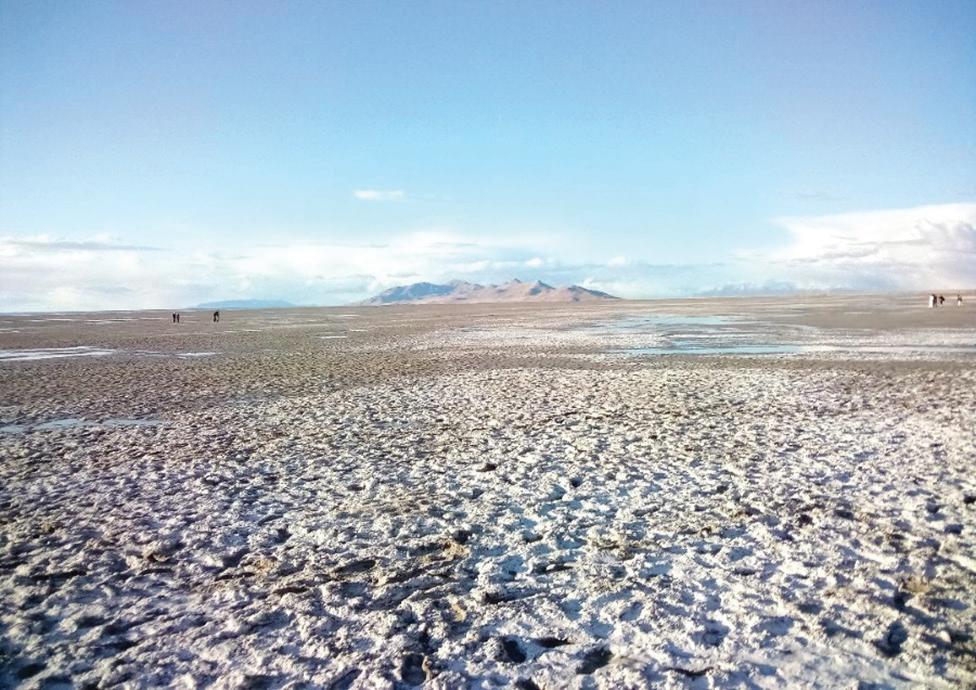
Without emergency action to double the lake’s inflow, it could dry out in five years.
“We’re seeing this system crash before our eyes,” warns Bonnie Baxter, director of the Great Salt Lake Institute
at Salt Lake City’s Westminster College.
Settlers colonized the eastern shoreline 175 years ago, displacing Native peoples, and all of us who followed have mostly taken this desert lake and its fiery sunsets for granted. But the lake is an economic engine as well as an ecological treasure.
Its waters and wetlands yield thousands of jobs and an annual $2.5 billion for Utah from mineral extraction and brine shrimp eggs used worldwide as food for farmed fish and shrimp. The lake also suppresses windblown toxic dust, boosts pre-
cipitation of incoming storms through the “lake effect,” and supports 80% of Utah’s wetlands.
The Great Salt Lake has no outlet. It can hold its own against evaporation only if sufficient water arrives from three river systems, fed by snowmelt in the lake’s 21,000-square-mile mountain watershed. When that flow declines, the shallow lake recedes.
In each of the last three years the lake has received less than a third of its average streamflow, recorded since 1850. And as the lake shrinks, it grows saltier, cur-
rently measuring 19 percent salinity. This is six times as salty as the ocean and well past the 12 percent salinity that’s ideal for brine shrimp and brine flies.
More than 10 million birds depend on the lake’s tiny invertebrates for food. Half of the world’s population of Wilson’s phalaropes feasts on Great Salt Lake brine flies in summer, taking on fat reserves for their 3,400-mile, non-stop migration to South America. For phalaropes, the lake is “a lifeline,” says conservation biologist Maureen Frank.
All these wonders do best with a minimum healthy lake level of about 4,200 feet in elevation, which the Great Salt Lake hasn’t seen for 20 years. You could say that the crisis snuck up on us.
Our big build-up of dams, canals and pipelines to harness incoming water throughout the lake’s watershed began soon after 1900.
With a lake this big and with natural fluctuations in weather, “unsustainable behavior doesn't get noticed until you are really far down the line,” says Ben Abbott, ecologist at Brigham Young University. By the 1960s, diversions had bled the lake to levels nearly as low as we see today. But then an extraordinary wet period masked the
downward trend. In the mid1980s, the lake hit an historic high, flooding wetlands and highways and threatening the Salt Lake City Airport.
When precipitation dropped to normal, lake levels declined again, aided by today’s drying and warming climate, which is reducing natural flows and increasing evaporation, a recent but growing impact.
But agriculture is the primary driver of the disappearing lake. Two-thirds of the diversions in the Great Salt Lake watershed go to farms and ranches. With climate change accelerating, experts say the only way to bring back the lake is to decrease diversions and crank open the spigots of incoming streams.
Because Utah manages its own water, it’s up to the state Legislature to save the lake. “We can’t talk water into the lake” through studies and task forces, as Salt Lake City Rep. Joel Briscoe puts it. The State Legislature can—and must—pass mandates and incentives to reduce water use, purchase water rights, pay farmers to fallow fields and increase streamflow.
To pass such legislation, lawmakers must withstand unremitting pressure from a chorus of high-paid and powerful water lobbyists.
The 2023 Utah legislative
session ends on March 3.
If the members don’t take sufficient and difficult action to save the Great Salt Lake from collapse, the lake will face ruin. As the Brigham Young University scientist Ben Abbott says, “Unlike politicians, hydrology doesn’t negotiate.”
Waiting another year may be too late. Utah—the second driest state in the nation— must come to grips with its arid heart.
Stephen Trimble is a contributor to Writers on the Range, writersontherange. org, an independent nonprofit dedicated to spurring conversation about the West. A 35th anniversary update of his book, The Sagebrush Ocean: A Natural History of the Great Basin, will be published next year.


December 14, 1927 – February 6, 2023
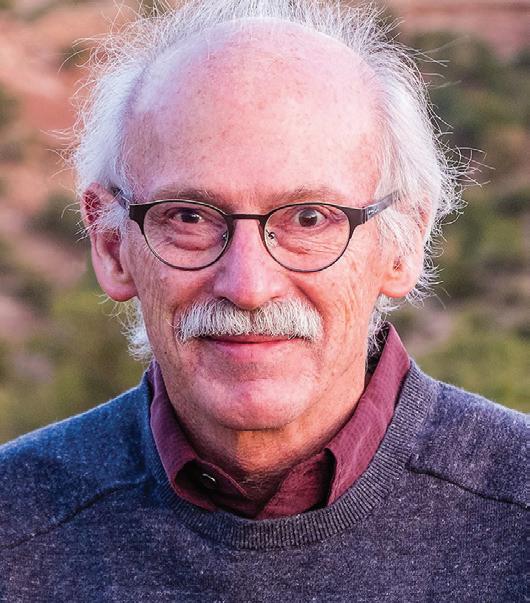
A memorial service for Edgar (Ed) E. Moon, 95, of Myrtle Point, will be held at 11 am, Friday, February 24, 2023 at Myrtle Point First Christian Church, 511 Sixth St. Pastor Lloyd Pounds will officiate.
Ed was born December 14, 1927 to Forrest and Jennie Moon at Mast Hospital in Myrtle Point, Oregon. He passed away February 6, 2023. He was a lifetime resident of Myrtle Point and graduated from Myrtle Point High School in 1945. On June 17, 1950 he married Florence Russell and they were married 71 years before her death in May, 2022.
Ed joined the navy in 1946 and graduated from electronics school a year later with a rating of Petty Officer Second Class. He joined the reserves in 1947 and returned home to continue working at Moon’s Hardware. The Korean War started that same month and he returned to active service serving on a cargo ship as the only electronics technician on board. He returned to the states in 1952, serving his remaining time in the reserves and was honorably discharged with an
ETR1 rating.
Ed started his work career in high school working alongside his Dad at Moon’s Hardware working there until 1964. He then went to work for Tom Coffman who was starting a business of producing Port Orford cedar arrow shafts and he was there for 15 years. In 1979 he went to work for Ellis Logging Company and was employed there until the business sold in 1984. He was then hired as a custodian at the high school and during his employment was elected president of the Myrtle Point Chapter of Oregon School Employees Association, a position he held for 5 years. In 1989 he and Jack Ellis started building a saw mill. It took over 2 years to complete and in 1998 they auctioned the mill and retired. He was able to build or repair most anything and helped many people with his talents.
He served on the Myrtle Point City Council from 1969 – 1977 and also served on the Coos Curry Council of Governments.
Ed joined the First Christian Church in 1943. He loved his Lord and served as a deacon, elder,
May 15, 1928 – February 6, 2023


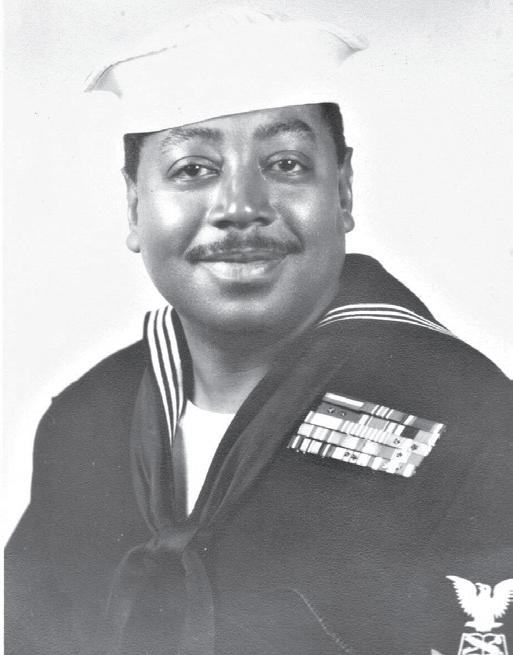
A chapel funeral service was held at the North Bend Chapel followed by a graveside committal with full military honors at Ocean View Memory Gardens Cemetery in Coos Bay, on Monday, February 20, 2023 f or William L. Sexton Jr., 94, of North Bend.
William “Bill” Luther Sexton Jr. passed away on February 6, 2023 at the age of 94, at Bay Area Hospital due to breathing complications. He was born in Hiram, Georgia to William Luther Sexton Sr. and Maureen (Robinson) Sexton. He had two children, William and Melody. He joined the Navy when he was 17 years old and fought in WWII, the Korean War and the Vietnam War, where he proudly met Connie Chung. He was approved to be buried at Arlington National Cemetery, which he refused, as he wanted to be in the town he loved so dearly. He retired out of the Navy and settled in a town he had visited on leave, North Bend, Oregon. This is where he met his wife, Kathleen Day. After retiring from the Navy, he worked at the saw mill and would later retire from there as well. He was a member of the Freemasons and the American Legion for many years. He regularly attended church services, until his
health kept him indoors.
Bill loved keeping himself young by walking at Pony Village Mall every morning for 5 miles, until he was in his 80’s where he lowered the distance to two miles a day, until he couldn’t make these walks at all. If you didn’t see him out walking, you could catch him at The Mill Casino, the Sizzler, or at a park enjoying nature and traveling. He and Kathy had two Dachshunds that they loved dearly, Willie and Bruno. They also housed and raised his children, multiple nieces, nephews and friends. They never met a stranger they wouldn’t help. They donated to multiple charities, their church, and food drives, consistently, always wanting to give back to the community and world.
Bill is survived by nephew, Corey Sexton and his wife, April of Dallas, GA; nephew, Nick Phillips and his wife, Corrin of Portland, OR; nieces and nephews, Patricia, Tammy, Demelia, Felecia, Lowell, Decarr, and Treva, all of Georgia; and many more extended family and friends.
Bill was preceded in death by his wife, Kathleen; son, William; daughter, Melody; brothers, James, Jackie and Billie Jo; sisters, Hallie and Hazel; niece, Subrenia; and a host of other family and
David Francis Brunsman peacefully left our world on January 22, 2023. He will be greatly missed by his family and many friends. David was born in San Francisco, but grew up in Vernonia, Oregon. He traveled much of the world before settling in Coquille and Myrtle Point where he lived for more than 40 years. He and Kathy Phillips were married on May 1, 1983 and have two sons, Neal and Kevin.
David was always adventurous and committed to his community. He served on the planning commission
From A1
Winker said challenges from the COVID-19 pandemic have made it impossible for the hospital to meet those demands.
“Bay Area Hospital has had a challenging year as the pandemic limited our ability to provide our services in the usual way,” Winker wrote. “Our overall expenses have increased, and our balance sheets reflect an average $5.4 million loss for each of the last 13 months. As we announced in May 2022, responding to the pandemic has put an enormous financial strain on the hospital.”
After months of negotiation failed to lead to a contract, a state mediator came to Coos Bay and met
for Coos County and later in Myrtle Point; coached his son’s young team of basketball players, rode a mountain bike, played a guitar and wooden spoons with friends’ bands; collected beer t-shirts from breweries, and amassed a huge collection of model cars. He loved traveling with his family, especially camping and rafting on the Illinois River.
He earned an architectural degree from the University of Oregon and designed many homes and businesses throughout Coos County. His wit and charm will be
with both sides. The two sides met during mediation for 14 days, but that failed to lead to an agreement. Last week, the union declared an impasse, a formal step before a strike can be considered.
“We are not alone in this situation,” Winker wrote. “However, the fact remains that an additional $13 million increase in labor costs and/or a vote by the union to strike would place us in an untenable financial situation and we may very well be forced to close our doors.”
Both sides have until Friday, February 24, to forward their last and final proposals to the mediator.
“The impending threat of a strike by the union, which could result in over half of our employees refusing to work, will disrupt patient care services, increase expenses,
Sunday school teacher, member of the choir and worship team, small group leader and chairman of the building committee for the construction of the current sanctuary. In 1971 he and Florence introduced the Faith Promise Missions Program. They served on the missions committee for about 50 years. The program has been highly successful and has raised over a million dollars for missions around the world. In 2000, Ed and Florence joined Gideons International and he served as a church speaker for 10 years.
Ed was very knowledgeable about Myrtle Point history. One of his many accomplishments was a presentation he made to the Coquille Valley Genealogy Club in 2019.
He was an avid reader and enjoyed gardening, especially roses. After retirement he and Florence were able to take several trips around the United States and Canada. He especially enjoyed hunting and fishing. Most of the fishing was done at the ocean but there were also several family fishing trips hiking into the Seven
Lakes Basin area. Hunting trips were also a family affair and at the age of 74 he bagged one of the biggest bucks ever in Eastern Oregon.
At age 92 Ed decided he needed to slow down and he moved in with his daughter Sue and her husband Rich. He then devoted a lot of his time visiting Florence at the care center until she passed away.
Ed was preceded in death by his wife, Florence; parents, Forrest and Jennie; step-mother, Dorothy Moon; sister, Zella Laswell; and brother, Eugene Moon. He is survived by daughter, Susan and Richard Reiss of Myrtle Point, Oregon; son, Steven and Dorothy of Ocean View, Hawaii; grandson, Justin and Jenny Moon of Roseburg; great grandchildren, Caden and Addyson Moon; and step-grandchildren, Christine Buckner, Bob Reiss, Neal Vaught and Luke Vaught; sisterin-law, Mary Russell; and several nieces and nephews.
In lieu of flowers the family suggests donations in his name to: Myrtle Point First Christian Church Missions Program, PO Box 545, Myrtle Point, OR 97458
From A1 records, HIPAA laws, the threat of medical litigation and of course ever evolving governmental regulation. All of a sudden that ideal “Marcus Welby” interaction our parents were used to becomes a distant dream.
or Gideon’s International, PO Box 622, Coquille, OR 97423. The service will be live streamed on YouTube at: https://www. youtube.com/results?search_query=myrtle+point+first+christian+church
Online remembrances and condolences may be shared with the family at www. westrumfuneralservice.com
Arrangements are under the direction of Amling/Schroeder Funeral Service – Myrtle Point Chapel, 541-572-2524.
physician needs to maintain a practice, medications, supplies, equipment, staffing and the physical office space, providing care for Medicare patients has become a losing proposition unless done at a very high-volume level. Again, goodbye human interaction.
friends that he loved dearly. Friends and family are encouraged to sign the online guestbook at www. coosbayareafunerals.com and www.theworldlink.com. Arrangements are under the care of North Bend Chapel, 541-756-0440.
I don’t know how many times I’ve heard the complaint, “I saw my new doctor, but I don’t think they actually saw me and never examined me. Instead they were fixated on a computer screen during my visit”. I personally don’t understand how you can diagnose a patient without an exam. It’s the human connection, both verbal and physical, which allows a physician to formulate a diagnosis. Spend enough time listening and a patient will eventually tell you what’s wrong with them. They will give you their diagnosis. Skip these basic steps and things start getting expensive. In lieu of an exam, time pressured practitioners may instead order a batch of tests from the computer. This is one factor contributing to increasing health care costs. Where the computer detracts from the interview, it enables in the ordering of studies. Additionally, if your doctor is being forced to see 4 patients per hour per his or her contract, it’s goodbye human interaction, hello expensive tests. This is the new reality of medicine, which is being run by big business, not your doctor.
Here’s another reason your doctor may seem stressed or in a bit of a hurry, shortages. The U.S. News 2023 Best Hospitals edition carried the following headline, “Dr.’s in Short supply”. I don’t think that’s exactly groundbreaking news to anyone who has recently tried to find a doctor. Interestingly though, in this same magazine was the article, “11 Signs You Should Fire Your Doctor”. So, doctors are in short supply, yet you should be looking for a reason to leave the one you may be lucky to have? Leave it to the press to create confusion.
greatly missed by all who knew him. His family would like to thank those who sent cards of support and those who shared fond memories.
and put the hospital’s future at certain risk,” Winker wrote. “The hospital is open to ongoing conversations with the union, and if the union agrees to accept our final offer we can move forward with the proposed wage increases, getting money into the hands of our employees without further delay, and continue caring for our patients without disruption.”
Dr. Thomas McAndrew, chairman of the hospital board, said he hopes to get a contract done and get back to caring for patients.
“Passions can arise with contract negotiations, and we need to get back into the business of caring for patients. . .
We have the job of improving the health of our community. . . We can't afford to fail," McAndrew said in August 2022.
Why are some doctors forced to see 30-40 patient’s in a day. Part of the reason may be the organization he/ she is working for. Coming out of residency most new physicians prefer signing a “secure” contract with a larger medical conglomerate. The days of creating new private practitioners are over. New graduates are less inclined to take the risks of starting a practice than their predecessors were. A contract guarantees a starting physician an income and offers employment security, but they will frequently carry production requirements. Businesses need to make a profit and your doctor is just an employee in a medical business. He or she needs to produce or else lose their job. Another reason your physician may seem rushed may be the Medicare patient load in the physician’s practice. Medicare hasn’t exactly been kind to your doctor over the past 30 years. Since 1990 the cost of goods in the U.S. has risen over 227%. Not only has physician Medicare pay not mirrored this increase, but has actually dropped 3% during this same period. In fact, in 2022 where the U.S. saw inflation running at over 8%, it was proposed that Medicare payments be cut by another 5%. Considering the costs of everything your
So why are doctors in short supply? There are many reasons. One obviously is that the U.S. population is aging faster than it can be supplied with new doctors from medical schools. This has been the case for quite some time. Another is that there is a relatively high percentage of physicians near retirement age. I think there are very few physicians who do not truly love their work. Most would likely continue to work unless the job became unpalatable. What has made working in medicine less desirable is all the new red tape which accompanies practice (and it’s a very large, thick roll of red duct tape). Issues include not just all of the new pressures listed earlier, but now, and perhaps most importantly, the recent pandemic. All combined and we have physicians jumping ship at historic rates. These extraneous factors are leading to premature burn out. Unfortunately, we are seeing a large swath of highly qualified physicians retiring earlier than they probably wanted to. In fact, since the beginning of the pandemic America has lost over 100,000 qualified physicians due to early retirement. Every time an established physician decides he /she can no longer tolerate practice we lose years of health care experience which will never be recovered, and your care suffers. As for the abovementioned article which suggests firing your doctor, you’d better be sure you have another one lined up as finding a new one will become more challenging with each passing day. And doctors aren’t the only ones struggling as of late. Most hospitals are also finding it harder to make ends meet. Here the pandemic hasn’t helped at all, where maintaining adequate staffing has become challenging and expensive. Often the
problem here may be much more complex and cannot be blamed simply on the pandemic. Many smaller towns have been served by their community hospitals for years. These have been managed and governed differently than those of large hospital conglomerates, ideally in a way which best served the local community and its employees. Recently it seems all hospitals, even the smaller ones, are being run more like businesses where institutional decisions are made with a different mindset. Typical corporate governance often tends to be less forward thinking, focusing more on immediate issues and short-term solutions. Decisions are made, equipment added, restructurings planned, and staff added or subtracted seemingly without consideration of personal repercussions or future business implications. All that seems to matter is getting their way and the immediate bottom line, somehow tomorrow isn’t on the radar. Short term solutions often come back to bite. Soon a previously successful hospital is suddenly struggling for revenue. This is when they’ll start hiring outside consultants to fix their business, asking for guidance from a group that knows nothing about the inner workings and uniqueness of their institution. In most cases, the solution was right under their noses and not terribly complicated. Take care of what you have, who you have and be true to who you are. Treat your employees and healthcare professionals well and with respect. Listen to them and be flexible to their needs. They are your lifeblood.
The fact that they are there means they are dedicated to your institution and community. If they feel the hospital doesn’t care about them, they will move on leading to lost revenue and service shortages. The job market for healthcare workers is exceptionally strong and finding a new job for an unhappy employee isn’t difficult. Doctors can also find other places to do their work. It’s a classic case of cutting off your nose to spite your face. If your employees and staff are happy, you have a better chance of being successful, it’s often just that simple. Employee morale will always serve the institution far better than a consultant’s opinion, where the expensive advice given is rarely applied anyway. The solution exists within, which is true with most things in life. All that needs to be done is to talk, listen and be flexible. Any businesses can go through tough times, getting past these is much easier with a complete and happy cohesive team.
PATRICK MYERS TREE
SERVICE. Certified arborist, 50 yrs. exp. Free estimates.
541-347-9124 or 541-290-7530. Lic. #116632. Stump grinding, hazardous removal, pruning hedges and brus h clipping. Serving Bandon area since 1995.
Now is the time to clear that Gorse! Big Foot Stump Grinding LLC does Gorse and Brush Clearing. Stump Grinding, Tractor Services, Landscape Maint. We are Licensed, Bonded and Insured. LCB#9933 Serving Bandon and Surrounding Areas, Find us on FB. Big Foot Stump Grinding LLC (541) 366-1036
150
Misc Services
PAHLS FAMILY DENTISTRY offers single-visit crowns, dental implants and sedation dentistry. Accepting new patients. Call to reserve your appointment today. 541.396.2242, Coquille

Pete’s Wood Furniture Repair & Refinish. We pick up & deliver in Bandon area. 480-415-5419.
Join us for the Roses for Rett Ball & Silent Auction, a night of dancing and music with hor d’oeuvres, hosted wine and cash bar to benefit Rett Syndrome research in honor of Sabra Hampton. Saturday, Feb 25 at 6:30 PM at the Mill Casino Purchase tickets online: give.rettsyndrome.org/ rosesforrett2023 More info: 541.808.4289
Employment Opps 515
The Best Western Inn at Face Rock is now hiring:
Front Desk Agents
Housekeepers
BE PART OF A GREAT TEAM!
Earn a minimum of $16.00 per hour (depending on experience) in a variety of our open positions
We offer referral bonuses and all Best Western employees are eligible for reduced rates at select Best Westerns across the United States and Canada


We are proud to be an Equal Opportunity Employer (EOE)
Summer bonus programs
Please stop by anytime to pick up an application at 3225 Beach Loop Drive, Bandon, OR
Bandon Inn is accepting applications for ALL positions:
Front Desk Position (All shifts)
Continental Breakfast Servers
Laundry Attendant
Housekeepers Maintenance
If you are professional, a team player, honest, reliable, dependable and flexible, please pick up an application at the front desk. Experience desired, but not necessary. Positive and team player attitude is a must! We offer a competitive wage and benefits. Apply at front desk.
Select Comfort split-king adjustable bed. Used 5 weeks. Paid over $8,000. Will sell for $6,000. Call 541-253-5013.
819
RV Space for Rent
RV spaces near Bandon. Quiet safe park. Pets welcome. Ask about our move in bonus. Includes ALL utilities. $690 541-347-2175
860
BANDON MINI-STORAGE.
Temp. controlled RV & boat storage. 50317 Hwy. 101 South. 541-347-1190.

BANDON E-Z STORAGE. Affordable plus Boat/RV. 370 11th St. SE, 541-347-9629. BANDON MINI-STORAGE, temp controlled, 88371 Hwy. 42S, 541-347-5040. Ask for Manager's Special.
LA KRIS INN 12 suite Boutique Inn w/manager apartment. Awesome Financials, $1,600,000
OCEAN VIEW 4 bedroom 3 bath 2200 sq ft home with Sunroom High ceilings. SS appliances $725,000
SPINNAKER DR Jason Eichelberger masterpiece home. Dramatic high ceilings, wood floors, Hunter Douglas Wood Window Shutters. $820,000
285 ACRES Two Mile Road Ranch. Includes creek, bridge, three bedroom home, octagon studio, shop. Remote $980,000
Fred Gernandt, Broker David L. Davis Real Estate 1110 Alabama SE 541 290 9444
1.23 acres just east of town. End of the road. Completely private and lush. If you like close in, yet private, with lots of trees - this is the building site for you! Offered at $180,000.
Call Keeli Gernandt, David L Davis Real Estate 541-297-9535.
PACIFIC PROPERTIES! -
“FOR ALL YOUR GLASS NEEDS” now serving the Oregon Coast from Reedsport to Bandon area.
*Commercial *Residential
*New Windows
*Glass Replacement
*Custom Showers www.roseburgglass.com
541-672-2685
Emergency Food and Shelter Program Phase 40
Announcement - Federal funds, awarded through the Department of Homeland Security, are available for Coos County Emergency Food and Shelter Programs$27,903 is available for Coos County. Under the terms of the grant from the National Board, local agencies chosen to receive funds must:
1) be private voluntary non-profits or units of the government;
2) be eligible to receive Federal funds;

3) have an accounting system;
4) practice nondiscrimination;
5) have demonstrated the capability to deliver emergency food and/or shelter programs;
6) if they are a private voluntary organization, have a voluntary board.
Qualifying agencies are urged to apply. Individuals and emergency preparedness programs/projects are not eligible for funding. Agencies interested in applying should complete the online request form accessible at https:// unitedwayswo.org/efsp or via paper (email info@ unitedwayswo.org or call 541267-5202 to request a paper copy; paper copies must be typed; electronic submission is preferred). Applications must be submitted online, or paper copies received, by 5pm Friday, March 3, 2023. For more information contact United Way of Southwestern Oregon at info@unitedwayswo.org or 541-267-5202.
The City of Bandon is recruiting a UTILITY WORKER for the Public Works Department!
Competitive salary and an attractive benefit package. This is a full time, permanent position. Application, qualifications, and a detailed job description can be found on our website at www.cityofbandon.org/jobs. Applications will be accepted until Sunday, March 5, 2023. For questions, please call (541) 347-2437.
Recreational Vehicles 604
BUYING RVs. Gib's RV is looking for clean pre-owned RVs to buy/consign. No fee consignments. We make house calls. 541-888-3424.
Pets 736
ANIMAL CREMATORY
The Bay Area’s only pet crematory with COOS BAY CHAPEL. 541-267-3131 coosbayareafunerals.com
Misc For Sale 750
2015 Caterpillar 420F IT 4WD
$37,500 Backhoe Loader
Tractor ~ Call (347) 687-1095
For sale: Elec. wheelchair paid $1850, asking $1500. 3-wheel elec. scooter paid $1100, asking $850. Electric toilet seat lifter paid $900, asking $650. Sit-to-stand lift elec. rated for 300 pounds paid $1600, asking $1350. Also ADA ramps, shower pole, sliding shower seat, regular wheelchair and more All are gently used. (530) 913-9323
Coos County Circuit Court Case No. 23PB01301
NOTICE IS HEREBY GIVEN that Benjamin K. Pedersen has been appointed Personal Representative of the Estate of Charmaine A. Pedersen, deceased. All persons having claims against the estate are required to present the same within four months from the first date of publication of this notice to the Personal Representative at 777 High St., #300, Eugene, OR 97401, or they may be barred. Any person whose rights may be affected by these proceedings may obtain additional information from the records of the above-entitled Court or from the Personal Representative or from the Personal Representative’s attorneys, Luvaas Cobb, P.C. DATED and first published: February 24, 2023.
/s/ Benjamin K. Pedersen
Personal Representative
Published: February 24, March 3 and March 10, 2023
The World & ONPA (ID:358914)
IN THE CIRCUIT COURT FOR THE STATE OF OREGON FOR THE COUNTY OF COOS Probate Department
In the Matter of the ESTATE of Florence Maud Simmons, Deceased CASE #23PB00891
NOTICE TO INTERESTED
PERSONS
NOTICE IS HEREBY GIVEN that on February 9 2023, Gayle Kristine Burgett was appointed and deemed qualified to act as the personal representative of the above estate. All persons having claims against the estate are hereby required to present these claims, with proper vouchers, within four months after the date of the first publication of this notice, as stated below to the personal representative’s attorney, Susan Ezzy Jordan, Jordan & Williams, LLC., 180 West 6th Ave., Junction City, OR 97448 (541) 342-8110, or they may be barred. All persons whose rights may be affected by the proceeding in this estate may obtain additional information from the records of the attorney for the personal representative.
DATED AND FIRST
$559,500 Well maintained residence off Seabird Drive. Upgraded kitchen cabinets, granite counters, quality stainless steel appliances, low maintenance landscaping, RV Parking, decorative concrete work, vaulted ceilings, and oak hardwood flooring. Short stroll to Ocean/Beach access. An excellent residence for a comfortable scaled down lifestyle. The abutting parcel to the south is also available as a combined transaction.
Call Principal Broker Dan Cirigliano 541.297.2427
Legal Notices 999
IN THE CIRCUIT COURT OF OREGON FOR COOS COUNTY
In the Matter of the Estate of KELLY A. HEISEN. Deceased Case No. 23PB00679
NOTICE TO INTERESTED
PERSONS
NOTICE IS HEREBY GIVEN that Geoffrey Darnell has been appointed and has qualified as Personal Representative of the above estate. All persons having claims against the estate are hereby required to present the claim, with proper documentation, within four months after the date of first publication of this Notice, as stated below, to the Personal Representative at the office of GOULD LAW FIRM, P.C. 243 W. Commercial, P.O. Box 29, Coos Bay, Oregon, 97420, or the claim may be barred. All persons whose rights may be affected by the proceedings in this estate may obtain additional information from the records of the Court, 250 N. Baxter, Coquille, Oregon 97423, the Personal Representative or the attorney for the Personal Representative. Dated and first published February 17, 2023.
Geoffrey Darnell
Personal Representative
671 East 8th Street Coquille, OR 97423
(541) 217-9988
Published: February 17, February 24 and March 3, 2023
The World & ONPA (ID:358590)
IN THE CIRCUIT COURT OF OREGON FOR COOS COUNTY
In the Matter of the Estate of JAY P. PHALEN, Deceased Case No. 23PB00641
NOTICE TO INTERESTED
PERSONS
NOTICE IS HEREBY GIVEN
that Marsha Jackson has been appointed and has qualified as Personal Representative of the above estate. All persons having claims against the estate are hereby required to present the claim, with proper documentation, within four months after the date of first publication of this Notice, as stated below, to the Personal Representative at the office of GOULD LAW FIRM, P.C. 243 W. Commercial, PO Box 29, Coos Bay, Oregon, 97420, or the claim may be barred. All persons whose rights may be affected by the proceedings in this estate may obtain additional information from the records of the Court, 250 N. Baxter, Coquille, Oregon 97423, the Personal Representative or the attorney for the Personal Representative. Dated and first published February 17, 2023
Marsha Jackson
Personal Representative
62899 W. Catching Rd. Coos Bay, OR 97420
(541)266-8505
Published: February 17, February 24 and March 3, 2023
The World & ONPA (ID:358468)
IN THE CIRCUIT COURT OF THE STATE OF OREGON FOR THE COUNTY OF COOS
In the Matter of the Estate of RILEY C. ADCOCK, Deceased. Case No. 23PB00869
NOTICE TO INTERESTED
PERSONS
IN THE CIRCUIT COURT OF THE STATE OF OREGON FOR THE COUNTY OF COOS
In the Matter of the Estate of ANTERRA, formerly known as Patricia Marie Beyerl. Deceased.
Case No. 23PB00599
NOTICE TO INTERESTED PERSONS
NOTICE IS HEREBY GIVEN that LYNN A. SHOOK has been appointed as Personal Representative of the above estate. All persons having claims against the estate are required to present them, with vouchers attached, to the personal representative, c/o Daniel M. Hinrichs, Attorney at Law, 590 Commercial, Coos Bay, OR 97420, within four months after the date of first publication of this notice, or the claims may be barred. All persons whose rights may be affected by the proceedings may obtain additional information from the records of the courtProbate Department, 250 N. Baxter, Coquille, OR 97423, the personal representative, or the attorney for the personal representative, Daniel M. Hinrichs, Attorney at Law, 590 Commercial, Coos Bay, Oregon 97420.
Dated and first published:
February 17, 2023
Published: February 17, February 24 and March 3, 2023
The World & ONPA (ID:358739)
NOTICE OF AVAILABILITY OF FINANCIAL IMPACT
PUBLISHED: February 17, 2023
Published: February 17, February 24 and March 3, 2023
The World & ONPA (ID:358697)
IN THE CIRCUIT COURT OF OREGON FOR COOS COUNTY
In the Matter of the Estate of EUNICE M. HARRINGTON, Deceased Case No. 23PB00839
NOTICE TO INTERESTED
PERSONS
NOTICE IS HEREBY GIVEN that Jennie Tobiska has been appointed and has qualified as Personal Representative of the above estate. All persons having claims against the estate are hereby required to present the claim, with proper documentation, within four months after the date of first publication of this Notice, as stated below, to the Personal Representative at the office of GOULD LAW FIRM, P.C. 243 W. Commercial, P.O. Box 29, Coos Bay, Oregon 97420, or the claim may be barred. All persons whose rights may be affected by the proceedings in this estate may obtain additional information from the records of the Court, 250 N. Baxter Street, Coquille, Oregon 97423, the Personal Representative or the attorney for the Personal Representative. Dated and first published February 17, 2023. Jennie Tobiska Personal Representative 93680 Canyon Lane Coos Bay, OR 97420 (541) 260-4232
Published: February 17, February 24 and March 3, 2023 The World & ONPA (ID:358632)
NOTICE IS HEREBY GIVEN that the undersigned has been appointed personal representative of the above estate. All persons having claims against the estate are required to present them to the undersigned personal representative at Lawrence Finneran LLC, Attorney at Law, 405 North Fifth Street, PO Box 359, Coos Bay, Oregon, 97420, within four months after the date of first publication of this notice or they may be barred. All persons whose rights may be affected by this proceeding may obtain additional information from the records of the court, the personal representative, or the attorneys for the personal representative. DATED and first published this 24th day of February, 2023.
Benjamin R. Adcock
Personal Representative
Published: February 24, March 3 and March 10, 2023
The World & ONPA (ID:359164)
IN THE CIRCUIT COURT OF THE STATE OF OREGON FOR THE COUNTY OF COOS
In the Matter of the Estate of MARY L. LITTLE, Deceased. Case No. 23PB00871
NOTICE TO INTERESTED
PERSONS
NOTICE IS HEREBY GIVEN that the undersigned has been appointed personal representative of the above estate. All persons having claims against the estate are required to present them to the undersigned personal representative at Lawrence Finneran LLC, Attorney at Law, 405 North Fifth Street, PO Box 359, Coos Bay, Oregon, 97420, within four months after the date of first publication of this notice or they may be barred. All persons whose rights may be affected by this proceeding may obtain additional information from the records of the court, the personal representative, or the attorney for the personal representative. DATED and first published this 24th day of February, 2023.
Kenneth W. Little
Personal Representative
Published: February 24, March 3 and March 10, 2023
The World & ONPA (ID:358970)
REPORT This notice is a summary of the information available in the Financial Impact Report of the City of North Bend Redevelopment Agency, prepared pursuant to ORS 457.460. Copies of the full report are available at the Finance Department - North Bend City Hall, to all interested persons during regular business hours.
As summarized below, Fiscal Year 2021-22 (FY22) resources exceeded total requirements by $3,015,666 with resources amounting to $3,431,806. Expenditures were made for repayment of contracted city services, capital improvements, and other items. For the next fiscal year, 2022-23, the Agency’s budgeted resources are balanced with requirements at $3,790,000. The Agency uses the funds it receives from Option 1, which includes the division-of-taxes method of calculating property taxes ($562,532 for FY22, as shown below) together with an Urban Renewal Special Levy ($342,116 for FY22) for any difference between the Agency’s maximum authority and the division-of-taxes method, to finance various urban renewal projects and activities. Total tax increment (levy) for FY22 was $904,648. Property taxes received totaled $900,009 in FY22 and are budgeted at $876,000 in FY23. Other resources budgeted are the beginning fund balance at $2,900,000 and interest at $14,000. Requirements are budgeted for personal services at $83,600, materials and services at $51,900, and capital outlay at $3,290,000.
The impact of the urban renewal plan on the tax collections of other taxing districts in FY22 resulted in the following amounts:
City of North Bend $240,534
IN THE CIRCUIT COURT OF THE STATE OF OREGON FOR COOS COUNTY
Probate Department

In the Matter of the Estate of: SHARON LEE FRANK. Deceased. Case No. 23PB00841 NOTICE TO INTERESTED PERSONS NOTICE IS GIVEN

by 2:00 pm Pacific
General Counsel legal services to the Port through a three year Professional Services Agreement. The Board of Commissioners of the Oregon International Port of Coos Bay retains a General Counsel to provide advice and counsel on the general legal affairs of the Port and Board of Commissioners. The Request

Five-Time Grammy® Nominee David Arkenstone brings An Evening with David Arkenstone & Friends to The Dolphin Playhouse in Coos Bay on May 10 as part of his Pacific Northwest Tour 2023.
This candlelit concert is a joyous genre blend of neo-classical piano, new age, Celtic, progressive rock, orchestral, world music, and Music Inspired by Middle Earth. With over 100 million Spotify streams, 60+ albums, numerous film and game score compositions, and unforgettable themes for NBC such as The Kentucky Derby, US Women's Figure Skating, and Premier League soccer – David’s music holds something for everyone, taking concertgoers on a musical journey from first note to last.
Joined on stage by virtuoso musicians Megan Shung (violin, erhu), Carlyn Kessler (cello), Zimberly Zaleski (flute), and Josh Gilgoff (percussion), David has plenty of surprises in store. A musical storyteller, he is passionate about taking listeners on a journey, creating sonic tapestries that evoke every emotion. “I envision a place where I would like to go, or an adventure I would like to take, and
let my imagination run free,” says David.

“I’ve gotten countless messages from listeners who love to take these journeys with me. I’m sometimes surprised by how powerfully people respond to my music.”
In anticipation of the Pacific Northwest Tour, David says, “I’m very excited about our upcoming tour in May. My very talented band and I have a great evening planned. We’re playing quite a few songs from my catalog that I haven’t performed live before. It’ll be lots of fun and a great evening to share with you and your friends and family!”
Receiving Grammy® nominations in 2021, 2019, 2004, 2000, and 1992, this visionary continues to create distinctive tracks that inspire the imagination. David’s compositions are often influenced by the beauty of nature, classical music, Celtic dance, medieval folklore, and the realm of J.R.R. Tolkien’s Middle Earth.
An Evening with David Arkenstone & Friends will embrace the Pacific Northwest with passionate compositions, heartwarming stories, and an evening to be remembered for years to come.


David enjoys touring and meeting his



fans from around the world. “One of the most exciting things about performing live is the interaction I have with the audience. It’s very different from making a recording, where you’re not sure who will be listening to it. A lot of the roots of our musicianship come into focus in a live situation. You’re in the moment, you perform your best, and many times reach new heights – then it’s gone and on to the next show!”
Tickets are on sale now for An Evening with David Arkenstone & Friends at The Dolphin Playhouse on Wednesday, May 25, 2023, at davidarkenstone. com or Concerts – David Arkenstone. Attendees may opt for a VIP Experience that includes a post-show autograph meet & greet, preferred seating, lanyard with tour laminate, a photo for signing, and a custom compilation CD. For more information, visit davidarkenstone.com and join the Arkenfans Community on Facebook. You can also follow David on Facebook, Instagram, and Twitter for behindthe-scenes looks and even more magical content.
On February 20 at 1:13 p.m., Deputy R. Baker was dispatched to an address on Spinreel Road, near Lakeside to a report of theft of mail in progress. When en-route, the Coos County Sheriff’s Dispatch Center advised Deputy Baker the suspect vehicle had fled from the location.
A short time later, Baker and an Oregon State Trooper turned onto Spinreel Road from Highway 101, and located the suspect vehicle on the side of the road under the railroad bridge. Baker had contacted this vehicle earlier while patrolling Lakeside due to suspicious circumstances he observed while on general patrol of the area. At that time, no crime was observed.
Kaitlyn Campbell, 24, was
Keep
sitting in the suspect vehicle with a male occupant. While speaking with Kaitlyn and the man, Baker observed Kaitlyn become agitated and strike the man in the head with a closed fist.

Baker and the trooper immediately took Kaitlyn into custody after witnessing this event. During further investigation on scene, it was found Kaitlyn had stolen mail from a business on Spinreel Road and had also stolen several gift cards from Safeway in North Bend which were in her possession when she was arrested.
Campbell was transported to the Coos County Jail where she was booked on the charges of disorderly conduct II, criminal mischief III, and theft of mail.
Registration forms are now available for the 19th annual “Fertilize Your Mind” garden seminar set for Saturday, April 1, at The Mill Casino Hotel.

This year’s keynote speaker will be James Cassidy, soil scientist at Oregon State University.
Following the keynote presentation will be three class sessions, each with a selection of three informative classes to choose from, presented by experienced and practical speakers. Some of the topics include “Under-
standing Your Own Soil,” “Spicing Up Your Garden with Herbs,” “Raising Red Wiggler Worms as Pets and Partners: Creating Vermicompost,” “Native Plants to Choose for Gardens and Landscapes,” and “Container and Hugelkultur Building for Your Year Round Garden” as well as four more to choose from. Local nurseries, landscape companies and other businesses will display goods and services in the lobby for perusal throughout the day, while the Master Gardeners will staff a Plant Clinic table to answer gardening questions during breaks and the lunch period. A selection of free gardening/seed catalogs will also be available.
The registration fee of $45 includes the keynote address, three lecture sessions, and
lunch will be included again this year. To register, contact the Coos County Extension Office at 541-572-5263, stop by the OSU Extension office at 631 Alder St. in Myrtle Point, or register online at https://beav.es/S53.

You may also register the morning of the event, beginning at 8 a.m., but class selections may be limited and lunch selection will be limited to first-come, firstserved.
This seminar is sponsored by the Coos County Oregon State University Extension Service and the Coos County Master Gardener AssociationTM. Direct any questions to Master Gardener Coordinator Samantha Clayburn at 541-572-5263, ext. 25299 or Samantha.clayburn@oregonstate.edu
Oregon 97411 Wilson’s Market is catering the event.
University Women of Bandon encourages women new to Bandon to attend.

For further information, please call Cindy at (541) 404-6385. The women are pleased to have Bandon Toastmasters Club #158 co-sponsor this event. To join Toastmasters membership, please call Richard Taylor (707) 599-5471 to come in person or on Zoom.

Toastmasters meet from 3:30 to 4:30 p.m. every Monday (excluding holidays) in the Barn, Bandon City Park.

Coquille’s girls advanced in the Class 3A playoffs by beating visiting Horizon Christian 59-44 on Tuesday.
The Red Devils overcame eight 3-pointers and 28 points by Horizon Christian’s Alexis Dockter to advance to a second-round game Friday night at Corbett.
“We played so good, especially in the first half,” said Coquille coach Marty Stallard, adding that he was excited the girls got a playoff win and reached 20 wins for the season.
He was looking forward to the challenge of facing Corbett, which was ranked first in the final coaches poll and reached the championship game in the Class 4A tournament last winter before dropping down a level this year.
“It will be a great experience for these kids,” Stallard said.

Coquille led by 10 in the first half and was never challenged in the second by the Hawks.
Holli Vigue scored 23 points and made nine of her 10 free throws for
the Red Devils. As a team, Coquille was 13-for-14 from the line.
The squad also had balanced scoring, with numerous team members hitting shots off good passes from teammates.
Jenna Willis had nine points in the first half and scored 11 for the game. Isabella Trujillo had seven points and Taylor Kelner and Trinidy Blanton scored six each in the win.
Coquille was coming off a good loss to Lakeview in the semifinals of the Far West League playoffs.
The Red Devils kept the game close until the final minutes against the Honkers after losing to them by 32 points at home during the league season.
“From where we started, we are doing so well,” Stallard said. “We got to 20 wins.”

Coquille improved to 20-8 on the season.
Coquille’s losses also all came against quality teams who are in the state playoffs, including Lakeview and Sutherlin twice each
and Class 2A powers Central Linn, Bandon and Monroe. The other loss came at Brookings-Harbor, which was eliminated from the playoffs Tuesday by Burns, which beat the Bruins 43-35 in Brookings.
Corbett is another great team.

The Cardinals are 22-3 and seeded third for the playoffs but first in the coaches poll after beating Banks, another school that dropped down from Class 4A, in their league title game. Several of the team’s players were on the squad that reached the Class 4A championship game last winter, ultimately losing to Philomath.
This year’s tournament field will be determined Friday in eight games around the state. The tournament quarterfinals are next Thursday at North Bend High School, with the semifinals and championship games at Marshfield.
Far West League champion Sutherlin, the No. 2 seed, hosts Jefferson, which won at Creswell 47-44 on Tuesday. Lakeview plays
at De La Salle North Catholic in Portland.
TRINITY LUTHERAN 54, MYRTLE POINT 31:
The Bobcats saw their season end in the opening round of the Class 1A playoffs at Bend on Monday.
Trinity Lutheran advanced to a second-round game Friday at Skyline League champion North Douglas, which beat Triangle Lake 75-29 on Tuesday.
Myrtle Point overcame adversity, including injuries to a couple of key players, to finish second to North Douglas in its first year in the Skyline League.
North Douglas was the only league team to win its first-round game. Umpqua Valley Christian lost at Eddyville 64-56 and New Hope lost at Echo 61-30.
The winners of Friday’s secondround games advance to the state tournament at Baker City.
CLASS 2A: Bandon hosts Regis on Friday in the first round of the Class 2A playoffs, with
the winner advancing to the state tournament in Pendleton.
The Tigers were fifth and Regis ninth in the final Class 2A coaches poll.
Friday’s game begins at 6 p.m.
BOYS: Bandon visits topranked Mannahouse Christian at 4 p.m. Saturday in Portland in the first round of the Class 2A playoffs, the winner advancing to the tournament in Pendleton.
Coquille was at Harrisburg in the first round of the Class 3A playoffs Wednesday (results were not available), with the winner advancing to face De La Salle North Catholic in Portland in the second round Saturday.
Myrtle Point was at Willamette Valley Christian on Wednesday in the first round of the Class 1A playoffs (results were not available). The winner faces the winner of a game between Triangle Lake and No. 4 Adrian on Saturday for a spot in the tournament at Baker City.
Marshfield’s girls basketball team lost a chance to be the top seed for the Sky-Em League for the Class 4A playoffs when the Pirates fell to Marist Catholic 46-28 in a league seeding game at Siuslaw High School in Florence on Tuesday.
Marshfield and Marist Catholic had tied for the league title, each with 7-1 league records.
Even with the loss, Marshfield was likely to
host a first-round game in the Class 4A playoffs and not have to go through the play-in round. The Spartans avoided the play-in round with the victory. Marshfield was still No. 4 in the rankings Tuesday night and also fourth in the final coaches poll. Baker, which suffered its lone Class 4A loss to Marshfield, was No. 1 in both the power rankings and poll. Marshfield will face No. 3
Astoria at 2 p.m. on Saturday at North Eugene High School in a warm-up game for the playoffs. That game won’t impact the rankings, which froze Tuesday night.
The Pirates will host a play-in round winner on Friday, March 3, during the Class 3A state tournament, for a spot in the Class 4A tournament at Forest Grove.
BOYS
North Bend seized a spot
in the Class 4A play-in round by taking a pair of must-win games after the Bulldogs, Marshfield and Cottage Grove all tied for third in the Sky-Em League.
North Bend missed a chance to wrap up third place Friday when Marshfield overcame a seven-point third-quarter deficit to beat the Bulldogs 54-43.
A night later in Coquille, North Bend beat the Pirates 54-43 in the first of the
games to determine the No. 3 seed.
“With a few adjustments from the night before, the Bulldogs found a way to win,” North Bend coach Jasper Sawyer said.
Then on Monday North Bend beat Cottage Grove 50-45 in a game at Douglas High School in Winston, holding off a fourth-quarter rally by the Lions.
That gave North Bend the league’s No. 3 seed and a
guaranteed spot in the playin round. Marshfield also will be in the play-in round, since the Pirates finished high enough in the final rankings for a spot. Both will have road games, needing wins to advance to the 16-team playoffs for a spot in the tournament in Forest Grove. Matchups had not been announced by Tuesday night.
North Bend swept the team titles and both the Bulldogs and Marshfield had multiple champions in the recent district swim meet.
Marshfield’s boys were second in the team race and the girls were third behind North Bend and St. Mary’s. Reedsport’s squads finished at the bottom, but the Brave had a number of placers as well.
Finley Cheal won both the 200-yard individual medley and the 100-yard butterfly for North Bend and was part of two champion relays.
Henry Hood won the 200 freestyle and also was part of both winning relays, along with Beau Parrott and Brody Wilson.
Marshfield’s boys got wins by Markus Kliewer in the 500 freestyle, Quinton Kloster in the 100 backstroke and Jack Waddington in the 100 breaststroke. Those three combined with Trevor Robbins to win the 200 medley relay.
The Pirates were second to the Bulldogs in the 400 freestyle relay with the group of Robbins, Kliewer, Kloster and Waddington. Kloster also was second in the 200 freestyle, Waddington in the individual medley and Kiewer in the butterfly.
Hood was second for North Bend in the 100 freestyle.
Marshfield’s Allison Wright was a double-winner on the girls side, taking
the butterfly and the 500 freestyle.
North Bend’s lone win on the girls side came in the 200 medley relay, with the team of Abby Woodruff, Gillian Baxter, Brynn Buskerud and Rebecca Witharm.
Rebecca Witharm was second in both the 200 and 500 freestyle and Brynn Buskerud was second in the individual medley and breaststroke. Emma Slade took second in the 100 freestyle. The Bulldogs also were second in the 400 freestyle relay behind St. Mary’s with the group of Slade, Woodruff, Witharm and Adrianna Delph.
Marshfield was second in the medley relay with the group of Kally Haynes, Isabelle Hale, Elizabeth Delgado and Wright. Haynes was second in the backstroke.
North Bend's Elisabeth Woodruff competed as a para athlete in two events to qualify for the state meet. Results include event winners plus placers for North Bend, Marshfield and Reedsport
GIRLS
Team Scores: North Bend 398, Cascade Christian 227.5, Marshfield 223, Klamath Union 221, St. Maru’s 211, Cottage Grove 198.5, Henley 175, Phoenix 117, Hidden Valley 104, Mazama 76, Reedsport 21.
200 Medley Relay — 1. North Bend (Abby Woodruff, Gillian Baxter, Brynn
Buskerud, Rebecca Witharm), 2:03.74; 2. Marshfield (Kally Haynes, Isabelle Hale, Elizabeth Delgado, Allison Wright), 2:08.38.
200 Freestyle — 1. Annikka Fetro, St. Mary’s, 2:00.64; 2. Rebecca Witharm, NB, 2:06.66; 4. Adrianna Delph, NB, 2:12.82; 5. Kally Haynes, Mar, 2:13.44; 7. Morgan Hoefs, NB, 2:17.70; 15. Cyrene Dorfmeister, Mar, 2:48.84.
200 Individual Medley —
1. Joezie Mitchell, Cascade Christian, 2:24.61; 2. Brynn Buskerud, NB, 2:30.85; 3. Gillian Baxter, NB, 2:39.54; 5. Abigail Erb, Mar, 2:50.82. 50 Freestyle — 1. Elise Chamberland, St. Mary’s, 25.59; 6. Emma Slade, NB, 27.33; 10. Gesme Kramer, Ree, 29.57.
100 Butterfly — 1. Allison Wright, Mar, 1:02.40;
3. Abby Woodruff, NB, 1:15.90; 4. Elizabeth Delgado, Mar, 1:16.26; 6. Maryam Qadir, NB, 1:27.83.
100 Freestyle — 1. Elise Chamberland, St. Mary’s, 55.54; 2. Emma Slade, NB, 59.56; 8. Gesme Kramer, Ree, 1:04.89.
500 Freestyle — 1. Allison Wright, Mar, 5:37.31; 2. Rebecca Witharm, NB, 5:41.21; 4. Adrianna Delph, NB, 5:57.69; 5. Morgan Hoefs, NB, 6:01.46; 5. Isabelle Hale, Mar, 6:03.19;
9. Elizabeth Delgado, Mar, 6:25.29; 11. Maryam Qadir, NB, 6:47.04. 200 Freestyle Relay — 1.
St. Mary’s, 1:46.48; 4. North Bend (Brynn Buskerud, Morgan Hoefs, Gillian Baxter, Emma Slade), 1:53.12; 9. Marshfield (Airabella Kiewert, Ada Mahaffy, Abigail Erb, Cyrene Dorfmeister), 2:13.82.
100 Backstroke — 1. Brooke Nelson, Klamath Union, 1:07.57; 2. Kally Haynes, Mar, 1:09.52;
3. Abby Woodruff, NB, 1:11.45.
100 Breaststroke — 1. Joezie Mitchell, Cascade Christian, 1:13.85; 2. Brynn Buskerud, NB, 1:14.04; 3. Gillian Baxter, NB, 1:18.98;
4. Isabelle Hale, Mar, 1:20.47; 14. Esther Dunlap, Ree, 1:34.14. 400 Freestyle Relay — 1. St. Mary’s, 3:59.68; 2. North Bend (Emma Slade, Adrianna Delph, Abby Woodruff, Rebecca Witharm), 4:02.49; 3. Marshfield (Elizabeth Delgado, Isabelle Hale, Kally Haynes, Allison Wright), 4:08.93.
BOYS Team Scores: North Bend 375.5, Marshfield 336, Klamath Union 286.5, Cottage Grove 249, Cascade Christian 129, Phoenix 122, Henley 121, Hidden Valley 108, St. Mary’s 69, Reedsport 39. 200 Medley Relay — 1. Marshfield (Quinton Kloster, Jack Waddington, Markus Kliewer, Trevor Robbins), 1:50.63; 6. Reedsport (Hayden Adams, Carson Spurgeon, Jakob Alvarez,
Clayton Wilson), 2:16.77.
200 Freestyle — 1. Henry Hood, NB, 1:57.33; 2. Quinton Kloster, Mar, 1:59.73; 3. Beau Parrott, NB, 2:01.66;
5. Trevor Robbins, Mar, 2:06.50; 7. Jake Denbo, NB, 2:17.63; 11. Martin Crook, Mar, 2:24.84; 12. Lucas Jones, NB, 2:30.54.
200 Individual Medley — 1. Finley Cheal, NB, 2:00.70; 2. Jack Waddington, Mar, 2:123.64; 6. Julian Hernandez, NB, 2:37.88;
7. Jonas Batdorff, Mar, 2:37.99; 9. Jamison Batdorff, Mar, 2:40.95; 10. Ethan Kirchner, Mar, 2:50.19; 11. Aidin Wilson, NB, 2:50.19; 14. Hayden Adams, Ree, 3:05.64.
50 Freestyle — 1. Michael Baizotti, Henley, 23.57; 5. Andrew Efraimson, NB, 25.15; 12. Jakob Alvarez, Ree, 27.60; 13. Landon Takenaka-Gaul, NB 27.83.
100 Butterfly — 1. Finley Cheal, NB, 52.90; 2. Markus Kliewer, Mar, 59.81; 4. Trevor Robbins, Mar, 1:03.07; 5. Brody Wilson, NB, 1:04.57;
9. Elijah Bowman, NB, 1:18.53; 10. Nathaniel Kinney, Mar, 1:19.74; 11. Jamison Batdorff, Mar, 1:23.68.
100 Freestyle — 1. Michael Baizotti, Henley, 52.62;
2. Henry Hood, NB, 52.88; 7. Andrew Efraimson, NB, 58.10; 9. Hunter Cowan, Mar, 68.05; 10. Elliot Aley, Mar, 59.40.
500 Freestyle — 1. Markus Kliewer, Mar, 5:23.28; 4. Brody Wilson,
NB, 5:51.83; 5. Beau Parrott, NB, 5:53.47; 6 Jake Denbo, NB, 6:07.62; 7. Jonas Batdorff, Mar, 6:18.44; 10. Logan Jones, NB, 6:43.29; 12. Cole Leep, Mar, 7:09.91; 15. Samuel Baugh, Mar, 8:05.73.
200 Freestyle Relay — 1. North Bend (Beau Parrott, Henry Hood, Brody Wilson, Finley Cheal), 1:38.64; 5. Marshfield (Jamison Batdorff, Jonas Batdorff, Hunter Cowan, Elliot Aley), 1:53.16.
100 Backstroke — 1. Quinton Kloster, Mar, 1:03.03; 4. Julian Hernandez, NB, 1:12.86; 6. Elijah Bowman, NB, 1:14.59; 9. Lucas Jones, NB, 1:15.91; 14. Cole Leep, Mar, 1:24.15; 16. Landon Takenaka-Gaul, NB, 1:25.49.
100 Breaststroke — 1. Jack Waddington, Mar, 1:04.66; 9. Aidin Wilson, NB, 1:19.48; 10. Jon Bertholet, NB, 1:21.33; 11. Ethan Kirchner, Mar, 1:25.16; 12. Carson Spurgeon, Ree, 1:25.74; 14. Clayton Westmark, Mar, 1:27.14.
400 Freestyle Relay — 1. North Bend (Beau Parrott, Henry Hood, Brody Wilson, Finley Cheal), 3:32.74; 2. Marshfield (Trevor Robbins, Markus Kliewer, Quinton Kloster, Jack Waddington), 3:35.11.
MIXED PARA ATHLETES
50 Freestyle — 1. Elisabeth Woodruff, NB, 40.52.
100 Backstroke — 1. Elisabeth Woodruff, NB, 1:45.59.
The Southwestern Oregon Community College wrestling team had one regional champion in the NJCAA West Regional tournament at Clackamas on Sunday.
Maura Michel took the 133-pound weight class, pinning Jacob Waddoups of Snow College in 57 seconds.
Two other Lakers placed
second. Branson Magsayo was runner-up at 125 pounds and Jett Nelson took second at 157 pounds, both losing to North Idaho wrestlers in the champion-
ship bouts.
Ryder Fassett was third at 149 pounds and Isaiah Toomey third at 165 pounds for SWOCC.
Lakers placing fourth
included Gideon Cole (141 pounds), Jr. Scott (184), Jaycen Crisomoto (197) and Eduardo Penaloza (285).
SWOCC’s Michael Ager placed fifth at 174 pounds.
SWOCC placed third in the team race behind Clackamas and North Idaho. The NJCAA championships are March 3-4 at Council Bluffs, Iowa.










The police blotter is a public record of incidents as reported by law-enforcement agencies. All individuals arrested or charged with a crime are innocent until proven guilty. The information printed is preliminary and subject to change.
Monday 02/06:
North Bend
• 5:56 am, unlawful entry into motor vehicle, 3900 block of Edgewood Drive.
• 6:24 am, unlawful entry into motor vehicle, 900 block of Commercial Street.
• 7:05 am, hit and run accident, Virginia and Sheridan.
• 7:09 am, harassment, Brussells and Lewis.
• 7:23 am, 29 year old male cited result of traffic stop, Chappell Parkway.
• 9:09 am, sink hole developing, Virginia Avenue and Maple Street.
• 9:53 am, civil problem, 3200 block of Tremont Avenue.
• 10:13 am, harassment, Newmark and Brussels.
• 10:28 am, juvenile problem, 1100 block of Maine Avenue.
• 11:06 am, juvenile problem, 2500 block of 13th Street.
• 11:19 am, hit and run accident, 1200 block of California Avenue.
• 2:15 pm, civil problem, 3600 block of Vista Drive.
• 2:44 pm, theft, 1700 block of McPherson Street.
• 3:18 pm, theft of keys, 2300 block of Pacific Street.
• 3:22 pm, disorderly conduct, 2200 block of Newmark Street.
• 3:47 pm, 49 year old male cited for criminal trespass I, 2100 block of Newmark Street.
• 4:41 pm, dispute, 800 block of State Street.
• 4:53 pm, 69 year old male cited on warrant, 3800 block of Buccaneer Lane.
• 5:18 pm, Marion County jail served 34 year old male on three North Bend Police warrants, 4000 block of Aumsville Highway.
• 8:36 pm, 47 year old male transported to Coos County jail for criminal mischief II, Simpson Park.
• 10:01 pm, juvenile warned for disorderly conduct, 2300 block of Pony Creek Road.
• 11:39 pm, 54 year old male cited on warrant, Pony Village Mall.

Coos Bay
• 1:59 am, 38 year old female cited for felon in possession of restricted weapon, 1700 block of Thompson Road.
• 6:29 am, burglary, 1400 block of Ocean Boulevard.
• 7:02 am, burglary, Coos Bay Village.
• 8:22 am, vehicle not returned, 1100 block of Anderson Avenue.
• 9:19 am, theft, 900 block of Michigan Avenue.
• 9:20 am, vehicle entered
From A2
many humans and other life forms.
“In the worst case, if amplifying feedbacks are strong enough, the result is likely tragic climate change that’s moved beyond anything humans can control,” Ripple said. “We need a rapid transition toward integrated Earth system science because

and theft of items, 100 block of S 2nd Street.
• 9:51 am, Oregon Department of Corrections served 40 year old male on Coos Bay Police warrant, 500 block of Central Avenue.
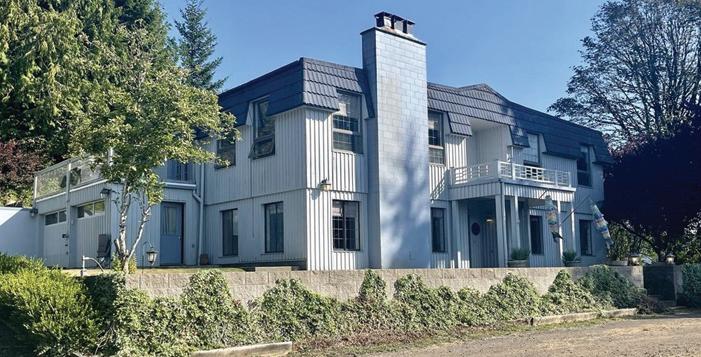
• 10:30 am, fraud, 500 block of 7th Avenue.
• 11:49 am, juvenile problem, 700 block of S 7th Street.
• 12:12 pm, civil problem, 100 block of Norman Avenue.
• 12:24 pm, fight, 4th and Golden.
• 1:32 pm, loud noise complaint, 1400 block of N Bayshore.
• 1:34 pm, Coos County
Sheriff served 60 year old male on a Coos Bay Police warrant and a North Bend Police warrant, 200 block of N Baxter Street.
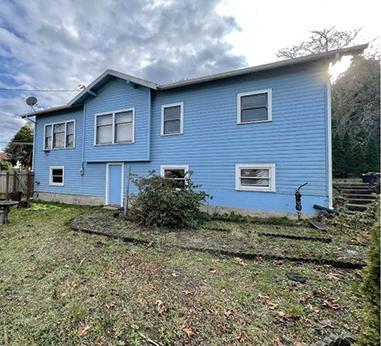
• 2:31 pm, civil problem, 700 block of Taylor Avenue.
• 3:13 pm, threats, 600 block of 9th Avenue.
• 3:58 pm, dispute, 1100 block of S 5th Street.
• 4:12 pm, disturbance, 700 block of S Cammann Street.
• 5:49 pm, 45 year old
male transported back from Newport to be lodged at Coos County jail, 100 block of SW Coast Highway.
• 6:44 pm, dispute, 100 block of E Ingersoll Avenue.
• 6:45 pm, 50 year old
female cited for theft III and computer crimes, 2000 block of Newmark Avenue.
• 6:51 pm, disorderly conduct, Evans Boulevard.
• 7:43 pm, theft, 400 block of N Wasson Street.
• 7:45 pm, Lane County Sheriff served 30 year old

male on warrant/lodged at Lane County jail.
• 7:52 pm, 40 year old
female transported to Coos County jail for strangulationdomestic, assault IVdomestic, burglary I, kidnap II and harassment, 1200 block of N 8th Street.
• 8:31 pm, disorderly conduct, 200 block of N Broadway Street.
• 9:01 pm, dispute, 1000 block of N Bayshore Drive.
• 9:16 pm, prowler, 700 block of S Wasson Street.
• 10:21 pm, 33 year old
female transported to Coos County jail on warrant, Empire Lakes Hull entrance.
• 10:32 pm, shots fired, 6th and F Street.
Coquille
• 1:09 am, dog bark, 700 block of N Elliott.
Tuesday 02/07:
North Bend • 12:08 am, theft from vehicle, Union and

the climate can only be fully understood by considering the functioning and state of all Earth systems together. This will require large-scale collaboration, and the result would provide better information for policymakers.”
In addition to the 27 amplifying climate feedbacks the scientists studied were seven that are characterized as dampening – they act to stabilize the climate system. An example is carbon diox-
Washington.
• 3:36 am, 55 year old female cited result of traffic stop, Sherman and Michigan.
• 10:24 am, hit and run accident, 1300 block of Virginia Avenue.
• 11:34 am, criminal mischief, 1900 block of McPherson Avenue.
• 1:31 pm, 51 year old
female cited for driving while suspended, 16th Street and Oak Street.
• 1:52 pm, theft, 1500 block of Maple Street.
• 6:21 pm, hit and run accident, Virginia and Maple.
• 6:25 pm, pedestrian accident, Virginia and Hamilton Coos Bay
• 7:17 am, fraud/phone scam, 3600 block of Vista Drive.
• 7:57 am, dispute, Pine and 6th.
• 8:24 am, harassment, 700 block of S Broadway Street.
• 9:03 am, civil problem, 600 block of S 11th Street.
• 9:54 am, harassment, 200 block of N Broadway Street.
• 9:55 am, criminal mischief, 100 block of E Ingersoll Street.
• 10:06 am, animal complaint, 300 block of 7th Avenue.
• 10:24 am, 30 year old female cited for menacing and physical harassment, 600 block of N Bayshore Drive.
• 11:26 am, phone harassment, 200 block of E Johnson Avenue.
• 11:32 am, criminal mischief, 100 block of Anderson Avenue.
• 2:26 pm, 21 year old male cited for driving while suspended, 1100 block of Newmark Avenue.
• 2:38 pm, runaway juvenile, 900 block of S 7th Street.
• 2:45 pm, 40 year old male cited for driving while suspended, Ocean Boulevard and Norman Avenue.
• 2:48 pm, juvenile problem, 1300 block of Newmark Avenue.
• 3:18 pm, 35 year old male cited result of traffic stop, 1200 block of Ocean Boulevard.
• 3:25 pm, harassment, 100 block of Norman Avenue.
• 4:06 pm, 54 year old male cited for driving while suspended, 1100 block of Newmark Avenue.
• 6:05 pm, disorderly conduct, 1400 block of N Bayshore Drive.
Reedsport
• 11:05 am, hit and run, Herbal Choices.
• 2:08 pm, fraud, McKay’s.
• 2:16 pm, animal problem, Ward Way Ridgeway Drive.
• 3:25 pm, theft, Liquor
ide fertilization, where rising concentrations of atmospheric CO2 lead to increasing carbon uptake by vegetation.
The effects of the remaining seven feedbacks, including increased atmospheric dust and reduced ocean stability, are not yet known.
The paper in One Earth has a corresponding website that features more about climate feedback loops, including infographics and interactive animations.



Locker.

Wednesday 02/08:
North Bend
• 6:27 am, disorderly conduct, 1900 block of Meade Avenue.
• 7:42 am, indecent exposure, 2300 block of Pacific Street.
• 8:50 am, assault, 1600 block of Virginia Avenue.
• 12:30 pm, theft, 1600 block of Virginia Avenue.
• 2:13 pm, theft of paddle boat, 1900 block of McPherson Avenue.
• 2:34 pm, 46 year old male cited for disorderly conduct, 2200 block of Newmark Street.
• 4:19 pm, juvenile problem, 1500 block of 16th Street.
• 5:31 pm, burglary, 2600 block of 11th Street.
• 6:55 pm, threats, 1600 block of McPherson Avenue.
• 9:03 pm, fight, 2600 block of State Street.
Coos Bay
• 5:10 am, female subject transported to Coos County jail for domestic assault IV, 500 block of Schetter Avenue.
• 7:11 am, burglary, 600 block of Newmark Avenue.
• 7:33 am, theft of services, 100 block of Johnson Avenue.
• 7:47 am, animal complaint, 300 block of 7th Avenue.
• 7:51 am, hit and run accident, 1000 block of Newmark Avenue.
• 7:56 am, theft of license plate, 400 block of N Bayshore Drive.
• 10:43 am, missing person, 900 block of Crocker Street.
• 10:52 am, disturbance, 200 block of E Johnson Avenue.
• 11:02 am, ID theft, 900 block of S Empire Boulevard.
• 11:07 am, dispute, 200 block of E Johnson Avenue.
• 12:30 pm, dead animal, Date and Telegraph.
• 12:55 pm, female subject served on warrant, 500 block of Central Avenue.
• 1:30 pm, disorderly conduct, 800 block of S Broadway.
• 4:30 pm, 46 year old female cited on warrant, Broadway and Market.
• 4:35 pm, 47 year old male cited for disorderly conduct II, 500 block of Fulton
Avenue.
• 4:53 pm, unlawful entry into motor vehicle, 600 block of N 12th.
• 5:02 pm, criminal mischief, 2000 block of Newmark Avenue.
• 5:47 pm, male subject cited for theft III, 400 block of Golden Avenue.
• 6:02 pm, disorderly conduct, 100 block of Central.
• 6:02 pm, threats, 2000 block of Newmark Avenue.
• 8:54 pm, female subject transported to Coos County jail on warrants, 1000 block of Newmark Avenue.
• 10:39 pm, disorderly conduct, Ocean and Knife River.
Coquille
• 9:07 pm, threats/cyber bulling, 400 block of W Central Boulevard.
Reedsport
• 11:21 am, juvenile problem, Highland Elementary School.
• 12:29 pm, theft, 500 block of N 20th Street.
• 1:25 pm, civil dispute, Highland Elementary School.
• 10:03 pm, trespassing, Riverside Manor.
Thursday 02/09:
North Bend

• 3:04 am, theft of bicycle, 1900 block of Meade Avenue.
• 8:11 am, disorderly conduct, Newmark and Broadway.
• 8:43 am, theft of mail/ packages, 2100 block of Everett Avenue.
• 9:49 am, 44 year old male transported to Coos County jail on warrant, Broadway and Newmark.
• 10:54 am, barking dog complaint, 1500 block of Johnston Street.
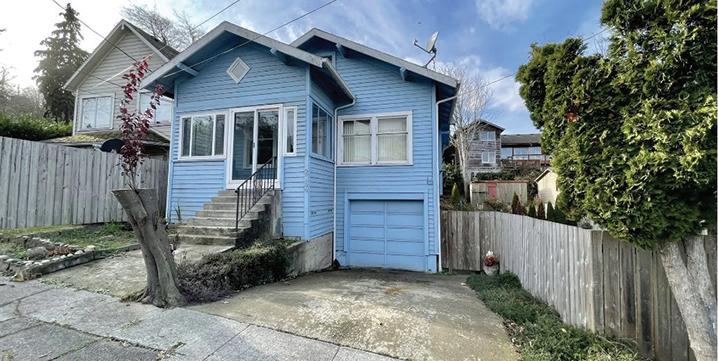
• 11:17 am, disorderly conduct, Newmark and Broadway.
• 12:17 pm, civil problem, 1700 block of Waite Street.
• 12:29 pm, criminal mischief, 2000 block of Virginia Avenue.
• 1:18 pm, disorderly conduct, 1400 block of Airport Lane.
• 2:34 pm, disorderly conduct, Broadway and Newmark.
• 3:59 pm, fraudulent use of credit card, 2100 block of
Broadway Avenue.
• 4:07 pm, neighbor dispute, 800 block of Colorado Avenue.
• 4:58 pm, neighbor dispute, 2600 block of 11th Street.
• 5:40 pm, juvenile problem, 1500 block of 16th Street.
• 9:53 pm, dispute, 2200 block of Hamilton Avenue.
• 10:13 pm, loud noise, 2000 block of Inland Drive.
• 10:48 pm, threats, 2700 block of Stanton Avenue.
Coos Bay
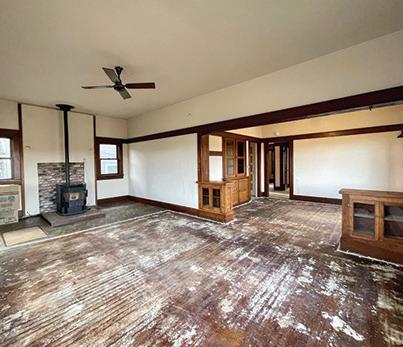
• 12:24 am, fight, 800 block of S Broadway Street.
• 1:05 am, 30 year old male transported to Coos County jail on warrants,
Highway 42S mile post 3.5.
Monday 02/13:
• 1:21 am, disorderly conduct, 900 block of 11th Street SE.
• 11:32 am, criminal mischief, 300 block of Highway 101.
• 12:55 pm, fraud, 200 block of 15th Street SE.
• 10:20 pm, shots fired, 56100 block of Prosper Junction Road.
Tuesday 02/14:
• 10:47 am, assault, 700 block of Airport Way, Lakeside.
• 11:35 am, accident,
• 2:17 pm, disturbance, 88600 block of Highway 42S.
• 7:04 pm, disturbance, 1000 block of Oregon Avenue SW.
Wednesday 02/15:
• 12:35 pm, harassment, 500 block of Delaware Avenue SE.
Thursday 02/16:
• 1:22 pm, theft, 600 block of 2nd Street SE.
• 6:44 pm, theft, 60 block of Michigan Avenue SE.
Friday 02/17:
• 11:23 am, criminal mischief, 1300 block of 11th Street SW.
• 3:36 pm, shoplifter, 600 block of 2nd Street SE.
• 3:54 pm, assault, 80 block of Michigan Avenue SE.
Sunday 02/19:
• 11:59 am, animal complaint, 2600 block of Franklin Ave.
• 12:19 pm, fraud, 200 block of 13th Street SE.
• 10:01 pm, noise complaint, 300 block of Lexington Avenue NE.