$5M tapped for drinking water
STAFF REPORT Country Media, Inc.
Conservation groups are celebrating a big win in the Oregon legislature – a new $5 million fund that will help communities protect their source drinking water.
Communities on the Oregon Coast are particularly interested in acquiring the forested lands that supply their drinking water, according to a release from Sustainable Northwest.
“Protecting the streams, creeks and rivers that supply a community’s drinking water is an incredibly effective way to ensure high quality and reliable quantities of clean drinking water to communities and water suppliers,” the release state.
The new fund will be administered by the Oregon Watershed Enhancement Board, and will allow Oregon to access hundreds of millions in federal matching funds.
“This program is well poised to allow communities to decide how the forests providing their drinking water are managed and cared for,” Sustainable Northwest Forest Program Manager Daniel Wear said. “Land ownership is an effective way to connect communities to the water they rely on for daily life.”
“This new fund opens up hundreds of millions in federal matching funds for Oregon communities to protect watersheds and secure safe and clean drinking water,” Coalition of Oregon Land Trusts Executive Director Kelley Beamer said. “Thank you to our legislative champions, Reps. Helm and Owens, for prioritizing this new grant program and working to expand access to clean, reliable, and affordable drinking water across the state.”
The funding will provide $4 million for communities to acquire land or purchase conservation easements on properties, while also establishing a $1 million fund for projects to apply for loan repayment on projects that would have previously qualified for this funding.
The following communities and water districts are just a few of the many poised to benefit from the new fund:
• Lincoln City Water District received a Drinking Water Source Protection grant from the Oregon Department of Health (OHA) and plans to move forward with identification of strategic land acquisition opportunities in the near future.
• Neahkahnie Water District will be buying property containing multiple wells providing the community’s drinking water supply. This community would benefit from loan reimbursement from this acquisition project.
See WATER, Page 10
There’s no place like HOME
Our primary mission is the partner with couples and build homes that we then sell to them through an affordable mortgage.
RYAN HOOVER Country Media, Inc.
It would be no exaggeration to say that the work
Lucinda Taylor does with Habitat for Humanity of Lincoln County (HFHLC) makes her a miracle worker.
Taylor works as the Executive Director of HFHLC, and her miracles come in the form of helping people in need build and own their first homes, repair them homes, and recover from natural disasters, among other things.
“Our primary mission is the partner with couples and build homes that we then sell to them through an affordable mortgage,” Taylor said. “We do other things along the way. We do a home repair program for first-time homeowners. We’re just about to launch individual development accounts, so savings opportunities where folks can get matching funds. We
do disaster recovery as well.”
Latest miracle
Her latest miracle will grant two family’s new homes in Lincoln City, which they will help build themselves and then purchase from HFHLC. These two homes will be the 17th and 18th homes HFHLC has built in Lincoln County since 1995.
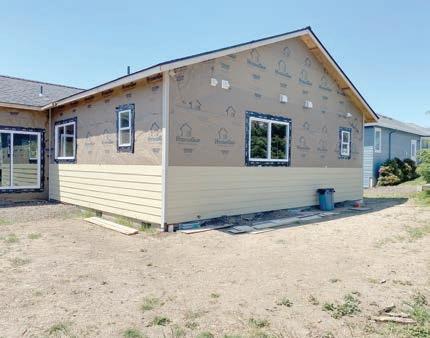

One unique aspect about these latest builds is that they will permanently stay as affordable homes for low-income households making 80% or less of the area’s median income. Prior to these two homes, if the homeowner decided to sell their home, it could be sold on the open market. But, Taylor added, most families opt to keep the homes they helped build.
“We moved to make [these two homes] permanent affordability, where Habitat for Humanity maintains ownership of the land, and

then the homebuyer will purchase the home itself,” Taylor said. “It comes with a deed restriction where it can only be sold to low-income households at 80% AMI or less for as long as that home is standing.”
Taylor said HFHLC uses an extensive homeowner selection process to find the right families for their homes – a process that involves families meeting income requirements, being reviewed by HFHLC’s board of directors, and having their current living conditions assessed in a home visit. But, more than anything, Taylor said applicants are chosen based on having the greatest needs.
“They look at things like, what’s the current living condition? Is the family overcrowded? Are there draft windows? Are there leaks roofs? Do they have running water? They’re looking at
Poop and Prey
Lucinda Taylor, Habitat for Humanity Lincoln County
the condition of the home,”
Taylor said. “The folks who have the greatest need are put at the top, which the committee will recommend to the Board of Director’s without any personal identifying information.”
Sweat equity
Another aspect that makes HFHLC’s home-construction program unique is their “sweat equity” requirement. The organization asks families to help build their homes, providing them with an opportunity most homeowners never get.
For a single-parent family, they ask for 350 hours of service, with 100 hours able to be completed by family and friends. For a double-parent family, they ask
for 500 hours of service, with 200 hours able to be completed by family and friends.
“We have a requirement that each family help build their home,” Taylor said. “So, there’s a sweat equity requirement. One of the reasons we actually want them to build the homes is because they learn the skills, they learn how that home came together. They learn what their boundaries are, but they also learn that they can do it. They can be proud of a home that they helped build.”
Every family member isn’t always able to help with construction, so Taylor and her team use their creative powers to come up with other ways these people can
What researchers re finding about gray whales
SEAN NEALON
News Guard Guest Article

Oregon State Universi-


ty researchers estimate that gray whales feeding off the Oregon Coast consume up to 21 million microparticles per day, a finding informed in part by poop from the whales.
Microparticle pollution includes microplastics and other human-sourced materials, including fibers from clothing. The finding, just published in the journal Frontiers in Marine Science, is important because these particles are increasing exponentially and predicted to continue doing so in the coming decades, according to researchers Leigh Torres and Susanne Brander.
Microparticle pollution is a threat to the health of gray whales, in addition to obstacles related to increased boat traffic and loss of prey.

“These are quite scary numbers,” said Leigh Torres, an associate professor at Oregon State and an author of the paper. “I think they should raise concern for people who care about the marine environment or about their own environment and exposure to microplastics.
“Little by little we are all getting exposed to more and more microplastics. That’s inescapable at this point across all ecosystems, including right off our coast here in Oregon.”
Susanne Brander, an associate professor and ecotoxicologist at Oregon State
and co-author of the study, said the findings reinforce the need to curb the release of microparticles because of the adverse impacts they have on organisms and ecosystems.
“This issue is gaining momentum globally and some states, such as California, have taken important steps,”


Brander said. “But more action needs to be taken, including here in Oregon, because this problem is not going away anytime soon.”
The study focused on a subgroup of about 230 gray whales known as the Pacific Coast Feeding Group. They spend winters in Baja California, Mexico and migrate north to forage in coastal habitats from northern California to southern British Columbia from June through November.
Since 2015, Torres, who leads the Geospatial Ecology of Marine Megafauna Laboratory in the OSU Marine Mammal Institute, and her team, including doctoral student Lisa Hildebrand, have used drones and other tools to study the health and behavior of this subgroup of gray whales off the Oregon Coast.
See WHALES, Page 10
Amazing discovery PAGE 9 K9 Sniff Project PAGE 3 July 11, 2023 Lincoln
Since
$1.50 Police Blotter 3 Opinion 5 Classifieds 7 Comics ...................... 11 INDEX WEATHER TheNewsGuard.com WED. THU. FRI. SAT. SUN. MON. TUE. 60 /51 62 /51 63 /51 63 /52 63 /53 63 /53 61º/51 VOL. 96 NO. 26
City’s Largest and Most Trusted News Source
1927
The new Habitat for Humanity home’s exterior is beginning to take shape.
The Ambriz Sánchez family stands inside their new home while it was under construction.
Courtesy photos from Lucina Taylor / Habitat for Humanity
Courtesy from ODSU
The study focused on a subgroup of about 230 gray whales known as the Pacific Coast Feeding Group. They spend winters in Baja California, Mexico and migrate north to forage in coastal habitats from northern California to southern British Columbia from June through November.
See HOME, Page 10
“ “
Read the reaction from the family who has received the latest Habitat for Humanity home on Page 12.
Coast Moment
Sunset over Smith River Estuary. See more Coast Moments at thenewsguard.com

Parks now offering same-day online reservations
Visitors hoping to camp last minute at the Oregon Coast can now check online to view and book same-day openings when sites are available at the coast.
The new option is part of a pilot program at the coast by the Oregon Parks and Recreation Department (OPRD).
Tent and RV campers can make a same-day reservation online up until 11:59 p.m. on the day they arrive at the
coast by visiting https://oregonstateparks.reserveamerica.com. Yurt and cabin reservations must be made before 6 p.m. the day of arrival due to the staffing required to assist with keys or codes. Visitors can also make a reservation by calling (800) 452-5687 Monday through Friday. You can also make sameday reservations at the park if there are campsites available.
COMMUNITY CALENDAR

OPRD is installing free limited Wi-Fi for reservation access at all beach campground registration booths. OPRD will waive the $8 reservation fee for all same-day reservations at the coast during the pilot program.
For more information about the new option, visit the OPRD online FAQs. Or go to information center at park. info@oregon.gov.

Public invited to SPCH Auxiliary’s fundraiser
Support your local hospital while satisfying a sweet tooth at the Cookies & More fundraiser hosted by the Samaritan Pacific Communities Hospital Auxiliary Friday, July 21.
The bake sale will be set up in the hospital’s galleria beginning at 9 a.m. and will continue until all items are sold out. Cookies will be priced at $4 per half dozen and there will be a variety of
other baked goods for sale. Proceeds are used to fund special equipment and supplies requests submitted by hospital departments. Major credit cards, checks and cash are accepted.
August 6 Panther Creek Monthly Community Breakfast
From 8 a.m. until 11 a.m. at the Panther Creek Senior and Community Center, 655 Wayside Loop, Panther Creek, in Otis. Cost: $8 adults. $4 under 12. For more information and directions, visit pcsacc@centurylink.net.

Lincoln City Senior Center Events
Dementia Caregiver Support Group meets at 10 a.m. 1st and 3rd Thursdays. Tai Chi 8:15 a.m. and 9:30 a.m. on Mondays and Wednesdays. No membership required. Donation to instructor suggested.
Folk Music Circle to begin meeting Thursdays at 5:30 p.m. beginning in April.
Weekly Walk on LCCC track. No charge or membership required. 10:30 a.m. Mondays. Chair Yoga 11:30 a.m. Mondays. No membership required. Donation to instructor suggested.
On Going
Central Coast Word Surfers
Writing group 1 to 3 p.m. every second Saturday of the month. Free. Driftwood Public Library, 801 SE Highway 101 in Lincoln City
Lincoln County Genealogical Society
Regular meeting first Saturday of each month from 10-10:45 a.m. Programs begin at 11 am. We host a kaffeeklatsch before our meeting from 9:30 am -10 a.m. All are welcome to attend. Call 503-302-8892, or visit LCGSOregon.org.
Free Meal For Veterans

Homemade soup and sandwiches every third Wednesday from 12 p.m. to 2 p.m. at the Lincoln City B.P.O Elks #1886 at 1350 SE Oar Avenue in Lincoln City
If you have a community event coming up, send brief details with the date, time, location and contact phone/email to jruark@countrymedia.net.
2 TheNewsGuard.com July 11, 2023
Elliot Schwarz / Country Media, Inc.
Keeping your pet safe during the summer
LINCOLN COUNTY SHRIFFS OFFICE
While many of us welcome the warmer weather, we must remember that some of our loved ones may find themselves in an uncomfortable predicament. It could even result in their death.
Pets regularly accompany many people on trips and errands, which often leaves them alone in a vehicle. Pets should not be left unattended in a parked car. On warm days, and even cloudy days, the temperature in a car can rise to dangerous levels in minutes, even with the windows left open.
A brief stop at a store or another quick errand could quickly turn into 15 minutes or more before we know it. Leaving pets in a car for this time could be a mistake that takes their life. Leaving the windows cracked won’t cool the car enough to protect your beloved pet, even if they have water available.
Oregon was the 11th state to pass a Good Samaritan Law, which allows anyone – not just law enforcement –to enter a vehicle (by force
or otherwise) to remove an unattended domestic animal without fear of civil or criminal liability. If you come upon a scenario where you believe an animal could perish, please contact our dispatch center at 541-265-0777 before deciding to enter the vehicle. Be ready to convey your location, the vehicle description, and a description of you. Our Animal Service Deputies will make every effort to respond quickly.
If you determine that more immediate life-saving action is necessary, please ensure you do all of the following:
Have a reasonable belief that the animal is in imminent danger.
Notify law enforcement or emergency services either before or soon after entering the vehicle.
Use only the minimum force necessary to enter the vehicle.
Stay with the animal until law enforcement, emergency services, or the owner or operator of the vehicle arrives.
For more information and tips visit www.lincolncountysheriff.net

Sheriff’s Office wants electronic storage detection K9 officer
STAFF REPORT Country Media, Inc.
The United States is one of the top three destination countries for human trafficking and produces and consumes more child exploitation material than any other country year after year, according to the Lincoln County Sheriff’s Office.
“Based on the LCSO detectives’ caseloads, we are seeing a comparable increase in our community as well,” the LCSO states in a release.
“To assist our community and partner agencies in protecting our most vulnerable population, the Lincoln County Sheriff’s Office is seeking to establish an electronic storage detection (ESD) K9 program to supplement our K9 Unit.”
An ESD K9 is a specially trained scent detection dog trained to smell the chemical commonly found in digital storage devices, according to the LCSO.
“These K9s allow detectives to cut search times exponentially and increase success in finding hidden electronics during searches,” the LCSO states. “In the areas they are in service, ESD K9s have a 75% increased success rate at finding hidden devices compared to detectives alone and are responsible for hundreds of arrests. While there are ap-
Foot pursuit leads to local man’s arrest
JEREMY C. RUARK Country Media, Inc.
Details have now been released by Lincoln City Police Department (LCPD) following a foot pursuit that began at 11th Street and Highway 101 Wednesday afternoon, July 5.
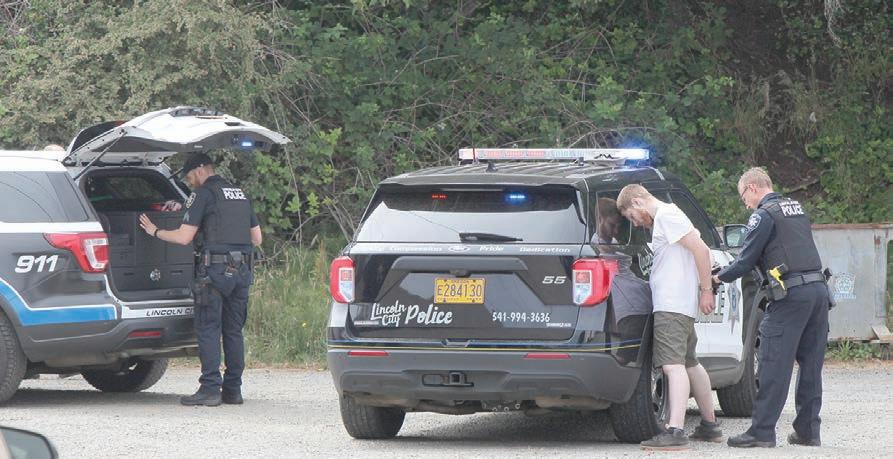
“LCPD patrol officers saw a male subject they knew to be, 25-year-old Billyray Branum of Lincoln City at 11th Street and Highway 101,” LCPD Lt. Jeffrey Winn said.
“The officers knew Branum had an active felony warrant
out for his arrest for probation violation on a first-degree burglary charge. They also knew there was probable cause for his arrest on a local charge for offensive littering.”
When the officers attempted to contact Branum, he and a female not wanted by the police, fed. Police began pursuing Branum. Additional officers arrived to assist, and a perimeter was set. Officers called for one of the LCPD K-9 teams, however no K-9’s were on duty at the time.
“While awaiting the arriv-
POLICE BLOTTER
The police blotter relates to the public record of incidents as reported by law enforcement agencies.
al of the K-9 team, officers located Branum hiding among construction equipment behind businesses along the west side Highway 101 and he was taken into custody,” Winn said.
Branum told officers that he had ingested an unknown amount of fentanyl just prior to the arrest, according to Winn, so he was given medical assistance at the scene and then transported to Samaritan North Lincoln Hospital for further medical evaluation and treatment.
“He was later transported
to the Lincoln County Jail where he was lodged on the felony warrant along with additional charges of offensive littering, third degree escape, and interfering with a police officer,” Winn said.
The female who also fled and is known to police was not connected by officers.
“No injuries resulted from this incident, and the LCPD wants to thank North Lincoln Fire & Rescue and Pacific West Ambulance for their response and assistance.,” Winn said.
proximately 120 of these K9s nationwide, there are currently none in Oregon.”
The LCSO officials said they are is excited to have partnered with Operation Underground Railroad (OUR), a nonprofit dedicated to finding and rescuing victims of human trafficking and child exploitation throughout the world.
“In our partnership with OUR, we are seeking assistance from our community, businesses, organizations, and individuals, to defend the helpless by donating to help establish an ESD K9 in Lincoln County,” the LCSO release states.
The LCSO lists several ways to donate and all donations are tax deductible. The law enforcement agency is aiming for a fundraiser deadline of Sept. 30. You can donate directly to https://donor ourrescue.org/-/NMSACXLP?member=SLPNSAKK
You can donate directly by cash or check at the Lincoln County Sheriff’s Office Support Services Division on the second floor of the Lincoln County Courthouse or you can mail a check made out to the Lincoln County Foundation, Attn LCSO ESD K9 Fund at Lincoln County Sheriff Community Fund ESD, K9 Program PO BOX 622, Newport, OR 97365.
All individuals arrested or charged with a crime are presumed innocent until proven guilty. Information printed is preliminary and subject to change. For specific details about cases listed, contact the appropriate law enforcement agency.

Lincoln City Police
June 20
8:53 a.m. Traffic crash reported in the 3000 block of NE 28th Street. Reporting party needed a report for insurance purposes. Report taken.
9:15 a.m.
Caller is a neighbor in the 400 block of SE Quay Avenue are reports a vehicle was possibly broken into the previous night and they have footage. Back door of the home was open with glass everywhere. K9 was deployed and the house was cleared.
12:27 p.m.
Caller at NW Logan Road and Highway 101 reported a cell found. Report taken.
2:34 p.m.
Officers arrested a subject at Siletz Bay Park charged with Driving Revoked/Misdemeanor. Subject taken to jail.
4:44 p.m.
Officer responded to the 95 block of SW Highway 101 and arrested a subject on a warrant out of Oregon State Parole Board. The subject was transported to jail.
June 21
10:38 a.m.
Caller in Lincoln City reported possible crimes against daughter. Report taken.
1:37 p.m.
A DOA reported in the 3100 block of NE 26th Street. North Lincoln Fire & rescue and Pacific West Ambulance responded, confirmed death. Medical examiner and district attorney released the body to Pacific View.
June 22
10:15 a.m.
A 911 call for a travel trailer on fire in the public parking lot on SE 3rd Street. North Lincoln Fire & Rescue responded. Vehicle fully engulfed. No injuries reported.
11:13 a.m.
A Hit and Run reported in the 4100 block of Logan Road. Caller reports vehicle was hit in the parking lot while parked. Damage to vehicle. No injuries. Report taken.
11:34 a.m.
An abandoned vehicle tagged and removed in the 1100 block of SW 50th. Car Care towed vehicle.
11:40 a.m.
Suspicious activity reported in the 1500 block of SE Devils Lake Road. Report taken.
12:50 p.m.
A subject was arrested for a Warrant out of Lincoln County in the 1000 block of SE Oar Avenue.
3:37 p.m.
Caller in the 2000 block of NE 22nd Street reports a disturbance. Report taken.
7:53 p.m.
Caller in the 6800 block of SE Fleet Avenue reports
harassing phone calls.
June 23
8:30 a.m.
Multiple 911 calls in the 6200 block of SW Highway 101 regarding a female standing in the southbound lane of Highway 101. Female was contacted and transported to LCPD.
10:07 a.m.
A non-injury traffic crash reported at 17th Street and NW Highway 101 between a postal truck and another vehicle. One driver was cited for Failure to Yield.
11:06 a.m.
Caller in at NW Highway 101 and NW 39th Street reported a male was dragging a victim into the highway by his hair and physically assaulting him. Officers took the male into custody and transported him to jail for Assault IV and Disorderly Conduct. Victim was transported by Pacific West Ambulance to Samaritan North Lincoln Hospital.
June 24
5:34 p.m.
Caller in the 1500 block of SE Devils Lake Road located items left after the kite festival. Report taken.
5:39 p.m.
A subject was arrested in the 4100 block of NW Logan Road for a Warrant charging DUII. Subject transported to jail. Subject’s dog was taken to the police department.
June 25 4:25 a.m.
Caller in the 3800 block of NW Jetty reports a female took truck keys and I-Phone.
10:15 a.m. Report of a Hit and Run at SE 32nd Street and Highway 101. Officers located the vehicle and driver at a nearby home. One subject was taken into custody, charged with Failure to Perform Duties of a Driver, and transported to jail.
2:01 p.m.
A non-injury multiple traffic crash reported in the 100 block of SW Highway 101. One driver cited for Careless Driving.
2:56 p.m.
Caller in the 1500 block of SE 3rd Street reports two juveniles suffered a dog bite on hands and arm. Animal control notified and a report taken.
3:06 p.m. Report of a Hit and Run in the 1500 block of SE East Devils Lake Road.
3:53 p.m.
Caller at 12th Street and NE Highway 101 reported aggressive intoxicated male upset after caller not allowing him to drive. The male was taken into custody and transported to jail for Domestic Harassment, Menacing and Reckless Endangering.
4:30 p.m.
Caller in the 100 block of SW Highway 101 reported theft of bag/wallet. Unknown suspect used credit card at Burger King.
5:31 p.m.
A driver was cited and release for Driving While Suspended in the 4100 block of N Highway 101.
6:38 p.m.
Suspicious activity reported in the 4100 block of N Highway 101. Caller reported tires slashed.
Local man dies in Polk County crash
STAFF REPORT Country Media, Inc.
A Depoe Bay man has died in the traffic crash in Polk County.
Oregon State Police responded to the single vehicle crash at approximately 2:35 p.m. Monday, July 3, off Highway 22W, near milepost 20, in Polk County.
The OSP preliminary investigation indicated a Toy-
ota Highlander, operated by 74-year-old William Terry Bailey of Depoe Bay, left the highway, and traveled approximately 1,000 feet through a field before striking a power pole. The vehicle continued to Merrill Lane NW where it struck a fence.
Bailey was declared deceased at the scene. Investigator believe Bailey may have suffered a medical event prior to the crash.
3 TheNewsGuard.com July 11, 2023
SHERIFF’S TIPS OF THE WEEK
Jeremy C. Ruark / Country Media, Inc.
Police detain the suspect following the foot pursuit.
Sodexo, elevating its employees every chance it gets
SARAH KELLY Country Media, Inc.
Empowering its employees and helping them to feel valued is a main element of Sodexo in order to give their employees a sense of belonging, according to the company’s mission.
The company strives to care for its employees people not just when they are on the job but also in their everyday life. Improving their employee’s quality of life is one aspect the company is constantly working to elevate. Sodexo views their most precious asset as all the people who work hard for them.
Founded in France in 1966, Sodexo now operates globally, serving millions of consumers daily. The company’s employees work in the custodial and food service industries all throughout the world, including Lincoln County where they are currently contracted with the school district. Shannon Garza is Sodexo’s Operations Manager in Lincoln County. She looks after approximately 40 employees who work across 11 different buildings within the county.
Garza, who started working for Sodexo about three to four years ago, said she values each person she works with, no matter their job. She knows how vital every employee is to the company and the schools they take care of. Without these dedicated people the schools would not be able to function, she said, adding that Sodexo employees keep the schools clean and the children safe. They are the people who feed the children their school lunch-
es. They get to know the kids and do their part in helping to raise them into bright and caring people.

The people Sodexo employs are more than just a work force, according to Garza.
“These people aren’t just employees, they’re family,” she said. “They work hard and their job is not easy. I expect a lot from my employees and I’m going to help them as much as I can. If you do what you’re supposed to do, if you show up to work on time, if you follow all the company policies then I’m going to do whatever I can to help you.”
Garza said she takes great pride in the people she hires because she knows they too will take pride in their jobs, always working their hardest.
“I’m really passionate about helping my employees do better, work harder and rewarding them every time that they do. I can’t think of working any other place,” Garza said.
Reflecting on their previous job working with adults with disabilities at Shangri-La, Garza recalls how amazing Sodexo was with hiring their employees.
“Sodexo would allow them to have job coaches with them to help them,” she said.
It was this level of care and involvement that led Garza to consider changing companies. After researching Sodexo, Garza said she realized how truly special the company is.
It’s a company that I really believe stands behind its employees,” she said.
After working hard for Sodexo, Garza was promot-
OBITUARIES
Deana Kay Birdsong
March 11, 1947 - June 29, 2023
Deana “Deanie” Kay Birdsong, 76, of Otis, Oregon, died peacefully, surrounded by family, June 29, 2023 at her home in Otis.

She was born March 11, 1947 to Norma (Tuggle) and Richard Miller in Coffeyville, Kansas, and raised in Midland, Texas with her brother Richard and sisters, Sharon, Vickie and Linda.
On April 27, 1973, Deanie married the love of her life, Lloyd Birdsong, in Parsons, Kansas. They later moved to Chula Vista, California where they raised Linnie, Diane and Richard. Deanie was a homemaker and helped with the pitching school, Birdie’s School of Fastpitch.
ed to a position that allowed her to help other people. She was able to hire Jesús and Lupita Ambriz Sánchez, recent recipients of a Habitat for Humanity home. She said she saw something special in them and knew that they would be perfect for the company.
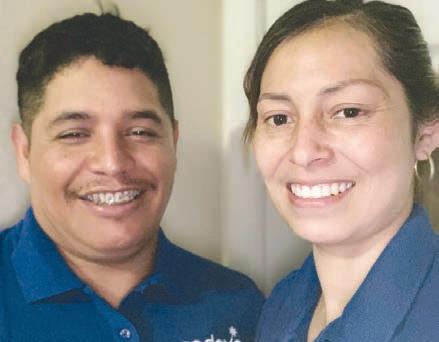
Lupita Ambriz Sánchez proved her right when she took the initiative to learn English to better help her in her job. She is now in a lead position at the school she works in. Both are incredibly hard and diligent workers, always showing up and doing what needs to be done, according to Garza.
Garza said she enjoys cre-
ating opportunities for people to love their job and move forward in their careers. She feels like, through Sodexo, that is possible. According to Garza, the level of care the company has for its employees is above and beyond what many would expect from such a large business. “As an employee of Sodexo you are made to feel like a family,” she said. “They aim to improve the people and communities around them, helping one another achieve a stronger connection. The whole company globally is a bright reflection for who we are. It’s a great company to work for,” Garza said.
Deanie, in her younger years enjoyed basketball, track, soccer and softball. She loved to cook and bake and loved her family. She enjoyed watching all of her children play sports, never missing an event. She was happiest when surrounded by loved ones.

She’s survived by her children, Linnie (Tracy), Diane, Richard (Denise), and Shawnee (Bob); her grandchildren, Ashley (Michael), Timothy, Jarrod (Hollie), Alec, Caitlyn, Cassidy (Vince), Triston (Sydney), Abbigail (Ramiro), Deagan, and KayLee; her great-grandchildren, Bella, Cadence, Ayden, Lillie, and Mason; and her fur babies Toadie, Dexter and Wolfie. A service will be held at 1 p.m. on July 8, 2023 at 3565 NE West Devils Lake Road, Lincoln City, Oregon.
Evelyn Warkentin Nickel
Evelyn “Evy” Warkentin Nickel was born April 12, 1931 in Dallas, Oregon to parents Henry and Elizabeth Warkentin. She passed away May 24, 2023 at the Dallas Retirement Rehabilitation Center at age 92 as the result of a stroke.
The youngest of four children, she was preceded in death by sisters Grace Willems, Ruth Goertzen and brother Ben Warkentin.
She was a socially precocious child, singing duets in church starting at age five. Evy planned her own birthday party at age six asking her mother to write down her menu, the guest list and who would bring the children to the party. Evy had a gift for fun and hosting expert parties all her life.
After high school she attended bible college and met and married her soul mate, John L. Nickel, on Ground Hog’s Day 1950 in Shafter, California. While John completed his Ph.D. at U.C. Berkeley, Evy studied design.
They went on to have two much loved children Carol Carter of Dallas, Oregon and John A. “Tony” Nickel of Mount Hermon, California. She is survived by three grandchildren Courtney Barnes of Danville, Kentucky, Clayton Carter of Portland, Oregon, Anna Nickel of
San Jose, California, and five great grandchildren. Numerous nieces, nephews, cousins and friends survive.
Throughout married life, John and Evy lived in eight countries and visited many more. While John worked as a professor, scientist and executive, Evy took on many interesting occupations. She had a television show in Africa where she taught arts, crafts and homemaking skills. She taught English as a Second Language in Cambodia for the U.S. State Department and also helped establish a school in Colombia, which is still flourishing.
Evy was an avid tennis player and a good enough golfer and swimmer. She was a singer, talented in arts and crafts, and active in church all of her life.
John and Evy retired to Roads End in Lincoln City in 1990. In 2009, John preceded Evy in death.
Evy remained active in the community and at St. James Santiago Episcopal Church, helping establish the Community Meal Program and the St. James Santiago School. A service to honor her life will be held at 2 p.m. on Sat., July 15, at St. James Santiago Church. The church is located at 2490 NE Highway 101 in Lincoln City, Oregon.
The family requests that in lieu of flowers, memorial gifts be made to the St. James Santiago Church Youth Camping and Scholarship fund, a favorite charity of Evy’s.
TheNewsGuard.com July 11, 2023 4
Courtesy photo from Jesús and Guadalupe Ambriz Sánchez Proud Sodexo employees, Jesús and Guadalupe Ambriz Sánchez pose for a quick photo.
USPS
388-100 Published Weekly
Fax: (541) 994-7613

www.thenewsguard.com

Annual Subscription Rates:
$70.00 In-County
$90.00 out of County
David Thornberry
Publisher
Jeremy Ruark
Regional Executive Editor
 Robyn Smith
General Manager and Marketing Consultant
Robyn Smith
General Manager and Marketing Consultant
WRITE TO US:
We want to hear from you and encourage you to write letters to the editor.
Because of space limitations, shorter letters have a better chance of being printed. We may edit your letter for style, grammar and clarity, although we do as little editing as possible. Letters longer than 300 words will not be printed. Letters can be on any topic, but letters on local issues will be given preference.
Letters to the Editor that attack or challenge private individuals or private businesses will be refused. Challenges to public officials may be permitted. Only one letter per writer will be published on a single topic each month.
Thank you letters are limited to mentioning individuals and non-commercial organizations and cannot exceed 200 words.

Paragraph here on deadlines for each paper.
We also welcome longer guest columns. These might be columns written by newsmakers, public officials or representatives of local organizations. These can run a little longer in length, usually between 450 and 700 words. To verify authenticity, all letters and guest columns must be signed and include your address and daytime phone number. We won’t print your street address of phone number. Any guest opinion may appear on the (newspaper name) website. While we strive to publish all viewpoints, The News Guard and Country Media reserve the right to refuse to publish any letter or guest editorial.
Letters to the Editor or guest columns can be sent to: newsguardeditor@ countrymedia.net or P.O. Box 848, Lincoln City, OR, 97367-0848. Letters can also be submitted at thenewsguard.com.
ADVERTISING
DEADLINES:
Advertising: Wednesday, 5 p.m. Legals, Community news and listings: Thursday at 12 p.m. Sports information and Letters to the editor: Friday at noon.
POSTMASTER:
Switch fireworks to a drone show
I write to encourage all Lincoln County leaders, decision makers, and residents to support switching from traditional fireworks to a drone show.
The benefits are many and obvious. Drone shows don’t cause noise trauma; don’t use toxic materials; don’t cause a fire risk. They are, however, reusable, rechargeable and re-programmable.
I was stunned this 4th of July went on “business as usual” while millions face a relentless summer of smoke and poor air quality caused by wildfires. Last week, Detroit’s air pollution was worse than any other city in the world. Yet, collectively we decided shooting off explosives and creating more air pollution and risking more fires was a good idea.
simply for our amusement?
Patriotism is having love for or being devoted to one’s country. Well. I love and am devoted to our county. Our county gives us more reasons to move away from fireworks than most.
In Lincoln City alone there are 7.5 miles of beaches we love to comb. Depoe Bay hosts 200 resident whales we delight in. The Siuslaw National Forest runs up and down the county and nurtures us all. The natural resources Lincoln County provides are innumerable.
Nothing is more patriotic than protecting those natural resources. Moving to a drone show on the 4th of July would be a big and very visible step. Coming together to make that happen would truly be something to celebrate (No fireworks necessary).
Options for submitting obituaries:
• Death notice: Includes the person’s name, age, town of residency, and info about any funeral services. No Charge. Add a photo $25.
• Standard Obit: The cost is $75 for the first 200 words, $50 for each additional 200 words.

Includes a small photo at no extra cost. Add $25 for each additional photo.
• Option for a 50% off pickup (no changes) for an obit within 2 weeks of original publish date.
• Display Obit: $9.50 pci. Add color for $5.00 pci. Includes a small photo at no extra cost.
• Obit includes placement online.
What is patriotic about polluting the air we all breathe and putting our land at risk
Mary Kate McVey Depoe Bay
VIEWPOINT VIEWPOINT
RANDY STAPILUS
News Guard Guest Column
The human dance of inaction
MICHELLE PIERSON
YOUNG News Guest Guest Column
through 3D printing, for example, and lacking traceable numbers – and required that nearly all existing guns in the state carry a tracking number by September 2024. It also set up an investigation into the sources of gun violence, which may be useful.
Gun safety advocates didn’t get all they wanted, but they got at least half a loaf, maybe more.
I would bet all of my dollars, and if you’re smart, you’d throw into that pot as well, I’m not the only person who’s spent a fair amount of time in self-recrimination, seasoning liberally with head shakes and sighs, for all the things I should have done, those I should be doing, and then imagining I probably won’t be doing them later.
Let’s break this down into simple facts, and if you’ll stick with me to the end, I’ll teach you a few tricks to make the odds of success ever in your favor.
Michelle Young
All that, instead of doing the thing/things that need doing. As far as time well spent, that’s not it. Trying to make some money on this bet is the only good those sad hours might ever produce.
But the human dance of inaction isn’t nearly as confusing and upsetting once we understand some human science stuff. There are very good reasons people keep eating bacon when their heart specialist tells them it will kill, or someone goes hard on the simple carbs when type 2 diabetes could easily be addressed by... well, the same thing as the heart healthy diet ... yet, we often don’t. And then the opinions and feelings, flying around in our heads or out of other people’s mouths. We know we need to make changes, we even want to make those changes, we especially want to avoid the negative opinions and most importantly the suffering we experience when we don’t make choices in our own favor. So what’s up, Buttercup?
When we find ourselves not doing what we know we need to do (or not do) we either don’t have something we need to have, or don’t know something we need to know in order to do that thing. Let’s repeat this together now, “When I don’t do something I need to do, I either don’t have something I need, or don’t know something I need to know, in order to do that thing.”
An example might make things a little clearer, especially if we look in someone else’s metaphorical back yard: Your child, spouse or neighbor hasn’t found a job, mostly because they have applied to few or no jobs at all. What our kid might not know is that having a job can feel good, that someone is looking for her, and that this can actually be fun. When all someone knows is how hard a thing can be, the desire and ability to do that thing will be unlikely. “Lazy” isn’t a thing. It’s a word we use instead of asking, “What do I need to succeed?” and then going about getting that thing or information.
I don’t have the license to diagnose myself or anyone else as lazy. The next time you’re tempted to pop that limp label on yourself or anyone else, go ahead, instead ask if there’s something you need to have or know. The only thing left then is deciding, “What’s my next right move?”
Michelle Pierson Young is a local life coach and may be reached at Michelleatplay.

summer activity?
Beach walking Fishing BBQing Reading
The impact of the walkout and this year’s session fall into three categories. The simplest is that the 10 Republican senators who exceeded the constitutional limits for unexcused absences cannot serve the next term after this one, disrupting their party’s ability to try to gain control of the chamber. That’s a major price for a political party to pay, since open seats – as theirs will be next time – are easier targets for an opposition party. Because of local political conditions, most probably will remain Republican, but not all.
Yes, there’s a legal action seeking to overturn the limitation, and you can never predict what a court might do. But the rule is now in the Oregon constitution – after voters overwhelmingly endorsed it last year. Since it clearly doesn’t conflict with anything in the federal Constitution, attorneys for the senators will have a hard time finding a lever to overturn it.
The second area of impact involves the Republican demands leading to the walkout. These mainly concerned legislation Democrats had proposed relating to guns, abortion and LGBTQ issues.
The Republican senators held off a proposed law change barring Oregonians under 21 from buying guns, and allowing local governments to ban guns from their buildings. (Expect those subjects to return next year.) But the final version of House Bill 2005 did include a ban on ghost guns – firearms created

The biggest focus of the Republican walkout, House Bill 2002, passed with most of its major elements intact: liability protections for Oregon abortion providers following the U.S. Supreme Court overturning Roe v. Wade, and a requirement that insurance companies cover gender-affirming medical care. The main deletion from the package obtained by Republicans has to do with parental notification of an abortion for a child younger than 15. The bill, which hasn’t been signed by Gov. Tina Kotek yet, still would allow a provider who obtains a second opinion to bypass parental notification in cases of potential abuse. Abortion rights and transgender rights advocates in Oregon can take that result as a win.
The Republicans didn’t get much for the sacrifice their senators made, and neither did they, in the end, stop the flow of legislation.
Kotek appeared to score only one significant loss (and that at the hands of her fellow Democrats), relating to an adjustment of land-use law to expand housing stock. She got almost everything else she sought.
Attorney General Ellen Rosenbaum said in a press release, “I am thrilled that every major bill on my legislative agenda passed! From banning unserialized ‘ghost guns’, to requiring transparency and limits on the use of our personal data, to moving forward our work preserving access to abortion, and fighting labor trafficking and bias crimes.”
Budgets were approved, as they must be each session, and so were scores of bills on all sorts of topics – including substantive measures on housing and homelessness, boosting support for public defenders and encouraging semiconductor development in the state.
That means the walkout had few legislative aftereffects, though we all may discover glitches in the flood of bills passed in a rush at the session’s end.
Consider this quote from Kotek, delivered shortly before the session’s end, about the supersonic speed at the Legislature: “Once the (walkout) deal was reached, everything went into overdrive, and I have not had a chance to look at all the bills. We will make sure we understand what I’m signing and there might be some things I don’t agree with, but right now I don’t know what those are.”
We may see echoes of that for months as critics of many of the rapidly-processed bills examine them carefully for legal or other flaws – and we’ll probably find more than a few.
The Democrats who were mainly responsible for passing them all so quickly will, of course, have to answer for them.
But so will the Republican walkouts.
Randy Stapilus is a columnist for the Oregon Capital Chronicle.
TheNewsGuard.com July 11, 2023 5
Send address changes to The News Guard, P.O. Box 848, Lincoln City, OR 973670848. Periodicals Postage paid at Lincoln City, OR 97367 and at additional mailing offices. © 2020 The News Guard. by Country Media Inc.
1818 NE 21st Street Lincoln City, Oregon 97367-0848
Phone: (541) 994-2178
ONLINE POLL This week Last week’s results Do you believe the increases in the minimum wage in Oregon is fair and just?
News & Views
Yes 53.5% No 46.5%
What is your favorite
Other
VOICES OF THE COMMUNITY
GOP staged walkout, but they didn’t get much for it
The 2023 Oregon legislative session was dominated by a six-week strike, the longest by legislators in the state’s history. Did it matter? Yes, but not as much as many people would have expected, and we may need a while to figure out exactly how much.
Courtesy photo from Julia Shumway / Oregon Capital Chronicle
The Oregon Legislature ended its 2023 session at the state capital building in Salem June 25.
State housing options include new RV legislation
STAFF REPORT
Country Media, Inc.
During the final days of the Oregon Legislature, the Oregon Senate approved Senate Bill 1013, a measure to allow siting of one recreational vehicle (RV) on a rural residential zoned property, increasing housing options in rural Oregon. Current regulations limit rural residential properties to a single dwelling and define “rural use” as one dwelling per ten acres. Recreational vehicles (RVs) are defined in statute as vehicles with or without motive power that are designed for use as temporary
living quarters. Current law restricts local governments from prohibiting the placement or occupancy of an RV, or from imposing any limit on the length of occupancy of an RV as a residential dwelling, provided the recreational vehicle is located in a manufactured dwelling park, mobile home park or recreational vehicle park, a release from the Oregon Senate Republican states.

Sen. Cedric Hayden (R-Fall Creek) introduced and co-chief sponsored the bill.
“One of the greatest responsibilities the Legislature was tasked with this session was finding ways to increase
Fast Fact
According to the Department of Land Conservation and Development Department, Oregon needs to develop more than 550,000 new housing units across income levels to accommodate 20 years of population growth and account for current underproduction.

the supply of housing and stabilize Oregon’s workforce,” Hayden said. “We often struggle to find employees to fill essential jobs in rural communities in part because there is nowhere to rent.
Senate Bill 1013 is a lowcost opportunity to provide suitable housing options for people looking for employment while boosting Oregon’s rural workforce. I appreciate
the efforts of Commissioner Tootie Smith who brought this concept to my office.”
Sen. David Brock Smith (R-Port Orford),is co-chief sponsor of the bill. “We must remove barriers that keep family-wage jobs from being filled in my community and across the state. Senate Bill 1013 gives our counties an opportunity to do this without a significant price
tag,” Smith said.
“We know workers turn down jobs after facing the harsh reality that there are little to no adequate housing options for them. Senate Bill 1013 is a viable addition to the toolbox to relieve the pressure on Oregon’s housing and workforce shortage,” Sen. Dennis Linthicum (R-Klamath Falls), co-chief sponsor of the bill, said.
“This bill is a result of a constituent concern – a woman could not park an RV on her sister’s property for use as a residence following the death of her husband. Our current land use regulations were leading to unnecessary finan-
cial hardship and the potential to become homeless. For Clackamas County, this legislation offers a housing solution that extends into rural and unincorporated communities and will support families and people in need,” Clackamas County Commissioner Tootie Smith said.
According to the Department of Land Conservation and Development Department, Oregon needs to develop more than 550,000 new housing units across income levels to accommodate 20 years of population growth. As of early this month, the legislation is awaiting the governor’s signature.
Survey reveals common cause in rural, urban counties
BY PORTLAND STATE UNIVERSITY
An innovative survey released by The Ford Family Foundation and research partners at ECONorthwest and Portland State University shares insights into the lived experiences of households across Oregon.
The findings set the table for conversations in backyards, town halls, schools, workplaces and the state Capitol.
A first-of-its-kind survey, Oregon Voices focuses on people’s lived experiences. The resulting data set is rich with information — pairing statistics with personal stories. Generous responses from rural and urban residents alike reveal areas of common cause, including these topics where there was higher consensus across counties:
Oregonians share pride for where they live and for the natural beauty of the state.
Everywhere, the majority report that people take care of each other during hard times and show up for community events. In all counties, people share concern for the lack of affordable housing and the rise of homelessness where they live.
People observe that families in their community are having trouble making ends meet.
Everywhere, it was felt that youth do not have plac-
es to hang out, although this trend was even more pronounced in rural counties.
“Oregon Voices is data by people, not about them,” said Kasi Allen, director of learning and knowledge management for the Foundation.
“The power of the data comes from the honest, authentic reflections from people across Oregon about the realities they experience day to day.”
More than 4,300 Oregonians responded to the 46-question Oregon Voices survey, yielding more than 60,000 open-ended responses to questions such as, “What is one thing you appreciate about the place where you live?” Wheeler County, where 88 households responded, was the top reporting county in the random household phase, despite having one of the smallest populations in the state. The Foundation’s home county, Douglas County, was the top reporting county overall. Enough households responded in each county in order to draw representative comparisons.
Oregon Voices was designed to offer rich and nuanced insights into rural parts of the state. Findings suggest that rural residents exhibit greater love of place, rating their towns more positively and showing more pride in their community, than their urban counterparts.
In general, rural respondents report higher rates of volunteerism and are far more
likely to state that they truly care for their neighbors and appreciate how their community shows up in times of need. Although urban households report greater access to healthy food, medical services, cultural opportunities and other amenities, they report lower levels of community pride.
Users of Oregon Voices can use the data to start conversations in their communities:
Policymakers can better understand the primary concerns and lived experiences of the constituents they serve.
People working in schools, nonprofits and health care settings can use the data to identify housing, financial and food security needs in their communities.
Curious learners and community builders may glean more insight into areas where they could work with neighbors, colleagues and friends to improve community conditions.
“This is only the beginning,” said Anne Kubisch, president and CEO of the Foundation. “We are eager to support conversations around the trends we’re seeing in the Oregon Voices data in ways that bridge divides across our state and bring Oregonians together around common causes.”
At the Oregon Voices website, orvoices.org, users may learn more about the survey methodology and explore the
data by using an interactive data tool and by downloading county-by-county data summaries. As the research team continues to analyze responses, a series of data summaries and research briefs that dive even deeper into the trends that emerged will be released in the coming months.
About The Ford Family Foundation
The Ford Family Foundation believes in the power of rural communities. It is a private, nonprofit foundation proudly headquartered in Roseburg, Oregon, serving
rural Oregon and Siskiyou County, California. Its investments through grants, scholarships and community building create the conditions so that children have the family, educational and community supports they need to succeed in life. www.tfff.org.
About ECONorthwest
ECONorthwest is an independent consulting firm based in the Pacific Northwest that specializes in economics, finance, and planning. Since 1974, ECONorthwest has worked with a variety of public and private clients to offer
Metro Creative Connection
economic perspectives on issues ranging from wildfire recovery to education inequities and affordable housing. www.econw.com.
About Portland State University Portland State University has been emboldening students and challenging the status quo in Portland for 75 years. Since its founding, Portland State University has grown into Oregon’s most diverse urban public research university with 26,000 students and more than 200 degree programs. www.pdx.edu
State sets new health insurance coverage hearings for August
STAFF REPORT
Country Media, Inc.

The virtual public hearings for the 2024 requested rates for individual and small group health insurance plans has been rescheduled for August, the Oregon Department of Consumer and Business Services announced today. The hearings are now set for Friday, Aug. 4, from 8:30 to 11:30 a.m. and 1 to 4 p.m.
In the meantime, Oregon consumers can look at the requested rates for 2024 and proposed plan coverage by county at https://dfr. oregon.gov/healthrates/Documents/2024-rate-and-county-coverage.pdf.
In the individual market, six companies submitted rate change requests ranging from an average 3.5 percent to 8.5 percent increase, for a weighted average increase of 6.2 percent. That average increase is slightly lower than last year’s requested weighted average increase of 6.7 percent.
In the small group market,

Metro Creative Connection
Oregon consumers can look at the requested rates for 2024 and proposed plan coverage by county at https://dfr.oregon.gov/healthrates/Documents/2024-rate-and-county-coverage. pdf.
eight companies submitted rate change requests ranging from an average 0.8 percent to 12.4 percent increase, for a weighted average increase of 8.1 percent, which is higher than last year’s requested 6.9 percent average increase.
The Oregon Reinsurance Program continues to help stabilize the market and lower rates. Reinsurance lowered rates by at least 6 percent for the sixth straight year. A web address to watch

the public hearings will be posted at oregonhealthrates. org. At the hearings, each insurance company will provide a brief presentation about its rate increase requests, answer questions from Division of Financial Regulation (DFR) staff, and hear public comment from Oregonians. The public also has the opportunity to comment on the proposed rates through Aug. 3 at oregonhealthrates.org.
The requested rates are
for plans that comply with the Affordable Care Act for small businesses and individuals who buy their own coverage rather than getting it through an employer. For the second year in a row, every county has at least four companies available for people to buy insurance on the individual market. Deschutes County, which has four companies in 2023, is proposed to have five in 2024.



The division is analyzing
the requested rates to ensure they adequately cover Oregonians’ health care costs. DFR must review and approve rates before they are charged to policyholders. Preliminary decisions are expected to be announced in late July, and final decisions will be made in August after the public hearings and comment period ends. The hearings were previously sched-
uled for July 17-18.

About Oregon DFR
The Division of Financial Regulation is part of the Department of Consumer and Business Services, Oregon’s largest business regulatory and consumer protection agency. Visit dfr.oregon.gov and www.dcbs.oregon.gov.
TheNewsGuard.com July 11, 2023 6
A first-of-its-kind survey, Oregon Voices focuses on people’s lived experiences.
DIVORCE $130. Complete preparation. Includes children, custody, support, property and bills division. No court appearances. Divorced in 1-5 weeks possible. 503-772-5295. www. paralegalalternatives.com legalalt@msn.com
FREE high speed internet for those that qualify. Government program for recipients of select programs incl. Medicaid, SNAP, Housing Assistance, WIC, Veterans Pension, Survivor Benefits, Lifeline, Tribal. 15 GB internet service. Bonus offer: Android tablet FREE with one-time $20 copay. Free shipping & handling. Call Maxsip Telecom today! 1-877-390-0458.

Choose EarthLink Fiber Internet for speeds up to 5 Gigs, no data caps, no throttling. Prices starting at $54.95. Plus, a $100 gift card when you make the switch. Call 1-866-2663817.
Eliminate gutter cleaning forever! LeafFilter, the most advanced debrisblocking gutter protection. Schedule a FREE LeafFilter estimate today. 15% off Entire Purchase. 10% Senior & Military Discounts. Call 1-855-536-8838.
Call LeafGuard and say goodbye to gutter cleaning for good. No cleaning. No leaking. No water damage. No more ladder accidents. Get LeafGuard today and be protected for life. FREE estimate. Financing available. 20% off total purchase (Restrictions may apply.) Call 1-844-3451537.
Prepare for power outages today with a GENERAC home standby generator. $0 Money Down + Low Monthly Payment Options. Request a FREE Quote –Call now before the next power outage: 1-877-5571912.
The Generac PWRcell, a solar plus battery storage system. SAVE money, reduce your reliance on the grid, prepare for power outages and power your home. Full installation services available. $0 Down Financing Option. Request a FREE, no obligation, quote today. Call 1-844989-2328.
Switch and save up to $250/year on your talk, text and data. No contract and no hidden fees. Unlimited talk and text with flexible data plans. Premium nationwide coverage. 100% U.S. based customer service. For more information, call 1-877-916-0803.
Dish Network: Only from Dish- 3 year TV Price Guarantee! 99% Signal Reliability, backed by guarantee. Includes Multi-Sport with NFL Redzone. Switch and Get a FREE $100 Gift Card. Call today! 1-866373-9175.
DIRECTV OVER INTERNET - Get your favorite live TV, sports and local chan-


nels. 99% signal reliability! CHOICE Package, $84.99/ mo for 12 months. HBO Max and Premium Channels included for 3 mos (w/ CHOICE Package or higher.) No annual contract, no hidden fees! Some restrictions apply. Call IVS 1-855602-2009.
Connect to the best wireless home internet with EarthLink. Enjoy speeds from 5G and 4G LTE networks, no contracts, easy installation, and data plans up to 300 GB. Call 866857-2897.
Are you a pet owner? Do you want to get up to 100% back on Vet Bills? Physicians Mutual Insurance Company has pet coverage that can help! Call 1-833-975-1626 to get a free quote or visit insurebarkmeow.com/onac.
Portable Oxygen Concentrator May Be Covered by Medicare! Reclaim independence and mobility with the compact design and long-lasting battery of Inogen One. Free information kit! Call 855-839-0752.
Safe Step. North America’s #1 Walk-In Tub. Comprehensive lifetime warranty. Top-of-the-line installation and service. Now featuring our FREE shower package and $1600 Off for a limited time! Call today! Financing available. Call Safe Step 1-833-395-1433.
The bathroom of your dreams for as little as $149/month! BCI Bath & Shower. Many options available. Quality materials & professional installation. Senior & Military Discounts Available. Limited Time Offer - FREE virtual in-home consultation now and SAVE 15%! Call Today! 1-844-847-9778.
Wesley Financial Group, LLC. Timeshare Cancellation Experts. Over $50,000,000 in timeshare debt and fees cancelled in 2019. Get free informational package and learn how to get rid of your timeshare! Free consultations. Over 450 positive reviews. Call 844-487-0221.
Stroke and Cardiovascular disease are leading causes of death, according to the American Heart Association. Screenings can provide peace of mind or early detection! Contact Life Line Screening to schedule your screening. Special offer - 5 screenings for just $149. Call 1-844655-0972.
Donate your car, truck, boat, RV and more to support our veterans! Schedule a FAST, FREE vehicle pickup and receive a top tax deduction! Call Veteran Car Donations at 1-866695-9265 today!
Donating your vehicle? Get more! Free Towing. Tax Deductible. Plus a $200 restaurant voucher and a 2-night/3-day hotel stay at one of 50 locations.
Call Heritage for the Blind to donate your vehicle today - 1-844-533-9173.
Public Notices 999
NG23-510 TRUSTEE’S
NOTICE OF SALE TS No.:
165231 APN: R475438
Reference is made to that certain deed made by Frederick T. Ford as Grantor to U.S. Bank Trust Company, National Association, as Trustee, in favor of U.S. Bank, National Association as Beneficiary, dated 12/02/2002, recorded 06/ 27/2003, in the official records of Lincoln County, Oregon as Instrument No. 200309870 in Book xx, Page xx covering the following described real property situated in said County and State, to wit: LOT 18, BLOCK 4, PACIFIC PALISADES, IN LINCOLN COUNTY, OREGON. Commonly known as: 3605 Sea Mist Avenue, Depoe Bay, OR 97341 The current beneficiary is U.S. Bank National Association pursuant to assignment of deed of trust recorded on 06/27/2003 as Inst No. 200309870 in the records of Lincoln, Oregon. The beneficiary has elected and directed successor trustee to sell the said real property to satisfy the obligations secured by said trust deed and notice has been recorded pursuant to Section 86.752(3) of Oregon Revised Statutes: the default for which the foreclosure is made is the grantor’s failure to: Make the monthly payments commencing with the payment due on 09/01/2022 and continuing each month until this trust deed is reinstated or goes to trustee’s sale; plus a late charge on each installment not paid within fifteen days following the payment due date; trustee’s fees and other costs and expenses associated with this foreclosure and any further breach of any term or condition contained in subject note and deed of trust.
1. By the reason of said default the beneficiary has declared all obligations secured by said deed of trust immediately due and payable, said sums being the following, to wit: Principal balance of: $33,486.87; 2. Interest through 06/02/2023 in the amount of: $ 1,964.16 3. Recoverable balance in the amount of: $ 1,237.20 4. Late Charges in the Amount of: $ 275.00 5. Escrow Advances in the amount of: $ 120.00 6. Together with the interest thereon at the rate 8.2500000% per annum until paid; plus all accrued late charges thereon; and all trustee’s fees, foreclosure costs and any sums advanced by the beneficiary pursuant to the terms of said deed of trust. The principal sum of $33,486.87 together with the interest thereon at the rate 8.2500000% per annum from 08/01/ 2022 until paid; plus all accrued late charges thereon; and all trustee’s fees, foreclosure costs and any sums advanced by the beneficiary pursuant to the terms of said deed of trust. Whereof, notice hereby is given that the undersigned trustee will on 11/01/2023 at the hour of 9:00 AM, Standard of Time, as established by Section 187.110, Oregon Revised Statutes, at the front entrance to the Lincoln County Courthouse located at 225 West Olive Street, Newport, OR 97365,
County of Lincoln, State of Oregon, sell at public auction to the highest bidder for cash the interest in the said described real property which the grantor had or had power to convey at the time of the execution by him of the said trust deed, together with any interest which the grantor or his successors in interest acquired after the execution of said trust deed, to satisfy the foregoing obligations thereby secured (and the costs and expenses of sale, including a reasonable charge by the trustee). Notice is further given that any person named in Section 86.778 of Oregon Revised Statutes; has the right to have the foreclosure proceeding dismissed and the trust deed reinstated by payment to the beneficiary of the entire amount then due (other than such portion of said principal as would not then be due had no default occurred), together with the costs, trustee’s and attorney’s fees and curing any other default complained of in the Notice of Default by tendering the performance required under the obligation or trust deed, at any time prior to five days before the date last set for the sale. In construing this, the masculine gender includes the feminine and the successor in interest to the grantor as well as any other person owing obligation, the performance of which is secured by said trust deed; the words “trustee” and “beneficiary” include their respective successors in interest, if any. Pursuant to Oregon Law, this sale will not be deemed final until the Trustee’s deed has been issued by The Mortgage Law Firm, LLC. If any irregularities are discovered within 10 days of the date of this sale, the trustee will rescind the sale, return the buyer’s money and take further action as necessary. If the sale is set aside for any reason, including if the trustee is unable to convey title, the Purchaser at the sale shall be entitled only to a return of the monies paid to the Trustee. This shall be the Purchaser’s sole and exclusive remedy. The purchaser shall have no further recourse against the Trustor, the Trustee, the Beneficiary, the Beneficiary’s Agent, or the Beneficiary’s Attorney. Also, please be advised that pursuant to the terms stated on the Deed of Trust and Note, the beneficiary is allowed to conduct property inspections while there is a default. This shall serve as notice that the beneficiary shall be conducting property inspections on the referenced property. Without limiting the trustee’s disclaimer of representations or warranties, Oregon law requires the trustee to state in this notice that some residential property sold at a trustee’s sale may have been used in manufacturing methamphetamines, the chemical components of which are known to be toxic. Prospective purchasers of residential property should be aware of this potential danger before deciding to place a bid for this property at the trustee’s sale. NOTICE TO RESIDENTIAL TENANTS The property in which you are living is in foreclosure. A foreclosure sale is scheduled for 11/01/2023 (date). The date of this sale may be postponed. Unless the lender that is foreclosing on this property is paid before
the sale date, the foreclosure will go through and someone new will own this property. After the sale, the new owner is required to provide you with contact information and notice that the sale took place. The following information applies to you only if you are a bona fide tenant occupying and renting this property as a residential dwelling under a legitimate rental agreement. The information does not apply to you if you own this property or if you are not a bona fide residential tenant. If the foreclosure sale goes through, the new owner will have the right to require you to move out. Before the new owner can require you to move, the new owner must provide you with written notice that specifies the date by which you must move out. If you do not leave before the move-out date, the new owner can have the sheriff remove you from the property after a court hearing. You will receive notice of the court hearing. PROTECTION FROM EVICTION IF YOU ARE A BONA FIDE TENANT OCCUPYING AND RENTING THIS PROPERTY AS A RESIDENTIAL DWELLING, YOU HAVE THE RIGHT TO CONTINUE LIVING IN THIS PROPERTY AFTER THE FORECLOSURE SALE FOR: • 60 DAYS FROM THE DATE YOU ARE GIVEN A WRITTEN TERMINATION NOTICE, IF YOU HAVE A FIXED TERM LEASE; OR • AT LEAST 30 DAYS FROM THE DATE YOU ARE GIVEN A WRITTEN TERMINATION NOTICE, IF YOU HAVE A MONTH-TOMONTH OR WEEK- TOWEEK RENTAL AGREEMENT. If the new owner wants to move in and use this property as a primary residence, the new owner can give you written notice and require you to move out after 30 days, even though you have a fixed term lease with more than 30 days left. You must be provided with at least 30 days’ written notice after the foreclosure sale before you can be required to move. A bona fide tenant is a residential tenant who is not the borrower (property owner) or a child, spouse or parent of the borrower, and whose rental agreement: • Is the result of an arm’slength transaction; • Requires the payment of rent that is not substantially less than fair market rent for the property, unless the rent is reduced or subsidized due to a federal, state or local subsidy; and • Was entered into prior to the date of the foreclosure sale. ABOUT YOUR TENANCY BETWEEN NOW AND THE FORECLOSURE SALE: RENT YOU SHOULD CONTINUE TO PAY RENT TO YOUR LANDLORD UNTIL THE PROPERTY IS SOLD OR UNTIL A COURT TELLS YOU OTHERWISE. IF YOU DO NOT PAY RENT, YOU CAN BE EVICTED. BE SURE TO KEEP PROOF OF ANY PAYMENTS YOU MAKE.
SECURITY DEPOSIT You may apply your security deposit and any rent you paid in advance against the current rent you owe your landlord as provided in ORS 90.367. To do this, you must notify your landlord in writing that you want to subtract the amount of your security deposit or prepaid rent from your rent payment. You may do this only for the rent you owe
your current landlord. If you do this, you must do so before the foreclosure sale. The business or individual who buys this property at the foreclosure sale is not responsible to you for any deposit or prepaid rent you paid to your landlord.
ABOUT YOUR TENANCY AFTER THE FORECLOSURE SALE
The new owner that buys this property at the foreclosure sale may be willing to allow you to stay as a tenant instead of requiring you to move out after 30 or 60 days. After the sale, you should receive a written notice informing you that the sale took place and giving you the new owner’s name and contact information. You should contact the new owner if you would like to stay. If the new owner accepts rent from you, signs a new residential rental agreement with you or does not notify you in writing within 30 days after the date of the foreclosure sale that you must move out, the new owner becomes your new landlord and must maintain the property. Otherwise: • You do not owe rent; • The new owner is not your landlord and is not responsible for maintaining the property on your behalf; and • You must move out by the date the new owner specifies in a notice to you. The new owner may offer to pay your moving expenses and any other costs or amounts you and the new owner agree on in exchange for your agreement to leave the premises in less than 30 or 60 days. You should speak with a lawyer to fully understand your rights before making any decisions regarding your tenancy. IT IS UNLAWFUL FOR ANY PERSON TO TRY TO FORCE YOU TO LEAVE YOUR DWELLING UNIT WITHOUT FIRST GIVING YOU WRITTEN NOTICE AND GOING TO COURT TO EVICT YOU. FOR MORE INFORMATION ABOUT YOUR RIGHTS, YOU SHOULD CONSULT A LAWYER. If you believe you need legal assistance, contact the Oregon State Bar and ask for the lawyer referral service. Contact information for the Oregon State Bar is included with this notice. If you do not have enough money to pay a lawyer and are otherwise eligible, you may be able to receive legal assistance for free. Information about whom to contact for free legal assistance is included with this notice. OREGON STATE BAR, 16037 S.W. Upper Boones Ferry Road, Tigard Oregon 97224, Phone (503) 620-0222, Toll- free 1-800-452-8260 Website: http://www.oregonlawhelp.org
NOTICE TO VETERANS If the recipient of this notice is a veteran of the armed forces, assistance may be available from a county veterans’ service officer or community action agency. Contact information for a service officer appointed for the county in which you live and contact information for a community action agency that serves the area where you live may be obtained by calling a 2-1-1 information service. The Fair Debt Collection Practices Act requires that we state the following: this is an attempt to collect, and any information obtained will be used for that purpose. If a discharge has been obtained by any party through bankruptcy proceedings: This shall not be construed to be an at-
TheNewsGuard.com Lincoln City’s largest and most trusted news source. July 11, 2023 7 100-400 Services, Etc. 500 Jobs 600 Autos 700 Stuff for Sale 800 Rentals 900 Real Estate 999 Public Notices Classifieds To place an ad: Call (541) 994-2178 or go to TheNewsGuard.com and click + Place your ad DEADLINES: Advertising – Fridays at 3 p.m. • Legals – Thursdays at 5 p.m. Place an Ad Online! Autos, Homes, Jobs, Sales ONLINE www.TheNewsGuard.com 7Days a Week DEADLINES: Advertising - Wednesdays at 5 p.m. • Legals - Thursdays at Noon
Misc Services 150 Misc Services 150 Misc Services 150 Public Notices 999 Public Notices 999 Public Notices 999
tempt to collect the outstanding indebtedness or hold you personally liable for the debt. This letter is intended to exercise the note holders right’s against the real property only. The Successor Trustee, The Mortgage Law Firm, LLC, has authorized the undersigned attorney to execute the document on the Successor Trustee’s behalf as allowed under ORS 86.713(8). Dated:06/08/2023 The Mortgage Law Firm, LLC By: Jason L. Cotton, OSB #223275 Eric A. Marshack, OSB #050166 The Mortgage Law Firm, LLC 650 NE Holladay Suite 1600 Portland, OR 97232 Phone number for the Trustee: 1 (971) 270-1233 1 (619) 465-8200 A-4788285 07/11/2023, 07/18/2023, 07/25/2023, 08/01/2023
NG23-514 SUMMONS BY PUBLICATION Case No.: 23CV22866 IN THE CIRCUIT COURT OF THE STATE OF OREGON FOR THE COUNTY OF LINCOLN BMO HARRIS BANK N.A., SUCCESSOR BY MERGER TO BANK OF THE WEST, Plaintiff, vs. KELLY M. RUDISILL; UNKNOWN HEIRS AND DEVISEES OF FREDRICK L. RUDISILL; UNKNOWN HEIRS AND DEVISEES OF KELLY M. RUDISILL; STATE OF OREGON DEPARTMENT OF HUMAN SERVICES; OCCUPANTS OF THE PROPERTY, Defendants. To: UNKNOWN
HEIRS AND DEVISEES OF FREDRICK L. RUDISILL and UNKNOWN HEIRS AND DEVISEES OF KELLY M. RUDISILL You are hereby required to appear and defend the Complaint filed against you in the above entitled cause within thirty (30) days from the date of service of this summons upon you, and in case of your failure to do so, for want thereof, Plaintiff will apply to the court for the relief demanded in the Complaint. NOTICE TO DE-
FENDANT: READ THESE PAPERS CAREFULLY! You must “appear” in this case or the other side will win automatically. To “appear” you must file with the court a legal paper called a “motion” or “answer.” The “motion” or “answer” (or “reply”) must be given to the court clerk or administrator within 30 days of the date of first publication specified herein along with the required filing fee. It must be in proper form and have proof of service on the plaintiff’s attorney or, if the plaintiff does not have an attorney, proof of service on the plaintiff. If you have questions, you should see an attorney immediately. If you need help in finding an attorney, you may call the Oregon State Bar’s Lawyer Referral Service at (503) 684-3763 or toll-free in Oregon at (800) 452-7636. If you are a veteran of the armed forces, assistance may be available from a county veterans’ service officer or community action agency.
Contact information for a local county veterans’ service officer and community action agency may be obtained by calling the 2-1-1 information service. Additionally, contact information for a service officer appointed under ORS 408.410 for the county in which you live and contact information for a community action agency that serves your area can be found by visiting the following link: https://www. oregon.gov/odva/services/ pages/county-services.
aspx and selecting your county. You can also access a list of Veterans Services for all Oregon counties by visiting the following link: https://www.oregon. gov/odva/Services/Pages/ All-Services-Statewide.
aspx. The relief sought in the Complaint is the foreclosure of the property located at 637 NE 10TH PL, TOLEDO, OR 97391.
Date of First Publication:
McCarthy & Holthus, LLP
_ John Thomas OSB No. 024691 _ Grace Chu OSB
No. 220848 _ Michael Scott OSB No. 973947 920 SW 3rd Ave, 1st Floor Portland, OR 97204 Phone:
(971) 201-3200 Fax: (971) 201-3202 gchu@ mccarthyholthus.com Of Attorneys for Plaintiff IDSPub #0186813 7/11/2023 7/18/2023 7/25/2023 8/1/2023
NG23-515 IN THE CIRCUIT COURT OF THE STATE OF OREGON FOR THE COUNTY OF LINCOLN In the Matter of the Estate of: CURTIS M. HUNTER, Deceased. Case No. 23PB05668 NOTICE TO INTERESTED PERSONS NOTICE IS HEREBY GIVEN that CARL GORDON HUNTER has been appointed personal representative. All persons having claims against the estate are required to present them, with vouchers attached, to Personal Representative, CARL GORDON HUNTER, at the address below, within four months after the date of first publication of this notice, or the claims may be barred. All persons whose rights may be affected by the proceedings may obtain additional information from the records of the court, the personal representative, or the attorneys for the personal representative. ADDRESS FOR PERSONAL REPRESENTATIVE: c/-o
Attorney David V. Cramer, OSB #992479, Zantello Law Group, 2941 NW Highway 101, Lincoln City, OR 97367. DATED and first published July 11, 2023. David V. Cramer, Attorney for Personal Representative.
NG23-495 TRUSTEE’S
NOTICE OF SALE T.S. No.: OR-23-951462-BF Reference is made to that certain deed made by, ROBERT NELSON ARCHER AND MICHELLE E. ARCHER, HUSBAND AND WIFE, AS TENANTS BY THE ENTIRETY as Grantor to LINCOLN COUNTY TITLE & ESCROW, as trustee, in favor of U.S. FINANCIAL MORTGAGE CORP., A HAWAII CORPORATION, as Beneficiary, dated 9/25/1996, recorded 10/4/1996, in official records of LINCOLN County, Oregon in book/reel/volume No. in Book 326 Page 0292 and/or as fee/file/instrument/microfilm/reception number xxx and modified as per Modification Agreement recorded 11/5/2019 as Instrument No. 2019-11019 and subsequently assigned or transferred by operation of law to U.S. Bank Trust National Association, not in its individual capacity, but solely as Owner Trustee for Citigroup Mortgage Loan Trust 2022-RP3. covering the following described real property situated in said County, and State. APN:
R280266 THAT PART OF SECTION 25, TOWNSHIP 13 SOUTH, RANGE 12
WEST, WILLAMETTE MERIDIAN, IN THE COUNTY OF LINCOLN AND STATE OF OREGON, DESCRIBED AS FOLLOWS: BEGINNING AT A POINT ON THE EASTERLY LINE OF RAILROAD RIGHT OF WAY, 3600 FEET NORTH OF THE SOUTH LINE OF SECTION 25, TOWNSHIP 13 SOUTH, RANGE 12
WEST, WILLAMETTE MERIDIAN; THENCE NORTH 360 FEET TO AN IRON STAKE ON THE WEST SIDE OF THE OREGON COAST HIGHWAY;
THENCE EAST ON A LINE
PARALLEL WITH THE SOUTH LINE OF SEC-
TION 25 TO A POINT ON THE EAST SIDE OF THE RAILROAD RIGHT OF WAY; THENCE EAST ON
SAME PARALLEL LINE 660 FEET TO THE TRUE POINT OF BEGINNING;
THENCE EAST 50 FEET;
THENCE SOUTH 100
FEET; THENCE WEST 50
FEET; THENCE NORTH 100 FEET TO THE TRUE POINT OF BEGINNING.
Commonly known as: 1072 Seabrook Lane, Waldport, OR 97394 The undersigned
the county or counties in which the above described real property is situated. Further, no action has been instituted to recover the debt, or any part thereof, now remaining secured by the trust deed, or, if such action has been instituted, such action has been dismissed except as permitted by ORS 86.752(7). Both the beneficiary and the trustee have elected to sell the said real property to satisfy the obligations secured by said trust deed and notice has been recorded pursuant to Section 86.752(3) of Oregon Revised Statutes. There is a default by grantor or other person owing an obligation, performance of which is secured by the trust deed, or by the successor in interest, with respect to provisions therein which authorize sale in the event of such provision. The default for which foreclosure is made is grantor’s failure to pay when due the following sum:
TOTAL REQUIRED TO REINSTATE:
$6,864.40
TOTAL REQUIRED TO PAYOFF:
$56,948.74 Because of interest, late charges, and other charges that may vary from day-to-day, the amount due on the day you pay may be greater. It will be necessary for you to contact the Trustee before the time you tender reinstatement or the payoff amount so that you may be advised of the exact amount you will be required to pay. By reason of the default, the beneficiary has declared all sums owing on the obligation secured by the trust deed immediately due and payable, those sums being the following, to-wit: The installments of principal and interest which became due on 8/1/2022, and all subsequent installments of principal and interest through the date of this Notice, plus amounts that are due for late charges, delinquent property taxes, insurance premiums, advances made on senior liens, taxes and/or insurance, trustee’s fees, and any attorney fees and court costs arising from or associated with the beneficiaries efforts to protect and preserve its security, all of which must be paid as a condition of reinstatement, including all sums that shall accrue through reinstatement or pay-off. Nothing in this notice shall be construed as a waiver of any fees owing to the Beneficiary under the Deed of Trust pursuant to the terms of the loan documents. Whereof, notice hereby is given that QUALITY LOAN SERVICE CORPORATION
F/K/A QUALITY LOAN
SERVICE CORPORATION OF WASHINGTON, the undersigned trustee will on 10/13/2023 at the hour of 10:00AM, Standard of Time, as established by section 187.110, Oregon Revised Statues, At the south entrance to the Lincoln County Courthouse, located at 225 W Olive Street, Newport, OR 97365 County of LINCOLN, State of Oregon, sell at public auction to the highest bidder for cash the interest in the said described real property which the grantor had or had power to convey at the time of the execution by him of the said trust deed, together with any interest which the grantor or his successors in interest acquired after the execution of said trust deed, to satisfy the foregoing obligations thereby secured and the costs and expenses of sale, including a reasonable charge by the trustee. Notice is further given that any person named in Section 86.778 of Oregon Revised Statutes has the right to have the foreclosure proceeding dismissed and the trust deed reinstated by payment to the beneficiary of the entire amount then due (other than such portion of said principal as would not then be due had no default occurred), together with the costs, trustee’s and attorney’s fees and curing any other default complained of in the Notice of Default by tendering the performance required under the obligation or trust deed, at any time
prior to five days before the date last set for sale. Other than as shown of record, neither the beneficiary nor the trustee has any actual notice of any person having or claiming to have any lien upon or interest in the real property hereinabove described subsequent to the interest of the trustee in the trust deed, or of any successor in interest to grantor or of any lessee or other person in possession of or occupying the property, except: Name and Last Known Address and Nature of Right, Lien or Interest Robert Archer 1072 Seabrook Lane Waldport, OR 97394 Original Borrower Michelle Archer 1072 Seabrook Lane Waldport, OR 97394 Original Borrower For Sale Information Call: 916-939-0772 or Login to: www.nationwideposting.com In construing this notice, the singular includes the plural, the word “grantor” includes any successor in interest to this grantor as well as any other person owing an obligation, the performance of which is secured by the trust deed, and the words “trustee” and “beneficiary” include their respective successors in interest, if any. Pursuant to Oregon Law, this sale will not be deemed final until the Trustee’s deed has been issued by QUALITY LOAN SERVICE CORPORATION F/K/A QUALITY LOAN SERVICE CORPORATION OF WASHINGTON. If any irregularities are discovered within 10 days of the date of this sale, the trustee will rescind the sale, return the buyer’s money and take further action as necessary. If the sale is set aside for any reason, including if the Trustee is unable to convey title, the Purchaser at the sale shall be entitled only to a return of the monies paid to the Trustee. This shall be the Purchaser’s sole and exclusive remedy. The purchaser shall have no further recourse against the Trustor, the Trustee, the Beneficiary, the Beneficiary’s Agent, or the Beneficiary’s Attorney. If you have previously been discharged through bankruptcy, you may have been released of personal liability for this loan in which case this letter is intended to exercise the note holders right’s against the real property only. As required by law, you are hereby notified that a negative credit report reflecting on your credit record may be submitted to a credit report agency if you fail to fulfill the terms of your credit obligations. Without limiting the trustee’s disclaimer of representations or warranties, Oregon law requires the trustee to state in this notice that some residential property sold at a trustee’s sale may have been used in manufacturing methamphetamines, the chemical components of which are known to be toxic. Prospective purchasers of residential property should be aware of this potential danger before deciding to place a bid for this property at the trustee’s sale. NOTICE TO TENANTS: TENANTS OF THE SUBJECT REAL PROPERTY HAVE CERTAIN PROTECTIONS AFFFORDED TO THEM UNDER ORS 86.782 AND POSSIBLY UNDER FEDERAL LAW. ATTACHED TO THIS NOTICE OF SALE, AND INCORPORATED HEREIN, IS A NOTICE TO TENANTS THAT SETS FORTH SOME OF THE PROTECTIONS THAT ARE AVAILABLE TO A TENANT OF THE SUBJECT REAL PROPERTY AND WHICH SETS FORTH CERTAIN REQUIRMENTS THAT MUST BE COMPLIED WITH BY ANY TENANT IN ORDER TO OBTAIN THE AFFORDED PROTECTION, AS REQUIRED UNDER ORS 86.771. TS No: OR-23951462-BF Dated: 5/30/2023 Quality Loan Service Corporation f/k/a Quality Loan Service Corporation of Washington, as Trustee Signature By: Daniel Lazos, Assistant Secretary
SERVICE CORPORATION OF WASHINGTON 108 1 st Ave South, Suite 450, Seattle, WA 98104 Toll Free: (866) 925-0241 Trustee’s
Physical Address: Quality Loan Service Corporation
f/k/-a Quality Loan Service Corporation of Washington 2763 Camino Del Rio South San Diego, CA 92108 Toll Free: (866) 925-0241 IDSPub #0186228 7/4/2023
7/18/2023
7/11/2023
7/25/2023
NG23-506 SUMMONS BY PUBLICATION Case No.: 23CV17140 IN THE CIRCUIT COURT OF THE STATE OF OREGON FOR THE COUNTY OF LINCOLN SPECIALIZED LOAN SERVICING LLC, Plaintiff, vs. MAURICE T. MORALES; UNKNOWN HEIRS AND DEVISEES OF DEBORAH A. BOYLEN; MIDLAND FUNDING, LLC; OCCUPANTS OF THE PROPERTY, Defendants. To: MAURICE T. MORALES; UNKNOWN HEIRS AND DEVISEES OF DEBORAH A. BOYLEN; and OCCUPANTS OF THE PROPERTY, You are hereby required to appear and defend the Complaint filed against you in the above entitled cause within thirty (30) days from the date of service of this summons upon you, and in case of your failure to do so, for want thereof, Plaintiff will apply to the court for the relief demanded in the Complaint. NOTICE TO DEFENDANT: READ THESE PAPERS CAREFULLY! You must “appear” in this case or the other side will win automatically. To “appear” you must file with the court a legal paper called a “motion” or “answer.” The “motion” or “answer” (or “reply”) must be given to the court clerk or administrator within 30 days of the date of first publication specified herein along with the required filing fee. It must be in proper form and have proof of service on the plaintiff’s attorney or, if the plaintiff does not have an attorney, proof of service on the plaintiff. If you have questions, you should see an attorney immediately. If you need help in finding an attorney, you may call the Oregon State Bar’s Lawyer Referral Service at (503) 684-3763 or toll-free in Oregon at (800) 452-7636. If you are a veteran of the armed forces, assistance may be available from a county veterans’ service officer or community action agency. Contact information for a local county veterans’ service officer and community action agency may be obtained by calling the 2-1-1 information service. Additionally, contact information for a service officer appointed under ORS 408.410 for the county in which you live and contact information for a community action agency that serves your area can be found by visiting the following link: https://www. oregon.gov/odva/services/ pages/county-services.
aspx and selecting your county. You can also access a list of Veterans Services for all Oregon counties by visiting the following link: https://www.oregon. gov/odva/Services/Pages/ All-Services-Statewide.
aspx. The relief sought in the Complaint is the foreclosure of the property located at 909 CHRISTIANSEN RD, TOLEDO, OR 97391.
Date of First Publication:
McCarthy & Holthus, LLP
_ John Thomas OSB No. 024691 _ Grace Chu OSB No. 220848 _ Michael Scott OSB No. 973947 920 SW 3rd Ave, 1st Floor Portland, OR 97204 Phone: (971) 201-3200 Fax: (971) 201-3202 gchu@ mccarthyholthus.com Of Attorneys for Plaintiff IDSPub #0186618 7/4/2023 7/11/2023 7/18/2023 7/25/2023.
NG23-509 TRUSTEE’S NOTICE OF SALE TS No.: 162172 APN: R523254
Reference is made to that certain deed made by Alexander T. Sanders as Grantor to Western Title and Escrow, as Trustee, in favor of Mortgage Electronic Regis-
tration Systems, Inc. as designated nominee for LoanStart Home Loans, LLC, dba LoanStar Home Lending as Beneficiary, dated 04/10/2018, recorded 05/10/2018, in the official records of Lincoln County, Oregon as Instrument No. 2018-04498 in Book xx, Page xx covering the following described real property situated in said County and State, to wit: Parcel 2, Partition Plat 2007-24 filed for record August 28, 2007 in Lincoln County Plat Records Commonly known as: 343 SE 2nd St, Toledo, OR 97391
The current beneficiary is PENNYMAC LOAN SERVICES, LLC pursuant to assignment of deed of trust recorded on 07/18/2022 as Inst No. 2022-06999 in the records of Lincoln, Oregon. The beneficiary has elected and directed successor trustee to sell the said real property to satisfy the obligations secured by said trust deed and notice has been recorded pursuant to Section 86.752(3) of Oregon Revised Statutes: the default for which the foreclosure is made is the grantor’s failure to: Make the monthly payments commencing with the payment due on 06/01/2021 and continuing each month until this trust deed is reinstated or goes to trustee’s sale; plus a late charge on each installment not paid within fifteen days following the payment due date; trustee’s fees and other costs and expenses associated with this foreclosure and any further breach of any term or condition contained in subject note and deed of trust.
1. By the reason of said default the beneficiary has declared all obligations secured by said deed of trust immediately due and payable, said sums being the following, to wit: Principal balance of: $137,918.70;
2. Interest through 06/13/2023 in the amount of: $ 14,593.23 3. Recoverable balance in the amount of: $ 3,550.91
4. Late Charges in the Amount of: $ 93.06 5. Escrow Advances in the amount of: $ 6,989.29
6. Together with the interest thereon at the rate 5.0000000% per annum until paid; plus all accrued late charges thereon; and all trustee’s fees, foreclosure costs and any sums advanced by the beneficiary pursuant to the terms of said deed of trust. The principal sum of $137,918.70 together with the interest thereon at the rate 5.0000000% per annum from 05/01/2021 until paid; plus all accrued late charges thereon; and all trustee’s fees, foreclosure costs and any sums advanced by the beneficiary pursuant to the terms of said deed of trust. Whereof, notice hereby is given that the undersigned trustee will on 11/01/2023 at the hour of 9:00 AM, Standard of Time, as established by Section 187.110, Oregon Revised Statutes, at the front entrance to the Lincoln County Courthouse located at 225 West Olive Street, Newport, OR 97365, County of Lincoln, State of Oregon, sell at public auction to the highest bidder for cash the interest in the said described real property which the grantor had or had power to convey at the time of the execution by him of the said trust deed, together with any interest which the grantor or his successors in interest acquired after the execution of said trust deed, to satisfy the foregoing obligations thereby secured (and the costs and expenses of sale, including a reasonable charge by the trustee). Notice is further given that any person named in Section 86.778 of Oregon Revised Statutes; has the right to have the foreclosure proceeding dismissed and the trust deed reinstated by payment to the beneficiary of the entire amount then due (other than such portion of said principal as would not then be due had no default occurred), together with the costs, trustee’s and attorney’s fees and curing any other default complained of in the Notice of Default by tendering the performance re-
TheNewsGuard.com Lincoln City’s largest and most trusted news source. July 11, 2023 8 Public Notices 999 Public Notices 999 Public Notices 999 Public Notices 999 Public Notices 999 Public Notices 999
based upon business records there are no known written assignments of the trust deed by the trustee or by the beneficiary, except as recorded in the records of
hereby certifies that
dress: QUALITY LOAN SERVICE CORPORATION F/K/A QUALITY LOAN
Trustee’s Mailing Ad-
quired under the obligation or trust deed, at any time prior to five days before the date last set for the sale. In construing this, the masculine gender includes the feminine and the successor in interest to the grantor as well as any other person owing obligation, the performance of which is secured by said trust deed; the words “trustee” and “beneficiary” include their respective successors in interest, if any. Pursuant to Oregon Law, this sale will not be deemed final until the Trustee’s deed has been issued by The Mortgage Law Firm, LLC. If any irregularities are discovered within 10 days of the date of this sale, the trustee will rescind the sale, return the buyer’s money and take further action as necessary. If the sale is set aside for any reason, including if the trustee is unable to convey title, the Purchaser at the sale shall be entitled only to a return of the monies paid to the Trustee. This shall be the Purchaser’s sole and exclusive remedy. The purchaser shall have no further recourse against the Trustor, the Trustee, the Beneficiary, the Beneficiary’s Agent, or the Beneficiary’s Attorney. Also, please be advised that pursuant to the terms stated on the Deed of Trust and Note, the beneficiary is allowed to conduct property inspections while there is a default. This shall serve as notice that the beneficiary shall be conducting property inspections on the referenced property. Without limiting the trustee’s disclaimer of representations or warranties, Oregon law requires the trustee to state in this notice that some residential property sold at a trustee’s sale may have been used in manufacturing methamphetamines, the chemical components of which are known to be toxic. Prospective purchasers of residential property should be aware of this potential danger before deciding to place a bid for this property at the trustee’s sale. NOTICE TO RESIDENTIAL
TENANTS
The property in which you are living is in foreclosure. A foreclosure sale is scheduled for 11/01/2023 (date). The date of this sale may be postponed. Unless the lender that is foreclosing on this property is paid before the sale date, the foreclosure will go through and someone new will own this property. After the sale, the new owner is required to provide you with contact information and notice that the sale took place. The following information applies to you only if you are a bona fide tenant occupying and renting this property as a residential dwelling under a legitimate rental agreement. The information does not apply to
you if you own this property or if you are not a bona fide residential tenant. If the foreclosure sale goes through, the new owner will have the right to require you to move out. Before the new owner can require you to move, the new owner must provide you with written notice that specifies the date by which you must move out. If you do not leave before the move-out date, the new owner can have the sheriff remove you from the property after a court hearing. You will receive notice of the court hearing. PROTECTION FROM EVICTION IF YOU ARE A BONA FIDE TENANT OCCUPYING AND RENTING THIS PROPERTY AS A RESIDENTIAL DWELLING, YOU HAVE THE RIGHT TO CONTINUE LIVING IN THIS PROPERTY AFTER THE FORECLOSURE SALE FOR: • 60 DAYS FROM THE DATE YOU ARE GIVEN A WRITTEN TERMINATION NOTICE, IF YOU HAVE A FIXED TERM LEASE; OR • AT LEAST 30 DAYS FROM THE DATE YOU ARE GIVEN A WRITTEN TERMINATION NOTICE, IF YOU HAVE A MONTH-TOMONTH OR WEEK-TOWEEK RENTAL AGREEMENT. If the new owner wants to move in and use this property as a primary residence, the new owner can give you written notice and require you to move out after 30 days, even though you have a fixed term lease with more than 30 days left. You must be provided with at least 30 days’ written notice after the foreclosure sale before you can be required to move. A bona fide tenant is a residential tenant who is not the borrower (property owner) or a child, spouse or parent of the borrower, and whose rental agreement: • Is the result of an arm’s-length transaction; • Requires the payment of rent that is not substantially less than fair market rent for the property, unless the rent is reduced or subsidized due to a federal, state or local subsidy; and • Was entered into prior to the date of the foreclosure sale. ABOUT YOUR TENANCY BETWEEN NOW AND THE FORECLOSURE SALE: RENT YOU SHOULD CONTINUE TO PAY RENT TO YOUR LANDLORD UNTIL THE PROPERTY IS SOLD OR UNTIL A COURT TELLS YOU OTHERWISE. IF YOU DO NOT PAY RENT, YOU CAN BE EVICTED. BE SURE TO KEEP PROOF OF ANY PAYMENTS YOU MAKE. SECURITY DEPOSIT You may apply your security deposit and any rent you paid in advance against the current rent you owe your landlord as provided in ORS 90.367. To do this, you must notify your landlord in writing that you want
to subtract the amount of your security deposit or prepaid rent from your rent payment. You may do this only for the rent you owe your current landlord. If you do this, you must do so before the foreclosure sale. The business or individual who buys this property at the foreclosure sale is not responsible to you for any deposit or prepaid rent you paid to your landlord. ABOUT YOUR TEN-
ANCY AFTER THE FORECLOSURE SALE The new owner that buys this property at the foreclosure sale may be willing to allow you to stay as a tenant instead of requiring you to move out after 30 or 60 days. After the sale, you should receive a written notice informing you that the sale took place and giving you the new owner’s name and contact information. You should contact the new owner if you would like to stay. If the new owner accepts rent from you, signs a new residential rental agreement with you or does not notify you in writing within 30 days after the date of the foreclosure sale that you must move out, the new owner becomes your new landlord and must maintain the property. Otherwise: • You do not owe rent; • The new owner is not your landlord and is not responsible for maintaining the property on your behalf; and • You must move out by the date the new owner specifies in a notice to you. The new owner may offer to pay your moving expenses and any other costs or amounts you and the new owner agree on in exchange for your agreement to leave the premises in less than 30 or 60 days. You should speak with a lawyer to fully understand your rights before making any decisions regarding your tenancy. IT IS UNLAWFUL FOR ANY PERSON TO TRY TO FORCE YOU TO LEAVE YOUR DWELLING UNIT WITHOUT FIRST GIVING YOU WRITTEN NOTICE AND GOING TO COURT TO EVICT YOU. FOR MORE INFORMATION ABOUT YOUR RIGHTS, YOU SHOULD CONSULT A LAWYER. If you believe you need legal assistance, contact the Oregon State Bar and ask for the lawyer referral service. Contact information for the Oregon State Bar is included with this notice. If you do not have enough money to pay a lawyer and are otherwise eligible, you may be able to receive legal assistance for free. Information about whom to contact for free legal assistance is included with this notice. OREGON STATE BAR, 16037 S.W. Upper Boones Ferry Road, Tigard Oregon 97224, Phone (503) 620-0222, Toll- free 1-800-452-8260 Website: http://www.oregonlawhelp.org NOTICE TO VETERANS If the re-
cipient of this notice is a veteran of the armed forces, assistance may be available from a county veterans’ service officer or community action agency. Contact information for a service officer appointed for the county in which you live and contact information for a community action agency that serves the area where you live may be obtained by calling a 2-1-1 information service. The Fair Debt Collection Practices Act requires that we state the following: this is an attempt to collect, and any information obtained will be used for that purpose. If a discharge has been obtained by any party through bankruptcy proceedings: This shall not be construed to be an attempt to collect the outstanding indebtedness or hold you personally liable for the debt. This letter is intended to exercise the note holders right’s against the real property only. The Successor Trustee, The Mortgage Law Firm, LLC, has authorized the undersigned attorney to execute the document on the Successor Trustee’s behalf as allowed under ORS 86.713(8). Dated:06/14/2023 The Mortgage Law Firm, LLC By: Jason L. Cotton, OSB #223275 Eric A. Marshack, OSB #050166 The Mortgage Law Firm, LLC 650 NE Holladay Suite 1600 Portland, OR 97232 Phone number for the Trustee: 1 (971) 270-1233 1 (619) 465-8200 A-4789034 07/04/2023, 07/11/2023, 07/18/2023, 07/25/2023
NG23-507 IN THE CIRCUIT COURT OF THE STATE OF OREGON FOR THE COUNTY OF LINCOLN In the Matter of the Estate of: THERESA A. BELL, Deceased. Case No. 23PB04353 NOTICE TO INTERESTED PERSONS NOTICE IS HEREBY GIVEN that JAYNE G. ROBINSON has been appointed personal representative. All persons having claims against the estate are required to present them, with vouchers attached, to Personal Representative, JAYNE G. ROBINSON, at the address below, within four months after the date of first publication of this notice, or the claims may be barred. All persons whose rights may be affected by the proceedings may obtain additional information from the records of the court, the personal representative, or the attorneys for the personal representative. ADDRESS FOR PERSONAL REPRESENTATIVE: c/-o Attorney David V. Cramer, OSB #992479, Zantello Law Group, 2941 NW Highway 101, Lincoln City, OR 97367. DATED and first published: June 27, 2023. David V. Cramer, Attorney for Personal Representative.
NG23-499 SUMMONS BY PUBLICATION Case
No.: 23CV20237 IN THE CIRCUIT COURT OF THE STATE OF OREGON FOR THE COUNTY OF LINCOLN NATIONSTAR MORTGAGE LLC D/B/A
MR. COOPER, Plaintiff, vs. CRAIGE GARY MCCOY AKA CRAIGE MCCOY; OCCUPANTS OF THE PROPERTY, Defendants. To: CRAIGE GARY MCCOY AKA CRAIGE
MCCOY You are hereby required to appear and defend the Complaint filed against you in the above entitled cause within thirty (30) days from the date of service of this summons upon you, and in case of your failure to do so, for want thereof, Plaintiff will apply to the court for the relief demanded in the Complaint. NOTICE TO DEFENDANT: READ THESE PAPERS CAREFULLY!
You must “appear” in this case or the other side will win automatically. To “appear” you must file with the court a legal paper called a “motion” or “answer.” The “motion” or “answer” (or “reply”) must be given to the court clerk or administrator within 30 days of the date of first publication specified herein along with the required filing fee. It must be in proper form and have proof of service on the plaintiff’s attorney or, if the plaintiff does not have an attorney, proof of service on the plaintiff. If you have questions, you should see an attorney immediately. If you need help in finding an attorney, you may call the Oregon State Bar’s Lawyer Referral Service at (503) 6843763 or toll-free in Oregon at (800) 452-7636. If you are a veteran of the armed forces, assistance may be available from a county veterans’ service officer or community action agency. Contact information for a local county veterans’ service officer and community action agency may be obtained by calling the 2-1-1 information service. Additionally, contact information for a service officer appointed under ORS 408.410 for the county in which you live and contact information for a community action agency that serves your area can be found by visiting the following link: https://www.oregon. gov/odva/services/pages/ countyservices.aspx and selecting your county. You can also access a list of Veterans Services for all Oregon counties by visiting the following link: https://www.oregon.gov/ odva/Services/Pages/AllServices-Statewide.aspx.
The relief sought in the Complaint is for declaratory relief of reformation of Sheriff’s Deed and to affix the manufactured home believed to be located at 4023 Siletz Hwy, Lincoln
Attorneys for Plaintiff IDSPub #0186290 6/20/2023 6/27/2023 7/4/2023 7/11/2023.
NG23-516 IN THE CIRCUIT COURT OF THE STATE OF OREGON FOR THE COUNTY OF LINCOLN MOLLY ANN RIMERMAN, Plaintiff, v. UNKNOWN HEIRS OF ERVIN A. WICKMAN AND HELENA B. WICKMAN, Defendants. Case No. 23CV22660 SUMMONS
TO: Unknown heirs of Ervin A. Wickman and Helena B. Wickman. The object of the Complaint is to clear title for certain real property located in Lincoln County, Oregon, commonly known as 2735 N.E. Quay Ave., Lincoln City, Oregon. The relief sough is to quiet title in the name of the Plaintiff. You are hereby required to appear and defend the complaint filed against you in the aboveentitled action within thirty (30) days from the date of service of this summons upon you, and in the case of your failure to do so, for want thereof, plaintiff(s) will apply to the court for the relief demanded in the complaint. NOTICE TO THE DEFENDANT: READ THESE PAPERS CAREFULLY! You must “appear” in this case or the other side will win automatically. To “Appear” you must file with the court a legal paper called a “motion” or “answer.” The “motion” or “answer” must be given to the court clerk or administrator within 30 days along with the required filing fee. It must be in proper form and have proof of service on the plaintiff’s attorney or, if the plaintiff does not have an attorney, proof of service upon the plaintiff. If you have any questions, you should see an attorney immediately. If you need help in finding an attorney, you may call the Oregon State Bar’s Lawyer Referral Service at (503) 6843763 or toll-free in Oregon at (800) 452-7636. The Oregon State Bar Referral Service Website is: www. osbar.org/public. If special accommodation under the Americans with Disabilities Act is needed, please contact Lincoln County Circuit Court at 225 West Olive St., Newport, OR 97365; telephone number 541-265-4236. /S/ SCOTT HOWARD SIGNATURE OF ATTORNEY FOR PLAINTIFF(S) Scott Howard Bar No.790583 Kivel & Howard, 1530 SW Taylor St. ADDRESS: Portland, OR 97205 503796-0909.
Evidence of human occupancy in Oregon 18,000 years ago
STAFF REPORT
Country Media, Inc.
Oregon archaeologists have found evidence suggesting humans occupied the Rimrock Draw Rockshelter outside of Riley, Oregon more than 18,000 years ago.
University of Oregon’s Museum of Natural and Cultural History Archaeological Field School, led by archaeologist Patrick O’Grady, has been excavating at the Rimrock Draw Rockshelter.
Excavation has been occurring since 2011 under an official partnership agreement with the Bureau of Land Management. Discoveries at the site have included stone tools and extinct-mammal tooth fragments from the Pleistocene era. The pieces of tooth enamel are identified as bison (Bison sp.) and camel (Camelops sp.).
In 2012, O’Grady’s team found camel teeth fragments under a layer of volcanic ash from an eruption of Mount St. Helens that was dated over 15,000 years ago. The team also uncovered two finely crafted orange agate scrapers, one in 2012 with preserved
bison blood residue and another in 2015, buried deeper in the ash. Natural layering of the rockshelter sediments suggests the scrapers are older than both the volcanic ash and camel teeth.
Radiocarbon-dating analysis on the tooth enamel –first in 2018 and then again in 2023 – by Dr. Thomas W. Stafford, Jr of Stafford Research and Dr. John Southon of University of California, Irvine, yielded exciting results: a date of 18,250 years before present (14,900 radiocarbon years).
That date, in association with stone tools, suggests that Rimrock Draw Rockshelter is one of the oldest human-occupation sites in North America.
Additional testing of other camel and bison teeth fragments is currently underway, and archaeo-botanists are studying plant remains from cooking fires as well.
“The identification of 15,000-years-old volcanic ash was a shock, then Tom’s 18,000-years old dates on the enamel, with stone tools and flakes below were even more startling,” O’Grady said. Presently, Cooper’s Ferry,
Courtesy from the BLM Discoveries at the site have included stone tools and extinct-mammal tooth fragments from the Pleistocene era.
another archaeological site on BLM-managed public lands in western Idaho, is thought to be the oldest known site in western North America. Evidence there suggests human occupation dating back more than 16,000 years.
“This is a very exciting development for the archae-
ological community,” said Heather Ulrich, BLM Oregon/Washington Archaeology lead. “Thanks to the partnership with Dr. O’Grady and the University these new dates push our archaeological knowledge of human occupation in North America even farther, perhaps the oldest
yet!” These discoveries highlight the importance of good stewardship of our public lands. Damage, destruction, or removal at an archaeological site is a federal crime. Leave what you find and do not collect artifacts or otherwise harm archaeological
sites on public lands. This summer, Dr. O’Grady plans to complete the final archaeology field school at Rimrock Draw. The team will be working on several units where more Ice Age animal remains and artifacts are providing supporting evidence for the 2012 discoveries.
TheNewsGuard.com Lincoln City’s largest and most trusted news source. July 11, 2023 9 Public Notices 999 Public Notices 999 Public Notices 999 Public Notices 999 Public Notices 999 Public Notices 999
City, OR 97367. Date of First Publication: McCarthy & Holthus, LLP s/ John Thomas 6/2/2023 John Thomas OSB No. 024691 920 SW 3rd Ave, 1st Floor Portland, OR 97204 Phone: (971) 201-3200 Fax: (971) 201-3202 jthomas@mccarthyholthus. com Of
Home
contribute. For children, they Continued from Page 1 give construction hours for good grades. Every C a child gets is one hour of work, every B is two hours, and every A is three hours. Taylor said HFHLC will also ask families to work in their stores to help them meet the sweat-equity requirement.
“We work with the homeowner to figure out how to make it all work,” Taylor said.
HFHLC also provides support to families through financial assistance and homeowner education. Mortgages for all homeowners are extremely affordable and calculated based on 30% of their gross annual income, which includes taxes and insurance. Another mortgage option in-
Water
Continued from Page 1
• Neskowin Water District will be making several acquisitions to secure full ownership of their watershed through agreements with willing landowners in the coming years.

• Newport intends to own the entire watershed to provide community benefits in the future. The city has previously inquired about acquiring land from willing landowners within the watershed; however, the prices were too high to secure agreements.
Continued from Page 1
As part of this work, they collect poop samples from the gray whales. For the new study, the researchers collected zooplankton, which are an important food supply for gray whales, and commercial and recreational fish.
“We had determined the caloric content of several zooplankton species, so next we wanted to know what their microparticle loads might be to get a more complete picture of the quality of these prey items,” Hildebrand said.
Brander, Hildebrand and members of Brander’s Ecotoxicology and Environmental Stress Lab analyzed the
volves 10% of the mortgage being forgiven between years six and fifteen of home ownership.
Payment assistance


But it doesn’t stop there. If families are still struggling with purchasing their new home, HFHLC also offers down payment assistance. First-generation homebuyers are eligible for up to $60,000, and first-time homebuyers are eligible for up to $30,000.
Along the way, Taylor said families take a number of homeowner education courses to help them through the process.
“We require future homeowners to take some classes,” Taylor said. “They have to do a financial foundations course and a homebuyer
• Port Orford is finalizing a Clean Water State Revolving Fund loan from Oregon Department of Environmental Quality and working to identify opportunities for further conservation of watershed lands. Funding would allow them to purchase strategic properties from willing landowners within their Drinking Water Source Area without taking on further debt.
• Reedsport owns a majority of the property surrounding Clear Lake, their Source Drinking Water Area. They intend to acquire a remaining
microparticle loads in 26 zooplankton samples collected from whale feeding areas and found microparticles in all of them. A total of 418 suspected microparticles were identified, with fibers accounting for more than 50% of them.
Torres and Hildebrand then combined that data with known estimates of energetic requirements for lactating and pregnant female gray whales to quantify how many zooplankton and microparticles they consume in a day. That yielded estimates that lactating and pregnant whales consume between 6.5 million and 21 million microparticles per day.
“It’s a wake-up call that whales are getting that much
course. It helps them understand things like, ‘What is Escrow?’ before they get to closing time.”


These home builds are largely community efforts.

For example, the land for the two homes was donated by Lincoln County as tax foreclosed land; the electrical work will be done by the International Brotherhood of Electrical Workers as volunteer work; construction will be completed in part by local residents; and both builds will be managed by HFHLC’s Construction Manager.
“We piece it together from lots of different funding sources,” Taylor said. “The community really comes together to help makes this happen. Neighbors come out and help with the build and get to
330-acre parcel from a willing landowner to continue to provide clean drinking water to residents.
• Rhododendron Water Association holds a $175,000 loan (a $75,000 bridge loan and $100,000 DWSP loan from OHA) to protect water quality through a Riparian Protection Agreement with a private landowner. Funding will allow the association to pay off this loan and invest in other priority infrastructure needs.
The following statements are provided by Sustainable
microplastic from what they eat,” Torres said. “It’s likely that humans are also getting a lot of microplastics from our own fish diet.”
Torres notes that the microparticle consumption estimates are likely conservative because they only account for what the whales consume from zooplankton.
Gray whales likely ingest more microparticles directly from the water and seafloor sediment because they are filter feeders that engulf large amounts of water while consuming prey and also use suction feeding to obtain prey from the seafloor.
Analysis of the poop samples provided a window to what kind of microparticles
know their new neighbors.” What’s next
With builds 17 and 18 well under way for HFHLC, Taylor said the organization is already planning their next project, which will be building two new homes in Waldport. The homeowner application is expected to open around the end of July, and anyone that has lived in the County for at least one year is encouraged to apply at HFHLC’s website.
“Anyone that has lived in the county for at least a year can apply. We’ll be looking for our next two families that want to partner with us and be homeowners,” Taylor said.


To reach Habitat for Humanity Lincoln County, call 541-264-8585.


Northwest and the Coalition for Oregon Land Trusts.
About the Coalition for Oregon Land Trusts
The Coalition of Oregon Land Trusts (COLT) serves and strengthens the land trust community in Oregon. At COLT, we build connections and advance policies that help protect our natural world—our water, wildlife and open space—for all people, forever. This work helps our coalition members—30 conservation organizations around the state—do what they do best: protect wildlife
these gray whales were digesting. The researchers analyzed five poop samples and found microparticles in all of them. The researchers also found that the microparticles in the poop were significantly larger than those found in the zooplankton, leading them to believe the larger particles came from the water or sediment, not the prey. The findings raise concerns for Torres, whose past research has shown that this subgroup of gray whales is skinnier than other groups of gray whales.
“These whales are already stressed out with boats driving around all the time and the risk of getting hit
and wild places, defend working farms and forests, provide recreation and parks, drive climate solutions and science, champion clean water for all and engage communities to protect our natural world.
About Sustainable Northwest At Sustainable Northwest, we believe healthy, working lands are good for nature, people and local economies. We partner with rural communities and Tribal nations to solve natural resource challenges and build economic opportunities. Found-
by one of those boats,” she said. “They might also have less prey around because of changes in the environment, like less kelp. And now the quality of the prey might be poor because of these high microplastic loads.”
Brander and Torres are continuing their investigations by studying the effects of microfibers on zooplankton that are an important food source for whales and fish in Oregon waters.
“That all can lead to being poorly nourished and having poor health,” Torres said, “That can lead to stunted growth, smaller body size, lower ability to have calves and animals not using this habitat anymore. All of those
ed in 1994, our work focuses on working lands - forests, farms, and ranches. We promote healthy working lands, clean energy, smart water use, and markets for sustainable wood products throughout the greater Northwest.
Through this broad spectrum of work, we help to ensure both rural communities and urban centers have healthy landscapes, resilient economies, and engaged communities. We work on the ground in communities, collaborating to create long-term benefits.
are areas of significant concern.”
Other authors of the paper are Julia Parker, Elissa Bloom, Robyn Norman, Jennifer Van Brocklin and Katherine Lasdin. They are all from Oregon State and in the colleges of Agricultural Sciences, Engineering and Science. Brander is also affiliated with Oregon State’s Coastal Oregon Marine Experiment Station at the Hatfield Marine Science Center in Newport.
Sean Nealon is a news editor at Oregon State University’s University Relations and Marketing Department. He may be reached at sean.nealon@oregonstate.edu
TheNewsGuard.com July 11, 2023 10 weddings anniversaries events photos & more!
Whales
Courtesy Photo
Family members and volunteers work together to build the home.

TheNewsGuard.com July 11, 2023 11
Dream comes true for Sánchez family
 By SARAH KELLY Country Media, Inc.

For Jesús and Guadalupe Ambriz Sánchez owning a home was a dream that began to feel unattainable. The two did not have enough income and considered moving to another state where they could find cheaper housing. Guadalupe, who goes by Lupita, did not like the idea of moving again, as the family had previously moved several times. Lupita loved Lincoln City and the couple’s children were doing well in school there.
Originating from the fourth municipality of Jiménez, Michoacán in Mexico, the family of six have been living in Lincoln City since Sept. 2017. They have four children, Anabel, Ivette, Jesús and Ángel. The family lived in Pennsylvania and Michigan before coming to Oregon at the encouragement of one of Lupita’s sisters. Moving to the state ended up being a blessing in disguise. They did not know at the time but Oregon was where their future awaited. The couple had been living in apartments but want-
ed to be able to give their children a home. The family wanted a place they could call their own. A place where their kids could grow up and they could all be happy together. Both Jesús and Lupita are currently employed by a company called Sodexo, an international company that promotes from within, paying close attention to the needs of its employees. Through the company the couple does work for the Lincoln County School District.
The Ambriz Sánchez family decided to fill out an application with Habitat for Humanity.
The process was simple but required patience. The family did not know if they would be approved or not. However, it only took a matter of months before the Ambriz Sánchez family was notified that they had been selected to be recipients of a home. They would finally be home owners. The family was beyond happy, struggling to even find the right words to describe how all of this felt. The one thing they do know is that they feel blessed.
Finally, having a place
they can call home has brought so much tranquility, peace and love to the entire family. Now that they were going to be home owners it was time to actually start building their home. The family works with Habitat for Humanity through the whole building process, helping wherever and as much as they can.
Prior to their employment with Sodexo, Jesús and Lupita were employed with a company called Horizon West, where Jesús worked in remodeling. He was able to acquire many useful construction skills which he has been able to draw from in the building of his family’s home.
Whenever he has free time, Jesús helps build their home as well as the home of their future neighbors. He has helped with many things throughout the construction process, including helping at the Lincoln City ReStore store.
Being able to work with Habitat for Humanity in the building of their home has been an exciting process for the family and one they greatly love. Their children take great pride in knowing that

Partnership
their father is building them a home. This experience has motivated the family to always keep moving forward and to help others who need it. The couple likes to keep in mind that after sacrifice and hard work, their reward will come. They may not know how much longer it will be before they can move into their new home but they do know it is in their future and they could not be happier.
The family wants everyone to know that this has been a great experience for them. They wish others to know all the opportunities that are available to them, should they just reach out.
Jesús and Lupita encourage everyone to not lose hope. There are people with good hearts who can and will make a positive difference in the lives of others, just as they have done for them.
The Ambriz Sánchez family is eternally grateful for everyone who has helped them along the way and to those who continue to do so. Saying “Thank you” is a phrase they never tire of and one that does not seem enough to express how truly blessed they feel.
Early education facilities partner with affordable housing developments
SUBMITTED

The Oregon Housing and Community Services (OHCS) and the Department of Early Learning and Care (DELC), announce a groundbreaking partnership to address the pressing need for quality Early Care and Education (ECE) facilities and affordable housing in Oregon.

This partnership, known as Build Up Oregon, is partially supported by a $10 million investment, allocated by House Bill 5011, and it will support co-locating ECE facilities and affordable housing.
Build Up Oregon initially aims to create or preserve 600 ECE slots by supporting co-location with affordable housing developments. Increased ECE slots will help low-income families access early education, provide economic development opportunities, and strengthen communities.
Build Up Oregon will use the expertise of Craft3 and three other Community Development Financial Institutions (CDFIs) – Low Income Investment Fund (LIIF), Micro Enterprise Services of Oregon (MESO), and Network for Oregon Affordable Housing (NOAH) – to leverage existing best practices and develop and test new models to address the complex challenge of supporting both ECE and affordable housing.
The CDFIs are currently beginning a six- to ninemonth planning phase to develop program specifics and
determine how best to support ECE providers in Oregon. Highlighting the importance of this initiative, OCHS Director Andrea Bell said, “As Oregonians, we all have a story. Beyond our seen and unseen differences, we are anchored in shared values and common basic needs. With many Oregon families and communities struggling to make ends meet to afford housing and quality childcare, we knew it was necessary for OHCS to take historic action to leverage our resources in a new way. In partnership with state and local leaders, BuildUp Oregon will create and preserve at least 600 childcare
spaces.”
The grant agreement between OHCS and Craft3 was signed on June 23, marking the official commencement of this initiative. Once the planning phase is complete, Build Up Oregon is intended to: Provide technical assistance to ECE operators and affordable housing developers to ensure a strong and beneficial union between the two disciplines.
Broker relationships between ECE providers and housing developers to identify potential collaboration opportunities and facilitate direct communication. Offer financial support,
Group to perform
ored to host a stop on Dmitri and Holly’s summer tour,” Oregon Coast Council for the Arts Executive Director Jason Hollard said. Tickets are $40 each when purchased in person at the Newport Performing Arts
including grants and loans, to ECE providers and developers seeking to build or expand operations within or adjacent to affordable housing developments.
“The advantages for families of bringing affordable housing and early learning together are clear,” said DELC Director Alyssa Chatterjee. “This partnership between OHCS and DELC is an important example of how housing policies can have a direct effect on the well-being of young children and families and, as we become a new agency, we are excited to continue bringing this joint expertise to the work ahead.”
Center box office at 777 W Olive Street in Newport, or by phone at 541-265-2787. Online ticketing is also available (additional fee applies). To learn more or reserve your seat, visit www. coastarts.org/events/brazil
TheNewsGuard.com July 11, 2023 12 weddings anniversaries events photos & more!
Contributed by the Ambriz Sánchez family
Jesús and Guadalupe Ambriz Sánchez standing with their four children.
Metro Creative Connection Build-Up Oregon will create and preserve at least 600 childcare spaces, according to OCHS Director Andrea Bell.
at Newport
SUMBITTED Oregon Coast Council for the Arts (OCCA) is pleased to present a live concert event at the Newport Performing Arts Center – The Brazil Project: Bassa Nova... and Beyond! at 7 p.m. Saturday, July 14. The Dmitri
Group is an all-star
featuring some of
most accomplished
in the western United States. “We’re thrilled and hon-
The Dmitri Matheny
concert
Matheny
jazz band
the
musicians
