Country Media, Inc.


Development of an emergency shelter and transitional housing in Lincoln City is a step closer.
Helping Hands Reentry Outreach Centers (Helping Hands) has been awarded $977,000 in Project Turnkey 2.0 grant funding to com plete the final phase of renovation to a building donated by the City of Lincoln City in 2019 for the purpose of creating emergency shelter and transi tional housing.
Oregon Housing and Community Services (OHCS) and Oregon Community Foundation (OCF) announce the first emergency housing site for Project Turnkey 2.0, the second iteration of the state-funded grant program administered by OCF which aims to increase the state’s supply of emergency and transitional housing
“These services are so vital in every community when ad dressing the needs of those that are experiencing homelessness,”
Helping Hands Founder and President Alan Evans said.
“It is because of partnerships, that we are able to bring this facility to Lincoln City, “ Helping Hands CEO Mike Davis said. “Thank you, Oregon Community Foundation, for selecting Helping Hands to receive the final funds needed to complete this project.”
The project
Helping Hands will renovate the property to create both emergency shelter space and longer-term transitional housing units. When complete, the “Lincoln City HOPE Center at the LeRoy Benham campus” will provide 69 beds, including 12-14 emergency beds and 55 transitional housing in dormitory style rooms for 3-4 people per room. There are also two rooms for participants with children.
The total cost of renovation is estimated at $1.9 million, with the remaining $600,000 being provided through a 0% interest loan over 20 years from the City of Lincoln City, and $325,000 in grants from foundations.
This is a unique grant in that it is for the final phase of renovation only, as Helping Hands has already been gifted the building from the City of Lincoln City, according to a release from OHCS.
“Project Turnkey 2.0 aims to stand up approximately 10 emergency shel ters in the state by identifying appropriate properties,” the release reads. “To help meet the unique needs of specific communities, allowable property types expanded in the legislative language ¾ it is no longer just the conversion of hotels and motels.”
“We are seeing many creative proposals for repurposing existing properties,” Oregon Community Foundation Senior Program Officer, Economic Vitality and Housing Megan Loeb said. “These include duplexes and triplexes, vacant apart ment complexes, and even vacant commercial buildings. vided in this round of state funding helps to better address some of the unique housing needs of specific communities, including rural places.”
Properties will be owned and operated by local nonprofit organizations and entities, such as cities, counties, or tribes, that will provide safe housing as well as critical support, including access to medical and social services, computers,
See GRANT, Page 9
Nonprofits navigate through local

WILL LOHRE Country Media, Inc.

Over the past several years, the issue of homelessness and affordable housing has become a widespread concern across Oregon. In her first address as Governor, Tina Kotek declared a state of emergency on the homelessness crisis. As with so many other parts of the state, Lincoln County and Lincoln City are trying to solve problems with the unhoused.
During the pandemic, keeping exact tallies of the number of homeless people in the area has been challenging.
“I do know that we have some camps in some open spaces and that there is a lot of homelessness, but I don’t think we’ve done a very good job in the past of the point-in-time count,” Lincoln City Mayor Susan Wahlke said. “We’re trying to do better this year, I’m afraid that we need more preparation for it in the future, and hopefully, we can get a better, more accurate count.”
Lori Arce-Torres, the Lincoln City Chamber of Commerce Executive Director, said that homelessness affects “every aspect of a town” and pointed to job losses and the Echo Mountain Fire as potential causes for an uptick in
“Many locals who worked in the hospitality industry lost their jobs during the pandemic and have yet to recover financially, not to mention those who continue to be displaced by the Echo Mountain Fire,” Arce-Torres said.
In Lincoln County, rent prices and the loss of jobs have put people in precarious situations. Family Promise is a non-profit organization in Lincoln County that helps find shelter, food, and comprehensive assistance for families who are low-income or homeless. According to the Executive Director at Family Promise, Elizabeth Reyes, even before the pandemic, waitlists for apartments in Lincoln County were sometimes “30 to 40 families deep.”
After the shutdown during the pandemic and the wave of fires that hit the area, these problems were exacerbated. As Mayor Wahlke said, Reyes detailed that having an accurate count of how many families are homeless or at risk of becoming homeless is difficult to pin down. Reyes said the waitlist numbers jumped to 70 families deep, and now many of the waitlists are closed under the high demand. The result has been a trend in different demographics struggling to meet basic needs.
“The pandemic and the shutdown has been the start of generational poverty for a lot of families,” Reyes said. “We’re seeing families that parents are educated, two-parent households; they have good credit, they have credit cards, they have a savings, and then the pandemic hits, and so they could no longer work, so they’re trying to get unemployment. Well, even if you applied for it ASAP, we’ve all heard the stories; 6 months, 9 months to a year before you actually see a penny.”
Reyes said that because these families are unaware of the different resources available to lower-income demographics, families in these situations are finding it difficult to handle their current predicaments.
“They don’t know what to do. Sometimes they’ll get evicted, or sometimes they’ll leave because they’re scared of an eviction, and they don’t know their rights because this is completely out of their realm,” Reyes said.
See HOMELESS, Page 9
Oregon’s health care workforce ‘crisis’
MOLLY ROSBACH
News Guard Guest Article

Oregon needs to improve the supply and distribution of health care providers, enhance the resiliency and well-being of health care workers and increase diversity among the health care workforce to provide more culturally and linguistically responsive care, a new report by Oregon State University (OSU) researchers found.
The report was developed by OSU for the Oregon Health Policy Board as part of a contract with the Oregon Health Authority, fulfilling a
2017 law that requires biennial assessment of the state’s health care workforce for the purpose of informing the state Legislature. It includes recommendations for how state agencies and legislators can address the most pressing problems.
The findings
Though the findings were not surprising, they did paint a dire picture, said lead author Dr. Tao Li, an assistant professor in OSU’s College of Public Health and Human Sciences.
“We all understood that
burnout among health care providers would be high, especially during the pandemic,” said Li, who also holds a medical degree. “When we really dug into the report and compiled the existing data from different areas, we noted that wow, there is a severe health care crisis. Health care workers really need support, because the burnout level is just higher than I expected.”
The 111-page report discusses how the health care sector saw significant job losses during the first two years of the pandemic, which have been largely regained over the past year, and how
employment trends varied within the health care sector. However, Li said, researchers do not yet have enough data to analyze the long-term physical and emotional impacts the pandemic has had on providers. “If we want to make sure that everyone in Oregon can get good health care, we definitely need to invest in the strong foundation of the health care workforce,” he said. “When they don’t get enough support and they get burned out, it will have many negative consequences — it
Metro Creative Connection
Health care workers need greater structural supports like more flexibility in scheduling, more available and affordable child care and a reduction in administrative paperwork, the report found.

Hope for a cure PAGE 10 Taft Basketball PAGE 12 February 7, 2023
Police Blotter 2 Opinion 5 Classifieds 7-8 Sports ...................... 12 INDEX WEATHER TheNewsGuard.com WED. THU. FRI. SAT. SUN. MON. TUE. 49 /39 55 /43 50 /41 55 /44 54 /42 51 /42 50 /41 VOL. 96 NO. 6
$1.50
STAFF REPORT
homelessness crisis
$977,000 housing and shelter grant awarded
See WORKERS, Page 9
Highway 229 cleanup nears completion
JEREMY C. RUARK
Country Media, Inc.

A rock slide that closed the Siletz Highway at milepost 18 in Lincoln County Jan. 28 has been removed and the Oregon Department of Transportation (ODOT) expected the highway to be fully opened Friday, Feb. 3.

The News Guard checked in with ODOT representative Angela Beers-Seydel for the latest details.
The News Guard: When will the highway be fully reopened? Angela Beers-Seydel: We hoped to wrap up Thursday, barring any additional slides. We’re running one lane of traffic with flaggers while we finish work. The road should be fully opened sometime Friday, Feb. 3, once the 200 feet of guardrail damaged by the slide is replaced.
The News Guard: Specifically, what triggered this slide and how much material
came down?
Beers-Seydel: This is the largest event at this spot in the past eight years. Approximately 4,000 cubic yards of material fell. Heavy rain triggered this slide, and is usually the culprit here.
The News Guard: What was done to clear the slide?
Beers-Seydel: Some of the rocks that fell were the size of a car and had to be broken into smaller, more manageable sizes with a hydraulic breaker hammer then loaded with an excavator and hauled to a stockpile site. We used 10 dump trucks and filled about 400 truckloads.
The News Guard: What is it about this area that makes it more likely that additional slides will occur?
Beers-Seydel: Layers of sedimentary rock in particular. The slides are most often due to the geological makeup of the area. You tend to see more slides when there’s more moisture and or freez-
ing. The News Guard: Does ODOT plan any long-term slide prevention projects at the site? If so, what would they be?
Beers-Seydel: There are not currently any planned projects at this site.
The News Guard: What other areas in Lincoln County should drivers and residents know about that are potential slide areas and why those areas?
Beers-Seydel: We’ve experienced slides at OR 18 milepost 1.2 near Otis and have a project scheduled to remove some material from the face of the slide.
U.S. 20 at milepost 2.8 has had substantial activity in the last six months. We installed a catchment area, where there is room made behind a concrete barrier, to keep falling materials off of the road. This helps for the smaller events but larger events can overwhelm the
POLICE BLOTTER
The police blotter relates to the public record of incidents as reported by law enforcement agencies.
Lincoln City Police
January 8
1:42 p.m.
Caller reported the toilet in the men’s room at the SW 50th public restrooms was damaged between Jan. 5 and Jan. 6. No suspects. Report taken.
3:42 p.m.
Fraud reported in the 2600 block of NE Neptune.
Caller advised that suspect has been taking money from victim. Report taken.
6:18 p.m.
A warrant arrest was conducted in the 4000 block of NW Highway 101. Original call was for Trespass. Suspect taken into custody and transported to city jail and then to the county jail.
January 9
11:39 a.m. An abandoned 1985 27’ Cruise Air Motorhome was tagged and towed by Menetee Towing to Anderson Creek site.
1:09 p.m. An abandoned 1989 26’ Shasta Motorhome was tagged and towed by Menefee Towing to the Anderson Creek site.
January 10
9:47 a.m.
Caller reported front business window broken in the 1400 block of NW Highway 101. Report taken.
11:40 a.m.
Caller reported possible abuse in the 2600 block of NE Yacht. Officer took report.
2:44 p.m.
Warrant arrest conducted
in the 1200 block of SE Oar Avenue.
January 11
Traffic story initiated in the 6000 block of SE Inlet Avenue. Three vehicles involved. One driver fled on foot and barricaded self in motorhome on property and refused to come out. Report taken.
11:26 a.m.
Extra patrols requested after caller reported concern about transients squatting at location and camping on the porch.
4:52 p.m.
A report taken following a firearm denial inn the 800 block of SE Highway 101.
January 12
3:13 p.m.
Caller reported sister missing in the 2200 block of NE Holmes Road. Sisi is schizophrenic, has alcoholism and limited mental capacity. Entered into LEDS/ NCIC. Report taken.
1:53 p.m.
Person turned in a wallet found in the Olivia Beach area.
5:24 p.m. Caller reported her daughter has runaway. Entered into LEDS/NCIC. Report taken.
8:14 p.m.
Caller reported a physical
domestic disturbance in the 600 block of SW 48th Street.
Oregon State Police
January 20
5:06 p.m.
A single vehicle crash occurred, where the vehicle rolled multiple times, coming to an uncontrolled rest on the passenger side of the vehicle. Roadway evidence and witness statements made it apparent the driver was driving too fast for conditions. The driver was cited for careless driving, driving uninsured, and no operator’s license. The vehicle was towed by Rowley’s Towing.
8:49 p.m.
A silver sedan was traveling northbound on highway 101 displaying expired registration stickers. The driver was identified with having an outstanding warrant and failing to report as a sex offender annually. The Subject was arrested and transported to the Lincoln County Jail. The vehicle was towed by Rowley’s Towing.
January 21
12:14 a.m.
A vehicle was stopped for a traffic violation. The driver was found to be uninsured and driving while suspended. The vehicle was towed by Car Care Tow Pros for SB780 impound and the driver was issued citations.
catchment area. These are the most active areas in Lincoln County.
The News Guard: What is the ODOT recommendation to drivers about these slide areas?
Beers-Seydel: That slides are present and there are no definite triggers of when they may be active. Be aware of potential issues in these areas and drive accordingly.
Also, when we’re cleaning up slides there’s always the potential for more rocks and other debris to fall, which is why we close the road during the day. Sometimes we bring down more rocks and debris as part of cleanup. Working during the day is for everyone’s safety. Before we fully open to traffic, we bring in our geologists to assess the safety and stability of the area.
Read more about the slide dangers in Lincoln County at the newsguard.com.
SHERIFF’S TIP OF THE WEEK
What you need to know about natural gas safety
LINCOLN COUNTY SHERIFF’S OFFICE
Natural gas is often used in commercial and residential settings.
Some uses include heating homes or powering appliances such as stoves and grills. In some areas, natural gas is piped directly into your home similar to water and electricity. As with any plumbing system, leaks can happen. Some households also use generators or other natural gas-powered appliances during power outages or emergencies. There are some ways to keep you safer if you use natural gas at home or at work.
Natural gas can displace the air in a confined space which can cause:
• Headaches
• Nausea
• Carbon monoxide poisoning
• Suffocation In its original state, natural gas is odorless, colorless, and extremely flammable.
Gas companies add a chemical called mercaptan, or methanethiol, to make natural gas smell like rotten eggs. If it smelled like fresh baked cookies, that gas leak may not alert you to the problem, but instead leave you looking for dessert when you should be evacuating the building.
If you hear or smell a natural gas leak, there are some steps you should take:
• Do not use your cell phone, landline telephone, or other electronic devices.
• Do not light matches, use lighters, or generate any sparks.
• Do not use any electrical switches, even turning the lights off could create a spark
inside the switch.
• Evacuate everyone from the area.
• Call 911 from a phone in an another area or building away from the leak.
• Contact your natural gas provider.

If you smell natural gas or hear the hissing sound of a gas leak, it’s always safest to leave the area immediately and contact your gas company. After a natural disaster, such as an earthquake, it could be several days or longer before they are able to reach your home. DO NOT turn off your natural gas unless you smell gas, hear the sound of gas escaping, or see other signs of a leak. Only turn it off if it is safe to do so.

Always have an emergency plan, evacuation meeting point, and ensure all household members know what to do if there is a gas leak.
For more information and tips, visit www.lincolncountysheriff.com.
Lincoln City’s largest and most trusted news source
2 TheNewsGuard.com February 7, 2023
Courtesy photo from ODOT Heavy equipment was brought in to remove the rocks and
Gov. Kotek outlines state budget priorities
JEREMY C. RUARK Country Media, Inc.
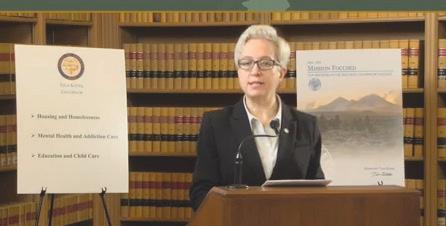
Oregon Gov. Tina Kotek has unveiled her budget recommendations for the 202325 biennium, titled “Mission Focused.”
The recommendations focus on three top priorities:
• Building more housing and reducing homelessness
• Improving access to mental health and addiction services
• Improving outcomes in early literacy and K-12 schools.
“Every Oregonian, no matter their race or zip code, deserves to have the same chances,” Kotek said. “My mission as Oregon’s Governor will always be to deliver results and move the state forward to build the Oregon we all want to live in. This vision for Oregon’s future cannot be realized in one budget cycle. But this plan provides a roadmap for how we are going to reach our state’s long-term goals.”
Oregon is entering a challenging and complex budget environment with about $3.5 billion of one-time funding, spurred by resources from the federal government, about to expire, according to Kotek, adding that the recommended budget still includes a path to make targeted investments because of prudent budget management to build historic reserves in recent years.
Kotek has recommended keeping the existing $2 billion of reserve funds in place, and redirect $765 million that would have been automatically added to these reserves into targeted investments aimed at better serving Oregonians in these three key areas.
Highlights of the budget recommendations include:
Housing and Homelessness
To reduce unsheltered homelessness, rehouse Oregonians, build and preserve more affordable housing, and increase homeownership, Kotek included the following investments:
An urgent, $130 million package to reduce unsheltered homelessness. The Governor is urging the legislature to move forward with this initial investment as quickly as possible, and released the details last week.
New affordable housing
$770 million: General obligation bonds to build more affordable homes for both renters and new homeowners.
Moving Oregonians out of unsheltered homelessness
$172.2 million: Rapid rehousing resources and connections to long-term rent assistance to maintain housing stability. This reflects the state’s first investment in an on-going, long-term rent assistance program.
New permanent, supportive housing
$130 million: Create new units of permanent supportive housing, and maintain the rent assistance and services needed for this housing.
Affordable housing preservation
$118 million: Lottery and General Fund to preserve existing affordable homes, including manufactured homes.
On-going homelessness prevention
$73 million: Create an on-going homelessness prevention program in Oregon.
Maintain shelter operations
$24.1 million: Maintain shelter operations in the state, including the operation of the 600 new shelter beds created through the early investment package and Project Turnkey projects.
Housing Production and Accountability Office (HPAO)
$2.2 million: Create a new state office to reduce land use and permitting barriers that stand in the way of building more housing.
Mental Health and Addiction Services
To disrupt the harmful and expensive homelessness-jail-hospital pipeline, decrease preventable deaths from substance use and behavioral health needs, and stabilize the behavioral health workforce, Governor Kotek included the following recommendations:
Continue investments in substance use treatment and services
$278.9 million: Addiction treatment, overdose prevention, peer support services, housing assistance, and employment services – funded by Measure 110 grants and a 1115 waiver allowing for Medicaid coverage of substance use disorders (SUD) facility-based treatment and
My mission as Oregon’s Governor will always be to deliver results and move the state forward to build the Oregon we all want to live in.
Tina Kotek, Oregon Governor
peer services. Continue funding new 2021 investments
$195.7 million: Continued funding for aid and assist services, Certified Community Behavioral Health Centers (CCBHCs), Peer Respite Centers, co-occuring disorder treatment, System of Care Advisory Council, Interdisciplinary Assessment Teams for children and housing for transition-age youth.
Community mental health
$127.4 million: Continue 30% Medicaid rate increases for increased behavioral health worker wages. Continue behavioral health provider incentives
$60 million: Loan repayment, scholarships and tuition stipends for licensed behavioral health providers and students in the workforce pipeline.
Oregon State Hospital
$50.2 million: Increase positions at the state hospital to support a sustainable 24/7 staffing model; establish a dedicated Health Equity Unit at the state hospital to address the needs of staff; support the OSH Complex Case Management Unit to meet the needs of patients with complex needs and ensure the safety of staff and patients; and upgrade OSH facilities to improve patient recovery and safety of both patients and staff.
Mobile crisis teams
$47.6 million: Ongoing funding for programs like CAHOOTS to divert individuals from hospital and jail, including response and stabilization services for youth and their families.
Increase residential and facility capacity
$40 million: Ongoing funding to support operation of additional mental health residential capacity funded in 2021 and to continue the state’s investment in the development of additional residential and facility capacity.
Harm reduction clear-
inghouse
$40 million: Continue support of the harm reduction clearinghouse to reduce preventable deaths associated with opioid use.
Health Care Provider Incentive Program
$20 million: Nearly double OHA’s Health Care Provider Incentive Program, with a priority to increase Oregon’s behavioral health workforce and to continue to recruit and retain diverse health care providers.
Crisis prevention system
$18.4 million: Fund 988 call centers, the nationwide service connecting people with the 988 Suicide and Crisis Lifeline.
Early Learning and K-12 Education
To improve student literacy, stabilize early childhood services and ensure Oregon children are better served by K-12 schools, Kotek included the following recommendations:
Increase the State School Fund
$9.9 billion: Kotek is recommending increasing the State School Fund to $9.9 billion and fully funding High School Success (formerly Measure 98) to help improve graduation rates and give students the tools to be career and college ready. Ensure all kids are learning to read, and reading to learn
$100 million: Evidence-based, targeted literacy strategies to ensure preschool and elementary school educators have the training, time, materials, and ongoing coaching they need to integrate evidence-based literacy strategies with culturally responsive approaches.
Expanding physical capacity of early learning facilities
$100 million: Create and upgrade the physical space early learning providers need, along with technical assistance to navigate the expan-
sion and renovation processes.
Early Learning Program Enhancement

$62.5 million: Provide a living wage to early learning professionals to stabilize and value the workforce by enhancing rates for Oregon Pre-Kindergarten (OPK), Preschool Promise, Healthy Families Oregon, Relief Nurseries, and the Early Childhood Equity Fund.
Employment-Related Day Care (ERDC) Enhancements
$41.3 million: Increase rates for ERDC providers, provide funding for a limited caseload expansion for ERDC, support the transfer of ERDC from Oregon Department of Human Services, provide funding to make IT system changes to expand program eligibility, and support child care supply building and ERDC access.
Enrichment programming for all grades $30 million: Continue to offer students opportunities to connect with each other to support their well-being following years of pandemic-impacted learning. Funding will be provided by Tribes and community-based organizations.
Literacy-focused summer programming provided by districts $20 million: Evidence-based strategies and integrated with culturally responsive approaches for preschool and elementary (P-5) students. Requires districts to provide a 50% local match.
Expand and enhance existing targeted strategies
$18 million: Increase investments in Student Success Plans (e.g. American Indian/ Alaska Native State Plan, African American/Black Student Success Plan, LGBTQ2SIA+ Student Success Plan) and add funding for additional plans for Native Hawaiians/Pacific Islanders and Refugees and Immigrant student populations.
Kotek outlined her state budget proposal during a media briefing Tuesday, Jan. 31
Senate Republicans re-
In response to Kotek’s proposal, Oregon Senate Republicans released the following statement:
“According to the most recent revenue forecast, Oregon families will receive an average of $5,200 back on their taxes in the form of a surplus credit known as the “Kicker,” Oregon Senate Republican Leader Tim Knopp (R-Bend) said. “I’m relieved to see that the Governor’s proposed budget doesn’t pull money from the Kicker – it’s the right thing to do.”

“Oregonians across the state feel the impacts of inflation and other rising costs. They deserve to spend their hard-earned money how they see fit – to plan for emergencies and spur the economy,” Oregon State Senator Daniel Bonham (R-The Dalles) said.
“The Republican Majority worked to enshrine the Kicker in Oregon’s Constitution in the 1990’s and we are still committed to protecting it today,” Oregon State Senator Kim Thatcher (R-Keizer) said.
“This session, we introduced legislation urging Congress to propose a balanced budget amendment to the U.S. Constitution. The Legislature needs to send a strong message to Congress in order to safeguard present and future generations from the undue burdens our growing national debt presents,” Oregon State Senator Fred Girod (R-Stayton) said.
“I look forward to giving testimony on this very important piece of legislation and urge the Committee Chair to schedule a public hearing as soon as possible,” Knopp said.
Senate Joint Memorial 1 was referred to the Senate Committee on Veterans, Emergency Management, Federal and World Affairs. Knopp is the Chief Sponsor and Girod the Regular Sponsor. It has not yet been scheduled for a public hearing.
Follow developments at the newsguard.com and in the Tuesday print editions of The News Guard.

Sen. Anderson appointed to Housing Production Advisory Council
STAFF REPORTS
Country Media, Inc.
Oregon State Sen. Dick Anderson (R-Lincoln City) has been appointed to the Housing Production Advisory Council (HPAC).
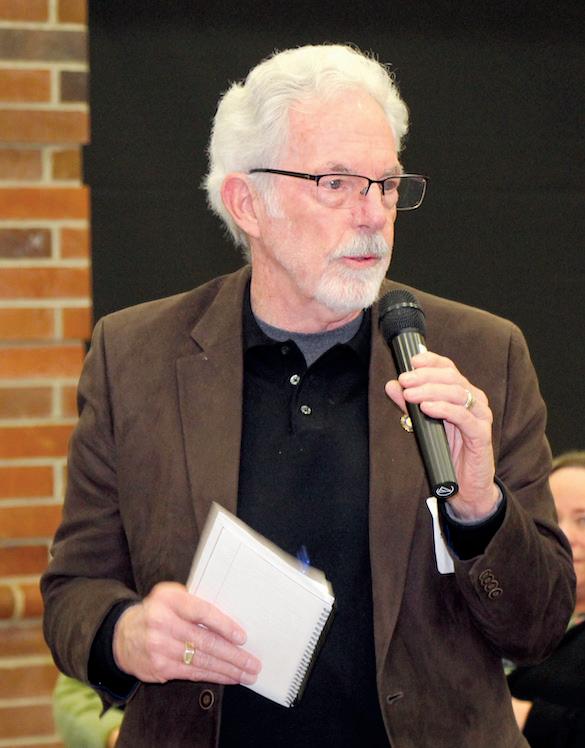
The HPAC will be tasked
with formulating an action plan to meet the Governor’s 36,000-unit annual housing production target.
“It is an honor to be selected to serve on this Council and help promote solutions for the housing crisis,” Anderson said. “We are in desperate
need to find fast and innovative ways to increase the supply of housing in all corners of Oregon. As Vice-Chair of the Senate Housing Committee, and representing large portions of Oregon’s Coast, I know firsthand the crisis in front of us. The Governor has
ambitious plans to double our housing unit production per year, and I will be an outspoken proponent of cutting red tape, streamlining the process, and getting decisions down to the local level as fast as possible.”
Anderson has 35 years of experience in the housing and mortgage industry and currently serves as vice-chair of the Oregon Senate Housing and Development Committee.
“During his 12 years as Mayor of Lincoln City and a Lincoln City Councilor, Anderson focused on finding solutions to increase the supply of housing, a release from Anderson’s office states. “As a result, many positive changes came about to alleviate bar-
valuable to the HPAC. Read more about the HPAC on
3 TheNewsGuard.com February 7, 2023 Lincoln City’s largest and most trusted news source www.thenewsguard.com/subscribe Office: 541-994-2178 Cell: 509-304-7208 For New and Returning Subscribers Only Purchase a One Year Subscription and receive an additional 3 months for FREE! Just mention this ad I Love Local News! Special
“ “
Anderson spoke recently at Taft High School.
City to receive a share of $200K
Country Media, Inc.
Lincoln City will receive $20,000 to upgrade disabled accessibility efforts.
Lincoln City is one of eight Oregon Coast destination management organizations (DMOs) to be granted a share of $201,240 to partner with Wheel the World, a global accessible travel company, in their effort to make the Oregon Coast more accessible to travelers with disabilities.
The funds awarded are the result of a coordinated approach among partners to apply for Travel Oregon’s 2022 Capacity and Small Project Grants. These communities and organizations are working to provide disabled travelers with comprehensive, accurate information to make their stay on the Oregon Coast more accessible.
Coastal organizations who received funds to partner with Wheel the World include:


•Astoria-Warrenton Area Chamber of Commerce
$35,000
• City of Lincoln City
$20,000
• Coos Bay-North Bend-Charleston Visitor & Convention Bureau, $25,000
• Depoe Bay Chamber of Commerce, $20,000
• Florence Area Chamber of Commerce, $30,500

• Greater Newport Chamber of Commerce, $33,190
• Waldport Chamber of Commerce, $17,550
• Yachats Chamber of Commerce, $20,000
These eight organizations will work with Wheel the World to conduct an accessibility assessment of local tourism businesses, receive accessibility training through Wheel the World Academy, and have local tourism businesses listed on WheeltheWorld.com, a comprehensive guide for travelers with disabilities to find and book accessible travel experiences.
“The community of Waldport strives to be a destination known for inclusion, equity and diversity,” Waldport Chamber of Commerce Executive Director Tom Fullmer said. “This grant will help our local businesses in their quest to capture the significant population of travelers who are disabled and to receive valuable inclusion in the Wheel The World global website.”
“We are thrilled to have this opportunity to work with Wheel the World and share what we discover with people with disabilities interested in travel to Yachats,” Yachats Chamber of Commerce Executive Director Bobbi Price
said. The Oregon Coast Visitors Association (OCVA) catalyzed this effort by funding a coastal cohort to attend the 2022 TravelAbilityEmerging Markets Summit, held in Orlando, Fla. last June. Following the 2022 Summit, OCVA regularly convened coastal partners to share best practices and progress on accessibility initiatives within the tourism industry.
The Travel Oregon grant funding will enable many of these partners to attend the 2023 Summit to continue their learning and professional development in order to better serve travelers with disabilities on the Oregon Coast.
Two other destination management organizations serving the Oregon Coast were also awarded funds to help with accessibility improvements.
The Tillamook Coast Visitors Association was awarded $20,000 to work with Empowering Access to conduct an accessibility audit to identify gaps and shortcomings for accessibility for recreation users with mobility challenges.
Travel Lane County was awarded $50,000 to expand the number of Hearing Loops in Lane County lodging properties, performing arts venues and other attractions in order

to better serve visitors experiencing hearing loss.
Quotes from grant recipients
“We are eager to work with Wheel the World, and our partners in the community, to better understand what is currently accessible to those with mobility challenges here in Astoria and Warrenton and to represent that experience accurately to travelers,” says Regina Willkie, marketing manager at Astoria-Warrenton Chamber of Commerce. “Once that capacity assessment is done, we look forward to identifying suggested improvements to continue to increase accessibility throughout our communities for visitors of all abilities and needs.”
“The Coos Bay-North Bend-Charleston area is embarking upon a new strategic vision to ensure we are a welcoming destination for all travelers,” says Janice Langlinais, executive director of the Coos Bay-North Bend-Charleston Visitor & Convention Bureau. “Participating in these assessments will allow area businesses and attractions to ensure their facilities are accessible to those with physical disabilities. We are so pleased to be joining our fellow coast-
6,100 new jobs, unemployment up slightly
STAFF REPORT
Country Media, Inc.
Oregon’s nonfarm payroll employment rose by 6,100 jobs in December, following a gain of 8,200 jobs in November, according to the Oregon Employment Department.


Job gains
The gains in December were largest in manufacturing (+2,400 jobs), construction (+1,300), and professional and business services (+1,100). The largest decline in December was in other services, which cut 500 jobs.
Oregon’s private sector added 5,600 jobs in December, reaching another all-time high of 1,694,200. This was 22,500 jobs, or 1.3%, above the pre-recession peak in February 2020.
Construction continued its rapid expansion in December.
The industry added 10,200 jobs in 2022, for an annual growth rate of 9.1%. Gains were widespread throughout the industry, with all published components growing between 5.9% and 14.9% over
that 12-month period. Building equipment contractors (+3,700 jobs, or 11.5%) and building finishing contractors (+2,200 jobs, or 14.9%) grew at the fastest rate.
Leisure and hospitality is still substantially below its pre-pandemic peak. But its revised gain of 1,500 jobs in November, coupled with its gain of 600 in December, kept
ward trajectory. Over the past 12 months it added 16,900 jobs, accounting for a quarter of Oregon’s private- sector job gains during that time.
The rate
Oregon’s unemployment rate rose to 4.5% in December, from 4.3%, as revised, in November.
rate increased 1.0 percentage point over the past five months from its recent low of 3.5% in May, June, and July. The last time Oregon’s unemployment rate was 4.5% or more was in September 2021, when it was 4.5%. In contrast, the U.S. unemployment rate remained below 4% during the last three months of 2022, and it edged down from 3.6% in November to 3.5% in December.
History
The December unemployment rate is relatively rare, historically, for Oregon. This occurred during the 14 months prior to December, when the rate averaged 3.9%. Also, from 2017 through 2019 the rate averaged 3.9%. But prior to late 2016, Oregon’s rate never dropped below 4.5% in any month dating back 40 years — from 1976, when comparable records began, to October 2016, according to the Oregon Employ-
the $200,000.
al destinations in this project and honored to have received these grant funds from Travel Oregon.”
Oregon Coast Visitors Association
The Oregon Coast Visitors Association (OCVA) is the official Regional Destination Management Organization for the entire Oregon Coast as designated by the Oregon Tourism Commission (dba Travel Oregon). OCVA inspires travel and strengthens collaboration to create and steward a sustainable coastal economy. OCVA has the honor of working with coastal communities to align partnerships, destination development projects, and destination marketing with the vision of creating “a coastal utopia for all.” This
includes coastal stakeholders, new and returning visitors, and the natural resources that make these coveted experiences so magical.
Wheel the World Wheel the World exists to help disabled travelers find and book accessible travel experiences including places to stay (hotels and vacation rentals), things to do (tours and activities), and multi-day trips (travel packages), serving more than 160 destinations worldwide. Wheel the World is committed to providing detailed information about what is accessible and specialized customer support throughout the entire experience, to ensure that travelers’ needs are fulfilled before, during, and after their trip.
OBITUARIES
Dean Coppage
April 8, 1941 - Jan. 6, 2023
Dean Coppage, of Otis, passed away on Jan. 6, 2023 surrounded by loving family. Living on the Central Coast for decades, Dean was well respected in the community at large and in the commercial development and building industries. He enjoyed and took pride in being a part of the revitalization and renewal of several areas of Lincoln City over the years.
Dean was a dedicated family man and a fierce protector of those he loved. We will miss him always and remember him forever.
A celebration of life will be held at 1 p.m. on Sat., Feb. 18, 2023. The location
is Faith Baptist Church, 5750 N Hwy 101, Lincoln City, OR 97367. Flowers are welcome to be sent directly to the church, or in lieu of flowers donations in his honor can be made to your favorite charity. Thank you.
Lisa Haroldson
June 29, 1966 - Jan. 25, 2023
Lisa Haroldson, of Lincoln City, passed away on Jan. 25, 2023 at Samaritan Evergreen Hospice House.
Members sought for new Housing Production Council
STAFF REPORT Country Media, Inc.
Gov. Tina Kotek is accepting applications for her newly created Housing Production Advisory Council.
The council was established through an executive order on January 10, Kotek’s first full day in office.
The order established an annual housing production goal of 36,000 additional housing units at all levels of affordability across the state to address Oregon’s current housing shortage and keep pace with projected popula-
tion growth. That’s an ambitious target – about an 80 percent increase over current construction trends – and would set Oregon on a path to build 360,000 additional homes over the next decade, according to a release from Kotek’s office.

The Housing Production Advisory Council will be responsible for proposing an action plan to meet the state’s housing production goals.
It will be composed of 25 members, including the Governor or her designee, bipartisan members of the Oregon House and Senate, relevant
state agency directors, and a Tribal member. The largest share of members (18) will be appointed by the Governor with the goal of assembling a highly effective, diverse and representative council, ready to get to work for Oregonians.
The Governor is looking to appoint housing developers with expertise in permanent supportive, affordable, and market rate housing, representatives of rural and coastal communities, communities of color, local government representatives, and experts in land use, fair housing, permitting, workforce development,
and construction.
Oregonians interested in applying for the Council are encouraged to submit an application, found here. Applications are due February 15, 2023. Appointees will begin work on the Council in early March.
The executive order dictates that two co-chairs be appointed, one living or working in an urban area and the other in a rural area. The Council is scheduled to provide a recommended framework for their action plan by April 1, 2023.
TheNewsGuard.com February 7, 2023 4 Lincoln City’s largest and most trusted news source a every third wednesday of the month veterans free lunch save the date february 15
STAFF REPORT
Metro Creative Connection The Oregon Employment Department reports 2,078,191 employed and 98,007 unemployed in December. YOU from .........................
Metro Creative Connection
The Governor’s order established an annual housing production goal of 36,000 additional units at all levels of affordability across the state to address the current housing shortage and keep pace with projected population growth.
WRITE TO US:
We want to hear from you and encourage you to write letters to the editor.
Because of space limitations, shorter letters have a better chance of being printed. We may edit your letter for style, grammar and clarity, although we do as little editing as possible. Letters longer than 300 words will not be printed. Letters can be on any topic, but letters on local issues will be given preference.
Letters to the Editor that attack or challenge private individuals or private businesses will be refused.
Challenges to public officials may be permitted.
Only one letter per writer will be published on a single topic each month.
Thank you letters are limited to mentioning individuals and non-commercial organizations and cannot exceed 200 words. Paragraph here on deadlines for each paper.

We also welcome longer guest columns. These might be columns written by newsmakers, public officials or representatives of local organizations. These can run a little longer in length, usually between 450 and 700 words. To verify authenticity, all letters and guest columns must be signed and include your address and daytime phone number. We won’t print your street address of phone number. Any guest opinion may appear on the (newspaper name) website.
While we strive to publish all viewpoints, The News Guard and Country Media reserve the right to refuse to publish any letter or guest editorial. Letters to the Editor or guest columns can be sent to: newsguardeditor@ countrymedia.net or P.O. Box 848, Lincoln City, OR, 97367-0848. Letters can also be submitted at thenewsguard.com.

ADVERTISING
DEADLINES:
Advertising:
Wednesday, 5 p.m.

Legals, Community news and listings:

Thursday at 12 p.m.
Sports information and Letters to the editor: Friday at noon.

POSTMASTER:
Send address changes
Options for submitting obituaries:
• Death notice: Includes the person’s name, age, town of residency, and info about any funeral services. No Charge. Add a photo $25.
• Standard Obit: The cost is $75 for the first 200 words, $50 for each additional 200 words.

Includes a small photo at no extra cost. Add $25 for each additional photo.
• Option for a 50% off pickup (no changes) for an obit within 2 weeks of original publish date.
• Display Obit: $9.50 pci. Add color for $5.00 pci. Includes a small photo at no extra cost.
• Obit includes placement online.
2023 Oregon Legislature session underway
DICK ANDERSON News Guard Guest Column
The Capitol is open, and session has begun! Bills are already flowing to committees. We will start our newsletters again during session to hopefully give you a view on what is happening here in Salem and how things are progressing.
I know another long legislative session has started when I am leaving the coast when it’s dark and returning when it’s darker!
A few initial reactions
It is nice to have the public back in the process. We missed a lot when they were locked out, and I hope legislators and the Governor remember that there is simply no substitute for human interaction when elected officials are in Salem doing the people’s work. They put a lot of trust in us, and we need to return the favor.
It is nice to once again see constituents, sightseers and advocates alike padding around the capitol hallways. Unfortunately, due to ongoing construction, that is about all they can see right now: hallways. Most of the visitor friendly activities and tours are still not available. I’ve included a map identifying
public entrances for those interested in making the trek to Salem to see what we do firsthand.
Floor sessions are open to the public and testimony is once again an option– either in-person or remotely during public hearings. Also, the public testimony process has changed. If you want to testify on a bill, you now need to register online before doing so.
Between the Senate and the House, over 1,800 bills have been referred to committees.
Here are my committee assignments this session:
• Senate Committee On Conduct - Co-Chair
• Joint Committee On Conduct - Co-Chair
• Senate Committee On Housing and DevelopmentVice-Chair
• Senate Committee On Education
• Joint Committee On Legislative Policy and Research
• Joint Committee On Ways and Means
• Joint Committee On Ways and Means Subcommittee
On Natural Resources
I’ve made no secret about my ongoing priorities: housing, childcare and in-
creasing access to healthcare, especially mental/behavioral health services on the coast. I often refer to these as “the three legs of the stool” for getting us back on track after Covid. These issues are intimately tied to our economic growth, which will be further challenged by a tightening budget, rising costs, and less federal spending.
Given my priorities, being Vice-Chair of the Senate Housing and Development committee and having a position on the Senate Education committee, where all child care bills flow, is a perfect place to be. Anyone who has been in a meeting with me on housing in recent years will have surely heard me say, “If we are in a housing emergency, let’s start acting like it”, and I am encouraged to see an increased focus on housing production vs. just throwing money in that direction. Emphasizing supply is the only way we can make real progress on this issue. It is time to act.
While policy committees are very important, any bill in the capitol that has significant money attached to it passes through the Ways and Means process, as do all state agency budgets. So, I will be using my role on those budget committees to actively engage to ensure we are both being
good stewards of people’s hard earned money, and supporting programs and agencies that can demonstrate a track record of efficiency. We should not do something the same way just because that is how it has always been done. And a new Governor along with many new legislators provide a good opportunity to assess what is working and what isn’t.
Speaking of the new Governor, as you might have seen in recent news coverage, I worked with the Coastal Caucus to ring the alarm bells on one of her initial executive orders around homelessness. While applauding her efforts to be more aggressive on housing and homelessness, we were concerned to see the coast once again left out of the executive order in favor of urban population centers. We will be pushing to get more coastal communities at the table in this important conversation around resources and coordination.
Key Bills I have Introduced
This year we have a wide range of bills I think will be beneficial to the voters and the communities I serve across Senate District 5. I have bills ranging from taxes, childcare, housing, and coast-
GOMBERG REPORT
al issues.
• SJR 17 - Proposing amendment to Oregon Constitution relating to a property tax relief program for owner-occupied principal dwellings of certain seniors.
• Senate Bill 127 - Increases the corporate tax reporting from $1 million to $5 million.
• Senate Bill 533 - Creates a tax deduction for interest paid on boats, homes and ag real estate.
• Senate Bill 599 - This will allow for rental homes to be used as family child care home.
• House Bill 2980 - This bill I signed on to as Chief Sponsor to help create a revolving loan program for cities and counties to take part of. There is a similar bill HB 2981 for the business development department as well.
• SJR 14 - I signed on to this bill to limit the executive powers of the Governor in regards to declaration of emergencies. It is important that we look at limiting the ability of the Governor to declare emergency and then staying in that emergency for way too long.
State Sen. Dick Anderson serves District 5. He may be reached at 503-986-1705.
Oregon Legislative priorities and patterns
DAVID GOMBERG
News Guard Guest Column
With the legislative session now it its third week, priorities and patterns are becoming clear. The three most important issues on the agenda are housing, housing, and housing. Healthcare, child care, and mental/behavioral health will also certainly be high priorities.
Homelessness emergency and semiconductors
The session began with an announcement from the Governor declaring a Homelessness Emergency. I was pleased to see this swift and decisive action. But I was also concerned that the methodology excluded the coastline and large swaths of rural Oregon. Within 24 hours, my office prepared a letter signed by all coastal legislators asking for the opportunity for communities in need to be able to opt-in to the program. The Governor replied two days later with an opportunity to do just that. We’re now working here in the Capitol to insure that communities in crisis throughout the state be provided the resources to get people sheltered and housed.
The other major early-session topic is Semiconductors. Oregon is poised to reap historic benefits from the national CHIPS & Science Act, a $280 billion investment designed to advance U.S. global leadership in technology and supply chains. New industry investments could broadly impact Oregonians across the state—expanding highwage, equitable employment opportunities in all regions and creating significant new tax revenues for critical priorities like homelessness, affordable housing, and education.
My question, as reported in the Capital Chronicle, is how growing the semiconductor industry, would help Oregonians throughout the state. “The median family income in Washington County is 60% higher than it is in my district,” Gomberg said. “And I just don’t anticipate we’re going to really be making chips anywhere near the salty air of the coast.”
I serve on the Joint Committee on Semiconductors. I do not serve on the Housing Committee. But eventually both of these major issues will work their way to the budget subcommittee on Transportation and Economic Development where I serve
as co-chair.
Economic development
At the same time, I’ve been leading on a bi-partisan effort to support rural economic development. This past week, we presented four bills intended to help rural small business start-ups, meat production in small farms, outdoor recreation, live entertainment and county fairs, and finally, getting more Oregon seafood into Oregon restaurants. Awkwardly, 90% of the seafood served locally is imported. The Capitol is undergoing major seismic repairs and sadly, most of the more interesting portions are closed. The renovations are certainly disruptive. But the Capitol is open and people are visiting or testifying. Our district now stretches from Lincoln City to Junction City and from Florence to Philomath. As the six-month session unfolds, I hope readers will reach out to my office with ideas and concerns.
David Gomberg can be reached at Rep.DavidGomberg@OregonLegislature.govor at 503-986-1410.
Brief checks
Few hours daily
TheNewsGuard.com Fenruary 7, 2023 5 Lincoln City’s largest and most trusted news source
Admin@CountryMedia.net TheNewsGuard.com/opinion
ANDERSON REPORT
to The News Guard, P.O. Box 848, Lincoln City, OR 973670848. Periodicals Postage paid at Lincoln City, OR 97367 and at additional mailing offices. © 2020 The News Guard. USPS 388-100 Published Weekly by Country Media Inc. 1818 NE 21st Street Lincoln City, Oregon 97367-0848 Phone: (541) 994-2178 Fax: (541) 994-7613 www.thenewsguard.com Annual Subscription Rates: $70.00 In-County $90.00 out of County David Thornberry Publisher Robyn Smith General Manager and Marketing Consultant Jeremy Ruark Regional Executive Editor USPS 388-100 Published Weekly by Country Media Inc. 1818 NE 21st Street Lincoln City, Oregon 97367-0848 Phone: (541) 994-2178 Fax: (541) 994-7613 www.thenewsguard.com Annual Subscription Rates: $70.00 In-County $90.00 out of County David Thornberry Publisher Robyn Smith General Manager and Marketing Consultant Jeremy Ruark Regional Executive Editor This week Last week’s results ONLINE POLL q q q q
much
do you spend on social media? Are you changing your diet because of the increasing price of eggs and other foods?
How
time
Yes 23.7% No 76.3%
Several hours daily No time
Let us know what YOU think EMAIL YOUR LETTERS TO: NEWSGUARDEDITOR@COUNTRYMEDIA.NET CALL ROBYN AT 509.304.7208

Public Notices 999
NG23-429 IN THE CIRCUIT COURT OF THE STATE OF OREGON FOR THE COUNTY OF LINCOLN In the Matter of the Estate of: JANICE KAY BIGGS, Deceased. Case No. 23PB00647 NOTICE TO INTERESTED PERSONS NOTICE IS HEREBY GIVEN that EARL RUSSELL BIGGS, IV has been appointed personal representative. All persons having claims against the estate are required to present them, with vouchers attached, to Personal Representative, EARL RUSSELL BIGGS, IV, at the address below, within four months after the date of first publication of this notice, or the claims may be barred. All persons whose rights may be affected by the proceedings may obtain additional information from the records of the court, the personal representative, or the attorneys for the personal representative. ADDRESS FOR PERSONAL REPRESENTATIVE: c/-o Attorney David V. Cramer, OSB #992479, Zantello Law Group, 2941 NW Highway 101, Lincoln City, OR 97367. DATED and first published: February 7, 2023. David V. Cramer, OSB #992479. Attorney for Personal Representative.
NG23-428 IN THE CIRCUIT COURT OF THE STATE OF OREGON FOR THE COUNTY OF LINCOLN PROBATE DEPARTMENT In the Matter of the Estate of: ROLANDS CHRISTOPHER GOOD, Deceased. No. 23PB00625 NOTICE TO INTERESTED PERSONS NOTICE IS HEREBY GIVEN that the undersigned has been appointed Personal Representative of the estate. All persons having claims against the estate are hereby required to present their claims, with proper vouchers, within four (4) months after the date of the first publication of this notice, to the Personal Representative at the address below, or the claims may be barred. All persons whose rights may be affected by the proceedings in this estate may obtain additional information from the records of the Court, the Personal Representative, or the attorney for the Personal Representative. DATED and
cluding submission requirements, can be obtained online at oregonbuys.gov/ bso/, enter solicitation # SR02706-00005598. Email questions to; kcooper@ocwcog.org. The deadline for all applications is 5 pm on February 22nd, 2023. F3 60-03

torneys for Personal Representative.

first published: February 7, 2023. DONNA WALBORN, Personal Representative

c/o KULLA, RONNAU, SCHAUB & CHAMBERS, P.C. SCOTT J. SCHAUB, OSB #893572, 2210 NE 22nd St., Lincoln City, OR 97367. ATTORNEY FOR PERSONAL REPRESENTATIVE: KULLA, RONNAU, SCHAUB & CHAMBERS, P.C., SCOTT J. SCHAUB, OSB #893572, 2210 NE 22nd St., Lincoln City, OR 97367, Phone: (541) 9962195, Fax: (541) 996-2770, E-mail: krsc@embarqmail. com.
NG23-427 REQUEST FOR PROPOSAL OREGON CASCADES WEST COUNCIL OF GOVERNMENTS, SENIOR AND DISABILITY SERVICES (OCWCOGSDS) requests proposals/ applications to apply for $2,000 up to $15,000 in Older American Act (OAA) grant funds, designated for programs in Linn, Benton and Lincoln counties. Community agencies who provide supports or programs to family caregivers, aging adults and people with physical disabilities are encouraged to apply. Funding period: July 1, 2023 - June 30, 2024. Copies of the RFP - Request for Proposal, in-
NG23-398 The Siletz Keys Sanitary District Board of Directors meets monthly on the second Monday, except for government holidays, at 1:30 pm at the Gleneden Beach Community Center located at 110 Azalea Street, Gleneden Beach, OR.

NG23-421 IN THE CIRCUIT COURT OF THE STATE OF OREGON FOR THE COUNTY OF YAMHILL Probate Department
In the Matter of the Estate of CHRISTOPHER JAY EVANS, Deceased. Case No. 22PB10805 NOTICE TO INTERESTED PERSONS NOTICE IS HEREBY GIVEN that Kendra L. Brito has been appointed Personal Representative. All persons having claims against the estate are required to present them, with vouchers attached, to Kendra L. Brito, Personal Representative, at 24 W. Shore Drive, Pennington, NJ 08534, within four (4) months after the date of first publication of this notice, or the claims may be barred. All persons whose rights may be affected by the proceedings may obtain additional information from the records of the Court, the personal representative, or the lawyers for the personal representative, Haugeberg, Rueter, Gowell, Fredricks & Higgins, PC. Dated and first published on January 31, 2023. Dianne L. Haugeberg, OSB #035171 of At-
NG23-424 IN THE CIRCUIT COURT OF THE STATE OF OREGON FOR THE COUNTY OF LINCOLN In the Matter of the Estate of: VICKI K. MCKENZIE, Deceased. Case No. 23PB00322 NOTICE TO INTERESTED PERSONS NOTICE IS HEREBY GIVEN that PATRICIA ANNE LIVINGSTON has been appointed personal representative. All persons having claims against the estate are required to present them, with vouch-
ers attached, to Personal Representative, PATRICIA ANNE LIVINGSTON, at the address below, within four months after the date of first publication of this notice, or the claims may be barred. All persons whose rights may be affected by the proceedings may obtain additional information from the records of the court, the personal representative, or the attorneys for the personal representative. ADDRESS FOR PERSONAL REPRESENTATIVE: c/-o Attorney David V. Cramer, OSB #992479, Zantello Law Group, 2941 NW Highway 101, Lincoln City,
OR 97367. DATED and first published January 31, 2023. David V. Cramer, Attorney for Personal Representative.
NG23-425 Storage Unit #31 Address: Oceanlake Storage 1990 SE East Devils Lake RD Lincoln City OR 97367 541-9219849 Occupant: Jennifer Petitmermet Auction held: https://bid13.com/storageauctions/or/lincoln-city/ oceanlake-storage/unit-31. Auction time 1/24/20232/14/2023
Notice is hereby given that on Tuesday, May 16, 2023 an election will be held in Lincoln County, Oregon for the purpose of electing directors of special districts to fill the following positions and terms, including any vacancy which may exist on the board:
TheNewsGuard.com Lincoln City’s largest and most trusted news source. February 7, 2023 7 100-400 Services, Etc. 500 Jobs 600 Autos 700 Stuff for Sale 800 Rentals 900 Real Estate 999 Public Notices Classifieds To place an ad: Call (541) 994-2178 or go to TheNewsGuard.com and click + Place your ad DEADLINES: Advertising – Fridays at 3 p.m. • Legals – Thursdays at 5 p.m. Place an Ad Online! Autos, Homes, Jobs, Sales ONLINE www.TheNewsGuard.com 7Days a Week DEADLINES: Advertising - Wednesdays at 5 p.m. • Legals - Thursdays at Noon Public Notices 999
Public Notices 999 Public Notices 999 Public Notices 999 MANUFACTURED HOME SUPERSTORE McMinnville, OR Come visit us today so we can help you with your project tomorrow! ¨ New Homes Built in 30 days! ¨ Dozens of Lot Models Ready for Delivery! ¨ Tour our New Homes on Display ¨ 100’s of Plans to choose from 1120 Old Sheridan RD, McMinnville 503-435-2300 / jandmhomes com Where it’s a Home Show everyday! MANUFACTURED HOME SUPERSTORE McMinnville, OR Come visit us today so we can help you with your project tomorrow! ¨ New Homes Built in 30 days! ¨ Dozens of Lot Models Ready for Delivery! ¨ Tour our New Homes on Display ¨ 100 s of Plans to choose from 1120 Old Sheridan RD, McMinnville 503-435-2300 / jandmhomes com Where it’s a Home Show everyday! MANUFACTURED HOME SUPERSTORE McMinnville, OR Come visit us today so we can help you with your project tomorrow! ¨ New Homes Built in 30 days! ¨ Dozens of Lot Models Ready for Delivery! ¨ Tour our New Homes on Display ¨ 100 s of Plans to choose from 1120 Old Sheridan RD, McMinnville 503-435-2300 / jandmhomes.com Where it’s a Home Show everyday! Mobile/Manuf. Homes 820 Mobile/Manuf. Homes 820
ELECTION
MEMBERS
NOTICE OF
OF DISTRICT BOARD
COMMUNITY COLLEGE DISTRICT Oregon Coast Community College District: Zones 3, 4, 6 & 7: 4 year terms EDUCATION SERVICE DISTRICT Linn- Benton- Lincoln Education Service Dist: Zone 7: 4 year term ( file @ Linn County) FIRE DISTRICTS Alsea Rural Fi re District: Positions 4 & 5: 4 year terms ( file @ Benton County) Central Oregon Coast F & R Fi re District: Positions 1, 2 & 3: 2 year unexpired terms Positions 4 & 5: 4 year terms Depoe Bay Rural Fire District: Positions 4 & 5: 4 year terms East Lincoln County F & R Fire District: Positions 3, 4 & 5: 4 year terms Newport Rural Fire District: Positions 1, 2 & 3: 4 year terms North Lincoln F & R Fire District: Positions 1, 2 & 3: 4 year terms Seal Rock Rural Fire District: Positions 2, 3 & 4: 4 year terms Position 5: 2 year unexpired term Siletz Rural Fire District: Positions 1 & 2: 4 year terms Yachats Rural Fire District: Positions 1 & 2: 4 year terms HEALTH DISTRICTS North Lincoln Health District: Positions 1, 4, 5 & 6: 4 year terms Pacific Communities H eal th District: Positions 1 & 2: 4 year terms LIBRARY DISTRICT Lincoln County Library District: Z ones 3, 4 & 5: 4 year terms Zone 1: 2 year unexpired term PARK & RECREATION DISTRICT Greater Toledo Pool Recreation District: Positions 4 & 5: 4 year terms PORT DISTRICTS Port of Alsea : Positions 2 & 4: 4 year terms Port of Newport: Positions 1, 3 & 5: 4 year term s Port of Toledo: Positions 2, 4 & 5: 4 year terms ROAD DISTRICTS Bear Creek Hideout No. 2 Special Road District: Position 2: 4 year term Belle Mer Sigl Tract Special Road District: Position 2: 4 year term California Street Special Road District: Positions 1 & 3: 4 year term Little Switzerland Special Road District: Positions 1 & 3: 4 year term New Bridge Special Road District: Position 2: 4 year term NE San Marine Special Road District: Positions 1 & 3: 4 year term s Panther Creek Special Road District: Positions 1 & 3: 4 year term s SE Nelson Wayside Drive Road District: Positions 1 & 3: 4 year term s Starr Creek Special Road District: Position 2: 4 year term Surfland Special Road District: Position 2: 4 year term Westwood Village Special Road District: Positions 1 & 3: 4 year term s Position 2: 2 year unexpired term S ANITARY DISTRICTS Cape F oulweather Sanitary Distri ct: 3 Positions at large: 4 year terms 1 Position at large: 2 year unexpired term Gleneden Beach Sanitary District: 3 Positions at large: 4 year terms 1 Position at large: 2 year unexpired term Salishan Sanita ry District: Positions 1, 2 & 3: 4 year terms Siletz Keys Sanita ry District: Positions 4 & 5: 4 year terms SCHOOL DISTRICT Lincoln County School District Boa rd of Directors: Zones 1 & 2: 4 year terms WATER DISTRICTS Beverly Beach Water District: Positions 4 & 5: 4 year terms Carmel Beach Water District: Positions 1 & 2: 4 year terms Kern- Gleneden- Lincoln Water District: Posi tions 3, 4 & 5: 4 year terms Lower Siletz Water District: Positions 1, 4 & 5: 4 year terms Otter Rock Water District: Positions 2, 3 & 5: 4 year terms Panther Creek Water District: Positions 1, 4 & 5: 4 year terms Seal Rock Water District: Positions 4 & 5: 4 year terms Southwest Lincoln Water District: Positions 3, 4 & 5: 4 year terms WATER IMPROVEMENT DISTRICT Devils Lake Water Improvement District: Pos itions 1, 2 & 3: 4 year terms This election will be conducted by mail. Candidates file verified signatures or $10.00 filing fee with the election officer of Lincoln County not later than 5:00pm on March 16, 2023. This notice to be published in the News - Times and News - Guard newspapers. Amy A. Southwell Lincoln County Clerk NG23-430
NG23-420 IN THE CIRCUIT COURT OF THE STATE OF OREGON FOR THE COUNTY OF LINCOLN PROBATE DEPARTMENT In the Matter of the Estate of: CLAUDE ERNEST SEGERSON, Deceased. No. 23PB00377
NOTICE TO INTERESTED PERSONS NOTICE IS HEREBY GIVEN that the undersigned has been appointed Personal Representative of the estate. All persons having claims against the estate are hereby required to present their claims, with proper vouchers, within four (4) months after the date of the first publication of this notice, to the Personal Representative at the address below, or the claims may be barred. All persons whose rights may be affected by the proceedings in this estate may obtain additional information from the records of the Court, the Personal Representative, or the attorney for the Personal Representative. DATED and first published: January 24, 2023.
THERESA SEGERSON, Personal Representative c/o KULLA, RONNAU, SCHAUB & CHAMBERS, P.C., SCOTT J. SCHAUB, OSB #893572, 2210 NE 22nd St., Lincoln City, OR 97367. ATTORNEY FOR PERSONAL REPRESEN-
TATIVE: KULLA, RONNAU, SCHAUB & CHAMBERS, P.C., SCOTT J. SCHAUB, OSB #893572, 2210 NE 22nd St., Lincoln City, OR 97367, Phone: (541) 996-2195, Fax: (541) 996-2770, E-mail: krsc@ embarqmail.com.
NG23-417 NOTICE TO
INTERESTED PERSONS
Norm Rhem has been appointed Personal Representative (hereafter PR) of the Estate of Robert D. Beaver, Deceased, Probate No.23PB00165, Lincoln County Circuit Court, State of Oregon. All persons whose rights may be affected by the proceeding may obtain additional information from the court records, the PR, or the attorney for the PR. All persons having claims against the estate must present them to the PR at: Richard A. Weill, P.C., Attorney, 102 W Hist Col Rvr Hwy, Troutdale OR 97060 within four months after the first publication date of this notice or they may be barred.
NG23-413 TS No. OR09000026-19-3
APN R411731 TO No 220324938-OR-MSO TRUSTEE’S NOTICE OF SALE Reference is made to that certain Trust Deed made by, CINTHIA A KALLMAN, MARRIED as Grantor to FIRST AMERICAN TITLE as Trustee, in favor of CHASE MANHATTAN MORTGAGE CORPORATION as Beneficiary dated as of December 23, 1999 and recorded on December 30, 1999 as Instrument No. 6221781 in Book 395, on Page 0987 and the beneficial interest was assigned to SELECT PORTFOLIO SERVICING, INC. and recorded July 16, 2019 as Instrument Number 2019-06587 of official records in the Office of the Recorder of Lincoln County, Oregon to-wit: APN: R411731 LOT 14 AND THE WEST ONE-HALF OF LOT 15, BLOCK 18, FOURTH ADDITION TO PANTHER CREEK, IN THE COUNTY OF LINCOLN AND STATE OF OREGON. THE WEST ONE-HALF OF SAID LOT 15 BEING MORE PARTICULARLY DESCRIBED AS FOLLOWS:BEGINNING AT THE NORTHWEST
CORNER OF LOT 15 OF BLOCK 18, FOURTH AD-
DITION TO PANTHER
CREEK; THENCE SOUTH
74 DEG. 20- 51” EAST, 10.00 FEET; THENCE ON A 175 FOOT RADIUS
CURVE TO THE LEFT 17.80 FEET (WHOSE
LONG CHORD BEARS

SOUTH 77 DEG. 15- 41”
EAST 17.79 FEET), SAID POINT BEING ON THE NORTHERLY LINE OF SAID LOT 15; THENCE SOUTH 08 DEG. 01- 54” WEST, 116.02 FEET TO A POINT OF SOUTHERLY LINE OF SAID LOT 15, THENCE NORTH 78 DEG. 34-13” WEST 43.28 FEET TO THE SOUTHWEST CORNER OF SAID LOT; THENCE NORTH 15 DEG.
39- 09” EAST, 117.29 FEET TO THE POINT OF BEGINNING. Commonly known as: 975 N DEERLANE LOOP, OTIS, OR 97368 Both the Beneficiary, SELECT PORTFOLIO SERVICING, INC., and the Trustee, Nathan F. Smith, Esq., OSB #120112, have elected to sell the said real property to satisfy the obligations secured by said Trust Deed and notice has been recorded pursuant to Section 86.735(3) of Oregon Revised Statutes. The default for which the foreclosure is made is the Grantor’s failure to pay: Failed to pay payments which became due Monthly Payment(s):
4 Monthly Payment(s) from 01/01/2022 to 04/01/2022 at $639.70
5 Monthly Payment(s) from 05/01/2022 to 09/01/2022 at $719.27 2 Monthly Payment(s) from 10/01/2022 to 11/30/2022 at $676.22 Monthly Late Charge(s): 1 Monthly Late Charge(s) 0.00 By this reason of said default the Beneficiary has declared all obligations secured by said Trust Deed immediately due and payable, said sums being the following, to-wit: The sum of $81,318.41 together with interest thereon at the rate of 3.87500% per annum from December 1, 2021 until paid; plus all accrued late charges thereon; and all Trustee’s fees, foreclosure costs and any sums advanced by the Beneficiary pursuant to the terms of said Trust Deed. Wherefore, notice is hereby given that, the undersigned Trustee will on March 30, 2023 at the hour of 10:00 AM, Standard of Time, as established by Section 187.110, Oregon Revised Statues, at the Olive Street entrance to the Lincoln County Courthouse, 225 W Olive, Newport, OR 97365 County of Lincoln, sell at public auction to the highest bidder for cash the interest in the said described real property which the Grantor had or had power to convey at the time of the execution by him of the said Trust Deed, together with any interest which the Grantor or his successors in interest acquired after the execution of said Trust Deed, to satisfy the foregoing obligations thereby secured and the costs and expenses of sale, including a reasonable charge by the Trustee. Notice is further given that any person named in Section 86.753 of Oregon Revised Statutes has the right to have the foreclosure proceeding dismissed and the Trust Deed reinstated by payment to the Beneficiary of the entire amount then due (other than such portion of said principal as would not then be due had no default occurred), together with the costs, Trustee’s or attorney’s fees and curing any other default complained of in the Notice of Default by tendering the performance
required under the obligation or Trust Deed, at any time prior to five days before the date last set for sale. Without limiting the Trustee’s disclaimer of representations or warranties, Oregon law requires the Trustee to state in this notice that some residential property sold at a Trustee’s sale may have been used in manufacturing methamphetamines, the chemical components of which are known to be toxic. Prospective purchasers of residential property should be aware of this potential danger before deciding to place a bid for this property at the Trustee’s sale. In construing this notice, the masculine gender includes the feminine and the neuter, the singular includes plural, the word “Grantor” includes any successor in interest to the Grantor as well as any other persons owing an obligation, the performance of which is secured by said Trust Deed, the words “Trustee” and “Beneficiary” includes their respective successors in interest, if any. Dated: 11/17/22 By: Nathan F. Smith, Esq., OSB #120112 Successor Trustee Malcolm & Cisneros, A Law Corporation Attention: Nathan F. Smith, Esq., OSB #120112 c/o TRUSTEE CORPS 17100 Gillette Ave, Irvine, CA 92614 949-252-8300 Order Number 87407, Pub Dates: 1/17/2023, 1/24/2023, 1/31/2023, 2/7/2023, THE NEWS GUARD
NG22-389 TRUSTEE’S
NOTICE OF SALE T.S. No.: OR-22-948681- SW
Reference is made to that certain deed made by, SUSAN HOOD, A SINGLE PERSON as Grantor to FIRST AMERICAN TITLE, as trustee, in favor of MORTGAGE ELECTRONIC REGISTRATION SYSTEMS, INC., AS NOMINEE FOR STIFEL BANK & TRUST, A STATE CHARTERED BANK, ITS SUCCESSORS AND ASSIGNS, as Beneficiary, dated 9/15/2011, recorded 9/21/2011, in official records of LINCOLN County, Oregon in book/reel/volume No. and/or as fee/file/ instrument/microfilm/reception number 201108734 and subsequently assigned or transferred by operation of law to PHH Mortgage Corporation covering the following described real property situated in said County, and State. APN: R458377 1111- 05-BA-12100-00 THE NORTH 18 FEET OF LOT
2, ALL OF LOT 3 AND THE SOUTH 18 FEET OF LOT
4, BLOCK 51, OCEANVIEW, IN LINCOLN COUNTY, OREGON. EXCEPTING THEREFROM THAT PORTION OF SAID LOTS CONVEYED TO LINCOLN COUNTY FOR A ROAD BY DEED RECORDED JANUARY 9, 1034 IN BOOK 67, PAGE 229, DED RE-
CORDS. Commonly known as: 1529 NW LAKE ST, NEWPORT, OR 97365 The undersigned hereby certifies that based upon business records there are no known written assignments of the trust deed by the trustee or by the beneficiary, except as recorded in the records of the county or counties in which the above described real property is situated. Further, no action has been instituted to recover the debt, or any part thereof, now remaining secured by the trust deed, or, if such action has been instituted, such action has been dismissed except as permitted by ORS 86.752(7). Both the beneficiary and the trustee have elected to sell the said real property to satisfy the obligations secured by said trust deed and notice has been recorded pursuant to Section 86.752(3) of Oregon Revised Statutes. There is a default by grantor or other person owing an obligation, performance of which is secured by the trust deed, or by the successor in interest, with respect to provisions therein which authorize sale in the event of such provision. The default for which foreclosure is made is grantor’s failure to pay when due the following sum: TOTAL REQUIRED TO REINSTATE: $13,313.94 TOTAL REQUIRED TO PAYOFF: $183,204.98 Because of interest, late charges, and other charges that may vary from day-to-day, the amount due on the day you pay may be greater. It will be necessary for you to contact the Trustee before the time you tender reinstatement or the payoff amount so that you may be advised of the exact amount you will be required to pay. By reason of the default, the beneficiary has declared all sums owing on the obligation secured by the trust deed immediately due and payable, those sums being the following, to-wit: The installments of principal and interest which became due on 6/1/2022, and all subsequent installments of principal and interest through the date of this Notice, plus amounts that are due for late charges, delinquent property taxes, insurance premiums, advances made on senior liens, taxes and/or insurance, trustee’s fees, and any attorney fees and court costs arising from or associated with the beneficiaries efforts to protect and preserve its security, all of which must be paid as a condition of reinstatement, including all sums that shall accrue through reinstatement or pay-off. Nothing in this notice shall be construed as a waiver of any fees owing to the Beneficiary under the Deed of Trust pursuant to the terms of the loan documents. Whereof, notice hereby is given that QUALITY LOAN SERVICE CORPORATION
OF WASHINGTON, the undersigned trustee will on 4/19/2023 at the hour of 9:00 AM, Standard of Time, as established by section 187.110, Oregon Revised Statues, At the Public Entrance of the Lincoln County Courthouse, located at 225 West Olive Street, Newport, OR 97365 County of LINCOLN, State of Oregon, sell at public auction to the highest bidder for cash the interest in the said described real property which the grantor had or had power to convey at the time of the execution by him of the said trust deed, together with any interest which the grantor or his successors in interest acquired after the execution of said trust deed, to satisfy the foregoing obligations thereby secured and the costs and expenses of sale, including a reasonable charge by the trustee. Notice is further given that any person named in Section 86.778 of Oregon Revised Statutes has the right to have the foreclosure proceeding dismissed and the trust deed reinstated by payment to the beneficiary of the entire amount then due (other than such portion of said principal as would not then be due had no default occurred), together with the costs, trustee’s and attorney’s fees and curing any other default complained of in the Notice of Default by tendering the performance required under the obligation or trust deed, at any time prior to five days before the date last set for sale. Other than as shown of record, neither the beneficiary nor the trustee has any actual notice of any person having or claiming to have any lien upon or interest in the real property hereinabove described subsequent to the interest of the trustee in the trust deed, or of any successor in interest to grantor or of any lessee or other person in possession of or occupying the property, except: Name and Last Known Address and Nature of Right, Lien or Interest SUSAN HOOD 1529 NW LAKE ST NEWPORT, OR 97365 Original Borrower For Sale Information
Call: 800-280-2832 or Login to: www.auction.com In construing this notice, the singular includes the plural, the word “grantor” includes any successor in interest to this grantor as well as any other person owing an obligation, the performance of which is secured by the trust deed, and the words “trustee” and “beneficiary” include their respective successors in interest, if any. Pursuant to Oregon Law, this sale will not be deemed final until the Trustee’s deed has been issued by QUALITY LOAN SERVICE CORPORATION OF WASHINGTON. If any irregularities are discovered within 10 days of the date of this sale, the trustee will rescind the sale, re-
turn the buyer’s money and take further action as necessary. If the sale is set aside for any reason, including if the Trustee is unable to convey title, the Purchaser at the sale shall be entitled only to a return of the monies paid to the Trustee. This shall be the Purchaser’s sole and exclusive remedy. The purchaser shall have no further recourse against the Trustor, the Trustee, the Beneficiary, the Beneficiary’s Agent, or the Beneficiary’s Attorney. If you have previously been discharged through bankruptcy, you may have been released of personal liability for this loan in which case this letter is intended to exercise the note holders right’s against the real property only. As required by law, you are hereby notified that a negative credit report reflecting on your credit record may be submitted to a credit report agency if you fail to fulfill the terms of your credit obligations. Without limiting the trustee’s disclaimer of representations or warranties, Oregon law requires the trustee to state in this notice that some residential property sold at a trustee’s sale may have been used in manufacturing methamphetamines, the chemical components of which are known to be toxic. Prospective purchasers of residential property should be aware of this potential danger before deciding to place a bid for this property at the trustee’s sale. NOTICE TO TENANTS: TENANTS OF THE SUBJECT REAL PROPERTY HAVE CERTAIN PROTECTIONS AFFFORDED TO THEM UNDER ORS 86.782 AND POSSIBLY UNDER FEDERAL LAW. ATTACHED TO THIS NOTICE OF SALE, AND INCORPORATED HEREIN, IS A NOTICE TO TENANTS THAT SETS FORTH SOME OF THE PROTECTIONS THAT ARE AVAILABLE TO A TENANT OF THE SUBJECT REAL PROPERTY AND WHICH SETS FORTH CERTAIN REQUIRMENTS THAT MUST BE COMPLIED WITH BY ANY TENANT IN ORDER TO OBTAIN THE AFFORDED PROTECTION, AS REQUIRED UNDER ORS 86.771. TS No: OR-
TheNewsGuard.com Lincoln City’s largest and most trusted news source. February 7, 2023 8
22-948681-SW
12/13/2022
Loan Service Corporation
Washington, as Trustee Signature By: Jeff Stenman, President Trustee’s Mailing Address: Quality Loan Service Corp. of Washington 108 1 st Ave South, Suite 450, Seattle, WA 98104 Toll Free: (866) 925-0241 Trustee’s Physical Address: Quality Loan Service Corp. of Washington 108 1 st Ave South, Suite 450, Seattle, WA 98104 Toll Free: (866) 9250241 IDSPub #0182782 1/17/2023 1/24/2023 1/31/2023 2/7/2023 Public Notices 999 Public Notices 999 Public Notices 999 Public Notices 999 Public Notices 999 Public Notices 999
Dated:
Quality
of
Statewide fire hazard mapping delayed

STAFF REPORT
Country Media, Inc.
The Oregon Legislature will be considering a number of recommendations for changes related to the statewide wildfire risk map during the 2023 session, some of which would substantively change the map itself.
Following earlier conversations with the Oregon Senate Committee on Natural Resources and Wildfire Programs Advisory Council, state officials have decided to postpone the release of an updated draft of the map, which was planned for March 2023.
“As we’ve been working with Oregon State University on technical adjustments to the map and planning for community outreach and engagement, we’ve also been
Homeless
Continued from Page 1
“We navigated a lot of people to Fair Housing Council of Oregon; we actually sit on their community engagement team for our region, so that we can bring awareness to, ‘this is boots on the ground what we’re seeing.’ And so that if you don’t know these things or you don’t know where to ask for help, we can’t say to you, ‘Hey, no, don’t move out, you actually have some rights, and there’s programs, and let us help advocate for you.’ So you’ll see people going into hotels thinking that they’re going to find a place; well, now you just paid double what your rent would have been. And so we’re seeing a lot of things like that.
So, we call it the beginning of generational poverty; it’s going to take some of these families generations, if ever, to get out of it.”
Other contributing factors in homelessness are substance abuse and mental health. Reyes also said that the number of families homeless or on the brink is higher than expected because people don’t want to draw attention to their circumstances.
Grant
Continued from Page 1 laundry facilities, meals and more. Additional Project Turnkey 2.0 sites are expected to be announced in mid-February 2023.
About Helping Hands Reentry Outreach Centers (Helping Hands)
The mission of Helping Hands Reentry Outreach Centers (Helping Hands) is to provide a helping hand to a sustainable life through Resources, Recovery, and Reentry. Helping Hands provides trauma-informed, data-driven, person-centered homeless services within locations in Clatsop, Lincoln, Multnomah, Tillamook and Yamhill counties in Oregon. To learn more, please visit: https://helpinghandsreentry. org/shelter-services.
About Project Turnkey 2.0 (2022-2023)
Based on the success of
Workers
Continued from Page 1 will cost us money and quality of care. We need to address this problem, both nationally and in Oregon.”
Recommendations
The report’s recommendations are grouped into seven main categories. Along with calls to improve the supply, distribution, diversity and resiliency of health care workers, researchers highlight the
keeping a close eye on the policy conversations happening in different venues,” Oregon State Forester and Director of the Oregon Department of Forestry Cal Mukumoto said.
“There were some great recommendations that came out of the Wildfire Programs Advisory Council’s first annual report and opportunities identified by Wildfire Programs Director Doug Grafe related to the map that I hope the Legislature gets the opportunity to explore during this session.” Mukumoto said those recommendations are in addition to several bills proposing a variety of changes ranging from which areas are assigned a risk classification to abolishing the map entirely.
“We want to avoid expending resources on work that may not align with new
Working on solutions
While it is a growing crisis, Lincoln County and Lincoln City are working to provide affordable housing and resources for the homeless and low-income families.
Partnering with Innovative Housing Inc., the city has leased land to build a 107-unit affordable housing project on NE 25th Street. Construction on this project began in October. They have also been working on the issue with other partners.
“Definitely, the city is working on the issue. We’ve put a lot of money and deferred system development charges to enable housing, we’ve done that for the two apartment complexes that are going to be for low-income, and we also did that for the Habitat for Humanity homes,” Wahlke said. “We’ve really tried to help the non-profits to provide the needed housing; it’s just such a slow process.”
Project Turnkey
Another solution that has been in place is the implementation of Project Turnkey
the Project Turnkey 1.0, and in the face on ongoing need for emergency shelter, on March 4, 2022, the Oregon Legislature allocated $50 million in new funding for more emergency shelters around the state for Project Turnkey 2.0.
“Project Turnkey 2.0 is an innovative solution that will help address one of Oregon’s most prolonged challenges — our housing crisis,” OHCS Director Andrea Bell said. “Our commitment and collective responsibility to the people of Oregon is to find solutions that are real and are proven to work.”
OCF and OHCS Roles
Oregon Communi-
ty Foundation serves as the grantor and fiduciary, administering state-funded Project Turnkey 2.0 grants
need to expand and clarify career pathways and training for many segments of the workforce.
They also recommend expanding telehealth and integrated care models and increasing the use of community-based care providers like health interpreters and peer wellness specialists to connect on a more personal level with their local communities.
“We believe all health care professionals need more support around resiliency and
direction that may come from the Legislature this session,” Mukumoto said. Without knowing what decisions will be made by the Legislature, the department does not yet know how long it will take to implement that direction.
Members of both the Senate Committee on Natural Resources and the Wildfire Programs Advisory Council have expressed support for continued mapping of wildfire hazards to identify where to direct investments in wildfire mitigation activities including fuels reduction and building defensible space.
“Our goal this session is to get resources and expertise to Oregonians already doing good work on the ground to protect their properties and neighborhoods,” Sen. Jeff Golden (D) of Ashland said.
Golden chairs the Senate Committee on Natural Resources and was the chief sponsor of SB 762.
“It’s important to get that done and to do all we can to ease the homeowner insurance challenges that the era of megafires has brought us before moving forward with any map,” Golden said.
There is also broad recognition of the need for increased outreach, education and engagement with communities.
“We need an integrated, coordinated and robust communications and outreach effort across all Senate Bill 762 programs to help property owners understand what their classification means, how they can better protect their homes and what resources are available to help them with that work,” Wildfire Programs
The pandemic and the shutting down has been the start of generational poverty for a lot of families.
Elizabeth Reyes, Family Promise Executive Director
in Lincoln County. Proposed in 2020, Project Turnkey is a grant program that allocated $65 million to purchase motels and hotels in different cities to be repurposed as a “non-congregate shelter for people experiencing homelessness, at-risk of homelessness or displaced by wildfires.” Oregon Community Foundation’s (OCF) website states, “In less than seven months, Project Turnkey 1.0 created 19 new shelters in 13 counties, leading to a 20% increase in the state supply of shelter beds.”
One such shelter was the 42-room Paradise Hotel in Lincoln City, which Northwest Coastal Housing purchased with grant money from Project Turnkey. The result has been the Coastal Phoenix Rising (CPR) facility. The 38-unit “hotel/motel”
with guidance from a diverse statewide Advisory Committee. OCF offers support for Oregon’s housing needs along a continuum — from shelter to supportive housing to affordable housing to equitable home ownership — through a variety of tools, including research, grants, advocacy, and low-interest loans. OCF’s administration of Project Turnkey 2.0 is one example of the innovative, collaborative approaches launched to help more Oregonians find stable, affordable housing.
Oregon Housing and Community Services provides advice and support for OCF as the State’s Housing Finance Agency. Additionally, OHCS has received resources to administer funds to the recipients of Project Turnkey 2.0 grants. This includes ongoing monitoring and oversight of these

well-being, and many professionals with unclear career pathways need clearer pathways. And some professionals will need increased compensation,” Li said. “These are the three things we would like to prioritize.”
These priorities align with the overall goal of the biennial health care workforce report, which is to eliminate health inequities altogether, Li said.
The well-being of all health care providers is interconnected, such that negative
Advisory Council Chair Mark Bennett.
OSU, ODF’s partner in the development of the map, will lend technical expertise to upcoming educational efforts related to wildfire risk and hazard.
“We are prepared to support state agencies in education plans and will help develop and implement an operational plan as needed,” OSU’s College of Forestry Dean Tom DeLuca said.
Other state agencies with SB 762 responsibilities that have a nexus to the map are Office of the State Fire Marshal, Department of Consumer and Business Services –Building Codes Division and the Department of Land Conservation and Development.
“The success of this whole program depends on strong
Metro Creative Connection
collaboration between state government, local leaders and property owners in wildfire-prone areas. Building that partnership has to be job number one over the coming months,” Golden said. “When we feel like we’re pulling in the same direction, we’ll be ready for a much better conversation about the map.”
While the Legislature is in session, the department will continue to work with OSU on exploring technical adjustments in response to feedback received on the initial map, including concerns related to irrigated lands and classification differences on adjacent lots.
Follow this developing story at thenewsguard.com and in the Tuesday print editions of The News Guard.
is “used as a shelter for those suffering from trauma or crisis.” According to Reyes, CPR works with seven partner agencies to fill the rooms with those in need.
Prior to COVID-19, Family Promise partnered with local churches to house families in need. Currently, they partner with CPR to house families.
“We purchase three rooms at a time, and that’s where our families stay for shelter. There’s weekly room inspections; it is a clean and sober facility,” Reyes said. “What happens is our families get to stay there, but we still do all the case management, all the things we’d normally do, but instead of rotating through the churches, they stay at Coastal Phoenix Rising.”
At CPR, the staff specializes in trauma-informed
funds and the projects they support.
Background
In 2020 the Oregon Leg islature allocated a total of $65 million for Project Turn key (1.0), for the purpose of acquiring motels/hotels for use as safe shelter for people experiencing homelessness, at-risk of homelessness or displaced by wildfires. In less than seven months, Proj ect Turnkey 1.0 created 19 new shelters in 13 counties, leading to a 20% increase in the state supply of shel ter beds. Each property is locally owned and operated by a local nonprofit organi zation or entity, such as city or county.
To learn more, visit: https://oregoncf.org/assets/ PDFs-and-Docs/PDFs/project-turnkey-report.pdf
experiences for one type of provider have a domino effect on other providers, he said. For instance, if a physician quits, all their responsibilities and heavy lifting shift to the nurses.
Health care workers need greater structural supports like more flexibility in scheduling, more available and affordable child care and a reduction in administrative paperwork, the report found. Less tangible workplace supports such as showing providers that their
care. They also have a community health worker and a housing navigator. While the non-profits have to pay for the rooms they rent, the care they receive is beyond what they can do independently. About $46-$50,000 has been added to Family Promise’s budgets to fund these rooms, and much of that comes from fundraising and individual donations.
“Project Turnkey is a really good sustainable solution for communities,” Reyes said. “Because they have leases with all these different agencies, none of us could afford to do this on our own, especially smaller non-profits, but by going in together, it’s a long-term sustainable plan.”
Other services
Though Family Promise can only house three families at a time at CPR, they usually have between 6-12 families on their waitlist for shelter. For these families, Family Promise offers a day center for families to do laundry, take showers, use the kitchen, access computers, and do case management. Their office is located at 5030 SE
Highway 101.
“We do a lot of different workshops and life skills classes,” Executive Director of Family Promise Elizabeth Reyes said. “We do financial coaching one-on-one with our families, we do the Narcan 101 training in conjunction with Phoenix wellness and raising awareness.”
Family Promise also offers vaccine confidence workshops in English and Spanish. They have also had Fair Housing Council Oregon come and do a workshop on reasonable accommodation, among other opportunities.
“Whatever it is, we try and do it,” Reyes said.
Family Promise is just one of the non-profits in the area that seeks to address issues with housing and homelessness. Coastal Support Services, Northwest Coastal Housing, and Angels Anonymous Inc. are just a few others. Any donations or contributions can help address families in crisis or on the brink.
Follow this developing story at the newsguard.com and in the Tuesday print editions of The News Guard.
Metro Creative Connection
Helping Hands Reentry Outreach Centers (Helping Hands) has been awarded $977,000 in Project Turnkey 2.0 grant funding to complete the final renovation to a building to create emergency shelter and transitional
work is valued were also important.
Larger socioeconomic forces compound the pressures health care workers are facing, such as housing affordability, availability of quality education for workers’ children and employment opportunities for workers’ partners and spouses, Li said.
Next steps
“To address the health care workforce crisis, it’s not
something one sector can do,” he said. “Government and nongovernmental entities from different areas need to work together.”
Co-authors of the report were OSU associate professors Jeff Luck and Veronica Irvin, doctoral student Collin Peterson and research analyst Alex Kaiser.
Molly Rosbach works at the OSU Department of Marketing and Research. She may be reached at molly.rosbach@ oregonstate.edu.
Lincoln City’s largest and most trusted news source
housing.
“ “
When the maps are publicly released, they will show the wildfire hazard risk areas in Oregon.
Parents urged to update children’s immunizations

STAFF REPORT
Country Media, Inc.

Feb. 15 is School Exclusion Day.
Officials with the Oregon Immunization Program are encouraging parents to check to make sure their children are immunized. Children whose records show that they are missing immunizations may not be able to attend school or child care until the medical records are updated.
The law

Under state law, all children in public and private schools, preschools, Head Start and certified child care facilities must have up-todate documentation on their immunizations or have an exemption.
“Immunization is the best way to protect children
against vaccine-preventable diseases such as whooping cough and measles,” Oregon Health Authority (OHA) Public Health Division School Law Coordinator Stacy de Assis Matthews said. “Just a few years ago, we saw several measles cases in the Northwest, and Central Ohio just experienced a severe measles outbreak with more than 30 unvaccinated children hospitalized. There also were recent polio cases in New York state. We don’t want another disease outbreak in Oregon of on top of COVID-19. Immunizations are the most effective way to stop the spread of measles and other diseases, to keep kids and school communities healthy and safe.”
in school or child care.

A total of 5,118 children were kept out of school or child care until the necessary immunization information was turned in to the schools or child care facilities. This year, reminder letters to parent will be mailed by Feb. 1.
COVID-19 vaccinations are not required for students in Oregon schools or child care. OHA strongly recommends everyone stay up to date with COVID-19 immunizations. Parents can check with their health care provider or pharmacist about current COVID-19 recommendations.
What parents need to do
Courtesy Photo
to 211info.org. No one can be turned away from a local health department because of the inability to pay for required vaccines. Many pharmacists can immunize children 7 and older; parents can contact their neighborhood pharmacy for details.
Additional information about school immunizations can be found at the Immunization Program website. Statewide school vaccination data is available on the OHA website, or at OHA’s new School Law Immunization Dashboard.
If a child’s school and child care vaccination records are not up to date by Feb. 15, the child will be sent home if they don’t have an exemption. In 2022, local health departments sent 26,149 letters to parents and guardians informing them that their children needed immunizations to stay
Under state law, all children in public and private schools, preschools, Head Start and certified child care facilities must have up-to-date documentation on their immunizations or have an exemption.
TO YOUR HEALTH
Parents seeking immunizations for their children should contact their child’s pediatrician or local health department or contact info by dialing 211 or visiting
Personal stories about why people in Oregon are deciding to vaccinate can be viewed by visiting OHA’s Facebook and Twitter pages. OHA also invites people to join the conversation and share why they vaccinate by using the hashtag #ORVaccinates on social media.
Oregon cancer specialist sees hope for a cure
JEREMY C. RUARK Country Media, Inc.
Each February, World Cancer Day is held on the fourth day of the month, It is global uniting initiative led by the Union for International Cancer Control (UICC).
“By raising worldwide awareness, improving education and catalysing personal, collective and government action, we are all working together to reimagine a world where millions of preventable cancer deaths are saved and access to life-saving cancer treatment and care is equitable for all - no matter who you are or where you live,” the UICC states on its website.
While cancer is devastating, there is hope for a cure.
For insight into the latest cancer research, The News Guard reached out to Dr. Flavio Rocha, the Physician-in-Chief at the Oregon Health & Sciences University (OHSU) Knight Cancer Institute in Portland.
The News Guard: What do you see on the horizon in regard to cancer research? Is it positive?
Dr. Flavio Rocha: Cancer is not new. It has been with us since ancient times. It is part of our cellular makeup. Our cells have to divide and so the way cancer occurs is that there is a defect in that division process.
It is difficult to say how long it will be with us but what is encouraging is that we have made significant progress as we learn more about the genetics, through profiling, as our drug discovery has improved, as our surgical techniques have improved and as our radiation technology has improved.
According to the American Cancer Society information released Jan. 13, the cancer mortality rate dropped by 33% since 1991, so I find that extremely encouraging. It just validates
all the work that our cancer community has done, from cancer screening and preven tion efforts to providers who take care of cancer patients, advocates who help us with patients so it has really been a community wide effort.
We will probably have about 2 million cancer di agnoses in the coming year, resulting in about 600,000 deaths, so we are not there yet.
The News Guard: What do we look for? How do peo ple know that they might be developing cancer?

Rocha: Typically, by the time that there are symptoms for some cancers, the abili ty for a cure may be rapidly closing. Things that we look for are onset of pain and blood in the stool. We try to catch this early through screening with mammo grams, a colonoscopy, and prostate specific antigen (PSA) tests. Not all cancers can be screened. It puts us back a little bit in treatment.
The News Guard: What is your recommendation to family members when they learn a member in their fam ily has been diagnosed with cancer? What is the best approach to support those loved ones?
Rocha: This is where we get a lot of help from our patient advocates and there are lots of philanthropical organizations that are assisting, so sometimes it’s not all about the treatment, it is about the support. So, we rely heavily on our system of life care, so our colleagues help us with that management and we determine what the goals are of our patients.
If families have a history of cancer, this is where screening can make a difference, so we do encourage genetic testing in order to drill down what is the potential and how will that effect other family members. Pre-testing is not for everybody and it comes with consequences.
A medical advisor can help guide you through the process and help explain all that data. Our technology has evolved so rapidly, there are many things that we can do. We don’t just rely on chemotherapy. There are now drugs that stimulate the body’s own defense to treat cancer and this has been an unbelievable advancement. There have also been advancements in cervical cancer treatment. These are things that can be done to prevent cancer in folks that don’t have cancer.
As technology improves, we are also seeing new ways to detect cancer risks through blood draws. We do the work up and perhaps catch the cancer at an early stage and cure it.
I am absolutely encouraged and positive and this is what keeps us going. We are making progress. We’d like to be moving at a more rapid pace but as new technology is being developed, we keep marching on.
About the OHSU Knight Cancer Institute
The Knight Cancer Institute at Oregon Health & Science University (OHSU) became an NCI-Designated Cancer Center in 1997 and was awarded comprehensive cancer center status in 2017. The Knight Cancer Institute is the only NCI-Designated Comprehensive Cancer Center between Sacramento and Seattle.
With its mission to end cancer as we know it, the institute is building on its groundbreaking expertise in targeted therapy to substan-

Metro Creative Connection
tially improve outcomes for patients with advanced cancer and to enhance the ability to detect cancer at its earliest stages. From laboratory science to clinical trials of new treatments, to studying populations at risk, the institute’s scientists are advancing the understanding of the root causes of cancer and finding ways to improve detection, diagnosis, treatment, and prevention.
For more information, contact the OHSU Knight Institute at 503-494-1617.

TheNewsGuard.com February 7, 2023 10 Lincoln City’s largest and most trusted news source
Coast Aquarium’s northern sea otter passes
 STAFF REPORT
Country Media, Inc.


The Oregon Coast Aquarium is saddened to announce the passing of Nuka, the Aquarium’s resident northern sea otter. Nuka passed following an emergency veterinary procedure, which was carried out after staff observed atypical behavior and physical symptoms. The exact cause of Nuka’s passing is unknown at this time; a full necropsy will be performed to gain further insight.
June 2013. Severely malnourished and only three months old, he was taken to Alaska SeaLife Center for care, and was subsequently deemed non-releasable. He came to his forever home at the Aquarium in February 2014. While the name Nuka means younger sibling in the Inuit language, he was the largest of the Aquarium’s sea otter raft, weighing between 60 and 70 pounds. Despite his size, he never claimed the role of dominant otter, and was known for his relaxed attitude.
life; his loss is felt throughout the Aquarium and beyond.
“Nuka was our largest sea otter, and the easiest for our guests to identify,” said OCAq Curator of Marine Mammals Brittany Blades, who worked with Nuka since his arrival to the Aquarium. “He enjoyed wrapping himself in kelp strips and sleeping atop a rock in the center of the habitat for everyone to see. We will all miss him so much.”
The Oregon Coast Aquar ium is located at 2820 S.E.
What’s causing sneaker waves along Pacific Northwest?
MICHAEL KLAMPE News Guard Guest Article
On Jan. 16, 2016, beachgoers up and down the Washington, Oregon and northern California coasts were surprised by multiple “sneaker” waves that inundated beaches, caused injuries and swamped a vehicle.
What are sneaker waves
Sneaker waves, also known as wave runup events, can be perceived as a mini-tsunami because the waves surge much farther up the beach than anticipated, often catching beachgoers unaware.
The rapid and forceful surge from a sneaker wave can sweep beachgoers off their feet, trap them against jetties or rocky shorelines, push logs and other heavy debris into them and pull them into the ocean when the wave rushes back down the beach, all while exposing them to dangerously cold water.
The Jan. 16, 2016, events occurred over a five-hour period on beaches from Humboldt Bay, California, to Pacific Beach, Washington. They were likely fueled by a specific type of wave condition generated by far-off storms and paired with just the right conditions closer to shore, a new study by Oregon State University researchers has found.
The finding is an import-
ant step in understanding the causes of sneaker waves and developing a system for predicting such waves, which could improve warning systems and help reduce deaths and injuries, said Tuba ÖzkanHaller, interim dean of OSU’s College of Earth, Ocean, and Atmospheric Sciences and a co-author of the study.
The Danger
Across Oregon, Washington and northern California, extreme runup events contribute to about two drowning deaths each year.
“There are some things that are predictable about sneaker waves – we know they are more likely to occur in winter months, and that they are likely to occur in parts of the world where the continental shelf is narrow, such as the Pacific Northwest,” said Özkan-Haller, an oceanography professor who studies the physics of ocean waves.
The National Weather Service issues sneaker wave warnings based on those elements of predictability, but such warnings could be improved as researchers learn more about how the waves are created, she said.
“The more we learn, the closer we get to our ultimate goal, which would be to develop a warning system that is specific, accurate and localized,” Özkan-Haller said.
The study was published
Jan. 31 in the journal Natural Hazards and Earth System Sciences. The lead author is Chuan Li, who conducted the research as a doctoral student at Oregon State. Li completed his Ph.D. in 2021 and continued doing runup-related studies as a postdoctoral researcher at UCLA. He now works in Hong Kong as a senior engineer at Arup.
Additional authors are Robert Holman and Peter Ruggiero of OSU’s College of Earth, Ocean, and Atmospheric Sciences; Gabriel Garcia-Medina of the Pacific Northwest National Laboratory, who also earned a doctorate at OSU; and Treena Jensen, David Elson and William R. Schneider of the National Weather Service in Portland.
The research was funded by the National Science Foundation.
“Close collaboration with the scientists and forecasters at the National Weather Service was a key component in helping us home in on the relationship between the offshore wave climate and the potential for sneaker waves,” Özkan-Haller said.
The sneaker waves that occurred Jan. 16, 2016, caught researchers’ attention in part because there were several events up and down the coast during a short period of time, and because multiple videos of the events were posted on YouTube.
Özkan-Haller, Li and their
colleagues used the videos and other available scientific data such as wave height readings and wind speeds to test several theories around what may have caused the series of sneaker waves that day.
“The videos showed important general characteristics of the extreme runup events on this day - in particular that they were roughly 5 minutes from beginning to end,” said Li. “This information helped us identify their signals from tide gauges and also helped narrow down possible causes.”
Wave relationships
The researchers found a relationship between two types of waves: surface gravity waves, which surfers watch and surf, and which arrive in sets and break on the beach; and underlying longer “infragravity” waves, which are longer waves fed by the energy created by gravity waves. One infragravity wave will run underneath a set of gravity waves. When large storms are brewing near Alaska or the South Pacific, they can create conditions where there is more time between each wave in a set of gravity waves – the waves are spaced out over a longer period of time, and the wave field looks well-organized. Those conditions also make the underlying infragravity waves longer and
stronger. “The longer the wave is, the less likely it is to break,” Özkan-Haller said. “Instead, it sloshes up, like the water would if you’re getting into a bathtub.”
These longer waves also carry more energy, so they can run a lot further up the beach. But not all of these long waves turn into sneaker waves; other conditions, including weather near the shore, also factor in.
“If these long waves are forming out in the ocean, but there is also a local storm, the wave field is jumbled, and sneaker waves won’t occur,” Özkan-Haller said. “When the wind is calm, the local weather is mild – a beautiful day on the beach – sneaker waves are more likely.”
Not all coastlines are vulnerable to sneaker waves; the narrow continental shelf and the potential for far offshore winter storms contribute to their occurrence in the Pacific Northwest. More research is needed to understand why certain locations within the region are more prone than others to sneaker waves, according to Özkan-Haller.
Be safe
Until researchers are able to generate accurate and localized forecasts, Özkan-Haller suggests a few safety tips for beachgoers:
Check the National Weather Service social media outlets
for sneaker wave warnings. Before heading down to the beach, spend some time – 20 minutes – watching the waves from a nearby viewpoint. Count the seconds between each wave breaking on the shore. The more time between waves, the more likely a sneaker wave could occur. If the waves are 20 or more seconds apart and look well-organized, with long, clean lines of swell waves, be especially cautious.
Avoid areas where you could be trapped by rushing water, such as jetties or rocky cliffs, and areas where rolling logs could be swept up and into you.

Don’t turn your back on the ocean, and always have an exit plan that will get you to higher ground in 15 to 30 seconds.
“The worst position you can put yourself in is to get trapped – pushed up against a dune or rocks or perched on a jetty at the mercy of the down rush or overtopping waves without an exit path,” ÖzkanHaller said. “It never hurts to be extra vigilant about watching the ocean and making sure one has an exit plan”
Michelle Klampe is a writer-news researcher at Oregon State University Relations and Marketing. She may be reached at michelle. klampe@oregonstate.edu or at 541-737-0784.
TheNewsGuard.com February 7, 2023 11 Lincoln City’s largest and most trusted news source lincoln county veteran services due to pact act changes, you may now be eligible va dependent benefits
Courtesy from OSU
Sneaker waves can be perceived as a mini-tsunami because the waves surge much farther up the beach than anticipated, often catching beachgoers unaware.
Taft Boys’ basketball season wraps up
WILL LOHRE Country Media, Inc.
The high school basketball season is coming to a close, and the Taft High School Tigers are looking to finish a season of development on the right note. Participation numbers have been a major positive this year, and despite a coaching change midseason, new head coach and Athletic Director Zach Lillebo has been impressed with his program’s resilience.
“Boys teams participation numbers are up from last season. We have three teams with about 36 student athletes,” Lillebo said. “We have had ups and downs throughout the season, but our boys have been tested and stepped up to challenges they have encountered.”
Boosting participation numbers was a focus for the program coming into the season, and having numbers to foster the development of younger players is a great success for the Tigers.
On the court
For the Tigers, the season has been challenging. The varsity team has a 6-14 record at the time of writing and currently sits ranked 35 of the 45 teams in the 3A classification before their game against Amity Friday, Feb. 2. Within the PacWest Conference, Taft is fifth out of seven teams, with a 2-7 record in league play.
For Lillebo, this season has been about not focusing on the uncontrollables and working on maintaining effort and attitude.
“When faced with adversity... meet it head on and take action as you are only able to control the controllables,” Lillebo said.

This year’s season has already generated more victories than the team did last season when the Tigers finished with a 3-15 record.
Beyond the game
For Lillebo, coaching this season has been about teaching athletes lessons they can take beyond the court.
“Goals have always been to create lifelong memories for our student-athletes here at Taft, while creating well-diverse individuals who are able to con-
tribute to their communities as they go into adulthood,” Lillebo said.
“Basketball is a game with an expiration date... a work ethic, their character, teamwork and trust are all factors our programs look to develop within our student-athletes. These traits are what will be carried through into their adulthood, careers, etc. which our coaches focus on throughout each season.”
While league play started with a tough five-game losing skid, the Tigers are 2-2 in their last four games and building momentum. Managing the play time for such a large contingent of athletes presents challenges, but Lillebo wants to instill team values so the students can be good teammates even when they aren’t on the floor.
“There are 36 different students who’s minds think differently, have different personalities, all the while thinking they deserve to play 32 minutes each game,” Lillebo said. “My goal is for this group of teenage boys to buy into our core covenants and come together. Team sports, in general, provide opportunities for our students to see what lies ahead within life. They must sacrifice for their team, they must encourage their team, they must be coachable, they must trust one another, and they must stay in the trenches with their teammates during difficult times.”
This article is written pending the results of Friday’s home game against Amity, and results can be followed on osaa.org.

Courtesy Photo Sophomore Trenton Battle lays the ball up in transition.
Tigers look forward to District Swim meet
Goals have always been to create lifelong memories for our student-athletes here at Taft, while creating well-diverse individuals who are able to contribute to their communities as the go into adulthood.
Zach Lillebo, Head Coach
WILL LOHRE Country Media, Inc.

















Taft High School boys and girls swim teams are gearing up for the District Swim Championships on February 10th and 11th. After competing in the Last Chance home meet at the Lincoln City Community Pool, the Tigers will bring a solid squad to compete at Districts in Newport.
After battling illness and low numbers early in the season, the Tigers have performed well in their five swim meets, and there has been tremendous growth from the newer swimmers on the team. Head coach Lissa Parker has been impressed with the improvements the program’s swimmers have made.
“We have a lot of new kids, and they’re doing very well; I mean, they’ve made some leaps and bounds of improvement. And some of those kids; we had three kids who didn’t know how to swim,” Parker said. “So, that’s been great. They’ve done really well.”
Veteran Leadership
The older crop of swimmers in the program have been leading the squad at their meets very well. Some of the seniors within the team have been able to win some competitions.
“Our senior, Lesley Lagunes Rodrigues, she’s been doing very well. In some of the smaller meets, she’s been able to win her events,” Parker said. “Logan Meyer is our other senior, and he’s a pretty fast breaststroker, and he’s having a good season.”
In the 200 SC meter freestyle event at Last Chance, Lagunes Rodrigues finished first with a time of 2:40.05. Logan Meyer finished second in the 100-meter breaststroke with a time of 1:24.16, just two seconds behind Tillamook’s Jack Sappington.
Younger Standouts
Though the veterans on the team have been tough competitors this year, some of the younger swimmers on the team have been making waves. Junior Noah Serrato for the boys and freshman Yireth Fuentes have been standouts for Taft this year.
“One of our other kids that seems to excel all the time as a junior is Noah Serrato, and Noah has been winning a lot of his events,” Parker said. “Yireth, she’s a fresh man and she’s been doing really well.”
Fuentes swam relay races at Last Chance with Ileyana Moreno, Lagunes Rodrigues, and Lua Allison. They finished first in the girls 400 SC Meter
Freestyle Relay and 200 SC Meter Freestyle Relay.
At Last Chance, Serrato finished first in the boys 200 SC Meter Freestyle and the boys 400 SC Meter Freestyle. Swimming in the Boys 400 SC Meter Freestyle Relay, Serrato and Meyer swam alongside Brendon Wilson and Brandon Murphy and finished first.
Hoping for the best at districts
Going into districts, Parker is hopeful that Taft will have swimmers qualify for the State Championships but is keeping her hopes in check.
“In looking at the times, I think there’s a possibility we’ll have a couple of relays and a couple of kids like Noah and Logan, maybe Erick Moreno, going,” Parker said. “We had some encouraging time drops at the Tillamook Cheese Relay, so we’re trying to plan for having at least a couple of relays make it into prelims. So, we’ll see. You have to plan, and then if it doesn’t work, it doesn’t work. But you never know; you don’t know until late night on February 11th or early on Sunday.”
Follow Taft Swimming at osaa.org to stay up to date as the season wraps
TheNewsGuard.com February 7, 2023 12 Lincoln City’s largest and most trusted news source LOCAL SPORTS
“ “
up.
Courtesy photo from Lissa Parker Taft Swim team posing after competing in the Tillamook Cheese Relay.