Commissioners announce $5.5 million contract for work at Cape Kiwanda
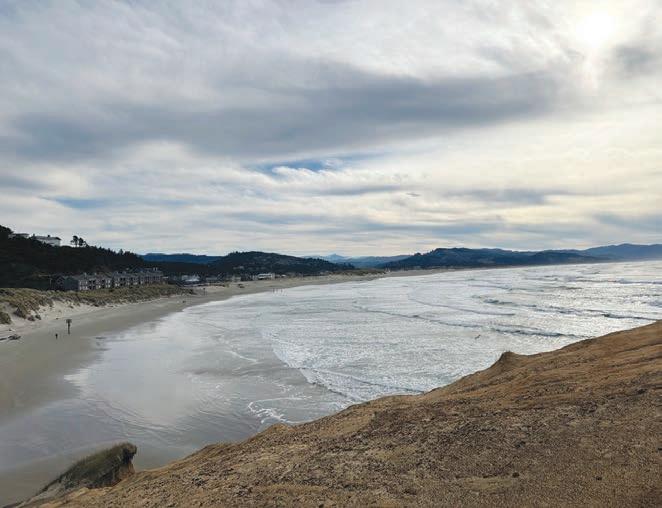
Tillamook County Commissioners approved a notice of intent to award a contract for $5.5 million of work on the Cape Kiwanda parking lot and restrooms at their April 5 meeting.

Nan Devlin of the Tillamook Coast Visitors Association also presented on the group’s work and commissioners announced another contract award for $400,000 for a project to evaluate properties for redevelopment.





The contract for $5.5 million of work at Cape Kiwanda was awarded to the Saunders company and work will begin soon after the ten-day period to contest the award has expired on April 19. Work
will continue until June, when it will be paused for the summer season, before resuming in October for a planned completion in June 2025. The project will see the demolition of the restroom currently standing in the parking lot, the construction of a replacement, the repaving of the parking lot and the addition of a path.
Funding for the project is mostly coming from transient lodging tax dollars, with a small contribution from the public works department budget and $490,000 budgeted from parking revenues.
Devlin, the Tillamook Coast Visitors Association (TCVA) executive director, updated commissioners on the work her organization has been doing over the past six months. The organization receives county funding to help communities with destination management and gives twice yearly reports to the commissioners.
Devlin was particularly

excited about the new Partners for Rural Food Systems program that TCVA formed with grants from Business Oregon and the Columbia Pacific Economic Development District. The program aims to promote innovation in rural food systems and its first two projects will be a seafood processing center at the Port of Garibaldi and an agricultural innovation center at the Port of Tillamook Bay, both set to open in June.
Another program that Devlin said she was excited about was the volunteer adventures program. The program welcomes various groups to Tillamook County to learn about conservation before doing a hands-on activity over the course of a day or weekend. This year, four groups have signed up to participate including the Girl Scouts of Salem and a group from Linfield University.
TCVA has also been working on a host of other

projects, including a recently completed wayfinding sign update in Rockaway Beach and an in-progress update in Bay City. They have also helped Manzanita and Bay City develop community destination management plans and are nearing completion on plans for Oceanside and Cape Meares.
The organization continues to focus on improving beach accessibility across the county, with nine beach wheelchairs currently being deployed.
The $400,000 for environmental analysis services from CHA Consulting is coming from a Brownfields Community Wide Assessment grant that Tillamook County received last June.
Housing Coordinator Thomas Fiorelli told commissioners that the brownfields program was developed by mayors from across the country to repurpose buildings and properties that potentially contain hazardous materials.
Fiorelli said that the program targeted properties that had issues that would deter developers from buying those properties but did not pose serious health or safety risks and could be mitigated. Examples of candidate properties include former drycleaning facilities, gas stations and factories.
CHA will help property owners evaluate their properties to determine necessary remediation and if work can progress on the site during remediation efforts.
A Brownfields Advisory Committee is being formed and a public meeting will be held at the Port of Tillamook Bay shortly after the contest period ends on the notice of intent to award the contract on April 19.
Fiorelli said that the assessment will focus on properties that could be redeveloped for housing and that there were more than 60 brownfields sites in the county. Please send any comments to headlightreporter@countrymedia.net.


Page A4 www.tillamookheadlightherald.com Tuesday, April 11, 2023
Try our E-Edition
More info: www.heartofcartm.org 503-664-0446 MAY 5 TRASH ART GALLERY OPENING, WHEELER MAY 7 TRASH TALES STORYTELLING, MANZANITA MAY 19 TRASH TALES STORYTELLING, ROCKAWAY MAY 20 TRASHION SHOW, NEHALEM BUY FESTIVAL PASSES IN WHEELER AT HEART OF CARTM NEW LISTING NEW LISTING NEW LISTING 4785 Netarts Hwy W Netarts OR 97143 (503) 965-9777 (503) 842-9090 (503) 842-9092 Pacific City (503) 965-9777 Tillamook (503) 842-9092 Main Office Netarts - Oceanside (503) 842-9090 4785 Netarts Hwy W Netarts OR 97143 (503) 965-9777 (503) 842-9090 (503) 842-9092 Kristi Bertrand 503.812.2471 Steph Poppe 503.812.8087 Kristi Moore 503.801.4533 Sarah Dentel 503.812.2816 Debbie Carr 503.812.8728 Jacqueline Huseby 503.812.2321 Jen Strohmaier 503.812.6078 Dusty Trost 503.801.2326 Cyndi Lewis 503.842.0254 Macy Thompson 503.812.7669 Fabulous Riverfront Cabin! Walk to the river! This unique studio type Cabin is located behind a locked gate on .74 acres overlooking the Trask River from the property. MLS#23-78 Call Kristi B $319,900 Build your beach home here with house plans the seller is willing to provide for a 3 bedroom, 2.5 bath house. Rent it out as a vacation rental, full-time rental, or enjoy it yourself year round. Property is located on a paved, dead end road with utilities at the street. This lot is just minutes from the quaint village of Oceanside and approximately 8 miles from Tillamook. MLS#23-122 Call Debbie $69,000 This stunning home was constructed in 2020 and offers the perfect blend of modern amenities and coastal charm! Spacious open floor plan, desirable master suite, low maintenance yard and private back patio. MLS#23-111 Call Macy $469,000 Fantastic price on this ‘’like new’’ one-level home which exudes quality and craftsmanship. Beveled cedar siding is sturdy and timeless setting the expectations of what’s inside. MLS#23-132 Call Cyndi $385,000 H21874 NEW LISTING Panoramic ocean and bay views from this well maintained home in Netarts! Terrific location backing wooded common area and high out of the tsunami zone. MLS#23-102 Call Dusty $559,000 Caring for our Clients and the Community www.RobTrost.com Brand new custom built home in Garibaldi, with a stunning view of the Tillamook Bay. Luxury vinyl plank flooring throughout, covered front porch and an attached garage. MLS#23-85 Call Sydney $538,950 NEW LISTING Coley Trost 503.812.0791 Sydney Collett 503.812.1786 Morgan Eastin 503.812.7536 NEW LISTING VISIT www.RobTrost.com Check out our new LIVE BEACH CAMS overlooking Netarts Bay and the Three Arch Rocks in Oceanside 9055 RICKREALL RD RICKREALL, OR 97371 Russ Diede 503-932-2480 Larry Burian 503-881-8009 www.agwestsupply. com H64038 9055 RICKREALL RD. RICKREALL, OR 97371 Russ Diede 503-932-2480 www.nstractor.com 9055 RICKREALL RD RICKREALL, OR 97371 Russ Diede 503-932-2480 Larry Burian 503-881-8009 www.agwestsupply. com
Will
Chappell Headlight Reporter
Will Chappell Headlight Reporter
Longtime Cape Meares residents Dana and Joel Baker, owners of Kitty’s Food and Spirits, have recently opened a retail vintage store in downtown Tillamook. Bazaar Bazaar is located at 314
Main Ave., and does it have
STUFF! The cute store is chock-full of antiques, vintage clothing, whimsical collectibles, old books, unusual furniture, general housewares, and tchotchkes. Capt. Pete and I had fun looking over the merchandise the day after the shop’s grand opening. For the time being, Bazaar Bazaar is open 11-5 p.m. on Fridays and Saturdays. The Bakers plan to expand the store’s hours this summer. It’s great to see downtown Tillamook coming back to life after the pandemic. Our daughter Carole, her two sons and one son’s girlfriend came down for a day during spring break.
We fed them crab melts, tomato-basil soup, veggies and chips for lunch, followed by snickerdoodles, chocolate chip cookies, and make-yourown sundaes with Tillamook ice cream and toppings for dessert. The crew walked on the beach, helped Capt. Pete load some heavy furniture in his truck, and then we went to town to buy them all hoodies
from Salty Raven. From light blue to teal, mustard yellow to orange, with a narwhal whale and a jellyfish, a mushroom and a salmon—those soft, warm hoodies cover the gamut. Check out Salty Raven’s recently expanded offerings online at saltyraven. net or at the Tillamook (109 Main Ave.) or Cannon Beach (140 S Hemlock Street) store. We ended the day with happy hour treats at Tora Sushi; yum, yum! We recently found a girl’s bike helmet washed up on the beach, decorated with images of watermelon slices and lemons and topped with a pink bow. It had been in the water a long time and was full of gooseneck barnacles. That same morning, we found a mannequin: the torso of a woman. Both of these finds were from container ship spills, according to beach-
combing friends in Washington, who have found similar items. I can’t find information online about the mannequin spill, but the bike helmet is from the cargo ship Zim Kinston that lost 109 shipping containers off Vancouver Island in a storm at sea in Oct. 2021 enroute from South Korea to Canada. Those containers had high-end Yeti, Ozark Trail and Orca coolers as well as children’s bike helmets. Keep your eyes peeled, fellow beachcombers; you never know what you will find after some west winds.
Cape Meares Lake has already had its first release of trout, per the Oregon Department of Fish & Wildlife’s (ODFW’s) 2023 stocking schedule. Four thousand trout were dumped in the lake just before spring break. Other dates on this year’s stocking schedule are the weeks of April 17, May 1, May 29, and Sept. 11. Better have that fishing rod handy, neighbors.
Pete Steen and Kevin Burke will be presenting an emergency management “Tech Prep” seminar for Cape Meares residents this Saturday, April 15, at 10 a.m. at the Barbara Bennett Community Center. Come learn how to keep the lights on and more.

Iwas pleased to connect with fellow-columnist Claire Moody in January so we could discuss bees in the garden. Claire’s Headlight Herald column was always one I read and cut out for reference because it had so much good information in it. I was sorry to hear from Claire last week when she informed me she could no longer take the time to write her bee-centric column as she was busy with the Tillamook Beekeepers Association and raising queen bees. As much as I will miss her columns, I had to admit hers was a higher calling. How special to be a “Queen of the Queens!” But have no fear, Claire forwarded me a lot of good information about how to attract bees into Tillamook gardens and I will be sharing that info in my columns periodically this season. First, she told me about a book she uses a lot. Kate Frey and Gretchen LeBuhn wrote “The Bee-Friendly Garden” in 2016 and it is a wealth of good information and lovely photos by Leslie Lindell. If you are any level of gardener who wants to attract pollinators into your garden, this is a good place to start.
Claire also forwarded me an article by Kathleen M. Prough who used to be on the staff of the Indiana Department of Natural Resources, Division of Entomology and Plant Pathology. Although it is an article from the Midwest, it is certainly relevant for the Pacific Northwest too. Ms Prough had some excellent points about attracting bees. There are four areas we
need to consider when designing for bees. The first is Abundance, which basically refers to plant in clumps so the bees can find many flowers in one location. The bees need a reason to stop and feed, and clumping a variety of bee-friendly plants in one area offers them a smorgasbord of choices.
Secondly, plant for bloom succession and Sequence. Try to overlap the bloom times of plants from Spring to Fall. This will entail paying attention to when plants bloom, which can be found in most plant catalogs or online resources.
Diversity is also important. Try to find plants that provide nectar and pollen so the bees have a balanced diet. Trees and shrubs can be included in that diversity, not just perennials and annuals.
And last of the four is to Forgo Pesticide use. This is true of insecticides that will harm the bees and good pollinators as well as the insects you are trying to control. But it is also true of herbicides for the dandelions and white clover that you may consider to be weeds but the bees consider lunch. Let’s put to rest right now the myth that a lawn needs to be perfect with
no weeds of any sort. English daisies can give that lawn a charming appeal as well as attract bees.
When you are picking plants, start with the natives that attract native bees. Some great native shrubs to try are salal, oceanspray, Oregon grape, ceanothus and Nootka rose. Native perennials include bigleaf lupine, Canadian goldenrod, and Hall’s aster.
Bees are attracted to blooms that are bright white, blue or yellow in color. They like plants that have a landing area like a daisy, bee balm (Monarda) or coneflower. They also like tubular shapes like foxglove and Agastache. If the plant has pollen that is fragrant and sticky, that is a plus as well.
Of course, the choice of bee plants also needs to take in consideration the type of soil you have in your garden, plants you enjoy, and how large the plants get to be and how they will fit in with existing plants. Most bee plants prefer full to part sun, but that is natural as the bees like the sun as well.
And I will once again recommend keeping a journal. Try to keep a record of when the bee-friendly plants come into bloom and how long they bloom. Also important to record is the first sighting of bees and on which plants. What colors do your bees seem to prefer? What shape are the flowers? All this may take some serious observation skills. But truly, what better way is there to spend an afternoon than watching the bees?
LEGISLATIVE LETTER - CYRUS JAVADI
March marked the halfway point of the 2023 Legislative Session. I wish I could report that it is all downhill from here, but as the end of the session approaches, things will undoubtedly get more contentious.
Just like any business, the Legislature has deadlines. These deadlines help prioritize bills and keep the process moving by “thinning the herd” of bills that can pass and become law. Several of my bills were amongst those thinned. The most disappointing was my bill to protect North Coast jobs from a devastating Habitat Conservation Plan
Controversial Legislation

I noted that things would undoubtedly get more contentious as we head into the latter half of the Legislative Session. Here are two of the most controversial bills. I have more comprehensive comments in my newsletters (sign up here: www.oregonlegislature.gov/javadi).
HB 2002 – “Genderaffirming care” and AntiParental Rights



(HCP) proposed by the Oregon Department of Forestry (ODF).

House Bill 3585 would have required the ODF to better balance the economic value of working forests and environmental protection. Around 300 North Coast timber jobs could be lost under the current HCP. Local law enforcement and school budgets would be devastated by decreased tax revenue.
I, along with other Representatives and Senators from the Coast, wrote Governor Kotek a letter urging her to work with the Department of Forestry to reverse course. It has been nearly a month, and we have not heard from the Governor.
Safe School Package
Last week, I joined my House Republican colleagues in supporting the Safe Schools Package following the tragic school shooting in Nashville. The seven-bill package would have funded school resource officers, invested in school safety technology, and studied ways to secure our schools.
The Nashville Police Chief said the shooter decided against attacking a different school because it had “too much security.” I envision a world where every Oregon school possesses an abundance of security measures that act as a deterrent. That is why I sponsored HB 3350. The bill would examine ways to protect our children by hardening schools and providing them with security like I have at the Capitol. The presence of even a single school resource officer might have significantly altered the outcome and perhaps even averted the tragedy entirely.
The Majority party blocked all but one. It is deeply frustrating that politics is getting in the way of protecting our schools.
This bill would expand the use of taxpayer dollars spent on “gender-affirming care” for minors. It would expand abortion, including repealing all parental notification requirements for minors seeking abortions.
The bill even repeals the crime of concealing the birth of an infant. According to ORS 167.820, someone commits this crime by concealing the corpse of a newborn child with the intent to conceal its birth or to prevent a determination of whether it was born dead or alive.
Many European countries are going in the exact opposite direction as this bill wants to go when it comes to “gender-affirming care” because they do not see sufficient data or evidence to support these procedures. For example, the Norwegian Health Investigation Board recently determined that puberty blockers, cross-sex hormones, and surgery are experimental and not evidence-based.


These procedures are life and body-altering. We must proceed with extreme caution.
HB 2005 – Omnibus Gun

Bill
This bill would do three things if passed:
1. Criminalize the possession of unserialized or homemade firearms
2. Ban 18, 19, and 20-yearolds from buying or possessing a firearm, including hunting rifles
3. Allow local governments to establish more gun-free zones
We don’t have any reason to believe this bill would have stopped the shooting in Nashville. At a time when there are bills in the Legislature to lower the voting age to 16, ban flavored tobacco to stop minors from smok-

Page A5 www.tillamookheadlightherald.com Tuesday, April 11, 2023 GARDENING MATTERS FENCEPOSTS Bee-ing friendly n See JAVADI Page A6 Weather Forecast The Headlight Herald is part of the Country Media family of newspapers. The Headlight Herald is published weekly by Country Media, Inc. at 1906 2nd St., Tillamook, OR 97141 • USPS 238-300 (503) 842-7535 Deadline for Display Ads, Classified Liners and Legals: Thursdays at Noon Stephania Baumgart Graphic Designer sbaumgart@countrymedia.net Joe Warren Publisher/Editor jwarren@countrymedia.net Katherine Mace Advertising Account Executive headlightads@countrymedia.net Siah J. Kennedy Office Manager classifieds@orcoastnews.com Will Chappell Reporter headlightreporter@countrymedia.net Annual subscription rates: $70 in Tillamook County $90 out of county POSTMASTER: Send address changes and notice of undelivered copies to Headlight Herald, P.O. Box 444, Tillamook, OR 97141. Periodicals Postage paid at Tillamook, OR 97141 and at additional mailing offices. © 2023 by the Headlight-Herald. No portion of this newspaper may be reproduced in any manner without prior written permission from the publisher. All rights reserved. ABOUT US Headlight Herald Check out next week’s poll at TillamookHeadlightHerald.com Stay connected to us! What is your favorite springtime activity? Golfing Fishing Camping Hiking Traveling 0 12 24 36 Results from our online poll: CARLAALBRIGHT GARDENINGMATTERS
ELLEN STEEN 503-842-8608 ellensteen2@gmail.com
CAPE MEARES
32 24 10 11 8
Clover’s Day preparations are underway!
Volunteers are needed for Cloverdale’s annual festivities, which usually include a parade, a display of classic cars, live music and other entertainments with food and craft vendors galore. A planning session is slated for 9 a.m. on Tuesday, April 11, at Cloverdale Lion’s Den, located on Parkway Drive in Cloverdale. Volunteers are still needed; please email cloversdaycelebration@ gmail.com.

Nestucca Valley School District will hold their regu-







This week is a grab-bag of upcoming events, with one postponement of note. So let’s cover that first: Meals for Seniors announced that, due to an additional required inspection by the contractor, there will be a temporary delay to the kitchen renovation at St. Mary’s By The Sea, 279 S. Pacific.
MELONIE FERGUSON SOUTHCOUNTY
503-812-4242 mossroses@yahoo.com
lar monthly Board Meeting at 6 p.m. on Wednesday, April 12 at Nestucca High School. The address is 34660 Parkway drive in Cloverdale. Thanks to Merrily Ario for word that Nesko


The renovation, originally scheduled to begin this week, is expected to make some much-needed improvements and updates to the kitchen, which is used three days a week by Meals for Seniors and also for their alwaysfun French toast breakfasts.
For now, senior lunches will continue as usual until work begins. Keep an eye on the
Women’s Club will meet for the month at 11:45 a.m. on Friday, April 21 at the Kiawanda Community Center. The address is 34600 Cape Kiawanda Drive, Pacific City. Kimberley Miller, who is the administrator for the “What’s Up in Pacific City” page will present the program. For reservations call Cathy at 541-622-3104.
Tillamook County Community Health Center, in partnership with Tillamook County Solid Waste and Tillamook County Sherriff’s Office will host a Drug TakeBack Day on from 10a.m.-2
Meals for Seniors Web site (https://www.mealsforseniorsrockawaybeach.org/), or call (503) 317-8967 to find out more.
Also, a special thanks to the folks at The Beach Bite, who have offered to be the take-out spot for Meals for Seniors once construction begins, and as always to Teri Bruneau and John Garcia
Charity Drive Community Grant Application opens Friday March 24th 2023

Congratulations to Tillamook High School and the community of Tillamook on the completion of another outstanding Charity Drive. The generosity shown by this community is truly astounding. The Charity Drive Committee is accepting applications from local charities for Charity Drive Grants beginning March 24th, 2023 Charity Drive grant applications can be found on the home page of the Tillamook School District website (www.tillamook.k12.or.us), or picked up at the District Office. Applications can be submitted to Tillamook School District C/O Angela Paladeni, 2510 1st St, Tillamook, OR 97141 or by email at: paladenia@tillamook.k12.or.us
Deadline for applications is April 21st, 2023 @ 5:00 p.m. For questions, please contact Jennifer Guarcello or Angela Paladeni at (503) 842-4414
H21784
p.m. on Saturday, April 22 at Tillamook County Community Health Center’s 9th Street Clinic parking lot. It’s located in Tillamook. Bring unused or expired medication (prescription or over the counter) for free and safe disposal. Bring sharps (injectables and/or needles) in closed red sharps container(s) for free and safe disposal. Receive training on overdose prevention and a NARCAN kit (while supplies last). Receive prevention resources provided by Tillamook Family Counseling Center.

for their continued efforts in keeping this vibrant resource going for Rockaway Beach.
Now for a much-needed bit of road repair: Samuel Aldridge, superintendent of the Oregon Coast Scenic Railroad, informed Rockaway business owners that work will be proceeding on the South 1st Avenue railroad crossing, beginning the week of April 17th.
“This work is the result of a partnership between Oregon Coast Scenic railroad and the City of Rockaway Beach that will see over 200ft of track replaced, and the railroad crossing at S. 1st avenue replaced with upgraded rail, a concrete panel surface, and new asphalt approaches,” writes Aldridge. “The result will be improved safety, a more attractive aesthetic for the area, and a smoother ride for vehicles over the crossing.”
Since the Wayside is the “living room” of Rockaway Beach, this is great news. Whether you’re showing up for the Fourth of July fireworks, waiting for Santa to arrive for the Christmas Tree lighting, or just picking up some of Ronnie Duckworth’s barbecue at Joe’s Snacks & Beer, cleaning up the crossing is going to make life a little easier.
A map included with the letter illustrates the parking
The Tillamook Association for the Performing Arts (TAPA) & Val Braun of Edward Jones are delighted to present the hilarious production of the comedy “Four Old Broads,” written by Leslie Kimbell, directed by Chris Chiola, and produced by Robert Buckingham. Val Braun, Diane Ericson, Joni Sauer-Folger, Sabrina Garry, Phyllis Ham, Diane Hurst, Berta Limbaugh, and Kelli McMellon have roles in the production.
Performances will be held at The Barn Community Playhouse in Tillamook on
SCOTT FISHER ROCKAWAY BEACH sfisher71@yahoo.com
area that will be closed during construction. The section of off-street parking from S. 1st north through the entrance on southbound 101, roughly across from The Sea Breeze, will be closed for a few days longer while the project wraps up. And I’m sure Rockaway merchants are grateful to the OCSR and the City for waiting till after our busy spring break to set up the closure and construction.
A little farther out comes notification that the Chamber of Commerce is putting in motion the plans for a Farmers’ Market at the Wayside. Running Thursdays from May 11th through September, this is hoped to bring regular vendors, especially local farmers and other food providers. I’d love to see Food Roots NW set up a booth there with produce from some of their members. If nothing else, I’ll have to drop them a line to have the Rockaway Farmer’s Market added to their calendar.
April 14, 15, 21, 22, 28, 29 2023 at 7 p.m. and April 16, 23, & 30 2023 at 2 p.m. Doors open one half-hour prior to curtain.
Happy birthday this week to: Stetson Adkins, Jason Baumgartner, Deb Dillon, Wesson Dooher, Lorraine Eckhardt, Jenni Green, Bill Hagerty, Ken Hale, Evan Hancock, Donna Jones, Julie Kellow, Dan Krueger, Lucas McKillip, Susan Norris, Leith Seymour, Randy Sigman, Tucker Slavens, Tiarra Thompson, Jeanne Wheeler, Fallon Whiteman and Walker Wohl.
The Rockaway Renaissance Artists have been selected as the art subcommittee for the Chamber and will be providing volunteers to help set up and take down the Chamber’s booth. In addition, they will have their own booth, displaying art works produced by members. The Chamber has also invited Rockaway Renaissance Artists to provide photos of art works and installations to use in the flyers for the Farmers’ Market.
One other exciting piece of news: the Chamber is currently contacting other Rockaway businesses for the possibility of having a Renaissance Artist create a mural for them, as a way of bringing more art to the city. Renaissance member Jill Collar recently completed a charming sea-life mural for Grumpy’s, complete with sea turtles, clown fish, and an adorable purple octopus. (Here’s a Fencepost Flashback: who else recalls the purple octopus Greek restaurant in downtown Portland?)
Several Renaissance Artist members have experience doing murals for various businesses and organizations. If this appeals to you, contact the Chamber (in the red caboose) or Rockaway Renaissance Artists, who meet Wednesday afternoons at the Nea Kah Nie district office, 504 N. 3rd Avenue.
Services

ing it, and allow a minor at any age to get an abortion without parental consent, HB 2005 wants to raise the age to purchase a firearm to 21. We need to figure out who is an adult in Oregon. I don’t believe we should pick and choose who gets to exercise their constitutional rights.
Homelessness & Housing
The House passed House Bills 2001 and 5019 to
as he batted 2-for-4 with four RBI.
Tillamook, which is in second place in the Cowapa League, has a grueling schedule this week with three games in four days, beginning with Tuesday’s 5 p.m. home game versus the Seaside High Seagulls (0-1 league, 4-6 overall). The Cheesemakers play their next game Thursday at 4:30 p.m. on the road against the St. Helens High Lions (0-1 league, 2-9 overall), followed by a 5 p.m. home game Friday against the No. 1 ranked Scappoose High Indians (2-0, 8-2).
Cheesemakers lose softball game to Astoria
The Tillamook High Cheesemakers (0-1 league, 2-7 overall) opened their 12-game Class 4A softball Cowapa League schedule with a 15-9 loss to the No. 8 ranked Astoria High Fisher-
dedicate about $200 million toward the critical homeless problem in the state. That money is projected to house about 1,200 people currently without homes, prevent homelessness for more than 8,000 and expand shelter capacity by 600 beds within one year.
I voted yes, not because I believe this will singlehandedly solve the homelessness problem, but because it is a step in the right direction to build more homes and get some of our neighbors off the streets. When we talk about homelessness, we cannot
men April 4 at Tillamook High School.
The Mooks got off to a good start in the game in building a 6-0 first inning advantage. Astoria responded with a seven run, second inning rally to take a 7-6 lead. Astoria then scored in the next three frames to build a 12-6 lead after five innings. Astoria held Tillamook scoreless from the second through the sixth inning. Both teams scored three runs in the seventh for the final margin. The loss marked the seventh straight for Tillamook.
The Mooks were seeking to snap the losing streak in Tuesday’s Cowapa League road game versus the Seaside High Seagulls (7-4). Tillamook plays it’s next contest on the road Thursday at 4:30 p.m. against the Scappoose High Indians (0-1 league, 9-2 overall).
continue spending money on housing without addressing the underlying drug issues. We must reform Measure 110, so there is accountability for those refusing the state’s help.
Constructing buildings in hazard zones carries inherent risks, but some coastal communities like Rockaway Beach and Seaside are entirely within tsunami hazard zones. These communities require workforce housing, but existing regulations prevent it. In response, I have introduced HB 3442, a bill to promote housing in these communities. If passed, this bill would provide coastal cities with increased opportunities to construct housing without incurring the exorbitant costs associated with land production or rezoning.
The bill passed out of the Housing and Homelessness Committee with only one no vote. I expect the bill will be voted on by the entire House of Representatives sometime next week.
As always, I welcome your feedback in input. It helps me better represent our community. Email me at Rep. CyrusJavadi@oregonlegislature.gov or call my office at 503-986-1432.
Page A6 www.tillamookheadlightherald.com Tuesday, April 11, 2023 H44758 Our staff provides caring, professional assistance for a wide range of personal and family needs. Serving the community with locations in Tillamook, Rockaway Beach and Pacific City. 503-842-8201 • 1-800-962-2851 Visa and MasterCard Accepted & Accepts Most Major Insurance Main office located at 906 Main, Tillamook, OR Print Digital
We can now programmatically distribute employment listings to the right aggregators and take the guesswork out of deciding where to post. Our system continually adjusts a job post’s performance for optimal results on our Job Recruitment networks! Contact us today to get started! Social Media Advertising that works! Contact Katherine to get started: (503) 842-7535 headlightads@countrymedia.net Contact Katherine to get started: (503) 842-7535 headlightads@countrymedia.net
Job Recruitment
TILLAMOOK 1845 Main Avenue N., (503) 842-7555 Valid only at above location. Present coupon at time of service. One per vehicle. Not valid with other offers. Not valid on Select Conventional oil. Expires 5/2/23 TILLAMOOK 1845 Main Avenue N., (503)
Valid only at above location. Present coupon at time of service. One per vehicle. Not valid with other offers. Not valid on Select Conventional oil. Expires 5/2/23 AUTOMATIC TRANSMISSION FLUSH, POWER STEERING FLUSH OR GEAR BOX SERVICE FAMOUS 20-POINT FULL-SERVICE OIL CHANGE Save $10 Save $7
842-7555
Get your vehicle ready for Spring adventures with these money saving coupons! FENCEPOSTS
Be a Know-It-All Subscribe Today! In Print and Online Call 503-842-7535 www.tillamookheadlightherald.com 1906 Second St., Tillamook, OR 97141 Headlight Herald
James Timothy Goddard
June 1940 ~ March 2023
would go on to own and operate a small newspaper, invest in real estate, and even build a hotel off the hwy in Missoula.
a chance you were leaving without… yep, you guessed it, a very “new to you” car!
Peggy
July 6, 1942 ~ February 2, 2023

Beloved Husband, father, grandfather, son, brother, uncle, and a friend to all.
Born to Clarence (Pink) and Viola (Mic) Goddard in June 1940 in Pocatello, Idaho. A town he very much loved. He graduated high school and joined The Reserve Officers’ Training Corps ROTC at ISU in 1959 and completed his Licensed Practical Nursing training at Saint Anthony Hospital. He was a devout catholic and as a young man spent time at monastery with the monks of The Abbey of our Lady of The Holy Trinity. Here he enjoyed the “peace and quiet up there with God and even contemplated priesthood with his Brothers and Monks.”
It seems God had other plans for him upon meeting his future bride and love of his life at a town dance he happened to be the Disc jockey for. They would marry in the summer of 1966 and were blessed with seven children to raise.
Together they went on to buy two radio stations, running ads and playing their favorite country songs and top 40 hits! Throughout their lives together in Idaho and later in Montana they
Kelly C. Chapman 1944 ~ March 5, 2023

Kelly C. Chapman, of Molalla, Oregon, died on March 5, 2023 at the age of 79. A funeral service will be held April 22, 2023 at 1 p.m. at Sacred Heart Cemetery 2411 5th St, Tillamook, OR 97141.

More Obituaries on next page.
See all obituaries for free online each week.

He went by many monikers that would stick with him throughout his life. His name was James but some called him Timothy, Big Tim, Ranger, or Terrible Tim. But for those that sought love and friendship they mostly just called him dad. He loved to joke around and it’s here in this display of humor and wit you would find a great companion. He had a magnetic personality and a gift for gab.
A kind man with an insatiable taste for knowledge.
He was truly brilliant and thought to have a photographic memory. He could easily recount most days, people, and places throughout his life. He loved sharing stories, laughing, dancing, going for long car rides, good food, but most importantly he really found joy being with his family.
To list all of his ventures would be an impossible task and instead we wish to speak of his generous nature and his incredible heart.
He found himself a local to the Oregon Coast for the second half of his life. He started a small car business. Coming into the car lot was like coming into Cheers… here everyone knew your name and if they didn’t they would soon find it out along with your credit score, proof of income, and a co-signer as needed! Not

But in all seriousness the car lot was a hub for all. And it really mirrored Big Tim as a person. A place where no matter your religion, political affiliation, or truck preferences you could find a friend in him. He rarely missed a day of work and somehow found a way to make everyone feel like someone. This was his greatest gift… friendship. Because above all else, Dad was a friend to all. His absence is immeasurable and, in his memory, we will find the greatest of men.
Big Tim is survived by his children; Timothy Goddard, Alexis Goddard (Randall), Scott Goddard (Alice), April Buckmeier (Scott), Boone Goddard (Summer), Tylee Laurance (Nic), Faith Hinkson (Zach) his 13 grandchildren, 3 great grandchildren and one due in June. He is also survived by his seven nieces and their families whom he loved dearly.
He loved The Lord and gave thanks regularly despite any hardships. It would be a failure not to mention his love and dedication for his wife Leslie. After she received an early onset dementia diagnosis, he cared for her in their home for many years and never gave up on getting her well. He has now joined her in heaven and his family finds comfort knowing they are together again. His life was colorful as he himself shined bright. Impossible to be forgotten and missed beyond belief.
A celebration of life will be held on Saturday, April 8th at 1 p.m. at Pacific Restaurant 205 Main Ave, Tillamook Oregon. In lieu of flowers, contributions “in memory of James Goddard“ may be made to Saint Mary’s by The sea in Rockaway Beach Oregon.

OBITUARY POLICY
The Headlight Herald has three options for submitting obituaries:

BASIC OBITUARY
Includes the person’s name, age, town of residency, and information about funeral services – No Cost.



CUSTOM OBITUARY
You choose the length, the wording of the announcement, and if you want a small photo included – Cost is $75 for the first 200 words, $50 for each additional 200 words.
PREMIUM OBITUARY
Often used by families who wish to include several photos and a longer announcement, or who wish to run a thankyou list of names – Cost varies by length of announcement. Please provide a digital version of text and photographs by email, CD or USB Drive, if possible. All obituaries are placed on tillamookheadlightherald.com/obituaries at no cost
Peggy Renz, of Nehalem, passed away in her sleep on February 2, 2023, after battling a deteriorating medical condition she suffered within the past year. Peggy was a fighter and had strong determination to overcome her various health issues. She never let what life dealt her get her down. Her strong conviction, larger than life personality, and friendly smile will be missed by many.
Peggy was born on July 6, 1942, to Elmer and Billie (Bigham) Renz and grew up in Milwaukie, Oregon. She graduated from Milwaukie High School where she enjoyed being in theater and taking care of her three younger brothers. She later moved to Northwest Portland and was continually active in the community. She worked in social work and had a strong passion for helping others, which included tenure at Friendly House and Neighborhood House. She considered her colleagues part of her family. She married John Wendeborn and raised two children while living in Portland before divorcing. In 2000, she married her soul mate, Glen Downs. They moved to Nehalem in 1998 where she quickly engaged in the communities of Nehalem, Garibaldi and Wheeler in various social and volunteer activities.
Peggy was an avid gardener and transformed her property to an oasis of plants, flowers
and garden art, which many of her friends would come to see. She loved hosting family and friends in her gardens, and touring gardens around the Northwest. Her passions included canning, cooking and especially baking for which she was known to share with her neighbors and friends. She had a sharp sense of humor and had an affinity for “Tiara Tuesdays”.
Peggy was preceded in death by her parents; 2 broth-

ers and her husband, Glen Downs. Peggy is survived by her sons, Rourke Wendeborn (Linda), Duggan Wendeborn, and stepchildren, Guy Downs (Shonnie), Shelly Brenner (Dave), brother Bill Renz, and 7 grandchildren. A celebration of life will be held at Merten Vineyards, 17420 NW Solberger Rd, North Plains OR, on Friday, April 21st from 12 pm to 4 pm, with tributes starting at 1:30. All are welcome to attend.
Celebration of Life Terry Watts
Our family invites you to celebrate the life of this kind, generous, fun-loving man. Terry loved his family, friends and the community he lived in for 64 years. At Terry’s request this is to be a true celebration of his life with love and laughter. Bring your favorite “Terry” story and memories to share.


The Celebration will take place on Saturday April 29th, noon-3 PM at Neah-Kah-Nie High School, lower gym (NEW LOCATION)
24705 US Hwy 101, Rockaway, Oregon
Food and drinks will be served. Terry requested no flowers but rather a donation to one of the local animal shelters, i.e. (Tillamook Animal Shelter, United Paws, Tillamook K9 Rescue or Animal Haven by the Sea Rescue) or to an animal shelter in your city or town. H21867


Page A7 www.tillamookheadlightherald.com Tuesday, April 11, 2023
OBITUARIES H21150
H21868
Louise Renz
Adventist Health Tillamook is hiring! Join our amazing team! We have a variety of clinical and non-clinical positions available at the medical center in Tillamook and our medical offices in Manzanita, Tillamook, Pacific City and Lincoln City. We offer competitive pay, outstanding benefits and relocation assistance. To ask questions or submit a resume, please contact: Joe Penna, Talent Acquisition | 503-893-5502 call/text or PennaJA@ah.org Current openings include: • Food Service Associate Will train on-the-job! • EMT or Paramedic • Patient Scheduling and Patient Registration Will train on-the-job! • Registered Nurses (RN) • Medical Assistants Will train on-the-job! • Nursing Assistants (CNA) • Physical Therapist • Registered Dietitian • And more! Scan the QR code to view available job openings or visit careers.adventisthealth.org Adventist Health is an equal opportunity employer and welcomes people of all faiths and backgrounds to apply for any position(s) of interest.
R obert Henry Parks was born March 3, 1944 to Robert and Dorothy Parks in Tillamook, Oregon.

Robert Henry Parks
March 3, 1944 ~ March 23, 2023
He passed away March 23, 2023 in Portland, Oregon. Bob was a very active member of his community and over the years has been affiliated with the ELKS, worked at the South County Creameries, has been a volunteer fire fighter, scout leader, a Tillamook Rodeo board member and a general contractor. He enjoyed everyone he met and loved to spend time swapping stories with them. Bob had a passion for the sport of rodeo and traveled to many events over the years with
his wife (Judy). In fact, it was a rare sight to see Bob without his cowboy hat on; it’s just who he was.
Bob and Judy were avid supporters of kids’ activities in the Nestucca school system. It didn’t matter if it was a home or an away game, they would do their best to make them all.
Bob and Judy supported other family members kids’ events by going to many events located in the valley.
Bob’s favorite pastimes were riding horses, team penning, puzzles and camp -
ing. All of which were centered around family and friends.

Bob is survived by his wife, Judy Parks. Son Steven (Angi) Parks, Daughter Lori (Don) Perry. His Grandchildren: Steven Jr., Alex (MaryLynn), Nathan (Trisha), Nicole (Jimmy), Rebecca (Tanner), Danielle (Lynn), Courtney, Zo and Kaitlin. Great grandchildren: Makenna, Ryan, Isabel, Wyatt, Ethan, Bennett, Charlotte, Tucker, and one on the way.
There will be a memorial service to honor Bob’s life on April 15th at the Nestucca High School gym at 11 a.m. Address: Nestucca
AAUW to host candidate forum


High School 34660 Parkway Dr, Cloverdale, Oregon 97112 In honor of his two passions, we are asking that if you plan to attend that you consider wearing a cowboy hat and boots or Nestucca School swag. Also, please consider donating to a new scholarship being started in his name to honor the Nestucca athletes in leu of flowers. There will be a cowboy hat and boots donation drop off at the service. There will be a time of sharing during the service as well as a potluck following the service where even more stories can be shared and enjoyed.


If you are thinking of
The American Association of University Women – Tillamook is hosting a Candidates Forum for the May Special Election for the Tillamook, Nestucca, and Neahkahnie School Districts and the Tillamook Bay Community College Board races. The forum will be held on Thursday, April 27th starting at 6:00pm. The meeting will be held via Zoom: https://us02web.zoom. us/j/9618460049?pwd=S3FD
T1lBdlhFcHdvVlNNQWVW
SGVMQT09

Questions can be submitted via email (in advance) to lisaphipps08@gmail.com or can be submitted during the forum in the chat box. Questions will be read by the moderator. This is an exciting opportunity to meet the candidates who may play a valuable role in ensuring the success of our county. This is a chance to hear directly from the candidates about their vision, experience, and goals and how they will help Tillamook County.
It was a gloomy, miserable, rainy afternoon. Facing difficult weather, shooters came from across the county stepping out from the cozy confines of their warm, dry caves. Trap Teams once again vying for the coveted title of Tillamook Gun Club League Champion. Top honors go to Upstairs Bar & Grill with Tillamook Ford bringing up the rear. Seems Ford was short staffed they only had one member shoot, better luck next month. Tillamook Gun Club would like to invite interested shooters to come out, check out the newly remodeled club. Interested shooters may want to join a team or create one of their own. The Gun Club is open every Sunday (10am – 2pm) and Thursday (3:30 – 7pm). Don’t let inexperience hold you back, come on out and give it a try.
April Standings
1st Upstairs Bar & Grill
2nd Mayhem
3rd Schwend Swiss Army
3rd Tillamook Creamery
5th Tillamook Ford




you need the
1. You’re looking for ways to save money.


2. You could use a new job.
3. Your basement and garage are about to burst.
4. You need a new ride.

5. You want to know where the best deals are.
6. You’re looking for a new house.

7. You want to know who won the game last night.
8. Your cat had kittens...again!
9. 10. To be continued... Headlight Herald 503-842-7535 tillamookheadlightherald.com
Page A8 www.tillamookheadlightherald.com Tuesday, April 11, 2023 FREE FALL RISK EVALUATIONS H21804 501 & 708 Main Avenue, Tillamook • 503-842-4475 • 800-927-4476 Tillamook Ford North • Next To Pizza Hut On Hwy 101 in Tillamook • 503-842-1202 www.tillamookmotors.net TILLAMOOK FORD Drive A Little Save A Lot! 2021 Ford Edge Titanium AWD List Price $48,350.00 Dir. Discount $5,035.00 Sale Price $43,315.00 2023 Ford F-150 Lightning Lariat Call for Pricing 2022 Ford Edge Titanium AWD List Price $50,215.00 Dir. Discount $2,995.00 Trade-in Assistance $1,000.00 Sale Price $46,220.00 2022 Ford
1 Call for Pricing 21T82 22F2 22T84 23T3 H21857 Includes 0.0% - 1.9% APR Financing from 48 - 72 mos ** For low interest rates buyer must use Ford Motor Credit financing. Selling price does not include license, title, tax and doc. fees. Incentives are subject to change without notice. Buyers are subject to lenders credit approval. Not all buyers will qualify. Incentives expire 07/05/2023. Advertised vehicles are subject to prior sale. Contact dealer for complete details.
Mustang Mach
Re-Elect Matthew Petty to Tillamook School Board Position 1 Paid for by candidate – mep2173@hotmail.com Re-Elect Matthew Petty to Tillamook School Board Position 1 Paid Re-Elect Matthew Petty, ep2173@hotmail.com
your home. Give me a call! Office: 503-842-9090 www.RobTrost.com Real Estate Broker Cell: 503-812-2471 kbbertrand@gmail.com Kristi Bertrand H63600 Tillamook Gun Club
Trap Results
buying or selling
April
Newspaper
County
build behavioral health housing. An allocation formula was developed by the Association of Community Mental Health Programs to even out the awards gaps between large/small/rural and frontier counties in Oregon. The formula considered population, but also county economics, poverty level, and other criteria. For Tillamook County,


House Bill 5202 funds came to $1.75 million for TFCC to invest in the community. With the help of a planning process that included community and agency client input, and with the support of the Board of Directors of TFCC, the agency has positioned itself to expand the availability of supportive housing, targeting
individuals with serious and persistent behavioral health challenges. in Tillamook County. On August 26, 2022, TFCC’s offer to the Board of Directors of CARE to purchase the Kichis House site in Tillamook was accepted. On February 17, 2023, Tillamook Family Counseling Center became the owner. Getting to this point has truly

Clerk announces important election dates





been a collaboration between CARE and TFCC.
Currently, TFCC is working through a number of details that include building updates and renovation, staffing and program planning. Our hope is that this
can become a life changing and community-building opportunity as well as a step towards health and wellness for a number of individuals with significant behavioral health challenges in Tillamook County.
St., Tillamook


April 30th at 3:00,
Seaside United Methodist Church, 241 Holladay Dr., Seaside
May 5th at 7:00, Cannon Beach Community Church, 132 E. Washington St., Cannon Beach










May 7th at 3:00, Nehalem Bay United Methodist Church, 36050 10th St., Nehalem



Page A9 www.tillamookheadlightherald.com Tuesday, April 11, 2023 Jason Averill Broker/Owner 1812 Third Street, Tillamook OR 97141 Office: 503-842-2800 • Fax: 503-842-4660 Cell: 503-801-1223 email: jasonaverill@remax.net www.jasonaverillhomes.com Each office is independently owned and operated H49377 Open House Come experience how Lakeview Senior Living’s 60+ community can enhance your life! With a lush park-like setting next to Devils Lake and across from Samaritan North Lincoln Hospital our Independent Living Cottages offer the perfect setting. Refreshments, information, and inspiration for your future await at our open house! FRIDAY, APRIL 21ST 10:00AM – 4:00PM (541) 921- 8923 2690 NE Yacht Avenue • Lincoln City, OR 97367 lincolncityseniorliving.com • RCFE #1119697213 Lakeview Senior Living *Limited time offer, while apartments last, terms and conditions apply. Ask about our Spring Savings* Amenities & Services Two Bed Two Bath Pet-friendly Local Transportation Single Car Garage Weekly Housekeeping Social Events Two Daily Chef Curated Meals Save energy and money on your electric bill with new replacement ENERGY STAR® windows! Tillamook PUD offers rebates for ENERGY STAR® replacement windows with a U-Value of .30 or below for site built & manufactured homes. *Excludes new construction, major remodels & homes with existing vinyl windows. A free energy audit of your home must be done prior to any work. Tillamook PUD PO Box 433 Tillamook, OR 97141 www.tpud.org See The Savings REBATES Window TAKE A LOOK AT TILLAMOOK PUD'S Call our energy experts at 503-842-2535 or visit www.tpud.org. For More Information Tillamook 2023 VENDORS! To reserve a booth & be in the event program, contact us by April 14. Call 503-842-7535 or email Katherine at headlightads@countrymedia.net www.tillamookheadlightherald.com • 1906 Second St., Tillamook, OR 97141 Saturday, April 29 9 am to 4 pm FREE ADMISSION • FREE PARKING at Tillamook County Fairgrounds Honey and bee-related arts/crafts for sale Live demonstration hive on display Bee Day 2023 Enter to win this Beehive built by Rick Stelzig and painted by Paige Andrus. Drawing held Sunday at the show. Tickets: $5 ea. or 5 for $20. Purchase at the show or online, tillamookbeekeepers.org Sunday, April 30 11 am to 4 pm Seeyou atthe Show! Headlight Herald Tillamook County Solid Waste Brought to you by Co-sponsored by RaffleGreat Prizes! Benefits KT Days Scholarship Drive Stop by Tillamook PUD’s booth and enter to win a battery-operated Milwaukee pole saw and leaf blower combo kit! Featuring New this year! Speakers Series The value of this hive is estimated at $750. The winner will also receive a one-year membership in the Tillamook Beekeeper Association. 2nd Place Prize $100 gift certificate for the TCCA Farm Store. 3rd Place Prize $50 gift certificate from JAndy Acres Nursery. Featuring lectures by Dr. Dewey Caron, author of Honey Bee Biology and Beekeeping, Saturday 11 a.m. & 3 p.m. The Master Gardener Learning Garden will be open 9am-4pm Saturday and 11am-4pm Sunday during the Home & Garden Show Free Western Red Cedar Seedlings! ODF booth # 37 April 28th at 7:00, Tillamook United Methodist Church, 383 12th
H21871 forum AssociationCandidatesThursday, 6:00pm. https://us02web.zoom. us/j/9618460049?pwd=S3FD T1lBdlhFcHdvVlNNQWVW the exciting candivaluable of vision, Tillamook
16, 2023 Special Election April 2023 25 Voter registration deadline (Registration cards postmarked April 25, 2023 are valid) 26 First Day ballots will be mailed and Dropsites Open May 2023 5 Certification Test of the Ballot Counting Machine 11 Last day to mail ballots 16 Election Day June 2023 12 Last day to certify election results The Elections office in the Tillamook County Courthouse will be open on Election Day 7:00am-8:00pm.
May
101 South 4/26/2023 to 8:00 a.m. (open 24 hours) Cloverdale, OR 97112 5/16/2023 until 8:00 p.m. Pacific City Drop Box - Kiawanda Community Center 34600 Cape Kiwanda Drive 4/26/2023 to 8:00 a.m. (open 24 hours) Pacific City, OR 97135 5/16/2023 until 8:00 p.m. CENTRAL Tillamook County Clerk’s Office 4/26/2023 to 8:00 a.m.5:00 p.m., Mon. - Fri. Tillamook County Courthouse 5/15/2023 201 Laurel Avenue 5/16/2023 Tue. 7:00 a.m. - 8:00 p.m. Tillamook, OR 97141 Tillamook County Courthouse 4/26/2023 to 8:00 a.m. (open 24 hours) Outside: North set of stairs 5/16/2023 7:00 a.m. - 8:00 p.m. 201 Laurel Avenue Tillamook, OR 97141 Tillamook City Drive-Up Drop Box NW Corner of 3rd & Laurel 4/26/2023 to 8:00 a.m. (open 24 hours) Tillamook, OR 97141 5/16/2023 until 8:00 p.m. Tillamook City – Library Main Branch 4/26/2023 8:00 a.m. (open 24 hours) 1716 3rd Street 5/16/2023 until 8:00 p.m. Tillamook, OR 97141 NORTH Bay City - City Hall Drop Box 5525 B Street 4/26/2023 to 8:00 a.m. (open 24 hours) Bay City, OR 97107 5/16/2023 until 8:00 p.m. Garibaldi - City Hall Drop Box 107 6th Street 4/26/2023 to 8:00 a.m. (open 24 hours) Garibaldi, OR 97118 5/16/2023 until 8:00 p.m. Rockaway Beach - City Hall Drop Box 276 Hwy. 101 South 4/26/2023 to 8:00 a.m. (open 24 hours) Rockaway Beach, OR 97136 5/16/2023 until 8:00 p.m. Manzanita - City Hall Drop Box 543 Laneda Avenue 4/26/2023 to 8:00 a.m. (open 24 hours) Manzanita, OR 97130 5/16/2023 until 8:00 p.m.
Ballot Dropsites SOUTH Cloverdale Drop Box34370 Hwy.
Trucks 616
804

Apts Unfurnished
Independent Living Apartments

With Independent Living, you get to live life on your terms while we take care of the details. Say goodbye to cooking and cleaning, and spend more time pursuing your interests and passions!

Call (503) 842-0918 or visit prestigecare.com/fiverivers






999
Public Notices
HH23-119 FIRST NOTICE OF BUDGET

COMMITTEE MEETING
A public meeting of the Budget Committee of the Tillamook County Emergency Communications District, Tillamook County, State of Oregon, to discuss the Budget for the fiscal year July 1, 2023 to June 30, 2024 will be held in the Stan Sheldon Board Room located at 2311 Third Street, Tillamook. The meeting will take place on the 10th day of May 2023 at 5:00 pm. The purpose of the meeting is to receive the budget message and to receive comment from the public on the budget. A copy of the budget document may be inspected or obtained on May 1st, 2023 at 2311 Third Street, between the hours of 9:00 am and 3:00 pm. This notice may also be found at www.tillamook911.com This is a public meeting where deliberation of the Budget Committee will take place. Any person may attend the meeting and discuss the proposed budget with the Budget Committee. This meeting can be accessed remotely as well. For instructions on how to join, please contact our administrative staff no later than 12:00 pm on Tuesday, May 9, 2023 at 503-842-3446 or 911Admin@tillamook911.com.


HH23-85
TRUSTEE’S NOTICE OF SALE
T.S. No.: OR-23-953515-BB Reference is made to that certain deed made by, GREGORY G STILL, AN UNMARIRED PERSON as Grantor to TICOR TITLE COMPANY OF OREGON, as trustee, in favor of MORTGAGE ELECTRONIC REGISTRATION SYSTEMS, INC., AS NOMINEE FOR CALIBER HOME LOANS, INC., A CORPORATION, ITS SUCCESSORS AND ASSIGNS, as Beneficiary, dated 12/20/2019, recorded 1/2/2020, in official records of TILLAMOOK County, Oregon as fee/file/instrument/microfilm/reception number 2020-00004 and subsequently assigned or transferred by operation of law to CALIBER HOME LOANS, INC. covering the following described real property situated in said County, and State.








APN: 61925 3N1028-CA-00600


LOT 6, SEA FOREST, SITUATED IN THE NORTHEAST QUARTER OF THE SOUTHWEST QUARTER OF SECTION 28, TOWNSHIP 3 NORTH, RANGE 10 WEST, WILLAMETTE MERIDIAN, COUNTY OF TILLAMOOK, STATE OF OREGON, RECORDED JULY 13, 1979 IN PLAT BOOK 3, PAGE 79, TILLAMOOK COUNTY RECORDS. Commonly known as: 35595 CLIPPER CT, NEHALEM, OR 97131-9642 The undersigned hereby certifies that based upon business records there are no known written assignments of the trust deed by the trustee or by the beneficiary, except as recorded in the records of the county or counties in which the above described real property is situated. Further, no action has been instituted to recover the debt, or any part thereof, now remaining secured by the trust deed, or, if such action has been
instituted, such action has been dismissed except as permitted by ORS 86.752(7). Both the beneficiary and the trustee have elected to sell the said real property to satisfy the obligations secured by said trust deed and notice has been recorded pursuant to Section 86.752(3) of Oregon Revised Statutes. There is a default by grantor or other person owing an obligation, performance of which is secured by the trust deed, or by the successor in interest, with respect to provisions therein which authorize sale in the event of such provision. The default for which foreclosure is made is grantor’s failure to pay when due the following sum: TOTAL REQUIRED TO REINSTATE: $8,405.79 TOTAL REQUIRED
TO PAYOFF: $153,686.20 Because of interest, late charges, and other charges that may vary from day-to-day, the amount due on the day you pay may be greater. It will be necessary for you to contact the Trustee before the time you tender reinstatement or the payoff amount so that you may be advised of the exact amount you will be required to pay. By reason of the default, the beneficiary has declared all sums owing on the obligation secured by the trust deed immediately due and payable, those sums being the following, to- wit: The installments of principal and interest which became due on 10/1/2022, and all subsequent installments of principal and interest through the date of this Notice, plus amounts that are due for late charges, delinquent property taxes, insurance premiums, advances made on senior liens, taxes and/or insurance, trustee’s fees, and any attorney fees and court costs arising from or associated with the beneficiaries efforts to protect and preserve its security, all of which must be paid as a condition of reinstatement, including all sums that shall accrue through reinstatement or pay-off.
Nothing in this notice shall be construed as a waiver of any fees owing to the Beneficiary under the Deed of Trust pursuant to the terms of the loan documents. Whereof, notice hereby is given that QUALITY LOAN SERVICE CORPORATION F/K/A QUALITY LOAN SERVICE CORPORATION OF WASHINGTON, the undersigned trustee will on 7/19/2023 at the hour of 9:00 AM, Standard of Time, as established by section 187.110, Oregon Revised Statues, At the Front Entrance to the Tillamook County
SHERIFF’S
Page A10 www.tillamookheadlightherald.com/classifieds LISTINGS ARE UPDATED DAILY AT TILLAMOOKHEADLIGHTHERALD.COM CLASSIFIEDS Services, etc. Jobs Autos 100 - 400 500 600 700 800 900 Items for Sale Rentals Real Estate To place an ad Call 503-842-7535 Or go to www.tillamookheadlightherald.com Headlight Herald Deadline for display ads, Classified liners and legals: Thursdays at noon Tuesday, April 11, 2023 ALL IN 1 GUTTER CLEANING AND ROOF MAINTENANCE FREE ESTIMATES GUTTER REPAIR 503-302-8171 LLC 200272292 INS CSUO198795 103 Yard Work R & R LAWN SERVICE (503) 812-7469 We know the needs of your lawn • General lawn cleanup • Mowing, edging • Brush & shrub trimming/removal • Weeding, pruning • Yard waste removal • General tree care • Pressure washing • Gutter cleaning H21717 Construction Services 109 R&H General Contractor CCB#243512 FOR ANY ROOF EMERGENCIES, please call or text: (503) 457-3438. Landscape Maint. 111 Pacific Lawn Service: Pruning, cutting, yard cleanup & haul away, power wash, gutter cleaning. Free estimates (503)8017948 Accepting new customers Misc Services 150 PO Box 569, Lincoln City, OR 97367 (541) 614-4333 www.pelicangaragedoors.com CCB#238172 Providing garage door repair, sales, service and installation in Lincoln & Tillamook County H21860 Events 312 2018 Garden&
Wanted Tillamook Home & Garden Show April 29 & 30 Contact us to find out about our special low rate for small businesses: 503-842-7535 headlightads@countrymedia.net H21449 Apply online at https:// nearspacecorp. bamboohr.com/ careers/9 EQUAL OPPORTUNITY EMPLOYER NOW HIRING! Controller and Contract Manager Take your career to NEW HEIGHTS with us! H21619 We have a rare opportunity ahead for an experienced cook to join our team. Now interviewing for the position of Dinner Cook 40 hours weekly Visit us on facebook or alicescountryhouse.food-ts.com to find out more about our classic family-style cuisine For more info: (503) 842-7927 You can email resume to alicescountryhouse@gmail.com or stop by 17345 Wilson River Hwy, Tillamook H21743 Tillamook Estuaries Partnership is Now Hiring-Native Plant Nursery Coordinator (Closes April 23, 2023) Join Our Team Calling all native plant enthusiasts!\~ Help restore the land and nourish the community we love! $37,200 - $53,000 per year, based on a 40-hr week work schedule, DOE. Benefits. For complete job description go to tbnep.org. To apply,
submit by email: resume, statement of qualifica
tions and interest, and three pro
fessional references.
Artisan Vendors
please
-
-
2023 Ford Maverick Hybrid Factory Bed Liner & Hitch 100 mi. 503-457-1570
Courthouse, located at 201 Laurel Avenue, Tillamook, Oregon 97141 County of TILLAMOOK, State of Oregon, sell at public auction to the highest bidder for cash the interest in the said described real property which the grantor had or had power to convey at the time of the execution by him of the said trust deed, together with any interest which the grantor or his successors in interest acquired after the execution of said trust deed, to satisfy the foregoing obligations thereby secured and the costs and expensPublic Notices 999 Public Notices 999 Public Notices 999 INSIDE More Help Wanted & Real Estate 102 Home Repair Employment Opps 515 H21841 CONFIDENTIAL DOCUMENT SHREDDING We rent paper recycling bins. (503) 457-3089 SIGHT UNSEEN SHREDDING, LLC Locally Owned Member - Tillamook Chamber of Commerce License #20-480 Tax Day is April 18 An organized office makes filing taxes easier
Headlight Herald 04/11 /2023
Tillamook
Tillamook County Job Opportunities
For posting information visit our website at www.co.tillamook.or.us
OFFICE
Cadet - Seasonal Hourly $17.87
by April 17 , 2023 T illamook County is an equal opportunity employer Tillamook Headlight Herald 04/11 /2023
County Job Opportunities
posting information visit our website at www.co.tillamook.or.us
OFFICE
Cadet - Seasonal Hourly $17.87
by April 17 , 2023
illamook County is an equal opportunity employer Tillamook Headlight Herald 04/11 /2023 Tillamook County Job Opportunities For posting information visit our website at www.co.tillamook.or.us SHERIFF’S OFFICE Marine Cadet - Seasonal Hourly $17.87 Apply by April 17 , 2023 T illamook County is an equal opportunity employer H21880 Headlight Herald Cash in on the Classifieds H21837 Busy vet practice needs full time Veterinary Technician, experience preferred. Must be able to multitask, great communication skills and be a team player. Email resume to pioneervethospital@gmail.com OR bring into Pioneer Veterinary Hospital, 801 Main Ave, Tillamook, OR 97141. H21781 Join the OSU Extension Service team in Tillamook County. WE’RE HIRING! Full-timeAdministrative Office Manager Learn more: beav.es/SMk OSU is an AA/EOE/Vets/ Disabled. H21801
Marine
Apply
Tillamook
For
SHERIFF’S
Marine
Apply
T
es of sale, including a reasonable charge by the trustee. Notice is further given that any person named in Section 86.778 of Oregon Revised Statutes has the right to have the foreclosure proceeding dismissed and the trust deed reinstated by payment to the beneficiary of the entire amount then due (other than such portion of said principal as would not then be due had no default occurred), together with the costs, trustee’s and attorney’s fees and curing any other default complained of in the Notice of Default by tendering the performance required under the obligation or trust deed, at any time prior to five days before the date last set for sale. Other than as shown of record, neither the beneficiary nor the trustee has any actual notice of any person having or claiming to have any lien upon or interest in the real property hereinabove described subsequent to the interest of the trustee in the trust deed, or of any successor in interest to grantor or of any lessee or other person in possession of or occupying the property, except: Name and Last
Known Address and Nature of Right, Lien or Interest GREGORY
STILL 35595 CLIPPER CT NE-
HALEM, OR 97131 Original Bor-
rower For Sale Information Call: 800-280-2832 or Login to: www. auction.com In construing this notice, the singular includes the plural, the word “grantor” includes any successor in interest to this grantor as well as any other person owing an obligation, the performance of which is secured by the trust deed, and the words “trustee” and “beneficiary” include their respective successors in interest, if any. Pursuant to Oregon Law, this sale will not be deemed final until the Trustee’s deed has been issued by
QUALITY LOAN
SERVICE CORPORATION F/K/A
QUALITY LOAN SERVICE COR-
PORATION OF WASHINGTON.
If any irregularities are discovered within 10 days of the date of this sale, the trustee will rescind the sale, return the buyer’s money and take further action as necessary. If the sale is set aside for any reason, including if the Trustee is unable to convey title, the Purchaser at the sale shall be entitled only to a return of the monies paid to the Trustee. This shall be the Purchaser’s sole and exclusive remedy. The purchaser shall have no further recourse against the Trustor, the Trustee, the Beneficiary, the Beneficiary’s Agent, or the Beneficiary’s Attorney. If you have previously been discharged through bankruptcy, you may have been released of personal liability for this loan in which case this letter is intended to exercise the note holders right’s against the real property only. As required by law, you are hereby notified that a negative credit report reflecting on your credit record may be submitted to a credit report agency if you fail to fulfill the terms of your credit obligations. Without limiting the trustee’s disclaimer of representations or warranties, Oregon law requires the trustee to state in this notice that some residential property sold at a trustee’s sale may have been used in manufacturing methamphetamines, the chemical components of which are
POSITIONS:
District-wide
Neah-Kah-Nie High School
Garibaldi Grade School
Nehalem Elementary School
known to be toxic. Prospective purchasers of residential property should be aware of this potential danger before deciding to place a bid for this property at the trustee’s sale. NOTICE TO TENANTS: TENANTS OF THE SUBJECT REAL PROPERTY HAVE CERTAIN PROTECTIONS AFFFORDED TO THEM UNDER ORS 86.782 AND POSSIBLY UNDER FEDERAL LAW. ATTACHED TO THIS NOTICE OF SALE, AND INCORPORATED HEREIN, IS A NOTICE TO TENANTS THAT SETS FORTH SOME OF THE PROTECTIONS THAT ARE AVAILABLE TO A TENANT OF THE
HH23-131 IN THE CIRCUIT COURT OF THE STATE OF OREGON FOR THE COUNTY OF TILLAMOOK
Probate Department Case No. 23PB03054 NOTICE TO INTERESTED PERSONS In the Matter of the Estate of: PEGGY LOUISE RENZ, Deceased. The Circuit Court of Tillamook County, Oregon has appointed Rourke John Wendeborn as personal representative of the Estate of Peggy Louise Renz, deceased, Case No. 23PB03054. All persons having claims against the estate are required to present them, with vouchers attached, to the personal representative in care of the lawyer for the personal representative, Aarti Gujral, 4085 SW 109th Ave., Suite 100, Beaverton, OR 97005, within four months after the date of first publication of this notice, which is April, 11, 2023, or the claims may be barred. All persons whose rights may be affected by the proceedings may obtain additional information from the records of the Court, the personal representative, or the lawyer for the personal representative, Aarti Gujral. Date of first publication: April 11, 2023 /s/ Aarti Gujral, Lawyer. PERSONAL REPRESENTATIVE:
Rourke John Wendeborn 17501 NW Fieldstone Drive Beaverton, OR 97006 LAWYER FOR PERSONAL REPRESENTATIVE:
Aarti Gujral, OSB #120935 4085 SW 109th Ave., Suite 100 Beaverton, OR 97005 (503) 6080207 aarti.gujral@lawyer.com
Job Opening City Manager
Posted April 12, 2023
The City of Bay City is accepting applications for a full-time City Manager. This position requires a bachelor’s degree in public or business administration, engineering, finance, or closely related field. At least 7 years of progressively responsible municipal administrative or management experience and at least 5 years of previous experience as a City Manager, Chief Executive Officer, or closely related position. The City Manager serves as the Chief Executive Officer of the City, accountable to the City Council and responsible for enforcement of all City codes and regulations, the conduct of all financial activities and the efficient and economical performance of the City’s operation. The ideal candidate has good customer service skills, ability to write and manage grants, familiar with municipal budgeting, understand design, operation, and contracting of infrastructure projects, understands Oregon Land Use goals, and human resource functions. This candidate should have a history of leading teams to success. The salary range for this position is $93,439 - $125,220.

The job description and application are available online at www.ci.bay-city.or.us or can be picked up at Bay City Hall at 5525 B Street, Bay City, OR 97107. This position closes on May 10, 2023 at 4:00 pm. All applications, resume and supplemental questions must be submitted to Bay City by the position close date and time at 5525 B Street, Bay City, OR 97107 or emailed to Liane Welch at lwelch@ci.bay-city.or.us by May 10, 2023, by 4:00 pm.
This institution is an equal opportunity provider and employer. In accordance with Federal law and the U.S. Department of Agriculture policy, this institution is prohibited from discriminating on the base of race, color, national origin, religion, sex, age, disability, or familial status.
23-24 Intermediate Teacher, $47,086-$94,168, #468
Neah-Kah-Nie Middle School
SUBSTITUTES NEEDED – PLEASE CONTACT ESS.COM
Teacher Substitutes
Classroom, Secretarial, Cafeteria, and Custodial Substitutes Needed
To apply for any substitute position please go to ESS.com, click on Job Seeker, then type in Neah-Kah-Nie School District and follow the application process.
To apply for any of the positions, except for substitute positions, go to TalentEd at https://neahkahnie.schoolrecruiter.net/
For More Information Contact:
Kathie Sellars, Administrative Assistant
Neah-Kah-Nie School District

PO Box 28/504 N. Third Avenue
Rockaway Beach, OR 97136
Phone (503) 355-3506
Vacancy announcements can be found on our website at www.nknsd.org
Neah-Kah-Nie School District is an Equal Opportunity Employer Click on this QR code to go straight to our current vacancies.

HH23-134 NOTICE OF BUDGET COMMITTEE MEETING A public meeting of the Budget Committee of the 4-H & Extension Service District, Tillamook County, State of Oregon, to discuss the budget for the fiscal year July 1, 2023 to June 30, 2024, will be held at BoCC Conference Room- 106 and Microsoft Teams. Join Microsoft Teams Meeting OR BY PHONE: +1 971-2543149 United States, Portland (Toll) Conference ID: 736 023 979# The meeting will take place on May 4, 2023 at 12:00 pm. The purpose of the meeting is to receive the budget message and to receive comment from the public on the budget. A copy of the budget document may be inspected or obtained on or after April 18, 2023 at 4H Extension Services Budget Documents | Tillamook County OR or by emailing Kym.
Job Posting 9763
CHS Animal Nutrition has an opening for a Truck Driver position
You will work extensively with Country Operations Cooperative Customers in ensuring they are provided the highest level of service. You must be customer focused, be hard working, and have excellent communication skills, both verbal and written. This position has the opportunity for growth.
To view full description and complete the online application visit www.CHSinc.com/careers
CHS is an EO/AA/M/F/V/D employer. H21816

Tillamook School District No.9
9
Administrator:
• Director of Curriculum, Instruction, and Assessment, 2023/24 School Year, 1.0 FTE @ District Office (01A-24)
Specialist:
• Director of Technology @ District Office (03O-23)
Certified:
• ELA Teacher .5 FTE @ Wilson River School (50T-23)
• Language Arts Teacher, 2023/24 School Year @ Tillamook Junior High School (03T-24)
• Math Teacher, 2023/24 School Year @ Tillamook High School (04T-24)
• Language Arts Teacher, 2023/24 School Year, 1.0 FTE @ THS (09T-24)
• Health and Discovery Teacher, 1.0 FTE, 2023/24 School Year @ Tillamook High School (11T-24)
• Kindergarten or 1st Grade Teacher, 1.0 FTE, 2023/24 School Year @ Liberty (12T-24)
• 2nd or 3rd Grade Teacher, 2023/24 School Year @ South Prairie (13T-24)
• 5th Grade Dual Language Teacher, 2023/24 School Year @ East (14T-24)
• 3rd Grade Dual Language Teacher, 2023/24 School Year @ South Prairie (15T-24)
• Social Studies Teacher, 2023/24 School Year @ Tillamook Junior High (16T-24)
• 6th Grade Dual Language Teacher, 2023/24 School Year @ East (17T-24)
• 4th, 5th, or 6th Grade Teacher, 2 Positions, 2023/24 School Year @ East (19T-24)
Classified:
• Childcare Coordinator- Ed Tech, 1.0 FTE, 2023/24 School Year @ Wilson River School (01-24)
• General Educational Assistant- OYC, 1.0 FTE @ Wilson River School (77-23)
• General Education Assistant, 1.0 FTE @ East Elementary (89-23)
• TEMPORARY Day Custodian- 2022/23 School Year, 1.0 FTE @ East Elementary (68-23)
• Title I EA 3.75 hrs/day @ Liberty Elementary (51-23)

• Title I EA, .5 FTE @ South Prairie (25-23)
• SpEd/Special Care Educational Assistant, 1.0 FTE @ East Elementary School (83-23)
• SpEd/Special Care Educational Assistant, 1.0 FTE @ South Prairie Elementary (61-23)
• SpEd/Special Care Educational Assistant, 1.0 FTE @ Tillamook High School- 2 Vacancies

• Custodian, 1.0 FTE @ Tillamook High School (86-23)
Extra Duty
• Head Volleyball Coach @ Tillamook High School (01X-24)
• OYC Summer Crew Leader- 2-3 Positions (02X-24)
• Head Basketball Coach- Boys @ Tillamook High School (06X-24)
• Assistant Wrestling Coach @ Tillamook High School (07X-24)
• JV 2 Basketball Coach- Girls @ Tillamook High School (08X-24) Volleyball Coach @ Tillamook Junior High School (09X -24)
• Head Girls Basketball Coach @ Tillamook High School (10X-24)
• Summer Paint Crew Member, 2-3 Positions (11X-24)
• Kinder Camp Special Education EA, 2 Positions @ Liberty (12X-24)
• Head Swimming Coach @ Tillamook High School (15X-23)
To view job details, qualifications and more job postings, visit our website www.tillamook.k12.or.us Questions? Contact: Hannah Snow Roberts, snowh@tillamook.k12.or.us,
Page A11 www.tillamookheadlightherald.com/classifieds Tuesday, April 11, 2023 Public Notic
999 Public Notices 999 Public Notices 999 Public Notices 999 Public Notices 999 Public Notices 999
es
SUBJECT REAL PROPERTY AND WHICH SETS FORTH CERTAIN REQUIRMENTS THAT MUST BE COMPLIED WITH BY ANY TENANT IN ORDER TO OBTAIN THE AFFORDED PROTECTION, AS REQUIRED UNDER ORS 86.771. TS No: OR-23-953515BB Dated: 3/7/2023 Quality Loan Service Corporation f/k/a Quality Loan Service Corporation of Washington, as Trustee Signature By: Jeff Stenman, President Trustee’s Mailing Address: Quality Loan Service Corporation f/k/a Quality Loan Service Corporation of Washington 2763 Camino Del Rio South San Diego, CA 92108 Toll Free: (866) 925-0241 Trustee’s Physical Address: Quality Loan Service Corporation f/k/a Quality Loan Service Corporation of Washington 2763 Camino Del Rio South San Diego, CA 92108 Toll Free: (866) 925-0241 IDSPub #0184539 4/11/2023 4/18/2023 4/25/2023 5/2/2023
INSIDE More Help Wanted & Real Estate
842-4414, ext. 1200 Full time employees are entitled to excellent benefits, including health insurance and retirement benefits (PERS). Tillamook School District is an equal opportunity educator and employer. All employees must pass a crimin al background/fingerprint check.
(503)
Classified •
Eaglet Program Child Care EA, .5 FTE @ Wilson River School Campus (38-23)
• Bilingual Campus Connection Coach, 1.0 FTE @ Tillamook High School (63 -22) • Title I EA, .5 FTE @ Liberty Elementary School (03-23) • Title I EA, .5 FTE @ South Prairie Elementary School (25-23) General Educational Assistant, .5 FTE @ South Prairie Elementary (18 -23) • General Educational Assistant, 1.0 FTE @ South Prairie Elementary (19 -23) • General Educational Assistant, .5 FTE @ Liberty Elementary School (04 -23) • SpEd/Special Care Ed. Assistant, 1.0 FTE @ Multiple Schools Extra Duty • Head Tennis Coach @ Tillamook High School (16X-23) • Drama Club Advisor @ Tillamook High School (17X-23) • Volleyball Coach @ Tillamook Junior High School (07X-23) To view job details, qualifications and more job postings visit our website www.tillamook.k12.or.us Questions? Contact: Renee Aufdermauer aufdermauerr@tillamook.k12.or.us (503) 842-4414, ext. 1200 Full time employees are entitled to excellent benefits, including health insurance and retirement benefits (PERS) Tillamook School District is an equal opportunity educator and employer All employees must pass a criminal background/fingerprint check Tillamook School District No. 9
• English Learner Development EA, 1.0 FTE @ Tillamook High School (84-22)
Driver
As CHS continues to grow, we have many opportunities available. Truck
ACTIVE FULL
Tillamook, Oregon
TIME
Visit our office or wernerjerky.com to fill out an application today! Werner’s is an equal opportunity employer. WE’RE HIRING! Werner Gourmet Meat Snacks and Werner Beef & Brew are located at 2807 3rd Street, Tillamook, OR 97141 503-842-7577 • hr@wernerjerky.com CASHIER
at $15.00 per hour + tips DISHWASHER
at $14.00 per hour + tips
& PRODUCTION Starting at $16.00-$17.00 per hour.
Starting
Starting
PACKAGING
Luth@oregonstate.edu. This is a public meeting where deliberation of the Budget Committee will take place. Any person may appear at the virtual meeting and discuss the proposed programs with the Budget Committee.
HH23-129 Tillamook County Transportation District PUBLIC MEETING
NOTICE
Meetings are held at the Transportation Building located at 3600 Third Street, Tillamook unless otherwise indicated. Persons requiring physical or visual accommodations or who would like a copy of the meeting agenda may contact the District office at (503) 815-8283 before noon, meeting day. Agendas are also available on the District website at https:// www.nworegontransit.org/tillamook-transportation-board-meetings/ Participants are welcome to join this meeting virtually.
To attend by phone, please dial:
+1 (253) 215-8782 Meeting ID: 897 9142 5167
To attend virtually, please use this link: https://us02web.zoom.
us/j/89791425167
Thursday, April 20th, 2023 @ 6:00pm Board of Directors Regular Monthly Meeting
Agenda items will include General Manager’s Financial, Operational, and Service Reports. The agenda also includes Action & Discussion Items, and Director’s, staff Comments & Concerns.
HH23-128
NOTICE OF BUDGET COMMIT-
TEE MEETING
A public meeting of the Budget Committee of the Tillamook County Transportation District (TCTD), Tillamook County, State of Oregon, to discuss the budget for the fiscal year July 1, 2023 to June 30, 2024 will be held at the Tillamook County Transportation District at 3600 Third Street, Suite A, Tillamook, Oregon. The meeting will take place on Tuesday, May 11, 2023 at 6:00pm. The purpose of the meeting is to receive the budget message and to receive comment from the public on the budget. A copy of the budget document may be inspected or obtained at TCTD at 3600 Third Street, Suite A, Tillamook, Oregon, between the hours of 8:00am and 5:00pm, Monday through Friday. This is a public meeting where deliberation of the Budget Committee will take place. Any person may appear at the meeting and discuss the proposed programs with the Budget Committee. Anyone needing visual or physical accommodations is asked to call the TCTD offices at 503-815-8283. Meeting ID: 856 0988 2620 Meeting Link: https://us02web.zoom. us/j/85609882620 For more information, go to https://www.nworegontransit.org/tillamook-transportation-board-meetings/
HH23-126 NOTICE OF BUDGET COMMITTEE MEETING
A public meeting of the Budget Committee of the Nehalem Bay Fire & Rescue District, 36375 Hwy. 101 N, Nehalem, Oregon will take place on April 20, 2023 at 3:00 PM. The purpose of the meeting is to receive the Fiscal Year 2023-2024 Budget Officer’s message, to discuss the components of the budget, and to receive comments from the public. A copy of the budget document will be made available on the District’s Website,
nehalembayfirerescue.org on April 11, 2023. You may also make also view a copy of the budget at the District during office hours Monday - Friday 08:00 AM through 05:00 PM. The office is closed for lunch 12:00 PM - 01:00 PM. This meeting is open to the public both in-person and via Zoom videoconference / teleconference. Members of the public who wish to attend the meeting via video conference / VOIP may do so by going to Zoom.us/join at the designated time and entering Meeting ID 812 3958 9620 and access code 522784. The public may also join via teleconferenceonly by dialing (253) 215-8782 and entering the same access code. This notice is also posted online at nehalembayfirerescue.org.
HH23-125 Certificate of Assumed Name Minnesota Statutes, Chapter 333 Work Item 1383721200025
ASSUMED NAME:
HUSTON BEENE JR
PRINCIPAL PLACE OF BUSI-
NESS: Care Of 2519 5th Street Tillamook Oregon 97141 United States
NAMEHOLDER(S):
Name: Huston Matthew Beene Jr., HUSTON MATTHEW BEENE Jr., Huston- Matthew: Beene, Beneficiary, Huston- Matthew: Beene, Jr., Authorized Representative, Beene Huston Matthew Jr., Address: Care Of 2519 United States 5th Street Tillamook Oregon 97141 United States
SIGNED BY: Huston- Matthew: Beene.
HH23-133 REGULAR MEETING NOTICE
April 18, 2023. The meeting will be held at Tillamook People’s Utility District 1115 Pacific Ave, Tillamook, OR 97141. The Tillamook People’s Utility District Board of Directors will conduct the following meetings: 3:00 p.m. 2022 Audit Workshop; 4:00 p.m. Rates Workshop; 6:00 p.m. Regular Board Meeting Action items
include: Second Reading and Approval of Ordinance 1-23 “An Ordinance Establishing Certain Retail Rates of the District as provided for in this Ordinance.” Approve 2022 Audit Report. **Those who require special accommodations should contact the PUD at 800-422-2535 or 503-842-2535.
HH23-123
On May 9,2023, at the hour of 2 P.M. at the Tillamook County Sheriff’s Office, 5995 Long Prairie Road, Tillamook, Oregon, the defendant’s interest will be sold, subject to redemption, in the real property commonly known as 4920 NETARTS HIGHWAY W, TILLAMOOK, OREGON
97141- A CERTAIN TRACT OF LAND BEING THAT TRACT AS DESCRIBED IN BOOK 289, PAGE 720 AND A PORTION OF THAT TRACT AS DESCRIBED IN BOOK 355, PAGE 809 OF TILLAMOOK COUNTY DEED RECORDS, SITUATED IN THE SOUTHWEST ONE-QUARTER OF THE SOUTHWEST ONEQUARTER OF SECTION 32, TOWNSHIP 1 SOUTH, RANGE 10 WEST OF THE WILLAMETTE MERIDIAN, COUNTY OF TILLAMOOK AND STATE OF OREGON, BEING MORE PARTICULARLY DESCRIBED AS FOLLOWS: BEGINNING AT THE SOUTHEAST CORNER OF SAID BOOK 355, PAGE 809, SAID POINT ALSO BEING THE NORTHEAST CORNER OF PARCEL 3 OF THE DULY RECORDED PARTITION PLAT NO. 1995-46; THENCE NORTH 00°23’42” EAST, ALONG THE EAST LINE THEREOF AND THE EAST LINE OF SAID BOOK 289, PAGE 720, 198.00 FEET TO THE NORTHEAST CORNER OF SAID BOOK 289, PAGE 720; THENCE NORTH 88°37’01” WEST, ALONG THE NORTH LINE THEREOF, 415.19 FEET TO A POINT IN THE EAST RIGHT-OF-WAY LINE OF NETARTS-OCEANSIDE HIGHWAY; THENCE SOUTH 18°52’50” EAST ALONG SAID EAST RIGHT-OF-WAY LINE THEREOF, 70.34 FEET TO THE SOUTHWEST CORNER OF SAID BOOK 289, PAGE 720; THENCE SOUTH 88°37’01” EAST, ALONG THE SOUTH LINE THEREOF, 170.97 FEET; THENCE SOUTH 00°23’42” WEST, 132.00 FEET TO A POINT IN THE SOUTH LINE OF SAID BOOK 355, PAGE 809,: THENCE SOUTH 88°37’01” EAST, ALONG SAID SOUTH LINE THEREOF, 221.00 FEET TO THE POINT OF BEGINNING. EXCEPTING THEREFROM ANY PORTIONS LYING WITHIN PUBLIC RIGHTS-OF-WAY. The court case number is 22CV03216, where LONGBRIDGE FINANCIAL, LLC, is plaintiff, and THE ESTATE OF DEAN POPPENHAGEN; THE UNKNOWN HEIRS, ASSIGNS AND DEVISEES OF DEAN POPPENHAGEN; CHERYL B POPPENHAGEN; DEEANN HANCOCK; THE SECRETARY OF HOUSING AND URBAN DEVELOPMENT; and ALL OTHER PERSONS OR PARTIES UNKNOWN CLAIMING ANY RIGHT, TITLE, LIEN, OR INTEREST IN THE REAL PROPERTY COMMONLY KNOWN AS 4920 NETARTS HIGHWAY W, TILLAMOOK, OREGON 97141, is defendant. The sale is a public auction to the highest bidder for cash or cashier’s check, in hand, made out to Tillamook County Sheriff’s Office. For more information on this sale go to: www. oregonsheriffssales.org
HH23-120 Watseco-Barview Water District Notice of Budget Committee Meeting
A public meeting of the Budget Committee of the Watseco-Barview Water District, Tillamook County, State of Oregon, to discuss the budget for the fiscal year July 1, 2023 to June 30, 2024 will be held at the Twin Rocks Sanitary District office, 18005 Hwy 101, Rockaway Beach. The
meeting will take place on the 17th day of April 2023 at 5:00pm. The purpose of the meeting is to receive the budget message and to receive comment from the public on the budget. This is a public meeting where deliberations of the Budget Committee will take place. Any person may attend the meeting in person or remotely and offer comment. Anyone who wants or needs special accommodation or remote attendance
should contact the District Office at least 48 hours in advance at 503-355-3311. A copy of the budget document may be inspected or obtained on or after April 1, 2023 at the Twin Rocks Sanitary Office Building, 18005 Hwy 101 Rockaway Beach, Oregon between the hours of 8:00am and 2:00pm Monday-Thursday.
HH23-121 On May 9,2023, at the hour of
HH23-135
210 Laurel Avenue • Tillamook, OR 97141 phone 503-842-2472 • fax 503-842-3445
PUBLIC NOTICE OF CITY COUNCIL HEARING ZONING ORDINANCE AMENDMENT ZOA-21-01 NOTICE OF LEGISLATIVE REVIEW
Date of Notice: April 11, 2023 Date and Time of Hearing: May 1, 2023 7:00 PM Hearing Location: Tillamook City Hall 210 Laurel Avenue Tillamook, OR 97141
Notice is hereby given that the Tillamook City Council is considering amendments to the text of Code of the City of Tillamook, Title XV, Chapter 152, Section 16, Single-Family Residential District (R-7.5)
• Proposal: remove reference to off-street parking and design standards for Accessory Dwelling Units (ADUs) in division 152.016(B)(5), in accordance with ORS 197.312 as amended by SB 1051 (2017) and HB 2001 (2019).
• Applicable Review Criteria and Standards: Certain subsections of Code of the City of Tillamook, Title XV, Chapter 152, Section 75; applicable Comprehensive Plan policies; and applicable Oregon Revised Statutes and Oregon Administrative Rules.
• Comment Period: April 11-24, 2023
This notice of the proposal is being posted at Tillamook City Hall, Tillamook County Courthouse, and Tillamook Library and mailed to other appropriate agencies at least 20 days prior to the public hearing.
Written comments received by the Tillamook Planning Department prior to 4:00p.m. on April 24, 2023 will be considered in rendering a decision. Oral comments will also be accepted at the meeting. Comments should address the criteria upon which the City Council must base its decision. A decision will be rendered no sooner than May 1, 2023. Failure to raise an issue in person or by letter precludes appeal and failure to specify to which criterion the comment is directed precludes appeal based on that criterion. A copy of the application and the applicable criteria for review are available for inspection at the City of Tillamook Planning Department located at City Hall: 210 Laurel Avenue, Tillamook, Oregon 97141.
If you have any questions about this application, please contact the Tillamook Planning Department at 503-374-1836 or mcarpenter@tillamookor.gov.
Sincerely, Tillamook Planning Department
SUBSCRIBE! Call 503-842-7535 tillamookheadlightherald.com

Page A12 www.tillamookheadlightherald.com/classifieds Tuesday, April 11, 2023 Public Notices 999 Public Notices 999 Public Notices 999 Public Notices 999 Public Notices 999 Public Notices 999
INSIDE More Help Wanted & Real Estate
Tuesday, April 11, 2023
10:30 a.m., at the Tillamook County Sheriff’s Office, 5995 Long Prairie Road, Tillamook, Oregon, the defendant’s interest will be sold, subject to redemption, in the real property commonly known as 36760 UPPER
NESTUCCA RIVER RD, BEAVER, OREGON 97108PARCEL
1, PARTITION PLAT 1994-51, RECORDED OCTOBER 12, 1994, IN PLAT CABINET B-416, PARTITION PLAT RECORDS FOR TILLAMOOK COUNTY, AND BEING SITUATED IN SECTION 3, TOWNSHIP 4 SOUTH, RANGE 8 WEST OF THE WILLAMETTE MERIDIAN, IN TILLAMOOK COUNTY, OREGON. EXCEPTING THEREFROM THAT PORTION CONVEYED TO TILLAMOOK COUNTY, A POLITICAL SUBDIVISION OF THE STATE OF OREGON, BY INSTRUMENT RECORDED JULY 26, 1993, BOOK 352, PAGE 822, TILLAMOOK COUNTY RECORDS. The court case number is 18CV06463, where THE BANK OF NEW YORK MELLON FKA THE BANK OF NEW YORK, AS TRUSTEE FOR THE CERTIFICATEHOLDERS OF THE CWALT, INC., ALTERNATIVE LOAN TRUST 2006-OC11, MORTGAGE PASS-THROUGH CERTIFICATES, SERIES 2006OC11, is plaintiff, and ANTHONY C. BARNETT and DORIS M. BARNETT, husband and wife; DECISION ONE MORTGAGE COMPANY, LLC; and ALL
OTHER UNKNOWN PARTIES
CLAIMING ANY RIGHT, TITLE, LIEN OR INTEREST IN THE REAL PROPERTY COMMONLY
KNOWN AS 36760 UPPER NESTUCCA RIVER RD, BEAVER, OREGON 97108 , is defendant.
The sale is a public auction to the highest bidder for cash or cashier’s check, in hand, made out to Tillamook County Sheriff’s Office. For more information on this sale go to: www.oregonsheriffssales.org
HH23-116 PUBLIC NOTICE: The following listed individuals have left items in storage at Tillamook Mini Storage, 3510 3rd St. Tillamook, OR 97141. 503-842-6388.Marcela Vanstone #177,Leyah Miller #14, Shawn Aerni #38, Stacy Berglund #457, Trinity Haye #509 All items which remain after that time will be sold at auction to the highest bidder online at www.storageauctions.com on APRIL 18th 2023 at 5:00pm.
HH23-110 IN THE CIRCUIT COURT OF THE STATE OF OREGON FOR THE COUNTY OF TILLAMOOK
Case No. 23PB02683 NOTICE
TO INTERESTED PERSONS In the Matter of the Estate of: CAROLYN LOUISE TOMS, Deceased. NOTICE IS HEREBY GIVEN that DONALD R. ANDERSEN, JR. has been appointed personal representative. All persons having claims against the estate are required to present them, with vouchers attached, to Personal Representative, DONALD R. ANDERSEN, JR., at the address below, within four months after the date of first publication of this no-
EMPLOYMENT OPPORTUNITY
tice, or the claims may be barred. All persons whose rights may be affected by the proceedings may obtain additional information from the records of the court, the personal representative, or the attorneys for the personal representative. ADDRESS FOR PER-

SONAL REPRESENTATIVE:
c/o Attorney David V. Cramer, OSB #992479 Zantello Law Group 2941 NW Highway 101 Lincoln City, OR 97367 DATED and first published: April 4, 2023.
/S/ DAVID V. CRAMER David V. Cramer, Attorney for Personal Representative
HH23-109 NOTICE OF BUDGET COMMITTEE MEETING
A public meeting of the Budget Committee of the Port of Tillamook Bay, Tillamook County, State of Oregon, to discuss the budget for the fiscal year July 1, 2023 to June 30, 2024 will be held at the Port’s Conference Room, 4000 Blimp Blvd., Tillamook Oregon. The meeting will take place on April 24, 2023, at 12:00 pm. The purpose of the meeting is to receive the budget message and to receive comment from the public on the budget. This is a meeting where deliberation of the Budget Com-
Great opportunities at Tillamook
Cheese Operator (swing) Tillamook
Compensation $20.50
Utility Operator (Boardman)
Compensation $17.32/hr
Packaging Sanitation-graveyard (Tillamook)
Compensation $22.21/hr
Packaging Operator (Tillamook)





Compensation $19.95/hr
Commercial Truck Driver (Tillamook)
Compensation $26.14/hr
Ice Cream-graveyard (Tillamook)
Compensation $21.91/hr
Please check out our website for more information on these and other great opportunities www.tillamook.com or contact latha.meyer@tillamook.com H21763
FULL-TIME ADMINISTRATIVE ASSISTANT FOR CITY MANAGER COMPENSATION $38,393 or greater DOE plus benefits

ORGANIZATION: City of Tillamook OPENING DATE: March 20, 2023
LOCATION: Tillamook, Oregon
DEPARTMENT: Administration
JOB TITLE: Administrative Assistant for City Manager

Application packets may be picked up at City Hall, 210 Laurel Avenue Tillamook between 7:30a.m. and 5:30 p.m., Monday – Thursday or go to www.tillamookor.gov for the announcement, full job description and application. Questions: (503) 374-1828. Open until filled.
The City of Tillamook takes great pride in working hard to fulfill its Mission Statement which is to, “Continue working for a safe, livable, and economically viable community that promotes managed growth while maintaining small-town values”.

Coordinating of calendars, scheduling, phone messages, emails, meetings, etc.
Serves as back-up to Public relations: working with public relation/media for all matters of public relations including but not limited to promotions of events, such as the newspaper, radio stations, website updates, social media updates, updates to elected officials, etc.
Serves as back-up to the Deputy City Recorder when absent on the following: Council agenda and packet preparation and posting, taking and writing minutes for Council Meetings, and attending Council meetings to fulfill the usual responsibilities of the Deputy City Recorder at meetings.
Serves as back-up to Customer service counters, places orders and other general office duties in City Hall.
Other job responsibilities as assigned by the City Manager
Headlight Herald
mittee will take place. Public is encouraged to email the budget officer at pboomer@potb.org by 4:00 P.M. Friday, April 21, 2023, with any comments or questions on the budget. Anyone interested in attending the meeting via zoom, please email pboomer@ potb.org for instructions. A copy of the budget document may be
Bilingual Certified Peer Support/Recovery Mentor (English/Spanish)

F.T. 40-Hours/week Position
Tillamook Family Counseling Center is currently looking to add a bilingual peer specialist to our Prime+ program. The mission of the Prime+ program is to prevent acute life-threatening outcomes of substance use which include reducing overdose morbidity and mortality by providing harm reduction centered overdose prevention education and facilitating access to Naloxone. We also strive to reduce injection-related infections by providing harm reduction centered infection prevention education and facilitating access to safer use supplies. The Prime+ program supports linkage to care, diagnosis and treatment of substance use related conditions and substance us related infections.

This position includes training that leads to state certification according to OAR 410-180-0305 (12) and (13). As a certified Peer Specialist, you will be a living example and role model of recovery life. As a peer you will be a provider of the life wisdom gained through your own lived experience of recovery as well as a change agent for hope.
Benefits:
Dental Vision and Medical-prescription coverage. HSA and FSA plans. 9 paid holidays a year, paid sick leave and vacation time. Vacation starts out at 8 hours a month with increases over time. Generous retirement program: non-contributory 403(b), we put in 9% of your salary and you are vested after 6 months.
To see our complete job description and to apply go to http://tfcc.bamboohr.com/jobs. Be sure to submit an online application and upload your resume. Any questions, please visit us online at http://tfcc.org or contact us at jobs@tfcc.org
High School Work Program: Internships: OFFICE CAD WAREHOUSE ENGINEERING SHOP

The High School positions will be open from March 20 - May 18. The internships are open until filled.
FOR THE FULL JOB DESCRIPTIONS, REQUIREMENTS, AND TO APPLY PLEASE VISIT OUR WEBSITE AT:
H21799
ORGANIZATION: OPENING DATE: March 20, 2023
LOCATION: DEPARTMENT: JOB TITLE:
City of Tillamook Tillamook, Oregon City Recorder's Office Deputy City Recorder
Application packets may be picked up at City Hall, 210 Laurel Avenue Tillamook between 7:30a.m. and 5:30 p.m., Monday – Thursday or go to www.tillamookor.gov for the announcement, full job description and application. Questions: (503) 374-1828. Open until filled.
Performs specialized administrative work involving the recording of City Council proceedings, and custody of official City records and correspondence.
Attends all meetings of the City Council and runs the recording and video/camera equipment, takes minutes, takes notes, takes attendance, and reads the titles of resolutions and ordinances upon request by the City Council. Oversees preparation of agendas, minutes, journals, and other related items of Council proceedings. Keeps City ordinances and resolutions organized, as well as the codification of such up to date.
Processes and prepares official documents of the City to be signed by the City Manager/Recorder.
Retains and ensure files are complete for all property deeds, contracts, and other official City records, which the exception of certain official files retained by the Human Resources Department, the Finance Department, and Police Department. Prepares and compiles documents for annual and periodic audits as requested by the City’s Finance Department.
Serves as a Public Notary for the City.
Serves as City Elections Officer performing duties as specified by Oregon’s Elections laws with respect to elections, including referendum and initiative petitions, candidates for City offices, political parties reporting requirements, measures, and tax levy elections.
Page A13 www.tillamookheadlightherald.com/classifieds
inspected or obtained on or after April 20, 2023, at the Port of Tillamook Bay’s Administrative Offices, 4000 Blimp Blvd. Suite 100, Tillamook, OR 97141 between the hours of 8:30 A.M. 12:00 P.M. and 1:00 PM - 5:00 P.M. It will also be posted on potb.org or can be emailed. Pami Boomer Office Administrator/Budget Officer Port of Tillamook Bay www.potb.org Public Notices 999 Public Notices 999 Public Notices 999 Public Notices 999 Public Notices 999 Public Notices 999
EMPLOYMENT OPPORTUNITY FULL-TIME DEPUTY CITY RECORDER COMPENSATION $45,117 or greater DOE plus benefits The City of Tillamook takes great pride in working hard to fulfill its Mission Statement which is to,
working for a safe, livable, and economically viable community that promotes managed growth
maintaining small-town values”.
INSIDE Real Estate
“Continue
while
H21800 H21629
HTTP://WWW.TPUD.ORG/ABOUT-US/JOB-OPENINGS/ H21798
HH23-105
On May 2,2023, at the hour of 10:30 a.m., at the Tillamook County Sheriff’s Office, 5995 Long Prairie Road, Tillamook, Oregon, the defendant’s interest will be sold, subject to redemption, in the real property commonly known as: 113 Arizona Way, Garibaldi, OR 97118. LOT 11, BLOCK 2, POLLYANN PARK, CITY OF GARIBALDI, TILLAMOOK COUNTY, OREGON. APN: 1N1022BA02100. The court case number is 22CV00570, where MORTGAGE ASSETS MANAGEMENT, LLC, is plaintiff, and THE UNKNOWN HEIRS AND DEVISEES OF BRENDA BARR WHITE; LINDA GAFKOWSKI;
SUSAN FITZGERALD; UNITED STATES OF AMERICA; STATE OF OREGON; OCCUPANTS OF THE PROPERTY, is defendant.

The sale is a public auction to the highest bidder for cash or cashier’s check, in hand, made out to Tillamook County Sheriff’s Office. For more information on this sale go to: www.oregonsheriffssales.org
HH23-99 Estate of Dorothy C. Taksdal Tillamook County Probate No.: 23PB01948 NOTICE TO INTERESTED PER-
SONS Notice: The Circuit Court of the State of Oregon for the County
Caroline & Hope
Hi there! I’m Caroline and this is my sister Hope. We’re a bonded pair so we’re a double delight! We’re about 2 yrs old with me being a long hair brown/ tan tabby and Hope is a long hair black tabby. We were kept in small cages for quite some time and are now learning that life should be outside of a cage. We do run in to our ‘safe’ place but are learning to enjoy the luxury of life with loves, pets, brushing and freedom to be cats. We are looking forward to that special someone taking us home. Here’s the link to fill out the online adoption application. https:// unitedpaws. wordpress. com/onlineadoptionapplication/



of Tillamook, has appointed the undersigned as personal representative of the Estate of Dorothy C. Taksdal, deceased. All persons having claims against said estate are required to present the same, with proper vouchers to the personal representative at P.O. Box 746, Hillsboro, Oregon 97123 within four months from the date of first publication of this notice as stated below, or they may be barred. All persons whose rights may be affected by this proceeding may obtain additional information from the records of the court, the personal representative or the attorney for the personal representative.
Date and first published March
Tillamook County Church Services
Bay City
BAY CITY UNITED METHODIST CHURCH
A warm and friendly congregation.
5695 D Street, Bay City, OR, (503) 377-2679, Pastor David Hurd. Worship Service 10 a.m., Fellowship downstairs afterwards. https://www.facebook.com/BayCityOregonUMC Open Hearts, Open Minds, Open Doors!
Cloverdale ST. JOSEPH’S CATHOLIC CHURCH
34560 Parkway Dr., (mailing: P.O. Box 9)
Cloverdale, OR 97112
(503) 392-3685
Pastor: Rev. Angelo Te
Mass Schedule: Saturday No Mass
Sunday (10:30 a.m.)
Weekdays: Friday (11 a.m.)
Confessions: By appointment
WI-NE-MA CHRISTIAN CHURCH
Wi-Ne-Ma Campground. 5195 Winema
Road, 7 miles south of Cloverdale
Kyle French, Minister. (971) 237-2378 info@winemachurch.net
Sunday School 9:30 a.m.
Worship 10:45 a.m.
Garibaldi
NORTH COAST CHRISTIAN CHURCH
309 3rd St., (503) 322-3626
Pastor Sam McRae
Sunday Worship Service 10:30 a.m.
We invite you to join us.
HIS GATHERING
111 Driftwood Ave Garibaldi, OR 97118 www.hisgathering.net Sundays
Nehalem
St. (mailing: P. O. Box 390) Rockaway, OR 97136 (503-355-2661) e-mail: stmarys1927@gmail.com
Administrator: Fr. MacDonald Akuti Mass Schedule: Saturday (5 p.m.) Sunday (8:30 a.m.) (10:30 a.m.)

Weekdays: Monday (9:30 a.m.) Wednesday thru Friday (9:30 a.m.) Confessions: Saturday (4 p.m.)
Tillamook
BETHEL BAPTIST CHURCH (CBA) 5640 U.S. 101 South
2 miles south of Tillamook (503) 842-5598 https://bbc-tillamook.faithlifesites.com
9:45 a.m. Sunday School for all ages
Netarts

City NESTUCCA VALLEY PRESBYTERIAN CHURCH 35305 Brooten Road, (503) 965-6229 www.nestuccavalleypc.org
11a.m. Morning Worship 6 p.m. Evening Service
Nursery provided for all services

Everyone Welcome
CHURCH OF CHRIST TILLAMOOK
2506 1st Street, (503) 842-4393
Preacher: Larry Owens
Sunday: Adult Classes & Children’s Sunday School 10 a.m. Worship Service: 11 a.m. Everyone is welcome! Enter to worship…Leave to serve.
TILLAMOOK NAZARENE
2611 3rd, (503) 842-2549
Pastor Josh Myers
Sunday: Growth Groups: 9:30 a.m. Worship Service and Children’s activities: 11 a.m.
Tuesdays: Celebrate Recovery 5:30 p.m.
Wednesdays: Youth Group 6:30 p.m. - 8 p.m. A place for the whole family to Connect, Grow and Serve.
REDEEMER LUTHERAN CHURCH (LCMS)
302 Grove Ave. (503) 842-4823



Sunday Services: 9:30 a.m. Adult Bible Class and Sunday School 10:30 a.m. Divine Worship Where love transforms hearts and lives.
LIFECHANGE CHRISTIAN FELLOWSHIP
3500 Alder Lane, Tillamook, OR 97141 (503) 842-9300 www.lifechangefellowship.com
Pastor Brad Smith
Bible Study 9:30 a.m. Sunday morning followed by Worship and Message at 11 a.m.
Come worship with us, enjoy the live music. Bible studies and an assortment of activities throughout the week. Let’s worship our Lord together. We will show you how much WE CARE!
ST. PETER LUTHERAN CHURCH (ELCA) 401 Madrona at 4th Street (503) 842-4753
Pastor Mary Peterson 10 a.m. Worship
Everyone is Welcome
EMMANUEL MISSIONARY BAPTIST CHURCH
Sunday Services 10 a.m. to 11:30 a.m.
Meeting at 1113 9th Street, Tillamook, OR 97141
Bible Study Thursday 10 a.m. to 11:30 a.m. 1113 9th St., Tillamook, OR 97141
Pastor Sterling Hanakahi (503) 842-7864
FIRST CHRISTIAN CHURCH
2203 4th St., (503) 842-6213
Senior Pastor: Dean Crist
Sunday Prayer at 8:45 a.m.
Worship Celebration at 9:15 a.m.
Classes for all ages at 11 a.m.
Casual attire. Nursery facilities and handicapped accessible.
Programs available for youth of all ages.
Travelers and newcomers welcome.
OCEAN BREEZE BAPTIST CHURCH
2500 Nielsen Road, (503) 842-1446
Pastor Kevin Birdsong
Sunday School 10 a.m.
Sunday Morning Service 11 a.m.
Sunday Evening Service 6 p.m.
Wednesdays: Prayer Meeting, King’s Kids and Teen Power Hour 6 p.m. “The end of your search for a friendly church.” www.oceanbreezebaptist.com
ST. ALBAN’S EPISCOPAL CHURCH
Co-Rectors: The Revs. Ali and George Lufkin 2102 6th St, Tillamook, OR 97141 (503) 842-6192 email: stalbans.tillamook@gmail.com

10 a.m. Worship Sundays & Wednesdays
Everyone is welcome; Bienvenidos
TILLAMOOK CHRISTIAN CENTER 701 Marolf Loop Rd, Tillamook, OR 97141 (503) 842-6555 www.tillamookchristiancenter.com
9:30 a.m. Sunday School 10:30 a.m. Worship Service (Sunday) 3 p.m. Bi-Lingual Service (Sunday) Bible Studies and small groups available during the week.
TILLAMOOK SEVENTH-DAY ADVENTIST CHURCH 2610 1st St., (503) 842-7182 tillamookadventist.net
Pastor Tim Mayne Kid’s Program: Saturdays 10 a.m. Sabbath Service: Saturdays 11 a.m. or live on church FB page Weekly Bible Study: Tues 7 p.m. Lower Level & on FB Community Services: Tues & Thurs, 10 a.m.-2 p.m. Christian Radio Station: KGLS-LP 99.1 FM Handicap accessible All are Welcome!!
SACRED HEART CATHOLIC
Page A14 www.tillamookheadlightherald.com/classifieds Tuesday, April 11, 2023
Public Notices 999 Public Notices 999 Public Notices 999 Public Notices 999 Public Notices 999 Public Notices 999
a.m.
at 10:30
(503) 368-5612 Pastor Celeste Deveney
Sunday service 11 a.m. Food Pantry Open Friday, Saturday & Monday 10 a.m. to 2 p.m. Wednesday March - October 2 p.m. to 6 p.m. November - February noon to 4 p.m. Nehalem
Tuesday
NEHALEM BAY UNITED METHODIST CHURCH 36050 10th Street, Nehalem, OR
+
Senior Lunches
& Thursday served at noon email: nbumcnsl2020@gmail.com
Pacific
Weekly Bible study group Fridays at 10 a.m. Open communion the first Sunday of each month Regular services Sunday 10 a.m. Everyone is welcome PACIFIC COAST BIBLE CHURCH 35220 Brooten Road (Adjacent Post Office) Pastor Dan Mason (503) 926-8234 Sunday Worship: 9:30 a.m. Sunday School 11:15 a.m. Website: pacificcoastbiblechurch.com All are welcome! Rockaway Beach ST. MARY BY THE SEA CATHOLIC CHURCH 275 S. Pacific
NETARTS FRIENDS CHURCH 4685 Alder Cove Rd. West, (503) 842-8375. Pastor Aaron Carlson, Adult & Youth Worship Service: 9:30 a.m. Children’s Sunday School: 9:30 a.m. Nursery available Handicap Accessible Small Groups Website: www.netartsfriends.org All are welcome!
CHURCH 2411 Fifth St. (mailing: 2410 Fifth St.) Tillamook, OR 97141, (503) 842-6647 email: sacredheart2405@gmail.com www.tillamoooksacredheart.org Pastor: Rev. Angelo Te Mass Schedule: Saturday (5 p.m.) Sunday (8:30 a.m.) Spanish (12:30 p.m.) Weekdays: Tuesday (5 p.m.) Wednesday thru Friday (9:30 a.m.) Wednesday (Spanish) (5 p.m.) First Saturday each month: (10:30 a.m.) Confessions: Saturday (3:30 – 4:30 p.m.) ST. JOHN’S UNITED CHURCH OF CHRIST No matter who you are or where you are on life’s journey, you are welcome here.” 602 Laurel Ave., Tillamook, OR 97141 (503) 842-2242 Sunday Worship 10:30 a.m. Office Hours Mon-Thurs 9 a.m. to 2 p.m. Follow us on Facebook: St. John’s UCC Tillamook Handicapped accessible TILLAMOOK UNITED METHODIST CHURCH Sunday Service 11 a.m Pastor Alegro (AJ) Lynwe 3803 12th St., (503) 842-2224 Office Hours: Tue. / Thurs 10 a.m. to 2 p.m. ADA accessible. Contact the church office (503) 842-2224 if transportation is needed. Worship online www.TillamookUMC.org. All are welcome and cherished here. Call 503-842-7535 or email headlightads@countrymedia.net to list your church in this directory Crossword answers on page A15 T.C.C.A. FARM STORE Front & Ivy Tillamook (503) 842-7566 Hwy. 101, Cloverdale (503) 392-3323 Service • Furnaces • Heat Pumps Call, email or stop by the office today to set up an appointment. FREE ESTIMATES! 503-842-7765 “A Tillamook Family Tradition since 1974” Licensed • Bonded • Insured CCB#144376 customerservice@pandlheating.com 2711 3rd Street • Tillamook, OR H43805 ADVERTISE YOUR BUSINESS HERE Call 503-842-7535 or email headlightads@ countrymedia.net for details Cell (503) 812-2520 judysbythesea@gmail.com 1812 3rd St, Tillamook, OR 97141 Judy Sours HomeSource H20145
























Page A15 www.tillamookheadlightherald.com/classifieds Tuesday, April 11, 2023 28, 2023. Bryan A. White, Personal Representative of the Estate of Dorothy C. Taksdal c/o John L. Shadden, Attorney at Law 452 NE Lincoln Street P.O. Box 746 Hillsboro, Oregon 97123 HH23-94 On April 25,2023, at the hour of 10:30 a.m., at the Tillamook County Sheriff’s Office, 5995 Long Prairie Road, Tillamook, Oregon, the defendant’s interest will be sold, subject to redemption, in the real property commonly known as: 306-308 Eighth Street, Garibaldi, OR 97118. The court case number is 17CV34936, where WILMINGTON TRUST, NATIONAL ASSOCATION, NOT IN ITS INDIVIDUAL CAPACITY, BUT SOLELY AS TRUSTEE FOR MFRA TRUST 2015-1, is plaintiff, and DONNA VIOLETTE; OCCUPANTS OF THE PREMISES is defendant. The sale is a public auction to the highest bidder for cash or cashier’s check, in hand, made out to Tillamook County Sheriff’s Office. For more information on this sale go to: www. oregonsheriffssales.org Public Notices 999 Public Notices 999 Public Notices 999 Public Notices 999 Public Notices 999 Public Notices 999 Plumbing License #219524 waldropconstructionllc@gmail.com Jacob Waldrop owner/operator 807 4th St. Tillamook, OR 97141 503-750-1638 •New construction •Remodels •Interior trim & moldings •Windows, doors & siding •Flooring •Decks & patios H21434 Construction Roofing Highlight of the Week Business Service Directory & Real Estate Kourtnie Zwald (503) 801-0272 Odger Rawe Jr. (503) 260-0534 Carolyn Decker cell (503) 801-0935 42 years of personalized service and professional representation. Your patronage is never taken for granted. Our aim is to please and satisfy your real estate needs. WE CARE! 615 Main Tillamook (503) 842-8271 MEMBER OF BETTER BUSINESS BUREAU E-mail: 2deckerrealestate@gmail.com www.deckerrealestate.net H20610 H43646 • Barkdust (Fir & Hemlock) • Bark Nuggets • Red Rock • Compost • Potting Soils • Flagstone U-Haul or Delivered 5755 Alderbrook Loop Road 503-801-1214 or 457-6023 H40846 CCB#202914 Engineering H40844 20 Years Experience in Tillamook County 503-801-6016 Recycling and Auto Facility Don Averill Recycling Auto Facility H40973 Certified Dismantler Serving Tillamook County 503-457-6023 503-842-4588 Flooring Astro &Odie FREE ESTIMATES MARMOLEUM•LAMINATEFLOORS CORKFLOORING•BAMBOO RECYCLED(Polyethylene)CARPETS WOOLCARPETS•CERAMIC/PORCELAINTILE NATURALSTONETILE OpenTuesday-Friday10-5•Saturday10-4 653ManzanitaAvenue•ManzanitaCCB#128946 N20571 503-368-5572 H64713 36180 HWY 101, Manzanita • CCB#128946 MARMOLEUM • LAMINATE FLOORS CORK FLOORING • BAMBOO RECYCLED (Polyethylene) CARPETS WOOL CARPETS • CERAMIC/PORCELAIN TILE LUXURY VINYL FLOORING Computers Tillamook Computer Sales Service Solutions Apple 503 815 8433 TillamookComputers.com Droid Gilbert Davis M.C.S.E. A VETERAN OWNED BUSINESS Insurance Auto/Home/FArm CommerCiAl/WAterCrAFt r eCreAtionAl VeHiCle Safeco Insurance Company Liberty Mutual Oregon Mutual • Progressive • Foremost Locally owned and operated since 1953 1700 FourtH Street • P.o. Box 298, tillAmook 503-842-4407 TONY VELTRI INSURANCE SERVICES H49694 ProteCt Your Future Electrician Heating & Sheet Metal H40971 Haltiner Heating Tillamook Fireplace 503-842-9315 503-842-5653 1709 1st Street • Tillamook • www.haltinerheating.com Open Mon-Fri 8am - 4:30pm • Sat 10am - 2pm • Traeger BBQ’s & Accessories • Custom Flashing • Continuous Gutters • Trane Heating Systems • Mitsubishi Ductless Systems • Wood, Pellet and Gas Stoves • Energy Logs and Pellets • Full Service Department Painting Full Color Paint, LLC Bonded-Insured CCB #208834 Interior/Exterior Painting Drywall Repair Pressure Washing FREE ESTIMATES 503-801-0757 fullcolorpaint2480@gmail.com H46894 H49697 Call 503-544-2716 Call 503-842-7535 or email headlightads@countrymedia.net to sign up or renew your 52 weeks in the Business & Service Directory! Excavating John Malcom Site Prep • Utilities • Land Development and Clearing Septic Systems • Demo • Retaining Walls • Concrete CCB# 187215 Licensed • Bonded • Insured JM Excavating, LLC Email • Malcom.10@live.com 503•801•5599 John Malcom Site Prep • Utilities • Land Development and Clearing Septic Systems • Demo • Retaining Walls • Concrete CCB# 187215 Licensed • Bonded • Insured JM Excavating, LLC Email • Malcom.10@live.com 503•801•5599 H63957 DEQ Installer #38804 John Malcom Site Prep • Utilities • Land Development and Clearing Septic Systems • Demo • Retaining Walls • Concrete CCB# 187215 Licensed • Bonded • Insured JM Excavating, LLC Email • Malcom.10@live.com 503•801•5599 Call 503-842-7535 or email headlightads@ countrymedia.net to sign up or renew your 52 weeks in the Business & Service Directory!
Call 503-544-2716
H49697
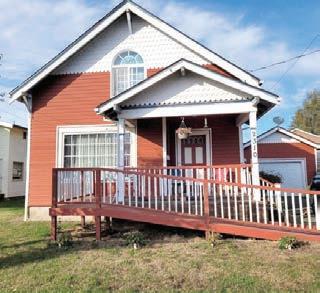



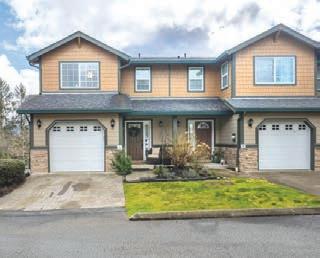


Page A16 www.tillamookheadlightherald.com/classifieds Tuesday, April 11, 2023 Public Notices 999 Public Notices 999 Public Notices 999 Public Notices 999 Public Notices 999 Public Notices 999 2507 Main Ave. N. Suite A Tillamook, OR. 97141 KING REALTY KING REALTY All land or lots, offered for sale, improved or unimproved are subject to land use laws and regulations, and governmental approval for any zoning changes or use. VIEW MORE PROPERTIES @ www.KingRealtyBrokers.com (503) 842-5525 www.KingRealtyBrokers.com Call Patti Tippett, Real Estate Broker @ 503-812-6508 Call Patti Tippett, Real Estate Broker @ 503-812-6508 H21879 Call Dylan Landolt, Real Estate Broker @ 503.457.8725 Or Marilyn Hankins, PC, GRI, CRS, Principal Broker @ 503.812.8208 Call Marilyn Hankins, PC, GRI, CRS, Principal Broker @ 503.812.8208 Or Dylan Landolt, Real Estate Broker @ 503.457.8725 11100 Sollie Smith Road, Tillamook, OR 97141 MLS# 22-611 $830,000 World Class Fishing out your front door on this unique riverfront acreage with home & shop. Create your own hunting and fishing lodge on over 43 acres of pasture, woods and the Wilson River. Located at end of road behind locked gate makes for privacy and seclusion. Over 3000’ of river frontage. Home features 4 bedrooms, 2.5 baths and over 1900 sq ft on two levels. Spacious 42 x 50 shop with power, water, concrete floor and your own loading dock. Acres of pasture perfect for horses or beef. Listed below Tillamook County market value. Call today to schedule a private showing of this amazing property. 13150 D Street 7, Nehalem, OR 97131 MLS#23-76 $439,000 Custom 3 bedroom, 2 1/2 bath townhome! Easy living in this well maintained home with lovely mountain and valley views! Located in a quiet gated community just minutes from Manzanita village, beach and from the Nehalem downtown for nearby shops and restaurants! Nehalem river boat launch nearby for fishing and kayaking! This home has hardwood floors, granite countertops, vaulted 16 ft ceilings, and a loft off the master bedroom. Full or part-time living at the coast you choose! Just a little over an hour from Portland! 2310 6th Street, Tillamook, OR 97141 MLS#22-589 $249,900 Craftsman 3 bedroom, 2 bath home in Tillamook! Bring your finishing ideas to this charming gingerbread home! A newer roof, siding, with a generous fenced backyard! Located near town for shopping, library, schools, YMCA and medical! And still only 10-15 minutes away from the beach and rivers! A great first home or investment opportunity! 37840 Upper Nestucca River Road, Beaver, OR 97108 MLS#23-12 Beautiful river frontage! Custom home on 35 acres of private and secluded forest. This property is an outdoorsman’s dream w/many trails running throughout the forest to enjoy on your motorcycle, horse, or even a good hike. The 3500 plus square foot home has many custom features such as granite counter tops, stainless steel appliances, 2 ductless heat pumps, a tankless propane hot water heater, and so much more. The large bonus room with the kitchenette would be great for entertaining guests. Extra storage throughout the house, plus in the shop and barn. Two water sources serve the property, a well (6.5 gpm) and a spring water system. A Star Link Internet system is included in the sale along with 2 big screen smart TV’s. Newer John Deere riding mower also included.






























































 Frank Hanna-Williams
 Executive Director of Tillamook Family Counseling Center