FRIDAY, AUGUST 25, 2023
$1.50

FRIDAY, AUGUST 25, 2023
$1.50
WILL LOHRE Country Media, Inc.
This summer has brought structural changes to Clatskanie Middle/High School (CMHS), as a new principal has joined the staff, and renovations have changed the physical space.
Laurie Maughan is the new principal at the school, taking the helm from Dr. Jeff Williamson, who resigned this summer. Maughan is looking forward to the coming year.
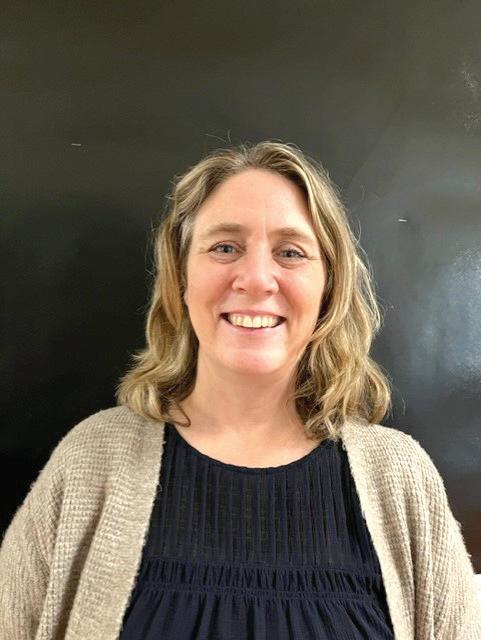
“I am glad to be in Clatskanie and hope to serve the students and staff well. This is an amazing place with so much to offer,” Maughan said. “It is my goal that each student and staff member feels welcome at school and that school is a place where we all are learning together. Parents are always welcome to call or come in and see me.
My goal is to foster a positive partnership between home and school so students can thrive.”
Maughan hopes to quickly build a “community of trust” after changes in building administrators “through the past 5-6 years.” Maughan said that the changes in administration is one of the biggest challenges.
“It is tough on staff and student morale to face significant changes in leadership every year or two,” Maughan said.
One of the aspects Maughan is looking forward to most is connecting with the students. In addition to getting to know them, she also wants to get their input on what
they want their school experience to be. One of the ways Maughan likes to strengthen the connection between her and the students is through listening.
“When we stop talking and listen, students will tell us, in one way or another, what they need,” Maughan said.
“Then it is my job to support them as they set goals and cheer them on as they meet them.”
Another component that is a focus for Maughan in her new role will be to connect with the staff. Maughan said that the staff are dedicated educators who know and understand the students.
Maughan said that in order to best serve the students, she and the staff will “build a leadership team where instructional vision can be built together.”
“The leadership team gathers input from all staff. Together we will determine the best way to implement and change or to support current initiatives that make sense for our system,” Maughan said. “My job then becomes one of holding us all accountable to the decisions that we have made, monitor growth and bring issues back to the leadership if needed.”
Renovations
CMHS has undergone a host of renovations over the last two summers, and Maughan said that the construction is on track to allow school to start on time Sept. 5.
While most of the work is
expected to be completed, there may some smaller projects that will be completed while school is in session.
The updates to the school have been a long time coming.
“It is my understanding that this is the first renovation of this building which was built in 1978,” Maughan said. “The bond for this work was passed by Clatskanie voters in 2021. The work began last summer with updates in the office. This summer, the focus is classrooms.”
When all is said and done, the building will have fresh paint, tile, and carpeting. Downstairs classroom walls have been moved to create more uniform classroom spaces and bathrooms are being updated and equipped with floor-to-ceiling stalls, according to Maughan.
“This work assists us in having a great space for our Middle school students to have most of the downstairs dedicated to their learning,” Maughan said. “High School students will have most of the upstairs for their learning.”
One area that may be under construction as the year kicks into gear is finishing up the stairwells. Maughan said they will be “shut down for a day or two each while the work is being finished.” Students will be able to use the other staircases.
“There will be some other finishing touches, but students and staff should be able to teach and learn,” Maughan said.
Follow developing stories about CMHS and high school sports at thechiefnews.com
ALEX BAUMHARDT
Oregon Capital Chronicle
Chief Guest Article
D
ecades of data show that despite billions in taxpayer investment, salmon and steelhead hatchery programs and restoration projects in the Columbia River Basin have failed to support or boost native fish populations and in fact are contributing to their decline.
Oregon State University economics professor William Jaeger and Mark Scheuerell, a biologist with the U.S. Geological Survey and the University of Washington, looked at 50 years of native and hatchery salmon and steelhead return data from the Bonneville Dam near Cascade Locks.
The Bonneville Dam is the last of 14 dams on the Columbia River before it empties into the Pacific Ocean, and it is where many salmon and steelhead — both those born in hatcheries and in the wild — return to deposit their eggs after one to seven years in the ocean. The two also reviewed decades of spending on habitat restoration and hatcheries programs in the river basin, meant to save the species from extinction.
Jaeger and Scheuerell found that while the number of salmon and steelhead born in hatcheries that return as adults has grown slightly, wild populations of salmon and steelhead have not, and in some cases they’re being hurt by the hatchery fish.
Sports ........................ A3
Obituaries ................. A3
News and Views ...... A4
Community Events .. A4
Classified Ads ......... A5
Legals ....................... A5
Crossword ................ A7
Overdose Awareness A8

Phone: 503-397-0116
Fax: 503-397-4093
chiefnews@countrymedia.net 1805 Columbia Blvd., St. Helens, OR 97051
The growth in hatchery fish populations has in some cases resulted in the spread of disease and increasing competition for food with native fish, Jaeger noted. Scientists have even found that some hatchery fish prey on wild fish.
The study was published July 28 in the journal PLOS One.
“The actual impact of all of these efforts has always been poorly understood,” Jaeger said in a news release.
There are about 200 salmon hatchery programs in the Columbia River Basin, and 80% of all salmon and steelhead that return
to the Columbia River as adults started their lives in hatcheries, according to the National Oceanic and Atmospheric Administration fisheries division.
The cost to taxpayers to maintain these hatcheries during the last 40 years has been about $9 billion when adjusted for inflation, according to Jaeger. This does not include any of the money spent by local governments or nonprofits and nongovernment agencies.

“We found no evidence in the data that the restoration spending is associated with a net increase in wild fish abundance,” Jaeger said.
David Moskowitz, executive director of the nonprofit Conservation Angler which works to protect wild salmon and steelhead, said $9 billion dollars in the last four decades is probably a low figure.
“That doesn’t even take into account the costs of all the management that goes on,” he said.
‘Failed promise’
Steelhead, chinook, coho and sockeye numbers have been declining in the Columbia River Basin for more than 150 years, according to the U.S. Fish and

Wildlife Service. Overfishing and damming of the river for hydropower have played the largest role. Other factors hurting the fish include farming pollution and the loss of water to irrigation, climate change, as well as habitat loss due to logging and mining.
The growth of hatcheries during the last century was a response to the growth of dams. State and federal governments made a promise to Columbia Basin tribes and to the public that any salmon or steelhead lost to dams would be replaced.
“The hatchery promise was made without any idea if it would work. It was a failed promise,” Moskowitz said.
Prior to damming, an estimated 16 million salmon and steelhead returned to the Columbia River in the area above what is now Bonneville Dam each year. But by the 1970s, less than 1 million were returning.
By 1991, 12 runs of Columbia River salmon and steelhead were listed as threatened or endangered under the Endangered Species Act, leading to a boom in restoration and hatchery spending, the researchers found.
An investigation by Oregon Public Broadcasting and ProPublica last year found that several federally-subsidized hatcheries on the Columbia River — responsible for 80% of all the salmon
See SALMON Page A6
LAUREY WHITE
Chief Guest Article
Hundreds of food lovers graced Cope’s Park when the wonderful smell of garlic beckoned.
This was the eighth year of the annual Clatskanie Farmers Market Garlic Festival, and they enjoyed record attendance. Last year, the festival was deemed a success when about 750 people attended. According to event organizers, the event drew 1891 visitors and made almost $40,000 in sales this year.

Vendor and garlic aficionado
Steve Routon was quite pleased that the festival was such a success. His company, Tilthworks, was represented well at the festival, and each of his three daughters came to help.
“We sold more that 1,000 bulbs and 25 jars of honey, and more than 30 loaves of bread,” Routon said.
Courtesy from Laurie Maughan
“I am glad to be in Clatskanie and hope to serve the students and staff well. This is an amazing place with so much to offer.” - CMHS Principal Laurie Maughan
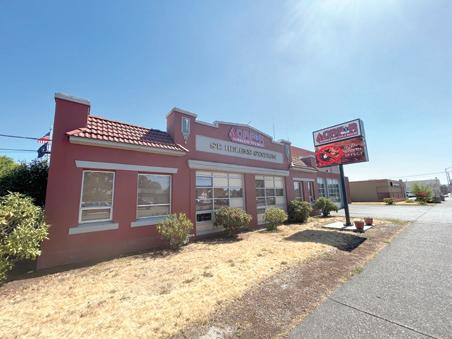
The financial woes continue to mount for Columbia River Fire & Rescue (CRFR), and district auditors have said that the district’s financial position is unsustainable in its current state and, without immediate action, may be unable to meet payroll in the near future.
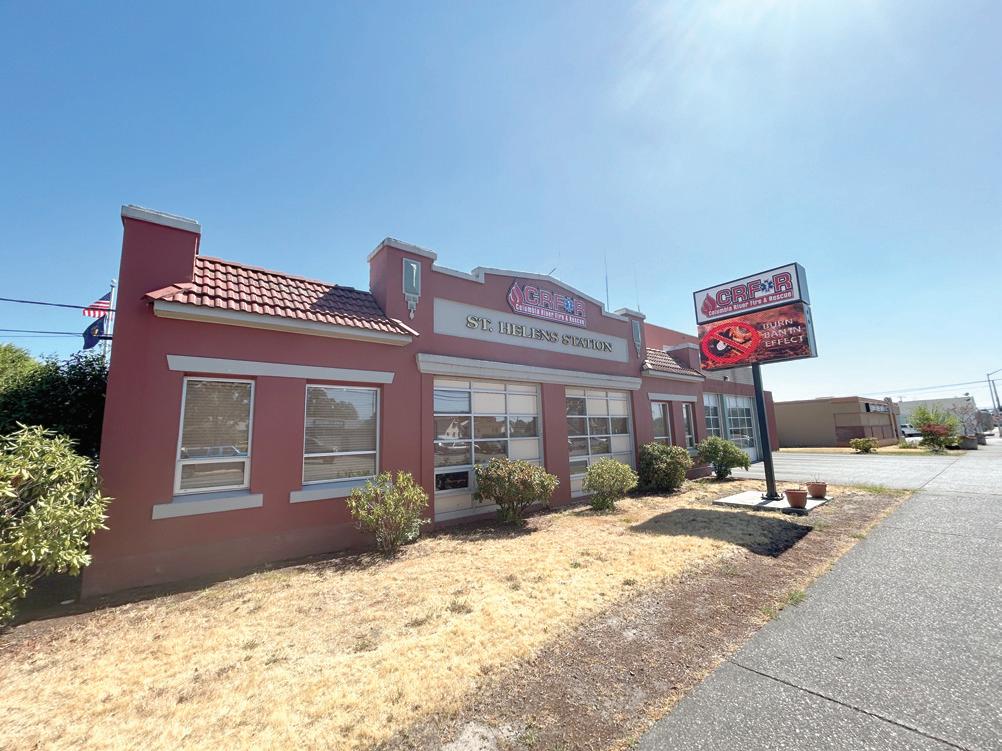
In an emergency board meeting Aug. 17, the district’s attorney Akin Blitz and the district’s hired auditors Robert Moody detailed the dire state of the district’s finances.
On the same day as the emergency meeting, Joel Medina, who was terminated by the new board at a meeting on Aug. 8, filed a whistleblower suit for almost $20 million against the fire district, St. Helens Professional Fire Fighters Associa tion IAFF Local 3215, board members, and union leaders, among others.
The suit alleges that Medina was the subject of defamation, wrongful termination, retaliation, violations of the First and Fourteenth Amendments, and discrimination.
Financial turmoil
Before Moody gave his report on the district’s finances, Blitz informed the board that U.S. Bank “has effectively canceled” the district’s tax anticipation line of credit, which has been relied upon “year after year” to support district operations from the beginning of the fiscal year until November, when the district receives its property taxes.
A letter the district received from its bond counsel Gülgün Ugur notified the district that to secure funding through the line, it needed to certify that the district hadn’t undergone changes that would “have a material and adverse effect on the ability of the district” to pay back the loan. The district has to make certified representations to maintain the line of credit and access money to the district, Akin said.
“Without committing a federal crime by misrepresenting to a federally insured bank, concerning events here at the district, you can’t make the certifications to U.S. Bank, so that line of credit is not available,” Blitz said.
The lawsuits that the district is facing from former employees Jennifer Motherway and Anika Todd and Medina’s lawsuit constitute an “action, suit, proceeding or investigation,” which means that the district “is not permitted to seek advances under the line,” per Ugar’s letter.
“This is a huge problem,” Blitz said. “Because unless we solve it, we can’t meet payroll at some point.”
Blitz said that he had considered five solutions to the issue of the lost credit line. Of the five solutions, Blitz said he “widdled them down” to one viable solution. Blitz did not feel that approaching a smaller bank would be fast enough to secure the funds in the coming months.
Blitz said the best option would be to approach the City of St. Helens for a “secured loan” to keep the district afloat until the district could pay the city back in November with tax revenues.
Moody, who is a partner with Merina+Co, said in his presentation that in their projections of district finances, the auditors did not consider the lawsuits against the district filed by Medina or the lawsuit previously filed by former employees. After discussing the processes by which they came to their conclusion, Moody began to describe the financial picture of the district.
Moody said that on July 1, CRFR had beginning unrestricted cash deposits of $3.1 million. As of Aug. 16, CRFR had $1.3 million, which Moody said made some sense given two months of payroll and other expenses.
“$3.1 million to start the year, the estimated cost of operations, payroll, and materials and services for the first four months is about $4.35 million,” Moody said. “The math isn’t hard to see there. Without significant other revenues or cash com-
ing in, you’re going to run out of money before that four months.”

Moody said there would be some money coming in but not enough to make up the deficit, which is why in past years, the district has borrowed money to make ends meet until November’s property tax revenues.
In addition to the shortterm financial need, Moody said there is also a structural deficit for the district. Moody said that estimated revenues for 2023/24 are $11.4 million, but the expenses are about $13 million, leaving a $1.6 million deficit.
“It’s not sustainable,” Moody said. “You’ve budgeted for expenditures to be higher than revenues, so the result is basically a deficit, and you can chew through a fund balance until it’s just not there anymore.”
Moody said the structural deficit had been the case in “several budgets going back.” Moody said the deficit for the year 2023/24 fiscal year is compounded each year in their projections. Moody said the deficit will get bigger year after year.
The estimated beginning budget balance of $1.4 million in 2023/24 will be diminished to a $283,000 deficit at the end of the year, according to Moody.
While the auditors painted a dismal picture of the district’s finances, the union remains unconvinced of their findings and distrusts the “district’s budgetary numbers as presented,” according to union president Aaron Schrotzberger.
“We have pointed out several flaws such as underbudgeting certain pay rates, overbudgeting others, and budgeting extreme amounts for certain individuals where there is no history of needing such drastic amounts, to name a few instances,” Schrotzberger said. “The CPA that the district has hired is not at fault, as she is only utilizing numbers and reasons provided by the district. The district has objected to any changes or movement in the budget, stating that it is ‘set’ and ‘too difficult’ to change. Regardless of the fact that budgetary changes are completely legal, the district expressed no willingness to follow procedure and amend the budget as needed.”
Arbitration
Moody then dove into the impact that the labor contract that is in arbitration between the district and the union would have on the numbers.
Moody said it was difficult to forecast because they didn’t know how the arbitration would resolve. The contract would be retroactive to July 1, 2022. That would mean that the EMS personnel would garner backpay under the terms of the new contract.
The contract in question was signed by the previous board, but has been in arbitration because the previous board said they signed it in error without the understanding that a wage table in the contract entitled EMS personnel to a 10% premium pay into base salary, in addition to a 2% increase, and a $7,500 stipend.
Blitz spoke about the arbitration process earlier in the meeting and said that, in hindsight, there were significant errors made during the contract negotiations between the union and the district. Blitz said that the board
North Columbia County’s
should have made it clear that the district should have “articulated and demonstrated to the firefighters the district’s absolute inability to pay” the extra 10% wage increase in the contract. What occurred at arbitration was that two union executive board members admitted to knowing that the district had made errors in their presentation of the contract, and the union members did not disclose it to the district’s bargaining team.
“That was a surprise development for everybody in the course of the arbitration hearing,” Blitz said.
“Some might call it bad faith bargaining, who knows. It’s a significant problem, and we’ll see what the arbitrator does with it.”
Moody said that if the arbitrator finds in favor of the union, there will likely need to be an estimated $247,000 retroactive payment. If the arbitrator rules in favor of the district, there would be no retroactive payment, and there would be reductions in personnel service costs for 2023/24 and going forward, amounting to about $313,000 a year.
Though the reduction in pay will not erase the full scope of the issues, Moody said it would certainly help. Moody said immediate and significant steps to “reverse the current financial direction” are necessary, including cutting costs and additional resources.
“Without some pretty significant and timely steps, we question the sustainability of the district over the next 12-24 months,” Moody said. “It’s a big deal, it’s a big deal for the community, and it’s a big deal for you guys.”
The final say in the arbitration will be in the hands of the arbitrator, as the deadline has now passed for the union and district to reopen negotiations. Schrotzberger said that the parties were unable to meet before the deadlines.
“The arbitrator had provided both parties the opportunity to continue bargaining before the deadlines, but because of the union’s distrust in the district’s budget numbers, and the turmoil that has been occurring within the upper leadership of the district over the last 10+ days, the two parties have not been able to meet,” Schrotzberger said. “Now the window of opportunity to renegotiate and get approval by vote from both parties prior to the deadline has closed.”
Medina’s lawsuit
In a lawsuit filed Aug. 17, Medina named the district, St. Helens Professional Fire Fighters Association IAFF Local 3215, board members Austin Zimbrick, Kelly Niles, Rick Fletcher, and Ryan Welby, union president Schrotzberger, union vice president Aaron Peterson, union secretary and treasurer Lisa Strolis, union administrator Jeff Lockhart, paramedic and union member Kyle Melton, and Ronda Melton.
The suit claims that Medina was the subject of defamation, wrongful termination, retaliation, violations of the First and Fourteenth Amendments, and discrimination and demands a jury trial. The suit makes a claim for $19,950,000.
“The Plaintiff seeks injunctive relief, compensatory damages, and attorneys’ fees due to the unlawful retaliation against them for their right to free speech and due
Stolis, and R. Melton at public board meetings of CRFR, on Defendant St. Helens Professional Fire Fighters Association Local #3215, Facebook site, in text messages, and statements made to the local media newspapers, The Chronicle and The Spotlight,” the suit says.
The suit seeks Medina’s reinstatement with back pay, economic and emotional distress damages. The lawsuit also seeks unspecified punitive damages against many of

lenges.

Board President Niles put forth the motion.
“The board authorizes Chief Sanchez to go have a conversation with the City Manager John Walsh to see if the city can help us out in our short-term financial need in a way that is beneficial to both the district and to the city,” Niles said.
Niles said that the board will have the final say on any decision that arises as a result.
City response
process in reporting official misconduct,” the suit says.
The suit claims that the board violated Medina’s contract with its termination of him without notice at a board meeting on Aug. 8.
The meeting began with a surprise addition to the agenda, which included a motion to terminate Medina with immediate effect.
After much discussion, the three new board members, Welby, Zimbrick, and Fletcher, voted to immediately remove Medina from his position.
In the suit, it is stated that even with cause, Medina had a right to have notice of allegations and potential sanctions and the date and time when the district would consider charges and sanctions.
The suit also alleges that Medina was terminated after he brought attention to the financial irregularities he noticed within the district. Medina made “a good faith report in the public interest about misconduct by public employees and public officials,” according to the lawsuit.
“Plaintiff suffered an adverse employment action when Defendants CRFR, Fletcher, Welby, and Zimbrick terminated Plaintiff for his protected activity. Defendants’ adverse employment action was directly related to the good faith reports made by the Plaintif,” the suit says.
Additionally, the suit alleges that Medina was subject to defamation relating to false statements made by union members and individuals to “interfere with his agreement with CRFR.”
“Throughout the course of the Plaintiff’s employment as Fire Chief with CRFR, he has been subjected to defamation by oral and written statements made by Defendants Fletcher, Zimbrick, Welby, Niles, Peterson, Schrotzberger, K. Melton, Lockhart,


At the meeting where Medina was terminated, Gary Hudson, the lone director who voted against removing Medina, warned the new board that this could be a consequence. Hudson said that any board member who voted to take this action could be liable if Medina chooses to bring litigation against the district regarding his termination. Hudson resigned the day after the meeting.
Schrotzberger offered no comment on the lawsuit that named the union and certain individuals within.
It should be noted that Medina’s termination follows months of controversy within the fire district. At a board meeting on Jul. 11, Zimbrick, Welby, and Fletcher were sworn in as the three new members of the district’s board and, among the proceedings, elected to continue the forensic audit that was ordered on Apr. 28.
Prior to the forensic audit being ordered, a civil lawsuit was filed against the CRFR and Chief Joel Medina on Apr. 7 by former employees Todd and Motherway, alleging sexual harassment, wrongful termination, retaliation, and a hostile work environment.
A third employee, Monica Cade, joined the lawsuit on Apr. 28. The local union also filed a unanimous vote of no confidence against Medina Apr. 11.
A second, amended vote of no confidence from the union was filed Aug. 7. The second Vote of No Confidence expressed concerns over Division Chief Jimmy Sanchez, Deputy Chief Eric Smythe, and then Board Director Hudson.
Resolution
At the end of the emergency meeting held Aug. 17, the board ultimately resolved to send Division Chief of Finance Sanchez to meet with St. Helens City Administrator John Walsh about securing funds so the district can operate until November.
Blitz also encouraged the district to get creative with their solutions. Blitz advised that the district’s chiefs and union work together to find “out of the box” solutions to the district’s financial chal-
The Chief contacted Walsh for comment from the city about CRFR’s fund request. Walsh said that the council discussion and approval would be required. Walsh said that the city would need assurances that the loan be repaid. That assurance could come in the form of a priority lien on the district’s November tax revenue. The city has priorities of its own that require funding.
“The City is also facing budgetary constraints in the coming fiscal year, and funding for essential services that the city provides - police and public works – is a factor in the city’s ability to assist other agencies,” Walsh said. In a memo to Walsh dated Aug. 21, Sanchez said that CRFR would be requesting a $1.6 million loan to ensure “that emergency services continue without interruption.” The CRFR would intend to pay back the entirety of the loan using tax revenues by the end of November.
“It is unimaginable that the public would not want to assist in keeping emergency services for St. Helens and Columbia County uninterrupted,” the memo said.

The city does have sufficient reserves to accommodate the short-term loan, according to Walsh. Following the meeting with Sanchez Aug. 21, Walsh said he reached out to the County Commissioners to discuss their participation in providing financial support to the district.
While the city may be able to support the district with its short-term financial need, Walsh said that the future of the district’s finances will take problem-solving.
“Emergency services are an essential component of safe and livable communities. A temporary loan secured by the district’s tax revenue would bridge the gap and avoid a disruption in services,” Walsh said. “If the district continues to operate at a deficit, they will need to adjust service levels and look for solutions to operate within available resources.”
Follow the developing story at thechiefnews.com and in the Friday print editions of The Chief.
The Hood to Coast route brings racers and walkers through portions of Columbia County.
Oregon’s unemployment rate ties a record low

STAFF REPORT
Country Media, Inc.
Oregon’s unemployment rate dropped to 3.4% in July, down from 3.5% in June, according to the Oregon Employment Department.
This was the sixth consecutive monthly drop in the unemployment rate, down from a recent high of 4.8% in January. The July rate equaled Oregon’s record low of 3.4%, which was reached in November and December 2019.
Hood to Coast relay this weekend
an d Portland to Coast Relay is the most popular and largest running and walking relay race in the world, annually drawing participants from over 40 countries and all 50 states, according to the relay’s website.
Known as the Mother of All Relays, the event takes 8 to 12 member relay teams 198 miles or 128 miles from Portland from the iconic top of Mount Hood to the beaches of the Pacific Ocean at Seaside.

Th e Providence Hood
Lewis and Clark Bridge closure update
Nighttime travelers using the Lewis and Clark Bridge between Rainier and Longview should plan for travel delays.
On Sunday, Aug. 27, Washington State Department of Transportation’s (WSDOT) bridge maintenance crews will resume their work to finish sealing the bridge deck as part of the finger joint replacement project that
concluded in July.
What to expect
•Sunday, Aug. 27 to the morning of Monday, Aug. 28
•Wednesday, Aug. 30 to the morning of Thursday, Aug. 31
• A single lane of the SR 433 Lewis and Clark Bridge, will close nightly from 8:30 p.m. to 5 a.m. on those dates.
During bridge deck sealing work, flaggers will guide travelers through an alternating single-lane closure, and
delays of up to 20 minutes are expected.
As with any highway maintenance and construction project, travelers must exercise caution through the work zone. To keep both road users and road workers safe, travelers are asked to have patience and obey advanced warning signs.
People can receive realtime travel information via the WSDOT mobile app, the real-time travel map, or by signing up for email updates and alerts.
Clatskanie Middle/High School Sports Schedule

sonally adjusted nonfarm payroll employment rose by 6,800 jobs, following a gain of 5,700 jobs in June. July’s gain was nearly double the average increase of 3,700 jobs per month during the prior 12 months.
were largest in health care and social assistance (+3,400
jobs); government (+1,600); professional and business services (+1,000); and construction (+900). Declines were largest in financial activities (-600 jobs); manufacturing (-500); transportation, warehousing, and utilities (-500); and private educational services (-500).
Robust industries
Over the past 12 months, three major industries— health care and social assistance; leisure and hospital
jobs, or 5.7%, since July 2022. The industry remains slightly below its peak employment, reached in early 2020. Similarly, hospitals added 1,900 jobs, or 3.3%, over the year. Despite the recent growth, the industry was slightly below its March 2020 peak employment level. Meanwhile, ambulatory healthcare services added 2,400 jobs, or 2.5%, in the past 12 months and reached a record high of 98,300 jobs in July.
Durable goods manufac

manufacturing, which added
rate was 3.5% in July, which
Friday, August 25
•High School Varsity
Football Jamboreea at Nestucca 5 p.m.
Saturday, August 26
•High School Varsity Volleyball at Warrenton Tournament 9 a.m.
Monday, August 28
•Middle School Football Practice begins at 4 p.m. CMHS.
Tuesday, August 29
•High School Girls Soccer vs. Taft at Clatskanie City Park 4:30 p.m. Note this is an Endowment game and cost is $8 for adults and $5 for students.
Thursday, August 31
•High School Volleyball vs. Warrenton: JV 4:30 p.m. Varsity 6 p.m.
Friday, September 1
•High School Varsity Football at Willamina 7 p.m.
Saturday, September 2
•High School Cross Country at Hydrangea State Park, Tillamook 10 a.m.
For more information, call CMHS at 503-728-2146.
L. Gish Sept.
Don was born in Meridian, Idaho and raised in Goble, Oregon. After high school, he joined the Navy at 18 years old. He was a machinist mate. He was a WWII vet.
After the service, he met Betty Miller and they were married in 1950. They were married for 67 years. Betty passed away on Aug. 20,
Donald
2015.
Don worked at Kaiser Gypsum Mill in St. Helens for 22 years. He also retired from Wauna Mill in January 1988. He built 13 homes in the local area.
Don and Betty enjoyed going fishing in Eastern Oregon with his brothers and sisters. He also enjoyed being
a snowbird in Arizona. He is survived by his daughter Becky Gish; sister Mary Lou Jamieson; many nieces and nephews; and a special niece Charlene Niemela.
Chief Guest Column
Harvesting fruiting vegetable crops keeps fruit coming. Leaving enormous zucchinis or cucumbers on the plant triggers the “I am done” stage and the plant stops flowering and putting on new fruits. This is true of all the summer squash, green beans, cucumbers, and to a lesser extent, tomatoes.
Broccoli will continue to produce smaller heads once the main head is removed.
Snap green beans are best harvested when they are showing early signs slightly bulging seeds. Once in full production, pick every two days. Peppers are less prone to stop since their “done” stage is when the fruits turn red or orange. Consistent watering will help to provide longer crop production (see below).
Watering vegetables in hot weather
The past month of 90+ temperatures gave us a lot of opportunity to test our watering skills. If you were seeding vegetables for fall harvest, it was a challenge to keep the soil surface evenly moist to support germination. Surface mulches helped, as did the use of soaker hoses or drip systems turned on frequently.
Overhead irrigated fall crop seeds on unmulched clay soils have a hard time pushing through the soil crusts. Crusts can develop from the physical impact of water droplets combined with sun baking the clay. Moles often make their tunnels right where you are watering, complicating your ability to provide even moisture to your crops. Mole trapping is important though not always easy.
In the vegetable garden, many crops are in crucial production stages. All vegetables that produce bulbs, flowers, fruit, or seed as the edible part (i.e. beans, squash, tomatoes, peppers, corn, broccoli, onions etc.) experience their highest demand as that edible portion is maturing. Even and ample water is a must.
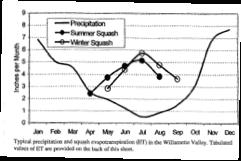
The evapotranspiration rate of a crop is the amount of soil moisture evaporating through plant leaves (which is most of the water as the crop canopy matures) and directly from the soil.

Normal evapotranspiration averages for vegetables in July/August are about 1.50 inches per week (or about .22”/day). But we had some days where the rates exceeded .30”/day or about 2.25 inches per week. The chart below shows the water demand for winter squash (butternuts, acorns, Hubbard, etc.) and summer squash (zucchini, patty pans, etc.) Note the different planting dates projected. The difference between the rainfall received and the crop demand at any point in time is what you have to provide.
Water fruit trees and fairly new woody landscape plants
As noted several weeks ago, fruit trees are loaded.
It isn’t too late to thin some of the later varieties. But watering is especially important. There is virtually no moisture in upper 12-16 inches of soil unless you have been providing it. I have already heard from people that have lost fruit and other trees from lack of water. At high risk are trees and shrubs planted in the last few years. They have yet to develop more extensive root systems. One complication in Columbia County is that most of us live on claybased soils. In the winter they become water saturated which tends to force trees to have rather shallow root systems. So when the soils dry out in the summer and we have hot weather, the roots can’t draw enough moisture from deeper soil levels because their roots aren’t there. So it’s up to you to keep them happy.
nests can be very nasty as they respond to all signs of large animals (that includes us) with passion. The ability to sting repeatedly is their secret sauce. That said, they do play an important role in keeping garden caterpillars and other pesky crop gobbling insects in check.
September 7 Columbia County Beekeepers Monthly meeting.

The group will discuss important things to do for the apiary as honey collection trends downward. Thursday, September 7 at 7 p.m. meeting at the Saint Helens OSU Extension Office or by Zoom. Please email for the zoom link. All are welcome. Columbiacountyoregonbeekeepers@ gmail.com.
Important notes
•Donate extra garden produce and/or money to the food bank, senior centers, or community meals programs. It always is greatly appreciated.
•The OSU Extension Office is fully open from 8 a.m.-5 p.m.
•The Extension Service offers its programs and materials equally to all people.
August 26 Overdose
Awareness
10 a.m. - 2 p.m. at McCormick Park, 475 S 18th St., St. Helens. This event is to honor the ones who have lost their lives to an overdose, support families and friends affected by overdose, raise awareness and provide resources to families and individuals still in active addiction.
August 27 NAMI Columbia County Support Group
Meeting
11 a.m. - 1 p.m. - NAMI (National Alliance on Mental Illness) meeting will be held at 185 S. 4th Street in St. Helens. This is a support group for folks who have a loved one with mental illness with focus on self-care, support, education and advocacy. This will be an outdoor casual patio gathering with light refreshments.
September 5 Rainier Head Start, Preschool & Hudson Park Elementary Back to School “Meet & Greet”
3:30 p.m. - 5:30 p.m. Meet the teacher and bring school supplies. Stop by anytime during the two-hour block.
September 11 9/11
Remembrance

ing. This event is free and registration is required. To register, visit metaltype.org.
6 p.m. - 7:30 p.m. at the Clatskanie Cultural Center. This event is put on by C.C. Stern Foundry, a non-profit arts organization, focused on preserving the heritage of the metal type casting industry. This event is free. Please register at www.metaltype. org/events/poetry-readingand-broadside-launch-withpaulann-petersen.

Sept. 22-24 Wings Over Willapa Festival
The Friends of Willapa National Wildlife Refuge and the U.S. Fish and Wildlife Service 5th annual Wings Over Willapa. This multi-day bird and art festival will be held at 7112 67th Place in Long Beach. For more details, call 360-642-3860.
October 14 & 15 Arts & Crafts Sale
Noon - 4 p.m. This event will be held upstairs at the Birkenfeld Theatre at 75 S. Nehalem Street in Clatskanie. Locally produced, handmade arts and crafts. Stop by for holiday gifts and to support local artists. For questions please contact Roni at roni@ quackedglass.com.
The cost for this evening and all our Fireside Chats will be only $5. Caples will be offering a different program the third Tuesday of each month at 7 p.m. at 1925 First Street in Columbia City. For more information, call 503-3975390.
Lower Columbia River Watershed Council
Lower Columbia Watershed Council meets the second Monday of the month at 6:30 p.m. in the Clatskanie PUD building. Zoom links are also available. Visit the council’s website for agenda postings and Zoom at www.lowercolumbiariver.org/events-page.
The Rainier Oregon Historical Museum (ROHM) is open from noon - 4 p.m. Saturday (except major holidays weekends). ROHM is located inside Rainier City Hall at 106 W B Street. For more information, call 360751-7039.
Bumblebees frisky, yellow jackets and hornets slowly getting pesty
This has been a great bumblebee year. They are numerous and you couldn’t find a nicer bee in your garden. They love the open-faced dahlias my wife grows, sunflowers, catnip gone to flower, lavender, and so many other flowering plants. Each colony starts anew every year from new queens that left last year’s nests in the fall (the colony dies when they leave) and hide out until winter is over. They then start their own colonies for the current year. Yellow jackets and baldfaced hornets have the same life cycle as bumblebees. Last year’s colonies die as the queens take off. The spring of 2022 was very cold and wet which led to a low crop of yellow jacket colonies last year and thus fewer queens for this year.
This year was much better for colony establishment (as far as yellow jackets are concerned) but, with fewer queens to start with, seems still lower than normal. But watch out for fall if the weather remains yellow jacket positive. Ground
Have questions?
If you have questions on any of these topics or other home garden and/ or farm questions, please contact Chip Bubl, Oregon State University Extension office in St. Helens at 503397-3462 or at chip.bubl@ oregonstate.edu. The office is open from 8 a.m.- 5 p.m. Monday through Friday.
Free newsletter
The Oregon State University Extension office in Columbia County publishes a monthly newsletter on gardening and farming topics (called County Living) written/edited by yours truly. All you need to do is ask for it and it will be mailed or emailed to you. Call 503-397-3462 to be put on the list. Alternatively, you can find it on the web at http://extension.oregonstate. edu/columbia/ and click on newsletters.
Oregon State University Extension Service – Columbia County 505 N. Columbia River Highway St. Helens, OR 97051 503-397-3462
8:30 a.m. - 10:30 a.m. Hometown Heroes of Columbia County is hosting “Reading of the Names” of those who perished on 9/11/2001. Event is free and will be held in front of the Columbia County Sheriff’s Office at 901 Port Ave. in St. Helens.
September 16 Poetry Reading and Broadside Launch with Poet Laureate Emeritus Paulann Petersen
1 p.m. - 4 p.m. An open house at the C.C. Stern Type Foundry in Clatskanie will be held prior to the read-
Ongoing
Clatskanie Senior Center lunches Clatskanie Senior Center Lunches now served Monday, Wednesday, and Friday at noon at the Castle Cafe, 620 SW Tichenor. Call 503-728-3608 for reservations. Use ground floor entrance to the left of front stairs. Good parking in back off of SW Bryant Street. Castle Tours available by appointment, includes Clatskanie Historical Society museum. Call Debbie at 503338-8268.
The Rainier Public Library is open from 9 a.m. to 4:30 p.m. Tuesdays, Wednesdays and Thursdays, 10:30 a.m. to 4:30 p.m. on Fridays and 10:30 a.m. to 2:30 p.m. on Saturdays. It will be closed Sundays and Mondays. Avamere at St. Helens hosts a Virtual Dementia Support Group – 3rd Wednesday of each month from 2 p.m. to 3 p.m. For more details, contact Jenny Hicks/Avamere at St. Helens at 503-366-8070.
To list an event in the Community Calendar, email details with a phone number that may be published, to chronicleclassifieds@ countrymedia.net, or call 503-397-0116.
DIVORCE $130
Complete preparation. Includes children, custody, support, property and bills division. No court appearances. Divorced in 1-5 weeks possible. 503-772-5295.
www.paralegalalternatives.com legalalt@msn.com
FREE high speed internet for those that qualify Government program for recipients of select programs incl. Medicaid, SNAP, Housing Assistance, WIC, Veterans Pension, Survivor Benefits, Lifeline, Tribal. 15 GB internet service. Bonus offer: Android tablet FREE with onetime $20 copay. Free shipping & handling. Call Maxsip Telecom today! 1-877-390-0458.

Choose
EarthLink
Fiber Internet for speeds up to 5 Gigs, no data caps, no throttling. Prices starting at $54.95. Plus, a $100 gift card when you make the switch. Call 1-866-2663817.
Eliminate gutter cleaning forever! LeafFilter, the most advanced debris-blocking gutter protection. Schedule a FREE LeafFilter estimate today. 15% off En-
tire Purchase. 10% Senior & Military Discounts. Call 1-855-536-8838.
Prepare for power outages today with a GENERAC home standby generator $0 Money Down +Low Monthly Payment Options. Request a FREE Quote – Call now before the next power outage: 1-877-557-1912.
The Generac PWRcell a solar plus battery storage system. SAVE money, reduce your reliance on the grid, prepare for power outages and power your home. Full installation services available. $0 Down Financing Option. Request a FREE, no obligation, quote today. Call 1-844989-2328.
Switch and save up to $250/year on your talk, text and data No contract and no hidden fees. Unlimited talk and text with flexible data plans. Premium nationwide coverage. 100% U.S. based customer service. For more information, call 1-877916-0803.
Switch to DISH and get up to a $300 gift card!
Plus get the Multisport pack included
for a limited time! Hurry, call for details: 1-866-3739175.
Call LeafGuard and say goodbye to gutter cleaning for good
No cleaning. No leaking. No water damage. No more ladder accidents. Get LeafGuard today and be protected for life. FREE estimate. Financing available. 20% off total purchase (Restrictions may apply.) Call 1-844345-1537.
DIRECTV OVER INTERNET
Get your favorite live TV, sports and local channels. 99% signal reliability! CHOICE Package, $84.99/ mo for 12 months.
HBO Max and Premium Channels included for 3 mos
(w/CHOICE Package or higher.) No annual contract, no hidden fees! Some restrictions apply. Call IVS 1-855602-2009.
Earthlink
Connect to the best wireless home internet with EarthLink. Enjoy speeds from 5G and 4G LTE networks, no contracts, easy installation, and data plans up to 300 GB. Call 866-857-2897.
Are you a pet owner?
Do you want to get
up to 100% back on Vet Bills? Physicians Mutual Insurance Company has pet coverage that can help! Call 1-833-975-1626 to get a free quote or visit insurebarkmeow.com/onac.
Safe Step North America’s #1 Walk-In Tub. Comprehensive lifetime warranty. Top-ofthe-line installation and service. Now featuring our FREE shower package and $1600 Off for a limited time! Call today! Financing available. Call Safe Step 1-833-3951433.
Portable Oxygen Concentrator May Be Covered by Medicare! Reclaim independence and mobility with the compact design and longlasting battery of
Inogen One. Free information kit! Call 855-839-0752.
The bathroom of your dreams for as little as $149/month!
BCI Bath & Shower. Many options available. Quality materials & professional installation. Senior & Military Discounts Available. Limited Time Offer - FREE virtual in-home consultation now and SAVE 15%! Call Today! 1-844-847-9778.

Wesley Financial Group, LLC. Timeshare Cancellation Experts. Over $50,000,000 in timeshare debt and fees cancelled in 2019. Get free informational package and learn how to get rid of your timeshare! Free consultations.
Over 450 positive reviews. Call 844487-0221.
Life Line Screening
Stroke and Cardiovascular disease are leading causes of death, according to the American Heart Association. Screenings can provide peace of mind or early detection! Contact Life Line Screening to schedule your a top tax deduction! Call Veteran Car Donations at 1-866-695-9265 today!
Donating your vehicle?
Get more! Free Towing. Tax Deductible. Plus a $200 restaurant voucher and a 2-night/3-day hotel stay at one of 50 locations. Call Heritage for the Blind to donate your vehicle today - 1-844-5339173.
CC23-1833
Wednesday, September 6, 2023
Subject: Community Block Development Grant Project Closeout. The City of Clatskanie is completing a Wastewater Treatment Plant Redesign project funded with Community Development Block Grant funds from the Oregon Business Development Department. The location of the project is: 100 NW 4th St, Clatskanie, OR 97016. It is estimated that the project will benefit at least 1,795 persons of whom 56.34 are low or moderate income. A public hearing will be held by the City Council at 7:00 pm, Wednesday September 6th, 2023 at the Clatskanie Cultural Center Council Chambers located on the 2nd floor at 75 S.
Nehalem St. The purpose of the hearing is for the City of Clatskanie to obtain citizens’ views about the project and to take comments about the local government’s performance. Written comments are also welcome and must be received by September 5, 2023, at 75. S. Nehalem, Suite D; or P.O. Box 9, Clatskanie OR 97016. Both oral and written comments will be reviewed by the city council. Please contact Greg Hinkelman, City Manager at (503)728-2622 if you will need any special accommodations to attend or participate in the meeting. More information about Oregon Community Development Block Grants, the proposed project, and records about the
City of Clatskanie’s past use of Community Development Block Grant funds is available for public review at City Hall, 75. S. Nehalem St. during regular office hours. Advance notice is requested. If special accommodations are needed, please notify Greg Hinkelman, City Manager at (503) 728-2622 so that appropriate assistance can be provided. Aviso Público y Noticia de Audiencia Pública Este es el segundo Noticia de Audiencia Pública. El proposito de esta segunda audiencia pública es por el receptor puede examiner los resultos del proyecto con los ciudadanos y para tomar comentario de la ejecución del gobierno municipal en parte del proceso de cerrar la
NOTICE OF PUBLIC HEARING
The city of Rainier Planning Commission will hold a public hearing on September 18, 2023, at 6:00 PM at Rainier City Hall, 106 W.B Street in Rainier, to consider an application submitted by Columbia River Launch Service to rezone a 0.303-acre parcel from Central Business District to Waterfront Commercial to allow for the development of warehouse and maintenance facilities. The subject property is located on E. A street and is identified as Tax Lot 7216-DA-00301. This application will be reviewed under the proce-
dures, standards and criteria of Rainier Municipal Code (RMC)18.45 Waterfront Commercial Zone, RMC 18.125.030 Quasi-judicial amendments to the comprehensive plan map or zoning map, and RMC 18.160.040
Type III Quasi-judicial land use decisions. Evidence to be relied upon to make a decision on this application is in the public record and available for review at Rainier City Hall, 106 West B Street, Rainier Oregon at no cost. Copies can be made at a reasonable cost. A copy of the City’s staff report and recommendation to the
subvención. Cada audiencia tiene que tener suficiente tiempo de estar segura de que suficiente oportunidad por ciudadanos y grupos interesados pueden participar. La ciudad de Clatskanie está completando un proyecto de diseño patrocinado con Community Development Block Grant del Oregon Business Development Department. La locación del proyecto es la ciudad de Clatskanie - 100 NW 4th St, Clatskanie, OR. Está estimado que el proyecto propuesto beneficiará a por lo menos 1795 personas, de los cuales 56.34% serán de ingresos moderados o bajos. El Ayuntamiento celebrará una audiencia pública a las 7:00 pm el 6 de septiembre de 2023 en el salón de baile
Planning Commission will be available for review at no cost at least seven days before the hearing, and a copy can be provided on request at a reasonable cost. HOW
TO PARTICIPATE: All interested persons are invited to submit written comments to Sarah Blodgett, Rainier City Hall, PO Box 100, Rainier OR 97048 by 5:00 PM September 18, 2023, or present oral testimony at the public hearing. FOR FURTHER INFORMATION contact Sarah Blodgett at 503.556.7301 Monday through Friday between 8:00 A.M., and 5:00 P.M.
del Centro Cultural Clats kanie ubicado en el segundo piso en 75S. Nehalem St. El propósito de esta audiencia es que la ciudad de Clatskanie obtenga opiniones de los ciudadanos y responda a preguntas y comentarios sobre el proyecto. Los comentarios escritos también son bienvenidos y deben recibirse antes del 5 de septiembre de 2023 en 75. S. Nehalem, Suite D; o P.O. Box 9, Clatskanie OR 97016. El ayuntamiento considerará tanto los comentarios orales como los escritos para decidir si se aplicará. La ubicación de la audiencia es accesible para personas con discapacidades. Comuníquese con Greg Hinkelman, administrador de la ciudad al (503) 728-
IN THE CIRCUIT COURT OF THE STATE OF OREGON FOR THE COUNTY OF COLUMBIA
Probate Department In the Matter of the Estate of MARY LOU DAVIS, Deceased. No. 23PB06077 NOTICE TO INTERESTED PERSONS. NOTICE IS HEREBY GIVEN that the undersigned has been appointed personal representative of this estate. All persons having claims against the estate are required to


present their claims, with vouchers attached, within four months after the date of first publication of this notice to the personal representative at P.O. Box 459, Rainier, OR 97048, or the claims will be barred. All persons whose rights may be affected by the proceedings may obtain addition information from the records
of the Court, the personal representative or the attorney for the personal representative. Dated and first published August 25, 2023. Deanna Marie Cunningham, Personal Representative. STEPHEN D. PETERSEN, L.L.C. Attorney at Law, P.O. Box 459, Rainier, OR 97048.
IN THE CIRCUIT COURT OF THE STATE OF OREGON FOR THE COUNTY OF COLUMBIA
No. 23PB05888 NOTICE TO INTERESTED PERSONS NOTICE IS HEREBY GIVEN that the undersigned has been appointed personal representative of this estate. All persons having claims against the
estate are required to present their claims, with vouchers attached, within four months after the date of first publication of this notice to the personal representative at P.O. Box 459, Rainier, OR 97048, or the claims may be barred. All persons whose rights may be affected by the proceedings may obtain
information from






STAFF REPORT Country Media, Inc.








The dog days of summer are in full effect, with water levels lowering on many reservoirs and rivers in Oregon. And with low water levels, boaters need to alter how they launch and retrieve, along with taking the time to research where they plan on recreating, according to an advisory from the Oregon State Marine Board.


When water levels drop, river and lake banks become very unstable and the material supporting the toe of boat ramps becomes more susceptible to damage from power loading.

Power loading is a term to describe moving a boat from the water with the engine



revved and the force pushes the boat onto the trailer. This creates a “prop wash” from the propeller (or jet) that creates a hole at the base or under the toe of the ramp and displaces the material into a potentially dangerous, shallow hump before the hole. When the toe of the ramp is undermined, the concrete or asphalt can crack or dislodge, leading to very costly repairs. In the worst cases, ramps cannot be rebuilt due to funding, permitting, and other natural dynamics. Consequently, the Marine Board is asking boaters to kill their motors and use a bow line assist or winch strap to guide the boat onto the trailer. This method has no impact on the ramp. Boaters also need to be courteous to one another dur-
ing retrieving with any added time it may take with manual loading.








Be sure to back the trailer into the water far enough where the tow vehicle’s rear wheels are partially submerged to the water line and the boat begins to float, making launching and retrieving much easier.

To help aid boaters with planning their August excursions, the Oregon State Marine Board also has several online resources and encourages boaters to do a little homework before venturing out to area waterways. Check out the Opportunities and Access Report and subscribe if you’d like to receive the report in your email inbox. The report is updated as situations change, often
weekly, during the summer months.

Bookmark the Boat Oregon Obstructions Map on your smartphone to learn where there are reported navigation obstructions. If boaters come across an obstruction not on the map, there’s a public interface and instructions on reporting using a mobile phone application tool (Boating Obstruction Reporting Tool -BORT). Check out the Water Levels and Coastal Bar resource page with links to tide tables, regional water basin diagrams and the NOAA River Level Forecast.
To learn more about recreational boating and safety, visit Boat.Oregon.gov.
Some of the sights from around



WILL LOHRE Country Media, Inc.


Ahead of International
Overdose Awareness Day
Aug. 31, Columbia Community Mental Health (CCMH) is partnering with Columbia County Public Health and others to host an overdose awareness event Aug. 26.


The event will be from 10 a.m. to 2 p.m. in McCormick Park and will feature live music, a drum circle, food, Narcan training and information, a candlelight vigil, a raffle, and guest speakers. CCMH and its partners hope the event will be educational and break down some of the biases around drug abuse and mental health, according to CCMH Peer Supervisor Candi Balabon.
“[The event will] let people know that this is everyday people, this is normal people, this could be you, this could be your family. This is happening everywhere; it’s not just here; it’s not just there, it is everywhere,” Balabon said. “It’s an epidemic.”
According to Oregon Health Authority (OHA) data, poisoning/overdose was one of the three leading causes of death in Columbia County each year from 2017 through 2021. In 2021, of the 24 deaths due to overdose/poisoning, 18 were a result of “other and unspecified drugs” and “narcotics and hallucinogens.”

Fentanyl crisis
The epidemic that Balabon referred to is the alarming rise in fentanyl use and overdoses that have occurred as a result.
Fentanyl is a synthetic opioid that is 50 times stronger than heroin and 100 times
stronger than morphine, according to the CDC website. Doctors prescribe pharmaceutical fentanyl to treat severe pain, especially after surgery and for advanced-stage cancer. Its illicit form is often added to other drugs to make them more potent, cheaper to make, and more addictive.
“We’re in a fentanyl epidemic; it is so cheap. Fifty cents a pill, you can get a fentanyl pill. It’s very easy to access; it’s very cheap,” Balabon said. “It’s not just in Columbia County, it’s not just in Multnomah County, it’s everywhere, and everyone is using it. They’re putting the fentanyl into the meth, into the marijuana, into all these other things that people don’t even know that they’re actually getting the fentanyl.”
Balabon wants to educate people on the impact of the drug and overdoses in general. Balabon said that everyone knows someone who is using the drug, and it affects people across all demographics.
The variable rates that fentanyl is cut with other drugs are part of what makes it so dangerous. One fentanyl pill may have a higher dose than others, and this is a result of the distributors not having any regulations on how they manufacture the drug in its illegal form.
One of the life-saving measures that CCMH and Columbia County Public Health are making available is Narcan and training people on how to use it.
“Not always are these people going to call the police either. They don’t want the police at their house when they’re doing drugs. They don’t call 911, they just Narcan them,” Balabon said. “We
do all the Narcan training for whoever wants it. We give out a lot of Narcan, we always tell them, ‘Call 911 first, then give them the Narcan,” but they don’t always listen.”
Fentanyl is the number one cause of overdoses in Columbia County and in Oregon more generally, according to Balabon. The potency of the drug makes it dangerous for users and also for those around them. Balabon said she’s heard of cases where children or dogs have to be administered Narcan after they mistakenly ingest fentanyl pills.
“It is like the worst epidemic I’ve ever seen,” Balabon said. “It’s all walks of life, this affects everybody. If it doesn’t affect you personally, it will be emotionally, and financially.”
The financial impact arises through users needing emergency services or ending up in jail when committing crimes.
Treatment
Balabon is a Peer Supervi-
sor and has been recovering from addiction for more than ten years. One of the barriers facing people battling addiction today is the lack of support in Columbia County. There is a large percentage of people who want treatment, but in Columbia County, there is very limited access to treatment centers. While CCMH and other organizations do their best to get people the services they need, Balabon said that there is a shortage of treatment and detox beds readily available. For people looking for these
services, CCMH works with them to try and get them services, but that usually means getting them to facilities in Portland or Power House Detox in Otis, Oregon. After patients spend time in a detox facility, Balabon said that the next step should be moving to a residential facility that can provide inpatient treatment.
Unfortunately, Columbia County only has one residential facility, which is Pathways Residential in St. Helens. Balabon said that the facility’s capacity is 17. There is a waiting list for the 90-day program, and Balabon said that the facility has been “really full” recently.

When people are done with treatment, Balabon said that transitional housing, or “sober living,” is the next step. In Columbia County, there are two sober living facilities. One is the Oxford House in St. Helens which has five beds. The other is a house opened by Iron Tribe, which also provides five beds.
“That’s ten beds in the whole county, for people to actually go to sober living when they’re done with treatment, which is what you need, right? It’s a process,” Balabon said. “You start out with de-
tox; then you go to treatment, then you go to transitional housing, sober living, and then you go out on your own, and you’re working a job. It’s kind of a process, I went through it myself.”
Overdose awareness is about educating people and breaking down the stigmas that are associated with mental health and substance abuse. Balabon said that the best long-term investment that can be made is to support treatment and housing for people going through these crises. Something that is important to understand is the relationship between mental health and substance abuse.
“No one just goes, ‘Oh, I’m just going to be a drug addict.’ There’s other stuff going on in there. We’re selfmedicating because of trauma; Trauma unresolved, maybe generational trauma, maybe childhood trauma,” Balabon said. “You self-medicate so that you don’t have to deal with it and work on your mental health. Most people who use have mental health issues.”
Find more information about Columbia Community Mental Health and its services at https://www.ccmh1.com.



Big Band in the Park
Monday, Sept. 4, 1-4 p.m., Music from 2-4 p.m. at Clatskanie City park


Black Swan Classic Jazz Band
Sunday, Oct. 22, 3 p.m., Tickets: Adult: $25, Senior/Student: $23, Child: $20
Oregon Symphonic Band
Sunday, Nov. 12, 3 p.m., at Clatskanie Mid/High School
Tickets: Adult: $15, Senior/Student: $13, Child: Free
Fireside Social Orchestra
Sunday, Dec. 3, 3 p.m., Tickets: Adult: $25, Senior/Student: $23, Child: $20
3 Leg Torso
Sunday, Feb. 18, 2024, 3 p.m., Tickets: Adult: $25, Senior/Student: $23, Child: $20
Quintet performing modern chamber music, tango, klezmer, Latin and world music
Skamokawa Swamp Opera
Sunday, March 10, 2024, 3 p.m. Tickets: Adult: $20, Senior/Student: $18, Child: $15
Will Martin
Friday April 26, 2024, 7:30 p.m.
Tickets: Adult $25, Senior/Student: $23, Child: $20
Birkenfeld Theater, Clatskanie Cultural Center - 75 S. Nehalem St. Clatskanie, OR Call 503-728-3403 or visit clatskaniearts.org for more information.
Columbia County’s