
“And, thanks to the work of Oregon’s congressional delegation and the Biden-Harris administra tion to pass the Inflation Reduc tion Act and the Bipartisan Infra structure Law, we can continue to invest federal dollars to lower costs and create jobs for working families.”
“With rising costs of living continuing to impact Oregon families and businesses, the Legislature can, in the budget for the next biennium, build on the investments we made in the last session––particularly in housing, workforce development, behav ioral health, and child care.”
The overwhelming majority of those who testified at the DEQ hear ing from the Port Westward com munity spoke in opposition to the project. Many argued that DEQ was
Page A4 tocareHealthcostsease Page A3
Oregon taxpayers are in line to receive a share of the projected state revenues in the form of a tax credit, called the ‘kicker.’
Courtesy image from NEXT
Economists are on recession watch.The combination of slower economic growth, high inflation, and rising interest rates has histor ically been problematic. That said, despite the crosscurrents in the economic data so far this year, the U.S. economy is unlikely to have entered into a recession. Employ ment and industrial production continue to grow.
The Oregon Department of Environmental Quality has approved a required air quality permit for the proposed $2 billion NEXT Renew able Fuels project at Port Westward. “This permit is being issued in accordance with the provisions of ORS 468A.040 and based on the land use compatibility findings included in the permit record,” ac cording to the DEQ’s issued permit on the state agency’s website. “The key criteria used to approve a permit is that all state and federal rules that apply to the facility and its emissions generating equipment have been applied and that there are sufficient inspection, reporting, record keeping, and monitoring requirements have been applied to ensure compliance with those requirements,” DEQ Public Af fairs Specialist Lauren Wirtis. “The permit for NEXT includes all of the applicable requirements and robust compliance requirements.”
The September Oregon Economic and Revenue Forecast shows the projected personal kicker is $3.5 billion. Overall, the forecast shows the state will see an estimated $600 million in additional surging tax revenues.Thereport by the Oregon Department of Administrative Service issued Aug. 31 to Oregon ‘s legislators, also comes with a warning about a national reces sion.“The risks are real. The outlook is essentially a coin flip between the soft landing and a recession,” the state revenue fore cast’s economic outlook states. Governor Kate Brown issued the following statement about the state’s September revenue fore cast: “Thanks to the fiscally respon sible decisions the State of Oregon has made over the last several years, we are well positioned with significant reserves to weather any economic challenges that lie ahead. Now, we must continue to make investments to benefit Ore gon’s working families, so that all Oregonians can feel the benefits of our strong economic recovery.”
JEREMY C. RUARK jruark@countrymedia.net
Back to School in Clatskanie
See SCHOOL Page A6 Obituaries ................. A3 Opinions ................... A4 Community Events A4 Classified Ads ......... A5 Legals ....................... A5
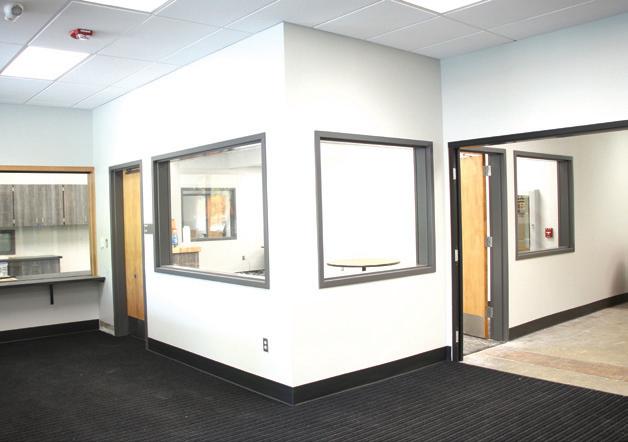
This new front office area greets students, staff and visitors as they come through the front entrance of Clatskanie Middle/High School.
See NEXT Page A6 JEREMY C. RUARK jruark@countrymedia.net
COVID-19 protocols Hurowitz said the Clatskanie School District is also providing indi vidual student testing as each student enters the school buildings. “We will have staff there with portable and very quick temperature checks at both the high school and the elementary school,” she said. “Basically, also an eyeball check for any sickness symptoms. We are ask ing families not to send their children to school sick. Face coverings also are permitted at the“Weschools.areencouraging students and our staff that if they are more comfortable wearing a mask, to wear the mask,” she said.
Jeremy C. Ruark / The Chief
The proposed renewable fuels development is planned for Post Westward at Clatskanie.
NEXT still has additional permit requirements through the DEQ, ac cording to “NEXTWirtis.hasapplied for a 401 water quality certification,” she sais. “DEQ is awaiting additional information from NEXT to inform the certification decision. NEXT will also have to get a stormwater construction (1200-C) permit for managing stormwater during facility construction and an industrial storm water (1200-Z permit) for ongoing stormwater management.”
The Chief has gathered responses concerning the latest DEQ permit approval from NEXT and from key members of those opposing the proposed project.
Big ‘Kicker’ credit for taxpayers
Personal income and consumer spending are rising quickly but struggling to outpace the fastest inflation the U.S. has experienced since the early 1980s.While this may be reassuring today, the risks to the outlook are real. Inflation remains the key issue. Even as headline inflation slows in the months ahead, the underlying inflation trend is likely to remain above the Federal Reserve’s target. As such, the Fed is raising interest rates further to cool the economy.Given the impact of rate increases is generally felt one to two years down the road, getting policy just right is extremely diffi cult. In our office’s recent forecast advisory meetings there was a strong consensus that the risk of recession was uncomfortably high. The outlook is essentially a coin flip between the soft land ing and a recession. For now, our office is keeping the baseline, or most probable outlook as the soft landing and continued economic expansion.Employment, income, and spending continue to grow, but at a slower pace than assumed in previous forecasts. This slower growth is needed for inflation to subside. However, if inflation does not slow as expected, and the Federal Reserve raises rates even further, our office’s alterna tive scenario of a mild recession beginning in late 2023 is more likely. Heading into the budget devel opment season, growth in Ore gon’s primary revenue instruments continues to outstrip expectations. Both personal and corporate tax collections remain strong, in keep ing with income gains seen in the underlying economy. The forecast for the current 2021-23 bien nium has been revised upward. Although the near-term forecast calls for additional revenue, this is offset in future budget periods by a more pessimistic economic outlook.Growth in spending and wages will need to slow to tame infla tion, which translates into less state revenue growth across a broad range of taxes. The po tential recession would weigh heavily on revenues over the next several years. However, even if the economic expansion persists, General Fund revenues are due for a hangover in 2023-25. General Fund resources have continued to expand in recent years despite large kicker cred its being issued. This growth is expected to pause in the near term, as nonwage forms of income return to earth and gains in the labor market slow. Recent gains in reported taxable income have been driven by taxpayer behavior as well as underlying economic growth. Investment and business income are not always realized for tax purposes as the same time they are earned in the market. Late 2021 was a great time to cash in assets, with equity prices and business valuations high, and potential federal tax increases on the horizon. Income reported on tax returns last year grew at more than double the rate of economic measures of in income. After so much income was pulled into tax years 2020 and 2021, less will be realized in the near term. And with recessionary risks rising, profits and gains could turn into losses, and a smaller share of filers could be subject to the top rate. The bottom line is that the unexpected revenue growth seen this year has left us with unprec edented balances this biennium, followed by a record kicker in 2023-25. The projected personal kicker is $3.5 billion, which will be credited to taxpayers when they file their returns in Spring 2024. The projected corporate kicker is $1.1 billion, which will be retained for educational spending. If current balances are not spent, net General Fund revenues for the upcoming 2023-25 biennium will be reduced by $24 million relative to the June 2022 forecast. The Oregon economic forecast is published to provide informa tion to planners and policy makers in state agencies and private orga nizations for use in their decisionmaking processes. The Oregon revenue forecast is published to open the revenue forecasting process to public review. It is the basis for much of the budgeting in state government. The report is issued four times a year; in March, June, September, and December.
anyone may also submit a petition for reconsideration within 60 days per OAR 137-0040080,” Wirtis said. “DEQ may then determine whether to grant or deny none, part or all of the petition. See this example of DEQ’s decision related a petition for reconsideration from 2020 for Columbia Pacific BioRefinery.”
Serving the Lower Columbia Region since 1891 VOL. 131, NO. 17 $1.50SEPTEMBERFRIDAY, 2, 2022
The district is continuing its dis
NEXT air quality permit approved
OregonfentanylrainbowDangerousin
Wirtis said there is an appeal process to the permit approval, which provdes 20 days to contest the DEQ’s“Additionally,decision.
The new school year will bring new changes to schools in Clats kanie.Classes begin Tuesday, Sept. 6 for the elementary and middle school students. Classes begin Wednesday, Sept. 7 for the high school students. Over the summer, voter-approved building renovations were developed. At Clatskanie Middle/High School, a new, brighter, more convenient front entrance has been installed with addi tional“What’ssecurity.been done at the school is beautiful,” Clatskanie School Dis trict Superintendent Cathy Hurowitz said. “We have windows across the front. We have a secure entry and the flooring upstairs of the high school has been replaced.” Over the next several months, the middle school will become separated to the first floor of the high school. This year, the middle school classes will be conducted on the second floor of the building. Due to the national supply chain disruptions, student lockers have yet to be installed on the second floor for the middle school students“So, the middle school students will have to carry their backpacks from class to class,” Hurowitz said. Renovations to the district school building restrooms will be conducted during the holiday breaks this year, according to Hurowitz. “We’ll still have boys and girls restrooms, but we are making com pletely enclosed stalls for student pri vacy,” she said. “We just want kids to feel safe and to have privacy.”
The Oregon Department of Environmental Quality (ODEQ) has approved the air quality permit for NEXT Renewable Fuels’ $2 billion clean fuels project. The approval is a significant milestone and key state permit for developing the renewable diesel and sustainable aviation fuel facility at Port Westward in Colum bia County, Oregon. The air permit was awarded after ODEQ performed an exhaus tive 18-month review. The extended review period included a host of new and novel requirements that NEXT worked to meet and exceed. As such, ODEQ acknowledged that the NEXT facility does not have an appreciable impact on local air resources.Initsapproval, agency leadership stated, “NEXT Renewable Fuels Oregon, LLC is not a major source of EPA-listed hazardous air pollut ants,” and “DEQ has concluded the potential emissions meet health risk standards for the community and do not require additional controls to be protective of public health.” The NEXT project is a tangible investment in making Oregon’s climate protection goals a reality, especially because it is expected to reduce greenhouse gas emissions by 7 million tons each year. ODEQ has stated that “using renewable diesel can cut lifecycle greenhouse gas emissions up to 85%.” With no need for engine modification, renewable diesel creates an immediate envi ronmental and human health benefit while curbing reliance on fossil fuels.“It’s imperative that we transi tion away from fossil fuels towards a cleaner fuels economy as quickly as possible,” emphasized Chris Efird, NEXT CEO and Chairperson. “Our project accelerates green job creation and helps Oregon reach its aggres sive decarbonization goals.” Efird’s comments echo those of ODEQ Director Richard Whitman, who wrote a guest editorial in the Oregonian highlighting how “renew able fuels production and refining are burgeoning industries in Oregon creating hundreds of new, high pay ing NEXT’sjobs.” facility is expected to create 3,500 green jobs during con struction and 240 long-term green jobs during operation. Forecasts show that the facility will generate more than $45 million in annual tax revenue for the State of Oregon and Columbia County. Tax revenues could be used for public safety, edu cation, infrastructure, libraries, and other public services. NEXT has already received county land use approvals and an Oregon Department of State Lands Removal Fill permit. The company continues advancing through the Na tional Environmental Protection Act process overseen by the U.S. Army Corps of Engineers. For more infor mation on the clean fuels project, visit www.nextrenewables.com
Opposition response Dan ConservationSerres Director Columbia Riverkeeper
Revenue Forecast SummaryExecutive
NEXT Response Michael Hinrichs Director of Communications NEXT Renewable Fuels




• The pandemic recession cohort also experienced bet ter wage gain outcomes than all Oregon workers - unem ployed or not - between the first half of 2020 and the end of 2021. Read the full report with this story at thechiefnews. comGail Krumenauer is an employment econo mist with the Oregon Employment Department. She may be reached 3771.oregon.govgail.k.krumenauer@employ.atorat971-301-
A new report from the Oregon Employment Department illustrates the surge of job gains following the COVID-19 pandemic.
Courtesy photo The emergency declaration helps to ensure that the state is prepared to marshal all available and necessary resources as quickly as possible as wildfires arise throughout this season
The fire season took ef fect July 11, which includes a ban on open debris burning in Columbia County. Over the past few months, fire agencies in Columbia County have issued public adviso ries detailing how property owners can take preventive actions before the wildfire season begins and how local firefighters are preparing for the season. Read those stories at thechiefnews.comOregon’sevacuation noti fication system is structured around the readiness need and threat level, broken down into three tiers.
• Continue to stay in formed and alert, checking for updates through local city and county websites, social media, TV and radio. • Use TripCheck.com or call 511 for road closure information.
• Oregon’s pandemic recession unemployment claimants had stronger wage growth than their unem ployed counterparts in an expansionary period in 2016.
• Follow the emergency plan. • Leave as fast as safely possible.Upon evacuating, drive carefully; turn on headlights and follow traffic safety warnings and instructions from local authorities. Read the governor’s full declaration of emergency with this story at thechief news.com.
• The largest share (36%) of claimants were recalled to and still working for the employer that laid them off. Sectors with the highest rates of returning workers included education services, public administration, and manufacturing.
• Signing up for local emergency alerts at ORAlert. gov. • Enabling Wireless Emergency Alerts (WEA) on cell phones. • Having a family emer gency plan.
• Assembling a disaster supply kit. • Making a plan for shel ter, including animals. • Mapping out evacuation routes. Level Two, coded yellow, means be set to evacuate There is significant danger in the area and people should be ready to leave at a moment’s notice. Voluntary evacuation at Level Two is recommended, especially if people need extra time or have livestock. Individuals should:
• Oregon’s nonfarm pay roll employers have regained nine out of 10 jobs lost in spring 2020.
• Another 12% took new jobs with different employ ers in the same sector of the economy.
GAIL KRUENAUER Chief Guest Article
• Consider relocating to a safe place outside of the affected area. • Inform loved ones of plans and destinations. Level Three, coded red, means go now –Leave immediately Level three indicates there is extreme danger in the area and remaining threatens the safety of indi viduals as well as emergency responders, who may not be available to help those who choose to stay. Do not stop to gather belongings or protect the home. Now is the time to act:
www.thechiefnews.com Friday, September 2, 2022A2 North Columbia County’s trusted local news source
As a cohort, pandemic recession unemployment claimants had greater reemployment rates than their counterparts laid off in nonrecessionary times. Pandem ic recession claimants also stood apart in terms of their post-layoff earnings.
Oregon is under a state of emergency due to the ‘im minent threat’ of wildfire. Gov. Kate Brown de clared the state of emergency Aug. 27 because of the wild fire risk across Oregon. Much of the state con tinues to experience high temperatures, wind, storms with dry lightning, and persistent drought. With the extended forecast in Oregon calling for continued warm and dry conditions—and with many parts of the state in drought emergencies—the threat of wildfire in Oregon is imminent. “With wildfire behavior increasing across the state, and with the threat of fire not likely to recede in the near future, it is imperative that we act now to prevent fur ther loss—of life, property, business, and our natural resources,” Brown said. “I issued this emergency declaration to ensure every resource is made available for firefighting efforts and to the crews striving to protect our“Itstate.”isequally important that each of us do our part to prevent wildfires and to be prepared for the ones we can’t prevent.
I am urging Oregonians to take charge in preventing human-caused fires by being safe, respon sible, and aware. I am also encouraging individuals and families to be prepared by making an emergency plan and to follow all evacuation orders should they occur in areas of active wildfire.” Under Oregon law, Brown determined that a threat to life, safety, and property exists due to the imminent threat of wildfire. The Governor’s declaration authorizes the Oregon De partment of Forestry and the Office of the State Fire Mar shal, in coordination with the Oregon Department of Emergency Management, to utilize personnel, equipment, and facilities from other state agencies in order to respond to or mitigate the effects of the wildfire emergency. The declaration allows state agencies to temporarily suspend any rules that impair the response to wildfires, if needed, and also allows the state to request assistance from other states through the Emergency Manage ment Assistance Compact if necessary.Theemergency declara tion is focused on helping to ensure that the state is prepared to marshal all avail able and necessary resources as quickly as possible as wildfires arise throughout this season. When state and national resources are limited, the Oregon National Guard will deploy firefight ing resources in accordance with Operations Plan Smokey 2022. Be ready
• Grab the go-kit.
• The state’s labor force has also grown to new record-high levels, and labor force participation has reached its highest rate in a decade.AsOregon moved from high unemployment to rapid re-employment, seven out of 10 pandemic recession unemployment claimants were found in Oregon’s payroll records again by winter 2022. Three out of 10 were not found working for a covered payroll employer separation.
Governor declares wildfire state of emergency
Level One, coded green, means be ready to evacuate Older adults, families with children, people with disabilities, livestock and pet owners, and those with limited access to transporta tion should consider evacuat ing at Level One. This is also a good time to check with neighbors and share infor mation. Oregonians should be aware of fire risk in their area, stay informed, and actively take steps to prepare themselves to reduce their risk from wildfire, including:
• Sectors most likely to have workers take new jobs with a different employer in care and social assistance and leisure and hospitality.
• By 18 months after their job separation, pan demic recession claimants were more likely to still be found working with a cov ered payroll employer and working in the same sector of the economy than unem ployment claimants from the same timeframe in 2016.
Oregon’s re-employment: A remarkable turnaround
The pandemic recession brought unparalleled job losses - in both speed and scale - to Oregon in March and April 2020. Two years later, the state’s labor market has experienced a remark able turnaround.
• Oregon’s unemploy ment rate is near its all-time record low again.
Courtesy photo from the Oregon Employment Department




Inflation Reduction Act to ease health care costs
• •O bituaries • •
The Inflation Reduction Act caps Medicare benefi ciaries’ annual out-of-pocket costs for prescription drugs covered by Medicare Part D at $2,000 per year starting in 2025. An estimated 4,000 Medicare Part D beneficia ries in the district had out-ofpocket costs above $2,000 in 2020.For the estimated 6,900 Medicare beneficiaries receiving insulin in the district, the new law will cap monthly copayments for insulin products at $35 per month, saving about $1,300 per person per year depend ing on the prescription. The Inflation Reduction Act finally allows the gov ernment to negotiate lower drug prices with the pharma ceutical industry, according to Bonamici. If the Inflation Reduction Act’s drug pricing provisions had been fully in effect in 2020: • The total cost of pre scriptions filled by Medicare beneficiaries in the district could have been about $31 million lower.
REPORT chiefnews@countrymedia.net
Creative Connection
STAFF
Betty Elaine Neer July 29, 1929 ~ Aug. 16, 2022 ACROSS 1. Out of harm’s way 5. Street, in Paris 8. *Citric or sulfuric one 12. *Female gamete 13. Comedian Carvey 14. Excessively fat 15. Trunk extension 16. Wading bird 17. Savory jelly 18. *Distance per unit of time 50. Zero, on a court 52. *Vertical distance 55. Pavarotti, e.g. 56. *Radical, in math 57. Smidgen 59. *Chemically inac 60.tiveWith competence 61. Countess’ husband 62. *Ammonia or bak ing soda, e.g. 63. ___ canto 19. Mixtures 22. Cowboy’s shoe prod 23. V.I.P.s25.gas24.shape*Two-dimensional*RadioactivenobleMiddleEastern 26. Collier’s office 27. 28.device*Energy-convertingVeryangry STATEPOINT CROSSWORD THEME: SCIENCE • •C r O ssw O rd P uzzle • •
Metro
More details are emerg ing about the recently approved federal Inflation ReductionOregonAct.U.S. Rep. Su zanne Bonamici (OR-01) has released two reports detailing how, under the Act, thousands of people in NW Oregon will soon spend less on health care. Bonamici said the sav ings will be in two areas: • More affordable pre scription drugs for Medicare recipients. • Lower health insurance premiums for people who get their coverage through the ACA“Thesemarketplace.savings will make a meaningful difference in the lives of families and indi viduals, easing the pressure of costs that have been too high for too long,” Bonamici said. Inflation Reduction Act benefits for residents of Oregon’s First Congressional District include: Affordable Health Care By extending critical tax credits set to expire this year, the Inflation Reduction Act will help about 21,000 people in the district cur rently enrolled in subsidized marketplace health insurance coverage through the Afford able Care Act save an aver age of $1,290 in premiums starting next year. Under the Inflation Re duction Act, a family in the district with two adults, two children, and a household in come of $75,000 could save $2,832 on their premiums nextAyear.single-parent house hold with one adult, one child, and a household in come of $30,000 could save $1,260 on their premiums nextAyear.household of two adults over the age of 60 with a joint income of $70,000 could save $14,772 on their premiums next year.
LowerDrugPrescriptionCosts
• Medicare beneficiaries in the district could have saved about $10 million in reduced premiums and outof-pocket costs. The urgent need for these reforms was demonstrated by the Committee on Oversight and Reform’s landmark drug pricing investigation, which revealed how the pharma ceutical industry’s uninhib ited pricing practices lead to price gouging and runaway costs for Americans, accord ing to TheBonamici.reporton benefits of the Inflation Reduction Act health coverage provisions for Oregon’s First District residents can be found with this story at thechiefnews. com. The report on benefits of the Inflation Reduction Act Medicare drug pric ing provisions for Oregon’s First District residents can be found with this story at thechiefnews.com.
Let us know what YOU think EMAIL YOUR LETTERS TO: CHIEFNEWS@COUNTRYMEDIA.NET
The savings will be in two areas; more affordable prescription drugs for Medicare recipients and lower health insurance premiums for people who get their coverage through the ACA marketplace, according to Bonamici.
Betty Elaine Neer passed away peacefully at home on Aug. 16, 2022. Betty was born on July 29, 1929 to Michael Dean and Dorothy Neer in Goble, Oregon. Betty attended Goble elementary and graduated from Rainier High School in 1947. Betty married her first husband Rodney on June 12, 1949 in her parent’s yard. Betty was born at the histor ic family home on Neer City road and lived there until high school graduation. She was a bookkeeper for dif ferent businesses including four years at Montgomery Ward, Southland Corpora tion for several years finally retiring from Snyder Roof ing in 1995.
www.thechiefnews.comFriday, September 2, 2022 A3
Betty is survived by her three children and their spouses, Connie Smith (Marlon) in George, Oregon, Laurie Stewart (Tim) in Ce dar Mill, Oregon and Darren Wallwork (Sandra) in Scotts Mills, Oregon; many grand children, Christy Coloumbe (Tony), Matt Stewart, Sam Stewart (Courtney A.), Andy Stewart (Courtney N.), Brandi Wallwork, Shelby Yzaguirre (Alex), Chase Wallwork and Donovan Thurman; great-grandchil dren, Miriam Stewart (10), Rosie Coloumbe (8), Conrad Stewart (6), Isaac Stewart (5), Elliot Stewart (3), Cam eron Stewart (2) and Evie Yzaguirre (2); as well as a niece Cynthia (Neer) Schied in Prescott Valley, Arizona. She was preceded in death by her father Dean in 1974 her brother Willis in 1992; mother Dorothy in 2004; first husband Rodney different clubs and organiza tions such as Shiloh Basin Community Church, Rainier Garden Club, Rainier Senior Center, RV-8rs (RV & Square Dance Club), Rainier Historical Society as well as a fleece and fiber group in St Helens, Oregon as well as volunteering at the Camp 18 Logging Museum. Although Betty was born and died in the family home on Neer City Road, she trav eled extensively. She took road trips alone around the US, caravanned with friends to Alaska and to the Copper Canyon in Mexico. At age 80, she took a solo road trip to the Maritime Provinces (Eastern Canada) all the way to Newfoundland and Labrador, making friends all along the way. She visited almost every state including Hawaii. She also travelled to Western Europe, visiting seven different countries. The property where she lived was the last remain ing land owned by the Neer family of a large property homesteaded by her great grandparents Abe and Lau rinda Neer. The family had a long history in the area. She was the last of 18 Neer Family first cousins in her generation. A celebration of Betty’s life will be held from 1 p.m. – 3 p.m. on Sat., Sept. 24, 2022 at the private riverfront property across Hwy 30 from Betty’s house. Neighbors, friends and acquaintances are all welcome!





•
enforcement
September 10 Logging Event Rainier Oregon Historical Mu seum Annual event will fea ture local historian Jerry Kelly from 12 p.m. until 3 p.m. at the Rainier City Chamber Room at Rainier City Hall, 106 W B Street in Rainier. First show at 12:30 p.m. Sec ond show at 1:30 p.m. Kelly will discuss various logging items, highlighting different types of axes, springboard, whistle punks’ bug, log can non, undercutter and topping saw. A power point pre sentation showing over 150 logging industry views is also planned. A logging exhibit will be in the museum on the third floor. The movie, “God’s Country and the Woman” will be playing throughout the day. Kids will have fun load ing logs onto a log truck with a remote-controlled grappler. Something for everyone! For more information, call 360751-7039.
September 5 Park Concert The Clatskanie Arts Com mission (CAC) presents Big Band in the Park Concert from 2 p.m. to 4 p.m. in the Clatskanie City Park, 300 Park Street in Clatskanie. This free concert will feature music by the North Coast Big Band from Astoria. Food items will be available for purchase beginning at 1 p.m. as a fundraiser for the Clatskanie Arts Commission. Please bring your own chairs. Bleacher seating will also be available. For more informa tion about CAC performers visit, clatskaniearts.org.
The Rainier Public Library is open from 9 a.m. to 4:30 p.m. Tuesdays, Wednesdays and Thursdays, 10:30 a.m. to 4:30 p.m. on Fridays and 10:30 a.m. to 2:30 p.m. on Saturdays. It will be closed Sundays and Mondays.
for
a changing and somewhat challenging time for small businesses across our com munities.Thework we’re doing and the feedback we’re receiving tell the story that many of our Oregon small businesses are once again facing challenges due to the current economic downturn. Moving forward Pressed with tough deci sions on how to move for ward, business owners are turning to the Oregon Small Business Development Cen ter (SBDC) for support. SBDC Adviser Arnie Hendricks is a subject matter expert on financial manage ment for small businesses and recently shared some in sight on the pressing issues facing our Oregon small business economy today. “The current economic climate appears to be soften ing after a partial rebound from the difficult time for many companies in 2020 and 2021 due to the COVID pandemic,” Hendricks said. “The issues with supply chains are still lingering, and the lack of available labor is making it difficult for many companies to recover to their pre-COVID levels of revenue and profitability. This is now compounded by the inflationary costs of many materials that are diffi cult to pass on to customers through increased prices.” These economic hard ships are requiring business owners to take a hard look at their current financials and operational status and make decisions accordingly—and many are reaching out to the Oregon SBDC for guidance. We’re also experiencing an uptick in succession plan ning requests from business owners who are nearing retirement.Succession planning is a crucial next step for many but requires proper planning. Oregon SBDC succession planning services help guide business own ers through the many stages of planning and executing, including:
www.thechiefnews.com Friday, September 2, 2022A4 North Columbia County’s trusted local news source • •V iew PO ints • • • •C O mmunity e V ents • •
•
To all who support small businesses in Oregon MARK GREGORY Chief Guest Column Vote online at thechiefnews.com Are you ready for the season change from summer to fall? Yes No Weekly Online Poll Last Week’s Results What is the solution to the rise in fatal traffic crashes? CONTACT US • Phone: (503) 397-0116 • Fax:
This newspaper’s letters to the editor are limited to a maximum of 250 words and will be edited for grammar, spelling and blatant inaccuracies. Unsubstantiated or irresponsible allegations, or personal attacks on any individual, will not be published. Letters containing details presented as facts rather than opinions must include their sources. Writers are limited to one published letter per month. All submissions must include the author’s full name, local street address and telephone number (only the name and city of residence will be published). By submitting a letter, writers also grant permission for them to be posted online. Opinions expressed on this page are the writer’s alone and do not represent the opinion of the newspaper or its parent company, Country Media, Inc. 9.4% Improved driver behavior 12.5% More law patrols 0% Increased penalties traffic 78.1% All
Avamere at St. Helens hosts a Virtual Dementia Support Group – 3rd Wednesday of each month from 2 to 3 p.m. For more details, contact Jenny Hicks/Avamere at St. Helens at 503-366-8070.
Lower Columbia River Watershed Council Meets at 7 p.m. every other second Tuesday. Meetings are currently held elec tronically by Zoom. For more information, contact Council Coordinator Allan Whiting at E-mail: allan@whitingenv. com, or call 503-789-9240. Visit the council’s website for agenda postings and Zoom events-page.www.lowercolumbiariver.org/at
•
Great things happening There are other great things happening this year at Rainier School District. Facilities improvements have been in the works this sum mer. Improvements to sports facilities, restrooms, lighting, and the reopening of the Bri arcliff Pool which will pro vide k-6 students with swim lessons during their school day. We will also be doing long-range planning for our facilities, strategic plan, and school improvement. We will also have opportunities to participate in a variety of committees, volunteer opportunities, and activities. We hope you will join open houses, meeting nights, com mittees, and student athletic andIt’sactivities.agreat year to be a Columbian! School starts on Wednesday, September 7 at 8 a.m. (with the exception of prek-2 who have a modified schedule. Please take some time to ensure your child is ready for the first day of school. Please visit a website where you can find resources you may need to get ready. Also, please take some time to talk to your child about high academic expectations and positive, respectful behaviors. The parent student handbook will be available at our open houses, online, and in your child’s class. Reading it with your child is a great way to ensure they have the most successful year they have ever Welcomehad!to the 20222023 school year! Your partner in Educa tion, Dr. Joseph Hattrick Superintendent
A positive transition for the new school year
To list an event in the Com munity Calendar, email details with a phone number that may be published, to net,cleclassifieds@countrymedia.chroniorcall503-397-0116.
violators
crossword puzzle • •C r O ssw O rd s O luti O ns • •
• Creating a documented succession plan Working the steps of that plan Strategies for maintain ing and growing valuation through the process Keeping the company in a sellable position Preparing for the transi tion of ownership
• Post-transition planning
of the about
Solution for the
JOSEPH HATTRICK Chief Guest Column
The Rainier School Dis trict is so excited to welcome our staff and students back for what is going to be a great school year. As we transition from a focus on COVID-related issues during the past two years, our focus this year has shifted. Of course, we will continue to monitor case rates as is required by the Oregon Department of Education, but one of our best strategies as we return to normal is for staff and students to stay home when they are ill which will sup port keeping others safe and healthy.This summer our school board spent considerable time together to evaluate our priorities and we all commit ted to ensuring that the Rain ier School District continues to focus on our mission and pillars that were developed through a collaborative pro cess a few years ago. Rainier is a spirited learning commu nity that is student-centered, safe, academically focused, and dedicated to preparing every student for a success ful life. To learn more about our areas of focus (referred to as our pillars), please go to rainier.k12.or.us/about.
Website: www.thechiefnews.com Editorial: chiefnews@countrymedia.net ADVERTISE WITH US: Advertising Email: chronicleads@countrymedia.net Classified email: chronicleclassifieds@countrymedia.net The Chief The Chief (USPS 116-360) is published weekly by Country Media, Inc. 1805 Columbia Blvd, St. Helens, OR 97051 POSTMASTER: Send address changes to The Chief PO Box 1153, St. Helens, OR 97051
Reflection As I reflect on my past two years at Rainier School District, I am excited to know that with this great community’s support, we will be able to provide our students a normal school year. As we do this, there is no better time to get back to basics with a focus on student academic achieve ment and character traits that will support transition to adulthood. Our students will have access to a brandnew English curriculum in grades K-12 and an improves assessment system that will provide teachers the infor mation they need to address learning losses. Opportuni ties for tutoring and interven tions will support our goal to ensure all students grow academically this year. The past few years have also shown our students great division within our communities, anger around state-mandated directives, and people living, working, and learning under stressful circumstances. This year we hope to have greater col laboration with our students, families, and community. With the support of our com munity and families we will be able to keep the focus on student learning and character development. We are excited to be initiating a new “student of the month” program that will recognize/ reward students for posi tive behaviors that we may not have seen in the past few years. One trait will be identified every month where students can be nominated by peers or community members to recognize their achievement in the identified trait. Our Business Advisory Group will select award recipients each month. If you know of a business who would like to serve on the advisory council and cel ebrate with us, please contact the Rainier School District office.
September 11 Hometown Heroes of Columbia County 2nd Annual 9/11 Remem brance 8:30 a.m. – 7 p.m. The event will start at 8:30 a.m. at the St. Helens Centennial Flag & Fountain in the lower parking lot on the river side. The reading of the names starts at 8:46 a.m. We invite anyone from the community to at tend, and if you would like, assist in reading the names. There will be roses and rib bons available for members of the public to place on the fence in remembrance. The remembrance display will remain in place until 7:00 p.m. for all to see. For more information, please call Vivan Rupe at 503-929-1523. Ongoing Farmers Market Clatskanie Farmers Market from 10 a.m. to 2 p.m. every Saturday through September 24 at Cope’s Park in down town Clatskanie. Movies by Moonlight Scappoose Public Library and the City of Scappoose offer free Movies by Moonlight each Friday in August at Heri tage Park, 52469 SE Second Street, in Scappoose. A series of four family friendly movies will be shown with thematic activities and events each night. For up-to-date information about the events, visit the Movies by Moon light website link, Facebook page, or contact Jeff Weiss 503-543-7123. Food vendors will be on site with snacks and full meals available for purchase. All movies start at dusk with pre-movie events beginning at 7 p.m. In the event of rain, the showing will be rescheduled. Alcohol and smoking are not permit ted in the park.
Letters policy
The Oregon SBDC is here to help businesses at every stage. If you know of a business that could use these support services, please encourage them to locate a Center in their area and seek out our free advis ing services. Mark Gregory is the State Director of the Oregon Small Business Develop ment Center Network of the Oregon SBDC Network.He may be reached at 541-4635250. (503) 397-4093
SUBSCRIPTION RATES: 1 month in county: $8 1 month out of county: $10 One year in county: $60 One year out of county: $80 Aug. 26, 2022
•
The Rainier Oregon Histori cal Museum (ROHM) is open from noon - 4 p.m. Satur day (except major holidays weekends). ROHM is located inside Rainier City Hall at 106 W B Street. For more infor mation, call 360-751-7039.


CC22-1192
Clatskanie PUD is an equal employment opportunity employer, following all necessary federal and state employment laws required. Clatskanie PUD will make reasonable accommodations for those covered by the Americans with Disabilities Act. Veterans will receive hiring preference as required by law.
CC22-1187
To help extend the life of Clatskanie PUD power poles, Davey Resource Group has been contracted to conduct our pole test and treat program for 2021. They will be working on our poles on the following roads and the surrounding areas: Swedetown Rd, Olson Rd, Alder Grove Rd, Lindberg Rd, Cedar Grove Rd, & Lost Creek. For questions or concerns, please call 503 728 2163.
949-252-8300
a classified ad in The Chief Listings are updated daily
ASPHALT PAVING Offering Quality Asphalt Paving Services to Columbia County and surrounding areas. Call todayJimat (503) 509-8657 Quality Workmanship At Affordable Prices COMMERCIAL • RESIDENTIAL • INDUSTRIAL Driveways Roadways Subdivisions Parking Lots City, County, State Specification Products EstimatesFREE
Aug. 30, 2022 in the City of Clats kanie CITY OF CLATS KANIE NOTICE OF BALLOT TITLE FOR THE NOVEMBER 2022 ELECTION NOTICE IS HEREBY GIVEN that on August 4th, 2022, the City Recorder received from the City of Clatskanie Council the following ballot title for a measure to be referred to the legal voters of the City of Clatskanie on November 8, 2022 General Election: CAP TION: PROHIBITS PSILO CYBIN-RELATED BUSI NESSES WITHIN CITY OF CLATSKANIE FOR A PERIOD OF 2 YEARS. QUESTION: Shall City of Clatskanie prohibit psilocy bin-related businesses within Clatskanie for 2 years?
Clatskanie People’s Utility District is seeking an Accountant. This position will be responsible for assisting with the annual external financial audit, monitoring and reconciliation of bank accounts, as well as, payroll and accounts payable processes. The successful candidate will have the opportunity to influence the strategic direction and fiscal performance of our hydro-powered, locally-owned electric utility and will be given the chance to develop professionally. Ideal Candidate! We’re looking for someone who is driven, organized, and passionate about handling the numerical storybook of a mission-focused organization! Do you aspire to become a CPA? Do you love Excel unconditionally? Are you looking for a 4/10 schedule in the beautiful PNW in an industry that provides essential services to its local community? Give us a chance, apply today! Compensation will be based on qualifications and experience. Clatskanie PUD offers a competitive benefit package. An application and full job description can be found on our website under About Us/Employment Opportunities at clatskaniepud. com. Submit completed application, résumé, and cover letter to Human Resources, PO Box 216, Clatskanie, OR 97016, secure fax 503-308-4884, or email: hr@clatskaniepud.com. This position remains open until 5:00 pm PDT, October 3, 2022 or until filled, with a flexible start date in October 2022. If you have questions or need additional information, please contact Lynn Donner: ldonner@clatskaniepud.com or 503-728-2163.
CC22-1188
NOTICE TO INTERESTED PERSONS NOTICE IS HERE-BY GIVEN that the under signed has been appointed personal representative. All persons having claims against the estate are required to present them, with vouchers attached, to the undersigned personal representative at the address below, within four months after the date of first publi cation of this notice, or the claims may be barred. All persons whose rights may be affected by the proceed ings may obtain additional information from the re cords of the court, the per sonal representative, or the attorneys for the personal representative. Dated and first published September 2, 2022. TAMMIE SARTIN Personal Representative c/o Lucas & Associates, LLC Attorneys at Law P.O. Box 519 Rainier, OR 97048 Phone 503-556-3741 FAX503-556-0708 Lucasatty@ yahoo.com.
In the Matter of the Estate of DALPHANA LOPEZ, Deceased. No. 22PB07106
NOTICE MEETING
(Psilocybin)
CC22-1191
150 Misc Services We buy CEDAR and NOBLE boughs. What we pay depends on the quality of your trees. We do all the work and won’t damage your trees.
Reference is made to that certain Trust Deed made by, WANDA SMITH as Grantor to TICOR TITLE INSUR ANCE COMPANY as Trustee, in favor of MORT GAGE ELECTRONIC REG ISTRATION SYSTEMS, INC. (“MERS”), as desig nated nominee for EAGLE HOME MORTGAGE, LLC, A DELAWARE LIMITED LIABILITY COMPANY, Beneficiary of the security instrument, its successors and assigns, dated as of Oc tober 21, 2011 and recorded on October 25, 2011 as Instrument No. 2011-007899 and the beneficial interest was assigned to Freedom Mortgage Corporation and recorded September 9, 2020 as Instrument Number 2020009127 of official records in the Office of the Recorder of Columbia County, Oregon to-wit: APN: 24851 THAT PORTION OF THE NORTH HALF OF THE SOUTH EAST QUARTER OF SECITON 10, TOWNSHIP 5 NORTH, RANGE 4 WEST OF THE MERIDIA,WILLAMETTECOLUMBIA COUNTY, OREGON, LY ING NORTHEASTERLY OF THE NEHALEM RIVER AND WHICH LIES WEST ERLY OF THAT TRACT CONVEYED TO EDGAR A. CUMMING ETAL BY DEED RECORDED JUNE 27,1968 IN BOOK 169, PAGE 773 DEED RECORDS OF COLUM BIA COUNTY, OREGON. EXCEPTIING THERE FROM THAT PORTION, IF ANY, OF THE CLARK AND WILSON LUMBER COMPANY RECORDEDRAILROADMAY5,1932 IN BOOK 54, PAGE 247, DEED RECORDS OF COLUMBIA COUNTY, OR EGON. TOGETHER WITH THE EASEMENTSNON-EXCLUSIVEDESCRIBED IN DOCUMENTS RE CORDED FEBRUARY 22,1971 IN BOOK 180, PAGE 326, DEED RE CORDS OF COLUMBIA COUNTY, OREGON AND IN A DEED RECORDED AUGUST 11,1992, IN STRUMENT NO. 92-5765 AND IN DEED RECORD ED AUGUST 11,1992, INSTRUMENT NO. 92-5766, OFFICIAL RECORDS OF COLUMBIA COUNTY, OR EGON.Commonly known as: 64511 NEHALEM HWY NORTH, VERNONIA, OR 97064 Both the Beneficiary, FREEDOM Trustee,CORPORATION,MORTGAGEandtheNathanF.Smith, Esq., OSB #120112, have elected to sell the said real property to satisfy the obligations secured by said Trust Deed and notice has been recorded pursuant to Section 86.735(3) of Oregon Revised Statutes. The default for which the foreclo sure is made is the Grantor’s failure to pay: Failed to pay payments which became due Monthly Payment(s): 8 Monthly Payment(s) from 06/01/2019 to 01/01/2020 at $2,160.39 6 Monthly Payment(s) from 02/01/2020 to 07/01/2020 at $1,928.93 6 Monthly Payment(s) from 08/01/2020 to 01/01/2021 at $2,390.19 12 Monthly Payment(s) from 02/01/2021 to 01/01/2022 at $1,166.83 7 Monthly Payment(s) from 02/01/2022 to 08/24/2022 at $1,386.39 Late Charge(s): 498.16 By this reason of said default the Beneficiary
LANDATTENTIONOWNERS For more information contact Jorge Martinez (360) 751-7723
Public Notices
Marketplace
Notice is further given that any person named in Section 86.753 of Oregon Revised Statutes has the right to have the foreclosure proceeding dismissed and the Trust Deed reinstated by payment to the Beneficiary of the entire amount then due (other than such portion of said principal as would not then be due had no default oc-curred), together with the costs, Trustee’s or attorney’s fees and curing any other default complained of in the Notice of Default by tendering the performance required under the obligation or Trust Deed, at any time prior to five days before the date last set for sale. Without limiting the Trustee’s disclaimer of repre sentations or warranties, Or egon law requires the Trustee to state in this notice that some residential property sold at a Trustee’s sale may have been used in manufac turing methamphetamines, the chemical components of which are known to be toxic. Prospective purchasers of residential property should be aware of this potential danger before deciding to place a bid for this prop erty at the Trustee’s sale. In construing this notice, the masculine gender includes the feminine and the neuter, the singular includes plural, the word “Grantor” includes any successor in interest to the Grantor as well as any other persons owing an obligation, the performance of which is secured by said Trust Deed, the words “Trustee” and “Beneficiary” includes their respective successors in interest, if any. Dated: 8/17/22 By: Nathan F. Smith, Esq., OSB #120112 Successor Trustee Malcolm & Cisneros, A Law Corpo ration Attention: Nathan F. Smith, Esq., OSB #120112 c/o TRUSTEE CORPS 17100 Gillette Ave, Irvine, CA 92614 Order Number 84922, Pub Dates: 9/2/2022,
9/9/2022, 9/16/2022, 9/23/2022, THE CLATSKANIE CHIEF TS No. OR07000141-19-1S APN 24851 TO No 220065369-OR-MSO TRUSTEE’S NOTICE OF SALE 860 Storage MiniCLATSKANIEStorage Hoarder’s Paradise! 20 sizes, Inexpensive RV Storage, Carports, Hand trucks, Locks, Fully-lined,CondensationInsulated,free,allunitslit.On-siteManager 503 728-2051 502 Help Wanted 502 Help Wanted Advertise your garage sale in the paper and online for only $10 for up to 14 lines Email chronicleclassifieds@countrymedia.net to advertise
www.thechiefnews.comFriday, September 2, 2022 A5 North Columbia County’s trusted local news source
HealthCommunityNurse Columbia County, OR. EOE. Open until filled. Apply at OR.govColumbiaCounty OR EOE Deadline - Open until filled. Apply at Columbia CountyOR.gov 790 Misc Wanted Wanted cedar boughs and noble fir. Willing to pay for branches only. Do not damage trees. Call Cesar 360-241-6889 360-425-0738or LANDATTENTIONOWNERS!
CC22-1185
has declared all obligations secured by said Trust Deed immediately due and pay able, said sums being the following, to-wit: The sum of $139,404.34 together with interest thereon at the rate of 4.50000% per annum from May 1, 2019 until paid; plus all accrued late charges thereon; and all Trustee’s fees, foreclosure costs and any sums advanced by the Beneficiary pursuant to the terms of said Trust Deed. Wherefore, notice is hereby given that, the undersigned Trustee will on December 27, 2022 at the hour of 01:00 PM, Standard of Time, as established by Section 187.110, Oregon Revised Statues, Front Entrance, Columbia County Court house, 230 Strand Street, St. Helens, OR 97051 County of Columbia, sell at public auction to the highest bidder for cash the interest in the said described real property which the Grantor had or had power to convey at the time of the execution by him of the said Trust Deed, together with any interest which the Grantor or his successors in interest acquired after the execution of said Trust Deed, to satisfy the foregoing obligations thereby secured and the costs and expenses of sale, including a reason able charge by the Trustee.
It’s easy to place at www.thechiefnews.com
OF COUNCIL
NOTICE IS FURTHER GIVEN that any elector of the City who believes the proposed measure contains more than one subject or who believes the ballot title is insufficient, not concise, or unfair may file a petition for judicial review with the Circuit Court for Columbia County no later than 5:00 PM on September 9th, 2022 which is at least seven busi ness days after this notice. Any elector who files a peti tion to review the ballot title must notify the City Record er in writing that the petition has been filed no later than 5:00 PM on the next business day following the day the petition is filed.
The Clatskanie City Council will meet on Wed., Sept. 7th, 2022 at 7:00 p.m. in the City Council Cham bers, 75 South Nehalem St. (Clatskanie Cultural Center, 2nd floor). Agenda items include but are not limited to: approval of the minutes of the August 3rd, 2022 regular meeting; Pub lic Hearings on Resolutions amending the Water rate, Sewer rate and Business License fee schedule to include RV parks, a resolu tion for a supplemental budget adjustment for the Tichenor waterline project, and a discussion on estab lishing rules for RVs within the City limits. An updated agenda will be available at City Hall and on the website by Sept. 2nd, 2022. The meeting will be acces sible by ZOOM by going to provided.comwww.cityofclatskanie.andusingthelink
To: All Electors, Free holders and Taxpayers of Co lumbia County, Oregon and other interested persons. Bob Wiggins, Don Hooper, Jean nie Mustola, Merle Gillespie, and Stephen D. Petersen, the Directors of Clatskanie People’s Utility District (the “District”), an Oregon People’s Utility District, have filed a PETITION IN REM (pursuant to ORS 33.710 and ORS 33.720) for the judicial examination and judg ment of the Court as to the validity and enforceability of Resolution No. 22-03. At its regularly scheduled meeting on July 20, 2022, the District adopted Resolution 22-03, which amends District Policy No. 113 to require that an Advanced Meter be installed at each service location as a condition of receiving elec tric service from the District. An “Advanced Meter” is an electric meter that is capable of two-way communications between the meter and the District’s advanced metering infrastructure. The petition is pending in Columbia County Circuit Court as Case No. 22CV26653. The District has asked the court to set a time and place for a hearing on its petition to enter a judgment as to the authority, regularity, and legality of Resolution 22-03. This notice will be published in the St. Helens Chronicle on August 24, August 31, and September 7, 2022, and in the Clats kanie Chief on August 26, September 2, and September 9, 2022. ANY PERSON IN TERESTED MAY APPEAR AT ANY TIME BEFORE THE EXPIRATION OF TEN DAYS AFTER THE FINAL PUBLICATION OF THIS NOTICE AND CONTEST THE VALIDITY OF THE PROCEEDINGS, OR OF ANY OF THE ACTS OR THINGS THEREIN.ENUMERATED NOTICE OF PETITION FOR JUDICIAL VALIDATION
NOTICE OF MEASURE AND RECEIPT OF BALLOT TITLE
IN THE CIRCUIT COURT OF THE STATE OF OREGON FOR THE COUNTY OF COLUMBIA
SUMMARY: State law al lows for the permit2ofcentersturerspsilocybinprohibityears.inpsilocybin-relatedtoadoptedofservicefacturerspsilocybinestablishmenttheordinancegovernmentlawintheandtransportation,manufacturing,delivery,salepurchaseofpsilocybin,psychedelicdrugfoundcertainmushrooms.Stateprovidesthatalocalmayadoptantobereferredtovoterstoprohibittheoflicensedproductmanuand/orpsilocybincenters.TheCityClatskanieCityCouncilanordinancetoreferthevotersthatprohibitsbusinessesCityofClatskaniefor2A“Yes”votewouldtheestablishmentofproductmanufacandpsilocybinservicewithinthecitylimitstheCityofClatskanieforyears.A“No”votewouldtheestablishmentof psilocy-bin product manufac turers and psilocybin service centers within the city limits of the City of Clatskanie.
Just call 503-397-0116







All performances but the Oregon Symphonic Band will be held at the Birkenfeld Theatre, in the Clatskanie Cultural Center, 75 S. Ne halem, Clatskanie, Oregon. The OSB concert will be held at Clatskanie Middle/ High School in the Donavon Wooley PAC. Brochures and tickets for this year’s Performing Arts Series will be available at the park, online at clats kaniearts.org or by calling 503-728-3403. For more information about CAC per formers visit, clatskaniearts. org.
STAFF REPORT chiefnews@countrymedia.net
Big Band in the Park Concert
Courtesy photo
www.thechiefnews.com Friday, September 2, 2022A6 North Columbia County’s trusted local news source Contact your Veteran Service Officer • 503-366-6580 You may be entitled to benefits for serving your country. Are you a veteran? Call CAT at (503)397-3511 to find out if you qualify. Rental and energy assistance applications are available at 125 N. 17th St., St. Helens, OR. Also available on our website at www.CAT-TEAM.org ActionCommunityTeam Building Bridges to Self Sufficiency The “Soot Bust er s” Inc. WOOD, PELLET, GAS FIREPLACES & INSERTS COMPLETE CHIMNEY SERVICES * CLEANING REPAIRS * PIPE REPLACEMENT Fireplace Shop & Chimney Services 1370 Col Blvd 503 397 0390 05-02-12 1x9D SootBusters:Layout 1 4/30/12 11:31 AM Page 1 The “Soot Bust er s” Inc. WOOD, PELLET, GAS FIREPLACES & INSERTS COMPLETE CHIMNEY SERVICES * CLEANING REPAIRS * PIPE REPLACEMENT Fireplace Shop & Chimney Services 1370 Col Blvd 503 397 0390 05-02-12 1x9D SootBusters:Layout 1 4/30/12 11:31 AM Page 1 www.thesootbustersinc.com The “Soot Bust er s” Inc. WOOD, PELLET, GAS FIREPLACES & INSERTS COMPLETE CHIMNEY SERVICES * CLEANING REPAIRS * PIPE REPLACEMENT Fireplace Shop & Chimney Services 1370 Col Blvd 503 397 0390 05-02-12 1x9D SootBusters:Layout 1 4/30/12 11:31 AM Page 1 Retail Store closed, moved to home office. Call for 503-397-0390appointment The U.S. Attorney’s Of fice for the District of Oregon and U.S. Drug formsappearedpolitandaystheleastUnitedoverdosessibletoxiccoloredonwarningAdministrationEnforcement(DEA)areOregonianstobethelookoutforrainbowThedrugisabrightlyversionofthehighlysyntheticopioidresponforhundredsoffataleverydayintheStates.ThewarningfollowsattwonotableseizuresofdruginthelastseveralinthePortlandmetroarea.Rainbowfentanylhasrecentlyinseveralincitiesacrossthe country. A version seized recently in the Portland area resembles thick pieces of brightly colored sidewalk chalk. Some versions seized elsewhere in pill or tablet form resemble candy. Federal agents are urging the public to refrain from handling any version of fentanyl and if anyone en counters the drug, to call 911 immediately.“Weurge all Oregonians to be on the lookout for fentanyl in our community and respect the highly-toxic nature of this substance,” said Steve Mygrant, Chief of the Narcotics and Criminal Enterprises Unit of the U.S. Attorney’s Office for the Dis trict of Oregon. “Fentanyl is commonly disguised in fake prescriptions pills. If you find or come in contact with pills not dispersed by a licensed pharmacist, assume they are fake and potentially lethal. Fake pills are indistinguish able from real pills.” “Fentanyl is the deadliest drug threat we face today,” DEA Acting Special Agent in Charge Jacob D. Galvan said. “It doesn’t matter what color, shape or form it comes in; just two milligrams of fentanyl – the equivalent of 10 to 15 grains of salt - is enough to kill someone. DEA’s Portland Office is seizing record amounts of fentanyl and we will continue this important work because we know American lives are at stake.”Opioid abuse affects com munities across the nation. Provisional data from the Centers for Disease Con trol and Prevention (CDC) indicate that there were more than 107,000 fatal drug over doses in the U.S. in 2021, an increase of nearly 15% from the previous year. Synthetic opioids (primarily fentanyl) accounted for more than three quarters of these deaths. Drug overdose continues to be the leading cause of injury or death in the United States. Fentanyl is a synthetic opioid 80 to 100 times more powerful than morphine and 30 to 50 times more powerful than heroin. A 3-milligram dose of fentanyl—a few grains of the substance—is enough to kill an average adult male. The availability of illicit fentanyl in Oregon has caused a dramatic increase in overdose deaths throughout the state. The federal agent’s release also urges anyone in immediate danger, to call 911.If you or someone you know suffers from addiction, please call the Lines for Life substance abuse helpline at 1-800-923-4357 or visit www.linesforlife.org. Phone support is available 24 hours a day, seven days a week. You can also text “Recovery Now” to 839863 between 8 a.m. and 11 p.m.
Fast Fact Fentanyl is a synthetic opioid 80 to 100 times more powerful than morphine and 30 to 50 times more powerful than heroin.
“The proposed refinery would pose a major pollution risk for the Port Westward community as well as those downwind and downstream from the refinery and rail yard,” said Dan Serres, Conservation Director for Columbia Riverkeeper. “DEQ should think twice about ap proving a polluting refinery— with major spill risks and air emissions—in the Columbia River Estuary.”
The North Coast Big Band is scheduled to perform Sept. 5 in the Clatskanie City Park. tant learning, offering home school for families who wish to continue homeschool and online options for families who wish to continue online options.This new school year, Clatskanie Middle School students will be offered Advanced Via Individual Determination (AVID). AVID provides scaffolded support that educators and students need to encourage college and career readiness and success, according to AVID.com. “We are really excited about AVID,“ Hurowitz said. “That will give students the tools to be successful into high school.” Transitioning Hurowitz said the district staff is working to transition back to a somewhat normal school year by offering greater support to students. “Our children have been sitting in front of screens for almost two years, and we have noticed that some of the social and emotional needs have not been met or addressed dur ing the pandemic,” she said. “Even last year, with kids be ing back in school, we’ve no ticed there are issues, and we have concerns about students interacting with each other, so we are providing a lot of sup port for our students.” Hurowitz said the support effort is centered on building relationships, and supporting kids building relationships with each other, and with adults in the school buildings. “We believe this school year will be a lot better,” she said.
Dangerous rainbow fentanyl in Oregon
Budget challenges ahead According to the latest es timate, the Clatskanie School District student population has dropped by approximately 40 students.“Wehave experienced a decline in enrollment, and we are at 680 students this year, and we normally have about 720 students at the beginning of school,” Hurowitz said. “We know that schools across the nation have experienced similar student enrollment declines and we are sure why. Whether kids are continuing homeschooling, whether they are working, we don’t know.” Hurowitz said the district staff is reaching out to student families that have not shown up to school,” she said. “We are trying to find out where they are, what they are doing and how we can support kids to finish school. We are work ing really hard on that.” Because financial aid from the State of Oregon is based on student population, Hurowitz said the student population decline will be a challenge.“Those 40 students that we are missing amounts to over $360,000 annually (in state financial support). It is a huge hit,” she said. “This year we are safe (from budget reduc tions).” Hurowitz said the coming months will be financially challenging for Clatskanie and all schools across the state. “When the new legislative session begins, we are going to have to work really hard to get adequate school funding,” she said. Follow the new school year with frequent reports and features at thechiefnews. com and in the Friday print editions of The Chief.
SCHOOL From Page A1 downplaying the community’s concerns about smog-forming and toxic air pollution from the NEXT refinery, impacts from its 400-foot flare stack, and the project’s significant fracked gas use. “Our community deserves to be heard, and so far DEQ is ignoring us, dismissing our concerns, and irresponsibly giving priority to the interests of a huge refinery,” said Bran don Schilling, a farmer near the proposed refinery. “DEQ is responsible to protect us, not a Houston-based com pany with a poor track record. Shouldn’t our perspectives matter, as those who would breathe NEXT’s pollution and live in the shadow of this refinery and its flare stack? Though we are rural, agriculturally-based, and far from DEQ’s headquarters in Portland, we can see NEXT’s overwhelming influence on DEQ’s decision from here.”
NEXT From Page A1
DEQ acknowledged the refinery would generate over 1 million tons of carbon dioxide pollution each year, consume large amounts of fracked gas, and generate smog-forming pollution. De spite concerns raised by local residents, including a nearby Zen Buddhist Monastery, DEQ considered the project a minor source of emissions. “DEQ is entrusting our community’s health and safety to a company whose back ers left a toxic mess behind at a failed biofuels facility in Odessa, WA,” said Carroll Sweet, a Columbia County resident and member of Envi sion Columbia County. “DEQ has additional decisions to make, and we urge DEQ to rethink its approach in the fu ture, carefully considering wa ter pollution risks from adding more than 1 million barrels of diesel, jet fuel, and feedstock onto liquefiable soils next to the Lower Columbia River.” “The refinery’s volatile organic compound (VOC) emissions will contribute to the formation of ground-level ozone (also known as smog) in the area,” said Dr. Theodora Tsongas, member of Oregon Physicians for Social Respon sibility. “Ozone is a potent lung irritant and increases the risk of exacerbation of asthma, the most prevalent chronic disease in children in the TheU.S.”future of the project remains uncertain.
The Army Corps of Engineers will con duct an EIS that must consider all of the combined impacts of the project, with a draft EIS expected in early 2023. Ad ditionally, project opponents are challenging a Columbia County permit for NEXT’s proposed 400-car rail yard to the Oregon Land Use Board of Appeals (LUBA). DEQ cannot legally issue a permit for the project if LUBA remands or reverses the County’s approval of NEXT’s controversial 400-car rail yard on agricultural land. Follow this developing story here online and in the Friday print editions of The Chief.
The Clatskanie Arts Commission (CAC) pres ents Big Band in the Park Concert from 2 p.m. to 4 p.m. Labor Day, Sept. 5, in the Clatskanie City Park, 300 Park Street in Clatskanie. This free concert will feature music by the North Coast Big Band from Asto ria. Food items will be avail able for purchase beginning at 1 p.m. as a fundraiser for the Clatskanie Arts Commis sion.In celebration of CAC’s Performing Arts Series, free cake will be served at intermission. This concert is sponsored by Donna Garlock.Please bring your own chairs. Bleacher seating will also be available. Own ers of vintage vehicles are encouraged to bring them for display on the grass behind the bleachers. CAC’s 2022-23 Season • 3 p.m. Sunday, Oct. 9 Brownsmead Flats & Astoria Tuba Quartet • 7:30 p.m. Sunday, Nov. 13 The Four C Notes (Music of the Four Seasons) • 3 p.m. Sunday, Dec. 4 Never Come Down (Blue grass/Americana music) • 7:30 p.m. Saturday, Feb. 18 The Wardens – Canadian Park Rangers • 3 p.m. Sunday, March 12 Pianist John Nilsen • 3 p.m. Sunday, April 23 Oregon Symphonic Band
Courtesy from MultnomahSheriff’sCountyOffice Rainbow fentanyl seized by depu ties is a highly toxic synthetic opioid responsible for hundreds of fatal overdoses every day in the United States.