Hospital feasibility study nearing competition
Adecision about constructing a hospital in Columbia County is still pending about months of resumed discussions about the health care needs of the region.
The results of a new study to determine if a hospital is feasible are expected by mid-May, according to Columbia County Public Information Officer Mark Pacheco.
This comes more than eight months since the Columbia County Board of Commissioners directed then Columbia County Public Health (CCPH) Director Michael Paul to enter negotiations for the hospital feasibility study.
The study will analyze existing and projected changes to the community’s population and demographics to determine if a hospital would be practical, or even feasible, in Columbia County.
~ Mark Pacheco, Columbia County Public Information Officer
While Pacheco could not offer any insight into the study’s findings, he reemphasized the purpose of the study, as was decided by the Board of Commissioners last June.
“It is important to point out that the county is not advocating for a hospital,” Pacheco said. “The study will analyze existing and projected changes to the community’s population and demographics to determine if a hospital would be practical, or even feasible, in Columbia County.”
The study is being conducted by California-based Jensen Partners, a strategic, operations, and facilities healthcare planning and project and construction management firm. The cost of the study is estimated to be
roughly $120k ($119,700).
According to a series of Chief special reports in June 2022, then Columbia County Commissioner Henry Heimuller said the county had set aside federal pandemic relief funds to cover the cost of the feasibility study.
The market analysis will provide insight into the viability, future capacity, utilization, correct distribution of services, and growth potential of a new hospital in Columbia County, according to the Jensen
Building the Great Bird
ing him more than 80 hours to complete.
“I would come in after school and also work at it in science class,” he said.
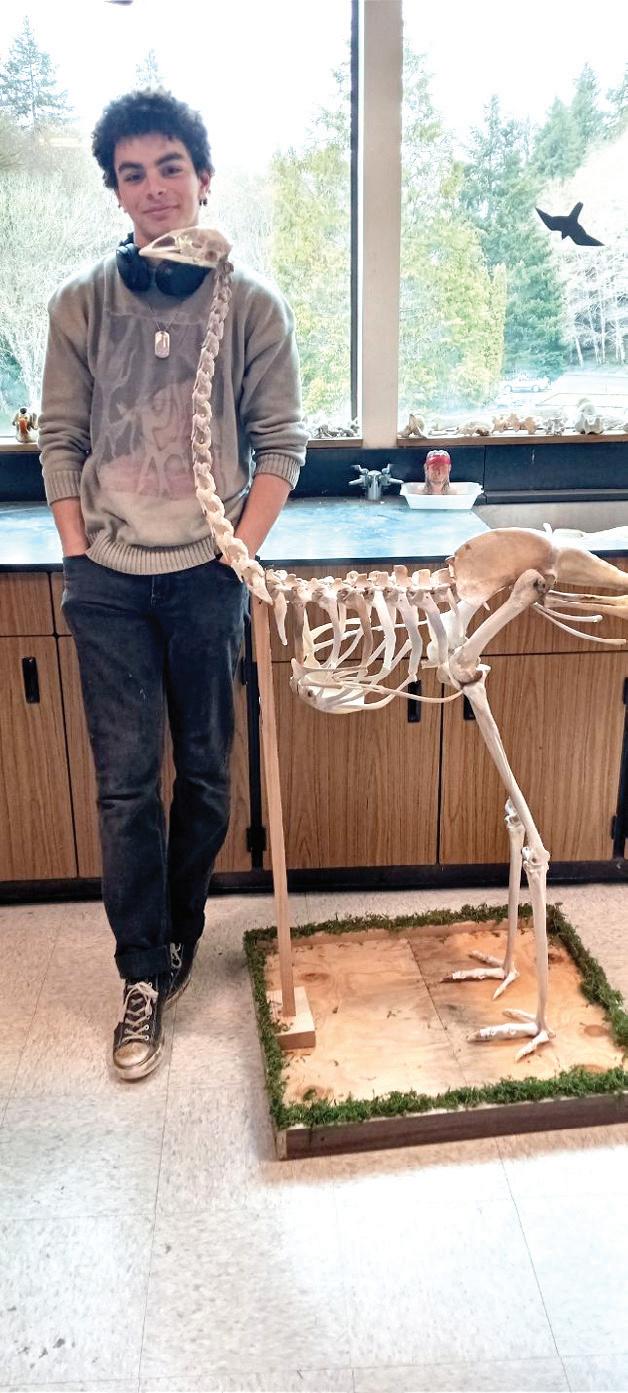
While completing the skeleton, Cameron discovered one of the ribs of the large bird were missing. He talked to a CMHS teacher who had access to a 3D computer. A scan was produced, and they made a perfectly shaped rib out of resin.
Problem solved!
The bones had to be to be prepared for assembling so they were bleached in half water and half bleach. Cameron then assembled the skeleton using wire and hot glue.
The emu is the second largest bird alive, the first being the ostrich. Looking prehistoric, the emu has huge wings but does not fly. They can stand up to six feet and have long necks and legs and can sprint up to 30 mph.
“I just want to say that Cameron was self-motivated,” CMHS science teacher James Byrne said. “This was a massive project.”
“It was great having Mr. Byrne help me with the project,’ Cameron said. “I would come up and we would talk. He was always there with support.”
Cameron also received support from professors at Oregon State University, who answered any questions he might have had about his project.
Cameron is a busy student, competing in football, wrestling and track. He is also a National Merit Scholar.
When questioned whether he was interested in the well-known CMHS choir, he admitted that is one effort he is not involved in.
“It is a great choir, but I had to say said no, too many other things to keep me busy,” he said.
Cameron’s teachers agree that his future is bright, and he will be flying high in whatever career he chooses.
Who We Are is a frequent presentation by The Chief highlighting community members making a positive difference in the lives of others.
Columbia County hospital and who it would best serve.
“The state rules require the applicant to demonstrate the need for a hospital. The state will only issue a certificate of need if the application addresses the criteria in the rules so it’s premature to say there is a need until the analysis is completed.
“That said, the county regularly hears from residents, business owners and employees about the availability of health care in our communities. Community health needs assessments identify access to health care as dominant concern in our communities. We need to delve further into these concerns,” Paul said.
The most recent push to assess the county’s need for such a medical facility is not the first foray into gauging public interest in a local hospital. The establishment of a hospital in Columbia County has been an ongoing subject, with the State of Oregon denying an application for a 12-bed hospital in St. Helens as recently as 2009. Columbia County residents voted in favor of a property levy to fund a hospital in St. Helens.
Partners CCPH Feasibility Study
proposal. Yet to be determined, is if the Board of Commissioners decide that a hospital should be built, how construction would be funded and how the ongoing operation of the hospital would be paid for.
Background on the county’s hospital needs
The Chief reported in October of 2021, that CCPH Director Michael Paul detailed the potential need for a
The taxpayers voted to form a special district in the interest of bringing a conveniently located hospital to the area in 2005. The special district, known as the Columbia Health District (CHD), raised taxes for the project despite legislative hurdles that rendered the project unviable.
While the CHD even went so far as to purchase a property for the hospital on 8.34 acres Millard Rd. for $611,291, in Nov. 2007, as part
See HOSPITAL Page A5
Courtesy
is part of the response to the COVID-19 pandemic. P-EBT is money for children whose access to adequate and quality food may have been impacted by COVID-19.
Oregon distributes $170M in food benefits


T he Oregon Department of Human Services (ODHS) was to begin issuing $170 million in Pandemic EBT (P-EBT) food benefits to 434,000 students and young children in Oregon beginning this week. A P-EBT card containing $391 in food benefits, which is different from a regular electronic benefit transfer (EBT) card, will be sent by mail to each eligible child. Cards are being sent in batches from late March to the end of May 2023.
“We are grateful to be able to provide these food benefits to eligible students and families with young children in Oregon,” ODHS Self-Sufficiency Programs Interim Director Claire Seguin said. “As communities continue to be affected by COVID-19 and the rising cost of food, we know that many families are experiencing hardship and are struggling to get enough healthy food for themselves and their children. We encourage anyone who is struggling to meet their basic needs to contact our partners at 211, the Oregon Food Bank and their local Community Action Agency for support during
this difficult time.”
Who is eligible for P-EBT food benefits
Children are eligible for Summer 2022 P-EBT if they:

• Were eligible to receive free or reduced-price National School Lunch Program meals during school year 2021-2022 or attended a Community Eligibility Provision school.
• Were under the age of 6 and enrolled in SNAP during the summer 2022 months.
Between March and May 2023, each eligible child will receive two pieces of mail addressed to them:
• A letter notifying them they are eligible to receive P-EBT benefits.
• A separate envelope with their P-EBT card that has $391 of food benefits on it.
Households with multiple eligible children will receive individual letters and cards for each eligible child. Households will

Serving the Lower Columbia Region since 1891 VOL. 131, NO. 47 $1.50 FRIDAY, MARCH 31, 2023 Governor signs homelessness legislation Page A3 Little League back in action Page A8
photo
Pandemic EBT (P-EBT)
See P-EBT Page A4 • •W ho W e A re • •
STAFF REPORT Country Media, Inc.
The
skeleton stands proudly in
ble all the bones of the great bird.
was quite time consuming, tak -
“I have always loved science,”
Courtesy photo
CMHS Student Cameron Rowles with his emu skeleton.
WILL LOHRE Country Media, Inc.
Courtesy photo
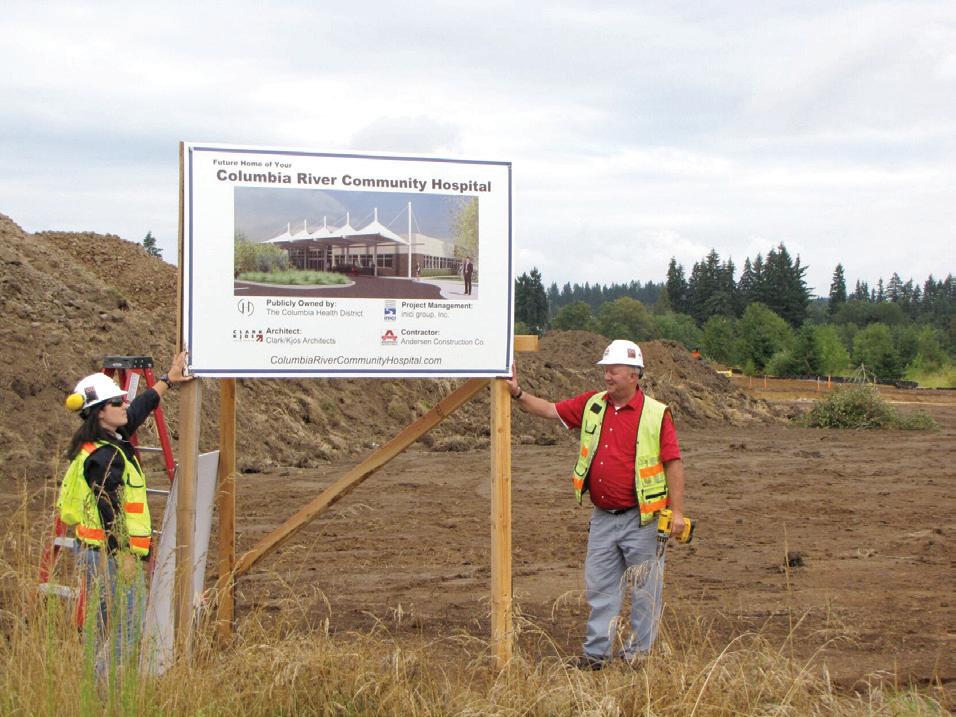
Workers posed in front of a sign at the site depicting an artist’s rendering of the Columbia River Community Hospital. The hospital was never built.
$27.3B state budget framework going public
The co-chairs of the Oregon Legislature’s Joint Committee on Ways and Means have released their budget framework for the 2023-2025 biennium, outlining priorities for the state budget.
The 2023-25 current service level budget represents a $27.3 billion total funds, or 25.5%, increase over the 201921 current service level and reflects the addition of 4,792 positions, according to the Ways and Means co-chairs.
General Funds and Lottery Funds make up $6.1 billion of this growth. This increase has been driven by significant investments over the past two biennia in early learning, K-12 education, housing, behavioral health, emergency management, and wildfire response, among others. Continued support for these vital programs and services is central to the Co-Chair budget framework.
The framework includes $9.9 billion for the State School Fund to help give schools stable and sufficient funding to improve literacy and graduation outcomes.
The co-chairs said the proposed budget also makes meaningful and targeted investments in key priorities like housing and homelessness, health care, and behavioral health.
The framework allocates money to address several critical workforce shortages in key sectors, as well as addresses initiatives aimed at making sure Oregonians who got on the Oregon Health Plan during the pandemic are still able to access the coverage and care they need.
Although the March 2023 Oregon Economic and Revenue forecast showed improvement and an increase in available resources over the prior forecast, significant uncertainty still exists, according to the co-chairs.

“The considerable growth in the current biennium revenues that has contributed to the projected General

Fund ending balance of $4.6 billion has also resulted in an estimated personal income tax kicker of $3.9 billion, which reduces available 2023-25 revenues.” the co-chairs write in their budget framework report. “Following two biennia of considerable investments through one-time federal relief funding and strong revenues, the 2023-25 budget will focus on supporting the continued funding of ongoing programs, agencies, and state personnel.”
The Oregon Constitution requires the Oregon Legislature pass a balanced budget for each biennium. The framework is a starting point for the legislative process of developing and passing the finalized
budget for the upcoming 20232025 biennium. The process will take place over the course of the 2023 legislative session and conclude by the end of June.
“At a moment when Oregonians are unified around common priorities such as housing and homelessness, behavioral health, educational outcomes, and addressing multiple workforce shortages, our north star is clear,” Rep. Tawna Sanchez (D-Portland), Co-Chair of the Joint Ways and Means Committee said. “We must spend wisely to make sure state government can deliver for all Oregonians on the most pressing issues facing our state.”
“This is a very uncertain time for Oregon’s economy. Oregonians deserve to know their tax dollars are funding the state’s highest priorities,” Sen. Elizabeth Steiner (D-Portland), Co-Chair of the Joint Ways and Means Committee said. “Our framework budget focuses on maintaining critical services for Oregonians while also protecting our reserves in case of economic downturn. The last few years have been good for Oregon, but rain clouds could still be on the horizon.”
Read the full Ways and Means Committee Budget Framework with this story at thechiefnews.com. The next step in the legislative budget process is a series of public hearings at various locations across the state where members of the public will have the opportunity to testify regarding their perspectives and priorities on the state budget.
Be engaged
The Oregon Legislature’s Joint Ways and Means Committee has scheduled a series of public hearings about the state budget. Members of the public will have the opportunity to testify at each of these scheduled hearings regarding their perspectives and priorities around the state budget.
The series of hearings will start on April 8, at Portland
Community College- Sylvania Campus. Members of the committee will take public testimony from community members from 10 a.m. to 12 p.m.
To testify, members of the public will be able to access sign up links on the Ways and Means Committee’s webpage on OLIS, the legislature’s website. Sign up links will be available online in the next week.
Public hearings schedule
• 10 a.m. - 12 p.m. Saturday, April, 8 Portland
Portland Community College - PAC Auditorium, Sylvania Campus, 12000 SW 49th Ave. Portland
• 5 p.m. - 7 p.m. Friday, April 14 Newport
Newport Performing Arts Center, 777 W Olive St. Newport
• 5 p.m. - 7 p.m. Friday, April 21 Roseburg
Umpqua Community College, 1140 Umpqua College Rd. Roseburg
• 5 p.m. - 7 p.m. Friday, April 28 Ontario
Four Rivers Cultural Center, 676 SW 5th Ave. Ontario
State issues caution about self-directed IRAs
STAFF REPORT Country Media, Inc.

As more people look for alternative ways to save for retirement, self-directed individual retirement accounts (IRAs) have become increasingly popular.
While self-directed IRAs offer investors greater control over their investments, they also come with potential risks and financial losses, according to a consumer alert issued by the Oregon Division of Financial Regulation (ODFR).

ODFR is urging investors to exercise caution when considering self-directed IRAs. While self-directed IRAs may offer the potential for higher returns, they also come with increased risks, including the possibility of fraudulent schemes, high fees, and volatile performance that can result in financial loss.
Self-directed IRAs allow investors to hold alternative assets, such as real estate, precious metals, private equity, and cryptocurrency within their retirement accounts.
This flexibility can be appealing, but it also creates the potential for investors to be exposed to risks they may not fully understand, the ODFR states in a release. Self-directed IRA custodians do not evaluate the quality or legitimacy of any investment in the selfdirected IRA or its promotors; instead, that responsibility falls solely on the investor.
With a self-directed IRA, investors have soleresponsibility for evaluating and understanding the investments in the account.
Due to federal laws and regulatory rules related to
selling investment products or providing investment advice, most custodians for other types of IRAs limit the holdings in IRA accounts to firm-approved stocks, bonds, mutual funds, and certificates of deposit. However, these limitations do not apply to self-directed IRAs.
Self-directed IRA custodians:
• Do not sell investment products or provide investment advice
• Do not evaluate the quality or legitimacy of any investment in the self-directed IRA or its promoters
• Do not verify the accuracy of any financial information that is provided for an investment in the account

Self-directed IRA custodians are responsible only for holding and administering the assets in the account. Furthermore, most custodial agreements between a self-directed IRA custodian and an investor explicitly state that the selfdirected IRA custodian has no responsibility for investment performance.
One of the biggest risks of investing through self-directed IRAs is the increased possibility of fraudulent schemes. These schemes can take many forms, from Ponzi schemes, in which newly invested funds are used to pay other investors in order to hide that the investment is not profitable, to bogus investments in nonexistent assets.
Unfortunately, the lack of regulatory oversight in the self-directed IRA space, and lack of vetting performed by the self-directed IRA custodian, can make
•C ross W ord s olutions •
Solution
come with increased risks, including the possibility of fraudulent schemes, high fees, and volatile performance that can result in financial loss.

it difficult for investors to protect themselves from fraudsters, the release states.
In addition to the risk of fraud, self-directed IRAs can also come with high fees. These fees can be associated with the alternative assets themselves or with the custodians who hold
the assets. Investors should carefully review all fees associated with a self-directed IRA before deciding to invest. The performance of alternative assets can be volatile, leading to financial loss. Unlike traditional assets such as stocks and bonds, alternative assets
may not have a well-established market, making it difficult to determine their true value. As a result, investors may be left holding assets that are difficult to sell or that have lost value over time.
“Self-directed IRAs can be a useful tool for certain investors, but it’s important to understand the risks involved,” ODFR Administrator TK Keen said. “Investors should thoroughly research any alternative assets they plan to hold within their IRA and carefully review all fees associated with their account.”
Investors who are considering a self-directed IRA should consult with a licensed financial advisor to help them evaluate the risks and potential rewards.
By taking a careful and informed approach to investing, investors can help protect themselves from potential financial losses. ODFR’s website offers financial services help and our consumer advocates are always available to help people if they believe they have been scammed or been a victim of fraud. Contact the advocates at 888-8774894 (toll-free).
About Oregon ODFR
The Division of Financial Regulation is part of the Department of Consumer and Business Services, Oregon’s largest business regulatory and consumer protection agency. Visit dfr. oregon.gov and www.dcbs. oregon.gov.

www.thechiefnews.com Friday, March 31, 2023 A2 North Columbia County’s trusted local news source WE’RE HIRING! • Competitive Salary with 4-Tier Pay Progression • Profit Sharing Bonuses • Full Health Care Package $1,000+ SIGN-ON BONUS Become part of the Berry family around the globe. We foster workforce development to support and encourage our knowledgeable enployees. With more than 295 locations- we are pushing the limits of innovation and moving our industry forward. APPLY AT: WWW.BERRYGLOBAL.COM/CAREERS save more. STAY FLEXIBLE . Ask about our rates on money market accounts, checking, IRAs, & more 800.773.3236 waunafcu.org FEDERALLY INSURED BY NCUA
March 22, 2023 crossword puzzle
for the
Courtesy photo
While self-directed IRAs may offer the potential for higher returns, they also
C.
JEREMY
RUARK Country Media, Inc.
Metro Creative Connection
The 2023-25 current service level budget represents a $27.3 billion total funds, or 25.5%, increase over the 2019-21 current service level and reflects the addition of 4,792 positions, according to the Ways and Means co-chairs.
Affordable Housing, Homelessness Solution bills signed
Gov. Tina Kotek has signed House Bills 5019 and 2001 into law during her first ceremonial bill signing as Governor after both bills passed with bipartisan support last week.
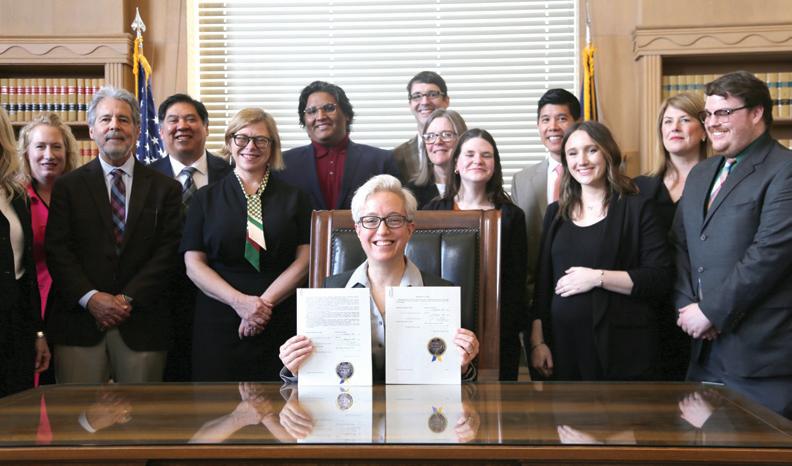
The legislation will help address Oregon’s housing and homelessness crisis, and includes the urgent funding Governor Kotek proposed in response to the homelessness state of emergency that she declared on her first full day in office. The funding is dedicated to homelessness prevention programs, more shelter capacity, rehousing services and more.
What House Bill 2001 and House Bill 5019 will do:
• Fund the governor’s homelessness state of
emergency to allow for a statewide and coordinated response to homelessness ($130 million)
• Extend homelessness support to rural and coastal Oregon ($27 million)

• Provide support for homeless youth by connecting them with rental assistance, shelter, culturally specific services and health care ($25 million)
• Increase production of affordable modular housing in Oregon ($20 million)
• Improve on-site workforce housing for farmworkers ($5 million)
• Grant renters faced with eviction for non-payment more time to access rental assistance and other services
• Make affordable housing production the state’s top planning priority and ensure the state will work with local partners to identify effective strategies and
tools to increase production
“On my first full day in office, I honored my commitment to all Oregonians by declaring a homelessness state of emergency,” Kotek said. “I said at the time that the declaration needed to be followed by a comprehensive housing and homelessness package this legislative session. These two bills are the down payment on this session’s efforts.”
“Faced with a statewide housing and homelessness crisis, legislators worked across the aisle and with the Governor to put Oregon on a path toward a future where housing is available and affordable for everyone,” Senate President Rob Wagner (D-Lake Oswego) said.
“Today demonstrates that we can deliver on the biggest, most important issues facing Oregonians,” House Speaker Dan Ray-
field (D-Corvallis) said.
“Both chambers, both parties, came together with the Governor to tackle our big
challenges head on. And we did it in an unprecedented timeframe.”
Kotek was joined by
What the CHIPS bill will accomplish for Oregon
will also receive $10 million for public universities to leverage federal research
“Oregon is a world class hub for semiconductors, and with SB 4, we are making our first move to draw in federal CHIPS Dollars and solidify Oregon’s status, ”Rep.Janelle Bynum (DClackamas) said. “I am so proud of the work of this
consequential piece of legislation this early in session.”
The bill also establishes a balanced land use solution that respects Oregon’s 50-year-old land use system while allowing flexibility so the state can attract multibillion-dollar manufacturing centers. Under Senate Bill 4, the governor will have the authority to site a maximum of eight new areas outside of current urban growth boundaries.
The bill allocates $190 million to the Oregon
The Oregon Legislature’s OR CHIPS Bill (Senate Bill 4) was moving forward as of late this week.
The bill is described as the Oregon Legislature’s first step toward securing the future of the state’s semiconductor economy.
The bill is designed to empower Oregon businesses to apply for a share of $52 billion in federal money from the CHIPS and Science Act. This money represents a once-in-a-generation opportunity to solidify Oregon’s place as a global leader in semiconductor development and manufacturing.
“This is a crucial first step towards securing Oregon’s semiconductor future,” Sen. Janeen Sollman (D-Hillsboro) said.
“This legislation will create
good-paying, long-term jobs in every corner of our state, keep Oregon’s economy stable and competitive in the 21st Century, and protect America’s critical semiconductor supply chain.”
The bill allocates $190 million to the Oregon CHIPS Fund to be distributed via grants and loans for:
• Development and acquisition of a site for semiconductor manufacturing
• Semiconductor research and development
• Workforce development, including internships and apprenticeships
An additional $10 million is dedicated to the newly established Industrial Lands Loan Fund for financial assistance to local governments to prepare sites for semiconductor industrial development. The University Innovation Research Fund
The bill requires that projects funded by OR CHIPS commit to creating permanent, full-time jobs and have a net positive impact on local and state Semiconductor research and manufacturing jobs are well-paying, stable careers that often do not require four-year degrees. An estimated 26,000 jobs would be created by a new semiconductor manufacturing facility in Oregon and could generate billions in state GDP.
“This is a great first step, but phase two begins now. Oregon has work left to do to attract business and invest in our future shared prosperity,” said Rep. Kim Wallan (R-Medford) said. “I look forward to continuing to work with this powerhouse committee.”
“OR CHIPS is a game changer for Oregon,” Senate Majority Leader Kate Lieber (D-Beaverton and Southwest Portland) said. “It will open up billions in funding for local businesses and innovators, create thousands of family-wage jobs, and put Oregon families in every corner of this state on the path to prosperity. “There is still more work to be done, but I applaud the urgency and effectiveness of this committee in passing such a
The authority to issue an executive order is limited by clear guardrails within the
bill.
Before issuing an executive order, the governor must:
• Conduct one public meeting near the site,
• Accept public comments for at least 20 days following the public meeting, and

• Determine that there is not an existing site within the urban growth boundary that meets the project’s needs.
Any land brought into the
urban growth boundary must be used for semiconductor manufacturing purposes. If a project does not receive federal money through the federal CHIPS Act, the governor can then remove the land from the urban growth boundary.
Any legal challenges must be initiated within 60 days and will be directed to the Oregon Supreme Court to ensure due process is respected and Oregon does not miss out on any manufacturing opportunities due to a protracted legal process.


www.thechiefnews.com Friday, March 31, 2023 A3 North Columbia County’s trusted local news source
STAFF REPORT
Country Media, Inc.
Metro Creative Connection
CHIPS Fund.
lawmakers and advocates at the signing ceremony in her capitol building office in Salem Wednesday, March 29.
JEREMY C. RUARK Country Media, Inc.
Courtesy photo
503-397-0116 The Chief Read local news online at thechiefnews.com
Gov. Kotek holds the signed Affordable Housing, Homelessness Solution bills following the ceremony in Salem.
When giants fall, we need to listen
and higher humidity take the edge off the California sun.
fine fuels into soil nutrients.
Forest fires
In just two years, wildfire has killed an estimated 13 to 19% of all mature giant sequoia trees. These most massive of trees grow only on certain western slopes of the Sierra Nevada, the mountain range that divides California’s Central Valley farmland from the Great Basin Desert.
The loss of so many “big trees,” as conservationist John Muir called them, is unprecedented.
Visting the forest
Many of the best-known stands of giant sequoias grow more than 6,000 feet above sea level in three national parks — Sequoia, Kings Canyon and Yosemite. A visit to these immense trees typically begins with a drive up from Fresno. From the valley floor, Highway 180 curves into foothills, then winds onto steep, treecovered mountainsides where cooler temperatures
The road passes through Kings Canyon National Park, where visitors get their first impression of the big trees. As Muir acknowledged, words aren’t sufficient to convey the awe of that first encounter with giant sequoias: “No description can give anything like an adequate idea of their singular majesty, much less of their beauty.”
He added, “Nothing hurts the big tree.” Except in our time: severe wildfire and the chainsaw.
Muir’s words helped inspire the national parks that have protected many sequoia groves from logging, but our concern about wildfires led to government-mandated fire suppression for more than 100 years. Through a federal agency’s zeal, the big trees are in trouble. In the Sierra Madre’s fire regime, developed over centuries, sequoia groves burned every 6 to 35 years. Wildfire thinned the smaller trees and converted
Without fire, sequoia cones don’t open and spread their seeds. The same fire also creates openings in the forest canopy, giving seedlings the sunlight they need to survive.
Research shows that giant sequoia populations were “stable or increasing” from 500 B.C. through the 1800s. Then came the 1900s, when “there was a massive failure of giant sequoia reproduction.” Without fire, sequoia seeds stopped sprouting, while the buildup of highly combustible fine fuels on the forest floor, and the greater density of smaller trees, increased the risk of catastrophic wildfire.
As scientists began to understand the problem, the National Park Service implemented a prescribed burning program in giant sequoia groves. Evidence from recent wildfires indicates the program has been
• •C ommunity e vents
April 4 Writing Festival
Pie
Raymond Carver kickoff with Poetry and Pie (Carver’s favorite dessert) from 5 to 7 p.m. at the Clatskanie Library, 11 Lillich Street.
April 6 Chamber Mixer and Meeting
6 p.m. at the Clatskanie Castle, 620 SW Tichenor Street in Clatskanie. For more information, contact the Clatskanie Chamber of Commerce at clatskaniechamber.com
Ongoing
Caples Evening Programs
The cost for this evening and all our Fireside Chats will be only $5. Caples will be offering a different program the third Tuesday of each month at 7 p.m. at 1925 First Street in
Columbia City. For more information, call 503-3975390.
Lower Columbia River Watershed Council Meets at 7 p.m. e very other second Tuesday. Meetings are currently held electronically by Zoom. For more information, contact Council Coordinator Henry Franzoni ar 360-353-0937 or email to hjfranzoni3@gmail. com. Visit the council’s website for agenda postings and Zoom at www. lowercolumbiariver.org/ events-page.
The Rainier Oregon Historical Museum (ROHM) is open from noon to 4 p.m. Saturday (except major holidays weekends). ROHM is located inside Rainier City Hall at 106 W B Street. For more
information, call 360-7517039.
The Rainier Public Library is open from 9 a.m. to 4:30 p.m. Tuesdays, Wednesdays and Thursdays, 10:30 a.m. to 4:30 p.m. on Fridays and 10:30 a.m. to 2:30 p.m. on Saturdays. It will be closed Sundays and Mondays. Avamere at St. Helens hosts a Virtual Dementia Support Group – 3rd Wednesday of each month from 2 to 3 p.m. For more details, contact Jenny Hicks/Avamere at St. Helens at 503-366-8070.
To list an event in the Community Calendar, email details with a phone number that may be published, to chronicleclassifieds@countrymedia.net, or call 503-397-0116.
The Chief
successful. Areas treated with prescribed fire burned less intensely, mature sequoias did not die, and sequoia seedlings have since sprouted.
God has cared for these trees …but he cannot save them from fools.
~ John Muir
Clearly, sequoias need fire to survive.
The challenge is avoiding catastrophic wildfire, a challenge made difficult by today’s dense groves. According to Alexis Bernal, a researcher with the University of California at Berkeley, Sierra Nevada forests typically held about 20 sequoias per acre before 1860. Since then, fire suppression has allowed the growth of as many as 120 to 160 trees per acre.
Proposed solutions
Bernal advocates extensive logging before fire can resume its natural role. Emergency logging by government agencies has already begun in forests with sequoia groves, including clearcuts along roadways in Yosemite National Park.
Not everyone agrees that logging is the answer. Forest ecologist Chad Hanson, with the John Muir Project, calls Bernal’s approach an excuse to continue commercial logging of public lands. He believes sequoia deaths have been far lower than official estimates and that new trees can sprout even after severe fires.
Unfortunately, Congress has gotten involved. Kevin McCarthy, R-California, introduced the Save Our Sequoias Act in 2022 in the House. Dianne Feinstein, DCalifornia, later introduced the act in the Senate. The bill would expedite mechanical “fuel treatments” by bypassing environmental
laws.
We’re just lucky that record snowfall in the Sierra Madre threw a wet blanket on the initiative by reducing fire risk, as the bill has yet to be re-introduced in the current legislative session.
While the unprecedented threat to these priceless trees might be a rare instance in which “mechanical treatment” is justified, chipping away at environmental protections has rarely, if ever, proven beneficial for the environment— especially when politicians try to call the shots.
Giant sequoias need all the help they can get, but that help needs to be informed by good science.
Joe Stone is a contributor to Writers on the Range, writersontherange.org, an independent nonprofit dedicated to spurring lively conversation about the West. He is the editor of Forest News, the publication of Forest Service Employees for Environmental Ethics.
County issues Masks Off statement
Workers, patients, and visitors in health care settings will no longer be required to wear masks starting April 3, following the Oregon Health Authority (OHA) rescinding provisions in Oregon Administrative Rule (OAR) 333-0191011 that require workers in healthcare settings – such as hospitals, mobile clinics, ambulances, outpatient facilities, dental offices, urgent care centers, counseling
P-EBT
From Page A1
start receiving notification letters at the end of March and P-EBT cards will begin arriving in April. These additional food benefits are part of the P-EBT program, a temporary COVID-19 response program meant to provide additional food support for children whose access to adequate and quality food received through school programs may have been impacted by COVID-19. Visit pebt.oregon.gov for more information about the P-EBT program.
Families with specific questions about their child’s eligibility or P-EBT card can contact the P-EBT Call Center at (844) ORE-PEBT or (844) 673-7328. The PEBT Call Center is available Monday through Friday 8
Weekly
offices, school-based health centers, complementary and alternative medicine locations – to wear masks.
People at higher risk, or who live with someone at higher risk, for severe disease should still consider wearing masks in healthcare settings. Some healthcare settings may continue to require masks after April 3.
People are strongly encouraged to stay up to date with vaccinations and
a.m. to 5 p.m. Pacific in English, Spanish, Russian, Vietnamese, Somalian, Mandarin and Cantonese. Callers may also request a translator for additional languages.
• P-EBT does not replace any child nutrition program already offered and families are encouraged to continue to participate in meal programs in their schools and communities.
• P-EBT food benefits are issued in addition to regular SNAP benefits. P-EBT benefits are not considered in a public charge test.
Resources to help meet basic needs
• Find food resources in your community: needfood. oregon.gov
• Find a food pantry: foodfinder.oregonfoodbank. org
• Learn about government programs and community resources for older
boosters to protect themselves, their families, and their communities. You can find the full OHA release at https://content.govdelivery.com/.../ORDHS/ bulletins/34c69c1.
Specialists at the Columbia County Public Health are available to answer questions and provide support as needed. Columbia County’s Public Health Department may be reached at 503-397-7247.
adults and people with disabilities: Aging and Disability Resource Connection of Oregon at 1-855-673-2372 or www.adrcoforegon.org
• Dial 2-1-1, or text your zip code to 898-211, www.211info.org
• Find local resources and support by contacting your local Community Action Agency: www.caporegon.org/find-services/
• Oregon Department of Human Services COVID-19 help center
About P-EBT
P-EBT is part of the response to the COVID-19 pandemic. P-EBT is money for children whose access to adequate and quality food may have been impacted by COVID-19. Learn more about P-EBT from our FAQ for Families flyer.
P-EBT is a program in partnership with the ODHS and the Oregon Department of Education (ODE).
Poll Last Week’s Results
Editorial policy
Opinions expressed on this page are independent of The Chief views and are solely those of the writers expressing them.
Letters policy
This newspaper’s letters to the editor are limited to a maximum of 250 words and will be edited for grammar, spelling and blatant inaccuracies. Unsubstantiated or irresponsible allegations, or personal attacks on any individual, will not be published. Letters containing details presented as facts rather than opinions must include their sources. Writers are limited to one published letter per month. All submissions must include the author’s full name, local street address and telephone number (only the name and
city of residence will be published). By submitting a letter, writers also grant permission for them to be posted online. Opinions expressed on this page are the writer’s alone and do not represent the opinion of the newspaper or its parent company, Country Media, Inc.
Guest commentary
We welcome all variety of community viewpoints in the newspaper. These longer, guest opinions might be columns written by newsmakers, public officials or organization representatives. Or you might just have interesting thoughts to share and a penchant for writing. If you’d like to submit a guest column for publication, contact us at (503) 397-0116 or chiefnews@
countrymedia.net. All columns are subject to editing for style, grammar and clarity. However, views expressed in guest columns are independent and do not represent those of The Chief, its staff or Country Media, Inc.
Obituaries
Obituaries received after noon on Wednesday may not be in time for that Friday’s paper. Obituaries may be emailed to chiefnews@countrymedia.net, sent via mail, or dropped off at the office. We also accept obituaries written by funeral
www.thechiefnews.com Friday, March 31, 2023 A4
daytime
information
necessary. CONTACT US • Phone: (503) 397-0116 • Fax: (503) 397-4093 • Website: www.thechiefnews.com Editorial: chiefnews@countrymedia.net ADVERTISE WITH US: Advertising Email: chronicleads@countrymedia.net • Classified email: chronicleclassifieds@countrymedia.net
homes. Include the address and
phone number of the person who submitted the obituary, so we can verify
as
The Chief (USPS 116-360) is published weekly by Country Media, Inc. 1805 Columbia Blvd, St. Helens, OR 97051 POSTMASTER: Send address changes to The Chief PO Box 1153, St. Helens, OR 97051 SUBSCRIPTION RATES: One month in county: $8 One month out of county: $10 One year in county: $70 One year out of county: $90 One year online only: $60 Joe Warren Publisher Jeremy C. Ruark Regional Executive Editor Will Lohre Associate Editor Jon Campbell Advertising Sales Kelli Nicholson Office Manager James Yang Creative Director Jon Lowrance Driver
JOE STONE Chief Guest Column
Vote online at thechiefnews.com 40% More 60% Less
you think its time to build a hospital in Columbia County
Do
Online
more, or less for the future?
Given the sting of inflation, are you saving
• •
No
Yes
Marketplace

It’s easy to place a classified ad in The Chief
502 Help Wanted 860 Storage
9-1-1 COMMUNICATIONS SPECIALIST
Columbia 9-1-1 Communications District (C911CD) is conducting a hiring process for fulltime Dispatchers (Communications Specialists). Additional information and job description can be found on our website at www. columbia911.com/ careers or by calling 503-366-6978. Online applications will be accepted until 11:45 pm on April 28th, 2023.
Public Notices
PROTECTING YOUR RIGHT TO KNOW
CH23-1753
NOTICE OF BUDGET COMMITTEE MEETING
A public meeting of the Budget Committee of the Rainier School District No. 13, Columbia County, State of Oregon, on the budget for the fiscal year July 1, 2023 to June 30, 2024, will be held in the boardroom at 28168 Old Rainier Rd, Rainier, Oregon or viewed online at: https://www. youtube.com/channel/
UCbFVOfhXU51si2QL-
Ry8ZyVA The meeting will take place on April 10, 2023
CC23-1751
at 5:00pm. The purpose of the meeting is to receive the budget message. This is a public meeting where deliberation of the budget committee will take place. An additional, separate meeting of the Budget Committee will be held to take public comment. Any person may appear at the meeting and discuss the proposed programs with the Budget Committee. The meeting for public comment
will be on May 8, 2023 at 5:00pm, held at 28168 Old Rainier Road, Rainier, Oregon. A copy of the budget document may be inspected or obtained on or after April 11, 2023 at 28168 Old Rainier Road, Rainier, Oregon, between the hours of 8:00am and 4:00pm. For information please visit our website at: https://www. rainier.k12.or.us/districtbudget or call the district office at 503-556-3777.
NOTICE OF PUBLIC HEARING
Pursuant to ORS 477.250, notice is hereby given that a public hearing will be held at the Oregon Department of Forestry, Forest Grove District Office, 801 Gales Creek Road, in Forest Grove, Oregon, on Wednesday, April 12, 2023, at 3:00 pm, to receive from any interested persons suggestions, advice, objec-
CC23-1752
Probate Department In the Matter of the Estate of MARTHA JANE BENSON, Deceased. No. 23PB01905
NOTICE TO INTERESTED
PERSONS NOTICE IS
HERREBY GIVEN that the undersigned has been appointed personal representative of this estate. All persons having claims against the
HOSPITAL
From Page A1
tions or remonstrance’s to the proposed budget for the Forest Protection District. A copy of the tentative budget for the Forest Protection District may be inspected during normal working hours. To ensure the broadest range of services to individuals with disabilities, persons with disabilities requiring special
arrangements should contact Renae Shippey, at 503-3597424 or 503-530-0271, or by email at renae.shippey@ odf.oregon.gov at least two working days in advance of the scheduled hearing.


OREGON DEPARTMENT OF FORESTRY, CAL MUKUMOTO, STATE FORESTER.
estate are required to present their claims, with vouchers attached, within four months after the date of first publication of this notice to the personal representative at P.O. Box 459, Rainier, OR 97048, or the claims may be barred. All persons whose rights may be affected by the proceedings may obtain
additional information from the records of the Court, the personal representative or the attorney for the personal representative. Dated and first published on March 24, 2023. Erick Martin Benson, Personal Representative. STEPHEN D. PETERSEEN, L.L.C. Attorney at Law, P.O. Box 459, Rainier, OR 97048.
Reference is made to that certain Trust Deed made by, AUDIS CHRISTOPHER JAMES SHEKER, A SINGLE MAN as Grantor to TICOR TITLE as Trustee, in favor of MORTGAGE ELECTRONIC REGISTRATION SYSTEMS, INC. (“MERS”), as designated nominee for MANN MORTGAGE, LLC DBA LIFE MORTGAGE, Beneficiary of the security instrument, its successors and assigns, dated as of June 16, 2017 and recorded on June 19, 2017 as Instrument No. 2017-005731 and that said Deed of Trust was modified by Modification Agreement and recorded April 14, 2022 as Instrument Number 2022-03510 and the beneficial interest was assigned to M&T Bank and recorded February 17, 2021 as Instrument Number 202101842 of official records in the Office of the Recorder of Columbia County, Oregon to-wit: APN: 26473 LOT 34, CEDAR GROVE ESTATES, RECORDED JUNE 20, 1979 IN PLAT BOOK 3, PAGE 72, COLUMBIA COUNTY, OREGON. Commonly known as: 73651 CEDAR GROVE DRIVE, CLATSKANIE, OR 97016 Both the Beneficiary, M&T Bank, and the Trustee, Nathan F. Smith, Esq., OSB #120112, have elected to sell the said real property to satisfy the obligations secured by said Trust Deed and notice has been recorded pursuant to Section 86.735(3) of Oregon Revised Statutes. The default for which the foreclosure is made is the Grantor’s failure to pay: Failed to pay payments which became due Monthly Payment(s): 1 Monthly Payment(s) from 10/01/2022 to 03/15/2023
at $7,722.90 Monthly Late
Charge(s): $331.56 By this reason of said default the Beneficiary has declared all obligations secured by said Trust Deed immediately due and payable, said sums being the following, to-wit: The sum of $194,031.89 together with interest thereon at the rate of 3.87500% per annum from September 1, 2022 until paid; plus all accrued late charges thereon; and all Trustee’s fees, foreclosure costs and any sums advanced by the Beneficiary pursuant to the terms of said Trust Deed. Wherefore, notice is hereby given that, the undersigned Trustee will on July 11, 2023 at the hour of 01:00 PM, Standard of Time, as established by Section 187.110, Oregon Revised Statues, Front Entrance, Columbia County Courthouse, 230 Strand Street, St. Helens, OR 97051 County of Columbia, sell at public auction to the highest bidder for cash the interest in the said described real property which the Grantor had or had power to convey at the time of the execution by him of the said Trust Deed, together with any interest which the Grantor or his successors in interest acquired after the execution of said Trust Deed, to satisfy the foregoing obligations thereby secured and the costs and expenses of sale, including a reasonable charge by the Trustee.
Notice is further given that any person named in Section 86.753 of Oregon Revised Statutes has the right to have the foreclosure proceeding dismissed and the Trust Deed reinstated by payment to the Beneficiary of the entire amount then due (other than such portion of

said principal as would not then be due had no default occurred), together with the costs, Trustee’s or attorney’s fees and curing any other default complained of in the Notice of Default by tendering the performance required under the obligation or Trust Deed, at any time prior to five days before the date last set for sale. Without limiting the Trustee’s disclaimer of representations or warranties, Oregon law requires the Trustee to state in this notice that some residential property sold at a Trustee’s sale may have been used in manufacturing methamphetamines, the chemical components of which are known to be toxic. Prospective purchasers of residential property should be aware of this potential danger before deciding to place a bid for this property at the Trustee’s sale. In construing this notice, the masculine gender includes the feminine and the neuter, the singular includes plural, the word “Grantor” includes any successor in interest to the Grantor as well as any other persons owing an obligation, the performance of which is secured by said Trust Deed, the words “Trustee” and “Beneficiary” includes their respective successors in interest, if any. Dated: March 8,2023 By: Nathan F. Smith, Esq., OSB #120112 Successor Trustee Malcolm & Cisneros, A Law Corporation Attention: Nathan F. Smith, Esq., OSB #120112 c/o TRUSTEE CORPS 17100 Gillette Ave, Irvine, CA 92614 949-252-8300
Order Number 90071, Pub
Dates: 3/17/2023, 3/24/2023, 3/31/2023, 4/7/2023, THE CLATSKANIE CHIEF
of the funds were spent could not be obtained. In a letter dated Nov. 13, 2009, Columbia County Elections Supervisor Pam Benham gave Warren resident and concerned citizen Thelma Bonar the approval to collect signatures for Ballot Measure 5-209: an initiative to repeal the permanent tax rate levied by the hospital district and to refund the tax money. The initiative appeared
on the Nov. 2, 2010, ballot and was passed by a landslide majority. In response to the election, the CHD board voted in a public meeting unanimously to stop work on the Columbia River Commu nity Hospital. After Measure 5-209 passed in November 2010, the Columbia Health District (CHD) board prom ised to lower the hospital tax and announced its intent to dissolve.
Read The Chief’s special reports about the failed hos pital project with this story and follow developments at thechiefnews.com and in the Friday print editions of The Chief. Join the conversation. Take The Chief’s online poll, Do you believe it’s time to build a hospital in Columbia County?
www.thechiefnews.com Friday, March 31, 2023 A5 North Columbia County’s trusted local news source
CC23-1750
TS No. OR07000044-22-2 APN 26473 TO No 230061721 -OR-MSI TRUSTEE’S NOTICE OF SALE
IN THE CIRCUIT COURT OF THE STATE OF OREGON FOR THE COUNTY OF COLUMBIA The Public Notice deadline is Wednesdays by noon. Late submissions are not guaranteed to make it into the paper. CLATSKANIE Mini Storage Hoarder’s Paradise! 20 sizes, Inexpensive RV Storage, Carports, Hand trucks, Locks, Fully-lined, Insulated, Condensation free, all units lit. On-site Manager 503 728-2051 503 369-6503 Visa/MC/Amex Vendors wanted Contact Jon at 503-397-0116 Columbia County At the Columbia County Fairgrounds: 58892 Saulser Rd. St. Helens, OR 97051 Saturday, May 20, 10 a.m. to 5 p.m. & Sunday, May 21, 11 a.m. to 3 p.m. SPONSORED BY PRESENTED BY The Chronicle The Chief of a Three-Party Real Estate and Exchange Agreement. The hospital was never built after multiple denials from the state, and appeals from the CHD. The property is currently owned by the City of St. Helens. Financials of the CHD According to The Chief’s special report published in the Chronicle in 2022, the Pauly Rogers & Co. audit showed that $4,349,970 in taxpayer funds were collected between 2006 and 2010. Between taxpayer dollars, donations, and grants, the board collected $10,391,314 in total revenues and spent nearly all funds by 2010 in the amount of $10,358,699 without a hospital or a Certificate of Need. The board spent $3.3 million on acquiring and developing the Millard Road site, and $4,320,496 more on staff support, gross pay, and benefits. Documentation regarding where the totality
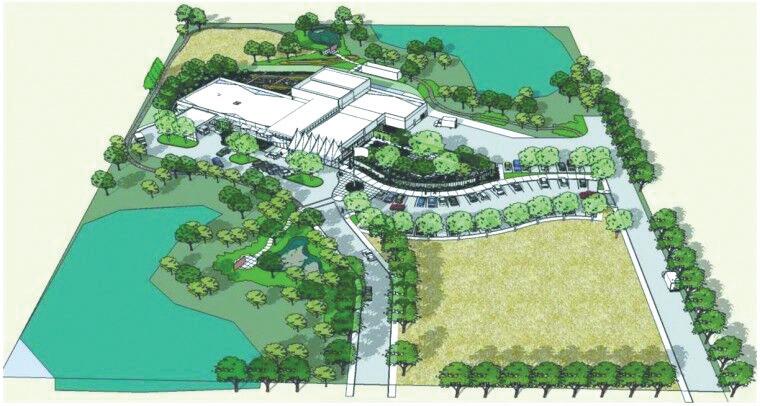
Courtesy photo This is a rendering of the Columbia River Community Hospital that was to be built on Millard Road in St. Helens.
How local woodpeckers help forest management
You might see them in forests surrounding Clatskanie, Rainier, and other parts of Columbia County
A species of woodpecker once thought to limit itself to recently burned areas can breed successfully in the unburned parts of fire-prone landscapes too.
That is the finding of a study by Oregon State University scientists that holds key implications for improved conservation and forest management efforts.
The research led by doctoral student Mark Kerstens and Jim Rivers, a faculty member in the OSU College of Forestry, sheds new light on the black-backed woodpecker, which lives throughout northern North America.
Because woodpecker populations are sensitive to large-scale forest disturbances, they serve as an indicator for guiding management decisions, the researchers note. Woodpeck-
ers exert strong influence on the surrounding ecological community by creating nesting sites that benefit a range of vertebrates and other organisms.
The black-backed woodpecker has become a species of conservation concern because of habitat loss resulting from postfire management of burned areas as wildfires have grown in size and intensity in recent decades, the scientists say.
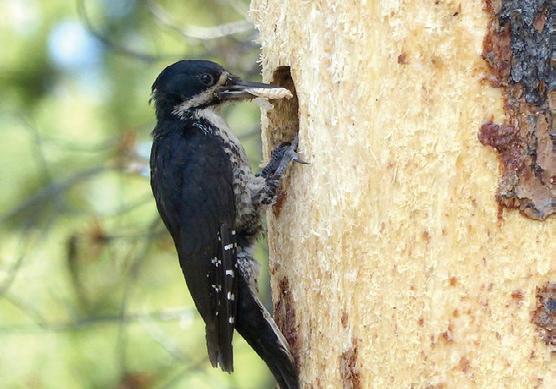
The bird’s range covers much of Canada and also parts of Alaska and upper portions of the contiguous United States, including the Pacific Northwest, and the woodpecker’s black and gray coloring makes for ideal camouflage in an environment of charred trees.
Rivers and Kerstens studied black-backed woodpeckers in a 165,000-hectare area in southern Oregon’s Klamath Basin in stands characterized as lodgepole pine, ponderosa pine, mixed conifer and mixed pine.
“It had long been thought that black-backed
woodpeckers only nested in conifer forests that had recently experienced highseverity fire,” said Rivers, an assistant professor of wildlife ecology. “Although burned areas provide important habitat for this species, recent studies noted them occupying large areas of unburned forest in the western part of their range during
breeding season, prompting the question of whether the green areas can support viable nesting populations.”
For three breeding seasons, 2018, 2019 and 2021, the scientists collected data to evaluate whether important population metrics differed between woodpeckers nesting in green and burned forests.
SOLVE celebrates Earth Day
Columbia County residents and visitors have an opportunity to make an environmental difference April 22.
SOLVE’s Oregon Spring Cleanup, coincides with Earth Day and is presented by Portland General Electric.
With the support of SOLVE, community leaders and partner organizations host restoration events, urban litter cleanup projects, and beach cleanups.

Volunteer registration is now live, and all Oregonians are encouraged to sign up for this statewide cleanup event. Most Oregon Spring Cleanup events will occur on Earth Day, April 22, but SOLVE will be highlighting community events occurring between April 15-23.
PGE has been supporting SOLVE’s mission to take care of Oregon’s natural spaces for more than thirty years. Each volunteer project is aimed at caring for one of Oregon’s most precious resources, our water, from source to sea. Removing invasive plant species, nurturing native
plants, and collecting litter are all easy ways volunteers can create a positive impact on Oregon’s water quality. Last year, during the 2022 Oregon Spring Cleanup, over 3,500 volunteers removed 44,000 pounds of litter and debris statewide. Sign up to volunteer today and let’s continue to build
upon the momentum of last year’s events. Each piece of litter collected prevents it from entering a nearby river, waterway, or storm drain, where it will eventually make its way to the sea and contribute to our global marine debris crisis. Interested community members are encouraged to
visit www.solveoregon.org
to see a list of volunteer projects and sign up. The website allows you to see a map of Oregon and helps to easily locate projects near you! All necessary tools and supplies will be provided. The Oregon Spring Cleanup presented by PGE is a great way to connect with family members, coworkers, and neighbors, all while collectively giving back to some of Oregon’s most beautiful places.
About SOLVE
SOLVE is a statewide non-profit organization that brings Oregonians together to improve our environment and build a legacy of stewardship. Since 1969, the organization has grown from a small, grassroots group to a national model of volunteer action.
Today, SOLVE mobilizes and trains tens of thousands of volunteers of all ages across Oregon to clean and restore our neighborhoods and natural areas, and to build a legacy of stewardship for our state. Visit solveoregon.org for more information.
“We kept track of 91 nests, 34 in green forest and 57 in burned forest,” Kerstens said. “We found that neither daily nest survival rate nor reproductive output – the number of fledglings per successful nest – differed between green and burned forest nests; we also found that nestling body condition was a bit better in green forest.”
In addition, the scientists monitored survival of recently fledged birds with VHF radio telemetry tags and determined that the survival rate of birds in green forest was similar to those in burned forest, with most mortalities happening within four weeks of fledging.
“Although densities of nesting pairs in green forest were lower than those in burned forest, our research shows that certain types of green forest, particularly mature lodgepole pine, can support viable populations of the black-backed woodpecker in the western portion of the bird’s range,” Rivers said. “These find-
ings have conservation implications because green areas are more stable in the resources they provide, they occupy much of the forested landscape in the region, and they are often adjacent to areas subjected to highseverity fire.”
That means, the researchers say, that practices that help build “pyrodiversity” – landscape-level time and space variability in fire effects – will likely provide the greatest conservation benefit for the black-backed woodpecker. Also beneficial will be management that provides for habitat elements the species needs, such as medium- to largediameter trees, and connectivity between green and burned forest.
The study was published in Ornithological Applications.
Steve Lundeberg is a researcher and writer for Oregon State University Relations and Marketing. He may be reached at steve. lundeberg@oregonstate.edu
ODOT reminds drivers of studded tires deadline

With the start of spring comes the annual deadline to remove studded tires. Oregon drivers must remove studded tires from their vehicles by Friday, March 31.
“We encourage drivers to not wait until March 31 to remove their studded tires, especially if they aren’t driving in the mountain passes between now and then,” Oregon Department of Transportation (ODOT) State Maintenance and Operations Engineer Galen McGill said.
Drivers with studded tires on their vehicles after the March 31 deadline may receive a citation from law enforcement for a Class C traffic violation, which carries a presumptive fine of $165.
While studded tires are
allowed in Oregon from Nov. 1 through March 31, drivers are urged to use alternatives, such as traction tires and chains. A 2014 study showed studded tires cause about $8.5 million in damage each year to state highways.
ODOT maintenance crews continue to monitor highways and weather forecasts and work to remove any late season snow or ice as soon as possible. Whenever you travel, ODOT urges drivers to plan for the weather and visit TripCheck.com for road condition information. After March 31, use other types of traction tires or chains if needed, or postpone your travel until conditions improve.
STATEPOINT CROSSWORD

THEME: COLORS
60. *____phobia, intense fear of colors
63. Opposite of cathode
64. North American country
66. Run ____ of the law
68. Geography class book
69. Local area network
70. It’s firma
71. Has divine power
72. Banned insecticide, acr.
73. German surrealist Max
DOWN
1. “General Hospital” network
2. Crop of a bird
3. Zeus’ sister and wife
4. Two under par on a golf hole
5. Meat-cooking contraption
6. Winglike
7. *Predominant color of Mars
8. Type of membranophone
9. Like never-losing
Steven
10. Town
11. *Primary color
12. ___ Juan, Puerto Rico
15. 7th planet from the sun
20. Chosen few
22. Nicki Minaj’s genre
24. Not womenfolk
25. *Number of colors in a rainbow
26. Of service
27. Colorful parrot
29. *The LumiËre brothers’ colorful creation
31. “Cheers” actress Perlman
32. Jeopardy
33. Sergio of Spaghetti Westerns fame
34. Follow as a consequence
36. Email folder
38. Cone-shaped quarters
42. Naiad or maenad
45. Motherless calves
49. Old horse
51. Long John Silver, e.g.
54. Modified “will”
56. Bottom-ranking employee
57. Opposite of “out of”
58. Hall of Fame Steelers’ coach
59. June 6, 1944
60. “____ Buy Me Love”
61. Between dawn and noon
62. Yours and mine
63. Expression of pleasure
65. Melancholy
67. Latissimus dorsi, for short
www.thechiefnews.com Friday, March 31, 2023 A6 North Columbia County’s trusted local news source
ACROSS 1. Partner of pains 6. “Raiders of the Lost ____” 9. Opposite of flows 13. Flesh of fish 14. Grazing area 15. Soft palate hanger 16. Boatload 17. Wood-shaping tool 18. Old episode 19. *Alice of “Color Purple” fame 21. *Fruit and color 23. Long reef dweller 24. Sound of pain 25. Math class total 28. Excessively abundant 30. *”Royal” color 35. Arrival times, acr. 37. *Color quality 39. Shininess 40. White House “sub” 41. Spritelike 43. Cupid’s
counterpart 44. Serengeti grazer 46. *Feeling blue 47. Hokkaido native 48. *Color wheel inventor 50. Walk with a hitch 52. “Malcolm X” (1992) movie director 53. Stare open-mouthed 55. Napoleon of “Animal Farm,” e.g.
57. *Between blue and violet
Solution to crossword in next week’s issue of The Chief. • •C ross W ord P uzzle • •
Courtesy photo from SOLVE
Courtesy from OSU
STEVE LUNDEBERG Chief Guest Article
Because woodpecker populations are sensitive to large-scale forest disturbances, they serve as an indicator for guiding management decisions, according to the researchers.
Courtesy photo from Idaho.gov
Drivers with studded tires on their vehicles after the March 31 deadline may receive a citation from law enforcement for a Class C traffic violation, which carries a presumptive fine of $165.
Seaweed, not just in the ocean

A series of dining events in Portland and along the Oregon Coast put sea vegetables front and center, shining a light on bottlenecks and opportunities for Oregon’s seafare supply chain, according to the Oregon Coast Visitors Association (OCVA).

In February, the Winter Waters campaign, a dining event series designed to introduce Oregon restaurantgoers to locally grown seaweed, made a bigger splash than the organizers anticipated.

“We had so much more interest in Winter Waters than we could have imagined,” OCVA co-founder of the campaign and food systems value chain coordinator Kristen Penner said. “The series and team did a fantastic job creating market
opportunities for producers in the Oregon seafare economy, building distribution pipelines and rallying new buyers.”
Penner teamed up with Alanna Kieffer of Oregon Seaweed and Rachelle Hacmac of Blue Evolution to create the series, who described the partnership as one of the biggest food collaborations to ever take place between Portland and the Oregon Coast. Thirty chefs and restaurant partners in Portland and along the coast, from Astoria to Newport, educated diners about how to prepare sea vegetables and created seaweed-forward specials, from crudo and cocktails to ramen and burgers.
Kieffer said one of Oregon Seaweed’s biggest challenges has been consumer education about how to cook the Oregon-grown Pacific Dulse, a deep purple, nutrient-packed seaweed that

takes on a different flavor profile depending on how it’s prepared.
“It’s like a land vegetable,” Keiffer said. “There are going to be ways that people cook it and love it, and some ways that they won’t. The chefs participating in Winter Waters were remarkable at showing people creative ways to cook with seaweed.”
As Oregon Seaweed was breaking into the Portland market, the company would deliver small orders of dulse to restaurants, one at a time. It was an inefficient use of staff time and had a high carbon footprint, according to Keiffer.
Luckily, Keiffer noted, the market contraced with North Coast Commons, which provides delivery service for Oregon Coast farmers, ranchers, fishers, and makers of locallysourced specialty foods to reach customers along the coast and in Portland.
“Flying Fish was our first retail store in Portland, and we are excited that you will soon be able to pick up our Oregon Seaweed products at New Seasons across Portland,” Keiffer said. The series will culminate with the Winter Waters Finale, from 4 p.m. to 8 p.m. Sunday, April 2, at The Salmonberry restaurant in Wheeler.
Salmonberry chef Charles Lutka is inviting chefs Maylin Chavez and Trever Gilbert into the kitchen to collaborate on Mexican-inspired dishes that celebrate local seafood and sea vegetables.
Winter Waters Partner Organizations
Blue Evolution Regenerative Seaweed is the global leader in regenerative seaweed ingredients for a sustainable future. By farming sea vegetables, they
sustainably source nutrition from the ocean, reduce dependence on freshwater for crop production and mitigate ocean acidification.
Oregon Seaweed is the largest land-based seaweed farm in the United States. They produce Pacific dulse in a thirty-tank operation, with locations in Bandon and Garibaldi. The company believes that healthy, fresh ingredients can help our world heal and is working hard to change the way people think about the food they consume.
Oregon’s Ocean Cluster Initiative (OCI), a project spearheaded by the OCVA, focuses on expanding the use of local sustainable seafood through infrastructure investments, workforce training, and partnership development.
OCI is bringing together dozens of diverse entities who share a vision of strengthening coastal com-
munities by shortening food supply chains. Making local seafood easier to find and buy will positively impact fishermen, processors, wholesalers, retailers and consumers.
OCVA is the official Regional Destination Management Organization for the entire Oregon Coast as designated by the Oregon Tourism Commission (dba Travel Oregon). OCVA inspires travel and strengthens collaboration to create and steward a sustainable coastal economy. OCVA has the honor of working with coastal communities to align partnerships, destination development projects, and destination marketing with the vision of creating “a coastal utopia for all.” This includes coastal stakeholders, new and returning visitors, and the natural resources that make these coveted experiences so magical.
Position: Dental Hygienist













In our practice, our hygienists are often the first place our patients receive compassionate and necessary healthcare. Our hygienists do not simply clean teeth; they are instrumental in achieving optimal health.
About Us and Who We Want to Join Our Team:
Healthy Smiles of Scappoose is a fixture of the local community. We have been serving patients for over 50 years throughout the area. Our patients know us, and we know them. We are recognized as the go-to family dental practice because of our loyal team and our commitment to health.

Due to growth and expansion we are looking for a hygienist to join our cohesive team. This is a full-time position (4 days/week, ~32 hours/week) working Monday through Thursday but we are willing to split the days into 2 part time positions. We have long-term employees at our practice. Some of our employees have worked for us for decades. This demonstrates our commitment to our employees. This is not just “a job” but rather a livelihood. We are committed to employee appreciation, kindness, understanding, and a positive mindset.
Our overriding goal is to first find a person who will enjoy being a member of our team, both as part of the organization as a whole and specifically with our incredible team of dental professionals.
Characteristics that we are looking for include:



• Team collaborative outlook,
• Patient-centric and solutions/problem solving approach,
• Fun-natured and a sense of humor,
• Good communication skills (written and verbal),
• Self-motivated attitude,
• A desire to make a difference
We are committed to each employee’s success. As such, we invest time, energy, and money in onboarding and training to ensure competency and confidence with the type and kind of patients we serve. This, combined with your qualifications, represents a winning formula for long-term professional success.
Additional Information:
Our practice offers a relaxed work environment, places a high value on work/life balance, and located in Scappoose.

This position offers an excellent benefit package that includes PTO, paid holidays, medical insurance, dental services for you and your immediate family, and a retirement plan. Starting salary will depend on experience and qualifications.
If you believe this opportunity represents a fit for you, please send a cover letter and an up-to-date resume to: jessica@healthysmilesofscappoose.com
www.thechiefnews.com Friday, March 31, 2023 A7 North Columbia County’s trusted local news source
STAFF REPORT Country Media, Inc.
Dulse
Courtesy photo
Oyster.
Courtesy photo Rockfish Dulse Sandwich.
Courtesy photo
PRESENTED BY The Chronicle The Chief Vendors Wanted Contact Jon at 503-397-0116 chronicleads@countrymedia.net May 20 Saturday 10am - 5pm May 21 Sunday 11am - 3pm At The Columbia County Fairgrounds: 58892 Saulser Rd. St. Helens, OR 97051 Call 503-397-0116 to request free tickets $3 admission at the gate Columbia County SPONSORED BY
Low Tide Dulse Martini.
Little League returns for its 50th season





The Rainier Little League will return for its 50th year of playing, and the season will begin on April 1.
To commemorate the milestone, opening ceremonies will begin at 8:30 a.m. at the Rainier City Park baseball fields.




The event will recognize past volunteers and the current teams. A ceremonial pitch will be thrown and caught by former coaches Jim Gaston and Bud Susee.
I’m excited to get the kids all back together and to get them out on the field, and it is so amazing to watch when the team finally clicks together, and they close a team, and it is awesome to sit and watch.
~ Heather Crawford, Player Agent and Schedule Coordinator











The league










Currently, there are 141 kids in the age range of 4 to 12 years old who signed up to play little league this year, according to Player Agent and Schedule Coordinator Heather Crawford.
The kids are split up by age group, and the divisions are majors (12-year-olds and any 11-year-olds drafted), minors (8-11), rookies (6-8), and tee ball (4-6). Rainier Little League has one majors team, two minor teams, four rookie teams, and seven tee-ball teams. The league was started in 1972, and this year will mark the 51st year of existence. However, Crawford said that due to the cancellation of competition in 2020 due to COVID, this is their true 50th year.














“I’m excited to get the kids all back together and to get them out on the field, and it is so amazing to watch when the team finally clicks together, and they close a team, and it is awesome to sit and watch,” Crawford said. “So, I can hardly wait to see that happen.” Compared to last season, the overall participation numbers are steady; however, due to COVID, there has been an impact on the players after the missed year.
“The biggest thing that I notice as a parent, and then my husband is helping coach this year, is the skills gap of that one year that we lost,” Crawford said. “My daughter, for instance, that was supposed to be her first year, and so she didn’t get to play tee ball; she jumped right into rookies because of her age. So, there was a definite skills gap last year, so we’re hoping that things have evened out a bit this year.”

Competition








Who each age division competes with varies. The oldest groups play the widest range of opponents. Majors and minors will play between Scappoose, Rainier, St. Helens, and Clatskanie. Rookies will only play Clatskanie and travel between the two. The tee ball will play amongst themselves because they have many teams in that division. The season will last until late May and conclude with the Tournament of Champions.


The league also has a host of sponsors that are helping the various age groups. The majors are sponsored by Wilcox + Flegal. The minor teams are sponsored by JRS Trucking and Aubrey’s Angels. Rainier Farmhouse Coffee, Wonderly Estates, Mike George Paving, TM Rentals, and RSG Forest Products sponsor the rookies. Lastly, the tee-ball teams are supported by Luckies, Hudson Garbage, Cowlitz River Rigging, Pacific NW Glass & Mirror, Bell Studios, and ReMax Power Pros.
To help support the Ranier Little League, an apparel fundraiser is being held that closes on April 5. Merchandise can be bought at https:// www.aubreysangelsscreenprinting.com/rainier-little-le ague?fbclid=IwAR0HJeMX 6sTTvKiUM4jMCjPVtPyDvs2UI1xod_dI3xVM4PVnoVuS1mq0YR8.

www.thechiefnews.com Friday, March 31, 2023 A8 North Columbia County’s trusted local news source ORDER TODAY & RECEIVE A $100 GIFT CARD Offer for new and qualifying former customers only. 3-year price guarantee requires credit qualification and 2-year commitment and covers core programming, local networks, and equipment. Early termination fee of $20/mo. remaining applies if you cancel early. Offer ends 4/12/23. 99% signal reliability based on data from set-top boxes. Not a guarantee of signal in all weather conditions. *Thursday Night Football: Internet connected Hopper and a Prime Video subscription required. A TV PRICE YOU CAN RELY ON 3-YEAR TV PRICE GUARANTEE A TV Price you can rely on - only from DISH ONLY FROM DISH 1-866-373-9175 Call us now! *Restrictions Apply 3-Year TV Price Guarantee Multi-Sport with NFL Redzone from NFL Network 99% Signal Reliability, now backed by our Reliability Guarantee *To qualify, consumers must request a quote, purchase, install and activate the generator with a participating dealer. Call for a full list of terms and conditions. REQUEST A FREE QUOTE CALL NOW BEFORE THE NEXT POWER OUTAGE (877) 557-1912 $0 MONEY DOWN + LOW MONTHLY PAYMENT OPTIONS Contact a Generac dealer for full terms and conditions Prepare for power outages today WITH A HOME STANDBY GENERATOR FREE 7-Year Extended Warranty* A $695 Value! Now’s the Right Time Take advantage of the new 30% Solar Investment Tax Credit (ITC) with PWRcell, Generac’s fully-integrated solar + battery storage system. PWRcell will help you save money on your electric bill and be prepared for utility power outages. Plus it’s compatible with most existing solar arrays. SAVE 30% WITH THE SOLAR TAX CREDIT Call to request a free quote! (844) 989-2328 ^Consult your tax or legal professional for information regarding eligibility requirements for tax credits. Solar panels sold separately. Promo Number: 285 *For those who qualify. One coupon per household. No obligation estimate valid for 1 year. **Offer valid at time of estimate only. 2The leading consumer reporting agency conducted a 16 month outdoor test of gutter guards in 2010 and recognized LeafFilter as the “#1 rated professionally installed gutter guard system in America.” Manufactured in Plainwell, Michigan and processed at LMT Mercer Group in Ohio. See Representative for full warranty details. Registration# 0366920922 CSLB# 1035795 Registration# HIC.0649905 License# CBC056678 License# RCE-51604 Registration# C127230 License# 559544 Suffolk HIC License# 52229-H License# 2102212986 License# 262000022 License# 262000403 License# 2106212946 License# MHIC111225 Registration# 176447 License# 423330 Registration# IR731804 License# 50145 License# 408693 Registration# 13VH09953900 Registration# H-19114 License# 218294 Registration# PA069383 License# 41354 License# 7656 DOPL #10783658-5501 License# 423330 License# 2705169445 License# LEAFFNW822JZ License# WV056912 1-855-536-8838 CALL US TODAY FOR A FREE ESTIMATE BACKED BY A YEAR-ROUND CLOG-FREE GUARANTEE Mon-Thurs: 8am-11pm, Fri-Sat: 8am-5pm, Sun: 2pm-8pm EST % % OFF OFF 20 + YOUR ENTIRE PURCHASE SENIORS & MILITARY! 10 FREE GUTTER ALIGNMENT + FREE GUTTER CLEANING* C ONN E C T S FREE INTERNET Qualify today for the Government Free Internet Program CALL TODAY (877) 390-0458 YOU QUALIFY for Free Internet if you receive Housing Assistance, Medicaid, SNAP, WIC, Veterans Pension, Survivor Benefits, Lifeline and Tribal. Bonus offer: 4G Android Tablet with one time co-pay of $20 ACP program details can be found at www.fcc.gov/affordable-connectivity-program-consumer-faq Call today and receive a FREE SHOWER PACKAGE PLUS $1600 OFF With purchase of a new Safe Step Walk-In Tub. Not applicable with any previous walk-in tub purchase. Offer available while supplies last. No cash value. Must present offer at time of purchase. CSLB 1082165 NSCB 0082999 0083445 1-833-395-1433
WILL LOHRE Country Media, Inc.
Courtesy photo from Heather Crawford
Rainier Little League All-Stars circa 1973, around 50 years ago near the league’s inception.
Courtesy photo from Heather Crawford Rainier Little League photo from 2021, the first season after the COVID-induced hiatus.