North Coast



The Tillamook Rodeo marked its 36th year on June 23 and 24, at the county’s fairgrounds, drawing a large crowd to see the cowboys and cowgirls compete.

In total, 182 people competed in the rodeo, winning over $20,000 in prize money.
Colton Dougherty of Powell Butte scored an 82 while riding Wiley 36 in the bull riding competition, winning and taking home over $1,800.
Kyle Bounds won the bareback riding competition, scoring an 81. Dylan Hart won the novice bareback competition, with a score of
65. Chase Martin won the saddle bronc riding competition, with a score of 81.
Mackenzie Huggler took home the top prize in the barrel racing competition with a run of 17.46 seconds. Adriene Steffen won the breakaway roping competition, with a run of 2.6 seconds.
Shane Erickson won the tie down roping competition, with a run of 10.9 seconds.
Denver Eng and Blaize Hoffman won the team roping competition with a 6.6 second run.
The Northwest Professional Rodeo continues its season next week with rodeos in LaPine, Newport and Vale as well as in Hailey, Idaho.
Tillamook County’s Board of Commissioners extended the pause on short-term rental license issuance by 60 days at their June 21 meeting and started a waitlist for certain property owners interested in getting a license once the pause is lifted.
They also approved the county’s $119 million budget for fiscal year 2024 and approved a workforce housing grant of $250,000 for the Kingfisher Apartments in Pacific City.
The 60-day extension of the pause on short-term rental (STR) license application processing was agreed upon after the commissioners had discussed it at their previous meeting. With the pause enacted by commissioners set to expire on July 1, and work remaining on updates to Ordinance 84, which governs STRs in the county, the commissioners agreed that the extension was necessary.
After agreeing in principle to extend the pause, the commission-
ers asked Community Development Director Sarah Absher and attorney Jeffrey Kearns to present them options to address property owners who had been building a home at the time of the pause and received a certificate of occupancy since.
Commissioners felt that to be fair to those property owners, they should receive priority for licenses issued once the new ordinance is adopted and the pause is lifted.
Commissioners said that they would prefer not to see more licenses issued under the existing Ordinance 84, as those license holders will be allowed to transfer their license one time, a practice that the commissioners want to limit. They also said that they were concerned about the impact of recently completed homes on the license issuance cap that they plan to introduce with the new ordinance. They expressed concern that those properties could meet or exceed the one percent per community raise recommended by the STR advisory committee.
Absher and Kearns presented two different options to preference
property owners who had a building license as of July 1, 2022, and a certificate of occupancy as of June 21, 2023, for STR licenses to the commissioners. The first would allow those property owners to apply for licenses during a three-week window, to be issued under the terms of whichever ordinance was in effect on the date of that application. The second would allow those property owners to contact the county and register their intent to apply for a license when the pause was lifted, granting them priority Commissioners quickly gravitated away from the first option and towards the second but were concerned about how to best incorporate the data generated by the list into their license cap decision making. Both Kearns and County Counsel Bill Sargent told the commissioners that the waitlist option would leave the commissioners discretion in deciding on license limits.
Commissioner Mary Faith Bell said that she was concerned by language in the amendment that suggested that all those on the waitlist
might not receive licenses, saying that she thought it was fair that all interested parties should receive licenses.
The other commissioners agreed on this and all voted unanimously to approve the pause extension and formation of a waitlist. Interested property owners who held a building permit prior to July 1, 2022, and a certificate of occupancy by June 21, 2023, have until July 12 to contact the county’s department of community development for inclusion on the list.
Commissioners will meet on July 6 at a public hearing to further discuss the proposed updates to Ordinance 84. They said that they may delay the final decision on the cap percentage increase until the waitlist is complete and either incorporate those on it in the existing license total for cap calculation or increase the percentage increase allowed for new licenses.
The $250,000 forgivable loan to the Kingfisher Apartments in Pacific City will be funded from the STR rental operator license fee, of which 75% is dedicated to promoting
workforce housing. The project will comprise of a total of 23 apartments, split between studio and oneand two-bedroom floorplans. To qualify for the loan, the project’s developer agreed to offer those apartments at rental rates affordable to residents making between 80% and 120% of the area’s median annual income for a decade.
The approved $119 million budget included funding for all positions requested by departments but was also running a $2 million deficit. County Treasurer Shawn Blanchard said that shortfall might be covered by timber revenues depending on harvest levels but was currently slated to come from county reserves. Commissioners said that residents should take note of this and consider its implications for future budgetary cycles. Commissioners also accepted a mobile morgue trailer from the Oregon Health Authority, which will be stored at the public works department, unless in use, in which case it will be at the sheriff’s office.
RYAN HOOVER
Country Media, Inc.
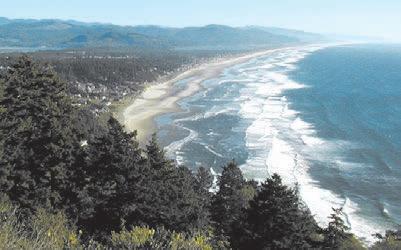
The Oregon Department of Fish and Wildlife (ODFW) forecasted improved coastal salmon returns for the fall season at their June 14 webinar, while also expressing concerns about the long-term health of Chinook populations along the Oregon Coast.
Optimism tempered with extreme caution was the general feeling that accompanied ODFW’s
forecast on Wednesday night. Much of the optimism stemmed from the forecast of a third-consecutive year of healthy Coho returns, but also from the fact a few rivers are re-opening to wild Chinook retention this year, Siuslaw River and Floras Creek among them. ODFW
forecasted Coquille River and Elk River to be closed for wild Chinook retention this fall.
Sean Clements, Fish Division Deputy Administrator with ODFW, said that some of these improvements are due to 4-year-old Chinook returning this year.
“Expect improvements in some basins. That’s largely based on the return of 4-yearold [salmon], which is the historical majority of the runs on the coast,” Clements said. “These fish went out in 2020,
which NOAA categorized as fair entry conditions. And that was an improvement from the bulk of the fish that came back last year, which had poor entry conditions.”
Despite the optimism, ODFW stressed their ongoing concerns in certain basins and the long-term environmental challenges. One major concern was the decline in wild Chinook populations in several basins over the last 10 years. ODFW presented data that showed long-term declines in the Nestucca River and Siuslaw River’s Chinook, with the Siuslaw’s Chinook well below critical abundance levels since 2015.
“So [there have been] a lot of changes, particularly since 2014,” Clements said. “A lot of that was associated with the shift to really poor ocean conditions. There are also things going on in fresh water
that are impacting some of these runs.”
In addition, predation from smallmouth bass – which were illegally introduced to the Coquille Basin in the early 2010s – has led to the collapse of the Coquille Chinook population. Further, in the Umpqua River Basin, ODFW reported a return of under 200 Coho last year, down from an average of 2,000 to 12,000.
“What folks may not be aware of is what’s going on in Umpqua,” Clements said. “Umpqua is warmer than other coastal rivers. The temperature is also increasing. That leads to increased stress on the juveniles and increased predation from striped bass. Our own survey data indicates issues across species and runs. Potentially there’s something developing
in the Umpqua and we’re keeping an eye on that.”
Other long-term concerns included increasing freshwater harvest rates. In Umpqua Basin, freshwater harvest rates have gone up nearly 20% from the measured period of 1986 to 1990 to the measured period of 2011 to 2020, according to ODFW data. At the same time, oceanwater harvest rates have decreased over the last couple of decades.
The final long-term concern centered on environmental changes such as warming sea temperatures. ODFW reported that the Northeast Pacific Ocean is currently experiencing its warmest sea temperatures in 40 years, which can ultimately impact the department’s forecasting accuracy.
“What these

[environmental] changes are doing is they’re not only impacting the runs themselves, but they are also impacting our ability to forecast, because we can’t capture some of these changes in our forecast. That leads to forecast inaccuracy and overharvest,” Clements said.
While ODFW stressed caution and the need to manage coastal salmon populations closely moving forward, they also recognized that Oregon is an exemplar for other states. California closed all recreational salmon fishing this year because of low returns.
“Oregon is standing out as a place where things aren’t going as badly as other states. We want to keep it that way,” Clements said.
Oregon anglers will have something of a say on what their fall salmon harvest looks like this year. At their June 14 webinar, the Oregon Department of Fish and Wildlife (ODFW) presented two harvest options with different bag limits they are considering, encouraging anglers to visit their website and vote on their preferred option.
Upcoming changes that can’t be voted on for this fall season include lower bag limits, no stratum aggregate bag limits, ODFW building on previous actions like lowered deadlines, and new approaches to the Coastal Multi-species Conservation and Management Plan (CMP). Sean Clements, Fish Division Deputy Administrator with ODFW, said that the aggregate bag rule was removed because the strata – that is, the concentration of salmon in each region of the Oregon Coast – are not acting as one.
“The pattern we’re seeing now is that the strata aren’t behaving as one. So, measuring the stratum rule doesn’t make sense


anymore,” Clements said. Other upcoming changes include some rivers reopening to wild Chinook retention this year, Siuslaw River and Tillamook River among the few. ODFW forecasted Coquille River and Elk River to be closed to wild Chinook retention this fall.
ODFW is still mulling over which harvest option they would like to use for the fall wild Chinook season. The department presented two options at their June 14 webinar. As always, each option would look different for each region of the Oregon Coast.
Option 1 generally takes a more conservative approach. ODFW states that option 1 “takes a consistent, coastwide, basin-specific approach to setting bag limits within a sliding scale framework recognizing recent issues.”
Option 2 allows slightly larger bag limits. ODFW states that option 2 “allows additional harvest this year in some basins based on the forecast but may increase the risk of impacting future opportunity.”
Under both options, bag limits are significantly less

than 2022 in many basins. For example, anglers were allowed two wild Chinook per day and ten during season in the Nehalem River last year. This year, option 1 allows one wild Chinook per day and two in the season, and option 2 allows one wild Chinook per day and five in the season.
For the South Coast, bag limits are set based on the Rogue Fall Chinook Species Management rules. The rules guide the management of fall Chinook along the Oregon Coast from the Winchuck River to Euchre Creek. Bag limits for this area are set based on a one- or twoyear return plus the current forecast average. Because most of the South Coast operates under this rule, there is only one option available for this region.
ODFW is encouraging the public to visit their website and take the 2023 Coastal Fall Salmon Survey. The survey asks several questions, including questions regarding your preferred harvest option and the typical number of days you fish each fall.
To take the survey, go to www.myodfw.com. Search “Fall Coastal Salmon” in the search bar. Click the link that says, “Fall Coastal Salmon Management.” From there, you can submit questions or take the survey by June 23.

Here are the bag limits for each region of the Oregon
Coast under both options, as presented by ODFW at their June 14 webinar.

North Coast
Under Option 1
- 1 Chinook per day, 2 per season on Necanicum River.
Includes hatchery Chinook.
- 1 Chinook per day, 2 per season on Nehalem River.
Only 1 Chinook allowed during protective period through September 15. 1 Coho per day, 2 per season.
Includes hatchery Coho.
- 1 Chinook per day, 2 per season on Tillamook River. Includes hatchery Chinook.
1 Coho per day, 2 per season.
Includes hatchery Coho.
- 1 Chinook per day, 5 per season on Nestucca River.
Includes hatchery Chinook. 1 Coho per day, 2 per season.
Under Option 2

- 1 Chinook per day, 2 per season on Necanicum River. Includes hatchery Chinook.
- 1 Chinook per day, 5 per season on Nehalem River.
Only 1 Chinook allowed during protective period through September 15. 1 Coho per day, 2 per season. Includes hatchery Coho.
- 1 Chinook per day, 2 per season on Tillamook River. Includes hatchery Chinook. 1 Coho per day, 2 per season. Includes hatchery Coho.
- 1 Chinook per day, 5 per season on Nestucca River.
Includes hatchery Chinook. 1 Coho per day, 2 per season. Mid Coast Option 1
- 1 Chinook per day, 5 per season on Salmon River. Includes hatchery Chinook.
- 1 Chinook per day, 5 per season on Siletz River. 1 Coho per season.
- 1 Chinook per day, 5 per season on Yaquina River. 1 Coho per season.
- 1 Chinook per day, 5 per season on Alsea River. 1 Coho per season.
- 1 Chinook per day, 2 per season on Yachats River.
- 1 Chinook per day, 2 per season on Siuslaw River. 1 Coho per season.
- 1 Coho per season at Beaver Creek. Option 2
- 2 Chinook per day, 10 per season on Salmon River. Includes hatchery Chinook.
- 2 Chinook per day, 10 per season on Siletz River. 1 Coho per season.
- 2 Chinook per day, 10 per season on Yaquina River. 1 Coho per season.
- 2 Chinook per day, 10 per season on Alsea River. 1 Coho per season.
- 1 Chinook per day, 5 per season on Yachats River.
- 1 Chinook per day, 2 per season on Siuslaw River. 1 Coho per season.
- 1 Coho per season on Beaver Creek.
Mid-South Coast & Umpqua Option 1
- 1 Chinook per day, 5 per season on Umpqua River. Includes hatchery Chinook.
- 1 Chinook per day, 5 per season on Coos River. Includes hatchery Chinook. Includes 1 Coho per day, 3 per season.
- Chinook closed on Coquille River. 1 Coho per day, 3 per
season.
- 1 Chinook per season on Floras Creek. 1 Coho per day, 2 per season.
- 1 Chinook per day, 5 per season on Sixes River.
- Hatchery Chinook only on Elk River.
Option 2
- 1 Chinook per day, 5 per season on Umpqua River. Includes hatchery Chinook.
- 2 Chinook per day, 10 per season on Coos River. Includes hatchery Chinook. Includes 1 Coho per day, 3 per season.
- Chinook closed on Coquille River. 1 Coho per day, 3 per season.
- 1 Chinook per season on Floras Creek. 1 Coho per day, 2 per season.
- 1 Chinook per day, 10 per season on Sixes River.
- Hatchery Chinook only on Elk River. South Coast –Everything operating under a permanent rule, making one scenario.
Option 1


- 2 Chinook per day, 20 per season on Roque River. Includes hatchery Chinook and Coho.
- 1 Chinook per day, 2 per season on Hunter Creek.
- 1 Chinook per day, 5 per season on Pistol River.
- 1 Chinook per day, 5 per season on Chetco River. Includes hatchery Chinook.
- 1 Chinook per day, 5 per season on Winchuck River.
WILL CHAPPELL Citizen Editor

Tillamook County Commissioners gave final approval to a grant program that will help lowand middle-income residents repair or replace their aging septic systems on June 14.

The board also approved the budget for Tillamook County 4-H and discussed the transfer of road maintenance responsibilities for several local access roads to the city of Bay City.
The grant for septic system funds will direct $1.5 million in state Coronavirus recovery funds to repairing and replac-


ing aging septic systems across Tillamook, Clatsop and Columbia Counties. The program will be administered by the community access team and is accessible to households making less than 120% of the area’s median income.
Upgrades and repairs will be financed through 30-year, zero-interest loans that have no payments. Those loans will only be repaid when the property is sold and if it remains with the original owner for the entire term, the loan will be forgiven. There is a cap of $24,999 per system for work but there are other low-interest loans available
We want to remind men of all ages to schedule your routine medical and dental exams. Routine preventive care including staying up-to-date on recommended screenings and vaccines can help you stay well and catch problems early, helping you live a longer, healthier life.

Routine health visits, screenings and vaccines are covered benefits of many health plans. Ask your health care provider about your options. #healthystrongmen
for systems that require more costly work. Around 15% of homes in Tillamook County have septic systems, of which 5-10% are in marginal or failing condition, according to county estimates.
Commissioners began discussions about transferring the maintenance responsibilities for several roads in Bay City’s urban growth boundary from the county to the city. In exchange for assuming the maintenance responsibilities, the city government has asked that the county repave two roads, Seattle and Baseline, to bring them up to city standards before the transfer. The commissioners were supportive of the proposal, which will reduce costs for the county’s public works department.
Commissioners also renewed County Counsel Bill Sargent’s contract for another year. Sargent, who has worked as the county’s counsel since 1991, has been retired for several years and works in support of full-time counsel Joel Stevens, who lives in Mississippi.
Sargent said that the amount of work has doubled since he began working for the county due to the proliferation of contracts to review and litigation against the county. He joked that his rates had also doubled and said that he greatly enjoyed working for the county, which was why he continued to do so even into his retirement. All three commissioners thanked Sargent for his diligent work and praised his abilities.
The commissioners also discussed and signaled their intention to extend the shortterm rental license issuance pause for 60 days. Read about that discussion in the shortterm rental advisory hearing story on page 1.

 WILL CHAPPELL Citizen Editor
Oregon’s Board of Forestry met on June 7, in Sisters, and, among other things, discussed the forthcoming habitat conservation plan.

Board Chair Jim Kelly kicked the meeting off by sharing new figures for the amount of land that will be taken out of the harvest rotation and announced that the release of the habitat conservation plan (HCP) has been delayed from September until at least November.
Kelly said that he had been hearing a lot of misinformation about the HCP, and that most of it had been centered on the amount of land that would be taken out of harvest.
Kelly said that he had been approached by concerned citizens who believed that more than half of lands in state forests were going to be added
to habitat conservation zones and removed from harvest.
Not so, said Kelly, who shared that 46% of state forest lands are already unharvested and that number would only be increasing by about 5%.
Kelly said that some 19% of the land is inaccessible, 6% cannot be harvested because of conservation requirements and 27% is kept out of harvest as part of planning constraints.
“There’s not some 50% plus wholesale change, that’s the total land that is constrained,” Kelly said, noting that only some 30,000 acres would be added. While sharing these accurate data, Kelly conceded that the planned HCP changes would have a drastic impact on harvest levels. Harvests are set to fall by around 20% across state forests starting on July 1, with the beginning of a new implementation plan that critics fear mirrors harvest levels that will be allowed under
Awide range of activities will be taking place across Tillamook and Clatsop Counties to celebrate the Fourth of July, with several beginning as early as July 1.


Tillamook County:
Cloverdale: Clover’s Day celebrations will be held on Saturday, July 1, from 10 a.m. to 2 p.m. in downtown Cloverdale. There will be a fun run, live music, car show, petting zoo, milk chugging competition, flea market and more. The parade will begin at 11 a.m.
Rockaway Beach: On July 3, the Friends of Rockaway Library will be holding their annual book sale from 10 a.m. to 3 p.m.
Independence Day will kick off with a flyover around 10:40 a.m. followed by the city’s annual Fourth of July Parade at 11 a.m., featuring a theme of “Small Town America.” The 16th annual Firecracker Wiener Nationals will be held at Phyllis Baker Park at 1 p.m., with all proceeds from the Dachshund races going to the Tillamook Animal Shelter. At 1:45 p.m., the Rockaway Beach Lions Club will be hosting their annual treasure hunt and races on the beach behind St. Mary’s Catholic Church. There will be a live auction held at the Depot by the Chamber of Commerce at 2 p.m.
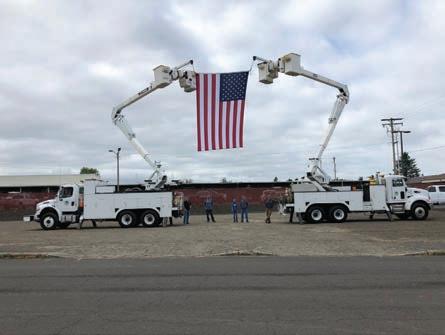
The Rockaway Beach Fire Department & Emergency Preparedness will also be informing the public about their operations and selling merchandise at the wayside on the third and fourth.
Live music will be presented by the Rockaway Roaster and Rockaway Beach Chamber of Commerce, with shows at 4 p.m., 6 p.m. and 8 p.m. at the wayside. A fireworks show will cap off the day, starting at dusk around 10 p.m. over the ocean and can be viewed from the Wayside.
The Lions will be selling hot dogs at the Wayside next to a fireworks trailer operated by the chamber of commerce from June 29 through July 4, from 10 or 11 a.m. (depending on the day) to 6 p.m., although residents are advised that firework detonation is prohibited in city limits. Cleanup efforts organized by the chamber of commerce will begin at 10 a.m. on July 5. Pick up a SOLVE bag along with your purchase to collect your debris and any other garbage you may encounter.
Let’s celebrate keeping our beaches clean!
Manzanita: The “Return to Glory” Fourth of July parade will begin at 1 p.m.

The parade will run from Underhill Plaza down Division Street to Laneda Avenue before turning on Ocean Avenue and returning to Underhill Plaza via Manzanita Avenue. It will have competitions for best float,
the new HCP.


Kelly also announced that work on the HCP would not be completed by the board’s September meeting, as initially expected, and should instead be ready sometime in November. Kelly said that the board might hold a special meeting to vote on the HCP, and assured the public that there would be opportunity for comment.
Tillamook County Commissioner David Yamamoto spoke later in the morning, representing the Forest Trust Lands Advisory Committee, which he chairs. That group consists of representatives from the counties which deeded the land for the state forests to the state in the 1940s and 1950s and receive harvest revenues to fund county and special districts budgets.
Yamamoto said that he had been surprised by Kelly’s opening remarks, which had raised a lot of questions. He

watch from Saturday July 1 –Tuesday, July 4 daily from 8-11 a.m. at Haystack Rock in Cannon Beach.
wondered why self-imposed constraints were responsible for so much land being set aside and why the projected harvest was dropping by more than 20% if only 5% of the land was being restricted.
Yamamoto then shared his prepared remarks about the HCP, in which he emphasized the negative harm the drastic harvest cuts would have on counties and asked the board to reconsider. He said that the implementation plan that will go into effect on July 1 and cut harvest levels are set to leave a $24 million hole in county and special district budgets.
These cuts will have deleterious consequences for the counties and special districts, Yamamoto argued, saying that one need look no further than similar restrictions and harvest cuts in federal forests to see the proof. Yamamoto said that
town Gearhart from 7-10 p.m. on July 3, with music from DJ John Chapman, kids face-painting and a photo
before increased conservation efforts in federal forests, Tillamook County’s Public Works Department, which is funded by timber revenues, had 50 employees and maintained even private local access roads in the county. Today, with the fall in revenue, the department has been cut to 14 employees, and Yamamoto said Tillamook County roads are in poor repair.

Yamamoto also argued that the HCP was not addressing the real causes of species loss, saying that the federal forests showed that restricting commercial activity alone would not restore spotted owls in Oregon forests. He cited a study from Oregon State University that indicated that competition from Barred Owls needed to be addressed to promote Spotted Owl rehabilitation.
Yamamoto also told the

board that the impacts of harvest level reductions would not only hit the counties and special districts, but also businesses within them. He cited the Port of Garibaldi, which receives 12% of its revenue from state forests, saying that it was a main economic engine of the town and would be threatened by the HCP.
He also said that cutting production of timber from state forests would harm the ongoing efforts to address the state’s housing crisis. Yamamoto noted that more than 30,000 homes need to be constructed annually, and that with private timber being eligible for export, state forest timber was a key source of material for these efforts.
Yamamoto asked the board to include the Forest Trust
SEE HCP PAGE A6
walker and biker. Clatsop County: Cannon Beach: the Cannon Beach Library will be holding its annual, fundraising 4th of July Book Sale from 10 a.m. to 5 p.m. on July 1, 2 and 3, and 10 a.m. to 4 p.m. on the Fourth.
The city’s parade will start at 11 a.m. in midtown, progressing up Spruce Street to downtown, before returning on Hemlock Street.
The Chamber of Commerce will be holding an auction at 2 p.m. on the Fourth.
The Friends of Haystack Rock will be holding their great puffin
Seaside: The Seaside Outlets will be hosting a day of fun in their parking lot on July 1, with live bands including Doc Jones and Bikini Beach performing. The chamber of commerce’s annual parade will start at 1 p.m. followed by fireworks over the Pacific Ocean at 10 p.m. SOLVE Seaside Treasure the Beach July 5th Cleanup will take place from 8:30-10:30 a.m. and is organized by Seaside Beach Drive Buccaneers, Seaside Prom.

Gearhart: The Gearhart Street Dance Party will take place on the streets of down-
In our community,

together. We weather storms together, both literally and figuratively. We build lasting relationships together. We work together, play together, and grow together.
As your local communications provider, RTI is proud to support the connections that make our community and our country stronger. We invest in advanced technology. We give good jobs to our neighbors. We donate time and financial resources to this area’s life-changing organizations.
Serving North Tillamook County since 1996
Deadline Noon Mondays for Advertising, News, Classifieds, Legals, Obituaries
Editor Will Chappell, email headlighteditor@countrymedia.net
Sales Katherine Mace, email headlightads@countrymedia.net
Classifieds & Legals Siah J. Kennedy, Office Manager email classifieds@orcoastnews.com
Ad Production Stephania Baumgart
PHONE 503-842-7535 • FAX 503-842-8842
EMAIL editor@northcoastcitizen.com
WEBSITE northcoastcitizen.com
The North Coast Citizen (15503909) is published biweekly by Country Media, Inc.
1906 Second Street, P.O. Box 444, Tillamook, OR 97141
Publisher: David Thornberry
SUBSCRIPTION RATES
$60.00 annually in-county; $72.00 annually out-of-county.
$50.00 for online only.
Periodicals Postage paid at Tillamook, OR.

POSTMASTER
Send address changes to P.O. Box 444, Tillamook, OR 97141
Member Oregon Newspaper Publishers Association (ONPA) © 2023 by the North Coast Citizen. All rights reserved.
LETTER POLICY
The Citizen welcomes letters that express readers’ opinions on current topics. Letters may be submitted by email only, no longer than 300 words, and must be signed and include the writer’s full name, address (including city) and telephone number for verification of the writer’s identity. We will print the writer’s name and town of residence only. Letters without the requisite identifying information will not be published. Letters are published in the order received and may be edited for length, grammar, spelling, punctuation or clarity. We do not publish group emails, open letters, form letters, third-party letters, letters attacking private individuals or businesses, or letters containing advertising.
Deadline for letters is noon Thursdays.
The date of publication will depend on space.
Obituaries
The North Coast Citizen has several options for submitting obituaries.
• Basic Obituary: Includes the person’s name, age, town of residency, and information about any funeral services. No cost. • Custom Obituary: You choose the length and wording of the announcement. The cost is $75 for the first 200 words, $50 for each additional 200 words. Includes a small photo at no additional cost.
• Premium Obituary: Often used by families who wish to include multiple photos with a longer announcement, or who wish to run a thank-you. Cost varies based on the length of the announcement.
All obituary announcements are placed on the North Coast Citizen website at no cost.
My daughters (ages 3, 1) and I absolutely love going to the library. We are there at least twice a week. For not being able to read yet, both of my girls are ferocious readers. They will sprawl out in the library with a mountain of books and look through them one by one with delight.
Last week we came to the library as part of our usual routine, and I was shocked to see a book display set up in the middle of the children’s library promoting transgender ideology for very small children, including titles such as “I am Jazz” and “Neither”.
As practicing Catholics, my husband and I teach our girls that God made them
perfect and whole exactly as they are. We teach them to love their bodies, as this is God’s creation, and the temple in which He dwells. Body and spirit are one, not two disconnected entities. It is impossible to cut the body away from the spirit, and vice versa. We must treat our body and soul connection with reverence, as it is God’s gift to us. Our bodies are part of the harmony of the created order, and our sexual difference is part of God’s self-revelation, as well as a sign of our ultimate calling: to give and receive love. Books on display in the children’s section that contradict this teaching is an undermining of our parental rights to instill into our children our religious beliefs and values. Although a child’s book on transgenderism might seem benign, it is a way to plant a seed of doubt
Itotally agree with Ellie Hilger’s letter about transgender info in the children’s section. Before all of the “in our face” info started, most of us would see a transgender or gay person and go on about our business. We weren’t disrespectful, we just went on with our own lives. It was their life to live as they liked. Now, however, when it is pushed at us through the media, tv, radio, in schools from kindergarten through college, in conversations (correct pronouns etc) it is becoming harder and harder to accept. Do you all not see the consequences of it all? Our country as it used to be, is changing, for the worse. Why can’t the adults
pushing this agenda just let everyone lead their lives without trying to push their agenda in everyone’s faces. We have come a long way since slavery. America is not perfect and there are still issues but it’s better than any other country. And if you really think that there is a better place, and that America is racist and bias against you, move somewhere else. Just don’t don’t push your AntiChrist ideas on everyone. Most Americans are respectful, good people and just want to live their lives without getting arrested by the “language police” because we used the wrong pronoun. Live and let live.
Diana Frigault Tillamook, Oregoninto children’s identities that can lead to complicated and unnecessary medicalization.
Puberty blockers, cross-sex hormones, double mastectomies, and genital mutilation are all irreversible and leave the patient with grave health concerns, including sterilization and lifelong dependency on cross-sex hormones.
We are more than willing to have conversations with our daughters about the dangers of transgender ideology, but we would like to have those conversations when they are older, and on our terms. By having these books on display, the conversation is forced upon us. My girls are only beginning to categorize the differences they see between male and female. This is not the time to confuse them with political ideologies that are contrary to our moral and religious
beliefs.
The library is a taxpayer funded institution in which all should be welcome. This can be achieved by remaining politically neutral. A children’s display on transgenderism is a lightning rod of controversy that divides communities. A display on this topic in the adult section, with books meant for adults, would be perfectly acceptable, especially if it also contained books with varying perspectives on the matter. To put this display in the children’s section, or in the general area where children walk in order to get to the children’s section, is an attempt to indoctrinate young minds into a particular political ideology, which ultimately undermines parental rights.
Ellie Hilger Bay CityThank you for the Tillamook County Library
I’d like to extend a heartfelt thank-you to the Tillamook County Library’s main branch for highlighting theavailable LGBTQ+ books and resources during this 2023 Pride Month. I am a lifelong ally, a past member of PFLAG, and the proud mother of a trans person. Thecurrent national climate of targeting and vilifying LGBTQ+ people, with frightening emphasis on persecuting trans people, is alarming, to say the least. I pray for (and fear for) the safety of my child and of every beloved child of God who faces danger or aggression because
of their sexual orientation. It shouldn’t require courage to uphold civil rights in a public library setting, but I applaud the county library professionals for their positive attitude in the face of any backlash from the community. If only one young person feels validated by the library’s effort, the library will have succeeded in its mission to educate us, enlighten us, and engender acceptance and inclusion among us. May our actions and our laws reflect our dedication to equal human rights for every person.
Well done, Tillamook County Library!
Valerie Schultz Rockaway BeachBilingual Certified Peer Support/Recovery Mentor (English/Spanish)















F.T. 40-Hours/week Position

Tillamook Family Counseling Center is currently looking to add a bilingual peer specialist to our Prime+ program. The mission of the Prime+ program is to prevent acute life-threatening outcomes of substance use which include reducing overdose morbidity and mortality by providing harm reduction centered overdose prevention education and facilitating access to Naloxone. We also strive to reduce injection-related infections by providing harm reduction centered infection prevention education and facilitating access to safer use supplies. The Prime+ program supports linkage to care, diagnosis and treatment of substance use related conditions and substance us related infections.
This position includes training that leads to state certification according to OAR 410-180-0305 (12) and (13). As a certified Peer Specialist, you will be a living example and role model of recovery life. As a peer you will be a provider of the life wisdom gained through your own lived experience of recovery as well as a change agent for hope.
Benefits:
Dental Vision and Medical-prescription coverage. HSA and FSA plans. 9 paid holidays a year, paid sick leave and vacation time. Vacation starts out at 8 hours a month with increases over time. Generous retirement program: non-contributory 403(b), we put in 9% of your salary and you are vested after 6 months.
To see our complete job description and to apply go to http://tfcc.bamboohr.com/jobs. Be sure to submit an online application and upload your resume. Any questions, please visit us online at http://tfcc.org or contact us at jobs@tfcc.org
Licensed Practical Nurse [LPN]


Part time position (24 hours weekly) w/excellent benefits.







Compensation: $29 - $39 Hourly, DOE





Tillamook Family Counseling Center (TFCC) seeks a Licensed Practical Nurse [Part Time 24 Hours per Week] as a health provider for its Assertive Community Treatment Team (ACT). The LPN provides health care coordination, client support, and triage in home and community settings to adults presenting with severe and persistent mental illness.





Tillamook Family Counseling Center is a drug free workplace and equal opportunity employer.





If you are interested in this position, please apply online at http://tfcc.bamboohr.com/jobs. Be sure to submit an online application and upload your resume. Any questions, please visit us online at http://tfcc.org.

H21629
H22117


Manya Shapiro is a textile artist who has been living and working in Portland, Oregon since 1973. She is interested in contemporary interpretations of traditional crafts like quilting, stitching, knitting, and basketry. Manya is inspired by feminist movements that brought traditionally domestic arts into museums and highlighted their artistic value. Her work is an ongoing dialogue with the materials she is drawn to, and she likes to contrast everyday materials with more precious “art” materials. Dress imagery is common in Manya’s work, where it stands in for the figure, both presence and absence.
Christopher Belluschi is a sculptor based in Portland, Oregon. He grew up exploring amongst the rocks beneath Neah-Kah-Nie and credits this special area for his profound fondness of wood. Since 2022, he has worked alongside
master carver M.J. Anderson in Nehalem. Christopher primarily works with wood (cedar) and stone (marbles and travertine). His sculptures seek to combine the organic forms of the natural world with the mystical qualities of art from antiquity. This is his first gallery exhibition.
Iris Sullivan Daire is an installation artist and natural dyer living in Astoria, Oregon. Iris wields natural dyes to create colorful worlds that provoke thought and encourage deeper connection to nature.
We invite you to view art




June 29th through July 29th, Thursdays through Sundays from 12-5 pm. An artists’ reception will be held 3-5 pm on July 1st during which the artists will speak about their work and answer questions. The not-for-profit Hoffman Center for the Arts is located at 594 Laneda Avenue, Manzanita, Oregon.

June 19, 2023 (Tillamook, Ore.) – GRAMMY® and Billboard Music Award nominee as well as Dove and ASCAP Christian Music Award winner Ryan Stevenson will be coming to Tillamook to share his soundtrack of hope and encouragement on Thursday, July 6 at the Tillamook Seventh-day Adventist Church located at 2610 1st St. starting at 7 p.m., doors opening at 6 p.m. This free community concert is sponsored by Adventist Health Tillamook and their 50th anniversary celebration of health, wholeness and hope.
Eric Swanson, President of Adventist Health Tillamook shares, “We are deeply
















honored to have Ryan in Tillamook and look forward to having this family-friendly free event for our community.”
Ryan Stevenson’s music has achieved six #1 Billboard charting radio singles (four as an artist or featured artist and two as a co-writer). He has toured with top artists including TobyMac, MercyMe and Newsboys, and since 2020 Stevenson has been headlining intimate concerts in churches, theaters and homes. In three years, he has played more than 170 shows to a total of 34,000 fans, sharing his deeply personal songs and stories encouraging communities around the country.
Looking for a family fun option for a Sunday afternoon in mid-July? Bring your lawn chairs, meet new friends, and have some fun, while celebrating the picturesque town of Wheeler. Billed as a city-wide event for all ages, Wheeler locals and guests are invited to come to Wheeler’s Upper Park from 2-4pm on Sunday, July 16th. Sponsors will provide FREE Tillamook ice cream, informative displays, and free prize drawings from local businesses.

The event is an opportunity for local residents to get to know one another better while offering useful, interesting information to help people understand what the City can (and can’t) do to help in largescale emergencies caused by road closures, weather, tsunami, fire, or earthquake. Information will be available to support families in becoming better prepared. Topics include ‘Emergency Camping’ at Home, How to Create an Emergency ‘Grab and Go’ Bag, Caring for Pets, Where to Go, How to Get Official Information, Finding Safe Shelter, Emergency Water and Sanitation. Attendees will be able to inspect the City’s new emergency InStove, the new “AquaMundo” emergency water purification system, and the contents of the new Neighborhood Blue Barrels. Tours will also be given for the new emergency storage and communications facility now located in Upper Park.


Organized by the Wheeler Citizen Emergency Preparedness Planning Group in partnership with the City of Wheeler, the Emergency Volunteer Corps of Nehalem Bay, and the Tillamook Creamery Association, the event will highlight the value of working together to prepare for the inevitable weather events and natural disasters that can affect our rural area.
Wheeler Emergency Team Chair, Paul Knight, spoke directly to why it’s important for every household and neighborhood to prepare for emergencies. “While our small town is doing what we can with very limited resources, we know that our greatest resource is our community, and our willingness to care for one another if the need arises. If there’s a regional disaster, emergency services will be directed toward the big population centers, so folks in small towns like Wheeler may be on their own for quite a while. There are many small things that we can do as individuals and families, but perhaps the most important thing is simply to know our neighbors. And knowing our neighbors can make life in Wheeler better and more fulfilling every day.”
The Upper Park is located just off Hospital Road, near the Nehalem Bay Health Center (Rinehart Clinic) in Wheeler. Pets on a leash are welcome. An amazing view, ample parking, and play equipment will be provided.
ALL ARE WELCOME!
HCP CONTINUED FROM PAGE A3
Lands Advisory Committee in the last stages of HCP development, saying they were ready and willing to participate and had been disappointed at their lack of a voice previously.
Board Chair Kelly told Yamamoto that the new figures about land restrictions had been provided to him recently and that he would share them
with Yamamoto. Kelly and other board members said that while they remained convinced that an HCP was necessary to manage the forests with more certainty, they were sensitive to Yamamoto’s concerns and would be willing to have more conversations with him and other committee members.

We wish to extend our deepest appreciation and gratitude to all who actively participated in the recent election, whether by putting themselves on the ballot, campaigning for a candidate, or exercising their right to cast a ballot. Engagement in the democratic process exemplifies the essence of responsible citizenship, and we are privileged to live in a democracy where each of us has a voice and a role to play. Together, we must unite to protect our freedoms and ensure the continued strength of our democratic society.
To the brave individuals who stepped forward as candidates, we commend your courage and commitment. By offering yourselves for public office, you have taken on the immense responsibility of representing the needs and aspirations of our community. You have shown us that democracy thrives when individuals are willing to stand up and be counted. Your dedication to public service inspires us and serves as a guiding light for future leaders.
To the dedicated campaigners who tirelessly worked to support candidates, your efforts are truly commendable. Whether you knocked on doors, made phone calls, organized events, or shared campaign messages, your commitment played a vital role in promoting informed decision-making and encouraging citizen participation. Your passion and dedication to the democratic process have demonstrated the power of grassroots movements and community engagement.
And to those who exercised their right to vote, we express our profound gratitude. By casting your ballots, you have exercised one of our most fundamental
civic responsibilities. Your participation ensures that our government remains of the people, by the people, and for the people.
As we reflect on the recent election and look towards the future, let us not forget the importance of protecting the founding values of our democracy. Democracy requires our collective efforts and a shared commitment to preserving the rights and freedoms we enjoy. We must remain vigilant and actively work together to protect the integrity of our electoral processes, safeguard the principles of equality and justice, and ensure the inclusivity of our democratic institutions.
To those who aspire to be future candidates, we encourage you to step forward and embrace the opportunity to serve. Our democracy thrives when diverse perspectives are represented, and new voices emerge. By offering your unique talents and ideas, you can contribute to shaping the future of our community and advancing the principles that underpin our democratic society.
In the face of challenges and differences, let us remember that the strength of our democracy lies in our ability to come together, to engage in respectful dialogue, and to find common ground. By promoting unity, understanding, and cooperation, we can build a society that cherishes the values of freedom, justice, and equality for all. Together, let us continue working diligently to protect our freedoms, strengthen our democracy, and create a brighter future for all.
Tim Borman, Chair, for Tillamook County Democrats, Tillamook

years!
