How Prepared Are You? Building a Safe City and Community Resilience
sential for personal survival in the first 72 hours after a natural disaster, and could mean the difference between being a victim or a survivor.
By BOB ATIYEH
The Cannon Beach Gazette had the opportunity to talk with Cannon Beach Emergency Response Manager Rick Hudson about how the city is building the infrastructure and stockpiling essential supplies to help residents and visitors survive in the aftermath of natural disaster. While a major Cascadia Subduction Zone earthquake and accompanying tsunami are foremost on the minds of most coastal residents, a more likely scenario is a major windstorm, flood or wildfire that could isolate Cannon Beach for several days or more. The last time Cannon Beach was physically isolated and without power was during the “Great Coastal Gale” of December 2007.
Hudson began his role as our Emergency Response Manager in 2019 after making the decision to leave his position as Battalion Chief in the Sacramento Fire Depart-
ment. He rapidly discovered that the city of Cannon Beach essentially had no viable emergency response plans and lacked the critical supplies and infrastructure needed to assist people after a disaster. Although there was a cache site program initiated in 2009, it was outdated and unsupported. Hudson has been working tirelessly in a herculean effort to redesign an emergency response system that will operate effectively in the aftermath of a disaster.
Hudson explained the concept of emergency management as having four components:
1.”Mitigation and Risk Assessment”
2. “Planning and Preparation”
3. “Response and Operations”
4. “Recovery and Reunification.” The third component of “Response and Operations” is reactive (responding to emergencies) which is what our fire district, police department, emergency medical (EMS) and dispatch are currently
doing. While this is essential, the proactive role of the other three components of emergency management is critical in providing the resiliency to fully serve the community prior to and in the aftermath of a disaster. Hudson stressed the need to think regionally, not just locally, in planning for events that will affect the entire region.
As the level of potential risk is extremely high in our area, Hudson stressed the need for neighborhoods to create their own safety networks to reduce panic and increase survivability. People should not rely on the city being able to provide comprehensive assistance to everyone who needs it in the immediate aftermath of a natural disaster. Individual neighborhoods should strive to be as self-sufficient as possible for several days, and the city will be in a much better position to provide critical support to an organized neighborhood network. Individual “Go-Bags” are es-
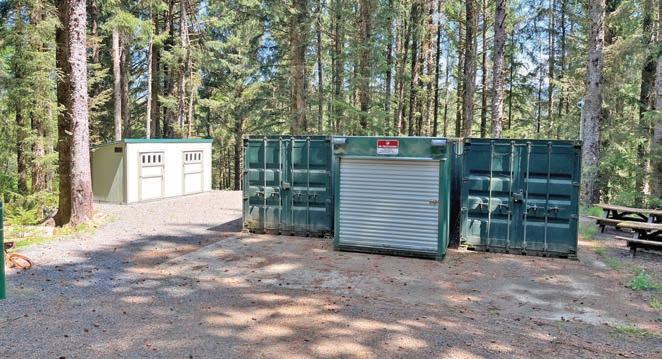
Hudson explained the benefits of having a redundancy of supplies and services at multiple locations, as different sections of Cannon Beach will be cut-off and isolated from each other, at least in the early stages of a natural disaster. The city currently has two Emergency Operation Centers (EOC’s) located in city hall and the public works yard on Ecola Creek road, with the ability to add several mobile EOC’s as needed. There are four separate cache sites located throughout the city stocked with essential supplies, with one located at the north end of Cannon Beach, a second along Ecola Creek Road, a third near the water treatment plant about a mile farther east, and a fourth located at the south end of town along Highway 101 in Tolovana. All of these cache sites are designed to work as city safety centers and to provide basic services: food, water and shelter, cell phone boosters, internet and radio communications along with fuel to provide heat and power for multiple days.
Each of these cache sites are located above the projected tsunami inundation zone resulting from a major Cascadia seismic event, and are designed to function independently of each other. Besides offering food, water and shelter, these four cache sites are capable of providing toilets, hand washing stations and showers, as sanitation and hygiene in the aftermath of a disaster are extremely important to prevent the outbreak of disease; particularly highly contagious enteric (GI) diseases that can spread
rapidly in a stressed and debilitated population. The cache site next to the water treatment facility includes a reverse osmosis mobile water treatment trailer capable of providing up to 30,000 gallons of safe, clean drinking water a day to residents and visitors.
The antenna site located on a high spot at the north end of town provides radio coverage from Tillamook Head south to Falcon Cove for essential communications, such as General Motor Radio Service (GMRS), HAM radio and public radio service from FM radio KMUN. The need for local as well as regional and statewide communication will be critical after a major event. The city has also established several landing zones (LZs) that will be needed for large helicopter access to bring in critical supplies and evacuate injured patients.
The Cannon Beach Public Works Department is in the first phase of a three-phase upgrade of our water and wastewater infrastructure, which includes installing seismic valves that prevents the three large water storage tanks from being drained in the aftermath of a seismic event, as well as replacing the current antiquated main water line, running from the springs supplying the city’s water to the water treatment plant, with seismic-resistant high density polyethylene (HDPE) pipe.
The city has commissioned a study of whether to reinforce or replace the Fir Street bridge crossing Ecola Creek. The bridge, built in 1964 to replace the old bridge destroyed by the tsunami in March of that year, does not meet current seismic standards and will fail during a seismic event,
preventing rapid evacuation to higher ground at the north end of the city.
Hudson has been working with the Oregon Department of Geology and Mineral Industries (DOGAMI) to upgrade the tsunami warning and evacuation signs throughout the city, as well as working with the Cannon Beach Fire District to upgrade and modernize the Community Warning System (COWS), which is not unified or coordinated with neighboring coastal communities. A similar system failed to activate during the recent catastrophic fires in the Hawaiian city of Lahaina. One of the main challenges facing our local COWS system is the large transient population of visitors to our town; with many of them likely having no idea what the sirens mean, what to do or where to go. With a small police and fire department and several “choke points” along the limited main north and south escape routes, Cannon Beach faces many of the same problems confronted by residents of Lahaina.
With a rapidly changing climate fueling extreme events, the old “normal” is being replaced by the new reality of the unthinkable. With the Oregon coast having the greatest potential risk for natural disasters of any area of the state, the most important message that Hudson hopes to convey to visitors and residents of Cannon Beach are the twin goals of a “Safe City” and “Community Resilience”. How prepared are you?
Plan to attend the Cannon Beach City Safety Fair on Thursday, September 21st to learn more about how to prepare for a natural disaster.
NeCus’ Site to be a “Welcoming Place”
By DEB ATIYEH
The Cannon Beach Gazette recently had the opportunity speak with Clatsop-Nehalem/Siletz tribal member Dick Basch and Cannon Beach City Manager Bruce St Denis about the NeCus’ School Project.
Both City Manager St. Denis and Dick Basch acknowledged the concerns among Cannon Beach residents about the overall cost to build, operate and maintain the new facility.
The renovation of the old elementary school is currently projected to cost $12 million, with construction costs significantly increasing over the past several years. If the city waits, the cost will likely continue to increase.
The use of interior wood finishes, exterior cedar siding, seismic upgrades to the gym and school, re-roofing and re-flooring the gym, the addition of a lobby between the two buildings for meeting and display space for exhibits, complete reconstruction of the power, water and wastewater systems, construction of multiple restrooms, re-grading of the site, development of a catering kitchen, modifications of the building to introduce natural light after the seismic upgrades, accommodation for green energy components,
along with the extra care needed during construction to maintain the cultural integrity of this sacred site all contributed to the construction costs of the new building.
St. Denis said that the NeCus’ School Project is expected to completed by early 2025. Construction of the project will be funded from revenue generated by the city Transient Lodging Tax (TLT). By state law, 70% of the TLT revenue is required to be used either for tourism promotion or tourism related facilities, which means that the TLT can be used for construction and maintenance of the Necus’ School Project. The 70% portion of the TLT cannot be used for other construction projects such as the new City Hall, Police station or workforce/affordable housing.
St. Denis explained that the City has a long-term financial plan to fund the Necus’ School Project, adding that while TLT revenue can be used for maintenance of the new facility, it cannot be used to fund daily operations. St. Denis said that after completion, between $300,000 and $500,000 of the annual TLT funds will be available for maintenance. A non-profit 501(c)(3) will be created to fund operations, salaries, education, classes and events. The plan is for the
City to fund the maintenance of the facility while the nonprofit raises the operating revenue through fundraising, private foundation grants, state and federal grants, art and historical significance grants, as well as culture, art and humanities grants. There
are several other facilities in the Pacific Northwest comparable to the Necus’ School project which are funded in a similar manner. St. Denis talked about how Cannon Beach does not currently have a facility that acts as a welcoming place for the
community to come together for classes, gym activities and large gatherings. Once completed, he believes that the large multi-use gathering place offered by this new facility will provide a benefit to visitors and residents of the community.
Clatsop-Nehalem/Siletz tribal member Dick Basch spoke about the historical significance of the village at the NeCus’ site that existed and welcomed guests for thousands of years. Villagers welcomed William Clark, Sacajawea and several other members of the Lewis and Clark expedition who traveled to this village in January 1806 hoping to obtain whale blubber from a whale that had recently washed ashore near the village. Some of today’s tribal member’s great-grandparents were born in this village, and many tribal members come to the site to remember and honor their ancestors. It is a significant location that reinforces the values of the tribe. Their lives and memories are important to the tribe, and to many in the Cannon Beach community.
Dick remembers the mussel and chowder festival held at the site when he was seven years-old. Clatsop-Nehalem/ Siletz tribal members will work closely with the NeCus’ School Project to share the

magic and sacred history of their ancestors. The spirit of the area will be felt and recognized at the new NeCus’ Project and the architecture of the structure will reflect the significance of the tribal heritage.
This “Welcoming Place” will also be a place that Clatsop-Nehalem/Siletz tribal members will share interpretive items and tell stories of their ancestors and the region. The significance of community and the lives of multi-generational families will be taught. They will create educational materials and activities that will reflect the heritage of the tribes and will teach about native plants and wildlife as visitors are transported to another time.
Dick shared the story of a 104 year-old Native American elder who told about how the ancestral spirits have gone to live in the trees. When they hear the children singing, the spirits awaken in the hearts of the children, and one can see the ancestors in the hearts and smiling faces of the children.
Dick mentioned the love for Native American traditions, especially that of nonnatives who enjoy traveling to Native American sites, and he talked about the former village, long house and fire
VOL. 47, ISSUE 18 FREE SEPTEMBER 1, 2023 CANNONBEACHGAZETTE.COM
One of the four emergency cache sites in Cannon Beach
PHOTO CREDIT: RICK HUDSON
SEE WELCOMING PLACE PAGE A6
Welcome Pole at Necus’
By DEB ATIYEH
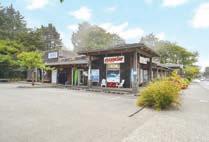
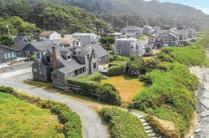
In 1962, Jim Crowell and three friends set out for Cannon Beach on an adventure. These four young bachelors, who worked together as reporters for the Oregonian and shared an apartment in Portland, didn’t have much money. Upon arriving in Cannon Beach they starting looking for beach front property, as they wanted to find a place that offered them an escape to the coast. They wandered into a real estate office on Hemlock Street and encountered realtor Dick Atherton at Kent Price Real Estate. Atherton was a strong force in the growth of Can-
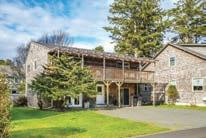
non Beach real estate at the time. After telling him they wanted to buy a house on the beach, while adding that they had very little money, Atherton showed them around town before taking them to a dead-end street named Logan Lane at the south end of Cannon Beach. Knowing their financial situation, he showed them an old beach cabin with rusted metal and broken windows that needed some serious work. They had no idea of real estate values in Cannon Beach when Atherton informed them of the $6,000 asking price. The four friends returned to Portland where they were each able to pull together $1,500 through
the Oregonian credit union. After buying the old cabin, they spent their weekends in Cannon Beach working on it. Their unlikely partnership endured for 43 years as they worked together to improve and maintain their beautiful retreat overlooking the ocean.




Three of the friends spent their entire careers working for the Oregonian, while Jim continued on to graduate school. Each of the four partners spent time at the cottage in a compatible partnership spanning more than four decades. Around 2005, the three other partners decided to sell their shares due to age and health issues. Three new
Bend-area buyers joined the partnership; remodeling and upgrading the cabin as the new partnership continues to thrive for almost twenty years. This small cabin facing the ocean is a special place with an amazing view south to Silver Point and north to Haystack Rock. The partners are grateful to be a part of a long-lasting arrangement with friends that has worked so well in such a beautiful place. Jim and his wife Judy continue to spend one week of every month in Cannon Beach while spending the rest of their time in Bend. Their journey to Cannon Beach is always a pleasure,
as they visit their daughter in The Dalles and their son in Portland along the way, allowing them to break-up the trip and spend time with their children.
Since he retired from teaching journalism at Central Oregon Community College in 2007 at 70, Jim and Judy have traveled the world while Jim has stayed busy writing as an historian, author, and playwright. This beachfront cabin, surrounded by beauty and serenity, is the perfect place for Jim to contemplate and write as the words creatively flow.
Jim’s latest play debuted July 7th at the Tower Theater in Bend. Named “Your Humble Servant”, this twoact play accompanied by music portrays the triangular relationship between John Adams, Abigail Adams and Thomas Jefferson. Based on the nearly 400 personal and candid letters exchanged by John Adams, the nation’s second president, Abigail, his wife of 54 years, and Thomas Jefferson, the third president of the United States, the play engaged and captivated the audience while running for three days to rave reviews.
Inspiration for “Your Humble Servant” comes from a sequel to his earlier play, “Home to Monticello”, based on the nearly fiftyyear relationship between Jefferson and his young slave, Sally Hemings. The editor of Bend Magazine said that “the real spark was the revitalized Tower Theater in 2004. The play featured Academy award winner Eva Marie Saint and her husband Hayden reading a series of humorous and poignant letters that passed between two
The Enduring Legacy of a Journey to Cannon Beach A Witness to the Historic “I Have a Dream” Speech





as Director of Research and Data Processing. During my first year of employment I




work role and responsibilities. Public Health consists of an extensive array of program and services; they include environmental health, child and women’s health, mental health and dental health along with health education.

In August of 1963 I attended a meeting in Washington D. C. addressing all aspects of mental heath. The meeting was held at the D.C. Shoreham Hotel. Presentations were to be given by an array of highly recognized health professionals from the private sector, public health institutions and hospital executives. The second day was presentations, work shops, and exhibitions. The afternoon was open and offered some free time, so after lunch
fictitious lovers throughout the course of their lives”.
The Editor of Oregon Media, who also spends a week in Cannon Beach each month, remarked that she “was impressed by the depth of historical detail and humor that Jim brought to the stage”.
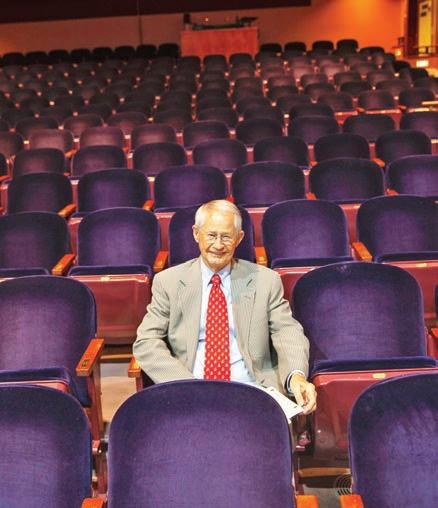
Known affectionately as “Mr. Bend” for the many contributions to his community, Jim has written several plays and screenplays, including the award winning “MENCKEN”; an historical comedy on the life of American cynic and critic H.L.Mencken. Jim has also authored several articles, including a biography of George Putnam, who was an early publisher of the Bend Bulletin and husband to aviator Amelia Earhart.
Active and thriving in their mid-80’s, Jim and Judy attribute their good health to staying physically and mentally active and they encourage people to stay active with some type of physical activity even when they are no longer young.
Jim has been participating in the Huntsman World Senior Basketball Games for the past twelve years, and you might see him practicing at the downtown Cannon Beach basketball court.
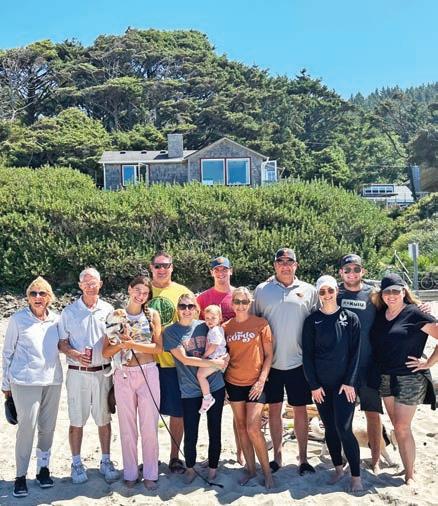
Jim and Judy say that splitting their time between Cannon Beach and Bend is a perfect balance for them. They are grateful for their life and good health, their wonderful 60 years of marriage, and for their 2 children, 3 grandchildren and one great-grandchild who surround them with love and support.
I decided to tour the National Mall to see the Washington Monument and Lincoln Memorial.
During my walking tour I first had contact with individuals picketing the Agricultural Department. Individuals were expressing their concerns that excess food was going to waste and they believed that this food should go to food banks for low income and disabled people.
My next stop was to visit the Washington Monument. The crowd of people on the mall continued to increase which reduced the ability to move around. To avoid the crowd I went to the left bank of the reflection pool. This seemed to be the best route to the Lincoln Memorial. As I
entered the grassy area I noticed many roughly built huts and shacks. As I wandered the area I met a man who told me he was the mayor of “Resurrection City” which included all of the buildings that represented the 50 states.
The individuals staying in “Resurrection City” were in Washington D.C. to hear Martin Luther King give his presentation. They felt he would address many issues that affected the black population of the country. I moved with the crowd closer to the Lincoln Memorial where the event was to take place.
Little did I know that I would witness one of the most significant events which would forever impact our country.
I was in awe of the presentations by speakers and musicians. When Martin Luther King spoke (I Have a Dream) l was overwhelmed by the emotional contagion and by being part of the crowd attending this historymaking event. As I look back 60 years, it still gives me an emotional high as I recall the positive environment where the event took place.
(Martin Luther King delivered his “I Have a Dream” speech from the steps of the Lincoln Memorial to an estimated 250,000 people assembled on the National Mall on August 28th,1963. Cannon Beach resident Uli Pardini and his late wife Judi began visiting Cannon Beach 60 years ago while living in Boise, Idaho, and purchased a home here in the early 1980’s. His daily walks take him throughout the town and usually end at the Bald Eagle Coffee House to enjoy a cup of soup).
September 1, 2023 A2 CANNONBEACHGAZETTE.COM | CANNON BEACH GAZETTE CANNON
Jim Crowell and 4 generations of his family with their cottage in the back ground
Jim Crowell • PHOTO CREDIT: CHERYL PARTON
By
In 1962 I felt I finally had a “real” job. After
four years
the U.S Navy and six years of college, I was hired by the Idaho Department of Health
ULI PARDINI
spending
in
to
spent time adjusting
my
Lincoln
1963 MULTI-USE CANNON BEACH COMMERCIAL PROPERTY $3,150,000 OCEANFRONT HOME ON (2) OCEANFRONT TAX LOTS $2,969,500 CANNON BEACH OCEAN VIEW HOME NEW PRICE $1,450,000 PERFECT WEST GEARHART LOCATION NEAR GOLF COURSE $525,000 Michael HendersonManaging Principal Broker Reid PetersonBroker Jeremy YoungquistBroker Duane Johnson - Founder H22567 ELEGANT, OCEAN VIEW BEACH HOME $2,795,000 SOLD BEAUTIFUL 4.1 ACRE PARCEL WITH STUNNING PANORAMIC OCEANVIEWS! $3,999,000 CANNON BEACH E PRESIDENTIAL 2 SEPARATE LIVING QUARTERS $949,000 1/12TH SHARE OWNERSHIP 3 BED 2 BATH CONDO $99,000 What is RMLS? As the Northwest’s largest REALTOR®-owned Multiple Listing Service(MLS), RMLS serves approximately 10,000 Real Estate Professionals in over 2,200 offices licensed in Oregon and Washington. All brokers listed with firm are licensed in the state of Oregon 296 N. Spruce St. • Cannon Beach • (503) 436-0451 www.duanejohnson.com Active Members of & A VALUED AND TRUSTED RESOURCE WITHIN OUR COMMUNITY AND THE #1 OFFICE SINCE 1990. BEAUTIFUL ARCH CAPE CUSTOM HOME ON OVERSIZED LOT $890,000 SOLD NEW PRICE SOLD SOLD SALE PENDING Oregon is flowing that to of Rocks In canopy watershed intact clear 20 owned has its tense is sively the of est experienced crease the and turbidity wet During these bidity of located Jetty shown relatively of shed exposed increased with down filling of in Besides organic streamwater chlorine drinking chemical Trihalomethanes Haloacetic Over the and issued the federal tection for first 2004, son clearcutting Creek 30% of destroyed. Health the that plant filter” high the in pay ment ting ity violations THMs 65% in shed and revealed of decreased to earlier. of plant small to $2.4 Health to about exceeding THMs fall of (DEQ) residue untreated drinking spraying watershed, 2013 received Authority than system Jetty owned Company, in
Martin Luther King on the steps of the
Memorial on August 28th,
that life critic an aviaJudy in Senior Beach and nohuts of buildings states. were hismoved the which a historyback an the where


An Apocalyptic Walk Into the Jetty Creek Watershed
By BOB ATIYEH

This is the sad tale of a watershed on the north Oregon coast. Jetty Creek is a small coastal stream flowing into Nehalem Bay that provides drinking water to the small communities of Rockaway Beach, Twin Rocks and Nedonna Beach.
In the late 1990’s the forest canopy in the Jetty Creek watershed was healthy and intact and the stream ran clear and cold. Over the past 20 years, this corporateowned 1,340-acre watershed has suffered a 90% loss of its forested canopy due to intense timber harvesting, and is now one of the most extensively logged watersheds on the Oregon Coast. As a result of losing this protective forest canopy, Jetty Creek has experienced a significant decrease in streamflow during the hot, dry summer months and a significant increase in turbidity levels during the wet fall and winter months.
During heavy rain events, these increased levels of turbidity can force the shutdown of the water treatment plant located at the lower end of Jetty Creek. Studies have shown that removing even a relatively small percentage of forest canopy in a watershed results in erosion of the exposed soil along with an increased risk of landslides; with sediment washing down into the streams and filling them with the type of fine silt that clogs filters in water treatment plants. Besides clogging filters, the organic sediment in turbid streamwater reacts with the chlorine used to disinfect drinking water, forming toxic chemical byproducts such as Trihalomethanes (THMs) and Haloacetic Acids (HAAs).
Over the past two decades, the Oregon Health Authority and Rockaway Beach have issued multiple alerts about the drinking water exceeding federal Environmental Protection Agency (EPA) limits for these chemicals, with the first one issued in the fall of 2004, a few years after Stimson Lumber Company began clearcutting trees in the Jetty Creek watershed. By 2006, 30% of the forested canopy of the watershed had been destroyed.
In 2009, the Oregon Health Authority informed the City of Rockaway Beach that a new water treatment plant with a “membrane filter” was needed due to high levels of turbidity, and the city received $2.4 million in state and federal loans to pay for a new water treatment plant. As the clearcutting continued, turbidity increased with multiple violations of safe levels of THMs and HAAs. By 2011, 65% of the forest canopy in the Jetty Creek watershed had been destroyed, and studies of Jetty Creek revealed that the volume of summer streamflow had decreased 30-40% compared to a baseline study five years earlier. Even after completion of the new water treatment plant in 2011, with these small communities obligated to repay $1.7 million of the $2.4 million cost, the Oregon Health Authority continued to issue water quality alerts about their drinking water exceeding safe levels of THMs and HAAs. In the fall of 2013, the Department of Environmental Quality (DEQ) reported that pesticide residue had been detected in untreated Rockaway Beach drinking water after aerial spraying of pesticides in the watershed, and by the end of 2013 Rockaway Beach had received more Oregon Health Authority water quality alerts than any other public water system on the Oregon Coast.
The upper portion of the Jetty Creek watershed is owned by Stimson Lumber Company, headquartered in the Portland area, while

the lower part is managed by Nuveen Natural Capital (formerly GreenWood Resources) for Lewis & Clark Timberlands. Private timber companies own almost 50% of the watersheds in western Oregon supplying drinking water to downstream communities, and almost 60% of the drinking water systems tested in Oregon had detectable levels of pesticides in their water. After cutting down all of the trees in a clearcut, the denuded land is sprayed with powerful herbicides to kill young deciduous trees such as red alder. Red alder is a “pioneer species” and one of the first trees to regenerate after a forest is destroyed; helping to anchor the exposed soil against erosion. Because these trees are able to “fix” large amounts of atmospheric nitrogen into the soil, the enriched soil allows other plant species to grow and thrive. Stands of red alder can serve as natural firebreaks during low to moderate intensity wildfires, as these deciduous trees are much less flammable than conifers. But red alder grow rapidly and compete with the desired commercial monoculture of conifer species planted by private timber companies after clearcutting, so these red alder trees are routinely destroyed with herbicides, along with native vegetation such as elderberry, salmonberry and thimbleberry. These herbicides are usually applied using helicopters, and these extremely toxic chemicals can persist in soil, migrate into groundwater and easily drift on air currents directly into streams and onto adjoining private property. Manual groundlevel herbicide spraying is hazardous not only to the environment but to the people applying it.

Rodenticides are sometimes applied to recently replanted areas to kill native mountain beavers (not an actual beaver) who damage and destroy young trees, with potential secondary poisoning of non-target animals such as owls and raptors.
According to a 2021 Portland State University study, pesticide residue from the types of pesticides used in forestry have been detected in clams, mussels and oysters in intertidal areas along the Oregon coast adjoining coastal streams draining from areas recently sprayed with pesticides. Along with the decreased volume of summer streamflow, an increase in water temperature in the streams flowing through these deforested lands is harmful and can be lethal to populations of endangered coho salmon and wild steelhead. Hydrologists have recently published studies showing a tenfold increase in stream sediment in logged areas compared to uncut areas, and an Oregon State University (OSU) study found a 50% decrease in streamflow in 40 year-old commercial tree plantations compared to diverse forests more than 100 years old. The “Private Forest Accord” taking effect in 2023 and 2024 made incremental changes to the antiquated Oregon Forest Practice Act enacted in the early 1970’s, but even with these modest changes, Oregon’s forestry laws still provide weaker protections for rivers and streams and continue to lag behind more protective and comprehensive forestry laws in the neighboring states of Idaho, Washington and California.
Young trees in commercial tree plantations sequester far less atmospheric carbon than older trees, and OSU studies have shown that wildfires can burn far hotter in dense stands of even-aged commercial tree plantations compared to diverse, intact, mature native forests. While Oregon’s wood products
industry employs about 3% of the state’s total workforce and contributes around 4% of its GDP, it is Oregon’s largest single source of CO2 emissions, contributing 35% of the annual total; more than transportation, agriculture and wildfires combined. A far greater number of Oregonians are employed in the fishing, tourism and outdoor industries, and these industries can be affected by extensive timber harvest. A 2020 article published in The Oregonian and ProPublica stated that “in western Oregon, at least 40% of private forestlands are now owned by investment companies that maximize profits by purchasing large swaths of forestland, cutting trees on a more rapid cycle than decades ago, exporting additional timber overseas instead of using local workers to mill them and then selling the properties after they’ve been logged.” More corporate timber money gushes into the campaign coffers of Oregon legislators than any other state legislature in the country, and in the late 1990’s timber corporations successfully lobbied the Oregon Legislature to eliminate the severance tax on timber harvest. This massive financial windfall for the corporate timber industry has deprived small rural communities of an estimated $2 billion in funding for critical public services over the past 23 years; as the timber industry now pays less than 1% of the severance taxes it paid in the 1990’s.
In late 2013, the EPA and the National Oceanic and Atmospheric Administration (NOAA) issued a finding that the Oregon Forest Practice Act failed to protect water quality in Oregon’s coastal zones, and in 2015 found that the Oregon Forest Practice Act was not in compliance with the federal Clean Water Act in coastal areas. In 2014, after more than 80% of the Jetty Creek forest canopy had been destroyed, the City of Rockaway Beach completed construction of a $400,000 pressurized sand filtration system to enhance the treatment of their drinking water, and water rates almost tripled between 2009 and 2017 to help pay for new water treatment infrastructure.
Some north coast communities such as Astoria, Cannon Beach and Arch Cape own the watersheds supplying their drinking water, but many other coastal communities are not so lucky. Being completely dependent on private timber corporations for the quality and quantity of their drinking water, many of these small communities are left to pay the bills for expensive improvements to their water treatment facilities at the same time that too many raw and unmilled logs flow unrestricted to the People’s Republic of China and the profits from the harvest of Oregon’s natural resources flow to corporate headquarters commonly located hundreds or even thousands of miles from the Oregon coast. With most small Oregon communities unable to afford the multimillion dollar purchase price for their watersheds, the ballot box remains one of the best options to ban clearcut logging and herbicide spraying in watersheds supplying drinking water to the citizens of Oregon.
Less than a century ago, hundreds of thousands of acres of temperate rainforest on the north Oregon coast and throughout the north Oregon Coast Range remained roadless and unlogged, containing massive centuries-old trees more than 10 feet in diameter. We’ll never know what was lost within the depths of these ancient forests, as almost all of them have been destroyed by logging or the massive
fires ignited by logging operations. What was once one of the greatest forests on the planet in terms of biomass per acre has been converted to hundreds of thousands of acres of singlespecies even-aged commercial tree plantations that are “harvested” every few decades. Even if left alone, it is doubtful whether this temperate rainforest has the

ability to regenerate into the healthy biodiverse ecosystem it once was. Timber corporations are already feeling the effects of a rapidly changing climate as their monoculture plantings of young Douglas fir are stunted by fungal Swiss Needle Cast disease and their plantings of young Western hemlock succumb to the hotter and drier summers. The walk into the Jetty Creek
watershed had an apocalyptic feel to it as smoke from the massive Canadian wildfires drifted south along the Oregon coast, creating a hazy brown backdrop to the stumps of the sadly denuded forest. It felt like a harbinger of the natural disasters hurtling towards us if we refuse to change and continue our collective journey down the dead-end path of denial.
September 1, 2023 CANNON BEACH GAZETTE | CANNONBEACHGAZETTE.COM A3 Media,
Judi Beach purchased take and Eagle cup www.brucescandy.com • 503-436-2641 Freshest Homemade: Saltwater Taffy Chocolates Caramel Corn Caramel Apples & MORE!! Back to school is a sweet time of year! H22573 Downtown Cannon Beach Visit our online store and shop for Sweet Treats from Cannon Beach WE SHIP! The only saltwater taffy made in Cannon Beach!
Dream”
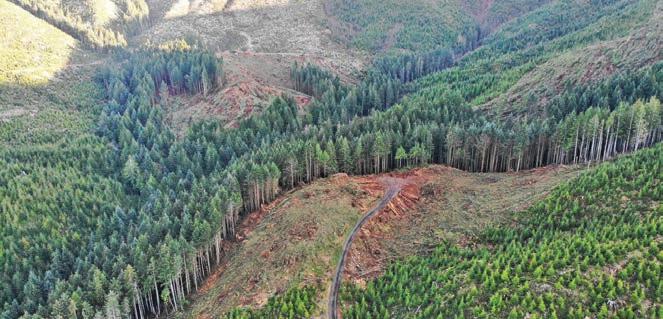
Logging in the Jetty Creek watershed in late 2020.
PHOTO CREDIT: DRONE PHOTOGRAPHY BY DR. TRYGVE STEEN
A late 2022 aerial view of private timber land in the north Oregon Coast Range, with clearcuts abutting the boundary of Saddle Mountain State Park. The narrow ribbons of trees left standing along streams are subject to blowdown. • PHOTO CREDIT: RICHARD FELLEY
Clearcut in the Jetty Creek watershed
PHOTO CREDIT: JULIE MAXFIELD
A Unique Perspective of Cannon Beach
By JASMINE SCHERMERHORN
Growing up in Cannon Beach has been extraordinary. This town goes beyond a place just for tourism and its sandy beaches; it’s a small town we young adults desire to return to not only when we grow up
but when we move on to new places in our life. This small town represents a community that feels like family. As a teenager in a small town, we don’t just know everyone but everyone knows us. This means no going out after curfew and most importantly no causing trouble. Something I have enjoyed for the

longest time is biking around this town; it’s protected and the streets aren’t filled with cars as many cities are. One thing that is unique about the streets of Cannon Beach is that they’re safe, even at night. To us teens cars aren’t something we use as transportation on the streets in Cannon Beach and bikes
are something we take pride in riding. I’m sure the older generation can relate to using bikes all the time when they were young. After a bonfire or late-night hangout my friends and I would normally bike home. We don’t worry about homelessness, dangerous citizens, or even the freshly escaped cougar. This
town is and always has been free from danger; we appreciate and find admiration in that. Not once have I been worried about running into something on my way home, or even walking to my car after a long shift at a local restaurant. No other town allows you the safety of biking around, even after nightfall,
with a cozy feeling. The way street lights give a warm glow onto the streets and the ocean roars a calming sound as you stroll along the town. We feel secure and at home, something every teen desires, and it’s a place where we can create memories. I have so much love for this town.
A North Coast Powered Paraglider Pilot Explains His Sport
concept is simple. The glider is laid out on the ground and then pulled up into the air with one’s body. Once it’s overhead, power is applied to the engine which pushes the wearer. After a short run, the pilot is airborne sitting comfortably in a lawn chair suspended by strings. Flight controls are simple as well. We have a left and right pulley for directional changes and they are pulled symmetrically on landing to make it softer. Adding more power allows one to climb higher and power is removed to descend.
By STEPHEN MINTIE
Have you ever looked up at the clouds wondering what it might be like to fly amongst them? Have you ever taken a commercial flight that just passed above the overcast to a realm of blue sky, sunshine, and heavenly terrain below only to wonder what it may be like to soar in the air without being encased in a loud metal tube? What if I told you that it is entirely possible to run off flat ground, no hills or cliffs, and fly as high as the air will provide you oxygen only to return gently on your feet after a few hours? All for the cost of a base-level Harley Davidson and safer than riding a motorcycle, this can be attainable. This form of aviation exists and I have experienced it with children as young as 12 and adults as old as 90. High altitude isn’t necessarily for everyone though. Some enjoy cruising tree tops, flying while dragging their feet on the ground, or even performing acrobatics. This is the magic that powered paragliding provides. A normal paraglider uses what amounts to a large kite that when inflated, acts like a wing. You can think of it like a sky diver’s parachute, but it’s designed to glide and keep you aloft as long as possible. Paragliders have to use higher elevation terrain to launch in order to achieve flight and then they must make choices just like large winged birds do to stay aloft. Air rushing up the sides of beach dunes or mountains provide lift. The sun also heats up the terrain unevenly creating invisible currents resembling dust devils that can be ridden all the way to the cloud base.
Powered paragliding takes this concept but makes it selfcontained with the addition of a lightweight 2-stroke engine and a four and a half-foot propeller that one wears on their back. The process to take off takes practice, but the



Surely there must be rules applicable to powered paragliding, as aviation in of itself can be unforgiving should something go wrong, sometimes at the cost of many lives. The Federal Aviation Administration actually does have regulations that pertain to powered paragliding under FAR 103. To put it simply, our equipment has to be under a certain weight. We can only carry up to 5 gallons of fuel, we cannot fly over people and buildings, and we have to obey the laws of restricted airspace just like any other aircraft. A pilot flying in the empty Great Plains would have total freedom up to 18,000 feet, all without a license.
Recently there was a disturbance at Cannon Beach where out-of-state powered paragliding pilots had flown by Haystack Rock as well as launched and landed from nearby beaches. These pilots did several things wrong. Non-local pilots should always consult local pilots to avoid disturbing residents, avoid busy air traffic paths, especially from the military, and respect protected wildlife refuges. Aeronautical charts are available to anyone that clearly outlines areas of restricted airspace. Haystack Rock and its bird population is protected by federal law up to 2,000 feet on these charts. Finally, they were operating on the ground in close proximity to people creating an unacceptable hazard due to propellers that can spin as high as 8000 rpm. Upon further investigation, I found one of the pilots had behaved unprofessionally in Jackson Hole, Wyoming which resulted in the community imposing restrictions.
Accountability is usually handled by local authorities and the FAA. The FAA regulations are sometimes vaguely written so that they have a wide ranging ability to determine what is lawful and unlawful, and violations can result in the prohibition of operating an aircraft and/ or fines of tens of thousands of dollars. There exists an organization called the United States Powered Paragliding Association that works with the FAA to help ensure that the regulations of FAR 103 are sufficient with the expectation from the FAA that active measures are in place to self-police the community
The incident in Cannon Beach affected me quite personally. I’m a resident of Tillamook and the last thing I would want would be for
people to see me doing the thing I love looking at me with disdain. My wife and I are avid hikers with a deep appreciation of nature and the well cared for trails and protected wildlife. We also care deeply about our neighbors and wish to be positive contributing members of our community. I consider the incident a personal embarrassment to the level of wishing to take ownership of it. Though flying on a lawn chair is quite magical in of itself, it also has powerful inspirational and healing properties. I’ve personally witnessed war veterans with debilitating PTSD find a new lease on life. I’ve trained with people who have lost children to tragic accidents find a way to cope with their loss. Within the flying community I’ve seen how this has bridged cultural, political, and religious divisions that would normally have separated people on the ground. Powered paragliding represents the freedom and joy that so few people ever get to experience in their lives, and in my opinion the people who participate should do so with gratitude.
I walked over to Haystack Rock recently and was amazed by how many of my avian feathered friends called it home. I have plenty of land and air to enjoy and thrive, and I feel they deserve the same. Most ultralight pilots gain a deeper respect, especially for larger birds, as they are natural experts of air currents using them to their advantage. We watch and learn from them. People who paraglide and pursue powered paragliding have to be careful around birds of prey as they will attack our canopies if threatened. I don’t know if this is true, but I asked a local if that is an issue in this region. They said, “No, the spots where we fly, they grew up with us.” I’ve experienced a lot, but I can’t imagine a more special moment than if another flying creature decided to suddenly fly parallel with me to share a moment of friendly curiosity.
As a representative of the powered paragliding community, I apologize for the rude, careless, and selfish actions of a few. I hope this doesn’t tarnish the image of what we do. I put a great deal of effort into addressing this in the powered paragliding community at large and being one of the most outspoken members of that community, I think I made my point amongst the offenders. I’ve said before that I’ve flown with children as young as 12 and adults as old as 90. You don’t have to be an athlete to do this nor an adrenaline addict. Enjoying this activity does not make us better than anyone and I would expect any of us should have the utmost respect for our feathered flying brethren as well. I’ll continue to work with the flying community at large, local authorities, and residents to make sure all of us adhere to our number one unwritten rule: whether you are legally allowed to do something or not, be a good neighbor
tions production resident title Jolene with Awareness plays on experience, and shows speare theatrical to like ing love not,” Catskill York

September 1, 2023 A4 CANNONBEACHGAZETTE.COM | CANNON BEACH GAZETTE CANNON
Did you know the Cannon Beach Gazette is FREE to read online? Keep up on Cannon Beach news at www cannonbeachgazette.com
Cannon Beach actor has lead in ‘Macbeth’ and actress plays four roles
By PATRICK WEBB
Two actors with strong Cannon Beach connections are appearing in a fall production of “Macbeth.”
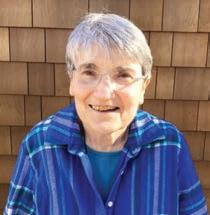
In fact, Cannon Beach resident John Hoff plays the title role. He is joined by Jolene Magee, who works with the Haystack Rock Awareness Program. She plays four roles.
For Hoff, the role draws on 11 years of professional experience, acting in plays and appearing in movies, TV shows and commercials.
He is savoring the Shakespeare experience — his 37th theatrical production. “I love to be around theater people. I like the collaboration, meeting new people, and I just love to play somebody I’m not,” he said.
Hoff grew up in the Catskill Mountains of New York and lived in New York
City as an actor, studying at various schools including the American Academy of Dramatic Arts. He acted in a television pilot and has appeared in the daytime TV soap opera “As The World Turns,” as well as playing the villain in an Amazon Prime show, “In Plain Sight.” He has done voiceover work, including a Japanese anime character in three movies. One of his projects was featured at the Bratislava Film Festival, where he spoke and was interviewed by a European news network. He received his business degree from the University of Texas in Austin and has also worked in software sales and education.
‘Fabulous’
He and his wife moved to Cannon Beach from Denver in 2020. Since then, as an actor and director, he has
THEATRE AT ITS BEST
Agnes of God
By RICK GRAY
In the last edition of the Gazette, I let myself go on the subject of American theatre – why it’s in trouble, and why it deserves to be. These questions are part of a larger theme I often explore in my writing, i.e., the decline of our national culture because of a long-term trend toward treating people like infants.
We see this in two major forms: preaching and overprotection. In our news media, politicized networks – left and right – tell us what we “need to know” and carefully protect us from information which might tend to challenge our beliefs. Whether it’s FOX News or MSNBC, you get the feeling you’re being spoon-fed –perhaps by choice – lest your opinions become nuanced. A far cry from Walter Cronkite, who told us – in his nightly phrase – “that’s the way it is”.
We see it in education.
In our universities, there’s a deadly blend of uniformity – on most campuses, left-wing uniformity – and an embarrassing tendency to treat young adults as fragile beings who can’t handle challenging points of view.
In our K-12 schools, it shows up in a tendency to purge libraries and reading lists, and in arguments over how to introduce children to the darker side of America’s history, or the fact that human beings have a variety of ways of expressing their sexuality. Here, the variety is less uniform than at the university level, as public schools respond to the politics of states and localities. But there’s that dual tendency toward preaching and protection – rather than exposing young people to the complexity of life, and encouraging them to think for themselves.
In my last piece, I deplored this similar trend in American theatre. Some might consider this of less importance than our media, our politics, and our schools – and perhaps it is. But theatre is also more vulnerable than these well-funded institutions. And it receives far less publicity. Theatre’s are, in a way, the canary in the coal mine. If, as a result of being too preachy or too careful not to offend - too “woke” or too fluffy – our theatres continue to close, that could tell us something about the future of larger, better-funded institutions. At least, that’s my thought.
Which is why I’m happy to devote a few paragraphs to a very hopeful sign of a counter-trend – right here on the North Coast. Rising Tide Productions is currently stag-
been involved in five shows at the Coaster Theatre. It is his second production of “Macbeth,” having played the king’s son Malcolm 23 years ago. To date, his favorite Shakespeare role has been Slender in “The Merry Wives of Windsor.”
The show’s director, Sam Dinkowitz, is a recent transplant to Clatsop County, who has acted in 10 Shakespeare productions, including “Macbeth” at the Oregon Shakespeare Festival in Ashland. He has played roles in the TV shows “Leverage” and “The Librarians” and has specialist training as a stage fight choreographer.
He said he was delighted to cast Hoff as the lead, because the experience he brings means he can direct at a deeper level. “He has been fabulous, with his constant enthusiasm, and getting into the text, and basically being
‘off-book’ on Day 1 of rehearsal,” Dinkowitz said.
Hoff said he has enjoyed being in the drama.
“The reward is knowing you have put on a great show, and that there’s truth in the show, and the audience actually bought into it. With comedy, you can tell with the laughter, but with a dramatic piece, it’s the silences and no movement,” he said.
He said actor Ed Harris, a former college football player, once compared a good acting performance to a sports team executing a well-practiced scoring play.
“You get these chills and — wow!” Hoff said. “It really is the truthful moment, and it doesn’t feel like pretend.”
4 roles
Because of space constraints at the Astoria storefront theater, just 10 actors play all the roles. Costumes
AT THE LIBRARY
ing John Pielmeier’s Agnes of God – a deep, complex, and disturbing story about faith, modern science and truth that life is sometimes too complicated for either, or both, to offer pat solutions. I’d seen a production of Agnes of God nearly 40 years ago, and ever since, I’d thought of it as the best thing I’d seen on any stage, including Broadway and London’s West End. I hoped that this production, directed by George Dzundza, would live up to that memory.
I was not disappointed. Agnes of God, now playing at the NCRD Performing Arts Center in Nehalem, is as good an argument as I can think of to support American theatre. One of the great scripts of the past 50 years, performed by three extraordinary local actors – Susi Brown, Cameron (Cami) Lira, and Kenia Goodman –combine to offer an evening that is powerful, meticulously realized, and very hard to forget.
I had thought to write a full review of this play, but –having seen it – I realize how difficult that would be without intruding on the way this play works. Agnes of God raises questions. If you see it, you will leave the theatre pondering those questions for some time. For me to force myself to an opinion in time for a newspaper deadline, would short-circuit my thought process. And Agnes of God doesn’t want you to do that. It wants to stay with you for longer than it takes to walk to your car, or drive home.
It wants to haunt you.
So I’ll keep this brief. Without giving anything away, an innocent young nun – with no experience of men or of sex – is found unconscious near her bed. In a wastebasket next to the bed is a newborn baby - dead. Because this becomes a police matter, the court appoints a psychiatrist to determine the mental state of the nun. Her mother superior becomes involved – both to protect her, and to try to understand what happened. The entire drama works itself out among these three women. By the play’s end, you know more than when you started – but by no means everything. Agnes of God ends as it begins, in mystery.
And it will stay with you.
Agnes of God runs through September 10th. Tickets are only available at the door. I hope many readers will decide to go. You won’t have seen anything more powerful on stage in a very long time.
A Fall Celebration and AboutMusingsClimate Change
By PHYLLIS BERNT Library Board President

September promises to be a busy month at the library. Throughout the month of September, patrons can prepare for the library’s Fall Celebration by purchasing raffle tickets for packages of gift certificates and by placing bids in a silent auction.
The library has traditionally welcomed autumn with a fall fundraiser; this year’s fundraiser is a Fall Celebration on Saturday, September 30, at the library, 131 N. Hemlock in downtown Cannon Beach.

Generous local merchants and restaurant owners have donated seven bundles of gift certificates, with each bundle worth about $150. Raffle tickets for the gift certificates are one for one dollar, six for five dollars or 25 for twenty dollars.


Auction items donated for the silent auction include overnight stays at the Hallmark Resort & Spa, Land’s End at Cannon Beach, the Ocean Lodge, the Surfsand Resort and the Tolovana Inn; as well as a gift certificate for the Stephanie Inn Dining Room, and a gift certificate for hand blown glass from Ice Fire Glassworks.
Raffle tickets can be purchased and bids for the silent auction can be made at the library beginning September 1 and ending the day of the Celebration. Winners of the gift certificate raffle and the silent auction will be announced at a 3 p.m. ceremony on September 30. Also announced will be the winner of the raffle for the beautiful
have been designed to add accessories to avoid timeconsuming changes.
Hoff is the only one who doesn’t have double duty. Magee, in her second Ten Fifteen show, appears as Lady Macduff, one of the three witches, a Scottish nobleman, and Lady Macbeth’s attendant.
Originally from Michigan, Magee attended Oakland University and earned a degree in psychology; she is studying for another degree in environmental science and wildlife management from American Public University.
Her husband’s deployment as a public affairs specialist with the U.S. Coast Guard brought her to the North Coast in 2022. As well as working with the Haystack Rock program, she is Tidepool Ambassador Program coordinator with North Coast Land Conservancy, and a
volunteer with the Wildlife Center of the North Coast. Her prior stage experience includes portraying Frenchy in “Grease” and Nurse Ruth Kelly in “Harvey,” plus two seasons at a dinner theater in Cape May, N.J., and three years as a performer and director of American Immersion Theater of New Orleans. Theater is a refreshing change of pace from her other activities. “This is my one time to be able to drop off all the stuff going on in my life and do something else,” Magee said. “It’s fun. It’s absolutely my ‘me time.’ It’s self care.”
The play will be staged at the Ten Fifteen Theater at 1015 Commercial St., Astoria. Performances are 7:30 p.m. Sept. 15-16, 21-23; and 3:30 p.m. Sept. 17. Tickets are $20, available online at www.thetenfifteentheater. com
autumn-themed quilt which is on display at the library; ticket sales for the quilt raffle will also continue until September 30. Raffle and auction winners need not be present to win.
The Fall Celebration will also include fall-themed crafting projects for children, from 2 to 3 p.m. And, prior to the announcement of raffle and auction winners, there will be drawings for door prizes and a cake cutting to celebrate the library’s 96th anniversary.
September also marks the beginning of the 2023-24 season of the NW Authors Speaker Series. Oregon Book Award-winning author and Emmy-nominated screenwriter Jon Raymond will kick off the season with a talk at 2 p.m. on Saturday, September 16. This will be a hybrid event; participants can attend the talk in-person, or watch the event online through the library website (www.cannonbeachlibrary. org).
Raymond, an Oregon native, draws on his roots in his first novel, “The Half-Life,” which is set in the Oregon of the 1820’s and the 1980s, and was the basis for the film, “First Cow.” His first collection of short stories, “Livability,” won the Oregon Book Award for Fiction; two of the stories in the collection were adapted into feature films. Raymond’s other novels include “Rain Dragon,” “Freebird” and “Denial.”
A successful screenwriter, Raymond, often working with director Kelly Reichardt, wrote the screenplay for several films, including those based on his own novel and short stories. He also co-wrote all the episodes of the HBO miniseries “Mildred Pierce,” for which he was nominated for a Primetime Emmy.
Raymond’s most recent novel,”Denial,” is set in 2052, after climate change has taken a toll and powerful oil executives and lobbyists have been found guilty of crimes against the environment. Enter Jack Henry, a Pacific Northwest journalist who hopes to save his job by unmasking an escaped oil executive, but who finds himself faced with a moral dilemma.
Critics have called “Denial,” which has been nominated for an Oregon Book Award, “enthralling,” “subtle and morally engaging” and a “cool, compelling take on an incendiary topic.”
September also includes a meeting of the Cannon Beach Reads book club, which will meet at 7 p.m., Wednesday, September 20, to discuss, coincidentally, another book about climate change, “The Story of More: How We Got to Climate Change and Where to Go from Here,” by Hope Jahren. This will be a hybrid meeting with participants able to join the discussion in person at the library or virtually through Zoom.
Jahren, who also wrote “Lab Girl,” is an awardwinning scientist who was named one of the most influential people in the world by Time magazine and was named one of the “Brilliant 10 Young Scientists” by Popular Science. Critics have called her “the voice science has been waiting for,” and it is easy to see why in “The Story of More.”
Using the year of her birth, 1969, as a reference point, Jahren explains how our quest for more –more cars, more energy usage, greater crop yields–are contributing to climate change. In calm, simple-to-understand language, she offers scientific explanations and eye-popping statistics to show the impact on the planet of 50 years of human consumption. Jahren is realistic in her assessment of climate change, neither haranguing the reader with visions of gloom and doom or offering false hopes for easy solutions.
Mary Lloyd will lead the discussion, which will begin at 7 p.m. on Wednesday, September 20, at the library. The Zoom link for those who wish to participate from home is available by emailing Joe Bernt, berntj@ohio. edu. Coffee and cookies will be provided for those participating in person. New members, whether in person or via Zoom, are always welcome.
Patrons can spend September reading a host of
POP UP!
An evening of award-winning short films, courtesy of the 2023 McMinnville Short Film Festival ! Saturday, Sept. 23rd at the NCRD Performing Arts Center in Nehalem.

We’ll be showing a mix of genresall award winners from this year’s festival.
7 pm. Tickets are $10 and will be sold at the door.
new books. A book that has been in print since 2005, but wasn’t part of the collection, has been added in response to popular demand. The library has added “American Prometheus: The Triumph and Tragedy of J. Robert Oppenheimer” by Kai Bird and Martin Sherman, in response to interest in Oppenheimer’s life created by the recent film, “Oppenheimer.”
The library is also adding eight fiction titles, including “Canary Girls” by Jennifer Chiaverini, “ The Invisible Hour” by Alice Hoffman, “The Free People’s Village” by Sim Kern, “The Heaven & Earth Grocery Store” by James McBride, “Tom Lake” by Ann Patchett, “Fever House” by Keith Rosson, “The Brightest Star” by Gail Tsukiyama and “Crook Manifesto” by Colson Whitehead.
The nine mysteries added are “Catch Me if You Candy: A Bakeshop Mystery” by Ellie Alexander, “Birder, She Wrote” by Donna Andrews, “Next in Line” by Jeffrey Archer, “Sleepless City: A Nick Ryan Novel” by Reed Farrel Coleman, “Good Bad Girl” by Alice Feeney, “Evergreen” by Naomi Hirahara, “None of This is True” by Lisa Jewell, “Lavender’s Blue” by Bob Mayer and Jennifer Crusie and “The Bone Hacker” by Kathy Reichs.
Finally the five nonfiction titles added are “The Underworld: Journeys to the Depths of the Ocean” by Susan Casey, “The Death of Public School: How Conservatives Won the War over Education in America” by Cara Fitzpatrick, “Palo Alto: A History of California, Capitalism, and the World” by Malcolm Harris, “Restoring Eden: Unearthing the Agribusiness Secret that Poisoned My Farming Community” by Elizabeth D. Hilborn and “A Short History of the World in 50 Lies” by Natasha Tidd.
September 1, 2023 CANNON BEACH GAZETTE | CANNONBEACHGAZETTE.COM A5
Showtime
Ticket
be
into a Raffle for
all access
festival
NCRD Performing Arts Center 36155 9th Street, Nehalem mcminnvillefilmfest.org • ncrd.org 971-308-0309 H22531 H22550
holders will
entered
“2024
film
passes”.
Licensed Practical Nurse [LPN]


Part time position (24 hours weekly) w/excellent benefits.




Compensation: $29 - $39 Hourly, DOE




Tillamook Family Counseling Center (TFCC) seeks a Licensed Practical Nurse [Part Time 24 Hours per Week] as a health provider for its Assertive Community Treatment Team (ACT). The LPN provides health care coordination, client support, and triage in home and community settings to adults presenting with severe and persistent mental illness.








Tillamook Family Counseling Center is a drug free workplace and equal opportunity employer.




If you are interested in this position, please apply online at http://tfcc.bamboohr.com/jobs. Be sure to submit an online application and upload your resume. Any questions, please visit us online at http://tfcc.org.
503-842-7535
H22117


LETTER TO THE EDITOR
Dear Editor,


It was a shock to see Ecola Creek diminished to a small trickle, able to hop over its ankle depth without effort. Then moments later to have to dodge around a full sized pickup truck coming at me, on the beach! Apparently
WELCOMING PLACE CONTINUED FROM PAGE A1


pits under the school property that were buried with sand to build the school. There is magical, cultural, and historical wonder at this site and along Elk Creek. All of this is surrounded by the beauty of nature in Cannon Beach. The Necus’ School Project will be the gateway structure that welcomes people upon entering Cannon Beach and the site will be a jewel on the Pacific
Northwest Coast.
Bruce St. Denis said that “when I go to this site, I feel like I am a part of something bigger”.


Dick Basch’s wish is to attract the type of visitors who come to Cannon Beach because of their love of nature, wildlife, history, art and culture, and to attract those who want to experience the wonder that makes Cannon Beach a sacred place.




Members of the Development Committee remember the blessing that “jump started” the creation of this “Welcoming Place”;


A Prayer from Tsutseblue, Roberta Basch, Puyallup Tribal Member and wife of Dick Basch:




“Thank you Creator for this sacred place. We ask for your continued blessing throughout this project so that people can come


now the Life Guards feel the need to drive up and down the once pleasant refuge from such gas engine mania. I’m interested, does anyone else see the connection . . . no Ecola Creek - Life Guards driving around on the beach? Perhaps a fat-tired bicycle would be a better choice. This poor earth has had enough.
Rod Endacott
here and feel and be part of the beauty and power of this land, the trees, the mountains, the water, and ocean. We ask for continued blessings and give thanks for the four-legged that come here, the ones that swim in the waters, and those that fly above. We ask that the minds and hearts of all can continue to be touched and healed by the blessings and beauty of this sacred place”.
September 1, 2023 A6 CANNONBEACHGAZETTE.COM | CANNON BEACH GAZETTE CANNON Church Services by the Sea Cannon Beach to Nehalem Nehalem Nehalem Bay United Methodist Church 36050 10th Street, Nehalem, OR (503) 368-5612 Pastor Celeste Deveney + Sunday service 11 a.m. Food Pantry Open Friday, Saturday & Monday 10 a.m. to 2 p.m. Wednesday March - October 2 p.m. to 6 p.m. November - February noon to 4 p.m. Nehalem Senior Lunches Tuesday & Thursday served at noon email: nbumcnsl2020@gmail.com To feature your spiritual organization on this panel: Contact Katherine at (503) 842-7535, headlightads@countrymedia.net CLASSIFIEDS PUZZLES ABOUT US CANNON BEACH GAZETTE The Cannon Beach Gazette is published biweekly by Country Media, Inc. Publisher, David Thornberry 1906 Second Street, P.O. Box 444, Tillamook OR 97141 PHONE 503-842-7535 • FAX 503-842-8842 cannonbeachgazette.com Member Oregon Newspaper Publishers Association (ONPA) © 2023 by the Cannon Beach Gazette. No portion of this newspaper may be reproduced in any manner without prior written permission from the publisher. All rights reserved. Katherine Mace Advertising Account Executive 503-842-7535 headlightads@countrymedia.net The Cannon Beach Gazette is part of the Country Media family of newspapers. LETTER POLICY The Cannon Beach Gazette welcomes letters that express readers’ opinions on current topics. Letters may be submitted by email only, no longer than 300 words, and must be signed and include the writer’s full name, address (including city) and telephone number for verification of the writer’s identity. We will print the writer’s name and town of residence only. Letters without the requisite identifying information will not be published. Letters are published in the order received and may be edited for length, grammar, spelling, punctuation or clarity. We do not publish group emails, open letters, form letters, third-party letters, letters attacking private individuals or businesses, or letters containing advertising. OBITUARIES Email obituaries to: classifieds@orcoastnews.com The Cannon Beach Gazette has several options for submitting obituaries. • Basic Obituary: Includes the person’s name, age, town of residency, and information about any funeral services. No cost. • Custom Obituary: You choose the length and wording of the announcement. The cost is $75 for the first 200 words, $50 for each additional 200 words. Includes a small photo at no additional cost. • Premium Obituary: Often used by families who wish to include multiple photos with a longer announcement, or who wish to run a thank-you. Cost varies based on the length of the announcement. All obituary announcements are placed on the Cannon Beach Gazette website at no cost. Advertising Deadline: Noon Mondays week of publication Deadline for letters, press releases and other submissions: Noon Mondays week of publication, will depend on space. Email to headlighteditor@countrymedia.net classifieds@orcoastnews.com Siah J. Kennedy Office Manager/ Classifieds & Legals PUZZLES BUSINESS DIRECTORY ADVERTISE YOUR BUSINESS HERE TO CREATE TOP OF-MIND-AWARENESS CALL 503-842-7535 OR EMAIL HEADLIGHTADS@COUNTRYMEDIA.NET TODAY! ARBORIST - TREE CARE ISA Certified Arborists ISA Board-Certified Master Arborist ISA Tree Risk Assessment Qualified Comprehensive Service, Pruning/Removal, Stump Grinding/Hazard Evaluations (503)791-0853 www.arborcarenw.com Care for Your Trees H22358 CCB#171855 LCB#9343 WA#ARBORCI909RW BoB McEwan construction, inc. Excavation • undErground utiitiEs road work • Fill MatErial sitE PrEParation • rock owned and operated by Mike and Celine MCewan Serving the paCifiC northweSt SinCe 1956 • CC48302 503-738-3569 34154 Hwy 26, Seaside, OR P.O. Box 2845, Gearhart, OR CONSTRUCTION Laurelwood Farm Laurelwood Compost • Mulch • Planting MacMix Soil Amendments 34154 HIGHWAY 26 SEASIDE, OR 503-717-1454 YARD DEBRIS DROP-OFF (no Scotch Broom) H49573 LANDSCAPING
and a low Ecola
Lifeguards
Creek
www.cannonbeachgazette.com Read the Cannon Beach Gazette FREE ONLINE to name a humble heart with family strangers. from illustrious 20th autumn Beach,” Magazine weekend from the place Come year to dream tural 20 Cottage fundraiser Beach seum, of Beach, been egonian Magazine. is weekend September ing the Center as 5:30pm, music duo air. explore Cannon
A Big Thank You From the Family of Don Osborne
By DEB ATIYEH
The family of Don Osborne Jr. would like to extend a big thank you to
Tolovana Arts Colony and the community of Cannon Beach for supporting the Art Giveaway on August 19th. Don’s family was able
to share Don’s art and raise over $2,000, along with four big boxes of food, that was divided between the Cannon Beach Food Pantry, the
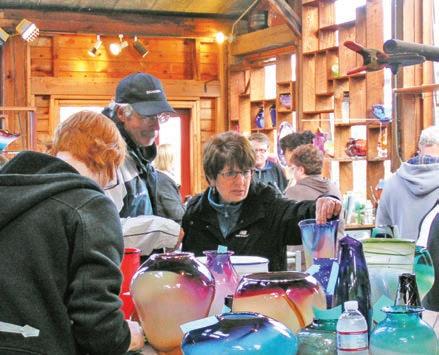
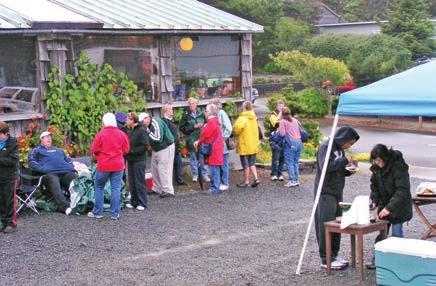
Nehalem Food Bank, and the North Coast Community Food Bank. The family was thrilled with the outcome and Don would have loved that
his art was able to provide some assistance to members of our community. Don Osborne was a treasured local Cannon Beach artist who
passed away in February. Thank you to Don and his family for sharing his treasures with the Cannon Beach Community.
IceFire Glassworks’ Annual Seconds Sale is Labor Day weekend
September 2nd, 3rd and 4th 2023
Thisyear’s sale features Jim Kingwell, Suzanne Kindland, Mark Gordon, and Jeff & Heather Thompson. Each Labor Day weekend, we offer up a selection of near-perfect and experimental pieces from an entire year. This is your chance to find that just-right gift or to add to your collection.
On Saturday morning we’ll serve breakfast bites at 7:30 am, and we’ll open our doors at 8:00 am.
About Icefire Glassworks
Jim Kingwell began blowing glass in 1971, and he moved his business to Cannon Beach in 1991. Since then, Icefire Glassworks has grown to represent a collection of artists whose work we believe in. Today, the gallery showcases glass art by Jim, Suzanne Kindland, Michelle Kaptur, Mark Gordon, Kathleen Sheard, Jeff and Heather Thompson, Anthony Parker, Teresa Kowalski, Laura Bowker, John Santellano and David Haberer. Icefire Glassworks is located at the corners of
20th Annual Cannon Beach Cottage Tour: Tickets available now!

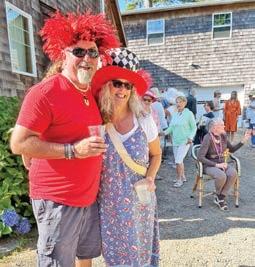
CANNON BEACH, Ore. – The “best autumn event in Cannon Beach,” according to Sunset Magazine returns for a weekend of fun-filled events from September 8 – 10 with the tour of homes taking place only on Saturday 9th.
Come celebrate our 20th year of opening the doors to historic cottages, beach dream homes, and architectural wonders. For the past 20 years, the Cannon Beach Cottage Tour, a cherished fundraiser for the Cannon Beach History Center & Museum, has showcased dozens of homes throughout Cannon Beach, many of which have been featured in The Oregonian and Oregon Home Magazine.
While the tour of homes is the main event, start the weekend off right on Friday, September 8th for the Opening Night Benefit Bash at the Cannon Beach History Center & Museum. As soon as the doors are open at 5:30pm, beautiful bossa nova music by Pacific Northwest duo BELEZA! will fill the air. Come as you are and explore the unique history of Cannon Beach through the
museum’s exhibits, enjoy hors d’oeuvres, sample local brews poured by the experts at Pelican Brewing Company and local wine by The Wine Shack, and place winning bids on sought-after items in our second annual silent auction. Bid on an evening at the Governor Oswald West Log Cabin or a beautiful art piece from Icefire Glassworks, among other incredible auction items. The tour of homes is a one-day only event on Saturday, September 9th and goes from 12pm – 5pm. To commemorate the 20th anniversary of the Cottage Tour, tour goers will have the opportunity to revisit over a dozen historic cottages and dream homes from years past in a “Greatest Hits Tour.”
Locations on the tour will range from Tolovana to the Presidential Streets. One of the town’s most
iconic and memorable homes on the tour this year is the home of former Governor Oswald West. Oswald West paved the way to ensure Oregon’s beaches remain public for all. A shuttle will be provided this year and will have designated stops along the tour route so tour goers will not have to drive and park to each location. During the tour and the rest of the weekend, have fun taking advantage of the Out on the Town
perks where you will receive discounts to local businesses, included in the cost of your home tour ticket. Tour goers are encouraged to purchase tickets in advance this year as the price will increase on tour day. Maps for the tour are not distributed until noon on the day of the tour.
Don’t forget to stick around on Sunday, September 10 at 11am for our upgraded and popular event, High Tea by the Sea. Enjoy
delicious tea and delectable treats from Cannon Beach Bakery and Cannon Beach Chocolate Café while taking a watercolor art class led by Nicole Poole. Nicole is an artist living in the Pacific Northwest. She currently teaches art demonstrations, workshops, and classes at Oregon Society of Artists. In this art class you will use professional watercolor paints and follow along with Nicole’s step-by-step process of sketching and painting beautiful flower centerpieces. Tickets for this event are now sold out, but you can email info@cbhistory. org to be put on a waiting list. Tickets for each event are available to purchase now. The Opening Night Benefit Bash is by donation, the tour of homes tickets is $45 (we encourage tour goers to purchase tickets in advance as ticket prices
will increase $50 on the day of the tour), and the High Tea by the Sea tickets are $30 (this event is sold out and you can contact the museum to be put on a waiting list). Museum members: don’t forget to ask about your special discount. Tickets are available to purchase by phone at 503-436-9301, in person at the museum, or through the online gift shop at www. cbhistory.org/shop
The Cannon Beach History Center & Museum is a private non-profit organization that was created to collect and preserve the history of Cannon Beach and Arch Cape. Admission to the museum continues to remain donation-based so anyone can visit regardless of the ability to pay. Proceeds from the Cannon Beach Cottage Tour weekend of events go directly to funding the museum’s lecture series, field trip program, exhibits, and day-to-day operating costs. For more information about tickets or other event information, contact the Cannon Beach History Center & Museum at 503-436-9301 or by email at info@chbistory. org
Friends of Kathe Leduc have a Parade in her honor



 By JUDY MACE in
honor of
Kathe Leduc
Amighty woman of tiny stature and her name is Kathe Leduc. She is a humble soul with a caring heart that she liberally shares with precious friends and family as well as complete strangers.
Kathy originally hails from Canada, following an illustrious career as an Ice
Capades skating star. Not many people can claim such an uniquely artistic means to earn their livelihood.
What a gift Kathe’s volunteerism has been to this village! The local library has enjoyed both her time and talents for ten years. Also, Kathe was THE gal to call to work on crab or oyster feeds, scholarship breakfasts for girls, art garage sales~any project that the American Legion needed to make
money on. It’s such a truth that when help is needed, it’s the busiest people of all who must be called to get a project launched and completed. That would be Kathe.
From the vantage point of the Cannon Beach Community Food Pantry, we value our Kathe immensely. As a whopping 12 year plus member of the Board of Directors, she also labored as Head of Acquisitions, aka, our “super shopper.” Her skills at orga-
nizing lists for multiple stops on shopping days, schmoozing store managers, always getting the best prices, and riding herd on Rock and the transport team, revealed a genuine gift for the job. I wish you could have seen the looks of sheer panic come over the board members’ faces when Tina read your resignation letter, Kathe. The procurement position will always be one of the more demanding jobs at the pantry.
We surely miss you!
Because you possess the super powers of kindness and helpfulness, you have exhibited an abiding love for your neighbors as well as a scrupulous dependability to the comrades of this CBCFP mission, “to feed the hungry among us in a loving and compassionate manner.” For your exemplary service, and probably a host of other reasons, we hope to convey today OUR APPRECIATION,
which you so richly deserve.
So: Drum roll! Fireworks! Gold watch! (only kidding), and yes, a parade in your honor! This is YOUR day, Kathe Leduc! We offer up gratitude from everyone in this community, your co~volunteers, and the hundreds of men, women, and children you have served. God bless you, Kathe. We truly love you. Please know you have made the world a better place.
September 1, 2023 CANNON BEACH GAZETTE | CANNONBEACHGAZETTE.COM A7 the from else beach?
Hemlock and Gower Streets in Midtown, Cannon Beach,
503-436-2359
Oregon. www.icefireglassworks.com
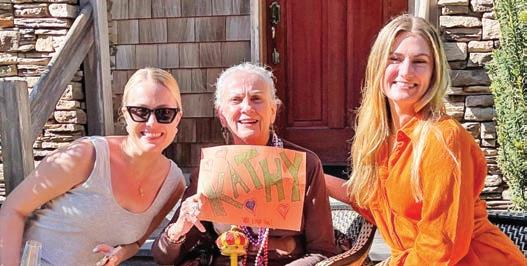
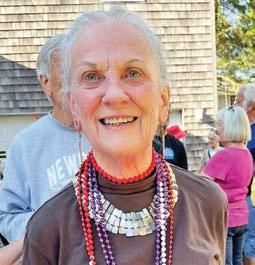
Top Left Photo: Kathe Leduc
Top Middle Photo: Kathe Leduc and her granddaughters
Top Right Photo: Chelsea LaFey singing to Kathe Leduc
PHOTOS BY DEB ATIYEH
Welcome Back Sea Level Bakery + Coffee
Afterclosing
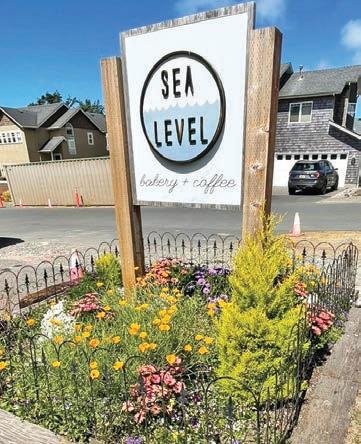
last winter for an extensive addition and remodel, Sea Level Bakery + Coffee opened again on Sunday, August 20th. Stop by for a cappuccino, oat milk latte, acai bowl, freshly baked bread or one of their many other sweet delights.
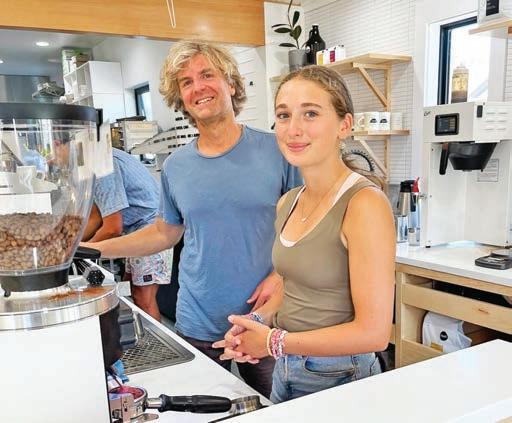
Sea Level Bakery + Coffee is located on Hemlock Street in Tolovana.

Neskowin Chamber Music presents their 2023-24 Season
wide-ranging repertoire.
• JANUARY 21, 2024 –SPANISH BRASS
With a thirty-three-year trajectory in the world of chamber music, Spanish Brass is one of the most dynamic and consolidated groups on the international music stage.
• FEBRUARY 18, 2024 –WINDSYNC
You’re not going to want to miss this season! For the 27th year, Neskowin Chamber Music is pleased to present SEVEN marvelous concerts for the enjoyment of our communities. In addition to the concerts five of the groups will also be doing an Outreach to local schools.
We appreciate the support of our regular, generous donors and audience and we invite you to join us for another year of great music!
• OCTOBER 22, 2023
– ALEXANDER STRING
QUARTET
Widely admired for its interpretations of Beethoven, Mozart and Shostakovich,
the quartets recordings have won international critical acclaim.
• NOVEMBER 5, 2023 –
MANDELRING STRING
QUARTET
Numerous recordings by the Quartet and nominations for the International Classical Music Awards all testify to its outstanding quality and
Established as a vibrant chamber ensemble, Windsync performs wind quintet masterworks, adapting beloved music to their instrumentation and championing new works by today’s composers.
• MARCH 17, 2024 –BOSTON TRIO
Passionately committed to creating exceptional and daring performances, the Trio performs both standard and contemporary repertoires.
• APRIL 21, 2024 –
KOUZOV DUO (Cello and Piano)
Known for their passionate and musical interpretations, the Dou has performed together as well as soloists in chamber music performances worldwide.
• MAY 19, 2024 –
TELEGRAPH STRING QUARTET
As recipients of prestigious awards, the Telegraph Quartet performs with an equal passion standard chamber music,
contemporary and nonstandard repertoires. Sure to be a delight!
Six of the concerts are held at 3Pm SUNDAYS at the Winema Chapel in WiNeMa Christian Camp, 5195 Winema Rd, Neskowin OR 97149. The Spanish Brass concert to on SUNDAY January 21, 2023 at the Kiwanda Community Center, 34600 Cape Kiwanda Dr, Pacific City, OR 97135
ORDER YOUR TICKETS
TODAY! $130 per season ticket is good for one admission to each of the seven concerts. Visit: neskowinchambermusic. com for more info and ticket orders. Or call 503-965-6499

Astoria Chapter of Rockaway-based Grassroots Non-Profit to Start September
North Coast Communities for Watershed Protection (NCCWP), which advocates to protect our local drinking watersheds by calling for the end of logging and pesticide spray, is thrilled to announce a celebration of their new Astoria Chapter.
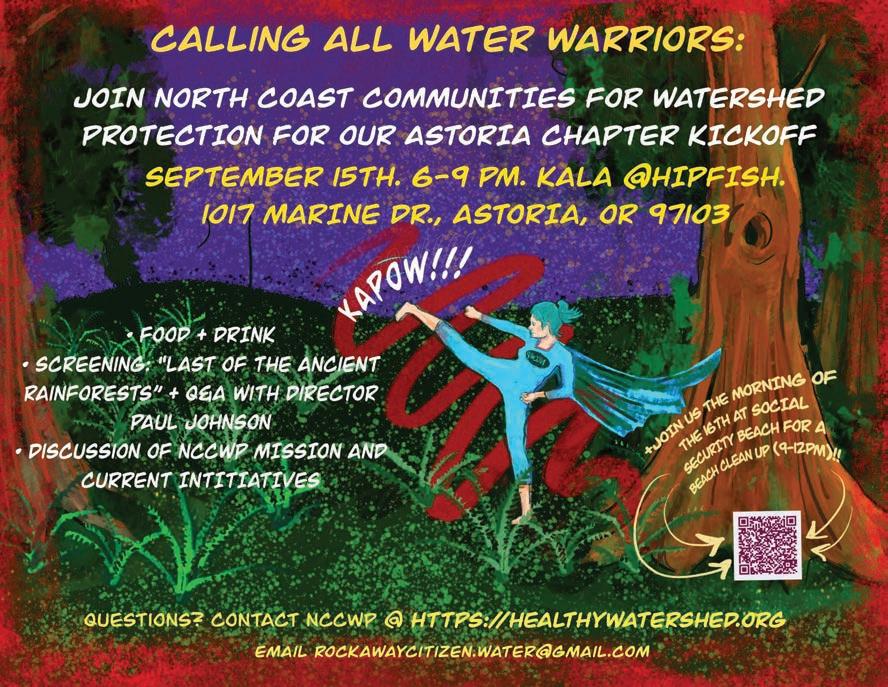
NCCWP is a grassroots group of concerned citizens advocating for no more logging or chemical spraying near our coastal drinking watersheds, regardless of land ownership (you can sign our petition on this here).
The group started in 2012 in Rockaway Beach in response to the dramatic industrial logging happening in the town’s watershed, Jetty Creek. Since then, NCCWP has expanded along the coast, rallying the support of citizens who face similar concerns within their own neighborhood forests and watersheds. We are dealing with the ramifications of industrial clearcutting and pesticide application. This not only destroys our mature and old-growth forests, but also harms our climate, pollutes our air and drinking water, and directly impacts our health. It is NCCWP’s hope that the beginning of a new Astoria Chapter will allow more citizen participation from Clatsop County — including concerned citizens who have been unable to commute down to Rockaway Beach to participate in NCCWP gatherings.
NCCWP is very excited to host the upcoming Astoria Chapter Kickoff Event, which will begin on Friday, September 15th with a documentary screening, followed by a morning beach cleanup at Social Security Beach on September 16th. The September 15th screening event will occur from 6:00pm to 9:00pm at KALA Hipfish in downtown Astoria. They will feature a screening of Paul Johnson’s “Last of the Ancient Rainforest,” preceded by an introduction and followed by a Q+A with the director via Zoom. The film explores the remaining intact coastal temperate rainforest in British Columbia, an ecosystem that has been standing since the last ice age, as well as the obstacles these ancient trees face in an era of economic extractivism.
You can find a link to the trailer here: https://vimeo. com/656704783?share=copy
There will be food, drinks, and time to socialize before the film starts. Other environmental organizations plan to have representatives present, including SOLVE, Oregon Shores, and BC’s Peachland Watershed Protection Alliance. It will be a great opportunity to connect with others interested in conservation efforts. During the event, there will be a discussion of NCCWP’s history, current mission, and plans for the future.
For those unable to make
the screening, NCCWP will continue their Astoria Chapter Kickoff the following morning (September 16) with a morning beach cleanup at Social Security Beach in Warrenton. The cleanup will take place from 9:00am to
12:00pm. All cleanup supplies will be provided. Family and friends are welcome to join.
To learn more about NCCWP, and to sign our current petition to end all logging, slashburning, and pesticide
spray within Oregon drinking watersheds, please visit https://healthywatershed.org.
Here is the link to register for the NCCWP’s Astoria Kickoff Event: https://docs. google.com/forms/d/e/1FAIp
QLSf5nT18ybFvCvwjtrx8N-
6SX5YecOfbWk37UyJkgEn
yNuO0r_g/viewform
We look forward to seeing you on Friday, September 15 at 6:00pm at KALA Hipfish or Saturday, September 16 at Social Security Beach.
Fall and 96 Years of Library Services
September 1, 2023 A8 CANNONBEACHGAZETTE.COM | CANNON BEACH GAZETTE CANNON
Celebrate the arrival of fall and 96 years of good books and fellowship at the Cannon Beach Library’s Annual Fall Celebration and fundraiser. The Celebration takes place Saturday September 30th at the library, 131 N. Hemlock Street in downtown Cannon Beach. Purchase raffle tickets for gift certificate packages and place silent auction bids at the library from September 1st through September 30th (need not be present to win.) Come to the library at 3 p.m. on the day of the celebration for LOTS of amazing door prizes and cake cutting. We will draw raffle tickets for gift certificate packages and announce winners of the silent auction. We will also draw tickets for the beautiful autumn-themed quilt currently on display at the library. Bring the kids by for fall-themed crafting from 2 to 3 p.m. The raffle includes 7 bundles of gift certificates donated by generous local merchants and restaurant owners. Win a chance to experience the best of Cannon Beach, while also supporting the programs and operations of the library! Tickets are one for a dollar, five for five dollars, or 25 for twenty dollars. Auction items include overnight stays donated by five premium oceanfront hotels (Hallmark Resort & Spa, Land’s End at Cannon Beach, Ocean Lodge, Surfsand Hotel and Tolovana Inn), a gift certificate for the Stephanie Inn Dining Room, and a gift certificate for handblown glass from Ice Fire Glassworks. For more information about the celebration, check the library website at www. cannonbeachlibrary.org.
Celebrate
