The 1933 Tillamook Burn, The Great Fire of 1910 and the History of Smokey Bear
 By BOB ATIYEH
The 1933 Tillamook Burn 90 years ago, a forest fire was burning northeast of Tillamook in the north Oregon Coast Range. The summer of 1933 had been hot and dry, with no significant rain for over two months, and the area’s forests were “tinder dry”. The generally accepted story is that the fire was started by a small logging operation working on the steep slopes above the North Fork of Gales Creek, about 15 miles northwest of Forest Grove. As the Gales Creek Logging Company pulled one final large log through the woods before shutting down for the day, a spark ignited a small fire that quickly spread into the dry logging debris. It was the early afternoon of August 14th, 1933. Fire lookouts stationed on nearby peaks quickly reported the smoke. Despite heroic attempts by the logging crew to extinguish it, the fire rapidly grew to sixty acres over the next few hours, with embers igniting spot fires several miles from the main blaze. Hundreds, and eventually thousands of people poured into the area in an attempt to control the fire. They were hindered by the remote and rugged location as well as the lack of road access. The Wilson River Highway (Highway 6) and the Sunset Highway (Highway 26) did not exist, and the location of the fire was at the end of a railroad spur line.
In 1933, most of the north Oregon Coast Range was privately owned and road-
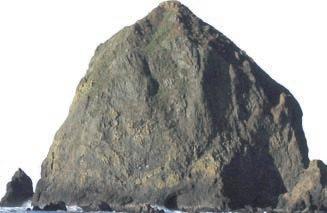
less; consisting of hundreds of thousands of acres of predominately old-growth forest, with some trees more than 10 feet in diameter
The next day, August 15th, the humidity dropped as the temperature in Portland soared to a record high of 102* (Forest Grove hit 105*) with the wind rapidly pushing the fire deeper into the Coast Range towards the southwest. On August 16th, the fire’s advance slowed with lighter winds, cooler temperatures and higher humidity; these improved conditions lasted for several days, and it looked like the fire might be contained, but on August 21st, humidity dropped and the wind began to blow from the east as the fire continued to spread to the southwest. Ten days after igniting, the fire had burned a total of around 40,000 acres, but that was about to change. On the evening of August 24th, the east wind increased and the humidity fell, creating the perfect conditions for the rapid spread of fire.
Overnight and into the next day of August 25th, the fire exploded, destroying 200,000 acres of forest in less than 30 hours. A massive plume of smoke climbed 40,000 feet into the air and the sky darkened in Tillamook and other coastal communities as the huge ominous plume of smoke blotted out the sun. Debris from the fire was reported to have fallen on ships 500 miles at sea and huge amounts of ash and embers rained down on coastal communities west of the fire. The next day, August 26th, brought some
relief with westerly winds and much higher humidity as a thick wet blanket of fog moved in off the ocean, with August 28th bringing some rain that continued to slow the spread of the fire. By the time the fire, later known as the Tillamook Burn, was extinguished by heavy rain on September 5th, over 10 billion board feet of timber had been destroyed, more than twice the volume of timber destroyed by the eruption of Mt. St. Helens on May 18th,
1980.
Over the next eighteen years, three more fires burned in the same area of the northern Coast Range; occurring every six years in 1939, 1945 and 1951. The 1939 fire burned mostly within the southern perimeter of the original 1933 burn, and the fire of 1945 predominately burned in the northern part of the 1933 burn area, while also torching 65,000 acres of unburned forests to the north. The much smaller 1951 fire
burned within the previously burned area. All of these fires were started by logging operations, and these four fires collectively came to be known by several generations of Oregonians as the “Tillamook Burn”.
Residents of communities along the north Oregon coast understandably feel somewhat complacent about the danger posed by wildfire, being surrounded by a temperate rainforest drenched with over seven feet of annual rain. But the history of forest fires in the Coast Range tell a much different story. In 1845, a fire in Marion County burned all the way across the Coast Range. During a five-year period in the mid-nineteenth century, more than 1.5 million acres were burned by the 1848 Nestucca fire (295,000 acres) the 1849 Siletz fire (800,000 acres) and the 1853 Yaquina fire (484,000 acres)
In 1868 the Coos Bay fire destroyed 295,000 acres east of Coos Bay, and in 1878 a fire started by hunters burned southwest from Clatsop County into Tillamook County. A 1902 fire burned part of the Wilson River watershed, the Cedar Butte fire of 1918 burned 40,000 acres north of the Wilson River, and a 1931 fire destroyed 25,000 acres of forest in Tillamook and Washington counties. On September 26th, 1936, three years after the Tillamook Burn, a fire burning several miles east of Bandon raced toward the town after a sudden shift in the wind. The fire destroyed most of the town of 1,800, killing ten, fueled by the extremely flammable
non-native ornamental gorse, which had first been planted by one of the town’s Irish founders in 1873. Besides destroying the town, the Bandon fire burned 145,000 acres. Almost all of these fires along the coast and in the Coast Range were caused by humans.
Under the right weather conditions, our temperate rainforest can become extremely dry, and most of Oregon’s coastal communities are located within the “wildland-urban interface” where wildfires can easily spread to flammable urban structures. In September of 2020, the 2,500 acre Echo Mountain Fire destroyed almost 300 homes in the town of Otis east of Lincoln City. There are disturbing similarities in the geography of several north coast towns and the Hawaiian town of Lahaina; wedged between mountains and ocean with limited escape routes. One of the key differences is that the tragedy that unfolded in that historic town on west Maui was greatly exacerbated by the presence of highly flammable non-native grasses. The lesson to be learned from Lahaina is that in a rapidly warming and changing climate, coastal citizens need to take fire prevention seriously and be prepared to quickly evacuate should a wildfire threaten their town.
The Great Fire of 1910
As bad as it was, the 240,000 acre Tillamook Burn of 1933 is dwarfed by the “Great Fire of 1910”. Also known as “The Big Burn”,
Emergency Responders Discuss Recent Accidents on Highway 26
By DEB ATIYEH
On Tuesday July 25th, a non-injury accident on Highway 26 at milepost 21.5 blocked the highway in both directions after an eastbound vehicle towing a trailer collided with a westbound truck, with both vehicles rolling onto their sides. The following day on Wednesday July 26th, a head-on motor vehicle accident involving multiple vehicles on Highway 26, at milepost 24 east of the Nehalem River, closed both lanes of traffic for several hours. Two vehicles collided head-on after one of them crossed the center line. With a total of seven injured patients, some critical, the incident overwhelmed the available resources of the initial emergency responders; with the incident being declared a Level 1 Mass
Casualty Incident as calls for assistance went out to neighboring fire departments.
Two Life Flight helicopters and three ambulances assisted in transporting patients to hospitals in Seaside and Portland. Oregon Department of Transportation (ODOT) reported that this accident happened in an ODOT work zone where ODOT was completing a paving project. That stretch of Highway 26 has a “sink” due to an unstable slope that is repaired annually. According to a citizen
involved in this motor vehicle accident, “this wreck happened right behind me. The traffic from the roadwork was backed up to a blind corner. I came around the corner and had to slam on my brakes; barely stopping before hitting the vehicle in front of me. I was watching my mirror knowing it was a dangerous situation. I saw an RV coming in “hot”, They slammed on their brakes and lost control. I was bracing for impact. The RV started to tip and I believe the driver over-corrected and shot into oncoming traffic and hit the Ford head on. I estimate the RV was traveling about 50+ even while trying to stop and the Ford was traveling between 30-40 mph. It was a very violent collision. Multiple civilians, including myself, jumped out, and as we approached the RV we could see flames coming from the passenger side dash. We got the side door open and got everyone out, then ran over to the truck and got the woman out of the Ford. The driver of the Ford was an elderly man trapped in the vehicle. Focus shifted to controlling the fire. Bystanders produced fire extinguishers and extinguished the fire. We then attempted to use a Sawzall to extract the driver of the Ford, but it was very ineffective at cutting the seat brackets. We tried everything we could until the local fire department showed up with
the Jaws. At which point I returned to my vehicle and let them do their job. It was a very unfortunate situation and I personally don’t believe that either driver was at fault. The roadwork backing traffic up to the blind corner was 100% the cause of this wreck. There was not enough signage and it was not far enough back. One sign said road work ahead and it was just before the corner. I personally thought it was much further down. I saw the sign but didn’t expect traffic to be at a dead stop immediately after.”
A fatal single-vehicle accident occurred Sunday, July 30th on Highway 26 at milepost 11, as the driver of a westbound vehicle failed to negotiate a curve and collided with a tree. The driver was declared dead at the scene. These three accidents on Highway 26 occurred within five days of each other.
According to Matt Verley, Chief of the Hamlet Rural Fire Protection District, located on Highway 26 eight miles east of the junction with Highway 101, motor vehicle accidents have increased 20-30% over the past few years due to a significant increase in traffic. Verley said his fire district personnel are seeing more accidents involving impaired drivers along with more drivers exceeding the speed limit.
While the primary responsibility of the Oregon State
Police (OSP) in Warrenton is patrolling the highways of Clatsop County, their office is currently at 50% of normal staffing. Oregon State Police officers cover all major Clatsop County highways, along with smaller secondary highways, including Highways 26, 101, 30, 53, 202 and 103. Highway patrols are increased during busy weekends, with OSP officers issuing over 200 citations along Highway 26 during June and July. The OSP are having problems filling vacant positions, and are currently seeking qualified candidates. One result of not being fully staffed is that OSP officers are sometimes unable to respond if they are committed to another call.
Matt Phillips of the Clatsop County Sheriff’s Office (CCSO) said that his agency is currently staffed with twenty-six officers, including two detectives, four sergeants and nineteen deputies, with one position unfilled. Current CCSO positions include a marine patrol officer and a forest patrol officer. Tasked with multiple law enforcement responsibilities, and providing coverage to all of the unincorporated areas of the county, traffic enforcement is not the primary responsibility of Clatsop County deputies, but they do assist with serious motor vehicle accidents. All law enforcement agencies report that they are
spending more of their time on mental health-related calls, as well as dealing with the consequences of easier access to drugs resulting from voter approval of Ballot Measure 110 in November 2020.
Along with the less than desirable levels of law enforcement, excessive speed, and impaired and distracted driving, some other problems affecting Highway 26 are blind corners, narrow lanes of travel with minimal shoulder space, and uneven and rough sections of highway; with some impatient drivers recklessly passing other vehicles and veering into the oncoming lane of traffic.
The July 26th Mass Casualty Incident on Highway 26 required three ambulances and two Life Flight helicopters to transport seven patients. If someone in Astoria had suffered a heart attack, or a visitor had fallen off the rocks at Hug Point and needed to be rescued and transported to a hospital, it would have been a major problem as the three available ambulances in Clatsop County were all committed to that one incident.
According to Tom Strecker, general manager of Medix Ambulance in Clatsop County, there are a minimum of two ambulances in service in Clatsop County, up to a maximum of four, with adequate staffing an ongoing problem for Medix. A medical transfer to a Portland area
hospital, when a helicopter is unavailable or unable to fly due to inclement weather, can tie up an ambulance for several hours. Clatsop County has a permanent population of around 42,000, but that doesn’t include the large number of people who visit the area. Having to travel long distances can complicate a rescue, and a Mass Casualty Incident can quickly overwhelm the available medical resources in the county.
When discussing motor vehicle accidents, all emergency responders emphasized the “Fatal 5”: excessive speed, occupant safety (wearing your seat belt), staying in your lane of travel, impaired driving and distracted driving. Any of these “Fatal 5” factors can be the difference between a very serious accident or arriving safely at your destination.
Something for coastal residents and visitors to consider is that Clatsop County is predominately rural with limited resources and potentially prolonged response times for motor vehicle accidents and medical emergencies. While driving, slow down and drive defensively, being mindful of the fact that it could be a long time before emergency responders are able to to reach you.
VOL. 47, ISSUE 17 FREE AUGUST 18, 2023 CANNONBEACHGAZETTE.COM
A “Smokey Bear” Poster by Muhammad Holidin + Amplifier.org for USDA Forest Service, National Association of State Foresters, Ad Council POSTER COURTESY OF WWW.SMOKEYBEAR.COM
SEE TILLAMOOK BURN PAGE A8
The 8th Annual National Night Out Event





 By DEB ATIYEH


Cannon Beach residents joined local law enforcement on Tuesday, August 1st at the Cannon Beach Chamber of Commerce for the 8th Annual National Night Out event. Locally sponsored by the Cannon Beach Police Department, National Night Out is a joint national effort between law enforcement and local communities to promote community unity and partnerships in fighting crime.
A large number of residents were joined by Cannon Beach Police, Cannon Beach

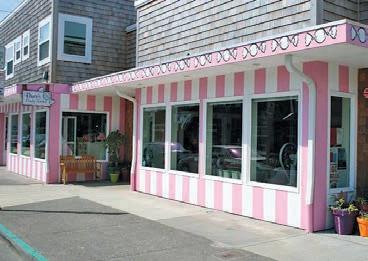

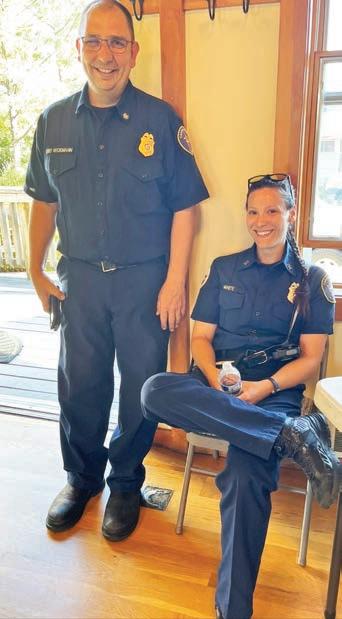
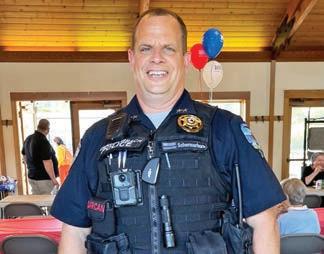
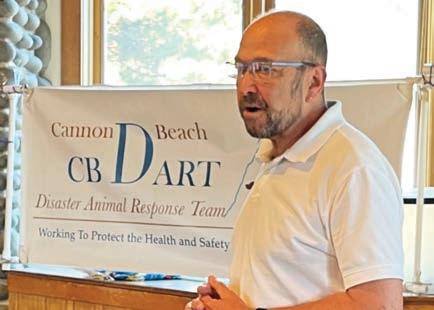
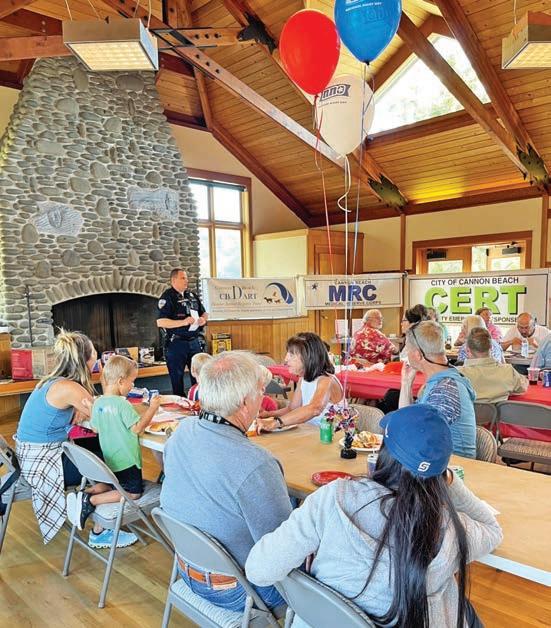







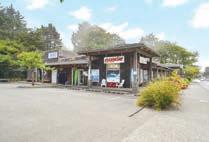
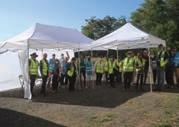
Fire District, CERT (Community Emergency Response Team), MRC (Medical Reserve Corps) and DART (Disaster Animal Response Team) members, along with Parking Information Aides.
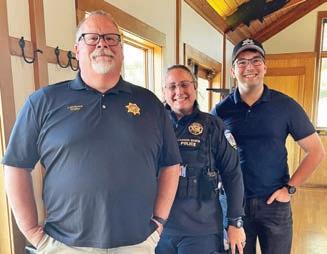

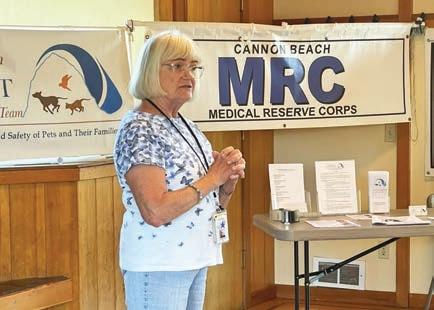


Chief Jason Schermerhorn introduced everyone and answered questions. Along with the free hot dogs, hamburgers, drinks and cake was a raffle drawing at the end of the evening, with multiple winners taking home donated prices with smiles on their faces. It was a fun and informative event for all who attended.
Nuestro Equipo Comunitario de Respuesta a Emergencias (CERT) es un grupo de voluntarios organizado y capacitado.



La capacitación de CERT se centra en la preparación para emergencias de la
August 18, 2023 A2 CANNONBEACHGAZETTE.COM | CANNON BEACH GAZETTE CANNON MULTI-USE CANNON BEACH COMMERCIAL PROPERTY $3,150,000 OCEANFRONT HOME ON (2) OCEANFRONT TAX LOTS $2,969,500 CANNON BEACH OCEAN VIEW HOME NEW PRICE $1,499,000 PERFECT WEST GEARHART LOCATION NEAR GOLF COURSE $525,000 Michael HendersonManaging Principal Broker Reid PetersonBroker Jeremy YoungquistBroker Duane Johnson - Founder H22475 ELEGANT, OCEAN VIEW BEACH HOME $2,795,000 SOLD BEAUTIFUL 4.1 ACRE PARCEL WITH STUNNING PANORAMIC OCEANVIEWS! $3,999,000 CANNON BEACH E PRESIDENTIAL 2 SEPARATE LIVING QUARTERS $949,000 1/12TH SHARE OWNERSHIP 3 BED 2 BATH CONDO $99,000 What is RMLS? As the Northwest’s largest REALTOR®-owned Multiple Listing Service(MLS), RMLS serves approximately 10,000 Real Estate Professionals in over 2,200 offices licensed in Oregon and Washington. All brokers listed with firm are licensed in the state of Oregon 296 N. Spruce St. • Cannon Beach • (503) 436-0451 www.duanejohnson.com Active Members of & A VALUED AND TRUSTED RESOURCE WITHIN OUR COMMUNITY AND THE #1 OFFICE SINCE 1990. BEAUTIFUL ARCH CAPE CUSTOM HOME ON OVERSIZED LOT $890,000 SOLD NEW PRICE SOLD SOLD
ciudad, la seguridad contra incendios, las habilidades médicas básicas, así como las actividades de búsqueda y rescate. Los voluntarios de CERT también participan en actividades y eventos anuales como el concurso de castillos de arena No se necesita experiencia previa o información. Los participantes practicarán y aprenderán a trabajar en equipo. ¡CONVIÉRTASE EN PARTE DE CERT! ¡NO HAY TARIFA PARA EL PROGRAMA! Para registrarse para la clase, envíe un correo electrónico: Silvia Avila avila@ci.cannon-beach.or.us o llame al 503-436-2811 ¡HAZLO POR TI Y TU FAMILIA! U N E T E Our Community Emergency Response Team (CERT) is an organized and trained volunteer group. CERT training focuses on city emergency preparedness, fire safety, basic medical skills, as well as search and rescue activities. CERT volunteers also participate in everyday activities and events like the annual Sandcastle Contest No prior experience or training is necessary. Participants will practice and learn how to work as a team. BECOME A PART OF CERT! THERE IS NO FEE FOR THE PROGRAM! To register for the class email: Valerie Mannix mannix@ci.cannon-beach.or.us or call 503-436-2811 DO IT FOR YOURSELF AND YOUR FAMILY! V O L U N T E E R
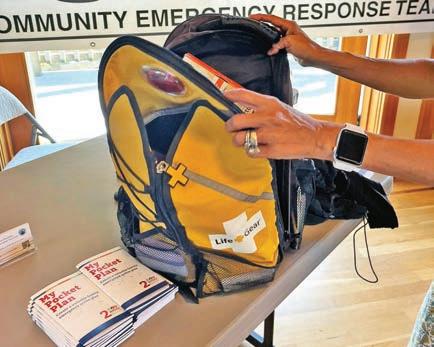
CERT INFORMATION FLYERS PROVIDED BY CANNON BEACH CERT PHOTOS BY DEB ATIYEH “Go Bag” By Coordinator in as Rica ca’s is them ber the to a fun for After the activities on will Central Assistant Director-Statewide the community Board in to forward Forests tion commented 55 opposed. ments Public critical timber aggressively derail unfounded lead Awareness reported recent marine the www.brucescandy.com • 503-436-2641 Freshest Homemade: Saltwater Taffy Chocolates Caramel Corn Making Sweet Memories for over 60 Sweet Years! H22352 The only saltwater taffy made in Cannon Beach! Downtown Cannon Beach Visit our online store and shop for Sweet Treats from Cannon Beach WE SHIP!
Cannon Beach To Welcome Visitors from Costa Rica
By JEANIE MCLAUGHLIN Coordinator for Cannon Beach Day
Twelve Costa Ricans (“Ticos”) will arrive in Oregon on September 5th as part of the Oregon-Costa Rica Partners of the America’s program. Cannon Beach is pleased to be welcoming them for the day on September 6th. Jeanie McLaughlin, the coordinator for their visit to our town, has put together a fun and interesting program for our Costa Rican guests.
After Cannon Beach day, the group will participate in activities in other locations on the North Coast. They will then move on to Eugene, Central Oregon, and Port-
land.
Oregon Partners acknowledges and thanks Ran and Be Strobe along with Ginger Keller as our newest Cannon Beach hosts. They will welcome the “Ticos” into their homes from September 5-10. Thanks to Ken Potter for his upcoming photography assistance and for helping all of us move from one activity to another on time. Mary Beth Cottle will translate artists’ work into Spanish at the DragonFire Gallery. Thanks to Barbara Campbell for decorating the lunch tables at Mo’s Seafood and Chowder in Cannon Beach with flow
ers from her garden of red, white, and blue, the same colors for the flags of both
Costa Rica and the United States. If you have the time and interest, please feel free to join us at 12:15 PM on September 6th at the north end of the Wayfarer Restaurant to walk with our visitors along the beach to Haystack Rock.
Wednesday, September 6 in Cannon Beach
• 10:30 - Chamber of Commerce for Haystack Rock Awareness Program presentation by Lisa Habecker
• 11:15 - Coffee and cookies at Chocolate Café (Complimentary – Thank you, Chocolate Café!)
• 11:15 - Paul Dueber’s Thistle and Rose group will sing and lead a few songs at
the café
• 12:15 - Hike on the beach to Haystack Rock
• 1:00 - Lunch at Mo’s (Mo’s is “pitching in” for each person’s meal. Thank you, Mo’s!)
• 2:00 - Visit Cannon Beach
Art galleries and shops
• 4:00 - Drive to Ecola State Park
• 5:00 - Depart for hosts’ homes
Thursday, September 7 in Knappa, OR
• 11:00 - Meet at Mary and Murray Miller’s to make apple juice, have lunch, and sing some songs
• 1:30 - Tour Big Creek hatchery, then visit Gnat Creek Hatchery to see giant
sturgeon and take a short hike
• 3:00 - Back to Mary and Murray Miller’s home for Cafecito, then return to hosts’ homes
Friday, September 8
• 10:00 - Meet at North Head
Lighthouse
• 11:00 - Waikiki Beach in
Cape Disappointment State Park
• 11:30 - Hike or drive to Lewis and Clark Interpretive Center
• 12:30 - Lunch in Long Beach, WA [TBD]
• 2:00 - Miniature golfing
• 3:00 - Walk the boardwalk or beach from Long Beach to Seaview, WA • 4:00 - Head to Megler Rest
Area for a view of Astoria, then return to hosts’ homes
Saturday, September 9
• Day with hosts. No activities planned.
Sunday, September 10
• 10:00 - Meet at Astoria Column and climb the column
• 10:45 - Columbia River Maritime Museum visit, ride trolley to East Basin to view sea lions
• 1:30 - Visit Sunday Market for lunch, music, ice cream, and shopping
• 3:00 - Visit Flavel house, then head to Netel Grange
• 4:00-7:00 - Potluck with dancing and music by the Brownsmead Flats
Public Speaks Up to Urge Board of Forestry to Move Forward with State Forest Protections
By JOE LIEBEZEIT
Assistant Conservation Director-Statewide for the Portland Audubon
There was a great showing of the conservation community at the June 7th Board of Forestry meeting in Sisters, Oregon testifying to urge the Board to move forward with the Western Forests Habitat Conservation Plan (HCP). 78 people commented on the HCP with 55 people in support and 23 opposed. That’s 71% of comments in support of the HCP. Public participation has been critical in this process as the timber industry has been aggressively campaigning to derail the draft HCP due to unfounded claims that it will lead to fewer jobs and timber
revenue. According to the Department of Forestry, the HCP would increase timber jobs by at least 10 percent in Clatsop County, and more than 40 percent in Tillamook County over the duration of the 70 year plan. The Board of Forestry is set to vote on approving the draft HCP in the next few months.
The geography of concern for this plan primarily includes the Tillamook and Clatsop State Forests that stretch across more than 500,000 acres in Northwest Oregon. Between Portland and the coast, these forests contain some of the region’s last remaining wild rivers, popular recreation opportunities from hiking to fishing, as well as important nesting areas for endangered bird
species like the Marbled Murrelet and Spotted Owl that are barely hanging on in these places. These forests have been hammered by clearcuts. A lot of this harvest has occurred on steep slopes, which typify these forests, and has led to water quality issues which impacts drinking water and endangered salmon populations. The draft HCP offers a step in the right direction by providing better protection of water and habitats while still allowing sustainable timber harvest. The Plan would conserve important wildlife and recreation corridors including the Nehalem River, Kings Mountain, and the Wilson River. All salmon streams will have wider forested buffers and in Riparian Conser-
vation Areas (RCAs) that would cover 35,000 acres. Habitat Conservation Areas (HCAs) in upland areas covering 275,000 acres would be established with the goal of creating more complex forested habitat with larger trees beneficial for listed species like the spotted owl and murrelet. About 50% of these forests would have these new protections and management goals. Outside of these areas, the timber industry would be able to conduct their business as usual with fewer costs and constraints through “incidental take permits” which streamline their ability to harvest trees.
We hoped the HCP would go further to provide protections. For example in Washington’s Trust Lands
HCP average riparian (river and stream) zone buffers are wider compared to what is proposed in Oregon. Despite this, we recognize this is a compromise that is years in the making and will move in the direction of securing needed protections for habitats, wildlife, and fish while ensuring safe drinking water, moving toward carbon sequestration goals, and providing economic security for local communities.
The adoption of the HCP is important but it will not be a cure-all and we will need to continue to watch how the plan is implemented. Every year ODF comes out with Annual Operating Plans (AOPs) that details where and how they plan to harvest in the coming year. We will
need to track these annual harvest plans to ensure they are being done in line with the HCP goals. For example, harvest will still be allowed in some HCAs but it must be done in a way that creates high quality habitat.
For now, we need to continue to push to ensure that the HCP is voted through by the Board of Forestry in the coming months. Thank you for your public comment to date to get us this far. Stay tuned for public comment opportunities in the coming months to help us cross the finish line.
To learn how you can help protect coastal birds and wildlife visit: audubonportland.org
Council delays midtown bathroom project
STAFF REPORT
Cannon Beach’s City Council delayed a project to update the midtown restroom facilities in the city at their August 1 meeting, after bids came in
By DEB ATIYEH
significantly over the city’s cost estimate.
The council approved funds transfers to cover the costs of two other water system projects that came in over their estimate.
The midtown restroom
project had an estimated budget by the city of around $200,000, but after three rounds of requests for bids, the lowest that came in was $535,000. Cannon Beach’s Public Works Director Karen La Bonte said that the high
price came from the city’s desire to keep the restrooms operating during the renovations and the lack of local workers.
La Bonte said that she would readdress the project during next year’s budget-
ing cycle, possibly changing the plan for the project to allow for full closure of the restroom during the work.
The two other projects included installing generators at a lift station at a cost of $220,000, and upgrading
the water pipe along East Harrison Street at a cost of $153,000.
Haystack Rock Mussel Poaching
Kelli Ennis, Director of the Haystack Rock Awareness Program (HRAP) reported the details of the recent wildlife refuge and marine garden violations to the Cannon Beach Gazette.
On the morning of Sat-
urday, August 5th Haystack Rock Awareness Program (HRAP) staff observed evidence of a large number of harvested mussels from North Boulders - estimated affected area was approximately 8’ x 2.5’ and 150-200 individual mussels leaving behind a barren patch with
clear evidence of cut byssal threads and footing damage on barnacles the top surface of the boulder. Unknown what has happened to Seastars that were seen feeding on the mussels the night before. Citizens reported seeing multiple individuals with flashlights in the area ap-
proximately 15 minutes after HRAP staff left the beach on the evening of Friday, August 4th.
Poaching was reported to both the Oregon Department of Fish and Wildlife (ODFW) and the Oregon Department of Parks and Recreation (ODPR) Rangers arrived to
collect information about the event. PR notices and reinforcements of the rules and fines associated with poaching will be done collaboratively between the three agencies: ODFW, ODPR, and HRAP.
A reminder that there is no recreational harvesting of
algae or invertebrates (with the exception of a single bait mussel) at Haystack Rock Marine Garden even for permitted individuals. At Chapman Point Marine Garden, permitted mussel harvest is allowed, but all other invertebrate and algae harvest is prohibited.
Annual ‘HAYDAY! 40 Oregon Beers, 1 Epic Beer Fest’ Returns on Saturday, Aug. 26
Presented by Public Coast Brewing Co., festival will celebrate breweries from around Oregon with food, beer and live music
CANNON BEACH, Ore. (July 25, 2023)
- Public Coast Brewing Co. has announced its fourth annual HAYDAY! 40 Oregon Beers, 1 Epic Beer Fest will take place on Saturday, Aug. 26 at the brewery in Cannon Beach. The event
will feature 40 Oregon craft brews - including selections from coastal breweries and beyond - as a celebration of another incredible year in Oregon beer.
“Oregon has always had a vibrant beer industry, and we take a great deal of honor in being a part of the brewing community,” said Ryan Snyder, owner of Public Coast Brewing Co. “We started HAYDAY! as a way to showcase the breweries around the state who inspired our vision, after last year’s fest being canceled, we’re excited to finally welcome guests back safely to continue this celebration filled with excellent beer, delicious food and fun
for everyone.”
Guests will enjoy a coastal celebration of Oregon Beer, live music from Nervous Jenny, and fantastic eats from the Public Coast Culinary team.
Where: Public Coast Brewing, 264 E 3rd St, Cannon Beach, Ore. 97110
When: Saturday, Aug. 26 from 3:00 p.m. through 7:00 p.m., with last call at 6:45 p.m. and last beer served at 7:00 p.m.
Admission:
General Admission:
• $40 per ticket
•Includes: commemorative glass, samples of more than 40 beer and beverage options
VIP Experience:
• $100 per ticket
• Includes: commemorative glass, samples of more than 40 beer and beverage options, food vouchers and non-alcoholic beverage offerings (up to $30 value), selection of one standard beers to take home in commemorative 32-ounce growler (up to $30 value)
• Advance ticket purchase online required
• Promo code: BeachesForever - $15 off – active until July 31st
• VIP tickets are limited and close Tuesday August 22nd
• Minors and outside food/ drink are not permitted
• Dogs welcome in outside spaces, only service animals allowed inside the pub
• Email hello@haydayfest. com with questions
To purchase tickets, please visit: https://www. tickettomato.com/event/8201
For high-res images and logos, visit: https://drive. google.com/drive/folders/1gl
8LzmSaj5QvUlR3uNdnjFEL
5cUBfWRS?usp=share_link
About Public Coast Brewing Co.
Located just 70 miles west of Portland in Cannon Beach, Ore., Public Coast Brewing is named after the only true public coastlines in America: the Oregon Coast. The brewery features
a 10bbl Brewhouse with two 30-barrel fermenters, two 20-barrel fermenters, and four 10-barrel fermenters. Public Coast Brewing also offers fresh and delicious fare from local farms and ranches, including their own farm, for adults and children alike. Boasting a large pet-friendly patio, large community-style outdoor fire pit, and an open brewhouse easily viewed from the bar, Public Coast Brewing offers a relaxed and welcoming spot for the whole family. For more information please visit, http://publiccoastbrewing. com/.
August 18, 2023 CANNON BEACH GAZETTE | CANNONBEACHGAZETTE.COM A3
-
Motorized Paragliders Disturb Nesting Birds in Oregon Islands National Wildlife Refuge
By DEB ATIYEH
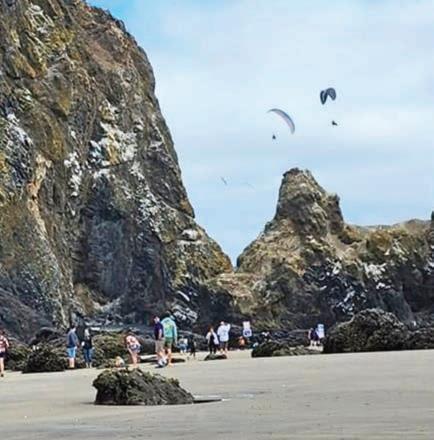
off they flew directly through critical sea bird nesting areas, flushing the birds and flying directly over people’s heads while touching down and taking off in close proximity to people walking on the beach. Witnesses immediately called the Oregon State Police and Cannon Beach Police.
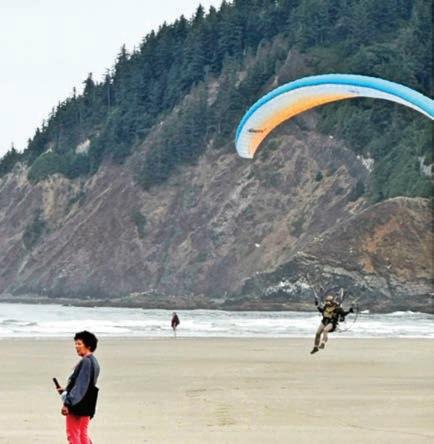
Soon after the paragliders were flying through Cannon Beach in close proximity to Haystack Rock, breaching the Federal Wildlife Refuge boundaries while flushing and disturbing nesting birds. According to one witness “they were so close to the rock that I thought they were going to hit it. They were scary close”, with another saying that “the damage done to wildlife cannot be undone.”
The paragliders continued down the coast to Arcadia Beach and Arch Cape, flying dangerously close to and between groups of people walking on the beach.
Powered paragliding (PPG) or paramotoring is a from of ultralight aviation where the pilot wears a motor in a backpack, providing enough thrust to become airborne with a paraglider in still air or on level ground. The sport has minimal regulation and no licensing requirements.
From a report by Kelli Ennis, Director of the Haystack Rock Awareness Program: “on the morning of August 3rd three motorized paragliders were seen flying close to and around various bird nests of the Oregon Islands National Wildlife Refuge, including islets and nearshore islands located at Ecola, Haystack Rock, Arcadia, and Short Sand. Disrupted and harassed nesting birds include cormorants, tufted puffins, common murres, gulls, black oystercatchers, and potentially additional species. Photo and video evidence of the high level of disturbance to migratory nesting sea and shore birds were taken by witnesses at each location.”

“Reports were immediately made to both Cannon Beach Police and U.S Fish and Wildlife (USFWS) officers. Cannon Beach Police were able to identify the tour group and contact the tour director. The tour was grounded at Rockaway Beach when contact was made. The entire



tour was planned to be coastwide ending in San Diego. The tour group was unaware of laws protecting nesting birds and only checked FAA maps.”
“All evidence and contact information were forwarded to a USFWS officer, an interview was conducted, and the group was charged and fined for disturbing wildlife on the National Wildlife Refuge. USFWS thanks everyone for their quick work to document the disturbance, report to the authorities, and to Cannon Beach Police for their prompt response leading to the quick identification of the perpetrators.”
“The FAA does not have any restricted flight space around Haystack Rock and many of the islands that comprise the Oregon Islands NWR; however, disturbing, disrupting, or harassing the protected wildlife that resides on these islands is violation of both state and federal law. USFWS, based on research literature, recommends all aircraft maintain a minimum distance of 300’ from wildlife to prevent illegal disturbance.”
Below is a description of the different agencies involved in protecting the rocky areas around Cannon Beach, along with an explanation of the boundaries of these areas, a definition of harassment and the potential penalties for disturbing wildlife:
The Agencies Involved

Federal Protections:
Haystack Rock is a part of the Oregon Islands National Wildlife Refuge. The Refuge comprises 1,853 islands, rocks, reefs, and headlands that makeup 371 acres of protected wildness along and off of the Oregon Coast. The land above the mean high tide line (barnacle line) is designated as a Wilderness Sanctuary and is closed to the public at all times.
Oregon State Protections: Haystack Rock Marine Garden designation comes from the Oregon Department of Fish and Wildlife (ODFW) and the Oregon Territorial Sea Plan (TSP) Rocky Habitat Management Strategy which establishes in law a program of planning and management of ocean and shoreline resources. The Oregon Ocean Policy Advisory Council (OPAC) is the marine policy advisory
board that provides statutory charges, advice, and guidance on resource management issues.


Violations
Most violations of the wildlife laws and regulations are Class A Misdemeanors, punishable by a maximum $5,000 fine and a maximum sentence of confinement to the county jail of one year. There is no scheduled bail, and a mandatory court appearance is required if the violation is charged as a Class A Misdemeanor.
No Harassing
Harassing is any activity that causes an animal (or plant) undue stress, injury, or death. Common examples of harassment are: poking anemones, stepping on barnacle rocks, and prying mussel shells and sea stars (starfish) off the rocks. Other kinds of harassment include: trampling tide pools, entering the refuge (especially during nesting season) or approaching seals/seal pups that are resting near the rocks or on the beach.
What are the boundaries of the Marine Garden?
The Marine Garden includes the rocky area in front of Haystack Rock that is exposed at low tide and all of the tide pools and sandy beaches between the mean high tide line (the barnacle line) and an extreme low tide line, in a 300-yard radius from the base of Haystack Rock. Keep in mind that 300 yards is the length of three football fields. This entire area is closed to collecting.
What are the Wildlife Refuge boundaries?
The Refuge includes everything above the mean high tide line (the barnacle line) continuing all the way up to 500 feet (152 meters) above the rock. Managed by the U.S. Fish and Wildlife Service, rules have been in place for nearly forty years to protect people from climbing hazards and falling rock. It also protects the seabirds (especially ground-nesting seabirds) that nest on the rock. This means there is no climbing allowed on Haystack Rock. It also means there can be no low flying aircraft, including gliders and non-passenger flying devices such as drones near the rock.
August 18, 2023 A4 CANNONBEACHGAZETTE.COM | CANNON BEACH GAZETTE CANNON
On the morning of Thursday August 3rd,
three motorized paragliders took off from Indian Beach in Ecola State Park, beginning a motorized flight that contin-
ued many miles to the south. According to people who watched them launch from Indian Beach, after taking
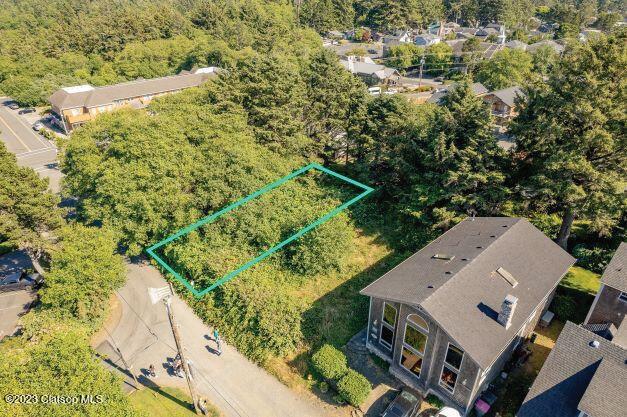
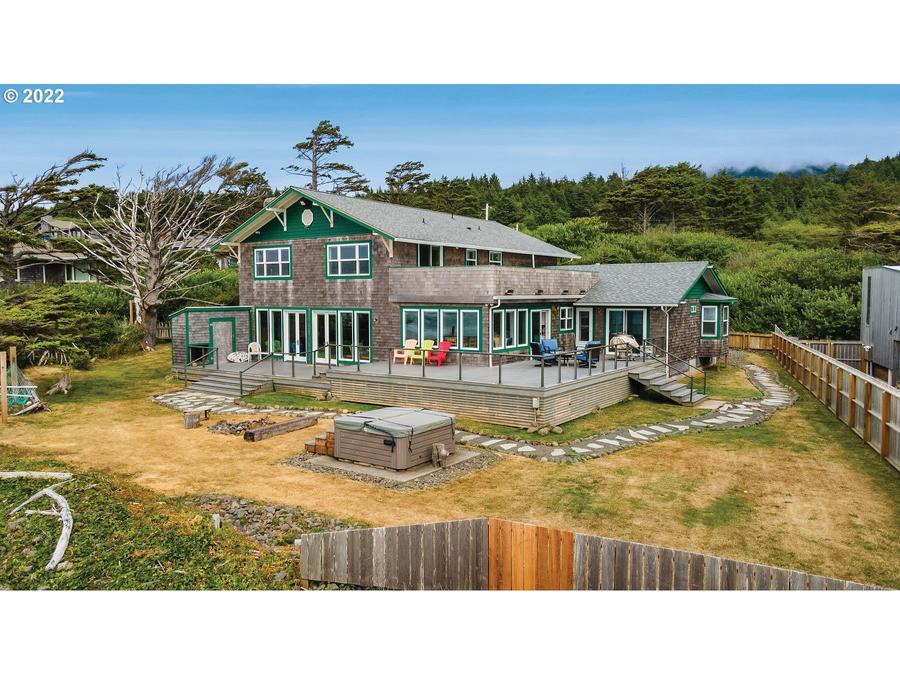
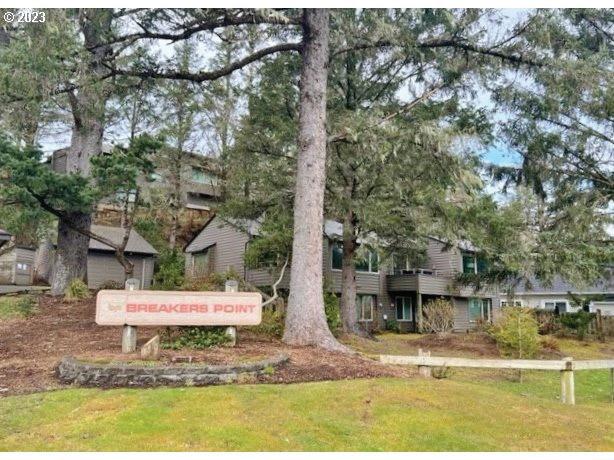
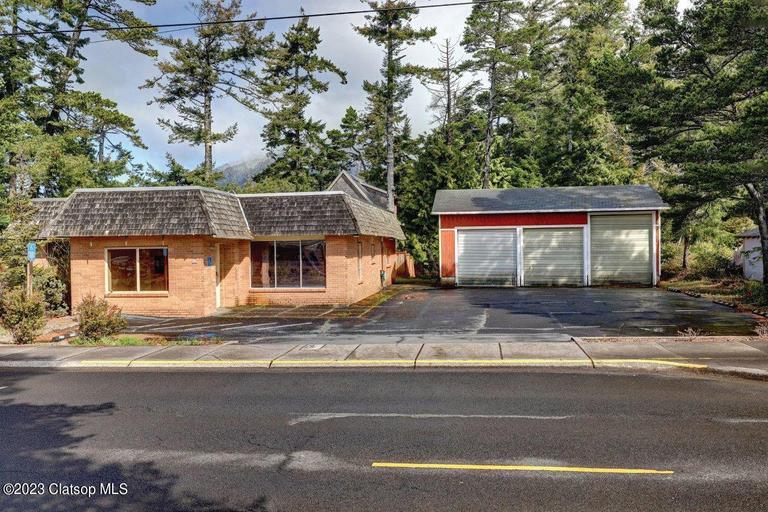
Oversized Parcel in the Trees Jenny Frank 503-440-1973 415 Chilkoot Trl, Cannon Beach Prime Commercial Location Jackie Weber 503-440-2331 543 Laneda Ave, Manzanita $675,000 2 Bed Condo at Breaker's Point Craig Weston 503-738-2838 512 N Larch St #512, CB $675,000 Rare Downtown "Full Sized" Lot Michele Johnson 503-440-0921 W 1st St, Cannon Beach $589,000 165+ Acres of Panoramic VIews Craig Weston 503-738-2838 Waterhouse Rd, Cannon Beach $2,999,000 OCEAN VIEWS High Above CB Karen Meili 503-440-5806 425 Yukon St, Cannon Beach $1,350,000 Waterball 1 11 Clearwater) 2-4 5-7 8-10
Fun at the Cannon Beach Farmers Market
By DEB ATIYEH
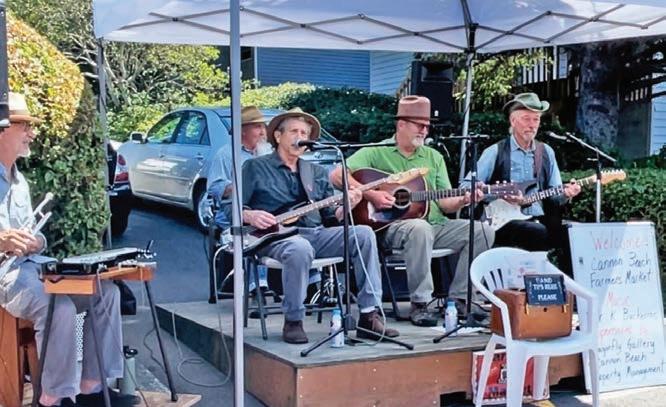
The Tuesday afternoon Cannon Beach Farmers Market has been fun, festive and well attended this summer. The diverse group of vendors offer a great selection to choose from. You can find a large variety of fresh vegetables, peaches, cherries and berries from area farms. In addition to the fresh produce, there is an impressive selection of eggs, honey, bread, pies, teas, flowers and more.
The Farmer’s Market has two food trucks to choose from this year. Sasquatch Sandwiches offers an amazing Reuben and a Korean Bowl that sells out quickly, along with a variety of other sandwiches. Coast Town BBQ serves delicious crab cakes and other treats.
Every week brings a different group of live musicians who provide excellent music to listen to while shopping and eating lunch.
Shopping at the Cannon Beach Farmer’s Market supports area farms and vendors while providing fresh and delicious food.
You can enjoy the Cannon Beach Farmer’s Market every Tuesday afternoon from 1:00 to 5:00. The market is located in the mid-town public parking area at the intersection of Hemlock and Gower Street just west of the Cannon Beach City Hall.








Its almost here!
Don’t miss the 2023 Bay City Pearl & Oyster Music Festival
FOOD • ARTISAN VENDORS
LIVE ENTERTAINMENT
KID’S TALENT SHOW
TILLA-WHEELS ANTIQUE
CAR SHOW ON SATURDAY
At Al Griffin Memorial Park in beautiful Bay City, Oregon
Sat., Aug. 26, 10 a.m.-10 p.m.
Waterball from the Bay City Fire Department at 1 p.m.
Enjoy these Live Music Tribute Bands on Saturday!
11 a.m.-1 p.m. Tombstone Shadow (Creedence
Clearwater)
2-4 p.m. Shades of Huey(Huey Lewis & The News]
5-7 p.m. Roll On (Alabama)

8-10 p.m. Fever Band (Elvis)
Sun., Aug. 27: Family Day

10 a.m.-4 p.m.
• Kids Games, Face Painting by Jip-Z
• Tillamook Ice Cream giveaway (limited amount)
• Sugar + Air Gourmet Cotton Candy
Kids Talent Show at 1 p.m. Free ice cream cone from Dutch Mill for each performer, sign up and info at talentatbaycity@gmail.com or 971.227.5140
Raffles for Vintage Victorian Dollhouse and many more prizes start at 4 p.m.
pearlandoysteermusicfestival.godaddysites.com
H22450
Call Heather at 1-708-421-7976 or Amy at 1-800-733-2773 (Toll Free) host.asse.com or email info@asse.com



students

August 18, 2023 CANNON BEACH GAZETTE | CANNONBEACHGAZETTE.COM A5
PHOTOS BY DEB ATIYEH Contact Broker Pam Zielinski today. Cell 503.880.8034 Berkshire Hathaway Home Services Northwest Real Estate www.PamZielinski.com “Homes by the Water” PANORAMIC OCEAN VIEWS… available in Oceanside, Oregon IN THE VILLAGE of Oceanside, a tiny hamlet by the sea 70 miles West of Portland, this architect designed custom home boasts 5275 square feet of luxury with a ground floor ADU and an elevator. 4 bedrooms, 3.5 baths, just a block from the quiet, sandy beach and three great restaurants. The ocean view includes majestic Three Arch Rocks. Asking $1,850,000. RMLS #23341961 H22482 Founded in 1976 ASSE International Student Exchange Program is a Public Benefit, Non-Profit Organization. For privacy reasons, photos above are not photos of actual students Host an Exchange Student Today! (for 3, 5 or 10 months) Hanna from Germany, 17 yrs. Enjoys spending time with her family and younger siblings. Hanna plays volleyball and is excited to learn new sports while in America. Giorgio from Italy, 16 yrs. Loves to play baseball and spend time with his dogs. Giorgio also plays the guitar, and his dream is to join a drama club at his American high school. Make a lifelong friend from abroad. Enrich your family with another culture. Now you can host a high school exchange student (girl or boy) from Belgium, France, Germany, Ukraine, Scandinavia, Spain, Japan, Italy or other countries. Single parents, as well as couples with or without children, may host. Contact us ASAP for more information or to select your student. Amy at 1-800-733-2773 (Toll Free) host.asse.com or email info@asse.com Founded in 1976 ASSE International Student Exchange Program is a Public Benefit, Non-Profit Organization. For privacy reasons, photos above are not photos
actual
of
Laurelwood Farm
THEATRE THAT MATTERS
By RICK GRAY
Igrew up enjoying theatre, but – aside from playing the lead in an elementary school production of Peter Rabbit – acting never formed part of my plan. In high school and college, that plan was law – then politics. During my law school years, my sister, the English major, managed to turn me on to Shakespeare – something no teacher or professor had done. But whenever I went to the theatre, I was an audience member. I had a plan.
Well, we know what John Lennon said about life and plans. At thirty, I was Virginia’s Secretary of State – until my Governor fired me for supporting the striking air traffic controllers. Good Republicans didn’t disagree with President Reagan. A year later, I found myself teaching history at an excellent high school – and loving it. Seven years later, it was off to grad school to qualify as a school principal. That’s when theatre became part of my life.
For a law school veteran,
graduate Education was –except for Statistics – laughably easy. Yet there I was, at a great university, with time on my hands. I decided to audition for a Drama department production of Much Ado About Nothing. The director cast me as the Friar. And I was hooked.

Long story short, three years later – having finished my PhD courses while acting in 17 plays – I punted on my dissertation and turned pro. I spent ten years acting professionally – an extraordinary experience. When that time ended, I still loved good theatre. But I loathed mediocre theatre.
And I knew the difference.
If you follow American theatre at all, you’ll know that these are hard times for professional companies. Theatre leaders offer many explanations, starting with the impact of Covid. And that’s legitimate, except... Covid is no longer closing theatres. Today, the problem is mediocre theatre. Or worse. Audiences haven’t come back – for two reasons.
First, for years now, American theatres have produced a lot of self-important, preachy, overtly political theatre –nearly all of it informed by
Your
Purchase
AT THE LIBRARY
By PHYLLIS BERNT Library Board President

Children’s Library, Climate Change, & Chancy Medical Care
The library relies on donated books to raise needed funds. As a private library, the Cannon Beach Library is funded through fundraisers and donations, not supported by taxes as is a public library. Two critical fundraisers are the annual July Fourth Book Sale and the year-round Book Sale Room, both of which are stocked with donated books.
This year’s July Fourth Sale was a big success, and the library’s Book Sale Room is attracting a lot of patrons. As a result, inventories are running low, and book donations would be greatly appreciated. Book donations can be dropped off at the library (131 N. Hemlock in downtown Cannon Beach) during library hours, noon to 4 p.m. on Mondays and Wednesdays through Saturdays, or by appointment if those times are not convenient.
Participants in this year’s Summer Reading Program can literally end the summer on a high note by winning this year’s grand prize—a standard A-Model mandolin, complete with gig bag. The grand prize drawing will be live on Facebook at 3 p.m. on Saturday, August 26.
The first runner up in the drawing will win a deluxe art set; the second runner up will receive a $25 gift certificate to the Cannon Beach Book Company. Summer Reading Program participants have till August 26 to exchange their reading logbooks for prizes and for tickets to the grand prize drawing.



A summer reading program is just one element of the library’s efforts to encourage young readers. The library also offers programs and events during the rest of the year and provides young
the social Left. I try to avoid using the word “woke”, except as the past tense of “wake” – but sometimes, it just fits. A few years back, when I stopped visiting Ashland, I explained my decision to friends by referring to that famous venue as the Oregon Wokespeare Festival. Last month, Oregon Shakespeare Festival announced its new Artistic Director, Tim Bond. I hope he’ll give me a reason to come back.
As with Newtonian physics, overly-political theatre has produced an equal, but opposite, reaction – the avoidance of controversy by staging fluff, i.e., theatre that doesn’t challenge audiences to think, or feel, or even remember the next day what they saw the night before. If theatre isn’t supposed to preach at us, it certainly is supposed to challenge us - at least a little. When it doesn’t,
readers with an inviting and well-stocked Children’s Room. For 15 years, library volunteer Janet Bates has managed the Children’s Room, devoting countless hours to selecting, ordering and processing books and organizing the collection, much to everyone’s appreciation. She has recently decided to step back from that role.
Going forward, the Children’s Room, children’s programming and other aspects of the library’s youth services will be managed by a newly formed Children’s Library Committee. The library is soliciting applicants for committee membership. Library members and supporters with experience in children’s libraries, schools, child development or children’s programming are encouraged to call or email the library for a volunteer application form.
The Cannon Beach Reads book club, which meets on the third Wednesday of each month, will meet at 7 p.m., Wednesday, September 20, to discuss “The Story of More: How We Got to Climate Change and Where to Go from Here,” by Hope Jahren. This will be a hybrid meeting with participants able to join the discussion in person at the library or virtually through Zoom.
Jahren, who also wrote “Lab Girl,” is an awardwinning paleo biologist, geochemist and geobiologist. She has received three Fulbright Awards, was named one of the most influential people in the world by Time magazine and was named one of the “Brilliant 10 Young Scientists” by Popular Science.
After earning a PhD at UC Berkeley, the Minnesota native taught at the Georgia Institute of Technology, Johns Hopkins University and the University of Hawaii. She currently holds the J. Tuzo Wilson Professorship at the University of Oslo.
Critics have called her “the voice science has been waiting for,” and her approach in “The Story of More” demonstrates why. Jahren doesn’t harangue readers about climate change by bombarding them with
it’s just fluff.
Last month, my best friend and I went in quest of great theatre. I caught a plane from Sea-Tac to Toronto, met her there, and drove with her to spend a week at the Stratford Shakespeare Festival. We’d visited Stratford in 2022, and been delighted. This year, we saw some fine shows, but also some disappointments. I detected evidence of creeping “wokeness” – which theatre leaders call “diversity, equity and inclusion” (DEI).
Which sounds fine - but here’s the thing. It’s entirely possible to do great theatre while honoring those values – but when you put them ahead of hiring good directors, casting good actors, and putting on good shows, DEI is just a lame excuse for mediocrity.
I saw too much mediocrity at Stratford. From Ontario, we flew to
a Master’s degree in Public Health.
Jena and Worsham explain that the practice of medicine can be messy and uncertain, with many opportunities for randomness to affect medical care. The doctor a patient happens to see, for example, may have biases that can have significant consequences for the patient’s treatment and outcomes.
facts or trying to instill guilt; instead she carefully explains the impact of human consumption habits on the future of the planet.
Jahren explains the science behind the inventions we rely on—electric power and automobiles, for example—and their release of greenhouse gasses, outlines the consequences of global warming and offers suggestions for what can be done to fight back.
Mary Lloyd will lead the discussion, which will begin at 7 p.m. on Wednesday, September 20, at the library. The Zoom link for those who wish to participate from home is available by emailing Joe Bernt, berntj@ohio. edu. Coffee and cookies will be provided for those participating in person. New members, whether in person or via Zoom, are always welcome.
Anyone worried about the state of medical care in the U.S.—and lately who isn’t—will likely find a book recently added to the library collection both surprising and thought-provoking. In
“ Random Acts of Medicine: The Hidden Forces That Sway Doctors, Impact Patients, and Shape Our Health,” Anupam B. Jena and Christopher Worsham explain that medicine is not cut and dried as they examine the role that chance plays in an individual’s health care and medical outcomes.
Both men have the experience and training needed to address the topic. Jena and Worsham are affiliated with Harvard Medical School and Massachusetts General Hospital. Jena, who practices internal medicine, has a PhD in economics, while Worsham is a pulmonologist and critical care physician with
New York – and Broadway.
We saw two stunning Tony winners – Parade (this year’s best musical revival) and Kimberly Akimbo (best new musical). Both offered deeply moving, passionately acted, richly rewarding performances. In between, we saw The Lion King, which we agreed was an incredible waste of time and money. Fluff. Magnificently tarted-up fluff.
Back home in Cannon Beach, I’m considering whether to turn theatre critic.
It’s a side of theatre I haven’t explored, but I like writing, and the Gazette has offered me the occasional column.
If I turn critic, I’ll likely start by reviewing Agnes of God, which opens August 25 at Nehalem’s NCRD Performing Arts Center. I saw this play in the mid-‘80s –before I got involved in theatre myself. That show was performed by three students
To prove their argument, the authors use what they call “natural experiments.” Instead of doing surveys or setting up experiments to test the validity of a hypothesis, the authors look at existing data to identify patterns that can answer their questions about health outcomes. There are a surprising number of databases containing information relevant to the authors’ questions, and Jena and Worsham are adept at using them, especially Medicare and insurance databases. The authors dip into databases to answer a host of questions. Does a surgeon’s age have an impact on patient mortality? Is a patient treated by a doctor with a degree from a prestigious medical school more likely to have a good outcome? Does it make a difference if a surgeon is operating on his or her birthday? Are children born in the spring and summer more likely to be diagnosed with ADHD?
Jena and Worsham’s natural experiments to measure the impact of a doctor’s biases on his or her diagnoses and treatment plans are especially thought-provoking. The authors ask whether a doctor’s experience with a prior patient may bias his or her treatment of current and future patients. They also examine how a patient’s age may bias a diagnosis and subsequent treatments.
According to the authors, these natural experiments make it possible to improve health care by identifying and measuring the impact of chance and then formulating needed solutions. As they put it, doctors and patients can learn from randomness so they don’t become the victims of chance.
at the College of William & Mary, and it was, quite simply, the most powerful piece of theatre I’ve yet seen. When it ended, the audience didn’t applaud. They just sat there, breathing – for over a minute.
Stunned. Challenged. Changed. I’ve seen plays on Broadway, in London’s West End, at the Guthrie, at Ashland, at Stratford, Ontario. Nothing has moved me like that college production of Agnes of God. I don’t know how this upcoming production will be, but the script is powerful – neither preachy, nor fluffy. That’s promising. Very likely, I’ll be sharing my reaction in an upcoming edition of the Gazette
Take advantage of rebates available through Energy Trust of Oregon and lower your electric bill when you upgrade to high-efficiency heating and cooling.

August 18, 2023 A6 CANNONBEACHGAZETTE.COM | CANNON BEACH GAZETTE CANNON BUSINESS DIRECTORY ADVERTISE YOUR BUSINESS HERE TO CREATE TOP OF-MIND-AWARENESS CALL 503-842-7535 OR EMAIL HEADLIGHTADS@COUNTRYMEDIA.NET TODAY! ARBORIST - TREE CARE ISA Certified Arborists ISA Board-Certified Master Arborist ISA Tree Risk Assessment Qualified Comprehensive Service, Pruning/Removal, Stump Grinding/Hazard Evaluations (503)791-0853 www.arborcarenw.com Care for Your Trees H22358 CCB#171855 LCB#9343 WA#ARBORCI909RW BoB McEwan construction, inc. Excavation • undErground utiitiEs road work • Fill MatErial sitE PrEParation • rock owned and operated by Mike and Celine MCewan Serving the paCifiC northweSt SinCe 1956 • CC48302
34154 Hwy 26, Seaside, OR P.O. Box 2845, Gearhart, OR CONSTRUCTION
503-738-3569
Laurelwood Compost • Mulch • Planting MacMix Soil Amendments 34154 HIGHWAY 26 SEASIDE, OR 503-717-1454 YARD DEBRIS DROP-OFF (no Scotch Broom) H49573 LANDSCAPING
Mitsubishi and Daikin Ductless Heat Pump
Headquarters.
a new system
September 1st for an extra $350 off when you mention this ad!
by
off of
for
We are also offering $25
tune-ups and maintenance services
furnaces, air conditioners, heat pumps, and fireplaces scheduled and completed in August.
H22349
Church Services by the Sea Cannon Beach to


Licensed Practical Nurse [LPN]


Part time position (24 hours weekly) w/excellent benefits.

Compensation: $29 - $39 Hourly, DOE



Tillamook Family Counseling Center (TFCC) seeks a Licensed Practical Nurse [Part Time 24 Hours per Week] as a health provider for its Assertive Community Treatment Team (ACT). The LPN provides health care coordination, client support, and triage in home and community settings to adults presenting with severe and persistent mental illness.


Tillamook Family Counseling Center is a drug free workplace and equal opportunity employer.




If you are interested in this position, please apply online at http://tfcc.bamboohr.com/jobs. Be sure to submit an online application and upload your resume. Any questions, please visit us online at http://tfcc.org.
H22117



Have a special event or garage sale this Labor Day Weekend? We’re here to help with affordable print and digital advertising options.

Headlight Herald


Deadline Aug. 23
Publishes Aug. 29

Citizen North Coast
Deadline Aug. 21



Publishes Aug. 24
Deadline Aug. 28
Publishes Sept. 1
Contact Katherine at 503-842-7535 or headlightads@countrymedia.net
Tillamook Youth Correctional Facility is hiring a permanent, full-time Executive Support Specialist.
H22432
Starting pay is between $36,264 and $53,580 with State of Oregon and SEIU benefits.
Looking for 3 years of clerical or secretarial experience. Apply via oregonjobs.org and search REQ-133975.





LETTER TO THE EDITOR
Give 110 time

If you want to truly understand the impact of Measure 110 on our community, I urge you to talk to one of the more 160 organizations providing new addiction services funded by the measure. Our organization is building community through wellness and recovery programs, including peer support and housing. Our main

goal is to preserve families or assist in the reunification of families. Our recovery housing provides clean and sober living for families to help facilitate this healing. We have houses in both Astoria and Gearhart that are large and can accommodate multiple families. With Measure 110 we have been able to dramatically increase addiction services. Because the funding criteria for Measure 110 pri-
oritizes communities with the highest need, Clatsop County received the highest per capita allocation of funding.
And now a couple at one of our houses has been reunited with their kid from the childwelfare system.
Oregon must stay the course with Measure 110.

We know from first hand experience that when people are arrested for possession of small amounts of drugs, too
often that starts a downward spiral. Measure 110 is making it possible for us to support people with getting the help they need without getting a criminal record, losing their jobs, their children, or dreams for the future.
According to the most recent report from OHA, people seeking treatment funded by Measure 110 increased 44%. We can’t go back on Measure 110. People’s lives depend on it.
Meli Rose Gladstone
August 18, 2023 CANNON BEACH GAZETTE | CANNONBEACHGAZETTE.COM A7
Nehalem Nehalem Bay United Methodist Church 36050 10th Street, Nehalem, OR (503) 368-5612 Pastor Celeste Deveney + Sunday service 11 a.m. Food Pantry Open Friday, Saturday & Monday 10 a.m. to 2 p.m. Wednesday March - October 2 p.m. to 6 p.m. November - February noon to 4 p.m. Nehalem Senior Lunches Tuesday & Thursday served at noon email: nbumcnsl2020@gmail.com To feature your spiritual organization on this panel: Contact Katherine at (503) 842-7535, headlightads@countrymedia.net CLASSIFIEDS PUZZLES ABOUT US CANNON BEACH GAZETTE The Cannon Beach Gazette is published biweekly by Country Media, Inc. Publisher, David Thornberry 1906 Second Street, P.O. Box 444, Tillamook OR 97141 PHONE 503-842-7535 • FAX 503-842-8842 cannonbeachgazette.com Member Oregon Newspaper Publishers Association (ONPA) © 2023 by the Cannon Beach Gazette. No portion of this newspaper may be reproduced in any manner without prior written permission from the publisher. All rights reserved. Katherine Mace Advertising Account Executive 503-842-7535 headlightads@countrymedia.net The Cannon Beach Gazette is part of the Country Media family of newspapers. LETTER POLICY The Cannon Beach Gazette welcomes letters that express readers’ opinions on current topics. Letters may be submitted by email only, no longer than 300 words, and must be signed and include the writer’s full name, address (including city) and telephone number for verification of the writer’s identity. We will print the writer’s name and town of residence only. Letters without the requisite identifying information will not be published. Letters are published in the order received and may be edited for length, grammar, spelling, punctuation or clarity. We do not publish group emails, open letters, form letters, third-party letters, letters attacking private individuals or businesses, or letters containing advertising. OBITUARIES Email obituaries to: classifieds@orcoastnews.com The Cannon Beach Gazette has several options for submitting obituaries. • Basic Obituary: Includes the person’s name, age, town of residency, and information about any funeral services. No cost. • Custom Obituary: You choose the length and wording of the announcement. The cost is $75 for the first 200 words, $50 for each additional 200 words. Includes a small photo at no additional cost. • Premium Obituary: Often used by families who wish to include multiple photos with a longer announcement, or who wish to run a thank-you. Cost varies based on the length of the announcement. All obituary announcements are placed on the Cannon Beach Gazette website at no cost. Advertising Deadline: Noon Mondays week of publication Deadline for letters, press releases and other submissions: Noon Mondays week of publication, will depend on space. Email to headlighteditor@countrymedia.net classifieds@orcoastnews.com Siah J. Kennedy Office Manager/ Classifieds & Legals PUZZLES 500 EMPLOYMENT We are looking for Personal Assistant to perform a variety of administrative tasks. Please send resume for more details via email to: excellenceservicess@ consultant.com CANNON BEACH FIRE DISTRICT JULY STATISTICS PROVIDED BY CANNON BEACH FIRE DISTRICT It’s going to be GIANT this year! Tillamook Anglers Annual Garage Sale Saturday August 19, 9 A.M. No early sales. We do not price items as everything is by donation with all dollars going to support the Whiskey Creek Volunteer Salmon Hatchery, other fish projects and the Food Bank. FISHING, HUNTING, CAMPING, TOOLS AND MISC HOUSEHOLD GOODS. Rods, reels, tents, float tubes, life jackets, lead, sinker molds…You name it, we have it, and lots of it! If you have never been to one of our sales, YOU DO NOT WANT TO MISS THIS! 7510 Trask River Road, Tillamook (1/2 mi south of HWY 6) WORKING TOGETHER TO ENHANCE FISH AND FISHING ON THE NORTH OREGON COAST H22481
Nehalem
H22438
TILLAMOOK BURN
this fire burned over three million acres of forest in northern Idaho and western Montana during the hot, dry summer of 1910. In late July, a violent thunderstorm without rain hit the area, and by the next morning almost 1,000 fires were burning.
During the second week of August, another electrical storm hit, resulting in more than 2,500 forest fires burning in the northern Rockies. By early August, 4,000 men were battling the blazes, but the need for additional manpower was so great that jails were emptied and even convicted felons were sent to the fire lines. They were joined by 4,000 military troops sent by President William Taft, including seven companies of the U.S.
CONTINUED FROM PAGE A1
Army’s 25th Infantry Regiment, known as the “Buffalo Soldiers”, whose heroic efforts saved many lives. On the evening of August 20th, hurricane force winds of 70 mph hit the northern Rockies, with the fires exploding into a monstrous conflagration.
The fire killed 87 people, including 78 firefighters, while incinerating several towns. A train full of 1,000 passengers crossed a burning railroad trestle in a desperate attempt to escape the fire.
18 firefighters were killed after they took shelter in a settler’s cabin, while another 28 died when they were surrounded and their escape route cut-off by the flames.

Assistant Forest Ranger Ed Pulaski led his crew of 44 through the burning for-
est into an abandoned mine shaft, famously standing near the entrance with his pistol threatening to shoot any man who tried to leave. One man died during the frantic run to the mine, while another five died from lack of oxygen as the firestorm roared outside, but 38 survived. The “Great Fire of 1910” was finally extinguished by an early snowstorm that hit the area in late August and early September. The United States Forest Service was just five years old at the time of the “Big Burn”, and powerful logging and mining interests were doing their best to starve the young agency of funding; but public support for the agency soared in the aftermath of the huge blaze, with Congress doubling the
EMPLOYEE OWNED. OREGON GROWN.
EMPLOYEE OWNED. OREGON GROWN.





Forest Service budget. The leaders of the young Forest Service considered all fire to be bad and a force of nature needing to be brought under control, so it was decided that Forest Service policy was to prevent and battle every wildfire, instituting a policy of “all forest fires out by 10 AM of the following day”. Though this policy was very important on the wetter westside forests that didn’t evolve with fire, it was a disaster in the drier interior eastside forests, which need frequent, low intensity fires to maintain forest health. As a consequence, we are now left with a legacy of millions of acres of unhealthy forests in the intermountain west due to the earlier misguided and overzealous suppression of fire. Exacerbated by a rapidly warming climate, huge megafires burning out of control in these forests have become the new reality facing firefighters in the 21st century
The History of Smokey
In the late summer of 1944, in an egregious example of anthropomorphism, the United States Forest

Service decided to make an American Black Bear it’s spokesperson for forest fire prevention. This large, shirtless, shovel-wielding, finger-pointing, vaguelythreatening, muscular ursine boar warned us that “Only YOU Can Prevent Forest Fires”. It’s puzzling why the Forest Service decided to put pants on a bear, but this being the 1940’s, it likely would have been considered mildly obscene to have a fully naked wild animal presenting their serious message about fire prevention to the American public. (one can only hope that Smokey was able to pull those pants down in time to do what bears naturally do in the woods and that he used his shovel to cover his business when he was finished) But the clever messaging worked, and human-caused forest fires declined 50% between 1950 and 1980.
In the spring of 1950, crews battling a fire in the Capitan Mountains of New Mexico discovered a small black bear cub that had climbed a tree in an attempt to escape the blaze. The cub’s feet and hind legs were badly burned, but the cub survived
his injuries, and the Forest Service decided to make this little bear it’s living symbol of Smokey Bear. “Smokey” was sent to the National Zoo in Washington, D.C., where he developed a liking for peanut butter sandwiches, was eventually joined by two other black bears, and lived a long life; passing away at the ripe old age of 26 in November 1976.
In the early 1950’s, Smokey was immortalized in a song recorded by Eddy Arnold. Anyone older than about 70 likely remembers it. The two writers of the song decided to add “the” to Smokey’s name for a better flow to the rhythm of the song, but “Smokey Bear” has always been his official name: “Smokey the Bear, Smokey the Bear, Prowlin’ and a growlin’ and a sniffin’ the air, He can find a fire before it starts to flame, That’s why they call him Smokey, That’s how he got his name.”
From his humble beginnings in the mid-1940’s, Smokey’s name has always intentionally been spelled differently than the adjective “smoky”, with the name and image of “Smokey Bear” protected by the congressional “Smokey Bear Act of 1952”. In the process of becoming an advertising icon over many decades, and even with Smokey’s message gradually changing over the years, the American Ad Council reports that 96% of adults recognize his image. On the 75th anniversary of the creation of the Smokey Bear ad campaign, the Oregon DMV began issuing specialty license plates with an image of Smokey accompanied by the message “Keep Oregon Green”.
AUGUST/AGOSTO 23, 2023 6:00PM

In person/en persona: Cannon Beach City Hall: 163 E Gower Ave Join Zoom Meeting/ Únete a la Cita de Zoom: Click Here/ Oprima Aquí Meeting ID: 992 6108 4699



Password: 365593









JOIN THE CONVERSATION:
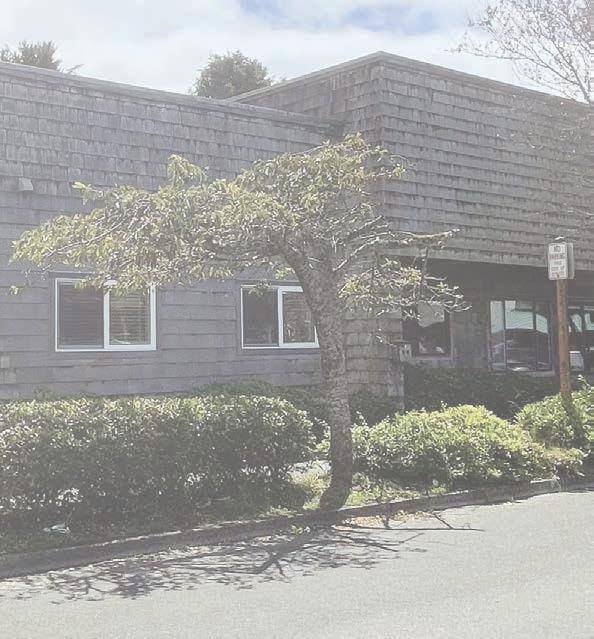
Share feedback as we begin exploring building design and exterior design aesthetics for your new City Hall and Police Station.
Current focus includes ...



•Material pallet


•Site layout and land use







•Building mass and shape


Comparte sus opiniónes mientras empezamos a explorar el diseño del edificio y la estética del diseño de exterior del nuevo Edificio Municipal y estación de polícia.
El enfoque presente inlcuye ...
•Catálogo de materiales











•Plano del sitío y uso de terreno
•Tamaño y forma del edificio
August 18, 2023 A8 CANNONBEACHGAZETTE.COM | CANNON BEACH GAZETTE CANNON
+1 669 900 6833 US +1 253 215 8782 US
COMMUNITY OUTREACH EVENT
Thank you for voting McKay’s! Best Produce Favorite Customer Service Favorite Food Store
us on Facebook and Follow us on Instagram! www.mckaysmarket.com
our community for 74 years!
Like
Serving
EMPLOYEE OWNED. OREGON GROWN.
Thank you for voting McKay’s! Best Produce Favorite Customer Service Favorite Food Store
us on Facebook and Follow us on Instagram!
our community for 74 years!
EMPLOYEE OWNED. OREGON GROWN.
Like
www.mckaysmarket.com Serving
