People and Dogs Disturbing Nesting Birds at Ecola Point
By TABEA GOOSSEN
July 4th was an extraordinarily beautiful day along the Oregon coast, with extreme minus tides that allowed visitors to reach areas not accessible at normal low tides. People were out in large numbers, and like many others, I spent time at Ecola Point. Located within the boundaries of Ecola State Park, Ecola Point is a unique spot and recently received protection as a state-designated Marine Conservation Area.
Ecola Point is also part of the Oregon Islands National Wildlife Refuge, dating back to 1935, that includes our local offshore rocks, islands and rocky habitat at Silver Point, Jockey Cap, Haystack Rock, the Chapman Point Bird Rocks and the Ecola Point headland. The Chapman Point area south of Ecola
• www.BobKrollPhotography.com
Point was recently designated as a Marine Education Area, receiving the same level of protection as Haystack Rock. These rocky habitats include many bird species such as Tufted Puffins, Brown Pelicans, Common Murres, Cormorants and Black Oystercatchers, as well as marine mammals and a diverse array of marine life in spectacular tide pools.
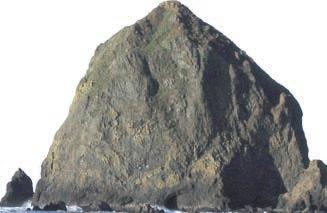
Climbing on rocks within the National Wildlife Refuge is strictly prohibited; these rocky habitats are off-limits to humans, pets, and drones. Visitors are encouraged to bring binoculars and cameras to enjoy and photograph the magnificent wildlife of these unique and sensitive areas of the Wildlife Refuge.
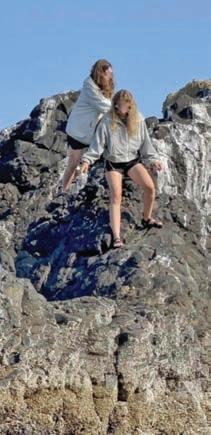
On July 4th, a number of visitors and pets illegally climbed these rocks into the habitat of nesting seabirds and shorebirds, in spite
of warnings from several people. More than a few dog owners also allowed their off-leash pets to roam the beach, barking at and chasing seabirds. Dogs are required to be on a leash in state parks. On beaches, off-leash dogs are required to be within sight of the owner and within voice control, and the owner must carry a leash. Many dog owners believe it is acceptable for their dog to chase wildlife as long as the dog doesn’t catch its target, but the law says dogs can chase balls and sticks, not living animals or humans. Any type of marine mammal disturbance, drone harassment or operating a drone from National Wildlife Refuge or State Park lands without a permit is also illegal. As the National Wildlife Refuge website states, “A good rule of thumb is: if the animal reacts to your activities, you are too close!”
(OAR 736-21-0090(13)(a))
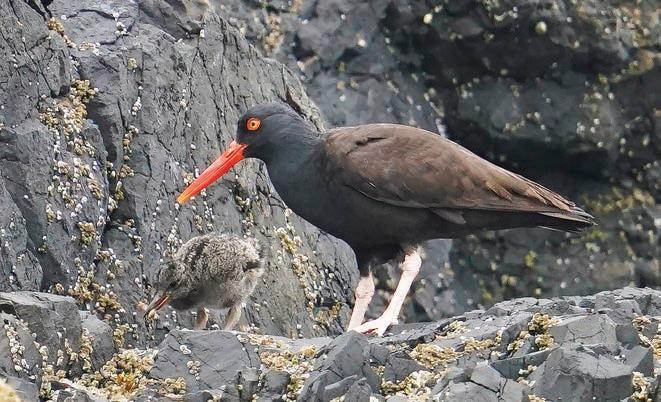
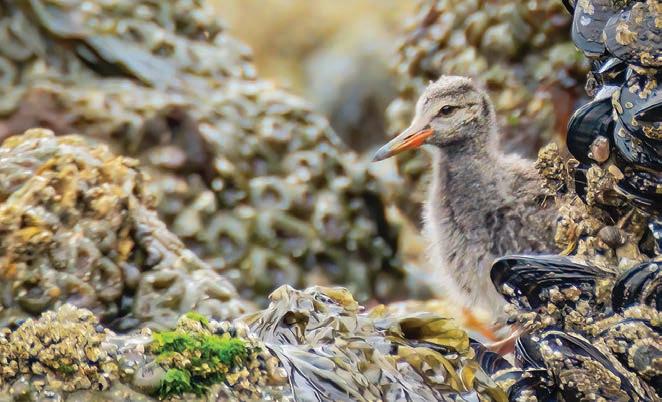
It’s a tough life in the wild. Birds, marine mammals and elk see dogs and drones as predators, forcing them to expend valuable energy to escape perceived harm. Disturbance can be harmful to nesting seabirds, forcing them to flee their nests, potentially reducing reproductive success and survival. When birds are off their nest, eggs and chicks are exposed and vulnerable to predators. Chicks can be on the beach before they are able to fly, leaving them defenseless against being killed by off-leash dogs. No Black Oystercatcher chicks have survived at Ecola Point for the past four years, partly due to increased levels of disturbance by humans and dogs. The Wildlife Center of the North Coast treats wildlife injured by off-leash dogs, and it is distressing that most of
the injured birds come from the Cannon Beach area. Nesting in rocky habitat, Black Oystercatchers are considered to be a “Species of Concern”; with the Portland Audubon Black Oystercatcher Monitoring program reporting that disturbance to nesting Black Oystercatchers from unleashed dogs, drones and people climbing on rocks is increasing as more people visit the coast.
The National Wildlife Refuge intends these rocky habitats to be areas “where the earth and its community of life are untrammeled by man, where man himself is a visitor who does not remain.”
Please be respectful while traveling through these rocky habitats and do your part to protect these sensitive wildlife species.
Minimizing Drone Impacts to Wildlife in Oregon State Parks
By JOE LIEBEZEIT Interim Statewide
Conservation Director for Portland Audubon
Here is an update on the ongoing process to regulate Unmanned Aerial Vehicles (UAVs or “drones”) in Oregon State Parks. For some quick background, during the 2021 legislative session, a bill was passed that instructed Oregon Parks and Recreation Department (OPRD) to develop rules for drone takeoff and landing on lands they manage, which includes over 200 parks as well as the entire ocean shore. This presented a golden opportunity to better manage drone use in lands OPRD manages. An important nuance is that regulations only apply to takeoff and landing locations. The
FAA has separate regulations for drones while airborne.
The Oregon coast supports over a million nesting seabirds, including endangered species like the Snowy Plover. The iconic sight of 60,000 Common Murres on Yaquina Head is one spectacular example of the importance of our coast to nesting birds. At the same time, people love to visit the coast, with the number of visitors steadily increasing. In recent years recreational drone use has skyrocketed, reflecting a nationwide trend. This in turn has led to increasing disturbances to birds, marine mammals, and other wildlife. Such disturbances have been documented to negatively impact nesting success of many bird species. In a recent dramatic case in California, a
drone crash caused an entire colony of 3,000 Elegant Terns to abandon 1,500 active nests. In addition to wildlife impacts, drone usage can negatively impact the peaceful, safe, and private experience visitors to State Parks and the coast seek when exploring and enjoying Oregon’s natural places.
Unfortunately, the process got off to a rocky start as the initial Rules Advisory Committee (RAC) put together by OPRD inexplicably did not include representatives from Oregon conservation organizations, recreational user groups (other than drone users) or Tribal nations, who all have interests affected by the rule. In addition, the RAC did not include representatives from the U.S. Fish and Wildlife Service, which manages
the Oregon Islands National Wildlife Refuge. OPRD then belatedly included Portland Audubon and Oregon Shores Conservation Coalition on the RAC for the second meeting, but by then the damage was done, with draft rules slanted significantly toward pervasive usage of drones on park lands. After public outcry and a brief but effective campaign, OPRD decided to pause the RAC process and formed a working group to begin the process from scratch. The working group (which includes Portland Audubon) comprises a good balance of conservation, agency, drone, and other recreational stakeholders. This group met last summer several times to develop criteria to decide where drones should be per-
Cougar Spends Day on Haystack Rock

 By BOB ATIYEH
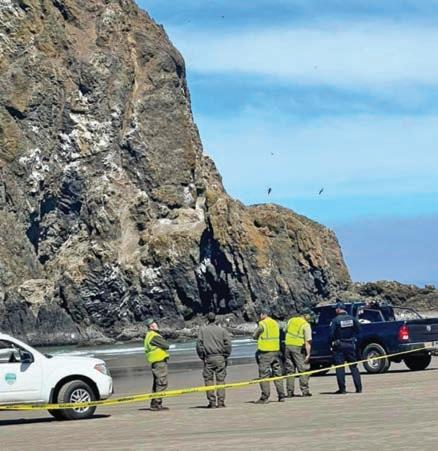
Early on the morning of Sunday July 16th, photographer Khula Makhalira arrived at Haystack Rock with the intention of taking puffin photos and was surprised to spot a cougar on the north side of the rock. Makhalira reported the sighting to personnel of the Haystack Rock Awareness Program (HRAP) Members of the Cannon Beach Police
Department, Cannon Beach Fire District, Oregon State Police, Oregon Department of Fish and Wildlife and Oregon State Parks quickly arrived on scene to ensure the safety and welfare of the public as well as the cougar. Cannon Beach Fire District personnel circled the rock on jet skis with a likely sighting of the cougar on the northwest side of the rock.
manently prohibited, seasonally prohibited, or allowed on State Park lands. We have made progress as part of the working group, and draft criteria currently prohibit drone takeoff and landings in areas that contain state or federally protected species, areas sharing borders with existing protected areas, and where they would pose a risk for other uses. Seasonal restrictions would apply in areas where wildlife concentrate for migration, breeding or wintering, with drones prohibited when wildlife are most vulnerable (for example during nesting season). The working group will meet at least once more to finalize draft criteria.
Portland Audubon is pushing for the strongest criteria to narrow usage of drones to places where wildlife impacts
would be negligible. The devil will be in the details, though. OPRD staff are developing maps that will delineate these prohibited, seasonally prohibited, and allowed drone use areas based on the criteria. Once the maps are completed (likely late summer or fall), the working group will review them and make adjustments. However, there is currently no formal period that would allow public review of and comment on these drafts. We are currently working with OPRD leadership to allow this critical public engagement. All Oregonians deserve a say in drone usage in their State Parks and on the ocean shore. Stay tuned for opportunities to help guide responsible drone usage on State Park lands.
VOL. 47, ISSUE 15 FREE JULY 21, 2023 CANNONBEACHGAZETTE.COM
A seagull soars in front of the stranded cougar on Haystack Rock at 6:40 am on Sunday morning (July 16, 2023).
SEE COUGAR PAGE A6
PHOTO CREDIT BY KHULA MAKHALIRA
Black Oystercatcher chick
PHOTO BY BOB KROLL PHOTOGRAPHY BobKrollPhotography@gmail.com
Black Oystercatcher and Chick in their Rocky Habitat
PHOTO BY TERRI NEAL
Visitors Illegally Climbing on Rocks at Ecola Point on July 4th
Cannon Beach Welcomes New Code Enforcement Officer


 By DEB ATIYEH
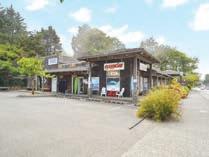
On May 8th, Cannon Beach welcomed Dan Contier as our new Code Enforcement Officer. Dan
worked as a Cannon Beach Information Aide for the past seven years, so he is a familiar face to many. Dan spent the first 2 years of his life in Austin, Texas. His stepfather was a pilot with the Coast Guard who was transferred frequently during Dan’s childhood, so at 2 years of age his family moved to Astoria, where he lived until he was 6, before moving to Kodiak, Alaska for the next 3 years. When he was 10 his family moved to Cape Cod, Massachusetts for a year. Then back to Austin for 5 more years before heading back to the north Oregon coast in 2014. While attending Seaside High School, at 16 he began working sum-
mers as an Information Aide in Cannon Beach.

From 2018 to 2020 Dan attended school at the University of North Texas studying mechanical and electrical engineering. Studying engineering taught Dan about problem solving, which has become a part of the skills required in his new career. He returned to the north coast to be with family during Covid and attended Clatsop Community College, working from March 2021 to May 2023 as a security patrolman for the Port of Astoria.

In January 2023 the City of Cannon Beach posted a job opening for a Code Enforcement Officer. Dan applied and was hired, starting
his new job last spring at the age of 23.

As the Code Enforcement Officer, Dan says the top priority for his job is education, with the goal of working with people to achieve compliance. He sends letters, talks to people and works with the individual parties involved. The City is proactive in identifying the issues and patiently persistent to gain compliance, whether it is an abandoned vehicle or a building out of compliance with City Codes.
Dan’s mother Valerie has worked as the Administrative Assistant for the Cannon Beach Police Chief since 2014. His grandfather was a police captain in Alameda,



California and a mentor and father figure to Dan. He helped shape his morals and taught him about right and wrong with compassion. His grandfather is now 83 and lives in Seaside with his wife, having just celebrated their 63rd anniversary.
Dan’s uncle was a police officer in Alameda, California, later assistant Chief of Police in Austin, Texas and then Chief of Police in Cedar Park, Texas. Law enforcement is part of Dan’s heritage and blue is in his blood.

Dan discussed how the words of a Seaside police officer named Jason Gooding, who died in the line of duty in 2016, resonated with him. Jason was a mentor and

inspiration to many, who once said something that has become part of Dan’s philosophy as an officer: “Bad people have gotten off the right path, but there’s good in everybody and I’m going to find it”.
The Cannon Beach Police Department is proud to include Dan as a part of their team and he plans to be here for the long-term. Residents and those who encounter Dan will always know that he will look to the good in all of us and we are lucky to have someone like Dan on our police force. Welcome Dan to his new job and every time you see him, smile and wave as he is “true blue” and takes pride in his job.
Pride of Place: Shaping the Future of Cannon Beach




 By DEB ATIYEH
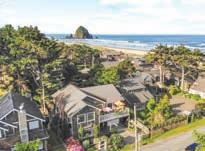
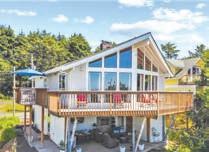
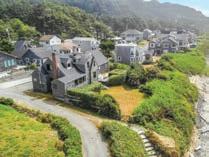
The Cannon Beach Gazette recently had the opportunity to talk with Cannon Beach resident Don Stastny, an FAIA architect. Stastny discussed the quality of life in the small town of Cannon Beach and how it must be protected and nurtured to maintain its uniqueness and livability. Stastny believes that Cannon Beach is currently at a crossroads; a time when decisions regarding individual properties and the structure of the town will set the stage for decades to come, and about how the town needs to ensure that incremental decisions are based on a common good and not individual greed. He talked about visionaries that lead with a passion that evolves from inspiration, not conflict; a passion that lifts everyone and can change the world we live in. About excellence and how a forward-looking vision can be established. He spoke
of the quality of this coastal town that sits in a natural environment without equal, and how we must strive to develop a town where people co-exist with nature.
Don Stastny is an architect with numerous awards from over five decades of national and international designs. He has been working in the field of “Urban Design and Placemaking”; utilizing design of buildings and structures as strategically placed pieces of cities. A fourth generation Oregonian, born and raised on a farm near the small town of Malin, Oregon southeast of Klamath Falls, Stastny has an innate understanding of “community” and the importance of the “incremental action” that impacts the whole. He and his wife Jan purchased their property on the north end of Cannon Beach in 1975; eventually constructing their home in 2000. The Stastny’s understand the rhythms of Canon Beach, the idiosyn-
crasies of our small town and the profound responsibilities that residents, employees and visitors have in maintaining the unique character of this sacred place by the sea.
Cannon Beach has recently seen the construction of several new residences that have impacted their neighborhoods. In Stastny’s view, many are questionable as to the intention of the owners and their agents, adding that codes and building requirements are adopted but then not updated to reflect current trends. As the City of Cannon Beach hires new staff, that staff has a steep “learning curve” as to individual properties and the building requirements that go beyond the written word to the historic basis for decisions. Stastny points out that retired City Planner Reinmar Bartell and local geologists such as Tom Horning understood not only the intent of the regulations, but also the history of why the regulations were put
in place.
Realizing that city officials and staff change over time and are interpreting existing regulations without understanding the impact or history of a regulation, Stastny offered several suggestions for anyone considering building a residence, or a commercial building, in Cannon Beach:
1. Know the regulations that impact the planning of your project. Do a thorough code analysis and research the history behind the establishment of local codes. Zoning may define density, but may not address issues like fire safety or environmental protection that were the purpose of the regulations.

2. Acquire an appropriate and accurate geotechnical report. Do not skew the findings by asking the wrong questions or ignoring the history of the site.
3. Commission a topological and boundary survey at least 100 feet beyond your















site boundaries that includes site features, location of trees and neighboring structures
4. Reach out to your neighbors; let them know your plans and how their experiences and expectations might inform your development.


5. Carefully program your development; build what is necessary and don’t create a structure greater than needed.

6. Consider the design of your building as an increment of the neighborhood and how your building might influence future neighborhood developments.

7. Building on the Oregon coast means understanding natural processes and their impact on design; high wind, rain, and seismic considerations all influence design and can become thematic elements.
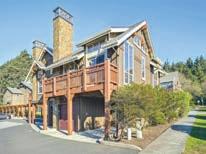
8. Enhance your views but respect the view-shed of other neighbors; existing or projected.




9. Understand that by





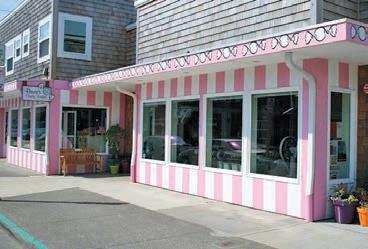
its nature, construction is destructive to the natural and cultural environment. Select a contractor with a proven record of building in neighborhoods and maintaining the construction site during construction activities. Question city officials who overlook the impact of construction on the immediate neighborhood.
10. Do No Harm. This may be difficult for some owners, designers and contractors to understand as they contemplate development. Cannon Beach is not an environment for “statement architecture” nor building in a way that is destructive to the neighbors, the neighborhood or the natural environment. Think of your neighbors by balancing your needs and realize how building actions impact livability. The architecture of a structure should embrace the beauty that surrounds us and enhances the uniqueness of
SEE PRIDE OF PLACE PAGE A6


Cannon School while to proved
in mously

July 21, 2023 A2 CANNONBEACHGAZETTE.COM | CANNON BEACH GAZETTE CANNON MULTI-USE CANNON BEACH COMMERCIAL PROPERTY $3,150,000 OCEANFRONT HOME ON (2) OCEANFRONT TAX LOTS $2,999,500 CANNON BEACH OCEAN VIEW HOME NEW PRICE $1,650,000 PERFECT WEST GEARHART LOCATION NEAR GOLF COURSE $525,000 Michael HendersonManaging Principal Broker Reid PetersonBroker Jeremy YoungquistBroker Duane Johnson - Founder H22353 ELEGANT, OCEAN VIEW BEACH HOME $2,795,000 SOLD BEAUTIFUL 4.1 ACRE PARCEL WITH STUNNING PANORAMIC OCEANVIEWS! $3,999,000 CANNON BEACH E PRESIDENTIAL 2 SEPARATE LIVING QUARTERS $949,000 W. PRESIDENTIAL. 2 BLOCKS TO DOWNTOWN & JUST 2 HOUSES FROM THE BEACH $2,459,500 1/12TH SHARE OWNERSHIP 3 BED 2 BATH CONDO $99,000 What is RMLS? As the Northwest’s largest REALTOR®-owned Multiple Listing Service(MLS), RMLS serves approximately 10,000 Real Estate Professionals in over 2,200 offices licensed in Oregon and Washington. All brokers listed with firm are licensed in the state of Oregon 296 N. Spruce St. • Cannon Beach • (503) 436-0451 www.duanejohnson.com Active Members of & A VALUED AND TRUSTED RESOURCE WITHIN OUR COMMUNITY AND THE #1 OFFICE SINCE 1990. BEAUTIFUL ARCH CAPE CUSTOM HOME ON OVERSIZED LOT $890,000 OPEN HOUSE Sat., July 22 • 11 a.m. to 2 p.m. SALE PENDING VACANT CANNON BEACH LOT, ZONED R3 $389,500 SOLD SOLD 1/12TH SHARE OWNERSHIP OCEAN VIEW CONDO $85,000 SOLD NEW PRICE SALE PENDING www.brucescandy.com • 503-436-2641 Freshest Homemade: Saltwater Taffy Chocolates Caramel Corn Making Sweet Memories for over 60 Sweet Years! H22352 The only saltwater taffy made in Cannon Beach! Downtown Cannon Beach Visit our online store and shop for Sweet Treats from Cannon Beach WE SHIP! EMPLOYEE OWNED. OREGON GROWN. EMPLOYEE OWNED. OREGON GROWN. Thank you for voting McKay’s! Best Produce Favorite Customer Service Favorite Food Store Like us on Facebook and Follow us on Instagram! www.mckaysmarket.com Serving our community for 74 years! EMPLOYEE OWNED. OREGON GROWN. EMPLOYEE OWNED. OREGON GROWN. Thank you for voting McKay’s! Best Produce Favorite Customer Service Favorite Food Store Like us on Facebook and Follow us on Instagram! www.mckaysmarket.com Serving our community for 74 years!
juvenation Advisory July craft the future of The adopted tion of be ogy would basis story Nehalem was The on including watershed, ronment, est, “This educate the the natural as deliver 1.5%
will
meeting will
city the (TLT)
increase
little additional city must related the service school $11.7 leave surplus. dedicated tenance elementary other
transient
beginning
a
Advisory Committee Meets for School Rejuvenation Project


 By DEB ATIYEH

The Cannon Beach Elementary School Rejuvenation Project Research Advisory Committee met on July 6th as they continued to craft recommendations for the City Council regarding future use and management of the old elementary school. The committee formally adopted the recommendation that the primary use of the Ne’Cus site should be as a cultural and ecology interpretive center that would be open on a regular basis at no charge to tell the story of the historic ClatsopNehalem tribal village that was once located on the site. The facility would also focus on the ecology of the region including the Ecola Creek watershed, ocean-beach environment, temperate rainforest, wildlife and marine life.
“This focus will allow us to educate people about both the historical significance of the site and our remarkable natural environment, as well as give us the opportunity to deliver stewardship messag-

ing to increase respect for our ecosystems.” said City Councilor Gary Hayes, who is chairing the committee. “After hearing community concerns about the facility being an event center with limited parking, this kind of drop-in attraction really makes the most sense.” Park improvements, including a self-guided interpretive trail, native plant garden and public spaces would also showcase the history of the site and the ecology of the area.
The committee agreed that the recommended primary use of the facility as an interpretive center would not prevent the facility from being used for events, but that any events would take into consideration peak season issues related to parking and traffic. “Scheduling events to avoid peak season and peak times will still allow opportunities for off-season and after hours programming when hundreds of parking spaces are available within two or three blocks,” Hayes said. The committee was also
united on making education a key part of the facility’s mission with an emphasis on arts, culture and ecology. As a facility open on a regular basis, the gymnasium could also be used as a drop-in recreation center.


With unanimous agreement on the basic concepts of use, the committee moved on to discuss how the facility would be managed and operated. This conversation will continue at the next meeting, but the committee appears to be aligned on recommending that the City contract with a newly formed non-profit organization that would be fully responsible for the staffing, programming, fundraising, scheduling, maintenance and operation of the facility. The committee discussed the possibility of forming a steering committee, that would either be the existing committee, or another group representing the interests of the community, to be involved in the start-up of the non-profit board. The non-profit would then be responsible for hiring an Executive Director who,
Council approves TLT increase
WILL CHAPPELL

For the Gazette
Cannon Beach’s City Council approved a 1.5% increase to the city’s transient lodging tax, which will go into effect at the beginning of 2024, at their meeting on July 11.

A majority of the funds will be used to fund the Cannon Beach Elementary School rejuvenation project, while the remainder will help to pay for the recently approved construction of a new city hall and police station.
The decision to increase the transient lodging tax (TLT) rate from 8% to 9.5% in the city was made unanimously by the council. The increase is projected to yield a little over $1 million in additional revenue for the city each year, 70% of which must be used on tourism related projects.
That amount will allow the city to fully fund the debt service for the elementary school project, built to a $11.7 million budget, and leave around $550,000 in surplus. Those funds can be dedicated to facilities maintenance at the rejuvenated elementary school or pay for other tourism related costs
Bluebelle
currently covered by general fund dollars.
The remainder of the funding created by the TLT increase will be dedicated to servicing the debt for the new city hall and police station, which will be built on Gower Street and at the Tolovana Cache site, respectively. The increased TLT will generate $310,000 for that purpose annually, joining $900,000 in prepared food tax (PFT) revenue. That will leave $345,000 to be financed, but City Manager Bruce St. Denis has identified several line items in the city’s general fund budget that could receive increased tourism dollars and free up enough money for the debt service.
The rate increase will go into effect on January 1, 2024, but will not apply to bookings made prior to the adoption of the ordinance.

A proposed exemption to the PFT for the city’s farmer’s market did not unanimously pass a first reading and will now proceed to a second reading at the council’s next meeting. The ordinance amendment would exempt vendors at the farmer’s market from paying the PFT, with councilors

Meet Bluebelle! This sweet, happy lab x is 4 years old and is so excited to find her forever home! She’s a beautiful, dark furred girl that loves to run and play with toys. Bluebelle has lived with other dogs before but will need to meet any other canine family members in advance. She knows basic commands and is very food motivated and trainable. http://clatsopcounty.animalshelternet.com/adoption_animal_details.

cfm?AnimalUID=288107


Pet meet and greets are by appointment, so if you’d like to meet Bluebelle, call the shelter at 503-861-7387 or stop by the lobby to set up a time. The shelter is open 9:30 to 4:00 Tuesday through Saturday, closed 12:30 to 1:30 for lunch. You can also fill out an application at the shelter’s Adopting a Pet page: https://www.clatsopcounty.gov/animalcontrol/page/adopting-pet
Scroll to the bottom of the page for the application or go directly to it here https://www.clatsopcounty.gov/media/38475 and email it to ac@ClatsopCounty.gov


saying at past meetings that this would help attract more vendors by lowering hurdles to participation.
However, Councilor Brandon Ogilvie said that he was opposed to the exemption for for-profit businesses at the market. He was joined in voting nay on the first reading by Mayor Barb Knopp.
Councilors also approved a three-house project north of the intersection of East Surfcrest Avenue and Highway 101. The three houses will include one duplex that the applicant indicated would be a long-term rental with a preference for fire department personnel occupancy. The application for zone change was approved by a 4-1 vote, with Councilor Lisa Kerr voting nay, citing concerns that the duplex might become a short-term rental in the future.
along with the Board of Directors, would be responsible for identifying all operational needs and hiring staff to be ready to operate and manage the facility upon completion. City oversight of the facility was also discussed to assure that it meets all legal requirements as a tourism facility since the project is fully funded with tourismdedicated lodging tax dollars.

By law, the funding must either be used for tourism marketing or a tourism-related facility. “I think the consensus within the community is for a facility of this type that allows us to attract, inspire and educate people toward sustainability rather than adding to our City’s marketing budget,” said Hayes.
The Advisory Committee will meet again at 5:30
PM on July 24th to formalize recommendations on management and operations. The community is invited to participate at the beginning of each meeting either in-person or by Zoom. This meeting, along with all previous meetings, can be viewed on YouTube via a link from the City’s website.
Thank you Cannon Beach for a day of perfection!
Justin Lacche, professional pitcher from the Beaverton Badshahs, Omniverse Sports League & former Cannon Beach Gazette reporter (19992003), pitched a five-inning professional perfect game in beach baseball. Haystack Rock brings the best out of everyone.
H22356

July 21, 2023 CANNON BEACH GAZETTE | CANNONBEACHGAZETTE.COM A3 Sweet over Years! SIP, SAVOR, MIX, AND MINGLE WITH REGIONAL PURVEYORS, INCLUDING FARMERS, WINEMAKERS, CHEFS, AND BREWERS ON THE CHARMING GROUNDS OF NESKOWIN VALLEY SCHOOL. PLUS ENJOY LIVE MUSIC AND SOAK UP THE IDYLLIC SURROUNDINGS OF THE NESKOWIN VALLEY FOREST, ALL WHILE SUPPORTING AN INCREDIBLE EDUCATIONAL COMMUNITY! AUGUST 5, 2023 2:00PM-5:00PM SAVOR THE COAST LEARN MORE AT: WWW.NESKOWINFARMANDFEAST.COM CELEBRATING THE BOUNTY OF THE OREGON COAST AND WILLAMETTE VALLEY SIP, SAVOR, MIX, AND MINGLE WITH REGIONAL PURVEYORS, INCLUDING FARMERS, WINEMAKERS, CHEFS, AND BREWERS ON THE CHARMING GROUNDS OF NESKOWIN VALLEY SCHOOL. PLUS ENJOY LIVE MUSIC AND SOAK UP THE IDYLLIC SURROUNDINGS OF THE NESKOWIN VALLEY FOREST, ALL WHILE SUPPORTING AN INCREDIBLE EDUCATIONAL COMMUNITY! AUGUST 5, 2023 2:00PM-5:00PM SAVOR THE COAST LEARN MORE AT: WWW.NESKOWINFARMANDFEAST.COM CELEBRATING THE BOUNTY OF THE OREGON COAST AND WILLAMETTE VALLEY McKay’s! years! Founded in 1976 ASSE International Student Exchange Program is a Public Benefit, Non-Profit Organization. For privacy reasons, photos above are not photos of actual students Host an Exchange Student Today! (for 3, 5 or 10 months) INTERNA TIONAL STUDENT EXCHANGE PROGRAMS PROGRAMMES INTERNATIONAUX D'ÉCHANGES ÉTUDIANTS Hanna from Germany, 17 yrs. Enjoys spending time with her family and younger siblings. Hanna plays volleyball and is excited to learn new sports while in America. Giorgio from Italy, 16 yrs. Loves to play baseball and spend time with his dogs. Giorgio also plays the guitar, and his dream is to join a drama club at his American high school. Make a lifelong friend from abroad. Enrich your family with another culture. Now you can host a high school exchange student (girl or boy) from Belgium, France, Germany,
your student. Amy at 1-800-733-2773 (Toll Free) host.asse.com or email info@asse.com ASSE 4x4 Regions 0522.indd 1 5/16/22 4:16
in 1976 ASSE International Student Exchange Program is a Public Benefit, Non-Profit Organization. For privacy reasons, photos above are not photos of actual students Call Heather at 1-708-421-7976 or Amy at 1-800-733-2773 (Toll Free) host.asse.com or email info@asse.com
Ukraine, Scandinavia, Spain, Japan, Italy or other countries. Single parents, as well as couples with or without children, may host. Contact us ASAP for more information or to select
Founded
Beaverton Badshahs ™ July 13, 2023: Beach Baseball, Cannon Beach Game 18: Beaverton Badshahs 10 Clatsop County Cannons 0 (5 innings) PERFECT GAME: WINNING PITCHER: JUSTIN LACCHE Badshahs 210 43--- 10 |16|0 Cannons 000 00 --- 0 | 0| 0 Learn more at OmniverseSportsLeague.com H22360
Council grants extension on Nenana LUBA appeal
WILL CHAPPELL For the Gazette
Cannon Beach City Council granted a 14-day extension to the comment period for a remanded land use case concerning an oceanfront property off Hemlock Street on July 10.
The decision came at the request of the applicant, Stanley Roberts, following new staff reports released after the case had been remanded from the Land Use Board of Appeals (LUBA) and contained unfavorable opinions for the proposed development.
The proposed house would be located just north of the S curves on Hemlock Street at its intersection with the undeveloped Nenana Avenue, on a beachfront property. The proposed development of the 1,200 square foot house has hit snags over access, initially proposing to build a bridge over Nenana Avenue, before later settling on an at grade driveway.
The proposal was initially
LANDSCAPING AT THE LIBRARY
 By PHYLLIS BERNT Library Board President
Heartfelt Thanks, Oregon Geography & Brian Doyle
Laurelwood Farm
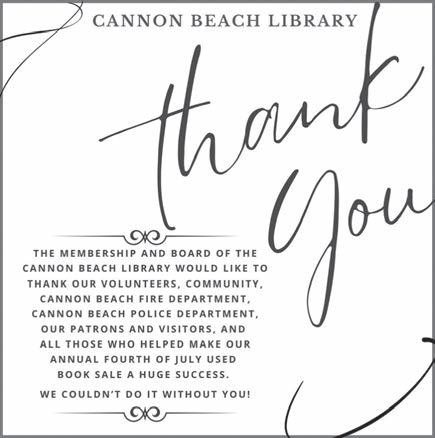
The library would like to thank everyone who made this year’s Fourth of July Book Sale fundraiser a big success. The book sale is actually a year-long undertaking, requiring the hard work and generosity of community members, library patrons, volunteers and visitors.
The first group that deserves a big thank you are the dozens of people who donate thousands of gently used books to the library all through the year. The library’s Pricing Committee meets nearly every Tuesday morning to price the donated books, sort them by genre, box them up and place them in storage. The Pricing Committee deserves a big thank you for their efforts and dedication.
Two days before the book sale, volunteers get the library ready, moving bookshelves and furniture out of the way and setting up tables. The day before the sale, volunteers haul hundreds of boxes out of storage and then organize thousands of books into categories.
During the sale, volunteers work as cashiers and baggers and keep the tables stocked and organized. After the sale, volunteers put the library back in order and ready for patrons.
This year all of this was done with the help of members of the Fire Department and the Police Department and with the efforts of over 72 volunteers. They all de-

rejected by the city’s planning commission but LUBA overturned that decision and remanded it to the city for further consideration.
An updated staff report was submitted before the hearing however and determined that the planned driveway would be constructed in the property’s oceanfront setback and interfere with the right of way in Nenana Avenue. They also said that engineers for the project had failed to study and design remediation for a deep, active landslide that could affect the property.
Wendie Kellington, the counsel for the applicant, was displeased with this report, saying that raising the new issues after a LUBA remand was inappropriate.
Kellington said that the city was only allowed to use the same code interpretations as they had during the initial process, whereas the new report offered novel reasons for recommending against the project. She also said that the claims that the driveway would interfere with the
serve a big thank you.
From its inception the Cannon Beach Library has been a community enterprise. At no time is that more evident than during the Fourth of July Book Sale.
It is because of fundraisers, like the book sale, that the library is able to provide programming like this year ’s Summer Reading Program, which has attracted a record 56 participants.
The theme of this year’s program is Find Your Voice. Participants have been able to find their voices through art and music during activities at the library (131 N Hemlock in downtown Cannon Beach).

At 2 p.m. on Saturday, August 5, also at the library, participants can Find Your Oregon, when Portland children’s author and illustrator, Andy Bauer will read from and discuss his book “ABC’s of Oregon.”
In addition to discussing Oregon geography, Bauer will talk about writing and illustrating children’s books. Participants of all ages are welcome.

The summer reading program also gives participants a chance to Find Your Story Time, when Iolande Ramiriz will present a bilingual story time at 2 p.m., Thursday, July 27, at the library. The target audience for Bilingual Story Time is zero to eight, but all ages are encouraged to attend.

It isn’t only children who are reading this summer, and indeed all year long. Members of the Cannon Beach Reads book club meet on the third Wednesday of each month to discuss a book of the group’s choosing.
This month, the book club will meet at 7 p.m., Wednesday, August 16, to discuss “The Plover,” by Brian Doyle. This will be a hybrid meeting; participants can come to the library or Zoom
oceanfront setback or Nenana right of way were “hogwash.”
Kellington argued that the city’s code only called for hazards posed by a proposed project to be minimized to an “acceptable level,” which had been accomplished, according to previous staff reports.
An engineer for the applicant also pushed back on concerns about the landslide at the S curves, noting that some years it didn’t move at all and others it barely moved. He also noted that the Roberts property covered less than 1% of the active slide area.
After the applicants’ representatives finished their reports, a string of opponents spoke against the project.
Leading the way and the legal opposition was Haystack Rock LLC, whose representative said that the applicant had not addressed legitimate concerns from experts working with the city and his group. He said that the proposed project did not meet the code criteria relating to allowing beach access or trees and said that the devel-
opment should be required to assess potential slide hazard to nearby properties as well.
Other commenters complained about the proposed project’s impact on traffic at what they characterized as an already dangerous intersection. They echoed Haystack Rock LLC’s concerns about tree preservation and beach access as well and were generally opposed to the project proceeding.
After hearing from around ten opponents, Kellington was given a chance to respond. She said that the city’s engineers had signed off on the proposal in 2020, rendering the host of objections raised during the meeting moot. She also said that the proposed driveway would not block beach access and that the proposal met the standards of the city’s tree code. However, given the release of the report, Kellington asked for a two week extension to gather more evidence and respond further to its findings, which the council granted.
in to the discussion.
In “The Plover,” Doyle tells the story of Irishman Declan O Donnell, who wants to get away from other people and their problems, and from his own past. So he sails out to sea in a small boat named the Plover, with no destination, other than “west” in mind.
Declan may wish for solitude, but the universe has other plans for him as he takes on an assortment of odd, entertaining and often needy passengers, who join him in a series of adventures and in his battle with a mysterious enemy.
Reviewers have called “The Plover” a “rare and unusual book and a brilliant, mystical exploration of the human spirit” and a “joyous voyage of discovery.”
Brian Doyle, who died in 2017 at the age of 60, was an award-winning writer, having received the Academy of Arts and Letters Award in Literature and three Pushcart Prizes. He was a long-time editor of Portland Magazine and a book reviewer for the Oregonian.
Doyle’s poetry and essays were published in many national and international magazines, journals and newspapers. His other books include “Mink River,” “Martin Marten” and “Chicago” all of which Cannon Beach Reads has discussed in previous years.
Kathleen Bell will lead the discussion, which will start at 7 p.m., Wednesday,

August 16. The Zoom link for the meeting is available by emailing Joe Bernt at berntj@ohio.edu. Coffee and cookies will be provided at the library. New members, whether in person or online, are always welcome. While many people may wish summer could go on and on, fall will inevitably arrive. The library has traditionally held a fundraiser to welcome the arrival of autumn. This year the library is planning a Fall Celebration on Saturday, September 30. The Fall Celebration will include some familiar activities and a few new events. As in past years, there will be a silent auction for hotel stays and raffles for gift certificates donated by generous local merchants. Unlike past years, there will not be a bake sale or a craft sale as part of the fall event. Instead, thanks to our talented members and supporters, there will be a holiday craft sale in November.
Winners of the silent auction for hotel stays and of the raffles for gift certificates do not have to be present to win. Winners, however, will have to be present to win drawings for door prizes, a new activity this year. Also new this year will be a children’s craft activity.
Winners of the silent auction for hotel stays and of the raffles for gift certificates, as well as the winner of the raffle for the beautiful autumn-themed quilt that is on exhibit in the library, will be announced after the children’s craft activity on September 30. Also announced will be winners of the drawings for several door prizes.
This fall marks 96 years of library services. The library invites everyone to help celebrate the arrival of fall and 96 years of good books and fellowship in the community
July 21, 2023 A4 CANNONBEACHGAZETTE.COM | CANNON BEACH GAZETTE CANNON Your Mitsubishi and Daikin Ductless Heat Pump Headquarters. Purchase a new system by September 1st for an extra $350 off when you mention this ad! Take advantage of rebates available through Energy Trust of Oregon and lower your electric bill when you upgrade to high-efficiency heating and cooling. H22349 BUSINESS DIRECTORY ADVERTISE YOUR BUSINESS HERE TO CREATE TOP OF-MIND-AWARENESS CALL 503-842-7535 OR EMAIL HEADLIGHTADS@COUNTRYMEDIA.NET TODAY! ARBORIST - TREE CARE ISA Certified Arborists ISA Board-Certified Master Arborist ISA Tree Risk Assessment Qualified Comprehensive Service, Pruning/Removal, Stump Grinding/Hazard Evaluations (503)791-0853 www.arborcarenw.com Care for Your Trees H22358 CCB#171855 LCB#9343 WA#ARBORCI909RW BoB McEwan construction, inc. Excavation • undErground utiitiEs road work • Fill MatErial sitE PrEParation • rock owned and operated by Mike and Celine MCewan Serving the paCifiC northweSt SinCe 1956 • CC48302 503-738-3569 34154 Hwy 26, Seaside, OR P.O. Box 2845, Gearhart, OR CONSTRUCTION
Laurelwood Compost • Mulch • Planting MacMix Soil Amendments 34154 HIGHWAY 26 SEASIDE, OR 503-717-1454 YARD DEBRIS DROP-OFF (no Scotch Broom) H49573
CLASSIFIEDS PUZZLES










Licensed Practical Nurse [LPN]


Part time position (24 hours weekly) w/excellent benefits.


Compensation: $29 - $39 Hourly, DOE



Tillamook Family Counseling Center (TFCC) seeks a Licensed Practical Nurse [Part Time 24 Hours per Week] as a health provider for its Assertive Community Treatment Team (ACT). The LPN provides health care coordination, client support, and triage in home and community settings to adults presenting with severe and persistent mental illness.


Tillamook Family Counseling Center is a drug free workplace and equal opportunity employer.








If you are interested in this position, please apply online at http://tfcc.bamboohr.com/jobs. Be sure to submit an online application and upload your resume. Any questions, please visit us online at http://tfcc.org.
Church Services by the Sea Cannon Beach to Nehalem


July 21, 2023 CANNON BEACH GAZETTE | CANNONBEACHGAZETTE.COM A5
Methodist Church
Nehalem,
Sunday service 11 a.m. Food Pantry Open Friday, Saturday & Monday 10 a.m. to 2 p.m. Wednesday March - October 2 p.m. to 6 p.m. November - February noon to 4 p.m. Nehalem Senior Lunches Tuesday & Thursday served at noon email: nbumcnsl2020@gmail.com
feature your spiritual organization on this panel:
Katherine at (503) 842-7535, headlightads@countrymedia.net H22117
Nehalem Nehalem Bay United
36050 10th Street,
OR (503) 368-5612 Pastor Celeste Deveney +
To
Contact
CANNON BEACH GAZETTE The Cannon Beach Gazette is published biweekly by Country Media, Inc. Publisher, David Thornberry 1906 Second Street, P.O. Box 444, Tillamook OR 97141 PHONE 503-842-7535 • FAX 503-842-8842 cannonbeachgazette.com Member Oregon Newspaper Publishers Association (ONPA) © 2023 by the Cannon Beach Gazette. No portion of this newspaper may be reproduced in any manner without prior written permission from the publisher. All rights reserved. Katherine Mace Advertising Account Executive 503-842-7535 headlightads@countrymedia.net The Cannon Beach Gazette is part of the Country Media family of newspapers. LETTER POLICY The Cannon Beach Gazette welcomes letters that express readers’ opinions on current topics. Letters may be submitted by email only, no longer than 300 words, and must be signed and include the writer’s full name, address (including city) and telephone number for verification of the writer’s identity. We will print the writer’s name and town of residence only. Letters without the requisite identifying information will not be published. Letters are published in the order received and may be edited for length, grammar, spelling, punctuation or clarity. We do not publish group emails, open letters, form letters, third-party letters, letters attacking private individuals or businesses, or letters containing advertising. OBITUARIES Email obituaries to: classifieds@orcoastnews.com The Cannon Beach Gazette has several options for submitting obituaries. • Basic Obituary: Includes the person’s name, age, town of residency, and information about any funeral services. No cost. • Custom Obituary: You choose the length and wording of the announcement. The cost is $75 for the first 200 words, $50 for each additional 200 words. Includes a small photo at no additional cost. • Premium Obituary: Often used by families who wish to include multiple photos with a longer announcement, or who wish to run a thank-you. Cost varies based on the length of the announcement. All obituary announcements are placed on the Cannon Beach Gazette website at no cost. Advertising Deadline: Noon Mondays week of publication Deadline for letters, press releases and other submissions: Noon Mondays week of publication, will depend on space. Email to headlighteditor@countrymedia.net classifieds@orcoastnews.com Siah J. Kennedy Office Manager/ Classifieds & Legals PUZZLES
10x10 Unit Available Call 503-350-3214 or 503-878-0925 For pricing H22260 H22260 Deadline Aug. 23 Publishes Aug. 29 Deadline Aug. 21 Publishes Aug. 24 Deadline Aug. 28 Publishes Sept. 1 Have a special event or garage sale this Labor Day Weekend? We’re here to help with affordable print and digital advertising options. Contact Katherine at 503-842-7535 or headlightads@countrymedia.net Citizen North Coast Headlight Herald 500 EMPLOYMENT We are looking for Personal Assistant to perform a variety of administrative tasks. Please send resume for more details via email to: excellenceservicess@ consultant.com 503-842-7535 Like us on CANNON BEACH Gazette
ABOUT US
CB Mini Storage
COUGAR CONTINUED FROM PAGE A1
A Coast Guard helicopter circled to the north in an attempt to spot the animal.
A large area of the beach between Haystack Rock and the dunes were cordoned off to provide a safe escape route for the cougar, and the beach remained closed to public access until Monday morning.

An official statement from the Cannon Beach Police Department said that “early Monday morning, Oregon State Police and the Department of Fish and Wildlife observed tracks that appeared to be from the cougar leading away from Haystack Rock. The Coast Guard just flew the area and did not see any sign that the cougar was still on the rock.”

Standing 2-3 feet at the shoulder and weighing anywhere from 75-160 pounds, the cougar is Oregon’s largest cat species and the fourth largest cat species in the world. Cougars have the widest range of any wild land animal in the Americas, extending from the Yukon to the Patagonian Andes at the southern end of South America, and are considered important “keystone species” in western hemisphere ecosystems. Cougars are solitary animals with large home
PRIDE

ranges that they aggressively defend against other cougars.
Most active at dawn and dusk, cougars are classified as “ambush hunters” that pursue a wide variety of prey. Attacks on humans are extremely rare. While fatal cougar attacks have occurred in other states, only one fatal
cougar attack has been documented in Oregon, which occurred in August of 2018 on the Hunchback Mountain trail near the town of Zigzag in the Mt. Hood area.
The Oregon Department of Fish and Wildlife (ODFW) estimates a population of around 6,500 cougars in
PLACE CONTINUED FROM PAGE A2

the town. How we evolve as a community is determined by each added increment that creates context. Each building should contribute to the evolving context, but also inform the next project. How we evolve as a community, existing in concert with a magnificent and delicate natural environment, should
be our aspiration and mission.
“Pride of Place” is real and can be realized when each citizen is a sensitive visionary who helps shape the future of Cannon Beach and its varied neighborhoods. The continued evolution of our town, as a unique experiment of a place that honors its past

Oregon, with the largest concentrations in the Blue Mountains of eastern Oregon and the southwestern Cascades. According to the ODFW website, until the late 1960’s cougars were bounty-hunted in Oregon and classified as predators with no protection under state law. Only about 200 cougars were estimated to be left in Oregon when they were re-classified as game animals and came under ODFW management. A citizen ballot initiative (Measure 18) approved by Oregon voters in 1994 banned the use of dogs to hunt cougars in Oregon. Until then, it was legal to use packs of hunting dogs to pursue cougars, who attempted to escape by climbing a tree and were easily shot at close range by hunters. Even without the use of dogs, hundreds of cougars are legally killed throughout Oregon every year. Contrary to official ODFW policy, most independent cougar biologists maintain that populations of large predators such as cougars do not need to be “managed” by state wildlife agencies, as their population is self-limiting. The largest cause of mortality among cougars are members of their own species.
and builds for its future, requires that the creation of our built environment coexists in harmony with our natural environment.
(Cannon Beach resident Don Stastny continues a decades-long quest for design excellence through advocacy, writing and practice)


July 21, 2023 A6 CANNONBEACHGAZETTE.COM | CANNON BEACH GAZETTE CANNON Oversized Parcel in the Trees Jenny Frank 503-440-1973 415 Chilkoot Trl, Cannon Beach Prime Commercial Location Jackie Weber 503-440-2331 543 Laneda Ave, Manzanita $675,000 2 Bed Condo at Breaker's Point Craig Weston 503-738-2838 512 N Larch St #512, CB $675,000 Rare Downtown "Full Sized" Lot Michele Johnson 503-440-0921 W 1st St, Cannon Beach $589,000 165+ Acres of Panoramic VIews Craig Weston 503-738-2838 Waterhouse Rd, Cannon Beach $2,999,000 OCEAN VIEWS High Above CB Karen Meili 503-440-5806 425 Yukon St, Cannon Beach $1,350,000
OF
PHOTO BY ANDY WOO PHOTOGRAPHY
